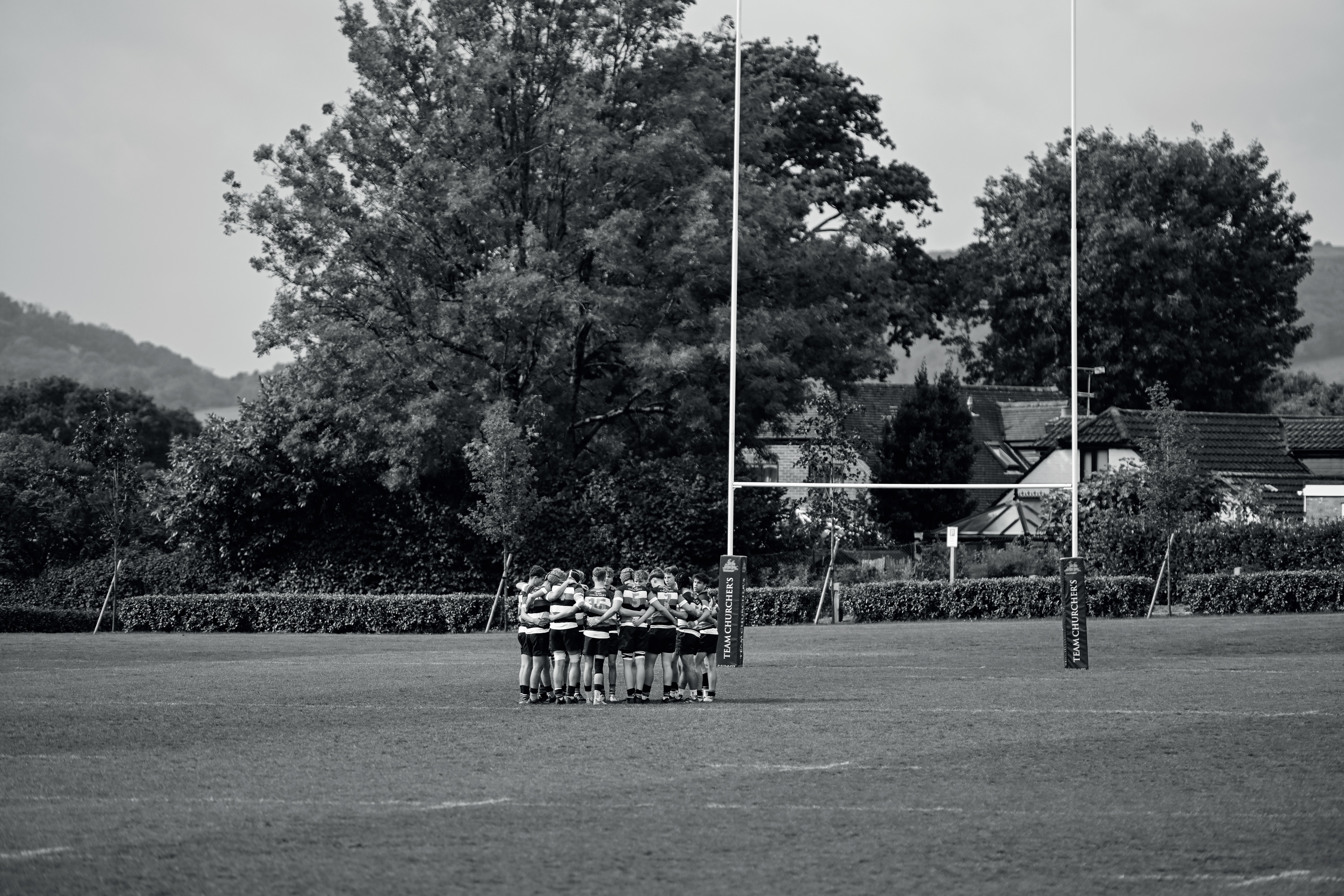
Welcome to this year’s edition of our school academic magazine, INK; a celebration of creativity, curiosity and achievement across our school community. This publication brings together the outstanding work of students and staff, reflecting the imagination and dedication that define life at our school.
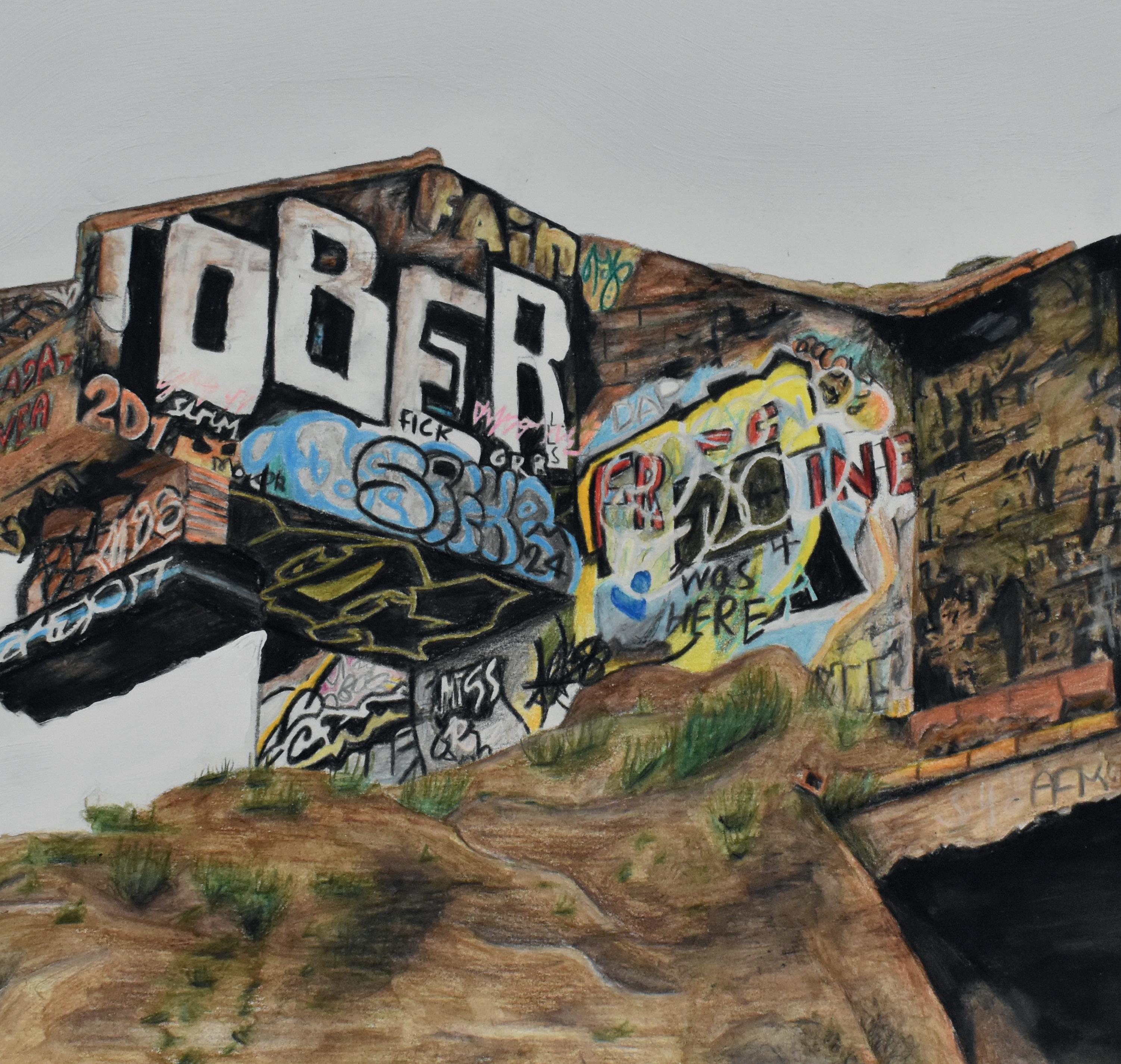
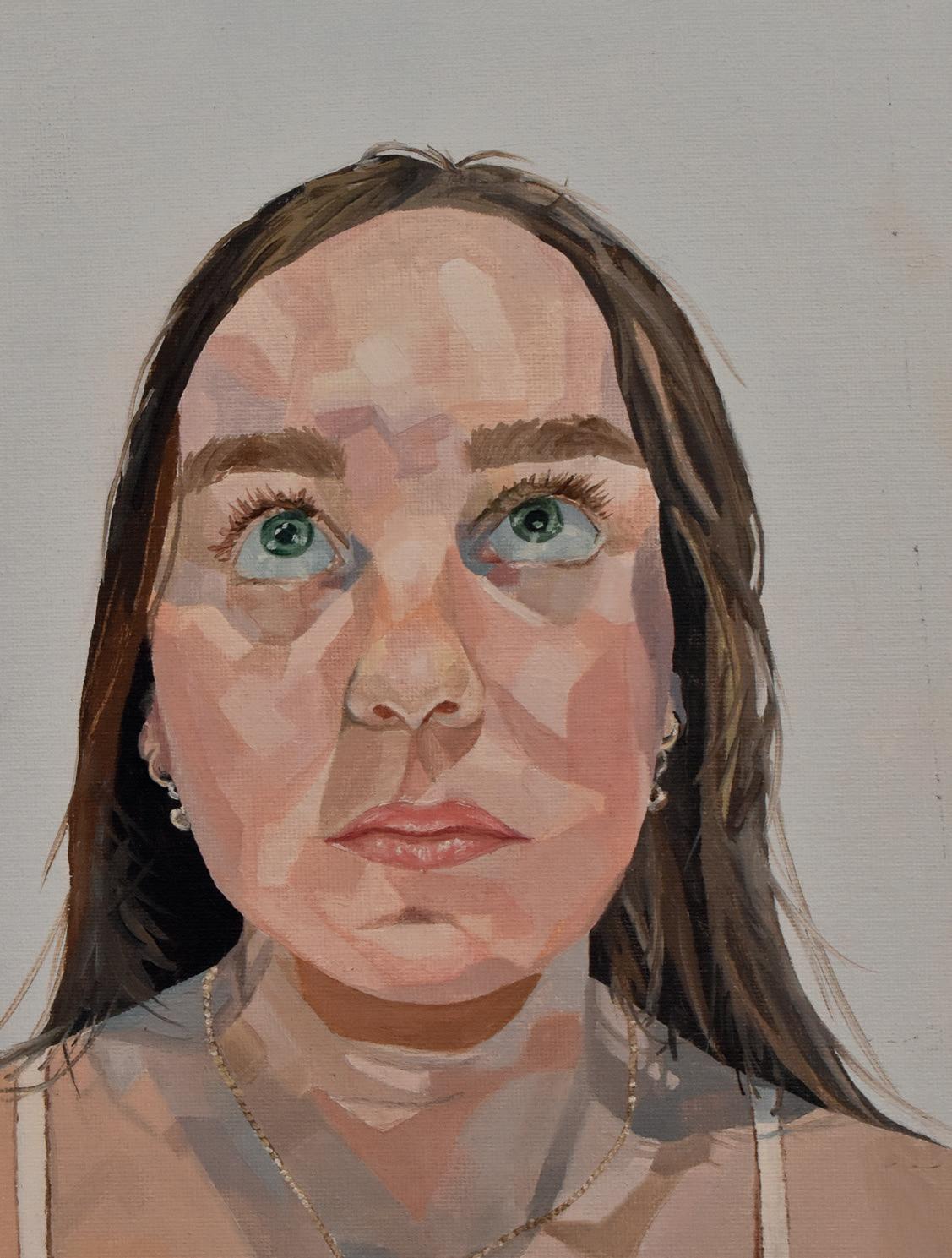
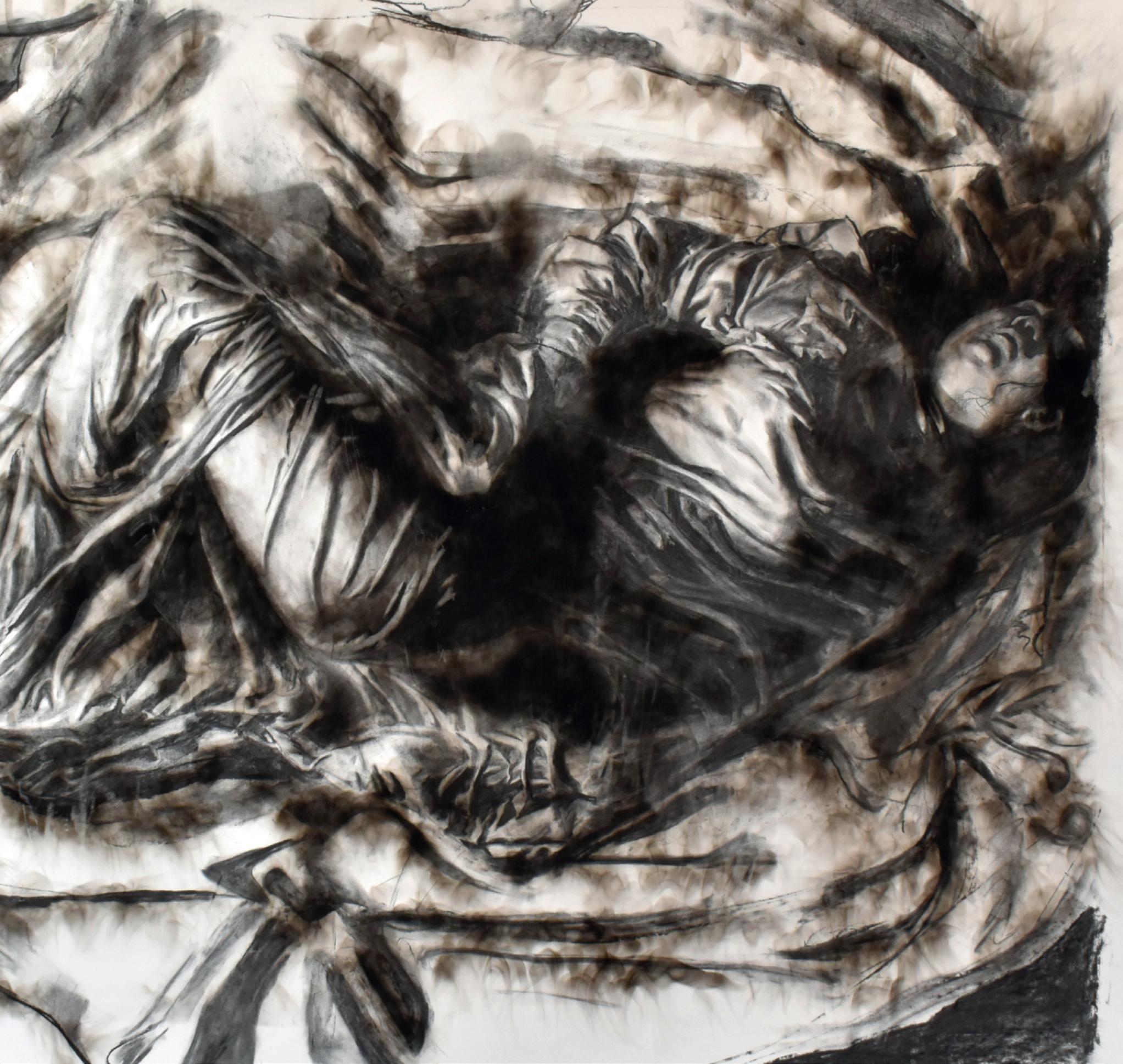
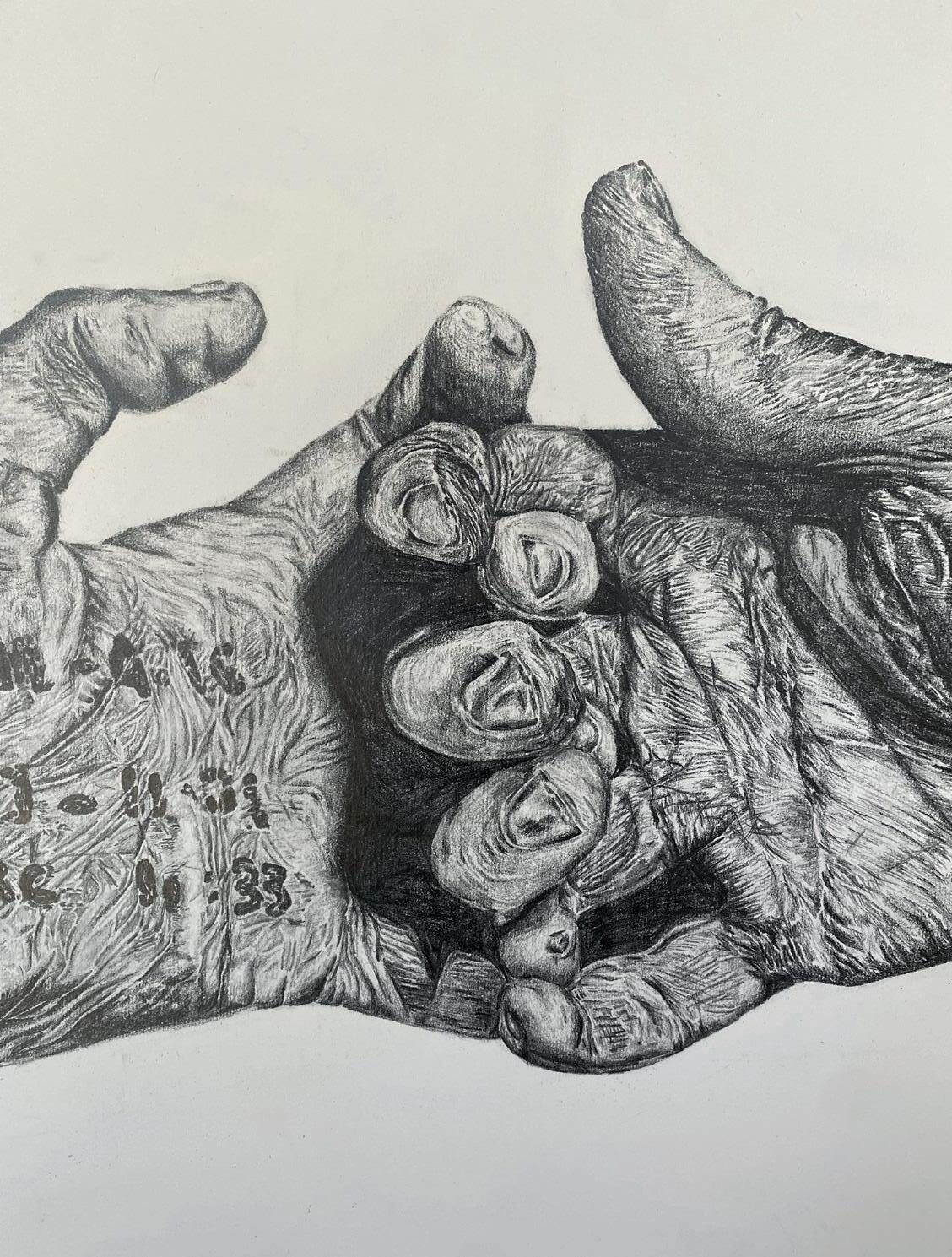
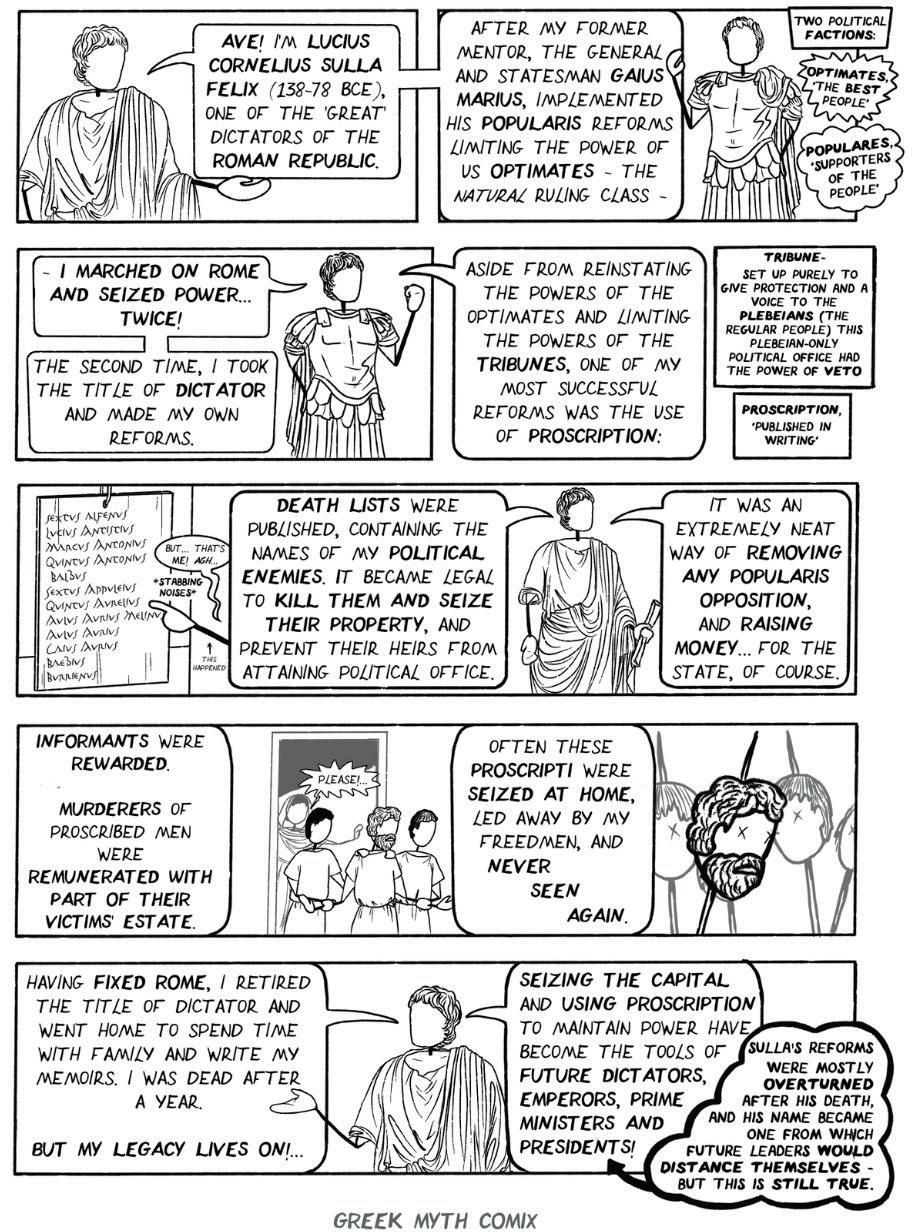
Within these pages, you will find a wide range of academic articles, creative writing and poetry, each showcasing the originality and talent of our students. There are two submissions about both Mycenae, the bronze age citadel, and schizophrenia, and it is interesting to see how different pupils tackle the same subject. Alongside this, we are proud to include photographs of exceptional Art and Design & Technology work, highlighting the innovation, technical skill and artistic vision developed across these subjects. These pieces demonstrate not only academic excellence, but also the confidence to experiment, create and communicate ideas in new ways.
This magazine would not have been possible without the support of staff, whose encouragement continues to inspire students to pursue their interests beyond the classroom. Their involvement reflects the collaborative spirit of our school community.
We hope this edition informs, inspires and celebrates the remarkable achievements of everyone involved. Thank you to all contributors.
the
to Bertrand Russell, "Hitler is an outcome of Rousseau; Roosevelt and Churchill of Locke". To what extent was he correct?
every man after his desert, and who should ’scape whipping?” Should the law treat offenders better than they deserve?
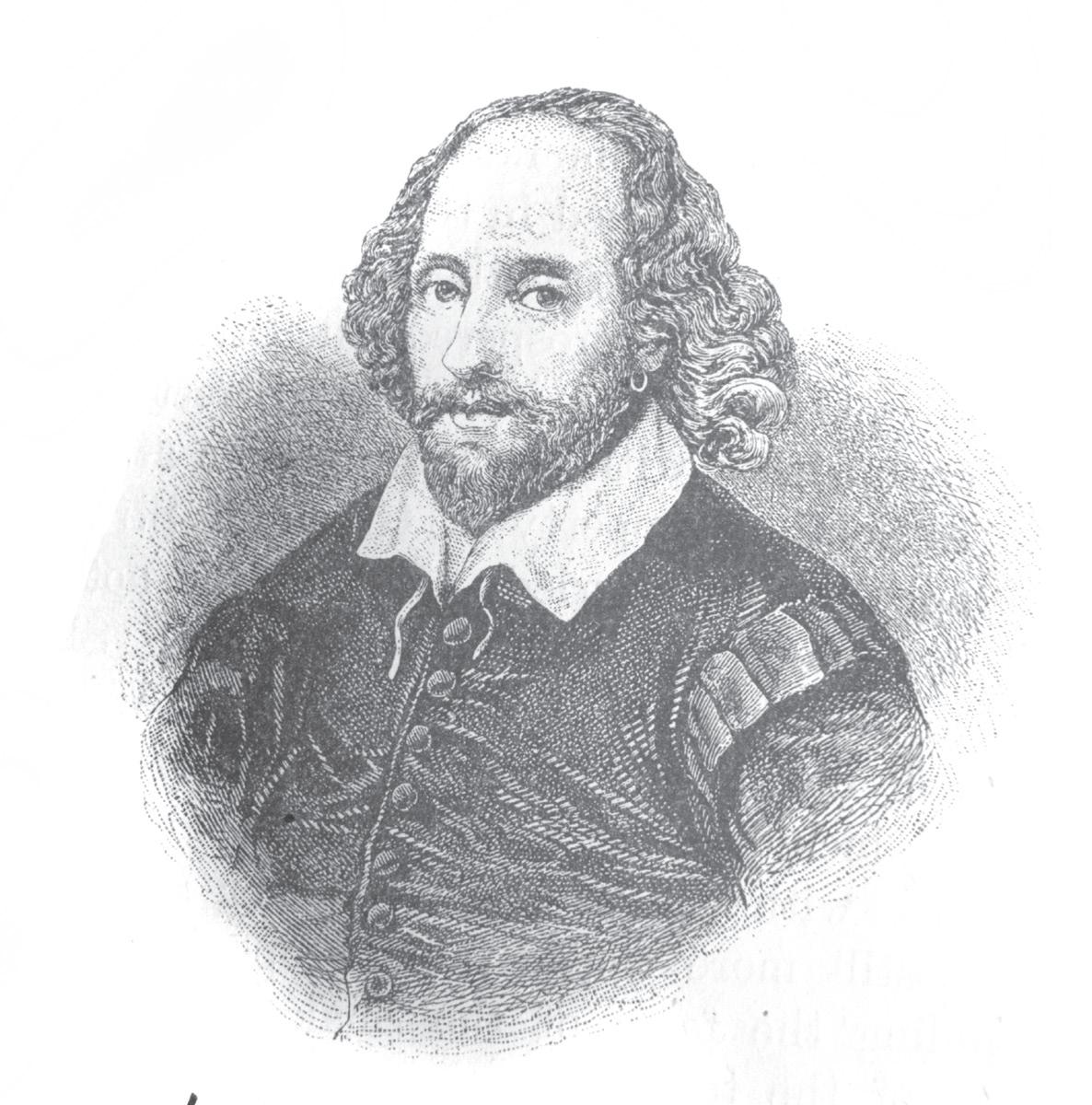
Shakespeare’s presentation of men and masculinity in Act One and Act Two of Othello
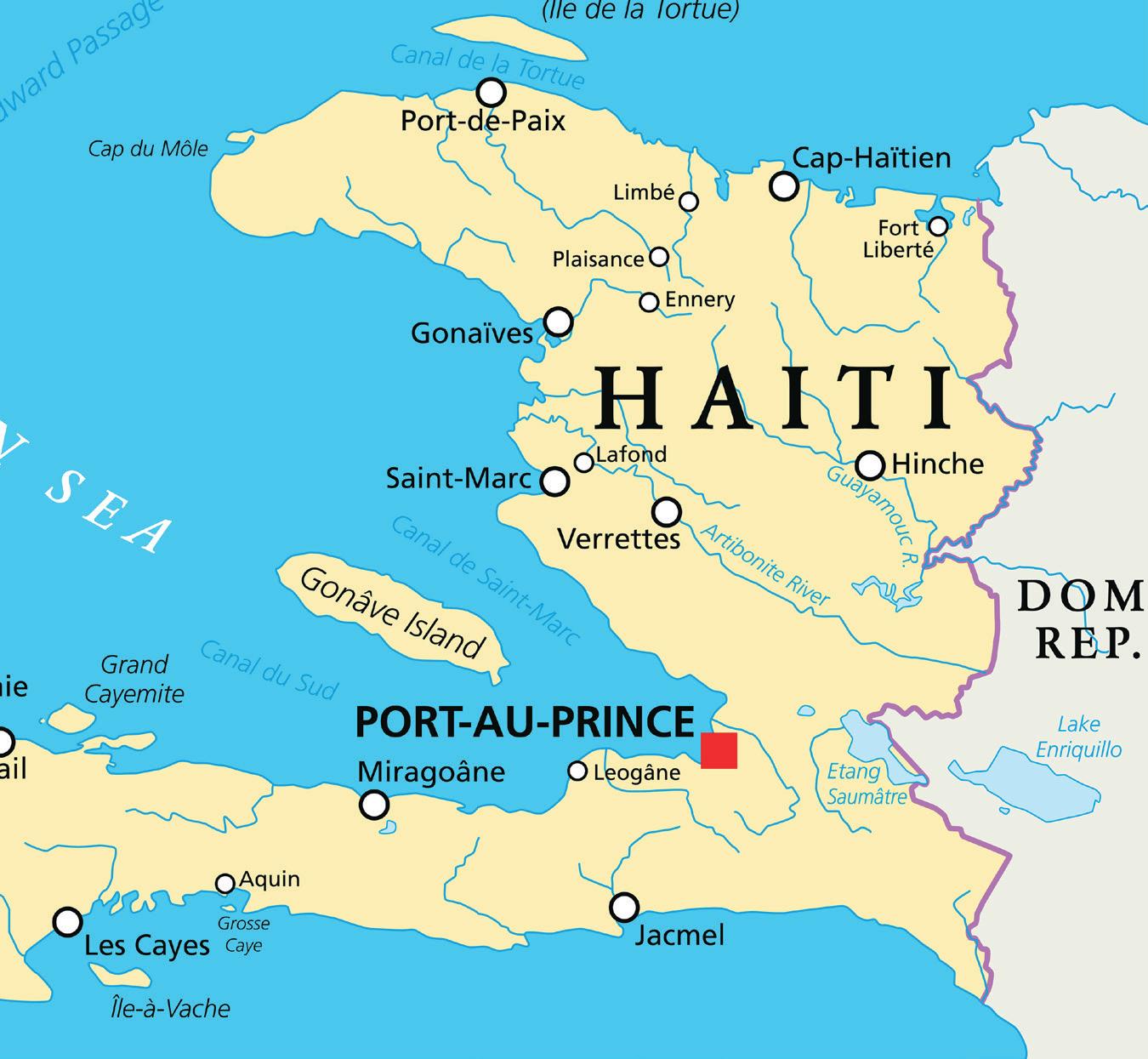
what extent was French colonisation the most important reason for Haiti becoming a failed state?
William Baker Head of Sixth Form
Lewis, Upper Sixth
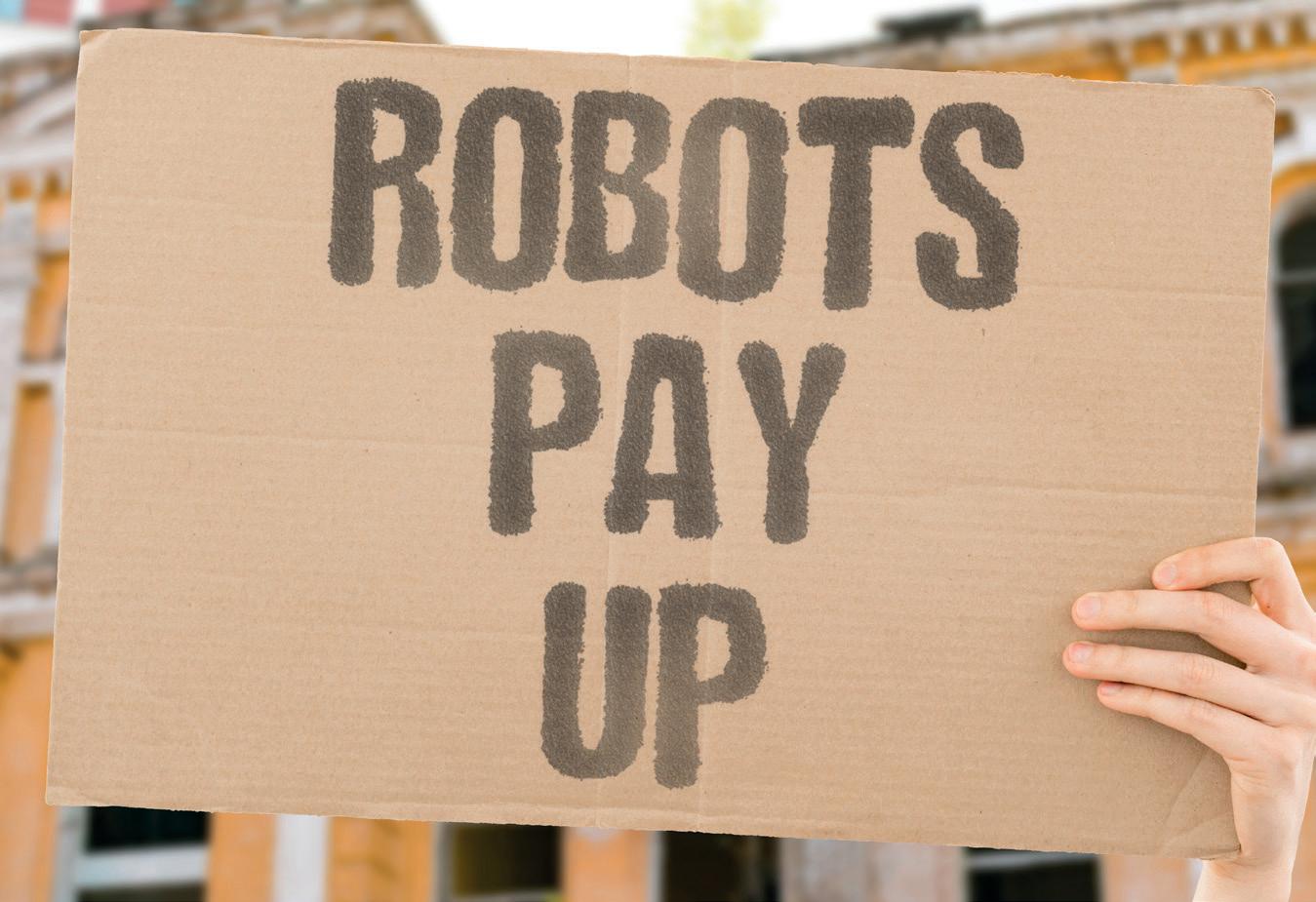
Should the UK Government introduce a ‘robot tax’?
Future Thought Leaders Essay Competition Submission
In a capitalist society with a desperate need for increased efficiency, the innovation in artificial intelligence (AI) and robotics is a paradoxical situation, ensuring unparalleled advancements whilst sparking controversy due the social and economic implications.
The term ‘robot tax’ sounds like the idea behind a bad science fiction novel. However, as our society automates, it has become an increasingly relevant theory. The proposal is as expected of our society’s ‘tax-and-shield’ approach: a tax imposed on robotics, as human workers are replaced by technology. Supporters claim that this would allow the maximisation of efficiency whilst challenging the otherwise uninhibited corporate gain, to ensure labour protection.
In the past, workers were vitally important to firms, as all goods required labour to be produced. However, in the current technologically advancing climate, human capital could be seen as costing more money than they are worth. As human workers are replaced by automation, firms pay less wages, employer national insurance, employer liability insurance, and pension contributions. This excludes the time taken to employ and train employees, and the costs of advertising for positions and running background checks. In the end, it works out that the ‘true cost’ of a worker
is almost 1.5 times their base salary, as reported by Indeed Flex UK. Therefore, you can see the business appeal of investment in technology that can perform a task faster and more cheaply than humans.
The technological innovation of robots and AI has undoubtedly boosted the UK economy. This is due to greater productivity, as firms produce more goods with fewer resources. The long run aggregate supply curve for the UK economy then shifts to the right, as potential value of the economy increases. Further evidence of this can be seen in how automation has enabled companies to scale up at an unprecedented rate. The aggregate demand curve also shifts to the right as the booming economy increases consumer confidence, and thus, consumer spending (which makes up 60% of AD). Moreover, not only are old processes improved, but entirely new sectors are created as products of technological development—e.g. automation in retail, digital healthcare, and AI in cybersecurity.
In previous periods of economic boom, e.g. post industrialization, people would benefit as real incomes increased and unemployment decreased. Typically, economic growth is advantageous to the UK government as tax revenue soars, due to increased employment generating
more income tax, and, as people can afford to spend, more VAT. Corporation tax also surges as businesses are making more profit. Moreover, if unemployment is reduced, the government pays less in job-seekers allowance. This increase in government revenue would allow for greater spending on services, improving the quality of life for UK citizens.
However, growth due to automation does not always have the desired effect on the economy. Unemployment often increases, as workers are replaced by technology. An increase in unemployment is destructive. This is evident in how fewer people have an income, so tax revenue from income tax could fall. This in turn means reduced spending, leading to less revenue from VAT, and less money for businesses, which would impact revenue from corporation tax.
A possible solution to this reduction in tax revenue could be the implementation of a ‘robot tax’. Taxation is important as it provides UK citizens with social security, ensuring free healthcare when they’re sick and money when they find themselves struggling. This revenue is lost when a robot replaces a human, and so a ‘robot tax’ could be a way of rebalancing responsibility (not condemning innovation) as times change. Firms are benefiting from
Lower Sixth
Phoebe Mitchell
automation, and consumers should share in the profits.
There are further disastrous impacts of technological development-based unemployment on the people themselves, as workers might be made redundant and laid off in vast quantities. Not only would jobs be lost, but lives would be altered. Whilst there are new jobs created by the expansion of the economy, and the introduction of new markets (as said previously), these jobs do not require the same skills as were previously valued. Those who are occupationally immobile would require re-training, which is of great cost to the firm, so firms may choose to employ those who have more transferable skills. This results in many people getting left behind and forgotten as the few who are technologically savvy, celebrate the expanding economy.
The revenue generated by a ‘robot tax’ offers a remedy to this issue—it could be used to fund re-training programs to ensure that workers can enter new roles and stay relevant to the current job market, thus allowing the entire population to bask in the benefits of automation. This would act to bridge the divide created when workers view technology as ‘the enemy’— taking their jobs whilst cutting costs for ‘the man’—when instead, AI and robotics are powerful tools that can be harnessed by anyone to improve their quality of life. A ‘robot tax’ could be a compromise, allowing room for advancement, whilst showing the general population that robots are also working with them.
On the other hand, there is an equally convincing argument against the implementation of a ‘robot tax’. The main issue of a robot tax is how it would hinder development. Producers aim to maximise
profit, and currently automation is the best way to achieve that. This is because robots are objectively more productive than human workers, resulting in greater efficiency and output, benefiting the economy. If a tax is imposed on robots, this would reduce profits for businesses and so would reduce UK operations. The consequences of a business exodus could be catastrophic: reduced GDP and tax revenue, increased costs, reduced exports, increased imports (decreased AD), and a ‘brain drain’ (loss of talent). A ’robot tax’ would penalise the very tools that drive development.
Another weakness of a ’robot tax’ would be the restriction of smaller businesses from keeping up with larger corporations, or even entering the market at all, as they may not be able to afford the costs, leading to further creation of monopolies. Monopolies threaten economies as they undermine the price mechanism. This is because they allow firms to unfairly raise prices, resulting in allocative inefficiency where consumers pay more for a lower quality product, leading to welfare loss.
There is also the practicality of the tax to consider, as what exactly is a robot? Is it a self-checkout till, a machine in a factory, or AI in general? Taxes require clarity to enforce and to build trust between the government and those paying them. The vague suggestion of a ‘robot tax’ creates opportunities for exploitation and evasion. Therefore, before the advantages of this tax can even be considered, the government must first clearly define the parameters of what a robot is, who pays the tax, whether the tax only applies if a human worker has been replaced, and how the tax is calculated.
The main issue of a robot tax is how it would hinder development
Development is a necessity in the UK due to a sustained period of slow growth. Currently, the UK government is struggling to maintain their ‘global superpower’ status, as other developed economies outpace the UK in growth and advancements. In recent years, following the financial crisis of 2008, Brexit in 2016, and COVID in 2020-22, the UK’s GDP per capita growth of 7.8% has trailed behind other Group of Seven countries—e.g. the U. S. (22.8%), Germany (10.3%), and Japan (10.2%). This is due to low investment, low productivity (output per hour), policy and political instability (2022 ‘mini budget’), and structural issues relating to overreliance on the services sector. It could also be argued that there is a culture of risk aversity, resulting in low consumer confidence, ‘animal spirits’, investment, and growth in general. The reduction in the use of robots by firms would perpetuate this issue, whilst other countries would continue to develop, leaving the UK in the dust in terms of technology and wealth.
A ’robot tax’ could be seen as an automatic government response to unknown technologies that have become incorporated into the daily lives of the general population at an unprecedented scale and speed—implemented out of fear and not forethought. Instead, it may be a better solution to invest in education and flexibility, not placing a handbrake on advancement.
To conclude, I propose that the real question should not be whether a robot tax should be implemented, but how we can adapt taxation for an automated economy. Instead of transferring the same understanding of tax from humans to robots, we should be evolving our thinking to taxing the profit itself and ensuring that wages and prices are fair and reflect greater productivity. Firms should be incentivised to educate workers with respect to developing technology, to further integrate the two.
Whilst a ‘robot tax’ should not be the future of our society, it forces the consideration of equal sharing of gains made by automation between households, firms, and the government, and provides the basis for other, more practical and modern solutions.
Outdated by design?
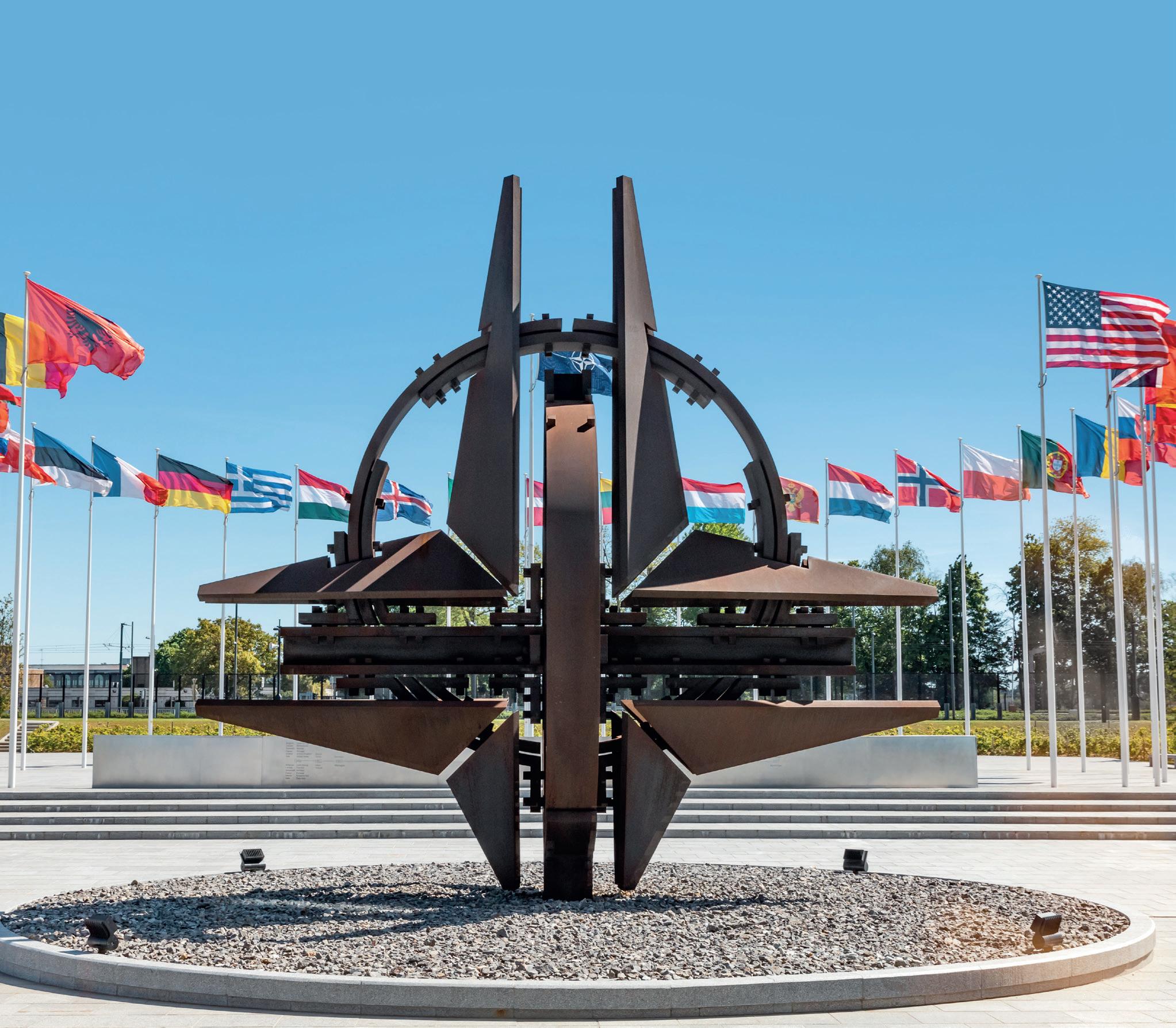
Assessing whether the United Nations remains fit for purpose in the 21st century
The UN is an intergovernmental organisation that seeks to maintain global peace, security, and cooperation. Formed in 1945 after the second world war, the UN was created under the global desire to prevent future conflicts and human rights abuse. As the most powerful IGO on the global stage, the UN acts as a central forum for international cooperation and diplomacy. However, in the 21st century, the concept of diplomacy appears futile, as hostility between states grows. Through analysing the benefits, drawbacks, and alternatives to the UN, it is clear to see that the powerful and just nature of UN allows it to dominate the anarchical global stage better than any other non-state actor in the 21st century.
The diplomatic foundations rooted in the UN’s institution allow it to wield significant authority. The General Assembly is the most central organ of the UN. It oversees the budget, elects members for the Security Council, and passes crucial resolutions. The UNGA has been praised for its equality: every member, 193 member states in total, receives one vote of equal value, which can be used to pass resolutions. Furthermore, all member states are encouraged to contribute to discussions, making their diplomatic presence known on the global stage.
Similarly, the UN Charter, which acts as a codified constitution to bind all member states, reinforces its power and authority. The UN Charter is made up of individual articles that preface the different abilities and aims of the UN. One of the most significant is Article 51, which recognises: “The inherent right of individual or collective self-defence”, of a member state. This power is entrenched by Article 42, allowing the United Nations Security Council (responsible for the maintenance of international peace) to use force “As may be necessary to maintain or restore international peace and security”. The consensual authority to use force in necessary circumstances distinguishes the UN as the strongest IGO in the international system. Furthermore, the UNSC is the most powerful structure within the UN due to its ability to authorise military action and establish peacekeeping missions. The UN has exercised this power
Lower Sixth Layla Chubb
in multiple humanitarian interventions in recent history; In 2010, UNSC peacekeepers were deployed to the Democratic Republic of Congo, responding to a long-running civil war following the Rwandan genocide. As of October 2025, the operation in DRC remains the largest UNSC peacekeeping mission, with over 16,000 uniformed personnel and 280 volunteers. Currently, there remain 11 active peacekeeping missions that span across four different continents, reflecting the breadth of aid and power of the UNSC.
In spite of the UNGA’s diplomatic outreach and the UNSC’s impactful peacekeeping abilities, the United Nations has a variety of structural drawbacks. One of the most controversial features of the UN is the power of veto, which is held by the five permanent members of the Security Council: the USA, UK, China, Russia, and France. The power of veto allows these permanent members (the P5) to overrule any passed resolution, gifting them unjust control over the actions of the UNSC. This is not only undemocratic but also unrepresentative of the current global stage (unlike in 1945 when it was reflective of global order). Undeniably, the USA and China remain two of the most powerful states in the world. However, the same cannot be said about Russia, whose GDP is only $2.2 trillion despite being the 3rd largest military spender (2025), France, or the UK. Similarly, the veto can lead to
paralysis within the UNSC if the P5 cannot agree on an action to take. In September 2025, a resolution demanding permanent ceasefire in Gaza was voted in favour for by 14/15 members of the UNSC but was blocked by the USA’s veto. This was the second time in 2025 that the US had used its veto to block a resolution concerning the Israel/Palestine conflict, delaying essential action.
A second drawback is the futility of the UNSC in an anarchical world system. In recent history, the UNSC has been unable to prevent extreme humanitarian crises, resulting in some of the UN’s most shameful peacekeeping failures. In 1994, the Rwandan genocide resulted in the killing of approximately 800,000 Tutsis in under 100 days by the Hutu tribe. Despite the presence of peacekeeping forces, these troops were unauthorised to intervene, leaving the Tutsis helpless. This exposes how the lack of a central authority and effective enforcement power can have significant ramifications, highlighting the limitations of international peacekeeping efforts in an anarchical word order.
In recent years, the UN has faced calls for reform, including proposals to change or remove certain elements, or to replace the organisation itself. The most frequent call for reform is the suggestion to remove the power of the veto and increase representation within the P5; many ideas
for reform have been circulated, such as adding new permanent members (e.g. Brazil, India, and South Africa) without veto power, or removing the power of veto from some or all current permanent members. Enacting the former could improve representation, ensuring that the UNSC’s actions are reflective of a global, collective view. The latter could increase equality, making the UNSC more democratic, or it could make the council more indicative of the current world order by removing the veto from smaller powers like France and the UK.
Whilst both suggestions for reform could have serious benefits for the UN, in April 2022, the UNGA unanimously adopted a different reform, which raises the political cost of exercising the veto. The Liechtenstein veto initiative “creates a standing mandate for the Assembly to be convened automatically, within ten working days, every time a veto has been cast in the Security Council”, and the P5 member responsible for the veto is invited to the ensuing Assembly debate to speak first. This ensures that, when the Council reaches a dead end on taking action in a crisis through using the veto, those responsible for blocking progress are held to account in the 193-member Assembly. Although this has not entirely alleviated the need for wider UN reforms, it supports a more inclusive approach to maintaining
peace, promoting multilateralism and diplomacy.
A more extreme proposal is to replace the entire IGO with a new organisation.
After claiming that the United Nations was not “living up to” its potential, US President Donald Trump launched his idea for a Board of Peace at the UNGA’s annual meeting, in September 2025. Trump’s Board of Peace, officially established in November 2025, aims to promote peacekeeping around the world. The Board of Peace was created as a part of Trump’s comprehensive plan to end the Israel/Palestine war, and it has legitimate foundations due to its endorsement by the UNSC in Resolution 2803, authorising the Board to take immediate action in stabilising the Gaza Strip. However, many have since questioned whether this is a credible alternative to the UN. The Board held its inaugural meeting in January 2026 and invited 60 states to join. Of these states, 19 have officially signed the Charter. Most of the supporters so far are European satellite states (e.g. Kosovo, Albania, etc.), Middle Eastern monarchies, and oil rich autocracies, all of whom demonstrate “oligarchical tendencies” (Campbell,
The UN has dominated the global stage in the last century
2026). Most notably, the Board of Peace lacks the support of the EU. Critics have argued that the institution bears little resemblance to what was envisioned, and it gives overwhelming authority to the USA. Whilst the Board of Peace has potential, it undermines the equality that the UN encourages and instead promotes bureaucracy, as evidenced by the Board’s $1 billion membership fee.
Widely acknowledged as the most powerful intergovernmental organisation, the UN has dominated the global stage in the last century, carrying out over 70 peacekeeping missions, resolving countless conflicts, and passing resolutions and jurisdictions from within its individual structures. The UN’s foundations are rooted in diplomacy and cooperation, stemming from the global desire for peace and security. Although the UN is in need of structural reform, such as amendments to the UNSC’s representation and enforcement power, it is irreplaceable as the sole body of global governance. Ultimately, the UN encourages discussion and diplomacy, breaks societal barriers between states, strengthens international ties, and promotes human rights and international peace.
Fiction or Foreshadowing? A Reflection on ‘The Handmaid’s Tale’
Ari Martin-Wilks
Margaret Atwood’s The Handmaid’s Tale (1985) is often categorised as dystopic fiction, depicting a totalitarian theocracy in which women’s rights are systemically undermined. Set in the republic of Gilead, a society formed in response to disaster and declining birth rates, Atwood explores the consequences of authoritarianism, religious fundamentalism and the erosion of personal freedoms. The novel follows a handmaid—Offred—whose only social value is her reproductive capability. While seemingly an exaggerated expression of gendered social tensions, Atwood has rejected the idea that her work is purely speculative, stating that she didn’t “[Put] anything into it that human beings had not already done somewhere at some time”. This assertion provokes a critical question, made more urgent by the rapidly shifting socio-political situation of the world: Is The Handmaid’s Tale a product of fiction or the foreshadowing of a dangerous society? Through its portrayal of reproductive subservience, the manipulation of religion for political power, and the gradual loss of rights facilitated by public complacency, the novel functions as a warning embedded in historical precedent and contemporary relevance. Rather than presenting an
implausible future, Atwood exposes the fragility of democratic freedoms when under pressure from fear and ideology.
A prevalent theme within The Handmaid’s Tale, and arguably the central one, is the basing of female value in reproductive capability and the sense of entitlement to exploit it for one’s own gain. In response to widespread infertility, the state reduces women to a rigid caste system; Wives, Marthas, Handmaids, Econowives, and Unwomen. Handmaids exists solely to reproduce for elite families, stripped of their real names, autonomy, and individual identity. Offred is offered an ‘easy way out’ as her doctor propositions sex, “The door is locked. No one will come in. They’ll never know it isn’t his.” Not only does Offred become a commodity to men for sexual pleasure, but she is also forced to make moral decisions that are detrimental to her. Despite refusing him, Offred is aware of the foregone conclusion: “Give me children or else I die”, acknowledging the pressure she is under to employ her body for governmental use. As corroborated by Macpherson, who states, “Fear of betrayal and inculcated self-surveillance keep the handmaids from speaking out”, Offred feels
a sense of misguided loyalty to the regime that renders her submissive. Current developments in America reflect such patterns of social regression, especially concerning female rights. The 2022 overturning of Roe v. Wade by the U.S. Supreme Court removed federal protection for abortion rights, allowing individual states to impose severe restrictions on reproductive healthcare. Shifting social tides demonstrate how long-established rights can be revoked, echoing the message in the book about the perceived permanence of personal rights until they are gone. This regression mirrors earlier historical periods of political and moral conservatism, particularly during the era in which the novel was published, when the United States was governed by Reagan, whose administration emphasised domestic traditionalism—an ideological framework that contemporary America increasingly appears to be echoing. While America is not Gilead, the similarities between their attitudes to women’s bodies as something that should be under legal jurisdiction rather than autonomous, is arguably concerning.
The state of Gilead doesn’t just determine
Upper Sixth
female reproduction, it exploits the social conditioning to perpetuate collective prejudice, particularly in the reaction to sexual violence. Atwood illustrates this in Janine’s ‘testimony’, being forced to publicly confess to being gang-raped and subsequently needing an abortion. Rather than receiving sympathy, the Handmaids are instructed to chant, “Her fault, her fault, her fault”, transforming a moment of distress into an exercise in ideological habituation. This ritualised culture of shame shifts responsibility away from male violence and onto female behaviour, reinforcing the belief that women are accountable for the harm done to them. For much of Western legal history—until 1991 in the UK—marital rape was not recognised as a crime, reflecting the tendency of society to ignore or diminish female suffering. Written in the 1980s, Atwood’s novel highlights the increasingly common tendency for culpability to be assigned to victims of sexual violence; women were often chastised in legal capacities for ‘provocation’. Victimblaming becomes a tool for enforcing moral conformity, teaching women that “A rat in a maze is free to go anywhere, as long as it stays inside the maze.” Provided that they comply with the gender expectations constructed by society, they will be safe from persecution. This scene demonstrates the sustaining of oppression, not only through law, but through social prejudice and manipulation—women are groomed to internalise guilt and supervise one another’s behaviour. Goldblatt supports this, asserting, “The work women do, conspires to maintain the subjection of their own kind.” By forcing the women to participate in the humiliation of another victim, the regime erodes female solidarity and replaces empathy with subservience. Therefore, Atwood exposes how the embedding of misogyny within social rituals maintains patriarchal systems, ensuring that prejudice becomes selfsustained rather than solely an imposition from above.
In The Handmaid’s Tale, Atwood presents religious fundamentalism as a crucial instrument through which authoritarian power is legitimised and preserved. The Republic of Gilead alters biblical scripture to justify enforcing rigid gender hierarchies, sexual violence, and the exclusion of women from the public sphere. Offred describes the reading of one passage, “Blessed be the meek. Blessed are the silent. I knew they made that up…but there was no way of checking.” Scripture in Gilead is revealed to be both fabricated and controlled, abused by men to reinforce
a narrative of androcentrism within society. The fictitious beatitude “Blessed are the silent” epitomises the regime’s ideology, coalescing female subversion with moral purity. Religious manipulation holds a mirror to modern societies in which religious ideology has been institutionalised as political power, most notably under the Taliban in Afghanistan. Religion has been monopolised to restrict women’s rights—women are no longer allowed to speak in public, secondary education is prohibited, and a burqa is mandatory. Often cited as a parallel to Gilead society, Afghanistan has almost certainly banned The Handmaid’s Tale due to its contradiction of ‘Islamic Sharia values’. Limited access to the novel is further compounded by the high levels of illiteracy amongst women and young girls. Moreover, the Chinese communist revolution of the 1960s was marked by extensive censorship, a context Atwood may be harnessing to reinforce her portrayal of ideological control. In the respective societies, faith is transformed from a personal belief into an enforceable doctrine and resistance is regarded as moral failure. Atwood’s portrayal does not condemn religion itself, but rather exposes the dangers of converging theology with state authority, thus revealing how religious fundamentalism becomes a structure of domination in lieu of devotion. Therefore, The Handmaid’s Tale presents Gilead not as an improbable dystopia, but as a recognisable emulation of historical and contemporary structures of ideological
control, fortifying the novel’s function as political foreshadowing.
The collapse of freedom is not just visible through the manipulation of religion, but through the slow, incremental process enabled by social complacency and fear. The repressive nature of Gilead emerges not through singular revolutionary violence, but a succession of minor regulatory changes that appear justifiable, thereby defusing public reaction.
Offred’s assertion that “nothing changes instantaneously: in a gradually heating bathtub you’d be boiled to death before you knew it”, encapsulates gradualist reasoning. The erosion of personal rights is rendered psychologically manageable for oneself through temporal fragmentation. Gilead, as a prototypical society, reflects historical patterns of authoritarian consolidation, in which populations adapt to the revoking of freedoms due to fear, ideological conditioning, and institutional dependence. Such actions can be seen today, in countries like Iran where it has been widely accepted that gradualism has been utilised to progressively rescind women’s rights. In 1975, Iran felt the influence of westernisation with social liberalisation, particularly concerning women. However, after the introduction of the Islamic Republic, women faced the loss of many rights, varying from the immediate overturning of the Family Protection Law—that reduced the age of marriage and removed the right to divorce—to the Chastity and Hijab Law of 2024, that
Margaret Atwood
further criminalises transgressions to the dress code. Since 1979, the status of women in Iran has significantly deteriorated, shown by the reported 60% increase in ‘honour killings’ in 2024 relative to 2023. Social theorists have argued that such regimes rely less on overt coercion than on the internalisation of compliance, whereby citizens engage with ‘norms’ and reproduce them. As Aunt Lydia articulates, “In the days of anarchy, it was freedom to. Now you are being given freedom from. Don’t underrate it”, reframing repression as protection. By redefining deprivation as safety, Gilead converts obedience into rationality and moral responsibility. The novel conceptualises authoritarian power as a social process sustained through psychological manipulation. Atwood reveals how democratic structures deteriorate not necessarily through violence, but through acceptance and silence. Therefore, the erosion of freedom is depicted as a foreseeable outcome of social inertia, emphasising the novel’s purpose as a recognition of historical patterns.
Last, but certainly not least, one must recognise the purpose of The Handmaid’s Tale as not just a presentation of the systemic social repression of women, but also an encouragement for such women to fight back against the systems that seek to control them—an argument that bears great weight in contemporary sociopolitical conversation. Atwood employs resistance as an underlying motif in her novel to spark resilience, articulated in the recurring pseudo-Latin inscription, “Nolite te bastardes carborundorum”, meaning
“Don’t let the bastards grind you down.” Although ironic in its inauthenticity, the phrase functions as a feminist mantra of solidarity and endurance. Passed between women, it becomes an ideological legacy, representing continuous defiance across silenced women. Through this, Atwood provides hope and determination, not through explicitly violent outbursts, but in persistent psychological refusal. Furthermore, Offred’s reunion with Moira offers resistance through simple transgressions in social expectations. Moira jokes, “What’d you do wrong? Laugh at his dick?”—a moment that uses humour and sexual frankness to undermine patriarchal authority and deconstruct the traditional convention of female passivity. Such language disturbs the regime’s rigidity, revealing rebellion to be possible through perfunctory colloquialism. By embedding defiance within everyday acts of speech, The Handmaid’s Tale constructs resistance as continuous rather than outstanding, affirming its position as a pillar of modern feminist literature, framing opposition to patriarchy not as sporadic acts of heroism, but rather veiled moments of courage.
The novel functions as a warning embedded in historical precedent and contemporary relevance
of liberating narratives. By withholding closure, Atwood not only recognises the unforeseeable nature of individual accounts, but she also resists the traditional literary conventions of redemptive endings. In doing so, the reader is left unsettled, reflecting the broader political purpose of this novel to address the continuity of ideological and social struggles.
The ambiguous ending of the novel further reinforces its political complexity, refusing moral certainty. Offred’s fate is left unresolved, denying the reader the reassurance of resolution and thus reflecting Atwood’s broader rejection
Overall, The Handmaid’s Tale ultimately functions as a politically grounded warning about the fragility of human rights and freedom when under external pressure. Through its depiction of reproductive control, Atwood explores the exploitation of women’s bodies as reproductive vessels, serving no value beyond basal purpose. The manipulation of religion as a mechanism of state power reinforces the weaponisation of ideology to legitimise prejudice and social conditioning to strengthen oppression. Crucially, the novel does not present women simply as victims, but rather beings capable of persistently refusing complacency. Together, these themes position The Handmaid’s Tale as a work of foreshadowing, a warning against submission in the face of adversity and an encouragement to pursue the repossession of autonomy. The novel thus upholds enduring relevance; after all, the real horror of Gilead is not its extremity buts its contemporary recognisability.
Margaret Atwood with Elisabeth Moss (Offred in the TV adaptation of The Handmaid's Tale)
Libby Child - Sliding Storage Unit (A Level)
Finn Glazebrook (A Level)
Jessica Lin (A Level)
Bella Gaunt (A Level)
Everyone’s a Phony. Yes, You Too.
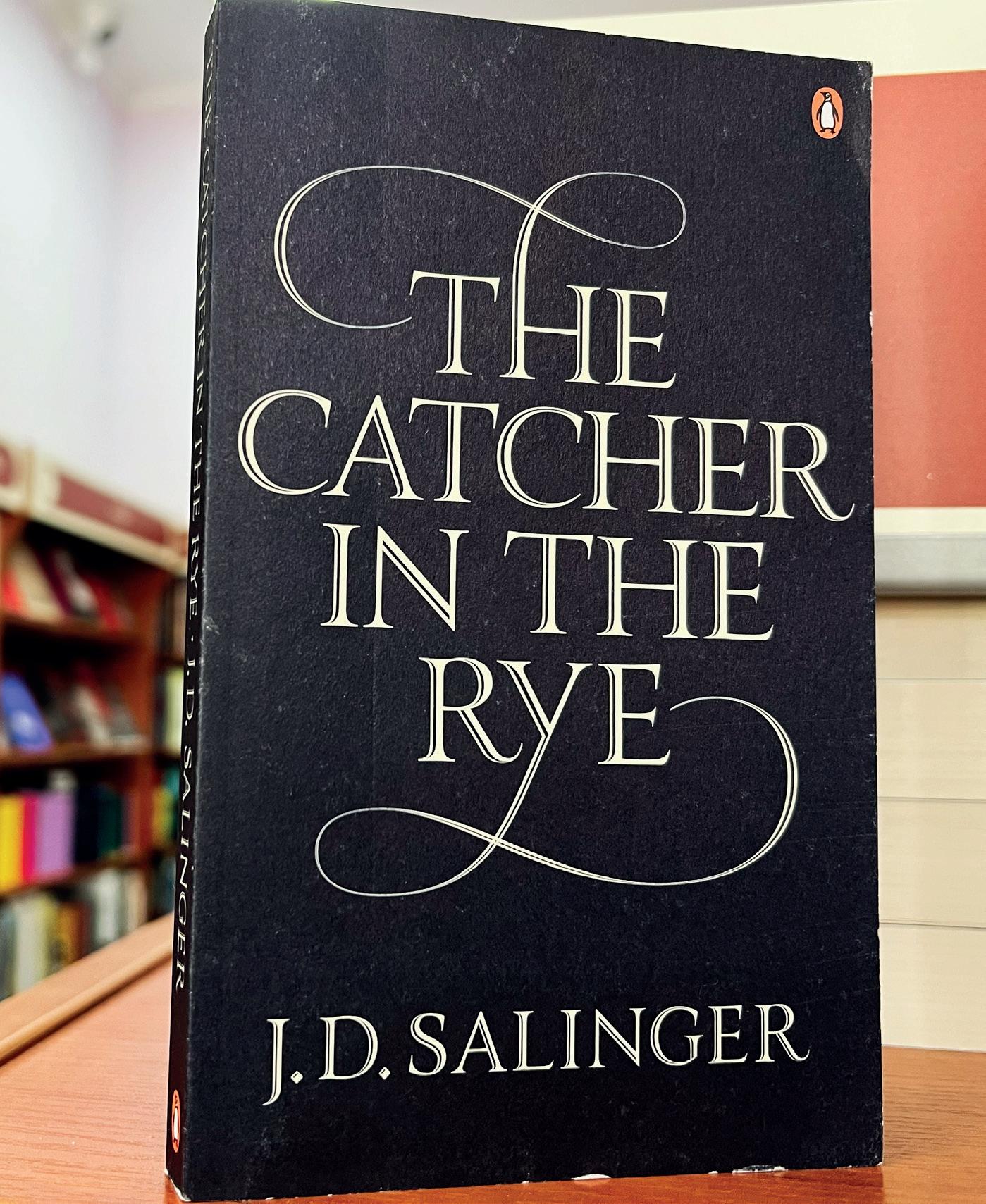
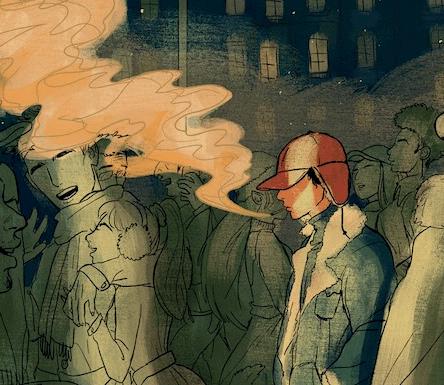
Salinger’s ‘The Catcher in the Rye’ turned out to be much more than a tan-by-thepool-read (as it was intended to be). Instead of easing me into the Italian climate, it scored a mark on my conscience, making made me consider how I perceive the world, how I interact with others, how I judge people, and thus how I judge myself. When first I heard that it is a favourite of multiple serial killers, I thought, “Oh God, I enjoyed the book… am I the next Jeffrey Dahmer?”. But you soon realise that it isn’t the hero’s psychotic behaviour that lures you in, but his isolation from society that resounds with the lonely side of all humankind. In this article, I’d like to make it very clear that Salinger is no wanton psychopath, but, in fact, a simple observer of society who uses his relatable lead character as a mouthpiece to unpick physiognomy and undermine the harsh, postwar society in which the story is set. The novel, in my eyes, is not a celebration of the psychotic or antisocial, but a deliberate social critique of cultural dysfunction (this is probably why it has been banned the world over) that begs for empathy and connection.
Enjoy. Or not. Whatever, phony.
Why We Like Holden (Despite Everything, Including Himself)
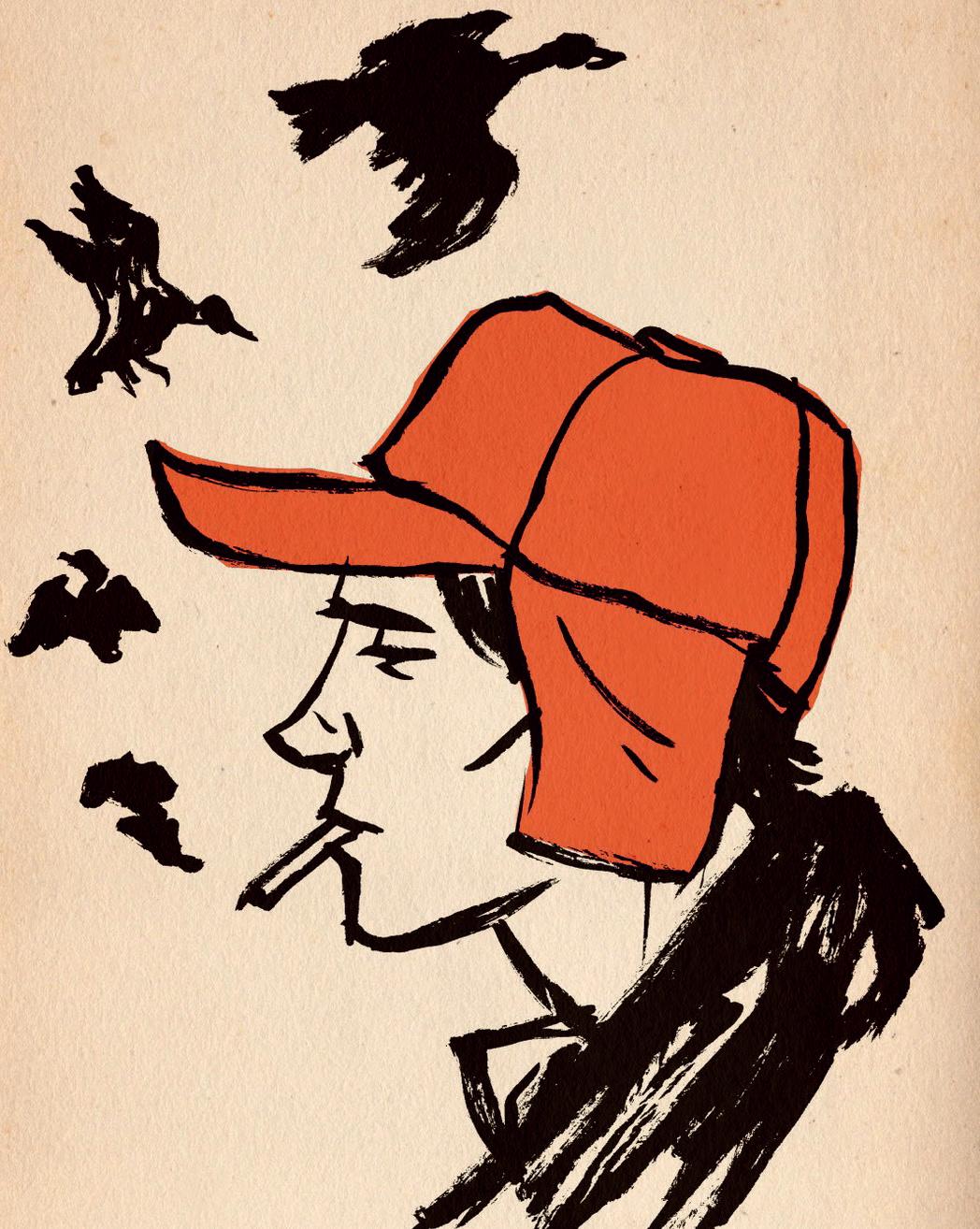
In the shining lead role of the novel is Holden Caulfield—troubled delinquent and ultimate pessimist. He is everything a 1950s American hates: a partial misanthrope, existential crisis waiting to happen and teenager… AGHHH! So, what makes us favour him? Perhaps it is his cynical wit, his dark humour, or maybe it is his unfiltered honesty to which no sensible Brit would ever admit to relating.
Cynicism, used widely across literature in attempts to cheer up sarcastic old blighters, is used in ‘The Catcher in the Rye’ to depict Holden’s hyper-awareness, instead of the usual apathy. He appears to see right through the world, detecting “phonies”—anyone disingenuous or mildly irritating. His rejection of “phoniness” (as he describes it, fifty times per page), reflects a deep desire for authenticity, rather than nihilism. He seems driven by his plain hatred for everyone who isn’t being genuine—quite sweet if you
Upper Sixth Freya Wilson
really think about it. However, despite his outstanding ability to search beyond charismatic exteriors, as Duane Edwards argues, “He himself is a phony at times, and he has virtually no self-awareness”. A harsh, but probably true, analysis and reason why so many of us love him— perhaps we’re blindly unself-aware too. And ahhh… there comes the wave of utter contemplation and self-reflection: “Perhaps I ought to be a little nicer to my elderly neighbour? Perhaps I should put the bin on the pavement instead of leaving the binmen to pull it down my drive?”. This is what ‘The Catcher in the Rye’ inspires: a slight dislocation to who you thought you wanted to be. In terms of Holden’s lack of introspection, he’s blissfully unaware of the sweeping judgements he makes. From the first line of the novel, “If you really want to
hear about it, the first thing you'll probably want to know is where I was born, and what my lousy childhood was like”, Salinger creates a pessimistic tone and immediate connection with the reader by addressing their inner thoughts directly. A brave thing to do, to assume your entire readership is thinking the same thing. And yet, it worked(!) and may be part of the reason the novel is so widely talked about to this day. James Bryan points out that “One problem is that Holden tells us very little about ‘what [his] lousy childhood was like’ or the event that may have brought on the trauma behind all of his problems”, leading the reader to question the foundation upon which Holden has built his life and thus drawing this intense sympathy for him: a child who never recovered from the scars of his early life.
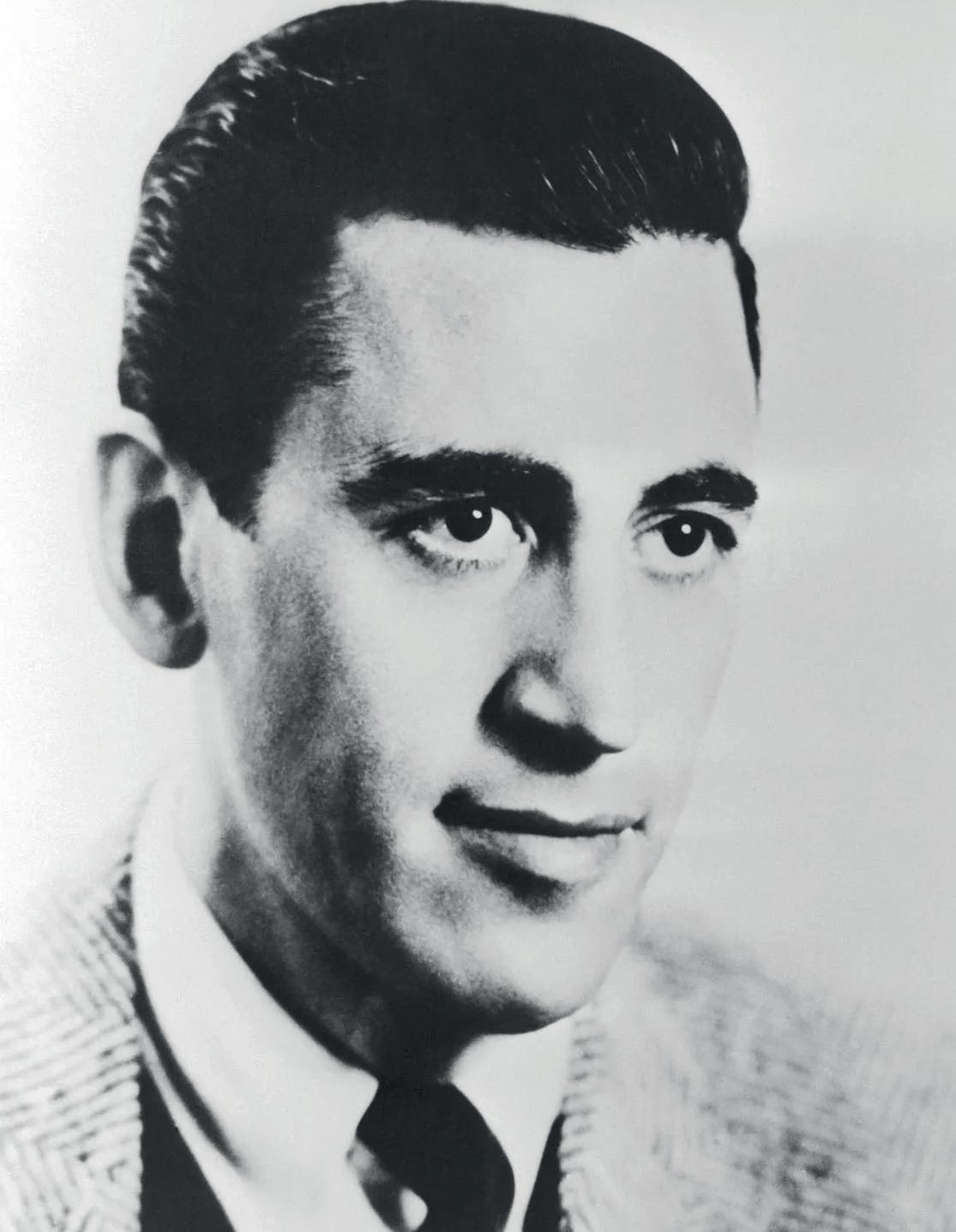
J. D. Salinger
Then, to make matters worse, Holden’s bloody hilarious, so while you’re pondering how desperately sad the narrative is, you can’t help but sit there sniggering at the cheeky vernacular while your slightly miffed parents ask what it is you’re spluttering at. Despite the humorous twang the book consistently upholds, it seems that Holden’s gallows humour is used as somewhat of a defence mechanism. Instead of confronting pain and grief head-on, he flips his emotions into commentary and exaggeration. His jests are never joyful either, always ironic and sometimes selfdeprecating, suggesting not confidence, but self-protection, reminding the reader that he is just a young man who doesn’t quite know himself yet. The loss of Holden’s brother, for instance, was a defining moment in his childhood. Allie, his young brother, died of leukaemia at six years old while Holden was just thirteen. Described as exceptionally intelligent and compassionate, Allie is idolised by his brother as this pure, uncorrupted figure, free from “phoniness”. When reminiscing about his brother, Holden recalls, “People with red hair are supposed to get angry very easily, but Allie never did, and he had very red hair”. This oddly conversational tone shifts away from emotional language and removes gravity from Holden’s grief, perhaps acting as a protective barrier to stop the moment from becoming overwhelming. For the reader, it is troubling to experience a young person trying to shield themselves from bereavement with humour and denial. We don’t just sympathise with him, we realise that in his youth he was never taught how to process anything properly. Caruth, in her study on trauma, quotes Michael Herr’s ‘Dispatches’: “The problem was that you didn't always know what you were seeing until later, maybe years later, that a lot of it never made it in at all, it just stayed stored there in your eyes”. Here, Herr implies that trauma can sometimes remain in its organic form; unprocessed and raw, so much so that the victim is left scarred forevermore. Holden, therefore, may never escape his brother’s death, cursed to eternally make fun of his own pain.
Heavy moment. Apologies. Moving on… Along with feeling dreadfully sorry for old Holden, we also trust in his honesty. Although he frequently admits to contradicting himself and lying, his openness, paradoxically, makes him reliable. He outwardly admits, “I'm the most terrific liar you ever saw in your life. It's awful. If I'm on the way to the store to buy a magazine, even, and somebody asked me where I'm going I'm liable to say
I'm going to the opera”. This total honesty and removal of objectivity eliminates the distance between narrator and reader, presenting him as this normal fella who’s pretty confused and obviously confounded within his own subconscious—he is, I suppose, a representation of the lost person we all become at some point in our lives. Furthermore, Salinger uses a stream-of-consciousness narration and youthful phrasing to generate intimacy with the reader. On this, Costello states, “In coming decades, The Catcher in the Rye will be studied, I feel, not only as a literary work, but also as an example of teenage vernacular in the 1950s”, suggesting that the novel’s linguistic power is another factor that engages the reader with Holden’s world. It’s interesting that even seventy or eighty years on, where language and slang have transformed dramatically, we still resonate with the novel and there is still so much conflict surrounding its censorship—thank America, China, Australia, Ireland… the list goes on. If it isn’t the teenage voice of reason that renders global powers uncomfortable, then perhaps it is the undiluted criticism of the societies that they have wrought. Hmm. Hassan comments that “[Adolescence]
became much less a view of the half-tragic process of initiation, as Anderson called it, than a protest against the cruelty and disorder of the world”, which, in The Catcher in the Rye’s case, is largely true. Holden’s honesty is purposefully brutal to contrast with the somewhat performative nature of adult society, thereby leading the reader to sympathise with his young voice. Of course, not all agree. Yardley ventures, “The combination of Salinger’s execrable prose and Caulfield’s jejune narcissism produced effects comparable to mainlining castor oil”. *Cue long silence* Ouch. Perhaps it could be argued that the use of juvenile language to provoke understanding isn’t the best course of action… Your move, reader.
Here’s What I Think About the Idiots Around Me
Throughout the novel, Holden constantly assesses others around him both visually and socially. By reducing others to just their physical appearance and actions, he can gain moral clarity, although his harsh judgements usually reveal more about himself than others. When he engages with strangers, such as the woman on the train,
Holden Caulfield
he gives a sharp judgement, “I gave her a good look. She didn’t look like a dope to me”. This example, is particularly indicative of Holden’s quick wit, or perhaps his naivety. He gauges in a matter of seconds the personality and intellectual capacity of this woman. Ingenuity… or a guess? You tell me.
Moreover, his takes on Stradlater, a friend from high school, tend to be very analytical, but this fact is hidden beneath his roguish vocabulary.
favour. Just because they're crazy about themselves, they think you're crazy about them too, and that you're just dying to do them a favour. It's sort of funny, in a way”.
He appears to see right through the world, detecting “phonies”
“You remember I said before that Ackley was a slob in his personal habits? Well, so was Stradlater, but in a different way. Stradlater was more of a secret slob. He always looked alright, Stradlater, but for instance, you should’ve seen the razor he shaved himself with. It was always rusty as hell and full of lather and hairs and crap. He never cleaned it or anything. He always looked good when he finished fixing himself up, but he was a secret slob anyway, if you knew him the way I did”.
Here, the phrase “Secret slob” is key. Holden isn’t bothered by the dirtiness itself, it’s the concealed ugliness which really grinds his gears. Stradlater always “looked good”, which seems immediately suspicious to Holden. To him, it isn’t the dirt that’s the real horror, but the falseness of the shine. This ties into Holden’s obsession with authenticity. Stradlater’s grooming ritual is performative, although he polishes himself up just enough to pass. He isn’t just sloppy and unhygienic, he’s morally shady. Holden frames this as a secret piece of insider knowledge. He says, “If you knew him the way I did”, positioning himself as the Poirot of his story: he is the slightly superior lie detector who sees through a world of flashy falsehoods. Nevertheless, however true his judgement may be, it does, at a glance, seem wildly disproportionate. A rusty razor is indicative of a hideous personality. His moral radar is certainly there, but it’s a wee bit sensitive.
We then see the first interaction between Holden and Stradlater:
“’Hey,’ Stradlater said. ‘Wanna do me a big favour?’
‘What?’ I said. Not too enthusiastic. He was always asking you to do him a big favour. You take a very handsome guy, or a guy that thinks he's a real hot-shot, and they're always asking you to do them a big
The line, “You take a very handsome guy […] and they’re always asking you to do them a big favour”, exposes how attractiveness can morph into moral authority. Stradlater doesn’t ask because he desperately needs help, he asks because he expects immediate compliance. Holden notices this—how vanity produces this warped social economy. On physical attractiveness, Umberson and Hughes state, “There are a few studies which suggest that attractiveness provides advantages in natural settings”, which, in this scenario, is largely untrue. Holden refuses to succumb to Stradlater’s request, indicating that he is an outsider to usual stereotypes, therefore highlighting his separation from herd mentality and consequential social alienation.
All in all, Holden’s sweeping judgements of others, however vulgar and boorish they may be, are (unfortunately) often right. Annoying part: we do the same thing every day, just inaudibly and with better manners.
Holden’s Guide to Human Idiocies: Society, Capitalism… Adults
The power duo, Carol and Richard Ohmann, call ‘The Catcher in the Rye’ “a case study of capitalist criticism”, and, despite the novel essentially being a story of teenage angst, they’re right. In a shockingly large amount of Holden’s interactions, money is the dominating topic of conversation. For instance, Holden is exploited by a prostitute later in the novel. After turning down her offer of “A throw”, Holden pays the prostitute five dollars and she leaves after reprimanding him on his inability (or refusal) to have sex. After being left in peace—or so he thought—Holden is then assaulted by the prostitute’s manager after refusing to pay more than was originally owed. This is just one of the encounters that depicts the predation and moral hypocrisy of the older
generation in the novel, exhibiting the lack of protection that figures of authority offer to children. One could argue that the remnants of the war left a lasting impact on adults, rendering them desensitised and thus unable to properly process and express their wants and needs in a softened fashion. Indeed, there is nary an adult in ‘The Catcher in the Rye’ who properly looks after Holden and conveys a kind word to him. They tend to be blunt, unyielding, and utterly dependent on his money rather than providing worthwhile conversation… just credit cards in trousers.
To add to this already-too-adult crisis, Holden’s disgust with wealth reflects his moral isolation from the American consumer culture encircling him. In Holden’s New York, even authenticity is so highly commodified that people themselves become products. Since society seems fused by materialism, Holden can only distinguish people through moral integrity. To him, their value is tantamount to their earnestness. In theory, the reader is enlightened by the idea of ignoring outer appearances… in practice they’re
horrified if someone dares eat their cereal with a fork. Not only this, but Holden admonishes those who occupy a privileged social class and as a result are “Too high in their instep”. He himself occupies this class but remains spiritually impoverished, so he bears no hypocrisy. Therefore, from Holden’s perspective, the social order offers him mobility, money, and education… yet no emotional freedom. It seems money really can’t buy happiness.
“When a body meet a body coming through the rye”: A line from old Robbie Burns’ ‘Comin’ Through the Rye’. Holden, late in the novel, mispronounces this line—he says, “When a body catch a body coming through the rye”, converting what was intended to be a crude, sexual story into an innocent narrative.
around – nobody's big, I mean – except me. And I'm standing on the edge of some crazy cliff. What I had to do, I had to catch everybody if they start to go over the cliff.”
“When a body catch a body coming through the rye”
We watch him judge, rail, flea—not because he's cruel, but because he's fragile in ways no one can mend. He wants to protect the world's innocence, but he cannot protect his own. He's a boy clinging to the edges of a world that's already stumbling, and we feel every misstep. And the title he bungles? That small slip is everything. It's not just a mistake, it is the voice of a life entirely misremembered.
Holden cannot save anyone, and he cannot save himself. By the final page, all we have left is the hollow ache of a boy falling silently and never landing anywhere safe.
“I keep picturing all these little kids playing some game in this big field of rye and all. Thousands of little kids, and nobody's
Mycenae: a site report of the Bronze Age Citadel
Lara Wakefield
Third Year
From the evidence given, the majority of the people who lived in the Citadel of Mycenae were either warriors or people with a high status. This is because of the discovery that “Some bodies were buried with jewellery and precious items”, which shows they were rich and had a high status in society. In addition, metal cups were also found near the grave which shows they wanted everyone to know they drank wine and they could afford metal cups instead of clay cups. This shows they are rich and could afford valuable items, unlike most people. Furthermore, bones of animals were found near graves, which demonstrates they were warriors and would hunt animals and fight in battles. This shows they wanted their names remembered for being in battle and wars, but also for being rich and having high status.
Mycenae was safe, but life was crowded
there was space, which made Mycenae stronger and more strategic, rather than carefully thought out. It wasn’t laid out in a neat and organised way, instead it was in irregular placements based on the shape of the hill. The palace was at the top of the hill, surrounded by buildings and worship areas placed in any available spot. Streets were always narrow and winding, and around everything were walls for defence.
Mycenae was a wellprotected city. This is because it had massive walls made of large stone blocks that surrounded the citadel, and it was built on a steep hill, which made it harder for any attackers and easy to see for miles. In addition, the Lion gate entrance was narrow and designed to make it easier to defend. This made Mycenae one of the safest cities in Ancient Greece.
it hard to move around. The city depended on the main gate. In addition, the walls were built in different stages, which meant some parts had been hard to defend.
Living in Mycenae as a regular person probably wasn’t very pleasant. Most people lived in small, simple houses without running water, and daily life consisted of hard work on farms, or in workshops in the citadel. The people had to give food and goods to the palace and therefore it wasn’t very pleasant for regular people in Mycenae.
It probably wouldn’t have been very nice for farmers or outsiders taking refuge either. Mycenae was safe, but life was crowded and refugees would likely have to do work and live in simple conditions.
The city of Mycenae wasn’t very well laid out like later Greek cities. It was built on a hill and therefore mainly built for defence. Houses and streets were placed wherever
Mycenae was well-protected but it had some flaws. The streets were narrow and could get crowded and the steep hill made
In conclusion, Mycenae was really strong because it was on a hill with huge walls so it was hard for anyone to attack. However, it was pretty crowded and life could be really hard for regular people or anyone who came looking for safety.
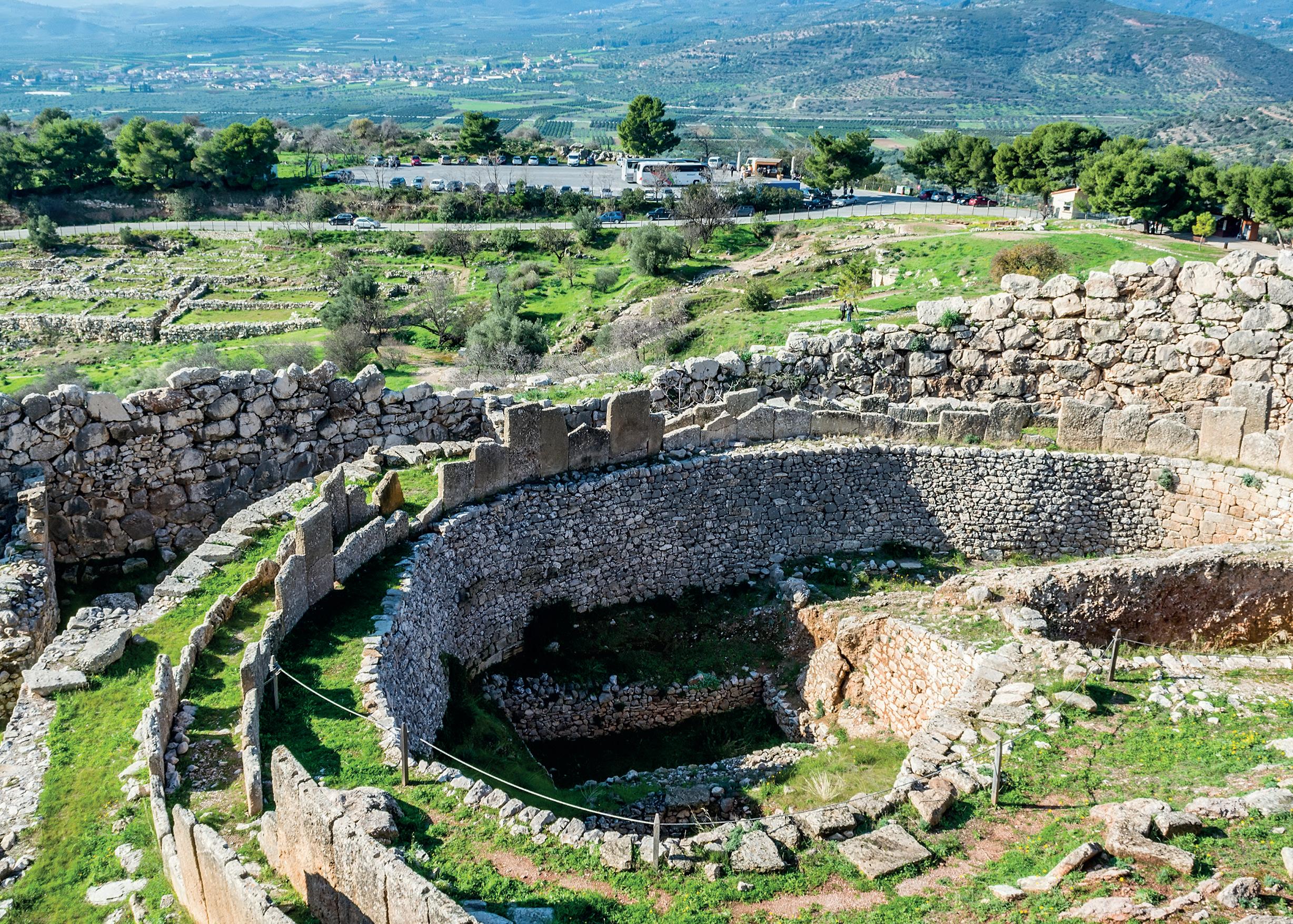
Mycenae ruins, near Mykines in Argolis, north-eastern Peloponnese, Greece
Evaluate one biological explanation of addictive behaviours
Laila Keita
Upper Sixth
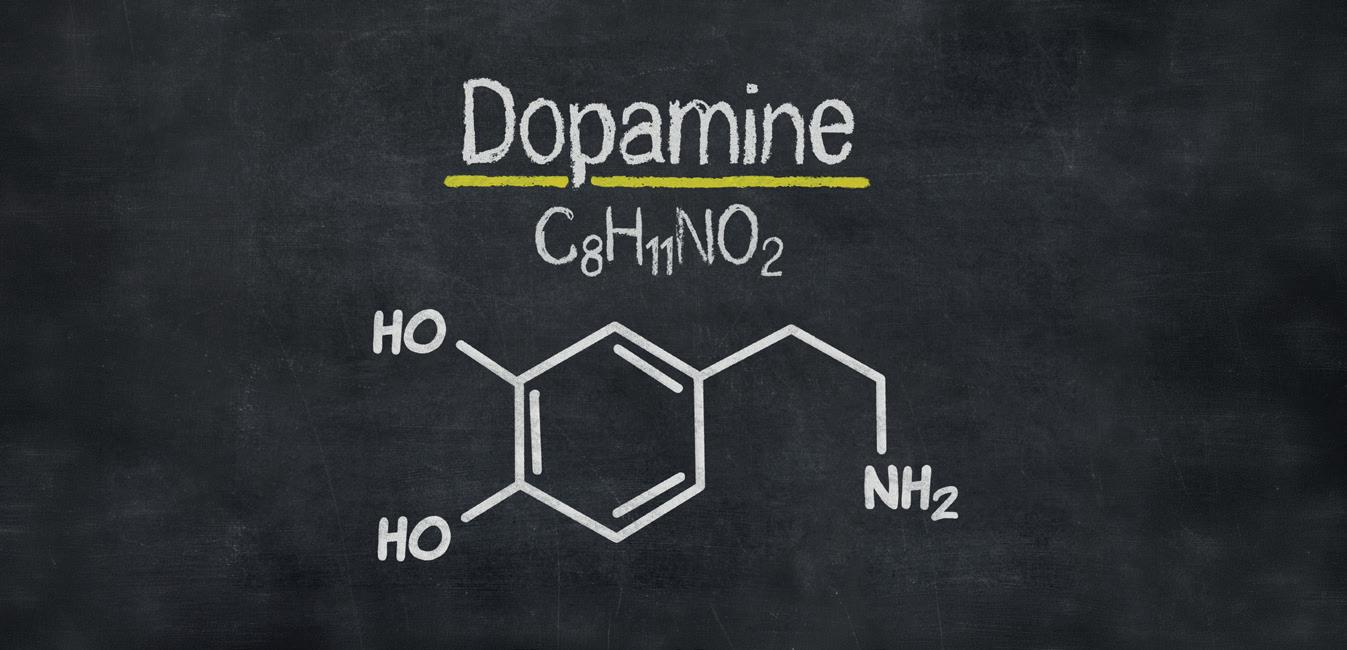
One strength of the dopamine explanation of addictive behaviour is that it is deterministic. By assuming that altered levels of dopamine control our behaviour, this highlights a clear cause and effect relationship. Also, the explanation suggests that changes in our frontal cortex change the way we think. This is exemplified in Olds and Milner’s research on rats, who could stimulate their own reward system of dopamine, but would go to the extent of exhausting themselves to do so, suggesting they are out of control of their behaviour and that dopamine is the driver for this. This is a strength because it means addicts have reduced patient blame, which may help to remove the stigma surrounding addiction and encourage addicts to seek help. However, addicts may feel out of control of their behaviour and feel like they cannot improve which may lower their self-esteem.
A weakness is reductionism. The explanation over-simplifies the complexity of addiction to biological factors, ignoring factors such as personality, peer pressure, and individuality. This may result in ineffective treatments being developed. For instance, Stokes et al. completed PET scans comparing brains of cannabis addicts and found no dopamine differences between them. This suggests that addiction does
not trigger neuroadaptation. However, these simple principles may mean that clear testable hypotheses can be created to further investigate this explanation.
Another weakness is validity. Nutt et al. pointed out that lots of the research carried out supporting this explanation uses addicts who are already dependent on a drug. This means that it is hard to establish cause and effect. Nutt et al. also pointed out that this research usually uses artificially administered drugs, such as nicotine inhalers, instead of cigarettes, which along with the use of laboratory experiments and PET scans (such as Stokes research), lowers the ecological validity. As a result, the overall validity of the explanation is reduced, undermining the
credibility of the explanation. However, this may be counterargued with the use of longitudinal studies, which can track an addict’s behaviour and brain changes over time, to establish cause and effect and ensure validity.
In conclusion, while the dopamine explanation holds credible supporting evidence, ignoring biopsychosocial factors, such as a person’s environment, removes credibility of the explanation as a whole. Perhaps, combining biological factors, such as dopamine and genes, as well as social factors, would produce a more complete explanation of addictive behaviour and provide a more reliable and effective grounding for the future of treatments for addictions.
Can social media help save democracy?
Awarded runner up in the Political Studies Association Blog Competition
Kian Noorani
Upper Sixth
Democracy is said to be in crisis. The onceidealistic vision of a pluralist society, in which popular sovereignty, political equity, and government accountability coexist, seems increasingly out of reach. If social media holds any key to overcoming this, then the road to saving democracy will be anything but simple.
Social media is a complex ecosystem that can both threaten and strengthen democracy. Part of the reason lies in its function: acting merely as a tool that users can wield to inform or mislead. Platforms are designed, regulated, and used in different ways, which can lead to the same information polarizing and deceiving people in one interaction, while sparking meaningful political engagement in another.
Doomscrolling through TikTok, I often find myself drawn into ideological shouting matches with people whose views diverge wildly from my own. This platform’s design, prioritising short-form emotional content, tends to provoke outrage more than understanding. The result is a growing user divide, where anger replaces dialogue, and mutual trust is eroded. This dynamic clearly doesn’t support a healthy democratic environment.
However, I’ve had a very different experience with LinkedIn. Unlike TikTok,
LinkedIn promotes a culture of professional credibility. Articles often cite reliable sources, and misinformation is far less prevalent. Here, I’ve been able to partake in civil and respectful political discourse. These interactions have shown me that social media can support democracy when used both in the right way and on an appropriate platform.
Unfortunately, the ideal remains far from the norm. TikTok boasts more than 2 billion users, whereas LinkedIn has only 1.1 billion. Other informal and poorly regulated platforms, like Instagram, also have over 2 billion users. Consequently, the platforms contributing to democratic decline vastly outnumber those that might help support or improve it. The average age of LinkedIn users is about 5 years older than that of TikTok users, indicating that younger people, the future of democracy, are spending more time on platforms that prioritise entertainment and division over informed civic engagement.
But it’s not just user behaviour that matters, it’s the underlying technology. Social media platforms are built on algorithms designed to maximise engagement. These algorithms prioritise emotional response over truth and meaningful engagement. This means that divisive and misleading content spreads more quickly than fact. Algorithms also trap users in echo chambers,
reinforcing their biases and creating a false consensus. The bandwagon effect can also be attributed to these algorithms. Popular posts are perceived as more ‘correct’, simply because they have more likes. Mob dynamics can easily overpower thoughtful discourse. Minority or nuanced views get drowned out, public opinion is distorted, and democratic debate is diminished.
So, is it possible for social media to help save democracy? The honest answer is that it depends on a huge array of variables— many more than can fit into a 600-word blog. Social media holds immense potential to support democracy, by broadcasting minority views, enabling civic education, and encouraging political participation. However, in its current state, social media is unable to save democracy and may indeed actively undermine it. Social media has been warped by profit-driven algorithms and dominated by platforms that reward content inspiring anger over understanding.
Democracy thrives on informed citizens, respectful debate, and a willingness to consider opposing views. If social media can help save democracy, it must be redesigned with those values in mind, and we must engage with it more consciously. Until then, it remains an open spectrum in which users have the opportunity to either add to, or take away from, democracy.
Evaluate individual differences explanations of schizophrenia
Upper Sixth Jaya Passingham
One strength of the ‘individual differences’ explanation of schizophrenia is that the cognitive explanation can be applied successfully. This explanation attributes schizophrenia to faulty internal mental processing. Therefore, CBT can be used to bring the cognitive errors that lead to positive symptoms of schizophrenia, such as delusions, into the conscious, meaning they can be replaced with more constructive thoughts. This is a strength because it means the explanation can be utilised to relieve the symptoms of schizophrenia, which would not only help the patient lead a better quality of life, but also improve society and the economy; there would be fewer individuals suffering from schizophrenia and unable to work. However, the psychodynamic explanation can't be applied—the psychodynamic therapy of psychoanalysis can't be utilised on schizophrenics, as they lack a sense of reality and can't introspect. This therapy would involve bringing up childhood trauma, and so would likely cause increased stress. Since the explanation believes that stress is the primary cause for the
illness, it would therefore likely make their symptoms worse.
One weakness of the individual differences explanations is that they are deterministic. For example, the cognitive explanation attributes the positive symptoms of schizophrenia to a lack of preconscious filters, which are outside of an individual's control. The psychodynamic believes that a mother that is controlling and distant at the same time is the central cause, which again, the individual can't control. This is a weakness because it overlooks the level of control and responsibility that schizophrenics have over their symptoms. This may lead to people feeling powerless to change, meaning they feel hopeless and don't seek treatment. This may mean they are deprived of treatments that have shown
to be very effective, such as drug therapy. However, determinism can also be a strength because it reduces patient blame and therefore the stigma associated with schizophrenia.
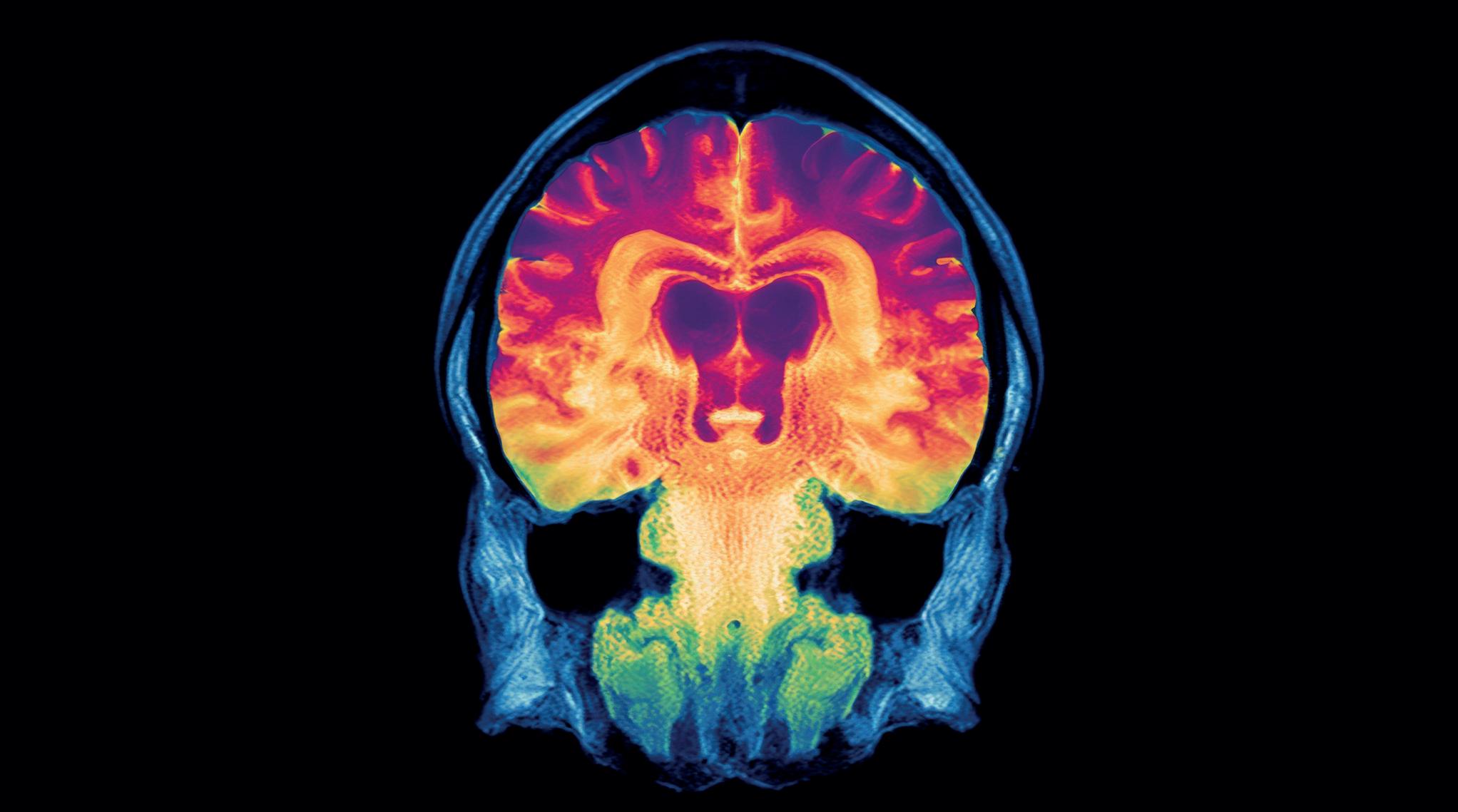
This explanation attributes schizophrenia to faulty internal mental processing
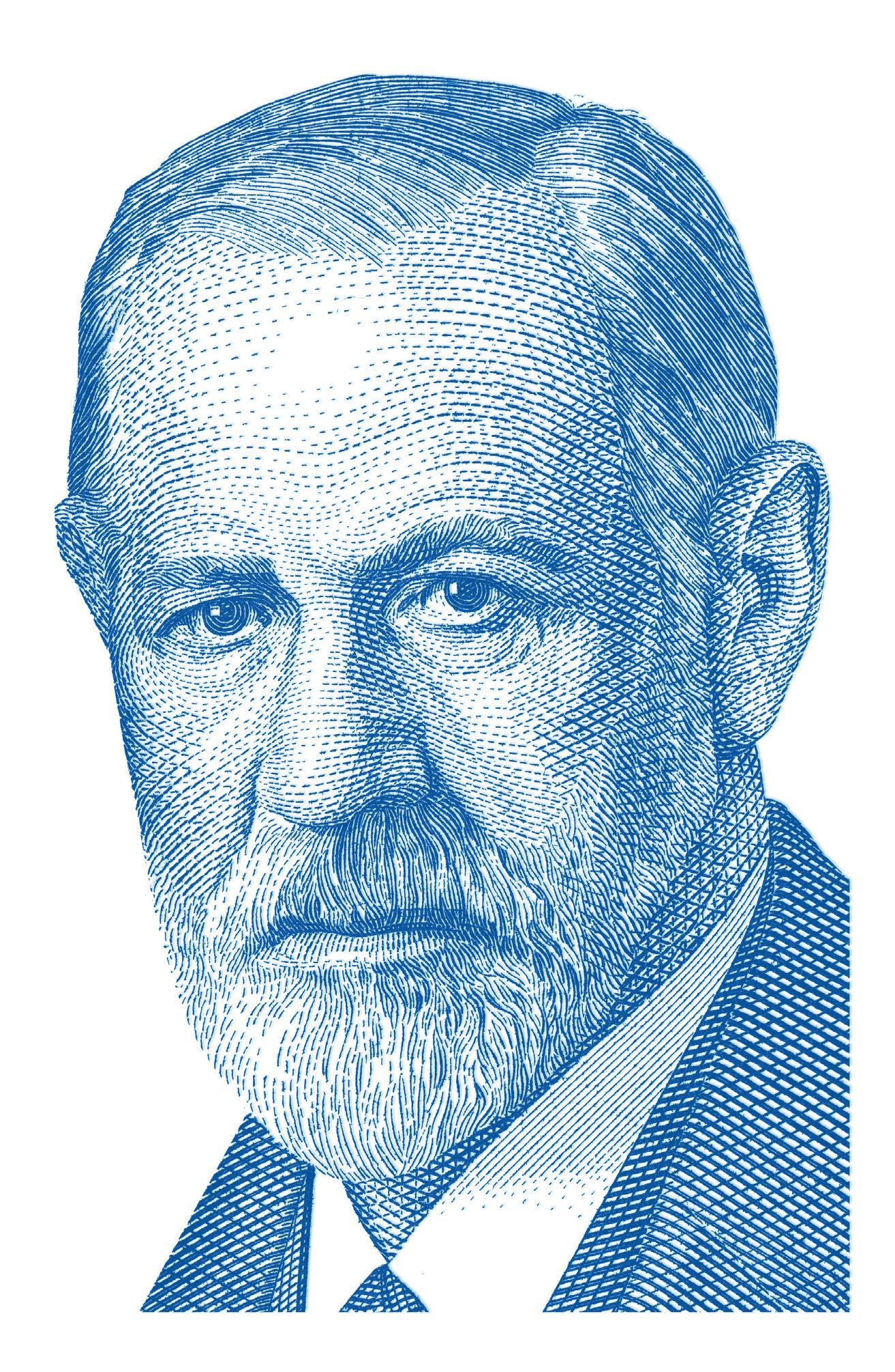
Overall, while being deterministic overlooks individual responsibility, reducing the stigma associated with schizophrenia may make individuals more comfortable with seeking treatment, improving their quality of life. However, it can be argued that both explanations lack construct validity, as the psychodynamic explanation focuses only on positive symptoms and Beck’s cognitive triad can only explain negative symptoms. Neither can explain catatonic behaviour. Freud himself questioned the credibility of his own theory stating, “It remains for the future to decide whether there is more delusion in my theory than I should like to admit”.
Mycenae: a site report of the Bronze Age Citadel
Harry Oliver
Third Year
From the evidence we have covered, Mycenae was home to a wealthy, powerful ruling class with a single ruler (hence the small megaron on top of the citadel), craftsmen (the beautiful daggers and pots point to this), soldiers (the depictions on the Mycenaean Warrior Vase display soldiers), and family servants. The presence of gold daggers and pottery hints at the presence of noblemen and their families living in the city.
The city is laid out in such a way that it must have been planned. Examples of this are the way in which the Lion gate funnels people through the entrance: if there was an attack it could be defended easily. Pathways and stairways link buildings on different levels. The building at the peak of Mycenae is the ruler’s palace, demonstrating power with residential access, workshops, shrines, and storerooms underneath it, arranged across the hill.
been the intention, to stop armies coming straight through. The overall structure of the citadel shows organisation and purposefulness, not randomness.
Mycenae was home to a wealthy, powerful ruling class
However, the steepness of the hill and narrow passageways have made movement of large groups difficult. This may have
Mycenae was extremely well protected. It was built with 295m cliffs behind it and surrounded by Cyclopaean walls. These walls were made of huge stones. The Lion gate had a narrow approach so attackers would be forced in like water through a bottleneck, slowing them down and making them go through single file. An underground cistern ensured that even in the event of a siege, they would have had access to water. The position gives visibility over surrounding land so attackers would be spotted early. These features show they were very worried about invasion.
While there were mainly strengths, the citadel did have weaknesses. For example, even though there were emergency exits there was only one main gate, so if you needed to evacuate it could be a slow
process. There was little space inside the citadel so if many people from the outside sought refuge, it would be overcrowded. If the walls were breached the defenders had limited room to retreat.
For regular inhabitants, life was busy but cramped. Houses were close together and the steep terrain, while defensive, made it more difficult to get around. The protection would have made up for this and they had access to water, workshops, and shrines. If you were a refugee it would have been safe but uncomfortable: there would have been, while plenty of water, limited food and it would have been overcrowded.
Overall, it had a very strong defensive position, strong cyclopaean walls and narrow gates, good visibility, an underground cistern and organised planning—all of these are good for defensive positions. The downsides were that it had limited space inside, especially during emergencies. Its high defensive position made mass evacuation difficult, and its heavy reliance on walls made it difficult, if they were breached, to defend it.
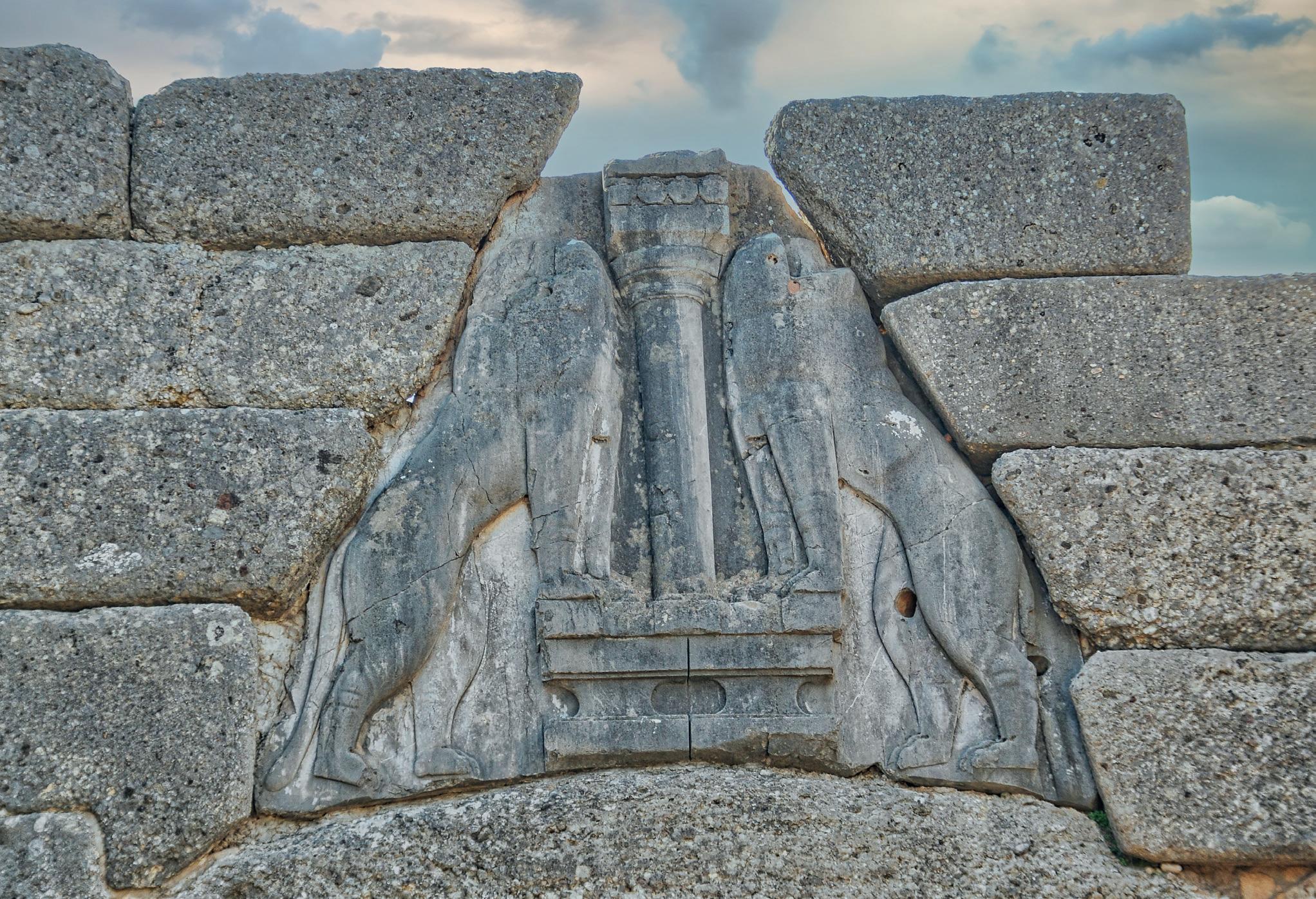
The Lion Gate (circa 1250 BC) the main entrance to Mycenae.
Discuss whether children should be banned from using social media
This unseen, timed essay was written in one hour
Dorothy Densham
Fifth Year
Protection or punishment? Elder generations have always judged young people and have believed for centuries that the children of society need to be protected and that they make terrible decisions. For example, Pliny the Elder used to scold his nephew for walking instead of studying constantly. Social media is just the same as previous problems that faced young people. Australia has recently brought in a band. Use of social media by under 16s. In this essay, I will discuss the positives and negatives that social media can have on young people and what precautions should be made in the future concerning it.
Firstly, social media can be an extremely detrimental addiction. platforms such as Instagram, TikTok and Snapchat are easily accessible and shorten children’s attention span. They are very harmful to a child’s sleep and may even have health concerns as no one really knows how much damage computer or phone screens do to the body.
Furthermore, we live in an age where mental health is now spoken about much more. Studies show that one in five young children now have a mental health condition. Social media could be seen from either aspect. On one hand it allows children to communicate about their feelings and, with the increasing use of AI, use online therapists to discuss worries and concerns with no cost. On the other hand, social media degrades some children’s mental health. Children search endlessly
through influences highlights and try to reach unobtainable standards when they see models online.
Social media can be very dangerous for children. It is easy to share private information online and young people, who have not even travelled alone before, can chat with strangers online and expose data about themselves that they didn’t know they were sharing. Video games, such as Roblox, do not have spending caps this means that a child could be spending a whole year of their parents’ salary in under one minute. This is terrifying for parents as their child could be secretly spending or taking part in activities online that they have no idea how to stop.
However, children also use social media to express themselves. Many influencers started their careers as teenagers that wanted to have fun online. They’re following then grew and now they are illustrating to young people that through posting more they can reach the same position. Social media will now be engrained in the future of young people so if they don’t start using it earlier in life, they can develop new technology sooner than if they learn at an older stage in their lives.
Banning social media would leave many children feeling isolated as it is used as a way to communicate with friends, family, teachers and other others around the world.
When computers were first introduced, people were told that they would cut down on the amount of time needed to perform daily tasks. Thus, people believed that they would have fewer working days and much more time for leisure and new activities. However, this is not the case. Now many people are constantly checking emails and receiving calls before social media you were able to relax at home with no contact from work and people slept well as there was no danger of anyone calling you. This has changed greatly as it now feels like you are always at work because people can always contact you and now there is no leisure time as all the time we spend relaxing is spent on some form of the screen. This proves that humans will always be wrong about the future and that Manning social media may not be the perfect way of convincing children to study more or relax without screens.
Moreover, the ban will be very hard to enforce tech-savvy students will always find ways to breach the system and so the band is not Effective. This will make some children feel even more excluded due to the fact that some students will be able to access social media either by lying about their age or by faking verification, and others won’t. Governments will also not be able to convince every platform to have an age verification as the company will only want more growth and will not take notice of the new laws so unless every single government decides to ban social media so that getting a VPN won’t be important then the band will not be effective.
In conclusion I believe that children should not be banned from using social media. I think that the decision is up to the parents of that child and the screen time should be set to prevent loss of sleep or little work being done. Social media is the future of our society with companies such as open AI becoming such a prevalent platform amongst young children, helping them to make notes and mark essays. A social media band would not be a protection for children but rather a punishment. I do believe however that companies should take responsibility as well as parents. Social media content for children should be limited and platform should only show educational and beneficial videos.
Ben Sherrington Strange (GCSE)
Elsie Ashby (GCSE)
Charlie Jones - Stretcher Bed (GCSE)
James Fell - Storage Unit with Swing Out Drawers (A Level)
Bella Gaunt (A Level)
Policy meets Profit: How Climate Change is Redefining the Corporate Agenda
Climate Change, a phrase that only entered public consciousness in recent decades, has since stirred debate, scepticism, and political division. Once primarily the concern of scientists and researchers, it is now firmly on the radar of governments, investors, and corporations alike.
Recently, climate change has occupied much of my thoughts. Studying it in both Politics and Geography has highlighted its urgency and multi-dimensional impact on our society. This prompted me to explore how it is not only affecting governments and the environment, but also the corporate world. After speaking to some experts in their respective fields and basing my Extended Project Qualification (EPQ) around one of the largest debates in the green movement, I wanted to share my findings on this platform, and the insight I have gained from it.
I engaged in discussions with Qahir Bandali, strategy consultant at Business Sweden, and Lucy Klinkenberg, group ESG director at Paragon. As a result, I have come to understand how environmental sustainability is no longer a peripheral concern for business. It has, in fact, rapidly moved to the heart of economic strategy and boardroom decision-making across both the public and private sectors.
What was once framed as an environmental issue is now increasingly recognised as a business imperative.
A Public Sector Perspective:
Firstly, at Business Sweden we can clearly visualise where economic growth and environmental responsibility meet. The state-owned company promotes foreign direct investment and Swedish global business expansion through by provision of strategic advice, sales execution, and operational support. In my conversation with Qahir, it became clear to me that sustainable practices and climate action are core aspects of Sweden's global business identity. The country promotes clean technology, circular economy modes, and renewable energy through strategic international partnerships. One notable initiative is the Sweden+ Taiwan Green Transition Alliance, involving
Kian Noorani
Upper Sixth
major companies such as Volvo Cars and Scania Group. This alliance focuses on boosting trade and investment in offshore wind and broader renewable energy sectors. It exemplifies the growing interconnectedness between economic growth and environmental responsibility, showing that climate strategy can coexist with capitalist ambition.
A Broader reflection: Capitalism vs. Climate:
As part of my aforementioned EPQ, I am currently reading a book titled, "This Changes Everything, Capitalism vs. the Climate", by Naomi Klein. It attempts to tackle the effect that capitalism is having on the climate and perfectly interlinks how the business and natural worlds have begun to collide. It also debates how we can find a solution to this collision. Part of the introduction reads:
"Our economy is at war with many forms of life on earth, including human life. What
the climate needs to avoid collapse is the contraction in humanity's use of resources; what our economic model demands to avoid collapse is unfettered expansion. Only one of these sets of rules can be changed, and it's not the laws of nature."
Klein aims to spark widespread reform to our society, stating that, "Only mass social movements can save us now". She argues that hypercapitalism cannot coexist alongside the green movement and is a keen advocate for universal change. Fortunately, Business Sweden is one of the companies leading the way towards a better future. Klein's view that addressing climate change requires systematic shifts in how we power and organise economies has come to fruition through Business Sweden promoting clean energy technologies and exporting them globally. Whilst Klein's argument that, "We have not done the things that are necessary to lower emissions because those things fundamentally conflict with deregulated capitalism", takes a rather stark view, a step
in that direction is vital to limit climate change.
From my other discussion with Lucy Klinkenberg, I also explored how private organisations are accommodating the climate movement, and Paragon can be used as an example of this.
A Private Sector Perspective:
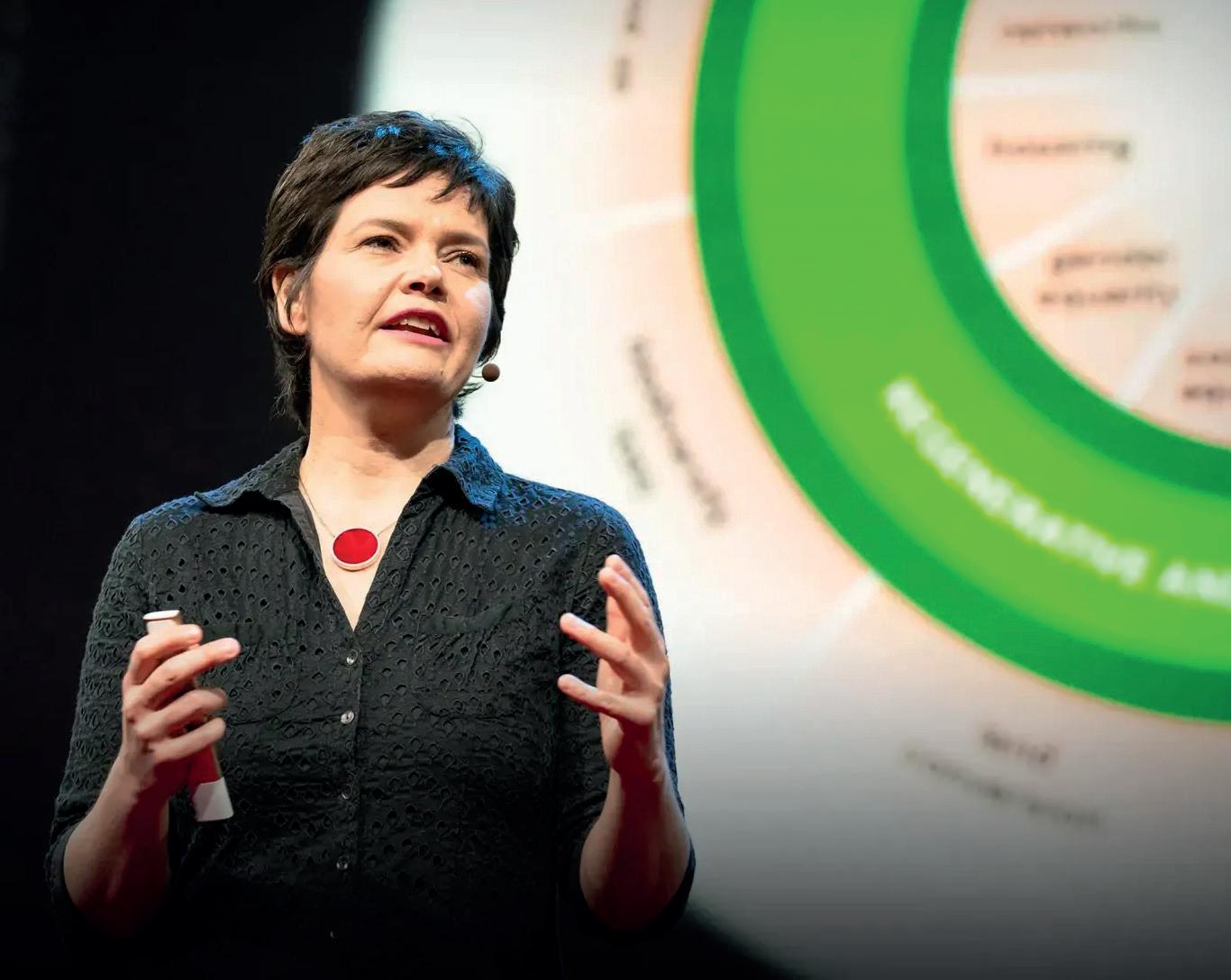
Within this conversation we shared our thoughts on the Doughnut Model of Economics. This visual economic framework developed by British Economist, Kate Raworth, reimagines the goal of economics to prioritise both human wellbeing and ecological sustainability. The aim of this model is to steer capitalism away from endless GDP growth, and reform our economic system. The model establishes a social foundation, which ensures basic human needs, and an ecological ceiling, which respects planetary boundaries. This model, increasingly adopted in the modern world, encourages businesses to integrate sustainability into their core strategies and move beyond traditional profit-centric models. Those who adopt this approach end up aligning their companies with environmental limits, addressing social
inequality, and enhancing corporate resilience in our changing social, political, and environmental landscape.
Paragon has embedded sustainability deeply into its operations, aligning with principles reminiscent of Doughnut Economics. Paragon has pledged to achieve Carbon net zero by 2035, demonstrating their proactive approach to environmental responsibility. They have also integrated a tri-pillar approach that mirrors the Doughnut Model's social foundations, through their Environmental, Social, and Governance strategy. With the help of these initiatives, Paragon exemplifies a corporate shift towards Doughnut Economics and away from hypercapitalism.
policy is no longer confined to the realm of governments, activists, and the media. The climate movement is now shaping the core strategies of business, whether this be in the public or private sector. Economic success is no longer just measured in profits, but in the balance between social cohesion and environmental sustainability.
As the climate crisis accelerates, the companies that thrive will be those that not only adapt, but also lead in redefining what it means to do business in a world that must remain habitable. To close, here is another quote from Naomi Klein:
As the climate crisis accelerates, the companies that thrive will be those that not only adapt, but also lead
What this means for the Corporate Agenda:
The insights I gained from Qahir and Lucy point to a powerful shift: climate
"The economy is an unstoppable force; it is a human creation, full of institutions and rules that can be changed. And that means it can be aligned with the imperatives of climate science, and indeed, must be."
Kate Raworth
Describe individual differences explanations of schizophrenia
Jack Roberts
Upper Sixth
One ‘individual differences’ explanation of schizophrenia is the psychodynamic approach, created by Freud, which states that early childhood experiences are a main cause of schizophrenia. One key factor of this explanation is the schizophrenogenic mother. Frieda Fromm-Reichman states that the mother-child relationship is crucial to the emotional development of the child. Lidz further proposes it is the adult with more authority, not just the
mother. Frieda said that the mother had to display four characteristics towards the child: being controlling, overprotective, rejecting, and distant. If the mother displayed these four symptoms, then the child would become schizophrenic. These characteristics of the mother affect the child’s emotional development. Therefore, in adulthood the person becomes vulnerable to stress more easily, causing them more likely to regress back to the oral stage.
Another factor in the psychodynamic approach is regression. This is when the adult regresses back to a time when there was no stress. This may happen if they have experienced a traumatic experience, such as divorce, and their ego defense mechanism takes them back to the oral stage when their id was in control and the ego wasn’t fully developed. This meant that they lose
What makes people hallucinate are factors in the environment that act as triggers
touch with reality as they can’t distinguish between their id’s fantasies and desires and reality. This causes positive symptoms of schizophrenia, such as delusions, hallucinations, and narcissism.
Another individual differences explanation is the cognitive approach, which says your unique internal mental processes can cause schizophrenia. An example is Beck, who used the cognitive triad to explain the negative symptoms of people with schizophrenia. He suggested that they have negative views of themselves and have an inability to experience pleasure. This is called anhedonia. He also said they have a negative view of the future and they think the world sends negative messages to them. They endorse these dysfunctional beliefs as their mental filters only allow negative messages in. This causes them to experience negative symptoms, such as anhedonia and avolition.
Lastly, another factor of the cognitive approach to understanding schizophrenia is explaining positive symptoms. Morrison proposed that what makes people hallucinate are factors in the environment that act as triggers. For example, sleep deprivation causes people to hear voices in their head that they are appraising incorrectly. This can encourage them to change their behaviours, such as socially withdraw or self-harm, as well as causing a change in their emotions, such as sadness.
Sigmund Freud
According to Bertrand Russell, "Hitler is an outcome of Rousseau; Roosevelt and Churchill of Locke". To what extent was he correct?
Dominic Jolliffe
Upper Sixth
Russell is largely correct in his assertion. Hitler is an outcome of Rousseau due to his belief in both rationalist liberalism and his interpretation of the ‘General Will’. Roosevelt and Churchill are outcomes of Locke due to their support for liberal democracies, founded on Locke’s treatises and their support of inalienable rights.
Russell’s view that Hitler is an outcome of Rousseau is provocative, yet it does reflect how the ‘General Will’ can be distorted into totalitarianism. Russell thought that the General Will, which often only identified with a small majority of the population, could be distorted by totalitarian leaders, such as Hitler, to become a vehicle for their political motivations and the crushing of minority voices. This was evident by the persecution of Jews, Gypsies, Catholics, Communists, and many others under Hitler. Rousseau himself was no fascist and yet his ideas were appropriated by them.
Rousseau was also known to criticise democracy. He was quoted saying, “A genuine Democracy never has existed and never will exist”, and although he did want participation from citizens, he, like Hitler,
ignored the voices of minorities. Likewise, it becomes extremely easy for the General Will to be distorted because in democracies like Weimar, Germany, parties such as the NSDAP, SPD, and KPD were voted for on a democratic basis; yet they will adhere to the general will of their voters, ignoring the will of the electorate. When the NSDAP gained power, they acted in the interest of their general will. Additionally, such a despotic individual will inevitably rise to power in a Roussean political system. As according to the General Will, whoever possesses absolute reason, and the General Will of society, can impose it upon their citizens, as there is no pretence of individualism under the General Will.
Furthermore, Rousseau was a deep believer in education moulding people, so they become loyal and good citizens. As well as having a type of censorship discouraging anti-social behaviour, he also wanted a civil religion to affirm the education and keep citizens adding to society. When a citizen broke the rules of the civil religion they had previously prescribed to, they should be killed for their ‘crimes’ so that society is protected. These ideals seem wholly
in line with the General Will as they are meant to keep society in check, ensuring it sustains itself. Yet, they seem sinisterly akin to Hitler’s regime—an education that indoctrinated its citizens into despising non-Aryans while promoting Aryan values, such as: traditional German marriage where women are consigned to the house and pressured into having children while men were expected to work or fight; or the value of eugenics becoming part of children’s school curriculum. Hitler created a level of censorship, so Germany had no freedom of press, assembly, or speech, which was reinforced by the SA, SD, SS, and Gestapo. Hitler created the Reich Church who promoted Aryan values and Nazism, just like Rousseau’s civil religion. This was a clear twisting of Rousseau’s ideals, yet his ideals provided Hitler with the platform to indoctrinate his people.
However, Rousseau would never promote a totalitarian Hitleresque style of governing as he thought we should all be governed by laws. Hitler, in contrast, did not abide by rules (for example, the Enabling Act in 1933 that ended the Reichstag), but instead ruled with an iron fist and a very
Churchill
much oppressive one. Therefore, Rousseau would not have seen his ideals in the Nazi state. As a supporter of the ‘general will’, he would have felt it should represent the public interest and be beneficial for all because Rousseau didn’t want private individuals or groups promoting their interests above the general will. Moreover, Rousseau believed that people should be educated, so that they make decisions which benefit society, preserving the state and direct democracy with every citizen creating part of the legislation. This, Hitler would never accept. Hitler did not want society coming together creating laws and legislation, he wanted to crush various minorities in society and control the rest.
Overall, Hitler is an outcome of Rousseau. Although Rousseau would never have supported him, because of Hitler’s opposition to democracy, it is definite that Hitler took inspiration from the General Will to create a dictatorship.
Roosevelt can be seen as a modern version of Locke, expanding on his ideas in a democratic framework while expanding economic rights for all Americans. Locke strongly believed in a democratic system of governing, based on the mechanistic theory, protecting individuals' rights. Roosevelt evidently continued this tradition, as in 1932 and 1936 his platform won popular support, and he delivered economic reform
and freedom. Not only did Roosevelt deliver greater freedoms to Americans, but he also protected global freedom by intervening in WW2, which protected the world from the spread of fascism spreading and the death of democracy. Without said intervention and subsequent creation of the UN and the liberal based international order, then we would be living in a more autocratic world. This order was clearly influenced by Locke; the UN and all Bretton Woods organisations, which Roosevelt helped form, included Locke’s beliefs in the rule of law, protection of property, and government legitimacy. Therefore, Roosevelt is an outcome of Locke as he expanded liberal values globally and protected them nationally. However, he differs in expanding the reach of the state.
Locke proposed that all people are born with inalienable rights: the right to life, liberty, and property. Roosevelt clearly expanded on these rights, showing how he was an outcome of Locke. Throughout his presidency, Roosevelt created and expanded ‘economic rights’ through his Second Bill of Rights; he tried to expand on political rights because he thought, “True individual freedom cannot exist without economic security and independence”. Moreover, Roosevelt enacted on this basis by enacting the Social Security Act of 1935, which was the first US programme to give elderly people the right to an income. Likewise,
he introduced the Fair Labour Standards Act in 1938, creating a minimum wage, maximum working hours, and banned child labour. Not only did he continue practicing Locke’s original rights, but he also expanded them to protect the vulnerable of the 21st century. As Roosevelt said, “These political rights proved inadequate to assure us equality in the pursuit of happiness”; hence this clearly shows how Roosevelt is an outcome of Locke. However, Roosevelt arguably contradicts Locke’s belief in limited government powers because he had the greatest expansion of the federal government since Lincoln in the 1860s. Locke believed that the government should be limited, so that individuals' rights are protected from an overbearing state who’s only role should be protecting property and liberty. Yet, Roosevelt embarked on a huge increase in federal agencies from the TVA to the WPA. Although this helped push the USA out of recession, Roosevelt shifted from Locke’s central beliefs by expanding the governments size, power, and regulatory reach. Roosevelt tried to rebalance the rich-poor gap and regulate banks and businesses with the 1935 Revenue Act, yet critics say he infringed on Lockean property rights and overstepped his powers by doing this. Many Americans became scared he would become a dictator akin to Hitler or Mussolini, because of such state involvement.
Roosevelt
John Locke and Churchill strongly believed in the right to think freely. Therefore, the governments' primary functions were to ensure people could live in a political system based on reason and to protect the rights of the individual. Similarly, Locke was a fervent believer in representative democracy over direct assembly, and his writings emphasise an assembly representing the people rather than an assembly of estates or a religious based assembly. Churchill certainly believed in the mechanistic theory; born into a family deeply involved in the British political system, he became an MP for 62 years, thus emphasising his belief in the right of an individual to choose their leaders democratically and that of a liberal representative democracy who catered to the wants of the electorate—just as Locke had done with the mechanistic and social contract theories.
Locke further believed that individuals moved from the state of nature to preserve their inalienable rights, such as the right
to property, life, and liberty, and that any despotic ruler who threatened these rights ought to be removed. Churchill evidently agreed because of his support to liberal democracies throughout his life. He showed his belief during and before WW2 that the people of Europe should revolt against despots like Hitler or the Kaiser, as he recognised as early as 1933 that Nazism could strangle Europe. He believed it was the duty of himself and Europe to fight back by rearming and fighting when necessary. He even fought in WW1 during 1916 and in the Second Boer War, depicting his support for liberty. This shows how Churchill and Locke were aligned when it came to the social contract and mechanistic theories; they both believed in the inalienable right to liberty. Churchill famously said in his 1936 essay, ‘What good’s a Constitution?’: “I hold that governments are meant to be, and must remain, the servants of the citizens; that states and federations only come into existence and can only be justified
by preserving the 'life, liberty, and the pursuit of happiness, in the homes and families of individuals. The true right and power rest in the individual". This quote encapsulates Churchill’s belief in a liberal democracy, one which Locke helped build by perpetuating the rights to “life, liberty, and the pursuit of happiness”. Therefore, it is evident that Churchill is an outcome of Locke because of his alignment with his political and social views.
While Churchill supported a liberal representative democracy in Britain, he deliberately tried to crush Indian independence and democracy, pushing against the Government of India Act and the partition of India. This is evident as he said, “If Independence is granted to India, power will go to the hands of rascals, rogues, freebooters”, emphasising his view that Indians were of a worse race than the white British were. Likewise, he was a strong believer in English colonialisation, supporting colonial policy.
However, Churchill never believed in any form of slavery because he thought, “War is horrible, but slavery is worse”, indicating he was more progressive than Locke ever was. This strays from Locke’s view of inalienable rights, that men are born free, Locke supported slavery as he believed that slavery was a punishment for any crime committed without a central government or authority existed. He deemed this fair because if you have committed an unjust war against another nation then you have surrendered your liberty. Therefore, it could be said that Locke had a more extreme view on race than Churchill did.
Overall, Churchill is an outcome of Locke because Churchill, throughout his life, carried Locke’s political ideology with him, supporting liberal democracies, representative government, the right to life, liberty, and property and British colonialisation.
In conclusion, Russell’s view that Hitler is an outcome of Rousseau, and Roosevelt and Churchill of Locke is correct. Hitler is an outcome of Rousseau, evident by his development of the General Will into a totalitarian state, with citizens indoctrinated and minorities persecuted, although Rousseau would not have supported fascism. Churchill and Roosevelt are both outcomes of Locke because of their support for liberal representative democracies and belief in inalienable rights to life, liberty, and property, which they protected throughout their lives, both nationally and internationally.
Rousseau
Jake Watson (GCSE)
Jess McCulloch (A Level)
Henri Turner - Desk Extension (A Level)
Zak Heggie - Insulated food storage for hiking (GCSE)
Eddie Lewis (A Level)
Ben Hall - Golf trolley/caddy (GCSE)
Katherine Toye (A Level)
“Use every man after his desert, and who should ’scape whipping?” Should the law treat offenders better than they deserve?
Upper Sixth Felix Bushell
Introduction
"Use every man after his desert, and who should ‘scape whipping?". Conversation with Polonius, Hamlet, or rather Shakespeare, unveils a tension that has long plagued legal justice systems: by treating everyone exactly as they deserve, does justice become indistinguishable from mercilessness?
This debate is most prominent in criminal law, given its power to deprive individuals of liberty and reflect society's deepest values about justice and human dignity. The ‘Innocence Project’ exposes criminal justice systems’ flaws and how rigid, desert-based punishments can lead to grave injustice, such as wrongful conviction; they are vulnerable to bias, poor representation, and prosecutorial misconduct. Within criminal judicial systems, a holistic approach (one which takes in to account various social, psychological, economic,
and environmental factors) to prosecution would be beneficial This is because it acknowledges the complexity of human behaviour and understands the influence of different social and economic factors, such as poverty, childhood trauma, lack of access to education, and system discrimination. These factors can contribute to the failure to adhere to the law. The current reductionist approach, which simplifies human behaviour and criminal responsibility down to individual choice and moral blameworthiness, is supported by retributivists, like Immanuel Kant and Michael Moore. It argues that justice demands proportional punishment; while deemed "fair", it undermines the existence of free will. By ignoring powerful social and psychological influences that shape human behaviour, the approach assumes individuals act always with full autonomy. This is a notion possibly challenged by scientific understanding and real-world complexity. Failing to adopt the optimistic
view that human behaviour is adaptable, and through the current strict draconian physical punishment system (such as that of the electric chair utilised in 9 American states), society is possibly ignoring cries for help, thus further alienating criminals, causing them to act antisocially.
This essay challenges the retributive principle that punishment should strictly be proportionate to a criminals moral desert, arguing instead that judicial systems ought to treat offenders more leniently than they deserve. It does not aim to excuse them from their punishment or "let them off easily", but to provide a more empathetic system that accounts for human fallibility, respects dignity, and encourages reintegration.
Justice presented as a Desert: the case against leniency
Desert-based punishment follows the belief
The Old Bailey, London
that justice involves people being punished because they deserve it—the punishment is justified as a response to the wrongdoing, not merely to prevent future crime. Possibly the most widely adopted philosophical theory is that of Kant's, in which he argues, "Act only according to that maxim whereby you can at the same time will that it should be universal law”. This supports desertbased punishment through the lens of retributivism, arguing that punishment is moral because it is the response to wrongdoing. Kant suggests people should be punished because they deserve it, not for the sake of future benefits such as rehabilitation.
Whilst Kant's view promotes a transactional (with the crime being traded for the punishment) relationship of wrongdoing, which encourages the victims receiving a karma like revenge, Christie offers a more individualistic perspective: that conflicts are a kind of property, they belong to the people involved in them. Through the implementation of Kant's theory in modern legal systems, they have robbed the involved parties of this property, taking over the handling of conflict through abstract legal procedures and providing impersonal punishments through professionalised legal actors. By enforcing justice from a distance, the system satisfies
the principles of fairness, but overlooks the psychological and social needs of both victims and offenders.
Braithwaite provides a refreshing argument that by involving victims and offenders in a conflict resolution there may be more meaningful outcomes, however, I would argue that whilst a good idea in principle, it is not a widely applicable process as, for example, in rape and murder cases the victim and victim’s family would often be too distressed to communicate with the aggressor. This assumption also risks diminishing the trauma experienced by victims of violent crimes.
Furthermore, desert-based punishment's rigid focus on moral desert undermines the ideas of environmental determinism by focusing on the aggressor's actions and how to condemn them, rather than why they performed the crime and how it can be prevented from being repeated. An example of this may be Bowlby's 44 juvenile thieves’ study, in which he found that disrupted early attachments, such as prolonged separation from caregivers, could lead to emotional maladjustment and increased risk of delinquency.
Not all crimes can or should be approached with leniency
In summary, whilst desert-based punishment appeals to clear moral logic, its nomothetic, reductionist nature neglects the existence of free will. In turn, the individualistic nature and complexity of human experience can also be neglected by possibly restricting breakthrough and growth as a society, though punishing and scolding wrongdoers, isolating them societally, and preventing them from getting "good jobs” rather than educating them and nurturing them to change and become passive members of society. By ignoring underlying causes, the system risks perpetuating cycles of harm rather than promoting true justice. Therefore, a more compassionate individualistic justice system that recognises human fallibility and prioritises rehabilitation is necessary to break these cycles and promote lasting change.
Compassionate justice: the case for leniency
Blackstone once famously stated, "It is better that ten guilty persons escape than that one innocent suffer"—a maxim
The Royal Courts of Justice, Strand, London
enshrining the moral principle of avoiding wrongful punishment; yet modern practice often betrays this principle, increasing volumes of wrongful convictions stemming from systematic failures: flawed forensic science, mistaken eye witness testimony, racial bias, and inadequate legal defence. In this context, a strict desert-based approach to punishment becomes dangerous because it assumes a definite certainty about guilt and moral blameworthiness, which the system cannot guarantee. Dworkin reinforces this argument, suggesting that rights individually must be upheld even when doing so reduces overall utility. Treating offenders better than they deserve is not a betrayal of justice but a necessary safeguard within a flawed human system.
What does judicial sentencing wish to achieve? Although I acknowledge that the role is to punish, this is not without the need to foster a safer and more just society, which is, in my opinion, possibly unattainable in the absence of rehabilitation and empathetic punishment. Maruna's 2001 study highlights that many former offenders desist from crimes not because they have been punished harshly, but because they have been allowed to have new, prosocial identities. If our justice system enabled rehabilitation through education, support, and dignity, it is more likely to reduce recidivism than if it focused solely on retribution. The Fry Society employs this idea through their advocacy for humane treatment of incarcerated women, particularly those affected by poverty, trauma, and systematic discrimination. Their research finds that instead of degrading offenders, empowering them can lead to successful reintegration and personal transformation. Moreover, John Braithwaite's theory of reintegrative shaming suggests the condemnation of harmful acts while maintaining respect for the offender can strengthen moral bonds and deter further future wrongdoing. This suggests that through humane, conscious treatment of prisoners, we can challenge their actions, teach them why their wrong doing is such, and prevent them from re-offending.
However, it must be acknowledged that not all crimes can or should be approached with leniency. Some crimes are so heinous and inexcusable that the full weight of justice must be fully applied to maintain public trust and uphold moral clarity. On July 29th 2024, Axel Rudakubana performed a premeditated mass stabbing at a Taylor Swift themed dance class, in Southport, England. He brutally killed 3 young girls: Bebe king aged 6, Elsie Dot
Stancome, aged 7, and Alice Silvia Aguiar, aged 9. He also injured 10 others, stabbing the girls over 80 times collectively. After the attack, Rudakubana was returned calmly to the police station in which he told officers, “I wanted to kill more”, thus displaying a disturbing lack of remorse and underscoring the extreme danger he posed to society. Such inexcusable, coldblooded violence demands a definitive response from a justice system, which is uncompromising and severe. His minimum sentence of 52 years in prison reflects the rightful recognition that some crimes are beyond rehabilitation and require the harshest punishment to protect moral order.
However, in most cases offenders do not fit this extreme profile and a justice system based entirely on retribution risks overlooking the potential for rehabilitation and redemption in those in which its possible. Treating offenders with dignity is not a moral failure or injustice, but rather a commitment to justice understood as fairness. This echoes through Raw’s theory of justice, in which he argues justice should treat individuals not just as moral agents but also as equals deserving of respect and the chance to flourish. In agreement with this view, I would suggest treating offenders better than they deserve is not an act of leniency for its own sake, but rather a principled stance deeply rooted in the belief that justice should seek to condemn but also transform, creating a society where wrongdoing is addressed but humanity is never abandoned.
Who Should "Scape Whipping"?
Overall, justice can be reduced to a mechanical calculation of desert. In contrast, retributivist theories, such as that of Kant, offer a clear moral framework that suggests a proportional karma-like punishment following the volume of the crime. This view fails to account for the fallibility of human systems, the complexity of human behaviour, and the evident potential for transformation. Mill observed that a person may deserve punishment, but society may not benefit from giving it. In this light, punishing offenders by strictly following what they deserve, satisfies abstract principles— however, it could potentially perpetuate cycles of harm, inhibiting rehabilitation and eroding possibility of societal reintegration and acceptance.
Shakespeare’s question encapsulates this dilemma with undoubtable clarity: if justice means giving only what is deserved, few would ever truly escape punishment. We risk our system carrying out values of retribution over redemption. However, in contrast, justice that treats offenders better than they deserve is not indulgent, but aspirational: o it recognises human dignity, fosters genuine accountability, and prioritises a future in which wrongdoing is still, rightly, met with condemnation but also with the possibility of growth. In doing so, we preserve justice as a balancing of moral scales and a force of moral progress. In a just society, justice is not measured by how harshly we punish, but rather by how deeply we believe in the possibility of redemption.
St Mildred's Court, off Poultry/Mansion House Street, London
Explore Shakespeare’s presentation of men and masculinity in Act One and Act Two of Othello
Masculinity is a repeated motif, running through Act One and Act Two. The two female characters introduced, don’t appear often and lack authority—there to be the wives and only relevant because of this role. The female absence in Othello highlights the male domination. Much of the masculine behaviour presented is rather toxic, as men are presented as pugnacious, status-driven, and sometimes rather selfish. Shakespeare appears to be making a point about this dangerous masculinity and how it can lead to downfall of characters and create havoc in society.
Firstly, the male attitude towards women is extremely important in the play. We see a clear male dominance over women, either through male ownership or men seeing women as sexual objects. It is evident that masculinity is used to many characters’ advantage, to assert dominance over women. The feeling of men owning women is evident in Brabantio’s relationship with Desdemona. Brabantio is furious that Othello is marrying his daughter, as Othello has taken her from him. He angrily says to Othello, “O thou foul thief”. This reinforces the idea that he views Desdemona as a possession, something that can be taken, in this case stolen. This possessiveness is rather uncomfortable, as he views his daughter as an object. The alliteration in
Bea Eisinger
Lower Sixth
this quote helps convey a seething anger, highlighting just how possessive he is over his daughter. The idea of Desdemona being wrongly taken from his possession is seen again through Brabantio’s line to the senators, saying, “She is abused, stol’n from me and corrupted”. The rule of three here structurally emphasises Brabantio’s frustration and upset, as a rhythmic outpouring of agitation is created. “Stol’n”, highlights further how Brabantio views Desdemona not only as a daughter, but as an object— something for him to own and dominate. Their relationship speaks volumes on the dominance of men in a patriarchal society and male ownership of women.
This childish anger shows just how highly he values his rank and reputation
A perverted male view of women is seen in Iago’s attitude. He has very misogynistic beliefs towards women, saying in front of two women, they are, “Devils being offended, players in your housewifery”. These misogynistic views highlight the sense of masculinity being above femininity, holding more power and authority. He suggests that women, slyly, only use beauty for seduction and sexual desires, “The ones for use and the other useth it”. This backhanded compliment
paints women as shallow, especially with the crude line, “She’ll find a white that her blackness shall fit”. Iago suggests women are only beneficial for sex—a sexist and prejudiced statement. This displays Iago’s blatant lack of respect for women and egotistical belief that men are superior. Through paranoia, he suspects Othello has slept with Emilia. He has no care or respect of her, not even considering her feelings and emotion on the matter, instead only thinking of himself. He states the moor has “Leaped into my seat”. This shows how he views himself as the dominant one in the relationship, and that Othello has usurped his rightful place. This blatant disrespect for women is seen yet again, as he crudely tries to rile a response out of Cassio when discussing Desdemona. Stating, “I warrant her full of game”, this crude statement shows how Iago treats and views women as sexual objects. This is contrasted with Cassio’s response who politely and respectfully states she is an “Exquisite lady”. This juxtaposition highlights Iago’s toxic masculinity and degenerate views of women. Iago uncomfortably continues saying, “What an eye she has”, despite Cassio not sharing the same views and returning the crude comments.
Finally, we see a positive male attitude towards women displayed through Othello’s relationship with Desdemona, in how he prioritises her both sexually and emotionally. We see him emotionally ruled by her, as Desdemona is referred to as the “Great captain’s captain”. We see the power dynamics of the typical masculine and feminine relationship reversed, as he prioritises her and is led by his sexual and romantic feelings for Desdemona, allowing her to have the power. Their sexual passion is clear to everyone, as Iago even says, “They hath not yet made wanton the night”, as Othello leaves to have sexual intercourse with Desdemona to consummate the marriage. She is the object of his desire, in an almost purely sexual way. Again, we see
David Harewood as Othello at the Theatre Royal Haymarket
his prioritisation of her and her femininity, as it’s said, “Our general’s wife is now the general”. At this point, Desdemona has subverted the role of women and has control over Othello. His pure love and desire for her allows this to happen, as he practically worships his wife.
Retaining masculinity is reliant on high status, as we see the importance of reputation in masculine behaviour. Iago’s obsession with reputation and rank is important as his “loss” of it. It fuels his revenge and rage towards Othello, when Cassio is promoted instead of him. He believes, “I am worth no worse a place”, and despises Cassio for being promoted. This is demonstrated through his line, “Mere prattle without practise”, where we see petulant anger from Iago, highlighted through the plosive, whereby the aggressive sound helps emphasise his rage. This childish anger shows just how highly he values his rank and reputation, which he feels has been insulted and degraded by Othello’s choice. The plosive in this line echoes a spitting noise, showing how he views Cassio and his sheer jealous disrespect. He says the ironic line of, “Reputation is an idle and most false imposition”, when comforting Cassio after his firing. This does not reflect his mindset, as he is constantly lying and cares only about rank and place.
We also see the importance of reputation to Brabantio. He is appalled when he learns that Desdemona has married Othello, as he knows it will ruin his high status as a senator. For example, we see a loss of authority as he learns of his daughter’s actions—he asks many questions like, “Where didst thou see her?”, and, “Who would be a father?”. The multitude of questions in such a short frame highlights how overwhelmed and hysterical he is. This emotional outburst displays to a reader just how important status is for Brabantio. His rage about losing status is seen in his racist outburst at Othello. He talks of Othello’s “Sooty bosom”; this racist comment shows how Brabantio views him as almost dirty and tainted, and suggests how he doesn’t want this dirtiness then spreading onto his good name. His outburst is wild and emotional as he insinuates that Othello tricked Desdemona into marriage through “Foul charms” and “Drugs or minerals”. This irrational judgement shows just how warped Brabantio’s mindset is and how he is led only by status, so when Othello comes over and ruins that, he reacts violently and with seething anger. Brabantio would have had extremely high status and a well-received reputation, so
any threats to this would have been a threat on his masculinity.
Finally, we see the violent side of masculinity, through pugnacious and aggressive behaviour. Throughout act one and most of act two, we see war discussed as a prevalent theme within society. We see violence used as means to solve issues, seen with Cassio and Roderigo’s fight. Aggression appears normalised in this environment. This is apparent in Brabantio’s behaviour; when threatened by Othello, he immediately tries to engage in violence. Othello has to say, “Keep up your bright swords”, as Brabantio instinctively turns to primal fighting when he feels insulted by Othello. He is also told, “Hold your hands”, when Othello wants to diffuse the situation. As mentioned, a lot of Brabantio’s violence is more verbal and rooted in racist outrage, seen when he calls Othello a “thing”. This dehumanises him, highlighting this sense of otherness that he associates Othello with.
Iago is also seen as a deeply violent and pugnacious character, driven by hatred and a desire for power and control. From the beginning of the play, he immediately uses crude and racist language to provoke Brabantio, describing Othello as, “An old black ram… tupping your white ewe”, which reflects his yearning to incite conflict and anger through shocking verbal aggression. Iago’s violence is seen as predominately psychological, as he manipulates others into fighting for him, such as when he convinces Roderigo to provoke Cassio, leading to Cassio’s demotion. He plays to
Cassio’s weaknesses, taking advantage of the fact he has “Very poor and unhappy brains for drinking”. Iago is seen taking advantage of certain characters’ traits, particularly their seemingly good qualities, and using them against them to create havoc and violence. For example, when he is planning to manipulate how Desdemona is “So free, so kind, so apt”, he intends to pervert something good into something evil to create violence and aggression, as that’s how he aims to gain power and solve issues. His misogynistic beliefs toward women, for example naming them “Wild cats in your kitchens”, further reveal his aggressive, confrontational nature, as he says it with no shame in front of two women. Although we haven’t seen him commit any physical violence himself at this point, Iago’s sly influence causes chaos and destruction of relationships, emphasising how his cunning and pugnacity make him the true symbol of violence in the play.
Overall, the audience’s view of men at the end of act two isn’t an optimal one. We see violence used as a means of solving issues, crazed obsessions with status, and warped perceptions of women. We almost feel sympathy for the women living in this male-dominated atmosphere. Othello, a seemingly likeable character at the beginning of the play, is slowly morphing into the same mindset of the other men as he falls for Iago’s tricks. Shakespeare displays different tropes of masculinity to perhaps serve as a warning of the dangers of toxic masculinity and certain traits, such as the disrespect of women and pugnacity.
To what extent was French colonisation the most important reason for Haiti becoming a failed state?
Upper Sixth Dominic Jolliffe
The definition of a failed state is: a nationstate that can no longer deliver positive political goods to its inhabitants, has lost legitimacy, and is convulsed by internal violence. The government's authority becomes illegitimate in the eyes and hearts of a growing plurality of citizens. This article evaluates the extent to which French colonisation is the main reason for Haiti's current failed state, or whether military dictatorships or foreign influence are more important. It does so by examining the legacy of slavery, the role of postindependence domestic governance, and analysing the influence of international actors.
French Colonisation
Legacy of slavery and Agriculture
The primary negative impact that French colonisation had on Haiti was the legacy of slavery—by 1790 there was a slave population of 500,000. Boisvert points out that the death rate being higher than the birth rate resulted from the appalling conditions slave babies were brought up in. Dupuy, writing from a Marxist perspective, emphasises economic exploitation as
central to plantation slavery. When corroborated, Dupuy’s interpretation appears more convincing by demonstrating how the transatlantic slave trade was the cornerstone of Saint-Domingue and how it became the legacy of Haiti. This legacy is a very important reason Haiti is a failed state, because it determined how global powers viewed Haiti and also how Haitian leaders would view Haiti.
The racism displayed by the enforcers of slavery allowed them to justify the systematic abuse of slaves and reap the economic benefit: “The principal way the master class raised productivity was... exploitation of the slaves by working…to death”. The inhumane treatment of black people became entrenched internationally post-independence, as the Western world could not bear to accept a successful slave revolt and black republic. Great powers, like France and the USA, only recognised Haiti in 1825 and 1862; both nations attempted invasions after 1804, hence French colonisation and the racist attitudes formed during colonisation were a crucial reason Haiti struggled to find a footing as a black republic. France formed an extractive plantation-based economy
around coffee, indigo, and importantly, sugarcane, whilst the grand blancs led an intensive form of farming due to high demand of crops and low supply of French land in the region. Eberle argues, “The French government…treated Haiti as an extractive colony”, resulting in the topsoil of Haitian land eroding, as it lacked soil nutrients due to monocultures of sugar and coffee. Hebblethwaite further emphasises that monocultures created a huge challenge for Haiti, hence French colonisation and their practices hugely damaged Haiti’s ability to export agricultural goods after independence, which furthered their economic decline and is an important reason for their failed state status.
Early independence
French colonisation led to Haiti’s infant years being surrounded by a hostile power, thus constraining economic development, as evidenced by Napoleon’s pro slavery agenda. Even though Haiti was an autonomous region in 1801, the French intended on re-colonising. French foreign minister Talleyrand wrote in 1805 that, “The existence of a Negro people in arms... is a horrible spectacle for all white nations”;
this led to national humiliation for France, but also the intense destabilisation of Haiti during its early years, with a civil war in 1807 after Haiti’s first two leaders were dead. The true intentions of Leclerc, brother in law of Napoleon and general of the expedition to recolonise Haiti, were to reassert control over Saint-Domingue by dividing the population and military. This pressure on Haiti severely constrained Haiti’s early state formation in a world of humiliated and racist international powers. However, these factors alone cannot explain Haiti’s political collapse.
Socio-economic culture
French colonisation moulded Haiti’s socioeconomic culture. The constant threat of reinvasion and slavery led to the creation of the ‘lakou’, a Haitian style collective, which dominated Haitian peasantry. “The lakou system developed...in opposition to the Haitian government”, by preventing the consolidation of wealth by foreign or state ownership. Whilst lakous were socially progressive by giving peasants more freedom over their land, they prohibited investment and mechanised farming, leading to low productivity. Lakous also led to rural overpopulation, and as such caused a lack of development in Haitian cities and extreme poverty levels: “Lakous define a ‘permanent’ equilibrium in peasant society...this equilibrium rests on poverty”. Moreover, the state could not tax these informal markets, worsening Haiti’s ability to pay back crippling French debt, and they created deep distrust in politics. Ultimately, Lakous were socially progressive but a significant economic problem. This outweighed any social benefits, whilst dividing classes and providing very little economic benefit via exports, consumption, or taxation for the government. Thus, they are a major reason for Haiti’s failed state status.
Infrastructure gains from Colonisation
Some historians argue colonisation provided useful infrastructure and that various leaders pursued a plantation based economy. Girard reports, “Haitians are right to remember slavery’s evil nature, and wrong...that all their problems derive from it”. Slavery, while morally inexcusable, transformed Haiti into a prosperous export driven economy: 75% of global sugarcane production in 1791 was Haitian, and there were trade links and irrigation infrastructure to prosper from. This shows that with effective leadership and cooperation, the Haitian economy could have thrived, not failed. Moreover, in
1804, Dessalines, the first leader of Haiti, killed four thousand French people who ran the colony, labour, irrigation, and the army. Thus, he made Haiti seem like an international pariah. Haitian founders could have ensured a thriving postindependence economy by utilising French resources.
Judgement
To conclude, Girard's political institutional argument is strong as a result of emphasising the lack of top down reform. Yet, Farmer’s dependency theory persuasively argues, “No other single factor played so important a role in establishing Haiti as a systematically indebted country”. Girard’s interpretation underestimates the long-term economic pressures Haiti took on throughout its existence. Hence, French colonisation is still the fundamental reason why Haiti has collapsed. The infrastructure Haiti inherited after independence required 95 million francs to restore colonial standards. Additionally, after independence, educated workers who wanted to help Haiti were given citizenship. Moreover, the established trade routes were cut off by major powers via boycotting Haitian goods, lasting in some form until 2003. This strangled Haiti’s export-driven economy, and when combined with the 1825 indemnity this made Haiti one of the most indebted nations in the world, and it never recovered financially after 1825. Despite France providing some level of infrastructure helpful to a new state, this benefit pales
in comparison to the legacy of slavery, the agricultural impact, hostility surrounding independence, and the socio-economic culture from 107 years of colonialism.
Military Dictatorship
Precedent of Military Dictators
Of Haiti’s forty-seven leaders, at least thirty-four have had a military background, setting a norm of militarised leadership. This trend started under Dessalines, in 1804, who after implementing unpopular policies was assassinated after three years. Civil war broke out resulting in two military dictators. Consistent usage of despotic measures with facades of democracy meant that Haiti became stuck in a perpetual cycle, preventing further development. “The lacuna [of a political framework] is a failure of political leadership as normally demonstrated by elites”. The trend is evidenced best by Francois Duvalier, who idealised Dessalines. Duvalier’s fixed 1957 election brought martial law alongside the adjourning of congress and courts in Haiti, prioritising himself over Haitians. Finally, concentrated executive power around Duvalier led to misuse of state resources and a cult of personality. Duvalier said, “I am the personification of the Haitian people. I do not have to take orders from anyone”. These military dictatorships show when power is concentrated so tightly in the hands of one man, he will betray his people, thereby ensuring state failure.
Autocratic Powers and Economic Mismanagement
Dictatorial leadership has damaged Haiti’s economy. L’Ouverture’s 1801 constitution gave him autocratic powers, thus brought about the reintroduction of plantation production. Dreams of land reform were destroyed by L’Ouverture. This began the long trend of disconnect between the elite and the general population, exemplifying the negative impact of having one man atop a narrow political apex, as shown by President Boyer, who, “Contracted a massive debt, one the citizens would have to pay for generations”. Likewise, Boyer’s attempt to pay back the indemnity was a failure. Although a plantation-based economy was unpopular, it was the only way to unlock economic growth. So, when Petion and Boyer enacted land redistribution, they moved to a subsistent farming economy. The ‘primary product dependency’ on coffee, sugar, and cotton, combined with economic mismanagement, led Haiti’s economy to reduce so much that remittances were a greater share of GDP than exports. Depreciating agricultural prices meant less tax revenue and lower national income for Haiti whilst Haiti was forced into a trade deficit. This also meant that “The State became the most important avenue of social promotion and wealth accumulation for middle classes”; once in a position of power you could then divert state funds disproportionately to the military to ensure no other person could revolt. Evidently, mismanagement of the Haitian economy by military dictators was a major reason for Haiti becoming a failed state.
Military Spending
A precedent for overspending on the military and underspending on infrastructure and education was formed by dictators. Hebblethwaite suggests, "Education remained a low priority compared with the maintenance of a large military and the construction of defences... to prevent any return by the French army". This led to the current 68% literacy rates. Fortifications built to deter invasions were never used in the 19th century, meaning subsequent leaders, and to an extent the people of Haiti, thought military might and leaders would push against this wave of imperialism. The precedent was started by
Judgement
Foreign powers significantly restricted
Haiti’s
economic sovereignty
Dessalines—after becoming emperor in 1804, he surrounded himself with army generals, protecting and concentrating his political power while disintegrating prospects of Haitian democracy. Just three years later, Dessalines was assassinated because “[He] lacked the administrative ability to bring order out of the chaos”. He became a blueprint for successive Haitian leaders; out of the thirty-four signatories of Haiti’s independence only five died of natural causes. This is crucial to understand Haiti as it is today because it represents the lost potential of Haiti and the role of its dictators.
Military dictatorships gravely affected Haiti. However, early military spending was rational because of the French reinvasion threat. This fear came to fruition in 1825, after French warships came to Haiti demanding 90 million francs in return for lost land and labour; had Boyer not accepted the indemnity a war would likely have ensued. All the early leaders “Geared to prepare for a second war of independence…at a heavy economic price”, thus it made sense in 1804 to protect Haiti against potential invasions from powers who did not want revolution spreading through their colonies. Likewise, the reoccurring theme to select military figures to lead popular uprisings was out of a real fear of reenslavement from a plethora of European and American navies who threatened Haiti throughout the 1800s and invaded in 1915. Therefore, the overspending on the military is attributable to the permanent threat of reinvasion. Moreover, institutions the French had set up during colonisation were extremely weak: “No cultural hinterland of identifiable political structures [existed]”, allowing military figures to access the political apex with ease. Thus, weak institutions and internal conflicts caused by French colonisation led to military dictatorships who subsequently damaged Haiti.
Foreign Influence
Economic exploitation
Foreign powers significantly restricted Haiti’s economic sovereignty. During the Congress of Vienna, Britain agreed to let France re-control 'Saint-Domingue', leading to Charles X placing the 90-million-franc indemnity in 1825, as recompense for losing Saint-Domingue. This indemnity crushed Haiti as it could only pay it back with French loans at 6% interest, whilst giving the French half duty payments on imports. Daut believes, “To deny that...the threat of foreign occupation made governing Haiti complicated is to contest the very force and power of slavery and colonialism”. This meant that after 1825, Haiti faced a deteriorating economic situation, with export revenues and import duties falling, failing to pay back extreme levels of debt. Furthermore, German coffee merchants who began trading in Haiti were
Kokoye Beach Haiti
“uninterested in the fate of the nation”— yet, Boyer welcomed them because in 1842 92% of government revenues came from intake at customs houses. Therefore, Haiti became dependent on foreign merchants for revenue while paying back an indemnity imposed by a foreign power using loans from that same foreign power that it could not afford to pay back.
American Support of Military Dictators
In 1915, the USA invaded Haiti, justified by wanting to create a stable political order, yet American occupation led to revolts and oppression. Before American involvement, locals could hold leaders to account; however, as marines reported directly to superiors in Port-au-Prince the locals lost any accountability mechanisms: “What had been a highly regionalized economic and political order became firmly…centralized”. Dubois argues American occupation centralised the traditional regionalised system, proving causation between the restructuring of Haitian power dynamics with greater authoritarianism. When corroborated with Paterson’s neo-imperial analysis, who emphasises the occupation lasting past 1934 with changing methods, Dubois’ interpretation is strengthened. This created a path for Duvalier and his son, who retained power for so long. Paterson’s analysis shows American influence ranged, “From military interventions to foreign aid, political subversion, support for stable dictators”. This shows the USA has been, and remains, a negative foreign influence on Haiti, whether due to implications from their occupation or later influence, and is a crucial reason for Haiti becoming a failed state.
Counter Argument and Judgement
Although the USA subjugated an entire population, they rapidly increased infrastructure. From 1915 to 1918, motorway length increased by 15,000%. By the late 1920s, 210 bridges and 9 major airfields had been built with flights running to and from Miami. Telephone lines were repaired, and 11 hospitals and an agricultural school opened. Haiti’s debts were repaid on time, freeing up taxes to pay for these projects. Girard believes, “Americans only brought stability and technical expertise, proving that bad leadership...had been the sole source of Haiti’s previous troubles”. Arguably the Americans brought benevolent imperialism and their invasion is not a major reason for Haiti becoming a failed state. However, Girard does not recognise that the occupiers failed in educating Haitians to upkeep their new infrastructure, which would have genuinely improved Haiti in the long term, but the projects became short term endeavours. Colonel Heinl visited from 1958-1963, describing an apocalypse: "Telephones are gone. Roads are approaching non-existence...sanitation and electrification are...in precarious decline". Moreover, the lack of democratisation meant another dictator appeared just four years after the marines left. The racism displayed by many marines and officials helped to fail the American occupation. Therefore, the American occupation of Haiti was a major reason for Haiti being a failed state, as not only did they subjugate an entire population, they also failed to train them to keep up the infrastructure they built, and this set Haiti up for failure.
However, foreign influence was not the primary reason Haiti became a failed
state. The influence of foreign powers operated through Haitian leaders, whose choices reinforced pre-existing internal weaknesses. French colonisation and global racism created foundations for foreign interference, which exacerbated existing domestic weaknesses instead of direct causation. Foreign powers’ attempts to dominate Haiti through economic coercion or military interventions were successful, because internal political structures were fragile, and corrupt authoritarian governance made it easier to exert influence. Foreign influence amplified vulnerabilities but was not the central cause of state failure.
Overall, French colonisation is the most important reason for Haiti’s state failure. Although foreign influencers and military dictatorships created huge issues. From restricting economic sovereignty to supporting dictators or ignoring popular consent and choosing personally enriching decisions they are important reasons for Haiti’s state failure. However, foreign influence exacerbated vulnerabilities in Haiti’s political and economic institutions but was not the central reason for Haiti’s failing state. Military dictators operated within a framework bequeathed by the French, and nearly all decisions they took related to a reinvasion and thus crushed any chances of democracy. In contrast, immediately after independence, the destructive legacy of slavery and the hostile international environment that Haiti presided in meant that Haiti’s export driven economy became paralysed when the global economy tried to blacklist Haiti, as its existence threatened the colonial order of the Atlantic. Furthermore, the agricultural practices France pursued, and the ecological damage that ensued, meant that Haitian agriculture and most of its exports were seriously impacted, harming its economic potential.
Although the French left infrastructure behind that was potentially useful to a fledging state, it was in disrepair after the thirteen-year civil war, requiring huge levels of investment to reinstate. Any useful infrastructure or workers left after 1804 pales in comparison to the negative repercussions French rule had on Haiti. Colonialism’s reshaping of the socioeconomic mindset led to divided races and a schism between the rulers and ruled, via lakous, which prohibited taxation and exports due to subsistent farming and inhibited GDP growth.
Haitian Gourde
Europe can no longer rely on NATO for its security guarantees
This unseen, timed essay was written in one hour
Lower Sixth Thomas Wilby
The North Atlantic Treaty Organization was set up as an alliance that provided security and ensured military strength for countries in Europe and America. This alliance improved trading and the integration of knowledge and technology, improving its members’ military power and development. Its main benefit was a deterrent caused by the unification of countries for invasions and threats. However, NATO’s protection of its members is not as absolute as it was in its formation.
A significant factor of this situation is the integrity of the alliance NATO is based on. The USA is a prime example of the instability of global alliances. President Trump’s introduction of the idea of the USA leaving NATO has substantial implications, as the USA has significant military power and a large global influence. The resistance of NATO to military threats
could be compromised and severely reduced by the United States’ exit. A few countries have singular aircraft carriers, with only a small number having two. By contrast, the USA has eleven. This serves as a representation of the military influence held by the American armed forces, which would no longer be in aid of NATO, and potentially, be a threat.
One country that, despite having a comparatively smaller navy to the USA, offers significant military influence is Russia. In the past year, President Trump and President Putin have been engaging in diplomatic communications regarding the Ukraine conflict, however they have maintained a good personal rapport and positive relationship, which may suggest future alliances or agreements. This is just one example of the potential threat of Russia. The USA and Russia are two of the largest global military powers and an
amalgamation of their influence could form a significant opposition for NATO.
NATO’s capability to ensure protection for its members may also be threatened by another global issue: climate change. Climate change has already impacted the global economy vastly, but its progression may have an influence on politics and international relations. Climate change is commonly known to be causing the melting of polar ice caps and consequently a global sea level rise, but this will affect some countries more than most. Russia has lacked a warm water port since the collapse of the Soviet Union. This limits its trade possibility and, most importantly, naval proliferation and development. This has impacted Russia’s political decisions and military actions, which is shown in its previous altercations, such as the annexation of the Crimea to maintain control over Sevastopol. Vladivostok,
Russia’s main port, is vulnerable to freezing over in winter, which has significant implications for the Russian economy. Climate change may increase Russia’s access to global trading and naval development. Melting of sea ice could cause an increase in ports and naval bases across North-Eastern Russia, which may become a threat for NATO.
The climate crisis may also affect NATO in terms of consumerism and trading. Its environmental effects will cause shifting in manufacture and material extraction locations and scale across the world, as a result of both destructive natural disasters and restrictions on mining and deforestation. Developed countries may seek new and more economically efficient locations for securing materials, products and services, forming new trade alliances,
NATO’s power and influence is only maintained and supported by the reliance and cooperation of its members
providing income for developing countries and shifting international relations. This may result in other countries leaving NATO or refusing to contribute or fund military projects overseas, further reducing NATO’s influence.
In addition, the climate crisis is being responded to and combatted by governments, in the form of the development of “green” or renewable energy. This will cause a reduction in the availability of oil and fossil fuels, increasing demand. This will provide economic power to Russia, which has control over a significant amount of oil. However, many developed countries in Europe are developing and improving renewable energy, which will decrease their reliance on external energy sources.
NATO’s power and influence is only maintained and supported by the reliance
and cooperation of its members. In addition, NATO is an agreement, not a physical barrier, and can be breached. Neutral countries protect themselves by refusing association with other nations and organisations. However, they are often an indirect threat to NATO, as was demonstrated by Germany with its invasion of France when Belgium, which was part of neither of the powers, was used as a pathway for the German army to infiltrate France.
Finally, in a new era of the technological revolution, warfare is becoming heavily digital and increasing in destructive power rapidly and on a daunting scale. Drones, bio-chemical warfare and nuclear weapons are the future of warfare, and organisations will find it increasingly difficult to resist these methods of fighting.
Therefore, although its power has protected the countries of Europe for decades, Europe can no longer rely on NATO for its security guarantees.
You could almost believe the streets were paved with gold. The sun dipped low over Berlin, the city basking in the last of the evening rays. Rooftops shone fiery bronze, the bricks below glazed with honeycoloured light; even the concrete slabs of the multi-storey car park glowed a rich amber. But it was all gold that would wash away on a rainy day.
For now, the stifling heat seemed to suppress the rippling undercurrents of unease that had crept across the city. Flags and banners hung limp from lampposts, poster glue oozing down the edges of flyers curled and brittle from the heat. But the flicker of a silhouette, the incongruous streak of khaki green, the tapered barrel of a gun jutting from a corner did not escape me. Every home I walked past was firmly shut, curtains drawn—with one exception.
The cool interior of the Friedrichstraße library welcomed me with that unmistakable earthy scent of books. It was only the stir and rustle of pages, but the room seemed more alive than the rest of the city. The library had become the refuge of not just leather-bound heroes and heroines: muffled sniggers betrayed a pair of mischief makers coaxing a particularly hairy spider into a handbag; an exasperated lady in the gardening section was chastising a frazzled tomato plant; there was even a young girl at the back reading Charlotte’s Web with what looked like a piglet snuffled into her elbow. But I made a beeline to my own corner— the quietest shelves: Ancient History. I knew these volumes inside out, and was convinced they’d kept the section just for me; no one else ever seemed to take them out. The librarian’s lime green spectacles had a knowing glint as she yet again stamped out ‘The Odyssey: DUE: 31 August 1961’.
Perhaps I would have paid more attention had the nymphs and sirens and cyclopes not trailed me home. Perhaps I would have noticed how I was the only passenger on the S-Bahn at rush hour as it crossed into East Berlin, or how my mother deftly paused the radio as I opened the front door, my father tossing the newspaper into the fire where it spat and hissed and seethed into smouldering black ashes.
Creative Writing Piece
Emelia Slinger
Overdue Fifth Year
“FREEDOM!”
The cry shattered the peace of the morning, and I wondered how a deranged-looking man wildly lassoing a sledgehammer could possibly bring about freedom. The Berlin Wall looked defeated already, the concrete tired of the relentless scrawling, spitting, beating, and battering that had scarred its face.
But the city was far from satisfied.
Like a badly coordinated tsunami, a surge of chainsaws, pickaxes, screwdrivers, and whatever else had been scavenged from the garden shed, tore apart what had thrown our neighbourhood into permanent shadow. Jubilant cries and hollers of victory resounded through the crowd, swelling as the front lines set eyes on streets of their city they had never seen before. I followed in a trance, half wondering if this was some Pied Piper I had childishly believed. But there was one place I had to go.
The streets crossed Berlin as they always had, shining as they always did, in rain that had always fallen. But my knees had never creaked up those library steps, nor my eyes struggled to read the list of opening times, nor the hand on the doorknob looked so
weathered next to its polished brass. The new librarian could hardly have been older than the wall itself.
“Can I help you?” she asked.
I placed the book in front of her, the fragments of its cover barely hanging together, its soft pages disintegrating at the edges. I was afraid it might crumble.
She flipped it open, eyebrows raised. “This card is from the old system. We haven’t used these in decades.”
“I’m afraid it’s a little overdue.”
She scanned the date again. “You’re— you’re twenty-eight years late.” Her voice grew gentle. “Keep it. I think it belongs to you now.”
I ran a hand over its gold embossed cover; the letters had almost disappeared. But the library was the same as always: quiet, peaceful, safe.
Odysseus spent ten years trying to get home. It took me twenty-eight.
Brandenburg Gate, Berlin
Jasmine Tilney (A Level)
Jack Steer - Storage Cabinet (GCSE)
Lily Goddard - Jewellery Cabinet (A Level)
Ellie Cornell (A Level)
Anabelle Hewett - Boot/exterior Storage (A Level)
Will Burnett-Herkes - Pair of Bedside Tables (A Level)
Dora Maynard (A Level)
Ellie Jackson (A Level)
Nightstalker
This poem won the Hampshire Young Poets Competition (12-16 category)
Eliza Carrick Fifth Year
Watching you from afar when you were young, The growing bloodlust, stronger, as you age.
A chance meeting while in a tree I hung, Poor little soul, she thought I was a mage.
In her house, my eyes focus on her neck.
Her long wavy hair, in soft ripples, hangs.
“You look so pale, are you okay?” She checks,
Then her eyes catch on my pearly white fangs
Her neck so warm, her blood so very sweet, Her life force fading, her heart-beats now stop. Fangs sink deeper into the tender meat.
The false pretence of friendship I now drop.
Friendship? She thought. Don't make me laugh! Human like her? She thought. I'm only half.