The Chronicle News | Vol. 7 No. 97 | May 15–31, 2026
Out Loud: The Power of Community, Connection & Care
LANSING, Mich. — The Chronicle News and WKAR Public Media are proud to announce a new collaborative partnership designed to expand access to meaningful community-centered education content and resources.
The collaboration will focus on strengthening connections between families, educators, youth, and community organizations through storytelling, multimedia content, public conversations, and interactive events designed to enrich and inform the community.
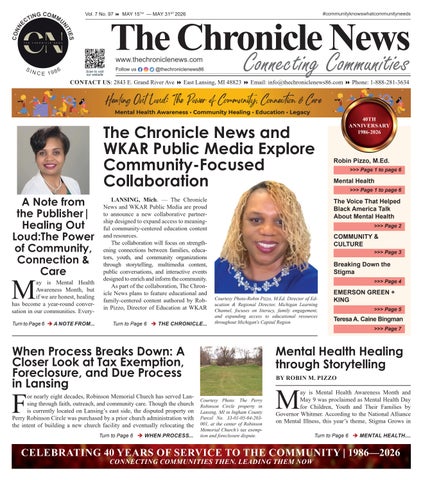
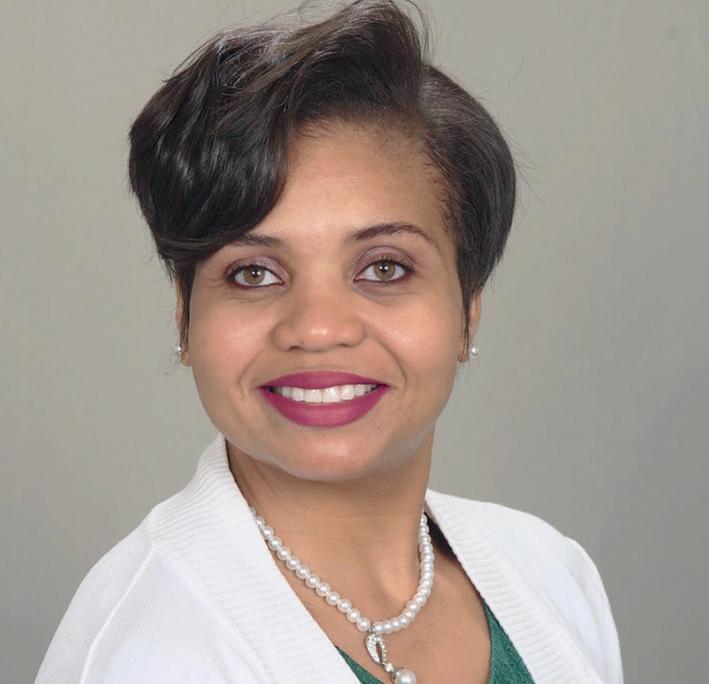
ay is Mental Health Awareness Month, but if we are honest, healing has become a year-round conversation in our communities. Every-
As part of the collaboration, The Chronicle News plans to feature educational and family-centered content authored by Robin Pizzo, Director of Education at WKAR
When Process Breaks Down: A Closer Look at Tax Exemption, Foreclosure, and Due Process
or nearly eight decades, Robinson Memorial Church has served Lansing through faith, outreach, and community care. Though the church is currently located on Lansing’s east side, the disputed property on Perry Robinson Circle was purchased by a prior church administration with the intent of building a new church facility and eventually relocating the Turn to Page 6 WHEN PROCESS...
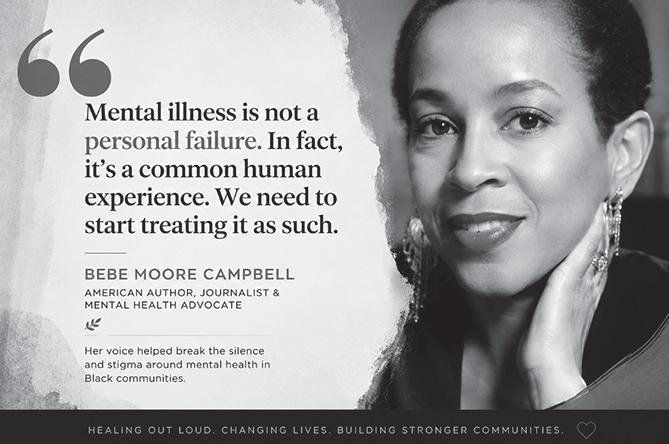
Health The Voice That Helped Black America Talk About Mental Health
Mental Health Healing through Storytelling
BY ROBIN M. PIZZO
ay is Mental Health Awareness Month and May 9 was proclaimed as Mental Health Day for Children, Youth and Their Families by Governor Whitmer. According to the National Alliance on Mental Illness, this year’s theme, Stigma Grows in Turn to Page 6 MENTAL HEALTH....
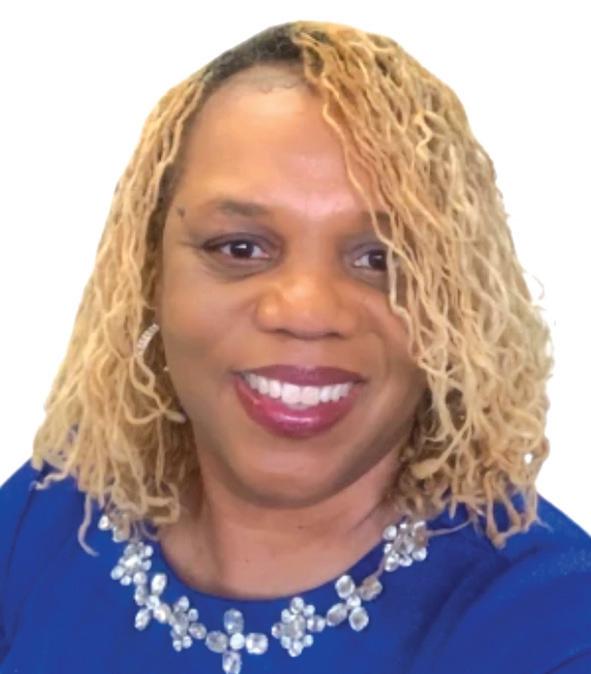
Courtesy Photo-Robin Pizzo, M.Ed. Director of Education & Regional Director, Michigan Learning Channel, focuses on literacy, family engagement, and expanding access to educational resources throughout Michigan's Capital Region
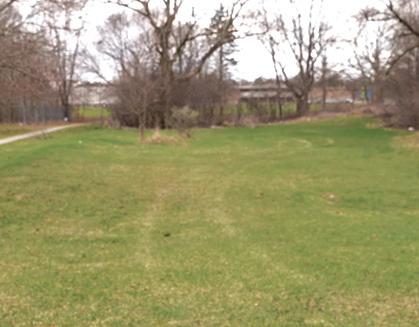
Courtesy Photo: The Perry Robinson Circle property in Lansing, MI in Ingham County Parcel No. 33-01-05-04-203001, at the center of Robinson Memorial Church’s tax exemption and foreclosure dispute.
Robin Pizzo, M.Ed.
BLACK HISTORY
Bebe Moore Campbell: The Voice That Helped Black America Talk About Mental Health
Long before conversations about therapy, trauma, and emotional wellness became more common in Black communities, Bebe Moore Campbell was already challenging the silence. An accomplished author, journalist, and mental health advocate, Campbell used her voice to speak openly about the emotional struggles many Black families quietly carried for generations. Through her writing, public advocacy, and community work, she helped create space for conversations that had too often been avoided, misunderstood, or hidden behind phrases like “just pray about it” or “stay strong.”
Born in Philadelphia in 1950, Campbell became widely respected for her novels and essays that explored race, family dynamics, identity, and emotional healing within Black communities. But beyond literature, she became one of the nation’s strongest advocates for culturally competent mental health care and greater awareness surrounding mental illness in communities of color.
Her advocacy became deeply personal after helping care for a loved one living with mental illness. That experience opened her eyes to the lack of accessible resources, representation, and understanding available for many Black families navigating mental health challenges.
At a time when stigma often prevented open discussion, Campbell spoke boldly about the need for compassion, education, and support. She encouraged Black Americans to see mental health not as weakness, but as part of overall wellness and community healing. “Silence and shame surrounding mental illness can be just as damaging as the illness itself,” Campbell often emphasized through her advocacy work and public conversations.
In 2008, Congress officially recognized her impact by establishing Bebe Moore Campbell National Minority Mental Health Awareness Month, observed each July. The designation continues encouraging conversations around mental wellness, access to care,
and breaking barriers for underserved communities. Today, her legacy remains deeply relevant. Black Americans continue facing disparities in access to quality mental health care, culturally responsive providers, and affordable treatment. According to the American Psychiatric Association, historical inequities, stigma, and systemic barriers still impact how many communities experience mental health support. Yet conversations are changing. More Black therapists, advocates, churches, educators, and community leaders are speaking openly about trauma, anxiety, depression, burnout, grief, and emotional wellness. Younger generations are increasingly embracing therapy, boundaries, rest, and healing practices in ways previous generations often could not. In many ways, Bebe Moore Campbell helped lay the foundation for that shift.
Her work reminds us that healing begins when people feel safe enough to tell the truth about what they are carrying. It reminds us that resilience is not pretending pain does not exist, but finding the courage to address it openly and collectively. And perhaps most importantly, her legacy reminds us that mental health conversations belong in Black communities too, not whispered in shame, but spoken out loud with dignity, compassion, and hope.
Healing in Our Own Words: Exploring Black Mental Health Advocacy and Its Impact on Community Healing
There was a time in many Black households when phrases like “pray about it,” “stay strong,” or “what happens in this house stays in this house” stood in for conversations about mental health.
For generations, survival often came before softness. Many families carried grief, anxiety, trauma,
exhaustion, and depression without ever having the language to name it. Yet even in silence, healing was always searching for a way in, through church pews, kitchen table conversations, music, storytelling, community care, and the quiet resilience passed from one generation to the next.
Today, more Black voices are speaking openly about mental wellness, therapy, emotional healing, and intergenerational trauma. That shift is helping communities move from silence to support, reminding us that healing does not have to happen alone. Still, barriers remain. For many Black Americans, mental health care has historically felt out of reach, misunderstood, or unsafe. Generations of systemic racism, medical discrimination, economic inequality, and cultural stigma have contributed to deep mistrust of healthcare systems and mental health providers. In many communities, people are still more likely to suffer quietly than seek professional support.
According to Greene Mental Wellness, historical
trauma and systemic inequities continue to impact how Black individuals experience and access mental health care today. These barriers are not simply personal struggles, they are often rooted in generations of unequal treatment and limited access to culturally responsive care. At the same time, resilience has always existed within Black communities.
Long before mental health conversations became mainstream, healing often happened through community. It happened through faith leaders who listened, aunties who checked in, barbershop conversations, choir rehearsals, neighborhood gatherings, and the unspoken understanding that sometimes surviving together was its own form of therapy. But resilience should not require silence.
Mental health advocates across the country are now encouraging families to replace shame with conversation and survival
For generations, many learned to survive in silence. Healing begins when we finally feel heard.
The Colors We Carry: I MOGUL Mentoring Group Brings Generations Together
A Day of Learning and Growth
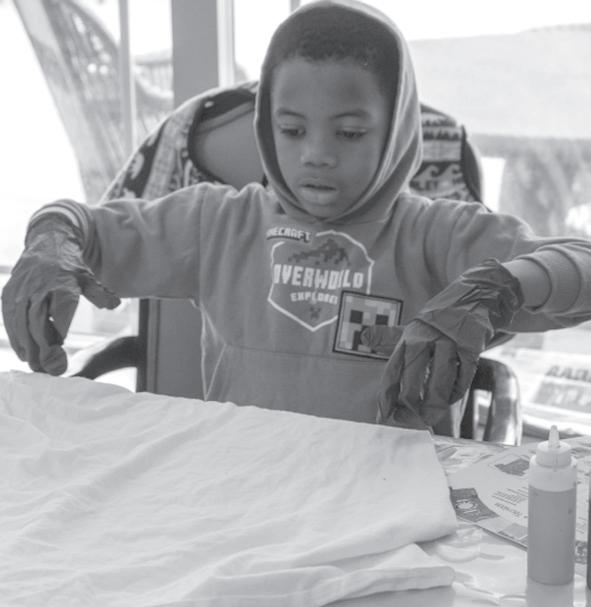
The room didn’t look like history at first glance. It appeared as plastic-covered tables, bottles of dye, and gloves too big for small hands. It looked like a typical Saturday afternoon. However, if you stayed long enough and listened closely, you would realize something deeper was happening. At
“Achievement
one table, a young man sat quietly, observing. He wasn’t just watching the colors or the process. He was watching time. Across from him sat a man whose hands had lived longer than his questions. These hands had built, lost, learned, and kept going. Now, they gently guided fabric into folds, tying it tight like a story that refuses to unravel. Conversations began that no classroom could teach.
The Power of Intergenerational Learning
Around the room, this connection was happening everywhere. Laughter echoed between generations. Stories were being passed down without a microphone. Wisdom, unfiltered and unpolished, landed exactly where it needed to be. Young men watched older men, not through screens, but in real life. They saw patience, presence, and what it looks like to show up—not just for oneself, but for someone else. In a world that doesn’t always offer that image, that moment mattered more than anyone could measure. Liam didn’t just make a shirt that day. He made a connection. He learned that strength doesn’t always raise its voice. Leadership doesn’t always announce itself. Sometimes, it looks like standing beside someone, guiding their hands, and saying, “You got it.”
Building Bridges Through I MOGUL
Not just programs. Not just events. But bridges. Bridges between young and old. That’s what IMO-
GUL is building. It connects who we are with who we’re becoming. When a young person sees a man who looks like him, moving with purpose, leading with heart, and giving without asking, something shifts. Something sticks. This connection fosters a sense of belonging and empowerment. It reminds us that we are part of a larger community, one that supports and uplifts each other.
The Impact of Community Engagement
As the shirts dry and the colors fade into patterns, the tables get cleared, and the room quiets again, what’s left isn’t just fabric. It’s memory. It’s meaning. It’s proof that community still thrives when we choose to show up for each other.
Many generations. One shirt. Endless stories. Somewhere in that room, the next leader wasn’t just learning how to tie-dye; he was learning how to become. This experience is a testament to the power of community engagement and the importance of mentorship.
The Role of Mentorship in Personal Development
Mentorship plays a crucial role in personal development. It provides guidance, support, and a sense of direction. Through programs like IMOGUL, young individuals gain
in Every Field of Human Endeavor” Where Excellence Gathers: Gregory S. Thomas and the Leadership Driving the Northern Province Forward
“Achievement in Every Field of Human Endeavor.” For the men of Kappa Alpha Psi Fraternity, Inc., it is more than a motto, it is a mandate. A standard. A calling to lead, serve, and build across every space they occupy.
TConnecting the D.O.T.T.S.
Driving Outstanding Transformation through Service is more than an initiative; it is a commitment to embodying the true spirit of Kappa Alpha Psi Fraternity, Inc. Through intentional service, we strengthen the bonds between Undergraduate Chapters, Alumni Chapters, Senior Kappas, Kappa League, families, and the broader community.
Each act of service connects one brother to another, one generation to the next, advancing the good of the
hat mandate was on full display at the 94th Northern Province Council in Lansing, Michigan, a gathering that was not simply a meeting, but a convergence of leadership, strategy, and purpose; And at the center of it all stands Gregory S. Thomas, a leader who is not just continuing the work, but refining and restructuring it for the future.
Fraternity. As we continue to lead, mentor, and serve, we exemplify that the true measure of leadership is found not in titles or recognition, but in the lives we uplift and the unity we sustain through service.
From structured business meetings and leadership forums to community initiatives like partnerships with the Greater Lansing Food Bank, the council operates as both a governance body and a community engine.
This is where direction is set. And what happens here doesn’t stay in the room. It flows outward, into chapters, cities, and the communities they serve.
A Leader Engineering More Than Momentum
Gregory S. Thomas the 26th Northern Province Polemarch, Thomas is not simply leading, he is engineering an ecosystem of accountability, growth, and sustained impact. And the results are already visible. Sold-out sessions. Overflow crowds. Lines at the door.
Built on Foundation, Driven by Precision Thomas’s leadership is
Courtesy Photo: Meet Liam. Here is here participating in the Silver Sessions Tie Die gathering.
YOUR HEART WORKS HARD SO DO WE
When your heart needs help, trust the specialists who work just as hard as your heart does.
YOUR HEART WORKS SO DO WE
When your heart needs help, trust specialists who work just as hard
Our cardiac team combines advanced diagnostics, minimally invasive procedures, and the latest research to provide exceptional care for every beat. We’re here for your heart, 24/7.
Learn more at mclaren.org/lansingheart.
"Breaking
Down
Our cardiac team combines advanced diagnostics, minimally invasive procedures, the latest research to provide exceptional for every beat. We’re here for your
Learn more at mclaren.org/lansingheart.
the
Stigma:
How
Dr.
Tareva
DMcLaren Greater Lansing is proud to be the only hospital system in the Tri-County region accredited as a Chest Pain Center by the American College of Cardiology.
Watts, LLMSW is Advocating for Mental Wellness"
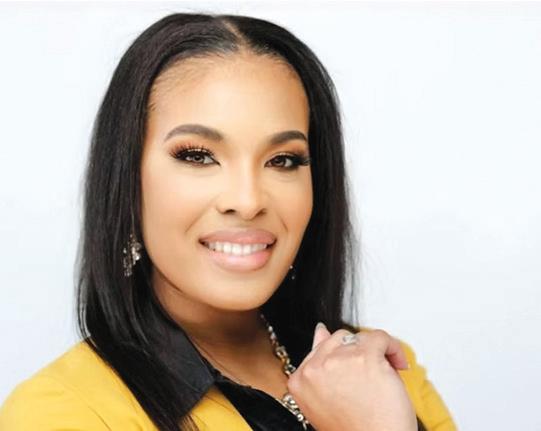
r. Tareva Watts, LLMSW, is making a significant impact in the field of clinical social work. Her mission is to assist individuals in their journey toward mental wellness and restoration. A native of Lansing, Michigan, Dr. Watts takes pride in giving back to her community.
With a Doctorate in Biblical counseling and education, Dr. Watts integrates spiritual and faith-based best practices into her therapeutic approach. She offers counsel-
ing and therapy to the community, equipping clients with healthy coping mechanisms to promote mental wellness.
At Inspired Faith Counseling & Consultation (IFCC), a faith-based practice, Dr. Watts provides a safe and non-judgmental space for individuals to explore their thoughts, feelings, and concerns. With expertise in trauma, relationships, and personal growth, she aims to unearth inner strength and resilience in others within a judgment-free
environment.
In December 2021, Dr. Tareva partnered with "The Dignified Aging Project" and Ingham County Treasurer Eric Schertzing to address the declaration of Racism as a Health Crisis in Ingham. The Mental Health Awareness and Resource Fair, organized as a response to this "call to action," aimed to raise awareness of mental wellness, with a specific focus on BIPOC (Black, Indigenous, People of Color) communities.
Dr. Tareva Watts
CULTURE, CREATIVITY & CELEBRATION
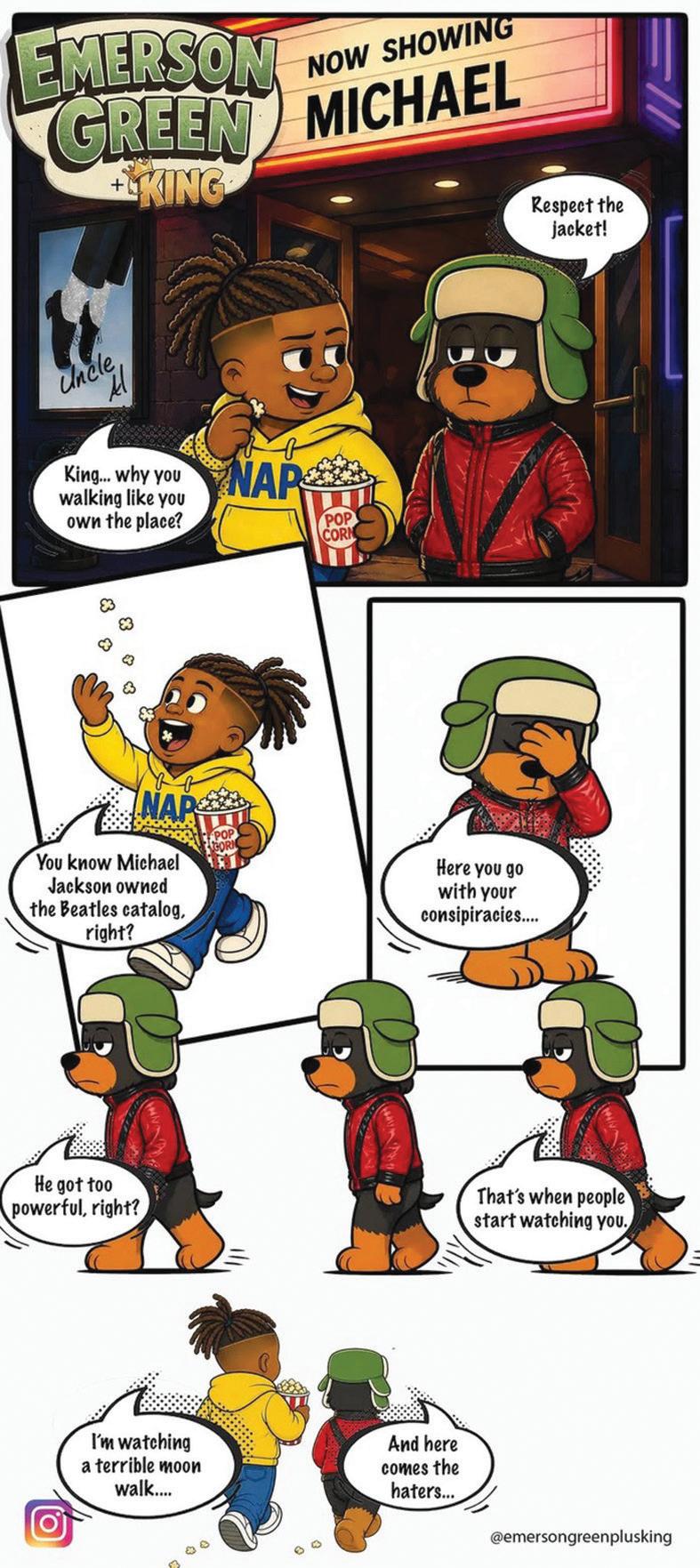
EMERSON GREEN + KING: EPISODE
30: RESPECT THE JACKET
BY AL SMITH
Scrolling through all the posts about the upcoming Michael Jackson biopic got me thinking… I haven’t seen it yet—waiting for the right moment to experience it with my family—but even the anticipation says something.
Some entertainers make hits.
- Others become moments.
- But a rare few… transcend generations.
Michael Jackson didn’t just follow the industry—he shifted it. What really stood out to me over the years wasn’t just the music… It was the conversation around power. Ownership.
- Control.
- Legacy.
Acquiring the Beatles catalog wasn’t just a business move—it was a statement. Today that catalog is worth over $1.2 billion. That’s not just success. That’s leverage. And yet, when artists start moving into ownership, wealth, and influence beyond the norm… the narrative often changes.
“Crazy.” “Difficult.” “Out of touch.” We’ve seen it before.
- Lauryn Hill.
- Dave Chappelle.
And many others who chose a different path. Even in music today, artists like Bizzle speak on how narratives are shaped, how voices are managed, and how stepping outside the lines can come at a cost. Now… I’m not here to push conspiracies. But I am here to ask questions. Why do we celebrate greatness,
but get uncomfortable when that greatness turns into ownership and control?
Why do we love the art, but question the artist when they outgrow the system that created them? Making this strip made me laugh… but it also made me think. Sometimes what looks like a “terrible moonwalk” to one person… is someone else stepping into a space they were never expected to reach.
And when that happens?
- People start watching.
- People start talking.
- And yes… here come the haters.
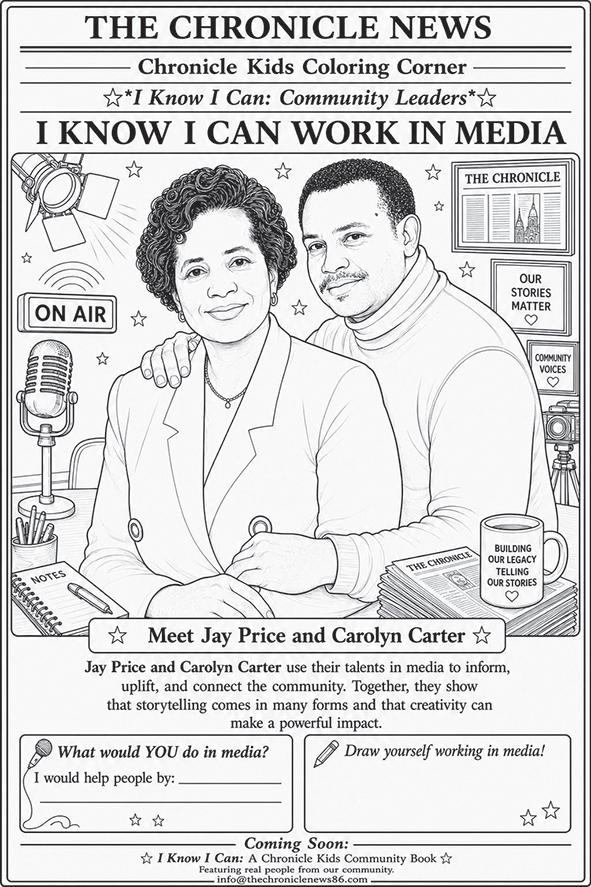
Jay Price & Carolyn Carter: A Legacy of Media, Creativity, and Community|The Chronicle Kids Community Coloring Book Series, Volume 1
Jay Price was more than a radio voice, he was a storyteller, a leader, and a builder of community connection. As a media executive, radio personality, and co-founder of The Chronicle Newspaper, he used his voice to inform, uplift, and bring people together.
Alongside him was Carolyn Carter, a talented graphic designer and creative force who brought stories to life on the page. Through her design, she gave the community something to see, something to hold, and something to be proud of. Together, they built more than a newspaper. They built a legacy.
Their work reminds us that storytelling is powerful, and that media shapes how a community sees itself, and how it imagines its future. Because of their vision, The Chronicle continues to stand as a voice for the people, proving that one idea, one paper, one story at a time, can change everything.
Young readers can look at Jay Price and Carolyn Carter and see that their gifts matter. Whether through words, design, or leadership, they too can create something that leaves a mark on the world around them. This is where it started. This is why it continues.
Support the Chronicle Kids Initiative
The Chronicle Kids Community Coloring Book Series is designed to inspire the next generation by highlighting real people, real careers, and real possibilities within our community.
If you are interested in supporting this project through sponsorship, partnerships, or by featuring a future community leader, we invite you to connect with us. All donations made
in support of this initiative are tax-deductible.
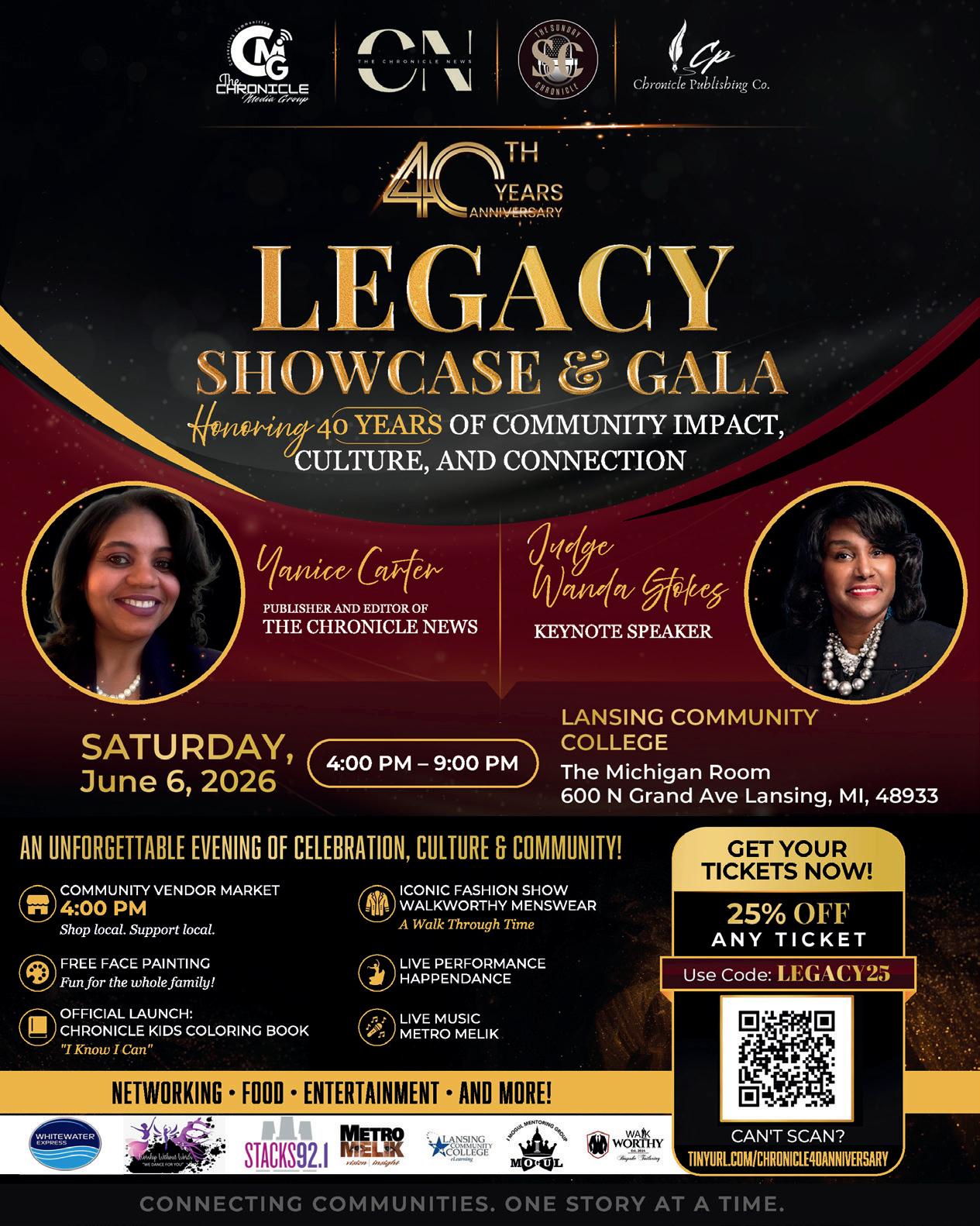
Official Launch Event
The official launch of the Chronicle Kids Community Coloring Book, Volume 1 will take place at:
The Chronicle News 40th Anniversary Showcase & Gala
June 6, 2026
4:00 PM to 8:00 PM
Lansing Community College, Michigan Room
A celebration of legacy, community, and the future we are building together.
Get Your Tickets
https://tinyurl.com/Chronicle40anniversary
Use code LEGACY25 for 25% off any ticket tier
“I Know I Can: A Chronicle Kids Community Book”
Featuring real people from our community who are making a difference every day.
For sponsorships, partnerships, or pre-orders:
info@thechroniclenews86.com
Public Media and Regional Director for the Michigan Learning Channel. Her work focuses on early childhood development, literacy, family support systems, social-emotional wellness, and equitable access to educational resources. Robin Pizzo leads several outreach initiatives through WKAR that bring workshops, learning tools, and community programming directly into neighborhoods and organizations across Michigan’s capital region. Prior to joining WKAR in 2018, she served in leadership roles at Lansing Community College and spent many years working in K-12 education.
“We believe strong communities are built through access to information, education, culture, and meaningful dialogue,” said Yanice Y. Carter, Publisher of The Chronicle News and Executive Director of Lansing Community Catalyst Corp. “This collaboration allows us to bridge public media and grassroots community journalism in a way that directly serves families and creates opportunities for learning, conversation, and connection.”
The collaboration may also create opportunities for future workshops, family engagement events, literacy initiatives, educational storytelling projects, and community resource programming.
Both organizations share a commitment to amplifying voices, supporting lifelong learning, and ensuring families have access to trusted information and supportive community spaces. Additional announcements regarding future initiatives and collaborative opportunities may be shared in the coming months.
About The Chronicle News
Founded in 1986 by Larry “Jay Price” Carter and Carolyn Carter, The Chronicle News has served Mid-Michigan for nearly four decades as a trusted source for community news, culture, business, education, and storytelling. Under the leadership of Publisher Yanice Y. Carter, the publication continues expanding through multimedia journalism, youth initiatives, podcasts, workshops, and community engagement programming.
About WKAR Public Media
WKAR Public Media is the Michigan capital region source for award-winning original television and radio, and the best from PBS and NPR. WKAR is part of Michigan State UniScan to read full story
where we turn, people are carrying something. Grief. Burnout. Anxiety. Financial stress. Loneliness. Trauma. Exhaustion from simply trying to hold life together while still showing up for work, family, church, school, and community. Some people are quietly surviving battles nobody else can see. And yet, even in the middle of all of that, I continue to witness something beautiful across Michigan and beyond: People are still reaching for each other. That matters.
This issue of The Chronicle News reflects not only the headlines of our community, but the heartbeat beneath them. Inside these pages, you will find stories about resilience, advocacy, culture, history, entrepreneurship, faith, family, travel, justice, creativity, and healing. You will read about leaders building spaces for expression through art and fashion. You will see stories centered on veterans, community accountability, and the ongo-
ing conversations surrounding fairness, due process, and public trust. You will travel with us to Tulsa, Oklahoma, where Black history, entrepreneurship, and culture continue to shape a city many families are now discovering for themselves.
You will also see us stepping into a meaningful new chapter through our developing partnership with WKAR Public Media.
Silence and Healing Begins in Community ensures no one struggles alone. The NAMI website also promotes, “Your Story Can Spark Healing.” This is a profound truth that I embrace each time I share my personal story. Also, the reason why I created the I Feel series to invite all youth to share their story to ensure they receive the supports they need for mental health wellness.
Life started out rocky for me. Today, most would define it as traumatic. Although, in the early seventies, few words were used to define or even discuss mental health care, experiences or diagnosis throughout the country, but even more so within the black community. The words most often used were demoralizingand stigmatizing. The intention behind these words almost kept me from receiving the support I needed.
My birth mother, Naomi, experienced a late in life mental health illness because of a closed head injury. This injury fractured Naomi’s mental stability which developed into Schizophrenia Paranoia. This diagnosis resulted in the termination of her parental rights. My old-
er brother and I wereplaced in foster care. He was seven and I was two. This was traumatic enough. Yet Naomi’s mental health disease continued to fracture into glimmers of light amidst the darkness. When there was lucidity, Naomi fought to reclaim her children. This meant abducting my brother from foster care numerous timeswhich led to a childhood of instability, separation, and scarcity. For me, it meant continued abduction attempts even after I was adopted into a loving home at the age of five. These attempts occurred for years.
Despite this tumultuous start, I’ve lived a life healthy, whole and in service of others.
Evidence can be found in my 28-year marriage, the raising of my four children into healthy, contributing adults and the compassion in each helping hand I offer. I know my wellness is a result of receiving care for myown mental health as a child after my first-grade teacherrecommended Scan to read full story
congregation to the south-central side of the city.[1]
position that the property no longer qualified for exemption.
For years, The Chronicle News has worked to preserve stories that might otherwise go unheard. WKAR has long served as a trusted educational and public media institution throughout the capital region. Together, we believe there is an opportunity to strengthen community storytelling, expand educational outreach, support families, and create more spaces where people feel informed, connected, and seen. That
Today, that property sits at the center of a legal dispute raising questions about tax exemption, property classification, foreclosure, and constitutional due process. This is not simply a story about unpaid taxes. It is a story about process, and whether that process was properly followed.
A Property With History
The parcel at issue, located on Perry Robinson Circle in Lansing, Michigan, Parcel No. 33-01-0504-203-001, has been connected to Robinson Memorial Church since December 14, 1999, when it was purchased for $450,000.[2] The property spans approximately 6.18 acres and has been classified as Commercial Vacant, a designation that became central to the City’s
But Robinson Memorial Church maintains that the property was never abandoned in purpose. Pastor Michael West states his predecessor purchased property on the south-central side of town with the intention of building a new church facility and eventually relocating the congregation to the vacant property on Perry Robinson Circle. It’s also tied to ministry planning, food access work, and community-based initiatives.[3]
The Missing Middle: Between Exemption and Taxation
Documentation provided by the church indicates that Robinson Memorial Scan to read full story
Statement from Attorney Teresa A. Caine Bingman, Attorney for the Family of Isaiah Kirby
Today, the family of Isaiah Kirby viewed what the East Lansing Police Department characterized as video evidence related to the fatal shooting of Isaiah Kirby. What was presented was not transparency. It was a highly edited, selectively compiled, and deeply one-sided presentation that raises more questions than answers. Nothing shown today justified the level of deadly force used against Isaiah Kirby.
The presentation did not provide the complete sequence of events, full officer interactions, uninterrupted body camera footage, or the full context necessary for the public to independently evaluate what occurred. Instead, the family was shown a curated narrative prepared by the very agency whose officers killed Isaiah.
The family and the public have repeatedly demanded the release of the complete, raw, and unedited video evidence. To date, East Lansing Police Department and Michigan State Police have refused to provide that transparency.
When someone is killed by police, the truth cannot be filtered through edited clips, selective camera angles, or a narrative shaped after the fact. The video presented to the family was narrated by the East Lansing Police Chief in a manner that appeared designed to reinforce the narrative advanced by ELPD during their press conference immediately following the April 15th shooting.
question is whether deadly force was objectively reasonable and legally justified at the precise moment it was used. Nothing presented today answered that question.
What remains deeply troubling is the extraordinary level of force used, including the number of shots fired and the fact that Isaiah sustained multiple gunshot wounds throughout his body, including wounds to his back. These are critical facts that were neither clearly depicted nor meaningfully addressed in the video presentation. These circumstances demand independent scrutiny and full transparency.
The family deserves the truth. The public deserves transparency. And this community deserves confidence that investigations involving police officers’ use of deadly force are conducted fairly, objectively, and without efforts to shape public narrative through selective presentation of evidence.
Isaiah Kirby was a 21-year-old Michigan State University senior with a bright future ahead of him. He was weeks away from graduation and looked forward to participating in an interview for his dream job. He was a son, a scholar, and a young Black man whose life mattered.
The legal standard in this case is not whether allegations were made against Isaiah. The
Our office will continue pursuing all available legal avenues to obtain the complete, unedited evidence and to ensure full accountability. As our investigation continues, we are asking for the community’s help. Anyone with information, video, or audio related to the events of April 15, 2026 in East Lansing is urged to come forward. Please contact the Justice for Isaiah Kirby tip line at 1-844-9ISAIAH (1-844-947-2424). Even the smallest detail may be critical.
East Lansing City Manager Offers Statement on Behalf of the City, ELPD
EAST LANSING, Mich. — The East Lansing Police Department (ELPD), after initiating a meeting with the family of Isaiah Kirby on Thursday, May 7, reached out to the Michigan State Police (MSP) about ELPD’s ability to share additional video footage related to the stabbing incident and officer-involved shooting.
MSP continues to conduct its investigation into this incident.
However, after further consultation with the MSP about this specific case, our original narrated video is being expanded
to include additional footage of the incident. As a result, later this week, after redactions as appropriate under law are completed, ELPD will release a narrated timeline of the officer-involved shooting, and additional redacted body-worn camera and fleet footage will be made available on the East Lansing website this week at https://www.cityofeastlansing.com/2292/ ELPD-Officer-Involved-Shooting. This release will include video footage of the officer involved shooting and aid being rendered to both the stabbing victim and Isaiah Kirby.
The ELPD does not have any footage of the stabbing, footage from local businesses or any material from any of the other responding agencies, including, but not limited to the Michigan State Police.
As MSP’s investigation moves forward, ELPD will continue to remain transparent and cooperate with their investigation. After MSP completes its investigation, the ELPD will conduct its own internal review.
The City and ELPD have no further comments at this time.
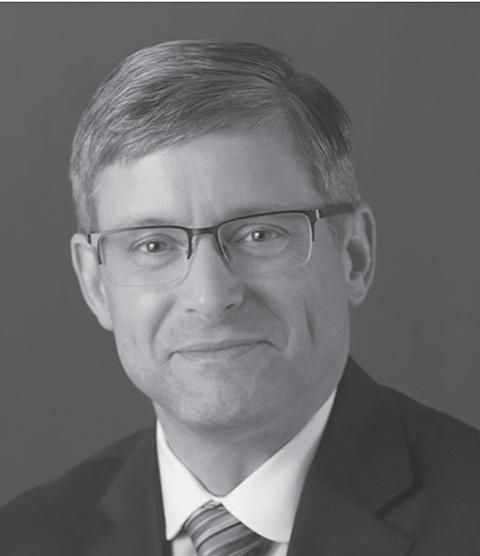
Courtesy Photo-Robert Belleman-City of East Lansing, City Manager
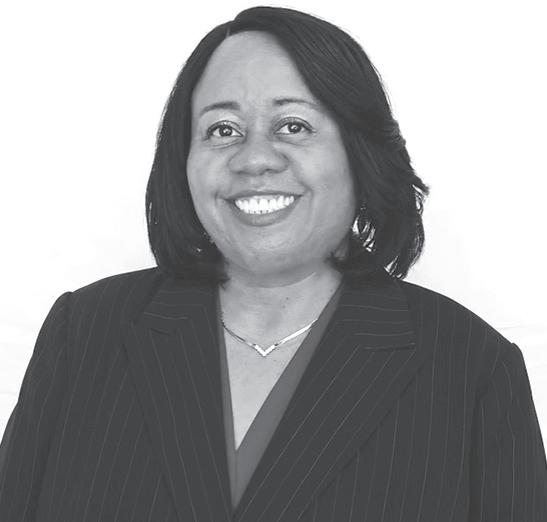
Courtesy Photo: Teresa A. Caine-Bingman, Esq., civil rights attorney and advocate for the family of Isaiah Kirby, following the release of a public statement calling for full transparency and the release of unedited video evidence in the fatal East Lansing police shooting investigation.
We’re celebrating 400,000 members and we wanted to thank those who made it happen ... you!