

Black history is not something we dust off once a year. It is contested. It is challenged. It is rewritten in real time.
And it is ours.
For generations, the story of Black America was told without us, about us, and often against us. Movements were simplified. Leaders were caricatured. Resistance was criminalized. Community protection was labeled aggression. Brilliance was minimized. Complexity was erased.
And still, we built.
We built railroads and recipes. We built movements and melodies.We built inventions that power your homes, your hospitals, your phones, your future.
We are not a sidebar in someone else’s textbook.








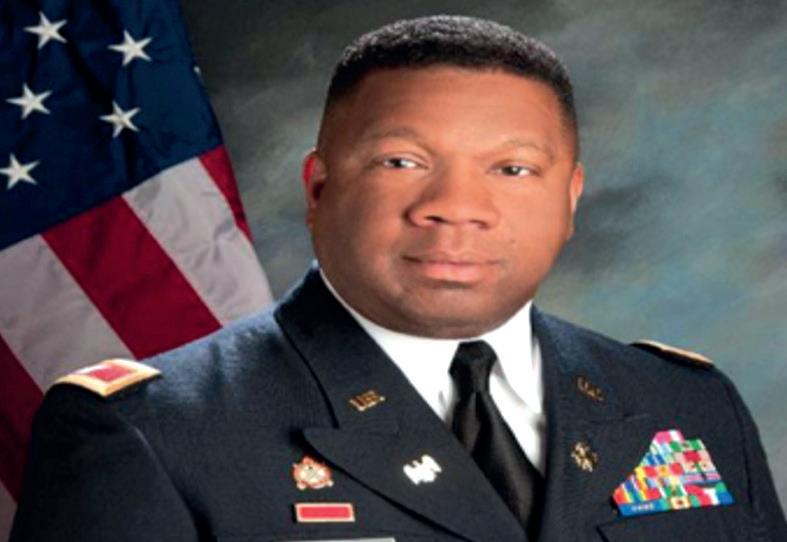
Colonel James E. Stokes (Ret.), Lansing native and trailblazing leader in the Michigan Army National Guard whose decades of service reshaped leadership at the state, national, and international levels.
Trailblazing, historic, and barrier-breaking only begin to describe the military career of Colonel James E. Stokes (Ret.), a Lansing, Michigan native whose service reshaped what leadership looks like in the Michigan Army National Guard.
Over more than three decades in uniform, Colonel Stokes shattered multiple racial ceilings. He commanded in a theater of war and earned historic honors. He led at the company, battalion, and installation levels. He directed critical maintenance, fiscal, and operational systems at the highest levels of government. He represented the United States abroad and mentored generations of soldiers who followed in his footsteps.
As an African American officer in a historically underrepresented space, Colonel Stokes built a
BY YANICE Y. CARTER
come together to honor those who made the way possible.
That spirit filled the Downtown Campus of Lansing Community College as leaders, families, students, and community partners gathered for the ribbon cutting and inaugu-
BY YANICE Y. CARTER
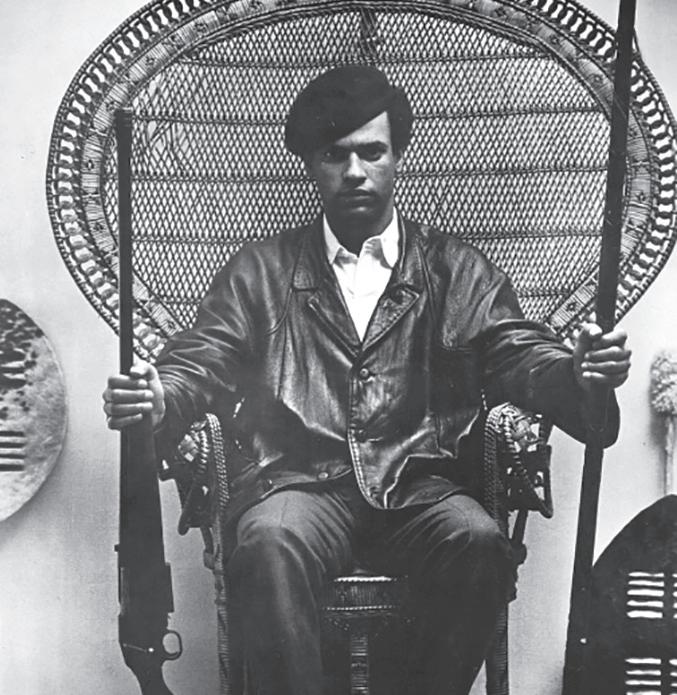
When most Americans hear the name Huey P. Newton, the image that often comes to mind is a young man seated in a wicker chair, rifle in hand, gaze steady and unflinching.
That image became iconic. It also became incomplete.
Newton co-founded the Black Panther Party in Oakland, California in 1966 alongside Bobby Seale. The organization emerged during a period of intense racial tension, police violence, and systemic inequity. The Panthers are frequently remembered for their visible stance on armed self-defense. Less frequently discussed are the extensive community programs they built across the country.
The Panthers launched free breakfast programs for children before school districts did. They established free medical clinics, offered sickle cell anemia testing, provided food distribution, and created political education initiatives. In many neighborhoods, these programs filled gaps where government
systems had failed.
The Black Panther Party openly carried firearms while monitoring police activity. At the time, California law permitted open carry. The Panthers argued that their presence was meant to deter police brutality and protect Black residents from abuse.
Their tactics were controversial. Their message was unapologetic. But the group’s public image often overshadowed their service programs. Media coverage frequently emphasized the weapons and rhetoric, reducing a complex organization to a single dimension. itsHistory can flatten movements. It rarely captures the full architecture behind them.
The Panthers also became a primary
target of federal surveillance. Under the FBI’s COINTELPRO initiative, various Black liberation groups were infiltrated and monitored. Informants were planted. Internal divisions were intensified. Leaders were arrested or discredited. These operations are documented in declassified government files.
Understanding this context does not remove accountability for internal struggles within the Party. It does, however, provide a fuller picture of the external pressures placed upon the movement.
Scan to read full story

One of the lesser-known aspects of Newton’s life is his academic journey. Newton struggled in school and later admitted he graduated high school functionally illiterate.
BY YANICE Y. CARTER
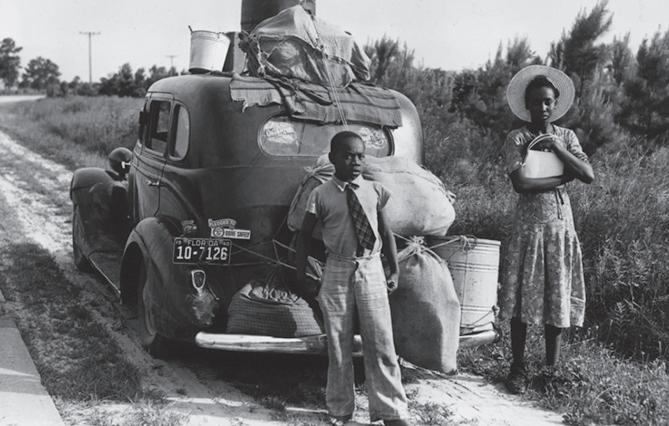
December 4, 1915, marks the beginning of The Great Migration, a pivotal moment in American history that significantly altered the demographic landscape of the nation. On this day, millions of Black Americans, driven by the oppressive conditions of the Jim Crow South, embarked on a journey northward in search of reprieve from the pervasive racism and systemic discrimination that had long defined their lives.
This mass movement was not merely a quest for physical relocation; it represented a profound yearning for dignity, equality, and a chance to build a better future for themselves and their families. The Great Migration was fueled by a variety of factors, including the promise of better economic opportunities in northern industrial cities, which were experiencing a labor shortage due to World War I.
As factories expanded and demand for workers increased, many Black Americans saw this as an op-
portunity to escape the agricultural toil and economic hardships of the South, where sharecropping often left them in a cycle of poverty and debt. Cities such as Chicago, Detroit, New York, and Philadelphia became beacons of hope, attracting those eager to find work and improve their living conditions. In addition
to economic motivations, the Great Migration was also a response to the desire for educational opportunities that were often denied to Black children in the South.
Many families sought to provide their children with access to better schools and a more equitable education system, hoping that this would enable the next generation to thrive in a society that had historically marginalized them. With the migration, communities began to form in these northern cities, creating vibrant cultural hubs that would eventually give rise to significant movements in art, music, and social activism, such as the Harlem Renaissance.
The impact of the Great Migration was profound and far-reaching, reshaping not only the demographics of the northern states but also influencing the cultural and political landscape of the entire nation. As Black Americans settled in urban areas, their voices began to resonate more loudly in the fight for civil rights and social justice, laying the
Scan to read full story

BY YANICE Y. CARTER
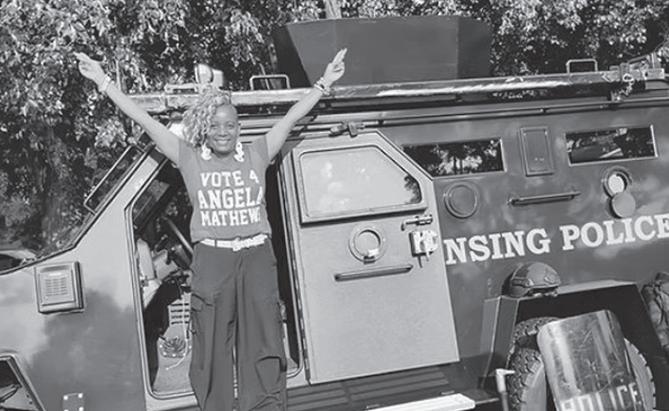
Elected to the Lansing Community College Board of Trustees in 2017 and again in 2022, she didn’t just win, she led the ticket, placing number one in votes across the tri-county area both times. That is not coincidence. That is community confidence.
She made history as the first Black woman to serve as Board Chair for two consecutive terms, a four-year stretch that cemented her legacy inside LCC’s institutional record. From 2024 to the present, she has chaired a global majority board, helping shape policy and priorities for thousands of students navigating higher education in real time.
And she does not play small with opportunity.
At the January 2026 regular Board meeting, her trustee-generated initiative led to a $700,000 investment in student success. Half a million dollars will expand the college’s food pantry. Another $200,000 will strengthen the laptop lending program, adding 125 additional laptops for student use.
Food access. Technology access. Equity in motion.
That is what leadership looks like when it understands that textbooks do not matter if a student is hungry, and talent cannot thrive without tools.
Her influence extends far beyond Lansing. Angela serves on the Board of Directors for the Michigan Community College Association and on the MCCA Legislative Committee, helping shape statewide advocacy for community colleges.
Nationally, she broke barriers with the Association
LANSING, Mich. – The end of January marked one of the strongest performing months for William Lawrence’s campaign for Congress since its launch. Strong volunteer energy, fundraising and major endorsements signal huge momentum for the grassroots campaign heading into the 2026 election year.
“This year is off to a really exciting start and we’re just getting rolling,” said William Lawrence. “We’re the campaign that is bringing the fight to Tom Barrett by showing up and working for the people of the district. This district deserves real representation, not a rubber stamp for Trump’s disastrous agenda.”
To date, Lawrence has
raised over $425,000 since his campaign launch in August 2025. In Q4, 42 percent of Lawrence’s itemized donations were from in-state donors – the highest in the Democratic primary race by nearly double.
In addition to a strong fundraising start to the year, in January, Lawrence’s campaign:
● Received the endorsement of the National Nurses United, the country’s largest nurses union with over 225,000 members.
● Held a volunteer barnstorm event that brought together 60+ volunteers – with over 200 volunteers signed up to support the campaign in total.
● Raised funds from the community to help eliminate $116,000 in medical debt for Michiganders.
● Announced the opening of a campaign office in Lansing – with a grand opening slated for February 7
“Across the district, people are standing up against AI data centers, ICE killings, endless wars, and a future that is being stolen by billionaire interests who have escaped accountability for too long,” Lawrence continued. “This campaign has the momentum because we’re meeting the people where they’re at whether that’s at a community fundraiser, in the streets of protest, or at their front doors in the neighborhoods where they live.”
of Community College Trustees, serving four consecutive years as President of the African-American Caucus. She currently serves on the Impact and Success Committee, formerly known as DEI, pushing conversations from rhetoric to measurable outcomes.
Because policy is powerful. But purpose is louder.
Beyond the boardroom, Angela was ordained as an Elder on June 1, 2025. She serves faithfully alongside Bishop Dr. Ed Rockett Jr. and First Lady Machea Rockett as a Ministry Liaison, working within the Ministers Council and Women of Excellence Ministry. Her leadership bridges civic duty and spiritual calling, both grounded in service.
She is a respected community influencer, sought-after facilitator, speaker, preacher, and program expediter. When there is work to be done, her name rises to the top of the call list.
Black history is not confined to February. It is written in board minutes, budget allocations, policy votes, and prayers whispered before the gavel drops.
Madam Chair is not just a title. It is a declaration. Angela Mathews is making moves for student success, and the record will remember her.
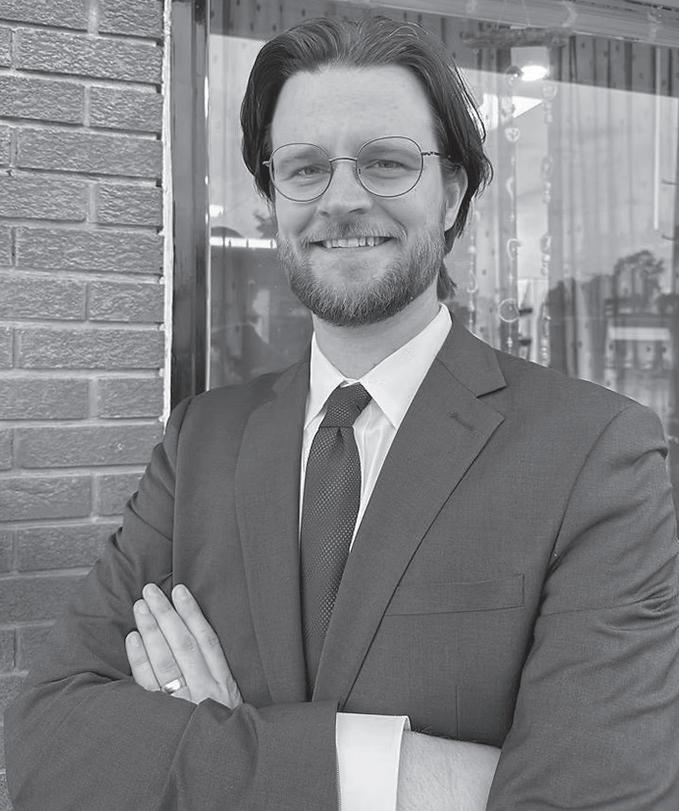
Justice is not abstract for Ayanna D. Neal. It is personal. It is local. And it is lived. A Lansing native, Neal has built a legal career rooted in accountability, institutional reform, and survivor-centered advocacy. For more than twenty years, she has used the courtroom not just as a workplace, but as a platform to protect the vulnerable and challenge systems that failed them.
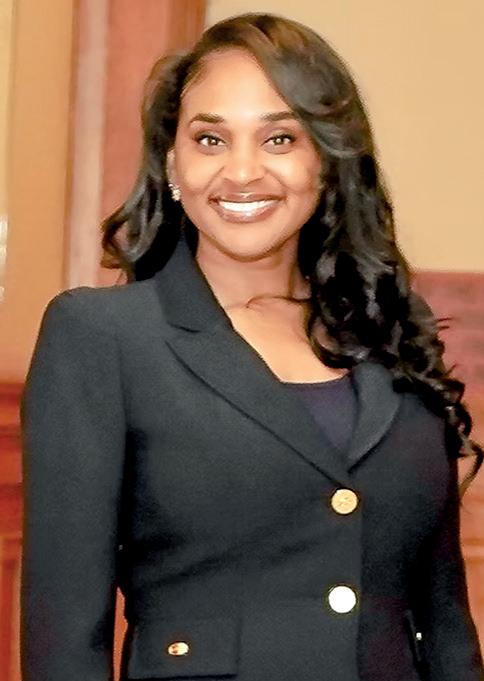
After earning her degree in Political Science from the University of Michigan and completing her Juris Doctor at Thomas M. Cooley Law School, Neal entered the legal field with a clear understanding: law is power, and power must be used responsibly.
Fifteen of her early professional years were spent as an Assistant Prosecutor for Ingham County. There, she handled complex and high-stakes cases ranging from major drug offenses to arson and criminal sexual conduct. Her work placed her on the front lines of justice, advocating for victims and
navigating some of the most difficult realities within the legal system.
Today, as a Senior Litigation Attorney at Grewal Law PLLC, Neal’s impact extends far beyond county lines. She has played a role in some of the most consequential sexual abuse litigation cases in American history, contributing to landmark settlements that not only compensated survivors, but forced institutions to confront long-standing failures.
Her work has helped secure historic settlements in cases involving the University of Michigan, the FBI’s failure to act in the Larry Nassar investigation, and USA Gymnastics — cases that reshaped national conversations about accountability and institutional responsibility.
But for Neal, the headlines are not the point. The people are. Scan to read full story







BY TOBIAS WEBB
The Spartans won emphatically against the Northwestern Wildcats while celebrating their seniors on Wednesday night. The final score was 104 to 68 and MSU looked great 'offensively, shooting 53 percent from the field and 50 percent from deep. Grace VanSlooten would not be denied on her way to 22 points and she thwarted Northwestern in the post with 3 blocks. She forced the Wildcats’ leading scorer, a 6’4 Grace Sullivan, to operate primarily through the mid range.
Kennedy Blair had another efficient double-double with 7 rebounds, 10 assists, and 17 points on 8 of 13 shooting. She played lights out on defense as well, grabbing 5 steals to make up for the absence of the Spartans’ leading ball thief, Rashunda Jones. MSU is set to graduate several important players at the end of this season, but the future still looks very bright with a steadily improving Kennedy Blair at the helm.
Sara Sambolic also stepped up while filling in for Jones, who twisted her an-
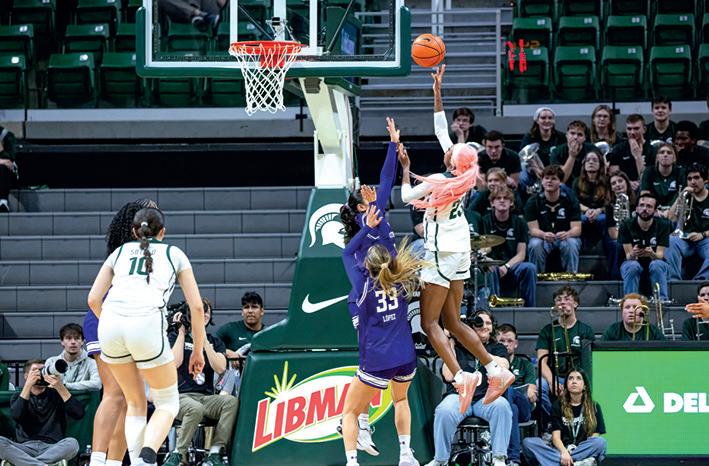
kle in the game against Michigan, and is being evaluated day to day. Sambolic was giving constant trouble to the opposing point guards and earned praise from coach Fralick for preventing Lau, Northwestern’s best passer, from initiating their offense. She also scored an efficient 13 points and sent 6 assists
with no turnovers.
Theryn Hallock, Jalyn Brown, Emma Shumate, Marah Dykstra, and team captains Grace VanSlooten and Abbey Kimball, all received their flowers after the game and kissed the logo, in one of their last games at the Breslin Center.
Isa Alexander was notably not cel-
ebrating her last season as Spartan, as she’s likely to be granted a 6th year of eligibility after missing the entirety of last season and only playing in three games in the 23-24 season before being derailed with injury. Her experience will be greatly appreciated with much of our front court moving on after March Madness. Ines Sotelo and incoming freshman Lily Williams will benefit greatly from Alexander’s leadership and post presence next year.
Hallock and Kimball spent their whole college careers with the Spartans and played a ton of games for the green and white. Kimball has not made a huge impact this season, with transfer guard Rashunda Jones immediately slotting in and becoming one of MSU’s top players, but her leadership earned her a captain role for this season, and her defense has notably improved. With any injury to a starting backcourt player she could still become a factor in the post season.
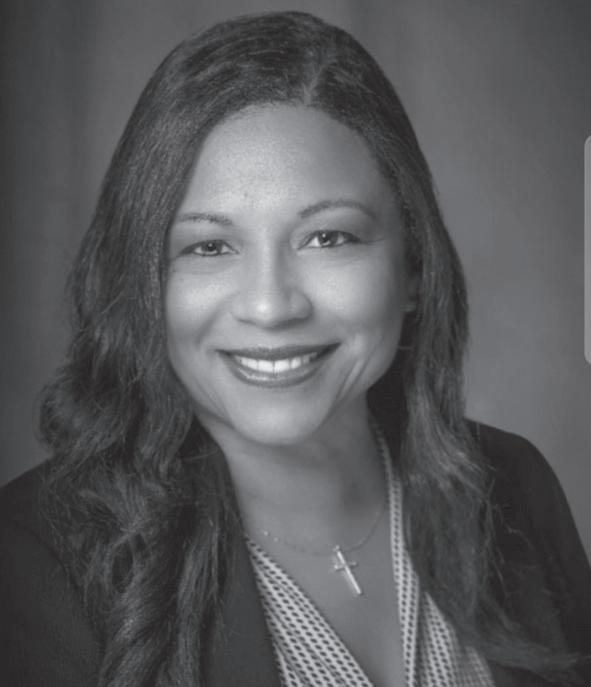
Black history lives in the everyday work of leaders who choose service over spotlight. Trustee Chatum Taylor represents that legacy through finance, education, and authentic community advocacy.
A Lansing native, Taylor has spent 23 years in the credit union industry and currently serves as Member Experience Manager at Lake Trust Credit Union. In 2024, she stepped into elected leadership as a member of the Lansing Community College Board of Trustees, bringing lived experience and resilience to the table.
Years ago, as a single parent supporting her newborn daughter, Taylor attended Lansing Community College with hopes of entering the nursing program. While life redirected her path, the experience shaped her commit-
ment to student success. Working fulltime to support her family, she later graduated with honors and earned her bachelor’s degree. Today, her daughter is pursuing medical school at the University of Michigan, a testament to generational perseverance.
As a trustee, Taylor advocates for accessible and affordable pathways for students, particularly those navigating financial and societal barriers. She has traveled near and far to engage in legislative advocacy, sharing her story to ensure student voices remain central in policy conversations.
In finance, her mission is equally clear. She works to empower individuals and small businesses toward financial wellbeing, independence, and long-term security. She leads with authenticity, encouraging her team to
bring their full selves to work while striving to ensure every member leaves better than they arrived.
For Taylor, “We Are Black History” is both reflection and responsibility. It is a reminder that legacy is not only inherited, it is built daily through resilience, advocacy, and service.
As she looks toward 2026, Trustee Taylor remains committed to strengthening educational programs at LCC and expanding financial literacy initiatives through Lake Trust Credit Union. Her work reflects a broader truth: Black history is not confined to the past. It is actively evolving through leaders who refuse to give up.


record of “firsts” that now reads like a roadmap of progress:
4 First African American to command a Michigan National Guard unit in combat operations during Desert Shield/Desert Storm
4 First African American Aide-deCamp to the Adjutant General of Michigan
4 First African American Superintendent of the Combined Support
Maintenance Shop of Michigan
4 First African American to command a battalion through two Combat Training Center rotations
4 First African American selected as Bilateral Affairs Officer at the U.S. Embassy in the Republic of Latvia
4 First and longest-serving African American senior Colonel in Michigan
BY CHELSEA WOOTON
Dr. Khalid el-Hakim didn’t wait for history to be told correctly. He put it on wheels and brought it to us.
4 Lansing, admission is free. The truth is priceless.
4 Sat, Feb 28, 2026 | 10 AM – 3 PM
4 Capital Area District Library –Downtown Lansing
Step inside Dr. Khalid el-Hakim’s Black History 101 Mobile Museum and feel the weight and wonder of history. For three decades, this traveling museum has brought Black history to life in schools, libraries, city halls, and community centers across 41 states, over 1,000 venues in total. Driven by passion and vision, Dr. Khalid and his team carefully preserve, transport, and
4 First African American appointed United States Property and Fiscal Officer (USPFO) for Michigan His leadership did more than open doors. It redefined what was possible for soldiers of color in the Michigan National Guard and set a standard that other states and services now look to emulate.
United States Property and Fiscal Officer
present artifacts that connect deeply with audiences. Their mission is simple but powerful: educate, challenge, expose, and inspire through stories textbooks often leave out.
Scan to read full story
We are foundational.
Yet history has a habit of flattening us. It turns layered lives into headlines. It turns strategy into stereotype. It turns community defense into fear. This month, as we examine figures like Huey P. Newton and revisit movements like the Black Panther Party, we are reminded that narrative is power. The Panthers were reduced to images of rifles, but far less discussed were the free breakfast programs, the health clinics, the community patrols meant to deter violence, and
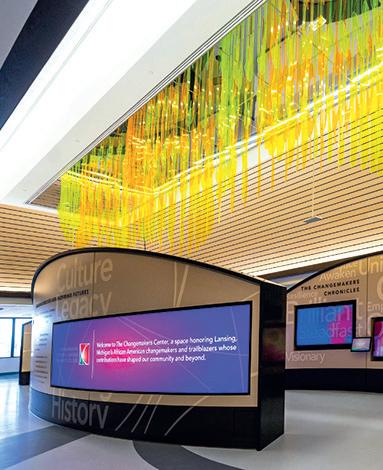
ral induction ceremony of the new Changemakers Center, an interactive exhibit dedicated to preserving the legacy of those who shaped Greater Lansing.
This was not a ceremonial nod to the past. It was preservation. And promise.

Located in the Gannon Building, the Changemakers Center is a stateof-the-art storytelling space featuring immersive displays, digital archives, historical timelines, and multimedia exhibits designed to connect past
leadership to present momentum. Visitors do not simply read plaques. They engage with legacy.
And on opening night, that legacy was officially honored.
• Dr. Willie Davis
• Metro Melik
• Earvin “Magic” Johnson
• Julian VanDyke
• Michael McFadden
• Brian Whitfield
From global athletic excellence
Dr. Khalid’s work has earned national recognition, including the Spirit of Detroit Award, honors from the Association for the Study of African American Life and History, and a spot on Black Enterprise magazine’s 100 Men of Distinction. His museum’s journey is captured in the documentary Living Proof: Dr. Khalid’s Black History 101 Mobile Museum, which premiered on Fox Soul and screened at international festivals, including

Colonel Stokes served as the 14th United States Property and Fiscal Officer (USPFO) for Michigan from October 2010 to October 2015. Appointed under Title 32 U.S.C. § 708 and nominated by Governor Jennifer M. Granholm, he served as the Title 10 Federal Agent in Michigan. Scan to read full story

to cultural storytelling and creative leadership, these honorees represent Lansing’s influence far beyond city limits.
Business
• Gregory Eaton
• Michael Burton
• Paula Cunningham
• Joel Ferguson
These


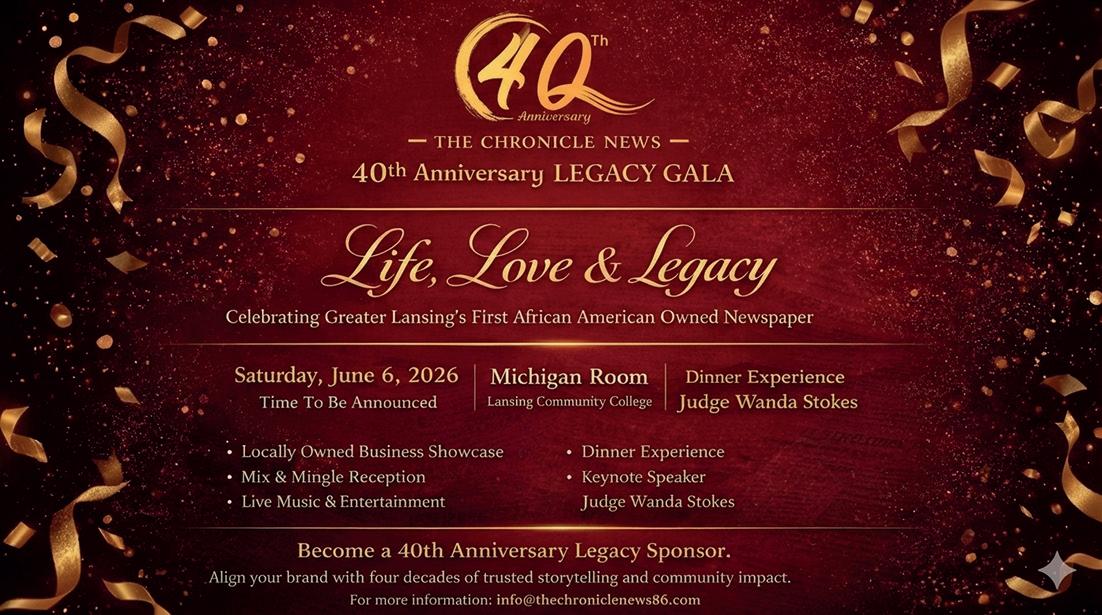
For four decades, The Chronicle News has amplified voices, honored culture, and preserved the stories that shape our community. On Saturday, June 6, 2026, we invite you to celebrate this milestone at the Michigan Room at Lansing Community College.
The 40th Anniversary Legacy Gala will be an unforgettable experience featuring a locally owned business showcase, a vibrant mix and mingle reception, live music and entertainment, a dinner experience, and
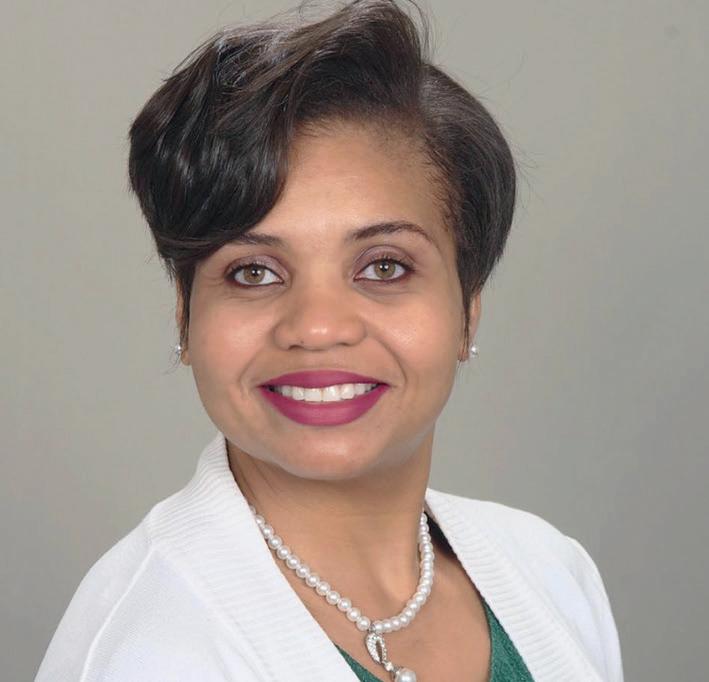
keynote remarks from Judge Wanda Stokes.
This celebration honors Greater Lansing’s first African American owned newspaper and the generations of readers, partners, and leaders who have supported its mission.
Sponsorship opportunities are available for organizations that believe in community, culture, and legacy.
Time and ticket information coming soon.
For inquiries, contact info@thechroniclenews86.com
Last night, my daughters came into the room lit up.
Not because of social media.
Not because it was “the thing to do.”
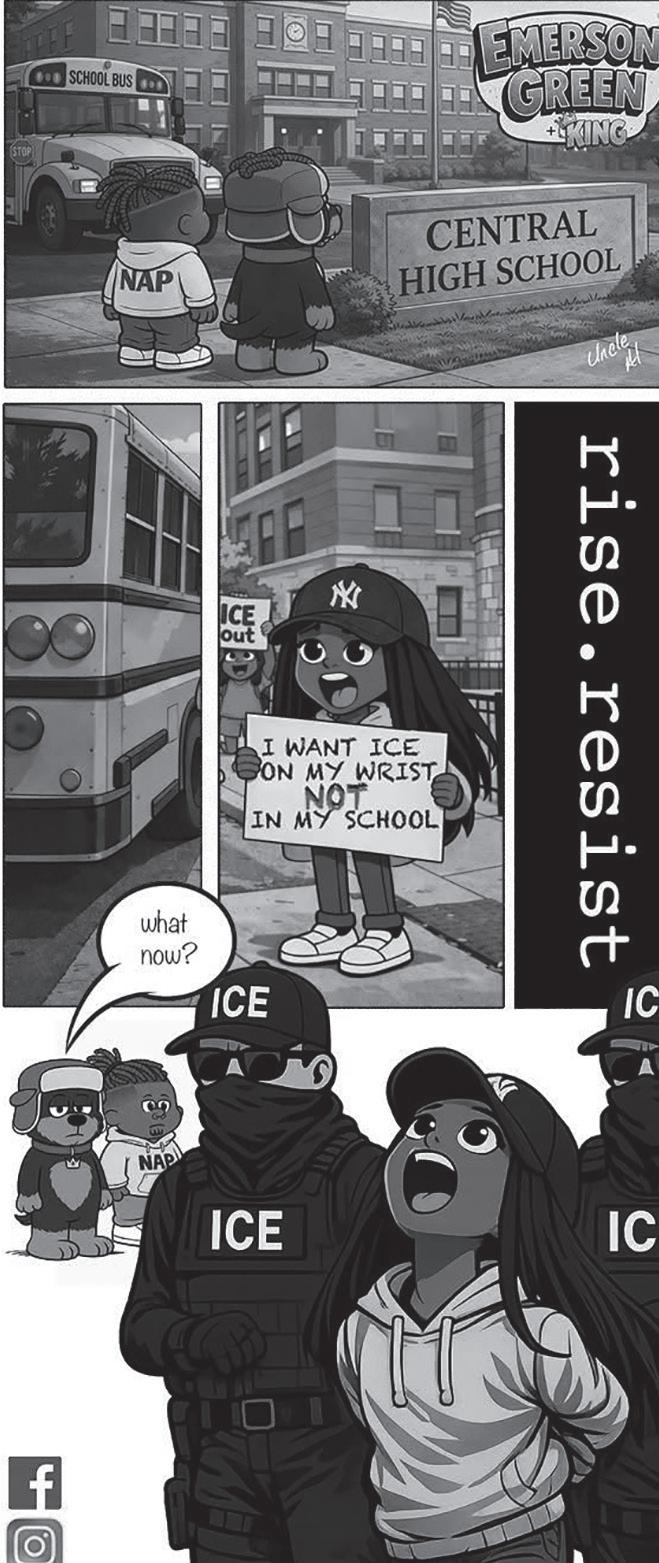
But because they used their voices. We had a real conversation about ICE, about the nationwide school walkouts, and about why they chose to participate in activism at their school. They didn’t just repeat slogans—they explained their why. And as a father, that hit me right in the chest.
I shared with them how, in the 90s, my classmates and I protested the Rodney King beating. Different decade. Same fire. Same questions. Same fear.
Somewhere along the way, many of us
learned to quiet ourselves.
Fear of being misunderstood.
Fear of consequences.
Fear for the safety of the people we love if we speak too loudly.
Last night reminded me why it matters to keep asking questions—especially as parents. Not to shut passion down, but to help young people understand why they stand where they stand.
This episode isn’t about telling kids what to think. It’s about encouraging them to think deeply, speak thoughtfully, and stand intentionally.
Proud daddy moment. Important conversation.



Are You Struggling to Pay Your Bills?
Over a dozen local partners will host a Community Resource Fair to connect BWL residential customers and greater Lansing residents behind on bills to information on resources and financial assistance available to assist per available funding and eligibility.
* 1/4 Page BWL Ad
This event is free and open to the public. No pre-registration is necessary.
For more information, visit lbwl.com/shutoffprotection We Can Help!
* Gala Save the Date ½ Page
* QR Code to Subscribe / Digital Edition
Wednesday, April 15 3-6 p.m.
Alfreda Schmidt Community Center
5825 Wise Rd., Lansing