How Sports Build Strong Healthcare Leaders
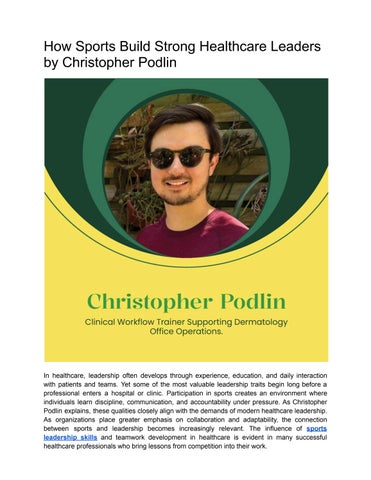
by Christopher Podlin

In healthcare, leadership often develops through experience, education, and daily interaction with patients and teams Yet some of the most valuable leadership traits begin long before a professional enters a hospital or clinic Participation in sports creates an environment where individuals learn discipline, communication, and accountability under pressure. As Christopher Podlin explains, these qualities closely align with the demands of modern healthcare leadership As organizations place greater emphasis on collaboration and adaptability, the connection between sports and leadership becomes increasingly relevant The influence of sports leadership skills and teamwork development in healthcare is evident in many successful healthcare professionals who bring lessons from competition into their work.
Athletic environments teach people how to perform when outcomes matter Every game requires preparation, focus, and the ability to adjust when circumstances change. Healthcare leaders face similar challenges Patient needs can shift quickly, resources may become limited, and unexpected situations often require immediate action Individuals with sports backgrounds frequently develop a comfort level with decision-making under pressure because they have spent years navigating competitive situations that demand confidence and resilience
Another important lesson from sports is the value of teamwork. No athlete succeeds entirely alone Strong teams depend on trust, shared goals, and effective communication In healthcare settings, these same principles support better coordination among physicians, nurses, specialists, and administrative staff. Leaders who understand how to build trust and encourage collaboration are often more successful in creating positive workplace cultures Their ability to unite diverse professionals around a common purpose directly impacts organizational performance and patient experiences.
Sports also cultivate accountability Athletes learn that preparation influences results and that personal responsibility contributes to team success. This mindset translates naturally into healthcare leadership, where decisions affect both operational outcomes and patient care Leaders who embrace accountability tend to inspire confidence by modeling responsibility and encouraging others to take ownership of their roles.
Perhaps most importantly, sports teach humility and continuous improvement Wins provide motivation, while losses offer valuable lessons. Healthcare leaders benefit from this same perspective They must evaluate outcomes, learn from setbacks, and remain committed to growth This approach encourages innovation while maintaining a focus on long-term excellence.
As healthcare becomes more complex, organizations increasingly value leaders who can adapt, communicate, and inspire. The qualities developed through sports leadership skills and teamwork development in healthcare create a strong foundation for leadership that is both effective and human-centered The lessons learned on the field, court, or diamond often become the leadership strengths that guide healthcare teams toward better outcomes and stronger performance