

[FOR
[FÜR DAS ENDE

INTRODUCTION | EINLEITUNG
ANAN FRIES, MARLENE WENGER
RITUALIZING THE APOCALYPSE DIE RITUALISIERUNG DER APOKALYPSE
IT’S MONSTER TIME!
ROBOTS DON’T HAVE TRADITIONS ROBOTER HABEN KEINE TRADITIONEN
PROFANE ILLUMINATION: RITUALS FOR THE END OF THE WORLD PROFANE ERLEUCHTUNG: RITUALE FÜR DAS ENDE DER WELT

103–108 109–114 115–118
119–124
165–170 171–176
ARTISTS | KÜNSTLER:INNEN
ZACH BLAS
S()FIA BRAGA
STEFANIE EGEDY
SIAN FAN
TERESA FERNÁNDEZ-PELLO
ANAN FRIES
AURIEA HARVEY
MAYA HOTTAREK
ETSUKO ICHIHARA
ROBIN MEIER WIRATUNGA
CHRISTIANE PESCHEK
SKAWENNATI
DESIGNERS | DESIGNER:INNEN


179–180, 183–184
181–182, 183–184
185–188
191–194
MEAN GODDESS MARTIN WÖLLENSTEIN
RITUAL III
SHUMON BASAR
APPENDIX
AUTHOR'S BIOGRAPHIES | BIOGRAFIEN AUTOR:INNEN
ARTIST'S BIOGRAPHIES | BIOGRAFIEN KÜNSTLER:INNEN
DESIGNER'S BIOGRAPHIES | BIOGRAFIEN DESIGNER:INNEN
LIST OF WORKS | WERKVERZEICHNIS
ACKNOWLEDGEMENTS | DANK
IMAGE CREDTIS | BILDNACHWEIS
IMPRINT | IMPRESSUM


“It’s Monster Time!” So goes the viral meme, based on the famous Antonio Gramsci quote: “The old world is dying, and the new world struggles to be born: Now is the time of monsters.”1 The post first appeared on my feed in January somewhere in between the news of an ICE agent murdering a Minneapolis woman and another batch of the Epstein files that flooded my timeline with images of disgraced celebrities, politicians, tech bros and philosophers—all of them populated with little black squares, the redacted cuts of their crimes. Softly reminiscent of the 1915 painting, Black Square, which Malevich himself saw as the symbol of a dawning new age, I couldn’t help but think to myself, if Antonio Gramsci—or the anarchistic Malevich for that matter—were still alive today, which time period would they believe was more depraved: early 20th century fascism or today’s AI-thoritarian landscape?
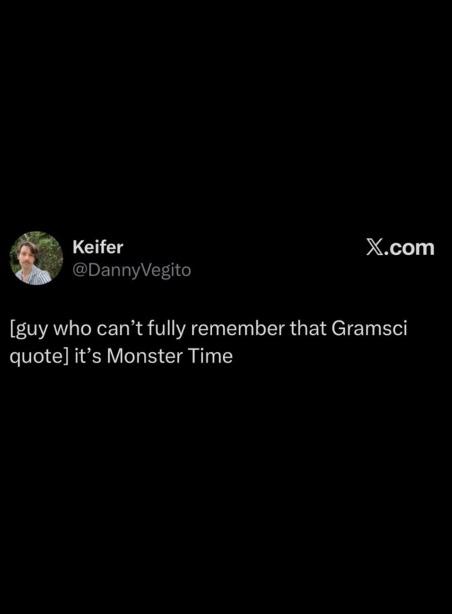
Clearly, the comparison between these two eras is superficial at best, however it does offer a useful framework to navigate the “dramas, disruptions, and dislocations”2 of what comes next. For Gramsci, who penned his words in a fascist prison, the 1920s marked a paradigm shift not too dissimilar to our own: older sociopolitical and economic structures were collapsing, but no new stable order had yet emerged. In such transitional moments, uncertainty, instability and reactionary forces created the conditions for extremism, authoritarianism and political ‘monsters’. Gramsci used the ancient Roman term ‘interregnum’ to describe the death of one world and the birth of another. In the case of today, this can be interpreted as the end of global western liberalism and the rise of a new multi-po-
lar order, characterised by rising censorship, corporate hype, geopolitical tensions and post-woke (dis)order.3 The modern monsters in our midst are the cultural elites who, as the Epstein files affirm, have sunk into what the rapper Yung Lean describes as “the sheer Diddiness of things”.4
At a moment of cultural, social, economic and environmental transformation, the 1920s turned to nostalgia to cope with feelings of dislocation and disenchantment; most literary works resurrected the dead past through the lens of yearning. As Venkatesh Rao of the popular Ribbonfarm blog writes, “Rather than build new extended fictional universes based on contemporary realities, writers chose to either inhabit an uncomprehended present in limited ways, or retreat to comprehensible pasts that no longer reflected the present with any accuracy.”5 Rao notes one exception to this rule, HP Lovecraft’s cosmic horror, in which “Jungian notions of the collective unconscious seemed to collide with the unsettling new physics of Einstein.”6 He concludes that Lovecraftian horror, through its depictions of vast, alien realities, is one of a few examples of fictional worldbuilding that responded to the contemporary conditions, instead of looking away.

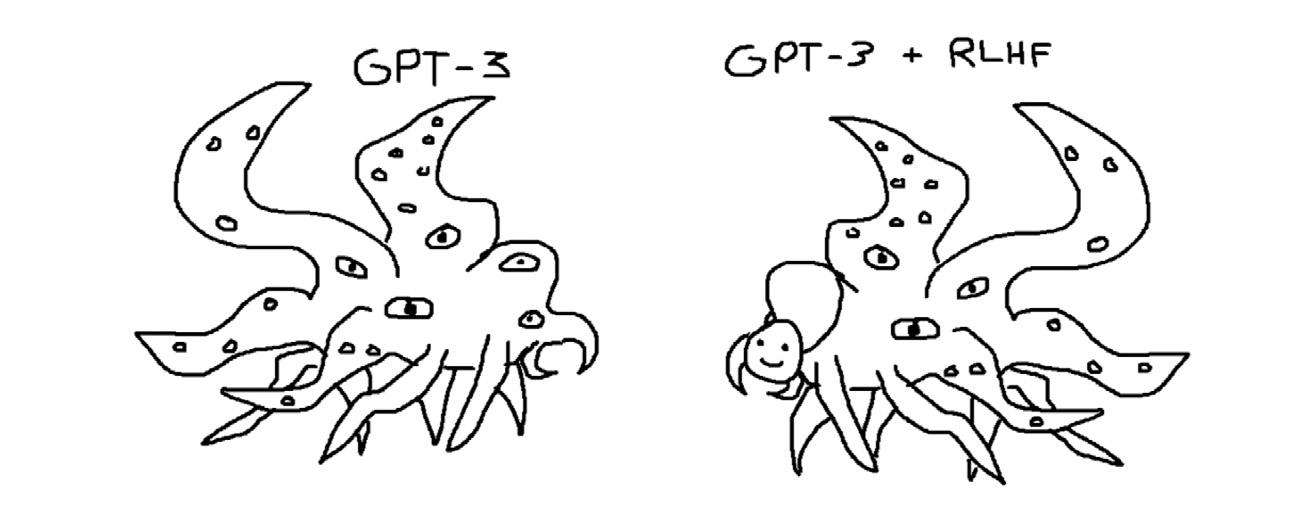
It’s unsurprising that Lovecraft’s Cthulhu series has left such a long-lasting impression on the digital age, especially in our current slop society, where LLMs simulate multiple and opposing realities in real-time and chatbots overrun social media, making it nearly impossible to discern what’s real or false. The viral Shoggoth meme inspired by Lovecraft’s tentacled monster, for example, has become a visual shorthand across social media, hinting at how the true nature of AI is unknowable, and totally alien to us. When combined with all the horrors unfolding on our screens, AI-generated monstrosities, clips of genocide, pedophilic elites, mass protests and environmental destruction—prompted by the recent explosion of data centres, server farms and cloud infrastructures—there’s
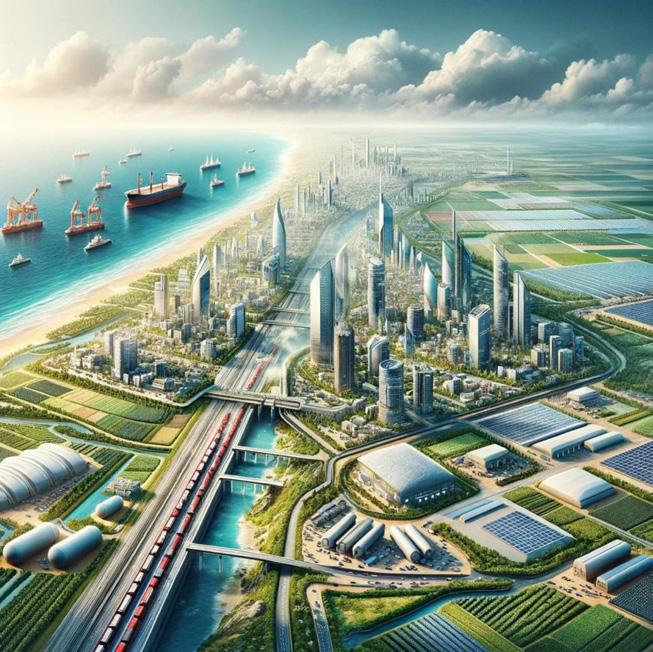
AnAI-generated bird’seyeviewof Israel’s vision for Gaza,IsraelPMO
a similar feeling of disillusion and discontent, which has rerouted into nostalgic feedback loops that yearn for the year 2016, or hyper-optimised Y2K beauty regimens, rather than facing the horrors head-on.
But monsters can also be rebels and troublemakers, which appears to be the route adopted by many tech libertarians, whose warped impulse to ‘move fast and break things’ positions the advancement of AI and, more recently, quantum mechanics, as the final frontier of economic and social evolution. Within this algorithmic apparatus, fiction is wielded as the primary tool for accelerating technological growth to decide what’s possible or impossible in society—as per Donald Trump's claim, “I don’t need international law, only my mind can stop me”7—whether it’s the upward inflation of mass markets, the slashing of arts funding, or the US government's AI-assisted plans for a New Gaza. The idea is that tech controls what narratives get pushed, which also informs what technologies are developed. This has to some degree always been the case—from military infrastructures such as ARPANET as a precursor to the internet to the history of cybernetics. But, as consensus unreality intensifies, so does our collective desire to find alternative narratives outside the current system.
Of all the fantasies resonant amongst tech founders and CEOs, the revival of medieval aesthetics as a political and economic force in Web 2.0 persists as a dominant narrative, through private and algorithmically governed platforms, which extract value from their users via behavioral data, engagement mecs and screen time. In his essay “Living in the New Middle Ages”, Umberto Eco makes a connection between the two ages—the rise of cultural tribalism, the collapse of a Great Pax and the “total lack of distinction between aesthetic objects and mechanical objects.”8 He notes, “On the one hand we find a fairly perfect correspondence between two ages that, in different ways but with identical educational Utopias and with equal ideolo-
gical camouflage of their paternalistic aim to control minds, try to bridge the gap between learned culture and popular culture through visual communication.”9 Eco also argues that both the medieval era and our own are dominated by images, where the elite have access to texts and logic, while everyone else is subject to visual propaganda distributed through communication networks such as the Catholic Church. Similar traces can be sensed in the sacred narratives projected onto modern technology, where online discussions frame intellectualism as the ultimate status symbol, leaving the rest of us to ultimately consume troughs of slop on the feed.
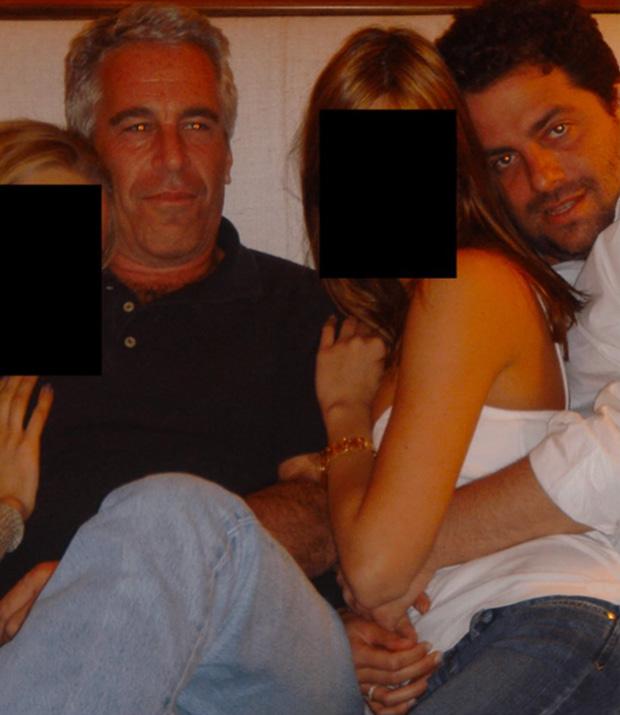
This process of re-enchantment, the mythical narratives pushed by large corporations to flog their products—be it the holy grail of Singularity or the AI automation productivity myth—enshittifies10 the digital environment, reducing everything to a spectacle, to be consumed one moment and forgotten the next. Whether it’s the Epstein files or 2020s Black Squares for BLM—everything, all global events or acts of social and political resistance, is eventually flattened into vibe commodities for the capital gains of tech barons. UGC creators, personality cultists, NPC streamers, workshippers—digital labour, too, takes on emotional and spiritual dimensions, where the personal is indistinguishable from productivity, and the self is offered up to the algorithm in an assembly line of repetitive rituals. But, as the pop philosopher Byung Chul Han notes in TheDisappearance of Rituals, “those images and metaphors which found meaning and community, and stabilize life, are lost in symbolic emptiness.”11 With LLMs, images lose their meaning, no longer representationally tethered to material reality. Floating adrift into the Cloud, the oversaturation of on-screen images, many of which have been prompted for virality, are presupposed fakes—hence the popular internet phrase, Chat, Is This Real? The close proximity bet-
ween magical thinking and machine learning is furthered with the model’s ability to interpret a given dataset rather than just represent it—an alchemical process the artist Hito Steryl once described to me as “re-enchatment”.12 Reminiscent of the pre-Enlightenment relationship between magic and science, the instrumentalisation and operationalisation of irrational narratives by tech corporations monopolises future imaginaries, while creating chaos and disruption— a key characteristic of the current paradigm.
As with Eco’s observation of Christianity’s role in reinforcing state power, technological progress, at least in the West, draws on similar notions of dominion. Its Promethean themes—after the mythical figure who stole fire from the gods —persist as a common vocabulary within self-optimised tech circles. In 2022, for example, Microsoft released a version of OpenAI’s GPT model called Prometheus, integrated into their search engine Bing and parts of their software. For better or worse, the tech libertarian’s ability to summon new realities from fiction is something they’re particularly successful at. Another such example is JRR Tolkien's LordoftheRings trilogy, the inspiration for the surveillance firm Palantir, which is named after the all-seeing magical orb, and US defense company Anduril Industries, which is named after Aragorn’s sword and translates to the ‘Flame of the West’. Even more apt is Urbit’s Tlon, taken from Jorge Luis Borges’ short story, “Tlön, Uqbar, Orbis Tertius”, about a secret society that conjures a new world by simply describing it. Go figure.
Such examples would support the assumption that “mysticism is just tomorrow’s science dreamed today”.13 Under the current conditions, however, it’s important that fiction is wielded in ways that imagine new possible worlds rather than reaffirming existing ones. During the 2016 Trump election, for example, 4chan users harnessed the memetic potential of Pepe the Frog to enact brutal changes upon reality, but rarely have progressives, bar perhaps the TikTok witches casting a mass spell against Trump, been particularly effective in making real mass counter narratives. In Technic and Magic, the philosopher Federico Campagna sees the answer not in politics or collective action, but rather in the alternative cosmology of Magic, which exists outside of Technic, composed of rationality, language and cultural symbols that define the current reality-setting.14 Bringing to mind Malevich’s Black Square, which rejects real-world representation in favour of feels, Campagna writes: “The ineffable dimension of existence is that which cannot be captured by descriptive language, and which escapes all attempts to put it to ‘work’—either in the economic series of production, or in those of citizenship, technology, science, social roles and so on.”15 The human imagination thus functions as an interface to channel a more positive form of resistance in
the form of Magic, which requires a more subtle, interior shift to navigate our current slop society.
But back to the monsters. The term ‘monster’ derives from the Latin monstrum, meaning to remind, warn, or foretell. This is useful when you consider the monster’s ability to shake up the social order. If we look at the monsters around us, their subtext lies within algorithms and AI datasets, the invisible forces that train, govern and rule over the collective consciousness. As with Lovecraft’s personal brand of cosmic horror, monsters exist outside of human perception, therefore making us question what’s ‘out there’. They tap into contemporary fears about society and technology— that which exists beyond the borders of the Technic. The onslaught of non-human chatbots and simulacral humans, for example, brings up existential questions about the role of humans in an era, where botnets rule over the cybernetic meadow, their true nature concealed like a Shoggoth. All this might seem like an epistemological Tower of Babel that will inevitably break down, but it also points to how we desperately need to revive the social imagination—do we listen to the nihilistic and narcissistic impulse to stay out of trouble, or do we stay with the trouble?16
Throughout history, there have been many attempts to expand the horizons of what’s imaginable, possible or necessary—from the CCRU and their concept of hyperstition, to Donna Haraway’s worlding, and more radical fusings between human and machine to carve out future imaginaries, what Guattari once called “universes of reference”.17 In LARP (live-action roleplay), a player mobilises the space between the real and imagined to explore new ways of being. In this current climate of AI-thoritarian regimes, however, the idea that we can reshape the trajectory of reality might seem unlikely, if not straight-up impossible. Imagining and imaging alternative worlds also necessitates the disruption of the existing one: a magician must make his own tools.
1Gramsci, Antonio: Quaderni del carcere, Quaderno 3, § 34, 1930: The frequently cited free translations of Gramsci‘s statement refer to the following sentence in the original: “La crisi consiste appunto nel fatto che il vecchio muore e il nuovo non può nascere: in questo interregno si verificano i fenomeni morbosi più svariati.”
2Venkatesh, Rao: Shadowland 1. In: Contraptions. https://contraptions.venkateshrao.com /p/shadowland-1 [accessed on 01.02.2026].
3Yalcinkaya, Gunseli: Post-AI, Quantum and a Multi-Polar Art World, In: Carrier Bag, February 2026.
4@subwaytakes. TikTok Video. https://www.tiktok.com/@subwaytakes/ video/7472871612606369066 [accessed on 01.02.2026].
5After Venkatesh: Shadowland 1.
6Venkatesh: Shadowland 1.
7X, https://x.com/RT_com/status/2010603237939060836, published 12. January 2026.
8Eco, Umberto: Travels in Hyperreality. San Diego: Harcourt Brace Jovanovich, 1986. (Original essays 1984). P. 64.
9Eco: Travels in Hyperreality. P. 63.
10Doctorow, Cory: Social Quitting, In: Medium, 15. November 2022, https://doctorow. medium.com/social-quitting-1ce85b67b456 [accessed on 18.03.2026].
11Han, Byung-Chul: The Disappearance of Rituals: A Topology of the Present. Cambridge: Polity Press, 2019. P. 2.
12Yalcinkaya, Günseli: Interview: Hito Steyerl. “Who Prompted All This Shit?” In: Spike Art Magazine, 2025, https://www.spikeartmagazine.com/articles/interview-hito-steyerl. [accessed on 01.02.2026].
13Marshall McLuhan: Interview in Playboy, 1969. Online: https://web.cs.ucdavis.edu/ ~rogaway/classes/188/spring07/mcluhan.pdf. P. 19. [accessed on 18.03.2026].
14Campagna, Federico: Technic and Magic: The Reconstruction of Reality. London 2018.
15Campagna: Technic and Magic: The Reconstruction of Reality. P. 10.
16Haraway, Donna: Staying with the Trouble: Making Kin in the Chthulucene. Durham 2016.
17Cutcliffe, Jamie: The Interview: Simon O’Sullivan & Jamie Sutcliffe. In: ArtReview, 20.11.2024. https://artreview.com/the-interview-simon-osullivan-jamie-sutcliffe/ [accessed on 01.02.2026].
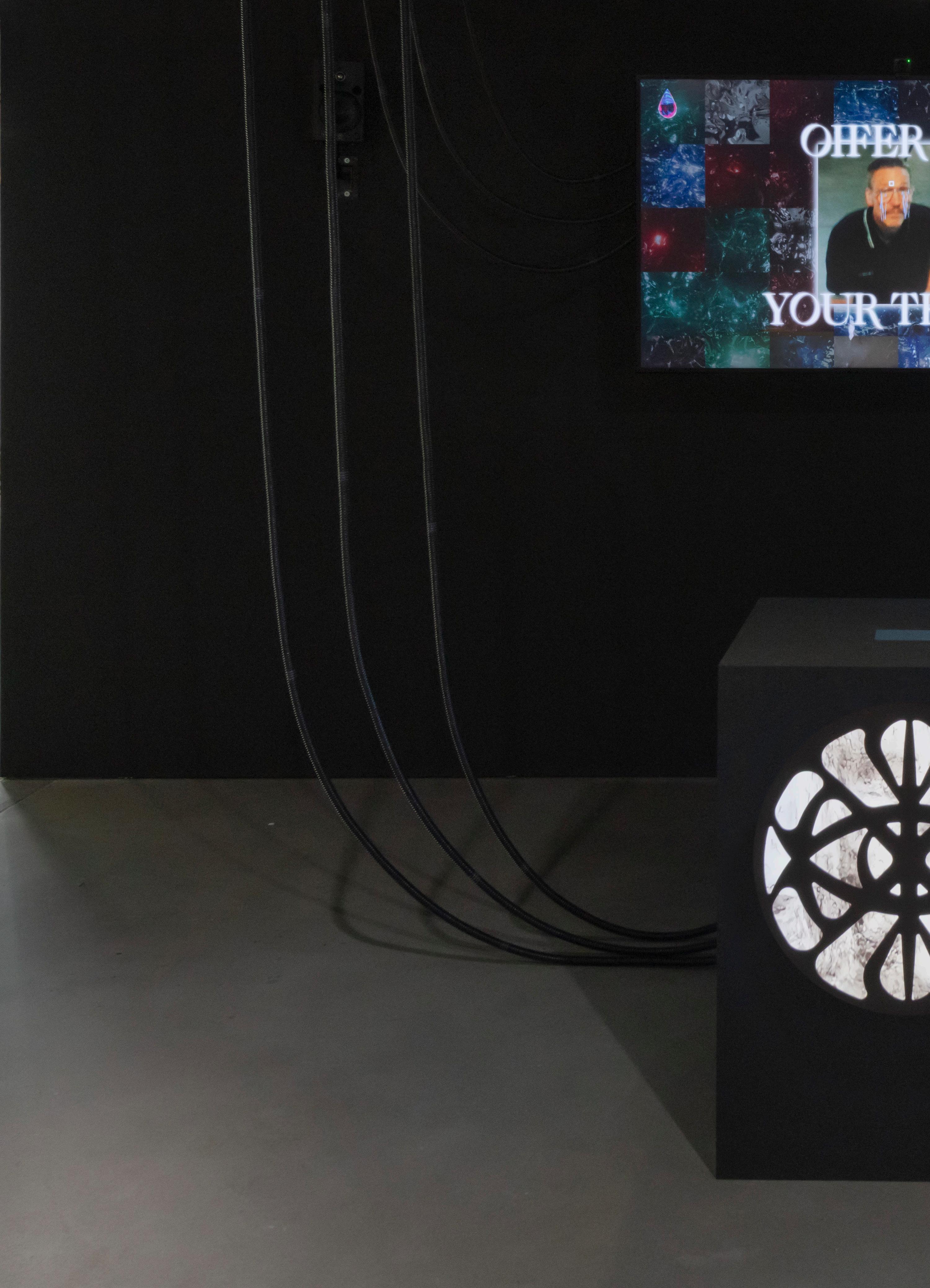
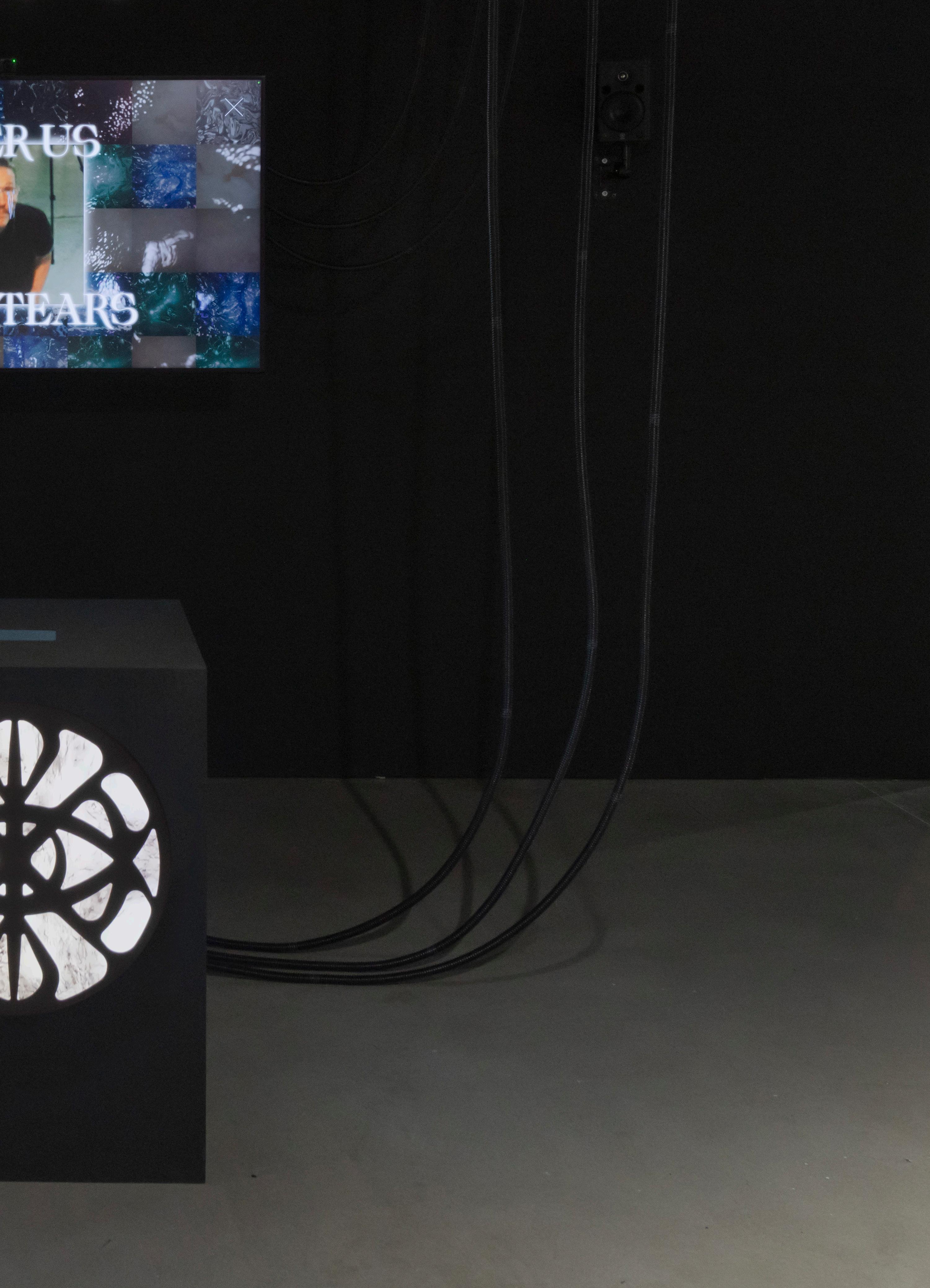
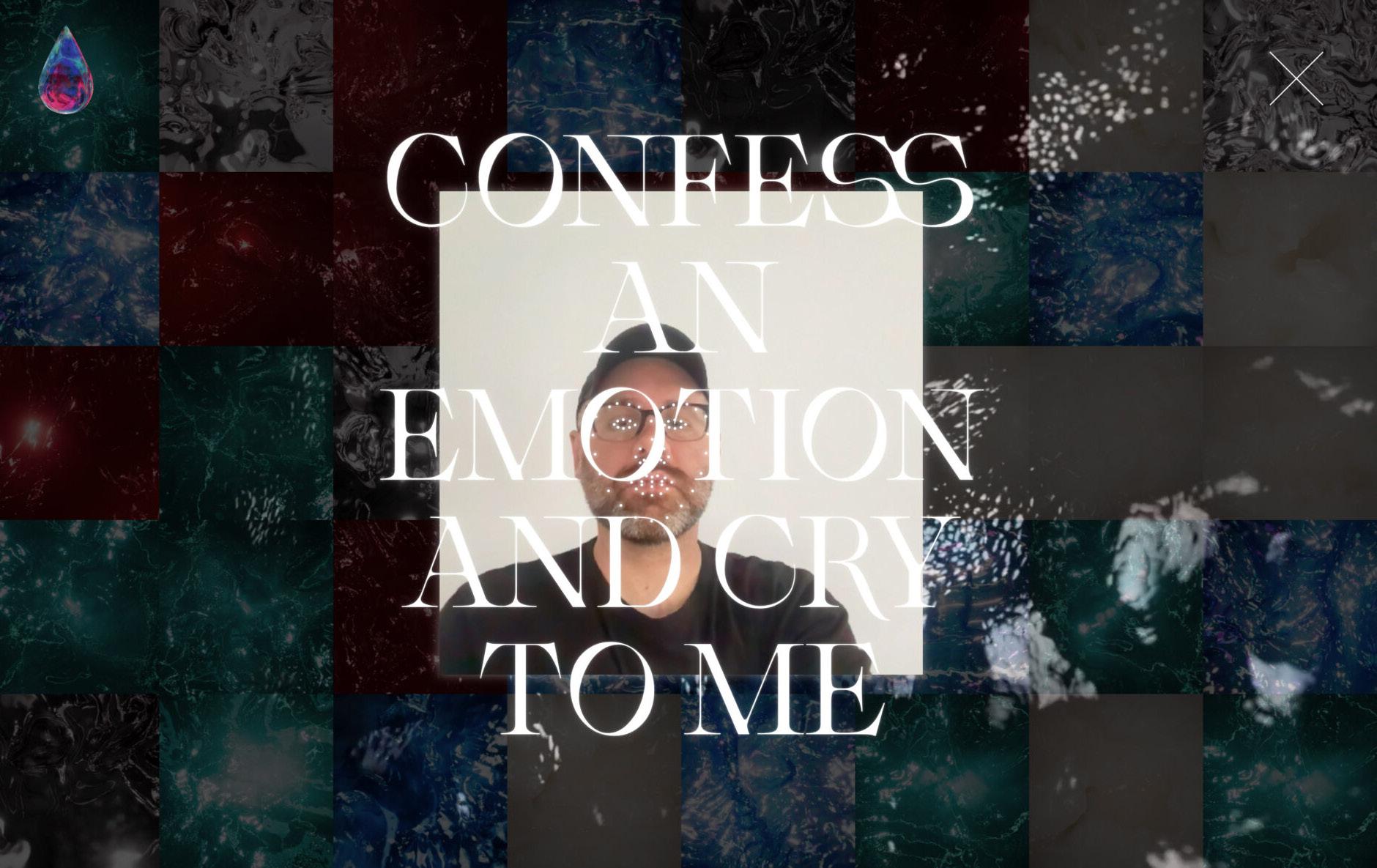
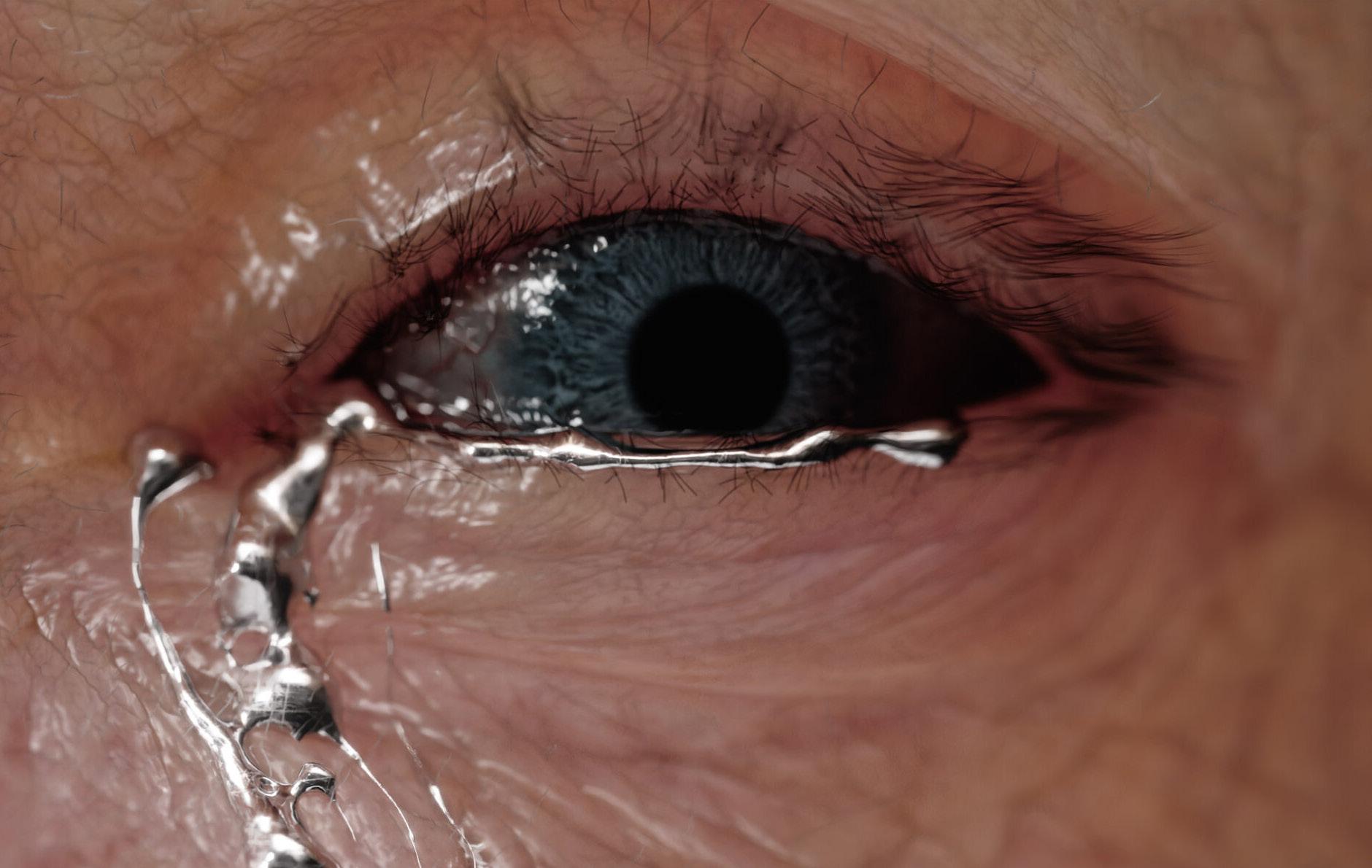
Zach Blas examines the religious dimensions of artificial intelligence by casting AI as a deity and positioning us as its worshippers. Tears become offering, data, and prophecy, drawing a parallel between spiritual ritual and contemporary AI systems.
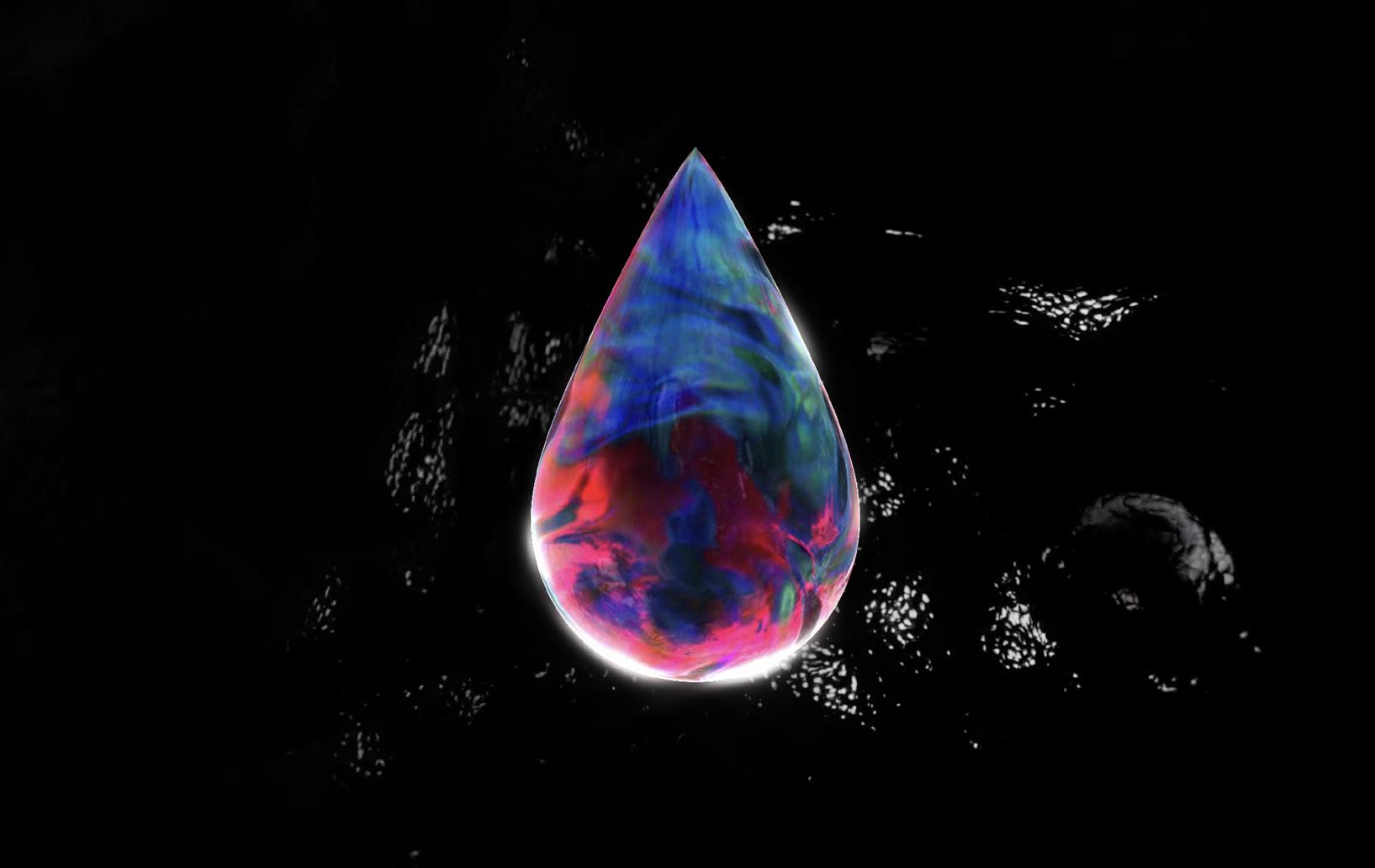
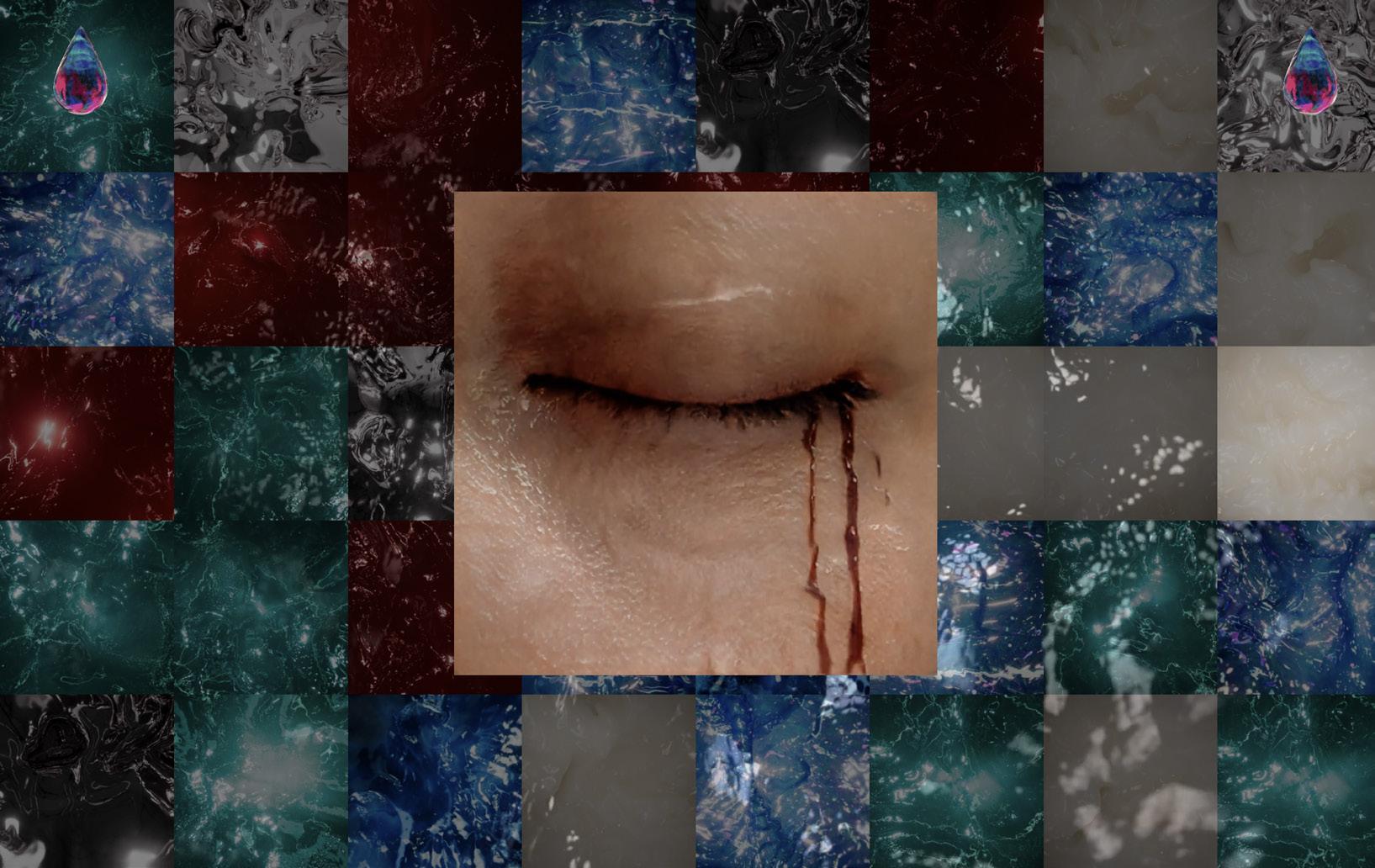
Upon entering the installation, our face is scanned via webcam. An AI system classifies your expression as one of six emotions: joy, sadness, anger, disgust, fear, or surprise. Augmented reality tears stream down your face and can be offered to Lacrimae, an AI deity created by the artist. Lacrimae, derived from the Latin word for “tears” or “weeping”, collects and “drinks” these tears. In return, the system generates a prophecy and a colour-coded tear image, which is added to an expanding grid of tears collected from other participants. At its centre, a machine-generated video composed of 576 computer-generated crying eyes reflects these six emotional states.
Drawing on traditions of religious weeping, the work reframes emotion as an offering, exposing how AI systems translate embodied experience into fixed categories and training data. This ritualised exchange mirrors Silicon Valley’s quasi-religious visions of artificial intelligence and reveals the extractive logic of technocapitalism, in which affective life is captured and mobilised in the service of techno-utopian and economic interests.
Zach Blas untersucht die religiösen Dimensionen Künstlicher Intelligenz, indem er KI als Gottheit inszeniert und uns als ihre Verehrenden positioniert. Tränen werden zu Opfergabe, Daten und Prophezeiung zugleich und stellen eine Verbindung zwischen spirituellem Ritual und heutigen KI-Systemen her.
Beim Betreten der Installation scannt eine Webcam das Gesicht. Ein KI-System ordnet den Gesichtsausdruck einer von sechs Emotionen zu: Freude, Trauer, Wut, Ekel, Angst oder Überraschung. Augmented-Reality-Tränen laufen über das Gesicht und können Lacrimae dargebracht werden, einer vom Künstler geschaffenen KIGottheit. Lacrimae, abgeleitet vom lateinischen Wort für «Tränen» oder «Weinen», sammelt und «trinkt» diese Tränen. Im Gegenzug erzeugt das System eine Prophezeiung und ein farbcodiertes Tränenbild, das zu einem wachsenden Raster aus Tränen anderer Teilnehmender hinzugefügt wird. Im Zentrum erscheint ein maschinell generiertes Video aus 576 computergenerierten weinenden Augen, das diese sechs emotionalen Zustände widerspiegelt. Ausgehend von Traditionen religiösen Weinens deutet die Arbeit Emotionen als Opfergabe und zeigt, wie KI-Systeme verkörperte Erfahrung in feste Kategorien und Trainingsdaten übersetzen. Dieser ritualisierte Austausch spiegelt die quasi-religiösen Visionen Künstlicher Intelligenz im Silicon Valley und macht die extraktive Lo gik des Technokapitalismus sichtbar, in der affektives Leben erfasst und im Dienst techno-utopischer und ökonomischer Interessen mobilisiert wird.

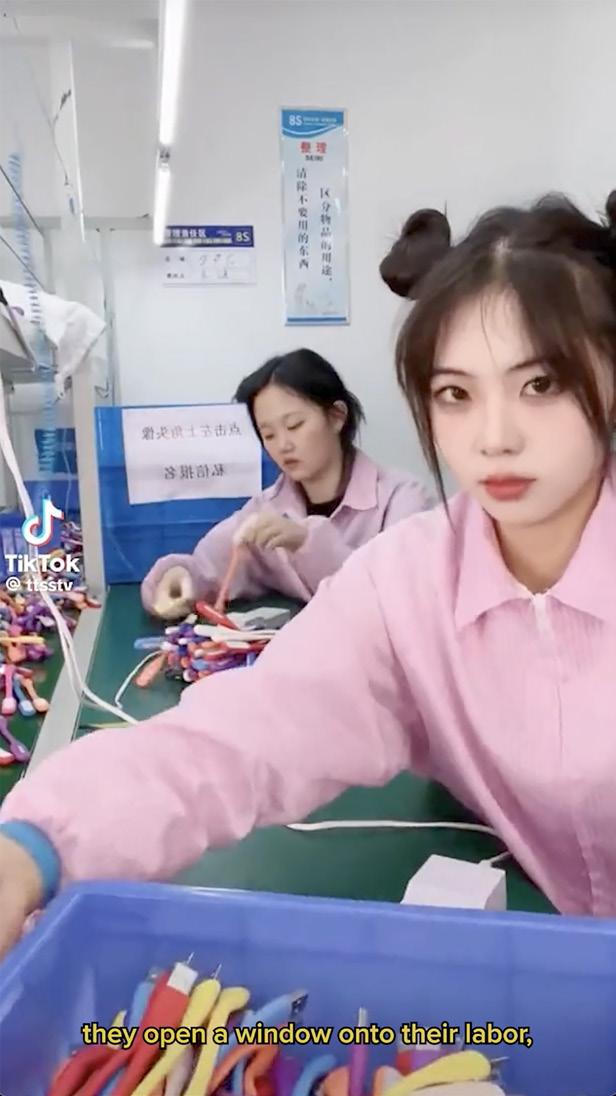
S()fia Braga examines how everyday social media habits become a form of labour. Posting, liking, scrolling, and lurking may seem banal, but on platforms like TikTok or Instagram they generate attention, data, and engagement that feed algorithms and create value.
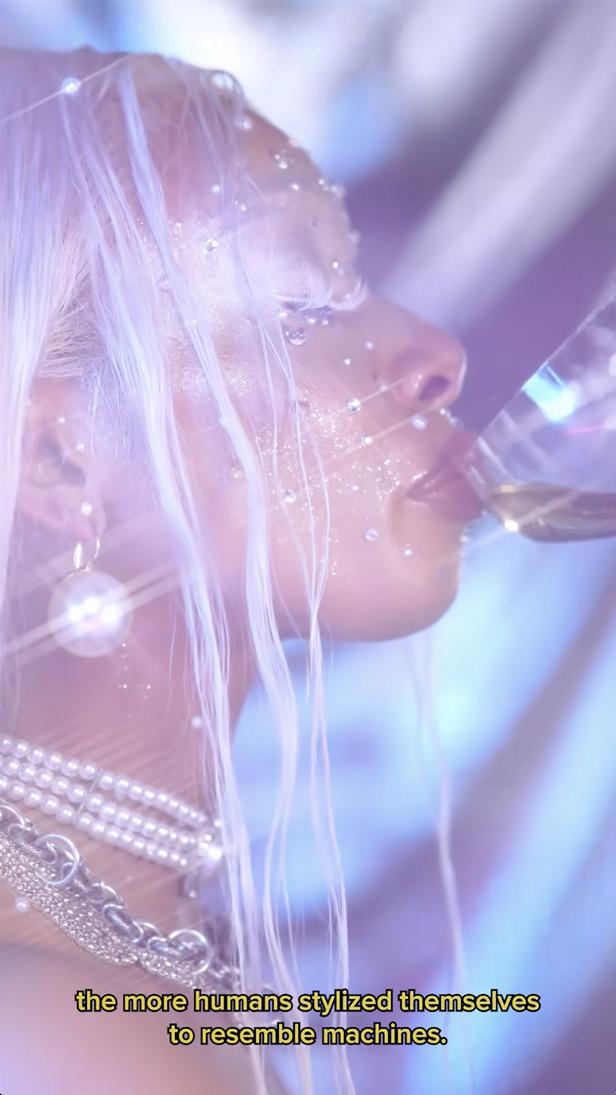
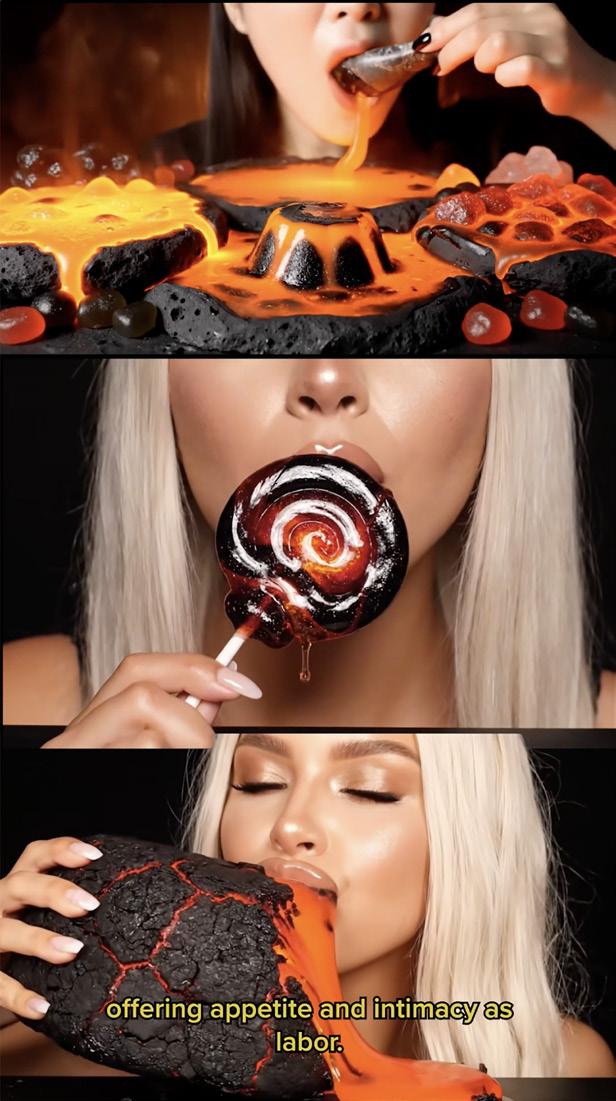
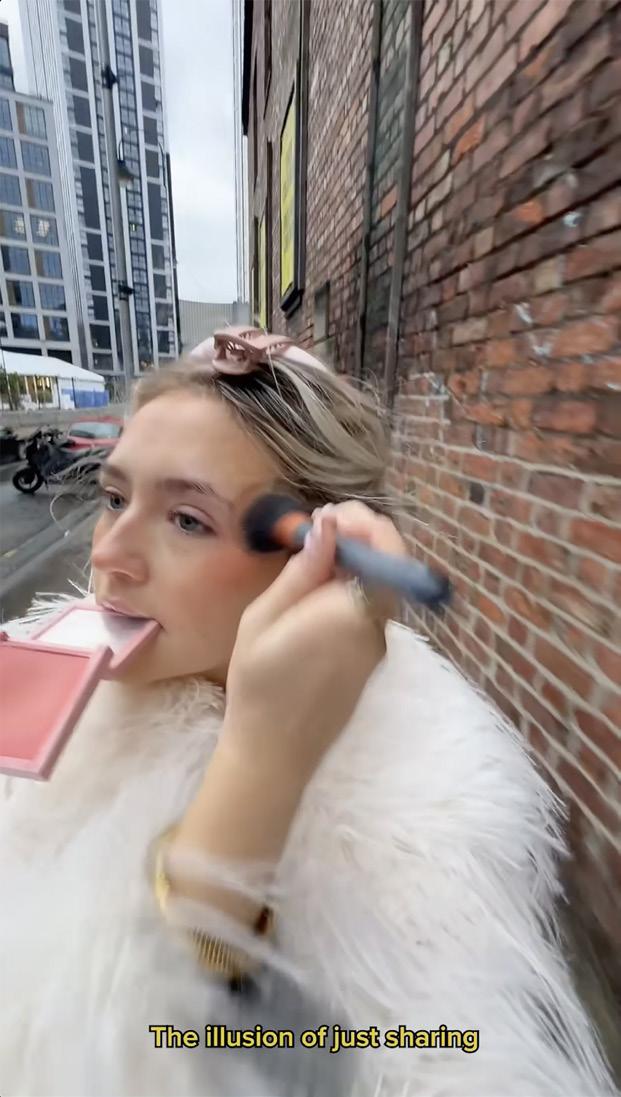
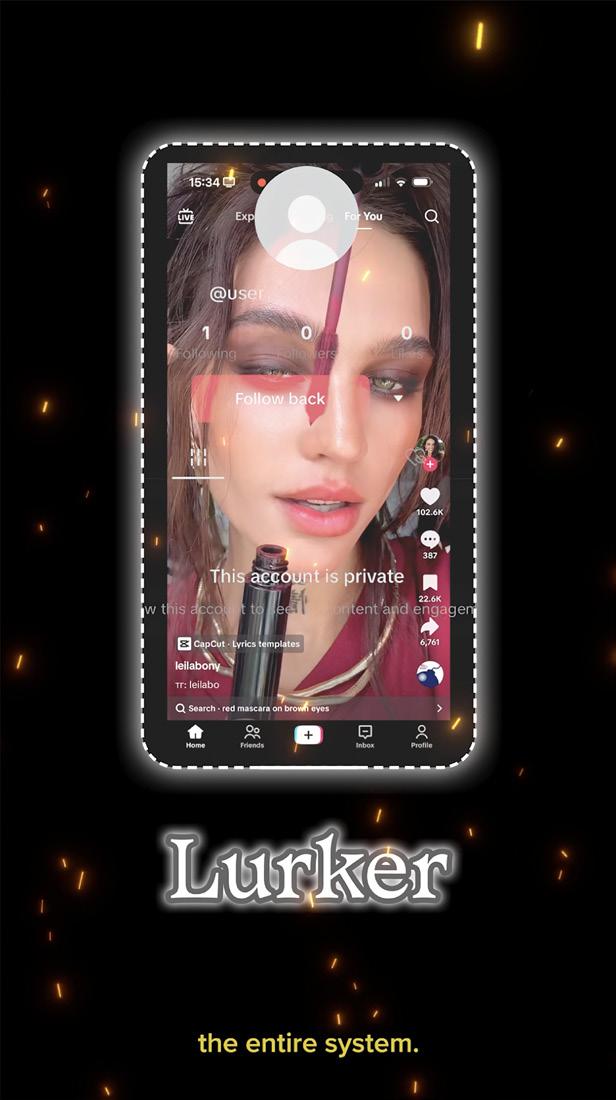
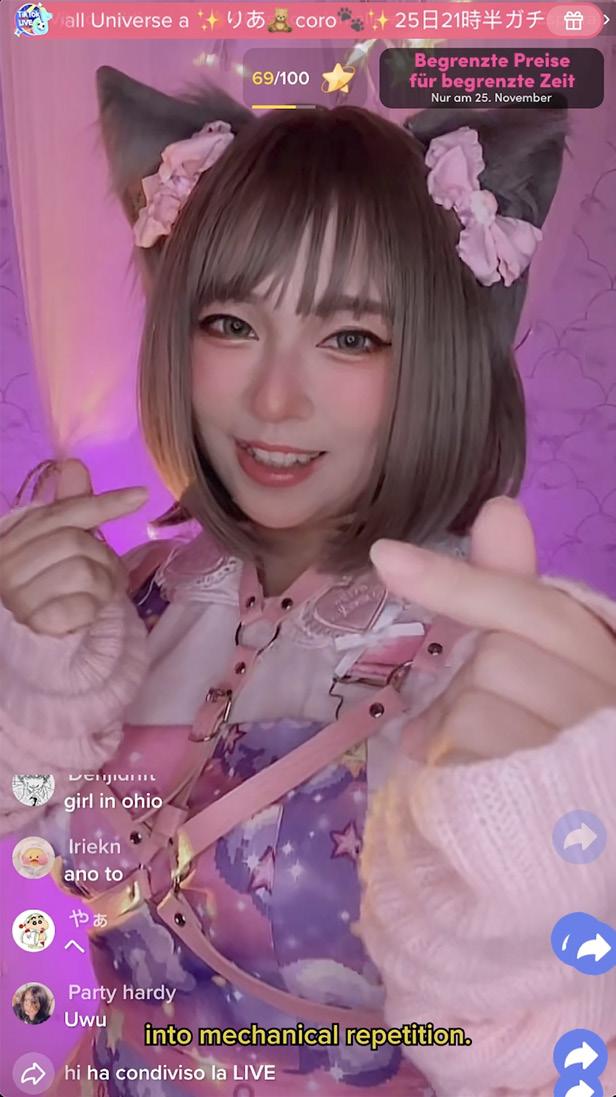
To make this visible, Braga develops a classification of 18 content creator archetypes. Figures such as the Lurker, the Creator, the Prosumer, the Tradwife, and the Sleepfluencer show how ordinary life is reshaped by the platform. Formats like “Get Ready with Me”, “Study with Me”, make-up tutorials, or daily routines turn private habits into monetised spectacle. Even sleep can be harvested for content (Sleepfluencer).
Together, these characters reveal how social media produces its own rules and belief systems. User-generated content often appears spontaneous and authentic, yet frequently functions as advertising commissioned by brands. Posting becomes performance, with everyday life staged and circulated as content.
Braga frames platform culture as a digital cosmology with religious undertones, where the platform becomes the church, scrolling becomes ritual, and the post becomes an offering. The title Workshippers, combining “work” and “worship”, names this logic, while a diagram accompanying the video maps the archetypes as a tree of life reflecting the symbolic order of platform culture.
S()fia Braga untersucht, wie alltägliche Gewohnheiten in sozialen Medien zu einer Form von Arbeit werden. Posten, liken, scrollen und lurken mögen banal wirken, erzeugen auf Plattformen wie TikTok oder Instagram aber Aufmerksamkeit, Daten und Interaktion, die Algorithmen speisen und Wert schaffen. Um das sichtbar zu machen, entwickelt Braga eine Klassifikation von 18 Archetypen von Content Creators. Figuren wie der Lurker, der Creator, der Prosumer, die Tradwife oder der Sleepfluencer zeigen, wie gewöhnliches Leben von der Plattform umgeformt wird. Formate wie «Get Ready with Me», «Study with Me», Make-up-Tutorials oder Tagesroutinen machen private Gewohnheiten zu monetarisiertem Spektakel. Selbst Schlaf kann zu Content werden, wie der Sleepfluencer zeigt. Gemeinsam machen diese Figuren sichtbar, wie soziale Medien eigene Regeln und Glaubenssysteme hervorbringen. User-generated Content wirkt oft spontan und authentisch, fungiert aber nicht selten als von Marken beauftragte Werbung. Das Posten wird zur Performance, in der Alltag inszeniert und als Content in Umlauf gebracht wird. Braga beschreibt Plattformkultur als digitale Kosmologie mit religiösem Unterton: Die Plattform wird zur Kirche, das Scrollen zum Ritual, der Post zur Opfergabe. Der Titel Workshippers, ein Kunstwort aus «work» und «worship», benennt diese Logik. Ein Diagramm, das die Videoarbeit begleitet, ordnet die Archetypen als Lebensbaum an und spiegelt so die symbolische Ordnung der Plattformkultur.