Sunday, February 22, 2026 at 3 pm
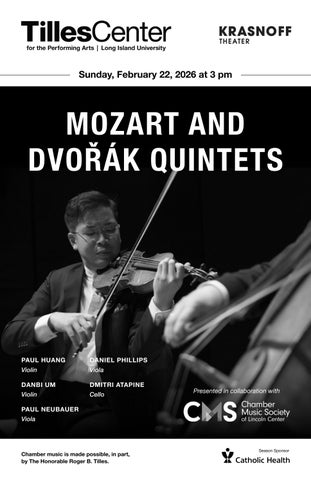
Sunday, February 22, 2026 at 3 pm
PAUL HUANG
Violin
DANBI UM
Violin
PAUL NEUBAUER
Viola
DANIEL PHILLIPS
Viola
DMITRI ATAPINE
Cello
Presented in collaboration with

Chamber music is made possible, in part, by The Honorable Roger B. Tilles.
WOLFGANG
AMADEUS MOZART (1756–1791)
ZOLTÁN KODÁLY (1882–1967)
Quintet in C minor for Two Violins, Two Violas, and Cello, K. 406 (1782, arr. 1787)
Allegro
Andante
Menuetto in canone—Trio in canone al rovescio
Allegro
HUANG, UM, PHILLIPS, NEUBAUER, ATAPINE
Serenade for Two Violins and Viola, Op. 12 (1919–20)
Allegramente—Sostenuto, ma non troppo
Lento, ma non troppo
Vivo
HUANG, UM, NEUBAUER
ANTONÍN DVO Ř ÁK (1841–1904)
Quintet in E-flat major for Two Violins, Two Violas, and Cello, Op. 97, “American” (1893)
Allegro non tanto
Allegro vivo
Larghetto
Finale: Allegro giusto
UM, HUANG, NEUBAUER, PHILLIPS, ATAPINE
WOLFGANG AMADEUS MOZART
Quintet in C minor for Two Violins, Two Violas, and Cello, K. 406
Born January 27, 1756, in Salzburg
Died December 5, 1791, in Vienna
Composed in 1782, arranged in 1787
Duration: 24 minutes
Mozart’s primary instrument was the piano, but in his early years touring as a child prodigy he also played the violin, often in duos with his older sister joining him on the harpsichord. As he grew up and transformed into a serious composer, he shifted to a preference for the viola—that way he could participate in performances of his string quartets, sitting in the middle of the ensemble and fully experiencing the complex interplay between the parts. He wrote one early quintet at the age of 17 influenced by works of Michael Haydn (Joseph Haydn’s brother, and a Salzburg resident like Mozart) with the same instrumentation. He then put the genre aside for well over a decade, returning to it only in 1787. It isn’t known why Mozart chose to compose for this instrumentation. He wasn’t writing for a specific commission or performance, rather, it seems he decided to write quintets during a time of renewed focus on chamber music. The fact that he chose this unusual instrumental combination from his past—string quartet plus viola— most likely speaks to his preference for the alto register.
Mozart wrote viola quintets in C major and G minor (K. 515 and 516) in 1787, but when he needed a third quintet (works were often published in sets of three or more) he decided to arrange a wind composition from five years prior. He wrote two more viola quintets near the end of his life, and his five works in the genre (including this arrangement) established a precedent that inspired and influenced later composers, such as Brahms, Dvořák, and Mendelssohn who each wrote two viola quintets. Beethoven wrote one (and arranged two more). Despite the widespread popularity of Mozart’s quintets today, his offering of the quintets in C major and G minor, along with this one, didn’t receive enough subscribers to make the venture worthwhile. He sold them to a publisher for a small fee instead.
The opening of this piece doesn’t sound like it was written for winds to play as light outdoor entertainment. Perhaps Mozart originally wrote the piece knowing he would rearrange it at some point. It begins with a stark statement immediately grounding the piece in C minor. In the following measures, contrasting statements abound, with tension-building suspensions and cries breaking out from silence. This is a movement of drama that culminates with extra fantasy-like harmonic exploration. With the harmonies constantly shifting and pulling apart, never quite falling in line, the passage shows all the depth and richness of Mozart’s C-minor mood. The slow movement has its own inner seriousness, but in the context of the piece it feels like a release from the tension of the first movement, while being anything but cheerful. The minuet is a fascinating throwback to Baroque forms with a canon in the outer sections and the canon in reverse in the trio. The final movement is a substantial set of variations on a hearty dance tune. Program note by Laura Keller, © Chamber Music Society of Lincoln Center
Born December 16, 1882, in Kecskemét, Hungary
Died March 6, 1967, in Budapest
Composed in 1919–20
Duration: 20 minutes
“Kodály is a great master of form and possesses a striking individuality; he works in a concentrated fashion and despises any sensation, false brilliance, any extraneous effort.” That was how Béla Bartók recalled Zoltán Kodály, his long-time colleague and friend. They bonded over a shared sense of curiosity, respect, and admiration for the folk music of their Hungarian homeland. Both composers were remarkable in their treatment of the material. Instead of rhapsodizing on folk music, they dedicated enormous amounts of time and labor trekking into the countryside to record raw examples on wax cylinders. Kodály approached the task with academic rigor, striving to understand the structural patterns and peculiarities of each people group’s music theory, having earned his PhD with a dissertation on “Strophic Construction in Hungarian Folksong” in 1906. In the following years Kodály dedicated more time to composing, as well as continuing his work in education, teaching theory and composition at the Academy of Music. Together Kodály and Bartók continued to provide infrastructure for the promotion and preservation of Hungarian music by founding the New Hungarian Music Society, as well as developing a plan to begin formalizing a classification system for the folk tunes they collected. The momentum around all of these projects sputtered as the world collapsed into World War I, and the tumultuous aftermath posed an entirely new set of emotionally depleting challenges.
As Empires crumbled and the map of Europe was being reshaped, nations emerged and sought to define themselves amidst the clash of opposing ideologies seeking to be established as the new framework of governance. In Hungary, a stupefying double wave arrived with the Red Terror and White Terror, as a communist state was established for just 133 days in 1919 before being dismantled with equal violence. While under communist rule, the Academy of Music received a boost in support from the government, and Ernő Dohnányi was put in charge with Kodály as his deputy. When the short-lived political system ended, Kodály and his colleagues were viewed with a deep suspicion that ultimately prevented them from working for a period of time.
Within this unstable environment, and with his elevated administrative duties taking more of his time, Kodály wrote little between 1919 and 1920 besides the Serenade. It opens with a march that presents as predominantly light and festive, with dance-like rhythms and fizzy pizzicatos, yet occasionally the jollity becomes muted. The viola is the focus of the second, and most haunting, movement. It seems to hover as if suspended in time, seemingly without a beginning or end when suddenly, a recollection of the opening theme appears and captures our attention. A notable feature here is Kodály’s written directives in the score regarding the mood to be portrayed. Perhaps reflecting the time, it shifts in a darkening progression from “laughing,” to “indifferent” and finally “desperate.” In contrast, the third movement bustles with energy, propelled with folk harmonies and rhythms that Kodály knew so well.
Program note © Kathryn Bacasmot
Born September 8, 1841, in Nelahozeves, Bohemia
Died May 1, 1904, in Prague
Composed in 1893
Duration: 32 minutes
The Czech composer Antonín Dvořák was brought across the ocean to direct the National Conservatory of Music in New York in no small part because Jeannette Thurber, the institution’s founding patron, hoped that he would help to establish a genuinely “American” style of music. He took this commission seriously, and in May 1893 he gave a famous interview in which he stated in no uncertain terms that “the future music of this country must be founded upon what are called the negro melodies. . . . These beautiful and varied themes are the product of the soil. They are America.”
The response to this proclamation was varied and vehement. There were racist reactions like those of the Second New England School composer John Knowles Paine, who saw the songs of African Americans as the product of an inferior race. There were those who suggested that most American composers simply didn’t know “negro melodies” well enough to do meaningful things with them. Then there were some, like pianist and conductor Benjamin Johnson Lang, who wanted the Czech composer to prove it: “I wish that Dr. Dvořák would write something himself, using themes from these plantation songs.”
Lang didn’t yet know that Dvořák (not actually a Dr.) had just completed a symphony “From the New World” whose sound and substance were much inspired by songs he learned from Harry Burleigh, a National Conservatory student whom the composer befriended. By the time responses to his interview were circulating, Dvořák was on his way to a summer sojourn in the Czech settlement in Spillville, Iowa. While there, likely with thoughts about what makes music “American” fresh on his mind, he wrote more new pieces: a String Quartet in F major (Op. 96) and a String Quintet in E-flat major (Op. 97), both of which often receive the subtitle “American” for their place of composition, and for their stylistic associations.
The public quickly reinforced the Americanness of all these works. The New York Times reviewer at a performance of the quartet and quintet in January 1894, for instance, suggested that they were “redolent of the cotton fields and the river valleys of the South,” and that the skipping, light-hearted spirit of the quintet’s final movement particularly recalled “music hall ditties.” Many commentators have also noted that the variation movement of the quintet uses a tune that Dvořák initially wrote as a setting of the poem “My Country, ‘Tis of Thee.” We should be hesitant to quickly label these as authentically “American” pieces written by a Czech composer after scant encounters with the sounds of the New World, but the discussion and creativity inspired by these works and by the composer’s words did have a lasting impact on music in the United States.
The viola, Dvořák’s preferred string instrument, leads the action in much of the quintet. The opening call in the first movement disintegrates into a sublime sequence of sweet harmonies before moving onto swinging, folky fare. In the tranquil coda, the themes are calmly stretched out into a quiet, accepting release, as if returning the melodies to the air that carried them
over to the composer’s ears. The second viola provides a beating heart for the countrydance scherzo movement. This pulse is balanced by an emotional first-viola solo in the contrasting trio, which is perhaps the moment most reminiscent of American folk music in the work. The third-movement variation set departs from a subdued tune in G-sharp minor. The theme eventually shifts to A-flat major, where we hear the melody originally meant to go with “My Country ‘Tis of Thee,” which Dvořák confidently told his publisher was “going to be the next American national anthem.” The finale conjures a celebratory parade, not only exhibiting that skipping “music hall fare,” but also violin triplet patter that is spat out over guitar-like viola pizzicatos with a rhythmic motor carrying the quintet to an exuberant conclusion.
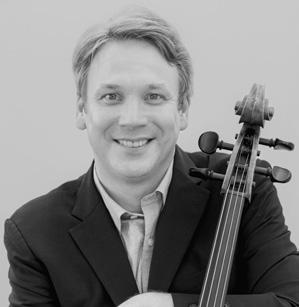
Cellist Dmitri Atapine has been praised for his “brilliant technical chops” (Gramophone) and performances that are “highly impressive throughout” (The Strad). He has appeared at leading venues worldwide and performs frequently with CMS, where he is an alum of the Bowers Program. He has been featured at festivals including Music@Menlo, La Musica Sarasota, Aldeburgh, and Aix-en-Provence. His recordings appear on Naxos, Bridge, MSR, and other labels, and include a world-premiere release of cello sonatas by Lowell Liebermann. He has received awards including first prize at the Carlos Prieto Cello Competition and top honors at the Premio Vittorio Gui and Plowman competitions. He holds a doctorate from the Yale School of Music, where he studied with Aldo Parisot. Atapine is cello professor at the University of Nevada, Reno; Artistic CoDirector of Friends of Chamber Music Kansas City; founder of Apex Concerts (Nevada); and Co-Director of Music@Menlo’s Young Performers Program.
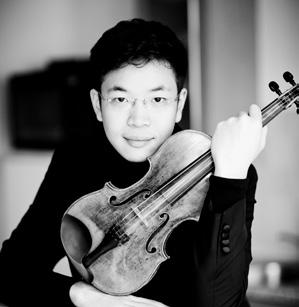
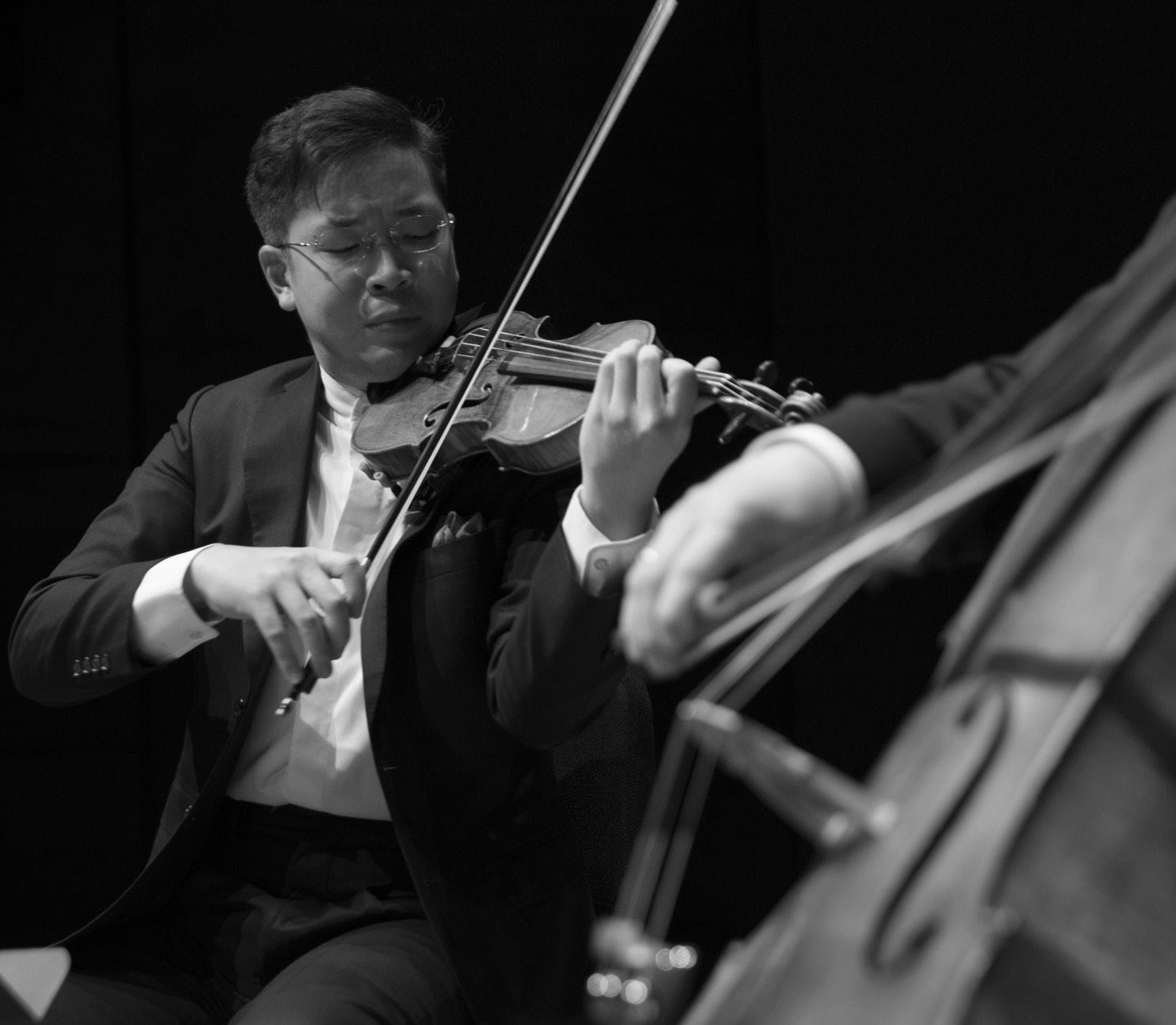
Recipient of a 2015 Avery Fisher Career Grant and a 2017 Lincoln Center Award for Emerging Artists, violinist Paul Huang has made recent appearances with the Detroit Symphony, Rotterdam and Seoul Philharmonics, the Detroit, San Francisco, Dallas, Baltimore, Houston, San Diego and NHK Symphony. In the 2024–25 season, he returned to Taiwan’s National and Hiroshima Symphonies, Residentie Orkest Den Haag, and made his London debut at the Barbican Hall with BBC Symphony Orchestra as well as debuts with Indianapolis and Oregon Symphonies. In fall 2021, he became the first classical violinist to perform his own arrangement of the US national anthem for the opening game of the NFL to an audience of 75,000. His recent recital appearances included those at the Kennedy Center, Lincoln Center, Aspen, and Lucerne Festivals. He is an alum of CMS’s Bowers Program and plays on the legendary 1742 ex-Wieniawski Guarneri del Gesù on loan through the Stradivari Society of Chicago.
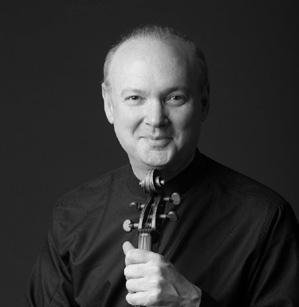
Violist Paul Neubauer, hailed by the New York Times as a “master musician,” released two new albums in 2025 on First Hand Records, featuring the final works of two great composers: an allBartók album including the revised version of the Viola Concerto, and a Shostakovich recording that includes the monumental Viola Sonata. Appointed principal violist of the New York Philharmonic at the age of 21, Neubauer has appeared as soloist with the New York, Los Angeles, and Helsinki Philharmonics; the Chicago, National, St. Louis, Detroit, Dallas, San Francisco, and Bournemouth Symphonies; and the Santa Cecilia, English Chamber, and Beethovenhalle Orchestras. He has premiered viola concertos by Bartók (revised version), Friedman, Glière, Jacob, Kernis, Lazarof, Müller-Siemens, Ott, Penderecki, Picker, Suter, and Tower. A two-time Grammy nominee, Neubauer is artistic director of the Mostly Music series in New Jersey and serves on the faculties of the Juilliard School and Mannes College.
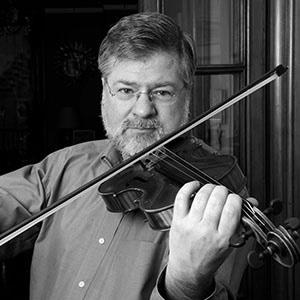
Violinist Daniel Phillips co-founded the Orion String Quartet, which gave its last concert in April 2024 at CMS after an illustrious 37year career. A graduate of Juilliard, he counts among his teachers his father Eugene Phillips, Ivan Galamian, Sally Thomas, Nathan Milstein, Sandor Végh, and George Neikrug. Since winning the 1976 Young Concert Artists Competition, he has performed as soloist with orchestras including the Pittsburgh, Houston, New Jersey, Phoenix, and San Antonio symphonies. He appears regularly at festivals including Music from Angel Fire, where he is co-artistic director. He was a member of the renowned Bach Aria Group and has toured and recorded in a string quartet for Sony with Gidon Kremer, Kim Kashkashian, and Yo-Yo Ma. Phillips is a professor at the Aaron Copland School of Music at Queens College and on the faculties of Bard College Conservatory and Juilliard. He lives with his wife, flutist Tara Helen O’Connor, and their two dachshunds on Manhattan’s Upper West Side.
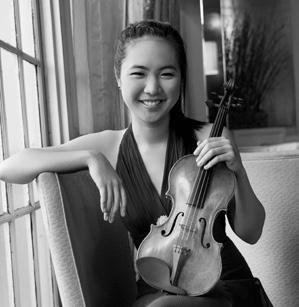
Violinist Danbi Um is a Menuhin International Violin Competition
Silver Medalist, a winner of the prestigious 2018 Salon de Virtuosi Career Grant, and a recent top prizewinner of the Naumburg International Violin Competition. Recent and upcoming engagements include appearances with the Chamber Orchestra of Philadelphia, Cleveland Chamber Music Society, Chamber Music San Francisco, and the Rockport, Moab, Saratoga Performing Arts (SPAC), Santa Fe, and North Shore Music Festivals. Born in Seoul, South Korea, Ms. Um moved to the United States to study at the Curtis Institute of Music, where she earned a bachelor’s degree. She also holds an Artist Diploma from Indiana University. She is an alum of CMS’s Bowers Program and plays a 1683 “ex-Petschek” Nicolo Amati violin, on loan from a private collection.
Anonymous
George Baroudi
Nili and Richard Biondi
Jennie Fortunoff and Andrew Chonofsky
Steve Geismar
John Iavarone
Pat and Phyllis Iavarone
Steven Newman
Mukund Padmanabhan
Joseph and Roberta Rotberg
Varda Solomon
The Sterling Foundation