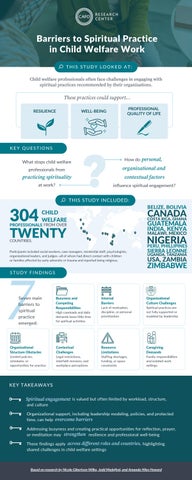

Barriers to Spiritual Practice in Child Welfare Work

Child welfare professionals often face challenges in engaging with spiritual practices recommended by their organizations
These practices could support
RESILIENCE
KEY QUESTIONS
What stops child welfare professionals from at work? practicing spirituality
304 CHILD WELFARE
PROFESSIONALS
COUNTRIES TWENTY FROM OVER
WELL-BEING
PROFESSIONAL QUALITY OF LIFE
and contextual factors
How do influence spiritual engagement? personal,
Participants included social workers, case managers, residential staff, psychologists, organizational leaders, and judges all of whom had direct contact with children or families affected by early adversity or trauma and reported being religious
STUDY FINDINGS
Seven main barriers to spiritual practice emerged:
Organizational Structure Obstacles
Limited policies schedules or opportunities for practice
KEY TAKEAWAYS
Busyness and Competing Responsibilities
High caseloads and daily demands leave little time for spiritual activities
Contextual Challenges Legal restrictions interfaith tensions and workplace perceptions
Internal Barriers
Lack of motivation, discipline, or personal prioritization
Resource Limitations
Staffing shortages funding or space constraints
Spiritual engagement
Organizational Culture Challenges
Spiritual practices are not fully supported or modeled by leadership
Caregiving Demands
Family responsibilities and isolated work settings
is valued but often limited by workload, structure, and culture
Organizational support, including leadership modeling, policies, and protected time, can help
overcome barriers
Addressing busyness and creating practical opportunities for reflection, prayer, or meditation may resilience and professional well-being
These findings apply highlighting shared challenges in child welfare settings THIS STUDY LOOKED AT:
across different roles and countries, strengthen
Nicole Gibertson Wilke, Jedd Medefind, and Amanda Hiles Howard