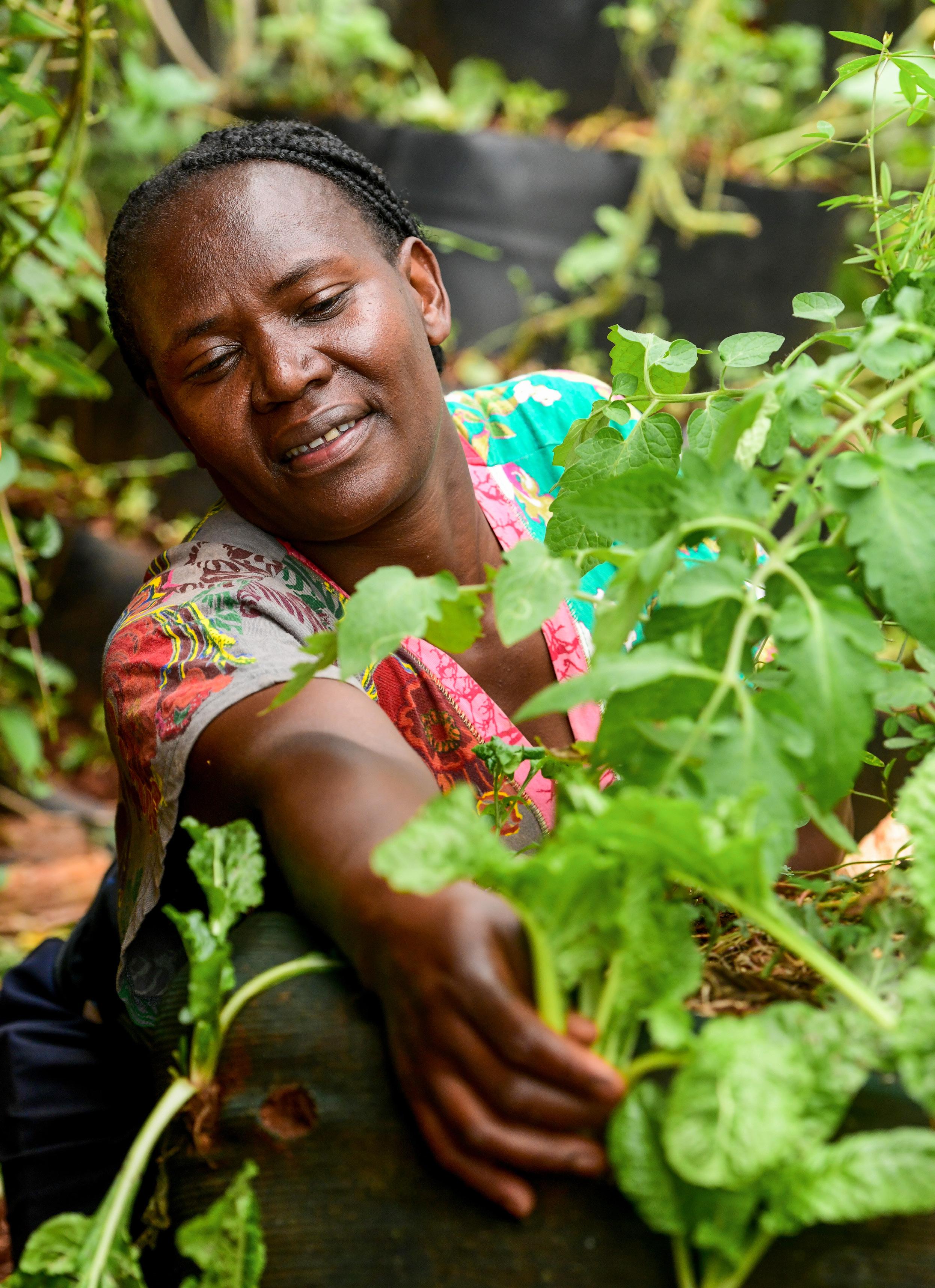
In Nairobi, your donations help Fridah grow food for her family.
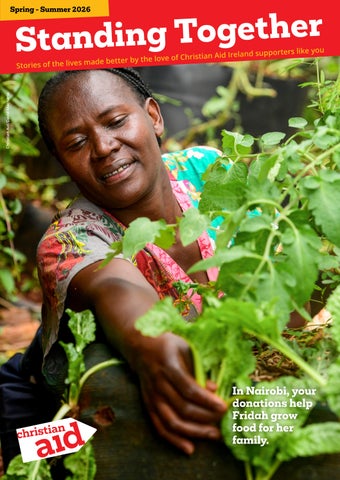
In Nairobi, your donations help Fridah grow food for her family.
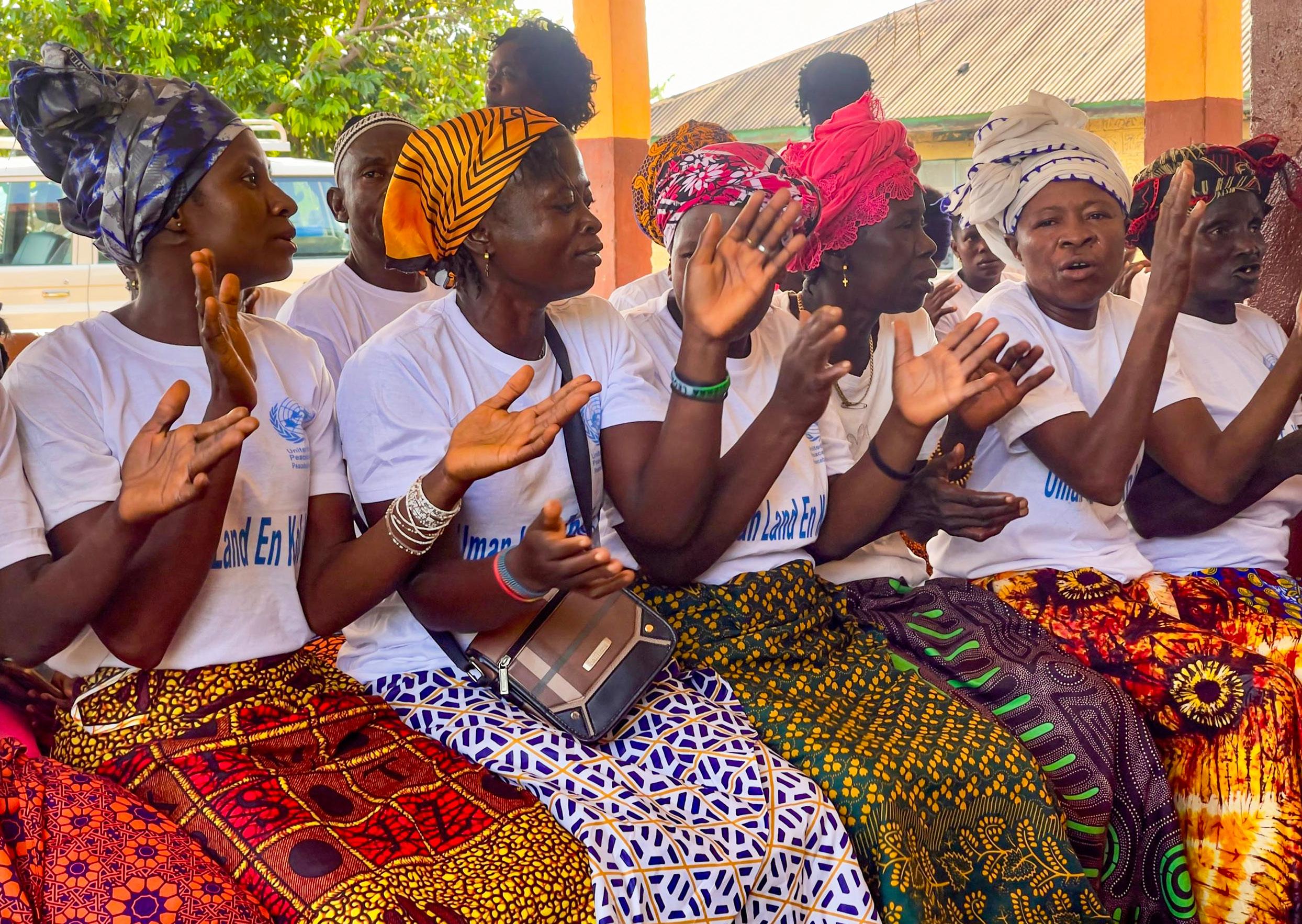
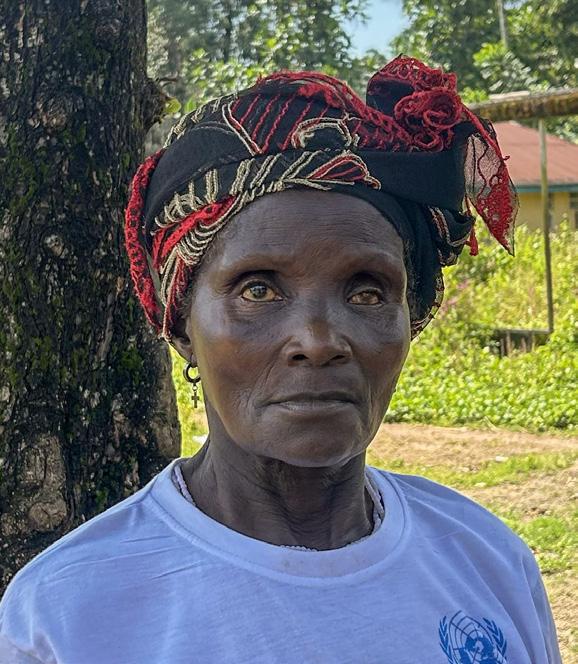
Pictured in her village in the Tonkolili district of Sierra Leone, Mary Bangura was the eldest and only daughter in a family of ten children. Despite having a disability, she worked alongside her father on the family farm but when he passed away, her brothers took control of the land, leaving her and her children with nothing.
‘Whenever I tried to access the land, my brothers would chase me away and tell me to go back to my husband,’ Mary recalled.
A law created in 2022, The Customary Land Act,
guarantees women and men equality regarding the ownership and inheritance of land but many women across Sierra Leone are
In the parable of The Good Samaritan (Luke 10), a religious leader asks Jesus, ‘who is my neighbour?’ but behind it seems to be a concern not to reach out to non-Jews to avoid becoming defiled. It’s an attitude of ‘othering’. A nationalistic agenda.
Jesus, however, concludes the parable by shifting the focus to a different question. Not ‘who is my neighbour?’ but ‘what does it mean to be neighbourly?’ He’s less interested in purity of doctrine, more on practical discipleship. Not ‘who should I love?” but ‘what does it mean to be loving?’
Jesus calls us to neighbourliness and to a radical, unexpected, extravagant love - whether that be towards a friend who embraces us or an enemy who intimidates, even despises us. We are called to be neighbourly and to love whoever we find in front of us.
Mary Bangura worked alongside her father on the family farm but when he passed away, her brothers took control of the land, leaving her with nothing.
still unaware of it. Through donations like yours and with the support of the UN Peace Building Fund, Mary was able to attend training sessions organised by Christian Aid’s local partner, Green Scenery where she learnt that she was legally entitled to inherit a fair share of her father’s land. She was taught how to document her ownership of the land and the process for
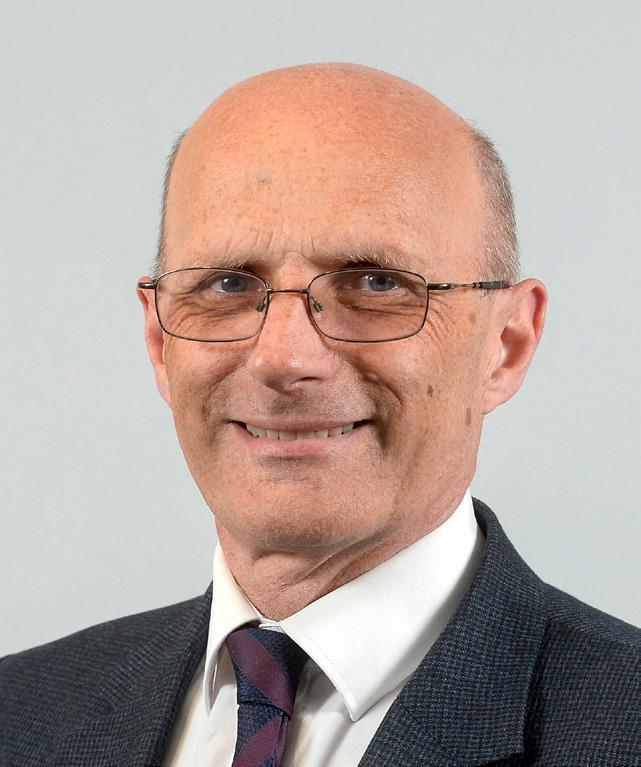
Rev Uel Marrs is Secretary to the Presbyterian Council for Global Mission and a trustee at Christian Aid Ireland.
resolving disputes.
‘Before this project, I didn’t know that I had legal rights to the land despite my gender and disability. I now understand that I shouldn’t be discriminated against,’ Mary added.
Equipped with this knowledge, Mary reported her family land dispute to the authorities, kickstarting a mediation process that led to the family farm being fairly divided among Mary and her siblings. Owning her own plot of land and the additional income that it brings has allowed Mary to live more independently.
‘I thank God because I now have my own portion of the farm where I work to support my family. I give credit to Christian Aid and Green Scenery for making this happen,’ Mary said.
You can read a more detailed version of Mary’s story on our website at caid.ie/WomenLandOwners
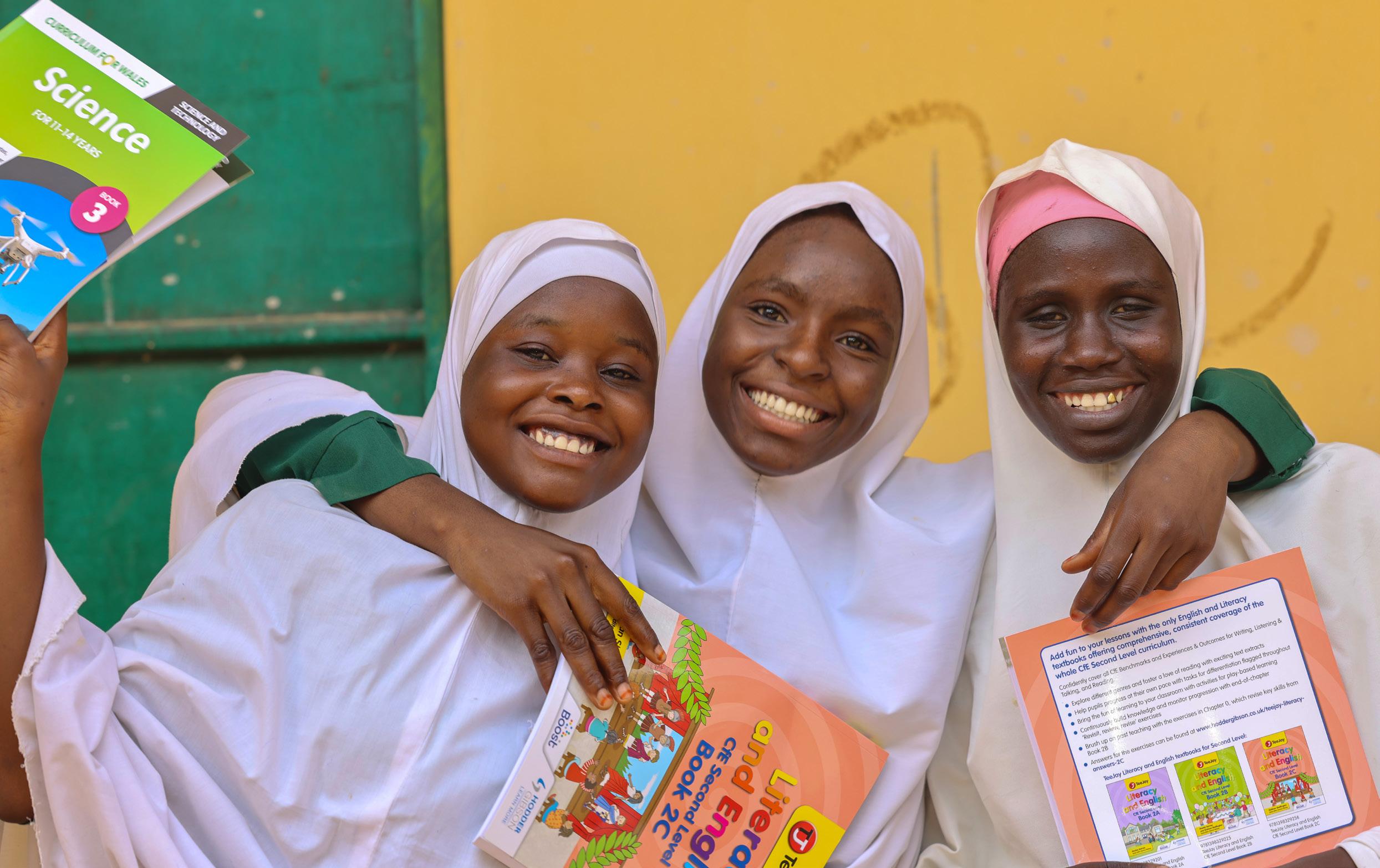
Seventeen-year-old Amina (left) is counting her blessings. She knows that she and her siblings are lucky to be in school. They live in Kano State in northwestern Nigeria, which has the country’s largest population of out-of-school children. Across the state, nearly one million children or around a third of the primary school age population don’t attend school. Too often, poverty prevents families from sending their children to school. Girls are often the first to be excluded because they are expected to stay at home to help with domestic chores. Thanks to your generous donations and the support of Book Aid International, our local partner, Adolescent Health and Information Projects (AHIP) provided over 3,000 books for schools across Kano State. More pupils attend school when they have the learning materials they need.
Amina told us: ‘One of the challenges I face in my community is that some people see me attending school as a waste of effort, time and resources. They often say I should stay at home and do something they consider more
valuable, like attending weddings and other ceremonies’ [in the hope of meeting a husband].
Amina enjoys school and hopes to become a doctor. She said: ‘I love coming to school because I am keen to learn. I love all the science subjects: physics, chemistry,
biology as well as English and mathematics. I aspire to become an ophthalmologist.’
By improving access to quality learning materials, your generous donations are helping ensure that schoolgirls like Amina have the chance to learn, lead and build brighter futures.
In this newsletter, we describe the work of four of our local partners, who every day make a huge difference to the lives of people in some of the poorest and most challenging places on earth.
Our approach to development and humanitarian aid is to work through local partners because they are rooted in the communities we serve. This means they’re best placed to advise on the responses that would have the greatest impact, for the greatest number of people.
Local partners are usually the first responders in times of crisis. Before international aid agencies arrive, they’re already on the ground,
making a difference. They do far more than deliver aid; they lift voices that must be heard, fight for justice and carry hope into the darkest moments.
Our local partners are not distant bystanders. They stand with people facing unimaginable suffering and often stand in harm’s way to support and defend their communities. Our local partners are an inspiration and we are very honoured to work alongside them.
Through your prayers and donations, the individuals, churches and denominations who support our work are also partners in this global movement for justice.
Although Gaza has slipped down the news agenda since the socalled ceasefire agreed in early October, little has changed on the ground. More than 600 Palestinians, including more than 100 children, have been killed by Israeli airstrikes carried out during more than 1,250 ceasefire violations. Fewer than half of the
600 aid trucks needed each day are entering Gaza, meaning that too many children are still going to bed hungry and families are unable to access basic healthcare.
Throughout the winter, people in Gaza have also
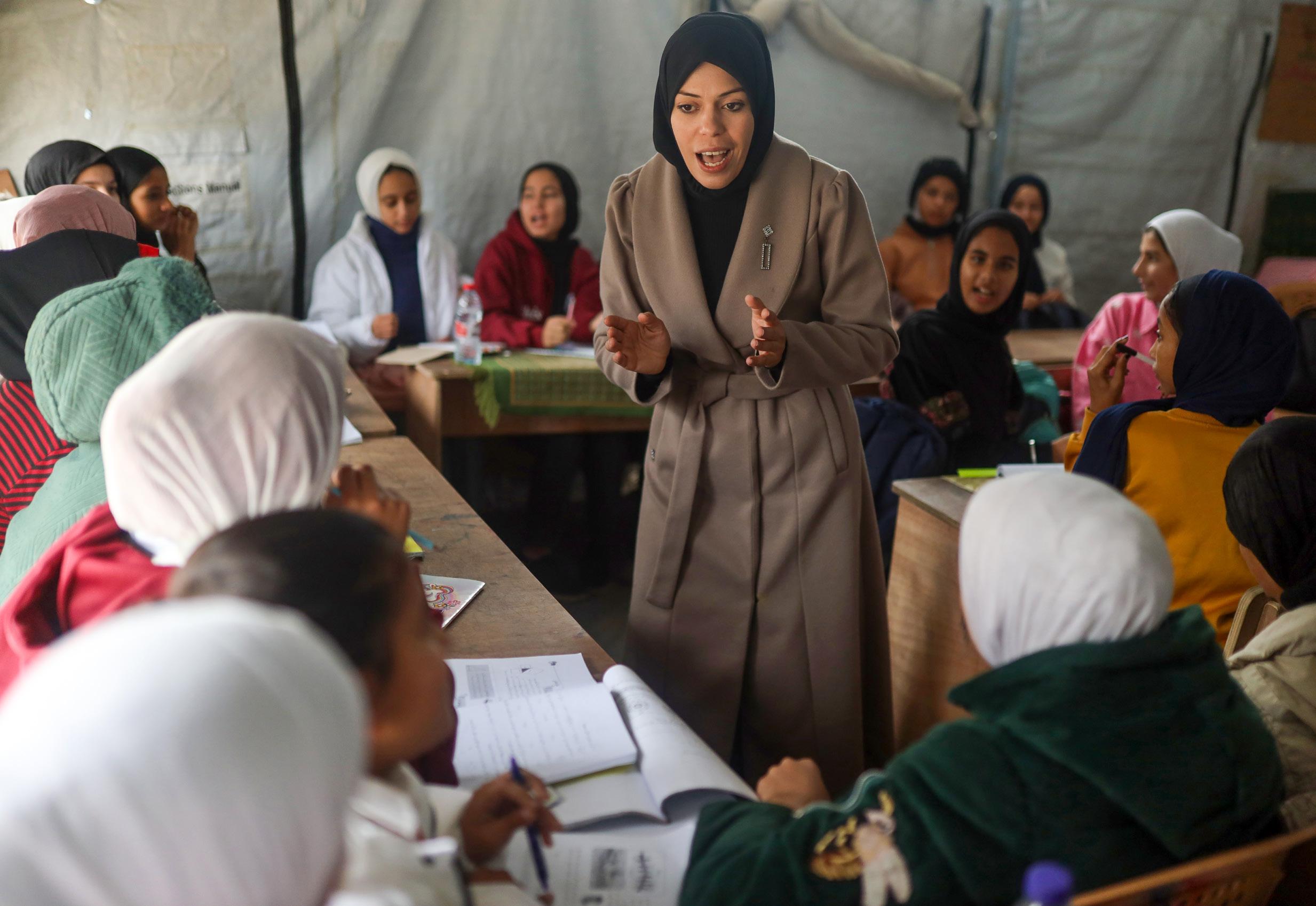
In a displacement camp
and fun activities for
had to contend with heavy rains, high winds and flooding, which destroyed thousands of tents in displacement camps. Families living under canvas are vulnerable to respiratory illnesses like bronchitis and pneumonia, as well as skin conditions due to a lack of running water and proper sanitation. Sadly, 11 Palestinian
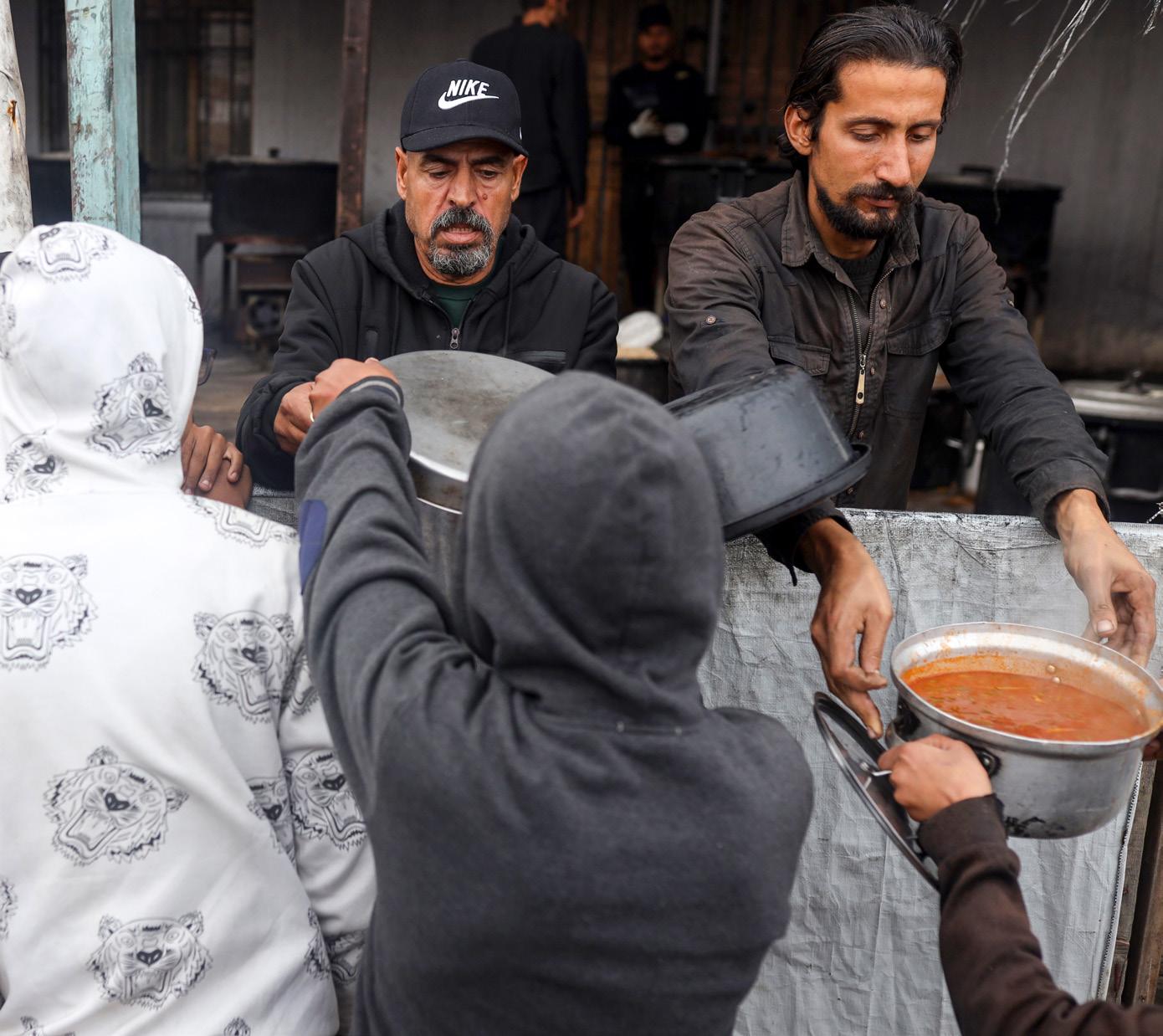
In the same camp, your donations enable a community kitchen to provide 4,000 families with hot food each day.
children in Gaza died from hypothermia during the winter.
Despite the horrors and hardships, your donations bring hope. Our local partner, Culture and Free Thought Association (CFTA) runs a camp for displaced people in Al Mawasi, southern Gaza. People living in tents were given sandbags to protect them from encroaching sea waves and flooding. CFTA also runs a community kitchen providing 4,000 families with hot food, as well as offering educational and fun activities for displaced children in the camp.
You can read a more detailed version of this story on our website at
Poverty and uncertainty stalk the densely packed streets of Dagoretti, a sprawling part of the Kenyan capital where almost 300,000 people live in makeshift housing.
With secure jobs hard to find, food prices rising and most people earning less than a dollar a day, life is a constant struggle. With rent, school, medicine and water to pay for too, some days there just isn’t enough money for families to properly feed their children.
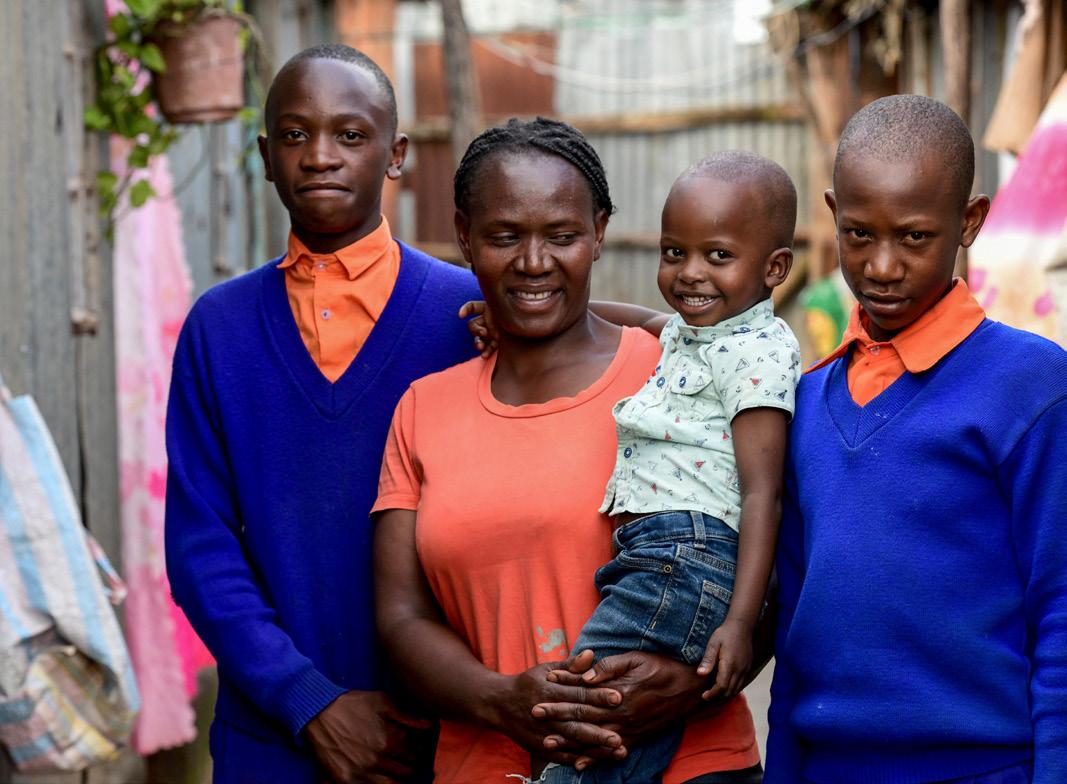
It’s in this crowded area of Nairobi that Fridah Moraa (38) lives with her 13-year-old twin boys, her daughter (25), a trainee cook, and her grandson (4). The family rents a one-room home made from corrugated metal sheets. They share toilet
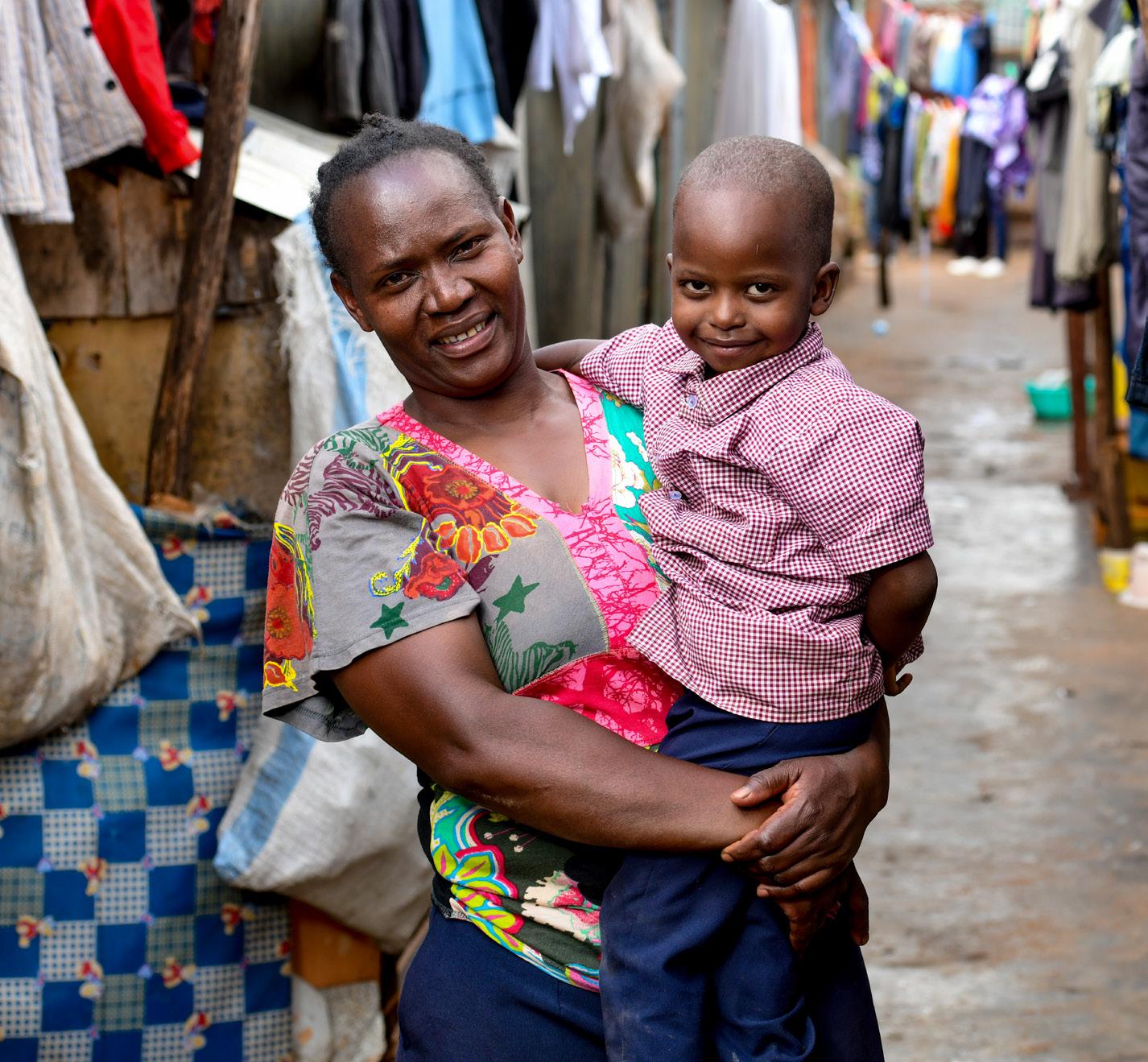
facilities with other families and have no running water. In these conditions, protecting her family from disease and malnutrition is a constant battle for Fridah, and one she must face alone. That’s because, in February 2025, a tragic accident took the life of Fridah’s husband. Since his heartbreaking loss, Fridah is the sole breadwinner in the family.
But thanks to your kindness, Fridah is overcoming poverty to feed her family and build a better future.
With tools, seeds and specialist training from our local partner, Beacon of Hope, Fridah is making the most of a small space in the city to grow a steady supply of fresh produce - kale, tomatoes and a range of indigenous vegetables - that she can cook for her family or sell on her market stall. She told us: ‘Urban farming has changed my life.’
For now, the pressure for Fridah to put enough food on the table for her family has eased a little. When her market stall bustles with customers and the harvest is good, Fridah can even build savings. Because she
knows her twins have ambitions and they must stay in school to realise them. That’s only going to be possible if Fridah can save money.
Fridah’s urban farm isn’t just a buffer against going to bed hungry; this tiny but mighty space holds her children’s dreams for a brighter future. She said: ‘My prayer is that I’ll be able to see them graduate from college, so they can start to be independent, maybe find an occupation, and earn money.’
Christian Aid Week 10-16May2026
Please support someone like Fridah to grow food, protect their children from hunger and nurture hope. There are so many ways to join us this Christian Aid Week, from taking on our ‘70k in May’ challenge, to holding a coffee morning, soup lunch or sale of cakes, books or plants at your church. Whether you opt to fundraise as part of a community or as an individual, you’ll find everything you need to get started at caweek.ie
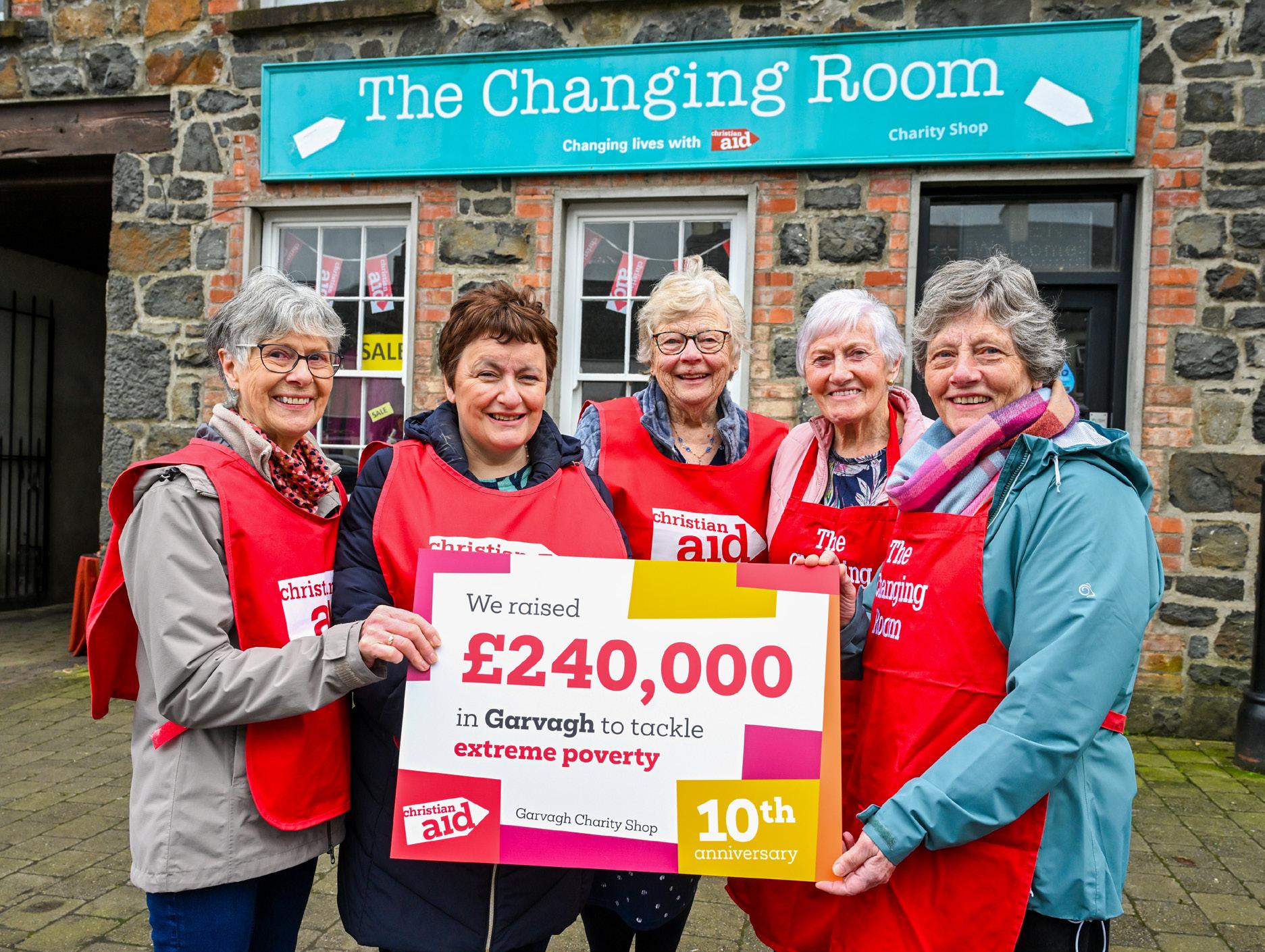
Our charity shop in the village of Garvagh near Coleraine in Northern Ireland has raised almost a quarter of a million pounds to tackle extreme poverty during the past decade. The Changing Room has raised £240,000 since it was founded by local grandmother, Rachel McCormick ten years ago. Rachel, the shop’s volunteer manager, is supported by a team of more than 15 volunteers who give their time to sort donations, price goods and process sales.
The Changing Room is Christian Aid’s only charity shop in the UK and Ireland. In late 2015, Rachel approached us for the green light to set up a charity shop. She then identified premises on Main Street, recruited volunteers from the local community and put out a call for donations. By February 2016, the shop was open for business. Ten years on and the shop is still run entirely
Celebrating the fundraising success of the Garvagh charity shop are, L-R: Moira Irwin, Jenny Farlow, Ivy Thompson, Doreen Campbell and Rachel McCormick.
by volunteers, meaning that none of the money raised has been spent on salaries.
Rachel, a retired nursemidwife and mother of five, believes the success of the shop has been a team effort. She said:
‘None of this would have been possible without the incredible volunteers, the high-quality donations
and the support of our loyal customers. We also want to thank our landlord who has been very kind.’
One shop assistant, Joyce Workman, described how she enjoys helping people find what they need: ‘Only last week, a man came into the shop looking for an outfit to wear to a wedding and we were able to kit him out from head to toe.’
The Garvagh charity shop is a great illustration of the power of collective action and how much we can achieve when we work together. Whether you opt for a table quiz, a bring-and-share supper or a sponsored walk, you have the power to brighten lives and bring hope to communities living in poverty right around the world.