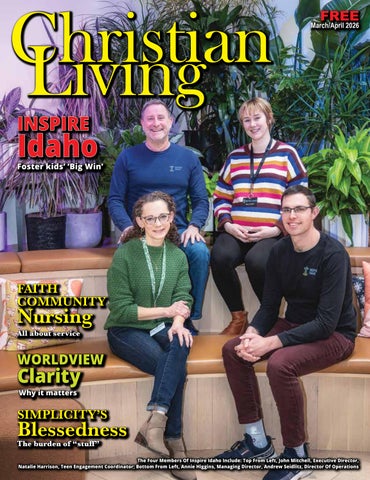
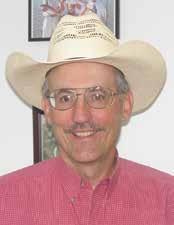
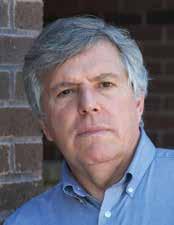
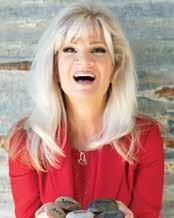
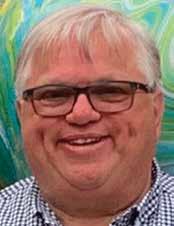
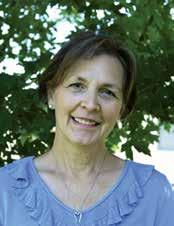
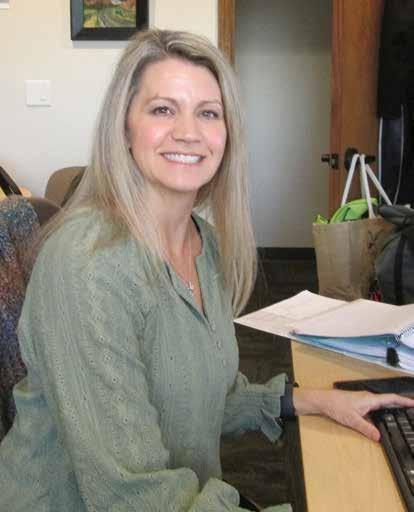
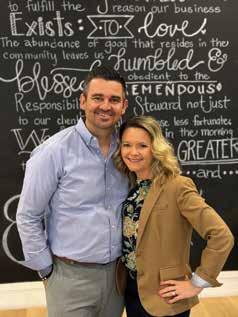
The Four Members Of Inspire Idaho Include: Top From Left, John Mitchell, Executive Director, Natalie Harrison, Teen Engagement Coordinator; Bottom From Left, Annie Higgins, Managing Director, Andrew Seidlitz, Director Of Operations
Contents March / April 2026
PUBLISHER
Sandy Jones • 208-703-7860 christianlivingmag@gmail.com
EDITOR
Gaye Bunderson editorgaye@gmail.com
Submit story ideas, article submissions & press releases
GENERAL INFO christianlivingmag@gmail.com 208-703-7860
Denice King • 208-918-5190 www.greentreedkdesign.com
Chad Estes
Instagram: @Starrynightmedia
Larry Banta, Steve Bertel, Daniel Bobinski, Rick Chromey, Tom Claycomb III, Roxanne Drury, Joan Endicott, Leo Hellyer, Dave McGarrah, Gary Moore, Mark Naito, and Bethany Riehl
Be an authentic person in an AI world
By Sandy Jones
A personal note: I would like to start with a heartfelt thank you to all of our readers who have been so supportive the past 2½ years through my husband Steve’s battle with, and complications from, agent orange-related cancer. As much as it broke my heart, I’m happy for Steve that he got his heavenly healing on the night of January 1. He’s praising God in his new body, with a fully intact mind. God was merciful to Steve, and continues to be merciful while carrying me through this time of adjustment and grief.
When I took over as the publisher of Christian Living Magazine, I started my Publisher’s Corner, simply because when I read a magazine it’s one of the first things I look for. I want to know what the publisher, or editor, of that magazine and I have in common as these columns are largely personal in nature.
So as I’m adjusting to my new normal, and am no longer a caregiver, I’m able to slow down some and process what’s going on in our world a bit better. I’ve got to be honest that I’m finding out that much of the use of AI is disturbing to me.
Emails that used to be warm and fuzzy are now more clinical – almost stripped of human emotion. I can certainly tell the difference when I get an email from someone who, like me, sat down at the keyboard and typed out a note, and one that’s gone through a program like ChatGPT.
But where I see it the most is on social media. In the photos. In the reels – where I find myself now constantly looking for the AI disclaimers. Recently I was so badly deceived by AI that I’m now having to stop, step back and think about what really IS going on in our world today.
It all started early one morning as I was posting our Scripture of the day* and I came across an absolute powerhouse of a new gospel singer. I immediately loved his music! I found myself sending out his music videos to friends and family. I
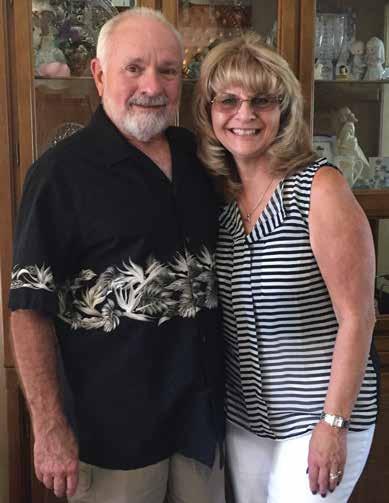
Steve and Sandy Jones
even sent one to a friend of mine who runs a couple of Christian music radio stations, asking if this young man had a national contract. Only to discover that he isn’t a real person –he’s a created AI character. I had been fully deceived!
I was so surprised and disappointed. It made me question my own eyes.
This deception and the growing use of AI remind me of C.S. Lewis’ Screwtape Letters, when Uncle Screwtape is encouraging his mentee nephew, Wormwood, to keep his subject confused and obsessed with lies, religion and politics in Wormwood’s pursuit of keeping his subject away from learning about and following God.
I’ve recently been doing a Bible study on RightNow Media called “Your Story Has a Villain.” Where Jonathan Pokluda encourages his viewers to put on the Armor of God – warning against how the enemy works hard to deceive you.
Challenging his viewers, Pokluda boldly asks: “What lies are you believing right now? How is the enemy deceiving you?” Going on to ask: “How will you commit, this week, to walk in the righteousness of Jesus?”
I realize that AI can do some good things too, but I personally believe that AI can also be an extremely dangerous tool, one where Christians should be encouraged to pray for wisdom and discernment when using.
“Trust in the Lord with all your heart and lean not on your own understanding; in all your ways submit to him, and he will make your paths straight.” – Proverbs 3:5-6 NIV
I pray that we all live lives of authenticity, of truth telling, of accepting one another as we are and not insisting that we become cookie cutter copies of each other. Recognizing the value of being different, and unafraid of embracing those differences, while realizing that the only person we need to aspire to be more like is Jesus.
I know I still have much to learn about AI, but I’ve also learned to trust my gut – it’s close to my heart, and God calls us to guard our hearts.
“Above all else, guard your heart, for everything you do flows from it.” – Proverbs 4:23 NIV
Until next time….
God Bless! n
*You can find us on Facebook by searching for Christian Living Magazine, or under my personal name on Instagram
A great big Thank You to our advertisers, who have continued to support the ministry of Christian Living Magazine. Without their support, there would be no CLM. When choosing where to shop, we encourage you to check out these wonderful businesses; and while there, please thank them for their part in each and every issue of CLM.
BIBLE BLANKS by
Steve Bertel
Fill in each answer, one letter per square. Then ar range t he letters in t he highlighted squares to reveal t he name of …
A NEW TE STAMEN T GOVERNOR
1. “T he Cit y of Tr uth”
2. Proverbs reminds us, “Honor t he L ord with your wealth, with the ___ of all your crops …”
One of the apostle Paul’s co-workers
4. He told the L ord, “ … how can I rescue Israel? My clan is the weakest in the whole tr ibe of Manasseh, and I am the least in my ent ire family!”
And AN OLD TE STAMEN T CI TY is … ANSWERS: 1. JERUSALEM (Zechariah 8:3) V,(NL NKJV) 2. FIRSTFRUITS (Proverbs 3:9)
A NEW TESTAMENT GOVERNOR is: QUIRINIUS (Luke 2:2)
3 AQUILA (Romans 16:3) 4. GIDEON (Judges 6:15)
3.
Words
Worldview clarity: why it matters
By Daniel Bobinski
Here’s a statistic from Barna research that should stop us in our tracks: 81% of evangelical church attenders claim to have a biblical worldview. However, when actually tested on their beliefs, only 21% hold consistent biblical positions across key areas of life.
That means a 60-point gap exists between what most Christians think they believe and what they actually believe.
This is a critical issue. When believers hold a mixed worldview (biblical principles blended with secular humanism, Eastern religions, or even Marxist ideas), they can easily make life decisions that don’t align with Scripture.
What Is a Worldview, Anyway?
A worldview is simply the lens through which we interpret reality. It’s the framework we use to answer life’s fundamental questions. Every person has a worldview, whether they’ve thought about it consciously or not. For reference, a worldview addresses ten essential areas, each tied to a critical question:
1. Theology: Who is your god?
2. Psychology: Who are you?
3. Biology: Where did you come from?
4. Philosophy: What is real?
5. Ethics: How do you determine right and wrong?
6. Sociology: How should we organize society?
7. Law: What are the rules?
8. Politics: Who makes the rules and why?
9. Economics: How do we manage resources?
10. History: What is the meaning of time and events?
When Christians answer each question with a scriptural foundation, they develop a unified biblical worldview. But when some answers come from cultural assumptions, secular philosophy, or popular opinion, the result is typically a set of incongruent ideas.
The Theology Question: Who Is Your God?
Dr. David Noebel, founder of Summit Ministries, identifies five different ways that humans address the theology question:
• Atheism denies any god exists.
• Agnosticism claims we can’t know whether God exists.
• Polytheism believes in multiple gods with distinct personalities, such as in Greek, Roman, and Hindu traditions.
• Pantheism identifies God with the universe itself. Everything is divine.
• Monotheism asserts one supreme God who created and sustains
reality while remaining distinct from it. Judaism, Christianity, and Islam share this foundation but differ significantly on God’s nature.
Christianity is grounded in the biblical view of one infinite, eternal, personal God who created all things. Not only does the God of the Bible remain actively involved in His creation, He is revealed as three persons: Father, Son, and Holy Spirit. The God of the Bible is also the only true righteous, relational ruler.
Righteous: His character defines moral absolutes.
Relational: The Trinity reveals a God who exists in eternal relationship within Himself.
Ruler: He exercises sovereign authority over all creation.
One’s answer to the question “Who is your God?” is important because it shapes every other belief one holds. When you think about it, if one’s god was impersonal or non-existent, then one’s views on human nature, ethics, society, and life’s purpose would not likely be biblical.
The Psychology Question: Who Are You?
Once we answer the theological question about who God is, a psychological question comes next: “Who are you?”
Biblical psychology teaches that humans are created in God’s image, and as such, we possess inherent dignity and worth because we reflect His character.
Genesis 1:27 declares, “God created man in his own image, in the image of God he created him; male and female he created them.”
This establishes several truths:
• We are created beings, not evolutionary accidents.
• We bear God’s image, giving us intrinsic value.
• We exist as male and female – complementary forms.
• Our identity comes from God, not ourselves.
The biblical view of who we are also acknowledges our fallen condition. Romans 3:23 states, “All have sinned and fall short of the glory of God.” Given this biblical position, humans are not good people who occasionally stumble; we’re morally broken and desperately need redemption.
In other words, we exist in a paradox of being both dignified image-bearers AND fallen sinners. We have immense worth and yet we need a Savior.
Contrast this with secular humanism, which teaches that humans are essentially good and need only some education to flourish. Eastern religions say we need to look within to find the divine self. Postmodernism claims that our human identity is fluid and selfconstructed.
Daniel Bobinski
Why Unified Thinking Matters
Research shows that Christians who have an inconsistent biblical worldview experience higher rates of divorce, more financial stress, higher levels of anxiety, and more frequent moral compromise. Holding a mixed worldview is like what Jesus taught – a house that’s divided and therefore cannot stand.
Sadly, when Christians believe they’re made in God’s image but derive their identity from feelings, career, or relationships, they’ve mixed biblical truth with cultural misconceptions. The result is confusion and instability that follows every shifting cultural norm.
Therefore, it’s important for Christians to take the Bible at face value: God is the self-existent righteous, relational ruler and we are made in God’s image, therefore our identity is one of inherent dignity and worth.
Moving Forward
To develop a coherent biblical worldview we must commit to thinking biblically about all of life, not just “spiritual” matters. God’s Word speaks to every area of human existence, including economics, politics, history, family, and education. It’s when Christians compartmentalize their faith and treat it as something disconnected from daily decisions that it’s practically guaranteed they’ll have an inconsistent worldview.
The stakes are high in this matter. Young people are walking away from Christianity not because they lack sincerity, but because they never developed and subscribed to a coherent, defensible biblical worldview. Without such a perspective they can’t answer intellectual challenges from professors, friends, or even their own doubts.
We can change that trajectory. It starts with each of us examining what we truly believe, and whether those beliefs align with the teachings of Scripture.
Stay tuned – in the next issue we’ll examine the biblical view of biology and philosophy. n
Daniel Bobinski, Th.D., serves as Education Director at the Biblical Studies Center in Boise, Idaho. Reach him at Daniel. Bobinski@BoiseBSC.org.
God’s Great Outdoors
Fun at Scooter’s Youth Hunting Camp
By Tom Claycomb III
I became acquainted with the Scooter’s Youth Hunting Camp back in 2004 or 2005. My wife came home from school one day and told me she’d signed up our two sons in some kind of youth hunting camp and that I had to take them to it. What?! The camp is held the first Saturday in May every year. That’s right in the middle of primo bear and whistle pig hunting and crappie fishing... and turkey hunting...and morel mushroom picking season...
Well, I was stuck no matter how much I whined. So, I dutifully took the two young boys. Little did I know that I would end up liking the camp better than they did. In fact, I’ve been a volunteer ever since. And the two young boys have grown up to be good young men and I later got to take them both on their first deer hunts.
I conduct 40-60 outdoor seminars/speaking engagements per year, all the way from Texas to Alaska, and yet the SYHC is the coolest event that I do all year. Scott “Scooter” McGann, founder and creator of the camp more than 16 years ago, originally did it to help single moms. But he couldn’t deny kids with two parents the opportunity to come, though his heart was originally to help single moms in getting their kids into the outdoors to help them stay out of trouble.
In the beginning kids mailed in applications and all were accepted. In those days we had about 140 kids. It kept growing until we had to hire someone to do a call-in registration. Last year it filled-up with 250 kids in 49 seconds.
Here’s the format. The kids show up and sign in and are divided into six groups. To begin, we meet and say the Pledge of Allegiance, a local pastor says a prayer, and then group one goes to the first station, group two to the second one and so on.
There are six stations:
• Trap shooting
• .22 range
• Blackpowder range
• Archery range
• Survival range
• Gun cleaning / knife sharpening
After 45 minutes, all groups reconvene in the meeting area and a seminar is put on by a pro-staff member (a product promoter). They are great seminars and I always learn a lot at them. When the seminar is over, the kids rotate to their next station.
At lunchtime we break and eat lunch that has been prepared by a group of volunteers. What makes the camp especially cool is
that due to generous local businesses, the food and snacks are all donated and cooked by volunteers so the kids eat for free. After lunch the kids rotate to their next station.
After the kids have hit all the stations, they reconvene in the meeting area for Scott’s favorite event: the kids drawing. Due to local businesses and major companies donating items, every kid draws a gift. And I mean nice gifts. Companies and local businesses are over-the-top generous, and prizes include knives, targets, airguns and much more.
The kids attend for free, again due to the generosity of local and national businesses, and volunteer help. (Where was the SYHC when I was a kid?!)
Here are a few general rules, but check the SYHC website to ensure you don’t miss the registration. (Don’t just trust my instructions.)
• Registration opens April 1, 2026 at 10 a.m. Mountain Time.
• Kids must be 9-16 years old.
• Camp is held rain or shine. Nothing short of the Rapture will stop the camp from occurring.
• The camp will be photographed by various media sources. If you do not want your kid photographed, then DO NOT attend.
• The event takes place in Emmett at the Gem County Rod and Gun Club.
CHRISTIAN TIP #10: Here’s what I’m seeing and learning lately. I think a lot of us run around in a circle trying to be a Christian when really, it’s pretty simple. I’m thinking the whole secret to a vibrant Christian life is to abide in Him.
This year, in the morning I’m reading a chapter out of the New Testament and at night a chapter out of the Old Testament. I don’t want to sound like a biblical illiterate, but here’s something that I just really noticed lately. Jesus is busy as heck all day healing people and preaching, but then after a busy day of miracles He withdraws to a secluded place and prays. Repeat, repeat, repeat. He constantly withdraws and is in God’s presence. If He had to do that then I sure do! I think there’s something huge in this abide deal. Yes, hit it hard and be busy as heck but constantly stop, get recharged and then it hard again. I hear there’s a lot of pastors who are so busy they never have a quiet time. Not good. I think we need to withdraw daily and be in His presence. n
For more information about anything in this column, contact Tom at tomclaycomb3rd@gmail.com.
Tom Claycomb III
Wipe Every Tear - Part 2
Mean streets of ‘Third World Vegas’
By Steve Bertel
(Editor’s note: This is the second installment of a two-part article. If you missed Part 1, you can read it now on our website: www.christianlivingmag.com.)
As a high school teacher and basketball coach at Boise’s Cole Valley Christian School, Kenny Sacht (pronounced “sacked”) enjoyed occasionally taking his students on sports camps/mission trips to the Philippines.
The first, in 2007, was a basketball camp. “Kids there love basketball; it’s the #1 sport,” he said. “In general, Filipinos are very poor people. So, we figured bringing in American high school students who are 6’5”, 6’6”, 6’8” would be quite a big deal for them.”
It was. They held a weeklong basketball camp in the city of Manila, combining the popular sport with sharing the Word of God. “Many [of the young boys who attended] were living in slums with their families, since hunger and poverty are really rampant in the Philippines,” Kenny explained. “We also provided them free meals every day. Many of the people there don’t even eat one tiny meal a day. Some don’t eat for days. … Plus, we gave each kid in our basketball camp a free pair of new tennis shoes, since many kids over there don’t even have shoes to wear, let alone new ones.”
The second trip, in 2008, was a two-week girls’ volleyball camp. “That’s when I first got a real feel for the poor,” he said. “One like I never had before.” During the camp, he talked with a young woman who said she and her family only had a small handful of rice to eat every day. Plus, she complained of her mouth hurting. Come to find out, with no available dental care, she was suffering from 27 painful cavities. “It was then when God showed me Revelation 21:4 that says, ‘He will wipe every tear from their eyes. There will be no more death or mourning or crying or pain, for the old order of things has passed away,’” Kenny went on. “And God said to me, ‘You know, I’m going to wipe away every tear on my side of Heaven. I want you to begin wiping away tears on your side of Heaven. And I want you to begin with her.’”
So Kenny and his wife became regular financial supporters of the girl and her family, providing them money for the food and medical care they so desperately needed.
Then, another turning point: after returning home, Kenny found an online article about the Philippines – and how it’s one of the world’s hot spots for prostitution. “I read about girls trapped in the sex trade who were about the same age as my own lovely daughters,” he said. (Kenny and his wife have five daughters and a son.) “And the thought of them being trafficked was more than I could bear. So I told God, ‘Please help me, from here in Boise, Idaho, to set just one girl free.’”
In discussing what he learned with his wife and children, the family soon decided to form a nonprofit group to not only rescue Filipina girls who had been caught up in the snare of sex trafficking, but to show them the life-saving, unconditional love of God.
“Let’s call it Wipe Every Tear!” his wife had chimed in.
So, taking a leap of faith, Kenny resigned from his teaching position in 2012 and, since then, has managed Wipe Every Tear full-time, with he and his family making several trips each year to the Philippines. “We’ve probably made fifty, sixty, seventy trips there since we began,” he said – sometimes with students, sometimes with church groups, sometimes with teams of adults, all of whom faithfully volunteer their time and energies. “Our smallest groups have been about five to six people; our largest was 97,” he added.
According to the 2024 –the most recent – U.S. State Department Trafficking in Persons Report, the Government of the Philippines is continuing “to demonstrate serious and sustained efforts” on cracking down on sex trafficking, which includes investigating and prosecuting alleged traffickers, enforcing and strengthening anti-trafficking laws, “… and sentencing nearly all traffickers to significant prison terms.” According to the agency’s website, most recent figures show “The National Bureau of Investigation (NBI) and the Philippines National Police (PNP) investigated 417 trafficking cases, compared with 277 investigations” the previous year. The government prosecuted 264 alleged traffickers – 217 for sex trafficking and 47 for labor trafficking, compared with prosecuting 139 alleged traffickers – 115 for sex trafficking and 24 for labor trafficking – in the previous [year].”
But, despite those crackdown efforts, sex trafficking in the Philippines still exists. In fact, it blatantly flourishes. Bright neon signs still line city streets, advertising massage parlors, night clubs, dark cyber cafes, and other establishments catering to patrons looking to satisfy their worldly lusts. Why? One word: Corruption. “At a high level,” Kenny said. “Everyone makes money off it. The police, government officials, everybody. The bars have to pay the police, the authorities, and governmental officials. So the sex trade is allowed to happen.”
Kenny described what he and his teams experience firsthand, and their process of saving the young victims. “We go into these tiny, ratty, filthy, hot bars where the girls are being trafficked. I come from a ranching background. When cattle are brought to auction, they’re branded and given a numbered ear tag. And as they’re brought into the corrals for everyone to see and bid on, buyers look at their heads, their eyes, their udders. These girls are treated much the same way; they’re treated just like cattle, like pieces of meat. They each have a number pinned to their clothing, and are forced to walk – paraded – along the elevated bar, sort of a makeshift fashion-show runway, where men – mainly, despicable American men – ogle them up and down, each deciding which one suits his fancy. Like the cattle buyers, the men may say, ‘Oh, I don’t like that one.’ ‘I don’t like that one.’ And, if they don’t find a girl they like, they simply wait for the next batch.”
Most of the women are in their late teens or early twenties. Some are younger. “Several years ago, we brought a girl into our care who was being procured by her own mother, who worked in one of the bars,” Kenny recalled. “That innocent little girl was only twelve years old.” Thanks to the Wipe Every Tear efforts, the girl success-
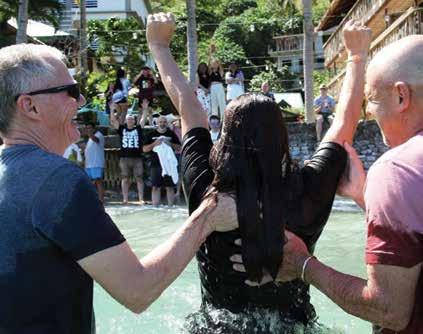
A young, formerly trafficked Filipina woman comes up out of baptismal water with her arms raised for the victory, cleansing and salvation she received through Jesus. Kenny Sacht of Wipe Every Tear is on her left and a pastor from Arkansas, Mike Moore, is on her right. (Photo provided by Kenny Sacht)
fully left the muck and mire of the sex trafficking life behind her and recently graduated from high school.
On each trip, Kenny and his teams spend about ten days rescuing young women and introducing them to the love of Jesus. “Sometimes, we go to the bars in Manila; but mostly, we go to [nearby] Angeles City, known by many as the sex tourism capital of the nation,” Kenny said – or, as he calls it, “The Third World Vegas.” There’s hunger, filth, and poverty seemingly everywhere. Some areas even smell like open sewers.
“For safety, we go into the bars in teams of five, six, or seven people. We offer everyone free hot meals – the bartenders, the waitresses, the bouncers, and especially the lovely girls,” he explained. “In fact, many of the bars’ employees have come to know me of a first-name basis!
“Some bars may have 20 girls ‘working’ in them at any given time; others may have 200. Then, once we locate a young woman we know we can help, we’re ‘required’ to buy her a drink – Coke, lemon juice, beer, or whatever – and ‘pay for her time’ with us. We usually invite her to join us at our table, which gives us the opportunity to spend time talking with her. Then we hand the women flyers, inviting them to join us for a lavish, all-you-can-eat buffet banquet in a few days,” he said. “The girls we approach are either working in the bars for their ‘managers’ – their pimps – or are lone streetwalkers.”
Which begs the question: Have the WET volunteers ever been harmed or had their lives threatened, since they are boldly cutting in on the “managers’’ sources of income? “Actually, no,” Kenny answered. “God has been very good in taking care of us, guarding
us, putting a hedge of protection around us, while we are doing His work.”
“Doing His work” usually entails the teams working in the bars and cafes from roughly 9 p.m. to about 2 a.m., the peak times the women make themselves available for men who are trolling. “Sometimes, we work longer. In fact, sometimes we have stayed up all night long to help these girls,” Kenny pointed out.
Then, at the catered banquet, “We worship with the young women, we show them some videos as to what our organization is all about, I get up and address the group (as the WET CEO and founder), then we have a Filipino pastor speak to them in their native Tagalog language,” Kenny explained. “In short, we share the love of Jesus with them; we show them salvation, and the hope that lies within us.”
From there, the team invites the women to what’s called a “Girls’ Getaway” – a four-day/three-night vacation, so to speak, at a nearby resort island – where, Kenny pointed out, “The girls get to swim in the ocean, they get to sleep, they get to rest and relax, all in a very serene atmosphere.” A far cry from the harsh, dirty, rough street life they were used to. “And we have ministry time with them. That’s when God really touches them. In fact, after that, many women then say, ‘I’m ready to give my heart to the Lord,’” he added. “When they do that, we hold baptism ceremonies right on the beach, baptizing them in the waters of the South China Sea … and help them celebrate their new lives with the Lord.”
Continued on page 13
Steve Bertel
Understanding Relationships Work in – and on – your marriage
By Gary Moore
Surprise. I’m reading a marriage book (“Friends, Partners, and Lovers” by Pastor Kevin A. Thompson) – and much of what I’m sharing today is from that book. “Marriage isn’t a flip of a coin; it’s a flip of the will. Unless two people are willing to submit their individual wills to that which is best for the couple, a marriage will likely fail.”
The work of marriage matters in many areas, but it is most notable in our emotions. Emotions are automatic, physiological, bodily reactions (like a racing heart from fear), while feelings are the conscious awareness, interpretation, and labeling of those emotions. In other words, our feelings are what we tell ourselves about our emotions. And couples rarely understand the extent to which they control their feelings toward their spouse. By intentionally investing in our marriage, our affection for our spouse will grow. It’s a reciprocal relationship with powerful implications: We invest toward our affections. Our affections go toward our investments.
Healthy couples leverage this reciprocal relationship to the benefit of their marriage. First, they love one another, so they naturally invest in each other. They spend time together. They study one another. They notice what is taking place in their spouse’s life. They invest because of their affections. They also invest in order to change their affections. They don’t just wait until they feel something to do something. They form the discipline of doing things so they will feel. As they invest in their spouse (even when they don’t feel like it), that investment influences their affections.
“I just don’t love him/her anymore,” says many a divorcing couple. What they fail to understand is that they have the choice of whom they love. They control their feelings. Too often they see love as a force that overpowers them rather than a choice they make.
What most often happens when love is lost is that a couple lives in an apathetic season in their relationship. They stop intentionally investing in one another and the marriage, and over time the feelings of love wane. This pattern often happens when the chaos of parenting tempts a couple away from working on their marriage.
Consider any relationship. Two people find each other interesting. Clearly it doesn’t begin as love. Maybe it’s lust or infatuation or just interest, but it’s not love. Yet they begin to spend time together. They go on dates, have conversations, and get to know each other. Over time, love grows, but it only grows because they have invested in each other. Without the dates, phone calls, and interactions, they would not have fallen in love.
In the same way we fall in love, we stay in love. We invest in each other, which causes our affections to grow. If your marriage requires anything, it requires intention. To the extent that both spouses are intentional about keeping the marriage healthy, it will thrive. Apathy
will slowly erode a marriage, but intention will cause it to continually grow.
In marriage, we work in two specific ways – both in and on. In the business world, for a business to grow, a leader must spend some time thinking about the big picture of how the company is operating. Too often a small business owner is so busy with the day-to-day operation of the business that they cannot do the necessary work to help it grow.
The same is true for marriage. For marriage to succeed, each spouse must be working in it. Money has to be made. Kids have to be raised. Bills have to be paid.
But do not confuse “working” with “having a job”. “Working” is someone expending mental, physical, and emotional energy to keep the family running. A lot of people have jobs but aren’t working in their marriage. Marriage takes so much effort from a day-to-day perspective that it is easy for a couple never to take time to consider the big picture. They get so busy that they cannot see past today to determine if they like the direction their marriage is headed. This is a recipe for disaster. A couple must take time to work on their marriage.
Finding the time can feel impossible. Yet if a couple will intentionally set aside specific times to work on their marriage, they will be better able to work in their marriage.
Working on the relationship is an important part of having a healthy marriage. Without intentional time to reflect, discuss, and plan how they will work in a marriage, a couple is left hoping things work out in a positive way rather than determining how they will make things work.
When you do work on your marriage, you’ll find that it recreates a sense of partnership and togetherness. It makes each spouse feel heard and respected. It allows a couple to renegotiate responsibilities and expectations. It provides a break from day-to-day demands. It gives perspective and time to consider new possibilities. It reminds the couple the world continues to go on even when they take time off. It creates opportunities for growth and encouragement. It reveals strengths to appreciate and weaknesses to improve within the relationship.
Work in and on your marriage. Dare to invest. You’ll reap the rewards. n
Gary Moore served as associate pastor at Cloverdale Church of God for 15 years. He does couples’ coaching and leads couples’ workshops and retreats called MUM’s the Word. He has a weekly radio program – Life Point Plus – on KSPD 94.5FM at 8:45 a.m. on Fridays. His website at www.mutualunderstanding. net has video teachings and other resources for couples. He may be contacted at glmoore113@gmail.com.
Gary Moore
Then, under the care of the Wipe Every Tear team, the women are given a secure place to stay at the WET safe house (appropriately called “Hope House”) where they are cared for by the group’s trained, full-time staff. They are fed three meals a day; they’re given a daily allowance, for transportation or personal needs – ranging from lipstick to snacks to new clothes; they’re offered child support, where WET team members step up and sponsor a child; they’re given medical and dental care; and are helped with continuing their education, be it in middle school, high school or college – the WET folks even paying for the girls’ school supplies, “because in the Philippines, you can’t even work at the most menial jobs, you can’t even sell peanuts from a kiosk, without a college degree,” said Kenny.
“We also give them a daily allowance. It doesn’t completely replace what they were earning before, on the streets. But it allows them to save a little money, so they can send money back home to support their families – which is usually why they originally became involved in selling themselves,” he added. “We show them they are valued, they are loved, and that they are God’s precious children. In short, we give them a new life.”
Kenny admitted he’s frequently asked why Wipe Every Tear is working in the Philippines, clear on the other side of the world, when sex trafficking also exists in American cities – geographically closer cities like Las Vegas, New York, or even his hometown of Boise, Idaho. “The answer is simple,” he replied. “God told me to go to the Philippines. He has not yet told me to take Wipe Every Tear to Las Vegas. Or New York. Or Boise. But if the day comes when He does, we certainly will.”
Right now, Kenny is comfortable in knowing he’s at the exact spot where God wants him, evidenced by the countless success stories of young women who lives have been dramatically changed for the better.
As Kenny said, “I get Facebook messages regularly from girls we’ve helped saying, in essence, ‘Dear Coach, How are you? I’m doing fine. I’m writing to thank you again for coming into that bar, inviting me off that stage, and telling me about Wipe Every Tear. Thank you so much for showing me the goodness of Jesus.’”
Another success story involved a young woman Kenny simply called “Denise,” since the names of those Wipe Every Tear helps are never publicly re-
vealed, for safety and security reasons. Like others, Denise was enslaved in the dark and destructive sex-trade world. For a number of years. “But then, after she came into our care, she had a mighty encounter with Jesus,” he exclaimed. “In fact, Denise became so hungry and desirous for the Word of God, she became a voracious Bible reader.” She graduated from college – with honors –earning a degree in tourism. What’s more, she then attended seminary … grew even closer to the Lord … and now, faithfully serves as the pastor of a local church.
Three years ago, Denise invited Kenny and his family to attend her wedding. “She was a gorgeous, beautiful bride,” he recalled. “And then, during the reception, she took the microphone and, after thanking all her aunts, uncles, and other relatives for attending, she pointed to me in the audience and said, ‘And Coach, thank you for coming and finding me. Thank you for all that you’ve done. Thank you for telling me about the love of God.’
“I was so touched, I cried. I lost it. As did she.”
The group takes its name – and direction – from Revelation 21:4; but Kenny said its work is also epitomized by Isaiah 58:6. “… to loose the chains of injustice and untie the cords of the yoke, to set the oppressed free …”
“I’ve been doing this full-time since 2012,” he pointed out, “and I’m still giddy and excited about what God is doing through us, through my family, our missionary staff, and through Wipe Every Tear.”
If you’d like to help support Wipe Every Year, or find out how you can accompany Kenny and his team on one of their overseas trips, you can learn more at the organization’s website: wipeeverytear.org. Or you can call Kenny directly at 208-866-1967. n
Steve Bertel is a multi-award-winning professional radio, television, print media, and social media journalist, who retired after a 30-year broadcasting career. Now a busy freelance writer, he released his debut suspense novel, “Dolphins of an Unjust Sea,” available on both Amazon and Kindle. Steve and his wife of 43 years live in Meridian, Idaho. He can be reached at stevebertel65@gmail.com.
HISTORY, Culture and Faith Washington’s slow work of conscience
By Dr. Rick Chromey
If you listen to today’s loudest critics, George Washington is little more than a contradiction in a powdered wig – a slave-owning hypocrite who preached liberty while denying it to oth ers.
In some corners of modern scholarship, activist documentaries, and secular biographies, Washington is flattened into a single, incriminating fact: he owned slaves.
That charge is true. But the conclusion drawn from it is not.
Will the Real George Washington (Please) Stand Up?
Real history does not ask whether a person lived up to modern standards. It asks whether a person changed over time – whether conscience grew, whether convictions deepened, whether action followed belief. By that standard, George Washington’s life tells a far more compelling story than his critics allow.
This is the story of a Virginian shaped by slavery who came to oppose it; of a commander whose experience with Black soldiers transformed his thinking; and of a Christian statesman who believed that liberty, morality, and Divine Providence were inseparable.
A Virginian Born into a Slavery Culture
Washington was born in 1732 into the slaveholding culture of colonial Virginia. Slavery was not merely accepted – it was assumed. Land, labor, inheritance, and law were bound together in a system few questioned openly. Washington inherited his slaves early in life and later acquired more through his marriage to Martha Custis. Mount Vernon had five farms that required a total of 317 slaves. Crucially, 194 enslaved at Mount Vernon were dower slaves, legally owned by the Custis estate. Washington did not own them outright. Under Virginia law, he could not free them during his lifetime or at his death. This legal reality is often ignored by modern critics, yet it is foundational to understanding his limitations. Before 1782, manumission* in Virginia required legislative approval and was rarely granted. Even after private manumission became legal, freed Blacks were often required to leave the state, fracturing families and exposing the elderly and infirm to hardship. Freedom was not a simple or universally humane option.
Washington knew this – and increasingly wrestled with it. He also felt emancipating his slaves would create “painful consequences” as many were married to the Custis slaves.
The Revolutionary War Changed Him
Nothing reshaped Washington’s thinking more profoundly than the American Revolution.
At the outset of the war, Washington opposed the enlistment of Black soldiers. This was not unusual among Virginians, and early Continental policy reflected racial restrictions inherited from colonial militias. But war has a way of testing assumptions.
Black soldiers – free and enslaved – had already fought at Lexington and Concord and Bunker Hill. British proclamations offering freedom to enslaved men who joined Loyalist forces forced Washington to reconsider his stance. More importantly, he observed Black soldiers in action: disciplined, courageous, and committed. By late 1775, Washington reversed his position. Black soldiers were allowed to serve throughout the Continental Army. They fought
in integrated units at Trenton, Monmouth, and Yorktown. Washington relied on them, trusted them, and came to respect their service.
Slavery at Mount Vernon
Slavery at Mount Vernon was real and unjust –but it was not indifferent
Washington opposed the routine sale of slaves, especially when it broke up families. At Mount Vernon, enslaved husbands, wives, and their children were allowed to remain together. Washington was also known to intervene personally in disputes and reprimanded overseers for excessive cruelty.
Washington’s slaves received clothing allowances, medical care, and housing that contemporary observers noted compared favorably with other plantations. These facts do not redeem slavery – but they do distinguish Washington’s conduct within the institution that had shaped Virginia’s social fabric for over 150 years.
More telling still are Washington’s private letters. Over time, his language toward slavery shifted from acceptance to discomfort, and finally to moral opposition. He eventually expressed a desire for gradual abolition, carried out lawfully and without violence.
Black Voices from Washington’s World
One of the most overlooked elements in this discussion is testimony from Black individuals who knew Washington personally.
Former slaves and Black employees later spoke of Washington’s fairness, restraint, and justice. Several distinguished Washington from other masters they had known. Naturally, their voices complicate modern caricatures – but deserve to be heard.
“He has watched over us, and viewed our degraded and afflicted state with compassion and pity –his heart was not insensible to our sufferings.”
(Richard Allen, Eulogy for George Washington, December 29, 1799)
Many modern biographers and historians ignore these testimonies, attempting to make revisionist corrections to the record, but it only distorts truth.
Faith, Providence, and Moral Accountability
Washington’s moral evolution cannot be separated from his faith.
As a lifelong Anglican, Washington attended church regularly, observed and encouraged national days of fasting and thanksgiving, and frequently invoked Divine Providence in his correspondence. He believed that nations, like individuals, were accountable to God – and that liberty was a sacred trust.
During the war, Washington issued proclamations calling for prayer, repentance, and moral conduct. His letters reveal a man convinced that victory depended on virtue. Contemporary accounts described him praying privately, and later artists portrayed him kneeling in prayer at Valley Forge.
For Washington, patriotism was not merely political. It was moral and religious.
The Will That Spoke Loudest
“Upon the decease of my wife, it is my Will and desire that all the Slaves which I hold in my own right, shall receive their freedom.”
– George Washington’s Will, July 9, 1799
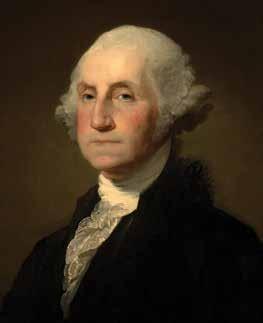
Gilbert Stuart Williamstown
Portrait of George Washington (Wikimedia Commons)
Washington’s final act on slavery was his most decisive.
In his 1799 will, he ordered the emancipation of every slave he legally owned, to take effect upon Martha’s death. Furthermore, Washington declared that he would care for the elderly and infirm, plus provide education for the young, at great expense to his financial holdings. This act was unprecedented among major Southern founders and deeply unsettling to Virginia’s planter class.
Martha, to relieve tension and fears, freed her slaves first. At death, Washington’s slaves were equally liberated. However, neither George nor Martha had the legal power to emancipate the Custis slaves.
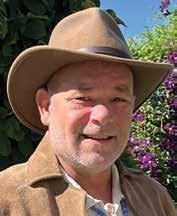
Dr. Rick Chromey
Why the Modern Narrative Falls Short
Modern critics often demand instant moral purity from historical figures who lived within systems that punished dissent and rewarded conformity. But moral revolutions rarely happen overnight. Washington did not begin as an abolitionist. He became one.
To judge him solely by his starting point in life, rather than by the direction of his journey, is to misunderstand – if not deny – how
SOURCES CONSULTED:
moral change occurs. Growth is shaped by experience, conscience, faith, and courage – not lectures, slogans, pressure, and fear.
“Unbiased by the popular opinion,... [Washington] dared to do his duty, and wipe off the only stain with which man could ever reproach him.”
(Richard Allen, Washington Eulogy) Washington’s life does not excuse slavery. However, it does expose the slow, difficult transformation of conscience inside a flawed world.
And that may be Washington’s most enduring lesson. n
*The Merriam-Webster Dictionary defines manumission as “formal emancipation from slavery.”
Dr. Rick Chromey is a historian and theologian who speaks and writes on matters of religion, culture, and history. He’s also a Lewis and Clark historian for American Cruise Lines (Columbia and Snake rivers). Rick and his wife Linda live in Star, ID. www.rickchromey.com
1. John Marshall, The Life of George Washington (Philadelphia: C.P. Wayne, 1804–1807).
2. Jared Sparks, The Writings of George Washington (Boston: American Stationers’ Company, 1834–1837).
3. George Washington, correspondence, 1775–1799.
4. David Ramsay, History of the American Revolution (Philadelphia, 1789).
5. George Washington, Last Will and Testament, 1799.
6. George Washington Parke Custis, Recollections and Private Memoirs of Washington (New York, 1859).
7. Contemporary Anglican proclamations and wartime orders issued by Washington
Fin ding a qualifi ed dealership al ternative that’s easy to deal with. (That’s driving joy.)
Helping foster children achieve Inspire Idaho
By Gaye Bunderson
As former lead pastor at City Church Boise, John Mitchell was haunted, he said, by a verse of Scripture: James 1:27. “Religion that God our Father accepts as pure and faultless is this: to look after orphans and widows in their distress … ”
The verse resonated with him to the point he began to feel he was being pulled away from pastoring a congregation. His wife Debbie also felt that the two of them were being called by God to do something different. “We weren’t sure what that would look like,” John said, “but we wanted to let God lead us.”
What they ended up doing five years ago was launching a nonprofit to help young people aging out of foster care. “I received a clear calling to work with foster children,” John said, “and I was compelled by the fact that Jesus spent most of his time with the marginalized and disenfranchised.”
Other determining factors included the couple’s two daughters.
“God opened my eyes to the plight of foster kids through my daughter, Melissa. Her devotion to this under-served population helped me to see how vulnerable they can be. Over time, it became clear to me and to Debbie that modern-day foster kids are the orphans God calls us to care for.
“Our daughter Jenna and her husband David were doing just that by fostering kids in their home. As we entered the foster care world with them, we began to grasp more fully what life can be like for fos-
ter kids; how trauma and broken promises make many of these kids wonder if they are worthy of love or anything at all. This fact broke our hearts and compelled us to act.”
Debbie came up with the name for the non-profit the Mitchells founded: Inspire Idaho.
John explained the couple explored names, asking themselves, “What would capture what we want to do? What would the kids experience that was different from what they had already experienced, which was mostly abandonment?”
Inspire Idaho now includes four staff members in all, each of them as motivated to help kids as the Mitchells. They include: John, who serves as executive director; Annie Higgins, managing director; Andrew Seidlitz, director of operations; and Natalie Harrison, teen engagement coordinator.
Staff is paid through the help of “a lot of financial partners,” John stated. Seventy percent of funding comes through donations from individuals, and 30% comes from foundations and churches.
John and other staff said they trust the Lord to provide people to serve as mentors. Mentors have generally been referred by someone the Inspire Idaho staff members know and trust. A word that is particularly meaningful for the team is “relational.” To further highlight that, John stated: “We’re a deeply relational mentoring organization, and it shapes everything we do.”
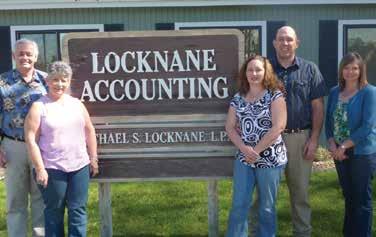
The four staff members of Inspire Idaho include, from left, Annie Higgins, managing director; John Mitchell, executive director; Natalie Harrison, teen engagement coordinator; and Andrew Seidlitz, director of operations (Photo taken by Chad Estes)
achieve their Big Win
A brief online search finds “relational” defined as: “Significance derived from connections. ... The interconnectedness and important role that relationships play in our lives.”
Inspire Idaho was built on, and is flourishing through, that interconnectedness. Staff knows that relationships can change lives. Information from inspireid.org reads: “God created us to live loved and to love others. We grow into our best selves through meaningful relationships. By building trust-filled connections with foster youth, we invite them to grow alongside us and, ultimately, to experience the God who made us to enjoy a priority relationship with Him.”
Staff further feels that lives changed through loving relationships create a foundation that helps future families not repeat the mistakes of past ones, and builds generational stability and positivity.
Mentors undergo an extensive screening process, then there is a 10-week training that includes in-depth, trauma-informed instruction to work with young people who are healing from very difficult experiences.
“Mentors must build trust,” Annie said.
Natalie added, “A mentor is a friend but also a guide to help that troubled young person become a [well-adjusted] adult.” She continued: “We mentor youth in the foster care system who are aging out, and we walk with the youth for years. Volunteers are asked to mentor for at least six months, but it often extends beyond that. The longest mentoring relationship so far is four years.”
One factor that sets Inspire Idaho apart from other organizations is what they refer to as Dual Focus Mentoring. Information from inspireid.org reads: “Many organizations serve foster youth, either before or after they age out of the system at age 18. Inspire Idaho does both. By building relationships with teens under 18, we establish a platform of trust that allows us to continue mentoring them when they age out.”
John explained, “We will mentor foster youth from 14 to 21, and no one in Inspire Idaho wants that young person to relive feelings of being abandoned. It is important that mentors are willing to be a consistent presence in the life of the teen they are mentoring.”
Because many of these young people have dealt with trauma, they are working through complex emotions. Therefore, the mentors need to be equipped to understand how to lovingly process those types of emotions with the youth. If mentors need help navigating these situations, he or she is welcome to talk with Inspire Idaho staff, to learn appropriate coping techniques and diffusion strategies.
All members of the staff are either mentors themselves or serve as coaches to assist the mentors. Annie became paid staff as of February 2, having transitioned from a counseling career – expertise she said she’ll find useful as a leader in the organization.
What if a mentoring situation just doesn’t work out?
Annie: “We do our best to help each volunteer and youth to find the best fit for them.”
As of mid-January, 15 youth were part of the Inspire Idaho community, and eight were being mentored one-on-one; 12 were mentored in 2025.
John encouraged single people as well as married couples to volunteer.
There are activities for the youth and their mentors to enjoy together. There are the life skills classes to help prepare a formerly fostered boy or girl for the world they’ll live in as adults. They’ll learn essential life skills like managing money, cooking, and finding a job. Generally, these are 90-minute small group sessions followed
by a meal. Because these are held in someone’s home, it becomes a family-like bonding event.
Some of the think-outside-the-box topics – presented by experts in their fields – include:
• Learning to dream and overcome barriers in pursuit of their most desirable life.
• Cultivating life-transforming habits to help them achieve their dreams.
• Hearing uplifting personal stories about perseverance and redemption.
• Playing games that build skills in trust, problem-solving, and teamwork (see below).
• Learning how nutrition, sleep, and movement affects the quality of their lives.
• Learning about emotional health and learning to understand and manage their emotions.
• Meal preparation lessons to make healthful, tasty, and affordable meals.
Fun, outdoor activities called Connecting Events allow everyone to enjoy themselves and deepen relationships – one-on-one and with other mentors and foster youth. Activities include swim parties, summer barbecues, white water rafting, rock climbing, and a girls-only movie night or holiday party.
All staff members are Christians, so how do they present that to the kids involved? Inspire Idaho staff members are open about their beliefs but do not push them on young participants. According to Andrew, “Volunteers must be followers of Jesus, passionate about youth, and at least 25 years old.”
However, the foster kids aren’t required to meet any faith specifics in order to be in the program.
“We see these kids as image-bearers of God, not projects to complete,” said Annie.
“We come alongside the youth,” John stated, continuing, “Every youth has his or her own story, and we meet them where they are. Lots of their parents are incarcerated, and our goal is just to love them.”
All staff members are in agreement regarding the power of Christ’s love.
Annie: “His love is transformational. We’re not simply trying to make converts; we’re just demonstrating what a transformed heart looks like.”
She also described “a big piece” of what the mentors and staff want to do at Inspire Idaho. “We want to get a young person to what we call their Big Win. We seek out what their Big Win is to them. Maybe it’s graduating high school or getting their first job. Along the way, they’re encouraged to stack small wins in their life while they’re working toward their ultimate goal, or Big Win.
“Inspire Idaho allows us to engage these teens to affirm their value, offer them hope, and equip them to flourish. It provides a way for us to meet these teens where they are, discover who they want to be, and help them create a roadmap to get there.”
Any way it’s viewed, Inspire Idaho is about winning – and winning for young people who often experienced too much loss in their lives. n
For more information, go to inspireid.org or contact John Mitchell at john@inspireid.org. (John’s comments about his daughters were taken from inspireid.org. Definitions of ‘relational’ were pulled from online sources.)
TECH & Faith
Optimal living in a world of technology
By Mark Naito
Now that we’re in 2026, it’s time to start implementing some practical ways to improve our relationships with God and others. The idea of “optimal living in a tech world” is an interesting one, right? You’re probably saying to yourself, “I am living my optimal life. Everything I could possibly want to have is in place. My smart watch keeps track of my health; the smartphone keeps me connected; and my TV is there to provide me entertainment.”
Let’s go to the secular school, The Waldorf School of Silicon Valley. (Note: We do not promote nor hold other similar values.)
In its current school policy manual, the school provides data that shows it is not good to have screens in kids’ lives. It hinders their creative ability – something God gave us and Satan does not want us to use at all. After all, one of the reasons he is so mad at God was because he wanted to be like God. And yet why does he hate us? Because we were created in “God’s image.” No other angel or living thing is created this way.
Our enemy does not want us using the Holy Spirit to guide and direct us, even in our sermons or ministries. We’re tempted by technology to come up with “creative” ideas. Trust me. I have used AI in Canva to come up with a couple of documents. But I still had to tweak them quite a bit to make them more applicable to what I do. It’s a lure to get you hooked. Think of gambling. One quarter and you can get hooked! It’s that chance. It’s that thrill. And yet, you can get that same thrill with the Lord and His Holy Spirit. But it is not in our timing or the way we would like to receive it. It’s sometimes when your ministry used its last dime and then the Lord has someone give you the right amount of money for that time. It’s a friend that you reached out to for help and realized that they needed prayer.
Both you and your kids will benefit from limiting your screen usage. Besides, screens are everywhere and you will be faced with them in public anyway. When I go to get my oil changed, there’s a 77” TV in the waiting room, and I can’t help but occasionally look at it; and because I grew up on TV with my family, it makes it even harder for me [to look away]. It is an addiction that’s hard not to be drawn to. It was the way that I wasted away most of my single adult life: work and then come home and watch endless content that has no application in my life today. I could have been connecting with people, serving in different capacities, and living life with my Godgiven creativity instead of having to deal with times of depression and anxiety.
So next time you come across a screen in life, ask yourself, “Do I need to do this this way or is there some other way? And does this screen help my relations with people or possibly hinder them as a barrier?”
Remember that we are created in the image of Almighty God. His image! No angel, no animal or anything else is like us, and we can be creative as a result. Yet screens are stealing this – right before our eyes at times, not allowing us to be creative but having the technology do the creative work for us.
I am not perfect in this either but am living this out in my daily life as well. The main difference is that I have more dedicated time to research, focus my attention, and test out different applications. Take an example of me working on a book about how screens like smartphones, gaming, and TV are barriers to our relationships and [how we must and can] win the battle for attention and attachment. I wrote my initial draft on paper and thankfully I did as I’ve had computer issues and recently was told by an independent computer repair company that my computer was done and needed to upgrade. With the limited supply of memory in the market, a new computer could skyrocket if I don’t get something now rather than later. It reminded me of when I used to have an Apple phone and initially had free storage but then quickly was asked to upgrade my memory in fear of not being able to use my phone.
How does this tie into our faith?
If we are not careful as we move forward – because tech is not going anywhere – we will not feel like making harder choices later to prevent any hinderances in our faith. Today there are many things that hinder our faith that we don’t even realize. I know for myself I’ve been shocked at the things I did before becoming intentional with screens. One [realization is how] my smartphone and tablet were a hinderance to me in overcoming my porn addiction. But today I am two years free from watching or looking at anything on a device. Praise God!
I share with people that it’s not even just the content that is bad anymore. It’s that we consume so much that when does the Holy Spirit or God have an opportunity to truly move? I’m not saying God does not still move in screens, but it’s that we are more often bombarded by so much information that there’s no real time to process it.
Let’s end with this thought. In the beginning before Lucifer fell he was worshipping God. One day he looked down and said to himself that he was beautiful. From there it was downhill for him – a pretty crazy situation as he was the most beautiful angel and knew God’s Word more than anyone else. And God only wanted a relationship with him without distraction.
Here’s your challenge. Continue to find ways to connect with God and others without screens. You will be amazed at the difference it makes in your life. n
Mark Naito is passionate about helping people by seeking ‘root cause’, providing result-oriented solutions and good outcomes. His passion has always been to empower others to be educated to make their own informed decisions on what makes sense for themselves or their family. He started Navigating Tech Family toward that goal. He is a family man with a beautiful wife and kids and loves doing life with his family in the outdoors. He may be reached at mark@navtechfam.com.
Mark Naito
Image by Julio César Peces from Pixabay
CHURCHES IN YOUR AREA
“I Get To!”® Find self-compassion in grief
By Joan Endicott
Dear Young at Heart, this is the third in the“ I Get To!”® series with GiGi & Joy. I pray you personally enjoy these, while also sharing these stories and life lessons with the little ones you love, as well. May it connect with all ages, offering moments of compassionate conversations that serve to ground every heart, regardless of age, in the timeless truths of God’s Word.
~ Joan
The afternoon sun filtered through the branches of the old juniper tree, casting lacy shadows across the soft grass. The swing swayed in a slow rhythm as GiGi and Joy sat nestled together, Princess the pup sprawled comfortably at their feet.
“You’ve sure been quiet today. You doin’ okay, my love?” GiGi asked, gently brushing strands of hair behind her ear. Joy let out a long sigh and asked her question quietly, as if setting it down carefully between them. “GiGi…do you ever wish you could…change people?”
GiGi hugged her tighter. “That sounds like a heavy thing to carry,” she said softly. Joy nodded, exhaling the way you do when you no longer feel alone while wondering. “I’m really glad you asked me—and yes, I’ve wished that before, too,” GiGi added. And for a few moments, to be seen and heard was enough. Joy looked down. “It’s just…sometimes people say things that hurt. Or they leave others out. And I don’t understand why.” She shrugged. “I think if they knew how it felt, they wouldn’t do that.” Her eyes filled. “I don’t like watching people hurt each other. It makes me wish I could fix it.”
GiGi nodded slowly, her eyes smiled. “That tells me something special about you,” she said. “You notice when people hurt. You care when things feel unfair. And you don’t like seeing anyone left out.” Joy looked up, feeling comforted. GiGi squeezed her hand. “Wanting to help fix things comes from loving deeply. It comes from a heart that wants the world to be kinder than it sometimes is.”
GiGi sat quietly for a moment, choosing her words with care. “There was a time,” she said softly, “when I thought loving people meant I needed to help carry the things they were feeling…and help fix things that felt broken.” Joy listened closely. “I’m so grateful the Lord has taught me that those things are not ours to fix. Each decides for themselves and only God can help them change. “We get to look to Jesus’ example—choosing to be loving and kind even when life feels hard and heavy.” GiGi patted her hand. “That choice doesn’t change what’s outside of us, but it changes what’s inside.”
GiGi quietly, remembered. “You know, one day many years ago,” she said softly, “at a time when life felt sad and heavy to me, I was lying in bed wishing I didn’t have to get up…wishing I didn’t have to do all the things waiting for me that day.” She paused. “Then God gave me one of the most wonderful gifts of my life. I call it my gift— wrapped in struggle paper.
“I pictured my dear friend who was also lying in her bed, but hers was in the hospital—and she couldn’t get up. She couldn’t do anything—for herself or those she loved.” GiGi’s voice cracked as tears came. “My heart broke for her…while I also knew that if she could
do any of those things I was just complaining about, she would do it ALL with joy and gratitude.
“That’s when I asked God to help me never say that I have to do anything ever again.” She looked at Joy with quiet certainty. “That’s when I understood—nothing in my life is a burden, or a have to.”
She whispered, “It’s a beautiful blessing that ‘I Get To!’®”
Joy lit up, “That’s your favorite saying—and your book!”
They burst out laughing. “Yes, it is, my dear—and now you know why!”
Walking over to water the pretty purple petunias in Grandma Jo’s old rusty wheelbarrow, GiGi smiled. “Of course this reminds me of our dear Teagan.”
Joy looked up with a huge grin. “He’s one of our favorite people, isn’t he, GiGi?”
“Yes, he sure is!” she agreed with a wink. “He’s also one of our best examples of someone who chooses to look at life through that “I Get To!’® gratitude lens, even when life feels hard.” GiGi smiled thinking about his example. “Many things that come easily for us, Teagan can’t do. Even the things he can do take him so much more time.
“Whenever he struggles to be grateful, he told me, ‘I remember that I am loved by God and nothing in my life is an accident...That God made me unique and wonderful (Psalm 139). I am made for a purpose—even if I don’t necessarily know what that is. No matter how badly I feel about myself (or my situation), I know that someone has it worse.’
“Teagan doesn’t simply say those things, he lives them! I’ve known him for many years, and I’ve watched closely how he lives. Even when times are hard, still, he notices and is grateful for the good things. He loves Jesus and others. He enjoys life and laughs easily. He is kind and compassionate. He is present and celebrates life with others—even the smallest moments. He is grateful for what he can do—even if it’s difficult.” GiGi turned back to Joy. “Teagan proves that gratitude isn’t about having an easy life; it’s about our power to choose gratitude, even when—and especially when—life feels hard or heavy.”
Joy let it settle. “I guess I’ve been thinking more about what others say or do instead of what God says.”
“Oh, I know how easy that is to do, too, sweetheart. Words have weight. We’re always deciding whose words have the most weight in our heart. God’s Word tells us that the most important thing is to ‘Love the Lord our God with all our heart…and love our neighbors as ourselves.’ ”
GiGi put the tips of her thumbs and tips of her forefingers together making a triangle, wiggling her fingertips. “If we love God and put Him first, above anything and everything else, He gives us the power to love ourselves exactly as He made us, and to love others as He made them.”
Joy looked down, “I want to do that, but…some people are mean…”
“Yes, it’s very hard—in fact, I think it’s not possible,” GiGi said. Joy looked very confused. “Wait, it’s not possible?”
“Well, not by ourselves. That’s why when we love God first, He helps us do the rest. I remember something that happened to Teagan when he was in school. Someone didn’t want to take the time to get to know him and wasn’t very kind to him. Teagan’s reply? ‘Whelp, it’s their loss!’ and he laughed about it. What a great example! He was right—it was their loss!”
GiGi smiled. “Megan, another friend of mine, learned something important when she was little,” she said. “One day at school, a girl was mean to her and said, ‘I don’t like you!’ ” GiGi paused. “Megan didn’t argue or get upset. She just smiled and said, ‘That’s okay! I like me!’ ” Joy laughed. “I love that—I want to do that, too!”
GiGi chuckled. “Me, too,” she said. “Megan knew what God says
AI generated art submitted by Joan Endicott
about her, and she believed Him. When we agree with God about who we are, we can stop worrying about what others think.”
“And we get to love who we are because God put huge worth in each of us,” Joy beamed.
“Exactly!” GiGi giving a high-five. “Remembering that one thing changes how we see everything, doesn’t it, Joy?”
“And looking through the ‘I Get To!’® Attitude lens changes how we see everything, too!” Joy jumped up and threw her hands up, celebrating as Princess pranced around her.
“Yes, it sure does!” GiGi joined her, clapping along. Laughing, they fell on the grass. “I’m glad it’s simple to start practicing it, too,” GiGi continued. “We start by noticing.
Joan Endicott
“Tell me about your day. What are some things you were able to do today?”
Joy thought for a moment. “Well…I got out of bed. I took a shower. I ate breakfast. I went to school. I played at recess. I read with my class. I laughed with my friends. I came home and did my homework. And then I came to see you…and Princess.”
They both giggled as Princess’s ears perked up and she flopped onto her back, ready for a good belly rub.
“Now, my love,” GiGi said slowly, “just imagine not being able to do any of that.”
Joy thought for a while and looked down at her hands, then wrapped her arms around herself. Closing her eyes, she gave herself a warm hug. “Wow… that feels so different,” she said. “I didn’t think about those things as special before. But they are.” She paused, her voice softer now. “I really do get to.”
“Isn’t it wonderful?” GiGi encouraged. “It’s a simple shift that helps you see the good life you already have.”
And in that moment, gratitude found its way in— without being forced, without being rushed—simply noticed.
GiGi stroked Joy’s soft hair. “When days feel hard,” she said gently, “gratitude is God’s gift that helps our hearts find the beautiful things.” Joy leaned in closer, and together they let the quiet settle.
It’s a simple shift. A quiet noticing. And sometimes, that’s all it takes to realize…“I Get To!’® n
Connection questions: 1. What was your favorite part of the story? 2. What do you love about that part? 3. Would you like to do that too? 4. When you look through your gratitude lens, what do you see? What are the some things on your “I Get To!”® list?
Read more about Teagan’s story in Chapter 12 when you get your FREE copy of Joan’s “I Get To!”® book at www.JoanEndicott.com. Watch Joan’s encouraging words in her short videos on social media. Joan is an Award-Winning Keynote Speaker, Author and Coach whose coaching has reached over 30 countries.
DIGGING Deep
The midnight cry in Tehran . . .
By Dave McGarrah
The air in the Middle East is thick with the scent of change, but this is not the gentle breeze of a new season; it is the gale-force wind of a historic upheaval. As I write this, the ground is shaking beneath the feet of the Islamic Republic of Iran. For 47 years, a shadow has hung over this ancient land – a land mentioned throughout the Bible as Elam and Media, a land God has promised to deal with in the end times. Today, that shadow is flickering. From the heights of Tehran to the coastal plains, the cry for “Azadi” –Freedom – is being met with the brutal iron fist of a regime in its death throes. But as people of faith, we must look beyond the headlines to see the hand of God moving in the affairs of men. As Daniel 2:21 reminds us, “He changes times and seasons; he removes kings and sets up kings.”
The Five Pillars of Collapse
History teaches us that regimes do not collapse from a single failure, but from a “fatal confluence” of stressors. As we evaluate the current crisis through a biblical and historical lens, we see that for the first time since the 1979 revolution, Iran meets all five conditions necessary for a successful counterrevolution.
1. The Weight of Unjust Scales
The Bible warns against “unjust weights and measures.” In Iran today, the economy is not just failing; it has evaporated. Inflation has soared past 50%,
y r gift giving needs - we’ve got
with food prices rising by 70%. In 1979, one U.S. dollar was worth 70 rials. Today, it takes 1.47 million rials to buy that same dollar – a depreciation of more than 99%. When a currency becomes a “daily index of national despair,” the social contract is broken. The regime is offering citizens a meager $7 credit to buy goods – a pittance that insults the dignity of a proud people. Proverbs 11:1 says, “A false balance is an abomination to the Lord.” The Iranian people have been weighed in the balances and found the regime wanting.
2. Elites Divided
A kingdom divided against itself cannot stand. What began as a broad ideological coalition in 1979 has contracted into a “one-man party” centered on Ali Khamenei. Former presidents are silenced, barred from office, or under house arrest. The regime has “hollowed itself out,” rewarding mediocrity and alienating the technocrats and professionals who once provided the state’s backbone. When the elite begin to turn on one another, it is a sign that the foundations are crumbling.
3. A Unified Opposition
For decades, the regime successfully played different groups against each other – the Kurds against the Persians, the poor against the middle class. But the misery is now so universal that the barriers have fallen. We are seeing a diverse oppositional coalition: labor movements, market merchants, students, and ethnic minorities all chanting in unison. They are no longer afraid. “Don’t be afraid, we are all together,” they cry.
Image by ANDRI TEGAR MAHARDIKA from Pixabay
10 Commandment s Granite St anding Plaque s
4. A New Narrative
The fourth condition is a convincing, shared narrative. For nearly five decades, the regime’s soundtrack was “Death to America” and “Death to Israel.” But in a stunning spiritual and political shift, those mantras are being drowned out. The new chant is: “No to Gaza; no to Lebanon. My life only for Iran.” They are rejecting the “Axis of Resistance” in favor of national self-interest. Even more startling are the reports of protesters renaming streets for the American president and openly expressing support for Israel. They are realizing that their true enemy is not the “Great Satan” abroad, but the “Dictator” at home.
5. The International Catalyst
The final catalyst is an international environment that no longer bolsters the regime. The “Axis of Resistance” is in tatters. Hezbollah and Hamas are in disarray. Russia is evacuating its embassy staff from Israel, and Vladimir Putin is consumed by the war in Ukraine.
The American president has signaled a radical departure from past policies and has warned Tehran that the U.S. will hit them where it hurts – targeting missile factories and drone plants – if the regime continues to massacre its own people. For the first time, the “Emperor” in Tehran is exposed, with an empty treasury and an unprotected sky.
The Cost of the Struggle
As the regime loses control of cities, it has retreated into a desperate, demonic cruelty. Security forces have reportedly taken control of hospitals in Tehran. When a young man or woman arrives with a gunshot wound, they are often abducted before they can receive medical treatment. Armed forces have even stormed operating rooms to snatch protesters from the surgical table. One protester is scheduled for public hanging. The Republican Guard is firing into crowds. Yet, the people continue to march. They are using Elon Musk’s Starlink to bypass internet blackouts, ensuring the world sees their bravery.
As Christians, we cannot remain indifferent to this suffering. We serve a God who “executes justice for the oppressed and gives food to the hungry” (Psalm 146:7). We must pray for the safety of
the protesters and for the “splintering” of the security forces – that they would refuse to fire upon their own brothers and sisters.
The Return of the King?
Many protesters have rallied behind the image of former Crown Prince Reza Pahlavi. Having lived in exile since he was 16, he stands as a symbol of a pre-revolutionary Iran that was a friend to the West and a home to a thriving culture. While we do not know what form a future Iranian government will take, we know that the current “beast” is faltering.
What Comes Next?
The Foreign Minister of Oman is frantically mediating, and Iran reportedly asked for negotiations. The fall of the Iranian regime would be the most significant geopolitical shift of the 21st century. It would sever the head of the serpent that has funded global terror for decades. But more importantly, it would open the door for the gospel to flourish in a land where the underground church is already the fastest-growing in the world.
A Final Word
Is the Iranian regime about to collapse? The signs point to “Yes.” But the transition will be painful. We must watch the Republican Guard for signs of desertion. We must watch for strikes in the oil sectors. And we must watch the skies.
Let us stand with the people of Iran in their quest for freedom. Let us pray that the “prince of the kingdom of Persia” (Daniel 10:13) is finally being restrained, so that the light of truth can shine across that great nation once again. The midnight cry is sounding. Are we listening? n
Master Minded Ministries exists to help people see the world through the lens of Scripture. Stay vigilant, stay prayerful, and keep your eyes on the King of Kings. Join us for Tuesday Night Live on Tuesdays at 6:30 p.m. at Nampa Christian High School. Dave McGarrah is founder, with his wife, of Master Minded Ministries.
Pastor Dave McGarrah
THE RENEGADE Psychiatrist
The tearing of the thick temple veil
By Dr. Larry Banta
The search for real and lasting peace seems to be the pursuit of many and it can be costly. Some offer “inner peace” by relieving one of a great deal of money to meditate on nothingness. Others unsuccessfully pursue peace through alcohol or drugs, leaving their lives in shambles. Our world offers no real or lasting peace, only uncertainty, fear, and chaos.
“I have said these things to you, that in me you may have peace. In the world you will have tribulation. But take heart; I have overcome the world.” (John 16:33)
Life in this world is subject to trials, storms, turmoil and all kinds of unexpected, unpleasant events. Similar to our own lives, the Sea of Galilea is known for unexpected storms. In Mark 4 35-41 we read that Jesus was in a boat with the disciples when suddenly a storm came up. It was severe, the waves were tossing them about. Overwhelmed with fear, the disciples awakened Jesus, who simply ordered the wind and the waves to calm down, then all was peaceful. With Jesus in their boat, the disciples could allay their fears with his powerful response.
Dr. Larry E. Banta
Besides the chaos and fear in the world, we have created great divisions among people. One group or political party seems to hate the other. Serving as a medical missionary in rural Kenya some years ago, we worked with a tribe engaged in a centuries-long war with another tribe across the border in Uganda. Both tribes lived in fear of the other as there was constant revenge for what the other tribe carried out. We managed to develop a truce between the tribes to allow one tribe to cross into the territory of the other for treatment at the Christian hospital there. Some years later, members of both tribes were meeting under a tree for Bible study and prayer. In many places, former enemies are meeting together in the name of Christ, having found true peace through Him.
“For he himself is our peace, who has made us both one and has broken down in his flesh the dividing wall of hostility.” (Ephesians 2:14)
We became enemies of God when Adam first sinned. We could no longer be in His presence. We were cursed with death, weeds, thorns and painful childbirth. We were separated from God. There was no peace between us. The temple demonstrated how separated we were from God. Only the Levites could be near the holy furnishings. Behind the altar only the priests could stand. Behind the altar was the “Most Holy Place,” where only the high priest could enter once per year on the day of atonement after extensive preparation. The temple veil separated everyone else from the “Most Holy Place” where the high priest was to be meet directly with God. It was about 8 inches thick, 42 feet tall, and made of heavy material. As Jesus was taking his last breaths on the cross, that thick veil was torn in two from top to bottom by the hand of God.
“It was now about noon, and darkness came over the whole land until three in the afternoon, for the sun stopped shining. And the curtain of the temple was torn in two.” (Luke 23:45)
No longer separated by the veil we, as believers, can come directly to God because of Jesus’ sacrifice. This first step in finding peace in our lives was done by Jesus on our behalf. Carrying around our own guilt and shame from our violations of God’s law provides turmoil, lack of peace, uncertainty and fear in our own lives. Accepting Jesus by faith opens His grace to us.
“Therefore, since we have been justified through faith, we have peace with God through our Lord Jesus Christ, through whom we have gained access by faith into this grace in which we now stand. And we boast in the hope of the glory of God.” (Romans 5:1-2)
In accepting Christ and obeying Him in baptism we then have the Holy Spirit who comes bearing a precious gift: “But the fruit of
the Spirit is love, joy, peace, patience, kindness, goodness, faithfulness, gentleness, self-control; against such things there is no law. And those who belong to Christ Jesus have crucified the flesh with its passions and desires.” (Galatians 5:22-24)
Having started our journey with Christ, there is peace between us and God. We still live in a fallen world with all kinds of trouble and temptation. The chaos and uncertainty around us can provide a great deal of fear and worry. Fear can come from a lack of trust. We do not know what the day may bring so we worry. To have peace we must learn to trust and not be afraid. We need to have Jesus in our boat.
There are several verses that come to mind that are very helpful:
“Surely God is my salvation; I will trust and not be afraid. The LORD, the LORD himself, is my strength and my defense; he has become my salvation.” (Isaiah 12:2)
“Cast all your anxiety on him because he cares for you.” (1 Peter 5:7)
“Come to me, all you who are weary and burdened, and I will give you rest. Take my yoke upon you and learn from me, for I am gentle and humble in heart, and you will find rest for your souls. For my yoke is easy and my burden is light.” (Matthew 11:28-30)
Developing the habit of forgiveness can encourage the increase of peace. It goes four ways. I need to forgive those who have done something to offend me. I need to seek forgiveness from God for having done something to offend Him and seek forgiveness of others I have offended. Then I must also forgive myself. That is being humble enough to recognize that God’s power is sufficient to forgive me for whatever I might have done, if I truly repent, so I need not hold onto anger toward myself.
Maintaining thanksgiving produces a heart full of peace. If I forget to give thanks to God for His provision, I soon start believing I was responsible for the food, shelter, the material blessings, actually taking God’s place. By giving thanks I am restoring His place in my heart as the Provider of every good thing. Gratitude is humility allowing God to hear that we are truly grateful for His bountiful blessings.
Turning our attention from ourselves to our Most High God in praise and worship multiplies peace in our hearts. This is seeing God as He truly is: holy, magnificent, powerful, perfect. We must continually grow our sense of awe so that we rejoice with the psalmist: “The heavens declare the glory of God; the skies proclaim the work of his hands. Day after day they pour forth speech; night after night they reveal knowledge.” (Psalm 19:1-2)
Trusting God with our fears, maintaining forgiveness, gratitude and sincere worship will restore and increase our peace so that we truly have the peace that passes understanding.
Is Jesus in your boat? Ask Him to calm the waves and give you true peace!
“Now may the Lord of peace himself give you peace at all times in every way. The Lord be with you all.” (2 Thessalonians 3:16) n
Dr. Larry Banta is an author of several books, a retired psychiatrist, and a former missionary. He served in India, Mexico and Kenya. He and his wife, Evelyn, a counselor, travel together to provide consultation and training in various international locations.
BLESSEDNESS of simplicity Relax and enjoy freedom from ‘stuff’
By Roxanne Drury
This writing is yet another lesson learned from our recent move. There have been so many. You may surmise from the title that it will speak to the matter of possessions, unpacking, and saving “stuff”. You would be right! We will look at it from the perspective of sanctity and blessedness – the blessedness of simplicity.
One month into the adventure of moving 10 years’ worth of accumulation, plus some of the previous 30 years’ worth of “stuff” that was lugged from California, we still have a little more than half of a three-car garage full of boxes with no place to put them except where they are. Inside, the home is very livable. We have all we need to live comfortably and function well. So, what of the boxes in the garage? YIKES!
Currently, we have three perpetual lists: Things to Do, Things to Find, and a Wish List. Unfortunately, the Things to Do and Wish lists keep getting longer. The Things to Find list is almost all checked off, with no new additions in the foreseeable future. Whoot! Whoot! These lists have helped us stay focused and stand strong and brave in not bringing anything into the house that is not absolutely needed. The fact that the Things to Find list is nearly defunct speaks volumes.
In the hurry to get the office set up so I could stay on task with the That’s Life Blog, a new book, and email communication, I brought in the bin labeled ‘Rox’s Desktop.’ So much for staying strong and brave. The contents nearly made me hyperventilate. I tried to look through it, sort it, and discard some of it, and it gave me a serious headache. I have done this now three times. Each time, I repacked it and shoved it into the closet. Why did I save all of it? Why did I move it? Do I really need it if I don’t even know what’s there? Can’t it be printed again if I suddenly miss it? Man-o-man!
It was A.W. Tozer who said, “There can be no doubt that this possessive clinging to things is one of the most harmful habits in life.” I see that now. I see how clinging to possessions takes up space in one’s heart, home, and life, in the love for things, the desire to hang on to them, and the time spent sorting through all the thought-to-be treasures. It takes up heart space that rightfully belongs to God. We ask Jesus to come into our hearts and lives and to fill our homes. Is there room for Him among all the stuff?
In Luke 12:15, Jesus gives a warning, “Beware! Guard against every kind of greed. Life is not measured by how much you own.” The implication here is that there is something much more important in a person’s life than their things. Jesus tells us exactly what it is in Luke 12:21: “Yes, a person is a fool to store up earthly wealth but not have a relationship with God.” Our lives
are not measured by what we own, nor is our worth. We are measured by our relationship with God.
What I am learning is that simplicity is blessed and beautiful. It brings freedom, peace, and joy. Clearing our new home of the unnecessary has created a calm atmosphere that wasn’t there before. Sir Winston Churchill said, “We shape our dwellings, and afterwards our dwellings shape us.” I am finding that to be true.
The spare bedroom in our new home is my favorite room so far. I walk into it and immediately feel peaceful and filled with true joy. I find myself drawn to the room. It holds Grampa Allen’s 100-year-old table, the futon from my old office, the nesting tables we bought for our first home in 1976, the wooden chest from Great Grama Drury, a couple of lamps from our first home, two beautiful, meaningful small table decorations, a guitar, and on the window seat, three starter plants and a statue of a girl from when we believed we would never have a daughter. Every item is a memory of someone or something. The simplicity of that room somehow feels sacred and, yes, blessed.
Does your life feel chaotic and disordered? Perhaps it is time to take a fresheyed walk through your home and simplify your surroundings. There is no better time than now!
Begin with one room and ask yourself these questions:
1. What is necessary in this room?
2. What do I love in this room?
3. What adds beauty to this room?
4. What is useful in this room?
5. How does this room make me feel?
As you answer these questions, begin the simplification process by removing, discarding, repurposing, and donating. As you do this, you will start to feel lighter. It’s true!
So, what about the garage full of boxes and the bin labeled ‘Rox’s Desktop’? Well, as Scarlett O’Hara said in Gone With the Wind, “Fiddle-dee-dee! Tomorrow is another day.”
I’ll keep you posted.
Shalom! n
Roxanne Drury is a wife, mother, grandmother, and retired Christian preschool teacher who served the Lord in children’s ministry for over 45 years. She has written a group study guide on Psalm 23, as well as other books. She may be reached at glorylandbooks@gmail.com.
Roxanne Drury
IT PERTAINS to all of life
The value of the gospel each and every day
By Bethany Riehl
Preach the gospel to yourself every day. Have you ever heard anyone say that? It’s a great sentiment, but what does it mean?
I came across a wonderful book recently that has helped me to drill down on that statement. In A Gospel Primer for Christians by Milton Vincent, the author explains that the gospel isn’t just information you know and then get saved by (although of course faith in Jesus and His good news is what saves us), but rather the truth that pertains to all of life for the redeemed believer. When we truly understand the gospel, it changes everything about us, or at least it should. How we think, how we feel, what we say, what we do. How we think about God, how we think about ourselves and other people. All shaped and sharpened by our increase in the knowledge of the gospel.
Why?
Because all of Scripture points to this amazing truth: that God sent His Son to reconcile sinners to Himself. (1 Timothy 1:15 “The saying is trustworthy and deserving of full acceptance, that Christ Jesus came into the world to save sinners, of whom I am the foremost.”) Our pastor recently began his ascent into the great and wonderful book of Romans. After three weeks, we’ve made it all the way to verse seven of chapter one! Needless to say, he’s taking us deep. As he’s prepared us for this rich and wonderful excursion into a letter that fully captures the joys and complexities (and simplicity) that is the gospel and our lives lived in response to it, he made this statement and I’ve been thinking of it all week, “Do not let the Good News become old news.”
Isn’t that so easy? Isn’t it such a danger? I know it is for me. When I’ve heard others say, “Preach the gospel to yourself daily,” I’ve agreed, but only in part. The rest of me has, admittedly, been a little confused, not fully understanding the meaning. Is that because although I am saved by the grace of God, I haven’t actually sat in the full depth of the meaning of the gospel for a good long while?
Is that why I sometimes feel my love for the Lord and for His people grow cold?
When I forget the power to be found in the resurrected Jesus, the power that now abides in me through the indwelling of the Holy Spirit, the result will always be a cold indifference to Him, His Word, and His undeserved grace.
I saw a study recently that said that scientists have discovered that dogs love their owners even more than their food or toys. Well duh, I thought, because we, the owners, are the access to food and toys. They know that we provide all that they want. But then it hit me: all that I have is from the Lord. (“Every good and perfect gift is from above, coming down from the Father of lights, with whom there is no variation or shadow due to change.” James 1:17) Does that cause me to love Him more than everything else? Is He my favorite? The object of all of my affection?
If not, why? How is that possible?
It’s easy to get caught up in ourselves. Our lives, our immediate needs, our anxieties. When we stop preaching the gospel to ourselves daily, we sink deeper into our own little worlds, forgetting Who holds all things together. As I’ve been studying more about all that the gospel does – guides me, transforms how I think of God, how I think of myself, how I treat others, how I spend my time, how I react to trials, etc. – I’ve begun to see the threads of the gospel everywhere. I knew it was all over Scripture, but now there’s a huge, blaring spotlight on what I’ve been reading saying, “See! Here, too!”
For example, in the book of Exodus. It’s not that I haven’t seen God’s deliverance there; it’s so obvious! But I really began to see as I read it this year that the deliverance of the Israelites looks much like my own testimony. I, too, was a slave to a hard and difficult master: sin. If ever sin got the idea I could break away, it came on harsher and heavier. I had no hope of escape, no way to deliver myself. But God Himself, knowing this, sent Jesus to break me free from the chains of sin. He delivered me, he restored me,
He made me His. And just like the Israelites, I followed willingly, gratefully…until I got thirsty and longed for my old chains. I longed for the leeks of Egypt when God was actively giving me manna from heaven to eat (Numbers 11:15).
“Wasn’t it better before,” I would ask when I felt conflicted about sin.
Of course it wasn’t better – it was misery! And even then, even when I was His enemy, He showered me with His grace. He kept me alive and breathing and fed and even gave me kind parents to love me, happy moments with friends, sunrises and sunsets to enjoy, cheesecake, puppy snuggles…I could go on and on. More than the common grace He gave, He laid down His life for me, while I was His enemy. (“…but God showed His love for us in that while we were still sinners, Christ died for us.” Romans 5:8)
Through the truth of the gospel, we also have this great encouragement – if He died for us while we were still sinners, how much does He shower His grace toward us when we now belong to Him? We can’t make Him love us more or less. His attributes stand firm and our actions don’t affect them. His grace alone is what has saved us, it is nothing we have done. Therefore, we can’t cast it off once it’s set on us. (“For by grace you have been saved through faith. And this is not your own doing; it is the gift of God…” Ephesians 2:8)
Think of the actions of the father of the prodigal son in Luke 15. He’s not an angry and contemptuous father, although he has every right to be. He runs to meet his son before he has a chance to voice his repentance. So, too, does our heavenly Father forgive and embrace us.
Another truth I’ve seen take hold in my pursuit of renewing the gospel to myself is that Jesus’ power has never stopped being complete and miraculous. We see all through the gospels the jaw-dropping stories of Him healing the blind, the deaf, the lame, bringing the dead to life.
Wasn’t I once like all of these? Unable to see, hear, or walk on without His light and His Word to guide me (Psalm 119:105)? Wasn’t I like Lazarus, dead in my trespasses and sins and without hope (Colossians 2:13-14) until Christ called to me, “Come forth!” and I was released from my burial rags and given His robe of righteousness (Isaiah 61:10)?
We stand in awe of these physical miracles, but even more amazing is how Jesus can change hearts. He transforms. (“And I will give you a new heart, and a new spirit I will put within you. And I will remove the heart of stone from your flesh and give you a heart of flesh.” Ezekiel 36:26)
I recently met up with a woman from my church who loves the Lord and has the sweetest, most tender heart. As she shared her testimony with me, she said she used to be full of anger, always simmering. The slightest perceived provocation would set her off.
“If someone looked at me, I wanted to fight them.”
I couldn’t even imagine it! That’s what the gospel of Jesus does – it transforms. And not just at our conversion, but every day for the rest of our lives, we can mine the deep riches of His glory through the truth of His gospel. This is what we have to offer to our own battered hearts, yes, but even more this is what we have to offer the world.
In all of the chaos, the arguing, the violence, the abuse, the coldness we can see in our world, it’s easy to go at the symptoms. Right now, my social media feed is a frenzy of screaming opinions and solutions to the problems we see in the world.
But the only One that truly saves is Jesus.
He came to save sinners. Our mission, friends, is to preach that to the world, starting with ourselves, each and every day until He calls us home. n
Bethany Riehl lives in the Treasure Valley with her husband, three kids, and a dog. She writes articles and fictional novels when she can, and her one desire is to point others to the love and sufficiency of Jesus Christ.
Bethany Riehl
WEDNESDAY’S
Child
Lycaine has a passion for fire trucks
The following information is provided by Wednesday’s Child, an organization that helps Idaho foster children find permanent homes. Note that the new photos of Wednesday’s Child youths have been “cartoonified” in a fun way, while still keeping a wonderful likeness to the children’s actual photos.
If you have a heart for children with special needs, Lycaine might be a wonderful fit for your family! Those who know Lycaine best describe him as loving, affectionate, easygoing and a great advocate for himself when it comes to expressing what he needs from others.
Lycaine loves coloring, drawing, spending time with animals, and attending school (where he gets to play with his friends). This resilient boy doesn’t give up when things are difficult for him and he loves to be outside going for walks and playing on the swings at the park. Lycaine’s current biggest passion is definitely all things fire truck-related. He loves playing with them, learning about them, and listening to the sounds of the loud horns and sirens.
Lycaine’s Permanency Team describes the best fit for him as an engaged, active family (ideally with a stay-at-home parent) who loves to play and who will connect with him by sharing in his favorite activities. A family that can be a dedicated educational and medical advocate for him, that possesses a strong understanding of developmental delays, and that includes parents with patience and flexibility will be an amazing fit for him. Lycaine’s team would ideally like to find him a Forever Family in the eastern Idaho area; however, they are open to hearing from any family who feels they may be a good match for him.
If your family is ready for a lifetime full of hugs, fun, joy and lots of love from this endearing little boy, we look forward to receiving your inquiry for Lycaine today. (See information below.) n
For more information on the Idaho Wednesday’s Child Program, visit www.idahowednesdayschild.org, or contact Specialized Recruitment Services Administrator Shawn White at swhite52@ewu.edu or cell (208) 488-8989.
Lycaine
Community Nursing
Where health and faith go hand in hand
By Gaye Bunderson
A modern-day nursing specialty harkens back to former days of a faith-based concept known as “parish nursing.” Faith Community Nursing, as it is now more commonly known, involves intentional care of the spirit as well as the body, according to Cari Moodie, coordinator of Faith Community Nursing for the Saint Alphonsus Health System.
“We make sure to intertwine spiritual care,” Moodie said.
A man named Granger E. Westberg developed the concept in the U.S. In 1983 Chaplain Westberg proposed an experimental program to assist with medical crises. He enlisted six Chicago congregations to hire nurses to care for church parishioners, having discovered that nurses made the easiest and most natural connection with the congregants. An ecumenical program from the start, partnerships included three Lutheran churches, two Roman Catholic churches, and one Methodist congregation. (Information taken from https://lutheranfcna.org/History-of-Faith-Community-Nursing.)
A paragraph from the Faith Community Nursing pamphlet helps explain the kind of work the nurses perform: “Faith Community Nurses focus on the intentional care of the mind, the body and the spirit. They promote whole person health and the prevention or management of illness. They also promote the fullness of life that God intends for each individual.”
This is one side of the program. At another, quite literally lower level, the nurses also perform such services as foot care. In this area, they perform the work at Corpus Commons in Boise, a daytime drop-in homeless shelter. FCNs have provided foot care for 107 individuals at local shelters, according to Saint Alphonsus Health System information.
As Moodie put it: “How can you go out and look for work when your feet are hurting?”
Moodie doesn’t see anything the nurses do as menial or trivial. “I really feel like these nurses are answering a higher calling,” she said.
The nurses work in conjunction with churches. “There are currently 90 nurses and health ministries in 20 different churches and health organizations in the valley,” Moodie said.
Moodie said FCN sometimes organizes a “health cabinet” with permission of the church. It is a partnership with members of the congregation; they may visit the sick with a pastor, or alone as a nurse. Along with health care, they may quote Scripture to willing
Cari Moodie has served as coordinator of Faith Community Nursing in Idaho for 13 years. She helps match nurses and churches in a health care ministry. She is shown here in her office at St. Alphonsus Health System in Boise. (Photo by Gaye Bunderson)
patients, such as 3 John 1:2: “Beloved, I pray that all may go well with you and that you may be in good health, as it goes well with your soul.”
They respect all faith perspectives and will serve the sick with whatever spiritual needs an individual may convey.
Nurse Faith Boyd, who works with Moodie in many capacities, as well as with other local faith-based organizations, explained that people in church who aren’t nurses may participate in the program. “You have to be a registered nurse to be in FCN,” she said, “but churches have lay ministers who can take the FCN training without being a registered nurse; however, their title would be ‘health minister’.”
Boyd explained that FCN is not just about caring for sick people. Members help those in need find community connections and resources; hold blood pressure clinics; provide CPR training in conjunction with the American Heart Association; and teach infant and child care.
Boyd herself has done “a bit of everything,” including hospice, childbirth classes, healthy eating courses, and instruction in the use of therapy dogs.
She stated: “A lot of the nurses are stay-at-home moms – I’m a stay-at-home mom – while some nurses work full-time but also participate in Faith Community Nurses.”
Moodie went to nursing school and started working at St. Al’s because of its emphasis on faith. She has been in her position for 13 years currently, after being asked to help organize a blood drive following time off to raise three children.
A personal emphasis for her is suicide prevention for young people. Since 2015, she has made it a big focus of her work. Moodie even feels it is a special calling, and she utilizes a suicide prevention course churches may offer to their youth groups. She blames social media
for the rise in youth suicides because it allows people to pretend they have it all together and their lives are full of only good things, leaving others to feel they can’t measure up to that. St. Al’s has joined Moodie in her effort to prevent suicide.
Faith Community Nurses work – often voluntarily, without pay –in churches, hospitals and health systems, long-term care facilities, community service organizations, and private faith-based schools and colleges.
But while the pay locally is low to non-existent, FCN extols one huge bonus for those who do its work. Job Perk No. 1: Faith community nurses get to incorporate spirituality into their practice more than any other nursing specialties – and FCN is a professionally designated specialty.
Job perks after that include cultivating empathy and reaping the joy of serving God and people. “You’re trained to meet others’ needs,” Moodie said. n
For more information, contact Cari Moodie at cari.moodie@saintalphonsus.org.
See the May/June issue of Christian Living Magazine for an article on the Treasure Valley Nurses Honor Guard
Remaining calm in the face of disorder
By Leo Hellyer
We are living in a time in history that is very divisive, polarized, and reactionary. Many people, including Christians, are facing mental health issues trying to make some sense out of everything that is going on around them. A positive aspect of this angst is that people are looking for answers, and many of them are looking for those answers in the church, and more importantly in the Scriptures.
The “left” is against the “right,” and it seems like Democrats and Republicans can’t tolerate being in each other’s presence. When people look to the media for answers and facts, all they get is “spin,” from whatever direction that specific media outlet leans.
God’s Word has the answers, the truth, and the solution to the disorder that we live in. When we become anxious or fearful, many times we try to make sense of things on our own, and fail miserably, and maybe even move into depression. Meanwhile the answers to our dilemma were literally at our fingertips all the time.
In 2023 Max Lucado developed a great tool for us to use to make sense out of those times when we find ourselves anxious, fearful, or even depressed. He provided us with “Calm Moments for Anxious Days: A 90-Day Devotional Journey.” Throughout this book, Lucado guides us through Scripture to firm up our foundation and lessen our anxiousness.
The first Scripture he uses in his devotional is John 14:1. “Do not let your hearts be troubled.” Right after that, he goes to the Old Testament with Psalm 27:1. “The Lord is my light and my salvation; whom shall I fear? The Lord is the strength of my life; of whom shall I be afraid?” With this book, Lucado takes us on an exploratory journey of the Bible and how it can greatly improve our quality of life.
On each day of this devotional there is space for you to write down how the Scripture helps you with anxiety, what anxious thoughts you need to release, and your prayer for that day.
He also included a “Quick Reference Guide,” listing each day’s Promise Scripture. This is a wonderful asset for living our lives for Christ daily. The key to properly managing how we handle the anxious days and feelings is to remember that God is in control! We have the responsibility to go to God and His Word, and then be obedient and follow his Word to live a more abundant and happy life.
In addition to Max Lucado’s “90-Day Devotional Journey,” there are other avenues we can utilize to help minimize the effects of anxiousness in our lives. We can immerse ourselves in listening to contemporary Christian music and let God speak to us through these godly songs. Another way to overcome anxiety is to associate with positive, godly believers who can strengthen us and get us back on track, relying on God’s strength and not ours in dealing with the challenges of life.
Many of us get anxious when things that we pray about aren’t resolved as quickly as we think they should be, or in the manner we think they should. We must remember that in most cases (at least in my experience), God’s timing is not the same as our timing. Many of us know what we want, and we want it now. We must be faithful and obedient in all things.
Our level of anxiety would also be more manageable if we would only strive to solve immediate issues as we face them. If we get concerned, anxious, or stressed about things that may, or may not, happen in the distant future, we are trying to take too much upon ourselves, and not placing it in God’s hands.
This trait of anxiousness is one that can be carried forward from generation to generation. Maybe it is our turn to break the cycle. If we could only remember to go to God in the initial part of any situation, instead of trying to take care of it ourselves, in our own strength, and then go to God after we have further messed things up, we would have much less anxiety. God is eagerly waiting for us to come to Him so He can lighten our load. In 1 Peter 5:7 we read, “Give all your worries to Him, because He cares about you.”
Yes, God Almighty cares about you! God provides each one of us with unconditional love. We don’t earn it – we can’t earn it. Once again, remember, God is in control. In Psalm 32:8 we read, “I will guide you along the best pathway for your life. I will advise you and watch over you.”
Anxiety can be very debilitating. Anxiety and fear can take over our lives. If we will simply let go of the wheel, step back and let God take control and be obedient, our lives will be much more productive, enjoyable, and fruitful. To do this effectively and consistently we must have faith. We must relinquish control of our lives and seek strength, energy, and direction from God Almighty. God loves us so much that He doesn’t force himself upon us, but He is always ready to intervene on our behalf as soon as we call for Him.
As our faith and obedience increase, our anxiety and fear will decrease. It is time for all of us to become mighty men of God: faithful, obedient, and resilient. n
Leo Hellyer is a non-staff pastor with a local church. He has been married to his wife, Norma, for 53 years and has served with Boise Rescue Mission for over 25 years. He is co-founder and training counselor with Taktikor Defense Group. If you have questions about Real Man’s Toolbox, or need other assistance, he may be reached at silverplate426@msn.com or (208) 340-5544.
WE’RE MOVING! Beginning September 6th
You’ll find Christian Living Spotlight Saturdays at Noon MST on 94.5 FM KSPD - Boise’s Solid Talk station! Listen “live” at www.790kspd.com or Subscribe & Listen on your favorite streaming service! Informative, Entertaining & Inspiring Listen “Live” or as a Podcast!
Leo Hellyer
Spring prayer walk
set for April 18
be held Saturday, April 18,
Participants walk around downtown, praying at the gazebo, Indian Creek Plaza, the police station, the fire station and back to the park. People from all walks of life are lifted up in prayer.
All are welcome to attend. A potluck dinner follows the walk.
More Good News clubs are coming to Nampa and Caldwell, reaching out to elementary school children with the gospel. Anyone interested in starting a club, volunteering, or giving a donation may contact the director, Angie Jamieson, at (208) 807-5521. Her website is www.tvcef.com.
Also Wyldlife, a Christian club for middle schoolers, is starting up at the Syringa Middle School in Caldwell.
For more information, contact walk organizer Arlene Robinett at arlenerobinett@gmail.com n
The Caldwell Spring Prayer Walk will
at 3 p.m., starting at the Caldwell Memorial Park Bandshell.
Image by Julieta by pixabay
This Easter, we celebrate the resurrection of Jesus Christ—the foundation of our hope and the promise of new life. As business owners, our faith guides how we serve, lead, and care for our community. We are deeply grateful for the trust you place in us, and we pray that the joy, peace, and hope found in Christ fill your hearts and homes this Easter season.
~ Casey and Andrea Dillabaugh Owners, Dillabaugh’s Flooring Company