


PUBLISHER
Sandy Jones • 208-703-7860 christianlivingmag@gmail.com
EDITOR
Gaye Bunderson editorgaye@gmail.com
Submit story ideas, article submissions & press releases
GENERAL INFO christianlivingmag@gmail.com 208-703-7860
ADVERTISING & SALES
Kimberly McMullen • 208-703-7509 kim.bcliving@gmail.com
GRAPHIC DESIGN
Denice King • 208-918-5190 www.greentreedkdesign.com

CONTRIBUTORS
Larry Banta, Steve Bertel, Daniel Bobinski, Rick Chromey, Tom Claycomb III, Roxanne Drury, Joan Endicott, Doug Hanson, Leo Hellyer, Doug McGarrah, Gary Moore, Mark Naito, and Bethany Riehl


By Sandy Jones
As many of our regular readers are aware, I’ve been rather tied up with personal matters the past 2+ years. God has been so good to our ministry as I had my hands full taking care of my hubby, and honestly just maintaining in so many areas in our lives. I’m finding my stride, and life is feeling more and more normal each day.
As my routine has opened up, I’ve started attending some meetings and functions again. Back to church, and able to put in more hours on my continuing education materials for both our ministry as well as for the chaplaincy school I attend.
In some ways it reminds me of the early days as we started out in this ministry, when I did a study on the Prayer of Jabez, where in 1 Chronicles 4:10 NIV it says: Jabez cried out to the God of Israel, “Oh, that you would bless me and enlarge my territory! Let your hand be with me...” And God granted his request.
Once again I feel God leading me, and showing me where and how He wants me to grow.
On March 27, a gentleman by the name of Dean Braxton was speaking at the Biblical Studies Center down by Boise State University. In 2006 Dean had no heartbeat, nor did he breathe for one hour and 45 minutes, after he developed sepsis following a kidney stone procedure. During that time Dean says he went to heaven. When people question this he is quick to say: “It’s not about if I died, the doctors proved that. It’s about where I went when I died.”
I’ll be honest, having just lost my Steve in January I was curious about any insight Dean might have that would make me feel closer to knowing my Steve made it (before you think I’ve lost my faith, please understand there is another story here for another time – my faith is rock solid).
I honestly had no clue what to expect as my sister and I drove into downtown Boise that evening; I just knew we were both eagerly anticipating whatever it was Dean was going to say.
I won’t reiterate everything Dean said that evening; you can see or hear many of his presentations by searching his name, Dean Braxton, on YouTube, but one thing he said struck me with such force I’m still hearing it loud and clear as I’m writing this in mid-June. So much so that I actually went back to the video from that evening so that I could quote it directly.
He was talking about the number of his own family members he saw in heaven and stated that he’s often asked if he saw any family members there he’d wondered about, and as he answered that question he ended it with this:
“It’s awful hard for someone you’re praying for to go to hell. God wants them more than you do. He will do everything He can to get them there.”
What an epiphany moment that was for me!!! We all have friends, family members, and loved ones we worry, stew about, and pray for, and then question God because we think our prayers aren’t being answered.
“God wants them more than you do. He will do EVERYTHING He can to get them there.”
“Pursuing the unity of the church does not mean that we should stop caring about theology. But it does mean that our love of theology should never exceed our love of real people, and therefore we must learn to love people amid our theological disagreements.”
—Gavin Ortlund


There it is – “God wants them more than you do.”
And then I heard one of my own favorite lines playing in the back of my head: “In God’s perfect time.”
Just like sharing the gospel –sometimes you sow; sometimes you reap; sometimes you harvest – it’s ALL up to God.
So often I make it harder than it has to be, because I count on me doing something instead of relying on God.

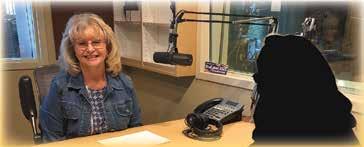

This reminds me of a conversation I had with our pastor last winter where we were talking about ministry, and the many facets of being genuine and faithful to what God has called us to do. He recommended that I read the book, “Finding the Right Hills to Die On: The Case for Theological Triage” by Gavin Ortlund.
I did order the book, but I also downloaded the audio book. I like to listen to the audio book and follow up with the written words. In the very first chapter Ortlund is talking about the unity of the church. Especially intriguing to me because from the very beginning of Christian Living Magazine I’ve known that part of our calling is to “unite the Body of Christ across denominational lines.”
Quickly Ortlund got my attention with these two quotes:
“If we have peace with God, we have peace with each other. Our unity is so important that Jesus gave His blood for it.”
And later in that same chapter stating:
“Pursuing the unity of the church does not mean that we should stop caring about theology. But it does mean that our love of theology should never exceed our love of real people, and therefore we must learn to love people amid our theological disagreements.”
One might take issue with the first quote – Christ gave His blood so that none should perish; however, we need to remember Christ also gave us two new commandments:
Jesus said to him, “‘You shall love the Lord your God with all your heart, with all your soul, and with all your mind.’ This is the first and great commandment. And the second is like it: ‘You shall love your neighbor as yourself.’ On these two commandments hang all the Law and the Prophets” (Matthew 22:37-40).
So perhaps in fulfilling His second command, Christ actually did give His blood, in part, for our unity.
The second quote, though, I really had to think about in today’s polarized atmosphere; all too often it’s not just theology that we let divide us, but politics, and other emotionally charged topics. Sometimes what comes out of my own mouth surprises and disappoints me. As a mother, grandmother, sister and friend, I know how my own heart feels when I see or hear division happening. I can’t even begin to imagine how God’s heart must break when His children are so divided. I keep trying to remind myself that I am commanded by Jesus to “love my neighbor,” ALL of my neighbors, as myself, not just the ones I like and agree with.
As we celebrate the United States of America’s 250th birthday this summer, I hope and pray that we will soon once again be a united nation under God.
Until next time…
God Bless! n
I know I often say this, but only because it’s SO true – please frequent our advertisers, thank them for supporting Christian Living Magazine. We can’t bring you the hope and promise, the encouragement we do, without them. They bless us greatly, and we’d love to bless them back!


By Daniel Bobinski
This is the third installment in my series on the biblical worldview. So far we’ve covered Theology (Who is your God?), Psychology (Who are you?), Biology (Where did you come from?), and Philosophy (What is real?). In this issue we tackle the next two worldview topics: Ethics and Sociology. In practical terms, we’re asking how we determine what is right and wrong, and how we should organize society.
Think about a conversation between two people. Someone proposes a policy to address an issue, but the second person calls it unjust. On the other hand, let’s say a person behaves badly and everyone agrees that what he did was wrong.
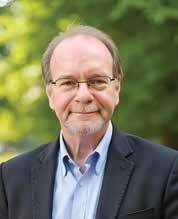
Who sets the standards? After all, people in different parts of the world will take differing views on many matters.
To a Bible-believing person, the answer is clear: God sets the standard because God IS the standard. Right and wrong are not cultural preferences, evolutionary adaptations, or majority votes; they are rooted in the unchanging character of God Himself. Therefore, because God does not change, morality does not change, either. The term for this is ethical absolutism. It’s the belief that right and wrong are objectively real, unchanging, and not determined by an individual or a culture. In the Bible, ethics are revealed by God through both general and special revelation.
General revelation means that God has written a basic moral law on every human heart. Romans 2:14-15 explains that even people who have never read Scripture demonstrate a knowledge of right and wrong by nature, their consciences either accusing or excusing them. This is why virtually every culture in history has recognized that murder, theft, and lying are wrong. It’s a moral law that is universal.
Special revelation is found in God’s written Word. Scripture gives us more complete and authoritative guidance than moral instinct alone can provide. Jesus summarized the whole of God’s ethics in two commands: love God with everything you have, and love your neighbor as yourself.
Unfortunately, people who don’t like ethical absolutism are discarding the biblical worldview.
For example, people who hold that ethics should evolve with culture are aligning with secular humanism. The term is moral relativism – the idea that right and wrong are determined by the individual or the group.
Moral relativism collapses under its own weight. If morality is relative, then no one can say the Holocaust was objectively evil. It was simply one culture’s preference colliding with another’s.
Marxist ethics are similarly unmoored. To Marxists (or neo-Marxists), anything goes, so long as it advances their revolution. Postmodernism has a similar disdain for standardized morals, seeing morality as a power structure imposed by those who dominate.
The thing for Christians to remember is that without God as an unchanging reference point, no basis for moral judgment can exist. The strongest voice – or the strongest fist – wins. The biblical worldview is the only one that can say some things are genuinely, objectively wrong.
Once we know what is right and wrong, the next question is how we should structure society. The biblical answer is both elegant and countercultural. By studying the Bible, we can find three God-ordained social institutions, each with its own role and its own limits: the family, the church, and the state.
The family is at the center of a biblical worldview. Genesis 2:24 establishes marriage between one man and one woman. In other words, long before governments existed, God created the family. Deuteronomy is one of several books telling us that parents bear the primary responsibility for raising and educating their children.
When families are healthy, communities tend to be healthy. When families break down, communities follow suit.
After the family comes the church. Churches are not to be social clubs or political organizations. They are to be a community of believers called to worship God, grow in faith together, bear one another’s burdens, and bear witness to the world. The second chapter of the Book of Acts gives us a vivid picture of this, and the early church’s impact on the surrounding culture was nothing short of remarkable.
Another way to view this is that the church is to provide for the family what it cannot provide for itself.
The third entity is the state, which God ordains to maintain order, promote justice, and restrain evil (see Romans 13:1-7). The state’s role, however, is supposed to be limited. It exists to serve its people, not to replace the family, to absorb the church, or to become an end in itself.
Contrast this view with secular humanism, which elevates the state to the primary social institution. And Marxism goes a step further, seeking to eliminate the traditional family and religion altogether, replacing both with the collective.
Ethics and sociology are connected topics. One’s ethical framework determines one’s sociological framework. If right and wrong are relative, then family structure is relative. And if no God-ordained social order exists, any arrangement is valid. Without a biblical worldview, pull the ethical thread and the social fabric unravels with it.
Christians who absorb a relativistic ethic from their surrounding culture while claiming a biblical worldview will find those two positions pulling in opposite directions. It’s an area for caution: the divisions will show up in every area of life, and a house divided will not stand.
God’s design for ethics and society is coherent, compassionate, and proven. It was working in the first century, and it works today. By the way, if you missed earlier installments in this series, you can find them under the “columns” tab at the Christian Living Magazine website, https://www.christianlivingmag.com/columns. Just do a search for “worldview.” n
Daniel Bobinski, Th.D., serves as Education Director at the Biblical Studies Center in Boise, Idaho. Reach him at Daniel.Bobinski@BoiseBSC.org.
Bash 2026 is set for Labor Day, September 7, at Discovery Park, 2121 E. Lake Hazel Rd. in Meridian. The event is billed as a large-scale, youth, community outreach bringing together live music, skate culture, art, and faith. Last year, the event drew an estimated 500+ attendees, and organizers are expecting even more this year as the scope of the program continues to grow, according to Pastor Mario Guiza of Calvary Chapel Treasure Valley. New elements for 2026 include live art installations, a skate competition, expanded youth activities, and a diverse music lineup featuring rap, hip-hop, indie, indie rock, and worship. One of the headline acts is Hopeful, an indie rock band from San Diego County known for pairing high-energy music with a message of hope for the next generation.
Beyond entertainment, the event centers on youth engagement and collaboration with local youth groups and organizations. A gospel message, youth-led mime skit, and personal testimonies will be shared throughout the day, offering a unique look at how faith-based outreach is intersecting with youth culture in the valley, Guiza said.
“With growing community partnerships, local businesses getting involved, and a strong volunteer base, Bash 2026 highlights a positive, grassroots effort focused on reaching young people where they are,” the pastor stated. “Also, we want to engage with and support artists from the community by giving them a platform to share their music.”
For more information, contact mario@calvarytv.org. n

The youth-centered event Bash 2026 will feature mimes, as well as bands, worship, and much more. (Photo provided by Bash 2026 organizers)
Shamar Preparation and Training LLC, a company dedicated to supporting church safety and preparedness, has announced the launch of a free, interactive tool that enables pastors and church leaders to create a fully customized Emergency Operations Plan (EOP) for their congregations.
The online video-based tool guides church leaders through the process of developing a professional, actionable EOP, ensuring they are prepared for emergencies of any kind. The video features scenario-driven video, equipping churches with a practical framework for keeping their members safe, according to Ian McNett, CEO of Shamar Preparation and Training
Fill in each answer, one letter per square.
Then ar range t he letters in t he highlighted squares to reveal t he name of
Disciples were first called Chr istians in this cit y
Jesus healed this synagogue leader ’s daughter
He said, “Tabitha, get up.”
T he Book of Exodus speaks of the Israelites using “blue, pur ple and ___ yarn”
Shamar Preparation and Training also provides a video course designed to help churches train their security teams, combining expert guidance with real-world strategies. This more in-depth training is offered as a paid program.
McNett, founder of Shamar Preparation and Training, explained, “Shamar is a Hebrew verb meaning ‘to keep, guard, protect, or watch over.’ It’s a call to take action. We are called today to protect and serve those in our congregations. This tool equips church leaders to do exactly that.”
The tool is available at www.shamartraining.com. Church leaders can access it online and download their free custom EOP directly upon completion, according to McNett.n
Fin ding a qualifi ed dealership al ternative that’s easy to deal with. (That’s driving joy.)


By Gary Moore
In our marriage relationships, one of the most difficult things we all deal with is understanding our spouse’s perspective and how complex it is. They are so different – and that’s by design. I want to share some insights from H. Norman Wright that may help us as we grapple with our unique version of this issue.
Stop for a minute and look at your spouse. There’s something about them that you may not have come to terms with. Something that you might have sensed, but not identified. You married someone from a different country.
“What are you talking about, ‘different country’? What do you mean? We were both born and raised in the United States. And so were our parents.”
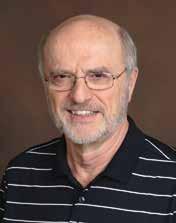
It’s true, you are similar. But you were raised in different homes with different parents, siblings, and experiences and, in effect, different cultures. You may eat the same type of foods, but they were prepared differently. Your families have different customs, different rituals, different beliefs and values, and you each learned a different language. You even have a different dictionary. To have a successful marriage you’re going to have to learn about the other person’s culture. You’re going to have to develop the flexibility to be comfortable with either set of customs, and above all, to learn your partner’s language so you can speak it.
It’s important that you learn not only to speak the same language but also to make sure you mean the same thing with your words. Your experiences in life, your mindset, what you intend can give meaning to your words.
Adding to that, Dr. Wright says that when a husband and wife are communicating there is more than one message. He says there are actually six messages, and this is where many of our problems arise. First, you have something you want to get across to the other person – what you mean. Perhaps you’ve thought about it, or you just formulate it as you open your mouth. But it may not come out the way you intended. So, the second message is what you actually say. Now, let’s turn to your spouse. The third message is what your spouse actually hears while filtering and processing the information through their perspective, which leads to the fourth message – what your spouse thinks he or she hears!
If the communication stopped here, it wouldn’t be so complicated. But the fifth message is what your spouse says about what you said Now it’s back in your lap, because the sixth message is what you think your spouse said about what you said Discouraging? It can be. But it illustrates why so often communication is hard work and perspective is so important. We want the other person not only to listen but also to understand what we mean. Now let me compound the problem. Consider this... We have three main senses: hearing, seeing, and feeling. According to Dr. Wright, these are part of our learning and communication styles. We prefer
one to the other two for perceiving life, storing our experiences, making decisions, and connecting with others. How do we discover which sense we prefer?
Dr. Wright says it’s our choice of words that gives it away.
You may be an auditory oriented husband or wife. You tend to depend upon spoken words for information and you use auditory words: That sounds good to me. Let’s talk about this again. I hear you clear as a bell. Tell me a little more about it. As an auditory man or woman, you want to hear about life. This is how you learn best. If you want to share feelings, the auditory spouse will best understand if you verbalize how you feel.
If you’re visually oriented, you use your eyes to perceive the world. You relate to the world around you in terms of how things look rather than how you feel. This is how you learn best. When you imagine, you visualize, and when you remember, you recall a picture. You experience life through your eyes. You use visual words such as: I see what you’re saying. That looks good to me. I’m not too clear on this right now. That sheds a new light on the problem. Do you pick up my perspective? And often you tend to withdraw and brood when upset rather than talking through the problem.
If you’re a kinesthetically oriented individual, you tend to feel your way through your experiences. Your feelings sort both what you experience inside as well as what comes at you from the outside, and these feelings determine your decisions. A kinesthetic spouse uses phrases such as these: I can’t get a handle on this. I’ve got a good feeling about this project. Can you get in touch with what I’m saying? I don’t grasp what you’re trying to do.
As a feeling or kinesthetically oriented individual you are more likely to be spontaneous than auditory or visual people. This trait can be both positive and negative. On one hand, you’re free to create spur-of-the-moment fun activities. On the other hand, you may, for no apparent logical reason, change their minds and upset the schedule of a plan-in-advance spouse.
Mutually understanding and appreciating each other’s perspectives is not automatic, and it’s real work. It has more facets than we realize. It’s a process – but stay with it. The rewards are unbelievable. n
Gary Moore served as associate pastor at Cloverdale Church of God for 15 years. He does couples’ coaching and leads couples’ workshops and retreats called MUM’s the Word. He has a weekly radio program – Life Point Plus – on KSPD 94.5FM at 8:45 a.m. on Fridays. His website at www.mutualunderstanding. net has video teachings and other resources for couples. He may be contacted at glmoore113@gmail.com.




By Tom Claycomb III
Editor’s note: In the Christian Living Magazine May/June issue, Tom Claycomb’s column was designated Part 1 due to a misunderstanding. It was actually the article in its entirety, so a Part 2 is not necessary. Below is a new column from him. Also, the column has undergone a name change from Exploring God’s Great Outdoors to God’s Great Earth to allow the author to explore a broader range of topics.
I was conducting some outdoor seminars at the GATCO (Great American Tool Co.) outdoor show in Texas in 2024. The promoter is a Christian so he allowed some Christian ministries to attend and have booths. Between seminars, I was walking the floor and saw a booth with members of The Bucket Ministry. They were a super group of individuals and told me their story.
CLM Publisher Sandy Jones did an article on The Bucket Ministry in the 2019 September/October issue and wrote an excellent article on its history and what it does. Since she covered the history, I’m going to talk about TBM from a different angle, but I will briefly cover its history for you new readers.
Savannah, the teenage daughter of TBM founder Chris Beth, signed up for a mission trip to Brazil. Chris went along to protect his daughter. Little did he know that decision would change his life.
Soon after hitting Brazil, they jumped on a riverboat for an 18hour ride to a village deep in the Amazon. One day his pastor told Chris that they needed to visit a family across the river and that Chris would be leading the visit. At the time, Chris was a new and inexperienced Christian.
Due to the heat and humidity, the woman they visited asked Chris if he’d like a drink of water. “Yes,” he answered, thinking that she’d grab a bottle out of the fridge (which she didn’t have). Instead, she grabbed a broken cup out of the kitchen, walked over and dipped some muddy, polluted water out of the Amazon River and handed it to him.
That started a long journey for Chris in discovering all of the diseases that the people suffered from due to drinking unclean water. Upon returning home, he started studying what kind of filtration systems he could come up with. After much work, he met with representatives from Sawyer Products, which makes water filters. They came up with a bucket filtration system. The natives can dip a bucketful of contaminated water out of the river, set it on their counter, and due to the filter attached to the bucket, they have clean water for their family.
While talking to the group in Texas, members of The Bucket Ministry invited me to go to Africa on a trip to see it all in person. When they found out that I lived in the Boise area, they said, “Great. We have a chapter up there. Jim Gentle leads it. We’ll have him meet you for lunch when you get back home.”
I soon was meeting Jim (who is a great guy) for lunch. He too tried to sign me up for a trip. Then later, while attending the National Religious Broadcasters (NRB) Convention, I got to meet Chris Beth at The Bucket Ministry booth and he told me his story. Then I received an invitation to attend a Bucket Ministry fundraising dinner in Meridian which my wife and I attended.
I knew they were a super cool group of people, but after hearing an update of where they’re now at and what they are doing, I was blown away. Here are some facts from 2024, realizing that they have grown even more since 2024:
• TBM is in 15 countries
• It has served 41,270 families
• More than 151,000 people have gotten clean drinking water






After the dinner I met Cory Akin, who is a self-described numbers geek. He’s developed an unbelievable tracking system showing all the families The Bucket Ministry is ministering to in the world. He tracks visits, salvations, and discipleship classes.
Let’s use the slums in Kibera, Kenya as an example. There are more people in that 3- by 3-mile slum than in Boise/Meridian combined. The Bucket Ministry members canvased Kibera to map out houses and how many people lived in each house. They then held seminars demonstrating the filters and how to clean them. Like any filtration system, the dirtier the water, the shorter the shelf life, but they have a method to clean the filter and estimate that a system will last for 20 years.
They give the filters out for free, but the recipients have to allow three follow-up visits in the next six weeks. TBM teams up with local churches and missionaries to make the visits. This allows for entering every house three times, with the end goal of being able to share the gospel during the course of the visits. This allows them to even be able to enter Muslim homes.
TBM also offers discipleship classes and kids clubs. They first entered Kibera in 2017. For four months, 60 people canvassed the area before they even started handing out filters. There were 81,777 homes with a population of 408,978 people. And don’t envision quaint little cottages with a white picket fence. Nope. The houses are 8 foot by 8 foot mud shacks with a tin roof. The living conditions are deplorable by any standards.




I haven’t even begun to scratch the surface when it comes to The Bucket Ministry. Suffice it to say, they’re an awesome group of people doing amazing work – saving souls and affecting thousands of people. And all because one man did what God told him to do.
Facts to consider:
• In the U.S. 340 million of us have access to clean drinking water. Worldwide, 740 million people don’t.
• Kibera only has 78 latrines for over 400,000 people.
• The water the people of Kibera drink carries all manner of bacteria and parasites, so much so that everyone is perpetually sick. In the past they were lucky if a doctor visited and gave them some medicine to help them temporarily, only to be re-contaminated again shortly thereafter. The woman who dipped the muddy water out of the Amazon and handed it to Chris, thinking that was normal, is the norm in a large part of the world.
TBM is doing an amazing work. They’re not a group of flamboyant promoters. They’re a group of nose-to-the-grindstone men and women trying to fulfill God’s call on their lives. Check them out at:
• https://www.youtube.com/watch?v=18iIzd1t3iQ
• https://www.youtube.com/watch?v=9JLAxaMSIbE

• https://www.youtube.com/watch?v=ZGoRjph2zz8 n
For more information, go to www.thebucketministry.org.








By Dr. Rick Chromey
The Israelites gathered twelve stones from the Jordan, then Joshua said... “When your children ask their fathers and grandfathers in the future, ‘What do these stones mean?’ tell them the story of God’s deliverance…” – Joshua 4:20-22
America has reached a milestone in world history.
On July 4, 2026, the nation will celebrate its 250th birthday with fireworks, parades, speeches, and patriotic exhibitions. Politicians will glorify our past. Historians will recite the story. And journalists will document the memorials.
However, anniversaries are more than celebration. They’re also for reflection.
In Joshua 4, God commanded Israel to build a twelve-stone monument. These rocks weren’t for the current generation but for future ones, as a reminder to recount God’s miracles of deliverance, provision, and protection. Ready for the moment a child asked, “What do these stones mean?”
America’s 250th anniversary should provoke the same question. But not about stones in a stream. Rather, about our “holy days” (or holidays). Why do we celebrate? What do they mean? And we better get the story right.
Especially Independence Day and Christmas. We need to know why a former founding generation of Americans – who experienced their own miraculous deliverance from British tyranny – believed America’s liberty was “indissolubly linked” to the Christian foundations that produced it.
It’s an urgent question for modern America.
In a study of historic world empires, historian Samuel Arbesman discovered the average empire survives about 220 years.1 The United States surpassed that mark in 1996, the same year Americans embraced satellite television, email, Fox News, and the internet. By 2000, cultural research revealed “social anxiety” as Americans’ greatest concern due to the nation’s moral/ethical/religious decline, 24/7 news/internet, violent media, mistrust of institutions, hyperconsumerism, and sexualization of kids.
Arbesman noted that empires didn’t collapse from a loss of military strength, but rather their inability to remember. They forgot who they were, what they believed, and why they existed. And eventually they forgot what made them free.
That’s why this conversation matters. The issue isn’t whether America will celebrate its 250th birthday.
The real concern is whether America will exist on July 4, 2076.
Today “Christmas in July” is a marketing gimmick disconnected from the real Christmas. Yet for early American generations, there was a profound relationship between Christmas and Independence Day.
Not because of Christmas trees and fireworks, Santa Claus and Uncle Sam, or festive foods unique to their celebrations.
Nineteenth-century generations saw a connection because they believed the liberty of Independence Day ultimately rested upon truths proclaimed on Christmas.
Few Americans expressed that conviction more clearly than John Quincy Adams. On July 4, 1837, speaking in Newburyport, Massachusetts, Adams reflected on Independence Day with a question to his audience: “Why is it that, next to the birthday of the Savior of the world, your most joyous and most venerated festival returns on this day?” 2
That sentence is shocking.
Today, Americans consider Christmas and Independence Day entirely unrelated holidays. Yet Adams’s audience understood his meaning exactly. Then he asked a second question: “Is it not that, in
the chain of human events, the birthday of the nation is indissolubly linked with the birthday of the Savior?” 3
Not loosely connected. Not vaguely associated.
Indissolubly linked.
Adams believed America’s experiment in liberty was not born in a philosophical vacuum. The Declaration’s affirmation that all men are created equal and endowed by their Creator with unalienable rights rested upon a worldview shaped by Christianity.
To Adams and early America, Christmas announced a revolutionary message for mankind. Christmas is when Jesus entered history on a mission to liberate humanity. God wasn’t distant, as the deists of their day believed. He was actively involved. Why? To show our value and to reveal the “right to life, liberty, and happiness” was from God, and not kings, governments, or democratic majorities. Independence Day then celebrated the political application of this theological truth.
Whether one agrees with Adams is beside the point. This belief was common among the early American generations. The Lewis and Clark Expedition, for example, celebrated only two holidays religiously: Christmas and Independence Day.
In fact, modern readers might be surprised by how frequently our Founders linked Christianity’s themes of virtue and liberty.
John Adams wrote, “The general principles on which the fathers achieved independence were the general principles of Christianity.” 4
A few years later he was blunter: “Without religion, this world would be something not fit to be mentioned in polite company: I mean hell.” 5
Benjamin Rush, one of the most influential and under-appreciated Founding Fathers, argued constitutional (republican) government could only survive if Americans possessed moral character, through biblical education: “The only means of establishing and perpetuating our republican forms of government is the universal education of our youth in the principles of Christianity by means of the Bible.” 6
Patrick Henry preached a similar theme, describing “virtue, morality, and religion” as “the great pillars of all government and of social life...[and] the armor...that renders us invincible.” 7
Noah Webster – the schoolmaster, lexicographer, and author whose textbooks educated generations of Americans – penned: “The religion which has introduced civil liberty is the religion of Christ and His apostles. This is genuine Christianity and to this we owe our free constitutions of government.” 8
Supreme Court Justice Joseph Story echoed: “I verily believe that Christianity is necessary to support a civil society.” 9
Notice the pattern.
These Founders differed in theology, temperament, politics, and personality. Yet they repeatedly returned to the same essential idea. Liberty requires virtue.
Virtue requires moral formation.
Moral formation depends upon religious truth (namely Christianity).
Again, whether modern Americans agree with their linking moral virtue with Christianity doesn’t matter. The historical question is whether THEY BELIEVED IT.
And that answer is overwhelmingly YES.
Perhaps the strongest witness to this linkage of liberty and virtue wasn’t even an American.
When Alexis de Tocqueville arrived in the United States in 1831, he came to study prisons. What this Frenchman discovered instead was America. More specifically, he discovered the remarkable “indissoluble link” between Independence Day (liberty) and Christmas (religion).
In France, religion and freedom often appeared as enemies. The French Revolution had produced fierce conflict between church and state. Tocqueville expected to find similar battles in America, and had he arrived in 2026, he would have.
But he found the opposite: “Upon my arrival in the United States, the religious aspect of the country was the first thing that struck my attention.” The longer Tocqueville stayed, the more convinced he became that Christianity exercised enormous influence upon American society. He noted in his homeland “the spirit of religion and the spirit of freedom” were oppositional and combative, but in America “were intimately united.” 10 Tocqueville concluded that, “Religion in America must be regarded as the foremost of the political institutions of that country.”
Notice what Tocqueville did not say.
He didn’t say America had a national church. He didn’t suggest clergy controlled government. He didn’t claim every American was a sincere Christian.
Instead, he observed how religious belief helped cultivate the moral habits necessary for self-government.
Americans governed themselves (through republican-democracy) because they FIRST governed themselves. 12
That distinction matters.
The Founders feared concentrated power. They believed freedom could survive only if citizens possessed enough virtue to restrain themselves without constant governmental coercion. Religion supplied that restraint. Christianity served that virtue. And virtue sustained liberty.
This is why John Quincy Adams could speak of Christmas and Independence Day as being “indissolubly linked.” The connection was not primarily theological. It was civilizational.
Christmas represented the source. Independence Day represented the fruit. Christmas proclaimed eternal truths about God, human dignity, morality, accountability, and purpose. Independence Day celebrated a society attempting to build political institutions upon those truths.
The real question facing America today is not whether every Founder was an orthodox Christian, nor if America has perfectly applied these professed ideals. Clearly we have not. The same Daniel Webster who praised the Pilgrims in an 1820 speech also condemned the slave trade as “odious and abominable.” 13
Lady Liberty has often failed to reach her highest virtues.
But does modern, secular America even care to participate in that vision?
Joshua’s memorial stones existed because memory is fragile.
A generation that forgets its story eventually forgets itself. And with a half century of secular revisionism contributing to the amnesia, America stands at the crossroads.
Can Americans celebrate Christmas without Christ and Independence Day without the moral foundations of independence? Can we enjoy the fruits while neglecting the roots? Can we inherit blessings without remembering their origins?
Continued on page 15

By Doug Hanson
You think it would be simple, easy to do. I mean really, how hard could it be? All you have to do is look in the trees, look in the water, or look in the sky. You’ll see one, and then you won’t. You’ll hear one, and then you won’t. You’ll see one a long way off but it is difficult to identify.
What am I talking about? Birding! It is the challenge of finding and identifying birds, whether they are in the trees, in the water, or in the sky. Starting the hobby of birding is easy. Get a pair of binoculars, walk outside, and look and listen. Soon enough you see one bird, then another. Then the fun starts. What kind of bird was it? Snapping a picture with your cell phone and searching on the internet is helpful for identifying.
But as you look for more birds, you want to start keeping a list. In birding terminology, it’s called a Life List. Smartphone apps like Merlin Bird ID and eBird simplify keeping a Life List, but then the real fun starts. There are birds you regularly see, then you learn about other birds that you’d like to see, but they aren’t easy to find. You then go birding specifically to find a particular bird. In birding terminology, it is called Target Species. To shorten the search, you look online for where and when you might see the bird, or you connect with an ex perienced birder who may give you some hints or personally lead you to the most likely places. Then, success! You see the bird and you add a new bird to your Life List. Then it’s time to find the next bird!
describes something that is very easy to see. Argh! As a financial advisor, and new birder, I see similarities between investing and birding. The most obvious is why. Why are you investing? What are you hoping to accomplish? What are you investing in? Finding Target Species and building a Life List requires a goal and a strategy, and you should approach investing the same way.
One consideration is your goals. Are you saving for retirement? If so, are you using a traditional IRA or a Roth? What’s the difference, and what is the best strategy? A second consideration is your values. Are you happy to invest in any company that makes money? Do you want to profit from pornography, abortion, or gambling? Biblically Responsible Investing is the term used to screen investments before investing, to make sure you are investing according to your values.

I went looking for a Northern Yellow Warbler recently. I know they are in Idaho now, as I hear them but have yet to see one. What is frustrating is they are a ubiquitous bird in the spring and summer in Idaho, so why haven’t I seen one? Part of the challenge is they favor brush habitats near water, often foraging in shrubs low to the ground. And that is when I hear them, when there is a forest of bushes in front of me. You would think that a yellow bird would be easy to find in the greenery of bushes, but alas, the Northern Yellow Warbler is small. To add salt to the wound, the internet says the Northern Yellow Warbler is conspicuous, which is an adjective that

Hopefully, by the time you read this I will have seen a Northern Yellow Warbler. But if not, my search will continue. It is my current Target Species and I’m refining my strategy to find one. Finding a little yellow bird is one level of importance, but investing for your future is a much higher level. Make sure you know your goals for investing. Make sure you follow a strategy – especially one that matches your values – to reach your goals. Excuse me now, I need to go find that little yellow bird! n
Doug Hanson is a financial advisor with Christian Wealth Management in Boise, Idaho, providing biblically responsible investment advice to Christians. For more information, visit investforthegloryofgod.com or contact him at doug@ christianwm.com or (208) 697-3699.
Investment advisory services provided by Creative Financial Designs, Inc., a Registered Investment Advisor. Securities are offered through CFD Investments, Inc., Member FINRA & SIPC. 2704 South Goyer Road, Kokomo, IN 46902, (795) 453-9600. Christian Wealth Management LLC is not affiliated with CFD Investments, Inc. or Creative Financial Designs, Inc.
Image: Northern Yellow Warbler, Mikeschafer.wildlife; Wikimedia Commons
Continued from page 13
It’s why the Jordan stones still ask the question: What do these stones mean?
The generation that crossed the Jordan knew exactly what God had done. Their children did not. Their grandchildren knew even less. Without intentional remembrance, the story eventually disappears.
America faces a similar challenge on its 250th birthday.
The question is not whether we still possess the symbols of our national story. We do. The flags still wave. The fireworks still explode. The patriotic songs still play. The holidays remain on the calendar. But do we understand what they mean?
That is why I write this column. We must tell the truth about our past, interpret history honestly, and navigate culture wisely.
Can America remain free while abandoning the Christian virtues that helped create and sustain its liberty? The secularist says yes. Founder Jedidiah Morse answered no:
“To the kindly influence of Christianity we owe that degree of civil freedom and political and social happiness which mankind now enjoys… Whenever the pillars of Christianity shall be overthrown, our present republican forms of government—and all the blessings which flow from them—must fall with them.” 14
As America celebrates 250 years in 2026, our children are asking what Independence Day means. How will we answer? With fireworks, barbecues, and flag-waving? Or with an understanding of the ideas, beliefs, sacrifices, and virtues that produced this nation?
Has our founding story become little more than a fable? Are the Declaration of Independence and Constitution becoming as neglected as the Bible itself? Can we still explain why generations of Americans believed liberty and virtue were inseparable?
The answers to those questions will determine whether future generations inherit merely the memory of America – or the reality of it. America is divided, confused, and increasingly ignorant of its founding story.
Yet we cannot allow our generation to become the last American generation.
No empire lasts forever. America will fall someday. The question is whether it happens because we surrendered the very principles that made us free.
Like Paul Revere’s ride, it may feel like midnight. Or perhaps, like the birth of Christ, a new dawn is just beginning. n
Dr. Rick Chromey is a historian and theologian who speaks and writes on matters of religion, culture, and history. He’s also a Lewis and Clark historian for American Cruise Lines (Columbia and Snake Rivers). Rick and his wife Linda live in Star, ID. www.rickchromey.com.
SOURCES:
1. Samuel Arbesman (2011): The Life-Spans of Empires, Historical Methods: A Journal of Quantitative and Interdisciplinary History, 44:3, 127-129
2. John Quincy Adams, An Oration Delivered Before the Inhabitants of the Town of Newburyport, at Their Request, on the Sixty-First Anniversary of the Declaration of Independence, July 4, 1837 (Newburyport, MA: Charles Whipple, 1837), 48.
3. Adams, An Oration Delivered Before the Inhabitants of the Town of Newburyport, 48.
4. John Adams to Thomas Jefferson, June 28, 1813, in The Writings of Thomas Jefferson, ed. Andrew A. Lipscomb (Washington, DC: Thomas Jefferson Memorial Association, 1904), 13:292-294.
5. John Adams to Thomas Jefferson, April 19, 1817, in The Works of John Adams, ed. Charles Francis Adams (Boston: Little, Brown and Company, 1856), 10:254.
6. Benjamin Rush, “A Defence of the Use of the Bible as a School Book, ” in Essays, Literary, Moral & Philosophical (Philadelphia: Thomas & Samuel F. Bradford, 1798), 112.
7. Patrick Henry to Archibald Blair, January 8, 1799, in William Wirt Henry, ed., Patrick Henry: Life, Correspondence and Speeches (New York: Charles Scribner’s Sons, 1891), 2:592. 8. Noah Webster, History of the United States (New Haven, CT: Durrie and Peck, 1832), 300.
9. Joseph Story, March 24, 1801, in Life and Letters of Joseph Story, vol. 1 (Boston: Charles C. Little and James Brown, 1851), 92.
10 Alexis de Tocqueville, Democracy in America, vol. 1 (New York: George Adlard, 1839), 307.
11 Tocqueville, Democracy in America, 307.
12 Tocqueville, Democracy in America, 304.
13 Daniel Webster, A Discourse Delivered at Plymouth, December 22, 1820 (Boston: Wells and Lilly, 1821), 39-40.
14 Jedidiah Morse, A Sermon, Exhibiting the Present Dangers and Consequent Duties of the Citizens of the United States of America, Delivered at Charlestown, April 25, 1799, The Day of the National Fast (MA: Printed by Samuel Etheridge, 1799), 9.





By Gaye Bunderson
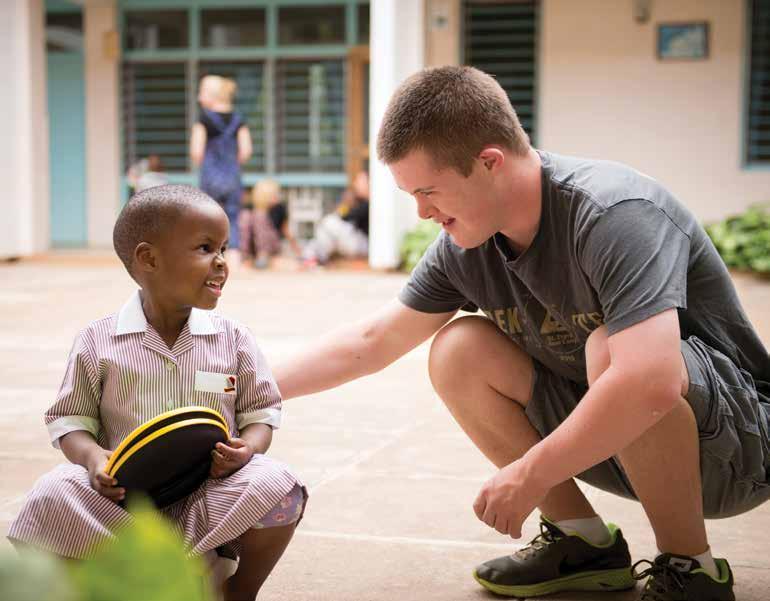
A young man named Eli Reimer made his mark on the world in 2013 when he climbed to Mount Everest Base Camp. Far from the first person to do so, his success nonetheless made him the first American with Down syndrome to achieve the goal.
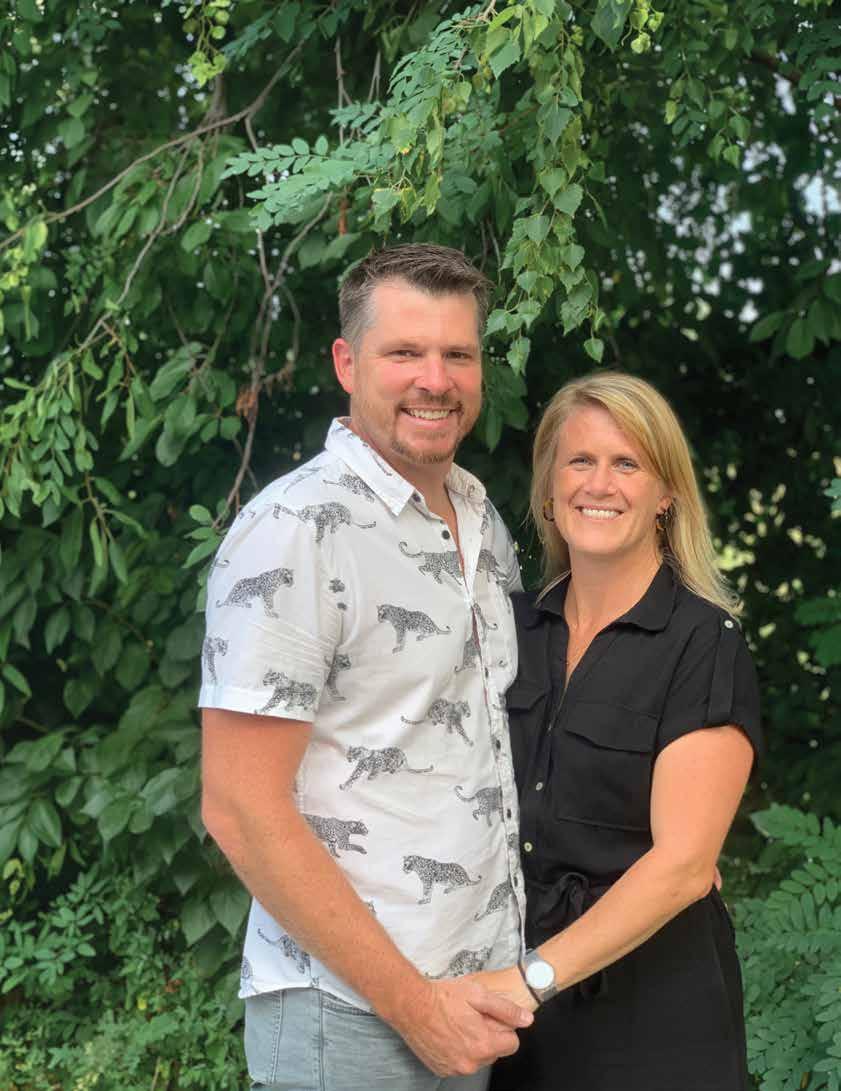
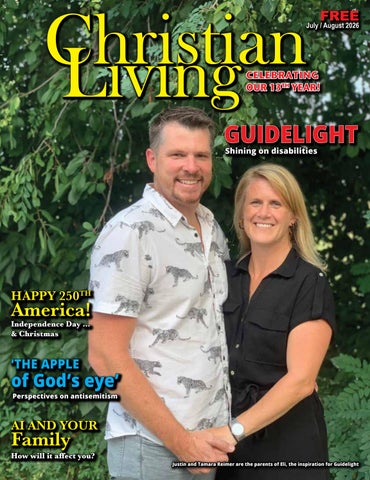
“Eli is an impactful young man,” said Dan Waldeck, Director of Development for Guidelight, a non-profit that helps churches serve people with disabilities. Eli, now 29, is the son of Justin Reimer, who launched the organization in 2005 in Bend, Ore. under the name The Elisha Foundation in honor of Eli. A name change came about when the group was mistaken for a grant-giving organization. Still, Reimer wanted his son’s name included and, looking closely at the word Guidelight, one sees ELI in the middle of the alphabet mix. Also, Guidelight denotes the group’s desire to be a guiding light for those with disabilities and their families.
Reimer said his launch of Guidelight was significantly affected by Eli’s birth.
“My wife Tamara and I were pursuing being missionaries in the former Soviet Union. Then, when Eli was 45 minutes old, the nurse told us he had Down syndrome and needed to be in the ICU.”
After his birth and throughout the subsequent weeks, the couple thought, “We now have to focus on raising a child with a disability.”
So much for their missionary plans, they thought. But it was Reimer’s mom who put the best spin on the situation by saying, “Rather than going on a mission, God brought the mission to you.”
Around this time, Reimer said, two themes emerged.
“When we attended meetings of the National Down Syndrome Society, one thing that stood out was that there was no gospel message there; and many families with disabled children who did go to church were not feeling welcomed.”
Reimer stressed that the latter was not an intentional response on the part of any church, but it reinforced for him the need to open doors to churches where the disabled and their caretakers were given help and a hearty welcome.
“We had to let go of the path we thought God had intended, and we were just discovering the path He was putting us on.”
One thing led to another, and in 2011-2012, the couple launched an outreach ministry for parents with children with disabilities in Ukraine. Stated Reimer: “God was redirecting our thinking. That missionary desire was always with us, and it never left us. God took us to Ukraine, and in 2016, we moved there full-time.”
They lived there until 2022, when Russia launched a full-scale invasion of Ukraine. Reimer himself still visits the country and said he remains very involved there. He explained that he largely feels safe in the war-torn nation because, “I’m not in the trenches.”
It was from Ukraine that the couple launched their global ministry, as God opened doors into other countries. From that vantage point, they were more equipped, Reimer contended, to reach out beyond the borders of the U.S.
When asked about why they wanted a specifically church-based ministry for helping the disabled and their families, Reimer replied: “It is our conviction that the Church is the greatest institution in the world to help foster potential for the best outcomes for transformative good.”
Waldeck got involved in Idaho in Guidelight in January of 2024. Justin is a friend of his, and Waldeck’s motivation also includes the fact he and his wife had a daughter who died at 6 years 9 months of aplastic anemia, a condition in which bone marrow fails to produce enough new blood cells.
“When you go through something like that,” Waldeck said, “life looks a little different than you planned. Your expectations are upended; your hoped-for family life is challenged, turned inside out.”
Waldeck previously served as a Special Olympics coach, and his wife currently serves as Chair of the Special Education Department at Meridian High School. Of his present position as Director of Development for Guidelight, he said: “I’m the relationship guy, and I do whatever’s needed.”
Guidelight specializes in two areas:
• Getting the local church involved in helping disabled people and their families, as stated, and:
• Sponsoring free retreats that unite families and volunteers from churches for fun and relaxation, as well as informative seminars
“A disability can be at the center of the home,” Waldeck said. In other words, everyone is absorbed by the disability and must devote time to the individual who is experiencing it.
“We want the gospel to be the center of the home,” he stated.
One in five families in the U.S. can be affected by caring for a member with a disability, according to Waldeck, who also explained that surveys indicate that in 95% of churches, people with disabilities and their families are welcome, but only 25% of the churches have ministries directed to help them. He said, “We want to engage the church to walk alongside the family. It’s not Plan B for their lives; it’s Plan A.”
Guidelight holds to the unique, faithful point of view that nothing happens by accident. In defending that position, Waldeck cited John 9:
And as Jesus passed by, he saw a man which was blind from his birth.
And his disciples asked him, saying, “Master, who did sin, this man, or his parents, that he was born blind?”
Jesus answered, “Neither hath this man sinned, nor his parents: but that the works of God should be made manifest in him.
“I must work the works of him that sent me, while it is day: the night cometh, when no man can work.
“As long as I am in the world, I am the light of the world.”
Said Waldeck, “God has designed us – He’s intentional. The weak are indispensable in Scripture.” He explained that in the Bible weak-
ness is portrayed not as a failure but as a position that allows God’s strength to be perfected in a person. Scripture teaches that when humans are weak, frail, or weary, God provides strength, making believers actually strong through reliance on Him.
Examples include 2 Corinthians 12:7-10, which reads in part, “That is why, for Christ’s sake, I delight in weaknesses, in insults, in hardships, in persecutions, in difficulties. For when I am weak, then I am strong”; and Isaiah 40:28-31, “Those who hope in the Lord will renew their strength.”
Another Scripture that could also be included is: God has chosen what is foolish in the world to shame the wise, and God has chosen what is weak in the world to shame the strong. – 2 Corinthians 1:27
Of Guidelight’s efforts on behalf of the people with disabilities, Waldeck stated, “We want to give them biblical hope and practical help.” The group wants to aid their daily needs for respite, friends, and to be known and loved.
“We’re ALL made in the image of God, and people with disabilities have a place and they have something to give to the body. Most churches don’t think they have the bandwidth [to help the disabled]; for us, it’s about changing the disability mindset. It doesn’t have to be a separate ministry – it can be, but it doesn’t have to be.”
Waldeck talked about the agelessness of disabilities, and as an example used “the aging population with its memory issues.”
Disabilities that Guidelight has engaged with have included autism, Down syndrome, and cerebral palsy. Guidelight does not limit the scope of its ministry: “We are ready and willing to engage all of them. It is God’s design that makes these people unique. God is doing something with all of us, if we let Him. His plans are perfect, and we can be a good vessel of His work.”
It is a global ministry and utilizes eight different languages in its work. “We want to introduce Jesus to as many as we can,” Waldeck said, then listing countries and areas such as Madagascar, Slovenia, northern Africa, Columbia, and more.
An estimated 1.3 billion people – or about 16% of the global population – are affected by a serious disability, according to a 2023 study by the World Health Organization. “It is the biggest unreached population in the world,” Waldeck said, “and too many of them are unchurched.”
While he admitted that no one is promised an earthly healing, he used Eli as an example of what people with a disability can do. “He has impacted tens of thousands [with his climbing achievement],” Waldeck stated.
He said that, too frequently, when it comes to interactions with the disabled, people look the other way rather than saying and asking, “We care. Where can we help?”
As for himself, he said the coach in him wants to empower them. His work with Guidelight is a major channel to that empowerment, and the organization hopes to utilize more and more churches to reach its goals. “Churches are a means of reaching out and teaching about care for the disabled and their families.”
Both the disabled and the churches may present a challenge to overcome in that effort. For the disabled, though it is rare, some reject Guidelight’s ideas, opting for a sense of independence and an “I can do this” attitude. Waldeck said that’s fine, but he wants them to know, “Jesus is walking with you, and you can let people walk with you too.”
Guidelight calls and emails churches to tell them, “This is what we do.” But some are not ready yet.
Now is a good time to get ready. n
For more information, go to www.theguidelight.org or contact Dan Waldeck at dan@theguidelight.org.
This special series is for all of you young at heart to enjoy and share with the young ones in your life.
~ Joan

By Joan Endicott
Looking out at the far-off mountain, Joy let out a slow sigh, almost whispering to GiGi. “Do you ever get tired of things changing?”
Princess, the little pup lying at their feet, let out her own sleepy sigh— content to simply be.
“Change is hard,” said GiGi softly, “and it can make things feel shaky.”
“I hate when things feel shaky. Why can’t things just stop…changing?” Joy asked quietly.
GiGi leaned her cheek against Joy’s soft hair.
“Change makes me sad too sometimes,” GiGi said. “When it’s a hard change, it’s completely normal for your heart to feel heavy. It’s normal to miss the way things used to be. When we love things deeply, it hurts when they change or go away. Feeling sad simply shows you care. That’s when you get to give yourself extra kindness.”
Joy twirled a piece of lavender between her fingers, enjoying its fresh fragrance. “It’s so hard when people change,” she whispered. GiGi rubbed Joy’s back gently. “Oh yes, my love. It sure can be.” Joy looked up. “Why do they do it?”
“Well, life changes us all,” said GiGi. “It shapes us the way the wind shapes the trees. But sometimes, it’s also that we didn’t really know someone very well in the first place... and it just seems like they changed.”
Joy rested her head against GiGi’s arm, watching a butterfly flutter toward the lavender.
“And sometimes,” GiGi continued, her voice very gentle, “people act differently because they are carrying something heavy. I know there are times I have seemed distant and quiet to others—even those I loved deeply.”
“You?” asked Joy in surprise.
“Oh, yes,” GiGi nodded. “When I was going through hard things. Like if I haven’t felt well, or when I felt lonely for someone special, or when a loved one passed away. A hurting heart makes us act differently.”
Joy looked down at the little dog sleeping happily by their feet. “Like Princess,” she said softly.
“Exactly like Princess,” GiGi smiled. “Remember when she first came to live with me?”
“She was a growly-scowly-grouch!” Joy said in a funny voice which tickled them both.
“Yes, she pulled away and sometimes growled when I tried to touch her. Because the people she used to live with were unkind, she learned to try and protect herself. Her little heart was wounded.”
“I remember you told me, ‘Hurt people hurt people.’ Sooo, it’s the same for puppies?” Joy whispered.
“It certainly is,” GiGi agreed. “Before Princess could be her happy, healthy self, she needed to know she was safe and loved.”
Joy let her hand rest softly on the little sleeping pup.
“But what if everything around us is changing so much—so shaky—that it feels like a big ol’ storm?” Joy asked. “How do we feel safe then?”
“That’s a great question,” GiGi said. She laid back on the grass, staring up at the blue sky and puffy clouds. “Do you remember the story of Peter and Jesus on the water?”
Joy nodded and snuggled down next to her. “Peter stepped out of his boat right into the big waves.”
“He did,” GiGi grinned. “It was very brave. And as long as he kept his eyes on Jesus, he walked right on top of that stormy water.”
GiGi gently stroked Joy’s hair as she continued. “Do you remember what happened when he took his eyes off Jesus and focused on the storm instead?”
“He got really scared,” Joy whispered. “And he started to sink.”
“Yes, and I can relate to Peter all too well,” GiGi said with a wink. “Peter couldn’t change or control the storm. The one thing he could control was what he focused on.”
Joy thought for a while and then asked, “So...when things get stormy, how do I keep from looking at those scary waves?”
“Well, we will see and feel the waves—that’s natural. But like Peter showed us, with God’s help, we can do what is super-natural, by choosing to look past the waves and the storm to The One who controls them. The best news of all is that God, the One who controls all of life’s storms, never changes. His Word and His promises never change. He always loves you, He is always with you—those things are always true!”
Joy stroked Princess’s warm, soft fur. The pup rested her chin on Joy’s lap and let out a soft sigh.
“But GiGi,” Joy whispered, “if God controls the waves...why does He let scary storms come at all? Why can’t we just have the sunny days?”
“Oh, sweetheart,” GiGi sighed gently, her hand joining Joy’s to pet the sleeping dog. “That is one of those huge, God-sized questions— the kind we simply can’t answer.”
Joy looked up as a wind gust rustled the branches in the big juniper tree.
“When there is a storm outside, the most important thing is to stay focused on the One who controls it,” GiGi explained softly. “And then, we simply do our part to control what we can.”
“The things I can control,” Joy remembered.
“Exactly,” GiGi smiled. “We stop trying to control the things in the big world around us, and we focus on what we can control in the little world inside us.”
GiGi traced the top of Princess’s little head. “When we are right in the middle of the wind, it is so easy to only look at the scary things. That is when we get to train our hearts and our brains to look for the beauty.”
“How do I train my brain?” Joy asked.
“By choosing what you notice,” GiGi smiled. “Gratitude is the best way to reset a sad, shaky heart. When things are hard, it is important to give ourselves space to feel those big feelings and be kind to ourselves.”
GiGi rested her hand over Joy’s.
“And then, even though it is natural to keep looking at what we have lost, there comes a time when we get to focus on what we have left,” GiGi whispered. “We get to tuck all those beautiful memories safely inside us and then open our hearts to add new memories of the beautiful blessings still to come.”
Joy sat quietly, listening to the steady breathing of the little pup resting safe across her lap.
“Sooo…it seems like everything is always changing,” Joy said thoughtfully.
“Yes, life is all about change,” Gigi paused. “Like the weather. We enjoy the sunshine and blue skies while they’re here, while also knowing the rain and storms will someday come. Even though we can’t stop the storm from coming, we always get to choose how we respond when it does. That is what we can control.”
Joy sat up a little. “What do you mean?”
“Well, when a sudden rainstorm comes, we have a few choices,”
GiGi smiled. “We can choose to be upset by it and let it steal our joy, we can grab an umbrella and just keep going...”
Suddenly, GiGi jumped to her feet. Her eyes sparkled as she reached down and grabbed Joy’s hand, pulling her up.
“…Or,” GiGi laughed, raising one hand high in the air as if holding an invisible umbrella, “we can run right into it and dance in the rain!”
GiGi picked up Joy and twirled her around over the grass. Princess joined them with a happy little bark, wagging her tail and prancing in circles right along with them. The quiet afternoon burst with even more giggles and laughter.
When they finally flopped back down onto the warm grass, catching their breath, GiGi gently took Joy’s hands.
“Choosing to dance? Choosing your umbrella?” GiGi smiled softly. “That is you getting to simply control your…controllables.”
“…Controllables!” Joy finished with her, still catching her breath from the giggles.
“Change happens to everything and everyone, sweetheart. Look at my hands.”
Joy leaned over and placed her hand on one of GiGi’s weathered hands. “They hurt, don’t they?” she asked.
“Yes, they ache, and they don’t work like they used to—and they certainly don’t look like they did when I was younger.”
“I’m sorry, GiGi. That must be hard.” Joy patted her hands tenderly.
“Oh, thank you, sweetie. It is. Some days are harder than others.” GiGi hugged Joy extra tight. “And when it feels hard and stormy,
that’s when ‘I Get To!’® choose—even more—to focus on what I can control…and if I will dance in the rain!” GiGi smiled, her eyes shining.
“I can choose to focus on what I’ve lost or focus on all I have left. I choose to think about all the beautiful ways these hands have served me. I remember all the things I’ve been able to do: plant flowers, cook meals, drive a car, take care of myself and those I love. Some of my favorites are holding and rocking babies…and the thousands of times they’ve helped me give the hugest hugs! We always get to choose what we look for: the crinkles and wrinkles,” GiGi winked, “or the beautiful life that made them.”
“Kinda keeps coming back to choosing that gratitude lens, doesn’t it, GiGi?” Joy smiled softly.
“Yes, my love. That’s what it always comes back to,” GiGi whispered. And with her beautiful, weathered hands, she pulled Joy in for one of her longest, hugest hugs.
“In everything give thanks!” —1 Thessalonians 5:18a n
Joan Endicott is a keynote speaker, coach and author. Her “I Get To!”® message has encouraged people in over 30 countries to make a simple shift in perspective and discover the miraculous life they already have. To receive your FREE copy of her book and ongoing encouragement, visit www.JoanEndicott.com and follow @JoanEndicott.











By Larry Banta
Have you ever thought you could be the answer to someone’s prayer?
Soon after I completed my psychiatric training, I moved to Idaho to work for the state and to start a Christian counseling center with a close friend. We were open only a few days when a call came in after our receptionist had left for the day. After greeting the caller, she said, “I have been praying for help. I did not know where to turn; God told me to call you guys.” I put her on hold and said, “Hey Kevin, you better take this; it is a referral from God!” It was the first time I really thought about that. Am I the answer to someone’s prayer? My work was different after that call. I strove to be a good servant and enjoy the privilege of being trusted to be that answer someone was seeking.
God gives each of us certain abilities and resources. We can bury them in the ground (use them for only earthly purposes) or invest in the Kingdom. In Matthew 25 we read of the parable of talents, or bags of gold as translated in NIV. The master entrusted the “gold” to his servants. Two used the gold well and had good return on their investment. They were the trustworthy servants. The reward was God trusting them for more duties and a share in the Master’s happiness.
Matthew 25: 19-23 – “After a long time the master of those servants returned and settled accounts with them. The man who had received five bags of gold brought the other five. ‘Master,’ he said, ‘you entrusted me with five bags of gold. See, I have gained five more.’
“His master replied, ‘Well done, good and faithful servant! You have been faithful with a few things; I will put you in charge of many things. Come and share your master’s happiness!’
“The man with two bags of gold also came. ‘Master,’ he said, ‘you entrusted me with two bags of gold; see, I have gained two more.’
“His master replied, ‘Well done, good and faithful servant! You have been faithful with a few things; I will put you in charge of many things. Come and share your master’s happiness!’”
What really are the bags of gold? It could be money invested in the Kingdom. Also, it might be considered time, energy, commitment to God and Kingdom work on earth. Accepting Christ as our Savior, we become servants of Almighty God. He is our Master. We call him King. If we are servants of the King and He asks us to do something, we should be honored to do it. It may be the answer to someone’s prayer.
During the late 1990s, I lived in Mexico as a medical missionary. While managing the medical and psychiatric care of an orphanage, we also started a rural medical outreach. We would travel the four hours to the villages on a weekend to provide medical clinics for two days, with some preaching and teaching involved. One time we were returning for the second day from our hotel a few miles from the entrance to the villages. I suddenly remembered we had to stop to restock some items I had run out of the previous day. The pharmacy was along the highway so easily done. We pulled off the road and I ran in to get a few things. Returning to the van there were several young men gathered around it, awaiting my return. I inquired as to their concerns. One man spoke up: “Some months ago my sister fell from a horse. Since then, she has not been able to walk. Would you please come to see her?” I replied, “Sure, we can stop and check
on her.” Having walked the several miles to get there, they hopped in the van and directed our path back to their home.
After the usual greetings on our arrival, they carried the sister out to the main room of the small house. She explained, “I fell from a horse and was hurt but not too bad. A few days later I awakened to find I could not walk.”
I started with a neurologic exam of the extremities and found profound weakness in the legs. As I examined the muscles of the legs, I found tumors all through the legs and upper back, as well as the abdomen. I told the woman, “This is a very serious type of cancer. I do not have medicine for it.” I paused for a moment. “We can pray for her,” I said. “Would that be okay?” The family unanimously responded in the affirmative, but then the mother said, “Please wait for one minute.” She ran from the house and soon the entire village was surrounding the house, awaiting my prayer. I prayed as loud as I could and they all prayed out loud with me. Obviously, this young lady was very dear to the entire community.
We left with plans to return next time and see if we could get some help for her. During the return trip to our home, my coworker and I were led to provide the money for her to go to the cancer hospital a good distance from her village. We both “happened” to have some extra funds that could be used to pay for her treatment. It was several hundred dollars to start the treatment, way beyond her means.
On our next visit she was responding to the treatment, was walking, and already feeling better. She fully recovered and was seen by us several times over the next few years. Our prayers for her involved us being a part of the answer, as well as for the doctors in the cancer hospital.
As we brought medical help to these villages so long ago, we prayed that God would draw these people to Him. It took a while, but now three churches serve the area, with many who have given their lives to Him. Those prayers were answered by the next people who came to serve after we left to return to the U.S.
Our love for God involves obedience. As we draw closer to Him, the Holy Spirit can make changes in us, and lead us to where we are needed. We are the hands and feet of Jesus so when there are needs, God often uses people to answer those requests. We must be open, listening, ready, and able. As His servant, can He trust you to be that answer?
Romans 12:6-8 tells us, We have different gifts, according to the grace given to each of us. If your gift is prophesying, then prophesy in accordance with your faith; if it is serving, then serve; if it is teaching, then teach; if it is to encourage, then give encouragement; if it is giving, then give generously; if it is to lead, do it diligently; if it is to show mercy, do it cheerfully. May we be trustworthy servants, ready to be used as the answer to prayer! n
Dr. Larry Banta is an author of several books, a retired psychiatrist, and a former missionary. He served in India, Mexico and Kenya. He and his wife, Evelyn, a counselor, travel together to provide consultation and training in various international locations.

By Mark Naito
(Author’s note: This article is 100% not written by any screengenerated tech, like AI, but inspired by God-given creativity.)
When was the last time you left your smartphone at home for one or more days?
Do you attend church without your phone? If there were no internet or electrical power, what would you do?
These are questions that help you realize how AI might affect your faith. These simple situations may not seem like a big deal today, but wait for the day when screens go away and YOU become the screen. Here are some key facts to think about from the Center for Humane Technology:
• Our relationships, community, values, and social norms are being re-shaped by AI. This is happening by integrating our personal lives [with the technogology] and mediating our communities.
• Centralization of power and decentralization of tools centralizes economic and political influence in the hands of a select few.
• A breakdown of shared understanding fractures a shared sense of reality, fueling distrust, polarization, and a loss of confidence in what’s true.
• The tools of technology have become active participants in our relationships, subtly mediating how we communicate, connect, and feel about one another, using things like generative AI to craft written communication and a reliance on chatbots to substitute human intimacy.
• Technology is eroding trust and authenticity in relationships, such as when a friend uses generative AI to draft messages or a stranger relies on an AI agent to fulfill their responsibilities versus authentic relationships that are built on mutual understanding and transparency around who we’re engaging with.
• This expert’s goal has been to educate, legislate, and bring awareness of what really goes on with screens. I have been called upon many times by the courts and federal government hearings seeking to understand what is going on and how to mitigate the challenges with screens.
So what?
How does this affect my faith?
To start... As a culture we have widely accepted the addition of another “person,” per say, in our life that does not have the Holy Spirit and was not created by God. It would be okay if this so-called person did not heavily influence our day-to-day lives. But it does –anything from business insights to how to handle a relationship and even putting together a sermon for church.
Our screens... They’ve slowly crept into our daily lives and then moved into hyperspeed during COVID-19 because of a huge push to put everything – including our worship and sermons – online and without a physical representative from any business or organization. Why could this be bad? Here are four reasons:
• Lose in-person relationships we naturally crave
• Lost in endless menus or screens
• Having to “guess” how to communicate to an AI or search bar
• Human element is gone


Do these screens make our lives easier? YES! Do they automate things we couldn’t do before? Yes. Do they provide us access to tools helpful in day-to-day life like language interpretation? Yes. BUT… think of this one scenario that had a huge impact on my latest workshop in Montana. Let’s say you need to fix something, so you go to YouTube to find the answers. But what if you asked around on how to fix that ‘something’? And what if that person offered to help fix it for free? Not only that, but in the process you formed a new, fruitful relationship or had an opportunity to witness to someone in need.
Is that better? What eternal impact could you have?
One consistent thing I’ve been amazed at is the quality of time I have now. It reminds me of growing up on the farm when I was young. We mainly had ourselves and what was around us. We had to get creative – and during this time my family saw what potential I had.
Examples include: making a complete card catalogued library in my family’s living room, leading my younger brother to build a tree house, creating an enterprising vegetable stand on Highway 45, or M & P’s Candy Store. The entrepreneurialism and leadership oozed out of me. Mainly because I was bored and used what I had access to around me. I was creating (which is a skill God gave each of us) and using my own ideas, not just using what was shown to me on a screen.
In the Experiencing God Bible, 2022 CSB version, there are sections labeled, “Did you notice?” In Genesis 11-12, one of them was “Good communication is more important for societal advancement than is technology.” This was in reference to the Tower of Babylon. What are we pursuing to help us in our relationships with the Lord: the Holy Spirit or technology?
In Psalms 49:16-17 it reads, “Do not be afraid when a person gets rich, when the wealth of his house increases. For when he dies, he will take nothing at all; his wealth will not follow him down.”
This is something no screen will ever get you to pause and reflect on, to remind you what’s most important to meditate on every day, to make the biggest investment in, and to prioritize over anything else.
Relationships... God is the ultimate relational entity around. He is jealous of His time with you – in the best way. He wants nothing more than you. And what is ironic is that our screens demand more time with us than God – even the good content that is Christian. Lately I’ve even been challenged by one more non-screen thing that eats at my time with the Lord: the radio – whether it’s Chuck Swindoll or Christian music. Again, not in itself bad, but when I do have it off, I end up spending more time praying or reflecting on things God is doing. I also found a feature on our car where you can “shut off” the entertainment screen so it’s black and only has a clock on it.
To clarify, this is not a minimalist movement. It’s simply dialing things back some so the Lord can remain number one in our households.
I remember a season with my old service technician/manager at a dealership in Portland, Ore. I was a sales representative and got to


know him as we collaborated on different projects. He started inviting me over to his house. His wife Janice would always cook homemade meals, and we sat around a small, modest kitchen table and broke bread together with no screens. Then we proceeded to move into their living room. The main thing I could hear was the grandfather clock ticking in the background. But everything else was quiet.
That one season in my life has had an eternal impact on me. The couple had limited funds, their house was very dated, and had many inconveniences most of us would not like. Yet, they were very content people. As a result, I did anything for them, including house sitting on occasion, or if they needed help with any projects around the house, I made myself available.
When I got a major promotion in the company to go into product marketing and move to the Bay Area in California, Janice presented me with a knitted blanket she made and was holding onto for my wedding day. I still have it to this day. Such gifts are tangible things that lead to lasting memories and are altars of remembrance to what God has done and is doing.
Lately, we spoke at our latest conference in Helena, Mont. Our workshop was standing room only, as participants showed a hunger to understand how they can teach their kids balance with screens. As we prepared for the trip, we were challenged again with how to be more intentional with navigation without screens, and how to get to the conference without using technology. We decided to go to AAA and get some maps. During the trip, our daughter kept asking if we were still in Idaho or in Montana. We gave her a map that was






of Idaho and Montana. We then decided to let her know what city we were approaching and ask her if it was in Idaho or Montana.
She loved it! And the best part was, there was no more, “Are we there yet, Dad?”
Things we also talked about, because we had no screens, were the farms – what they planted, what kind of tractors they were using, was there a dairy and what happens there, how irrigation works, and different types of power lines, water towers, road construction, etc. All were great learning opportunities, and as a family we worked together to walk through different scenarios.
Life can be rich if we get rid of the distractions pushed on us and use the boredom for good!
How does this all apply to AI and our faith?
Do not let screens or technology ever get in the middle of your time with our Heavenly Father, your marriage, or relationships with your kids and others. It may not impact you today or bear much fruit, but either at the end of your life or in heaven it will.
Don’t wait for later; start today. Our prayer is that you continue to appreciate what Jesus did on the cross (and God’s sacrifice) and let God use everything else to help you in your faith walk. n
Mark Naito is passionate about helping people by seeking ‘root cause’, providing result-oriented solutions and good outcomes. His passion has always been to empower others to be educated to make their own informed decisions on what makes sense for themselves or their families. He started Navigating Tech Family toward that goal. He may be reached at mark@navtechfam.com.



By Dave McGarrah
I remember sitting with my friend and radio co-host on the steps of a quiet synagogue in Idaho a few years ago. We were talking about the beauty of the Torah and the shared roots of our faith. But lately, those conversations have taken on a somber tone. As we look at the headlines across the United States in 2026, we are witnessing something that many of us hoped was a ghost of the past: a virulent, unapologetic rise in antisemitism.
From college campuses in the Ivy League to the rural streets of Idaho, the “oldest hatred” has found new life. According to recent data from early 2026, antisemitic propaganda distribution has spiked by over 360%, and nearly three-fourths of American Jews report experiencing or witnessing antisemitism online.
As Christians, we cannot afford the luxury of silence. We are not called to be bystanders in history; we are called to be salt and light. But to respond effectively, we must first understand the root of this hatred and our biblical mandate to stand against it.
Antisemitism is not merely a social or political phenomenon; it is a spiritual pathology. In the Book of Revelation, we see the dragon’s relentless pursuit of “the woman who gave birth to the male child” (Revelation 12:13). Throughout history, the enemy has sought to destroy the Jewish people because they are the vessel through which the Word of God and the Messiah entered the world.
When we see the rise of anti-Jewish bigotry, we are seeing the “antichrist spirit” at work. It seeks to steal, kill, and destroy the people who remain, as Zechariah 2:8 describes, the “apple of God’s eye.” We must also be honest about our own history. For centuries, a “Replacement Theology” – the idea that the Church has replaced Israel in God’s plan – was used to justify horrific persecution. But the Apostle Paul is clear in Romans 11:1: “I ask then: Did God reject his people? By no means!” If we claim to love the God of Israel, we cannot hate the people of Israel.
How should the follower of Christ respond to this rising tide? I believe our mandate is three-fold: Education, Exposure, and Engagement.
1. Education: Reclaiming Our Jewish Roots
At Master Minded Ministries, our mission has always been to help Christians understand that our faith didn’t start in a vacuum. We are “wild olive shoots” grafted into the rich root of the Jewish olive tree (Romans 11:17).
• Study the Scriptures: When we realize that Jesus was a Torahobservant Jew, that the Apostles were Jewish, and that our Bible was written almost entirely by Jewish hands, antisemitism becomes an assault on our own heritage.
• Reject Replacement Theology: We must teach our congregations that God’s covenants are “irrevocable” (Romans 11:29). The Church is the “Body of Christ,” but Israel remains God’s “Firstborn Son.”
2. Exposure: Calling Out the Darkness
Ephesians 5:11 commands us to “Have nothing to do with the fruitless deeds of darkness, but rather expose them.”Antisemitism often hides behind the veil of “political critique” or “social justice.”
While we can have nuanced views on geopolitics, we must have zero tolerance for rhetoric that dehumanizes Jewish people or denies their right to exist. Whether it’s a school board candidate in our backyard or a viral social media post, we must be the first to say, “Not on our watch.”
3. Engagement: Becoming a “Wall of Protection”
True compassion is not a feeling; it is an action. In 1940s Europe, it was the “Righteous Among the Nations” – many of them motivated by their Christian faith – who risked everything to hide their Jewish neighbors. Today, we may not be hiding people in attics, but we are called to be a different kind of refuge.
• Show Up: Visit a local synagogue. Reach out to Jewish neighbors and simply ask, “How are you doing? I want you to know I am standing with you.”
• Speak Up: In a world where 90% of American Jews feel less safe than they did two years ago, our vocal support is a lifeline.
• Pray Unceasingly: Psalm 122:6 commands us to “Pray for the peace of Jerusalem.” This is not a suggestion; it is a biblical imperative.
I’ve traveled to Israel over 50 times. I’ve stood at the Western Wall and walked the hills of Judea. Every time I go, I am reminded that the Jewish people are not just a historical curiosity – they are a living testimony to God’s faithfulness.
If we remain silent as our Jewish brothers and sisters are targeted, we are not just failing a community; we are failing our Lord. Jesus told us that whatever we do for the “least of these brothers and sisters of mine,” we do for Him (Matthew 25:40).
The rise of antisemitism is a dark cloud, but the Light of the World is greater. This is our moment to be a “Ruth” to the Jewish “Naomi,” saying, “Your people shall be my people, and your God my God” (Ruth 1:16).
Let us be a generation of Christians who do not look away. Let us be the ones who love so loudly that the whispers of hatred are drowned out. The God of Abraham, Isaac, and Jacob is watching –and He is calling us to stand.
Master Minded Ministries is dedicated to teaching the Jewish roots of the Christian faith. For more resources on how to support Israel and combat antisemitism, visit us at mastermindedministries.org. n
Pastor Dave McGarrah is founder, with his wife, of Master Minded Ministries. Master Minded Ministries exists to help people see the world through the lens of Scripture, encouraging them to stay vigilant, be prayerful, and keep their eyes on the King of Kings. An MMM event is held at 6:30 p.m. Tuesday nights at Nampa Christian High School. For more information, email pastordave@deerflat.org.
If you have found this or another ar ticle valuable, please consider helping us bring stories like this to our community by suppor ting Christian Living Magazine, a 501(c)3 ministr y, at
By Bethany Riehl
My favorite job that I ever had was at a coffee shop. I loved the rhythm, the customers, and that my clothes always smelled like coffee. Because the day was repetitive – greet customer, take order, pump the syrup, pull the shots, steam the milk, mix, repeat – it was easy to feel accomplished in a few short hours. I worked the morning shift, and my morning-person, sunny personality wasn’t for everyone. I’m honestly a little surprised I made it out alive.
There was one task we were supposed to do frequently that I could never get right, and that was to calibrate the thermometers. After a quick search this morning, I now see that it is truly simple, but my brain just could not grasp it back then. All I had to do was stick the thermometer in either boiling or iced water, check to see if the thermometer displayed the correct temperature, and, if not, turn a little knob right or left until it did. Why did I think that was complicated?
Let’s not explore that too deeply, okay?
Recently, a friend that is going through the same Bible reading plan sent me a text, in awe over the magnificence of God displayed in our portion of Scripture that day. I could have “loved” the message or replied with something similar. Instead, I confessed. “I know I should be in awe. But pray for me? Right now, it’s all too familiar and I’m just not amazed like I should be.” Ever been there? I really didn’t want to share that with her. But when we’re in a place like that, we need to reach out to other believers and ask them for help.
She promised to pray and that was that.
I went on a walk that day and listened to some worship music, and God began to move in my heart, as He does. He reminded me of Scripture, some hard to swallow, some comforting. I realized then that my heart needed some calibrating.
I recently began a course I’m taking that has the potential to be intense. The first session, the instructor told us that to be successful at this course, we’re going to need to sacrifice something to make time for it. He encouraged us to write that down somewhere prominent.
It occurred to me on my walk that the same is true for all other goals: if I want to be in better shape, that requires a commitment to exercise and nutritious foods. If I want to be more diligent as a writer, I have to get up earlier (since that’s my most creative time). And if I want to grow in holiness that will take some changes as well.
I know this. We all know this, don’t we? When we first turned to Christ it was obvious; some things in life had to change to be more suited to the growth we wanted. For me, since I was in junior high, that required a change in friendships and the way I spent my time.
Now I see that I’ve let my mind coast through the familiar landscape, not focusing on the details. If I want to calibrate my heart, I need to make sacrifices.
For me the list goes: be intentional about what I put in my mind. Instead of a true crime podcast while I clean or work out, I ought to listen to worship or an edifying book or sermon instead. What I allow myself to think about matters, and the passive intake of stories that make it easy to dwell on the evils in our world isn’t doing me any favors.
I also must change my thought patterns. When I feel offended, I can’t grumble, even to myself. I must take it to the Lord and hold up my offended heart for Him to remind me of my own offenses against Him. Then I can dwell on His mercy and offer mercy in return. It’s imperative that I watch and pray because my spirit is willing, but my flesh is weak (Mark 14:38).
None of this will be done by my own might. He must hold me fast; He WILL hold me fast. He promises in Philippians 1 that He who began this work in us will bring it to completion. It’s tempting after walking with the Lord for nearly three decades to check out and coast. But that’s not the picture given to us in Scripture. Scripture compares the Christian life to a race (1 Corinthians 9:24, Hebrews 12:1), a journey through foreign land (Hebrews 11:16), the life of a soldier (2 Timothy 2:3) in which we must daily put on our armor (Ephesians 6), and a building under construction (1 Peter 2:5). These imply the active working of God in our lives and as such we are to be active participants until the end.
I’m so thankful for a God that sees, hears, answers prayer, and calibrates when we need it. It’s uncomfortable to be called out, to see how passivity has led to sin (bitterness, pride, and indifference to the Lord and His people). But what great and wonderful mercy that the Lord in His kindness plunges us into the deep ocean of His Word to show us where we’re really at. Then He makes the adjustments needed and holds us fast while we obey.
What a wonderful, marvelous Savior. n
Bethany Riehl lives in the Treasure Valley with three amazing teenagers and her incredible husband. She aims to write books and articles that show God’s grace in all circumstances and to point readers to His great love through story. You can subscribe to her newsletter – and for a free short story! – and learn more about her works at authorbethanyriehl.com.
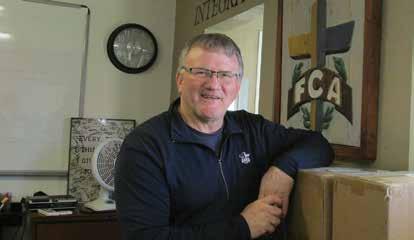
By Steve Bertel
“There’s the Creator – and everything else is the creation. The Creator has the capacity to be worshipped; the creation does not,” Ken Lewis explained. “But, all too often, we invert it. We get it wrong. We worship money, our homes, our vehicles, our jobs, movies, the media. We worship movie stars, rock stars. We even elevate professional athletes and coaches. In fact, there are athletes who put playing their sport, or coaches who put coaching sports, above their family. And above God. But Matthew 6:33 says ‘Seek the Kingdom of God above all else … and he will give you everything you need.’”
In 1997, as a Kuna High School teacher and wrestling coach, Ken Lewis knew he was making an impact on his students’ lives. But he wanted to take it one step further, especially when he felt called by the Lord to use – or “leverage,” as he put it – his love of sports to help students and coaches have a closer relationship with God. So he started the first FCA – the Fellowship of Christian Athletes –“huddle” on campus. A “huddle” is the FCA’s sports-related term for essentially a Bible study group led by students.
“I wanted to see them make their faith real, not just on the coattails of their parents, their youth groups, or through their churches. I wanted to help them find their identity in Christ,” he explained. “And what better environment to do that in sports?” So, following the national FCA process and working with school administrators, he started the FCA Kuna High “huddle.” “It was an opportunity to show young people that ‘Your identity is not found on the scoreboard. Or in record books. Or in win/lost columns. Your identity is finding your faith in Christ, your purpose in Him,” said Ken. “So, being able to provide a way for kids to get to know God and dive into His Word was really exciting for me!”
In March, 1954, Eastern Oklahoma A&M basketball coach Don McClanen sent a letter to 19 prominent athletes, outlining his desire to form an organization that would eventually become known as the Fellowship of Christian Athletes. His letter read, in part, “For some time, I have had the idea of forming an organization of athletes and coaches in this hero-worshiping nation of ours. If athletes can endorse shaving cream, razor blades and cigarettes, surely they can endorse the Lord, too. So my idea is to form an organization that would project you as Christian men before the youth and athletes of our nation.”
Later that year, his idea came to fruition – and the FCA officially incorporated as a nationwide non-profit organization. Today, more than 70 years later, it still adheres to the strategy of “engaging, equipping and empowering coaches and athletes to know and grow in Christ – and [to] lead others to do the same”: engaging,
from 1 Thessalonians 2:8 … equipping, from Ephesians 4:12 … and empowering, from 2 Timothy 2:2.
Here in Idaho, Ken Lewis is the FCA’s State Director, a position he’s held for 20 years. He had served eight years before that as Kuna High’s FCA “huddle coach” (advisor).
And, like other FCA groups across the nation, “We don’t run each [campus] ministry; we train volunteers – coaches and student athletes – to run them,” he stated. “Each coach or student leader in the ‘huddles’ may represent a different sphere of influence, or a different sport – one may be on the baseball team, one may be on the volleyball team. They’re of different ages and from different grade levels. Some ‘huddles’ meet once a week; others meet every other week. And then, as student leaders approach graduation, they ‘hand off the baton’ to other students to step in. It’s nice to have that ‘FCA DNA.’” He added, “These FCA leaders get to participate and receive training in the discipleship process that’s very important to the FCA. Plus, the FCA works with local churches in many communities, encouraging coaches and athletes to get involved in good, Bible-believing churches near their homes.”
Most of the “huddles” are held on campus, before school or during lunch. Which begs the question: Has the FCA ever received any pushback regarding holding Bible studies on taxpayer-supported school grounds? “Not really,” Ken replied. “If a junior high, a high school, or a college allows non-curricular clubs on campus – say, a Chess Club – then they have to allow faith-based clubs like the FCA to meet there. Plus, each ‘huddle’ has an advisor, who works closely with school administrators. Of course, there are some schools which do not allow any groups on campus, whereupon we’ll meet, say, at a church near the school.”
“But overall, administrators have seen the positive environment the FCA provides, and how it helps their school’s culture,” he added.
While some may feel that when 1 Corinthians 9:24 says, in part, “ … Run in such a way as to get the prize,” it means to totally rely on your own strength to win a trophy, but the FCA stresses the true meaning of the metaphor: urging coaches and students that, by living with self-discipline, purpose, and dedication, you will receive the prize of God’s approval – obviously much greater than any trophy –and ultimately, His gift of eternal life.
FCA Idaho also holds a number of off-campus events each year: golf scrambles, sports-related summer camps, “Coaches and Couples’” marriage retreats, and even the Famous Idaho Potato Bowl FCA Breakfast, which the organization has been sponsoring for the past 23 years.
And it’s expanding.
Sean Rooney is the FCA Idaho Sports Director. After six years on the FCA staff in southern California, he and his family moved to Nampa – where, since 2018, he’s been spearheading efforts to form non-school-related/but-FCA-affiliated sports clubs for 8- to 16-year-olds in Idaho. These teams currently compete in baseball, softball, archery, and wrestling. “In fact, there are over 290 FCA athletes here in the Treasure Valley alone, where they get a chance to compete against other teams – and even travel to tournaments –all while growing in their relationship with Jesus,” Sean said. FCA Club Sports is funded by sponsors, community fundraising efforts, and private donations.
In recent years, the national FCA has gained the support of many well-known professional athletes, including Major League Baseball stars Adam Wainwright and Brian Roberts, NFL great Tim Tebow, New York Giants head coach John Harbaugh, female athletes like WNBA star Tamika Catchings and track and field Olympic champ Allyson Felix – and even support from entertainers like stand-up comic Jeff Foxworthy of “You might be a redneck …” fame and Duck Dynasty’s Willie Robertson. n
You can learn more about the work of FCA Idaho on its website www.fcaidaho.org.
By Leo Hellyer
As we live our lives out as Christian men, we face numerous challenges from many directions. It doesn’t take very long until we become battered, wounded, and downtrodden because we didn’t do everything completely right. We try to love everyone with a pure Christian heart, but sometimes hurts cloud our well-meaning actions and reactions. If we try to be victors in spiritual warfare around us and only use our own strength, we find really quickly how many devious tricks the enemy has to make us stumble. As we become more seasoned in life – okay, as we become older – we may have difficulties accepting our age and all that infers physically, emotionally, and spiritually. We are flawed human beings and have fallen short. To be able to be as successful as we can in meeting the challenges we face, we must seek the power, truth, grace, and purity of God Almighty and His Word.
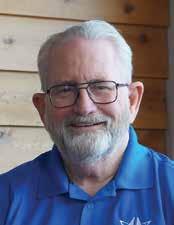
When we do this, we will discover that the church is not a country club for saints but a hospital for sinners. Jesus came to earth to save the lost. As Christian men we should be striving to be more Christlike every day. We must realize that we are in process. We have not arrived yet. We do not earn our way into heaven. It is a gift that is given to us by a gracious God.
As we should do in all aspects of our lives, let’s go to the Bible for guidance on this subject of attempting to live perfect lives. In Philippians 1:6 Paul tells us, “For I am confident of this very thing, that He who began a good work in you will perfect it until the day of Christ Jesus.” God has started something good in our lives, but it is not complete. We are a work in progress. We have not become perfect yet. We will not be perfect until we are in heaven. In Philippians 3:12 Paul says, “Not that I have already attained it or have already become perfect, but I press on so that I may lay hold of that for which also I was laid hold of by Christ Jesus.” Instead of seeking perfection, we need to be seeking to be more like Jesus every day until we are called to heaven and are perfected. Yes, we need to seek godly behavior in everything we do. We do need to be as Christlike as we can in our thoughts, actions, and reactions to the challenges we face, but we must realize that we will not be successful in doing that on our own. We need to work daily on our relationship with God the Father, God the Son, and God the Holy Spirit. We must seek out godly people and follow their lead in how to live a faithful, productive, consistent, victorious Christian life. We need to allow ourselves to be vulnerable at times and let others provide us with wise counsel in traveling through the minefield of spiritual warfare that we will face daily. Since we are not perfect yet, we must be prepared for those times when we stumble. We must be open to godly redirection. We must reach for the outstretched hands that are attempting to pick us up, dust us off, and get us back on the right track. We cannot be successful trying to get through our battles all alone.
God brings people into our lives for a specific purpose and season. If we have a good relationship with God, if we are paying attention, and if we are vulnerable, open, and obedient to His working in our lives, we will take advantage of these divine appointments and grow in our walk with the Lord.
God provides us with never-ending, unconditional love and guidance. God loves us so much that He doesn’t put us in a corner where we don’t have a choice of which direction to go. God loves us so much that He always gives us a choice of how we will respond to His loving council. We are not His puppets; He gives us free will. When addressing this whole idea of being perfect in our Christian walk, the Billy Graham Evangelistic Association says, “If God required us to be perfect, then no one – absolutely no one – would ever be able to be a Christian! We’re all sinners, and no matter how
hard we try, we still sin and fall short of God’s standard. If this weren’t true, why would Jesus tell us to pray, ‘Forgive us our sins’ (Luke 11:4)?”
Perfection is not something that comes to us as soon as we become a Christian – or even because of living life as a Christian for many years. Christian perfection is a journey, a metamorphosis of sorts we go through. In our lives as Christians we continue to grow in our faith, love, and obedience to God. We cannot achieve this change in our own strength but only through the strength of Christ and His grace.
As we live our lives, we are constantly battling between right and wrong, good and evil, heaven and hell. We must always have the full armor of God with us as we go to battle. We cannot get complacent and let our guard down. We must be vigilant, prepared to stand up and face the enemy straight on. It’s not just our lives that depend on it, but also the lives of the people that God brings across our path. n
Leo Hellyer is a non-staff pastor with a local church. He has been married to his wife, Norma, for 53 years and has served with Boise Rescue Mission for over 25 years. He is co-founder and training counselor with Taktikor Defense Group. If you have questions about Real Man’s Toolbox, or need other assistance, he may be reached at silverplate426@msn.com or (208) 340-5544.




By Gaye Bunderson
Editor’s note: Christian Living Magazine respects the opinions of others. This article is not intended to persuade anyone one way or another on the use of vaccines or alternative health care methods. It is merely a telling of the views of the staff at Heart2Heal Clinic and some of its patients, without endorsing or criticizing the clinic, its workers, or its patients for exercising the freedom of opinion.
A group of five original founders spent a year hammering out details for a Christ-centered clinic. Heart2Heal opened in 2023 and now has six providers: a physician, a physician’s assistant, a nurse practitioner, two registered nurses, and a chiropractor. It’s not too outrageous to say that Jesus is the seventh and foremost member of the medical team.
Each person who works at Heart2Heal Clinic, a 501(c)(3) nonprofit, has made a statement of faith and a commitment to live its principles. During the course of any given day there, patients are ministered to with the full force of faith-based service. Speak to Dr. John Tribble and ask him if he’s ever prayed for and with a patient and he will state that he ministers to people on a regular basis; he sees where they’re at with prayer and allows the Holy Spirit to open a door. He wants patients to view themselves as he does: as temples of the living God. It’s the way he and others at the clinic feel is the best pathway to a healthy life.
“I’ve seen lives impacted by chronic health issues that are relieved by medications but not cured,” he said.
The original five founders of Heart2Heal included a businessman who owns mental health clinics in the valley; he and H2H Clinic Director Amanda Cox were friends through their children. Others included a local mom with knowledge of nonprofits who connected with Cox over a graphic she posted on social media; a general surgeon; and a functional medicine provider.
When the people who would ultimately found Heart2Heal held a public meeting on January 17, 2022 about the possibility of opening such a clinic, they had to hold it at Foothills Christian Church in Boise and open up the doors for the 480 people who showed up; according to Cox, some of the people in that group represented different medical specialties, but they all wanted to, in Cox’s words, “take health care back and see it through a lens of faith.”
At this point, there was no plan, just conversation.
Much of the core-five group dispersed to different jobs, and/or even to different parts of the country. But those remaining saw a strong need to establish a health-based entity that would align with and lead to the establishment of their hoped-for clinic. “We held multiple events and did fundraising and ultimately subleased one my friend’s [mental health] buildings in May of 2024. We got patients mostly through marketing, face-to-face interactions, and referrals,” Cox said.
The interest in this kind of stand-alone medical care facility was – and still is – brisk in this area. Cox stated, “There are not enough providers in the valley, or in Idaho.” She then explained that, unlike larger practices and bigger medical facilities, Heart2Heal is “not confined to meeting a quota” and thereby not limited to what she calls a roughly nine-minute standard visitation time between patients and health care providers.
Dr. Tribble came to Idaho from California to pursue for himself and his patients “medical freedom, privacy, patient and provider autonomy, and informed consent.” A statement at h2hclinic.org reads: “Dr. Tribble believes the doctor-patient relationship is sacred and private, and every patient requires an individual approach. He feels blessed and excited to be part of a Christian, independent medical organization where he can freely use his talents to heal and minister to others.”
“I consider my patients as my friends,” he said.
Not all staff are medical practitioners. Director Cox has experience in accounting and medical billing, as well as clinic management. She agrees with Dr. Tribble’s outlook on medical care and said, “God designed our bodies to heal. … My faith in God and being created in His image shapes my approach to health and healing every day, and it is my honor to offer that hope to our patients.”
“I grew up in a Christian family in Saskatchewan, Canada,” she continued. “Most of my childhood and young adult years were centered around relationships in my home church. I accepted Christ as my savior
at 10 years old when I was baptized. Until I moved to the United States for college in my early twenties, my church family shaped everything about me spiritually. This theme of community and service through my faith has carried me throughout my career. I have been blessed to work in Christ-centered health care for more than 15 years in the areas of chiropractic, physical therapy, alternative cancer treatment and now in family medicine at Heart2Heal.”
Heart2Heal Clinic is committed to addressing the root causes of illness rather than simply managing symptoms through medication alone – in other words, functional medicine.
“The clinic integrates faith, medical knowledge, and compassionate care to help patients truly heal – physically, emotionally, and spiritually. Many of the individuals who come through the doors are worn down, discouraged, or overlooked by traditional medical systems, and the clinic provides a place where they are listened to, prayed for, and treated with dignity,” according to information provided by Dr. Tribble’s wife, Maritza. “There is a clear sense of calling behind the work being done at Heart2Heal, and the clinic continually points people toward Christ as the ultimate healer.”
They serve whoever wants to walk in the front door.
Payments can be made through traditional insurance billing, but it is not the most common way at the clinic. “We’re trying to educate patients on alternative ways of paying, including cost-sharing, and we also have a direct primary care model.” That’s a health care payment system where patients pay a flat monthly or annual fee for specific services.
Telehealth virtual services are available, broadening medical care for anyone unable to drive to appointments due to illness or age, or for patients who just want the convenience of a virtual setting.
Said Dr. Tribble, “We have a higher population over 55 than I anticipated.” But the clinic also sees lots of families, with members of all ages. Heart2Heal offers primary care, urgent care, and family medicine. Dr. Tribble called what they do at the clinic as “look outside the box” care, providing innovative solutions to health care rather than a one-size-fitsall approach.
He bucks a trend that was widespread during the COVID-19 outbreak: vaccines. He prefers that patients and parents be free to make their own choices about vaccines for themselves and their children. He claimed, “People, TV, vaccine companies, and the government operate in fear. … There’s no liability for vaccines, and no critical research. I want ALL the information.”
Other professionals – and prospective patients – are free to question his point of view, but he actually forfeited employment in California for not being willing to compromise on vaccines.
From the website: “Dr. Tribble moved to Idaho to practice medicine when California began mandating an experimental injection without informed consent and lost a job in California for not complying with the state mandate for vaccination.”
It’s a point a view he hasn’t vacillated from.
Gary and Kathy Poulin of Mountain Home started out with H2H Clinic about 2+ years ago when it first opened. Kathy worked as a volunteer at a local Christian organization and heard about H2H’s grand opening.
“I worked in health care for 30+ years. I managed all the vaccine contracts for a big medical group in California, and I didn’t like what I saw. It wasn’t health care – it was sick care,” Kathy said. “My husband and I are like-minded; and at H2H, they put people on a path of wellness.
“There’s a place for medications, but there are alternatives as well. We’ve used H2H for both wellness or when we were sicker than dogs.”
What if the staff at H2H can’t help a patient due to a complex medical diagnosis?
“They refer out to like-minded providers, and we appreciate that. The doctor has referred us to cardiologists who are like-minded – any specialist we need – and we trust them.”
On the topic of vaccines, Kathy said:
“We don’t vaccinate at all. There’s alternatives: nutrition, exercise. Dr. Tribble has worked with us in what we can take in supplements, what is good, and what is not. It’s not traditional medicine; it’s different, and it’s worked for us.”
Carol Guthmann of Boise started going to H2H in March of 2025 and heard about it through her church. She was extremely sick with diabetes and other ailments and had been going to a homeopathic doctor for wisteria poisoning, was doing a lot of lab tests, and taking a lot of medications.
She was very skinny and told herself at one point, “I can’t swallow another pill. I was on tons of pills and had been taking them since 2005.” She was drawn to H2H because she felt that, “If they’re believers, they’re not going to give up on me.”
Dr. Tribble asked her first thing, “What’s your goal?” and she replied, “I want to be out of pain.”
“They had me stop taking the medications and start eating differently,” she said. She’s gone from diabetes to pre-diabetes and continues to watch her diet and avoid foods like chocolate. She also does some fasting. She still takes hormone pills and also takes 10 units of insulin for diabetes – however, she used to be on 100 units.
She also blames her emotions for some of her physical dysfunction. But she said, “When you walk into the clinic, you feel at home, like you’ve come to the right place. They love on you.” She said at 73 her hair is no longer white because, “My body is functioning better.”
She previously couldn’t exercise because she was so weak and had no muscle tone. She couldn’t lift a jug of water but is now lifting weights for a woman of her size and age. She eats totally organic. She admitted her diet is strict – “You can never go out to eat – but said, “I feel younger and better.”
Cox said that, to initially get patients at H2H Clinic, they advertised in churches, on social media, through word-of-mouth, and at schools; at present, they have roughly 1,000 regular patients who come to the clinic at 2950 E. Magic View Dr., Suite 184, in Meridian. Anyone – even distraught moms concerned about a sick child – may call and make an

appointment at (208) 845-0464 or email at info@heart2healministry.net.
Stated Cox: “The mission of Heart2Heal is to facilitate a re-imagined health care clinic founded on faith, freedom, and, of course, good health. H2H exists to restore trust, offer guidance in preventative health, and partner with patients through their medical journey with collaboration and medical choice. It embodies the principles of informed consent and patient autonomy. Care is provided through voluntary, uncoerced relationships between patients, providers, and staff.”
Other medical staff includes:
• Mikayla Todd, NP: “She believes that with health fully restored, people are able to more fully invest in their lives, the people they love, and the community.”
• Nicole Broker, RN: “Nicole has been a registered nurse for 22 years, primarily excelling with labor and delivery.”
• Dr. Jake Roland, Doctor of Chiropractic: “Specializing in functional and environmental medicine, he is passionate about helping patients who are struggling with environmentally acquired illnesses.”
• Stephanie Dalton, PA: “A physician’s assistant, she is in the clinic twice a week on Monday, Wednesday or Friday. Her clinic days work around Dr. Tribble’s ER schedule, so they can change week to week. She is the newest member of the H2H Clinic staff.”
Regarding vaccines, H2H will refer people to places that give vaccines, but the clinic is not set up for giving shots, according to Cox, who stated, “The bottom line is it’s a logistical issue. We don’t have enough storage space [for vaccines, needles, and similar necessities]. We can’t tackle it at this point.”
She ended with, “We’re a landing place if you don’t want vaccines for your kids and you want freedom in medical choices.” n
For more information, go to h2hclinic.org.



By Roxanne Drury
Trust is a virtue, but in the world of scammers, it can also be a target. Just about everyone on the planet has heard the saying, “If it looks or sounds too good to be true, it probably is.” The scammer hopes that you have not heard it. They also hope you will not check them out and that you will make a rash decision. They use many tactics to entice you to part with your money, such as fear, intimidation, sweet talking, and speaking your language.
How can Christians protect themselves from scam artists? And they ARE artists because every day they come up with new ways to try to trick us into giving them money. Handling endless scam emails and texts requires a combination of modern caution and spiritual discernment. By using the P.R.A.Y. method – Pause, Research, Ask, and Yield – trusting people of God can identify “too-good-to-be-true” offers and avoid making rash, fear-based financial decisions.
As I learned recently, some of the things we do every day are our best defense. As a writer, I receive solicitations nearly daily from literary agents, publishers, editors, website designers, you name it. They sing the praises of my books, using language directly from Amazon reviews. Do they think I don’t read the reviews? Some of the offers look legit, until I read the last paragraph. “Our services will only cost you $1,300. How do you want to pay for that?” Not today, buddy!
This week, I received an email from a Christian readers’ group. The writer wanted to feature one of my devotional books in the 2026 Challenge. (Isn’t 2026 half over?) She was very gentle in her approach. She asked permission to send me more info, and I said sure. She said my book would be a blessing to readers – (isn’t that what my goal has been for my books?) – and that readers would purchase it using whatever link I provided (she was not profiting in any way).
She answered every question I had. And if you know me at all, you know I am a question-asker, but I am also a researcher. She, in fact, welcomed my questions. She told me in one of the several emails we exchanged that there is no website because the group is on Facebook and by invitation only. In her explanation of how the program works, she informed me that it would cost me $135 to feature my book. Everything seemed on the up and up, but… I had this little niggle in my brain that wouldn’t go away. So, I paused and kept her waiting while I prayed about it. As I was praying, the thought crossed my mind that if this were a Facebook Group, I should be able to find it and check out some of the information she gave me. Let me just say here: God is so good! And, best advice ever – listen to the niggles!
So, I put my researcher hat on and immediately searched Facebook using the name of the group the emailer had given me. It brought up a readers’ group with the same name. The most recent post was made by a Christian author I greatly admire. It was also the last post, and it was posted a year ago. Her post indicated that the “Challenge” was a scam. Let me say again: God is so good! And God does answer prayer!

Now, you may be someone who saw all the red flags in this exchange. I failed to see them until later. But that is how a scam artist works – they play on a person’s hopes and dreams. The devil doesn’t always come with horns; sometimes he comes with a “too-good-to-be-true offer” and a gentle, encouraging email.
Here is what I learned from this experience: We have the tools and resources we need to protect ourselves from scammers in the form of an acronym: P.R.A.Y.
• P – Pause: Don’t let their “manufactured urgency” or “sweet talk” force you to do anything rashly and possibly make a mistake.
• R – Research: Verify the source, and their answers to your questions. Search for a website or a social media presence.
• A – Ask: Ask the Lord for discernment, wisdom, and to point you in the right direction to find a clear answer. Ask the emailer questions, as many as you want. (If it is not legit, they won’t want to answer your questions.) Ask a trusted and wise spouse or friend for an opinion.
• Y – Yield: Stop, breathe, and yield to the Holy Spirit’s prompting if something feels “off” or you are unsure in any way.
Yield to your “gut feeling,” or the little “niggle.”
The P.R.A.Y. survival guide can help you identify a scammer from the real deal by combining modern caution with spiritual discernment. Having just experienced this, I suggest a “Pause and Pray” approach to verify the source, ask questions, and seek wisdom before sharing personal information, parting with money, or committing.
My final email to the scammer was a simple, “No thank you. I am not interested.” Her response was “Bummer.” I’ll bet it was a bummer – for her!
“Do not be anxious about anything, but in every situation, by prayer and petition, with thanksgiving, present your requests to God. And the peace of God, which transcends all understanding, will guard your hearts and your minds in Christ Jesus.” – Philippians 4:6-7
“I have said these things to you, that in me you may have peace. In the world, you will have tribulation. But take heart; I have overcome the world.” – John 16:33
“What, then, shall we say in response to these things? If God is for us, who can be against us?” – Romans 8:31 n
Roxanne Drury is a wife, mother, grandmother, and retired Christian preschool teacher who served the Lord in children’s ministry for over 45 years. She has written a group study guide on Psalm 23, as well as other books. She may be reached at glorylandbooks@gmail.com.