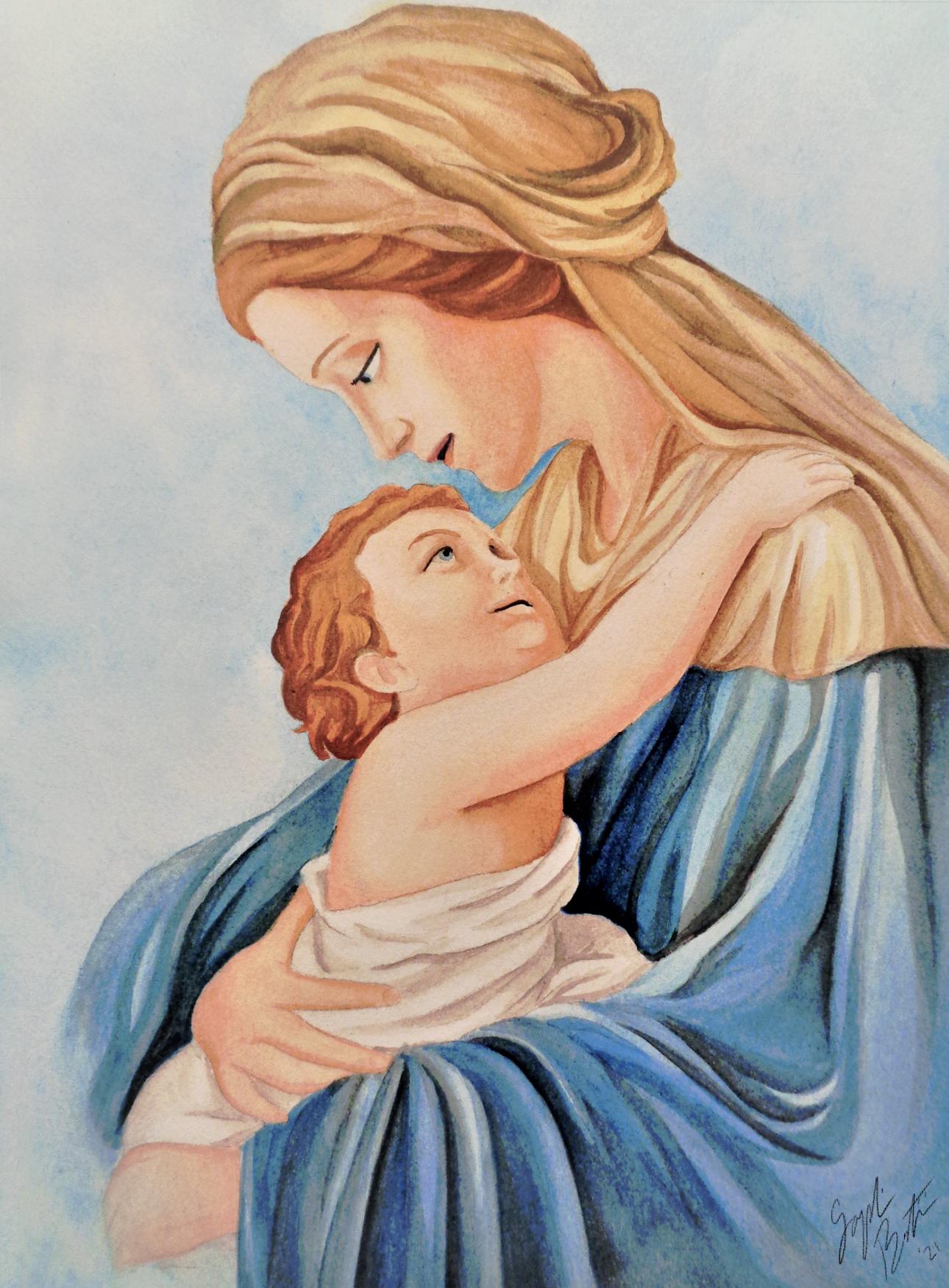
IN CORDE
CONTRIBUTORS
EDITOR-IN-CHIEF
Kathryn Haluschak
CREATIVE DIRECTOR
Sophia Zamoyta
ASSISTANT DESIGNER
Ruth Gideon
ADVISORY BOARD
Lianna Youngman
Niall O’Donnell
LETTER FROM THE EDITOR
Dear Reader,
There is something about spring that beckons to the human heart, “be awakened.” Plants which appeared to be dead now blossom and grow, manifesting their hidden principle of life. Critters which endured the hibernative state now scurry in search of food. Everywhere we encounter the waking and rising of living creatures. The pilgrims in The Canterbury Tales recognized this special “something” of spring. The awakening of the physical world prompted them to a rejuvenation of mind and heart.
We carry on during our earthly pilgrimage this Spring enveloped by beauty. The order and design in the natural world proclaim a loving Creator. The truth and goodness embodied by poetry, stories, and art turn our gaze to the transcendent, urging us to look beyond and above. May we always allow our hearts to “be awakened” by the beauty we encounter.
MISSION STATEMENT:
In Corde aims to be God’s “little pencil,” so that through its contributors’ art, poetry, and stories, He may redeem and elevate the human experience.
In Christ, Kathryn Haluschak Editor-in-Chief
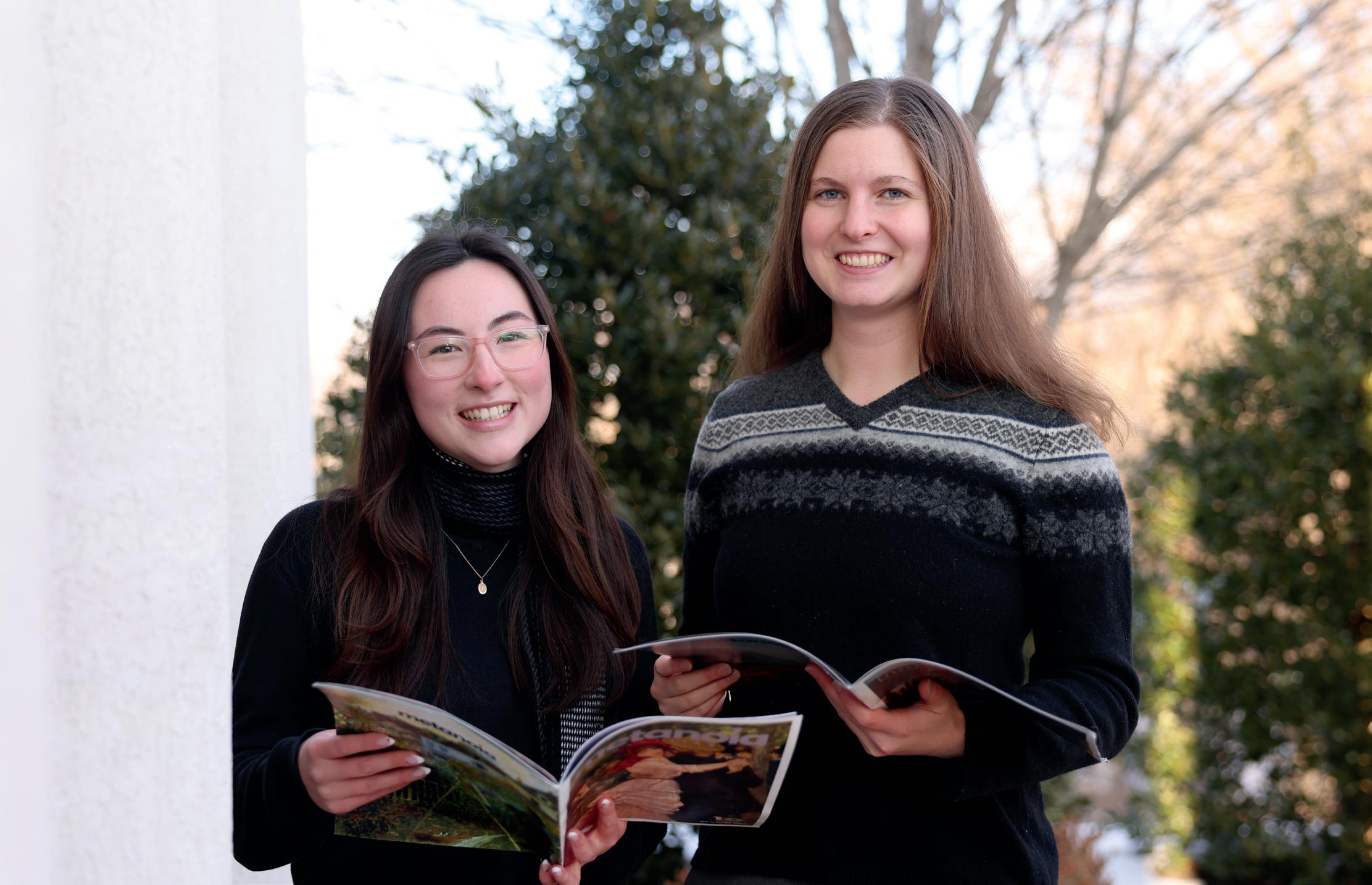
Sophia Zamoyta, Creative Director, and Kathryn Haluschak, Editor-in-Chief.
Julie Wells Photography
The Eighth One in Her Hand
Inspired by Alfred’s vision of Our Lady in Chesterton’s “Ballad of the White Horse”
by Monica Morris ‘28
On the long field stands a valiant host, They wait with bated breath, For they know they will face a long struggle, A struggle to the death.
Silent they wait, for well they know That nothing can be begun, Until their one great captain arrives, A Lady as bright as the sun.
A whisper, a murmur, along the lines, “She comes behold her there!” She comes dressed all in blue and white, A maiden divinely fair.
She needs no armor, no shield or steed, Though before them all she stand, She only has seven swords in her heart, And the eighth is in her hand.
And on that sword is a single word, Gleaming bright as a flame, A word she spoke long, long ago, And the world was never the same.
“Fiat,” yes, may it be done, May it be as God has said, With this word she inspires her soldiers, Gives them strength for the battle ahead.
With a single voice as strong as the sea, Her “Fiat” is sent to the sky, And hope thrills through the multitudes, Who gladly for her would die.
Shining, she walks before them, With a firm and steady grace; She leads the charge to face the foe With a smile upon her face.
For she stared death in his stern, hard eyes And she felt his burning pain, But through her loss he was destroyed, Destroyed when her Son was slain.
Seven swords pierced her tender heart, Seven swords made her heart bleed, But her blood mingled with her Son’s To bring grace to a world in need.
Her seven wounds have healed our souls, Peace has been made by the sword, That sword was wrought in the furnace of love When one woman spoke one word.
So do not doubt when the dust is cleared And the day of battle is done, In the midst will stand victorious A Woman clothed with the sun.
Forever and ever she leads us on, Forever with her we stand, She whose heart holds seven swords And the eighth is in her hand.
The Dandelion
by Jillian Vincent ‘27
The dandelion, yellow-gold, Glows brightly ‘neath the vernal sun— Its joyful face, ablaze and bold, Disguises what it shall become. The radiant little bloom fades quickly, Replaced by swaying, grayish fluff, The flower then is something sickly— Of brighter hues, a remnant gruff. Small children filled with wishes grand Come gathering these faded blooms And blow the fuzz to distant lands With mighty puffs of childish fumes. Those fuzzes never can be caught, Regathered, whether as they are Or re-transformed to golden blots, As once they waved beneath the stars. Like these are all our memories Which swiftly lose their golden hue, Impossible to keep or freeze, Or gather up, as light as dew. We long, perhaps, to live once more The days which dominate our thoughts, But never can they be restored, No matter how much fuzz we’ve caught. Despite this truth, we must recall What dandelion fuzz can do— As new buds sprout where old ones fall, So memories breed fresh joys too.
Whisper of the Soul
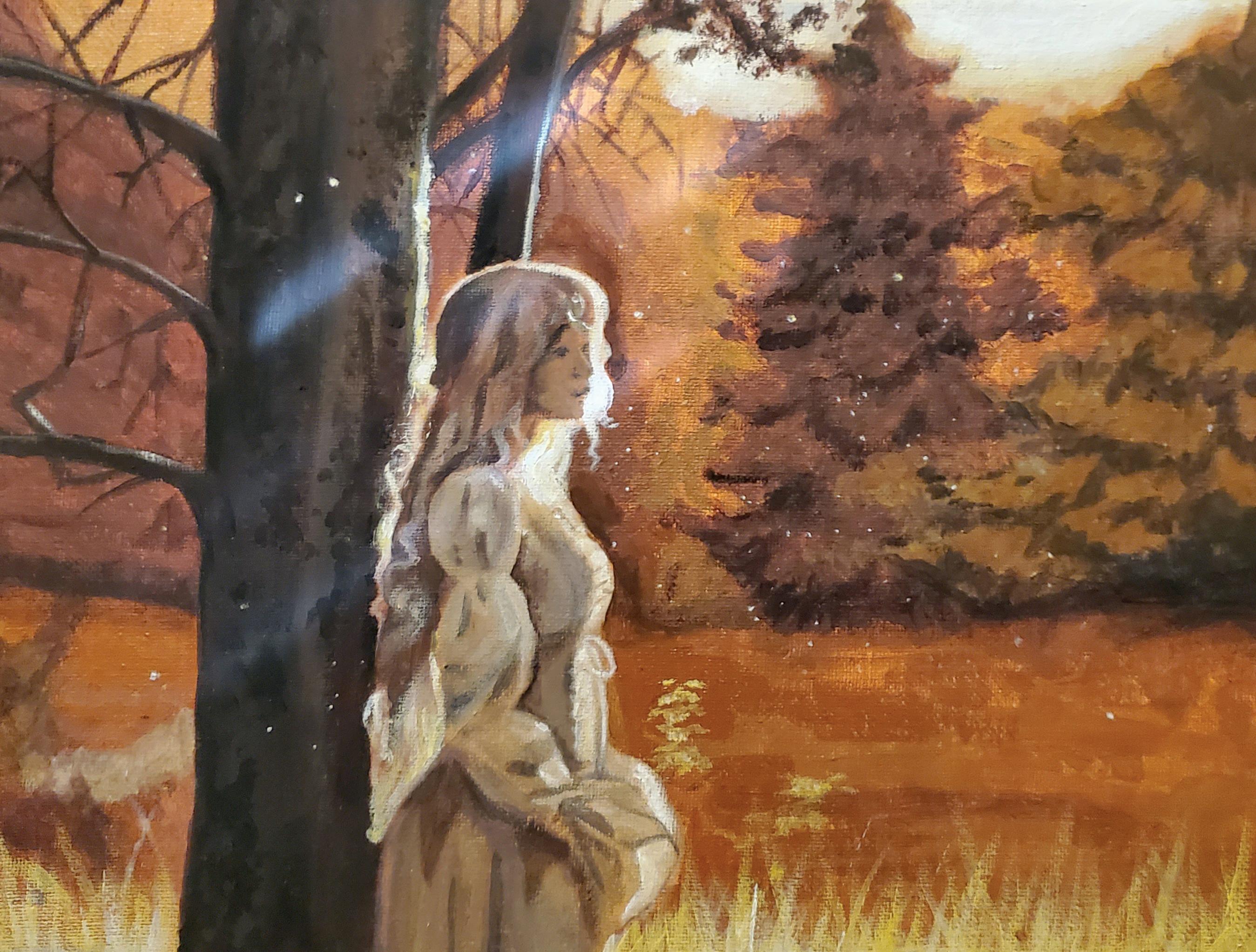
by Gabriela Cortes ‘29
Hmph
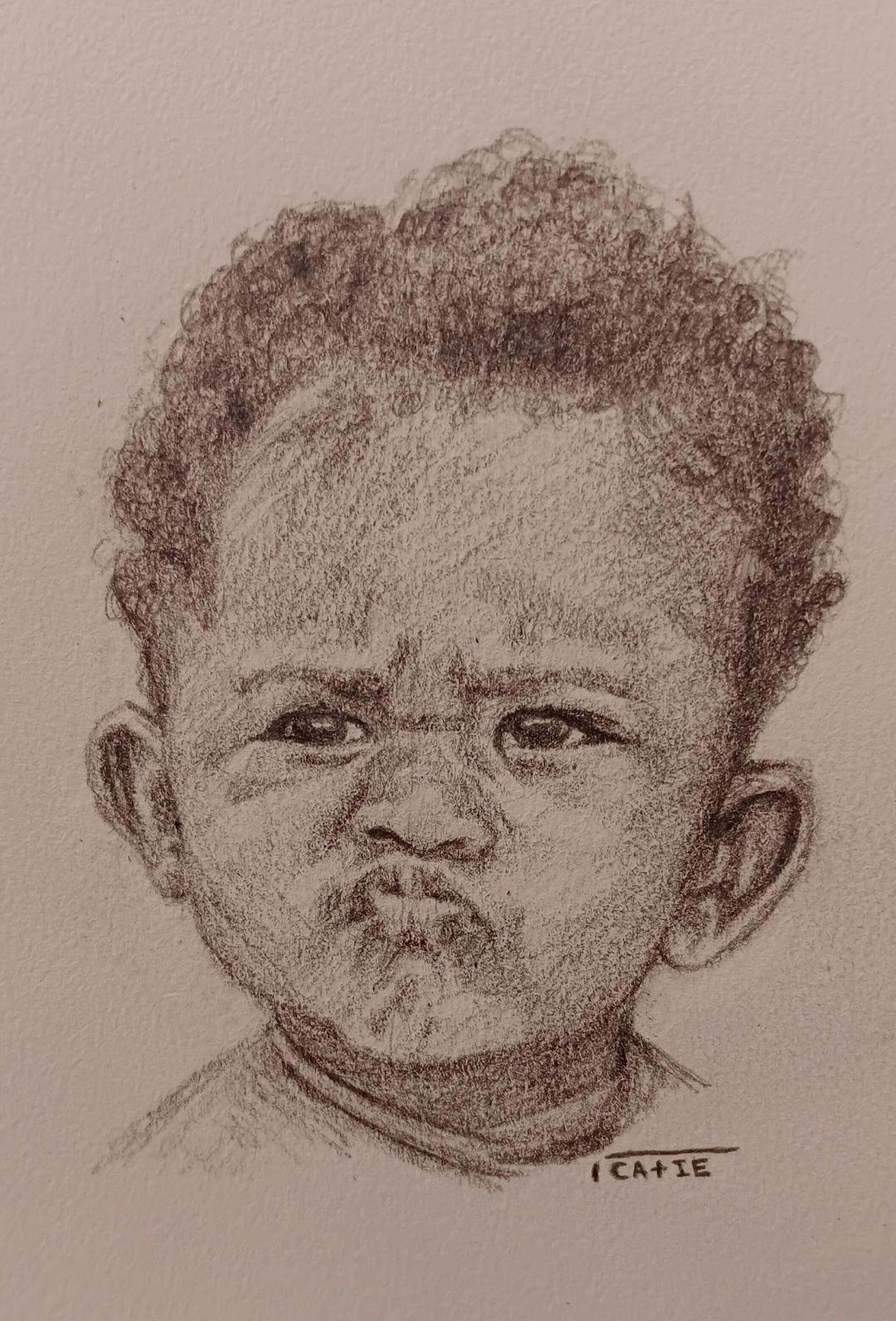
by Caterina Cortes ‘27
A Childhood Ending
by James Landry ‘29
It comes now, that darkened thing, A time that speaks of death, That wants to cease the way I sing, And steal away my breath.
No timeless songs can now come forth, Of fields, of swamps, of hills, This mount of mine doth call me north, To face its bitter chills.
Ascend, ascend it seems I must, But what is left behind?
Why forsake the naïve trust, Of a young boy’s naïve mind?
My cheeks of silk will wrinkle now, Hats flatten all my curls, brown no longer are my brows, My teeth, no longer pearls.
Winds whisk by with icy cries, I see there’s no more Springs, Beneath these brows are faded eyes, Beneath them, tired rings. In warm sun I spent my days, In books of good nonsense, Showered by the solar rays, In precious innocence.
Oh, why do I face this cold, Which covers me with frost?
None is left when I am old, but thoughts of what was lost. I will weep for what is past, I pray the Peak is good, If Heaven I find at last, I regain my childhood.
Tiny Soul
by Elizabeth Koch ‘29
You tiny soul Wrapped up in the womb,
All your being is a prayer. Resting, waiting, growing, trusting Before the world even knows you’re there. Little soul in water waiting For the waters of the Trinity As I am praying for you Do you also pray for me?
I’ll Teach You How
by Gemma Cowan ‘29
When young ones are small, And cannot stand, It takes one stronger, To hold their hands. The pitter, patter, Of their feet now, Is fruit of the promise, “I’ll teach you how.”
When tiny ones cry, At the dark of the night, It takes someone braver, To bring in the light. The reason that shadows, Are not scary now, Is that someone with courage, Said, “I’ll teach you how.”
But when one is older, And near their last days, It takes someone smaller, To point Heaven’s way. For who can fear death, With the virtues learned now, From the meek, holy Child, Who taught all men how.
Pray with Me
by Elizabeth Koach ‘28
The king’s courtyard, sleek white stone and flowering ivy, was beautiful. Bashevis couldn’t wait to present her first son. She giggled as Shabtai squirmed in her arms, eager to move even at two months old. Wading through the crowd of mothers and nursemaids, Bashevis finally landed on a familiar face.
“Gila, shalom! And shalom, Shimon,” Bashevis smiled at the toddling boy below her, whose brown hair and eyes matched his mother. “Do you know what this is about, Gila?”
Gila shrugged, keeping an eye on Shimon as he explored. “I heard it was a kind of ceremony from King Herod. A special blessing and a bit of politics, I expect.”
Bashevis nodded that was all she had heard as well. It was a beautiful crowd of mothers and children, all sons under two years old. The friends chatted until one of the king’s guards pulled the massive metal gate closed. There were quite a few soldiers, Bashevis realized. With a sad smile, she wondered if she, Gila, and the rest were there to promise their sons for future military service. She gave Shabtai an extra squeeze, then waited.
The commander called his soldiers. “Each man, in formation! Bring the boys forward.”
Bashevis frowned the soldiers looked horribly grave. One stepped toward her and Gila. Shimon wandered over to him, admiring his armor. The soldier reached down a scarred hand, taking Shimon’s. With the other hand, he gestured for Shabtai.
“What is this about?” Bashevis asked. She wasn’t supposed to ask most of the other women carefully handed over their little ones.
“I just need to hold him for a moment, to present to the king.”
Bashevis knew she was being paranoid, but she turned Shabtai slightly away. “Your armor it could make him uncomfortable.”
“Woman, it will just be for a moment,” he said, voice darker. He was still holding onto Shimon, though the boy was trying to inspect a bug that was out of reach.
“I’m sorry, I just...” The other soldiers all had a child in hand. They looked up to their commander.
“Now,” the man in iron commanded.
The air left Bashevis’ lungs as screaming filled the air. The soldier quickly tightened his grasp on Shimon and drew out his sword.
Gila screamed and shot out for Shimon. The little brown-haired boy cried out. Blood dashed against the white courtyard stones. Bashevis’ instinct acted much faster than her mind could register what was happening. She pulled Shabtai close and bolted but a rough hand grabbed her upper arm. She dug her fingers in Shabtai’s little shirt but the soldier dropped Shimon and tore her baby away.
Steel flashed then blood from her little Shabtai’s heart fell out into the afternoon sun. Bashevis’ scream spilled out with the others, flooding the courtyard over.
Mary jolted awake. Her face was cold from the night air as it rustled the trees above her, the only shelter they had been able to find. Her son was crying. She stumbled up, lifting the infant from where He was bundled. She had never seen Him wail like this, and her eyes were streaming too.
Even miles on their way to Egypt, the sound of the screaming echoed in her heart. Mary’s breath was thin as Jesus sobbed. He nestled into her heart, quickly controlling His tears. He wanted to comfort her just as much as she wanted to comfort Him. Trembling, Mary kissed Him gently.
“My dear?” Joseph quickly turned from where he was standing watch and kneeled in front of the two. “What’s wrong?”
Mary didn’t have the words as she breathed warmth onto Jesus. But she didn’t want to upset her spouse, so she reached out her hand. “Pray with me,” she whispered. “We need to pray.”
Quiet, Joseph took her hand. His skin was just as cold from the night. They prayed.
She quickened her pace. The soldiers standing watch talked among themselves in Latin. They sounded casually tired, only concerned with finishing their workday.
Bashevis stopped walking. A woman a few years younger than her stood at the foot of the center cross. Tears slipped silently down her face as the dying man groaned.
“It... is finished.”
Bashevis watched, perfectly still as the light departed his bloodshot eyes.
Suddenly, the ground rumbled. Bashevis clasped her bag closer. An earthquake. Everyone but the weeping woman cried out in alarm as the hill shook. After a long moment of terror, it settled. One soldier in metal armor frowned, suddenly on edge. He drew his spear, which glinted in the broken sunlight.
Bashevis walked slowly, her legs tired as she returned home with her supplies for Shabbat. She had been walking slowly, downcast, for many years now. The afternoon sky was strangely dark, but it was all the more reason to get home.
Her already lowered eyes nearly squeezed shut as she passed by one of the Romans’ demonstrations. Three men were being crucified today. With what must have been morbid curiosity, she glanced up at their contorted faces. Her grip around her bag tightened. The one in the middle looked about as old as her Shabtai would have been. Bashevis had seen the crowd welcome Him into Jerusalem. Unfortunately, so had the Romans.
Bashevis and the woman flinched as he thrust the blade up, though the dead man’s chest. Blood spilled from his side and into the Roman’s eyes. The soldier recoiled in disgust then something in his eyes changed. They were clearer. And they grew wide and terrified as he looked back at the dead man again. He turned and shouted an order to the other executioners to bring the man down.
Bashevis found she still hadn’t passed the cross. Instead, she wandered over to the quietly weeping woman, and offered her a cloth to wipe her face.
The woman met her gaze and nodded tenderly, gratefully. She remained standing even as the soldiers pried the nails from where they were lodged in her son’s hands and feet, and placed Him into her arms. A few women and one young man joined the woman, weeping more openly than she. They helped carry the man away.
“Can I do anything for you?” Bashevis quietly asked the stranger.
With one hand supporting her son’s head, the woman reached her other hand out. “Pray with me,” she urged, breath thin with sorrow. “Pray with me.”
Bashevis took the woman’s hand, following her and her company all the way to a tomb in the hills. The woman asked for a moment alone once the body was sealed away.
Bashevis nodded, but paused when the woman held onto her hand for an extra moment. Her gaze was perfectly gentle. “God bless you, my friend.” The woman let go, and Bashevis lightly grasped her hand where the woman had touched it. The woman turned her face to the tomb. Bashevis turned for home.
Bashevis wiped her eyes as she looked up at the dark sky. She silently prayed as she passed by the dying again. The two remaining men’s legs were bruised, and the light was quickly leaving their eyes. Her gaze fell to the soldier with blood still on his eyes. He was kneeling as if in exhaustion, cradling the blood-stained spear in his hands. His eyes were grieved as he met Bashevis’ gaze.
Bashevis gave a small nod. She continued on, her chest full with the strange feeling that the grieving woman had blessed her for more than her presence that afternoon.
Abuelita Lita
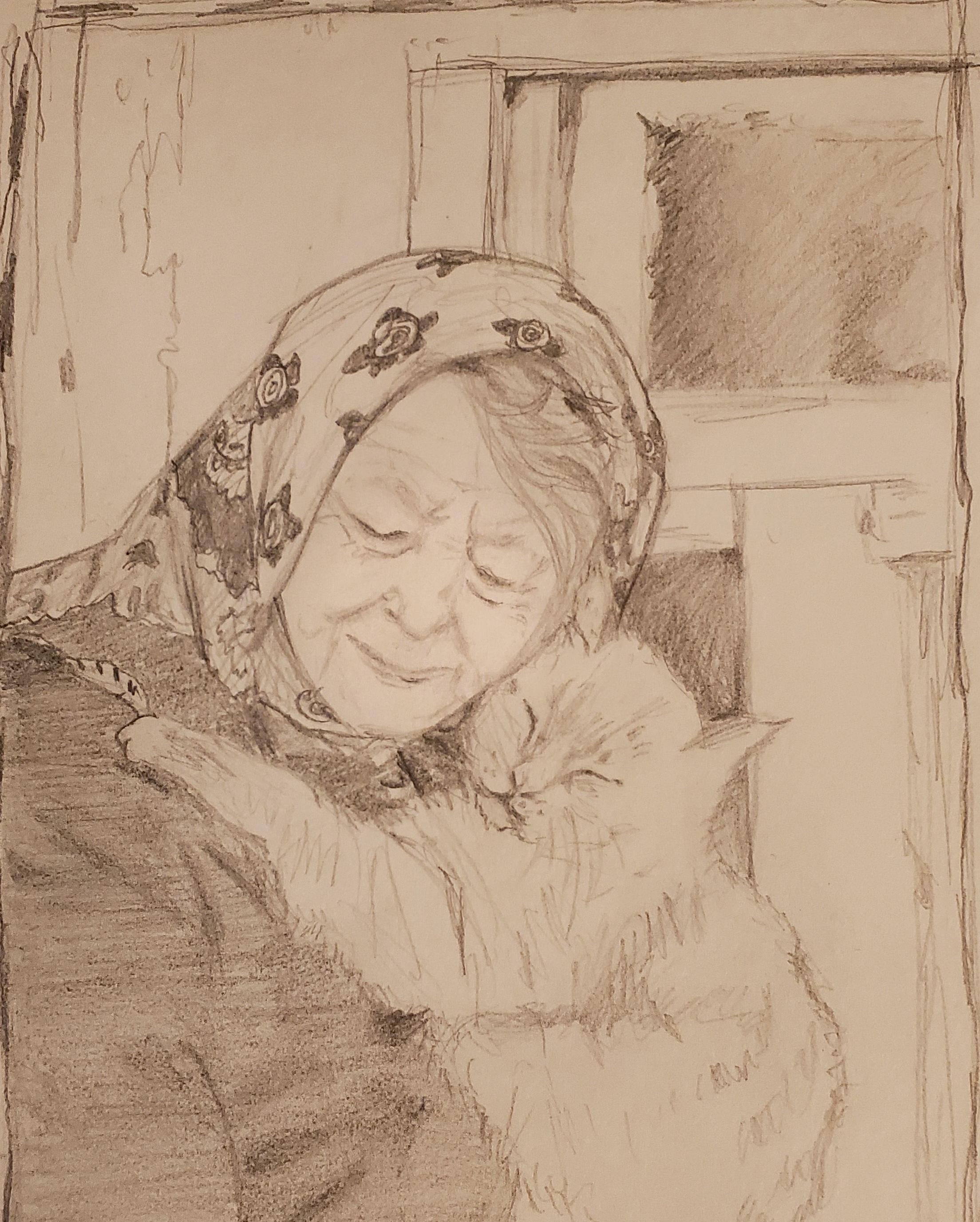
by Gabriela Cortes ‘29
My Candle
by Andrew Descalzo ‘27
My love appeared before dawn’s light drew near, Aglow and haloed by a golden flame That carved away the night to make her clear: Like sculptors strip stone and undress Art’s frame. The blush of her sweet glow did warm her face Of skin as smooth as molten wax—as fair— Cascading down a candle at a gentle pace That crowns the head like strands of gold-streaked hair. While vapors’ whispers ripple, dancing with the light, Like breaths that form a haze in morning frost: They blur the vision; they confound the sight; Yet hearts perceive those things the eye has lost. Not crushing darkness—keeping it at bay— My candle’s light will give me hope till day.
A Sinner’s Psalm
by Madeleine Clark ‘26
My God, where are you in my pain?
Where are you when anger and sorrow cover me like darkness?
Why do you allow the thoughts to torture me and tear at the very depths of my soul?
Why can I not forgive my enemy for the hurt he caused me, when you continue to show me mercy?
Why can I not run to you to confide in you?
Why will I not let myself bury my face in your chest?
You alone, my God, know my pain.
You alone, My Lord, know the stitches that crudely hold together the pieces of my heart.
I fear to fix them, lest the pain destroy my heart completely.
But I know my heart shall surely be broken and fragile forever.
Divine Healer, tear the sutures of hatred and regret from my heart. Bind it, O my God, and heal it with your love and forgiveness.
Into your healing, gentle hands, I place my heart.
Make it like unto yours.
Surrender
by Therese Lagarde ‘28
I met her on a lonely road (No comp’ny for my unique load); I took one look and turned away, But she pursued my soul to sway.
Of humble garb yet ever fair, Without a fuss relieved my care, She, the sustenance of love, Then turned my gaze to Him above.
She taught me then to live with joy, My heart, my will may be His toy, I row with courage, knowing not my course, The Pilot guides, His Will mine’s source.
And when the dark shook my resolve, Although my cross no one can solve, Her presence made the weight my bliss, In pain I feel my Lord’s sweet kiss.
May He become my one desire, His love in me be as a fire; I have no plans, I live for You, My Jesus, who makes all things new.
The Queenly Garden Companion
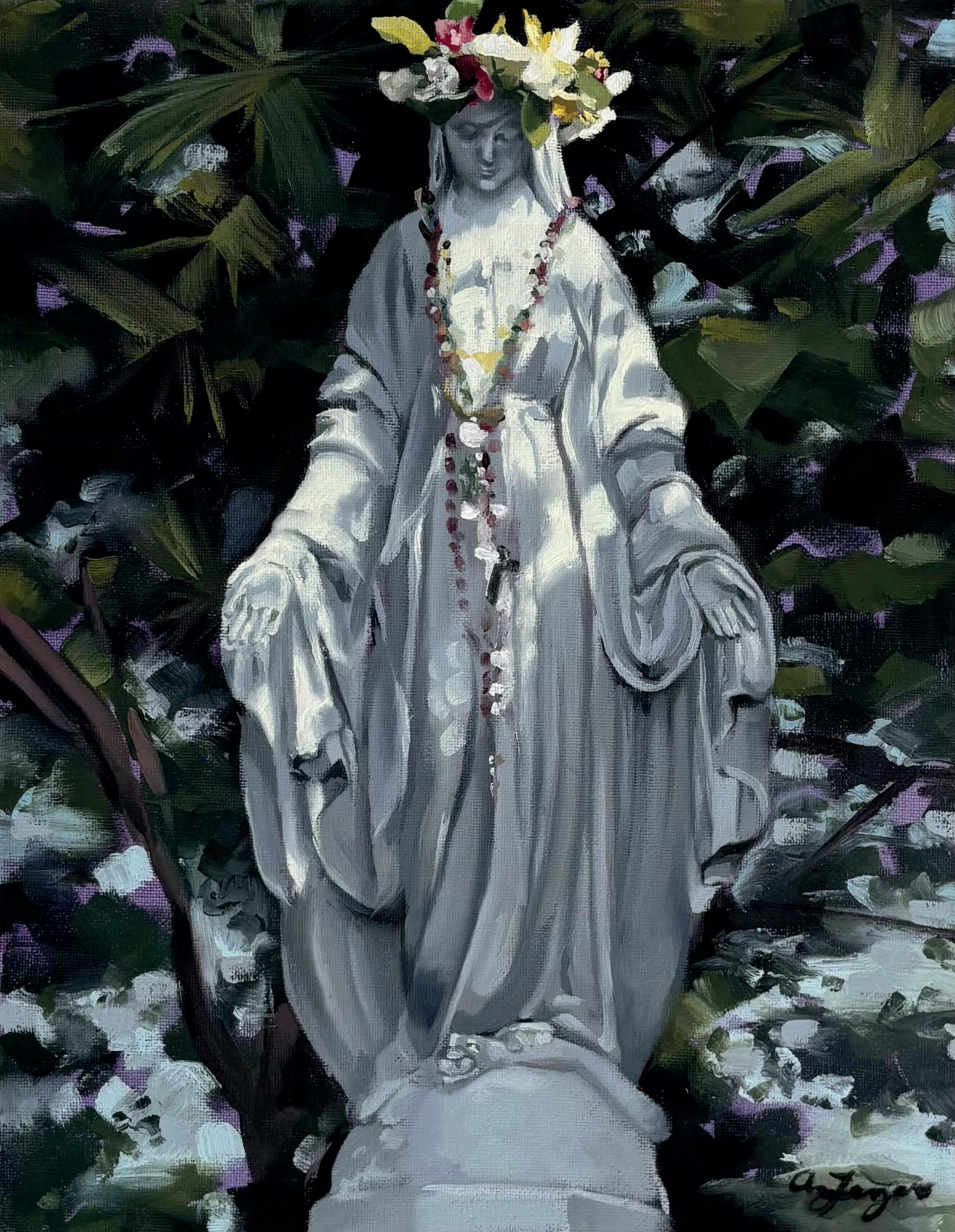
by Andrea Lazaro
‘29
Study of a Victorian Lady
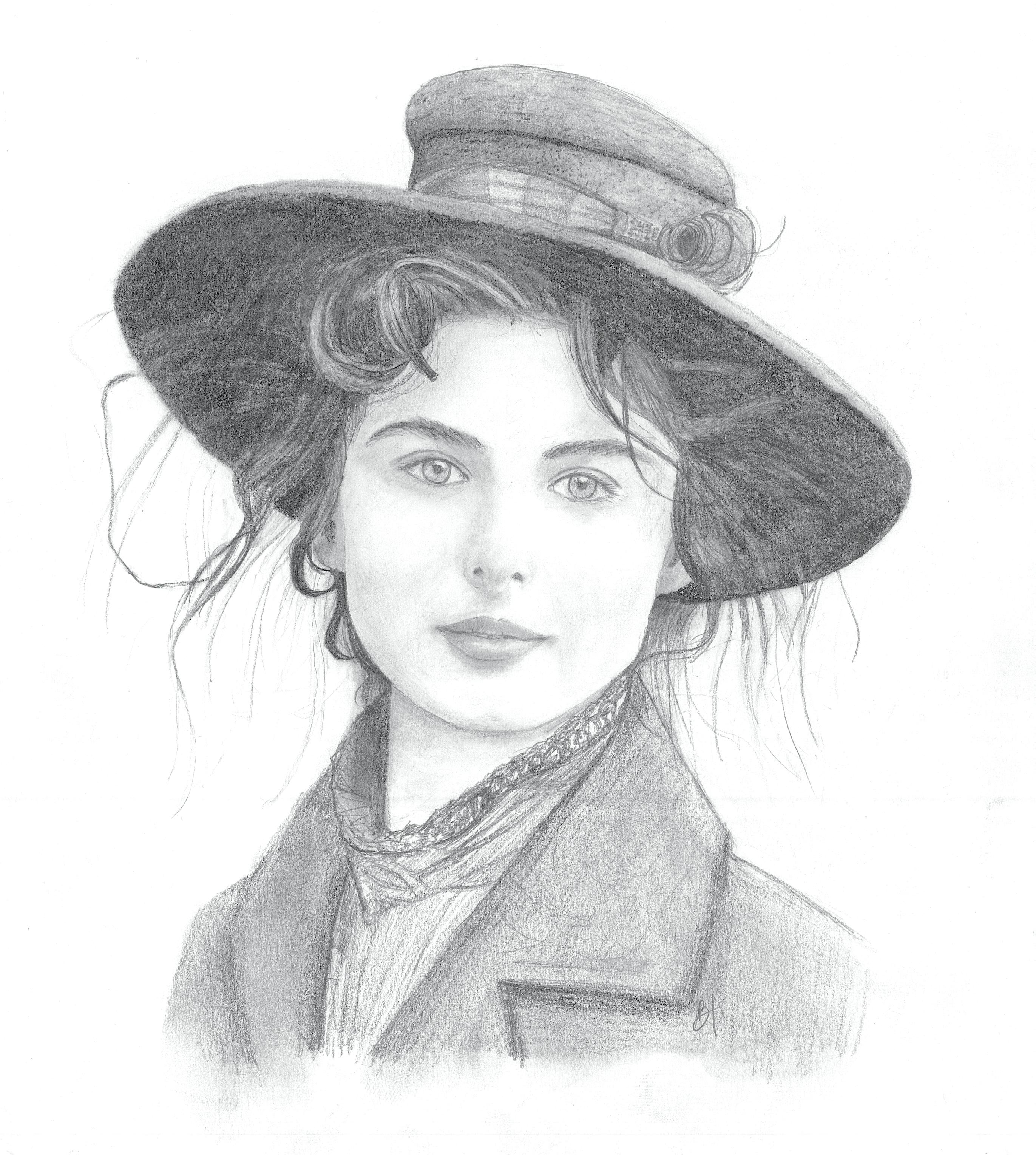
by Benjamin Tutwiler
‘26
Too Soon
by Jillian Vincent ‘27
Too soon the night encroaches on the day, Then darkness bleeds across the evening sky And turns the blue of afternoon to gray, While we, unready, have to bid goodbye. Too quickly, weeks come sharply to their close, And though they bring the next ones to their dawn, We sigh no less in watching their last throes, Till shortly we discover that they’re gone. Too fast, the moon displays her varied faces, To chronicle the passing of the nights, And though we gaze at her from different places, Remember we those same, too fickle sights. Too rapidly the years go blowing past Till memories of distant times get blurred, And though we wish those days would always last, The faintest echo soon is all that’s heard. Tenaciously, we grasp the time we’re given And cherish every moment spent together, Aware that Earth is not the same as Heaven, But praying that we’ll one day meet forever.
AB Positive
by Rebecca Benin ‘28
I’d like to think I have AB+ blood: That I could receive it all, That I could swallow the whole world If it needed me to.
I’d like to believe that I have what it takes: That I could accomplish every Wild fantasy And be each person’s dream come true.
I know my heart is vast and expansive. I know I am a hopeless romantic.
I’m an endless ensemble of thinking and feeling— I want to stitch up the ocean and nurture its healing.
But I know that there is only one God, And if I’m trying to be Him then I am not Giving Him the space to be The Lord He is, my Everything.
~
They say Jesus had AB+ blood. It soaked the Cross, poured out for us. Christ received our every sin And felt each wrenching emotion.
At times I question how safe He’s to trust. His outstretched arms proclaim, “This much.”
“This much is how much I love you, Please let Me be all I want to.”
“I gave you that deep, aching heart. Please let Me show you where to start. Surrender all your cares, come sit.
I am God, I’ll handle it.”
With Him I am O-, The universal donor.
I can give Him my whole world With all its tangled color.
And He, He slowly helps me see His perfect design in its order. I give to God; He teaches me To love others undistorted.
I can’t be God; I can’t swallow the world, But I can be a friend.
He whispers, “The strength’s not yours, But you can share My light with them.”
Firenze
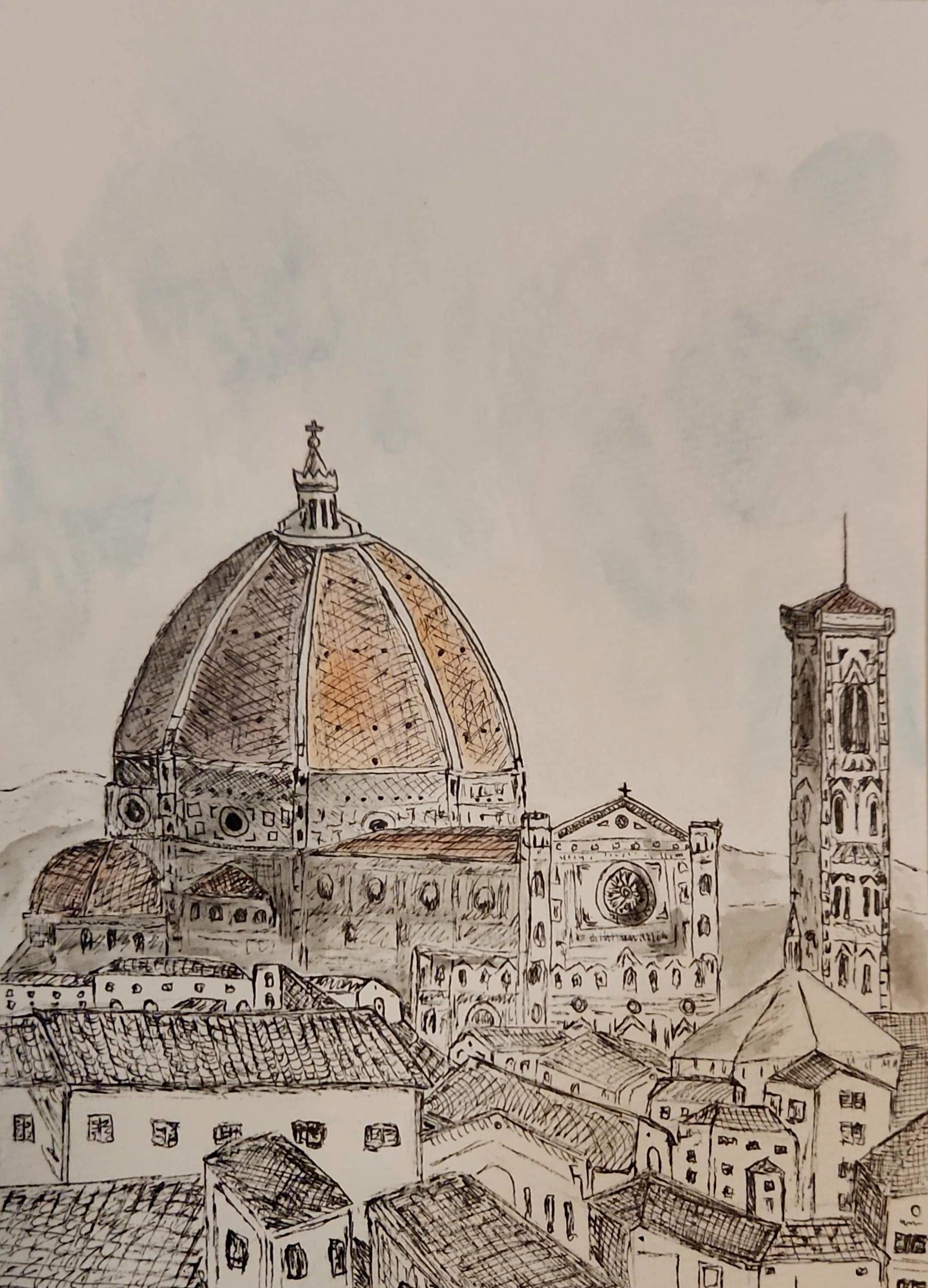
by Rachel Oligny
‘29
The Fox
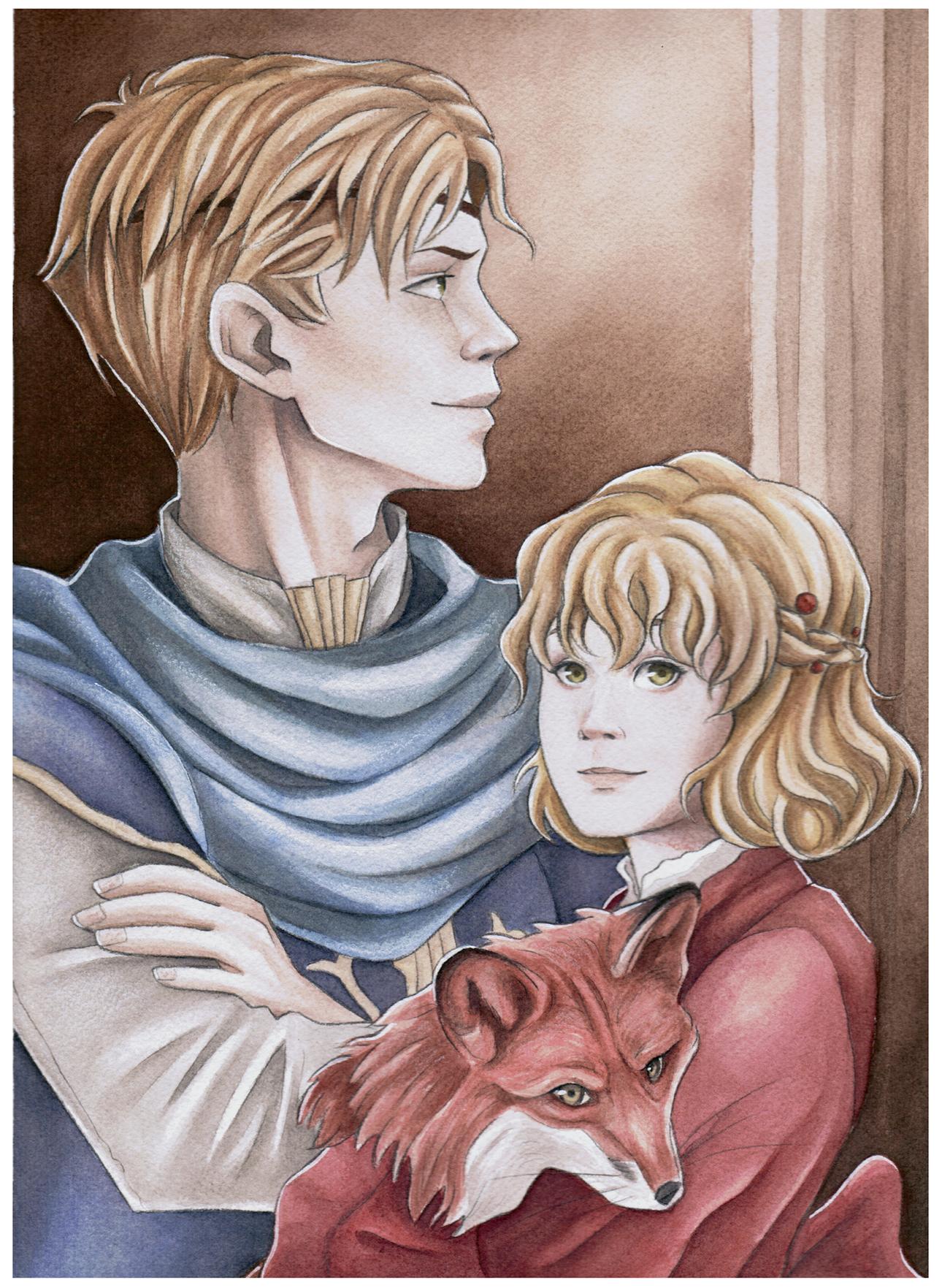
by Sophia Baltrinc
The Path of the Moon
by Ruth Bell ‘27
The sun sinks down into the west And sight begins to fade away, The trees give cover to light blest And warmth of earth does stay.
Vast sands spread on cov’ring the shore Laid by the sea. Shifting and sinking Ground shells and great rocks, broken core, Reflect the sun’s mighty lighting.
Majestic the moon moves to fill The sky yet colored of gold’ning wheat. Across leaping waves that do still, She shines serene and sweet.
Outstretch the sands, pebbled pearl shining, Framing the ocean deep and blue, Wand’ring and pushing, washing and pulsing Still reflect the heavens’ dark hue.
And I, as I walk by, alone in the night, Leaving my prints, left and right, Watch the waves and the sand With the moon and her band Of starry companions nearby.
And there, if I’ve paused, A path from the moon caused Along the water a new walk reveal, A silver road upon which I steal, With wings of mind, I fly, And on that silver path goes little I.
Labor Pains Until Now
on Rogier Van der Weyden’s Saint Luke Drawing the Virgin & Frans van Cuyck de Myerhop’s Still Life with Birds & Flannery O’Connor (always)
by Dr. Alex Taylor
It’s never what you expect, entering a museum—MUVSEEVUM, says my friend from Wise Blood, Enoch Emery, who just can’t read those antique V’s for U’s, a death in that separation, no transmission from father, cultural heritage lost, left like garbage beside a Virginia freeway. To speak freely, digression past, when wandering the Musea Brugge, one finds Dutch Masters, yes, who painted peasants, no objections there, but here’s a Virgin Mother, her child nursing, St. Luke looking, without shame, as she prays and he paints, and God is a babe at breast. These Dutch—no Puritans— are we their heirs? Can we so look with eyes, unclean, so screened, on purity so bare? Are we our mother’s children? Round the bend We go, not knowing what else we’ll see,
from allegories to histories. Wait! screams starkly, Frans van Cuyck de Myerhop’s arresting, hanging birds, framed black over a sheet of ivory, contrast calls your name in that tongue that twists your guts, God above! something still inside me cries, Parker-like before the burning tree. Behold, your cross, a bird broken between two beaks. To speak that language, must I heave my spleen into my speech? Glory be to God for broken things, paraphrased Hopkins is what I can get, in labor to bear this word, three dead birds, can it be still life if there’s not still life?
Can we have life when death has stilled our Life? The whole creation groans in labor pains, until…when? Think back, Christ-child’s smile, my milk is doing Father’s will, to be the bird whose breast was pierced, and out flowed blood and water.
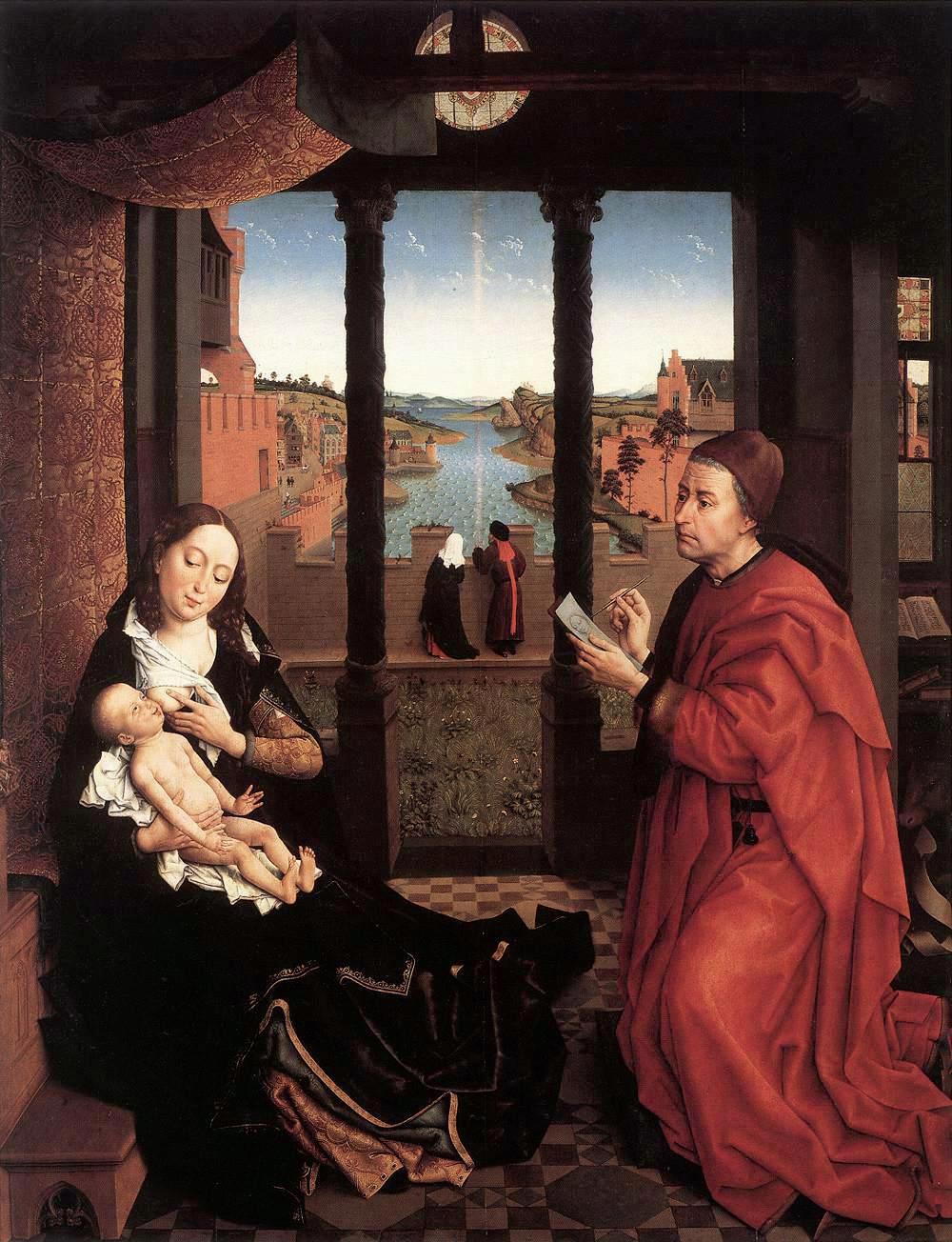
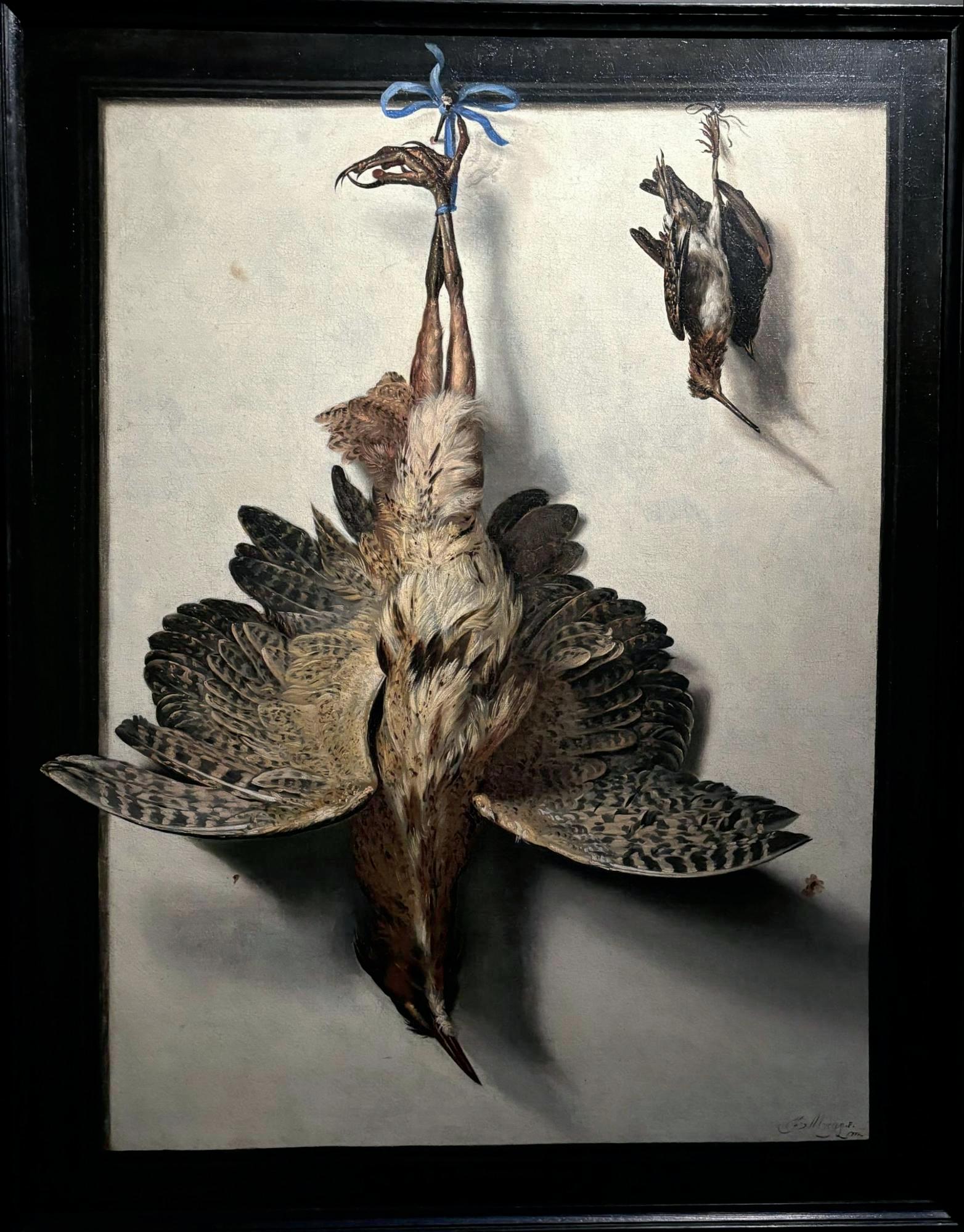
from the Groeningemuseum, Bruges, Belgium
Images
Rogier Van der Weyden’s Saint Luke Drawing the Virgin
Frans van Cuyck de Myerhop’s Still Life with Birds