A Discussion on Public Screenings of the Berlin Philharmonic’s Digital Concert Hall (The original article was written in traditional Chinese. This is the English version translated by Google AI. It has been edited again by the writer - Paul C Hsieh)
Classical music encompasses a wide variety of forms: symphonies, operas, concertos, chamber music, oratorios, requiems, and more. However, the scope of classical music discussed in this article focuses specifically on symphonies and concertos.
What, then, is classical music? Classical music is an ancient, mature, and historically evolving art form which is worthy of enduring preservation. Composers, adhering to a progressively developed and universally accepted body of musical theory, create works expressed through musical notation. These works are then faithfully interpreted and “played” by performers or ensembles, presented to the general public in live settings, with the hope that the intentions and sentiments embedded within the work will resonate deeply with the audience. This cyclical process—repeated time and again, and refined over long periods through processes of selection, curation, critical discourse, documentation, and archival publication—gives rise to a musical form that can, fundamentally, be defined as classical music.
The fundamental premises underlying this definition are as follows: 1) Composers, performers (or ensembles), and listeners constitute a collective circle—stakeholders sharing a common interest in the pursuit of "resonance" within the realm of classical music; 2) This pursuit of resonance is predicated upon the act of *live* listening, thereby excluding modern technological mediums such as audio and video recordings, wherein the performers and listeners do not inhabit the same physical space and time; and 3) The pursuit of resonance further presupposes that the listener is engaged in *focused* listening. The format of a live concert creates an "environment" conducive to such focused attention; only through live attendance can the listener truly become a stakeholder sharing a common interest with both the composer and the performers. Furthermore, it is only by becoming such a stakeholder that the listener can deeply absorb the original artistic intent—from composition to performance—that classical music seeks to convey. Conversely, if one remains a mere bystander—listening to classical music with an attitude of detachment or indifference—one can never truly partake in the life-enriching pleasures that classical music offers; to do so is, as the old idiom suggests, akin to "climbing a tree to catch a fish"—an utterly futile endeavor.
The most crucial aspect of listening to classical music is that one must be fully immersed—giving it one's undivided attention—much in the same way one would read a book. In contemporary society, however, people have grown unaccustomed to listening to music with such singular focus; typically, we listen to music... When we engage in other activities—driving, working out, taking a walk, or working— we are not truly listening; the music serves merely as background noise. To truly understand and
appreciate classical music, one cannot treat it as background music. Classical music tells stories through notes; you must follow along step-by-step to hear the narrative it wishes to convey. You must actively participate in this process of storytelling and listening. This is precisely why the best way to experience classical music is to attend a live performance.
Listening at a live venue compels you to set aside all other tasks and focus your attention solely on the music. Of course, whether or not you actually concentrate is entirely your own business—you are accountable to no one but yourself. However, attending a concert without making a sincere effort to listen attentively is, in essence, doing yourself a disservice. The ultimate satisfaction in listening to classical music lies in grasping the composer's artistic intent—the message they convey to you through the performers. The first step toward fully comprehending that intent is to listen with undivided attention. Sitting upright and attentive in a concert hall is arguably the only method that truly compels you to focus your listening. Listening at home, even through a million-dollar audio system, offers no guarantee that you are truly listening attentively. Yet, attending a live concert is not always a convenient undertaking; tickets for high-caliber performances are often difficult to secure, and even once obtained, the act of attending—with all the associated travel and logistics—can be a rather arduous and time-consuming endeavor.
Online concert platforms can help mitigate the inconveniences associated with attending live performances. The Berliner Philharmoniker’s Digital Concert Hall stands as the world's leading platform of its kind—distinguished by its exceptional quality and the largest subscriber base among orchestral platforms. However, despite its fifteen-year history, the platform has primarily offered convenience; it has yet to successfully replicate the unique "Concert-Going Experience"—the distinct atmosphere and sensation of attending a live performance in person. The Digital Concert Hall remains, fundamentally, a "Home" rather than a "Hall"; we are merely watching a screen in our living rooms, not physically stepping into a concert hall. Consequently, our listening experience remains largely indistinguishable from simply listening to a home audio system. Since attending a concert is inherently a form of public assembly, the Digital Concert Hall must evolve to the next level: by facilitating "Public Viewings" (PVs).
Public Viewings of the Berliner Philharmoniker’s online concerts (DCH PVs) offer a distinct and alternative way to experience classical music. Featuring crystal-clear video paired with immersive surround sound, these online broadcasts serve as an excellent—albeit "sub-perfect" compared to the real thing—alternative for those unable to attend live performances. Furthermore, they introduce an entirely novel way to experience the concert-going tradition. This experience differs vastly from attending a live concert in person. Live attendance is constrained by the limitations of a single seat—offering only one angle, one acoustic perspective, and a fixed, singular field of vision. The production of the Berlin
Philharmonic’s digital concerts, however, involves far more than mere filming and audio recording. The technical team overseeing each online performance consists of professionals deeply versed in classical music; notably, they possess the ability to read a conductor’s full orchestral score. For every concert, the team first convenes to analyze the score of the scheduled repertoire; guided by the music’s structural flow—its exposition, development, and resolution—they formulate a precise sequence of camera instructions, which are then programmed into a computer system. During the performance, the cameras operate strictly according to these programmed commands, moving in perfect synchronicity with the music to capture the conductor’s expressive body language, the musicians’ emotive countenances, and the virtuosity of their technique. This spatial-transcending interplay of sight and sound immerses the viewer in an emotional state—one of being deeply moved, stirred, and swept up in the moment. Such a state of profound engagement is attainable only through focused, undivided attention.
While both attending a public screening of a Berlin Philharmonic digital concert and attending a live performance demand such focused listening, the public screening of the digital concert offers a distinct aesthetic—a truly novel experience that opens up an entirely different realm of artistic appreciation.
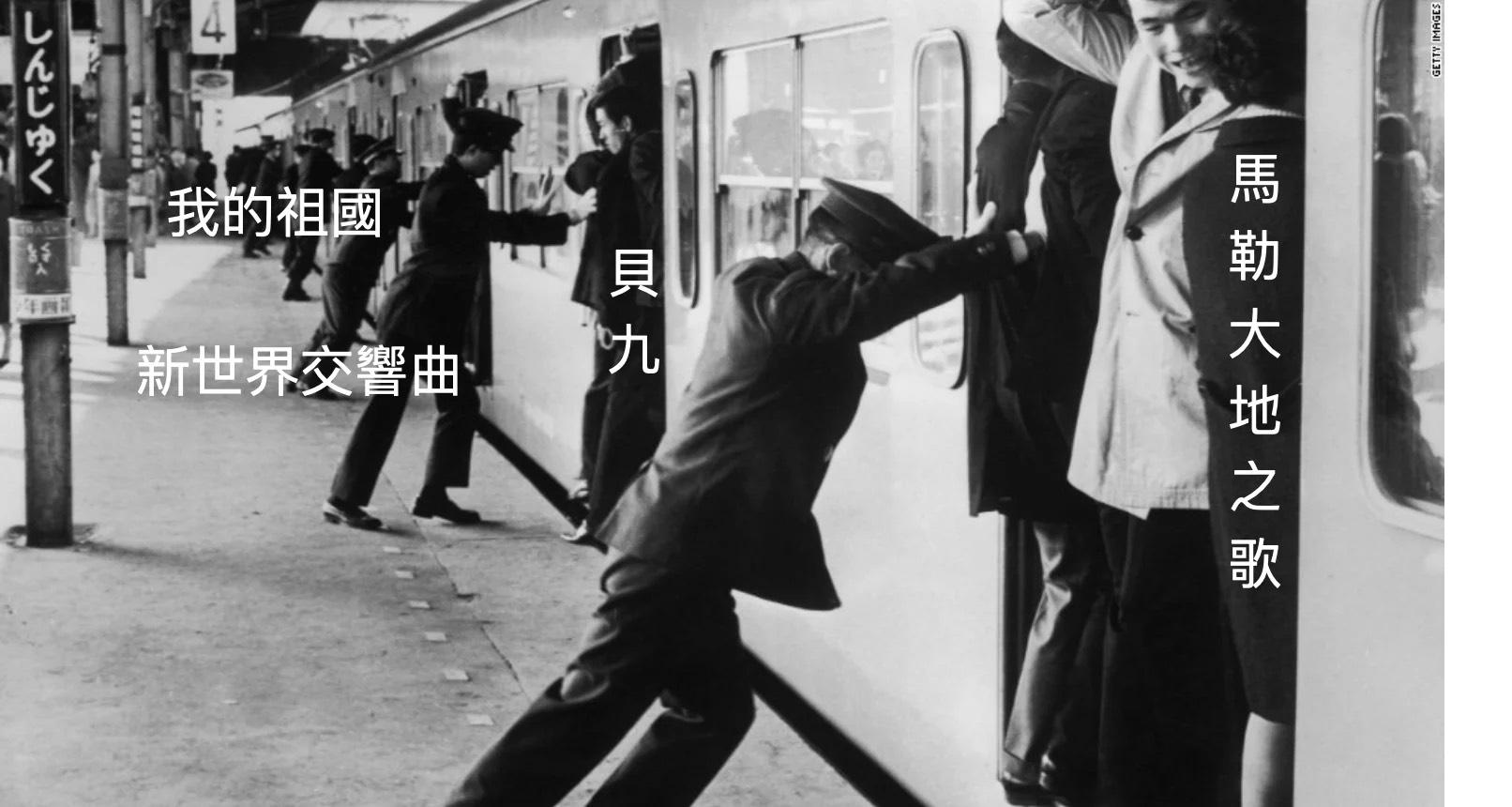
As mentioned earlier in this article, the composer, the performer, and the listener are the three parties involved in classical music who share a common interest. This shared interest lies in the pursuit of "resonance" with a specific musical work. Although the listener is indeed a participant, they are the only "non-professional" among the three. In this context, a pre-concert guided listening session becomes critically important. The role of the guide is akin to that of a “mechanical jack"—exerting force to nudge the non-professional listener into that "space where resonance becomes possible." If you have ever witnessed the station attendants on the platforms of Tokyo’s train stations physically pushing passengers into the carriages, you will understand that the guide, too, must "exert every ounce of energy" to propel the listener into that shared space inhabited by both the composer and the performer. Only when occupying this same shared space do the three parties stand a chance of achieving resonance.
People generally enjoy attending pre-concert guided listening sessions because attending a concert is, in itself, an act of overcoming various obstacles to focus exclusively on a single pursuit. By bundling the live guided session with the concert itself—making them two inseparable parts of that singular, focused endeavor—listeners find it much easier to fully enjoy the musical performance of the day. It is essential that the guided session be inextricably linked to the concert; much like stir-frying vegetables, one
requires intense heat to truly bring out the fresh, vibrant flavors of the produce. In contrast, many popular music appreciation lectures—where a teacher explains a specific piece, only for the audience to scatter immediately afterward without staying to hear a live performance of that very work—are akin to merely blanching vegetables in hot water: they may be edible, but they lack any true flavor or substance.
However, the opportunity to attend a live concert immediately following a guided session is not something that is readily available every day. This is precisely where the unique value of public concert broadcasts becomes immediately apparent, for the act of pairing a guided listening session with a broadcasted concert is a logistical feat that can be accomplished with relative ease.
Based on the definition of classical music set forth at the beginning of this article, it becomes clear that classical music experienced through live performance is the only form that constitutes "true classical music." We can, at any moment, purchase a book, read it with focused attention, and absorb its contents to gain an understanding of the author's original intent and creative vision; yet, we cannot simply purchase a live concert experience whenever we please. Consequently, our efforts to fully comprehend classical music remain inherently imperfect—a limitation we are ultimately compelled to accept. We may harbor the illusion that a high-fidelity audio system—costing a fortune—can somehow transcend this inherent imperfection; yet, at the end of the day, an audio system remains—and always will remain—merely an audio system. While it cannot replace a live concert, watching a streamed performance helps to "dilute" the regret of being unable to attend in person. Indeed, "attending" a streamed concert—complete with a guided introduction and public screening—represents an "acceptably imperfect way to experience classical music."


Camaraderie: The Essential Bond Among Fellow Music Lovers
Sir Simon Rattle once remarked: "What fascinates me about symphonic music is that everything in life is written within it—hope, sorrow, joy, and pain. A concert is a voyage toward oneself; music provides you with a vessel—one that does not always carry hope, but also allows you to savor sorrow, solitude, and suffering. It encompasses the entirety of human existence." He continued: "Time and again, classical music reminds us that we are not alone; somewhere in the world, there is another person just like you, facing the very same emotions in their own life. This sense of resonance is inscribed by the composer within the score, transcending time to be conveyed through performance directly to you, here in the present day." Rattle suggests that, fundamentally, everyone seeks to find themselves within music—to contemplate and examine the human facets of their own nature.
If you are fortunate enough to have fellow music lovers—a *camaraderie* of friends with whom you share a deep, long-standing bond—you can soar together through the world of classical music. By exchanging views, engaging in discussion, and using music as a lens through which to understand life, your rewards will be far greater and possess a deeper resonance. The various long-term music appreciation courses available today serve as excellent avenues for discovering and cultivating such groups of kindred spirits; likewise, the act of attending concerts together—as a collective of fellow music lovers—is an activity well worth encouraging.
Whenever we attend a public concert—whether in person or via streaming—we, the audience, along with the composers and performers, all board the same vessel. Together, during that specific voyage, we seek out the echoes of our own lives. As the old Chinese adage goes—"It takes a hundred lifetimes of cultivation to earn the chance to cross the river in the same boat"—is this not the perfect metaphor for such a shared experience?
* Not merely a live broadcast of a concert, but rather a curated session for musical appreciation.
* The entire public screening event does not exceed three hours in duration.
* Selection of a single symphonic work or a curated album/playlist from the digital archive.
* Engagement of music experts to conduct a one-hour guided introduction prior to the screening.
* A twenty-minute intermission.
* Screening of the selected musical program.
* Q&A Session: The expert guide leads an open discussion with the audience.
The Elements of Elegance and Status Symbolism in Classical Music
In the West, while classical music still retains its traditional image of elegance, its role as a symbol of social status has become a relic of the past. In increasingly affluent parts of Asia—primarily Japan, Taiwan, and Singapore—the perception of listening to classical music as a refined pursuit remains undiminished; indeed, its function as a symbol of social status is currently on the rise. We have deliberately excluded Hong Kong and mainland China from this category of "affluent Asia" because, in those two societies, the expression of public opinion is often constrained by political forces, and social status markers are typically intertwined with politics.
Public screenings by the Digital Concert Hall (DCH) must be inextricably linked to the concept of "elegance." This is because the majority of the audience is motivated to listen to classical music precisely by a desire to cultivate an air of cultural sophistication. Furthermore, this pursuit of elegance serves as a shortcut to attaining a "tacitly acknowledged high social status." In the past, the core audience for classical music in Japan and Taiwan consisted largely of physicians—individuals of high social standing who possessed a Western academic background. Today, however, the audience consists mainly of high-income, property-owning individuals with a university or advanced degree bestowed by western schools —particularly families belonging to the "new tech elite." Rather than simply enjoying the music for its own sake, these individuals utilize classical music to provide psychological validation for their desire to project an image of themselves as refined and sophisticated (and well to do) people. Consequently, DCH public screenings must be held in venues that embody nobility and elegance. The model established by the Vienna Philharmonic’s New Year’s Concert should not be blindly replicated; that event functions as a carnival-style entertainment spectacle—screened in movie theaters and, even when broadcast live, serving merely as one among many festive holiday activities.
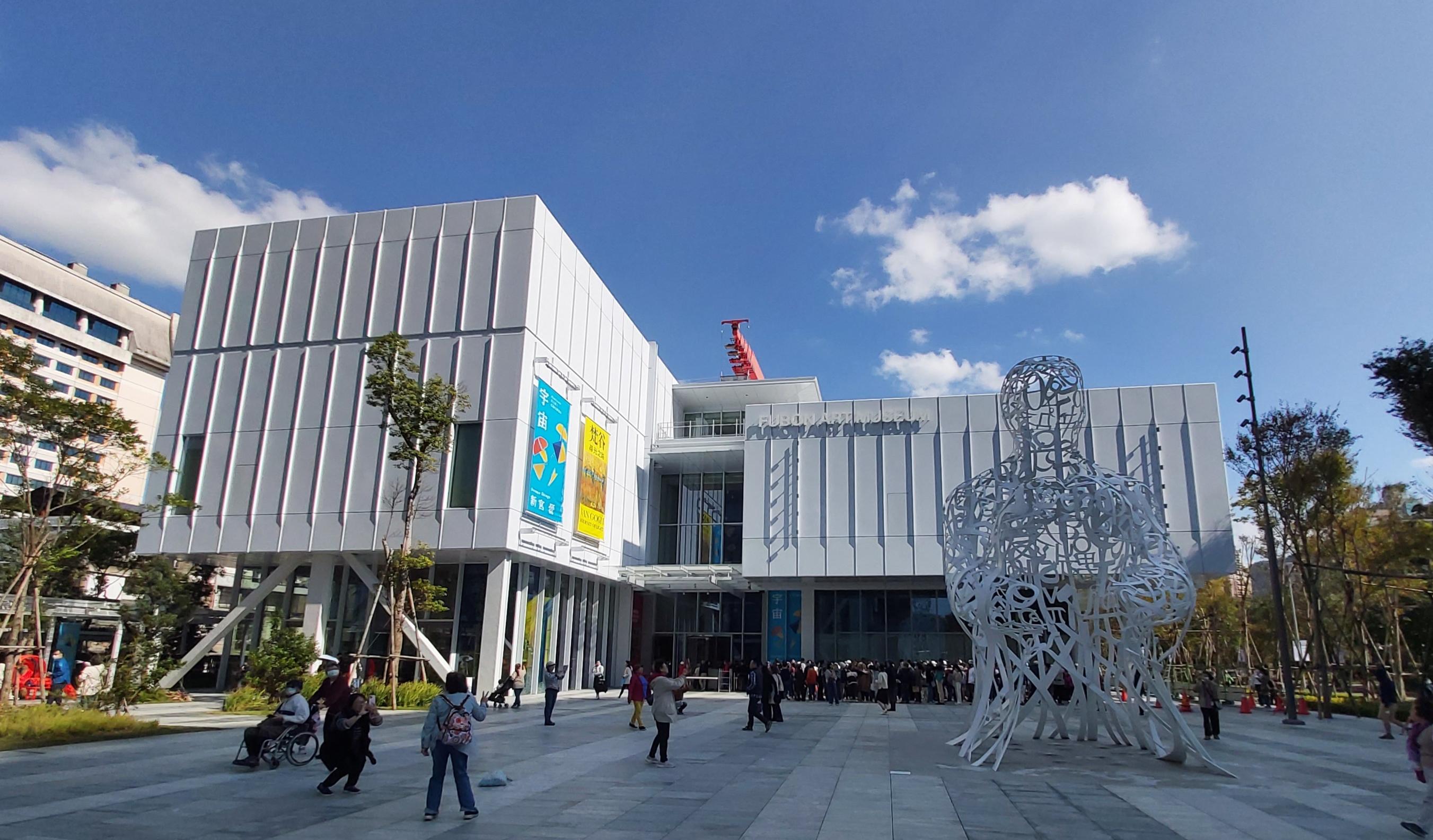
Venue – Initially, DCH public screenings will be held on a regular basis at the newly opened Fubon Art Museum in Taipei’s Xinyi District:
* The Xinyi District is Taiwan’s most "trendy" and vibrant hub for social and cultural activities.
* The Fubon Art Museum is located on Songyong Road, offering easy access via the MRT system.
* The museum’s independent café is already equipped with state-of-the-art audiovisual facilities.
* The Museum focuses on contemporary art, projecting a bright image that appeals strongly to a younger demographic.
* By hosting screenings at this venue, DCH avoids the stereotypical, "old-fashioned" image often associated with traditional concert halls or small recital venues.
* The objective behind holding public screenings at this particular venue is to avoid the shortcomings often associated with current classical music appreciation courses—namely, the lack of aesthetic elegance resulting from their being held in cheap, sunless "building corners."
• The Fubon Art Museum Café venue is encircled by floor-to-ceiling windows; the newly planted trees surrounding the space filter the sunlight, yet still allow an abundance of natural light to stream in.
• Public relations and promotional efforts for the DCH screenings can be coordinated in conjunction with the Fubon Art Museum.

In principle, the DCH public screenings will be promoted through OpenTix system.
Discussions regarding the collaboration with OpenTix will be addressed at a later juncture; at that time, we will also expand the scope of our venue options to include locations in other counties and cities across Taiwan.