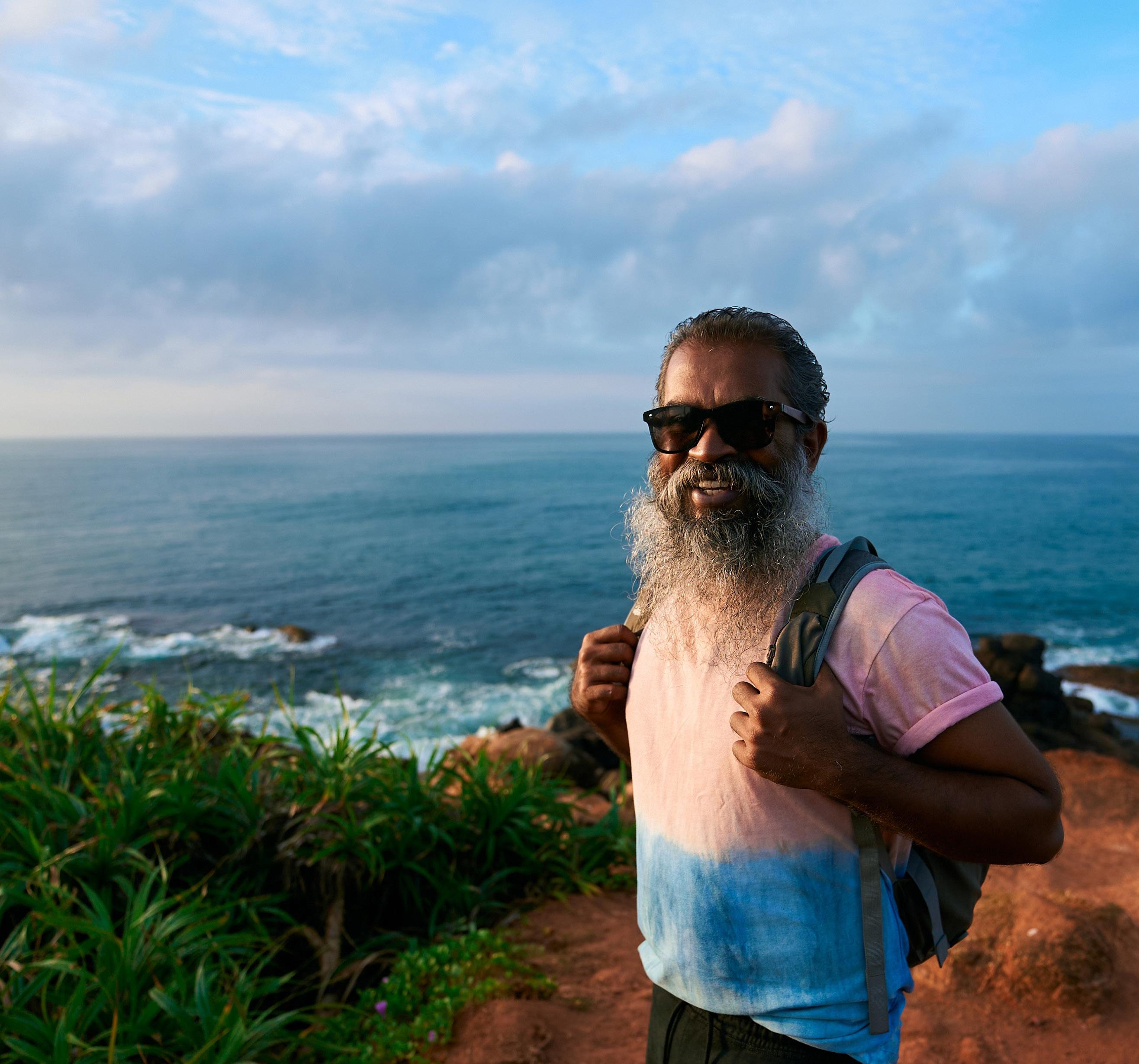
The privilege of a lifetime is to become who you truly are.
CARL JUNG
The idea of living your lane, of living life in your own way, is simple enough, isn’t it? And yet it seems that there are a number of things that hold us back from doing just that. This issue takes a look at what’s really needed to help us carve out the kind of life we really want and overcome some of these hurdles.
Kunle talks about the challenges that come with getting older and finding yourself unable to do the things you once did, looking at how this not only affects your own ability to live the life you want but could also impact your family’s as well.
Meanwhile, Her Honour Judge Anuja Dhir KC has kindly taken the time to write about how we can best support our children and help them make good decisions in life. As a judge at the Old Bailey, she has been at the sharp end of what happens when young people veer off down the wrong path.
Alan Smith, CEO of Capital Partners encourages us all to 'know our number’ –the true amount of money we need to pay for the lifestyle we want now and in the future. This is not about simply plucking a number out of thin air. It is about properly crunching the numbers and being honest about what that figure is.
We also have a wonderfully positive catch up with SK’s very own Emma Saltern. Emma is the first to admit that her life is busy, but rather than this being a negative, she has purposefully created it in this way and loves it. She is also a rare breed in that, as a woman, she holds a senior position in finance while still being able to spend plenty of time with her family and her horses. We find out how she makes it work.
In my own article, I consider what keeps so many of us grinding out the days often doing things we’re not even sure we want to and how, after an unplanned life change, my family and I have had to take stock and regroup.
As always, we hope there is something for everyone here. And that, no matter which article to dip into you, you will find an idea that resonates. We want to encourage you to make active decisions about how you live their life – as financial advisers, SK is all about facilitating that, so this is a topic close to our hearts. We look forward to hearing your thoughts.
Looking After Our Own
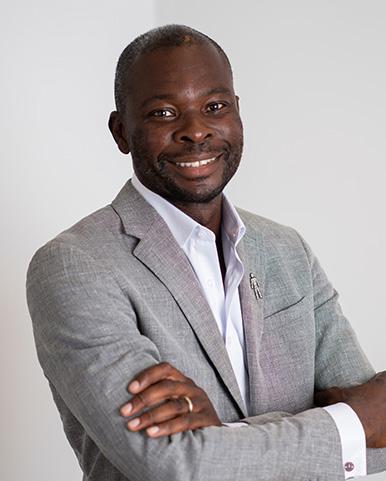
By Kunle Olafare
There is a growing number of clients, colleagues, and contacts who are spending more time caring for their loved ones. None of us like to confront the reality of ageing, but it’s important to take pause for the cause and consider what it means when someone can no longer live their lane. When the everyday tasks they once took for granted become difficult or impossible.
Think about the activities of daily living: personal care such as showering, brushing teeth, shaving; eating and drinking; or simply getting out of bed. Losing the ability to do these things independently is not just a practical challenge, it is a profound loss of autonomy. And that loss can be emotionally hard for the person experiencing it.
For families, it becomes even more complicated. Some people feel a deep sense of duty “…you looked after me, so now I must look after you". Others feel the weight of expectation from the older generation. And many older people, despite needing help, don’t want to place additional pressure on their children. These dynamics are tender, and they are rarely straightforward.
“
Older generations need to be honest about what they can realistically manage on their own and where they might need support...
...Younger
generations also need to be honest about their own circumstances and how much time they can genuinely give.
When ageing starts to take hold and basic needs can no longer be met alone, the options tend to fall into two broad categories.
1. You outsource support, involving carers coming into the home, or a move to sheltered or residential care. But this can be expensive, and planning for it financially is something many people haven’t done or may not be able to afford.
2. Or you rely more heavily on family, which can mean pressure on children, moving away from your community (or even abroad), or navigating the realities of multigenerational living, which is still relatively rare in the UK.
I’ve seen the pressure that this places on people who want to do the right thing for their loved ones while still trying to manage their own work and personal commitments. Many need far more flexibility in their diaries than their roles currently allow.
Office based workers may be able to build some of that flexibility into their routines. But for many others, frontline professionals, shift workers, and those in roles that require physical presence, this simply isn’t an option. And the emotional load doesn’t disappear just because the diary can’t bend.
For me, two things become essential – honesty and communication.
Older generations need to be honest about what they can realistically manage on their own and where they might need support. That support doesn’t always have to be intimate care; sometimes help with shopping, cooking, cleaning, or laundry can preserve dignity while easing the strain.
Younger generations also need to be honest about their own circumstances and how much time they can genuinely give. When both sides can talk openly about what support is needed and what is possible, it becomes easier to find a balance that allows everyone to continue living their lane perhaps with a few adjustments, but without losing themselves.
In addition to this, I believe that time is one of the most precious commodities we have. In a modern world where technology is advancing rapidly, we have an opportunity to use these tools to create more time. Time to make memories with the people who matter, and time to support our loved ones when they need us most. It is worth looking into what is available and making the most of these new possibilities – it could be as simple as helping the older generation set up a zoom or facetime option so you can check in with them more regularly.
What we want to avoid are the extremes: older people pushing on when they are no longer safe to do so or refusing external help and expecting family to fill every gap. These conversations are not easy, but in the world we live in today, they are necessary.
With my good wishes,
Kunle
Helping the Next Generation Find Their Way
By Her Honour Judge Anuja Dhir KC
When I was born in Scotland in the 1960s life was quite different. We had one phone in the house which lived in the hallway and had a wire attached to it. We had one television, which had three channels. We had one record player, yes, it was all vinyl then.
This meant that parenting was also different. In the age before the internet, emails and google, parents were more aware of what their children were doing, the influences on them, the information they were receiving, who their friends were and, consequently, the stresses and strains of the environment their children were inhabiting.
Now, as a mother of three, I think it is more difficult to keep track of what our children are exposed to and to know what (if anything) we should be doing about it. This is something I have found challenging.
There have, of course, been some positive changes, sexual and racial discrimination was lawful until the mid-1970s. That had an impact on jobs, professions and on people’s everyday lives. The judiciary was almost all male and most of those males came from the same sort of background. The legal profession did not encourage or understand the benefits of multiculturalism in the way that, I think, it now does.
As a lawyer, and since 2012, a judge dealing with criminal cases, I have been able to see how the law has evolved and how society has evolved. We have the ability to be connected with our family and friends in a way that simply was not possible before, we have access to more information, and that means we can safeguard our children against some of the potential negative influences.
But this is not easy, and at times it can be challenging. We all know that communication is the key to all of this, we have to build relationships with our children in a way that allows them to tell us what is going on in their lives, to come to us for advice and to trust us.
Community is also important. As a member of the Haberdasher livery company which cares passionately about supporting the next generation through education, mentoring, skill building and friendship, I have seen first-hand what a community made up of people of all ages and all backgrounds can do to protect and guide the next generation. If we get this right, if we can connect talent with opportunities, deal with issues before they become problems and if we can find support in others then we can build a generation that is resilient, strong, and most importantly happy.
Do You Know Your Freedom Number?
By Alan Smith, CEO of Capital Partners
There’s a question I ask almost every new client I meet. It’s not about their pension. It’s not about their ISA. It’s not about the markets. It’s this: Do you know your freedom number?
Most people don’t. And that, more than almost anything else, is what keeps them anxious about money - not the volatility of equity markets, not interest rates, not even the cost-of-living crisis. The real problem is simpler and closer to home. They don’t know what “enough” looks like for them.
The number nobody talks about
Those of us in financial services spend an extraordinary amount of time discussing markets. Inflation. Interest rates. Geopolitical risk. And yet the variable that has the single greatest influence on a client’s financial well-being - how much they actually spend - barely gets a mention.
The truth almost no one wants to hear: the single biggest variable in your financial life isn’t your portfolio. It’s your spending. For most people, it’s both vague and more volatile than any market they’ll ever invest in.
Markets go up and down. But they tend, over time, to go in one direction. Your spending? That’s a different story. Lifestyle creep is real. Children are expensive and unpredictable. A promotion brings a bigger salary - and somehow, within a year, the extra has vanished into a slightly bigger life.
A divorce, a health scare, a new relationship, a passion project - all of these reshape the financial landscape of your life far more dramatically than any market correction. And yet most people have a rough idea of what the stock market is doing. Almost none of them can tell you with accuracy and clarity how much they spend.
What is your freedom number?
Your freedom number is the amount of money you need - either saved, invested, or passively generating income - to live the life you actually want, on your own terms. Not a theoretical life. Not a frugal life. Not a life where you’re waiting for permission. Your ideal life.
For some people, that means stopping work entirely. For others, it means having enough in the bank or portfolio that they can choose the work they do, rather than simply taking what comes. For others still, it means funding a particular lifestyle - school fees, annual travel, a place in the country - without the anxiety that comes from not knowing if it’s sustainable.
I met a business owner a few years ago who was convinced he needed £10 million before he could step back from his company. He’d picked the number out of the air, years earlier, and had been driving toward it ever since. When we actually sat down and
worked through what his life cost, and what he genuinely wanted from the next thirty years, the real number was closer to £6 million. He was already most of the way there. He’d spent a decade of his life pushing toward a target that was never his.
That’s what happens when you don’t know your number. You borrow someone else’s. There is no universal freedom number. There is only yours.
The systematic approach
Once you know your number, something interesting happens. The vague, formless anxiety that most people carry about money begins to crystallise into something manageable. A target. A plan.
Start with your spending. Not an estimate - your actual spending. Bank statements don’t lie. Go back twelve months. Categorise what you find. Most people are surprised by what they see. Then ask yourself which of those expenditures brought genuine value to your life, and which were simply noise. Not to punish yourself. To understand the relationship between your money and your wellbeing, so that every pound you spend is, as far as possible, a deliberate choice.
From that baseline, you can work forward. What does your ideal life cost? What income or capital base would fund it indefinitely? What are you currently on track to accumulate, and by when? These questions have answers - specific, numerical, and yours. That’s what cashflow planning is actually for.
Living life in your lane
All of this sounds technical, but a good financial planner can crunch the numbers for you and deliver your personal financial plan.
The most financially content people I’ve met over the years share a common trait. They are not the wealthiest. They are not the ones with the most sophisticated portfolios. They are the ones who know, with quiet confidence, what they need - and know that they’re either there already or on the right road to get there. They are truly living their lives in their own unique way. Not distracted by what others earn, spend, or accumulate. Not anxious about markets they cannot control. Focused, instead, on the one thing they can control: the relationship between their life and their money. Know your number. Build toward it. Then - and this is the bit most financial plans forget - enjoy it. That’s the whole game.
Alan Smith is CEO of Capital Partners, a financial planning firm based in London. He specialises in advising entrepreneurs and business owners, particularly those approaching or navigating a liquidity event.
Interview with Emma Saltern
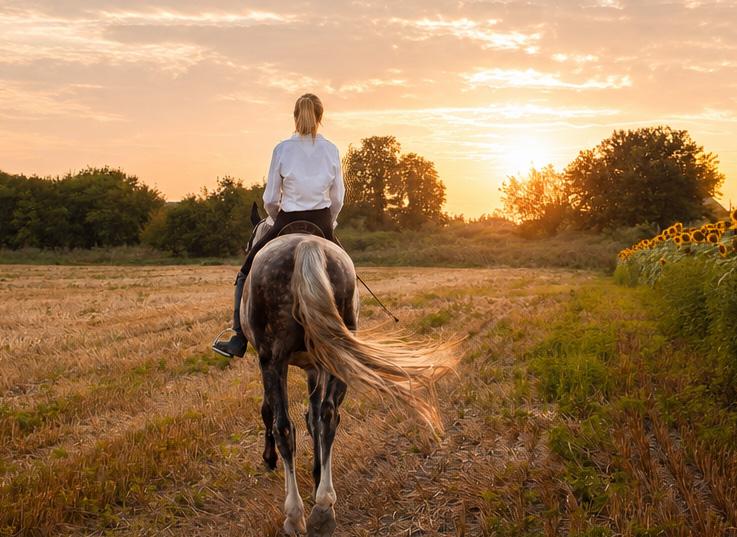
“ I spend a huge amount of time horse riding with my children
“I try to not to complain about how busy I am - even to myself - because I have created this life. Ultimately, if I said I was too busy, someone could easily just say, well sell the horses and free up time. But I want them in my life, so I just have to manage it.”
“And to be honest, I like being busy. While there are days when I do wish I could sit down and just watch some telly, I like to have my days filled.”
Emma Saltern is our very own Chief Client Officer here at SK financial. She has three horses and competes at Polocrosse. She has two rescue dogs from Greece and lives with her husband and two teenage daughters. With that much in her life, it’s lucky she enjoys being busy.
But being able to hold down a successful career in finance while being a very handson mum – she has never put her daughters into childcare, and she picks them up from school every day – and still having the time to indulge her passion for horses, is no mean feat.
"The lifestyle I like to lead wouldn’t be feasible if I had to go into the office"
Making it all work comes down, in no small part, to the flexibility working at SK affords her.
“I have been very lucky to join a company that has allowed me to have a senior role and still enjoy a full family life. I work from home 95% of the time. The lifestyle I like to lead wouldn’t be feasible if I had to go into an office and I definitely wouldn’t be able to have horses, there just wouldn’t be enough hours in the day.
But there is also something quite special about how Emma manages her life. By her own admission she keeps her work life very separate from her family life. So much so, that many of her friends don’t know what job she does.
More important than this, however, is how very different the two sides of her life are. On the one side she has a desk-based job which keeps her mentally active, on the other it is all about physical activities and getting out in the countryside surrounding her home. This helps her stay energised enough to do it all and allows her to have the kind of balance she always wanted.
“I feel I have two different lives – I have my work and professional life and my personal life. I genuinely don’t talk to my non-work friends about work. The people who I ride with or play polocrosse with probably have no idea what I do. They probably don’t even realise I have a job. The work gets me using my brain and chatting to people and then the other side is very physical so I’m getting exercise and fresh air.”
And there is no doubt that her animals are why her personal life is so physical. One of the first jobs of the day is to get her two rescue dogs out for a walk and she recognises just how important it is for her to start the day like this.
“We only got the dogs five years ago –they were rescued from Greece, and they have opened up a lot of friendships, just from dog walking. You can get up in the morning, tired as anything and you are the best thing they have ever seen, so that is lovely. They provide exercise and get you out in the countryside, going for walks.”
"There is something very freeing about being on the back of a horse"
But it is the horses that are where the real physical work lies. Emma has been riding since she was a child. And for most of her adult life, she has ridden other people’s horses because they needed help. But then her daughters started riding and got more and more involved in the equine way of life. When they all started playing Polocrosse – as the name suggests, it is a mix of polo and lacrosse – it became clear that they would need their own horses to compete. So, a couple of years ago, Emma got her and her daughters their own horses.
“Having horses is a lifestyle and it is all consuming. I just love being outside, I love the countryside and the freedom, but I also love the adrenalin of galloping. There is something very freeing about being on the back of a horse – the trust and the relationship that you can build with them.”
“The biggest benefit for me, however, is that I spend a huge amount of time horse riding with my children. And they’re teenagers. A lot of my friends have children who are a similar age, and they all say their kids are off doing their own things. But my kids are with me a lot - during the summer they will be away with me every weekend and that is a real privilege at this point in their lives to do that.”
"After COVID, I felt, you know, if you want to do something, just do it"
Deciding to have horses – let alone three! – is not a decision anyone takes lightly. And Emma was no exception. While committing to compete in polocrosse was of course the driving force behind the decision, it was in fact the experience of living through COVID which gave her the push she needed to fulfil this lifelong dream.
“After COVID, I felt, you know what, if you want to do something, just do it. And with the horses, I realised that if I didn’t do it now, it would be too late – my kids would be too old, and they would have left home.
“I realised that we all need to get on and do the things that we want to do. Yes, I am a financial adviser. There has to be a balance, you have to save and put money aside and as long as you are doing that as well, you have got to live for the moment and just do it.”
This approach has however not only influenced Emma’s own personal life. It has also of course influenced her professional one too. It is a rare moment where the two
sides of her life have in fact got a common thread. She very much recognises that as a financial adviser, she can help clients realise their own personal objectives in life too.
“We help them realise that yes, they can take that dream trip or make that dream purchase. If it is something that is going to be a real-life highlight, then we look at the finances and how we can make that happen. It’s important to know. Lots of people talk about how they would love to do this or love to do that, but how many people actually go and do it? And the sad reality is that they probably could have done. If they had understood their finances a bit better, they might find that they could have done it.”
It's a lesson we would all do well to learn from.
Is there more to life than the hamster wheel we’re on?
By Jenny Ellery
These days, I am increasingly hearing friends describe their lives as like being on a hamster wheel. They are head down, battling on with what they need to do to get through the day. And let’s be honest, what’s going on in the wider world doesn’t really help with that sense of embattlement.
The hamster wheel as a pretty powerful analogy. There’s the endlessness of it - you are continuously going round and round. It takes a lot of effort. And there’s no real sense of satisfaction because you don’t ever get anywhere. It’s also really hard to step off.
If you ask me, it is a pretty depressing way to describe your day-to-day life.
But it did get me thinking about why so many were using this phrase, especially considering that the people I hear it from are well off, successful people. They are not on the breadline. This is not about struggling to make ends meet.
I believe there are a couple of things at play here. Life stage is one. I am currently at that age (late 40s / early 50s) where there are usually still kids at home; people are working hard because they’re at peak earning potential and need to earn as much as they can while they still can; they’ve often got a hefty mortgage; possibly private school fees and older parents who are now starting to increasingly depend on them. There’s a lot of pressure to keep all these plates spinning. And let’s face it there are only 24 hours in a day.
But there’s something else that adds to the pressure as well. The weight of “lifestyle expectations”. Now, most of us don’t want to believe we’re influenced by this. But I
don’t know anyone who, if they’re honest with themselves, hasn’t been. It might be that they have expectations they have put on themselves, such as what they imagined their life would look like at this stage or when they finally hit a particular salary bracket. More often than not, though, it comes from external influences.
"The idea of ‘keeping up with the Jones’ predates social media"
It is very easy for those of us who did not grow up with social media to believe that this kind of pressure is the preserve of younger generations. Those who are more tapped into or concerned with comparing themselves to the lifestyles of others online.
But the idea of ‘keeping up with the Jones’ predates social media. It has been around a long time. We may not want to admit it, but simply ‘keeping up’ with our circle of friends and peers can put a lot of additional pressure on what we decide to do with our lives. We may not even recognise it as ‘keeping up’. It is subtle. It creeps up and surreptitiously infiltrates all aspects of life, often funded by debt accumulation rather than actually being affordable.
We’ve all been there - so and so has got a new car, maybe I should look into an upgrade; so and so has just been on an
incredible holiday, maybe I should book a holiday; so and so has just done an amazing extension, maybe I should do some work on the house; so and so’s kids are doing x, y and z…..you get the picture.
There are a lot of ‘shoulds’ that start to influence our decisions – even the ones that are supposed to be about us enjoying ourselves. All of a sudden, you find yourself doing things without really thinking about them. You’re not doing them because you have decided that is what you want, they are just the ‘done thing’, and this keeps you well and truly glued to that hamster wheel.
"It is a huge adjustment and one that has come dangerously close to breaking us"
As a parent who has recently rather unceremoniously fallen off the hamster wheel (formal school was no longer viable for my two children and we now home educate), it has, for better or worse, opened my eyes to the realities of this way of life.
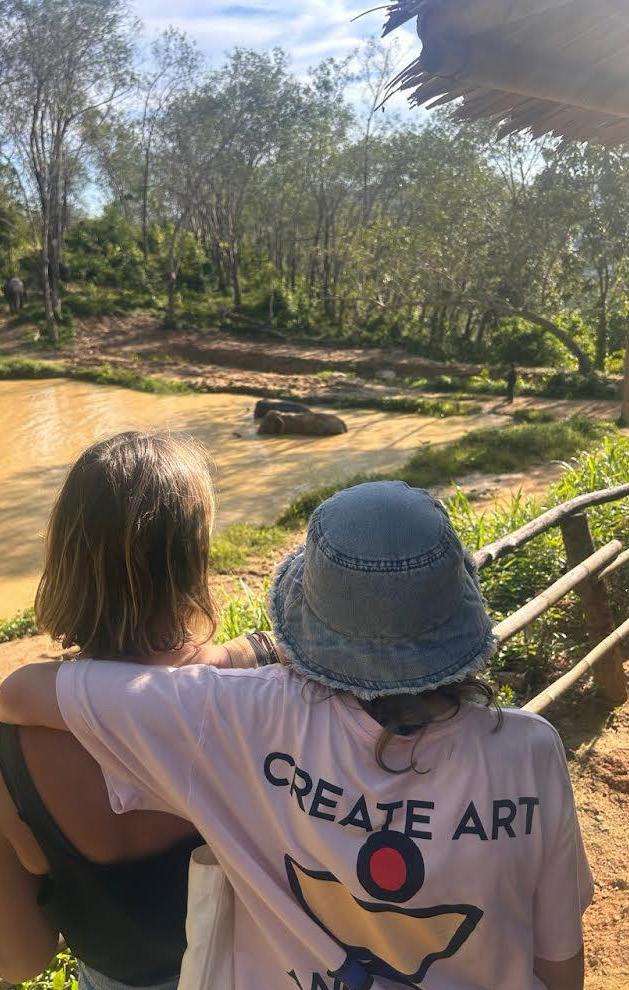
My daughter and me at an elephant santuary in Phuket
Believe me, now that I am fully responsible for my two children’s education, there are more ‘shoulds’ in my life than ever before (should they be doing more maths, more sport, more subjects, should I be pushing them harder or should I be letting them lead the way?!?) and my world is full of ‘compare and despair’ moments.
Saying farewell to mainstream school and with it, the vast majority of my working hours, turns every aspect of life on its head – career, finances, holidays, socialising (who do you hang out with during the day when all your friends are at work or school?!?), identity and more than anything else – education. It is a huge adjustment and one that has come dangerously close to breaking us on more than one occasion.
And I worry, a lot. I worry that because we’re not doing what everyone else seems to be doing, that we won’t succeed; that our children won’t succeed. It takes a lot of effort not to constantly compare our life to other people’s and to our own vision of what we had planned for our life. Because when we do compare, we invariably come up short and feel like we’re failing – hence the phrase ‘compare and despair’. Those are the low points for sure.
But at the same time, it has forced us to question all aspects of life. When you have had to strip life right back, you question the status quo and you ask why we do things the way we do. You really question it both on a personal level but also more widely, on a societal level. And that’s no bad thing.
"We are so entrenched in how we feel we should be living our lives now"
This shift has given me a moment to pause and really think about the things I love in life and what is genuinely important to making life work for us as well as the things that get me down. It has shown me that options I never thought possible, are in fact possible (surviving on a lot less income, for example or taking four months out and living in Asia). They may not be easy, but they are doable and when you realise this, it opens up so many more opportunities – you just have to be ready to take them.
I think so many of us believe certain options are out of reach because we are so entrenched in how we feel we should be living our lives right now. Maybe you have invested considerable time and money in building up a particular way of life that stepping away from it feels impossibly scary. Maybe you haven’t even realised that you’re doing all these things but don’t really know why (beyond them being the ‘done thing’) or maybe you just don’t feel you have the time or headspace to think about doing something different, even if it would make you happier if you did.
It took a pretty life changing moment for me to take stock, to show me that other options were possible and how caught up we all are in living life in a certain way. But why wait for that to happen? Why not just take a moment now and ask yourself, am I ok with this way of life? Is there anything missing from my life and if so, how can I change that? But most importantly of all, ask yourself why – why am I doing all the things I do? Check in with yourself and with your life to make sure you are doing what you actually want to be doing and for reasons that make sense to you, that feel worthwhile. And always take counsel from those you really trust to help you gain the perspective you need.
If you don’t, you may find that when you do finally step (or like me, fall) off the hamster wheel, you have kind of missed out on living your own life.
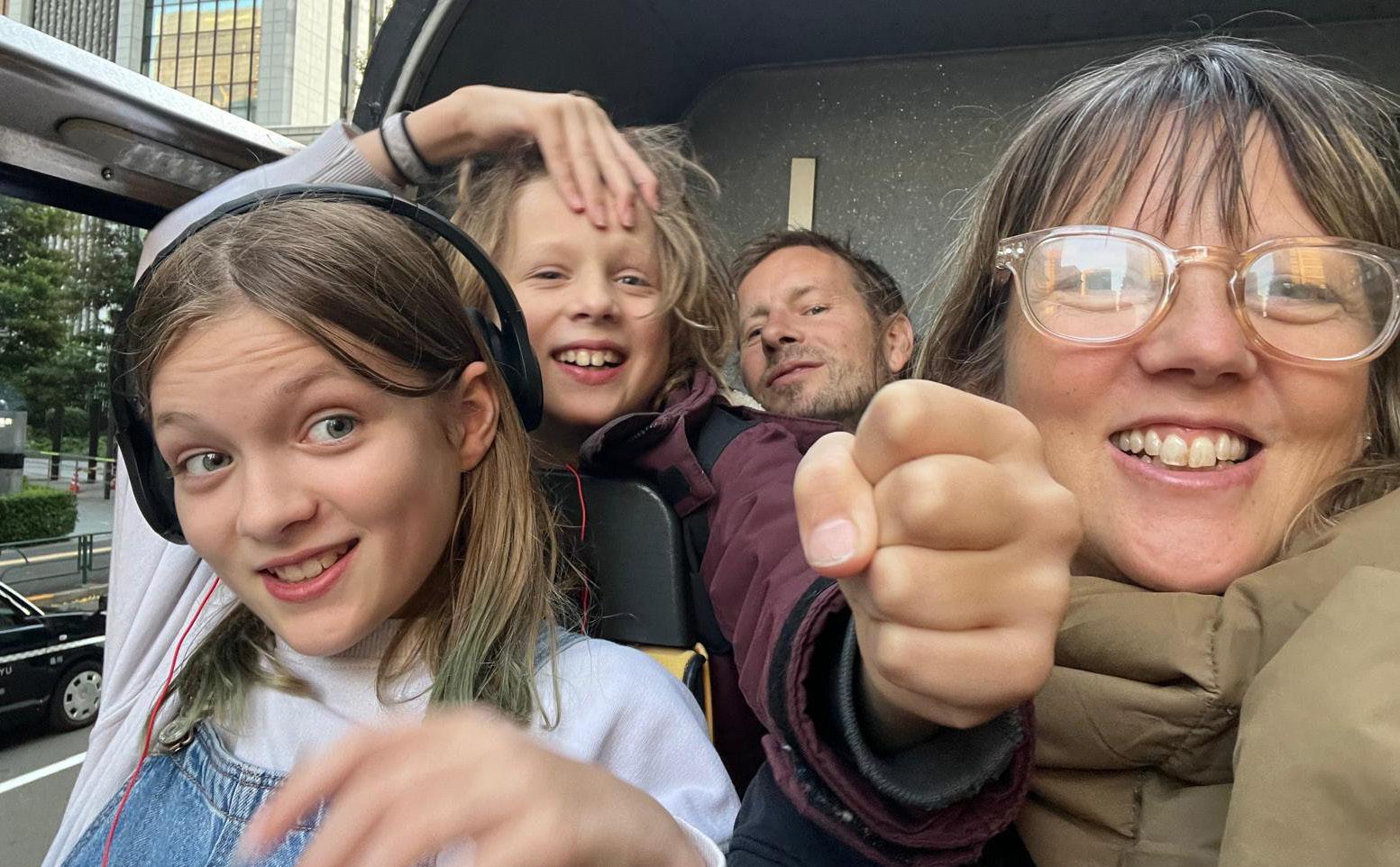
My family on a bus tour in Tokyo
If you don’t design your own life plan, chances are you’ll fall into someone else’s.
Jim Rohn
The value of your investments (and any income from them) can go down as well as up and you may not get back the full amount you invested. Past performance is not a reliable indicator of future performance. Investments should be considered over the longer term and should fit in with your overall attitude to risk and financial circumstances.
Your home is at risk if you do not keep up repayments on a mortgage or other loan secured on it.
This document is distributed for information purposes and should not be considered investment or other advice or an offer of any product/security for sale. This document contains the opinions of the authors but not necessarily the firm and does not represent a recommendation of any particular security, strategy or product. Information contained herein has been obtained from sources believed to be reliable, but is not guaranteed.