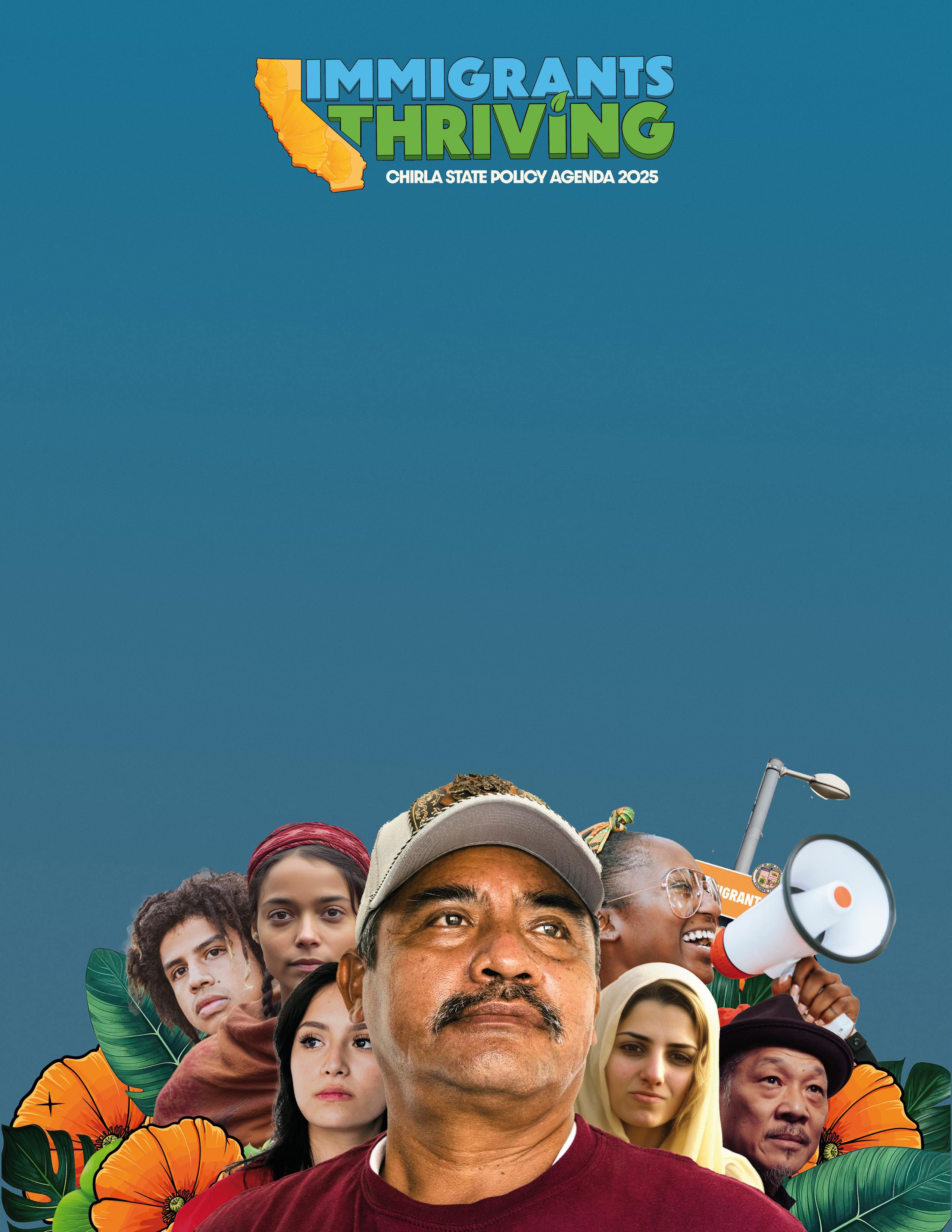
This past year, we saw the unfolding of a military grade federal immigration enforcement agenda begin on June 6, 2025, in Los Angeles, targeting the Fashion District in Downtown LA, spreading throughout Southern California to wage unprecedented attacks on immigrants and U.S. Citizens. Since then, DHS has continued to unleash violence and terror in our communities which have yielded over 10,000 people arrested and detained in thegreaterLosAngelesareaalone. Accordingtothe American Immigration Council, there are currently over 73,000 individuals in Immigration Detention in the United States, marking a 40% increase since the beginningofTrump'ssecondterm.Additionally,over 170U.S.Citizenshavebeenarrestedanddetained.
In recent months, we have also seen several individuals, both U.S. Citizens and immigrants, die at the hands of DHS, ICE, CBP, and many other federal agencies who have continued to operate with impunityinplaceslikeChicago,Minnesota,Portland, andSeattle.

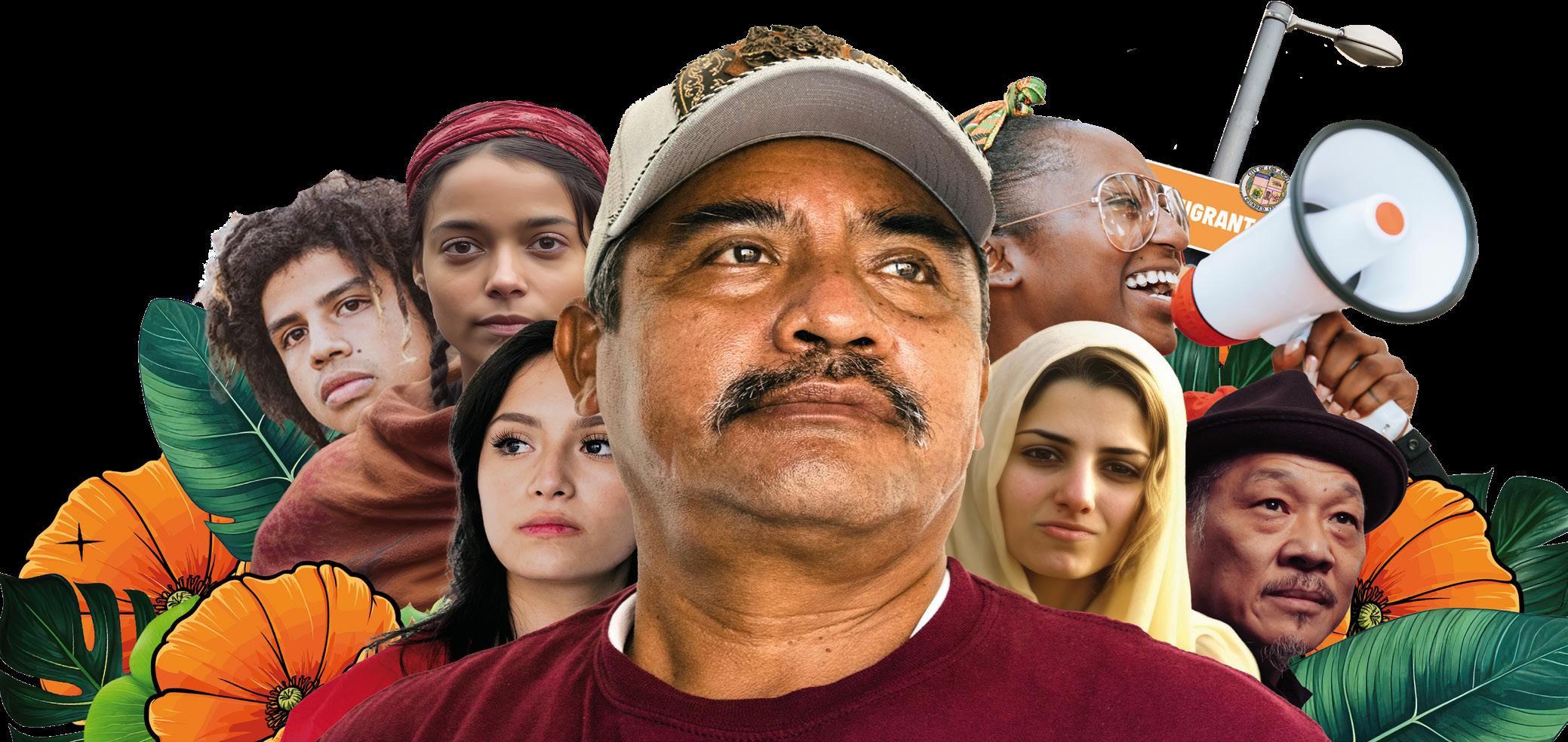
Not only has our community been the target of such cruelty and violence, but has also had to endure the dual crisis of unprecedented wild fires and fallen victim to mass destruction caused by the Eaton and Palisades fires. The Eaton fire was one of the most deadliest and destructive wild fires in history destroying over 9,000 structures and leading to mass displacement and job loss for many low-income and vulnerable residents. Despite all the violence, terror, cruelty, and family separation, with these dual crisis, immigrants continue to thrive and contribute to California’s social, political, and economic fabric. Now more than ever, the resiliency, grit, and ability to thrive is evident among our immigrant community and can only be possible in a state like California, which must continue to make solid investments in our communities and continue the work to integrate immigrants into all facets of California. When our immigrant community thrives, we all thrive.
BUDGET PRIORITIES
Immigrants in California contribute to the economy through their labor, innovation, and job creation. Immigrants contributed $2.1 billion to the U.S. economy in 2024, and their economic output is larger than their share of the total population. To maintain this important economic engine, we must continue to make critical investments in our communities to ensure that immigrants can thrive, live with dignity, and safeguarded from unwarranted attacks to critical programs and services.
California must continue to invest in programs that have proven to be successful and work to protect immigrants and refugees at the federal level from funding freezes for programs that serve new comers (ESAVN), legal services funding (OneCalifornia),andfundingforHighSchoolDreamResourceCenters.
• Assembly Member Jose Luis Solache is championing a one-time $12 million, three-year allocation to the California Department of Social Services to sustain and expand the ESAVN Program. This funding will ensure newly arrived vulnerable immigrants—including survivors of trafficking, domestic violence, and other serious crimes—receive culturally responsive case management for up to 90 days. This request is part of the California Welcomes Coalition’s budget priorities.
High School DREAM Resource Centers
• Assembly Member Robert Garcia is championing a one-time $15 million, three-year allocation to the California Department of Education to fund the Dream Resource Center Grant Program, established by AB 278 (Reyes, 2023). This investment will expand and strengthen Dream Resource Centers in high schools, building on successful pilots in Los Angeles and ensuring immigrant students have access to critical resources, guidance, and support to succeed academically and beyond.
DepartmentofAgingTaskForcetoimplementAB450
• Assembly Member Juan Carrillo is championing a $1 million budget request to implement AB 450 (Carrillo, 2025), establishing a taskforce within the California Department of Aging to examine and address the needs of immigrant older adults. This effort will convene key stakeholders and experts to assess challenges related to housing, affordability, and access to social services, and develop policy recommendations to better support immigrants aged 60 and older, regardless of status. The California Department of Aging and the California Department of Social Services will jointly report the panel’s findings to the Legislature by December 2028.

• The Health for All Coalition is working to restore last year’s cuts and prevent new reductions to Medi-Cal as the May Revision approaches. A key priority is addressing gaps impacting undocumented adults and protecting immigrants affected by HR 1, including asylees, parolees, survivors of domestic violence and trafficking, and Afghan and Iraqi Special Immigrant Visa holders who risk losing eligibility.
Legal Services Funding
The One California Coalition is working to increase funding for legal services above the $75 Million in the January budget. This would include additional funding of $50 Million Increase in funding for Deportation Defense Programs which include Removal Defense Work, Legal Fellowship, Youth Services, and College Legal Services. $15 Million for CHIRP, Children Holistic Immigration Representation Project.
Enhanced Services for Asylees and Vulnerable Non-Citizens (ESAVN) Program
Medi-Cal
LEGISLATIVE PRIORITIES
Strengthening State Access and Oversight of Private Detention Centers in California
SB 995
(PEREZ)
Protecting
the rights of
SB 1105 (PEREZ)
The Masuma Khan Justice Act would strengthens state access to and oversight of private detention facilities. This bill would grant various state regulators the power to conduct inspections to evaluate compliance with state health, safety, building, environmental, and labor standards for all large involuntary residential facilities.
Co-sponsored by the Coalition for Humane Immigrant Rights, the Mexican American Legal Defense and Educational Fund (MALDEF), and Public Counsel.
all Californians from Federal Enforcement Operations
Preserving California Rights Act: Limits state police from engaging in joint efforts with the federal government that would engage in operations to racially profile state residents, prosecute individuals for constitutionally protected activities such as the First Amendment, and prevent the use of military grade equipment against California state residents.
Co-sponsored by the Coalition for Humane Immigrant Rights, and the American Civil Liberties Union (ACLU).
Creating New Eviction Defense for those impacted by Federal Immigration-related arrests and detentions
SB 1243 (DURAZO)
SB 1243 (Durazo) would create a new eviction defense for families who are directly affected by immigration enforcement operations and suffered an arrest or detention.
Co-sponsored by the Coalition for Humane Immigrant Rights, AAPI Force, and Asian Americans Advancing Justice Southern California.
Enhancing Access to Remote Court Proceedings
SB 882 (Rubio) would extend virtual court hearings through January 21, 2029, increasing access for individuals who feel unsafe attending in person due to immigration enforcement or other concerns, including survivors of domestic violence and sexual assault.
Co-sponsored by the California Partnership to End Domestic Violence, the Coalition for Humane Immigrant Rights (CHIRLA), Inland Coalition for Immigrant Justice, and the Family Violence Prevention Project.
Reducing Voter Intimidation Tactics by keeping the Federal Immigration Enforcement away from polling places
SB 73
SB 73 (Cervantes) is an omnibus Voting Rights Bill, which would enhance voter protection rights, by creating safe zones from immigration enforcement at California polling places.
Co-sponsored by the California Partnership to End Domestic Violence, the Coalition for Humane Immigrant Rights (CHIRLA), Inland Coalition for Immigrant Justice, and the Family Violence Prevention Project.
LEGISLATIVE PRIORITIES
Keeping Communities Safer by Increasing Access to Diversion and Services for all Californians
AB 1231 (Elhawary) would enhance community safety by giving judges the discretion to offer beneficial programs and services for some low-level, non-serious, non-violent felonies, rather than solely traditional punishment.
Co-sponsored by Coalition for Humane Immigrant Rights (CHIRLA), Drug Policy Alliance, Immigrant Legal Resource Center, VERA Institute for Justice, PICO California, Los Angeles Regional Reentry Partnership and SEIU
Protecting Privacy and Confidentiality for Immigrant advocates and volunteers in California
AB 2426 (Bonta) would allow staff and volunteers who work at immigrant rights organizations to apply for the "Safe at Home Program,” and would allow them to use an alternative address on public facing documents. This bill seeks to preserve their privacy and confidentiality and serves as a shield from doxxing or other threats.
Co-Sponsored by the Women’s Foundation and Coalition for Humane Immigrant Rights (CHIRLA)
EXTENDING PROTECTIONS FROM IMMIGRATION ENFORCEMENT FOR DOMESTIC VIOLENCE, RAPE, HUMAN TRAFFICKING AND HOMELESS SHELTERS
This bill will protect domestic violence shelters, human trafficking, rape crisis centers, and homeless shelters from unwarranted immigration enforcement. Immigrant survivors of domestic violence, sexual assault, and human trafficking already face many barriers to accessing support. This bill would prohibit employees from allowing access to immigration enforcement entities to non-public spaces without valid identification, written statement of purpose, and a judicial warrant.
Increasing Protections for Immigrant Workers in California from Employer-based Coercion
AB 2495 (Kalra) would prohibit employers from coercing workers through unfair immigration-related practices to preemptively induce silence and inaction around workplace violations. This bill expands existing labor protections to make immigrationrelated coercion unlawful and ensures that employers cannot create a climate of fear with explicit or implied immigration-related threats.
Co-sponsored by AAPIs for Civic Empowerment, California Employment Lawyers Association, Coalition for Humane Immigrant Rights (CHIRLA), Legal Aid at Work and Coalition for Humane Immigrant Rights.
AJR 17 (C. RODRIGUEZ)
SJR 8 (ARREGUIN)
AJR 17 (C. Rodriguez) & SJR 8 (Arreguin) are two joint resolutions that support two federal bills which update the Registry Act of 1929 and creates a Pathway to Citizenship for approximately 8 million immigrants who entered the US before a certain date and meet eligibility standards. Updating registry would provide the Attorney General (DHS Secretary) with updated discretion to grant lawful admission for permanent residence (a green card) to certain immigrants; allow for an immigrant to qualify for lawful permanent resident status if they have been in the U.S. for at least seven years before filing an
Our Mission
CHIRLA’s mission is to achieve a just society, fully inclusive of immigrants. CHIRLA was founded in 1986 to advance the human and civil rights of immigrants and refugees. CHIRLA became a place for organizations and people who support human rights to work together for policies that advance justice and full inclusion for all immigrants.
CHIRLA’s first director was Father Luis Olivares, the pastor at Our Lady Queen of Angels Church. As a leading voice of the Sanctuary movement, Olivares used his church to protect refugees fleeing human rights abuses in Central America in the 1980s.
CHIRLA has since become one of the largest and most effective advocates for immigrant rights, organizing, educating and defending immigrants and refugees in the streets, in the courts, and in the halls of power.
At CHIRLA, civic-minded immigrant families work for a world where they are free to move, participate in democracy, and enjoy human rights. CHIRLA relies on the love and vision of our community to organize and build power among people, institutions, and organizations to change public opinion and craft progressive policies that promote human, civil and labor rights for everyone.