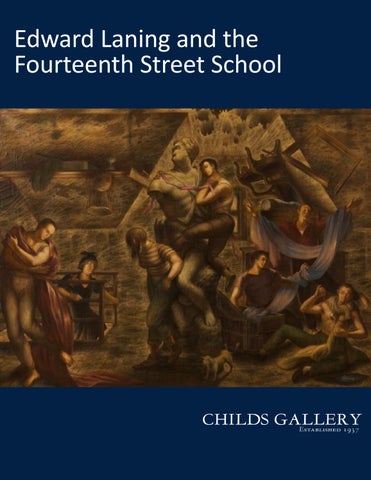
Edward Laning and the Fourteenth Street School

In the 1920s and 30s, New York’s Fourteenth Street in Lower Manhattan became a hub of commercial activity, with cinemas, restaurants, and stores catering to a middle and working-class clientele. A group of artists, motivated by the legacy of the Ashcan School’s embrace of populist urban life, established studios in the area and began to create works inspired by the throng that would daily inundate Fourteenth Street.
Among these artists was Edward Laning, a midwestern transplant with a studio at 145 West Fourteenth Street and later 12 East Seventeenth. Laning was born in Petersburg, Illinois, and attended the Art Institute of Chicago and the University of Chicago before coming to the Art Students League in New York. Though he initially rejected the conservative instruction received there, he later realized its value and would continue to adhere to many of its tenets throughout his career.
Laning, like other artists of the Fourteenth Street School, depicted the lively spectacles of the ‘poor man’s Fifth Avenue’ in his work – the residents, visitors, and vagrants populating the area giving artists a plethora of subjects from which to draw inspiration. Laning, however, did not shy away from difficult subjects as did many of his contemporaries – rather, his paintings explored the less-than-ideal circumstances of daily life for many area denizens. Through his work Laning openly expressed his disenchantment with the uncertainties of post-Depression America. Later, his paintings would take on increasingly surrealistic tones, and fire became a recurring symbol of impending societal doom.
Of crucial importance to Laning and other artists of the Fourteenth Street School was the tutelage of Kenneth Hayes Miller, an artist and teacher working at the Art Students League, whose classically focused pedagogy provided the group’s theoretical and technical underpinning. Espousing a recovery of traditional techniques, Miller would use numerous glazes and underpainting to build up images that imparted a sense of classical order to his frenzied urban subjects.
Among his many students, Bishop was one of Miller’s most faithful adherents; his influence is visible in her technical and compositional method, the sculptural execution of her figures, as well as her choice of
Front Cover:
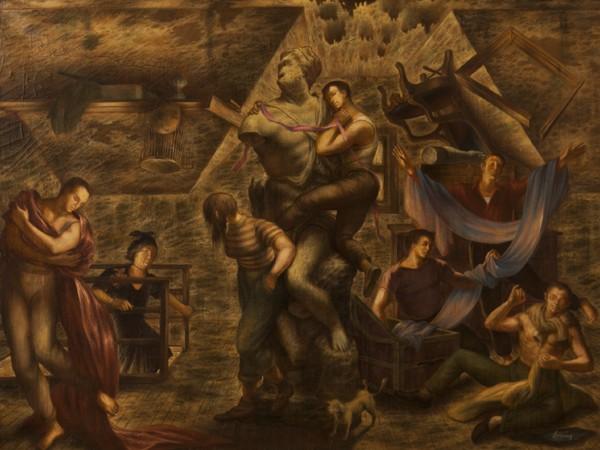
Edward Laning, American (1906-1981). The Attic, 1952. Oil on canvas. 39 x 52 in. Signed lower right: “Laning”.
Back Cover:
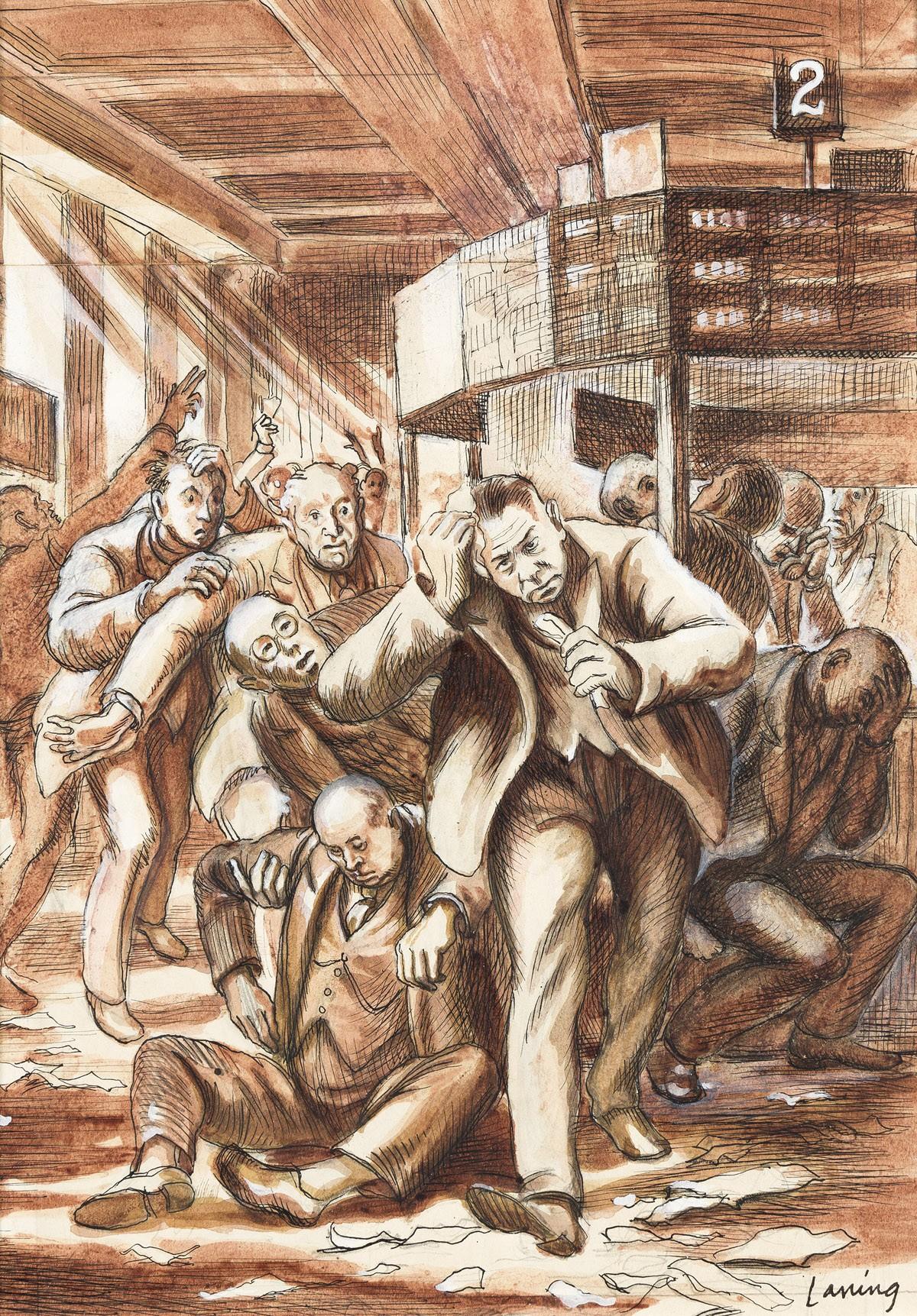
Edward Laning, American (1906-1981). Black Friday, 1939. Black and sepia ink with gouache highlights on paper, 14 x 10 ¼ in. Signed lower right: "Laning". This drawing is from a series depicting the stock market crash of 1929.
subject matter. Both Laning and Reginald Marsh departed from Miller’s more affirmative view of urban life and paid greater emphasis to the complex realities brought about by the vast economic disparities of the Great Depression.
Along with Laning, other Miller acolytes forming the core of the Fourteenth Street School were Isabel Bishop and Reginald Marsh. In addition, the brothers Raphael, Moses, and Isaac Soyer’s emphasis on the downtrodden working class of the Depression era, along with their location on Fourteenth Street in the 1930s, cemented their position as part of the group. Jack Henderson, a longtime collaborator of Laning’s and artist at 30 East Fourteenth, was also counted as a member.
In addition to Laning, Miller, Bishop, Marsh, Henderson, and the Soyers, this exhibition includes works by other artists associated with the Fourteenth Street School, such as Peggy Bacon, Alexander Brook, Don Freeman, and Molly Luce. Also included are pieces by George Bellows and John Sloan, members of the Ashcan School and forebearers of the Fourteenth Street School’s ideology.
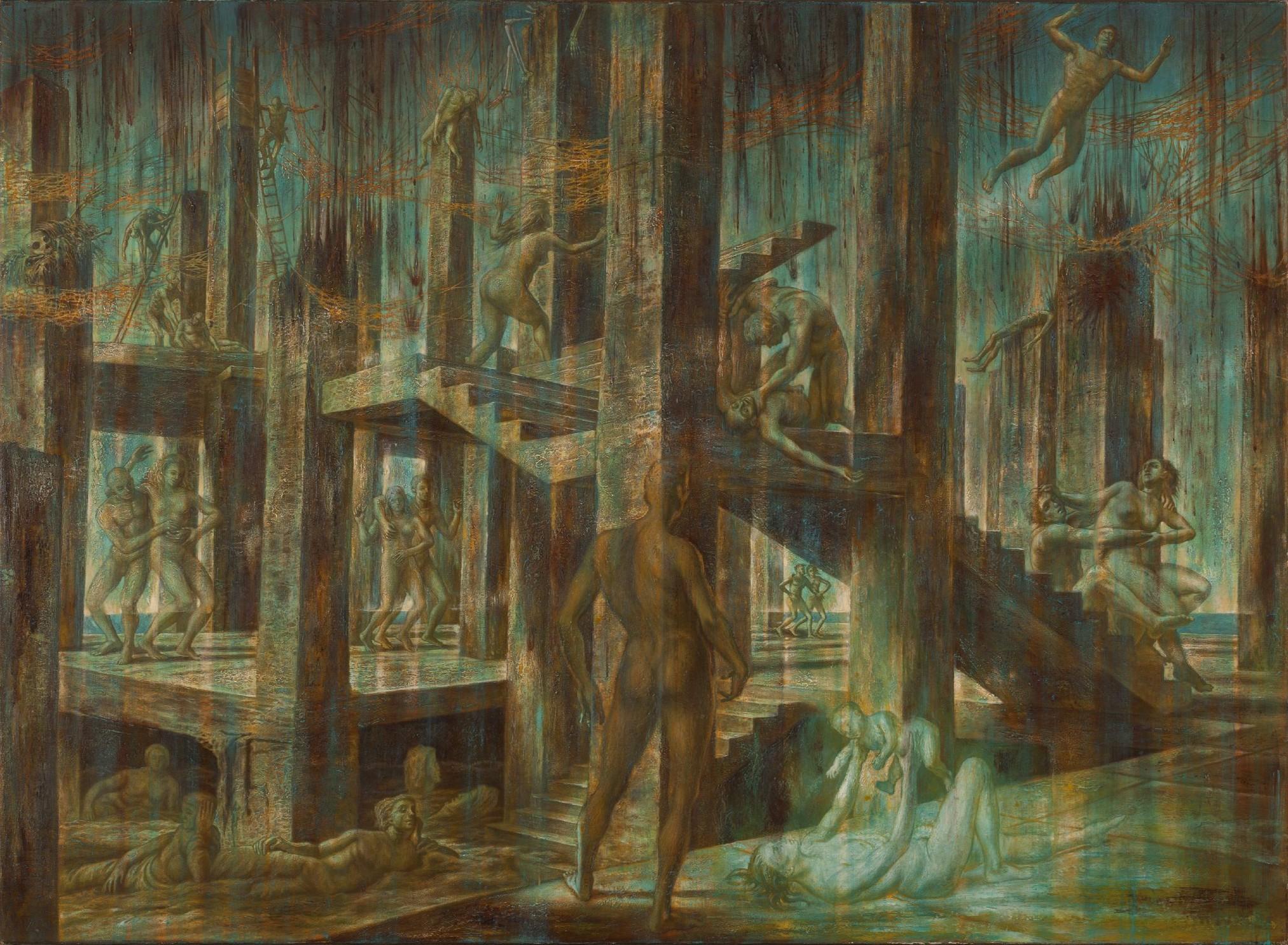
Edward Laning, American (1906-1981). The Building, c. 1955. Oil on canvas. 39 ¼ x 53 ¾ in.
Inscribed verso: "The Building / B.H. 182 / EL / 81".
Exhibited: ‘Paintings and Drawings: Edward Laning’, Kennedy Galleries, Inc., New York, March 21 - April 18, 1992.
[Woman Reading a Letter], 1927
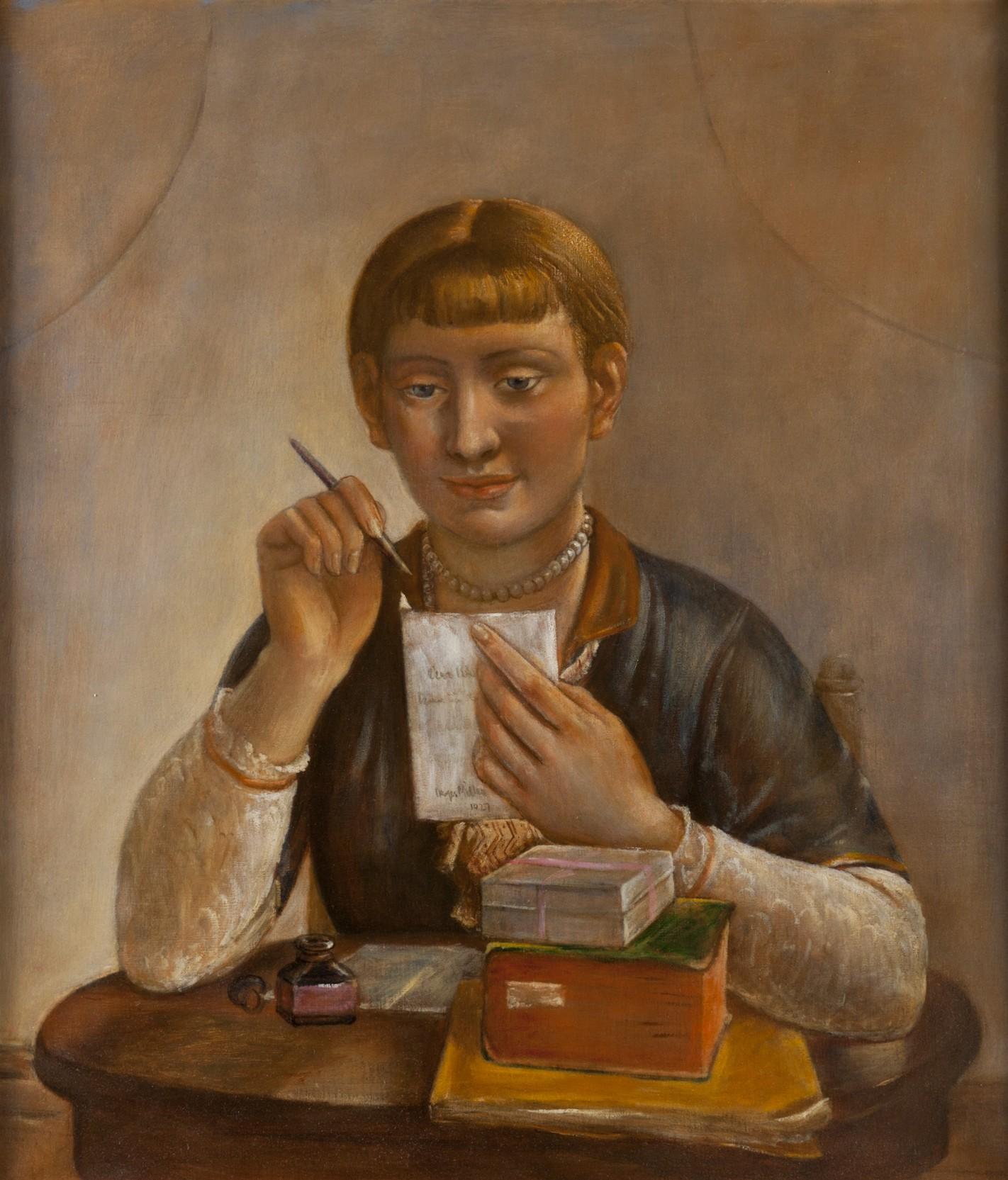
Oil on canvas, 30 x 25 in.
Signed and dated on the letter: "Hayes Miller / 1927".
Born in Oneida, New York, Kenneth Hayes Miller became a highly prominent painter and teacher in New York City in the early 20th century. Not much influenced by modernism, he painted nude and semi-nude figures in settings that were hazy and romantic. His signature subjects were ordinary people, especially women, going about their lives in the city, a subject he cultivated after 1923 when he moved to a studio on Fourteenth Street. This location afforded him more exposure to the comings and goings of people on the street. He also painted landscapes in a style that was looser than he used with his figures.
At the Art Students League and the Chase School of Art, he was a teacher, credited as being especially important to the Urban Realists of the 1920s and 1930s including Reginald Marsh, Edward Hopper, George Bellows, and Isabel Bishop.
He studied at the Art Students League with Kenyon Cox and at the New York School of Art with William Merritt Chase. In 1899, he began traveling in Europe. As his style and methods developed, his figures became increasingly sculptural and Renaissance-like, with glazes and under painting that built up the surface.
Kenneth Hayes Miller, American (1876-1952)Edward Laning, American (1906-1981). Portrait of Jessie, c. 1950. Oil on canvas. 17 ½ x 29 ½ in.
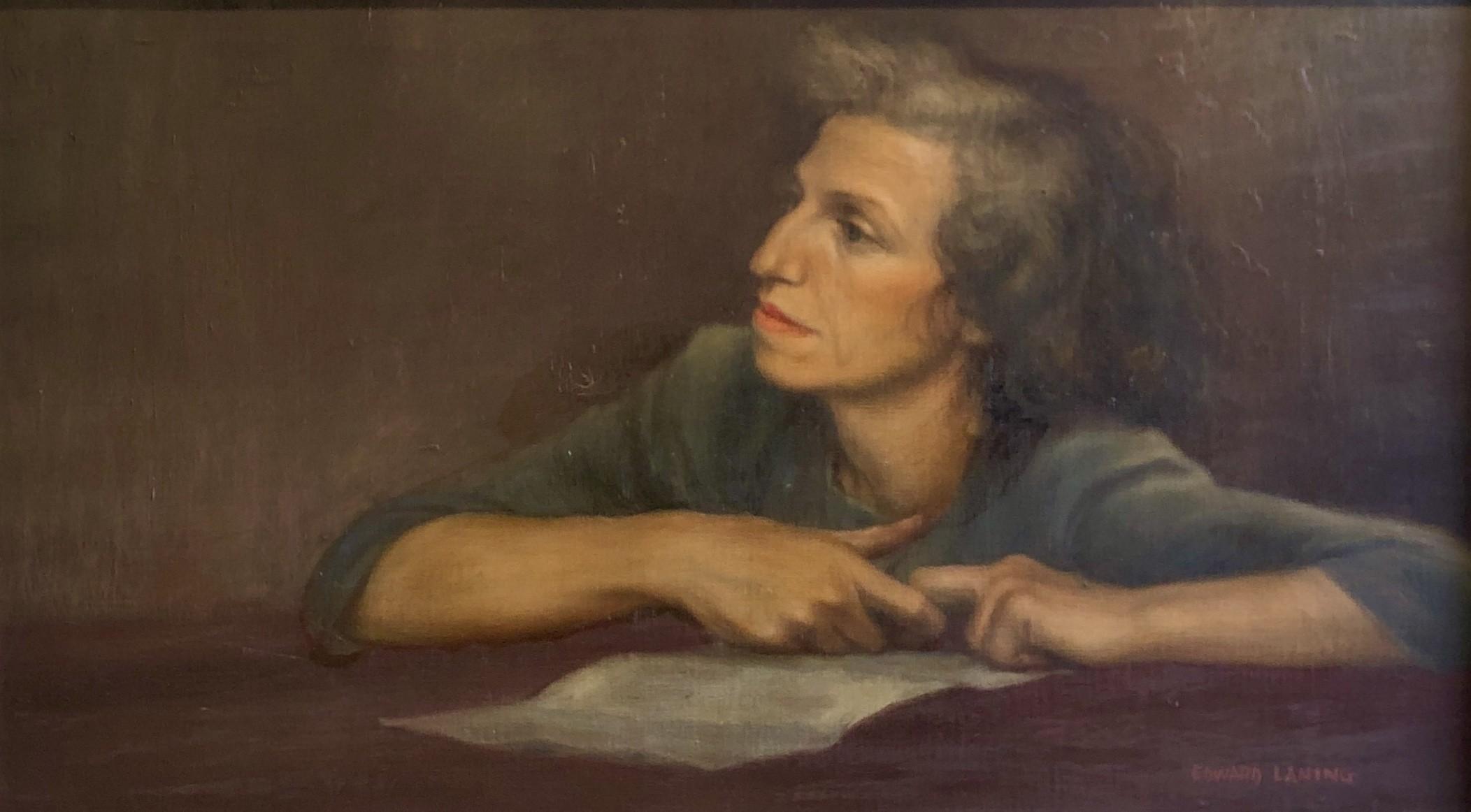
Signed lower right: "Edward Laning".
Edward Laning, American (1906-1981)
Study for Seated Matron in Corn Dance, 1937
Drawing on brown paper, 10 x 5 ½ in.
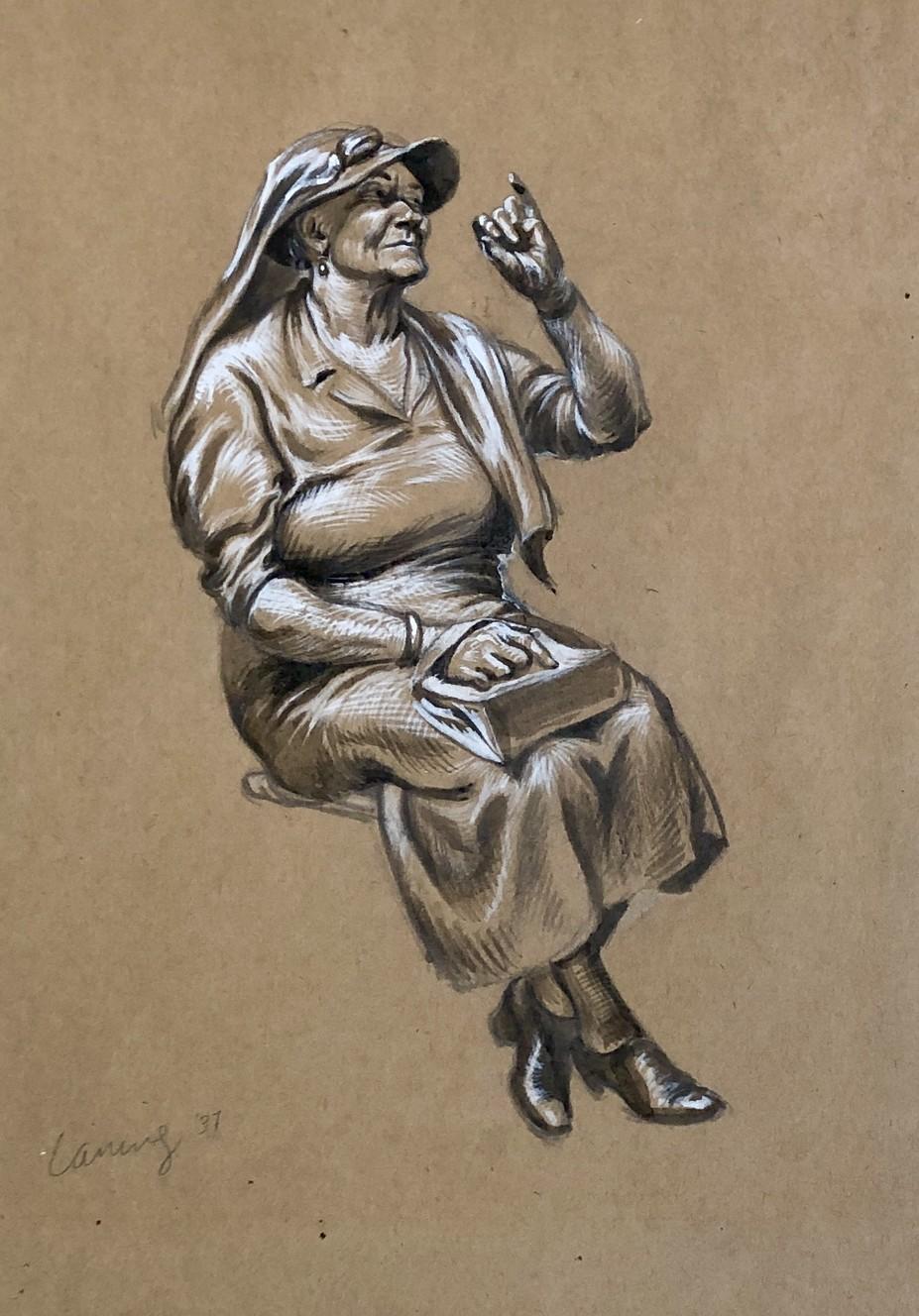
Signed and dated in pencil lower left.
Annotated in another hand, in ink at bottom of sheet: "Posed for by Catherine Campbell Fife, Canton, Ohio, Mother of Mary Fife Laning, 82 State Street Brooklyn Heights, New York."
Rejecting what he saw as the ‘sterility’ of modern art, Reginald Marsh sought to depict depression-era New York City through the lens of the old masters. In works such as Manhattan Skyline from 1940, the artist depicts the rapidly changing industrial skyline of New York City with a haziness and compositional stability reminiscent of the sixteenth-century Italian landscapes of Titian. This stylistic debt to the masters of the past, combined with a subject matter which grounds Marsh’s work fully in modernity creates a heightened sense of drama surrounding the human condition. Though Marsh came from a privileged background, he chose to depict New York’s lower-class residents – either lost in the crowds of the Bowery and Coney Island or as lone figures isolated from their surroundings. One such figure occupies the foreground of Manhattan Skyline, huddled in the street and nearly fading into the shadows to emphasize a loss of human integrity and control in the face of the economic tumult of the Great Depression.
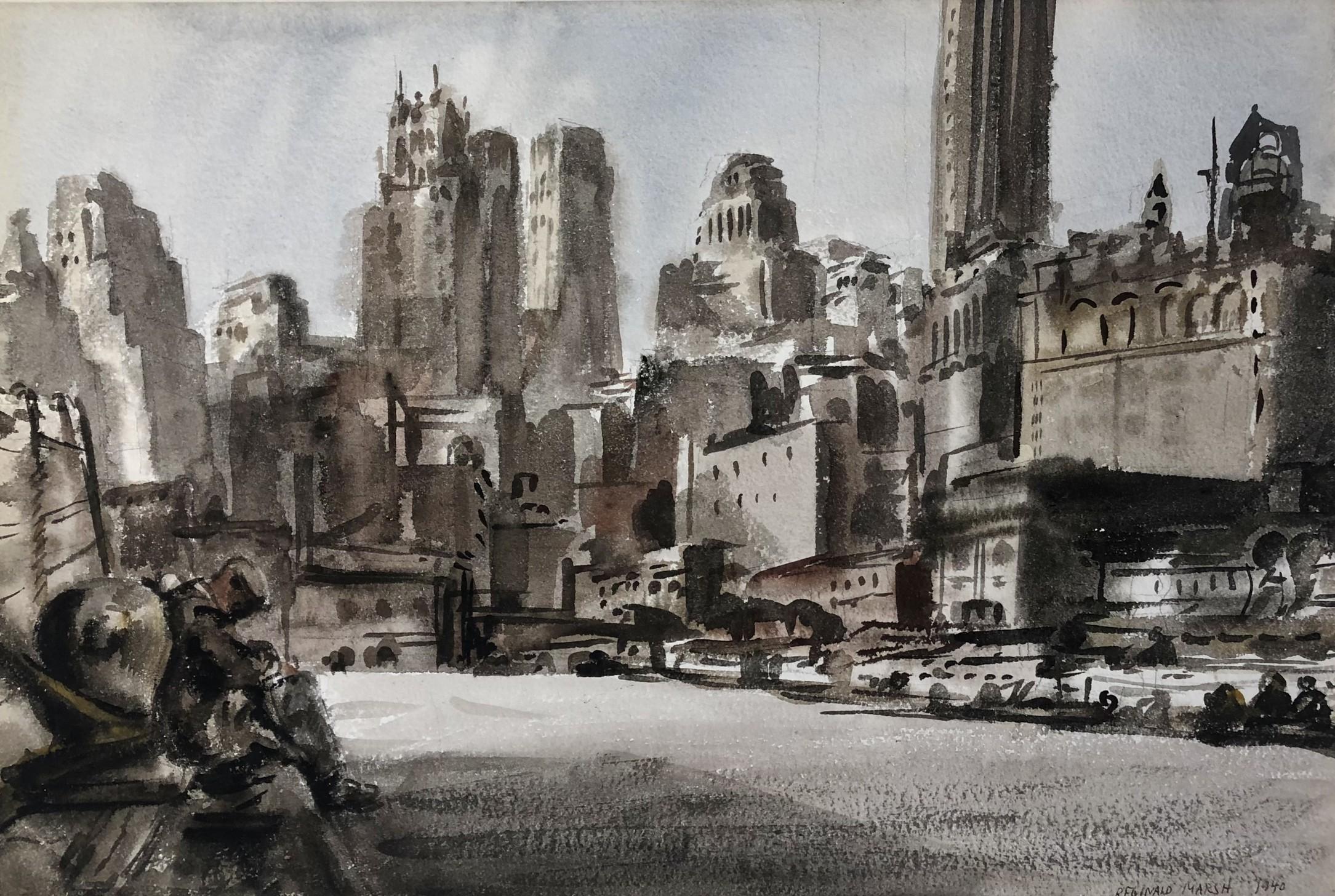 Reginald Marsh, American (1898-1954). Manhattan Skyline, 1940. Watercolor on paper, 15 1/4 x 22 3/4 in. Signed and dated lower right: "Reginald Marsh 1940".
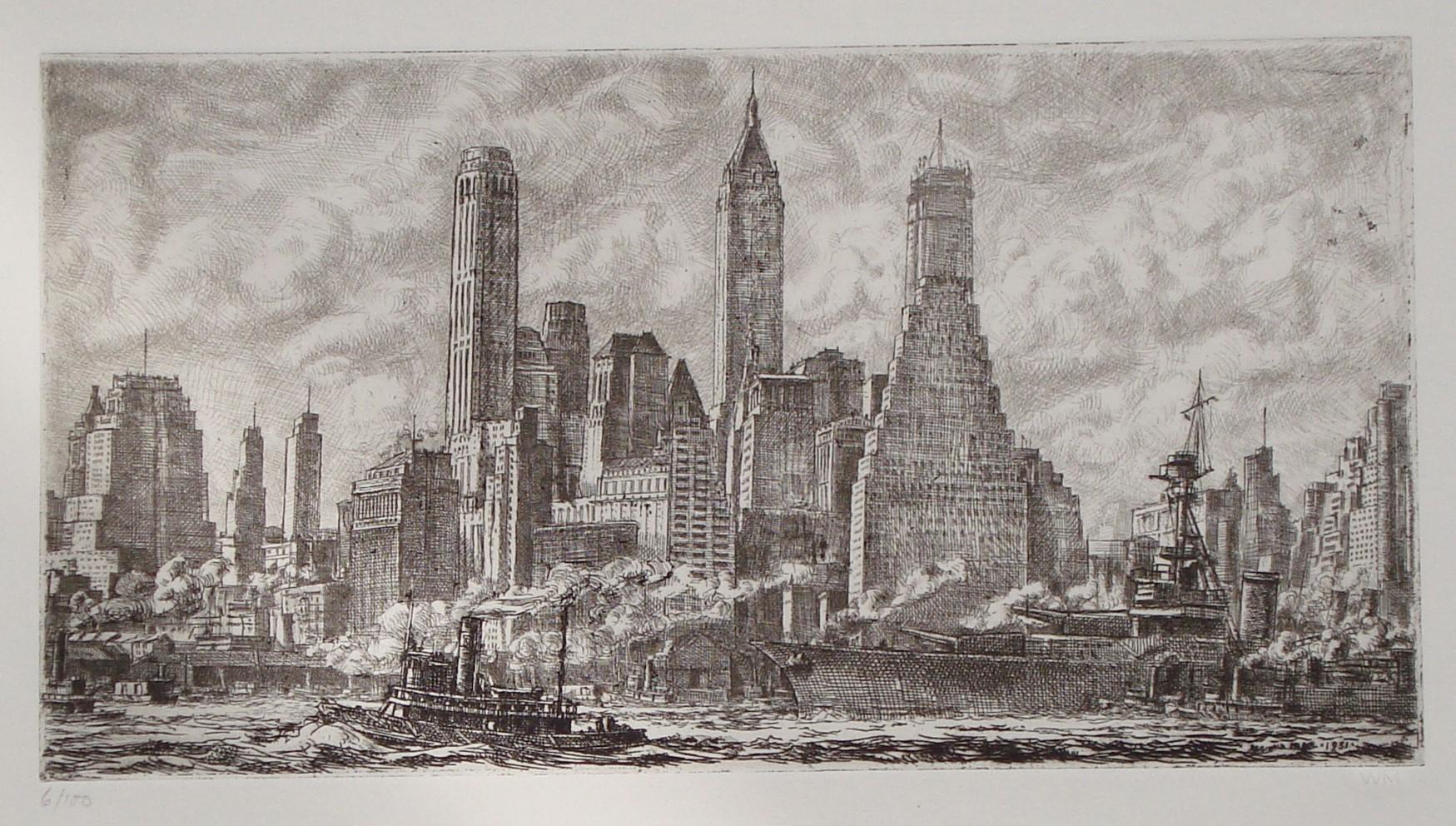
Reginald Marsh, American (1898-1954). Skyline from Pier 10, Brooklyn, 1931. Etching, 6 x 11 in. Sasowsky 129, iv/IV final state. 6 in a posthumous edition of 100, from the 1971 Whitney Museum edition. Numbered in pencil lower left: “6/100”. With Whtiney Museum blindstamp lower right: “WM”. A fine impression in fine condition, with sheet measuring 13 1/8 x 16 inches. From the Joseph and Marjorie Relkin Collection
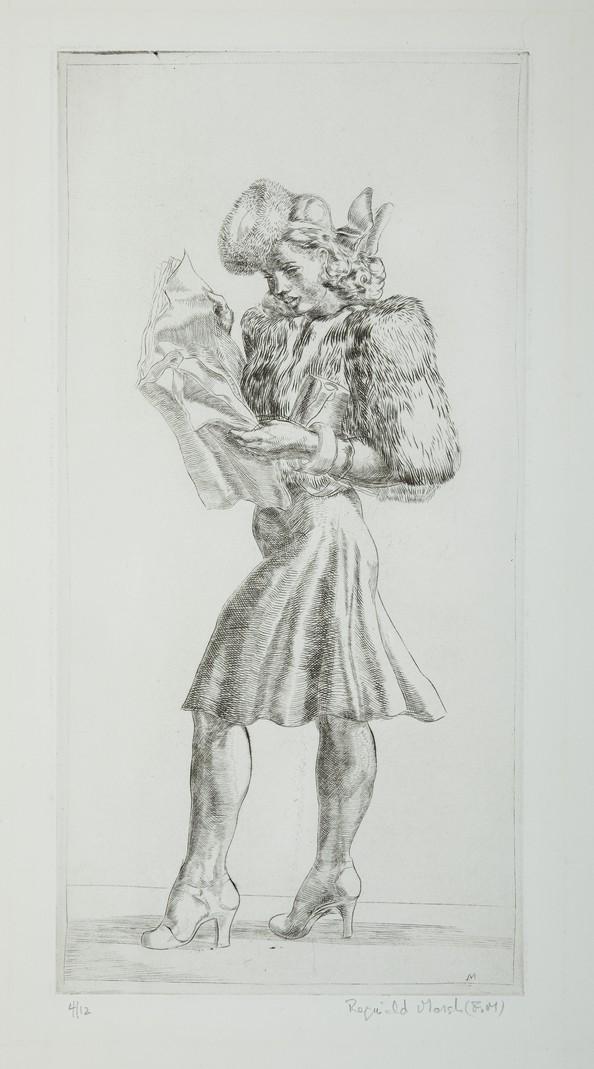
Reginald Marsh, American (1898-1954)
Girl in Fur Jacket Reading Tabloid, 1940
Etching, 12 x 6 in.
Sasowsky 205, vi/VI. 4 in a possible edition of 12. Inscribed in pencil lower left: ‘4/12’; signed in pencil lower right, by the artist’s widow: ‘Reginald Marsh (F.M.)’. A fine impression in fine condition. From the Joseph and Marjorie Relkin Collection.
The signature of the widow on this impression would seem to indicate that this impression is one of the prints from the edition of 16 printed by Alfred Jones in 1956. As the print is numbered 4 of 12, it is also possible that this was an unsigned impression remaining in the estate from Marsh’s personal printing of 12 impressions in 1940, and later signed by the artist’s widow.
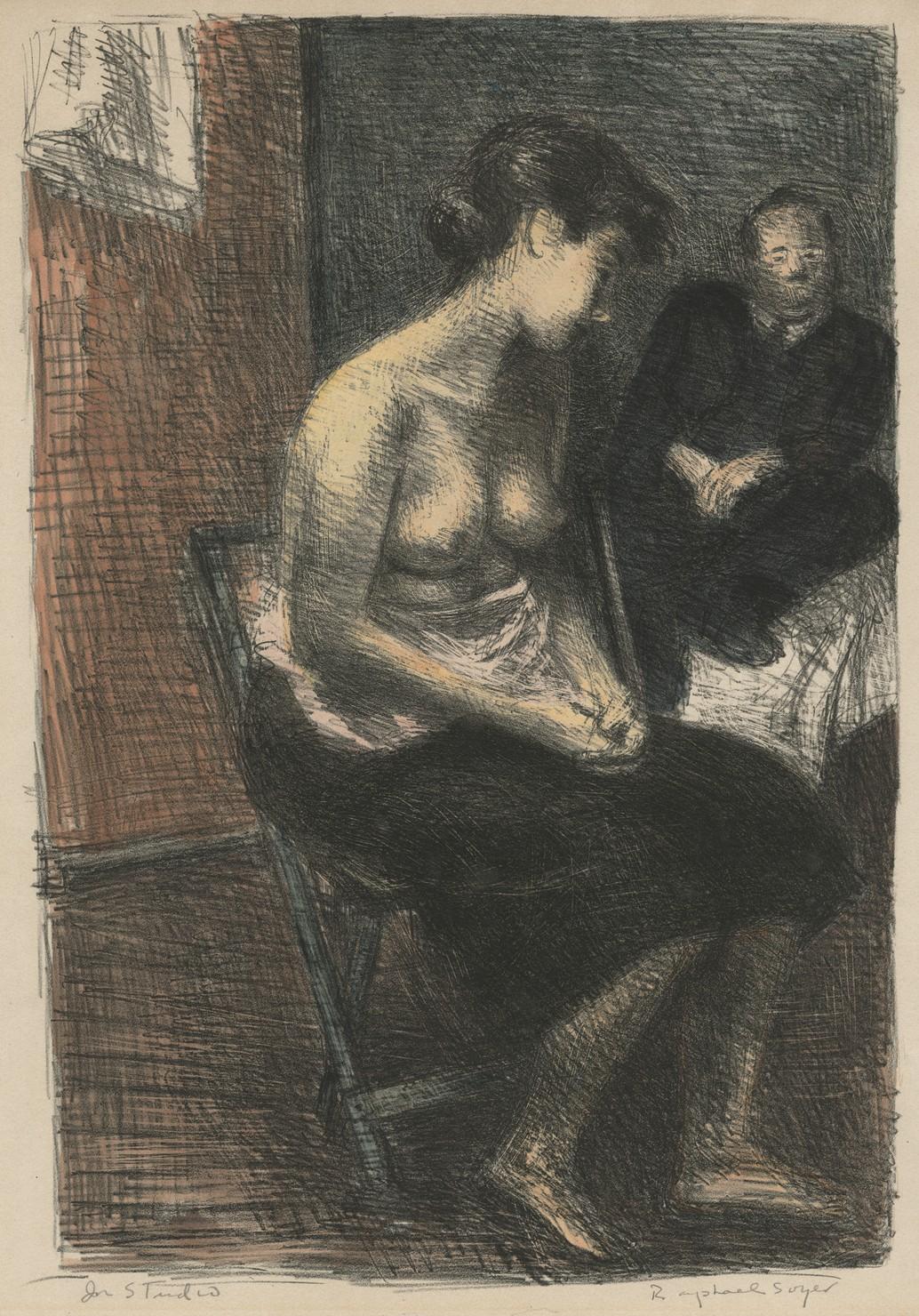
In Studio, circa 1933
Hand-colored lithograph, 15 x 10 in.
Cole 29. A rare proof hand-colored in watercolor by the artist, probably outside the edition of 25. Perhaps unique. Signed in pencil lower right margin: “Raphael Soyer”; titled in pencil lower left margin: “In Studio”. A fine impression in fine condition, aside from slight mat toning.
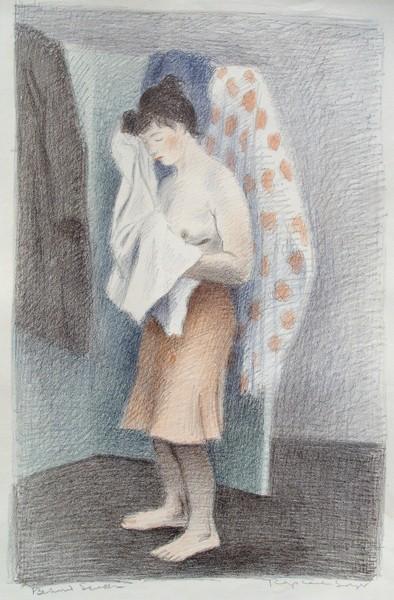
Young Woman Drying Herself, circa 1940
Color lithograph, 19 x 12 in.
Cole 57A. From an edition of 300. Signed in pencil lower right margin: “Raphael Soyer”; titled in pencil lower left: “Behind Screen”. A fine impression in fine condition with full margins.
According to Cole, this was Soyer’s first color lithograph..
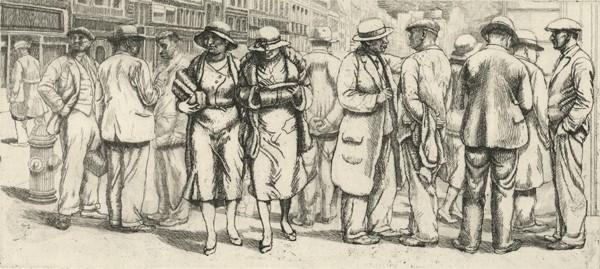
Raphael Soyer, American (1899-1987) Raphael Soyer, American (1899-1987)Isabel Bishop, American (1902-1988). Fourteenth Street, 1931. Etching, 4 7/8 x 10 7/8 in. Sold in a Portfolio of 8 etchings. Number 19 in an edition of 50. Printed posthumously 1988 by Sylvan Cole Gallery and Midtown Galleries. Cloth covered clamshell box. Prints Inscribed in pencil lower left 19/50. Stamp signed lower right, estate stamp lower right.
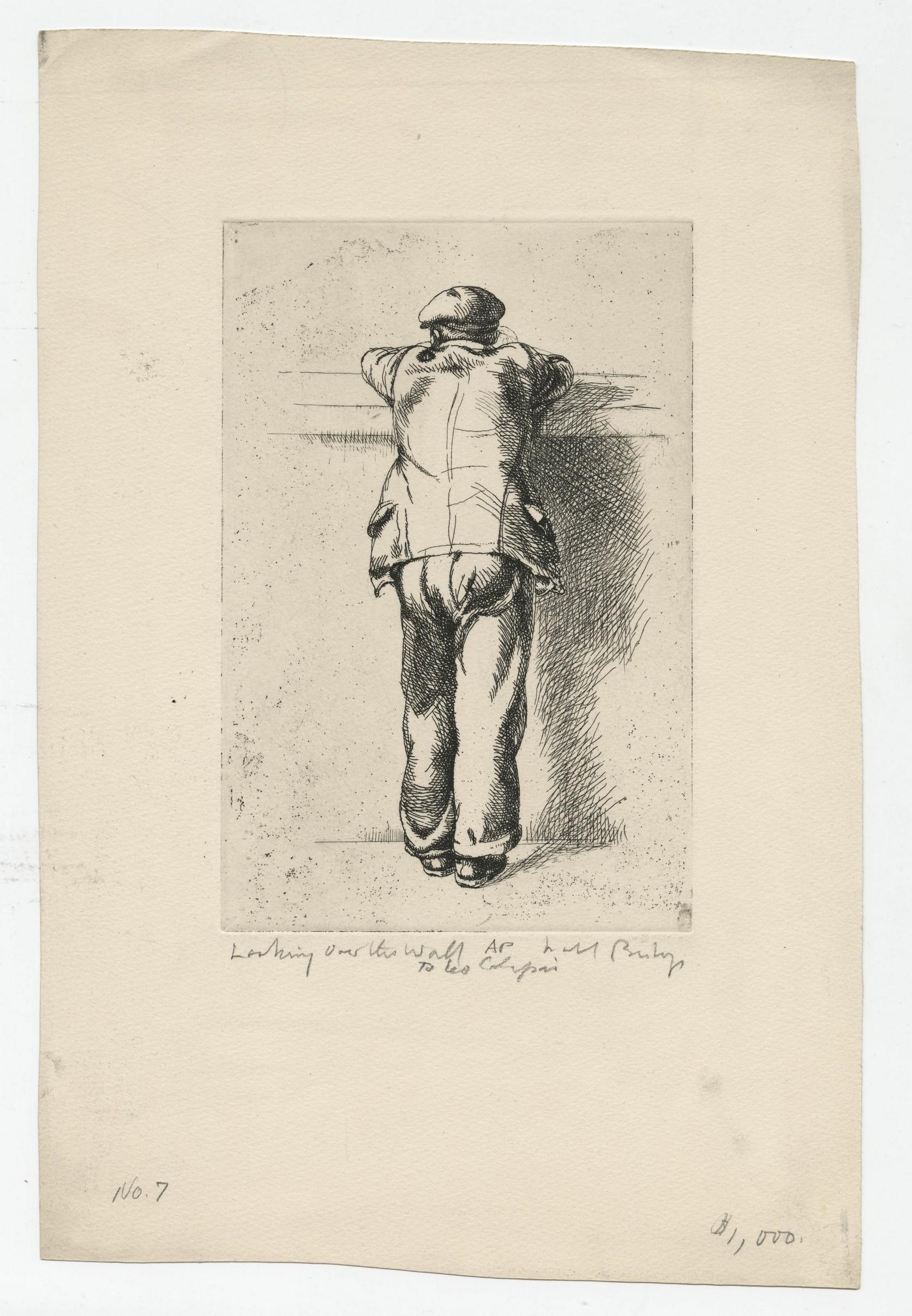
Isabel Bishop, American (1902-1988) Looking Over the Wall, 1928 Etching, 6 x 4 in.
Teller 7, lifetime artist's proof. Before the 1989 edition by Stephen Sholinsky, only a few proofs, printed by the artist, were made. From the personal collection of Letterio Calapai. Signed in pencil lower right: "Isabel Bishop"; titled and inscribed in pencil lower left: "Looking Over the Wall AP"; dedicated to the printmaker Letterio Calapai in pencil lower center: "To Leo Calapai"; inscribed in pencil bottom left margin: "No. 7"; with an early inscribed price of "$1,000" in bottom right margin.
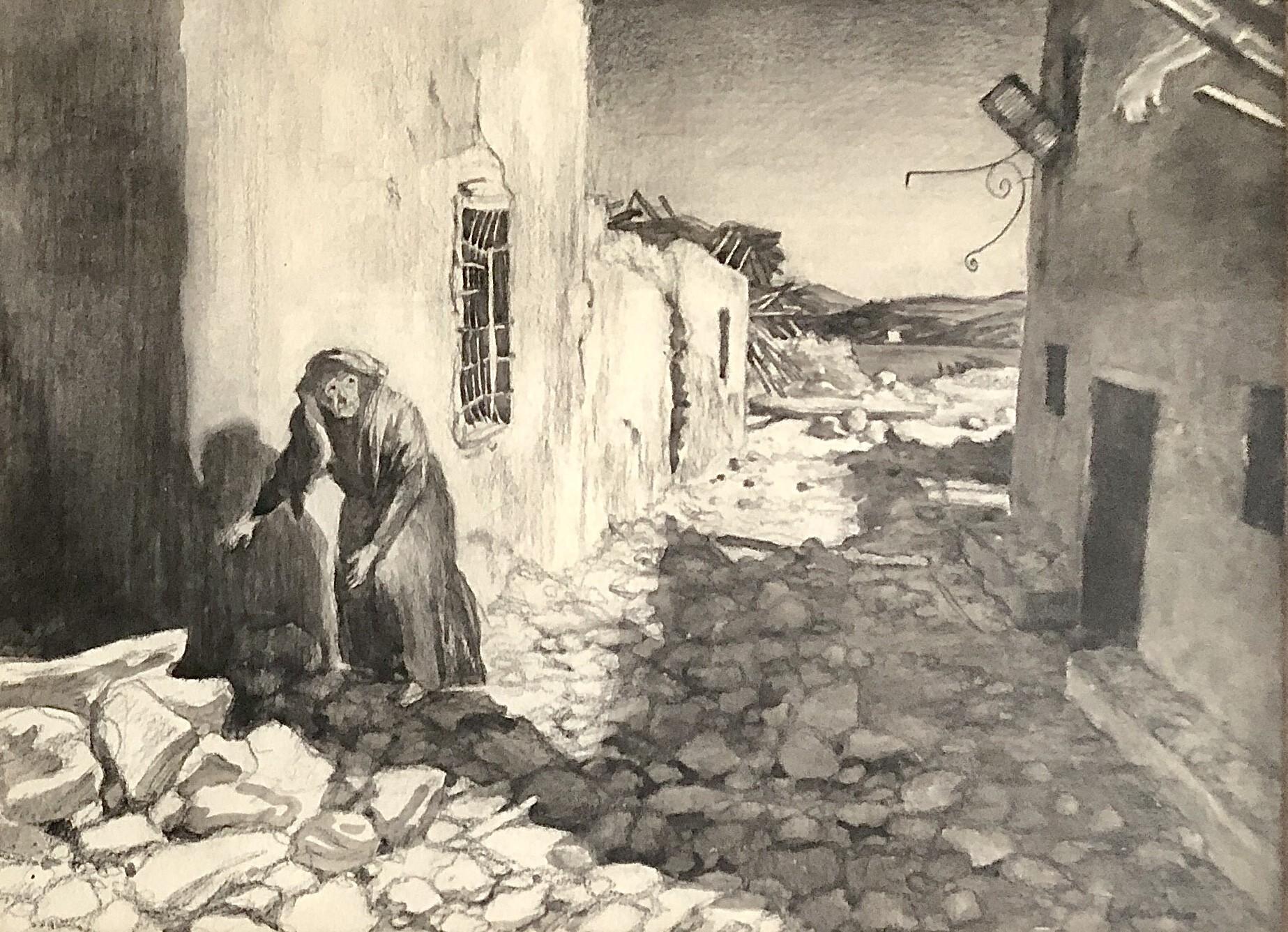
ABOVE:
Edward Laning, American (1906-1981)
Homecoming – Portoferraio, 1944
Pencil and wash, 11 x 15 in.
Signed lower right: “Laning”.
LEFT:
Edward Laning, American (1906-1981)
Lazzaro di Cimolo, 1953
Ink wash and gouache, 12 x 7 ¼ in.
Related to a similar work by Laning in the Whitney Museum of American Art, Mannequin, c.1950, Opaque watercolor and graphite pencil on paper (Accession # 84.73.7).
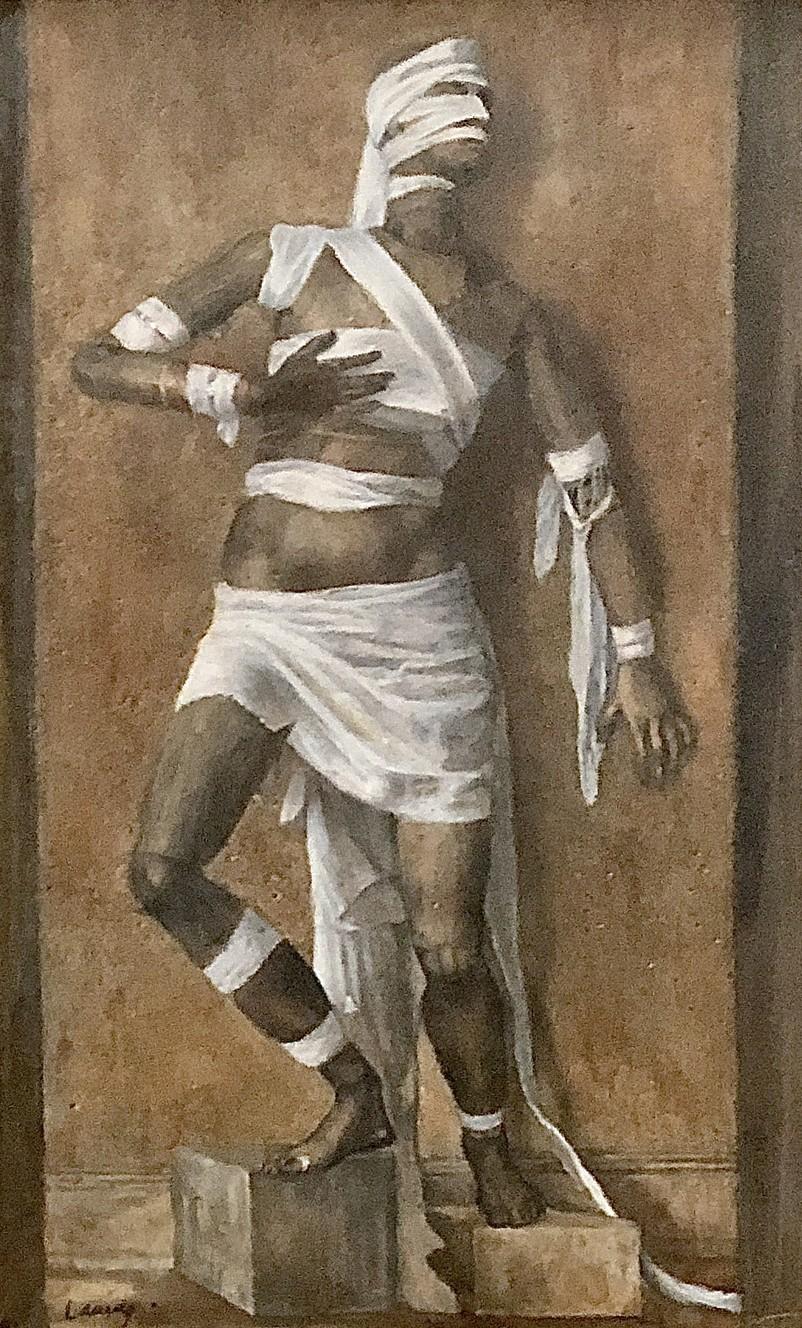
Edward Laning, American (1906-1981) The Escape
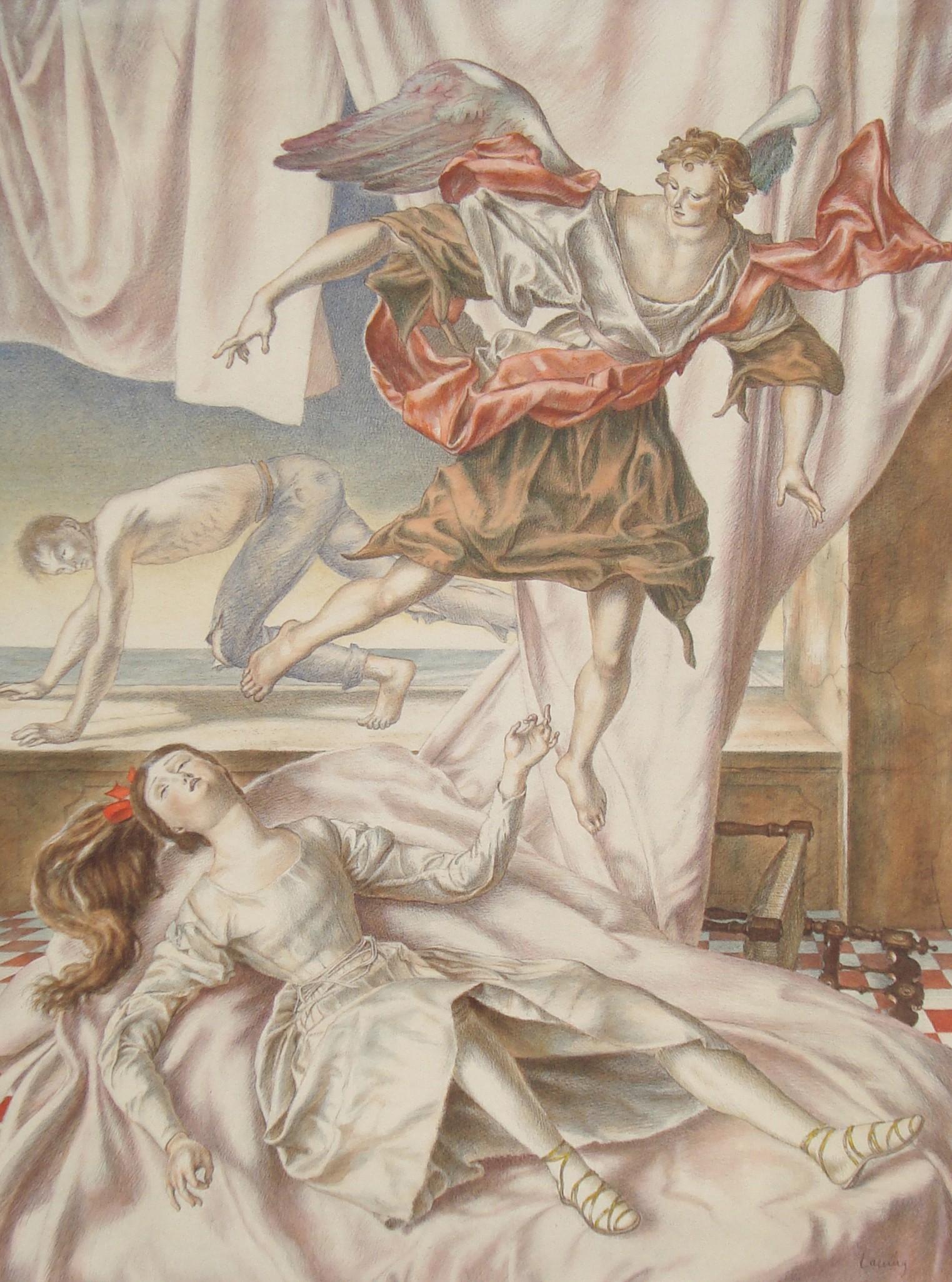
Mixed media, 24 x 18 in.
Signed lower right: “Laning”.
Edward Laning, American (1906-1981) Ball of Fire, 1942/53 Oil on canvas, 39 x 66 in. Signed lower right.
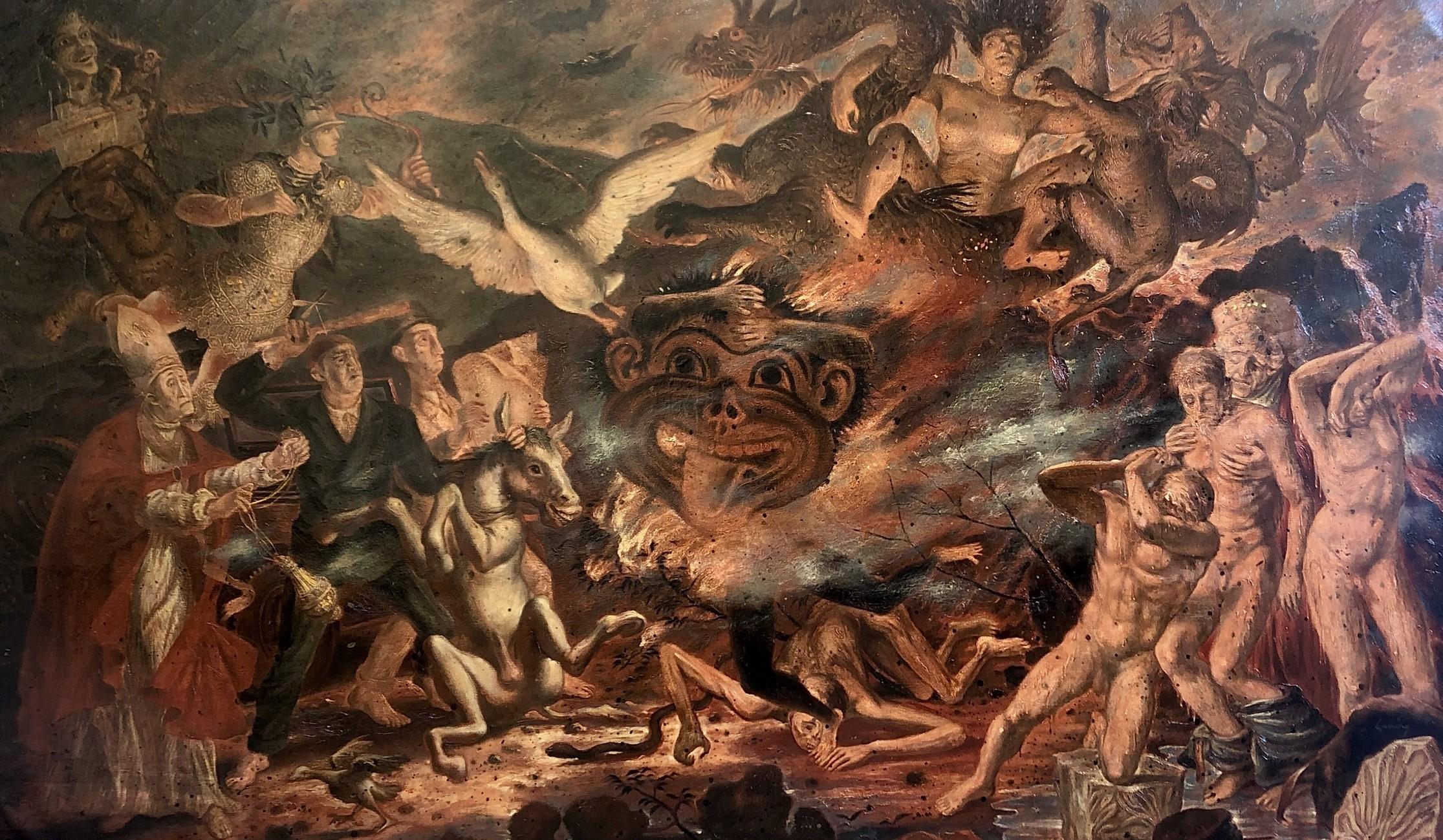
Exhibited: “Edward Laning, American Realist: A Retrospective Exhibition/Wichita Art Museum/September 11-October 17, 1982”.
Published: Wooden, Howard E. “Edward Laning, American Realist, 1906-1981, A Retrospective Exhibition”. Exhibition Catalogue. Wichita Art Museum, 1982. fig. 25.
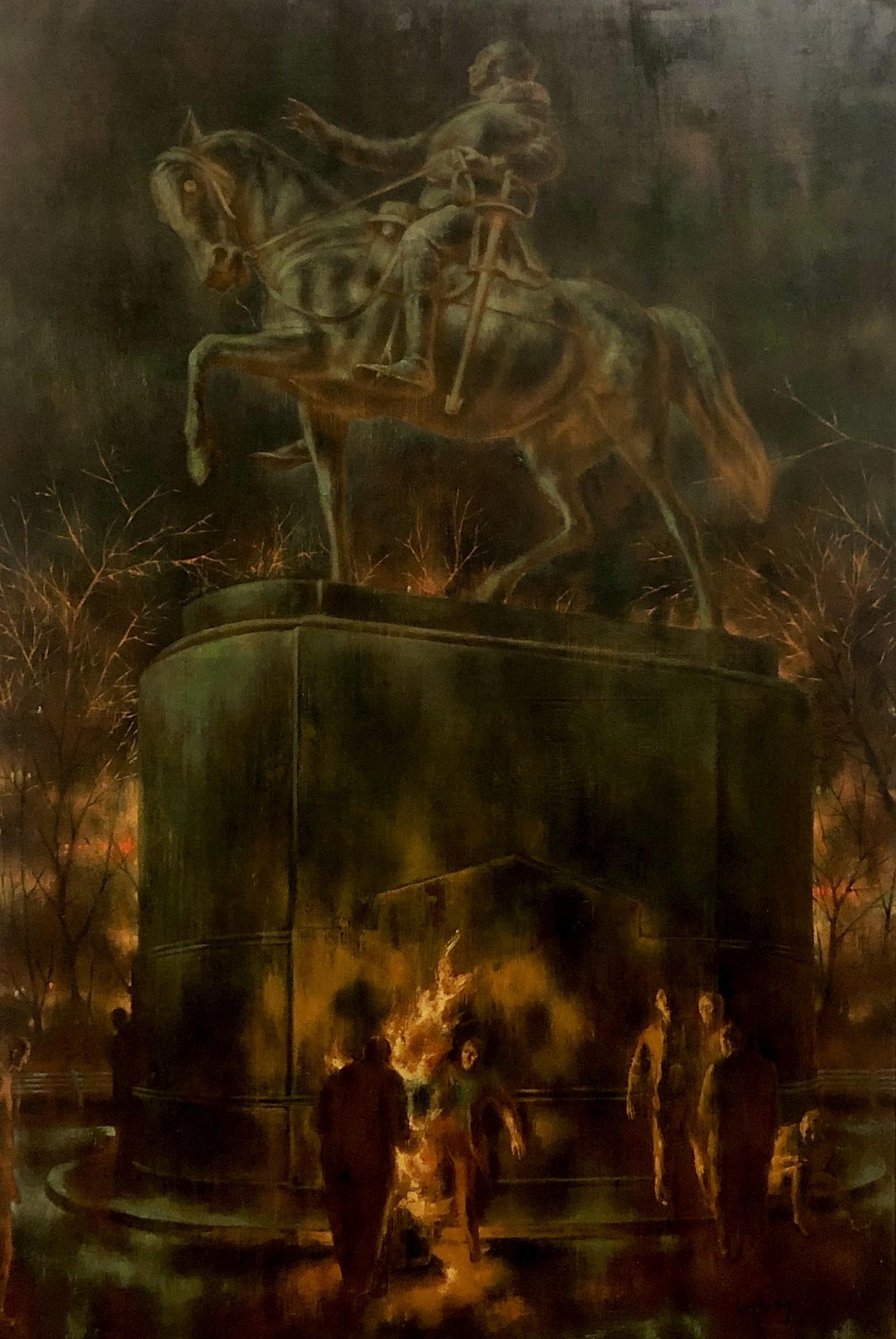
Edward Laning, American (1906-1981)
The Fire Next Time (Union Square), c.1956
Oil on canvas, 72 x 48 in.
Signed lower right: “Laning”.
Exhibited: “Realism and Realities”, Rutgers University Art Gallery, New Brunswick, NJ, January 17 – October 22, 1982.
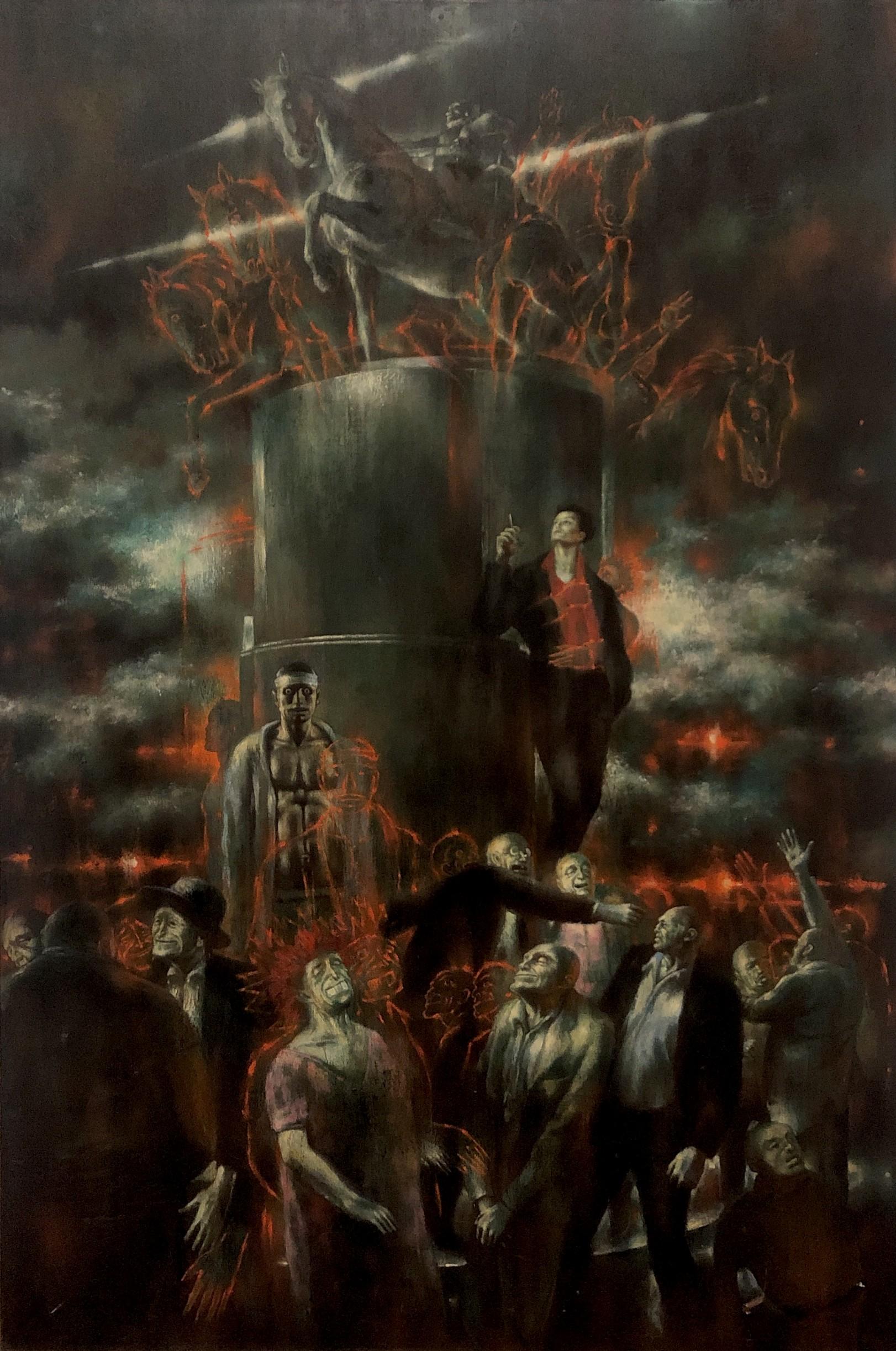
Edward Laning, American (1906-1981)
The Fire Now: Union Square, 1958
Oil on canvas, 72 x 48 in. Signed lower right: “Laning”.
Exhibited: “Edward Laning, American Realist: A Retrospective Exhibition/Wichita Art Museum/ September 11-October 17, 1982”.
Published: Wooden, Howard E. “Edward Laning, American Realist, 1906-1981, A Retrospective Exhibition”. Exhibition Catalogue. Wichita Art Museum, 1982. fig. 28.
Edward Laning, American (1906-1981)
The Poet: Union Square, 1960/62
Oil on canvas, 72 x 48 in. Signed lower right: “Laning”.
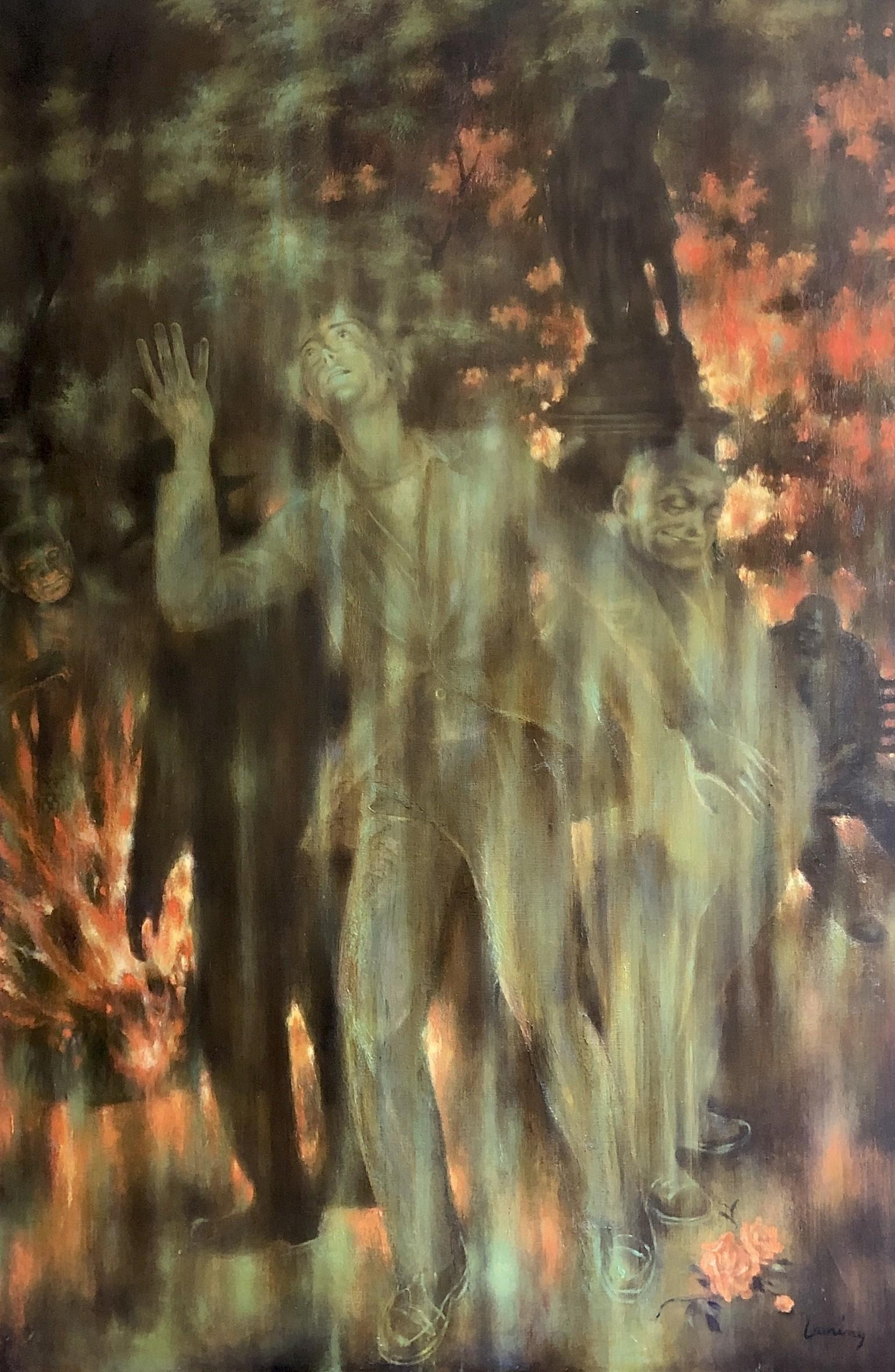
Exhibited: “Edward Laning, American Realist: A Retrospective Exhibition/Wichita Art Museum/ September 11-October 17, 1982”.
Published: Wooden, Howard E. “Edward Laning, American Realist, 1906-1981, A Retrospective Exhibition”. Exhibition Catalogue. Wichita Art Museum, 1982. fig. 30.
Kenneth Hayes Miller, American (1876-1952)
Nurse and Child, c.1928
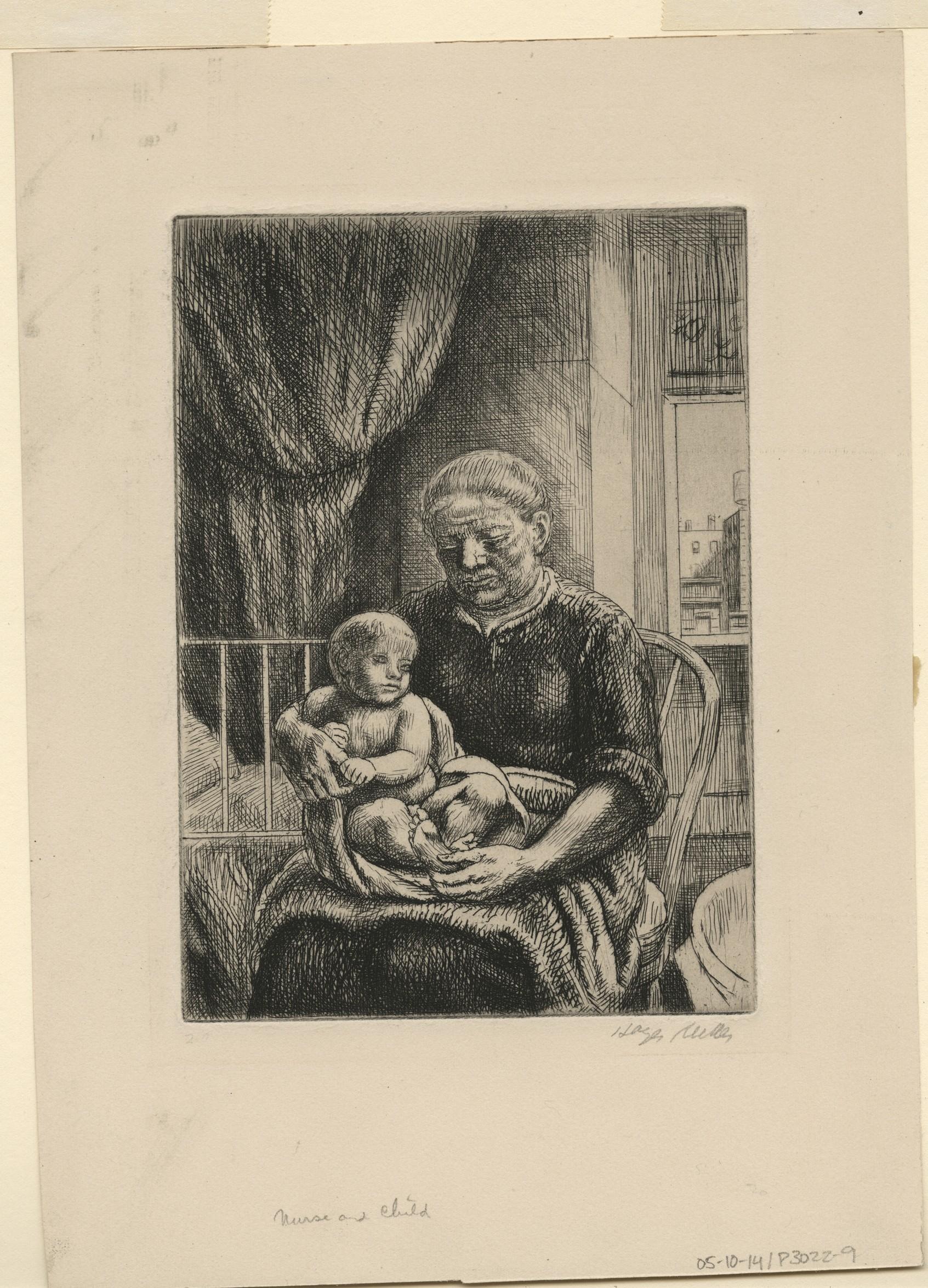
Etching, 6 x 4 in.
AAA 25. Signed in pencil lower right: “Hayes Miller”; titled in pencil lower center: “Nurse and Child”. Watermark is “BFK”.
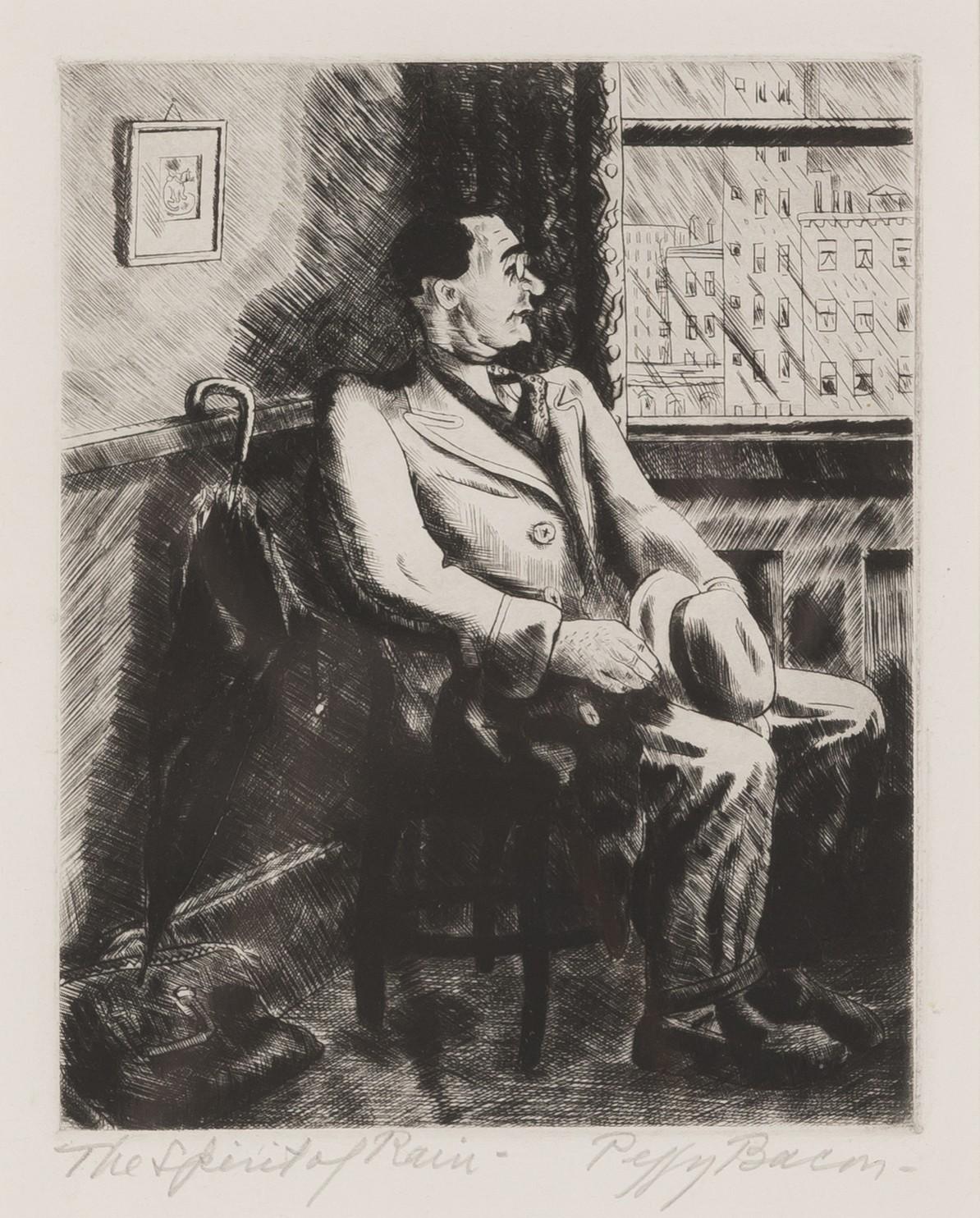
Peggy Bacon, American (1895-1987)
The Spirit of Rain, 1936
Drypoint, 4 7/8 x 3 7/8 in.
Flint 131. Signed in pencil lower right: “Peggy Bacon.”; titled in pencil lower left: “The Spirit of Rain.” A fine impression in fine condition, with full margins. Published by Associated American Artists in 1937; edition of 250.
Other impressions of this print can be found in the collections of Guild Hall, East Hampton, New York; the Achenbach Foundation for Graphic Arts, San Francisco; National Collection of Fine Arts, Washington, DC; and the Baltimore Museum of Art.
Isaac Soyer, Anerican (1902-1981)
[Seated Woman in Green], circa 1955
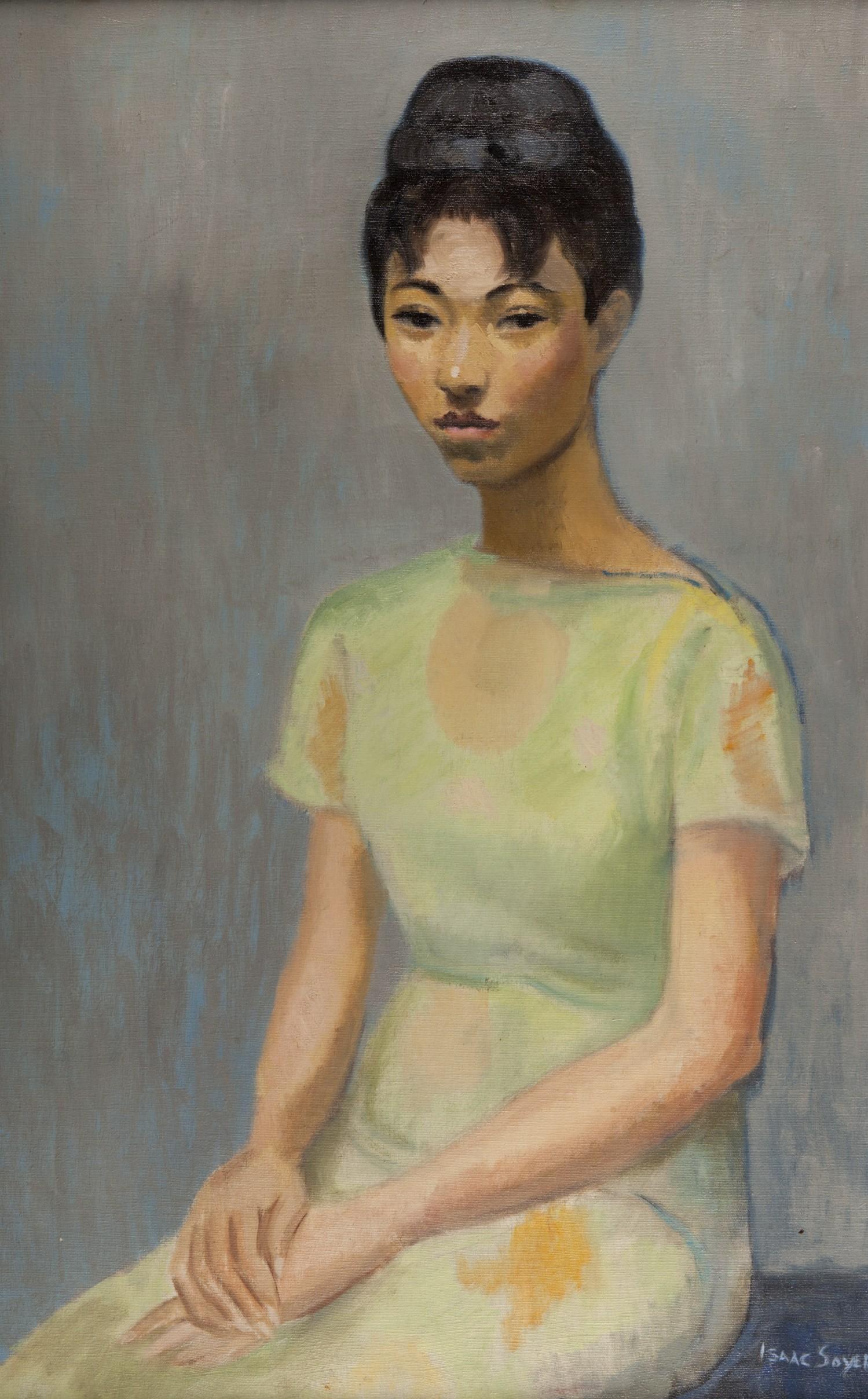
Oil on canvas, 32 x 20 in.
Signed lower right: “Isaac Soyer”.
Circus, 1960
Oil on canvas, 49 x 26 in.
Signed lower right.
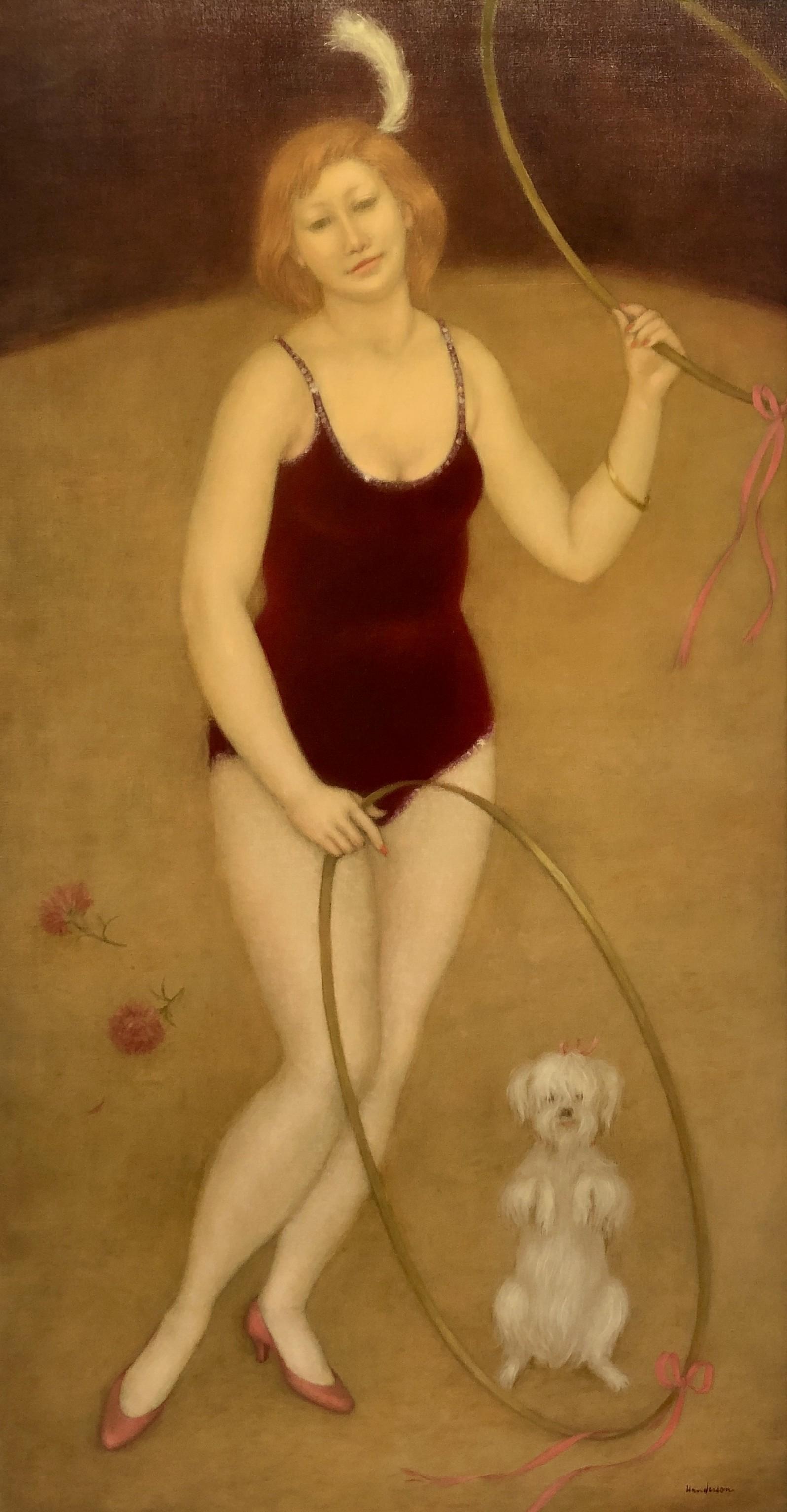 Jack Henderson, American (1931-1988)
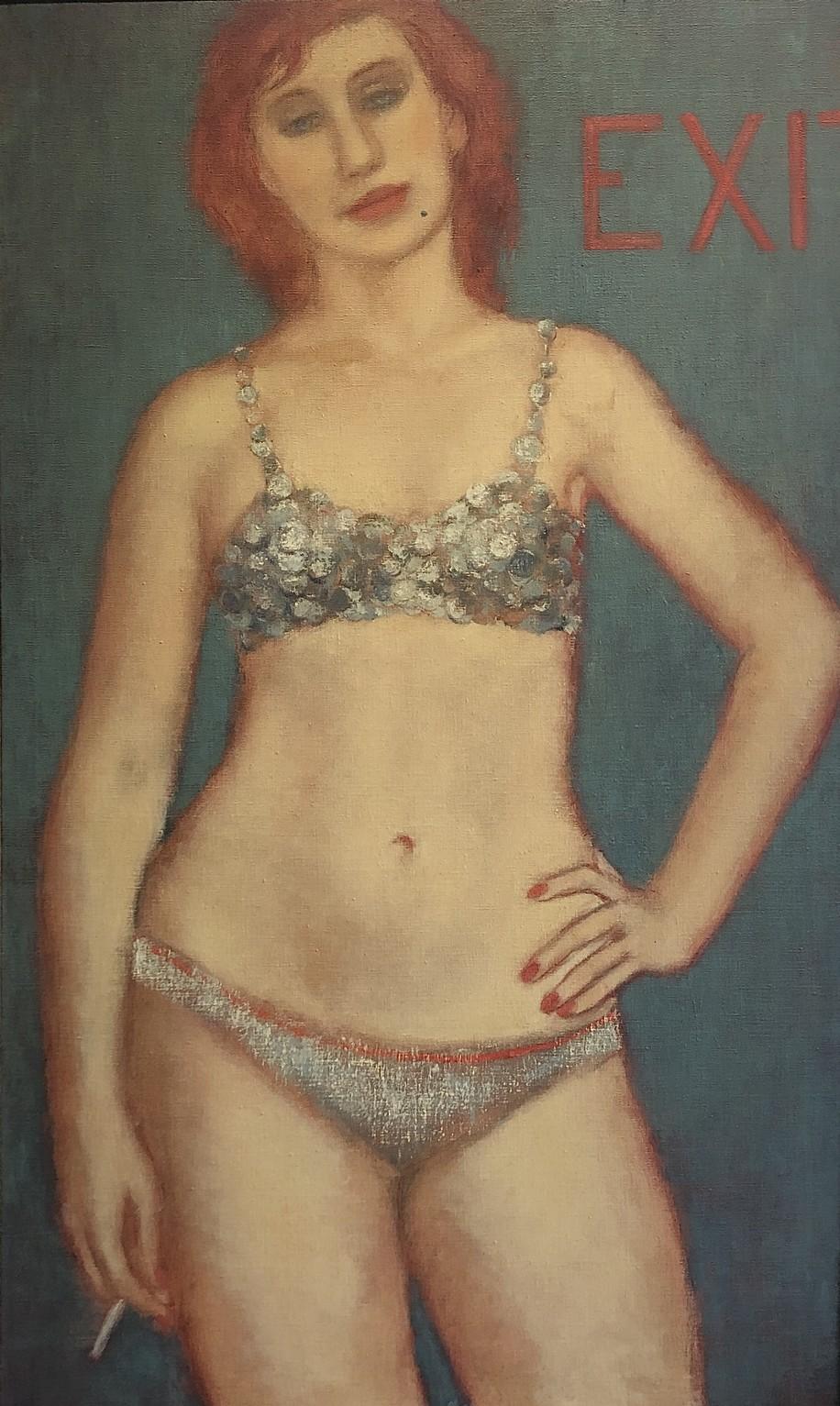
 Jack Henderson, American (1931-1988) Exit, 1960 Oil in canvas, 43 x 27 in.
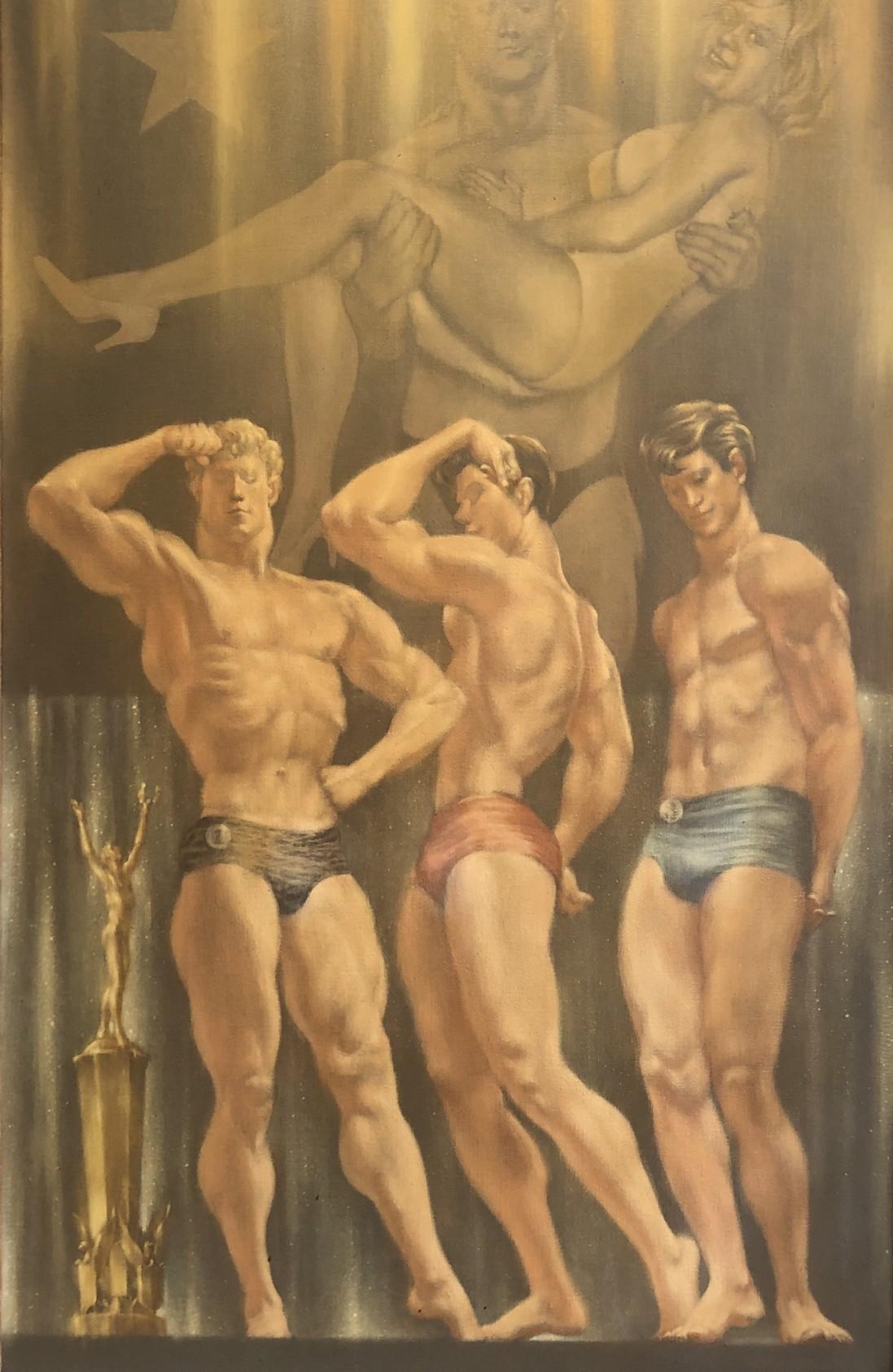
Jack Henderson, American (1931-1988) The Winners, 1963 Oil on canvas, 40 x 25 in.
Jack Henderson, American (1931-1988) Exit, 1960 Oil in canvas, 43 x 27 in.
Jack Henderson, American (1931-1988) The Winners, 1963 Oil on canvas, 40 x 25 in.
Reading
Oil
Inscribed
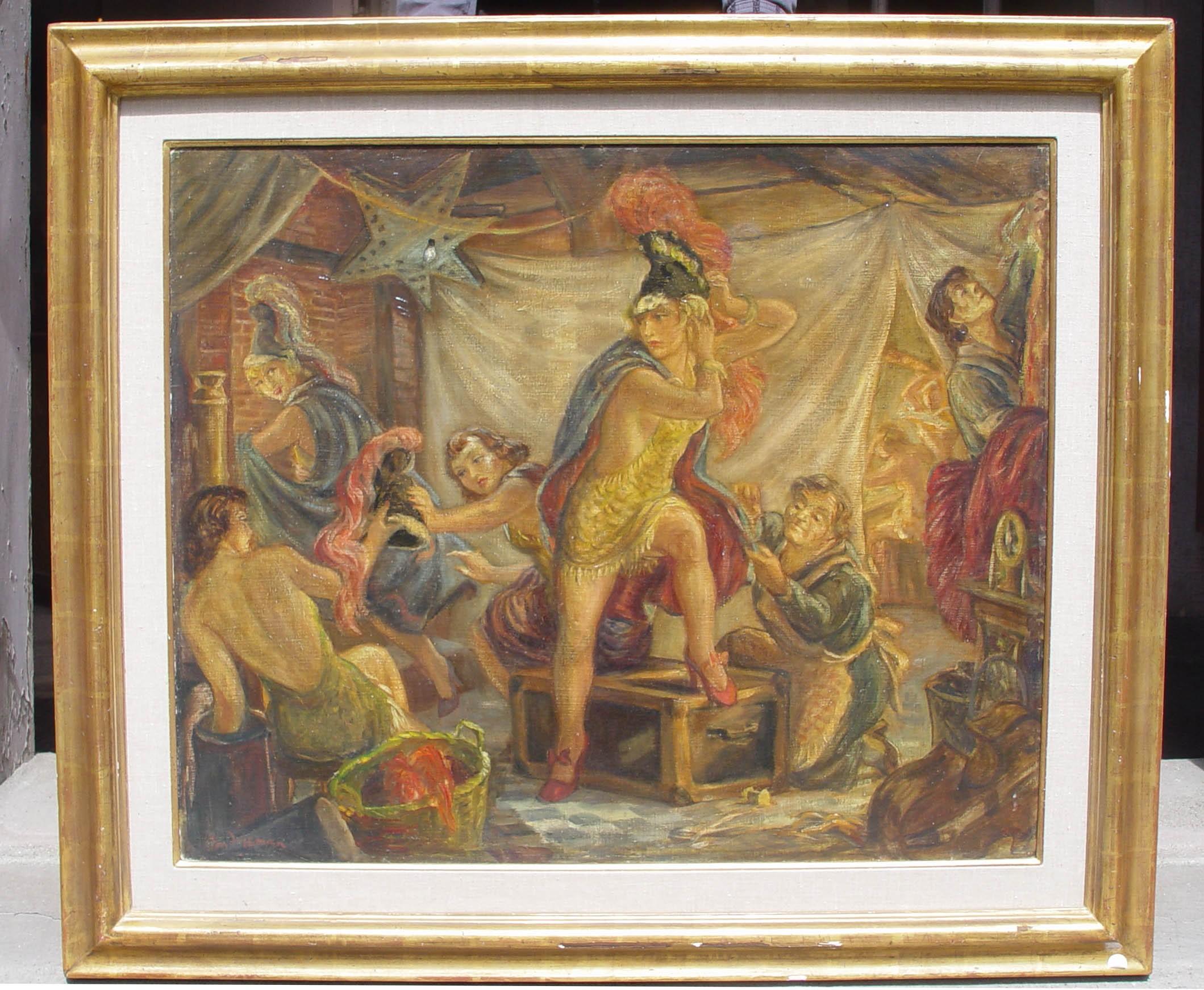
 Don Freeman, American (1908-1978). The Costume Fitting, circa 1935. Oil on board, 29 x 34 in. Signed lower left: “Don Freeman”.
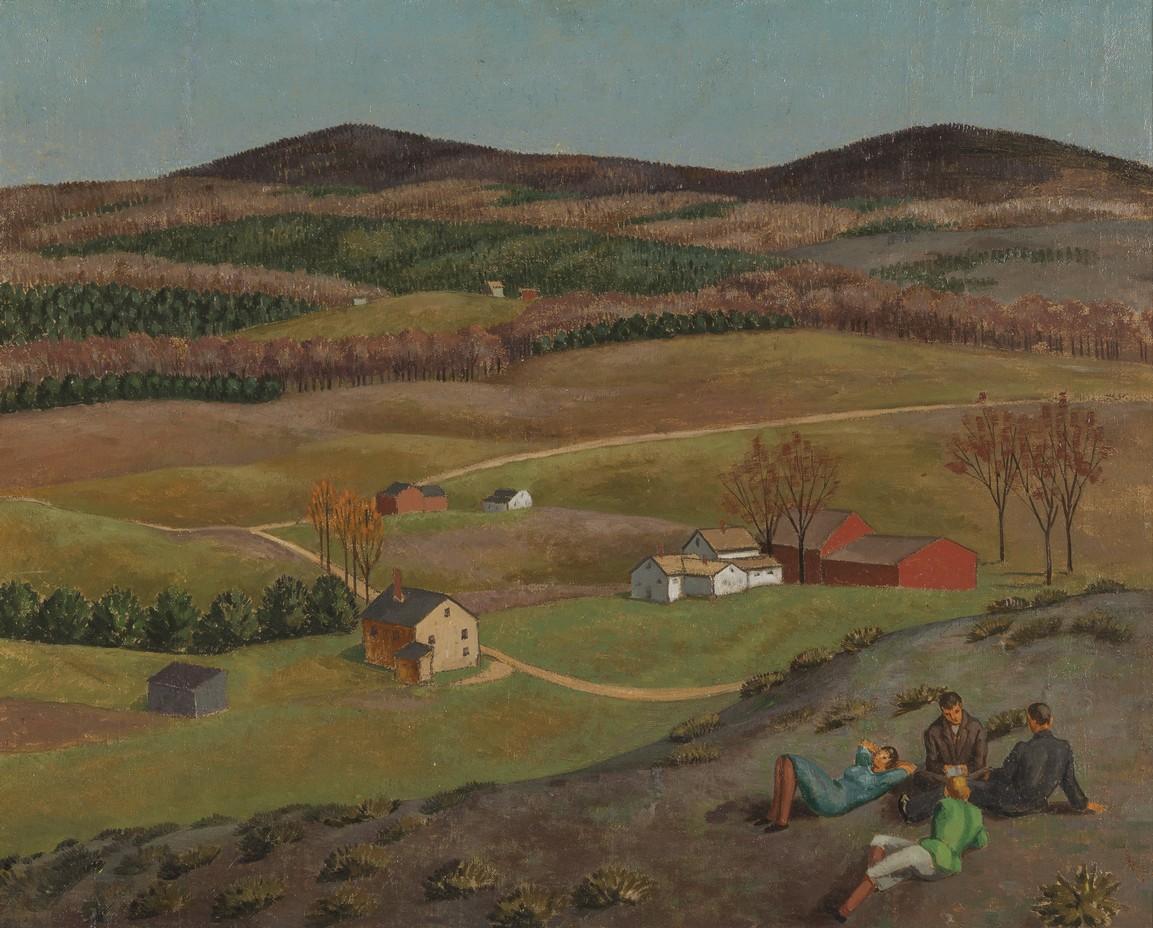
Molly Luce, American (1896-1986)
from Frost, circa 1932
on board, 16 x 20 in.
verso: “Luce/ Reading from Frost”.
Don Freeman, American (1908-1978). The Costume Fitting, circa 1935. Oil on board, 29 x 34 in. Signed lower left: “Don Freeman”.
Molly Luce, American (1896-1986)
from Frost, circa 1932
on board, 16 x 20 in.
verso: “Luce/ Reading from Frost”.
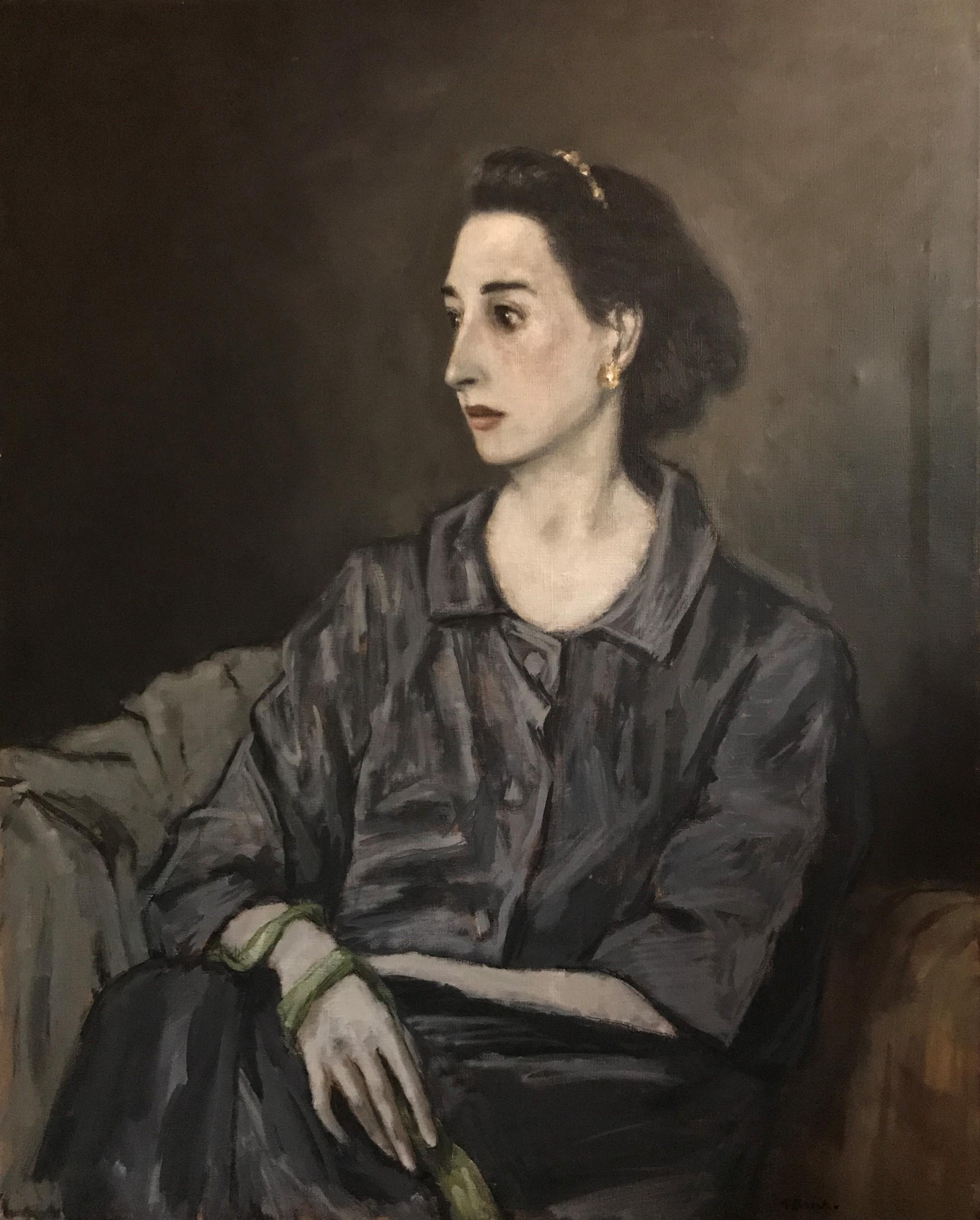 Alexander Brook, American (1898-1980)
Woman in Gray
Oil on canvas, 36 ½ x 29 in. Signed lower right: “A. Brook”.
Alexander Brook, American (1898-1980)
Woman in Gray
Oil on canvas, 36 ½ x 29 in. Signed lower right: “A. Brook”.
Lambs' Creel, 1941 Oil on Masonite, 18 x 27 ½ in.
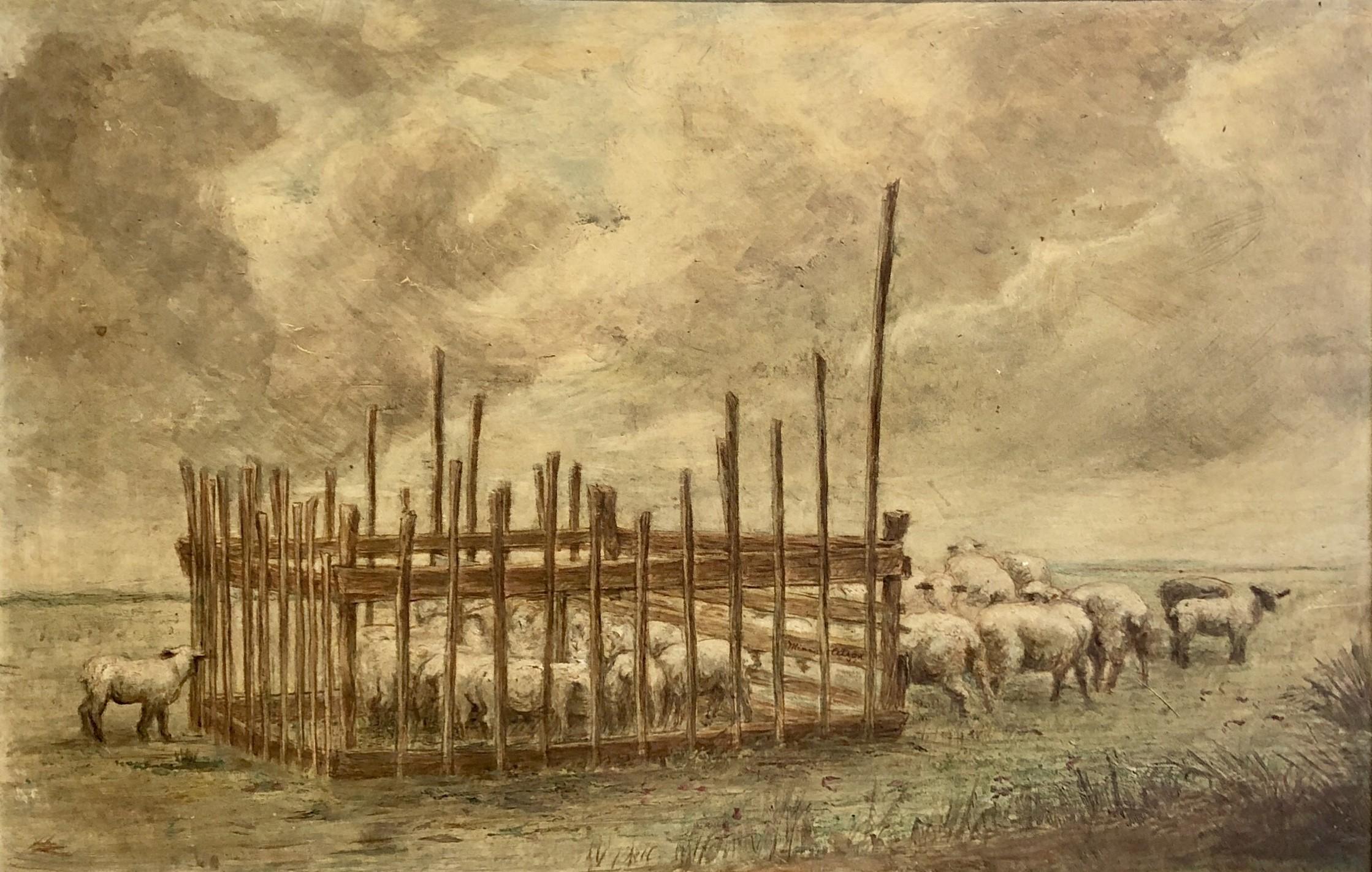
Signed and dated at right of the creel. Related to Citron’s 1938 mural project focusing on the Tennessee Valley Authority for the Newport, TN, post office.
Over many years at the Art Students League (1928-35), Citron studied lithography and also painting with the influential artists John Sloan and Kenneth Hayes Miller, whose realistic portrayals of the human experience influenced her artistic conception. To earn a living, Citron taught painting in New York, and under the Works Progress Administration’s Federal Art Project (1935-37) completed two mural projects commissioned by the Treasury Section of Fine Arts (1938-40). The first, T.V.A. Power, comprises two panels (48 x 7 ½ feet) for the Newport, Tennessee, post office, which celebrates the work of the Tennessee Valley Authority. Citron also made several lithographs, oil paintings, and watercolors inspired by her visit to Tennessee. A second mural, for the Manchester, Tennessee, post office (1941-42), is titled Horse Swapping Day which presents a rural scene peopled with locals, a few horses, and country architecture.
John Sloan, American ( 1877-1951)
Bakery Wagon, 1908 Oil on canvas, 9 x 11 in. Signed lower left.
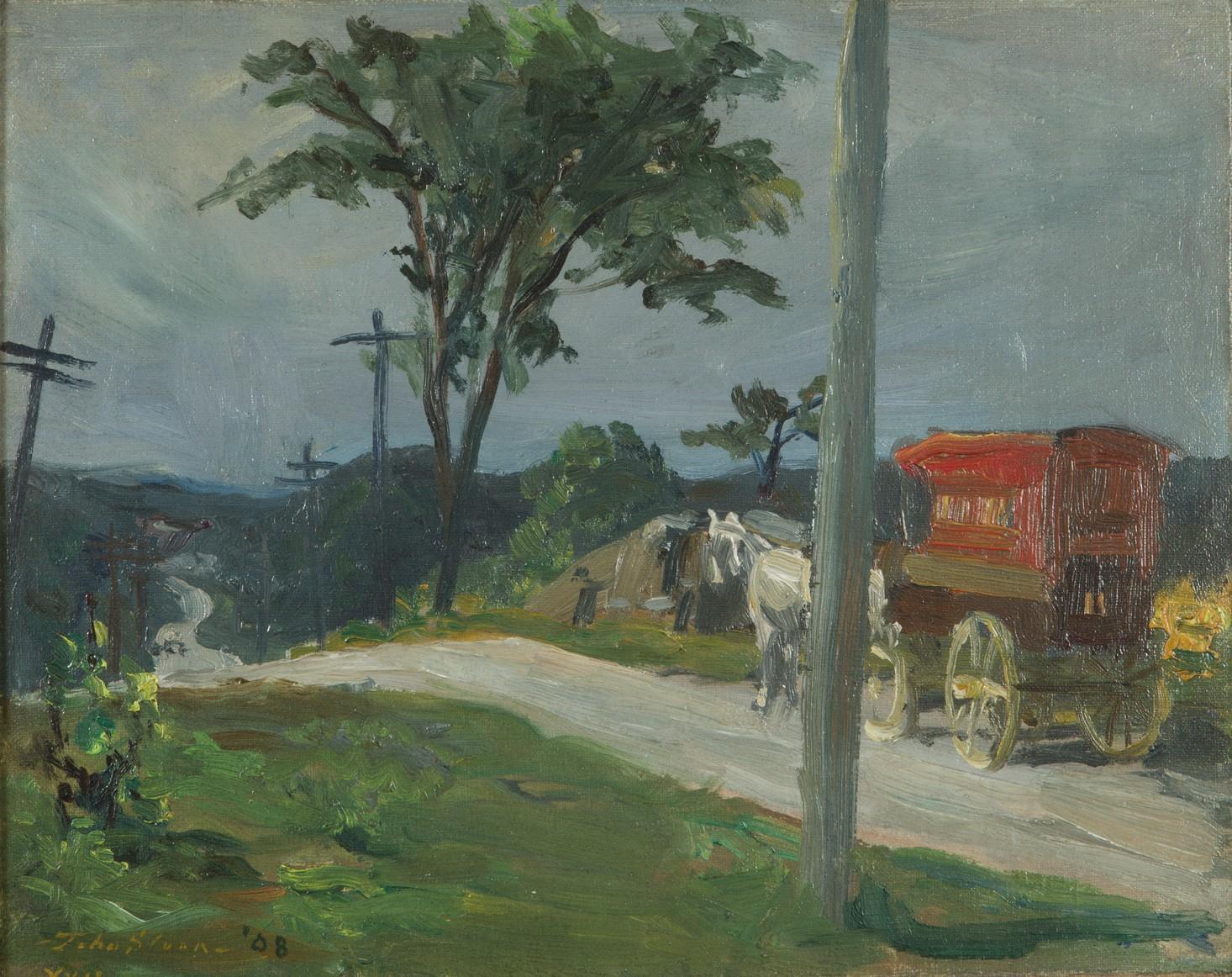
Previously exhibited under the title ‘Country Road’.
Provenance and exhibition history available upon request.
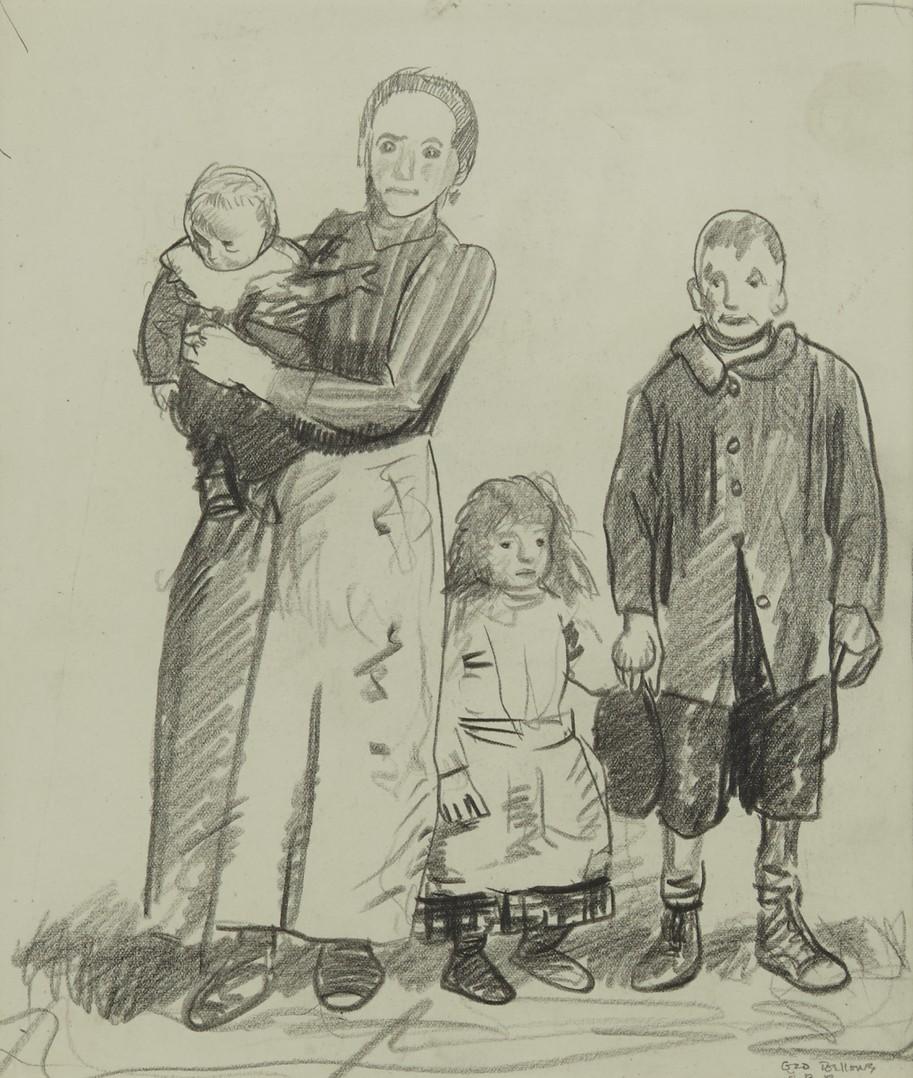
George Bellows, American (1882-1925) Mother and Three Children, circa 1916 Crayon pencil on paper, 10 x 8 in. Signed posthumously by the artist’s daughter, Jean Bellows Booth, lower right: ‘Geo Bellows / J. B. B.’. Gallery labels verso.
Exhibited: ‘George W. Bellows: Drawings’, R.H. Love Galleries, Chicago, IL, March 6- April 25, 1992.