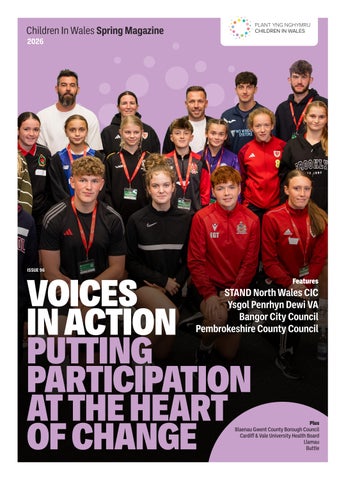
VOICES IN ACTION PUTTING PARTICIPATION AT THE HEART OF CHANGE
Editor: Louise O’Neill
louise.oneill@childreninwales.org.uk
Cardiff University Social Science Research Park (SPARK), Cardiff, CF24 4HQ
029 2034 2434
info@childreninwales.org.uk
Bluesky: @childreninwales.org.uk
Facebook: @childreninwales
Instagram: @Children_in_wales
LinkedIn: Children in Wales
The views expressed in this publication are not necessarily those of Children in Wales and we reserve the right to edit for publication
Welcome from Chief Executive, Hugh Russell
What we offer at Children in Wales
Training Calendar
Events
Call for contributions to our Summer 2026 magazine
Creating space, confidence and community: Piws partners with Yr Urdd for a more inclusive Eisteddfod (Piws)
Taking a children’s rights approach to youth participation in the grants sector (Buttle)
Making magical muddy memories (Forest School Swansea Neath Port Talbot)
Babies, children and young people’s participation in practice (Role Play Lane)
Children’s rights and participation in action: Making space for young voices (The Open University in Wales)
Doing the little things at Ysgol Penrhyn Dewi VA (Ysgol Penrhyn Dewi VA)
Our promise to military children (Pembrokeshire County Council)
Exciting new services available in Bangor (Bangor City Council)
Young Carers’ Voices (Credu)
Get Blaenau Gwent breastfeeding: a community rising together (Blaenau Gwent County Borough Council)
Building new belongings: engaging diverse communities through Cardiff Flying Start Stay and Play provision (Cardiff Council)
Welsh coalition supports disabled children (Family Fund)
Creative Futures - supporting young people’s wellbeing through the arts (National Youth Arts Wales)
Barriers and insights to participation with disabled young people (STAND North Wales CIC)
Listening shapes lives: embedding children and young people’s participation in residential care (Llamau)
Voices that matter: young people taking a stand against smoking and vaping (Cardiff & Vale University Health Board)
‘Mummy understands more’ – how the Cygnet programme is changing lives in Wales (Barnardo’s Cymru)
Participation as purpose: young people shaping youth work in Wales (Youth Work Leadership Lab)
Playwork and Participation (Clybiau Plant Cymru Kids’ Clubs)
They’ve all got their own ways of being heard - recognising participation beyond words in early years settings (Swansea University)
Kids calling the shots (Seren in the Community)
Pathways to positive participation - how children and families shaped local responses to poverty in Neath Port Talbot and Cardiff (Save the Children Cymru)
Building effective youth voice in national mental health policy (ProMo Cymru)
From pizza to participation: making democracy work for young people (Boys’ and Girls’ Clubs of Wales)
Young people make positive change through social enterprise (Cwmpas)
Young people lead the conversation about Child Safety Online in Wales (NSPCC)
Beyond voice: what meaningful participation looks like for neurodivergent young people in Wales (Family Pathway)
Friendship bracelets, flower crowns and empowered voices (Noah’s Ark Children’s Hospital Charity)
Babies have so much to tell us if we learn how to listen: using baby headcams to amplify their voices (Cardiff Babylab)
Leadership and participation in practice: young people shaping transition (Neath Port Talbot Children’s Rights Unit)
Welcome from Chief Executive, Hugh Russell
As we relaunch our Annual Conference, themed Voices in Action: Putting Participation at the Heart of Change, it feels like the right moment to pause and reflect on the vital role babies, children and young people play in shaping the services, policies and decisions that affect their lives. At Children in Wales, we know that meaningful change happens when young people’s voices are not only heard, but genuinely acted upon.
“Participation only matters if it shapes real decisions and practice.”
For over 30 years, our work has been guided by the belief that the United Nations Convention on the Rights of the Child (UNCRC) should be a living reality for every child in Wales, and that participation should be embedded in everyday practice. The conference provides a space to share experiences, celebrate achievements and explore practical ways for organisations across Wales to make youth voice a central part of their work.
I would like to extend a warm welcome to the members who have joined us in the months since our last edition. It is a pleasure to have Cardiff Babylab, Bangor City Council, Stand North Wales CIC and Ysgol Penrhyn Dewi VA with us, alongside a number of new individual members whose knowledge and experience further strengthen our network.
As we prepare for this year’s conference, I would also like to take a moment to thank our event sponsors. Our Official Partner, Clearcare Solutions, a software solution designed to enhance outcomes for children and young people in social care settings by reducing administrative burdens on providers.
We are also thrilled to welcome back OneTouch tri.x as our Official Supporter, a leading partner in online social care procedures, specialising in creating, updating and hosting procedures that meet statutory and regulatory requirements, reflect best practice and support teams to achieve the best outcomes for children, families, adults and carers. Techsol, who join us as our Official Champion, provides industryleading digital transformation solutions to help our customers maximise their success. Their support plays an important role in making the conference possible and in enabling Children in Wales to continue creating spaces where children and young people’s voices can be heard, valued and acted upon. We are grateful for their commitment to participation, children’s rights and positive change across Wales. Talking about participation is one thing; turning it into practice is another. The real challenge is creating structures, policies and opportunities that genuinely embed young people’s perspectives. That is why our services exist - to help organisations make participation meaningful, sustainable and rights-based.
Our sponsors:

What we offer at Children in Wales
Building Voices programme
Building Voices is a consultancy service which helps organisations put youth participation at the heart of their delivery. Whether you are taking your first steps or looking to strengthen existing practice, Building Voices offers guidance, tailored support and practical tools to embed co-production and meaningful engagement.
“We work alongside young people, not just for them.”
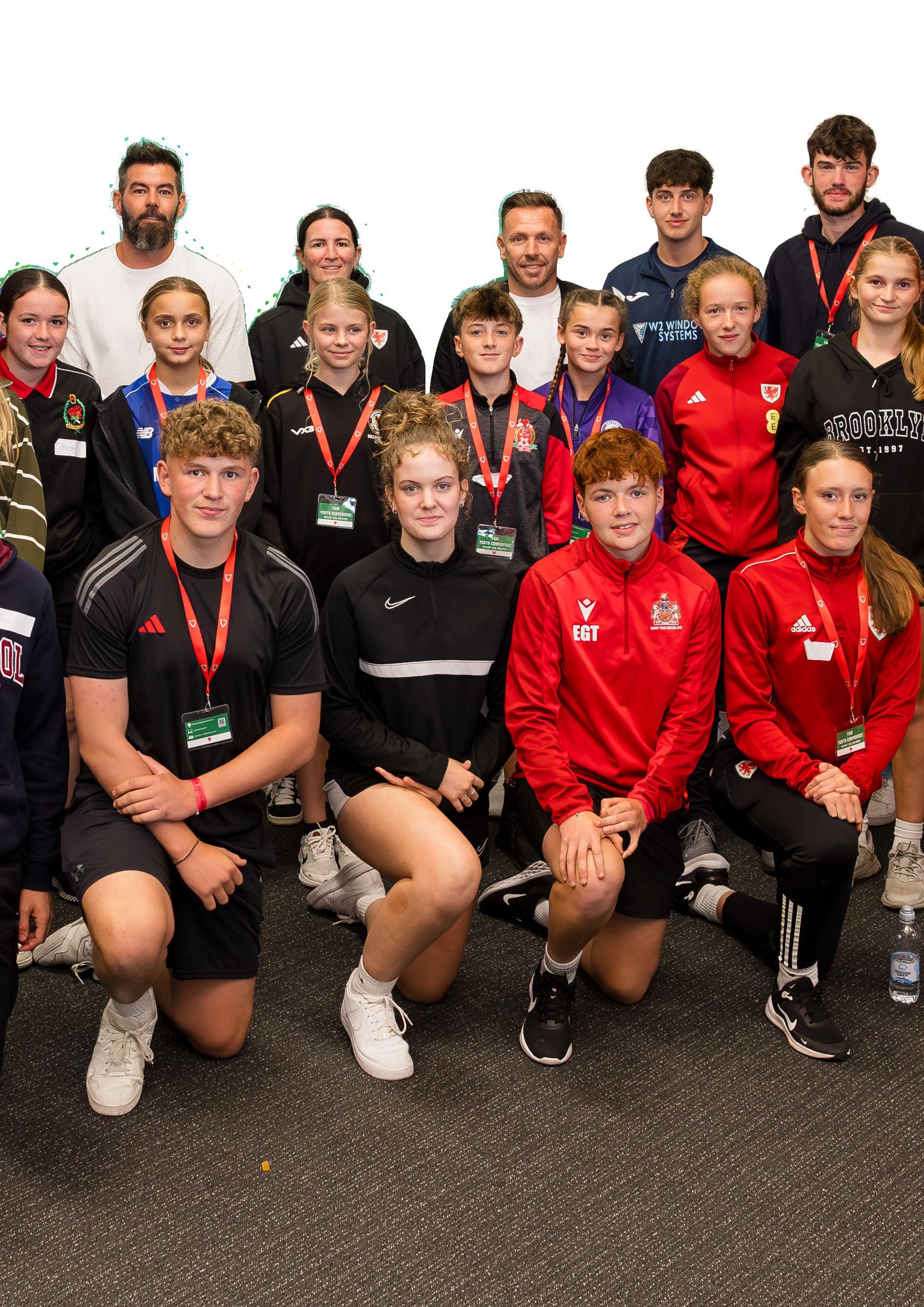
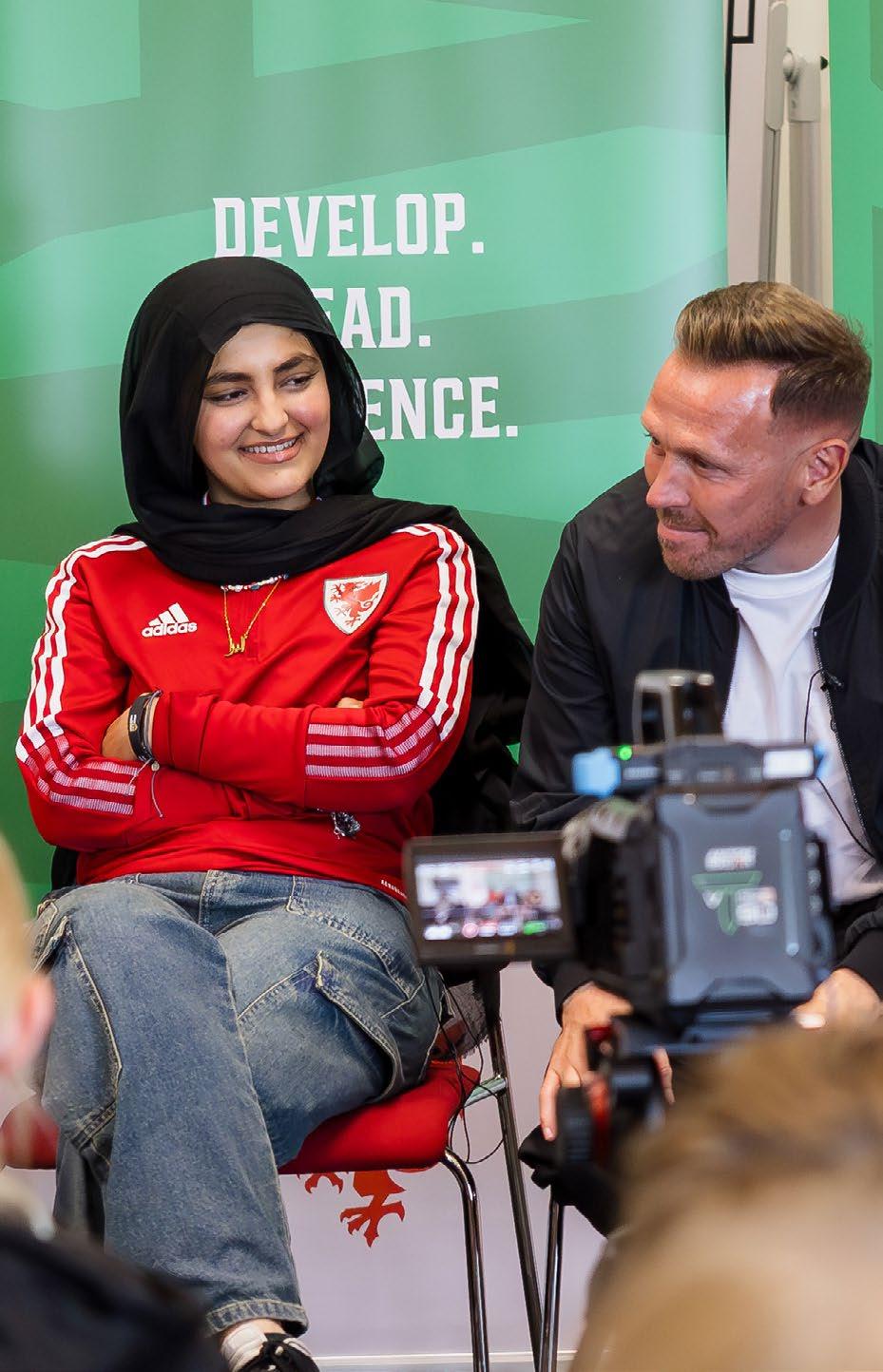
A notable example is our partnership with the Football Association of Wales (FAW). Together, we co-designed recruitment processes, peer-led inductions and consultation mechanisms that put young people at the centre of decision-making. The result strengthened FAW’s governance and created a model of robust and sustainable youth engagement, now embedded across the organisation. Building Voices helps organisations develop services that are inclusive, responsive and genuinely shaped by children and young people, turning participation from a concept into everyday practice. For more information on Building Voices, head to page 9 of this magazine.
Professional development and training with our inhouse experts
Alongside consultancy, Children in Wales offers training that equips professionals with practical skills and knowledge to embed children’s rights and participation into their everyday working practices. Courses range from half-day workshops to two-day intensive sessions and cover topics such as safeguarding, child development, mental health, inclusion and professional development. You can also create bespoke training with us, based on your organisation’s specific needs.
We have recently introduced Safeguarding for Senior Leaders (Group F), specifically for CEOs, Directors and Board Chairs.
“Good training doesn’t just teach - it builds confidence to act.”
This course focuses on leading safeguarding across an organisation, strengthening governance and responding effectively to serious incidents, giving senior leaders clarity and confidence in fulfilling their responsibilities.
Our training is designed to have immediate, practical impact that strengthens staff skills, supports rights-based practice and embeds safeguarding and participation in everyday work.
Our reimagined Membership
Membership to Children in Wales offers a network of expertise, resources and connections. Members come from the corporate, statutory and voluntary sectors, as well as individual professionals and practitioners, representing areas such as health, education and social services. Members enjoy discounted training, priority access to events such as our Annual Conference, the Young Wales Summit, and opportunities to help shape policy and practice across Wales.
“Our reimagined membership package is designed around a focus on supporting our community to learn, to connect and to influence change.”
Membership also provides specialist support, including safeguarding reviews, youth engagement opportunities and participation feedback via Building Voices.
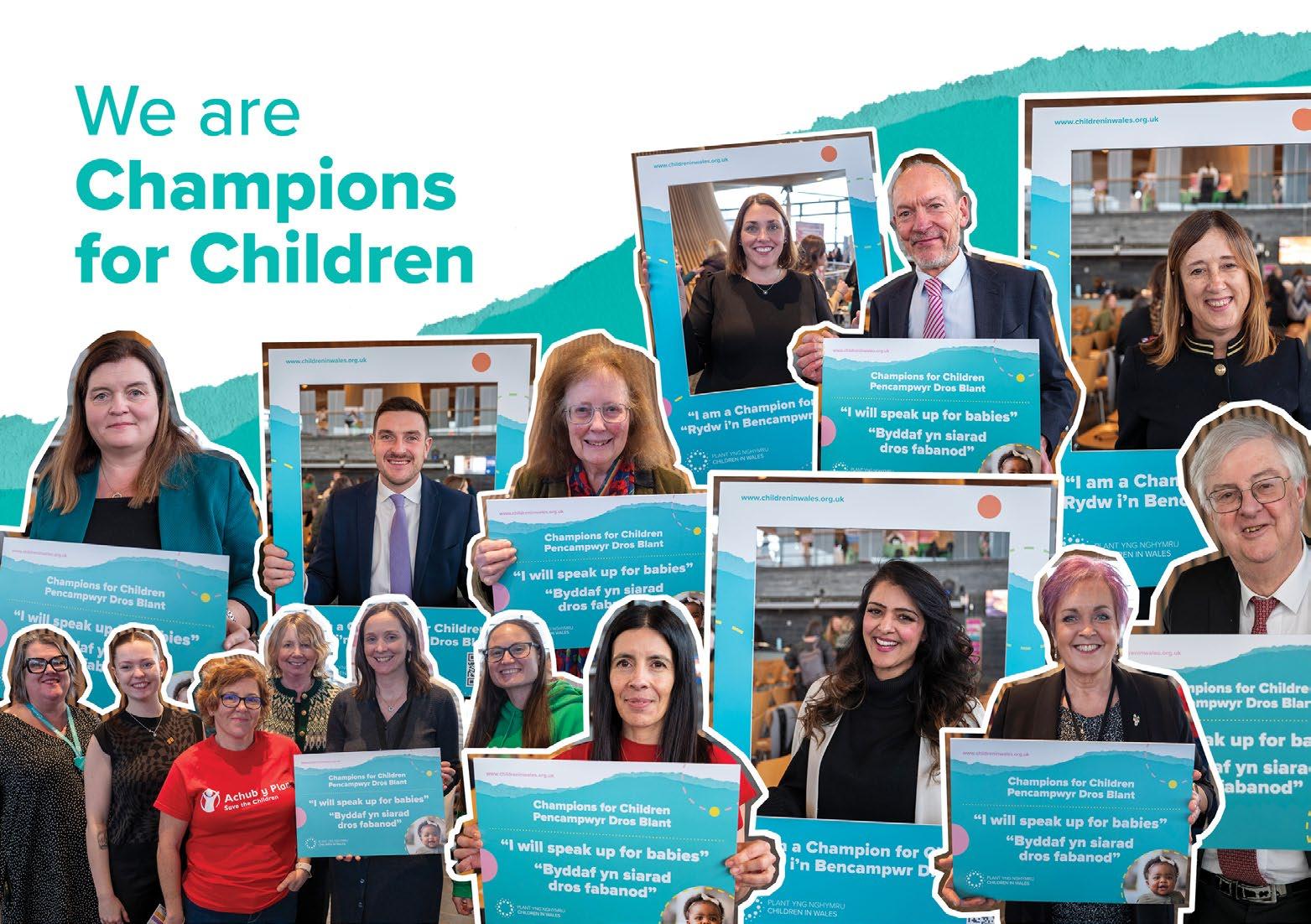
Members can join exclusive webinars, network with peers and feature in our communication channels, giving visibility to their work while strengthening their practice, sharing knowledge and contributing to a strong, collective voice for babies, children and young people.
Young Wales
Young Wales is our flagship initiative dedicated to empowering young people to have a say in the decisions that affect them. Funded by Welsh Government, it provides opportunities for young people to share experiences, inform policy and take part in campaigns that matter to them.
“When young people are genuinely involved, services work better for everyone.”
Through consultations, forums and collaborative projects, young people influence Ministers, policy officers and sector leaders. Beyond advocacy, Young Wales helps young people develop skills, confidence and agency, while giving organisations access to authentic youth perspectives that can shape services and strategy.
Policy at Children in Wales
Our Policy Team, led by Sean O’Neill, Children in Wales’ Deputy CEO and Policy Director, drives work that puts children’s rights, child poverty, mental health, Additional Learning Needs (ALN), Early Years, parenting and the needs of care-experienced children and young people at the centre of Welsh policy.
Supported by a dedicated group of specialists, including our research function, the team combines expertise with collaboration to influence decisionmaking across the sector, and produces policy briefings to inform and engage members.
“The voice of babies, children and young people is at the heart of every policy change we champion.”
Ahead of the Senedd election in May 2026, Children in Wales has published a suite of manifestos in partnership with our members, networks and partners.
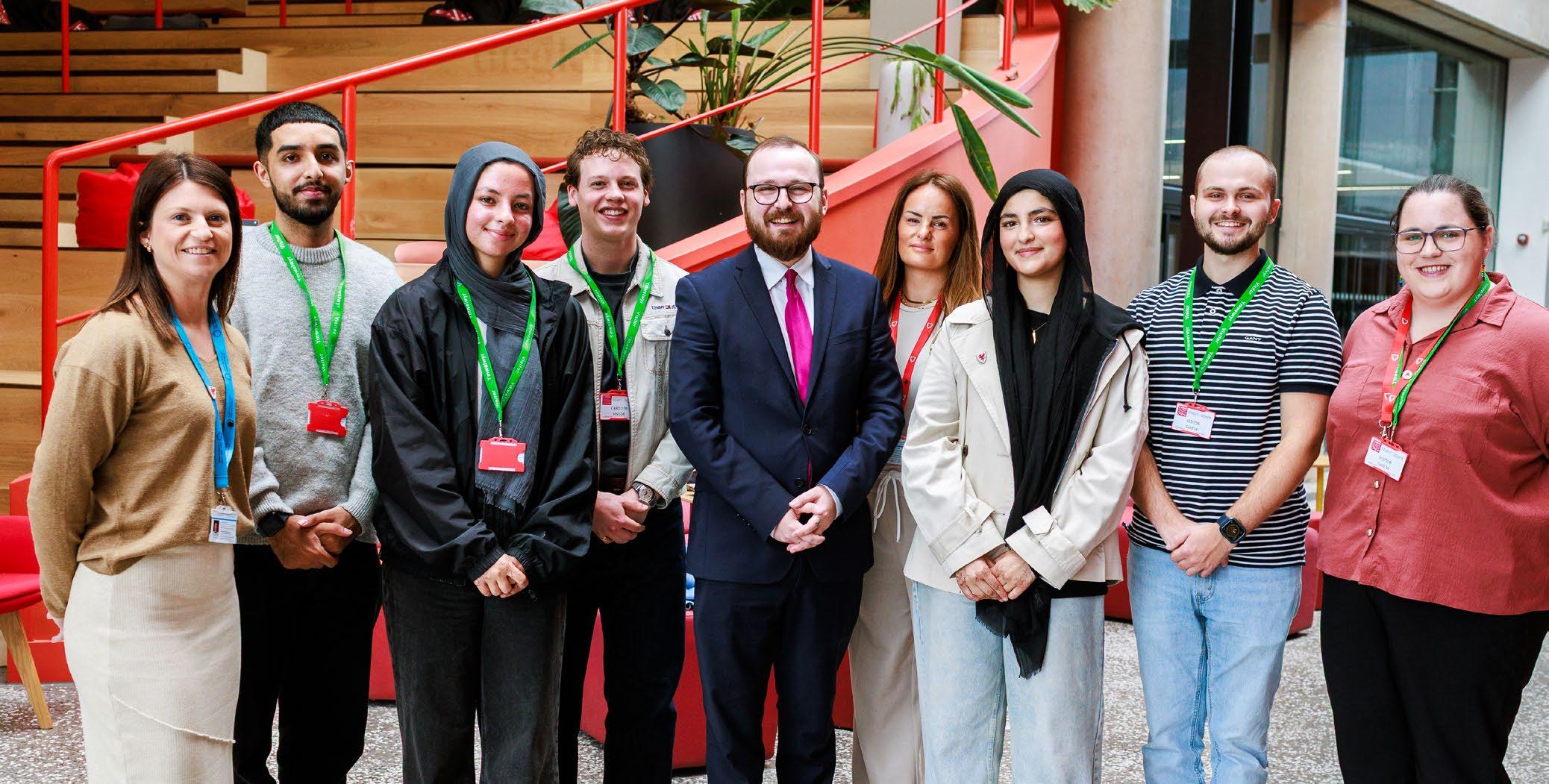
Their purpose is clear: to secure practical, deliverable commitments that strengthen children’s rights and improve wellbeing. These include the Champions for Children manifesto, UNCRC manifesto, End Child Poverty Network Cymru manifesto, All Wales Children and Young People’s Advocacy manifesto, and focused manifestos for babies, and for children and young people with ALN. Together, they reflect a shared call for collective action across sectors to put children first in the next Senedd term.
A collective approach to change
At Children in Wales, we seek to provide a comprehensive offer: helping organisations embed participation, strengthen practice and deliver rightsbased services. Each part complements the otherconsultancy shapes participation structures, training builds staff expertise, membership provides ongoing support and networking, Young Wales ensures young voices remain central to decision-making, and our Policy Team works to bring those voices into Welsh Government policy and sector priorities. In a changing landscape, meaningful engagement with children and young people is essential. By drawing on our experience and support, organisations can reduce risk, improve service quality and make lasting change.
“Our aim is simple: to make sure children’s voices are not just heard, but shape decisions that matter.”
Whether through consultancy, training, membership or direct engagement via Young Wales, we offer services designed to further children’s rights in Wales. We invite organisations across Wales to explore how Children in Wales can support them from joining our membership, booking training or starting a Building Voices consultation. Together, we can put participation at the heart of change, ensuring children and young people are active partners in shaping the future.
Hugh Russell CEO, Children
in Wales
If you’d like to find out more about any of our services, please get in touch: info@childreninwales.org.uk
Children in Wales is pleased to introduce Building Voices.
A consultancy service designed to help organisations embed meaningful youth participation and co-production into their work. With over 30 years of expertise in children’s rights, we offer tailored support including strategy development, staff training and youth voice facilitation. Our flexible packages are designed to ensure children and young people’s voices genuinely shape services and policies.
To explore how Building Voices could support your organisation, please contact Kate.thomas@childreninwales.org.uk for more information. BUILDING VOICES
You can also check out our digital brochure and video showcase to see how we’re already making a difference with the FAW.

Training Calendar
APRIL
Motivational Interviewing
Monday, 27 & Tuesday, 28 April 2026 from 09:30 – 16:00
Bute Park Visitor Centre, Cardiff
Members: £252, Non-members: £280
Motivational Interviewing (MI) is a collaborative, personcentred approach that helps people explore and strengthen their own motivation for change. Widely used across child and family work, MI supports more effective and compassionate conversations.
JUNE
Supervision: A model for practice
Tuesday, 2 & Wednesday, 3 June 2026 from 09:30 – 16:00
The Environment Centre, Swansea
Members: £252, Non-members: £280
A practical course giving frontline staff a clear grasp of ADHD, its varied presentations, and associated risks—promoting a whole-child approach and stronger multi-agency working.
JULY
eSafety Essentials: Your Toolkit to Protecting Children Online
Thursday, 20 May 2026 from 09:30 – 16:00
Online event
Members: £126, Non-members: £140
In today’s digital world, keeping children safe online is more important than ever. This practical and interactive training session is designed to equip educators, parents, and professionals with the essential knowledge and tools to support children’s digital wellbeing.

MAY
Group B Safeguarding Children, Young People and Adults at Risk
Wednesday, 13 May 2026 from 09:30 – 16:00
Online event
Members: £126, Non-members: £140
Gain up-to-date knowledge and confidence to protect children, young people and adults at risk. Covers legislation, safe practices, recognising abuse, and effective response.
Group C: Safeguarding for the Designated Person & Senior Practitioners
Wednesday, 3 & Thursday, 4 June 2026 from 09:30 – 16:00
Online event
Members: £252, Non-members: £280
Designed for Designated Safeguarding Leads and senior practitioners, this course strengthens your expertise in managing safeguarding responsibilities, making informed decisions, and leading effective safeguarding practice.
Working with Groups
Monday, 6 & Tuesday, 7 July 2026 from 09:30 – 16:00
The Environment Centre, Swansea
Members: £252, Non-members: £280
Delegates will explore the role of the group facilitator and develop practical skills to engage confidently and constructively with participants from a variety of groups running in different settings.
ADHD: An understanding for practitioners
Wednesday, 20 May 2026 from 09:30 – 16:00
Online event
Members: £126, Non-members: £140
A practical course giving frontline staff a clear grasp of ADHD, its varied presentations, and associated risks—promoting a whole-child approach and stronger multi-agency working.
Group F Safeguarding for Senior Leaders
Thursday, 18 June 2026 from 09:30 – 16:00 sbarc|spark, Maindy Rd, Cardiff
Members: £126, Non-members: £140
A practical, interactive session for CEOs, Directors, and Board Chairs to strengthen safeguarding leadership. Learn key legislation, governance, risk management, and strategies to embed a safeguarding culture across your organisation. Includes networking lunch.
Neurodiversity Awareness: Supporting Children, Young People and Families
Wednesday, 13 July 2026 from 09:30 – 16:00
Online event
Members: £126, Non-members: £140
Learn practical strategies to recognise and support neurodivergent children and young people using a holistic, whole-child approach.
Managing for the first time: Foundations of effective management
Monday, 29 & Tuesday, 30 June 2026 from 09:30 – 16:00
The Environment Centre, Swansea
Members: £252, Non-members: £280
Build confidence as you learn key responsibilities, develop self-awareness, strengthen essential


Events
Free live webinar
Supporting care experienced young people in Wales
Date Thursday, 2 July
Time 11am - 12pm
Online MS Teams
Care experienced young people face unique challenges, but with the right support they can thrive. In this session, you’ll learn:
• The definition of “care-experienced” and understand the different types of care arrangements (eg, foster care, residential care, kinship care)
• How to recognise the key challenges care leavers face, including housing instability, financial insecurity, emotional wellbeing, and transitions to education or employment
• About the support systems and an overview of our Getting Ready Project more effective and compassionate conversations.
Free live webinar
Celebrating National Parenting Week
Date Wednesday, 21 October
Time 11am - 12pm
Online MS Teams
Parents Connect Wales will launch the findings of the 2026 Big Conversation with Parents in Wales, celebrating National Parenting Week.
For more information on any of the events below, please contact: emma.butler@childreninwales.org.uk
Save the date
Young Wales Summit 2026
Date Saturday, 21 November
Time 10am - 4pm
Location Spark, Maindy Road, Cardiff CF24 4HQ
Our annual celebration of Youth Voice in Wales. Members are encouraged to bring along the young people you work with to this exciting and inspiring event. The Young Wales Summit is free to attend and designed to be inclusive and welcoming to everyone. Spaces are limited and fill up quickly, so please register your interest early.
Free live webinar
Findings from the 2026 Annual Child & Family Poverty Survey
Date December
Time TBC
Online MS Teams
Please join us for this free webinar where you will hear key findings from the Children in Wales Annual Child and Family Poverty Survey Report.
Early Bird Tickets
Children in Wales Annual Conference 2027
Release date December
Keep an eye on your Member News and Children in Wales’ socials to catch the release of early bird tickets to next year’s Annual Conference.
Call for contributions to our Summer 2026 magazine
CARE EXPERIENCED CHILDREN AND YOUNG PEOPLE, AND CARE LEAVERS THEME
For our Summer edition, we are inviting contributions that explore issues affecting care experienced children and young people, and care leavers and will be grounded by Article 20 of the UNCRC. This recognises that children who cannot live with their own family have the right to appropriate alternative care, and the protection and assistance needed to thrive.
We want this edition to reflect the breadth of work happening across our membership - from frontline practice and participation, to policy, partnership working and learning. We welcome articles that share practice, insight, reflection and lived experience that will help deepen understanding of what supports care experienced children to thrive.
We are keen to receive articles that explore one or more of the following themes:
• Case studies of projects or services supporting care experienced children and care leavers, and examples of effective partnership working across sectors
• Innovative or creative approaches to engagement, participation or co-production
• Reflections on what has changed in your practice and what you’ve learned along the way
• Challenges encountered in delivery, and how these have been addressed
• Articles that centre the voices of care experienced children and young people
• Co-produced or co-written pieces with children, young people or care leavers
• Gaps between policy ambition and lived reality, and what needs to change
• Key messages for decision-makers
Together let us share learning, amplify what works, and champion meaningful change for care experienced children and young people, and care leavers in Wales.
Submission guidelines:
• Articles should be between 500 and 750 words
• Submit your article in both English and Welsh
• Write your article in MS Word and include a title and the author’s name and organisation
• Include high quality JPEG images if you wish, or your organisation’s logo
• Deadline for submissions Thursday, 25 June 2026
Please email a brief summary of your proposed article to membership@childreninwales.org.uk
Once received, your space will be confirmed.
Please note: the magazine is shared publicly on our social media accounts, giving your contribution the opportunity to reach a wider audience beyond our membership.
Why not also join us for our free live webinar, entitled Supporting care experienced young people in Wales on Thursday, 2 July 2026, 11am – 12pm online using MS Teams?
Care experienced young people face unique challenges, but with the right support, they can thrive.
In this session you’ll learn:
• The definition of “care-experienced” and understand the different types of care arrangements (eg, foster care, residential care, kinship care)
• How to recognise the key challenges care leavers face, including housing instability, financial insecurity, emotional wellbeing, and transitions to education or employment
• About the support systems and an overview of our Getting Ready Project


Creating space, confidence and community: Piws partners with Yr Urdd for a more inclusive Eisteddfod
A new partnership between Piws and Yr Urdd is set to reshape the experience of disabled children, young disabled adults and their families at one of Wales’ most cherished cultural events. When the Urdd National Eisteddfod arrives on the Isle of Anglesey later this year, visitors will find something never offered on this scale: a dedicated safe space designed with, for and around the needs of disabled families.
For Piws, this collaboration marks a significant step in its mission to raise awareness of the everyday barriers faced by families with disabled children. Too often, these families navigate public spaces with uncertainty, unsure whether venues will be accessible, whether staff will understand their needs or whether they will be welcomed without judgement. Piws exists to change that landscape. Central to this mission is its growing network of Access Ambassadors: families with disabled children and young disabled adults who choose a place they want to visit, go out and enjoy themselves and then report back on their experience. Their insights help others with similar impairments to visit with confidence, while also giving venues the practical knowledge they need to make meaningful, reasonable adjustments.
The Urdd, with its long-standing commitment to young people and Welsh culture, recognised the importance of this work and embraced the opportunity to co-design something transformative. Together, Piws and the Urdd have shaped a space that goes far beyond a quiet corner or a temporary tent. This is a purposeful, fully considered environment where disabled visitors can take a breath, reset and feel genuinely catered for.
Located close to a dedicated car park, the safe space will offer reassurance from the moment families arrive.

Inside, visitors will find a calm, welcoming environment where they can simply be, whether that means enjoying sensory-friendly activities, taking part in gentle entertainment, or relaxing away from the crowds. For some, it will be a place to regroup before heading back into the bustle of the Maes. For others, it may become the heart of their Eisteddfod experience.
Crucially, the space also creates a channel for disabled families and Access Ambassadors to share their insights directly with Piws. Visitors will be invited to reflect on their experience of the Eisteddfod, what worked well, what could be improved and what changes would make future events more accessible. This feedback will be handled with care and used to help the Urdd, and other organisations across Wales, understand how to make their spaces more inclusive.
This first collaboration is intentionally designed as a learning opportunity. Piws and the Urdd are approaching it with openness, curiosity and a commitment to listening. Every family who steps into the safe space will help shape what comes next, not only for future Eisteddfodau, but for wider cultural and community events across Wales.
And for organisations who want to be part of this movement, who want to share resources, welcome disabled visitors with confidence, and learn directly from lived experience, Piws warmly invites you to get in touch.
Together, we can build a Wales where inclusion is not an aspiration but a lived reality.
Please do get in touch if you’d like to learn more about this work: gethin.ad@piws.co.uk
Gethin ap Dafydd, Piws
Charlotte Robey-Turner & Kate Zaczek, Buttle
Taking a children’s rights approach to youth participation in the grants sector
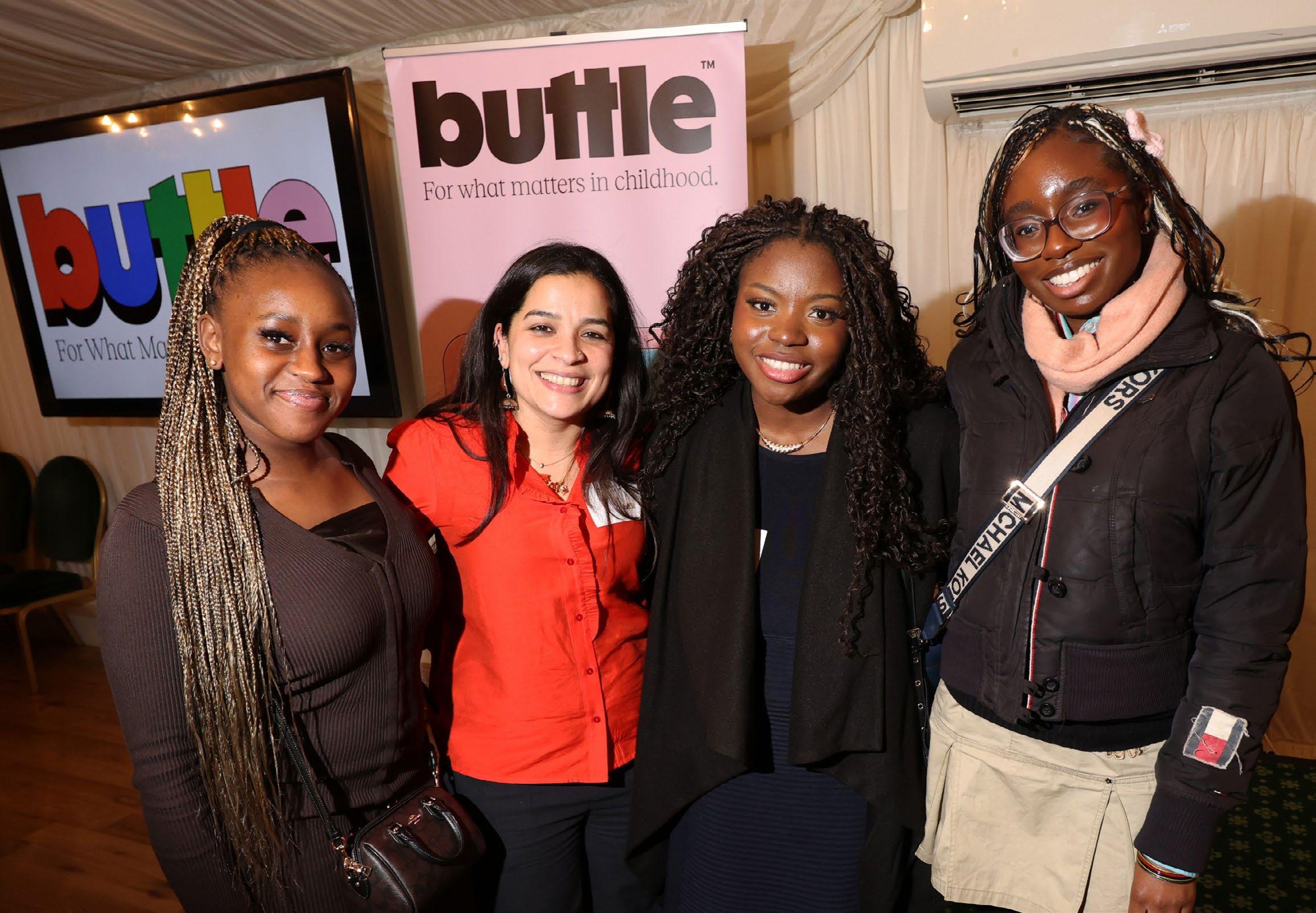
For the past 18 months, Buttle has been working to embed a children’s rights approach into our participation work with young people who have received our grants. We use the Lundy Model of Children’s Participation, which aligns with Article 12 of the United Nations Convention on the Rights of the Child, to plan, deliver and evaluate this work. This model ensures young people have the right to express their views and have those views given due weight.
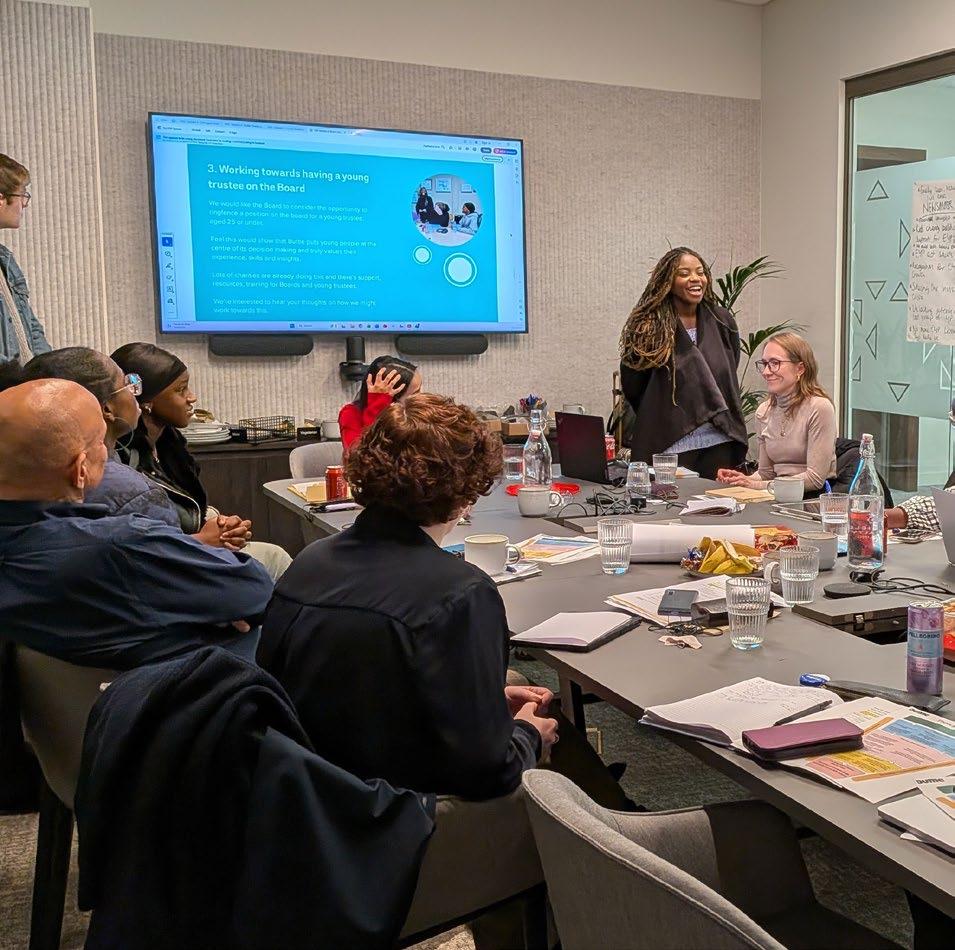
In Autumn 2025, we reached the end of the first year of our Youth Advisory Panel (YAP) - a group of 13 young people who have received our grants and meet monthly to work on projects, feed into consultations, and meet with staff and trustees to shape how Buttle works. To mark this milestone, we gathered feedback from YAP members, structured around the four domains of the Lundy Model: Space, Voice, Audience and Influence.
Below are some key reflections from YAP members’ feedback:

• A safe and inclusive “space”: Members reported that the YAP provides a safe, welcoming and inclusive environment. The informal, nonjudgemental nature of the meetings, combined with supportive staff who actively remove barriers to participation, fosters this sense of security
“The Buttle team is encouraging and welcoming. They provide an atmosphere in which I am certain I can express my opinions and voice my thoughts. The YAP have all had different experiences that I think has allowed us each to be open minded and kind to each other.”
• Shared values and strong relationships are crucial to “voice”: Shared group values and experiences of adversity mean that members feel able to share their experiences and views openly and honestly, without fear of judgement
• Training and preparation is crucial for meaningful engagement: Over our first year, we trained YAP members in how Buttle runs as a charity, how our grants work, our governance structure and fundraising approaches. This took time, but this deep understanding now means the YAP can engage with and challenge us across our work
“We got to know about how Buttle works and that’s allowed us to give input on what Buttle could do better on.”
• In-person meetings build cohesion: While online meetings are useful, members highly value in-person meetings to facilitate deeper engagement, build relationships and create cohesion across the group, leading to higher quality work and decision making
“When we’re in person, I think we’re much more open and honest with each other and we get to brainstorm together… I think it makes us more cohesive as a panel.”
• Diversity is a strength: Young people value the diversity of backgrounds and experiences within the YAP, seeing it as a real strength that brings different opinions and viewpoints to the group
• Need for clearer feedback on “influence” of the YAP: While members feel their views are taken seriously by staff, and have influenced internal decisions, there was a strong desire for more regular updates and clearer feedback on how their ideas are used, particularly from trustees
• Positive impact on members: Involvement in the YAP has positively impacted members’ mental health and wellbeing, social networks, interpersonal and employability skills, and has fostered a sense of empowerment by turning adversity into opportunity
“Buttle UK has allowed me to use my voice for change, which for me, is a massive thing.”
Overall, YAP members’ feedback was very positive, but also highlighted that Buttle is currently better at ensuring young people can express their views (Space and Voice) than at showing them that their views are given due weight (Audience and Influence). We are now working with the YAP to take forward actions that will help us be more accountable to them and other children and young people in the future.
This work aims to realise a vision of coproduction shared by one YAP member who is currently at university in Aberystwyth:
“For me, co-production means working together as equals, where young people and adults both bring their experiences, voices and ideas to make decisions that matter. And it’s not about being consulted or just giving feedback at the end. It’s about being part of shaping things right from the start. It also means trust, respect, and shared power. Young people bring lived experience and creativity, while adults bring structures and resources. When those come together, they create something stronger, more honest and more effective.”
For more information about Buttle’s grants and co-production work, visit www.buttleuk.org or email coproduction@buttleuk.org

Katy
Gibbon, Forest School
Making magical muddy memories
For 25 years, Forest School Swansea Neath Port Talbot has been nurturing curiosity, confidence and connection through inspiring outdoor learning experiences “Making Magical Muddy Memories.”
Our approach is child centred and at the heart of everything we do is the right for every child to be heard. Sessions are shaped by children’s ideas, interests and instincts. A child may choose to spend the morning building a den and carefully balancing sticks. A toddler may crawl towards a patch of sunlight catching leaves or become absorbed in the texture of mud between their fingers. These are not small moments. They are voices being expressed.
Our leaders follow rather than lead. They observe, tune in and respond, respecting each child’s choices - whether spoken aloud, expressed through body language, or communicated through gesture and exploration. In doing so, children learn that their thoughts matter, their feelings count, and their decisions have value. Families tell us they see changes that reach far beyond outdoor play - growing confidence, improved wellbeing, stronger relationships, and children who feel safe to be themselves. For many, Forest School becomes a place of belonging. Experience shows this approach is transformative. When children’s voices are genuinely at the centre, participation becomes meaningful, wellbeing strengthens, and communities grow stronger. This ethos can be embedded across education and care settings, ensuring that babies, children and young people are not simply included, but truly heard.
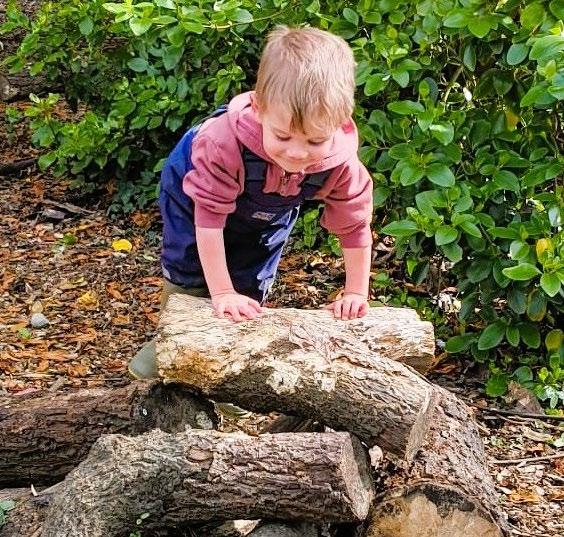
The following case studies bring these stories to life: The mother of “K,” a six year old boy, shared valuable reflections on their long-term journey with us. K has always been a lively, physically active child with neurodivergent traits. When he first attended, aged one, self-regulation was very challenging. Transitions were particularly difficult, being asked to stop an activity or leave at the end of a session could trigger significant meltdowns.
From the outset, we adopted a facilitative, rather than directive approach. Never forcing participation and taking time to observe, build trust, and understand K’s interests, triggers, and patterns. By meeting him at his level and tuning into what motivated him, we were able to gradually support his regulation and engagement. One of K’s greatest passions is creating trails for others to follow. He loves hiding objects and directing adults and children on where to search. This gave him genuine agency over his experience, leading the activity rather than being led. The joy he expressed became a powerful vehicle for connection, communication, and confidence-building.
“Forest School is the only place where he feels completely seen and heard”.

Swansea Neath Port Talbot

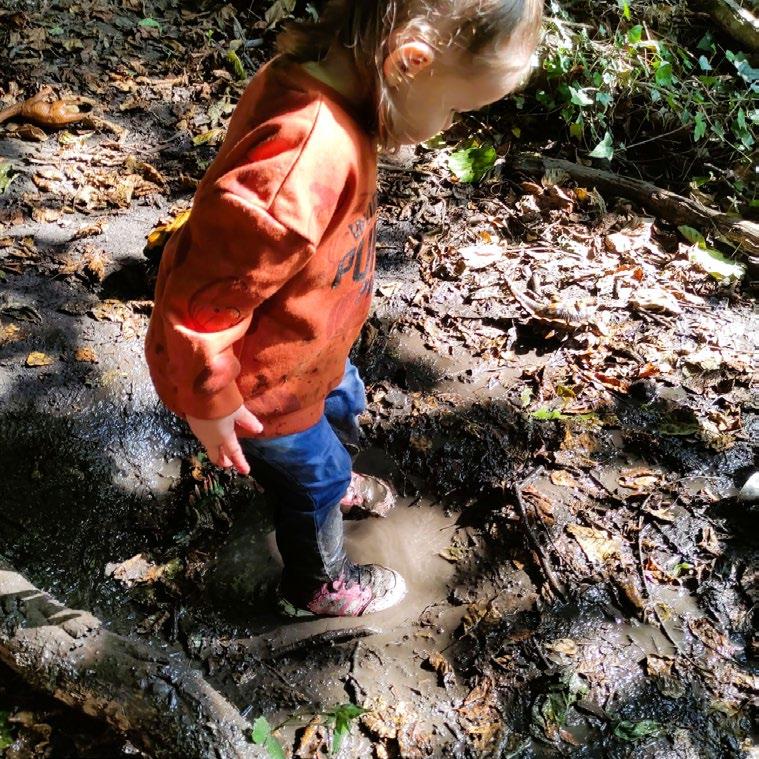
Over time, K developed a deep sense of trust and belonging within our setting. His mum shared that Forest School is the only place where he feels completely “seen and heard.” Because of this secure foundation, he is now able to respond positively when boundaries are occasionally needed. He listens, engages, and transitions more smoothly. His mum also reflected on how welcomed and unjudged she feels as a parent. She knows he is genuinely valued here. This acceptance is reflected in K’s increasing confidence, emotional security, and enthusiasm to attend. Another mother of two boys (aged 7 and 9) shared her experience of attending our Home Education Forest School sessions. One of her sons, “D” (aged 7), experiences high levels of anxiety and has historically been very uncomfortable with dirt or getting wet. During their first session, D slipped in mud, became extremely distressed, cried and wanted to leave. With gentle encouragement from his mum, he stayed, gradually recovering enough to enjoy parts of the session. At their next visit, his mum came prepared with full waterproof clothing. D felt more secure and spent time happily den building and relaxing in the hammock with his brother. However, he did not want staff to approach or engage with him directly. We respected his need for space and allowed him to observe, settle, and build familiarity at his own pace. Over the following months, we observed a gradual but significant shift. His mum reports a noticeable reduction in his anxiety and obsessive behaviours.
A particularly powerful moment occurred during a recent session when we made popcorn over the fire. Each child had their own bowl. D was so relaxed and immersed in the experience he ate the popcorn without preoccupation about dirt on his hands. For the first time, he did not ask to wash his hands during the session - something that would previously have been unthinkable. His mum described this as a major breakthrough. Both boys are now at ease with peers and adults at Forest School, chatting confidently and engaging socially.
If you would like to get in touch with the school and learn more about their work, please email: office@forestschoolsnpt.org.uk

Babies, children and young people’s participation in practice
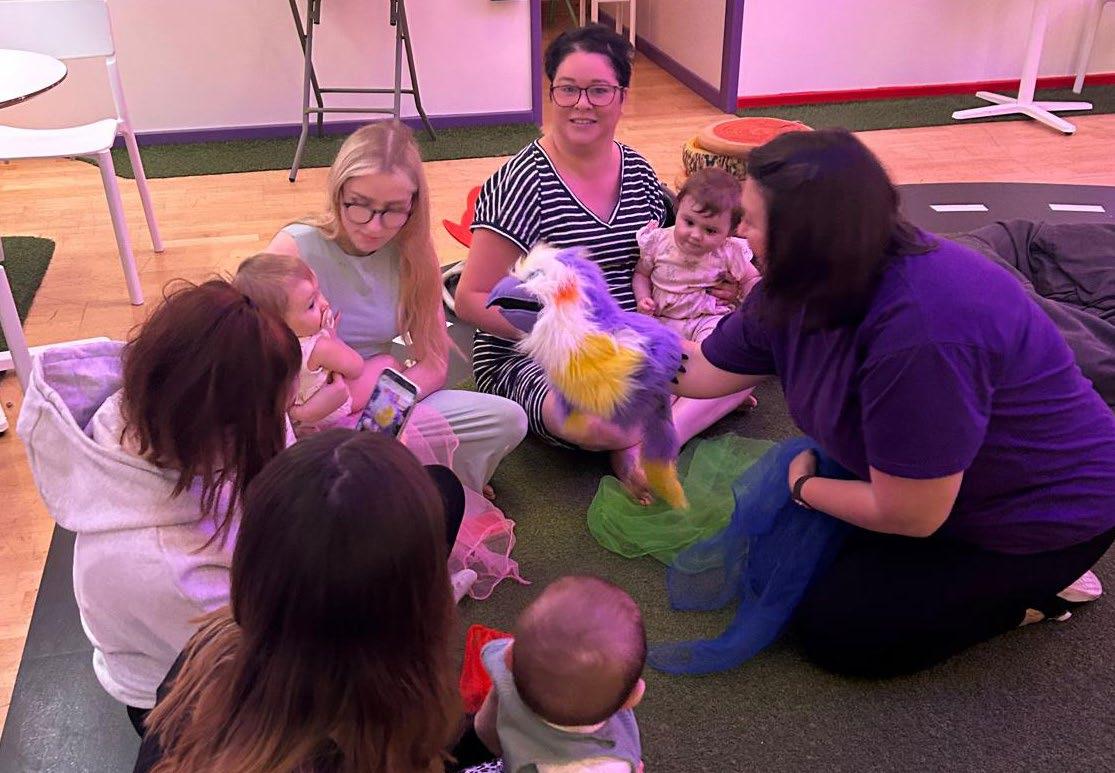
At Heol Chwarae Rol - Role Play Lane, participation is part of everyday life for the babies, children and young people who attend. Guided by Article 12 of the United Nations Convention on the Rights of the Child, we believe every child has the right to be heard and to influence what happens around them.
As a qualified teacher and community practitioner, I am passionate about listening to children’s views and enabling learning through play. Children engage most when they follow their interests, make choices and shape their own experiences, and this principle underpins our work.
As a community-led, not-for-profit role play centre in Llantwit Fardre, our approach to participation is grounded in relationships, trust and play. Not all children express themselves through words or formal feedback. For many, especially babies, neurodiverse children and those with Additional Learning Needs (ALN), participation happens through choice, behaviour, creativity and interaction.
Play-based environments provide rich opportunities for children’s voices to emerge naturally. Within our role play village, children choose the spaces they are drawn to, the roles they explore and how they interact with others. These choices shape how we adapt our environment, resources and sessions.
Creative sessions form a key part of this approach. Music and movement, sensory play, cookery and craft activities allow children to express preferences, test ideas and take ownership of experiences in ways that feel natural to them. One child who initially struggled to settle began engaging through music and movement, gradually building confidence and developing a sense of belonging. These everyday moments are where participation becomes visible. We also support participation through practical feedback tools. Smiley-face stickers, picture cards and visual prompts allow children to share what they enjoyed, what they would like to see more of and how they feel about sessions. These approaches ensure even very young or nonverbal children can communicate their views.
Joanne Baldock, Role Play Lane
Our work with children with ALN highlights the importance of accessible participation. Some children communicate through sensory preferences, body language or creative expression rather than speech. By adapting environments, offering quieter sessions and providing flexible ways to engage, we ensure their voices are recognised and valued.
Participation also happens through collaborative projects. Students from Coleg y Cymoedd are helping to shape a sensory garden for the children, contributing ideas such as mirrors, windmills, sensory flowers, handmade windsocks and colourful planted wellies. Their involvement shows how young people can help create meaningful spaces for others.
Parents and carers play an important role in this process. Their insights help us understand what matters to their children and how we can improve our offer. One parent shared: “Harry has always struggled to settle anywhere, and I was worried about bringing him at first. However, after just a few weeks of coming, I’ve seen a complete change in him. He now totally engages in the activities, whether it’s role play, crafts or cookery. Seeing him grow in confidence and feel comfortable in this setting has been amazing. It’s the first place he’s truly felt at ease.”
Another parent explained how participation supports learning and confidence:
“Finding activities that suit both my boys can be a real challenge, but this after-school club has been fantastic for them. It gives them a safe space to let off steam, but at the same time, they are learning new things like cookery skills and teamwork through play. I’ve noticed a real improvement in their confidence and ability to follow structured activities.”
Participation is equally important for children who face additional barriers. One parent shared: “Abigail has a rare condition, which means finding suitable activities can be difficult, both in terms of accessibility and cost. This club has been an absolute blessing for us. The variety
of activities means there’s always something she can take part in, and it’s affordable, which makes a huge difference. Most importantly, it’s given her the chance to meet up with friends and enjoy herself in a welcoming environment.”
Through everyday interactions and responsive planning, participation becomes a lived reality. Children influence what we run, how we run it and what comes next. By embedding Article 12 into daily practice, we help babies, children and young people understand that their views matter. Participation through play supports confidence, independence and a sense of belonging from the earliest years.
If you would like to learn more about our work, please email: visitsatroleplaylane@gmail.com

Children’s rights and participation in action: Making space for young voices
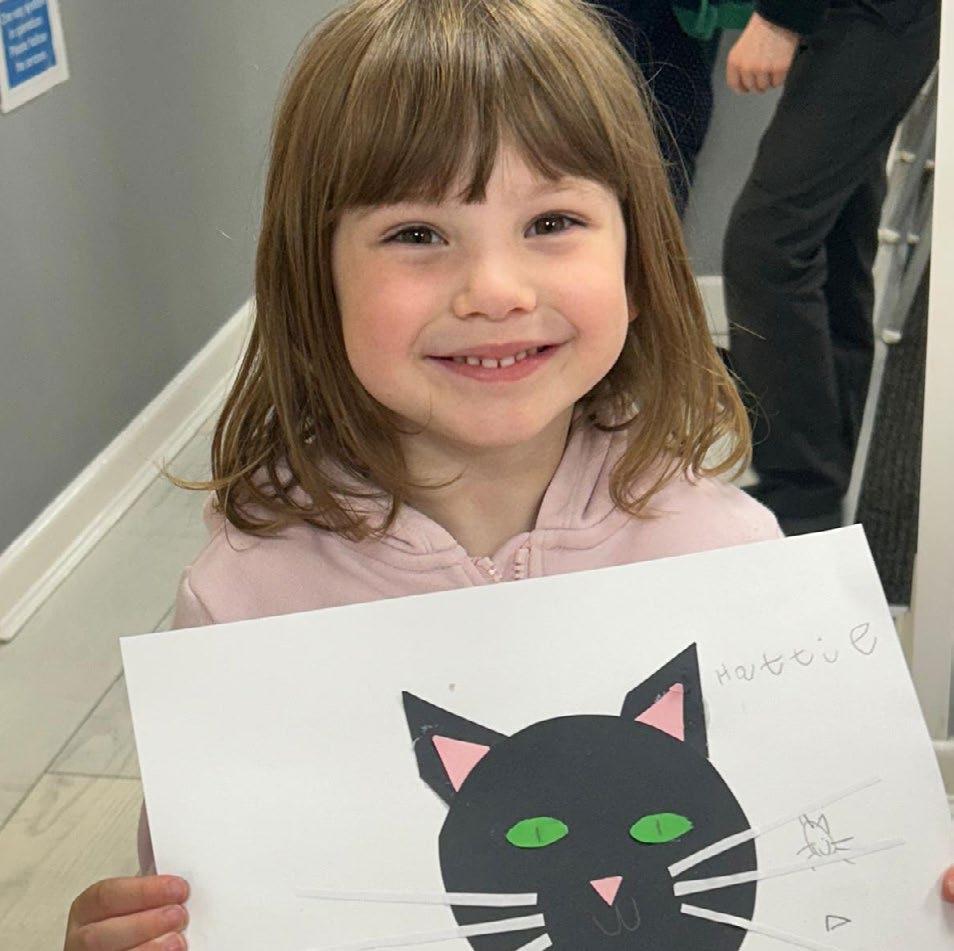
Although an improving landscape, until recently young children were frequently overlooked in educational research, often positioned as passive subjects rather than active contributors to knowledge (Jennings 2025). Their perspectives are mediatedor unintentionally muted - by adult interpretations, school structures or research designs that value verbal fluency or conventional datacollection tools. Yet, as Clark (2011) reminds us, children are experts in their own lives and possess valuable insights into their daily experiences, relationships and emotional worlds. Recognising children as rightsholders, as is the intention within our own education system in Wales, and meaningmakers requires research approaches that genuinely honour their voices and enable them to share their lived experiences on their own terms.
My EdD study sought to explore young children’s emotional responses and experiences to being in school, guided by the question: “What makes me happy in this place?” Rather than assuming what matters to children, or limiting them to adultframed constructs, the study foregrounded children’s agency by offering multiple, creative avenues for expression. To ensure accessibility and inclusivity, I adopted an adaptation of Clark’s Mosaic mixedmethods approach, that enabled children to communicate their understanding and experiences through drawing, painting and photography. These visual methods were complemented by individual discussions with each child, which provided space for reflection, explanation and personal storytelling.
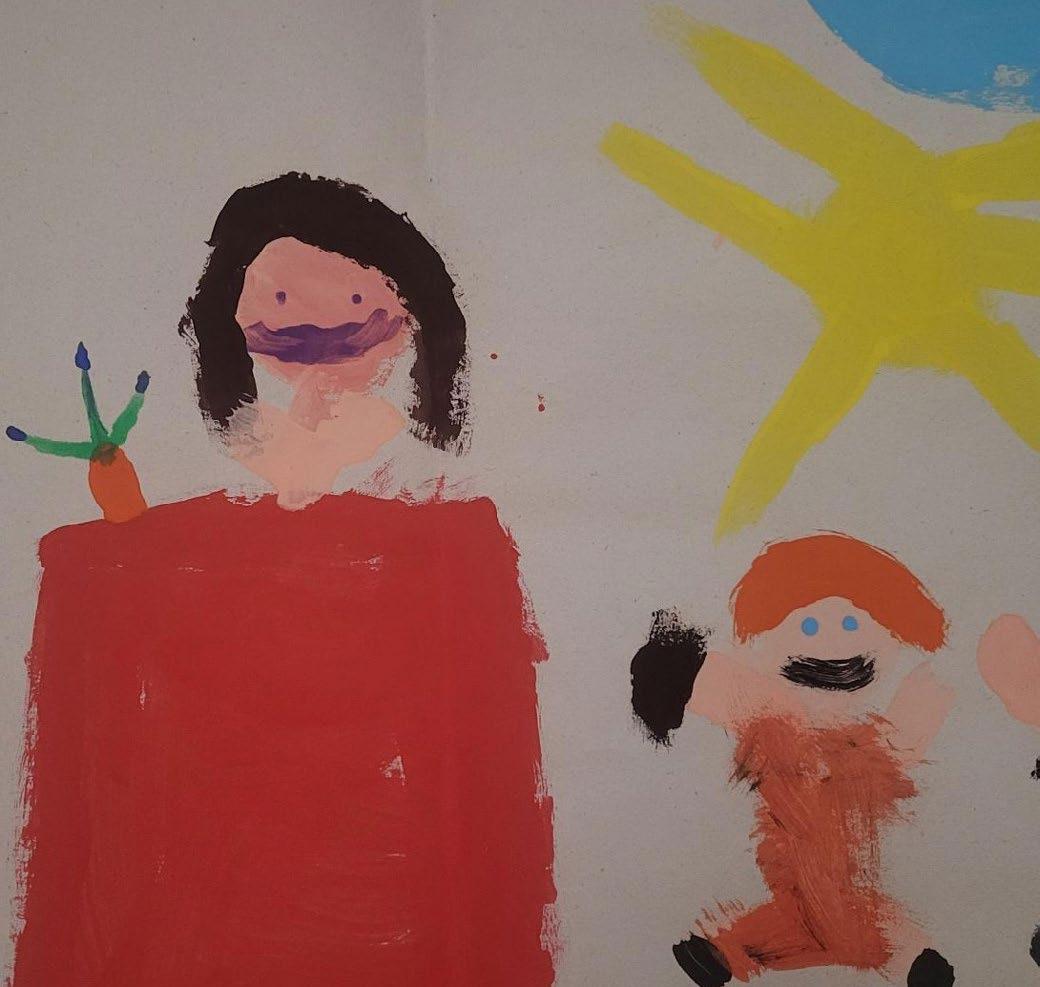
The creative activities served as powerful mediating tools. Drawings and photographs, for example, often captured details that might otherwise remain unnoticed - playful interactions, “special” places within the classroom, or objects that held emotional significance. However, the visual artefacts alone were not treated as selfexplanatory. The subsequent discussions were a crucial element of the methodology, as they allowed children to articulate the meaning behind their creations in their own words, as each individual experiences happiness in different ways, happiness does not necessarily mean or feel the same for everyone (Sutton, 2018; Izzaty, 2018). These conversations shifted interpretive power back to the child, ensuring that their perspectives - not adult assumptions - shaped the emerging narrative.
This dialogic element of the research was especially important for fostering children’s sense of agency and empowerment. Time for talk is essential in early childhood settings, yet it is often constrained by busy schedules or performative expectations linked to curriculum demands. In this study, providing children with unhurried, purposeful talk time created space for deeper emotional expression. Children were able to describe what made them feel happy, secure or connected within their school environment. Their reflections revealed rich understandings of themselves, others and the relational nature of their learning spaces.
Dr Carys Jennings, The Open University in Wales
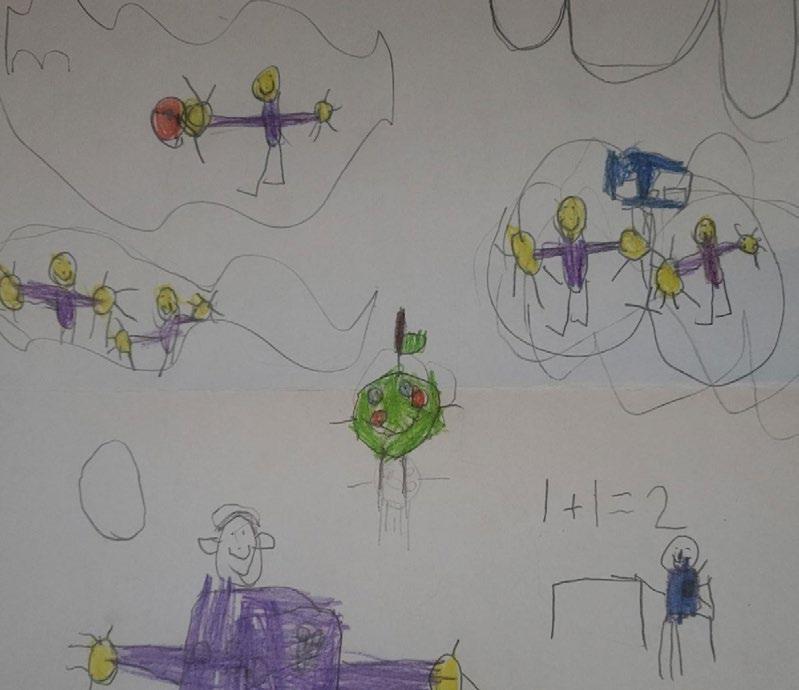

Beyond supporting children’s participation rights, the approach also offered significant professional benefits for practitioners. The insights children shared, verbally and visually, enabled practitioners to reflect on the provisions they had established and to consider their environment from the child’s perspective. Some staff participants commented that the findings encouraged them to rethink aspects of classroom layout, emotional support routines and opportunities for freeflow conversation, in addition to time for solitary play that the pupils had all mentioned as being valuable and important to them. The research therefore acted as both a reflective lens and a catalyst for enhancing practice, strengthening the emotional foundations upon which learning is built.
Regular opportunities for children to engage in creative expression, combined with meaningful dialogue, are vital for fostering their emotional development. Such practices promote selfawareness, nurture relationships, and build trust between children and adults. They also affirm the principle that children’s viewpoints are not peripheral, but central to shaping effective, responsive educational environments. When children are given time, tools and permission to communicate their lived experiences, they reveal perspectives that enrich both research and practice.
When, as practitioners and researchers, we recognise young children as competent informants and by honouring their right to participate, we move towards a more ethical, childcentred research and more reflective, emotionally attuned educational provision. My EdD study demonstrates that making space for children’s voices is not only possible, but profoundly impactful - both for the children themselves and for the practitioners committed to supporting their wellbeing.
If you would like to learn more about this research, please contact: carys.jennings@open.ac.uk
References
Clark, A (2017) Listening to Young Children: A guide to understanding the Mosaic approach.London: Jessica Kingsley Publishers
Jennings, CW (2025) Y Plentyn Hapus: Ymchwiliad i ddehongliadau a phrofiadau plant 3 – 7 oed o’r hyn sy’n creu ymdeimlad o hapusrwydd ynddynt o fewn yr ysgol. Ar gael ar: Y Plentyn Hapus (mynediad 16-1-26)
Izzaty, RE (2018) Happiness in Early Childhood. Psychological research and Intervention, 1(2), p 64 – 77
Musgrave, J (2017) Supporting Children’s Health and Wellbeing. London: Sage Publications
Sutton, C (2018) What Counts as Happiness for Young People in the Second Decade of the 21st Century? An Exploration. PhD thesis. The Open University
Doing the little things at Ysgol Penrhyn Dewi VA

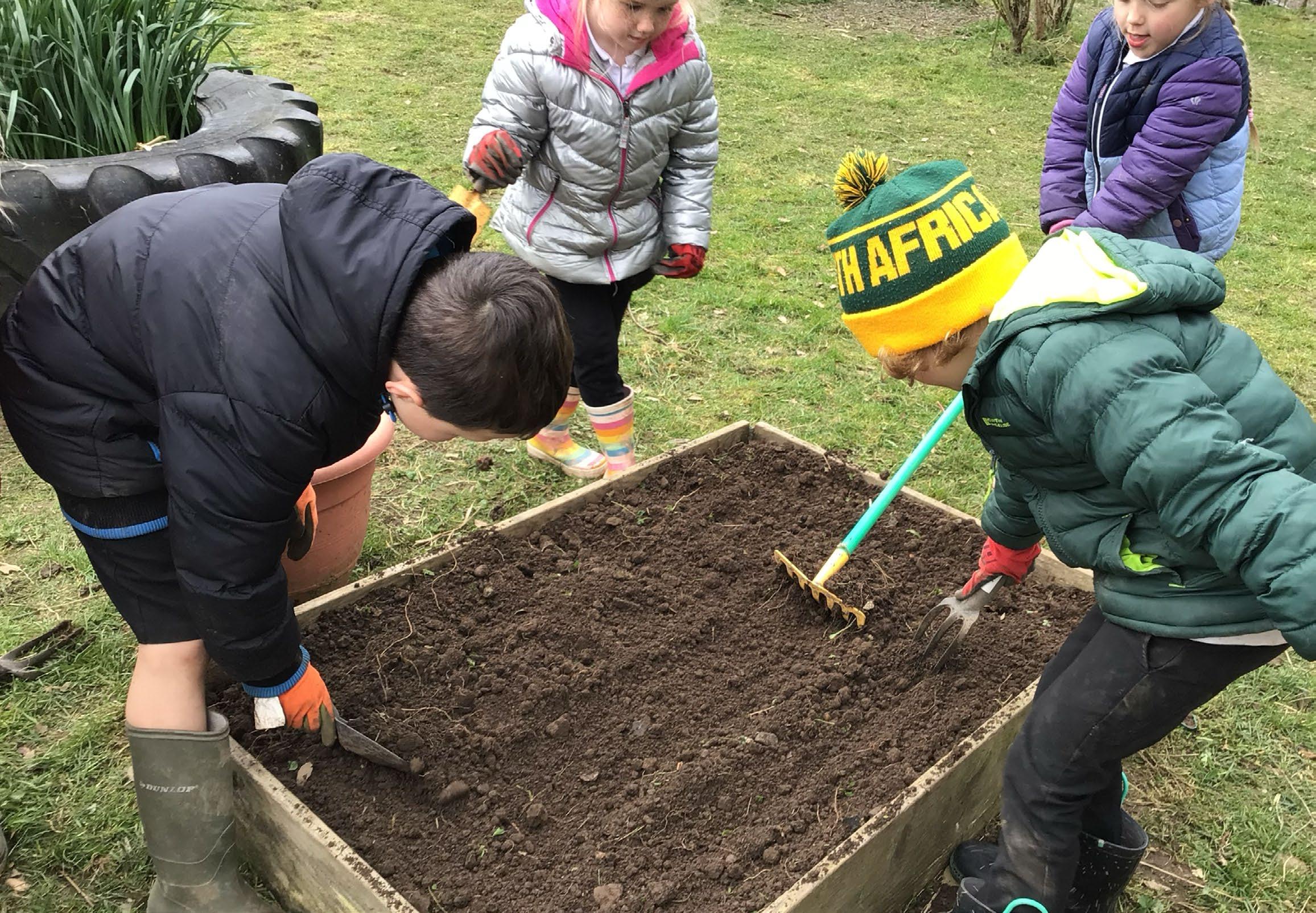
At Ysgol Penrhyn Dewi, our school motto is ‘Be Joyful, Keep the Faith and Do the Little Things.’ We believe that by doing the little things we can make a big difference, and this starts with our very youngest children. Pupils have made positive changes through their voices, their ideas and their actions, shaping their world in powerful ways. They are active citizens who care about their environment, their community and each other.
Our pupils are passionate about the environment and lead in educating others about how to look after it. Following our work on a project with Climate Cymru, called ‘Fix our Climate’, pupil son our Senedd Gwyrdd were invited to present to Ministers at the Senedd in Cardiff; they have also presented on this issue to the local community (with a little help from Iolo Williams!) and local headteachers. When children explain their ideas about reducing waste, recycling properly and caring for wildlife to adults, it can be especially powerful - adults often listen more carefully when a child asks them to care for the planet.
When they speak about environmental issues and global citizenship, they remind decision-makers that policies affect real lives, including the lives of future citizens and ensures that their opinions are valued.
Our pupils participate in regular community litter picks, allowing them to take direct responsibility for improving their environment. By cleaning up their park, streets and beaches, they see immediate results from their efforts. They also develop a sense of ownership over their community and learn that everyone has a role in keeping shared spaces safe and beautiful. Following one of their litter picks, pupils in Years 2 and 3 decided to write letters to St David’s City Council to ask if they could design posters to put around the community to discourage people from littering. The Council agreed, and the children’s brightly coloured designs are displayed around the city, reminding locals and visitors to treat our city with respect. Through practising civic responsibility, our pupils have learned that problems can be addressed through respectful communication, rather than being ignored.
Rachael Thomas, Ysgol Penrhyn Dewi VA
At Ysgol Penrhyn Dewi, one of our ways of teaching about sustainability is through growing food. Pupils are involved in planting and tending raised beds, both at school and in the local community garden, with their produce being used in cooking activities in school, as well as being sold to raise money to buy food for the local Cwtch foodbank project. Projects such as these enable our children to learn about healthy eating, food systems, fairness and helping others. They learn that growing food takes time and care, and that sharing resources supports families in need.
“Our young children are not just learners - they are leaders and changemakers.”
With the support of local community organisation, Eco Dewi, pupils as young as four years old have been involved in tree planting, both in school and as part of larger tree planting projects, such as the creation of a community woodland at Maes Glasfryn. Through their involvement, they have invested in their future - creating something that will continue to grow long after they are adults.
Our children have also helped to create wildflower meadows in the local community. They understand that wildflowers support bees, butterflies and other pollinators that are essential to food production and ecosystems. Creating wildflower areas teaches children about biodiversity and the importance of protecting insects and habitats. Our pupils are also proactive in organising “Walk to School Weeks.” Encouraging families to walk or park and stride instead of drive reduces traffic, pollution and carbon emissions while improving physical and mental health. When children lead these campaigns, families often feel more motivated to take part, showing that children can inspire healthier behaviour in adults.
Overall, our young children are not just learners - they are leaders and changemakers. They show that small actions can have a significant impact.
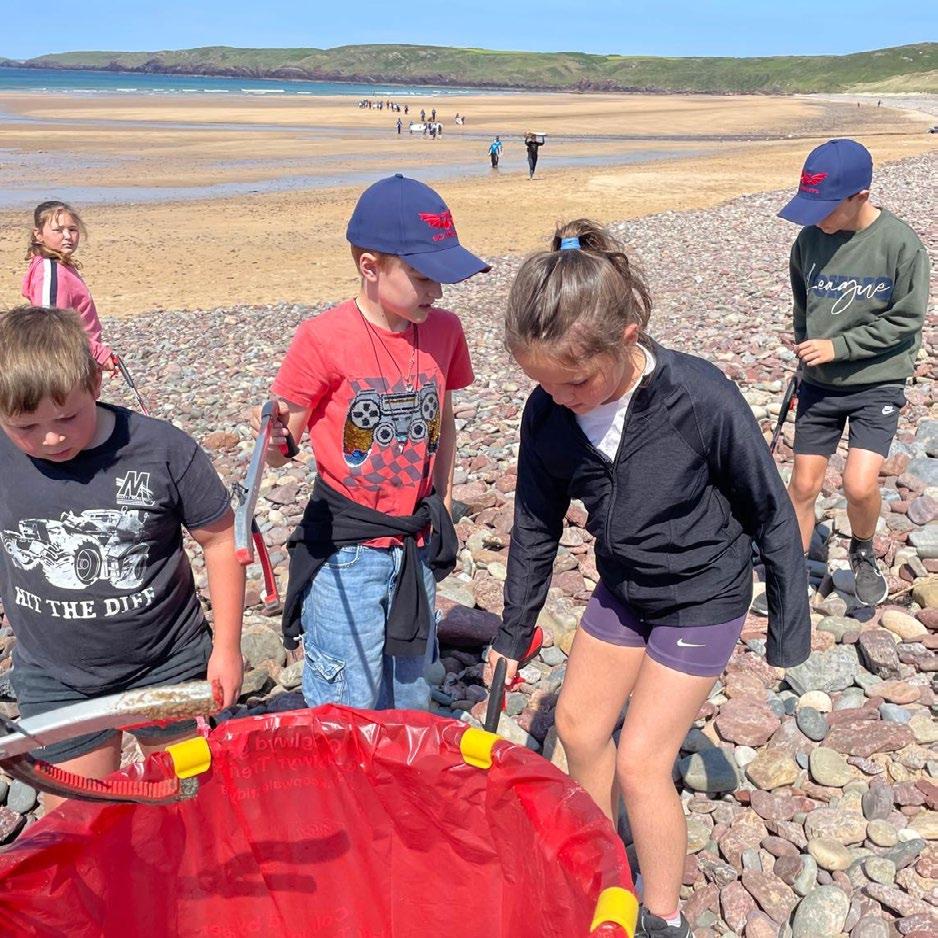
When adults listen to children and support their ideas, communities become kinder, greener and more inclusive. The world does not only belong to adults, it belongs to our children too, and they are already helping to shape it. They are the stewards of our planet and our future.
If you would like to learn more about the school, please visit: www.ysgolpenrhyndewi.cymru

Our promise to military children

Pembrokeshire County Council’s Education Welfare Service, in partnership with SSCE Cymru, has launched the first Military Pupil Promise in Wales, a pioneering initiative designed to recognise, support and celebrate children from Armed Forces families across the local authority. The project saw almost 70 service children come together to help develop the promise, giving them a direct voice in shaping how schools and the local authority support them. It aims to strengthen understanding of the unique challenges faced by service pupils, such as frequent moves and parental deployments, while promoting consistency, belonging, and emotional wellbeing in education.
Developing a clear local Military Pupil Promise brings schools, families and community partners together to ensure every service child feels valued and supported to achieve their full potential. This initiative also reinforces the local authority’s ongoing commitment to the Armed Forces Covenant, ensuring that those who serve, or have served, and their families are treated fairly and receive the support they deserve.
Through this project, the local authority demonstrates its dedication to inclusion, equity, and the wellbeing of all children, recognising that supporting service families strengthens the whole community.

As the first of its kind in Wales, the Military Pupil Promise sets a strong example of best practice, and the local authority hopes that other councils across Wales will follow suit, working collectively to build a national culture of understanding, respect and support for service pupils and their families.
“Developing the Service Pupil Promise is about recognising and celebrating the unique experiences of our service children, while ensuring they feel fully understood, supported and valued within our schools and community. For us as a local authority, it’s not just a pledge, it’s a commitment to listening, learning, and working together so that every service pupil can thrive, no matter where their journey takes them. I would like to thank the children, schools, partners and officers who contributed their time, voices and enthusiasm to this project and helped make the launch such a meaningful and collaborative event.”
To learn more about this work, please contact Kelly Hamid, Education Welfare Service Manager on kelly.hamid@pembrokeshire.gov.uk
Kelly Hamid, Pembrokeshire County Council
Exciting new services available in Bangor

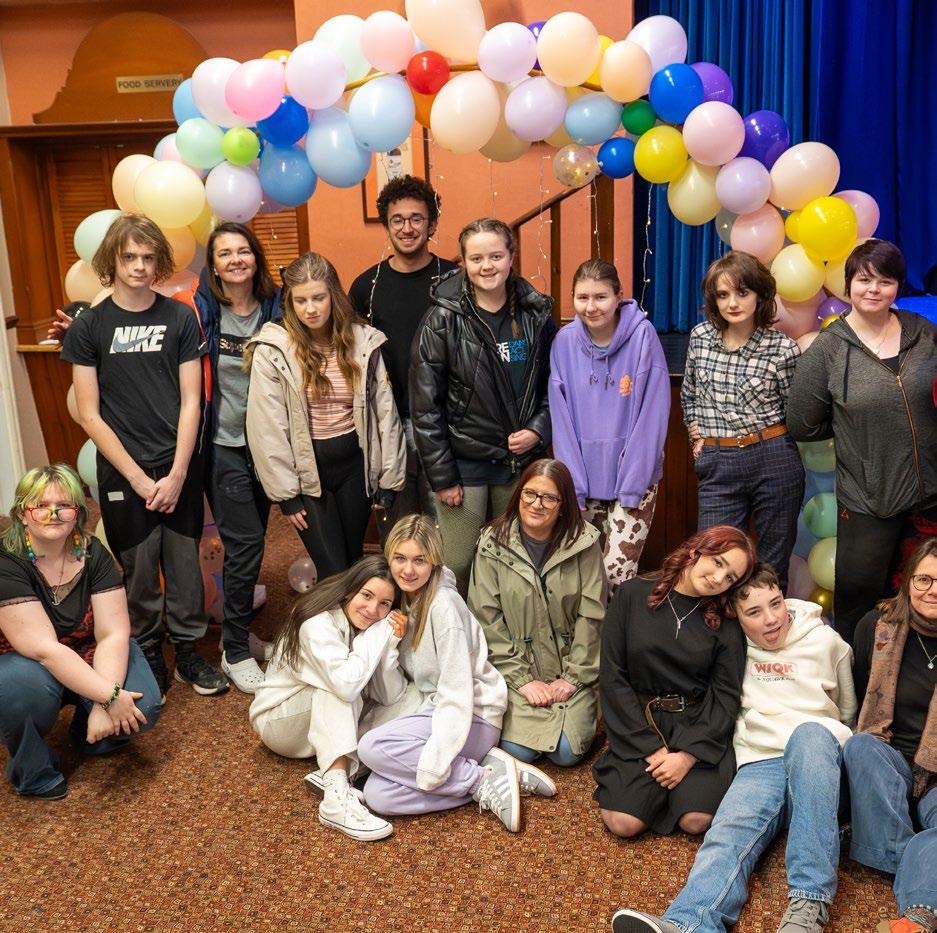
Hwb Dinas Bangor, part of Bangor City Council, is a city support hub for the residents of Bangor and surrounding area. Opening its doors on 1 April 2025, over 10,500 residents have walked through its doors for support and guidance in addressing matters in their lives that are worrying them. The hub, which works with over 50 partners across the public and voluntary sectors, supports residents with matters ranging from loneliness and isolation, through to suicide, mental health and homelessness. Due to the huge success and clear need for this service, Bangor City Council will now be opening a hub for local children and young people, namely Hwb Westend, Farrar Road, Bangor. It will ensure there is a safe space dedicated to supporting this resident group where individuals, up to the age of 18, can go on their own for food and activities or with parents/carers, and receive specialist support from relevant agencies operating from this location.
The framework for operating this hub will be overseen by the newly-formed Bangor Children & Young People’s Partnership Forum. It will maintain a consistent vigil over services available and funding required/obtained, whilst identifying gaps in support required and working together to resolve over-burdened services and minimising waiting lists for statutory support, where possible.
For further information about this exciting new work, please contact: Lisa Goodier, Deputy City Director, Bangor City Council on lisa.goodier@ bangorcitycouncil.com or 07484 559181.

Lisa Goodier, Bangor City Council
Duckers, Leanne Jeffreys & Ffion Haf Scott, Credu
Young Carers’ Voices
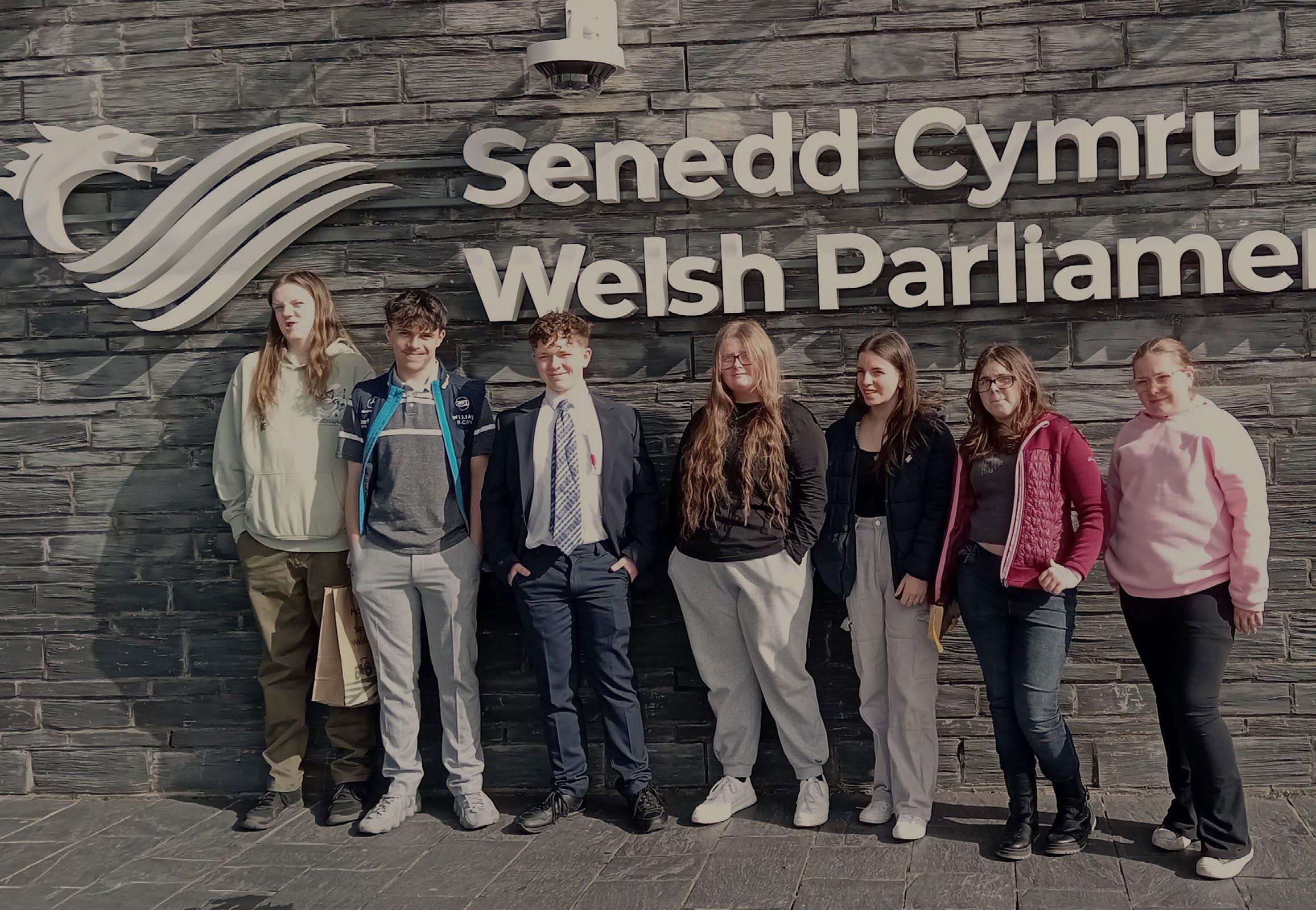
Credu is a charity that supports Young Carers across five counties in Wales - Wrexham, Conwy, Denbighshire, Powys and Ceredigion. At the heart of Credu’s work is a firm belief in the importance of young carers’ voices, ensuring that their experiences and perspectives guide the decisions that affect them. Young carers play an active role in staff recruitment, taking part in interview panels and shortlisting, making sure the organisation truly reflects their needs and values. Credu also encourages young carers to become leaders and representatives within wider networks. They are active members of the Carers Trust Youth Council and Advisory Board, and individual young carers contribute to the Young Leaders Advisory Board (YLAB), the Ministerial Advisory Group (MAG) and the Youth Parliament. These opportunities allow young carers to influence change at both local and national levels. Young carers have travelled to the Senedd to speak with Ministers for Young Carers Action Day, taken part in panel discussions at the Royal Welsh Show, the All Wales Young Carers Festival and the Eisteddfod.
Over the past year, Credu Young Carers have helped raise awareness through school assemblies, training sessions for student nurses, presentations to headteachers, and various media interviews. They continue to promote the Young Carers ID card, a vital tool for helping schools and professionals identify and support this often hidden group.
Watch our Youtube video here “Young Carers ID Welsh subtitles.”
Research consistently shows that involving young people meaningfully in collaborative work builds more inclusive and resilient communities. Young carers bring creativity, unique insights and lived experience, helping to shape services to respond directly to what young people actually need. Participation also builds confidence, strengthens personal skills and reinforces the value of their voices, not just within projects but in their wider lives. Every young carer’s situation is different, shaped by their responsibilities and daytoday challenges. Understanding these experiences requires listening directly to young carers themselves.
Sally
Assumptions or adult interpretations are not enough; meaningful support must come from hearing their firsthand perspectives.
Leanne Jeffreys, Wrexham Young Carers Outreach Lead, highlights this impact in her work:
“Through my own work, I have witnessed the powerful difference it makes when young people feel genuinely heard. When adults take the time to listen and respond, young carers gain confidence and begin to see themselves as capable of influencing change. This empowerment often extends beyond individual projects, giving them an inner confidence of self-worth.’’
Credu’s groups and activities are built around this belief in youth participation. Over the past year, young carers have taken part in a wide range of collaborative opportunities - from group trips and celebrations, to special events such as the Young Carer and Young Carer Allies Celebration, Christmas Family Bingo and the “Bob Talks” at Wrexham University. At these events, young carers spoke directly to key decisionmakers about their experiences. A particularly memorable moment was their meeting with Rocio Cifuentes, the Children’s Commissioner for Wales, where they shared candid insights into their everyday lives.
A short film showcasing a recent celebration project, codesigned by young carers, is also available on YouTube, demonstrating the positive outcomes that come from young people leading creative initiatives: https://youtu.be/zcv3sF1_tok
At the core of all these projects is a commitment to active listening. Credu ensures that young people guide discussions and decisionmaking, keeping adult agendas from overshadowing their voices. This approach builds trust and validates young carers as equal partners in shaping the support they receive.
When young people are able to collaborate meaningfully, they often become catalysts for real change. Their contributions keep initiatives grounded in lived experience while helping build confidence, leadership and ambition.
Continuing to prioritise young carers’ voices ensures that services reflect the diversity, strength and resilience of their stories.
Ffion, who sits on several forums and represents young carers in the Youth Parliament, captures this experience powerfully:
“I’ve participated in a variety of valuable opportunities. Not only have I gained lots of experiences and skills I wouldn’t have otherwise, but I’ve watched my peers and younger Young Carers flourish and being able to directly impact the work of professionals and systems. Watching them find their voice, advocate for themselves and develop true confidence has been an honour. I’ve finally felt heard and valued after feeling invisible for such a long time. Over time I have learnt that creating real change isn’t about ticking a box, it’s truly hearing the voices of the young people you work with; giving young carers a seat at a table that they deserve to sit at.”
If you would like to learn more about the work of Credu and how it supports young carers across Wrexham, Conwy and Denbighshire, please visit the website at www.wcd.cymru or email info@wcdyc.org.uk or call 03330 143377.

Vedmore
Get Blaenau Gwent breastfeeding: a community rising together
A county ready for change

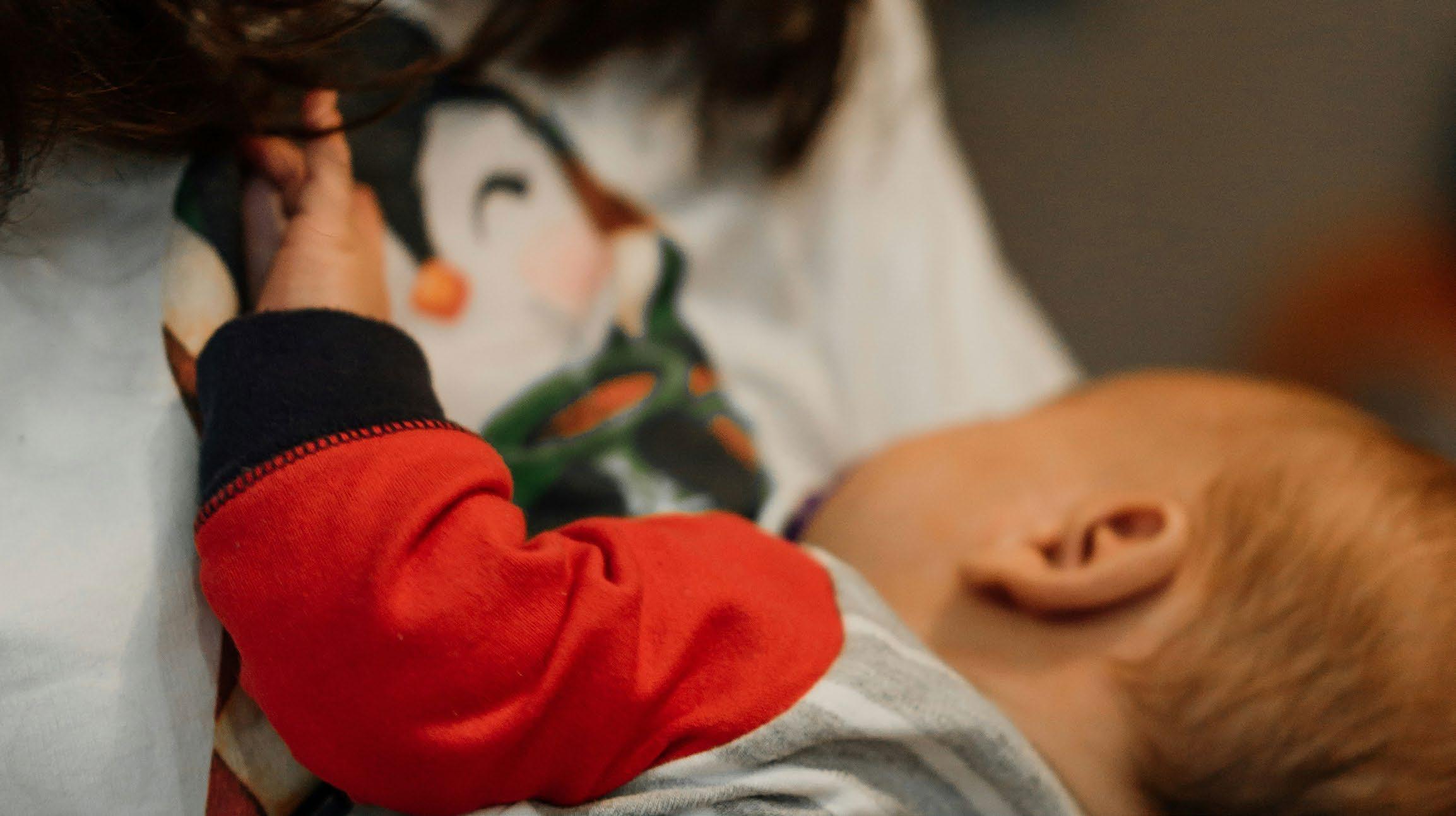
Blaenau Gwent entered 2023 facing a stark reality - the lowest breastfeeding rates in Wales and the UK. As one of the most deprived areas in Wales, the need for change was urgent and the community responded by launching the bold and powerful mission - ‘Get Blaenau Gwent Breastfeeding!’ This is not simply a public health project. It is a community movement built on empowerment, collaboration and the real experiences of local families.
How was this achieved?
Step one | listening to mothers’ lived experience
The campaign started by engaging local parents in conversations. Families candidly recounted their experiences with breastfeeding, including triumphs, difficulties and motivations behind their feeding choices. These personal accounts became the foundation of the campaign.
Step two | designing solutions around real barriers
Parents pointed to barriers such as lack of confidence, limited early support, stigma around feeding in public and inconsistent advice. Every element of the campaign was designed to respond directly to these lived experiences.
Step three | a multiagency Action Plan
The team collaborated with Aneurin Bevan University Health Board (ABUHB), Local Authority partners, and Public Health Wales to develop a comprehensive action plan. Regular monthly partnership meetings helped maintain accountability and track progress.
Step four | accurate monthly data
Revised data collection systems deliver consistent and reliable monthly breastfeeding statistics, enabling the identification of trends, areas of concern, and geographical disparities, which facilitates targeted support measures.
The following graphs give a breakdown of statistics since the campaign launched in January 2024, in comparison to our 2023 breastfeeding rates. We since exceeded the Wales National average in October 2025.
Step five | specialist staff
Specialist staff, such as Antenatal Support Workers and a Responsive Feeding Support Worker, enhance the assistance provided to families during important feeding stages. Their role is to help mothers begin breastfeeding and encourage them to sustain it.
Alexandra
, Blaenau Gwent County Borough Council
What families can access through the campaign
• Weekly breastfeeding support groups
• Antenatal breastfeeding workshops
• A trained team of Support Workers specialising in Antenatal, Breastfeeding and Early Years Nutrition
• Breastfeeding peer counsellor training programme
• A Breastfeeding Loan Library
• Early feeding support within 72 hours of birth
• Feeding assistance through the first month at home
• Guidance on positioning, attachment and responsive feeding
• Close collaboration with midwives and health visitors
Peer Support: the heart of the campaign
Breastfeeding Peer Supporters - mothers who have breastfed and completed specialist training play a vital role in transforming local breastfeeding experiences. They support families through:
Phone calls
Home visits
Group sessions
Maternity ward visits
The peer-to-peer approach boosts parents’ confidence, eases anxiety, helps mothers feel less isolated, and provides support for overcoming breastfeeding challenges so they can continue their breastfeeding journey. The team has highlighted these accomplishments by organising unique events to celebrate breastfeeding at Christmas and Easter, and a major summer celebration is also being planned.
Breastfeeding Welcome Scheme: changing public culture
A major achievement of the campaign is the growth of the ‘Breastfeeding Welcome Scheme’, developed across all five Gwent localities with ABUHB and peer supporters.
The scheme aims to:
• Promote and protect a parent’s right to breastfeed in public
• Increase the acceptability of breastfeeding
• Encourage local venues to create supportive, welcoming environments
Blaenau Gwent currently has 82 premises signed up, including cafés, libraries, leisure centres, community settings and local businesses.
A movement with momentum
Blaenau Gwent mothers are celebrating a remarkable achievement as breastfeeding rates in the borough soared to 68%, an increase of over 28% from the start of the ‘Get Blaenau Gwent Breastfeeding’ campaign.
‘Get Blaenau Gwent Breastfeeding!’ is redefining community support, strengthening families and improving early childhood health. It is rooted in collaboration, compassion, and community pride and it is only just the beginning of the plan to increase breastfeeding rates in Blaenau Gwent.
If you would like to learn more about this work, please email Alexandra Vedmore, Early Years Nutrition and Breastfeeding Support Worker on Alexandra.Vedmore@blaenau-gwent.gov.uk
Building new belongings: engaging diverse communities through Cardiff Flying Start Stay and Play provision
Cardiff Early Help - Flying Start Parenting Groups, celebrating 20 years of supporting families
For families moving into temporary accommodation, the journey can be overwhelming. New surroundings, unfamiliar services, and the challenge of settling children into new communities and local life can feel daunting. That’s where our Flying Start Groups team step in, offering more than just support, but a safe hand on the family circle and a friendly face every step of the way.
Across Cardiff, Flying Start are providing weekly drop-in parenting groups which provide families with a space to connect, share experiences and learn together. These groups aren’t just about parenting advice, they’re about community, trust and belonging. Families meet others who understand their journey, while accessing practical guidance and signposting, tailored to their needs. For those transitioning from emergency accommodation into more suitable temporary accommodation, our support is hands-on. Team members provide local information, accompany families to groups, and offer extra help whenever needed, working with other professionals involved with the family too. Moving from temporary to more permanent housing brings its own challenges, so our personalised support ensures families can navigate schools, healthcare and community connections confidently. Families also get the opportunity to experience moments of joy that might otherwise be
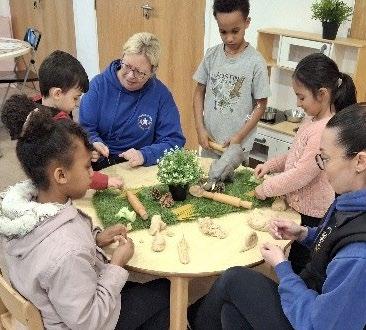
out of reach, through Welsh Government funding that enables us to provide family fundays and trips, to places such as local farm parks or Christmas light shows. This offers children and parents experiences that create lasting memories, moments of fun and laughter, that remind families they belong and are welcomed here, in their new community.
Our Flying Start Stay and Play sessions are vibrant, welcoming spaces for young children and their families. They go beyond play - they build trust, encourage early development and help families feel part of their neighbourhood. With consistent support from the same team throughout their journey, from arrival to permanent housing, families don’t have to start over every time they move. This continuity builds confidence, security and real connections.
Ultimately, our approach is simple - walk with families every step of the way. By combining community events, group support and personalised guidance, we create the foundation for families to thrive. It’s about more than settling into a house, it’s about helping families grow, find joy and feel at home in their new community.
Sara, who moved from Iran two years ago, shares how the sessions supported her family:
“I didn’t know anything about Flying Start when we first moved to Cardiff. I joined a Stay and Play session, and since that day, I’ve tried not to miss any sessions because they are amazing. They provide a wonderful group with different creative
Susan Smith & Sophie Rees, Cardiff Council
activities that help children’s physical and mental development. They also run special sessions for example at Christmas, with lovely gifts provided for the children. Even during half terms and summer holidays, they organise play sessions, which are fantastic. We really enjoy the kind and friendly staff there, they also run useful [parenting] courses with a creche, and I always try to participate in them. We have been offered food bank vouchers, which have been very helpful for us. I am very happy that I have their support and am thankful for everything they do.”
Her experience reflects the holistic approach of Flying Start, combining early years provision with wider family support, practical assistance and partnership working to strengthen long-term integration and wellbeing.
Hamdi also speaks about the difference Stay and Play has made for her and her two-year-old daughter:
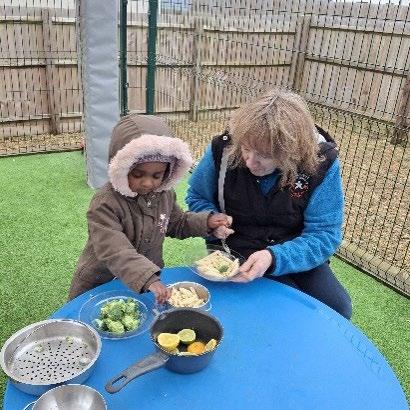
“The sessions provide a safe, welcoming and friendly environment where Nora can play, socialise, and build her confidence while interacting with other children. Nora especially enjoys the healthy snacks that are offered. She always looks forward to them and it encourages good eating habits. I also really appreciate the hot drinks provided for parents, which make the atmosphere even more comfortable and welcoming. For me personally, this space has
been very supportive. I feel relaxed when I am there, knowing Nora is happy, safe and engaged in positive activities. It also gives me the chance to connect with other parents and feel part of a community. The staff are always kind, professional and attentive, which truly makes a difference. This service has been extremely valuable for both of us, and I am so very grateful for the care, support and opportunities it continues to provide.”
Together, these voices highlight the deeper impact of Cardiff Flying Start Stay and Play sessions for families living in temporary accommodation. Beyond early childhood development and secure attachment, they reduce isolation, strengthen parental confidence and foster meaningful community connections. By walking alongside families with empathy, professionalism and genuine care and by helping families to develop resilience and protective factors. Cardiff Flying Start is making a vital contribution in creating stronger, more inclusive communities where diversity is celebrated and every family is supported to give their child the very best start in life.
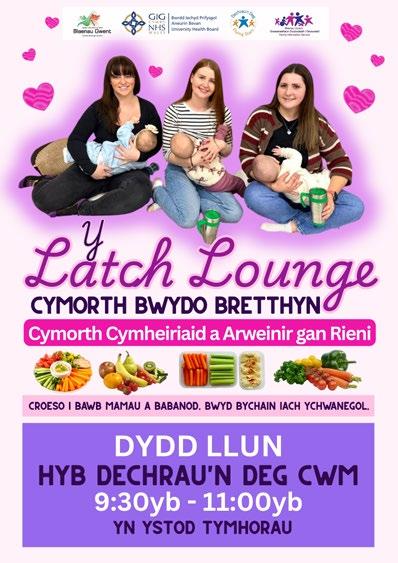
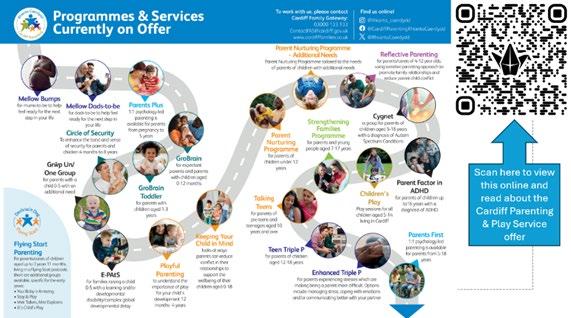
You can learn more about Cardiff Parenting and the services on offer by clicking on our poster above.
Davina Carey-Evans, Family Fund
Welsh coalition supports disabled children
Family Fund has facilitated a new coalition designed to amplify the voices of families with disabled children in Wales. The coalition is needed to combat additional hardships faced by families with disabled children. Many Welsh families raising disabled children face poverty due to reduced earning capacity and increased living costs. As a result, disabled children and their siblings can be more likely to suffer the effects of child poverty, while many parent/carers struggle with stress, isolation and depression.
Noah’s story
Living in St Athan, in the Vale of Glamorgan, with Mum - Taylor 33, Dad - Ben 34, and Cockapoo -- Mabel 3. Six year old Noah is a loving child with a chromosome syndrome, 3q29 microdeletion syndrome – a rare genetic condition affecting around one in 40,000 people - autism, learning disabilities and is pre-verbal.
Mum and Dad balance full-time work with fulltime care of Noah, whose needs can shift day to day. Noah attends a specialist school, where a dedicated team support his communication and development, including his use of an AAC device.
‘Routine helps, but every day is different.’ Mum Taylor explains. ‘Noah can be unpredictable but incredibly loving. He’s always climbing, always seeking pressure and movement. We’re learning about his condition through him.’
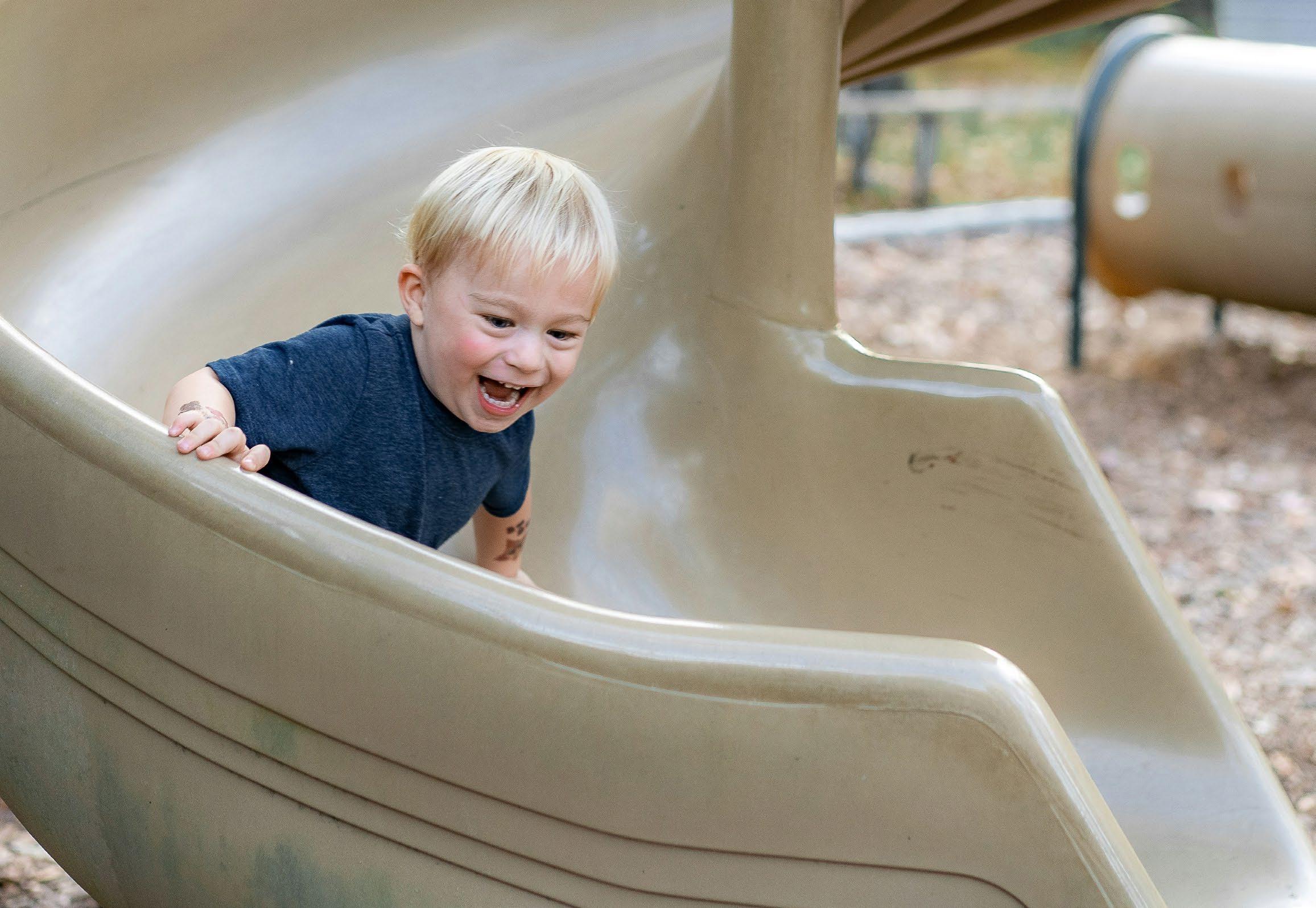
Last year, the family applied for support from Family Fund and the grant allowed them to buy a climbing frame and slide, which they would not have been able to afford otherwise.
‘Noah is now able to safely access equipment which helps his sensory need to climb, and we have noticed a small reduction in the amount he is climbing inside the house as he can do this outside (if the British weather lets him)! It is such a lovely piece of equipment, and we are very very grateful.’
A coalition for change
Family Fund has facilitated a new Wales-wide coalition, including Mencap Cymru, Whizz Kids, Anabledd Cymru/ Disability Wales, Fast UK, Anabledd Dysgu Cymru/Learning Disability Wales, Dal Dwylo & Angelman UK, The Royal Society for Blind Children, Piws, Gwent Parent Carer Network, All Wales Forum, Anabledd Dysgu Cymru/Children in Wales, Ymestyn yn Ehangach/Reaching Wider, Chwaraeon Alabledd Cymru/Disability Sport Wales, AP Cymru Contact.
Together, they aim to address the financial pressure, emotional strain and systemic barriers faced by families like Noah’s.
Manifesto for a Fairer Wales
The coalition have put together a Manifesto outlining four key demands:
• An advisory board led by families
• Financial security and essential support
• Removing employment barriers
• Prioritising health and wellbeing
Welsh families at the heart of the coalition
Stories like Noah’s help us to understand the additional needs of parents raising disabled children. They hope to create a future which recognises the realities of caring for a disabled child.
If you would like to learn more about the work of Family Fund and their Manifesto, please contact: Davina.Carey-Evans@familyfund.org.uk

Evan Dawson & Jamie Jenkins, National Youth Arts Wales
Creative Futures - supporting young people’s wellbeing through the arts
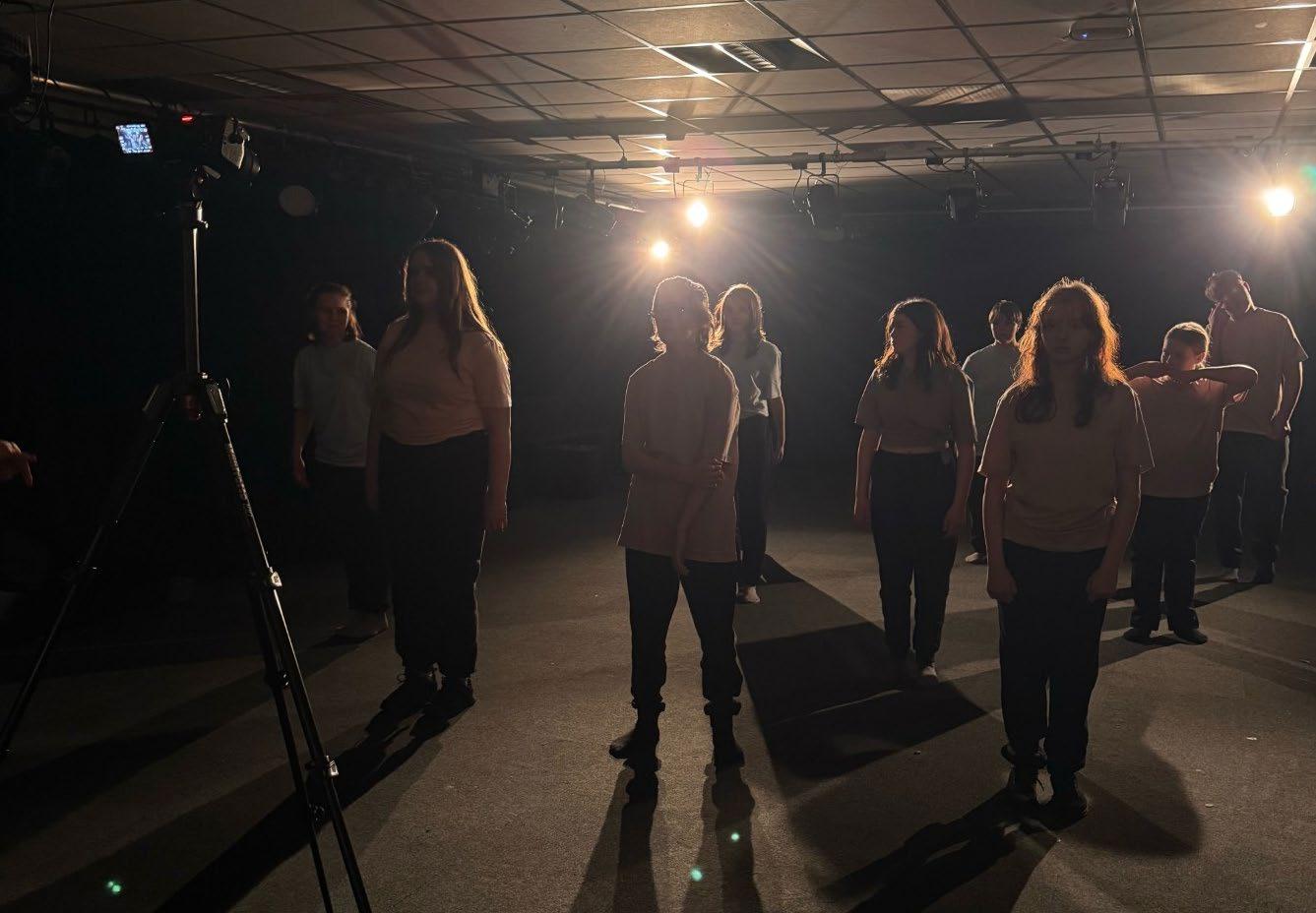
Article 12 of the UNCRC grants every child the right to express their views freely on matters affecting them, with those views given due weight according to age and maturity. In Wales, this principle guides best practice across health, education, social care, childcare, youth work and the third sector. National Youth Arts Wales (NYAW) is the national champion for youth arts, and recently delivered a new programme entitled Creative Futures, focussing on young people’s participation and creative expression. NYAW selected Blaenau Gwent and Torfaen for the project because these areas face significant challenges including high levels of child poverty, elevated mental health needs and the lowest existing arts provision for young people in Wales. Developed and delivered in partnership with several partners including, Ballet Cymru, Gwent Music, Blaenau Gwent Arts and Public Health Wales, Creative Futures received support from Welsh Government’s Child Poverty Innovation Fund. For the first time on an arts project in Wales the programme included a full Health Impact
Assessment (HIA), with guidance from the Wales Health Impact Assessment Support Unit (WHIASU). This approach helped ensure that workshop design, venue selection and delivery responded to the health and wellbeing priorities that young people identified.
Over the course of delivery, the programme provided 61 workshops, engaging 233 young people aged 10–18, across seven locations in Blaenau Gwent and Torfaen. Twelve local freelance artists and creative practitioners were employed, bringing professional expertise in dance and music, while supporting the regional cultural economy. Partnerships with schools, youth services, venue hosts and community leaders proved essential to the work and these relationships continue to support activity.
Participation was strongest where sessions were embedded in familiar settings that young people already attended. In Cwmbrân, 19 young people maintained regular involvement and progressed into a dedicated filmmaking phase, culminating in a showcase event for families and partners. At Ebbw Vale Comprehensive School, delivery
during the school day supported learners in alternative provision. At Cwm Youth Club, a youth-led dance and music programme in collaboration with Blaenau Gwent Youth Service concluded with a performance for parents. Some evening sessions faced inconsistent attendance. owing to transport difficulties and other commitments. The team responded by signposting participants to local ongoing opportunities and focusing on embedded delivery. This adaptability reflected a commitment to listening to young people’s circumstances and adjusting accordingly.
Insights from the programme informed further developments during delivery. Welsh Government approved reallocation of funds, allowing extension into additional areas. Four sessions ran at Penydre High School in Merthyr Tydfil. The team also introduced Creative Futures Experience Days, with five schools taking part in half-day immersive sessions at Ballet Cymru’s professional studios in Newport. Young people observed professional dancers in rehearsal, joined a live-music dance class and worked together to explore creative responses to given stimulus. These sessions helped build confidence, raise aspirations and highlight possible creative career pathways in a concise format.
The funded period concludes on 31 March 2026 and attention has now turned to sustainability and evaluation. At some locations, partners are considering developing regular dance and music class, inspired by the connections formed through Creative Futures. Discussions with other local providers continue to support ongoing activity.
As highlighted in NYAW’s concerns about the “Youth Arts Gap” in Wales, regions such as the South Wales Valleys – including Blaenau Gwent and Torfaen – experience limited access to creative opportunities, often due to lower per capita arts investment compared to urban centres. These “cold spots” coincide with greater economic disadvantage, where arts programmes are frequently the first to face cuts, leaving young people without vital outlets for expression,
collaboration and support. A wealth of academic and clinical evidence indicates that such limited access contributes to heightened anxiety, depression and stress among young people - while arts participation can reduce these issues, improve self-esteem, strengthen social connections and build resilience. The modest costs of such arts programmes are invariably outweighed by the economic return on investment through savings to other public services.
Through Creative Futures, NYAW and partners worked to provide meaningful creative experiences that allowed young people to shape their activities, express themselves and influence their communities. The programme remained modest in scale, yet it illustrated how listening to young voices and embedding arts in everyday settings can deliver positive outcomes for individuals, families and communities.
NYAW thanks the partners, artists and especially the young people whose creativity and input drove this work. Their contributions underline the value of ensuring equitable access to the arts as part of broader efforts to support young people’s mental health and participation across Wales. Creative Futures demonstrates that when young people’s voices are prioritised, and creative opportunities are embedded locally, the arts can play a vital role in strengthening wellbeing, aspiration and community resilience across Wales “Without Creative Futures, I’d probably be at home lying on my bed playing on my PS3 or watching Netflix. Instead, I’ve been developing my songwriting skills and even created a voiceover for our dance film. It’s given me something to focus on and be proud of.” Participant
More information: www.nyaw.org.uk
Melanie Davies, STAND North Wales CIC
Barriers and insights to participation with disabled young people
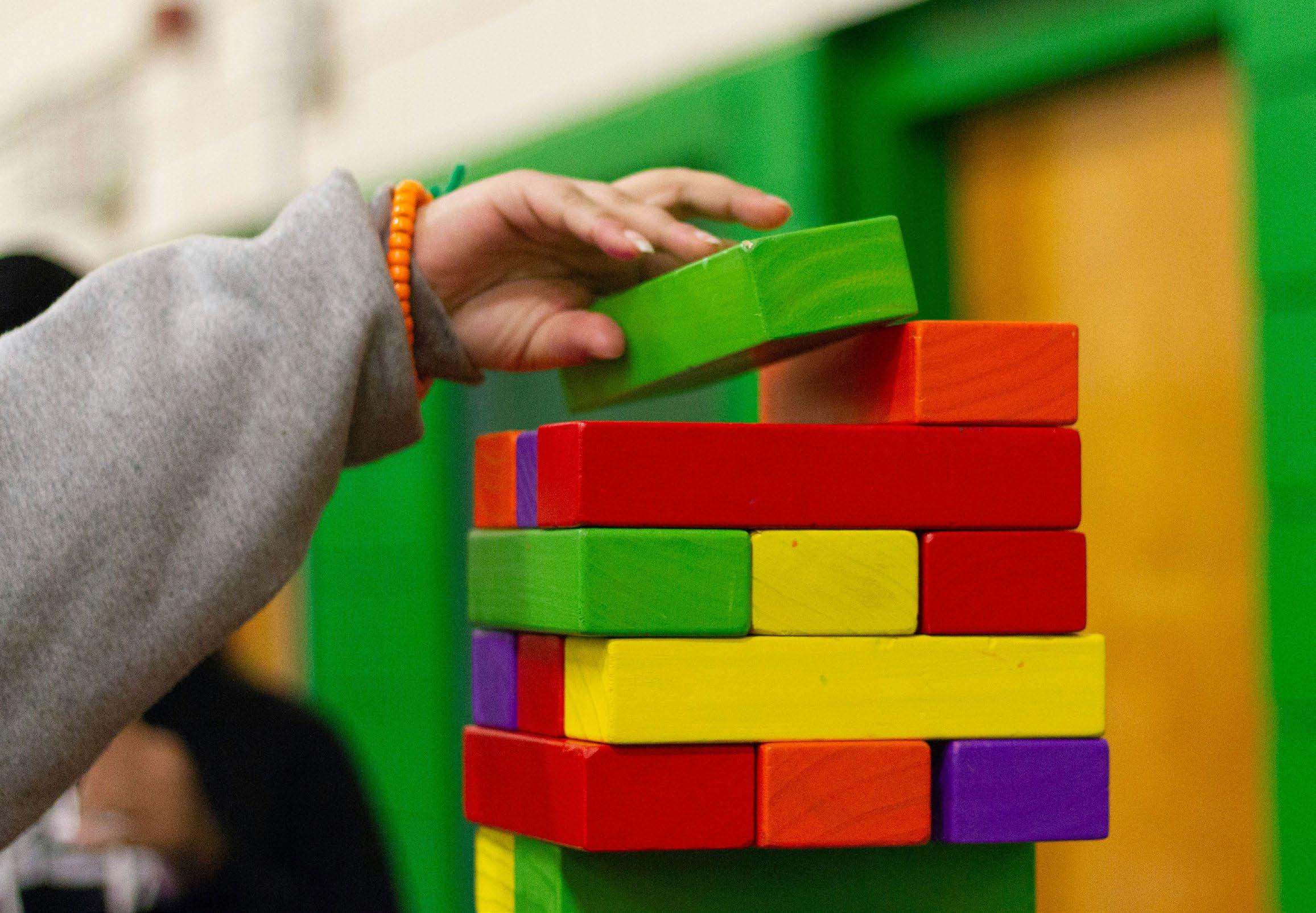
Having worked for 25 years in the voluntary youth work sector in Wales, my understanding of participation has been shaped profoundly through engagement with young people and their communities. Participation, within an Additional Learning Needs (ALN)/disability context, is not simply about inclusion in existing structures, but about challenging the barriers that encompass attitudes, structures and systems all of which can limit whose voices are heard and valued.
Within STAND North Wales CIC working alongside ALN/disabled young people has consistently required us to think critically about power, access and the very definition of “participation.” It has also required us to think outside of the general youth work approach to engagement, and recognise ALN/disabled young people as a diverse group of individuals with intersecting identities, experiences and aspirations who often require a different approach to traditional delivery.
My experience has been that, historically, participation for ALN/disabled young people was too often framed as inclusion. We would find ourselves adapting existing spaces so disabled young people can “fit in.” While reasonable adjustments are essential, this approach risks reinforcing a deficit model, where responsibility for participation rests with the individual rather than the system. All of which can and do present barriers that are not found in the general population of young people. In particular around accessible spaces, the barriers are both physical and practical in terms of spaces as well as approaches to delivery within this cohort.
Voluntary youth work has always been at its strongest when it has moved beyond inclusion towards genuine engagement at the point of access. In practice, this has meant working with young people to design provision and spaces from the outset.
This approach has consistently resulted in deeper engagement and more authentic provision, built on the vision and needs of young people and not that of adults.
As practitioners we have always been in a privileged position to be supporting disabled young people’s participation. Whilst often finding ourselves balancing this role as both enablers and disruptors. On the one hand we are supporting young people to develop confidence, self-advocacy skills and a collective voice, and equally we are challenging systems that are inaccessible or resistant to change. We have a collective responsibility as youth workers to hold that space for young people to define the issues that matter to them, even when those issues can and often do challenge organisational comfort or established narratives. This includes recognising disabled young people as leaders, campaigners and change-makers, not just consultees. Tokenism is the guaranteed killer of any meaningful participation, and every young person and youth worker will have experienced this. Meaningful participation cannot be reduced to a single method of practice - it demands thinking outside of the box and it is in these areas we find the magic. After 25 years in practice, I remain convinced that participation with all young people is not about lowering expectations, but about raising our own not just as youth workers, but as organisations and systems. When participation is grounded in rights, access and trust, our young people do not just take part, they are the driving force. The challenge is also building understanding within formal structures and systems. Too often those in positions of power will try and make the young people fit into their formalised approaches, rather than adapt their styles to accommodate the young people. Participation does not need to look like attendance at meetings or contributions to formal consultations. It can and should take place through creative expression, assistive communication, peer support or sustained one-to-one relationships.
Too often, participation opportunities are developed first and adapted later, resulting in barriers that could have been avoided. A persistent challenge within participation work is the favouring of professional and policy knowledge over lived experience. ALN/ disabled young people frequently bring deeper insight into service design, education, health and community life. Yet their expertise is often undervalued or filtered through adult interpretation. When access is treated and seen as integral to participation, ALN/disabled young people are more likely to see themselves as rightful decision-makers, rather than accommodated guests. Participation approaches that fail to account for this risk reinforcing exclusion within this already marginalised group.
This approach requires a professional and indeed moral stance that requires moving beyond consultation to shared decision-making, and ensuring that national and local youth participation mechanisms are accessible, flexible and accountable for ALN/disabled young people across the spectrum that disability and ALN encompasses.
If you would like to find out more about the work of Stand North Wales CIC, please email: melanie@standnw.org

Yvonne Connolly, Llamau
Listening shapes lives: embedding children and young people’s participation in residential care

Across health, education, social care, youth work and the third sector, one principle consistently strengthens outcomes for children and young people: meaningful participation. When children and young people are genuinely listened to, and their experiences shape the support around them, relationships grow stronger, risks are identified earlier and futures feel more secure.
As Wales’ leading homelessness prevention charity, Llamau knows that stability in childhood is closely linked to long-term security. Participation is not an optional extra in residential care. It is central to building safe, trusting relationships and reducing the risk of future homelessness.
Participation shapes everything
For children, voice is often expressed through behaviour, emotion and connection. Feeling heard means being understood. In Llamau’s registered children’s home, participation is embedded from the earliest stage - from preplacement conversations through to each young person’s move on planning. This includes:
• Involving young people in decisions from the outset
• Regular key working sessions and house meetings that create structured opportunities to share views
• Shaping routines around each child’s individual needs
• Acting on feedback so children can see their voice makes a difference
Many children entering care have been pushed into instability by abuse, family breakdown or unsafe environments. By embedding participation into daily routines, Llamau helps children and young people build trust, develop life skills, and feel valued as active contributors to their own care and future.
Everyday choices build confidence
In Llamau’s registered children’s home as children grow, participation becomes visible in everyday decisions. Small choices, such as choosing a bedtime routine, selecting activities or helping decorate their bedroom, play a significant role in rebuilding confidence and autonomy. Young people are supported to:
• Personalise their bedroom and shared spaces
• Use key working sessions to explore feelings and past experiences
• Develop individual plans that outline how
they prefer adults to respond when they are finding things difficult
• This personalised approach recognises that every young person is different. Some respond well to humour; others to distraction or quiet support
Language also plays an important role. Staff use curiosity-led phrases such as “I wonder…” and “I can see you are feeling…” to understand behaviour without judgement. This reduces shame, encourages openness, and shows young people that their feelings matter. For children who may have experienced environments where choice felt unsafe or unpredictable, consistent opportunities for agency help strengthen resilience and emotional wellbeing.
Young people leading their own plans
For adolescents, participation extends into shaping the plans that support them now and into the future. Young people in Llamau’s residential children’s home contribute to:
• Personal and wellbeing plans
• Safety planning
• Family and friendship arrangements
• Education, employment and activity pathways
This approach is grounded in trauma-informed practice. When young people have experienced situations where their voice was ignored or overridden, restoring control is essential. When a young person helps shape their own safety plan, they are more likely to engage with it. When they contribute to decisions about education or future pathways, they are more invested in their progress.
Participation is safeguarding
Listening to children and young people is not separate from safeguarding - it is central to it. When children feel safe to speak, concerns are shared earlier. When young people trust adults to respond, risks can be reduced before they escalate. In practice, participation-led safeguarding includes:
• Young people co-designing house agreements
• Participation groups reviewing routines and policies
• Children informing staff training by sharing what care feels like to them
• Regular one-to-one conversations focused on their experiences
Voice-led planning reduces placement disruption and strengthens trust. It creates environments where children know they will be heard.
Creating a culture of participation
Participation must be embedded into culture, systems and leadership. Within Llamau’s registered services, this is reflected in:
• Staff induction and reflective supervision
• Quality assurance shaped by feedback from children and young people
• Co-production in service development
• Practice aligned with the UN Convention on the Rights of the Child
This creates a culture where professionals expect to be guided by children’s lived experience. Decisions are not made about children without their involvement.
Listening shapes lives and helps prevent future homelessness
Children and young people do not enter care by choice. They are often responding to pressures beyond their control. By embedding participation from day one, Llamau helps create homes where children feel safe, valued and heard. These experiences of stability and trust are protective. They support emotional wellbeing, strengthen independence and reduce the likelihood of homelessness later in life. Across Wales, professionals are demonstrating that when children and young people influence the world around them, outcomes improve.
When we listen well, we build safer systems. When we share power, we strengthen futures and when participation is truly embedded, we move closer to a Wales without homelessness.
If you would like to know more about the work of Llamau, please contact: YvonneConnolly@llamau.org.uk


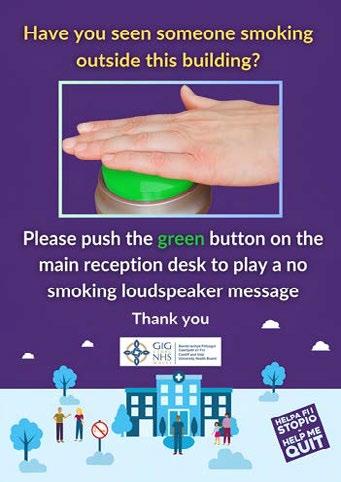

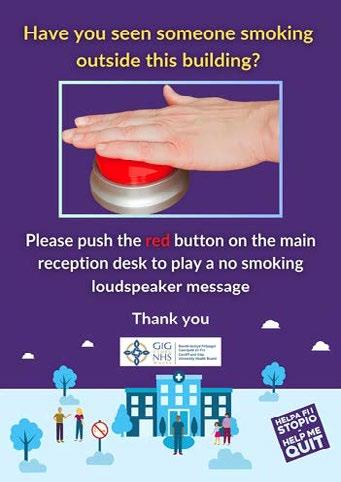

Cardiff and Vale Public Health Team’s smoking and tobacco education and prevention service supports children and young people to develop the knowledge, skills and confidence to make informed choices about smoking and vaping. This article highlights three initiatives, co-produced with children and young people, to deliver an important public health message.
‘A Smoke-free Wales: Our Long-term Tobacco Control Strategy’ and its Delivery Plans 2022–2030 set the national target of reducing adult smoking prevalence to 5% or less. While legislation already prohibits smoking on school grounds, playgrounds, and in cars carrying children, continued prevention efforts remain vital. Supporting children, young people and future generations to remain smokefree is central to achieving this target.
Children and young people’s health behaviours and wider experiences significantly influence whether they take up smoking, and they can be negatively affected by tobacco even if they do not smoke themselves. All three initiatives are rooted in young people’s voices, co-produced to ensure the messages are meaningful, relevant and make a real difference.
Maternity Unit anti-smoking messages
Children from Cregiau Primary School are the voices of recorded messages played by a loudspeaker outside the University Hospital of Wales maternity unit. Staff, patients and visitors are invited to activate the message by pressing a button on the reception desk if they see anyone smoking.
Voices that matter: young people taking a stand against smoking and vaping
The messages remind visitors that smoking is illegal on hospital grounds and highlight the risks of second-hand smoke to babies and children. Two bilingual pupils recorded messages in English and Welsh. An example message is: “Please put out your cigarette. You have been seen smoking outside our maternity unit. It’s against the law to smoke here.” Information on Help Me Quit is also included.
Children’s Hospital poster project
Pupils from Cregiau Primary School have designed posters and roller banners for Noah’s Ark Children’s Hospital to communicate two key messages: the dangers of second-hand smoke and the legal restrictions on smoking in hospital grounds. This initiative gives young people the opportunity to use their creativity to make a tangible difference in protecting the health of children, families and NHS staff.
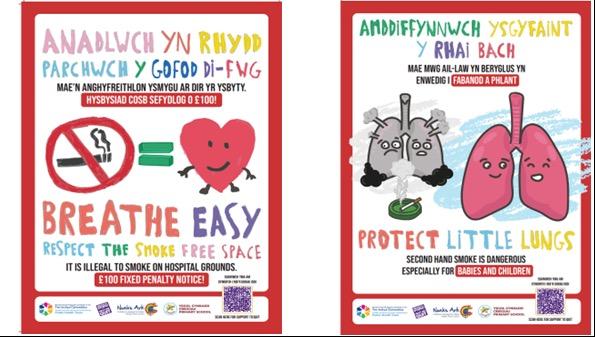
Lauren Thomas, Cardiff & Vale University Health Board

Cardiff Grassroots Youth Service –empowering young people to escape the vape
Working with Cardiff and Vale University Health Board’s Public Health Team, local young people have created youth-led posters raising awareness about the harms of vaping. Through a co-production approach, young people shaped the design, language and messaging to reflect real experiences and concerns. Each poster features a QR code linking to Help Me Quit, allowing peers to create a personalised quit plan and access trusted support. Displayed across youth and community settings, the posters place young people at the centre of prevention, ensuring messages are authentic, relatable, and engaging, and supporting peers to make informed decisions about vaping. These three co-produced initiatives demonstrate the power of young people’s voices in tobacco and vaping prevention, ensuring messages are meaningful, relatable, and effective in supporting the shared goal of a smoke-free Wales and positive long-term health outcomes.
If you would like to find out more about this work, please email: Lauren.Thomas21@wales.nhs.uk
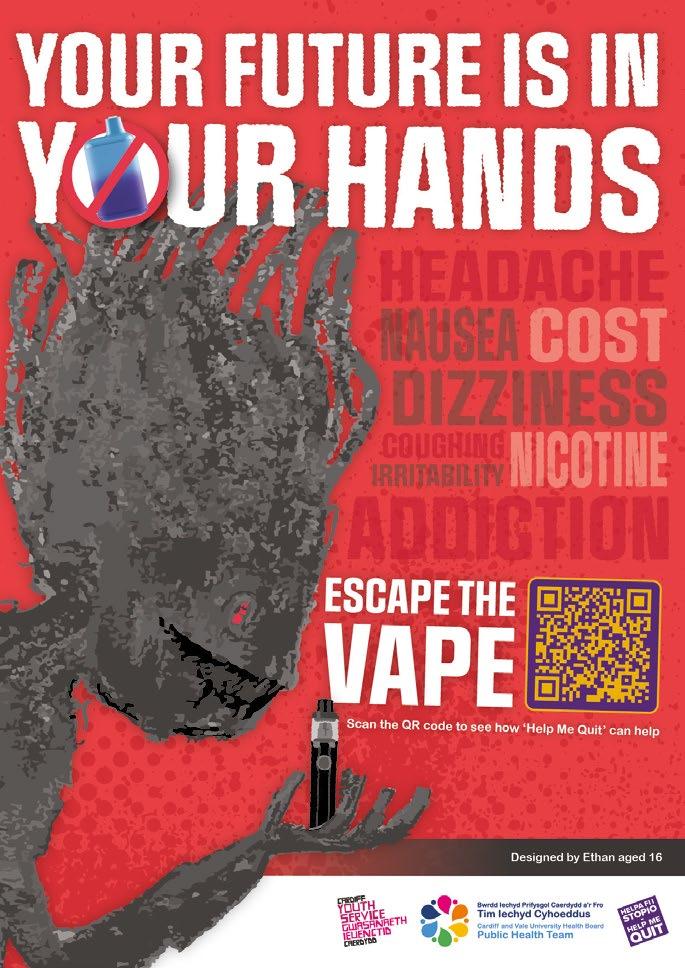
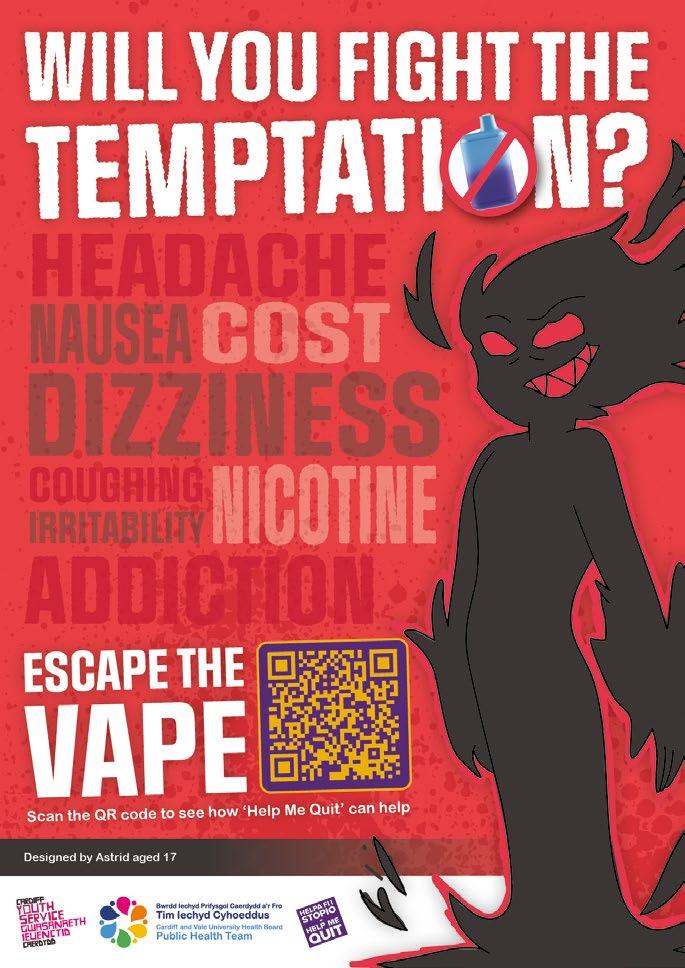
‘Mummy understands more’ – how the Cygnet programme is changing lives in Wales


At Barnardo’s our purpose is clear - changing childhoods and changing lives, so that children, young people and families are safer, happier, healthier and more hopeful. Last year, Barnardo’s Cymru provided essential support to more than 11,000 children, young people, parents and carers through 35+ services and partnerships in Wales.
For over 150 years, we’ve been here for the children and young people who need us most – bringing love, care and hope into their lives and giving them a place where they feel they belong.
Barnardo’s Cymru has recently been awarded funding from the Moondance Foundation to upscale the existing Virtual Family Space offer by launching a fully bilingual digital platform (in English and Welsh) that breaks down traditional barriers for existing children’s services, eliminates postcode lotteries, and profoundly enhances the educational outcomes and life trajectories of thousands of babies, children and young people in Wales aged 0-25 years. One of the core offers being the ‘Cygnet programme’ which supports parents and carers of children and
young people who are diagnosed or have a suspected autism diagnosis. The programme features videos of autistic young people expressing their thoughts, feelings and experiences, whilst also exploring the challenges and difficulties Autistic children, young people and families may encounter. It is important the voice of children, young people and families are heard, to enable best practice and ensure the service provides the best and most relevant support. This is especially important within the Cygnet service, as a good support network for autistic children and young people can enhance mental wellbeing, boost self confidence and provide a sense of belonging.
“I genuinely believe that if my parents had had access to the Cygnet programme when I was younger, then they would have been so much better equipped to support me”
Rachel Cooper & Jessica Jones, Barnardo’s Cymru
Within our Denbighshire Cygnet service, conversations with young people and parents enabled positive change to the provision of the service and its outcomes. A six-week course was said to be information overload which didn’t benefit the child and young person due to parents and carers not having the time to practice their learning. The course was redesigned to seven weeks with elongated sessions, so children and young people received the more specific support around the four areas of autism (thinking, sensory, social interaction and communication) due to the fact parents and carers had more time to reflect, absorb and implement their new strategies. When Cygnet facilitators asked parents: ‘If we asked your child what difference you attending the course has made for them, what do you think they would say?’ The reply was incredible:
• My daughter says ‘Thank you’ to us when we give her processing time (she is only 3 ½ years old)
• ‘I am happy now. I feel understood’
• ‘Mummy being more patient’
• My son knows I am trying to learn about his conditions and how to help him
A Cygnet workshop facilitator, who was diagnosed with autism during his teenage years, shares how the programme would have supported him and his family had it been available at the time of his diagnosis.
“The Cygnet programme is amazing. I really like how much autistic individuals were involved in the process and how videos and quotes from autistic individuals are incorporated throughout the programme. I appreciate that the correct terminology is used and that the phrasing around behaviours and challenges is really respectful to autistic people. I genuinely believe that if my parents had had access to the Cygnet programme when I was younger, then they would have been so much better equipped to support me.”
From 1 April 2026, the Virtual Family Space Cymru and the Cygnet programme will be universally available in all 22 Local Authorities. Families and parents can freely access online support, interactive workshops, courses and programmes for all stages of their child’s development.
As well as the Cygnet programme, other courses will include Toddler Talk, Sleep, Empowering dads and male carers… to name a few.
Barnardo’s Cymru will continue our efforts in changing childhoods and changing lives for the babies, children, young people and families of Wales, ensuring they are safer, happier, healthier and more hopeful.
For further information contact Rachel Cooper on: GRT-VFS-Cymru@barnardos.org.uk

Participation as purpose: young people shaping youth work in Wales
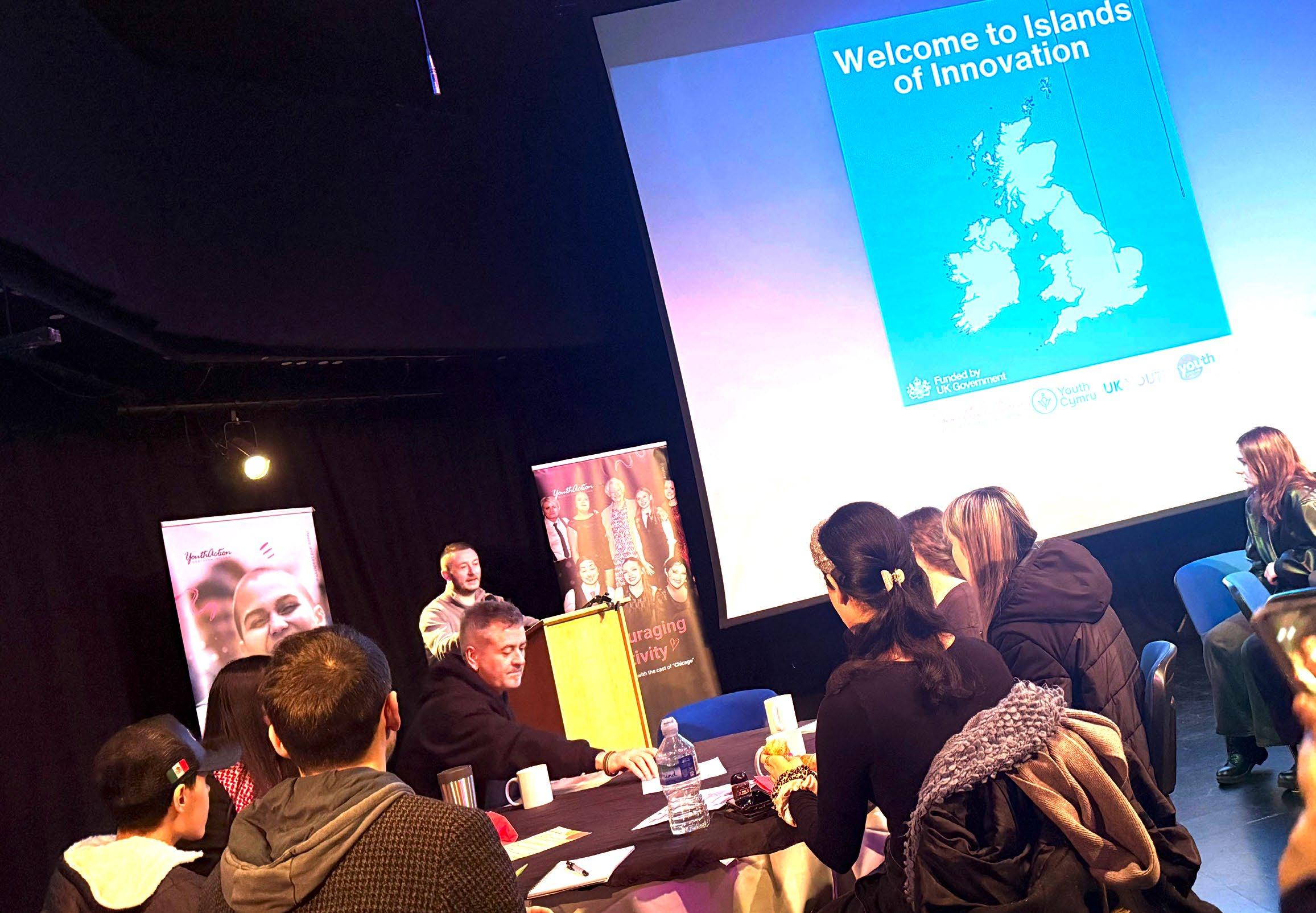
Participation is not an add-on within youth work in Wales. It is central to its purpose. The Youth Work in Wales Principles and Purposes Framework recognises young people as partners in decisions that affect their lives. Participation is both a guiding principle and a lived practice, grounded in rights and expressed through everyday relationships.
At its simplest, participation means giving young people genuine opportunities to have their voices heard and supporting them to make informed decisions about their own lives. Article 12 of the United Nations Convention on the Rights of the Child makes clear that young people have the right to express their views on matters that affect them and to have those views taken seriously. This right sits alongside others, including the right to education, play, protection from harm and freedom of association.
In Wales, this commitment is reinforced through the Well-being of Future Generations (Wales) Act 2015, which requires public bodies to involve children and young people in decisions that shape their

communities. Recent statutory guidance for youth work strengthens this further. Local Authorities must now produce five-year Youth Work Strategic Plans that are shaped through engagement with young people, ensuring clear pathways for influence.
Participation, however, becomes meaningful only when young people see that their voice leads to change.
Creating pathways into participation
At Youth Cymru, participation begins with access. As Jonathon from Youth Cymru explains, their approach is about bringing participation to young people rather than expecting young people to find it. Through international work such as the Islands of Innovation forum, TAITH mobilities, the Ireland Youth Forum and youth climate action initiatives, they are working to make participation inclusive and accessible, not just something for the usual voices.
Emma Chivers, Youth Work Leadership Lab
One young person, we shall call Morgan, illustrates this in practice. Less than a year ago Morgan was involved with youth offending services. Since then, he has taken part in the Summer Jobs Programme, engaged in cross nations work, joined a TAITH mobility and contributed to Islands of Innovation. The confidence and belief developed over that time shows how youth work opens opportunities and creates pathways into spaces young people may never have imagined for themselves.
Islands of Innovation brings together young people from Wales and other island and coastal communities to explore shared challenges, such as climate change and sustainability. It creates structured space for dialogue and collaboration across borders, enabling young people to share lived experience and shape ideas internationally. This is participation as progression. With preparation and support, Morgan stepped into new conversations and new environments. Youth work created a pathway into influence rather than expecting a young person to navigate it alone.
Listening to young people to improve systems
Participation is equally powerful when it informs local decision making. In Carmarthenshire, young people’s voices are central to improving school attendance and wellbeing. Children and young people from across the county are being engaged, including those attending mainstream schools and specialist settings, those in Pupil Referral Units, those on reduced timetables or not currently attending education. This inclusive approach recognises that the experiences of young people outside mainstream education are essential to understanding attendance.
The consultation is grounded in Article 12 of the UNCRC and aligned with the National Participation Standards. It includes face to face sessions, focus groups and online surveys, with opportunities to
participate in Welsh or English. Young people’s lived experiences of belonging, motivation and barriers to attendance will directly inform future strategy and action planning. They are not being consulted in isolation. They are shaping how services respond.
From voice to influence
Across Wales, participation must move beyond presence. Young people may feel welcomed yet still feel that decisions are made without them. Meaningful participation requires preparation, trust and visible impact. When young people can see that their contributions shape services and opportunities, participation builds confidence, critical thinking and civic awareness. It enables young people to see themselves not only as service users, but as contributors and changemakers.
Participation in Wales is rooted in rights and strengthened through planning and partnership. When it is authentic and inclusive, it does more than gather views. It redistributes voice, strengthens belonging and ensures that young people do not simply experience services. They influence them and see their ideas reflected in action.
If you would like to discuss any aspect of this article. Please email Emma@ywleadershiplab.co.uk
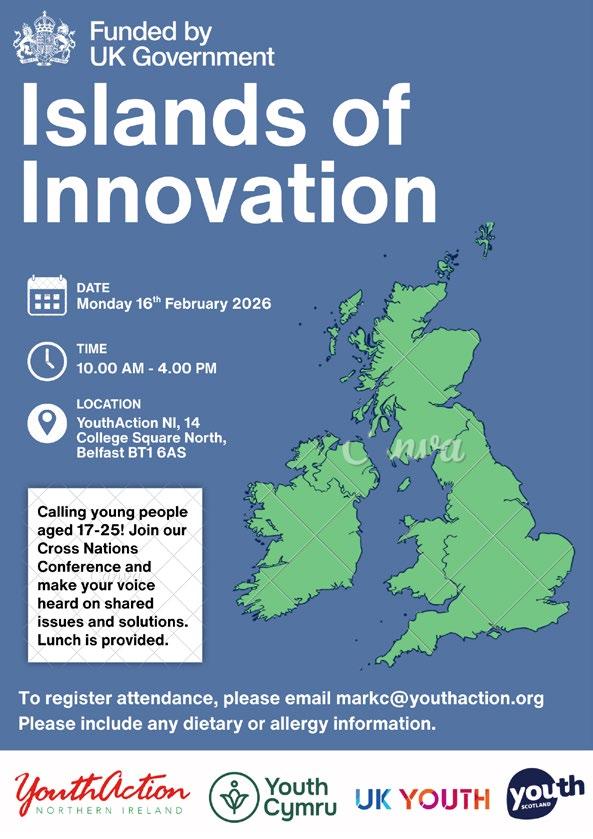
Playwork and Participation

Article 12 of the United Nations Convention on the Rights of the Child (UNCRC) is recognised as the right of the child to be heard. In Wales, where the UNCRC is embedded in law through the Rights of Children and Young Persons (Wales) Measure 2011, children and young people’s participation must go beyond consultation. It requires their views to influence decisions, shape services and result in visible change. This is especially relevant in playwork, where choice and participation are central to Clybiau Plant Cymru Kids’ Clubs’ professional practice.
Children and young people are frequently involved in consultation processes, yet their contributions do not always lead to meaningful influence. This highlights the risk of participation becoming procedural rather than transformative. A rights-based approach demands that adults are willing to share power, reflect on practice and respond to children and young people’s perspectives, even when this challenges established structures or expectations.
Playwork provides a strong foundation for participation in everyday practice, as the Playwork Principles underpinning playwork across Wales recognise children and young people as central to decision-making and focus on their right to choose how and when they play. Play settings offer important spaces where children and young people are trusted to make decisions, negotiate boundaries, and shape their own environments, and through working in a reflective and participatory environment, children’s voices are expressed naturally through play, including interaction and collective decisionmaking, rather than through formal or adult-led approaches. In practice, this means meaningful participation in playwork can involve children and young people contributing to decisions about play spaces, influencing the design of provision, or shaping local play strategies. When they are involved from the outset, engagement is more sustained and outcomes are more responsive to lived experience, while also supporting wider developmental benefits such as confidence, communication skills, and a sense of belonging within communities.
Cath Smith & Clare Dare, Clybiau Plant Cymru Kids’ Clubs
Developing participation skills is an important aspect of this work. Playwork settings offer informal and accessible opportunities for children and young people to build skills in negotiation, collaboration and leadership. These experiences are often more effective because they are embedded within relationships and everyday activity rather than delivered as structured programmes. At the same time, playworkers require organisational support, training and reflective supervision to ensure participation is ethical, inclusive and genuinely influential.
Policy context in Wales actively supports this approach. The Play Sufficiency Duty places a statutory responsibility on local authorities to secure sufficient play opportunities for children and young people, including those whose needs are often overlooked in planning. The Well-being of Future Generations (Wales) Act 2015 also reinforces the importance of involvement and participation.
Playworkers across Wales have identified barriers towards participation such as limited resources, concerns around risk, and organisational cultures that prioritise measurable outputs over children and young people’s choice and participation. There can also be a perception that play and participation are separate, when in reality they are closely aligned. To also ensure participation reaches children and young people from diverse communities remains a priority. Playwork’s informal, communitybased and relationship-led approach can help reduce these barriers, particularly when provision is delivered in familiar spaces and reflects the needs and rights of the children.
Article 12 challenges Playworkers not only to listen to children and young people, but to demonstrate how their views influence outcomes. Wales has a strong legislative and policy framework to support this ambition.
Embedding participation within everyday playwork practice ensures that children and young people are respected as contributors to their communities and that their rights are realised in ways that are meaningful, consistent and lasting.
Children’s participation strengthens not only children themselves, but families, services, and society as a whole. When children are genuinely listened to and involved, decisions become more meaningful, inclusive, and effective. Listening to children is not an optional extra, it is a fundamental right. What we do differently now determines how children experience trust, respect, and belonging throughout their lives.
If you would like to learn more about the work of Clybiau Plant Cymru Kids’ Clubs, please visit: www.clybiauplantcymru.org

They’ve all got their own ways of being heard - recognising participation beyond words in early years settings
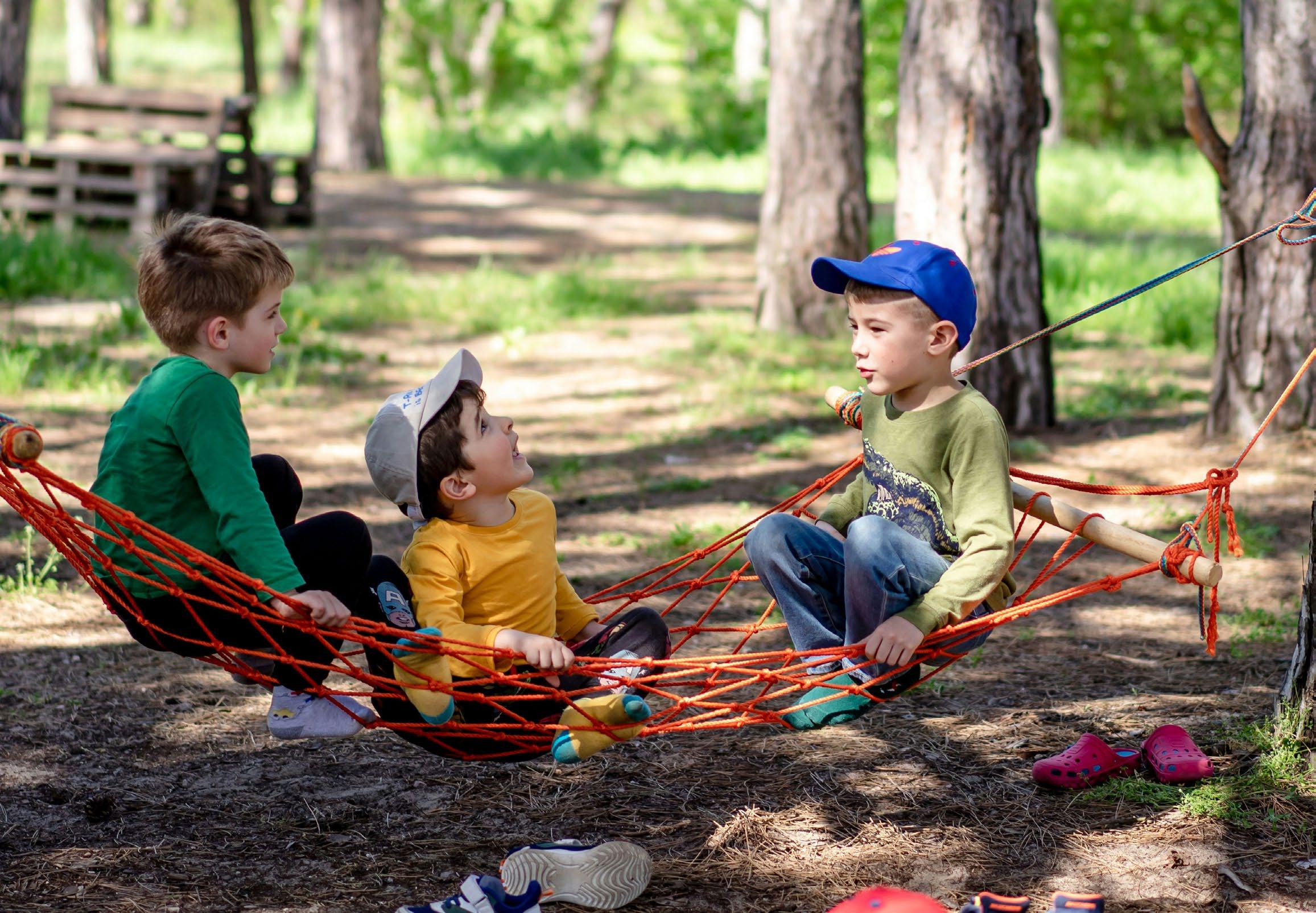
“Max, show me.”
Max is 17 months old and still settling into his new nursery. He stands by the door, crying, repeating a phrase blurred by tears. A practitioner crouches beside him, watching closely. When she asks him to show her, he pulls her toward the door. She fetches his bag, assuming that is what he wants, but the crying continues. Then she hears it clearly: “Knock, knock.”
She pauses. “Oh love, Mum’s not coming yet. She’ll knock later.”
Max stops crying. “Knock?”
“Yes. She’ll knock later.”
He lifts his arms. She picks him up, holds him close, and asks if he’d like to go outside. He nods. The tears ease.
Over the next few days, Max arrives bundled tightly in his coat and chooses to keep it on. Indoors or outdoors, the coat stays fastened. On a busy day, during the usual lunchtime routine, staff quickly
remove it so he can eat. His crying, already brewing after a difficult morning, intensifies. It seems a small moment, an understandable decision. But something about removing the coat unsettles him further.
Through patient observation of these ordinary moments, staff begin to see the pattern. The coat is not about refusal, confusion or habit. It is a portable piece of home, carried with him as he learns to trust a new space.
“That’s all he wanted,” staff later reflect. “And then he was happy.”
Meaning emerges gradually - through repetition, proximity and relationship. Staff ask before removing the coat. Max starts to trust that his needs will be recognised. What shifts is not a dramatic intervention, but interpretation. What first appeared as resistance becomes communication. This is what Article 12 looks like in practice across early years settings in Wales. Not just formal consultation but iterative, relational work: noticing, testing, revising, responding.
Lauren Henderson, PhD student, Swansea University
My research
My doctoral research explored how children aged 0–5 exercised participation rights across three early years settings and how practitioners facilitated them, using observations, interviews and childled methods to examine how participation was supported or constrained in everyday practice.
Across the three settings, several patterns emerged:
1. Children’s voice is multimodal and actionoriented
Children communicated in rich and varied ways beyond words. Their “voice” was often brief, embodied and contextual: a pointed finger, a turned back, a cry or babble, a drawing carried across the room, a hummed objection, or arms raised in request. Adults often needed to interpret, extend or translate meaning across body, timing, and situation. These signals shaped adult action when they were noticed, but they were vulnerable to being missed during busy routines. Participation lived in these microinteractions: in what adults noticed, understood, and acted upon.
2. Listening is emotional, moral and consequential
Children described being listened to as feeling “happy” and not being listened to as “angry” or “sad.” Their responses framed listening as a moral act rather than a procedural one. Practitioners expressed strong commitment to upholding children’s rights, but listening was most at risk during operational pressures, such as during transitions, care routines, tight timetables or staffing shortages. The intention was constant - the challenge was sustaining attentiveness in the flow of practice.
Returning to “Knock Knock”
3. Participation is shaped by routines, rules and rhythms
Listening and responsiveness mattered, but participation was also shaped by each setting’s routines and structures. Timetables, room layouts, access to materials and care routines influenced what was possible. Some settings supported independence through accessible choices, while others channelled participation into scheduled “pupil voice” sessions with less room for spontaneous decisions.
One setting used a highly responsive, inthemoment approach, with practitioners adjusting timing and activities to follow children’s interests. Yet participation still met practical limits. Essential routines - nappy changes, naps, mealtimescreated constraints, particularly during busy periods or when staffing was stretched. In practice, participation was always negotiated within these structures, expanding or narrowing with the everyday rhythms of nursery life.
Max’s story captures the interpretive nature of participation. Initially, his needs were unclear, but through patient attunement, staff coconstructed meaning with him and adapted their practice responsively. The work was relational, gradual, and, at times, imperfect - yet deeply meaningful. The research suggests that children are already expressing their participation claims. The question is whether our routines, environments, and interpretations allow those claims to matter.
All names in this article are pseudonyms. Sincere thanks to the children and practitioners who shared their time and experiences.
Charlotte O’Neill, Seren in the Community
Kids calling the shots
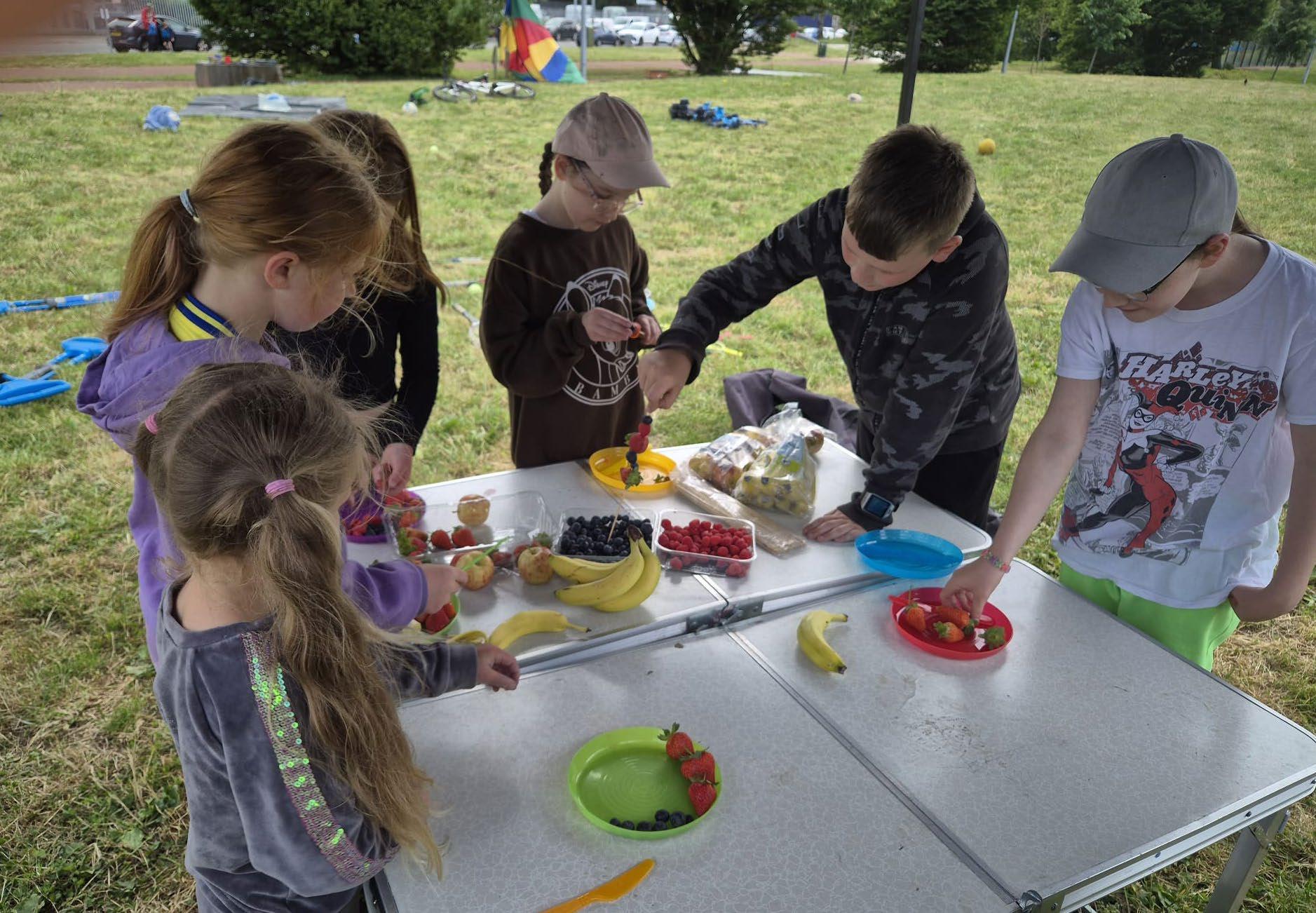
What do grown ups really know about play anyway? When you have a medical issue, you consult a medical professional, so when the subject matter is play, it’s only right that guidance should be sought from the experts in that field.
As an open access play organisation, we see a huge variety of children during our usual working week and have developed an equally wide variety of ways to consult with and hear the voices of the children and young people, not that they’re even remotely shy about expressing their opinions.
The Quiz
This nickname was coined by the children who couldn’t quite get their heads around a consultation form. It’s a simple online form that they take great joy in passing around their friends and comparing answers. These answers are then turned into interesting graphics so they can see how their answers compare to others, and what the majority of children have agreed on. We pepper the quiz
with consultation questions about what to bring and where to be, but also fun things like what’s the best Pokemon and what’s your favourite colour. This lends some interest to what is, otherwise, the tiresome process of data collection.
The Play Ambassadors
The children start begging to become play ambassadors from about eight years old onwards, and take great pleasure in telling everyone about their senior position within the organisation. In terms of being heard, planning, evaluation and feedback, the play ambassadors are always the most vocal and forthcoming and often require very little prompting for their opinions and ideas. They’re also incredibly adept at advocating for children who are young or find communicating difficult, as they are directly placed within the play process and can observe more easily when children are struggling or looking for a particular absent resource.
Food
Seems a little crazy I know, but gather some children around a pile of fruit, a campfire with S’mores or a biscuit decorating table, and the casual conversations flow. In this relaxed environment where children and playworkers are just chatting, the pressure to explicitly divulge specific feedback is off, and you find things out about the children’s interests and what they’ve been thinking about lately that they would never consider mentioning during formal consultations. Even if the children are not directly talking to the playworkers, the conversations between them are fascinating and lend valuable insight not only into the direction they want their play to go, but also to issues that may need addressing, further conversations that should be held, and upcoming themes or life events that should be recognised.
The Ninja
These are the playworkers casually walking by the play, having a little tidy up or shuffling around dressed as shrubs in order to observe, map, subtly plant resources and pounce on catastrophes to safeguard the play process in all its majesty. These actions advocate for children’s voices in more of a background sort of way, picking up on what resources aren’t being used, why they aren’t being used, what areas aren’t being explored, what are they finding off putting, what is a super success and how can we incorporate more of that.
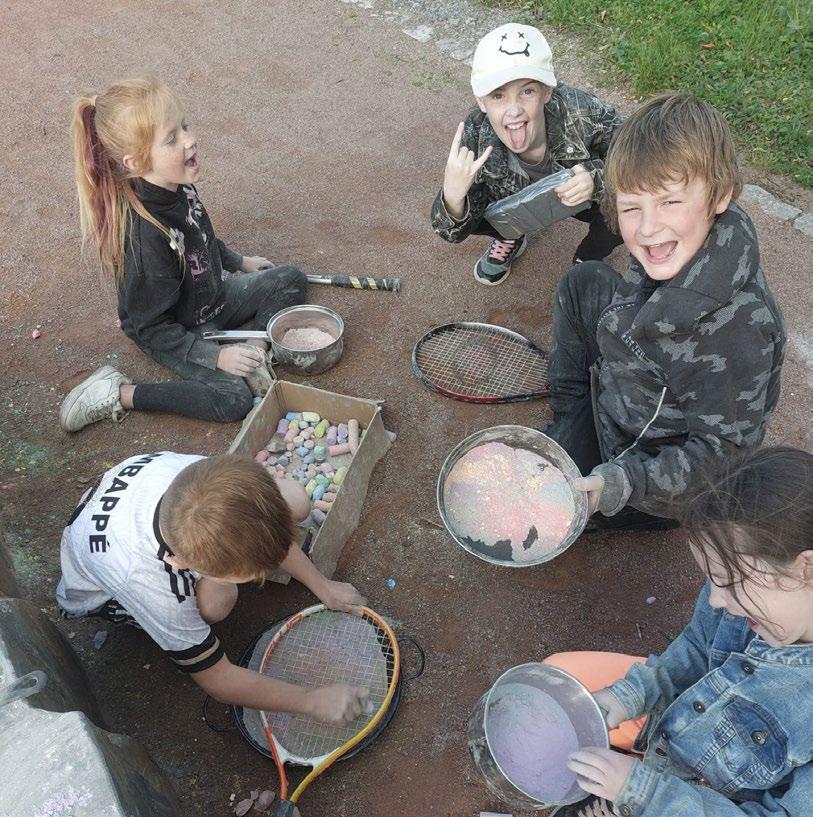
So why is it that kids calling the shots is a good thing?
• They feel the ownership during this time of uncertainty. It’s a rare thing for children to feel in control of their own environment, actions and choices. By empowering them to make all we can offer their own, we build that trust, confidence, sense of freedom and pride in what we have accomplished together
• It’s easy - why spend hours brainstorming new, out of the box, overly complex ideas just to watch them getting totally ignored in favour of a cardboard box? A 60 second conversation with a couple of kids will tell you 80% of what you need to know in terms of resources and locations, and will ultimately be more appreciated when you follow through with their ideas
• The learning curve - we all forget how to play and the feeling that freely chosen play gives you. One of the reasons so much of our play work practice, if based on reflection, is that most of the insight we can gather comes directly from those still deeply embedded in that magic of play, and these sparkles are best gathered at the source before they’re muddied by policies, outcomes, adult-led agendas and misconceptions!
If you would like to learn more about the work of Seren in the Community, please get in touch with charlotte.sereninthecommunity@outlook.com

Rachel Flanagan, Save the Children Cymru
Pathways to positive participation - how children and families shaped local responses to poverty in Neath Port Talbot and Cardiff
Across Wales, children and families living with poverty are often asked for their views, but rarely see their ideas, feelings and expectations used to meaningfully shape local decisions. Over time, this can erode trust, leaving people feeling consulted but not truly heard. Frustrations run high and children often tell us that they “feel sad” that they are not listened to and parents are made to feel that they are just part of a “tick-box” exercise.
“Adults don’t always listen properly – they ask questions but then nothing happens.”
(Child, Power of Voice participatory project)
“Sometimes you just know they’re not going to listen to you, or it feels like sometimes they’re only asking your opinion to tick boxes, and they’ve already decided what they want to do.”
(Parent, Camau Bach, Newid Mawr project)
The Camau Bach, Newid Mawr (Small Steps, Big Change) project funded by Welsh Government’s Child Poverty Innovation and Supporting Communities Grant set out to challenge that pattern. Working across the communities of Llangatwg in Neath Port Talbot and Ely and Caerau in Cardiff, the work focused on a simple principle: local responses to poverty are stronger when they are shaped by the lived experiences of children and families themselves.
Save the Children Cymru supported each area to understand what life felt like for children and families locally, and where existing responses were falling short. Engagement took place in familiar settings, using creative and accessible methods that allowed participants to speak openly about their experiences. Importantly, this listening was not treated as an end in itself. It was designed to inform local decision-making, helping partners see poverty not just through data or service demand, but through everyday realities.
Once the initial listening and system-building work was complete, each area decided how to use seed funding based on what children and families had told them and what felt most achievable. We then worked in partnership with Citizens Cymru in supporting each area to take its chosen approach to participation further.

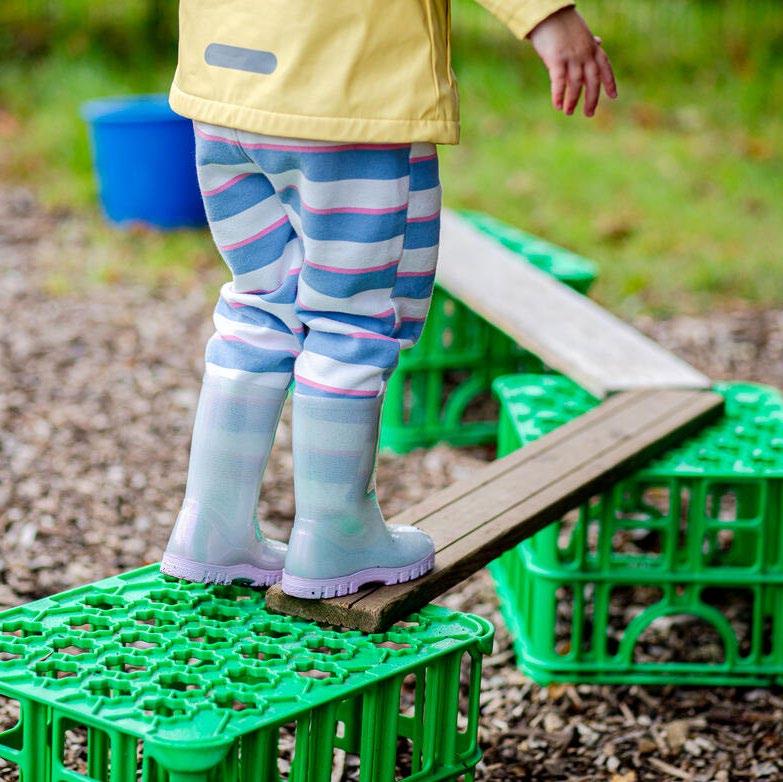
Llangatwg:
from listening to collective voice
In Llangatwg, the listening phase highlighted children’s strong desire to play locally, alongside frustrations with patchy and sometimes inaccessible provision. One memorable moment saw children raise concerns directly with decision-makers about the lack of accessible toilets in their local park, highlighting how infrastructure decisions can stop children playing in their own community. These conversations reinforced the importance of moving beyond one-off consultation. With support from Citizens Cymru, children and parents were supported to build confidence and stay involved, creating clearer routes for children’s voices to feed into the Community of Practice linked to Community Focused Schools.
Ely and Caerau: rebuilding trust through participation
In Ely and Caerau, partners began from a different starting point. Strong collaboration was already in place through the Learning Partnership Board, alongside earlier voice-led work that helped create the early-years natural space, Dan y Coed. The ambition here was to go further, exploring how the voices of children and families in an area of high deprivation could be meaningfully embedded into existing community structures.
Children and parents were clear about what mattered to them: being listened to by people they trusted, receiving feedback, and seeing participation lead to action. In response, partners focused on building the capacity to embed participation into everyday practice, particularly through schools and community settings.
Small steps, lasting change
Camau Bach, Newid Mawr (Small Steps, Big Change) was never about quick fixes. It was about showing what is possible when children’s lived experiences are taken seriously within local systems.
Across Neath Port Talbot, Ely and Caerau, this meant starting with listening, agreeing priorities together, and embedding participation so children and families could see how decisions were made, and changed, over time. In doing so, professionals began to adapt their responses to poverty, and communities started to trust that participation could lead to action. By laying strong foundations and supporting places to take the next steps in their own way, the programme showed that lasting change starts with listening, but only happens when accountability follows.
If you would like to learn more about the above work, please contact walesinfo@savethechildren.org.uk
Building effective youth voice in national mental health policy
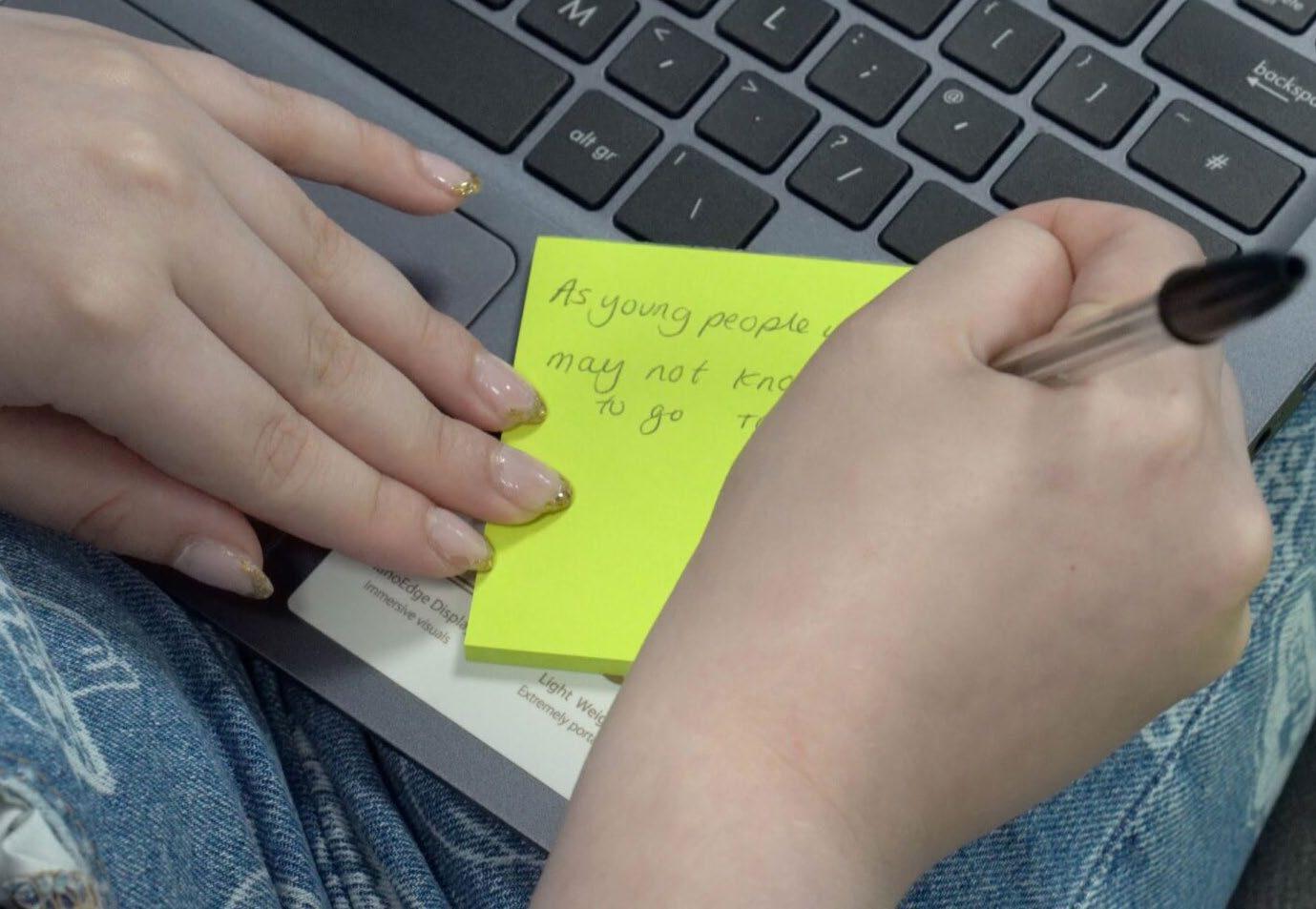

ProMo Cymru is leading the development of a new national youth advisory group for NHS Wales, designed to embed young people’s voices into the implementation of the Welsh Government’s 10-year mental health and wellbeing strategy. We are delivering this project using a service design approach, in partnership with Platfform and NHS Wales Performance and Improvement.
Background
The Welsh Government’s new strategy sets out bold changes and ambitions that will affect young people across Wales. NHS Wales Performance and Improvement recognised that young people need to be involved throughout this process, not consulted after decisions are made.
Our approach
We have recruited 10 young people from across Wales to form the core group. They represent four health board areas, with work ongoing to extend reach to the remaining three. Each young person receives the Real Living Wage for their involvement.
Discovery
First, the group built a Knowledge Board to map what we know, what we think we know, and what we don’t know about effective youth advisory structures. Key questions are emerging: what stops young people from joining advisory boards? For those who do join, what makes them stay engaged?
In January, we developed research methods: who to interview, how to approach them, what questions to ask, and how to collect and analyse the information. In February and March, the young people conducted the research themselves, interviewing peers and professionals across Wales.
Cindy Chen, ProMo Cymru
Outcomes
By the Spring, we will produce a discovery report setting out what we’ve learned about effective youth advisory structures and come up with some approaches we could test. We will then work with NHS Wales to identify opportunities where the group can test out their ideas. Along the way, we’ll iterate, test again, and learn what works.
By September 2026, we will have tried and tested models for how a youth advisory group can effectively feed into national mental health policy and the design of services. The project will deliver clear recommendations on ways of working that actually engage young people and lead to meaningful influence.
Ciara Rogers, National Director - Mental Health, Learning Disability and Neurodiversity at NHS Wales Performance and Improvement, said:
“Our collaboration with ProMo Cymru and Platfform, supported through the National Lottery Community Fund, has given the Strategic Programme for Mental Health a real gift. Their involvement allows us to bring the voices of children and young people into the heart of strategic planning in a way that feels genuine, safe, and grounded in trust.”
Why this matters
Traditional advisory structures often fail to engage young people meaningfully. Meetings that feel like meetings, consultations that happen after decisions are made, and tokenistic involvement that doesn’t lead to change, all contribute to disengagement. Rather than assuming we know what an advisory group should look like, we’re asking young people to examine, design, and test what actually works.
Manon Roberts, 24, from Caernarfon said:
“I’ve enjoyed and benefited greatly from being an NHS Youth Consultant (Mental Health) so far! It has been great to meet other like-minded young people from all over Wales, who are also passionate about the importance of youth voice and wellbeing.
It gives us the opportunity to discuss important topics and share our thoughts, experiences and ideas, to shape and conduct an effective research project. I’ve already learned a lot from others, and I’m looking forward to the next stages of this project.”
The ambition extends beyond this individual group. If we can demonstrate effective models for youth involvement in mental health policy, these approaches can be replicated across health boards and other policy areas. The learning from this project has the potential to transform how young people’s voices are heard in Welsh public services.
The NHS Wales Youth Mental Health Advisory Group is supported by The National Lottery Community Fund.
If you would like further information about our work or know of any young people who would like to participate in this project, please email cindy@promo.cymru

Kayleigh Cowdery, Boys’ and Girls’ Clubs of Wales
From pizza to participation: making democracy work for young people
Across Wales, young people are proving that politics isn’t just “for adults in suits” - it’s about schools, buses, housing, youth clubs and the everyday issues that shape their lives. Yet many young people, particularly those living in marginalised or rural communities where many of our clubs are based, still feel disconnected or unheard in political conversations.
At Boys’ and Girls’ Clubs of Wales (BGC Wales), we believe every young person has the right to be heard in decisions affecting their lives. Through our expanding democratic engagement work, delivered in partnership with youth-led organisation Swansea MAD, we’re helping young people across Wales build confidence, develop political literacy and influence the world around them.
Working in partnership with Swansea MAD
Our partnership with Swansea MAD combines youth work, digital creativity and social justice. Together, we create spaces where young people can learn about democratic processes in fun, accessible ways and, crucially, where their voices genuinely shape the agenda. Young people are supported to share their lived experiences, create digital content, speak out in their communities and take social action. This blend of creativity and civic education sits at the heart of our democratic engagement project, ensuring that participation is not only meaningful, but enjoyable.
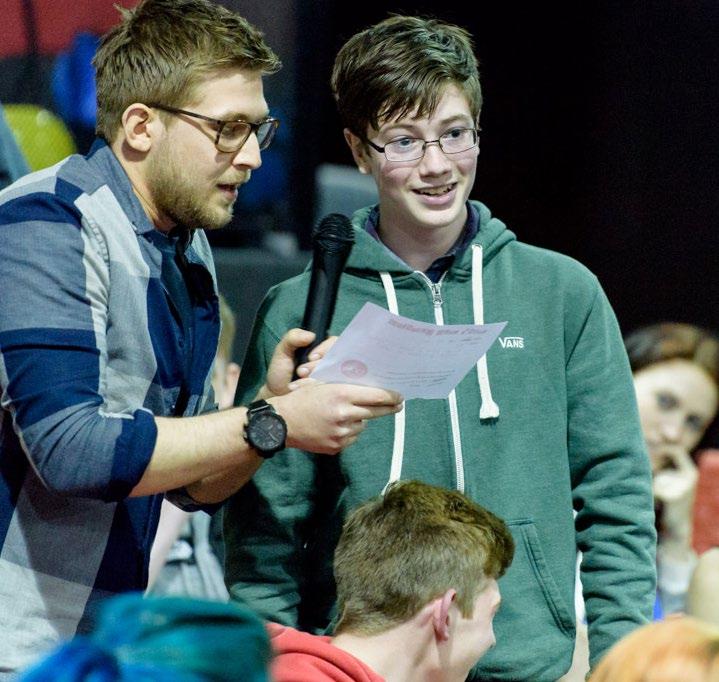
Pizza & Politics: Big Questions, Bigger Slices
Since relaunching Pizza and Politics, we’ve visited youth clubs and groups across Wales to talk about democracy over a slice of pizza. These workshops break down barriers and help young people explore political ideas in an environment that feels safe, social and genuinely youth-friendly.
During sessions, young people:
• Take part in games and activities that simplify political concepts
• Explore how decisions made in the Senedd, local councils and Westminster affect their lives
• Learn about voting, including votes for 16 to 17 year olds in Welsh elections
• Share their own priorities for change in their communities
The formula is simple but powerful: when you remove the pressure, add some fun and food, and listen properly, young people have a lot to say.
Raise Your Voice: From project to movement
Our Raise Your Voice work began as an initiative to support young people ahead of elections, but it quickly evolved into a wider youth-led movement for participation.

With young people at the centre, Raise Your Voice has:
• Encouraged young people to register to vote and understand elections
• Supported youth-created digital content, campaigns and workshops
• Strengthened confidence and political literacy
• Received national recognition for excellence in youth work and partnership
Most importantly, young people tell us it has helped them believe that their opinions matter, and that they have the right to be heard in local and national decision-making.
To learn more about this work, please visit: www.RaiseYourVoice.wales
Not your usual hustings: Jump Jam and roundtables
Young people have told us that traditional hustings events can feel intimidating or boring, so we’ve been reimagining them.
At our “Jump Jam” hustings in a trampoline park, young people from across Wales met politicians in a fun, active environment. They took turns asking questions about education, health, transport, care, homelessness and youth work – then celebrated with some bouncing afterwards.
Our roundtable hustings pilot brought smaller groups of young people and politicians together for more in-depth discussions at a community youth club. This format gave young people more time to share lived experiences, challenge assumptions and propose solutions.
These events have shown that when you change the environment and the format, young people are far more likely to attend, participate and stay engaged.
What’s next?
A brand-new youth-led hustings event this Spring, and we’d love for young people and professionals to join us.
• Date: 17 April 2026
• Time: 1pm - 3pm
• Location: Dowlais Community Centre, Merthyr Tydfil
Young people will be able to:
• Meet local politicians and candidates
• Ask questions about the issues that matter to them
• Learn more about voting and how to influence change locally
This will be another “Not Your Usual Hustings” - informal, youth-led and designed to make sure young voices are heard.
To bring a group along, please contact BGC Wales for details and booking: office@bgc.wales
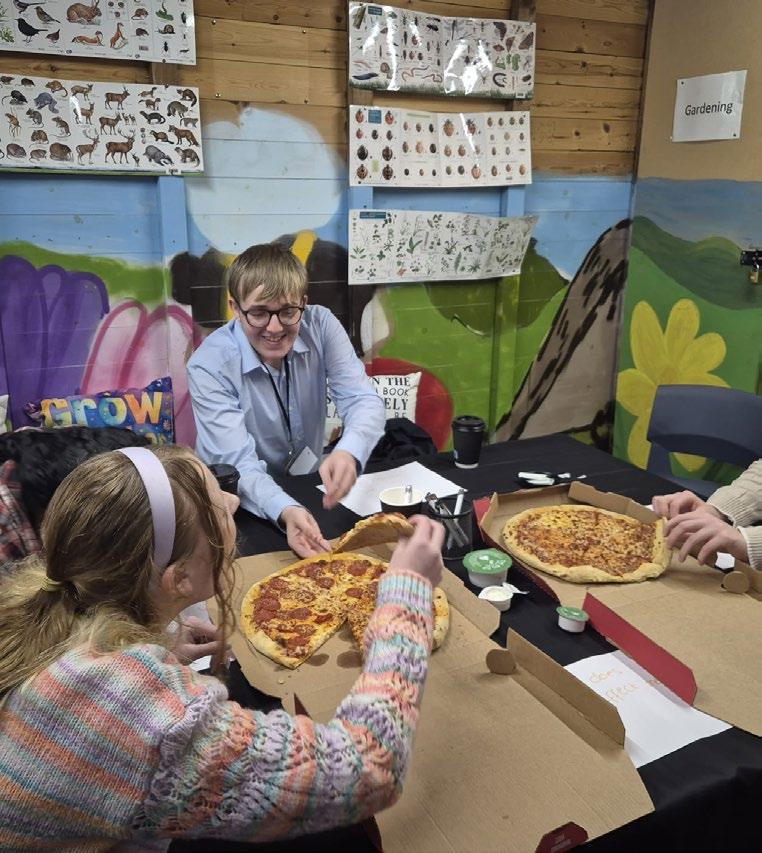
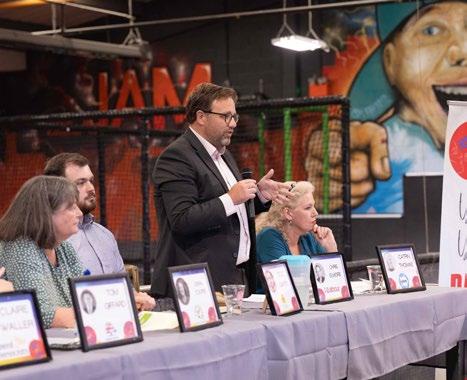

Young people make positive change through social enterprise
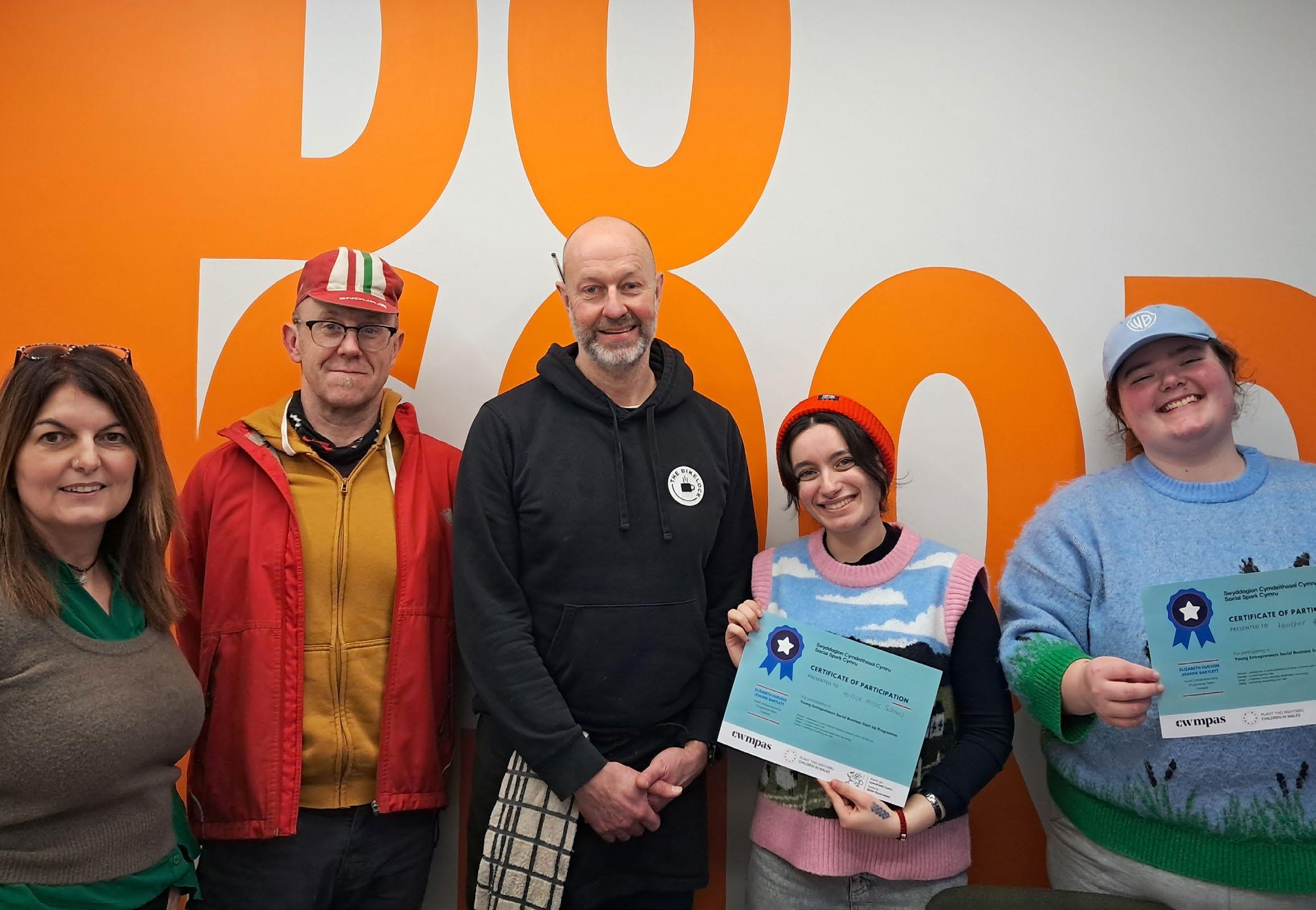
“I’m proud of how I’ve done and I think I might go ahead with my idea”
Young social entrepreneurs have come up with innovative ideas to make meaningful change in their lives and communities as part of the Social Spark Cymru, a project delivered by cooperative and economic development agency, Cwmpas with Children in Wales. This social enterprise business skills course has helped young people unleash their creativity to develop innovative business ideas that address issues they care about. The programme is funded through the Child Poverty and Innovation Fund from Welsh Government and comes to an end in March 2026.
Working in small groups, young people, some of whom are among the most disadvantaged and may not have had access to business education, learn social enterprise business

skills and gain hands on experience by visiting a social enterprise. The course can be a challenge for those with low confidence who feel they lack business ideas, whilst some have been dreaming of a business idea but have never had the opportunity to take it forward. As well as ideas development and business skills, ideas are captured on a digital platform, building on their employability skills.
In the final session participants share their ideas as a pitch to a panel of experts, including social entrepreneurs, who provide feedback.
“We are always impressed by the idea, research and effort the young people have put in” said Cwmpas Programme Manager, Carly McCreesh. Ideas include training in digital skills for the small business community, improving local access to film, integration support for refugees, assistive device designs, mental health support, organising toy sharing for families, a youth café and food pop-ups to support the community.
Elizabeth Hudson, Cwmpas
One of the judges, Tom Overton of the Bike Lock, commented on one of the pitches, “Wow, you blew me away with the WHY!”
By the end of the programme, the young people have demonstrated higher levels of confidence with many young people strongly feeling they have developed an idea for a business or project that could make a difference in their community.
“I feel proud after pitching, as we had positive feedback from the judges, and made me feel confident that the business plan could be moved forward if we wanted to progress.”
“I’m proud of the growth I have shown when developing the idea sip and social and with learning how social enterprises can create meaningful impact for the community.”
The programme has shown a clear need for continued investment in young people’s ideas to build social businesses. With newfound confidence, the young people involved leave Social Spark Cymru ready to take their ideas forward, proving that when young people are given the opportunity, they can become powerful agents of change.
If you would like more information about this work, please email: elizabethhudson@cwmpas.coop

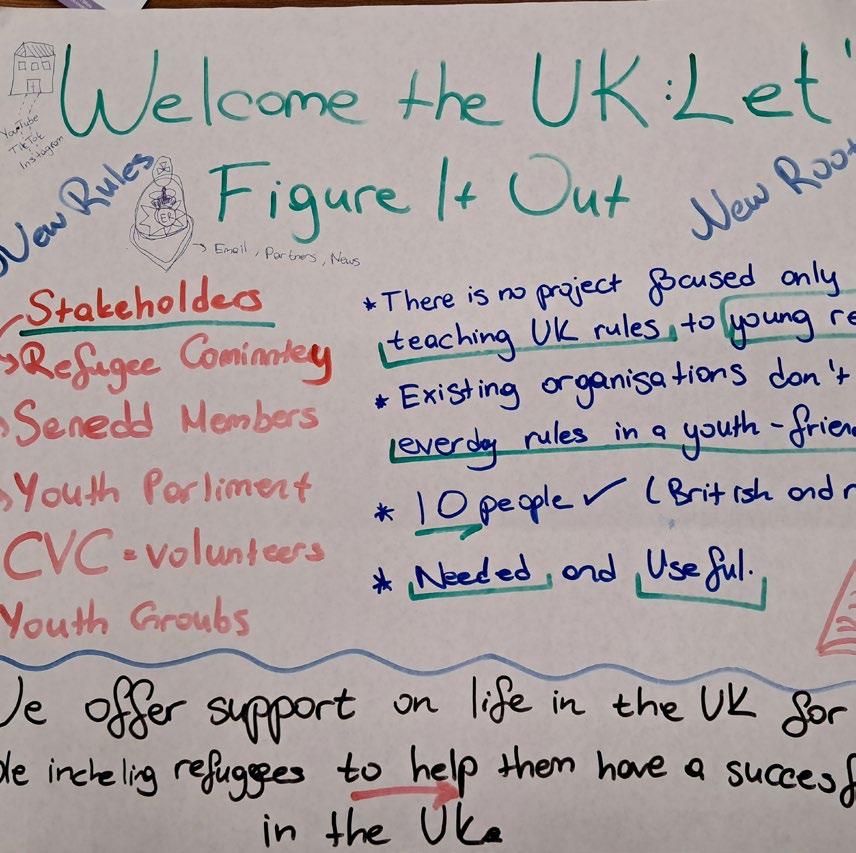

Sarah Rutty, NSPCC Cymru
Young people lead the conversation about Child Safety Online in Wales
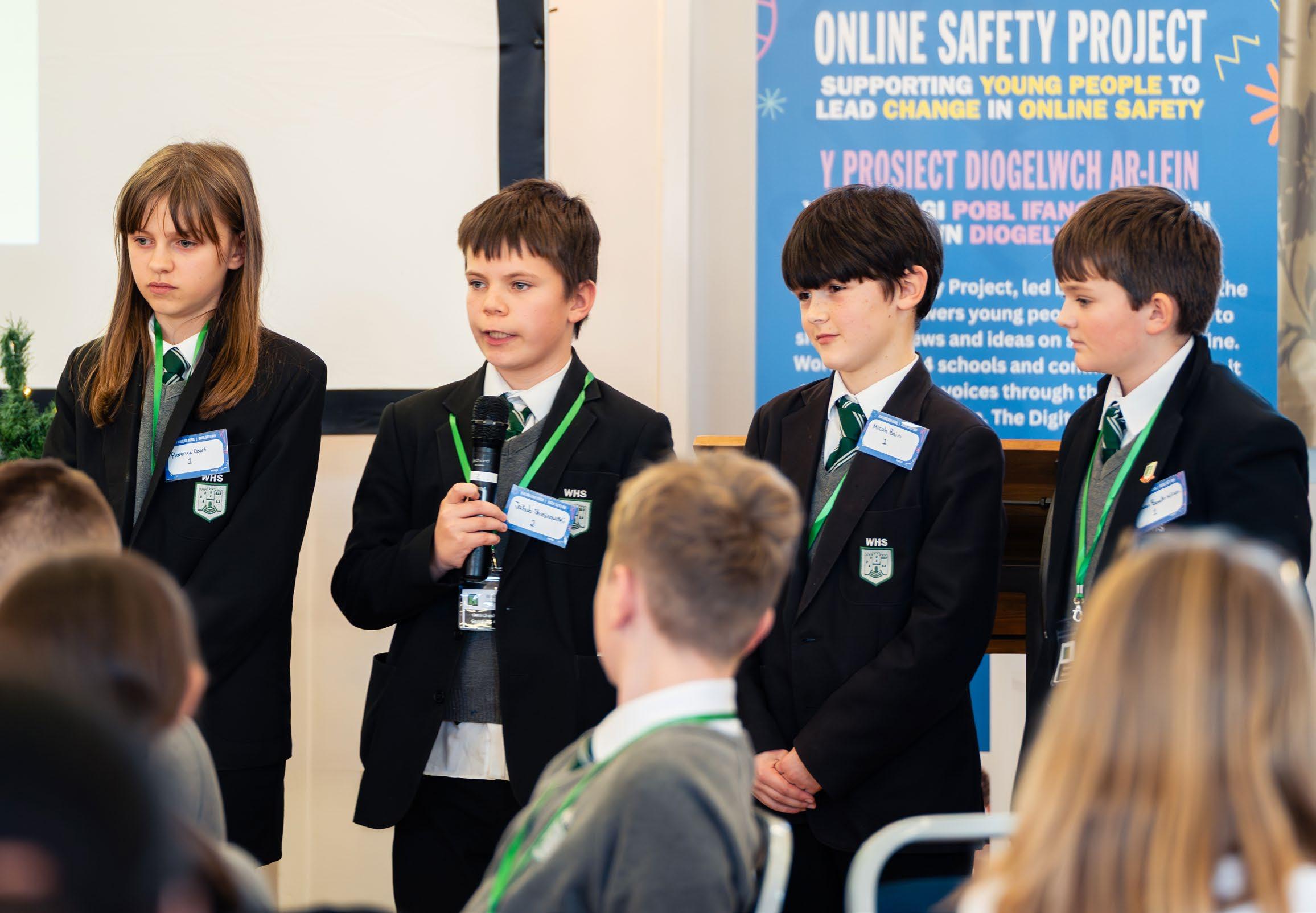
We know that technology is more popular than ever and young people are navigating many emerging risks online. They are the ones using new platforms and experiencing what works, and what doesn’t, in child safety online firsthand, but often decisions about the online world are made without them. Children have a right to be safe online and it is essential that their voices are included in conversations about how we can keep them safe.
“Young people like us have a voice that deserves to be heard. We need to keep talking to each other, keep challenging the systems around us, and keep imagining better possibilities for how we all live and connect online. Because when young people like us lead, change doesn’t just happen, it accelerates.” Digital Guardian
Since January 2025, Platfform and NSPCC have been working in partnership to amplify the voices of young people across Wales to decision makers and those with responsibility for child safety online. This project is part of NSPCC’s work to ensure that young people’s voices and experiences drive nation-specific
change. Throughout this time, we have worked together to deliver a youth engagement programme which empowers young people to have their say on what matters most when keeping safe online.
At the heart of this work are the amazing Digital Guardians. This is a group of young people aged 1118 from across Wales whose leadership has shaped each stage of this work. They have guided the project throughout by informing approaches to engaging their peers, as well as sharing their ideas for change with other young people, professionals and decision makers. They have developed resources and artwork to promote online safety messaging and helped to design and lead engaging events to amplify young voices. These brilliant young people have also been invited to chair a panel with the Cabinet Secretary for Education, responsible for Wales on Safer Internet Day and their work has even been mentioned in debates on the topic of online safety in the Senedd! Through interactive sessions in schools and community groups across all Regional Partnership Board areas, young people have taken part in
a series of workshops co-designed with the Digital Guardians. These groups have shared their experiences, explored key online safety issues, and developed practical ideas for change. By engaging with these young people in three iterative workshops across the project, we have been able to explore issues with them in depth and work together to identify potential solutions to online harm.
“Young people have identified the messages that they want to share with adults who can make a difference”
A number of these groups also took part in the Digital Safety Den: an online-safety competition based on the popular Dragon’s Den TV programme. As part of this, groups of students worked together to develop a unique ideas pitch for a resource which could support young people to be more informed about online safety. After a morning of fun and engaging workshops, young people presented their brilliant ideas to a judging panel made up of Digital Guardians, decision makers and Platfform/NSPCC colleagues. The winners of the competition have since developed an online safety booklet to be used by their peers to support learning and discussion. They are being supported to track the impact of this in their school and will share their work at the project’s final celebration event at the Senedd.
Through all of this work exploring key areas of online safety, young people have identified the messages that they want to share with adults who can make a difference. Based on this, the Digital Guardians have put forward four clear recommendations for decision makers to consider in their work to improve online safety for young people:
• Improve online safety education for young people and involve them in the development and delivery of this education
• Support open dialogue between adults and young people by creating spaces for these conversations to take place
• Increase awareness of online misinformation and deception through information campaigns
• Provide clear guidance on the risks of artificial intelligence and the impact of these on society
The young people’s recommendations and insights will be published as part of a project report that was launched in the Senedd on 9 March 2026.
This work demonstrates what is possible when young people are not simply consulted, but meaningfully involved in shaping solutions. Their insights are already influencing practice, and their leadership continues to show how participation can drive safer, more responsive digital environments for all children and young people in Wales.
If you would like to know more about this work, please contact Sarah Rutty, Senior Project Officer, NSPCC Cymru: Sarah.Rutty@NSPCC.org.uk

Elsa Torres, Family Pathway
Beyond voice: what meaningful participation looks like for neurodivergent young people in Wales
Wales has taken important steps to embed children’s rights into law through the United Nations Convention on the Rights of the Child. Article 12 establishes that children and young people have the right to express their views freely in all matters affecting them, and for those views to be given due weight in accordance with their age and maturity.
Across education, youth work and social care, participation is now routinely embedded within statutory processes. Young people are invited to contribute to person-centred reviews, complete one-page profiles, and share “what matters” to them in meetings about their care, support and learning. However, frontline practice suggests that participation is often understood as presence within decision-making processes, rather than influence over the decisions themselves.
Anne (name changed to protect her identity) is a neurodivergent young person who has experienced multiple placement moves within the care system.
Throughout her involvement with services, Anne has consistently communicated what helps her feel safe and able to cope. She has explained that unfamiliar environments, unpredictable routines and being supported by adults she does not know well significantly increase her anxiety. She has described the importance of familiarity, advance planning, trusted relationships and having time to process information before decisions are implemented.
“For neurodivergent young people, particularly those who require additional processing time, rely on relational trust, or experience heightened distress in response to uncertainty”
These views have been recorded in person-centred planning tools and discussed in professional meetings.
Yet despite this, Anne has experienced repeated changes in placement, frequent staff rotation, and short-term accommodation arrangements that were not planned with her in advance. Decisions about where she should live and who would support her were often made quickly in response to perceived risk or availability of provision, rather than shaped by her expressed need for consistency and predictability.
In this context, Anne’s participation has been procedural rather than substantive. She has been consulted, but the environments and arrangements put in place have not meaningfully reflected what she has said she needs in order to feel safe. Research on contextual safeguarding has similarly highlighted a tendency for services to focus on changing the behaviour or coping of individual young people, rather than adapting the environments in which harm or distress may occur.
“Anne’s experience highlights the distinction between being heard and having influence”
For neurodivergent young people, particularly those who require additional processing time, rely on relational trust, or experience heightened distress in response to uncertainty, participation must extend beyond the opportunity to speak in meetings. Meaningful participation requires flexibility in how views are gathered and acted upon. It may involve preparatory conversations with trusted adults, visual or asynchronous methods of communication, or pacing decisions to allow time for processing and adjustment.
Crucially, it also requires professionals to involve young people early enough in planning processes that their views can influence the range of options being considered - not simply the manner in which a pre-determined decision is implemented.
Evidence from youth work and contextual safeguarding practice suggests that safety is most effectively created when participation is embedded across all levels of decision-making, enabling environments and support arrangements to adapt in response to young people’s experiences.
Anne’s experience highlights the distinction between being heard and having influence. When participation is reduced to consultation after options have already been narrowed by system constraints, it risks becoming symbolic rather than rights-based. For participation to be genuinely rights-based, children and young people must be involved early enough, and flexibly enough, to influence what decisions become, not simply how they are delivered.
If you would like to find out more about the work of Family Pathway, please contact: elsa@familypathway.co.uk

Friendship bracelets, flower crowns and empowered voices
The Noah’s Ark Children’s Hospital Charity supports the patients, family and staff at our national children’s hospital, creating brighter todays and better tomorrows for our community. We ensure that treatment and outcomes for children can continue to improve by funding new and innovative medical equipment, facilities and family friendly environments. We also help children and families in the here and now, by providing both practical and emotional support and providing funding for the much-loved play service. We are passionate about ensuring that the voices of those the charity supports are heard and represented throughout our work. Recently, we have been codesigning a series of physical and digital resources to support patients and families during their time in hospital, especially those who experience long and difficult stays. These resources will include a digital welcome pack, including everything patients and families need to know during their hospital stays, as well as letters from previous patients and family members passing along their top tips. We’re hoping to collect these from young people and family members of different ages and medical needs, reflecting the breadth of hospital experiences. We are also designing both sibling and sensory packs full of handy items, and cards explaining both confidentiality and children’s rights designed by young people, for young people. Co-producing projects like these ensure that decisions are made by the young people whose lived experience reflects what it means to be a young person in hospital care today.
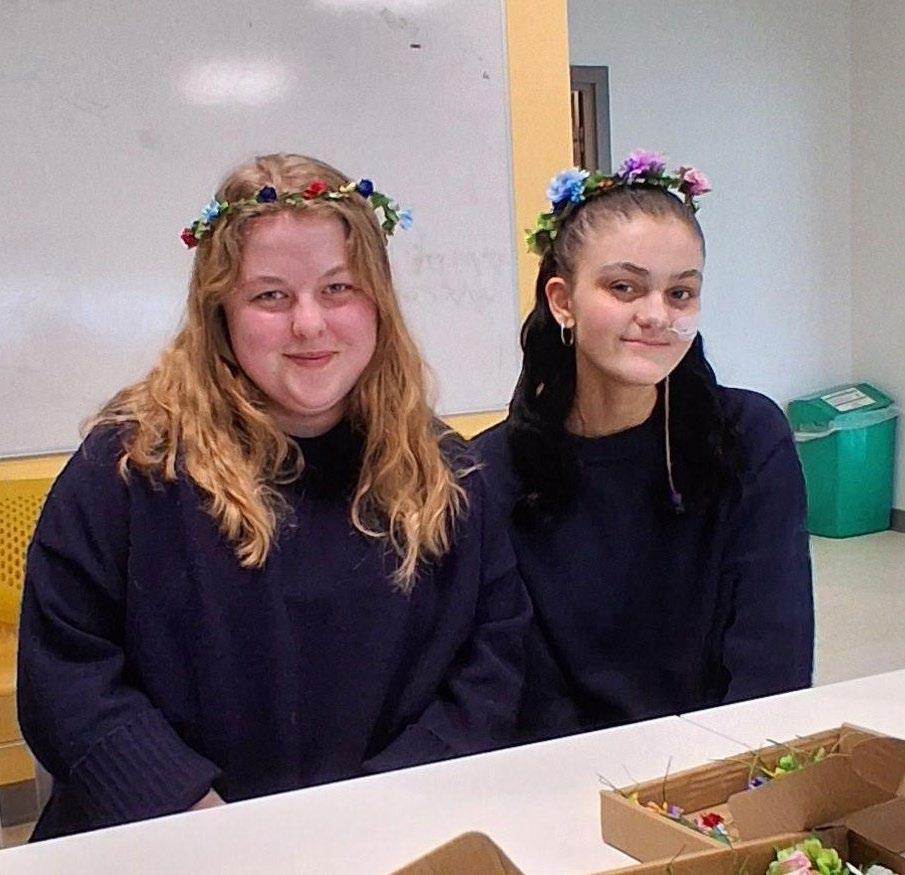
During the February half term, we hosted some consultation workshops with both current and past patients and families to help us build the basis of these packs and cards. As a charity we are fortunate to have fantastic youth ambassadors - previous patients who have chosen to continue their journey with the charity as supporters. One of these ambassadors is Molly Fenton, who joined us to co-deliver these workshops.
Molly said:
“As a Noah’s Ark Charity ambassador and volunteer, I have had the opportunity to use my experiences to feed into supporting the children and young people, not just in the hospital now, but those to come in the future. The charity has created such a beautiful community where I have made some great friends and connected with families that understand my experiences in relation to the hospital.”
For many young people, speaking about their hospital experience can be difficult, either because they are still a patient and actively experiencing the challenges we are discussing, or for past patients because it is a reminder of a difficult time. It was vital, therefore, that the workshops were inclusive, accessible and felt safe. We designed the workshops to deliberately weave conversations into creative activities such as making friendship bracelets and flower crowns,
Anna Williams & Molly Fenton, Noah’s Ark Children’s Hospital Charity
allowing discussion to happen naturally at each attendee’s own pace. These consultation workshops were built so that activities kept it feeling calm and engaging, reducing the risk of re-traumatisation and ensuring participation felt empowering.
In discussion with Molly, and other young people who attended these workshops, another important element came to light. These sessions created a space for choice, something that can feel limited within the medical context and journey. By modelling what meaningful choice and empowerment looks like, young people are not only shaping change for themselves and others, but also experiencing what it feels like to have their voice valued, helping them to recognise and ask for empowerment in other parts of their lives.
Molly said:
“Anyone could have a youth board or forum and ask them to contribute, but there’s a lot to be said for respecting them, creating a community, and creating safe spaces to use our experiences without re-traumatising or upsetting anyone. I spent the majority of my childhood treated under the Noah’s Ark Children’s Hospital, and in my teenage years had a period where I wouldn’t talk to anyone but my sister, who advocated for me, because I didn’t feel safe. Now, since feeling I can make a difference and my voice has some value, it’s made me feel like I can - and I want to – walk back through the doors of the hospital and make a tangible difference for the children that follow.”
If you would like to learn more about the work of the charity, please contact Anna Williams, Programme Manager at anna@noahsarkcharity.org

Babies have so much to tell us if we learn how to listen: using baby headcams to amplify their voices
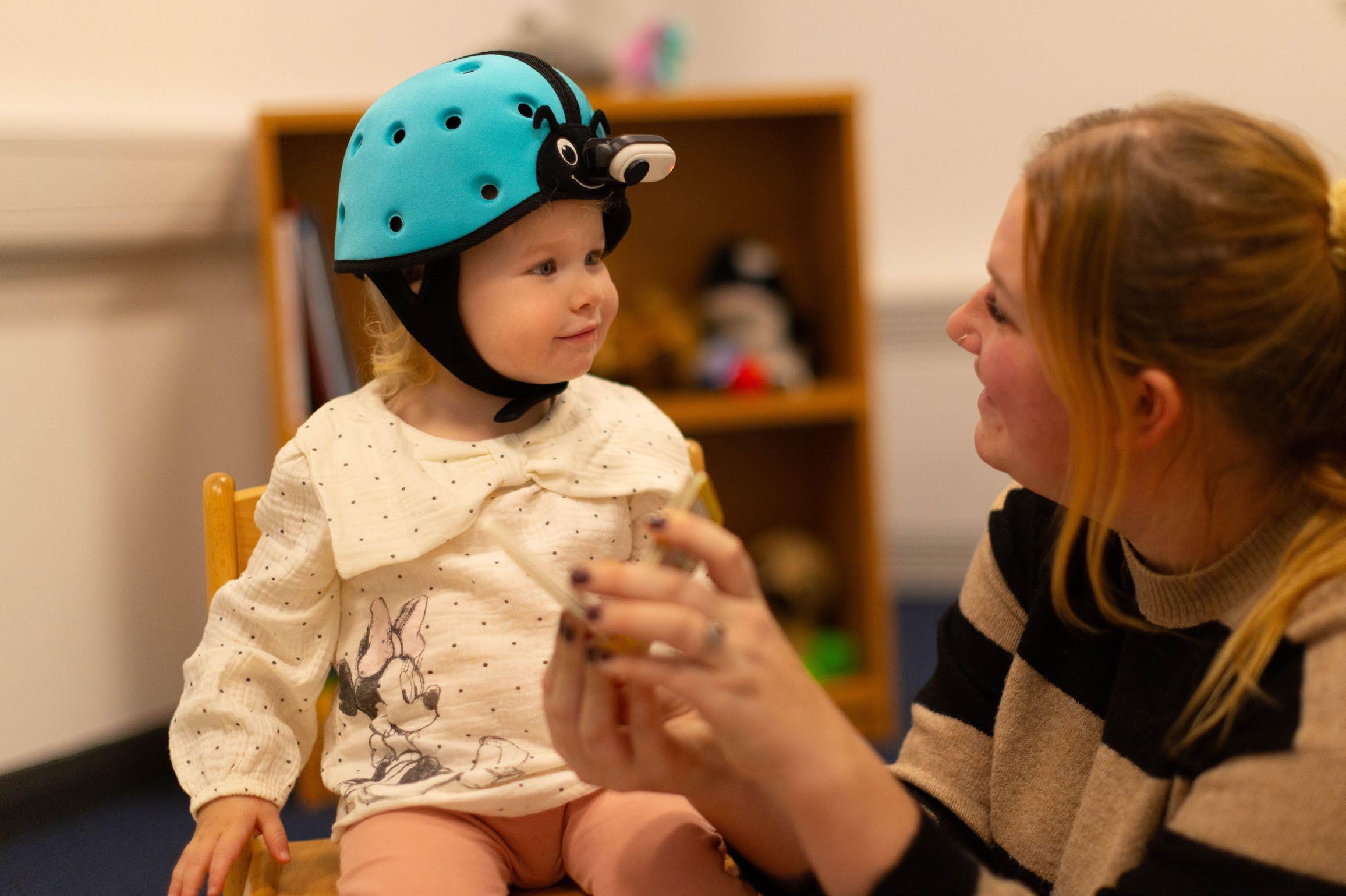
When we think about children’s participation, we often picture school councils, youth forums or consultations with older children and young people. Babies, by contrast, are still too often seen as passive recipients of care rather than active participants in their own lives. Yet the UN Convention on the Rights of the Child (UNCRC) applies to babies just as much as it does to older children. Article 12 makes this clear: every child, no matter how old, has the right to express their views in all matters affecting them, with those views given due weight in accordance with their age and maturity. The challenge for all of us then is not whether babies have a voice, but how we learn to hear it.
This challenge is echoed in the Pledge for Babies in Wales, which commits to recognising babies as rights-holders from the very start of life and to shaping care, support and services around their needs, experiences, and wellbeing. For parents, as much as for those working across health, education, social care, childcare, and the third sector, this raises an important question: how can babies meaningfully participate in decisions that affect them, when they do not yet use words?
At Cardiff Babylab, we start from the assumption that babies are already communicating. Through their attention, movement, body position and responses to people and things around them, babies continuously express preferences, interests and needs. And through these everyday experiences, babies actively construct their understanding of the world around them. If we want to support participation in the earliest years, we need ways to understand these experiences from the baby’s own point of view.
To help address this, we developed TinyExplorer Gear: a lightweight, baby-worn head-mounted camera (headcam) system that captures video and audio from a baby’s perspective during everyday activities, such as playtime at home. The headgear is soft, safe and designed to be worn comfortably by infants and toddlers. Crucially, the TinyExplorer design is open-source, with a freely available build manual, supporting wider access and use across research, practice and training contexts.
Using the TinyExplorer gear, we have been able to move beyond traditional laboratory studies and see what babies actually experience in real life.
Cátia M Oliveira & Hana D’Souza, Cardiff Babylab, Cardiff University
Photo by Paul Allen
By analysing everyday headcam footage, we can explore what babies attend to, how they move through their environments, and how interactions unfold during routine moments of care, play and exploration. This approach shifts the focus away from what adults think babies experience, towards evidence grounded in babies’ lived realities. Our research shows that babies’ perspectives change as they develop, with motor development playing a very important role. As babies learn to sit and walk, their opportunities for engagement are reshaped by posture, mobility and the physical layout of their surroundings. What they can see, reach and interact with is not fixed, but deeply influenced by the environments and practices that adults create around them, while also being actively shaped by children through their own actions and exploration of those environments. Developmental milestones, behaviour of the parents, and environmental design together shape babies’ everyday participation.
Why does this matter for practice?
Because babies’ experiences are a form of communication. They tell us where babies’ attention is drawn, when interaction is supported or interrupted, and how inclusive – or excluding – everyday environments may be. For babies with motor difficulties or disabilities, these experiences may look very different again, with important implications for equity, inclusion and wellbeing –a key focus of our current research. Listening to babies, therefore, means paying close attention to how routines, spaces and behaviours of others enable or constrain their opportunities to engage.
Beyond our research, we believe baby headcams have strong potential to support reflective practice and professional training. Short clips of headcam footage can help parents and practitioners step into babies’ shoes and prompt discussion about positioning, communication, sensory environments and interaction styles. For parents, health visitors, early years practitioners, physiotherapists, speech and language therapists, occupational therapists and others, this can offer a powerful, concrete way to embed children’s needs, rights and participation into everyday practice.
Ultimately, babies have so much to tell us if we are willing to listen carefully and creatively. By combining children’s rights principles with innovative, evidence-informed approaches, we can begin to honour UNCRC Article 12 in the earliest years – not by expecting babies to communicate like adults, but by valuing and responding to the many ways they already express themselves. In doing so, we take an important step towards more responsive, rightsembracing care and services for babies across Wales.
If you would like to learn more about our work, please visit: cardiff-babylab.com

Leadership and participation in practice: young people shaping transition
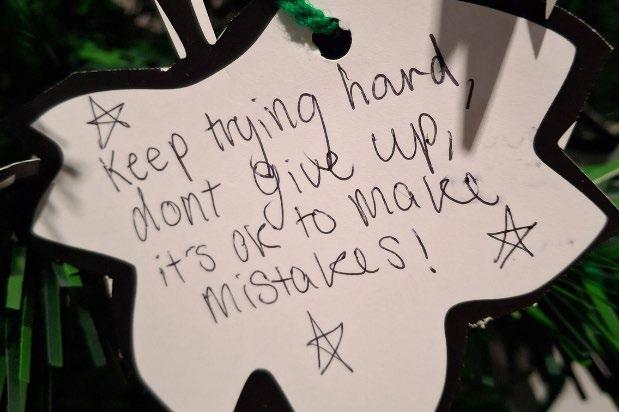
Neath Port Talbot Children’s Rights Unit with the Our VoicesListen Up Project, funded by Community Foundation Wales
Transition to secondary school is one of the biggest milestones in a young person’s educational journey. For many, it brings excitement and opportunity - for others, uncertainty and anxiety. The current Transition Steering Group at Neath Port Talbot Council wanted young people’s views at the heart of this important work, reflecting Article 12 of the UNCRC, which states that children have the right to express their views in all matters affecting them.
We at the Neath Port Talbot Children’s Rights Unit worked with the Senedd at Ysgol Cwm Brombil, Port Talbot to hold a Transition workshop. This day was led and shaped by the school Senedd and the young people played a central role in shaping the day, using their insight and empathy to guide activities and support Year 7 pupils throughout the session.
Why we created the project
Our aim was simple: put young people at the centre of shaping transition support. We knew the most powerful insights would come from the young people who had just lived it.
Young people leading the day
The Senedd members at Ysgol Cwm Brombil took the lead from the very beginning. Their priority was to create a relaxed, honest space where pupils could share their views honestly about what transition had really been like. On the day, the Senedd facilitated every part of the session - welcoming participants, running group discussions, guiding activities and collecting feedback. Adults were present only to support logistics. The young leaders set the tone, held the space and ensured everyone felt comfortable sharing their experiences.
Designed with every pupil in mind
To make sure every Year 7 pupil could share their experiences in a way that suited them, the school Senedd hosted a series of workstations that offered different ways to communicate. Their goal was simple: no matter your confidence level, learning style or preferred way of expressing yourself, there was a space where your voice could be heard. The different workstations included:
Clare Pritchard, Neath Port Talbot Children’s Rights Unit
Transition timeline station
Pupils explored their journey from September to now, reflecting on their best moments, hardest challenges, biggest surprises and what helped. This station supported pupils who prefer structured prompts and time to think before responding.
Advice tree
Young people wrote advice for future Year 6 pupils on individual leaves and added them to a growing tree. This creative activity encouraged reflection and will be shared with current Year 6 pupils, strengthening peer-to-peer support and leadership.
Emoji voting wall and dot voting on statements
A visual station where pupils used emoji stickers to show how they felt about key aspects of school life - making friends, feeling settled, finding their way around, breaktimes and homework. This was especially helpful for pupils who communicate more comfortably through symbols and visuals. Pupils placed dots to agree, disagree, or say they were unsure about statements such as:
• I know who to talk to if I’m worried
• I feel included
Friendship web
Pupils wrote one kind thing someone had done for them since starting school and added it to a shared web. This station celebrated belonging, kindness and connection - key elements of a positive transition.
Together, these workstations created a genuinely inclusive environment where every pupil could participate in a way that felt natural and comfortable, ensuring that no voice was missed and that the workshop reflected the diversity of communication styles across the year group. This also supported Article 42, ensuring children learn about their rights through lived experience.
What this work teaches us
This project reaffirmed the power of coproduction. By giving young people the space to be curious, take the lead and shape the process - participation is then lived, not just promised. The school Senedd showed remarkable leadership, modelling how rights-based practice can transform everyday processes like transition.
Participation isn’t an add-on - it’s a way of working. By trusting young people with real influence, we create systems that are more responsive, more compassionate and ultimately more effective. This is what it looks like when children’s rights move from policy into practice, shaping decisions that genuinely affect their lives.
If you would like to know more about the joint work between Neath Port Talbot Children’s Rights Unit and Ysgol Cwm Brombil, please email: clarep@childrensrightsunit.org.uk
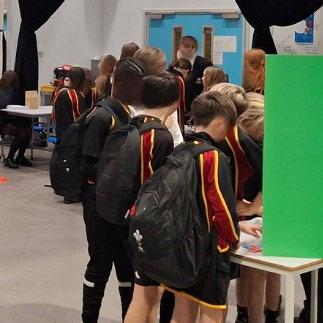
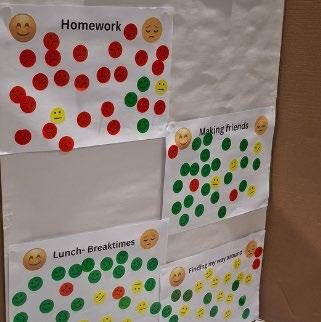

childreninwales.org.uk