
A Letter from the Editor
Dear Readers,
I have had the privilege and opportunity to work on this newsletter for the past 4 years Many of you don’t know me personally, but if you’ve ever sent mail to CTJC, it has passed through my hands at one point or another. I’ve gotten to read dozens of poems and letters, and have admired the artwork you’ve shared. I may have not had the chance to respond to each and every one, but I am grateful for every envelope that’s made its way to my desk over the years. Each envelope belongs to a person, and to each person a unique story, life, and perspective.
It is with a mix of gratitude, sadness, and excitement that I announce that my time at the Chicago Torture Justice Center is coming to a close. I have learned so much from survivors, community members, my colleagues here at CTJC, and from all of you I’ve gotten to meet some of your friends and loved ones on the outside, and gotten to know some of you better through them.
I should mention that the CTJC newsletter will continue! It existed before I joined the team and will continue beyond This newsletter is for you, but I would be remiss if I never conveyed to you all how much this newsletter has meant to me to be a part of
This announcement comes with a tinge of excitement, because I am not going very far. If you’ve been on the newsletter list for a while, you’ve most likely read work by Brian Beals and seen what his organization the Mud Theatre Project is up to I began corresponding with Brian a couple of years ago through this very newsletter, and he has become a dear friend and collaborator since coming home I will be joining the Mud Theatre Project in a larger capacity This likely won’t be the last time you’ll hear from me, but every newsletter is uniquely shaped by the people who put it together It is now time for this small publication to flourish under others’ care.
Please feel free to continue writing to me at the CTJC address. I will still be able to receive mail :)
In love and solidarity, Gilary Valenzuela
Never eat the candy on your pillow: Surviving the holidays
2026 by
an independent and
For people reentering society after years of incarceration, the holiday season brings a mix of emotions that make it difficult to bask in the glow of celebration.
Dear Reader,
Now that the holiday season has come and gone, let me ask: What does that time of year mean to you? I wish I had a more interesting answer than “holidays are for family, friends, festivities, and relaxation.” Still, I only know these things in theory. For people like me who are reentering society after years of incarceration, the holidays bring mixed emotions In early November, as the holidays loomed closer, I found myself wrestling with anticipation tinged with anxiety, gratitude interwoven with grief.
Of course, I looked forward to reconnecting with friends and family, but under the surface, there was a steady hum of anxiety will I ever truly feel at home again?
Today, I want to be honest about how celebrations can actually magnify the distance I feel from loved ones and the world I used to know, and why carving out new traditions and rebuilding trust and connection are proving harder than I expected Last year, I had to keep reminding myself to be patient with my struggle and to accept that my holidays would likely feel different from now on.
The good news is that I’m learning that magical moments are possible no matter how small and they can create a real sense of comfort and meaning.
As the triple whammy of Thanksgiving, Christmas, and New Year’s Eve approached, I wanted to be like the other people around me who were excited for the holidays.
cont’d on next page
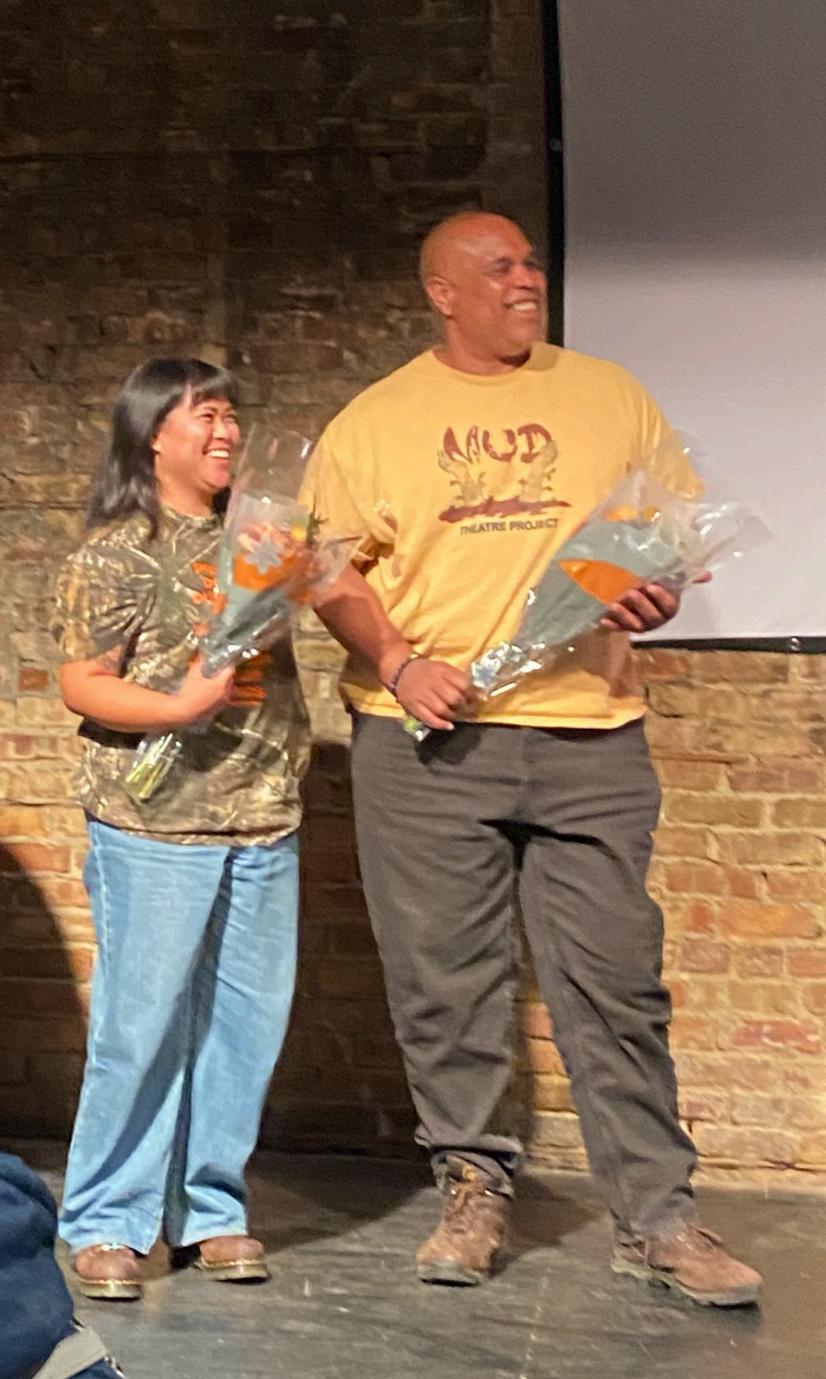
Gilary Valenzuela (left) and Brian Beals (right) at the Resilience Arts Festival in October 2025
Originally published on January 12,
Prism,
nonprofit news outlet led by journalists of color. Written by Derek R. Trumbo, Sr
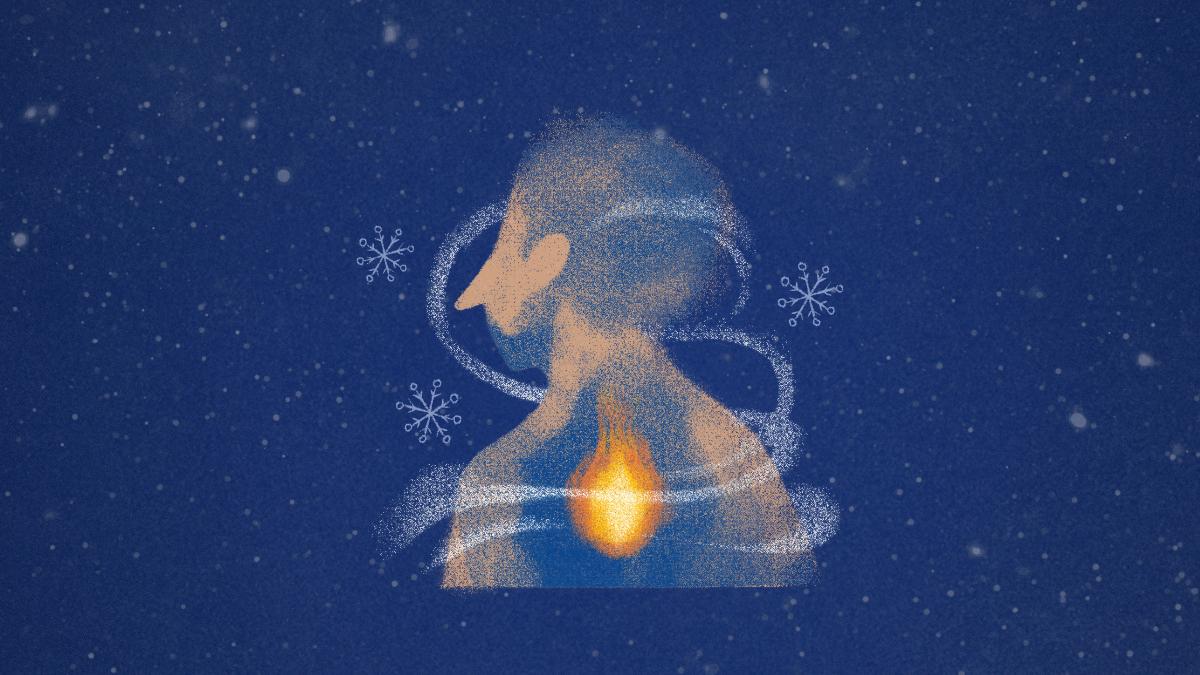
Artwork by Rikki Li, Developmental Editor at Prism
But admittedly, I wasn’t feeling the holiday spirit as I navigated the strict parameters of my parole and continued to adjust to life after incarceration
I celebrated Thanksgiving with my partner, but I left earlier than everyone else Since it’s unwise to be newly released and driving the roads at night, especially while on restrictions, I said my goodbyes and ventured out into the cold. Any traffic stop or interaction with law enforcement, no matter how minor, must be reported and documented So, I decided to err on the side of caution and drove home well before sunset
Walking out into the brisk air that evening, it was almost as if I could feel the weight of transition pressing down on my shoulders I wanted so badly to feel the joy that night But instead, it was replaced by the acute awareness of my new reality and the responsibilities that come with it. Each decision, even one as simple as choosing when to leave a gathering, carried significance.
By December, the world outside seemed wrapped in a familiar glow of celebration But for me, each day brought the challenge of balancing old wounds with the hope of new beginnings. I wanted to believe in the promise of the season, yet I couldn’t ignore the realities of reentry and the sometimes invisible barriers that seemed to separate me from the life I once knew
There’s a quiet ache that settles in for those who spent years incarcerated and separated from loved ones, or who are otherwise struggling to piece together their life after release The holidays once felt full of warmth and promise. As an adult, they are a haunting blend of memories fragments of joy tangled with loss, hope shadowed by regret
The scenes of togetherness and laughter I witnessed last year felt so far away, sometimes unreachable, and every flicker of holiday cheer brought a sharp reminder of everything that’s changed But small gestures a shared meal, a gentle word also held a fragile beauty. For many of us whose traditions were stolen by time and circumstance, the holidays outside mean learning to hold pain and gratitude side by side They force us to cherish moments never promised, to mourn what remains missing, and to find a way to stand in the cold and create new meaning from emptiness. During this season, survival is a badge worn quietly While resilience doesn’t erase the sorrow, it lets us honor what we’ve lost while still searching for a glimmer of hope even if it means our celebrations take on a lonelier, more tentative shape.
After spending so many years in prison, I realized that I had lost touch with the true meaning of the holidays. I never had much growing up, and I often took for granted the little bit that my family did have Much-anticipated gifts lost their splendor a few days after being unwrapped, and I’d quickly forget the elation I felt on Christmas morning. Toys, candy, clothes, and shoes were usually given to me through volunteer organizations and churches, which only reminded me of the extreme poverty I was raised in.
Now, as I approach my 50th birthday, I no longer expect gifts, and both of my parents passed away during my incarceration My siblings have also moved on with their lives. During my first Christmas as a free man, I realized I was grappling with the same feelings I had all of those years behind bars, when the holidays were often marked by a sense of longing and isolation
Locked away from family and friends, I often reflected on the little things I once took for granted: the laughter of my family around a crowded table, the warmth of my mother’s rare hugs, or even the simple act of sharing a meal.
Inside, these memories were treasures, a reminder that the true value of the season is in the connections we nurture and the love we share I can’t go back to my childhood, but I can make new memories. I want to reflect on every detail as if it were my last. The songs playing on the radio, the smell of cinnamon and vanilla, how good it feels to be hugged again by people who care for me
As I continue to adjust to life after incarceration, I want to make a concerted effort to ensure that the holidays take on a different meaning for me I want them to be a time for real reflection and gratitude and for giving back. I’ll continue volunteering at a local shelter, and I’ll make sure to pick up the phone to check in on those I know who are feeling lonely
In navigating this new landscape of joy and uncertainty, I also have to remember to offer myself compassion and patience. I am relearning how to be me, and true healing and connection require giving myself the time and space to feel, reflect, and move forward with intention and care.
Now, as the holidays are over and winter really settles in, I notice I’m finding joy in the quiet moments or just wandering outside in the cold, free under an open sky. But I am also putting myself out there and forging new connections, catching up with a friend over a cup of coffee, or sharing a laugh with the neighbor next door These simple, fulfilling moments are starting to feel like my own humble traditions, helping me redefine what it means to celebrate and belong.
I now count happiness by the warmth I feel in genuine connections and in honoring all the rough roads it took to get here. If I’m honest, last year the holidays served as a badge of survival for me, a living reminder that even after many years separated from the rest of the world, I’m still capable of finding hope and building a community sometimes in ways I never thought possible.
Derek R. Trumbo, Sr., a multiple-time PEN Prison Writing Award winner, is an essayist, playwright, and author whose writing has been featured in “The Sentences That Create Us: Crafting A Writer’s Life in Prison” (Haymarket Books, January 2022), Vera Institute of Justice’s the “Human Toll of Jail” project, and Tacenda Literary Magazine. His plays have won or placed Top 3 at the Kentucky Theatre Association Roots of the Bluegrass New Plays Festival three years running A Madeline L’Engle/Rahman Mentorship Award prize winning essayist, Derek mentors, instructs, and facilitates writing circles with his fellow inmates to create tales which highlight the human struggle and adversity of this gift we call life.
“Never eat the candy on your pillow” is a Derek’s monthly column in Prism

Restoration over excessive punishment by Carl
I am writing to bring attention to the case of Terrell Ivory, whose experience reflects the deep flaws and constitutional concerns within habitual offender sentencing. Mr. Ivory has been over-sentenced under habitual criminal statutes that fail to account for his humanity, his potential for growth, or his right to fair and proportional punishment.
Habitual offender enhancements often impose excessive penalties not based on the actual offense, but on a punitive formula detached from justice. In Mr. Ivory’s case, this has resulted in a sentence that far exceeds what is reasonable or necessary to protect the public. Such practices raise serious constitutional questions particularly regarding the Eighth Amendment’s protection against cruel and unusual punishment and the Fourteenth Amendment’s guarantee of equal protection and due process. When a sentence is inflated solely because of a label rather than the facts of the case, it violates the fundamental principles that should guide our legal system.
Beyond the legal harm, the impact of over-sentencing reaches far into the community When individuals like Mr Ivory are kept incarcerated for years beyond what is appropriate, families are destabilized, children lose critical support, and communities lose members who could otherwise return home ready to contribute. Research has consistently shown that excessively long sentences do not reduce recidivism Instead, they create barriers to rehabilitation, diminish hope, and strip away opportunities for personal transformation
Mr. Ivory has demonstrated a clear desire to restore his life, reconnect with his community, and build a future rooted in responsibility and growth The current sentence does not reflect those possibilities It does not align with the goals of rehabilitation, reentry, or public safety Justice is not served by warehousing individuals long after they have matured, reflected, and demonstrated readiness for reintegration.
A more just response would recognize the capacity for change, honor the principles of proportionality, and allow Mr Ivory the chance to return to society as a restored and productive individual His continued over-incarceration is not only unconstitutional in spirit, but harmful to the broader community that needs healing, stability, and opportunities for restoration not more cycles of punishment.
I respectfully urge a reconsideration of Mr Ivory’s sentence and a commitment to policies that truly promote justice, fairness, and successful reentry. People deserve the chance to be more than the worst moments of their past, and communities deserve systems that prioritize restoration over excessive punishment.
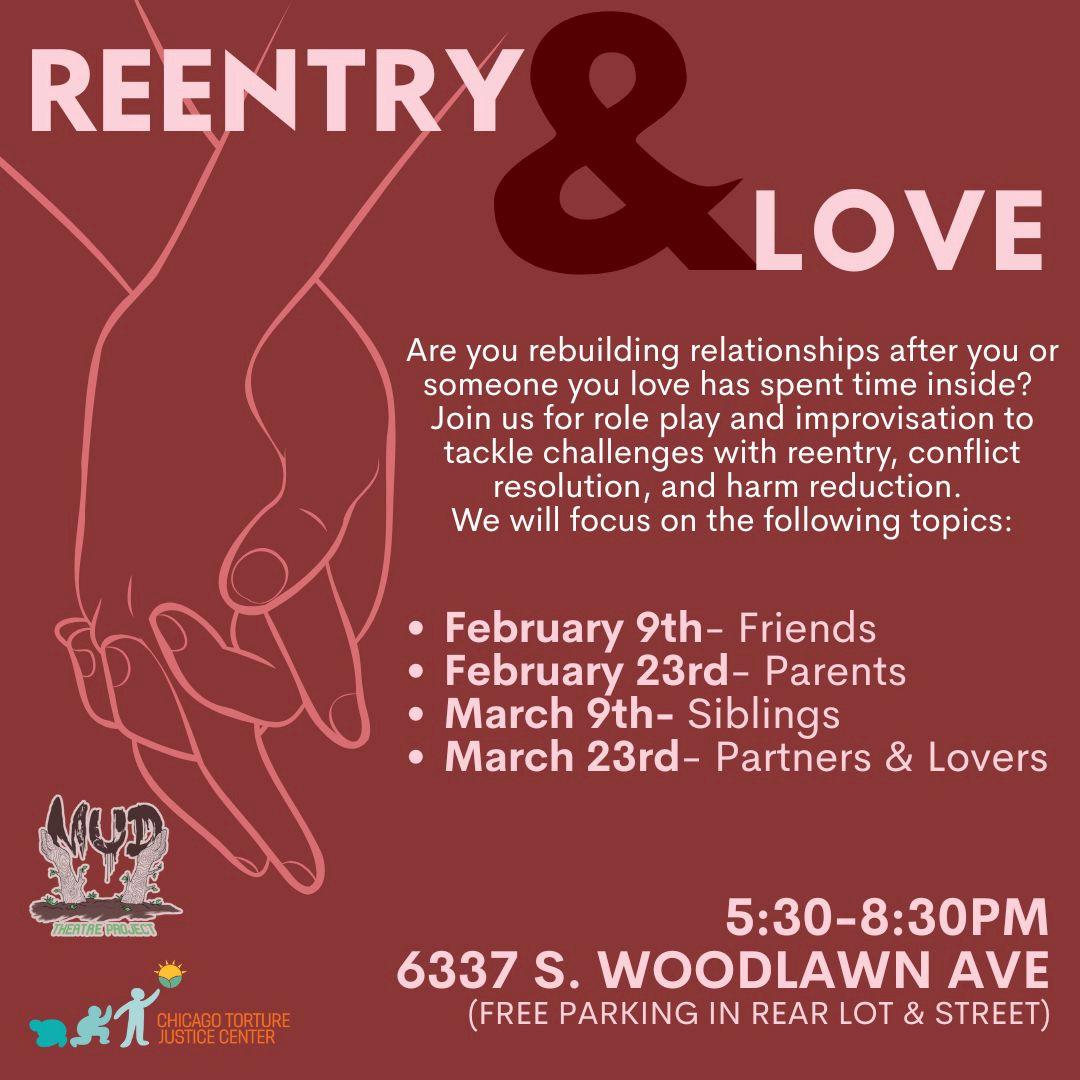
We are excited to kick off a new Reentry & Love series in 2026!
Co-presented by CTJC and Mud Theatre Project, this series will explore the many different kinds of relationships that are impacted by the experience of reentry after incarceration, and support participants in practicing skills to make them stronger.
Each of our four meetings will focus on different types of relationships: 1) Friends, 2) Parents, 3) Siblings, and 4) Partners & Lovers. Participants are welcome to join any of the four sessions they’d like - attending all four is not required.
All sessions are free and open to people who are navigating or preparing to navigate the reentry process. We will meet at CTJC, 6337 S. Woodlawn in Chicago.
To the CTJC Family
by Abdul-Malik Muhammad
A crowded space, bull-horns began to echo!
It’s easier to maintain our focus, this feeling will never go, It can be a handful of things:
Support at court, protest chatter, echoes of CTJC community laughter or a copy of our newsletter
It becomes a wrongfully convicted battle for peace, that’s impossible to win–
To find that strengthen again, Is a quest for quietness that’s deep within,
That’s the challenge, incarcerated torture survivors face, each and everyday,
From court date to court date, tears travel down our face, In this dark and gloomy place
We are still waiting at the prison bars waiting for some justice to come,
Rumblings below, will slowly start to form,
It doesn’t seem to matter,
What holiday or of it’s a court day, The feeling of being gone,
Seems to always exist
It’s moments, I may forget it’s there,
Until a raging heartache starts to appear, and this feeling can happen–just about anywhere.
We love you!
Happy Holiday & Happy New Year
Life in Prison
by Psallareous Baskin
Life in prison could be very hard from losing family, to missing time from your kid’s lives, not being able to go to commissary and dealing with different people who really don’t care about you.
My first year in prison I lost 5 family members It’s like as soon as you go to jail or prison everything bad just comes from everywhere. People don’t know ‘cause we really don’t have a voice in here to tell others what we really go through, but prison is very hurtful
Missing tie with your loved ones is the main pain. They miss out too if you have kids. You have to watch your kids grow through pictures My wife was pregnant when I went to prison, so I’d never even touched my baby.
Most times, lots of guys don’t really have family so they miss out on commissary, so they feel like no one loves them So they would just lash out and just get in trouble. While you’re in prison and feel like they put you in jail again in restricted housing seg unit.
Life in prison could be very hard, but if you put your mind to it, you could change and become a better person to society. I’ve seen some of the most feared men on the streets really change in here I changed myself so I know I can be a better father, husband, and man.
CTJC accepts poetry, essays and artwork for review.
If your work is published, it may be slightly edited. We may omit full names or locations, unless otherwise specified
Please indicate how you would like to be credited: First Name, First and Last Name, Nickname, or Anonymous.
We look forward to hearing from you!