Summer in the High Grassland
COMPOSED
2004
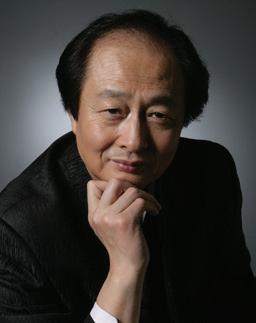
Those who have seen Farewell My Concubine, Ju Dou, or Raise the Red Lantern have already been touched by the music of Zhao Jiping. Zhao, one of the most prominent composers in China’s flourishing film industry, graduated from the Xi’an Conservatory of Music before taking advanced training at the Central Conservatory of Music in Beijing. Zhao has earned a distinguished place in Chinese artistic and cultural life as president of the Xi’an Conservatory of Music, deputy director of the Research Institute for Traditional Opera of Shaanxi Province, vice-chairman of the Cultural Association of Shaanxi Province, a member of the People’s Congress of Shaanxi Province, elected representative to the Fifteenth Party Congress, and president of the Shaanxi Song and Dance Institute. Currently, he is an honorary chairman of the Chinese Musicians’ Association. Zhao’s honors include the title State Composer (First Class), Best Music Prize from the Nantes Film Festival (for Five Girls and
a Piece of String), a Golden Palm from the Cannes Film Festival (for Farewell My Concubine), and awards from other leading film festivals and competitions in China, Germany, and Italy; he was also chosen to participate in Yo-Yo Ma’s Silk Road Project. In addition to acclaimed scores for some forty movies, Zhao Jiping has composed symphonies, concertos, and operas.
Zhao has composed five works for Yo-Yo Ma’s Silk Road Project, including Summer in the High Grassland for solo cello in 2004. Zhao wrote,
I have a mental picture of the Silk Road, of a bazaar filled with people trading goods, calling out for attention, bargaining with each other. Slowly, the sun sets, and I move away from the bazaar, out into the desert, until it disappears, and all I can see is sand and the very quiet, still night sky. The people of that ancient Silk Road have disappeared, but the cultures have continued. Those people have left something in each of our hearts.
Zhao summoned one of those living memories in Summer in the High Grassland, which was inspired by the
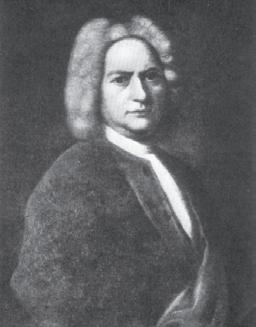
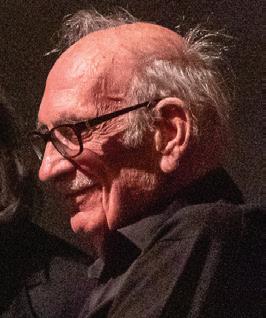
this page: Zhao Jiping | next page: Johann Sebastian Bach, circa 1720, from the painting by Johann Jakob Ihle in the Bach Museum, Eisenach, Germany
COMMENTS
mesmerizing sound of the morin khuur, the traditional “horsehead fiddle” that is a symbol of the nation of Mongolia. The morin khuur consists of a trapeziform wooden-framed sound box (i.e., a foursided structure with at least one pair of parallel sides) to which are attached two strings, traditionally made from the hair of a horse’s tail, today nylon substitutes,
stretched along a long neck that is usually topped with a carved horse’s head. The atmosphere suggested by the title of Summer in the High Grassland is perfectly conveyed by the work’s austere melodic line, free-floating rhythm, sense of endless space, and the cello’s keening evocation of the ancient morin khuur.
JOHANN SEBASTIAN BACH
Born March 21, 1685; Eisenach, Germany Died July 28, 1750; Leipzig, Germany
Suite for Solo Cello No. 1 in G Major, BWV 1007
Suite for Solo Cello No. 5 in C Minor, BWV 1011
Suite for Solo Cello No. 3 in C Major, BWV 1009
COMPOSED around 1720
In 1713 the frugal Friedrich Wilhelm I of Prussia dismissed his household musical establishment in Berlin. The young, cultured Prince Leopold of Anhalt-Cöthen, forty miles north of Leipzig, took the opportunity to engage some of Friedrich’s finest musicians, provided them with excellent instruments, and established a library for their regular court performances. In December 1717 Leopold hired Johann Sebastian Bach, then organist and director at Weimar, as his
director of music. Inspired by the high quality of the musicians in his charge and by the prince’s praise of his creative work, Bach produced much of his greatest instrumental music during the six years of his tenure at Cöthen, including the Brandenburg Concertos, suites for orchestra, violin concertos, The WellTempered Clavier, many chamber and keyboard compositions, and the works for unaccompanied violin and cello. The six suites for solo cello were apparently written for either Christian Ferdinand Abel (whose son Carl Friedrich became the partner of Sebastian Bach’s son Johann Christian in an important London concert venture in the 1760s) or
Christian Bernhard Linigke, both master cellists in the Cöthen court orchestra.
The cello in Bach’s time was still an instrument of relatively recent origin. It was the Cremonese craftsman Andrea Amati who first brought the violin, viola, and cello to their modern configurations around 1560 as the successors to the old, softer-voiced family of viols. (The modern double bass, with its tuning in fourths and its sloping shape—compare its profile with the square shoulders of the other orchestral strings—is the only survivor in the modern orchestra of that noble breed of earlier instruments.) For the first century of its existence, the cello was strictly confined to playing the bass line in concerted works; any solo passages in its register were entrusted to the viola da gamba. The earliest solo works known to have been written specifically for the instrument, from the 1680s, are by Domenico Gabrieli, a cellist in the orchestra of San Petronio in Bologna (unrelated to the Venetian Gabrielis); notable among them are his ricercari for unaccompanied cello of 1689. The first concerto for cello seems to be that composed by Giuseppe Jacchini in 1701. The instrument gained steadily in popularity as it displaced the older gamba, a circumstance evidenced by the many works for it by Antonio Vivaldi and other early eighteenthcentury Italian composers. When Bach proposed to write music for unaccompanied cello sometime around 1720, however, there were few precedents for such pieces. The examples with which he was most familiar were by a tiny enclave of composers (Westhoff, Biber,
Walther, Pisendel) centered around Dresden, who had dabbled in compositions for solo violin, and it was probably upon their models that Bach built his six sonatas and partitas for violin and the half-dozen suites for cello. In comparing these two series of Bach’s works, Philipp Spitta wrote,
The passionate and penetrating energy, the inner fire and warmth, which often grew to be painful in its intensity [in the violin works], is here softened down to a quieter beauty and a generally serene grandeur, as was to be expected from the deeper pitch and fuller tone of the cello.
Bach’s solo cello suites, like his contemporaneous English Suites for Harpsichord, BWV 806–11, follow the traditional form of the German instrumental suite—an elaborate prelude followed by a fixed series of dances: allemande, courante, sarabande, and gigue. Between the last two movements of the cello works are inserted additional pairs of minuets, bourrées, or gavottes.
Suite no. 1 in G major opens with a fantasialike prelude whose steady rhythmic motion and breadth of harmonic inflection generate a sweeping grandeur that culminates magnificently in the heroic gestures of the closing measures. The ensuing movements follow the old custom of pairing a slow dance with a fast one: an allemande (here marked by wide-ranging figurations and swiftly flowing rhythms) is complemented
by a courante, a dance type originally accompanied by jumping motions; a stately sarabande is balanced by a pair of minuets (the second of which, in G minor, exhibits a delicious, haunted languor) and a spirited gigue of vibrant character.
Suite no. 5 in C minor, often characterized as the most profound and austere of the set, begins with a prelude reminiscent of a French Overture: a slow, deeply melancholic opening section with dotted rhythms is followed by quickly moving music whose subtle shifts of register imply the intertwining of fugal voices. The ensuing movements use the forms and styles of the traditional dances, though their expressive state is not one
AHMET ADNAN SAYGUN
Born September 7, 1907; Izmir, Turkey
Died January 6, 1991; Istanbul, Turkey
of diversion but of sadness in the slow movements (allemande and sarabande) and firm determination in the fast ones (courante, gavottes, and gigue).
Suite no. 3 in C major opens with a prelude that exploits the rich scales and arpeggios of the instrument’s middle and low registers. The allemande’s elaborate quick figurations make its tempo seem faster than a metronome would allow. The courante is light and animated. The stately sarabande is balanced by the twin bourrées (the second of which slips into C minor) and the spirited gigue, whose few measures of implied bagpipe drone are among the most novel tonal effects in Bach’s instrumental catalog.
Allegretto from Partita for Solo Cello
COMPOSED 1954
Ahmet Saygun was sixteen years old and already demonstrating exceptional musical abilities when Turkey proclaimed itself a republic newly independent from six centuries of Ottoman rule. His life and career were to be intertwined with the
sweeping European-facing secular, political, economic, educational, and cultural reforms instituted under Mustafa Kemal Atatürk, the new nation’s revered founder.
While still in elementary school in his native Izmir, an ancient port city on Turkey’s west coast, Saygun learned fluent English and French from his father, a professor of religions, began studying piano, oud (a traditional Middle Eastern short-necked lute), and music theory,
and by fourteen was writing his own pieces. In 1926, after graduating from high school, he became a music teacher in the city’s schools, and two years later won a scholarship from the Turkish Ministry of Education to study in Paris, where he immersed himself in the city’s rich musical life, attended the Schola Cantorum to study composition (with Vincent d’Indy), organ and Gregorian chant, and wrote a divertimento, his first large work for orchestra.
Saygun returned to Turkey in 1931, where he trained music teachers and began to compose in a style that incorporated both European and traditional Turkish influences. In 1934 he was appointed by Atatürk himself to conduct the Presidential Symphony Orchestra in the new capital city of Ankara, when both that ensemble and a professional music conservatory were being developed with the oversight of Paul Hindemith during his extended residency in Turkey (after having been “requested” by Joseph Goebbels to leave his teaching position at the Berlin Academy because of his Jewish wife). That same year, Atatürk also asked Saygun to write the first opera of the Turkish Republic. The one-act Özsoy, about the historical friendship between the peoples of Turkey and Iran, was so successful that the president asked him for a sequel (Taşbebek), suggesting as a subject the heroism of the Turks and Atatürk’s devotion to his country and people. Another direction for Saygun’s career began in 1936, when he
joined Hungarian composer, pianist, teacher, and scholar Béla Bartók on a folk music research trip around southwestern Turkey, a venture that led Saygun to become Turkey’s most noted ethnomusicologist. Following the two 1934 operas, Saygun moved to Istanbul to teach at the city’s municipal conservatory, returning to Ankara in 1939 to promote recitals, concerts, and knowledge of Western classical music throughout the country. In 1946, he was appointed to the composition faculty of the Ankara State Conservatory and named a member of the Executive Board of the Turkish Radio and Television Organization.
During the rest of his long career, Saygun established himself, according to a 1991 article in the Times of London, as “the grand old man of Turkish music. He is to his country what Jean Sibelius is to Finland, what Manuel de Falla is to Spain, and what Béla Bartók is to Hungary.” Saygun continued to compose, with performances across Turkey, Europe, and America—five symphonies, five operas, two piano concertos, concertos for violin, viola, and cello, and a wide range of chamber and choral works—teach in Ankara and Istanbul, publish books on music pedagogy, research Turkish folk music, help establish several new music conservatories around the country, write the article (in French) for the Encyclopédie de la Pléiade, and serve as a member of the National Education Council. Among his many honors and awards
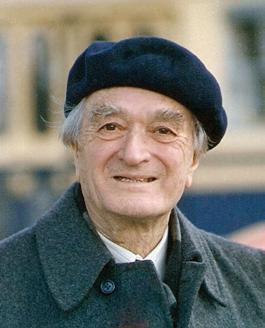
opposite page: Ahmet Saygun | next page: George Crumb, photo by Steven Pisano
COMMENTS
were the Atatürk Art Prize (1981), grand prize of the Turkish Ministry of Culture (1984), and Pro Cultura Hungarica Prize (1986). Following his death in 1991, the Ahmet Adnan Saygun Center for Music Research was established at Bilkent University in Ankara as the repository for his original manuscripts and archives.
In 1955 the Istanbul Municipal Theater commemorated the 150th anniversary of the death of German poet, philosopher, and playwright Friedrich Schiller (1759–1805) by staging several of his dramas as part of its continuing commitment to produce significant
GEORGE CRUMB
works of the European theater. In conjunction with that event, director Max Meinecke commissioned Saygun to compose the Partita for Solo Cello (To the Memory of Friedrich Schiller). The partita was premiered on April 15, 1955, at the German Consulate in Istanbul by Martin Bochmann, cello professor at the Ankara Conservatory; both composer and cellist were awarded a Schiller Medal by the consul general following the performance. The gently lilting rhythms and wistful nature of the Allegretto, the fourth of the partita’s five movements, give it the character of a sad dance.
Born October 24, 1929; Charleston, West Virginia Died February 6, 2022; Media, Pennsylvania
Sonata for Solo Cello
COMPOSED 1955
George Crumb, born into a musical family (his father was a clarinetist and bandmaster, and his mother a cellist), was playing piano by ear by age nine and composing before he entered high school. He completed his undergraduate degree in music at Mason College in Charleston before undertaking postgraduate work with Eugene Weigl at the University of Illinois in
Urbana-Champaign and Ross Lee Finney at the University of Michigan. Crumb attended the Berkshire Music Center at Tanglewood during the summer of 1955 to study composition with Boris Blacher; he continued as Blacher’s student at the Berlin Hochschule für Musik the following academic year under a Fulbright Fellowship. The next year, Crumb won BMI student prizes for his String Quartet and Sonata for Solo Cello. After graduating from the University of Michigan, he taught at the University of Colorado and the State University of New York at Buffalo
before serving as professor of music and composer-in-residence at the University of Pennsylvania from 1965 until his retirement in 1997.
George Crumb is one of America’s most frequently performed and widely respected composers. His impressive collection of honors included a Pulitzer Prize (1968, for the orchestral work Echoes of Time and the River), a UNESCO International Rostrum of Composers Award, a Koussevitzky Recording Award, and grants and fellowships from the Rockefeller, Guggenheim, Fromm, and Ford foundations, as well as from the National Institute of Arts and Letters, of which he was elected a member in 1975. Crumb held six honorary doctorates and was an honorary member of the Deutsche Akademie der Künste and the International Cultural Society of Korea. In 2000 his Star-Child won the Grammy Award for Best Classical Contemporary Composition, and in 2004, Musical America named him its Composer of the Year.
The Sonata for Solo Cello, composed in Berlin in October 1955, is the earliest work that Crumb acknowledged. The piece was dedicated to the composer’s mother, Vivian, a talented cellist who played with the Charleston Symphony
for twenty-five years, many of them as principal cellist, and who did much to inspire her son’s career in music. The sonata is derivative of a certain Bartókian influence that Crumb was exploring in those early years, but the work already shows a fine command of the cello’s special qualities and sonorities and a superb craftsmanship in its construction. The opening fantasia is a compact and seamlessly integrated development of a falling-third motif first presented after a series of plucked chords, which serve as a foil throughout for the movement’s principal argument. The following movement (Tema pastorale con variazioni) comprises a two-part theme in 6/8 meter (seven measures repeated, plus eight measures), three contrasting variations, and a ghostly, muted recall of the principal melody as coda. The closing toccata, swift and brilliant after a brief, dramatic introduction, encloses a center section consisting of fragmented lyrical phrases between passages of quicksilver arpeggios.
Richard E. Rodda, a former faculty member at Case Western Reserve University and the Cleveland Institute of Music, provides program notes for many American orchestras, concert series, and festivals.
SYMPHONY CENTER PRESENTS
Jeff Alexander Chicago Symphony Orchestra Association President
Cristina Rocca Vice President for Artistic Administration
The Richard and Mary L. Gray Chair
James M. Fahey Senior Director, Programming, Symphony Center Presents
Lena Breitkreuz Artist Manager, Symphony Center Presents
Michael Lavin Director of Production
Joseph Sherman Associate Director of Production, SCP and Rental Events