KLAUS MÄKELÄ Zell Music Director Designate | RICCARDO MUTI Music Director Emeritus for Life
Thursday, May 21, 2026, at 7:30
Friday, May 22, 2026, at 1:30 Saturday, May 23, 2026, at 7:30
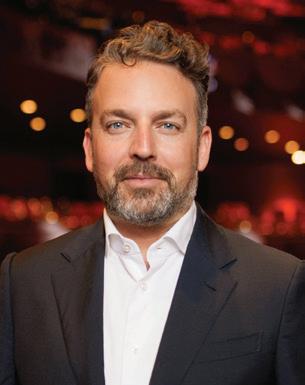
James Gaffigan Conductor
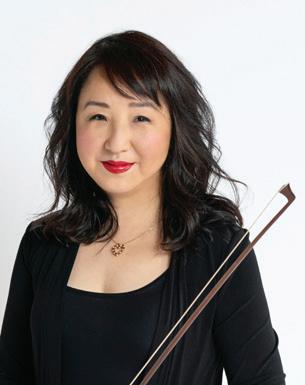
Yuan-Qing Yu Violin
GRIEG Holberg Suite, Op. 40
Prelude
Sarabande
Gavotte and Musette
Air
Rigaudon
KREISLER Violin Concerto in C Major (In the Style of Vivaldi)
Allegro moderato e maestoso
Andante doloroso
Allegro assai
YUAN-QING YU
INTERMISSON
CLYNE
Sound and Fury
First Chicago Symphony Orchestra performances
HAYDN Symphony No. 101 in D Major (The Clock)
Adagio—Presto
Andante
Menuet: Allegretto
Finale: Vivace
The May 22 concert is generously endowed by the Frank Family Fund in loving memory of Elaine and Zollie S. Frank.
These concerts are sponsored in part by Gage Hospitality Group.
The Chicago Symphony Orchestra Association acknowledges support from the Illinois Arts Council.
Newsradio 105.9 WBBM is a Media Partner for this event.
The Chicago Symphony Orchestra thanks the Frank Family Fund for endowing the May 22 concert in loving memory of Elaine and Zollie S. Frank.
COMMENTS by Phillip Huscher
EDVARD GRIEG
Born June 15, 1843; Bergen, Norway
Died September 4, 1907; Bergen, Norway
Holberg Suite, Op. 40
Just as Grieg is revered as Norway’s great composer, celebrated for the ways his music is rooted in the traditions of his land, Ludwig Holberg, born more than one hundred fifty years earlier, is considered the founding father of Norwegian literature. The names of these two emblematic Norwegian artists, both from Bergen, came together just once, in this suite of pieces written to honor the two-hundredth birthday of the great poet and playwright.
By then Grieg was famous for the music he wrote in the mid1870s for Peer Gynt by Henrik Ibsen, the nineteenth-century Norwegian playwright. (Whenever Grieg attended a performance of the play, he would find that he was applauded again and again throughout the evening for the music he had written to be included in Ibsen’s verse drama.) But he had found Ibsen’s play uninspiring and grew to resent the sweeping popularity of his Peer Gynt music; neither man was entirely satisfied with the final product, even though their names were linked forever because of it. Writing something to honor Holberg was a much more engaging project, and Grieg leaped at the chance.
Grieg began by writing a suite of pieces for the piano, but it is the version for string orchestra he made the following year that has become one of his best-known compositions. The work was originally titled From Holberg’s Time, and it evokes the music of Bach and Handel, who were Holberg’s contemporaries (Holberg was born in 1684, one year before both composers). Holberg was apparently a true music lover; he was known to have played the recorder and organized musical soirées, and he regularly attended concerts where, uncharacteristically, he was often moved to tears. The suite was subtitled Suite in Old Style, and Grieg described it as “a good exercise for concealing one’s own personality.” (This might as well have been Fritz Kreisler’s motto in composing the concerto that follows on this program.) The score is modeled after the French baroque dance suite, with a grand opening number followed by stylized dances of the period—dances meant to be listened to rather than danced.
Music from the baroque period was just being rediscovered in Europe at that time, and it had played no role in Grieg’s
COMPOSED
1884, for piano solo; 1885, arranged for string orchestra
FIRST PERFORMANCE
March 1885, Bergen, Norway. The composer conducting INSTRUMENTATION
string orchestra
APPROXIMATE PERFORMANCE TIME 21 minutes
FIRST CSO PERFORMANCE
December 10, 1966, Orchestra Hall. Franz Allers conducting
MOST RECENT CSO PERFORMANCE
May 29, 2015, Orchestra Hall. Cristian Măcelaru conducting (excerpts, performed as accompaniment to Fritz Lang’s 1927 film Metropolis)
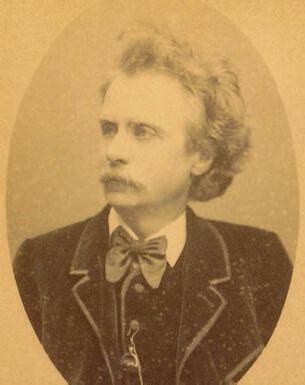
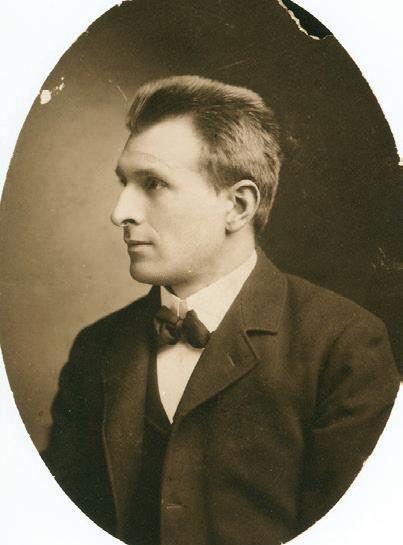
above: Edvard Grieg, portrait, Hansen and Weller Photography Studio, Copenhagen, Denmark. Hjalmar Rabe Collection in the Rosenthal Archives
HJALMAR RABE AND EDVARD GRIEG
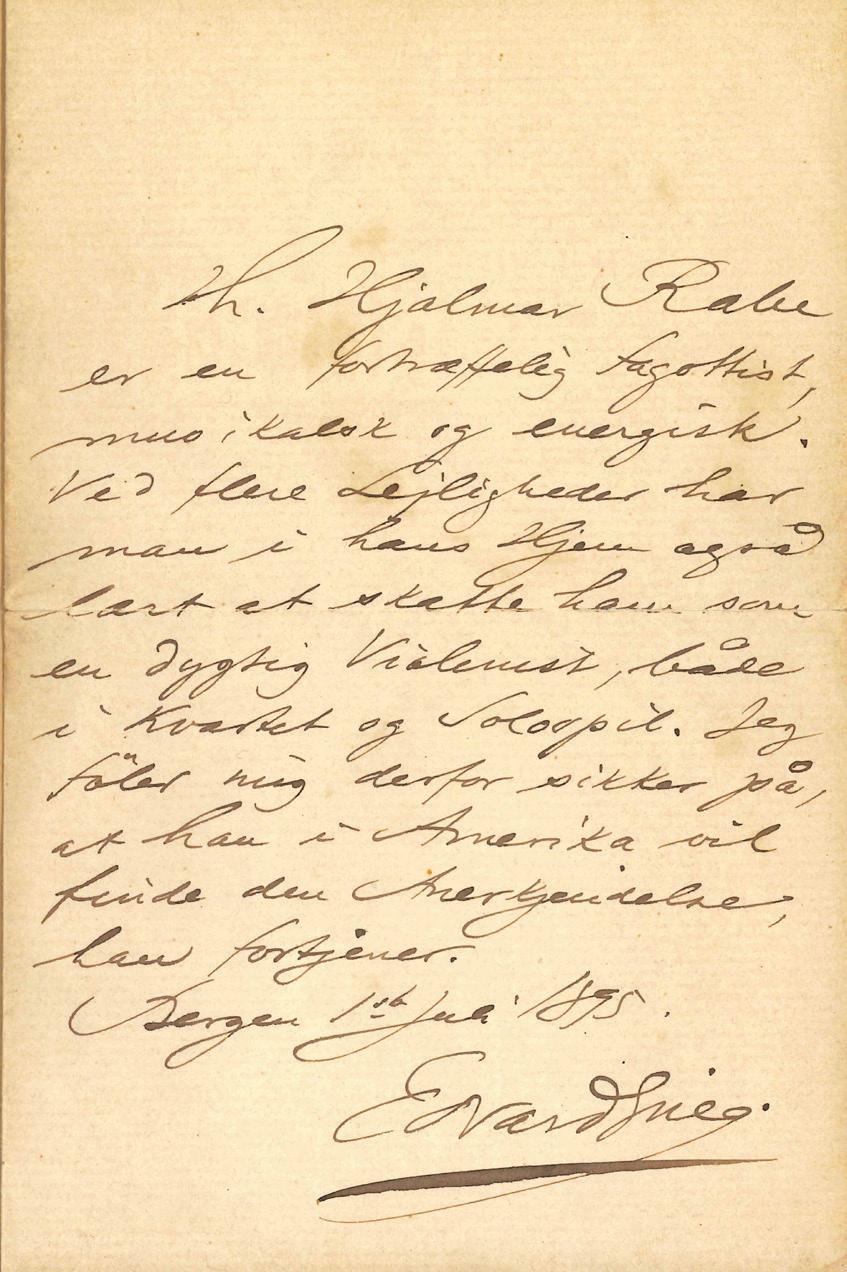
On July 1, 1895, Edvard Grieg—by then revered as a national hero in Norway as well as one of the great romantic-era composers—wrote a letter of recommendation for his friend, colleague, and fellow native of Bergen, Hjalmar Rabe.
“Mr. Hjalmar Rabe is an excellent bassoonist, musical and energetic. On several occasions, people in his home have also learned to appreciate him as a skilled violinist both in quartets and solo playing. I therefore feel confident that he will find in America the recognition he deserves. Bergen, July 1, 1895. Edvard Grieg” (English translation from Danish courtesy of Leif Ove Andsnes).
Hjalmar Rabe was born on January 30, 1872. His father operated a concert bureau and music store in Bergen, where young Rabe was able to meet local and visiting artists, including Grieg; soprano Christina Nilsson (who sang the role of Marguerite in Gounod’s Faust for the inauguration of the Metropolitan Opera House); and violinist, conductor, and composer Johan Halvorsen.
the second season in 1892. Rabe and Esser both retired in 1945.
After three years in Leipzig studying both the violin and bassoon, Rabe returned to Bergen. In 1894 he sailed to the United States and landed his first job in Milwaukee as a member of the Christian Bach Orchestra, bringing him “$1.30 per concert, with free beer as an added consideration,” according to a 1938 profile in the Chicago Daily News.
In 1895—at the invitation of founder and first music director Theodore Thomas—Rabe joined the Chicago Orchestra as a member of the violin section. (His initial salary was $30.00 per week, and was “enormous pay in those days,” according to Rabe.) The following season, his name also appeared on the roster in the bassoon section. By 1917, he was listed exclusively in the bassoons, where he later served as that section’s principal for the 1918–19 season as well as principal contrabassoon during 1944–45.
Rabe was the second musician in the Orchestra to reach fifty years of service, right behind his colleague and close friend Franz Esser (1868–1950), who had joined the Orchestra’s violin section at the beginning of
Rabe and his future wife Dagny briefly met in Norway shortly before she immigrated to the United States in 1893. They reunited in Chicago the following year and were married in 1895. On Christmas Eve 1955, the couple celebrated their sixtieth wedding anniversary, and the occasion drew recognition from Illinois Secretary of State Charles F. Carpentier, Illinois Governor William G. Stratton, and U.S. President Dwight D. Eisenhower. In his retirement, Rabe continued to practice both the violin and bassoon daily. He died on August 2, 1958, at the age of eighty-six and was survived by his beloved wife, two daughters, and four sons.
Most recently, Rabe’s granddaughter Lisbet Przybylski made a generous donation of materials to the CSO Association, including the letter from Grieg and an original 1897 framed portrait of the Orchestra. Facilitated by Rabe’s great-granddaughter Dawn McAllister, the donation establishes the Hjalmar Rabe Collection in the Rosenthal Archives.
Frank Villella is the director of the Rosenthal Archives. For more information, please visit cso.org/archives
from left: Hjalmar Rabe, portrait, 1902. Raymond Niwa Collection in the Rosenthal Archives | Letter of recommendation for Hjalmar Rabe from Edvard Grieg. Hjalmar Rabe Collection in the Rosenthal Archives
education. Music was a constant companion in his childhood home, where Mozart, Weber, and Chopin were always in favor. When he enrolled in the Leipzig Conservatory for Music, he found the city to be an eye-opening cosmopolitan music center. Although Grieg later complained about the strict Germanic training during his five years at the conservatory—his teacher, E.F. Wenzel, had been a good friend of Robert Schumann—the experience broadened his musical outlook considerably. By the time he wrote his sole piano concerto at the age of twenty-five, Grieg’s style was already very much his own, with a melodic freshness and harmonic originality that owe as much to the folk music of Norway as to any German master.
But it was music by Bach and Handel that Grieg turned to when he was asked to write music for the unveiling of a monument to Holberg. The result is an admiring tribute to the hallmarks of baroque music, but it is presented
in the voice of a nineteenth-century Norwegian master. The opening prelude is an exuberant and galloping Allegro that functions like a curtain raiser; it was expanded and reworked when Grieg set out to orchestrate his piano version. It is followed by a sarabande, which Grieg depicts as a slow, genteel dance in triple meter (the emphasis is on the second beat). Next is a courtly gavotte (a duple meter dance) with a lively central musette, full of circular melodies over the steady bagpipe-like drone of the cellos. The subsequent air in the minor mode, by contrast, is slow and serious (it is marked Andante religioso) and sustained by long-flowing melodic lines and sumptuous string sonorities and the rich harmonies of Grieg’s own time. The final Rigaudon is rustic and lively, with animated solos for violin and viola, intercut with a slower minor-mode section to set off the return of the high spirits of the exuberant country dance.
FRITZ KREISLER
Born February 2, 1875; Vienna, Austria
Died January 29, 1962; New York City
Violin Concerto in C Major (In the Style of Vivaldi)
This is a tale about beguiling music, the gifts of a true artistic chameleon, and a world-class deception that went unquestioned for years.
“Ours is a narrow field,” Fritz Kreisler told the Chicago Tribune when he came to play a recital in the Auditorium Theatre in 1909. “Either he must play the three or four great works, or he must select from the immense repertory of twaddle.” Kreisler, the American-born violinist who was among the most celebrated, imaginative, and wildly popular artists of the century, had made his debut with our orchestra in December 1900 playing Beethoven’s monumental violin concerto. In his most recent appearance in Orchestra Hall, he performed the concerto by Brahms. But
COMPOSED
date unknown
FIRST PERFORMANCE date unknown
INSTRUMENTATION
solo violin, organ, strings
APPROXIMATE
PERFORMANCE TIME 12 minutes
FIRST CSO PERFORMANCES
November 7 and 8, 1913, Orchestra Hall. The composer as soloist, Frederick Stock conducting
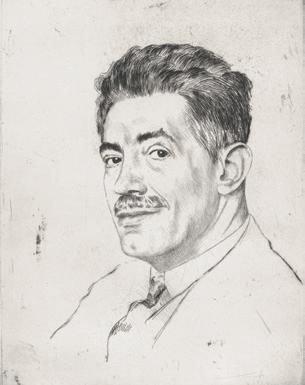
above: Fritz Kreisler, drypoint print portrait by Czech Austrian artist Emil Orlík (1870–1932), ca. 1920s. Metropolitan Museum of Art Collection, Drawings and Prints, New York City
he was already beginning to look farther back in the repertoire to present works that were not “twaddle,” but were simply unknown.
As early as 1913 in Chicago, Kreisler took the pioneering step of playing a concerto by Antonio Vivaldi. It was the first time Vivaldi’s name appeared on the programs of Chicago Symphony Orchestra concerts. Baroque music was not yet the lure it is today—Vivaldi was almost unknown at the time—and this was long before scholars had begun to catalog the works of that era’s major composers, affixing BWV numbers to Bach scores and RV to those by Vivaldi. (It was nearly four decades before The Four Seasons, Vivaldi’s pictorial set of violin concertos, emerged to become one of music’s most popular landmarks.) Over the years, as Kreisler traveled the world giving concerts, he continued to uncover lost works by Vivaldi and many other composers, which he gradually added to his programs, to the delight of audiences who knew little of music’s earlier masters.
Then on February 8, 1935, Kreisler made the front page of the New York Times with the headline “Kreisler Reveals ‘Classics’ as Own; Fooled Music Critics for 30 Years.” As the Times reports,
. . . the story of how Fritz Kreisler, world-famous violinist, wrote a series of compositions in the style of old masters like Vivaldi, Couperin, Porpora, Pugnani, and Padre Martini, published them as his editions of their works and for thirty years fooled fellow violinists, critics, and the public into believing them authentic old classics became known last night.
According to the Times, Kreisler, who had regularly played charming pieces of his own on his recitals, said that he wanted to expand his repertoire but hated to keep repeating his name on his programs, and so he began to write pieces in the style of older composers, adding his name merely as the editor or arranger or transcriber of their work. Soloists and critics regularly praised these scores and audiences loved them. Although the authenticity of several of them
had been questioned over the years, no one suspected that they were in fact by Kreisler. The deception was only revealed after a music writer decided to look for the original score of a work by Pugnani that Kreisler regularly played in his “transcription” and could find no evidence that it existed. The Times said that Kreisler’s publisher would now issue a new catalog of Kreisler’s output, renaming “classical manuscripts” as “original compositions.” The largest of the fourteen works in question that the Times mentioned is a Concerto in C major by Vivaldi.
It now appears that the Chicago Symphony, like other major orchestras, had been deceived along with everyone else, and that the Vivaldi concerto Kreisler played here in 1913 was not, as the program book claimed, “a novelty 200 years old,” but was his own work—the C major concerto “in the style of Vivaldi” that is being performed this week.
This C major concerto is an astutely written tribute to Vivaldi’s celebrated virtuosity as a violinist and facility as a composer. Kreisler himself was a natural-born composer—he wrote a string quartet, several vocal pieces, operettas (including the popular Blossom Time), cadenzas for major concertos (those for Beethoven’s violin concerto are often still played today), and many violin pieces that he regularly performed as encores. And, as we now know, Kreisler also had a Streep-like knack for assuming various musical voices, convincingly taking on the personas of a wide variety of composers. Today, with our much-more advanced familiarity with Vivaldi’s music, his C major concerto would not pass as authentic Vivaldi, but it is a brilliant and witty recreation of the Vivaldi style, written with a persuasive assurance, unmatchable knowledge of the violin’s technical capabilities, a gift for memorable melody, and the flair for the kind of breathtaking soloistic virtuosity that he and Vivaldi shared. There are three movements in the familiar Vivaldi pattern, with fast and thrilling music surrounding a slow middle movement that as one critic wrote, before the deception was exposed, is “moving but not
sentimental, for Vivaldi did not wear his heart on his sleeve.”
As we can now surmise, this concerto, which has long been dated 1927, the year of its publication, is apparently an older work (but not two centuries older) that Kreisler had been playing
ANNA CLYNE
Born March 9, 1980; London, England
Sound and Fury
for years. Kreisler performed this same concerto with the New York Philharmonic as early as 1908. As for the deception, Kreisler knew it was harmless and that his compositions would continue to delight audiences. “The name changes,” he said, “the value remains.”
During her five years as our Mead Composer-in-Residence, beginning in 2010, Anna Clyne often wrote music that took other works of art as a point of departure. Although she is known for collaborating with artists in other disciplines—choreographers, filmmakers, writers, painters—it is sometimes no more than a few lines of poetry or music that inspire her. Night Ferry, premiered under Riccardo Muti’s baton here in February 2012, was designed to complement the music of Franz Schubert and found its dark, flickering colors after Clyne read that Schubert suffered from cyclothymia, a form of depression. Prince of Clouds, performed here in December 2012, is a double violin concerto that pays homage to Bach’s famous concerto for two violins. A poem by Emily Dickinson, written out on a large canvas on one wall of Clyne’s studio, was the source for A Sudden Shut, premiered on the CSO’s MusicNOW series in 2013. While Clyne was our resident composer—she was born in London and raised in the UK—she even wrote a Chicago “street portrait,” A Wonderful Day, incorporating the voice of Willie Barbee, a homeless man she heard singing on Michigan Avenue.
Recent projects have explored Clyne’s fascination with visual arts, including Color Field, which
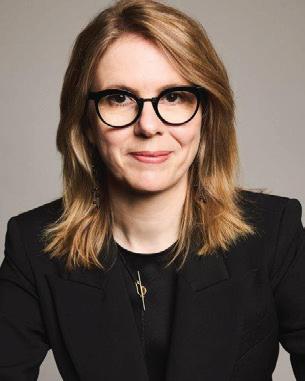
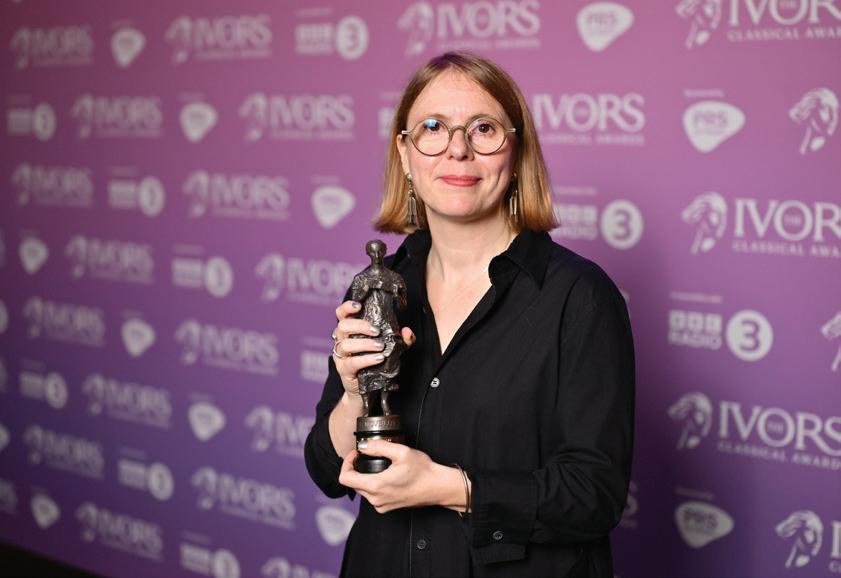
from top: Anna Clyne, photo by Victoria Stevens | Anna Clyne, winner of the Best Choral Composition Award for Orbits, attends the Ivors Classical Awards presented by the Ivors Academy at the British Film Institute (BFI) Southbank on November 11, 2025, London, England. Photo by Eamonn M. McCormack/Getty Images
These are the first Chicago Symphony Orchestra performances.
takes the artwork of Mark Rothko as its subject; Abstractions, inspired by contemporary artworks by Sara VanDerBeek, Julie Mehretu, Hiroshi Sugimoto, Elsworth Kelly, and Brice Marden. Clyne is currently at work on a viola concerto inspired by Barbara Hepworth’s sculptures. Since her Chicago days, Clyne’s star has been on the rise. Her Restless Oceans, which celebrates the power of women, was recently performed at the Nobel Prize award ceremony. Bachtrack, a popular international online music magazine, has named Clyne the most performed woman composer in the world. Sound and Fury, which is receiving its Chicago premiere this week, unites Clyne’s love for literature and music—Haydn specifically, whose music then appropriately closes the concert.
Anna Clyne on Sound and Fury
Sound and Fury draws upon two great works of art for its inspiration: Haydn’s Symphony no. 60 (II distratto) and Shakespeare’s Macbeth Il distratto incorporates Haydn’s music for Le Distrait, a play by Jean-François Regnard, so it seemed fitting to draw inspiration from both musical and literary sources for Sound and Fury. To begin, I listened to Il distratto many times, and on a single sheet of paper, I wrote down the key elements that caught my ear, which ranged from rhythmic gestures to melodic ideas, harmonic progressions, and even a musical joke (Haydn brings the feverish final prestissimo to a grinding halt for the violins to re-tune). I chose between one and four elements from each of the six movements and developed them through my own lens—layering, stretching, fragmenting, and looping. Whilst experienced as one complete movement, Sound and Fury is also structured in six subsections that follow the same trajectory of II distratto. In the fifth section of Sound and Fury, I looped a harmonic progression from Haydn’s Adagio in Il distratto and this provides a bed of sound to support the recitation of “Tomorrow, and tomorrow, and tomorrow . . . ,” the last soliloquy
delivered by Macbeth upon learning of his wife’s death, and from which this work takes its title.
Tomorrow, and tomorrow, and tomorrow, Creeps in this petty pace from day to day, To the last syllable of recorded time; And all our yesterdays have lighted fools The way to dusty death. Out, out, brief candle!
Life’s but a walking shadow, a poor player, That struts and frets his hour upon the stage, And then is heard no more. It is a tale
Told by an idiot, full of sound and fury,
Signifying nothing.
The connection to Shakespeare’s play emerged gradually during the writing process, but especially after watching a recording of a 1979 master class with Sir Ian McKellen analyzing this soliloquy’s imagery and rhythmic use of language. Time lies at the heart of it—“hereafter . . . time . . . tomorrow . . . to day . . . yesterday . . .” and music provides us with this framework. The last line of this soliloquy (“Signifying nothing.”) is incomplete; McKellen explains “the beats of the rest of that pentameter are not there—because the end of the speech is total silence—total oblivion—total emptiness.”
So rich in imagery and metaphor, I also found inspiration in Shakespeare’s rhythmic use of language. For example, before delivering this soliloquy, and after learning of his wife’s death, Macbeth says, “She should have died hereafter; There would have been a time for such a word.” McKellen says: “There’s something about that line which trips—in Hamlet’s words—tick tocks like a clock.” This is something that I play with also—layering rhythmic fragments that repeat and mark the passage of time.
My intention with Sound and Fury is to take the listener on a journey that is both invigorating—with ferocious string gestures that are flung around the orchestra with skittish outbursts—and serene and reflective—with haunting melodies that emerge and recede.
JOSEPH HAYDN
Born March 31, 1732; Rohrau, Lower Austria
Died May 31, 1809; Vienna, Austria
Symphony No. 101 in D Major (The Clock)
London knew Haydn’s music as early as 1765, when some of his string quartets were advertised under the name Haydri. By the time he visited England for the first time in 1791, not only had the printers got his name right, but the public also knew him as the greatest of composers. That visit, which introduced six brilliant new symphonies (the first half of the set we now call the London Symphonies), was a great—though not unexpected— success. The concerts were the talk of London, and Haydn, who had spent the last thirty years in private practice, writing to satisfy the demands of the Esterházy family, now enjoyed great public acclaim. A second visit was inevitable.
Eighteen months separate Haydn’s two London sojourns. Back in Vienna, where, like so many important composers in history, he was treated with indifference, he began to write the symphonies with which he would reconquer London, perhaps even surpassing his first success. Few external events in his life had stimulated him like the stay in London. He was full of fresh, new ideas. And he now knew that the audience there was as sophisticated as any in the world.
Haydn returned to London on February 4, 1794, with his fulltime copyist, Johann Elssler; abundant baggage; the completed score of Symphony no. 99; and parts of nos. 100 and 101. A composer who travels with his personal copyist obviously plans to write a lot of music and oversee its performance. Symphony no. 99 was played just five days after he arrived; Haydn quickly set to work preparing the other two. Symphony no. 101 was ready first and performed on March 3; Symphony no. 100 was given at Hanover Square on March 31, Haydn’s sixty-second birthday. For this visit, the orchestra at Haydn’s disposal included clarinets, and all but one of his last six symphonies take advantage of this new richness of sound.
Symphony no. 101 was popular from the start. At the premiere, both the first and second movements had to be repeated. The Oracle commented that “the connoisseurs admit [it] to be his best work.” Haydn had already spoken about his desire to write for the crowd as well as the connoisseur, and few works satisfy both audiences so fully without making concessions to
COMPOSED
started in Vienna, 1793; completed in London, February 1794
January 28 and 29, 1937, Orchestra Hall. Hans Lange conducting August 2, 1952, Ravinia Festival. Otto Klemperer conducting
MOST RECENT
CSO PERFORMANCES
August 6, 1959, Ravinia Festival. Alfred Wallenstein conducting December 9, 2008, Orchestra Hall. Bernard Haitink conducting September 24, 2009; Royal Festival Hall, London, England. Bernard Haitink conducting
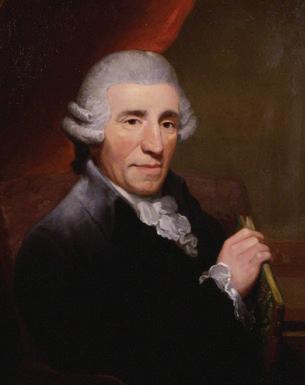
above: Joseph Haydn, portrait in oil by Thomas Hardy (1757–ca. 1805), 1791. Royal College of Music Museum of Instruments, London, England
the other. Haydn begins in D minor, as he would in his final symphony composed only a year later, with a weighty slow introduction. Here the effect is very somber—lacking clarinets, brass, and timpani—and the effect mysterious. The presto marking and 6/8 time signature of the body of this movement are what one expects from a finale, but Haydn makes it work brilliantly upfront. (Besides, he has plenty of new ideas for the real finale.)
It’s the Andante, with its ticking accompaniment, that gave the symphony its nickname, although Haydn’s clock—with its tick-tock pattern skipping back and forth over two octaves at one point, and split incongruously between high flute and barking bassoon at another—is one of a kind. Even when the movement suddenly switches to loud and dramatic music, the clock keeps running.
Haydn’s minuet is unusually long (the longest he ever wrote, in fact) and filled with wonderful touches, like the timpani solo midway through. The trio is village band music, duplicated whole, right down to the missed cues, late entrances, and wrong notes.
The finale is nonstop brilliance—it has often been called the greatest last movement of Haydn’s very long career. He moves with confidence and ease from high drama to homespun simplicity, and from folk song to a magnificent double fugue. Haydn ends, for the last time in his symphonic career, with a familiar signal: a quick pause followed by three firm chords.
Phillip Huscher has been the program annotator for the Chicago Symphony Orchestra since 1987.
The Chicago Symphony Orchestra Association is grateful to Gage Hospitality Group for its generous support.
PROFILES
James Gaffigan Conductor
FIRST CSO PERFORMANCES
February 21 and 24, 2009, Orchestra Hall. Root’s The Battle Cry of Freedom; Payne and Bishop’s Home, Sweet Home; Awakening from Harris’s Symphony no. 6 (Gettysburg); Selections from Bennett’s Abraham Lincoln; Copland’s Lincoln Portrait with James Earl Jones; and Beethoven’s Symphony no. 5
MOST RECENT CSO PERFORMANCES
May 31, 2025, Orchestra Hall. Dvořák’s Suite in A major, Bernstein’s Three Dance Episodes from On the Town and Overture to Candide, Gershwin’s An American in Paris, and songs by Price and selections from Gershwin’s Porgy and Bess with Janai Brugger
Recognized worldwide for his extraordinary collaborative spirit, James Gaffigan has attracted international attention as a conductor of both symphony orchestras and opera.
Recently named the next music director of Houston Grand Opera, Gaffigan assumes his new role in the 2027–28 season. He begins as music director designate in the 2026–27 season, and his initial term lasts for five seasons, through 2031–32.
A rarity among American conductors for his rise to prominence in the esteemed houses and concert halls of Europe, Gaffigan is in demand across the world. He serves as general music director of Komische Oper Berlin, where he currently leads his third season, and as music director of the Verbier Festival Junior Orchestra.
In August 2025, Gaffigan marked his fourth and final season as music director of the Palau de les Arts Reina Sofía in Valencia. He is former chief conductor of the Lucerne Symphony Orchestra and former principal guest conductor of both the Netherlands Radio Philharmonic Orchestra and the Trondheim Symphony Orchestra and Opera.
Gaffigan regularly leads the world’s greatest orchestras, including the New York Philharmonic, Chicago Symphony Orchestra, San Francisco Symphony, Los Angeles Philharmonic, National Symphony Orchestra in Washington (D.C.),
Boston Symphony Orchestra, Cleveland Orchestra, Philadelphia Orchestra, and the Pittsburgh Symphony Orchestra.
In Europe, he has appeared with the London Symphony Orchestra, London Philharmonic Orchestra, Bavarian Radio Symphony Orchestra, Royal Concertgebouw Orchestra Amsterdam, Staatskapelle Berlin, Deutsches Symphonie Orchester Berlin, Staatskapelle Dresden, NDR Elbphilharmonie Orchestra in Hamburg, TonhalleOrchester Zürich, Rotterdam Philharmonic Orchestra, and the Czech Philharmonic.
A champion of new music, Gaffigan has led more than thirty premieres by composers including Thomas Adès, Kaija Saariaho, Anders Hillborg, Andrew Norman, Sarah Kirkland Snider, and Wynton Marsalis. His robust discography features recordings with the Lucerne Symphony, Netherlands Radio Philharmonic, Netherlands Radio Choir, and Frankfurt Radio Symphony Orchestra.
Gaffigan’s early training in New York City’s public schools inspired his belief in music education and access to the arts. He regularly works with young musicians at the Juilliard School, Aspen Music Festival and School, Music Academy of the West, and the Verbier Festival.
His first titled positions included associate conductor of the San Francisco Symphony, a position created for him by Michael Tilson Thomas, and assistant conductor of the Cleveland Orchestra, where he worked with music director Franz Welser-Möst. Gaffigan was first-prize winner of the 2004 Sir Georg Solti International Conducting Competition.
James Gaffigan earned his undergraduate degree at the New England Conservatory of Music in Boston, followed by conducting studies at the Shepherd School of Music at Rice University in Houston, Aspen Conducting Academy at Aspen Music Festival and School, and the Tanglewood Music Center.
February 14, 15, and 16, 2002, Orchestra Hall. Haydn’s Sinfonia concertante with Michael Henoch, William Buchman, and Stephen Balderston; Ingo Metzmacher conducting
MOST RECENT CSO PERFORMANCES
January 27 and 29, 2022, Orchestra Hall. Vivaldi’s Concerto for Four Violins in B minor with Robert Chen, Stephanie Jeong, and David Taylor; Riccardo Muti conducting
A native of Shanghai, China, Yuan-Qing Yu has won several prizes in major international violin competitions and earned an artist diploma in violin and a master’s degree in music from Southern Methodist University. Appointed by Daniel Barenboim, she has been assistant concertmaster of the Chicago Symphony Orchestra since 1995. She also is a professor at Northwestern University.
In 2011 she cofounded Civitas Ensemble, a non-profit organization, and currently serves
as its president and board member. With her Civitas colleagues, she performs many chamber concerts each year, including outreach performances at hospitals, schools, and senior-living facilities. The ensemble’s albums Alla Zingarese and Jin Yin, on the Cedille Records label, reached the top ten of Billboard’s Classical Chart. Civitas Ensemble’s upcoming engagements include the Chamber Music America Conference in August as well as a tour and master class in Santiago, Chile, in September.
Yuan-Qing Yu has collaborated with Daniel Barenboim, Pinchas Zukerman, Lang Lang, and Yo-Yo Ma, among others. As soloist, she has given numerous critically acclaimed performances with major orchestras in the United States, Asia, and Europe. She spends part of her summers teaching and performing in summer festivals in the United States and Europe.
An advocate for living composers, Yu gave the Chicago premiere of Pierre Boulez’s Anthèmes 2 for solo violin. She has been instrumental in commissioning and premiering more than ten compositions written for Civitas Ensemble.
Yuan-Qing Yu likes to read, attend the theater, and travel in her leisure time.
The Chicago Symphony Orchestra—consistently hailed as one of the world’s best—marks its 135th season in 2025–26. The ensemble’s history began in 1889, when Theodore Thomas, the leading conductor in America and a recognized music pioneer, was invited by Chicago businessman Charles Norman Fay to establish a symphony orchestra. Thomas’s aim to build a permanent orchestra of the highest quality was realized at the first concerts in October 1891 in the Auditorium Theatre. Thomas served as music director until his death in January 1905, just three weeks after the dedication of Orchestra Hall, the Orchestra’s permanent home designed by Daniel Burnham.
Frederick Stock, recruited by Thomas to the viola section in 1895, became assistant conductor in 1899 and succeeded the Orchestra’s founder. His tenure lasted thirty-seven years, from 1905 to 1942—the longest of the Orchestra’s music directors. Stock founded the Civic Orchestra of Chicago— the first training orchestra in the U.S. affiliated with a major orchestra—in 1919, established youth auditions, organized the first subscription concerts especially for children, and began a series of popular concerts.
Three conductors headed the Orchestra during the following decade: Désiré Defauw was music director from 1943 to 1947, Artur Rodziński in 1947–48, and Rafael Kubelík from 1950 to 1953. The next ten years belonged to Fritz Reiner, whose recordings with the CSO are still considered hallmarks. Reiner invited Margaret Hillis to form the Chicago Symphony Chorus in 1957. For five seasons from 1963 to 1968, Jean Martinon held the position of music director.
Sir Georg Solti, the Orchestra’s eighth music director, served from 1969 until 1991. His arrival launched one of the most successful musical partnerships of our time. The CSO made its first overseas tour to Europe in 1971 under his direction and released numerous award-winning recordings. Beginning in 1991, Solti held the title of music director laureate and returned to conduct the Orchestra each season until his death in September 1997.
Daniel Barenboim became ninth music director in 1991, a position he held until 2006. His tenure was distinguished by the opening of Symphony Center in 1997, appearances with the Orchestra in the dual role of pianist and conductor, and twenty-one international tours. Appointed by Barenboim in 1994 as the Chorus’s second director, Duain Wolfe served until his retirement in 2022.
In 2010, Riccardo Muti became the Orchestra’s tenth music director. During his tenure, the Orchestra deepened its engagement with the Chicago community, nurtured its legacy while supporting a new generation of musicians and composers, and collaborated with visionary artists. In September 2023, Muti became music director emeritus for life.
In April 2024, Finnish conductor Klaus Mäkelä was announced as the Orchestra’s eleventh music director and will begin an initial five-year tenure as Zell Music Director in September 2027. In July 2025, Donald Palumbo became the third director of the Chicago Symphony Chorus.
Carlo Maria Giulini was named the Orchestra’s first principal guest conductor in 1969, serving until 1972; Claudio Abbado held the position from 1982 to 1985. Pierre Boulez was appointed as principal guest conductor in 1995 and was named Helen Regenstein Conductor Emeritus in 2006, a position he held until his death in January 2016. From 2006 to 2010, Bernard Haitink was the Orchestra’s first principal conductor.
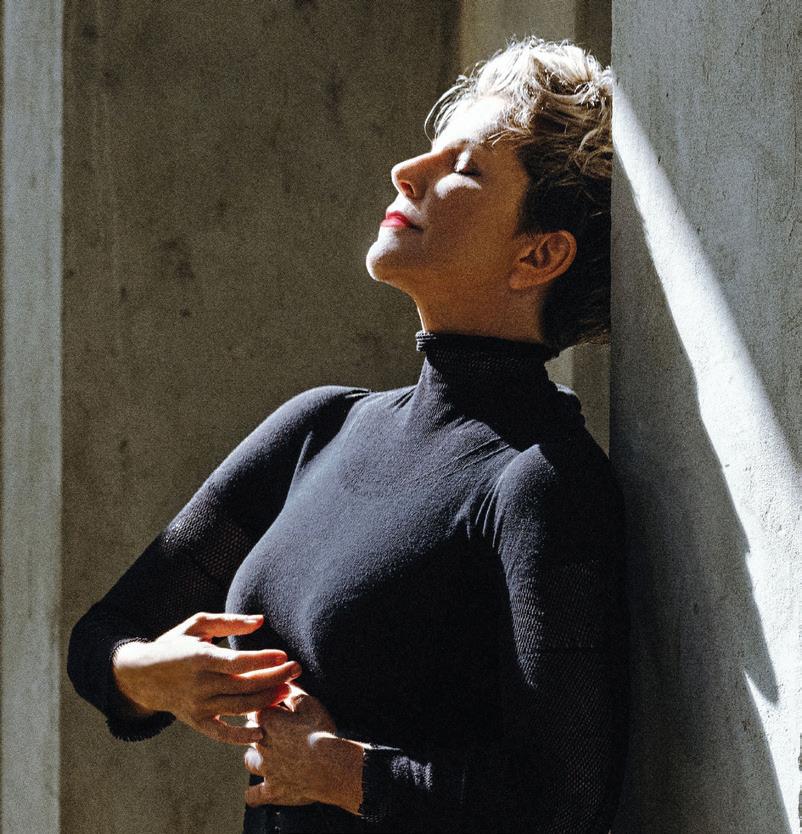
Mezzo-soprano Joyce DiDonato is the CSO’s Artist-in-Residence for the 2025–26 season.
The Orchestra first performed at Ravinia Park in 1905 and appeared frequently through August 1931, after which the park was closed for most of the Great Depression. In August 1936, the Orchestra helped to inaugurate the first season of the Ravinia Festival, and it has been in residence nearly every summer since.
Since 1916, recording has been a significant part of the Orchestra’s activities. Recordings by the Chicago Symphony Orchestra and Chorus— including recent releases on CSO Resound, the Orchestra’s recording label launched in 2007— have earned sixty-five Grammy awards from the Recording Academy.
Chicago Symphony Orchestra
Klaus Mäkelä Zell Music Director Designate
Joyce DiDonato Artist-in-Residence
VIOLINS
Robert Chen Concertmaster
The Louis C. Sudler Chair, endowed by an anonymous benefactor
Stephanie Jeong § Associate Concertmaster
The Cathy and Bill Osborn Chair
David Taylor*
Assistant Concertmaster
The Ling Z. and Michael C.
Markovitz Chair
Yuan-Qing Yu* Assistant Concertmaster
So Young Bae
Cornelius Chiu
Gina DiBello
Kozue Funakoshi
Russell Hershow
Qing Hou
Gabriela Lara
Matous Michal
Simon Michal
Sando Shia
Susan Synnestvedt
Rong-Yan Tang
Baird Dodge Principal
Danny Yehun Jin
Assistant Principal
Lei Hou
Ni Mei
Hermine Gagné
Rachel Goldstein
Mihaela Ionescu
Wendy Koons Meir
Ronald Satkiewicz ‡
Florence Schwartz
VIOLAS
Teng Li Principal
The Paul Hindemith Principal Viola Chair
Catherine Brubaker
Youming Chen
Sunghee Choi
Paolo Dara
Wei-Ting Kuo
Danny Lai
Weijing Michal
Diane Mues
Lawrence Neuman
Jikun Qin
Max Raimi
CELLOS
John Sharp Principal
The Eloise W. Martin Chair
Kenneth Olsen
Assistant Principal
The Adele Gidwitz Chair
Karen Basrak
The Joseph A. and Cecile Renaud Gorno Chair
Richard Hirschl
Olivia Jakyoung Huh
Daniel Katz
Katinka Kleijn
Brant Taylor
The Ann Blickensderfer and Roger Blickensderfer Chair
BASSES
Alexander Hanna Principal
The David and Mary Winton
Green Principal Bass Chair
Alexander Horton
Assistant Principal
Dan Carson
Ian Hallas
Robert Kassinger
Mark Kraemer
Stephen Lester
Bradley Opland
Andrew Sommer
FLUTES
Emma Gerstein
Jennifer Gunn
PICCOLO
Jennifer Gunn
The Dora and John Aalbregtse Piccolo Chair
OBOES
William Welter Principal
Lora Schaefer
Assistant Principal
The Gilchrist Foundation, Jocelyn Gilchrist Chair
Scott Hostetler
ENGLISH HORN
Scott Hostetler
Riccardo Muti Music Director Emeritus for Life
CLARINETS
Stephen Williamson Principal
John Bruce Yeh
Assistant Principal
The Governing
Members Chair
Gregory Smith
E-FLAT CLARINET
John Bruce Yeh
BASSOONS
Keith Buncke Principal
William Buchman
Assistant Principal
Miles Maner
HORNS
Mark Almond Principal
James Smelser
David Griffin
Oto Carrillo
Susanna Gaunt
Daniel Gingrich ‡
TRUMPETS
Esteban Batallán Principal
The Adolph Herseth Principal Trumpet Chair, endowed by an anonymous benefactor
John Hagstrom
The Bleck Family Chair
Tage Larsen
TROMBONES
Timothy Higgins Principal
The Lisa and Paul Wiggin
Principal Trombone Chair
Michael Mulcahy
Charles Vernon
BASS TROMBONE
Charles Vernon
TUBA
Gene Pokorny Principal
The Arnold Jacobs Principal Tuba Chair, endowed by Christine Querfeld
* Assistant concertmasters are listed by seniority. ‡ On sabbatical § On leave
The CSO’s music director position is endowed in perpetuity by a generous gift from Zell Family Foundation. The Louise H. Benton Wagner and Erika and Dietrich M. Gross Principal Flute chairs are currently unoccupied.
TIMPANI
David Herbert Principal
The Clinton Family Fund Chair
Vadim Karpinos
Assistant Principal
PERCUSSION
Cynthia Yeh Principal Chair sponsored by an anonymous benefactor
Patricia Dash §
Vadim Karpinos
LIBRARIANS
Justin Vibbard Principal
Carole Keller
Mark Swanson
CSO FELLOWS
Ariel Seunghyun Lee Violin
Jesús Linárez Violin
The Michael and Kathleen Elliott Fellow
ORCHESTRA PERSONNEL
John Deverman Director
Anne MacQuarrie
Manager, CSO Auditions and Orchestra Personnel
STAGE TECHNICIANS
Christopher Lewis
Stage Manager
Blair Carlson
Paul Christopher
Chris Grannen
Ryan Hartge
Peter Landry
Joshua Mondie
The Chicago Symphony Orchestra string sections utilize revolving seating. Players behind the first desk (first two desks in the violins) change seats systematically every two weeks and are listed alphabetically. Section percussionists also are listed alphabetically.
CHICAGO SYMPHONY ORCHESTRA
90th SUMMER RESIDENCY
JULY 11 - AUGUST 16 •
HIGHLAND PARK
Featuring three weeks with Ravinia Chief Conductor MARIN ALSOP
Six weeks of guests include Yunchan Lim, Lizzo, Emanuel Ax, St. Vincent, Stella Chen, María Dueñas, Daniel Lozakovich, Carlos Simon, Laura Karpman, and many more —plus two concerts with Zell Music Director Designate Klaus Mäkelä— performing in the newly renovated Hunter Pavilion!
LOOKING FOR SOMETHING INDOORS?
James Conlon leads Mozart’s The Abduction from the Seraglio semi-staged in the Martin Theatre