The Isle of the Dead, Symphonic Poem for Large Orchestra on the Painting by A. Böcklin, Op. 29
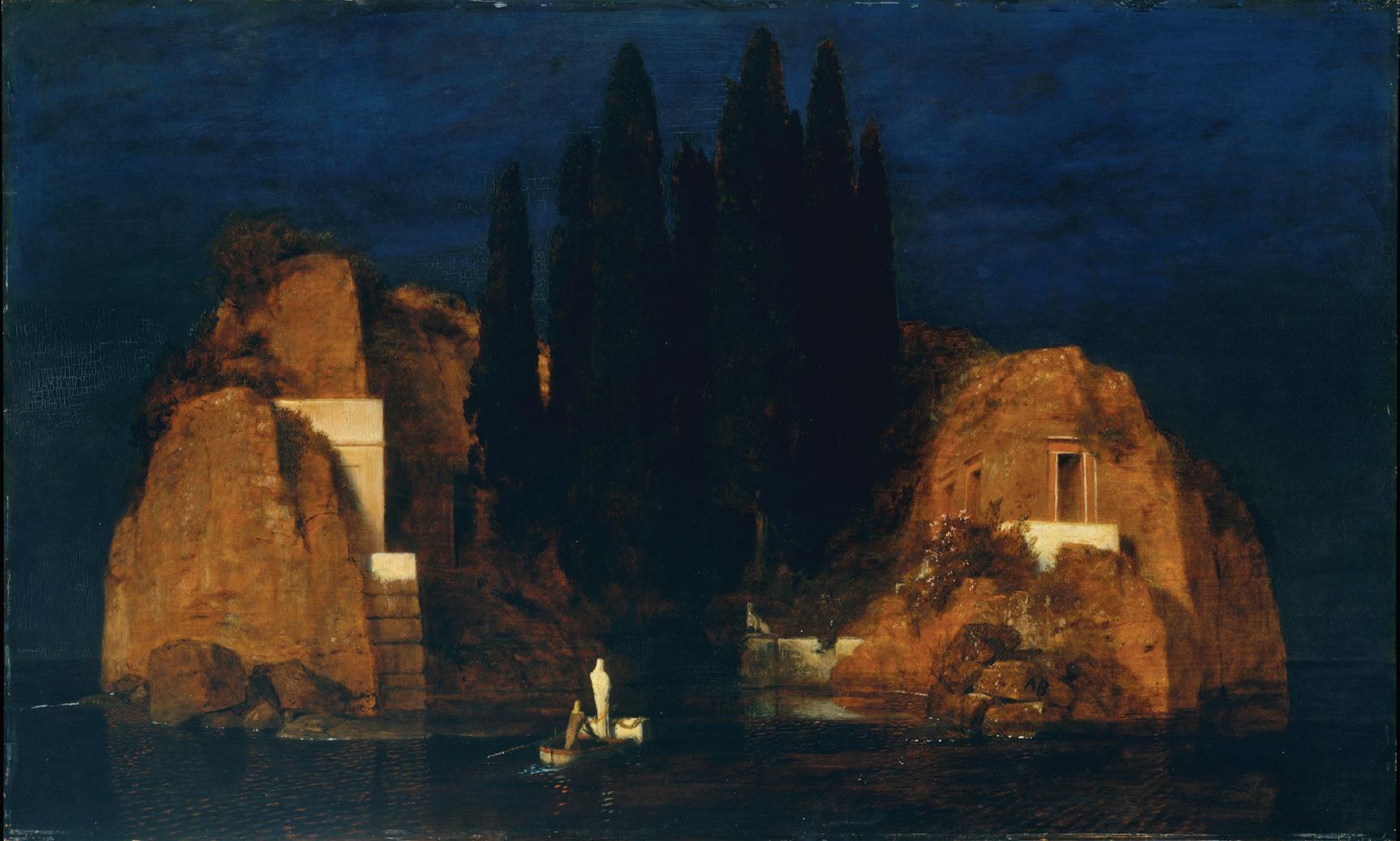
Rachmaninov first saw Arnold Böcklin’s popular painting, The Isle of the Dead, in a black-and-white reproduction in Paris in 1907. He was so haunted by this mysterious image, with its solitary island-bound boat bearing a coffin, that he began to write music almost at once, without even waiting to see the full-color original. When he later traveled to Leipzig to view one of the five different versions Böcklin painted of The Isle of the Dead, he said nothing could match his first impression—he even suggested that he might never have composed The Isle of the Dead had he seen the painting first. (The fourth of Böcklin’s canvases was destroyed in World War II. Another of the paintings belonged to Hitler for many years; it is now in the collection of the National Gallery of the State Museums of Berlin.)
Marie Berna, a young German widow, had asked Böcklin for a picture to dream by—“ein Bild zum Träumen.” The painting he sent her in 1880—and its sequels, each like a musical variation on a theme—was almost instantly recognized as a defining icon of late romanticism. For years, many artists fell under its spell—only four years after Rachmaninov, Max Reger composed another orchestral interpretation of the same scene. Rachmaninov could never adequately explain why he was so
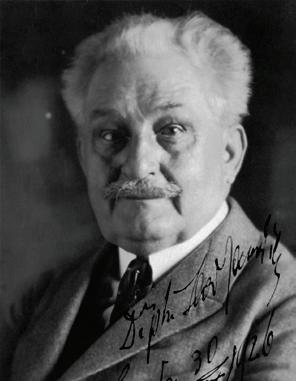
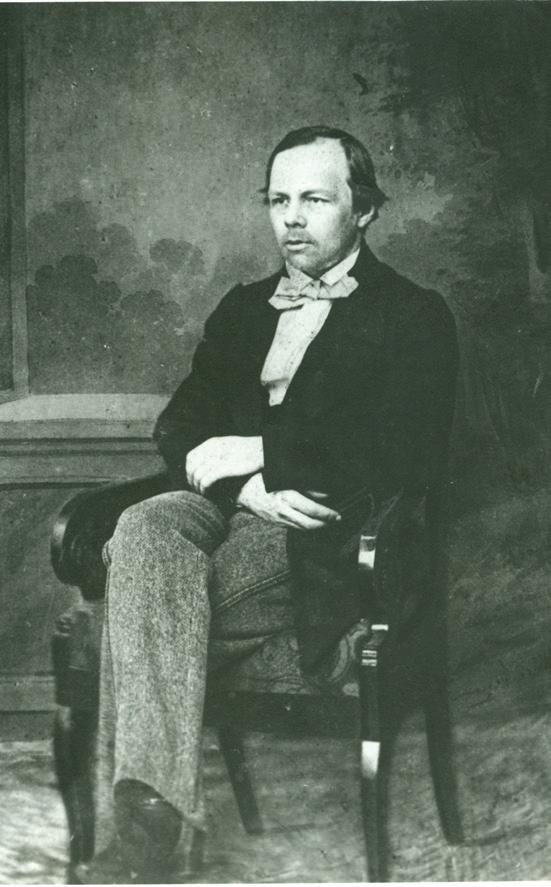
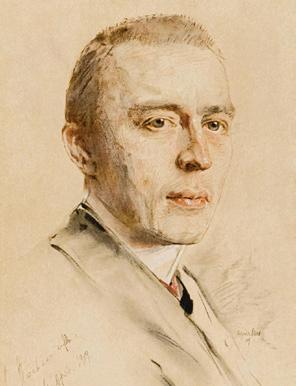
previous page, from top: Leoš Janáček, portrait, inscribed and signed, April 1926 | Russian author Fyodor Dostoyevsky (1821–1881) as he appeared in 1861, shortly after the publication of his fictionalized prison memoir, The House of the Dead. Omsk State Literary Museum, Russia. Photo by Fine Art Images/Heritage Images/Getty Images | this page: Sergei Rachmaninov, portrait in oil by Robert Sterl (1867–1932), 1909. Dresden, Germany | opposite page: Second version of Isle of the Dead, oil on panel, by Arnold Böcklin (1827–1901), commissioned by Marie Berna in 1880 as a memorial to her husband Georg von Berna (1836–1865). Metropolitan Museum of Art, New York City
COMPOSED
January–April 1909
FIRST PERFORMANCE
May 1, 1909; Moscow, Russia. The composer conducting
INSTRUMENTATION
3 flutes (3rd doubling piccolo), 2 oboes and english horn, 2 clarinets and bass clarinet, 2 bassoons and contrabassoon, 6 horns, 3 trumpets, 3 trombones, tuba, timpani, cymbals, bass drum, harp, strings
APPROXIMATE
PERFORMANCE TIME 19 minutes
FIRST CSO PERFORMANCES
December 3 and 4, 1909, Orchestra Hall. The composer conducting (U.S. premiere)
June 21, 2002, Ravinia Festival. William Eddins conducting
MOST RECENT
CSO PERFORMANCES
July 9, 2004, Ravinia Festival. Leonard Slatkin conducting
March 25, 26, 27, 28, and 30, 2010, Orchestra Hall. Vladimir Jurowski conducting (Beyond the Score, March 26 and 28)
CSO RECORDING
1957. Fritz Reiner conducting. RCA
moved by Böcklin’s image or how he translated it so spontaneously into music: “When it came, how it began—how can I say? It came up within me, was entertained, written down.”
Rachmaninov begins with the irregular movement of oars in the water. (Mahler’s Seventh Symphony, completed just four years earlier, also begins with the stroke of oars on a lake.) The opening is dark—just low strings, with timpani and harp at first—and mysterious. For a very long time, we move forward with little sense of destination, but with a growing urgency. (Tantalizing melodic fragments appear from time to time, like glimpses through the mist, and a haunting high violin theme takes wing at one point.) Finally, the island comes into sight, the music gathers force and direction, and at last we hear the Dies irae, the Gregorian chant from the Mass for the Dead—a motto of mortality that recurs often in Rachmaninov’s music. Then suddenly the music is suffused with life—urgent, passionate, and joyous. (Here Rachmaninov departs from the painting, although Böcklin did in fact paint a complementary Isle of Life two years after his last Isle of the Dead canvas.) But
the Dies irae rings out, and the music is again clouded in shadows. The ending is mostly still, and we are left where we began, with the sound of ceaseless rowing.
Rachmaninov conducted the U.S. premiere of his brand-new Isle of the Dead—just nine months after the world premiere in Moscow— when he made his debut with the Chicago Symphony Orchestra in December 1909. “Sergei Rachmaninoff was given an enthusiastic reception yesterday afternoon,” the Tribune reported. “A tall solemn man . . . who evinced neither curiosity nor worry, . . . he moved with deliberation to the conductor’s stand and without any fuss or pose raised the baton.” After intermission, he returned in his more familiar role as piano soloist, to perform his Second Piano Concerto with music director Frederick Stock conducting. Rachmaninov would return to the Orchestra seven more times over the years, eventually playing all four of his piano concertos as well as the Rhapsody on a Theme of Paganini and conducting his Third Symphony and The Bells. His final appearance here was in February 1943, the month before he died.
RICHARD STRAUSS
Born June 11, 1864; Munich, Germany
Died September 8, 1949; Garmisch, Germany
Four Last Songs
Strauss didn’t live to hear these songs performed, although in a sense it didn’t matter, for the lovingly remembered, long-since-faded soprano of his wife Pauline was the only voice he would have wanted to hear singing this music.
Richard Strauss and Pauline de Ahna made an unusually powerful, if often volatile, match. They met in 1887—she was twenty-five, he twenty-three—before either of their careers had taken off, and once they married, seven years later, they became the music world’s most celebrated couple, although his fame and success as a composer continued to soar while her days as a leading soprano would soon be over. The ups and downs of their long marriage were chronicled not only in the stories fondly recalled by friends and family, but also in Richard’s music itself, beginning with the full-length, not-always-flattering portrait of Pauline played by the solo violin in Ein Heldenleben in 1899, and climaxing, in 1924, when Richard turned one of their habitual marital spats into his opera, Intermezzo.
In the autumn of 1947, their marriage stronger than ever (inexplicably to many who had witnessed its daily storms) after fifty-three years in each other’s company, Strauss read a poem by Joseph Eichendorff that struck him like a thunderbolt. “Im Abendrot” tells of a couple at the end of their long lifetime together—hand in hand, as Eichendorff says—now facing death. Outwardly, Strauss brushed aside all thoughts of his—and Pauline’s—mortality with his characteristic dry wit. (A reporter in London, where Strauss went that fall to attend a festival of his music, asked the eighty-three-year-old composer of his future plans. “Oh,” Strauss said, without missing a beat, “to die.”) But the setting of “Im Abendrot” he began that year suggests how deeply he felt about a subject he couldn’t bring himself to address except in music.
COMPOSED
1947–48
FIRST PERFORMANCE
May 22, 1950; London, England
INSTRUMENTATION
soprano soloist, 3 flutes and 2 piccolos, 2 oboes and english horn, 2 clarinets and bass clarinet, 3 bassoons (3rd doubling contrabassoon), 4 horns, 3 trumpets, 3 trombones, tuba, harp, celesta, timpani, strings
APPROXIMATE PERFORMANCE TIME
25 minutes
FIRST CSO PERFORMANCES
October 28 and 29, 1954, Orchestra Hall. Elisabeth Schwarzkopf as soloist, Fritz Reiner conducting August 12, 1976, Ravinia Festival. Martina Arroyo as soloist, Lawrence Foster conducting
MOST RECENT
CSO PERFORMANCES
July 24, 2010, Ravinia Festival. Renée Fleming as soloist, Christoph Eschenbach conducting
December 6, 7, 8, and 11, 2018, Orchestra Hall. Erin Wall as soloist, Edward Gardner conducting
CSO RECORDING
1977. Lucia Popp as soloist, Sir Georg Solti conducting. Decca (video)
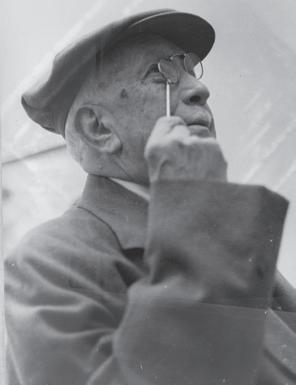
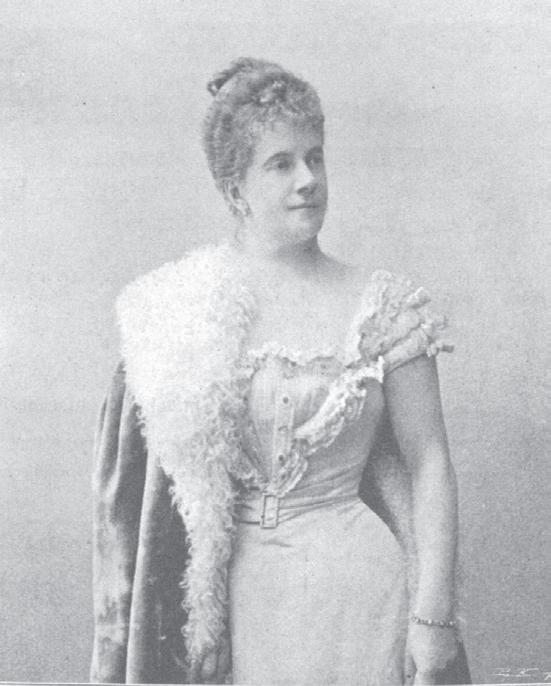
from top: Richard Strauss, photographed at Kunstmuseum Bern, Switzerland, studying an exhibit, March 1947. Photo by Keystone/Getty Images | Pauline Strauss, née de Ahna (1863–1950), soprano, wife of the composer. Sport & Salon: Illustrated Magazine for High Society, January 11, 1902
He and Pauline had been through so much together, from the dazzling early successes (the royalties from Salome alone built them the villa in Garmisch, where they lived out their days) to the public failure of his recent music and the fear and anxiety of the Hitler years, when the life of his own Jewish daughter-in-law was in jeopardy. By 1947, Strauss knew that their best times were over, and that the world he had once known and loved and—perhaps more than any composer of the twentieth century—conquered, was now almost unrecognizable. But he had no way of putting all that into music until an admirer gave him a book of poetry by Hermann Hesse, the 1946 recipient of the Nobel Prize for Literature. Strauss read Hesse’s poems not only with the thrill of discovery (Hesse wasn’t yet widely known, and far from the cult figure he would become), but also with the pain of recognition, for in these pages he saw himself and Pauline—hand in hand—facing their last days together. He immediately picked several poems to set to music. In the end, he wrote just three songs that, together with “Im Abendrot,” extend his farewell to life and to love. He worked on virtually nothing else during the summer of 1948, and when these songs were done, he found that he had little energy left.
The following May, Strauss and Pauline moved back to the Garmisch villa they had been forced to abandon at the height of the war. The night before his eighty-fifth birthday, he somehow found the strength to travel to Munich for the dress rehearsal of Der Rosenkavalier, which had provided one of the greatest triumphs of his career thirty-seven years before. Strauss asked to conduct brief portions of the opera—a rather sad and dispiriting stunt that was captured on film, to the continuing detriment of his reputation as a great conductor.
In August, he had several mild heart attacks at his Garmisch home and began to fail quickly. Near the end, he is reported to have turned to his daughter-in-law Alice and said, “Dying is just as I composed it in Death and Transfiguration.” But that was a young man’s idea of death as a
great, transcendent experience—a spectacular ending provided for a blockbuster tone poem by its fearless and callow twenty-five-year-old composer. Sixty years later, Strauss was bedridden; Pauline had been in fragile health for some time. Despite his clever words, he couldn’t dictate his own final chapter. But Strauss had always clung to his myths. At the end of “Im Abendrot,” when Eichendorff wonders “Could that be death?,” Strauss changed das to dies, and, asking instead “Could this be death?,” he quotes the quiet, rising theme from his Death and Transfiguration.
In September, Strauss died at home in his sleep. Pauline died the following May, just nine days before the premiere of her husband’s—and, in the deepest sense, her—four last songs. They were immediately acclaimed as among the very finest of Strauss’s achievements—music for which his entire career was preparation. Little in his output can match the beauty and depth of these songs—from the transparency of the orchestral writing, with its burnished horn solos and shimmering birdsong, to the radiant soprano lines—rising on Lüften (skies), taking off in breathless flight at Vogelsang (birdsong), and—in one of the most unforgettable moments in music—soaring in phrases of pure rapture, to match the violin’s lofty melody, at Seele (soul).
A few last words. Since Strauss never dictated that these four songs were to be performed as a set, he indicated no particular order. At the premiere, they were sung neither in chronological order nor in the sequence that is now customary. It was Ernst Roth, the composer’s friend and publisher, and the dedicatee of “Im Abendrot,” who later established the performance order and provided the not-quite-accurate title that has stuck, Four Last Songs. In fact, we now know of a fifth song, written for voice and piano, “Malven,” that was composed later in 1948 for the soprano Maria Jeritza, who kept it hidden in her New York apartment until her death in 1986, when it was discovered among her papers. A few measures of sketches for yet another Hesse song were left unfinished on Strauss’s desk at his death.
FOUR LAST SONGS
Frühling
In dämmrigen Grüften träumte ich lang von deinen Bäumen und blauen Lüften, von deinem Duft und Vogelsang.
Nun liegst du erschlossen in Gleiss und Zier, von Licht übergossen wie ein Wunder vor mir.
Du kennst mich wieder, du lockst mich zart, es zittert durch all meine Glieder deine selige Gegenwart!
—Hermann Hesse
September
Der Garten trauert, Kühl sinkt in die Blumen der Regen. Der Sommer schauert still seinem Ende entgegen.
Golden tropft Blatt um Blatt nieder vom hohen Akazienbaum. Sommer lächelt erstaunt und matt in den sterbenden Gartentraum.
Lange noch bei den Rosen bleibt er stehn, sehnt sich nach Ruh. Langsam tut er die [großen] müdgewordnen Augen zu.
—Hermann Hesse
Spring
In somber shadows I dreamed long of your trees, your blue skies, of your fragrance, and the song of birds.
Now you lie revealed, glistening, adorned, bathed in light like a miracle before me.
You recognize me, you beckon gently; my limbs tremble with your blessed presence!
September
The garden grieves, the cool rain sinks into the flowers. The summer shudders and silently meets its end.
Leaf upon leaf drops golden from the tall acacia tree. Wondering, faintly, summer smiles in the dying garden’s dream.
Long by the roses she lingers, yearning for peace. Slowly she closes her wide wearied eyes.
Beim Schlafengehen
Nun der Tag mich müd gemacht, soll mein sehnliches Verlangen freundlich die gestirnte Nacht wie ein müdes Kind empfangen.
Hände, lasst von allem Tun, Stirn, vergiss du alles Denken, alle meine Sinne nun wollen sich in Schlummer senken.
Und die Seele, unbewacht, will in freien Flügen schweben, um im Zauberkreis der Nacht tief und tausendfach zu leben.
—Hermann Hesse
Im Abendrot
Wir sind durch Not und Freude gegangen Hand in Hand; vom Wandern ruhen wir [beide] nun überm stillen Land.
Rings sich die Täler neigen, es dunkelt schon die Luft, zwei Lerchen nur noch steigen nach träumend in den Duft.
Tritt her und lass sie schwirren, bald ist es Schlafenszeit, dass wir uns nicht verirren in dieser Einsamkeit.
O weiter, stiller Friede! So tief im Abendrot wie sind wir wandermüde— ist dies etwa der Tod?
—Joseph Eichendorff
Strauss omitted the words in brackets.
Going to Sleep
Now made tired by the day, so my ardent desire shall warmly greet the starry night like a tired child.
Hands, cease your doing, brow, forget all thought; all my senses now would sink into slumber.
And my soul, unguarded, would soar free in flight, to live life deep a thousandfold in night’s magic circle.
At Sunset
Through sorrow and joy we have walked hand in hand; now we are at rest from our journey above the silent land.
The valleys descend all about us, the sky grows dark; only two larks yet soar dreaming in the haze.
Draw close and let them flutter; soon it will be time to sleep; let us not lose our way in this solitude!
O boundless, silent peace! So deep in the sunset how weary we are of our journeying— can this be death?
RICHARD WAGNER
Born May 22, 1813; Leipzig, Germany
Died February 13, 1883; Venice, Italy
Prelude and Liebestod from Tristan and Isolde
On January 25, 1860, in Paris, Richard Wagner conducted a concert of his own music, including the prelude to Tristan and Isolde, for an audience that contained Berlioz, Meyerbeer, Gounod, and the poet Baudelaire, who often is said to have launched modern literature just as his contemporary Richard Wagner set the stage for modern music with the first notes of Tristan and Isolde.
Baudelaire was captivated by Wagner’s music that evening and wrote to the composer “of being engulfed, overcome, [with] a really voluptuous sensual pleasure, like rising into the air or being rocked on the sea.” The press, on the other hand, had a
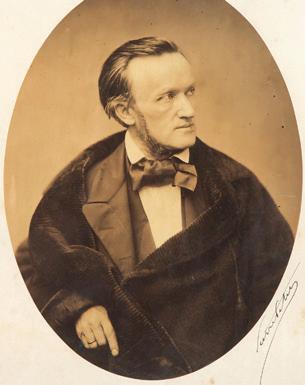
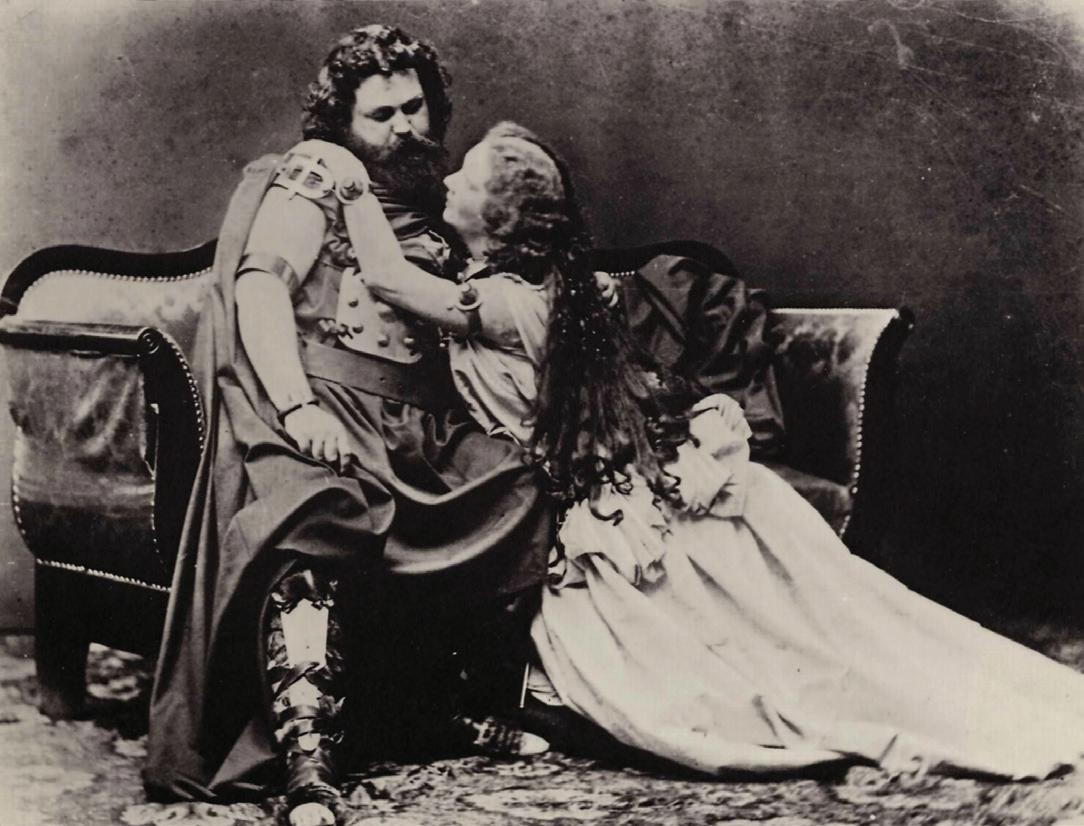
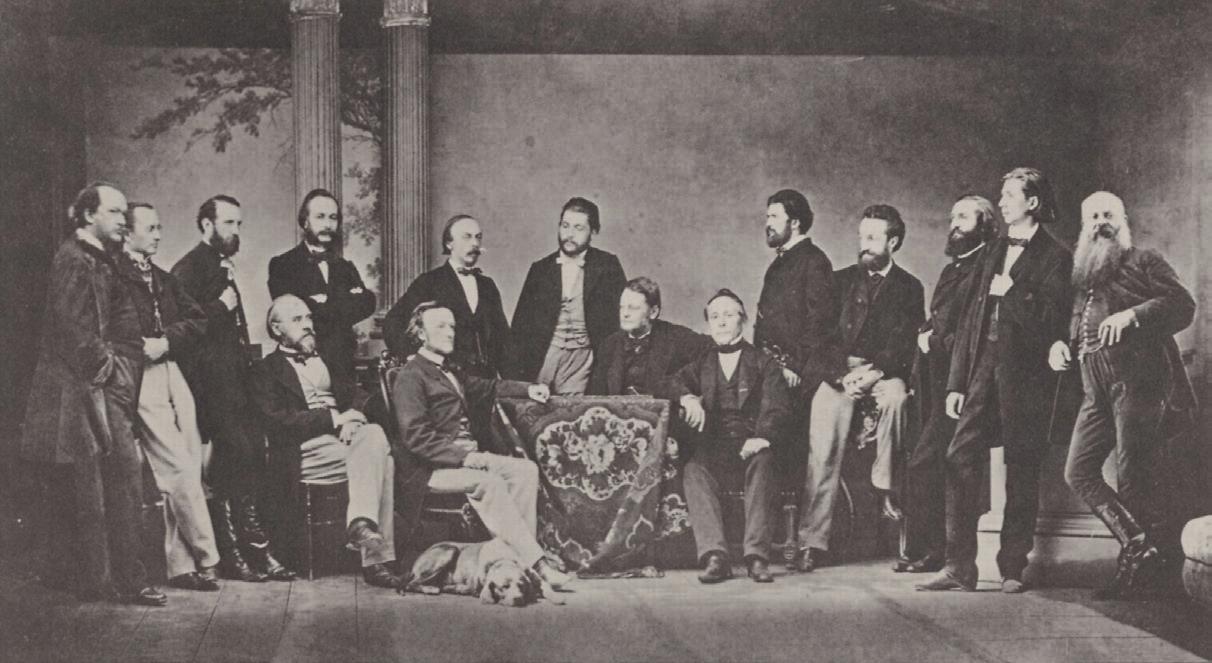
this page, from top: Richard Wagner, photographed by Pierre Petit (1831–1909), 1861. Paris, France, during the premiere of Tannhäuser | Ludwig (1836–1865) and Malwine Schnorr von Carolsfeld (ca. 1829–1906) in the title roles of the original production of Tristan and Isolde, Munich, 1865. Photograph by Joseph Albert (1825–1886) | opposite page: Wagner, seated second from left, surrounded by friends and admirers shortly before the Munich premiere of Tristan and Isolde on June 10, 1865. Photograph by Joseph Albert
COMPOSED
October 1857–August 1859 (opera)
FIRST PERFORMANCE
March 12, 1859; Prague, Bohemia (prelude only)
June 10, 1865; Munich, Germany (opera)
INSTRUMENTATION
3 flutes (3rd doubling piccolo), 2 oboes and english horn, 2 clarinets and bass clarinet, 3 bassoons, 4 horns, 3 trumpets, 3 trombones, tuba, timpani, harp, strings
APPROXIMATE PERFORMANCE TIME 18 minutes
FIRST CSO PERFORMANCES
December 18 and 19, 1891, Auditorium Theatre. Theodore Thomas conducting
July 5, 1936, Ravinia Festival. Rudolph Ganz conducting
MOST RECENT
CSO PERFORMANCES
August 11, 2000, Ravinia Festival. Deborah Voigt as soloist, Christoph Eschenbach conducting
November 10, 11, and 12, 2016, Orchestra Hall. Jaap van Zweden conducting
December 7, 8, and 9, 2023, Orchestra Hall. Mikko Franck conducting (Prelude)
CSO RECORDINGS
1947. Artur Rodzinski conducting. RCA
1958. Fritz Reiner conducting. CSO (From the Archives, vol. 3: To Honor the 100th Anniversary of the Birth of Fritz Reiner)
1966. Rafael Kubelík conducting. CSO (From the Archives, vol. 16: A Tribute to Rafael Kubelík II)
1976. Sir Georg Solti conducting. London (video)
1977. Sir Georg Solti conducting. London
1994. Daniel Barenboim conducting. Teldec
field day ridiculing music that was obviously well beyond their understanding, and even Berlioz, whose perception and brilliance as a critic nearly rivaled his vision and genius as a composer, had to admit that he could make no sense whatever of the prelude.
The Paris concert, like those in Zurich in 1853, and others still to come in Vienna, Munich, and London, was devised to raise money and consciousness—to further the Wagner cause. Wagner willingly played not only the overtures and preludes to his operas, but also salient excerpts (without voices) from the music dramas themselves in order to pay his bills. Even as late as 1877—Wagner was sixty-four and famous beyond measure for Tristan and his new Ring cycle—he agreed to conduct eight entire evenings of fragments from his operas, recognizing that even musical gods can be forced to file Chapter Eleven.
The performance history of the prelude to Tristan and Isolde in concert is older than the opera itself. The prelude was first performed in Prague in March 1859—more than six years before the premiere of the opera—under the baton of Hans von Bülow, who had already dedicated much of his talent and energy to Wagner and would soon donate his wife Cosima as well. Wagner also conducted the prelude, along with the music that would become its regular concert companion, the Liebestod—the final scene of the opera—before the Munich premiere. (Theodore Thomas, who would later found the Chicago Symphony Orchestra, conducted the first U.S. performance of the Prelude together
with the Liebestod—or finale, as it was called then—on February 10, 1866, in New York.)
Never before, and arguably not since, have so few pages of music had such impact. As a measure of their force, consider that even a fellow pioneer like Berlioz, whose own Symphonie fantastique had unsettled the musical world thirty years earlier, could not come to terms with this daring and unconventional work. Berlioz wrote of “. . . a slow piece, beginning pianissimo, rising gradually to fortissimo, and then subsiding into the quiet of the opening, with no other theme than a sort of chromatic moan, but full of dissonances.”
His words are as unfeeling, cautious, and noncommittal as those of many a critic writing today about tough and unusual new music. In 1860, Tristan and Isolde, of course, was tough and unusual new music, and, although it gradually lost its shock appeal, it still carries an emotional force virtually unmatched in music. Berlioz was right to point out the chromaticism and dissonance, for Wagner’s treatment of both was startlingly new. The now-famous “Tristan chord”—the first harmony in the prelude—with its heartrending unresolved dissonance, instantly opened new harmonic horizons for composers, not as an isolated event—similar chords can be found in Mozart, Liszt, and even in music by Bülow—but in the way it unlocks a web of harmonic tensions that will not, in the complete opera, be resolved for hours, not in fact until the final cadences of the Liebestod. That music— sung in the opera by Isolde but often played in the concert hall without a soprano, as it is this week—picks up and completes the interrupted Liebesnacht, or “night of love” from the second act of the opera; now Tristan lies dead in Isolde’s arms. The Liebestod brings not only resolution but, in Wagner’s words, transfiguration.
Phillip Huscher has been the program annotator for the Chicago Symphony Orchestra since 1987.
PROFILES
Jakub Hrůša Conductor
FIRST CSO PERFORMANCES
May 18, 19, and 20, 2017, Orchestra Hall. Smetana’s Má vlast
MOST RECENT CSO PERFORMANCES
March 12, 13, and 14, 2026, Orchestra Hall. Beethoven’s Piano Concerto no. 3 with Leif Ove Andsnes, Schumann’s Symphony no. 1, and selections from Smetana’s The Bartered Bride
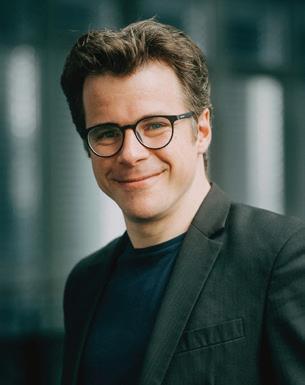
Born in the Czech Republic, Jakub Hrůša is chief conductor of the Bamberg Symphony, music director of the Royal Opera House (London), and chief conductor and music director designate of the Czech Philharmonic from 2028. He is Musical America’s Conductor of the Year 2026 and the International Classical Music Awards (ICMA) 2026 Artist of the Year.
He performs regularly with the world’s greatest orchestras, including the Vienna and Berlin philharmonics, Bavarian Radio Symphony Orchestra, Munich Philharmonic, Leipzig Gewandhaus Orchestra, Staatskapelle Dresden, Tonhalle-Orchester Zürich, Lucerne Festival Orchestra, Royal Concertgebouw Orchestra Amsterdam, Orchestre de Paris, Orchestre Philharmonique de Radio France in Paris, NHK Symphony Tokyo, Mahler Chamber Orchestra, Cleveland Orchestra, New York Philharmonic, and the Boston Symphony Orchestra.
He has led opera productions for the Lyric Opera of Chicago (Jenůfa), Salzburg Festival (Kát’a Kabanová with the Vienna Philharmonic), Vienna State Opera (The Makropulos Case), Royal Opera House (Jenůfa, Carmen, Lohengrin), Opéra National de Paris (Rusalka), and Zurich Opera (The Makropulos Case). He also has been a regular guest at the Glyndebourne Festival, and he was music director of Glyndebourne On Tour for three years.
His relationships with leading soloists include collaborations with such artists as Behzod
Abduraimov, Piotr Anderszewski, Leif Ove Andsnes, Emanuel Ax, Lisa Batiashvili, Joshua Bell, Renaud Capuçon, Gautier Capuçon, Julia Fischer, Kirill Gerstein, Hélène Grimaud, Augustin Hadelich, Hilary Hahn, Janine Jansen, Sheku Kanneh-Mason, Leonidas Kavakos, Evgeny Kissin, Lang Lang, Anne-Sophie Mutter, Beatrice Rana, Nikolaj Szeps-Znaider, Antoine Tamestit, Jean-Yves Thibaudet, Daniil Trifonov, Mitsuko Uchida, Yuja Wang, Alisa Weilerstein, and Frank Peter Zimmermann.
As a recording artist, he has received numerous awards and nominations. He was a double winner at the 2024 Gramophone Awards for his recordings of Britten’s Violin Concerto with Isabelle Faust and the Bavarian Radio Symphony Orchestra and Kát’a Kabanová with the Vienna Philharmonic at the Salzburg Festival. With the Bamberg Symphony, he received the ICMA Prize for Symphonic Music in both 2022 and 2023 for Rott’s Symphony no. 1 and Bruckner’s Symphony no. 4. He was awarded the German Record Critics’ Prize for Mahler’s Symphony no. 4, and in 2021 his recording of violin concertos by Martinů and Bartók with Frank Peter Zimmermann was nominated for BBC Music Magazine and Gramophone awards and Dvořák’s Violin Concerto with the Bavarian Radio Symphony and Augustin Hadelich was nominated for a Grammy Award. His recordings of piano concertos by Dvořák and Martinů with Ivo Kahánek and the Bamberg Symphony and Vanessa from Glyndebourne both won BBC Music Magazine awards in 2020.
Jakub Hrůša is an honorary member of the Royal Academy of Music in London. In 2025 he was awarded the Medal of Merit in the Field of Arts by the president of the Czech Republic, and in 2024 he received the Silver Medal of the President of the Czech Senate, its highest award. He was the inaugural recipient of the Sir Charles Mackerras Prize and holds the Bavarian Order of Merit, the Bavarian Culture Prize, the Czech Academy of Classical Music’s Antonín Dvořák Prize, and the Bavarian State Prize for Music with the Bamberg Symphony.
PHOTO BY MARIAN LENHARD
Corinne Winters Soprano
These concerts mark Corinne Winters’s debut with the Chicago Symphony Orchestra.
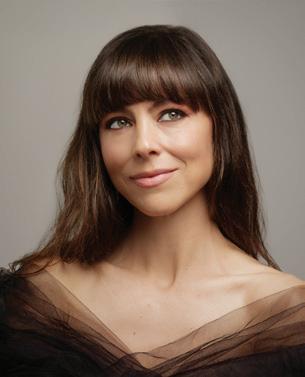
Internationally acclaimed soprano Corinne Winters, named Best Female Singer of 2024 by the Oper! Awards, has sung over thirty leading roles in major opera houses around the world.
Winters’s 2025–26 opera season features house debuts with Houston Grand Opera as the heroines in Puccini’s Il trittico, Staatsoper Berlin as Cio-Cio-San in Madama Butterfly, and Maggio Musicale Fiorentino as Nedda in Pagliacci, in addition to Tiroler Festspiele Erl for a new production of Suor Angelica by Deborah Warner in July 2026. She was Tatiana in Eugene Onegin at the Palau de les Arts Reina Sofía in Valencia in January 2026 and returns to the Grand Théâtre de Genève in Barbora Horáková Joly’s new production of Madama Butterfly.
In concert, Winters began her season at the Slovak National Theatre in a gala honoring legendary soprano Gabriela Beňačková with act 2 of Jenůfa, which she later performs with the Bamberg Symphony under the baton of Jakub Hrůša; Orchestra dell’Accademia Nazionale di Santa Cecilia in Rome in Strauss’s final scene from Salome conducted by Daniel Harding; and the Munich Philharmonic in Strauss’s Four Last Songs under Hrůša. She also sings arias and duets with tenor Xabier Anduaga for Gstaad Music Festival and appears in recital with pianist Simon Lepper at the Grand Théâtre de Genève. Recording projects include the title role in Esther, a rediscovered work by Ukrainian composer Thomas de Hartmann with the
Bournemouth Symphony and Kirill Karabits for the Pentatone label; and duets by Verdi with tenor Charles Castronovo and the Kaunas City Symphony Orchestra and Constantine Orbelian for Delos Productions.
Her Salzburg Festival debut in Barrie Kosky’s production of Káťa Kabanová garnered international acclaim, including an International Classical Music Award for Best Opera DVD and a Gramophone Award for Best Opera Recording. Other recent opera highlights include Mimì in La bohème at the Metropolitan Opera; Jenůfa at the Royal Opera House (London); and title roles in Iphigénie en Aulide and Iphigénie en Tauride at the Aix-en-Provence Festival, which won Best New Production at the 2024 Opera Awards.
Recent concert performances include Janáček’s Glagolitic Mass with the Czech Philharmonic for the BBC Proms and the Dvořák Prague Festival, Strauss’s Four Last Songs with the Bamberg Symphony at the Vienna Musikverein, Dvořák’s Stabat mater with the Berlin Philharmonic, and Dvořák’s cantata The Spectre’s Bride with the Orchestra dell’Accademia Nazionale di Santa Cecilia in Rome, all with Hrůša; the title role in Puccini’s Manon Lescaut with Washington Concert Opera; and a Slavic opera-scenes gala with tenor Pavel Černoch for Smetana’s Litomyšl Opera Festival.
Corinne Winters earned a master’s degree in vocal performance from the Peabody Conservatory and a bachelor’s degree from Towson University in Maryland before serving as a resident artist at the Academy of Vocal Arts in Philadelphia. As a master teacher and career mentor, she shares her passion for the craft with such organizations as Teatro dell’Opera Rome’s Fabbrica Young Artist Program, YoungArts Miami, National Student Opera Society UK, her alma maters Towson University and the Peabody Conservatory, and her private voice studio.
PHOTO © LILIYA NAMISNYK
The Chicago Symphony Orchestra—consistently hailed as one of the world’s best—marks its 135th season in 2025–26. The ensemble’s history began in 1889, when Theodore Thomas, the leading conductor in America and a recognized music pioneer, was invited by Chicago businessman Charles Norman Fay to establish a symphony orchestra. Thomas’s aim to build a permanent orchestra of the highest quality was realized at the first concerts in October 1891 in the Auditorium Theatre. Thomas served as music director until his death in January 1905, just three weeks after the dedication of Orchestra Hall, the Orchestra’s permanent home designed by Daniel Burnham.
Frederick Stock, recruited by Thomas to the viola section in 1895, became assistant conductor in 1899 and succeeded the Orchestra’s founder. His tenure lasted thirty-seven years, from 1905 to 1942—the longest of the Orchestra’s music directors. Stock founded the Civic Orchestra of Chicago— the first training orchestra in the U.S. affiliated with a major orchestra—in 1919, established youth auditions, organized the first subscription concerts especially for children, and began a series of popular concerts.
Three conductors headed the Orchestra during the following decade: Désiré Defauw was music director from 1943 to 1947, Artur Rodziński in 1947–48, and Rafael Kubelík from 1950 to 1953. The next ten years belonged to Fritz Reiner, whose recordings with the CSO are still considered hallmarks. Reiner invited Margaret Hillis to form the Chicago Symphony Chorus in 1957. For five seasons from 1963 to 1968, Jean Martinon held the position of music director.
Sir Georg Solti, the Orchestra’s eighth music director, served from 1969 until 1991. His arrival launched one of the most successful musical partnerships of our time. The CSO made its first overseas tour to Europe in 1971 under his direction and released numerous award-winning recordings. Beginning in 1991, Solti held the title of music director laureate and returned to conduct the Orchestra each season until his death in September 1997.
Daniel Barenboim became ninth music director in 1991, a position he held until 2006. His tenure was distinguished by the opening of Symphony Center in 1997, appearances with the Orchestra in the dual role of pianist and conductor, and twenty-one international tours. Appointed by Barenboim in 1994 as the Chorus’s second director, Duain Wolfe served until his retirement in 2022.
In 2010, Riccardo Muti became the Orchestra’s tenth music director. During his tenure, the Orchestra deepened its engagement with the Chicago community, nurtured its legacy while supporting a new generation of musicians and composers, and collaborated with visionary artists. In September 2023, Muti became music director emeritus for life.
In April 2024, Finnish conductor Klaus Mäkelä was announced as the Orchestra’s eleventh music director and will begin an initial five-year tenure as Zell Music Director in September 2027. In July 2025, Donald Palumbo became the third director of the Chicago Symphony Chorus.
Carlo Maria Giulini was named the Orchestra’s first principal guest conductor in 1969, serving until 1972; Claudio Abbado held the position from 1982 to 1985. Pierre Boulez was appointed as principal guest conductor in 1995 and was named Helen Regenstein Conductor Emeritus in 2006, a position he held until his death in January 2016. From 2006 to 2010, Bernard Haitink was the Orchestra’s first principal conductor.
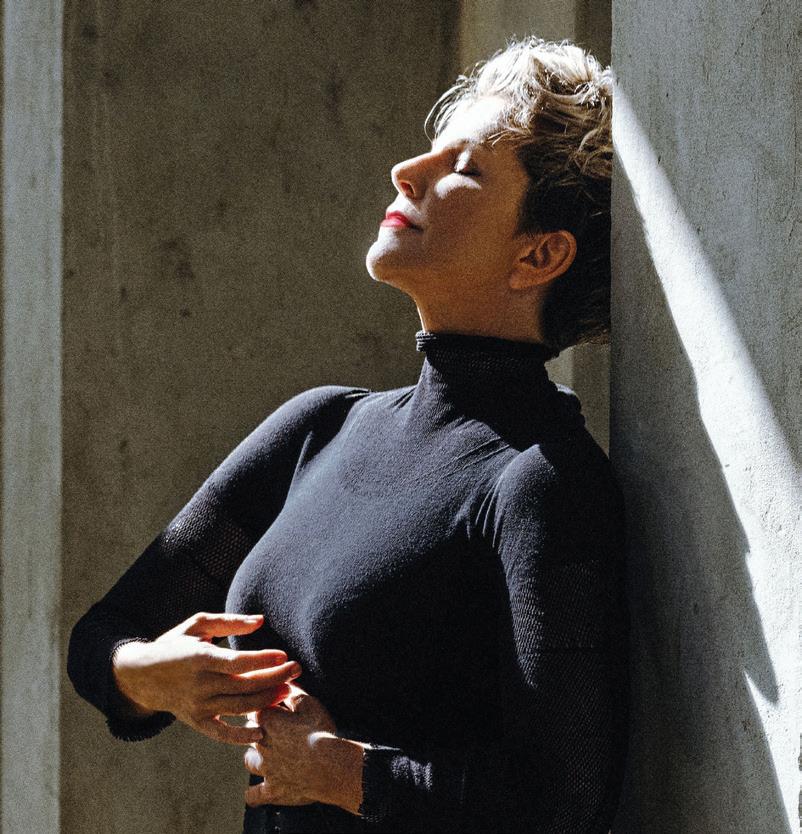
Mezzo-soprano Joyce DiDonato is the CSO’s Artist-in-Residence for the 2025–26 season.
The Orchestra first performed at Ravinia Park in 1905 and appeared frequently through August 1931, after which the park was closed for most of the Great Depression. In August 1936, the Orchestra helped to inaugurate the first season of the Ravinia Festival, and it has been in residence nearly every summer since.
Since 1916, recording has been a significant part of the Orchestra’s activities. Recordings by the Chicago Symphony Orchestra and Chorus— including recent releases on CSO Resound, the Orchestra’s recording label launched in 2007— have earned sixty-five Grammy awards from the Recording Academy.
Chicago Symphony Orchestra
Klaus Mäkelä Zell Music Director Designate
Joyce DiDonato Artist-in-Residence
VIOLINS
Robert Chen Concertmaster
The Louis C. Sudler Chair, endowed by an anonymous benefactor
Stephanie Jeong § Associate Concertmaster
The Cathy and Bill Osborn Chair
David Taylor*
Assistant Concertmaster
The Ling Z. and Michael C.
Markovitz Chair
Yuan-Qing Yu* Assistant Concertmaster
So Young Bae
Cornelius Chiu
Gina DiBello
Kozue Funakoshi
Russell Hershow
Qing Hou
Gabriela Lara
Matous Michal
Simon Michal
Sando Shia
Susan Synnestvedt
Rong-Yan Tang
Baird Dodge Principal
Danny Yehun Jin
Assistant Principal
Lei Hou
Ni Mei
Hermine Gagné
Rachel Goldstein
Mihaela Ionescu
Wendy Koons Meir
Ronald Satkiewicz ‡
Florence Schwartz
VIOLAS
Teng Li Principal
The Paul Hindemith Principal Viola Chair
Catherine Brubaker
Youming Chen
Sunghee Choi
Paolo Dara
Wei-Ting Kuo
Danny Lai
Weijing Michal
Diane Mues
Lawrence Neuman
Max Raimi
CELLOS
John Sharp Principal
The Eloise W. Martin Chair
Kenneth Olsen
Assistant Principal
The Adele Gidwitz Chair
Karen Basrak
The Joseph A. and Cecile Renaud Gorno Chair
Richard Hirschl
Olivia Jakyoung Huh
Daniel Katz
Katinka Kleijn
Brant Taylor
The Ann Blickensderfer and Roger Blickensderfer Chair
BASSES
Alexander Hanna Principal
The David and Mary Winton
Green Principal Bass Chair
Alexander Horton
Assistant Principal
Daniel Carson
Ian Hallas
Robert Kassinger
Mark Kraemer
Stephen Lester
Bradley Opland
Andrew Sommer
FLUTES
Emma Gerstein
Jennifer Gunn
PICCOLO
Jennifer Gunn
The Dora and John
Aalbregtse Piccolo Chair
OBOES
William Welter Principal
Lora Schaefer
Assistant Principal
The Gilchrist Foundation, Jocelyn Gilchrist Chair
Scott Hostetler
ENGLISH HORN
Scott Hostetler
Riccardo Muti Music Director Emeritus for Life
CLARINETS
Stephen Williamson Principal
John Bruce Yeh
Assistant Principal
The Governing
Members Chair
Gregory Smith
E-FLAT CLARINET
John Bruce Yeh
BASSOONS
Keith Buncke Principal
William Buchman
Assistant Principal
Miles Maner
HORNS
Mark Almond Principal
James Smelser
David Griffin
Oto Carrillo
Susanna Gaunt
Daniel Gingrich ‡
TRUMPETS
Esteban Batallán Principal
The Adolph Herseth
Principal Trumpet Chair, endowed by an anonymous benefactor
John Hagstrom
The Bleck Family Chair
Tage Larsen
TROMBONES
Timothy Higgins Principal
The Lisa and Paul Wiggin
Principal Trombone Chair
Michael Mulcahy
Charles Vernon
BASS TROMBONE
Charles Vernon
TUBA
Gene Pokorny Principal
The Arnold Jacobs Principal Tuba Chair, endowed by Christine Querfeld
* Assistant concertmasters are listed by seniority. ‡ On sabbatical § On leave
The CSO’s music director position is endowed in perpetuity by a generous gift from Zell Family Foundation. The Louise H. Benton Wagner and Erika and Dietrich M. Gross Principal Flute chairs are currently unoccupied.
TIMPANI
David Herbert Principal
The Clinton Family Fund Chair
Vadim Karpinos
Assistant Principal
PERCUSSION
Cynthia Yeh Principal Chair sponsored by an anonymous benefactor
Patricia Dash § Vadim Karpinos
LIBRARIANS
Justin Vibbard Principal
Carole Keller
Mark Swanson
CSO FELLOWS
Ariel Seunghyun Lee Violin
Jesús Linárez Violin
The Michael and Kathleen Elliott Fellow
ORCHESTRA PERSONNEL
John Deverman Director
Anne MacQuarrie Manager, CSO Auditions and Orchestra Personnel
STAGE TECHNICIANS
Christopher Lewis
Stage Manager
Blair Carlson
Paul Christopher
Chris Grannen
Ryan Hartge
Peter Landry
Joshua Mondie
The Chicago Symphony Orchestra string sections utilize revolving seating. Players behind the first desk (first two desks in the violins) change seats systematically every two weeks and are listed alphabetically. Section percussionists also are listed alphabetically.
Discover more about the musicians, concerts, and generous supporters of the Chicago Symphony Orchestra Association online, at cso.org.
Find articles and program notes, listen to CSOradio, and watch CSOtv at Experience CSO.
cso.org/experience
Get involved with our many volunteer and affiliate groups.
cso.org/getinvolved
Connect with us on social @chicagosymphony
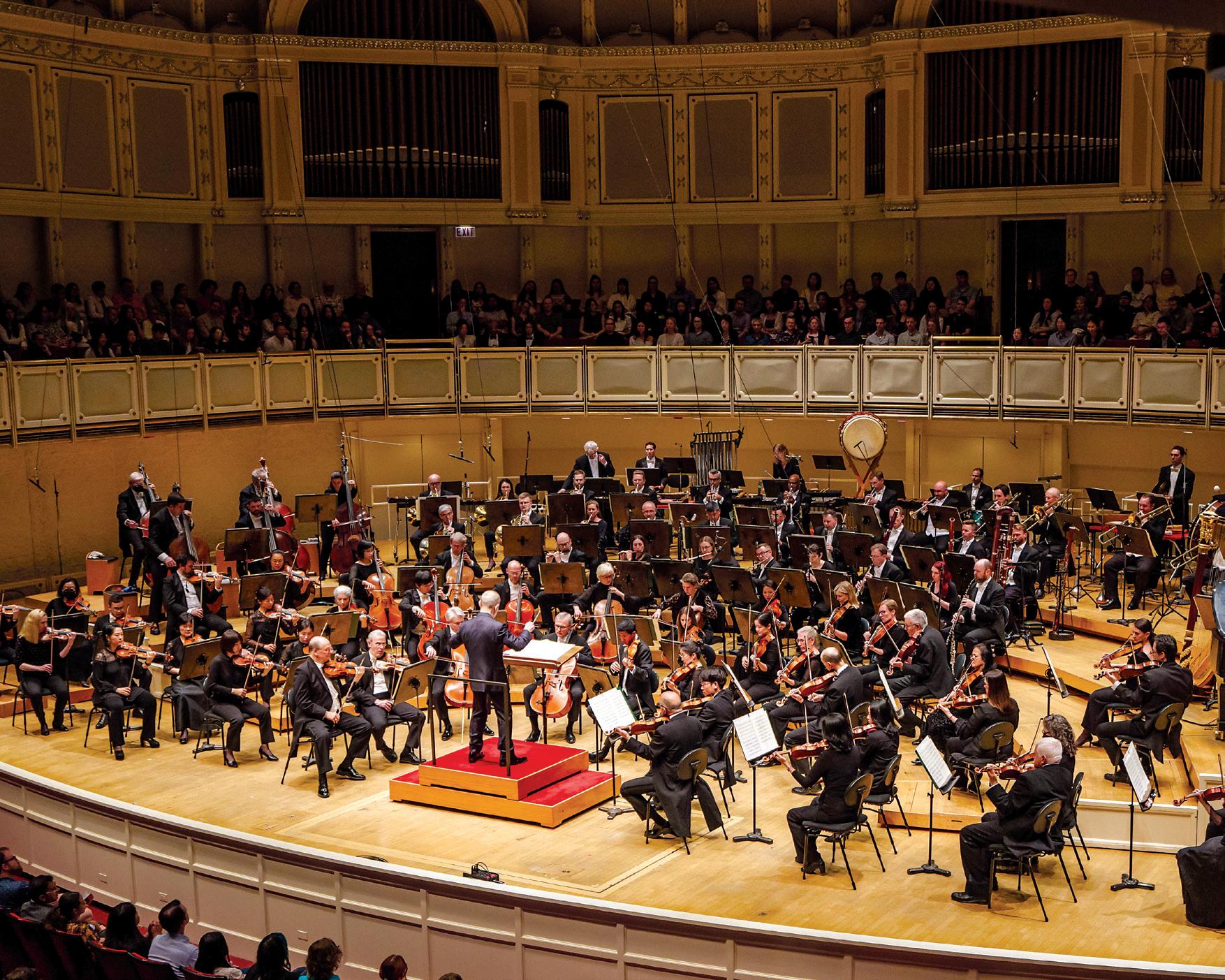
Conductor Joe Hisaishi with the CSO, June 2024; CSO Artist-in-Residence Joyce DiDonato
Chicago Symphony Orchestra Association Board of Trustees
OFFICERS
Mary Louise Gorno Chair
Chester A. Gougis Vice Chair
Steven Shebik Vice Chair
Helen Zell Vice Chair
Renée Metcalf Treasurer
Jeff Alexander President
Kristine Stassen Secretary of the Board
Stacie M. Frank Assistant Treasurer
Dale Hedding Vice President for Development
Chicago Symphony Orchestra Association Administration
SENIOR LEADERSHIP
Jeff Alexander President
Stacie M. Frank Vice President & Chief Financial Officer, Finance and Administration
Dale Hedding Vice President, Development
Ryan Lewis Vice President, Sales and Marketing
Vanessa Moss Vice President, Orchestra and Building Operations
Cristina Rocca Vice President, Artistic Administration
The Richard and Mary L. Gray Chair
Eileen Chambers Director, Institutional Communications
Jonathan McCormick Managing Director, Negaunee Music Institute at the CSO
Visit cso.org/csoa to view a complete listing of the CSOA Board of Trustees and Administration.
For complete listings of our generous supporters, please visit the Richard and Helen Thomas Donor Gallery.
cso.org/donorgallery