Program Book - Sibelius 2 & Tüür Accordion Concerto
25 26 SEASON
ONE HUNDRED THIRTY-FIFTH SEASON
CHICAGO SYMPHONY ORCHESTRA
KLAUS MÄKELÄ Zell Music Director Designate | RICCARDO MUTI Music Director Emeritus for Life
Thursday, April 2, 2026, at 7:30 Friday, April 3, 2026, at 1:30 Saturday, April 4, 2026, at 7:30
Paavo Järvi Conductor Ksenija Sidorova Accordion
BRAHMS Variations on a Theme by Haydn, Op. 56a
TÜÜR Prophecy for Accordion and Orchestra
First Chicago Symphony Orchestra performances KSENIJA SIDOROVA
INTERMISSION
SIBELIUS Symphony No. 2 in D Major, Op. 43 Allegretto
Andante, ma rubato
Vivacissimo—
Finale: Allegro moderato
These concerts are generously sponsored by United Airlines. The appearance of Paavo Järvi is made possible by the Juli Plant Grainger Fund for Artistic Excellence. The Chicago Symphony Orchestra Association acknowledges support from the Illinois Arts Council.
The Chicago Symphony Orchestra thanks United Airlines for sponsoring these performances.
JOHANNES BRAHMS
Born May 7, 1833; Hamburg, Germany
Died April 3, 1897; Vienna, Austria
Variations on a Theme by Haydn, Op. 56a
We now know that Haydn had nothing to do with these magnificent variations. Brahms didn’t realize that, although his achievement of turning an obscure tune into one of the most beloved themes in music is surely more significant than its pedigree. Brahms’s friend Carl Ferdinand Pohl, the author of an important early biography of Joseph Haydn, first showed Brahms the theme he would later make famous. Brahms had always been interested in older music, and he studied the six recently discovered wind serenades Pohl attributed to Haydn with an unusually educated eye. The second movement of one, in B-flat major, particularly attracted him. He wrote it out and filed it under “copies of outstanding masterpieces of the sixteenth–eighteenth centuries for study purposes” that he had been compiling for years. Brahms wrote the words “Chorale Saint Antoni” next to the theme.
In May 1873, Brahms started to compose a set of variations on the Saint Anthony theme. Although historians suspect that he was planning an orchestral work from the start, Brahms wrote his variations for two pianos. On August 20, he and Clara Schumann played through the work together. (Brahms often offered Clara sneak previews of his new works; he would send her a manuscript in the mail, the ink scarcely dry, or invite her to read the music at the piano with him, valuing her opinion as well as her company, if not the intimacy of a shared piano bench. The nature of their relationship after the death of Clara’s husband Robert in 1856 still invites speculation.) Sometime that summer, Brahms also began an orchestral version of these variations and sent the finished score to his publisher Simrock on October 4. The work was performed on November 2 by
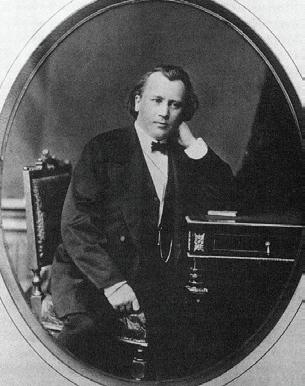
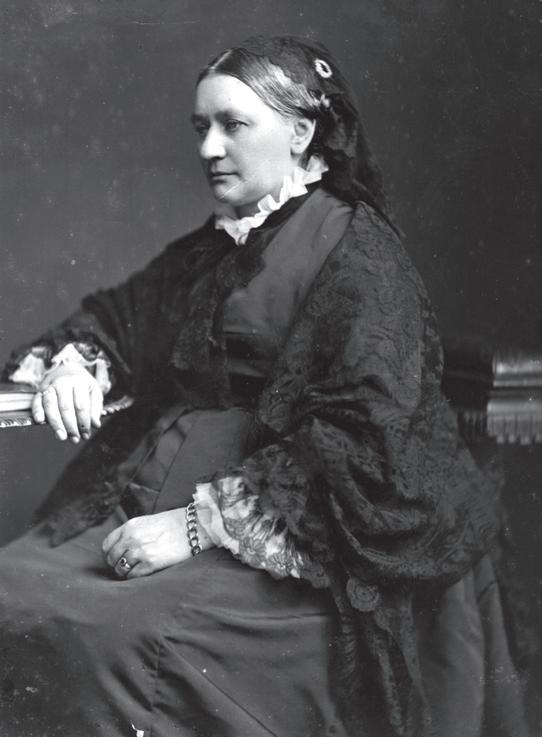
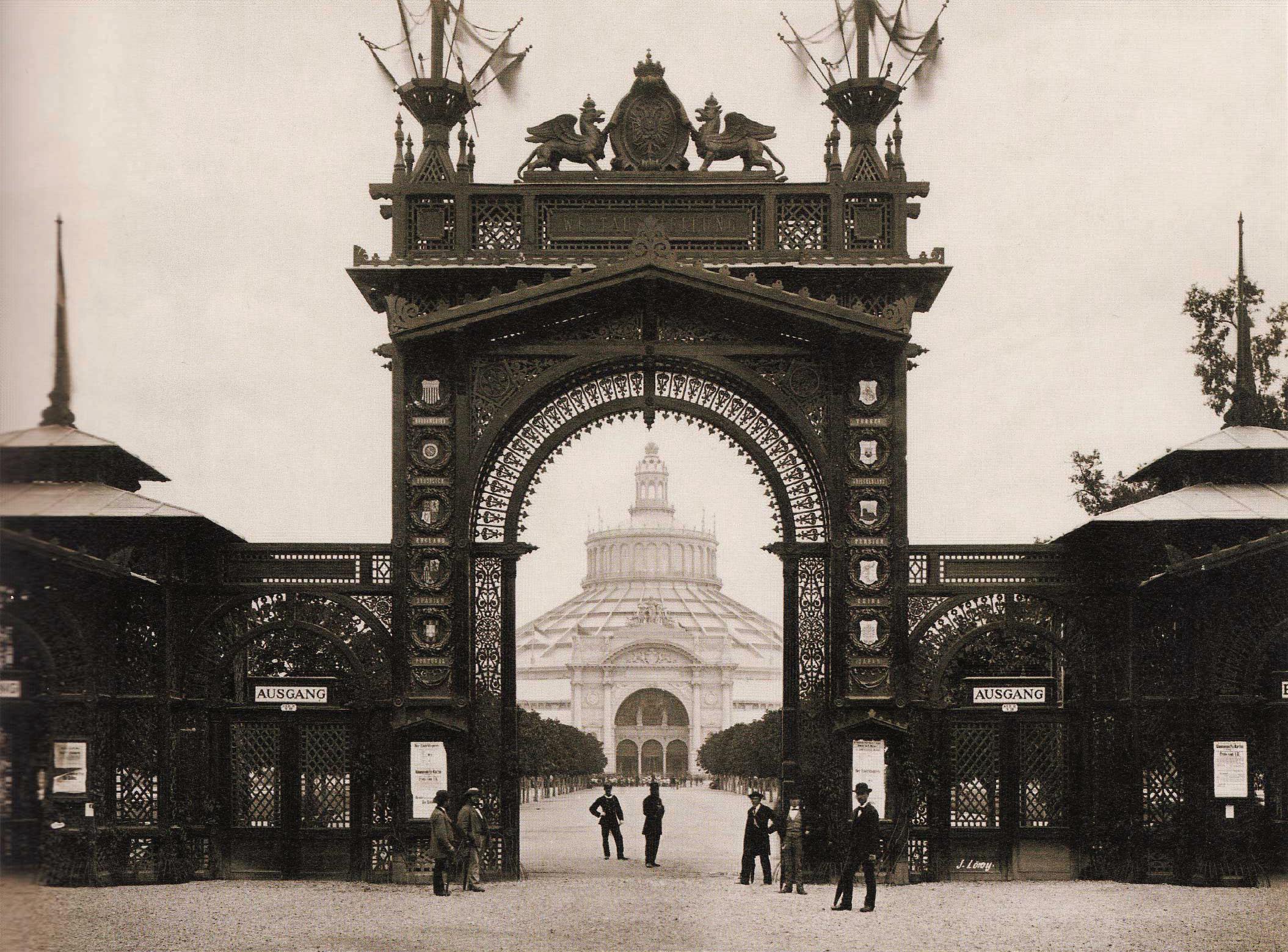
this page, from top: Johannes Brahms, portrait, ca. 1872. Baden State Library, Karlsruhe, Germany | Clara Schumann (1819–1896), ca. 1870. Photograph by Paul Edouard Rischgitz (1828–1909)/Getty Images | next page: Main gate of the 1873 Vienna World’s Fair, with its central rotunda in the background. The fair officially closed on November 2, 1873, the day Brahms’s Variations on a Theme by Haydn was premiered by the Vienna Philharmonic, with the composer conducting. Photographed by Michael Frankenstein (1843–1918), 1872. Wiener Photographen-Association
COMPOSED summer 1873
FIRST PERFORMANCE
November 2, 1873; Vienna, Austria
INSTRUMENTATION
2 flutes and piccolo, 2 oboes, 2 clarinets, 2 bassoons and contrabassoon, 4 horns, 2 trumpets, timpani, triangle, strings
APPROXIMATE
PERFORMANCE TIME 19 minutes
FIRST CSO PERFORMANCES
February 3 and 4, 1893, Auditorium Theatre. Theodore Thomas conducting
July 14, 1938, Ravinia Festival. Willem van Hoogstraten conducting
MOST RECENT
CSO PERFORMANCES
May 24, 25, and 26, 2018, Orchestra Hall. Esa-Pekka Salonen conducting July 23, 2021, Ravinia Festival. Marin Alsop conducting
CSO RECORDINGS
1962. Leopold Stokowski conducting. VAI (video)
1977. Sir Georg Solti conducting. London
1993. Daniel Barenboim conducting. Erato
the Vienna Philharmonic with the composer conducting, to a rapturous reception.
The two versions are identical in content, but not importance—one is Brahms’s last major work for piano, the other his first composition for orchestra without a soloist. With this score, Brahms signaled his move from the personal world of chamber music to the public stage; this marked a turning point in his career. It was a move he had long been struggling to make, although with great caution. The two orchestral serenades composed in the late 1850s are really chamber music on a large scale. The D minor piano concerto completed around the same time is the first work in which Brahms confronted the full resources of the nineteenth-century orchestra, though that piece also was first conceived for the more familiar sound of two pianos. Brahms refined his art of orchestration with the accompaniments to A German Requiem, completed in 1869, and several smaller choral works. The Haydn Variations are the breakthrough, as well as one last testing of the waters before Brahms finished
the symphony that had been in the works for nearly two decades.
Brahms begins with Haydn’s theme, gently mimicking the original scoring for oboes, bassoons, horns, and the obsolete serpent, a kind of bass horn (Brahms substitutes the contrabassoon). It’s easy to see what attracted him to this genial, striding theme, with its catchy five-measure phrases (switching midway through to more conventional groups of four). Eight variations and a finale follow. As the work proceeds, Brahms takes over and Haydn gradually disappears. The theme, too, sometimes seems to get lost in the crowd, though we never doubt its presence. (The critic Eduard Hanslick once said that the theme in certain variations by Brahms was as difficult to recognize as the face behind the composer’s new beard.)
Brahms carefully paces his eight variations. The first three are energetic; the fourth, in the minor mode, slows to andante (but con moto—with motion; this isn’t a slow movement). Variations five and six pick up the tempo: five is
BRAHMS: VARIATIONS ON A THEME BY HAYDN, OP. 56A
Brahms’s music is played without interruption; the tempo indications for each section follow.
Chorale Saint Antoni: Andante
Variation 1: Poco più animato
Variation 2: Più vivace
Variation 3: Con moto
Variation 4: Andante con moto
Variation 5: Vivace
Variation 6: Vivace
Variation 7: Grazioso
Variation 8: Presto non troppo
Finale: Andante
a nimble scherzo; six, with its galloping rhythms and wild horns, recalls hunting music. Variation seven backs off both in tempo and dynamic—it is a delicate siciliana, the only variation slower than the theme. Variation eight, back in a minor key, is quick, quiet, and suspenseful—the perfect prelude to a grand finale.
Brahms, who often is considered a true conservative, does something utterly new in this
ERKKI-SVEN TÜÜR
finale. From the original theme he fashions a five-measure bass line that repeats, unchanged, seventeen times—the strictness of that formula inspiring him to new heights of invention. This set of variations within another creates a magnificent sense of excitement as Brahms builds toward a final statement (exuberantly welcomed by the patient triangle) of the theme he thought he borrowed from Haydn.
A final word, then, about the title. As Haydn research took off in the middle of the twentieth century, scholars began to doubt the authenticity of the serenades Pohl discovered. It is now believed that Brahms’s beloved theme is the work of Haydn’s star pupil, Ignaz Pleyel. No one has ever discovered the precise source or meaning of the Saint Anthony Chorale subtitle, although that didn’t deter the otherwise rational Max Kalbeck, one of Brahms’s earliest biographers, from hearing in this score a musical depiction of the temptation of Saint Anthony.
Born October 16, 1959; Kärdla, Hiiumaa Island, Estonia
Prophecy for Accordion and Orchestra
The standard line on Erkki-Sven Tüür is that he is a former member of a rock band who is now a classical composer. But that evolution is more complex than it appears. For one thing, his band, In Spe—it means “In hope” in Estonian—which was founded in 1979, was a highly progressive ensemble that played what Tüür has called chamber rock. He was the leader, composer, vocalist, and flute and keyboard player. In Spe’s cast of characters included two recorders and three keyboard players in addition to guitars, and their pieces, which were often influenced by medieval music, were largely written down, not improvised or worked out in rehearsal. Tüür sometimes invited guests—a cellist or a brass quintet—to join them. “I considered it as my personal development from rock to the composition of chamber and orchestral scores,” he later said. “Looking at
These are the first Chicago Symphony Orchestra performances.
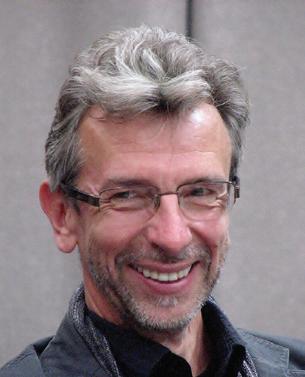
this page: Erkki-Sven Tüür, as photographed by Ave Maria Mõistlik
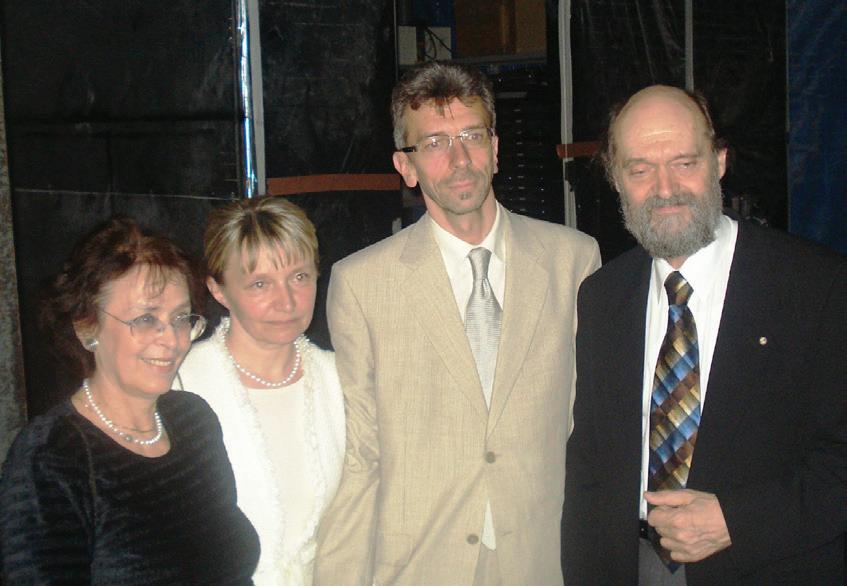
next page: Nora Pärt, Anne Tüür, Erkki-Sven Tüür, and Arvo Pärt backstage after the Estonian National Opera premiere of Tüür’s Wallenberg, 2007. Photo by Stefan Conradi
music only through one genre would be too limiting for me.”
Tüür, who began studying flute and percussion at the Tallinn Music School in 1976 and had recently started composition studies as well, left In Spe in 1983. His earliest compositions showed the wide sphere of influence on his evolving musical language: from Gregorian chant to twelve-tone music, minimalism, and microtonality. Early on, he said: “I am very interested in a combination of opposites—tonality versus atonality, regular repetitive rhythms versus irregular complex rhythms, tranquil meditativeness versus explosive theatrics—and especially in the way they change from one to another.” As his music evolved to favor a more organic coherence over “unnecessary eclecticism,” a fascination with the full range of music’s possibilities across disparate styles and languages remained.
Since devoting himself to composition, Tüür has written ten symphonies (the earliest dating from 1984), an opera (Wallenberg, premiered at Opernhaus Dortmund in 2001), chamber music, choral works, piano pieces (Hiiumaa, a 1992 score for children, named after the Estonian island where he was born), and more than a dozen concertos, including Lux stellarum, for the Berlin Philharmonic’s principal flute Emmanuel Pahud and an oboe concerto premiered at the Elbphilharmonie under Paavo Järvi in 2024.
Despite the ever-changing landscape of Tüür’s language, he remains committed to one essential thing: “One of my goals is to reach the creative energy of the listener. Music as an abstract form of art is able to create different visions for each of us, for each and every individual being, as we are all unique.”
Erkki-Sven Tüür on Prophecy for Accordion and Orchestra
There are four movements in my accordion concerto, Prophecy, all performed attacca. The opening movement follows waveform logic and acts like status nascendi (nascent form). Alternating processes like congelation and melting and converging and dispersing are the main forces of forming musical material. The color of accordion fades into string chord, the string chord fades into brass, and so on. Everything is in constant flow. Ascending and descending whirls meet each other and leave a glittering surface behind.
The second movement gives us the perception of the pulse. Here takes place the dialogue between soloist and orchestra, and the development culminates in a cadenza that flows into the slow third movement. The accordion part is figurative, and it descends slowly toward the lowest register only to climb again, forming a chorale-like melodic line. The fourth movement is a kind of continuously tension-building surreal dance.
The title Prophecy refers to the extremely long and rich practice of “seeing things” through the history of different cultures and traditions. Let us remember that these people were often met with mixed feelings by the majority society. They were respected, disdained, hazardous, and kind of mad. However, they had access to the beyond. Also, the music reflects—from my subjective point of view—the energetic levels of this phenomenon.
JEAN SIBELIUS
Born December 8, 1865; Tavastehus, Finland
Died September 20, 1957; Järvenpää, Finland
Symphony No. 2 in D Major, Op. 43
The spell of Italy often has a salutary effect on artists from the North. Goethe regularly recommended making the trip to Italy— Mendelssohn took his advice and returned with his Italian Symphony. Berlioz toured Italy against his better judgment and ended up staying fifteen months, addicted to the countryside (Harold in Italy is the souvenir he brought us). Wagner claimed he got the idea for the opening of Das Rheingold in La Spezia on the western seacoast. Tchaikovsky later nursed a broken spirit in Italy and took home his Capriccio italien, as untroubled as any music he ever wrote.
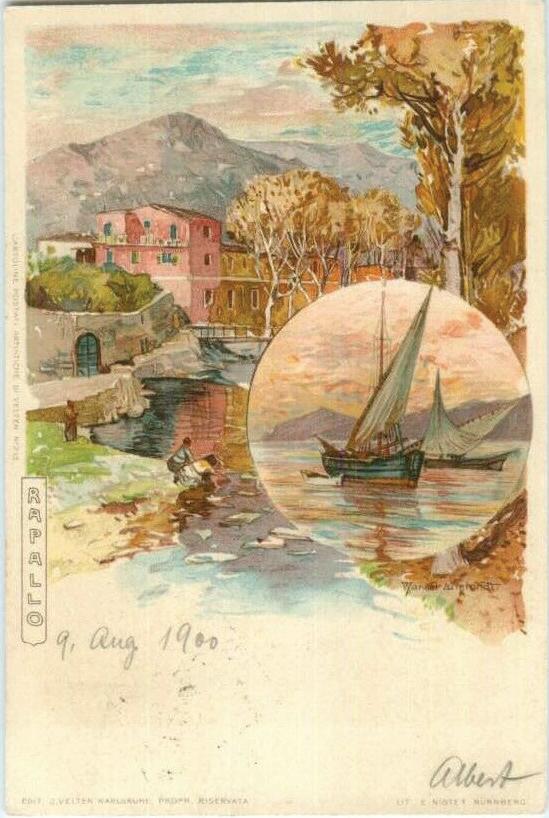
Jean Sibelius went to Italy in 1901. Even then, his name suggested northern lights and bitter cold to people who had not yet heard his music. To those who had—in particular the overly popular Finlandia, first performed at a nationalistic pageant in 1899—Sibelius was the voice of Finland. But in Italy, Sibelius’s thoughts turned away from his homeland, and he contemplated a work based on Dante’s Divine Comedy. While staying in the sun-drenched seaside town of Rapallo, he toyed with a four-movement tone poem, Festival, based on the same “Stone Guest” theme that Mozart had treated in Don Giovanni. Nothing ever came of these ideas, but he did begin his Second Symphony, which he finished once back in Finland.
We should not credit Italy alone with the warmth and ease of Sibelius’s Second Symphony, for years later he would return
COMPOSED 1902
FIRST PERFORMANCE
March 8, 1902; Helsinki, Finland. The composer conducting
January 1 and 18, 1904, Auditorium Theatre. Theodore Thomas conducting (U.S. premiere)
August 2, 1936, Ravinia Festival. Werner Janssen conducting
MOST RECENT
CSO PERFORMANCES
July 21, 2017, Ravinia Festival. Susanna Mälkki conducting
December 1, 2, 3, and 6, 2022, Orchestra Hall. Thomas Søndergård conducting
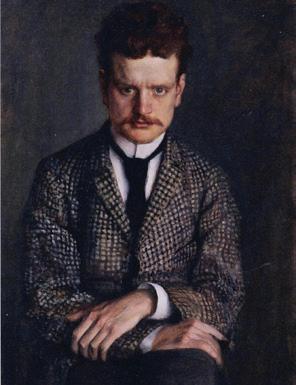
this page, from top: Jean Sibelius, portrait in oil by brother-in-law Eero Järnefelt (1863–1937), 1892
Postcard featuring scenic views of Rapallo, a coastal town in Liguria, Italy. Illustration by German painter and etcher Manuel Wielandt (1863–1922), dated August 1900 by the sender
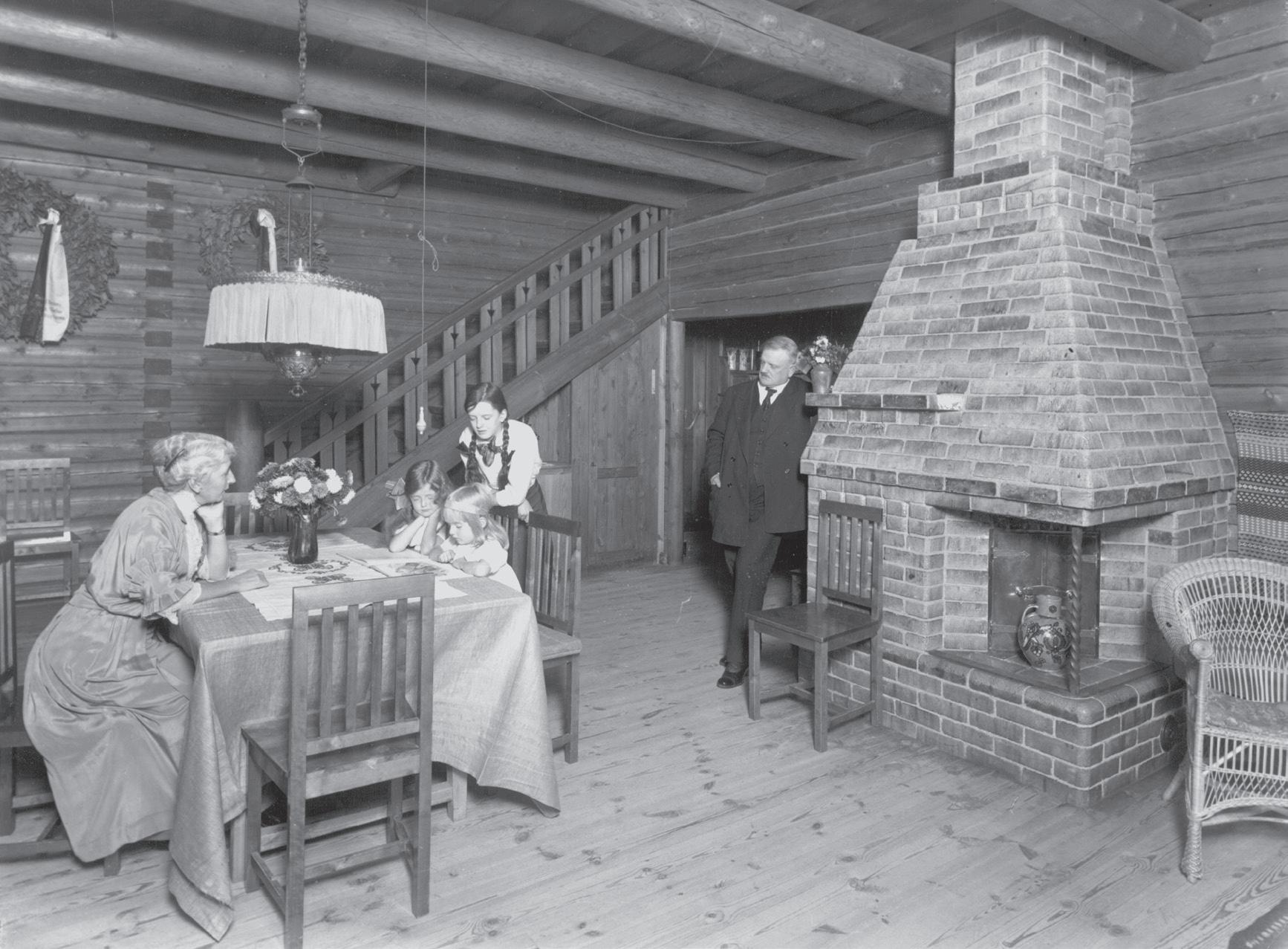
next page: Aino (1871–1969) and Jean Sibelius with daughters Heidi (1911–1982), Margareta (1908–1988), and Katarina (1903–1984) at Ainola, as photographed by Eric Sundström (1866–1933), 1915. Helsinki City Museum, Finland
there only to write Tapiola, the bleakest of all his works. But Sibelius did love Italy (he later admitted it was second only to his native Finland), and his extended stay there in 1901 certainly had a profound effect on Finland’s first great composer. His sketchbooks confirm that ideas conceived in Rapallo turn up throughout the Second Symphony, and even Sibelius himself admitted that Don Juan stalks the second movement.
Sibelius is more interesting as a composer than as a national voice. Ultimately, the qualities that give his music its own quite singular cast—the bracing sonorities and craggy textures, and the quirky but compelling way his music moves forward—are the product of musical genius, not Finnish heritage. It is true that he developed an abiding interest in the Kalevala, the Finnish national epic, as a schoolboy, and that he knew, loved, and sometimes remembered
his native folk song when writing music. But he did not even learn Finnish until he was a young man (having grown up in a Swedish-speaking household), and his patriotism was fueled not so much by landscape and congenital pride but by marriage into a powerful and politically active family. It is precisely because Sibelius’s music is not outwardly nationalistic (of the picture-postcard variety) that it is so profound—specific and evocative, yet also timeless and universal.
The symphony was the most important genre for Sibelius’s musical thoughts at a time when the form didn’t seem to suit most composers. Strauss, Schoenberg, Stravinsky, and Bartók, for example, all wrote symphonies of various kinds, but their pioneering work was done elsewhere. The one contemporary of Sibelius whose symphonies are played today, Gustav Mahler, took the symphony to mean something quite different. Sibelius and Mahler met in Helsinki in 1907,
and their words on the subject, often quoted, suggest that this was the only time their paths would ever cross, literally or figuratively. Sibelius always remembered their encounter:
When our conversation touched on the essence of symphony, I said that I admired its severity and style and the profound logic that created an inner connection between all
the motives. This was the experience I had come to in composing. Mahler’s opinion was just the reverse. “Nein, die Symphonie müss sein wie die Welt. Sie müss alles umfassen.” (No, the symphony must be like the world. It must embrace everything.)
Those lines have often been repeated to explain why Mahler’s symphonies sprawl and
SIBELIUS’S SECOND SYMPHONY AND CHICAGO’S “GREAT SADNESS”
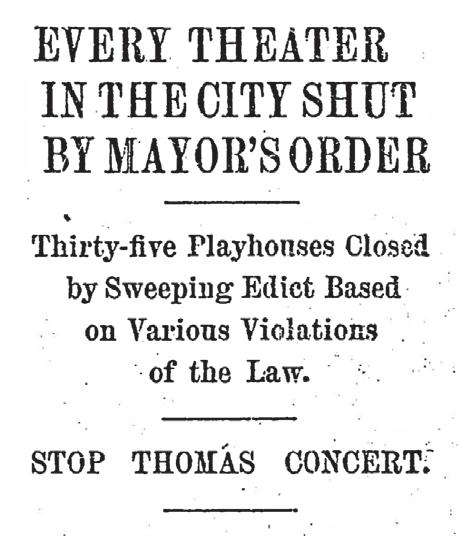
During the Chicago Orchestra’s last full season at the Auditorium Theatre, music director Theodore Thomas had programmed the U.S. premiere of Sibelius’s Second Symphony for January 1 and 2, 1904, during the ninth subscription week.
On November 23, 1903, the 1,600seat Iroquois Theatre (located on the north side of West Randolph Street, between State and Dearborn) opened its doors with a production of Mr. Blue Beard starring Eddie Foy. Barely a month later, the December 30 matinee of the popular musical had a standing-room audience of well over 2,000, mostly women and children on holiday break. An additional 300 actors, technicians, and stagehands were backstage.
Chicago Tribune, January 3, 1904
Just after the beginning of the second act, sparks from a stage light set fire to a muslin curtain and began to spread to the fly space. Very quickly, sections of burning curtains and set pieces began to fall to the stage, and even though Foy attempted to calm the audience, panic ensued. Patrons rushed to the exits— none of which were identified by illuminated signage, and some were even hidden behind curtains—only to find that many opened inwardly or had been locked to prevent gatecrashers.
Over 600 people lost their lives—more than twice as many casualties as the Great Chicago Fire in 1871—in this, the deadliest single-building fire in U.S. history.*
“Had Mr. Thomas known some six weeks ago of the great sadness that was to rest like a pall over the city of Chicago on New Year’s Day he could scarcely have arranged a program better suited to the occasion than was that which he and the Chicago Orchestra offered yesterday afternoon at the Auditorium,” wrote
the critic in the Chicago Tribune on January 2, referring also to the Funeral March from Elgar’s Grania and Diarmid as well as the Transformation Scene and Glorification from Wagner’s Parsifal.
“The new symphony of Sibelius— [no. 2] in D major, and which yesterday was played for the first time in America—proved a composition heavy with the mournful melancholy of the northern land whence its writer comes. . . . Mr. Thomas and his men threw themselves with exceptional enthusiasm and vigor into the performance of the new composition, which is of uncommon difficulty in many places, and the result was a rendition technically complete and interpretatively powerful.”
The Saturday evening concert on January 2 was canceled, as Mayor Carter Harrison had ordered all theaters closed for mandatory inspection. The Orchestra’s next concerts were given on January 15 and 16, since the Auditorium Theatre only needed minor modifications to meet the regulations. The January 2 concert was rescheduled for Monday, January 18, and Sibelius’s Symphony no. 2 received its second performance.
In spite of the tragedy, the trustees of the Orchestral Association continued with plans for the construction of Orchestra Hall—ground was broken on May 1 and the hall opened on December 14, 1904. The Iroquois reopened as the Colonial Theatre in October 1905, but in 1924 it was torn down to make way for the Oriental, which opened in 1926. It was renamed the Nederlander in 2019.
Frank Villella is the director of the Rosenthal Archives. For more information, please visit cso.org/archives.
* The tragedy at the Iroquois Theatre was a catalyst for the implementation of increased safety standards and ordinances for public buildings, including clearly marked exits, doors of egress that open outward, and doors equipped with “crash” or “panic” bars.
sing, resembling no others ever written, but they are just as useful in seeing Sibelius’s point of view. By 1907 Sibelius had fixed his vision on symphonic music of increasing austerity; his Third Symphony, completed that summer, marks the turning point. That same summer, Mahler put the final touches on his Eighth Symphony, scored for eight vocal soloists, chorus, boys’ choir, and huge orchestra; taking as its text a medieval hymn and the closing scene from Goethe’s Faust; and lasting nearly two hours—the work we know as the Symphony of A Thousand. Five years earlier, in 1902, the year Sibelius’s Second Symphony was first performed, Mahler had unveiled his third, which lasts longer than Sibelius’s first two symphonies combined.
Sibelius’s Second Symphony is a bold, unconventional work. We know too many of his later works, and too much later music in general, perhaps, to see it that way, but at the time—the time of Schoenberg’s luscious Transfigured Night, not Pierrot lunaire; of Stravinsky’s academic E-flat symphony, not The Rite of Spring—it staked out new territory to which Sibelius alone would return. The first movement, like much of his most characteristic music, makes something whole and compelling out of bits and pieces. As Sibelius would later write: “It is as if the Almighty had thrown down the pieces of a mosaic for heaven’s floor and asked me to put them together.” Heaven’s floor turns out to be designed in a familiar sonata form, but this isn’t readily apparent.
(Commentators seldom agree on the beginning of the second theme, for example.) Certainly, any symphony that begins in pieces can’t afford to dissect things further in a traditional development section. In fact, for Sibelius, development often implies the first step in putting the music back together. (Once, when asked about these technical matters, Sibelius cunningly chose to speak about “a spiritual development” instead.)
There is true, sustained lyricism in the slow second movement, but that is not how it opens. Sibelius begins with a timpani roll and restless pizzicato strings from which a bassoon tune struggles to emerge. Melody eventually does take wing, but what we remember most is the wonderful series of adventures encountered in the process.
The scherzo is brief, hurried (except for a sorrowful woodwind theme inspired not by Finland’s fate, as commentators used to insist, but by the suicide of Sibelius’s sister-in-law), and expectant. When, after about five minutes, it leads straight into the broad first chords of the finale, we realize that this is what we were waiting for all along. From there the fourth movement unfolds slowly, continuously, and with increasing power and majesty. It rises and soars in ways denied the earlier movements, and that, of course, is Sibelius’s way: heaven’s floor visible at last.
Phillip Huscher has been the program annotator for the Chicago Symphony Orchestra since 1987.
REFRESHMENTS AT SYMPHONY CENTER
You can order drinks and snacks before the performance or during intermission at various bars located throughout Symphony Center, including the Bass Bar in the Rotunda and most of the lobby spaces in Orchestra Hall.
Discover the benefits of making a legacy gift to your Chicago Symphony Orchestra
“By planning a future gift for the Chicago Symphony Orchestra, we hope to contribute to the CSO’s legacy and honor the many wonderful memories we’ve enjoyed across the years.”
— Cathy and Kent Hoffmann
Join the Theodore Thomas Society
Named in honor of our founder and first music director, the Theodore Thomas Society recognizes individuals who have included the Chicago Symphony Orchestra in their will, trust or beneficiary designation. Contact Joe Bauer at 312-294-3192 or visit cso.org/plannedgiving for more information.
PROFILES
Paavo Järvi Conductor
FIRST CSO PERFORMANCES
October 7, 8, and 9, 2004, Orchestra Hall. Debussy’s Prelude to The Afternoon of a Faun, Bartók’s Violin Concerto no. 2 with Christian Tetzlaff, and Nielsen’s Symphony no. 5
MOST RECENT CSO PERFORMANCES
February 15, 17, and 18, 2024, Orchestra Hall; February 16, 2024, Apostolic Church of God. Beethoven’s Leonore Overture no. 3, Elgar’s Cello Concerto with Sheku Kanneh-Mason, and Nielsen’s Symphony no. 5
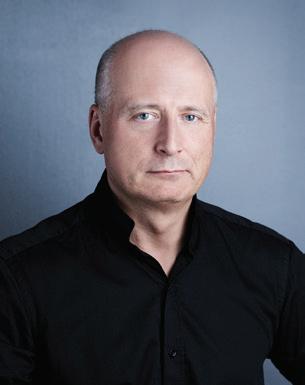
Estonian Grammy Award–winning conductor Paavo Järvi is widely recognized as one of today’s most eminent conductors, enjoying close partnerships with the finest orchestras around the world. Now in his seventh season as music director of the Tonhalle-Orchester Zürich, he also serves as artistic director of the Deutsche Kammerphilharmonie Bremen and founder and artistic director of the Estonian Festival Orchestra. In addition, he was recently appointed chief conductor and artistic advisor of the London Philharmonic Orchestra, from the 2028–29 season.
Highlights of Paavo Järvi’s current season with the Tonhalle-Orchester Zürich encompass the continuation of the cycle of Mahler’s symphonies and a tribute to composer Arthur Honegger on the seventieth anniversary of his death; performances with season-focus artists Sol Gabetta and Kirill Gerstein; and a year-long exploration of the music of Thomas Adés, who is this season’s creative chair. Alpha Classics released Mahler’s Symphony no. 1 in the fall of 2025, coinciding with the start of a three-year guest residency at the Festspielhaus Baden-Baden and a tour to the Vienna Musikverein and the philharmonies of Cologne and Paris. Additional tours include the Gstaad Menuhin Festival, George Enescu Festival in Bucharest, Teatro alla Scala in Milan, and Japan and South Korea.
Now in his third decade with the Deutsche Kammerphilharmonie Bremen, Paavo Järvi has performed and recorded all the orchestral works of Beethoven, Schumann, and Brahms on the RCA Red Seal label. This season’s other highlights include the final release of Haydn’s London Symphonies and recordings and performances of Schubert’s symphonies in Bremen and on tour across Europe.
Järvi concludes each season with the Estonian Festival Orchestra at the Pärnu Music Festival in Estonia, which he founded in 2011. In September 2025, Alpha Classics released the orchestra’s sixth album, Credo, which pays tribute to Arvo Pärt on his ninetieth birthday. Järvi then led the ensemble in performances of Pärt’s music on tour, culminating in its U.S. debut at Carnegie Hall in New York.
Much in demand as a guest conductor, Järvi regularly appears with the Berlin Philharmonic, Royal Concertgebouw Orchestra Amsterdam, London Philharmonic, and New York Philharmonic. This season, he also leads the Los Angeles Philharmonic, Toronto Symphony, Leipzig Gewandhaus Orchestra, NDR Elbphilharmonie Hamburg, Philharmonia Orchestra London, Luxembourg Philharmonic, and Verbier Festival Orchestra.
His recent accolades include Germany’s 2025 Opus Klassik Composer of the Year Award for the Estonian Festival Orchestra’s recording of Jüri Reinvere’s Ship of Fools and an International Classical Music Award for Bruckner’s Symphony no. 8 with Tonhalle-Orchester Zürich, both on Alpha Classics. With Deutsche Kammerphilharmonie Bremen, he won the 2024 Opus Klassik and 2023 Gramophone Orchestra of the Year awards, as well as the 2019 Rheingau Music Prize and Opus Klassik Conductor of the Year. Other prizes and honors include a Grammy Award for his recording of Sibelius’s cantatas with the Estonian National Symphony Orchestra and being named a Commander of the Order of Arts and Letters by the French Ministry of Culture. He also holds the Sibelius Medal (2015), the Hindemith Prize for Art and Humanity (2012), and Estonia’s Order of the White Star (2013).
PHOTO BY KAUPO KIKKAS
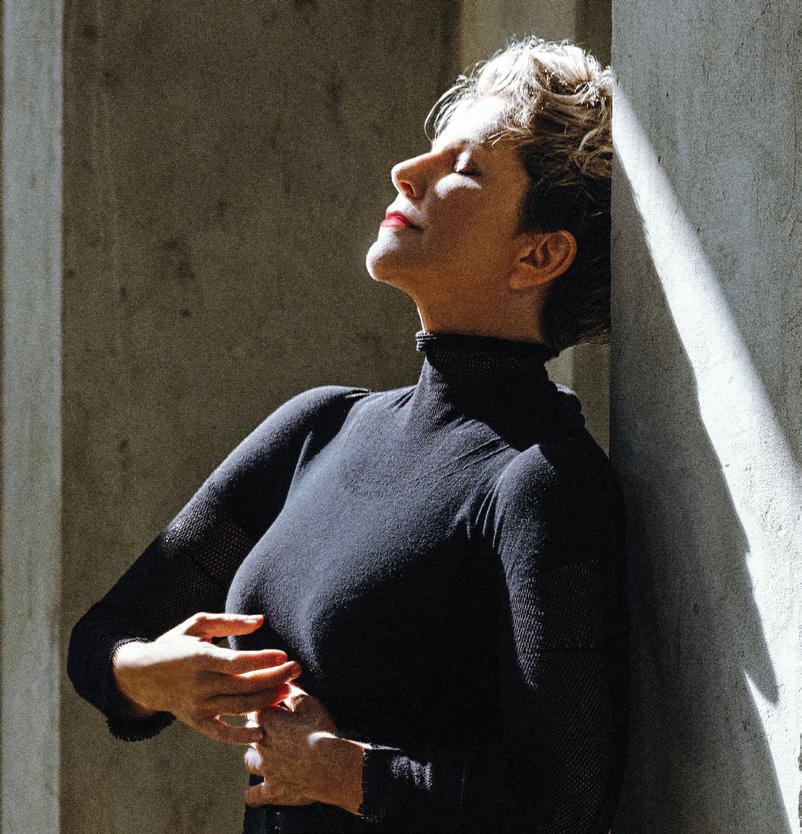
Ksenija Sidorova Accordion
These concerts mark Ksenija Sidorova’s debut with the Chicago Symphony Orchestra.
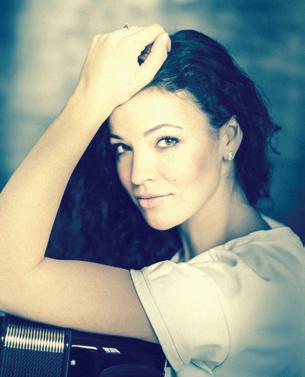
Ksenija Sidorova, widely recognized as the leading ambassador of the classical accordion, brings a compelling blend of technical brilliance and expressive musicality to every performance.
Her repertoire encompasses works by J.S. Bach, Astor Piazzolla, Erkki-Sven Tüür, and Václav Trojan, alongside a growing body of contemporary works written for her. A passionate advocate for new music, Sidorova continues to expand the accordion repertoire through new commissions and collaborations. Fazil Say is composing a new concerto for her, to be premiered at the Schleswig-Holstein Music Festival in July 2026.
Recent highlights include the world premiere of Dobrinka Tabakova’s Sublime Dreams of Living Machines with the Stuttgart Philharmonic at the Bodensee Festival, where she was artist-in-residence. The work received its UK premiere with the Royal Liverpool Philharmonic Orchestra in January 2026.
This season’s highlights include the Canadian premiere of Tõnu Kõrvits’s Dances with the Toronto Symphony Orchestra and a return to Tonhalle-Orchester Zürich, both under Paavo Järvi. She also gave solo recitals at Carnegie Hall in New York, Club Musical de Québec, and Prager Family Center for the Arts in Maryland.
Sidorova has appeared with Philharmonia Orchestra London, BBC Symphony Orchestra including the Last Night of the Proms, Munich Philharmonic, Orchestre National de France, NDR Elbphilharmonie Orchestra in Hamburg, Cincinnati Symphony, Atlanta Symphony, Orchestre Philharmonique du Luxembourg, and many others. She regularly collaborates
with such conductors as Paavo Järvi, Marin Alsop, Thomas Hengelbrock, Vasily Petrenko, Andris Poga, Kirill Karabits, Christian Reif, and Nil Venditti.
Following a successful tour with baritone Thomas Hampson in 2025, she reunites with him for Schubert’s Winterreise and songs by Weill at Tonhalle Zürich, Kings Place in London, Bergen International Festival, and the Kronberg Academy. She also continues touring with Signum Saxophone Quartet and its Anima project, with appearances at Munich Prinzregententheater, Harz Classix Festival, Jūrmala Festival, and the Vienna Konzerthaus.
A dedicated chamber musician, Sidorova performs regularly with Avi Avital, Benjamin Appl, Goldmund Quartet, Miloš, Nemanja Radulović, Andreas Ottensamer, Tine Thing Helseth, Juan Diego Flórez, and Nicola Benedetti. She has appeared as a regular guest at major music festivals, including Verbier, Rheingau, Ravinia, Cheltenham, Mito International, Gstaad Menuhin, and MISA in Shanghai.
Her most recent album on Alpha Classics features Kõrvits’s Dances and Tüür’s Prophecy, recorded with the Estonian Festival Orchestra and Paavo Järvi. Her previous release, Crossroads (Alpha, 2024), features works by Bach, Sergey Akhunov, Dobrinka Tabakova, and Gabriela Montero. It follows Piazzolla Reflections (Alpha, 2021), named Album of the Month by BR Klassik and one of the year’s best classical albums by Classic Review.
Born in Riga, Latvia, Ksenija Sidorova began playing the accordion at the age of six, inspired by her grandmother. She studied with Marija Gasele before continuing with Owen Murray at the Royal Academy of Music in London, where she received numerous accolades, including the Philharmonia Orchestra’s Martin Musical Scholarship, the Friends of the Philharmonia Award, and the Worshipful Company of Musicians Silver Medal. She was named an associate of the Royal Academy of Music in 2016 and a fellow in 2021.
BY
PHOTO
DARIO ACOSTA
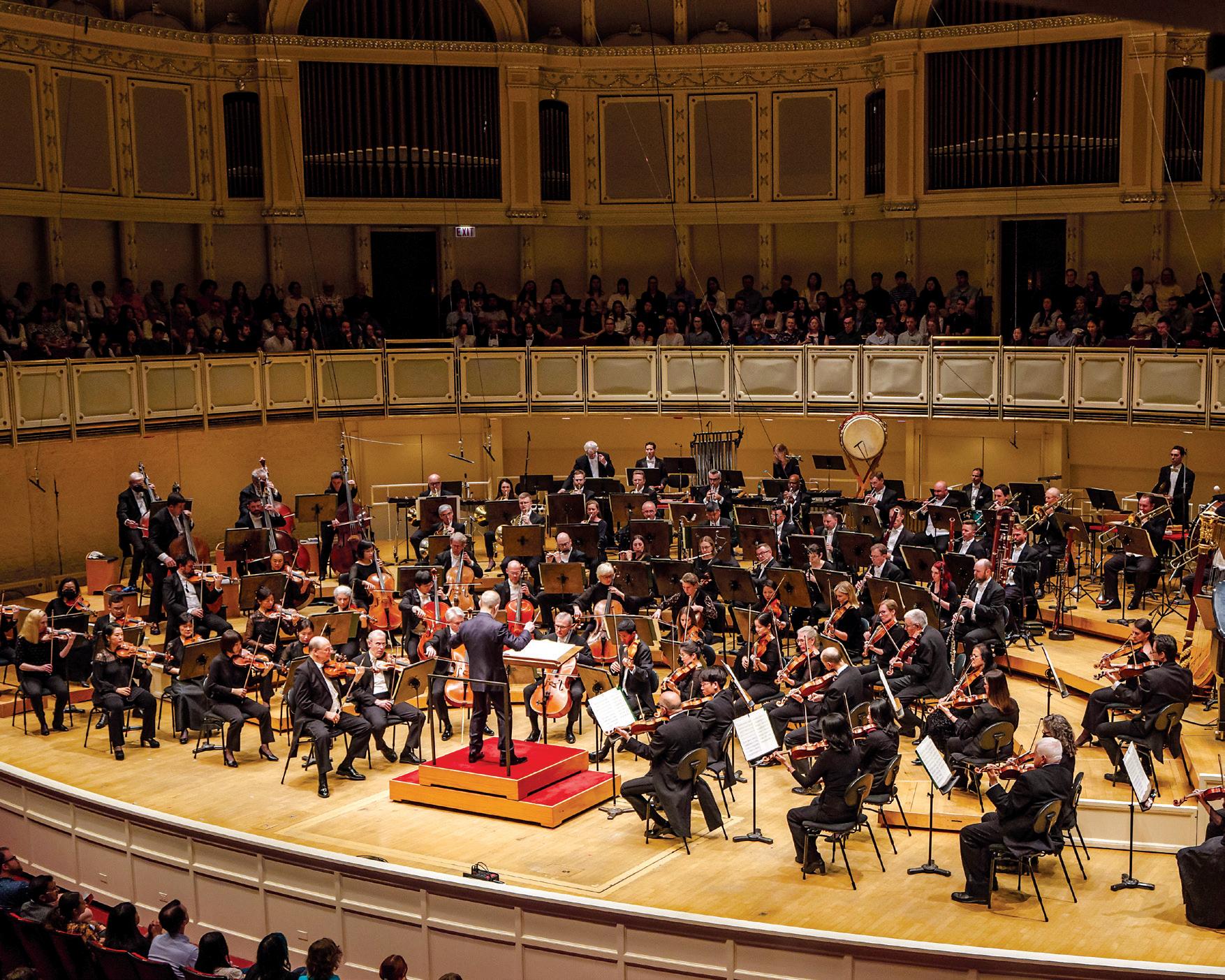
The Chicago Symphony Orchestra—consistently hailed as one of the world’s best—marks its 135th season in 2025–26. The ensemble’s history began in 1889, when Theodore Thomas, the leading conductor in America and a recognized music pioneer, was invited by Chicago businessman Charles Norman Fay to establish a symphony orchestra. Thomas’s aim to build a permanent orchestra of the highest quality was realized at the first concerts in October 1891 in the Auditorium Theatre. Thomas served as music director until his death in January 1905, just three weeks after the dedication of Orchestra Hall, the Orchestra’s permanent home designed by Daniel Burnham.
Frederick Stock, recruited by Thomas to the viola section in 1895, became assistant conductor in 1899 and succeeded the Orchestra’s founder. His tenure lasted thirty-seven years, from 1905 to 1942—the longest of the Orchestra’s music directors. Stock founded the Civic Orchestra of Chicago— the first training orchestra in the U.S. affiliated with a major orchestra—in 1919, established youth auditions, organized the first subscription concerts especially for children, and began a series of popular concerts.
Three conductors headed the Orchestra during the following decade: Désiré Defauw was music director from 1943 to 1947, Artur Rodziński in 1947–48, and Rafael Kubelík from 1950 to 1953. The next ten years belonged to Fritz Reiner, whose recordings with the CSO are still considered hallmarks. Reiner invited Margaret Hillis to form the Chicago Symphony Chorus in 1957. For five seasons from 1963 to 1968, Jean Martinon held the position of music director.
Sir Georg Solti, the Orchestra’s eighth music director, served from 1969 until 1991. His arrival launched one of the most successful musical partnerships of our time. The CSO made its first overseas tour to Europe in 1971 under his direction and released numerous award-winning recordings. Beginning in 1991, Solti held the title of music director laureate and returned to conduct the Orchestra each season until his death in September 1997.
Daniel Barenboim became ninth music director in 1991, a position he held until 2006. His tenure was distinguished by the opening of Symphony Center in 1997, appearances with the Orchestra in the dual role of pianist and conductor, and twenty-one international tours. Appointed by Barenboim in 1994 as the Chorus’s second director, Duain Wolfe served until his retirement in 2022.
In 2010, Riccardo Muti became the Orchestra’s tenth music director. During his tenure, the Orchestra deepened its engagement with the Chicago community, nurtured its legacy while supporting a new generation of musicians and composers, and collaborated with visionary artists. In September 2023, Muti became music director emeritus for life.
In April 2024, Finnish conductor Klaus Mäkelä was announced as the Orchestra’s eleventh music director and will begin an initial five-year tenure as Zell Music Director in September 2027. In July 2025, Donald Palumbo became the third director of the Chicago Symphony Chorus.
Carlo Maria Giulini was named the Orchestra’s first principal guest conductor in 1969, serving until 1972; Claudio Abbado held the position from 1982 to 1985. Pierre Boulez was appointed as principal guest conductor in 1995 and was named Helen Regenstein Conductor Emeritus in 2006, a position he held until his death in January 2016. From 2006 to 2010, Bernard Haitink was the Orchestra’s first principal conductor.
Mezzo-soprano Joyce DiDonato is the CSO’s Artist-in-Residence for the 2025–26 season.
The Orchestra first performed at Ravinia Park in 1905 and appeared frequently through August 1931, after which the park was closed for most of the Great Depression. In August 1936, the Orchestra helped to inaugurate the first season of the Ravinia Festival, and it has been in residence nearly every summer since.
Since 1916, recording has been a significant part of the Orchestra’s activities. Recordings by the Chicago Symphony Orchestra and Chorus— including recent releases on CSO Resound, the Orchestra’s recording label launched in 2007— have earned sixty-five Grammy awards from the Recording Academy.
Chicago Symphony Orchestra
Klaus Mäkelä Zell Music Director Designate
Joyce DiDonato Artist-in-Residence
VIOLINS
Robert Chen Concertmaster
The Louis C. Sudler
Chair, endowed by an
anonymous benefactor
Stephanie Jeong
Associate Concertmaster
The Cathy and Bill Osborn Chair
David Taylor*
Assistant Concertmaster
The Ling Z. and Michael C.
Markovitz Chair
Yuan-Qing Yu*
Assistant Concertmaster
So Young Bae
Cornelius Chiu
Gina DiBello
Kozue Funakoshi
Russell Hershow
Qing Hou
Gabriela Lara
Matous Michal
Simon Michal
Sando Shia
Susan Synnestvedt
Rong-Yan Tang
Baird Dodge Principal
Danny Yehun Jin
Assistant Principal
Lei Hou
Ni Mei
Hermine Gagné
Rachel Goldstein
Mihaela Ionescu
Melanie Kupchynsky §
Wendy Koons Meir
Ronald Satkiewicz ‡
Florence Schwartz
VIOLAS
Teng Li Principal
The Paul Hindemith
Principal Viola Chair
Catherine Brubaker
Youming Chen
Sunghee Choi
Paolo Dara
Wei-Ting Kuo
Danny Lai
Weijing Michal
Diane Mues
Lawrence Neuman
Max Raimi
CELLOS
John Sharp Principal
The Eloise W. Martin Chair
Kenneth Olsen
Assistant Principal
The Adele Gidwitz Chair
Karen Basrak
The Joseph A. and Cecile
Renaud Gorno Chair
Richard Hirschl
Olivia Jakyoung Huh
Daniel Katz
Katinka Kleijn
Brant Taylor
The Ann Blickensderfer and Roger Blickensderfer Chair
BASSES
Alexander Hanna Principal
The David and Mary Winton
Green Principal Bass Chair
Alexander Horton
Assistant Principal
Daniel Carson
Ian Hallas
Robert Kassinger
Mark Kraemer
Stephen Lester
Bradley Opland
Andrew Sommer
FLUTES
Stefán Ragnar Höskuldsson § Principal
The Erika and Dietrich M.
Gross Principal Flute Chair
Emma Gerstein
Jennifer Gunn
PICCOLO
Jennifer Gunn
The Dora and John Aalbregtse Piccolo Chair
OBOES
William Welter Principal
Lora Schaefer
Assistant Principal
The Gilchrist Foundation,
Jocelyn Gilchrist Chair
Scott Hostetler
ENGLISH HORN
Scott Hostetler
Riccardo Muti Music Director Emeritus for Life
CLARINETS
Stephen Williamson Principal
John Bruce Yeh
Assistant Principal
The Governing
Members Chair
Gregory Smith
E-FLAT CLARINET
John Bruce Yeh
BASSOONS
Keith Buncke Principal
William Buchman
Assistant Principal
Miles Maner
HORNS
Mark Almond Principal
James Smelser
David Griffin
Oto Carrillo
Susanna Gaunt
Daniel Gingrich ‡
TRUMPETS
Esteban Batallán Principal
The Adolph Herseth Principal Trumpet Chair, endowed by an anonymous benefactor
John Hagstrom
The Bleck Family Chair
Tage Larsen
TROMBONES
Timothy Higgins Principal
The Lisa and Paul Wiggin
Principal Trombone Chair
Michael Mulcahy
Charles Vernon
BASS TROMBONE
Charles Vernon
TUBA
Gene Pokorny Principal
The Arnold Jacobs Principal Tuba Chair, endowed by Christine Querfeld
* Assistant concertmasters are listed by seniority. ‡ On sabbatical § On leave
The CSO’s music director position is endowed in perpetuity by a generous gift from Zell Family Foundation.
The Louise H. Benton Wagner chair is currently unoccupied.
TIMPANI
David Herbert Principal
The Clinton Family Fund Chair
Vadim Karpinos
Assistant Principal
PERCUSSION
Cynthia Yeh Principal Chair sponsored by an anonymous benefactor
Patricia Dash §
Vadim Karpinos
LIBRARIANS
Justin Vibbard Principal
Carole Keller
Mark Swanson
CSO FELLOWS
Ariel Seunghyun Lee Violin
Jesús Linárez Violin
The Michael and Kathleen Elliott Fellow
ORCHESTRA PERSONNEL
John Deverman Director
Anne MacQuarrie Manager, CSO Auditions and Orchestra Personnel
STAGE TECHNICIANS
Christopher Lewis
Stage Manager
Blair Carlson
Paul Christopher
Chris Grannen
Ryan Hartge
Peter Landry
Joshua Mondie
The Chicago Symphony Orchestra string sections utilize revolving seating. Players behind the first desk (first two desks in the violins) change seats systematically every two weeks and are listed alphabetically. Section percussionists also are listed alphabetically.
Discover more about the musicians, concerts, and generous supporters of the Chicago Symphony Orchestra Association online, at cso.org.
Find articles and program notes, listen to CSOradio, and watch CSOtv at Experience CSO.
cso.org/experience
Get involved with our many volunteer and affiliate groups.
cso.org/getinvolved
Connect with us on social @chicagosymphony
Conductor Joe Hisaishi with the CSO, June 2024; CSO Artist-in-Residence Joyce DiDonato
Chicago Symphony Orchestra Association Board of Trustees
OFFICERS
Mary Louise Gorno Chair
Chester A. Gougis Vice Chair
Steven Shebik Vice Chair
Helen Zell Vice Chair
Renée Metcalf Treasurer
Jeff Alexander President
Kristine Stassen Secretary of the Board
Stacie M. Frank Assistant Treasurer
Dale Hedding Vice President for Development
Chicago Symphony Orchestra Association Administration
SENIOR LEADERSHIP
Jeff Alexander President
Stacie M. Frank Vice President & Chief Financial Officer, Finance and Administration
Dale Hedding Vice President, Development
Ryan Lewis Vice President, Sales and Marketing
Vanessa Moss Vice President, Orchestra and Building Operations
Jonathan McCormick Managing Director, Negaunee Music Institute at the CSO
Visit cso.org/csoa to view a complete listing of the CSOA Board of Trustees and Administration.
For complete listings of our generous supporters, please visit the Richard and Helen Thomas Donor Gallery.
cso.org/donorgallery
CHICAGO SYMPHONY ORCHESTRA
90th SUMMER RESIDENCY
JULY 11 - AUGUST 16 •
HIGHLAND PARK
Featuring three weeks with Ravinia Chief Conductor MARIN ALSOP
Six weeks of guests include Yunchan Lim, Lizzo, Emanuel Ax, St. Vincent, Stella Chen, María Dueñas, Daniel Lozakovich, Carlos Simon, Laura Karpman, and many more —plus two concerts with Zell Music Director Designate Klaus Mäkelä— performing in the newly renovated Hunter Pavilion!
LOOKING FOR SOMETHING INDOORS?
James Conlon leads Mozart’s The Abduction from the Seraglio semi-staged in the Martin Theatre