Program Book - Poulenc Gloria & Saint-Saëns Organ Symphony
25 26 SEASON
ONE HUNDRED THIRTY-FIFTH SEASON
CHICAGO SYMPHONY ORCHESTRA
KLAUS MÄKELÄ Zell Music Director Designate | RICCARDO MUTI Music Director Emeritus for Life
Thursday, May 14, 2026, at 7:30
Friday, May 15, 2026, at 1:30
Saturday, May 16, 2026, at 7:30
Juraj Valčuha Conductor
Erin Morley Soprano
Chicago Symphony Chorus
Donald Palumbo Director
RAVEL
POULENC
Mother Goose Suite
Pavane of the Sleeping Beauty
Tom Thumb
Laideronnette, Empress of the Pagodas
Conversations of Beauty and the Beast
The Enchanted Garden
Gloria
Gloria
Laudamus te
Domine Deus
Domine fili unigenite
Domine Deus, Agnus Dei
Qui sedes ad dexteram Patris
ERIN MORLEY
CHICAGO SYMPHONY CHORUS
INTERMISSION
SAINT-SAËNS
Symphony No. 3 in C Minor, Op. 78 (Organ)
Adagio—Allegro moderato—Poco adagio
Allegro moderato—Presto—Maestoso—Allegro
Patrick Godon, organ
These concerts are supported in part by the League of the Chicago Symphony Orchestra Association Endowed Concert Fund.
The appearance of the Chicago Symphony Chorus has been made possible by a generous gift from The Grainger Foundation.
The Chicago Symphony Orchestra Association acknowledges support from the Illinois Arts Council.
The Chicago Symphony Orchestra thanks the League of the Chicago Symphony Orchestra Association, led by League President Sarah Good, for contributions to the League Endowed Concert Fund, which supports this performance.
COMMENTS by Phillip Huscher
MAURICE RAVEL
Born March 7, 1875; Ciboure, Basses-Pyrénées, France
Died December 28, 1937; Paris, France
Mother Goose Suite
Although he had none of his own, Ravel loved children. Throughout his life, he kept his ability to see the world through a child’s eyes, and he never outgrew his passion for creating elaborate toys and reading fairy tales aloud. The adult composer, little taller himself than most children, particularly enjoyed the company of Mimie and Jean Godebski, the daughter and son of his friends Cipa and Ida Godebski, a young Polish couple whose Paris apartment was a gathering place for some of the greatest artists of the day, including André Gide, Jean Cocteau, Erik Satie, and, from time to time, Igor Stravinsky. Ravel was a regular visitor to the Godebskis’ salon, and it’s possible that he was drawn as much by the enchanting games and conversation he shared with Mimie and Jean as he was by the more rarefied discussion among the grown-ups.
Ravel often made up stories to tell the Godebski children, and, when they were apart, he sent them funny postcards. But the greatest treasure among his many gifts to Mimie and Jean is a suite of pieces inspired by the Mother Goose tales, originally written for piano duet and intended to be played by children. Ravel dedicated the score to Mimie and Jean in the hope that they would give the first performance, but, although they were
COMPOSED
1908–10, as piano duet; orchestrated as ballet score in 1911
December 27 and 28, 1912, Orchestra Hall. Frederick Stock conducting
July 8, 1937, Ravinia Festival. Ernest Ansermet conducting (ballet)
MOST RECENT
CSO PERFORMANCES
July 13, 2019, Ravinia Festival. Andrew Litton conducting
May 25, 27, 28, and 31, 2022, Orchestra Hall. Esa-Pekka Salonen conducting (ballet)
CSO RECORDINGS
1961. André Kostalanetz conducting. Video Images (video)
1968. Jean Martinon conducting. RCA
unusually accomplished pianists for children, they happily accepted the gift but declined the premiere. “To us,” Jean later recalled, “it mainly meant a lot of work.”
Two more precocious children, Geneviève Durony and Jeanne Leleu, then only six and seven years old, premiered the suite in April 1910. Ravel was so enchanted by Jeanne’s performance in particular that he wrote to her:
When you are a great virtuosa and I either an old fogey, covered with honors, or else completely forgotten, you will perhaps have pleasant memories of having given an artist the very rare joy of hearing a work of his, one of a rather special nature, interpreted exactly as it should be.
Mother Goose is one of Ravel’s most exquisite creations. “The idea of evoking the poetry of childhood in these pieces,” Ravel later explained, “naturally led me to simplify my style and to refine my means of expression.” Even when he orchestrated and enlarged the suite into a ballet score in 1911, he managed to heighten the music’s sense of fantasy and adventure without taking away its grace and innocence.
Ravel borrowed his title and two tales (Sleeping Beauty and Tom Thumb) from Charles Perrault, the seventeenth-century French writer who is responsible for preserving a number of well-known stories, including those of Little Red Riding Hood and Bluebeard. (It’s Perrault’s 1607 volume, Histoires, ou contes du temps passé, avec des moralitez—Stories, or tales of olden times, with morals—that became known in France as “Mother Goose.”)
The Pavane of the Sleeping Beauty is as simple as the briefest of fairy tales—just twenty
measures of limpid melody over plain, magically colored harmonies.
Ravel prefaces Tom Thumb with a quote from Perrault: “He thought he would easily find his way, thanks to the bread he had scattered wherever he had passed, but he was quite surprised when he couldn’t see even a single crumb of it. Birds had come along and eaten every bit.” Ravel shows us Tom Thumb’s meanderings—the meter changes often and unpredictably—and
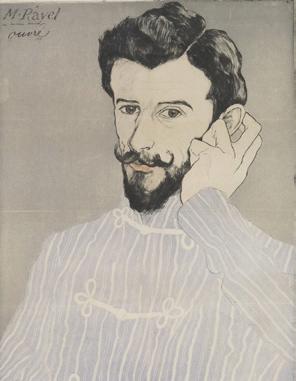
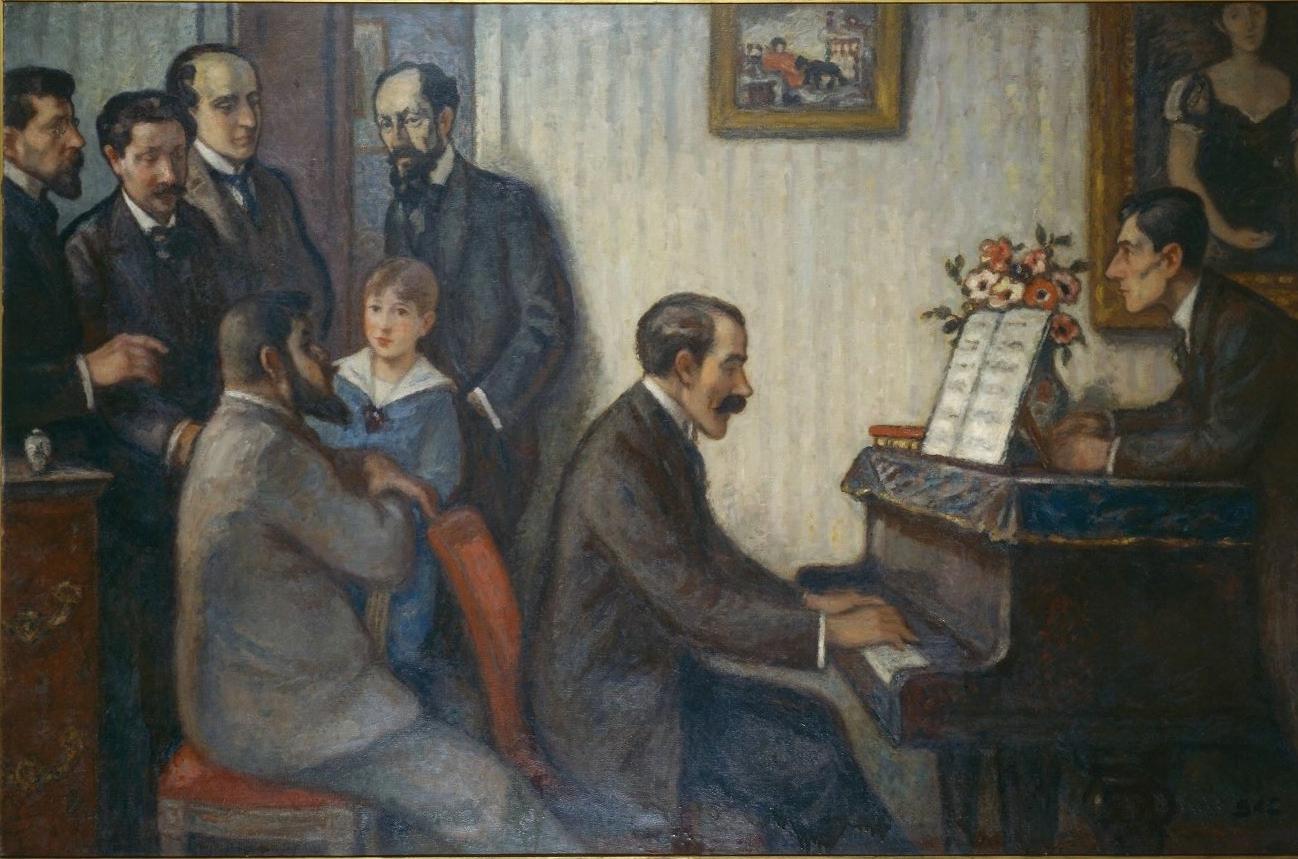
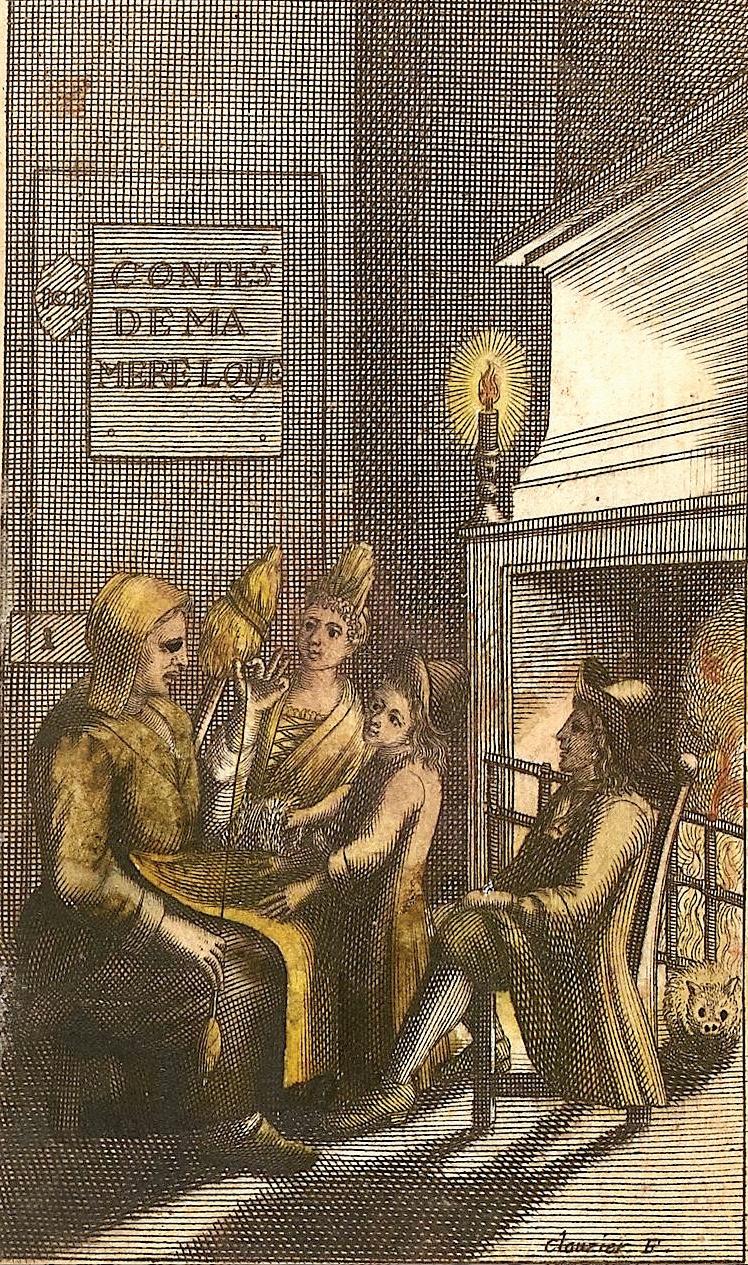
previous page, from top: Maurice Ravel, drypoint and aquatint print, 1909, by Achille Ouvré (1872–1951). Gallica Digital Library, Bibliothèque nationale de France | Reunion of Musicians at the House of Cipa Godebski, oil on canvas, 1910–11, by Georges d’Espagnat (1870–1950): from left to right, Florent Schmitt, Déodat de Séverac, Michel-Dimitri Calvocoressi, Cipa Godebski, Jean Godebski, Albert Roussel, Ricardo Viñes at the piano, and Maurice Ravel. Collection of Bibliothèque-Musée de l’Opéra national de Paris via Gallica Digital Library, Bibliothèque nationale de France | this page: Engraving by Antoine Clouzier (fl.1688–1697)—in which a nursemaid tells a story to a girl, a little boy, and an adult—as the frontispiece to Charles Perrault’s Histoires, ou contes du temps passé, avec des moralitez (Stories, or tales of olden times, with morals). Published by Claude Barbin (ca. 1637–1703), 1697, Paris, France
also, unforgettably, the birds making off with the crumbs.
Laideronnette, Empress of the Pagodas is a tale by the countess d’Aulnoy, a Perrault contemporary and imitator. The empress is serenaded at her bath by her subjects: “At once mandarins and mandarinettes set to singing and to the playing of instruments: some had lutes made of nutshells, some had viols made from the shells of almonds, for their instruments had to be in proportion to their own scale.” In the original four-hand version, the upper piano part is written entirely for the black keys, automatically producing melodies in the pentatonic scale, that most convenient way of conjuring up the Orient. When Ravel made his orchestral transcription, he serenaded the empress with an array of belllike and percussive sounds—cymbals, xylophone, glockenspiel, celesta, harp, and the ceremonial striking of the tam-tam—recalling the Javanese gamelan ensemble the fourteen-year-old composer had watched in wonder at the Paris Exhibition of 1889.
Ravel took the Conversations of Beauty and the Beast from the Moral Tales of Jeanne-Marie Leprince de Beaumont:
“When I think of your good heart you no longer seem so ugly to me.” “Oh yes, good lady! I have a good heart, but I am a monster.” “Many a man is more a monster than you.” “If I had the wit, I should pay you a great compliment, but I am only a beast.”
“Beauty, will you be my wife?” “No, Beast.”
“I die happy, for I have the joy of seeing you once more.” “No, my dear Beast, you will not die: You will live to become my husband!” . . . The Beast had disappeared, and she saw at her feet only a prince more beautiful than the god of love, who thanked her for having put an end to his spell.
Ravel gives the dialogue to the clarinet, playing Beauty, and the contrabassoon as Beast. She dances to a gentle waltz, and they talk. Finally, with a sweeping harp glissando, he is transformed into a princely violin.
The Enchanted Garden is Ravel’s own private place—one of unearthly beauty: the world of his own childhood memories viewed with the wisdom and affection of a grown man who has learned that only in fairy tales does one live happily ever after.
Without children of his own, or even any important students or disciples, Ravel grew, in his final years, to lament that no one would carry on his name or continue his work. “I have left nothing,” he said. “I have not said what I wanted to say. Alas, I am not one of the great composers!” But nearly all of the sixty-some pieces of music he left behind have found a permanent place in the repertoire—an astonishing and rare accomplishment—and Ravel’s deep-seated fear that, as he told seven-year-old Jeanne Leleu, he would die “an old fogey,” completely forgotten, turned out to be groundless.
FRANCIS POULENC
Born January 7, 1899; Paris, France
Died January 30, 1963; Paris, France
Gloria
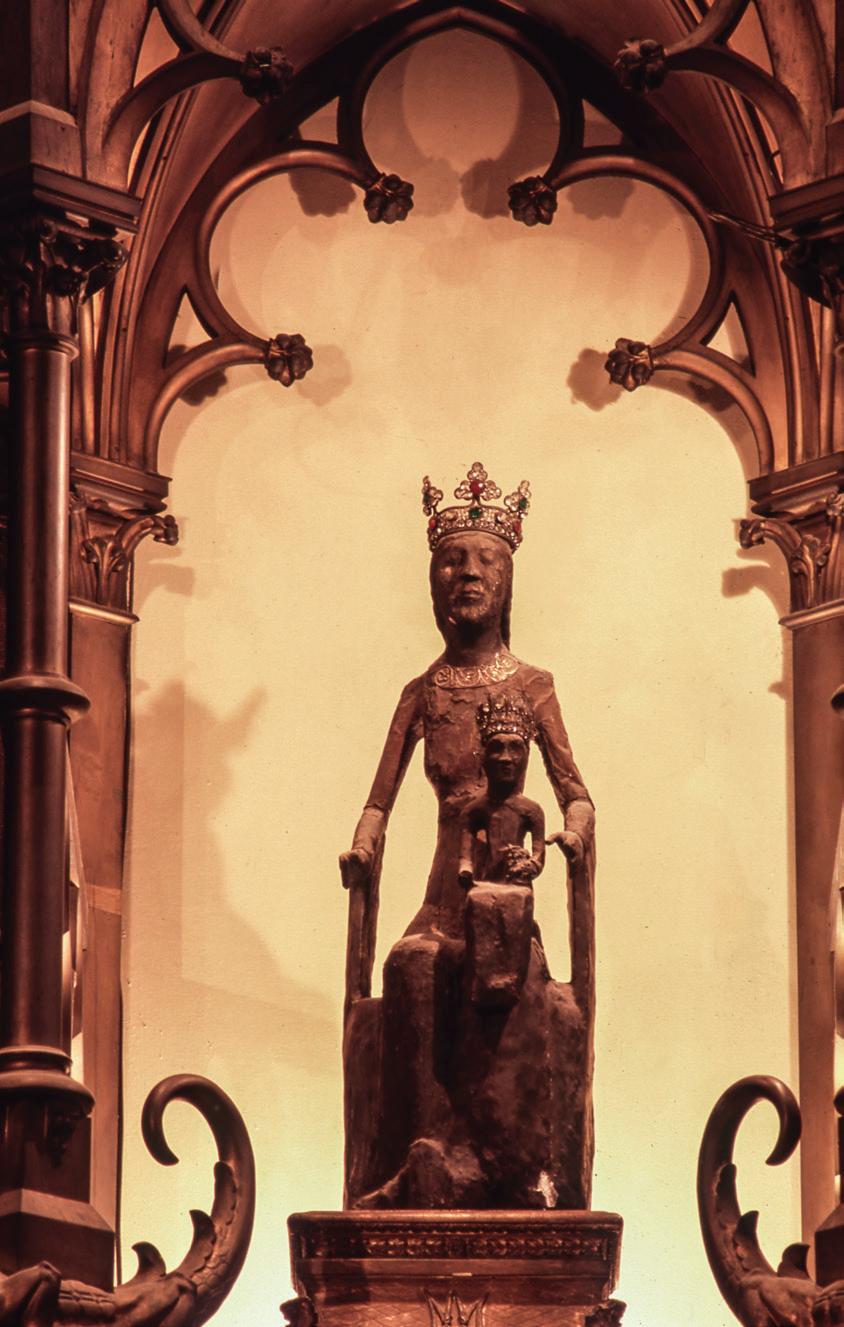
In August 1936, while Francis Poulenc, the lighthearted bad boy of French music, was vacationing in Uzerches in southwestern France, he learned that an acquaintance, fellow composer Pierre-Octave Ferroud, had been decapitated in a car crash. The violence of Ferroud’s death haunted Poulenc for years, prompting a new seriousness and depth of expression in his music—and eventually finding its grotesque echo in the celebrated guillotine finale of his opera Dialogues of the Carmelites. Immediately after hearing the news about Ferroud, Poulenc went to nearby Notre-Dame de Rocamadour, with its revered statue of the Virgin sculpted in black wood, a common pilgrimage destination. That night he began his first religious work, the Litanies to the Black Madonna, based on pilgrims’ prayers.
At the same time, Poulenc began to examine his own religious beliefs: “If I had some kind of faith,” he told the composer Georges Auric, “even a contrary one, that would be something, but I absolutely don’t.” But in a number of sacred works written over the next twenty-five years, Poulenc developed a unique religious musical style, one that confirms and in turn questions
COMPOSED
1959–60
FIRST PERFORMANCE
January 20, 1961; Boston, Massachusetts. The Boston Symphony Orchestra, Charles Munch conducting
INSTRUMENTATION
soprano solo, mixed chorus, and an orchestra consisting of 2 flutes and 2 piccolos, 2 oboes and english horn, 2 clarinets and bass clarinet, 2 bassoons and contrabassoon, 4 horns, 3 trumpets, 3 trombones, tuba, timpani, harp, strings
APPROXIMATE PERFORMANCE TIME 25 minutes
FIRST CSO PERFORMANCES
June 18, 1964, Ravinia Festival. Barbara Garrison as soloist, Harvard Glee Club and Radcliffe Choral Society (Elliot Forbes, director), Seiji Ozawa conducting
December 20, 21, and 22, 1984, Orchestra Hall. Barbara Pearson as soloist, Chicago Symphony Chorus (Margaret Hillis, director), Margaret Hillis conducting
MOST RECENT
CSO PERFORMANCES
July 11, 1986, Ravinia Festival. Benita Valente as soloist, Chicago Symphony Chorus (Margaret Hillis, director), James Levine conducting
October 5, 6, and 7, 2017, Orchestra Hall. Sandrine Piau as soloist, Chicago Symphony Chorus (Duain Wolfe director), Alain Altinoglu conducting
CSO RECORDING
2007. Jessica Rivera as soloist, Chicago Symphony Chorus (Duain Wolfe director), Bernard Haitink conducting. CSO Resound
the significance of faith. In a mass, composed the year after the Litanies, followed by several unaccompanied motets and two large works for chorus and orchestra, the Stabat mater of 1950 and the Gloria performed this week, Poulenc returned to the Roman Catholicism of his childhood.
Poulenc was born into a wealthy Parisian family and grew up in the city center, near the Élysée Palace. His father ran the huge Rhône-Poulenc pharmaceutical firm, and his mother came from a long line of native Parisians. He started studying the piano with his mother at the age of five, and he later took lessons from Ricardo Viñes, the great pianist and friend of Debussy and Ravel. He soon began to meet the artistic celebrities of the day, including Satie, Cocteau, and Stravinsky. He missed the scandalous premiere of The Rite of Spring in 1913 (he was just fourteen at the time), but he caught up with it the following year and was intoxicated by Stravinsky’s music. In 1917 he attended the historic opening of Satie’s Parade, with sets and costumes by Picasso, and quickly fell under Satie’s spell—Poulenc’s op. 1, a Rapsodie nègre, unveiled that same year, is dedicated to Satie. In 1920 Poulenc and five of his composer friends were dubbed Les Six, earning him a handy label in all the music history books, but also unfairly branding him forever as a frivolous, cheeky sophisticate inspired by the antics of Jean Cocteau.
Despite his early enthusiasm for the radical, rebellious composers of Paris—and even though he went to Vienna in 1921 to meet Schoenberg— Poulenc himself was essentially a traditionalist, although one with wit and a healthy streak of irreverence. “I am not the kind of musician who makes harmonic innovations, like Igor, Ravel, or Debussy,” he later said, insisting that “there is a place for new music that is content with using other people’s chords.” Even a strict modernist such as the young Elliott Carter,
writing in Modern Music in 1938, found Poulenc’s two-piano concerto convincing, despite what he called its pastiche of styles, “because of its great verve, which with Poulenc’s remarkable sensitivity to harmonic and orchestral sonorities, ends by captivating the most stubborn listener.” But in the second half of the twentieth century, when serialism was enjoying its vogue, genial harmonies and big tunes were considered suspect, and Poulenc was regularly overlooked or misunderstood, and his impertinent cabaret style was dismissed as quaint and phony. “I’ve often been reproached about my ‘street music’ side,” he once admitted. “Its genuineness has been
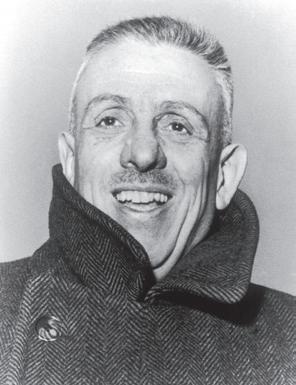
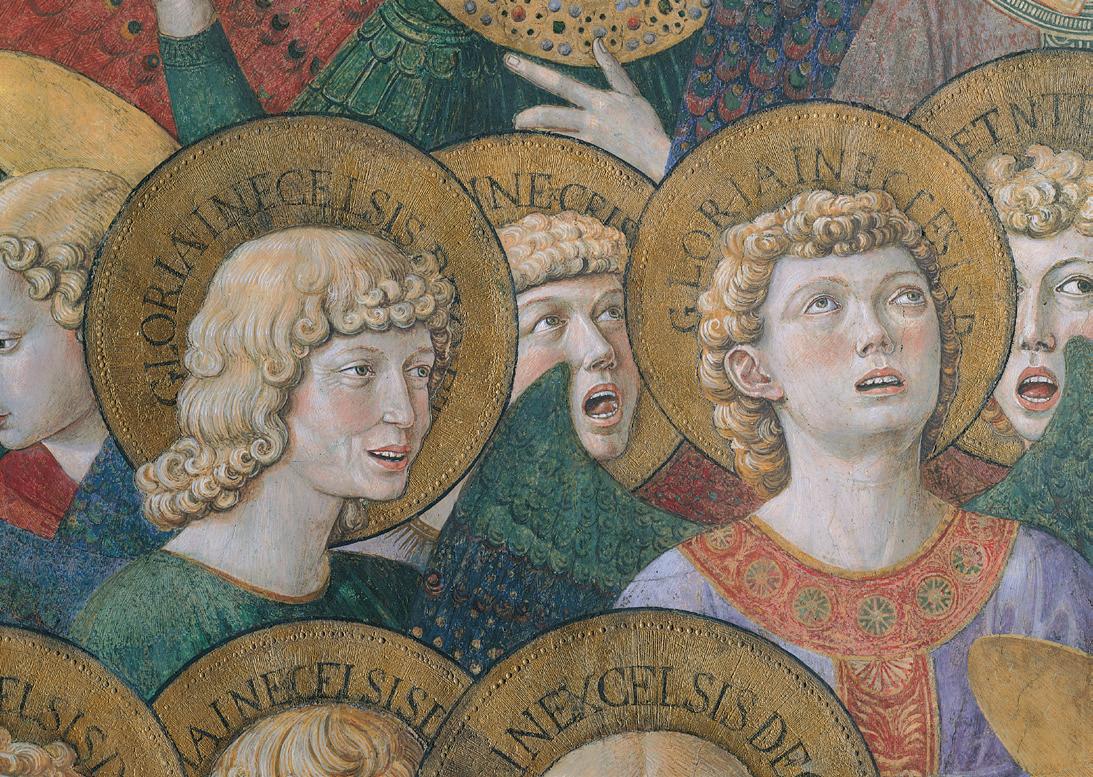
opposite page, from top: Francis Poulenc, ca. 1960. Photo by Keystone-France/Gamma-Keystone via Getty Images | Worshipping Angels, detail, fresco by Benozzo Gozzoli (ca. 1421–1497), ca. 1459–60, Palazzo Medici-Riccardi, Magi Chapel, Florence, Italy. Mondadori Portfolio, Hulton Fine Art Collection/Getty Images | this page: Statue of the Black Virgin of the Chapelle Notre-Dame de Rocamadour, Lot department, southwestern France. Photo by Christophe Boisvieux/Gamma-Rapho via Getty Images
suspected, and yet there’s nothing more genuine in me.” In fact, the way Poulenc marries serious musical ideals with the wit and style of Parisian café society is the essence of his unique language. His music becomes truly powerful—not just merely delectable—when it encompasses both majesty and insouciance, gravity and charm, sobriety and high spirits.
In a tribute written after Poulenc’s death in 1963, the American composer Ned Rorem called Poulenc “a whole man always interlocking soul and flesh, sacred and profane.” That duality is the heart of the radiant and moving Gloria he composed for the Boston Symphony Orchestra shortly before he died. “I think I put the best and most authentic side of myself into my choral music,” the composer once said, and this Gloria is one of Poulenc’s finest works. In six movements, alternately introspective and breezy, Poulenc’s Gloria resembles no other work of sacred music. The fanfare-like opening confirms how brilliantly Poulenc was able to make something fresh and effective of a style Stravinsky had worn out long ago. The lovely third and fifth movements, with their ethereal soprano solos written with the voice of Leontyne Price in mind (she had to withdraw from the Boston performances because of scheduling conflicts), find Poulenc at his most reflective and touching. The jauntier sections, such as the saucy Laudamus te, with its dance-hall rhythms and off-kilter text settings, have always surprised those listeners who expect a more devout kind of joy. Poulenc said they simply reminded him of a favorite fifteenth-century fresco by Benozzo Gozzoli in Florence’s Palazzo Medici-Riccardi, in which the angels stick out their tongues at one another.
Poulenc went to Boston to sit in on rehearsals in January 1961. Although he seemed pleased with the way conductor Charles Munch was preparing the piece, and he often genially conducted along, the open score in his lap, privately he muttered about “the dear, the adorable, the exquisite Charlie who understood nothing” of his piece. The performance, on one of Boston’s snowiest days, was a great success nonetheless, and Poulenc was showered with cheers, although the high point for him apparently was the appearance of Marlene Dietrich, who posed for photographs kissing the composer.
The next morning the critic for the Boston Globe did not hesitate to call the Gloria “one of the French composer’s major scores and an exceedingly fine work.” Likewise, the reviewer for the Boston Herald called it a “major work, prominent in the career of a contemporary master and a significant addition to the repertory of twentieth-century music.” When the Gloria was performed in New York four months later, legendary New York Times critic Harold C. Schonberg found much to praise but sounded a cautionary note: “How much staying power the score has remains to be seen.” In fact, in the years after Poulenc’s death, when the composer’s reputation was at a low, the Gloria was programmed surprisingly little by America’s big orchestras and choruses. The Chicago Symphony didn’t present the work in Orchestra Hall until 1984 (having first done it at Ravinia two decades earlier). But fashions have changed. After some fifteen seasons without a piece by Poulenc on our orchestra’s subscription concerts, several of his major works—including the organ concerto, the two-piano concerto, and the Gloria—have been performed here in recent seasons. Perhaps Poulenc’s star is on the rise again.
Gloria in excelsis Deo, et in terra pax hominibus bonae voluntatis.
Laudamus te. Benedicimus te. Adoramus te. Glorificamus te. Gratias agimus tibi propter magnam gloriam tuam.
Domine Deus, Rex caelestis, Deus Pater omnipotens.
Domine fili unigenite Jesu Christe.
Domine Deus, Agnus Dei, Filius Patris. Qui tollis peccata mundi, miserere nobis.
Qui tollis peccata mundi, suscipe deprecationem nostram.
Qui sedes ad dexteram Patris, miserere nobis.
Quoniam tu solus Sanctus. Tu solus Dominus.
Tu solus Altissimus, Jesu Christe. Cum Sancto Spiritu, in gloria Dei Patris. Amen.
GLORIA
Glory to God in the highest, and on earth peace to people of goodwill.
We praise thee, we bless thee, we adore thee, we glorify thee. We give thee thanks for thy great glory.
Lord God, heavenly King, God the Father almighty.
Lord Jesus Christ, the only-begotten Son.
Lord God, Lamb of God, Son of the Father, who takes away the sins of the world, have mercy on us.
Who takes away the sins of the world, receive our prayer.
Who sits at the right hand of the Father, have mercy on us.
For you alone are holy. You alone are the Lord. You alone, Jesus Christ, are most high, with the Holy Spirit, in the glory of God the Father. Amen.
The Chicago Symphony Orchestra family honors Cheryl Frazes Hill for fifty seasons with the Chicago Symphony Chorus. She began as a singer in 1976, and in 1987 founder and first director Margaret Hillis appointed her to the conducting staff. She assisted Hillis until her retirement in 1994 and continued in that role with second director Duain Wolfe until his retirement in 2022, and she currently works with Donald Palumbo, who became director in 2025. Frazes Hill’s first book—Margaret Hillis: Unsung Pioneer—was released by GIA Publications in 2022. Please visit cso.org/experience for an interview with Frazes Hill on her fifty seasons with the Chorus.
CAMILLE SAINT-SAËNS
Born October 9, 1835; Paris, France
Died December 16, 1921; Algiers, Algeria
Symphony No. 3 in C Minor, Op. 78 (Organ)
Although Franz Liszt never heard this piece—it was premiered in London two months before his death—he had admired the score during his last visit to Paris, while Saint-Saëns was still working on it. In July 1886, when Saint-Saëns learned that Liszt had died (in Bayreuth, where he had gone to visit his daughter Cosima Wagner and to attend Tristan and Isolde and Parsifal), he decided to publish this new symphony with a dedication to the older composer’s memory.
Liszt’s music served as a model to Saint-Saëns throughout his career. The unconventional form of this C minor symphony, with two movements folded into each of its two main sections, and its use of a signature theme that is transformed as the work proceeds, are clearly indebted to the innovations of Liszt’s own scores. Saint-Saëns may even have taken the idea of including the organ in a piece of symphonic music from one of Liszt’s tone poems, The Battle of the Huns. (Saint-Saëns never misunderstood Liszt’s true importance to the history of music: “The world persisted to the end,” he wrote, “in calling him the greatest pianist in order to avoid the trouble of considering his claims as one of the most remarkable of composers.”)
Saint-Saëns’s own musical life had a Mozartean beginning. At the age of two, as he later recalled, he observed “the symphony of the kettle,” with “its slow crescendo so full of surprises, and the appearance of a microscopic oboe whose sound rose little by little until the water had reached a boiling point.” At four, he performed part of one of Beethoven’s violin sonatas in a Paris salon, and he began to compose at six. He made his public debut in the Salle Pleyel in Paris at ten, playing a piano concerto by Mozart and a movement from Beethoven’s C minor piano concerto, and offering, as an encore, to perform from memory any one of Beethoven’s thirty-two sonatas the audience requested. “This young man knows everything,
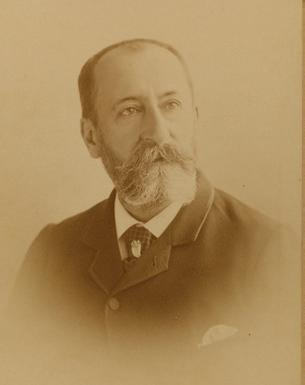
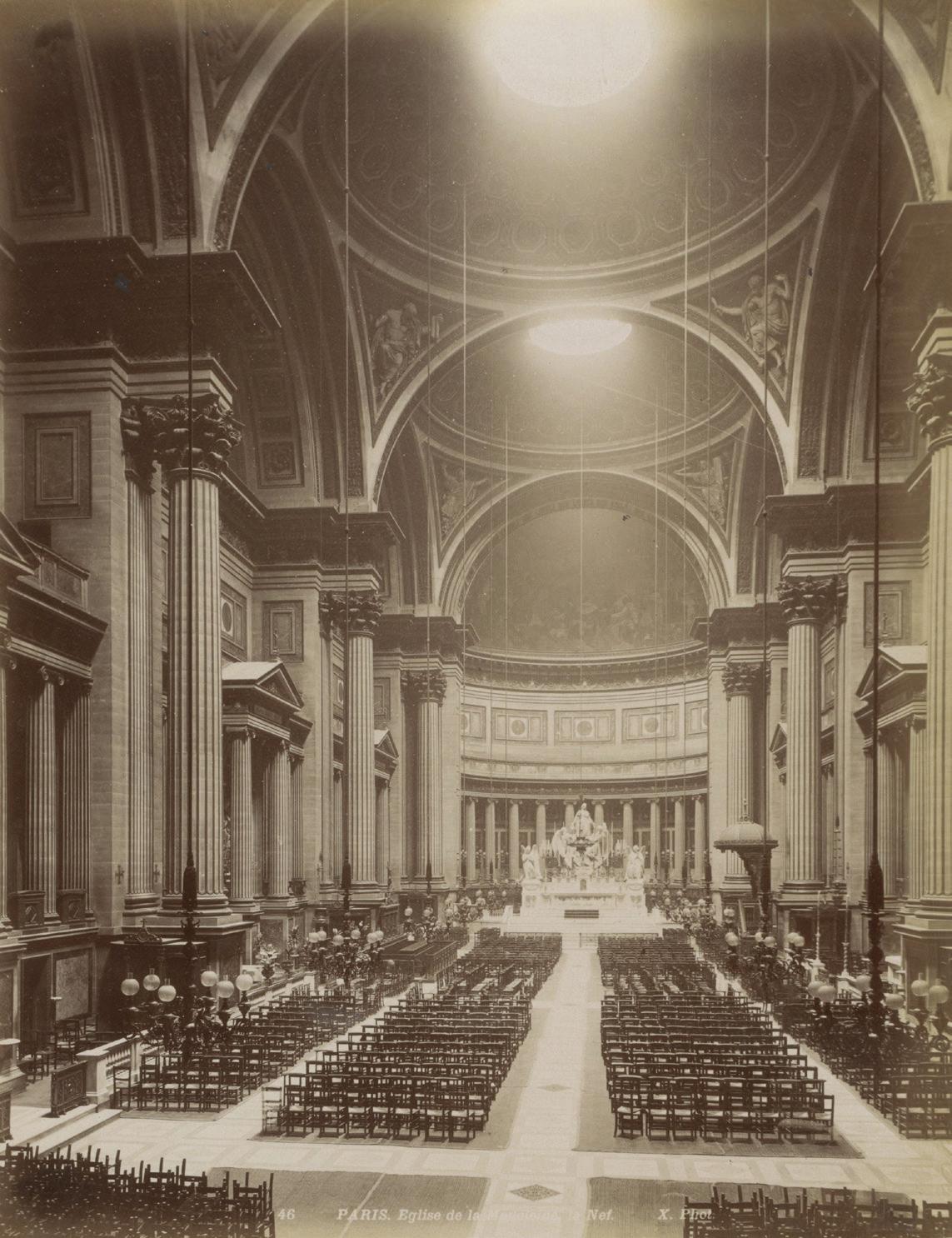
this page: Camille Saint-Saëns, portrait, albumen print on paper, studio of J. Lacroix, active ca. 1850–1900. Musée Carnavalet, History of Paris, France | opposite page: The nave of La Madeleine in Paris, the church where Saint-Saëns served as titular organist from 1858 to 1877. Albumen print on paper, ca. 1880–1900
COMPOSED 1886
FIRST PERFORMANCE
May 19, 1886. The composer conducting
INSTRUMENTATION
3 flutes (3rd doubling piccolo), 2 oboes and english horn, 2 clarinets and bass clarinet, 2 bassoons and contrabassoon, 4 horns, 3 trumpets, 3 trombones, tuba, timpani, triangle, cymbals, bass drum, solo organ, piano, strings
APPROXIMATE PERFORMANCE TIME
34 minutes
FIRST CSO PERFORMANCES
October 30 and 31, 1891, Auditorium Theatre. Clarence Eddy as soloist, Theodore Thomas conducting August 8, 1937, Ravinia Festival. Walter Zimmerman as soloist, Frederick Stock conducting
MOST RECENT
CSO PERFORMANCES
July 21, 2007, Ravinia Festival. Stephen Alltop as soloist, Andrew Litton conducting
December 15, 16, 17, and 18, 2022, Orchestra Hall. Cameron Carpenter as soloist, Nikolaj Szeps-Znaider conducting
CSO RECORDING
1975. Gaston Litaize as soloist, Daniel Barenboim conducting. Deutsche Grammophon
but he lacks inexperience,” Berlioz wrote.
Saint-Saëns quickly grew into an artist of maturity and taste, both as a performer and as a composer. Berlioz called him “an absolutely shattering master pianist,” and Proust wrote that his playing was free of the “writhings, shakings of the head, and tossing of hair that adulterate the purity of music with the sensuality of dance.” (Saint-Saëns played his Second Piano Concerto with the Chicago Symphony Orchestra in November 1906.)
Saint-Saëns lived a full half century longer than Mozart, however, and he kept composing and performing to the very end. (He played in public for the last time just four months before his death.) His career is one of music’s longest and most productive. During his lifetime, composers as diverse as Mahler, Tchaikovsky, and Debussy were born and died. When Saint-Saëns himself died, at eighty-six, he had made his mark as a writer of operas, symphonies, concertos, and a treasure trove of smaller miscellaneous pieces. Today the public knows but a mere sliver of this vast output—particularly the Carnival of the Animals he never took seriously and refused to publish; two or three of his concertos; Samson and Delilah (alone of his dozen operas); and this, the so-called Organ Symphony. This symphony was popular from the start. After Saint-Saëns conducted the Paris premiere, Charles Gounod remarked “There goes the French Beethoven!”—an indication more of Saint-Saëns’s status at the time rather than a true barometer of his musical vision or depth. Saint-Saëns himself recognized that his considerable gifts—including a genuine flair for
sumptuous orchestral color, suave and unforgettable melody, and brilliant craftsmanship—while untouched by most of his contemporaries, were not those of a pioneer. “First among composers of the second rank,” was, reportedly, his own surprisingly honest and self-effacing, if offhand evaluation.
Neither a conventional symphony nor a true tone poem, the Organ Symphony borrows elements from both traditions. The form itself is unusual. “This symphony is divided into two parts,” Saint-Saëns wrote at the time of the premiere. “Nevertheless, it embraces in principle the four traditional movements, but the first is altered in its development to serve as the introduction to the Poco adagio, and the scherzo
is connected by the same process to the finale.” In other words, more experimentation with the standard chapters of symphony and sonata—with the fusing of movements and the blurring of dividing lines—of the sort begun earlier in the nineteenth century and vigorously pursued by Liszt in particular.
The score opens with a brief, slow introduction—just long enough to announce a rising four-note motif that is Saint-Saëns’s main musical material. This theme is already changed, in character if not in content, by the first agitated measures of the main Allegro section that follows. A second, more lyrical melody eventually is combined with the main motif before the music loses momentum as it prepares the way for the Poco adagio, reached without pause. Here, an “extremely peaceful, contemplative theme,” as the composer described it, is presented low in the strings over soft organ chords. The calm and beauty are eventually disturbed, though not shattered, by the turbulence of the Allegro. The two dissimilar musical worlds coexist happily by the end of the movement, when nervous pizzicato triplets from the Allegro accompany the Poco adagio’s serene and untroubled melody.
The second movement begins with a scherzo-like tempestuous transformation of the symphony’s main material, dispelled briefly
by “arpeggios and scales, swift as lightning,” on the piano. (Saint-Saëns himself was a highly accomplished performer on both the piano and organ, and this symphony includes substantial and prominent roles for the two instruments, although it is the organ, so unexpected in a symphony, that has given the work its popular subtitle.) This peculiar combination of fury and “tricky gaiety” is later undercut by a powerful, “grave, austere” theme in the trombones, tuba, and basses. “There is a struggle for mastery,” Saint-Saëns writes, “which ends in the defeat of the restless, diabolical element.”
This solemn theme rises “and rests there as in the blue of a clear sky,” signaling a significant change in the symphony’s direction. A mighty chord from the full organ “announces the approaching triumph of calm and lofty thought.”
The initial theme, now entirely transformed by the strings and shimmering piano chords, leads into a development of majesty, energy, and lyricism. There are several detours—including an unexpected pastoral episode for oboe, flute, english horn, and clarinet—and further transformations, but Saint-Saëns’s triumphant, heaven-storming destination is now in sight.
Phillip Huscher has been the program annotator for the Chicago Symphony Orchestra since 1987.
PROFILES
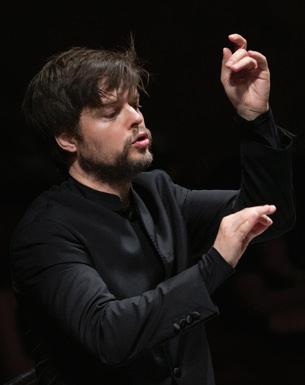
Juraj Valčuha Conductor
FIRST CSO PERFORMANCES
June 1, 3, and 4, 2017, Orchestra Hall. Haydn’s Symphony no. 85; Szymanowski’s Violin Concerto no. 1 with Christian Tetzlaff; Johann Strauss, Jr.’s Emperor Waltz; and a suite from Richard Strauss’s Der Rosenkavalier
MOST RECENT CSO PERFORMANCES
June 13, 14, and 15, 2024, Orchestra Hall. Weber’s Overture to Oberon; Puts, Meyer, Heggie, Higdon, and Montgomery’s The Elements with Joshua Bell; and Shostakovich’s Symphony no. 1
Conductor Juraj Valčuha is recognized for the effortless expressiveness and the depth of his musicianship. With a sharp baton technique and natural stage presence, he translates even the most complex scores into immersive experiences through the impressive ease of his interpretations.
Since 2022, Juraj Valčuha has been music director of the Houston Symphony. He previously was music director of the Teatro di San Carlo in Naples and first guest conductor of the Konzerthausorchester Berlin. He also was chief conductor of the RAI National Symphony in Turin from 2009 to 2016.
Born in Bratislava, Slovakia, Juraj Valčuha studied composition and conducting in Saint
Petersburg and Paris. His international career began in 2005 on the podium of the Orchestre National de France, followed by debuts in the United Kingdom with the Philharmonia Orchestra, in Germany with the Munich Philharmonic, and in the United States with the Pittsburgh Symphony. He has since conducted the Leipzig Gewandhaus Orchestra, Dresden Staatskapelle, Munich Philharmonic, Berlin Philharmonic, Swedish Radio Symphony, Royal Concertgebouw Orchestra Amsterdam, Rotterdam Philharmonic, Orchestre de Paris, Maggio Musicale in Florence, Filarmonica della Scala, NHK Symphony Tokyo, and the Orchestre symphonique de Montréal.
His 2025–26 engagements have taken him to the Houston, Pittsburgh, and San Francisco symphony orchestras, as well as to the Yomiuri Nippon Symphony Orchestra in Tokyo. In Europe, he joins the Orchestre National de France, the Konzerthausorchester Berlin, the Bamberg Symphony, Munich Philharmonic, WDR Symphony Orchestra Cologne, the Orchestra dell’Accademia Nazionale di Santa Cecilia in Rome, the Basque National Orchestra in Spain, the NDR Elbphilharmonie in Hamburg, and the RAI National Symphony Orchestra in Turin.
On the opera stage, he leads Debussy’s Pelleas and Melisande at the Grand Théâtre de Genève as well as Stauss’s Elektra, Verdi’s Don Carlo, and Puccini’s La bohème at the Deutsche Oper Berlin.
July 31, 2004, Ravinia Festival. Vaughan Williams’s Serenade to Music, Christoph Eschenbach conducting
November 5, 6, 7, and 10, 2009, Orchestra Hall. Mendelssohn’s Incidental Music to A Midsummer Night’s Dream, Bernard Haitink conducting
MOST RECENT CSO PERFORMANCES
June 23, 24, and 25, 2023, Orchestra Hall. Beethoven’s Missa solemnis, Riccardo Muti conducting
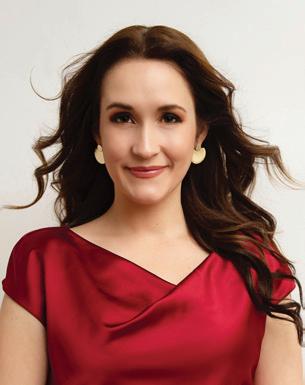
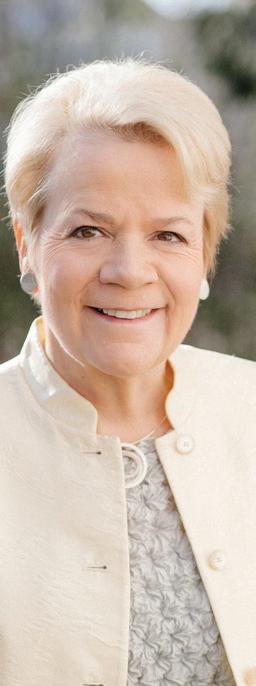
One of today’s most sought-after lyric coloratura sopranos, Erin Morley has been praised for the clarity of her voice and the precision of her coloratura.
A recipient of the Beverly Sills Award and a graduate of the Metropolitan Opera’s Lindemann Young Artist Development Program, she has garnered worldwide critical acclaim for her performances, regularly appearing on the greatest opera stages, including the Wiener Staatsoper, Teatro alla Scala in Milan, Bayerische Staatsoper in Munich, Opéra National de Paris, Gran Teatre del Liceu in Barcelona, Glyndebourne Opera, Santa Fe Opera, Los Angeles Opera, and the Metropolitan Opera in New York, where she has now sung more than 100 performances and been featured in five Live in HD broadcasts.
In the 2025–26 season, Erin Morley made her anticipated role debut as Marie in Laurent Pelly’s production of Donizetti’s The Daughter of the Regiment and Pamina in Mozart’s The Magic Flute, both at the Metropolitan Opera, and returned to the Wiener Staatsoper as Zerbinetta in Strauss’s Ariadne auf Naxos. On the concert platform, to mark the release of Golden Ages, her long-awaited album with tenor Lawrence Brownlee, the duo embarks on a tour in celebration, presenting in-demand recitals at many venues, including DC Vocal Arts, the Berlin Radio Symphony Orchestra at the Konzerthaus, the 92nd Street Y in New York, Opera Carolina, and the Newport Classical Music Festival, among others. She also appeared in a gala concert with the Met Orchestra Chamber Ensemble at Carnegie Halls’s Weill Recital Hall.
Last season saw Erin Morley’s return to the Metropolitan Opera as Olympia in Offenbach’s The Tales of Hoffmann and Gilda in Verdi’s Rigoletto. Further highlights included her return to the Arena di Verona as soloist in Orff’s Carmina Burana and to Semperoper Dresden as Cunegonde in concert performances of Bernstein’s Candide. Elsewhere on the concert platform, Morley joined the Staatskapelle Berlin and Christian Thielemann in a tour to Berlin and Vienna in a program of Strauss’s orchestrated songs and appeared with Boston Symphony Orchestra and Boston Baroque.
PHOTO BY MONARCA
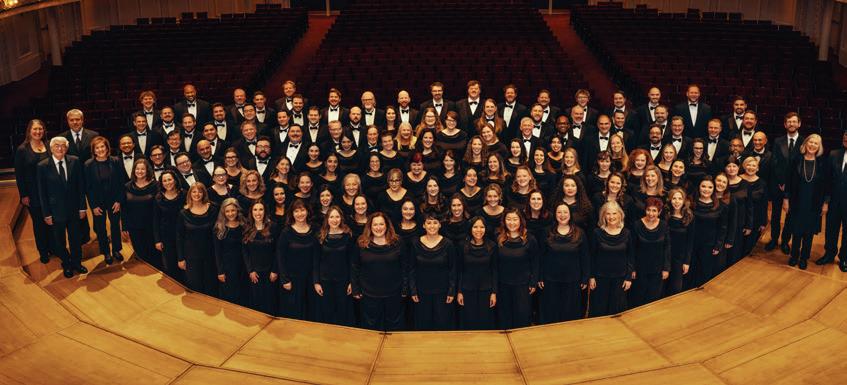
Chicago Symphony Chorus
The Chicago Symphony Chorus regularly performs with the Chicago Symphony Orchestra in Orchestra Hall and at the Ravinia Festival.
The history of the Chorus began in 1957, when sixth music director Fritz Reiner invited Margaret Hillis to establish a chorus to equal the quality of the Orchestra. Hillis accepted the challenge, and the Chicago Symphony Chorus debuted in March and April 1958, in Mozart’s Requiem under Bruno Walter and Verdi’s Requiem under Reiner. Hillis served the Chorus for thirty-seven years. In 1994 ninth music director Daniel Barenboim appointed Duain Wolfe, who served as the Chorus’s director and conductor until his retirement in 2022. Donald Palumbo was appointed as the Chorus’s third director in 2025.
The Chorus first performed in Carnegie Hall in 1967 in Henze’s Muses of Sicily and Ravel’s Daphnis and Chloe under seventh music director Jean Martinon, and most recently in 2015 with Riccardo Muti for Scriabin’s Prometheus and Prokofiev’s Alexander Nevsky. Touring internationally with the Orchestra, the Chorus traveled to London and Salzburg in 1989 with Sir Georg Solti for performances of Berlioz’s The Damnation of Faust and to Berlin in 1999 with Barenboim for Brahms’s A German Requiem and Pierre Boulez for Schoenberg’s Moses und Aron.
World premieres featuring the Chorus have included Ned Rorem’s Goodbye My Fancy, John Harbison’s Four Psalms, and Bernard Rands’s apókryphos. With visiting orchestras, the Chorus has collaborated with the Berlin Philharmonic under Claudio Abbado, the Boston Symphony Orchestra and Seiji Ozawa, the Israel Philharmonic Orchestra with Zubin Mehta, and the Staatskapelle Berlin under Barenboim.
Since first recording commercially in 1959—Prokofiev’s Alexander Nevsky under Reiner—the Chorus has amassed a discography that includes hallmarks of the choral repertoire and several complete operas. The Chorus most recently received a 2010 Grammy Award for Best Choral Performance for Verdi’s Requiem, led by Riccardo Muti on CSO Resound. The Chorus has received an additional nine Grammy awards for Best Choral Performance for Verdi’s Requiem, Beethoven’s Missa solemnis, Brahms’s A German Requiem, Berlioz’s The Damnation of Faust, Haydn’s Creation, and Bach’s Mass in B minor with Solti; Brahms’s Requiem and Orff’s Carmina Burana with James Levine; and Bartók’s Cantata profana with Boulez.
The Chorus also has appeared on two movie soundtracks with the Orchestra: Fantasia 2000 led by Levine, and John Williams’s score for Lincoln conducted by the composer. Recordings on CSO Resound featuring the Chorus include Mahler’s Second and Third symphonies, Poulenc’s Gloria and Ravel’s Daphnis and Chloe under Bernard Haitink; and Berlioz’s Lélio, Verdi’s Otello, Schoenberg’s Kol Nidre, choruses by Verdi and Boito’s Prologue to Mefistofele, Shostakovich’s Symphony no. 13 (Babi Yar), and most recently Mascagni’s Cavalleria rusticana under Riccardo Muti.
Donald Palumbo Chorus Director
Donald Palumbo was born in Rochester, New York, and received a bachelor of arts degree from Boston University. His career was launched in the 1980s at the Dallas Opera, where he served as assistant to Roberto Benaglio, the renowned Italian chorus master of Teatro alla Scala in Milan. Following a sixteen-year tenure as chorus director at the Lyric Opera of Chicago from 1991 to 2007, Palumbo assumed the same position at the Metropolitan Opera. There he was responsible for the Met Chorus’s participation in more than twenty productions each season, and his work was honored with seven Grammy awards for Best Opera Recording. After stepping down from his position at the Met in June 2024, he returned to the theater in the following season to prepare the chorus in a new production of Verdi’s Aida.
Palumbo’s appointment as the third chorus director of the Chicago Symphony Chorus was announced in June 2025, and he began an initial three-year tenure on July 1, 2025. As director, he works with the Chorus each year to prepare multiple programs across the Chicago Symphony Orchestra’s downtown season and the annual summer residency at the Ravinia Festival.
Palumbo was music director of the Chorus pro Musica of Boston and has also served as chorus master of the Canadian Opera Company, Dallas Opera, Banff School for the Arts Summer Opera Program, the Opera Company of Boston, and Opera Theatre of Saint Louis. In Europe, he has
held chorus master positions at Opéra de Lyon, the Aix-en-Provence Festival, the Théâtre du Châtelet, and the Teatro Massimo in Palermo. From 1999 to 2001, Palumbo was chorus director of the Salzburg Festival, the first American to hold that position.
He has worked extensively at the Théâtre du Châtelet in Paris, preparing the chorus for the Berlioz Festival in 1990—Requiem, The Damnation of de Faust, Romeo and Juliet—and performances of Britten’s Peter Grimes and Janáček’s Jenůfa. Palumbo has conducted the Radio France Chorus in several a cappella choral concerts and prepared Britten’s War Requiem.
Palumbo has been a vocal coach for the Apprentices of the Santa Fe Opera since 2014 and a faculty member of the Marcus Institute for Vocal Arts at the Juilliard School in New York since 2016.
In 2022 and 2023, he joined the Chicago Symphony Orchestra as guest chorus master for performances of Verdi’s Un ballo in maschera and Beethoven’s Missa solemnis, both works conducted by Riccardo Muti. Shortly after his appointment in June 2025, he was guest chorus master for performances of Verdi’s Requiem, also led by Muti.
In June 2024 he prepared the choral forces for a concert performance of Puccini’s La bohème for the Philadelphia Orchestra under Yannick NézetSéguin and returned for Wagner’s Tristan and Isolde in June 2025. In March 2025 he prepared the chorus for Verdi’s La traviata staged in Kyoto and Tokyo for the Seiji Ozawa Music Academy.
Donald Palumbo returned to the Lyric Opera of Chicago in May 2025 to prepare and conduct a program of scenes with the artists of the Ryan Opera Center.
Chicago Symphony Chorus
Donald Palumbo Director
Cheryl Frazes Hill Associate Director
Jennifer Kerr Budziak Assistant Director
Benjamin Rivera Assistant Director
SOPRANOS
Michele Agpalo
Alicia Monastero Akers*
Melinda Alberty
Nicole Besa
Anna Joy Buegel
Anastasia Cameron Balmer
Katarzyna Dorula
Nida Grigalaviciute
Kimberly Gunderson
Amy Gwinn-Becker
Ashlee Hardgrave
Megan Hendrickson
Betsy Hoats
Marissa Howard
Alexandra Ioan
Alison Kelly
Susan Krout
Katelyn Lee
Rosalind Lee
Kristin Lelm
Amanda Compton LoPresti*
Suzanne Ma-Ebersole
Taylor Jacobson Manrique
Lillian Murphy
Máire O’Brien
Cari Plachy
Elvira Ponticelli
Margaret Quinnette
Meaghan Smallwood
Rachel Sparrow
Heidi Jo Stirling
Samantha Thielen Pak
ALTOS
Emily Amesquita
Melissa Arning
Angela Born
Diane Busko Bryks
Magaly Cordero
Sandra Cross
Leah Dexter
Stacy Eckert
Liana German
Jennifer Gingrich
Elizabeth Haley Hamilton
Catarine Hancock
Ruth Ginelle Heald
Miya Higashiyama
Carla Janzen Norton
Robin A. Kessler
Thereza Lituma
Kathleen Madden
Clarissa Parrish Short
Laura Polevoy
Sarah Ponder
Emily Price*
Emlynn Shoemaker
Cassidy Smith*
Aidan Spencer
Debra Wilder
TENORS
Madison Bolt
Michael Brauer
Joseph Cloonan*
Micah A. Dingler
Claire DiVizio
Nicholas Falco
W. Ryan Frenk
Ace T. Gangoso
Klaus Georg*
Jianghai Ho
Michaël Hudetz
Garrett Johannsen
James Judd
Stephen Mollica
Keith A. Murphy
Nathan S. Oakes
Wha Shin Park
Steven Michael Patrick
Brett Potts
Nicholas Pulikowski
Cole Seaton
Aaron Short
Brian Skoog
Alan Taylor
Paul W. Thompson
Ryan Townsend Strand
The Chorus was prepared for these performances by Donald Palumbo. *Section leader
BASSES
Matthew Brennan*
Conor Broaders
Terry L. Bucher
Michael Cavalieri
Chris DiMarco
William Esch
Christopher Filipowicz
Dimitri German
David Govertsen
Kevin Michael Hall
Adam Lance Hendrickson
Jess Koehn
Mathew Lake
Lee Lichamer*
Bill McMurray
Eric Miranda
Ian Murrell
Douglas Peters
Robert J. Potsic
Ian R. Prichard
Stephen Richardson
Joseph Smith
Scott Uddenberg
Nicholas Ward
Peter Wesoloski
Jonathan Wilson
CHORUS MANAGER
Melissa Hilker
CHORUS LIBRARIAN, ASSISTANT CHORUS MANAGER, AND EXECUTIVE ASSISTANT TO THE VP FOR ARTISTIC PLANNING
Olive Haugh
REHEARSAL PIANISTS
John Goodwin
Sharon Peterson
Chuck Foster
Patrick Godon Organ
FIRST CSO PERFORMANCES
May 24, 25, 26, and 29, 2007, Orchestra Hall. McPhee’s Tabuh-tabuhan with Mary Sauer, Alan Gilbert conducting
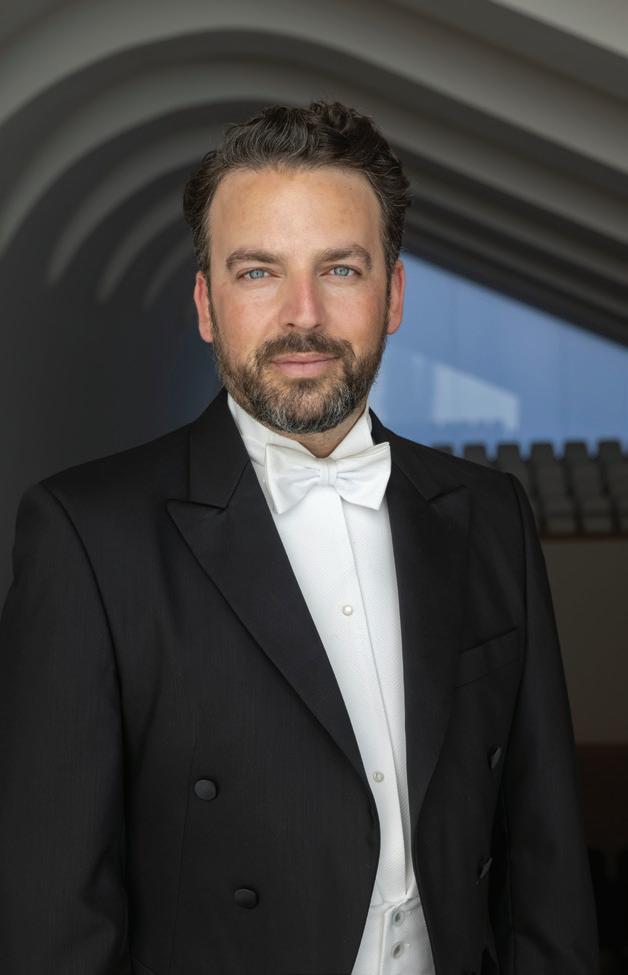
A native of Fargo, North Dakota, Patrick Godon studied organ with Anne Morris, Peter Nygaard, and Michael Olson. He began piano studies with former Chicago Symphony Orchestra Principal Keyboard Mary Sauer in 1997. He also studied with Andrzej Dutkiewitz at the Interlochen Arts Camp (1995) and Jacob Lateiner at the Mannes Beethoven Institute in New York (2001) and pursued opera coaching with Linda Hirt and Benton Hess in Urbania, Italy, through the Oberlin Conservatory (2000). He holds bachelor’s and master’s degrees in piano performance from DePaul University.
Patrick Godon first appeared with the Chicago Symphony Orchestra as second keyboard at the Ravinia Festival in 2003. He was invited to play principal keyboard on the Orchestra’s 2018 East Coast Tour and January 2017 European Tour and second keyboard on its 2005 European Tour and for nine Carnegie Hall performances. Rehearsal pianist for Daniel Barenboim and Deborah Voigt for Schoenberg’s Erwartung in 2004, he began performing regularly as organist with the CSO in 2015 and has served as an acting principal keyboard since 2016. Godon also performs as keyboard of the Delaware and Milwaukee symphony orchestras. In the summer of 2025, he was organist in Saint-Saëns’s Organ Symphony
with the Grant Park Orchestra. In demand as a collaborative pianist, he has performed on many live broadcasts on Chicago’s classical music station, WFMT-FM.
A nine-year member of the Civic Orchestra of Chicago, Patrick Godon served as principal piano from 2002 to 2007. He performed in Civic’s chamber music master classes for Mitsuko Uchida and Thomas Kakuska of the Alban Berg Quartet. The Civic Orchestra, celebrating its hundredth season in 2020, invited him back as a distinguished alumnus to perform Saint-Saëns’s Organ Symphony.
In 2018 Patrick Godon was named organist/ choirmaster at the Church of the Holy Spirit in Lake Forest, Illinois, leading the St. Gregory’s Youth Choir, Evensong Choir, and Holy Spirit Choir. In 2024 he took the Holy Spirit Choir on a week-long residency to Canterbury Cathedral in England, to which they return in 2027 to celebrate York Minster’s 1400th anniversary. From 2003 to 2018 he was director of music at St. Gregory the Great Church in Chicago, where he composed a variety of music and led the parish choir on eight international performance pilgrimages.
In 2011 he became music director of the Tower Chorale, a ninety-voice choir based in Western Springs, Illinois, which celebrates its fortieth anniversary season this year.
Patrick Godon is artistic director, pianist, and founding member of the International Chamber Artists, a chamber-music ensemble currently celebrating its twentieth anniversary season. ICA, featured annually on WFMT-FM, performs a five-concert series at the Church of the Holy Spirit and at Lake Forest Place in Lake Forest.
He and his wife Keri are the proud parents of Gilbert, Oliver, and Atticus.
REFRESHMENTS AT SYMPHONY CENTER
You can order drinks and snacks before the performance or during intermission at various bars located throughout Symphony Center, including the Bass Bar in the Rotunda and most of the lobby spaces in Orchestra Hall.
PHOTO COURTESY OF THE ARTIST
Thank you to our members for planning a gift that supports the CSO’s future.
We are honored to play a part in your legacy.
The Theodore Thomas Society recognizes individuals who have included the Chicago Symphony Orchestra in their will, trust or beneficiary designation — supporting the legacy of artistic excellence built by founder and first music director Theodore Thomas.
Contact Joe Bauer at 312-294-3192 or visit cso.org/plannedgiving for more information.
The Chicago Symphony Orchestra—consistently hailed as one of the world’s best—marks its 135th season in 2025–26. The ensemble’s history began in 1889, when Theodore Thomas, the leading conductor in America and a recognized music pioneer, was invited by Chicago businessman Charles Norman Fay to establish a symphony orchestra. Thomas’s aim to build a permanent orchestra of the highest quality was realized at the first concerts in October 1891 in the Auditorium Theatre. Thomas served as music director until his death in January 1905, just three weeks after the dedication of Orchestra Hall, the Orchestra’s permanent home designed by Daniel Burnham.
Frederick Stock, recruited by Thomas to the viola section in 1895, became assistant conductor in 1899 and succeeded the Orchestra’s founder. His tenure lasted thirty-seven years, from 1905 to 1942—the longest of the Orchestra’s music directors. Stock founded the Civic Orchestra of Chicago— the first training orchestra in the U.S. affiliated with a major orchestra—in 1919, established youth auditions, organized the first subscription concerts especially for children, and began a series of popular concerts.
Three conductors headed the Orchestra during the following decade: Désiré Defauw was music director from 1943 to 1947, Artur Rodziński in 1947–48, and Rafael Kubelík from 1950 to 1953. The next ten years belonged to Fritz Reiner, whose recordings with the CSO are still considered hallmarks. Reiner invited Margaret Hillis to form the Chicago Symphony Chorus in 1957. For five seasons from 1963 to 1968, Jean Martinon held the position of music director.
Sir Georg Solti, the Orchestra’s eighth music director, served from 1969 until 1991. His arrival launched one of the most successful musical partnerships of our time. The CSO made its first overseas tour to Europe in 1971 under his direction and released numerous award-winning recordings. Beginning in 1991, Solti held the title of music director laureate and returned to conduct the Orchestra each season until his death in September 1997.
Daniel Barenboim became ninth music director in 1991, a position he held until 2006. His tenure was distinguished by the opening of Symphony Center in 1997, appearances with the Orchestra in the dual role of pianist and conductor, and twenty-one international tours. Appointed by Barenboim in 1994 as the Chorus’s second director, Duain Wolfe served until his retirement in 2022.
In 2010, Riccardo Muti became the Orchestra’s tenth music director. During his tenure, the Orchestra deepened its engagement with the Chicago community, nurtured its legacy while supporting a new generation of musicians and composers, and collaborated with visionary artists. In September 2023, Muti became music director emeritus for life.
In April 2024, Finnish conductor Klaus Mäkelä was announced as the Orchestra’s eleventh music director and will begin an initial five-year tenure as Zell Music Director in September 2027. In July 2025, Donald Palumbo became the third director of the Chicago Symphony Chorus.
Carlo Maria Giulini was named the Orchestra’s first principal guest conductor in 1969, serving until 1972; Claudio Abbado held the position from 1982 to 1985. Pierre Boulez was appointed as principal guest conductor in 1995 and was named Helen Regenstein Conductor Emeritus in 2006, a position he held until his death in January 2016. From 2006 to 2010, Bernard Haitink was the Orchestra’s first principal conductor.
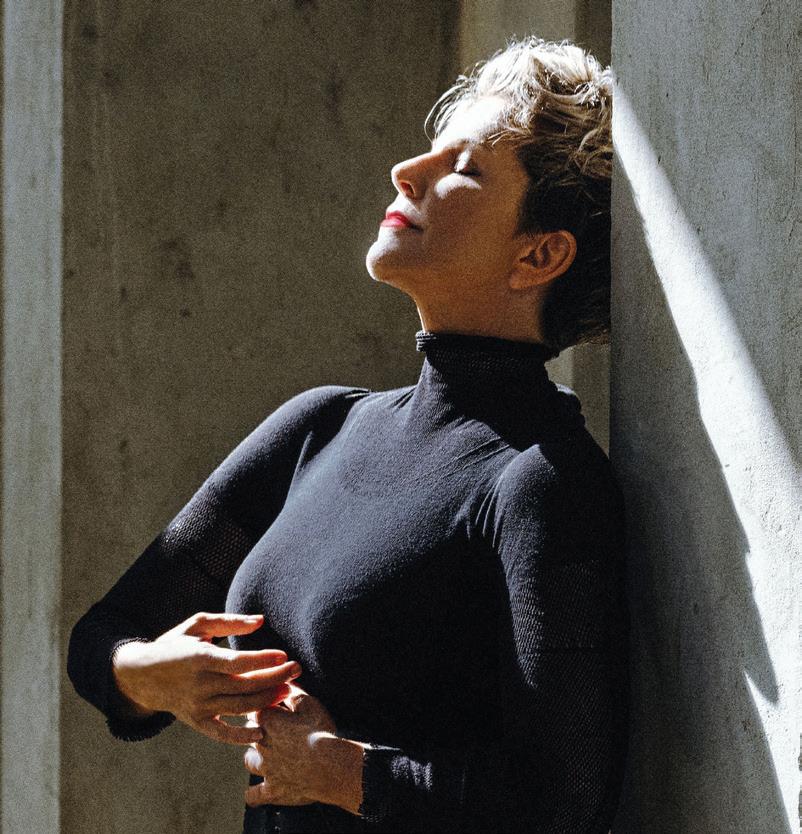
Mezzo-soprano Joyce DiDonato is the CSO’s Artist-in-Residence for the 2025–26 season.
The Orchestra first performed at Ravinia Park in 1905 and appeared frequently through August 1931, after which the park was closed for most of the Great Depression. In August 1936, the Orchestra helped to inaugurate the first season of the Ravinia Festival, and it has been in residence nearly every summer since.
Since 1916, recording has been a significant part of the Orchestra’s activities. Recordings by the Chicago Symphony Orchestra and Chorus— including recent releases on CSO Resound, the Orchestra’s recording label launched in 2007— have earned sixty-five Grammy awards from the Recording Academy.
A Musical Journey
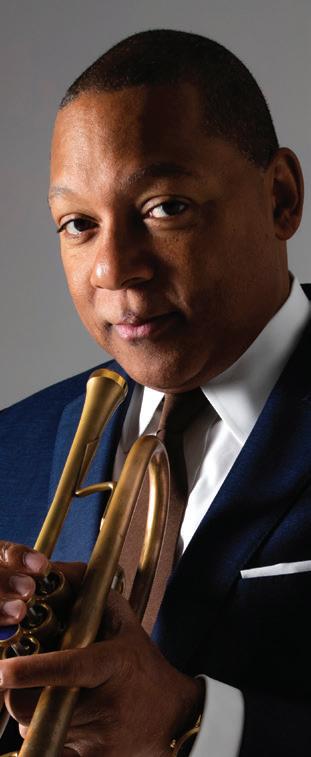
Jazz at Lincoln Center Orchestra with Wynton Marsalis
JUNE 2
Alsop Conducts Adams, Copland & Marsalis
JUNE 4-6
Conrad Tao piano
JUNE 7
Chris Thile & the CSO
JUNE 8
Gaffigan, Thibaudet & Bernstein
JUNE 11 -1 3
CSO Brass Quintet
JUNE 16
Lincoln Portrait & Ellington Harlem
JUNE 1 8-21
A Musical Tribute to John Williams & Steven Spielberg
JUNE 23
Star Wars: A New Hope in Concert
JUNE 25-27
Chicago Symphony Orchestra
Klaus Mäkelä Zell Music Director Designate
Joyce DiDonato Artist-in-Residence
VIOLINS
Robert Chen Concertmaster
The Louis C. Sudler Chair, endowed by an
anonymous benefactor
Stephanie Jeong § Associate Concertmaster
The Cathy and Bill Osborn Chair
David Taylor*
Assistant Concertmaster
The Ling Z. and Michael C.
Markovitz Chair
Yuan-Qing Yu* Assistant Concertmaster
So Young Bae
Cornelius Chiu
Gina DiBello
Kozue Funakoshi
Russell Hershow
Qing Hou
Gabriela Lara
Matous Michal
Simon Michal
Sando Shia
Susan Synnestvedt
Rong-Yan Tang
Baird Dodge Principal
Danny Yehun Jin
Assistant Principal
Lei Hou
Ni Mei
Hermine Gagné
Rachel Goldstein
Mihaela Ionescu
Wendy Koons Meir
Ronald Satkiewicz ‡
Florence Schwartz
VIOLAS
Teng Li Principal
The Paul Hindemith Principal Viola Chair
Catherine Brubaker
Youming Chen
Sunghee Choi
Paolo Dara
Wei-Ting Kuo
Danny Lai
Weijing Michal
Diane Mues
Lawrence Neuman
Jikun Qin
Max Raimi
CELLOS
John Sharp Principal
The Eloise W. Martin Chair
Kenneth Olsen
Assistant Principal
The Adele Gidwitz Chair
Karen Basrak
The Joseph A. and Cecile Renaud Gorno Chair
Richard Hirschl
Olivia Jakyoung Huh
Daniel Katz
Katinka Kleijn
Brant Taylor
The Ann Blickensderfer and Roger Blickensderfer Chair
BASSES
Alexander Hanna Principal
The David and Mary Winton
Green Principal Bass Chair
Alexander Horton
Assistant Principal
Daniel Carson
Ian Hallas
Robert Kassinger
Mark Kraemer
Stephen Lester
Bradley Opland
Andrew Sommer
FLUTES
Emma Gerstein
Jennifer Gunn
PICCOLO
Jennifer Gunn
The Dora and John Aalbregtse Piccolo Chair
OBOES
William Welter Principal
Lora Schaefer
Assistant Principal
The Gilchrist Foundation, Jocelyn Gilchrist Chair
Scott Hostetler
ENGLISH HORN
Scott Hostetler
Riccardo Muti Music Director Emeritus for Life
CLARINETS
Stephen Williamson Principal
John Bruce Yeh
Assistant Principal
The Governing
Members Chair
Gregory Smith
E-FLAT CLARINET
John Bruce Yeh
BASSOONS
Keith Buncke Principal
William Buchman
Assistant Principal
Miles Maner
HORNS
Mark Almond Principal
James Smelser
David Griffin
Oto Carrillo
Susanna Gaunt
Daniel Gingrich ‡
TRUMPETS
Esteban Batallán Principal
The Adolph Herseth Principal Trumpet Chair, endowed by an anonymous benefactor
John Hagstrom
The Bleck Family Chair
Tage Larsen
TROMBONES
Timothy Higgins Principal
The Lisa and Paul Wiggin
Principal Trombone Chair
Michael Mulcahy
Charles Vernon
BASS TROMBONE
Charles Vernon
TUBA
Gene Pokorny Principal
The Arnold Jacobs Principal Tuba Chair, endowed by Christine Querfeld
* Assistant concertmasters are listed by seniority. ‡ On sabbatical § On leave
The CSO’s music director position is endowed in perpetuity by a generous gift from Zell Family Foundation. The Louise H. Benton Wagner and Erika and Dietrich M. Gross Principal Flute chairs are currently unoccupied.
TIMPANI
David Herbert Principal
The Clinton Family Fund Chair
Vadim Karpinos
Assistant Principal
PERCUSSION
Cynthia Yeh Principal Chair sponsored by an anonymous benefactor
Patricia Dash §
Vadim Karpinos
LIBRARIANS
Justin Vibbard Principal
Carole Keller
Mark Swanson
CSO FELLOWS
Ariel Seunghyun Lee Violin
Jesús Linárez Violin
The Michael and Kathleen Elliott Fellow
ORCHESTRA PERSONNEL
John Deverman Director
Anne MacQuarrie
Manager, CSO Auditions and Orchestra Personnel
STAGE TECHNICIANS
Christopher Lewis
Stage Manager
Blair Carlson
Paul Christopher
Chris Grannen
Ryan Hartge
Peter Landry
Joshua Mondie
The Chicago Symphony Orchestra string sections utilize revolving seating. Players behind the first desk (first two desks in the violins) change seats systematically every two weeks and are listed alphabetically. Section percussionists also are listed alphabetically.
Discover more about the musicians, concerts, and generous supporters of the Chicago Symphony Orchestra Association online, at cso.org.
Find articles and program notes, listen to CSOradio, and watch CSOtv at Experience CSO.
cso.org/experience
Get involved with our many volunteer and affiliate groups.
cso.org/getinvolved
Connect with us on social @chicagosymphony
Conductor Joe Hisaishi with the CSO, June 2024; CSO Artist-in-Residence Joyce DiDonato
Chicago Symphony Orchestra Association Board of Trustees
OFFICERS
Mary Louise Gorno Chair
Chester A. Gougis Vice Chair
Steven Shebik Vice Chair
Helen Zell Vice Chair
Renée Metcalf Treasurer
Jeff Alexander President
Kristine Stassen Secretary of the Board
Stacie M. Frank Assistant Treasurer
Dale Hedding Vice President for Development
Chicago Symphony Orchestra Association Administration
SENIOR LEADERSHIP
Jeff Alexander President
Stacie M. Frank Vice President & Chief Financial Officer, Finance and Administration
Dale Hedding Vice President, Development
Ryan Lewis Vice President, Sales and Marketing
Vanessa Moss Vice President, Orchestra and Building Operations
Jonathan McCormick Managing Director, Negaunee Music Institute at the CSO
Visit cso.org/csoa to view a complete listing of the CSOA Board of Trustees and Administration.
For complete listings of our generous supporters, please visit the Richard and Helen Thomas Donor Gallery.
cso.org/donorgallery
CHICAGO SYMPHONY ORCHESTRA
90th SUMMER RESIDENCY
JULY 11 - AUGUST 16 •
HIGHLAND PARK
Featuring three weeks with Ravinia Chief Conductor MARIN ALSOP
Six weeks of guests include Yunchan Lim, Lizzo, Emanuel Ax, St. Vincent, Stella Chen, María Dueñas, Daniel Lozakovich, Carlos Simon, Laura Karpman, and many more —plus two concerts with Zell Music Director Designate Klaus Mäkelä— performing in the newly renovated Hunter Pavilion!
LOOKING FOR SOMETHING INDOORS?
James Conlon leads Mozart’s The Abduction from the Seraglio semi-staged in the Martin Theatre