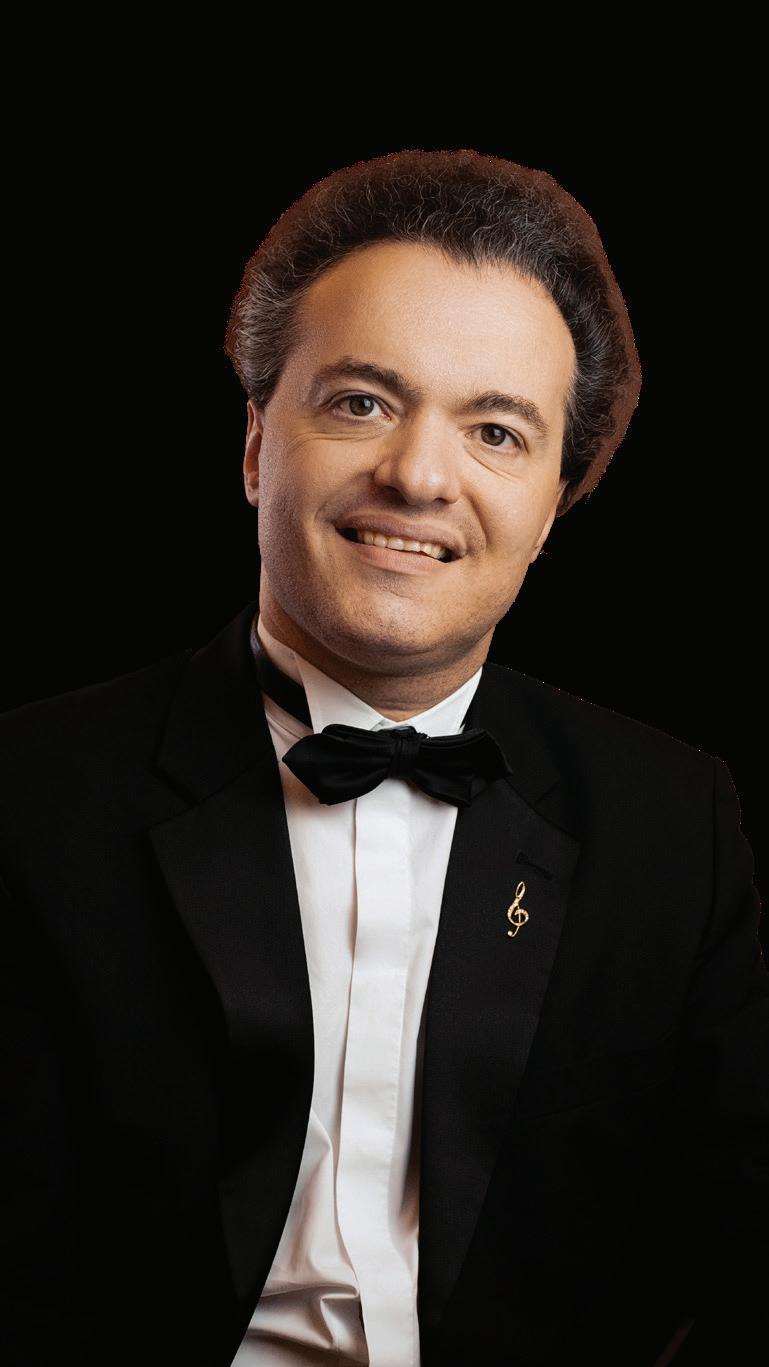
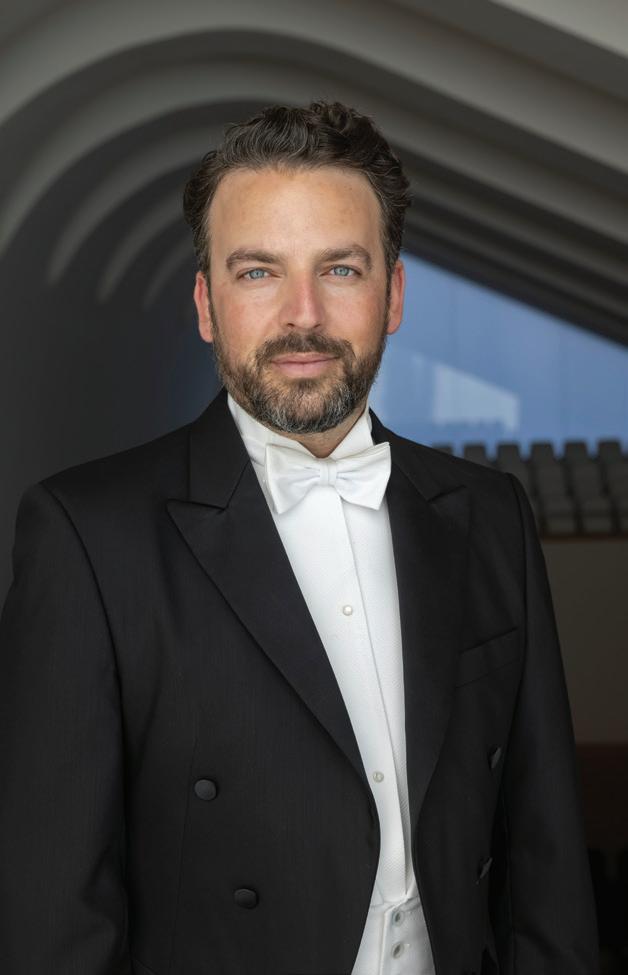
KLAUS MÄKELÄ Zell Music Director Designate | RICCARDO MUTI Music Director Emeritus for Life
Thursday, March 26, 2026, at 7:30
Saturday, March 28, 2026, at 7:30
Sunday, March 29, 2026, at 3:00
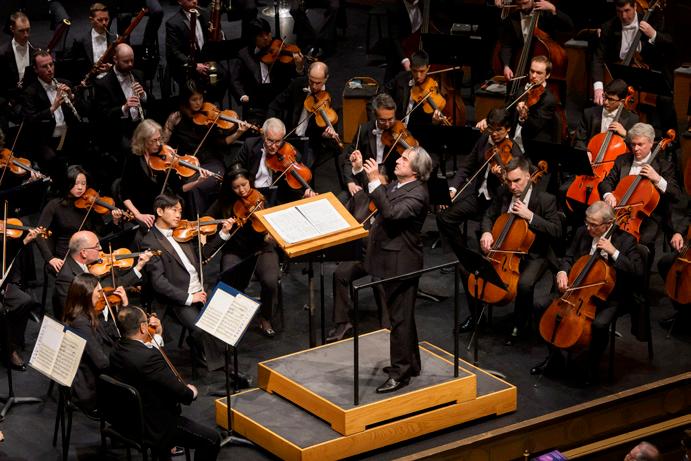
Riccardo Muti Conductor
TCHAIKOVSKY
Symphony No. 3 in D Major, Op. 29 (Polish)
Introduction and Allegro—Moderato assai (Tempo marcia funebre)
Alla tedesca: Allegro moderato e semplice
Andante elegiaco
Scherzo: Allegro vivo
Finale: Allegro con fuoco (Tempo di polacca)
INTERMISSION
ROTA
ROTA
The Godfather Suite
Sicilian Pastorale
The Immigrant
The Pickup
Kay
Love Theme
A New Carpet
Waltz
End Title
Music from Il Gattopardo (The Leopard)
Title Music
Journey to Donnafugata
Angelica and Tancredi 1
Angelica and Tancredi 2
The Prince’s Dreams
Tancredi’s Departure
Love and Ambition
The Rigged Vote
Finale
These performances are made possible by the Juli Plant Grainger Fund for Artistic Excellence.
The appearance of Music Director Emeritus for Life Riccardo Muti is made possible through the generous sponsorship of Margot and Josef Lakonishok.
The Chicago Symphony Orchestra Association acknowledges support from the Illinois Arts Council.
Newsradio 105.9 WBBM is a Media Partner for this event.
COMMENTS by Phillip Huscher
PYOTR TCHAIKOVSKY
Born May 7, 1840; Votkinsk, Russia
Died November 6, 1893; Saint Petersburg, Russia
Symphony No. 3 in D Major, Op. 29 (Polish)
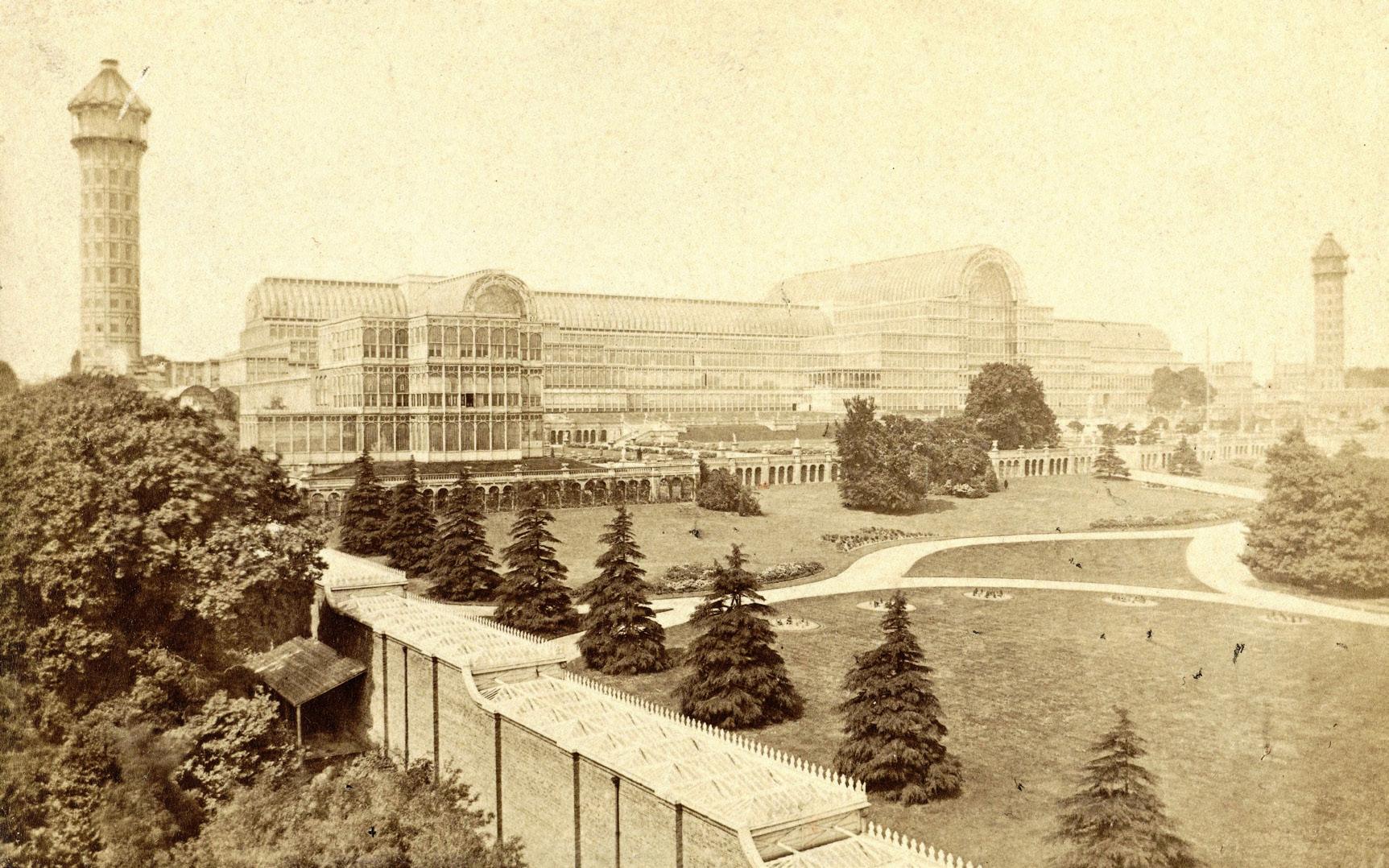
It was a conductor—August Manns, who led the British premiere of Tchaikovsky’s Third Symphony at the Crystal Palace concerts in 1899—who gave this music its Polish nickname. (And it was the 1899 program annotator who found in the music a rich subtext about “Poland mourning in her oppression and rejoicing in her regeneration.”) The nickname stuck. At the time the symphony was composed, Tchaikovsky had not yet been to Poland—he would later conduct his own music in Warsaw—and he only knew enough of Polish music to attach the Tempo di polacca (tempo of the polonaise) instruction to his finale, sharing with composers as disparate as Bach and Liszt a fondness for this festive dance.
Unlike Tchaikovsky’s other symphonies—five with numbers and the unnumbered Manfred—his third was quickly written, in a single creative spurt and without apparent strain. (It also is the only one in a major key.) It took him less than two months during the summer of 1875. The year had not begun well for Tchaikovsky. Nicolai Rubinstein, an important musician whose opinions Tchaikovsky often solicited and trusted, read through
February 27, 1940, Orchestra Hall. Igor Stravinsky conducting
August 14, 16, and 19, 1967, Ravinia Festival. New York City Ballet in Diamonds (George Balanchine, choreographer), Robert Irving (August 14 and 19) and Hugo Fiorato (August 16) conducting (selections)
MOST RECENT
CSO PERFORMANCES
August 14 and 17, 1969, Ravinia Festival. New York City Ballet in Diamonds (George Balanchine, choreographer), Robert Irving conducting (selections)
October 2, 3, and 4, 2014, Orchestra Hall. Riccardo Muti conducting
CSO RECORDING
1990. Claudio Abbado conducting. CBS
the score of the composer’s new First Piano Concerto and said he found it worthless and unplayable. When Tchaikovsky left Moscow for the peace of the countryside early that summer, he did not travel lightly, for he was burdened with the fear that his new concerto, still unperformed, would never find success, and with the intimidating task of writing his first ballet, just commissioned by the Imperial Theatre. Later that year, the First Piano Concerto would be successfully launched—in Boston, under the celebrated conductor Hans von Bülow—becoming perhaps Tchaikovsky’s best-known work, and the ballet, Swan Lake, would ultimately find great popularity as well. But Tchaikovsky was not hopeful.
Once he settled in with his sister Alexandra Davydova, whom he called Sasha, and her family
at their summer estate near Kamenka, he began his Third Symphony, either to avoid or to steel himself for the tough work on the ballet that lay ahead. Despite Tchaikovsky’s anxiety, this was a relatively calm and stable time in his life. He had not yet entered into the historic correspondence-only relationship with Nadezhda von Meck, who would become his patron, and perhaps more importantly, confidante. And he had not even met the woman he would unwisely marry within two years, prompting an attempted suicide and the greatest creative crisis of his career. Unlike his first two symphonies, the third one came easily and often left him free to enjoy his summer in the country: “I don’t sit for hours at a time, but walk a good deal,” he told friends. Tchaikovsky began sketching the music on June 17 and had finished a rough outline of the
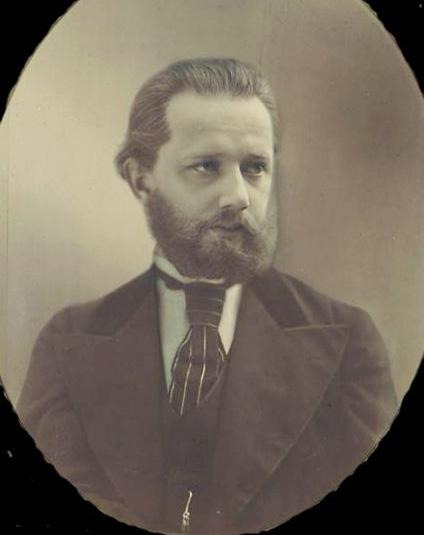
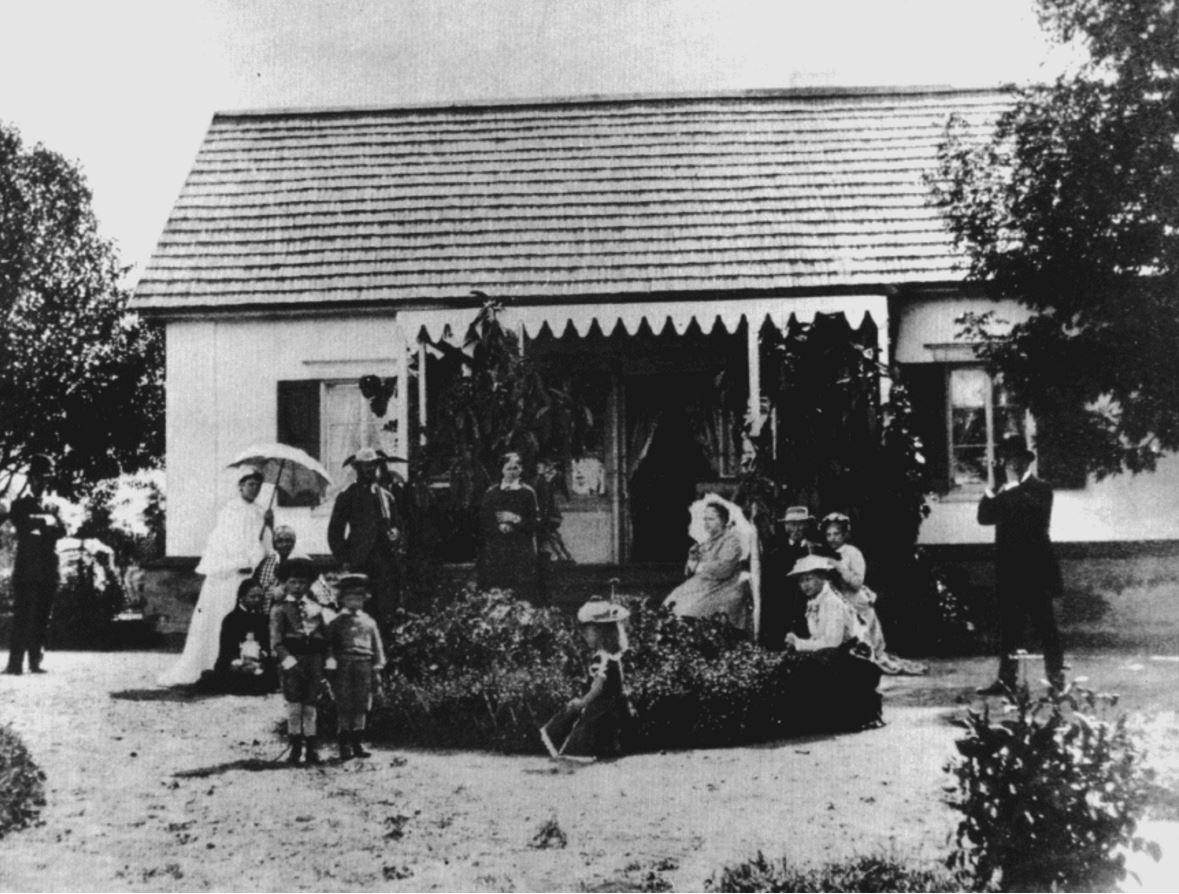
opposite page, from top: Pyotr Tchaikovsky, photograph by Mikhail Panov (1836–1894), ca. 1860. State P.I. Tchaikovsky Memorial Museum, Klin, Russia | Tchaikovsky, standing far right, with his father Ilya (1795–1880) and the Davydov family at Kamenka, 1875 | this page: The Crystal Palace at Sydenham, southeast London. Photograph by Francis G.O. Stuart (1843–1923), ca. 1870–1900, showing the relocated and reconstructed exhibition hall where Tchaikovsky’s Third Symphony received its British premiere in 1899. The building was destroyed by fire in 1936. Photo by Sepia Times/Universal Images Group via Getty Images
entire symphony—conceived from the start in five rather than the usual four movements—by early July. The piece was finished, down to the last details of orchestration, by August 13, at which point he plunged forward with the music for Swan Lake, which would not be ready for the stage for another two years.
Today’s view is that the ballet score is the more important and substantial work, but that was not the way it was perceived at the time. Tchaikovsky was not present for the first performance of his Third Symphony in Moscow—he had stayed on in Saint Petersburg following the successful Russian premiere of the troublesome First Piano Concerto—but he was relieved by the news that it was warmly received. The premiere of Swan Lake, on the other hand, was a disaster, badly danced and poorly played. It would be another two decades before the ballet began its steady gain in popularity, while, at the same time, the symphony quietly lost its place on concert programs.
Tchaikovsky did attend the first performance of the symphony in Saint Petersburg in January 1876 and reported back to his brother Modest that it was “a considerable success. The public called my name and roundly applauded.” But Cesar Cui, the conservative Russian composer and critic, wrote that “we would be well justified in demanding more from Tchaikovsky.” Tchaikovsky was irked, and clearly hurt, by the criticism: “Everyone thinks that I have nothing more to say,” he commented, “and that I have started repeating myself.” He later admitted to Rimsky-Korsakov that he himself was dissatisfied with the content of the music, but he stressed that the symphony represented a step forward technically. He was particularly proud, he said, of the expansive first movement and the two scherzos.
The first movement is one of his earliest successes writing in regulation sonata form, a challenge that would continue to haunt him throughout his career. (“All my life I have been much troubled by my inability to grasp and manipulate form in music,” he said years later, after writing some of the most beloved sonata form movements in the repertoire.)
The opening funeral march—all but one of his symphonies start with a slow introduction—is imaginatively scored, with haunting horn passages and a sweeping accelerando into the big theme of the Allegro.
The second movement, an added waltz, is marked alla tedesca—in the German style Tchaikovsky most wanted to emulate—and may have been inserted to balance the airy scherzo that follows the central slow movement. (By 1875, a symphony with five movements was hardly original. Tchaikovsky surely knew its most celebrated predecessors—Beethoven’s Pastoral, Berlioz’s Symphonie fantastique, and Schumann’s Rhenish.) This charming waltz, lightly scored, finds Tchaikovsky completely at home, testing the waters, so to speak, for the Swan Lake dance music ahead.
The central Andante, which picks up the solemn mood of the symphony’s opening, is free and inspired, rising to a great flood of string melody near the end. Here, Tchaikovsky uses orchestral color to create drama and calls on the winds and the horn for important cameo roles. The scherzo that follows is regularly compared to the celebrated ones by Mendelssohn because of its gossamer spirit, whirling motion, and orchestral virtuosity, but what is more remarkable is how much of it bears the stamp of Tchaikovsky’s emerging musical personality. A central trio, over a single unbroken note shared by the horns, is adapted from music Tchaikovsky wrote to honor Peter the Great.
The finale, which gave the symphony its nickname, begins as a grand and imposing polonaise; continues to move forward in unexpected ways, including the introduction of a pointedly learned fugue; and concludes with one of Tchaikovsky’s most boisterous codas.
NINO ROTA
Born December 3, 1911; Milan, Italy
Died April 10, 1979; Rome, Italy
The Godfather Suite
Music from Il Gattopardo (The Leopard)
Like all the great film composers of his day, Nino Rota was a serious, classically trained musician who wrote substantive music for the concert hall as well. He already had composed an opera and a ballet before he turned fifteen. He studied with Alfredo Casella at the Conservatory of Santa Cecilia in Rome and then came to the United States in 1930 on a scholarship from the Curtis Institute in Philadelphia, where he worked with future CSO music director Fritz Reiner. Rota returned to Italy in 1932 and earned a degree in literature in Milan before he began teaching music. From 1950 until his death nearly three decades later, he was director of the conservatory in Bari, where a young Riccardo Muti became one of his students.
Although Rota composed concertos, ballets, symphonies, theater music, and operas, it is the scores he composed for more than 150 movies that will long keep his music alive. Rota is best known in the United States for his music for Francis Ford Coppola’s first two landmark Godfather films in the mid-1970s, but he also scored Franco Zeffirelli’s two Shakespeare films, The Taming of the Shrew and Romeo and Juliet in the late 1960s. At the heart of Rota’s career are his collaborations with two of Italian cinema’s greatest directors, Federico Fellini and Luchino Visconti. Rota worked in partnership with Fellini for three decades, scoring several films that are considered classics today,
including La strada, La dolce vita, 8 ½, and Juliet of the Spirits.
Rota’s music performed at this concert— drawn from the scores he composed for Luchino Visconti’s Il Gattopardo and Francis Ford Coppola’s first two Godfather films—finds him at the celebrated peak of his powers, writing scores that changed the relationship between cinema and music forever.
The Godfather Suite
When Rota died in 1979, the New York Times obituary was titled “Nino Rota, 68, Writer of Godfather Music.” His contribution to Coppola’s legendary pair of Godfather films, released in 1972 and 1974, turned out to be the crowning works of his long career. These two sumptuous, atmospheric scores are among cinema’s greatest soundtracks. Rota’s music, with its unforgettable melodies and indelible sense of time and place, is as fundamental
to the public’s embrace of Coppola’s films as Marlon Brando’s commanding Don Corleone or Gordon Willis’s darkly lit cinematography, gorgeously painted in black and sepia tones.
But Rota was not Paramount Studios’ first choice to compose the score (nor was Brando, whose career was in a slump, to play the title role). Robert Evans, the head of production, wanted Henry Mancini, who had written some of the most popular movie scores of the 1960s (Breakfast at Tiffany’s, Charade, The Pink Panther). But Coppola knew that he needed music steeped in the Sicilian heritage of the Corleone family, conveying the roots of their rise to one of America’s most powerful organized crime families. For Coppola, Rota’s score for Rocco and His Brothers, Visconti’s 1960 epic about a southern Italian family, was the model. He also wanted the Godfather music to suggest the filigreed melodic contours of African music, because of Sicily’s proximity to Africa. When he met Rota at the airport after the score was done, Rota sang for him the big love theme he had written, with its melody full of close, twisting intervals, and Coppola knew he had found his ideal musical partner.
This Godfather suite includes music from both films, underlining the unity and continuity of the two stories. (As Pauline Kael wrote, in her famous New Yorker review of Part II, “It’s all one movie, in two great big pieces, and it comes together in your head while you watch.”) For a combined running time of more than six hours, Rota’s complete score is surprisingly short, leaving long stretches of dialogue and action unaccompanied and then appearing, with greater force as a result, only at critical moments, when it raises the temperature and carries the emotional heart of the scene to unforgettable
heights. Rota’s music is minutely attuned to the drama at hand, and it intensifies every scene in which it appears.
The Godfather opens in total darkness, with the haunting sound of the unaccompanied solo trumpet playing the grand waltz that is one of The Godfather’s signature tunes. The stark opening, leading directly to the monologue of Amerigo Bonasera, the Italian immigrant who has come to ask a favor of Don Corleone (“I believe in America,” he says, “America has made my fortune.”) was considered highly unconventional at the time. Yet it is so emblematic of the world of the Corleones that Rota and Coppola employed the same dramatic effect again to open Part II when Rocco Lampone kisses the hand of the family’s new leader, Michael Corleone. Rota’s waltz, like other Godfather themes, reappears throughout the two films, in each case changing its colors to suit the scene.
The suite performed this week does not attempt to convey chronology, providing instead a sweeping overview of Rota’s rich and highly varied landscape of Italian music. (“The Immigrant,” “Kay,” “A New Carpet,” and the closing title music all come from The Godfather, Part II.) Rota moves from café music and nightclub glamor to chilling suspense, heartrending nostalgia, and outright passion—as Kael says, it is at once “both Italian opera and pure forties movie music.” Rota has conveyed a time and place so vividly—creating a musical world all its own—that we cannot help but see images from the movie as we listen. That is perhaps the score’s greatest achievement: the sights and sounds of The Godfather are so brilliantly interwoven, so dependent on each other for their impact, that we realize Coppola would not have made the same film without Rota.
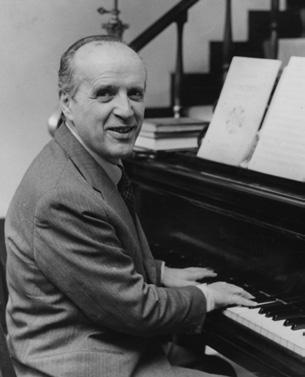
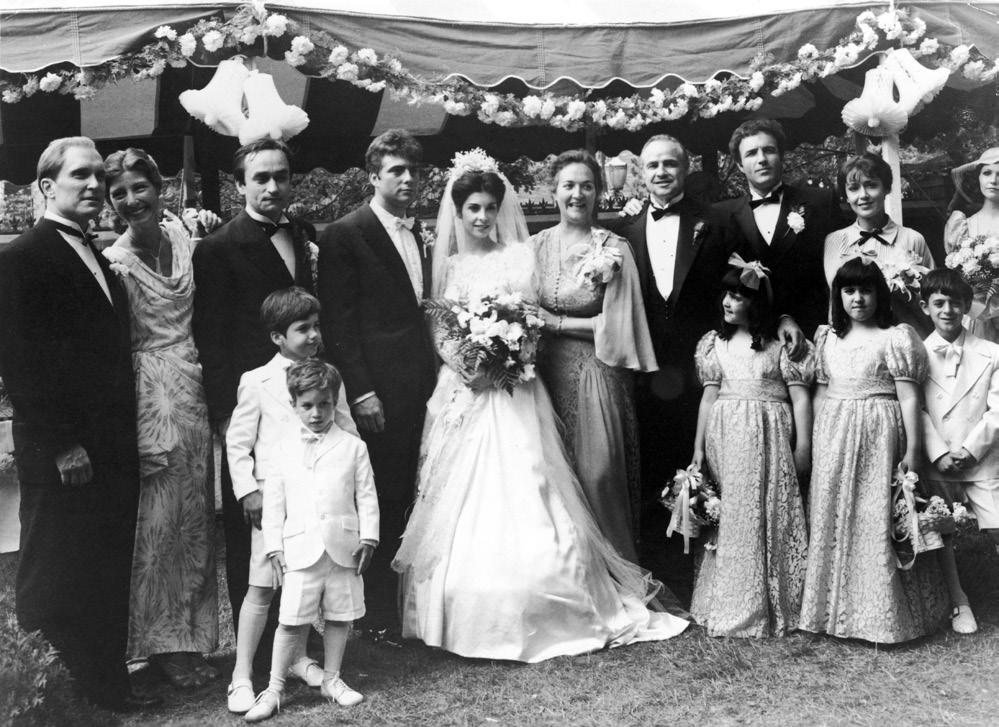
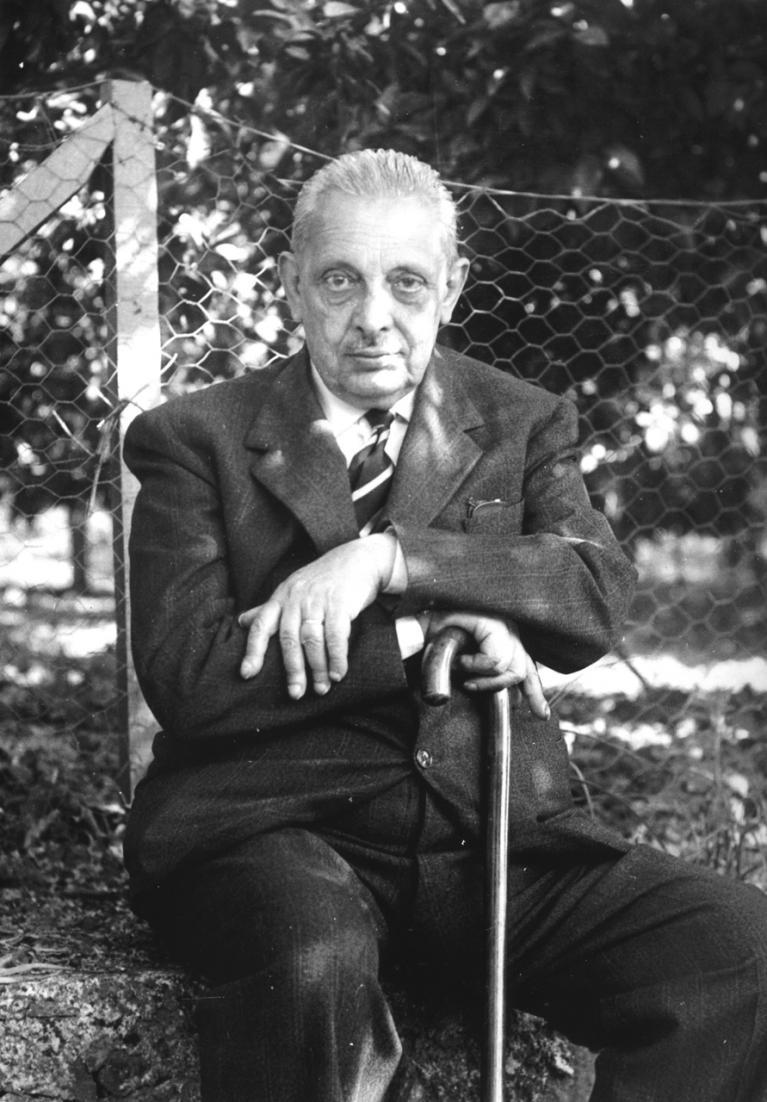
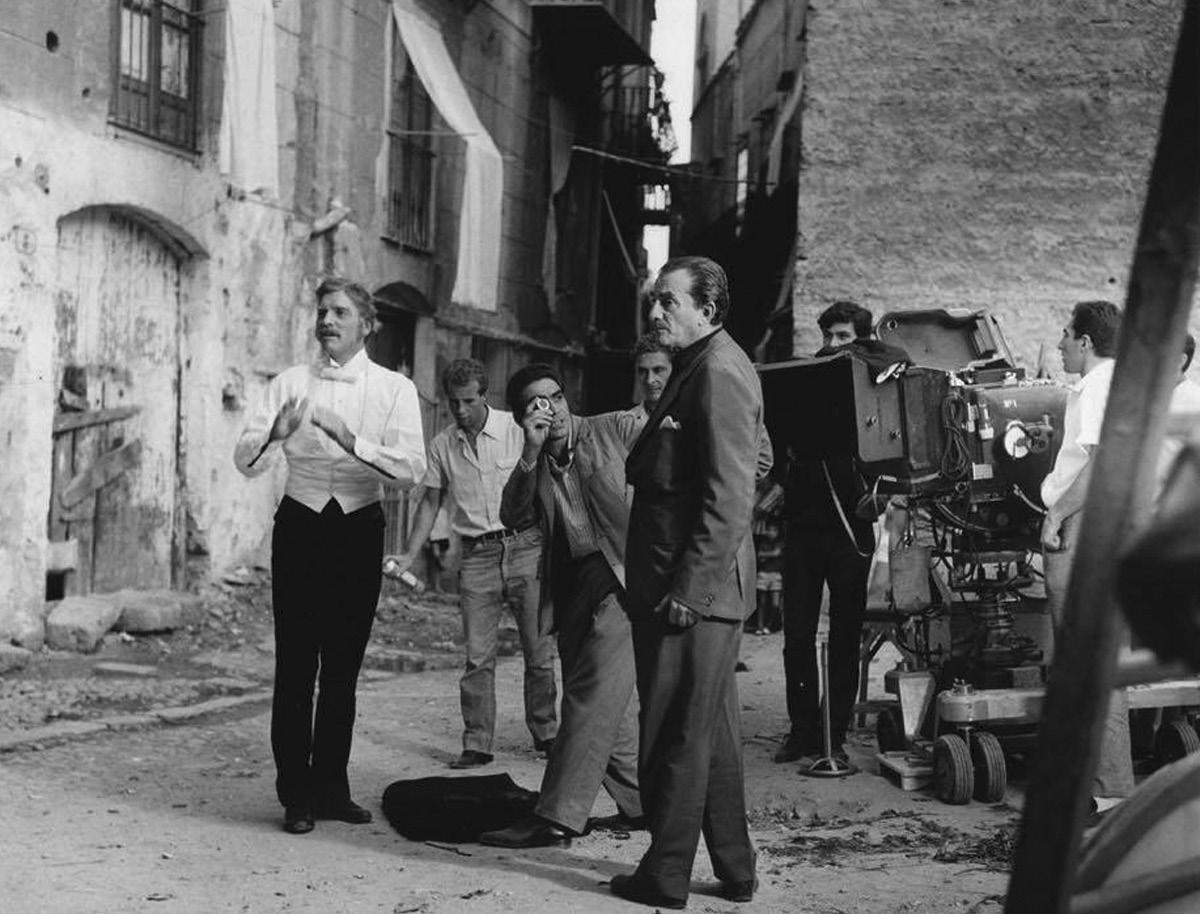
previous page, from top: Nino Rota, ca. 1972. Photo by Keystone/Hulton Archive/Getty Images | The Godfather cast, 1972, a family portrait during the wedding scene from the film. Left to right, Robert Duvall, Tere Livrano, John Cazale, Gianni Russo, Talia Shire, Morgana King, Marlon Brando, and James Caan. Photo by Paramount Pictures/Getty Images | opposite page, from left: Giuseppe Tomasi di Lampedusa (1896–1957) seated in the gardens of Villa Piccolo at Capo d’Orlando, Sicily, 1956, which he often visited as a cousin of the family. Piccolo Family Foundation of Calanovella | Burt Lancaster (1913–1994) and Luchino Visconti (1906–1976) on the exterior set of Il Gattopardo, 1963, Piazza Croce dei Vespri, Palermo, Sicily
Music from Il Gattopardo
When Giuseppe di Lampedusa was diagnosed with lung cancer in April 1957, he had been trying to find a publisher for his historical novel Il Gattopardo (The Leopard) for nearly a year. He died in Rome that July—he received a rejection letter from Einaudi, one of Italy’s leading publishing houses, only days before—not knowing that The Leopard would eventually become the best-selling novel in Italian history, achieve iconic status in modern Italian literature, and become an award-winning film directed by Luchino Visconti.
Nino Rota is the only film composer who could have done justice to Visconti’s great Italian epic, set in the 1860s, when the middle classes formed a unified and democratic Italy. Lampedusa’s novel tells the story of the dying Sicilian aristocracy—and in particular of the family of Don Fabrizio Corbera, prince of Salina—during the Risorgimento as Giuseppe Garibaldi, the leader for Italian unification, and his forces swept through Sicily. Visconti’s film is a powerful study in the transformation of a people (“If we want things to stay the same, everything will have to change,” the young Tancredi says to his uncle, Don Fabrizio), political upheaval, and mortality. Rota’s score captures the volatile mixture
of revolution and nostalgia for a dying world that lies at the heart of The Leopard.
Rota first worked with Luchino Visconti in 1954 on Senso, adapting music by Anton Bruckner to be used on the soundtrack. Although Rota subsequently wrote original scores for several of Visconti’s films, their collaboration on Il Gattopardo was unique. Visconti’s first idea was to find a big nineteenth-century symphony that could be taken apart and used throughout the film in bits and pieces in order to have music that would match the grandeur, seriousness, and deeply philosophical nature of the novel. He and Rota exhaustively scoured the great orchestral repertoire, but nothing satisfied Visconti until Rota sat at the piano one day and began to play a portion of a symphony he had written as a young man and put away long ago, before he had even orchestrated it. This abandoned score became the “symphony” that runs throughout Visconti’s film. Like Visconti’s sumptuous visual style, which uses color and texture to suggest magnificent nineteenth-century paintings brought to life, Rota’s score becomes a grand symphony from an earlier time. Although the studio cast Burt Lancaster as the prince without consulting Visconti, The Leopard became one of Visconti’s greatest triumphs and won the Palme d’Or at the Cannes Film Festival in 1963. Today, The Leopard
is recognized as a landmark—Martin Scorsese called it “one of the greatest visual experiences in cinema.” Rota’s contribution to the film’s success was widely acknowledged at the time, but now, played apart from the film and returned to the concert hall, where Rota first envisioned it, the music reveals unexpected substance and even symphonic depth.
Throughout the film, Rota’s score brilliantly supports Visconti’s flair for capturing atmosphere and mood, creating a sense of place and instantly defining character. The dramatic opening music seems inseparable from the parched Sicilian setting itself (“This violence of landscape,” Lampedusa writes, “this cruelty of climate, this continual tension in everything . . . all these things have formed our character.”). The music that accompanies the journey to the
The Godfather Suite
COMPOSED
1972 and 1974, for Francis Ford Coppola’s The Godfather and The Godfather, Part II
family’s summer house at Donnafugata mirrors the prince’s shifting emotions as he anticipates returning to “his palace, with its many-jetted fountains, its memories of saintly forebears, the sense it gave him of everlasting childhood.” The melody Rota writes for the romance between Tancredi and Angelica—the kind of big theme that is easy to mimic and almost impossible to compose—is a perfect counterpart to their blossoming passion, which is central to the novel’s narrative. Throughout the score, the lyrical beauty and harmonic richness of Rota’s music uncannily mirrors the complexity of Visconti’s portrait of a dying world—for as the old order is overturned, a new Italy is born.
Phillip Huscher has been the program annotator for the Chicago Symphony Orchestra since 1987.
3 flutes (3rd doubling piccolo), 2 oboes and english horn, 2 clarinets and bass clarinet, 2 bassoons, 4 horns, 3 trumpets, 3 trombones, tuba, timpani, percussion, harp, piano, celesta, strings
FIRST CSO PERFORMANCE
February 25, 2005, Orchestra Hall. Richard Kaufman conducting (Waltz, A New Carpet, and Love Theme)
MOST RECENT
CSO PERFORMANCES
June 26, 2014, Morton Arboretum. Richard Kaufman conducting (Waltz and Love Theme)
February 3 and 4, 2015, Orchestra Hall. Justin Freer conducting (The Godfather film)
FIRST CSO PERFORMANCES
September 23 and 27, 2011, Orchestra Hall. Riccardo Muti conducting
MOST RECENT
CSO PERFORMANCE
April 27, 2012; Palazzo Mauro de André, Ravenna, Italy. Riccardo Muti conducting
ORCHESTRA
APR 12
SUNDAY, 7:30PM
VIVALDI & FRIENDS
Legendary Italian violinist and conductor Fabio Biondi plays and directs music by Vivaldi, Geminiani, Corelli, and more
NORTH SHORE CENTER, SKOKIE
APR 13
MONDAY, 7:30PM
HARRIS THEATER, CHICAGO
PROFILES
Riccardo Muti
Music Director Emeritus for Life
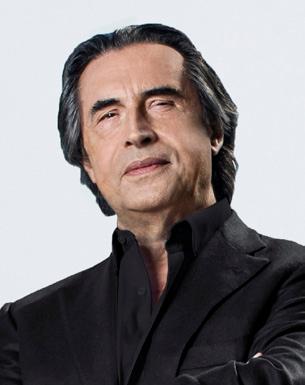
Born in Naples, Italy, Riccardo Muti is one of the preeminent conductors of our day. The Chicago Symphony Orchestra’s distinguished tenth music director from 2010 until 2023, Muti became the Music Director Emeritus for Life beginning with the 2023–24 Season. His leadership has been distinguished by the strength of his artistic partnership with the Orchestra; his dedication to performing great works of the past and present, including eighteen world premieres to date; the enthusiastic reception he and the CSO have received on national and international tours; and twelve recordings on the CSO Resound label, with four Grammy awards among them.
Before becoming the CSO’s music director, Muti had more than forty years of experience at the helm of Maggio Musicale Fiorentino (1968–1980), the Philharmonia Orchestra (1972–1982), the Philadelphia Orchestra (1980–1992), and Teatro alla Scala (1986–2005).
Herbert von Karajan invited him to conduct at the Salzburg Festival in Austria in 1971. Muti has maintained a close relationship with the summer festival and its great orchestra, the Vienna Philharmonic, for over fifty years. He has received the distinguished Golden Ring and the Otto Nicolai Gold Medal from the Philharmonic for his outstanding artistic contributions to the orchestra. He has also received a silver medal from the Salzburg Mozarteum and the Golden Johann Strauss Award by the Johann Strauss Society of Vienna. He is an honorary member of Vienna’s Gesellschaft der Musikfreunde, the Vienna Hofmusikkapelle, the Vienna Philharmonic, and the Vienna State Opera.
In 2021, he received the highest civilian honor from the Austrian government, the Great Golden Decoration of Honor.
Muti has received innumerable international honors. He is a Cavaliere di Gran Croce of the Italian Republic, Knight Commander of the British Empire, Commander of the French Legion of Honor, Knight of the Grand Cross First Class of the Order of Saint Gregory the Great, and a recipient of the German Verdienstkreuz. Muti has also received Israel’s Wolf Prize for the Arts, Sweden’s Birgit Nilsson Prize, Spain’s Prince of Asturias Award, Ukraine’s State Award, Japan’s Praemium Imperiale and Order of the Rising Sun Gold and Silver Star, as well as the gold medal from Italy’s Ministry of Foreign Affairs and the “Presidente della Repubblica” award from the Italian government. Muti has also received more than twenty honorary degrees from universities worldwide. In December, during a special concert at the Vatican, Pope Leo XIV presented Muti with the Prize of the Ratzinger Foundation for his immense artistic contributions.
Riccardo Muti’s vast catalog of recordings, numbering in the hundreds, ranges from the traditional symphonic and operatic repertoires to contemporary works. Passionate about teaching young musicians, Muti founded the Luigi Cherubini Youth Orchestra in 2004 and the Riccardo Muti Italian Opera Academy in 2015. Through Le vie dell’Amicizia (The roads of friendship), a project of the Ravenna Festival in Italy, he has conducted in many of the world’s most troubled areas in order to bring attention to civic and social issues.
The label RMMMUSIC is responsible for Riccardo Muti’s recordings.
Riccardo Muti’s Recent Concerts, Honors, and Events
Riccardo Muti has maintained a robust calendar of engagements since his last appearances in Chicago this past November.
From November 19 to 30, he led select young conductors and pianists in lessons and rehearsals of Mozart’s Don Giovanni during the 2025 edition of the Riccardo Muti Italian Opera Academy, culminating in a concert conducted by Muti. This was the third time the program took place at the state-of-the-art Prada Foundation in Milan.
On November 28, Muti was the guest of honor at the opening ceremonies of the academic year at the Catholic University of the Sacred Heart in Rome. He led the Luigi Cherubini Orchestra in the Overture to Don Giovanni in honor of the year’s theme: the alliance between generations.
On December 12, Pope Leo XIV awarded the prestigious 2025 Ratzinger Prize to Riccardo Muti at a ceremony following a Christmas concert led by Muti given in the Pope’s honor in the Paul VI Audience Hall at the Vatican in Rome. The concert and ceremony were attended by a capacity audience of nearly 6,000, including Cardinal Blase Cupich, archbishop of Chicago. Prior to the ceremony, Muti met Pope Leo, who shares ties to Chicago, having grown up in the southwestern suburb of Dolton, Illinois.
“ The ensemble wasted no time stating its case—and demonstrating its prowess—as one of the world’s great orchestras. Maestro Riccardo Muti led the symphonic charges in the lucid and luscious collective sound.” Santa Barbara Independent January 23, 2016. Todd Rosenberg Photography
On December 16, Muti made a private visit to the Accademia della Crusca, a Florence-based society for scholars of Italian linguistics and philology, to receive the international Crusca–Benemeriti della Lingua Italiana Prize for, “performing, rediscovering, and promoting Italian opera and the Italian-language musical repertoire throughout the world for over fifty years,” said the Academy in its official announcement. “He urges all performers to respect the text set to music, embedded in its centuries-old and still vibrant linguistic tradition, and demonstrates genuine attention to the problems of the Italian language.”
On December 19, Muti conducted the Maggio Orchestra and Chorus in a special concert honoring Vittorio Gui, founder of the Stabile Orchestrale Fiorentina and the Maggio Musicale Fiorentino Festival. At Muti’s suggestion, the Maggio Musicale is renaming its theater in Gui’s honor.
On January 10, Muti led a special concert at the Opera prison on Milan’s southern edge with the Cherubini Orchestra. The musicians played string instruments made by the inmates from wood reclaimed from the wreckage of migrant boats that had washed up on Italian coasts and been brought to the prison after being seized. “Hearing these people, who are here serving their sentences, but who seem so serene and so clearly and openly eager to find a sense of harmony in their lives through music . . . has been an enrichment of my experience as a musician and as a man,” said Muti after the performance.
January 15–24, the Chicago Symphony Orchestra and Riccardo Muti embarked on a twelve-day tour across the western United States, featuring repertoire by Brahms, Ravel, Stravinsky, Hindemith, and Johann Strauss, Jr. The tour began in Mesa, Arizona, and ended in Costa Mesa, California, with concerts along the way in Berkeley, Davis, Palm Desert, Northridge, and Santa Barbara, California, where sold-out performances earned rave reviews.
On March 4, Muti was made an honorary citizen of the city of Novara at the Teatro Coccia, where he gave a keynote address as part of the thirtieth anniversary celebrations of the Guido Cantelli Conservatory. The young Riccardo Muti won the 1967 Guido Cantelli Prize in Novara, which brought him international attention.
Between February 24 and March 7, Riccardo Muti conducted six sold-out performances of Verdi’s Macbeth at the Teatro Regio in Turin in a widely-acclaimed new production directed by his daughter Chiara Muti and starring baritone Luca Micheletti and soprano Lidia Fridman, who makes her American and CSO debut in concerts led by Maestro Muti this month.
For more on the presentation of the Ratzinger Prize at the Vatican and the recent West Coast Tour, visit cso.org/experience.
The Chicago Symphony Orchestra Association thanks Margot and Josef Lakonishok for their generous sponsorship of the appearance of Music Director Emeritus for Life Riccardo Muti.
The Chicago Symphony Orchestra—consistently hailed as one of the world’s best—marks its 135th season in 2025–26. The ensemble’s history began in 1889, when Theodore Thomas, the leading conductor in America and a recognized music pioneer, was invited by Chicago businessman Charles Norman Fay to establish a symphony orchestra. Thomas’s aim to build a permanent orchestra of the highest quality was realized at the first concerts in October 1891 in the Auditorium Theatre. Thomas served as music director until his death in January 1905, just three weeks after the dedication of Orchestra Hall, the Orchestra’s permanent home designed by Daniel Burnham.
Frederick Stock, recruited by Thomas to the viola section in 1895, became assistant conductor in 1899 and succeeded the Orchestra’s founder. His tenure lasted thirty-seven years, from 1905 to 1942—the longest of the Orchestra’s music directors. Stock founded the Civic Orchestra of Chicago— the first training orchestra in the U.S. affiliated with a major orchestra—in 1919, established youth auditions, organized the first subscription concerts especially for children, and began a series of popular concerts.
Three conductors headed the Orchestra during the following decade: Désiré Defauw was music director from 1943 to 1947, Artur Rodziński in 1947–48, and Rafael Kubelík from 1950 to 1953. The next ten years belonged to Fritz Reiner, whose recordings with the CSO are still considered hallmarks. Reiner invited Margaret Hillis to form the Chicago Symphony Chorus in 1957. For five seasons from 1963 to 1968, Jean Martinon held the position of music director.
Sir Georg Solti, the Orchestra’s eighth music director, served from 1969 until 1991. His arrival launched one of the most successful musical partnerships of our time. The CSO made its first overseas tour to Europe in 1971 under his direction and released numerous award-winning recordings. Beginning in 1991, Solti held the title of music director laureate and returned to conduct the Orchestra each season until his death in September 1997.
Daniel Barenboim became ninth music director in 1991, a position he held until 2006. His tenure was distinguished by the opening of Symphony Center in 1997, appearances with the Orchestra in the dual role of pianist and conductor, and twenty-one international tours. Appointed by Barenboim in 1994 as the Chorus’s second director, Duain Wolfe served until his retirement in 2022.
In 2010, Riccardo Muti became the Orchestra’s tenth music director. During his tenure, the Orchestra deepened its engagement with the Chicago community, nurtured its legacy while supporting a new generation of musicians and composers, and collaborated with visionary artists. In September 2023, Muti became music director emeritus for life.
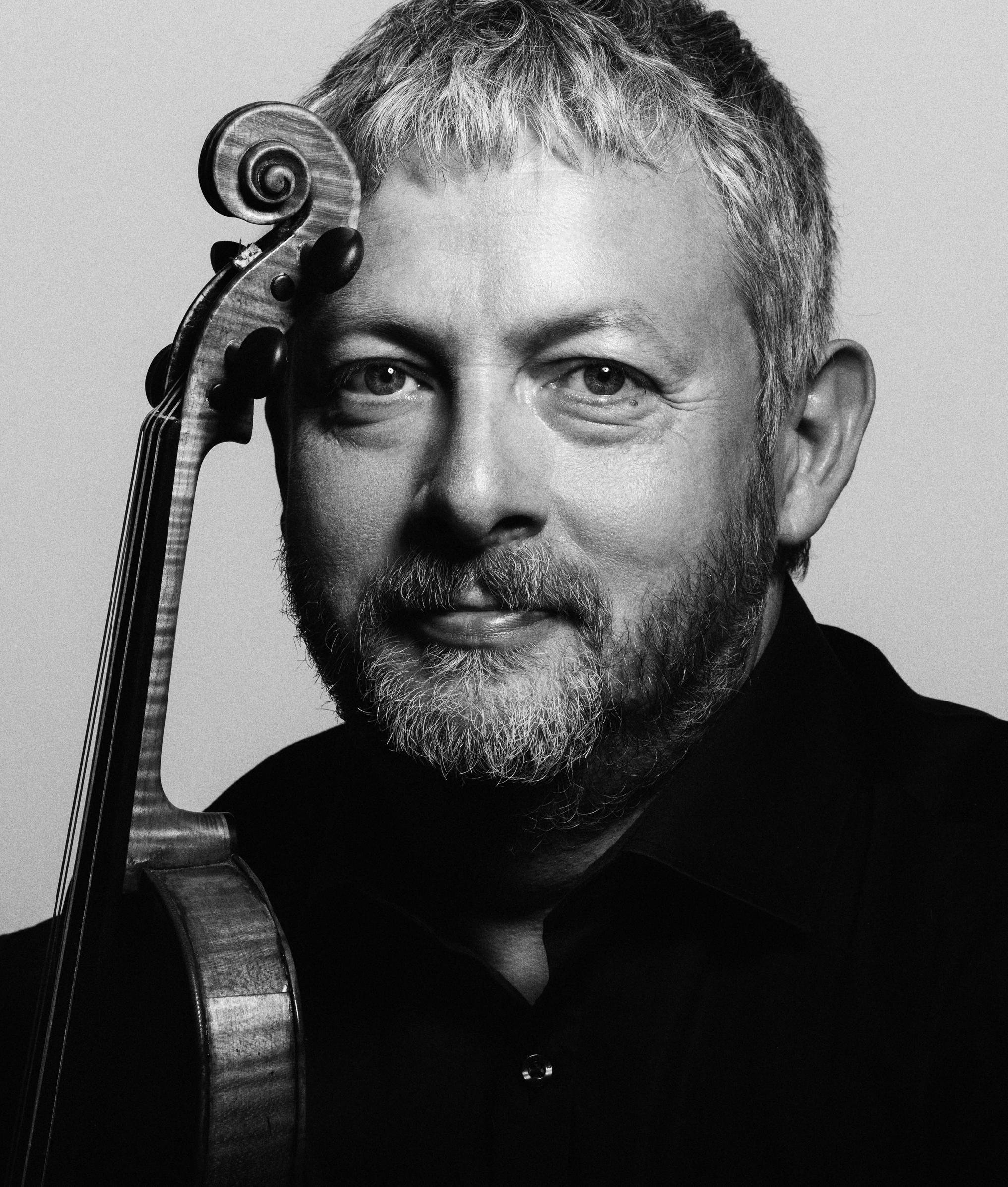
In April 2024, Finnish conductor Klaus Mäkelä was announced as the Orchestra’s eleventh music director and will begin an initial five-year tenure as Zell Music Director in September 2027. In July 2025, Donald Palumbo became the third director of the Chicago Symphony Chorus.
Carlo Maria Giulini was named the Orchestra’s first principal guest conductor in 1969, serving until 1972; Claudio Abbado held the position from 1982 to 1985. Pierre Boulez was appointed as principal guest conductor in 1995 and was named Helen Regenstein Conductor Emeritus in 2006, a position he held until his death in January 2016. From 2006 to 2010, Bernard Haitink was the Orchestra’s first principal conductor.
Mezzo-soprano Joyce DiDonato is the CSO’s Artist-in-Residence for the 2025–26 season.
The Orchestra first performed at Ravinia Park in 1905 and appeared frequently through August 1931, after which the park was closed for most of the Great Depression. In August 1936, the Orchestra helped to inaugurate the first season of the Ravinia Festival, and it has been in residence nearly every summer since.
Since 1916, recording has been a significant part of the Orchestra’s activities. Recordings by the Chicago Symphony Orchestra and Chorus— including recent releases on CSO Resound, the Orchestra’s recording label launched in 2007— have earned sixty-five Grammy awards from the Recording Academy.
Chicago Symphony Orchestra
Klaus Mäkelä Zell Music Director Designate
Joyce DiDonato Artist-in-Residence
VIOLINS
Robert Chen Concertmaster
The Louis C. Sudler
Chair, endowed by an
anonymous benefactor
Stephanie Jeong
Associate Concertmaster
The Cathy and Bill Osborn Chair
David Taylor*
Assistant Concertmaster
The Ling Z. and Michael C.
Markovitz Chair
Yuan-Qing Yu*
Assistant Concertmaster
So Young Bae
Cornelius Chiu
Gina DiBello
Kozue Funakoshi
Russell Hershow
Qing Hou
Gabriela Lara
Matous Michal
Simon Michal
Sando Shia
Susan Synnestvedt
Rong-Yan Tang
Baird Dodge Principal
Danny Yehun Jin
Assistant Principal
Lei Hou
Ni Mei
Hermine Gagné
Rachel Goldstein
Mihaela Ionescu
Melanie Kupchynsky §
Wendy Koons Meir
Ronald Satkiewicz ‡
Florence Schwartz
VIOLAS
Teng Li Principal
The Paul Hindemith
Principal Viola Chair
Catherine Brubaker
Youming Chen
Sunghee Choi
Paolo Dara
Wei-Ting Kuo
Danny Lai
Weijing Michal
Diane Mues
Lawrence Neuman
Max Raimi
CELLOS
John Sharp Principal
The Eloise W. Martin Chair
Kenneth Olsen
Assistant Principal
The Adele Gidwitz Chair
Karen Basrak
The Joseph A. and Cecile
Renaud Gorno Chair
Richard Hirschl
Olivia Jakyoung Huh
Daniel Katz
Katinka Kleijn
Brant Taylor
The Ann Blickensderfer and Roger Blickensderfer Chair
BASSES
Alexander Hanna Principal
The David and Mary Winton
Green Principal Bass Chair
Alexander Horton
Assistant Principal
Daniel Carson
Ian Hallas
Robert Kassinger
Mark Kraemer
Stephen Lester
Bradley Opland
Andrew Sommer
FLUTES
Stefán Ragnar Höskuldsson § Principal
The Erika and Dietrich M.
Gross Principal Flute Chair
Emma Gerstein
Jennifer Gunn
PICCOLO
Jennifer Gunn
The Dora and John Aalbregtse Piccolo Chair
OBOES
William Welter Principal
Lora Schaefer
Assistant Principal
The Gilchrist Foundation,
Jocelyn Gilchrist Chair
Scott Hostetler
ENGLISH HORN
Scott Hostetler
Riccardo Muti Music Director Emeritus for Life
CLARINETS
Stephen Williamson Principal
John Bruce Yeh
Assistant Principal
The Governing
Members Chair
Gregory Smith
E-FLAT CLARINET
John Bruce Yeh
BASSOONS
Keith Buncke Principal
William Buchman
Assistant Principal
Miles Maner
HORNS
Mark Almond Principal
James Smelser
David Griffin
Oto Carrillo
Susanna Gaunt
Daniel Gingrich ‡
TRUMPETS
Esteban Batallán Principal
The Adolph Herseth Principal Trumpet Chair, endowed by an anonymous benefactor
John Hagstrom
The Bleck Family Chair
Tage Larsen
TROMBONES
Timothy Higgins Principal
The Lisa and Paul Wiggin
Principal Trombone Chair
Michael Mulcahy
Charles Vernon
BASS TROMBONE
Charles Vernon
TUBA
Gene Pokorny Principal
The Arnold Jacobs Principal Tuba Chair, endowed by Christine Querfeld
* Assistant concertmasters are listed by seniority. ‡ On sabbatical § On leave
The CSO’s music director position is endowed in perpetuity by a generous gift from Zell Family Foundation.
The Louise H. Benton Wagner chair is currently unoccupied.
TIMPANI
David Herbert Principal
The Clinton Family Fund Chair
Vadim Karpinos
Assistant Principal
PERCUSSION
Cynthia Yeh Principal Chair sponsored by an anonymous benefactor
Patricia Dash §
Vadim Karpinos
LIBRARIANS
Justin Vibbard Principal
Carole Keller
Mark Swanson
CSO FELLOWS
Ariel Seunghyun Lee Violin
Jesús Linárez Violin
The Michael and Kathleen Elliott Fellow
ORCHESTRA PERSONNEL
John Deverman Director
Anne MacQuarrie Manager, CSO Auditions and Orchestra Personnel
STAGE TECHNICIANS
Christopher Lewis
Stage Manager
Blair Carlson
Paul Christopher
Chris Grannen
Ryan Hartge
Peter Landry
Joshua Mondie
The Chicago Symphony Orchestra string sections utilize revolving seating. Players behind the first desk (first two desks in the violins) change seats systematically every two weeks and are listed alphabetically. Section percussionists also are listed alphabetically.
Discover more about the musicians, concerts, and generous supporters of the Chicago Symphony Orchestra Association online, at cso.org.
Find articles and program notes, listen to CSOradio, and watch CSOtv at Experience CSO.
cso.org/experience
Get involved with our many volunteer and affiliate groups.
cso.org/getinvolved
Connect with us on social @chicagosymphony
Chicago Symphony Orchestra Association Board of Trustees
OFFICERS
Mary Louise Gorno Chair
Chester A. Gougis Vice Chair
Steven Shebik Vice Chair
Helen Zell Vice Chair
Renée Metcalf Treasurer
Jeff Alexander President
Kristine Stassen Secretary of the Board
Stacie M. Frank Assistant Treasurer
Dale Hedding Vice President for Development
Chicago Symphony Orchestra Association Administration
SENIOR LEADERSHIP
Jeff Alexander President
Stacie M. Frank Vice President & Chief Financial Officer, Finance and Administration
Dale Hedding Vice President, Development
Ryan Lewis Vice President, Sales and Marketing
Vanessa Moss Vice President, Orchestra and Building Operations