KLAUS MÄKELÄ Zell Music Director Designate | RICCARDO MUTI Music Director Emeritus for Life
Thursday, March 12, 2026, at 7:30
Friday, March 13, 2026, at 1:30 Saturday, March 14, 2026, at 7:30
Jakub Hrůša Conductor
Leif Ove Andsnes Piano
BEETHOVEN
Piano Concerto No. 3 in C Minor, Op. 37
Allegro con brio
Largo
Rondo: Allegro
LEIF OVE ANDSNES
INTERMISSION
SCHUMANN Symphony No. 1 in B-flat Major, Op. 38 (Spring)
Andante un poco maestoso—Allegro molto vivace
Larghetto
Scherzo: Molto vivace
Allegro animato e grazioso
SMETANA Music from The Bartered Bride Overture
Polka
Furiant—
Dance of the Comedians
These concerts are generously sponsored by Zell Family Foundation. These concerts are generously sponsored by United Airlines. The Chicago Symphony Orchestra Association acknowledges support from the Illinois Arts Council. Newsradio 105.9 WBBM is a Media Partner for this event.
The Chicago Symphony Orchestra thanks Zell Family Foundation for sponsoring these performances.
COMMENTS by Phillip Huscher
LUDWIG VAN BEETHOVEN
Born December 16, 1770; Bonn, Germany
Died March 26, 1827; Vienna, Austria
Piano Concerto No. 3 in C Minor, Op. 37
We’re not certain that Beethoven and Mozart ever met. Their names were mentioned in the same breath as early as 1783, when Beethoven’s first composition teacher, Christian Gottlob Neefe, wrote these words in the earliest public notice of his promising pupil: “This youthful genius is deserving of help to enable him to travel. He would surely become a second Wolfgang Amadeus Mozart were he to continue as he has begun.”
Neefe was suggesting that, with proper sponsorship, his young pupil could tour the music capitals and entertain kings with his dazzling keyboard talent—like most musicians, Neefe assumed that Mozart would make his reputation as a virtuoso performer, not as a composer. Neefe didn’t live long enough to understand how limited his view was, but he did see his prize student take the first steps to becoming not a second Mozart, but, more importantly, the mature Beethoven.
It’s likely that these two great composers did meet early in 1787, when the sixteen-year-old Beethoven made his first trip from his native Bonn to Vienna, to breathe the air of a sophisticated musical city. Beethoven stayed no more than two weeks, and he may even have taken a few lessons from Mozart before being suddenly called home by the news of his mother’s failing health. There is, however, no mention of Mozart in a letter Beethoven wrote at the time.
When, late in 1792, Beethoven returned to Vienna, where he would stay for the rest of his life, it was to study with Haydn, for Mozart lay in an unmarked grave. We can sense disappointment in the famous words Count Waldstein inscribed in the album that served as a farewell gift from Beethoven’s friends:
You are going to Vienna in fulfillment of your long-frustrated wishes. The Genius of Mozart is still mourning and weeping over the death of her pupil. She found a refuge but no occupation with the inexhaustible Haydn; through him she wishes once more to form a union with another. With the help of assiduous labor, you shall receive Mozart’s spirit from Haydn’s hands.
COMPOSED
1800
FIRST PERFORMANCE
April 5, 1803; Vienna, Austria. The composer as soloist
December 16 and 17, 1910, Orchestra Hall. Ernest Hutcheson as soloist, Frederick Stock conducting
July 2, 1937, Ravinia Festival. José Iturbi as soloist, Sir Ernest MacMillan conducting
MOST RECENT
CSO PERFORMANCES
July 21, 2017, Ravinia Festival. Kirill Gerstein as soloist, Susanna Mälkki conducting
February 8 and 10, 2024, Orchestra Hall. Seong-Jin Cho as soloist, Gemma New conducting
CSO RECORDINGS
1959. Gary Graffman as soloist, Walter Hendl conducting. RCA
1971. Vladimir Ashkenazy as soloist, Georg Solti conducting. London
1983. Alfred Brendel as soloist, James Levine conducting. Philips
Beethoven arrived in Vienna in the second week of November 1792. He quickly realized that Haydn had little to teach him and took comfort in the fact that he was welcome in the same homes where Mozart was once popular.
To Beethoven, Vienna was Mozart’s city. The first music he published there was a set of variations for violin and piano on “Se vuol ballare” from Mozart’s The Marriage of Figaro. In March 1795 he played Mozart’s D minor piano concerto (K. 466) at a concert organized by the composer’s widow Constanze. (He later wrote cadenzas for it as well, the only concerto by Mozart he so honored.) And on April 2, 1800, at his historic first public concert, Beethoven included a symphony by Mozart on the program, which also was supposed to have introduced his brand-new piano concerto (his third) in C minor. For reasons that we will never know, however, Beethoven played one of his earlier concertos instead.
This C minor piano concerto is one of a handful of works in which the spirits of Mozart and Beethoven convene. To suggest, as some writers do, that Beethoven modeled his concerto after Mozart’s own C minor piano concerto
(K. 491) is to confuse the deepest kind of artistic inheritance with plagiarism. The choice of key certainly can’t be taken as a homage to Mozart, for Beethoven seemed unable to get C minor out of his system at the time. (Think of the Pathétique Sonata, or, a bit later, the funeral march from the Eroica Symphony, the Coriolan Overture, and, of course, the Fifth Symphony.)
Obviously, Beethoven remembered Mozart’s C minor concerto when he was writing his own— they share too many musical details for sheer coincidence. According to a popular anecdote, Beethoven and the pianist Johann Cramer were walking together when they heard the finale of Mozart’s concerto coming from a nearby house; Beethoven stopped and exclaimed, “Cramer, Cramer! We shall never be able to do anything like that!”
But in his own C minor concerto, Beethoven does something far more remarkable: he writes music that pays tribute to this great masterpiece and, at the same time, transcends the Mozartian model. It was conceived in a complimentary, rather than a competitive spirit. Mozart’s untimely death spared Beethoven a head-on rivalry with the one composer he worshipped, leaving him to make his own way in Vienna. (He hardly knew that Schubert existed, even though they lived in the same city for years; when asked to name the greatest living composer other than himself, he regularly said Luigi Cherubini.)
Even nineteenth-century listeners, who thought Mozart a lightweight and Beethoven a quarrelsome revolutionary, heard the resemblance in this music—both in its details as well as its spirit and sensibility. Certainly, the way the soloist continues to play right after the first-movement cadenza up to the final bar can be found only in K. 491 among all of Mozart’s piano concertos. Beethoven’s opening theme, too, tosses a glance at Mozart’s. But on
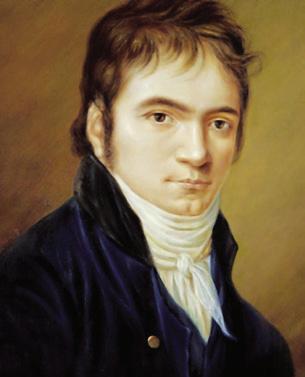
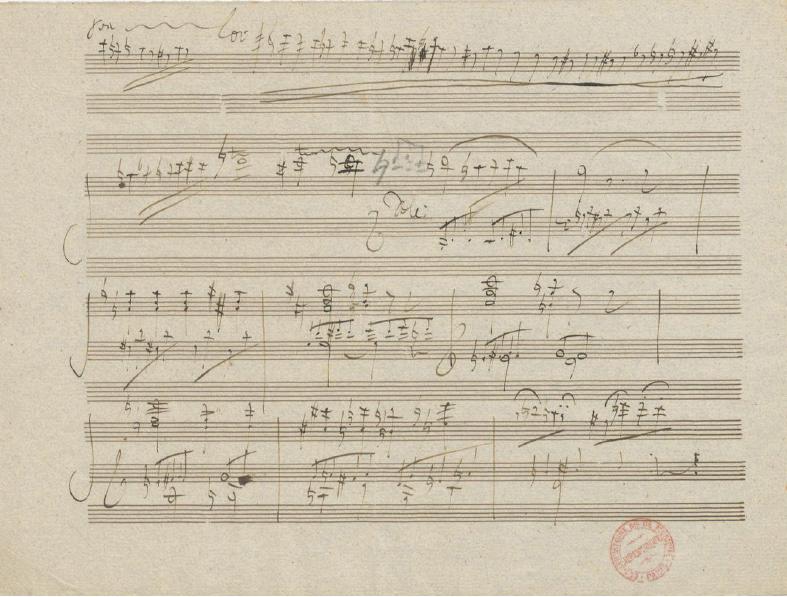
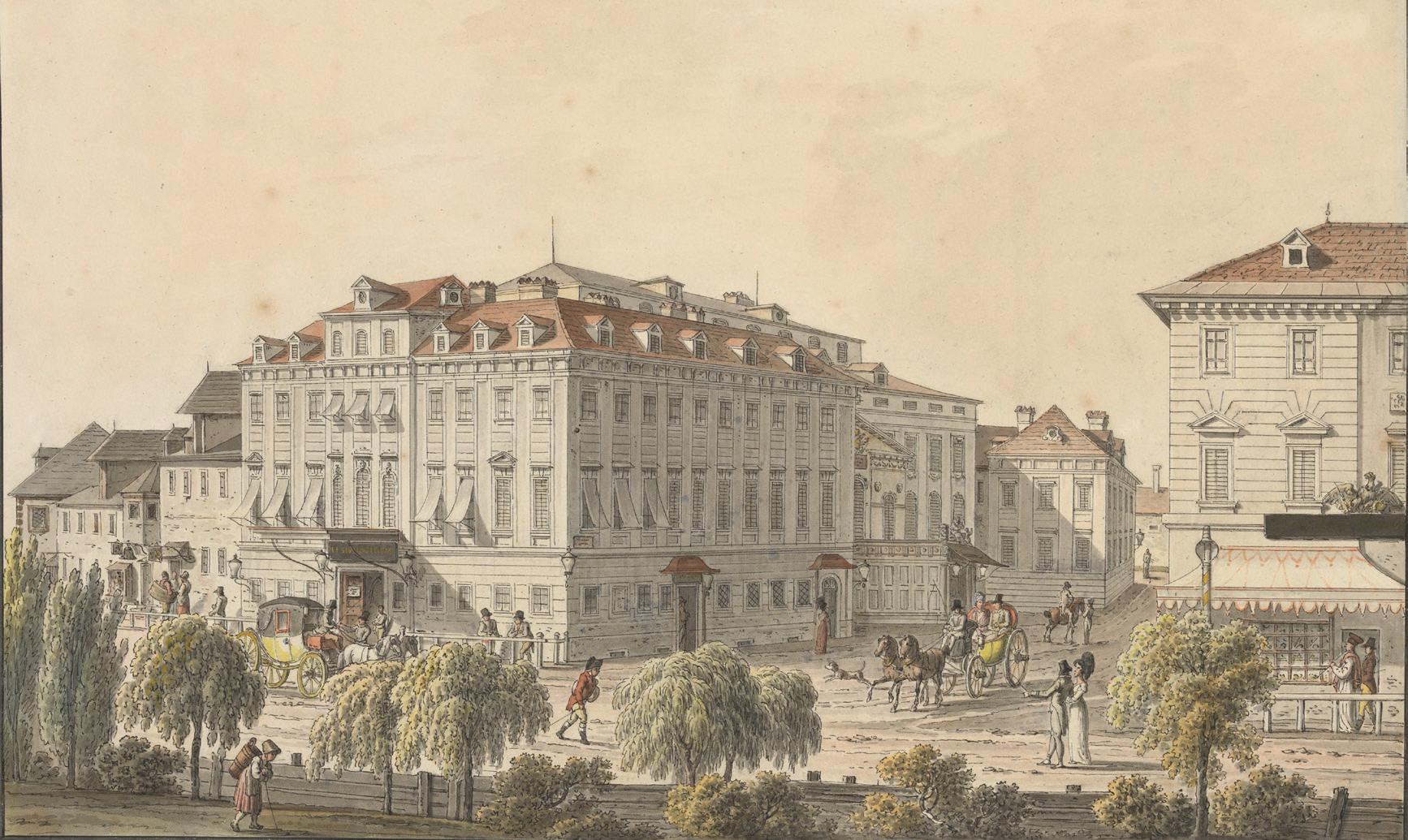
previous page: Ludwig van Beethoven, portrait on ivory by Christian Horneman (1765–1844), 1803. Bodmer Collection, Beethoven-Haus Bonn, Germany | this page: Autograph of Beethoven’s first-movement cadenza for the Third Piano Concerto | opposite page: Theater an der Wien in Vienna, where Beethoven premiered his Third Piano Concerto and other works on April 5, 1803. Drawing by Jakob Alt (1789–1872), ca. 1815. Collection of the Vienna Museum, Austria. Photo by Fine Art Images/Heritage Images via Getty Images
the big issues—how the music moves forward, the way it approaches the turning points in its progress—there is less agreement. Beethoven doesn’t yet seem to have figured out what Mozart always understood—that you shouldn’t give too much away before the soloist enters and the drama really begins. There are touches of pure Beethoven, like the unannounced entry of the timpani just after the cadenza—a complete surprise, even though it has been thoughtfully prepared by a main theme that imitates the beating of a drum every time it appears.
There’s nothing Mozartian about Beethoven’s choice of key for the central slow movement: E major, with its key signature of four sharps, is bold and unexpected in a concerto in C minor, with three flats. For a moment, the first E major chord, given to the piano alone, seems all wrong, as if the soloist’s hands have landed in the wrong place; at the same time, it’s fresh and irresistible. Where Mozart generally wrote andante or adagio, Beethoven dictates largo. Deliberately paced and magnificently expansive, this is the first great example of a new kind of slow movement. Throughout the rest of the nineteenth century, composers would profit from remembering this music, although it’s arguable that no one after Beethoven ever thought of anything like the lovely, fully blossomed romanticism of the duet for flute and bassoon over plucked strings and piano arpeggios midway through.
The way Beethoven glances over the final double bar of this movement at the opening of the finale also is new. The two movements aren’t yet literally connected, as they will be in later music, but Beethoven uses all his wit and wisdom to carry us from one to the next. He capitalizes on the fact that G-sharp is the same note on the keyboard as A-flat, and he uses that note to pivot from the remote world of E major back to C minor. Our ears easily make the connection, and the rondo finale races forward, full of pranks and good humor.
Having convinced his listeners that E major is no stranger to C minor, Beethoven returns to the key of his slow movement in the middle of the finale as if it were the most logical move of all. Beethoven recovers C minor again, but, after a brief cadenza, he tears off at a gallop into C major, where he has been headed all along.
It’s not clear why this concerto, evidently designed for Beethoven’s first Vienna concert in April 1800, wasn’t performed that night. Perhaps it simply wasn’t ready. The manuscript suggests that last-minute changes were still being made before its premiere on April 5, 1803, when Beethoven also introduced his new Second Symphony and the oratorio Christ on the Mount of Olives. Even then, the music was more firmly fixed in Beethoven’s mind than on the page. Ignaz von Seyfried, the new conductor at the Theater an der Wien, agreed to turn pages for
Beethoven, only to discover that it was easier said than done:
I saw almost nothing but empty leaves, at most on one page or another a few Egyptian hieroglyphs wholly unintelligible to me and scribbled down to serve as clues for him. He played nearly all of the solo part from memory since, as was so often the case, he had not had time to put it all down on paper. He gave me a secret glance whenever he was at the end of one of the invisible passages, and my scarcely concealable anxiety not to miss the decisive moment amused him greatly, and he heartily laughed at the jovial supper which we ate afterwards.
Nearly a year later, Beethoven finally got around to writing down the piano part for a performance given by his student Ferdinand Ries, who provided his own cadenza.
ROBERT SCHUMANN
Born June 8, 1810; Zwickau, Saxony, Germany
Died July 29, 1856; Endenich, near Bonn, Germany
The first reviewer of the Third Piano Concerto commented that the piece should succeed “even in places like Leipzig, where people were accustomed to hearing the best of Mozart’s concertos.” He continued, suggesting that this music would always require
. . . a capable soloist who, in addition to everything one associates with virtuosity, has understanding in his head and a heart in his breast—otherwise, even with the most impressive preparation and technique, the best things in the work will be left behind.
Those are wise words, particularly from a man working in a field that to this day expects sound judgments on new music heard cold. What no critic could predict is that this concerto, rooted in the previous century and a pioneer in its own, would continue to speak as strongly and directly to the centuries that followed.
Symphony No. 1 in B-flat Major, Op. 38 (Spring)
It was Clara Wieck, the future Mrs. Robert Schumann, who suggested that “it would be best if [Robert] composed for orchestra.” Although he was becoming well known as a composer of fanciful and poetic piano pieces, Clara noted in her diary in 1839, the year before she and Robert married, that
. . . his imagination cannot find sufficient scope on the piano. . . . His compositions are all orchestral in feeling. My highest wish is that he should compose for orchestra—that is his field! May I succeed in bringing him to it.
In less than two years, Clara—controlling, bossy, and determined as ever, but also musically savvy and genuinely concerned about Robert’s career—would write, “It isn’t my turn to keep the diary this week, but when your husband is writing a symphony, he must be excused from other things.” That symphony, in B-flat major, is the one we know as Robert’s first, and, as Clara predicted, it opened an important new chapter in his creative life.
Clara was only nine years old when she first met Robert, a pianist and budding composer twice her age who showed up at the Wieck home to study piano with her father Friedrich. At first, Robert and Clara vied for Friedrich’s attention as his prize pupil, for each of them was gifted enough to have a major career as a concert artist.
But the tables began to turn in 1835, when Robert, now twentyfive, realized that Clara had matured, both as a musician, and, more notably, as a young woman. That November 25 they exchanged their first kiss, an event so significant that Robert would always remember the date. The courtship that ensued was an unusually drawn-out, heated, on-again-off-again affair, continually thwarted by Friedrich, who foresaw that in gaining a son-in-law he would lose not just a daughter, but all prospects of her having a career to rival those of Chopin and Liszt.
By the time Robert and Clara finally married in September 1840, after a sustained court battle with Friedrich, Robert had published twenty-three scores, all for solo piano—two sonatas, Papillons, Carnaval, Kinderszenen, Kreisleriana, even variations on a theme by Clara herself—a lifetime of piano landmarks all composed before the age of thirty. But, as Clara knew, he also aspired to write a symphony, the form that Beethoven had stamped as the most powerful public statement a composer could make. In 1832 Robert had devoted himself to a serious study of Beethoven’s music, even making piano reductions of two of Beethoven’s orchestral movements, as if to translate them into the language he knew best. That autumn, no doubt encouraged by the experience, he undertook his own first big orchestral work, a symphony in G minor. The opening movement was performed that November in Zwickau at a concert in which the prodigy Clara also appeared, and then again, after Robert reworked it, on two subsequent occasions, including Clara’s “grand concert” in the Leipzig Gewandhaus in April 1833. But later that spring, he put the symphony aside, even though he had nearly completed three additional movements, and returned to composing the piano pieces at which he excelled— including ten impromptus on a “romance” by Clara.
COMPOSED
January–February 1841
FIRST PERFORMANCE
March 31, 1841; Leipzig, Germany. Felix Mendelssohn conducting
November 4 and 5, 1892, Auditorium Theatre. Theodore Thomas conducting
June 29, 1944, Ravinia Festival. Pierre Monteux conducting
MOST RECENT
CSO PERFORMANCES
July 3, 1996, Ravinia Festival. Hermann Michael conducting
March 29, 30, and 31, 2018, Orchestra Hall. Kent Nagano conducting
CSO RECORDINGS
1929. Frederick Stock conducting. Victor
1977. Daniel Barenboim conducting. Deutsche Grammophon
Like a poet who decides that a novel is beyond his reach, Schumann quickly gave up the idea of writing a symphony. But the fire was rekindled when he visited Ferdinand Schubert, the late composer’s brother, during a trip to Vienna in 1839, and discovered the manuscript of Schubert’s Great C major symphony—one of music’s most remarkable finds. He immediately arranged for the symphony to be performed by the prestigious Leipzig Gewandhaus Orchestra under Mendelssohn’s baton, and after the premiere he wrote to Clara, “Today, I was in
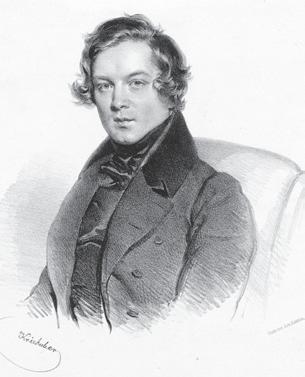
opposite page: Robert Schumann, lithograph portrait by Josef Kriehuber (1800–1876), 1839. Gesellschaft der Musikfreunde, Vienna, Austria
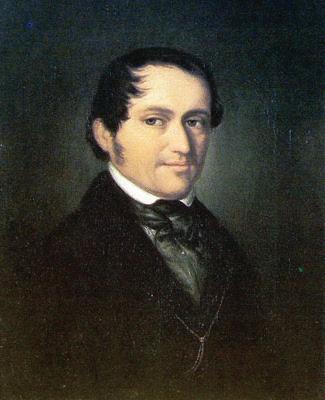
this page, from left: Anonymous portrait of Friedrich Wieck (1785–1873), the father of Clara, at the age of forty-five, ca. 1830, the year he first met Robert Schumann. Robert-SchumannHaus, Zwickau, Germany
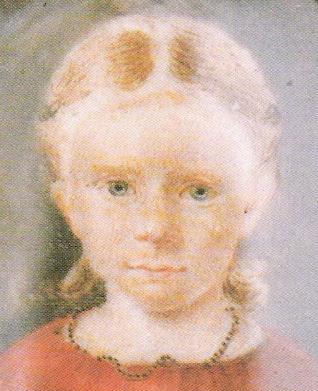
Clara Wieck (1819–1896), detail of an anonymous portrait on ivory, 1828, the year she met Robert Schumann and made her first major appearance as a pianist
seventh heaven . . . and wished only that you should be my wife and that I also could write such symphonies.”
Marrying Clara unlocked Robert’s creativity. The year of their wedding he wrote some 140 songs, an unexpected change of direction (he had not composed songs in a dozen years) that produced some of his greatest works, including the Dichterliebe cycle. Then in January 1841, he switched gears again just as abruptly, this time with Clara’s endorsement—realizing her “highest wish” and now, apparently, his as well. In just three days, from the twenty-sixth to the twenty-eighth, he sketched an entire symphony, the product of a steady “symphonic fire” and sleepless nights. Over the span of the next month, the score was fleshed out, revised, and polished, and Robert was so absorbed in his work that for five weeks he didn’t make a single entry in the marriage diary that he and Clara had begun, with alternating lines from each. It was therefore left to Clara to record that the new orchestral work was to be called the Spring Symphony, and that it was inspired by a “spring poem” by Adolph Böttger. Robert was writing during Leipzig’s shortest, grayest days, and, inevitably, his symphony is more about the longing for spring than the season itself, as he told one of its first conductors. (Böttger’s poem similarly contrasts the thoughts of a despondent lover with the season’s arrival.) “I should like the very first trumpet entrance to sound as if it came from on high,” he later wrote of the opening measures, “like a summons to awakening.” (Schumann’s trumpets even duplicate the iambic tetrameter of Böttger’s line, “O wende, wende deinen Lauf” [Oh turn, oh turn and change your course].)
Schumann originally planned to give each movement a title. The first was called “Beginning of spring,” and Schumann later admitted that he wanted its progression from darkness to spirited activity “to suggest the world’s turning green, perhaps with a butterfly
hovering in the air, and then, in the Allegro, to show how everything to do with spring is coming to life.” This is music of great confidence and an almost innocent joy. The recapitulation of the Allegro is heralded by a blazing full-orchestra announcement of the “summons to awakening,” a particularly dramatic touch to crown the movement.
The second movement, originally titled “Evening,” is a rich orchestral larghetto, and not the simple song without words one might expect of a composer steeped in writing piano miniatures. There are many lovely details, none more unexpected than the pianissimo arrival of the trombones at the very end. The “merry playmates” in the now-suppressed title of Schumann’s scherzo have some rather demonic fun, first with the trombone theme from the Larghetto, and then with two trios—one a simple country dance, the other hectic with an undertone of danger.
Although Schumann called his finale “Spring at its height,” he warned that it was “a farewell to spring, therefore, not to be taken too frivolously.” It is, nevertheless, a nearly cloudless succession of spirited and joyous ideas—a reminder that the last days of spring lead to a full, bright summer— capped by the puckish, almost-Mendelssohnian suggestion of birds and beasts at play.
Ultimately, Schumann’s score heralds not so much the advent of spring as the arrival of an important new symphonic talent. In the months following the Spring Symphony, Schumann composed several other big instrumental works, including a new symphony in D minor (the one we now know as number four)—the fabled “year of song” of 1840 giving way to a year of orchestral music. Schumann had once worried that there was nothing new to be said in symphonic form—that his contemporaries were merely producing “pale reflections of Beethoven”—but even as an orchestral newcomer he managed to create a work that has taken its place among the symphonies that have stood the test of time.
BEDŘICH SMETANA
Born March 2, 1824; Leitomischl, Bohemia
Died May 12, 1884; Prague, Bohemia
Overture and Three Dances from The Bartered Bride
Athough both his parents were Czech, Smetana did not learn the Czech language as a boy. At home and in school he spoke German, the official language of Bohemia under the rule of the Austrian Hapsburgs. He was not aware of his strong attachment to his native country until after he moved away at the age of thirty-two, to lead the Goteborg Philharmonic Society in Sweden. When he returned to Prague on a vacation four years later, in 1860, he wrote:
It is sad that I am forced to seek my living in foreign lands, far from my home which I love so dearly and where I would so gladly live. . . . My heart is heavy as I take leave of these places. Be happy, my homeland, which I love above all. . . .
By then he had begun to study Czech, and his first attempts to use it in writing produced letters that were uncertain and full of grammatical errors.
Smetana decided to move home as soon as he could arrange it; he vowed to master his native tongue and to write the first significant opera in Czech. He returned to Prague in 1862, this time to stay. The first of his eight operas, The Brandenburgers in Bohemia, completed in 1863, is not the stage work we associate with his name today, but it was a great success in its time—it won first prize in a national opera competition and was produced in Prague in 1866 to great acclaim.
With his next opera, Smetana gave the Czech people one of their national treasures. While The Brandenburgers in Bohemia had been a serious historical epic, The Bartered Bride is a slice of everyday life. The story is simple and effective—a nineteenth-century situation comedy. Jeník and Mařenka are lovers. The local marriage broker arranges a match between Mařenka and the village idiot Vašek, the young son of the wealthy landowner Tobias Mícha. When the marriage broker
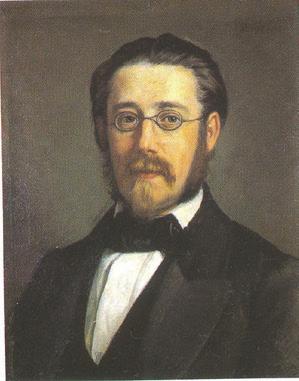
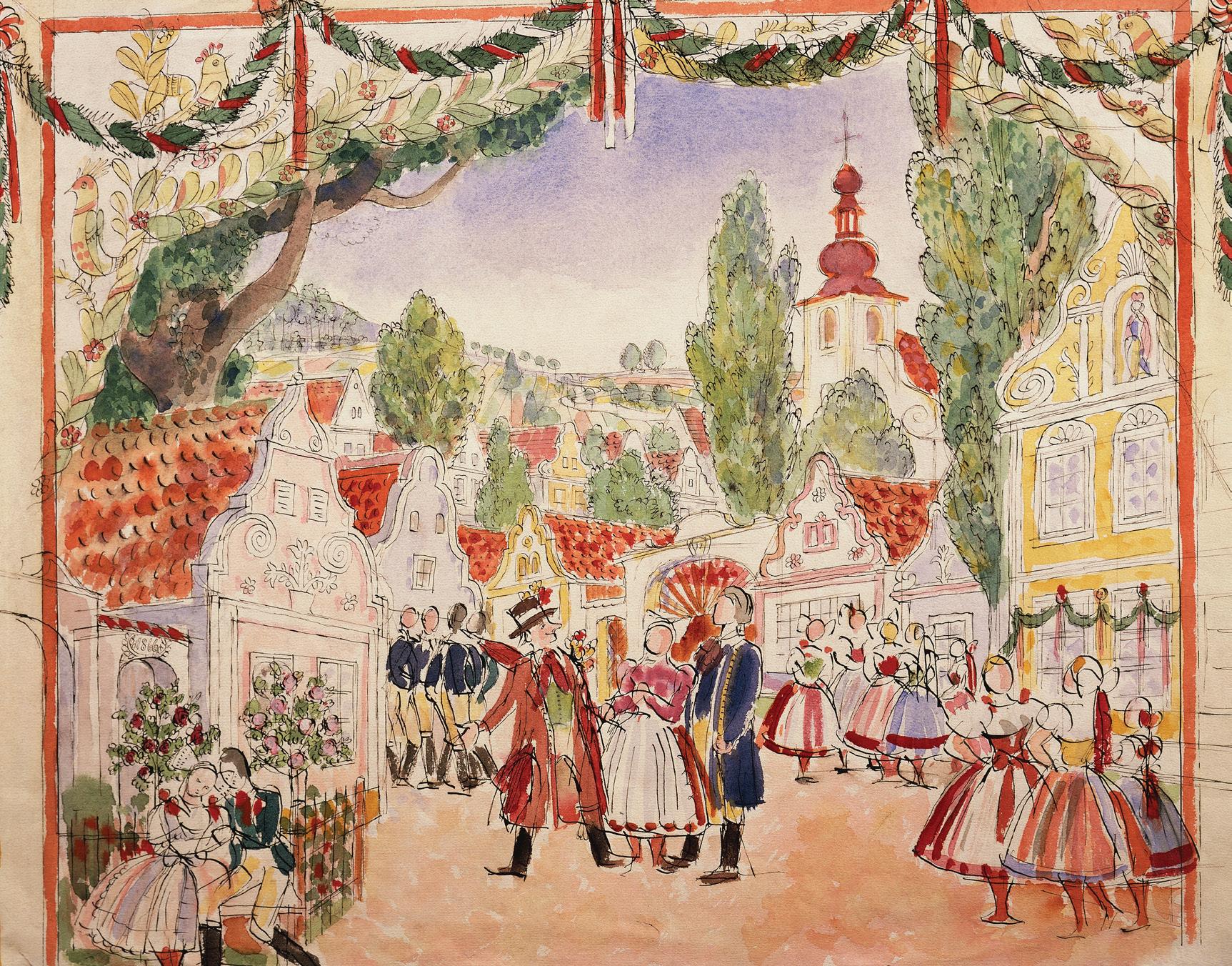
this page: Bedřich Smetana, portrait, oil on canvas, by Swedish artist Johan Per Södermark (1822–1889), 1858. | next page: Scenography for The Bartered Bride. Watercolor on paper, ca. 1943. Bedřich Smetana Museum, Prague, Czech Republic. Photo by DeAgostini/Getty Images
August 12, 1893, Music Hall at the World’s Columbian Exposition. Vojtěch I. Hlaváč conducting (Overture)
December 15 and 16, 1893, Auditorium Theatre. Theodore Thomas conducting (Overture)
July 23, 1936, Ravinia Festival. Isaac Van Grove conducting (Overture)
MOST RECENT
CSO PERFORMANCES
August 12, 2000, Ravinia Festival. Christoph Eschenbach conducting (Dance of the Comedians, Furiant, and Polka)
December 14, 15, 16 (twice), 22, and 23, 2018, Orchestra Hall. Michael Krajewski conducting (Dance of the Comedians)
CSO RECORDINGS
1929. Frederick Stock conducting. Victor (Overture)
1947. Désiré Defauw conducting. RCA (Overture)
1955. Fritz Reiner conducting. RCA (Overture)
bribes Jeník to give up his claim to Mařenka, Jeník agrees on the seemingly simple condition that she marry Tobias Mícha’s son. Justice is served, confusion turns to joy, and the lovers are reunited when it is discovered that Jeník is actually the landowner’s long-lost older son.
Smetana was so taken with this subject that he composed the overture even before the libretto was finished. This brief curtain-raiser introduces music that returns in the finale of the second act, when Jeník signs the broker’s contract. The overture moves at a lightning pace from beginning to end—a rapid scamper of eighth notes and earthy dance tunes. But it is the opera’s individual dances that stamp the work as thoroughly Czech and yet highly individual: the rustic polka
from act 1, with its irresistible lilt; the fiery furiant from act 2, full of tricky rhythms and shifting meters; and the visiting circus’s Dance of the Comedians on the village green, complete with a big trumpet tune and an abundance of colorful frenzy.
The opera was not an immediate hit, but it eventually caught on and was performed more than one hundred times during the composer’s lifetime. Smetana composed six more operas, but The Bartered Bride is the only one that is still regularly staged, even in countries far from Smetana’s homeland.
Phillip Huscher has been the program annotator for the Chicago Symphony Orchestra since 1987.
The Chicago Symphony Orchestra thanks United Airlines for sponsoring these performances.
PROFILES
Jakub Hrůša Conductor
FIRST CSO PERFORMANCES
May 18, 19, and 20, 2017, Orchestra Hall. Smetana’s Má vlast
MOST RECENT CSO PERFORMANCES
March 20, 21, and 22, 2025, Orchestra Hall. Rachmaninov’s Piano Concerto no. 1 with Simon Trpčeski and Shostakovich’s Symphony no. 11
Born in the Czech Republic, Jakub Hrůša is chief conductor of the Bamberg Symphony, music director of the Royal Opera House (London), and chief conductor and music director designate of the Czech Philharmonic from 2028. He is Musical America’s Conductor of the Year 2026 and the International Classical Music Awards (ICMA) 2026 Artist of the Year.
He performs regularly with the world’s greatest orchestras, including the Vienna and Berlin philharmonics, Bavarian Radio Symphony Orchestra, Munich Philharmonic, Leipzig Gewandhaus Orchestra, Staatskapelle Dresden, Tonhalle-Orchester Zürich, Lucerne Festival Orchestra, Royal Concertgebouw Orchestra Amsterdam, Orchestre de Paris, Orchestre Philharmonique de Radio France in Paris, NHK Symphony Tokyo, Mahler Chamber Orchestra, Cleveland Orchestra, New York Philharmonic, and the Boston Symphony Orchestra.
He has led opera productions for the Lyric Opera of Chicago (Jenůfa), Salzburg Festival (Kát’a Kabanová with the Vienna Philharmonic), Vienna State Opera (The Makropulos Case), Royal Opera House (Jenůfa, Carmen, Lohengrin), Opéra National de Paris (Rusalka), and Zurich Opera (The Makropulos Case). He has also been a regular guest at the Glyndebourne Festival, and he was music director of Glyndebourne On Tour for three years.
His relationships with leading soloists include collaborations with artists including Behzod
Abduraimov, Piotr Anderszewski, Leif Ove Andsnes, Emanuel Ax, Lisa Batiashvili, Joshua Bell, Renaud Capuçon, Gautier Capuçon, Julia Fischer, Kirill Gerstein, Hélène Grimaud, Augustin Hadelich, Hilary Hahn, Janine Jansen, Sheku Kanneh-Mason, Leonidas Kavakos, Evgeny Kissin, Lang Lang, Anne-Sophie Mutter, Beatrice Rana, Nikolaj Szeps-Znaider, Antoine Tamestit, Jean-Yves Thibaudet, Daniil Trifonov, Mitsuko Uchida, Yuja Wang, Alisa Weilerstein, and Frank Peter Zimmermann.
As a recording artist, he has received numerous awards and nominations. He was a double winner at the 2024 Gramophone Awards for his recordings of Britten’s Violin Concerto with Isabelle Faust and the Bavarian Radio Symphony Orchestra and Kát’a Kabanová with the Vienna Philharmonic at the Salzburg Festival. With the Bamberg Symphony, he received the ICMA Prize for Symphonic Music in both 2022 and 2023 for Rott’s Symphony no. 1 and Bruckner’s Symphony no. 4. He was awarded the German Record Critics’ Prize for Mahler’s Symphony no. 4, and in 2021 his recording of violin concertos by Martinů and Bartók with Frank Peter Zimmermann was nominated for BBC Music Magazine and Gramophone awards and Dvořák’s Violin Concerto with the Bavarian Radio Symphony and Augustin Hadelich was nominated for a Grammy Award. His recordings of piano concertos by Dvořák and Martinů with Ivo Kahánek and the Bamberg Symphony and Vanessa from Glyndebourne both won BBC Music Magazine awards in 2020.
Jakub Hrůša is an honorary member of the Royal Academy of Music in London. In 2025 he was awarded the Medal of Merit in the Field of Arts by the president of the Czech Republic, and in 2024 he received the Silver Medal of the President of the Czech Senate, its highest award. He was the inaugural recipient of the Sir Charles Mackerras Prize and holds the Bavarian Order of Merit, the Bavarian Culture Prize, the Czech Academy of Classical Music’s Antonín Dvořák Prize, and the Bavarian State Prize for Music with the Bamberg Symphony.
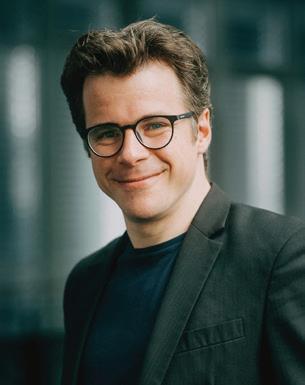
PHOTO BY MARIAN LENHARD
Leif Ove Andsnes Piano
FIRST CSO PERFORMANCES
July 17, 1993, Ravinia Festival. Grieg’s Piano Concerto, Lawrence Foster conducting
January 5, 6, 7, and 10, 1995, Orchestra Hall. Rachmaninov’s Piano Concerto no. 3, Neeme Järvi conducting
MOST RECENT CSO PERFORMANCES
August 1, 1998, Ravinia Festival. Prokofiev’s Piano Concerto no. 3, Lawrence Foster conducting
April 7, 8, 9, and 12, 2022, Orchestra Hall. Mozart’s piano concertos nos. 20 and 23 (conducting from the keyboard) and Rondo in D major
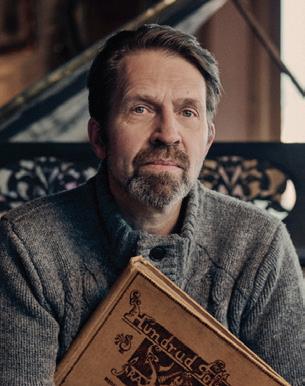
With his commanding technique and searching interpretations, Leif Ove Andsnes, the celebrated Norwegian pianist, has won acclaim worldwide, playing concertos and recitals in the world’s leading concert halls and with its foremost orchestras, while building an esteemed and extensive discography. An avid chamber musician, he was founding director of the Rosendal Chamber Music Festival until its final season in 2025 and co-artistic director of the Risør Festival of Chamber Music for nearly two decades. He was inducted into the Gramophone Hall of Fame in 2013.
This season, Andsnes joined the Oslo Philharmonic for the world premiere of a new piano concerto by his compatriot Ørjan Matre; performed Beethoven’s Third Piano Concerto with the Gothenburg and Atlanta symphony orchestras, with future dates scheduled with the Danish National Orchestra; and played Brahms’s Second Piano Concerto with the Spanish National Orchestra, Vienna Symphony, and NHK
Symphony Tokyo. In recital, he performed works by Schumann, Janáček, and Kurtág at New York’s Carnegie Hall, Boston’s Celebrity Series, and other U.S. destinations, after touring a program of Palestrina, Beethoven, Liszt, and Schumann in Canada, Brazil, Peru, Taiwan, and Japan. He completes the season with two European duo recital tours, in collaboration with violinist Christian Tetzlaff and fellow pianist Bertrand Chamayou, respectively. Andsnes’s recording of music by Schubert for piano four hands with Chamayou was released on Warner Classics, followed by a solo album, featuring music by Andsnes’s fellow countryman Geirr Tveitt, to be released on the Simax label in April.
Comprising more than fifty titles, the pianist’s existing discography has been recognized with eleven Grammy Award nominations, seven Gramophone awards, BBC Music Magazine’s Recording of the Year Award, and numerous other international honors. Andsnes is also the recipient of the Royal Philharmonic Society’s Instrumentalist Award, Gilmore Artist Award, Norway’s Commander of the Royal Norwegian Order of St. Olav, and the prestigious Peer Gynt Prize. He has curated Carnegie Hall’s Perspectives series, been the subject of the London Symphony Orchestra’s Artist Portrait Series, and undertaken season-long artistic residencies with the Berlin and New York philharmonics.
Andsnes studied at the Bergen Music Conservatory under Jirí Hlinka and also received invaluable advice from Jacques de Tiège. Today he lives with his wife and their three children in Bergen, where he is an artistic advisor at the city’s Jirí Hlinka Piano Academy.
The Chicago Symphony Orchestra—consistently hailed as one of the world’s best—marks its 135th season in 2025–26. The ensemble’s history began in 1889, when Theodore Thomas, the leading conductor in America and a recognized music pioneer, was invited by Chicago businessman Charles Norman Fay to establish a symphony orchestra. Thomas’s aim to build a permanent orchestra of the highest quality was realized at the first concerts in October 1891 in the Auditorium Theatre. Thomas served as music director until his death in January 1905, just three weeks after the dedication of Orchestra Hall, the Orchestra’s permanent home designed by Daniel Burnham.
Frederick Stock, recruited by Thomas to the viola section in 1895, became assistant conductor in 1899 and succeeded the Orchestra’s founder. His tenure lasted thirty-seven years, from 1905 to 1942—the longest of the Orchestra’s music directors. Stock founded the Civic Orchestra of Chicago— the first training orchestra in the U.S. affiliated with a major orchestra—in 1919, established youth auditions, organized the first subscription concerts especially for children, and began a series of popular concerts.
Three conductors headed the Orchestra during the following decade: Désiré Defauw was music director from 1943 to 1947, Artur Rodziński in 1947–48, and Rafael Kubelík from 1950 to 1953. The next ten years belonged to Fritz Reiner, whose recordings with the CSO are still considered hallmarks. Reiner invited Margaret Hillis to form the Chicago Symphony Chorus in 1957. For five seasons from 1963 to 1968, Jean Martinon held the position of music director.
Sir Georg Solti, the Orchestra’s eighth music director, served from 1969 until 1991. His arrival launched one of the most successful musical partnerships of our time. The CSO made its first overseas tour to Europe in 1971 under his direction and released numerous award-winning recordings. Beginning in 1991, Solti held the title of music director laureate and returned to conduct the Orchestra each season until his death in September 1997.
Daniel Barenboim became ninth music director in 1991, a position he held until 2006. His tenure was distinguished by the opening of Symphony Center in 1997, appearances with the Orchestra in the dual role of pianist and conductor, and twenty-one international tours. Appointed by Barenboim in 1994 as the Chorus’s second director, Duain Wolfe served until his retirement in 2022.
In 2010, Riccardo Muti became the Orchestra’s tenth music director. During his tenure, the Orchestra deepened its engagement with the Chicago community, nurtured its legacy while supporting a new generation of musicians and composers, and collaborated with visionary artists. In September 2023, Muti became music director emeritus for life.
In April 2024, Finnish conductor Klaus Mäkelä was announced as the Orchestra’s eleventh music director and will begin an initial five-year tenure as Zell Music Director in September 2027. In July 2025, Donald Palumbo became the third director of the Chicago Symphony Chorus.
Carlo Maria Giulini was named the Orchestra’s first principal guest conductor in 1969, serving until 1972; Claudio Abbado held the position from 1982 to 1985. Pierre Boulez was appointed as principal guest conductor in 1995 and was named Helen Regenstein Conductor Emeritus in 2006, a position he held until his death in January 2016. From 2006 to 2010, Bernard Haitink was the Orchestra’s first principal conductor.
Mezzo-soprano Joyce DiDonato is the CSO’s Artist-in-Residence for the 2025–26 season.
The Orchestra first performed at Ravinia Park in 1905 and appeared frequently through August 1931, after which the park was closed for most of the Great Depression. In August 1936, the Orchestra helped to inaugurate the first season of the Ravinia Festival, and it has been in residence nearly every summer since.
Since 1916, recording has been a significant part of the Orchestra’s activities. Recordings by the Chicago Symphony Orchestra and Chorus— including recent releases on CSO Resound, the Orchestra’s recording label launched in 2007— have earned sixty-five Grammy awards from the Recording Academy.
Chicago Symphony Orchestra
Klaus Mäkelä Zell Music Director Designate
Joyce DiDonato Artist-in-Residence
VIOLINS
Robert Chen Concertmaster
The Louis C. Sudler
Chair, endowed by an
anonymous benefactor
Stephanie Jeong
Associate Concertmaster
The Cathy and Bill Osborn Chair
David Taylor*
Assistant Concertmaster
The Ling Z. and Michael C.
Markovitz Chair
Yuan-Qing Yu*
Assistant Concertmaster
So Young Bae
Cornelius Chiu
Gina DiBello
Kozue Funakoshi
Russell Hershow
Qing Hou
Gabriela Lara
Matous Michal
Simon Michal
Sando Shia
Susan Synnestvedt
Rong-Yan Tang
Baird Dodge Principal
Danny Yehun Jin
Assistant Principal
Lei Hou
Ni Mei
Hermine Gagné
Rachel Goldstein
Mihaela Ionescu
Melanie Kupchynsky §
Wendy Koons Meir
Ronald Satkiewicz ‡
Florence Schwartz
VIOLAS
Teng Li Principal
The Paul Hindemith
Principal Viola Chair
Catherine Brubaker
Youming Chen
Sunghee Choi
Paolo Dara
Wei-Ting Kuo
Danny Lai
Weijing Michal
Diane Mues
Lawrence Neuman
Max Raimi
CELLOS
John Sharp Principal
The Eloise W. Martin Chair
Kenneth Olsen
Assistant Principal
The Adele Gidwitz Chair
Karen Basrak
The Joseph A. and Cecile
Renaud Gorno Chair
Richard Hirschl
Olivia Jakyoung Huh
Daniel Katz
Katinka Kleijn
Brant Taylor
The Ann Blickensderfer and Roger Blickensderfer Chair
BASSES
Alexander Hanna Principal
The David and Mary Winton
Green Principal Bass Chair
Alexander Horton
Assistant Principal
Daniel Carson
Ian Hallas
Robert Kassinger
Mark Kraemer
Stephen Lester
Bradley Opland
Andrew Sommer
FLUTES
Stefán Ragnar Höskuldsson § Principal
The Erika and Dietrich M.
Gross Principal Flute Chair
Emma Gerstein
Jennifer Gunn
PICCOLO
Jennifer Gunn
The Dora and John Aalbregtse Piccolo Chair
OBOES
William Welter Principal
Lora Schaefer
Assistant Principal
The Gilchrist Foundation,
Jocelyn Gilchrist Chair
Scott Hostetler
ENGLISH HORN
Scott Hostetler
Riccardo Muti Music Director Emeritus for Life
CLARINETS
Stephen Williamson Principal
John Bruce Yeh
Assistant Principal
The Governing
Members Chair
Gregory Smith
E-FLAT CLARINET
John Bruce Yeh
BASSOONS
Keith Buncke Principal
William Buchman
Assistant Principal
Miles Maner
HORNS
Mark Almond Principal
James Smelser
David Griffin
Oto Carrillo
Susanna Gaunt
Daniel Gingrich ‡
TRUMPETS
Esteban Batallán Principal
The Adolph Herseth Principal Trumpet Chair, endowed by an anonymous benefactor
John Hagstrom
The Bleck Family Chair
Tage Larsen
TROMBONES
Timothy Higgins Principal
The Lisa and Paul Wiggin
Principal Trombone Chair
Michael Mulcahy
Charles Vernon
BASS TROMBONE
Charles Vernon
TUBA
Gene Pokorny Principal
The Arnold Jacobs Principal Tuba Chair, endowed by Christine Querfeld
* Assistant concertmasters are listed by seniority. ‡ On sabbatical § On leave
The CSO’s music director position is endowed in perpetuity by a generous gift from Zell Family Foundation.
The Louise H. Benton Wagner chair is currently unoccupied.
TIMPANI
David Herbert Principal
The Clinton Family Fund Chair
Vadim Karpinos
Assistant Principal
PERCUSSION
Cynthia Yeh Principal
Patricia Dash §
Vadim Karpinos
LIBRARIANS
Justin Vibbard Principal
Carole Keller
Mark Swanson
CSO FELLOWS
Ariel Seunghyun Lee Violin
Jesús Linárez Violin
The Michael and Kathleen Elliott Fellow
ORCHESTRA PERSONNEL
John Deverman Director
Anne MacQuarrie Manager, CSO Auditions and Orchestra Personnel
STAGE TECHNICIANS
Christopher Lewis Stage Manager
Blair Carlson
Paul Christopher
Chris Grannen
Ryan Hartge
Peter Landry
Joshua Mondie
The Chicago Symphony Orchestra string sections utilize revolving seating. Players behind the first desk (first two desks in the violins) change seats systematically every two weeks and are listed alphabetically. Section percussionists also are listed alphabetically.
Discover more about the musicians, concerts, and generous supporters of the Chicago Symphony Orchestra Association online, at cso.org.
Find articles and program notes, listen to CSOradio, and watch CSOtv at Experience CSO.
cso.org/experience
Get involved with our many volunteer and affiliate groups.
cso.org/getinvolved
Connect with us on social @chicagosymphony
Chicago Symphony Orchestra Association Board of Trustees
OFFICERS
Mary Louise Gorno Chair
Chester A. Gougis Vice Chair
Steven Shebik Vice Chair
Helen Zell Vice Chair
Renée Metcalf Treasurer
Jeff Alexander President
Kristine Stassen Secretary of the Board
Stacie M. Frank Assistant Treasurer
Dale Hedding Vice President for Development
Chicago Symphony Orchestra Association Administration
SENIOR LEADERSHIP
Jeff Alexander President
Stacie M. Frank Vice President & Chief Financial Officer, Finance and Administration
Dale Hedding Vice President, Development
Ryan Lewis Vice President, Sales and Marketing
Vanessa Moss Vice President, Orchestra and Building Operations