Program Book - How to Train Your Dragon in Concert
ONE HUNDRED THIRTY-FIFTH SEASON
Friday, November 28, 2025, at 7:30
Saturday, November 29, 2025, at 7:30
Sunday, November 30, 2025, at 3:00
CSO at the Movies
Conner Gray Covington Conductor
POWELL How to Train Your Dragon
There will be one intermission.
This concert is part of the CSO at the Movies series, which is generously sponsored by Megan and Steve Shebik.
The Chicago Symphony Orchestra Association acknowledges support from the Illinois Arts Council.
DREAMWORKS ANIMATION PRESENTS
“HOW TO TRAIN YOUR DRAGON”
MUSIC BY JOHN POWELL
BASED ON THE BOOK BY CRESSIDA COWELL
SCREENPLAY BY WILL DAVIES AND DEAN DEBLOIS & CHRIS SANDERS
EXECUTIVE PRODUCERS
KRISTINE BELSON TIM JOHNSON
PRODUCED BY BONNIE ARNOLD
DIRECTED BY CHRIS SANDERS & DEAN DEBLOIS
This program is a presentation of the complete film How to Train Your Dragon, with a live performance of the film’s entire score, including music played by the orchestra during the end credits. Out of respect for the musicians and your fellow audience members, please remain seated until the conclusion of the music.
The Chicago Symphony Orchestra Association is grateful to Megan and Steve Shebik for their support of the CSO at the Movies series.
PROFILES
John Powell Composer
A native of London, England, John Powell was an accomplished violinist as a child, wrote music for commercials out of school, and assisted composer Patrick Doyle in the early 1990s. In 1997 he moved to the United States, where he worked on numerous projects for Hans Zimmer and his film music company Remote Control. He cowrote the score to Antz with Harry GregsonWilliams and quickly became one of the most desirable, versatile, and exciting composers in town.
John Powell was catapulted into the realm of A-list composers by displaying an entirely original voice with his oft-referenced scores to the first installment of Matt Damon’s Bourne trilogy, The Bourne Identity, from 2002. He has become the go-to writer for family animated films, scoring such hits as Shrek (cowritten with Gregson-Williams), Chicken Run (also cowritten with Gregson-Williams), Ice Age: The Meltdown, Ice Age: Dawn of the Dinosaurs, Bolt, Rio, Happy Feet, Happy Feet Two, and the first two installments of Kung Fu Panda (cowritten with Hans Zimmer). His pulsating action music has provided the fuel for Hancock, Green Zone, Stop
Loss, Mr. & Mrs. Smith, and The Italian Job. His music has also sweetened the romance of Two Weeks Notice and P.S. I Love You. In 2006 his music empowered X-Men: The Last Stand and lent tenderness to I Am Sam and gripping drama to United 93.
His infectious score for How to Train Your Dragon earned him his first Academy Award nomination. Powell has also lent his voice to the scores of Dr. Seuss’s The Lorax, Ice Age: Continental Drift, Rio 2 directed by Carlos Saldanha, and DreamWorks’s How to Train Your Dragon 2. His work can be found in Warner Bros.’ Pan starring Hugh Jackman, Universal Pictures’s action-thriller Jason Bourne starring Matt Damon, and Fox’s Oscarnominated animated feature Ferdinand. Most recent for Powell was Disney’s highly anticipated Solo: A Star Wars Story directed by Ron Howard, which gave him the opportunity to collaborate with John Williams.
John Powell’s music can be heard in the critically acclaimed final installment of DreamWorks Animation’s How to Train Your Dragon: The Hidden World, directed by Dean DeBlois.
In addition to his numerous film scores of all genres, John Powell has written concert works for choir and orchestra. A selection of these was released in 2018 with the album Hubris: Choral Works by John Powell, including his deeply moving A Prussian Requiem.
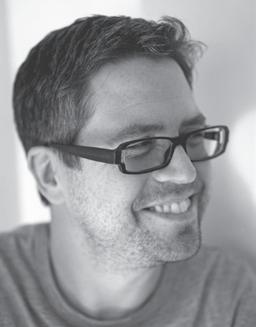
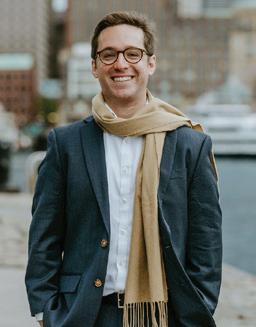
Conner Gray Covington Conductor
American conductor Conner Gray Covington performs a broad repertory.
In the 2025–26 season, he debuts with the Chicago Symphony Orchestra, Boston Pops Orchestra, Houston Symphony, Las Vegas Philharmonic, New Jersey Symphony, and the Phoenix Symphony. He also makes return visits to the North Carolina and San Francisco symphonies, Sarasota Orchestra, and Tucson Symphony Orchestra. In addition, Covington returns to the Utah Symphony after completing a four-year tenure as associate conductor and principal conductor of the Deer Valley Music Festival, its summer home.
With the Utah Symphony, Covington led nearly 300 performances, as well as tours throughout the state, and he has returned each season as a guest conductor since 2021. Other recent engagements include the Hawai’i Symphony Orchestra, Knoxville and San Diego symphony orchestras, and the Bellingham and Grand Teton music festivals. Covington is a five-time recipient of a Career Assistance Award from the Solti Foundation U.S. and was a featured conductor in the Bruno Walter National Conductor Preview presented by the League of American Orchestras.
He previously was a conducting fellow at the Curtis Institute of Music in Philadelphia, where he worked closely
with the Curtis Symphony Orchestra and Curtis Opera Theatre while being mentored by Philadelphia Orchestra Music Director Yannick Nézet-Séguin.
Covington’s recent concert engagements include Tchaikovsky’s Romeo and Juliet, Mozart’s Symphony no. 36 (Linz), Elgar’s Serenade for Strings, Britten’s Young Person’s Guide to the Orchestra, and Mason Bates’s Philharmonia Fantastique: The Making of the Orchestra with the San Diego Symphony.
Covington conducted the Utah Symphony in the world premiere of Quinn Mason’s Trombone Concerto in addition to such works as Strauss’s Don Juan, Barber’s Symphony no. 1, Debussy’s La mer, Haydn’s symphonies nos. 49 and 88, Dvořák’s symphonies nos. 6 and 8, Beethoven’s symphonies nos. 1 and 7, Handel’s Messiah, Stravinsky’s The Firebird Suite, Schumann’s Symphony no. 3 (Rhenish), and Brahms’s Symphony no. 2, among others.
Covington’s operatic engagements include Britten’s The Turn of the Screw for the New England Conservatory of Music in Boston, Britten’s The Rape of Lucretia and the world premiere of Rene Orth’s Empty the House at Curtis Opera Theatre, and Mozart’s The Marriage of Figaro for his debut with Utah Opera. He also has conducted more than twenty feature films with orchestra, including Frozen, Singing in the Rain, Casablanca, Raiders of the Lost Ark, Star Wars, and Jurassic Park.
Born in Louisiana, Conner Gray Covington studied conducting at the Curtis Institute, Eastman School of
PHOTO BY JENNY CHOU
Music, and the Aspen Music Festival and School, where his primary teachers included Yannick Nézet-Séguin, Neil Varon, and Robert Spano. He graduated from the renowned High School for the Performing and Visual Arts in Houston
PRODUCTION CREDITS
and went on to study violin with Martha Walvoord and conducting with Clifton Evans at the University of Texas at Arlington, where he graduated with highest honors with a degree in violin performance.
How to Train Your Dragon in Concert is produced by Film Concerts Live!, a joint venture of IMG Artists, LLC and The Gorfaine/Schwartz Agency, Inc.
Producers: Steven A. Linder and Jamie Richardson
Director of Operations: Rob Stogsdill
Production Manager: Sophie Greaves
Production Assistant: Katherine Miron
Worldwide Representation: IMG Artists, LLC
Technical Director: Mike Runice
Music Composed by John Powell
Music Preparation: Jo Ann Kane Music Service
Film Preparation for Concert Performance: Ramiro Belgardt, Epilogue Media
Technical Consultant: Laura Gibson
Sound Remixing for Concert Performance: Chace Audio by Deluxe
The score for How to Train Your Dragon has been adapted for live concert performance.
Universal Pictures, DreamWorks Animation, Bonnie Arnold, Chris Sanders, Dean DeBlois, John Powell, Chris DeFaria, Michael Silver, Patrick Koors, Tammy Olsen, Lawrence Liu, Thomas Schroder, Tanya Perra, Chris Herzberger, Noah Bergman, Jason Jackowski, Heather Oster, Jen Ockelmann-Wagner, Alex Levy, Mark Graham, Matt Voogt, Bethany Brinton, and the musicians and staff of the Chicago Symphony Orchestra.
REFRESHMENTS AT SYMPHONY CENTER
You can order drinks and snacks before the performance or during intermission at various bars located throughout Symphony Center, including the Bass Bar in the Rotunda and most of the lobby spaces in Orchestra Hall.
CHICAGO SYMPHONY ORCHESTRA
The Chicago Symphony Orchestra— consistently hailed as one of the world’s best—marks its 135th season in 2025–26. The ensemble’s history began in 1889, when Theodore Thomas, the leading conductor in America and a recognized music pioneer, was invited by Chicago businessman Charles Norman Fay to establish a symphony orchestra. Thomas’s aim to build a permanent orchestra of the highest quality was realized at the first concerts in October 1891 in the Auditorium Theatre. Thomas served as music director until his death in January 1905, just three weeks after the dedication of Orchestra Hall, the Orchestra’s permanent home designed by Daniel Burnham.
Frederick Stock, recruited by Thomas to the viola section in 1895, became assistant conductor in 1899 and succeeded the Orchestra’s founder. His tenure lasted thirty-seven years, from 1905 to 1942—the longest of the Orchestra’s music directors. Stock founded the Civic Orchestra of Chicago— the first training orchestra in the U.S. affiliated with a major orchestra—in 1919, established youth auditions, organized the first subscription concerts especially for children, and began a series of popular concerts.
Three conductors headed the Orchestra during the following decade: Désiré Defauw was music director from 1943 to 1947, Artur Rodzinski in 1947–48, and Rafael Kubelík from 1950 to 1953. The next ten years belonged to Fritz Reiner, whose recordings with the CSO are still considered hallmarks. Reiner invited Margaret Hillis to form the Chicago Symphony Chorus in 1957. For five seasons from 1963 to 1968, Jean Martinon held the position of music director.
Sir Georg Solti, the Orchestra’s eighth music director, served from 1969 until 1991. His arrival launched one of the most successful musical partnerships of our time. The CSO made its first overseas tour to Europe in 1971 under his direction and released numerous award-winning recordings. Beginning in 1991, Solti held the title of music director laureate and returned to conduct the Orchestra each season until his death in September 1997.
Daniel Barenboim became ninth music director in 1991, a position he held until 2006. His tenure was distinguished by the opening of Symphony Center in 1997, appearances with the Orchestra in the dual role of pianist and conductor, and twenty-one international tours. Appointed by Barenboim in 1994 as the Chorus’s second director, Duain Wolfe served until his retirement in 2022.
In 2010, Riccardo Muti became the Orchestra’s tenth music director. During his tenure, the Orchestra deepened its engagement with the Chicago community, nurtured its legacy while supporting a new generation of musicians and composers, and collaborated with visionary artists. In September 2023, Muti became music director emeritus for life.
In April 2024, Finnish conductor Klaus Mäkelä was announced as the Orchestra’s eleventh music director and will begin an initial five-year tenure as Zell Music Director in September 2027. In July 2025, Donald Palumbo became the third director of the Chicago Symphony Chorus.
Carlo Maria Giulini was named the Orchestra’s first principal guest conductor in 1969, serving until 1972; Claudio Abbado held the position from 1982 to 1985. Pierre Boulez was appointed as principal guest conductor in 1995 and was named Helen Regenstein Conductor Emeritus in 2006, a position he held until his death in January 2016. From 2006 to 2010, Bernard Haitink was the Orchestra’s first principal conductor.
Mezzo-soprano Joyce DiDonato is the CSO’s Artist-in-Residence for the 2025–26 season.
The Orchestra first performed at Ravinia Park in 1905 and appeared frequently through August 1931, after which the park was closed for most of the Great Depression. In August 1936, the Orchestra helped to inaugurate the first season of the Ravinia Festival, and it has been in residence nearly every summer since.
Since 1916, recording has been a significant part of the Orchestra’s activities. Recordings by the Chicago Symphony Orchestra and Chorus— including recent releases on CSO Resound, the Orchestra’s recording label launched in 2007—have earned sixty-five Grammy awards from the Recording Academy.
Chicago Symphony Orchestra
Klaus Mäkelä Zell Music Director Designate
Joyce DiDonato Artist-in-Residence
VIOLINS
Robert Chen Concertmaster
The Louis C. Sudler Chair, endowed by an
anonymous benefactor
Stephanie Jeong
Associate Concertmaster
The Cathy and Bill Osborn Chair
David Taylor* Assistant Concertmaster
The Ling Z. and Michael C.
Markovitz Chair
Yuan-Qing Yu*
Assistant Concertmaster
So Young Bae
Cornelius Chiu
Gina DiBello
Kozue Funakoshi
Russell Hershow
Qing Hou
Gabriela Lara
Matous Michal
Simon Michal
Sando Shia
Susan Synnestvedt
Rong-Yan Tang
Baird Dodge Principal
Danny Yehun Jin Assistant Principal
Lei Hou
Ni Mei
Hermine Gagné
Rachel Goldstein
Mihaela Ionescu
Melanie Kupchynsky §
Wendy Koons Meir
Ronald Satkiewicz ‡
Florence Schwartz
VIOLAS
Teng Li Principal
The Paul Hindemith Principal Viola Chair
Catherine Brubaker
Youming Chen
Sunghee Choi
Wei-Ting Kuo
Danny Lai
Weijing Michal
Diane Mues
Lawrence Neuman
Max Raimi
CELLOS
John Sharp Principal
The Eloise W. Martin Chair
Kenneth Olsen Assistant Principal
The Adele Gidwitz Chair
Karen Basrak §
The Joseph A. and Cecile Renaud
Gorno Chair
Richard Hirschl
Olivia Jakyoung Huh
Daniel Katz
Katinka Kleijn
Brant Taylor
The Ann Blickensderfer and Roger Blickensderfer Chair
BASSES
Alexander Hanna Principal
The David and Mary Winton Green
Principal Bass Chair
Alexander Horton Assistant Principal
Daniel Carson
Ian Hallas
Robert Kassinger
Mark Kraemer
Stephen Lester
Bradley Opland
Andrew Sommer
FLUTES
Stefán Ragnar Höskuldsson § Principal
The Erika and Dietrich M. Gross Principal Flute Chair
Emma Gerstein
Jennifer Gunn
PICCOLO
Jennifer Gunn
The Dora and John Aalbregtse Piccolo Chair
OBOES
William Welter Principal
Lora Schaefer Assistant Principal
The Gilchrist Foundation, Jocelyn Gilchrist Chair
Scott Hostetler
ENGLISH HORN
Scott Hostetler
CLARINETS
Stephen Williamson Principal
John Bruce Yeh Assistant Principal
The Governing Members Chair
Gregory Smith
E-FLAT CLARINET
John Bruce Yeh
BASSOONS
Keith Buncke Principal
William Buchman Assistant Principal
Miles Maner
HORNS
Mark Almond Principal
James Smelser
David Griffin
Oto Carrillo
Susanna Gaunt
Daniel Gingrich ‡
TRUMPETS
Esteban Batallán Principal
The Adolph Herseth Principal Trumpet Chair, endowed by an anonymous benefactor
John Hagstrom
The Bleck Family Chair
Tage Larsen
TROMBONES
Timothy Higgins Principal
The Lisa and Paul Wiggin Principal Trombone Chair
Michael Mulcahy
Charles Vernon
BASS TROMBONE
Charles Vernon
TUBA
Gene Pokorny Principal
The Arnold Jacobs Principal Tuba Chair, endowed by Christine Querfeld
TIMPANI
David Herbert Principal
The Clinton Family Fund Chair
Vadim Karpinos Assistant Principal
PERCUSSION
Cynthia Yeh Principal
Patricia Dash
Vadim Karpinos
LIBRARIANS
Justin Vibbard Principal
Carole Keller
Mark Swanson
CSO FELLOWS
Ariel Seunghyun Lee Violin
Jesús Linárez Violin
The Michael and Kathleen Elliott Fellow
ORCHESTRA PERSONNEL
John Deverman Director
Anne MacQuarrie Manager, CSO Auditions and Orchestra Personnel
STAGE TECHNICIANS
Christopher Lewis Stage Manager
Blair Carlson
Paul Christopher
Chris Grannen
Ryan Hartge
Peter Landry
Joshua Mondie
* Assistant concertmasters are listed by seniority.
‡ On sabbatical
§ On leave
The CSO’s music director position is endowed in perpetuity by a generous gift from the Zell Family Foundation.
The Louise H. Benton Wagner chair is currently unoccupied.
The Chicago Symphony Orchestra string sections utilize revolving seating. Players behind the first desk (first two desks in the violins) change seats systematically every two weeks and are listed alphabetically. Section percussionists also are listed alphabetically.