KLAUS MÄKELÄ Zell Music Director Designate | RICCARDO MUTI Music Director Emeritus for Life
Thursday, April 23, 2026, at 7:30 Friday, April 24, 2026, at 7:30 Saturday, April 25, 2026, at 7:30 Sunday, April 26, 2026, at 3:00
Joe Hisaishi Conductor and Piano
Esteban Batallán Trumpet
MUSIC BY JOE HISAISHI
Symphony No. 2
What the world is now?
Variation 14
Nursery rhyme
INTERMISSION
Castle in the Sky for Solo Trumpet and Orchestra
ESTEBAN BATALLÁN
Spirited Away Suite
JOE HISAISHI
The Chicago Symphony Orchestra Association acknowledges support from the Illinois Arts Council.
COMMENTS by Jon Burlingame
The rise of Japan’s Studio Ghibli, whose popular animated films include Princess Mononoke, Spirited Away, and The Boy and the Heron, has been accompanied by a growing appreciation for the composer responsible for those and many other scores over the past forty years: Joe Hisaishi.
Hisaishi’s enchanting, melodic accompaniments for these colorful, hand-drawn, folkinspired tales have catapulted him into the front ranks of the world’s film composers and won him eight Japanese Academy Awards as well as honors from the Annie Awards and the Los Angeles Film Critics Association.
His initial score for Studio Ghibli filmmaker Hayao Miyazaki’s Nausicaä of the Valley of the Wind (1984) launched a now legendary collaboration that has included My Neighbor Totoro (1988), Princess Mononoke (1997), Spirited Away (2001), Howl’s Moving Castle (2004), Ponyo on the Cliff by the Sea (2008), The Wind Rises (2013), and The Boy and the Heron (2023). Some observers compare their long professional relationship as the Japanese equivalent of the familiar partnership of John Williams and Steven Spielberg. Hisaishi has also scored such live-action films as Sonatine (1993), Dolls (2002), Departures (2008), and A Big Bold Beautiful Journey (2025).
Hisaishi’s film fame has tended to obscure his work for the concert hall, perhaps unfairly, as he has composed numerous works for orchestra, chorus, and chamber ensembles during the past three decades. Three symphonies; concertos for harp, viola, contrabass, and horns; and works for choir, chamber orchestra, and more are among his non-film compositions.
He was born in 1950 in Nagano, Japan, studied both violin and piano as a youth, and was equally fascinated by jazz and contemporary classical music. He studied composition at the Kunitachi College of Music in Tokyo.
Starting in the 1980s, he released albums that featured the eclectic sounds of gamelan orchestra, rock beats, and electronics. His stage name “Joe Hisaishi” is the Japanese equivalent
of “Quincy Jones,” which is both an in-joke and a hint about his personal taste in music. His admiration for Gustav Mahler also led him to build a replica of Mahler’s Austrian composition hut near his summer house in Japan.
From the start, the composer found inspiration in the minimalist composers of his time: Terry Riley, Steve Reich, and Philip Glass. That inspiration is evident throughout his Symphony no. 2, composed during the global COVID-19 pandemic of 2020 and premiered in 2021 by the New Japan Philharmonic World Dream Orchestra in Kyoto.
The thirty-eight-minute Symphony no. 2 combines Eastern and Western classical traditions. As Hisaishi wrote at the time:
Precisely because of the times we are living through, I wanted to write something that was not heavy in nature. In other words, I aimed to create a composition that purely explores the kinetic energy of sound.
The first movement, What the world is now?, is built on a phrase introduced by the cello, with rhythmic variations helping to shape the expressive character of the music.
The second movement, Variation 14, consists of a theme, fourteen variations, and a coda. As the composer explained: “I aimed to create a piece that is clear and simple, albeit technically challenging to perform. I believe that, above all else, the most important thing right now is simply to enjoy the music.”
He characterized the third movement, Nursery rhyme, as an “experimental work,” expanding a traditional Japanese song for children into symphonic form. Midway through the movement, an up-tempo section features shifting meters while continuing to play variations on the original tune. “My compositional intent,” he wrote, “was guided by the conviction that being more distinctly Japanese is, in fact, what makes a work truly global.”
Castle in the Sky, a 1986 film, marked the second of Hisaishi’s eleven feature films with Hayao Miyazaki and the first to be animated by Studio Ghibli. In the story, a pair of orphans—a girl named Sheeta who possesses a powerful crystal and a boy named Pazu from a mining town—try to learn the truth about the mythical, rarely seen kingdom of Laputa, seemingly lost in the clouds. Together, they manage to elude both sky pirates and nefarious government agents in an incredible adventure. (For the 2003 English-language release, Anna Paquin, James Van Der Beek, Cloris Leachman, Mandy Patinkin, and Mark Hamill supplied the voices.)
Hisaishi composed one of his most lyrical themes for this pro-environmental fable, whose retro-futuristic look has made the film a favorite in the steampunk genre. Perhaps inspired by Pazu’s trumpet playing in the story, the composer adapted his score into a sevenminute piece, Castle in the Sky for Solo Trumpet and Orchestra; it was premiered in 2004 by the World Dream Orchestra.
Spirited Away garnered the Oscar for Best Animated Feature Film at the SeventyFifth Academy Awards; it was the first hand-drawn, non-English-language animated film to win. Miyazaki later received an honorary
Oscar as “a master storyteller whose animated artistry has inspired filmmakers and audiences around the world” and won another for 2023’s The Boy and the Heron.
Released in Japan in 2001, Spirited Away quickly became the highest-grossing film in Japanese cinema history. Miyazaki’s elaborate, sometimes bizarre fantasy centers on a girl named Chihiro, whose parents stumble across an abandoned theme park that turns out to be haunted. The adults are turned into pigs, and Chihiro befriends a boy named Haku who helps her find work in a bathhouse as a first step toward escaping and breaking the spell that transformed her mom and dad. (The English-language voice cast included Daveigh Chase, Jason Marsden, Suzanne Pleshette, and David Ogen Stiers.)
Spirited Away’s music ranks among Hisaishi’s most popular scores, which prompted him to assemble an orchestral suite from the film in 2018. Although it plays as a single twentyfive-minute movement, it’s drawn from ten specific scenes in the movie. One Summer’s Day, Chihiro’s piano theme, opens the suite; Nighttime Coming introduces her to the strange, frightening, often malevolent figures that dominate the park; The Gods is the march that accompanies the spirits as they enter the complex.
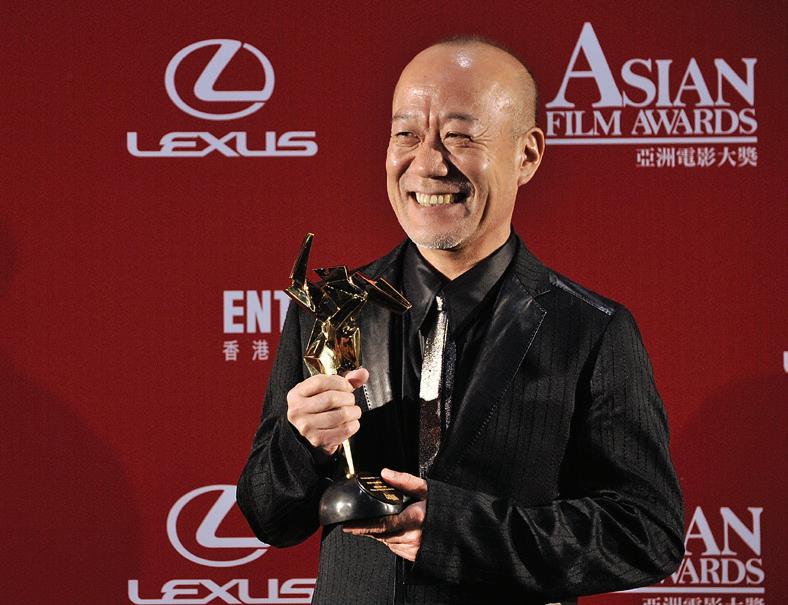
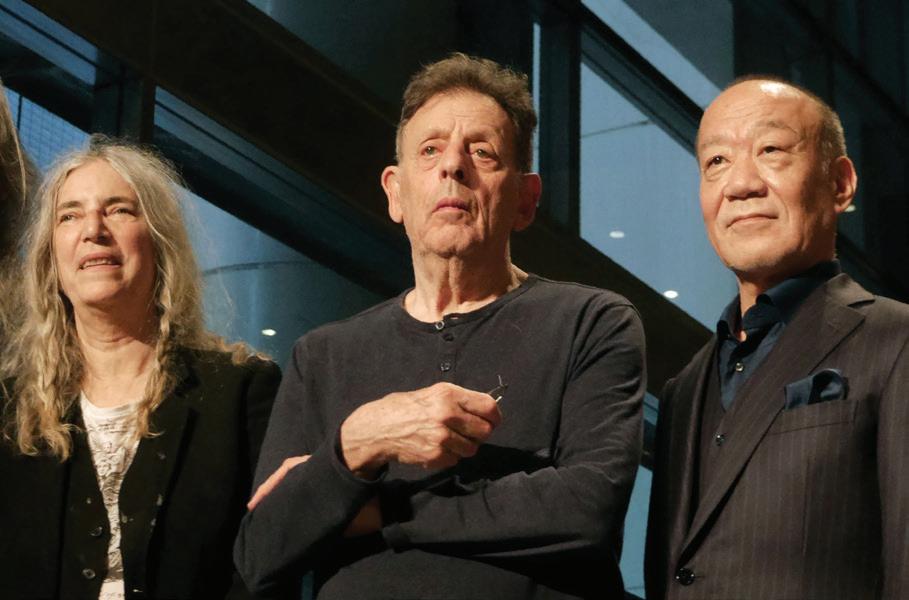
from left: Joe Hisaishi backstage with the Best Composer Award for his work on Miyazaki’s Ponyo on the Cliff by the Sea during the Asian Film Awards at the Hong Kong Convention and Exhibition Centre, March 23, 2009. Photo by Victor Fraile/Getty Images | Left to right, songwriter Patti Smith, composer Philip Glass, and Joe Hisaishi during a press conference photo session to promote their The Poet Speaks Japan tour, 2016. Karyn Nishimura-Poupée/AFP via Getty Images
View of the Morning is the delicate music heard as Chihiro awakens and starts her workday; The Bottomless Pit is from a terrifying scene in which Chihiro and Haku plummet into the endless darkness from the top of a tall building. A harp figure segues into a dramatic moment as Chihiro discovers Haku’s original form and tries to help him in The Dragon Boy; No Face (Kaonashi) is the music of a mysterious, seemingly monstrous, spirit that is destroying the bathhouse.
Moody piano and strings play during The Sixth Station, as Chihiro and Kaonashi take the train to right a destructive, ancient wrong; Reprise is the warm musical accompaniment for Chihiro and Haku in dragon form as they fly home, now in possession of the answers they’ve been
seeking; and The Return concludes on a celebratory note as Chihiro is reunited with her parents, now back in human form, and wonders if everything she’s just experienced really happened.
As Hisaishi once told an interviewer: “In my life, I just want to make music that can make people happy and escape.”
Jon Burlingame writes regularly for Variety and for such leading newspapers as the New York Times, Los Angeles Times, and the Washington Post and publications including Premiere, Emmy, and the Hollywood Reporter. He has won three Deems Taylor awards, presented by ASCAP, for outstanding music journalism. He teaches film-music history courses at the University of Southern California’s Thornton School of Music.
REFRESHMENTS AT SYMPHONY CENTER
You can order drinks and snacks before the performance or during intermission at various bars located throughout Symphony Center, including the Bass Bar in the Rotunda and most of the lobby spaces in Orchestra Hall. VIEW THE
A Musical Journey
Jazz at Lincoln Center Orchestra with Wynton Marsalis
JUNE 2
Alsop Conducts Adams, Copland & Marsalis
JUNE 4-6
Conrad Tao piano
JUNE 7
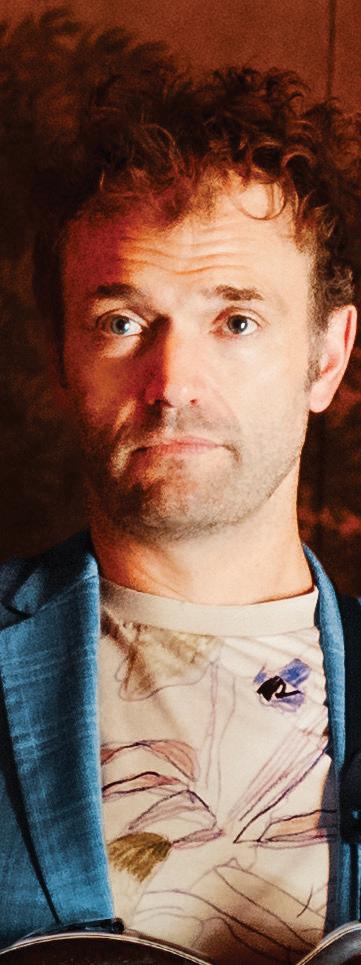
Chris Thile & the CSO
JUNE 8
Gaffigan, Thibaudet & Bernstein
JUNE 11 -1 3
CSO Brass Quintet
JUNE 16
Lincoln Portrait & Ellington Harlem
JUNE 1 8-21
A Musical Tribute to John Williams & Steven Spielberg
JUNE 23
Star Wars: A New Hope in Concert
JUNE 25-27
A Musical Tribute to
JOHN WILLIAMS & STEVEN SPIELBERG
Tuesday, June 23, 2026
6:00 PM Drinks & Bites
7:30 PM Concert
Celebrate the legendary collaboration between composer John Williams and filmmaker Steven Spielberg as the Chicago Symphony Orchestra brings to life some of cinema’s most iconic music.
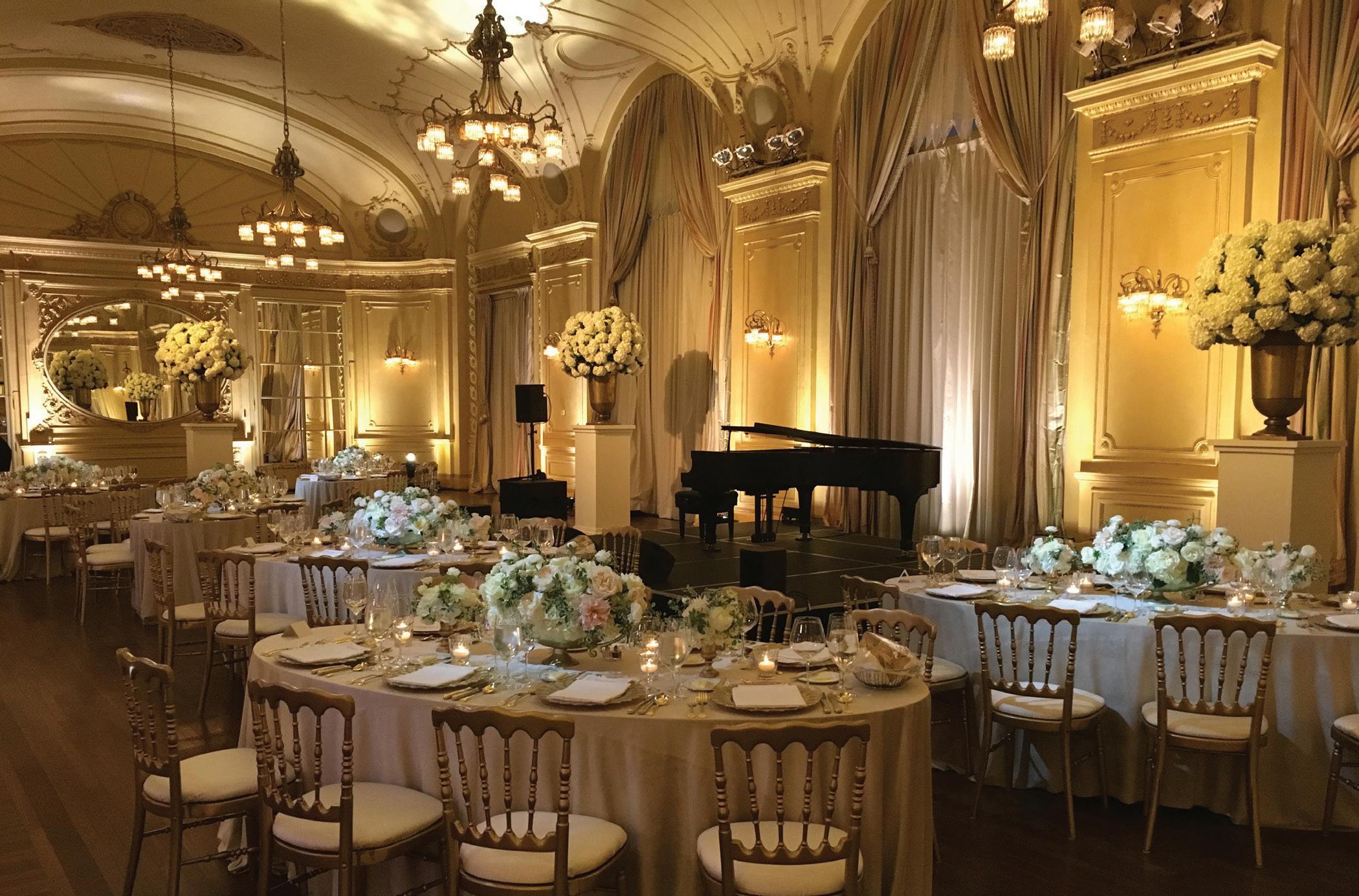
Enhance your evening by ordering the event package, which includes preconcert drinks and bites plus prime seating at the concert. Ample food and drink stations will feature heavy hors d’oeuvres and refreshments. Mingle with other guests while enjoying lounge seating in Symphony Center’s Forte event space.
SCAN TO LEARN MORE
PROFILES
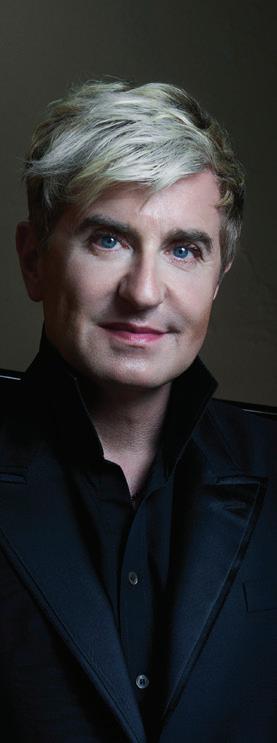
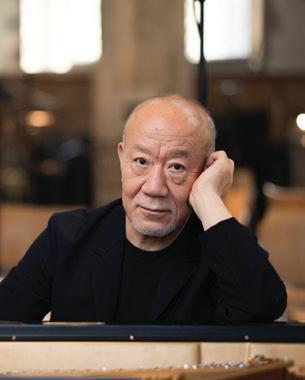
Joe Hisaishi Composer, Conductor, Piano
FIRST
CSO PERFORMANCES
June 27, 28, 29, and 30, 2024, Orchestra Hall. Hisaishi’s Symphonic Variation Merry-Go-Round, Symphony no. 3 (Metaphysica), DA-MA-SHI-E, and Princess Mononoke Suite with Diana Newman
Joe Hisaishi, composer, conductor, and pianist, has established himself as a formidable force in contemporary music through his symphonic and solo works and his globally successful film music. In addition, Hisaishi is greatly in demand as a conductor with the world’s most notable symphony orchestras, with nearly forty solo albums and over a hundred film scores to his credit.
Hisaishi’s recent engagements have included the Toronto and Chicago symphony orchestras; the Royal, Helsinki, and Rotterdam philharmonic orchestras; and the Vienna Symphony. Alongside his film music works, he conducts classical repertoire by Ravel, Reich, Mussorgsky, Brahms, and Arvo Pärt, as well as his own works, such as DA-MA-SHI-E and The East Land Symphony. Hisaishi also held a weeklong residency with the Seattle Symphony Orchestra in 2024. After his Hollywood Bowl debut in 2023, Hisaishi returned to the Los Angeles Philharmonic for the world premiere of his Harp Concerto, commissioned by the orchestra and performed by its principal harp Emmanuel Ceysson.
Hisaishi made debuts with the Cleveland Orchestra and Pittsburgh Symphony Orchestra this season and with the Philadelphia Orchestra and at the BBC Proms with the Royal Philharmonic Orchestra last season. Additional appearances include returns to the Philadelphia and Toronto symphony orchestras and premieres of his new work, Concerto for Orchestra, with various partners globally.
Renowned for his long-standing collaboration with Japanese anime director Hayao Miyazaki, Hisaishi has won international awards for his scores. His popular soundtracks for Spirited Away, My Neighbor Totoro, and Howl’s Moving Castle, among others, capture his amalgamation of the symphonic and minimalist genres. In 2024 he held a two-day residency with the Royal Philharmonic Orchestra at Royal Albert Hall in London for his Hisaishi Symphonic live shows.
An exclusive Deutsche Grammophon recording artist, Hisaishi has released Merry-Go-Round of Life and A Symphonic Celebration, both new arrangements of his Studio Ghibli masterpieces.
Joe Hisaishi in Vienna features the world premiere recordings of his Symphony no. 2 and Viola Saga with the Vienna Symphony and soloist Antoine Tamestit, and Joe Hisaishi Conducts, released in August 2025, is his most recent.
As a passionate pioneer of contemporary music, Hisaishi collaborates with similarly experimental artists including Nico Muhly, Bryce Dessner, Nadia Sirota, Philip Glass, David Lang, and Terry Riley. Since 2014, he has presented his MUSIC FUTURE concerts in Tokyo, bringing together the works and talents of these notable collaborators. Volume 12 of the series was presented in Tokyo in the fall of 2025. He holds a Young Composer’s Competition each year, and the winning composition makes its world premiere at MUSIC FUTURE concerts.
Joe Hisaishi is the recipient of both the Medal of Honor with Purple Ribbon (2009) and the Order of the Rising Sun, Gold Rays with Rosette (2023) from the Japanese government. Hisaishi is music director of the Japan Century Symphony Orchestra from the 2025–26 season and was appointed composer-in-association of the Royal Philharmonic Orchestra in 2024. Other posts include composer-in-residence of the Philadelphia Orchestra, composer-in-focus of the Los Angeles Philharmonic (2026), and composer-in-association of the Philharmonie de Paris (from September 2026).
PHOTO
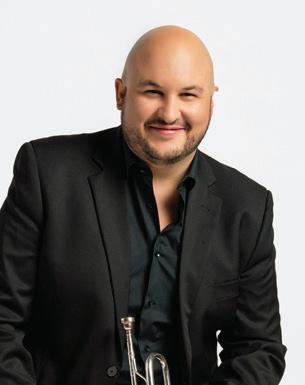
Esteban Batallán Trumpet
FIRST CSO PERFORMANCES
June 12, 13, and 14, 2025, Orchestra Hall. Telemann’s Trumpet Concerto in D major and Michael Haydn’s Trumpet Concerto in D major, Riccardo Muti conducting
Esteban Batallán was appointed principal trumpet of the Chicago Symphony Orchestra in 2019 by Riccardo Muti. He previously was principal trumpet of the Hong Kong Philharmonic during the 2018–19 season and of the Granada City Orchestra from 2002 to 2018. He also served as guest principal trumpet of the Orchestra del Teatro alla Scala and the Filarmonica della Scala in Milan in 2015 and 2018. Batallán has appeared with distinguished orchestras around the world, including the Royal Concertgebouw Orchestra Amsterdam, Philadelphia Orchestra, English Chamber Orchestra, Royal Philharmonic Orchestra in London, Gstaad Festival Orchestra, Basel Symphony Orchestra, Houston Symphony, and Symphony Orchestra of India in Mumbai.
He has worked under such esteemed conductors as Jaap van Zweden, Zubin Mehta, Bernard Haitink, Herbert Blomstedt, Michael Tilson Thomas, Christian Thielemann, Klaus Mäkelä, Jakub Hrůša, Paavo Järvi, Yannick Nézet-Séguin, Vladimir Ashkenazy, Riccardo Chailly, and Neeme Järvi. He has also appeared as soloist with the Hong Kong Philharmonic Orchestra, Ensemble Orchestral of Paris, Granada City Orchestra, Spanish Radio-Television Symphony Orchestra, Royal Philharmonic Orchestra of Galicia, Gstaad Festival Orchestra, Geneva Camerata, and the Bilbao Symphony Orchestra in works including his own compositions and concertos written for him.
In 2021 Batallán premiered a piece dedicated to him, Mr. Batallán, composed by his dear friend and renowned trumpeter Arturo Sandoval.
Batallán is the winner of several prestigious contests, including the Jeunesses Musicales of Spain Competition (2001), Yamaha Xeno National Competition (2002), Jeunesses Musicales of Europe Competition (2003), and the Yamaha International Competition (2003). He also was a prizewinner at the 2006 Maurice André International Trumpet Competition.
A native of Barro in Galicia, Spain, Esteban Batallán began his musical studies at the age of seven at his hometown school of music. He continued his training at the Pontevedra Music Conservatory and the Vigo Music Conservatory. In 1999 he entered the School of Musical Studies of Galicia, and he was selected a member of the National Youth Orchestra of Spain in 2000.
Batallán served as a coach with the Youth Academy of the Granada City Orchestra for sixteen years. He has led master classes at the Colburn School in Los Angeles, New England Conservatory in Boston, National Conservatory of Paris, Rice University–Shepherd School of Music in Houston, Curtis Institute of Music in Philadelphia, Cleveland Institute of Music, University of Houston, and groups from the National Youth Orchestra of Spain, National Youth Orchestra of the United States of America, Hong Kong Academy for Performing Arts, and Taipei Music Academy and Festival, as well as other brass festivals around the world.
A former member of the trumpet faculty of the Chicago College of Performing Arts at Roosevelt University (2020–22), Esteban Batallán currently is on the faculty at DePaul University, a coach of the Civic Orchestra of Chicago, and a member of the Chicago Symphony Brass Quintet, which released its album Apex, recorded in Japan, in January 2026 on the MClassics label.
Batallán regularly plays the new Vincent Bach 229-25E “Chicago”—based on the original CSO instrument—which he helped to design with this prestigious U.S. instrument maker.
He holds the Adolph Herseth Principal Trumpet Chair, endowed by an anonymous benefactor.
estebanbatallan.com
The Chicago Symphony Orchestra—consistently hailed as one of the world’s best—marks its 135th season in 2025–26. The ensemble’s history began in 1889, when Theodore Thomas, the leading conductor in America and a recognized music pioneer, was invited by Chicago businessman Charles Norman Fay to establish a symphony orchestra. Thomas’s aim to build a permanent orchestra of the highest quality was realized at the first concerts in October 1891 in the Auditorium Theatre. Thomas served as music director until his death in January 1905, just three weeks after the dedication of Orchestra Hall, the Orchestra’s permanent home designed by Daniel Burnham.
Frederick Stock, recruited by Thomas to the viola section in 1895, became assistant conductor in 1899 and succeeded the Orchestra’s founder. His tenure lasted thirty-seven years, from 1905 to 1942—the longest of the Orchestra’s music directors. Stock founded the Civic Orchestra of Chicago— the first training orchestra in the U.S. affiliated with a major orchestra—in 1919, established youth auditions, organized the first subscription concerts especially for children, and began a series of popular concerts.
Three conductors headed the Orchestra during the following decade: Désiré Defauw was music director from 1943 to 1947, Artur Rodziński in 1947–48, and Rafael Kubelík from 1950 to 1953. The next ten years belonged to Fritz Reiner, whose recordings with the CSO are still considered hallmarks. Reiner invited Margaret Hillis to form the Chicago Symphony Chorus in 1957. For five seasons from 1963 to 1968, Jean Martinon held the position of music director.
Sir Georg Solti, the Orchestra’s eighth music director, served from 1969 until 1991. His arrival launched one of the most successful musical partnerships of our time. The CSO made its first overseas tour to Europe in 1971 under his direction and released numerous award-winning recordings. Beginning in 1991, Solti held the title of music director laureate and returned to conduct the Orchestra each season until his death in September 1997.
Daniel Barenboim became ninth music director in 1991, a position he held until 2006. His tenure was distinguished by the opening of Symphony Center in 1997, appearances with the Orchestra in the dual role of pianist and conductor, and twenty-one international tours. Appointed by Barenboim in 1994 as the Chorus’s second director, Duain Wolfe served until his retirement in 2022.
In 2010, Riccardo Muti became the Orchestra’s tenth music director. During his tenure, the Orchestra deepened its engagement with the Chicago community, nurtured its legacy while supporting a new generation of musicians and composers, and collaborated with visionary artists. In September 2023, Muti became music director emeritus for life.
In April 2024, Finnish conductor Klaus Mäkelä was announced as the Orchestra’s eleventh music director and will begin an initial five-year tenure as Zell Music Director in September 2027. In July 2025, Donald Palumbo became the third director of the Chicago Symphony Chorus.
Carlo Maria Giulini was named the Orchestra’s first principal guest conductor in 1969, serving until 1972; Claudio Abbado held the position from 1982 to 1985. Pierre Boulez was appointed as principal guest conductor in 1995 and was named Helen Regenstein Conductor Emeritus in 2006, a position he held until his death in January 2016. From 2006 to 2010, Bernard Haitink was the Orchestra’s first principal conductor.
Mezzo-soprano Joyce DiDonato is the CSO’s Artist-in-Residence for the 2025–26 season.
The Orchestra first performed at Ravinia Park in 1905 and appeared frequently through August 1931, after which the park was closed for most of the Great Depression. In August 1936, the Orchestra helped to inaugurate the first season of the Ravinia Festival, and it has been in residence nearly every summer since.
Since 1916, recording has been a significant part of the Orchestra’s activities. Recordings by the Chicago Symphony Orchestra and Chorus— including recent releases on CSO Resound, the Orchestra’s recording label launched in 2007— have earned sixty-five Grammy awards from the Recording Academy.
Discover the benefits of making a legacy gift to your Chicago Symphony Orchestra
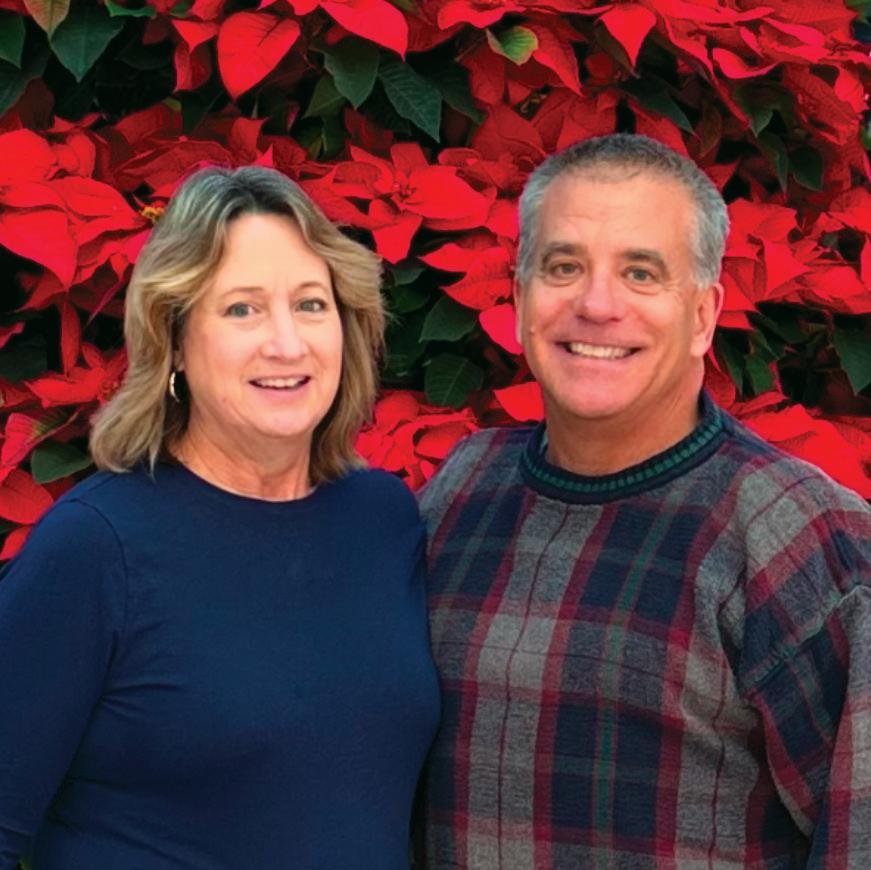
“By planning a future gift for the Chicago Symphony Orchestra, we hope to contribute to the CSO’s legacy and honor the many wonderful memories we’ve enjoyed across the years.”
— Cathy and Kent Hoffmann
Join the Theodore Thomas Society
Named in honor of our founder and first music director, the Theodore Thomas Society recognizes individuals who have included the Chicago Symphony Orchestra in their will, trust or beneficiary designation. Contact Joe Bauer at 312-294-3192 or visit cso.org/plannedgiving for more information.
Chicago Symphony Orchestra
Klaus Mäkelä Zell Music Director Designate
Joyce DiDonato Artist-in-Residence
VIOLINS
Robert Chen Concertmaster
The Louis C. Sudler Chair, endowed by an
anonymous benefactor
Stephanie Jeong § Associate Concertmaster
The Cathy and Bill Osborn Chair
David Taylor*
Assistant Concertmaster
The Ling Z. and Michael C.
Markovitz Chair
Yuan-Qing Yu* Assistant Concertmaster
So Young Bae
Cornelius Chiu
Gina DiBello
Kozue Funakoshi
Russell Hershow
Qing Hou
Gabriela Lara
Matous Michal
Simon Michal
Sando Shia
Susan Synnestvedt
Rong-Yan Tang
Baird Dodge Principal
Danny Yehun Jin
Assistant Principal
Lei Hou
Ni Mei
Hermine Gagné
Rachel Goldstein
Mihaela Ionescu
Wendy Koons Meir
Ronald Satkiewicz ‡
Florence Schwartz
VIOLAS
Teng Li Principal
The Paul Hindemith Principal Viola Chair
Catherine Brubaker
Youming Chen
Sunghee Choi
Paolo Dara
Wei-Ting Kuo
Danny Lai
Weijing Michal
Diane Mues
Lawrence Neuman
Jikun Qin
Max Raimi
CELLOS
John Sharp Principal
The Eloise W. Martin Chair
Kenneth Olsen
Assistant Principal
The Adele Gidwitz Chair
Karen Basrak
The Joseph A. and Cecile Renaud Gorno Chair
Richard Hirschl
Olivia Jakyoung Huh
Daniel Katz
Katinka Kleijn
Brant Taylor
The Ann Blickensderfer and Roger Blickensderfer Chair
BASSES
Alexander Hanna Principal
The David and Mary Winton
Green Principal Bass Chair
Alexander Horton
Assistant Principal
Daniel Carson
Ian Hallas
Robert Kassinger
Mark Kraemer
Stephen Lester
Bradley Opland
Andrew Sommer
FLUTES
Emma Gerstein
Jennifer Gunn
PICCOLO
Jennifer Gunn
The Dora and John Aalbregtse Piccolo Chair
OBOES
William Welter Principal
Lora Schaefer
Assistant Principal
The Gilchrist Foundation, Jocelyn Gilchrist Chair
Scott Hostetler
ENGLISH HORN
Scott Hostetler
Riccardo Muti Music Director Emeritus for Life
CLARINETS
Stephen Williamson Principal
John Bruce Yeh
Assistant Principal
The Governing
Members Chair
Gregory Smith
E-FLAT CLARINET
John Bruce Yeh
BASSOONS
Keith Buncke Principal
William Buchman
Assistant Principal
Miles Maner
HORNS
Mark Almond Principal
James Smelser
David Griffin
Oto Carrillo
Susanna Gaunt
Daniel Gingrich ‡
TRUMPETS
Esteban Batallán Principal
The Adolph Herseth Principal Trumpet Chair, endowed by an anonymous benefactor
John Hagstrom
The Bleck Family Chair
Tage Larsen
TROMBONES
Timothy Higgins Principal
The Lisa and Paul Wiggin
Principal Trombone Chair
Michael Mulcahy
Charles Vernon
BASS TROMBONE
Charles Vernon
TUBA
Gene Pokorny Principal
The Arnold Jacobs Principal Tuba Chair, endowed by Christine Querfeld
* Assistant concertmasters are listed by seniority. ‡ On sabbatical § On leave
The CSO’s music director position is endowed in perpetuity by a generous gift from Zell Family Foundation. The Louise H. Benton Wagner and Erika and Dietrich M. Gross Principal Flute chairs are currently unoccupied.
TIMPANI
David Herbert Principal
The Clinton Family Fund Chair
Vadim Karpinos
Assistant Principal
PERCUSSION
Cynthia Yeh Principal Chair sponsored by an anonymous benefactor
Patricia Dash §
Vadim Karpinos
LIBRARIANS
Justin Vibbard Principal
Carole Keller
Mark Swanson
CSO FELLOWS
Ariel Seunghyun Lee Violin
Jesús Linárez Violin
The Michael and Kathleen Elliott Fellow
ORCHESTRA PERSONNEL
John Deverman Director
Anne MacQuarrie
Manager, CSO Auditions and Orchestra Personnel
STAGE TECHNICIANS
Christopher Lewis
Stage Manager
Blair Carlson
Paul Christopher
Chris Grannen
Ryan Hartge
Peter Landry
Joshua Mondie
The Chicago Symphony Orchestra string sections utilize revolving seating. Players behind the first desk (first two desks in the violins) change seats systematically every two weeks and are listed alphabetically. Section percussionists also are listed alphabetically.
Discover more about the musicians, concerts, and generous supporters of the Chicago Symphony Orchestra Association online, at cso.org.
Find articles and program notes, listen to CSOradio, and watch CSOtv at Experience CSO.
cso.org/experience
Get involved with our many volunteer and affiliate groups.
cso.org/getinvolved
Connect with us on social @chicagosymphony
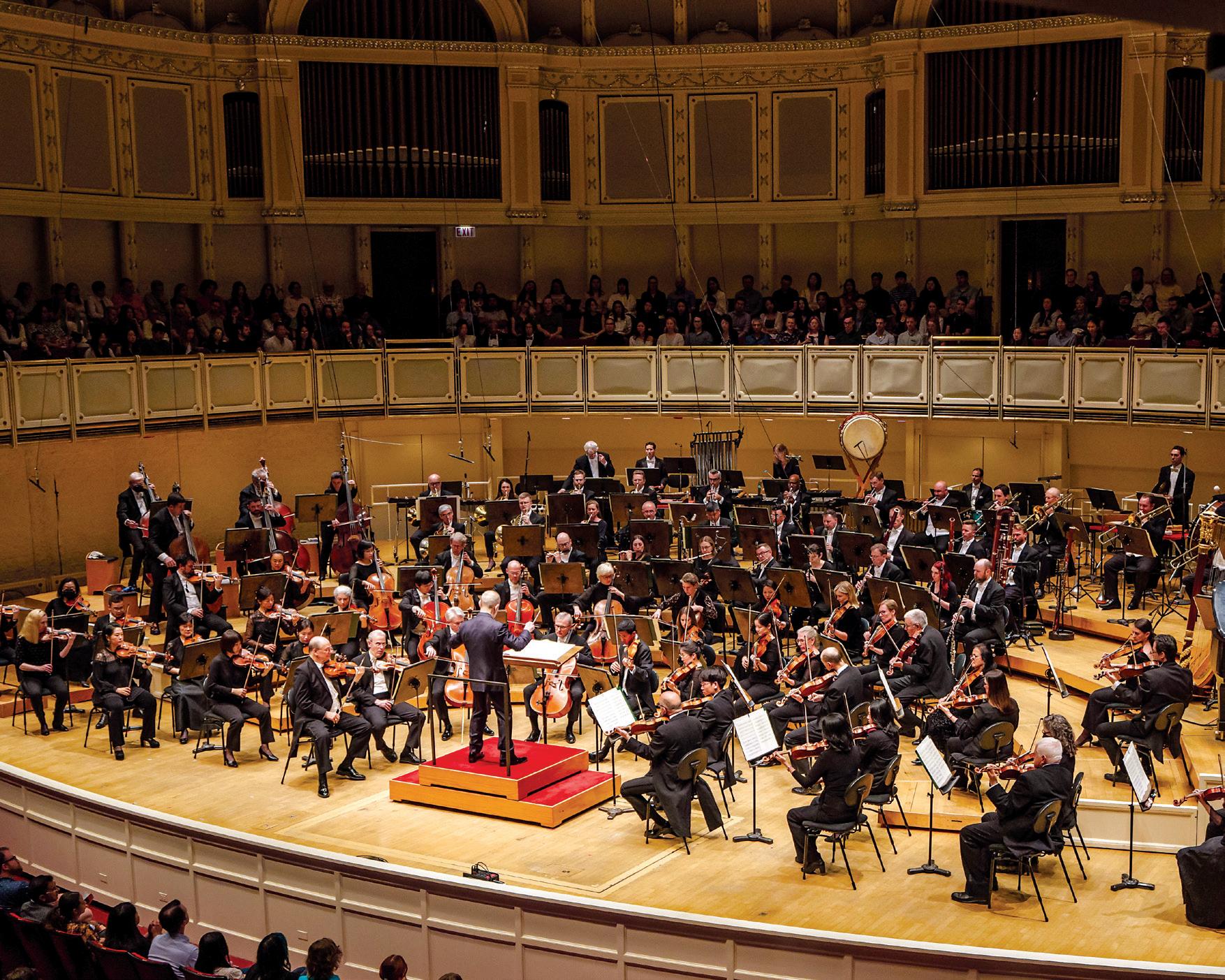
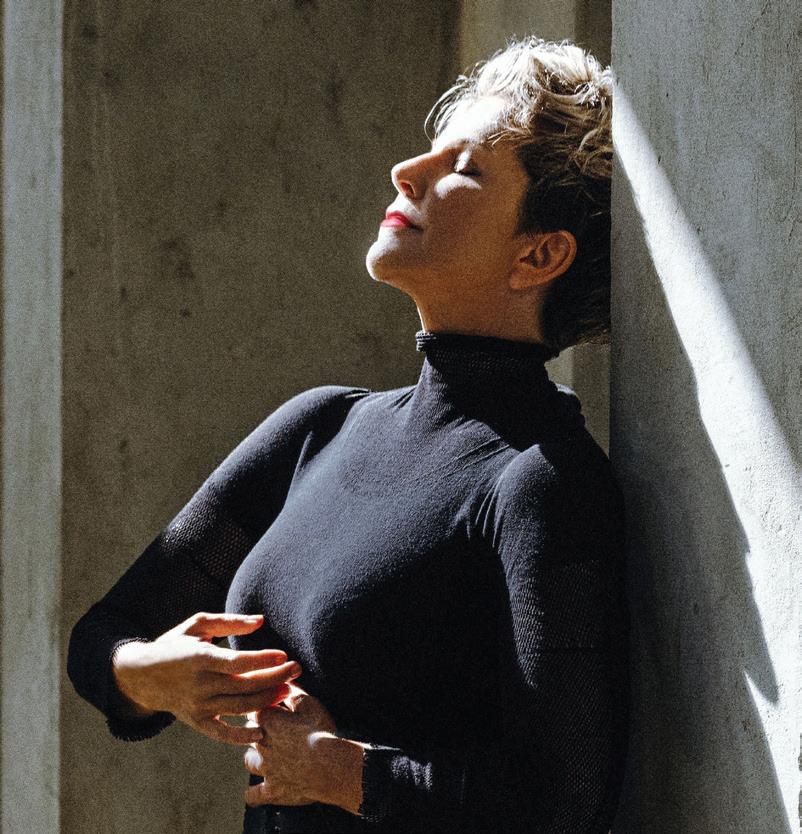
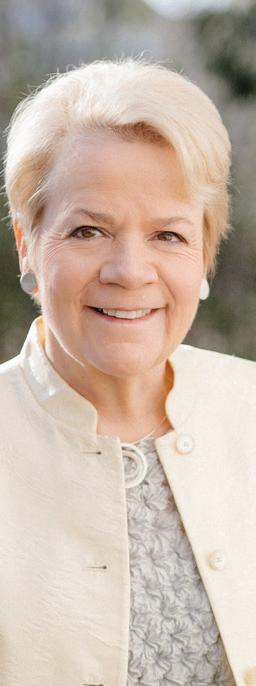
on the cover: Conductor Joe Hisaishi with the CSO, June 2024; CSO Artist-in-Residence Joyce DiDonato
Enhance Your Concert Experience Program Notes
Access CSO program books and program notes online at cso.org/program. For most performances, notes are offered in written and video formats. Digital CSO program books are made possible with the generous support of The Walter and Karla Goldschmidt Foundation.
The Symphony Store
For complete listings of our generous supporters, please visit the Richard and Helen Thomas Donor Gallery.
cso.org/donorgallery
Commemorate your trip to Orchestra Hall with exclusive CSO souvenirs. The Store is open before all CSO and select Symphony Center Presents concerts. Regular store hours are Tuesday–Saturday, 11:30 a.m. to 5 p.m. Visit symphonystore.com to shop online.
Symphony Center Venue Policies
Children: Children 8 years of age and older are welcome to attend concerts at Symphony Center. CSO for Kids and select holiday and film concerts are open to children 3 years of age and older. All children, regardless of age, must have their own tickets for all performances. CSO Family Matinee concerts are recommended for ages 5 and up; Once Upon a Symphony concerts are recommended for ages 3–5.
Late seating: Late seating is at the discretion of house management and may not be available for certain programs and seating locations. For most concerts, late seating opportunities are between pieces or at intermission.
Box Level seating: Box Level seats are unnumbered, and the tradition is to rotate seating either between works or at intermission.
Electronic devices: Cell phones, pagers and all other mobile devices must be turned off or silenced before entering Orchestra Hall. The use of such devices during the performance is not permitted. Photography and video recording are prohibited during the performance.
CHICAGO SYMPHONY ORCHESTRA ASSOCIATION BOARD OF TRUSTEES
OFFICERS
Mary Louise Gorno Chair
Chester A. Gougis Vice Chair
Steven Shebik Vice Chair
Helen Zell Vice Chair
Renée Metcalf Treasurer
Jeff Alexander President
Kristine Stassen Secretary of the Board
Stacie M. Frank Assistant Treasurer
Dale Hedding Vice President for Development
TRUSTEES
R. John Aalbregtse
Peter J. Barack
H. Rigel Barber
Merrill Blau*
Roderick Branch
Robert J. Buford
Johannes Burlin
Leslie Henner Burns
Marion A. Cameron-Gray
George P. Colis
Keith S. Crow
Stephen V. D’Amore
Timothy A. Duffy
Brian W. Duwe
James B. Fadim
Robert B. Ford
Matthew Fry*
Jennifer Amler Goldstein
Sarah Good*
David A. Gordon
Mary Louise Gorno
Graham C. Grady
John Holmes
Janice L. Honigberg
Lori Julian
Neil T. Kawashima
Geraldine Keefe
Donna L. Kendall
Thomas Kilroy
Dr. Randall S. Kroszner
Patty C. Lane
Jason M. Laurie
Ling Z. Markovitz
Paul H. McDonough
Renée Metcalf
Britt M. Miller
Frank B. Modruson
Toni-Marie Montgomery
Mary Pivirotto Murley
Sylvia Neil
Christopher A. O’Herlihy
Santa J. Ono
Gerald L. Pauling II
Andrew Pritzker
LTC. Jennifer N. Pritzker, USA (Ret.)
Katherine Protextor Drehkoff
Dr. Don M. Randel
Alexander Ripley
Melissa M. Root
Burton X. Rosenberg
E. Scott Santi
Steven Shebik
Marlon R. Smith
Walter S. Snodell
Juan B. Solana*
Tracy A. Stanciel*
Dr. Eugene Stark
Daniel E. Sullivan, Jr.
Scott C. Swanson
Nasrin Thierer
Liisa M. Thomas
Christopher D. Tower
Laura Sumner Truax*
Frederick H. Waddell
Paul S. Watford
Craig R. Williams
Robert Wislow
Helen Zell
Gifford R. Zimmerman
LIFE TRUSTEES
William Adams IV
Mrs. Robert A. Beatty
Arnold M. Berlin
Randy Lamm Berlin
Laurence O. Booth
William G. Brown
Dean L. Buntrock
Bruce E. Clinton
Richard Colburn
Richard H. Cooper
Anthony T. Dean
John A. Edwardson
* Ex Officio Trustee † Deceased List as of April 2026
Thomas J. Eyerman
David W. Fox, Sr. †
Cyrus F. Freidheim, Jr.
Mrs. Robert W. Galvin
Paul C. Gignilliat †
Joseph B. Glossberg
Richard C. Godfrey
William A. Goldstein
Chester A. Gougis
Mary Winton Green
David P. Hackett
Joan W. Harris
John H. Hart
Thomas C. Heagy
Jay L. Henderson
Debora de Hoyos
William R. Jentes
Richard B. Kapnick
Donald G. Kempf, Jr.
Mrs. John C. Kern
Robert Kohl
Josef Lakonishok
Charles Ashby Lewis
Eva F. Lichtenberg
John F. Manley
R. Eden Martin
Arthur C. Martinez
Judith W. McCue
Lester H. McKeever Jr.
David E. McNeel
William A. Osborn
Mrs. Albert Pawlick
Jane DiRenzo Pigott
John M. Pratt
Dr. Irwin Press
John W. Rogers, Jr.
Jerry Rose
Frank A. Rossi
John R. Schmidt
Thomas C. Sheffield, Jr.
Robert C. Spoerri
Carl W. Stern
William H. Strong
Louis C. Sudler, Jr. †
Richard L. Thomas
Richard P. Toft
Penny Van Horn
Paul R. Wiggin
ADMINISTRATION
Jeff Alexander President
PRESIDENT’S OFFICE
Kristine Stassen Executive Assistant to the President & Secretary of the Board
Mónica Lugo Executive Assistant to the Music Director Emeritus for Life
Human Resources
Lynne Sorkin Director
Dijana Cirkic Manager
ARTISTIC ADMINISTRATION
Cristina Rocca Vice President
The Richard and Mary L. Gray Chair
James M. Fahey Senior Director, Programming, Symphony Center Presents
Randy Elliot Director, Artistic Administration
Lena Breitkreuz Artist Manager, Symphony Center Presents
Jeremiah Pickett III Manager, Governing Member Gifts
Mykele Callicutt Coordinator, Donor Engagement
Victoria Menendez, Elisabeth Miller Coordinators, Donor Services
Casey Bowman Coordinator, Development Communications
CHICAGO SYMPHONY ORCHESTRA
90th SUMMER RESIDENCY
JULY 11 - AUGUST 16 •
HIGHLAND PARK
Featuring three weeks with Ravinia Chief Conductor MARIN ALSOP
Six weeks of guests include Yunchan Lim, Lizzo, Emanuel Ax, St. Vincent, Stella Chen, María Dueñas, Daniel Lozakovich, Carlos Simon, Laura Karpman, and many more —plus two concerts with Zell Music Director Designate Klaus Mäkelä— performing in the newly renovated Hunter Pavilion!
LOOKING FOR SOMETHING INDOORS?
James Conlon leads Mozart’s The Abduction from the Seraglio semi-staged in the Martin Theatre