DEBUSSY Sonata for Violin and Piano in G Minor, L. 140
Allegro vivo
Intermède: Fantasque et léger
Finale: Très animé
INTERMISSION
DEBUSSY La fille aux cheveux de lin from Preludes for Piano, Book 1 (arr. Hahn and Poster)
BOULANGER Nocturne from Deux morceaux
FAURÉ Sonata No. 1 for Violin and Piano in A Major, Op. 13
Allegro molto
Andante
Allegro vivo
Allegro quasi presto
The Chicago Symphony Orchestra Association acknowledges support from the Illinois Arts Council.
COMMENTS
by Richard E. Rodda
MAURICE RAVEL
Born March 7, 1875; Ciboure, Basses-Pyrénées, France
Died December 28, 1937; Paris, France
Sonata for Violin and Piano
COMPOSED 1923–27
Hélène JourdanMorhange was one of France’s most promising violinists in the years after the First World War. She was in her mid-twenties and recently widowed by the hostilities when Ravel first met her at a performance of his Piano Trio in which she participated during the war; they were close friends until the composer’s death in 1937. Ravel consulted Hélène frequently on matters of string technique and had her play many items from the standard violin repertoire for his edification. In August 1923 he undertook a sonata for Hélène, promising that “it won’t be very difficult, and it won’t sprain your wrist.” (Violinists might well disagree.) His health and creativity had been damaged by the rigors of the war, however, and by the time he completed her sonata in the spring of
1927, rheumatism had forced an end to Mme Jourdan-Morhange’s performing career. The brilliant Romanian composer and violinist Georges Enescu, a friend of Ravel since their student days together at the conservatory, gave the sonata’s first performance with the composer at the Salle Erard in Paris on May 30, 1927.
The sonata’s opening movement, patterned on traditional sonata form, is the most convivial portion of the work regarding the sharing of musical materials between the participants, though each instrument displays a distinctive personality. The influence of that international musical mania of the 1920s—American jazz—was the inspiration for the second movement. The sonata’s flamboyant finale is designated Perpetuum mobile, though the perpetual motion is confined entirely to the violin part, while the piano is allotted a considerably more sedate accompaniment into which are woven allusions to the opening movement.
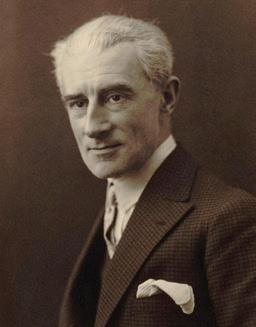
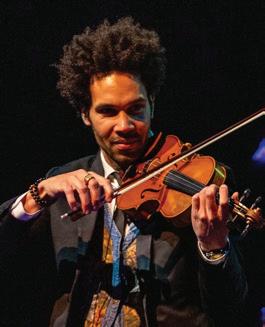
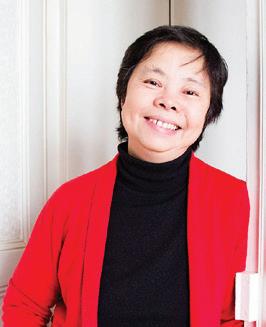
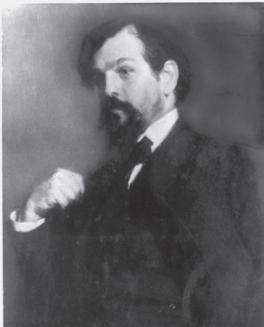
this page: Maurice Ravel, portrait ca. 1925. Bibliothèque nationale de France | opposite page: Scott Tixier | next spread: Bun-Ching Lam, photo by Moritz Krauth | Claude Debussy, portrait by JacquesÉmile Blanche (1861–1942), ca. 1907–10, as photographed by Émile Arthur Crevaux, Paris, France
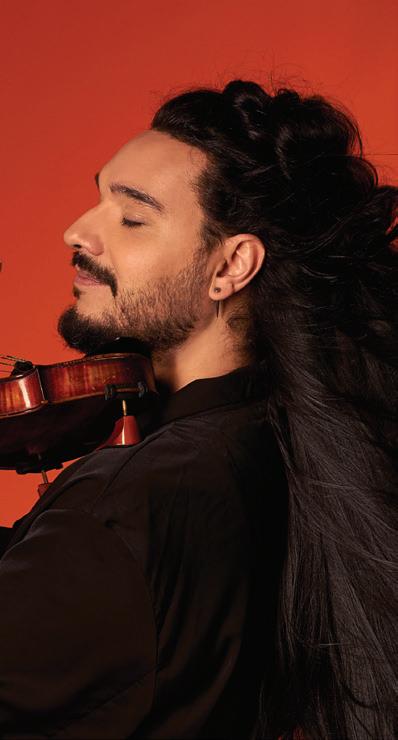
SCOTT TIXIER
Born February 26, 1989; Montreuil, France
Ressemblance for Violin and Piano
COMPOSED 2026
Scott Tixier is a composer, teacher, and jazz violinist with an extraordinary talent for improvisation—his 2025 recording Bonfire, which includes seven evocatively titled tracks (Black Magic, Where the Road Ends, and Twinkle, Twinkle Big Fat Star) is described as “a solo violin project built entirely with live loops and fully improvised, recorded in one sitting, with no edits or overdubs. Cinematic, ambient, and emotional. Each track invites the listener into a space where emotion leads and logic fades.”
Scott Tixier was born in 1986 in the Paris suburb of Montreuil (his twin brother, Tony, a jazz pianist with an international career, has remained based in France) and studied classical violin at the Paris Conservatory. For his career, however, he was drawn to jazz and its limitless possibilities for self-expression in improvisation rather than to the concert hall, and largely taught himself the skills of that musical genre with some guidance from Romanian jazz violinist Florin Niculescu and French guitarist Malo Vallois. Tixier
moved to New York in 2005, establishing himself among the city’s leading jazz artists with appearances, recordings, and tours across the country with Stevie Wonder, Elton John, Pink Floyd, John Legend, Christina Aguilera, Natalie Cole, Anthony Braxton, Ariana Grande, and many others, as well as on television, film soundtracks, and Broadway shows. His many recordings as soloist and sideman have earned him five affiliated Grammy awards, recognition as a 2018 DownBeat Critics Poll winner, and inclusion on Best Albums of the Year lists of DownBeat magazine and Jazztimes. In 2018 Scott Tixier joined the faculty of the University of North Texas College of Music as associate professor of violin (jazz/popular/ alternative styles) and director of the Jazz String Lab Band. At UNT, he oversees the doctoral program in jazz strings, the first of its kind in the United States. Tixier has presented master classes and residencies at Princeton, UCLA, Manhattan School of Music, and abroad, and in 2023 was invited to Yale as a guest of violinist Hilary Hahn during her artist-in-residency, where he held a master class on jazz string improvisation.
Tixier composed Ressemblance in 2026 for Hilary Hahn.
Scott Tixier on Ressemblance
Ressemblance is a single continuous movement built from a series of transformations. The title comes from the French verb ressembler, to resemble or appear similar, suggesting something that feels familiar, yet never quite the same.
The piece explores different kinds of resemblance: between musical ideas, between improvisation and notation, and between musical traditions that may seem close while arising from distinct worlds. Musical material moves through a series of contrasting environments, beginning in suspension before
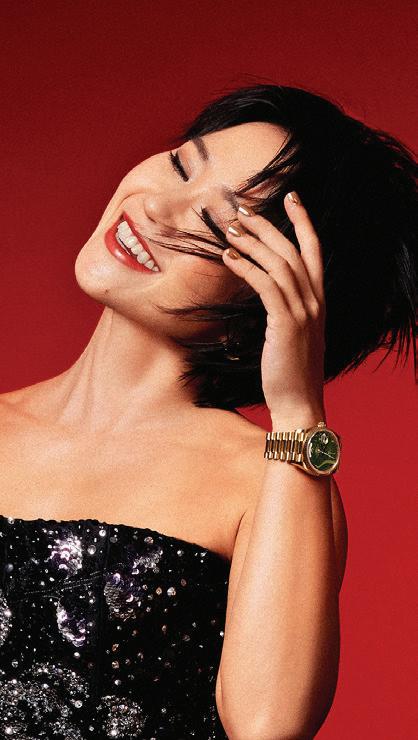
BUN-CHING LAM
Born June 26, 1954; Macau, China
Solitude d’automne
Bun-Ching Lam began studying piano at age seven and gave her first public solo recital at fifteen. In 1976 she received a bachelor’s degree in piano performance from the Chinese University of Hong Kong and then accepted a scholarship to attend the University of California at San Diego, where she studied composition with Bernard Rands, Robert Erickson, Roger Reynolds, and Pauline Oliveros; she
opening into a more forward developmental passage. A brief rupture leads into a space influenced by jazz harmony and improvisational language.
Violin and piano act as equal partners throughout, sometimes closely aligned, sometimes diverging, shaping the form as they move through these different musical spaces. The music itself first emerged through improvisation before being gradually shaped into notation. In many ways, the piece reflects the musical world that formed me in Paris, moving between classical training at the conservatoire during the day and the jazz clubs at night, occasionally resulting in foggy mornings.
earned her doctorate degree from UCSD in 1981. Lam was on the music faculty of the Cornish College of the Arts in Seattle from 1981 to 1986 and served as visiting professor at Yale University and Bennington College in 1997. Her compositions, which draw on both Chinese and Western musical influences, have been performed on prominent concert series and festivals internationally and recorded on the CRI, Tzadik, Nimbus, Koch International Classics, Sound Aspect, and Tellus labels. Among her honors are the Rome Prize, first prizes in competitions of the Aspen Music Festival,
Northwest Composer’s Symposium, Hong Kong Conservatory, and Shanghai Music Competition, the first international composers’ contest held in China.
In 2010 American violinist Hilary Hahn initiated a project to commission twenty-seven composers to write brief encore pieces for her instrument. (The twenty-seventh composer was determined by an open contest on her website; 409 entries were received.)
“The majority of the encores that we violinists learn today were shaped by the performers who preceded us,” Hahn explained. “Contemporary encores, however, were not featured, nor were they commissioned with any frequency. I was intrigued by the future of the genre and how composers might wish to redefine the form. When I pictured a
CLAUDE DEBUSSY
novel set of favorite miniatures catching on—pieces crafted by today’s minds— the idea of a commissioned-encores project planted itself in my head.” Her 2014 Deutsche Grammophon recording The Hilary Hahn Encores: In 27 Pieces, with pianist Cory Smythe, won that year’s Grammy Award for Best Chamber Music/Small Ensemble Performance.
The quiet austerity of Bun-Ching Lam’s Solitude d’automne (Autumn Solitude), composed in 2011 for Hahn’s encores project, evokes the mood of the title, but it also suggests something not just spatial—in the way music is drawn out of silence at the beginning—but also physically animate, as though some awareness slowly awakens as the piece unfolds and returns again to a somnolent state at the end.
Born August 22, 1862; St. Germain-en-Laye, near Paris, France
Died March 25, 1918; Paris, France
Sonata for Violin and Piano in G Minor, L. 140
COMPOSED 1916–17
When the Guns of August thundered across the European continent in 1914 to plunge the world into “the war to end all wars,” Claude Debussy was already showing signs of the colon cancer that was to end his life four years later. Apprehensive about his
health and tormented by the military conflict, his creative production came to a virtual halt. Except for a Berceuse héroïque written “as a tribute of homage to His Majesty King Albert I of Belgium and his soldiers,” Debussy wrote no new music in 1914. At the end of the year, he undertook (with little enthusiasm) the preparation of a new edition of Chopin’s works to help compensate Durand for the regular advances the publisher had been sending. The death of Debussy’s
COMMENTS
mother in March 1915 further deepened his depression.
That same month, however, he appeared in a recital in the Salle Gaveau with soprano Ninon Vallin, and his mood brightened somewhat during the following months. “I have a few ideas at the moment,” he wrote to Durand in June, “and, although they are not worth making a fuss about, I should like to cultivate them.” That summer, he completed En blanc et noir for Two Pianos and the Etudes for Solo Piano and projected a series of six sonatas for various instrumental combinations inspired by the old baroque school of French clavecinists. The first of the sonatas, for cello and piano, was completed quickly in July and August 1915 during a holiday at Pourville, near Dieppe; the second one, for flute, viola (originally oboe), and harp, was also written at Pourville before Debussy returned to Paris on October 12.
Surgery in December prevented him from further work until October 1916, when he began the Sonata for Violin and Piano. A sonata for oboe, horn, and harpsichord never went beyond the planning stage; the remainder of the projected set did not get that far. The Violin Sonata, completed in 1917, was his last important work; he premiered the piece on May 5, 1917, in Paris with violinist Gaston Poulet, and played it again in September at St.-Jean-de-Luz, where he was summering. It was his final public appearance.
For the Violin Sonata’s inspiration, style, and temperament, Debussy looked back far beyond the impressionism of his earlier works to the elegance, emotional reserve, and textural clarity of the music of the French baroque. The form of the first movement is tied together by the iterations of the simple falling triadic motif given by the violin at its initial entrance. Various episodes separate the motif’s returns, some passionate, some exotically evocative in their sliding intervals, some deliberately archaic in their open-interval harmonies. Debussy said that he had tried to evoke the spirit of the Italian commedia dell’arte in his earlier Cello Sonata, and much of the wit and insouciance of that old satirical stage genre carried over into the central intermède (interlude) of the Violin Sonata, which is instructed to be played “with fantasy and lightness.” The finale begins with a ghost of the first movement’s opening theme before proceeding to a modern mutation of the traditional rondo form, which takes as its subject a violin melody in flying triplets that Debussy borrowed from his Ibéria. The composer noted that this theme “is subjected to the most curious deformations and ultimately leaves the impression of an idea turning back upon itself, like a snake biting its own tail.” The music exudes energy bordering on enervation, and seems almost to have expended its strength as the final measures approach, but finds sufficient reserve to mount a quick but brilliant close.
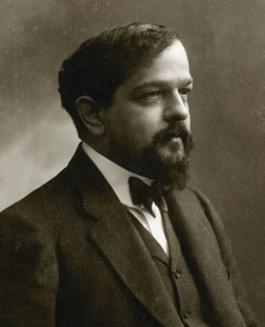
opposite page: Debussy, ca. 1890–1910, Atelier Nadar (studio of Gaspard-Félix “Nadar” Tournachon).
From Reference Album of Atelier Nadar, vol. 13. Gallica Digital Library, Bibliothèque nationale de France
CLAUDE DEBUSSY
La fille aux cheveux de lin from Preludes for Piano, Book 1
(Arranged by Hilary
Hahn
and Tom Poster)
COMPOSED
1909–10
“The sound of the sea, the curve of the horizon, the wind in the leaves, the cry of a bird enregister complex impressions within us,” Debussy told an interviewer when he was at work on his preludes. “Then suddenly, without any deliberate consent on our part, one of those memories issues forth to express itself in the language of music.”
Debussy distilled in these words the essence of musical impressionism—the embodiment of a specific but evanescent experience in tone. With only a few exceptions (most notably the string quartet of 1893 and the etudes and three sonatas from the end of his life), his compositions are referential in both their titles and their contents, deriving inspiration and subjects from poetry, art, and nature (or nature, at least, as filtered through Monet’s opulently chromatic palette). Though their generic appellation, which recalls the music of both Chopin and Bach, suggests abstraction rather than tone painting, Debussy’s twenty-four preludes are quintessential examples of his ability to evoke moods, memories, and
images that are, at once, too specific and too vague for mere words. “The impressionists’ objective was that music should appear directly to the senses without obtruding upon the intellect,” wrote Christopher Palmer in his book Impressionism in Music. “Debussy’s preludes develop this technique of seizing upon the salient details of a scene and fusing them deftly into a quick overall impression to a rare degree of perfection.” Book 1 of the preludes, composed in 1909–10 and published by Durand in May 1910, consists of twelve such poetic paintings in tone.
La fille aux cheveux de lin (The girl with the flaxen hair), the best-known of the preludes, traces its title and atmosphere to a verse from the Poèmes Antiques: Chansons Ecossaises by the French writer Charles Marie Leconte de Lisle (1818–1894), which Debussy had set for voice during his student years, sometime between 1880 and 1884. (The song and the piano piece are unrelated musically.) Though its pentatonic melody recalls the Javanese gamelan music that so intrigued French musicians at the Paris Exposition of 1889, Debussy’s luminous music captures well the spirit of de Lisle’s poem, which tells of a young Scottish girl singing of her simple, unaffected love in the morning sunshine.
LILI BOULANGER
Born August 21, 1893; Paris, France
Died March 15, 1918; Mézy-par-Meulan, France
Nocturne for Violin and Piano
COMPOSED 1911
The name of Boulanger was indelibly inscribed into the annals of music by Nadia Boulanger, the twentieth century’s most influential teacher and mentor of composers. Despite her impact on music, Nadia never considered herself a composer (“not bad, but useless” was how she dismissed her original works) and firmly held that the family’s creative talent had been inherited by her younger sister, Lili.
Lili’s musical talent was evident from her earliest years. She could reliably carry a tune by two, and three years later, she began tagging along with Nadia to sit in on her older sister’s classes at the conservatory. Lili studied harp, piano, cello, and violin, but steady bouts of ill health, precipitated by a near-fatal attack of pneumonia when she was three, precluded the physical exertions necessary to master any of them. She turned instead to composition and began serious study in 1909. Three years later, she was admitted to the conservatory, but illness prevented her from participating in the Prix de Rome competitions. A stay at a sanitarium on the English Channel
restored her health sufficiently for her to win the prize in 1913, the first woman to earn that coveted honor. Her arrival at the Villa Medici in Rome was delayed by another illness until March 1914, but she then had to return to France when World War I broke out in August, and there organized an extensive program of letter-writing, communication, and support among the conservatory students who had been mobilized. In 1916 she set to work on an operatic version of Maeterlinck’s La princesse Maleine, with whose lonely heroine she identified. She worked on this and other projects, but her health steadily declined during the ensuing months due to the rigors of the war, and she died in Paris on March 15, 1918.
Boulanger composed her Nocturne for Violin and Piano in two days, October 24–25, 1911, during a break from her intensive preparations for that year’s Prix de Rome competition. The piece was in the first group of her publications, issued by the Italian publisher Ricordi in 1918. Boulanger also made an arrangement of the work for solo flute, clarinet, harp, and strings. The evening mood of the Nocturne is evoked by the sweetly lyrical music of its outer sections, with an animated passage at the work’s center providing formal and expressive balance.
GABRIEL FAURÉ
Born May 12, 1845; Pamiers, Ariège, France
Died November 14, 1924; Paris, France
Sonata No. 1 for Violin and Piano in A Major, Op. 13
COMPOSED 1875–76
Fauré’s Violin Sonata no. 1 is the composition in which his individual genius was first fully revealed. The work was composed during the summers of 1875 and 1876 at the fashionable Normandy country home of Camille Clerc, a wealthy industrialist in Le Havre and a dedicated arts patron. Fauré met the Clercs through SaintSaëns in 1872 and thereafter formed a close friendship with the family. The sonata was premiered on January 27, 1877, by violinist Marie Tayau and the composer at a concert of the Société Nationale and met with enthusiastic acclaim. It was immediately taken into the violin repertoire and remains one of Fauré’s most familiar and highly regarded works.
The opening movement follows a clearly defined sonata form. The piano presents the main theme, a flowing melody whose gentle syncopations provide an important motif for the developmental expansion of the movement. The theme continues to unfold with
the entry of the violin. The subsidiary subject is a lyrical inspiration whose individual phrases follow the shape of an inverted arch. The ingeniously harmonized closing theme mounts by steps to the top of the violin’s register. The exposition is marked to be repeated. The development section treats both of the principal motifs at some length before a full recapitulation of the earlier themes rounds out the movement. The Andante is an extended rhapsody in the swaying style of the siciliano. Though the movement proceeds without strong formal demarcations, it is largely built from the collection of small motifs that comprise the main theme and form a more passionate melody that serves as the second theme. The scherzo is an infectious display of rhythmic sleightof-hand and nimble violin figuration; the central trio is more somber in mood and more sustained in manner. The finale blends formal elements of sonata and rondo to bring this handsome work to a brilliant and energetic close.
Richard E. Rodda, a former faculty member at Case Western Reserve University and the Cleveland Institute of Music, provides program notes for many American orchestras, concert series, and festivals.
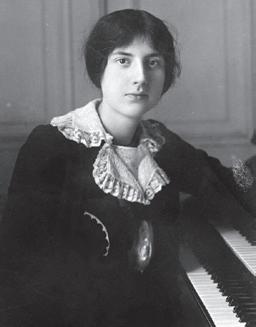
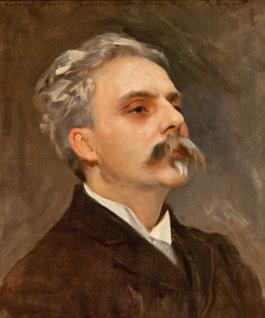
opposite page: Lili Boulanger, photographed by Henri Manuel (1874–1947), 1913 | this page: Gabriel Fauré, oil portrait of the composer painted by John Singer Sargent (1856–1925), ca. 1889
PROFILES
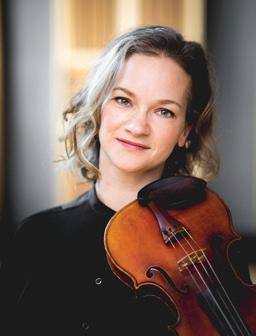
Hilary Hahn Violin
Three-time Grammy Award–winning violinist Hilary Hahn melds expressive musicality and technical expertise with a diverse repertoire guided by artistic curiosity. Her barrier-breaking attitude toward classical music and commitment to sharing her experiences with a global community have made her a fan favorite. Hahn is a prolific recording artist and commissioner of new works, and her twenty-three feature recordings have received every critical prize in the international press. Her new role with the Juilliard School follows her earlier tenure as visiting artist in Juilliard’s music division in the 2023–24 season. Recent seasons have also seen her serve as the Chicago Symphony Orchestra’s first-ever Artist-in-Residence, the New York Philharmonic’s artist-in residence, and curating artist of the Dortmund Festival.
Hahn has commissioned and championed works by more than forty living composers, including Steven Banks, Jennifer Higdon, Jessie Montgomery, and Carlos Simon. Her 2021 recording Paris features the world premiere recording of Einojuhani Rautavaara’s Deux Sérénades, and her recording of Michael Abels’s Isolation Variation was nominated for a Grammy Award.
Other recent recordings include Lera Auerbach’s Sonata no. 4: Fractured Dreams and six partitas by Antón García Abril. García Abril, Auerbach, and Rautavaara were among the twentyseven composers who contributed to Hahn’s Grammy Award–winning multi-year commissioning project In 27 Pieces: The Hilary Hahn Encores.
Hahn received Grammy awards for her 2003 disc of concertos by Brahms and Stravinsky, the 2008 album of concertos by Schoenberg and Sibelius, and her 2013 recording In 27 Pieces: The Hilary Hahn Encores. Jennifer Higdon’s Violin Concerto, composed for Hahn and recorded by her in 2008, was awarded the Pulitzer Prize.
In recent seasons, Hahn received the Avery Fisher Prize. She was named Musical America’s Artist of the Year for 2023, delivered the keynote speech of the Second Annual Women in Classical Music Symposium, received the 2021 Herbert von Karajan Award, and was awarded the Eleventh Annual Glasshütte Original Music Festival Award, which she donated to the Philadelphia-based music education nonprofit Project 440. Hahn was the 2022 Chubb Fellow at Yale University’s Timothy Dwight College. She holds honorary doctorates from Middlebury College, where she spent four summers in the total-immersion German, French, and Japanese language programs, and Ball State University, where there are three scholarships in her name.
BY
PHOTO
CHRIS LEE
Tom Poster Piano
Tom Poster is a musician whose skills and passions extend well beyond the conventional role of the concert pianist.
Poster has performed over forty concertos with Aurora Orchestra, BBC Philharmonic, BBC Scottish Symphony, China National Symphony, Hallé, London Philharmonic, Philharmonia, Royal Philharmonic, and Scottish Chamber Orchestra, collaborating with conductors Vladimir Ashkenazy, Nicholas Collon, Robin Ticciati, and Yan Pascal Tortelier, or sometimes directing from the piano.
Poster is cofounder and artistic director of Kaleidoscope Chamber Collective, which was appointed associate ensemble at Wigmore Hall in 2020. Kaleidoscope is particularly renowned for its championing of unjustly neglected gems alongside celebrated classics. The ensemble broadcasts regularly on BBC Radio 3 and has enjoyed residencies at the Aldeburgh, Cheltenham, Lammermuir, and Ischia festivals. Its albums for Chandos Records have been shortlisted for BBC Music magazine and Gramophone awards, and recent highlights have included concerts with Hilary Hahn, a debut at the BBC Proms, and two extensive tours of the United States. In 2024 Kaleidoscope was shortlisted for the Royal Philharmonic Society Ensemble Award.
During the 2020 lockdown, Tom Poster’s series #UriPosteJukeBox with Elena Urioste, featuring Poster as pianist, arranger, multi-instrumentalist, writer, and backing dancer, brought a staggeringly eclectic selection of music to audiences across the world through eighty-eight daily online performances, for which the duo won the Royal Philharmonic Society’s Inspiration Award. Poster and Urioste’s recording, The Jukebox Album, received glowing reviews and a BBC Music magazine Award.
Poster has recorded albums for BIS, Champs Hill, Chandos, Decca, NMC, Orchid, and Warner Classics. He is regularly featured as soloist on film soundtracks, including the Oscarnominated score for The Theory of Everything.
Tom Poster studied at the Guildhall School of Music and Drama and at King’s College, Cambridge. He won first prize at the Scottish International Piano Competition in 2007 and the keyboard section of the BBC Young Musician of the Year Competition in 2000. His compositions and arrangements have been commissioned, performed, and recorded by Alison Balsom, Matthew Rose, Yo-Yo Ma, Kathryn Stott, and Roderick Williams, and his chamber opera for puppets, The Depraved Appetite of Tarrare the Freak, received an acclaimed three-week run at Wilton’s Music Hall in 2017. He is a lifelong fan of animals with unusual noses.