KLAUS MÄKELÄ Zell Music Director Designate | RICCARDO MUTI Music Director Emeritus for Life
Thursday, April 16, 2026, at 7:30
Saturday, April 18, 2026, at 7:30
Andrey Boreyko Conductor
Evgeny Kissin Piano
RIMSKY-KORSAKOV
MOZART
INTERMISSION
RIMSKY-KORSAKOV
Russian Easter Overture, Op. 36
Piano Concerto No. 12 in A Major, K. 414
Allegro
Andante
Allegretto
EVGENY KISSIN
SCRIABIN
Suite from The Tale of Tsar Saltan, Op. 57
The Tsar’s Farewell and Departure
The Tsarina in a Barrel at Sea Flight of the Bumblebee
The Three Wonders
Piano Concerto in F-sharp Minor, Op. 20
Allegro
Andante
Allegro moderato
EVGENY KISSIN
These performances are generously sponsored by Zell Family Foundation, William R. Jentes, Ling Z. and Michael C. Markovitz, Sargent Family Foundation, and the Patrons Circle for Evgeny Kissin with the CSO.
The Chicago Symphony Orchestra Association acknowledges support from the Illinois Arts Council.
The Chicago Symphony Orchestra Association gratefully acknowledges the Patrons Circle for Evgeny Kissin with the CSO for its generous support:
Zell Family Foundation, William R. Jentes, Ling Z. and Michael C. Markovitz, Sargent Family Foundation
Mr. & Mrs. William Adams IV, Mr. & Mrs. Stephen Eastwood, Mr. Gerald and Dr. Colette Gordon, Janice L. Honigberg, Merle L. Jacob, Lori Julian for the Julian Family Foundation, Mr. Philip Lumpkin, LeAnn Pedersen Pope and Clyde Smith McGregor, Mr. & Mrs. Robert S. Murley, Drs. Deborah and Lawrence Segil, Caroline Foulke Wettersten, Anonymous (4)
Dora J. and R. John Aalbregtse, Mr. & Mrs. John D. Bramsen, Mrs. Susan Duda, Anne and John† Kern, Marci Klein, John and Etta McKenna, Mariko Kaneda Niwa, David and Kathy Robin, David and Beth Timm, Mr. & Mrs.† William White, Ms. Lois Wolff
COMMENTS by Phillip Huscher
NIKOLAI RIMSKY-KORSAKOV
Born March 18, 1844; Tikhvin, Russia
Died June 21, 1908; Liubensk, near Saint Petersburg, Russia
Russian Easter Overture, Op. 36
Rimsky-Korsakov had never heard an orchestra until his father took him to Saint Petersburg to enroll in the College of Naval Cadets at the age of twelve. When he attended his first opera there, it was not the stage spectacle or the singing, but the great sound rising from the pit that excited him most. Early in 1857 he wrote home:
Imagine my joy, today I’m going to the theater! I shall see Lucia! I shall hear the enormous orchestra and the tam-tam! and I shall see how the conductor waves his little stick. In the orchestra 12 violins, 8 violas, 6 cellos, 6 double basses, 3 flutes, 8 clarinets, 6 horns and all that sort of thing.
Although he already composed music—he had written an “overture” for piano and a number of small pieces—his heart was set on a career in the navy. But by the time he graduated from the College of Naval Cadets in 1856 and was due to set sail on a thirty-month cruise, he realized that he wanted to be a composer instead and packed the manuscript of an unfinished symphony to take with him.
In time, Rimsky-Korsakov proved the wisdom of his career change, becoming not only a popular and influential composer (and the teacher of Stravinsky), but also the man who literally
November 24 and 25, 1911, Orchestra Hall. Frederick Stock conducting
June 29, 1944, Ravinia Festival. Pierre Monteux conducting
MOST RECENT
CSO PERFORMANCES
July 21, 1990, Ravinia Festival. James Conlon conducting
March 20, 21, and 22, 2008, Orchestra Hall. Charles Dutoit conducting
CSO RECORDINGS
1968. Leopold Stokowski conducting. RCA
1977. Daniel Barenboim conducting. Deutsche Grammophon
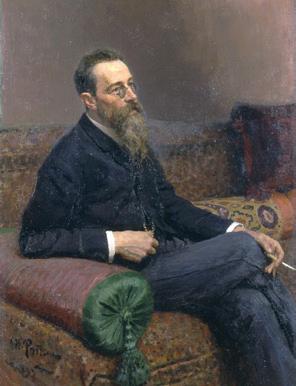
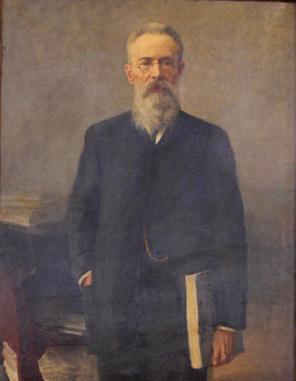
from top: Nikolai Rimsky-Korsakov, portrait in oil by Ilya Repin (1844–1930), 1893. State Russian Museum Collection, Saint Petersburg, Russia
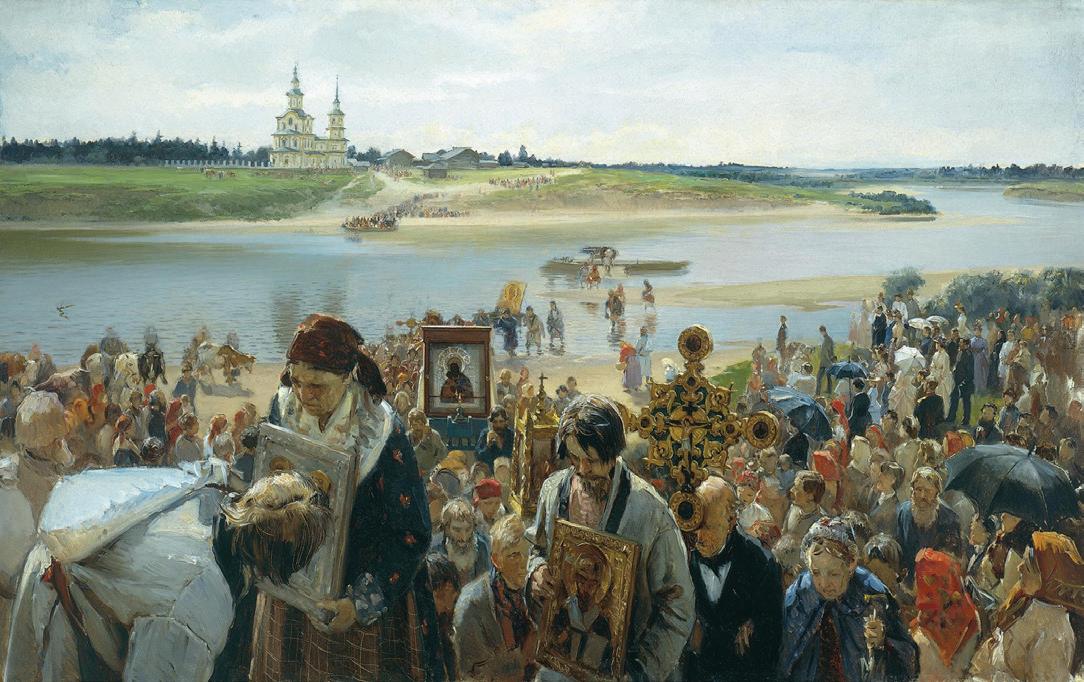
Easter Procession, painting in oil by Illarion Pryanishnikov (1840–1894), 1893. State Russian Museum Collection, Saint Petersburg, Russia
wrote the book on how to compose for the instruments of the orchestra. (He probably is the first person to attend Lucia excited by the prospect of hearing the tam-tam.) He didn’t sketch at the piano, like most composers, but wrote directly for his instrument—the large virtuoso modern orchestra, and, as much as anyone before or since, he had an ear for distinctive, unconventional, and brilliant orchestral effects.
This overture was the last of three orchestral works Rimsky-Korsakov introduced in Saint Petersburg in the span of a year, following Capriccio espagnole and Sheherazade. As he wrote in My Musical Life, these three pieces “close this period of my activity, at the end of which my orchestration had reached a considerable degree of virtuosity and bright sonority without Wagner’s influence, within the limits of the usual makeup of Glinka’s orchestra.”
The Russian Easter Overture—Svetlyi prazdnik, or Bright Holiday in Russian—is a vivid first-hand account of Easter morning service—“not in a domestic chapel, but in a cathedral thronged with people from every walk of life, and with several priests conducting the
WOLFGANG MOZART
Born January 27, 1756; Salzburg, Austria
Died December 5, 1791; Vienna, Austria
cathedral service.” This is the first major work by a Russian composer to be based entirely on themes from the Obikhod, a collection of canticles of the Orthodox Church—a controversial choice that so offended Tsar Alexander III that he forbade having the overture played in his presence. Rimsky-Korsakov uses three original chants, two in the contemplative opening section (“Let God arise!” and “An angel wailed”) and a third (“Christ has risen from the dead”) appears “amid the trumpet blasts and the bell tolling, constituting also a triumphant coda,” as the composer put it.
Russian Easter was one of Rimsky-Korsakov’s most vivid memories of his childhood in Tikhvin, in Novgorod province, where the sound of the nearby monastery bells rang out over the town. Each year, after the long, rough winter, Easter brought an explosion of colorful, joyous celebration. “This legendary and heathen side of the holiday, this transition from the gloomy and mysterious evening of Passion Saturday to the unbridled pagan-religious merrymaking of Easter Sunday, is what I was eager to reproduce in my overture.”
Piano Concerto No. 12 in A Major, K. 414
Mozart arrived in Vienna a little before eight in the morning on March 16, 1781. He couldn’t wait to escape the provincial atmosphere of Salzburg and the stifling presence of the man he knew as manager, teacher, critic, friend, mentor, and father. He wrote home to Leopold the day after he arrived; the letter is full of the empty chatter of a twenty-five-year-old determined to conquer
the big city and relieved to be on his own. Not one of Leopold’s letters to his son from this period has survived, but we can tell from Wolfgang’s replies, each carefully signed “Ever your most obedient son,” that his father apparently felt totally abandoned and perhaps betrayed. They both recognized that this break had altered their relationship forever.
In the last six years of Leopold’s life, he went to visit his son in Vienna just once, in 1785. He was prepared to find fault with Wolfgang’s lifestyle, which he suspected was irresponsible and
extravagant, and he already knew, from a previous encounter, that he thought Constanze a wretched choice for a wife. But he was surprised and overwhelmed by the extent of his son’s success in this great music capital. “Every day there are concerts,” he wrote home to Nannerl, Wolfgang’s sister, on February 16. “It is impossible for me to describe the rush and bustle. Since my arrival your brother’s fortepiano has been taken at least a dozen times from the house to the theater or to some other house.” By 1785, Wolfgang Mozart was Vienna’s favorite composer and performer. In an era when the finest musicians could scarcely earn a living, Mozart was making enough money to reassure even his overly protective father.
Mozart was the greatest pianist of his time. Today his performances would be televised, recorded, downloaded, and passed around on the internet, but we don’t know how Mozart looked as he sat at the keyboard—whether, for example, he leapt at the keys (as the movies suggest) with adolescent delight. In all the newspaper reports, there is scarcely one line as revealing as Mozart’s own about a colleague: “She stalks over the clavier with her long bony fingers in such an odd way.” There are vivid remarks scattered throughout his letters about pianists who grimaced and flopped about while playing, or who distorted the music with a freewheeling use of rubato, and he once advised his sister to play with “plenty of expression, taste, and fire.” That comment, and another phrase of his—“it should flow like oil”—argue that Mozart’s music should never sound mechanical, although that’s what later generations made of it. Few musicians whose opinions we might still value have left us detailed descriptions of Mozart’s playing. Muzio Clementi, the famous pianist who was once pitted against Mozart in a contest, later recalled simply that he “had never heard anyone perform with such spirit and grace.”
Between 1782, the year after he moved to Vienna, and 1786, Mozart wrote fifteen piano concertos. This is an incredible outpouring of important music, and it corresponds precisely to Mozart’s heyday as a performer. These concertos were his main performing vehicles—also his primary source of income—and time has placed them among the crowning glories of all music. There’s little else in all Mozart’s output, aside from the great operas, to compare with the magnificence, subtlety, and consistent brilliance of these scores, and in no other works did Mozart so ingeniously merge the symphonic, operatic, and chamber-music styles into a uniquely personal language of expression.
On December 28, 1782, Wolfgang wrote to his father that he had finished a piano concerto (probably the one in A major performed on this concert), and that, although he was swamped—“I
COMPOSED 1782
FIRST PERFORMANCE 1782, Vienna, Austria
INSTRUMENTATION
solo piano, 2 oboes, 2 horns, strings
CADENZAS
Wolfgang Mozart
APPROXIMATE
PERFORMANCE TIME 26 minutes
FIRST CSO PERFORMANCES
December 27, 1949, Orchestra Hall. William Kapell as soloist, Eugene Ormandy conducting June 30, 1973, Ravinia Festival. James Levine conducting from the keyboard
MOST RECENT
CSO PERFORMANCES
November 19, 20, 21, and 22, 2009, Orchestra Hall. Paul Lewis as soloist, Christoph von Dohnányi conducting August 6, 2011, Ravinia Festival. Gabriela Martinez as soloist, Itzhak Perlman conducting
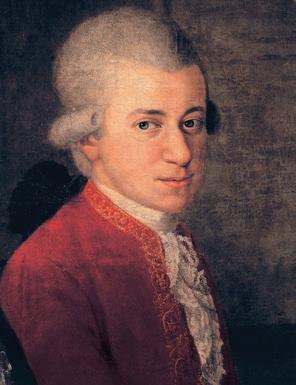
opposite page: Wolfgang Mozart, from a detail of the Mozart family portrait attributed to Johann Nepomuk della Croce (1736–1819), ca. 1780, now in the collection of the Mozarteum Foundation, Salzburg, Austria
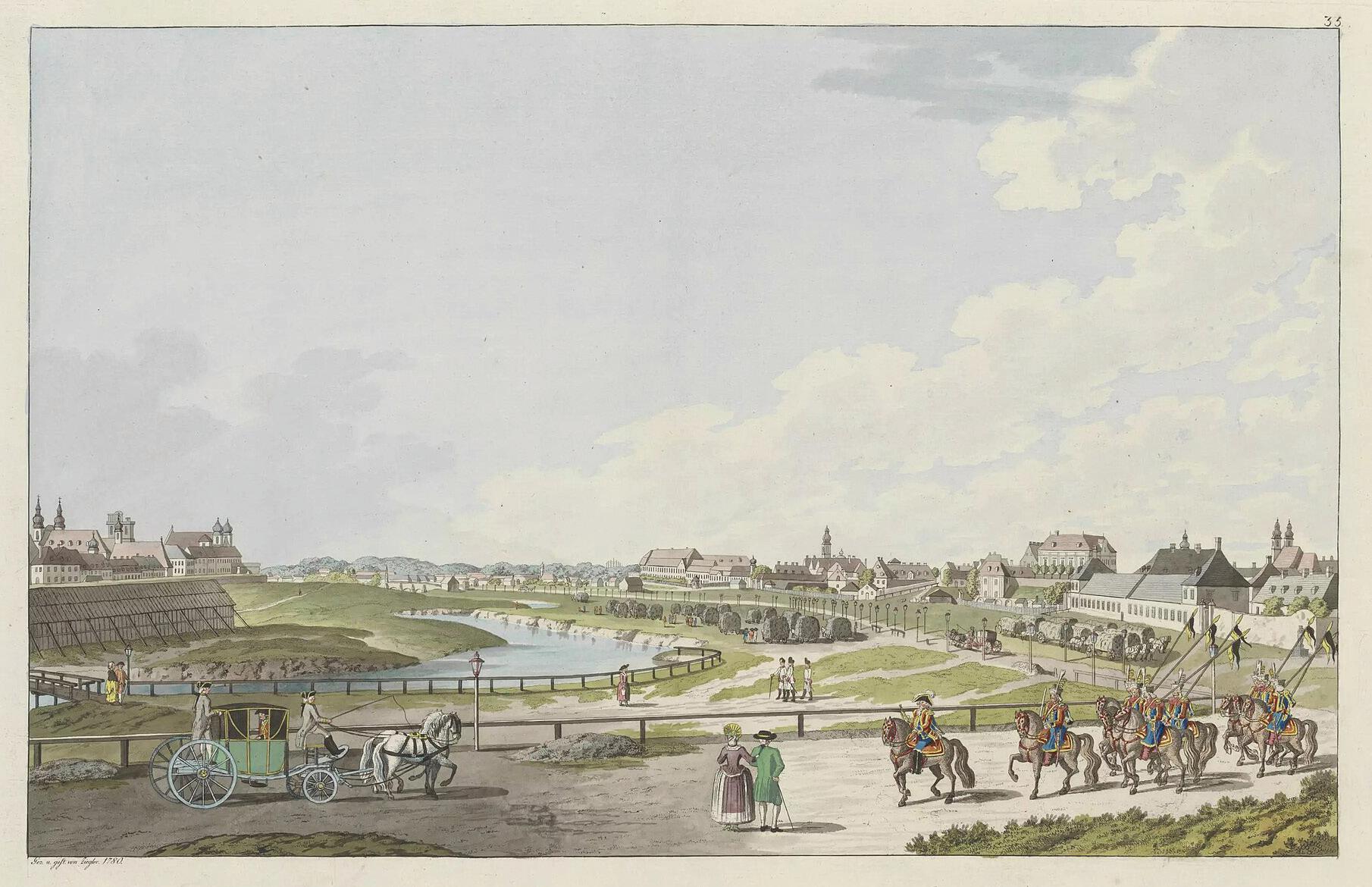
next page: The Hay Market, source of Vienna’s draft animals and carriage horses for transport. Copperplate engraving by German-born artist Johann Ziegler (ca. 1749–1812), from his celebrated series of city views published by Artaria & Co., Vienna, Austria
have so much to do that often I do not know whether I am on my head or my heels”—he still had two more to complete for the 1783 Lenten concert series. (From studying the paper he used, it seems clear that he worked on all three concertos simultaneously—he didn’t finish one before starting another.) “These concertos,” he continued
. . . are a happy medium between what is too easy and too difficult; they are very brilliant, pleasing to the ear, and natural, without being vapid. There are also passages here and there from which connoisseurs alone can derive satisfaction; but these passages are written in such a way that the less discriminating cannot fail to be pleased, though without knowing why.
Few composers since could, in all honesty, have said the same.
These three concertos were written shortly before The Marriage of Figaro, with which they share an almost unreasonable melodic wealth, and at the same time as the six string quartets Mozart dedicated to Haydn. They are as close to chamber music as one can imagine, in scale and
intimacy of dialogue. In fact, Mozart advertised copies of the scores for sale—even before he finished writing the music—in versions that could be performed with one player to a string part and without any winds, as piano quintets. This may have been nothing more than a marketing ploy—“suitable for performing at home”—to attract the amateur musician and to help pay off the composer’s snowballing debts. In any event, the scheme wasn’t successful, despite Mozart’s reducing the price from six to four ducats for the set (apparently at his father’s insistence). The concertos, however, proved immediately popular in the concert hall, and they are among only six of the composer’s piano concertos that were published during his lifetime.
Even Mozart seems to have been particularly fond of the concerto in A major, the one Köchel numbered 414; he played it often, taught it to his favorite students, and wrote out two complete sets of cadenzas for it. The first movement begins quietly, so that we may adjust our expectations for the entire piece accordingly. Mozart produces such an easy succession of melodies that, in the middle section, he continues to invent new material rather than develop what he has already presented. (“This is not lavishness,”
writes Charles Rosen in his landmark study, The Classical Style. “Mozart uses melodies at once so complex and so complete that they do not bear the weight of development.”) The Andante is based on a theme from an overture by Johann
Christian Bach. Mozart had used the melody once before, in a trio dating from his years in Salzburg; this time, he probably intended it as a memorial to Bach, who had died on New Year’s Day 1782. The finale is a light and gentle rondo.
NIKOLAI RIMSKY-KORSAKOV
Suite from The Tale of Tsar Saltan, Op. 57
Although The Tale of Tsar Saltan, of his son the famous and mighty hero Prince Gvidon Saltanovich, and of the beautiful Swan Princess is unfamiliar to most opera lovers by name, virtually everyone has endured renditions of its most famous eighty seconds, the Flight of the Bumblebee. That music has misrepresented RimskyKorsakov to countless young music students, just as the Minute Waltz often introduces Chopin as a trivial and punishing talent. Chopin’s greatness is grasped soon enough—many students eventually play the eloquent and profound nocturnes—but Rimsky-Korsakov’s genius is more elusive. Audiences today hear only his orchestral showpieces, and not the more adventuresome, inventive operas like Tsar Saltan, based on a tale by Pushkin.
Although the celebrated Russian poet Alexander Pushkin had little affinity for music, he contributed to some of the most significant works in the Russian musical literature. Pushkin’s own contemporary, Mikhail Glinka, transformed the early fairy tale Ruslan and Ludmila into a cornerstone of Russian opera. Later Tchaikovsky, with Eugene Onegin, and Mussorgsky, in his Boris Godunov, wrote music that matched the greatness of Pushkin’s own words and ideas. As late as 1940, Igor Stravinsky (whose little opera Mavra is based on Pushkin) would claim “In justice, [Pushkin’s] name should be revered on the same plane with those of Dante, Goethe, Shakespeare.”
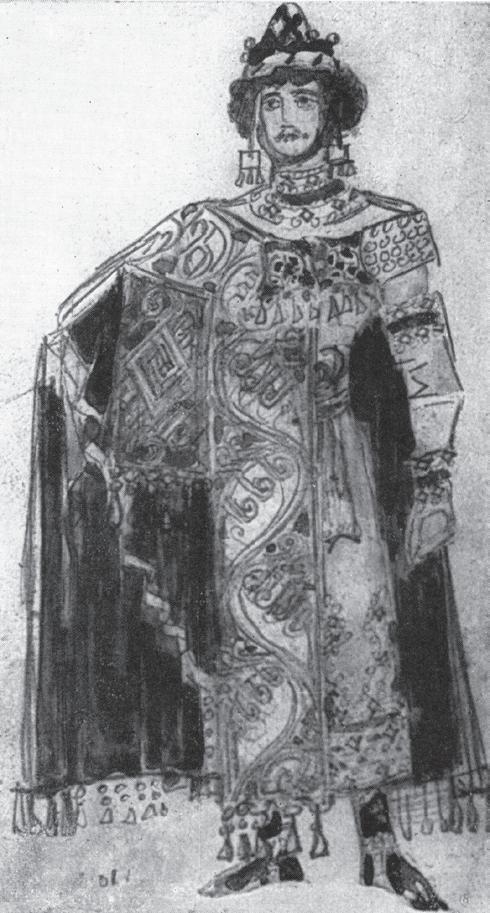
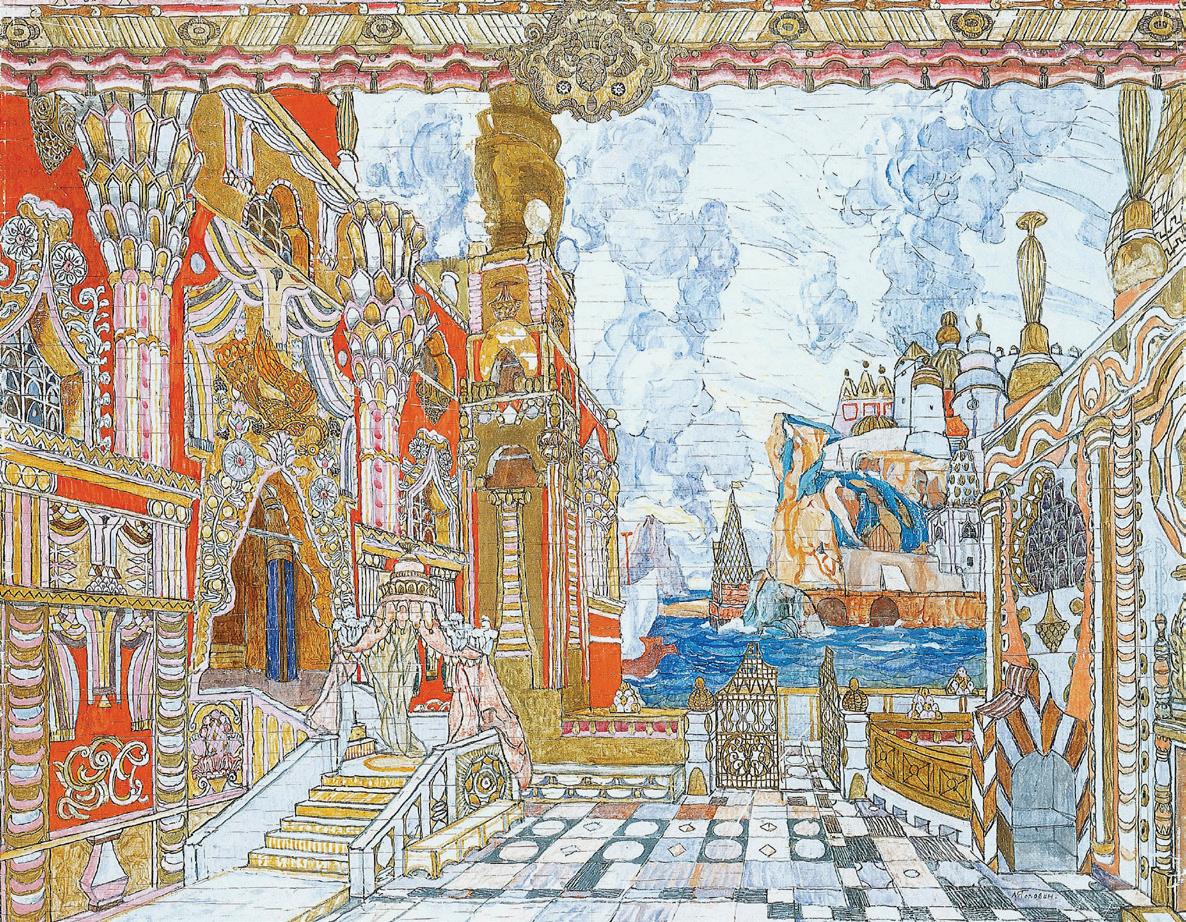
this page: Nikolai Rimsky-Korsakov, portrait in oil by Emil Wiesel (1866–1943), 1900. Rimsky-Korsakov Saint Petersburg State Conservatory, Russia | next page, from left: Costume sketch for Prince Gvidon after a watercolor by Mikhail Vrubel (1856–1910), 1900 | The Palace of Tsar Saltan, tempera on wood, 1907, for an unrealized stage set for the opera. Kiev National Museum of Russian Art, Ukraine
COMPOSED 1899–1900
FIRST PERFORMANCE
November 3, 1900; Moscow, Russia (complete opera)
INSTRUMENTATION
2 flutes and piccolo, 2 oboes and english horn, 3 clarinets (3rd doubling bass clarinet), 2 bassoons and contrabassoon, 4 horns, 3 trumpets, 3 trombones, tuba, timpani, cymbals, triangle, tambourine, side drum, bass drum, harp, celesta, strings
APPROXIMATE PERFORMANCE TIME 19 minutes
FIRST CSO PERFORMANCES
November 17, 1925, Orchestra Hall. Frederick Stock conducting (Flight of the Bumblebee)
July 19, 1941, Ravinia Festival. Nikolai Malko conducting
MOST RECENT
CSO PERFORMANCES
July 12, 1992, Ravinia Festival. Maureen McGovern as soloist, Erich Kunzel conducting (Flight of the Bumblebee)
January 21, 22, 23, and 24, 1993, Orchestra Hall. Daniel Barenboim conducting
CSO RECORDINGS
1925. Frederick Stock conducting. Victor (Flight of the Bumblebee) 1993. Daniel Barenboim conducting. Erato
In his extensive and little-explored career as an opera composer, Rimsky-Korsakov set three texts by Pushkin: the dramatic scene Mozart and Saileri (nearly a century before Amadeus exploited the same territory) and two fairy stories—The Golden Cockerel and Tsar Saltan (both in versions by Vladimir Belsky). The Tale of Tsar Saltan was first staged in Moscow in 1900. The three-movement suite, which the composer extracted three years later, includes the orchestral introductions to acts 1 and 2 and that to the final scene of the opera (act 4, scene 2). [At these performances, the Flight of the Bumblebee is inserted between the second and third movements.]
A trumpet fanfare opens each movement; Rimsky wrote that “it has the significance of an invitation to see and hear what will presently be enacted, a novel device well suited to a fantastic tale.” The fanfare outlines two jarring harmonies, linked only by one common note, like the disparate human and fairy tale worlds Rimsky liked to explore. In the first movement, the tsar takes leave of his young bride and marches off to war. While he is away his wife gives birth to a son, Prince Gvidon. The wife’s two disreputable sisters send the tsar a message that she has borne a monster; the tsar orders his wife and their baby to be thrown into the sea in a barrel.
The second movement depicts their sea voyage, buoyed by the rolling waves. In the second act of the opera, Gvidon grows, day by day, hour by hour, during the journey, and when the barrel lands on an island, he emerges fully grown. There he rescues a princess disguised as a swan; she creates a great city for him to govern. Eager to see his father, he is transformed into a bumblebee and attempts to fly home, depicted so perfectly in music that the Flight of the Bumblebee is often performed as part of the suite, as it is this week, even though the composer did not originally intend to place it here. Eventually the tsar crosses the ocean to meet his son.
The last movement begins with a panorama of Gvidon’s vast city. When the tsar arrives there, he encounters the island’s three wonders: a squirrel that simultaneously whistles folk songs and cracks golden nuts containing emeralds (no small feat, even in a fairy tale); thirty-three dazzling young warriors cast on the shore (their music is also folk song); and the Swan Princess, who comes bearing a lovely song (which she apparently learned listening to Tchaikovsky’s opera Cherevichki [The Slippers]). With a reprise of the fanfare, Rimsky announces The End, and that all will live happily ever after.
ALEXANDER SCRIABIN
Born January 6, 1872; Moscow, Russia
Died April 27, 1915; Moscow, Russia
Piano Concerto in F-sharp Minor, Op. 20
Of the seventy-four published works in Alexander Scriabin’s catalog, all but seven are for piano solo. Scriabin inherited his love for the piano from his mother, who died shortly after his first birthday. Lyubov Petrovna Scriabina had studied at the Saint Petersburg Conservatory with Theodor Leschetizky—he taught many of the greatest pianists of the century, including Paderewski—and was a favorite of the conservatory’s founder, the celebrated composer and pianist Anton Rubinstein. Even without the sound of his mother’s playing—or the daily sight of her sitting at the keyboard—to inspire him, young Alexander was drawn to the piano. His interest was strongly encouraged by the aunt, great-aunt, and grandmother who raised him, arranged his musical education, and spoiled him dreadfully. (His father, a member of the Russian consular service, lived primarily in Turkey and had little impact, aside from that of his absence, on his son’s development.)
In 1884 Scriabin began to study piano with Nicolai Zverev, who had already accepted Sergei Rachmaninov as a pupil. The
COMPOSED 1896
FIRST PERFORMANCE
October 23, 1897; Odessa, Ukraine. The composer as soloist
INSTRUMENTATION
solo piano, 2 flutes and piccolo, 2 oboes, 2 clarinets, 2 bassoons, 4 horns, 2 trumpets, 3 trombones, timpani, strings
APPROXIMATE
PERFORMANCE TIME
27 minutes
FIRST CSO PERFORMANCES
January 5, 6, 7, 8, and 11, 1994, Orchestra Hall. Dmitri Bashkirov as soloist, Daniel Barenboim conducting
MOST RECENT
CSO PERFORMANCES
December 5, 6, 7, and 10, 1996, Orchestra Hall. Anatol Ugorski as soloist, Pierre Boulez conducting
CSO RECORDING
1996. Anatol Ugorski as soloist, Pierre Boulez conducting. Deutsche Grammophon
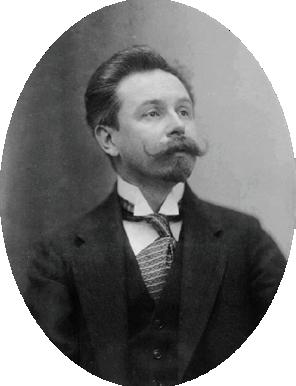
from top: Alexander Scriabin, portrait, 1900
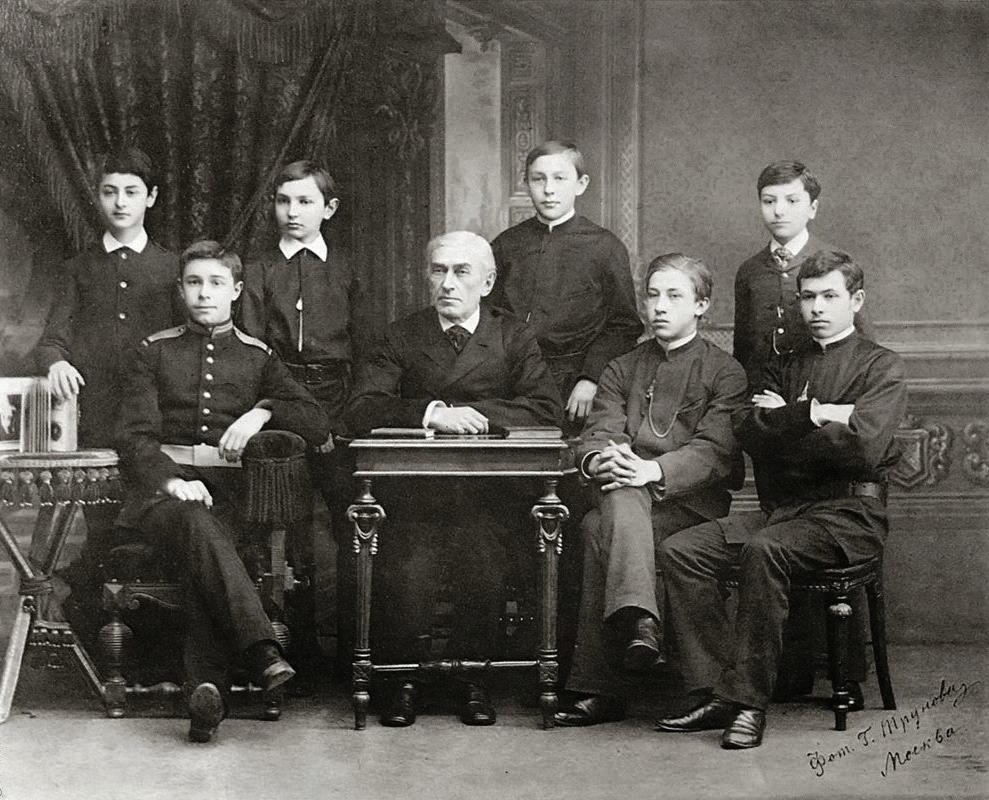
Nikolai Zverev (1832–1893), ca. 1888–89, with students (from left to right) Semen Samuelson, Scriabin, Leonid Maximov (1873–1904), Sergei Rachmaninov (1873–1943), Vladimir Chernyaev, Fyodor Keneman (1873–1937), and Ilya Pressman
two students became good friends—Scriabin was older by just one year—though they were sometimes later portrayed as rivals. At the time they met, both Scriabin and Rachmaninov were beginning to compose piano pieces for themselves to play. In 1888 Scriabin entered the Moscow Conservatory, where he excelled equally as a pianist and composer. When he graduated in 1892, he was awarded the second gold medal in composition (Rachmaninov took first place, for his opera Aleko).
After Scriabin left the conservatory, he began a career as a concert pianist. While his recital programs often included music by Schumann and Liszt, two composers who also started out as pianists, Scriabin’s particular favorite was Chopin. That influence is reflected not only in his repertoire, but also in the titles and nature of the music he wrote at the time.
The first nineteen opus numbers in Scriabin’s catalog identify pieces for piano solo. Obviously modeled on music by Chopin, they include sets of preludes, impromptus, etudes, and even Polish mazurkas. (Scriabin’s twenty-four preludes, op. 11 follow exactly the key sequence of Chopin’s famous op. 28 set.) They are graceful and charming, but derivative, and they contain little of Scriabin’s best music. His only piano concerto, in F-sharp minor, is op. 20; it is the first of Scriabin’s works to include orchestra.
The move away from writing solo piano music was a tough and decisive step for all the pianist-composers of the nineteenth century. For Chopin it came of necessity; the piano recital was not yet a common part of concert life in the 1820s, and Chopin needed concertos to play in his appearances with orchestras. For Schumann, it took the powerful influence of his wife Clara to encourage him to start writing for the orchestra. Like Chopin, Liszt wrote piano concertos as a means of expanding his superstar solo career and box office appeal, and it was only after he retired from the concert stage in 1848 that he could devote time to writing for orchestra alone. More contemporary with Scriabin, Brahms struggled with leaving the comfort of the piano bench behind; he began writing for orchestra in small,
tentative steps, and then spent two decades perfecting his first symphony.
Chopin, Schumann, Liszt, and Brahms were already mature artists with individual and recognizable styles when they moved beyond composing exclusively for the piano. But when Scriabin wrote this piano concerto in 1896, he had not yet discovered the voice that would ultimately make his music unique.
This piano concerto scarcely hints at the direction Scriabin’s career would take. It is seldom performed—these are only the Chicago Symphony’s third performances—for the same reason that major museums do not regularly exhibit the early efforts of so many great artists: they do not represent a famous talent at its most characteristic. But Scriabin’s Piano Concerto is an unusual case: it is less a premonition of greater things to come than a completely satisfying example of a style Scriabin would soon abandon. Although the debt to Chopin is obvious, the concerto is not so much imitative as conservative. It also reminds us that Scriabin and Rachmaninov were not just friends and fellow students, but that they had the same musical heritage. Rachmaninov would continue to work in this rich tradition, but Scriabin departed for other territory.
The concerto is written in a conventional three-movement form. The opening Allegro presents the piano as a delicate and acrobatic solo instrument, capable of both daring arabesques and simple lyricism. The slow middle movement presents four variations, alternately slow and fast, on a quiet string theme. The finale is more athletic and vigorous but still allows the soloist many flights of fancy. Scriabin played this concerto every night on the famous 1910 tour for which Serge Koussevitzky chartered a steamer down the Volga River, conducting nineteen concerts in eleven towns. Ellen von Tideböhl, who was a guest on the trip, remembered that Scriabin played the concerto differently each time, “according to the happenings of the day and his mood at the moment.”
Phillip Huscher has been the program annotator for the Chicago Symphony Orchestra since 1987.
A Musical Tribute to
JOHN WILLIAMS & STEVEN SPIELBERG
Tuesday, June 23, 2026
6:00 PM Drinks & Bites
7:30 PM Concert
Celebrate the legendary collaboration between composer John Williams and filmmaker Steven Spielberg as the Chicago Symphony Orchestra brings to life some of cinema’s most iconic music.
Enhance your evening by ordering the event package, which includes preconcert drinks and bites plus prime seating at the concert. Ample food and drink stations will feature heavy hors d’oeuvres and refreshments. Mingle with other guests while enjoying lounge seating in Symphony Center’s Forte event space.
SCAN TO LEARN MORE
PROFILES
Andrey Boreyko Conductor
FIRST CSO PERFORMANCES
October 24, 25, and 26, 2002, Orchestra Hall. Stravinsky’s The Song of the Nightingale, Kalhor’s Blue as the Turquoise Night of Neyshabur with Yo-Yo Ma and the Silk Road Ensemble, and Rimsky-Korsakov’s Sheherazade
MOST RECENT CSO PERFORMANCES
April 19, 20, and 21, 2007, Orchestra Hall. Mozart’s Symphony no. 34; Schumann’s Piano Concerto with Hélène Grimaud; Stravinsky’s Divertimento, Suite from The Fairy’s Kiss; and Tchaikovsky’s Suite from The Sleeping Beauty
July 12, 2017, Ravinia Festival. Bruch’s Scottish Fantasy with Joshua Bell and a suite (arranged by Boreyko) from Prokofiev’s Romeo and Juliet
This season, Andrey Boreyko returns to the Boston Symphony Orchestra with Evgeny Kissin and to the Vienna Radio Symphony Orchestra. He also conducts the Mozarteum Orchestra at the Salzburg Grosses Festspielhaus. Other highlights include the Spanish Radio Symphony Orchestra in Madrid, National Arts Centre Orchestra Ottawa, Stuttgart Philharmonic, Sydney Symphony, Adelaide Symphony, Orchestra of the Teatro Comunale di Bologna, Filarmonica Arturo Toscanini based in Parma, and the George Enescu Philharmonic Orchestra in Bucharest.
Following his successful tenure as music and artistic director of the Warsaw Philharmonic
Orchestra and Choir, Boreyko joined them again this season at the International Chopin Piano Competition, appearing at the opening concert, final rounds, and laureates’ concerts of the competition’s nineteenth edition.
A popular guest of the London Philharmonic Orchestra, Boreyko has conducted critically acclaimed subscription programs in recent years, with repertoire including Shostakovich’s Fifth and Thirteenth (Babi Yar) symphonies and Tchaikovsky’s Fourth, to critical praise.
Other highlights from recent seasons include the Vienna Symphony Orchestra, Antwerp Symphony Orchestra, Prague Symphony Orchestra, Aarhus Symphony Orchestra, Hamburg Philharmonic State Orchestra, Polish Radio Symphony Orchestra in Katowice, Vancouver Symphony Orchestra, and the New Japan Philharmonic in Tokyo. Other ensembles he has collaborated with include the Royal Scottish National Orchestra in Glasgow, Berlin Radio Symphony Orchestra, Gürzenich Orchestra Cologne, Montreal Symphony Orchestra, Orquesta Sinfónica de Galicia in A Coruña, and RAI National Symphony Orchestra in Turin, in addition to the Orchestra Sinfonica di Milano Giuseppe Verdi at Teatro all Scala and the Mahler Festival in Milan.
Prior to the conclusion of his tenure with the Warsaw Philharmonic in 2024, Andrey Boreyko was music director of Artis—Naples in Florida for eight seasons. Other previous appointments include music director of the Hamburg, Bern, Düsseldorf, and Winnipeg symphony orchestras and Orchestre National de Belgique.
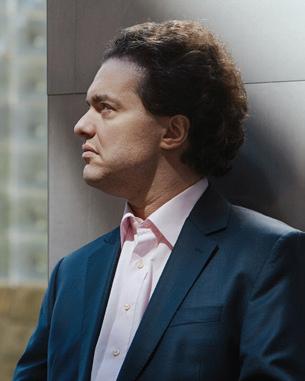
Evgeny Kissin Piano
FIRST CSO PERFORMANCES
March 19, 20, 21, and 24, 1992, Orchestra Hall. Beethoven’s Piano Concerto no. 5, Daniel Barenboim conducting
MOST RECENT CSO PERFORMANCE
October 15, 2015, Orchestra Hall. Tchaikovsky’s Piano Concerto no. 1, Sir Andrew Davis conducting
Evgeny Kissin’s musicality and virtuosity have earned him admiration as one of the most gifted classical pianists of his generation. In demand all over the world, he has appeared with many great conductors and with all the best orchestras.
Kissin was born in Moscow, where he began playing the piano by ear at the age of two. At six, he entered a special school for gifted children, the Moscow Gnessin School of Music, where he was a student of Anna Pavlovna Kantor, his only teacher. At ten, he made his concerto debut followed by his first solo recital in Moscow a year later. He came to international attention in 1984 when, at twelve, he performed in the Great Hall of the Moscow Conservatory with the Moscow State Philharmonic under Dmitri Kitayenko, recorded live by Melodia. An album was released the following year.
Kissin’s first appearances outside Russia were in eastern Europe in 1985, followed by his first tour of Japan in 1986. In 1988 he performed with the Berlin Philharmonic and Herbert von Karajan in a New Year’s concert broadcast internationally. In 1990 he made his BBC Promenade Concerts debut in London and his North American debut with the New York Philharmonic under Zubin Mehta and opened Carnegie Hall’s centennial season with a debut recital recorded live on BMG Classics.
This season, Kissin’s recital program features works by Beethoven, Chopin, Schumann, and Liszt. His North American tour takes him to Symphony Center in Chicago, New York’s Carnegie Hall, and Kansas City, and he makes rare orchestral appearances performing concertos by Mozart and Scriabin with the Chicago and Boston symphony orchestras under Andrey Boreyko and with the New York Philharmonic under Gustavo Dudamel. At Carnegie Hall, he presents a solo recital and takes part in a gala concert commemorating the “Concert of the Century.” He also plays chamber music with Joshua Bell and Steven Isserlis, with appearances in both New York at Carnegie Hall and Kansas City at the Folly Theater.
Evgeny Kissin has received awards and tributes from around the world, including the Musician of the Year Prize from the Chigiana Academy of Music in Siena in 1991; Musical America’s youngest Instrumentalist of the Year in 1995; and the prestigious Triumph Award in 1997, one of Russia’s highest cultural honors, as its youngest recipient. He also holds an honorary doctorate from the Manhattan School of Music, the Shostakovich Award from Russia, an honorary membership in the Royal Academy of Music in London, and an honorary doctorate from Hong Kong University.
His latest release features sonatas by Beethoven on the Deutsche Grammophon label. Previous recordings have received the Edison Klassiek in the Netherlands and the Diapason d’Or and the Grand Prix of La Nouvelle Academie du Disque in France. He received a Grammy Award in 2010 for Prokofiev’s piano concertos nos. 2 and 3 with the Philharmonia Orchestra conducted by Vladimir Ashkenazy on EMI Classics.
His extraordinary talent inspired Christopher Nupen’s documentary film, Evgeny Kissin: The Gift of Music, which was released in 2000 on video and DVD by RCA Red Seal.
PHOTO BY JOHANN SEBASTIAN HAENEL, DEUTSCHE GRAMMOPHON
The Chicago Symphony Orchestra—consistently hailed as one of the world’s best—marks its 135th season in 2025–26. The ensemble’s history began in 1889, when Theodore Thomas, the leading conductor in America and a recognized music pioneer, was invited by Chicago businessman Charles Norman Fay to establish a symphony orchestra. Thomas’s aim to build a permanent orchestra of the highest quality was realized at the first concerts in October 1891 in the Auditorium Theatre. Thomas served as music director until his death in January 1905, just three weeks after the dedication of Orchestra Hall, the Orchestra’s permanent home designed by Daniel Burnham.
Frederick Stock, recruited by Thomas to the viola section in 1895, became assistant conductor in 1899 and succeeded the Orchestra’s founder. His tenure lasted thirty-seven years, from 1905 to 1942—the longest of the Orchestra’s music directors. Stock founded the Civic Orchestra of Chicago— the first training orchestra in the U.S. affiliated with a major orchestra—in 1919, established youth auditions, organized the first subscription concerts especially for children, and began a series of popular concerts.
Three conductors headed the Orchestra during the following decade: Désiré Defauw was music director from 1943 to 1947, Artur Rodziński in 1947–48, and Rafael Kubelík from 1950 to 1953. The next ten years belonged to Fritz Reiner, whose recordings with the CSO are still considered hallmarks. Reiner invited Margaret Hillis to form the Chicago Symphony Chorus in 1957. For five seasons from 1963 to 1968, Jean Martinon held the position of music director.
Sir Georg Solti, the Orchestra’s eighth music director, served from 1969 until 1991. His arrival launched one of the most successful musical partnerships of our time. The CSO made its first overseas tour to Europe in 1971 under his direction and released numerous award-winning recordings. Beginning in 1991, Solti held the title of music director laureate and returned to conduct the Orchestra each season until his death in September 1997.
Daniel Barenboim became ninth music director in 1991, a position he held until 2006. His tenure was distinguished by the opening of Symphony Center in 1997, appearances with the Orchestra in the dual role of pianist and conductor, and twenty-one international tours. Appointed by Barenboim in 1994 as the Chorus’s second director, Duain Wolfe served until his retirement in 2022.
In 2010, Riccardo Muti became the Orchestra’s tenth music director. During his tenure, the Orchestra deepened its engagement with the Chicago community, nurtured its legacy while supporting a new generation of musicians and composers, and collaborated with visionary artists. In September 2023, Muti became music director emeritus for life.
In April 2024, Finnish conductor Klaus Mäkelä was announced as the Orchestra’s eleventh music director and will begin an initial five-year tenure as Zell Music Director in September 2027. In July 2025, Donald Palumbo became the third director of the Chicago Symphony Chorus.
Carlo Maria Giulini was named the Orchestra’s first principal guest conductor in 1969, serving until 1972; Claudio Abbado held the position from 1982 to 1985. Pierre Boulez was appointed as principal guest conductor in 1995 and was named Helen Regenstein Conductor Emeritus in 2006, a position he held until his death in January 2016. From 2006 to 2010, Bernard Haitink was the Orchestra’s first principal conductor.
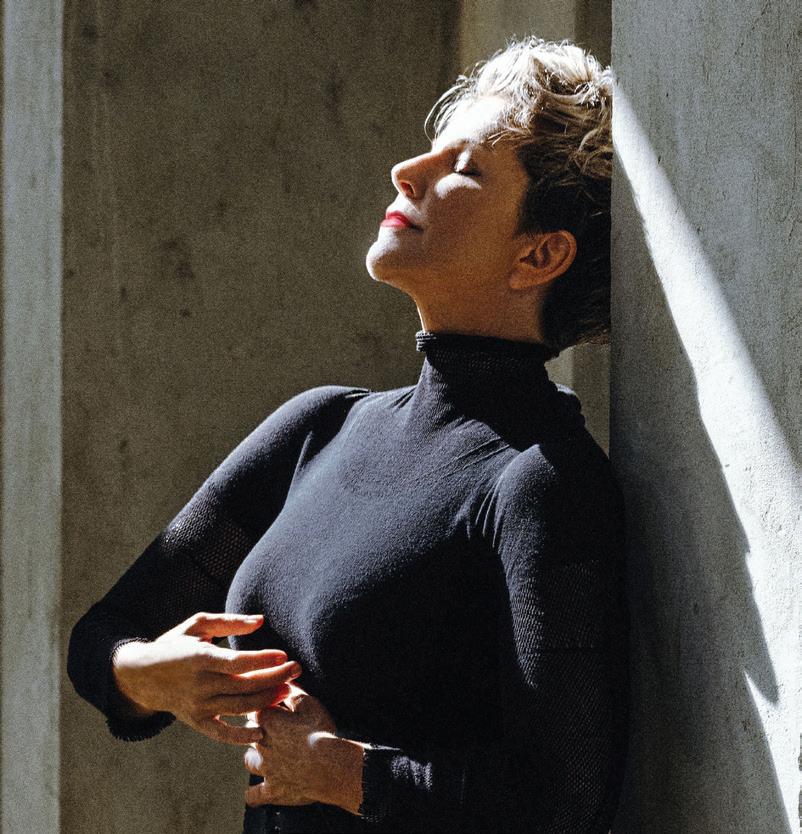
Mezzo-soprano Joyce DiDonato is the CSO’s Artist-in-Residence for the 2025–26 season.
The Orchestra first performed at Ravinia Park in 1905 and appeared frequently through August 1931, after which the park was closed for most of the Great Depression. In August 1936, the Orchestra helped to inaugurate the first season of the Ravinia Festival, and it has been in residence nearly every summer since.
Since 1916, recording has been a significant part of the Orchestra’s activities. Recordings by the Chicago Symphony Orchestra and Chorus— including recent releases on CSO Resound, the Orchestra’s recording label launched in 2007— have earned sixty-five Grammy awards from the Recording Academy.
Chicago Symphony Orchestra
Klaus Mäkelä Zell Music Director Designate
Joyce DiDonato Artist-in-Residence
VIOLINS
Robert Chen Concertmaster
The Louis C. Sudler Chair, endowed by an
anonymous benefactor
Stephanie Jeong § Associate Concertmaster
The Cathy and Bill Osborn Chair
David Taylor*
Assistant Concertmaster
The Ling Z. and Michael C.
Markovitz Chair
Yuan-Qing Yu* Assistant Concertmaster
So Young Bae
Cornelius Chiu
Gina DiBello
Kozue Funakoshi
Russell Hershow
Qing Hou
Gabriela Lara
Matous Michal
Simon Michal
Sando Shia
Susan Synnestvedt
Rong-Yan Tang
Baird Dodge Principal
Danny Yehun Jin
Assistant Principal
Lei Hou
Ni Mei
Hermine Gagné
Rachel Goldstein
Mihaela Ionescu
Wendy Koons Meir
Ronald Satkiewicz ‡
Florence Schwartz
VIOLAS
Teng Li Principal
The Paul Hindemith Principal Viola Chair
Catherine Brubaker
Youming Chen
Sunghee Choi
Paolo Dara
Wei-Ting Kuo
Danny Lai
Weijing Michal
Diane Mues
Lawrence Neuman
Jikun Qin
Max Raimi
CELLOS
John Sharp Principal
The Eloise W. Martin Chair
Kenneth Olsen
Assistant Principal
The Adele Gidwitz Chair
Karen Basrak
The Joseph A. and Cecile Renaud Gorno Chair
Richard Hirschl
Olivia Jakyoung Huh
Daniel Katz
Katinka Kleijn
Brant Taylor
The Ann Blickensderfer and Roger Blickensderfer Chair
BASSES
Alexander Hanna Principal
The David and Mary Winton
Green Principal Bass Chair
Alexander Horton
Assistant Principal
Daniel Carson
Ian Hallas
Robert Kassinger
Mark Kraemer
Stephen Lester
Bradley Opland
Andrew Sommer
FLUTES
Emma Gerstein
Jennifer Gunn
PICCOLO
Jennifer Gunn
The Dora and John Aalbregtse Piccolo Chair
OBOES
William Welter Principal
Lora Schaefer
Assistant Principal
The Gilchrist Foundation, Jocelyn Gilchrist Chair
Scott Hostetler
ENGLISH HORN
Scott Hostetler
Riccardo Muti Music Director Emeritus for Life
CLARINETS
Stephen Williamson Principal
John Bruce Yeh
Assistant Principal
The Governing
Members Chair
Gregory Smith
E-FLAT CLARINET
John Bruce Yeh
BASSOONS
Keith Buncke Principal
William Buchman
Assistant Principal
Miles Maner
HORNS
Mark Almond Principal
James Smelser
David Griffin
Oto Carrillo
Susanna Gaunt
Daniel Gingrich ‡
TRUMPETS
Esteban Batallán Principal
The Adolph Herseth Principal Trumpet Chair, endowed by an anonymous benefactor
John Hagstrom
The Bleck Family Chair
Tage Larsen
TROMBONES
Timothy Higgins Principal
The Lisa and Paul Wiggin
Principal Trombone Chair
Michael Mulcahy
Charles Vernon
BASS TROMBONE
Charles Vernon
TUBA
Gene Pokorny Principal
The Arnold Jacobs Principal Tuba Chair, endowed by Christine Querfeld
* Assistant concertmasters are listed by seniority. ‡ On sabbatical § On leave
The CSO’s music director position is endowed in perpetuity by a generous gift from Zell Family Foundation. The Louise H. Benton Wagner and Erika and Dietrich M. Gross Principal Flute chairs are currently unoccupied.
TIMPANI
David Herbert Principal
The Clinton Family Fund Chair
Vadim Karpinos
Assistant Principal
PERCUSSION
Cynthia Yeh Principal Chair sponsored by an anonymous benefactor
Patricia Dash §
Vadim Karpinos
LIBRARIANS
Justin Vibbard Principal
Carole Keller
Mark Swanson
CSO FELLOWS
Ariel Seunghyun Lee Violin
Jesús Linárez Violin
The Michael and Kathleen Elliott Fellow
ORCHESTRA PERSONNEL
John Deverman Director
Anne MacQuarrie
Manager, CSO Auditions and Orchestra Personnel
STAGE TECHNICIANS
Christopher Lewis
Stage Manager
Blair Carlson
Paul Christopher
Chris Grannen
Ryan Hartge
Peter Landry
Joshua Mondie
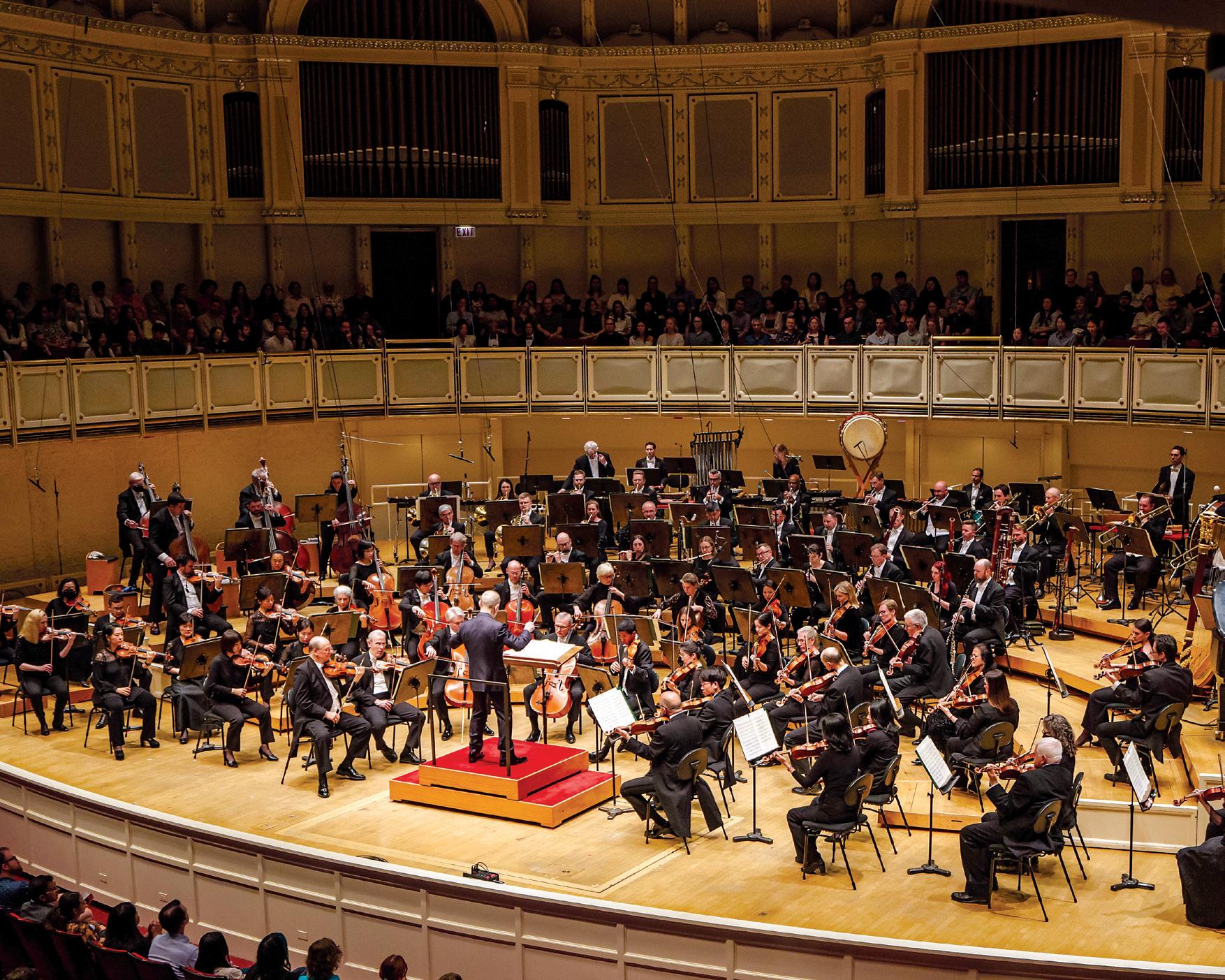
The Chicago Symphony Orchestra string sections utilize revolving seating. Players behind the first desk (first two desks in the violins) change seats systematically every two weeks and are listed alphabetically. Section percussionists also are listed alphabetically.
Discover more about the musicians, concerts, and generous supporters of the Chicago Symphony Orchestra Association online, at cso.org.
Find articles and program notes, listen to CSOradio, and watch CSOtv at Experience CSO.
cso.org/experience
Get involved with our many volunteer and affiliate groups.
cso.org/getinvolved
Connect with us on social @chicagosymphony
Conductor Joe Hisaishi with the CSO, June 2024; CSO Artist-in-Residence Joyce DiDonato
Chicago Symphony Orchestra Association Board of Trustees
OFFICERS
Mary Louise Gorno Chair
Chester A. Gougis Vice Chair
Steven Shebik Vice Chair
Helen Zell Vice Chair
Renée Metcalf Treasurer
Jeff Alexander President
Kristine Stassen Secretary of the Board
Stacie M. Frank Assistant Treasurer
Dale Hedding Vice President for Development
Chicago Symphony Orchestra Association Administration
SENIOR LEADERSHIP
Jeff Alexander President
Stacie M. Frank Vice President & Chief Financial Officer, Finance and Administration
Dale Hedding Vice President, Development
Ryan Lewis Vice President, Sales and Marketing
Vanessa Moss Vice President, Orchestra and Building Operations
Jonathan McCormick Managing Director, Negaunee Music Institute at the CSO
Visit cso.org/csoa to view a complete listing of the CSOA Board of Trustees and Administration.
For complete listings of our generous supporters, please visit the Richard and Helen Thomas Donor Gallery.
cso.org/donorgallery
CHICAGO SYMPHONY ORCHESTRA
90th SUMMER RESIDENCY
JULY 11 - AUGUST 16 •
HIGHLAND PARK
Featuring three weeks with Ravinia Chief Conductor MARIN ALSOP
Six weeks of guests include Yunchan Lim, Lizzo, Emanuel Ax, St. Vincent, Stella Chen, María Dueñas, Daniel Lozakovich, Carlos Simon, Laura Karpman, and many more —plus two concerts with Zell Music Director Designate Klaus Mäkelä— performing in the newly renovated Hunter Pavilion!
LOOKING FOR SOMETHING INDOORS?
James Conlon leads Mozart’s The Abduction from the Seraglio semi-staged in the Martin Theatre