ONE HUNDRED THIRTY-FIFTH SEASON
Tuesday, March 24, 2026, at 6:30
WINTER QUARTET
Gabriela Lara Violin
Cornelius Chiu Violin
Danny Lai Viola
Olivia Jakyoung Huh Cello
STRAVINSKY Three Pieces for String Quartet
Dance Eccentric Canticle
GABRIELA LARA
CORNELIUS CHIU
DANNY LAI
OLIVIA JAKYOUNG HUH
SCHULHOFF Five Pieces for String Quartet
Alla valse viennese: Allegro
Alla serenata: Allegro con moto
Alla czeca: Molto allegro
Alla tango milonga: Andante
Alla tarantella: Prestissimo con fuoco
GABRIELA LARA
CORNELIUS CHIU
DANNY LAI
OLIVIA JAKYOUNG HUH
INTERMISSION
BARTÓK String Quartet No. 6
Mesto—Più mosso, pesante—Vivace
Mesto—Marcia
Mesto—Burletta: Moderato Mesto
CORNELIUS CHIU
GABRIELA LARA
DANNY LAI
OLIVIA JAKYOUNG HUH
The Chicago Symphony Orchestra Association acknowledges support from the Illinois Arts Council.
COMMENTS
by Richard E. Rodda
IGOR STRAVINSKY
Born June 17, 1882; Oranienbaum, near Saint Petersburg, Russia
Died April 6, 1971; New York City
Three Pieces for String Quartet
COMPOSED 1914
In April 1914, to recover from the rigors of supervising the premiere in Paris of his opera Le Rossignol (The Nightingale), Stravinsky sketched a tiny piece for string quartet, his first composition for chamber ensemble, in the style of a Russian folk dance. Ever since he had taken the musical world by storm with his Rite of Spring the year before, his creative work had been closely monitored, and even this little morceau for quartet did not escape notice. Alfred Pochon, second violinist of the Flonzaley Quartet, wrote to the composer asking about the veracity of the Parisian rumor that he had just written a scherzo for quartet and expressed an interest in taking such a piece on the quartet’s American tour the following year. The composer’s friend and champion conductor Ernest Ansermet was assigned the task of negotiating the commission with the Flonzaley (the score was dedicated to him in appreciation), and Stravinsky added two more short movements in July to round out this set of Three Pieces for String Quartet. The Flonzaley played the premiere in Chicago on November 8,
1915. Stravinsky originally issued the Three Pieces as pure, abstract music, giving them no titles or even tempo markings, but when he arranged them as the first three of the Four Studies for Orchestra in 1914–18, he called them Dance, Eccentric, and Canticle.
The small scale of the Three Pieces belies the crucial juncture they occupy in Stravinsky’s stylistic evolution, since they were his first works to move away from the opulence and enormous performing forces of the early ballets toward the economical, emotionally detached neoclassical language of his later works. This forward-looking quality is most evident in the second movement, which is in a brittle, modern, pointillistic idiom usually associated with Anton Webern’s compositions, though Stravinsky claimed that he knew none of that composer’s music at the time. He later explained the movement’s inspiration in an interview with Robert Craft: “I had been fascinated by the movements of Little Tich, whom I had seen in London in 1914, and the jerky, spastic movement, the ups and downs, the rhythm—even the mood or joke of the music—which I later called Eccentric, was suggested by the art of this great clown.” In 1930 Stravinsky transformed
a phrase from this piece into the subject for the instrumental fugue in the Symphony of Psalms. The opening piece, Dance, while more conventional in its folk-based idiom, was also prophetic of several important Russia-inspired works of the following years, notably The Soldier’s Tale and Les noces. The third
ERWIN SCHULHOFF
Born June 8, 1894; Prague, Bohemia
Died August 18, 1942; Wülzburg, Germany
piece (later titled Canticle) is a solemn processional evocative of ancient church rites whose almost static harmonic motion Stravinsky used in Mass, Symphonies of Wind Instruments, Symphony of Psalms, and other compositions to create a sense of suspended time and rapt ecstasy.
Five Pieces for String Quartet
COMPOSED 1923
Czech composer and pianist Erwin Schulhoff experienced the apocryphal Chinese curse profoundly by living in interesting and, for him, ultimately treacherous times. Born into a musical family in Prague on June 8, 1894, Schulhoff studied (on the advice of Dvořák) at the conservatory in his hometown from 1904 to 1906 before completing his formal education at music schools in Vienna, Leipzig (where he was a student of Max Reger), and Cologne; he also took some lessons with Debussy. After military service in World War I, Schulhoff returned to Prague, where he worked as a
composer, teacher, and concert and jazz pianist before settling again in Germany in 1919. He was back in Prague in 1929, teaching piano and orchestration at the city’s conservatory and working for Czech Radio. He took up the cause of Marxism in the early 1930s as a reaction to the rise of Nazism and joined the Communist Party, writing a half-dozen symphonies in the optimistic, easily accessible style dictated by Stalin. He was granted the supposed protection of Soviet citizenship when the Nazis overran Czechoslovakia in 1939, but it did not work. Schulhoff, outspoken in his political views and of Jewish origins, was imprisoned before he could flee from Prague to Russia and interned in a concentration camp at Wülzburg, in Bavaria, where he died of tuberculosis on August 18, 1942.
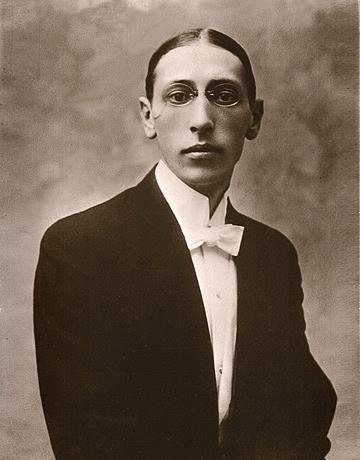
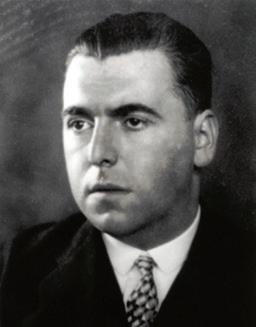
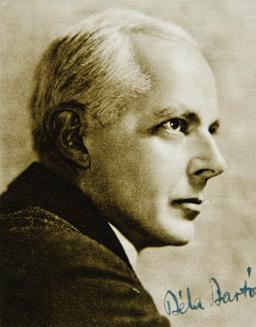
opposite page: Igor Stravinsky, portrait, ca. 1905–10 | this page: Erwin Schulhoff | next spread: Béla Bartók, portrait, 1922. Library of the United Nations Office at Geneva, Switzerland
Though Weimar Germany of the 1920s was a place of seared memory, turbulent present, and uncertain future, it was a cauldron of musical creativity. Some, including Weill and Hindemith, the country’s best young composers, responded with caustic satire and mutations of the day’s most fashionable musical styles, and the influence of these Dadaist tendencies on Schulhoff is reflected in the Five Pieces for String Quartet that he wrote in December 1923 and dedicated to the French composer Darius Milhaud, who had premiered his jazz-driven ballet La création du monde just two months before in Paris. The Five Pieces were introduced on August 8, 1924, by the Czechoslovak Quartet at the Festival of the International Society for Contemporary Music in Salzburg.
Each of the Five Pieces is Schulhoff’s commentary on a popular or traditional dance style, the sort of attitude and technique that the American composer and critic Eric Salzman cogently identified in the music of Igor Stravinsky as “art about art.” The first is Alla valse viennese, though the music is notated not in the
genre’s quintessential three-quarter time but in a duple meter whose grating cross-accents constantly unsettle the expected rhythmic patterns and Gemütlichkeit sentiments. The limping five-beat meter, obsessive accompaniment, stunted melodies, and sometimes harsh, sometimes cloying harmonies of the Alla serenata make it seem more furtive than romantic. Alla czeca, with its short repeating phrases, metric regularity, and simple textures, is the most conventional of the pieces, perhaps a mark of Schulhoff’s respect for the musical traditions of his homeland. Alla tango milonga is based on the Argentinean dance that was wildly popular in Europe during the 1920s, but Schulhoff’s version has been filtered through the prism of Viennese expressionism, perhaps a song for Schoenberg’s demented “Pierrot lunaire” rather than for a sultry Buenos Aires couple. Schulhoff originally sketched an Alla marcia militaristica in modo europaia as the last of the Five Pieces, but he ultimately decided on a less memory-laden Alla tarantella whose whirling themes and nonstop motion provide an exciting close for the work.
BÉLA BARTÓK
Born March 25, 1881; Nagyszentmiklós, Hungary
Died September 26, 1945; New York City
String Quartet No. 6
COMPOSED 1939
Given the unsettled and frightening political situation under which all Eastern Europeans found themselves during the terrible days of 1938 and 1939, it is little wonder that Bartók’s creativity was undermined during that time. He managed to complete the Violin Concerto no. 2 in December 1938, but then became too preoccupied with the deteriorating life around him to undertake any further original work. Paul Sacher, the conductor of the Basle Chamber Orchestra and a close friend who had commissioned the Music for Strings, Percussion, and Celesta two years before, recognized that Bartók needed to leave Budapest if his creativity was to be revived, so he invited the composer and his wife to spend the summer of 1939 at his chalet in Switzerland and then asked him to write a new work for his orchestra. Bartók accepted both invitations and arrived at Saanen in July.
Once installed at Saanen, Bartók retreated into a welcome isolation to undertake Sacher’s commission. “Fortunately, I can put this [war] worry out of my mind if I have to,” he continued
in his letter to his son. “I have to work: a piece for Sacher himself (something for a string orchestra). Luckily, the work went well, and I finished it in fifteen days. I just completed it yesterday.”
The work was the Divertimento for String Orchestra, one of Bartók’s most immediately accessible compositions. The halcyon Swiss interlude during which he produced that piece was not to last, however. Almost as soon as he had begun the String Quartet no. 6 at Saanen, word came from Budapest of his beloved mother’s death. He returned home, where he completed—though with considerable difficulty—the quartet in November 1939. It was the last work he wrote in Europe and his last until the Concerto for Orchestra four years later. His situation in Budapest became untenable during the following months, and in April 1940, he sailed to America for a concert tour with the violinist Joseph Szigeti. After an arduous journey home that summer to settle his affairs and collect his wife, he went back to New York in October and never again saw Hungary. The quartet was premiered in New York on January 20, 1941, by the Kolisch Quartet.
The Quartet no. 6 takes as its motto an arching, stepwise melody marked mesto (sad), given at the
COMMENTS
beginning by the unaccompanied viola. This theme unifies the whole composition by reappearing in different settings at the beginnings of the second and third movements and by serving as the principal subject of the finale. The first movement is a sonata form based on a flying main theme and a second theme grown from the vibrant rhythms and winding melodic leadings of Hungarian folksong. The dotted-rhythm marcia, savagely ironic and unsettlingly diabolical, is strongly contrasted by the gapped-scale melody and rustling accompaniment of the central trio. The bitter, menacing humor of the burletta (burlesque) is ameliorated, though not overcome, by the pastoral music of the movement’s internal episodes.
PROFILES
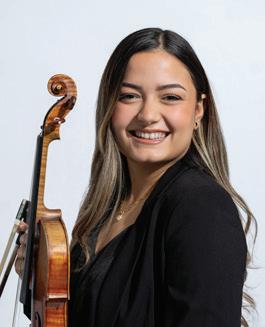
Gabriela Lara Violin
Originally from Barquisimeto, Venezuela, Gabriela Lara began her violin studies at age eight and later joined the Latin American Violin Academy. She was also part of Venezuela’s El Sistema, touring Europe in 2014 with the Teresa Carreño Symphony Orchestra. In 2016 she performed with Gustavo Dudamel and the Simón Bolívar Symphony Orchestra on a European tour that included a concert
The finale unfolds dolefully from the mesto theme, allowing ghostly reminiscences of the two themes from the first movement before giving one final loud wail and ebbing into silence. Each successive movement of the quartet is more melancholy in mood and slower in tempo—vivace, marcia, moderato, mesto—so that the work ends with a feeling of bleak resignation, perhaps indicating the growing pessimism that overcame Bartók during the time of its creation.
Richard E. Rodda, a former faculty member at Case Western Reserve University and the Cleveland Institute of Music, provides program notes for many American orchestras, concert series, and festivals.
at the Berlin Philharmonic. She also performed with Sir Simon Rattle on a tour featuring concerts at the Salzburg Festival.
Since moving to the United States in 2017, Lara has been recognized as the second-place winner in the 2021 Sphinx Solo Competition and the winner of the 2021 Frank Preuss International Violin Competition. She was the recipient of a 2022 Project Inclusion Fellowship from the Grant Park Symphony Orchestra. Lara completed her bachelor’s degree in violin performance at Roosevelt University in 2022 under Almita Vamos and her master’s degree in Suzuki pedagogy there in 2024.
Lara was a member of the Civic Orchestra of Chicago in the 2022–23 season, serving as concertmaster from January to June 2023.
She was the inaugural CSO Fellow, holding that position and performing with the CSO first in the 2022–23 season and continuing in the 2023–24 season as the Michael and Kathleen Elliott Fellow before joining the Milwaukee Symphony Orchestra. Lara began her position as a member of the CSO first violin section in January 2025, becoming the first Orchestra musician appointed by Zell Music Director Designate Klaus Mäkelä.
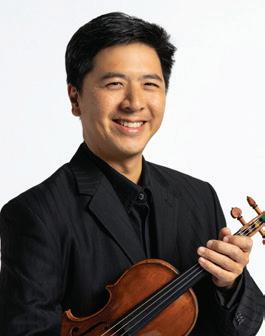
Cornelius Chiu Violin
Cornelius Chiu joined the Chicago Symphony Orchestra in 1996. Born to Chinese parents in Ithaca, New York, he began violin lessons at age six. His older brother, Frederic, is a successful concert pianist and Yamaha recording artist with whom Chiu collaborates regularly.
Chiu is a Starling Foundation full-scholarship recipient, earning bachelor’s and master’s degrees with high distinction, a performer’s certificate, and a coveted fellowship from the Indiana University Jacobs School of Music.
A winner in the Irving M. Klein International String Competition and the National Arts and Letters Competition, he has performed as a
soloist with the Indianapolis Symphony Orchestra, Washington Chamber Orchestra, and at the Kennedy Center in Washington (D.C.). Recent solo performances include appearances with the Sinfonietta DuPage orchestra and the Drake University Symphony Orchestra.
An avid chamber musician, he frequently appears with his colleagues on the CSO Chamber Music series at Northwestern University, Wheaton College Conservatory of Music, and Roosevelt University.
Cornelius Chiu currently teaches at Roosevelt University’s Chicago College of Performing Arts and has maintained a private studio for more than thirty-five years. He and his wife, Inah, a pianist on the faculty of the Music Institute of Chicago, have performed together as the Corinah Duo on many Chicago concert series. Chiu is especially proud of his three musician children: Krystian (Indiana University/Rice University), Karisa (the Curtis Institute of Music, Cleveland Institute of Music, Juilliard, and substitute violinist at the CSO), and Cameron (Carnegie Mellon University).
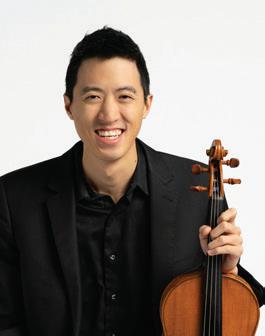
Danny Lai Viola
Violist Danny Lai was appointed to the Chicago Symphony Orchestra in 2014 by Riccardo Muti. He began his musical studies on the piano at age six and started the viola in the Iowa City public school
system at ten. At sixteen, after performing the first movement of Mahler’s Symphony no. 2, he decided to pursue his dream of becoming a professional violist. He studied at Northwestern University with Roland Vamos while taking orchestral repertoire classes with former CSO principal violist Charles Pikler. After graduating with degrees in both economics and music, Lai joined the viola section of the Colorado Symphony.
In Chicago, Lai is a frequent chamber music collaborator, playing with groups such as Civitas, the Chicago Chamber Musicians, Chicago Pro Musica, and his colleagues in the CSO. He also enjoys passing on knowledge to the next generation, giving master classes, teaching private lessons, and working with the Civic Orchestra.
Lai is an alumnus of the Civic Orchestra of Chicago and the YouTube Symphony Orchestra in Sydney, Australia. He is also a prize winner in major competitions, including the Stulberg Competition, Jefferson Symphony International Young Artists Competition, Thaviu String Competition, and Luminarts Union League Strings Competition.
Danny Lai plays on a contemporary viola made by Franz Kinberg.
Olivia Jakyoung Huh Cello
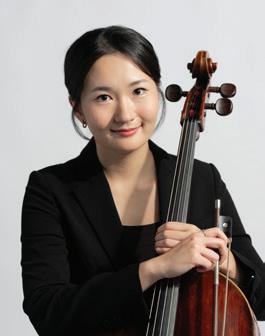
Cellist Olivia Jakyoung Huh has been performing since a very young age, making her solo debut recital at nine on the Kumho Prodigy Concert Series in Seoul, South Korea. The same year, Huh made her concerto debut with the Guri Philharmonic Orchestra. She has won first prize and a special prize at the Alice and Eleonore Schoenfeld International String Competition and first prize at the International Johannes Brahms Competition. More recently, Huh was invited to compete in the Queen Elisabeth Competition and the Geneva Competition, which led to performance opportunities in the United States, Switzerland, Austria, Belgium, China, Spain, Japan, Malaysia, and South Korea. In recital, she has given performances at the Stradivari Society and the Dame Myra Hess Memorial Concert Series in Chicago. An avid chamber musician, Huh has performed at the Yellow Barn Summer Festival, Kneisel Hall Chamber Music Festival, Perlman Music Program Chamber Music Workshop, Tanglewood Music Festival, and New York String Orchestra Seminar.
Huh joined the Orchestra’s cello section on October 27, 2025, after beginning the 2025–26 season as one of three CSO Fellows. She is the third CSO musician appointed by Zell Music Director Designate Klaus Mäkelä.