Program Book - CSO at Wheaton: Jaap van Zweden, Himari & Mozart Jupiter
25 26 SEASON
MAR 5-6
Mäkelä Conducts The Rite of Spring
APR 16-18
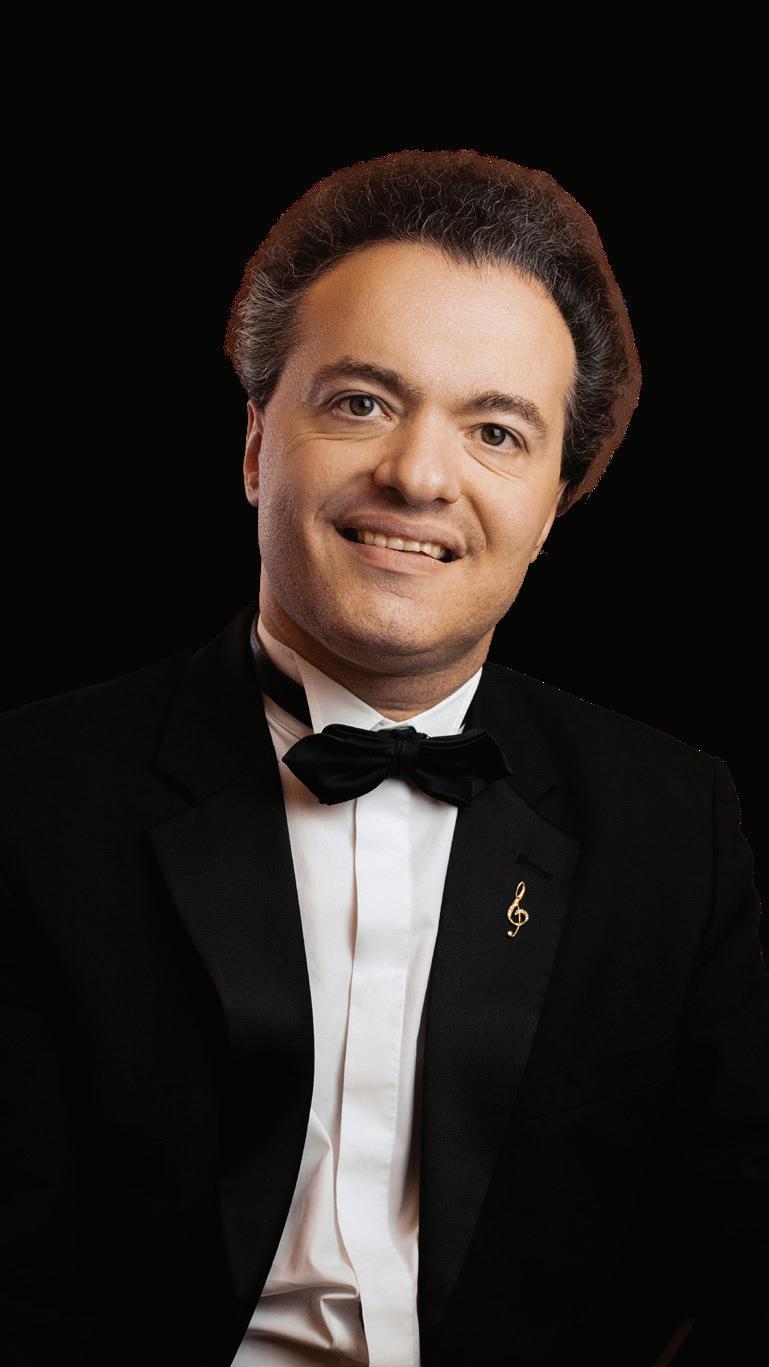
Evgeny Kissin with the CSO
APR 23-26
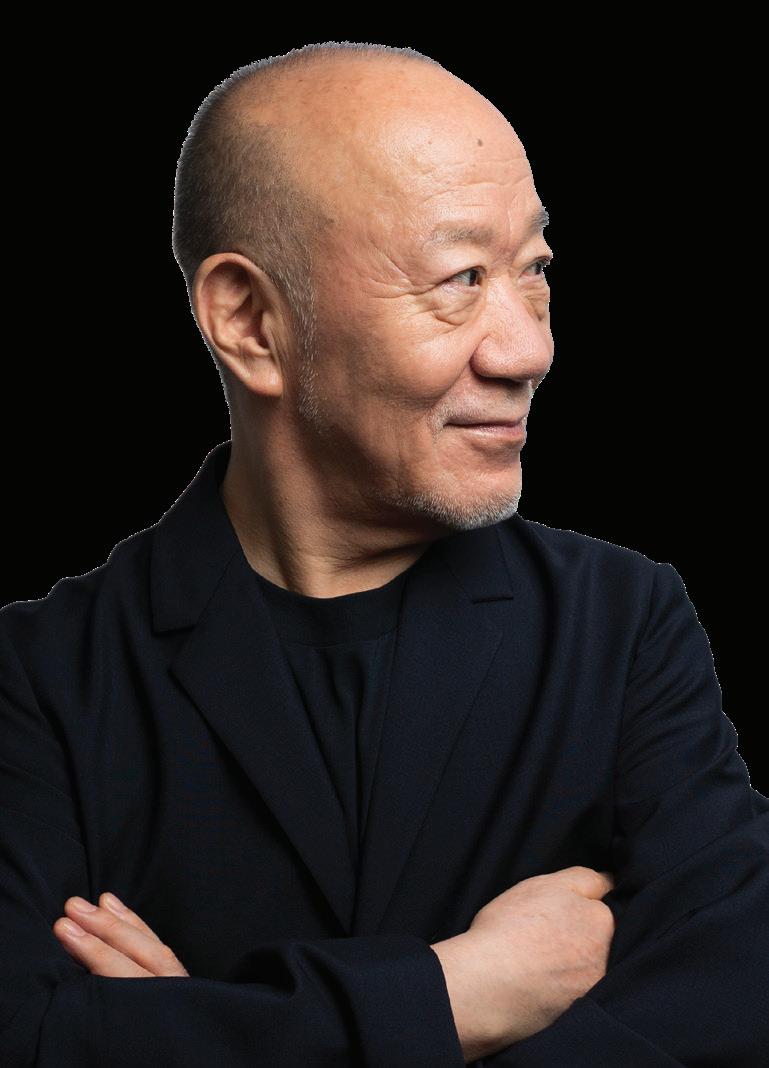
Hisaishi Conducts Hisaishi
ONE HUNDRED THIRTY-FIFTH SEASON
CHICAGO SYMPHONY ORCHESTRA
KLAUS MÄKELÄ Zell Music Director Designate | RICCARDO MUTI Music Director Emeritus for Life
Friday, February 13, 2026, at 7:30 Edman Memorial Chapel, Wheaton College
Jaap van Zweden Conductor
Himari Violin
THOMPSON To See the Sky: an exegesis for orchestra
Sometimes . . . . . . you have to gaze into a well . . . . . . to see the sky.
First Chicago Symphony Orchestra performances
BRUCH Violin Concerto No. 1 in G Minor, Op. 26
Prelude: Allegro moderato—
Adagio
Finale: Allegro energico
HIMARI
INTERMISSION
MOZART Symphony No. 41 in C Major, K. 551 (Jupiter)
Allegro vivace
Andante cantabile
Allegretto
Molto allegro
CSO at Wheaton performances are generously sponsored by the JCS Arts, Health and Education Fund of DuPage Foundation.
Support for the CSO at Wheaton series is provided by Megan and Steve Shebik.
The appearance of Jaap van Zweden is made possible by Lori Julian for the Julian Family Foundation. The appearance of Himari is made possible with support from The Paul Ricker Judy Endowment Fund. The Chicago Symphony Orchestra Association acknowledges support from the Illinois Arts Council. This performance is presented in partnership with Wheaton College and the Wheaton College Artist Series.
CSO at Wheaton performances are generously sponsored by the JCS Arts, Health and Education Fund of DuPage Foundation.
JOEL THOMPSON
Born December 17, 1988, the Bahamas
To See the Sky: an exegesis for orchestra
Although he is the resident composer for the Houston Grand Opera, has had his music premiered by the New York Philharmonic, and is now a doctoral candidate in composition at Yale University, Joel Thompson says that he’s still often “writing for seven-year-old me, who wanted to know if it is possible for classical music to sound a little bit like what I was familiar with.” The music he knew as a child was his parents’ Nat “King” Cole records, the music of their native Jamaica, and Bahamian junkanoo—Thompson was born in the Bahamas to Jamaican parents. But he also “wore out” Time Life’s recorded set of 100 Masterpieces of Classical Music. And in the puzzling gap between those two worlds of music he found the inspiration that has made him one of today’s most distinctive voices.
Thompson began to take piano lessons at the age of seven and continued after his family moved to Houston and then Atlanta. At Emory University, he took premed courses, but that career was put aside while he finished his master’s degree in choral conducting and then moved on to serious study of composition, landing him ultimately at Yale. A large percentage of Thompson’s output as a composer is for voices. (The sources of his inspiration include the work of Nina Simone and, in the score performed this week, the MacArthur Award–winning jazz vocalist Cécile McLorin Salvant.) Much of Thompson’s writing deals directly with the fate of Black men in our world. The work that has drawn the most attention—and won several awards—is Seven Last Words of the Unarmed for men’s chorus, composed in 2015, which is modeled after the liturgical format of Haydn’s Seven Last Words of Christ and quotes the final words of seven unarmed men who died at the hands of law enforcement, including Trayvon Martin and Eric Garner. “Repertoire that deals with issues of social justice is important to me, a part of my philosophy of teaching,” Thompson said at the time, recalling how Nelson Mandela defined ubuntu, the African value system: our personal humanity is dependent on the humanity of others.
A member of the Blacknificent 7 composers collective, Thompson was commissioned by Ravinia’s Steans Institute to
COMPOSED 2023
FIRST PERFORMANCE
March 22, 2024, New York City. Jaap van Zweden conducting
compose his first string quartet, which received its premiere in July. He is one of the composers commissioned by the New York Philharmonic for an orchestral arrangement of Frederic Rzewski’s iconic piano variations on the Chilean protest anthem, The People United Will Never Be Defeated, to be premiered in March.
Joel Thomson on To See the Sky
The title of the work comes from my favorite line in Cécile McLorin Salvant’s “Thunderclouds,” my favorite song on her album Ghost Songs: “Sometimes you have to gaze into a well to see the sky.” That line gave me so much hope when I heard it. It’s an encouragement toward introspection—she’s saying, Just gaze inward. The well might be your community, the loved ones around you, or your own soul. But the line also acknowledges that there are moments when life gets so hard that you can’t even bother to look up. I’m so prone to melancholy, and I struggle with anxiety and depression. Sometimes I live in that place.
MAX BRUCH
Born January 6, 1838; Cologne, Germany
Much of my art has been documenting my internal and external reality as a Black man in our country. I feel fatigued because there seems to be an appetite for our trauma in the classical music space. I’m now trying to expand beyond those limitations; I think of music as a space to imagine more equitable futures and what liberation feels like, which is what this piece is oriented around. I’m trying to do less documenting—and to dream a little bit more. The movements outline a nonlinear journey toward healing.
Musically, this piece is an experiment. I don’t think I’ve written anything with orchestra before that relies on the rhythms of my youth. I’ve always been afraid to do so because then the question of genre arises. Dvořák could bring Bohemian tunes into his music, but then, if a Black person brings in African American music, does it become jazz? After [Terence Blanchard’s opera] Fire Shut Up in My Bones, I felt that maybe I had the room to do that. There are places in the work where I tried to access an ancestral plane.
Died October 2, 1920; Friedenau, near Berlin, Germany
Violin Concerto No. 1 in G Minor, Op. 26
Although he was born five years after Johannes Brahms, Max Bruch hit his stride much sooner. At eleven, he was writing chamber music; in 1852, at the age of fourteen, he tossed off his first symphony. (Brahms was fortytwo years old when he finished his, after nearly a quarter century of intermittent work.) Bruch’s first violin concerto was begun in 1864 and first performed, to considerable acclaim, in
1868—before A German Requiem put Brahms on the map (and more than a decade before his own celebrated violin concerto).
The downside of early success is the waning star. Several composers, some as great as Felix Mendelssohn, are regularly accused of failing to sustain their promise. This is a standard line in the Bruch literature, too, along with that even more worrisome one about a one-hit reputation. Neither assertion is entirely accurate—or fair— although Bruch’s G minor concerto has always been immensely popular (far more so than his other two) and more frequently performed than
Kol nidrei for cello and orchestra or the Scottish Fantasy for violin and orchestra. The irony of Bruch’s career—particularly in light of the current admiration for art that is, above all, accessible—is that by writing music to please the audience of his day, Bruch lost the interest of succeeding generations.
The G minor violin concerto, however, has withstood time, and it makes a most persuasive case for the composer. Soloists keep concertos before the public, and violinists have always loved to play this piece. Bruch studied violin for several years, and he wrote for the instrument with enormous affection and skill. When his publisher once suggested he try a work for cello and orchestra, Bruch replied, “I have more important things to do than write stupid cello concertos.” Eugen d’Albert asked for a piano concerto in 1886; Bruch fired back: “Me, write a piano concerto! That’s the limit!” (Bruch eventually wrote beautifully for cello with orchestra, though he never did compose a piano concerto.)
Bruch had difficulty writing this concerto, his first major work. There was a public performance of a preliminary version that left Bruch dissatisfied. The celebrated violinist Joseph Joachim offered important suggestions (he would later play the same role in the creation of Brahms’s concerto), and Bruch was smart enough to take his advice. When the concerto was presented in its final form in 1868, Joachim was the soloist (Bruch also dedicated the score to him).
Bruch planned to call the concerto a fantasy, which helps to explain the disposition of the three movements. The first is a prelude in title and mood, rather than the weightiest movement of the work. Even though the violinist works as hard as in any of the great virtuosic concertos, and the dialogue between solo and orchestra is heated and extensive, the tone is anticipatory. When, without a pause, we reach the slow movement, we find the heart of the concerto: a rich, wonderfully lyrical expanse of music that shows Bruch at his best and offers melodies tailor-made for the violin. The finale begins in quiet suspense, broken by the entrance of the violin with a hearty dance tune and more fireworks.
COMPOSED 1864–67
FIRST PERFORMANCE
January 7, 1868; Bremen, Germany. Joseph Joachim as soloist
February 23, 1892, Auditorium Theatre. Léon Marx as soloist, Theodore Thomas conducting
July 15, 1950, Ravinia Festival. Zino Francescatti as soloist, Antal Doráti conducting
MOST RECENT
CSO PERFORMANCES
March 27 and 29, 2025, Orchestra Hall; March 28, 2025, Edman Memorial Chapel, Wheaton College. Nikolaj Szeps-Znaider conducting from the violin
August 9, 2025, Ravinia Festival. Ray Chen as soloist, Lidiya Yankovskaya conducting
CSO RECORDINGS
1980. Shlomo Mintz as soloist, Claudio Abbado conducting. Deutsche Grammophon
1986. Cho-Liang Lin as soloist, Leonard Slatkin conducting. CBS
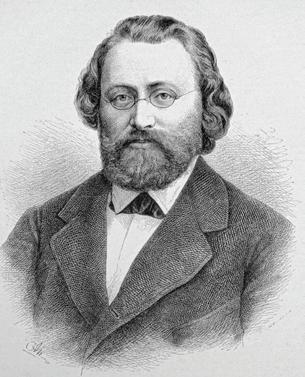
opposite page: Max Bruch, engraving after a photograph by Adolf Neumann (1825–1884), ca. 1881
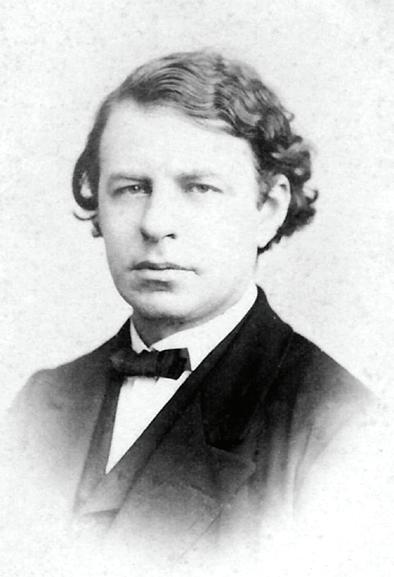
this page: Joseph Joachim (1831–1907) as photographed by Charles Reutlinger (1816–1881) in Paris, ca. 1850s. Joachim premiered the revised version of Bruch’s Violin Concerto no. 1 on January 7, 1868
WOLFGANG MOZART
Born January 27, 1756; Salzburg, Austria
Died December 5, 1791; Vienna, Austria
Symphony No. 41 in C Major, K. 551 (Jupiter)
Ironically, it’s Mozart’s last three symphonies rather than the famous requiem that remain the mystery of his final years.
Almost as soon as Mozart died, romantic myth attached itself to the unfinished pages of the requiem left scattered on his bed; a host of questions—who commissioned the work?; who finished it?; was Mozart poisoned?—inspired painters, novelists, biographers, librettists, playwrights, and screenwriters to heights of imaginative re-creation. We now know those answers: the requiem is unfinished, but not unexplained.
The final symphonies, on the other hand—no. 39 in E-flat, the “great” G minor (no. 40), and the Jupiter (no. 41)—continue to beg more questions than we can answer. Even what was once the most provocative fact about these works—that Mozart never heard them—is now doubtful. We no longer believe that Mozart wrote these three great symphonies for the drawer alone—that goes against everything we know of his working methods. But we don’t know what orchestra or occasion he had in mind. Apparently, a series of subscription concerts was planned for the summer of 1788, when Mozart entered the three symphonies in his catalog, but there’s no evidence that the performances took place. It’s likely that the works were conceived as a trilogy, with publication in mind (symphonies often were printed in groups of three), but they weren’t published during Mozart’s lifetime.
Did Mozart ever hear them? Even if the projected subscription series of 1788 never took place, Mozart did tour Germany the following year, conducting concerts for which we have only sketchy details. “A Symphony,” for example, was advertised for the program at the Leipzig Gewandhaus on May 12. And back home in Vienna, no less a musical big shot than Antonio Salieri conducted concerts on April 16 and 17, 1791, featuring a “grand
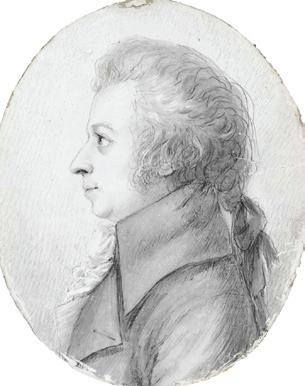
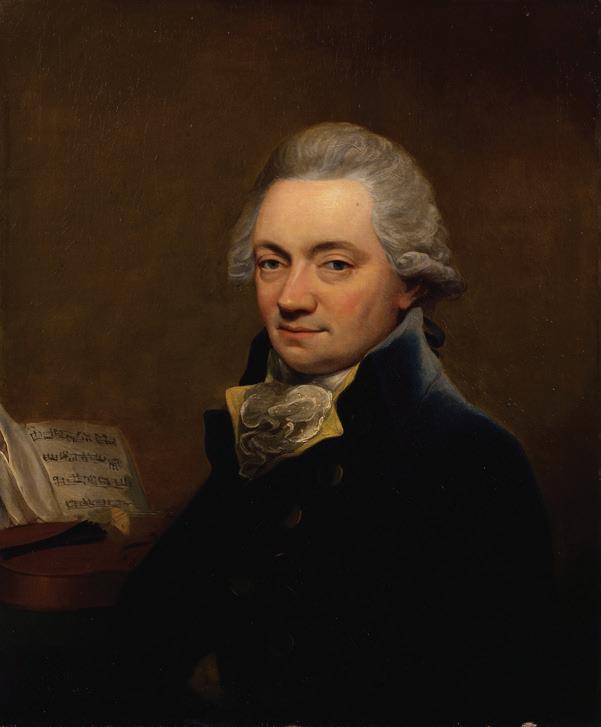
this page: Wolfgang Mozart, silverpoint sketch created by Dora Stock (1760–1832) during the composer’s 1789 visit to Dresden. Mozarteum, Salzburg, Austria | opposite page: Johann Peter Salomon (1745–1815), German violinist, composer, and prominent London impresario widely credited with nicknaming the Symphony no. 41 (Jupiter). Portrait in oil by Thomas Hardy (1757–ca. 1805), 1790–92. Royal College of Music Collection, London, England
February 3 and 4, 1893, Auditorium Theatre. Theodore Thomas conducting
July 15, 1937, Ravinia Festival. Hans Kindler conducting
MOST RECENT
CSO PERFORMANCES
November 4, 5, and 6, 2021, Orchestra Hall. Marek Janowski conducting
August 10, 2025, Ravinia Festival. Louis Langrée conducting
CSO RECORDINGS
1954. Fritz Reiner conducting. RCA
1978. Sir Georg Solti conducting. CSO (From the Archives, vol. 6: Mozart)
1981. James Levine conducting. RCA
symphony” by Mozart. The fact that the G minor symphony exists in two versions—with and without clarinets—argues that Mozart revised the score for a specific performance.
Mozart, who didn’t expect the C major symphony performed at these concerts to be his last, never called it the Jupiter. According to an entry in the British publisher Vincent Novello’s diary, Mozart’s son Franz Xaver reported that the London impresario Johann Peter Salomon gave the work its nickname after the most powerful of the Roman gods. The title first appeared in print for a performance in Edinburgh on October 20, 1819. When Muzio Clementi’s popular piano arrangement of the score was published in 1823, the cover announced “Mozart’s celebrated Symphony, ‘The Jupiter,’ ” and depicted the god himself regally sitting atop billowing clouds. In Germany, well into the nineteenth century, it was simply known as the symphony with the fugue at the end, just as Mozart’s Prague was called the symphony without a minuet.
This great C major symphony was celebrated long before Clementi introduced its splendors to the parlors of countless eager amateur pianists. (Many surely struggled with the finale, which juggles more ideas at a fast speed than the average two hands can coordinate.) Joseph Haydn, who owed the existence of his last twelve (and most popular) symphonies to the same Salomon who named this symphony, knew the work and admired it greatly.
the major.) Schumann, who wrote at length about many pieces he admired, thought it “wholly above discussion,” like the works of Shakespeare; Mendelssohn and Wagner both modeled youthful symphonies on it.
Salomon’s nickname probably was suggested by the majesty and nobility of the first movement, which includes the brilliant sound of trumpets and drums and features stately dotted rhythms in the opening measures (C major was the traditional key for ceremonial music in the eighteenth century). But the movement, cast in conventional sonata form, is also light and playful. Mozart starts the recapitulation in the wrong key (the subdominant) as an inside joke and quotes the music of a lighthearted aria he recently had written to a text presumably by Lorenzo Da Ponte: “You are a bit innocent, my dear Pompeo,” a bass sings to an inexperienced lover, “Go study the ways of the world.” Like Don Giovanni, this movement is dramma giocoso—the quintessentially Mozartian mixture of the serious and the comic.
The nickname itself suggests that the Jupiter Symphony was accepted as the summit of instrumental music within a few years of its composition. At least until 1808, when Beethoven premiered his Fifth Symphony in the same key, it could safely be mentioned as the C major symphony, without danger of confusion. (Beethoven’s begins in C minor and only ends in
The Andante, with muted strings to counter the noonday brilliance of the opening movement, exposes the darkness that often is at the heart of Mozart’s music. This is a world of poignant contemplation, yearning, and distress. It’s as heart-wrenching as Pamina’s great aria from The Magic Flute and even more remarkable for being in a major key. The minuet and trio are unusually rich and complicated, both musically and emotionally, for all their plain, traditional dance forms.
The finale, which includes a famous fugue at the end, is as celebrated as any single movement of eighteenth-century music. It begins innocently enough, with an innocuous do-re-fa-mi theme, and turns into a tour de force of classical
counterpoint. Five themes are presented, developed, and restated; then, at the end, in the great, miraculous coda, they’re brought together in various combinations (and sometimes upside-down) in a dazzling display of perfect counterpoint. With these two minutes of music, Mozart shifts the center of gravity from the beginning of the symphony to the end, anticipating Beethoven, Brahms, and countless other composers who owe him so much else in this field. Mozart can’t
have known that this work would bring his own symphonic career to an end, but he couldn’t have found a more spectacular and fitting way to crown his achievements, and, at the same time, to point the way to the future.
Phillip Huscher has been the program annotator for the Chicago Symphony Orchestra since 1987.
Lemminkäinen the Disruptor
Directly after the concert on February 21, join Professor Thomas Dubois for a presentation and audience Q&A about the story and artistic influences of the fabled folk hero Lemminkäinen on Sibelius’s composition. This event is open to all ticket holders and will take place in Grainger Ballroom with limited seating.
SCAN TO LEARN MORE
PROFILES
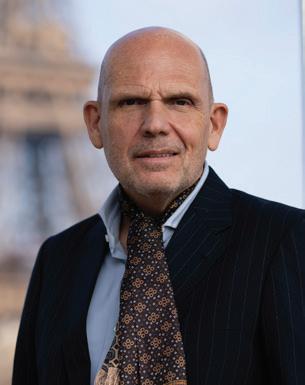
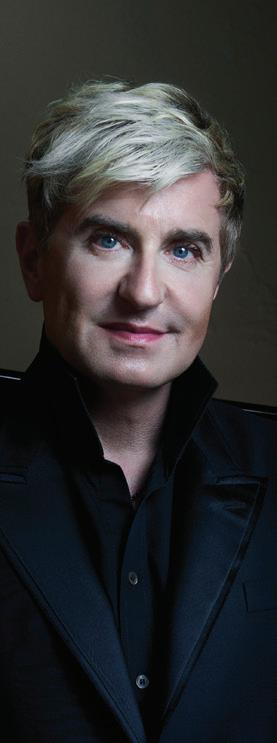
Jaap van Zweden Conductor
FIRST CSO PERFORMANCES
October 9, 10, 11, and 14, 2008, Orchestra Hall. Bruckner’s Symphony no. 5
July 7, 2012, Ravinia Festival. Mahler’s Symphony no. 6
MOST RECENT CSO PERFORMANCES
May 8 and 9, 2025, Orchestra Hall. Mahler’s Symphony no. 6
May 23, 2025; National Forum of Music, Wrocław, Poland. Mahler’s Symphony no. 7
Jaap van Zweden’s artistic mastery has served him and the orchestras he has guided in good stead, and included among these are his recent past music directorships: the New York Philharmonic, where he championed and then inaugurated the transformation of New York’s David Geffen Hall in 2022; the Hong Kong Philharmonic Orchestra, which he led to international prominence; and the Dallas Symphony Orchestra, which earned national acclaim under his direction. His current posts include becoming music director of the Seoul Philharmonic Orchestra in 2024 and artist-in-residence of the Evergreen Symphony Orchestra in Taiwan in 2025. In the fall of 2026, he adds the music directorship of the Orchestre Philharmonique de Radio France.
Widely recognized on three continents, Jaap van Zweden appears as guest with the Royal Concertgebouw Orchestra Amsterdam, Leipzig Gewandhaus Orchestra, Staatskapelle Berlin, Orchestre de Paris, the Vienna and Berlin philharmonics, London Symphony Orchestra, Chicago Symphony Orchestra, Cleveland Orchestra, San Francisco Symphony, and the Los Angeles Philharmonic.
Among Jaap van Zweden’s over fifty recordings is the Hong Kong Philharmonic in first-ever performances of Wagner’s Ring cycle in Hong
Kong, released on the Naxos label. To this is added the New York Philharmonic’s world premiere of David Lang’s prisoner of the state (2020) and Julia Wolfe’s Grammy Award–nominated Fire in my mouth (2019), both released on the Decca Gold label. Plus, his acclaimed performances of Lohengrin, Die Meistersinger von Nürnberg, and Parsifal—the last of which earned him the prestigious Edison Award for Best Opera Recording in 2012—are available on CD and DVD.
Born in Amsterdam, Jaap van Zweden, at nineteen, while a student at the Juilliard School, was appointed the youngest-ever concertmaster of the Royal Concertgebouw Orchestra and began his conducting career in 1996. In 2023 he received the Concertgebouw Prize for exceptional contributions to the organization’s artistic profile. He remains conductor emeritus of the Antwerp Symphony Orchestra and honorary chief conductor of the Netherlands Radio Philharmonic, where he was chief conductor (2005–13); he also served as chief conductor of the Royal Flanders Orchestra (2008–11) and music director of the Dallas Symphony Orchestra (2008–18) and the New York Philharmonic (2018–24). Under his leadership, the Hong Kong Philharmonic (2012–24) was named Gramophone’s Orchestra of the Year in 2019. Van Zweden was named Musical America’s 2012 Conductor of the Year and was the subject of a CBS 60 Minutes profile in 2018.
In 1997 Jaap van Zweden and his wife, Aaltje, established the Papageno Foundation to support families of children with autism. Today, the foundation has grown into a multifaceted organization that focuses on the development of autistic children and young adults. In addition to in-home music therapy through a national network of qualified music therapists in the Netherlands, the foundation has opened several Papageno houses, where young adults with autism can live, work, and participate in the community.
The appearance of Himari is made possible with support from
The Paul Ricker Judy Endowment Fund.
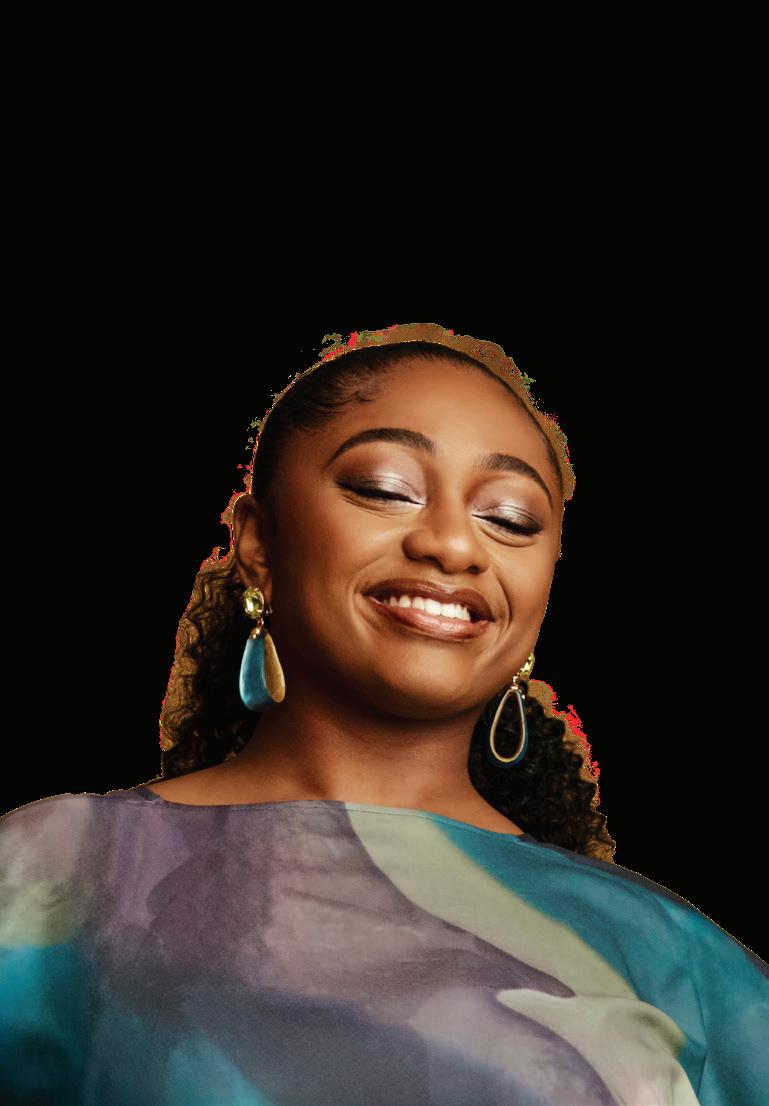
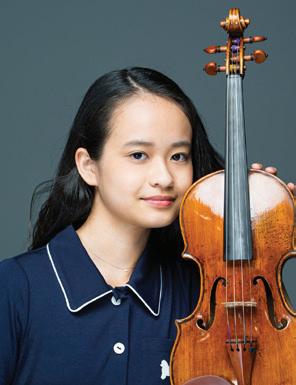
Himari Violin
FIRST CSO PERFORMANCE
July 20, 2025, Ravinia Festival. Waxman’s Carmen Fantasy, Marin Alsop conducting
These concerts mark Himari’s Chicago Symphony Orchestra subscription concert debut.
Born in 2011 in Japan, Himari has been described as a once-in-a-generation talent. She has captured the attention of the classical music world with her incredible technique, playful and imaginative interpretations, and her ability to convey emotional depth. Himari is among the youngest applicants ever admitted to the Curtis Institute of Music in Philadelphia, where she studies under renowned violinist Ida Kavafian.
This season, Himari makes several high-profile debuts, including performances of Bruch’s Violin Concerto no. 1 with the Pittsburgh Symphony Orchestra and Manfred Honeck, Sibelius’s Violin Concerto with the London Philharmonic Orchestra at Royal Festival Hall under Kahchun Wong and with the Orchestre de la Suisse Romande and Jonathan Nott in Geneva. An established and celebrated artist in Japan, Himari also appears with the New Japan Philharmonic in Prokofiev’s Violin Concerto no. 2 with the NHK Symphony Orchestra Tokyo and the Hiroshima Symphony Orchestra.
Last season, Himari received widespread acclaim for her European debut with the prestigious Berlin Philharmonic in Wieniawski’s Violin Concerto no. 1; the performance is available on the orchestra’s Digital Concert Hall. She appeared with the Philadelphia Orchestra and Marin Alsop for the New Year’s Eve concert at Verizon Hall in the Kimmel Center. Tickets for
her recital tour of Japan—featuring performances in Nagoya, Osaka, Fukuoka, and Tokyo—sold out in under five minutes.
In 2025 Himari was signed as an exclusive recording artist with Decca Classics—the youngest-ever female artist to join the British label. Her debut EP, with pianist Chelsea Wang, features Waxman’s Carmen Fantasy, Amy Beach’s Romance, op. 23, and Kreisler’s La Gitana and showcases Himari’s exceptional musicality and technical command. Himari’s performances have garnered millions of views online, where she has built a dedicated community of over 100,000 subscribers on YouTube. Also in 2025, the Japanese media company Asahi TV filmed a documentary about Himari, which has been viewed over 5 million times. Himari has been named a Classic FM Rising Star for 2025.
Himari has won top prizes at several international competitions, including the International Competition for Young Violinists in Honor of Karol Lipiński and Henryk Wieniawski, the Twelfth Arthur Grumiaux International Violin Competition and the Leonid Kogan International Competition for Young Violinists in Belgium, the Twenty-Sixth Andrea Postacchini International Violin Competition in Italy, and the Twentieth Shchedrin International Music Competition in Russia. In 2019 she participated in the International Summer Academy Mozarteum Salzburg and was the youngest participant in the academy’s concert at the 2019 Salzburg Festival, receiving an award for her performance. Himari won the audience prize at Mini Violini 2023, held as part of the Montreal International Violin Competition.
Himari began her violin studies at the age of three under the tutelage of Koichiro Harada and Machie Oguri.
Himari appears courtesy of Decca Classics. For more information, please visit himari.lnk.to/ Discover.
PHOTO BY NARUYASU NABESHIMA
The Chicago Symphony Orchestra thanks Megan and Steve Shebik for supporting the CSO at Wheaton series.
The Chicago Symphony Orchestra—consistently hailed as one of the world’s best—marks its 135th season in 2025–26. The ensemble’s history began in 1889, when Theodore Thomas, the leading conductor in America and a recognized music pioneer, was invited by Chicago businessman Charles Norman Fay to establish a symphony orchestra. Thomas’s aim to build a permanent orchestra of the highest quality was realized at the first concerts in October 1891 in the Auditorium Theatre. Thomas served as music director until his death in January 1905, just three weeks after the dedication of Orchestra Hall, the Orchestra’s permanent home designed by Daniel Burnham.
Frederick Stock, recruited by Thomas to the viola section in 1895, became assistant conductor in 1899 and succeeded the Orchestra’s founder. His tenure lasted thirty-seven years, from 1905 to 1942—the longest of the Orchestra’s music directors. Stock founded the Civic Orchestra of Chicago— the first training orchestra in the U.S. affiliated with a major orchestra—in 1919, established youth auditions, organized the first subscription concerts especially for children, and began a series of popular concerts.
Three conductors headed the Orchestra during the following decade: Désiré Defauw was music director from 1943 to 1947, Artur Rodzinski in 1947–48, and Rafael Kubelík from 1950 to 1953. The next ten years belonged to Fritz Reiner, whose recordings with the CSO are still considered hallmarks. Reiner invited Margaret Hillis to form the Chicago Symphony Chorus in 1957. For five seasons from 1963 to 1968, Jean Martinon held the position of music director.
Sir Georg Solti, the Orchestra’s eighth music director, served from 1969 until 1991. His arrival launched one of the most successful musical partnerships of our time. The CSO made its first overseas tour to Europe in 1971 under his direction and released numerous award-winning recordings. Beginning in 1991, Solti held the title of music director laureate and returned to conduct the Orchestra each season until his death in September 1997.
Daniel Barenboim became ninth music director in 1991, a position he held until 2006. His tenure was distinguished by the opening of Symphony Center in 1997, appearances with the Orchestra in the dual role of pianist and conductor, and twenty-one international tours. Appointed by Barenboim in 1994 as the Chorus’s second director, Duain Wolfe served until his retirement in 2022.
In 2010, Riccardo Muti became the Orchestra’s tenth music director. During his tenure, the Orchestra deepened its engagement with the Chicago community, nurtured its legacy while supporting a new generation of musicians and composers, and collaborated with visionary artists. In September 2023, Muti became music director emeritus for life.
In April 2024, Finnish conductor Klaus Mäkelä was announced as the Orchestra’s eleventh music director and will begin an initial five-year tenure as Zell Music Director in September 2027. In July 2025, Donald Palumbo became the third director of the Chicago Symphony Chorus.
Carlo Maria Giulini was named the Orchestra’s first principal guest conductor in 1969, serving until 1972; Claudio Abbado held the position from 1982 to 1985. Pierre Boulez was appointed as principal guest conductor in 1995 and was named Helen Regenstein Conductor Emeritus in 2006, a position he held until his death in January 2016. From 2006 to 2010, Bernard Haitink was the Orchestra’s first principal conductor.
Mezzo-soprano Joyce DiDonato is the CSO’s Artist-in-Residence for the 2025–26 season.
The Orchestra first performed at Ravinia Park in 1905 and appeared frequently through August 1931, after which the park was closed for most of the Great Depression. In August 1936, the Orchestra helped to inaugurate the first season of the Ravinia Festival, and it has been in residence nearly every summer since.
Since 1916, recording has been a significant part of the Orchestra’s activities. Recordings by the Chicago Symphony Orchestra and Chorus— including recent releases on CSO Resound, the Orchestra’s recording label launched in 2007— have earned sixty-five Grammy awards from the Recording Academy.
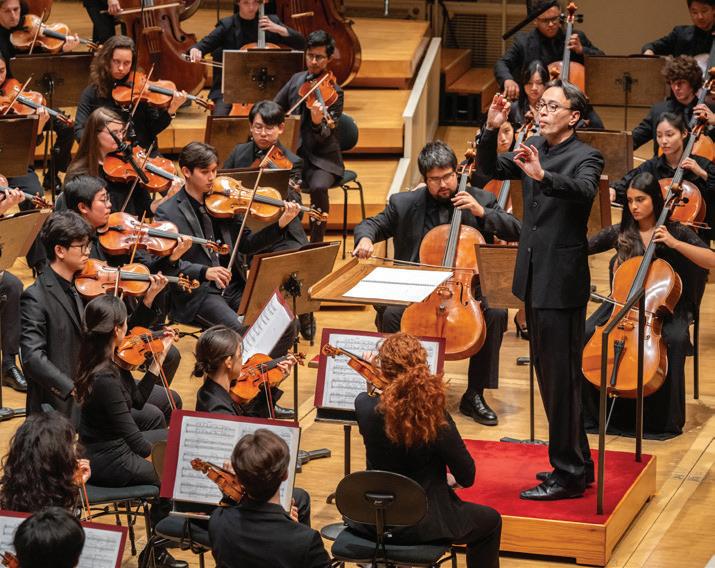
Civic Orchestra of Chicago
Ken-David Masur, Conductor
Musicians from the Chicago Symphony Orchestra
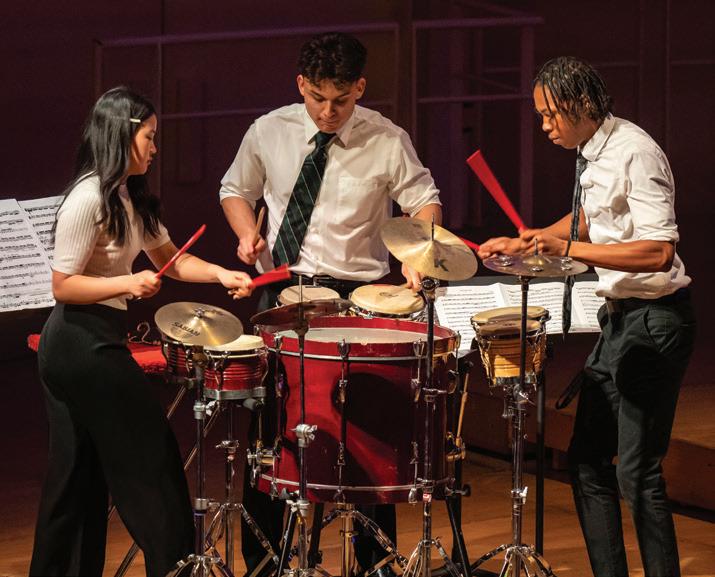
Students from the Percussion Scholarship Program
Jeremy Liu, piano
Ana Everling and Leah Dexter, vocals and more
Chicago Symphony Orchestra
Klaus Mäkelä Zell Music Director Designate
Joyce DiDonato Artist-in-Residence
VIOLINS
Robert Chen Concertmaster
The Louis C. Sudler
Chair, endowed by an
anonymous benefactor
Stephanie Jeong
Associate Concertmaster
The Cathy and Bill Osborn Chair
David Taylor*
Assistant Concertmaster
The Ling Z. and Michael C.
Markovitz Chair
Yuan-Qing Yu*
Assistant Concertmaster
So Young Bae
Cornelius Chiu
Gina DiBello
Kozue Funakoshi
Russell Hershow
Qing Hou
Gabriela Lara
Matous Michal
Simon Michal
Sando Shia
Susan Synnestvedt
Rong-Yan Tang
Baird Dodge Principal
Danny Yehun Jin
Assistant Principal
Lei Hou
Ni Mei
Hermine Gagné
Rachel Goldstein
Mihaela Ionescu
Melanie Kupchynsky §
Wendy Koons Meir
Ronald Satkiewicz ‡
Florence Schwartz
VIOLAS
Teng Li Principal
The Paul Hindemith
Principal Viola Chair
Catherine Brubaker
Youming Chen
Sunghee Choi
Paolo Dara
Wei-Ting Kuo
Danny Lai
Weijing Michal
Diane Mues
Lawrence Neuman
Max Raimi
CELLOS
John Sharp Principal
The Eloise W. Martin Chair
Kenneth Olsen
Assistant Principal
The Adele Gidwitz Chair
Karen Basrak
The Joseph A. and Cecile
Renaud Gorno Chair
Richard Hirschl
Olivia Jakyoung Huh
Daniel Katz
Katinka Kleijn
Brant Taylor
The Ann Blickensderfer and Roger Blickensderfer Chair
BASSES
Alexander Hanna Principal
The David and Mary Winton
Green Principal Bass Chair
Alexander Horton
Assistant Principal
Daniel Carson
Ian Hallas
Robert Kassinger
Mark Kraemer
Stephen Lester
Bradley Opland
Andrew Sommer
FLUTES
Stefán Ragnar Höskuldsson § Principal
The Erika and Dietrich M.
Gross Principal Flute Chair
Emma Gerstein
Jennifer Gunn
PICCOLO
Jennifer Gunn
The Dora and John Aalbregtse Piccolo Chair
OBOES
William Welter Principal
Lora Schaefer
Assistant Principal
The Gilchrist Foundation, Jocelyn Gilchrist Chair
Scott Hostetler
ENGLISH HORN
Scott Hostetler
Riccardo Muti Music Director Emeritus for
CLARINETS
Stephen Williamson Principal
John Bruce Yeh
Assistant Principal
The Governing
Members Chair
Gregory Smith
E-FLAT CLARINET
John Bruce Yeh
BASSOONS
Keith Buncke Principal
William Buchman
Assistant Principal
Miles Maner
HORNS
Mark Almond Principal
James Smelser
David Griffin
Oto Carrillo
Susanna Gaunt
Daniel Gingrich ‡
TRUMPETS
Esteban Batallán Principal
The Adolph Herseth Principal Trumpet Chair, endowed by an anonymous benefactor
John Hagstrom
The Bleck Family Chair
Tage Larsen
TROMBONES
Timothy Higgins Principal
The Lisa and Paul Wiggin
Principal Trombone Chair
Michael Mulcahy
Charles Vernon
BASS TROMBONE
Charles Vernon
TUBA
Gene Pokorny Principal
The Arnold Jacobs Principal Tuba Chair, endowed by Christine Querfeld
* Assistant concertmasters are listed by seniority. ‡ On sabbatical § On leave
The CSO’s music director position is endowed in perpetuity by a generous gift from the Zell Family Foundation. The Louise H. Benton Wagner chair is currently unoccupied.
TIMPANI
David Herbert Principal
The Clinton Family Fund Chair
Vadim Karpinos
Assistant Principal
PERCUSSION
Cynthia Yeh Principal
Patricia Dash §
Vadim Karpinos
LIBRARIANS
Justin Vibbard Principal
Carole Keller
Mark Swanson
CSO FELLOWS
Ariel Seunghyun Lee Violin
Jesús Linárez Violin
The Michael and Kathleen Elliott Fellow
ORCHESTRA PERSONNEL
John Deverman Director
Anne MacQuarrie Manager, CSO Auditions and Orchestra Personnel
STAGE TECHNICIANS
Christopher Lewis Stage Manager
Blair Carlson
Paul Christopher
Chris Grannen
Ryan Hartge
Peter Landry
Joshua Mondie
The Chicago Symphony Orchestra string sections utilize revolving seating. Players behind the first desk (first two desks in the violins) change seats systematically every two weeks and are listed alphabetically. Section percussionists also are listed alphabetically.
Discover more about the musicians, concerts, and generous supporters of the Chicago Symphony Orchestra Association online, at cso.org.
Find articles and program notes, listen to CSOradio, and watch CSOtv at Experience CSO.
cso.org/experience
Get involved with our many volunteer and affiliate groups.
cso.org/getinvolved
Connect with us on social @chicagosymphony
Chicago Symphony Orchestra Association Board of Trustees
OFFICERS
Mary Louise Gorno Chair
Chester A. Gougis Vice Chair
Steven Shebik Vice Chair
Helen Zell Vice Chair
Renée Metcalf Treasurer
Jeff Alexander President
Kristine Stassen Secretary of the Board
Stacie M. Frank Assistant Treasurer
Dale Hedding Vice President for Development
Chicago Symphony Orchestra Association Administration
SENIOR LEADERSHIP
Jeff Alexander President
Stacie M. Frank Vice President & Chief Financial Officer, Finance and Administration
Dale Hedding Vice President, Development
Ryan Lewis Vice President, Sales and Marketing
Vanessa Moss Vice President, Orchestra and Building Operations