2025 ANNUAL REPORT
A Message from the Chair of the Board and the President and CEO
The heart of the Garden is, of course, our plants—2.7 million of them. But it’s also our staff, whose dedication and expertise make the Chicago Botanic Garden one of the most visited museums in the Chicago area, as well as a global leader in plant conservation science, a role model in urban agriculture, and a source of lifelong learning opportunities.
That work unfolded during a challenging year for cultural institutions nationwide, including the Garden. Federal funding was uncertain for us, and visitors were cost-conscious, leading to lower attendance and revenue. But we did what plants do: find new ways to thrive in changing conditions.
Amid this period of change, we marked the last year of Jean M. Franczyk’s decade-long tenure as President and CEO as she announced her March 2026 retirement. We’re thankful for everything Jean contributed to the Garden’s impact, and look forward to continuing that legacy.
So much grows here, and this report is only a snapshot of the inspiring work that makes it all bloom. Thank you for supporting us in 2025 and in years to come.
In 2025 we strengthened our commitment to our mission across all of our programs. We created a new Living Collections Plan that sets the tone for what we grow, and why. We distributed more fresh produce boxes than ever before through VeggieRx, our prescription produce program, and created a new model for participation. We coalesced partners from across the Midwest to collaborate on meeting the growing need for native seeds to restore regional landscapes. We developed new classes that align with our students and their interests. Innovations like these require creativity and hard work.
Michael R. Zimmerman Chair of the Board
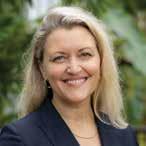
Gretchen E. Baker President and CEO
We cultivate the power of plants to sustain and enrich life.
2025 OFFICERS
Michael R. Zimmerman
Chair
Lois L. Morrison
Vice Chair
Jean M. Franczyk
President and Chief Executive Officer
Fred Spicer
Executive Vice President and Director
Paul Rafac
Executive Vice President and Chief Financial Officer
Ivan A. Adames
Chief Development Officer
Aida Z. Giglio
Vice President, Human Resources
Kayri Havens, Ph.D.
Chief Scientist & Negaunee Vice President of Science
Jennifer Schwarz, Ph.D. Vice President, Learning & Engagement
Gwen VanderBurg
Vice President, Marketing & Communications
Carmen Vergara
Vice President, Community Partnerships
2025 BOARD OF DIRECTORS
Dora Aalbregtse •
Jake Amsbary
Dana Anderson
Ann Balusek
Matt Banholzer
Carol A. Barnett
Russell F. Bartmes
Heather Lowe Becker
Adam Bianchi •
Terrance R. Brady
Martha D. Boudos
James Brooks
John H. Buehler
Suzanne M. Burns
Robin Colburn
Jill M. Delaney
Michael S. Drory
Timothy A. Dugan
Diana S. Ferguson
Eileen Figel •
Robert F. Finke *
Jean M. Franczyk •
Steven J. Gavin
Nancy Gidwitz
Christopher E. Girgenti
Joseph P. Gromacki
Meg Hagenah
Kathleen Hagerty
Julie Hayes
Joanne Chun Hughes
Barbara J. Irwin
Samuel S. Jacobs
Gregory K. Jones
Peter Keehn
Lydia R. B. Kelley
Ryan Kelley
Elizabeth M. Kendall •
Barbara Malott Kizziah
R. Henry Kleeman
Anne Leventry
Diane vS. Levy
Laura M. Linger
Anne S. Loucks
Michael J. McMurray
Christopher Merrill
Britt M. Miller
Gregory A. Moerschel
Henry Munez
Craig Niemann
Lauren M. Oakes
Jane S. Park
Toni Preckwinkle •
Bob Probst
Arnold Randall
Mary B. Richardson-Lowry
Shawnelle Richie
Alan J. Rouse
Ryan S. Ruskin
Anita M. Sarafa
Richard Sciortino
Robert E. Shaw
Andrew Sinclair
Maria Smithburg
Pam F. Szokol
Glena Temple
Nasrin Thierer
Ernest W. Torain, Jr.
Jean Z. Tsai
Anita M. Tyson
Catherine M. Waddell
Wanjiku J. Walcott
Melvin F. Williams, Jr.
Ernest C. Wong
LIFE DIRECTORS
Neville F. Bryan
Barbara Whitney Carr
David R. Casper
Gary P. Coughlan
Peter B. Foreman
William J. Hagenah
Since 2025 year-end, the Garden has welcomed new leadership, including Gretchen E. Baker, President and CEO, and Kathleen Spiess, Executive Vice President and Chief Development Officer.
Caryn L. Harris
John L. Howard
William H. Kurtis
Thomas E. Lanctot
Donna La Pietra
Benjamin F. Lenhardt, Jr.
Daniel I. H. Linzer
Mary L. McCormack
Jeanine McNally
William E. Moeller
William A. Osborn
Homi B. Patel
Susan L. Regenstein
Anne O. Scott
David Byron Smith
Susan K. Stone
Richard L. Thomas
Ernest P. Waud III
Susan A. Willetts
Nicole S. Williams
Arthur M. Wood, Jr. • ex officio * deceased
W E WOW ED VISITORS and championed plants.
The Garden welcomed more than 1 million visitors in 2025, and our staff found new ways to elevate our gardens as spaces for rejuvenation and joy.
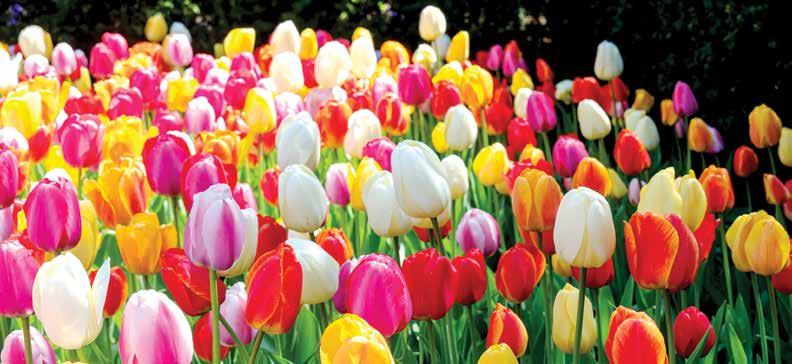
Patterned by Nature: In summer 2025 our horticulturists celebrated nature’s penchant for patterns with creative garden designs. From a paisley pattern of succulents to daisies configured in a tartan display, their whimsy charmed us and our visitors.
A new Living Collections Plan: This comprehensive framework guides which plants we grow and why, ensuring every plant serves a purpose in conservation, research, education, or display. The plan prioritizes resilience and genetic diversity, preparing the Garden to respond to environmental challenges.
The bloom of a century: Our Arid Greenhouse ended 2025 with a zealous Agave, or century plant, growing literally through the roof as it prepared for a bloom three decades in the making. To accommodate its climb our horticulturists removed a pane of greenhouse glass and insulated the stalk to protect it from Chicago winter. It’s one example of how our horticultural expertise allows a diversity of plants to thrive here.
2.7 million plants in our permanent collection
“The
plants in our collection are the catalyst for everything we do, and doing our best by them is our way of giving back a little of what they give to us.”
– Adam Dooling, director of
plant collections
WE GREW FOOD to empower communities.
The Garden’s urban agriculture program, Windy City Harvest, grew nourishing local food—as well as healthier communities and a strong workforce.
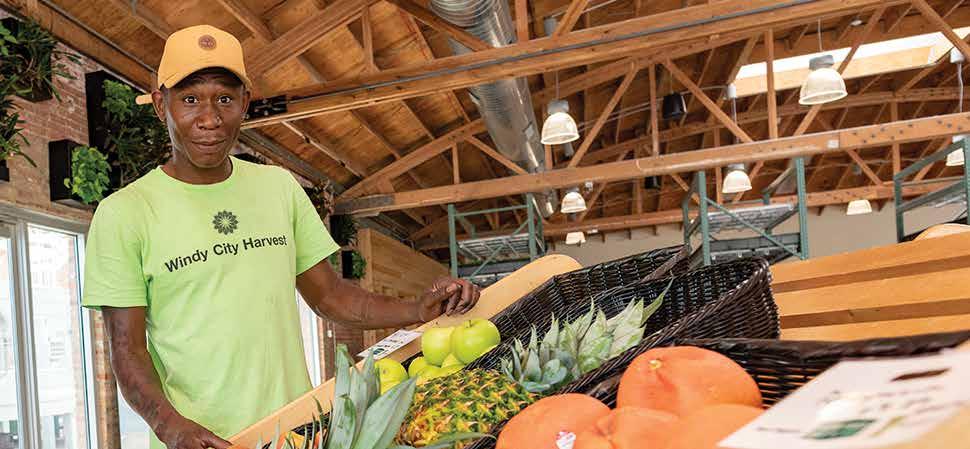
Jobs training: In 2025, Windy City Harvest trained 94 people in sustainable urban agriculture across multiple workforce development programs and youth farm programming, supporting Chicago’s next generation of urban agriculture and food systems leaders.
VeggieRx: Our prescription produce program had another record year, distributing 29 percent more boxes of fresh fruits and veggies compared to 2024. We also piloted a new program model called My Choice; instead of getting a pre-packed box, My Choice participants shopped at the Farm on Ogden Market and selected their own produce— a popular option we’ll continue and expand.
Farm on Ogden: Our Windy City Harvest headquarters location in Chicago’s North Lawndale neighborhood positioned itself as a community hub with new free events, including a plant sale, Farmer’s Market Fridays, Fall Fest, and Open House Chicago. Its Market also saw its most successful year, with 36 percent more transactions than in 2024.
33,074
VeggieRx boxes distributed
“I feel better—more cheerful, more energetic, more motivation and desire to live my life.”
– Eva Villagomez, VeggieRx participant
WE SHARED THE POWER OF PLANTS with lifelong learners.
The Regenstein School continued to enhance its programming for students of all ages, from preschool to adult education.
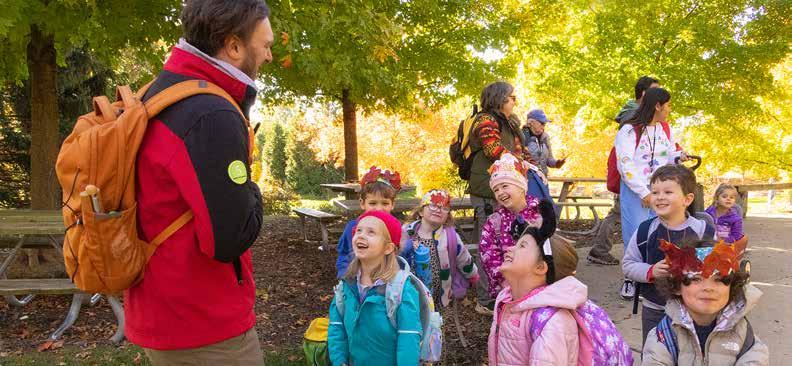
Young learners: In 2025 Camp CBG saw record revenue with camp options spanning science, nature, art, ecology, and cooking. Nature Preschool created new tools for students and their families to learn about plants together, and marked the first full calendar year of partnership with TrueNorth, a cooperative for students with disabilities.
Field trips: 1,100 field trip groups experienced the Garden and participated in workshops like Flower Lab and Science with Your Senses. In fall 2025, thanks to generous donor support, 65 percent of field trips were offered at no cost to schools, expanding access for students to visit and explore.
Adult education: Our 700 classes from garden design to botanical arts welcomed 6,175 adult class-takers. We added 187 new classes, like outdoor sunset yoga by candlelight, and new class times, like Saturday night cooking classes—welcoming a fresh cohort of students and increasing Q4 revenue by 15 percent over the same quarter in 2024, a trend that continued into 2026.
36,231
field trip participants
“As a science teacher, it means so much to see students engaged and excited about nature.” – 8th grade teacher, Miguel Juarez Middle School
WE TOOK ACTION to protect our planet .
The scientists and plant science students at our Negaunee Institute played an instrumental role in local, regional, and global efforts to conserve and restore plants and habitats.
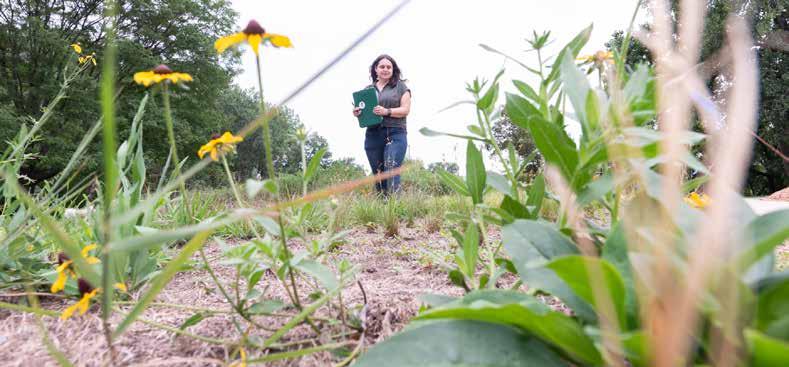
The Seed Amplification Program: Our staff teamed up with the Forest Preserves of Cook County to produce 330 pounds of native seed in the program’s second year, supporting the Forest Preserves’ goal to restore 30,000 acres of prairies, woodlands, and wetlands by 2040.
The Midwest Native Seed Network: We worked with the U.S. Fish and Wildlife Service to create a new group that aims to increase the supply of native seeds for restoration all over the Upper Midwest, developing a list of species the network can help make available and hosting a panel at the National Native Seed Conference.
The plant studbook: We advanced the plant studbook approach, which collects information about rare plants so that institutions can breed between their collections, maintaining species diversity and preventing extinctions. Partners in Hawaii, Ecuador, and Indonesia collaborated with our scientists, and we signed a contract with Oxford University Press for a book about ex situ conservation that includes the plant studbook approach.
330 pounds of native seed for land restoration in Cook County
“I just think about each seed going on and living a healthy life as a new plant.”
– Noah Hornak, assistant manager, Seed Amplification Program