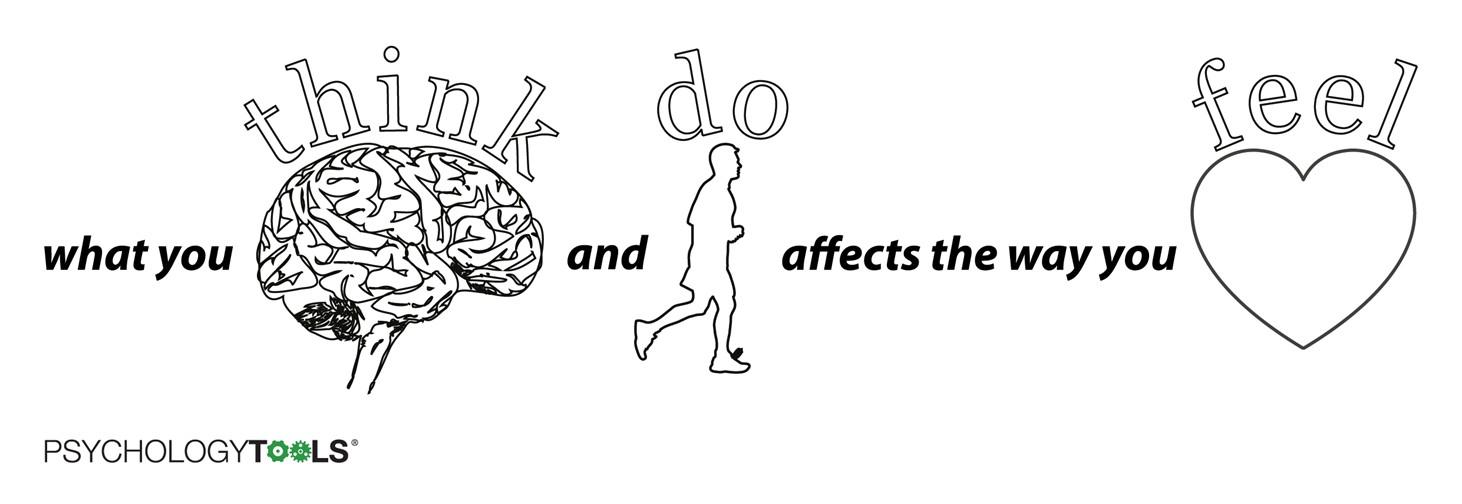

COGNITIVE BEHAVIORAL THERAPY

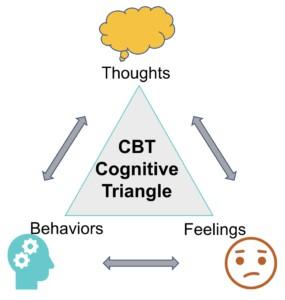
DEFINITION
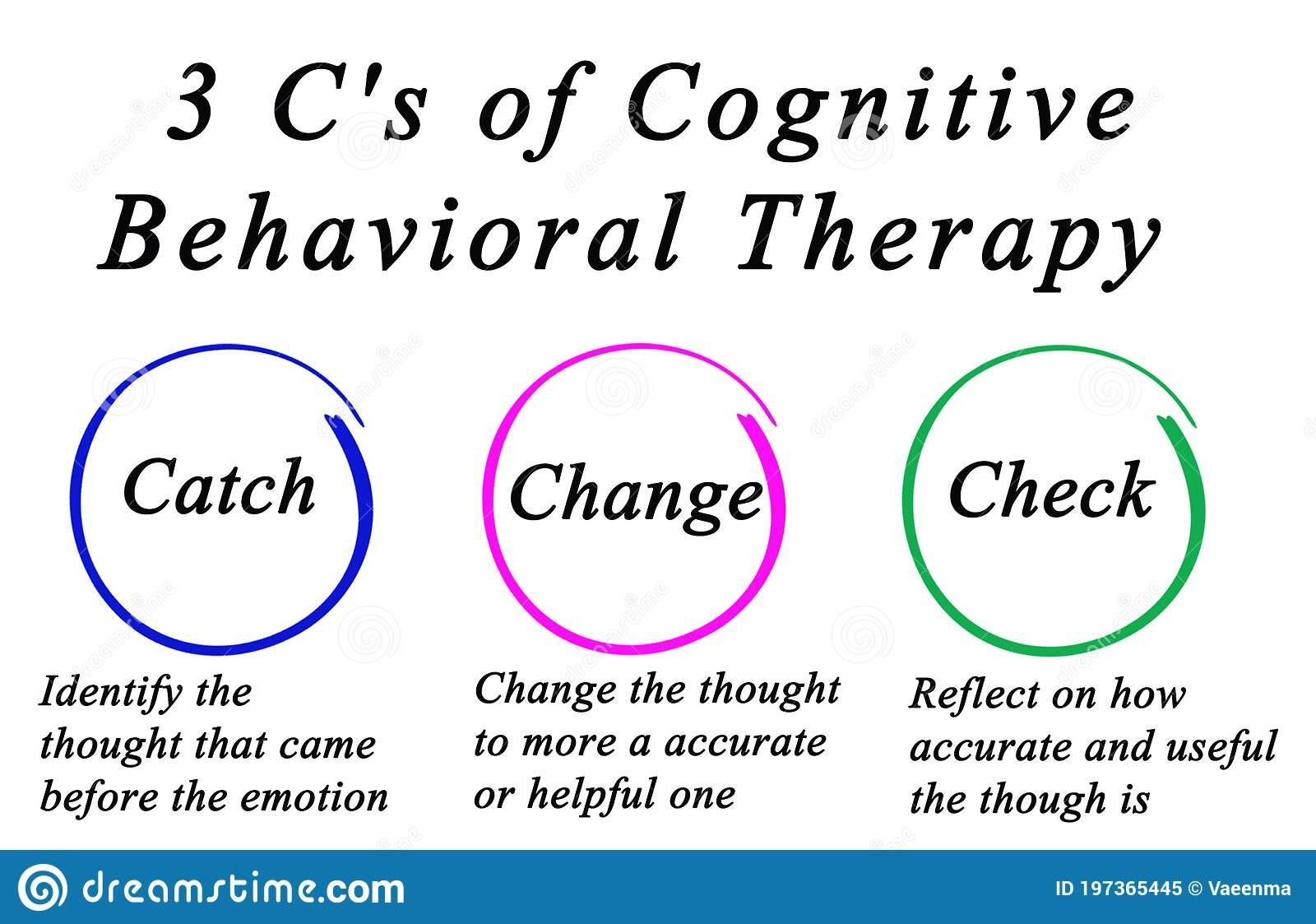
HISTORY
INDICATIONS
PROCESS OF CBT
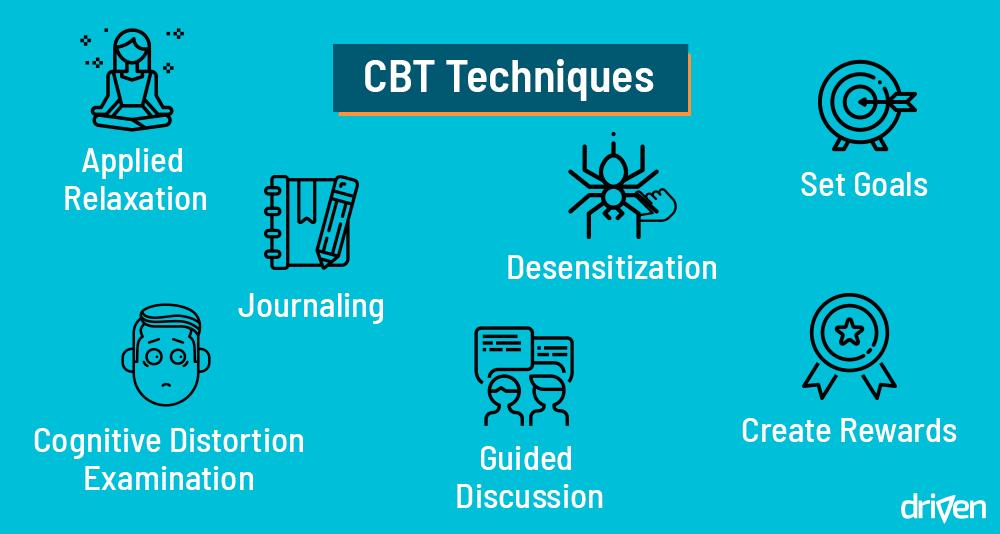
TECHNIQUES OF COGNITIVE BEHAVIORAL THERAPY
1. COGNITIVE RESTRUCTURING
OR REFRAMING
Developed in the 1950s by a renowned psychologist called Albert Ellis
The main objective is to replace negative thought or habits with more positive (and therefore less stressinducing) ones.
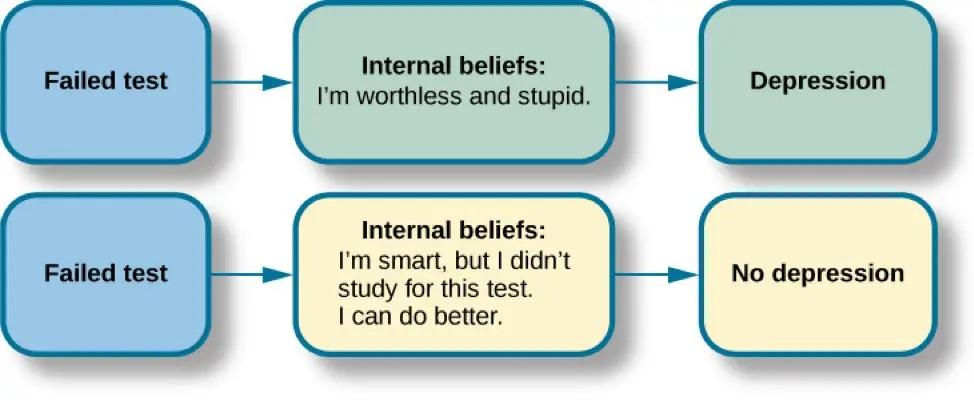
Instead of thinking about the one time they failed, cognitive restructuring urges them to think about the other times they did well in tests
COGNITIVE RESTRUCTURING EXERCISES
Mindful meditations - focusing on a particular thing, say breathing for a set number of minutes helps to clear the negative thoughts from your mind.
Increased awareness of thoughts - taking notes of the negative emotions in your brain improve your awareness of your own mind.
Self – compassion - Be kind to yourself
De – catastrophizing - asking yourself “what if?”
Thought recording - identify any cognitive distortions that may have gone unquestioned or unnoticed
2. GUIDED DISCOVERY
Guided discovery is based on asking a series of questions that allows information to be brought into client’s awareness rather than requiring a correct answer”.
Padesky (1993) suggests that Socratic questioning consists of 4 stages
Socratic questioning - Is this thought realistic?
Am I basing my thoughts on facts or feelings? Is the thought correct?
Am I viewing the situation as black and white, when it’s really more complicated? Could I be misinterpreting the evidence?
Am I having this thought out of habit, or do facts support it?
1) asking informational questions 2) listening attentively and reflecting back 3) summarizing newly acquired information 4) asking analytic or synthesizing questions to apply the new information to the client’s original problem or thought
3. EXPOSURE THERAPY
Developed to help confront fears
TYPES
In vivo exposure – directly facing a feared object
Imaginal exposure – imagining the feared object
Virtual reality exposure – virtual reality technology
Interoceptive exposure - deliberately bringing on physical sensations that are harmless, yet feared.

GRADED EXPOSURE
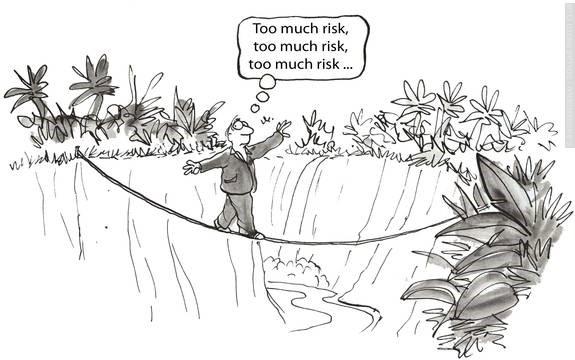
TECHNIQUES
SYSTEMATIC DESENSITIZATION
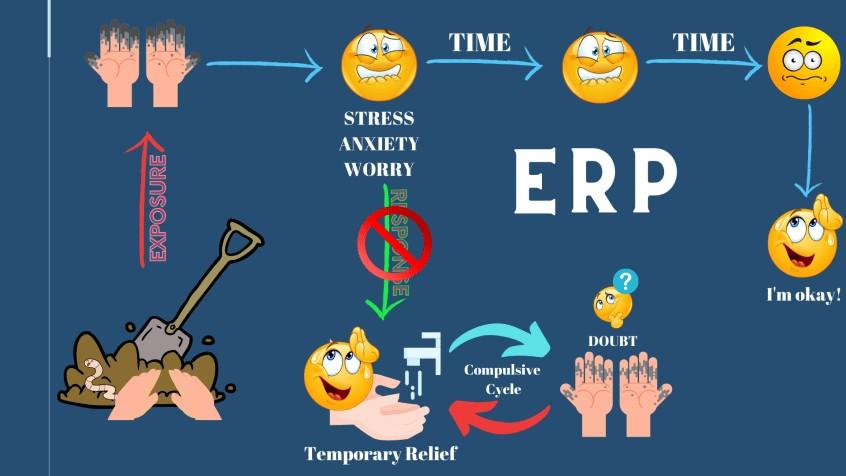
EXPOSURE RESPONSE PREVENTION
4. JOUNRALING AND THOUGHT RECORDS
Thought records are an important part of cognitive behavioral treatment for many problems.
They make our negative automatic thoughts visible to us
They help us to identify any problems with our thinking
They can help us to make changes to our thinking

• Make a note of the date & time
• Record where you were
• Note who you were with
• Summarize what was happening just before you noticed a change in how you were feeling
• Emotion
What was going through my mind in that moment?
What was I saying to myself?
Did I have an image/picture/memory in my mind? (If you did: what did it mean? What does it say about you?) What implications did that situation have for me or my future?
5. ACTIVITY SCHEDULING AND BEHAVIOR
ACTIVATION
mean every behavior you find yourself doing, from eating, walking and watching T.V. to staring out of the window and playing squash.
After a week of completing the diary, take a look at it.
What do you notice? Are there any patterns of inactivity which emerge. Are there any situations or people which you avoid more than you realized. Did you do anything that you enjoyed?
Check the schedule in the weekend for patterns of inactivity, avoidance or lack of routine
Schedule:
• Health related activities
• Fun
• Rest and relaxation
• socialization
6. BEHAVIORAL EXPERIMENTS
Behavioral experiments are planned experiential and information gathering exercise, the purpose of which is to test the accuracy of an individual’s beliefs (about themselves, others, and the world) or to test new, more adaptive beliefs.
Step 1: Identify the target cognition
Step 2: Design an experiment
Step 3: Outcome & learning
Step 4: What next?
Testing hypothesis B: testing a new belief.
Discovery experiments: where the individual does not have a clear hypothesis about what might happen.
Surveys: used where an individual has a belief about what other people think.
Testing hypothesis A: testing an existing (unhelpful) belief.
Direct observation: where an individual has a hypothesis about what might happen, but does not feel capable of testing it directly for themselves..
Testing hypothesis A vs. hypothesis B: testing whether the original (threatening) belief or a newly constructed (less threatening) belief better accounts for the evidence
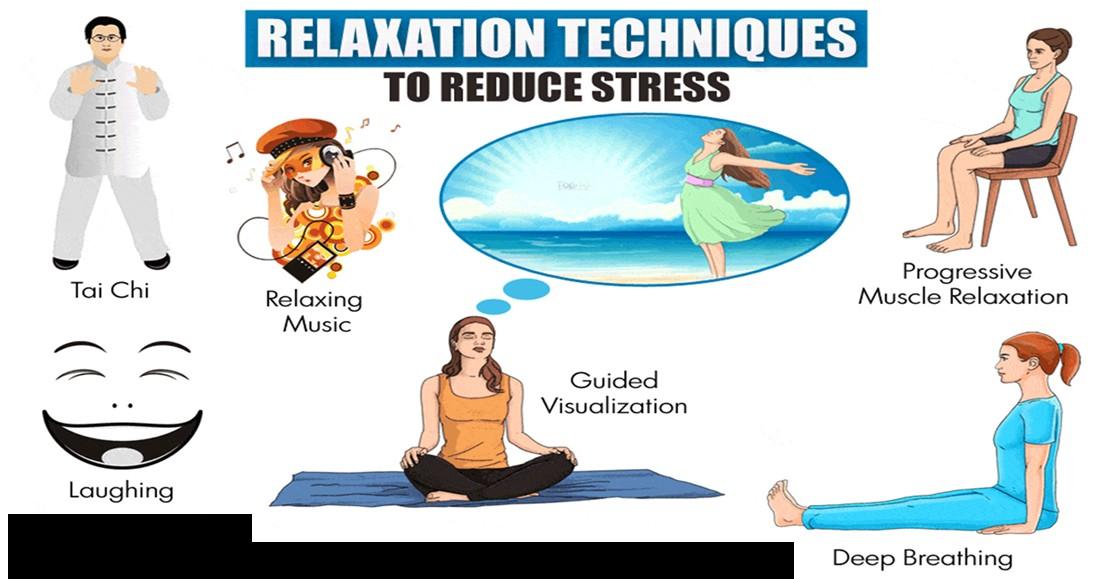
7. RELAXATION AND STRESS REDUCTION TECHNIQUES
Role play improves problem solving skills
Gaining familiarity and confidence in certain situations
Practicing social skills
Assertiveness training
Improving communication skills
8. ROLE PLAYING

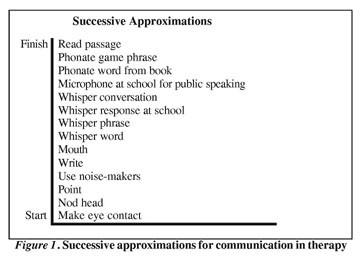
9. SUCCESSIVE APPROXIMATION
Breaking up large tasks into a smaller chucks to make it easier to complete.
Smoking cessation
Fears/phobias
ADVANTAGES
Can be as effective as medication in treating some mental health disorders and may be helpful in cases where medication alone has not worked.
Can be completed in a relatively short period of time compared to other talking therapies.
Focuses on re-training your thoughts and altering your behaviours, in order to make changes to how you feel.
The highly structured nature of CBT means it can be provided in different formats, including in groups, self-help books and computer programmes.
Skills you learn in CBT are useful, practical and helpful strategies that can be incorporated into everyday life to help you cope better with future stresses and difficulties, even after the treatment has finished.
DISADVANTAGES
To benefit from CBT, you need to commit yourself to the process. A therapist can help and advise you, but cannot make your problems go away without your co-operation.
Attending regular CBT sessions and carrying out any extra work between sessions can take up a lot of your time.
Due to the structured nature of CBT, it may not be suitable for people with more complex mental health needs or learning difficulties.
Some critics argue that because CBT only addresses current problems and focuses on specific issues, it does not address the possible underlying causes of mental health conditions, such as an unhappy childhood.
CBT focuses on the individual’s capacity to change themselves (their thoughts, feelings and behaviours), and does not address wider problems in systems or families that often have a significant impact on an individual’s health and wellbeing.
CONCLUSION
Cognitive behavioral therapy is a clinically significant effective for anxiety and depression. And underline the need for integrating mental health care. CBT helps people to identify cognitive patterns or thoughts and emotions that are linked with behaviors. There are many techniques such as modelling, homework and computer assisted therapy etc.