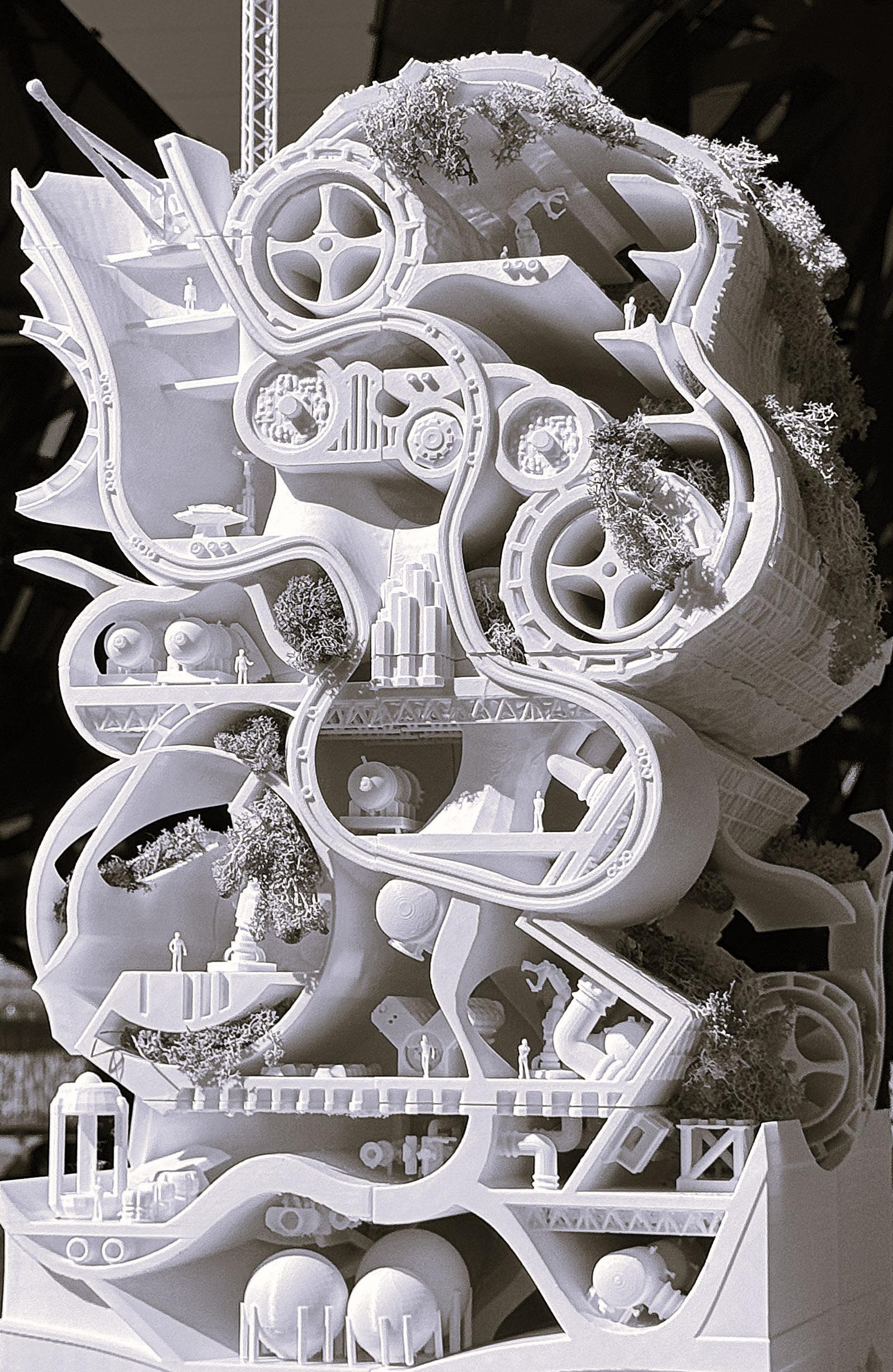
C HIA P EI C HOU
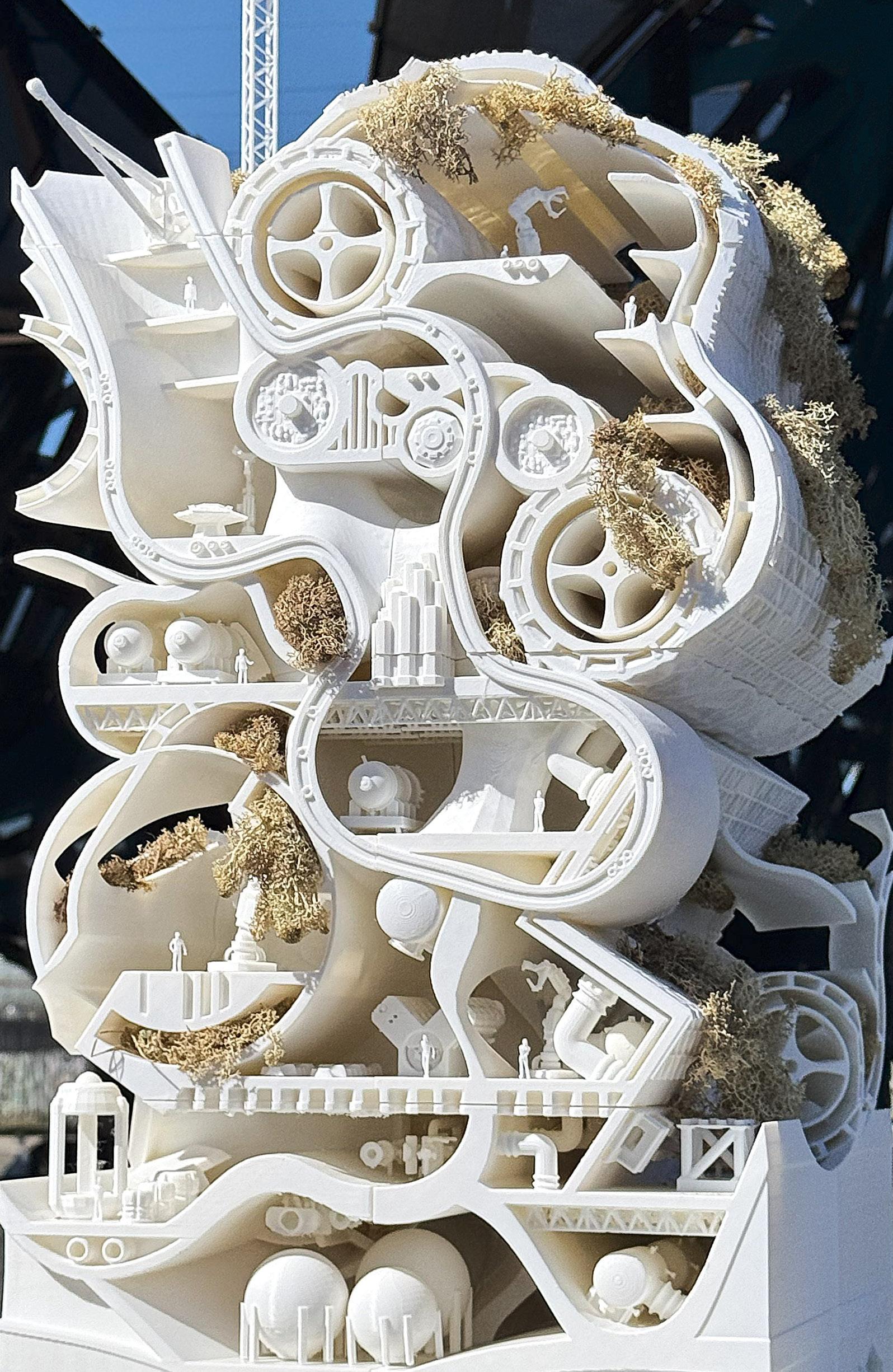
SOUTHERN CALIFORNIA
INSTITUTE OF ARCHITECTURE
2024 - 2026
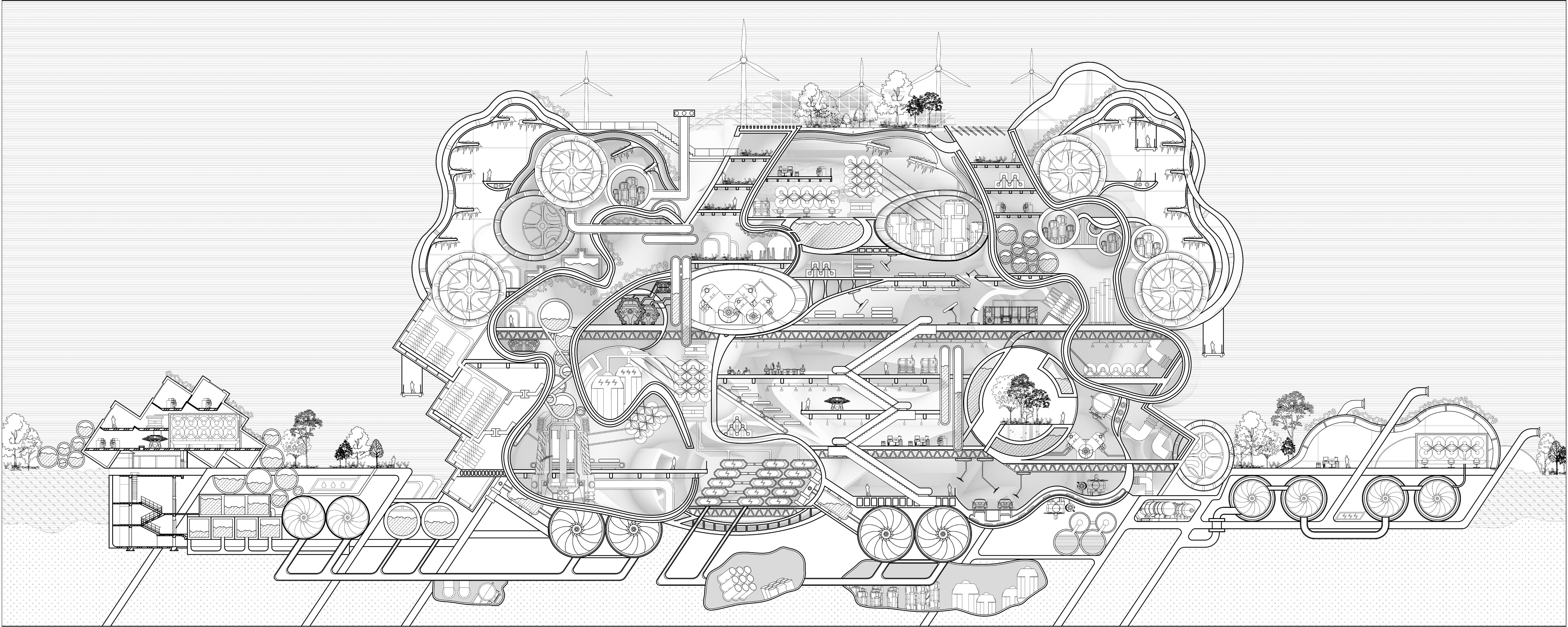
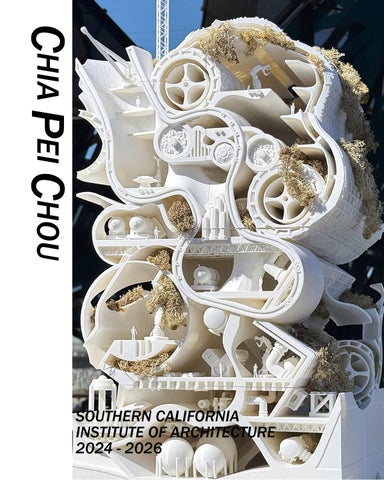
INSTITUTE OF ARCHITECTURE
2024 - 2026
Architectural design is an ongoing journey that evolves with advancements in technology and changes in society. As an architect, I am driven to push the boundaries of design and innovation, creating solutions that resonate with the needs of each era. My experiences in exploring the intersection of design and technology have shaped my approach, particularly in developing strategies that integrate sustainability and functionality into creative solutions. SCI-Arc stands out as a dynamic space for architectural and artistic exploration, offering cuttingedge teaching methods and advanced facilities that align perfectly with my goals to refine these skills further and expand my impact.
What I value most about SCI-Arc is its diverse and collaborative environment. Professors, architects, and students from different fields, countries, and cultures come together here, offering fresh perspectives and challenging conventional thinking. This creates an inspiring space where ideas flow freely and new approaches emerge through shared insights. I see SCI-Arc not just as an educational institution but as a creative laboratory where dialogue, experimentation, and collaboration thrive. The combination of expert mentorship, hands-on practice, and peer exchange will empower me to explore bold ideas and refine my vision of architecture as a discipline that bridges art, technology, and social connection.
In this innovative and supportive environment, I am eager to deepen my technical expertise, expand my creative horizons, and explore new approaches to design. I aim to develop architecture that not only meets functional needs but also inspires and connects people. With SCIArc’s emphasis on pushing boundaries and embracing diversity, I am confident this is the perfect place for me to grow as a designer and make meaningful contributions to the future of architecture.

YEAR: 2024 FALL
CLASS: 2GAX : Complex Morphologies
TEAMMATE: Mohammad Reza Khanpour Ardestani
INSTRUCTORS: Florencia Pita
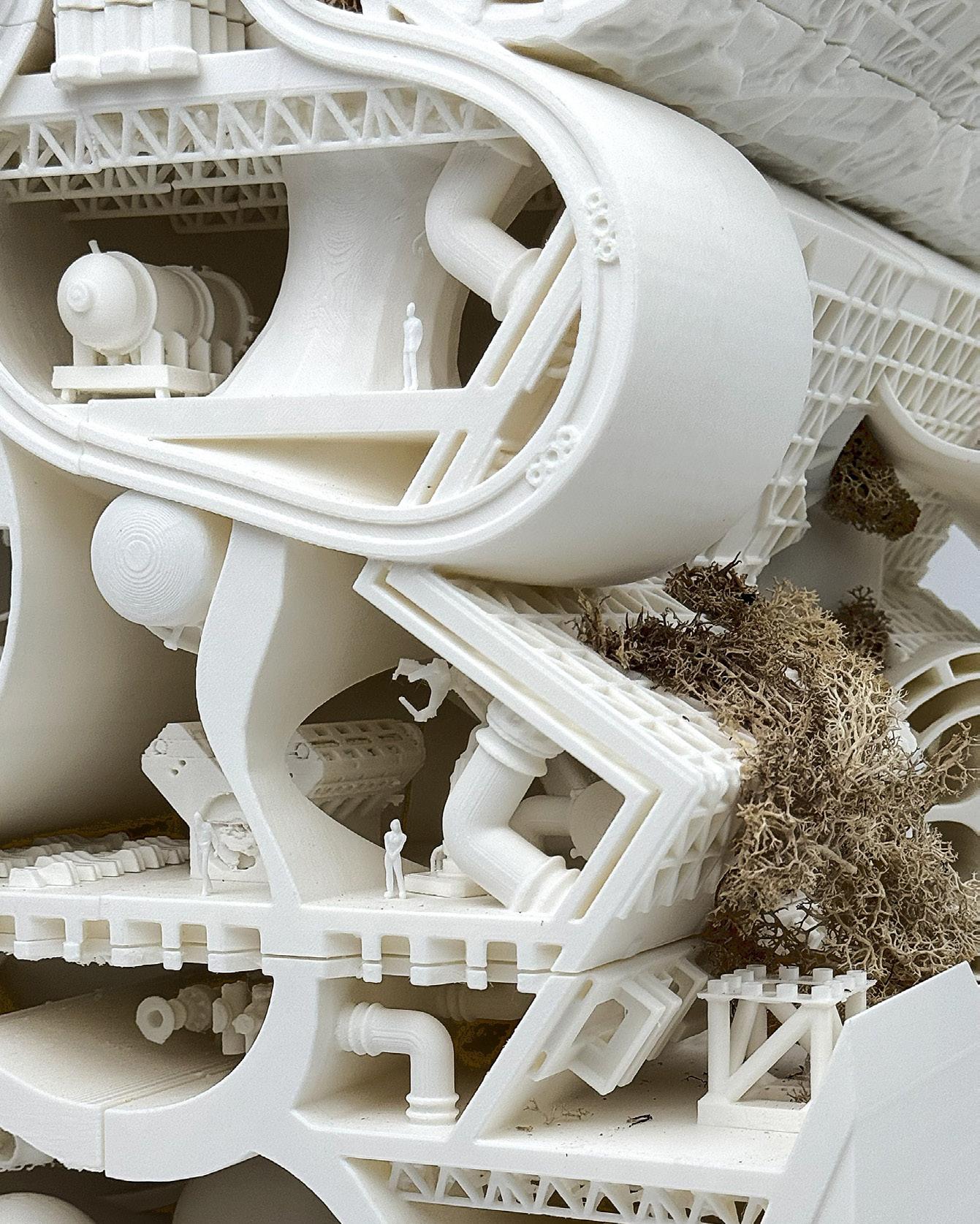
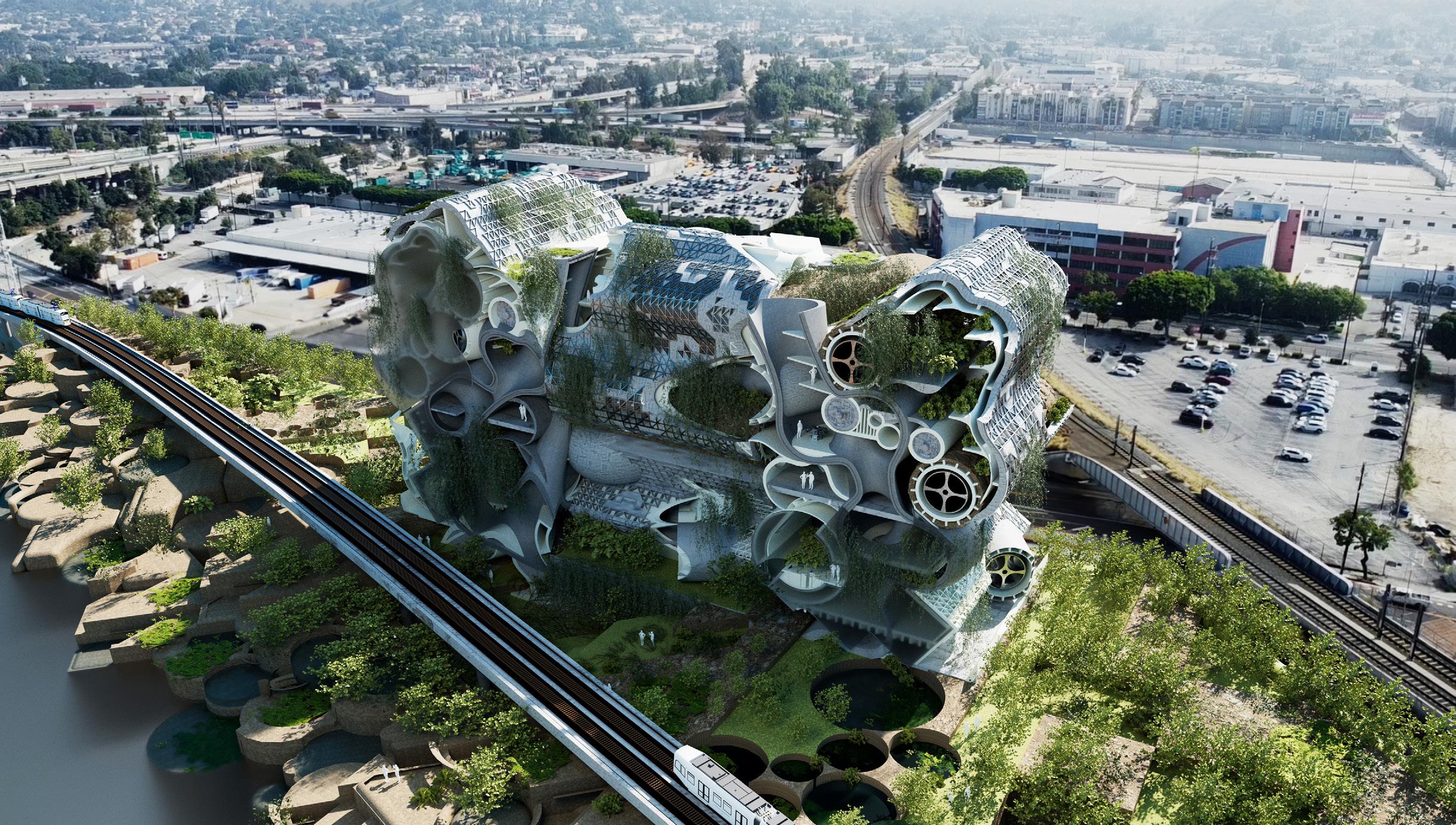
This research envisions a future where nature reclaims the built environment, transforming cities into selfsustaining ecosystems. Focusing on Los Angeles—a metropolis known for its urban sprawl and environmental challenges—this study examines how the strategic implementation of green energy technologies and urban vegetation can mitigate climate anomalies, reduce urban heat islands, and combat the greenhouse effect.
By weaving sustainability into the city's infrastructure, the research proposes an integrated model where renewable energy sources, green roofs, vertical gardens, and reforestation efforts work in tandem to restore ecological balance. Ultimately, the project aims to illustrate how the synergy between technological innovation and natural systems can reshape urban living, fostering resilience against climate crises while enhancing the quality of life for city dwellers.
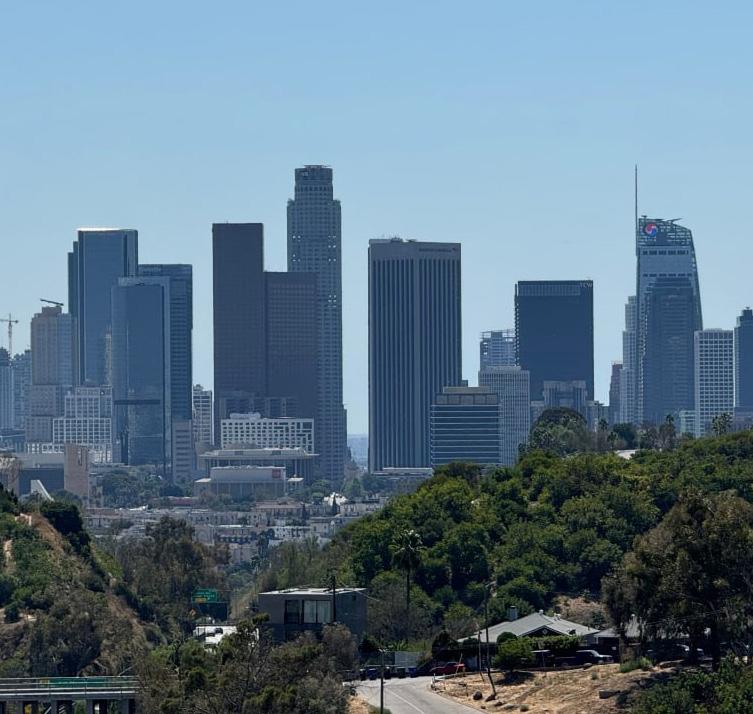
Towering buildings define Downtown LA’s bold skyline, a place fueled by fastpaced development and unstoppable energy.
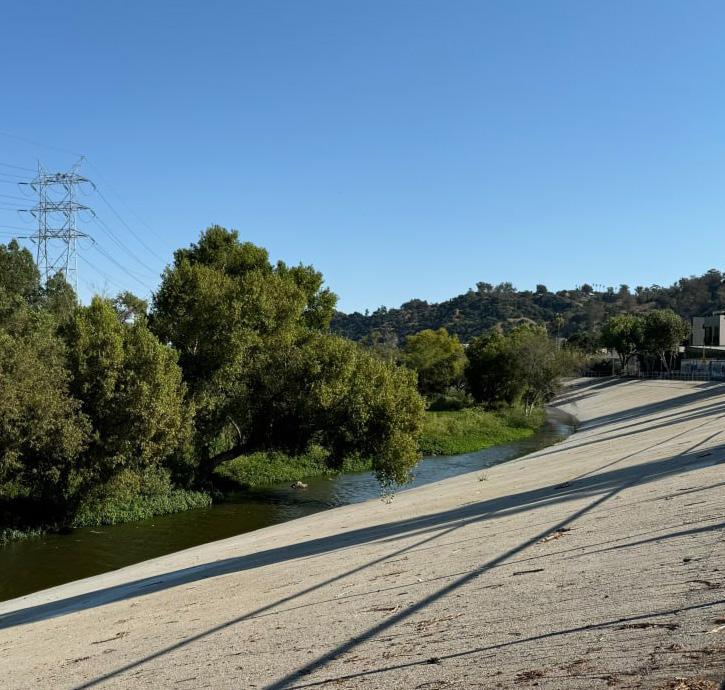
Once wild, now encased in concrete, the Los Angeles River reflects LA’s urban growth—though new green spaces and bike paths signal a slow return to life.
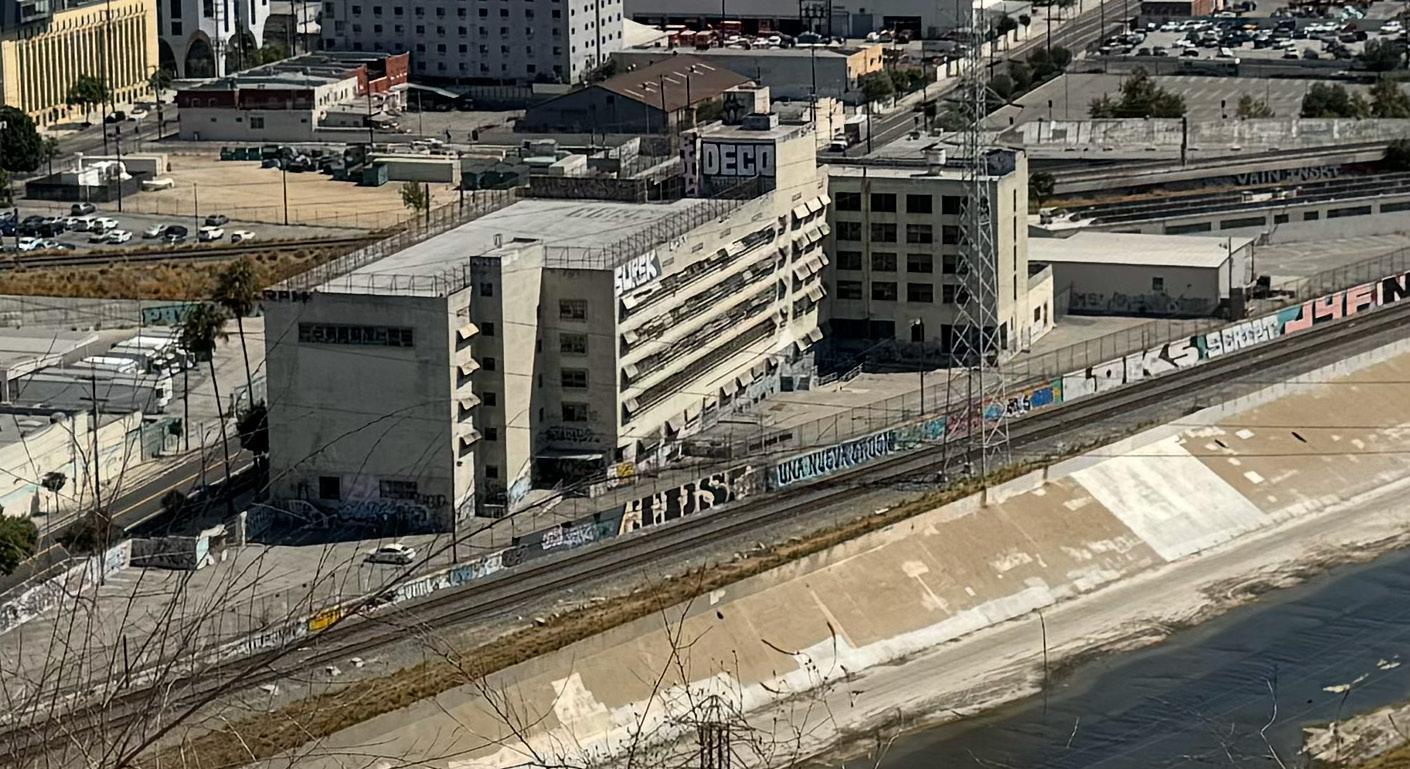
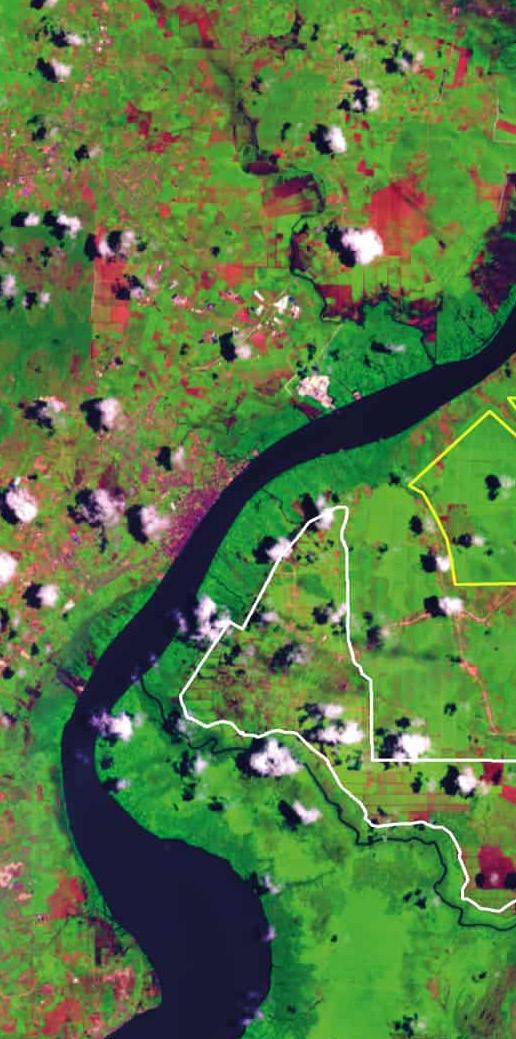
Our site is located alongside the Los Angeles River, on the former grounds of the Lincoln Heights Jail. The building has been abandoned for years, yet the site holds significant ecological and energy potential. Therefore, we are exploring how to transform this place into a space that contributes meaningful benefits to the city.
Our site is located alongside the Los Angeles River, formerly the grounds of Lincoln Heights Jail. Abandoned for years, the building still bears the imprints of the city’s layered history and social transformations.
In recent years, Los Angeles has actively promoted urban regeneration and green space restoration. The LA River has emerged as a crucial corridor that reconnects urban life with nature, offering significant opportunities for ecological revitalization and sustainable development.
The site itself has strong renewable energy potential. With ample sunlight and consistent wind flow, it is well-suited for the integration of solar panels, micro wind turbines, and self-sufficient energy systems. These conditions provide the foundation for a microgrid capable of supporting both the site's operations and the surrounding community.
Our program envisions transforming this neglected space into a vibrant public hub. By combining renewable energy infrastructure, community spaces, and ecological landscapes, the project not only preserves the site’s historical significance but also positions it as a key node in advancing the LA River’s revitalization and contributing to the city’s green energy future.
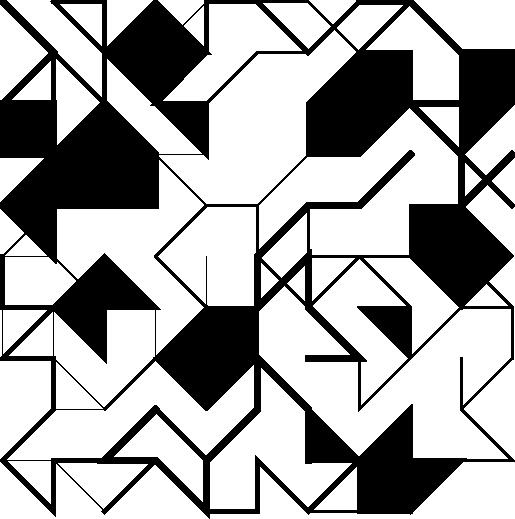
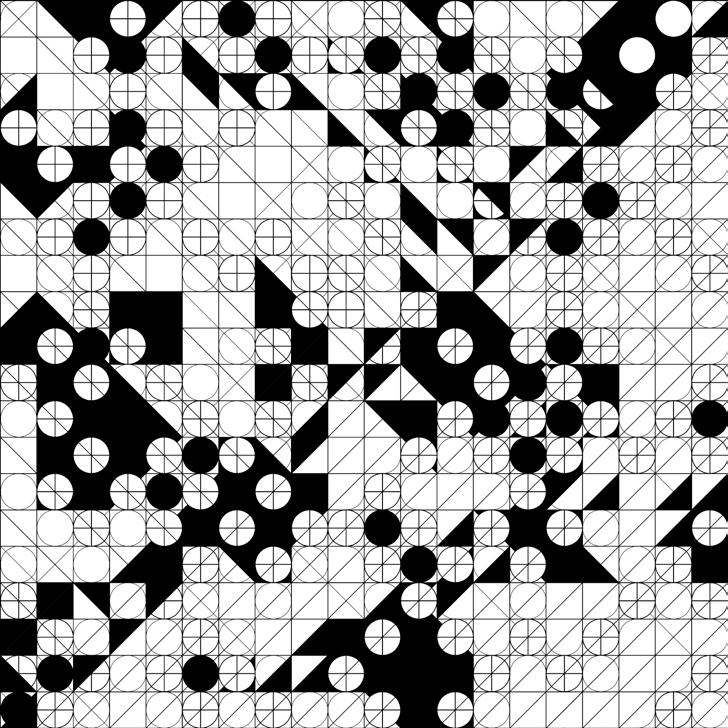
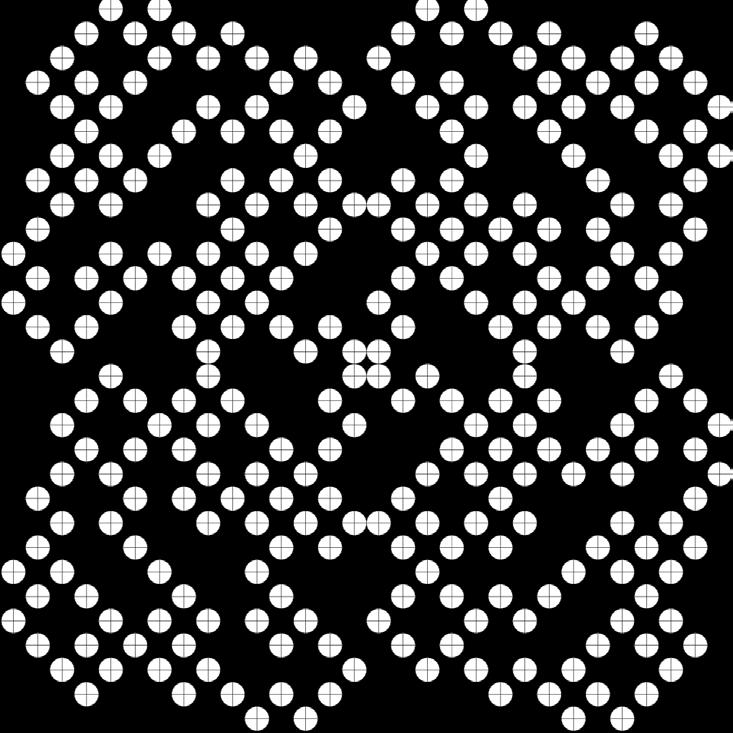
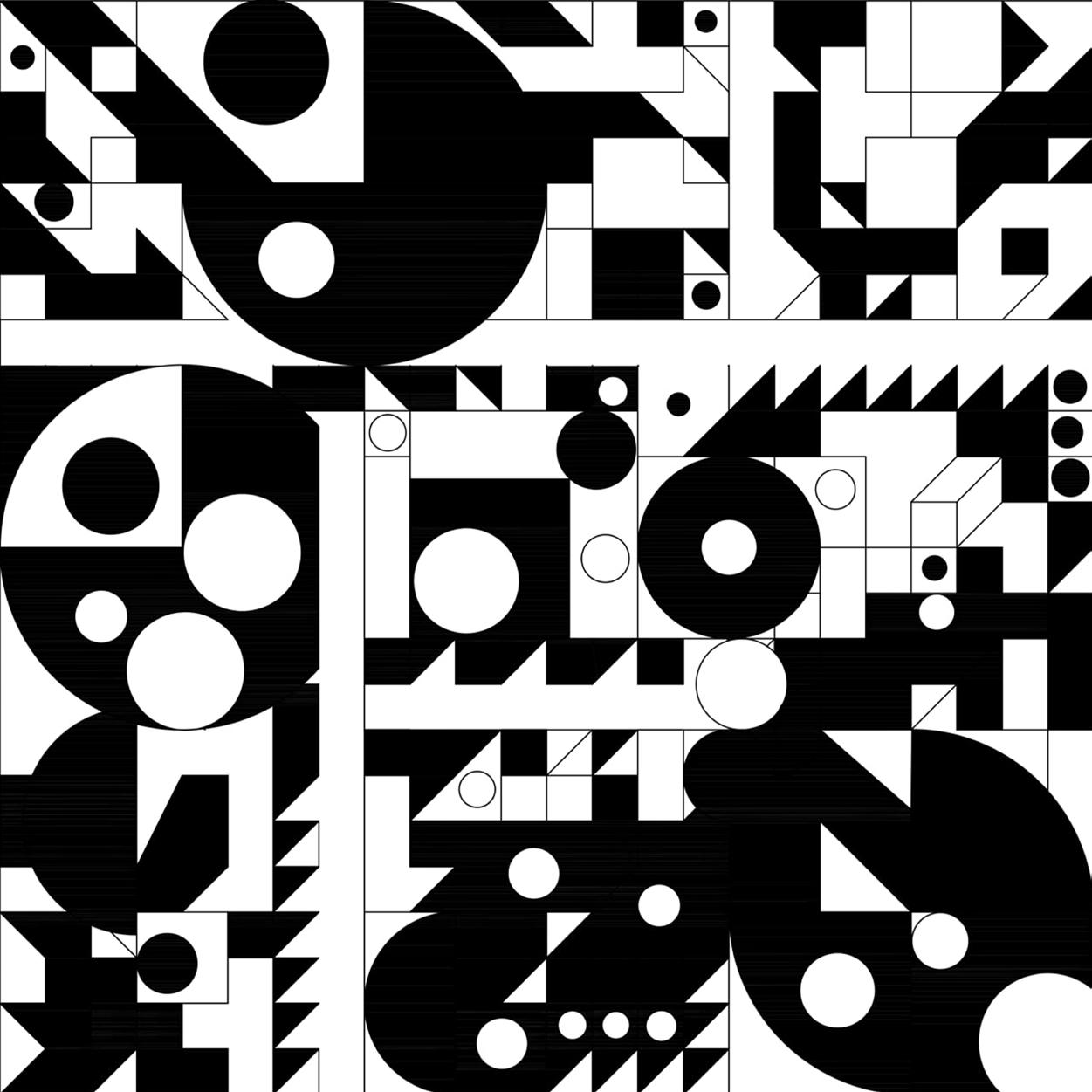
At the start of the design, I revisited the link between architecture and geometry. Inspired by Armin Hofmann’s theory of point, line, and form, I used it as the foundation. By pixelating site textures and images, I extracted key design cues for further development.
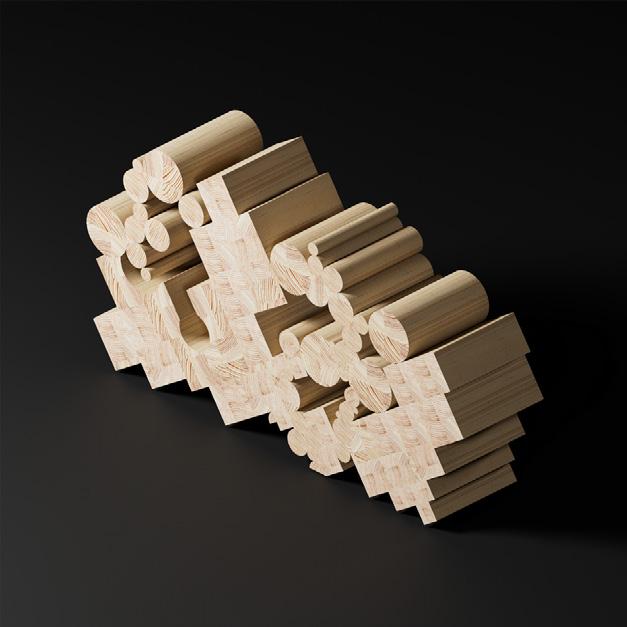
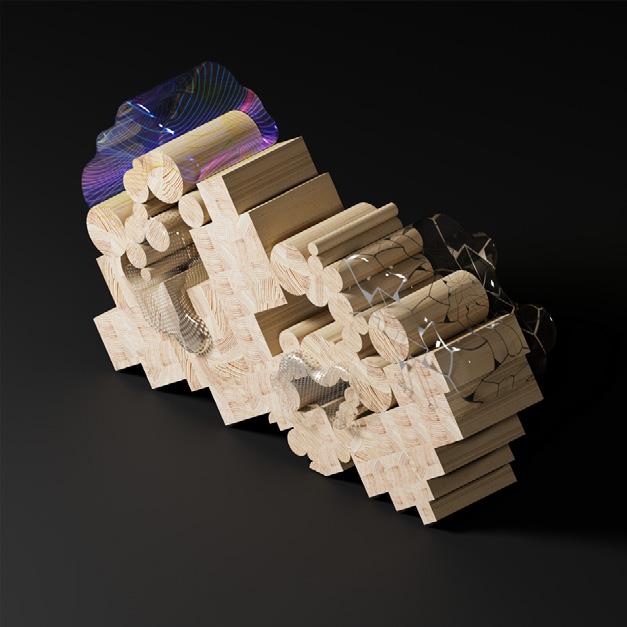
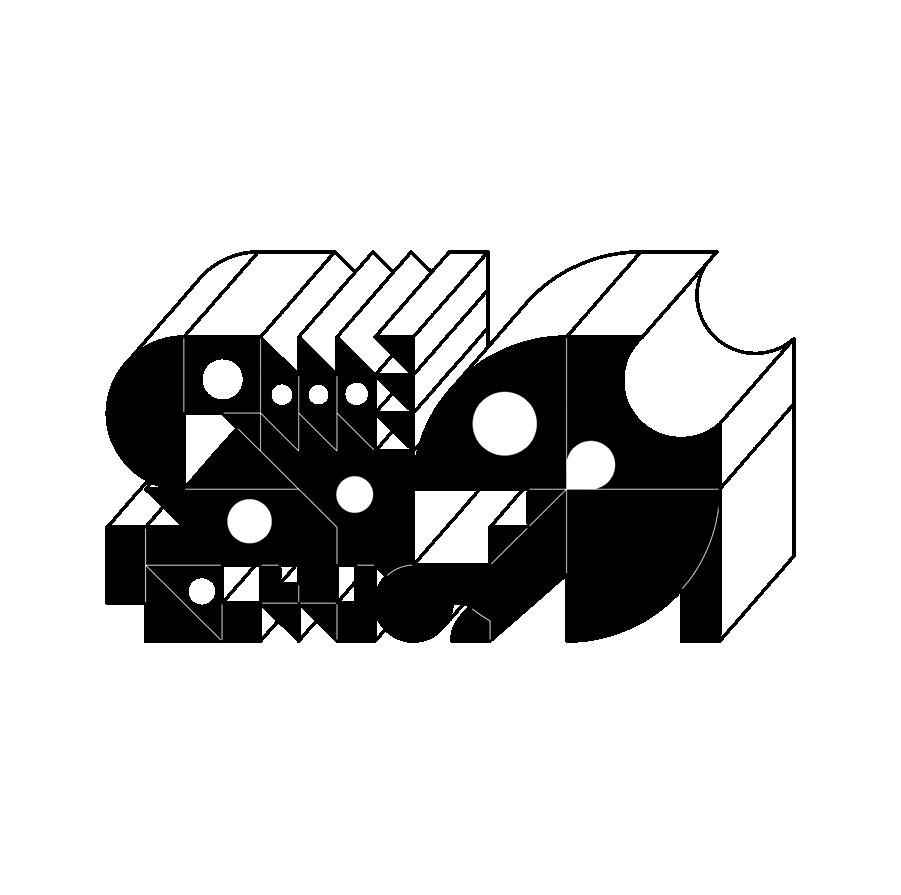
Based on the research of fundamental geometric elements, we explored singleaxis deformation through a controlled extension process.
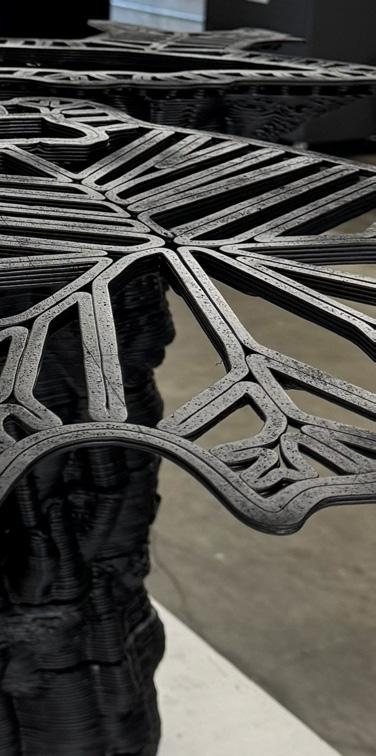
The hollow extrusion experiment, created through the extrusion and deformation of basic wood material, serves as a prototype for the façade design.
Volume Pixelation
Integrating the Wood Extrusion Model and Hollow Extrusion Test Model, façade pixels are extracted as the prototype for further massing development.

This design begins with basic wood material, undergoing extrusion and deformation experiments to challenge the limitations of traditional timber structures and create hollow extruded forms. These hollow extrusion tests, leveraging the material’s deformability, serve as prototypes for the façade configuration, showcasing both the flexibility of the material and its geometric potential.
Further, the design integrates the Wood Extrusion Model with the Hollow Extrusion Test Model, extracting façade pixel patterns derived from their formal and structural heterogeneity to inform the subsequent massing development. These façade pixels not only reflect the natural textures and rhythms revealed during the fabrication process but also guide the generation of the architectural surface.
By correlating the micro-level material deformation with the macro-scale architectural massing, the design explores the logical relationship between material experimentation and spatial composition. Ultimately, the project aims to establish a formal language that emphasizes structural expression and innovation, proposing a design methodology that moves from craft to digital analysis, and from material detail to spatial formation.

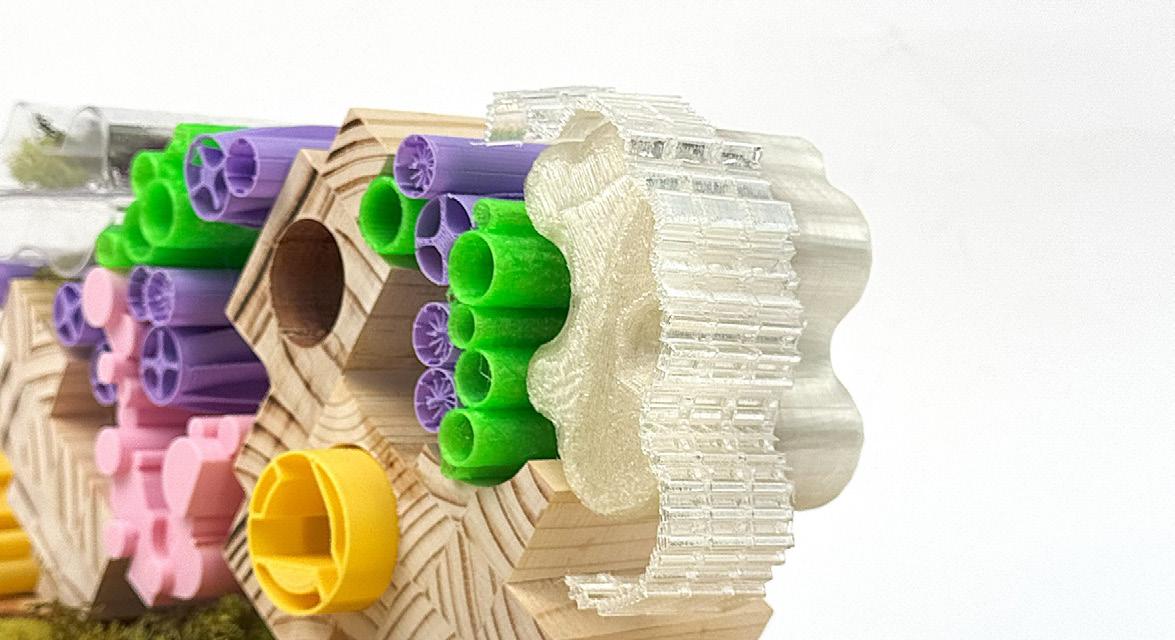
The design begins with the fundamental elements of color, form, and massing as the starting point for three-dimensional development, exploring the transformation between planar graphics and volumetric massing, serving as the central focus of the design investigation.
Solid and Virtual
Solid and Virtual, as two fundamental concepts in architectural elements, are explored at this stage through experiments and analyses using the most essential elements, colors, and materials, resulting in the creation of distinctive and diverse base volumes.
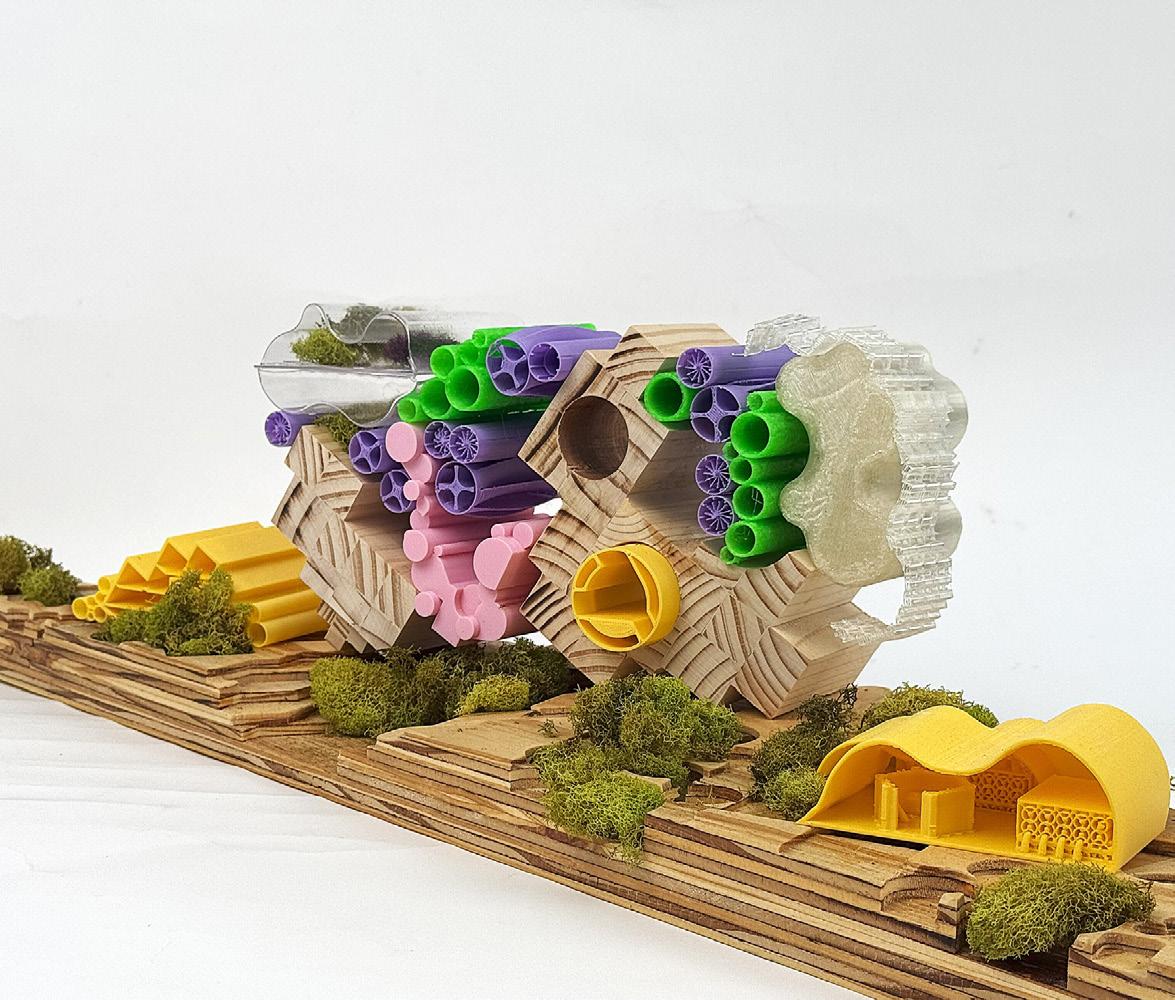
The design begins with the fundamental elements of color, form, and massing, serving as the basis for three-dimensional development. It explores the transformation from two-dimensional diagrams to spatial configurations, establishing a clear design logic.
At this stage, the focus centers on two key architectural concepts— Solid and Virtual. Through experiments with essential elements, colors, and materials, the design analyzes the spatial interplay between solidity and void.
The resulting diverse base volumes not only reflect this dialogue but also provide formal prototypes for further spatial and structural development, illustrating a progression from elemental experimentation to spatial formation.
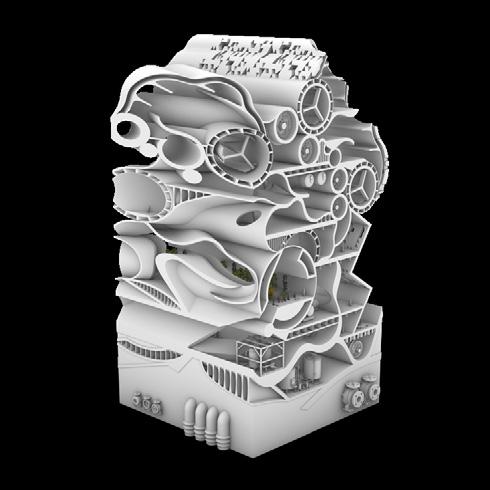
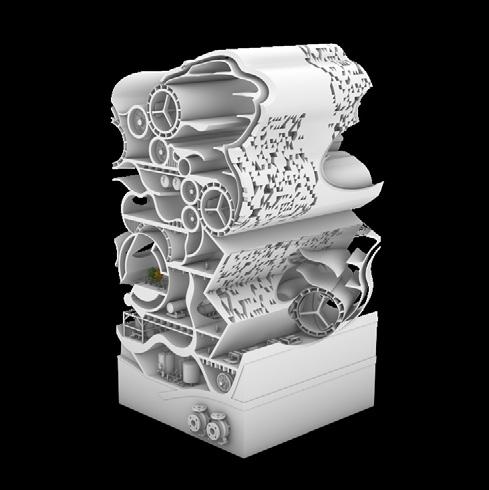
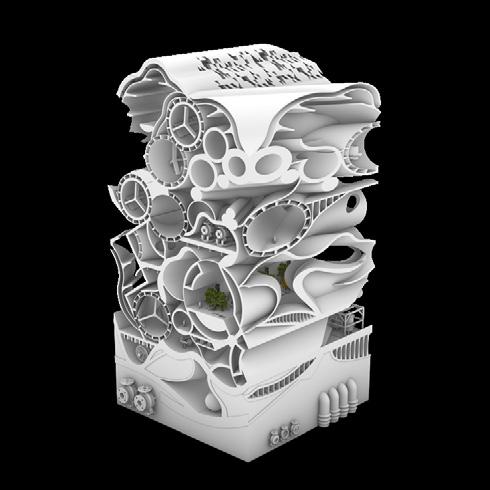
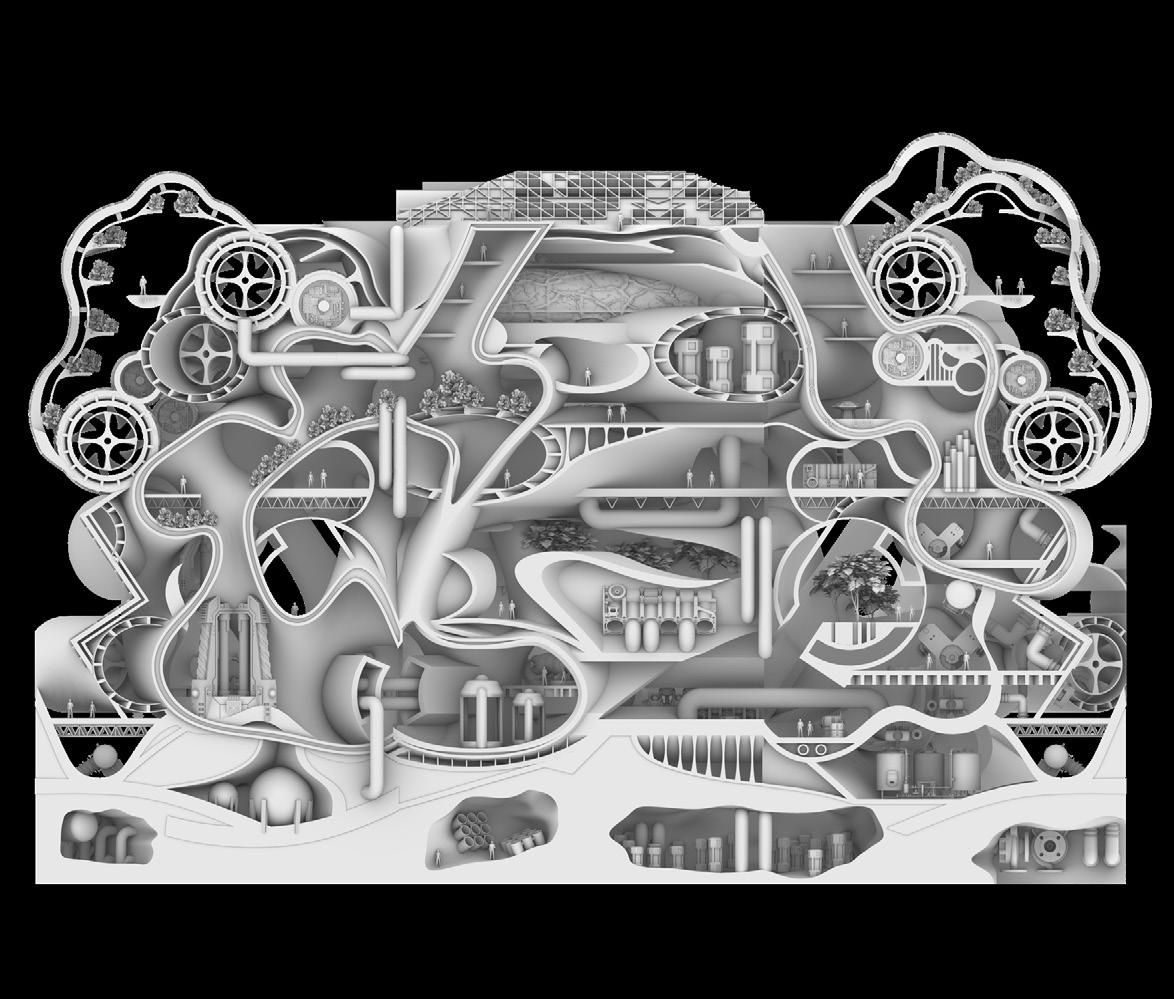
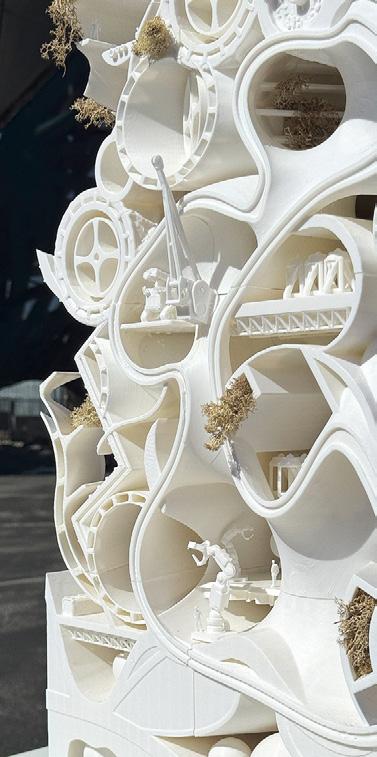
In the "Generate, Extend, Expand" phase, the design emphasizes continuous growth through the reorganization and layering of modular, deformed volumes. The architecture behaves like climbing vines, gradually extending from the new structures to penetrate and intertwine with the existing buildings, forming a spatial network of solid and void. This strategy creates a dynamic dialogue between old and new, reinforcing spatial fluidity and formal continuity.
Building upon the previous stage of massing development, this phase focuses on volume deformation and spatial reshaping. Through operations such as compression, twisting, and cutting, the basic forms are manipulated to introduce layers of complexity and dynamic movement. The design emphasizes the transformation between solid and void during the deformation process, enhancing spatial fluidity and openness. Ultimately, the deformation not only alters the exterior composition but also redefines the internal spatial boundaries and functions, creating a continuous and diverse spatial experience.
Simultaneously, the design integrates sustainable energy systems, embedding algae-based solar panels, wind turbines, and geothermal generators into the architectural framework. As the massing expands, these green facilities grow in tandem, supporting a self-sufficient energy strategy. Through this approach, the building becomes a living organism—both adaptive and environmentally responsive.
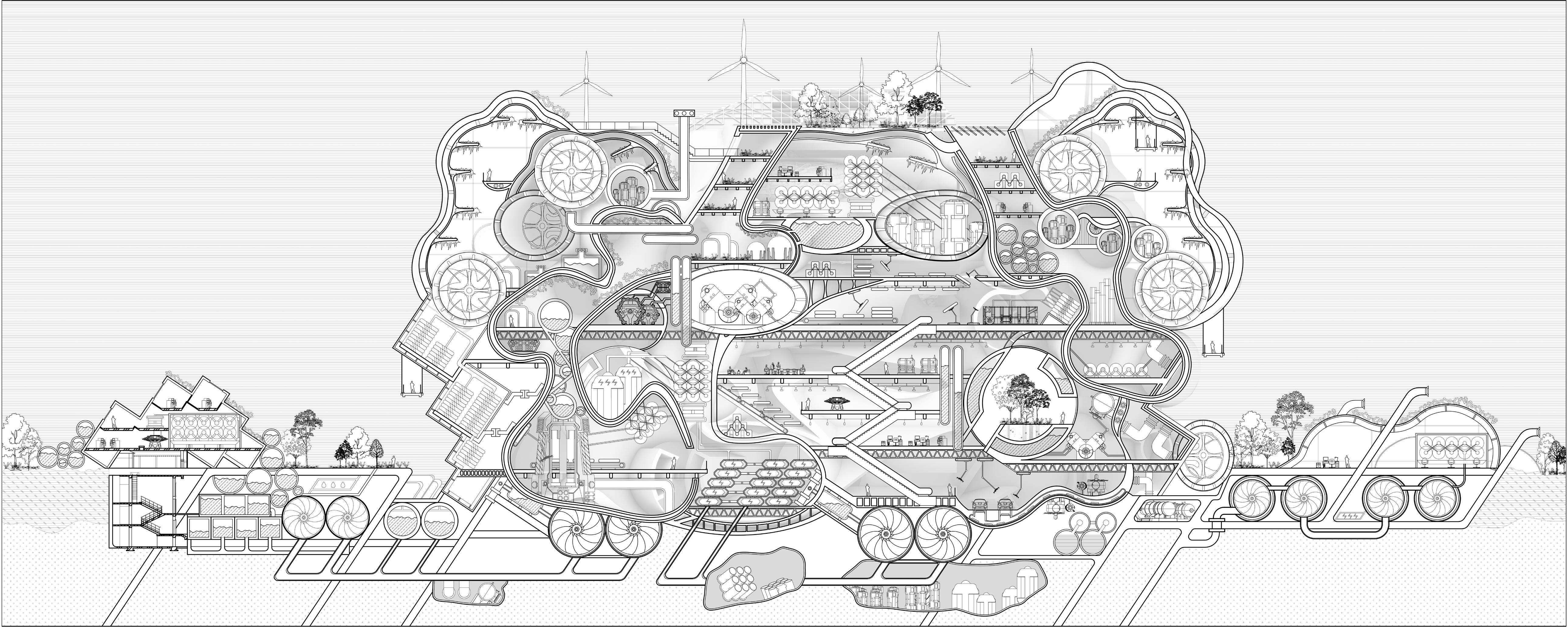
Architecture exists in symbiosis with nature. Green energy and vegetation are integral to the building, merging to form a sustainable living structure.
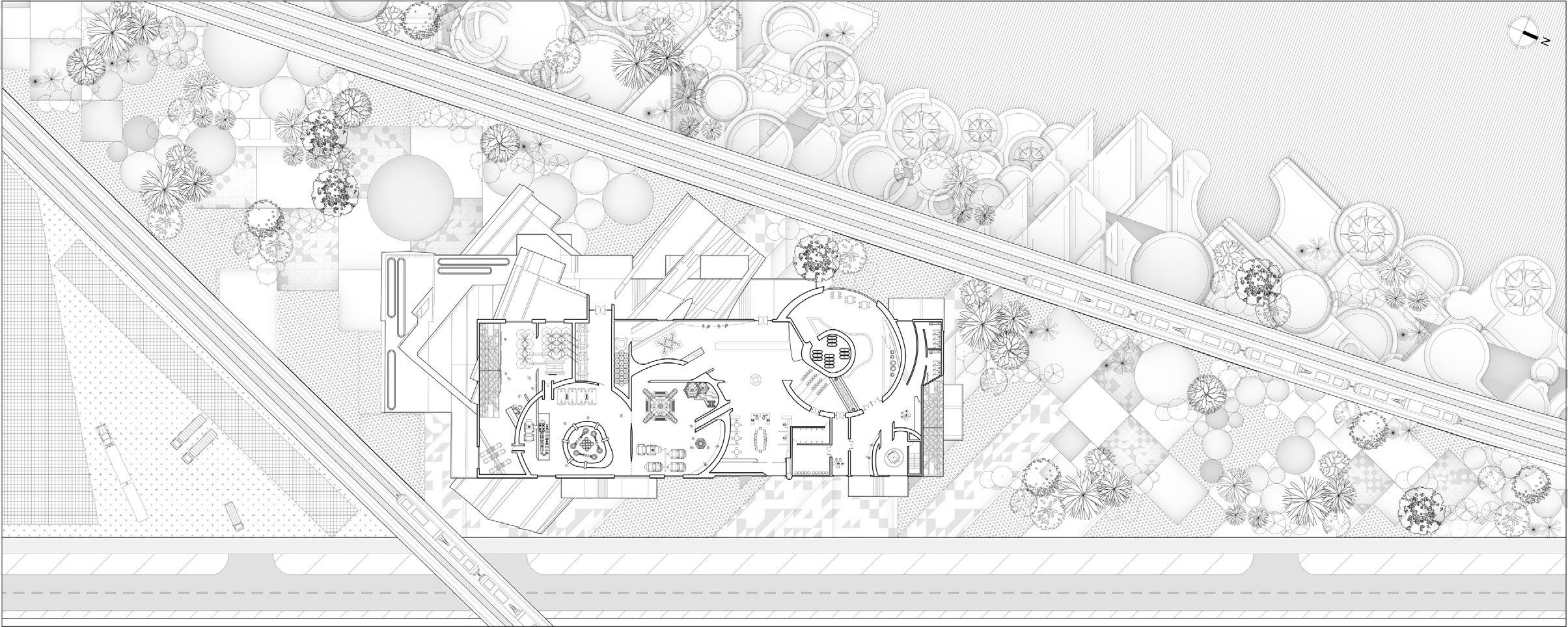
In response to Los Angeles' energy needs and environmental challenges, this conceptual Micro Power Plant is proposed as a decentralized green infrastructure. It utilizes underused urban spaces and integrates three renewable systems: algae-based solar panels, vertical-axis wind turbines, and geothermal generators.
The algae solar panels generate electricity while absorbing carbon dioxide and purifying the air, ideal for LA’s sunny climate. Vertical-axis wind turbines adapt to urban wind conditions, minimizing noise and allowing flexible installation. Geothermal systems provide stable, clean energy, reducing dependence on traditional grids.
More than a power facility, the Micro Power Plant becomes part of the public realm—blending energy production with urban life. It fosters a symbiotic relationship between infrastructure and community, envisioning a selfsufficient, sustainable future for Los Angeles.
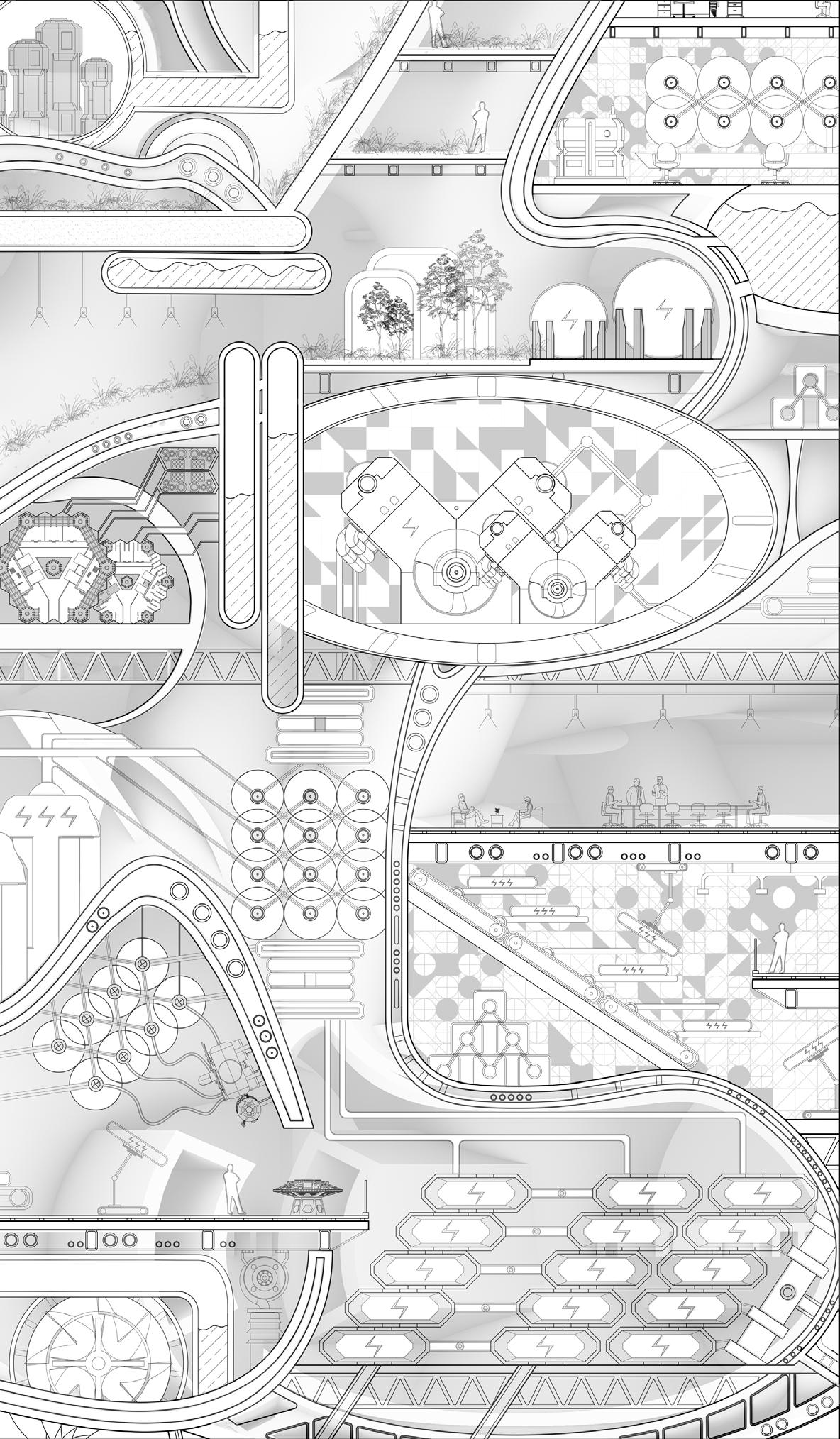
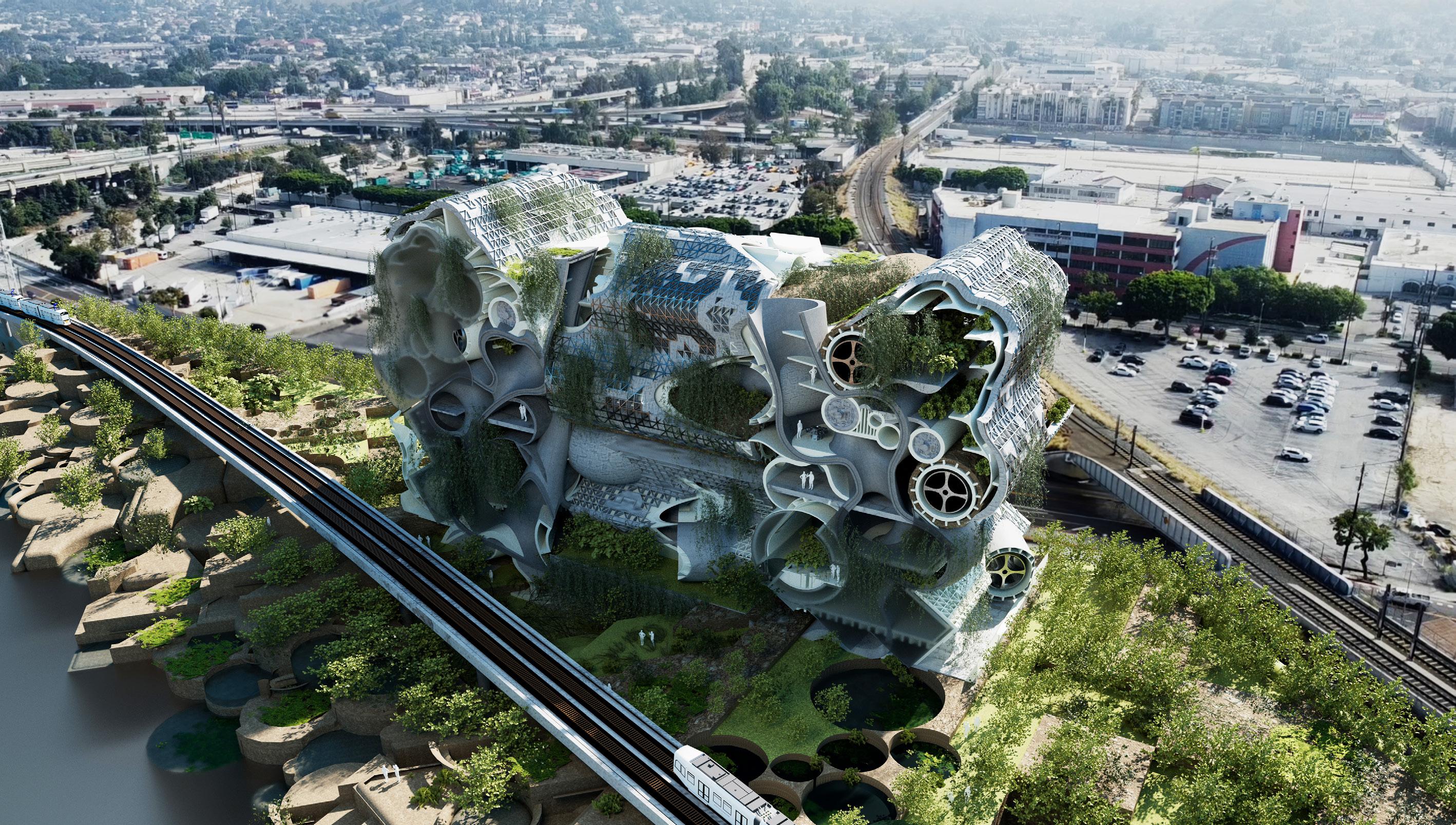
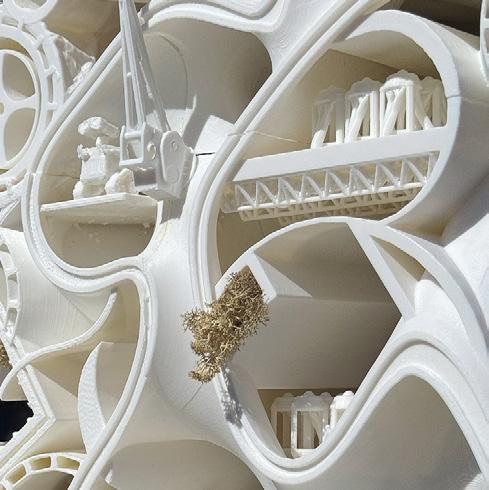
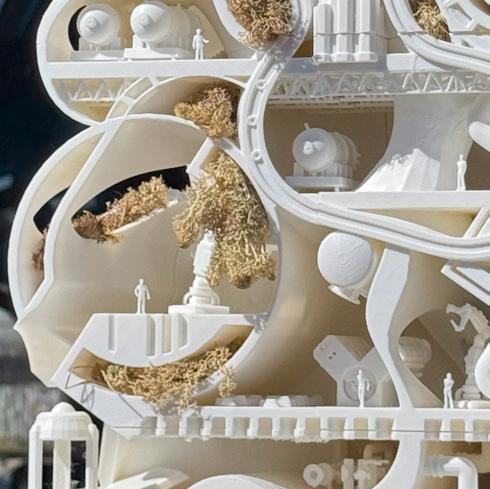
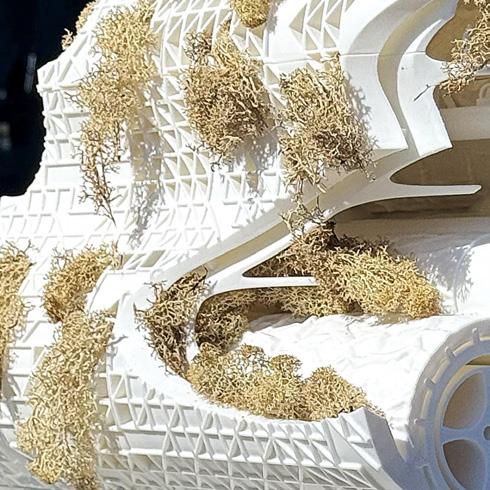
Bionic Architecture
Architecture inspired by biological forms, integrating nature’s efficiency and aesthetics into structural design.
Green Energy Power Plant
A facility generating renewable energy through sustainable sources like wind, solar, or biomass, reducing carbon emissions.
Plant Symbiosis
A mutually beneficial relationship where different plant species coexist, enhancing growth, resilience, and ecosystem balance.
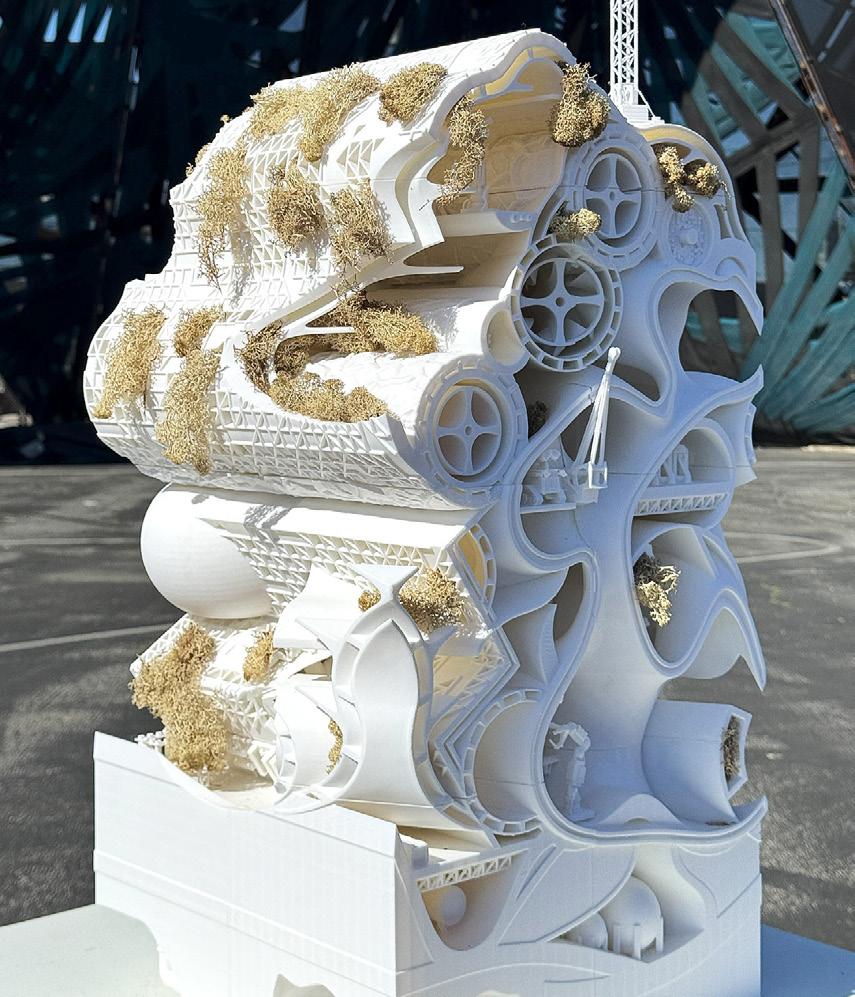
Bionic Architecture and Sustainable Symbiosis
Bionic Architecture takes inspiration from natural forms, integrating biological structures into building design. This approach enhances both aesthetics and functionality, creating environmentally adaptive spaces. Combined with Green Energy Power Plant systems—such as solar panels and wind turbines—buildings can produce renewable energy, reduce carbon emissions, and promote sustainability.
Plant Symbiosis further strengthens the connection between architecture and nature. By incorporating vertical greenery and diverse plant systems, buildings improve air quality, regulate temperature, and support ecological balance. Together, these strategies offer a sustainable, innovative model for future urban environments.
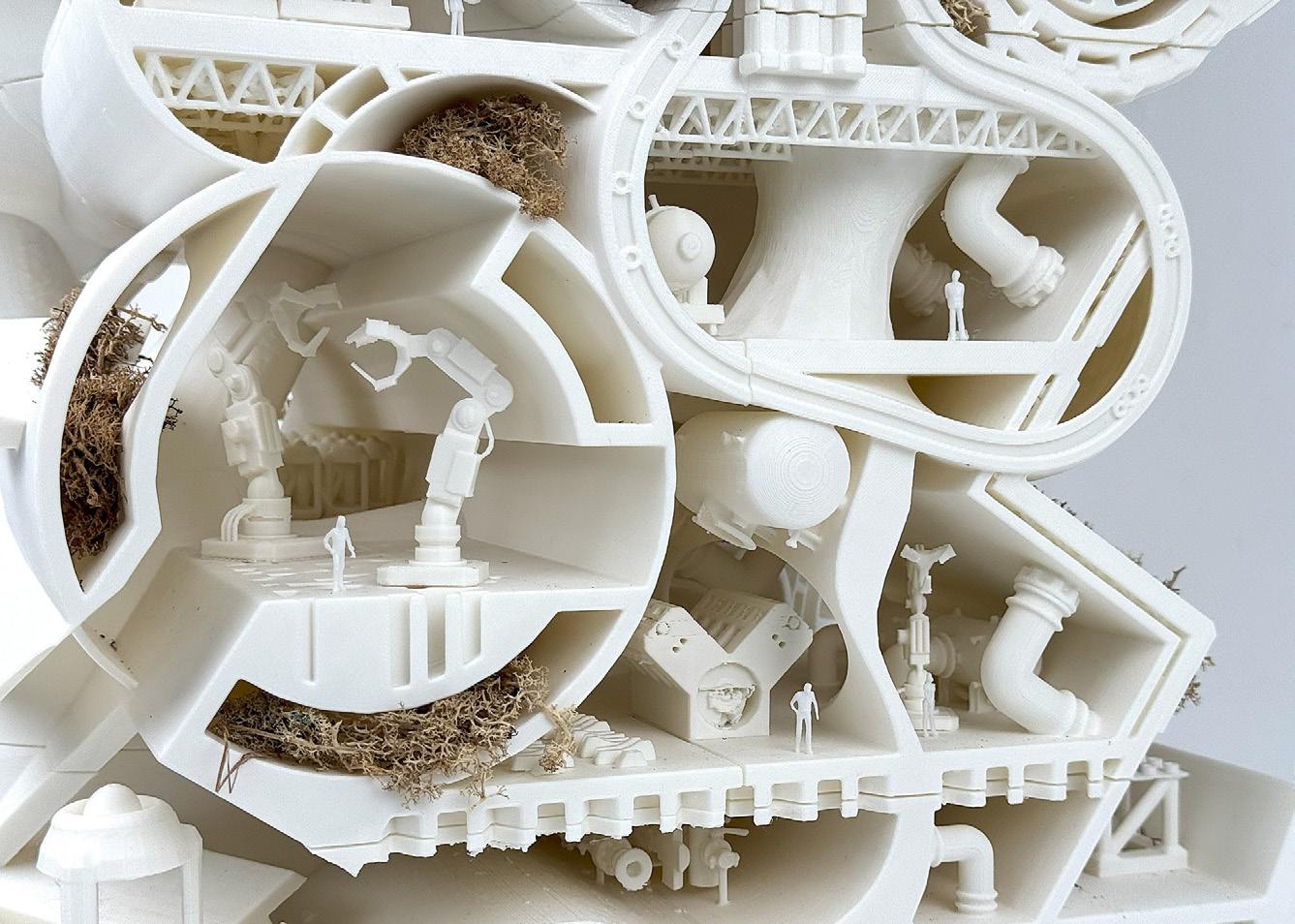
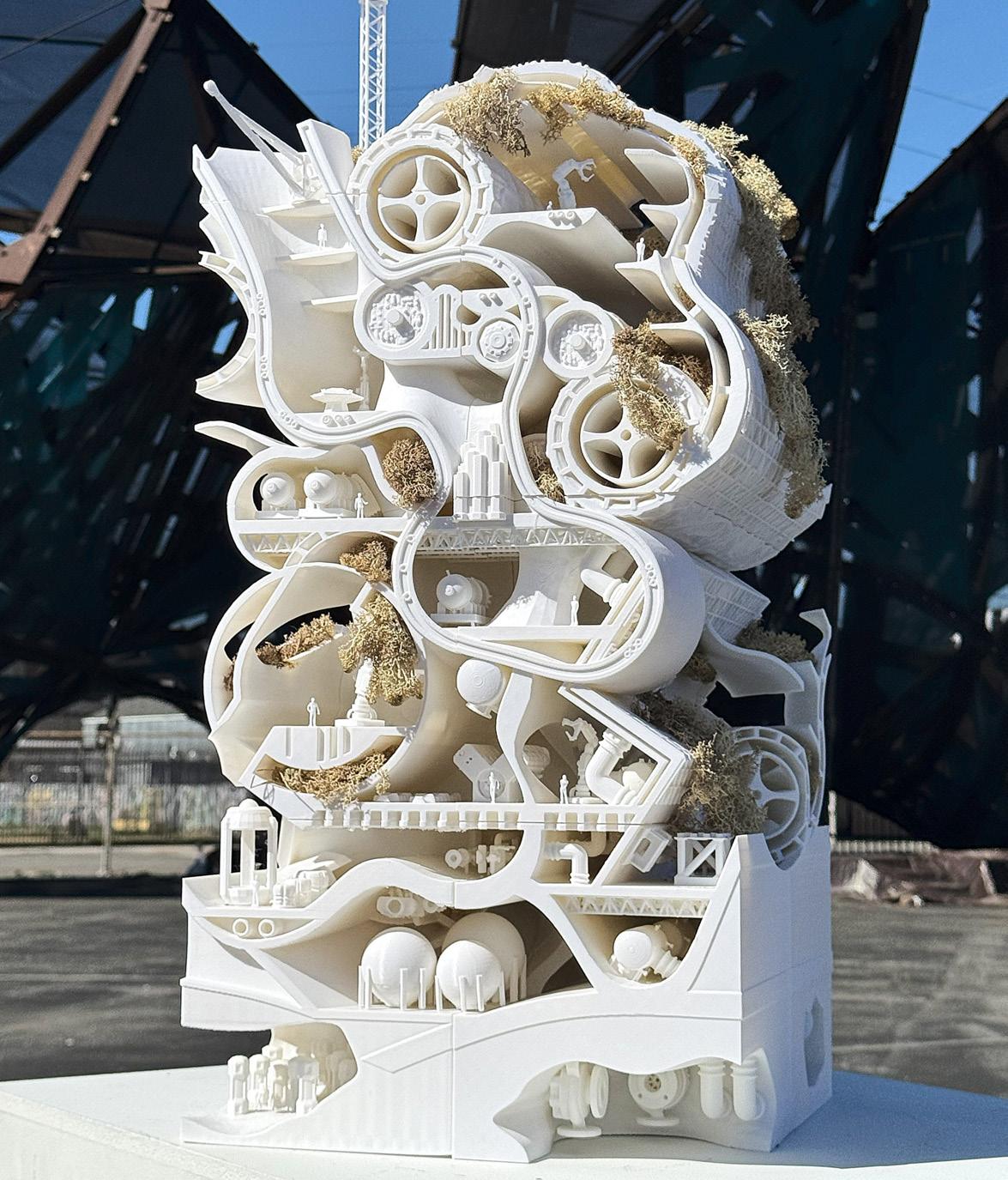
This design is rooted in the logic of Bionic Architecture, taking cues from natural systems and structural behaviors. The process begins with a rational, On-Grid approach—using fundamental elements such as color, form, and massing, organized through clear geometric relationships of point, line, and plane. This stage emphasizes order, clarity, and controlled spatial composition, laying a strong groundwork for the project.
As the design evolves, it gradually shifts into an Off-Grid methodology. Through volume deformation, twisting, and layering, the architecture departs from strict geometries, embracing a more fluid and organic transformation. The building behaves like a climbing plant, extending and intertwining with existing structures, forming a dynamic network of solid and void.
Simultaneously, the integration of renewable systems—algae-based solar panels, wind turbines, and geothermal energy—supports the concept of a Green Energy Power Plant, allowing energy production to grow alongside the architecture. The design culminates in a vision of Plant Symbiosis, where spatial forms, energy systems, and vegetation coalesce into a self-sufficient, living structure that redefines the dialogue between nature, technology, and the built environment.
YEAR: 2024 FALL
CLASS: Visual Studies I M2
TEAMMATE: Individual Work
INSTRUCTORS: William Virgil
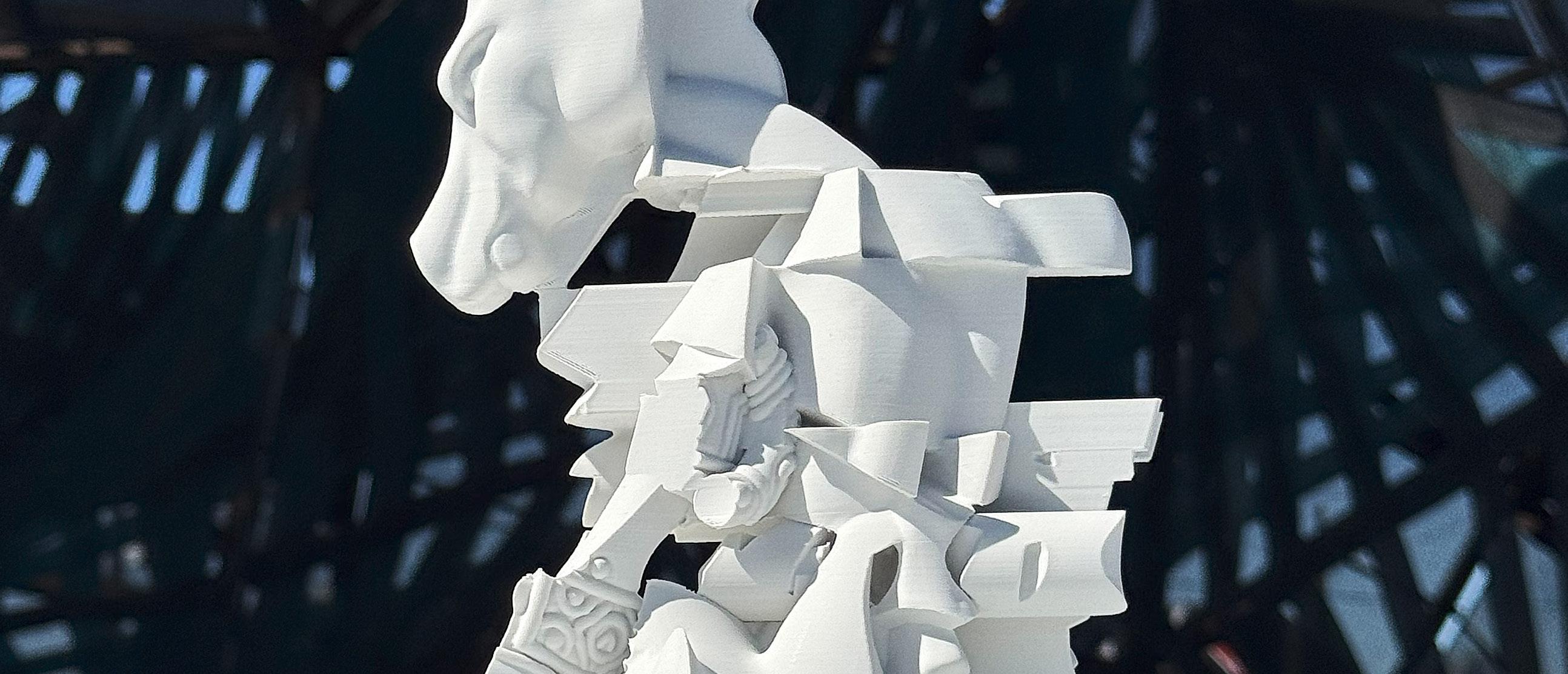
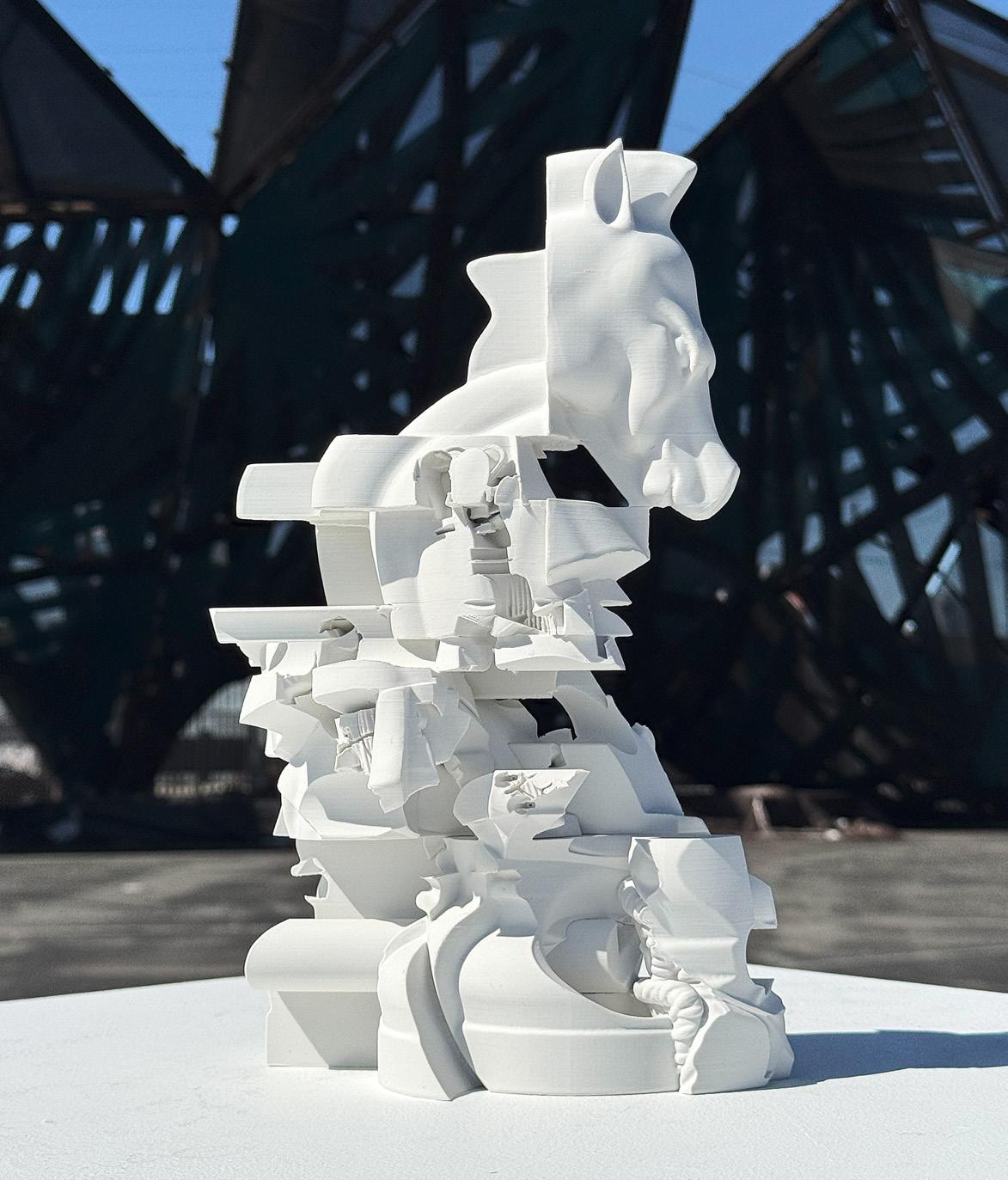
Chess is a traditional game built on clear hierarchies and fixed roles. Each piece—king, queen, bishop, knight, rook, and pawn—represents a specific rank and authority. In our design, we aim to challenge this rigid structure by deconstructing the original pieces and merging them with other visual elements. Through this process, we break down their symbolic power and reimagine the set as a modular system.
The new pieces become puzzle-like components that can be freely assembled, allowing users to redefine their forms and meanings. This approach transforms chess from a symbol of control and order into a playful, openended platform. It invites players to rethink authority, question traditional systems, and explore new possibilities through creativity and reinterpretation.
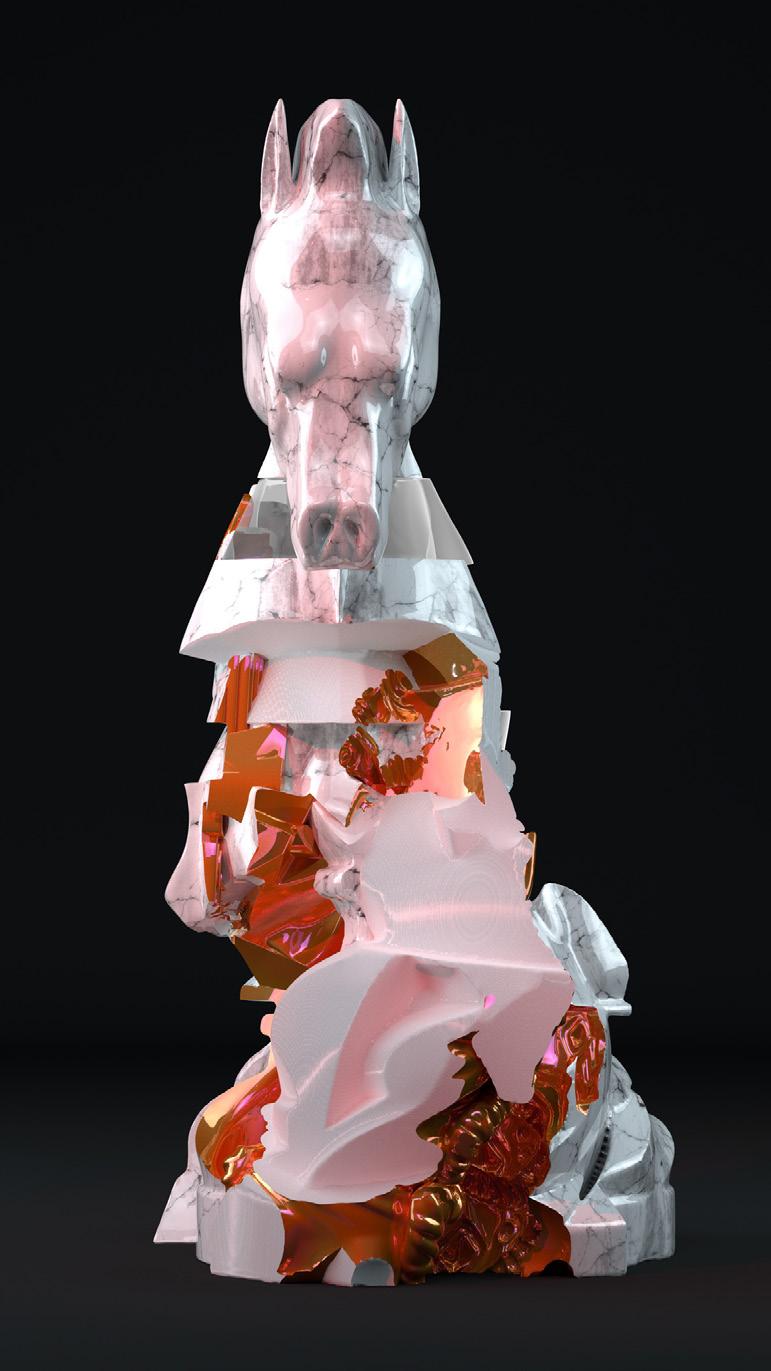
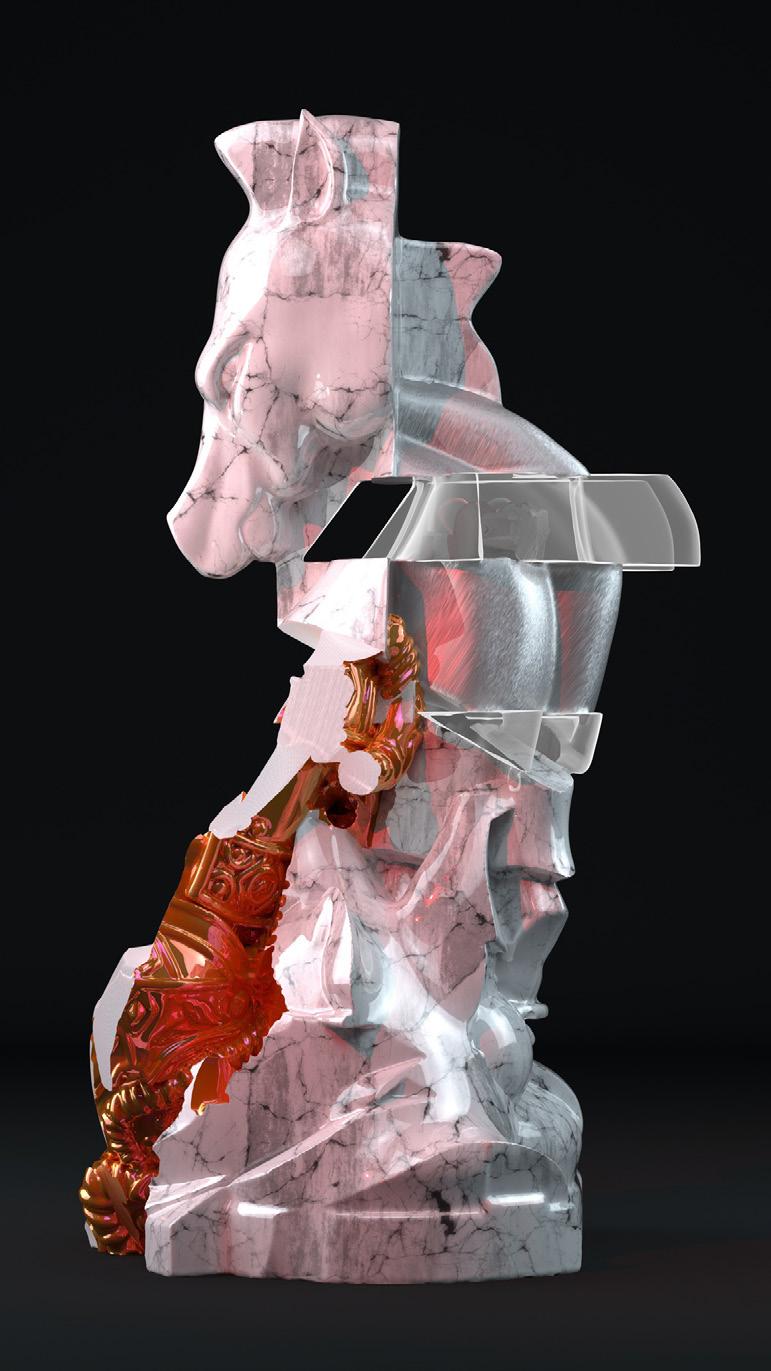
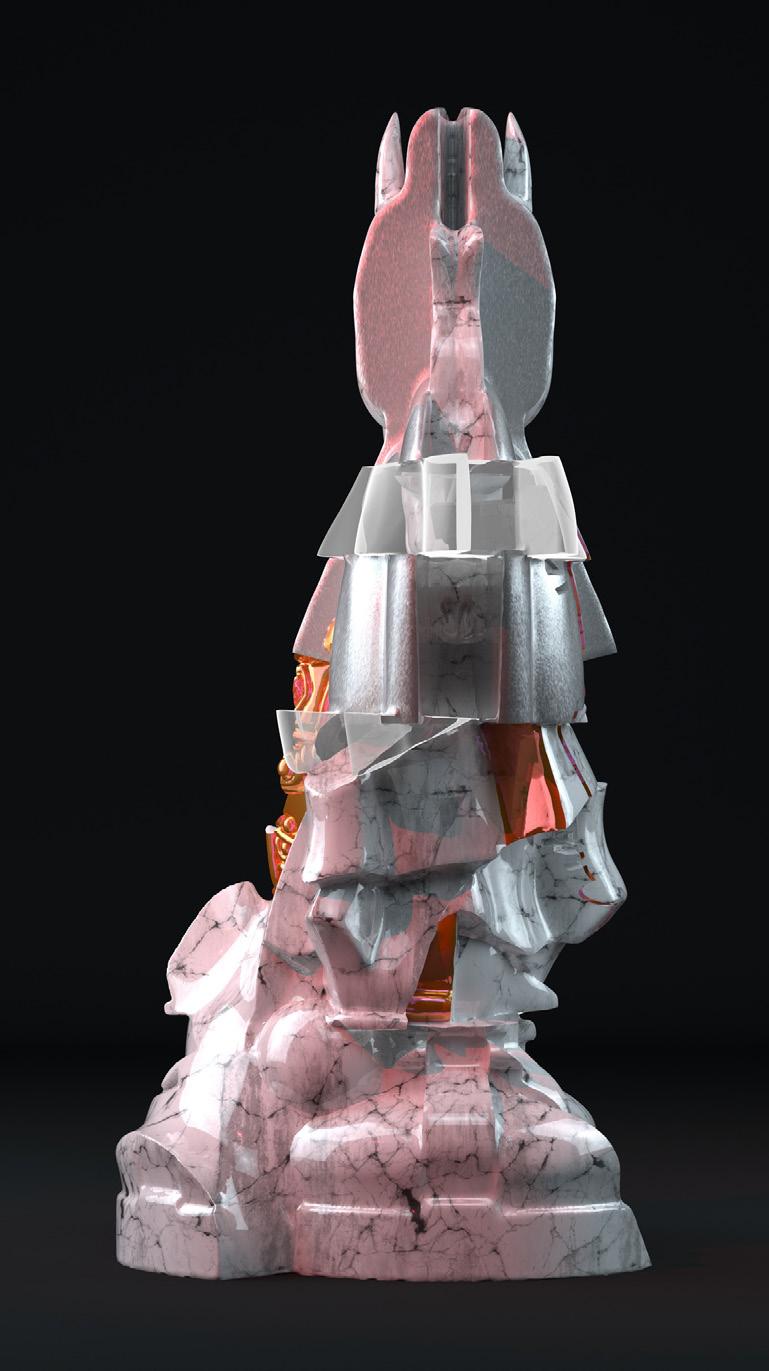
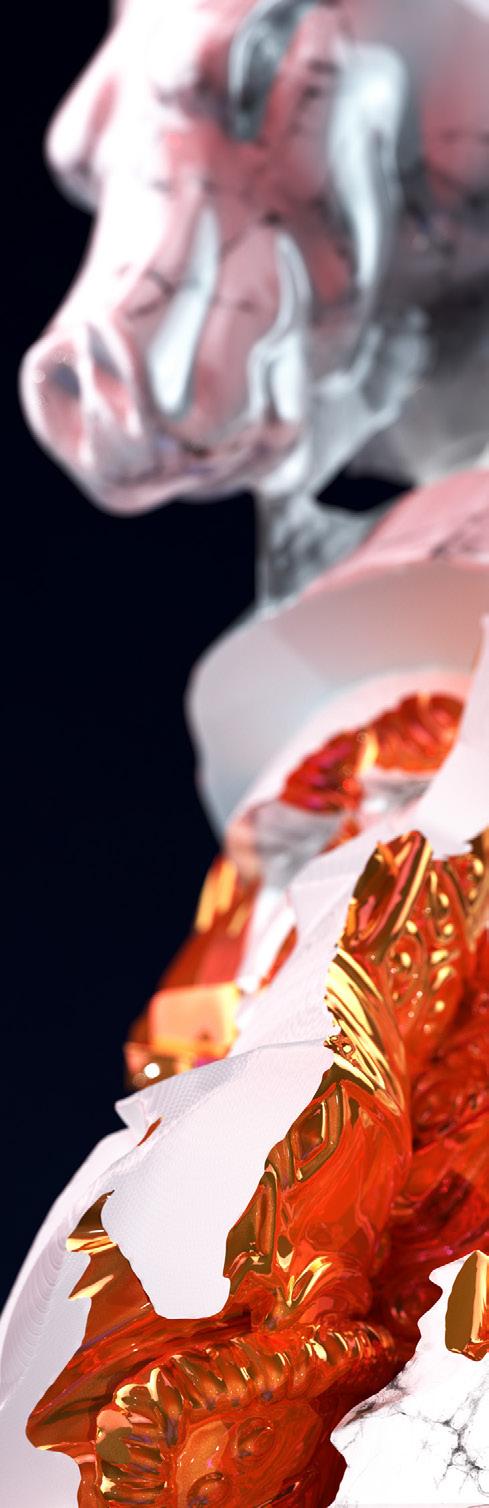
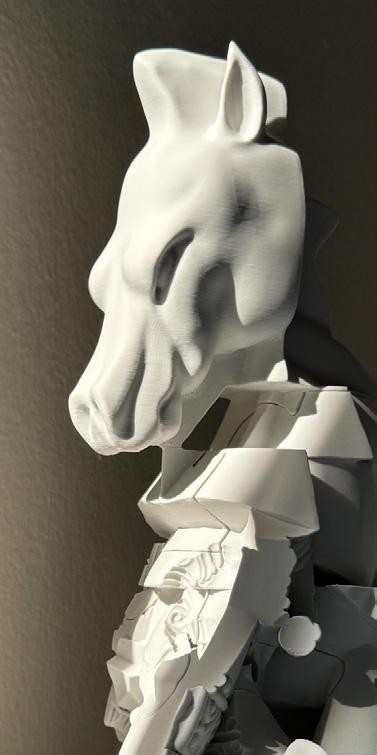
Among all the chess pieces, the knight stands out with the most vivid and iconic imagery. Rooted in the figure of the medieval warrior, it symbolizes loyalty, strength, and strategic thinking. Its unique L-shaped movement—unlike any other piece—allows it to leap over obstacles and take unexpected paths. This non-linear mobility reflects flexibility, creativity, and a mindset that defies convention.
For these reasons, I chose the knight as the prototype for deconstruction. Deconstruction here goes beyond physical fragmentation; it is a process of transforming imagery and rethinking systems of organization. Through this approach, aim to explore ways of breaking traditional structures and reflect on the multiple possibilities of architectural design and thought.
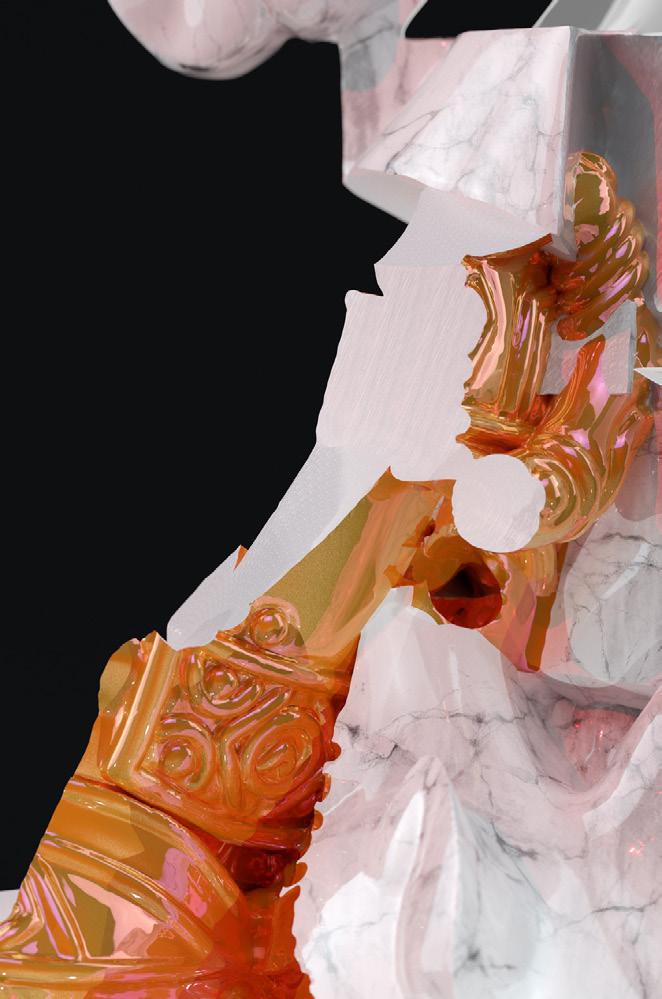
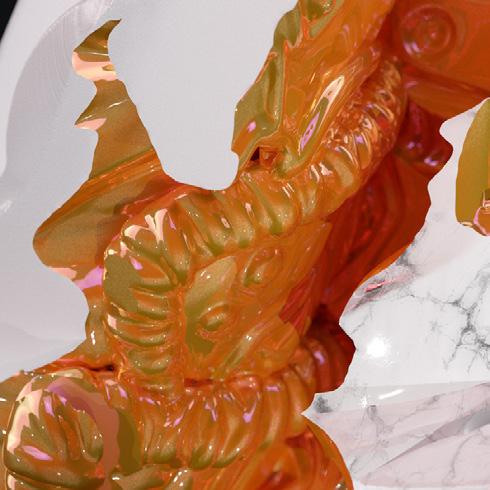

Reorganizing colors and materials challenges traditional aesthetics, offering new possibilities for form, identity, and spatial experience.
This project explores the tension between explicit form and metaphorical meaning in spatial and material expression.
This project embraces disorder to reveal an unexpected harmony through spatial tension and material contrast.
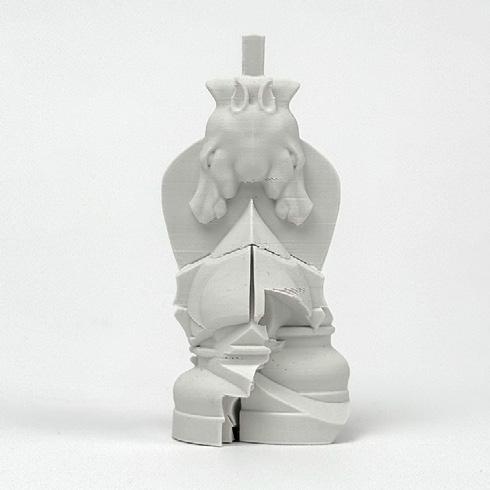
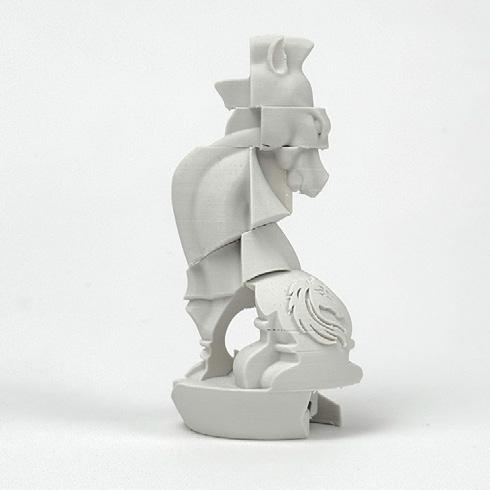
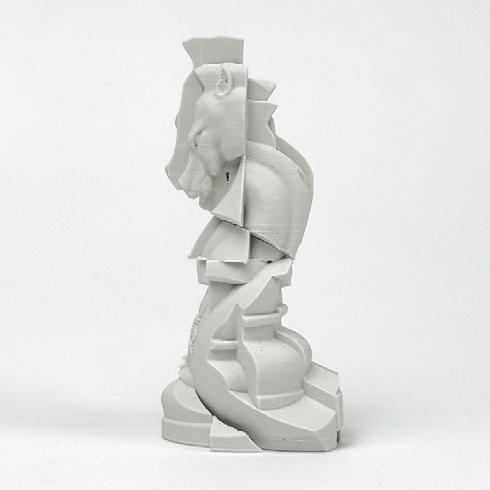
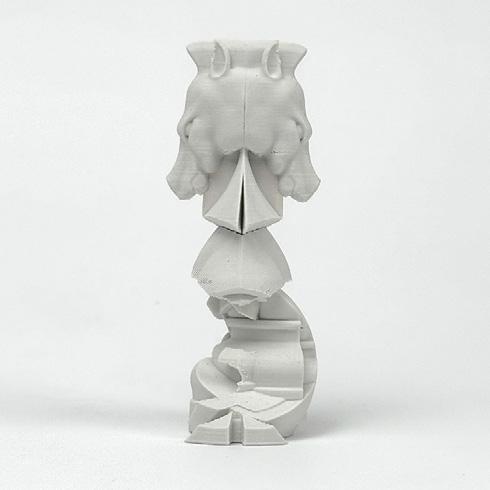
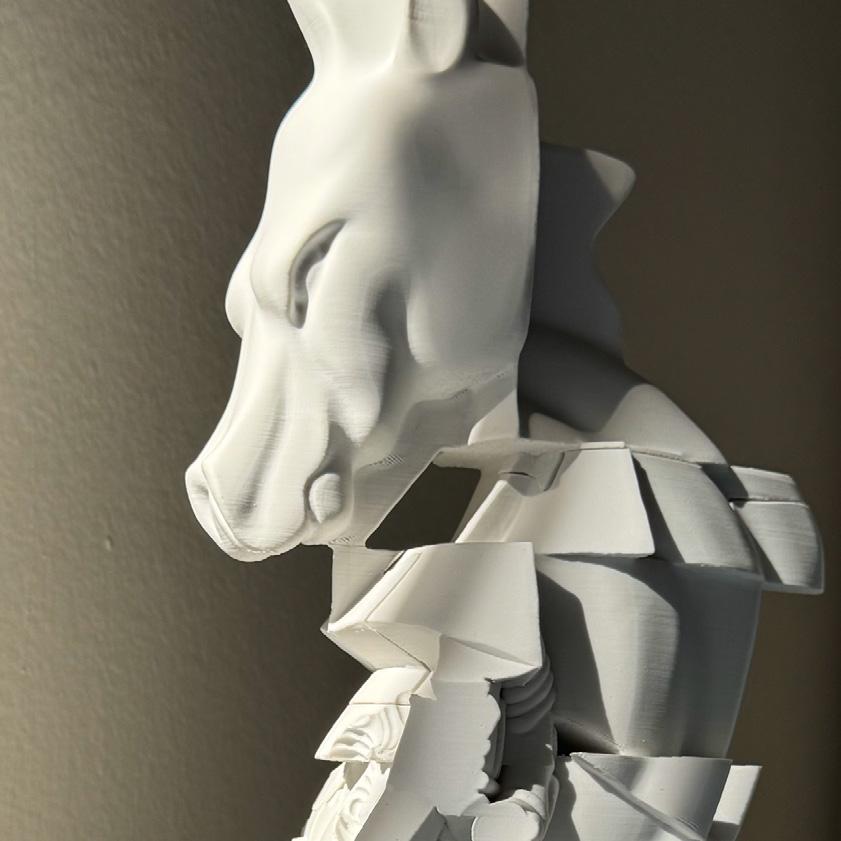
The reorganized chess pieces retain fragments of their original forms, suggesting that the essence of each object should still be acknowledged and remembered. Reorganization does not imply total destruction, but rather offers a new perspective through transformation.
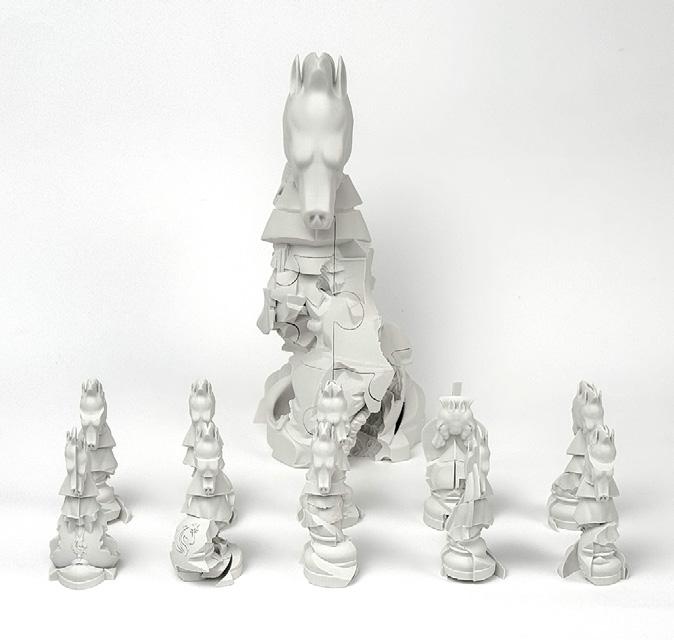
This project explores geometric transformation through ten variations, with deconstruction and reconstruction as core design values.
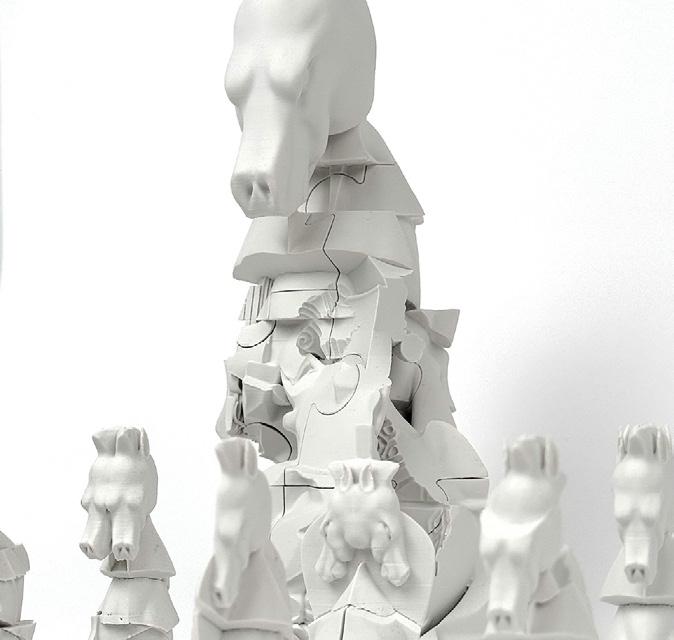
Using logic-based variations, this project explores disruptive potentials in architecture and the flexibility of design sequences.
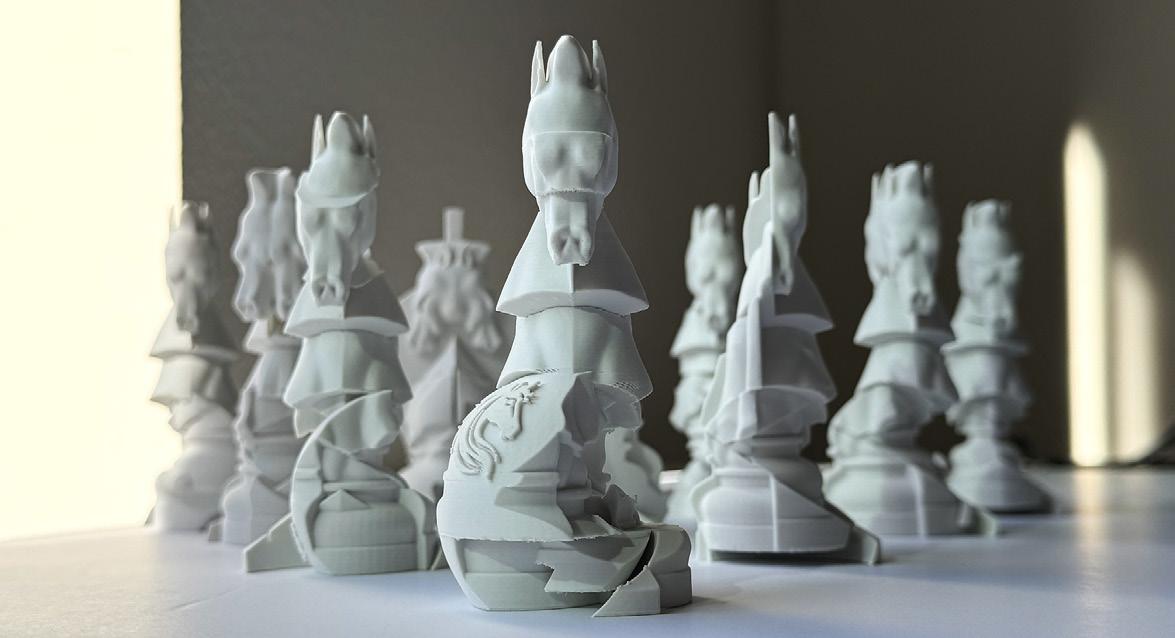
The meaning of variation is no longer about creating something entirely new, but about reconstructing existing elements and forms. The outcomes of reconstruction are not defined by right or wrong, but by differences in logic.
This design project begins with a critical look at the traditional structure of chess, a game defined by strict roles and hierarchical symbolism. Among all the pieces, the knight stands out as the most iconic and expressive. Its unique L-shaped movement defies linear logic, embodying flexibility, unpredictability, and strategic creativity. Inspired by this, the knight becomes the prototype for deconstruction.
Rather than destroying the piece, the project preserves fragments of its original form while reconfiguring its structure and identity. This act of transformation challenges the authority embedded in traditional systems, offering a path toward openness, redefinition, and the liberation of meaning. By disrupting fixed forms, the design reveals new spatial and symbolic potentials.
The goal is not to erase the past but to reinterpret it— honoring memory while making room for alternative perspectives. Through this method, the project encourages a broader conversation about hierarchy, identity, and freedom in both games and architectural thought.
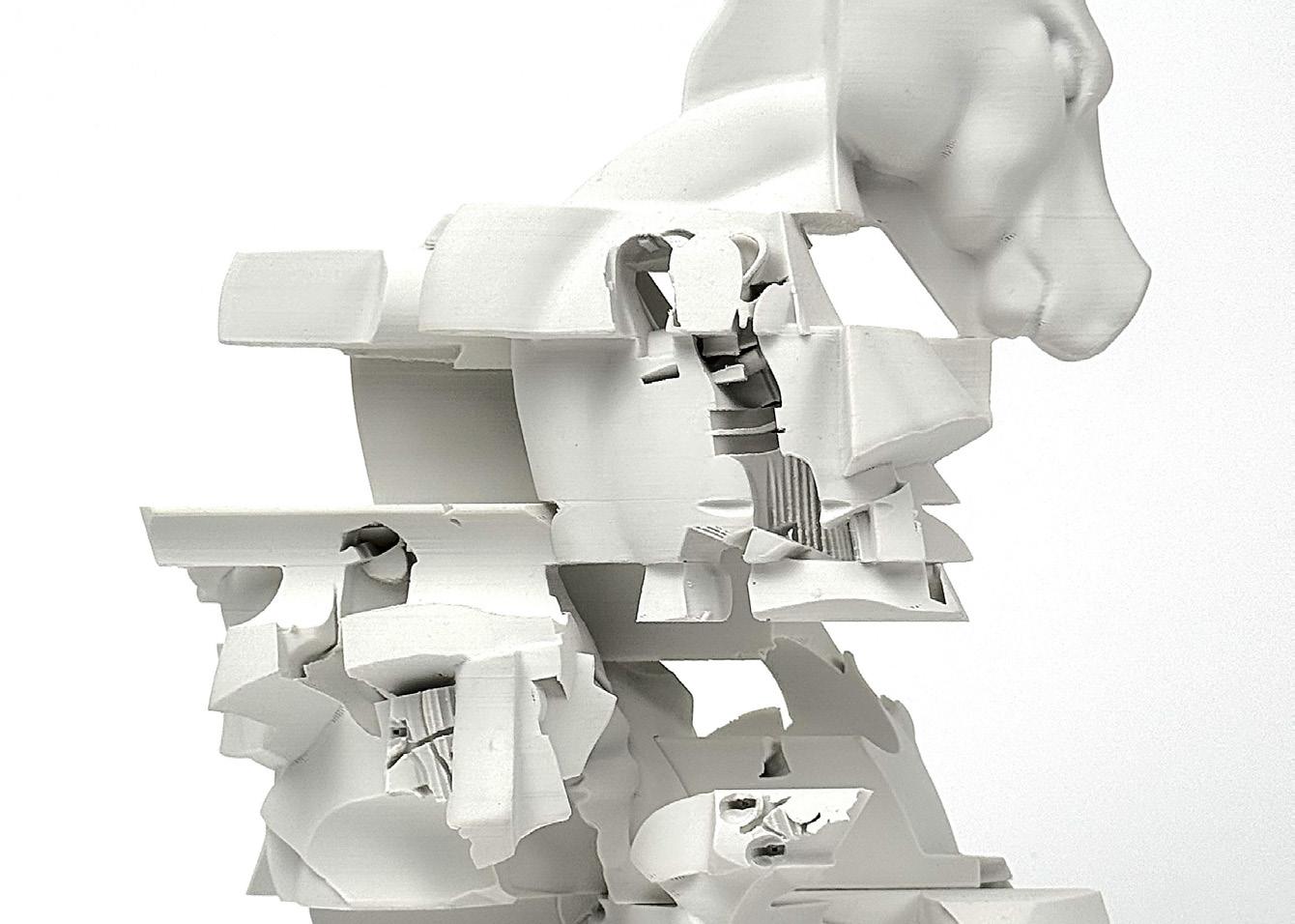
Extending from the deconstructed chess logic, the project explores ten distinct geometric variations. These are not arbitrary experiments, but structured studies rooted in logic. The focus is not on inventing entirely new forms, but on reconstructing familiar elements into new spatial arrangements through rule-based transformation.
Each variation reflects a different line of reasoning—none of them right or wrong. Instead, the diversity of outcomes reveals the richness of design thinking when freed from the pressure of fixed solutions. These operations demonstrate how the act of reassembly itself can generate new meaning, organization, and form.
By reorganizing materials, colors, and construction methods, the project further pushes the boundaries of symbolic and structural interpretation. It positions the design process not only as aesthetic exploration, but also as a philosophical inquiry—into how form, logic, and memory interact to shape new architectural languages.
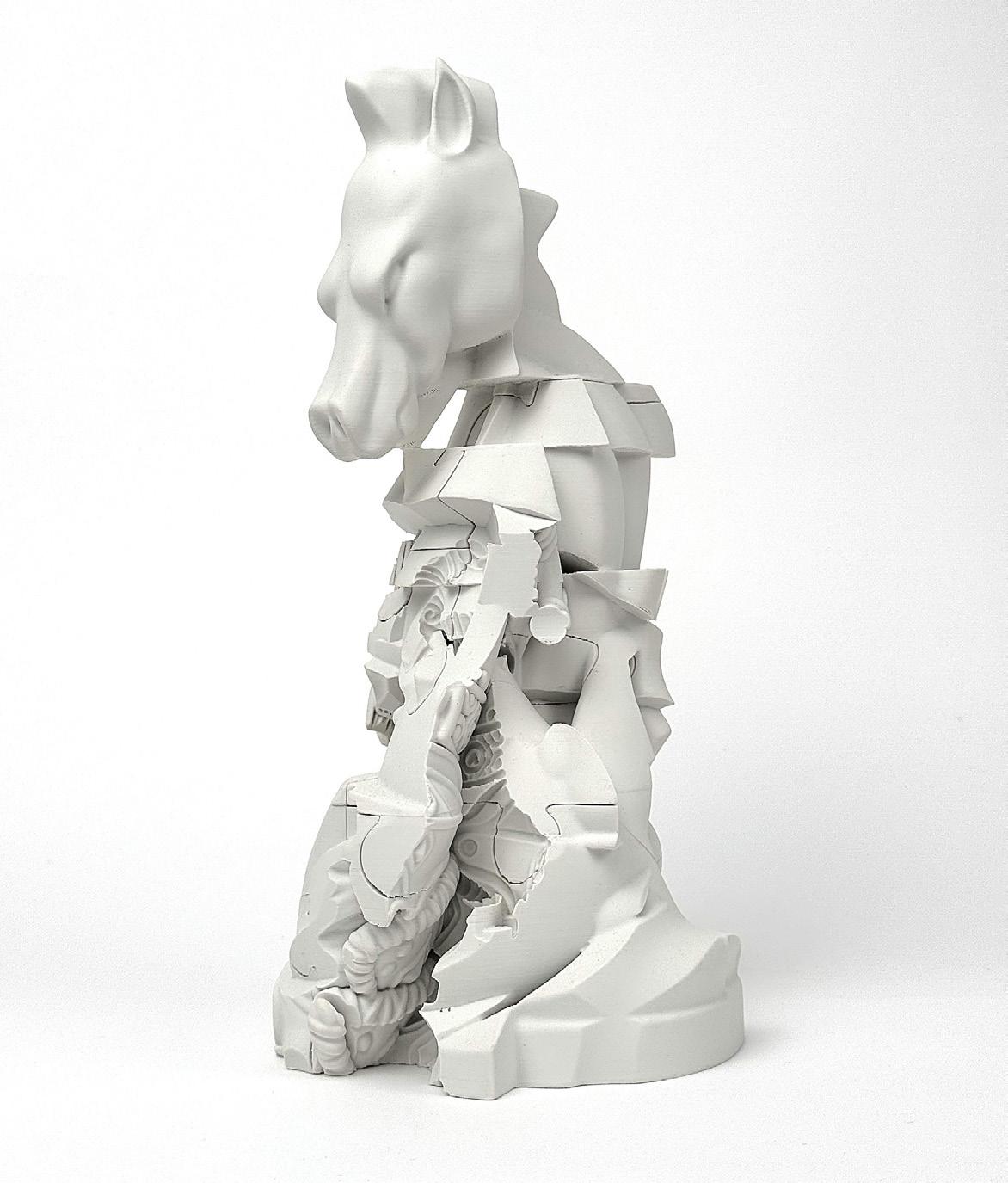
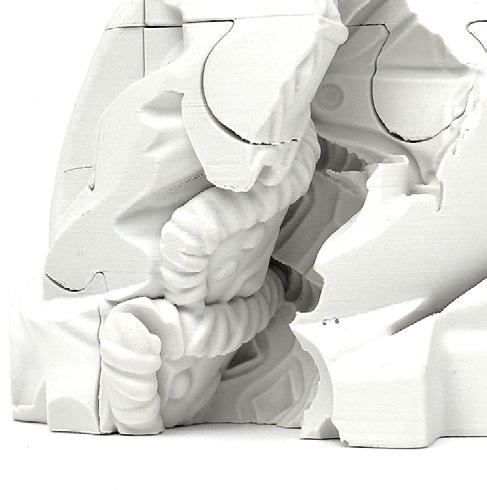
Precise cuts reveal hidden structures, redefining spatial boundaries and exposing new layers of meaning.
Embedding
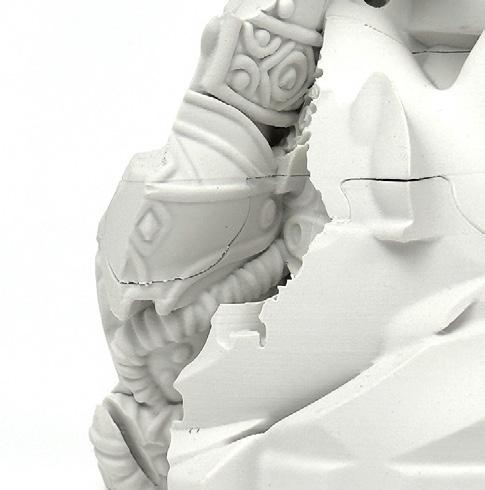
New elements are inserted into existing forms, creating tension, fusion, and recontextualized spatial relationships.
Extraction
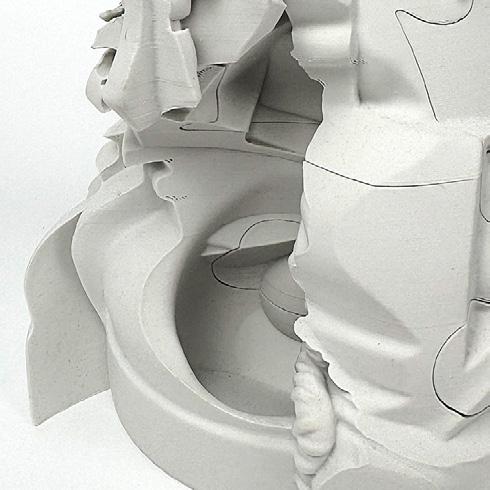
Removal becomes an act of design, carving voids that generate space, absence, and architectural expression.
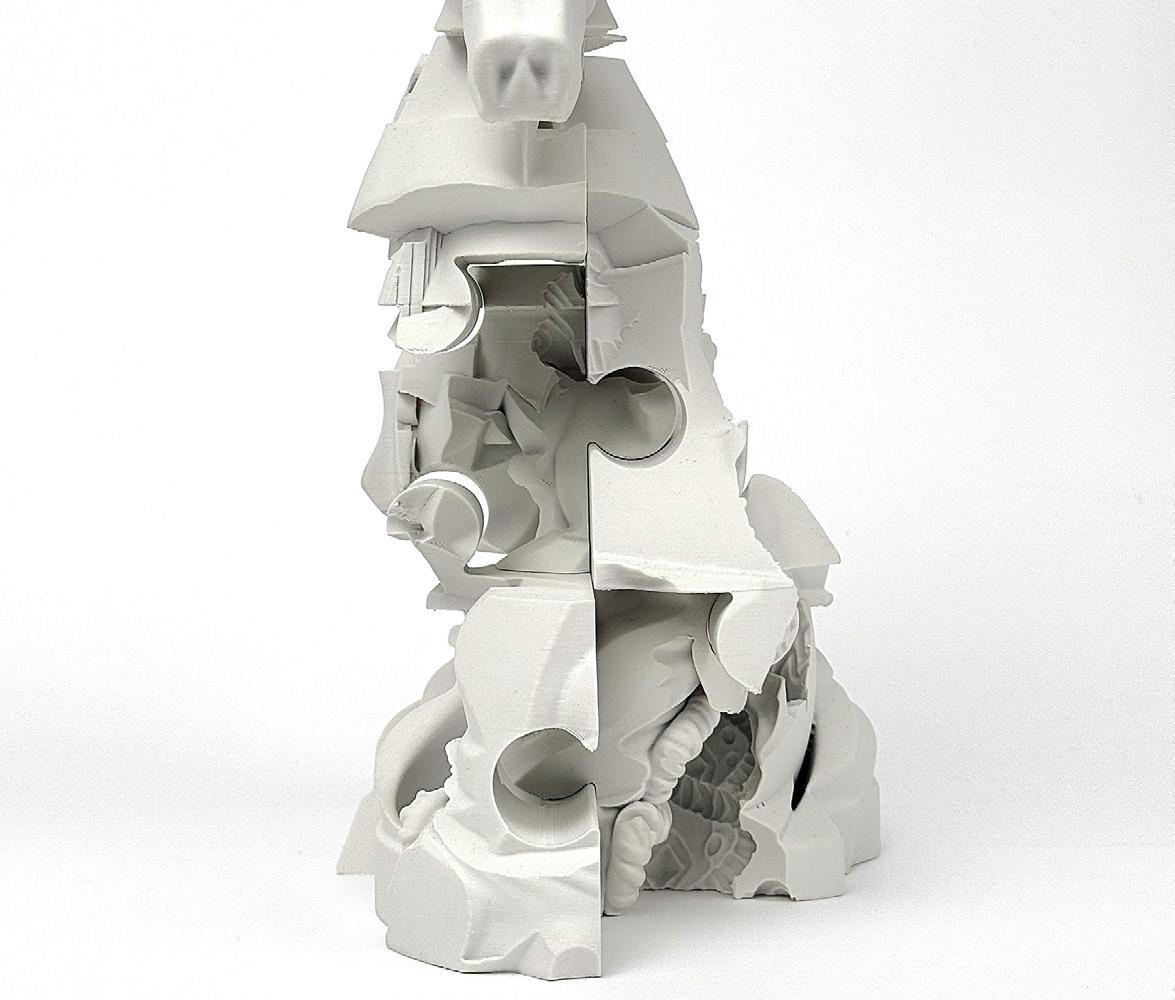
The reconstructed chess set is transformed into a modular puzzle, where each piece is segmented into multiple three-dimensional parts. These components can be freely assembled, disassembled, and reconfigured, breaking away from the fixed roles and hierarchies of traditional chess. By treating each segment as an independent module, the system encourages new combinations that transcend the original boundaries of the game.
More importantly, the modular system allows different players to merge pieces across roles—such as blending elements from pawns, knights, or queens—challenging conventional power structures and visual identity. This open-ended framework promotes collaborative play and reinterpretation, inviting participants to reconstruct meaning through form. The act of assembling becomes a metaphor for breaking hierarchy and embracing equal, creative reorganization.

This project transforms the traditional chess set into a modular puzzle system, where each piece is deconstructed into 3D components that can be freely reassembled. By allowing parts from different roles to be combined, the design challenges the fixed hierarchies and symbolic meanings embedded in the game. Through reorganization, players are invited to explore new spatial logic, collaboration, and reinterpretation, promoting a design approach that values flexibility, equality, and creative freedom.
YEAR: 2024 FALL
CLASS: Adv Materials & Tectonics
TEAMMATE: Luis Enrique Moreno M. / Mohammad Reza Khanpour Ardestani
INSTRUCTORS: Frank Weeks
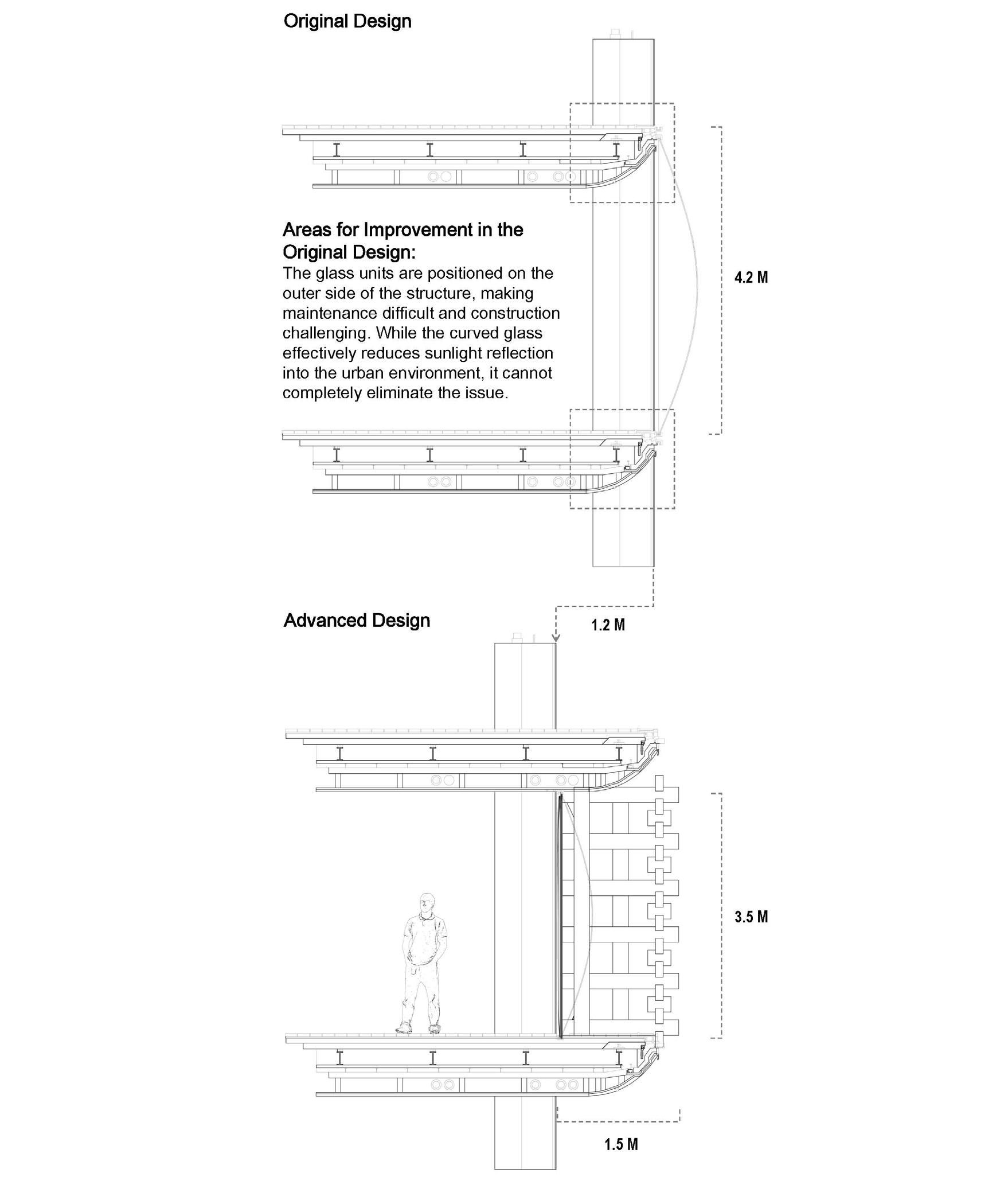
The façade is a vital architectural language that mediates between building and environment. It reflects advances in material systems, sustainability, and modular construction. Today’s façades go beyond surface treatment—they integrate green materials and passive strategies to enhance performance and expression.
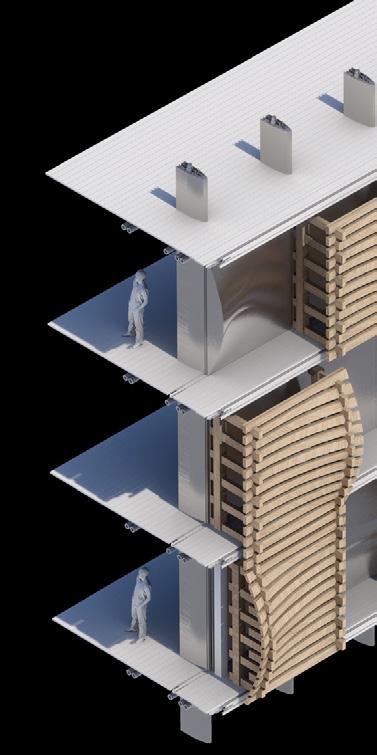
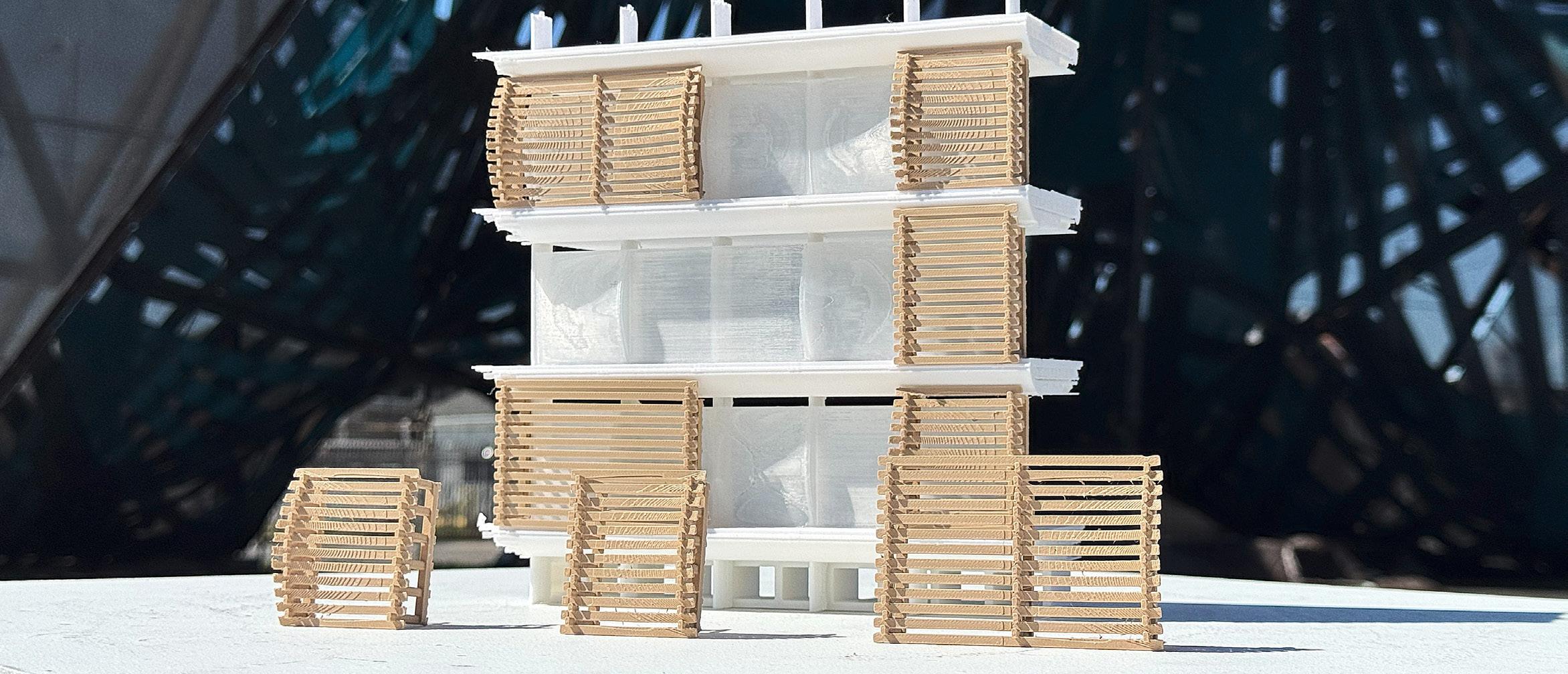
In this project, I introduced a wooden lattice into the original curved glass façade, bringing natural warmth, visual depth, and solar control. The lattice serves as a secondary skin, reducing direct sunlight and improving comfort. The system is designed for simplicity and adaptability, allowing for orientation-based adjustments and functional optimization. This design explores the façade as both a technical solution and a spatial narrative.
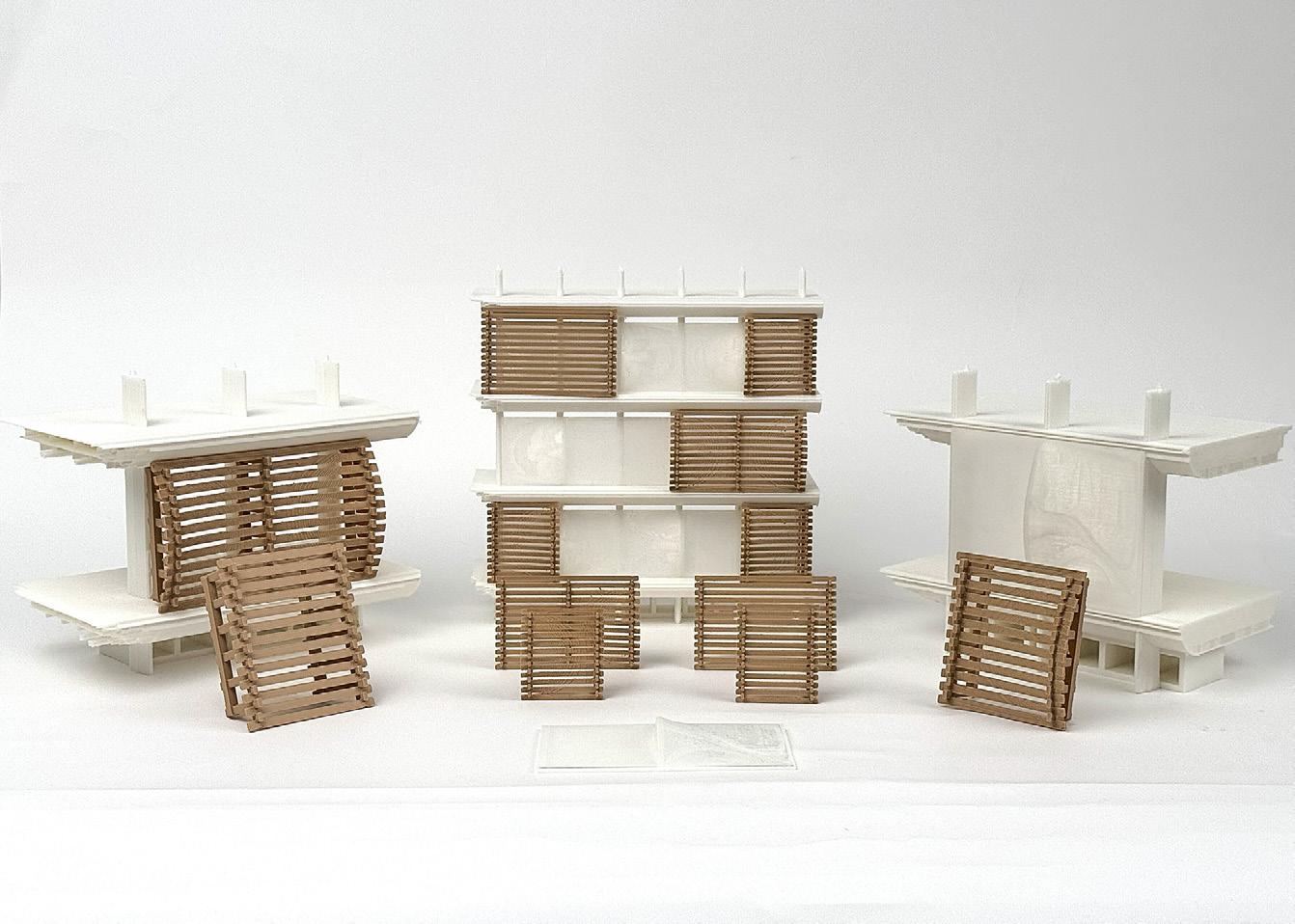
This project explores an integrated approach to façade and roof construction by developing three key architectural systems that respond to both environmental performance and visual clarity. The first is a modular timber lattice applied to a curved glass façade, combining warmth and material depth with a flexible shading system. This unit balances structural efficiency with spatial experience, offering a responsive skin that adapts to orientation and interior needs.
The second and third systems address roof performance and technical integration. A double-layered roof creates a ventilated cavity for passive thermal insulation while improving long-term maintenance access. In parallel, a concealed exhaust system repositions traditional rooftop mechanical units into hidden zones, preserving the purity of the building’s exterior form. Together, these systems offer a comprehensive envelope strategy—one that unifies function, construction, and aesthetics in a sustainable and forward-looking architectural language.
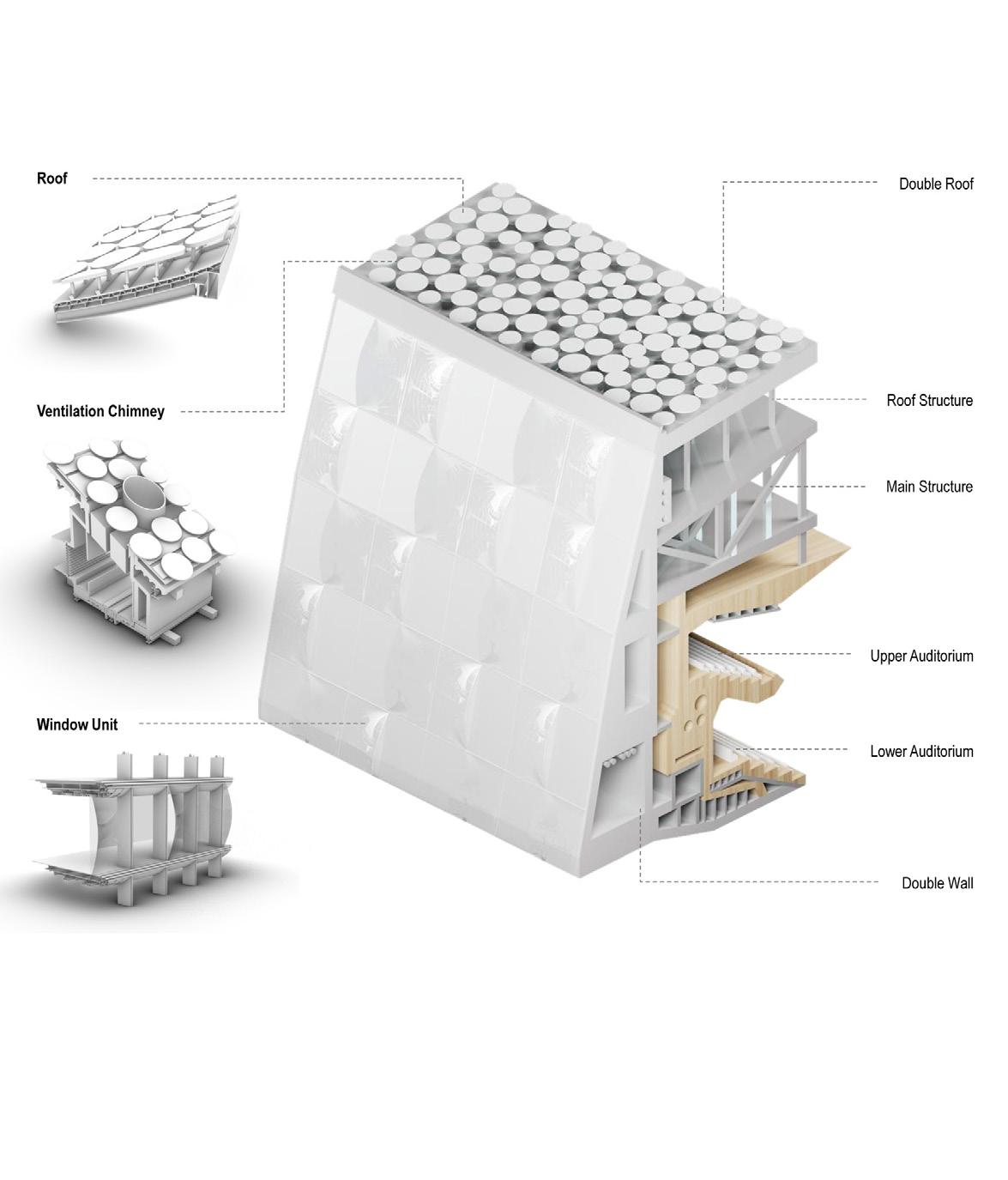
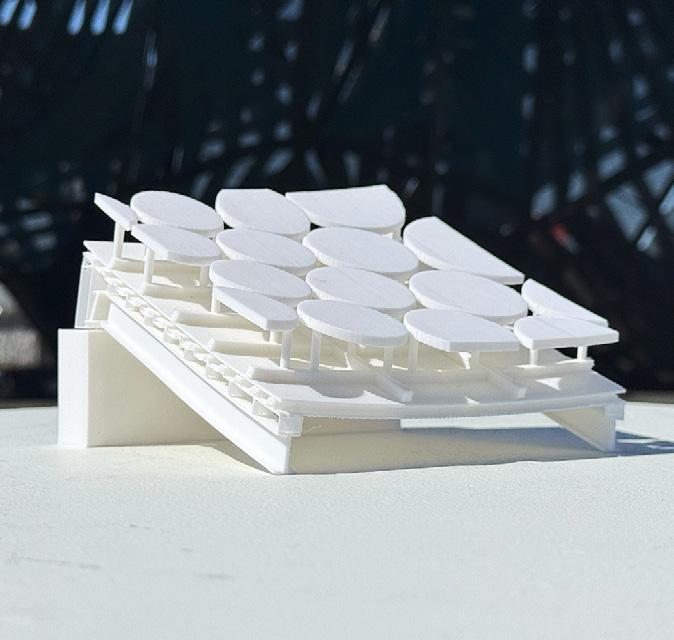
Aluminum Roof System
The roof features hollow, matte aluminum panels arranged in layered cavities for lightweight thermal performance.
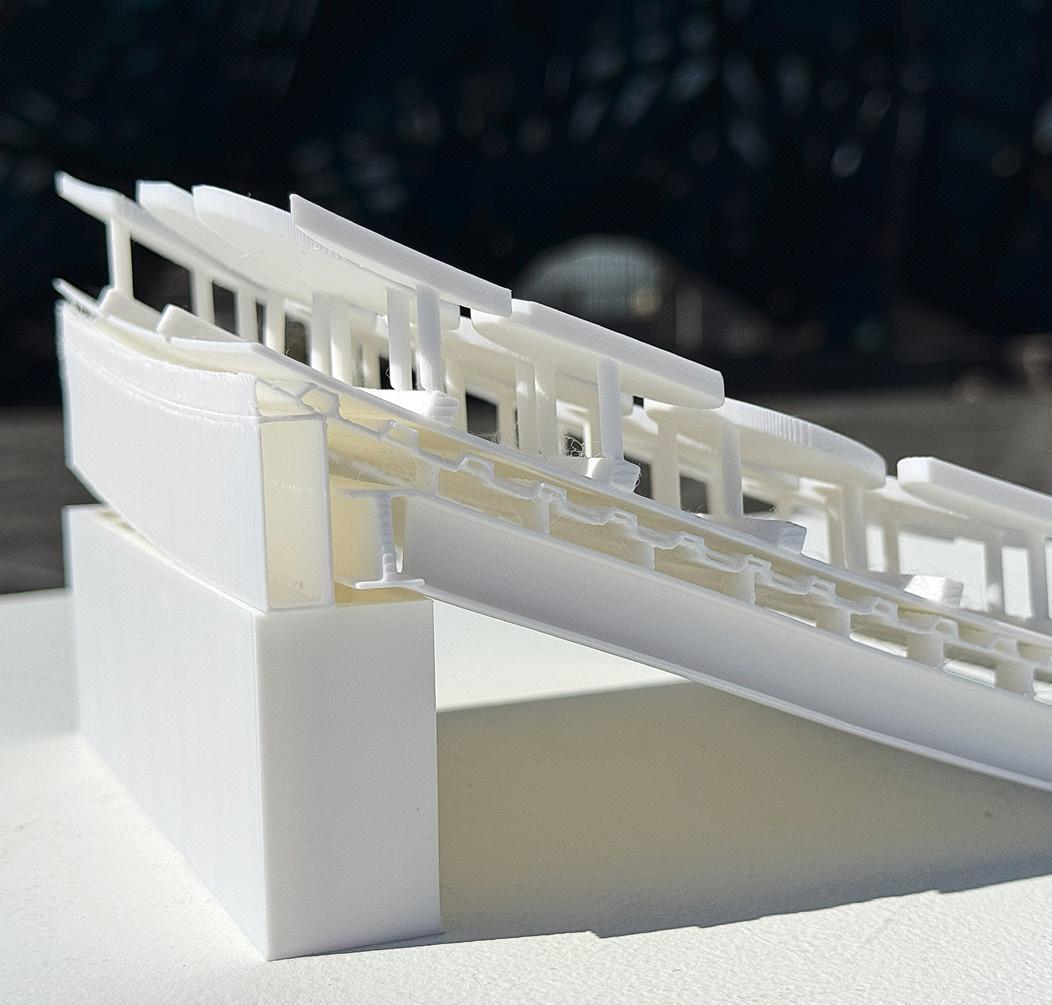
Hollow Insulation Layer
This system reduces radiant and conductive heat while maintaining easy access for maintenance.
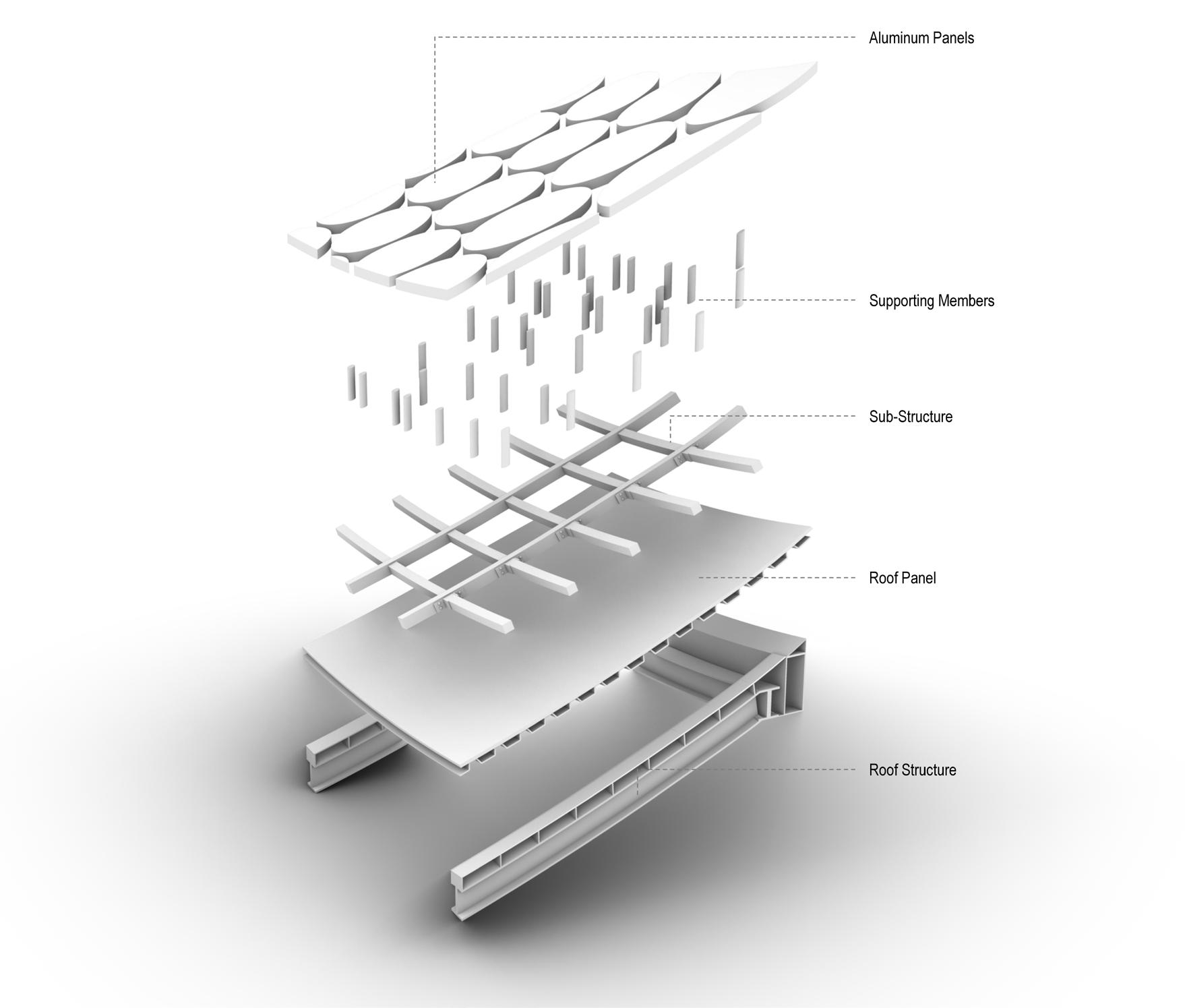
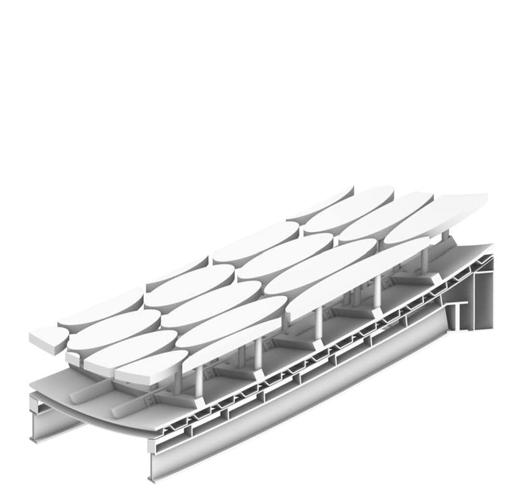
This design uses a layered grille system integrated into the roof to discreetly conceal ventilation openings. By directing airflow through the cavity, the system maintains natural ventilation without exposing ducts or exhaust vents on the exterior. The grille structure is seamlessly merged with the roof geometry, preserving the purity and clarity of the building’s form. This approach balances function and aesthetics, demonstrating careful attention to detail and a commitment to clean, integrated envelope design.
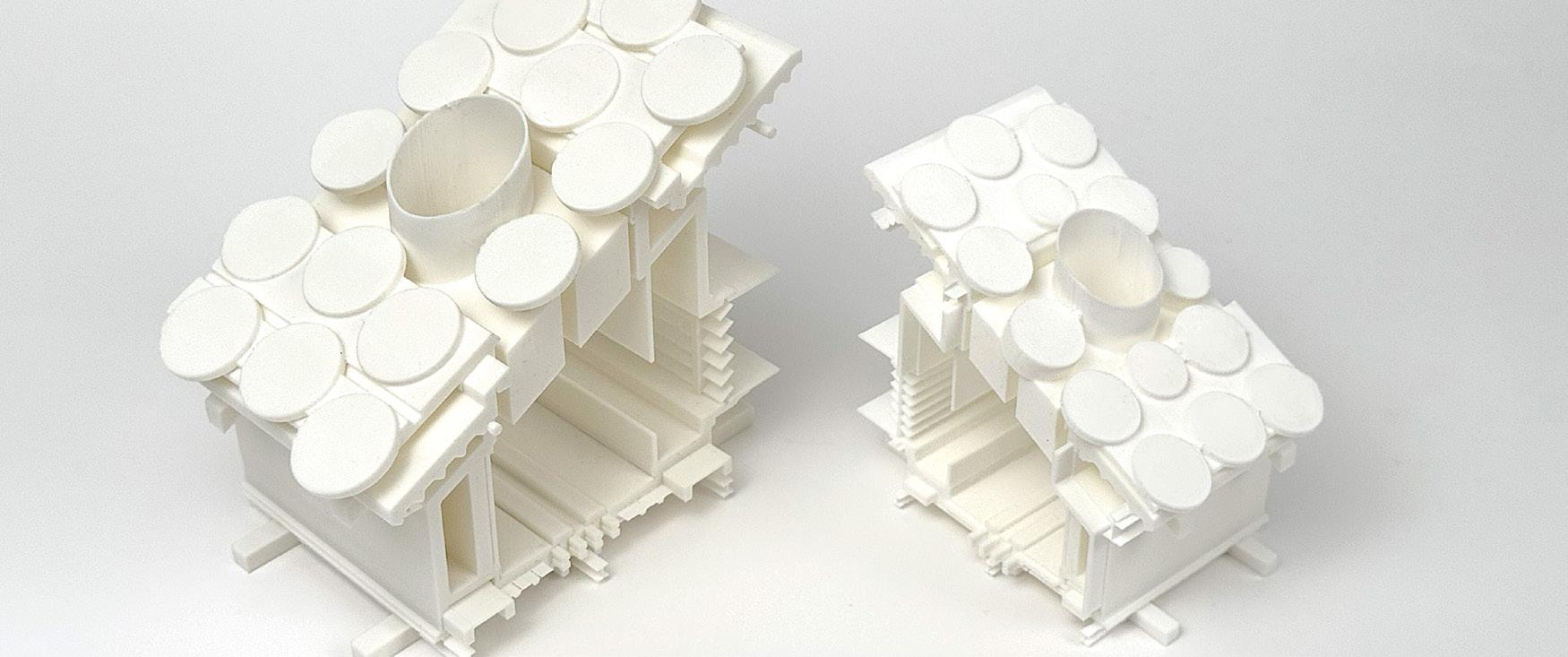
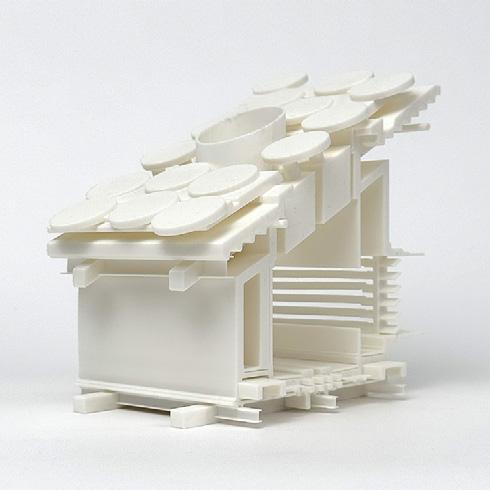
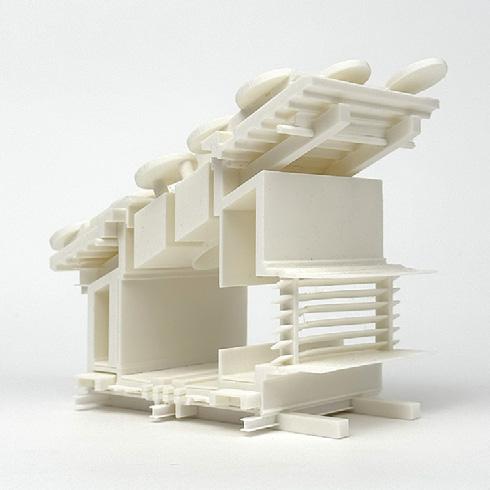
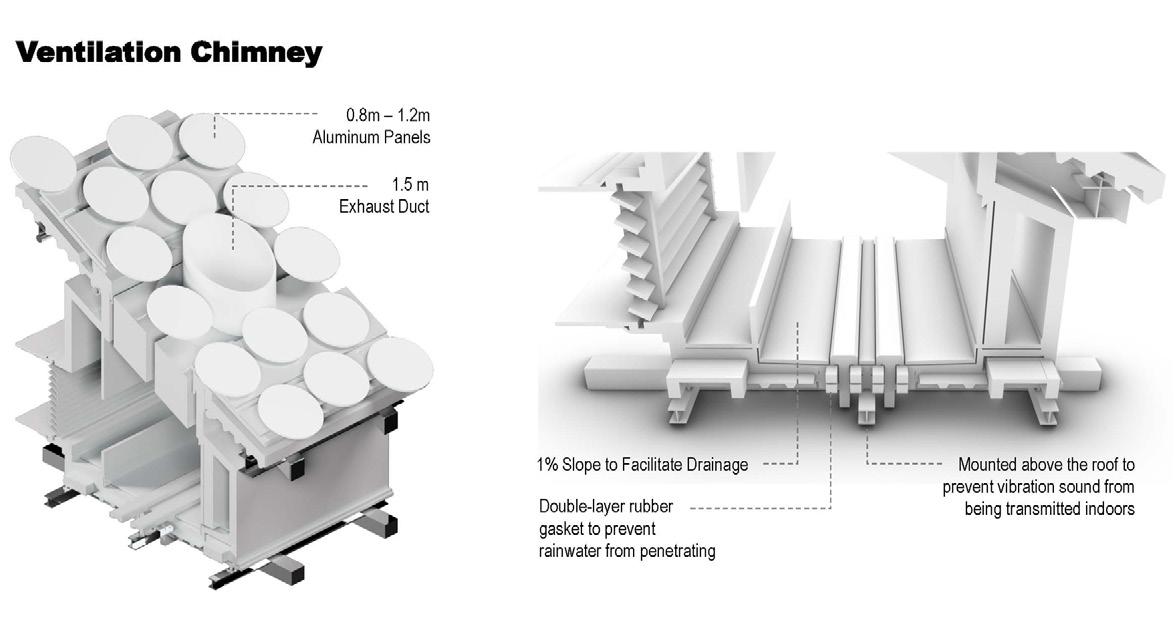
In this design, I focused on integrating the exhaust system seamlessly into the roof. Ventilation ducts are concealed beneath modular circular aluminum panels, maintaining a clean and unified appearance. Key details such as drainage slopes, rubber gaskets, and elevated mounts ensure both functionality and performance while preserving visual clarity.
This design explores a subtle yet essential aspect of rooftop architecture—the treatment of exhaust ducts. Typically, these elements disrupt the visual continuity of a building’s form, protruding as purely functional components with little aesthetic consideration. In response, this project proposes a concealed exhaust duct system that visually integrates with the roof, allowing the mechanical system to become part of the architectural expression.
Design Concept
The exhaust duct is reinterpreted as part of the roof form, eliminating visual clutter from mechanical systems.
Visual Integration
From a distance, the duct blends into the roofline, preserving a clean and cohesive architectural silhouette.
Design Intention
This approach balances function and form, reflecting a commitment to subtle integration and visual clarity in architecture.
The exhaust duct is encased in a custom-designed shell that mimics the material, color, and geometric logic of the surrounding matte aluminum roof panels. Its proportions and surface treatment are carefully calibrated to align seamlessly with the existing roof structure. As a result, from a distance, the duct visually disappears into the roofscape, eliminating visual clutter while preserving the system’s full functionality.
This strategy reflects a broader ambition to dissolve the boundary between utility and design. Instead of hiding technical components, it celebrates their integration— reframing them as contributors to architectural clarity. Through this approach, the project embraces a contemporary architectural attitude that values coherence, restraint, and the thoughtful resolution of detail at every scale.
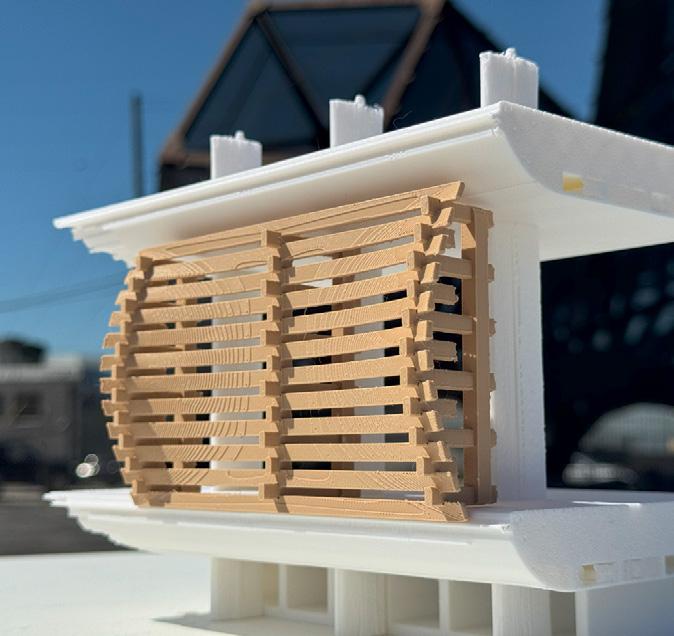
A detailed view showing how the modular wooden elements interlock without metal fasteners, demonstrating the joinery logic and construction clarity.
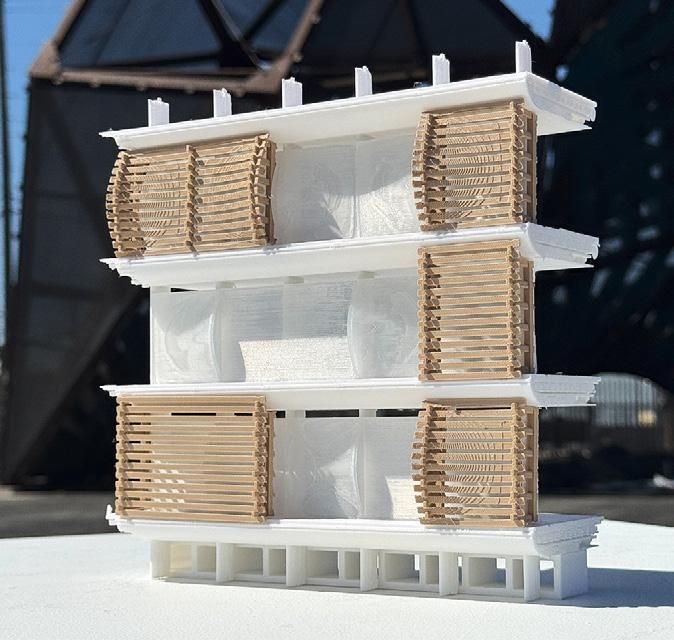
This model highlights the overall integration of the curved wooden lattice with the glass façade, emphasizing form, layering, and spatial depth.

This diagram illustrates the integration of ceiling and façade systems. Pipelines are concealed within the structure, while wooden cladding below echoes the external lattice, achieving spatial clarity and material continuity.
The Curved Wooden Lattice System was designed as a secondary façade integrated into the original curved glass structure. It softens the building’s appearance while improving environmental performance by reducing direct sunlight exposure. The system features modular wooden units that interlock through a traditional joinery-inspired fixing method, eliminating the need for visible metal components. Each wooden element is dimensioned and placed according to the existing glass framework, ensuring a precise and adaptable fit across various building orientations.
To align with the curved geometry of the façade, the design underwent geometric segmentation, allowing for seamless integration without disrupting the architectural language. This strategy maintained the integrity of the building’s form while enhancing its material expression. The result is a layered, flexible, and visually coherent system that improves thermal performance, promotes modular construction, and emphasizes the natural qualities of wood in contemporary façade design.
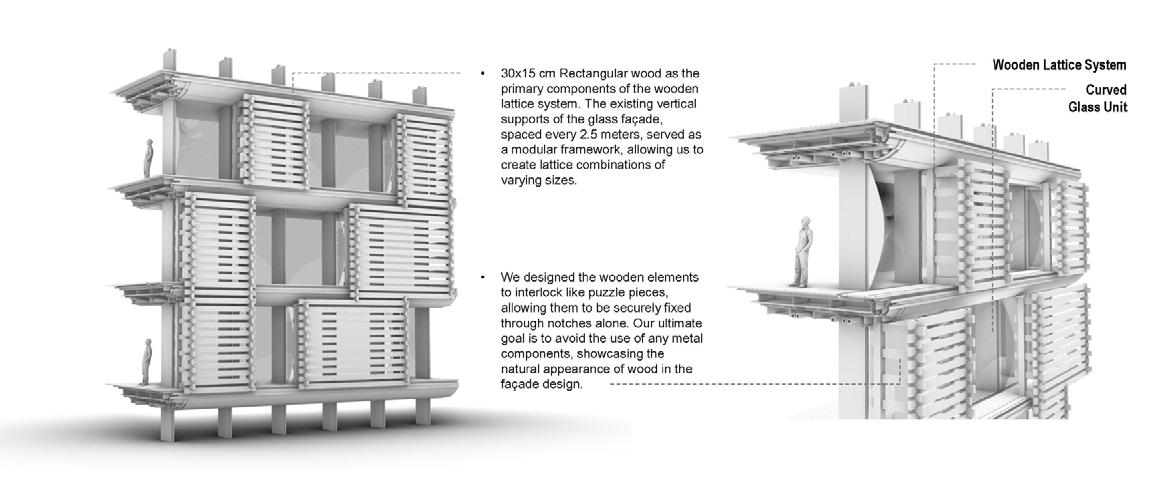
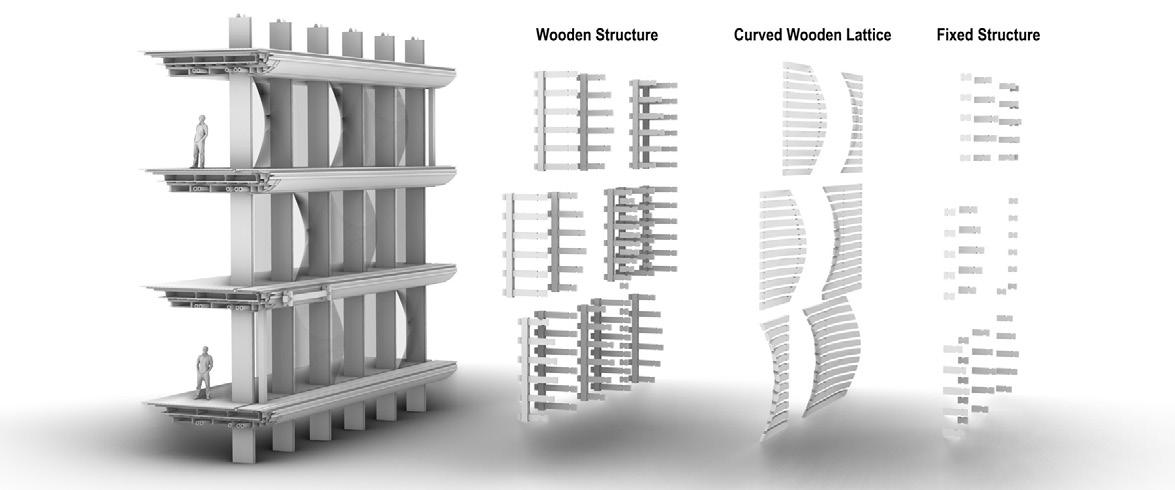
This image focuses on the dimensional logic and connection method of the wooden lattice units. The use of traditional interlocking joinery eliminates the need for metal fasteners, preserving material purity while enhancing the clarity and continuity of the façade design.
This diagram dissects the full façade assembly, showing how the curved wooden lattice connects with the structural frame and recessed balconies. It highlights the layered integration of each component, emphasizing modularity, material coordination, and spatial coherence.
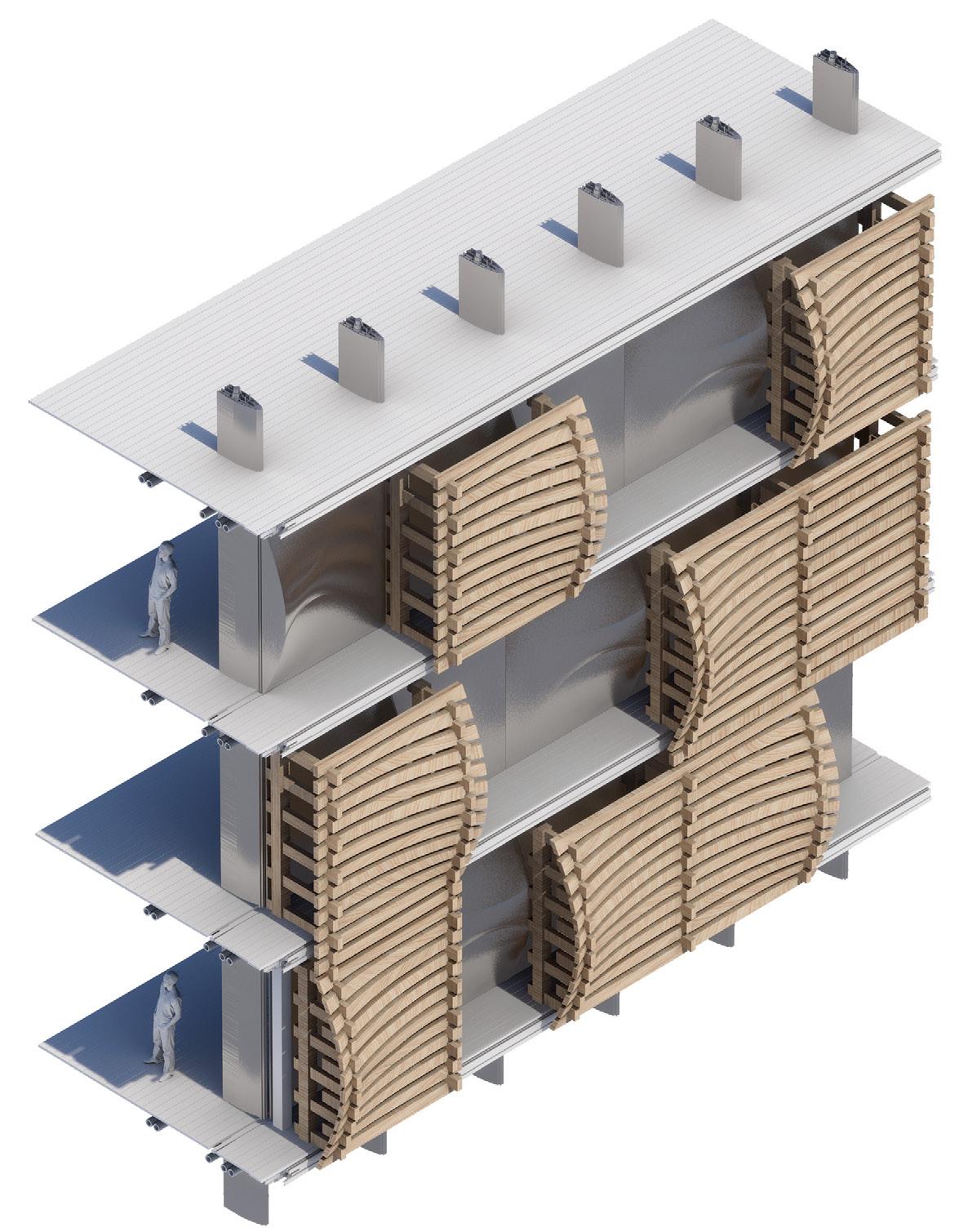
With the advancement of digital fabrication and material technologies, curved timber facades are gaining unprecedented flexibility and expressive potential. Through parametric design and CNC machining, architects can create highly customized curved structures tailored to site conditions, functional needs, and aesthetic preferences. At the same time, modular construction enables these complex forms to be efficiently assembled using prefabricated components, improving construction speed and allowing easy maintenance or replacement. Looking ahead, such timber facades are not only suitable for new buildings but also hold great promise for urban renewal and the transformation of existing structures. Their natural texture and fluid form can seamlessly integrate with aging facades, generating a dynamic blend of old and new while contributing to sustainable, adaptable, and culturally connected architectural solutions.
YEAR: 2024 FALL
CLASS: Adv Str Systems
TEAMMATE: Weiyi Zhen / Cheng Han Yang / Isaac Carpenter / Mohammad reza
Khanpour Ardestani / Michal Larysz
INSTRUCTORS: Matthew Melnyk
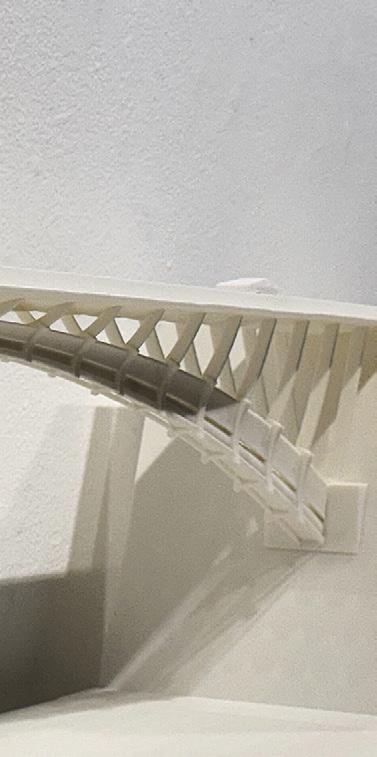
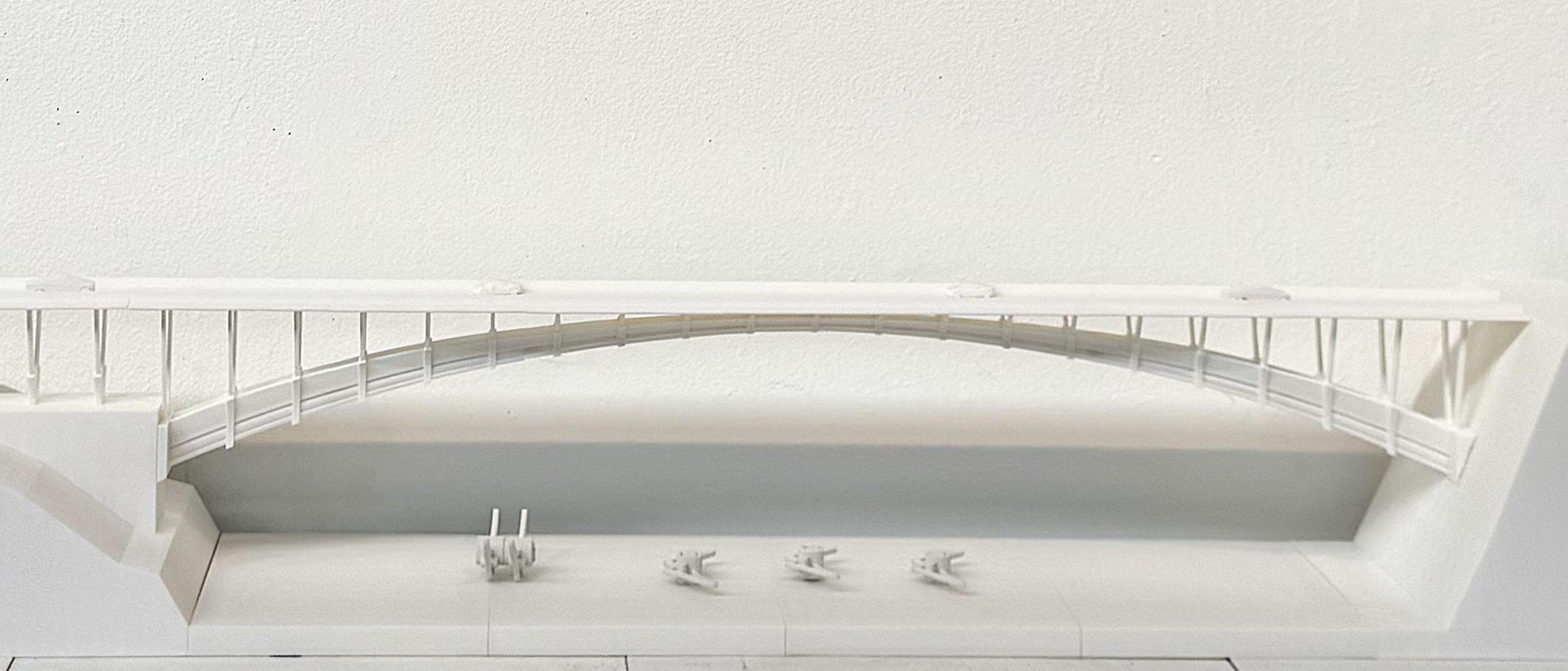
This project explores biomimicry by taking inspiration from the vertebrate spine to design a modular, highperformance bridge. Just as the spine supports and enables complex movement in animals, the bridge adopts an arch-based structure for load-bearing while dividing the span into vertebrae-like segments to allow disassembly and efficient on-site assembly in difficult terrain.
The design emphasizes simplicity and strength, achieving structural efficiency with minimal material. Each module is shaped by structural logic rather than decorative intent, demonstrating how natural evolution can inform engineered solutions. This approach aims to balance conceptual clarity with construction practicality, offering a new vision of form and performance rooted in nature.

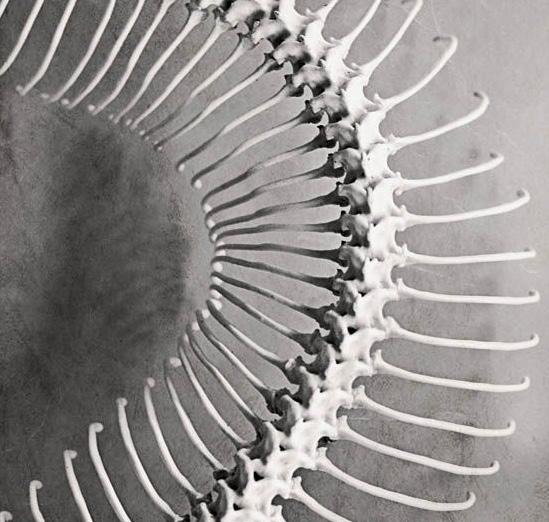
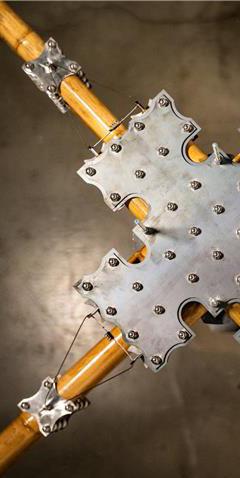
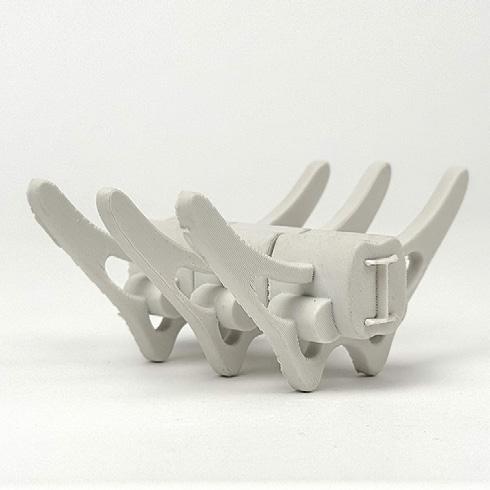
This experimental model simulates the structural characteristics of vertebrate spines. In nature, the spine achieves a balance between flexibility and strength by connecting modular units. Drawing from this principle, the model explores how bone-like forms can be adapted into architectural structures that distribute stress efficiently.
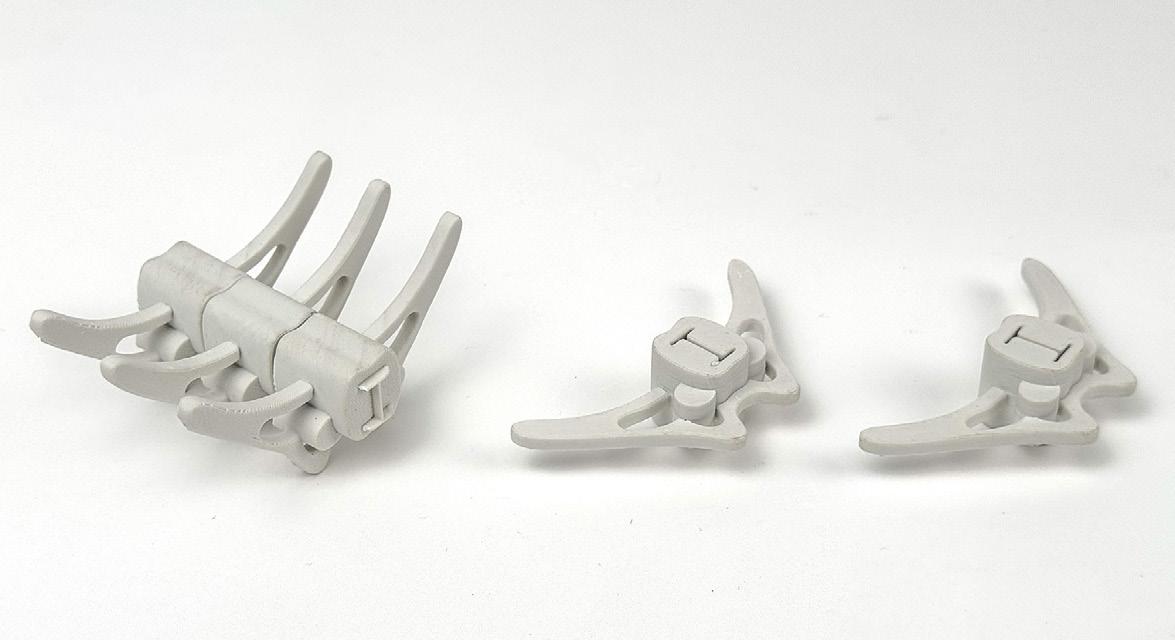
The design consists of interlocking vertebrae-inspired modules that can be easily assembled or disassembled. This prototype investigates how simplified components perform under load, serving as an early-stage study for a biomimetic bridge system based on segmented construction and adaptive structural logic.
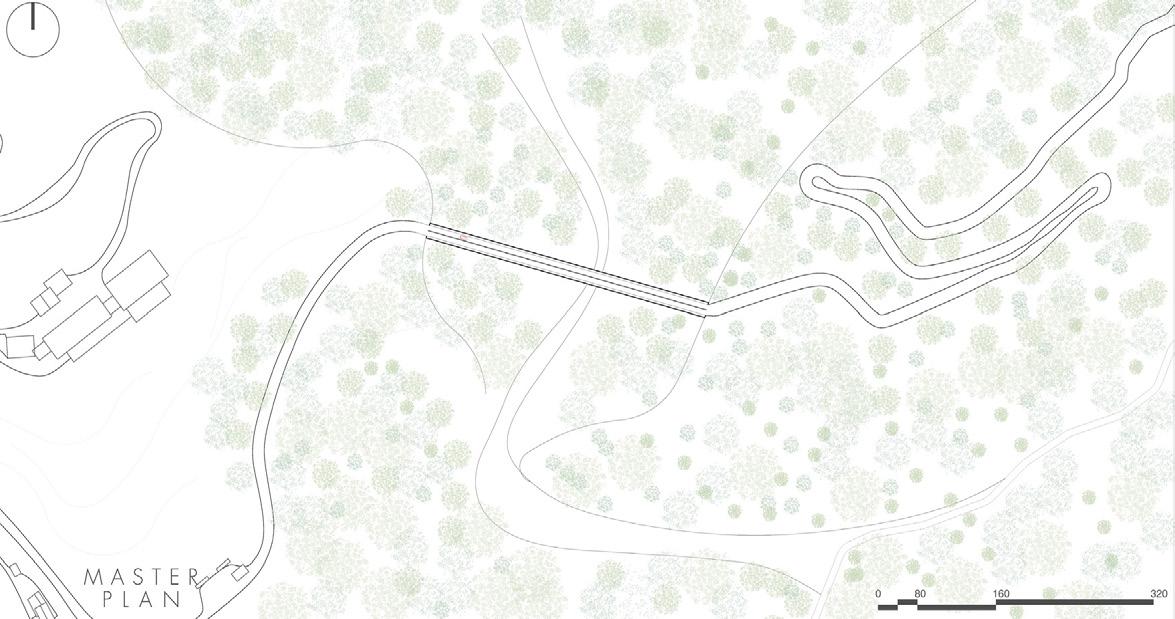
The project site is located in a small, remote village in Switzerland, where narrow roads and limited access pose construction challenges. To address these constraints, we adopted a strategy focused on lightweight, modular, and prefabricated components. The bridge structure is designed to be segmented for easy transportation and rapid on-site assembly, minimizing environmental impact while improving construction efficiency.
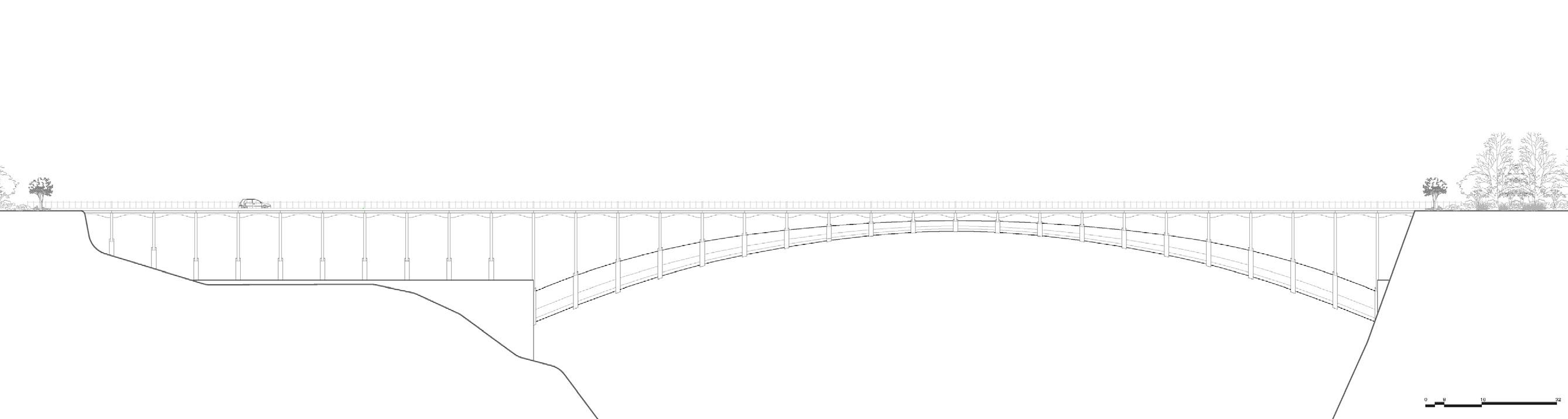
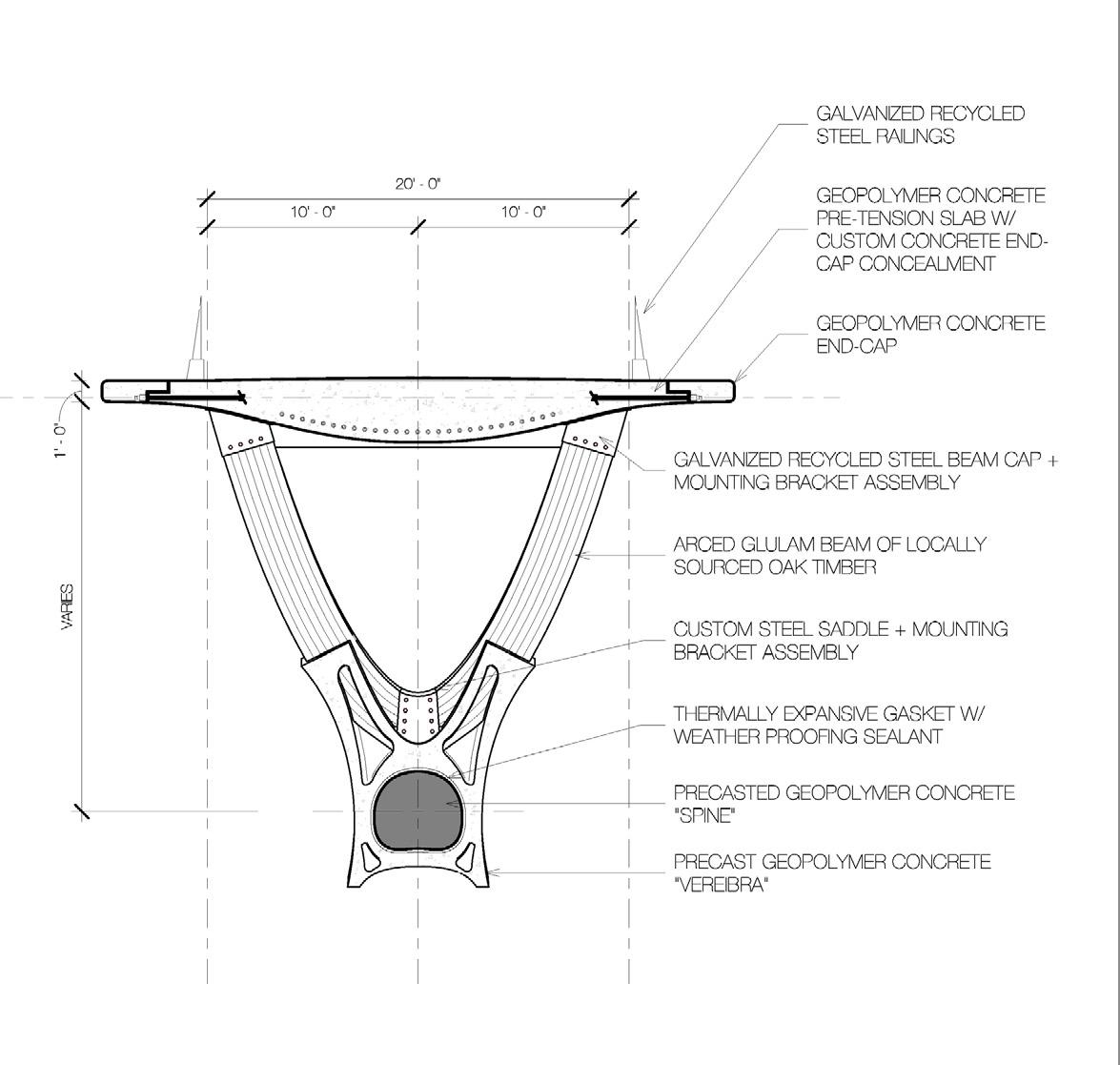
Bridge section showing glulam arches and precast “spine” system inspired by vertebrate anatomy.
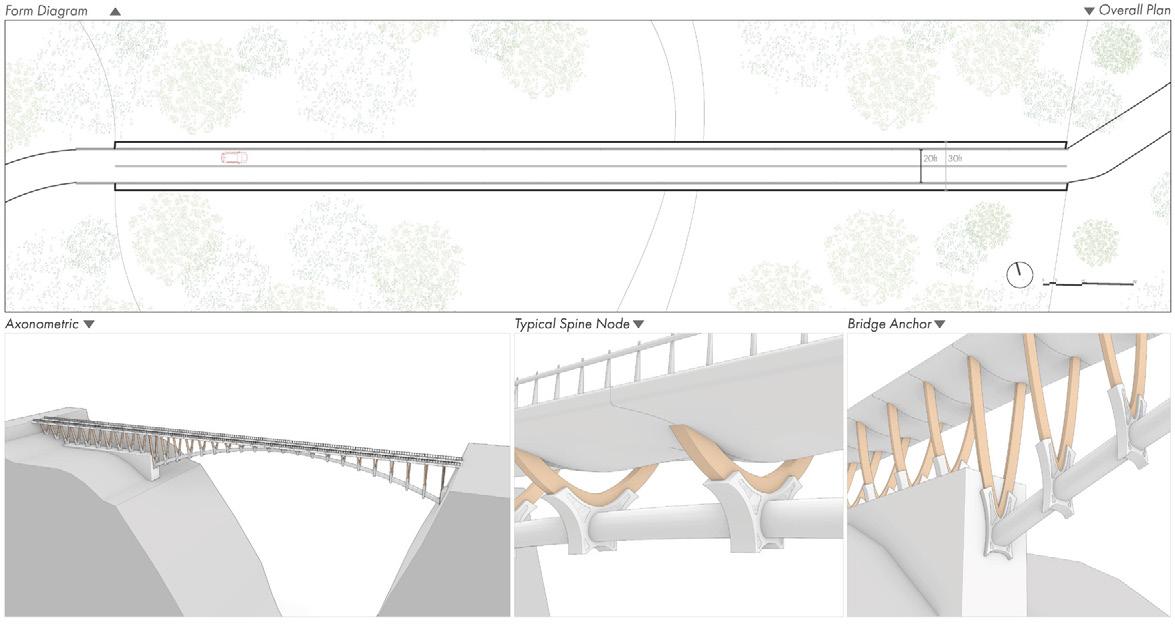
This drawing set illustrates the bridge's integration with the forested site, showing a minimal-impact layout along a narrow village road. The axonometric view highlights the modular system of glulam arches and concrete spine segments adapting to the terrain. Detail views of the typical spine node and anchor show how prefabricated joints connect the lightweight components with both flexibility and structural clarity
This bridge design explores a biomimetic approach by drawing inspiration from vertebrate anatomy—specifically the segmented structure of the spine. The bridge is composed of prefabricated modular components, including precast geopolymer concrete “vertebrae” and “spine” units, paired with locally sourced glulam timber arches. These elements interlock to form a lightweight yet highly efficient structural system that adapts to the steep terrain of a small village in Switzerland. Given the narrow roads and construction constraints of the site, the bridge is designed for off-site fabrication, easy transport, and quick assembly.
The material palette emphasizes sustainability and performance: geopolymer concrete reduces carbon emissions and provides high durability, while Austriansourced oak glulam supports local forestry efforts. The design also minimizes environmental disruption by requiring minimal foundation impact. Details such as custom steel saddles and weather-proof gaskets ensure longevity and precision. Overall, the project merges ecological responsibility, structural logic, and architectural clarity—offering a future-oriented infrastructure that responds to both natural systems and human needs.
Vertebrae Module
Prototype exploring interlocking spine-like units for modular structural connectivity and load distribution.
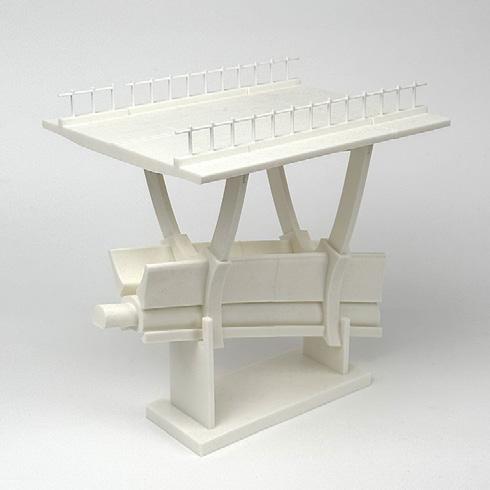
Anchor-to-Spine Transition
This detail illustrates how modular units interface with foundation supports at the bridge’s anchor point.
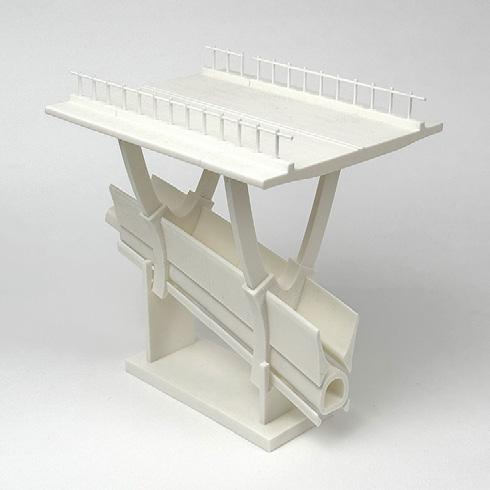
Structural Node Assembly
Model showing how glulam arches and concrete vertebrae combine into a prefabricated bridge segment.
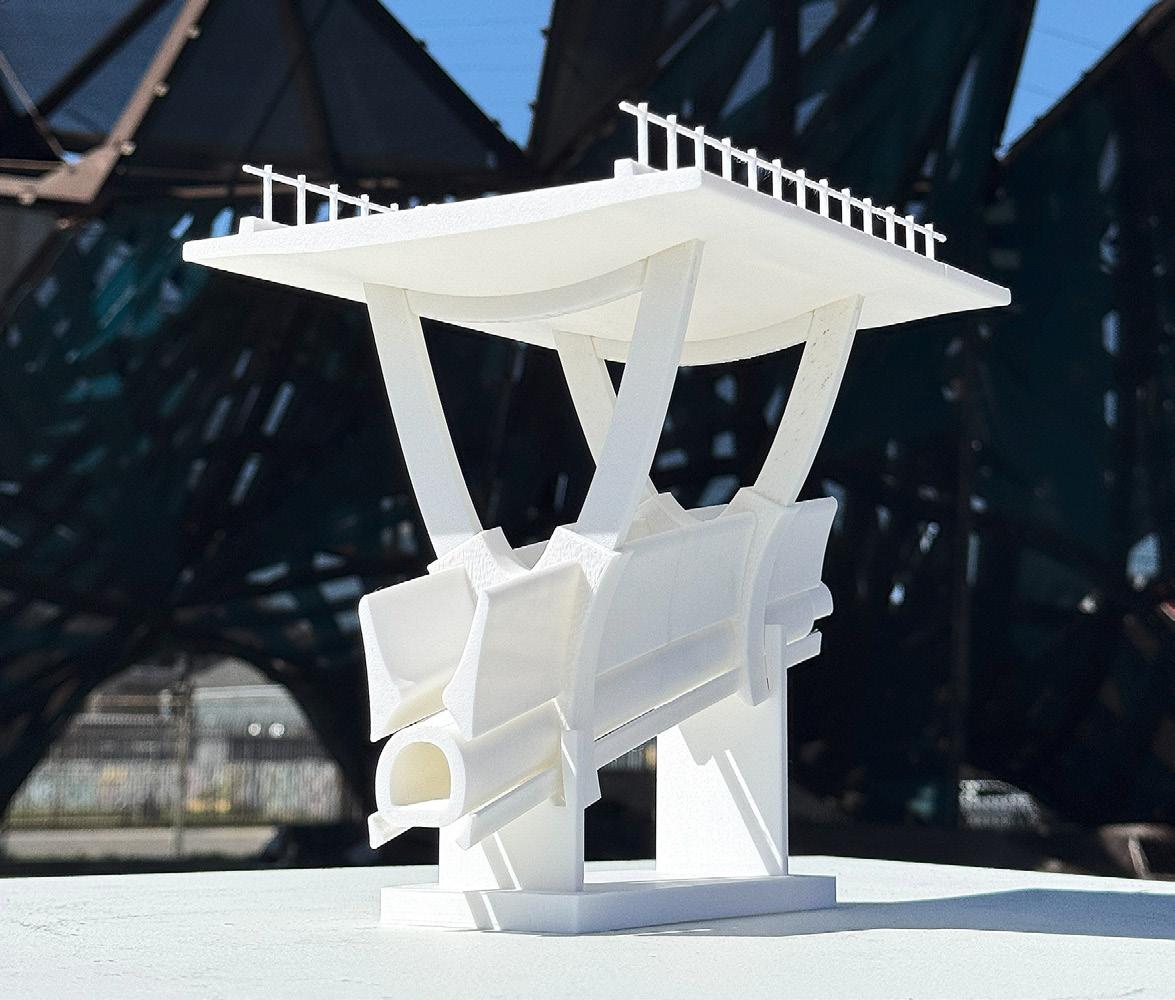
The modular spine-inspired bridge prototype under natural light, reinforcing the design’s clarity and biomimetic logic. The system draws from vertebrate anatomy, transforming spine and rib-like elements into a prefabricated, lightweight structural solution. Combining sustainable materials with site-specific adaptability, the design achieves both ecological sensitivity and construction efficiency—offering a future-forward approach to bridging landscape and structure.
YEAR: 2024 FALL
CLASS: Theories of Cont Arc I
TEAMMATE: Individual Work
INSTRUCTORS: Marcelyn Gow / Erik Ghenoiu
Architectural history and theory are not merely retrospectives on past forms, but lenses through which we observe the evolution of society, technology, and culture. They reveal how architecture has responded to, shaped, and at times anticipated the transformations of human life. In this course, I explored historical precedents and theoretical frameworks to investigate possible directions for future architecture.
From sustainability and spatial perception to critiques of urban power structures, I sought to uncover ways in which the past can inform new architectural questions. Using theory as a tool and history as context, my goal was to construct a contemporary awareness of architectural issues—one that serves as a foundation for reimagining the future.
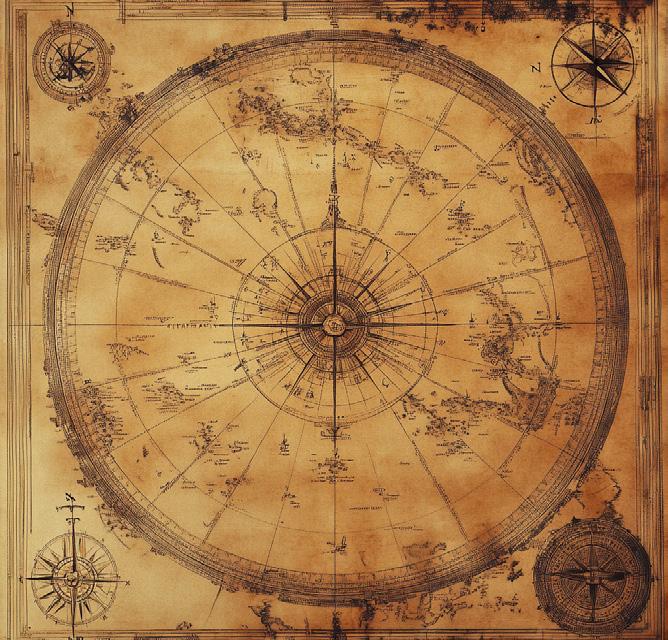
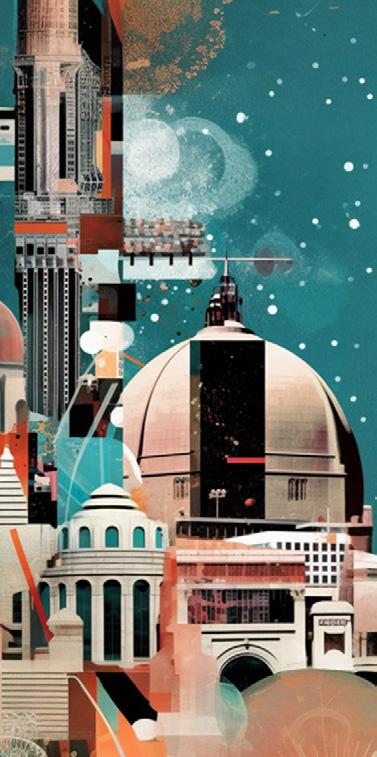
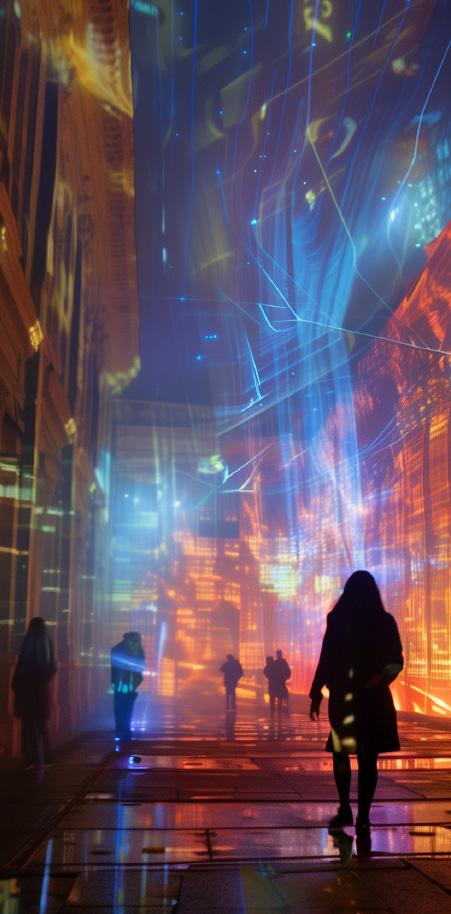
Mapping the Virtual World Referencing ancient navigation charts, this virtual map becomes a digital compass—redefining how we locate ourselves through images.

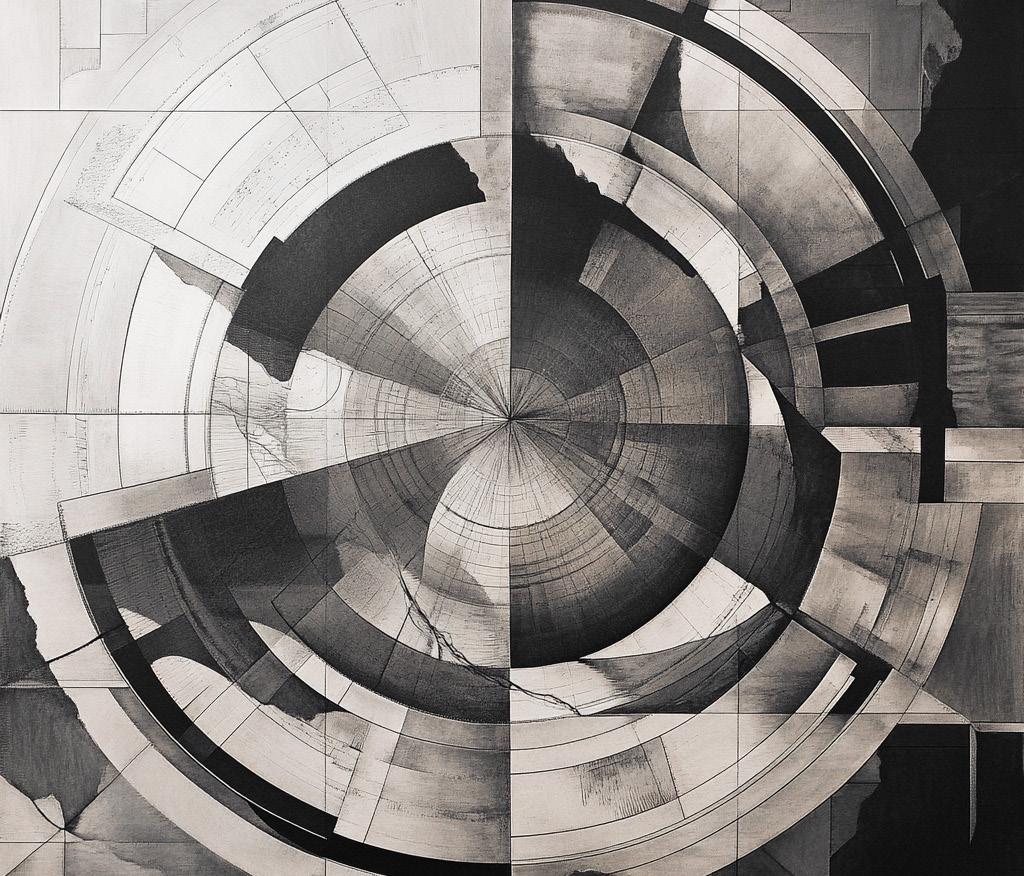
Digital Horizons
An abstract spatial interface of data and geometry, symbolizing how virtual constructs reshape our architectural perception.
I believe the evolution of modern architecture is deeply intertwined with the rapid advancement of technology, digitalization, and crossdisciplinary integration. Architecture is now entering an era of "Multihyphenation" and "Telematics." With the rise of digital tools, architecture is no longer limited to physical form—virtual spaces, interactive media, VR, and AR have become embedded in our daily lives.
For instance, online property viewing has become a norm. Homeowners can now 3D scan their interiors, allowing potential tenants to explore spaces remotely with high precision. When I recently searched for a used car, found most listings featured fully scanned interiors and exteriors, enabling me to examine every detail virtually. Leading furniture brands have also introduced AR-based apps, allowing users to place and measure furniture in real time through their phones, enhancing spatial perception.
In 2021, due to the pandemic, our university graduation exhibition shifted entirely online. As discussed in How to Disintegrate Complete, “Imaging itself is established as the primary fabric of social life…”—images have become the dominant medium for both perception and expression.
Yet, while Telematics enhances efficiency and sensory access, I believe it risks promoting fast-consumption thinking. Rapid information may overshadow deeper reflections on meaning and substance.

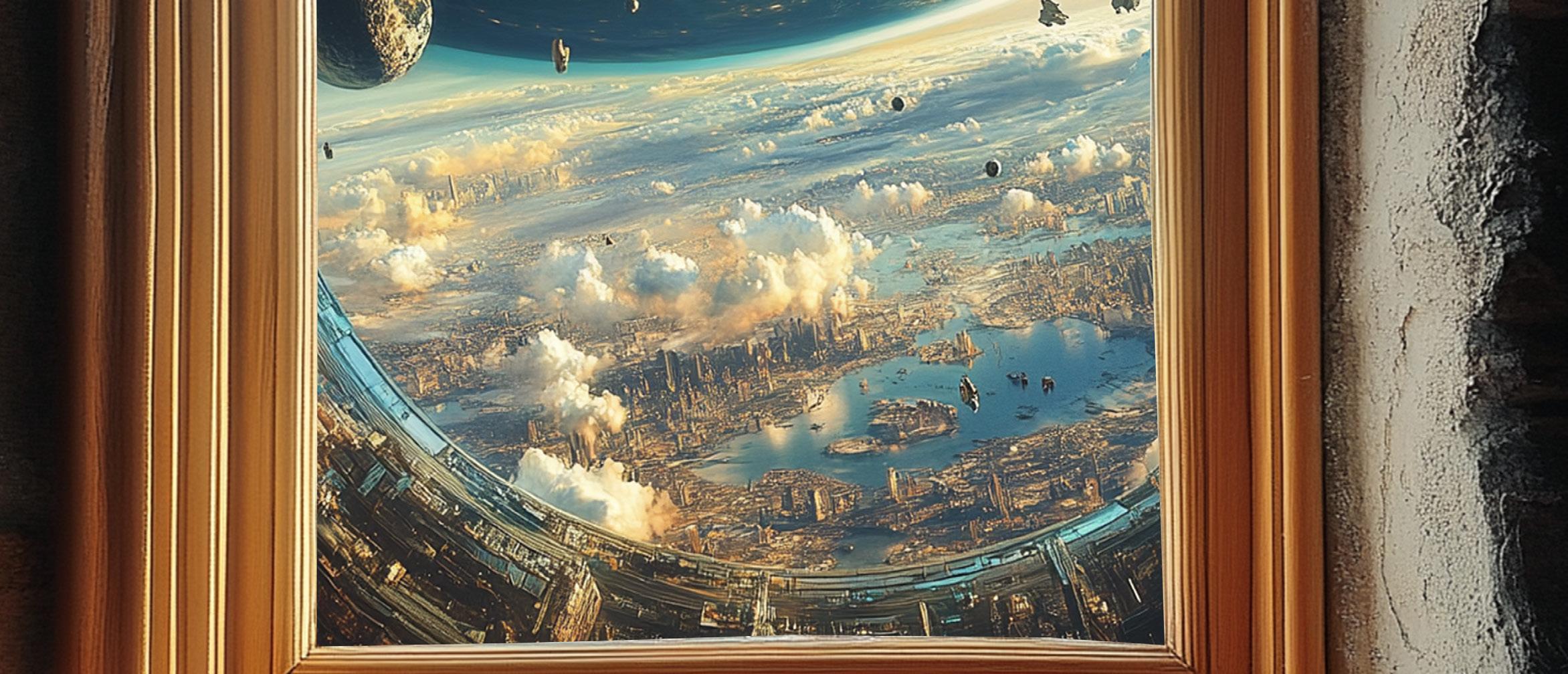
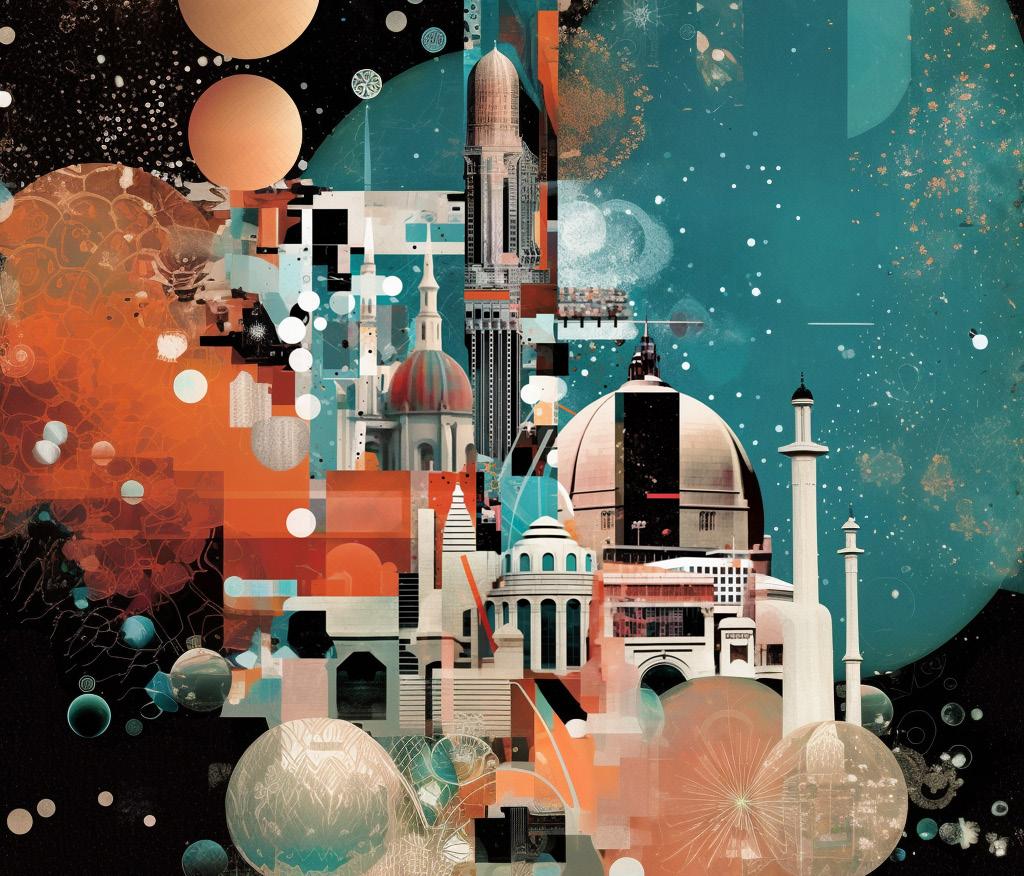
From a distance, Earth is seen under alien watch—surrounded by orbiting ships and scattered space debris.
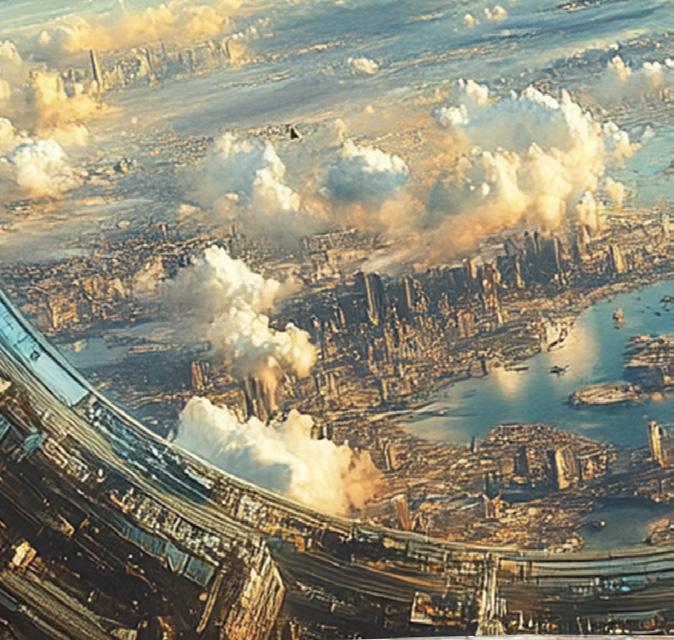
A closer look reveals a planet fully covered in man-made structures, with no trace of green life remaining.
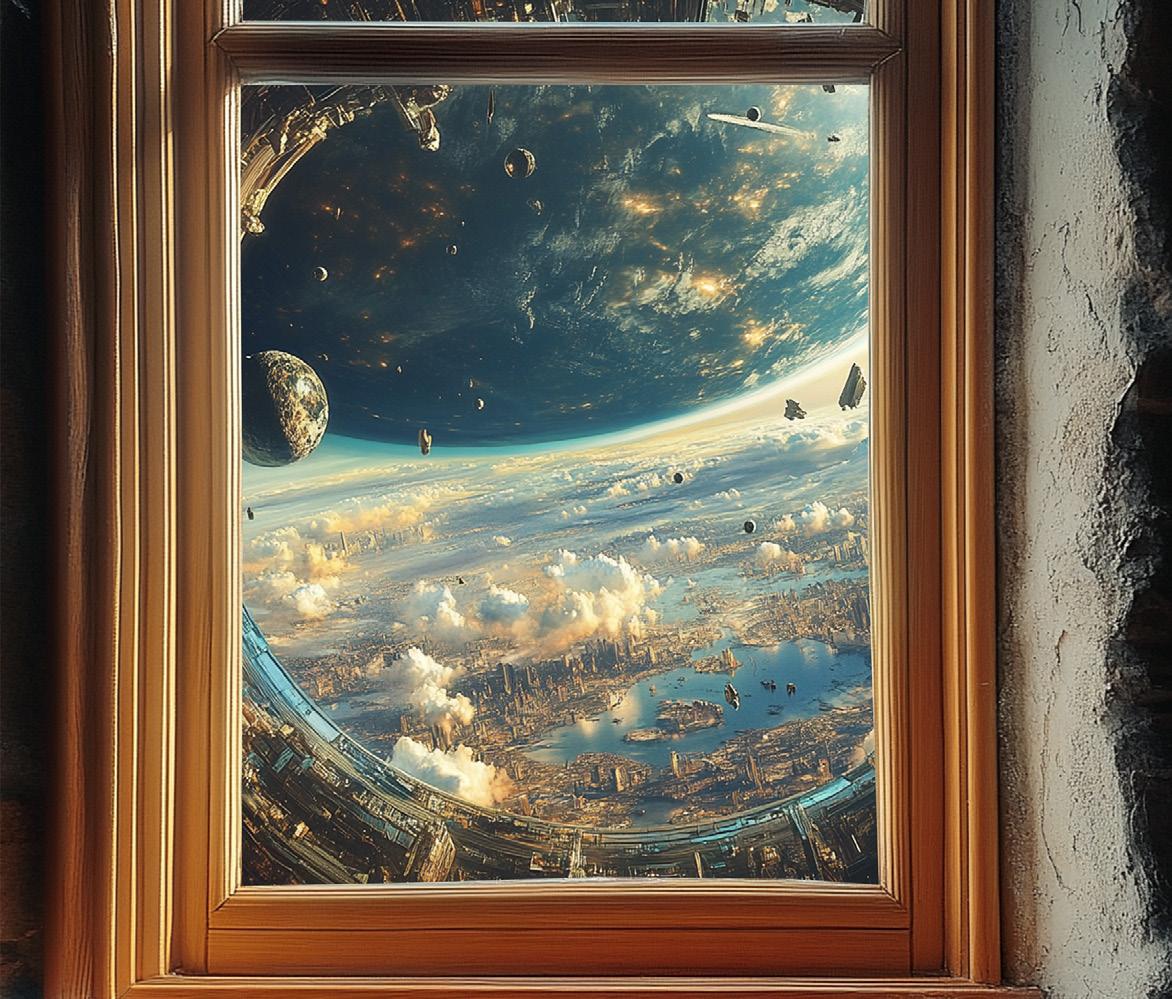
In this design, I imagine Earth 1,000 years from now. By that time, Earth will no longer be suitable for human habitation. You can see that the Earth is full of high-rise buildings, with no green plants, smoke and ruins everywhere. The sky is scattered with space debris, a consequence of the damage caused by human civilization. At the same time, an alien civilization has discovered Earth and is preparing to annex it. Some aliens are exploring the area in metal spherical UFOs.
With this design, I reflect on the impact of humankind's long-term overexploitation of the Earth. Our destruction of the Earth's surface has resulted in the loss of all green plants, and almost all land has been developed into man-made structures. In addition, I also reflect on our eagerness to explore outer space. Are there other aliens looking for us? Will our encounter with aliens be a good thing for humankind, or will it be a disaster?
In this creation, I tried to use the very concrete perspective of the window and match it with the strange, science-fiction scene outside the window to present the effect of "restaging." The outdoor scenery shows a planet full of cities and clouds, with some floating UFOs. Although these elements appear real, they are completely inconsistent with our daily, real-life experience, creating a strange but real feeling, thereby shaping "Unfamiliar Realism."
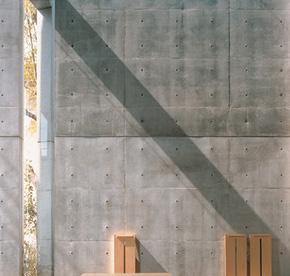
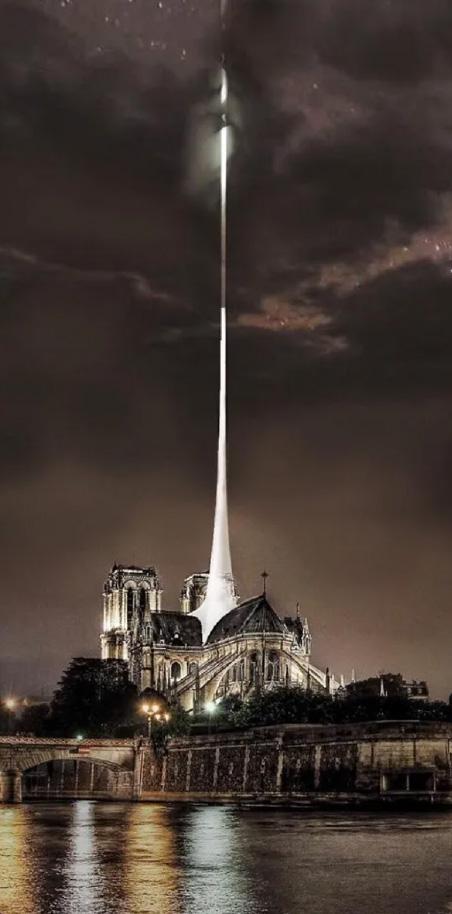
Natural light replaces traditional religious symbols, creating a quiet and contemplative spatial experience.
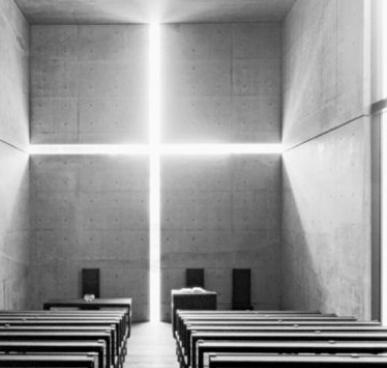
By removing all decoration, light alone forms the cross—an abstract gesture that invites open interpretation.
In this discussion, I explore the concept that abstraction in design or writing can take the form of either subtraction or substitution. Subtraction refers to deliberately removing certain details or definitions to preserve ambiguity and leave room for personal interpretation. Substitution, on the other hand, involves replacing direct messages with hints or symbols, allowing the audience to speculate and engage with the content more imaginatively.
I find this abstract but guided thinking approach very valuable. Rather than imposing a fixed perspective, it encourages readers or viewers to bring in their own thoughts, interpretations, and experiences. This makes the engagement more active and meaningful, stimulating deeper reflection instead of passive understanding.
A strong example of this is Church of the Light by Tadao Ando. In this building, Ando removed all decorative elements, leaving only the most essential spatial and material qualities. The traditional religious cross is not an object, but a void—created by intersecting light through a crossshaped window. Through subtraction and substitution, the design offers a space full of potential meaning. Each person may experience the space differently, shaped by their background and imagination. This, I believe, is the true value of abstraction: it allows architecture to become open, reflective, and deeply personal.
YEAR: 2024 FALL
CLASS: Theories of Cont Arc I
TEAMMATE: Individual Work
INSTRUCTORS: Marcelyn Gow / Erik Ghenoiu
The future of human life will be profoundly shaped by advancements in technology, shifts in climate, and changes in social structures. Smart cities, AI companions, and mixed-reality environments will redefine how we work, communicate, and interact with the world. As climate change intensifies and resources become scarcer, sustainable living will no longer be optional—it will become essential. Architecture and technology will play critical roles in helping us manage energy, optimize space, and adapt to new environmental conditions.
Beyond pursuing efficiency, future lifestyles will focus more on mental well-being and social connection. Humanity will strive to find balance amid rapid change, using innovation not only to build smarter systems but also to create more meaningful, resilient ways of living. In a world full of uncertainties, the ability to adapt and maintain human values will be key to shaping a hopeful future.
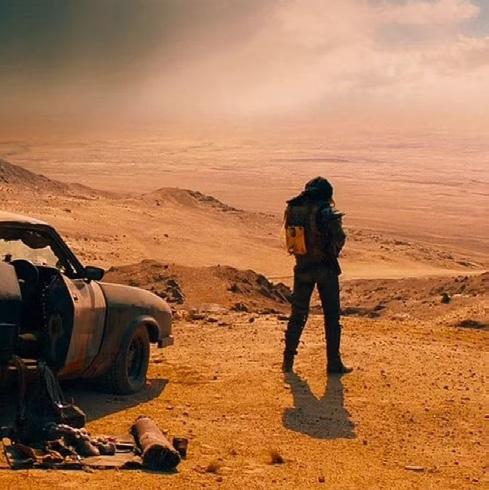
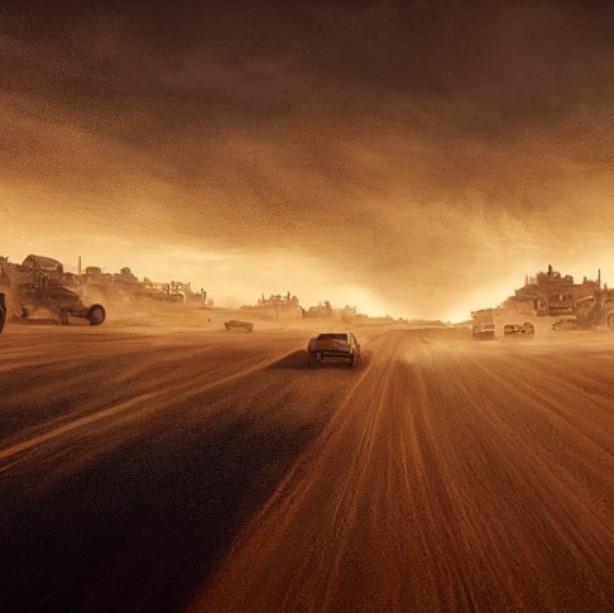
As the problem of global climate change intensifies, we not only need to face scientific and technological challenges but also face massive tests at the cultural, ethical, and political levels. Climate change is making humanity’s relationship with the planet increasingly tense, and geographical narratives are becoming an important tool for understanding and responding to this crisis. Forms of cultural transmission such as film, design, and aesthetics play an increasingly important role in inspiring society and promoting ideas. I cited Rania Ghosn's "Geostories: Another Architecture for the Environment", Neyran Turan's "Another Earth, Another Practice: Rest aging Futures After Carbon", Kathryn Yusoff's "Epochal Aesthetics: Affectual Infrastructures of the Anthropocene", Bruno Latour's "Facing Gaïa" and "Gaïa Hypothesis", as well as the apocalyptic wasteland movie "Mad Max: Fury Road" , to explore how narrative and design can promote social understanding and action on environmental crises.
Climate change affects the natural environment and profoundly affects the structure and behavior of human society. "Geostories" points out: "The environmental crisis can be seen not only as a crisis of the physical and technological environments; it is also a crisis of the cultural environment—of the modes of representation through which society relates to the complexity of environmental systems."
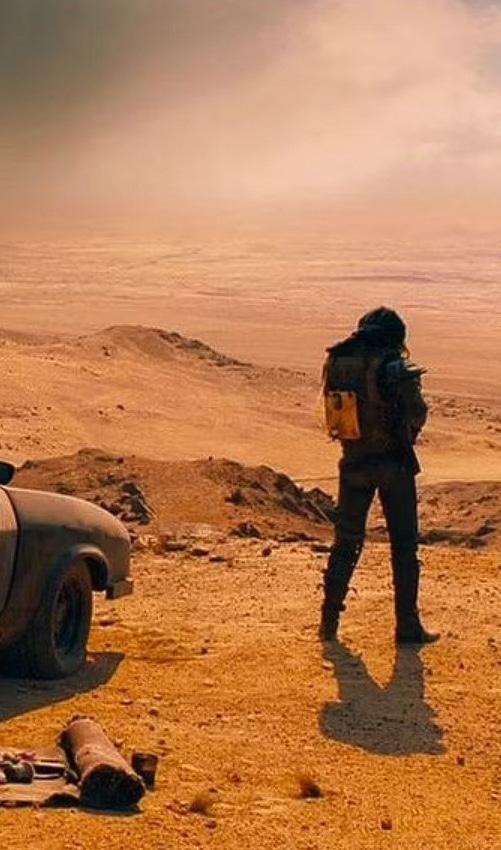
To me, the movie "Mad Max: Fury Road" is a prime example of cultural storytelling. The film depicts a future world of resource depletion and climate collapse, where human society falls into anarchy and resources become the most precious luxury goods. The film combines science fiction and apocalyptic scenarios and reflects the story of mankind's struggle for survival in the face of extreme climate disasters. The desert scenes in the movie symbolize a resource-depleted Earth, as mentioned in " Another Earth ": "In reimagining the technosphere, consider a color. A tone of orange, which the CMYK color model defines as zero percent cyan, 50 percent magenta, 100 percent yellow, and zero percent black. Due to the smoke from colossal wildfires, this is the color of the sky that many people wake up to these days, worldwide." Science fiction novels and movies use visual enhancement techniques to make the audience more immersive, guide us to explore situations that have not yet happened but may face us, and provide new ways to think about future life.
The competition for resources and violence in Mad Max: Fury Road illustrate the worst consequences of climate change. If we ignore climate change, the future world may look like a desert in a movie, filled with plunder and a struggle for survival. There is a sentence in the movie that left a deep impression on me: "Water is life. Scenes like this remind us that if we don't take action, the earth's resources will not be able to support future human society."
I believe that many human development behaviors are closely related to the intensification of contemporary extreme climate, such as the catastrophe of forest resources and the increase in global temperatures. Bruno Latour's "Gaïa Hypothesis" provides an important perspective for understanding the relationship between humans and climate change. He believes that the earth is a selfregulating system, and climate change and environmental collapse will inevitably result when human behavior destroys this balance. "Gaia is no longer indifferent to our actions!"
The scene in the movie "Mad Max: Fury Road" is a concrete expression of "Gaïa Hypothesis". The movie's desolate scenes and lack of resources result from mankind's excessive consumption of the earth's resources. Such an apocalyptic scene is a fictional prophecy and a criticism of the uneven distribution of social resources. In the current reality, climate change has exacerbated global inequality, especially in water and food distribution, which strongly echoes the situation in the movie.
"The intricacies of systemic injustice and climate emergency call for unconventional approaches to help us see differently and to make sense of the collision between the quotidian and the planetary." This reminds us that climate change is a technical challenge and a problem related to human society. As far as I’m concerned, we need to reexamine the relationship between humans and the earth and use some specific narratives and designs to awaken people's attention to environmental issues and inspire action to change this status.
Beyond narrative, design, and aesthetics also play an important role in combating climate change. I believe that design focuses on seeking innovative ways to solve future challenges constantly. Therefore, designers should continue to explore and promote progress, face unsolved problems, and look for new possibilities. Rania Ghosn highlights how architecture and design can help humans reunderstand their relationship with the earth. She states: "Design must not be to stop inventing, creating, and intervening- designing! "
The visual style of the movie "Mad Max: Fury Road" is a striking example. The film uses strong visual storytelling to visualize the consequences of climate catastrophe, allowing viewers to feel the threats posed by climate change truly. I like the impact and influence this visual technique brings. It makes it easier for the audience to integrate into the scenes in the movie, thereby increasing the rendering power of the movie. The director often creates a hopeless atmosphere in this type of film that depicts future ecological catastrophes. I think this may be a reminder from the director to the audience and has a warning effect.
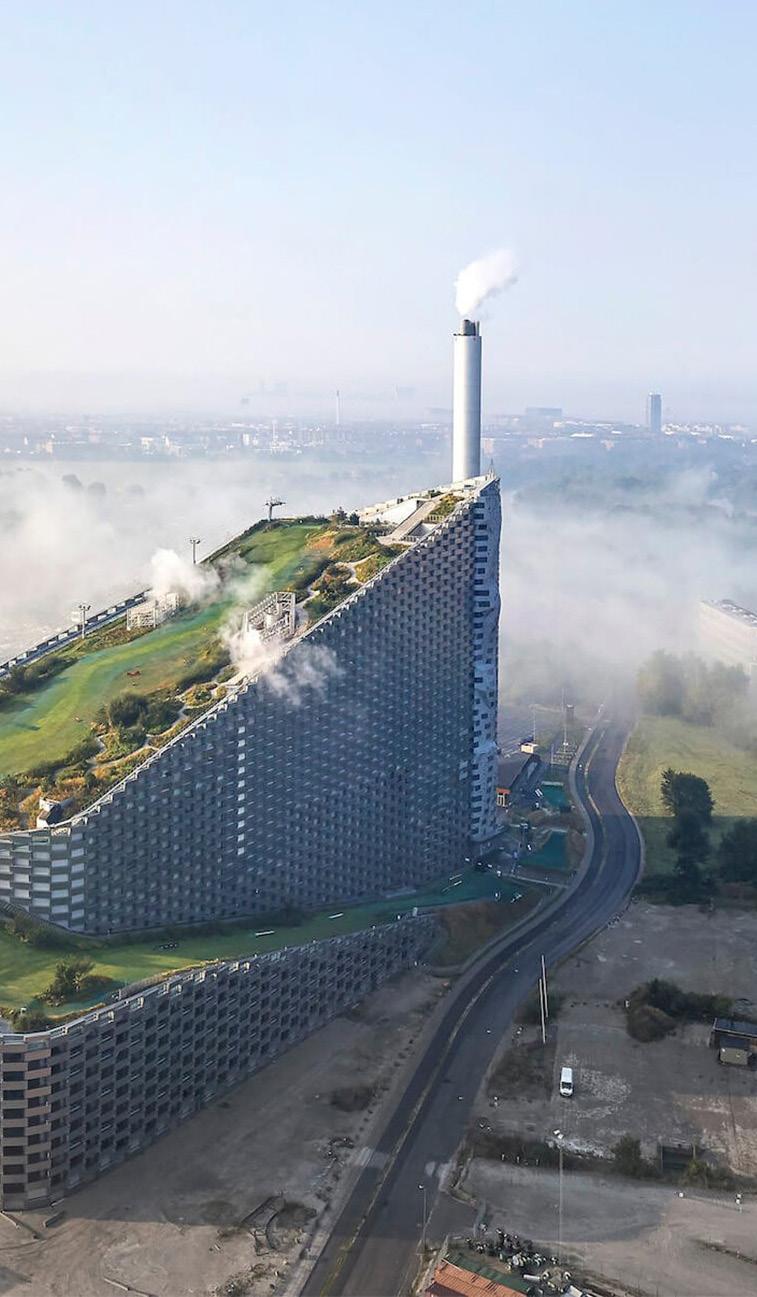
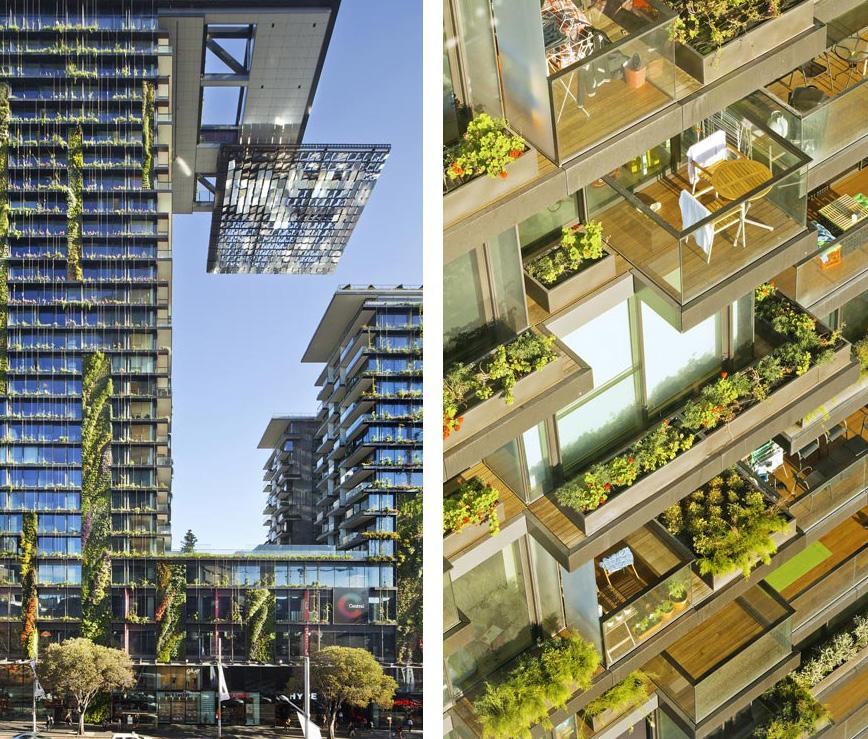
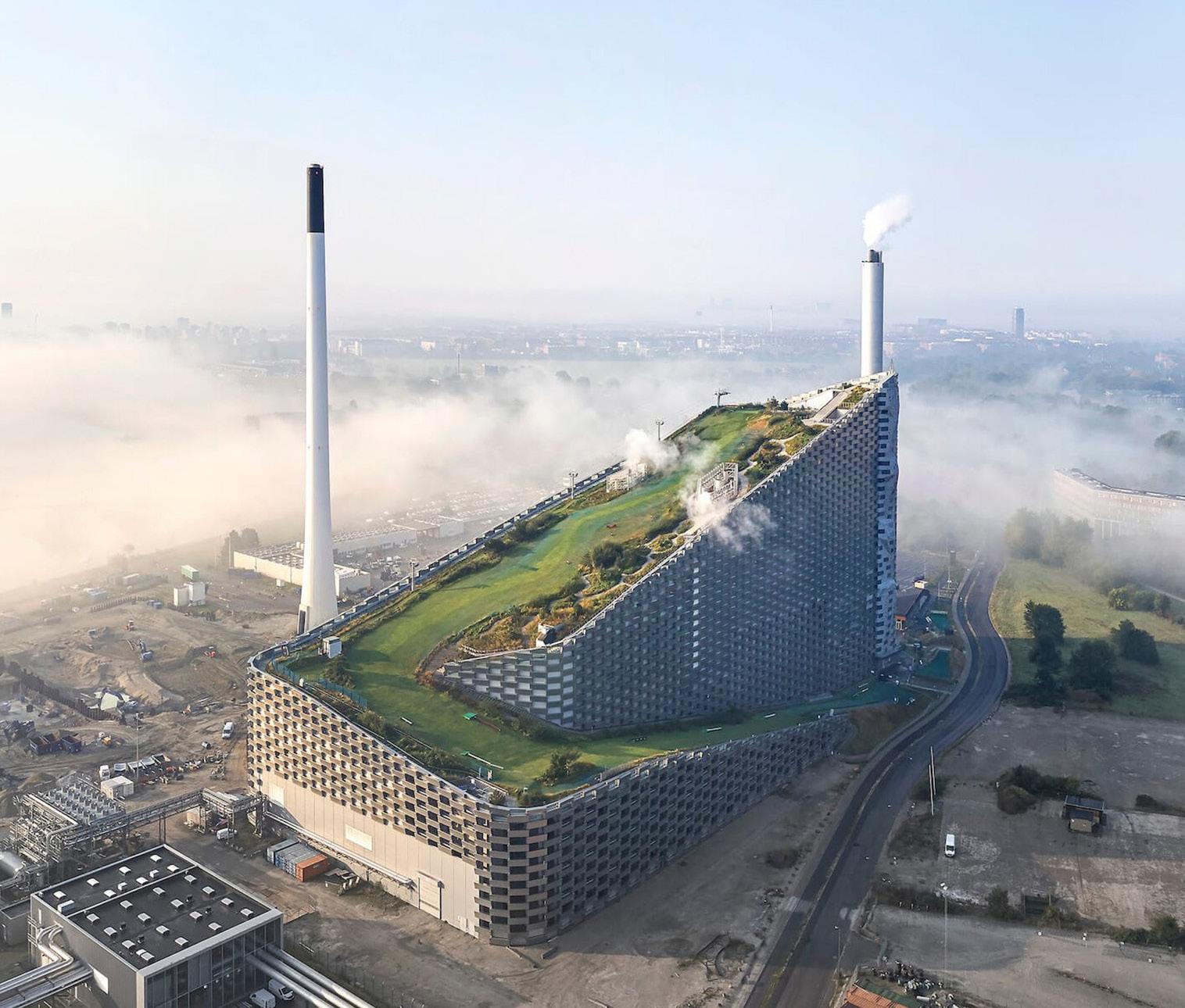
In the real world, I think design examples like "CopenHill" demonstrate how innovative architecture can address environmental challenges. This building is not only a waste incineration plant in Copenhagen, Denmark, but also a ski resort that combines urban living with environmentally friendly technology. Such designs not only solve the problem of waste disposal but also improve the quality of urban life and demonstrate how industrial facilities can coexist with nature. This is the potential of design to address the climate crisis.
Speculative fiction and movies have played an important role in helping us understand the complexities of climate change. "Geostories" states: " The what if approach of speculative fiction is also a design method to configure new and largely uncharted kinds of living on a damaged planet." Such narratives, like "Mad Max: Fury Road", allow us to test ideas for the future and reflect on our current behaviors.
The significance of science fiction is that it expands our imagination of reality and helps us reflect on our current choices and behaviors. "Mad Max: Fury Road" depicts a doomsday scene and shows the audience a world after resource exhaustion. This story format not only triggers reflection on current environmental issues but also evokes a sense of crisis for the future.
When discussing the apocalyptic scenario in "Mad Max: Fury Road", I think we need to focus on its metaphor for environmental issues and reflect on how we can change the status quo through design and narrative when facing these issues. The film shows humanity's struggle to survive in the face of resource depletion and climate change, and it serves as a reminder that action is necessary to change the future.
Among them, I am particularly interested in the narrative method of geographical narratives. The main reason is that this narrative method is not only a simple description of geographical location but also includes how humans interact with the environment and how geographical features shape people’s lifestyles, political and economic development, and other levels. It can make people feel as if they are immersed in it, creating a strong sense of immersion, thus deeply attracting viewers. This is what I consider to be a crucial approach when promoting environmental issues. According to my experience, many people are content with the status quo and are indifferent to issues such as resource waste and scarcity because they feel these issues are very far away from their lives. I believe that only through some more exaggerated and shocking effects can we effectively awaken people's attention to environmental and social issues and prompt them to take action to prevent these scenes from happening in reality.
Not only environmental issues, many movies also have warning intentions. For example, a laboratory explosion causes the spread of zombie viruses, or biotechnology companies develop special biotechnology for personal gain, ultimately leading to catastrophic consequences. I think these films remind us that we should face up to contemporary social problems and avoid embarking on an irreversible path.
Climate change is a global challenge that affects our culture, society, and ethics. We can reexamine the complex relationship between humans and the earth through movies like "Mad Max: Fury Road" and various references. We need technological innovation, cultural narrative, and design to awaken the agency of global citizens. Through the power of design and story, we can find new solutions in the fight against climate change and avoid extreme doomsday scenarios like "Mad Max: Fury Road."
Latour's "Gaïa Hypothesis" reminds us that the earth is an organism that needs to be protected and maintained rather than a resource that humans can claim infinitely. Rania Ghosn's "Geostories" emphasizes the role of design in dealing with climate change.
Through design, we can awaken people's attention to environmental issues and prevent problems before they occur. Ultimately, these narrative and design forms paint a picture of possible futures and offer us a path to reconnect humanity with the planet’s natural environment.
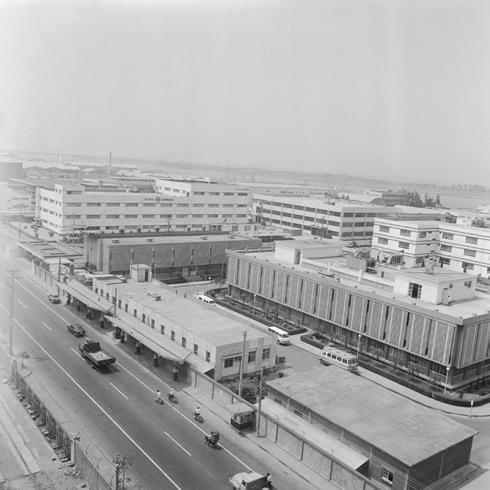
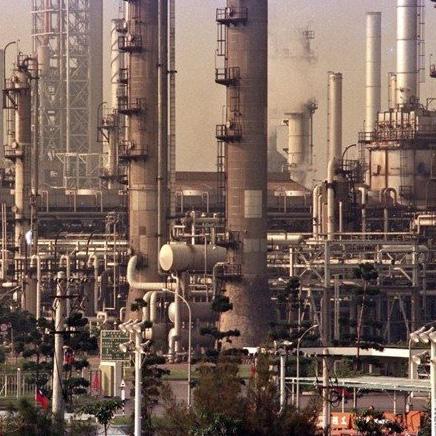
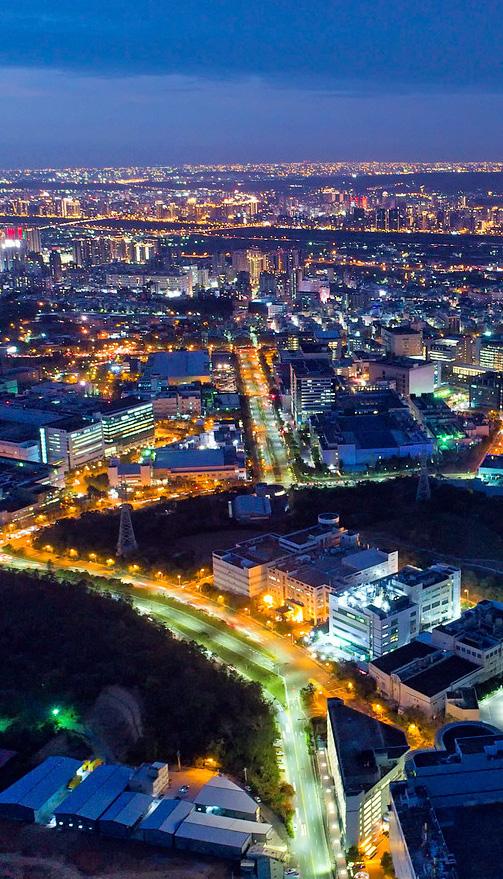
The topic of my Research Article 2 is “Infrastructure”. I chose this topic because was deeply interested in Keller Easterling’s insights into the impact of infrastructure on contemporary society and architecture in her book "Extra Statecraft: The Power of Infrastructure Space" . In particular, the concept of " Extrastatecraft" she proposed aroused my curiosity and reminded me of Taiwan, the country where grew up.
Over the past thirty years, Taiwan has experienced dramatic economic changes. While pursuing rapid economic growth, some problems have gradually emerged. For example, the rapid expansion of the economy has led to a rapid increase in the power and influence of some companies and consortiums, which may even affect the results of elections. This makes me wonder, can this be regarded as a concrete manifestation of "Extrastatecraft" ?
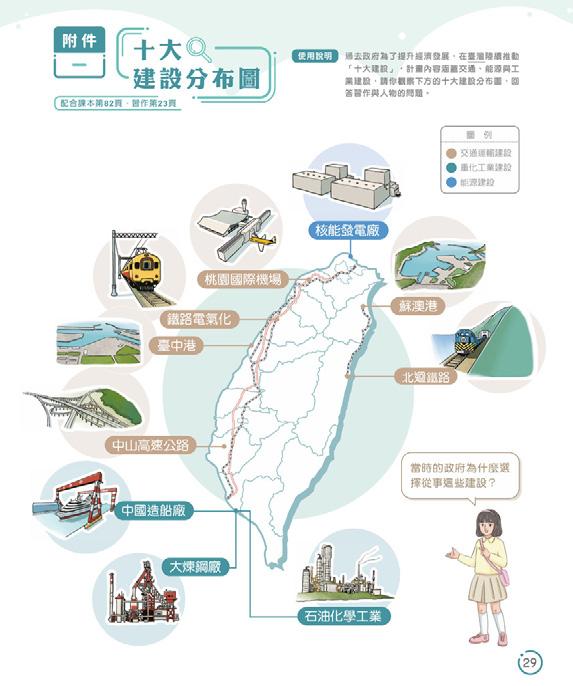
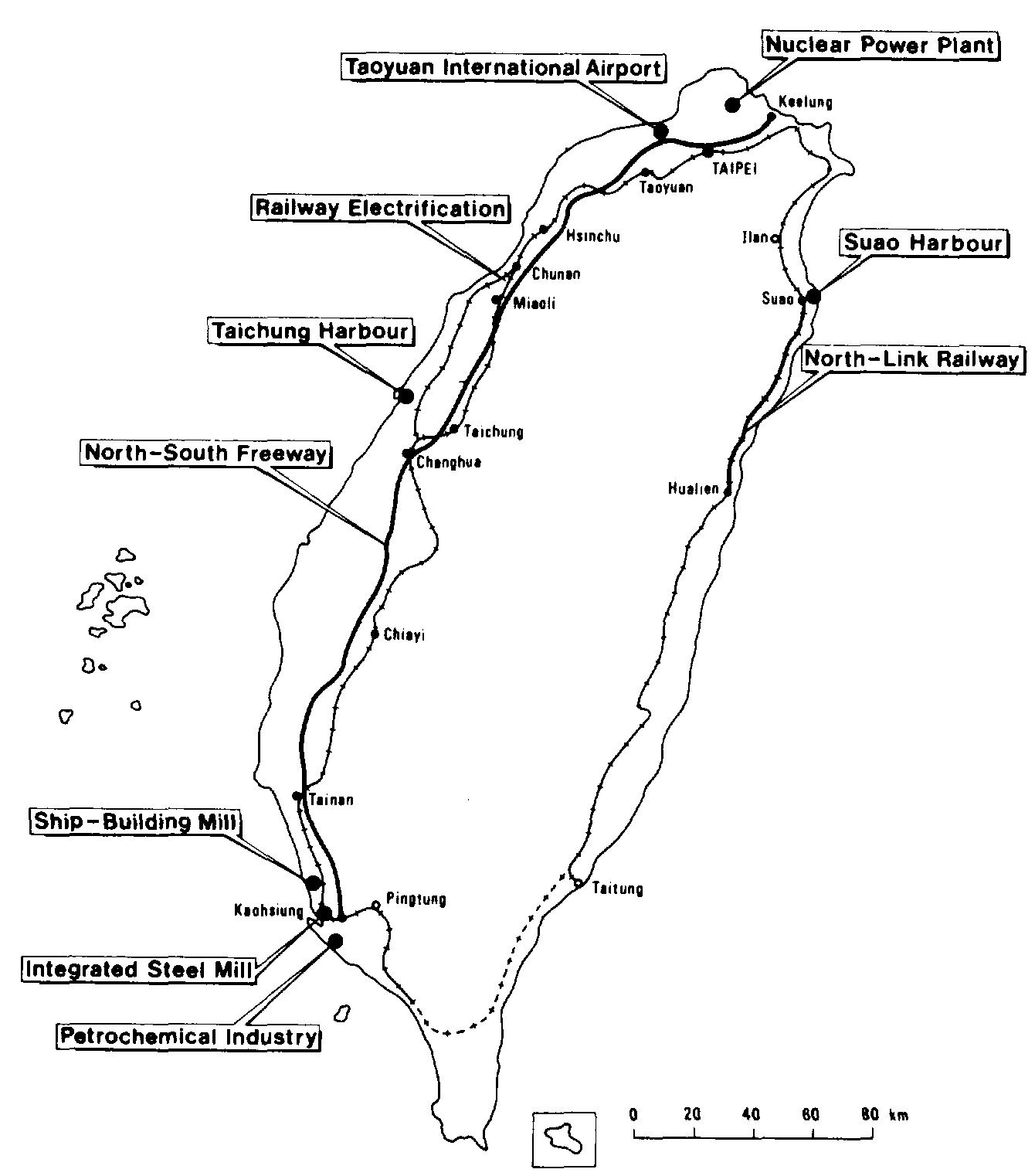
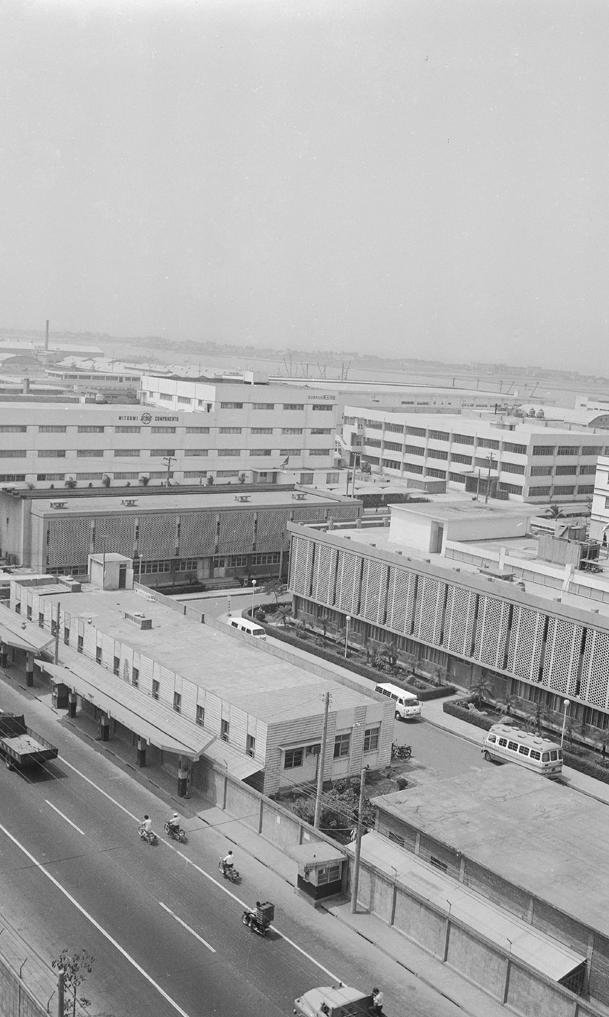
Infrastructure construction has a profound impact on the future development of a country or region. Take Taiwan as an example. 50 years ago, due to the impact of international situations such as its withdrawal from the United Nations , the severance of diplomatic relations between Taiwan and the United States , and the rise of China, the economy once hit a low point. At that time, due to insufficient production technology and material shortages, Taiwan's economic activities were dominated by light processing industries, such as toys and basic home appliances, often labeled with "MADE IN TAIWAN". However, this low-margin economic model could not support Taiwan's long-term development, so the Taiwanese government promoted the largest infrastructure construction project in history at that time - the "10 Major Construction Projects".
The "10 Major Construction Projects" focus on improving various people's livelihoods and economic and industrial infrastructure, covering projects such as ports, railways, roads, power plants, and power grid construction. These constructions created a large number of job opportunities and solved the unemployment problem in the short term, and their true value was demonstrated in the following decades. Based on these complete infrastructures, the Taiwan government gradually promoted the development of high-tech industries in the late 20th century and planned multiple special economic zones and high-tech industrial parks. These parks enjoy tax incentives and government subsidies and are equipped with more comprehensive infrastructure, such as independent power plants, reservoirs, and schools. They are almost a new urban plan. With the rapid development of these special economic zones in the next 10 to 20 years, Taiwan has successfully established a world-leading high-tech industrial chain.
It shows that infrastructure construction is crucial to regional development. I believe that the government should have the foresight to plan sound infrastructure for regional development. Although much of the infrastructure, such as underground systems or wireless networks, may not be obvious, they are core elements for the long-term development of the region.
I very much agree with the point of view mentioned in Professor Erik Ghenoiu's class: "NETWORK is an important factor in the development of a region." The NETWORK here includes not only the network system but also the power system, water supply and drainage system, road system, etc. These intertwined complex NETWORKs build a complete system, allowing information and resources to flow freely within it, which is the most critical link in infrastructure construction.
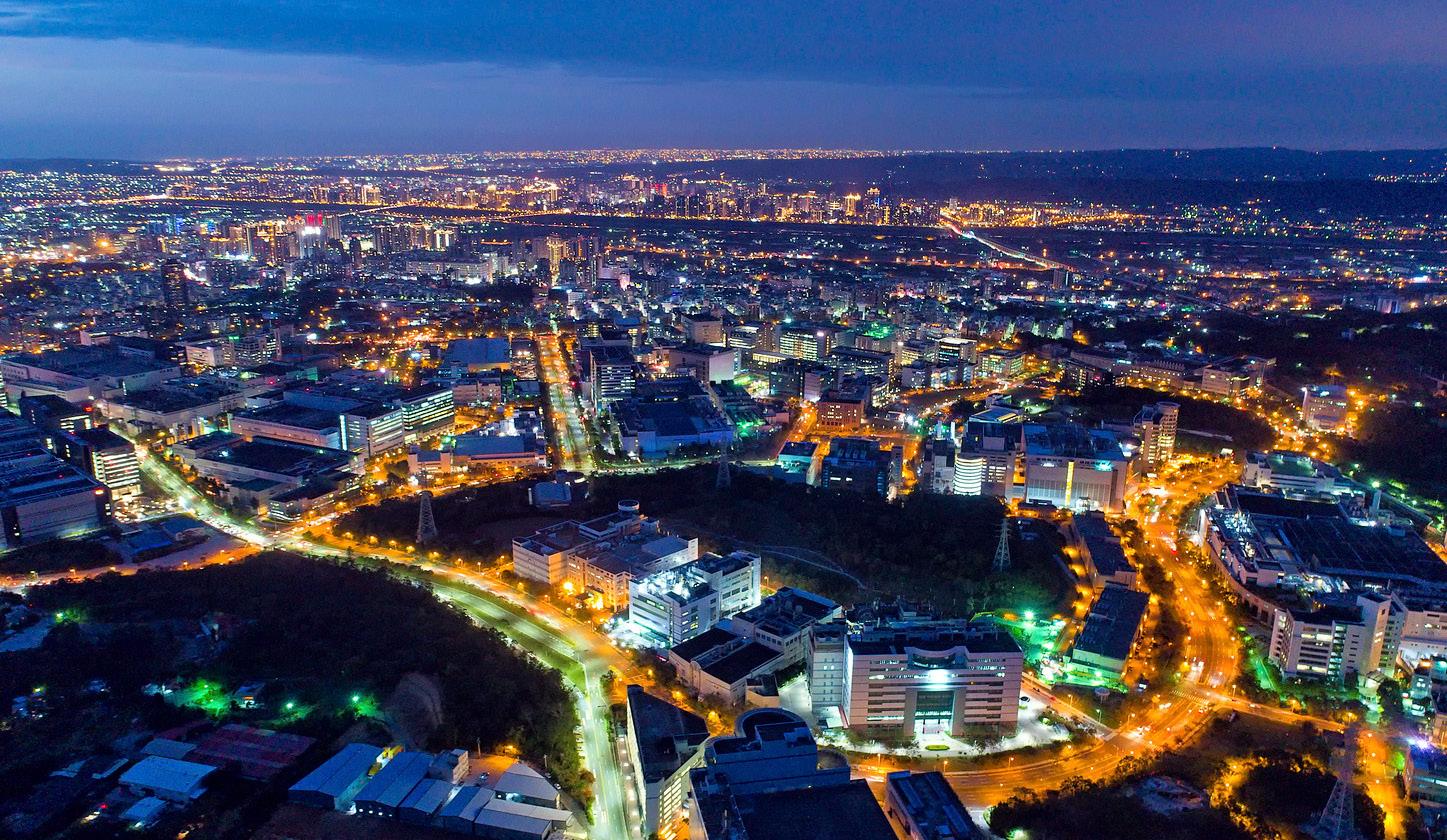
Take Hsinchu Science Park Taiwan's largest high-tech industrial park, as an example. 40 years ago, the Taiwan government selected an undeveloped hilly area, planned and built new power plants and reservoirs, and laid various networks to create a brandnew development area. Thanks to these sufficient and complete infrastructures, major Taiwanese chip companies have been attracted by the region's stable energy supply and convenient transportation facilities and have gradually settled in the area, further forming an industrial cluster effect. With the booming development of the park, international technology giants such as Google, NVIDIA, and Microsoft have successively designed R&D centers here, making the Hsinchu Science Park one of the largest high-tech development parks in Asia.
In addition, with the popularity of the 5G network in Taiwan, Hsinchu Science Park has attracted top high-tech talents from all over the world and currently gathers more than 300,000 top engineers from all over the world . This fully demonstrates the importance and farreaching impact of sound infrastructure construction on regional development.
///
Good infrastructure has promoted rapid economic growth and created a large number of job opportunities and livelihood activities. However, this also means that the gradual penetration of capitalism into the region is likely to bring about a series of challenges and impacts. Take Taiwan's Hsinchu Science Park as an example. As more and more domestic and foreign major manufacturers move in, the annual output value and indirect global benefits of this special economic zone reach trillions of dollars, even exceeding the annual GDP of many countries. However, as companies continue to pursue higher profits and expand production scale, their impact on employees in the park, the surrounding environment, values, and consumer behavior has gradually emerged.
The work pressure of employees in the Science Park is extremely high. Although companies provide generous salaries, employees face problems such as endless overtime and no fixed holidays throughout the year. They need to cooperate with the company to arrange rotational vacations, causing many people to be physically and mentally exhausted. Because many parents devote a lot of time to work, their relationship with their children has become increasingly alienated. Many children can only spend a few hours with their parents a week, which has a profound impact on family life.
With the entry of manufacturers, the scale of the park has expanded to three times the initial plan, and development is still ongoing. However, because the surrounding hilly areas were originally home
to many wild animals and plants, over-exploitation has caused many species to be forced to relocate or lose their habitats. Some wild animals even strayed into the roadway and were hit and died. The species diversity in the area has declined in the past 20 years. dropped rapidly during the year. In addition, although the factory wastewater has been treated and is non-toxic, the water temperature is too high to meet the habitat needs of native species, resulting in a significant reduction in the number of fish and shrimp in the river
In the park, many young people regard making money as their only goal. In pursuit of rapid promotion, they regard their colleagues as competitors, creating a pathological internal environment. At the same time, due to generous salaries, some people spend extravagantly. Their pursuit of luxury goods and luxury cars becomes more and more crazy, and their values gradually deviate from the normal track.
As one of the most important high-tech industrial zones in Asia, the average salary of employees in the park is much higher than that in other parts of Taiwan. As a result, the consumption level in the surrounding areas of the park remains high. Consumption of daily necessities, food, and entertainment is nearly twice as high as the national average. So much. This makes many outsiders reluctant to go to the areas surrounding the science park for consumption or tourism, forming an "isolated island" area where only employees of the science park can afford to spend money locally. In addition, housing prices in the region have more than doubled in the past decade , forcing people with lower incomes to move to farther areas to commute for work, further exacerbating social divisions and the urban-rural gap.
The above problems are just the tip of the iceberg under the expansion of capitalism. If not properly handled, these problems will continue to cause social problems and have a more profound impact on the overall environment and human life. ///
The concept of Extrastatecraft was the most compelling and thoughtprovoking part of the book for me. Taking Taiwan as an example, although presidential elections are held every four years, recent news reports have revealed troubling phenomena. Some companies have reportedly prevented employees from voting under the pretense of overtime or scheduling conflicts. Others—particularly firms with ties to China—have even chartered flights to send employees back to Taiwan to support specific candidates.
These cases demonstrate how, when certain economic entities grow large enough, they may begin to influence—or even interfere with— democratic processes. While this is not necessarily inevitable, it highlights the urgent need for governments to anticipate such risks and formulate appropriate countermeasures. When these entities control enough resources to sway an entire region, their influence can overshadow democratic governance.
Thus, while fostering economic development, governments must strike a careful balance: granting special economic zones a degree of autonomy while firmly preventing the unchecked expansion of their power. Maintaining this balance is a critical challenge for preserving national stability and the integrity of democratic institutions.
Infrastructure is the key to improving the quality of life, especially in economically backward areas. Good infrastructure can effectively improve people's livelihood needs and create a more ideal living environment for local residents. Take Taiwan as an example. As a country that has been colonized many times, it has experienced the rule of the Netherlands, Spain, and Japan. However, most Taiwanese people do not regard these colonial experiences as pure oppression or persecution. One of the important reasons is that these colonial regimes It left behind a lot of infrastructure in Taiwan and had a certain degree of positive impact on local society. For example, during the Japanese colonial period, Taiwan established modern water supply and drainage systems, irrigation systems, and transportation systems, which significantly improved the people's living environment and health, laying the foundation for the beginning of Taiwan's modernization. Therefore, infrastructure construction is not only the cornerstone of people's livelihood development but also an important tool to promote modernization.
After the infrastructure is improved, the rise of special economic zones becomes the next stage in promoting economic growth. These zones create a large number of job opportunities for the country and promote industrial upgrading and transformation. However, as the scale of special economic zones continues to expand, the challenges they face have become increasingly apparent. Many countries are trying to reshape their economic systems in the form of special economic zones to cater to the needs of the global capital market. However, as Keller Easterling questions in his book, “Contemporary infrastructure space is the secret weapon of the most powerful people in the world precisely because it orchestrates activities that can remain unstated but are nevertheless consequential.” The District’s overexpansion may not be sustainable in the long term. The healthy development of the region may have far-reaching negative impacts on local society, economy, and environment.
In this context of rapid economic development, the formulation of government policies will play a vital role and directly affect the regional development balance. Although modern society advocates free trade and a free economy, if the scale of the consortium is too large and even interferes with regional policies to pursue private interests, issues of fairness and sustainability will inevitably arise. How to avoid "Extrastatecraft" has become one of the important contemporary issues.
As architects, although we cannot directly influence these large-scale economic policies, during planning and construction, we should avoid turning architecture and design into tools for the unlimited expansion of consortia, and we should pay more attention to reducing the impact on the environment, humanity, and nature. While pursuing economic development, we should strive to find a balance between environment and culture to ensure sustainable development in the future.
Rania Ghosn "Geostories: Another Architecture for the Environment" https://design-earth.org/publications/geostories/
Neyran Turan "Another Earth, Another Practice: Rest aging Futures After Carbon" https://www.youtube.com/watch?v=eiXEtX0G5Oc
Kathryn Yusoff "Epochal Aesthetics: Affectual Infrastructures of the Anthropocene" https://www.e-flux.com/architecture/accumulation/121847/epochal-aesthetics-affectual-infrastructures-of-the-anthropocene/
Bruno Latour "Facing Gaïa" https://www.academia.edu/36937927/Review_of_Bruno_Latours_Facing_Gaia_Down_to_Earth_Ancient_Goddesses_for_Dark_Times_
Bruno Latour "Gaïa Hypothesis" https://journals.sagepub.com/doi/10.1177/2053019620918939
Bruno Latour and Timothy M. Lenton "Extending the Domain of Freedom, or Why Gaia Is So Hard to Understand" (2018) https://www.journals.uchicago.edu/doi/abs/10.1086/702611?journalCode=ci
George Miller. "Mad Max: Fury Road" (2015) https://www.warnerbros.com/movies/mad-max-fury-road
The Bjarke Ingels Group (BIG) "CopenHill" (2017) https://big.dk/projects/copenhill-2391
///
Keller Easterling “Extra Statecraft: The Power of Infrastructure Space”(2014) https://www.kellereasterling.com/books/extrastatecraft-the-power-of-infrastructure-space
TAIPEI TIMES “Taiwan and the United Nations - Withdrawal in 1971 was a historic turning point” (2001) https://www.taipeitimes.com/News/local/archives/2001/09/12/0000102595
Global Taiwan Institute “The Taiwan Relations Act at 45: Incremental Clarity of Intent” (2024) https://globaltaiwan.org/2024/04/the-taiwan-relations-act-at-45-incremental-clarity-of-intent/
TAIWAN’S 10 Major Construction Projects (1974-1979) https://en.wikipedia.org/wiki/Ten_Major_Construction_Projects
Hsinchu Science Park https://web.sipa.gov.tw/english/
FORTUNE “‘Success breeds success’: How a 1,400-hectare plot became the hub of the global chip industry—and the world economy” (2024) https://fortune.com/asia/2024/02/11/hsinchu-science-park-chipmaking-hub-taiwan-semiconductors-tsmc-umc-mediatek/
FORMOSA NEWS “Hsinchu house prices swell with speculation linked to silicon industries” (2023) https://english.ftvnews.com.tw/news/2023704W04EA
Common Wealth Magazine “Hon Hai Group uses charter flights to bring 5,000 employees back to Taiwan smoothly” (2012) https://www.cw.com.tw/article/5029479
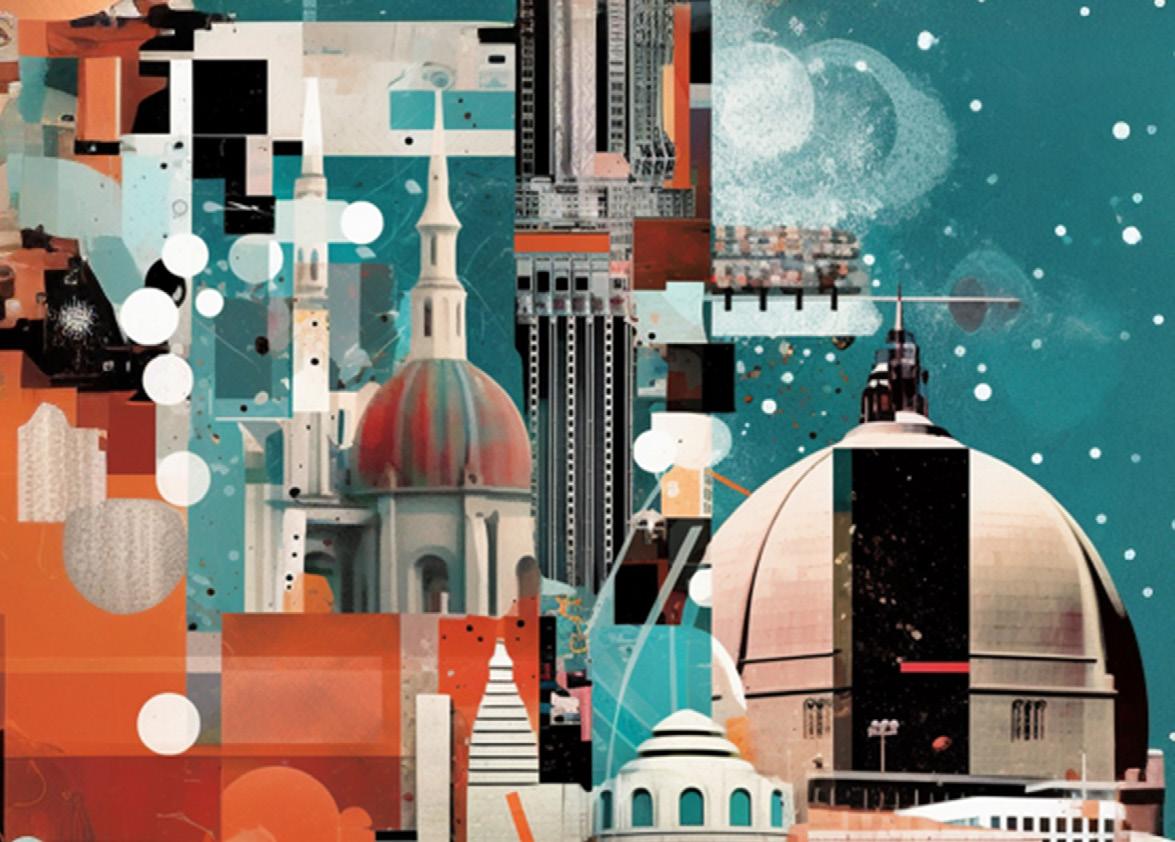
Contemporary architecture is both a continuation of history and a glimpse into the future. From ancient symbols of religion and power to the rational clarity of modernism, architecture records not only technological progress but also social and cultural shifts. Today, under the influence of sustainability and digital innovation, architects face challenges beyond form and aesthetics—they must also consider spatial ethics and environmental responsibility. The architecture of the future will be more intelligent, diverse, and interactive, serving as a bridge between nature and technology. By reflecting on the past and engaging with the present, we can shape more meaningful spaces for generations to come.
YEAR: 2025 SPRING
CLASS: 2GBX : Generative Morphologies
TEAMMATE: Cheng Han Yang
INSTRUCTORS: Jackilin Bloom, Damjan Jovanovic ///
LINK: https://youtu.be/8g3FJbbMTas
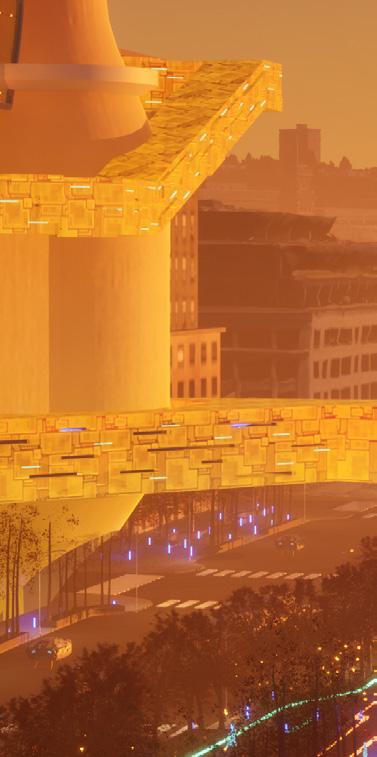
In the future, theaters can become more than cultural venues—they can actively participate in environmental sustainability. By integrating geoengineering elements like vertical wind turbines, algae-based solar panels, and passive cooling systems, these theaters generate energy, regulate temperature, and respond to climate conditions. This transforms them from static buildings into responsive, living systems.
More than just technical upgrades, these features can enhance the audience’s experience. Natural airflow can guide movement, adaptive surfaces can change with weather, and light-filtering façades can shape atmosphere and emotion. The result is a new kind of theater—one that blends architecture, technology, and storytelling into an immersive, sustainable experience.
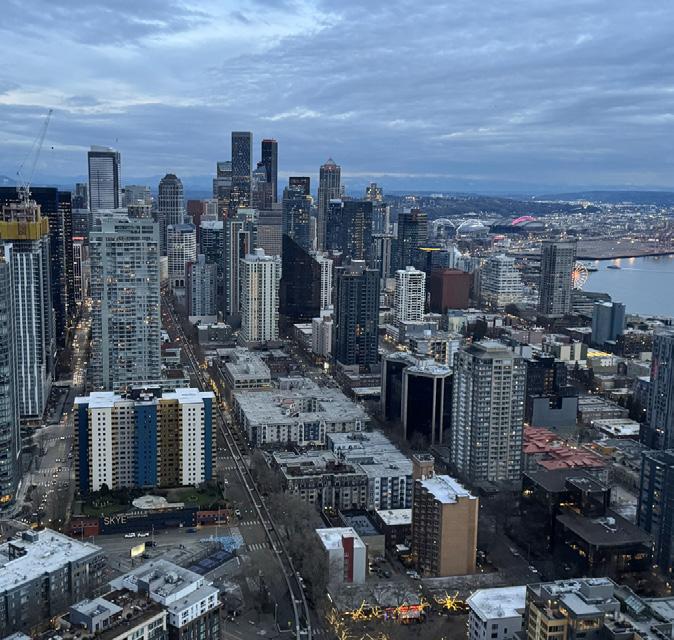
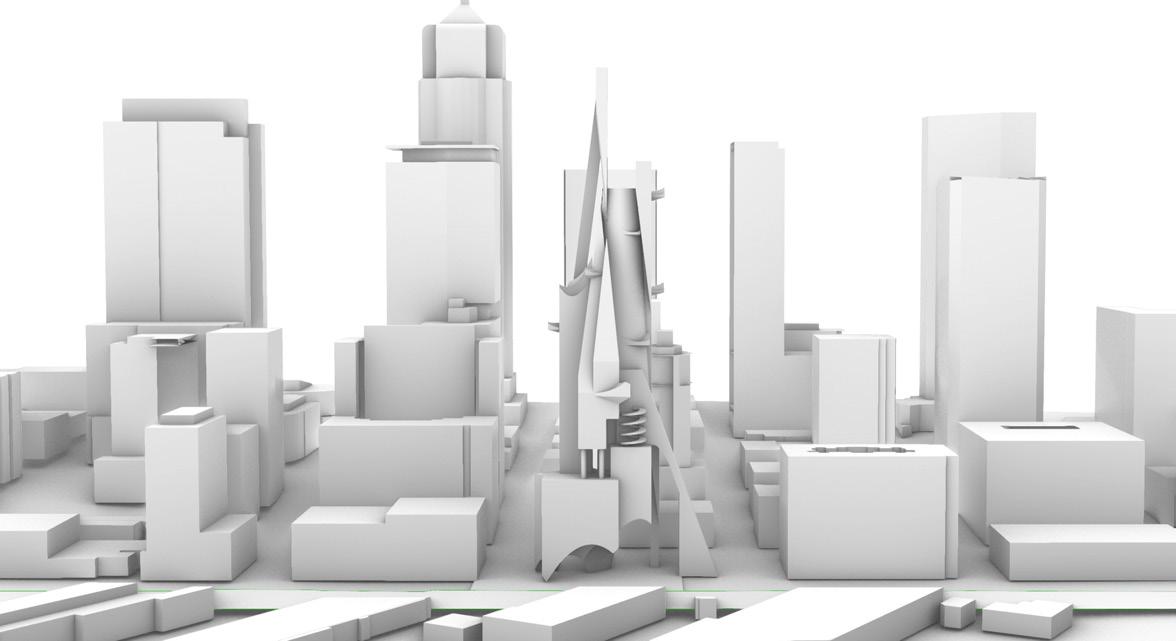
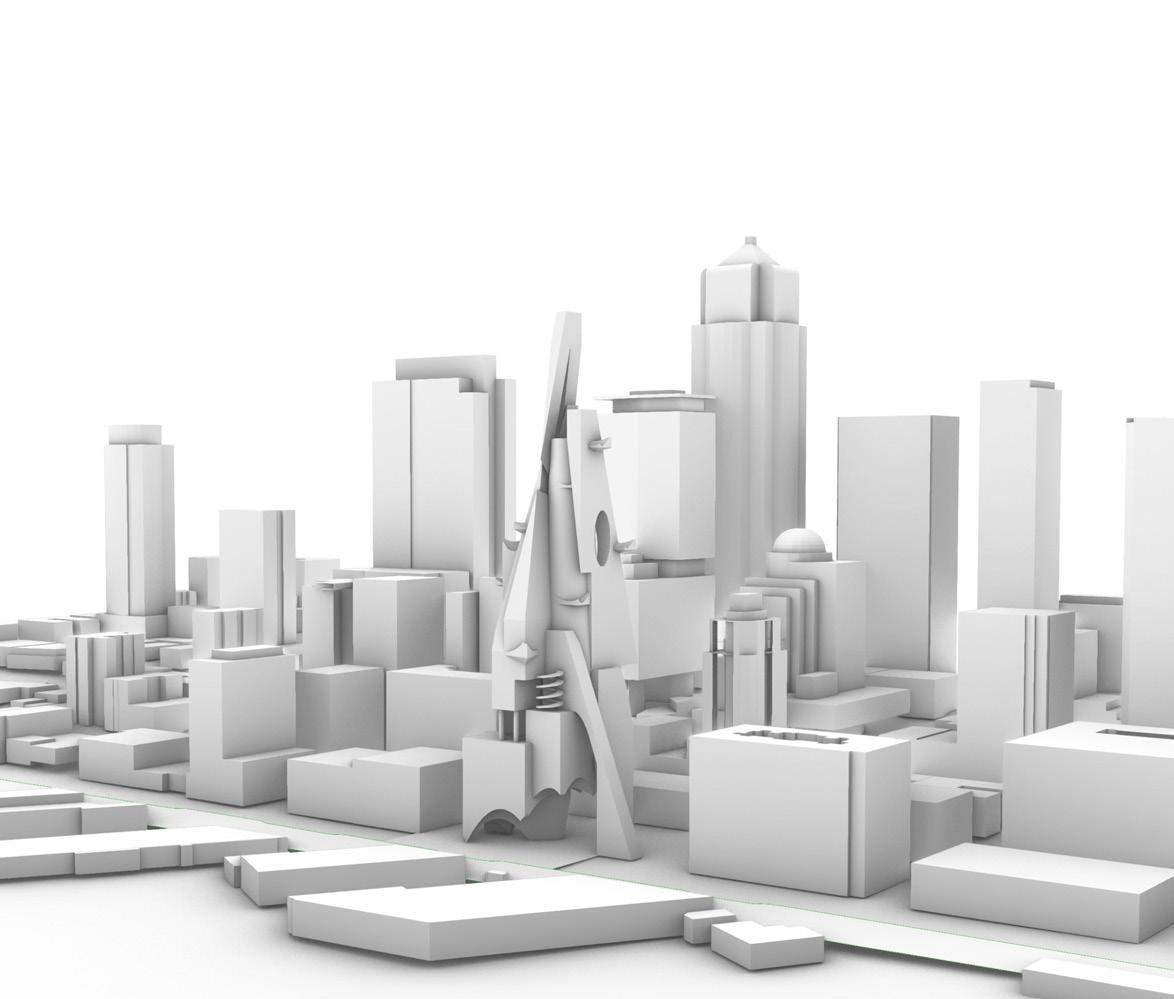
Towering buildings define Downtown Seattle’s bold skyline, a place fueled by fast-paced development and unstoppable energy.
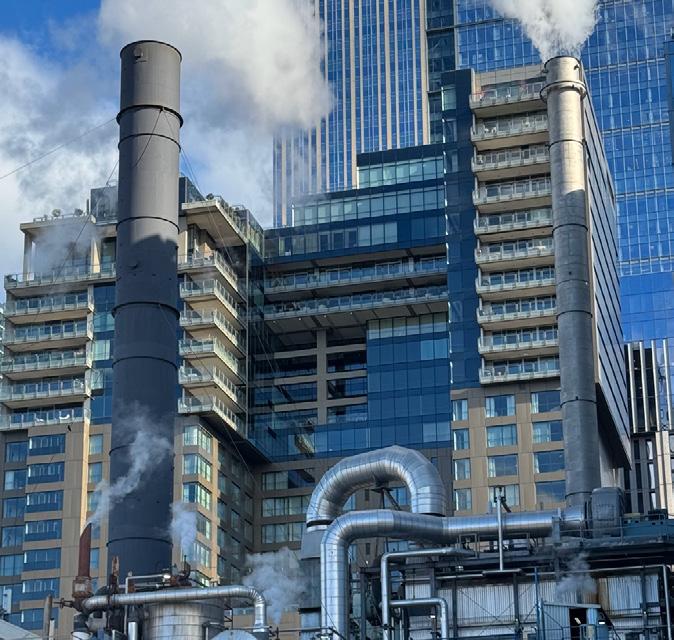
Geo Engineering
Geo-engineering systems like wind turbines and algae solar panels enable the theater to self-regulate, turning environmental forces into functional assets that support both sustainability and immersive architectural storytelling.
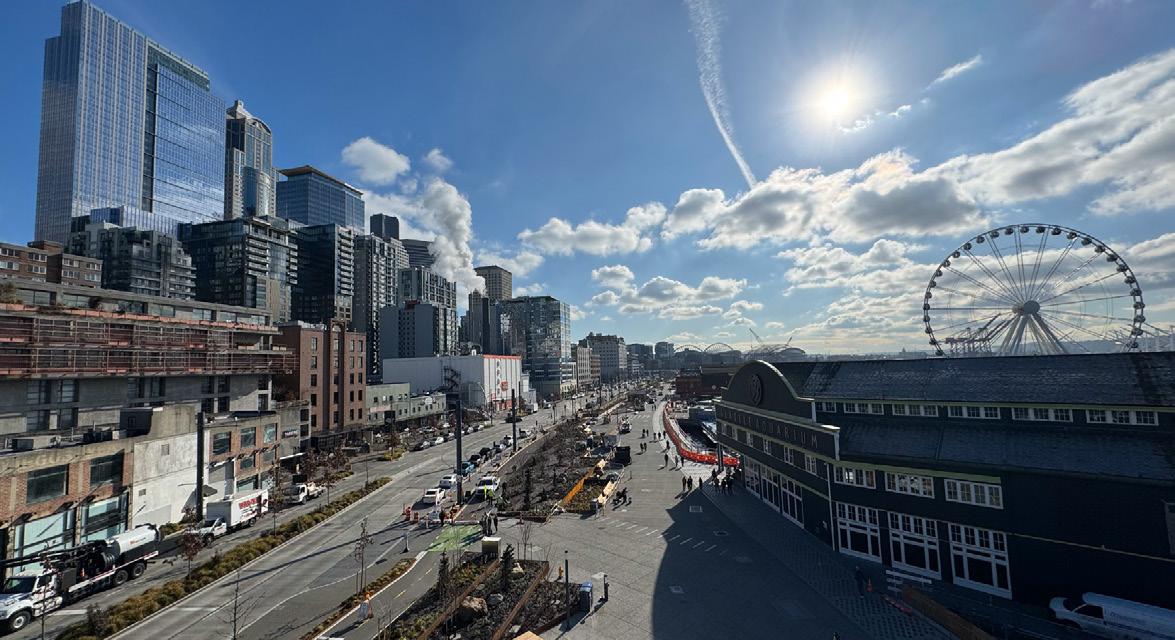
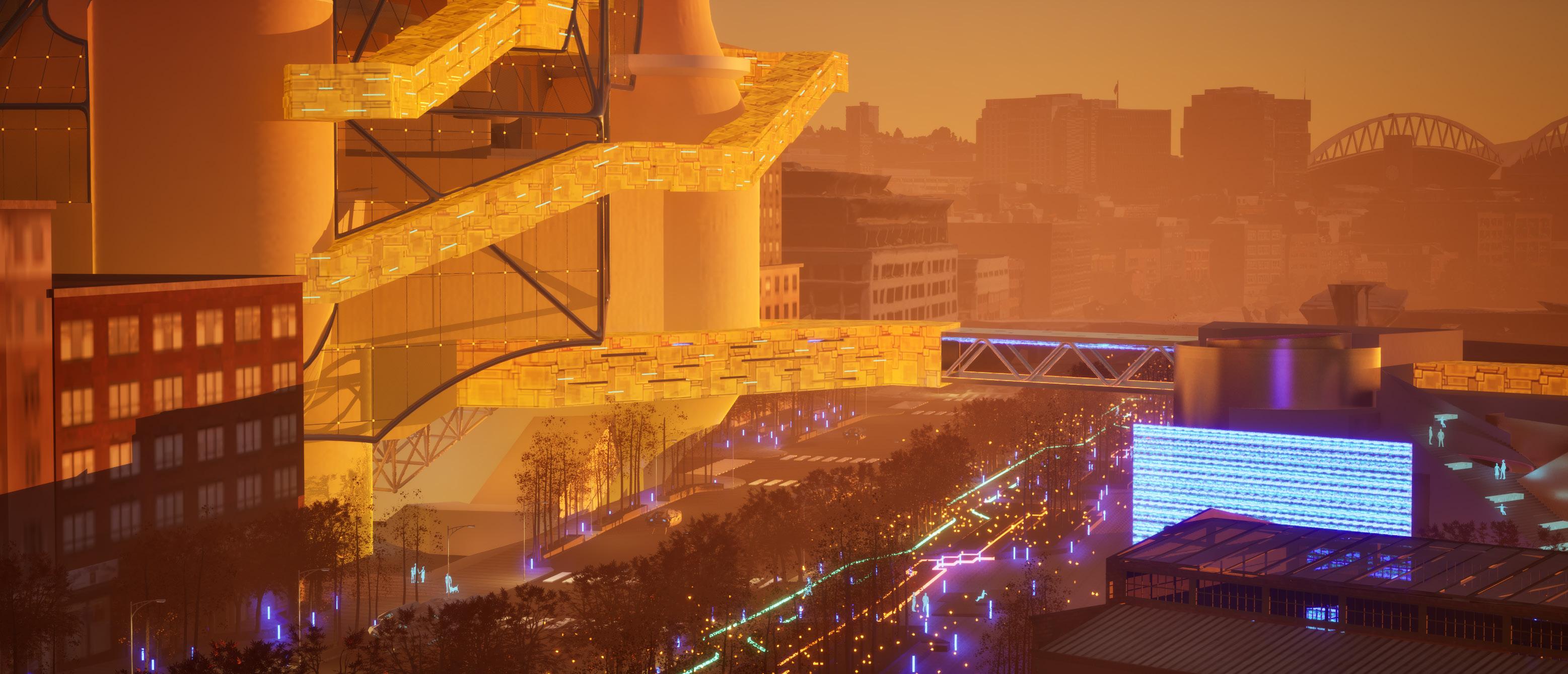
HYPERSTAGE : ATOMS harnesses the dynamic coastal environment—wind, fog, and tidal patterns—to power its geo-engineered systems, transforming the theater into an ecological landmark that reflects the city’s identity while offering immersive, climate-responsive experiences that engage both the senses and the surrounding landscape.
HYPERSTAGE : ATOMS is a future theater concept located on the Seattle waterfront, where architecture meets geo-engineering to create a new kind of cultural and environmental landmark. Designed to interact with the city’s coastal climate, the building captures wind from the ocean and channels it through vertical turbine towers, generating renewable energy while enhancing the visitor’s spatial experience. The everchanging weather of Seattle becomes part of the performance itself— fog, rain, and sunlight are filtered through adaptive façades that shift in response to natural conditions.
By integrating geo-engineering systems such as algae-based solar panels and passive cooling chimneys, the theater functions not only as a venue for performance but as an active climate-responsive machine. Natural airflow shapes circulation paths, guiding the audience through a series of immersive environments that blur the boundaries between indoor and outdoor, real and unreal. In this way, HYPERSTAGE : ATOMS transforms from a static structure into a living, breathing entity that engages with its surroundings and redefines how we experience space, sustainability, and storytelling. It presents a model for future architecture—one that merges ecological awareness with sensory design to build a deeper, more meaningful connection between humans, nature, and technology.
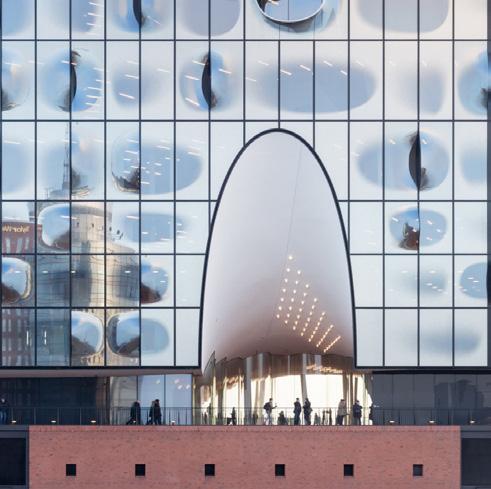
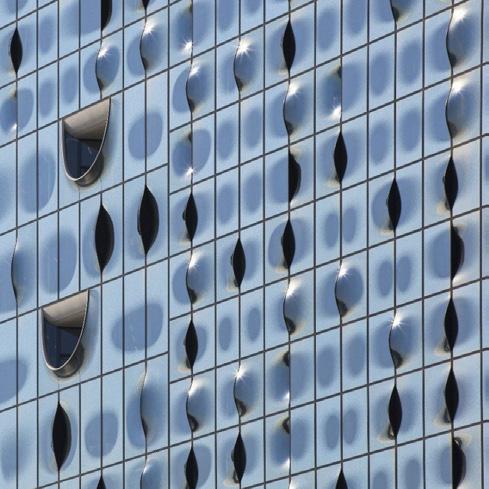
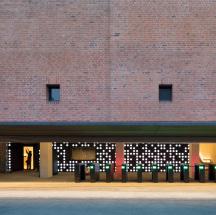
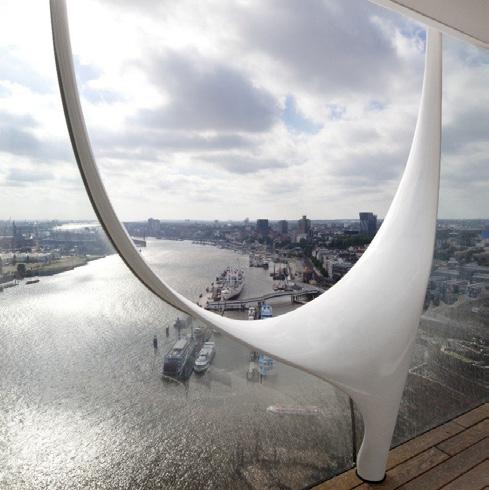
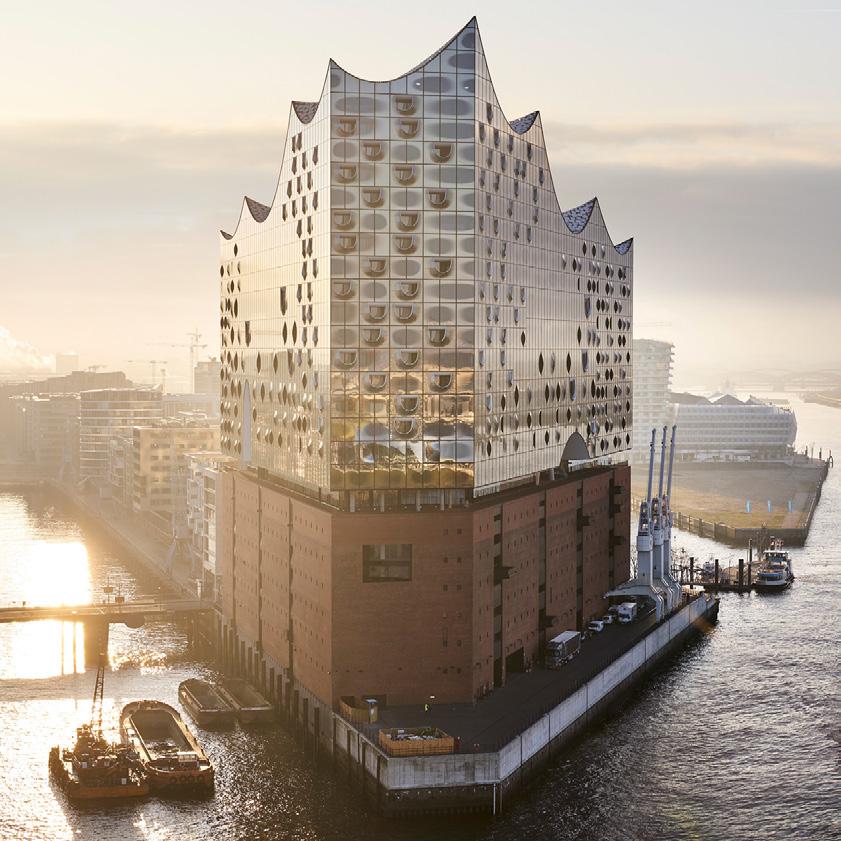
The Elbphilharmonie Hamburg is a world-famous concert hall that blends a historic brick warehouse with a wave-like glass structure. Opened in 2017, it is renowned for its stunning design, exceptional acoustics, and panoramic views of the Elbe River, becoming a cultural icon of the city.

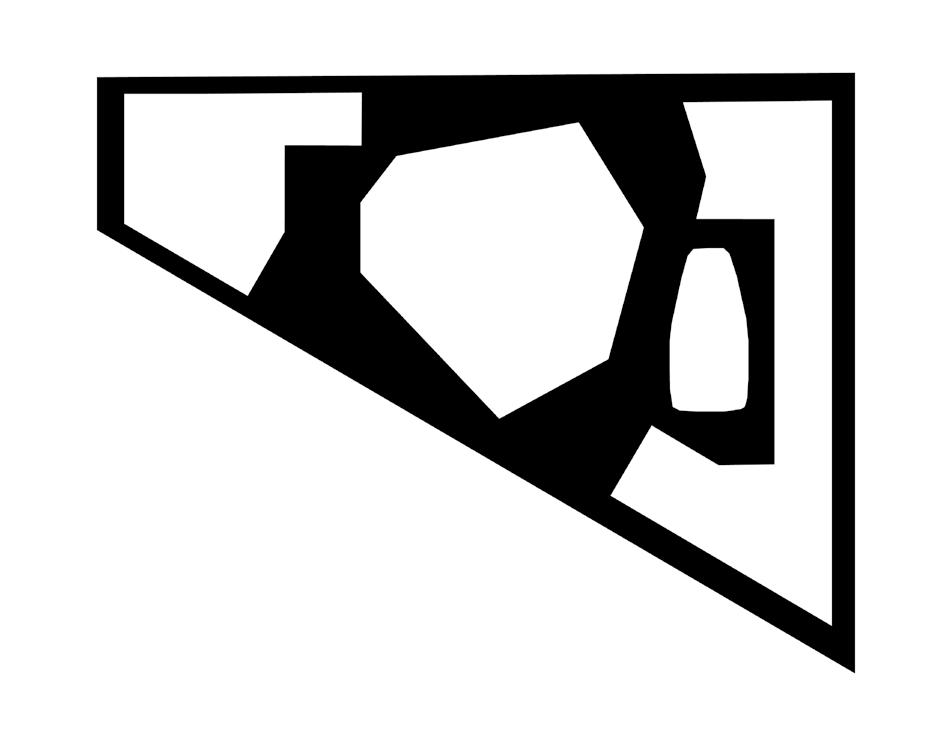
A crystalline wave rises from a historic brick warehouse, blending past and future. The section expresses harmony between structure, sound, and the city’s cultural evolution.
A fluid plan radiates from the central concert hall, with circulation spiraling outward. Public terraces, curved corridors, and layered programs connect visitors to music, the city, and the river.
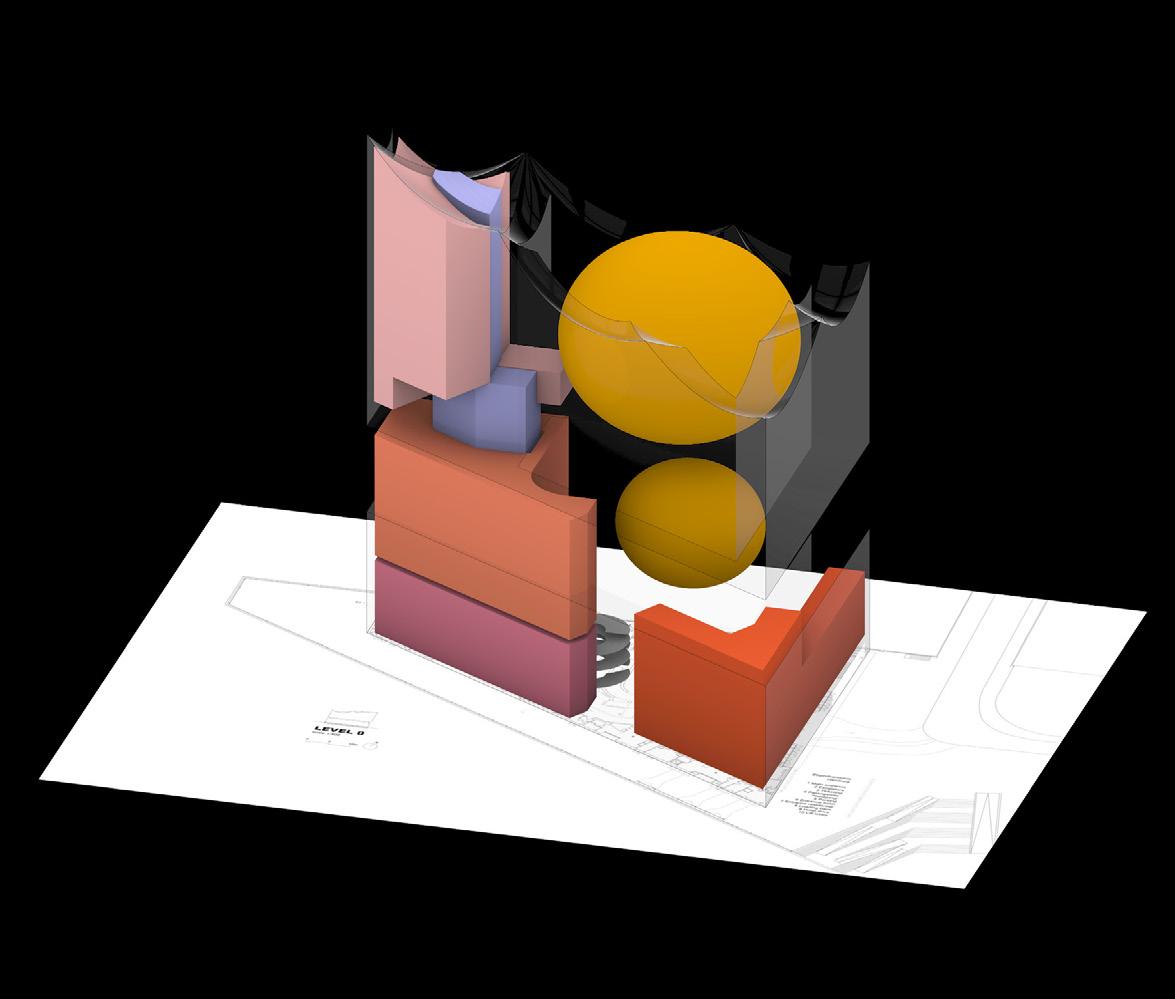
In HYPERSTAGE : ATOMS, formation is not a fixed process but an ongoing dialogue with the environment. Unlike conventional theaters defined by static geometry, this structure is shaped by dynamic forces—wind direction, sunlight angles, and human movement. Vertical turbine towers are positioned based on real-time airflow simulations, while algae-based solar panels follow seasonal light paths to maximize energy absorption. The spatial layout evolves from these inputs, allowing the architecture to grow from environmental data rather than preconceived forms.
This responsive formation enables the building to function like a living organism, adapting its geometry and internal systems to the shifting conditions of the Seattle waterfront. Public paths bend with natural wind corridors, theater volumes rise like chimneys to enhance ventilation, and facades adjust translucency to modulate light and mood. The result is a new type of spatial intelligence—an architecture that forms through climate, use, and time. In HYPERSTAGE : ATOMS, formation becomes performance: a continuous act of shaping and reshaping, where nature, technology, and human activity converge to produce a theater that is as alive and evolving as the stories it holds.
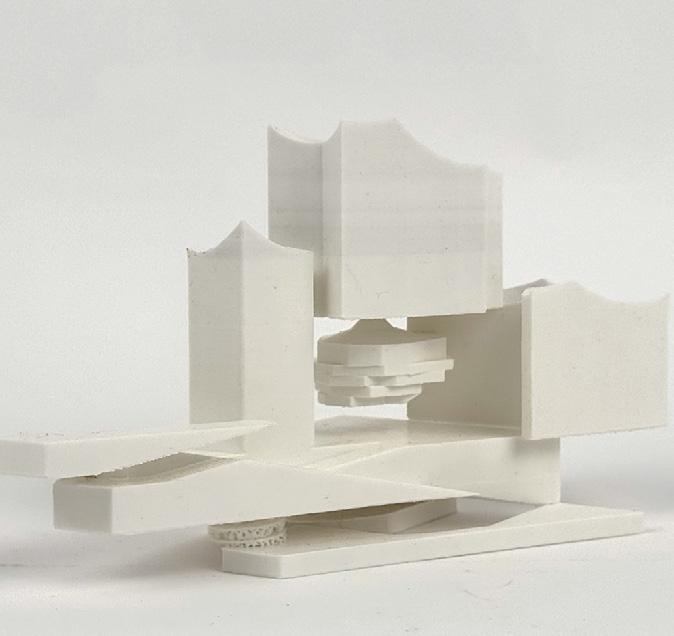
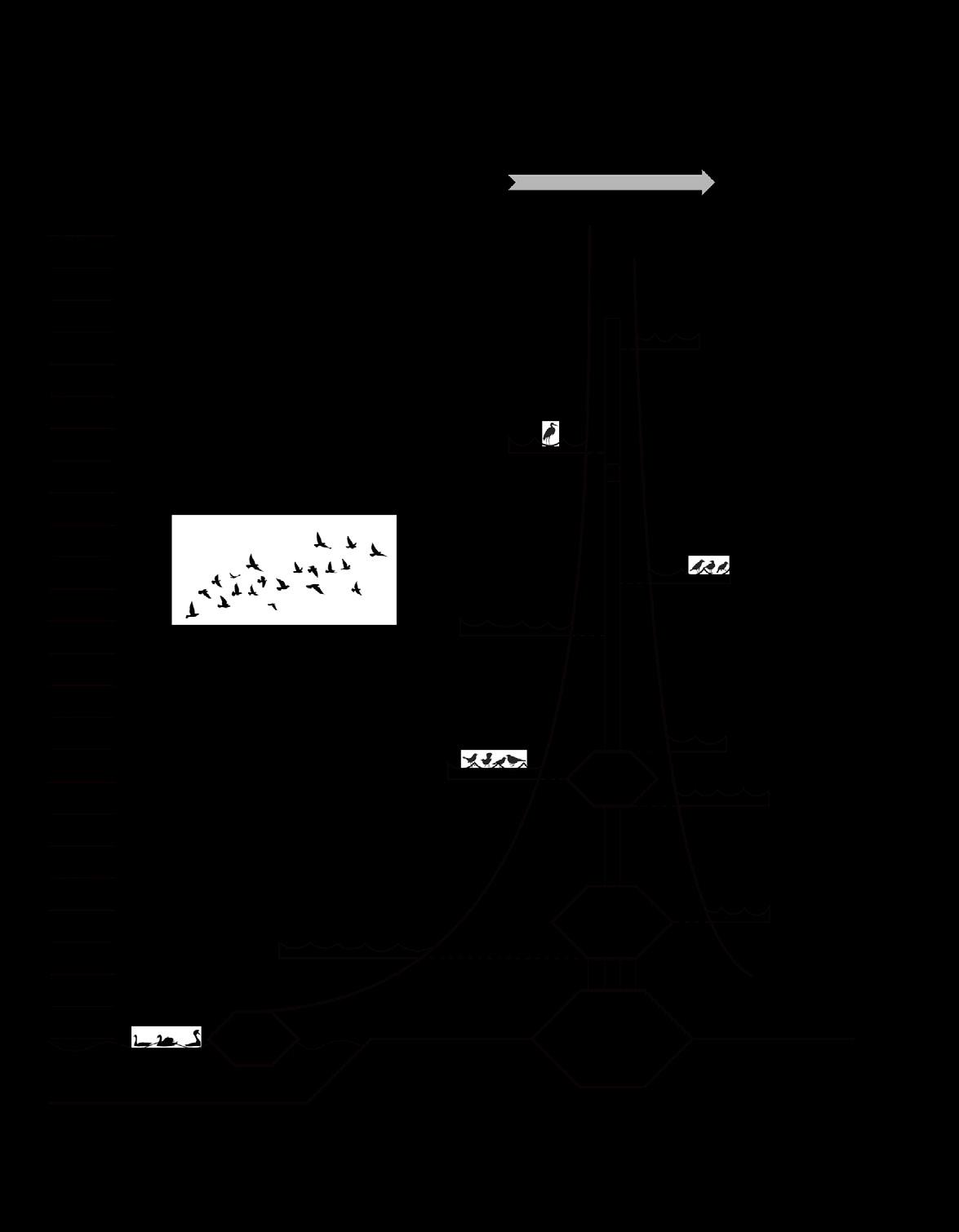
The 3D parti of HYPERSTAGE : ATOMS captures wind movement, stacking vertical voids and pathways to guide airflow and spatial experience simultaneously.
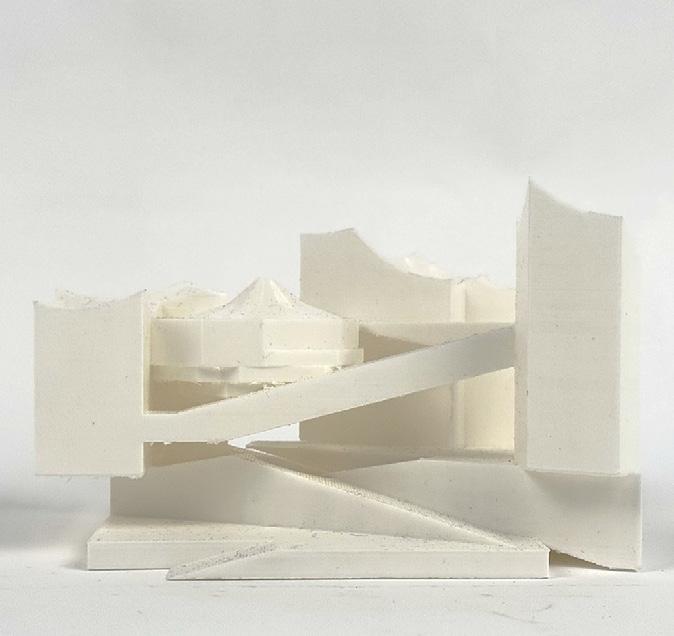
Instead of a flat diagram, the 3D parti evolves through climate data, generating a spatial framework rooted in environmental response and performative architecture.
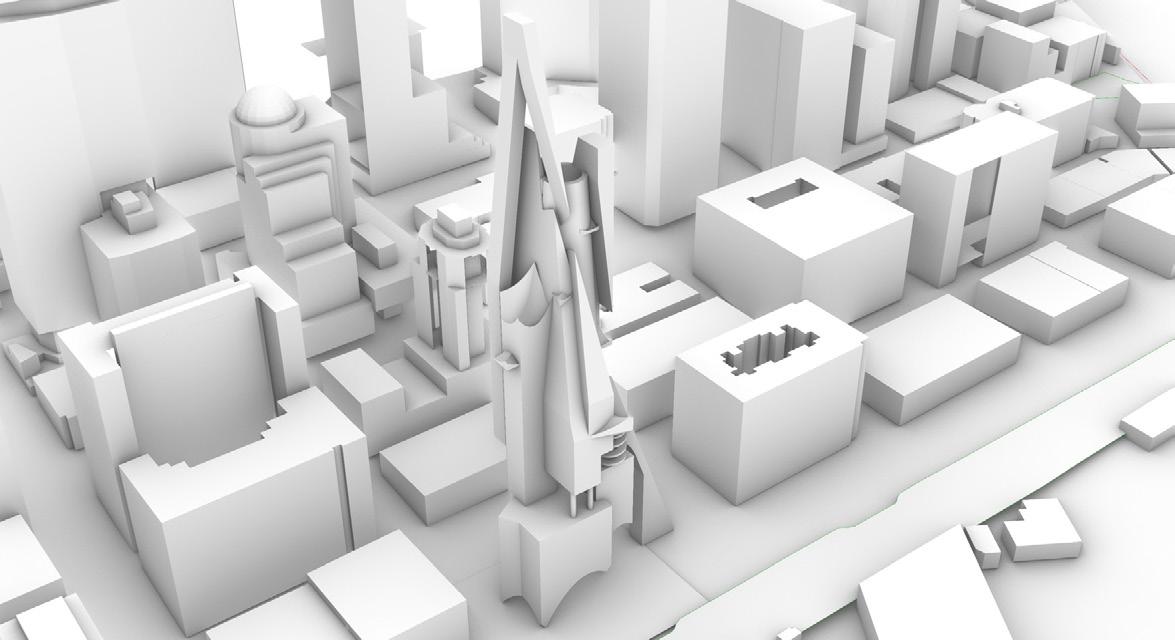
In HYPERSTAGE : ATOMS, the 3D parti is driven by environmental logic rather than abstract form. Wind flow, solar orientation, and user movement inform the spatial framework, resulting in a volumetric diagram that breathes, adapts, and performs. Vertical chimneys, elevated paths, and layered circulation are not aesthetic choices—they are spatial responses to Seattle’s climate. This approach transforms the parti from a conceptual sketch into a climate-reactive system, where form and function merge into a unified architectural language.
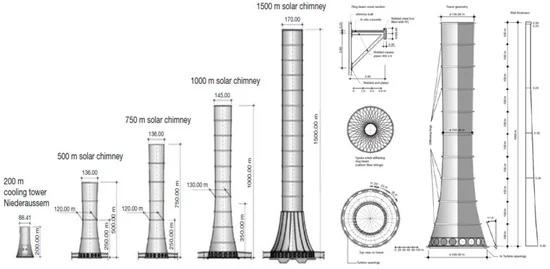
The Vortex Wind Turbine system in HYPERSTAGE : ATOMS captures spiraling wind currents through chimney-like towers, enhancing airflow for both power generation and natural ventilation, while visually expressing the building’s dynamic relationship with Seattle’s coastal environment.
At the heart of HYPERSTAGE : ATOMS is a system of Vortex Wind Turbines—tall, chimney-like structures designed to harness and amplify Seattle’s coastal winds. Unlike traditional turbines with rotating blades, these vertical towers use oscillation and aerodynamic vortex shedding to generate energy silently and safely within an urban setting. Strategically positioned based on computational wind analysis, the turbines also serve an architectural function by directing airflow through the building to enhance natural ventilation and cooling.
These structures become both mechanical systems and spatial experiences. Visitors move between and around the turbine towers, feeling the shifting air currents and hearing subtle acoustic cues created by the wind. This transforms energy infrastructure into part of the audience’s journey, blurring the boundary between utility and atmosphere. The Vortex Wind Turbine thus becomes a symbol of sustainable integration—merging performance, form, and storytelling into a living architectural organism that responds to nature while supporting immersive cultural experiences.
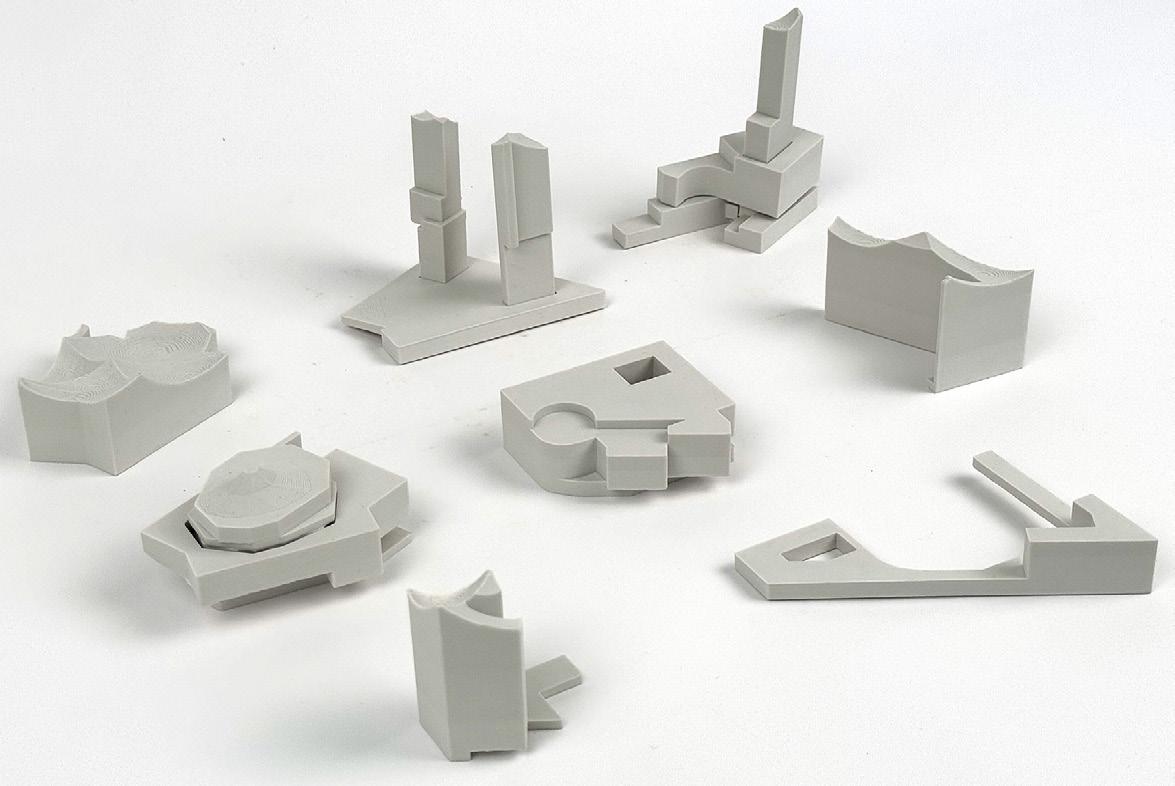
The design begins with the fundamental elements of color, form, and massing as the starting point for three-dimensional development, exploring the transformation between planar graphics and volumetric massing, serving as the central focus of the design investigation.
Solid and Virtual
Solid and Virtual, as two fundamental concepts in architectural elements, are explored at this stage through experiments and analyses using the most essential elements, colors, and materials, resulting in the creation of distinctive and diverse base volumes.
& Virtual: Exploring Fundamental Elements and Spatial Transformation
The design begins with the fundamental elements of form and massing, serving as the basis for three-dimensional development. It explores the transformation from two-dimensional diagrams to spatial configurations, establishing a clear design logic.
At this stage, the focus centers on two key architectural concepts— Solid and Virtual. Through experiments with essential elements, colors, and materials, the design analyzes the spatial interplay between solidity and void.
The resulting diverse base volumes not only reflect this dialogue but also provide formal prototypes for further spatial and structural development, illustrating a progression from elemental experimentation to spatial formation.
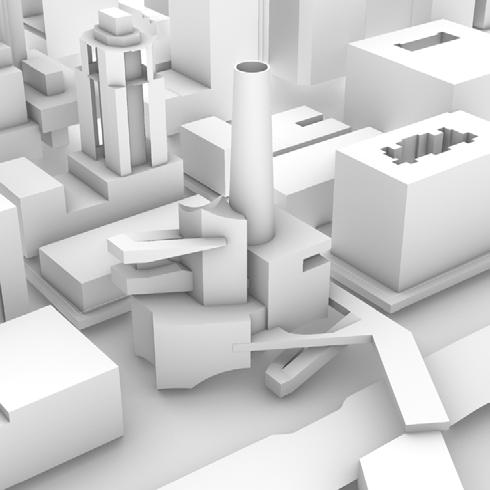
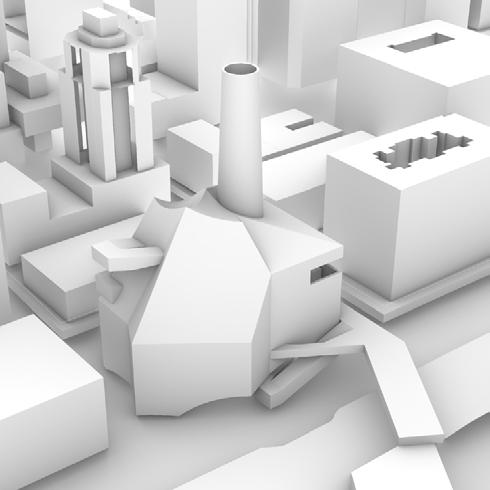
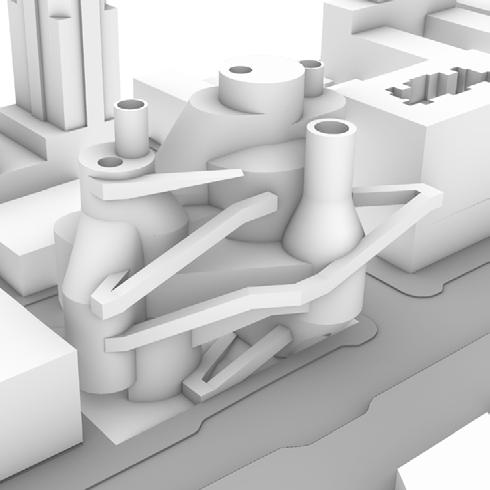
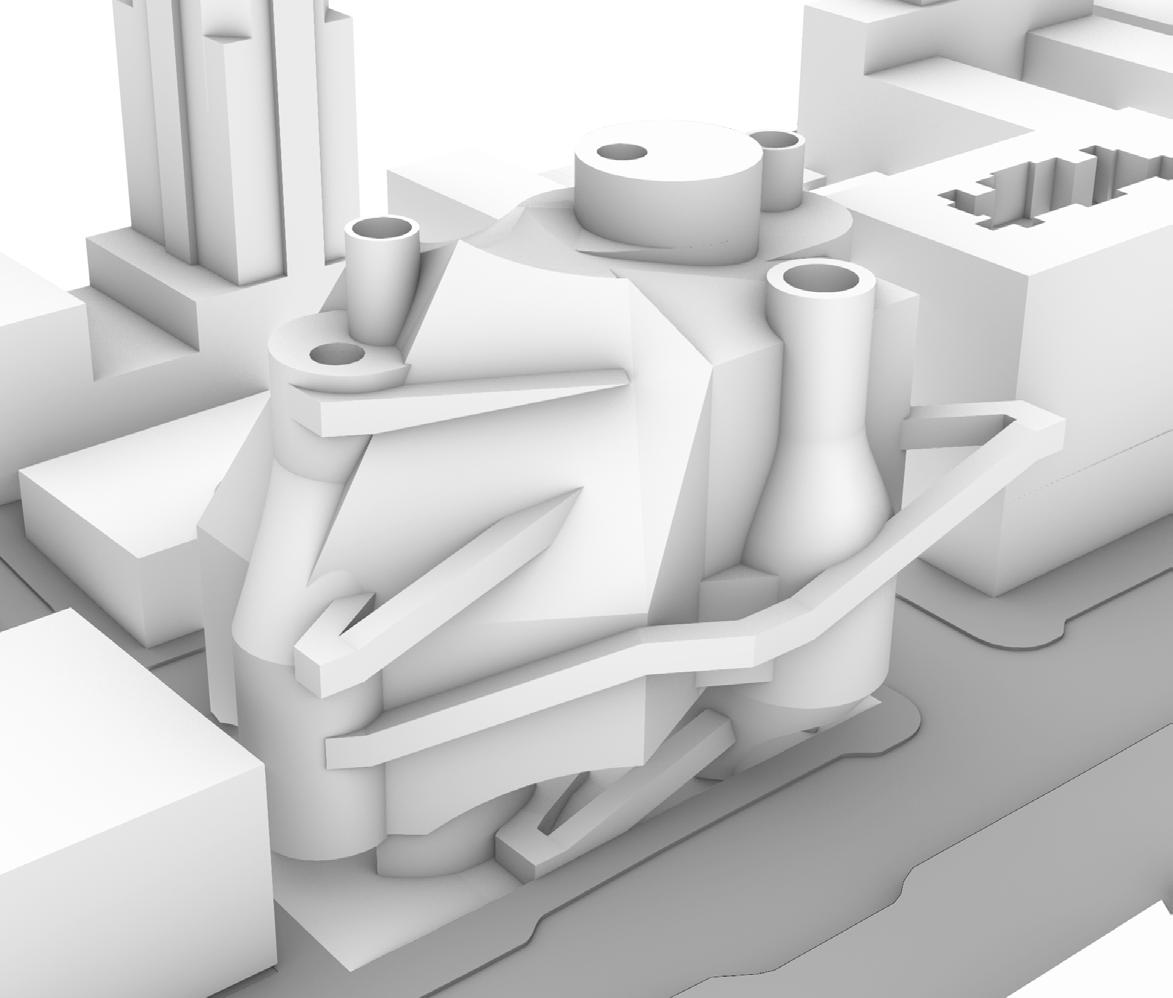
The GEO-THEATER redefines what a performance venue can be—transforming it from a passive container of events into an active environmental agent. Rather than isolating itself from nature, this theater integrates geo-engineering systems such as vortex wind turbines, algae-based solar panels, and passive cooling towers. These technologies allow the building to generate its own energy, regulate climate conditions, and actively respond to its surroundings. Located on Seattle’s waterfront, the theater becomes part of the landscape’s ecological rhythm. Visitors experience not only performances on stage but also the continuous performance of the architecture itself—adapting, breathing, and interacting with the environment. The GEO-THEATER marks a shift toward a new architectural paradigm where sustainability is not added on, but embedded as a core narrative, deeply entwined with both form and function.
The GEO-THEATER concept blurs the boundary between architecture, performance, and the planet’s ecological systems. More than just a space for cultural expression, it is a stage for environmental engagement—one that transforms natural forces into design drivers. Located along the Seattle waterfront, the theater’s architecture responds directly to site-specific conditions: wind, moisture, temperature, and light are no longer constraints, but raw materials for design.
Through the integration of geo-engineering elements such as vortex wind turbines and algae-based solar skins, the GEO-THEATER becomes energypositive, harnessing renewable sources to power itself. Passive cooling chimneys enhance air circulation, while adaptive façades adjust to daylight and weather shifts. These features are not hidden technical layers but are made visible and experiential, becoming part of the spatial and emotional narrative.
Inside, performances unfold in dialogue with the climate. Light filtering through kinetic skins shifts with cloud cover; airflow moves gently through audience zones; sounds and smells from the surrounding environment filter into the theatrical moment. The building itself becomes part of the storytelling, performing alongside actors and audiences alike.
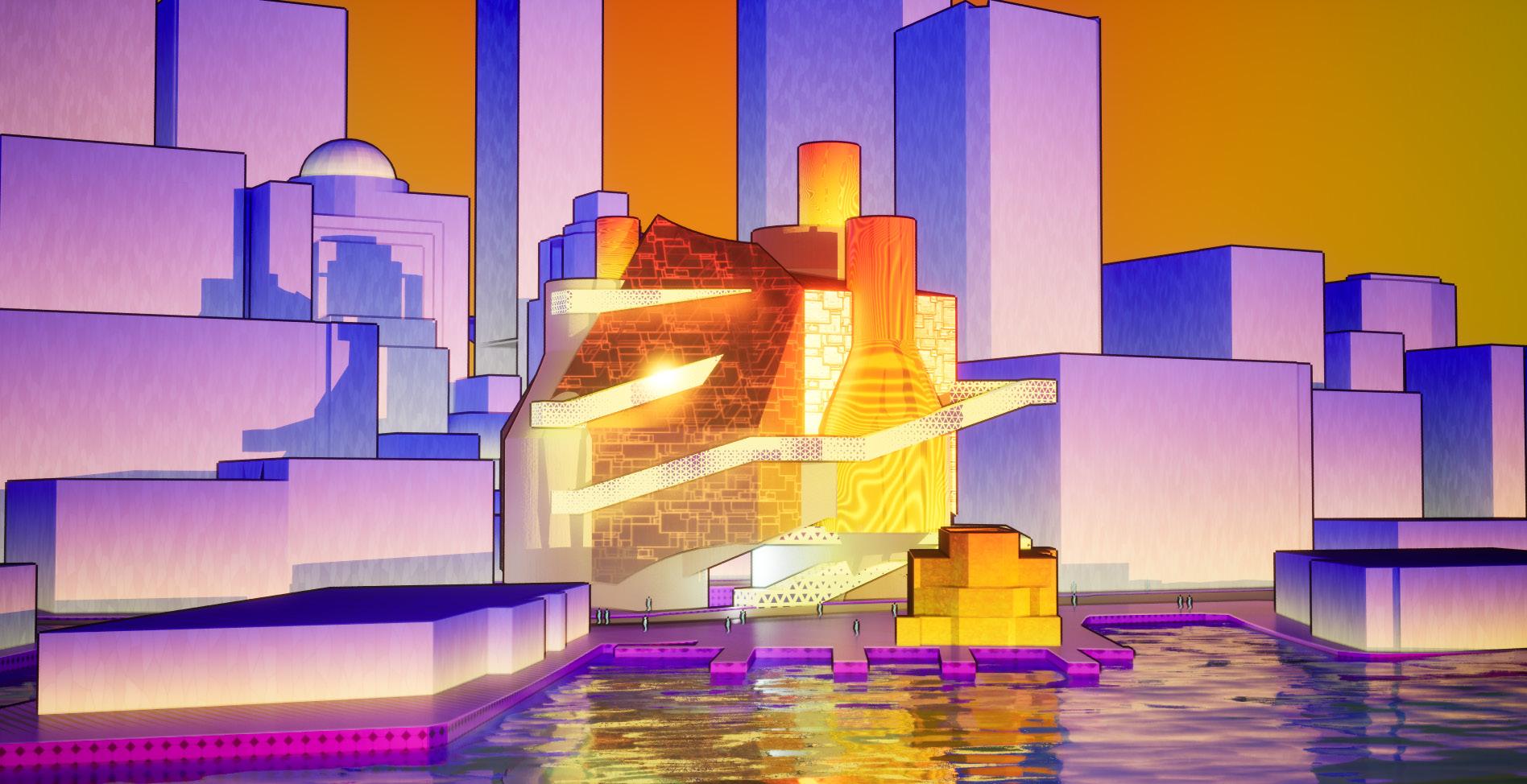
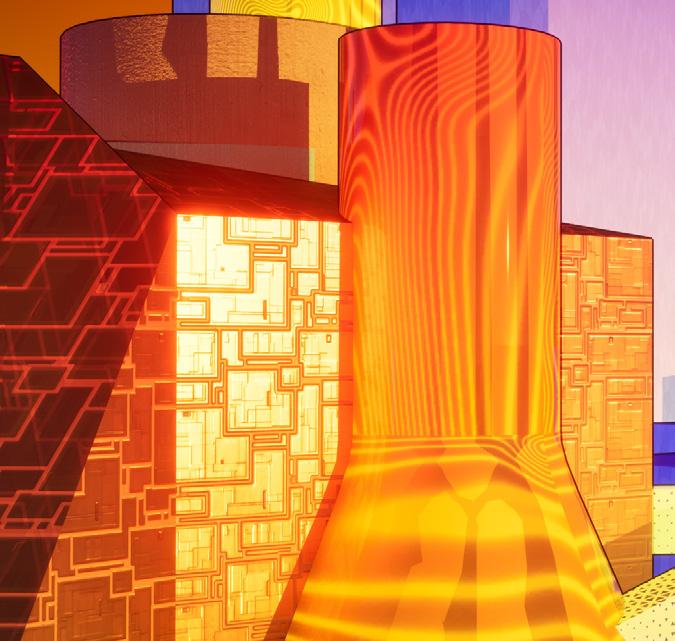
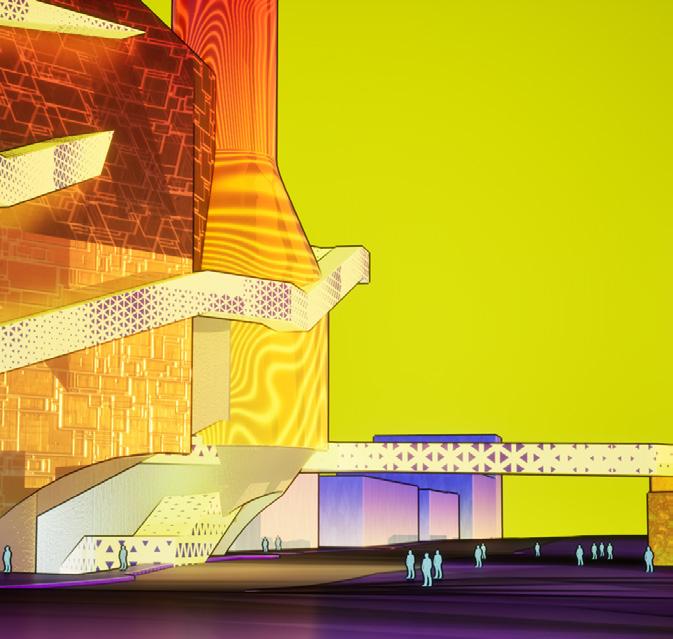
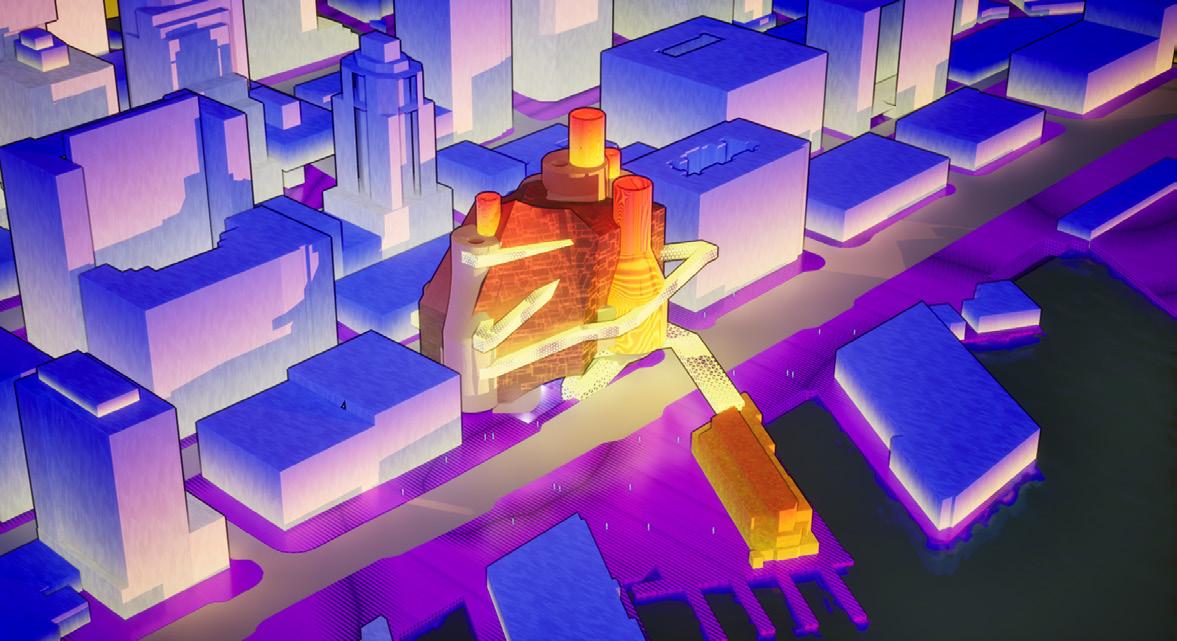
In HYPERSTAGE : ATOMS, spatial movement, materiality, and public life converge to create a new model of theater as an urban activity hub. Located at the edge of Seattle’s waterfront, the building invites not just spectators, but the city itself, to participate in a continuous performance. A gently rising ramp guides visitors from the shoreline through multiple levels of interaction—linking plazas, terraces, and performance zones in a seamless vertical flow. This spatial gesture blurs boundaries between stage and street, between performance and everyday life.
The architecture embraces metal materials as a reflective surface that captures the mood of the weather and time of day. Under changing light and coastal fog, the building transforms, becoming a responsive urban landmark that reflects not only the sky, but also the movement of people and the energy of events within. These materials, while industrial, gain softness through interaction with nature.
Together, the ramp, metal façade, and civic openness position the GEO-THEATER as more than a cultural space—it is an engine of urban gathering, ecological thinking, and spatial storytelling. It merges infrastructure, aesthetics, and public engagement, setting a new standard for how architecture can perform within and for the city.
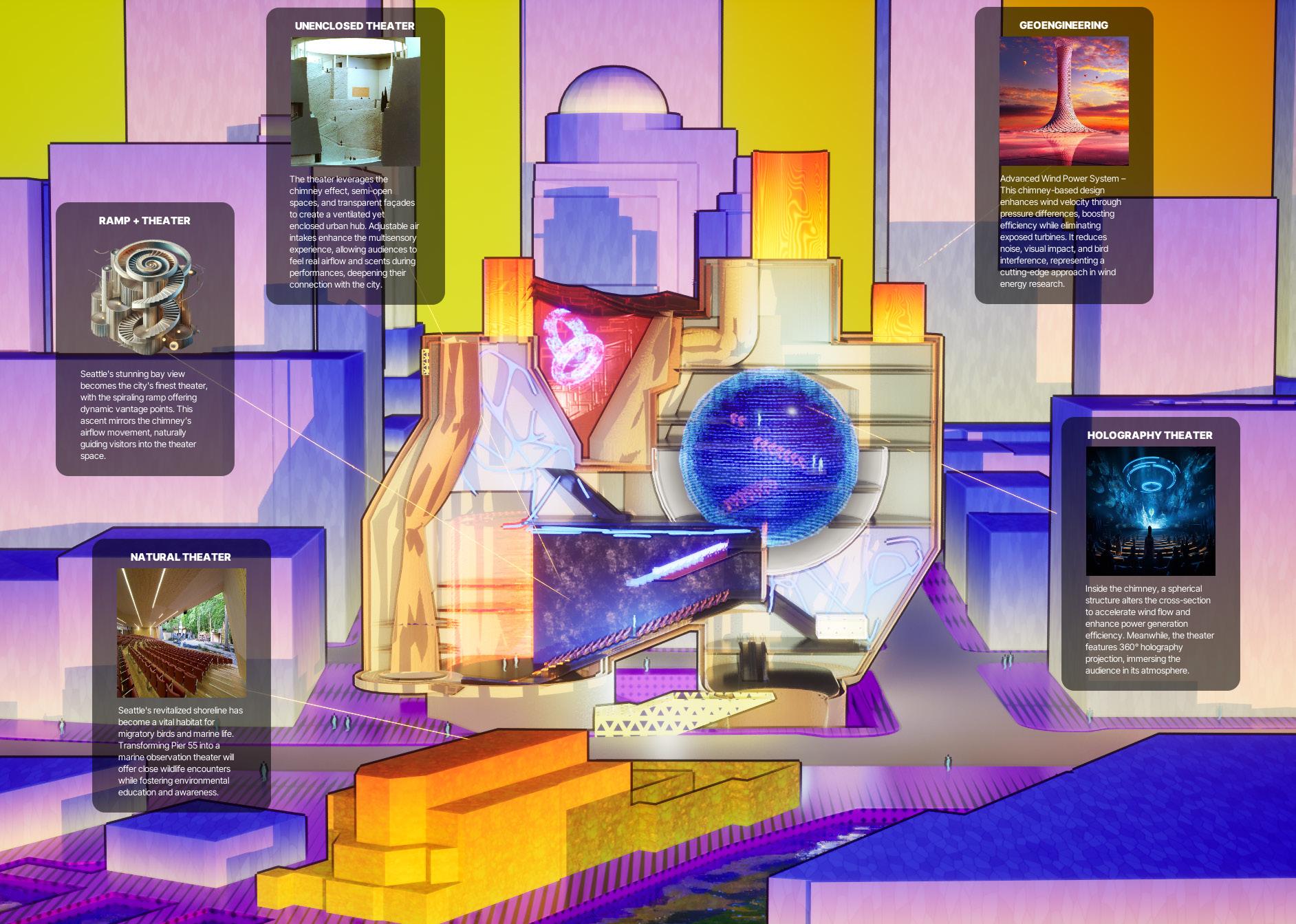
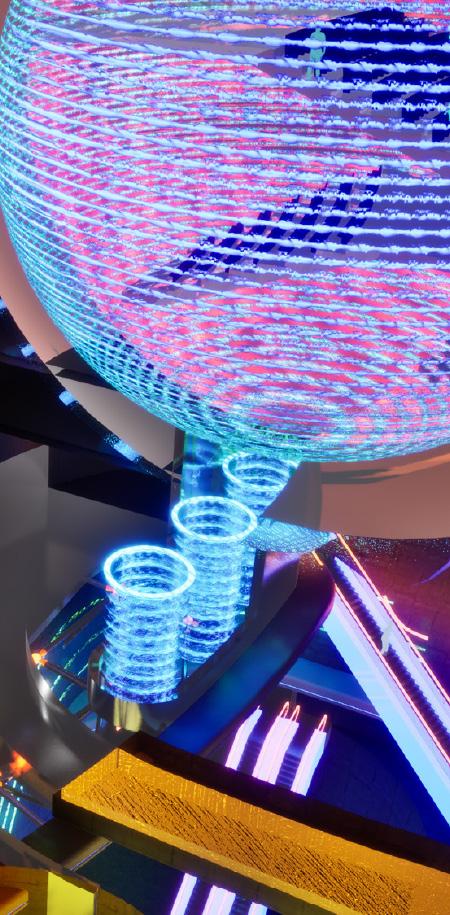
The theater section of HYPERSTAGE : ATOMS reveals more than spatial organization—it tells a story of energy, atmosphere, and audience engagement. Unlike traditional theaters that separate technical systems from user experience, this section integrates performance space, circulation, and environmental infrastructure into one cohesive vertical narrative. Stacked volumes include a deep immersive hall and a spherical 360-degree projection dome, suspended within a matrix of wind chimneys, energy systems, and social terraces.
Natural ventilation is driven by the sectional logic: vertical shafts aligned with Seattle’s prevailing winds channel air through the building, cooling the interior while animating circulation paths. The ramp spirals upward between layers of program, offering moments of pause, view, and anticipation. Audience movement is choreographed not just horizontally, but vertically—each level reveals new spatial experiences, acoustics, and climate responses.
The structure’s section also exposes sustainable systems such as algae-based solar layers, passive cooling tubes, and kinetic shading devices. These are not hidden technicalities—they’re part of the theatrical narrative, shaping light, air, and temperature during each performance. In this way, the section is both diagram and experience: a living cross-section where energy, culture, and architecture intersect, inviting users to witness the building’s inner workings as part of the show itself.
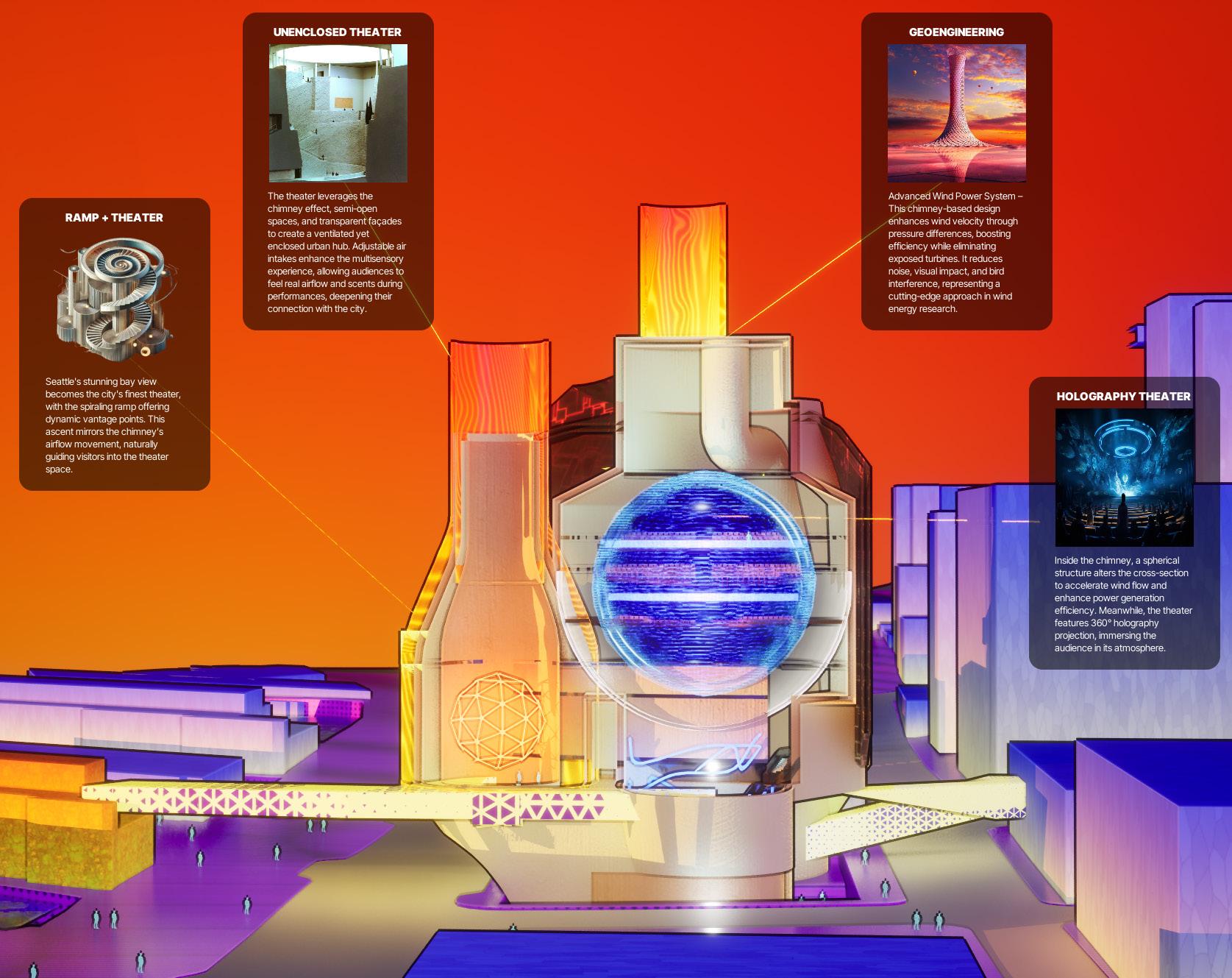
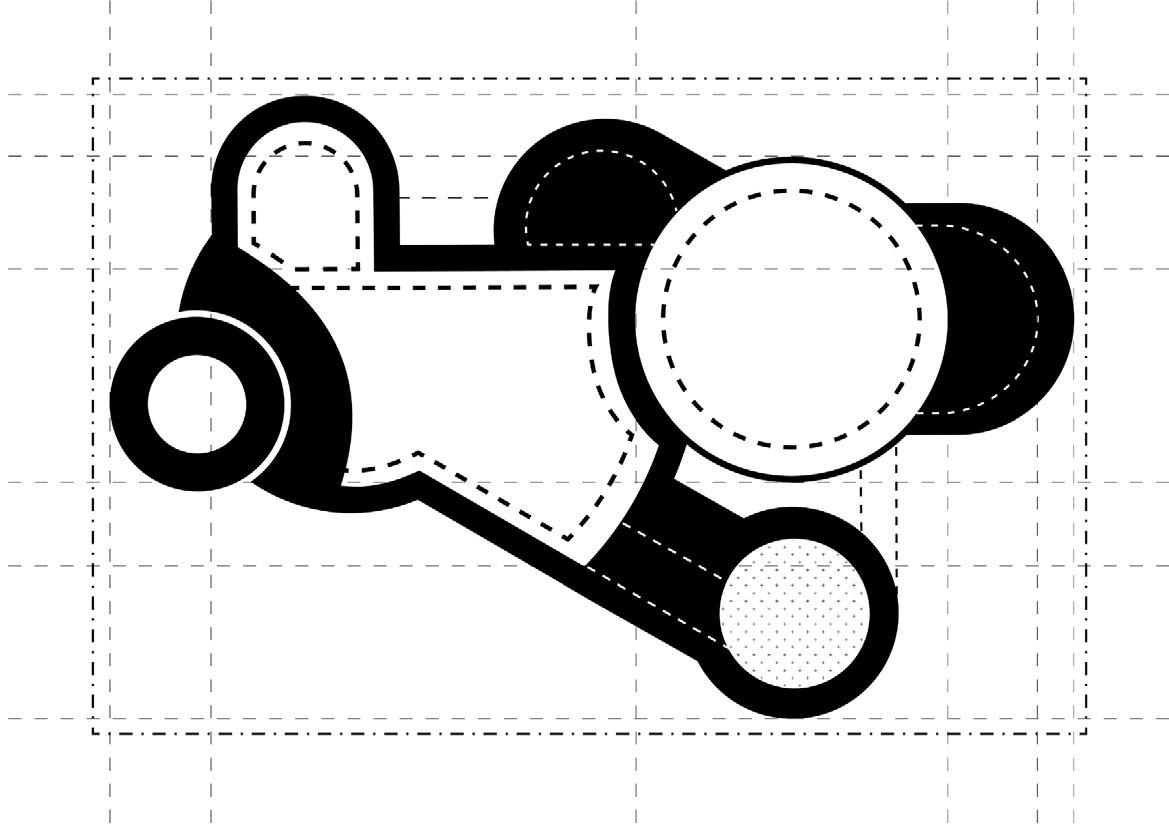
The section and plan parti are not separate diagrams, but two interwoven layers of the same spatial intelligence. The plan parti establishes the foundational logic: radial and linear paths stretch from the Seattle waterfront into the site, guiding visitors through open plazas, enclosed theaters, and transitional zones. Circulation flows organically from coast to core, forming a spatial rhythm that reflects the natural movement of wind and people.
Meanwhile, the section introduces verticality—stacking immersive theater spaces, vortex wind towers, and rooftop energy systems into a living, performative machine. Each layer serves multiple purposes: public gathering below, theatrical performance in the middle, and ecological functions above. This vertical zoning isn’t imposed—it emerges from environmental analysis, using airflow, sunlight, and user behavior to define massing and program.
Together, the plan and section form a 3D parti that unites narrative, sustainability, and experience. Spaces are not isolated rooms but fluid sequences: ramps spiral upward between climate-responsive skins; vertical chimneys double as performance volumes and cooling systems; terraces act as both viewing platforms and energy collectors. This integrated spatial strategy makes every movement—horizontal or vertical—part of the architecture’s story, inviting visitors to inhabit the theater as an unfolding journey through space, performance, and environmental awareness.
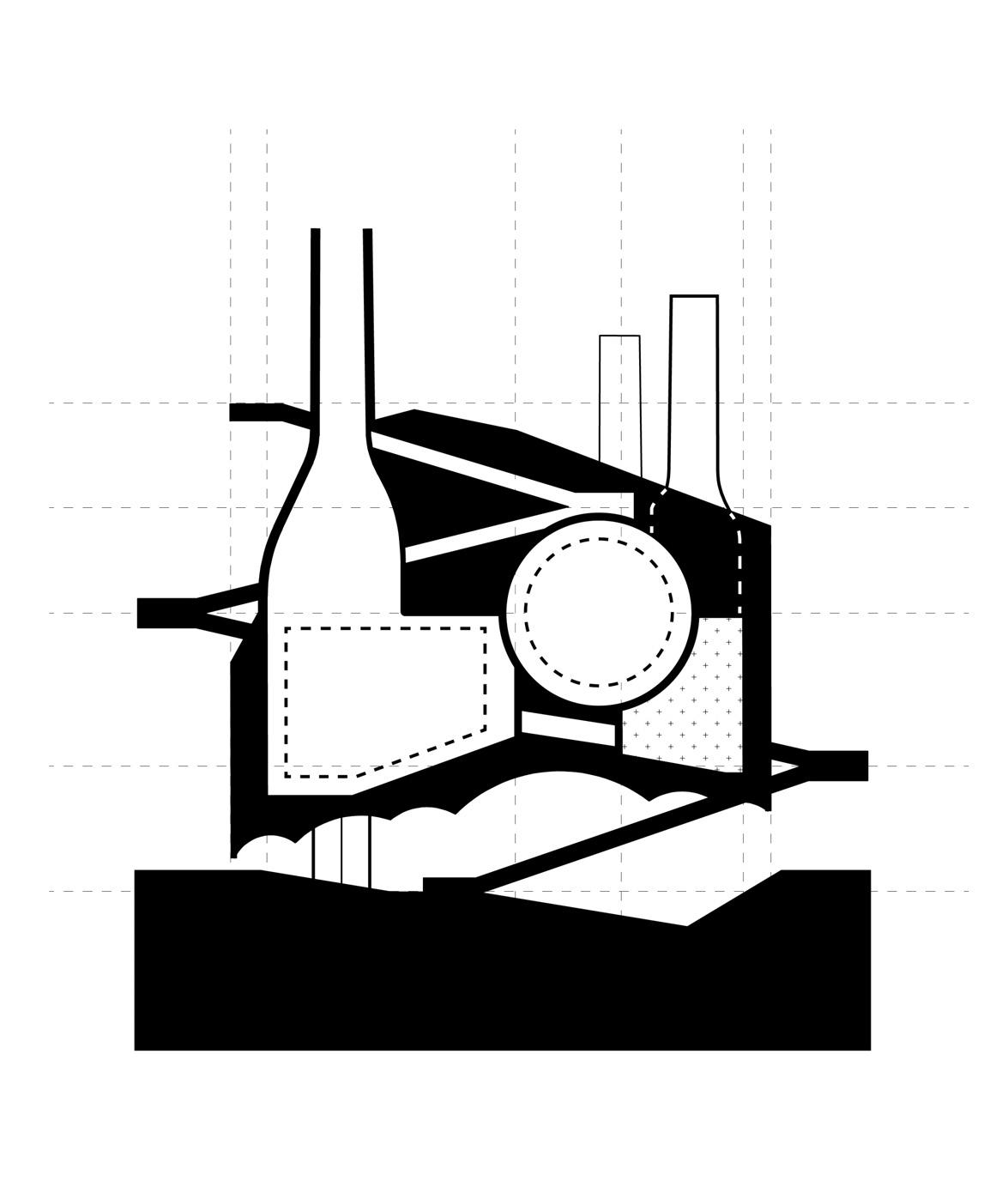
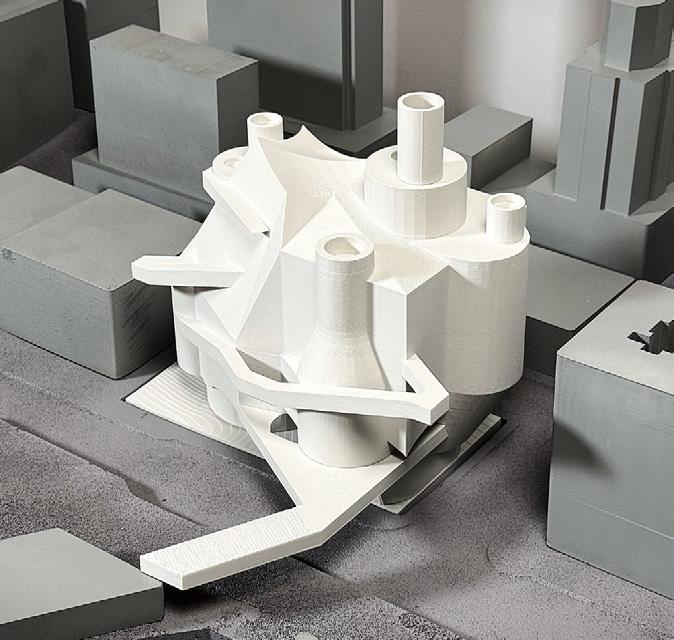
The theater’s spatial purity emerges through minimal surfaces and clear circulation, allowing natural elements like wind and light to define the atmosphere without visual clutter.
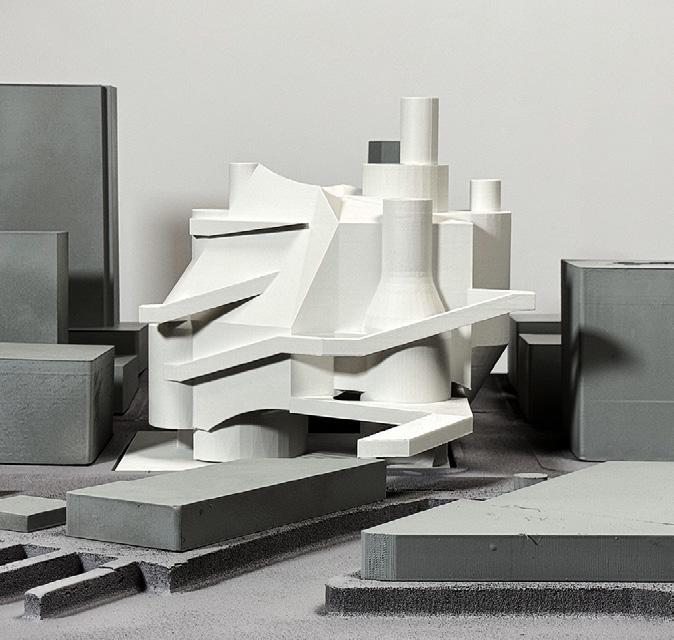
Public and performance spaces interlace throughout the building, creating layered interactions where audience paths, environmental systems, and storytelling zones constantly overlap and shift.
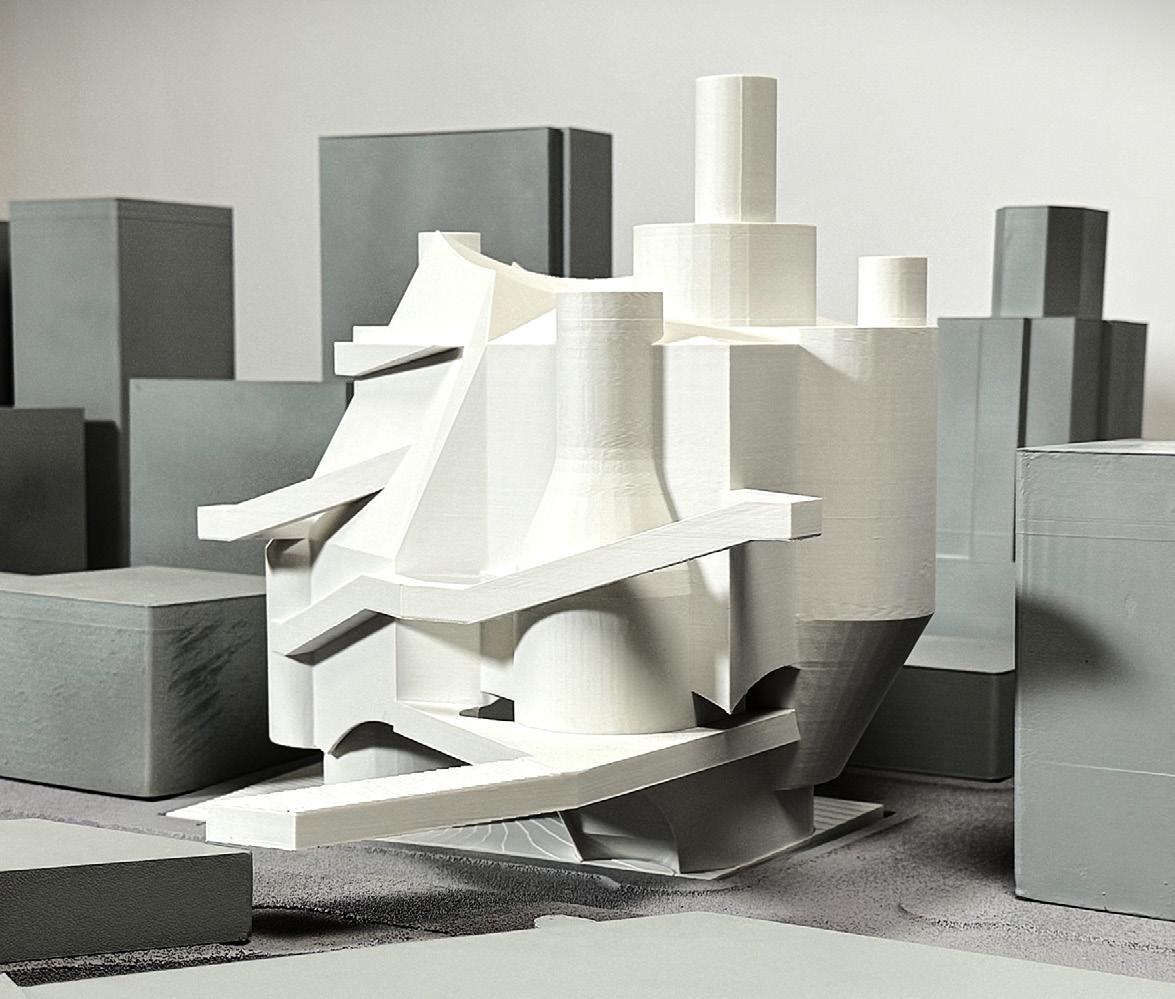
HYPERSTAGE : ATOMS is designed not only as a performance venue, but as a true urban focal point—a place where culture, environment, and public life intersect. Positioned along the Seattle waterfront, the theater draws people from all directions, serving as both a landmark and a gathering space. Its open plazas, stepped terraces, and continuous ramp invite spontaneous interaction, blurring the boundary between audience and citizen. Events spill outward into the urban fabric, activating the site day and night. The building’s form and visibility respond to the city’s skyline, while its sustainability features make it a model for future public architecture. As a result, the GEO-THEATER becomes more than a destination—it becomes a dynamic core of urban activity, identity, and exchange.
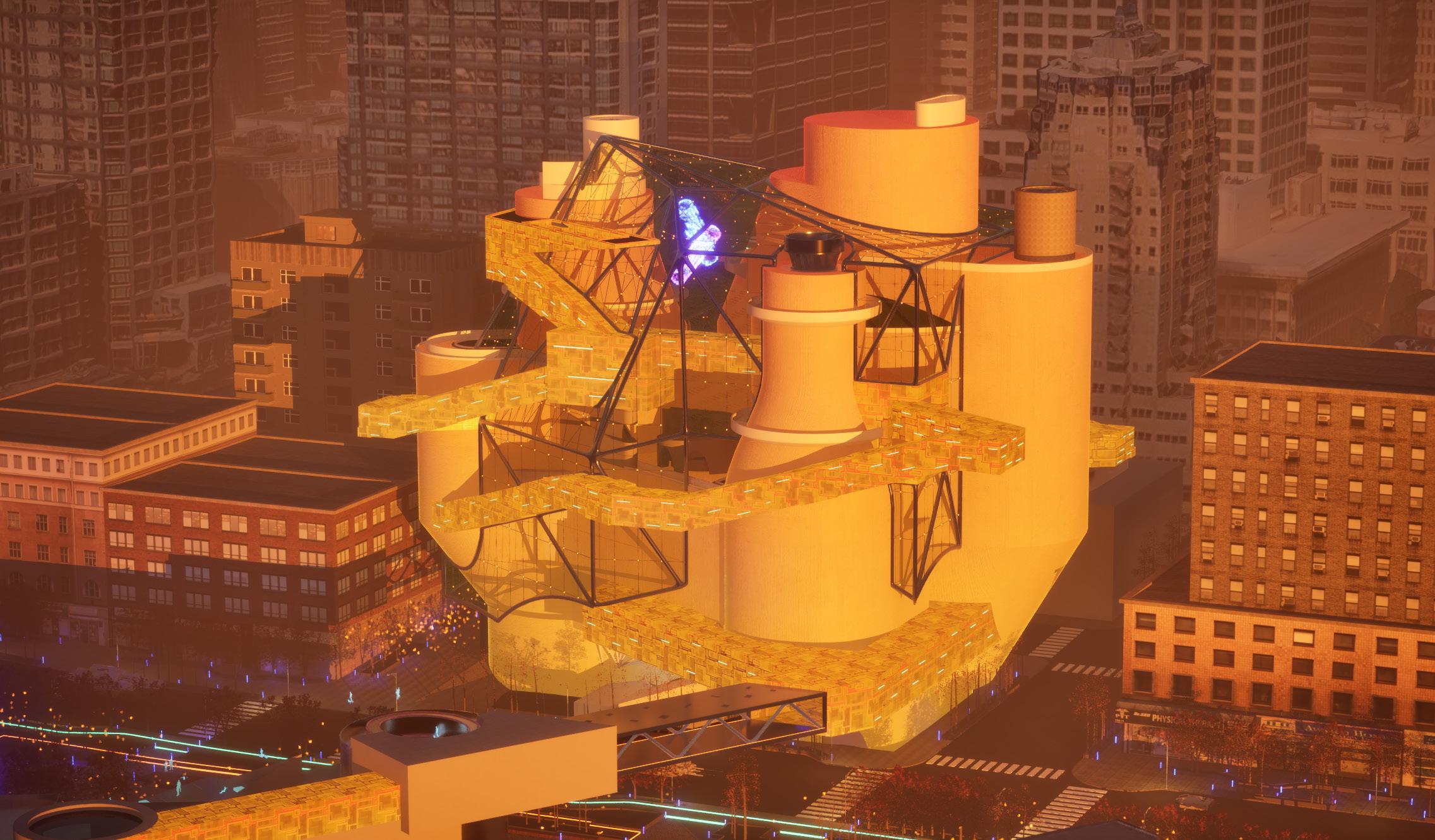
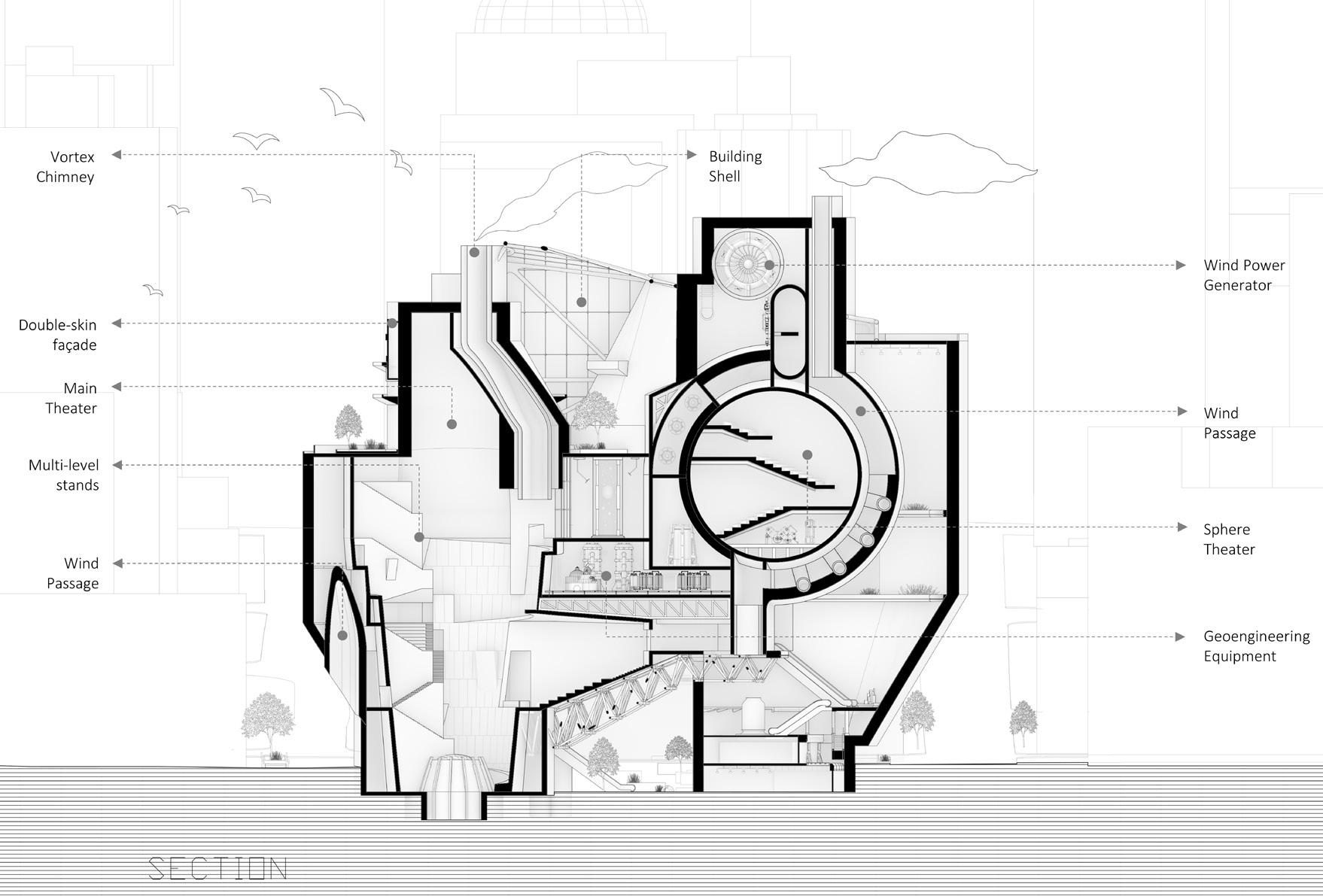
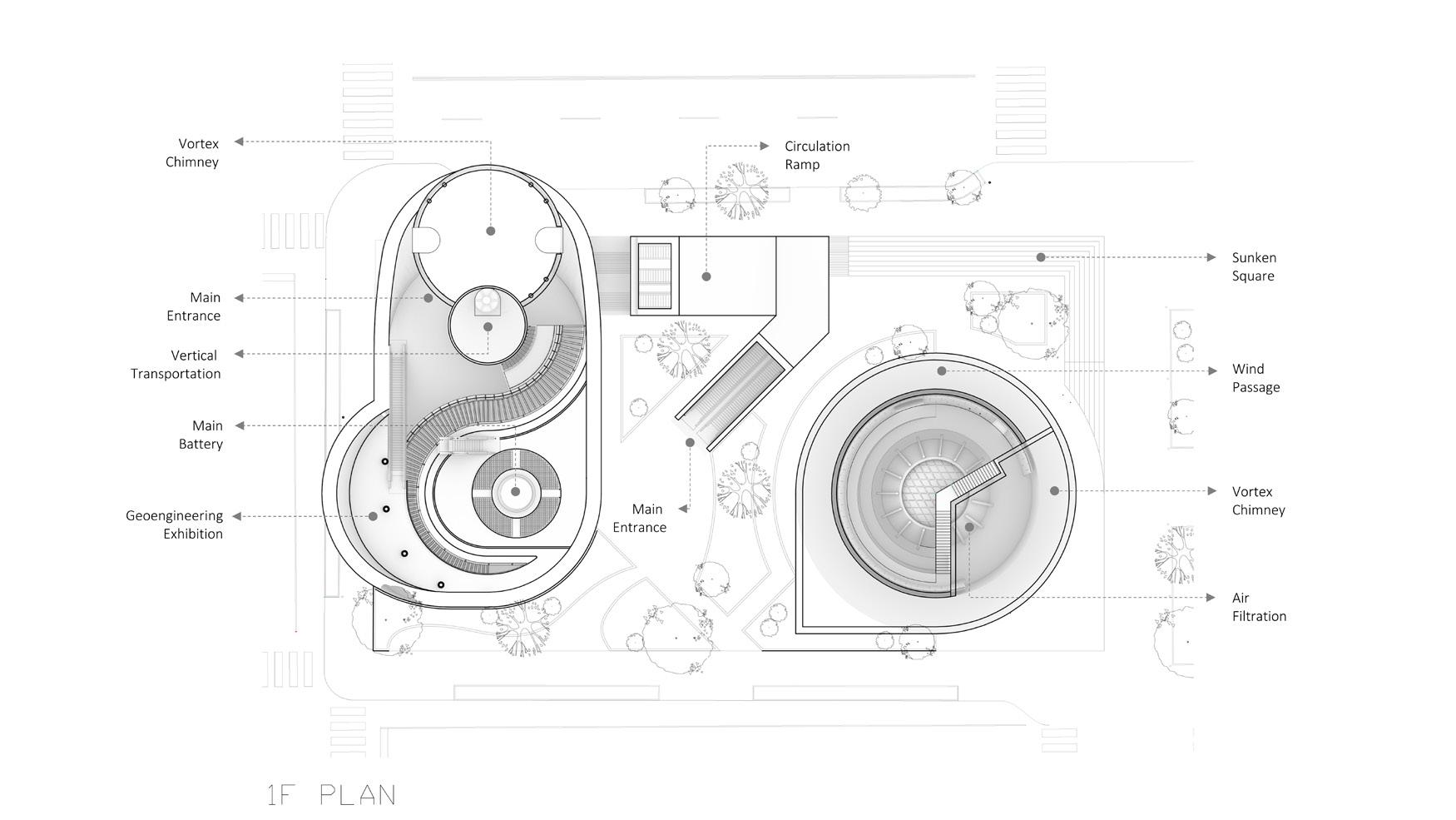
In HYPERSTAGE : ATOMS, the section and floor plan work together as a unified spatial system that merges architecture, performance, and climate responsiveness. The floor plan is organized around a central ramp that spirals through the site, connecting waterfront plazas, semi-open gathering spaces, and multiple theater zones. Rather than isolating functions, the plan encourages overlap—blending circulation, rest, and performance into a continuous spatial sequence. Public areas extend naturally into performance zones, and indoor and outdoor boundaries dissolve through operable façades and transparent partitions.
Vertically, the section stacks spaces in response to environmental data. Deep performance halls are embedded in the middle layer to stabilize acoustics and temperature, while vertical chimneys and rooftop gardens occupy the upper zones, functioning as wind turbines, solar collectors, and passive cooling systems. The section also reveals how light filters down from above, guiding both mood and orientation.
Together, the section and floor plan create a performative spatial logic—one where movement is not just practical but emotional, and where structure supports both storytelling and sustainability. This integrated approach transforms the theater into a spatial narrative, where users engage architecture as a layered experience unfolding across both axes: horizontal through plan, vertical through section.
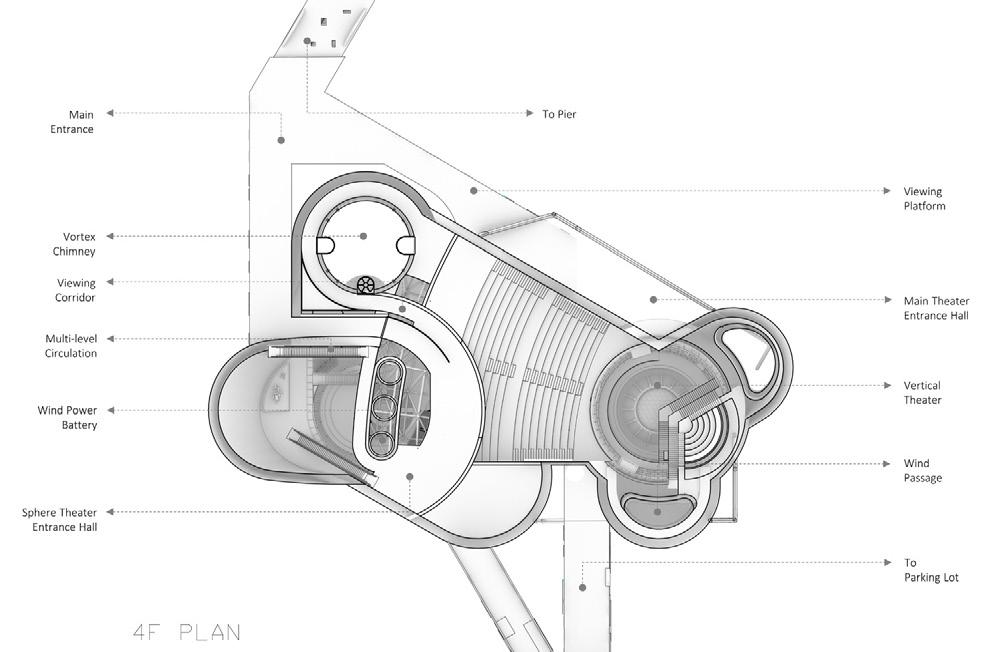
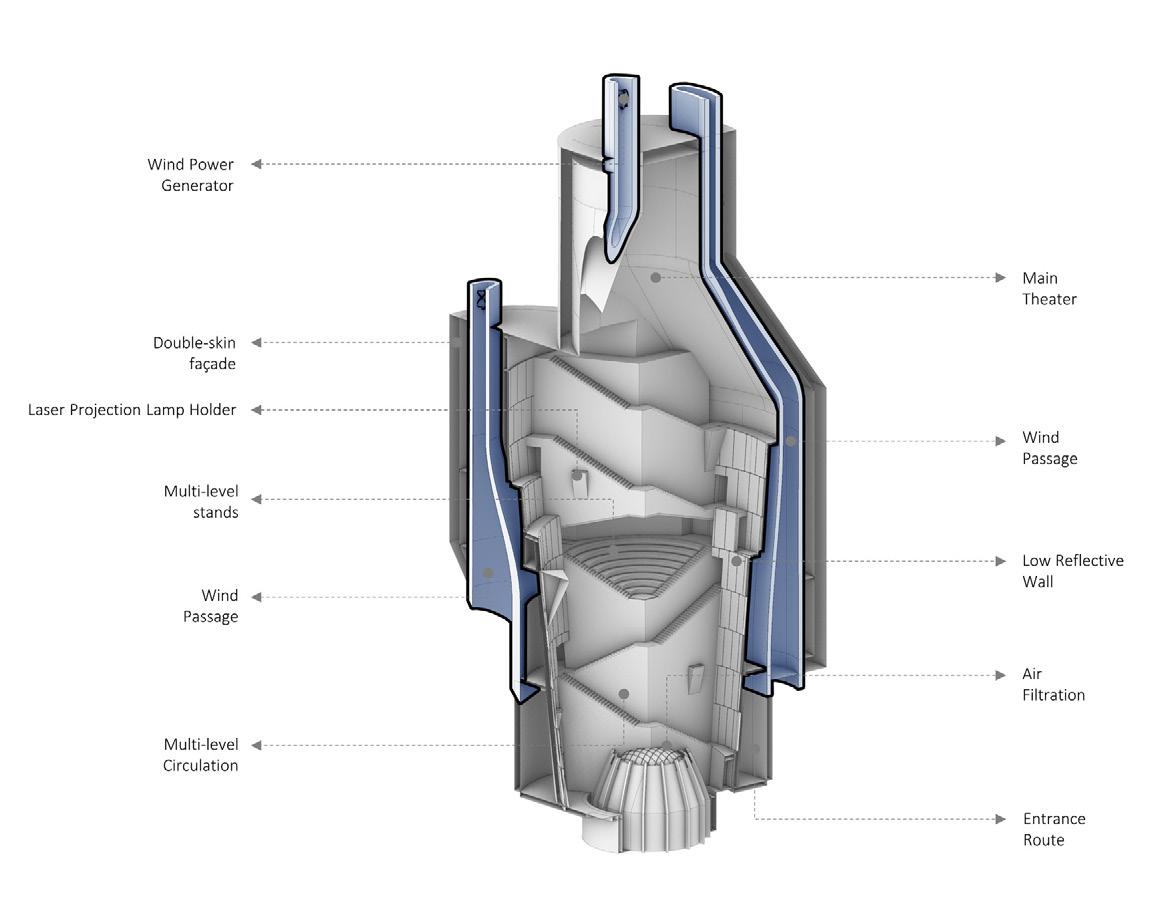
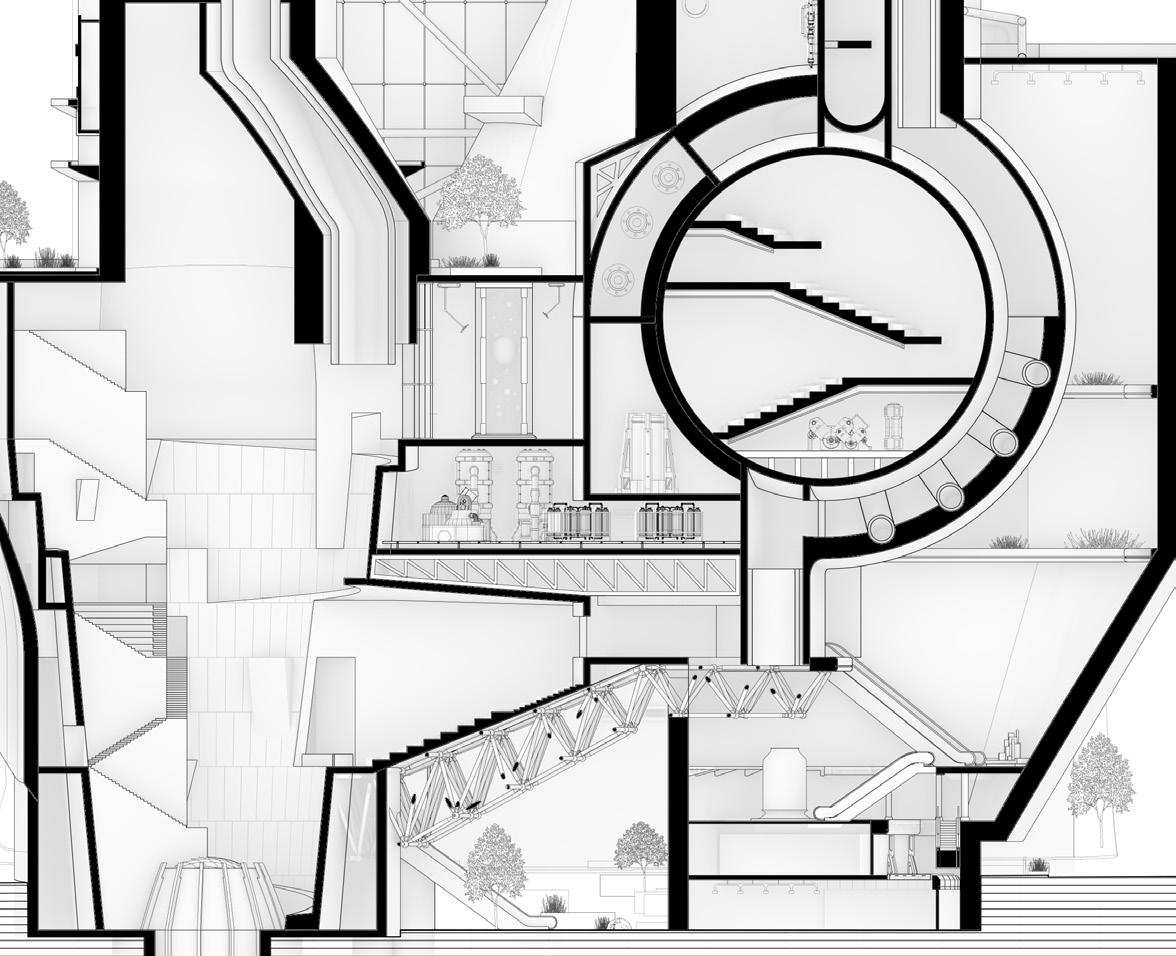
geo-engineering is not a hidden layer—it is the architectural essence. The project integrates climate-responsive systems into the very core of its spatial and formal identity. Among these, the Vortex Wind Turbine stands out as both an infrastructural and symbolic element. Unlike conventional turbines with blades, the vortex system uses oscillating vertical towers to capture wind energy silently and efficiently, making it ideal for an urban context like Seattle’s coastal zone.
These towers are embedded within the building’s sectional logic, rising like chimneys through the structure. As wind passes through, energy is generated and hot air is drawn upward, supporting passive cooling throughout the theater. This dual function—energy production and environmental control—demonstrates how geo-engineering can go beyond sustainability to actively shape space and experience.
The architecture transforms into a living system, continuously interacting with the environment. Façades respond to sunlight, algae-based panels harvest solar energy, and rainwater is collected for reuse. Visitors are not passive observers; they move through, feel, and witness these systems in action. The Vortex Wind Turbine becomes part of the theater’s narrative—its hum, movement, and structure enriching the multisensory experience. Here, architecture and climate are no longer separate; they perform together in harmony.
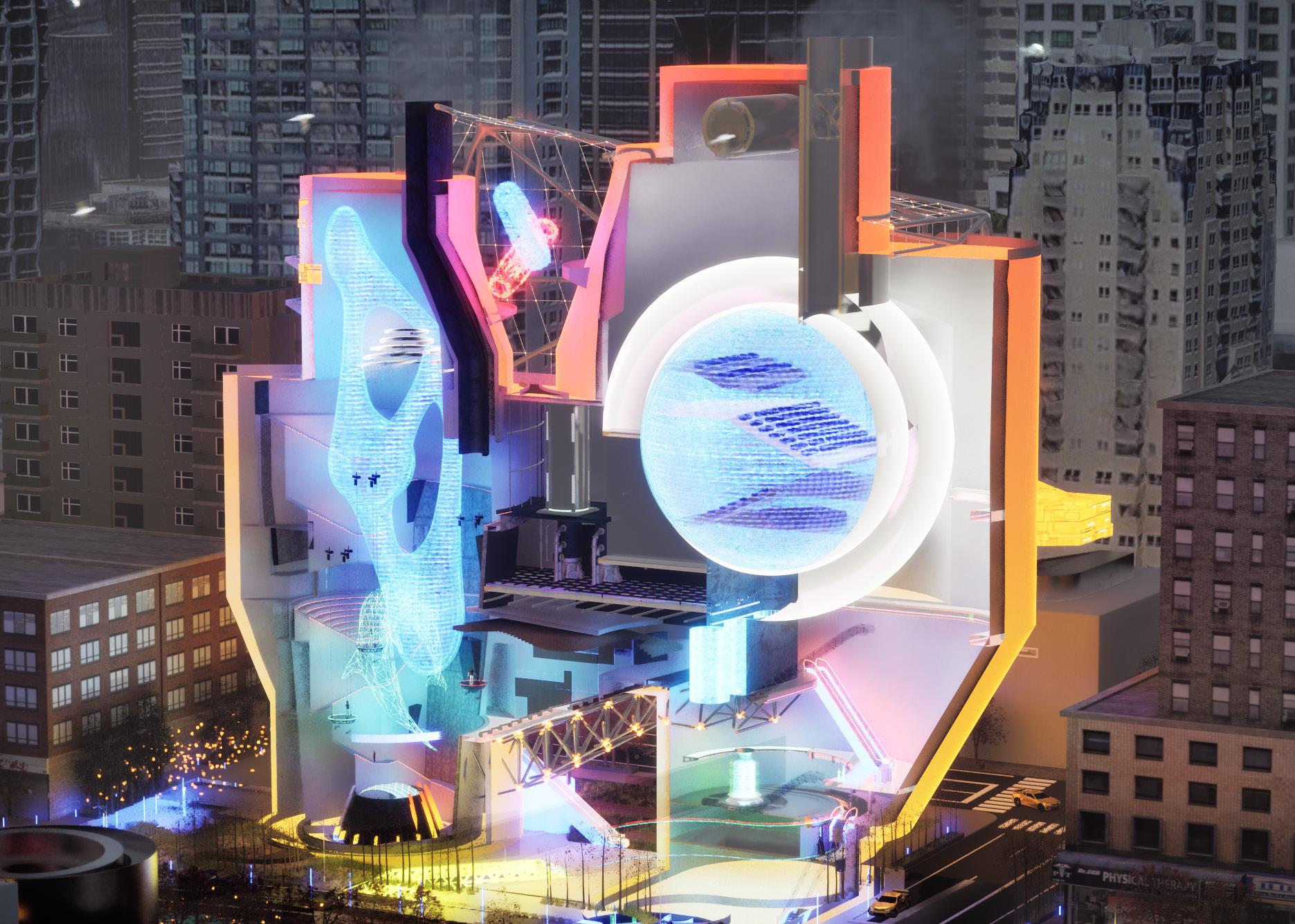
The future theater is no longer confined to four walls and a static stage—it becomes an adaptive, intelligent environment that performs alongside its audience. HYPERSTAGE : ATOMS embodies this vision, merging architecture, technology, and ecology to create a space where storytelling and sustainability co-exist. Located on the Seattle waterfront, the theater integrates geo-engineering systems such as vortex wind turbines, algaebased solar panels, and passive cooling structures. These systems are not backstage—they are part of the show, shaping atmosphere, temperature, and sensory experience in real time.
Instead of fixed seating and rigid walls, the theater embraces spatial flexibility. A central ramp guides users through multiple zones: immersive performance chambers, open-air stages, and communal platforms that blur the boundary between actor and viewer. Environmental conditions influence each performance—light filters through kinetic façades, wind moves through the structure, and acoustic behavior shifts with material response.
This is not just a place to watch stories unfold; it is a living stage where the building, the climate, and the people collaborate. The future theater engages the senses, responds to nature, and redefines what it means to gather, perform, and connect. It is architecture that listens, adapts, and narrates—shaping cultural experience for a changing world.
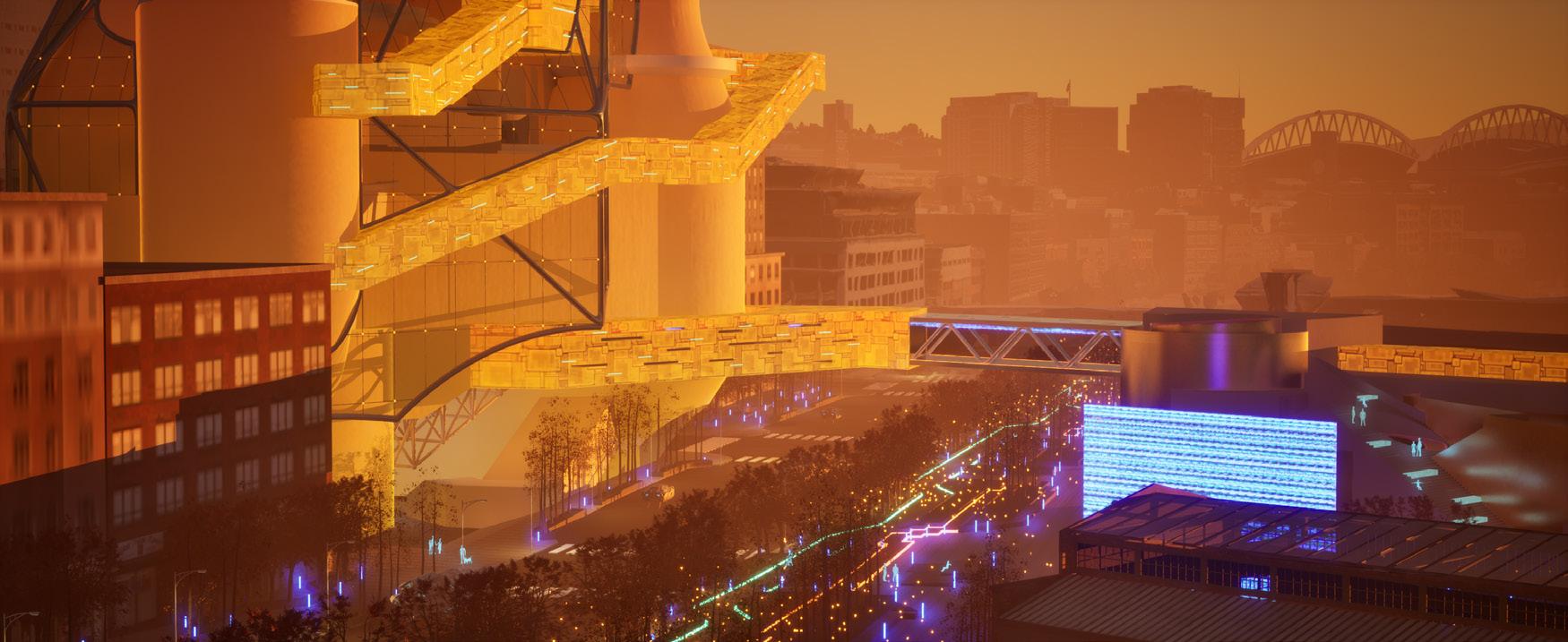
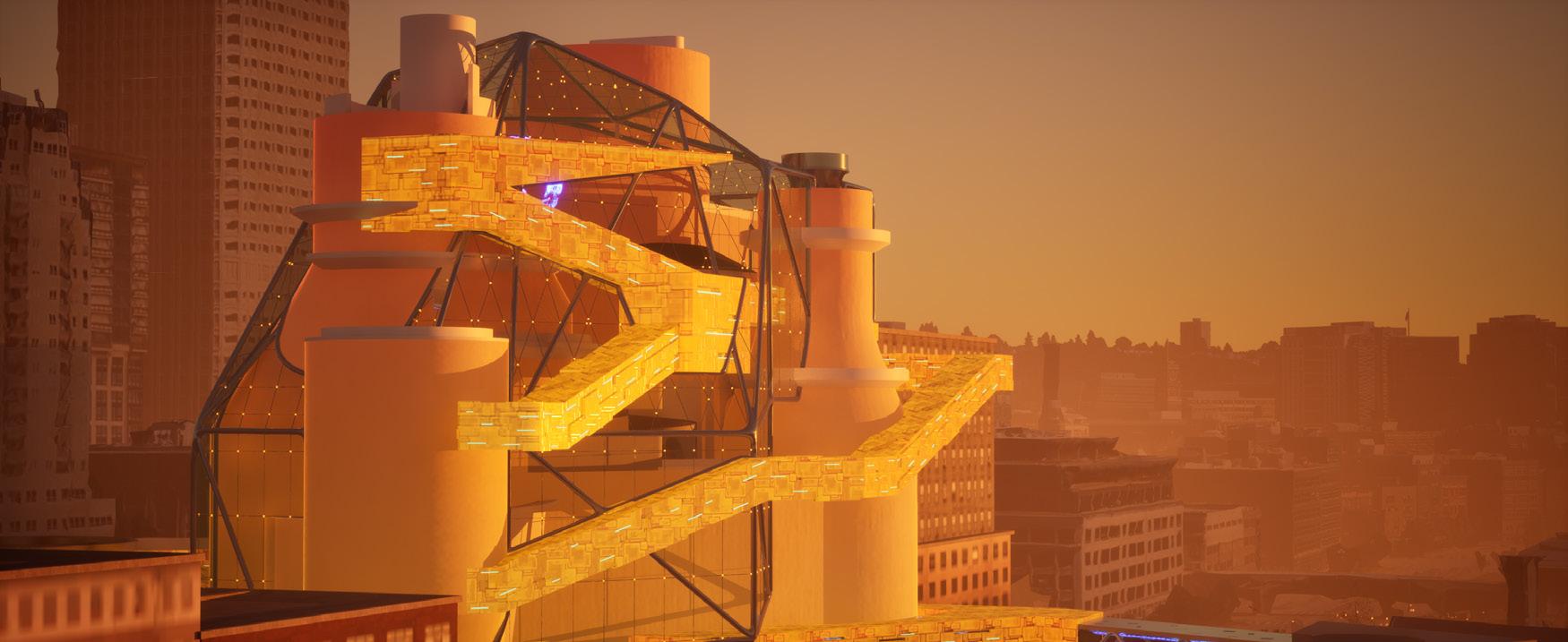
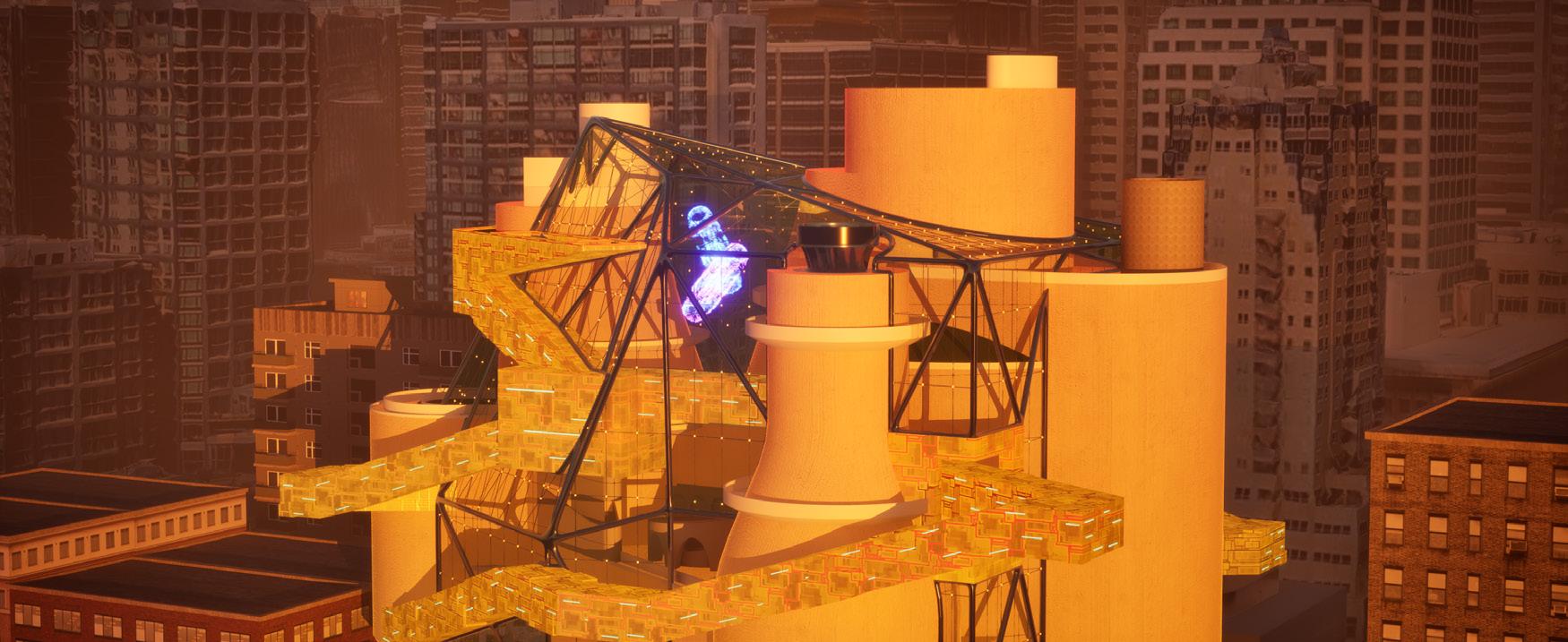
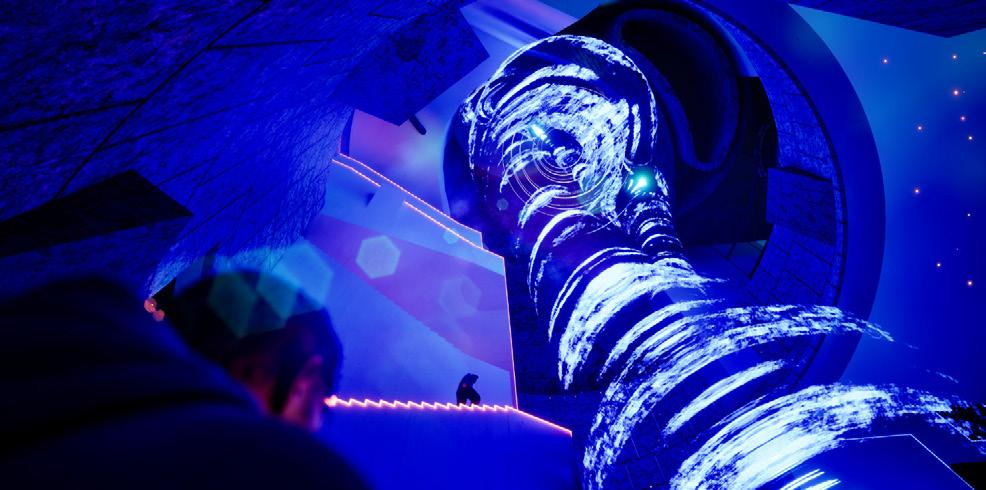
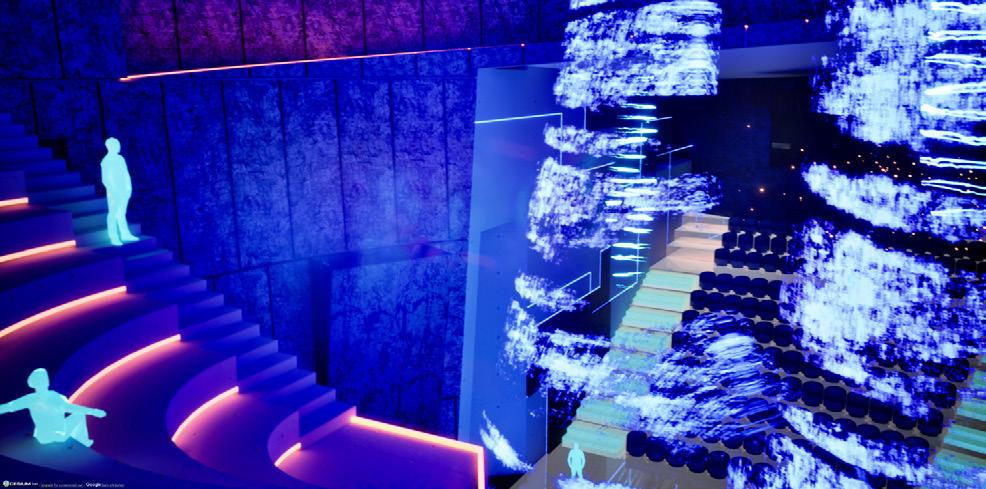
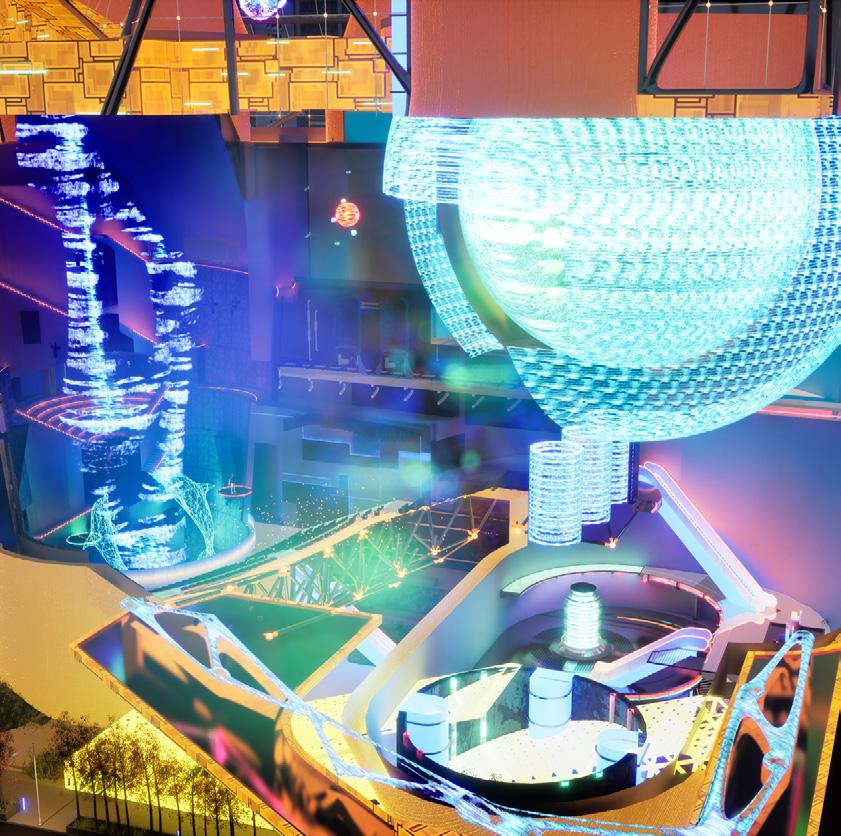
The vertical theater reimagines performance space as a stacked journey, where audiences move upward through layered stages, immersive zones, and climate-responsive systems—merging narrative, architecture, and environmental flow into a continuous spatial experience.
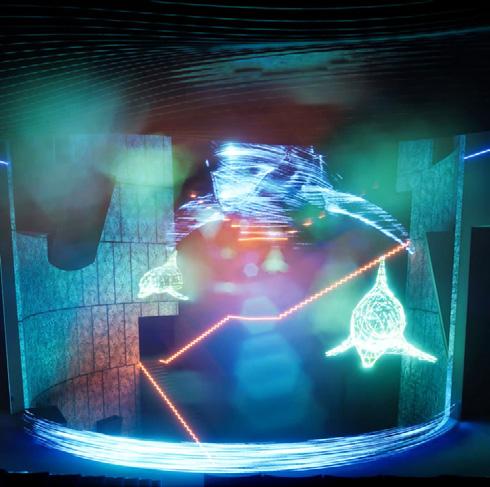
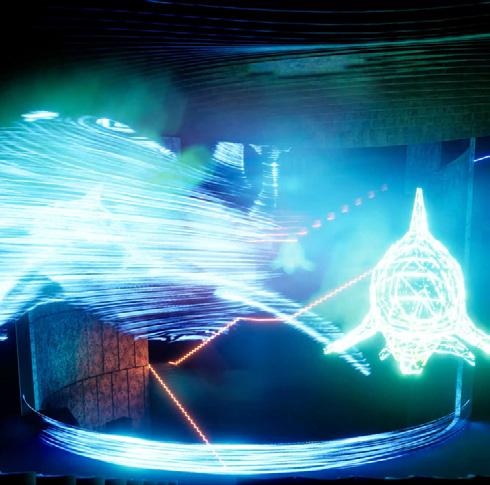

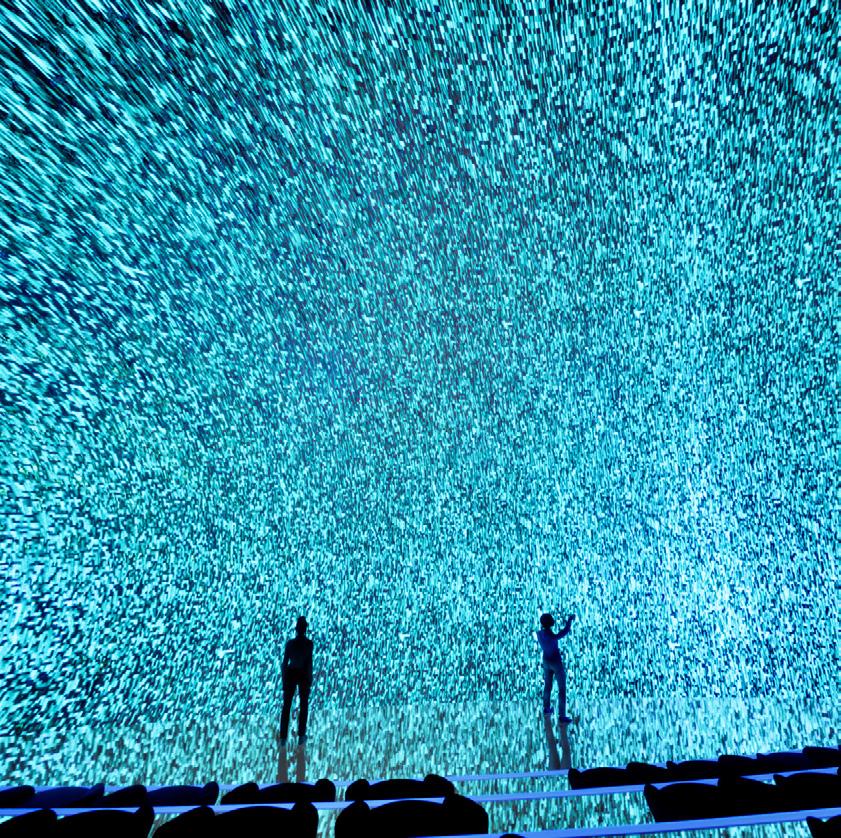
The spherical theater offers a 360-degree immersive experience, where projections wrap around the audience, dissolving the boundary between performer and viewer to create a fully enveloping, multisensory narrative environment.
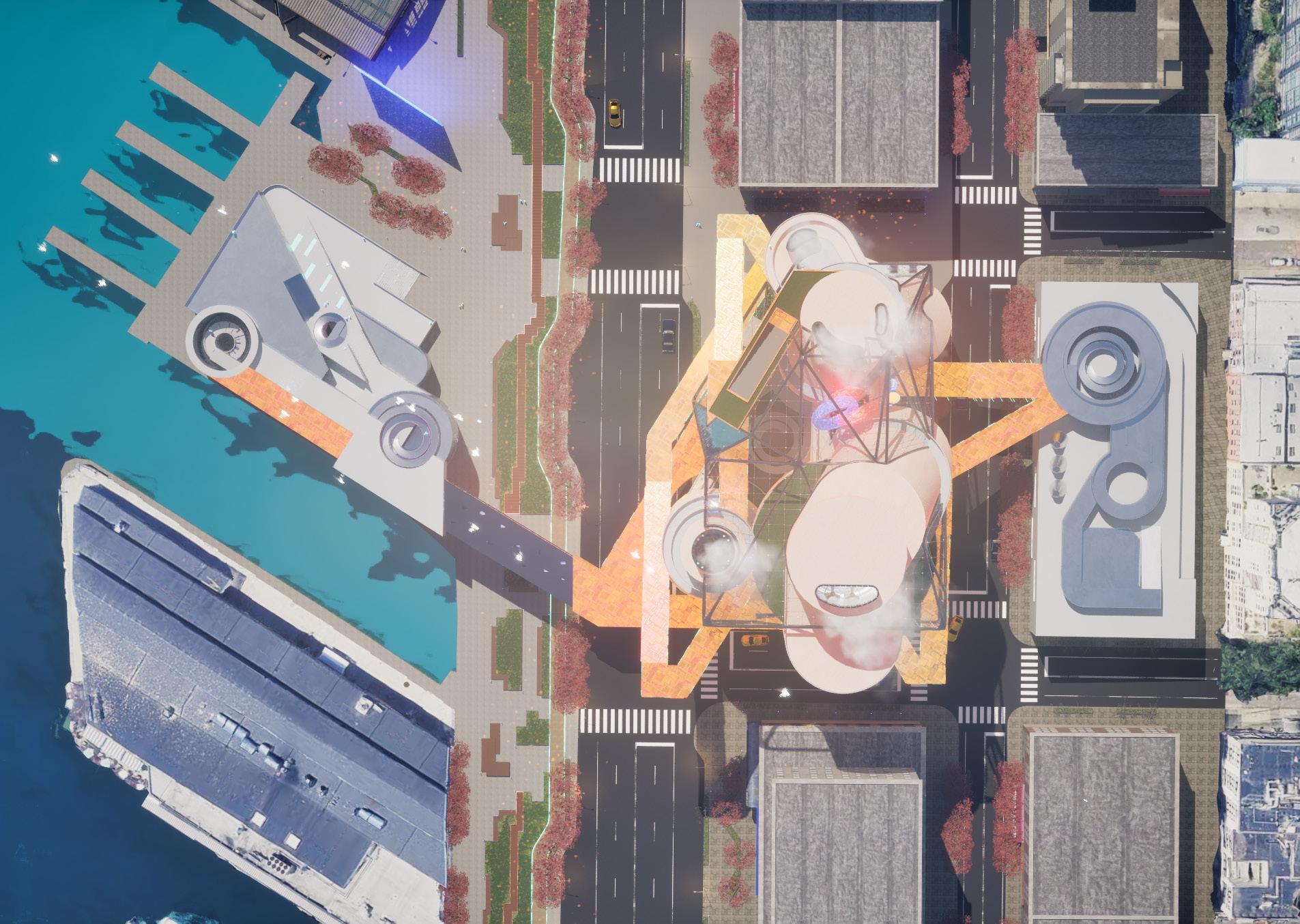
In HYPERSTAGE : ATOMS, urban connectivity is not just about accessibility—it’s about integration, flow, and exchange. Located on the edge of the Seattle waterfront, the theater is designed to act as a physical and cultural bridge between the city and its natural environment. Pedestrian paths extend from nearby streets and transit nodes directly into the theater’s open plazas and elevated walkways, encouraging seamless movement between civic life and cultural experience.
The architecture invites passersby to enter freely, blending public space with performance space. A central ramp connects the waterfront to upper terraces, weaving through programs and performance zones, allowing people to engage with the building even without attending a show. The structure becomes part of daily urban routines—used for walking, resting, viewing, and gathering.
By removing rigid boundaries between interior and exterior, the theater promotes openness, transparency, and social interaction. It becomes an urban anchor where art, ecology, and everyday life intersect. In doing so, HYPERSTAGE : ATOMS redefines the theater not as a secluded cultural object, but as a public infrastructure—deeply embedded in the rhythms, flows, and experiences of the contemporary city.
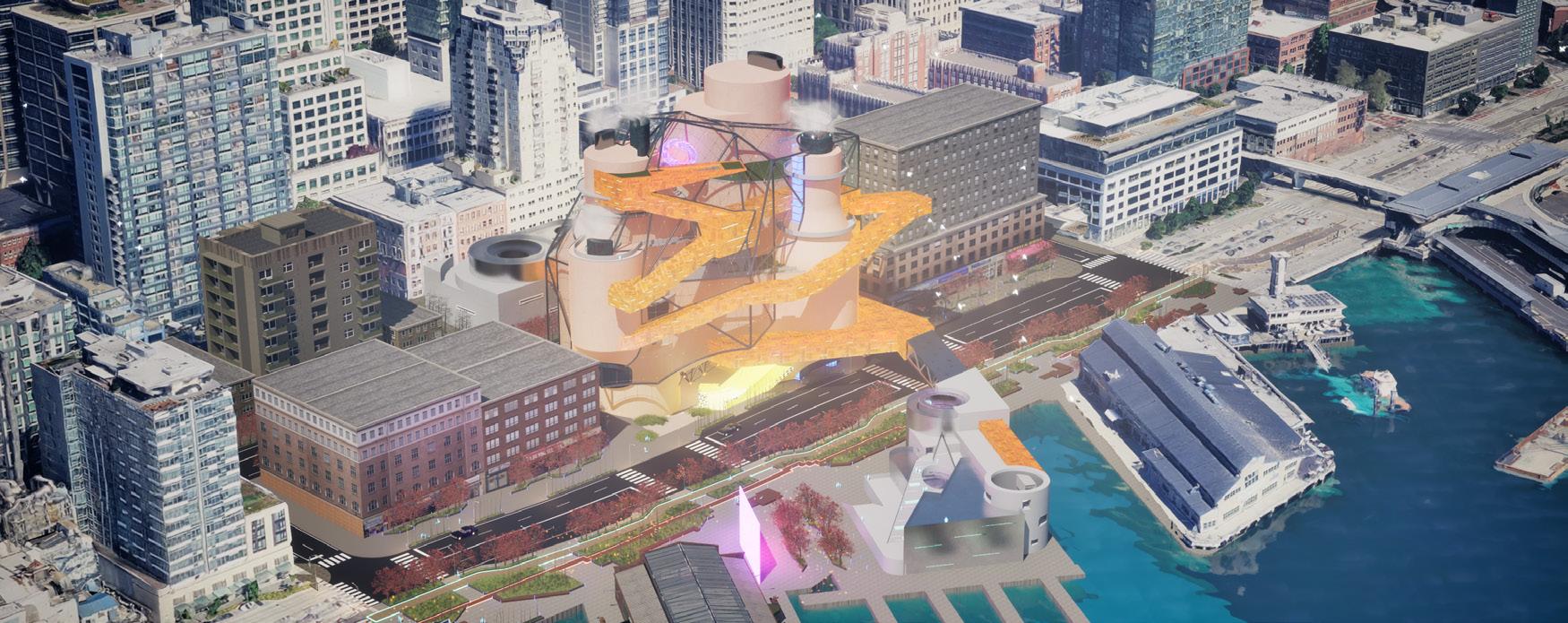
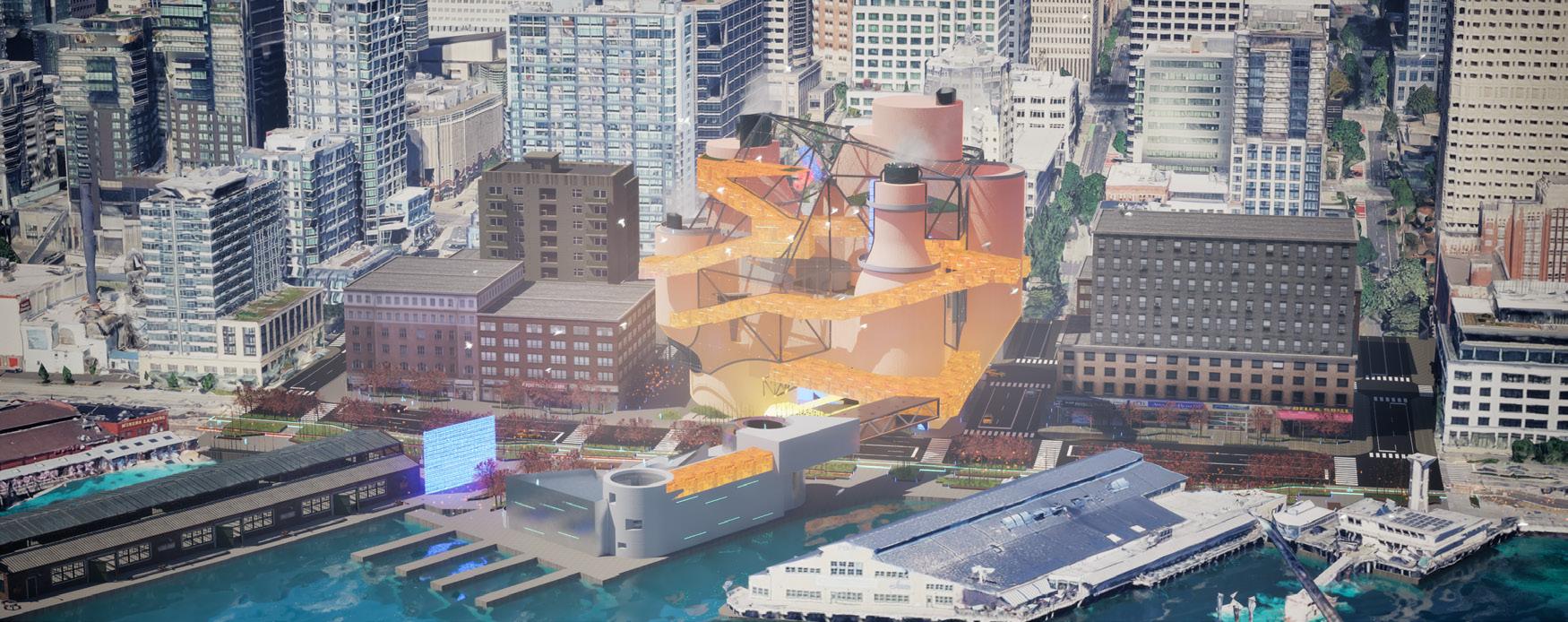
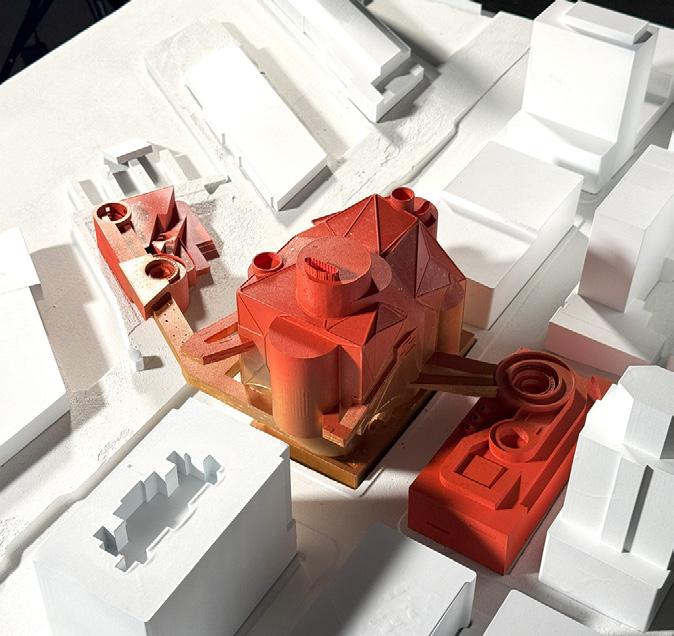
theater connects city,
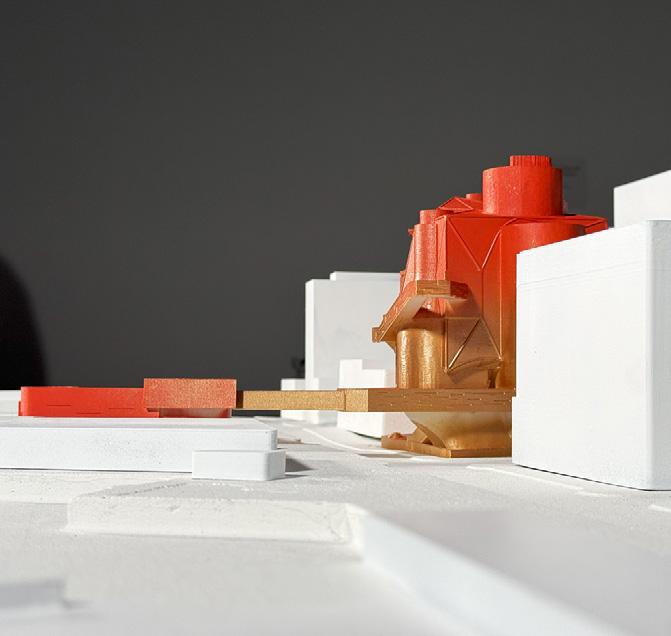
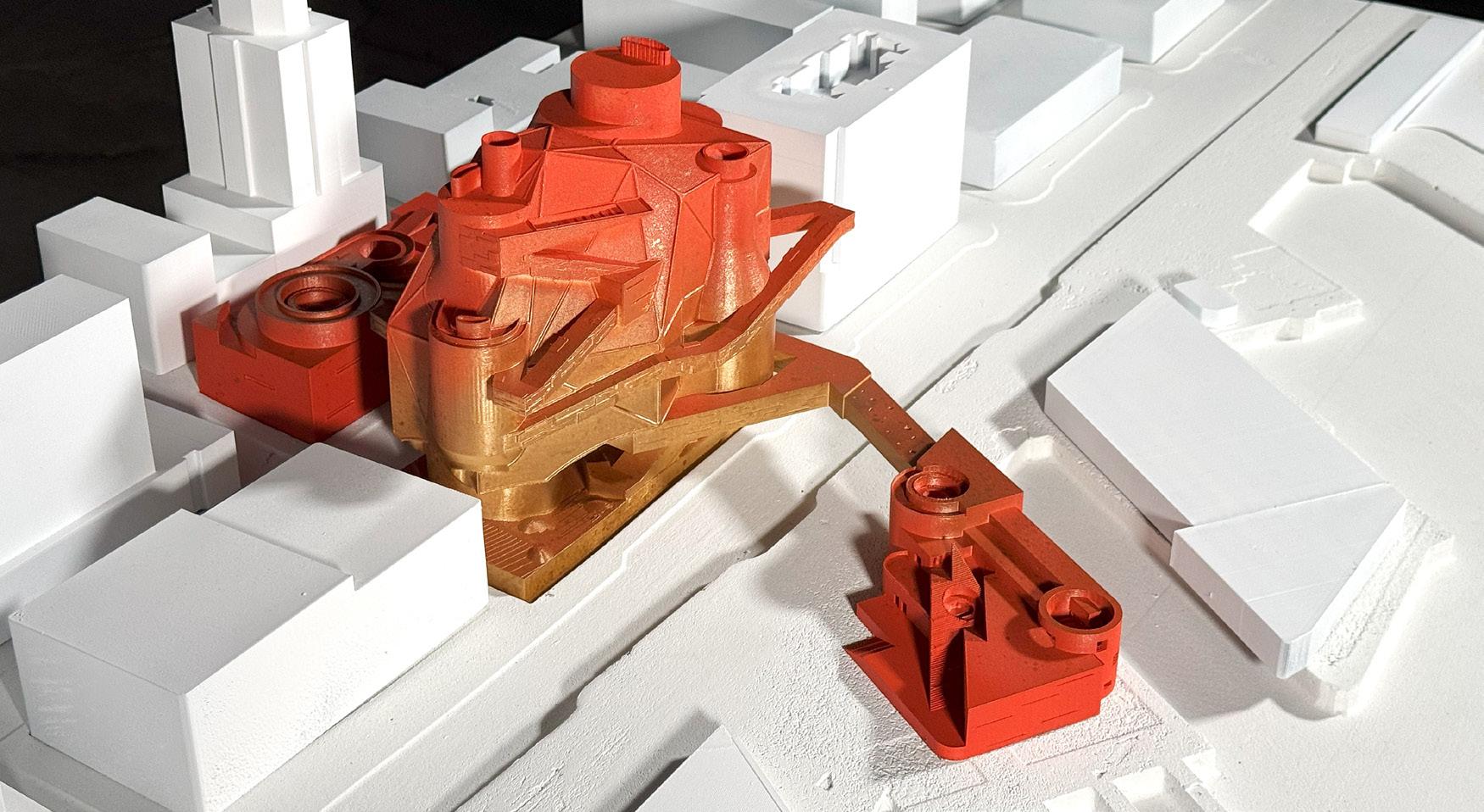
By reactivating underused coastal zones, the project revives the waterfront as a vibrant destination for performance, gathering, and ecological engagement.
HYPERSTAGE : ATOMS is more than a cultural venue—it is a spatial strategy to connect, stitch, and revive the fractured edges of the city. Positioned along Seattle’s underutilized waterfront, the theater serves as a connective tissue between nature and the urban core. Ramps, bridges, and open plazas allow people to flow freely between the shoreline, public space, and performance zones, fostering a continuous experience of movement, gathering, and discovery.
The architecture stitches together fragmented urban boundaries—linking transportation, recreation, and cultural programs into one spatial ecosystem. Elevated walkways and terraces bridge topographic gaps, while visual transparency dissolves divisions between inside and outside. This interwoven design transforms the theater into a civic platform where formal events and everyday life coexist.
Through this strategy, the project revives a previously passive urban edge. It reclaims the waterfront as a vibrant, participatory space where ecological systems, cultural performances, and community life are interdependent. By embedding performance into the city’s rhythms, HYPERSTAGE : ATOMS becomes not just a building, but a catalyst—redefining the role of architecture in stitching social, environmental, and urban fabrics back together.
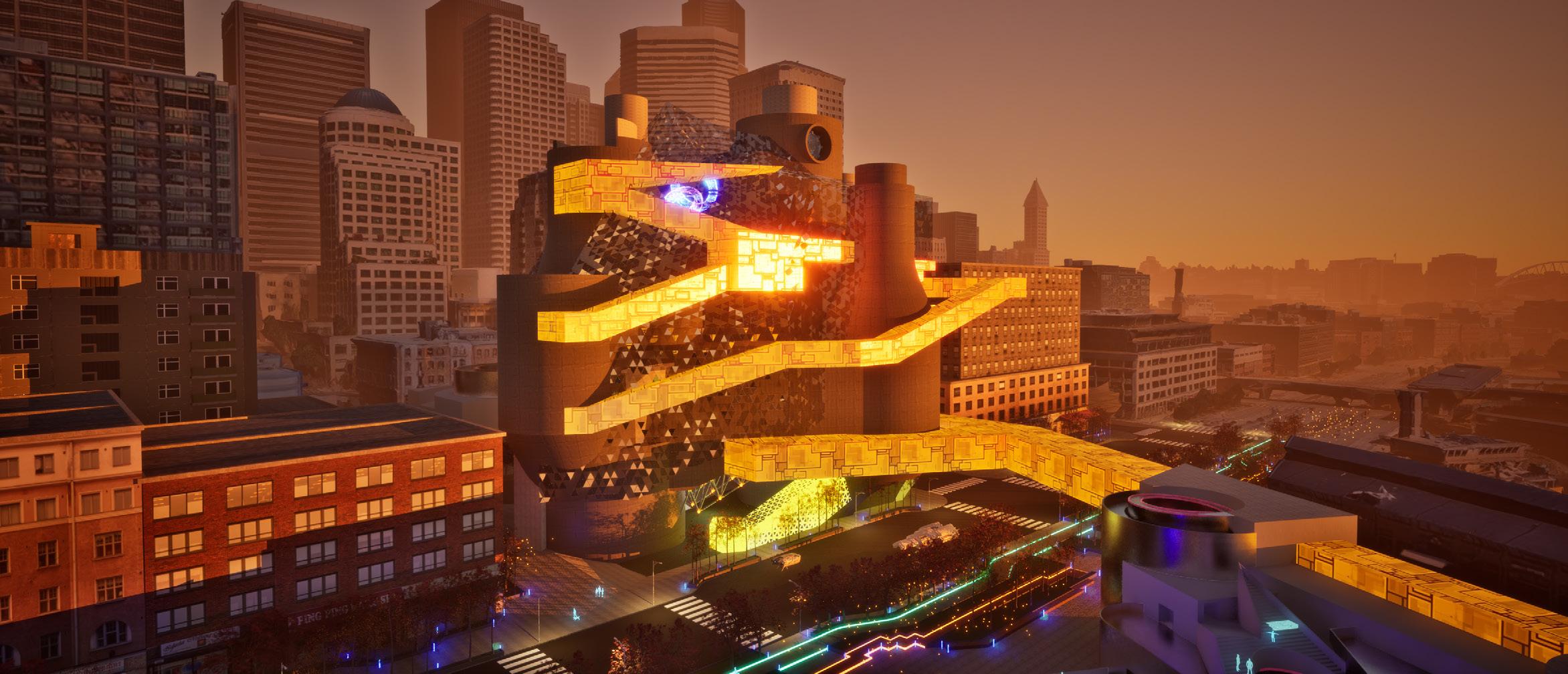
YEAR: 2025 SPRING
CLASS: Visual Studies II M2
TEAMMATE: Cheng Han Yang
INSTRUCTORS: Damjan Jovanovic
/// LINK: https://youtu.be/8g3FJbbMTas
The boundary between the real and the unreal in architecture is becoming increasingly blurred. With the rise of digital tools, virtual reality, and AI-generated environments, architects are no longer limited to physical constraints. They can now explore imagined spaces, speculative futures, and surreal atmospheres that challenge traditional perceptions of architecture.
This shift opens up new possibilities for storytelling and emotional engagement. Unreal environments allow architects to experiment freely with scale, materiality, and spatial logic, offering new ways to provoke thought and inspire wonder. In this context, architecture becomes not just a physical experience, but a conceptual and sensory one—expanding how we understand, design, and interpret space in the digital age.
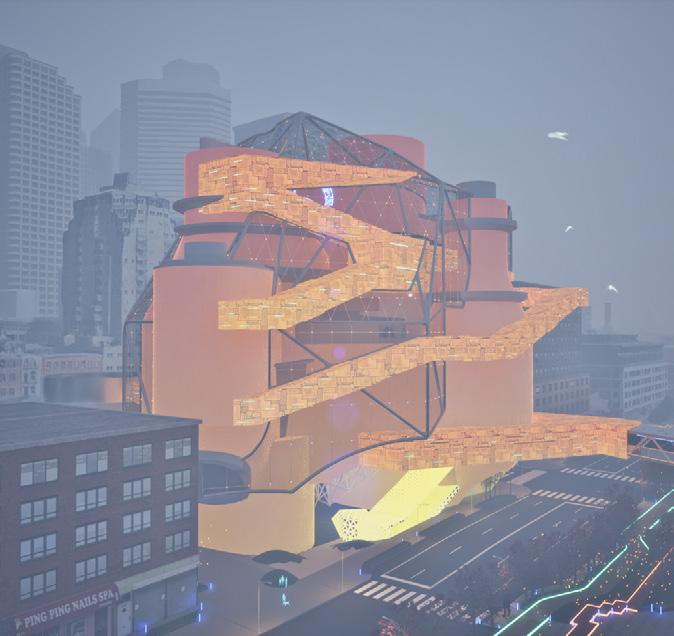
Advanced visualization tools blur the boundary between constructed form and speculative vision, allowing architecture to exist in both real and imagined dimensions.
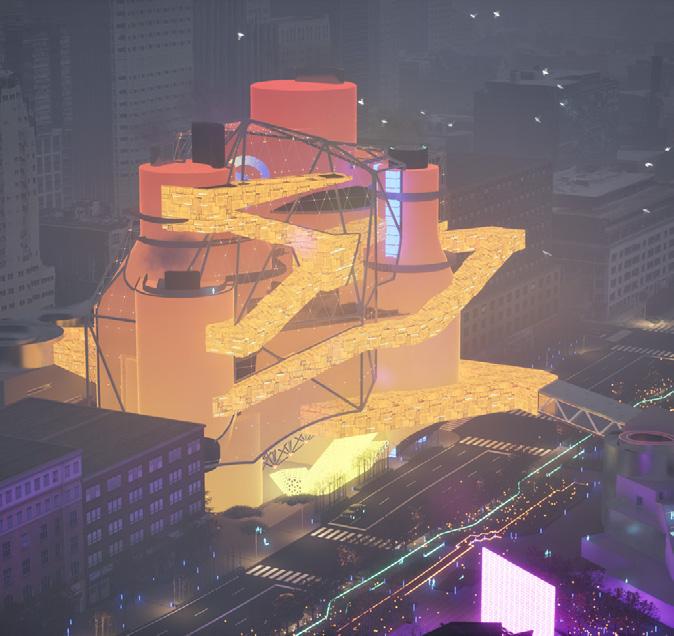
Virtual
environments
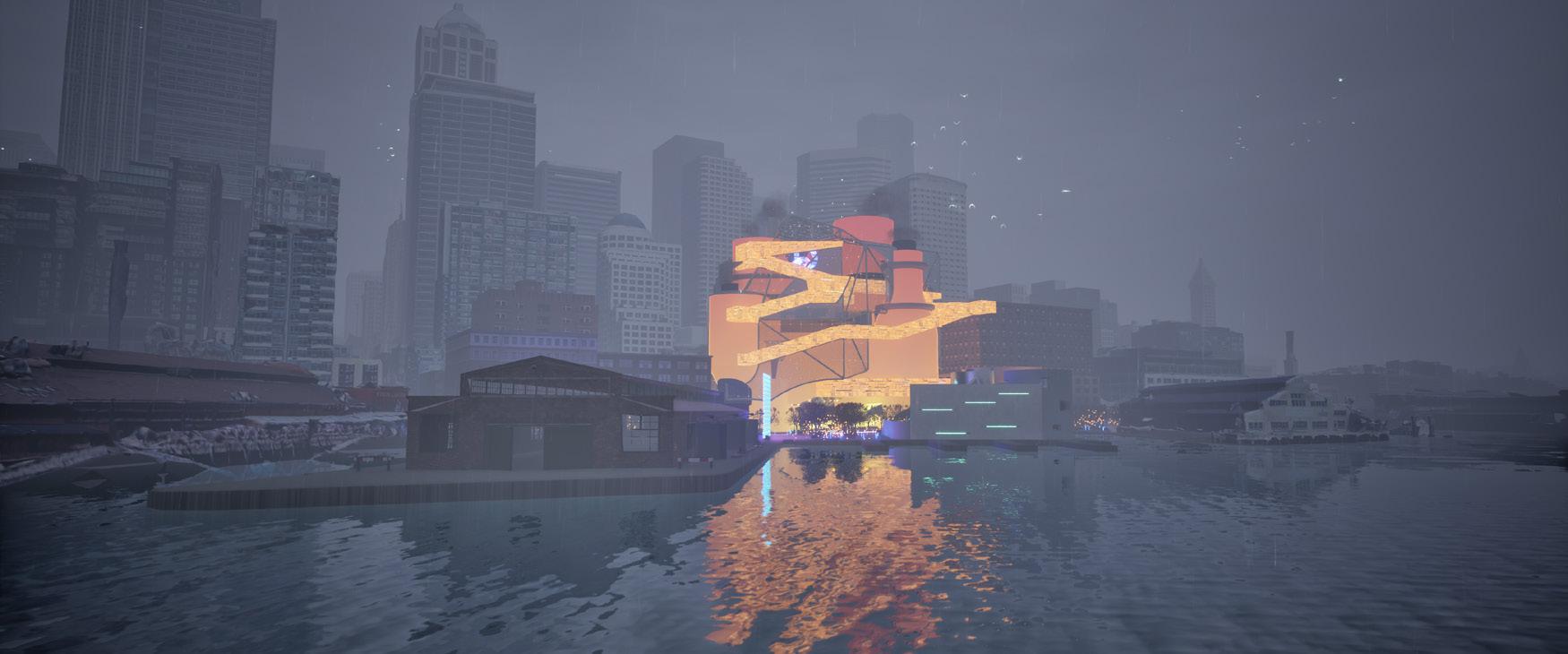
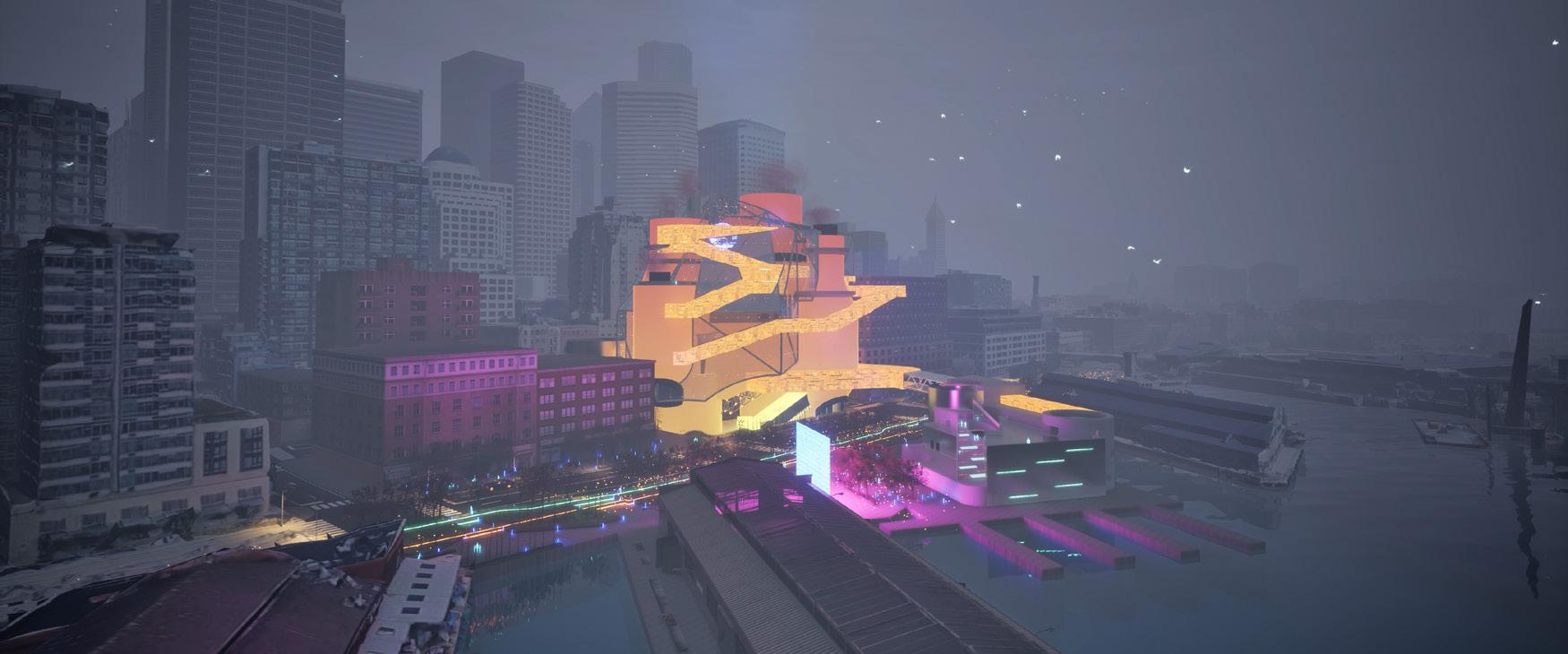
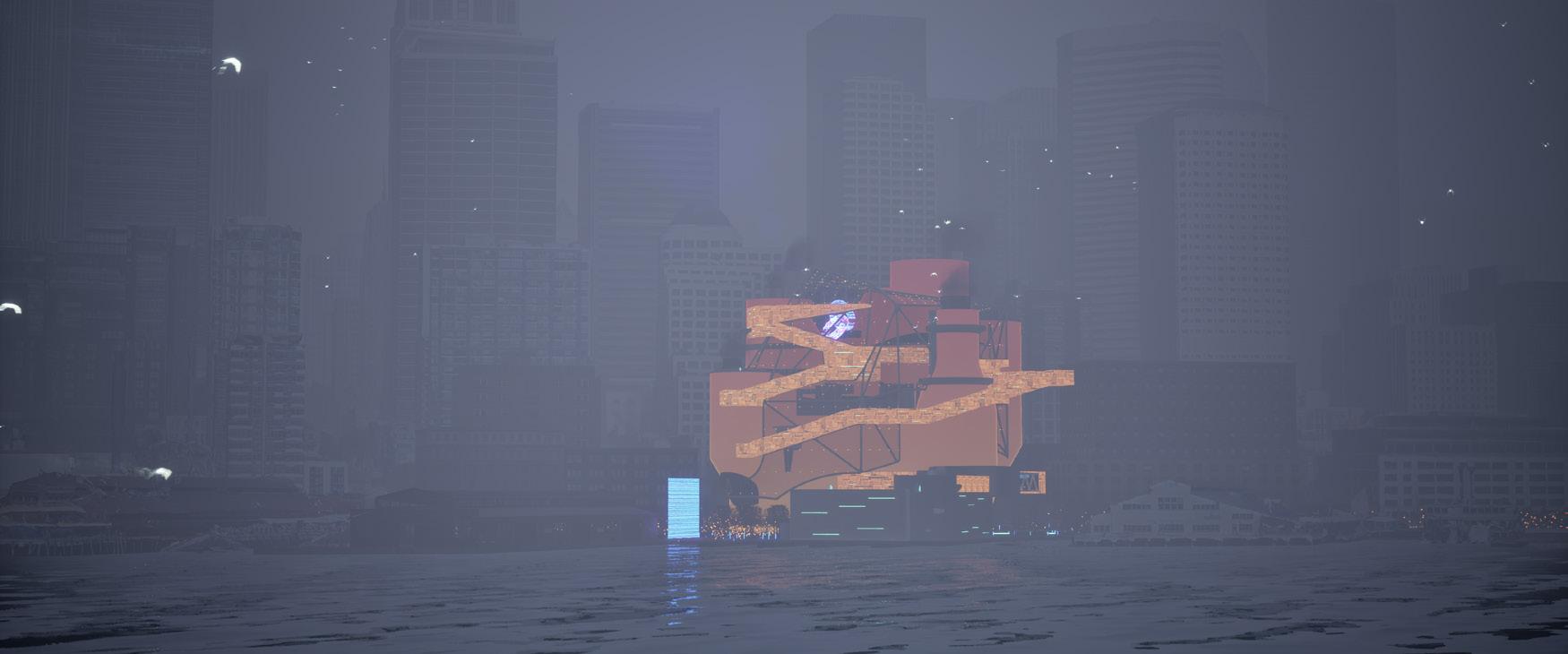
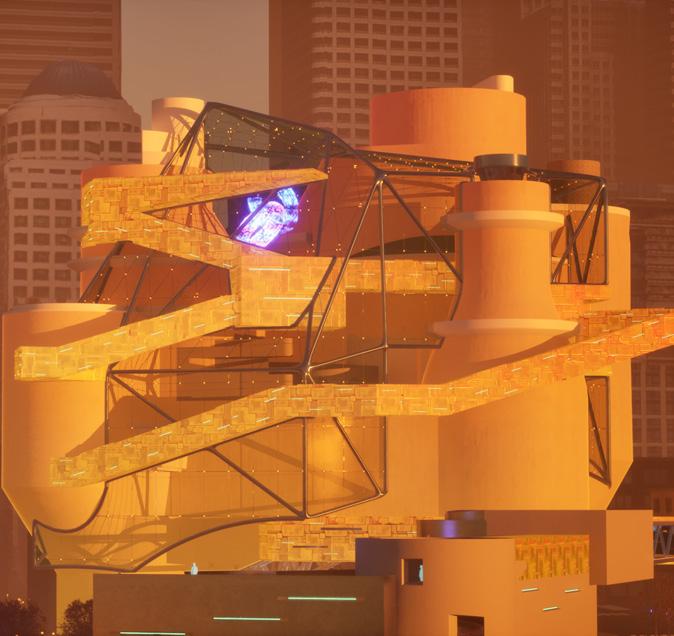
Architects now explore spaces where the boundary between digital and physical dissolves, inviting users to question what is tangible and what is not.
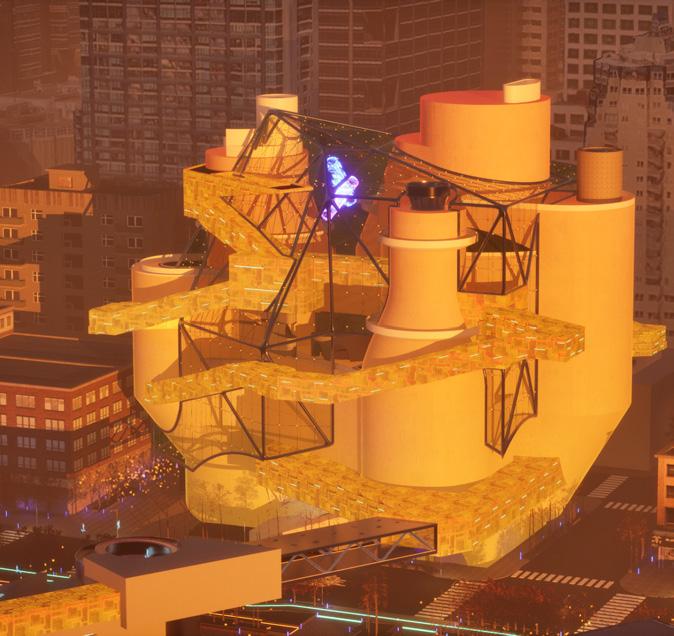
HYPERREALISM
Through high-resolution simulations, architecture achieves hyperrealism, creating virtual spaces that feel more vivid and expressive than their real-world counterparts.
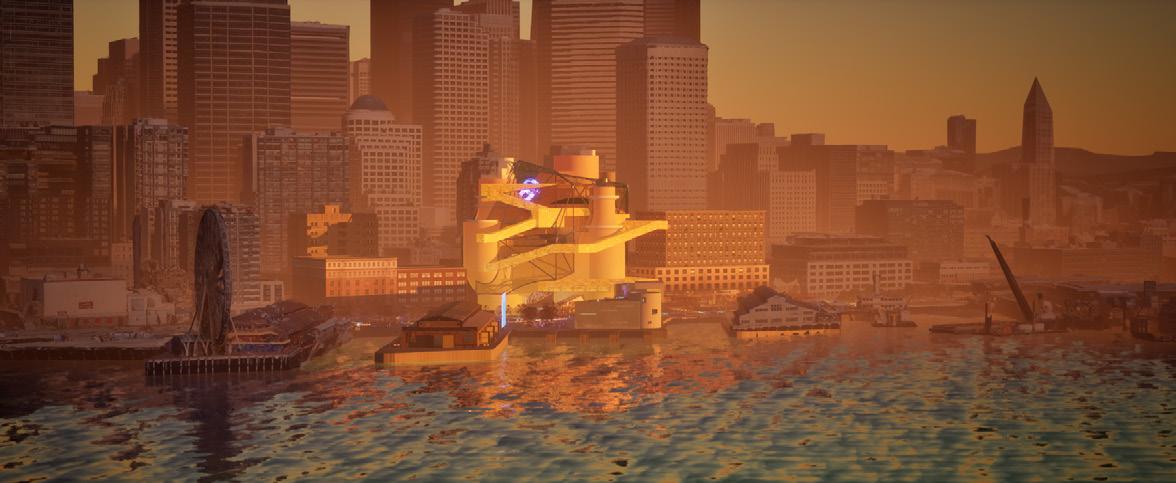
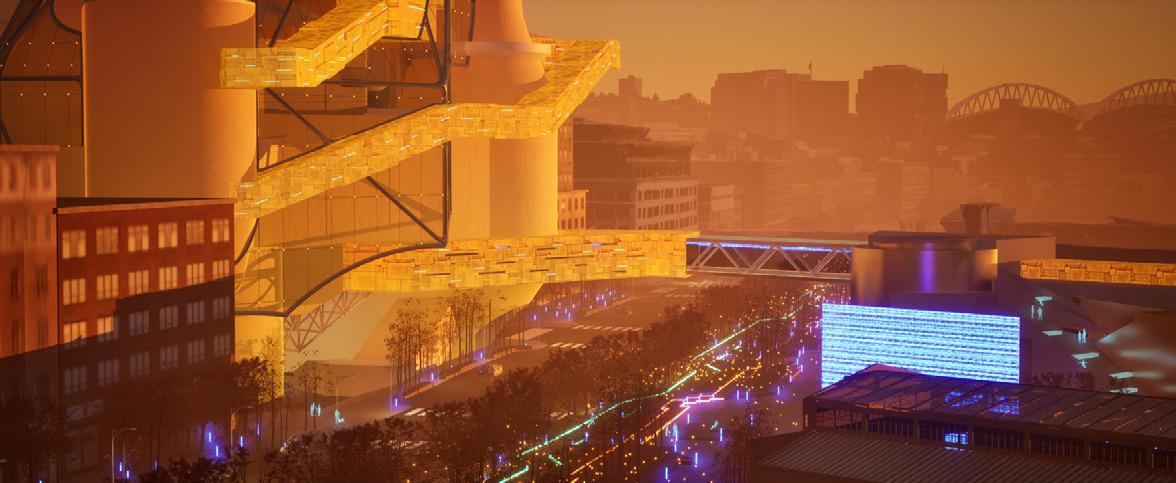
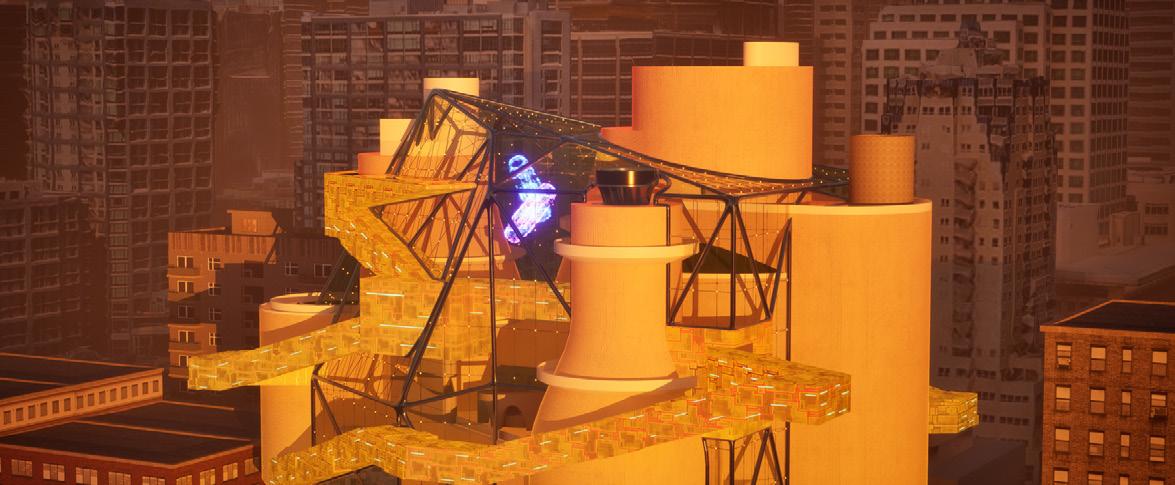
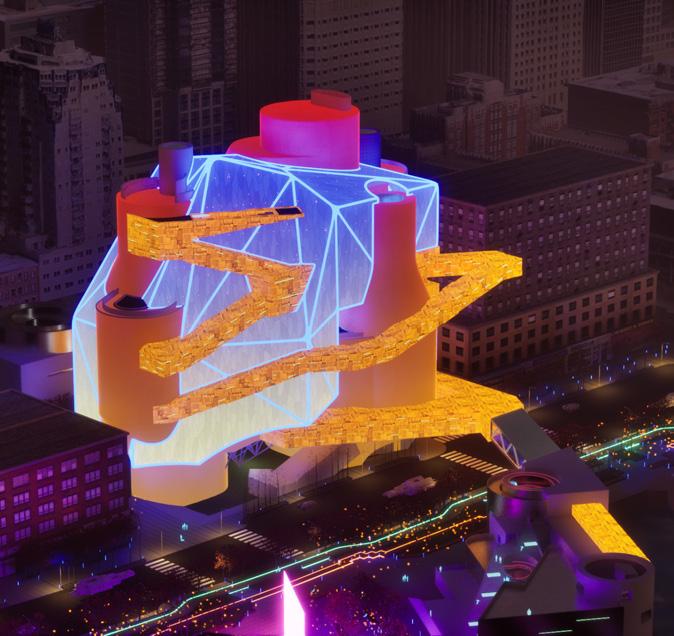
Paradoxically, digital design enhances clarity by visualizing complex architectural ideas with precision, even within abstract or speculative contexts.
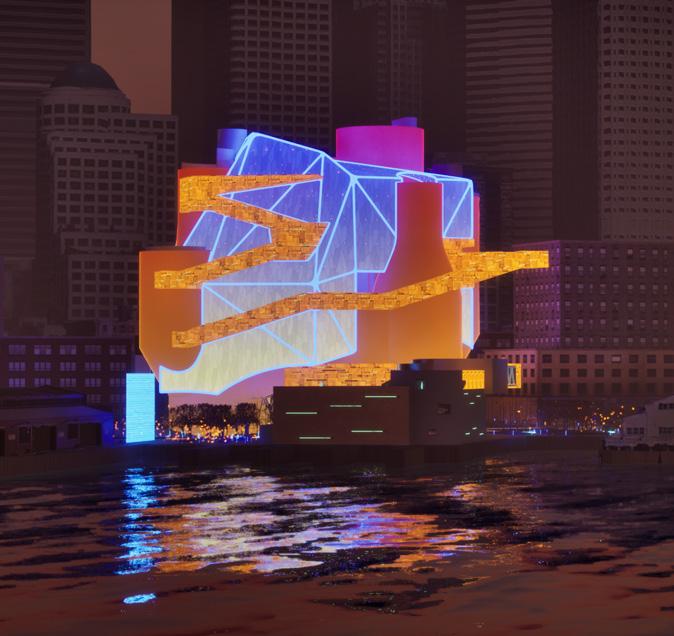
Virtual environments offer architects limitless freedom to test ideas, simulate interactions, and create experiences untethered from real-world constraints.
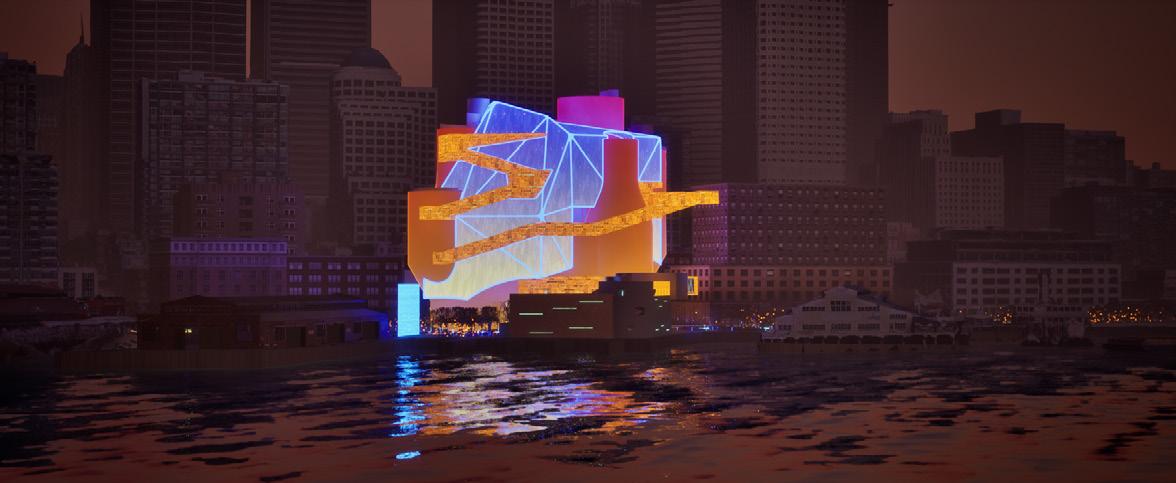
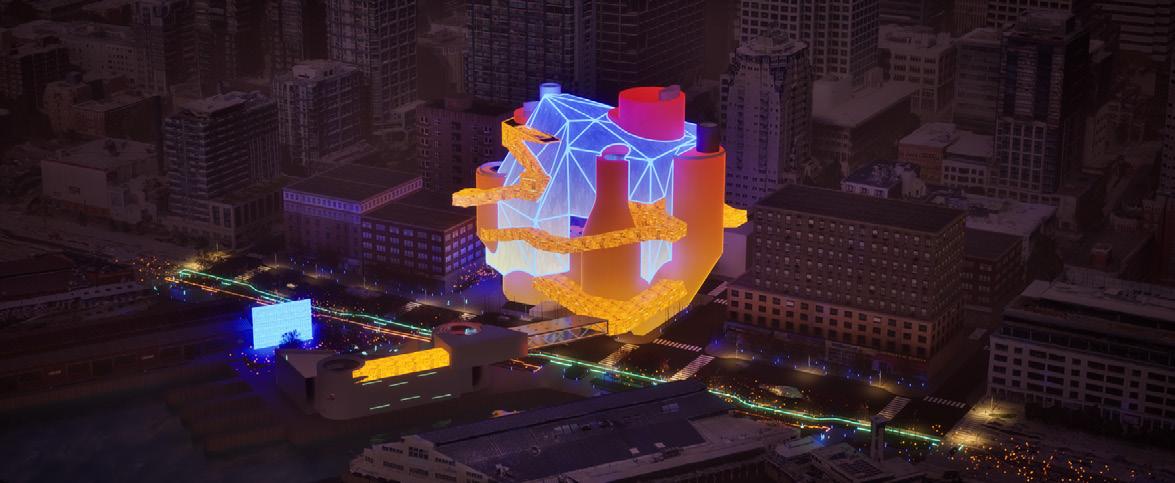
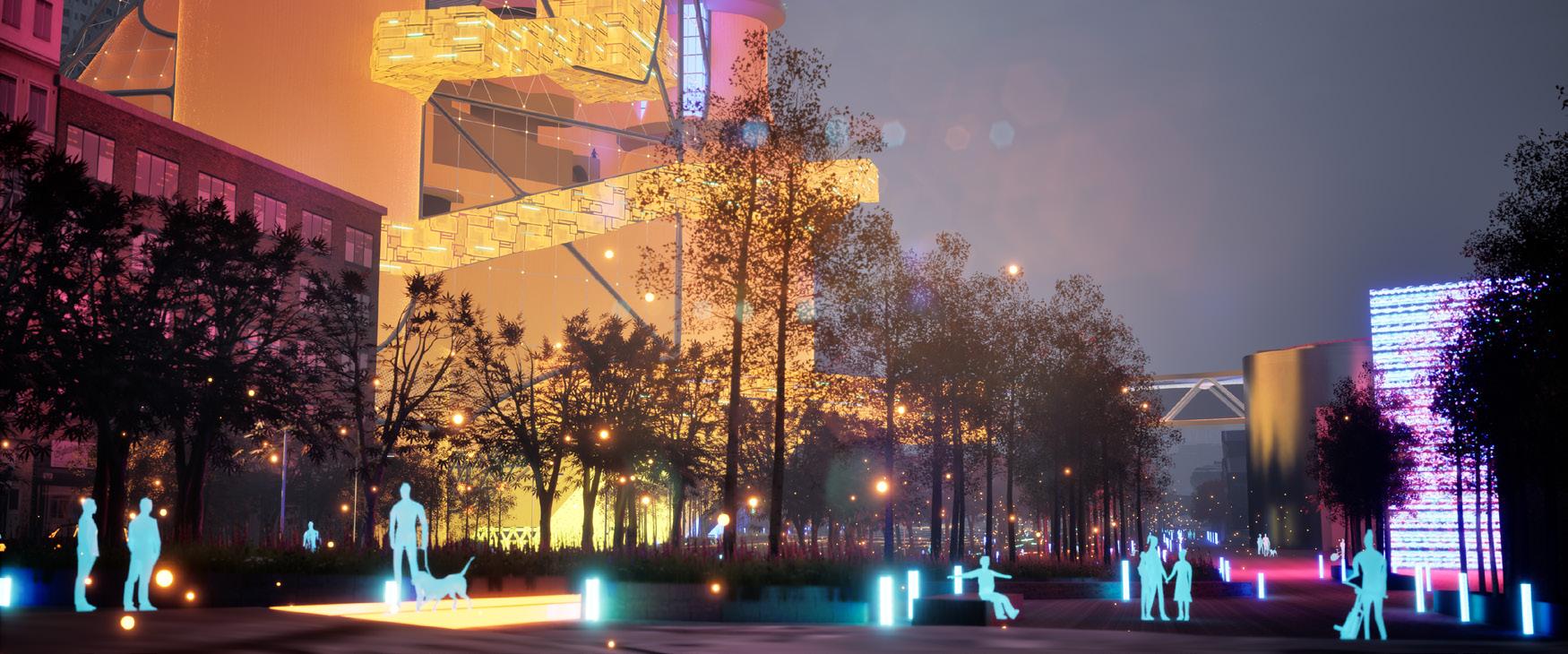
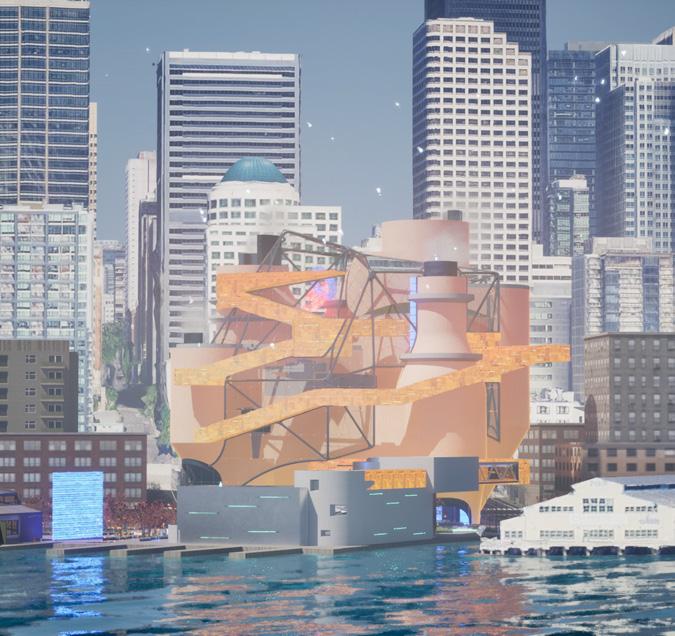
Real-time rendering technologies allow architects to present emotional atmospheres, material qualities, and spatial narratives with unprecedented depth and realism.
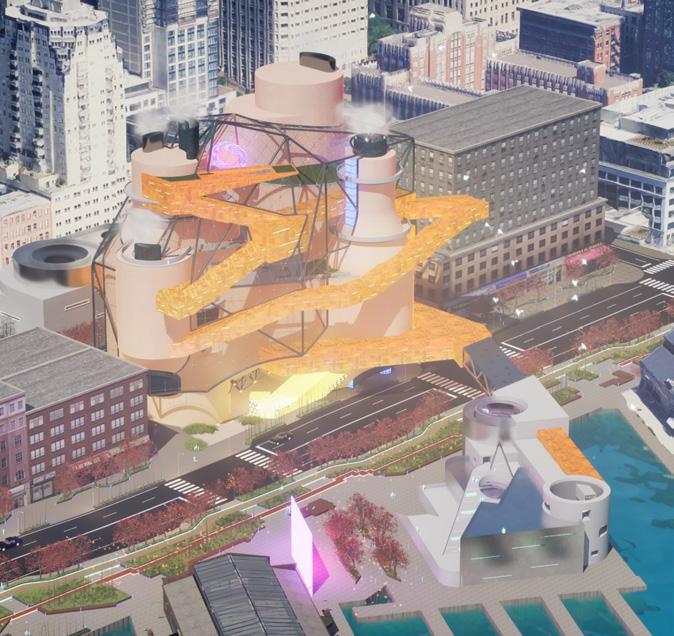
Innovative designs now combine physical structures with digital overlays, crafting hybrid spaces that respond to both environmental and virtual inputs.
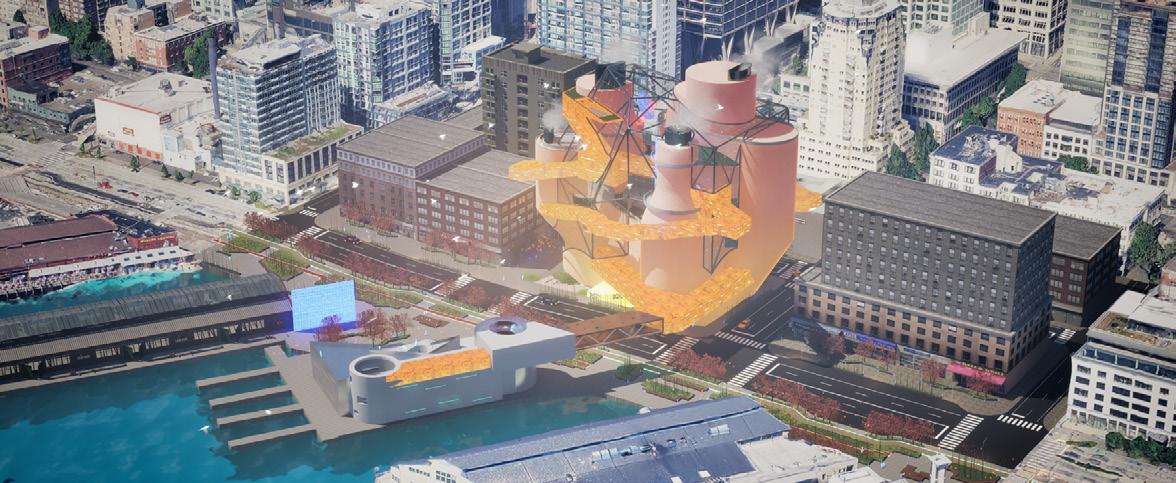
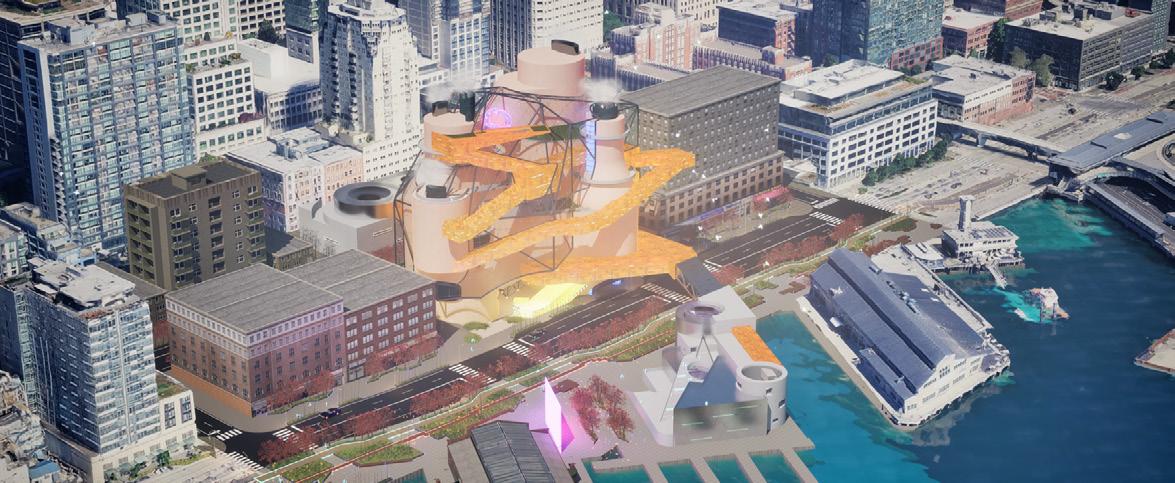
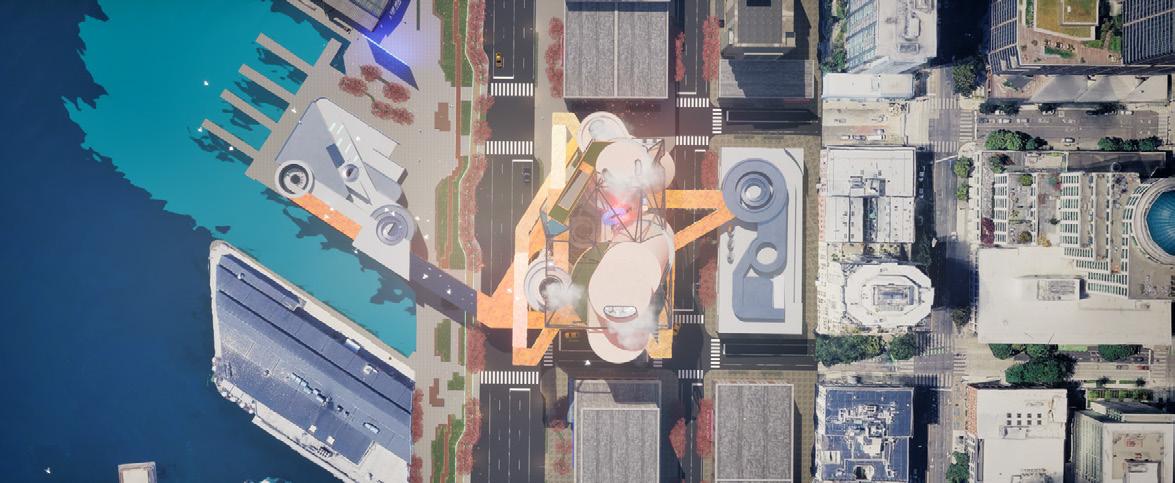
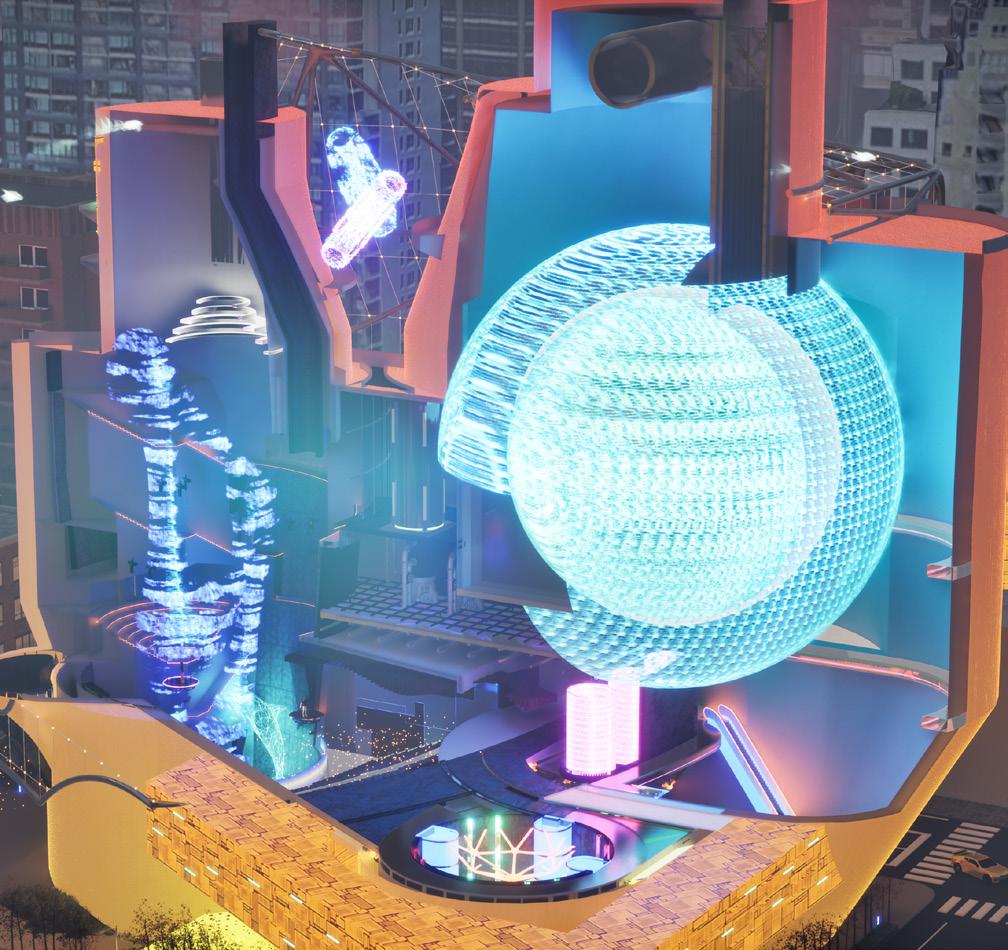
In the age of digital design, space is no longer static—it becomes interactive, emotional, and adaptable to both real and virtual narratives.
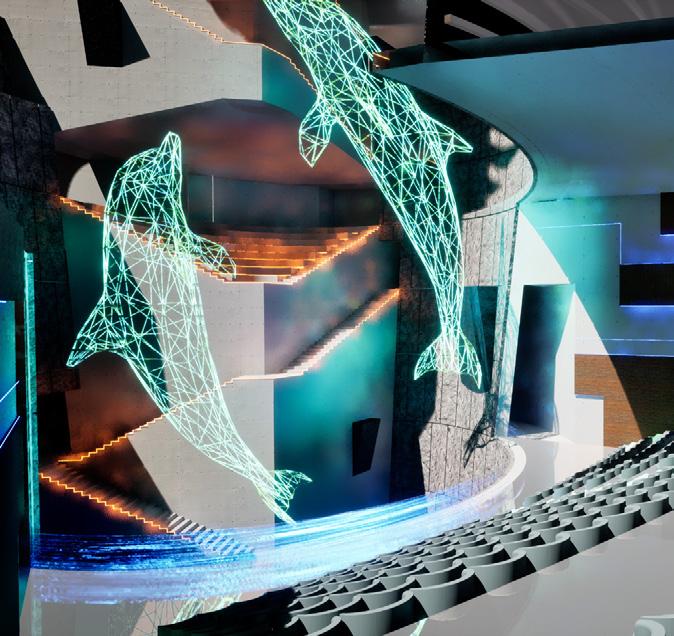
Theater architecture now explores virtual extensions, transforming traditional performance venues into
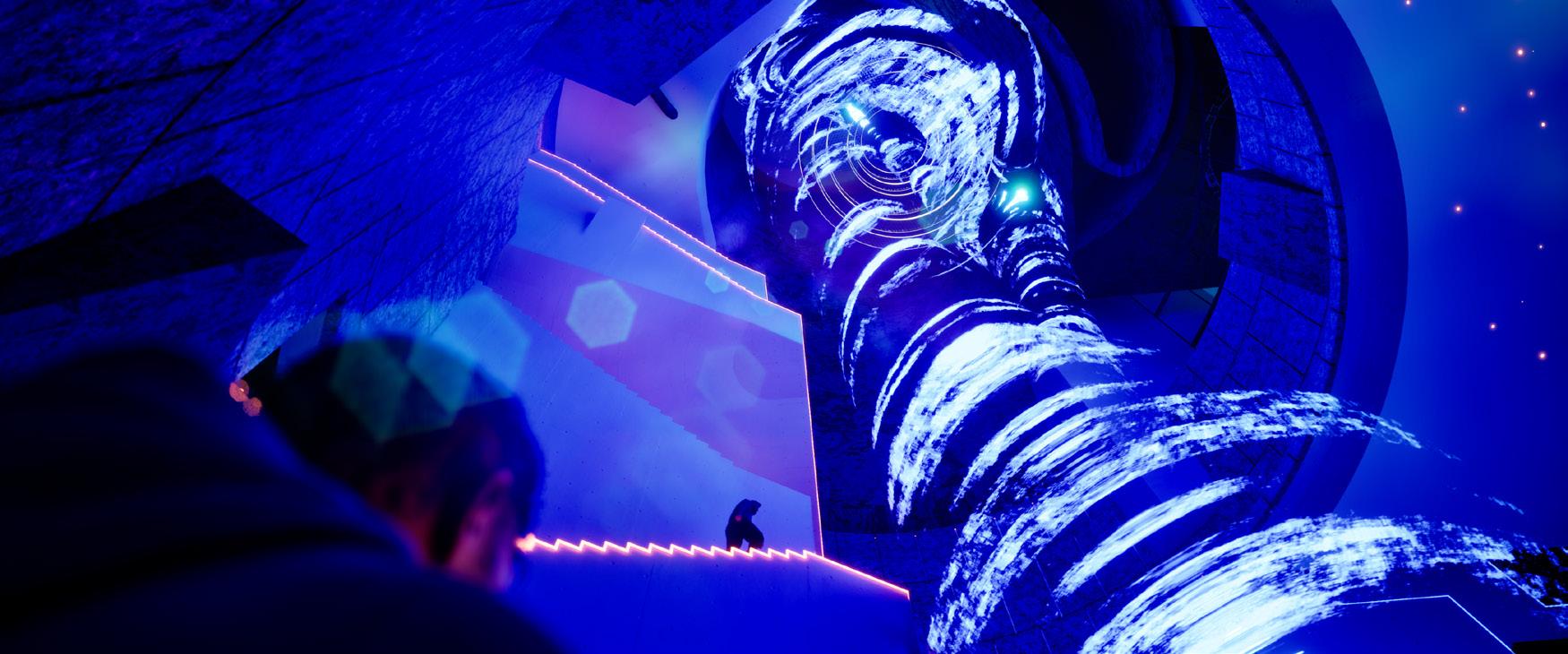
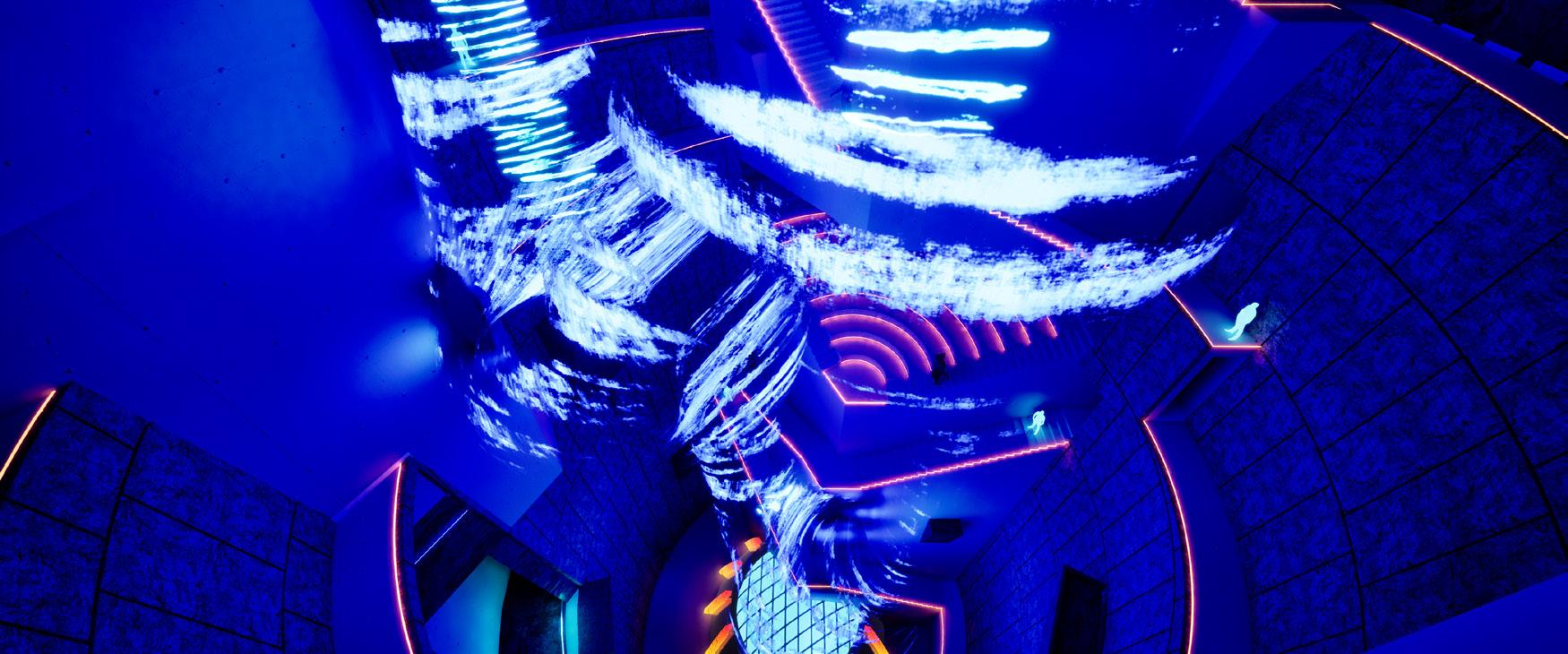
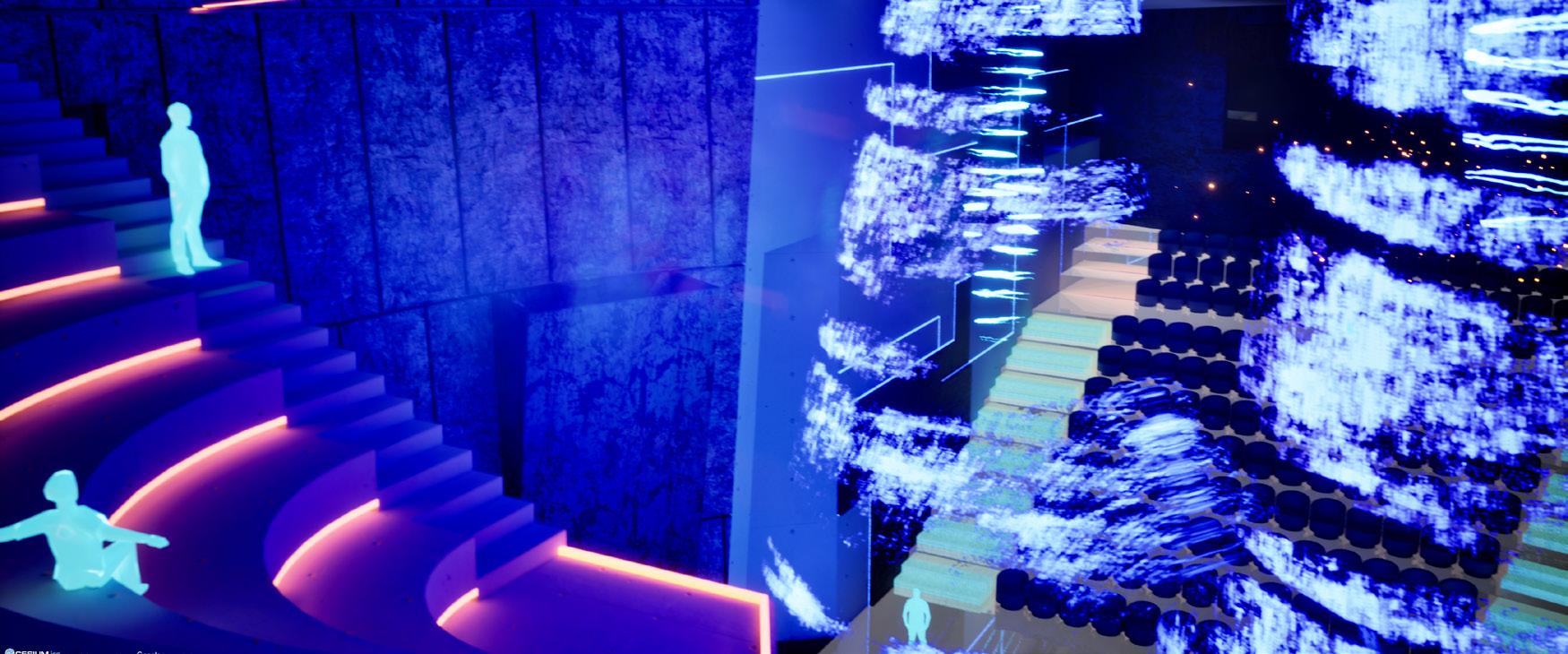
Blending real and virtual design reshapes architectural experience, engaging users through movement, emotion, and responsive spatial storytelling.

The future of architecture lies in fluid environments—where digital innovation redefines how we design, inhabit, and imagine built worlds.
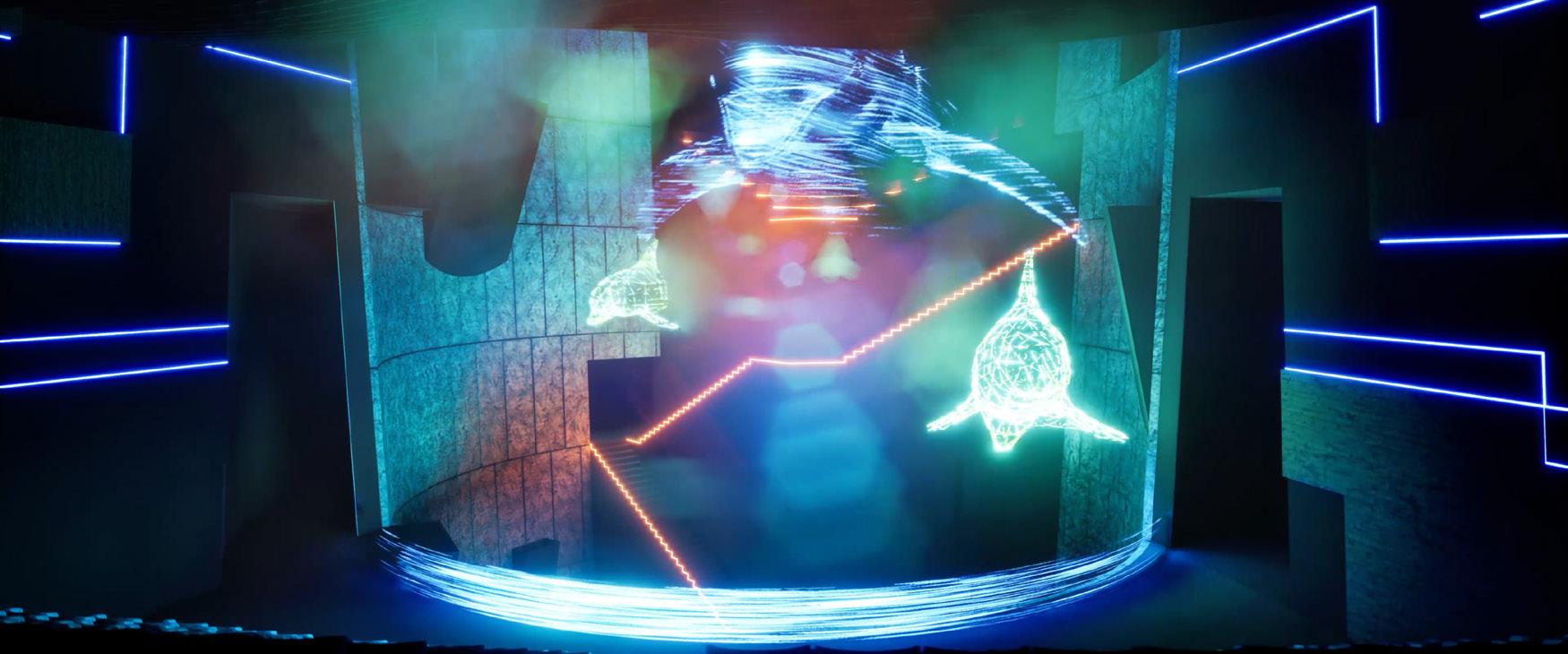
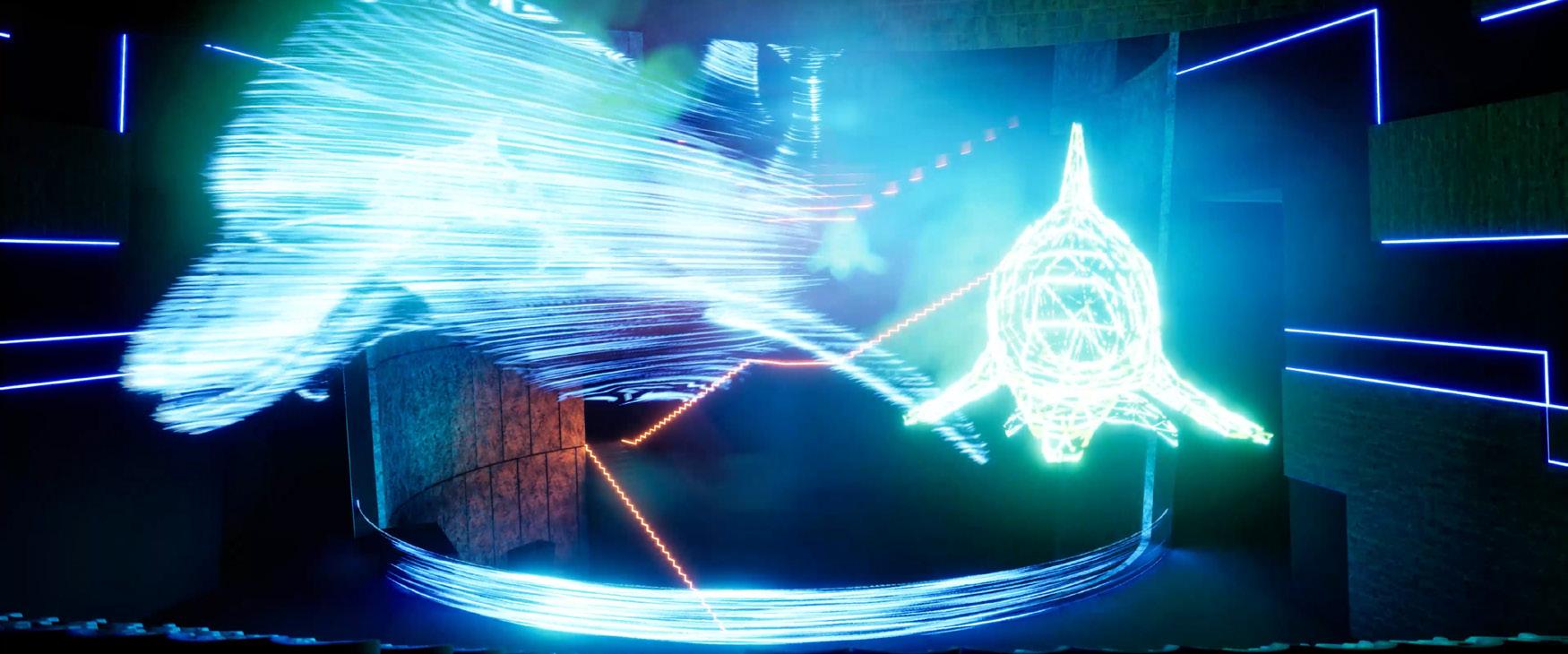
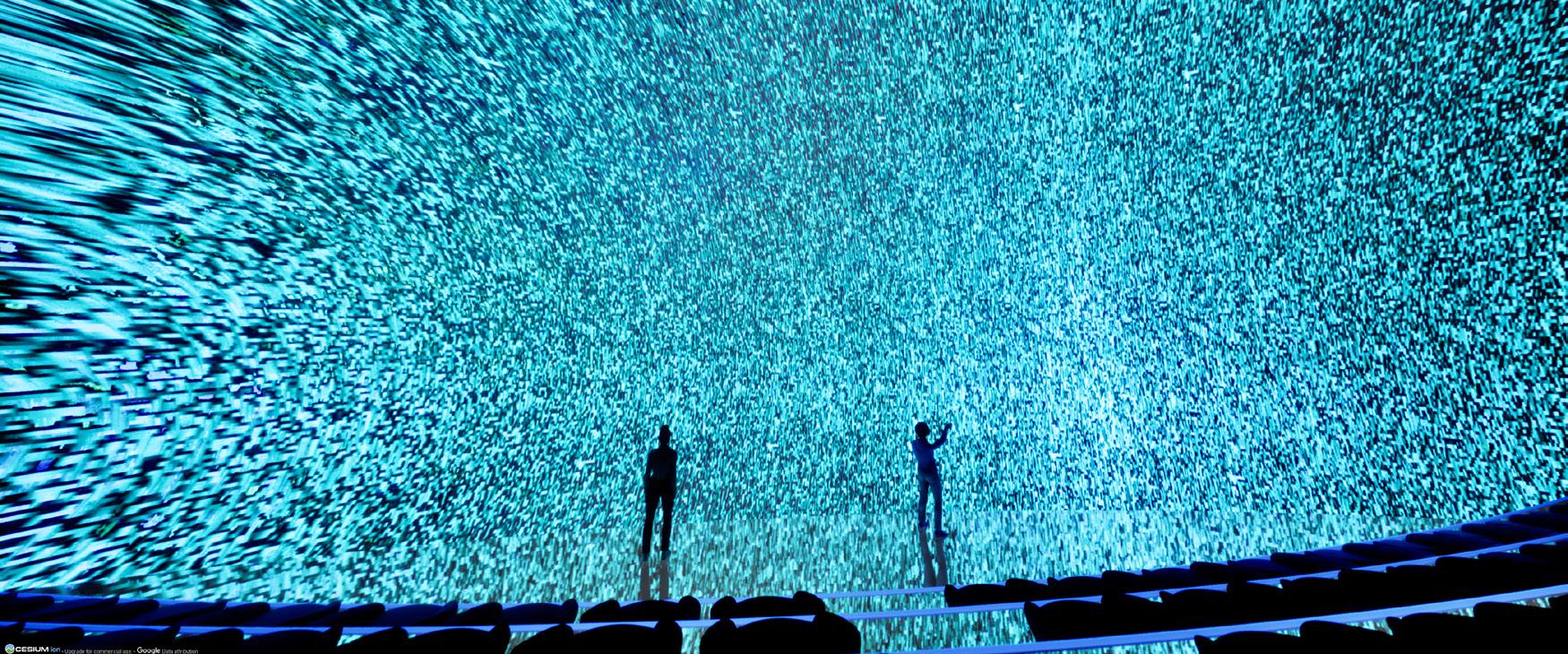
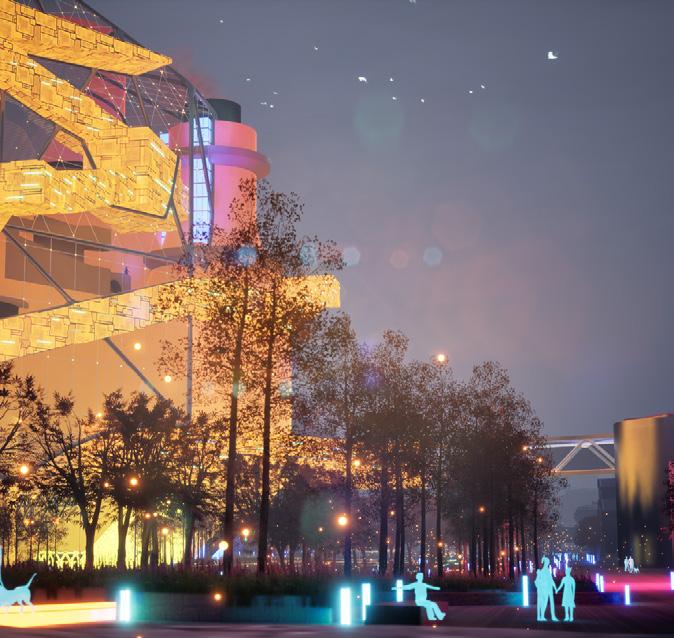
Virtual architecture reinterprets surroundings, allowing designs to dynamically respond to context—blending landscapes, cities, and imagined environments.
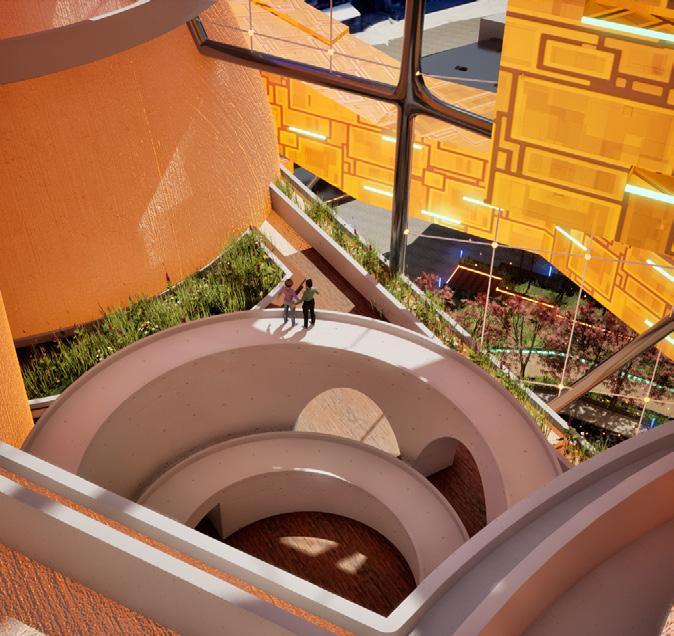
Digital platforms simulate user activity in unreal spaces, helping architects anticipate movement, interaction, and emotional response before construction begins.
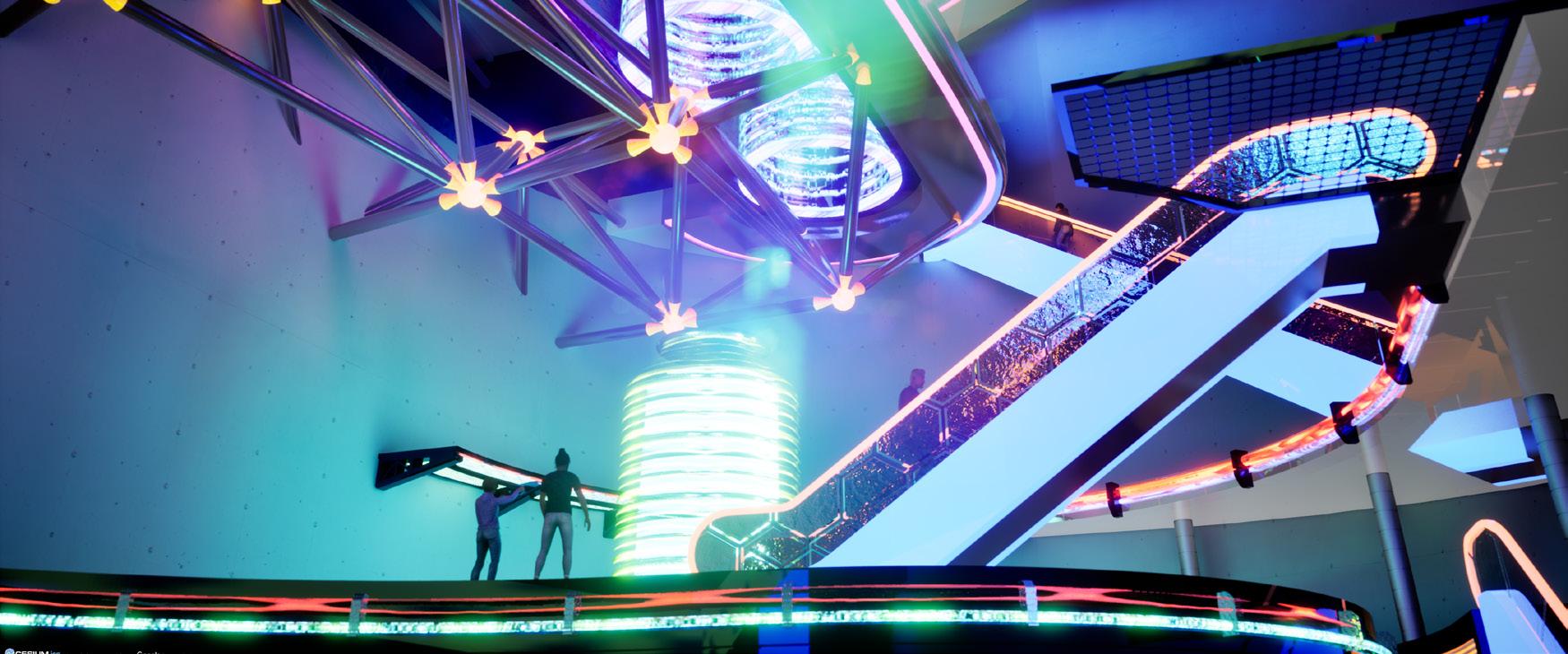
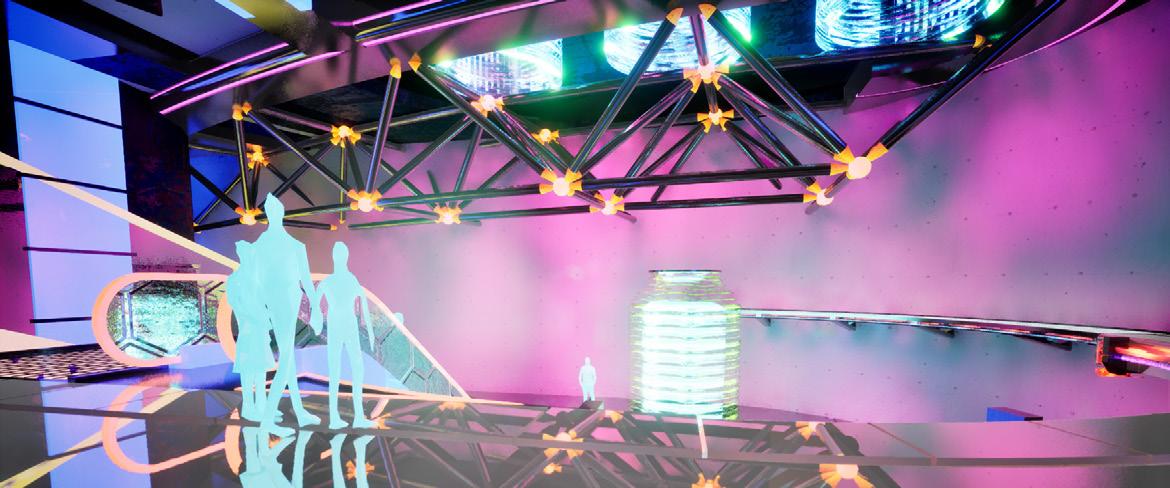
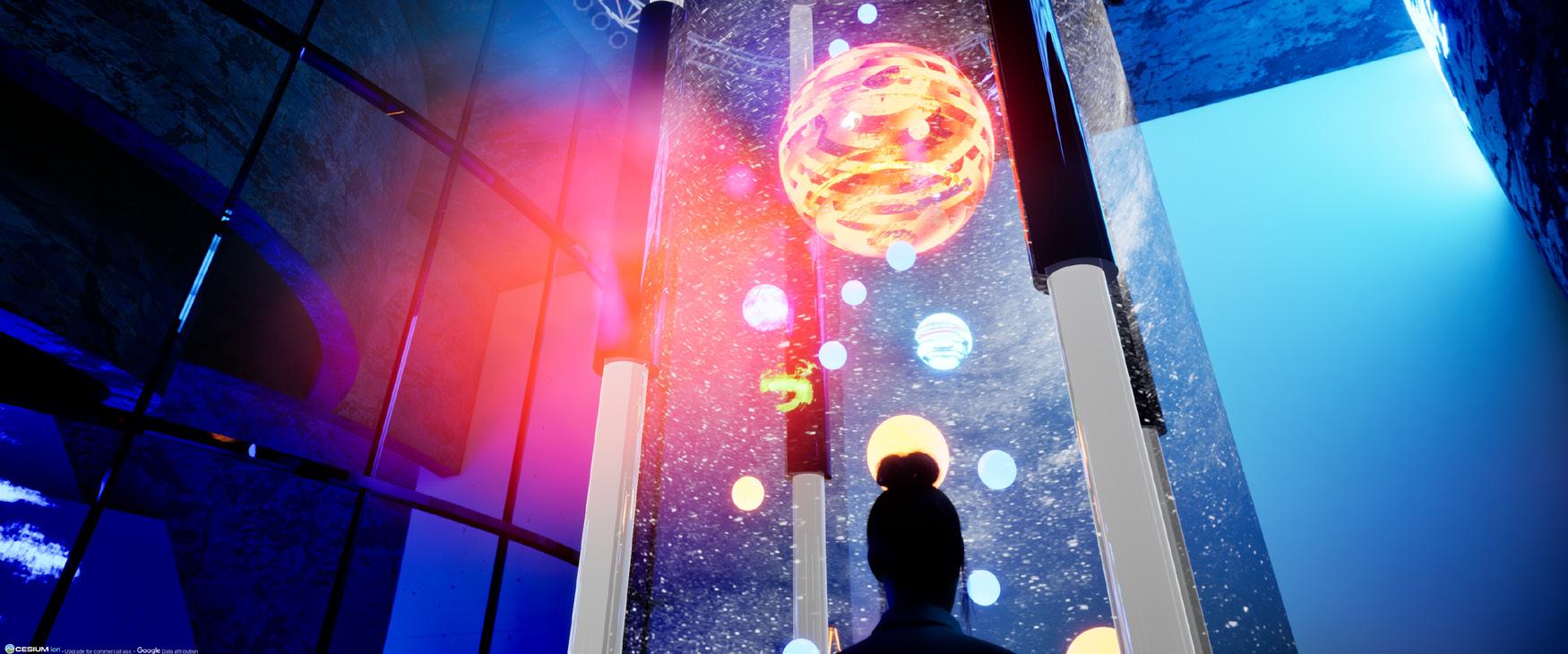
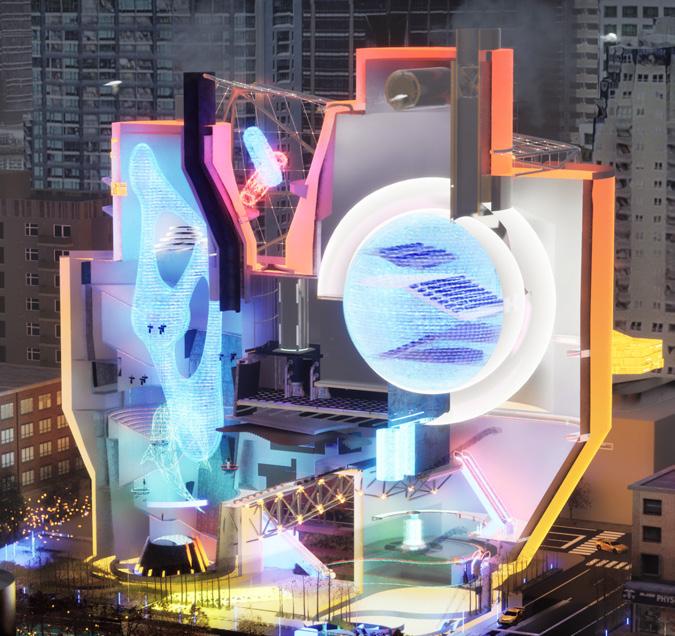
In virtual architecture, sections are no longer just drawings—they become immersive slices that reveal narrative depth and spatial layering.
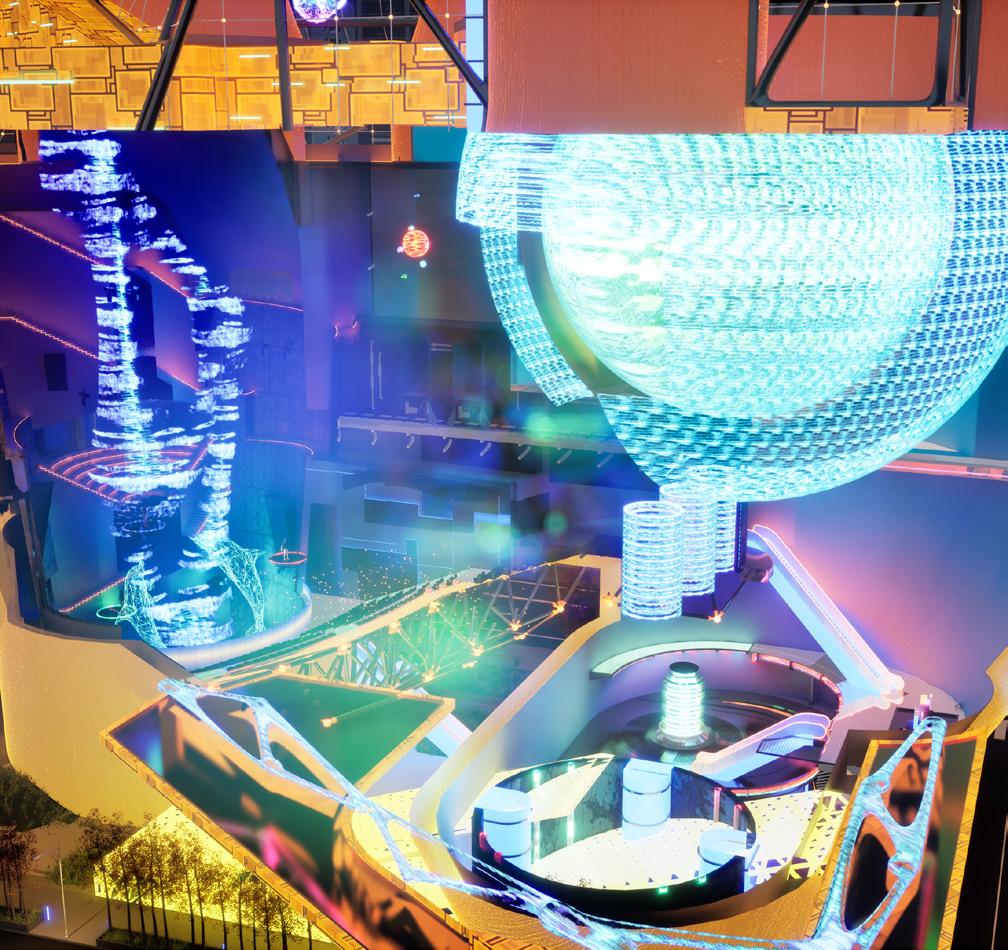
Digital tools allow architects to craft details with extreme precision, turning even
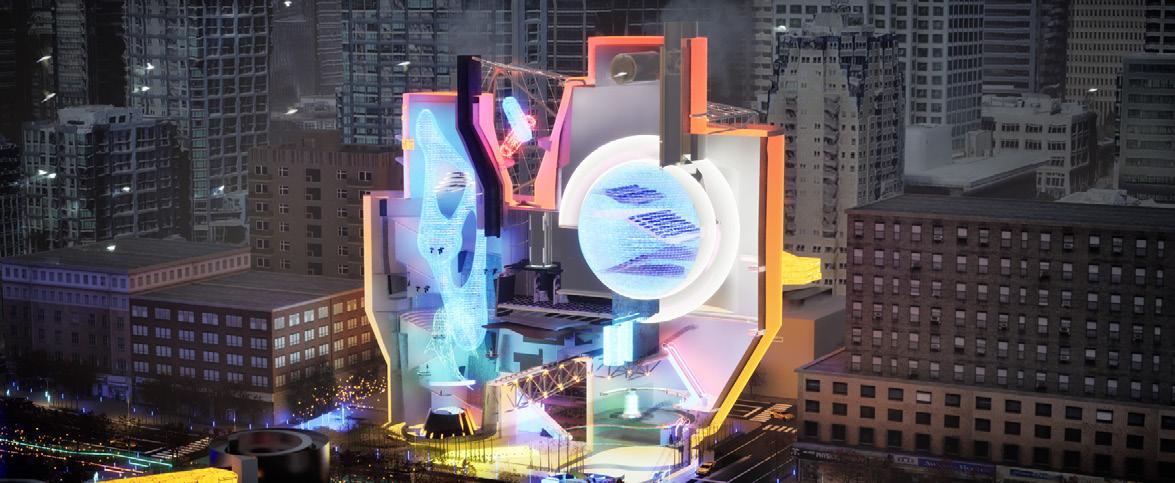
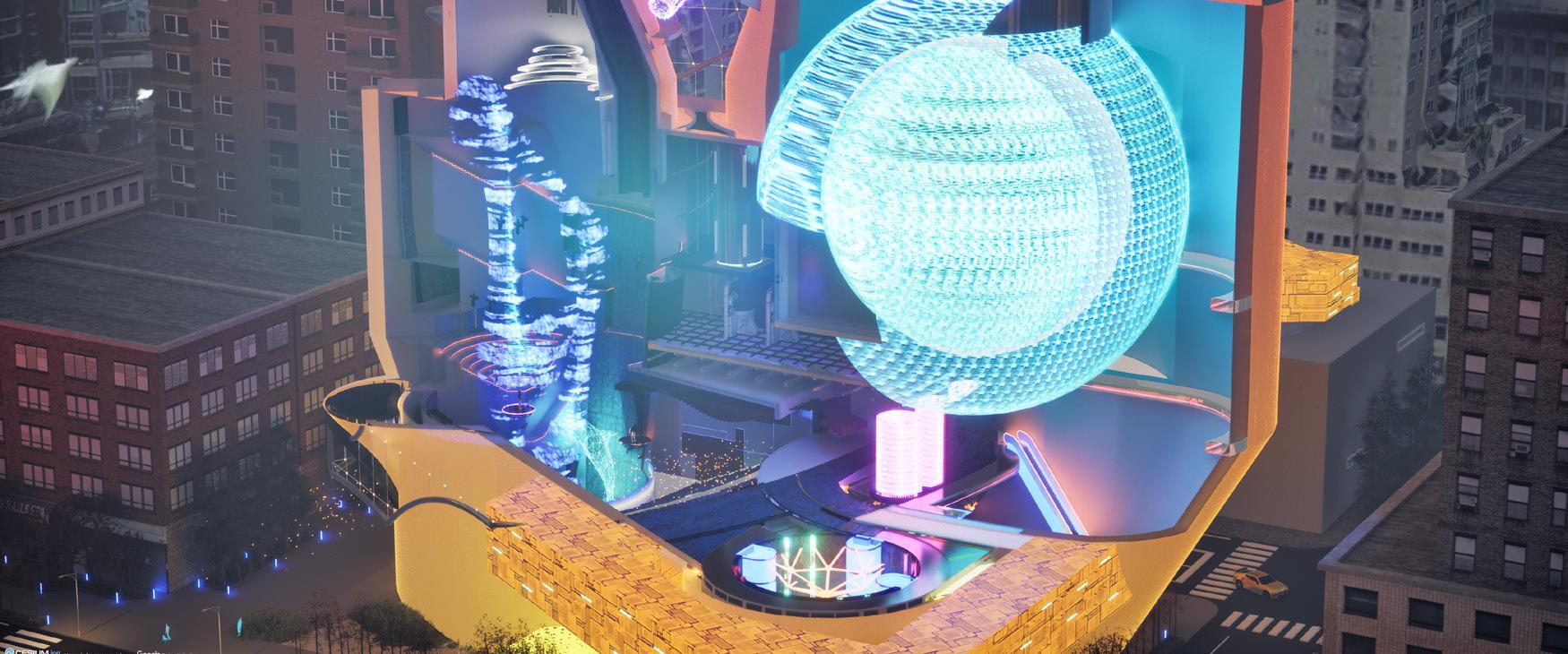
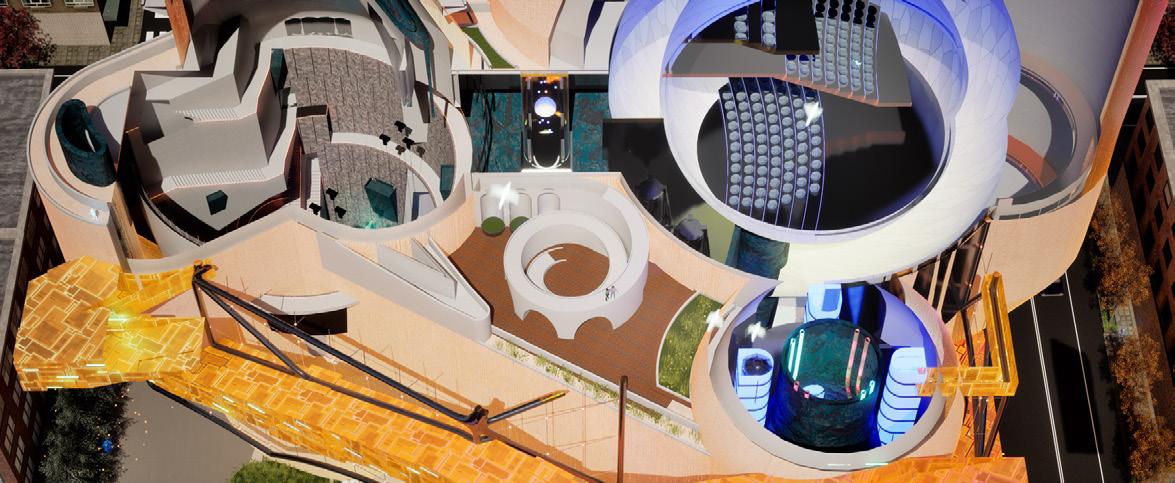
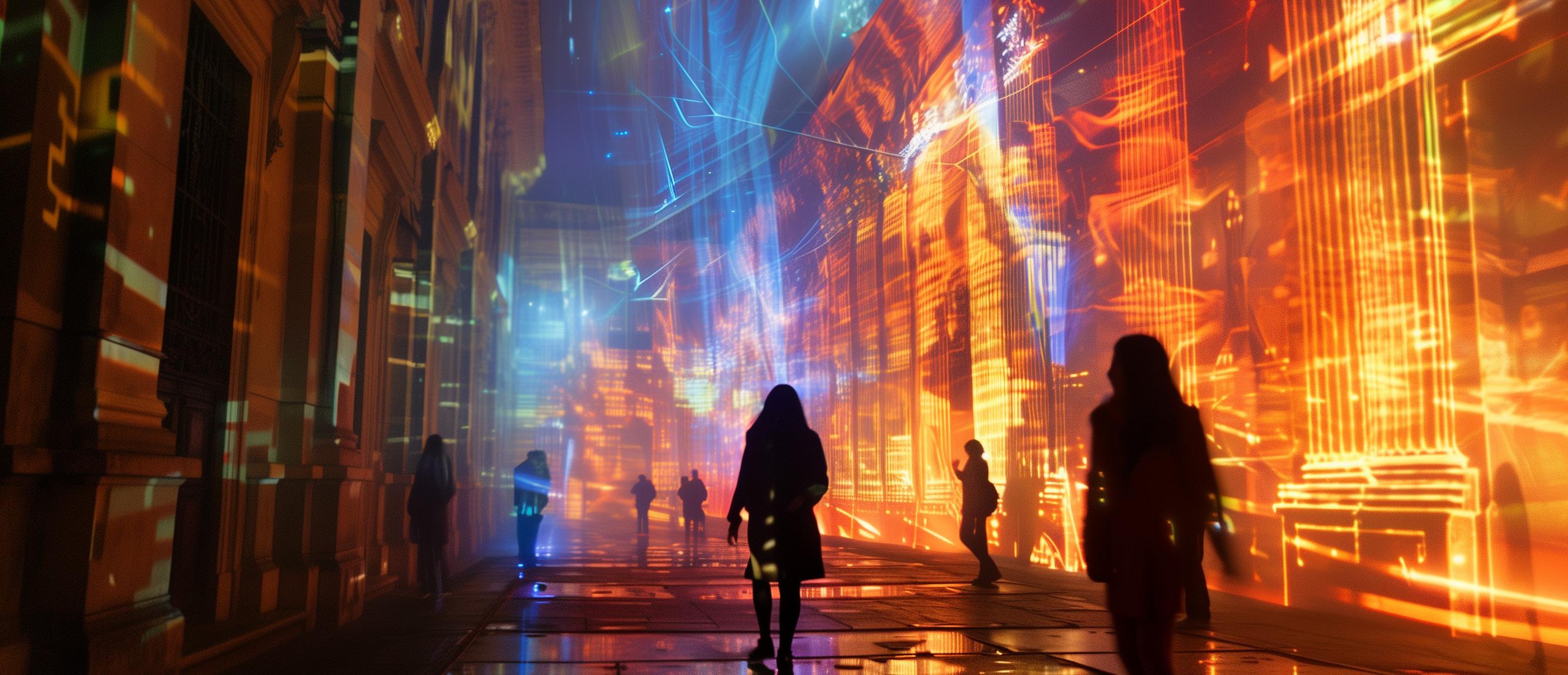
YEAR: 2025 SPRING
CLASS: Theories Cont Arch II
TEAMMATE: Individual Work
INSTRUCTORS: John Cooper
To me, architecture is not just about form—it’s about feeling. I still remember the sense of awe I felt walking into a cathedral as a child; that emotional impact shaped my understanding of space. Architecture becomes powerful when it engages the senses and leaves lasting impressions.
As a designer, I see buildings as narratives. Light, texture, and movement guide users through a story that unfolds with every step. Good architecture speaks without words—it connects people to place and memory.
Lately, I’ve been exploring how digital tools can deepen this experience. Through projection and interactive media, I aim to create spaces that respond, evolve, and continue telling new stories through time.
This article introduces the concept of "augmented space," where physical spaces are overlaid with dynamic multimedia information personalized for users, such as shopping centers or cityscapes filled with electronic displays and wireless data access. Unlike traditional virtual reality, augmented space merges physical environments with digital layers, changing how people experience and interact with space. The article explores the cultural, aesthetic, and architectural implications of augmentation, emphasizing that it should be seen not just as technology, but as a new design challenge. Through examples from architecture, art, and urban spaces, it argues that augmented spaces reshape spatial forms, blending physical and informational layers into a multidimensional, interactive experience.
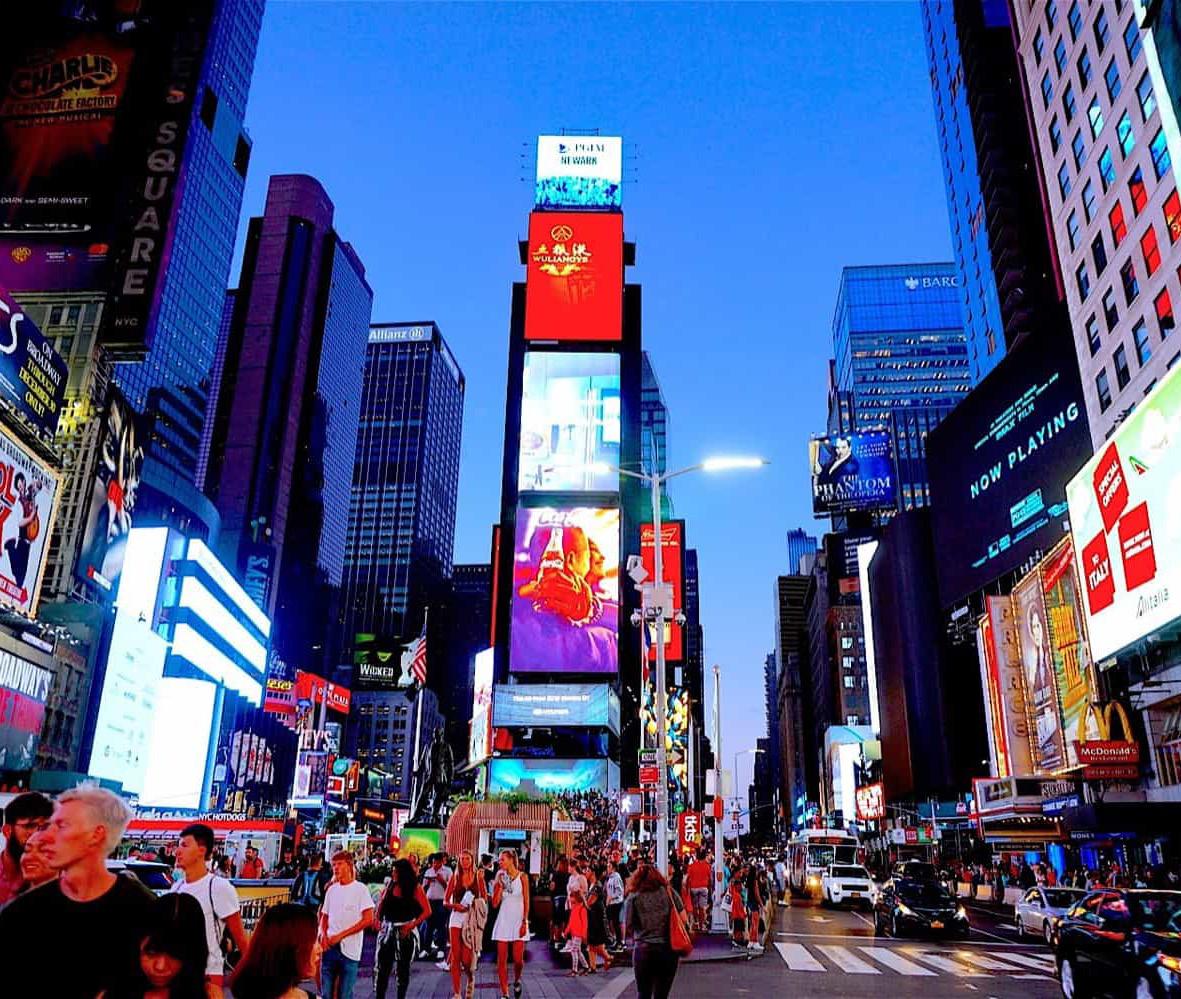
Title: The poetics of augmented space
Author: Lev Manovich
Hyperlink: Weekly READING ASSIGNMENTS
Date: 2006 /// p. [220]
[I will discuss how various practices in professional and vernacular architecture and built environments, cinema, 20th-century art, and media art can be understood in terms of augmentation. I hope that this will firmly position the concept of augmented space in the historical and cultural, as opposed to purely technological, sphere.]
Title: Information obsession: the Eameses’ multiscreen architecture
lThis article argues that contemporary architecture has long been mediated by media, with spatial perception reshaped through layers of images, sounds, and information. Charles and Ray Eames pioneered this in the 1950s, using multiscreen techniques and fast-cut editing—most notably in Glimpses of the USA—to create immersive, information-saturated environments. Influenced by wartime information systems, they treated architecture as a media structure, where fragmented visuals and data flows replace linear perspective. Viewers navigate and synthesize meaning within this overloaded sensory space, anticipating today’s digital, media-driven spatial experiences.
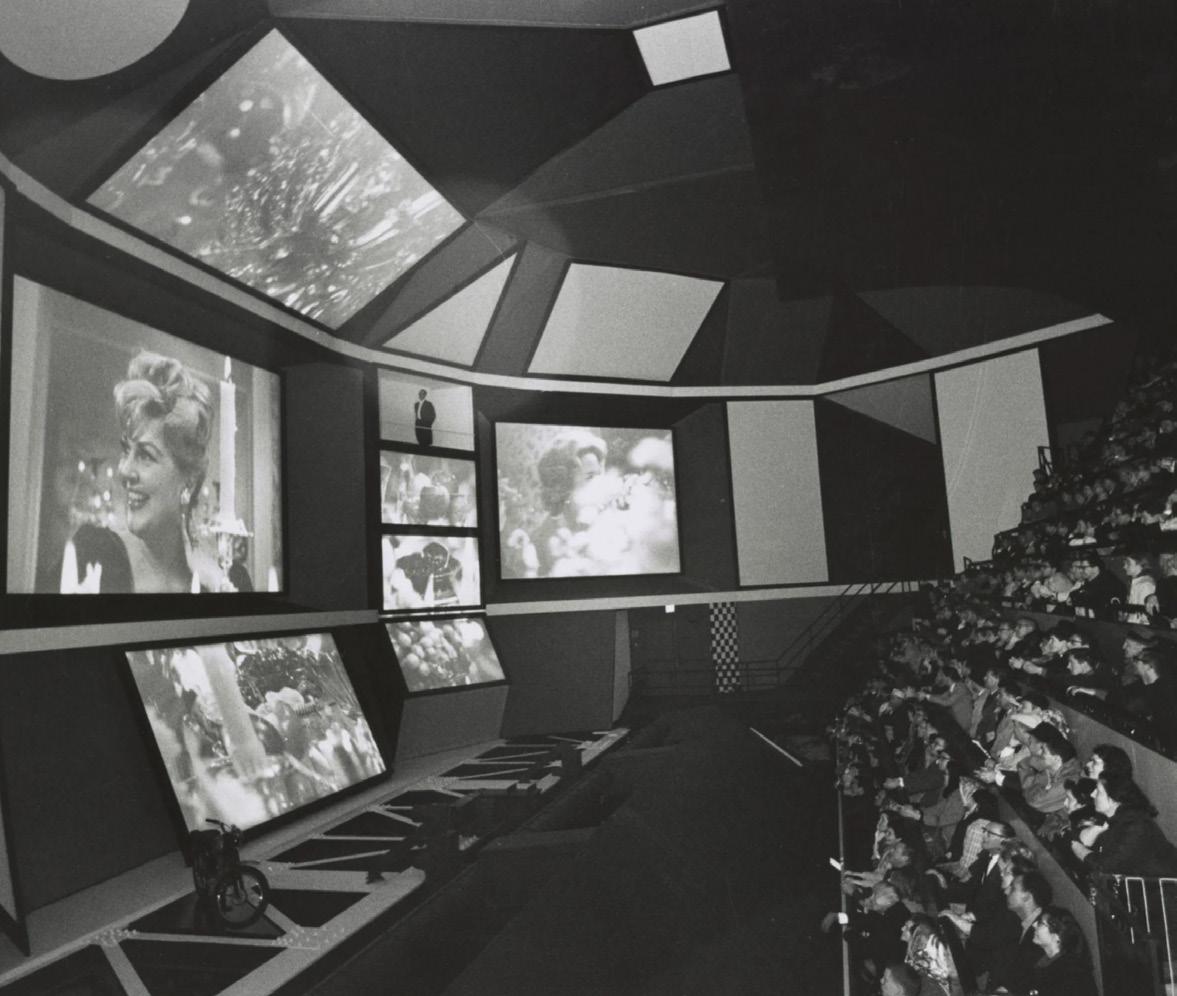
Title: Information obsession: the Eameses’ multiscreen architecture
Author: Beatriz Colomina
Hyperlink: Weekly READING ASSIGNMENTS
Date: 2001
/// p. [218]
[All of the Eameses’ designs can be understood as multiscreen performances: they provide a framework in which objects can be placed and replaced. Even the parts of their furniture can be rearranged. Spaces are defined as arrays of information collected and constantly changed by the users.]
Title: Augmenting reality: On the shared history of perceptual illusion and video projection mapping
This article explores the evolution of visual illusion techniques from Renaissance linear perspective to contemporary projection mapping, emphasizing their impact on architecture and spatial perception. By dynamically projecting images onto real surfaces, projection mapping transforms buildings into flexible carriers of virtual information, seamlessly merging digital content with physical space. This approach not only alters the sensory experience of architectural environments but also reshapes their identity and meaning. Through the integration of real-time interaction and immersive visuals, projection mapping opens up new possibilities for participatory, multi-sensory experiences, redefining how users engage with and interpret built spaces.
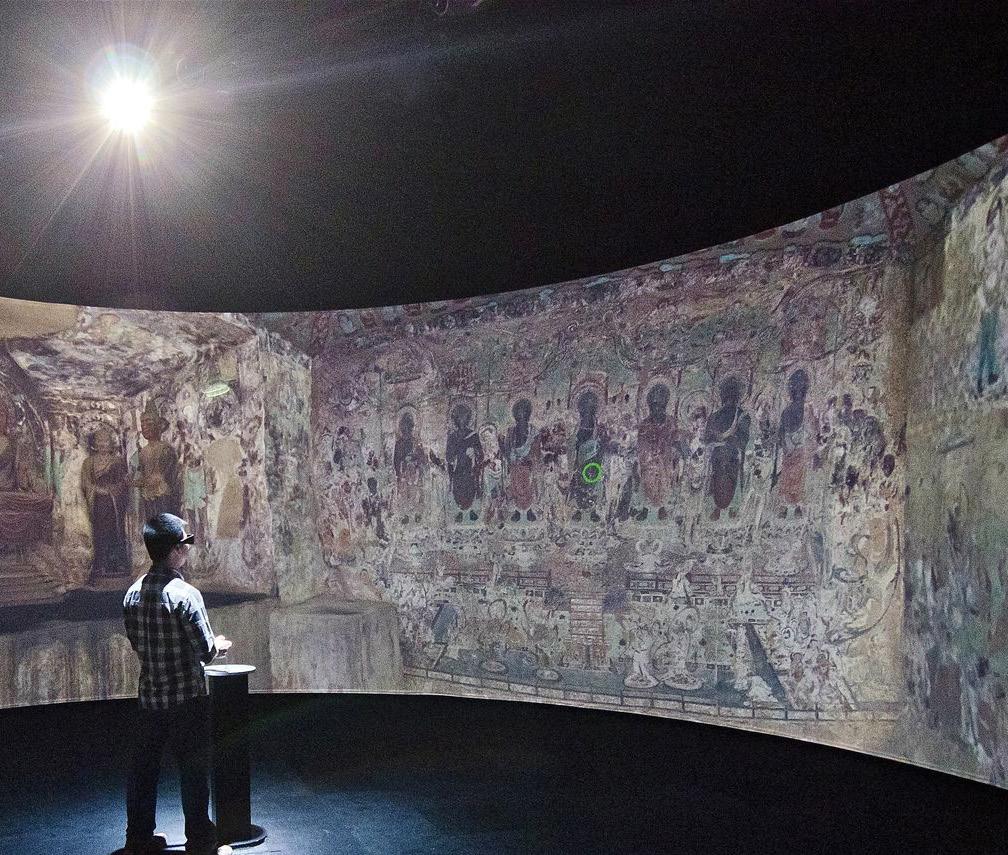
Title: Augmenting reality: On the shared history of perceptual illusion and video projection mapping
Author: Alvaro Pastor
Hyperlink: https://arxiv.org/abs/2005.14317?utm_source=chatgpt.com
Date: 2019
/// p. [8]
[As defined, Augmented reality aims at building systems that enhances the real world by superimposing computer generated information on top of it, in one or more sensory modalities. In its projector based form, Augmented Reality shares the aim to generate perceptual illusion untethered and available to the plain senses, by using synthetic information displayed on real world locations, but distinguishing from mere spatialized motion image in the strong interactive component of the experience.]
Title: Senses of place: architectural design for the multisensory mind
This article emphasizes how multisensory design can enrich human experience in architecture. Traditionally, architecture has prioritized the visual, often neglecting sound, touch, smell, and temperature, resulting in monotonous or even unhealthy environments. The author argues that integrating sensory elements—such as lighting, soundscapes, textures, and scents—enhances spatial atmosphere and emotional connection. Such design improves comfort, well-being, and engagement in spaces like offices and healthcare facilities. The article calls for architects to move beyond visual dominance, using crossmodal correspondences and sensory congruency to create spaces that actively support social, cognitive, and emotional development.
Title: Senses of place: architectural design for the multisensory mind
Author: Charles Spence
Hyperlink: https://pmc.ncbi.nlm.nih.gov/articles/PMC7501350/?utm_source=chatgpt.com
Date: 2020
[These researchers examined the effects of an office makeover when a company moved to a new office building. The employees in the new office were given individual control of the temperature, lighting, air quality, and acoustic conditions where they were working. Productivity increased by approximately 15% in the new building. When the individual control of the ambient multisensory environment was disabled in the new building, performance fell by around 2% instead.]
Title: AI DATA PAINTINGS & SCULPTURES -
Gaudí Dreams is an immersive AI-driven artwork by digital artist Refik Anadol, created for Gaudí’s Casa Batlló. Using over a billion images and data points, Anadol reimagines Gaudí’s organic forms and natural motifs into a fluid, dreamlike visual experience. Visitors step into the six-sided LED "Gaudí Cube," as if entering the architect’s imaginative mind. More than a display of digital technology, the work redefines architectural expression—transforming architecture from a static structure to a dynamic, interactive field of information. It offers viewers an entirely new sensory way to experience space, blurring the lines between art, technology, and built form.

Title: AI DATA PAINTINGS & SCULPTURES - GAUDI DREAMS
Author: Refik Anadol
Hyperlink: https://refikanadol.com/works/living-architecture-casa-batllo/ Date: 2022
page]
The Blur Building was an experimental architectural work showcased at the 2002 Swiss Expo, composed entirely of mist, dissolving the boundaries and contours of traditional architecture. Equipped with an intelligent system that adjusts the density of the fog in real time based on weather and wind conditions, it functioned like a primitive AI-driven environmental reactor. Visitors entering the structure found themselves immersed in a white, unfocused world, with visual and auditory references erased, leaving only their bodies navigating through the fog, disoriented. Rather than offering exhibits to view, the building emphasized how individuals re-sense themselves and space within this blurred, scale-less, and surface-less atmospheric medium—challenging the conventional notion of architecture as something tangible and visible. The building became a mutable environmental experience, prompting visitors to continuously recalibrate their perception and sense of presence within its dynamic, boundaryless fog environment.
Title: Blur Building
Author: Diller Scofidio + Renfro
Hyperlink: https://dsrny.com/project/blur-building Date: 2002 /// p. [Web page] [There are, however,
Title: Samsung Gives 300-Year-Old House a Spooky Tech Makeover for Halloween
This case demonstrates how modern technology can merge with traditional architecture to create innovative sensory experiences. By integrating Samsung SmartThings’ connectivity with projection mapping, lighting, and sound control, the historic building was revitalized, offering an immersive and participatory environment for visitors. Such visually driven, interactive designs strengthen the connection between space and people, enhancing emotional engagement and immersion. It also introduces flexibility and playfulness into contemporary architecture, providing creative solutions for public spaces, especially during times of social restrictions. This illustrates how future architecture can incorporate digital technologies to deliver dynamic, multifaceted experiences that enrich everyday life.

Title: Samsung Gives 300-Year-Old House a Spooky Tech Makeover for Halloween
Author: Taylor Herring, Samsung
Hyperlink: https://lbbonline.com/news/samsung-gives-300-year-old-house-a-spooky-tech-makeover-for-halloween https://youtu.be/Vs66NbPJoP8?si=TtYNiZ2MbokJskud
Date: 2020
///
p. [Web page]
[The Halloween light show was designed to inspire children and adults who may not be able to celebrate Halloween in the usual way this year due to COVID-19.]
[Ar-enhanced Events - Augmented reality technology creates new opportunities for enhancing real-life events with digital elements and interactivity.]
Title: 360° Projection Mapping onto Takamatsu Burial Mound
The Takamatsuzuka Tumulus 360° Projection Mapping Show is part of the Space Echo series by the Japanese digital art team Cosmic Lab. Held at the Asuka Historical National Government Park in Nara, the event uses advanced projection technology to transform the ancient burial mound into an interactive visual canvas. Audiences can control colorful light patterns in real time through a console, creating a vibrant cosmic atmosphere on the mound’s surface. Additionally, 3D animation projects the tomb gate opening, releasing the four guardian beasts (Azure Dragon, Black Tortoise, Vermilion Bird, White Tiger) depicted inside, blending cultural heritage with immersive, modern digital experiences.
Title: 360° Projection Mapping onto Takamatsu Burial Mound
Author: Cosmic Lab
Hyperlink: https://headfull.jp/360-projection-mapping-onto-takamatsu-burial-mound
Date: 2014
///
p. [Web page]
[In the projection content, a 3D animated image is also used to show the visual effect of the tomb door opening on the ancient tomb, and then the four mythical beasts (Blue Dragon, Black Tortoise, Red Bird, and White Tiger) in the murals in the tomb, which are listed as Japanese national treasures, fly out of the ancient tomb and are projected outside the ancient tomb.]
Different designers and architects, in response to the fire at Notre Dame Cathedral, proposed a variety of innovative and imaginative restoration ideas. Instead of merely replicating the original structure, they reinterpreted the preservation of architectural heritage through modern technology and artistic approaches—such as transforming the spire into beams of light or incorporating symbolic design elements. These proposals not only honor the building’s history but also breathe new life and meaning into it within a contemporary context, encouraging viewers to rethink the relationship between memory, loss, and renewal.
Title: Concept of Notre Dame Rebuild: Fleche of Light
Author: Vizum Atelier
Hyperlink: https://casdinteret.com/2020/07/fanciful-visions-of-notre-dames-reconstruction/ Date: 2020
/// p. [Web page]
[Rather than reconstructing the colossal towers of the World Trade Center, two reflecting pools mark the spots where the towers once stood. Soaring beams of blue light torpedo into the night sky as a powerful yet beautiful reminder of their loss.]
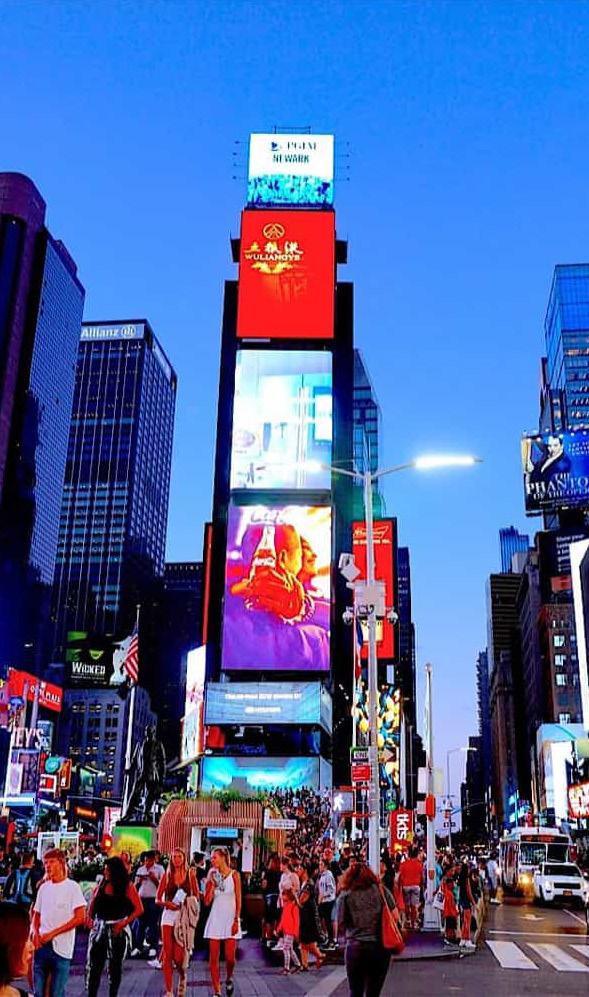
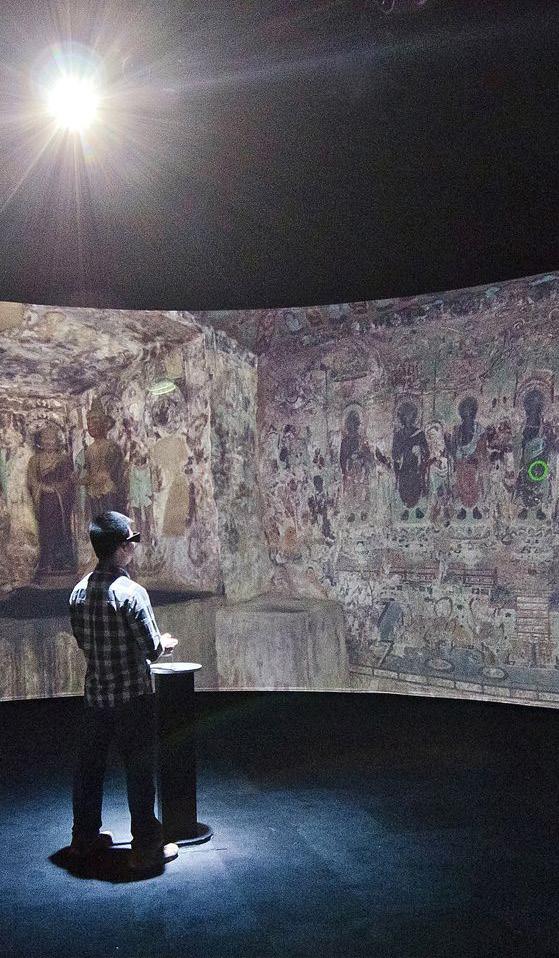
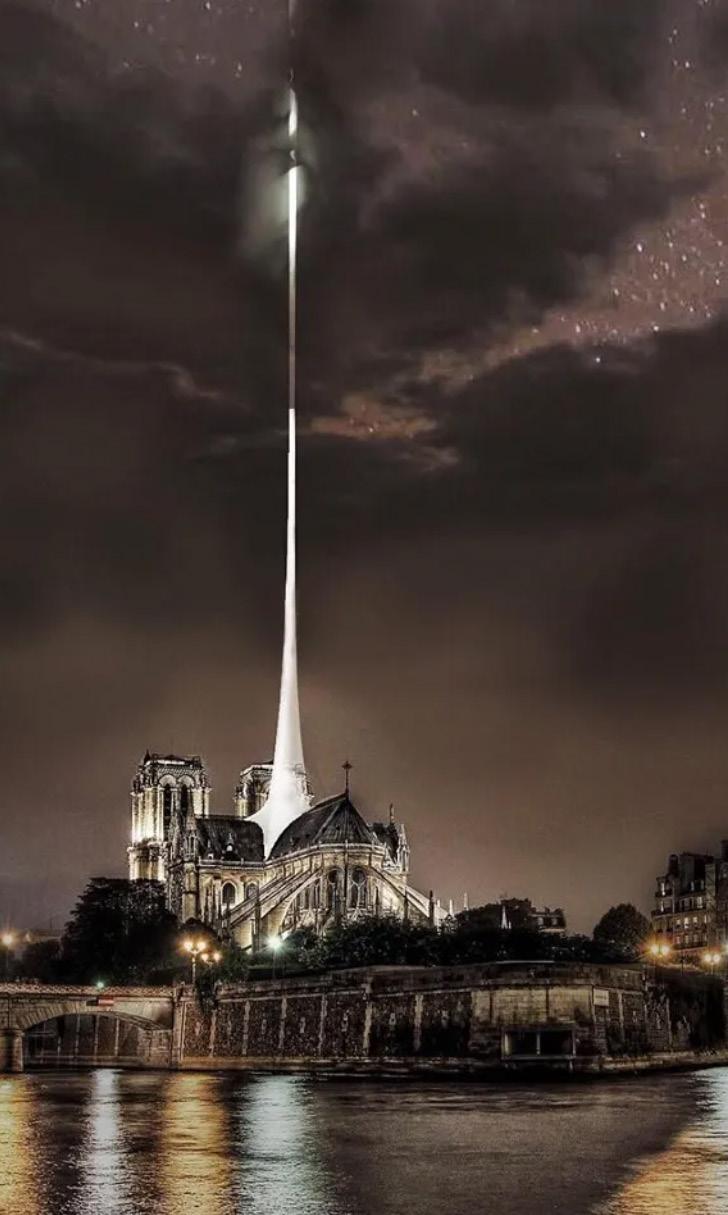
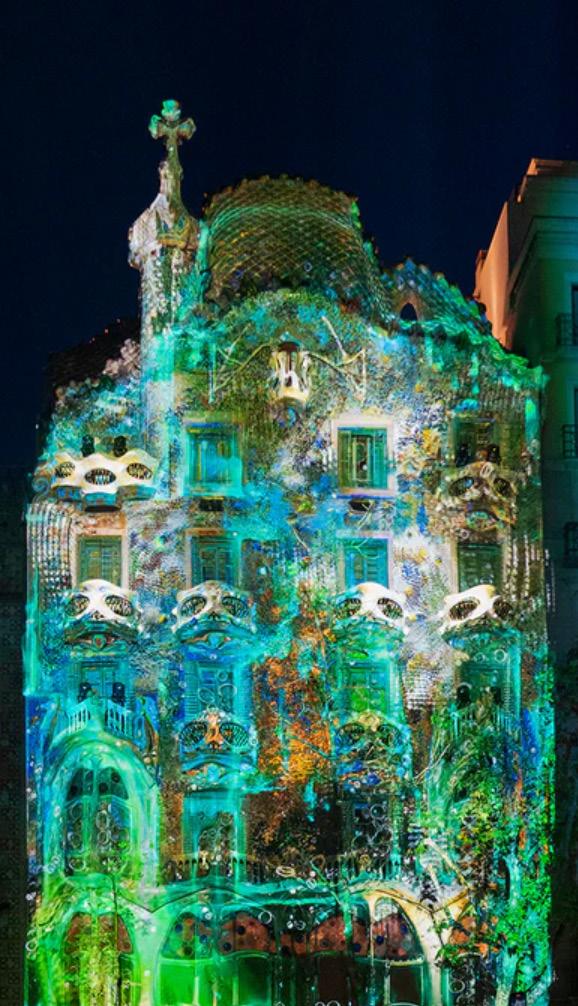
YEAR: 2025 SPRING
CLASS: Theories Cont Arch II
TEAMMATE: Individual Work
INSTRUCTORS: John Cooper
Architecture is not just about shaping physical structures—it’s about shaping experiences. Every space we enter influences how we feel, move, and interact. Through elements like light, sound, material, and circulation, architecture creates emotional atmospheres and sensory journeys. It allows people to connect with space not just visually, but through memory, emotion, and movement.
Storytelling in architecture emerges from these experiences. A building can reflect culture, history, or a specific narrative through its form and details. As users move through the space, they become part of the story— interpreting, imagining, and reacting. In this way, architecture becomes an active, living medium, one that not only houses stories but tells them through space itself.
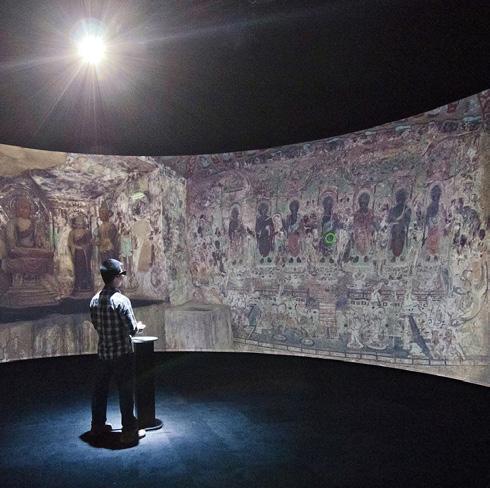
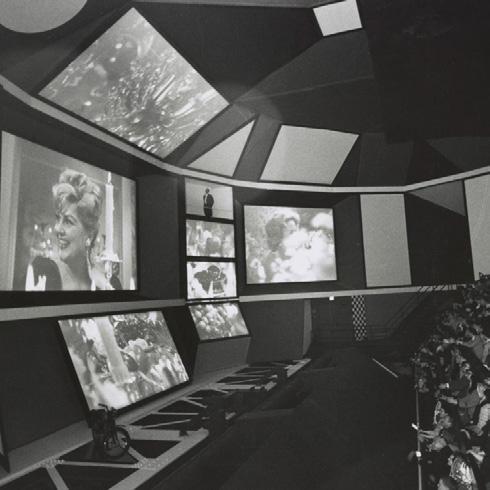
My understanding of architecture has never been limited to structure and form; I am more interested in how it shapes people’s perception of space and deeply influences their behaviors and emotions in everyday life. During my involvement in design and construction projects, I have always paid close attention to whether users feel comfortable and understood within the spaces we create. However, as urban environments evolve rapidly alongside technological advancements, I’ve noticed that older buildings are often dismissed as obsolete, quickly demolished and replaced. This observation has led me to question: does architecture necessarily follows a single logic of demolition and reconstruction? Can technology offer alternative ways for architectural narratives and user experiences to evolve upon existing foundations?
With these questions in mind, my research focuses on Experiencing + Storytelling in contemporary architecture, particularly how technology reshapes spatial perception and narrative, and how it reveals underlying architectural ethics and social significance.
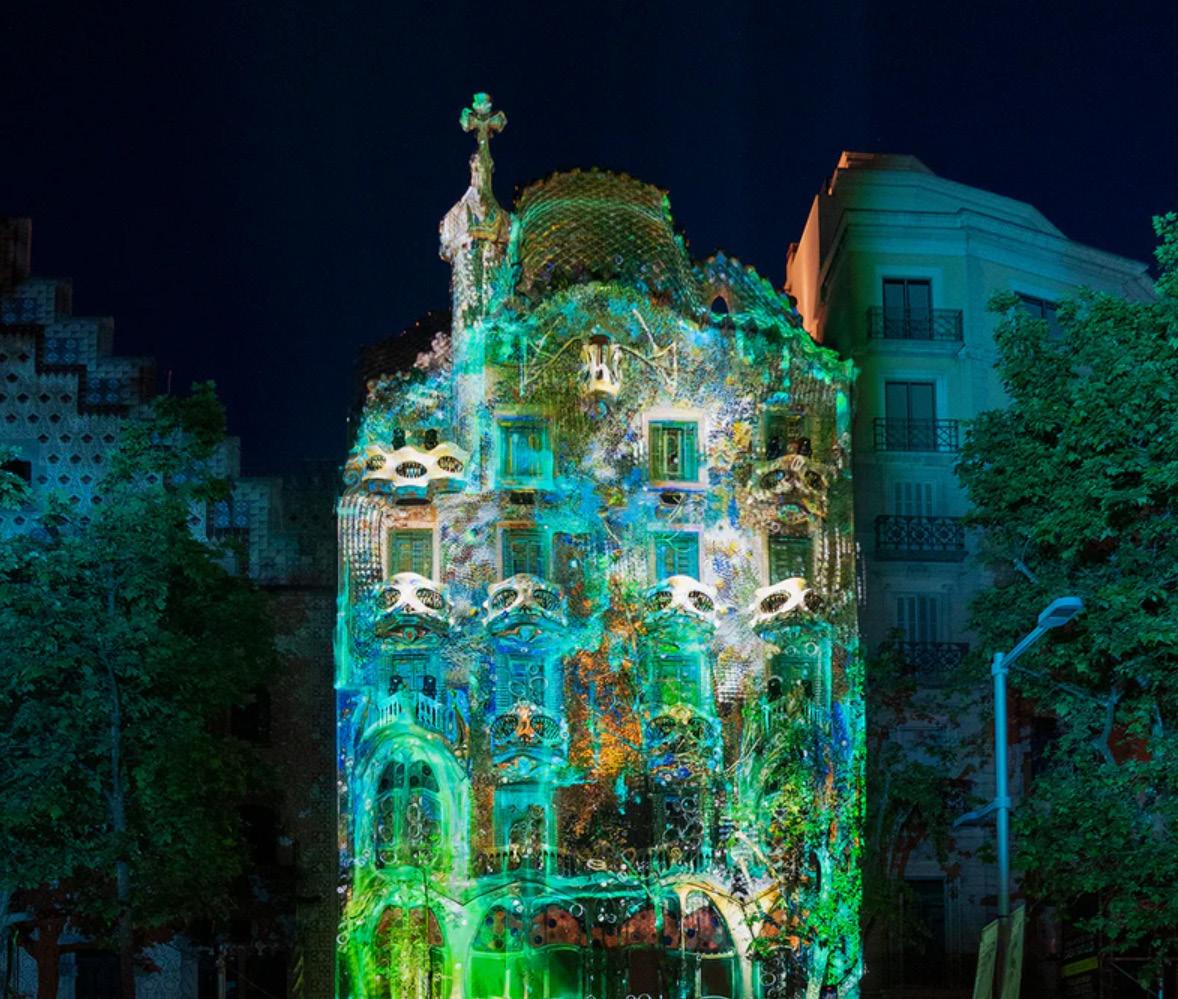
In modern cities, older buildings are often demolished due to functional decline or outdated aesthetics, interrupting urban narratives and erasing cultural memory. I noticed that this approach overlooks an important fact—these buildings still carry potential historical and social value; their connection to contemporary needs has merely been severed. Faced with this phenomenon, began to wonder: is it possible to intervene with digital technology, not to erase old buildings, but to transform them into new platforms for information and storytelling?
This thinking was inspired by Lev Manovich’s "The Poetics of Augmented Space." He argues that contemporary space is no longer purely physical, but a hybrid of information layers intertwined with material space. The augmented digital layer introduces new narrative possibilities. This perspective made me realize that older buildings do not have to remain static relics; they can be transformed into “living” informational fields through data visualization, AI-generated imagery, and other technologies.
In practice, Refik Anadol’s work clearly demonstrates this potential. He converts vast amounts of public data into immersive visual surfaces, turning existing buildings into data-driven storytelling platforms. Through AI algorithms that generate dynamic light and shadow, the once-static façades are visually updated over time, reflecting urban transformations and social issues. For example, in Barcelona, he used Gaudí’s Casa Batlló as a foundation, blending a century’s worth of historical data with contemporary city information, creating a multi-layered visual narrative through projection and computation. This not only gave historical architecture a renewed cultural context but also invited diverse communities to participate in the dialogue between data and architecture.
However, I believe that the application of such technologies carries both potential and risk. While Manovich emphasizes the “augmented” nature of the information layer, I argue that excessive digital intervention can easily devolve into mere visual spectacle or branding strategy, turning architecture into a hollow media surface devoid of its social and historical depth. Although Anadol’s work is undoubtedly successful in terms of aesthetics, I question whether his heavy reliance on data visualization risks overlooking the underlying power structures and community narratives embedded within architectural storytelling. This is an issue I hope to explore further.
I am not satisfied with treating these technologies purely as visual entertainment. I believe that when we regard existing buildings as dynamic narrative platforms, it must also involve reexamining the power structures and social memory they carry. Many public buildings or industrial relics bear the imprints of specific eras—whether colonial, industrialized, or tied to capitalist expansion. Yet, once their functions fade, they are often deemed outdated and erased. Could digital layering allow these spaces to address forgotten or marginalized groups, fostering a dialogue between historical narratives and contemporary issues within the same architectural frame? I believe digital narrative interventions should not only reproduce visual spectacles but should serve as open platforms where different communities, memories, and power dynamics can continuously collide, debate, and challenge linear historical views.
One example that particularly resonates with me is the case of Notre Dame Cathedral after the devastating fire. Many architects proposed various reconstruction strategies, and among them, some suggested using projection technology as a method of rerepresentation. This made me reflect: even if we restore the building’s appearance, the result is merely a surface resemblance, difficult to authentically recreate historical craftsmanship or significance. It risks becoming a forced revival of the past. Therefore, I see projection, light sculpture, and laser techniques as more meaningful approaches for the contemporary moment. Such non-physical representations allow people to witness the former glory of the structure while simultaneously acknowledging the damage it has endured—each scar telling part of the building’s ongoing story. These marks, though tragic, contribute to its unique historical narrative.
Based on this, I believe digital narrative interventions should not remain superficial decorations, but instead act as mechanisms enabling ongoing dialogue between different generations, markets, and communities within shared spaces. This makes me wonder whether we might be able to develop something like a data-driven narrative architecture—a type of building whose narrative content shifts in real-time, responding to urban data, reflecting the pulse of society, and positioning itself as a bridge between historical memory and contemporary life.
I’ve also observed another pressing issue in contemporary urban environments—the closure and uniformity of sensory experiences. Many modern office buildings and commercial spaces, constrained by efficiency and cost considerations, often exhibit insufficient ceiling heights, lack natural light, and create physically and psychologically oppressive environments. Such spatial structures not only dull spatial perception but also directly impact mental well-being. As a designer, I began to question whether contemporary sensory manipulation technologies could be leveraged to restore fluidity and openness in these spaces.
Much of my thinking in this area draws inspiration from Beatriz Colomina’s "Information Obsession." She points out that architecture has long been mediated—human spatial perception is reconstructed through images, sound, and information layers. However, I argue that contemporary applications of media architecture focus too heavily on visual elements, overlooking the potential of other bodily senses. What if we shift the focus from purely visual mediation toward dynamic control of the entire sensory environment? Could this approach improve the experience of enclosed spaces?
This concept is also evident in Diller Scofidio + Renfro’s Blur Building. They fuse water vapor, light, and environmental climate data to create an experience where sensory input shifts in sync with weather conditions, challenging traditional notions of architectural solidity. Their design inspired me to consider: could we integrate digital sensing technology with airflow patterns, light modulation, and sound fields to create programmable sensory flows in offices or enclosed spaces? Could space dynamically respond to both environmental conditions and the physical state of its occupants, breaking away from rigid and stagnant spatial experiences?
Building on this, my specific proposal is as follows: take office buildings as an example. Sensory modules—including dynamic lighting, sound field systems, adjustable airflow, and micro-vibration devices—can be embedded into ceilings and wall systems and connected to employees' physiological data (such as heart rate and stress levels). By collecting and analyzing real-time data, the building can autonomously adjust lighting warmth, reduce noise interference, or regulate airflow direction in tune with work rhythms, effectively easing the psychological strain caused by prolonged use of enclosed spaces. Through such a system, space is no longer a static, onedirectional container, but a dynamic environment capable of flexibly adapting to users' needs and responding to different situational demands. Technology transforms the space from passive to active— a kind of "living architecture" equipped with sensory and regulatory capacities.
However, I am not only concerned with improving comfort; I also question whether these sensory interventions can challenge the productivity-driven logic of space shaped by capital. Enclosed spaces should not solely serve efficiency; rather, they should become arenas where users reclaim their psychological well-being and bodily autonomy. This leads me to wonder: as AI sensing technologies and physiological feedback systems continue to develop, could architectural spaces evolve into what I would call "sensory-adaptive architecture"—spaces where users can actively adjust lighting, sound, and airflow in real time based on their physical and mental states, reclaiming control over their sensory environment? hope such systems could alleviate the fatigue and anxiety common in contemporary life and allow buildings to transcend their role as mere protective shells, becoming spaces that genuinely foster mental and physical well-being.
Reflecting on the two aspects I’ve explored—digital interventions in existing buildings and sensory technologies in enclosed spaces— they may appear to address different challenges, yet they both circle back to the same fundamental question: how can architecture, in an age shaped by technology, respond to historical memory, community engagement, and bodily autonomy?
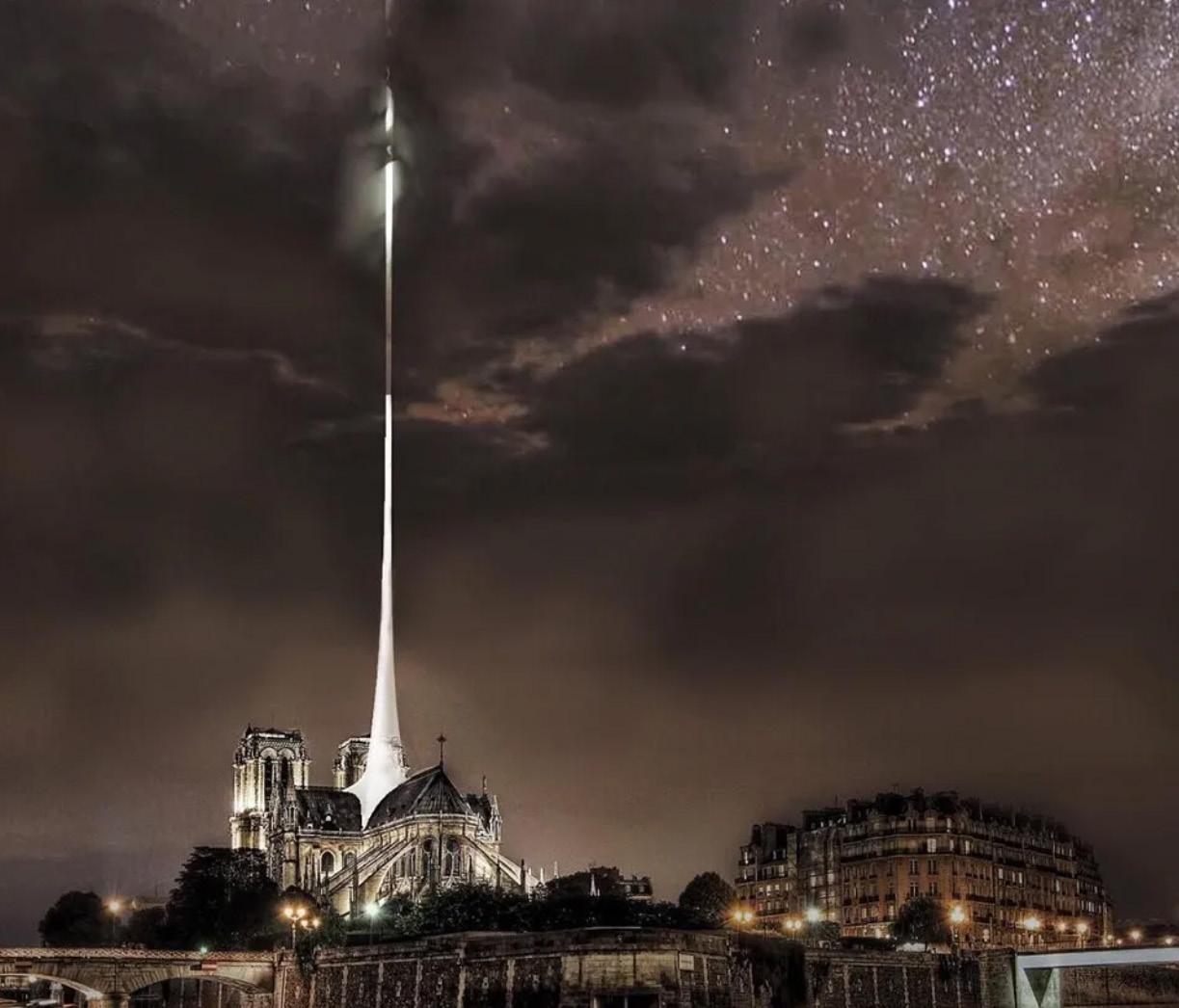
Drawing from Manovich and Refik Anadol, I find myself questioning whether digital storytelling risks being reduced to surface-level spectacle and consumer-driven visuals, potentially glossing over the deeper layers of history and social complexity embedded within architecture. Rather than letting digital layers serve purely as media façades, I believe they have the potential to become open platforms where diverse communities and narratives can actively contribute, allowing architecture to serve as a living interface between past and present.
Similarly, inspired by Colomina and DS+R, I find myself questioning whether digital storytelling risks being reduced to surface-level spectacle and consumer-driven visuals, potentially glossing over the deeper layers of history and social complexity embedded within architecture. Rather than letting digital layers serve purely as media façades, I believe they have the potential to become open platforms where diverse communities and narratives can actively contribute, allowing architecture to serve as a living interface between past and present. For me, the real issue lies not in the technology itself, but in how it is applied—and more importantly, who holds the power to shape these spaces and narratives. I believe architecture today should be more than just a vessel for efficiency or visual appeal. It should act as a site of ongoing negotiation between technology, history, and the people who inhabit these spaces.
Moving forward, I want to continue exploring how we might design buildings that not only integrate advanced technologies but do so in ways that respect diverse memories, empower users, and maintain ethical transparency. These are the questions that will continue to guide both my research and my design practice.
Title: The poetics of augmented space
Author: Lev Manovich
Hyperlink: Weekly READING ASSIGNMENTS
Date: 2006
Title: Information obsession: the Eameses’ multiscreen architecture
Author: Beatriz Colomina
Hyperlink: Weekly READING ASSIGNMENTS
Date: 2001
Title: Augmenting reality: On the shared history of perceptual illusion and video projection mapping
Author: Alvaro Pastor
Hyperlink: https://arxiv.org/abs/2005.14317?utm_source=chatgpt.com
Date: 2019
Title: Senses of place: architectural design for the multisensory mind
Author: Charles Spence
Hyperlink: https://pmc.ncbi.nlm.nih.gov/articles/PMC7501350/?utm_source=chatgpt.com
Date: 2020
Title: AI DATA PAINTINGS & SCULPTURES - GAUDI DREAMS
Author: Refik Anadol
Hyperlink: https://refikanadol.com/works/living-architecture-casa-batllo/
Date: 2022
Title: Blur Building
Author: Diller Scofidio + Renfro
Hyperlink: https://dsrny.com/project/blur-building
Date: 2002
Title: Samsung Gives 300-Year-Old House a Spooky Tech Makeover for Halloween
Author: Taylor Herring, Samsung
Hyperlink: https://lbbonline.com/news/samsung-gives-300-year-old-house-a-spooky-tech-makeover-for-halloween https://www.trendhunter.com/trends/samsung-haunted-house https://youtu.be/Vs66NbPJoP8?si=TtYNiZ2MbokJskud
Date: 2020
Title: 360° Projection Mapping onto Takamatsu Burial Mound
Author: Cosmic Lab
Hyperlink: https://headfull.jp/360-projection-mapping-onto-takamatsu-burial-mound
Date: 2014
Title: Concept of Notre Dame Rebuild: Fleche of Light
Author: Vizum Atelier
Hyperlink: https://casdinteret.com/2020/07/fanciful-visions-of-notre-dames-reconstruction/ Date: 2020
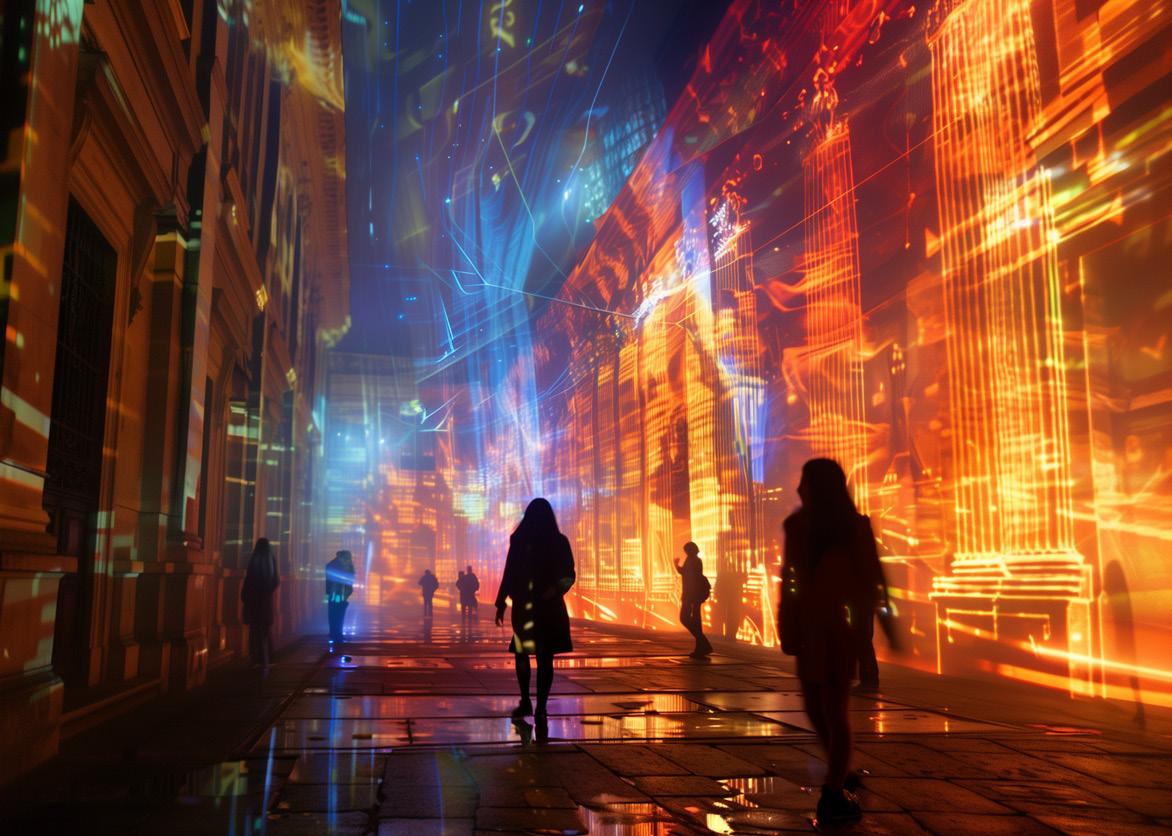
Architecture is more than the construction of space—it is a vessel of emotion and memory. Through thoughtful use of materials, light, and circulation, architecture guides sensory experiences and weaves spatial narratives. For example, a theater offers more than a place to watch performances; its story begins the moment a visitor steps inside. Every step, every upward glance becomes part of the unfolding rhythm. Today’s architects should move beyond form-driven design and focus on how users perceive and feel the space. By integrating technology and multimedia, buildings can become immersive, readable narratives. When space evokes resonance and imagination, architecture transforms into a language that tells stories of time, culture, and life.
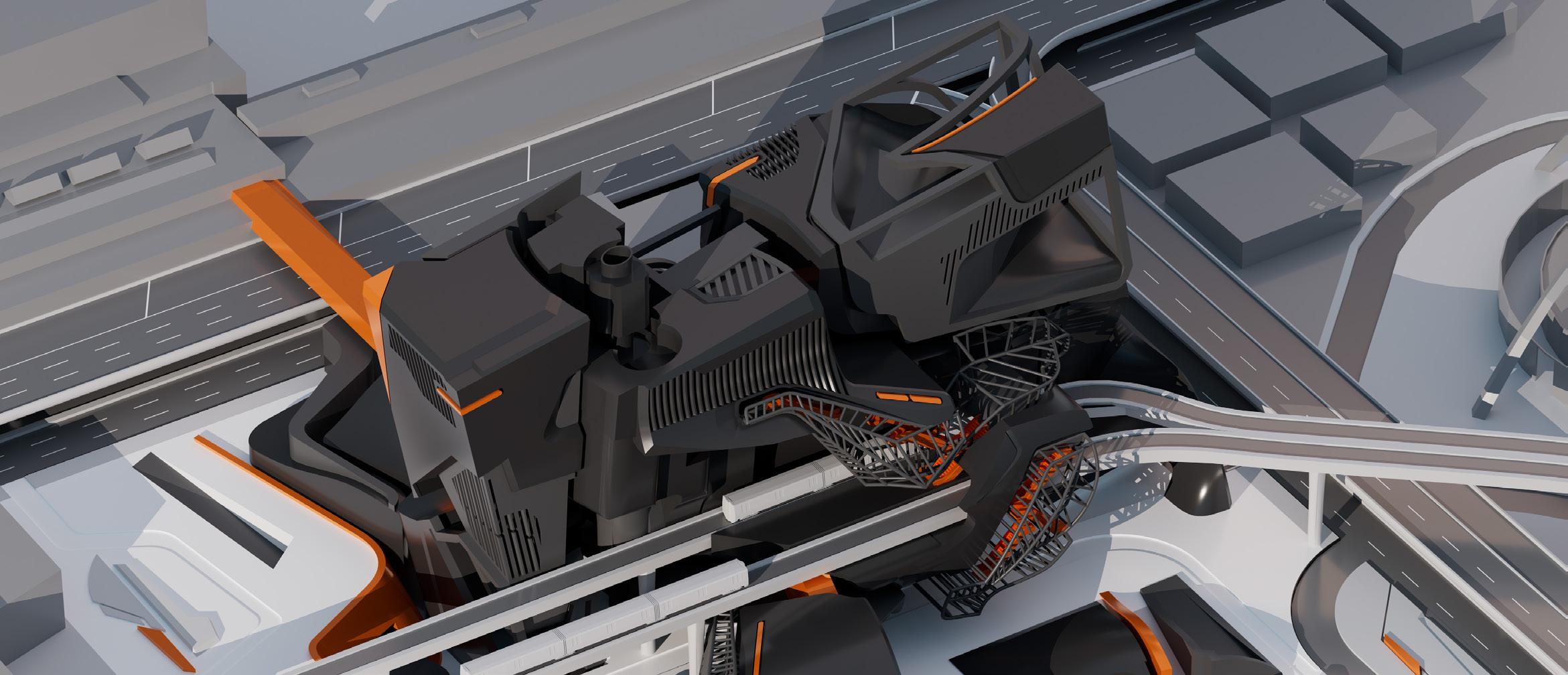
YEAR: 2025 FALL
CLASS: 3GAX : Vertical Studio
TEAMMATE: Cheng Han Yang
INSTRUCTORS: Dwayne Oyler
This future airport is conceived through the concept of a three-dimensional puzzle. A 3D puzzle embodies strong connectivity, where individual pieces retain their identity yet gain full meaning only when interlocked within a larger whole. The design applies this logic to circulation and program organization, transforming the airport from a linear sequence into a spatial network.
Each functional zone—departures, arrivals, security, retail, and intermodal transport—is treated as a puzzle piece that connects in three dimensions. Vertical and horizontal flows overlap smoothly, generating intuitive movement paths while reducing travel distance and congestion. The interlocking system also allows flexibility for future growth, enabling components to be added or reconfigured without disrupting the whole.

Rather than imposing a single, rigid form, the project treats the site as a threedimensional jigsaw, where pieces are discovered, tested, and rearranged.
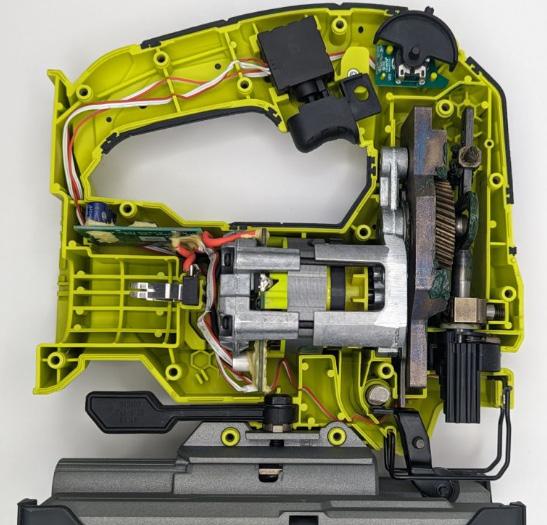
The jigsaw becomes both tool and metaphor. It cuts, opens, and reveals hidden interiors, making visible what was once sealed.
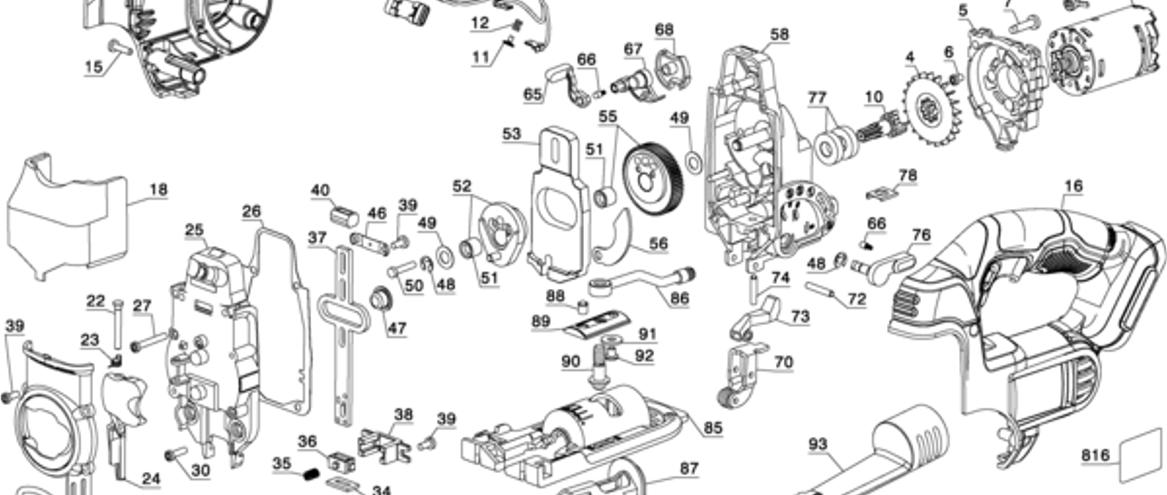
Our design follows the same logic. We examine material fragments, structural systems, flows of people, and traces of former occupation. By working from component to system, the project builds complexity gradually, allowing details to guide the overall form instead of forcing a predetermined whole.
The core idea of the project is assembly as a design method.
Instead of treating architecture as a finished object, the proposal embraces adaptability, where programs can be added, removed, or rearranged over time like pieces of a 3D puzzle.
This approach reflects contemporary urban reality: cities evolve through constant negotiation, not singular gestures. The project operates as an open system that welcomes change and future occupation.
Cities are not made as single, fixed objects. They are assembled from fragments, layers, and stories.
The Lincoln Heights Jail site embodies this condition: multiple programs, interrupted histories, and incomplete structures waiting to be reconnected. Rather than imposing a single, rigid form, the project treats the site as a three-dimensional jigsaw, where pieces are discovered, tested, and rearranged through design.
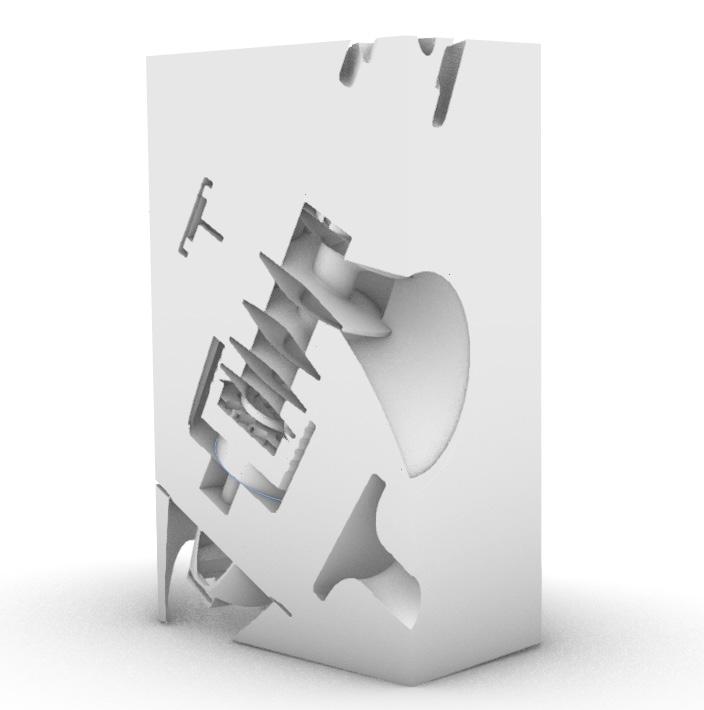
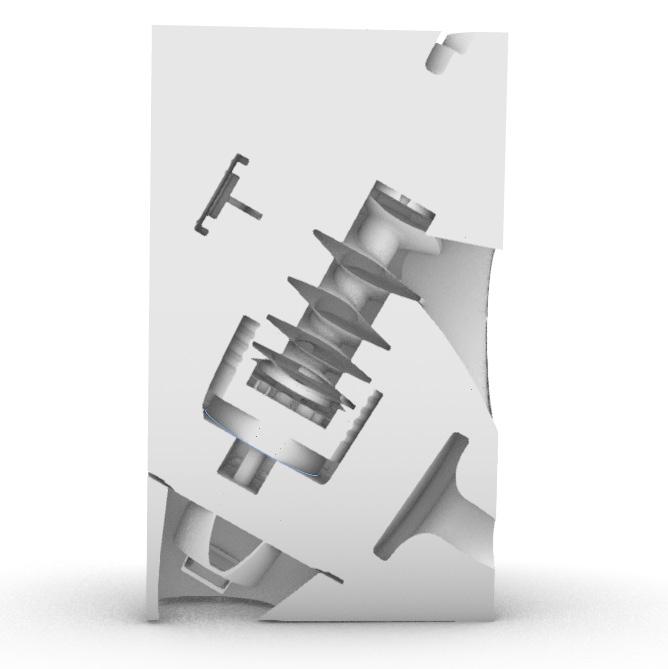
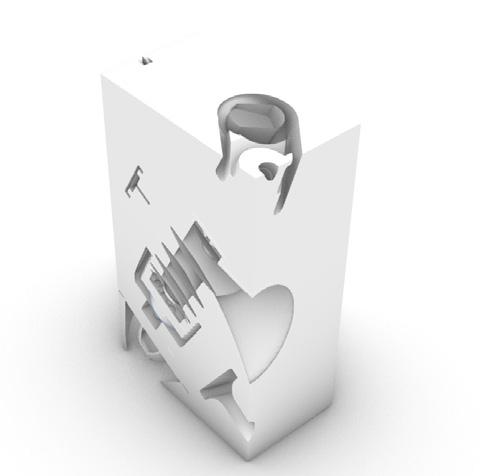
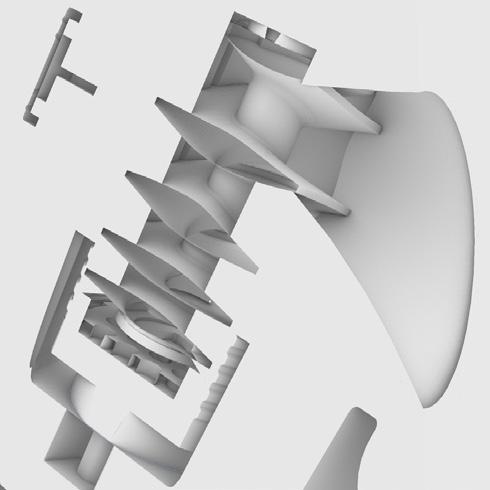
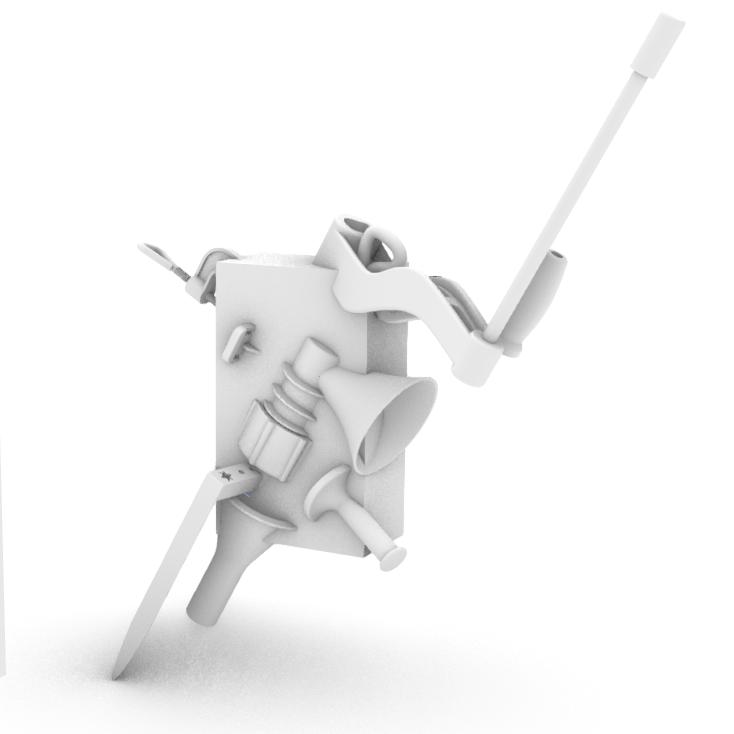
A compact cluster of familiar tools comes together like a small white sculpture. A hammer, screwdriver, funnel, and elongated rod intersect and overlap, losing their original purposes and forming a new object. The piece feels improvised and in progress, suggesting construction, assembly, and the playful transformation of everyday instruments into a single unified form.
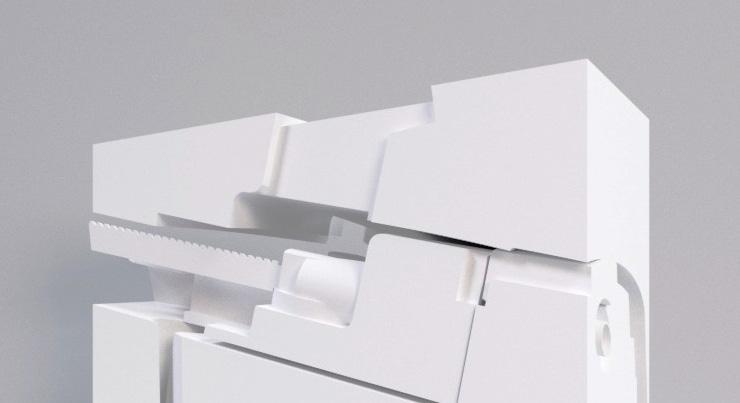
The design explores how layered operations carve into a solid mass, generating recessed spaces, interlocking volumes, and shifting surfaces, turning a simple block into a spatially dynamic architectural form.
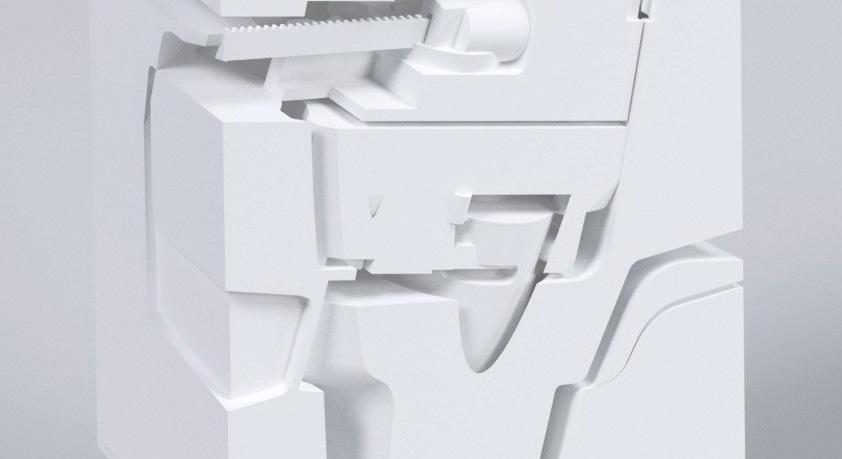
Through cutting and folding, the model develops multiple layers of depth and shadow, revealing the relationship between interior cavities and exterior surfaces as key drivers of the emerging massing language.
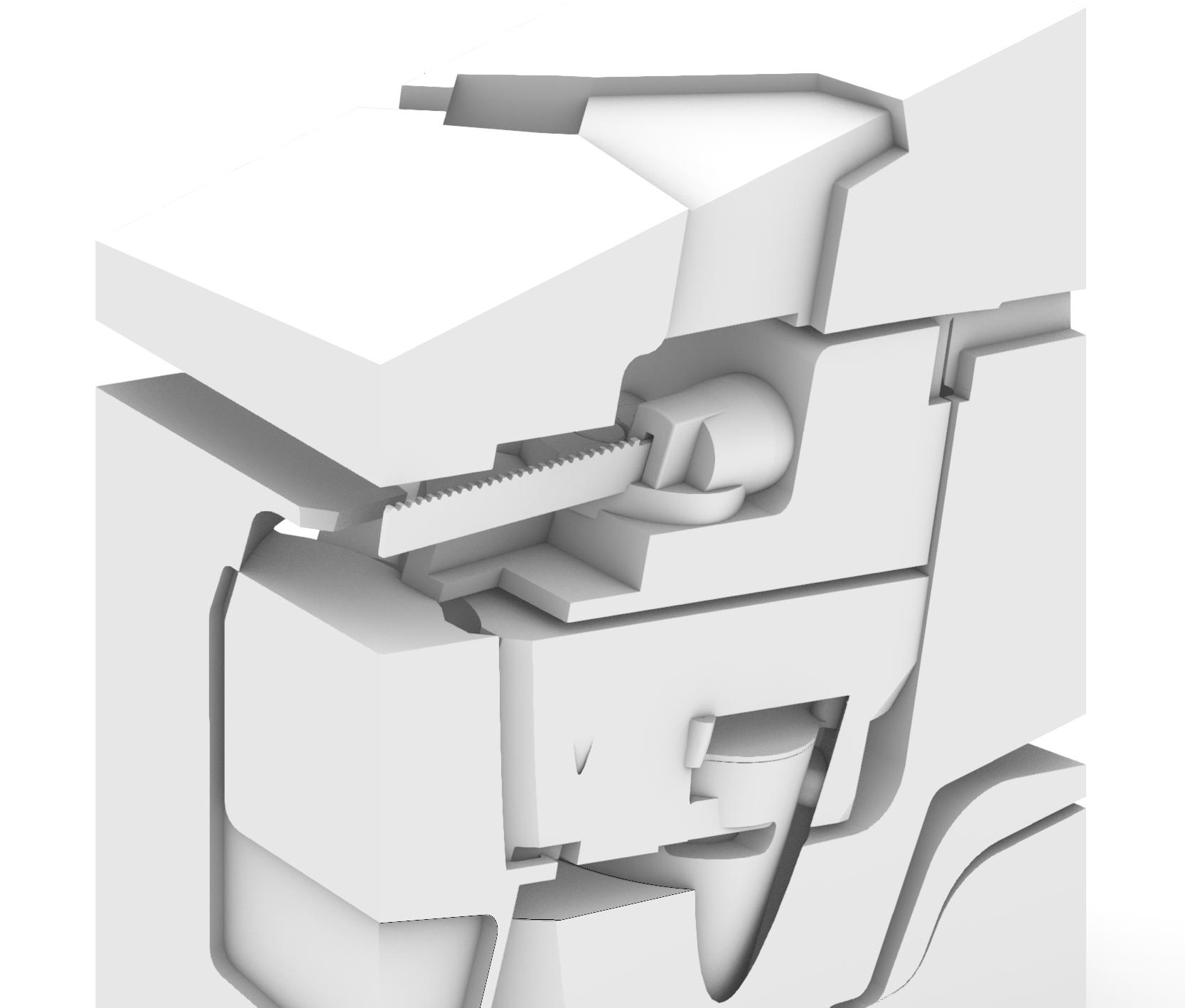
What begins as an abstract object gradually evolves toward architectural form. The mass is first treated as a neutral, solid block, then slowly shaped through cutting, subtraction, and the introduction of layered voids. As edges become sharper and profiles more articulated, the once-ambiguous volume starts to suggest thresholds, cavities, and differentiated façade conditions. These operations not only produce complex exterior surfaces but also imply internal spatial organization and potential circulation paths. Through this transformation, the piece moves from pure geometry toward an inhabitable architectural body, demonstrating how conceptual massing studies can generate spatial character and programmatic possibilities.
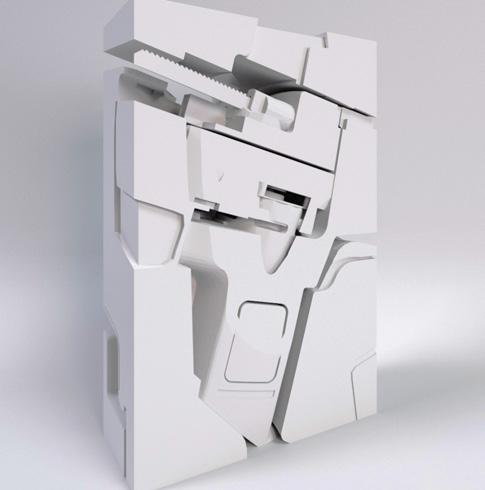
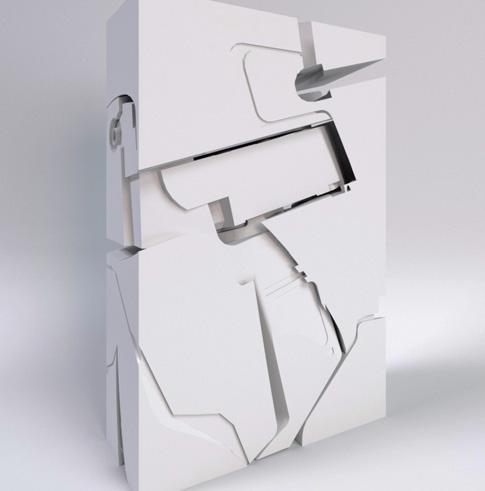
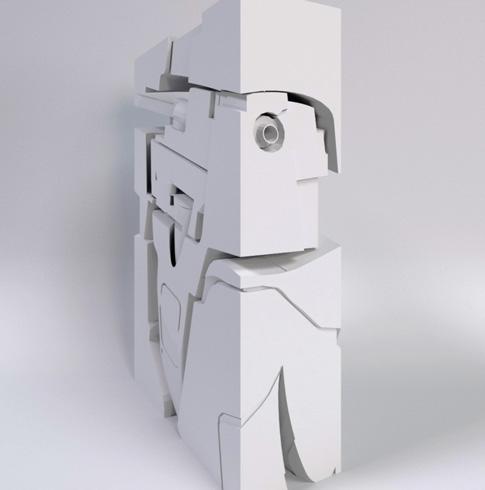
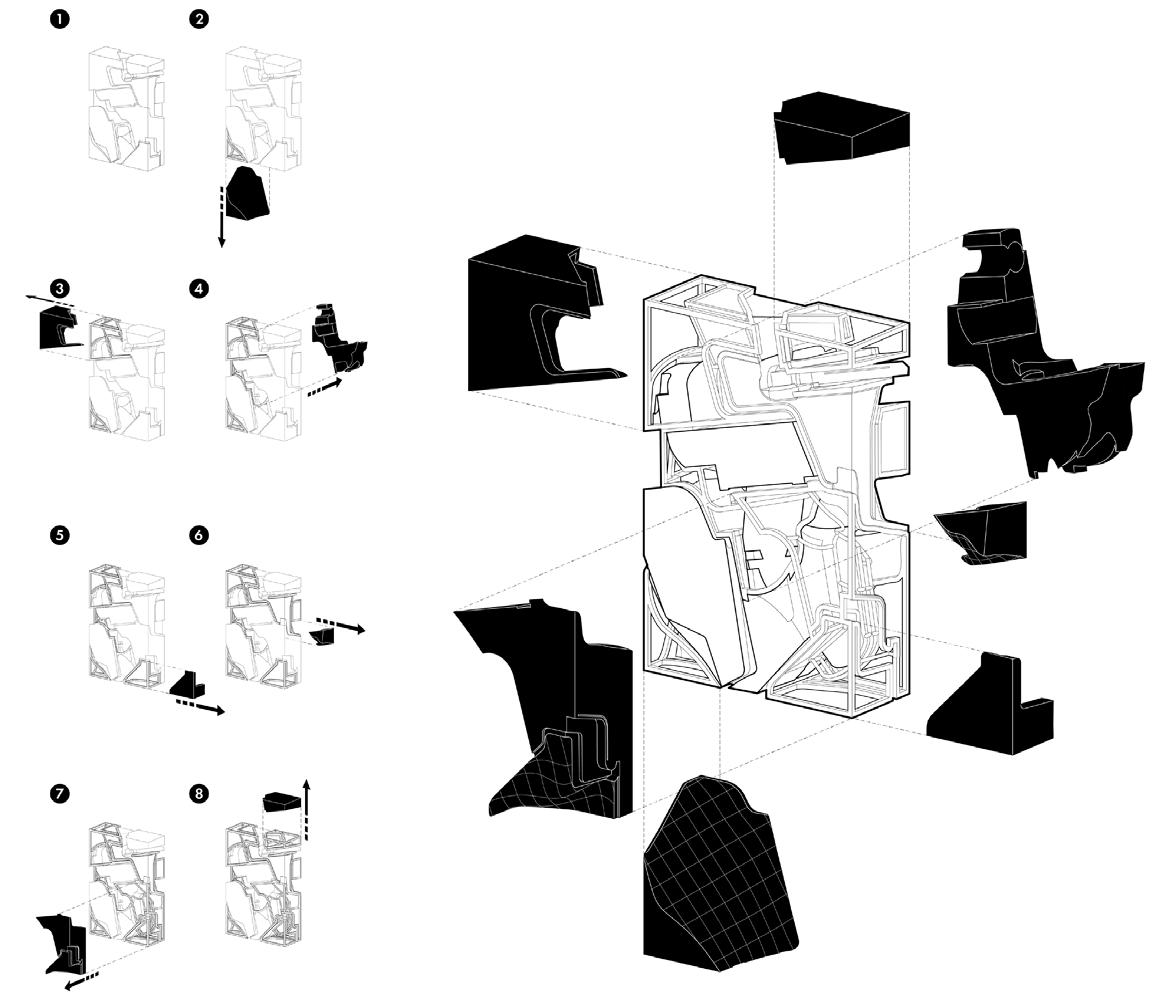
This stage explores how the off-grid mass can evolve into a generative system. Individual fragments are treated as modular components capable of being rearranged, multiplied, and extended beyond the original volume. By progressively disassembling and re-aggregating pieces, the design produces a network of interlocking solids and voids that expand outward from the core body. This strategy creates a formal language that remains cohesive even as it grows in unexpected directions, reinforcing adaptability and open-ended development.
The process begins by intentionally breaking away from a strict rectilinear grid. Primary masses are displaced, rotated, and slightly misaligned, producing cracks and seams that suggest movement within an otherwise rigid block. These subtle deviations introduce tension and highlight points where future spatial transformation can occur, establishing a foundation for an off-grid organizational logic.
At the same time, the expansion process is tied to environmental performance. The fragmented geometry allows light, ventilation, and potential energy systems to weave through the architecture, integrating technical infrastructure directly into the spatial framework. Rather than a fixed object, the project becomes a living system—able to absorb new functions, respond to urban conditions, and continually redefine its boundaries over time.
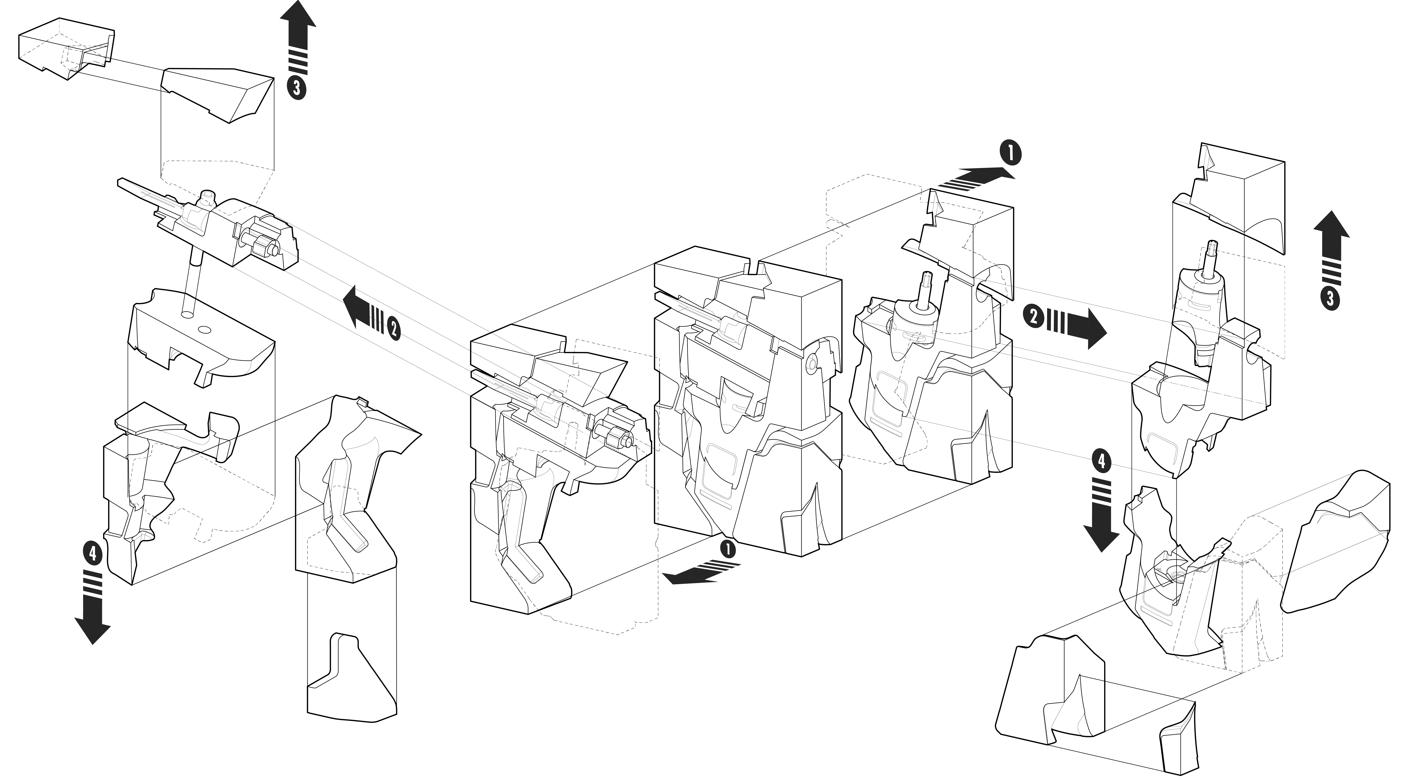
The sequence emphasizes process over final form, showing how movement, subtraction, and recombination generate new spatial and formal possibilities.
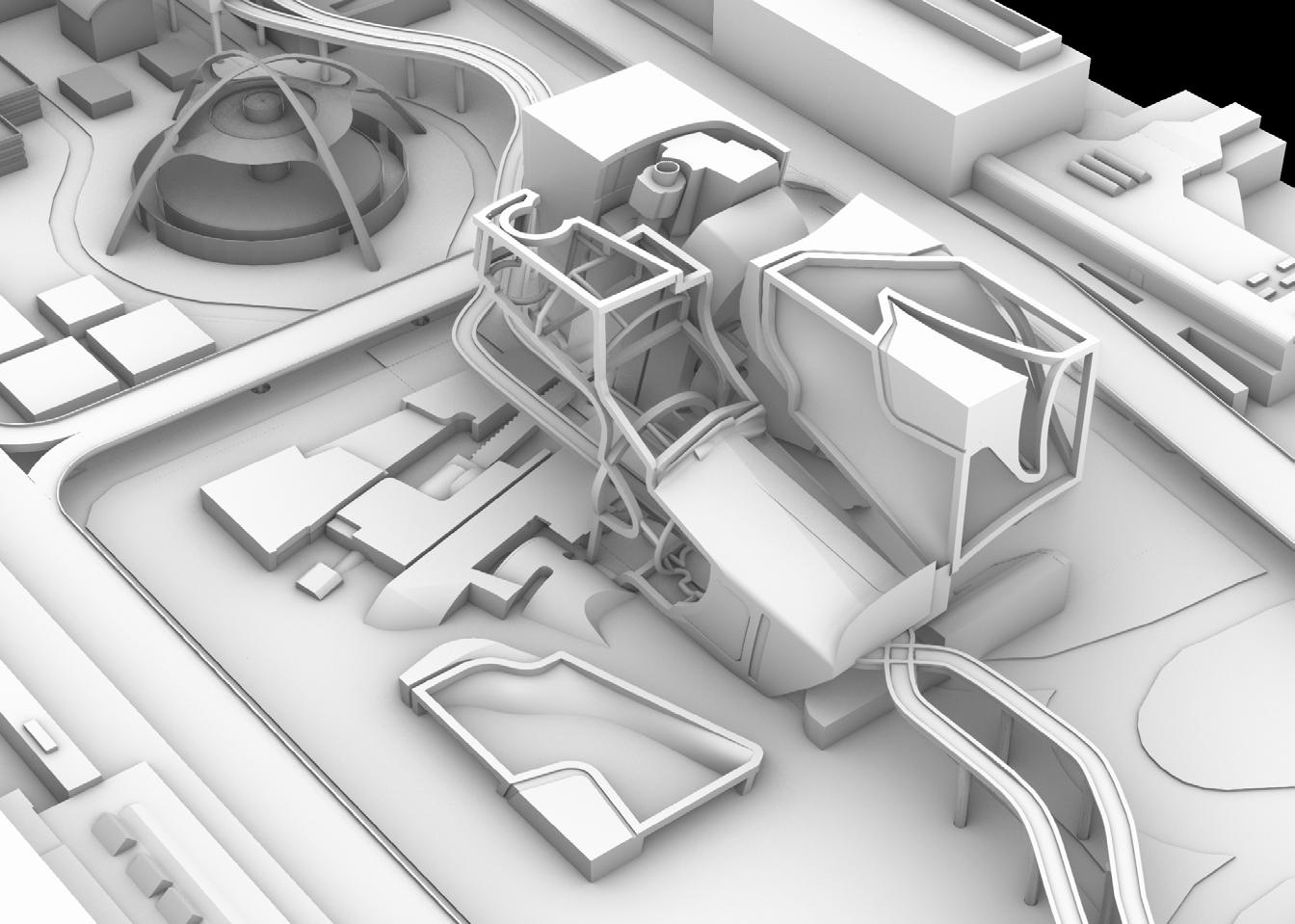
In response to Los Angeles’ increasing energy demand and environmental challenges, this proposal envisions the NXG Airport Concept as a decentralized green energy infrastructure woven directly into the urban fabric. Instead of treating the airport as a single megastructure, the project distributes smaller “micro-power” components across underused urban spaces, allowing energy production to coexist with mobility, landscape, and public life.
The system integrates algae-based bio-reactors, vertical wind turbines, and geothermal strategies to generate clean power while also absorbing carbon and improving air quality. Algae systems operate as living façades that respond to sunlight and seasonal changes, while vertical-axis wind turbines perform efficiently under turbulent wind conditions found around infrastructure corridors. Together, these systems minimize noise, reduce land occupation, and support continuous, flexible energy output without relying on large centralized grids.
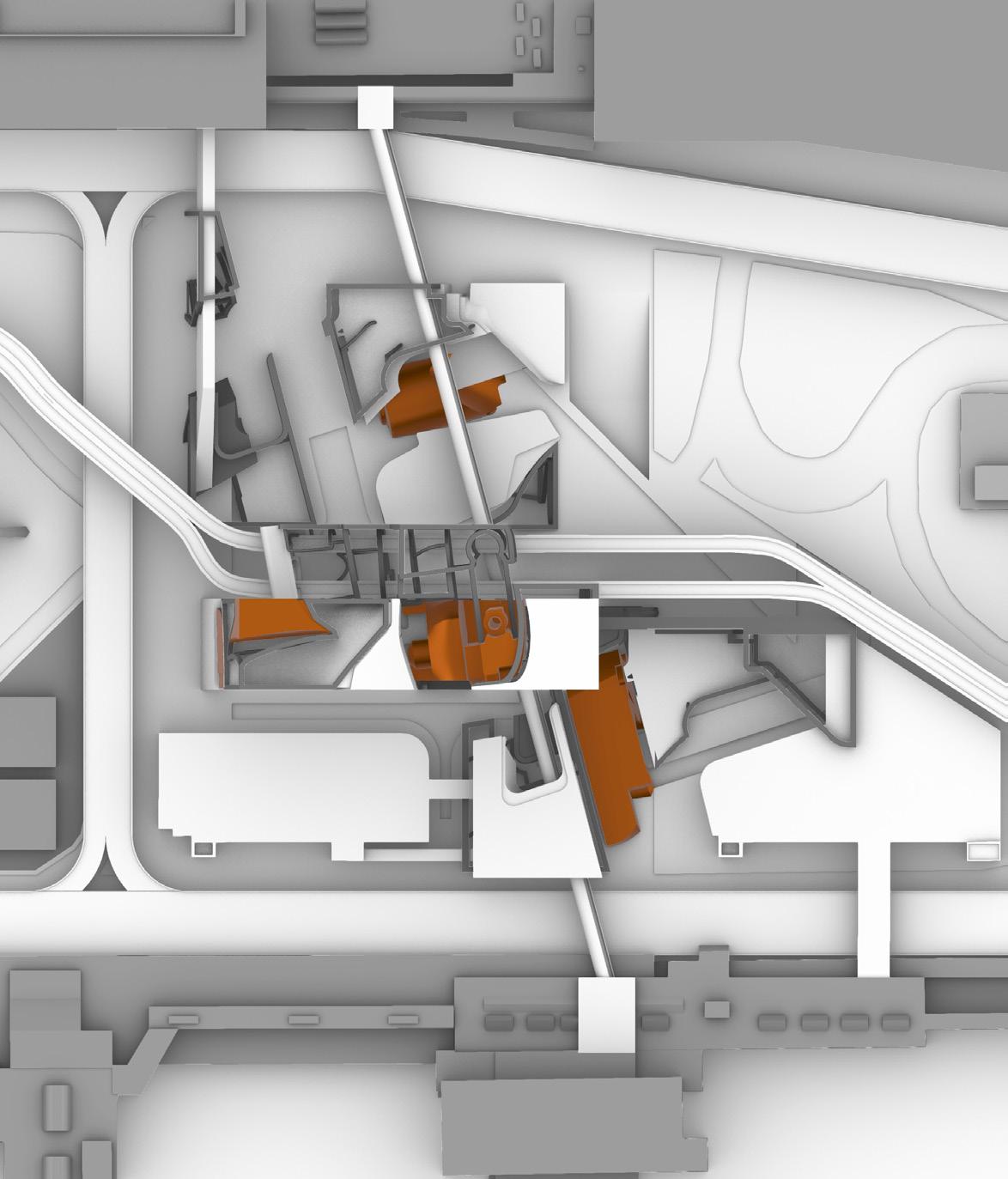
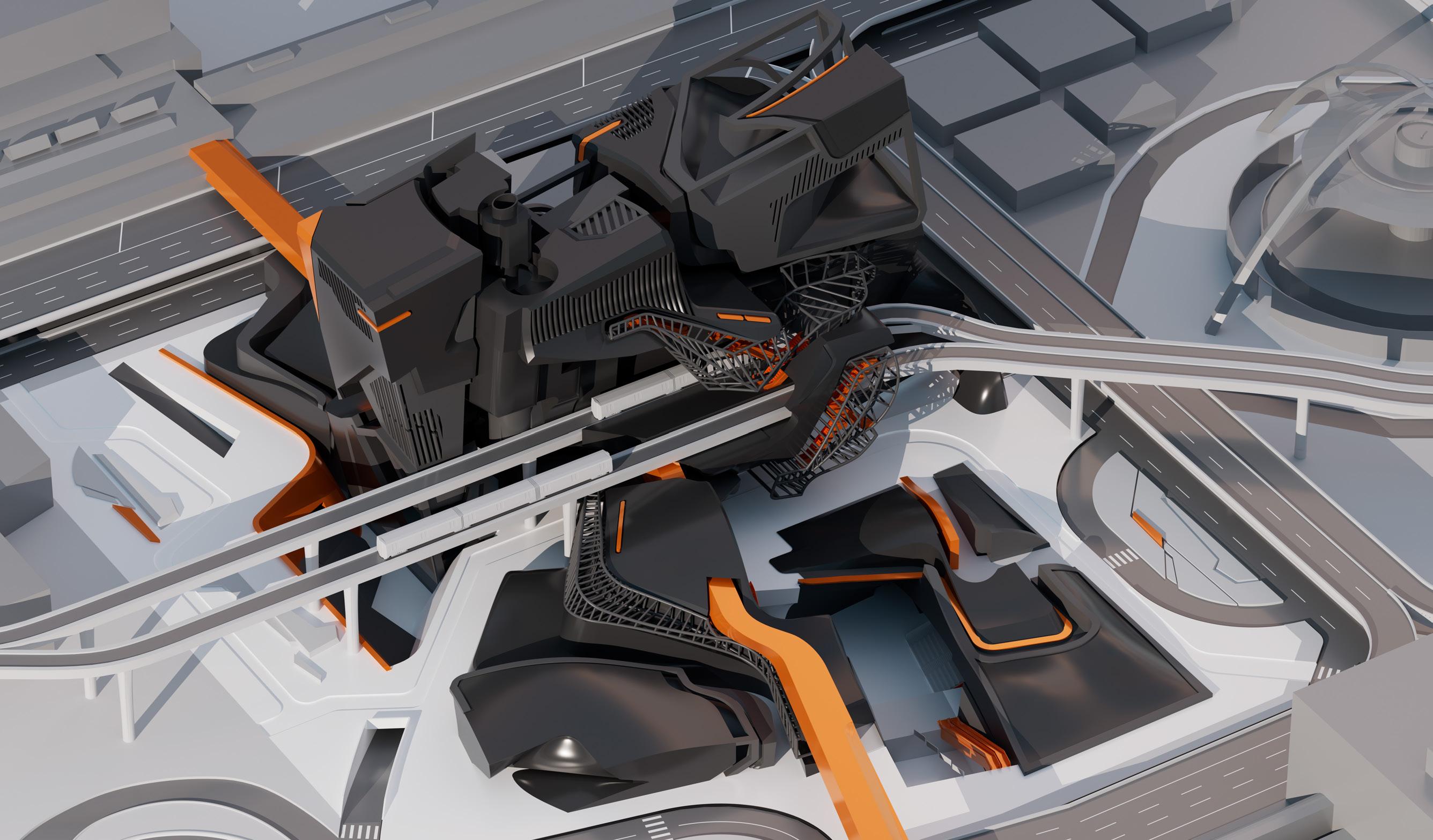
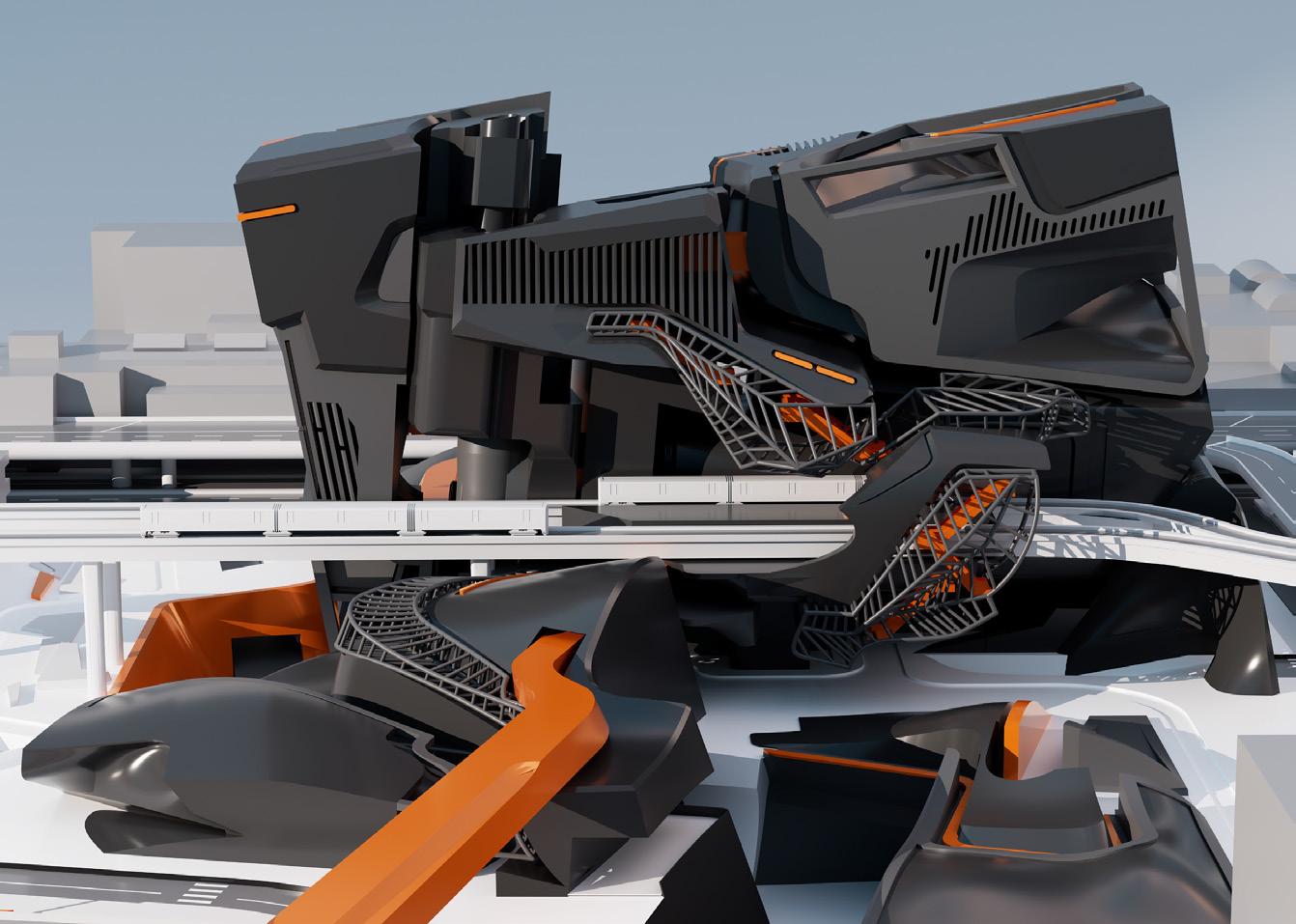
This phase of the project develops the proposal into a large, infrastructural building that acts as both architecture and urban machine. The massing grows out of the surrounding transportation network, attaching itself to highways, bridges, and elevated tracks. Rather than sitting passively on the site, the building plugs directly into these systems, allowing flows of people, vehicles, and energy to move through and around it.
The black primary volumes form a dense core, while a series of orange linear elements cut through the building like active conduits. These elements operate as structural frames, circulation paths, and potential energy channels, emphasizing the idea that the project is not a static object but a dynamic system of movement and exchange. The layered skins, exposed frames, and varied surface depths further enhance its machinic character, blurring the boundary between building envelope and internal infrastructure.
Seen from above, the project reveals its role as a node within a larger network. The architecture no longer follows the rigid logic of traditional blocks; instead, it bends and adapts to the directional forces of the site. Pathways converge, split, and reconnect, generating an urban field where architectural form and infrastructural flow are inseparable. Through this integration, the project becomes a critical interface between ground, architecture, and mobility, proposing an alternative model for future high-intensity urban environments.
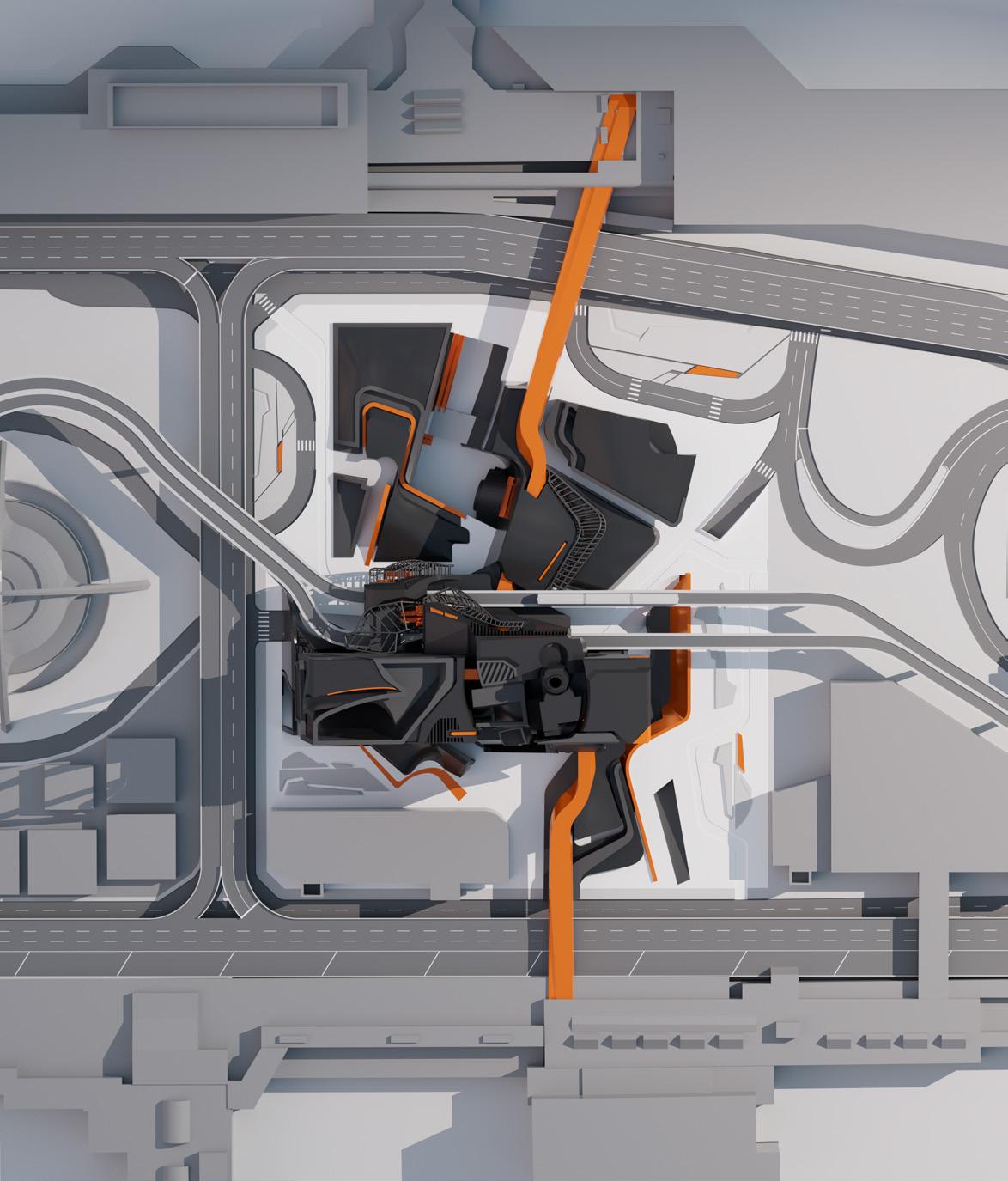
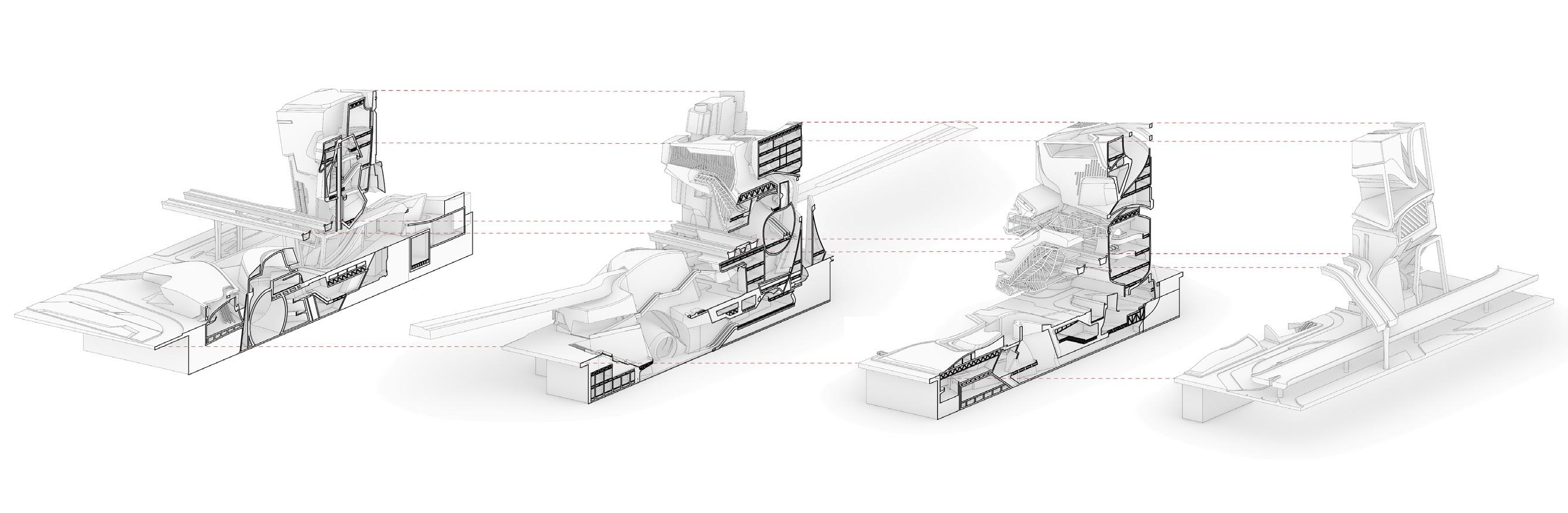
A sequence of sectional-perspective models shows the tower and podium evolving through stacking, carving, and connection to infrastructure. Each stage reveals shifting interior volumes and circulation integrated with the linear site geometry.
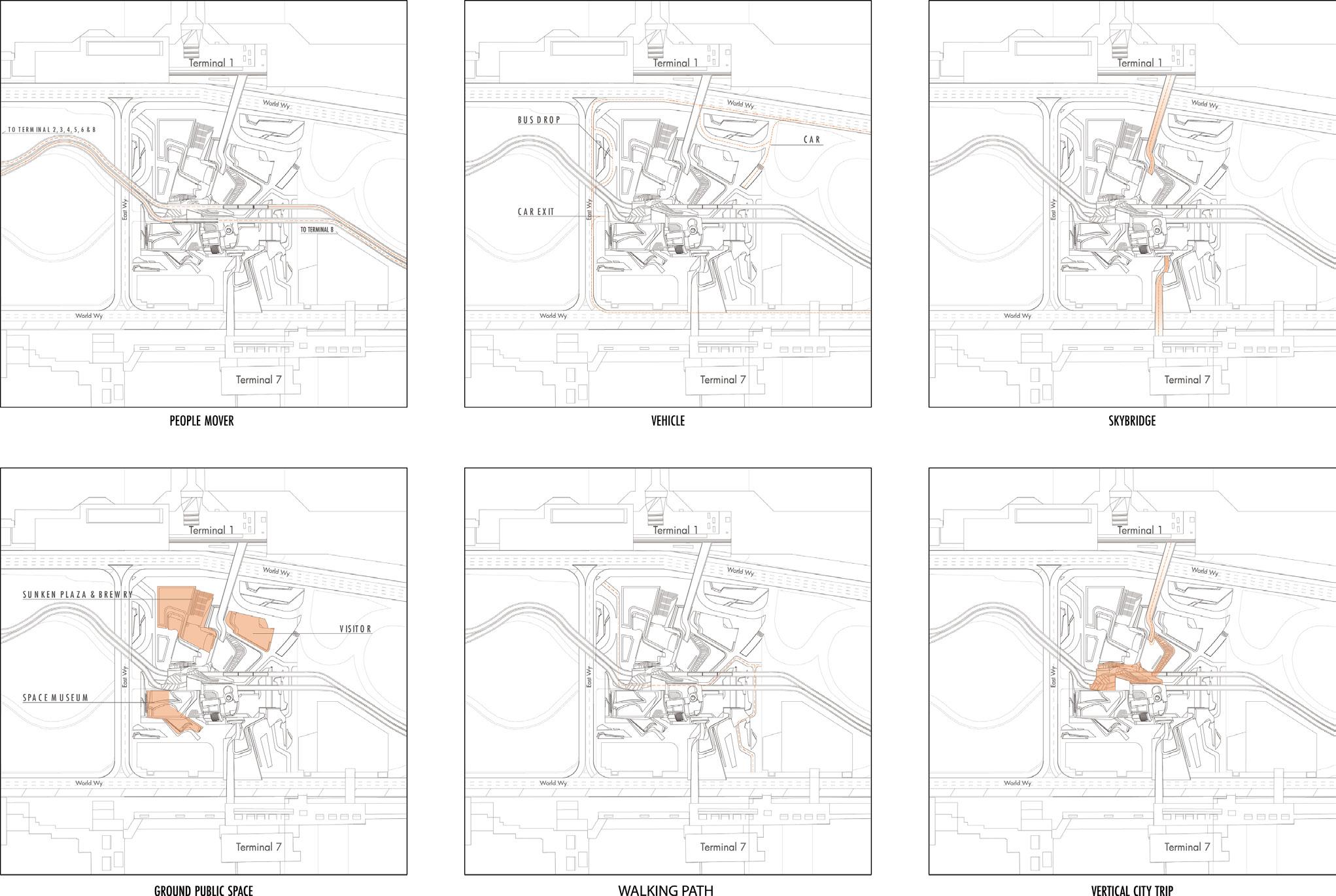
Major movement systems and programs across the site, highlighting people mover routes, vehicle access, skybridges, ground public spaces, walking paths, and vertical circulation, showing how multiple networks overlap and organize the project.
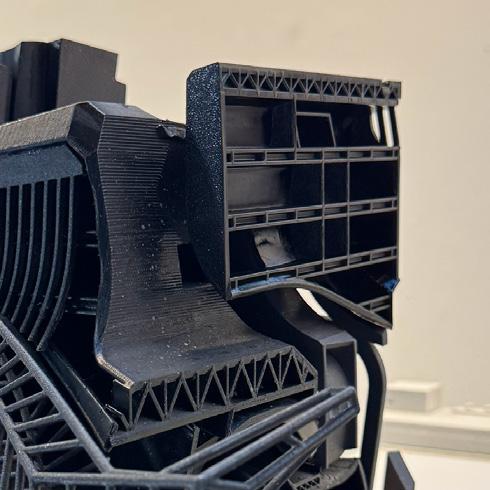
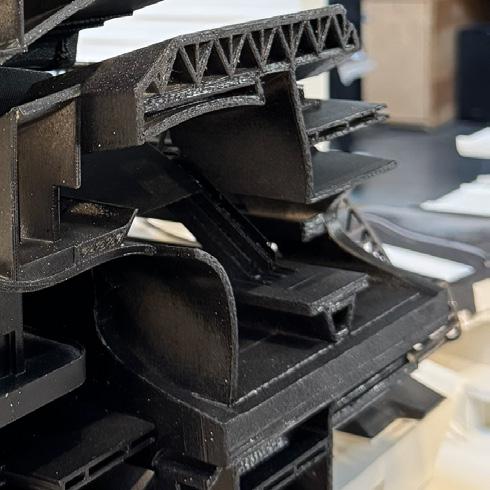
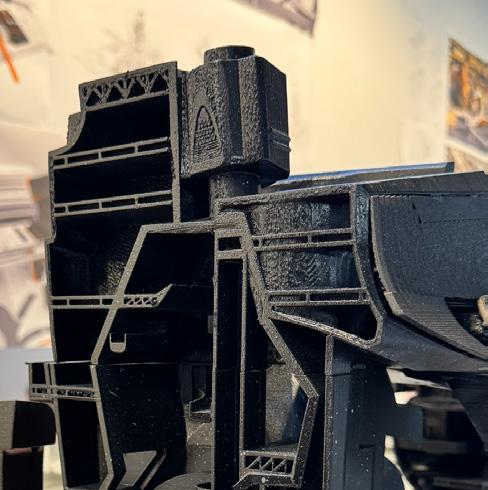
This model explores a multi-layered structural skin in which façade, frame, and environmental systems interlock. The thickened envelope acts not only as enclosure but as a habitat for airflow, shading, and potential energy integration, emphasizing the building as a performative surface rather than a single flat façade.
The sectional view reveals large internal cavities carved through the mass, forming continuous channels for light, air, and circulation. These voids operate as the main organizational system of the building, connecting different program areas while supporting environmental performance.
Here the model highlights stacked spatial units forming a tall vertical body. Each layer shifts slightly to create terraces, overhangs, and recessed pockets, producing a dynamic tower profile while organizing programs along a clear vertical hierarchy.
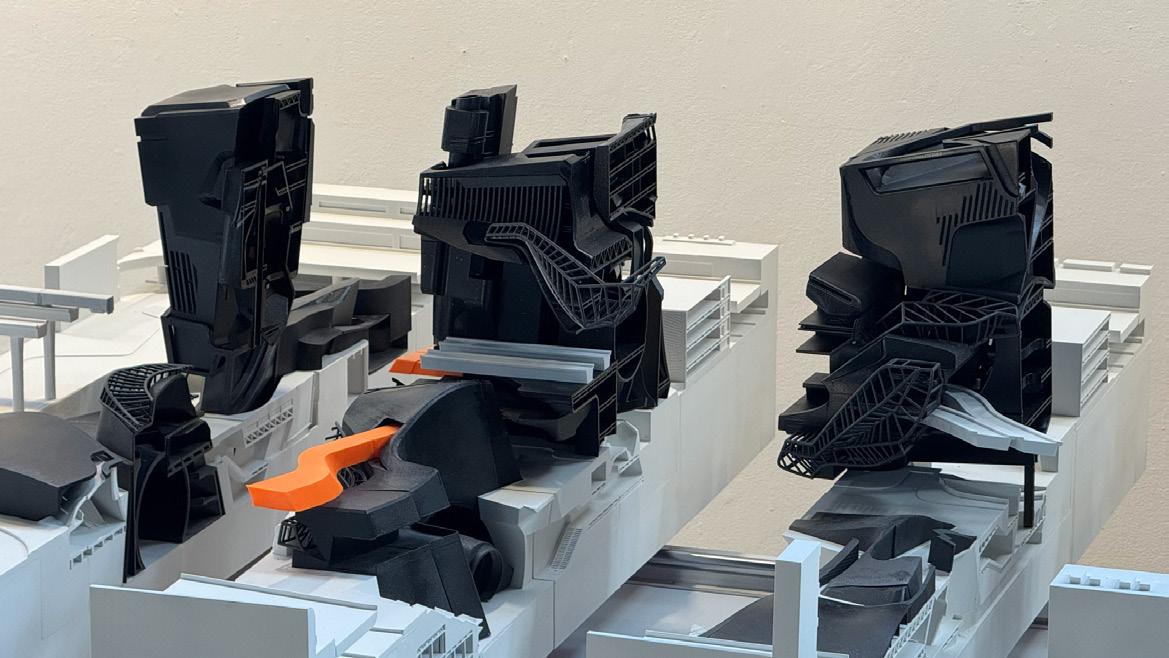
The sectional model demonstrates how the tower complex grows out of its urban base. Bridges, platforms, and linear infrastructural elements plug directly into the building, merging architectural space with surrounding transportation systems and enabling continuous movement between ground, podium, and tower. The sectional cuts reveal layered programs stacked vertically while remaining interconnected through ramps and elevated corridors. At the same time, the base spreads horizontally to engage plazas and adjacent circulation routes, allowing the project to operate simultaneously as building, landscape, and infrastructure. Through this sectional assembly, the design emphasizes the idea of architecture as an active node within a broader urban network rather than an isolated object.
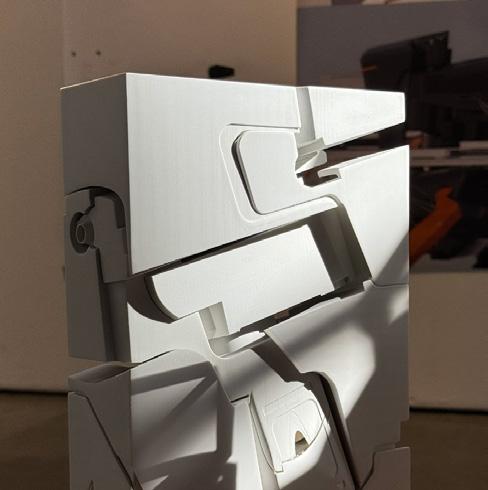
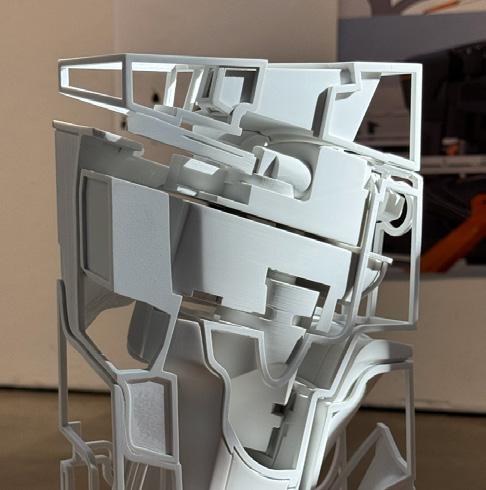
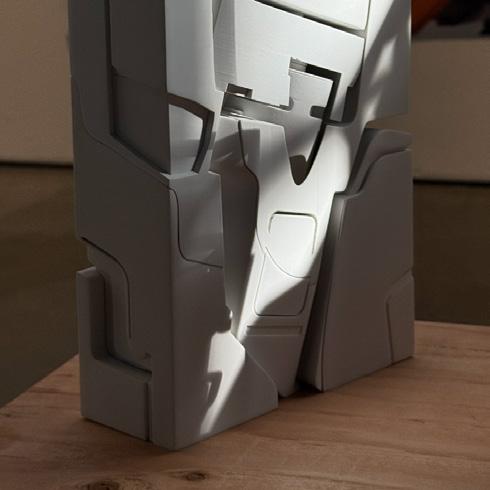
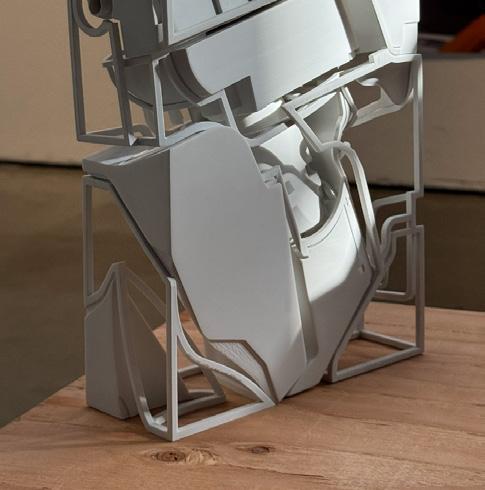
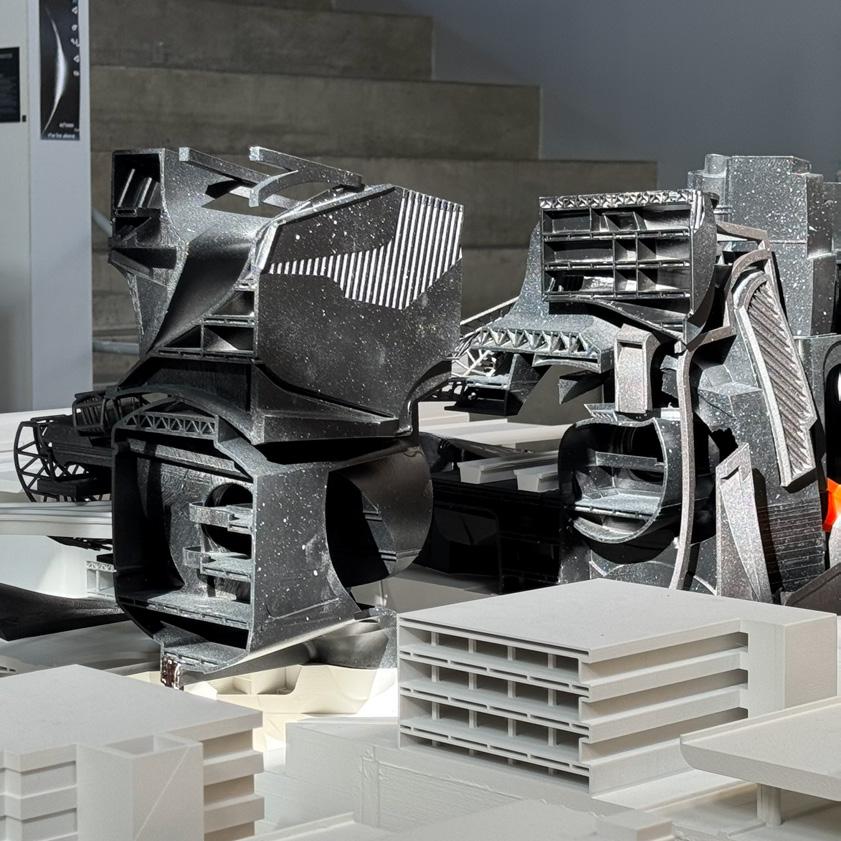
The sectional composite model reveals how multiple studies converge into a single architectural proposal. Interior chambers, thick façades, and infrastructural elements are interwoven, forming a dense three-dimensional network of spaces. The model highlights how program, structure, and circulation overlap rather than existing as separate layers, suggesting a building conceived as an integrated spatial machine.
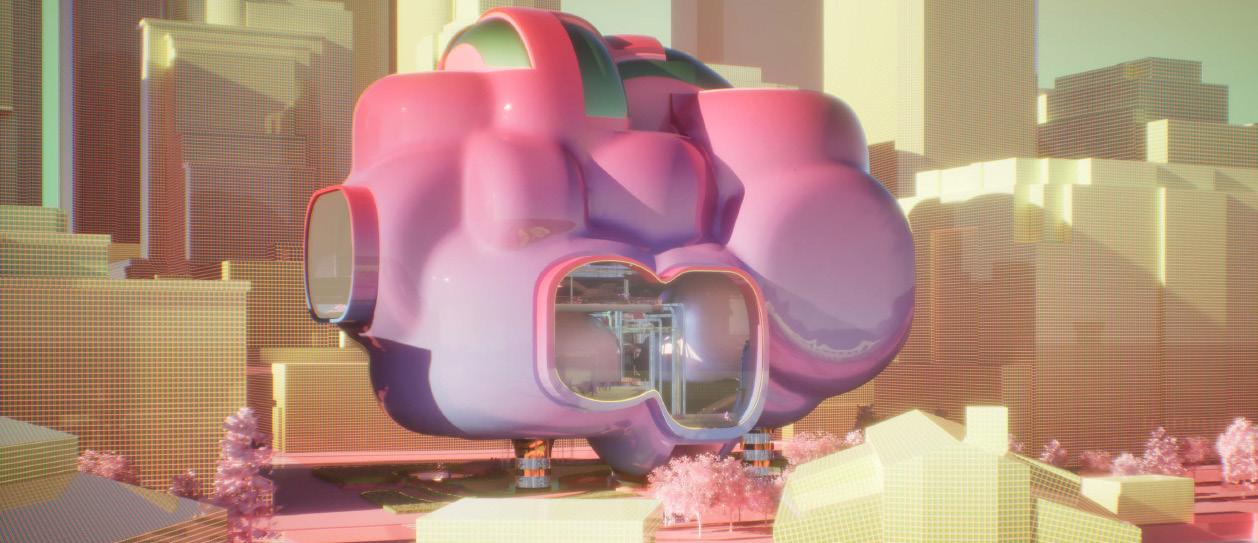
YEAR: 2025 FALL
CLASS: Design Doc GR
TEAMMATE: Group Work
INSTRUCTORS: Herwig Baumgartner
This project envisions a future theater that not only proposes a bold architectural form, but also carefully considers how such a vision can become a feasible built reality. The design explores new spatial experiences, flexible performance environments, and strong connections between audience, technology, and urban context. Alongside conceptual development, equal attention is given to practical implementation. Structural strategies are studied to support large spans, elevated volumes, and complex geometry while maintaining safety and efficiency. Budget considerations are incorporated early in the design process to balance innovation with realistic construction costs, material choices, and maintenance demands. The project also examines how modular systems, prefabrication, and adaptable building components can reduce waste and increase constructability. Overall, the theater is framed not only as an imaginative proposal, but as a comprehensive architectural system in which design, structure, and economy work together to make a visionary cultural space achievable in the near future.
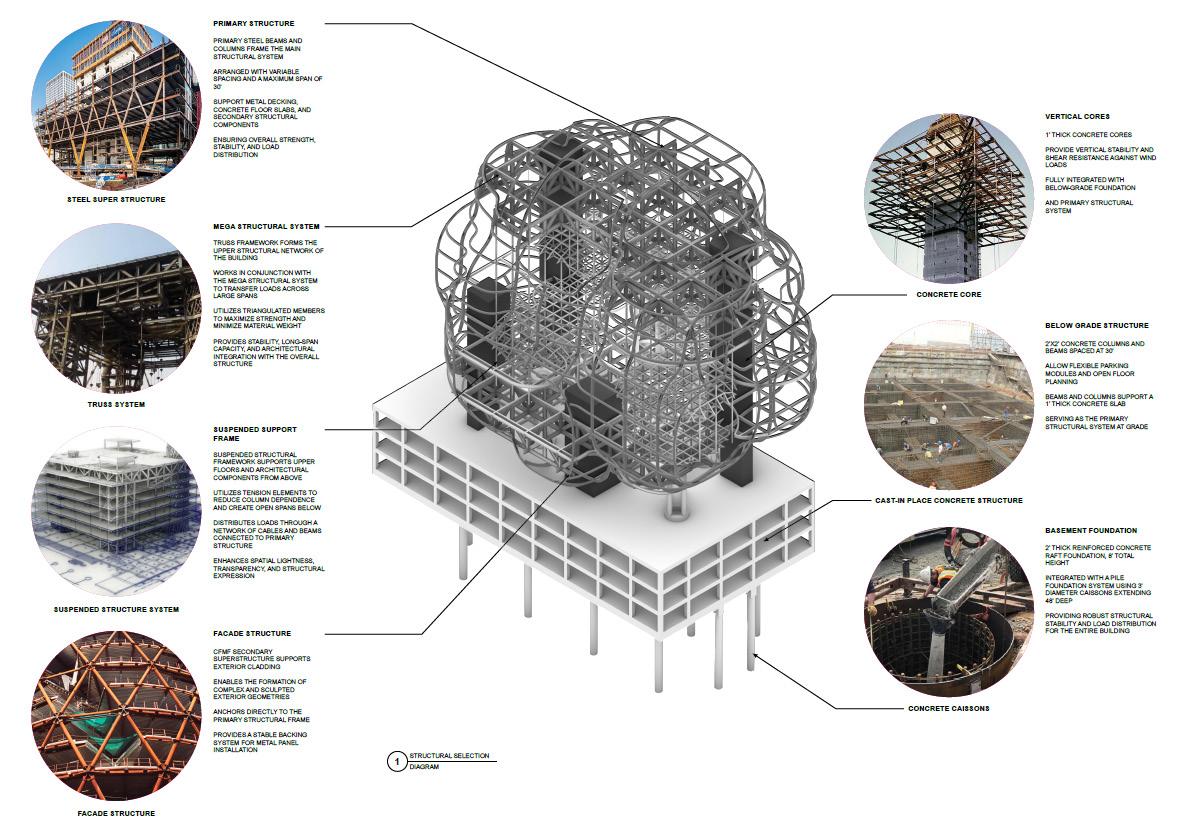
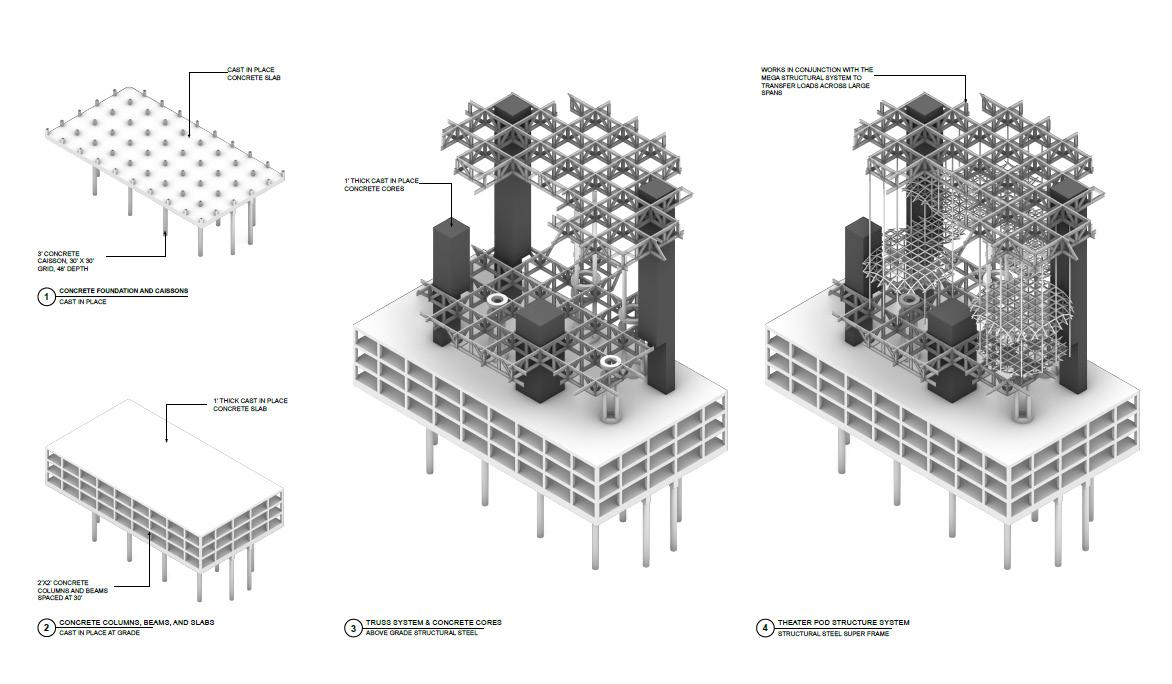
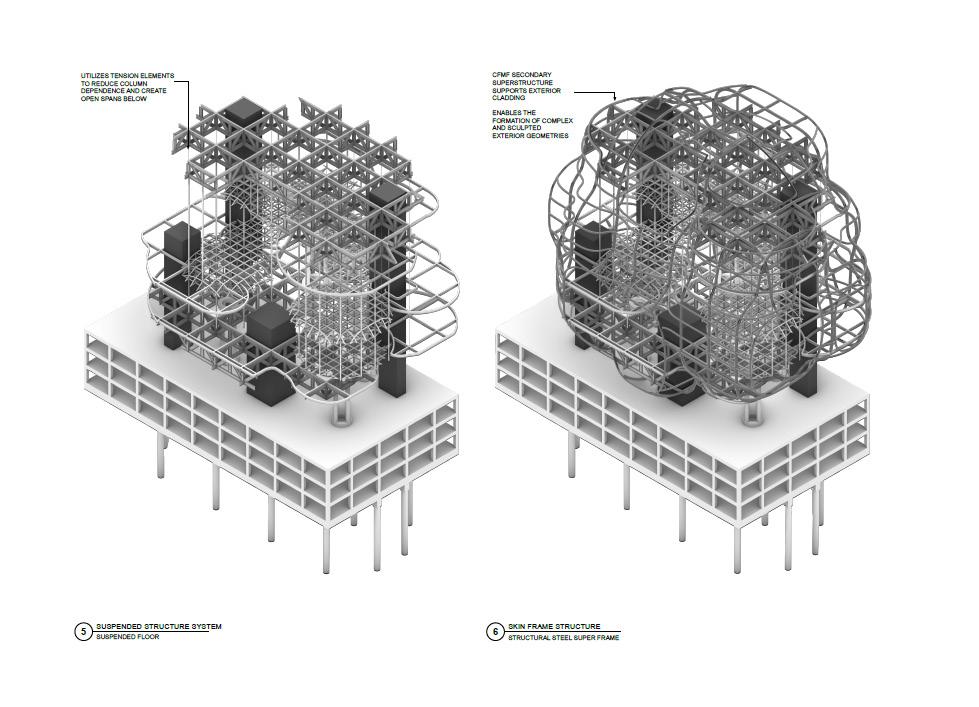

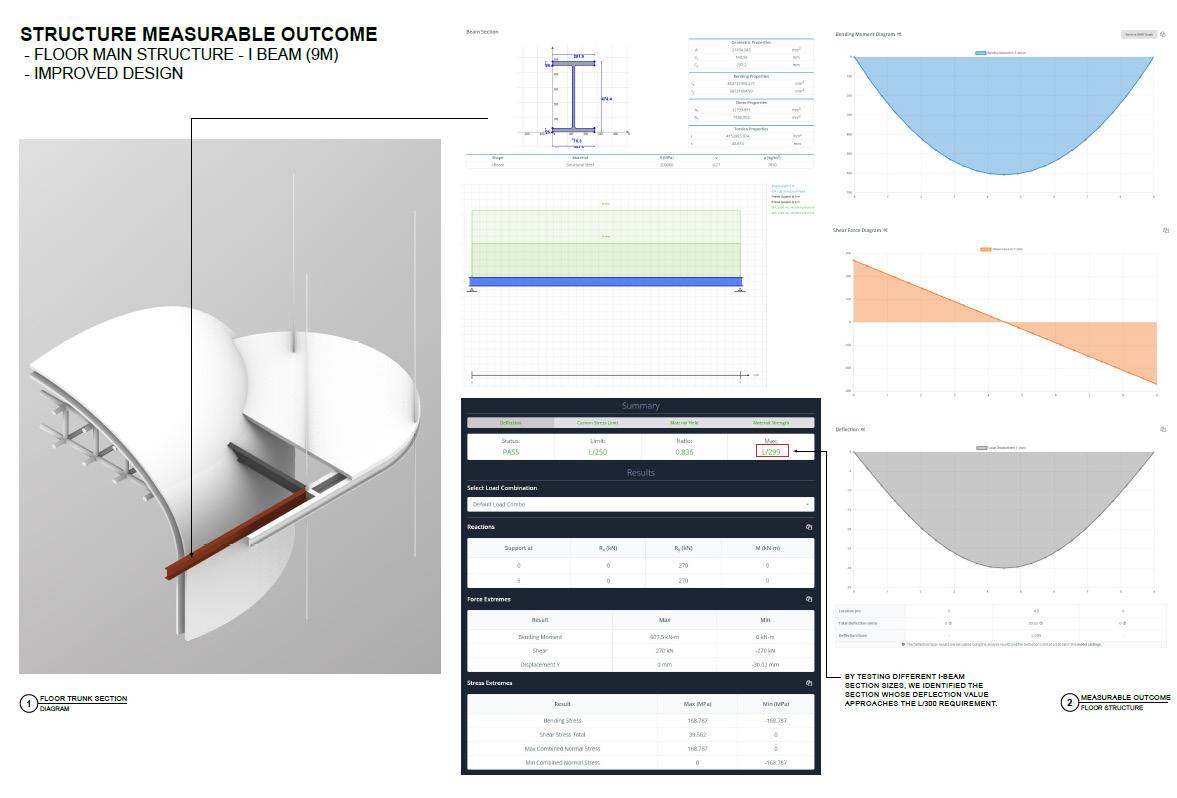
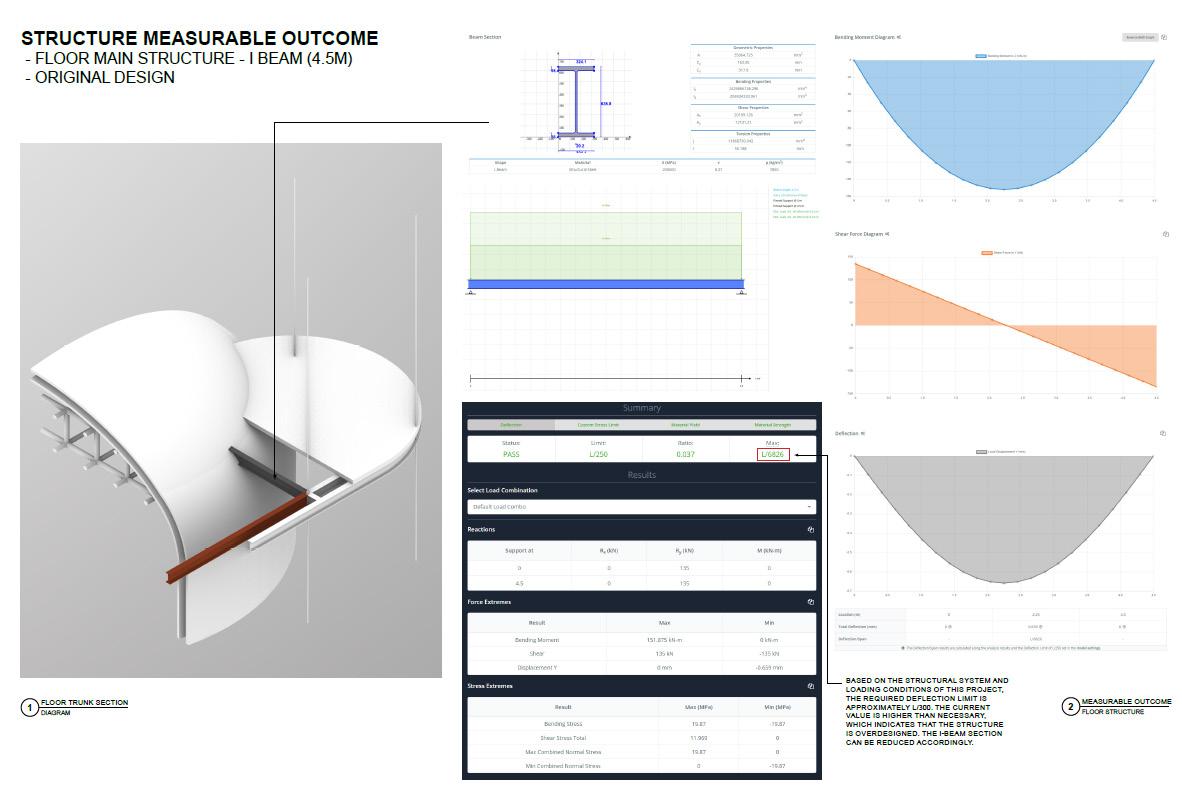
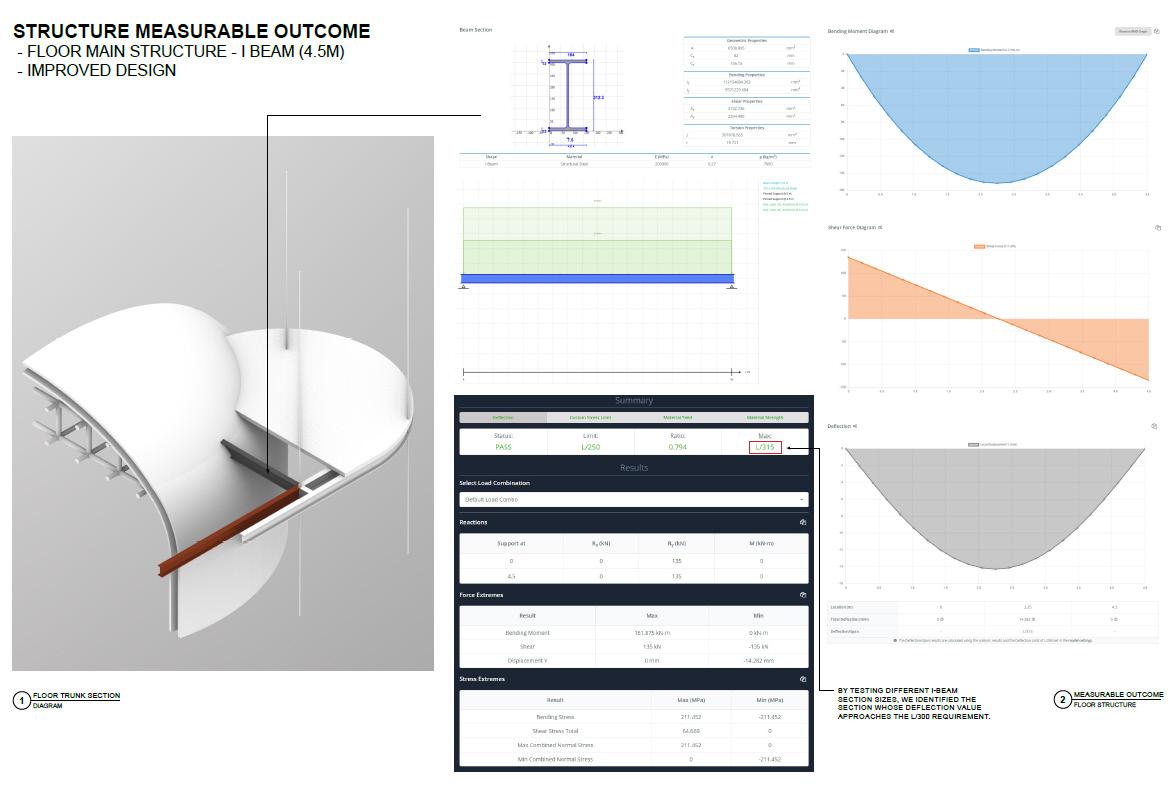
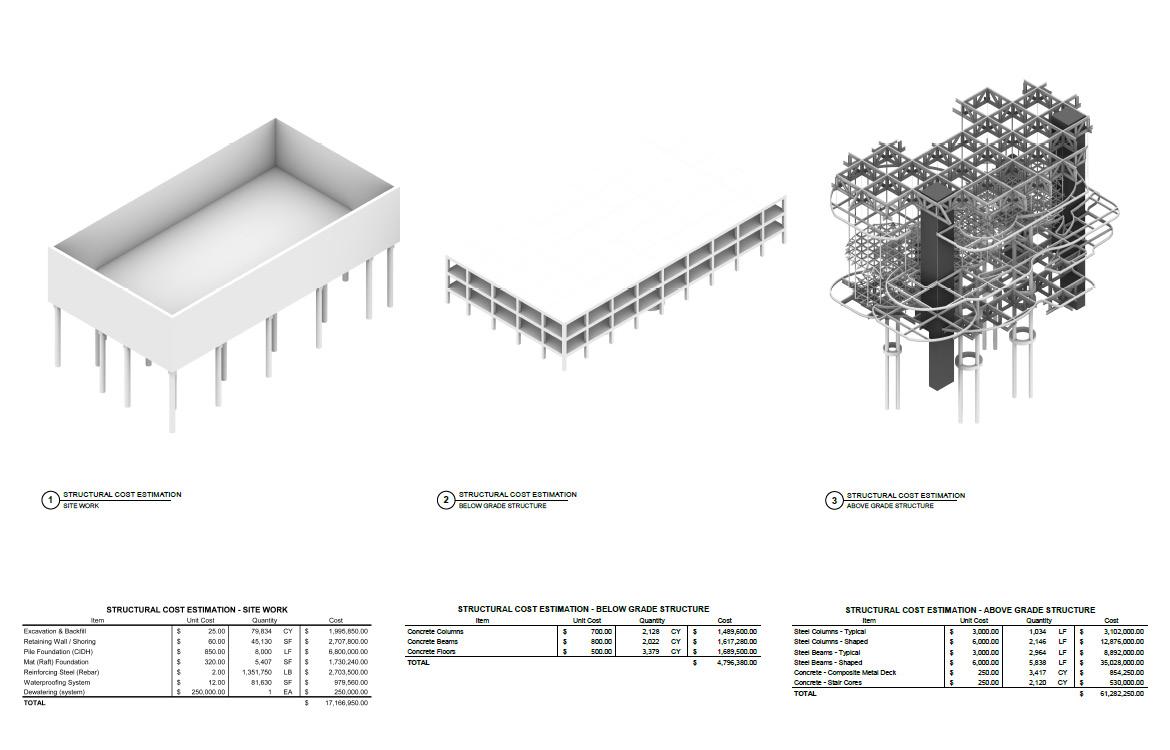
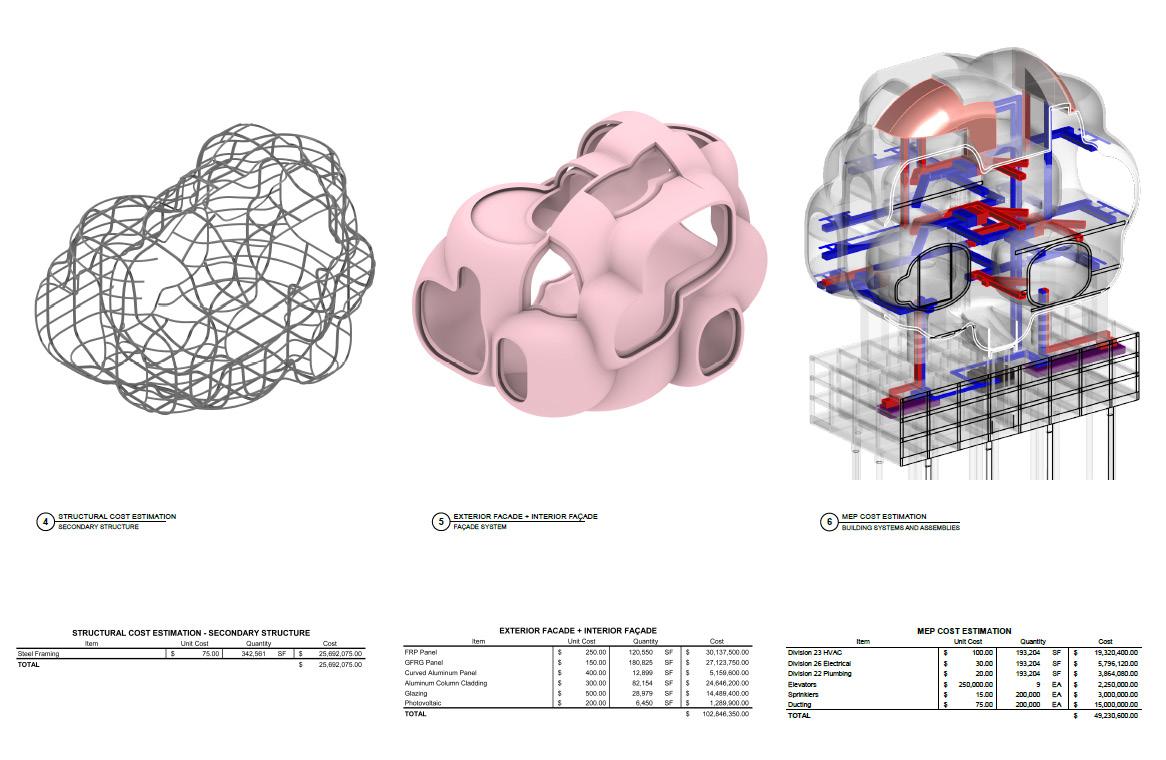
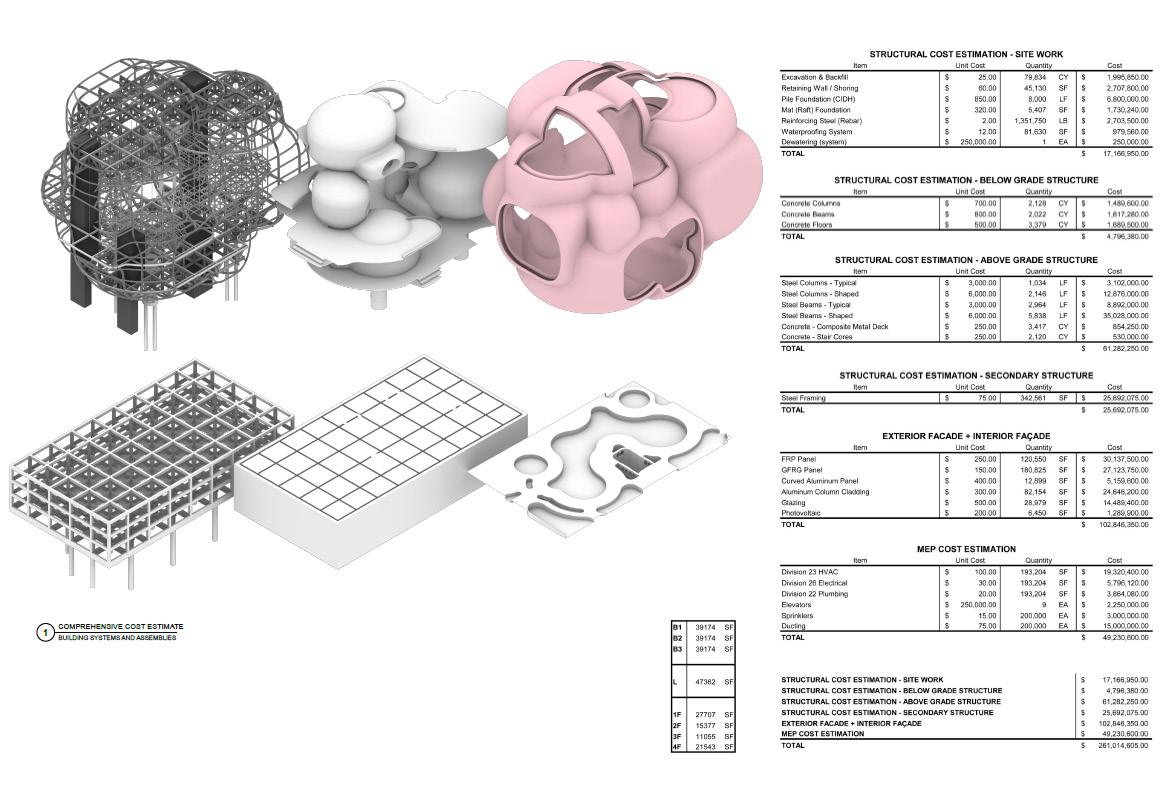
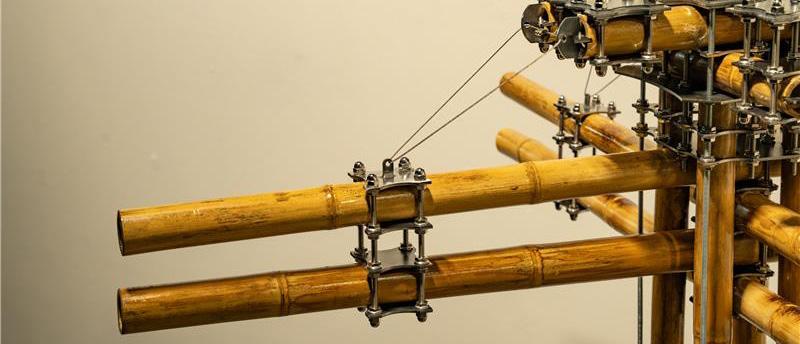
YEAR: 2025 FALL
CLASS: Details, Details
TEAMMATE: Weiyi Zhen / Lei Lei
INSTRUCTORS: Dwayne Oyler
This research explores how bamboo and metal can be effectively joined to form structural columns and beams in architecture. It examines the complementary qualities of the two materials: bamboo offers high tensile strength, low weight, and renewability, while metal contributes rigidity, precision fabrication, and dependable connection performance. Together, they create a hybrid structural logic that seeks both sustainability and strength.
The study investigates multiple joint types, including bolts, clamps, metal sleeves, and embedded connectors. It focuses on load transfer behavior, protection against moisture and cracking, and the long-term performance of the hybrid system in real building conditions. By developing clear connection strategies and modular details, the project aims to make bamboo–metal structures practical for contemporary construction, expanding sustainable material use while maintaining architectural quality and safety.
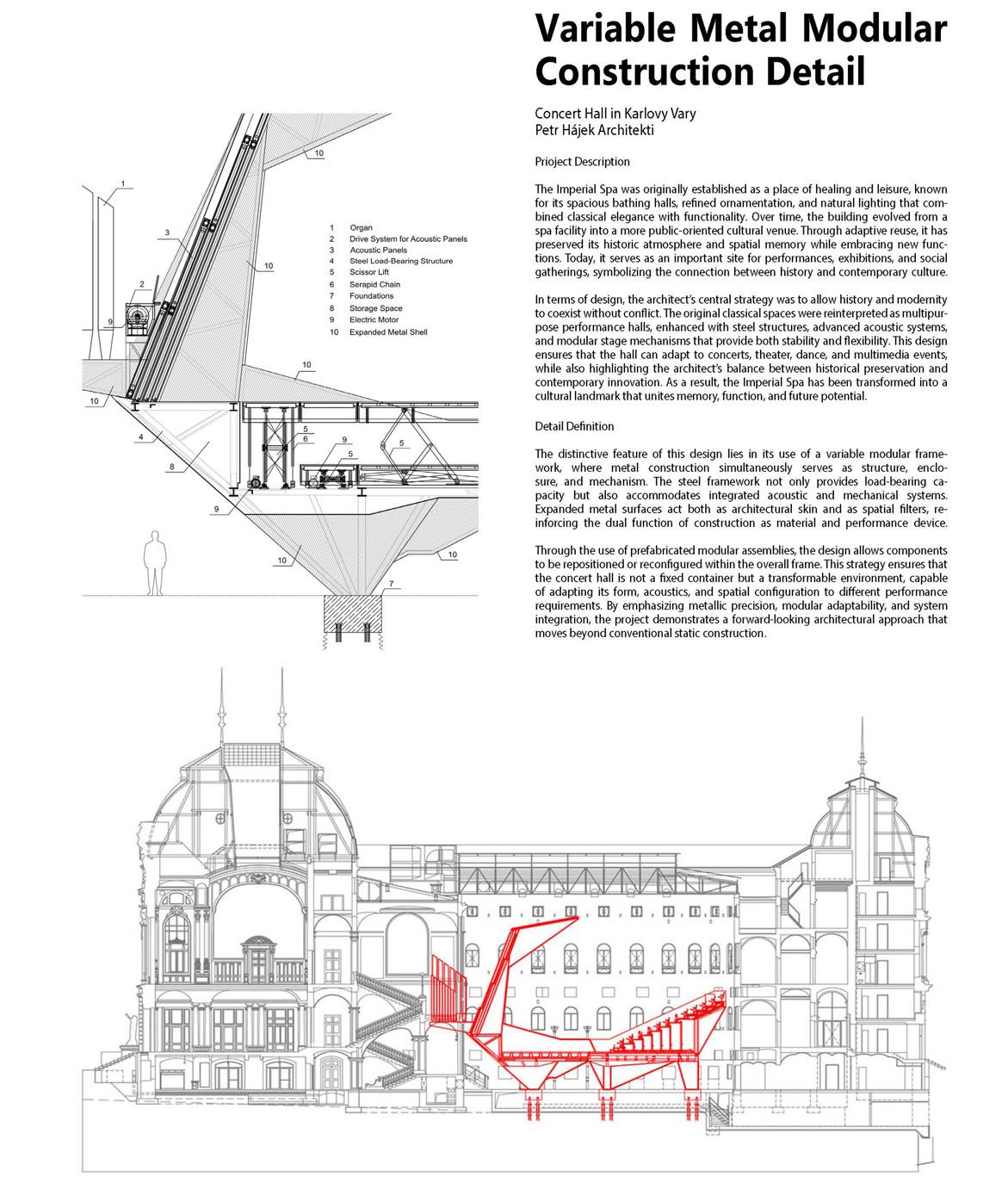
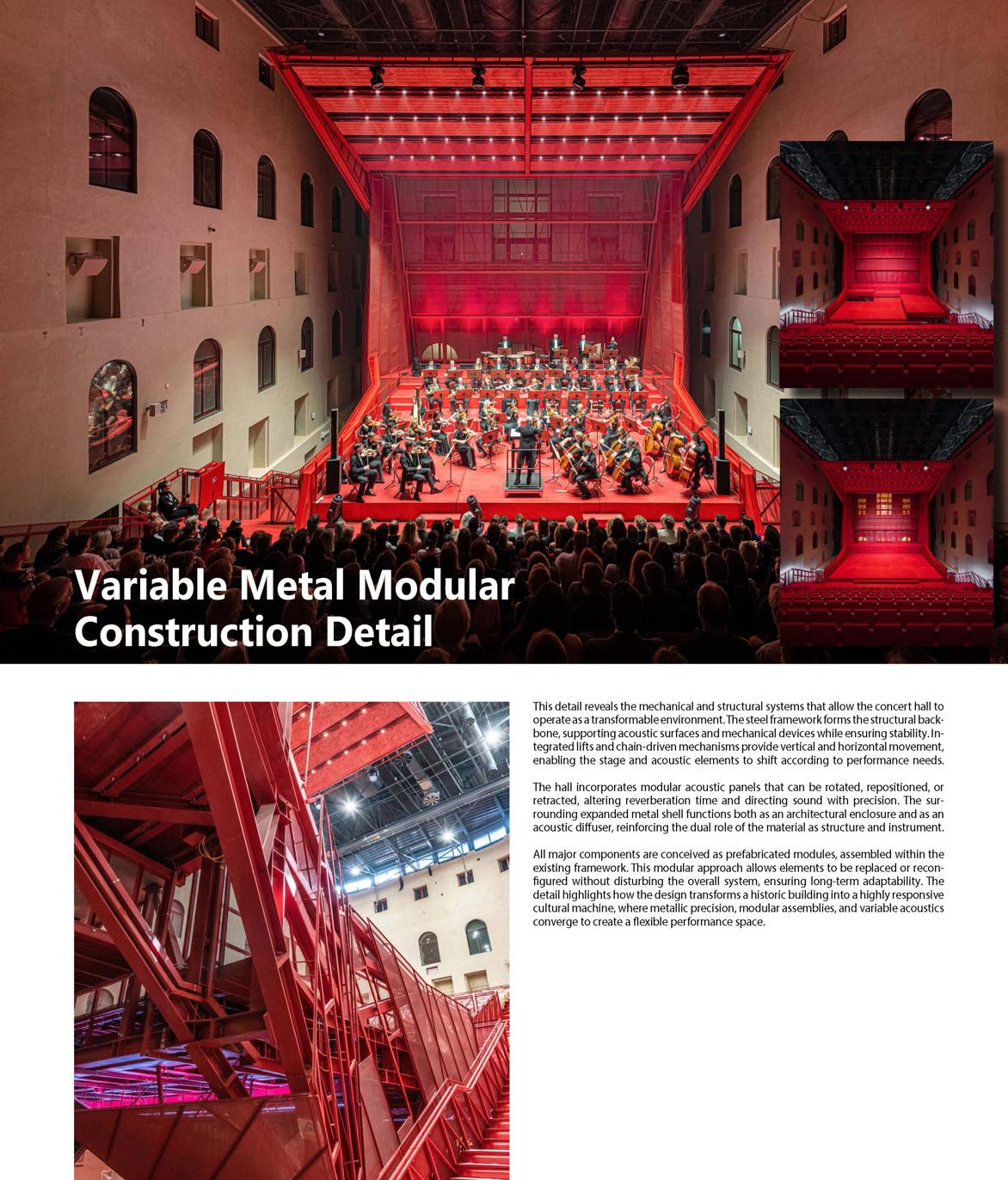
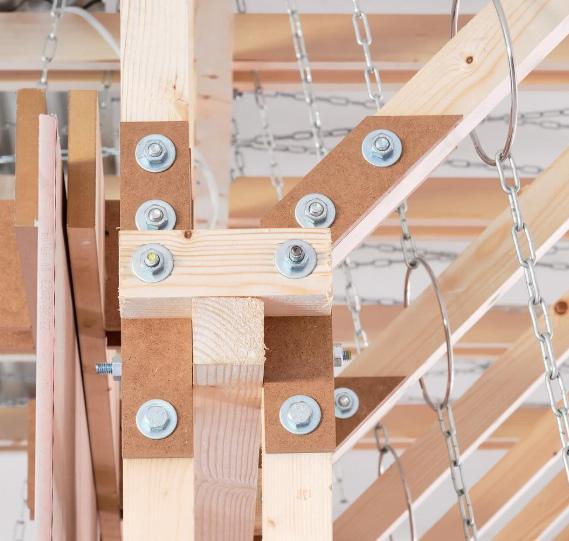
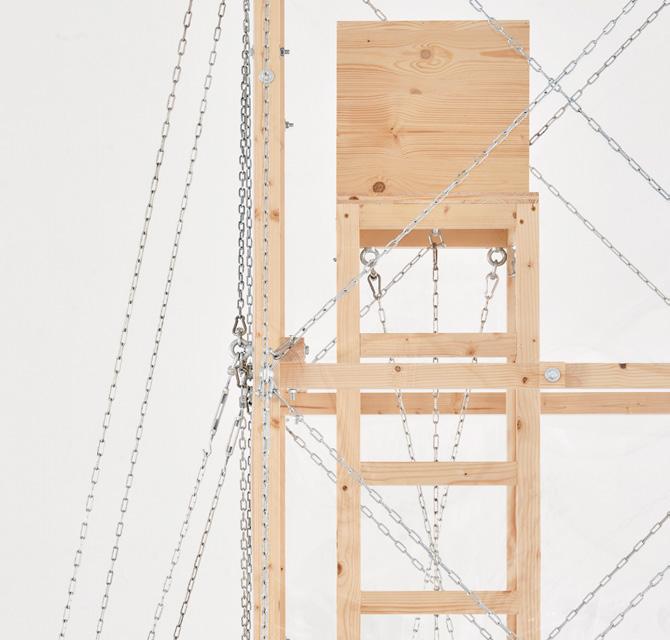
This system reduces radiant and conductive heat while maintaining easy access for maintenance.
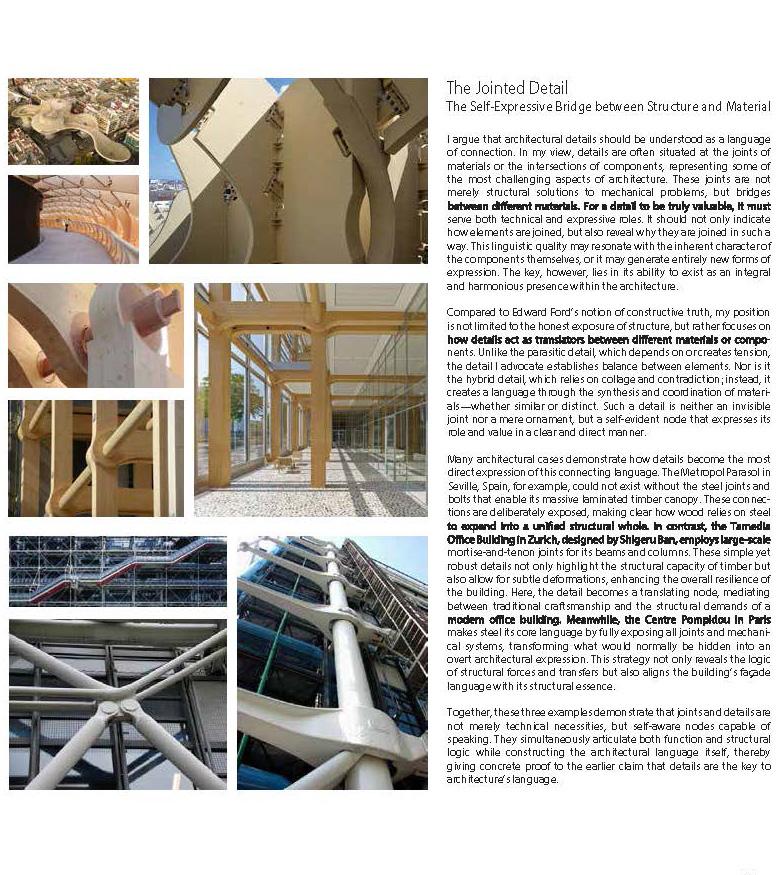
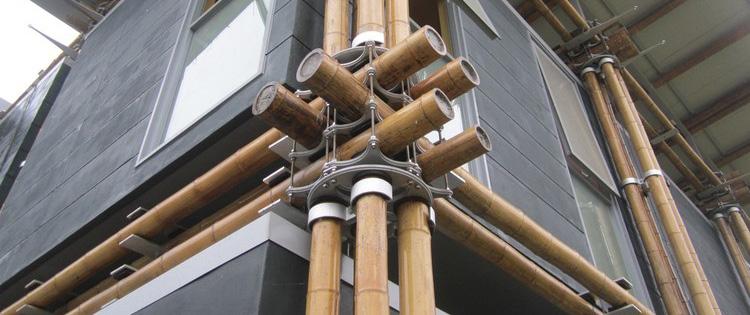
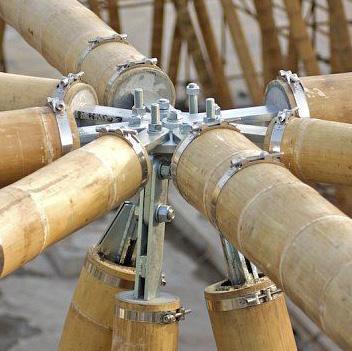
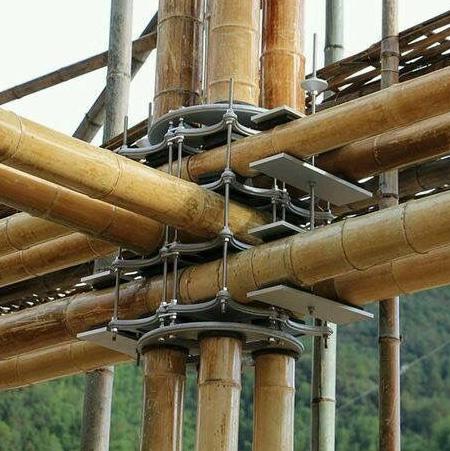
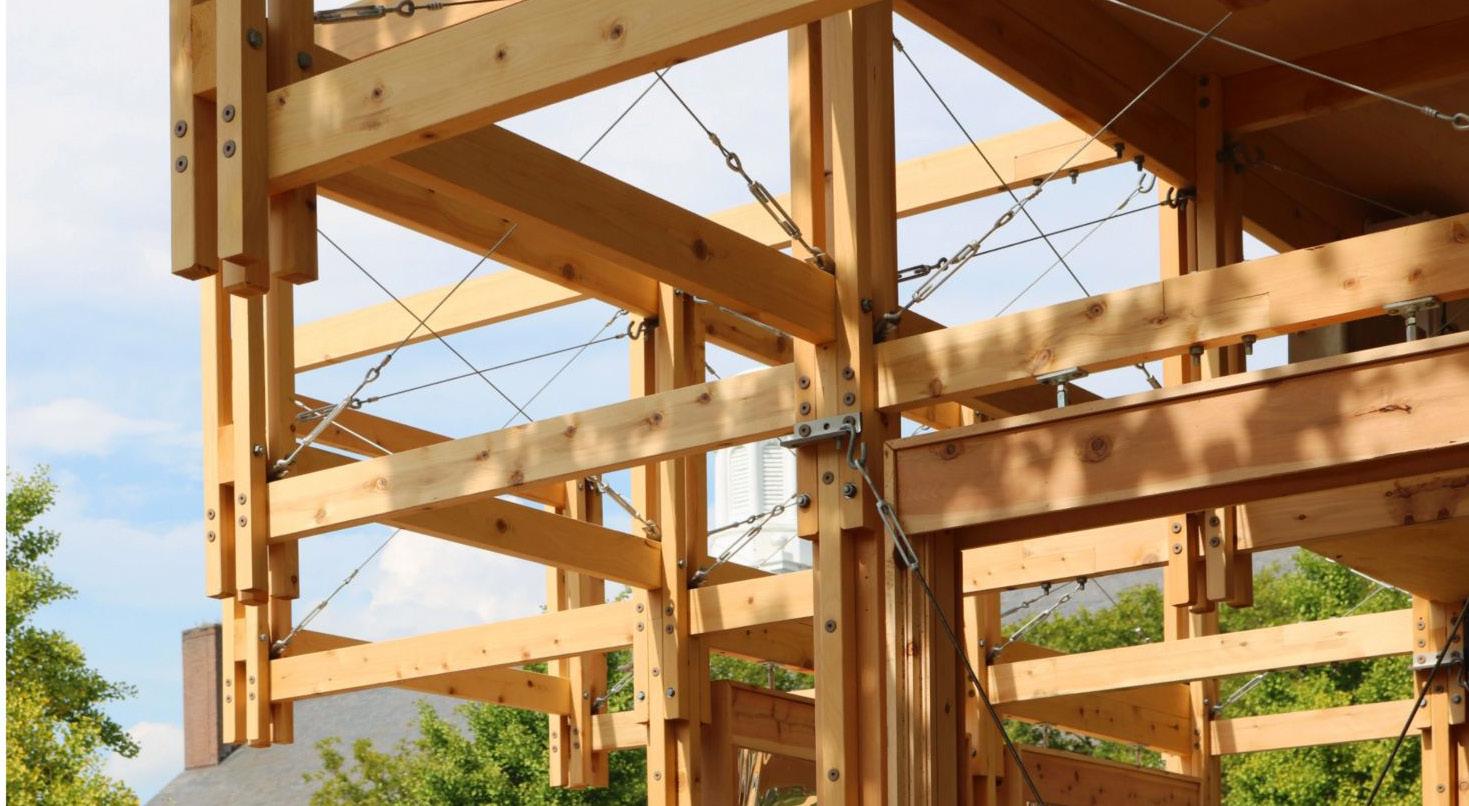
In this design, I focused on integrating the exhaust system seamlessly into the roof. Ventilation ducts are concealed beneath modular circular aluminum panels, maintaining a clean and unified appearance. Key details such as drainage slopes, rubber gaskets, and elevated mounts ensure both functionality and performance while preserving visual clarity.
This project investigates the potential of bamboo and steel as a hybrid structural system. Instead of treating bamboo as a temporary scaffold or decorative element, the design explores its capacity to operate as a primary load-bearing component when combined with precisely fabricated steel joints. The resulting structure balances rigidity and flexibility, taking advantage of bamboo’s tensile strength and steel’s ability to form accurate connection details.
Steel connectors are used to clamp multiple bamboo members together, creating a strong yet flexible joint system. The detail demonstrates how industrial precision and natural material irregularity can coexist within one structural logic.
Bundles of bamboo are gathered at nodal points, where loads intersect and forces are transferred through steel plates and bolts. The aggregation of many small members allows the system to carry significant loads while remaining lightweight.
The structure embraces the natural taper, curvature, and variation of bamboo rather than forcing uniformity. Steel elements provide adjustment and tolerance, allowing the organic material to perform within an engineered framework.
The hybrid joints allow multiple bamboo poles to converge into shared nodes, distributing forces efficiently while accepting the natural irregularities of each member. This system creates an architecture that is both engineered and organic—geometrically controlled through steel yet materially alive through bamboo. The visible junctions emphasize the collaborative role of both materials rather than hiding the technology behind smooth finishes.
At a larger scale, the bamboo and steel framework becomes more than a structural support; it forms spatial enclosures, walkways, and layered façades. Light filters through the porous lattice, producing dynamic shadows and a sense of permeability. The project suggests a construction logic that is renewable, adaptable, and expressive, pointing toward a sustainable structural language where natural growth and industrial fabrication meaningfully intersect.
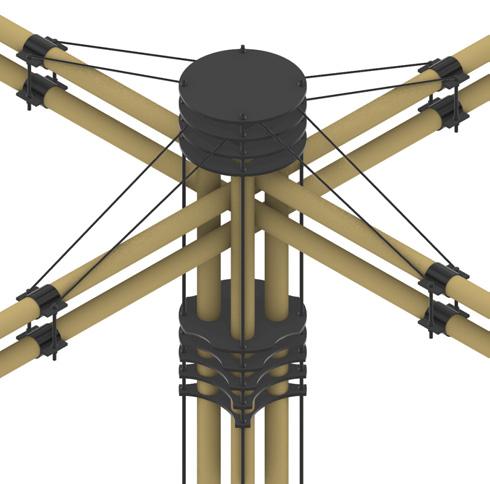
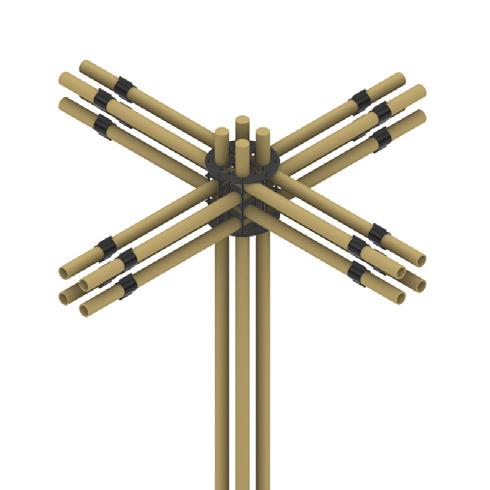
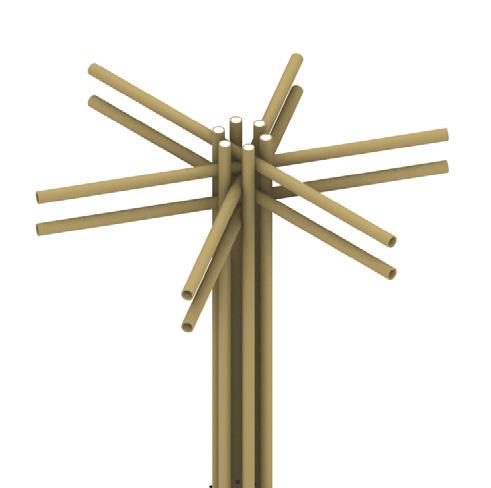
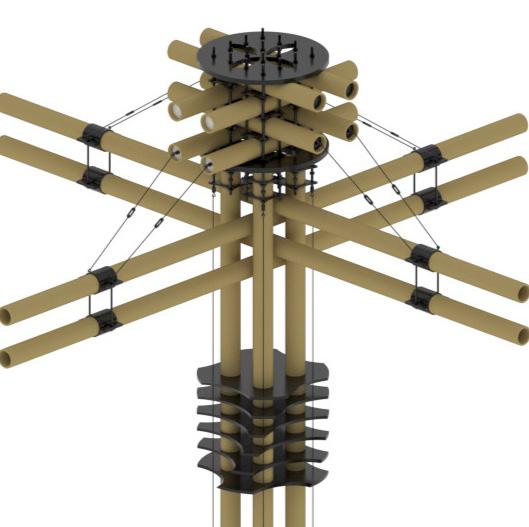
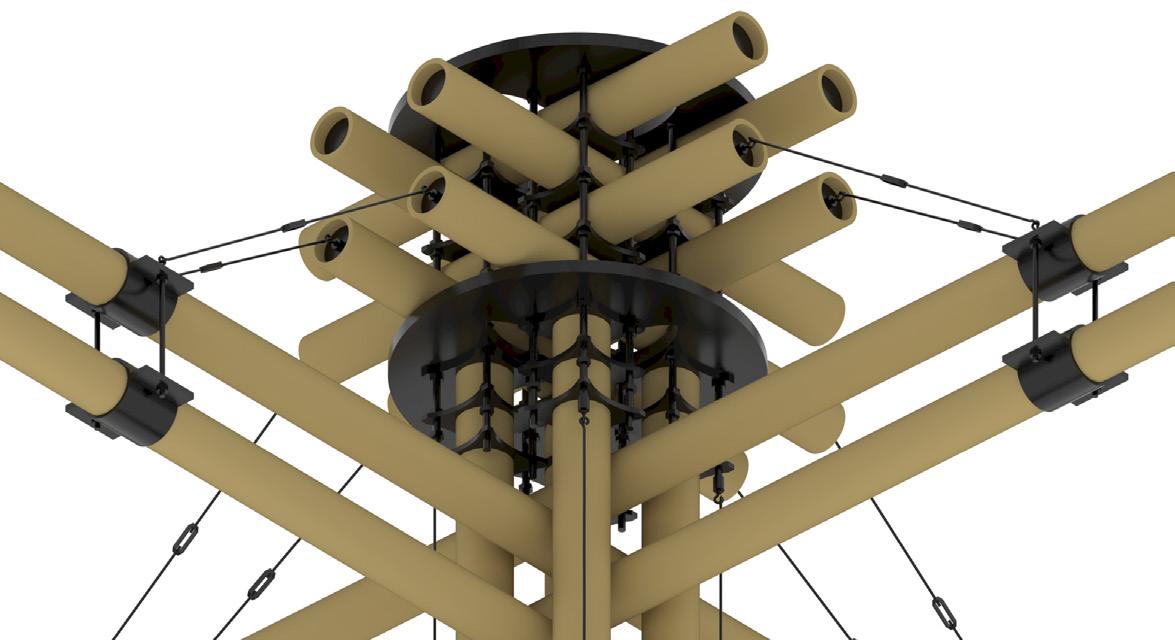
The enlarged detail highlights the relationship between the central steel hub, timber arms, and tension cables. Each element participates structurally: the hub anchors the loads, the timber members span outward, and the cables stabilize the assembly, forming a balanced hybrid node.
The Column Cap Hybrid System explores a radial joint that allows multiple timber members to connect at a single vertical support. The system combines a steel core, bamboo or timber arms, and tension cables to distribute structural forces efficiently while maintaining material lightness. Rather than using a single oversized column, loads are transferred through a network of smaller elements that fan outward, forming a lattice-like canopy structure.
A central steel hub acts as the primary connector, enabling precise alignment and rotation of members in multiple directions. Timber elements extend radially from this hub, creating shading, framing, and structural bracing simultaneously. Tension cables stabilize the arms and resist uplift, transforming the joint into an active structural node rather than a simple intersection.
This hybrid cap demonstrates how digital fabrication and traditional craft can work together. Steel components provide accuracy and strength at the connection, while natural materials introduce warmth and adaptability. The resulting system is modular, repeatable, and capable of being scaled for roofs, platforms, and façade extensions, suggesting a flexible structural language for lightweight architectural frameworks.
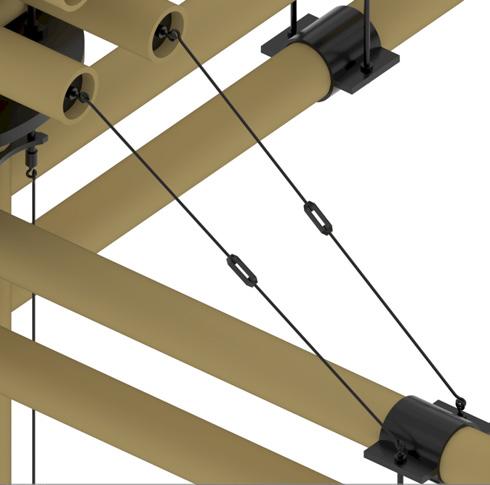
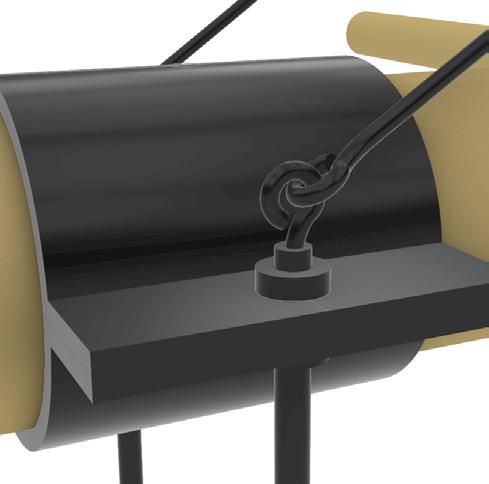
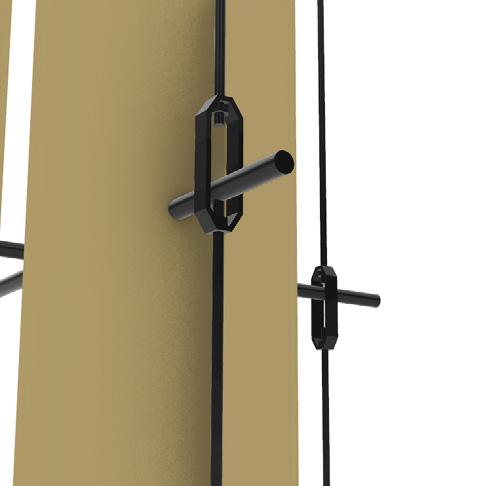
The image highlights the radial arms supported by tension cables. Steel fittings anchor the cables to the timber members, stabilizing the cantilevered elements and preventing rotation while maintaining a visually light joint.
This view focuses on the termination of a hollow bamboo/timber tube. A steel end cap and bolted connection secure the member to the structure, allowing precise alignment while protecting the natural material from splitting and wear.
The detail shows how secondary braces connect back into the primary vertical column. Adjustable steel nodes accommodate variation in timber sizes, enabling tolerance while ensuring structural rigidity.
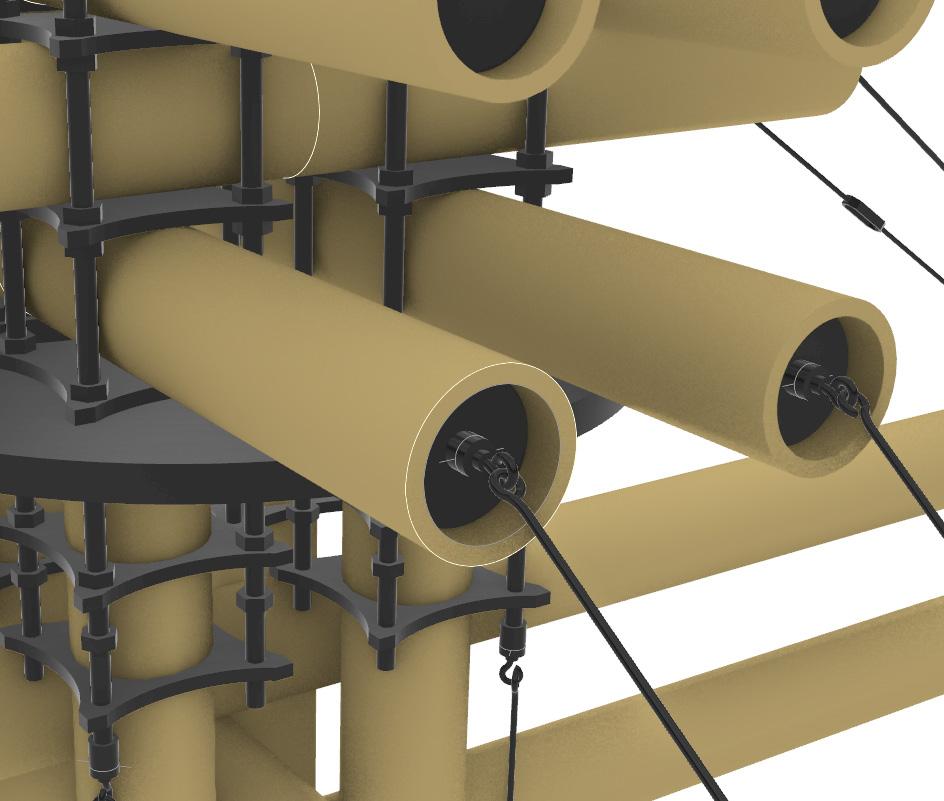
The enlarged perspective reveals the full hybrid node where multiple horizontal members meet the column through a layered steel plate system. Cables, plates, and timber elements work together to distribute loads in all directions, forming a robust yet adaptable structural core.
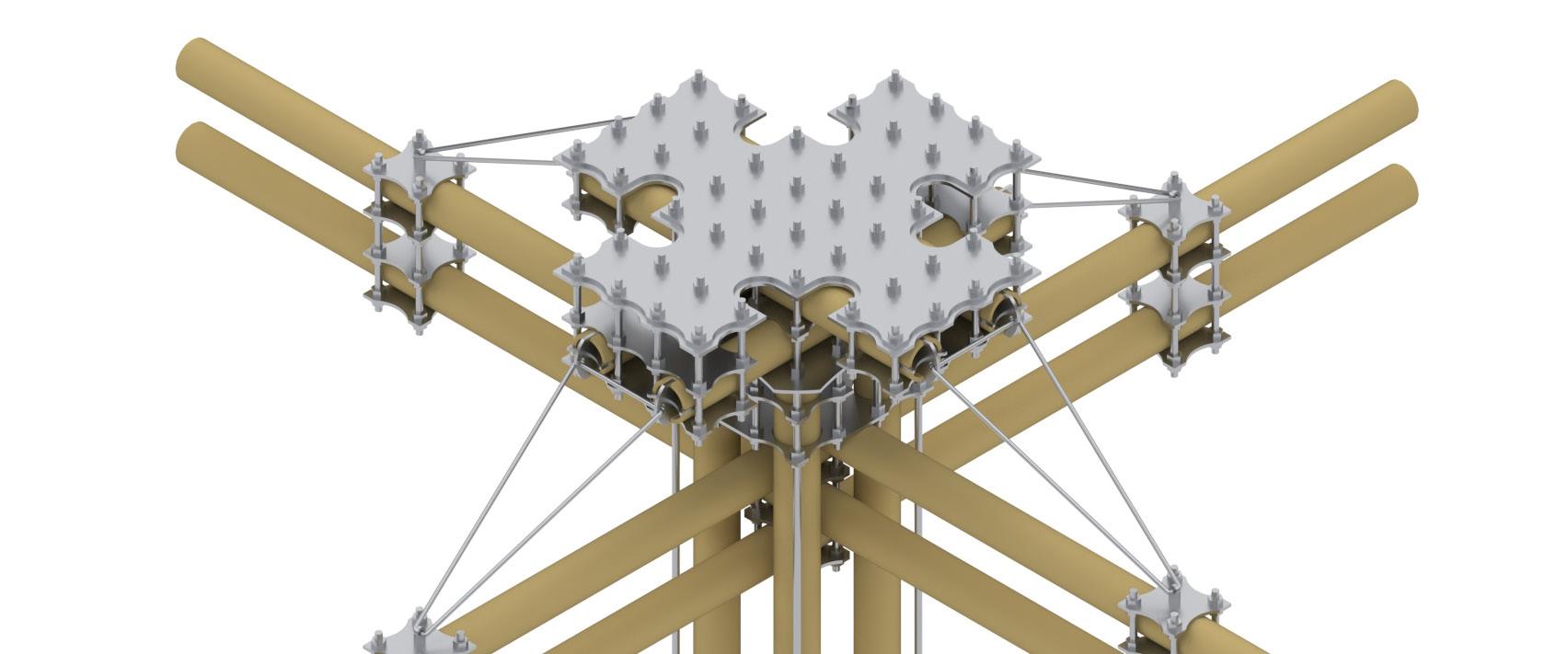
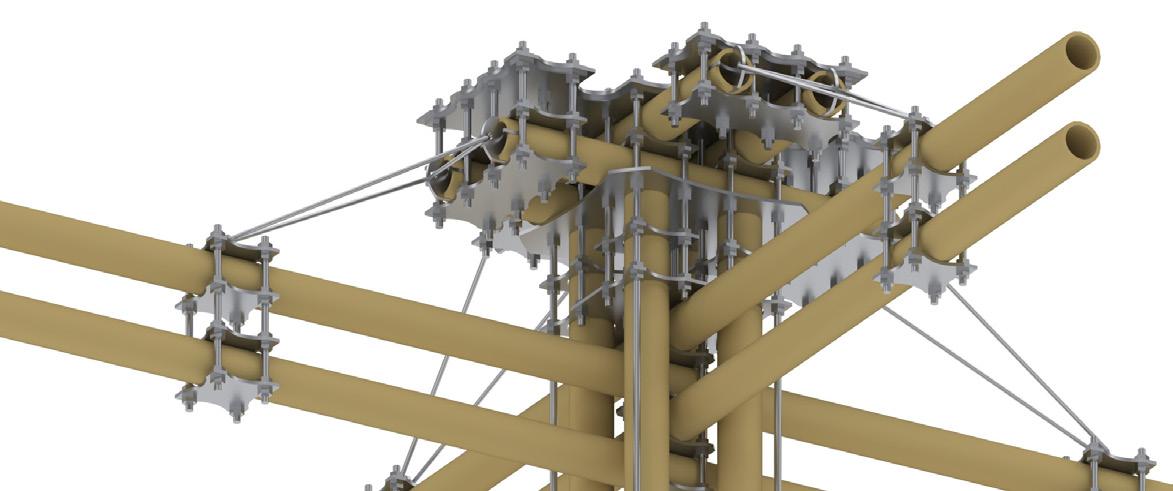
This view highlights the central steel node where multiple timber beams radiate outward. The plate-and-bolt system allows each member to be aligned individually while sharing a common structural core. Tension cables anchor the beams back to the column, stabilizing the cantilevered system and evenly distributing loads in all directions.
The image emphasizes the three-dimensional depth of the joint. Upper and lower layers of radial beams overlap vertically, creating a stacked structural arrangement. This layering increases stiffness, allows separation of forces, and generates spatial richness around the column head.
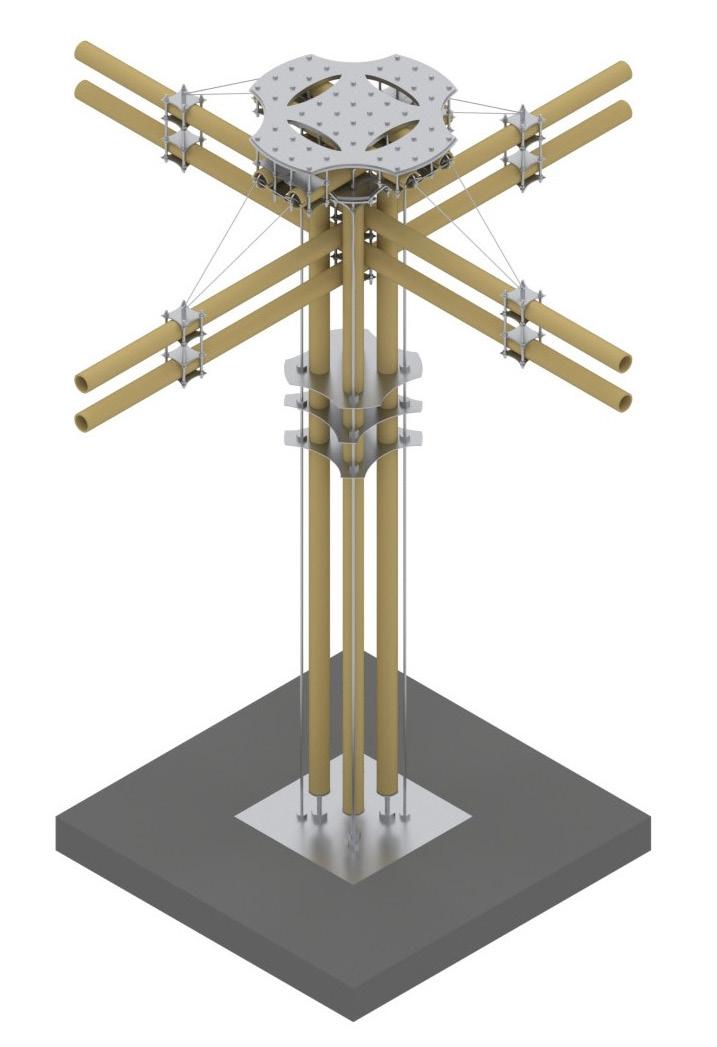
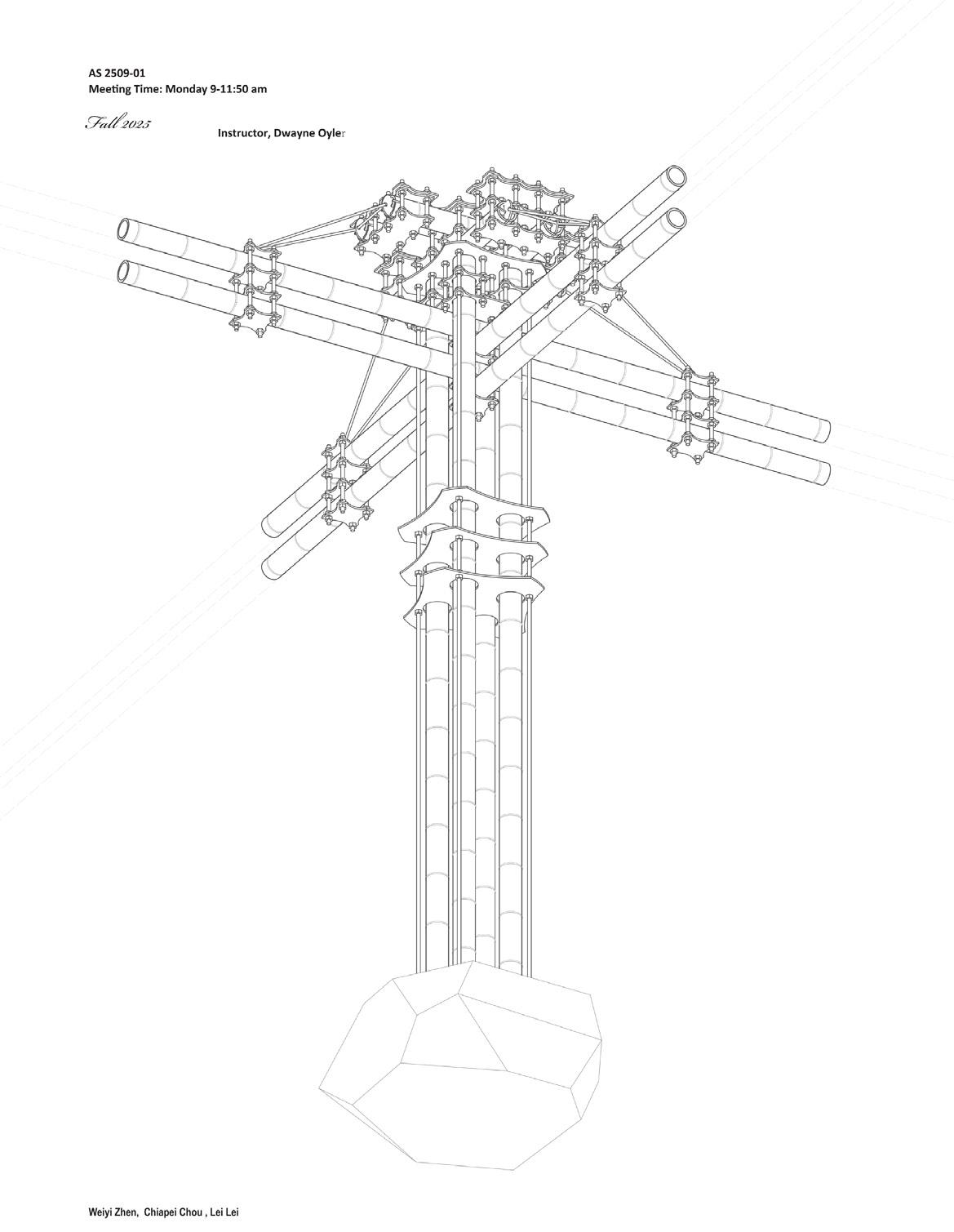
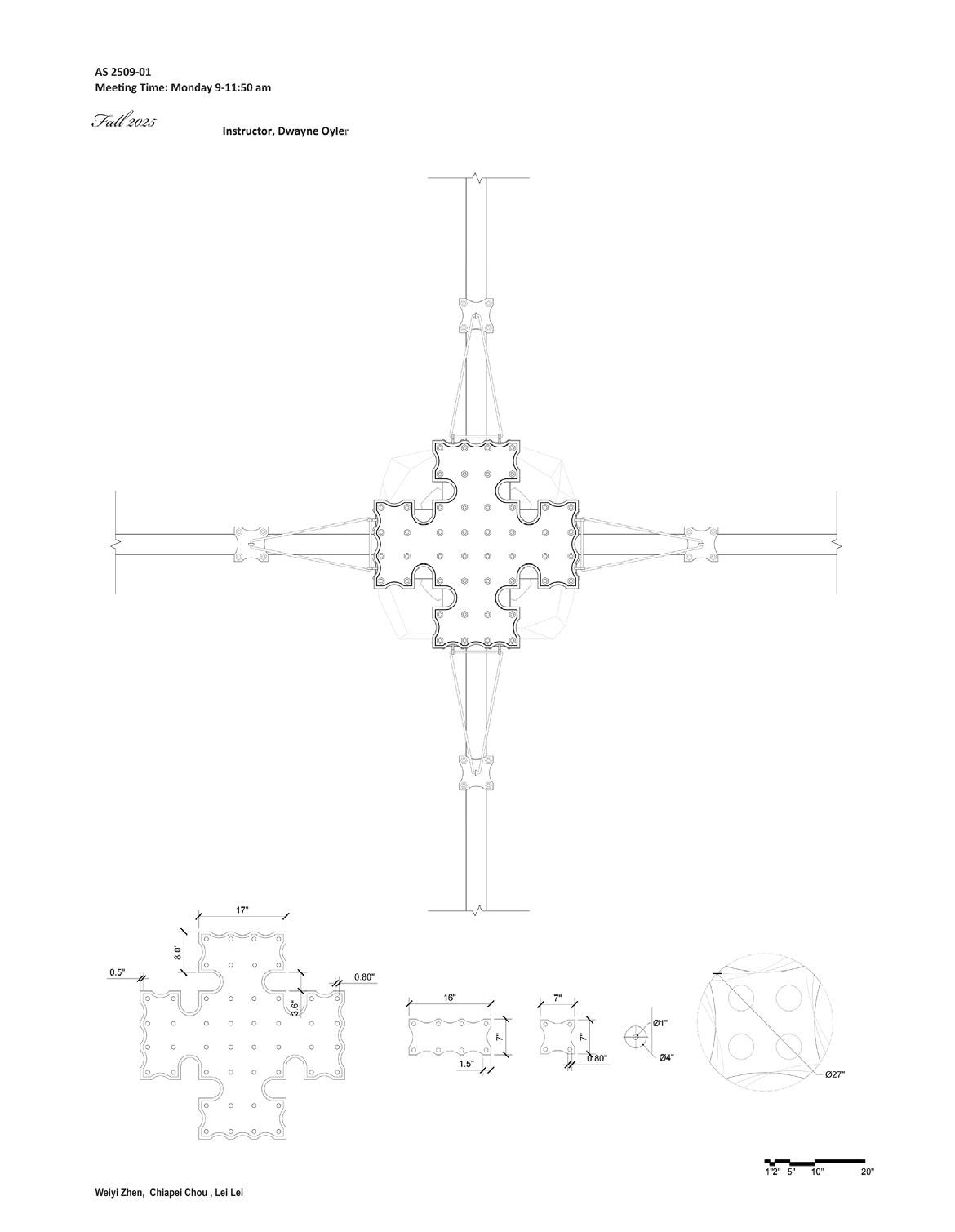
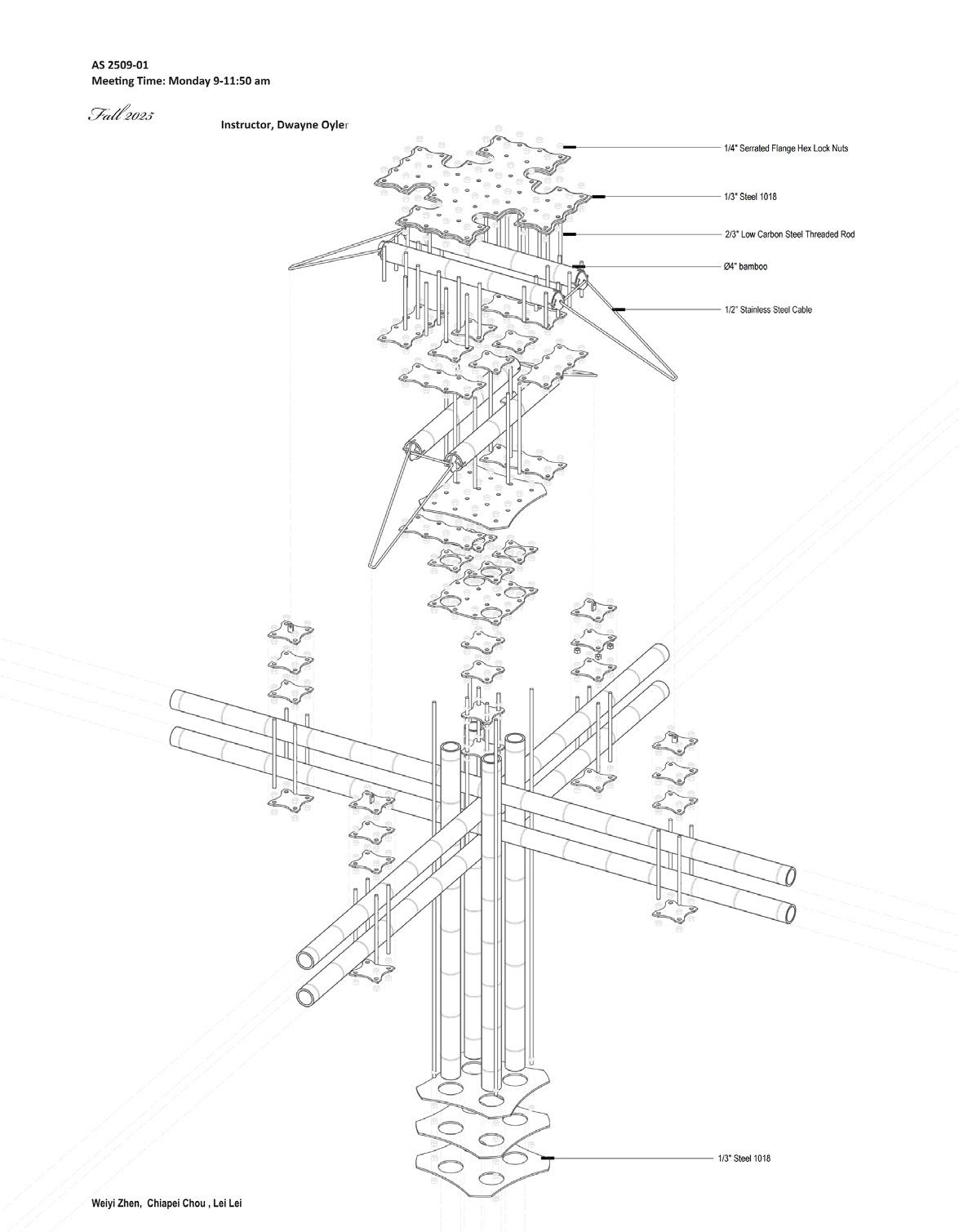
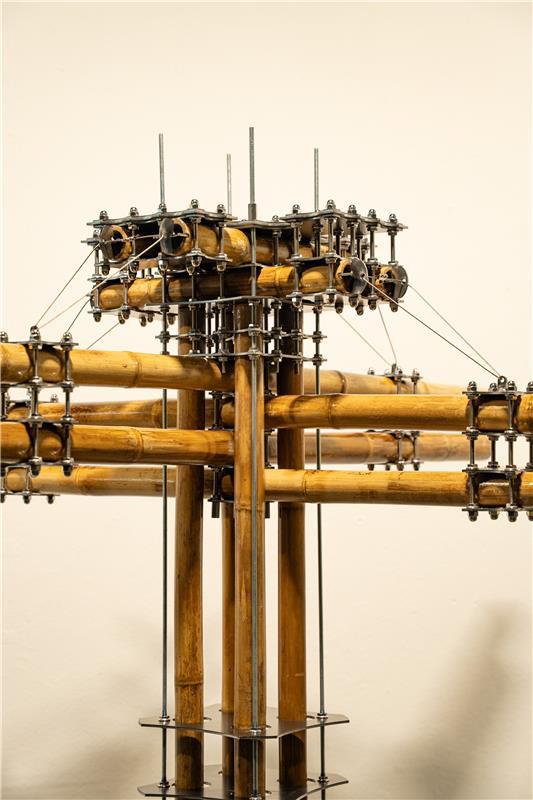
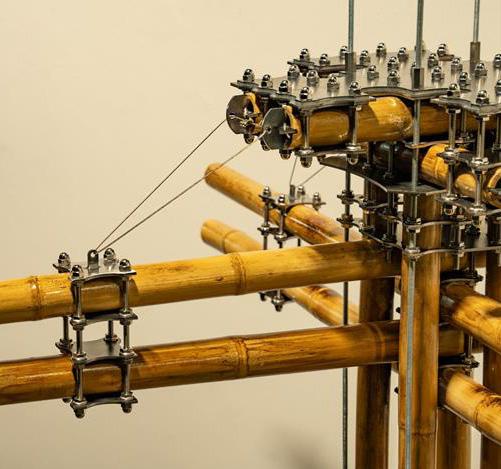
This
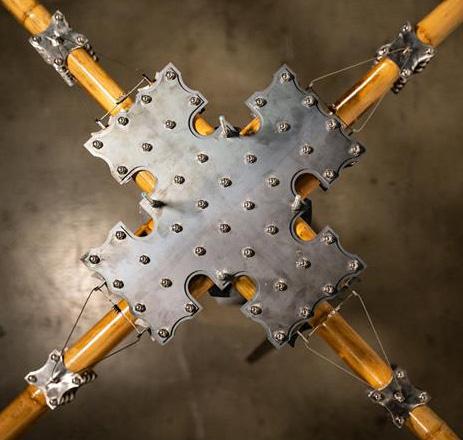
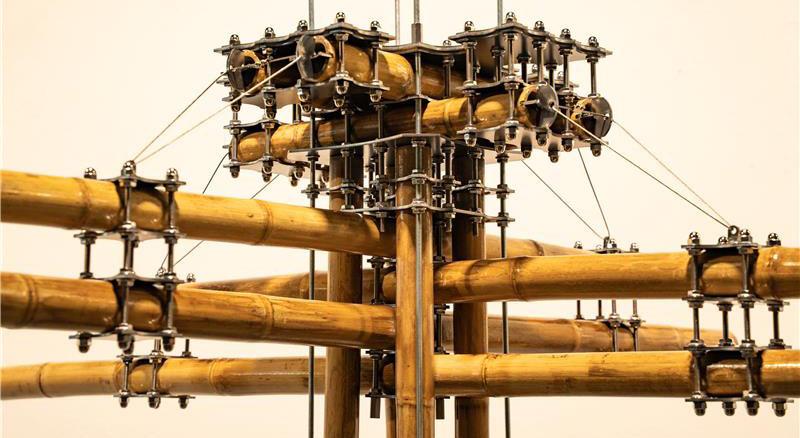
The frontal view reveals the full assembly of the hybrid column node, where stacked connector plates, clustered vertical columns, and outwardspanning beams form a layered head structure. Cables brace the system and visually express force flow, turning the joint into both structural core and architectural expression.
This series of images documents the development of the column-cap hybrid system. Through the combination of timber members, steel connector plates, and tension cables, the joint operates as a three-dimensional structural node. Rather than hiding connections, the design exposes them as expressive components, revealing how forces move through the system. The result is a structural language that is both technically precise and materially tactile.
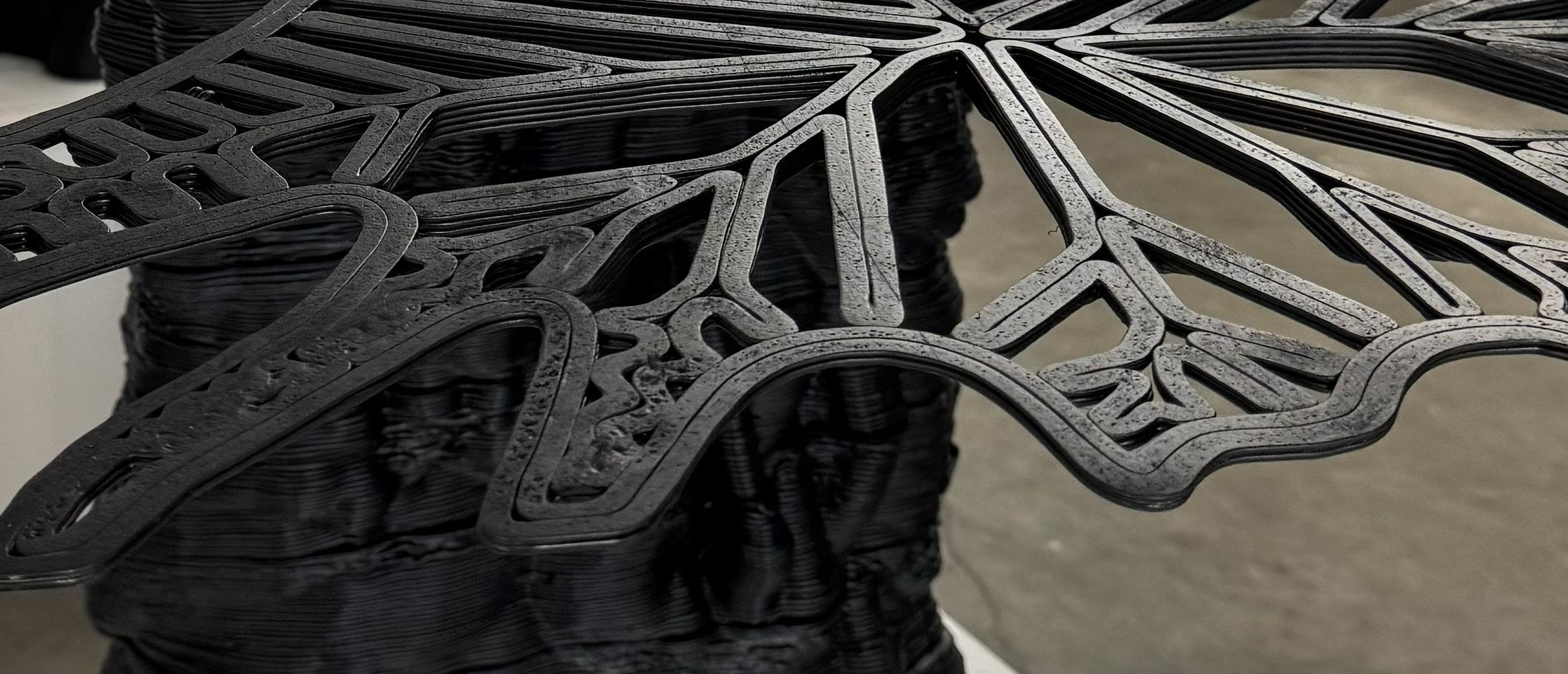
YEAR: 2025 FALL
CLASS: Adv Str Systems
TEAMMATE: Grace Li / Cheng Han Yang / Harrison Ryan
INSTRUCTORS: Michael Rehm
This project explores biomimicry by taking inspiration from the vertebrate spine to design a modular, highperformance bridge. Just as the spine supports and enables complex movement in animals, the bridge adopts an arch-based structure for load-bearing while dividing the span into vertebrae-like segments to allow disassembly and efficient on-site assembly in difficult terrain.
The design emphasizes simplicity and strength, achieving structural efficiency with minimal material. Each module is shaped by structural logic rather than decorative intent, demonstrating how natural evolution can inform engineered solutions. This approach aims to balance conceptual clarity with construction practicality, offering a new vision of form and performance rooted in nature.
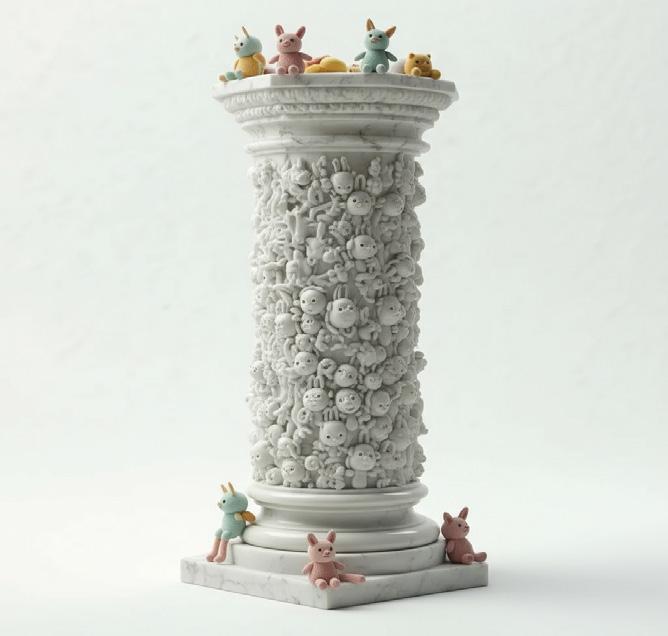

This experimental model simulates the structural characteristics of vertebrate spines. In nature, the spine achieves a balance between flexibility and strength by connecting modular units. Drawing from this principle, the model explores how bone-like forms can be adapted into architectural structures that distribute stress efficiently.
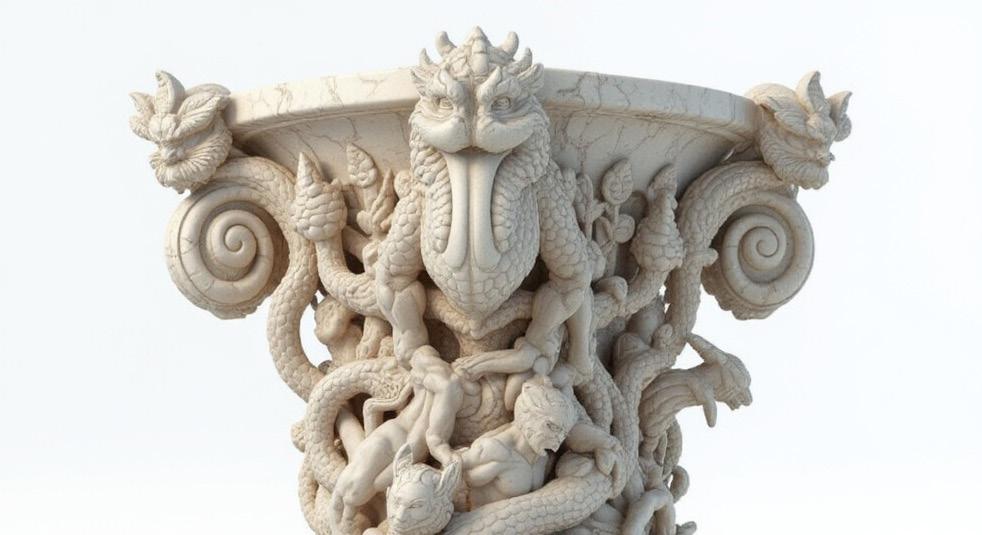
The design consists of interlocking vertebrae-inspired modules that can be easily assembled or disassembled. This prototype investigates how simplified components perform under load, serving as an early-stage study for a biomimetic bridge system based on segmented construction and adaptive structural logic.
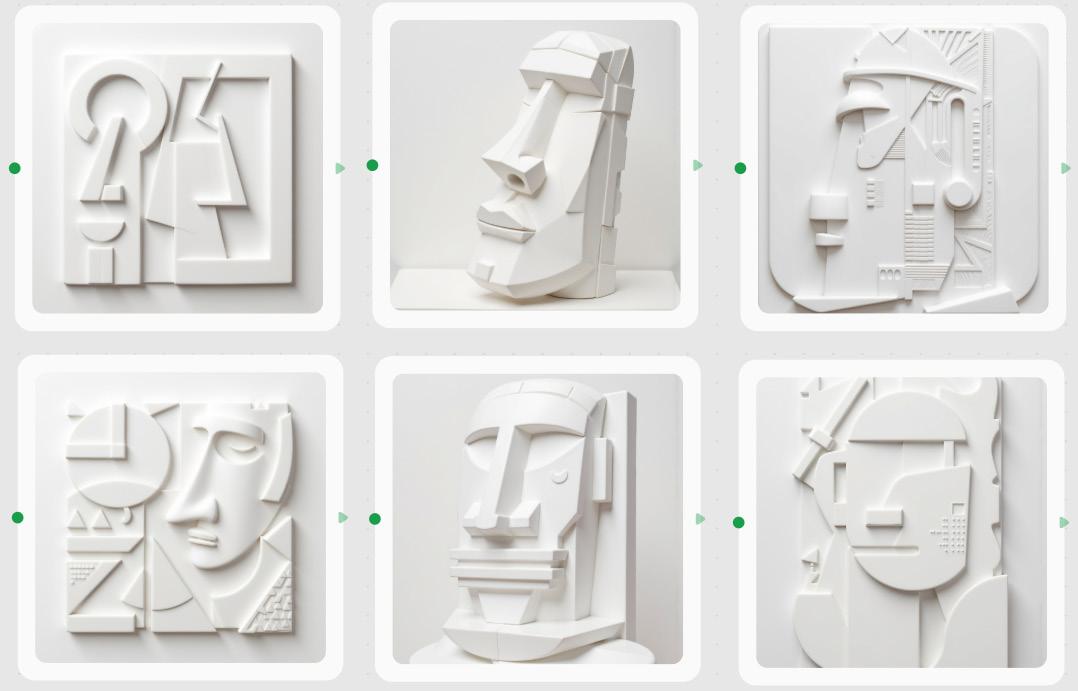
This project investigates how architecture can be generated from a single adaptable unit. Instead of designing one fixed object, the focus is placed on creating a system capable of variation. Flexibility is achieved through modular logic, where each unit can transform while remaining compatible with others. The approach embraces plurality, enabling the construction of complex forms from simple, repeatable components.
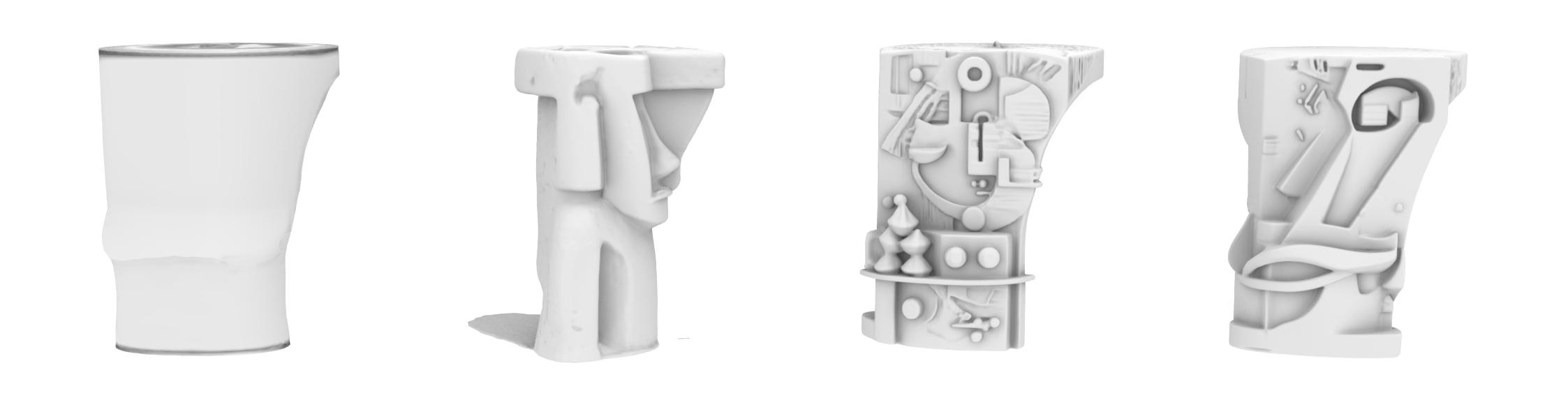
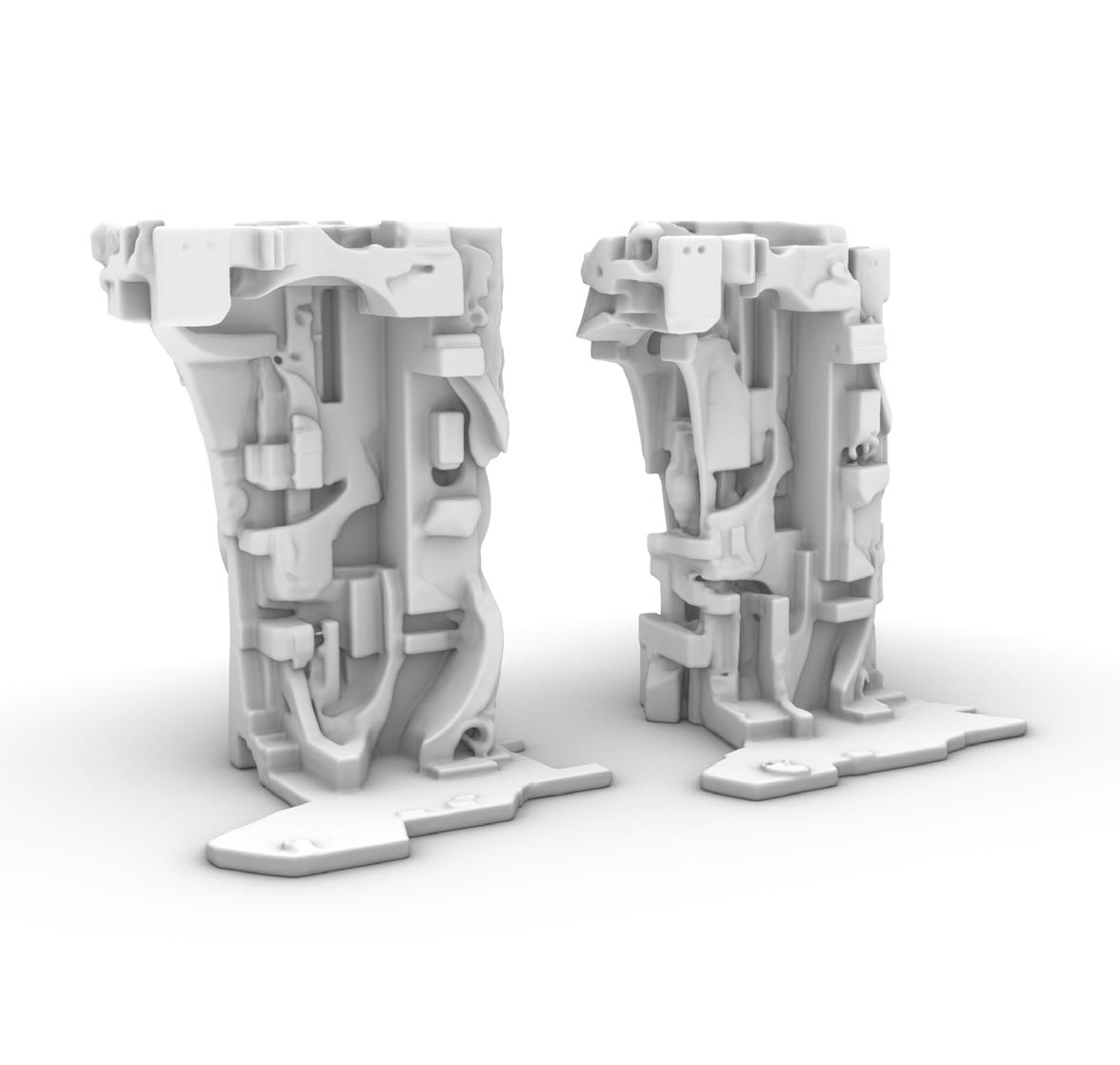
This model studies a biomimetic structural section in which the column behaves like an artificial vertebra. The form is composed of layered shells, cavities, and branching internal ribs that distribute forces through multiple pathways. The porous geometry reduces material use while maintaining stiffness, and the articulated base plate anchors the load gently into the ground. Openings along the surface also suggest opportunities for routing services, light, and ventilation through the structural body.
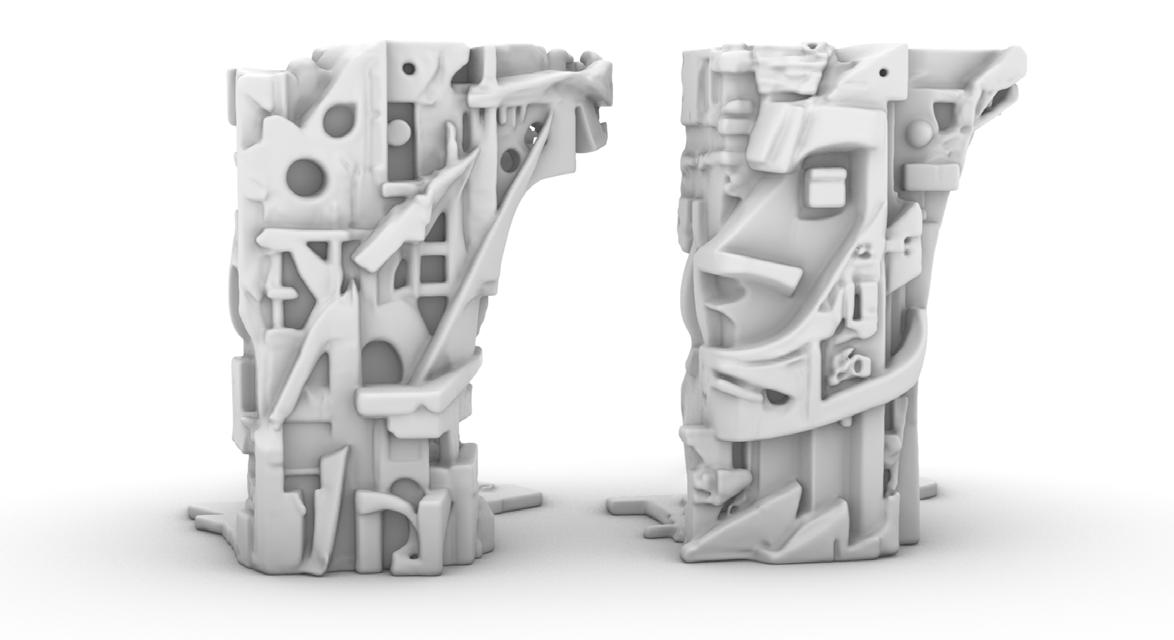
The views illustrate a family of vertical structural units designed for modular assembly. Each piece is conceived as an independent element that can stand alone or be clustered with others to form larger systems. The repeated vertebra-like modules stack and rotate to adapt to different directional forces, while integrated joints allow quick onsite assembly. The controlled variation across units demonstrates how structural clarity and spatial richness can emerge from a consistent generative logic.
This project explores a biomimetic design strategy that draws inspiration from vertebral anatomy. Instead of relying on conventional prismatic columns, the structural elements are conceived as “vertebrae” that combine loadbearing capacity with internal passageways and cavities. The sectional complexity results from digital subdivision and aggregation processes, allowing the form to respond locally to stress, support, and connection requirements.
Each unit is designed as a modular component capable of being prefabricated, transported, and assembled into continuous vertical systems. The perforated shells reduce weight and material consumption, while the thickened edges and internal ribs provide reinforcement where stresses are highest. Voids carved through the body accommodate integrated circulation, mechanical conduits, or light shafts, blurring the line between structure and infrastructure.
Through this approach, structure becomes both technical system and expressive form. The project proposes an alternative column typology in which architectural expression emerges directly from structural behavior, suggesting a future in which buildings evolve like living organisms—adaptive, differentiated, and materially efficient.
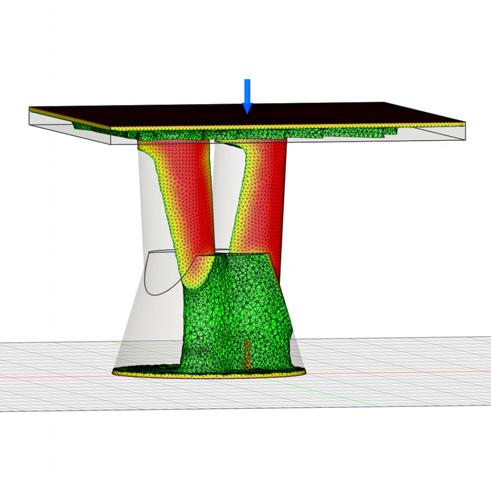
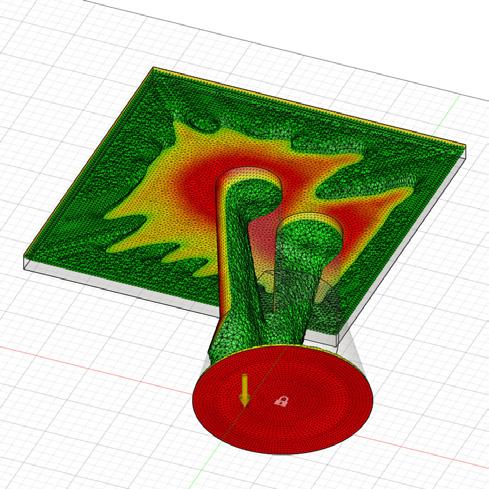
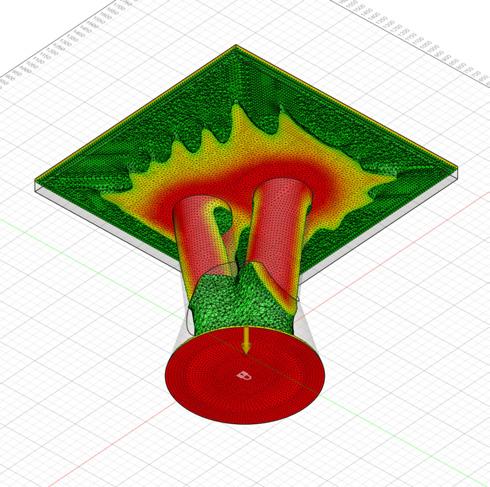
This prototype explores a spine-inspired structural unit composed of interlocking vertebrae-like elements. The column flares toward the top where loads are collected and redistributed, demonstrating how branching geometry can support wide spans with minimal material.
The simulation visualizes stress concentration across the spine column and top plate under vertical loading. Higher intensities appear near the base and branching region, confirming the structural logic of thickened nodes and tapered limbs where forces converge.
This diagram highlights the transition from the vertical spine unit into the foundation pad. The stress flow reveals how loads travel from the branching top through the column’s core and are dispersed into the ground footprint, validating the base geometry and anchoring strategy.
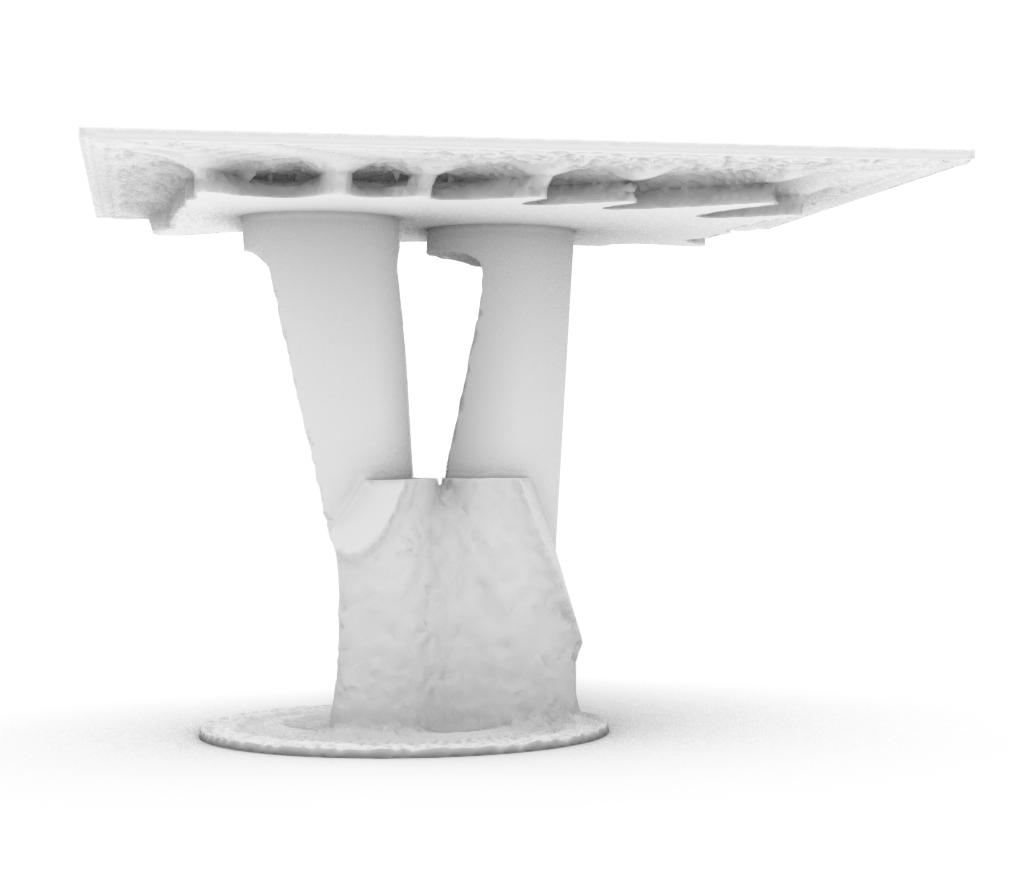
The model on the right presents a spine-based structural column supporting a wide cantilevered plate. The branching form is derived from vertebral anatomy, translating natural load paths into architectural geometry. The thickened base stabilizes the system, while the slender upper limbs carry the deck with minimal visual mass. The design demonstrates how biomimetic logic can generate efficient, materially responsive structures. By integrating structural performance with expressive form, the project proposes a column typology that is lightweight, adaptable, and capable of merging landscape and architecture.
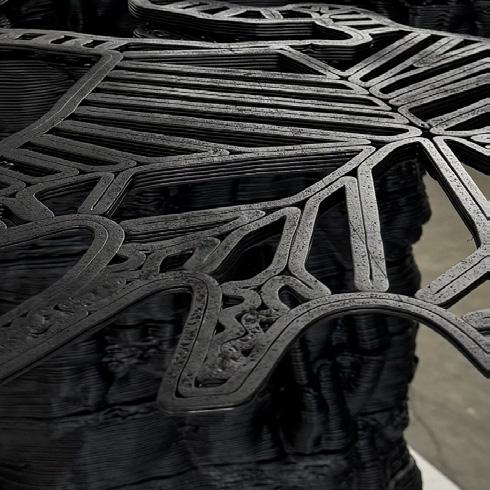
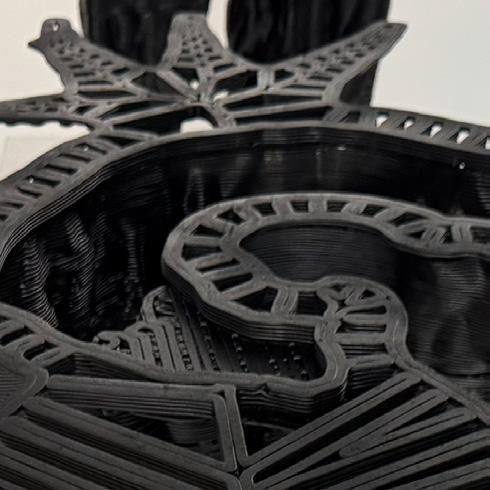

Close-up view revealing the layered extrusion patterns of the 3D-printed structure. The filament paths articulate the growth-like logic of the form while recording the fabrication process as a visible texture.
This image highlights the network of apertures and hollow channels that reduce material use while maintaining stiffness. The porous geometry enhances lightness, airflow, and spatial depth within the component.
Detail showing the perimeter filigree and melted filament accumulation, capturing the behavior of thermoplastic under heat and gravity. These irregularities become part of the aesthetic language of digitally produced forms.
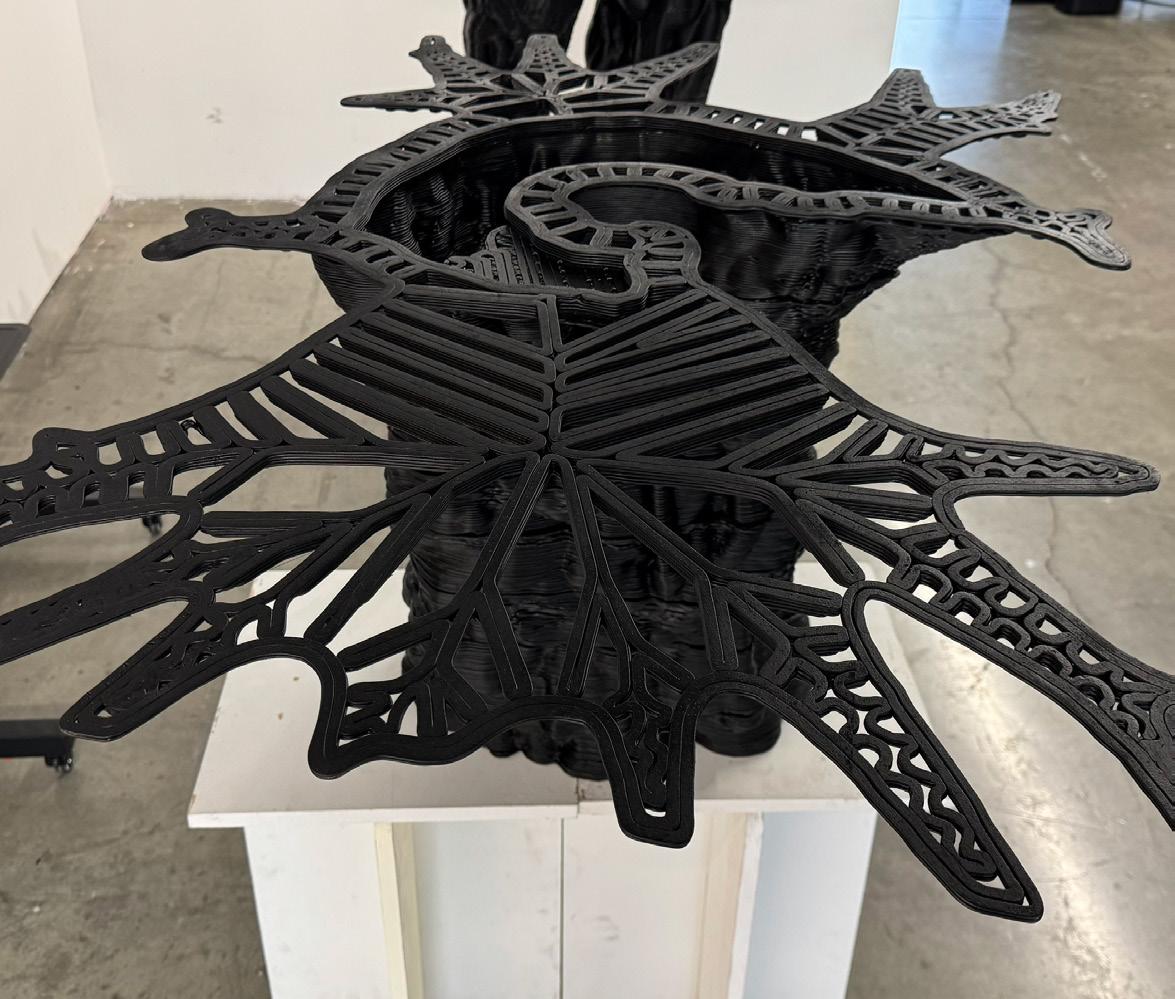
The large view shows a branching canopy-like prototype supported by a cluster of printed columns. Inspired by biological growth systems, the design distributes loads through multiple bifurcating arms, creating a lightweight yet spatially complex structure. The piece demonstrates how additive manufacturing enables continuous, differentiated geometry impossible to achieve through conventional construction methods.
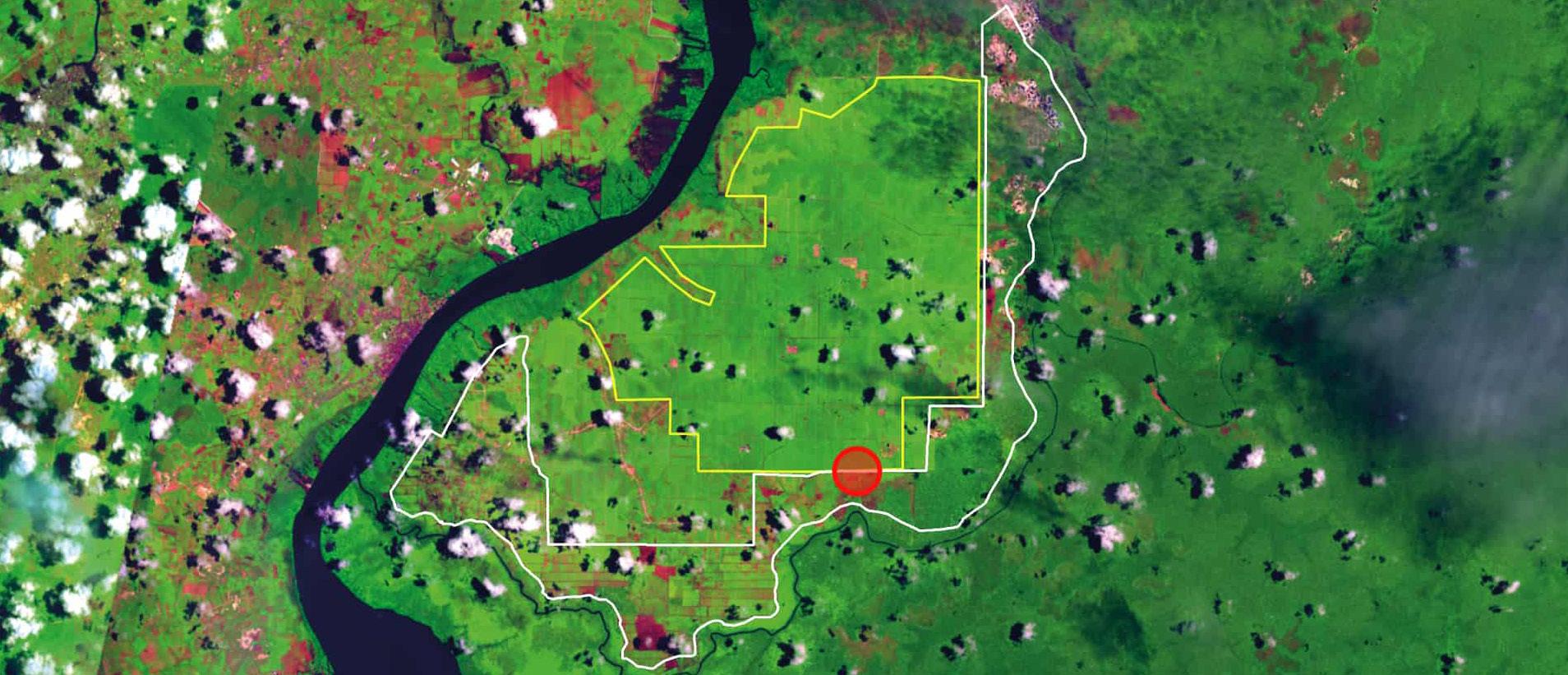
YEAR: 2025 FALL
CLASS: Spatial Reconstruction TheorPrac
TEAMMATE: Individual Work
INSTRUCTORS: Maksym Rokmaniko
Architectural history and theory are not merely retrospectives on past forms, but lenses through which we observe the evolution of society, technology, and culture. They reveal how architecture has responded to, shaped, and at times anticipated the transformations of human life. In this course, I explored historical precedents and theoretical frameworks to investigate possible directions for future architecture.
From sustainability and spatial perception to critiques of urban power structures, I sought to uncover ways in which the past can inform new architectural questions. Using theory as a tool and history as context, my goal was to construct a contemporary awareness of architectural issues—one that serves as a foundation for reimagining the future.
This image represents the fragmented way events are often recorded. Visual information is incomplete, blurred, or obstructed, yet still becomes part of the evidence field.
This magnified detail highlights how single pixels, textures, and edges become analytical material in postproduced vision.
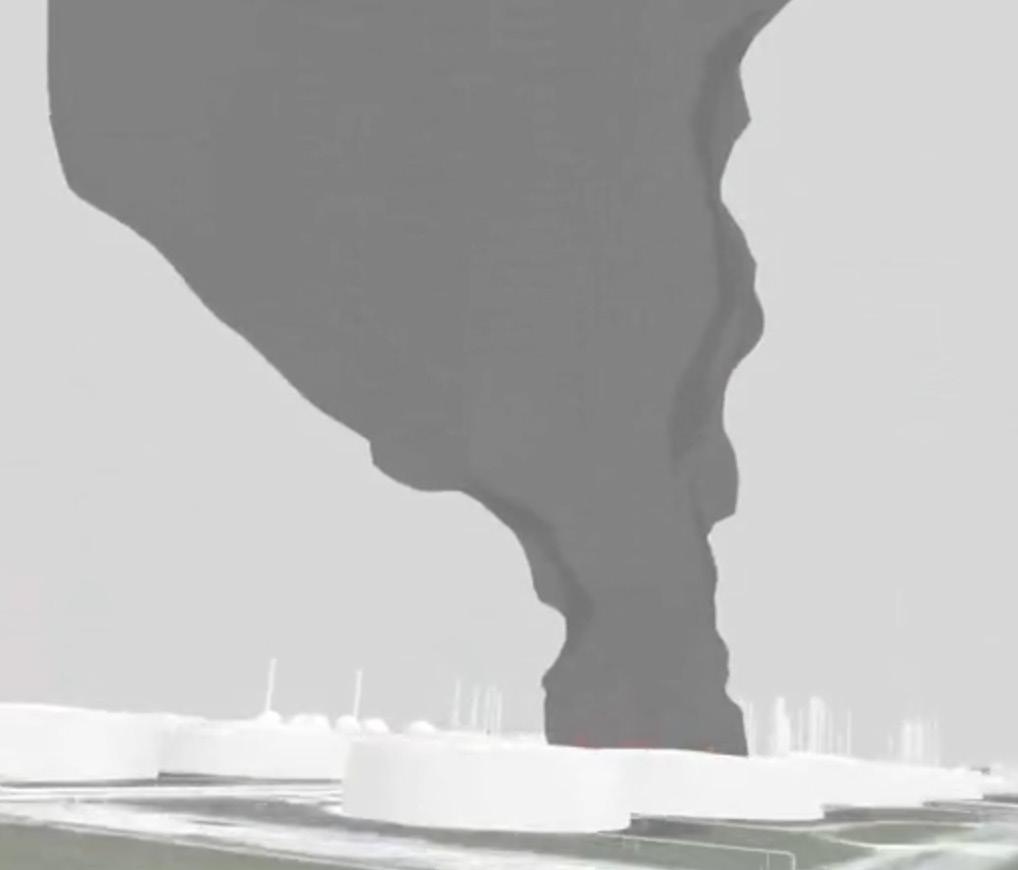
This project investigates how contemporary visual culture no longer relies solely on what is directly seen, but increasingly on what can be reconstructed. Instead of treating images as passive records, the research focuses on post-production processes— where fragments of data, digital traces, and secondary media are layered together to recreate moments, spaces, and events.
Today, visual evidence is often incomplete. Footage is blurred, viewpoints are obstructed, and perspectives are limited. However, through aggregation of multiple information sources—videos, photographs, sensor data, online archives, machine learning prediction, and spatial modeling—it becomes possible to rebuild realities that were never fully visible at the time they occurred. Reconstruction therefore becomes an act of interpretation rather than reproduction.
The project examines how architectural representation participates in this shift. Space is no longer documented only through conventional drawings, but through synthetic imagery and simulated perspective. By combining post-production techniques with spatial analysis, the work explores how truth, uncertainty, and narrative coexist in contemporary visual culture.
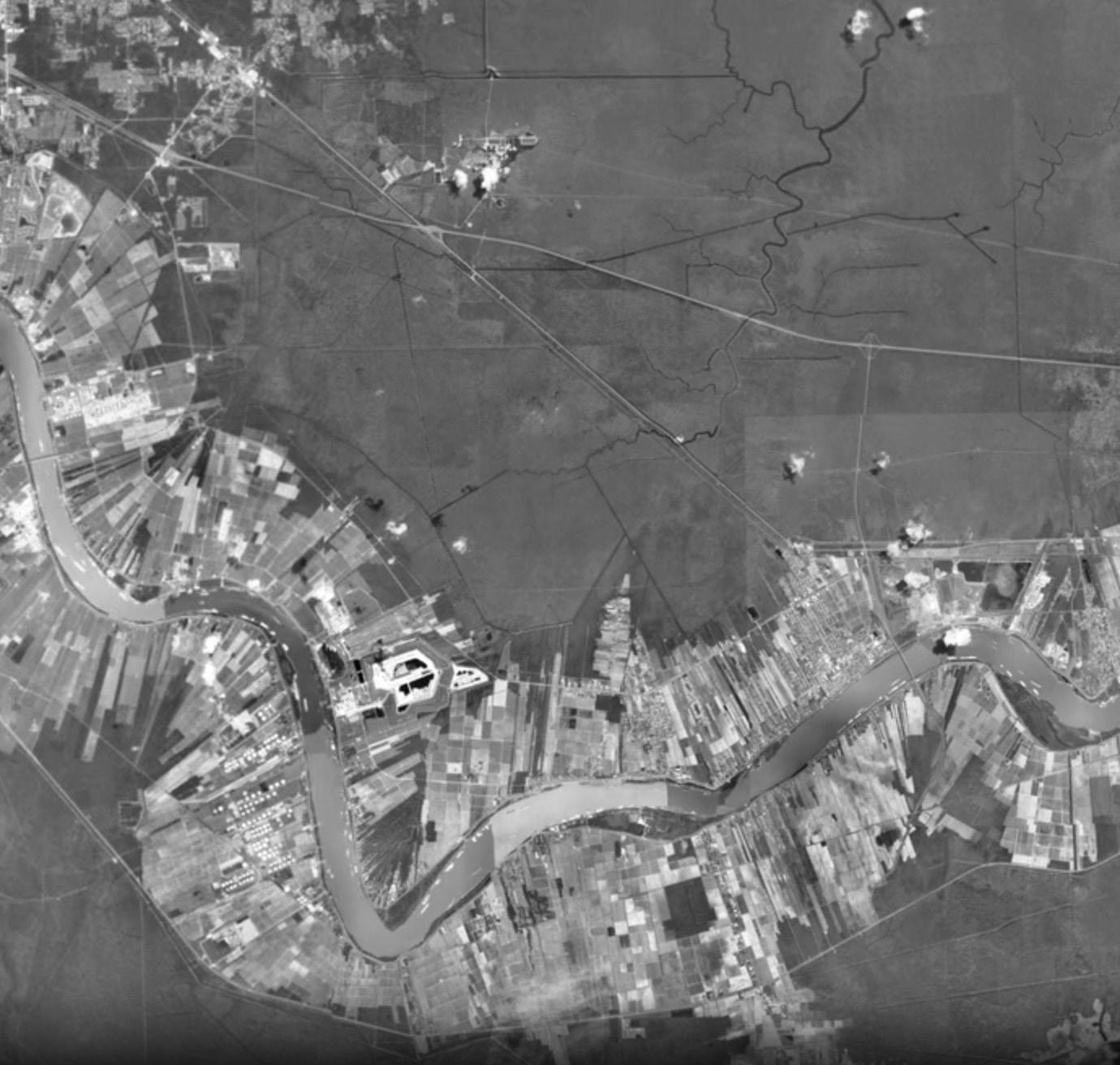
The Earth is depicted as if viewed from an unfamiliar intelligence. Urban grids, river systems, and infrastructural scars become legible not as human settlements, but as strange patterns under continuous remote observation.
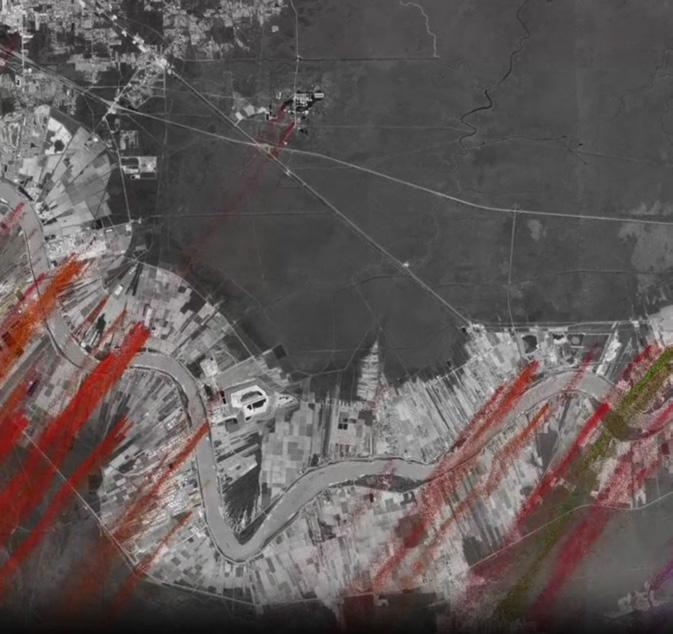
Extracted Landscapes
Closer inspection reveals that the terrain is almost entirely artificial. Red overlays highlight zones of heavy modification, mining, and industrial occupation. What once appeared natural is shown to be the product of ongoing human intervention.
In this project, Earth is imagined from the perspective of an external intelligence observing the planet from afar. What appears at first to be a familiar landscape gradually becomes estranged through layers of digital annotation, algorithmic traces, and speculative interventions. The resulting images operate between science fiction and forensic reading—half documentation, half projection.
The work reflects on the long-term consequences of human development. Vegetation has disappeared, surfaces are scarred by infrastructure, and planetary scale extraction has reshaped the ground. At the same time, unidentified objects hover in the atmosphere, suggesting the presence of non-human observers. Whether these entities are extraterrestrial beings or simply another layer of machinic vision remains deliberately ambiguous.
Rather than presenting a single “truthful” image, the project explores how reality is constantly overwritten—by surveillance systems, mapping platforms, and imaginative speculation. Through reconstruction, redrawing, and layering, the images question who is looking at Earth and how meaning is produced through technological vision. Viewers are invited to occupy both positions at once: the inhabitant of the damaged planet and the distant observer trying to understand it.
Remote-sensing data is visualized through bands of color and contour curves. These atmospheric overlays replace conventional cartographic symbols, recoding the landscape into gradients of intensity rather than clear boundaries.
False-color analysis reveals hidden traces in the ground condition. By subtracting familiar tones and substituting spectral hues, human-made patterns and ecological scars emerge as abstract fields.
This project investigates how abstraction can operate as a tool for re-reading and re-coding the landscape. Instead of understanding maps and remote-sensing images as purely objective records, the work treats them as interpretive fields shaped by subtraction, substitution, and visual emphasis. Data becomes image, and image becomes narrative.
Subtraction removes information, erasing familiar references so that the viewer is forced to reconstruct meaning. Substitution replaces conventional symbols with color fields, atmospheric gradients, and diagrammatic marks that point without directly describing. Through these acts, the project shifts attention away from literal representation and toward perceptual experience.
The overlaid chromatic bands and contour lines do not simply measure terrain; they frame a new way of seeing it. What appears scientific at first gradually turns speculative, inviting viewers to project memory, bias, and imagination into the image. Rather than offering a single fixed reading, the work opens multiple possible interpretations of the same territory.