Church Leadership Strategies That Build Trust, Community Engagement, and Lasting Growth by Chet Lowe
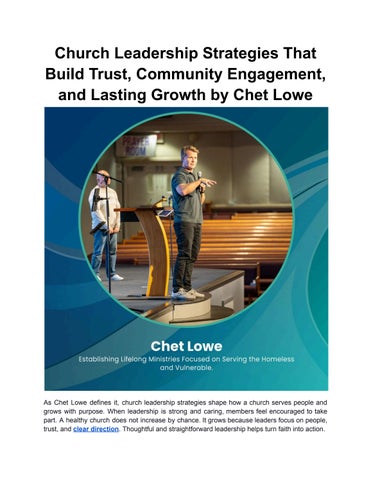
As Chet Lowe defines it, church leadership strategies shape how a church serves people and grows with purpose. When leadership is strong and caring, members feel encouraged to take part. A healthy church does not increase by chance. It grows because leaders focus on people, trust, and clear direction. Thoughtful and straightforward leadership helps turn faith into action.
One of the most effective church leadership strategies is building trust through action. Leaders must act in ways that match their words. When leaders keep promises and treat everyone with respect, confidence grows. Trust helps members feel safe and valued. When people feel valued, they are more willing to serve and support the church's mission. Another essential part of church leadership strategies is keeping the focus on people, not positions. Leadership should feel open and welcoming. Leaders who take time to talk with members build strong relationships. Simple conversations help leaders understand needs and concerns. This personal approach allows members to feel connected and heard. Clear direction supports strong engagement. Church leadership strategies work best when goals are shared in simple language. Members should know what the church stands for and where it is going. Clear goals help people see how they can help. When the mission is easy to understand, participation increases. Confusion fades, and unity grows. Encouraging service is another key leadership practice. Strong church leadership strategies create many ways for members to help. Service roles should match people’s skills and interests. When members serve in ways they enjoy, they stay involved longer. Service also builds confidence and a sense of purpose. These feelings support long-term growth. Good leaders also support teamwork. Churches grow stronger when leadership is shared. Teaching others how to lead small tasks or groups builds confidence. Shared leadership brings new ideas and energy. It also helps prevent stress and burnout. A team-based approach keeps the church active and healthy. Community outreach is a vital part of church leadership strategies. Leaders should guide the church to serve beyond its walls. Simple acts like helping local families or supporting events show care in action. These efforts build trust with the community. When people see genuine service, they become more open to engagement. Strong communication keeps everyone connected. Leaders should share updates clearly and often. Simple messages help members stay informed and involved. Good communication builds unity and reduces confusion. Prayer and reflection guide wise leadership. Church leadership strategies stay strong when leaders seek guidance and remain humble. Faith-centered leadership helps churches grow with purpose. When leaders focus on trust, service, and connection, community engagement grows naturally. Strong church leadership strategies help build a church that serves, supports, and grows together.