









Afirm?s reputation may fall apart instantly in case it faces any kind of financial problem If a business is facing any kind of issues in terms of insolvency, it means that many individuals, ranging from customers, suppliers, and workers, would be observing its activities very carefully Fear of potential instability can quickly permeate and impact key business relationships
Though problems related to finances may prove challenging, those involving reputation may not always be inevitable In moments of uncertainty, establishing trust is equally important to companies as effective communication, professionalism and acting quickly Proper management of the problem could put the company in a more favorable position
Common Reputation Risks During Insolvency Proceedings
There are various areas that businesses can be under pressure from during insolvency proceedings. Companies can respond early and keep key business relationships when they know what risks to expect.
Rumors: Unconfirmed discussions regarding the business and its prospects may begin Such rumors may confuse the stakeholders and may affect their confidence.
Payments: Delay in making payments can cause worry among suppliers and service providers regarding future transactions This will affect business dealings that take place in the future.
Customers: The customer might not be sure if the business will be able to run as it is These anxieties can factor into buying selections and future enterprise operations
Contracts: An agreement with business partners

At Talcon Group, we pride ourselves on offering a wide range of professional services designed to meet the diverse needs of the construction industry. Our team is committed to delivering high-quality, reliable solutions that ensure the success of your projects Whether you?re in need of skilled labour, civil engineering expertise, or specialized trades, Talcon Group is your trusted partner from start to finish.
can come into doubt when financial problems emerge in the public?s eye Contract issues may cause uncertainty and have a negative impact on work relationships
Publicity: Public announcements or industry talks can generate unnecessary interest in problems faced by the business Exposure will definitely affect how the business is viewed Practical Ways To Protect Your Business Reputation
Managing the reputation of a business effectively needs consistency, even when it is facing hard financial times Little things go a long way in building trust and confidence
Be Honest: During difficult business circumstances, clear communication can help minimise confusion. Consumers tend to be more trustful with businesses when they can be transparent about their information
Stay Active: Businesses should maintain their usual operations and service to customers as much as possible Regular activity will be a way to demonstrate stability in the face of uncertainty
Answer Questions: There are concerns that customers, suppliers and employees might have regarding the situation of the business. Confidence and trust can be maintained by answering questions promptly.
Keep Promises: Whatever promises the organisation makes must be promises that it is able to keep Keeping promises will be useful during hard times when the financial situation is not good
Support Staff: When the going gets tough, employees look to the management for guidance. It is important to have the staff
members ?in the know?so that they can feel appreciated
Protect Service: Quality and service are still vital even when in a financial crisis Nothing can replace excellent service in maintaining great customer relationships
Build Trust: Smooth communication with suppliers, customers and partners can help cement business relationships Building trust usually happens when people get the respect they deserve
Seek Advice: Professional advisers can provide some assistance regarding communication and brand management With adequate guidance and support, companies will be able to protect themselves from any undeserved damage
It is important for a company to receive support from professional advisers, such as Summit Law LLP, when the company faces financial difficulties With their support, a company may be able to learn how to maintain trust and manage difficult circumstances more efficiently
Planning: Financial advisers will aid businesses in devising realistic strategies for handling financial problems. It is easier to come up with decisions when there are concrete plans that minimise the element of uncertainty.
Communication: Businesses can use professional advisers to advise them on how to share information with key stakeholders When it gets tough, clear communication keeps the confusion and lack of confidence to a minimum
Risk Review: Advisers can spot problems that might damage business relations or reputation Early risk reviews enable companies to deal with

concerns before they become significant.
Stakeholder Support: With the assistance of professionals, businesses can coordinate good relations among suppliers, employees, and customers. In times of financial hardship, strong relationships can be of key importance
Problem Solving: Advisers provide options for businesses to address challenges to operations and reputation. Helpful tips would be provided to stabilise and maintain business interests
Stay Consistent: Customers could trust organisations that demonstrate consistency in delivering despite tough times Demonstrating consistency could mean that positive developments are continuing
Communicate Openly: Frequent updates are

available to help customers, suppliers and partners to feel more informed Open communication will usually cut down on uncertainty and improve business relationships
Improve Systems: Companies can check and enhance their processes that led to the previous financial issues Improved systems can help avert the prospect of similar issues
Meet Commitments: Keeping promises and meeting conditions leads to stakeholder confidence During recovery times, reliable actions are sometimes louder than words!
Honesty, consistency and effective communication are essential in order to safeguard a company?s reputation through a winding-up process Early action in the right direction can keep trust alive and help ensure future business success


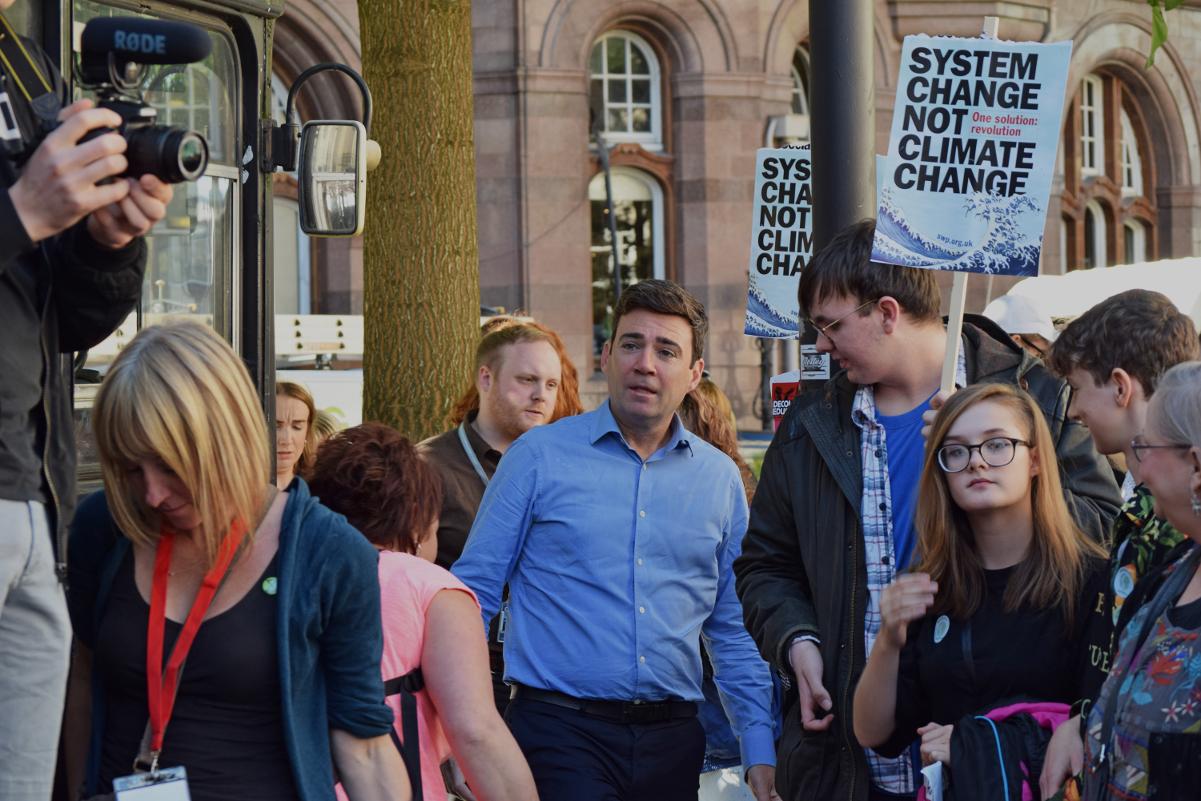
Andy Burnham?s long held ambition to be the UK?s prime minister will come with some daunting economic challenges.
Productivity growth is at a virtual standstill, real incomes have stagnated and the cost-of-living crisis has become a permanent fixture for many households. Meanwhile, the government spends around £110 billion a year paying the interest on nearly £3 trillion of debt
Burnham says he is on a ?10-year mission?to transform the country. So what might he do
to try to fix the British economy?
One thing that voters can reasonably expect is a move towards greater devolution of power ? especially spending power ? to the English metro regions As mayor of Greater Manchester, Burnham often argued that too many economic decisions were made in London, and that this held the rest of the country back
Burnham believes that allowing other regions to implement their own locally led pro-growth policies could transform Britain?s
ch Fellow, CityPolitical EconomyResearch rge's, Universityof London
economic prospects It?s a view shared by one of his key economic advisers, Jim O'Neill, who has long argued that creating metro growth hubs could substantially boost the UK?s GDP
This approach is bound to be controversial It could mean, for example, taking resources away from the £49 billion Heathrow airport expansion plan to help fund HS2 so it can reach the north
More radically, it might require a revamp of the whole system of local government
finance, starting with reforming the council tax system, which is still entirely based on property values set in 1991.
This would mean higher bills for areas where house prices are high, such as London and the south-east But it could substantially cut payments for those living elsewhere ? which could be popular in red wall constituencies where Labour has been losing support
Social care
Burnham has also spoken about reforming the UK?s social care system. Social care is not


part of the NHS, which means those who need residential care in old age must either sell their house to fund it, or rely on cash-strapped local councils.
Finding a solution to social care has proved too challenging for successive governments When Burnham was health secretary under Gordon Brown in 2010, he proposed putting a tax on the value of homes after the owner?s death ? which critics labelled a ?death tax?
Nevertheless, he may try something similar as prime minister. Solving the social care conundrum would dramatically ease the financial strain on the NHS Nationalisation
Another cause that Burnham has recently embraced is tackling the poor performance of the companies that supply households
with energy and water
First in line would be Thames Water, which is already facing bankruptcy and a temporary government takeover. Astraight-out nationalisation of water would be expensive, with that company alone currently valued at £10 billion
But better public utilities could also boost productivity. Housing development in East Anglia is now being held back by lack of water, for example, as no new reservoirs have been built in the UKsince 1992
And a water company which didn? t have to pay out hundreds of millions of pounds to shareholders could mean lower household bills
Burnham has promised to stand by Labour?s commitments not to increase VAT, income


tax or national insurance He has also pledged to stick by Labour?s fiscal rules, including the key stipulation that day-to-day government spending must be covered by tax revenues within three years, so that borrowing can only be for long-term capital investment.
These rules have been structured in such a way that could still give a Burnham administration considerable leeway to boost spending on public infrastructure
Burnham could argue that increasing public investment this way would pay for itself by boosting UKproductivity
He may also want to look at other ways the Treasury could raise money without breaking Labour?s manifesto pledges. There are quite a few options, including higher wealth taxation, or changes to tax relief on pensions and savings
Burnham is also taking advice from Carys Roberts, the former head of the Institute for
Public Policy Research think tank, and a strong advocate of wealth taxes, which may indicate his direction of travel.
All of these reforms will face fierce political opposition from the Conservatives and the right-wing press, which in the past have been enough to scupper them.
But if Burnham keeps his Labour party colleagues happy, he need not face an election for three years
And if he manages to improve public services, boost growth and lower the cost-of-living crisis, he may be able to turn round Labour?s prospects
The key is the government delivering the benefits of higher taxes to ordinary citizens, both by reducing the cost of living and providing improved services
If Burnham can square this circle, while avoiding the ire of financial markets, he will have pulled off a trick which his predecessor singularly failed to do.
An entrepreneur who left school at sixteen and began his career on a £50-a-week apprenticeship is helping others to build successful businesses without relying on luck, privilege or shortcuts.

Apprentice to Entrepreneur:Real Life Lessons for Building a Businessthat Workssees entrepreneur and business leader Wayne Quinn share the practical lessons he learned whilst building businesses across construction, engineering, renewable energy, property and hospitality over the course of three decades. The book charts his journey from an apprentice to the owner of multiple successful companies, including Hull-based engineering specialist PEMEC
entrepreneurship, highlighting the determination, resilience and consistency required to turn an idea into a thriving business.
The book is aimed at aspiring entrepreneurs, business owners and professionals who feel capable of more but are unsure how to take the next step. Rather than promising quick wins, it focuses on proven principles that can be applied by anyone willing to put in the work
Wayne Quinn said: ?For many years, people have asked me how I got started and what lessons I?ve learned along the way. This book is my attempt to answer those questions honestly I didn? t come from a privileged background and I didn? t have a blueprint for success. What I did have was a willingness to learn, keep going when things got tough and take responsibility for my own future ?I wanted to write something that would be
Guilherme Klein MartinsLecturer in Economics, Universityof Leeds
Unlike many business books that focus on theory or overnight success stories, Apprentice to Entrepreneur takes a refreshingly honest approach Drawing on real experiences, setbacks and successes, Quinn explores the realities of
useful to those who are where I once was; people who are working hard, wanting more from life and wondering how to get there. Success isn? t about having all the answers. It?s about taking action, learning from mistakes and staying the course?
Throughout the book, Quinn reflects on the challenges of building businesses from the ground up, managing people, navigating setbacks and maintaining momentum during difficult periods The result is a straightforward and relatable guide for anyone looking to create opportunities for themselves.
?This isn? t armchair theory,?said Quinn ?It?s about learning how to build independence and thinking like a business owner even if you?re still an employee. The key is to avoid the trap of playing it safe and stop waiting for the perfect conditions If you want control over your time, income and future, this book is for you?
The publication comes at a time when entrepreneurship and self-employment continue to attract growing interest across the UK, particularly with people seeking greater ownership over their careers.
As well as sharing his personal story, Quinn hopes the book will inspire readers to recognise that the best businesses are often built through persistence rather than perfection
?There?s no secret formula,?he added ?Most successful businesses evolve through thousands of small decisions, plenty of hard work and a determination not to give up. If this book helps even one person to take that first step towards building something of their own, then it will have been worthwhile.?
Apprentice to Entrepreneur is available now from Amazon as a paperback, hardback, audiobook and Kindle edition
















There are plentyof warning signsfor a looming financial crash. And while fearsfor the near future might sound bleak, it?sbetter to knowthe potential risksso you can prepare your business?and your personal life. Nowisnot the time to panic. Be rational, be smart, and remember, in everycrisisthere?sopportunity. Read on...
Why should you care about how AI, the US stock market and the Iran War affect your business?
stock market being at ?all-time highs,? remember what followed the last century?s Roaring Twenties What goes up
Because they?re the leading factors in what could be the biggest financial crash since the Great Depression of the 1930s, which left 30 million people unemployed worldwide.
Something like that probably sounds impossible to imagine today. And while there?s no guarantee that such a forecast will come to pass, the Bank of England has warned of a ?sharp correction?in global stock markets (it doesn? t take a genius to work out what that euphemism means) So, when the USpresident brags about the
Put it this way: the global crash of 2008 would be small-time in comparison That?s a worry, considering the UK?s failed austerity policy in response has meant that nearly twenty years later, life still hasn? t recovered for ordinary people (that is, ?ordinary people?meaning not the unfathomably wealthy)
Unlike the 2008 crash, which was driven by the sub-prime mortgage lending scandal, the world?s economy is at risk because of the three potential converging crises: AI, the USstock market and the Iran War
The speculation around overvalued AI tech companies grows louder every day Trillions of USdollars have poured into the sector as investors seek to get in early and reap the financial rewards ? much like a modern-day Gold Rush The money hasn? t just come from USventure capitalists, hedge funds or speculative investors It?s also nation states, pension providers, and normal people from around the world That takes money out of their country of origin, and into the USstock market (more on that shortly)
But despite the mad scramble to adopt AI across the world, uptake is relatively low (around only 16% of the global population has ever typed in a prompt or used a chatbot). Worse, the AI companies are yet to make a profit And investors are getting nervous.
You could argue that this is standard practice in tech. Companies like Uber, Google and Amazon started as loss-leaders
But here?s the problem: AI is expensive to run. Incredibly expensive, needing immense infrastructure and resources (like water, which would be better used for other purposes) And most current users of AI ? around 97% ? don? t pay for it. Of those that have paid, such as businesses who saw it as a cost-cutting exercise, MITSloan?s research reveals that 95% of their projects have seen zero return on investment Now, many companies that steamed into AI head-first and cut their workforce considerably, such as Ford and IBM, found that AI cost more and delivered poorer outputs than the actual competent people it replaced Both companies are now rehiring real humans.
It?s like the dot-com bubble of the late ?90s and early 2000s, where cash flowed into a technology that nobody really understood yet. At the time, the internet?s infrastructure was still in its infancy, so the returns were non-existent. But AI is unlike other notable tech loss-leaders of the past The sheer spending it needs raises fears


that unlike Uber, there?s no possible path to AI profitability ever, and so the bubble might just burst soon
US stocks shock?
Warren Buffett, investor and former CEOof Berkshire Hathaway, has been so successful in the markets throughout his career that there?s even a market indicator bearing his name: the Buffett Indicator
It?s how he predicted the bursting of the dot-com bubble ? and made lots of money from it. The Buffet Indicator measures the value of USstocks versus Gross Domestic Product The higher the ratio, the more overvalued the market The time to worry is when that ratio nears 200% And right now?
It?s beyond 233% The highest it?s ever been
As well as American investors, a big reason for that overvaluation is the $22 trillion of USshares under foreign ownership ? including by UKpension and investment funds. Huge sums are concentrated on a small number of companies ? mostly AI-led
tech ones ? so if the Bank of England?s warnings come true, it?s not just the stocks, banks and insurers of the USAthat will suffer. It?s here, too.
If you have a UKshare-based pension, the chances are that around a third of your portfolio is in USstock Because of such market unrest and fears of a crash, Germany and Canada are moving to redirect pensions towards domestic markets South Korea is planning similar But the UKremains silent on the matter ? just as it does on the potential impact of the Iran War
Wartime shortages?
It?s fair to suggest that for many people in the West who?ve only experienced peacetime, they perhaps see wars and conflicts as something abstract that happens ?over there?in distant lands or on the news. But the Iran War is different. We?re already seeing its impact here Though not in terms of bloodshed, but in finance Most notably, the skyrocketing costs at the petrol pumps.











The Strait of Hormuz blockade is more than just an Iranian tactic to pressure its direct opponents. It cuts the supply of vital commodities that drive the entire global economy. And the result?
Soon, there could be a lack of physical goods on our shelves ? the economist, Steve Keen, predicts that global food supplies will fall by 20% ? so, if the availability of fuel, energy, fertiliser and food drops while demand remains high, prices will soar And we think inflation is bad now.
That supply shock is quietly starting to hit Europe. On 4 July, four Italian airports (Bologna, Milan Linate, Treviso and Venice) warned they may run short on jet fuel because of the Strait of Hormuz closure As jet fuel prices climb to $195 a barrel (up $100 from before the war), June Goh, oil market analyst at Sparta Commodities commented: ?Europe is facing imminent jet fuel supply shortages Brace yourselves? According to Argus media, the UKis the
country in Europe most exposed to the risk ? yet the national media is unusually quiet about it.
As you can see, with AI, USstocks and the war all converging, interesting times may lie ahead if they?re not here already
Back in the UK, a cost-of-living crisis has already been a part of British life for years. Stagnant wages and rising prices began with post-2008 austerity, continued through Covid, and are now escalating because of the Iran War. Fast. But it?s not just households feeling the pinch
Arecent survey by the Federation of Small Businesses revealed that 23% of business owners?costs have increased more than 10% year-on-year ? mostly because of utilities, wages and taxes Which would be manageable if business was booming But for many, it?s not.
Astaggering 50 6% of business owners reported lower revenues in the last quarter

? and as global turmoil now begins to feel more real, the worry is that the trend will continue. Meanwhile, business borrowing, refinancing and interest rates have all become more expensive It?s no surprise to learn from a Novuna Business Finance report that nine out of ten owners of small businesses say the cost of living threatens their growth
The challenges we?ve seen so far are all external factors. Some haven? t even happened yet ? or may not happen at all However, the risk is very real, so it?s important to know about them so that you can protect yourself. But when it comes to global external factors, they?re out of your control.
As always, it?s best to focus on what you can control: your business and its internal constraints.
The first of these constraints is your margins Though reviewing turnover can be reassuring when it?s strong (after all, cash is king), don? t underestimate labour costs, NI and pension deductions and overheads. It seems obvious, but such oversights are common in smaller businesses, especially during economic slowdowns when the focus is understandably on boosting sales in any way you can
Speaking of which, review your pricing structures If costs are swiftly rising across the board, how can you afford to keep prices static?In effect, that?s making a loss Make sure your cashflow is as efficient as
possible to bring in cash sooner ? a rolling forecast can help And don? t fall into the trap of focusing on profit figures. Profit is a calculation, money in the bank is real (again, cash is king) And there are many more internal constraints within your control
When times are tough, it?s human to focus on cuts to expenditure And that?s most definitely wise. But not in all cases, even though it might seem counterintuitive
Businesses are often quick to slash marketing expenses But Rory Sutherland, Vice Chairman of Ogilvy UKand champion of behavioural science and economics, argues against that. Because while there might be some savings in the short term, you destroy longer-term value and
brand equity.
Think about it During a downturn, most people in the same situation ? including your competitors ? will panic When they cut their budgets, it?s a prime opportunity for your business to dominate the market ? most likely for lower prices ? boosting bigger sales. And by building trust in those customers, your marketing generates long-term value creation.
If you show the world why you?re different and how you add value in ways that no one else can, then your organisation is in pole position to sail through a downturn and out the other side
Remember, it?s an investment: in your business, in your success, and in you
AI-drivencomplexity, holidayabsences
invisiblechange

Two years on from CrowdStrike?s incident, Cloudhouse launchesan Outage Stress Test, as AI and summer absences create the perfect conditions for major outages
Two years after the CrowdStrike outage brought businesses, airports and public services around the world to a standstill, Cloudhouse is warning that organisations may be more vulnerable today than they were in 2024.
As enterprises race to adopt AI, automate workflows and deploy new cloud services, thousands of small changes are occurring every day across increasingly complex technology estates. Individually, these changes appear harmless, but collectively, they can create significant operational risk Cloudhouse calls this phenomenon

info@gpplimited.co.uk
?invisible change?? the accumulation of system updates, software integrations, AI workflows, infrastructure modifications and configuration drift that often go unnoticed until something breaks. To help enterprises recognise their potential risks and weak spots it has launched an Outage Stress Test ? 20 questions to test an organisation?s vulnerability as it enters the holiday season. The assessment will help organisations identify areas of configuration drift, hidden dependencies across systems, unauthorised or undocumented changes It also highlights single points of failure, vulnerabilities created by AI-driven complexity and operational risks that could worsen during periods of reduced ITcoverage
With ITteams operating at reduced capacity

Global POP Procurement: A Leading POSM & Shop-Fitting Supplier Delivering Turnkey Solutions
For over two decades, Global POPProcurement has set the benchmark in POSM, display manufacturing, and shop-fitting excellence Trusted by global brands such as Dyson, Duracell, Columbia, Philip Morris, P&G, PepsiCo, and Heinz, we?ve grown from a CPGdisplay manufacturer into a comprehensive retail fit-out partner
With advanced in-house design, sustainable production, and exports to 60+countries, we deliver complete turnkey projects? from design, engineering, manufacturing to logistics and full on-site installation across the EU and MEAregions.
As we expand into new markets, Global POP Procurement continues to lead with innovation, precision, and a proven legacy of global reliability.





and key specialists taking annual leave, organisations are left more exposed to outages that take longer to identify, investigate and resolve.
Jon Dedman, Director at Cloudhouse, commented: ?Many ITleaders have always been reluctant to deploy significant changes before the weekend ? the ?Friday Fear?or ?Read-Only-Friday?phenomenon ? for fear of triggering a business-critical incident that

destroys customer and employee goodwill and results in entire weekends spent firefighting Yet this is precisely when the Crowdstrike outage occurred, caused by invisible and automated change.?
Cloudhouse says organisations should also give themselves permission to slow down during summer months rather than continuing transformation programmes at full speed.
?Summer is not the time to accelerate every project simultaneously Your team knows when you?re out of office but AI doesn? t Technology will continue changing whether people are there to oversee it or not.
Service disruption, customer dissatisfaction, reputational damage, employee burnout and emergency remediation costs can quickly escalate from what initially appears to be a minor technical issue.?


One of the UK?s most innovative and pioneering sustainable industrial and residential developments, Esholt, is to be delivered by Yorkshire Water and sister company Keyland Developments Ltd with full planning consent from Bradford City Council
180 acres of redundant land around the Esholt wastewater treatment works will be

transformed into an exceptional, nationally recognised development to repurpose the largely brownfield site and deliver a host of economic, social and environmental benefits through innovative employment, sustainable housing and community enhancements
The employment element will see the delivery of up to 100,000m2of quality,

sustainable work spaces to accommodate a mix of industry, with a particular focus on bio-tech businesses and industries that can make the most of heat, power and water generated by the treatment works to maximise sustainability
The sustainable housing element includes
150 homes, from 1-bedroom maisonettes to 5 bedroom detached houses to allow for a diverse community The sensitive use of local materials along with an innovative blend of technologies and intelligent energy use, landscaping, living with nature through visible water management and shared


Erhan
The standoff in the Strait of Hormuz has already made fuel and energy noticeably more expensive. But energy prices are only part of the story
While tensions continue between Iran and the USover that vital stretch of water, another, more subtle economic effect could come into play.
?Skimpflation?is the name for a phenomenon that involves a gradual decline in the quality, quantity or service associated with everyday goods.
Unlike shrinkflation, where the size or weight of a product is reduced, skimpflation affects the value that consumers receive. It happens when companies attempt to keep prices the same while quietly reducing quality, ingredients or service levels
So instead of raising the price of a ready meal, for example, a manufacturer may replace or reduce some of the key ingredients with cheaper substitutes
The price and packaging remain the same, but there may be less pork in your sausages, or less beef in your lasagne.
Similar adjustments can also occur in service industries Restaurants may keep menu prices stable but switch to cheaper ingredients
Hotels might choose to subtly cut service levels, such as housekeeping, to reduce costs (as some did during the pandemic). Airlines ? already worried about jet fuel supplies ? could adopt cost-saving strategies, such as reducing complimentary food or baggage allowances
In each case, the price paid by consumers may appear unchanged, but the quality or
level of service gradually declines, meaning customers effectively receive less value for the same money.
These kinds of adjustments are carefully designed to be barely noticeable
Businesses hope that consumers will continue to buy their products and use their services without being aware of the changes. But they could become more widespread if economic circumstances mean that organisations need to make more savings. And they represent yet another economic ripple effect that comes from
effectively shutting down a major oil and gas shipping corridor.
The world has already seen how quickly oil prices and energy markets react to the possibility of supply shortages.
For countries (like the UK) which depend heavily on imported energy, these shocks function like an economic tax, raising fuel costs and inflation
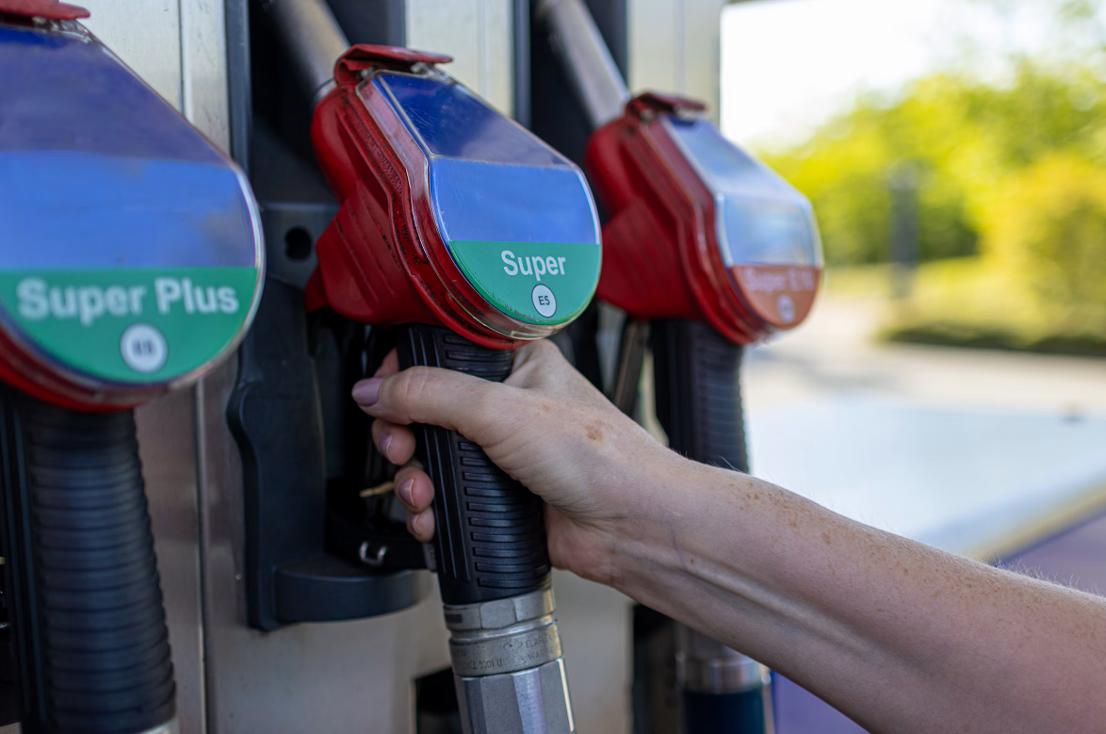
And energy costs affect nearly every stage of modern production and distribution When fuel becomes more expensive, so does transport, running factories and producing food.
Arise in oil prices can quickly evolve into a broader inflationary shock affecting shipping, logistics and industrial production
These pressures ultimately reach consumers, but often indirectly. And businesses facing rising costs must decide how to respond.
Raising prices is the most obvious option, but after several years of high inflation, many firms worry that consumers are already highly sensitive to price increases.
Eventually though, these costs must be absorbed somewhere in the system, either through higher prices or changes in quality and service.
This is why geopolitical energy shocks are
often described as ?inflationary events?, even if consumer price indices do not immediately capture their full impact
The real cost of living may rise not only through higher prices, but also through a decline in what those prices buy.
Economists might describe this process as a form of ?hidden inflation?, where businesses respond to rising costs by quietly altering product composition or reducing service levels rather than raising prices outright.
sectors such as food manufacturing, retail and hospitality.
If instability in the Middle East continues to disrupt shipping routes and energy markets, the UKcould face renewed inflationary pressures. But for households, the effects may not always appear in official statistics.
Analysis of recent cost pressures suggests that recipe reformulation, ingredient substitution and service reductions have become common strategies for firms attempting to manage higher input costs in
Instead, they may appear in smaller portions at restaurants, reduced service levels in hospitality, or supermarket products that look familiar but contain slightly cheaper ingredients
These incremental adjustments are harder to measure than price changes, but shape everyday consumer experiences through a gradual erosion of value.