
TABLEOFCONTENTS
How to use AI w ithout annoying your readers
DISCUSSION POINT - Wellness at w ork is becom ing perform ative. The death of the 5 year plan

Beyond the business card - w hy com m unity is the new currency Why starting a podcast could be the sm artest m ove for your brand The Manosphere and the m ask - are
Welcome to Pulse Life, a magazine exploring the ideas, habits, and cultural shifts shaping how we work, think, and live today In a world where business, technology, and lifestyle increasingly overlap, we focus on the conversations that sit just beneath the surface of everyday professional life.


In this issue, we look at how to use AI tools like ChatGPT without falling into the trap of producing content that feels generic, over-polished, or disconnected from a real point of view. We also explore why starting a podcast could be one of the most powerful ways to build a brand? offering depth, trust, and long-form connection in an attention-fragmented world.
Alongside this, we turn to the body and the workplace, asking what prolonged sitting is really doing to our health, energy, and long-term wellbeing, and why modern work habits may be quietly shaping more than just productivity Finally, we examine the rise of the ?manosphere?and broader social media-driven lifestyle narratives, asking a difficult but timely question: are curated online identities and algorithm-shaped ideals eroding authenticity, or simply redefining it?



How to Use AI Without Annoying Your Readers
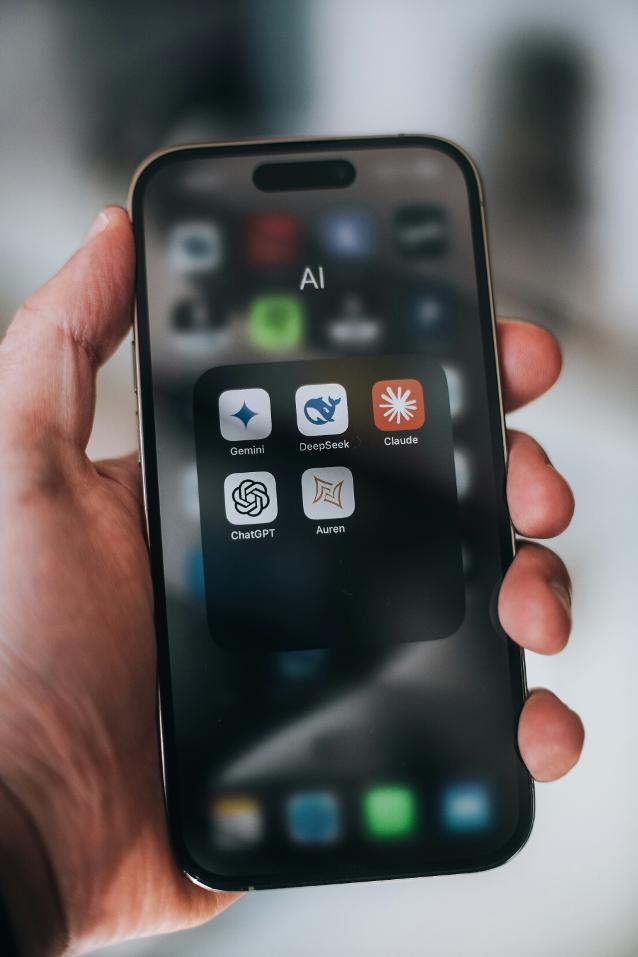
AI tools have quick y become part of the modern content workflow. From brainstorming ideas to drafting full articles, they offer speed and efficiency that would have seemed unrealistic just a few years ago. But as their use becomes more widespread, so does a new challenge: readers can often tell when something feels ?AI-written?? and not in a good way.
The issue isn? t the use of AI itself It?s how it?s used
When content feels generic, overly polished, or strangely impersonal, it creates distance Readers disengage not because they object to the technology, but because the writing lacks a clear human point of view The goal, then, isn? t to hide AI entirely? it?s to use it in a way that still feels intentional, distinctive, and grounded
The first mistake to avoid is over-reliance. AI is excellent at generating structure and summarising widely known ideas, but it tends to default to the average. If you publish output that hasn? t been meaningfully shaped or challenged, it will often read like everything else. The result is content that feels interchangeable? technically correct, but forgettable.
Strong writing,particularly in a business lifestyle context, dependson perspective.Readers are not just looking for information; they?re looking for interpretation.They want to understand *why* something matters,what it signals, and how it connects to broader shiftsin work and culture.AI can support this process,but it rarely provides a compelling point of view on its own.
That?s where human input becomescritical
One effective approach is to treat AI as astart ng point rather than a finished product Use it to generate ideas,outlines, or even rough drafts? but then step in to refine, challenge,and personalise the content Ask yourself:does thissound like something your publication would actually say? Does it reflect your tone, your audience, and your editorial standards?
Another common giveaway is tone. AI-generated writing often leans toward being overly balanced, cautious, and neutral.While that can be useful in certain contexts, it tends to dilute impact. Opinion-led content,in particular, benefits from clarity and conviction. That doesn? t mean being extreme or controversial for the sake of it, but it
?Technology is a useful servant but a dangerous m aster.?
Christian Lous Lange

does mean taking a position
If every paragraph sounds like it?s trying not to offend anyone, readers wi l notice? and disengage
Language is another area where subtle adjustments make a significant difference. AI often relies on familiar phrases, predictable transitions, and slightly repetitive structures. Editing for rhythm, variation, and specificity can quickly make a piece feel more natural. Shortening sentences, removing filler, and replacing vague wording with precise language all help bring the writing closer to a human voice.
It?s also worth paying attention to originality AI draws on patterns from existing material, which means it can unintentionally echo common narratives or overused angles To stand out, you need to go beyond what is already widely said This might involve adding real-world observations, industry insight, or a sharper framing of the topic
Readers respond to writing that feels considered, not assembled
Transparency plays a role as well, though it doesn? t need to be heavy-handed You don? t have to announce the use of AI in every piece, but maintaining editorial integrity matters Facts should be checked, claims should be grounded, and the final output should meet the same standards as any traditionally written article
Ultimately, the question is not whether AI s used, but whether the content feels worth reading
The publications that succeed will not be those that rely most heavily on AI, but those that use it most thoughtfully. They will combine efficiency with judgment, speed with discernment, and automation with a clear editorial voice.
Because in the end, readers are not looking for perfection
They are looking for something that feels real.











Discussion Point
Discussion Point is our space for opinion pieces designed to spark discussion and challenge ideas These articles are starting points, not final answers - We want to hear your perspective too. Agree, disagree, or add something we haven? t considered, then continue the conversation with us on our Paramount Media LinkedIn and Facebook channels and let your voice be part of the debate.
Wellness at Work Is Becom ing Perform ative
Increasingly over recent years, wellbeing has become a visible priority. Meditation apps are offered as employee perks. ?Mental health days?are written into policy. Offices feature calming spaces, wellness workshops, and branded initiatives designed to signal care. On the surface, it appears that work culture is evolving in a positive direction, one that acknowledges burnout, stress, and the importance of mental health.
But beneath this polished surface, a more complicated question is emerging: are companies
genuinely improving employee wellbeing,or simply becoming better at appearing to?
The rise of workplace wellness programs is not accidental Over the past decade, conversations around mental health have become moreopen, and employee expectationshave shifted accordingly Organisations are under increasingpressure to demonstrate that they care, not just about productivity, but about people In response, many have invested heavilyin visible, tangible wellbeing initiatives

Yet visibility is precisely where the tension lies.
Offering a subscription to a meditation app is easy Encouraging employees to actually disconnect from work is far harder Introducing mental health days signals awareness, but if workloads remain unchanged, those days can feel like a temporary patch rather than a solution Wellness, in many cases, is being treated as an add-on rather than something embedded into how work itself is structured
This is where performative wellness begins to take shape
It often manifests in subtle ways Employees are encouraged to take breaks, but praised for pushing through them. Leaders speak openly about burnout, while continuing to model overwork Companies promote flexibility, yet reward those who are most visibly available The message becomes conflicted: wellbeing is supported in theory, but not always in practice.
The result is a growing sense of disconnect
For employees, these initiatives can start to feel less like genuine support and more like branding. Wellness becomes another layer of corporate identity, a way to signal progressive values externally, while internally the day-to-day experience remains largely unchanged. In some cases, it can even create pressure to *perform* wellbeing, projecting balance and resilience regardless of reality.
Th s dynamic is not necessarily intentional Many organisations are navigating new territory, trying to respond to evolving expectations without fully rethinking the systems that drive stress in the first place It is far easier to introduce a wellbeing program than to address structural issues such as excessive workloads, unclear priorities, or cultures that reward constant availability
But without addressing those underlying factors, wellness initiatives risk becoming cosmetic
There is also a commercial dimension to consider. The workplace wellness industry has grown rapidly, offering companies an array of tools, platforms, and

services. From mindfulness subscriptions to resilience training, wellbeing has become a market in its own right. While many of these tools can be valuable, their effectiveness depends heavily on context. Ameditation session cannot compensate for chronic overwork, just as a wellness workshop cannot resolve a lack of autonomy or support.
What employees increasingly want is not more wellness *content*, but better working conditions
This includes manageable workloads, realistic expectations, psychologica safety, and leadership that models healthy behaviour It means designing roles and environments where wellbeing is a natural outcome, not something that needs to be retrofitted through programs and perks
To be fair, some organisations are beginning to move in this direction. They are re-evaluating performance metrics, encouraging deeper focus over constant responsiveness, and recognising that sustainable productivity requires boundaries. In these environments, wellness is less visible? but more real.
The challenge is that thiskind of change is harder to communicate. It does not lend itself to quick wins or marketing campaigns. It requires long-term commitment and,in many cases, a willingness to sacrifice short-term output for long-term sustainability.
That trade-off iswhere many companies hesitate
Performative wellness,ultimately, is not about bad intentions It isabout misalignment between what is promoted and what is practiced, between what is easy to implement and what s necessary to change.
As employees become more attuned to this gap, expectations will continueto evolve Superficial solutions are unlikely to hold up under scrutiny. The organisations that stand out will not be thosewith the most visible wellness programs,but those where work itself feelssustainable.
Because real wellbeing at work is not something that can be branded It is somethingthat hasto be built.
Photo by Vta y Gar ev on Unsp ash
Photo by Med enstürmer on Unsplash













The Death of the 5-Year Plan

For decades, the five-year plan was considered the hallmark of professional ambition. It was the question posed in job interviews, university applications, mentorship sessions, and annual reviews: *Where do you see yourself in five years?* The assumption behind it was simple? success follows a predictable trajectory. Choose a direction, commit to it, climb steadily, and arrive at a clearly defined destination.
That model no longer reflects the reality of modern work
Today?s career landscape is being shaped less by linear progression and more by adaptab lity, experimentat on, and constant recalibration The once-reliable roadmap of long-term planning has given way to something far less predictable but arguably far more realistic: the modular career
The shift is not simply a cultural preference among younger professionals who are resistant to commitment or eager to job-hop. It is a structural response to a world of work that changes faster than traditional planning frameworks can accommodate.
Consider how dramatically the professional environment has evolved in just the last five years
Entire industries have been transformed by artificial intelligence. Remote and hybrid work have permanently altered expectations around flexibility and location. New job categories have emerged almost overnight, while others have become obsolete just as quickly. Economic uncertainty, rapid technological advancement, and shift ng global markets have created conditions where rigid planning can feel less like strategy and more like wishful thinking.
In this environment, the classic five-year plan often becomes outdated before it is halfway complete
Instead of plotting fixed milestones, professionals are increasingly prioritising optionality? the ability to pivot when circumstances change or new opportunities emerge Rather than asking, *Where do I want to be in five years?* many are asking a different question: *What skills, experiences, and relationships will keep my options open?*
This is a significant philosophical shift.
The traditional model rewarded certainty Professionals were expected to define their trajectory early and demonstrate unwavering commitment to it Success was measured by upward mobility within a
single company, sector, or specialisation
The modern model rewards agility.
Asoftware engineer might move into product strategy
Alawyer may transition into policy consulting A marketing executive might launch a niche media brand Careers are increasingly built through adjacent moves rather than vertical climbs, with each shift adding breadth as well as depth
Far from signalling instability, these nonlinear paths often reflect strategic adaptability.
This evolution is particularly visible among younger generations entering the workforce. Gen Zand younger millennials have grown up amid economic disruption, technological acceleration, and a rapidly changing definition of professional success. For many, the idea of mapping out a five-year future feels disconnected from reality.
What they value instead is responsiveness
This does not mean abandoning ambition. It means redefining it.
Success is no longer solely tied to title progression or tenure It is increasingly measured by autonomy, flexibility, meaningful work, and the ability to continuously evolve Aprofessional who spends five years exploring multiple industries may be seen as more resilient and versatile than one who followed a perfectly linear path within a single organisation
Employers are adapting to this shift as well
Forward-thinking companies are placing greater emphasis on transferable skills, cross-functional experience, and learning agility. Internal mobility programs, rotational roles, and project-based structures reflect a growing recognition that career development s no longer about climbing a ladder? it is about navigating a lattice.
This has implications for leadership too
Managers can no longer assume that top talent is motivated by conventional promotion timelines. Employees increasingly want opportunities to experiment, learn, and reshape their roles rather than simply advance within predefined structures. Organisations that fail to offer this flexibility risk losing talent to more adaptive environments.
None of this means long-term thinking has become irrelevant
Strategic direction stil matters. Purpose still matters. What has changed is the level of precision expected when imagining the future.
The most effective career p anning today resembles navigation more than architecture. It requires setting a general direction while remaining responsive to changing conditions. It means building capabilities rather than rigid scripts, and recognising that detours often become defining chapters rather than mistakes.
The death of the five-year plan does not signal the end of ambition

MARKDIMECKLIMITED

It signals the end of certainty as a prerequisite for success.
In a professional world defined by rapid change, the ability to adapt may be more valuable than the ability to predict The careers that thrive in this new era will not necessarily belong to those who knew exactly where they were headed
They will belong to those prepared to evolve when the path changes

















Beyond t he Business Card...

Why Com m unit y Is t he New Currency
For decades, business networking in the UKfollowed a familiar script: conference halls, name badges, elevator pitches, and a stack of business cards exchanged over lukewarm coffee It was formal, transactional, and often, if we?re honest, forgettable
But in 2026, networking s undergoing a quiet revolution.
Across the UK, particularly in the North West, a new model is emerging - one built not on transactions, but on community And it?s changing not just how professionals connect, but why they connect in the first place
From Contacts to Community
Traditional networking was largely about volume: how many people you met, how many leads you generated, how many follow-ups you could squeeze into a week The goal was efficiency
Today, the emphasis has shifted to depth
Modern professionals are increasingly seeking trusted relationships over fleeting interactions. This
reflects a broader understanding that business growth is driven not just by who you know, but by who genuinely knows, trusts,and supports you
This shift is evident in the rise of membership-based communities and relationship-led networks across the UK. Organisations like The Yorkshire Mafia have long demonstrated the power of regional ecosystems, bringing thousands of professionals together through both digital platformsand in-person events to build meaningful, long-term connections.
ANorth West Case Study:Regent BusinessClub
Nowhere is thisevolution morevisible than in the North West of England, where Regent Business Club is building a model that reflects the future of networking
Rather than positioning itself as a traditional events company, Regent Business Club describes itself as a membership community - one designed to help business owners?connect without the awkward networking vibes.?
?People do business w ith people they know , like and trust.?
Bob Burg
Its approach blends in-person events with a social, relaxed atmosphere, ongoing digital engagement and member-to-member interaction, expert-led sessions and coaching opportunities, and a rewards ecosystem that incentivises collaboration
This is a crucial distinction Networking is no longer confined to a two-hour event - it?s continuous, layered, and community-driven
Events themselves are evolving too. Instead of rigid formats, Regent?s gatherings include workshops, informal socials, and even themed experiences designed to encourage authentic conversation.
The result?Members don? t just exchange details, they build relationships that extend far beyond the room
What Good Networking LooksLike in 2026
The best modern networking experiences share several key characteristics:
Authenticityover performance
People are no longer interested in rehearsed
pitches Communities thrive when individuals can show up as themselves, share challenges, and ask for help
Consistencyover one-offs
Strong networks aren? t built in a single evening. Ongoing engagement? through regular events, online platforms, or informal meetups? is essential.
Value exchange, not just sales
The most successful networks encourage members to contribute insights, introductions, and support, rather than simply sell services
Curated environments
Communities like Regent Business Club focus on bringing together like-minded professionals, increasing the likelihood of meaningful connections
Blended formats
From breakfast meetups to online sessions, hybrid networking allows relationships to develop in
multiple contexts.
The Pitfalls:What Bad Networking Still Gets Wrong
Despite the shift, many organisations remain stuck in outdated models. Common mistakes include:
Transactional mindsets - attendees who focus solely on selling often alienate potential connections
Modern networking punishes overt self-promotion
Overly formal structures - Rigid agendas and forced introductions can stifle genuine interaction, making events feel more like obligations than opportunities
Lack of follow-through - Collecting contacts without building relationships is increasingly seen as pointless.
One-size-fits-all events - Generic networking events fail to resonate in a world where professionals seek tailored, relevant communities
No sense of belonging - Perhaps the biggest flaw: traditional events rarely create a feeling of inclusion. Without this, people simply don? t return.
The Rise of Niche and Purpose-Driven Networks
Another defining trend is the growth of specialised communities
From women-led empowerment circles like Covem, which prioritise support and confidence-building, to regional entrepreneur groups and industry-specific forums, networking is becoming more intentional and identity-driven.
Even long-standing models are evolving Research into UKnetworking organisations such as NRG Networks highlights the importance of trust-based relationships, where advocacy and mutual support drive long-term value
In other words, networking is no longer about being in the right room - it?s about being in the right
community.
Why This Shift Matters
This evolution reflects deeper changes in how we work and live.
The rise of remotework, digital communication, and personal brandinghas made traditional networking less relevant At the same time, professionalsare placing greater value on connection, wellbeing, and purpose
Community-led networking meetsthese needs It offers a sense of belongingin an increasingly digital world, ongoingsupport rather than one-off interactions, opportunities for collaboration, not just competition, and perhapsmost importantly, it aligns with how modern businessactually happens? through relationships built over time
The Future of Networking
Looking ahead, the trajectory is clear: networking will continue to move awayfrom large, impersonal events and toward smaller, more mean ngful ecosystems
Clubs, communities,and curated networks? like those emerging acrossthe North West? are setting the tone. They prioritise trust,shared values, and long-term growth over quick wins.
For professionals,the takeaway is simple: stop chasing contacts, and start building connections
Because in 2026,the most valuable network isn? t the biggest one? it?sthe one that feels like a community.








WhyStartingaPodcast CouldBetheSmartest Movefor Your Brand
In an increasingly crowded digital landscape, capturing attention has become one of the hardest parts of building a business or personal brand. Socia media is saturated, algorithms are unpredictable, and audiences are becoming more selective about what they engage with Against this backdrop, podcasting has emerged as one of the most effective? and underutilised? tools for meaningful, long-form connection
What makes podcasting different is not just the format, but the depth of engagement it allows. Unlike a fleeting post or short-form video, a podcast invites your audience to spend 20, 30, even 60 minutes with you at a time. That level of attention is rare? and incredibly valuable
At its core, a podcast builds familiarity When someone listens to your voice regularly, you become more than just a name or a brand; you become a presence Over time, this creates a sense of trust that is difficult to replicate through written content or visual media alone Listeners begin to understand not just what you do, but how you think
That distinction matters
In business, decisions areoften influenced as much by perception and credibility as they are byfacts A podcast gives you the space to demonstrate expertise in a way that feels natural rather than promotional. Instead of tellingyour audience what you know, you can show them? through conversations,insights, and the way you approach ideas.
This is particularly powerful in industries where trust is a key factor Whether you are in consulting, finance, creative services, or entrepreneurship, a podcast can act as an ongoing demonstration of your knowledgeand perspective It positions you not just as a participant in your field, but as someone shaping the conversation around it
Another major advantage is access.
Podcasting opensdoors that might otherwise remain closed Invitingguests onto your show creates a legitimate reason to connect with people you want to meet? industryleaders, potential collaborators, or even prospectiveclients What might feel likea cold



outreach becomes a mutually beneficial exchange: they gain exposure, and you gain insight, content, and a valuable relationship.
These conversations often extend beyond the recording itself Asingle episode can lead to partnerships, referrals, or opportun ties that would not have emerged through more traditional networking channels
There is also a strategic content advantage A podcast is not just one piece of content, it is a source of many Asingle episode can be repurposed into articles, short video clips, social media posts, newsletters, and more This allows you to maintain a consistent presence across platforms without constantly starting from scratch
In this sense, a podcast becomes a content engine. It also encourages consistency One of the biggest challenges in building a brand is showing up regularly With a podcast, the format itself creates a

structure, a reason to produce content on a weekly or bi-weekly basis. Over time, this consistency compounds, strengthening your visibility and reinforcing your message.
Importantly, podcasting also humanises your brand
In a world where much of business communication is polished and curated, hearing someone speak candidly offers a different kind of connection It allows for nuance, personality, and even imperfection Listeners are not just consuming information; they are engaging with a voice, a tone, and a way of thinking that feels real
This authenticity can be a significant differentiator. As audiences become more sceptical of overly produced content, there is growing value in formats that feel more direct and less filtered. Apodcast provides that space.
Of course, starting a podcast is not without its challenges It requires time, planning, and a
willingness to commit before results are immediately visible. Growth can be gradual, and building an audience takes patience. But this is also part of its strength.
Unlike platforms driven by algorithms, podcast audiences tend to be more intentional People choose to listen, and when they do, they often return The relationship that develops is slower, but deeper
For businesses and brands thinking long term, this depth is far more valuable than short bursts of attention
The key is to approach podcasting with clarity. Not every show needs to be highly produced or heavily scripted. What matters more is having a clear point of view and a consistent reason for your audience to listen. Whether it is sharing insights, hosting conversations, or exploring ideas, the format should reflect your brand?s voice and objectives.
It is also worth recognising that a podcast does not need to be massive to be effective. Even a relatively small, engaged audience can drive meaningful outcomes, clients,collaborations, or influence within a specificniche.
In many ways, podcasting reflects a broader shift in how people consume content There is a growing appetite for depth over speed, for conversation over soundbites, and for authenticity over perfection For brands willingto invest in that kind of engagement,the opportunity is significant
Starting a podcast is not just about addinganother channel to your marketingmix
It is about creatinga space where your brand can be heard, literallyand figuratively, on its own terms.

Click theimage to watch our Paramount Media podcast,Boardroom Backchat
What'sOnNorthEast

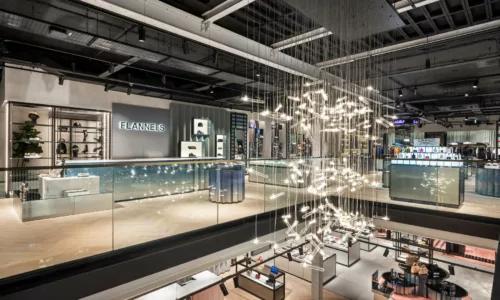
The UKadvertising industry is one of the most influential globally, with London often considered a creative capital for branding and marketing.

HSBCis one of the largest banking and financial services organisations in the world, despite being headquartered in London






What sitting all day does to the body

For decades, one of the most prominent public health messages has been that smoking kills. But another everyday habit, far less dramatic and far more socially acceptable, may also be damaging our health: prolonged sitting.
Many people now spend up to ten hours a day seated at desks, in meetings or in front of screens It may feel harmless, even unavoidable, but growing evidence suggests that too much sitting is linked to serious health risks, including cardiovascular disease, type 2 diabetes and early death
People are often told to protect their health by exercising more and eating better That advice matters, but it misses something important Even those who meet recommended exercise targets may still face increased health risks if they spend most
of the day sittingdown.
This is because sedentary behaviour and physical inactivity are not the same thing Physical inactivity means not doingenough moderate or vigorous exercise Public health guidelinesrecommend at least 150 minutesof moderate activity a week, such as brisk walking or cycling, or 75minutes of vigorous activity,such as running Sedentary behaviour, by contrast, refersto long periods of sitting or reclining with very low energy expenditure, whether at a desk, in front of the television or duringa long commute
Aperson can therefore be physically active and still highly sedentary Someone might go for a run before work, then remain seated for most of the next eight hours The exercise helps, but it does not
Samina Akhtar
PhDcandidate in Population and PublicHealthand a Fogarty Fellow, Aga Khan University
Photo by EFFYDESKon Unsplash
erase the effects of prolonged sitting on the body
When the body stays still for long periods, a series of changes begins to take place. Skeletal muscle activity drops, making it harder for the body to absorb glucose from the blood. Over time, this contributes to insulin resistance, a major pathway to type 2 diabetes. Fat metabolism also slows down.
Blood flow becomes less efficient, reducing the delivery of oxygen and nutrients to tissues This can impair vascular function and, over time, contribute to raised blood pressure
Together, these metabolic and circulatory changes increase the risk of cardiometabolic problems, including high blood sugar, unhealthy cholesterol levels and the accumulation of abdominal fat.
Prolonged sitting also affects the musculoskeletal system. Poor posture and limited movement place strain on the neck, shoulders and lower back, helping to explain the aches and pains so common among office workers
The effects are not only physical Long periods of inactivity can reduce alertness, concentration and energy levels Employees who sit for extended periods often report feeling more sluggish and less productive
Globally, physical inactivity is estimated to contribute to around four to five million deaths each year. Much of the public health response has focused on encouraging people to exercise more, but reducing sedentary time is increasingly recognised as an important goal in its own right.
Since most adults spend a large share of their waking hours at work, the workplace is one of the most important settings for tackling the problem
Offices, universities and hospitals are not just places of productivity They are also environments in which daily habits are shaped and reinforced
Reducing sitting time does not require a gym

membership or a dramatic office overhaul Small, regular interruptions to sitting can make a meaningful difference
Research suggests that standing up or moving for just two to five minutes every 30 to 60 minutes can improve glucose metabolism and reduce cardiometabolic risk
Some organisations are already trying to build this into the working day. Walking meetings, prompts to stand or stretch and short movement breaks between tasks can all help people spend less time sitting.
Workplace design matters too Height-adjustable desks allow employees to alternate between sitting and standing, while accessible staircases and walking routes can encourage more movement throughout the day

Astudy of officesin the UK found that these kinds of measures can reduce daily sittingtime by around one to one and a half hours Employees also reported improvements in energy, focusand musculoskeletal comfort
The message is straightforward: regular exercise is essential, but it does not fully offset the risks of sitting for too long If smoking forced usto rethink the environmentsin which we worked and socialised, prolonged sittingshould force us to rethink the structureof the workingday itself A short walk at lunch,standing during a phone call or simply getting up between meetings may sound like trivial adjustments They are not For modern workers, protectinghealth is not only about moving more before or after work It is also about sitting less while work is happening

Photo





Photo by Markus Sp ske on Unsplash

Manosphereandthe Mask
AreSocial Media Lifestyles Killing Authenticity?
In March 2026, acclaimed British documentarian Louis Theroux released his latest feature for Netflix, Louis Theroux: Inside the Manosphere. The film plunges into the controversial? and lucrative? world of online masculinity influencers known as the ?manosphere.?At its core, the documentary doesn? t just examine toxic online rhetoric: it exposes the mechanics of influence in our digital age and the cultural costs of ultra?curated online lifestyles.
For many UKviewers, the film has sparked a broader conversation about authenticity online and what it means to be an ?influencer?when social media platforms reward controversy, extremity, and spectacle over honesty and real human connection
The Manosphere Meets the Mainstream
Theroux?s documentary follows a cast of online personalities whose social identities are wrapped up in carefully crafted digital personas One of the most notorious figures featured is Harrison Sullivanbetter known as HSTikkyTokky - an English influencer from Essex whose content spans fitness, cryptocurrency and hyper?masculine rants. His provocative statements on women, sexuality and success have made him a magnet for controversy, gaining him a substantial following even as he?s faced legal issues in the UKover behaviour off?camera.
The documentarydoesn? t shy away from these troubling elements, showing how these influencers blur selling styled lifestyles, borderline extremist rhetoric and questionable financial advice to youthful audiences. Much of their appeal liesnot in authenticity, but in aspirational spectacle, images of travels, wealth and ?alpha male?statusthat mask an underlying lack of substance.
Influencer Culture:ShowmanshipOver Substance
In the broader debate about social media lifestyles, this isn? t an isolated case Many influencers have built careers on presenting highly curated halvesof themselves: the perfect home, successful business, glamorous trips Followers consume these experiences asinspiration, yet beneath the polished surface lies a growingsense of dissatisfaction and disillusionment.
Academic research into influencer marketing highlights that perceived authenticity is akey factor in how audiencesrelate to influencers: people are drawn to those who seem ?true?to themselves. However, authenticityexists on a spectrum and is easily eroded when content feels engineered to sell rather than to sharereal experiences [1]
Authenticity doesn? t mean complete honestyor unfiltered life It means consistency ? the alignment
Shutterstock Sergio caballero Lozano
?People are draw n to extrem es online, but the real danger is the erosion of genuine hum an connection.?
Louis Theroux
Lessonsfrom the Manosphere Backlash
If there?s one takeaway from the conversation spurred by Theroux?s film, it?s this: authenticity matters , and audiences know when they?re being fed a script instead of a story The UK's responses reflect a growing intolerance for hollow persona?based influence and a renewed craving for content that feels real, grounded and human
Moving Beyondthe Feed
The broader concern exposed by the manosphere debate isn? t just about misogyny or toxic masculinity; it?s about the system that elevates spectacle over sincerity British conversations about influencer fatiguereflect a collective yearning for a digital culture that values genuine lived experience over manufactured perfection
between what an influencer communicates and what they embody in real life When that alignment breaks down, audiences feel it, and engagement drops. This phenomenon underpins the sense of ?influencer fatigue?that many social media users, particularly in the UK, report today.
AGrowing Backlash in Britain
The release of Inside the Manosphere has coincided with an upswing of criticism not just of manosphere figures but of the broader influencer ecosystem. On social platforms, many viewers are mocking the implausibility of these stylised personas and questioning why they command such influence. One UK?based Reddit thread described the featured influencers as ?absolute clowns?and lamented the idea that such figures might shape the views of young people on relationships and society.
This reaction underscores a deeper unease: as social media becomes central to how many people, especial y younger generations, form ideas about identity, success and masculinity, audiences are realising that curated images aren? t reality What looks like confidence and clarity online may be insecurity, performance and profit?seeking in real life
Even critics of the documentary itself argue that the issue goes beyond individual personalities They
point out that social media platforms?algorithms reward the extreme, boosting content that gets clicks, reactions and outrage, while sidelining nuanced or wholesome voices This, they say, is a structural problem, not simply about personalities
The Cost of Curated Lives
Influencer fatigue manifests in several ways:
Disillusionment - Younger users increasingly see influencer posts as unrealistic and nauthentic, leading to scepticism about aspirational online lifestyles
Attention economyburnout - The constant chase for likes and engagement wears on both creators and audiences Many Britons report feeling tired of highly polished feeds that prioritise image over substance
Identityconfusion - With social media shaping perceptions of self and success, young followers can internalise partial, curated narratives that don? t reflect real life, contributing to anxiety and dissatisfaction.
This cultural weariness is particularly potent in the UK, where debates over social media?s impact on youth, relationships and mental health continue to intensify
This doesn? t mean social media is doomed. But it does suggest that influencers who embrace vulnerability, transparency and relatability ? rather than shock value or curated perfection ? have a stronger chance of maintaining long?term engagement.
For brands and content creators, the implications are clear: audiences don? t just want aspiration - they want connection.
Influencer culture undoubtedly reshaped media and marketing. But as audiences grow weary of highly curation?driven lifestyles, the pressure is on creators to evolve The future of online influence may well lie in relatability over razzle?dazzle,truth over theatrics and community over celebrity - a shift that could restore some much?needed authenticity in the digital world.