






Is it time to plan your bluewater adventure?
● Falmouth to the Azores




● The latest watermakers on the market
● Heyman 43 and Lagoon 38 sea trials
● Fishing tips from a cruising maestro
IT’S BEHIND YOU!

Group test of 10 waterproof backpacks

RORC N’ROLL
We chat with RORC Commodore Deb Fish









GETTING HITCHED Tips on towing your dinghy

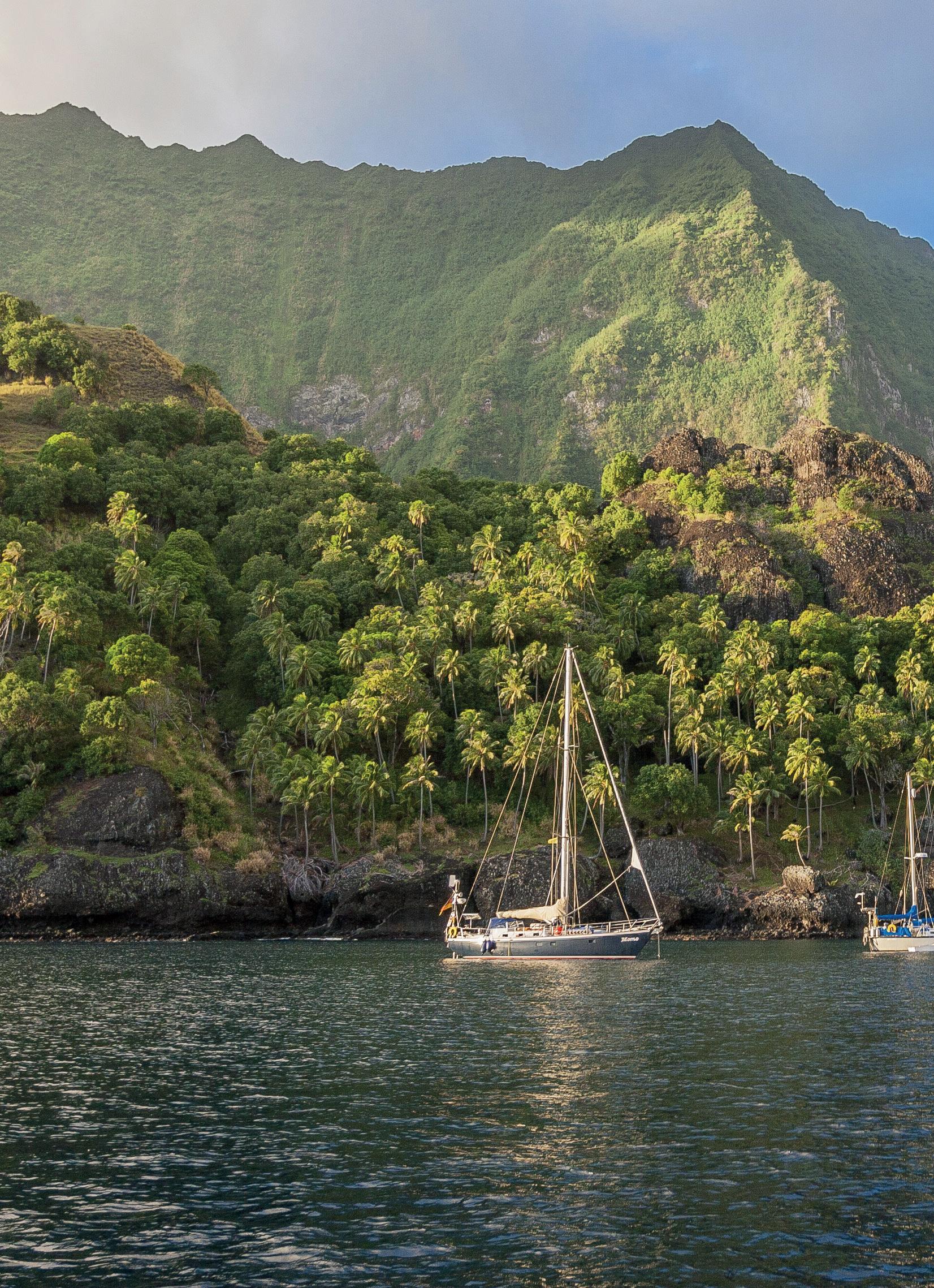


Welcome to the bluewater edition of Sailing Today with Yachts & Yachting. The key with bluewater voyages is not only the journey but the destination, and could there be a better one than the South Sea paradise of Nuku Hiva, Tahiti? It was here that author Herman Melville decided to desert his whaling ship and take an extended turn ashore. Who can blame him?
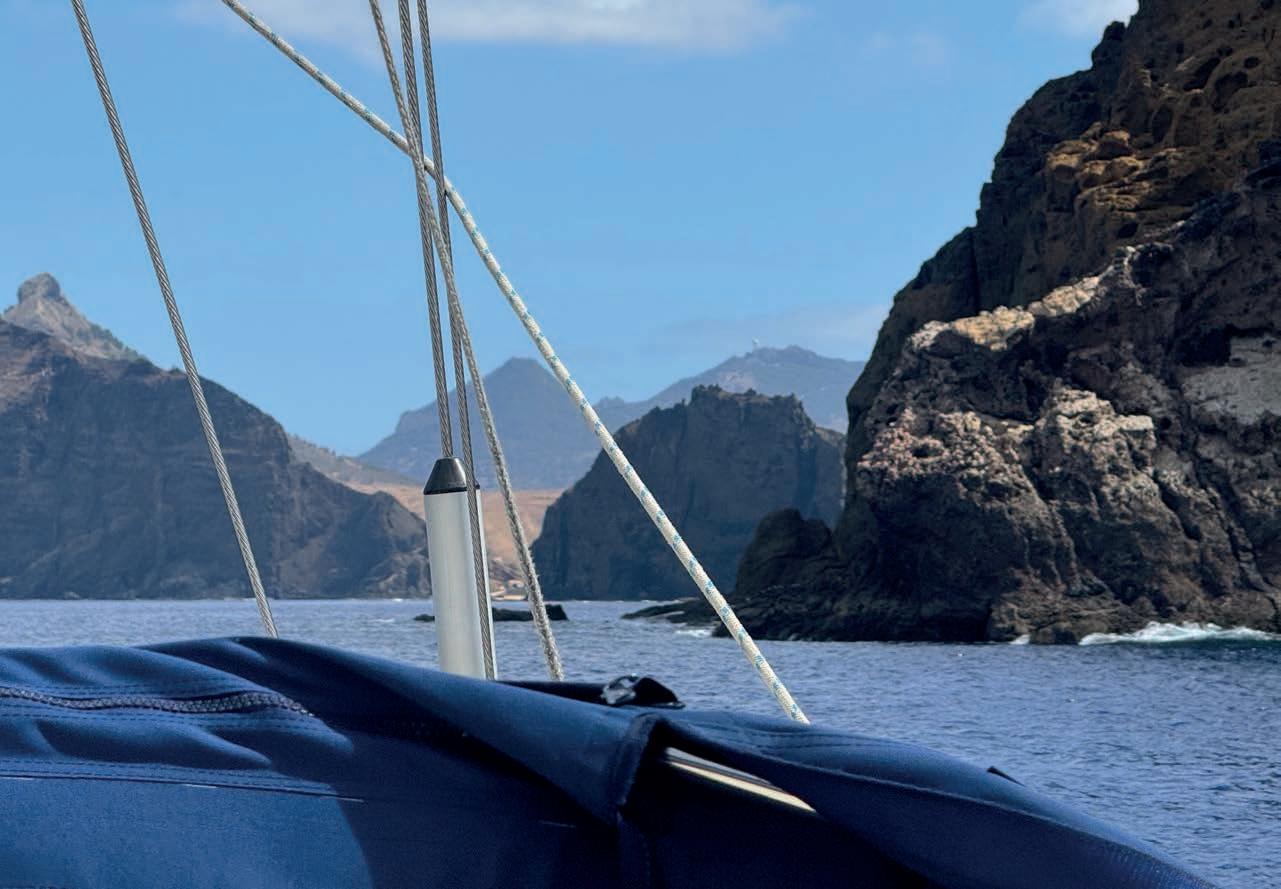
Coastal cruising with a toddler can be demanding enough, but how does family life work on a bluewater passage? Tim Good and his wife, Emmie, sailed from the UK to Madeira with their four-year-old daughter to discover the answer


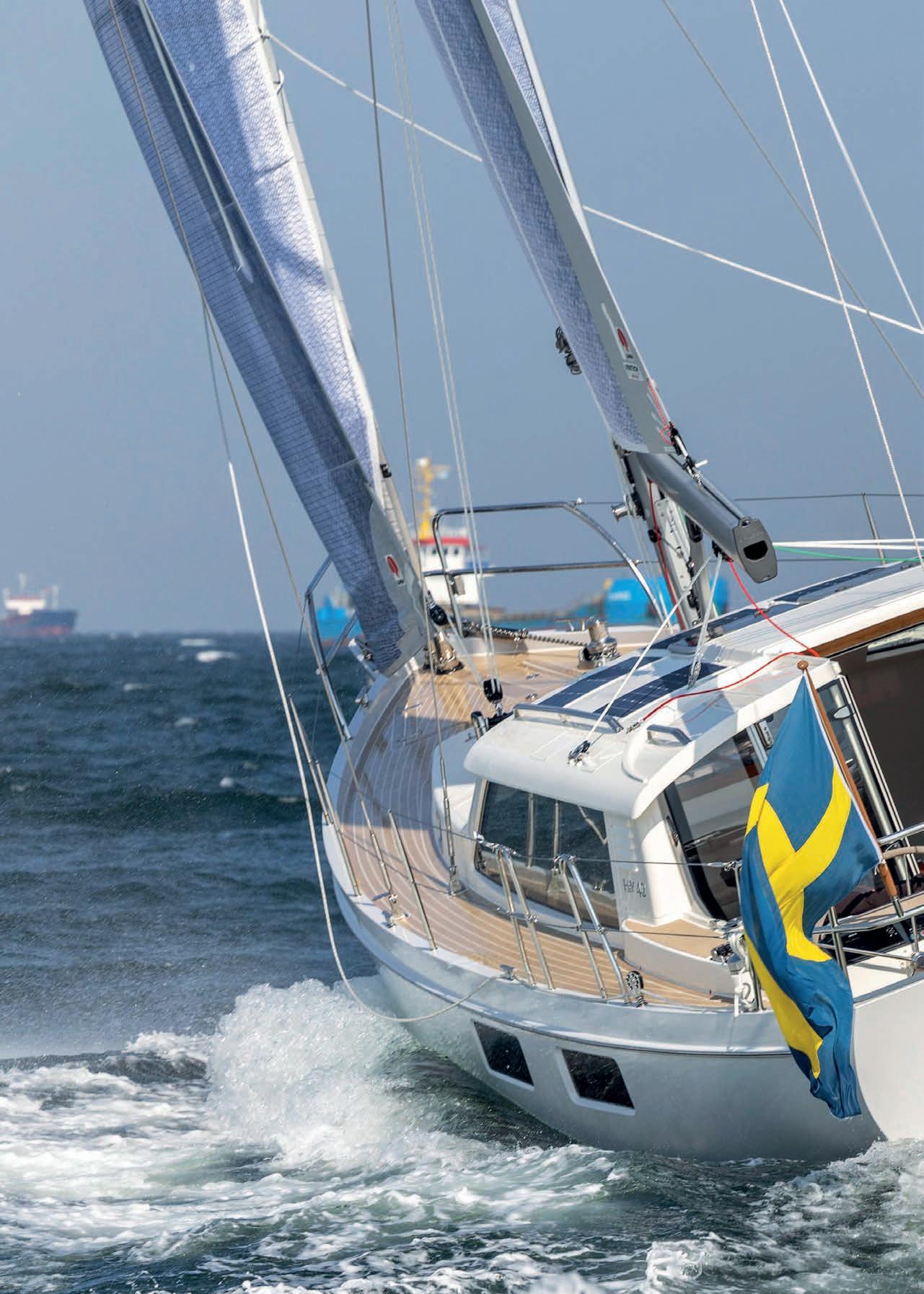
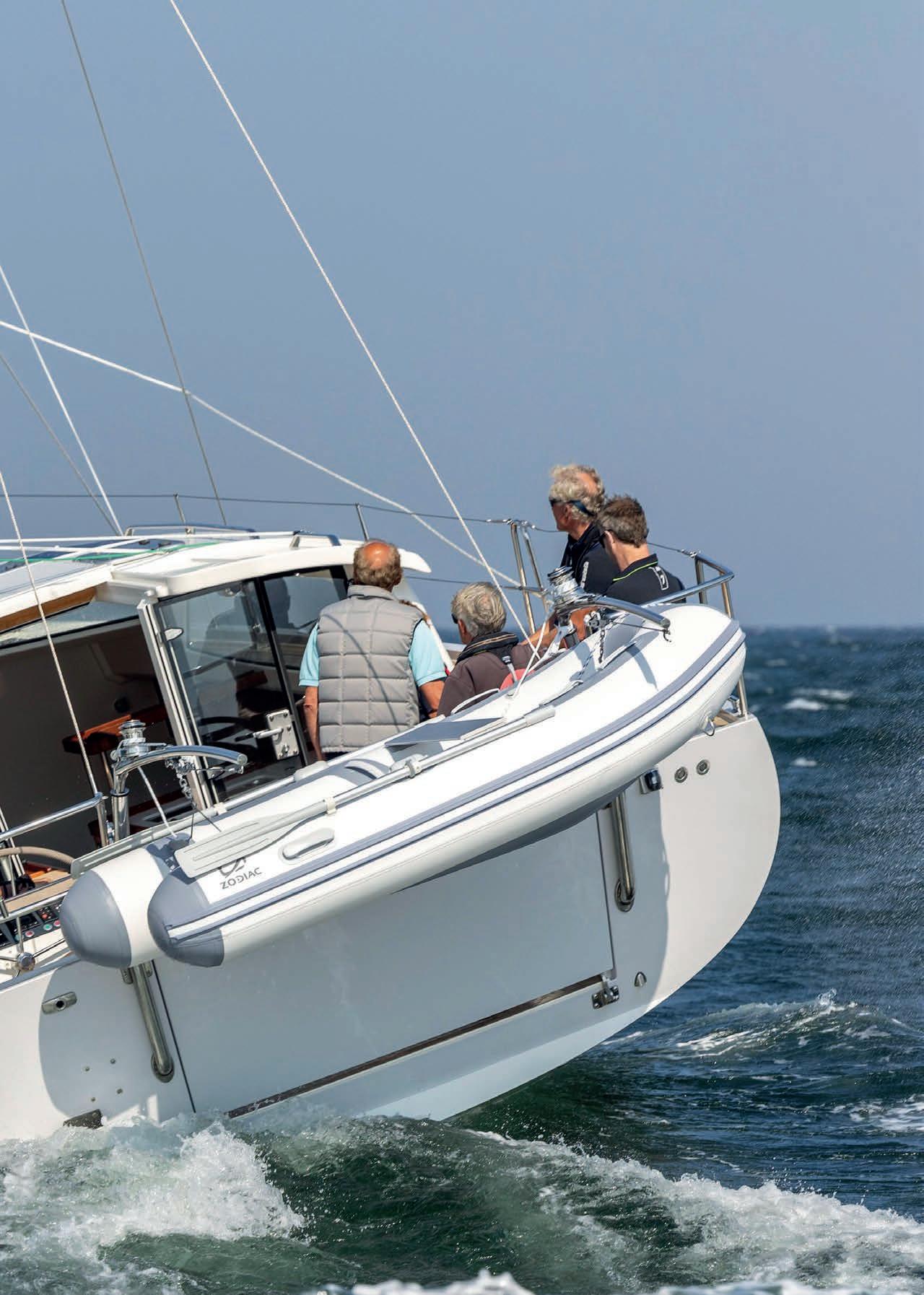
The Heyman 42 is a deckhouse saloon bluewater cruiser that also actually looks good. Sam Fortescue takes her for a test sail
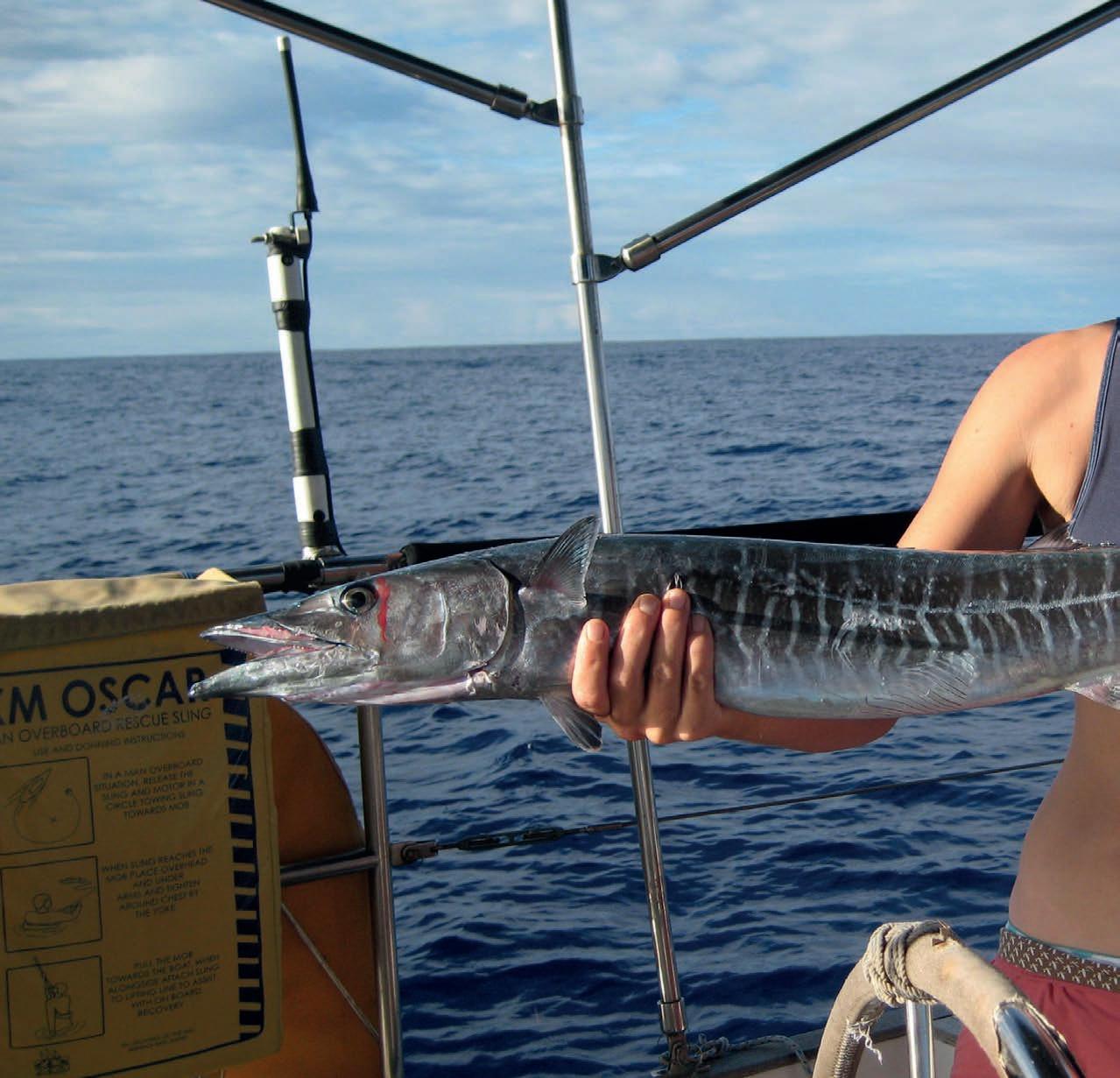
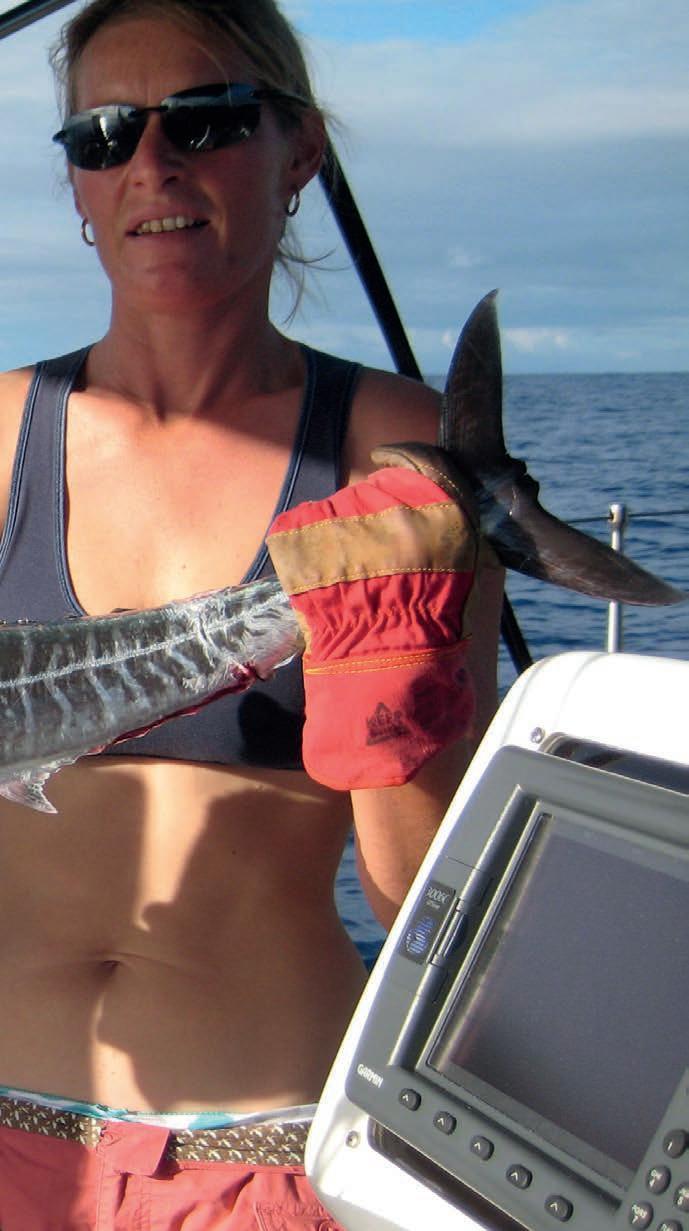
There’s nothing quite like reeling in, landing and eating fresh fish when on passage. Bluewater cruising veteran Rod Heikell provides some expert tips
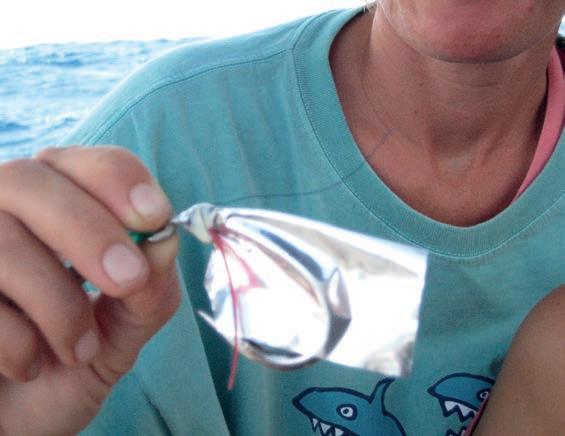
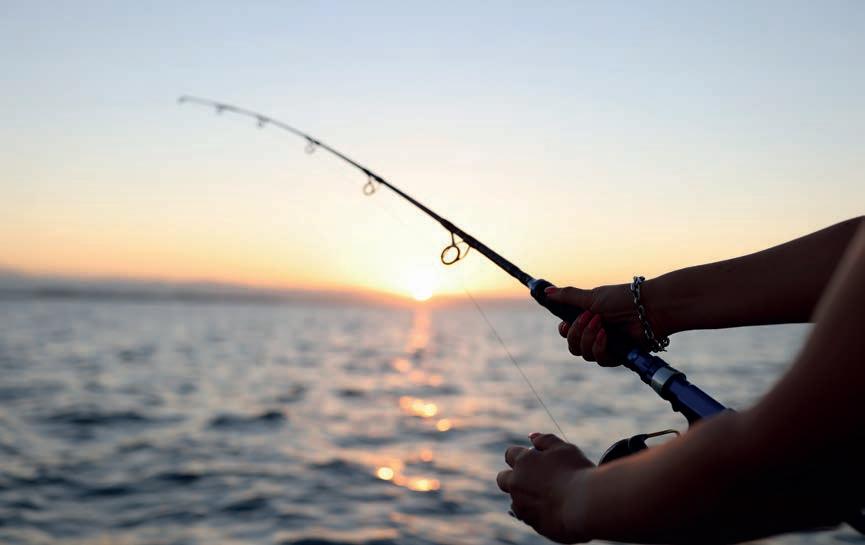
Fishing is a matter of luck with some skill thrown in. We are not the most dedicated boat-fishingwise, but we do troll a line regularly and have a reasonable selection of lures. And we catch fish when Poseidon decides to allow us one of his own.
Killing and bleeding a fish after catching it is an art in itself. The following is based on our experience and should be useful to any other dilettantes out there who have not invested a small fortune in hi tech gear to catch fish. Initially I used a simple line with a bungee on the line to take the sting out of a strike. Lu decided we needed something a bit more sophisticated and bought a nice reel which is mounted on the pushpit. With the reel tension half on the line it will reel out when there is a strike.
We don’t mess around with light line but use a 200lb line with a stainless steel trace on the end. Our lures are a mixture of Rapalla type lures that look like blue or red mackerel or exoticallycoloured squiddy things. We also make some simple lures out of shiny tinfoil (crisp and nut packets are good) tied on the shank of a hook with thread and trailing a plastic streamer.
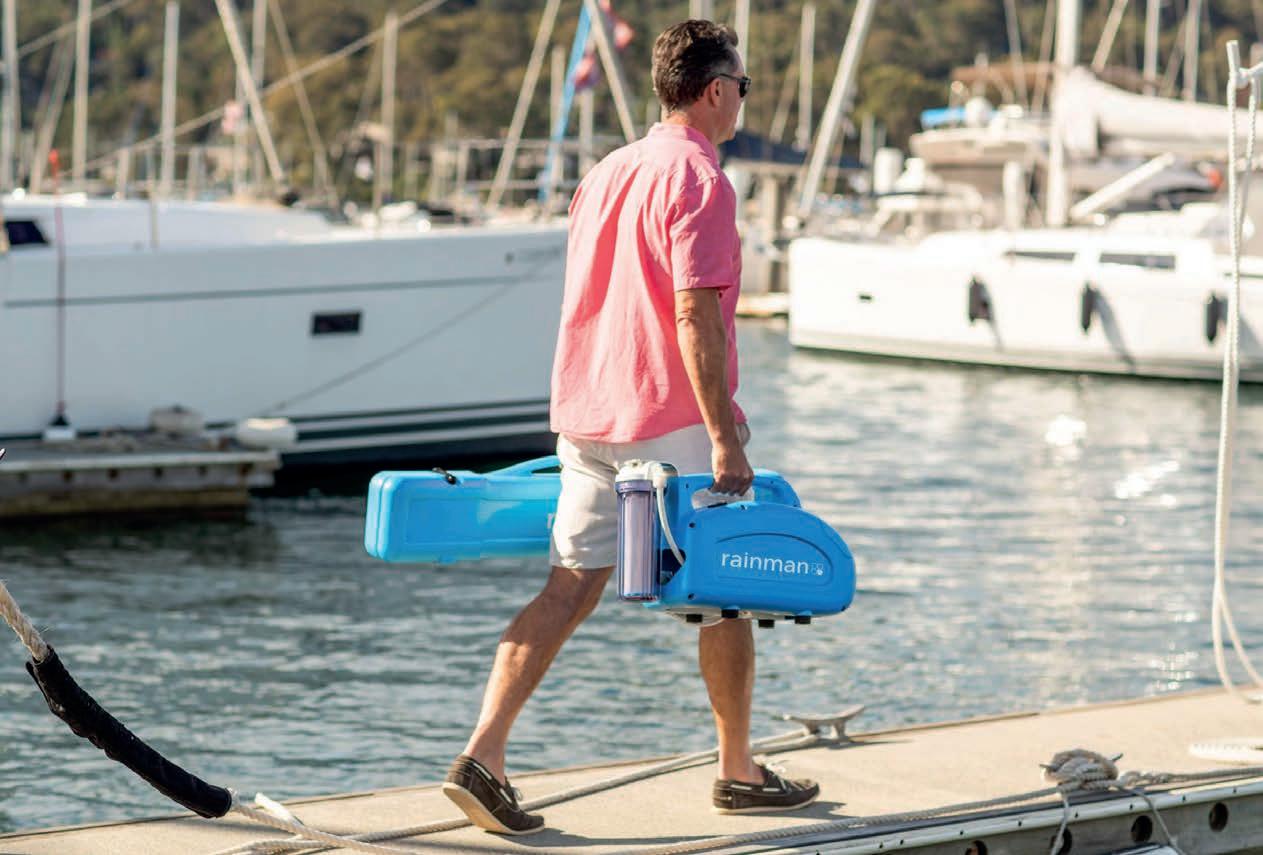
A watermaker is now a standard piece of kit for offshore cruising. Sam Fortescue considers some of the best options on the market
No longer do bluewater cruisers need to pile the saloon to the headlining with pallets of mineral water. In fact, you don’t even need to ration water during an ocean crossing these days, thanks to the ubiquity of the watermaker.
There are half a dozen brands tailored to cruising boats, and they all use the same principle of reverse osmosis – squeezing water through a very fine membrane that separates out the salt, minerals and other contaminants. The result is usually very pure tasting water that will outclass the inevitable tank taint from the mains.
ABOVE
Plenty of options including portable units
It requires a lot of pressure to achieve this – some 8001,200psi. So, watermakers need reliable high-pressure pumps and robust construction. The majority of the water is rejected as brine, rather than passing across the membrane, so the system must do a lot of work to produce meaningful amounts of drinking water. This makes efficiency a critical factor – the more so that boats have such limited means of generating power at sea. The best performers re-use energy from the high-pressure side of the system to pressurise incoming water, saving 50-90 per cent in the process. Only Dessalator and Rainman deliberately avoid energy recovery, arguing that this eliminates another source of breakdowns and helps keep the membrane in better condition. All the same, the power requirements of different units vary considerably –from 110W for the most efficient DC units, to over 1.5kW for bigger AC systems. If balancing the on-board power equation is a concern, you should certainly look at the table to the right to identify how much power each model consumes, and which give you the best ratio of Watts per litre. Results vary from a frugal 3.7Wh per litre to a lavish 25Wh/litre.