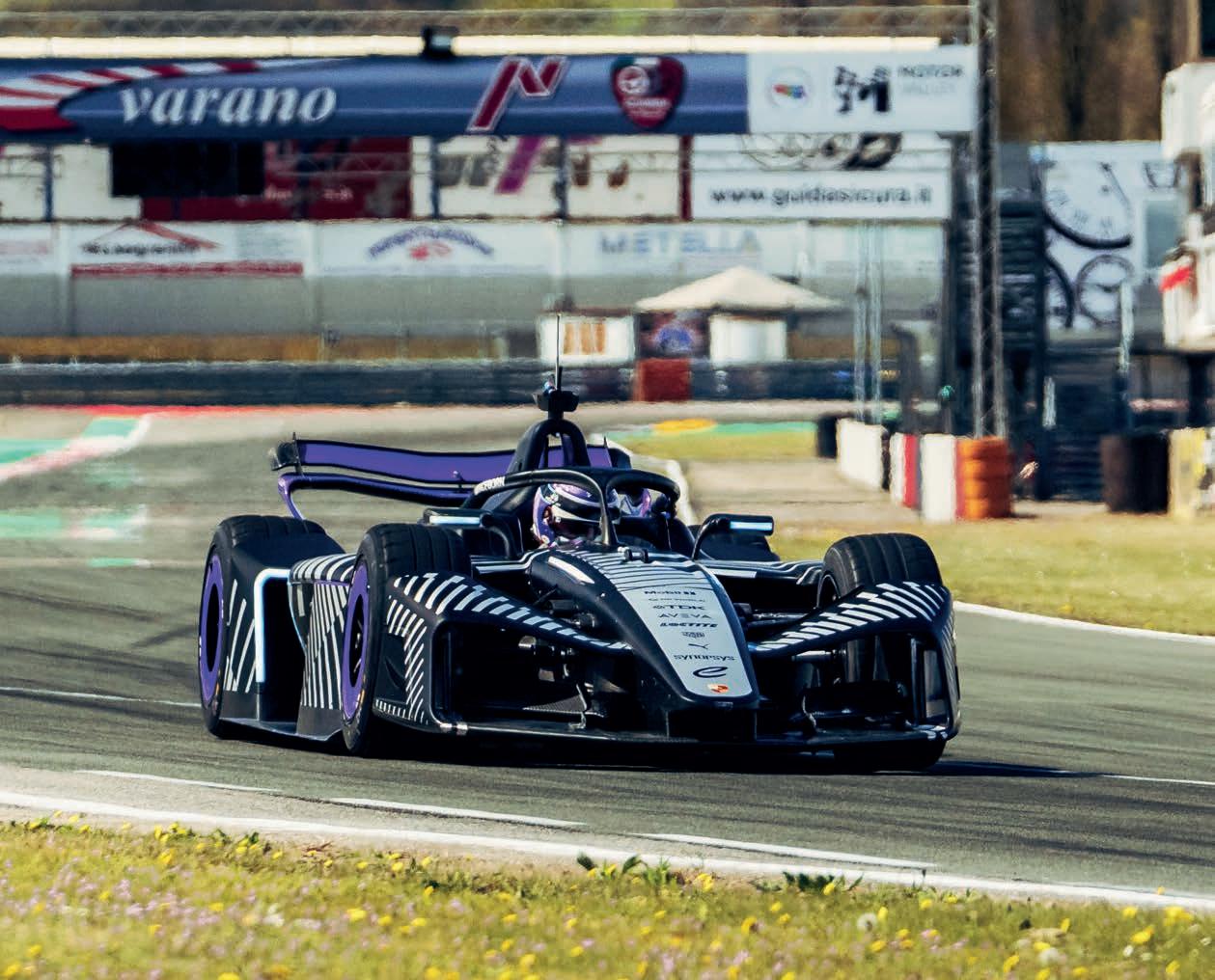
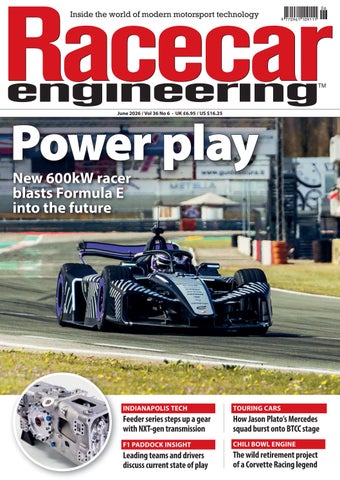


New 600kW racer blasts Formula E into the future



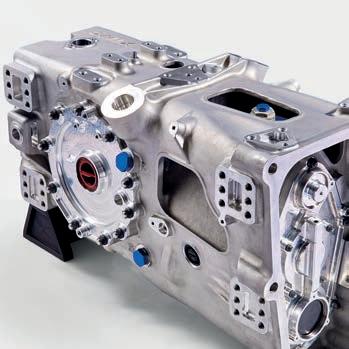

Feeder series steps up a gear with NXT-gen transmission
Leading teams and drivers discuss current state of play
How Jason Plato’s Mercedes squad burst onto BTCC stage
CHILI BOWL ENGINE
The wild retirement project of a Corvette Racing legend
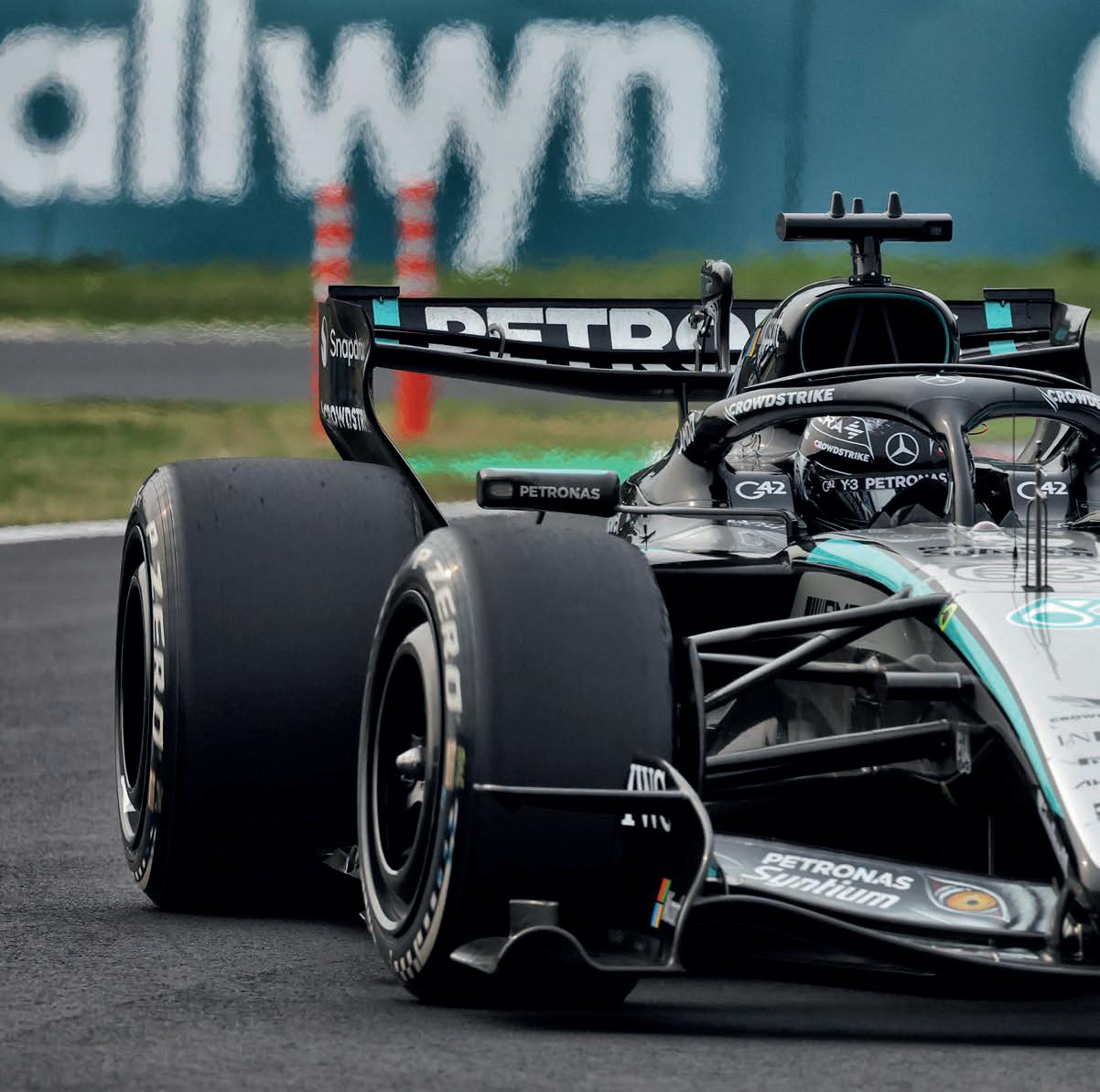
How the grand prix pecking order has shifted as teams and power unit manufacturers get to grips with the challenging new rules
By JAMIE KLEIN
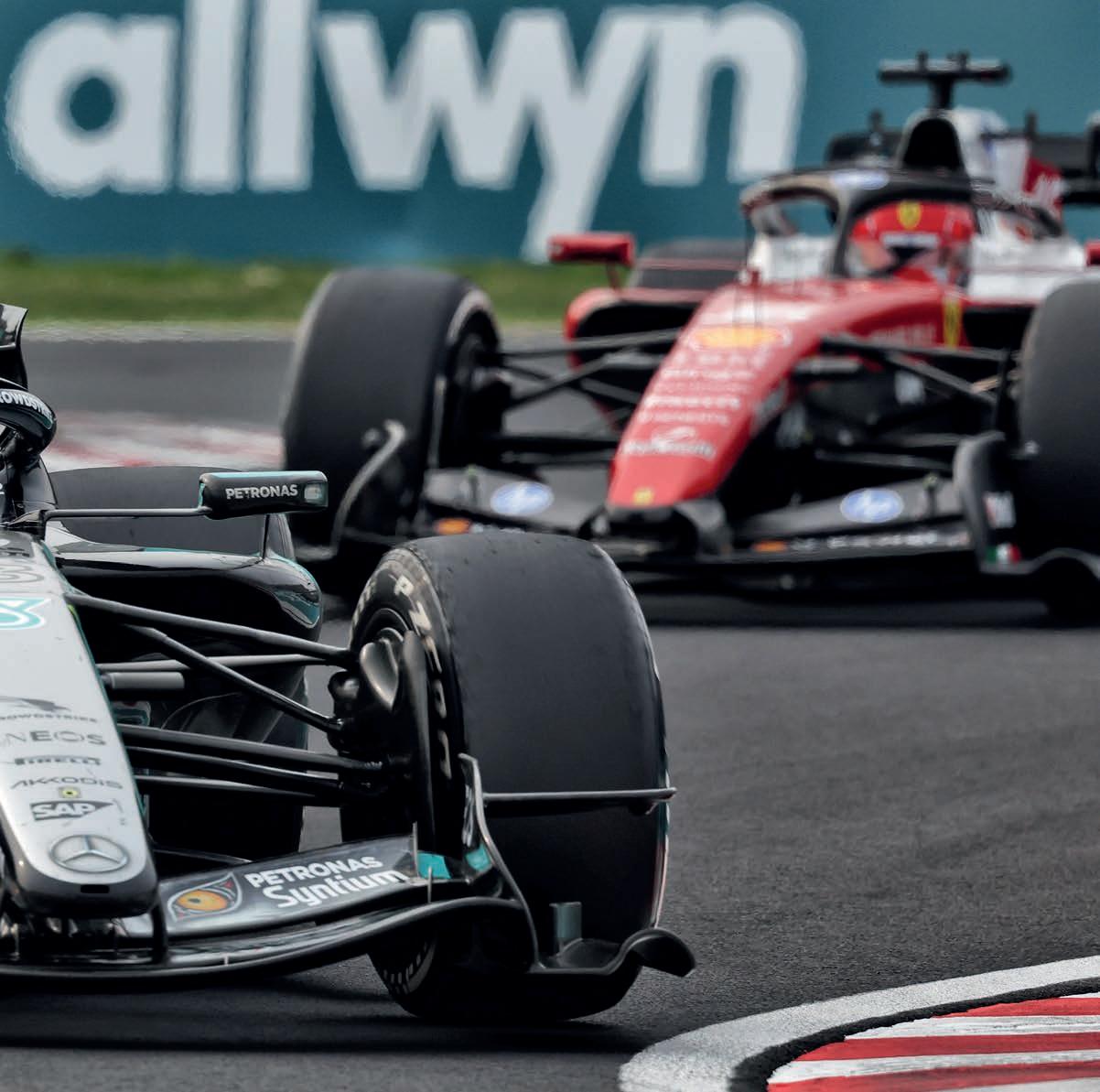
Formula 1’s dramatic regulations overhaul for the 2026 season may have sharply divided opinion among fans and drivers, but there’s no doubt it has presented teams with a new and intriguing set of technical challenges.
Terms like ‘super-clipping’, ‘deployment’, ‘overtake mode’ and more have entered the F1 lexicon, with the arrival of a new generation of power units that rely on a roughly 50 / 50 split between internal combustion and electric power. And with the power unit having become a much larger
performance differentiator than it has been in recent years – more specifically, mastering the constant recharge / deploy cycle that the regulations have made a necessity – it comes as little surprise that the competitive order among the teams has also been shaken up.
Many predicted Mercedes would return to its former pre-eminence, and so far that has been the case, with three wins out of a possible three in Australia, China and Japan, including two 1-2 finishes.
Ferrari established itself as best of the rest in the opening two races, but the Japanese Grand Prix at Suzuka provided evidence that it faces tough competition from McLaren, which has the advantage of the choice Mercedes power unit.
Red Bull, meanwhile, which seemed to hit the ground running reasonably well in pre-season testing, has slipped into the upper midfield with its new Ford-branded PU, with Haas and Alpine proving its immediate rivals. Racing Bulls and Audi are also part of the midfield group, with Williams lagging behind,
The Blue Oval will enter the WEC fray in 2027, with its own engine and an ORECA chassis. Technical director, Dan Sayers, updates on progress
By ANDREW COTTON
The return of the Blue Oval to the top tier of endurance racing has been a long time coming but, once the decision was taken and the green light illuminated, it became a race to prepare for the 2027 FIA World Endurance Championship season.
Bringing a team together across three countries on two continents was the first challenge, as Ford sought to establish a cohesive team of engineers, mechanics and drivers. Meanwhile, engine and hybrid development continues on schedule, with the chassis due to be received from ORECA by the end of June, and testing slated to start in July. That’s not a lot of time to prepare to win.
Ford’s last factory endurance programme was the GTE project that ran between 2016 and 2019, using the spectacular Ford GT. The road and race versions of the car were
developed in parallel. The latter claimed victory in the GTE-Pro class at Le Mans in 2016, half a century after the company’s famous first outright win.
After Ford’s withdrawal from GTE, four Le Mans editions passed without one of its cars on the grid, until 2024 when the WEC’s adoption of GT3 regulations paved the way for a comeback with the Mustang, albeit in an independent team’s hands.
Although that returned Ford to Le Mans, the manufacturer harboured ambitions of returning to the high table, reigniting its historic rivalry with defending winner, Ferrari.
Ford’s last factory endurance programme was the GTE project that ran between 2016 and 2019
Ford was originally slated to join Hypercar from the outset of the class, which has been around since 2021, and consequently was influential in the LMH rule set’s formation. At the time, the manufacturer was focusing on electrification of its road car model range and was drawn to negotiations by the prospect of powerful hybrid systems and open software development.
The problem was, the amount of hybrid energy that could be used was drastically reduced as costs started to escalate, and a link between the WEC and the IMSA Sportscar Championship became more important.

Convergence between the LMH and LMDh regulations meant the hybrid element was somewhat castrated, and Ford lost interest.
Despite this, the company kept a weather eye on how the regulations were developing. It finally committed to join in January 2025, though only for the WEC (the IMSA project will have to wait at least one more year) and with an LMDh car, which uses a spec hybrid system.
Following in the footsteps of Peugeot and Genesis, Ford is setting up its own in-house Hypercar race team. However, it has brought on British engineering and manufacturing company, Venture Engineering, to help with the job and provide track support, alongside Ford’s own engineers. The engine is being developed at Ford’s powertrain facility in Dearborn, Michigan, and the chassis at ORECA in the south of France, prior to delivery to the UK.
‘It’s a pretty busy time at the moment,’ says Dan Sayers, Ford’s LMDh programme manager, who took up the post following an extended period as head of technical operations at Red Bull, and then programme director of Red Bull Powertrains. Prior to that, he was technical director at Aston Martin Racing, fighting against the Ford GTE.
‘I’m viewing progress with the powertrain group,’ continues Sayers, ‘so the first engine is complete and on the dyno, and has been testing now for a period of time. It’s going through the basic calibration tasks and now
Dan Sayers, Ford’s
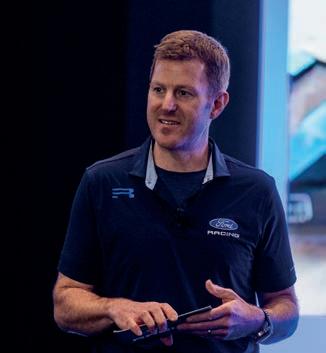
‘It’s the first engine we have done in-house, in terms of a performance and competition race engine’
Dan Sayers, WEC Hypercar technical director at Ford
we are starting development of certain aspects of performance. It’s the first engine we have done in-house, in terms of a performance and competition race engine.’
The power unit is a 5.4-litre, normally aspirated V8, based on the manufacturer’s Coyote block, also found in the Mustang GT3. Previously, Ford contracted Roush to develop the 3.5-litre, twin-turbo V6 found in its GTE car.
The models on which the car is currently being developed are all digital, the teams in the US and the UK needing to press on while they wait for delivery of the ORECA chassis from France
In the Hypercar class, maximum power is regulated by Balance of Performance, with a target of 520kW. This can come from either the internal combustion engine only, or a combination of ICE and hybrid power. One of the key development parameters therefore is to make the engine work in harmony with the hybrid system to follow the prescribed power curve as closely as possible, in all conditions. Breaches of that curve lead to penalties and not reaching it means the car will concede competitiveness.
‘Just down the road [from the engine facility], the hybrid system is running on the full powertrain dyno,’ says Sayers. ‘It’s important to get all the software communications and the looms, to make sure everything is working. Right now, the team is running through the hybrid characterisations. We haven’t yet mated the two together, but that’s coming up in the next couple of weeks [in May].’
At the same time, the team is working on the simulator in the US, but finding limitations as there is no real-life model to correlate data with. At time of writing, the team didn’t even have an ORECA buck on the sim model, nor the final steering wheel with the controls for the drivers to practice with. These are all on their way, and there is still work that can be done, but it’s not ideal for development.
The models on which the team is working have mostly been created in the digital world to give an idea of what to expect, and Ford is

The FIA World Endurance Championship has, for now, gone dark on the Balance of Performance gures. Racecar asks why
By ANDREW COTTON



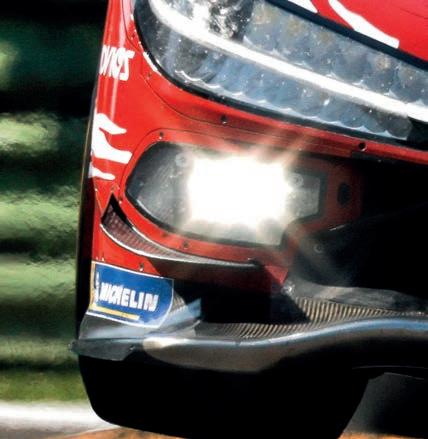



Balance of Performance (BoP) was introduced to the top class of the FIA World Endurance Championship when the Hypercar era began in 2021. The idea was to give all competing manufacturers an equal chance to win, while also keeping costs under control. A lack of incentive to develop hardware, plus strict testing rules and an e ective BoP would, hoped the organisers, be enough to prevent manufacturers investing even more heavily in test programmes.
Ever since that introduction, BoP has been a hot topic of debate, despite e orts by the FIA and ACO governance to quash such conversations. Threats to the teams were adhered to in most cases, but some slipped under the radar and team members consequently received penalties. In 2024,
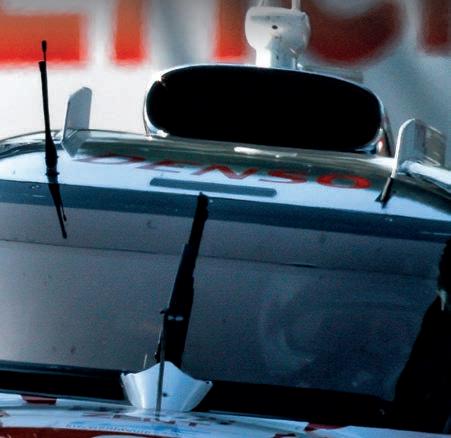
Toyota team director, Rob Leupen, was sanctioned with a suspended €10,000 ne for comments made to a journalist about BoP, which the stewards deemed in contravention of the WEC sporting regulations and the FIA International Sporting Code. Championship organisers wanted the focus to be on the racing, but the BoP was accused of being a contributory factor to deciding races. Manufacturers, meanwhile, were running the gures through their own simulations and accurately predicting race results. Now, there is a concerted e ort to prevent those in the paddock from even seeing the BoP tables. And that includes Hypercar tyre manufacturer, Michelin.
This leads to two schools of thought: one is that the teams have the engineers to play the game, and if they don’t know the rules
they can’t play it; the other is that if BoP a ects the outcome of the race, it should be public knowledge.

The reason for the blackout this year, say the FIA and ACO, is that without access to all the data, including the original homologation parameters measured by the organisation, the actual BoP gures are meaningless. And misinterpretation of them is why they are stamping down on the practice of even speaking about it.
‘When we homologate the car, they are very close,’ says Bruno Famin, new deputy director of competition at the ACO, who joined in March from Alpine’s Hypercar team.
‘After that, of course we cannot capture 100 per cent of the performance, and that is not
‘We cannot capture 100 per cent of the performance, and that is not the goal. The goal is to capture, during homologation, the first order parameters’
Bruno Famin, deputy director of competition at the ACO

HWA’s new Nürburgring racer looks like it’s been plucked from a ’90s DTM grid, but underneath it features the latest motorsport tech
By DANIEL LLOYD
Racing to win is fundamental to our sport, and teams delve into the details to obtain a miniscule edge over rivals running similar machinery. But motorsport would be far less enriching without its quirky entries; the ones that don’t necessarily have a shot at overall glory yet capture the viewership’s affection.
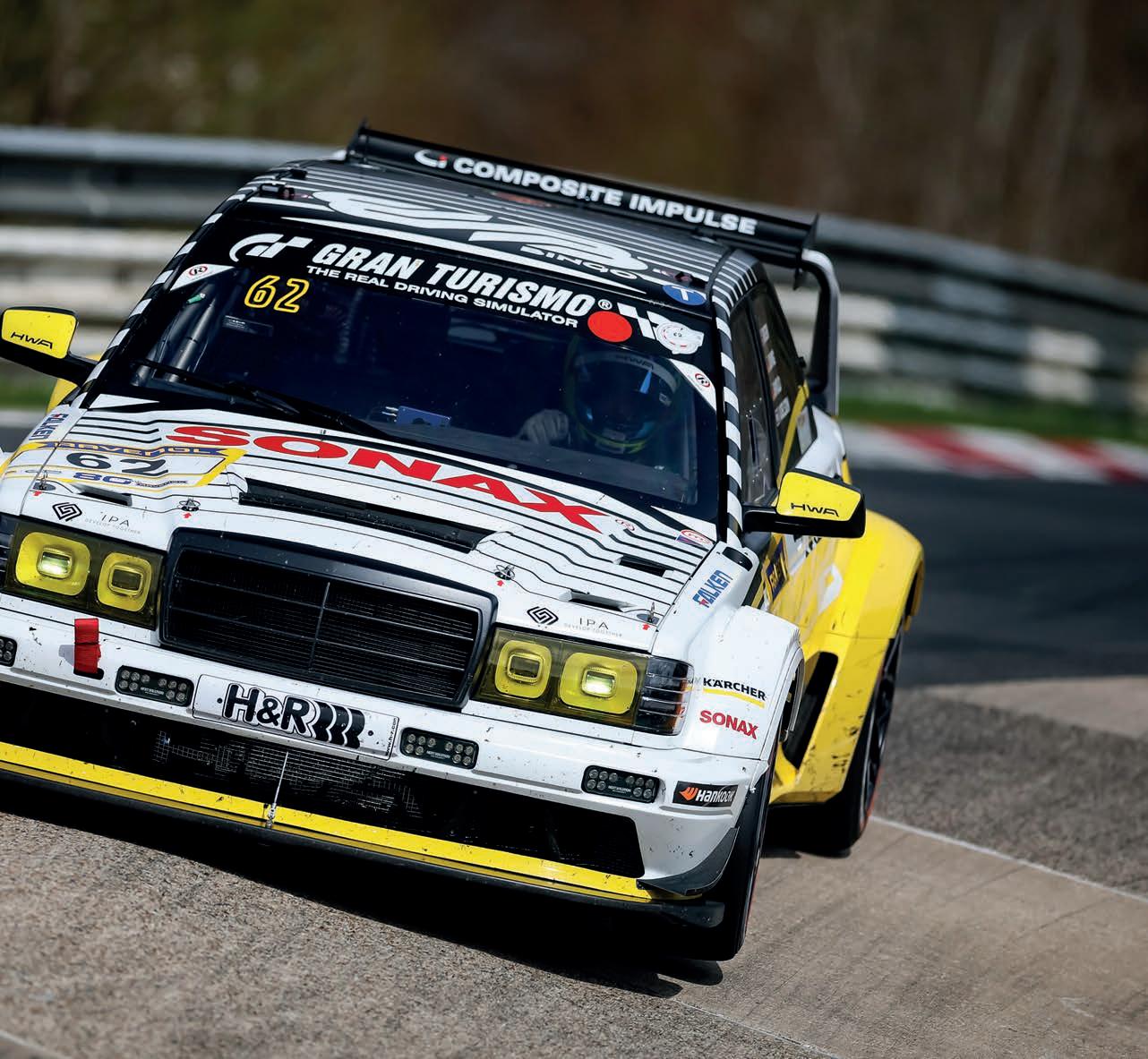
The annual Nürburgring 24 Hours has a track record for producing such fan favourites. Notable examples include the ‘foxtail’ Opel Manta that featured for almost 30 years, a Volkswagen T4 Caravelle van that raced in 2000 and, more recently, a turbocharged Dacia Logan. This year, a new cult hero may well emerge. HWA, the company that built Mercedes’ GT3 cars for 15 years, has developed its own 24-hour challenger called the HWA Evo.R, and entered three of them into the gruelling race on 16-17 May.
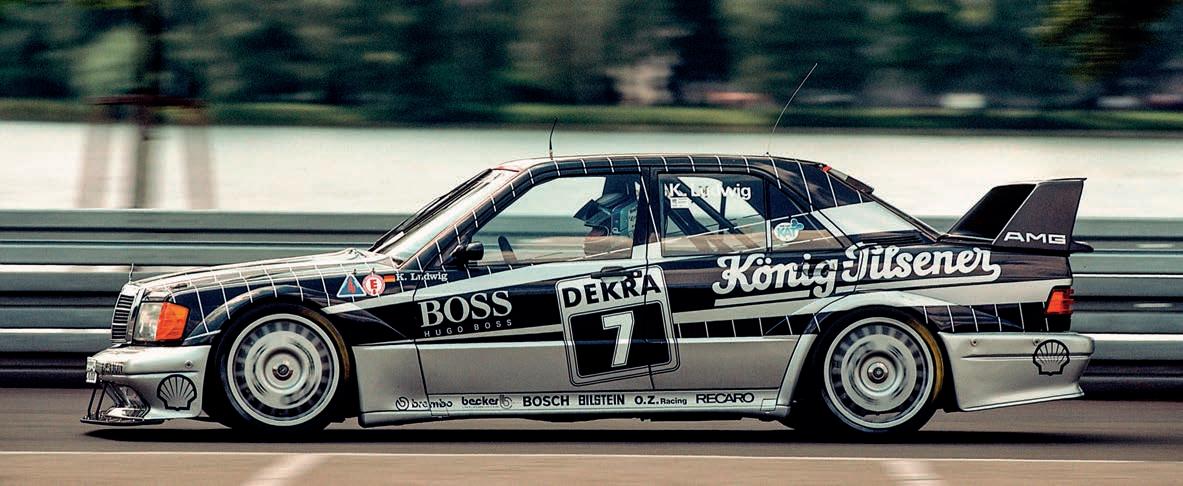
The Evo.R is a bespoke competition vehicle, extracted from the production HWA Evo that is being built to 100 units and uses a Mercedes 190E (aka W201) chassis to invoke the three-pointed star’s successful DTM cars of the 1990s. Riding on the coat tails of a broader ’90s nostalgia wave, HWA is eager to appeal to the discerning and enthusiastic Nürburgring fan base.
The reason why the Nürburgring 24 Hours attracts so many oddball entries is because its organisers can accommodate them. Whereas the 24 Hours of Le Mans has three categories of car (Hypercar, LMP2 and GT3), the series based at the Nürburgring has almost 20.
One of those, SPX, is reserved for experimental machinery not homologated to a rule set like GT3, GT4 or TCR. This can be used for new technology but is where the boxy HWA Evo.R will race in 2026, alongside BMW’s M3 Touring – a car that started life as an April Fool’s Day joke last year.
HWA isn’t expecting to compete for outright honours with its retro-looking racer. Instead, it expects to run third string, behind the GT3 and Porsche Cup cars, and ahead of the GT4s. Pace-wise, that should put it on the edge of the top 50 in what is set to be a capacity 150-car field.
The starting point for HWA’s Nürburgring effort is the road-legal Evo, a very loose interpretation of the restomod craze. HWA’s goal for the Evo is to reimagine the Mercedes 190E 2.5-16 Evo II, an iconic production car that Mercedes built in 502 units to satisfy the DTM’s homologation requirements.
From the outset, HWA wanted to create a new, classic-looking road car that would also be at home on the track. Plans were made for a souped up ‘Affalterbach’ version, named after HWA’s hometown, that made the car a two seater and unlocked an additional 50bhp. However, this was still intended for noncompetitive track day usage, not the world’s toughest circuit endurance race.
That changed in the summer of 2024 when an HWA delegation attended the Monterey Car Week in California. After visiting the Pebble Beach and Quail shows, HWA CEO, Martin Marx, stood trackside at Laguna Seca and declared that he felt much more comfortable there than on the manicured lawns of the concours d’élégance
‘Martin was involved in creating the SPX class, as he was part of the ADAC as a technical consultant a while ago,’ relates Gordian von Schöning, chief technical officer at HWA. ‘Out of the blue, he said, “Why don’t we take the car to the Nürburgring?”’
After some internal discussions, work began in late 2024 to tune the HWA Evo more specifically for competition. Basic changes
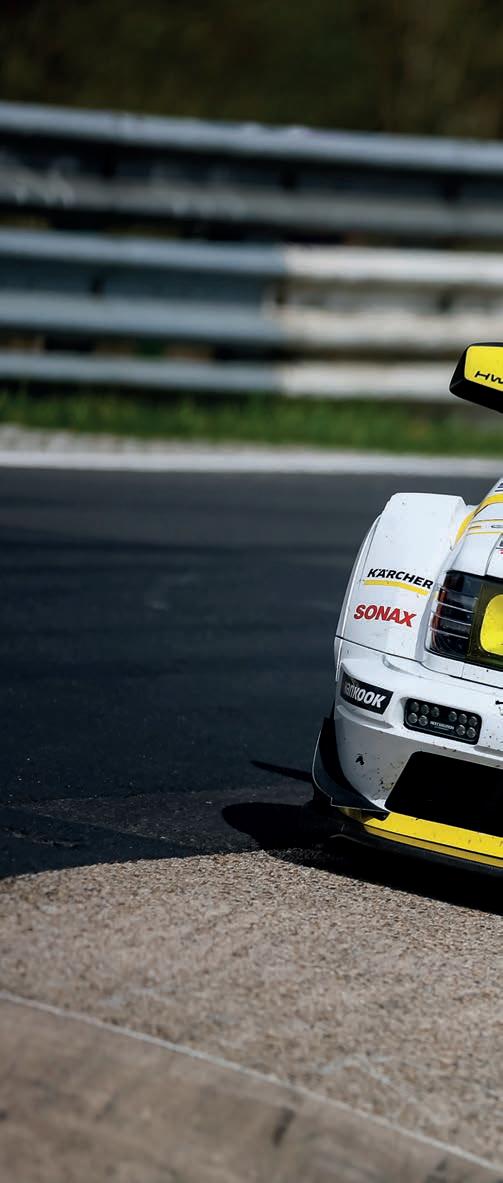
From the outset, HWA wanted to create a new, classic-looking road car that would also be at home on the track… That changed in the summer of 2024

It might look like a Mercedes DTM car from the ’90s, but the
well suited to modern endurance
How an ex-Corvette crew chief turned to dirt midget racing, and built a unique three-cylinder power unit to compete
By BOZI TATAREVIC
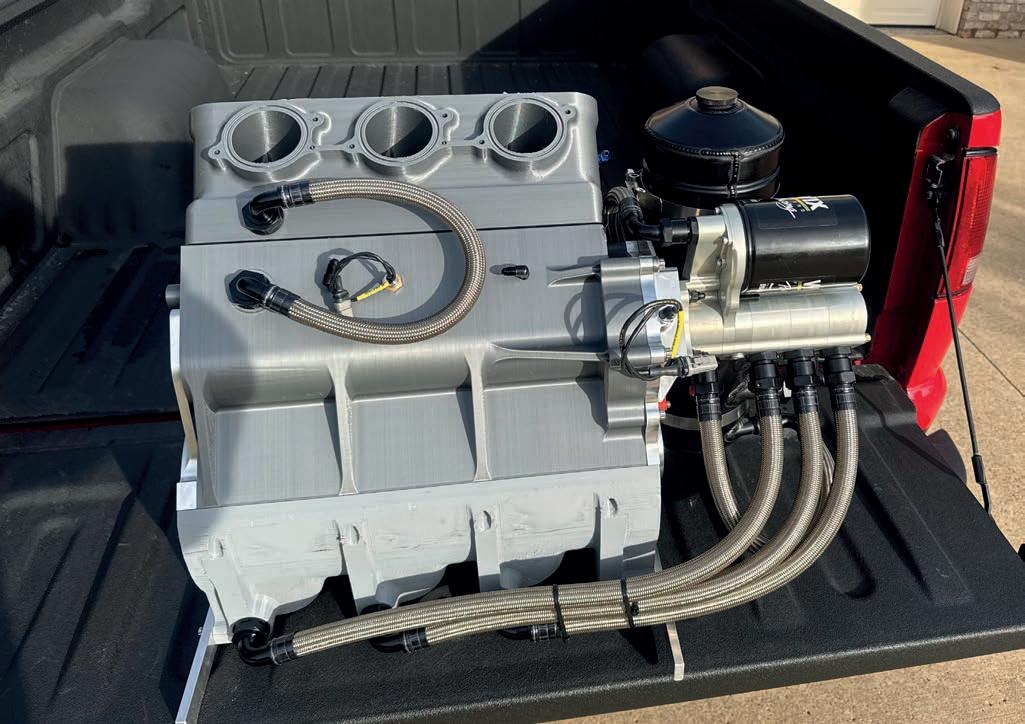
Cutting a Corvette C6.R engine in half may, on the face of it, seem counterproductive, but one mechanical mastermind used the proven power unit as a pathway to a new, lighter engine for dirt oval racing.
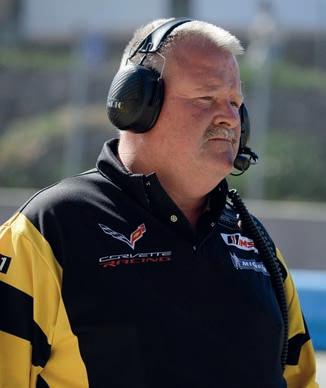
Dan Binks is best known for his wins at Le Mans and Daytona, alongside countless other race victories, as crew chief at Corvette Racing. Since his retirement from that role, he’s embarked on a new adventure. Rather than taking up gardening, Binks now takes on engine builds and projects in endurance racing under his Binks Motorsports banner. He also indulges his passion project of creating cars and engines for dirt oval racing.
After retiring in 2020, Binks set out to build his first engine for the Tulsa, Oklahoma-based Chili Bowl Nationals, a six-night midget car
race extravaganza that takes place on an indoor dirt oval. The rule book for the Chili Bowl, as it has become known, is fairly simple, allowing Binks to experiment with some of the parts he had purchased from vendors he met in his Corvette Racing days.
Engine rules are wide open when it comes to dirt midget racing, and builders have considerable freedom, provided the engine has four cylinders, or less, and a displacement under 166ci (2.72-litres).
The first goal Binks set was to compete at the Chili Bowl, and he examined a few engine options already on the market, but ultimately decided he could better invest the money he’d have to spend on buying someone else’s engines into creating something of his own.