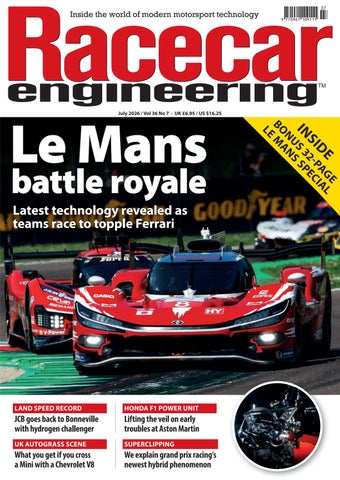

Le Mans




Latest technology revealed as teams race to topple Ferrari






LAND SPEED RECORD
JCB goes back to Bonneville with hydrogen challenger
UK AUTOGRASS SCENE
What you get if you cross a Mini with a Chevrolet V8
HONDA F1 POWER UNIT
Lifting the veil on early troubles at Aston Martin
SUPERCLIPPING
We explain grand prix racing’s newest hybrid phenomenon


Energy crisis
With its new power unit regulations, F1 has reached a dead end. Racecar explains where the problems with energy management lie, and what superclipping actually is
By CHRISTIAN MENATH
In the run up to Formula 1’s technical revolution, Racecar Engineering reported extensively on the approaching changes. Readers are therefore unlikely to be all that surprised by what has transpired in the opening races of the 2026 season.
There had already been doubts and criticism of this power unit formula, but now it is a certainty and a reality. Extreme energy management has long since become synonymous with a perceived decline in the quality of grand prix racing. The last power unit regulations, introduced in 2014, were already an efficiency-focused formula. The maximum fuel flow was limited to 100kg/h at 10,500rpm. In addition, there were two electric motors, one on the turbocharger and one on the crankshaft, but the combustion engine still provided around 800 of the roughly 1000bhp the system was putting out.
The focus then was on production relevance and fuel efficiency; energy was already in short supply. Efficient engines were always important during races, as it meant carrying less ballast in the form of fuel on board but, at least in qualifying, drivers could open the fuel tap without a guilty conscience.
With the 2026 regulations, the focus on efficiency has been taken to the extreme. Energy is an even scarcer commodity now, so fuel flow has been capped at 3,000MJ/h,
As the MGU-K is mounted on the crankshaft, it only delivers braking force at the rear axle… [so] during a braking manoeuvre, not even half the battery can be charged
a reduction of around 25 per cent on the 100kg/h rate of old. Nevertheless, the power output remains more or less constant. This can be explained by a significantly more powerful electric motor (MGU-K) on the crankshaft, which now delivers 350kW instead of the previous 120kW.
But the electricity for one’s hairdryer at home doesn’t come directly from the socket any more than the electricity for an F1 car’s MGU-K comes directly from the battery. Rather, the energy for the MGU-K must be fed in beforehand. This process is called recuperation.
Braking energy
The most efficient way to charge the battery is during braking. Kinetic energy, which would otherwise be converted into heat at the carbon discs, is converted into electrical energy by the MGU-K. The term MGU-K stands for motor generator unit – kinetic. During recuperation, the electric motor acts as a generator. As such, it is permitted to operate at the same power output as a motor, so 350kW. The problem is that recuperating only while braking is not enough.
Battery capacity has not changed compared to 2025; a maximum of 4MJ is still permitted. A larger unit was out of the question for weight reasons, but it would also not make much sense because it is not entirely straightforward to charge the battery. As the MGU-K is mounted on the crankshaft, it only delivers braking force at the rear axle. The front axle, where almost 60 per cent of the car’s total braking power is generated, is decelerated via the mechanical, carbon / carbon braking system on the car. This means that during a braking manoeuvre, not even half the battery can be charged.
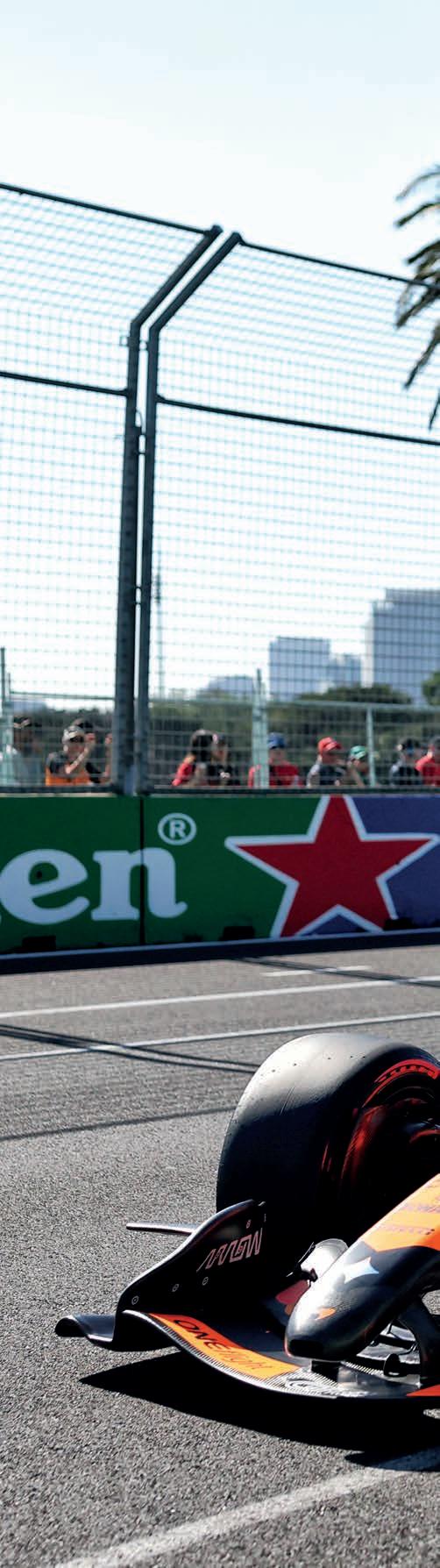
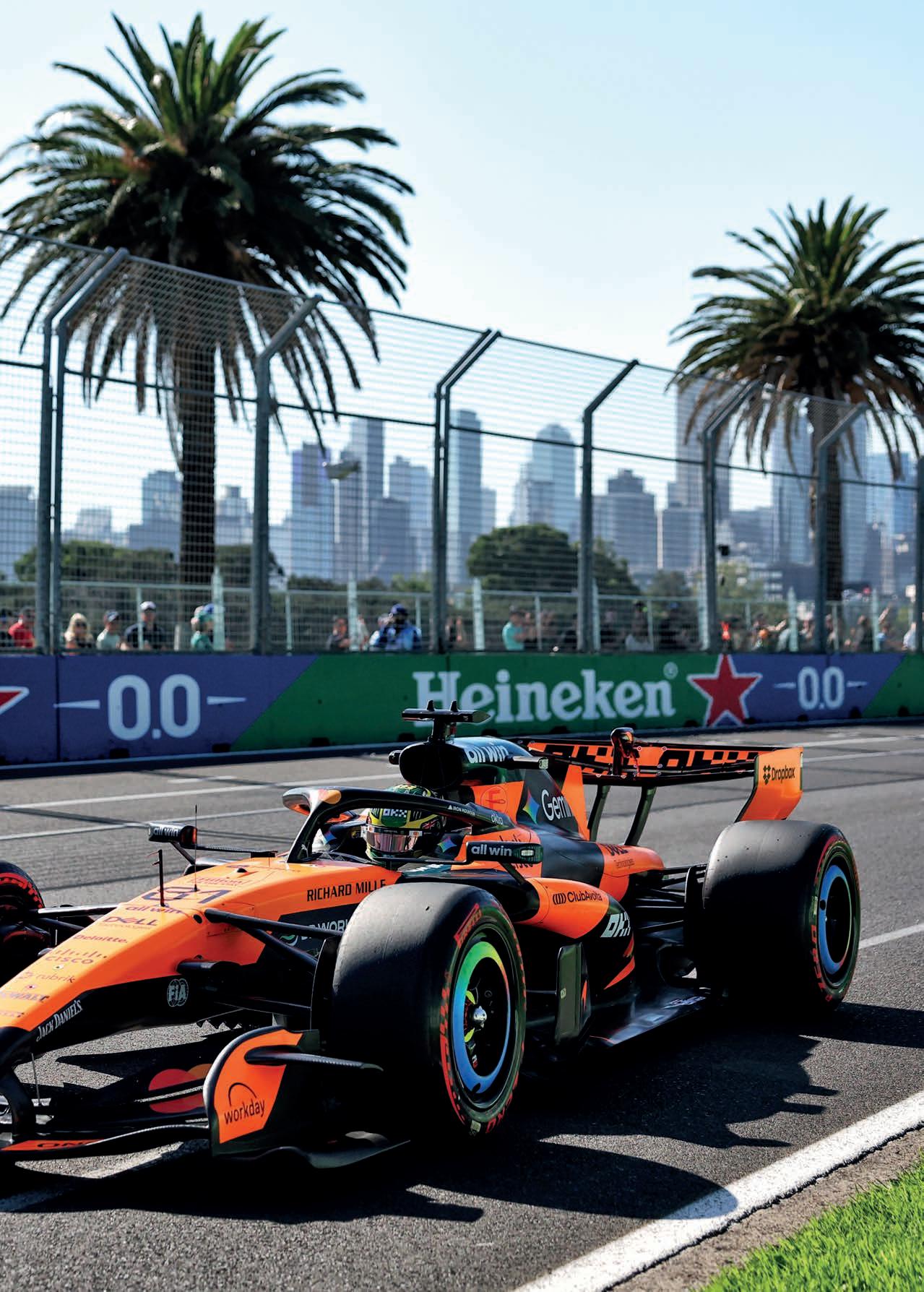
The 2026 F1 regulations have taken efficiency to the extreme, with a 25 per cent cap on fuel flow rate and a more powerful MGU-K on the crankshaft. The problem is recuperating that through braking alone is not enough


MHypercar evolution


This year’s 24 Hours of Le Mans will see a range of new technology and concepts, from rubber to airflow to fuel in the tank
By Andrew Cotton and Paul Truswell
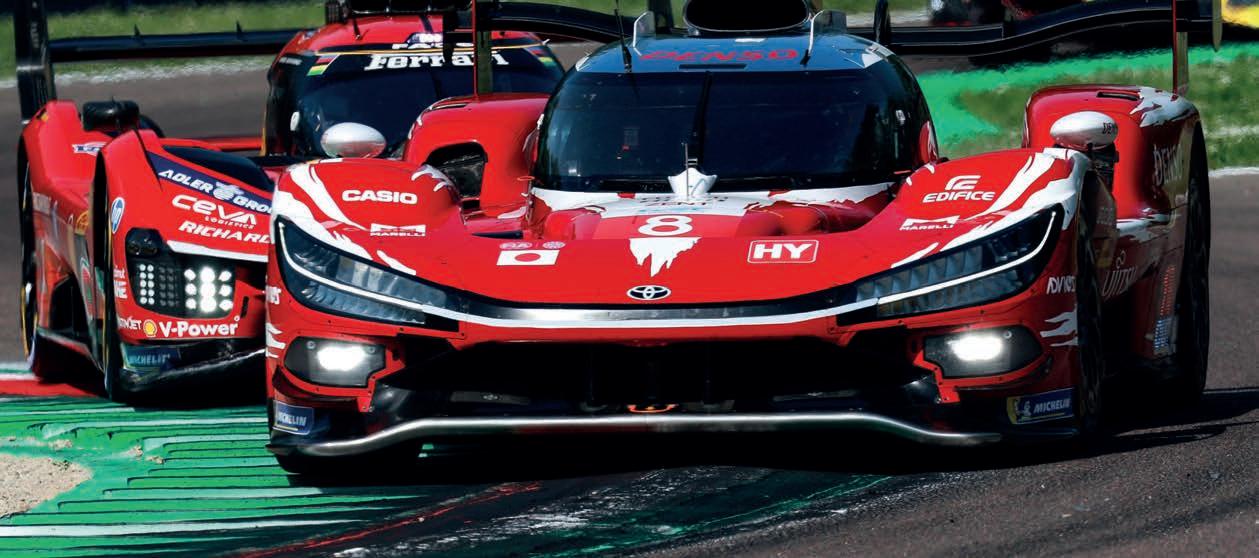
uch of what is new to the 24 Hours of Le Mans this year is not immediately visible to the spectator. There are new aero kits and updates for various cars in Hypercar and GT3, a new fuel from TotalEnergies, and a new tyre from Michelin for the Hypercar class that has already influenced the outcome of FIA World Endurance Championship races to date. There is also a new Balance of Performance system, although the details of that are being kept secret by the regulators.
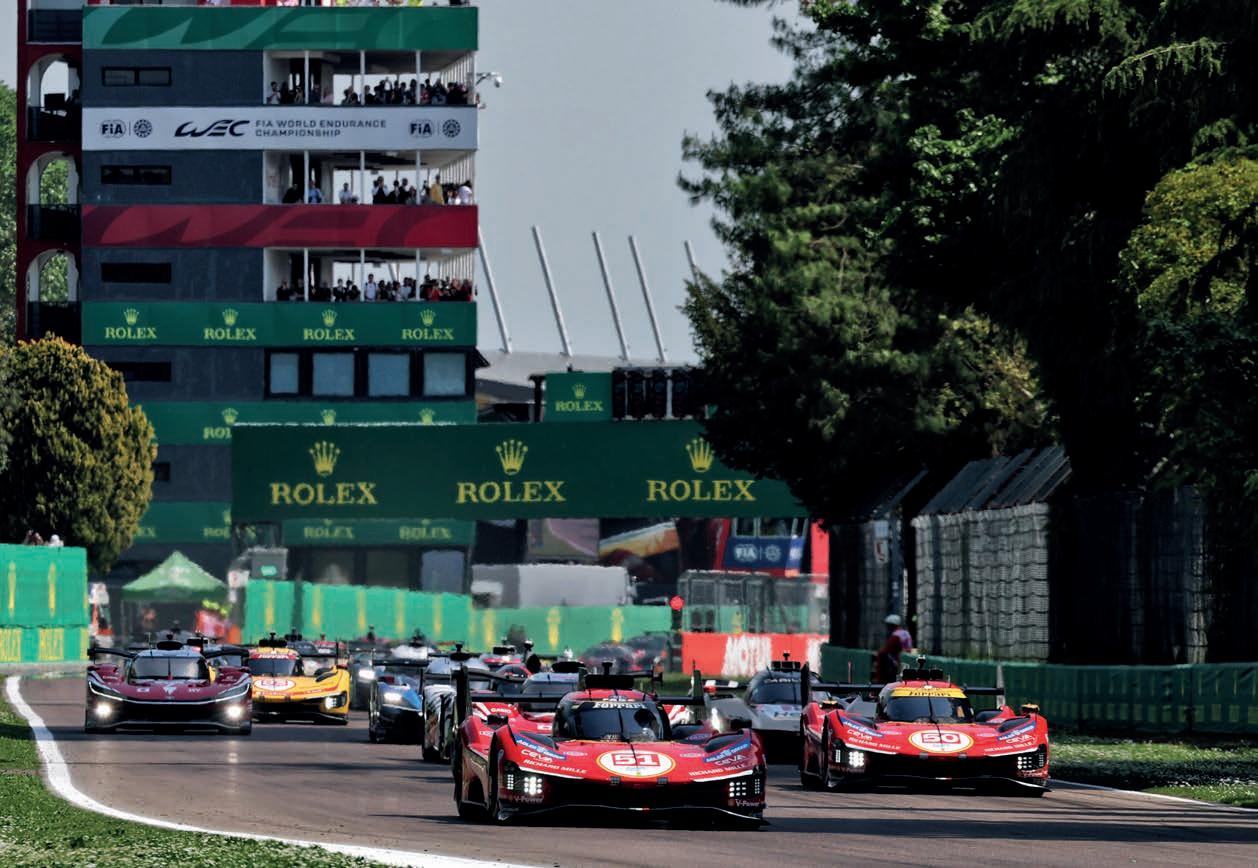
Various Hypercars have undergone updates, including those from Toyota, Cadillac, Alpine and BMW. In LMGT3, Ferrari, Porsche and Ford each debuted Evo kits at the 24 Hours of Daytona in January, while BMW has had to adapt to running with new turbochargers this year.
Toyota
Toyota introduced a new aero kit for its renamed TR010 Hybrid LMH car that was originally intended for 2025, but was delayed due to the planned change in reference wind
tunnel, from Sauber in Switzerland to Windshear in the United States. The target was to make the car work better in all conditions and, from its victory at the 6 Hours of Imola, it appears to have achieved that goal.
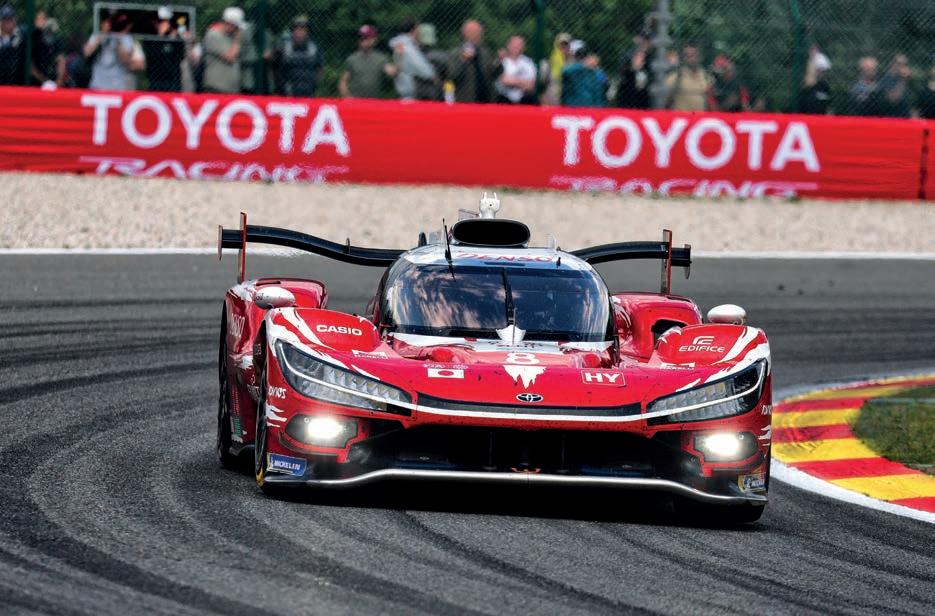
Visually, the Toyota is quite different to last year’s GR010 Hybrid, with a new rear wing, end plates, a revised nose and modified rear brake cooling ducts. The idea was to reduce drag, increasing the potential for top speed, subject to BoP, of course.
‘The car we raced last year was the same as in 2023, the same homologation,’ says the team’s technical director, David Floury. ‘The 2023 car was already a step [forward] compared to the previous version, but it
[Toyota’s] target was to make the car work better in all conditions and… it appears to have achieved that goal
was not always user friendly and, in some conditions, we saw potential for improvement. We have tried to fix that with the new aero package.’
A key element to the styling was to forge a stronger link with the manufacturer’s production cars, and there’s a nod to the TS020 with the white and red colour scheme.
The team says the aero was the only homologation ‘joker’ played, shifting the aero balance slightly, and the effect has been dramatic. The drivers are now more confident in the car and can place it better on the track. Tyre wear has also improved and, compared to Ferrari, the team has seen an improvement in lap times, evidenced in the first two races of the season. Those are good signs for Toyota, which last won Le Mans in 2022 and has been frustrated by Ferrari notching up a hat trick in the years since.
Cadillac
The LMDh-spec Cadillac V-Series.R has undergone perhaps the most dramatic change in its aero configuration. Hypercar manufacturers may select one adjustable
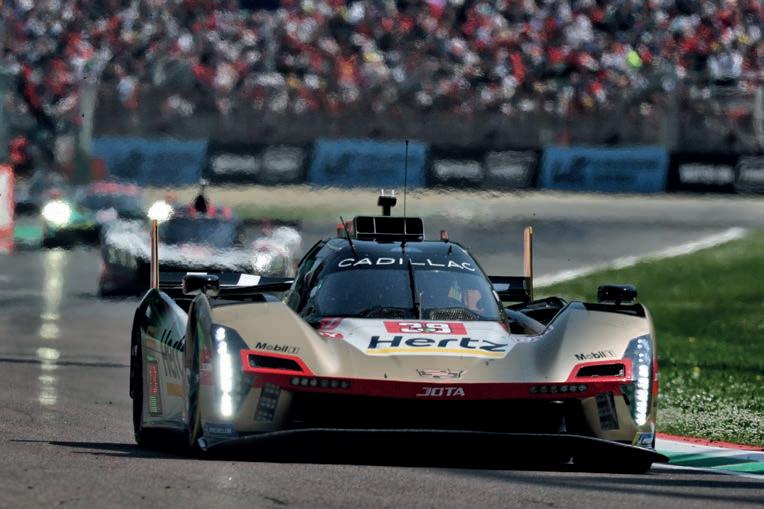
aerodynamic device – front or rear – and, as covered in RE V36N1, the General Motors design team moved away from a front aero device to an adjustable rear wing, bringing it in line with most of its competitors.
The brakes were also revised with a new supplier, Brembo, to help address the phenomenon of one rear brake heating up more than the other, creating an imbalance.
For the aero kit, the target was to enable the teams to better set up the car and to allow it to run more easily in dirty air. ‘There is less loss following the other cars, so that’s a good thing,’ says Cadillac’s LMDh chief engineer, Jeromy Moore. ‘Obviously, we have
to follow other cars, and that’s where we were lacking last year. When we were in fresh air, we were really quick, but then there was no one else around us. We are still learning how to operate the car with the new aero kit.’
Like each of the manufacturers, Cadillac has worked hard on software development and is making good steps forward with the programming of its Bosch ECU.
‘LMDh is a software war, controlling the e-motor and effectively trying to have an active differential when you don’t really have one, so it’s a continual learning,’ continues Moore. ‘You want the engine and hybrid system to work together as well as you can,
The Toyota TR010 has perhaps the most pronounced visual changes of the LMH grid, with multiple aero alterations improving top speed, tyre wear and driver confidence, leading to improvements in lap times in the early races of this year
The switch from a front adjustable aerodynamic device has given the Cadillac engineers a challenge, but the team says it has improved the car’s running in race conditions
For the [Cadillac] aero kit, the target was to enable the teams to better set up the car and to allow it to run more easily in dirty air
and with all the features we have there is a lot of ability to change these settings. Understanding where you want them, and getting them to work together is the challenge.’
BMW
The other manufacturer to develop a car around the Dallara base chassis, alongside Cadillac, BMW has also introduced an update kit for 2026, but decided against switching to the rear adjustable aero device.
Like its Dallara cousin, BMW also targeted a more competitive car when running in dirty air. Consequently, it fitted the M Hybrid V8 with a new nose, reflecting the familiar kidney
LAND
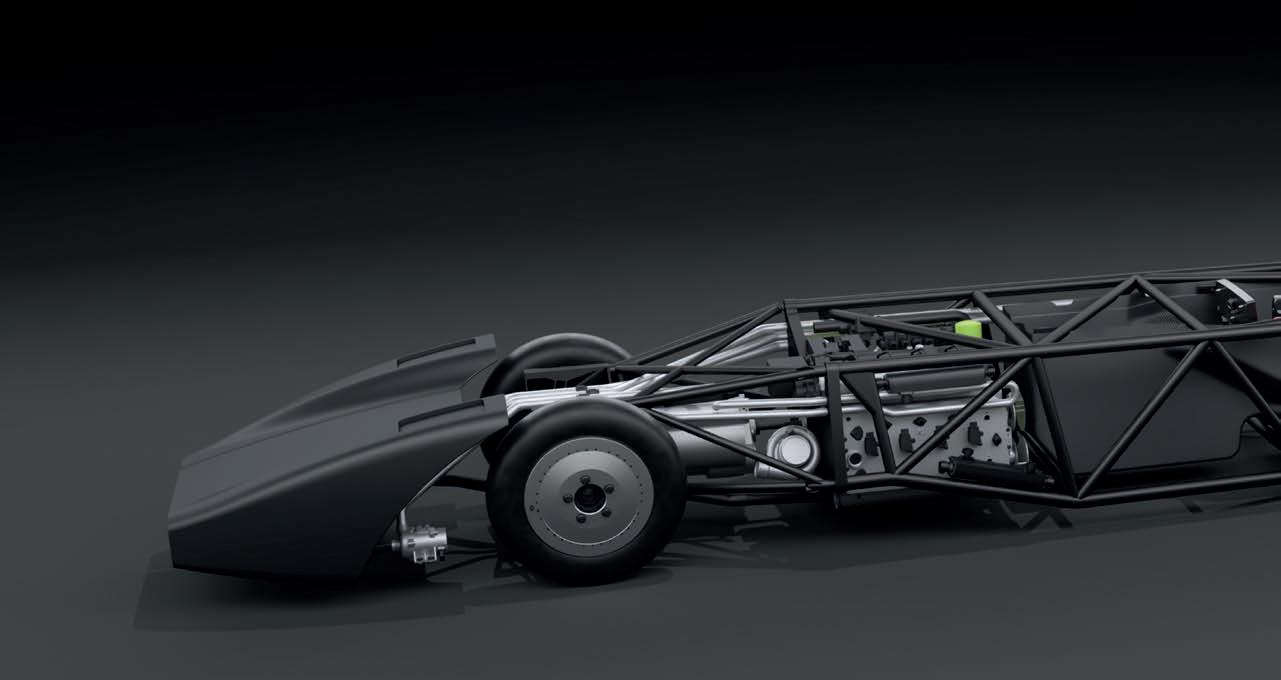
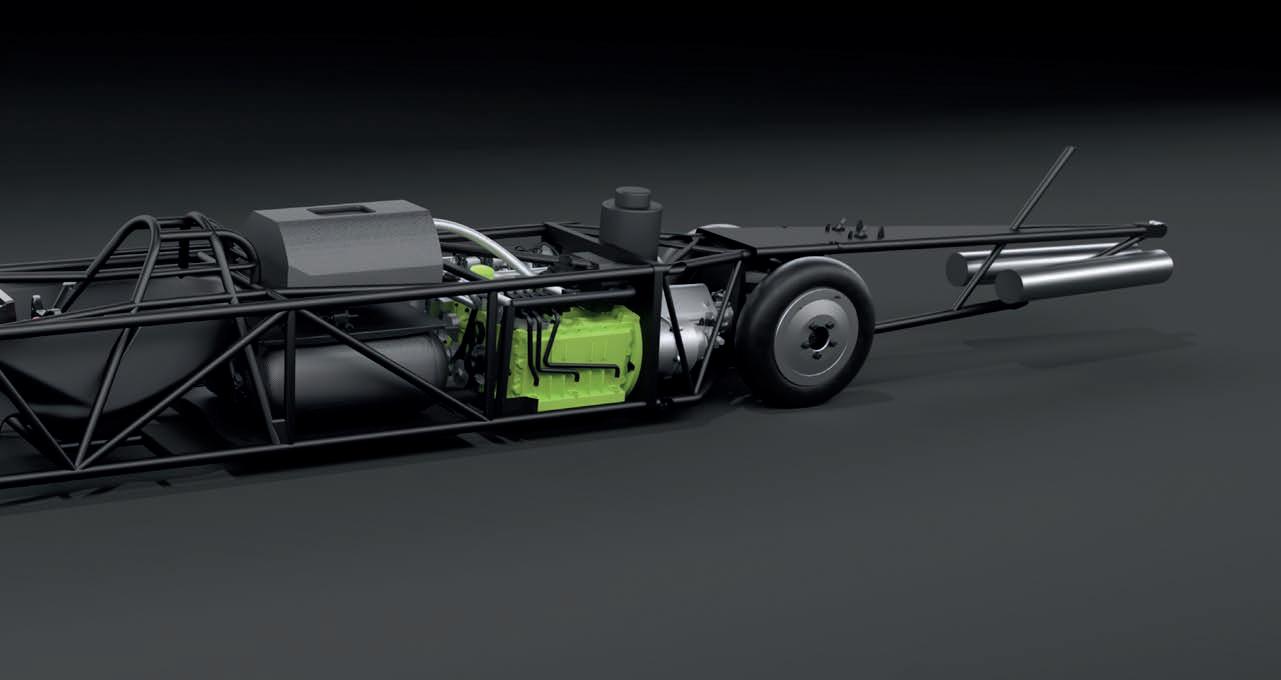
The two engines are as close to their respective axles as possible for a high polar moment of inertia. Ice-filled coolant tanks are situated in the nose and above the hydrogen storage tanks, which sit between the rear engine and cockpit
‘With the race engine, we weren’t starting from scratch’
Ryan Ballard, head of powertrain at JCB
building its first prototype engine at the end of that year. Hydrogen engines have since been installed in a backhoe loader and used as the power source for a construction site generator. Now though, with Hydromax, the technology is being pushed to new levels of performance.
Project origins
JCB’s return to Bonneville began on 12 February 2025 when company chairman, Anthony Bamford, tasked some of his top engineers with designing a successor to Dieselmax. The car was codenamed H2, but not for the obvious reason. Dieselmax was internally designated H1, after the Hughes H-1 Racer that set a world air speed record in 1935. So H2 was deemed a logical moniker, even if it meant having to deflect questions from curious colleagues about whether hydrogen was involved. Hiding in plain sight springs to mind!
An important early task was to identify technical partners and suppliers. Motorsport companies were desired, due to an aggressive timescale and the fact JCB rarely builds performance cars. Prodrive was entrusted to build the tubular frame and the carbon fibre composite tub that houses the cockpit. The Banbury, UK racecar builder and composites specialist will also assist with team operation; its recent experience of functioning in a harsh environment at the Dakar Rally made it an obvious choice for the trip to Utah.
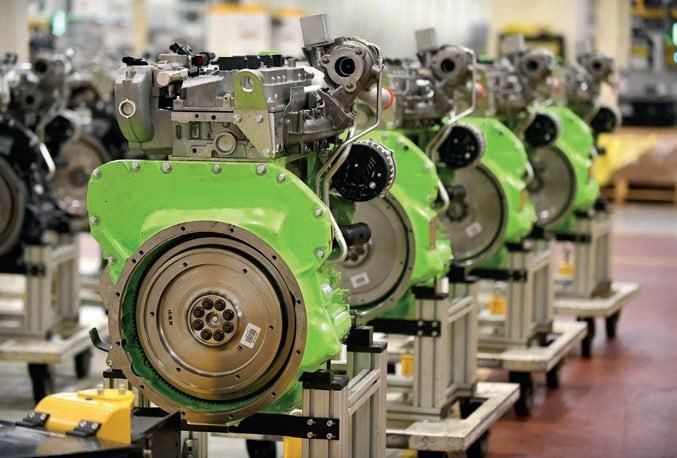
Ricardo assisted with engine development and lent the use of its high-performance dynos, Bosch worked extensively on the electronics, Xtrac supplied a pair of six-speed gearboxes and AP Racing has been involved in developing a friction brake system that will stop the car if both parachutes fail.
Production base
The heart of the four-wheel drive Hydromax is a pair of 5.0-litre, inline, four-cylinder engines, each producing 800bhp. This is where JCB could impart its learnings from the last five years of researching hydrogen combustion, including knowledge of how to tailor the gas-fuel mixture and airflow through the components. In its production engine research,
the company simulated over 180 iterations of cylinder design, to understand the optimal rate and amount of air to be injected.
‘Last year when the chairman asked if we could do the race engine, we had already done hundreds of CFDs and correlations,’ says Ryan Ballard, head of powertrain at JCB. ‘So with the race engine, we weren’t starting from scratch.’
The JCB 448 ABH2 production engine has a 4.8-litre displacement, but the bore has been increased slightly for the land speed record version, making it 5.0-litres. Because hydrogen has a very high energy density and burns extremely quickly, a lot of air needs to be combined with it for controlled combustion. Therefore, the production engine runs lean, at a lambda ratio of 2.5-3.
This is the production JCB hydrogen engine, a 4.8-litre, four-cylinder unit. The standard block, cylinder heads and crank were carried over, but a new turbo capable of higher boost pressures was installed, among other modifications
The production engine only produces around 73bhp, whereas the engines in Hydromax need to deliver more than 10 times that amount
Air is fed into the cylinder via a turbocharger spinning at 250,000rpm and the hydrogen is port injected at 10bar through a common rail. The fuel / air mixture is then spark ignited.
JCB initially trialled spark plugs used in 24 Hours of Le Mans racecars, but these weren’t reliable enough for the service life of an industrial engine, so stronger ones were found.
The production engine was designed for durability in all conditions, which led JCB to conclude that several of its stock components were suitable for carrying over to the race version, including the block, cylinder heads, crankshaft and bedplate.
However, there was an obvious problem. The production engine only produces around 73bhp, whereas the engines in Hydromax
need to deliver more than 10 times that amount. Such huge power is required to overcome the high drag levels that increase in accordance with rising speed; the classic land speed record challenge.
To achieve the requisite power hike, JCB tweaked several parameters, including turbo boost pressure, compression ratio, air / fuel mixture and engine running speed.
Power up
‘We have elevated the speed; it’s an easy way of making more power,’ says Harper. ‘It’ll be above 4000rpm, which is unusual for an industrial engine. The engine is incredibly strong and robust so, when we’re chucking high boost pressure at it, it will take it all day.
‘One of the challenges, though, is it was never meant to be revved at elevated speeds, so there has been some development there. The valvetrain dynamics have been excellent with lifing. I don’t think we’ve changed anything drastically in any of the valvetrain, which is where the risk areas are. That both surprised and delighted us.’
A motorsport-grade, single-stage turbocharger has been fitted to each power unit. Cooling them posed a particular challenge, because the team wants air to enter the turbo system at 10degC in ambient temperatures that could be up to four times higher than that. To tackle this, a set of charge air coolers were 3D printed, creating a low-temperature circuit to cool incoming air.
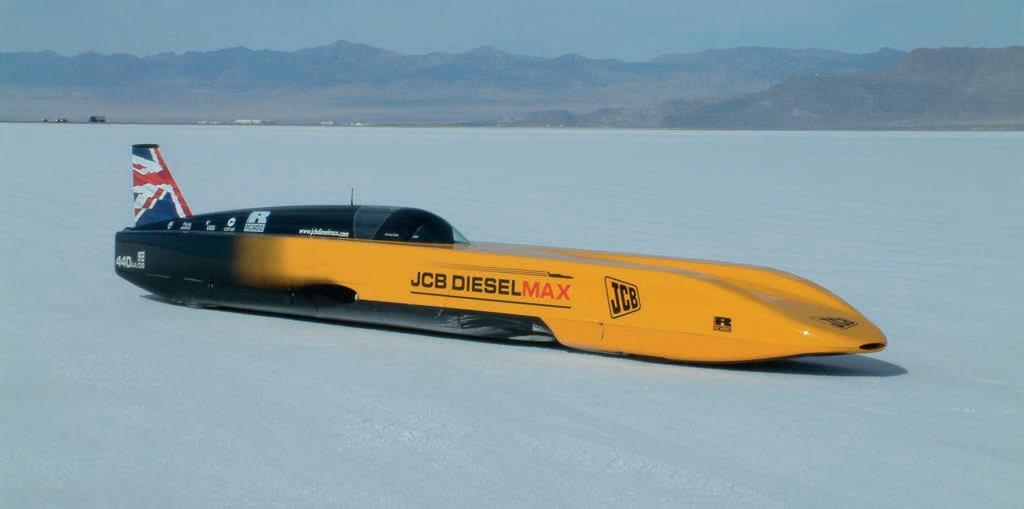
Dieselmax was powered by a pair of 4.4-litre, fourcylinder engines. Learnings from that project, and the driver, have been carried over to Hydromax
Heavier cars generate more particulate matter, regardless of powertrain. This is particularly true in a world where internal combustion engine vehicles have lters at the tailpipe, near eliminating this as a source of these emissions.
Similarly, noise and safety impacts are strongly in uenced by mass. Larger, heavier vehicles carry more kinetic energy, increasing the severity of collisions. While crash structures in the vehicle increase protection for the occupants, the impact on things the vehicle hits increases substantially with mass. Indeed, this is a classic ‘externality’ problem: something that may bene t the individual (eg increased safety or performance) but imposes costs on society.
Where does it end? Is the safest vehicle for me and my family a tank?
The impacts on our infrastructure are perhaps the most noticeable, but least connected to vehicle weight. Increasing potholes, closed bridges and essential upgrades to

If we can align lighter racecars with lighter road cars, then ‘race on Sunday, sell on Monday’ will have a new impetus, and open a new avenue in consumer innovation and amenity

Autobesity
multi-storey car parks are all in part due to the increases in vehicle weight we see everywhere. Not just with EVs.
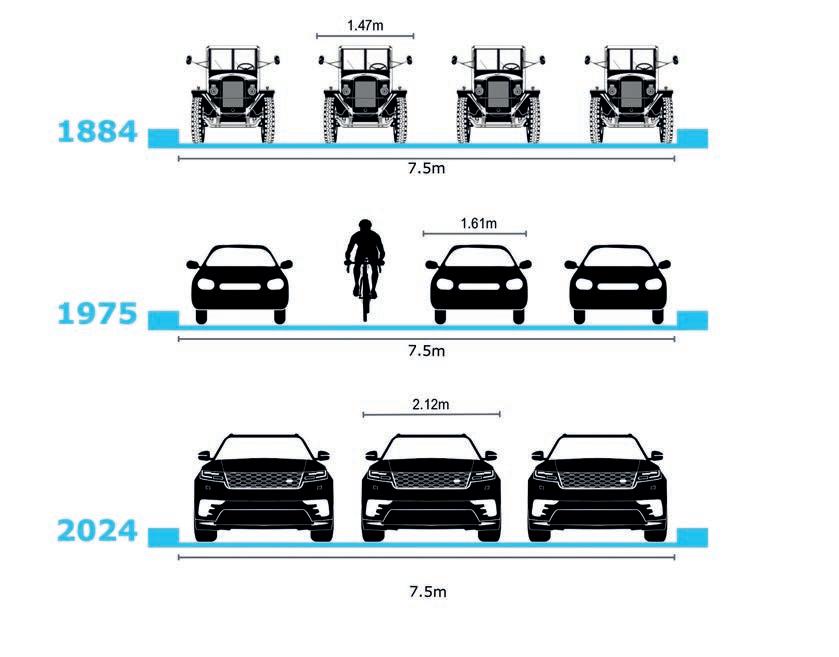
Finding it harder to fit in a parking space? Unsurprising, because the cars we drive have become bigger. Without our roads and car parks growing, there is simply less space for them. This is perhaps best illustrated by the fact that in the UK, the ‘standard’ highway width is 7.5m. This was easily enough for two parked cars and two passing cars 100 years ago. Today, it’s barely enough for a single passing car with two parked cars. This is analogous to the larger motorsport cars today having better aerodynamic platforms, but being much harder to pass. The vast majority of racetracks have not been made wider!
Complexity vs simplicity
Modern motorsport regulations are complex, reflecting the multifaceted nature of performance and sustainability. Fuel flow limits,
What if, instead of increasing complexity further, we simplified? Is there a world where simpler regulatory approaches, focusing more on mass, could be more effective?
energy recovery caps, Balance of Performance (BoP), and cost caps all attempt to balance competition with efficiency. One approach would be to bring in increased incentives to optimise for mass alongside these (though the lap time penalty for being overweight is already pretty severe).
But what if, instead of increasing complexity further, we simplified? Is there a world where simpler regulatory approaches, focusing more on mass, could be more effective? They might have the side benefit of being easier to understand as well!
Such approaches would not eliminate the need for other regulations, but could provide a
clearer direction for engineering development in the future.
On the road regulation can help too, and now is the time. Petrol tax is beginning to run out of steam as electrification of road cars becomes a reality. Love it or hate it, governments around the world are not going to want to give up such a lucrative source of revenue.
So, a taxation based on the product of vehicle mass and annual distance travelled (which could be picked up at the car’s annual service) is an attractive alternative to things like road pricing, which brings substantial privacy concerns, or taxing electricity for vehicles, which has practical challenges. This could be done in a revenue neutral way and phased in as the proportion of electric vehicles increases.
Leadership opportunity
Historically, motorsport has led the way in automotive innovation; from aerodynamics to hybridisation. The current moment presents another opportunity for leadership. Motorsport plays an immense role in shaping broader trends, and the number of eyeballs it attracts each week is outstanding. By prioritising lightweight design and efficiency, racing can set an example for the wider industry.
The FIA’s ‘nimble car’ concept, which is at the heart of 2026 F1 technical regulations, is a step in the right direction. Let’s now follow this path in other series, as well as in the next iteration of grand prix cars.
This is not without precedent. The fuel crises of the 1970s drove significant reductions in vehicle weight and improvements in efficiency. Motorsport responded with innovations that eventually filtered down to road cars. Today’s challenge is different, but no less urgent. Energy markets, climate change, resource constraints, safety, infrastructure and regulatory pressures are rapidly reshaping the automotive landscape. Motorsport must decide if it follows or leads.
It would be naïve to suggest that reducing mass is straightforward. Many of the factors driving weight
increase, particularly occupant safety, are non-negotiable. Crash structures, driver protection systems and robust components are essential. Similarly, hybrid systems and electrification bring performance and efficiency benefits that cannot be ignored. Or certainly are not being ignored.
The challenge, therefore, is to innovate while preserving these benefits. Areas where such innovation could occur include: lightweight materials (composites, alloys); advanced manufacturing processes (AM, for example); aerodynamics (including active aero) to enable smaller platforms; battery innovations; and, ultimately, integrated systems thinking.
In addition, the ‘soft power’ of motorsport should be brought to bear, reversing current fashions that indicate bigger is better.
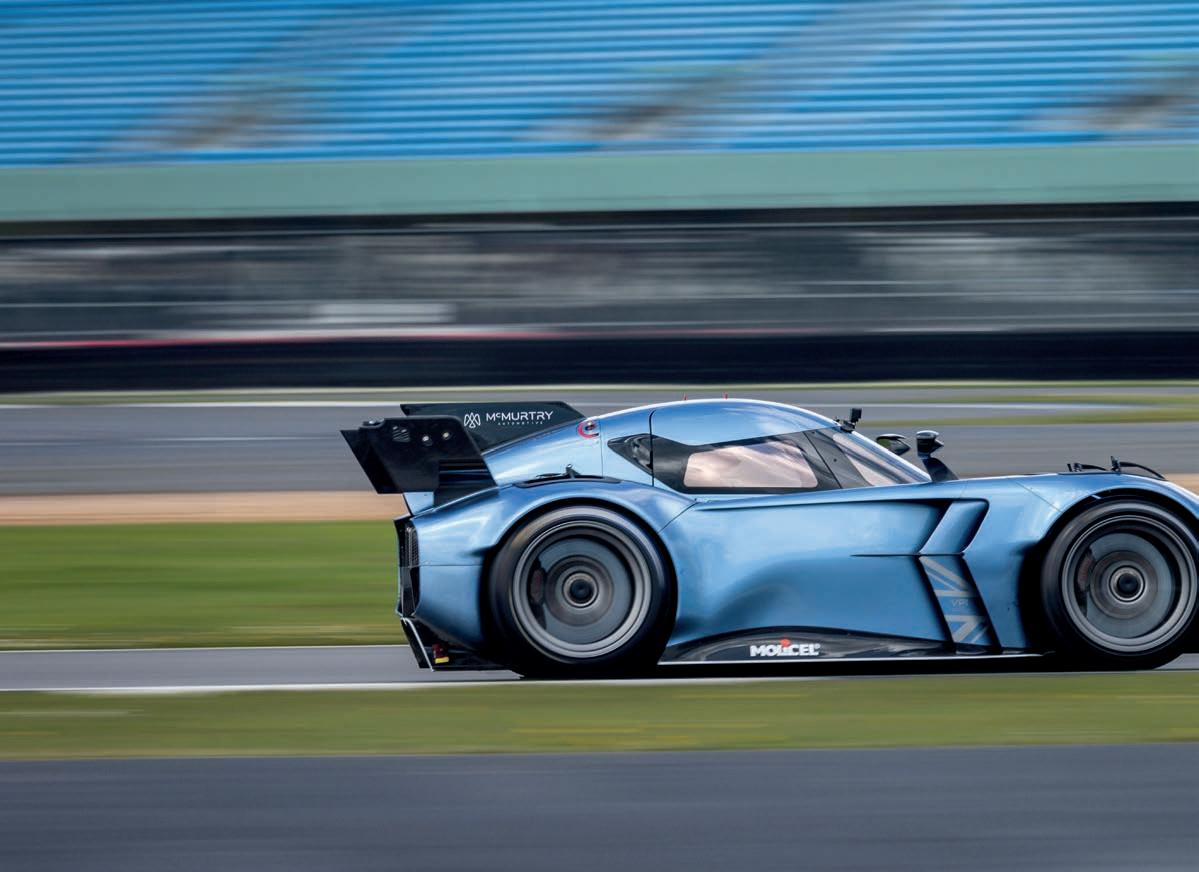
The best news of all is that this can all be done. The McMurtry Spéirling is leading the way. This small, battery electric vehicle, weighing only 900kg, holds both the Goodwood Festival of Speed hillclimb record and the Top Gear test track record. It’s a very impressive piece of engineering.
Reframing the problem
For decades, motorsport engineering has been defined by the pursuit of marginal gains; finding minute performance improvements in ever more complex systems. We have lost sight of mass in the regulations and in society, yet it is a dominant factor in both performance and environmental impact. Consequently, it demands a central place in engineering decision making. We must refocus our innovation, and motorsport should lead the way. If we can align lighter racecars with lighter road cars, then ‘race on Sunday, sell on Monday’ will have a new impetus, and open a new avenue in consumer innovation and amenity. Motorsport has always thrived on clear objectives: go faster, last longer, win. Now it is time to add another: weigh less. We need to put all of our cars on a diet.
Dr Felix Leach is an associate professor of engineering science at University of Oxford. With Nick Molden he co-authored the book Critical Mass: The One Thing You Need to Know About Green Cars, published in 2024.
Cars like the British McMurtry Spéirling PURE 3 are showing the way for small, light racecars with huge potential, flying in the face of the ‘bigger is better’ trend
More Defenders at the Dakar?
Jaguar Land Rover is open to supporting an increase in the number of Defender D7X-Rs at the Dakar Rally, supporting customer teams.
Defender made its Dakar debut in January with three cars and claimed a one-two result in the Stock division for modified production vehicles. Team principal, Ian James, told Racecar that the factory squad is firmly focused on its own project, which is likely to remain at three cars, but acknowledged that more entries could be good for the nascent category.
‘If there is interest from independent competitors that want to come and be integrated to the works team, or work alongside the works team, that’s definitely something we’d be open to considering,’ said James. ‘The regulations allow for that. We’ve just had the FIA confirm the framework for the sale price of the car. I think everything is there and, if people express an interest, it’s something that would definitely be considered.’
The Stock class drew seven entries for the 2026 Dakar, the three Defenders going up against a pair of Toyota Land Cruisers from the Auto Body team, and two Nissan Patrols.
‘The opportunity to expand it is super interesting,’ added James.

‘Who knows? I’d love to see the rally raid stage take on a little bit of what’s happened in the GT racing world, where you’ve got professional independent teams coming in and running cars. It would be great to see that, but we’re not quite there yet.’
New BTCC junior car in build
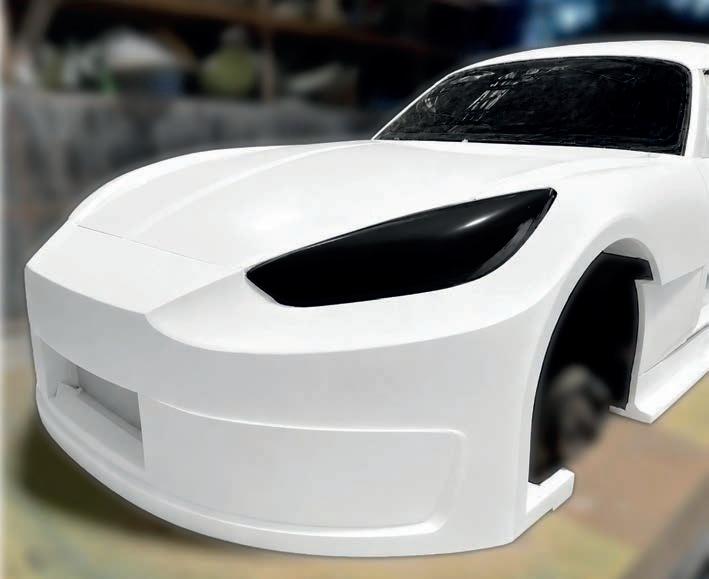
The new racecar for the British Touring Car Championship’s planned junior series is now in build, according to Power Maxed Racing, which is behind the project. The PM1 is aimed at giving 14 to 17-yearold drivers a platform on which to develop their skills before potentially graduating to the BTCC.
Power Maxed hasn’t revealed any technical details, but the car is priced at £74,995+VAT, with a £5000 discount applied to the first 10 sales. The plan is to have the car running this year for potential customers to try before the 2027 season begins.
This is the second recent attempt at creating a BTCC junior series. The first was based on the Chevron B1417, which was unveiled in 2024 ahead of its planned first season the following year. However, it failed to get off the ground and TOCA cancelled the contract with the constructor, a team led by Dave Beecroft, in July.
James added that Defender is evaluating whether to spend any of its joker updates on developing the D7X-R. It has already made small non-joker adjustments since the Dakar, changing the fan spec and altering the engine cover, after
an object got through in one car and caused the fan belt to snap.
‘That’s a luxurious position to be in, taking those choices rather than having to do something,’ said James. ‘I’m surprised we’re not having to do more. It’s testament to the car itself, and the engineering team.’
Power Maxed Racing
While the factory Defender team expects to retain a three-car entry for the 2027 Dakar, JLR is open to supporting independently-run
Stock class entries too
Power Maxed Racing competes in the BTCC with Audi but is also working on a new junior series machine to develop younger drivers