
![]()


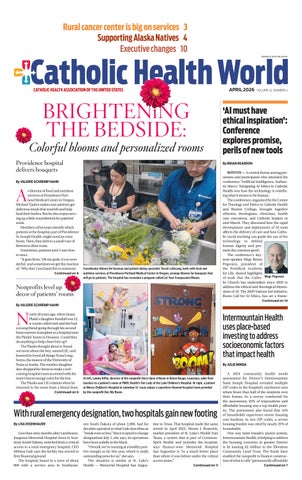
Providence hospital delivers bouquets
By VALERIE SCHREMP HAHN
As director of food and nutrition services at Providence Portland Medical Center in Oregon, Michael Tjaden makes sure patients get delicious meals that nourish and help heal their bodies. But he also enjoys serving up a little nourishment for patients’ souls.
Members of his team identify which patients at the hospital, part of Providence St. Joseph Health, might need an extra boost. Then, they deliver a small vase of flowers to their room.
Sometimes, patients aren’t sure how to react.
“It goes from, ‘Oh my gosh, it’s so wonderful,’ and sometimes we get the reaction of, ‘Why don’t you hand this to someone
Nonprofits level up decor of patients’ rooms
By VALERIE SCHREMP HAHN


Nearly 20 years ago, when Susan Plank’s daughter Kendall was 12, a cousin called and said she had a young friend going through his second bone marrow transplant at a hospital near the Planks’ home in Houston. Could they do anything to help cheer him up?
The Planks thought about it, found out more about the boy, named J.B., and learned he loved all things Texas Longhorns, the mascot of the University of Texas at Austin. The mother-daughter duo shopped for items to make a welcoming hospital room accented with the team’s burnt orange color for the boy.
The Planks saw J.B.’s elation when he returned to his room from a blood draw.


By LISA EISENHAUER
Less than nine months after LandmannJungman Memorial Hospital Avera in Scotland, South Dakota, switched from a critical access to a rural emergency hospital, CEO Melissa Gale says the facility has moved to firm financial ground.
The hospital, based in a town of about 800 with a service area in Southeast-
ern South Dakota of about 2,000, had for decades operated at what Gale describes as “break even or less.” Since it opted to change designations July 1, she says, its operations have been solidly in the black.
“Overall, we’re running at a healthy positive margin so far this year, which is really outstanding news for us,” she says.
The situation is similar at St. Luke’s Health — Memorial Hospital San Augus-
tine in Texas. That hospital made the same switch in April 2023. Monte J. Bostwick, market president of St. Luke’s Health East Texas, a system that is part of CommonSpirit Health and includes the hospital, says finance-wise Memorial Hospital San Augustine is “in a much better place than where it was before under the critical access status.”
‘AI must have ethical inspiration’: Conference explores promise, perils of new tools
By BRIAN REARDON
BOSTON — A central theme among presenters and participants who attended the conference “Artificial Intelligence, Authentic Mercy: Navigating AI Ethics in Catholic Health” was how the technology is redefining what it means to be human.
The conference, organized by the Center for Theology and Ethics in Catholic Health and Boston College, brought together ethicists, theologians, clinicians, health care executives, and Catholic leaders in mid-March. They discussed how the rapid development and deployment of AI tools affects the delivery of care and how Catholic social teaching can guide the use of the technology to defend human dignity and promote the common good.

The conference’s keynote speaker, Msgr. Renzo Pegoraro, president of the Pontifical Academy for Life, shared highlights of work that the Catholic Church has undertaken since 2020 to address the ethical and theological dimensions of AI. The 2020 Vatican-led initiative, the Rome Call for AI Ethics, has
Continued on 10
Intermountain Health uses place-based investing to address socioeconomic factors that impact health
By JULIE MINDA
A 2024 community health needs assessment for Denver’s Intermountain Saint Joseph Hospital revealed multiple ZIP codes in the hospital’s catchment area where fewer than half of the residents own their homes. In a survey conducted for the assessment, 83% of respondents said affordable housing was a top health priority. The assessment also found that 16% of households experience severe housing cost burdens. In two ZIP codes, a severe housing burden was cited by nearly 25% of households.
One way Saint Joseph’s parent system, Intermountain Health, is helping to address the housing concerns in greater Denver is by loaning $2 million to the Elevation Community Land Trust. The funds have enabled the nonprofit to finance construction of what it calls “permanently affordable

Fresh start on new campus
CommonSpirit Health has opened a new hospital in Ringgold, Georgia, replacing an older campus and expanding care in North Georgia.

expands
Benedictine adds Mother of Mercy Senior Living in Albany, Minnesota, to its family. Mother of Mercy includes independent senior living, assisted living and memory care.

Orville Fisher, stroke nurse navigator at SSM Health St. Anthony Hospital in Oklahoma City, has had a hand in advancing the hospital's certification to comprehensive stroke center.
By VALERIE SCHREMP HAHN

Emma McDonald Kennedy sees an “alarming problem” with the increased use of discriminatory language and slurs against people with disabilities. She says cuts to Medicaid are creating burdens for people with disabilities and notes that recently passed changes in some states, such as Illinois and Delaware, expand access to medical aid in dying, which might promote the assumption that the lives of people with disabilities aren’t worthwhile. She points out that startups are advertising genetic screening of embryos to facilitate “optimal” selection to avoid disabilities and genetic conditions.
McDonald Kennedy, an assistant professor of Christian ethics at Villanova University, said these developments make it an opportune time for a conversation about the intersection of health care, society and disability. She spoke during a CHA webinar March 4 that explored what disability bioethics, which examines ethical issues in medicine and biotechnology through the lens of disability studies and activism, offer to Catholic health care.
The Ethical and Religious Directives for Catholic Health Care Services, McDonald Kennedy pointed out, call on providers to serve and advocate for people on the margins, and specify people with mental and physical disabilities.
The directives’ emphasis on justice for people with disabilities, value for their lives, and access to health care, she said, pushes against cultural assumptions “that people with disabilities are not living lives of equal value to other people.”
McDonald Kennedy highlighted three principles of Catholic social teaching that align with disability bioethics: human dignity, the option for the poor, and solidarity.
“Human dignity and the option for the poor, I think, help clarify what we need to recognize and what we need to attend to,” she said. “But solidarity really asserts a duty in that we’re all responsible for each other, as it states, and we all have to contribute to the common good, and part of that contribution is recognizing rights and also living out responsibilities.”
Explaining how to advance the conversation around disability bioethics, McDonald Kennedy referenced Rosemarie Garland-Thomson, a professor who
teaches disability studies at Emory University. She said Garland-Thomson talks about improving the environments where people with disabilities flourish, and challenges society to look at disability as something that is part of life, which anyone can experience if they get sick or injured.
When it comes to improving access to care for those who are disabled, McDonald Kennedy cited the example of a long-term care facility, Elizabeth Seton Young Adult Center, planned in Yonkers, New York, for young adults with medically complex needs. Elizabeth Seton Children’s found that when children age out of its center at 21, about one-third of them die within the first year or two. The new facility will bridge the care gap for this population, she said.
“It’s a little bit of a shift to recognize that what is (often) making people with disabilities vulnerable is not necessarily their disability so much as it is how our society thinks about their disability and responds to it structurally,” she said. “So we’re not suggesting people with disabilities need to be cured, necessarily ... but rather that we need to more seriously evaluate how we as a society operate to better include people with disabilities.”
By LISA EISENHAUER
To say Dan Collins had a hand in Mercy Medical Center’s new “Meeting of Medical Minds” video series would be a bit of an understatement.
Behind the scenes, Collins came up with the idea for the series, scripted it, hired actors and, in some cases, costumed them, recruited doctors for the series’ panel discussions, and figured out how to have a live audience for taping. In front of the camera, Collins stars as the series’ moderator.
“It took a lot of work,” he admits, “but it was a labor of love.”
The first four of what Collins, the Baltimore medical hub’s senior director of media relations, hopes will be many segments in the series were posted to Mercy’s YouTube channel in early March.
The series is a nod to one Collins admired as a teenager called “Meeting of Minds.” That series aired on PBS from 1977-1981. In it, broadcaster Steve Allen interviewed actors portraying historic figures such as Plato, Charles Darwin and Florence Nightingale. Even though Allen’s many hats included that of comedian, the series played more for education than laughs. So does Collins’ homage.
In “Meeting of Medical Minds,” Collins takes on the role of host. His first four visitors from the past are Hippocrates, the Greek physician known as the “father of Western medicine”; Dr. Elizabeth Blackwell, the first American woman to earn a medical degree; Dr. Joseph Lister, considered the “father of modern antiseptic

surgery”; and Dr. Charles Drew, the African American physician who organized America’s first large-scale blood bank.
In each segment, Collins questions his esteemed guests about their lives and accomplishments. Across the table is a Mercy physician, who weighs in about the impact of the historic figure’s legacies, how the doctor and others are building on those legacies, and the doctor’s own medical experiences. The audience is another part of the series’ educational aspect. Each one was made up of students from the Women in Medicine program, a partnership between the all-girl Mercy High School and Mercy Medical Center.
The students in the program visit the hospital monthly to learn about health care careers.
“Given the Mercy High School students’
interest in medical and health-related matters, it was a natural connection to have them take part,” Collins says.
In creating “Meeting of Medical Minds,” Collins was intentional about spotlighting a diverse group of medical innovators, past and present. He sees part of the series’ mission as showcasing Mercy, which serves an urban population and boasts providers from various backgrounds.
In his 30 years with the medical center, he has seen its services and mission expand. Founded by the Sisters of Mercy in 1874, it is now a 183-licensed-bed acute care hospital with a network of sites in and around Baltimore.
“I call this the little hospital that could. We’ve grown tremendously and dramatically, more in the last 30 years than in the previous 120 in my opinion,” Collins says. “And to me this little project, ‘Meeting of Medical Minds,’ is another indication of the growth of Mercy, of trying new things.”
email: servicecenter@ chausa.org. Periodicals postage rate is paid at St. Louis and additional mailing offices. Annual subscription rates: CHA members free, others $29 and foreign $29. Opinions, quotes and views appearing in Catholic Health World do not necessarily reflect those of CHA and do not represent an endorsement by CHA. Acceptance of advertising for publication does not constitute approval or endorsement by the publication or CHA. All advertising is subject to review before acceptance.
By JILL MOON
Despite being in a city of less than 30,000 and serving a sprawling rural region, the staff at the Mercy Health — Paducah Cancer Center in Kentucky pride themselves on offering a quality of care and wraparound services that would do big-city cancer centers proud.

John Montville, executive director of the oncology service line at Mercy Health — Lourdes Hospital, says the cancer center not only has a state-of-the-art facility and follows the most upto-date treatment protocols, it “emphasizes holistic cancer care, treating both the disease and the individual.”
As part of its whole-person care, Montville says the cancer center provides “ancillary and integrative care as essential components of its overall program.” That supportive care includes navigation through the center’s services by an experienced nurse and assistance from social workers to address needs such as lack of transportation and food insecurity.
“High-quality cancer care should be a given for all cancer patients. The additional support they need, beyond high-quality care, should also be a given,” Montville says. “We built this program around the patient.”
Ready to treat and support
The cancer center is a department of Mercy Health — Lourdes Hospital, a 379bed facility that is part of Bon Secours Mercy Health. The hospital serves Western Kentucky, Southern Illinois, Southeast Missouri and Northwest Tennessee.
While the cancer program at the hospital goes back to 2018, the center is much newer. The 19,000-square-foot facility opened in 2024. It houses:
A medical practice with space for three medical oncologists/hematologists and three advanced practice providers
21 exam rooms and one procedure room
A 22-bay infusion center with flexible configurations
An oncology pharmacy and laboratory
A prayer and meditation room

The center also has space and staff to provide various supportive services, such as access to Amber Newsome, an oncology nurse navigator. Newsome joined the center in that role last year after several years as a nurse.

Her interest in oncology began early. As a student, she participated in the Oncology Nursing Society. After graduation, she spent time in respiratory and surgical nursing. Through that stint, she says she maintained an interest in oncology.
Newsome says her experience enables her to distinguish between symptoms related to cancer treatments and those that aren’t.
As a nurse navigator, she tries to meet patients during their initial consultation. She explains to them that her role is to identify their needs and ensure they get appropriate scheduling for services and provider appointments.
Another member of the cancer center’s supportive care team is Sarah Carter, a clinical oncology social worker. Her experience includes five years with Mercy Hospice working with families and children.

She was the first social worker to join the Mercy oncology team. “The experience gained in hospice care has been invaluable for oncology — helping patients through the challenges of diagnosis, treatment and life changes that follow cancer,” she says.
The cancer center does what Carter calls “distress screening” as part of a biopsychosocial and spiritual assessment of patients. The screenings help the care team connect patients with needed resources, even outside of the medical realm.
The social support the center’s team provides helps ensure patients can access care, such as transportation and financial help, and meet personal needs, such as clothing purchases and home fumigation. Funding to cover expenses that are not met elsewhere and not reimbursable often comes from the Mercy Health Foundation.
“Surviving cancer brings its own struggles, including anxiety, depression and shifts in identity,” Carter says. “Support systems often change, and many patients face ongoing fears, especially before follow-up scans.”
Along with helping patients access needed resources, Carter works to encour-
age them to express themselves and she tries to generally ease their burdens.
The cancer center’s supportive services also provide every patient access to palliative care and to an oncology financial navigator. Montville says studies have shown that finances are the number one concern for cancer patients, of even higher concern than fear of death.
The oncology financial navigator assists patients in understanding their insurance coverage, estimating out-of-pocket expenses, and accessing valuable support programs, such as medication assistance from pharmaceutical companies.
“Only trained professionals in this role can effectively guide patients through these complex resources,” he says.
Montville says the cancer center’s wraparound care is an embodiment of the Bon Secours Mercy Health mission to extend compassionate care to all, “especially people who are poor, dying and underserved.”
“This is so illustrative of getting these support services into the hands of those who need it most,” he says. “The poor need more services to support them beyond just their care — from food insecurity to transportation assistance to financial navigation.”
By VALERIE SCHREMP HAHN
After the basement of her home in the Chicago suburbs flooded for the third time, Dr. Sheetal Khedkar Rao decided to find out why.
She learned that a warming climate had led to increased rainfall, and that construction of brick buildings and parking lots in former marshes, as well as an outdated drainage infrastructure, contributed to the repeated flooding.

“This was an aha moment for me, because it showed me how increasingly extreme weather was already impacting my family and my community,” she said during a webinar hosted by CHA on March 26. The webinar was called “Heat, Floods, Breathing, and Bugs: Health Impacts of the Ecological Crisis and How Healthcare Can Respond.”
Rao is an internal medicine physician and assistant professor of clinical medicine at the University of Illinois Chicago and teaches about sustainability and planetary health. She also works to increase the tree canopy and green spaces in the Chicago area through her nonprofit, Nordson Green Earth.
“In order to have healthy people, you
need to have a healthy community based in a healthy environment and a healthy society,” she said.
Rao explained how heat, air, water and vectors, including insects, have been affected by climate change, and how those factors impact nearly every social determinant of health. She said:
• Heat: Heat is the top weather-related cause of death in the U.S. and worldwide, and recent years have been the hottest on record globally. Fossil fuel use is the largest contributor to this problem.
She encouraged people to support a fair and equitable transition to renewable energy; vote for climate champions; plant native trees; limit activity when it’s hot outside; and come up with a backup plan for air conditioning in case of power outages.
• Air: Climate change leads to worsened air quality from allergens, wildfire smoke, and a type of air pollution called ground level ozone. Nearly all the world’s population lives in areas that don’t meet World Health Organization air quality guidelines. Warming extends growing seasons, putting more pollen in the air.
If air quality is poor, people should close windows, use air filters, and talk to youth sports coaches about the risks of playing outside. If being outdoors is unavoidable, wearing a KN95 mask helps filter out most
types of air pollution.
• Water: Warming allows the air to hold more water, which can lead to more extreme precipitation events. Flooding can cause injuries, damage property, make it difficult to get around, ruin crops and cause soil erosion.
One study linked combined sewer outflows, where sewage water combines with storm water, during heavy rains to more gastrointestinal illnesses among children. She encouraged people to sign up for alerts from their water districts about water use, advocate for planting native trees and plants, and stock an emergency supply of filtered water.
• Vectors: A vector is an organism, usually an insect, that transmits microbes that cause disease. Tick habitats have expanded due to climate change, habitat loss and rising deer populations, leading to an increase in Lyme disease. Doctors are also seeing an increase in many mosquitoborne illnesses like malaria due to climate warming.
Rao encouraged people to use an Environmental Protection Agency-registered insect repellent, avoid areas where these vectors are common, cover skin as much as possible, check pets and clothing for ticks, and shower after being outside in high tick areas.
She pointed out that health care is a big
contributor to climate change, making up 8.5% of all U.S. emissions and nearly 5% worldwide.
How can those in health care act? She shared an acronym she and colleague Dr. Caroline Skolnik came up with called G-STAR, which stands for gloves, scripts, testing, active lifestyle, and red bag waste. She encouraged clinicians to practice appropriate glove use to reduce unnecessary waste; switch intravenous medications to oral forms when medically appropriate; be judicious with testing such as labs and imaging; encourage patients to adopt a more active lifestyle and eat more plantbased meals; and learn appropriate use of red bag waste, which gets incinerated, emitting planet-warming pollution. She also pointed out that most of these climate actions also save on cost.
Rao concluded the webinar with a cartoon highlighting how characters in time travel movies often worry that changing one small thing in the past would radically change the trajectory of the future. Urging listeners to flip this logic, she said, “I hope that you were able to find one small thing that you can change, starting today or tomorrow.” Such a change, she said, might “radically improve something in the future” for the planet.
vhahn@chausa.org
By JULIE MINDA
Recent community health needs assessments from Providence St. Joseph Health’s Alaska region reveal a familiar pattern: Alaska Native people living in Anchorage face more challenges than other Alaskans when it comes to some social determinants of health, though much progress has been made addressing these determinants through a proactive community-based approach.
One way the Catholic health system has helped is by supporting and funding programs of the nonprofit Alaska Native Heritage Center, a cultural organization that seeks to preserve and strengthen the traditions, languages and arts of native people. One of the things the center does to further this mission is to collaborate with others to offer culturally supportive services.
Providence Alaska has provided nearly $122,000 to the center over the last five years for programming that helps strengthen the connection indigenous peoples have to their cultures.

“Providence invests in community partners who have the experience and cultural insight to understand local needs and design the most effective solutions,” says Nathan Johnson, senior director of community health investment for Providence Alaska. “We know we’re not always the expert, so we rely on the strengths of organizations already doing this work to ensure programs truly meet community needs.”

Kelsey Ciugun Wallace, president and CEO of the Alaska Native Heritage Center, says it is grateful for Providence Alaska’s investment and for the opportunity to have supports in place which allow the center to create access to culture, no matter what the community might be navigating — ranging from homelessness to disabilities to economic struggles.
Addressing disparities
Anchorage has a population of nearly 290,000. According to a 2024 community health needs assessment from Anchorage’s Providence Alaska Medical Center and Providence St. Elias Specialty Hospital, nearly 60% of Anchorage’s population is white, and just over 7% Alaska Native or American Indian. The remainder are Asian, Black, Pacific Islander or another race.
That health needs assessment revealed

Alaska Native elder participates in an activity at the
Anchorage.
dence St. Joseph Health’s Alaska region has been providing grant dollars for the center to offer programming, including arts and crafts, culinary and other hands-on options.
that native people generally scored lower than other Alaskans on overall life satisfaction, overall well-being, sense of purpose, financial security and ability to meet their basic needs. Previous assessments have shown similar disparities.
Additionally, Johnson notes, roughly 50% of Anchorage residents 55 and older who experience homelessness and meet the criteria to qualify for permanent supportive housing are Alaska Native.
History of inequities
Ciugun Wallace explains that many concerns of the native community have deep roots.
She says that the community has navigated numerous challenges, including fighting for the right to vote, seeking settlements over land that was taken, and struggling because of inequities and structural systems that have deprioritized and discriminated against indigenous peoples in abject ways.
She says such mistreatment has led to today’s reality, where Alaska Native people are statistically overrepresented in societal metrics such as homelessness, poverty and incarceration rates.
Healing and restoration
The heritage center serves more than 2,000 Alaska Native people annually through educational programs, culturally supportive services, master artist workshops, community events and other outreach. It also provides cultural tourism experiences such as native dance and drum performances.
Government and philanthropic grants are a major source of funding for the center. Providence’s grants enable the center to offer programming that is restorative and healing for Alaska Native people. This includes funding for a research program through which the center is sharing the history of indigenous peoples. The center has documented the sometimes-traumatic past of indigenous people, including accounts of Alaska Native people who were sent to government- and church-run boarding schools in Alaska.
Providence also has funded heritage center programming led by culture bearers, or Alaska Native people who are deeply familiar with the community’s arts, language and heritage. This included 70 workshops last year that engaged more than 1,000 Alaska Native elders in traditional arts including making bone bead necklaces, Ulu earrings, birch bark baskets, drums, jam, Baleen etchings, beaded key chains, beaded hair pins with smoked moose hide, Inuit yoyos, fleece headbands and neck warmers, medicinal salves, medicine bags, and various ornaments.
Crystalyn Lemieux, a program manager at the heritage center, coordinated many of the sessions. “We want to provide the tools and the space to help (Alaska Native people) reconnect with their culture and cultural identity,” she says. “When you feel a sense of connectedness and belonging, it is a very strong protective factor for suicide prevention and substance-use prevention.
“We really believe culture is prevention,” she says.
This year, Providence grant dollars are
funding an “Ilitchut” program at the center. Ilitchut means “they are learning” in Inupiaq, an Alaska Native language. That program will unite Alaska Native elders, culture bearers, artists and educators with Alaska Native youth. The young people will gain career skills and will get career development opportunities with a basis in Alaska Native culture.
‘I feel stronger’
The center has been using the input of the community it serves to shape its programming.
For instance, participants praised the center’s arts sessions for elders. Ciugun Wallace says elders were excited to engage with crafts that they had never done or had not done in quite a while.
According to the heritage center, the program had a noticeable improvement in elders’ moods, mental health, physical health and overall well-being. Some who participated in dance activities found that their mobility improved.
Lemieux shared some feedback from participants. One person said, “The activities of sewing and beading connect me to my past, my heritage — I feel stronger.” Another said, “I can be sad and feel lonely and come here and those feelings diminish.” Another said, “Each project … has brought a feeling of family and community which has been lacking prior to joining the elder program.”
Preserving essential things

Brian McCutcheon is vice president of behavioral services for the Southcentral Foundation, a nonprofit that offers health and wellness services for Alaska Native and American Indian people living in Anchorage and the Matanuska-Susitna Borough, and nearby villages. As Providence’s partner in many initiatives involving the heritage center, McCutcheon says that Providence, Southcentral Foundation and the heritage center together have helped ensure that Alaska Native people do not lose their connection to their heritage and culture. This has promoted healing in a very individualized way.
Ciugun Wallace says the center seeks to be a pillar of support so that the community is comprised of thriving Alaska Native peoples and cultures that are respected and valued by all.
jminda@chausa.org
By VALERIE SCHREMP HAHN
CHA is unveiling a collection of videos and related resources that Catholic health care leaders and others in the ministry can use to deepen their understanding of Catholic social teaching and apply the tenets meaningfully to their work.
The collection of resources, “Let Dignity and Justice Flourish: Catholic Social Tradition for the Healing Ministry,” is available on the CHA website.
The videos feature three Catholic health care leaders: Jim Dover, president and CEO of Avera Health; Greg Hoffman, chief financial officer of Providence St. Joseph Health; and Gabriela Saenz, senior vice president of corporate services at CHRISTUS Health. Darren Henson, CHA’s senior director of ministry formation, and Karla Keppel, CHA’s associate director of mission services, are also hosts for this initial set of videos.
Henson says the videos are a refresh of CHA’s Catholic social teaching resources

that was “long overdue.” He explains that CHA created the resources in response to mission and formation leaders who asked for more theological content to apply to their health care ministries.
More than 15 years ago, CHA created a CD-ROM exploring the topic, as well as longer videos that are still available on YouTube, but leaders asked for shorter videos. CHA leaders wanted their update to apply the teachings to today’s issues.
The new videos explore three main tenets of Catholic social teaching: human dignity, common good, and social justice. There is one video about 14 minutes each on each topic, as well as links to shorter segments of the videos. Each video comes with facilitator guides that include discussion prompts, activities, Scripture citations and prayers.
“What’s unique about this series was we didn’t just want this to be didactic, of us pre-
senting all of this pretty dense information,” Henson says.
That’s why CHA staff conducted inperson interviews with the health care leaders to ask how the principles applied to their own work and ministries.
In the video on human dignity, Dover speaks about Avera’s home base of South Dakota, where 10% of the population is Native American and their life expectancy is 22 years lower than everyone else’s. According to Catholic tradition and teaching, “that’s not OK,” he says. “So what do we now do about that?”
Dover says the Avera Research Institute is diving in to find out why so they can help. CHA staff in Washington provided input because their work and partnerships routinely involve integrating aspects of social justice and the wider tradition.
The videos are the start of a longer-term project of refreshing CHA’s resources on the Catholic social tradition, Henson says. vhahn@chausa.org


From page 1
“He was going, ‘Oh my God, this is fantastic. Oh, wow, wow!’” recalled Susan Plank. “What it did to him was unbelievable.”
The mother and daughter looked at one another and decided: They wanted to do this not just for J.B., but for every child who had an extended stay in a hospital.
That was the start of Dec My Room, a Houston-based nonprofit the Planks founded that has funded personalized decor for more than 10,000 hospital rooms at 218 hospitals nationwide. While the organization focuses on children, it also decorates the rooms of young adults and of expectant mothers hospitalized for extended stays.
Susan Plank is the organization’s CEO and Kendall Plank is its president. They work with a national director and a coordinator of special events to raise money through grants and fundraisers and to build up its volunteer base.

Kelsey Mitchell is the manager of child life at Mercy Children’s Hospital St. Louis, one of the hospitals the organization serves. She said the decorated rooms create a relaxed mood that can help children, families and caregivers alike.
“For a doctor who has never met this kid before to walk in and say, ‘Oh, do you like Hello Kitty? I loved Hello Kitty when I was a kid,’ or ‘My daughter loves Hello Kitty,’ that’s

From page 1
else?’” Tjaden said.
If family members are in the room, often they stop later to thank the food and nutrition services worker, saying how much the flowers meant to their loved one. “It’s been overwhelmingly positive,” Tjaden said.
Compassion in bloom
Until about 10 years ago, the hospital had a similar flower program headed by a food service supervisor, Patrick Helling. He brought flowers from his own garden to share with patients, and so did other employees. The effort, called Let Your Compassion Bloom, ended when Helling retired.
Tjaden got the idea to restart the program last year. To get feedback from patients at the 483-bed hospital, his staff typically round to 20% of the rooms, seeing nearly 100 patients a day. Team members ask about the menu, the temperature and quality of the food, and the courtesy and helpfulness of the food and nutrition staff.
“So it’s just basic questions that we learn from patients. But sometimes, all they want to do is talk,” Tjaden said with a laugh.
The staff saw that sometimes patients are lonely, or they’re emotionally drained, and they need a lift.
Tjaden thought about the Let Your

an instant win and an instant positive for the patient and the family and the provider,” Mitchell said.
How it works
Sometimes caregivers decorate hospital hallways or walls or families hang cards or bring personal items to decorate a room. But organizations like Dec My Room level things up.
A similar organization, Los Angelesbased Once Upon A Room, serves more than 40 hospitals in 16 states, and has transformed rooms at Our Lady of the Lake Children’s Hospital, part of FMOL Health, in Baton Rouge, Louisiana.
As for Dec My Room, typically a hospital caregiver contacts the organization if they know a patient’s stay will last more than three weeks. Patients and families fill out a form with patients’ likes and preferences, such as superheroes, a particular sports team, cartoon characters, or colors.
The decorating is done by volunteers who are trained by Dec My Room. Often, volunteers work in pairs and recruit friends for the organization, Susan Plank said. The volunteers get information about the patient but because of privacy laws only learn their first names and nothing about their health condition.
Dec My Room provides a $300 budget for room decor. The volunteers, identifiable by their customized blue aprons, get two or three days to shop and decorate.
“We just go in and try to brighten their room and do as much as we can, and it probably takes about 30 to 40 minutes,” Plank said.
The decorations must be removable and easily washable. Paper decorations must be
laminated. When the patient goes home, they get to take everything with them.
There are variations of the program: Dec My Room sometimes provides funds for child life specialists and caregivers to do the shopping and decorating, or volunteers under 18 might raise money and shop but leave the decorating to adults.
Normalizing a stay
Mitchell, of Mercy Children’s, says Dec My Room has provided decorations for three children’s and several expectant mothers’ rooms. The hospital contacts Dec My Room with information about the patient, and the nonprofit shops for and ships the decorations to the hospital. Caregivers then decorate the rooms.
Mitchell recalled a 6-year-old boy who was burned in a house fire and lived far from the hospital. His brother was treated for burns as well but was released before him. The boy’s superhero-themed room decorations from Dec My Room helped the family, which also included a sister.
“When they came to the hospital, it didn’t feel as scary for them, either,” Mitchell said. “It didn’t feel like an ICU room with beeps and cords and machines.”
She said the child life team at Mercy Children’s lives by the motto: “It takes more than medicine to heal a child.” They know that they have to include the family, to make time for play, and even to pray for the families.
“We’re not just taking care of people’s medical needs, but we’re taking care of the emotional needs, the psychosocial needs,” she said. “And Dec My Room fits right into that. We don’t have to go the extra mile to make a kiddo’s room even more special for them, but we know that’s important.”

Compassion Bloom program and decided to reseed it, so to speak. The patients who really needed a boost, he thought, should get flowers. “It was a human need,” he said.
Growing and distributing
He and other members of his team grow flowers, mostly dahlias, in the Providence Portland community garden, just east of the hospital. Other hospital departments also tend beds in the garden and contribute those flowers. During the winter and early spring months, Tjaden’s team buys flowers for arrangements with department funds. They deliver about 50 bouquets a week in the colder months, and more than 100 in the warmer months when more flowers are
Boosting spirits
Studies have shown that family-friendly hospital design can help reduce anxiety for children and stress for parents. Outdoor spaces, nature-inspired environments, and colorful decor can contribute to overall healing, and interesting decor can provide a mental distraction.
Lauren Bergmann is a child life specialist at Covenant Children’s hospital in Lubbock, Texas. The hospital has partnered with Dec My Room to transform about 20 rooms within the past year.
Covenant Children’s is part of Providence St. Joseph Health.

A hospital where Bergmann had interned in South Carolina participated in the program, and she reconnected with the group after seeing their table at a child life conference.
She consults a list that shows how many days patients have been at Covenant Children’s. Once they hit the 14-day mark, she might message the child life specialist assigned to the patient to see how long the child is expected to stay and if a family is interested in participating. If so, Dec My Room does its thing.
Bergmann sees how sad and upset young patients can get. Sometimes patients reach a point where they refuse medications or to get up for treatment because they’re bored, worried and tired of looking at blank walls.
“With Dec My Room, they can come in and make it seem like a whole different place,” she said. “And so it really boosts the kids’ spirits, just for med compliance and for ease of staying, and for less aggressive behaviors. It was a really important thing for me to get started.”
She recalled a 2-year-old boy who didn’t talk a lot, but when he did, it was about farm animals. Dec My Room festooned his room with barnyard cutouts on the door, a barnyard-themed bedspread, and a banner with a spotted cow print. The decor helped bring the child out of his shell, and he became more willing to talk with and interact with staff.
Going the extra mile with programs like Dec My Room helps fulfill the mission of the hospital, Bergmann said.
“I think it shows the servant heart behind it, and how we really want to see them thrive and support them and help them through every situation,” she said. vhahn@chausa.org
“ We care for the poor and the vulnerable, right? But we also know that it’s not just about the nourishment for the care of the patients. It’s about the human connection ...”
— Michael Tjaden
available.
Sometimes, food and nutrition services provide vases of flowers for other caregivers on the floor to deliver to rooms. Sometimes they add bouquets to the department’s “WOW cart,” which has coffee, snacks, cookies and word puzzles for patients and families to enjoy.
Sometimes, Tjaden’s staff simply deliver flowers to nurses’ stations for those workers to enjoy. “Because when we partner with our nurses, it helps our department, because we work together as a team, right?” Tjaden said.
Certain patients can’t have flowers in their rooms, so Tjaden’s team is thinking about delivering something different, such
as balloons or artificial flowers.
Each room delivery comes with a card saying the flowers are from food and nutrition services and asking patients for feedback on a survey sent by email. “Thank you for allowing us to serve you during your stay!” the card says in part.
Tjaden has noticed higher satisfaction rates. Press Ganey scores, a widely used patient survey system, “skyrocketed” in 2025, from about 40-45% to more than 80%, he said.
Giving away flowers wasn’t about raising the score, Tjaden said. “It was about the compassionate care, something very small that has a very large impact.
“We care for the poor and the vulnerable, right? But we also know that it’s not just about the nourishment for the care of the patients. It’s about the human connection, and also about the moments that are needed most for the patients.”
It’s an effort Tjaden and his team look forward to growing in the coming year. vhahn@chausa.org

‘Planting seeds’ Volunteer brings joy to Ascension hospital in Florida by handing out fresh blooms to patients and visitors. chausa.org/chw
By JULIE MINDA
CHI Health of Omaha, Nebraska, is joining a group of public and private organizations on a $14 million project to transform an abandoned building into the new home of CHI Health’s central kitchen.
Now housed in the basement of Omaha’s CHI Health Creighton University Medical Center — Bergan Mercy, the central kitchen supplies patient meals to CHI Health hospitals in Omaha and Lincoln, Nebraska, as well as specialty facilities and a hospice outside of the CHI Health system.

The new site, which is about 10 miles from the Bergan Mercy campus, is set to open next year.
Pete Festersen, CHI Health vice president of public affairs, says, “The central kitchen project is a great example of living our mission. It transforms a vacant property, enhances the neighborhood, produces thousands of daily nutritious meals for patients and provides meaningful job opportunities for residents of North Omaha.”
He adds, “We’re very proud of the commitment it represents to our community and our employees and we are thankful to our state, city and county partners who believed in our vision.”
Nearly 30 years of growth
From page 1
CHI Health opened the central kitchen at Bergan Mercy in 1997, intending to produce about 350 meals per day for patients at four hospitals within CHI Health, a subsystem of CommonSpirit Health. In the nearly 30 years since, the kitchen has expanded homes” in a neighborhood hit by the housing affordability crisis.

It is one of an increasing number of place-based investments that Intermountain Health is making to get at pressing social determinants of health surfaced in community health needs assessments. Nicholas Fritz, Intermountain Health director of place-based investing, says the initiatives the system invests in “are projects that change the game” for vulnerable populations.
“We see place-based investing as a way to advance the Catholic health mission by improving the health of the people involved,” he says.
Jacob Harrison, Intermountain Health chief Catholic mission officer, says the place-based investing strategy asks the question: “How do we create the social conditions to allow people to flourish?”

He added, “We’re partnering to address inequities, and that is all part of the core commitments of Intermountain.”
A force multiplier
Fritz says Intermountain Health began place-based investing in 2019 in its Utah service area. After the secular nonprofit Intermountain Health merged with the Catholic SCL Health system in 2022, Fritz and his team looked for opportunities to employ the strategy in what had been the SCL Health markets. The eight Intermountain Health hospitals that are legacy SCL Health sites are in Colorado and Montana and are grouped together as the system’s Peaks Region.
Fritz explains that there are two types of place-based investments that Intermountain Health makes: intermediary and direct.

the number and type of locations it serves. It currently produces about 2,800 meals per day.

Terri Hill is the director of food and nutrition for the Midwest region of CommonSpirit Health. It includes 28 hospitals and a network of outpatient sites in Nebraska, Iowa, North Dakota and Minnesota. She says the region adopted the centralized food service model to produce food in a cost-effective way while preserving high quality and consistent standards. She says national restaurant chains use this commissary kitchen model so that their food tastes the same from one location to another.
At the CHI Health central kitchen, chefs fully cook then “blast chill” proteins, soups, sauces and other food. The kitchen then transports the cold-plated food to five CHI Health hospitals as well as to a spine center and Veterans Administration hospice that are also kitchen clients. Those locations heat the food on-site in convection ovens for hot “just in time” meals.
Public-private partnership
Festersen explains that CHI Health
worked with a collaboration of organizations for about a dozen years to pull together this renovation project.
The Omaha Economic Development Corp. owns the property that will become the central kitchen’s home, and CHI Health will lease it. Festersen says Michael Maroney, a prominent Black developer who runs that nonprofit, was interested in partnering to bring revitalization to North Omaha.
Also highly interested in revitalizing the community was the Empowerment Network, a Black-led nonprofit focused on improving the economic conditions and quality of life of North Omaha residents, particularly those who are people of color. It does this by closing gaps in employment, education, housing, population health and other areas.
Festersen notes that CHI Health’s partnership with the Omaha Economic Development Corp. came to fruition through a “joint involvement in the Empowerment Network, which encouraged us both to think big on our reinvestment in the community.”

chausa.org/chw.
With intermediary investing, the company makes loans to or equity investments in projects that align with the health system’s mission. This includes investments in community development financial institutions. Fritz explains that intermediary investments are a “force multiplier because we can use the relationships and underwriting capabilities of the teams in our partner organizations to multiply our ability to do this work.” Intermountain Health’s risk is pooled with others and diluted among multiple investors. “It’s a pretty easy way to start,” he says.
With direct investing, Intermountain Health provides affordable, low-interest loans to organizations unable to secure a traditional commercial loan because of the size or perceived value of the project. Intermountain Health will invest if the project aligns with its community benefit and mission priorities.
Fritz notes that it can be a challenge for a health system to enter the money-lending business because at the outset the organization may not have the needed expertise on staff or the reputation in the market as a
trusted lender. This is why Intermountain Health has started small in its markets and then built up its lending portfolio over time, growing its expertise in the process.
Rejected by traditional lenders
Fritz says in many of the communities Intermountain Health serves, wages have not kept pace with housing prices, making homeownership increasingly unattainable. The loan to Elevation Community Land Trust went toward the construction of The Burrell Denver, with 49 affordable condominium units, with means testing for acceptance.
Also in Colorado, Intermountain Health invested $3 million in the Colorado Housing Accelerator Initiative, which bills itself as an impact investment platform. It offers debt and equity financing for affordable housing in Colorado. It has funded 18 projects across the state, creating or preserving more than 1,000 affordable housing units. The organization also offers rental units, returning some proceeds to its tenants.
In Montana, Intermountain Health invested $450,000 into the Christian non-
The project will renovate a long-vacant building in an impoverished census tract. “Unemployment and a lack of investment challenge the area, which has the city’s highest percentage of African American citizens,” Festersen says.
In the new location, CHI Health expects to grow the kitchen’s staff from 55 to more than 100 in the near term.
The new space will have cutting-edge commercial cooking equipment that will allow for the most efficient production of high-quality foods, Hill says. The kitchen is moving toward a U.S. Department of Agriculture certification that would allow it to greatly expand its client list. For instance, it could potentially provide food for longterm care sites, schools and home care agencies.
Plans call for the site to have a test kitchen where aspiring food service staff can train for a culinary career.
“Our goal is to help others,” Hill says. “There’s a great need for healthy food across the U.S., and with the new central kitchen we’ll be better equipped and able to grow and increase our capacity.”
profit Community Leadership & Development, with about half of that going toward a loan for expanding its Hannah House sober living facility in Billings. The recovery home claims a 75% success rate helping women to maintain sobriety by gaining stability in their life, housing and employment. Intermountain St. Vincent Regional Hospital long has partnered with Community Leadership & Development and its recent support facilitated Hannah House’s growth to 20 housing units from 15.
Last year, Intermountain Health provided a $5 million loan through its placebased investing strategy to the MoFi Montana community development financial institution. Operating in Billings for 15 years, MoFi has funded 164 small businesses. The infusion from Intermountain Health enabled it to increase its lending to people who could not obtain traditional loans. This included operators of childcare centers, a personal training business and a massage therapy business.
Fritz notes that place-based investing is in keeping with the whole-person care that Intermountain Health facilities strive to provide. He says stability — including in housing — is a prerequisite to health and well-being.
He adds that these investments help ensure vulnerable people not only have a roof over their heads but also that they can set themselves on an “upper-aiming path.” He calls housing a key component of building intergenerational wealth, something Intermountain Health hopes the investments will spur.
Mission leader Harrison says in this way the investments are getting at structural issues.
Harrison says such investments could lead to people being integrated more fully and healthily into their community. “We are stronger together,” he says of healthy, restored people. “And this is for the common good.” jminda@chausa.org
By VALERIE SCHREMP HAHN
In 1965, when Dr. John Howard was 19, his mother was diagnosed with pancreatic cancer. Howard, then a college student in Atlanta, made the long journey home to Savannah, Georgia, to visit his mother, Vera, every other weekend. Family and doctors chose not to tell her that her diagnosis was terminal.


“She believed she just had a liver condition that they were going to fix and cure her of,” he said. “But that was the tragedy of it all. We didn’t get to say goodbye.” His mother died in early 1966.
Howard, now a retired dentist, wants to be sure other children and families get the right tools to deal with a serious illness and the prospect of death. In 2014, he and his practice donated $150,000 to St. Joseph’s/ Candler Health System, based in Savannah, to create the Howard Hand in Hand Program for children who have a parent with a life-threatening illness.
The Howard Family Dental locations have raised funds for the program since, contributing at least $50,000 annually, and the St. Joseph’s/Candler Foundations contribute about $70,000 every year.
The free program provides a social worker to meet with families and children and connect them with other resources, such as a nurse navigator, therapist, church, chaplain or support group, if needed.
“Remember, the patients and the family are under tremendous stress in so many ways, the fear of the unknown, and that’s very debilitating,” Howard said. “So help them out. Put your arm around them, guide them, open up the door, get them connected.”
‘Out on the front porch’
Barbara Moss-Hogan is an oncology community social worker and the heart of the program. She gets references from nurses and oncologists and hears about families through churches and schools. The patient does not necessarily need to be in the St. Joseph’s/Candler system. She has been in this position for a little over a year, and figures she has met with about 120 parents, children and other family members.
Moss-Hogan said, as a society, people aren’t equipped to talk about how to cope when a parent or guardian has a terminal illness.
“Besides someone actually dying, this is not talked about at all,” she said. “And I’m somebody who I want to bring it out, put it out on the front porch, and I want the world to know, and I want kids to have the tools and understanding and know there’s help.”
Moss-Hogan is based at the system’s Nancy N. and J.C. Lewis Cancer & Research Pavilion in Savannah. The families she serves do not need to be facing a cancer diagnosis.
She spends most of her time on the road. The back of her Subaru Outback is full of bins of coloring books, stuffed animals, Play-Doh and other tools to ease her way into a child’s or teenager’s world and get them to talk. Once she learns more, she may talk to parents or staff at the child’s school to come up with more ways to help.
“As far as I’m concerned, my services never end, even if there is a death,” she said.
Passion for helping kids
Moss-Hogan spent 14 years with Hospice Savannah as a bereavement counselor. “My specialty was children,” she said. “I
loved working with the kids, and I love an oppositional teenage boy.”
She got one such teenage boy in the Howard Hand in Hand Program to open up about his mother’s throat cancer. After the two met at a McDonald’s and sat in silence for a while, he asked to walk with her. He said he was worried that his mother was going to die. He said he felt like he was in charge of the family because his dad was a trucker and he had to care for younger siblings. He didn’t want to tell any friends what was happening, because he felt it wasn’t their business.
Moss-Hogan suggested he tell his parents about his concerns and talk to his
friends. On a recent call, the boy reported he was doing well and that his friends had shaved their heads in solidarity for his mom and were having a fundraiser at school.
St. Joseph’s/Candler President and CEO

Paul P. Hinchey said that when the cancer center opened about 20 years ago, it first focused on treatment regimens and protocols for patients. It later expanded its offerings for survivors and family members, children in particular.
Hinchey said many parents come through treatment and ring a bell to signify the end of treatment, but what then?
“The children have to live their lives and can’t always be looking through the rearview mirror of the car, wondering when the disease might come up,” he said.
Howard likes that the program empowers clinicians and caregivers with a means to help families.
Early in his career, he worked as a respiratory therapist and he remembers meeting the families of patients who died.
“It was just so heartbreaking in having to deal with that grief,” he said. “This is an incredible gift to the doctors in the staff who are dealing with the loss of loved ones and helping the family, giving them a resource to turn to.”
Every year, at a celebratory summit he hosts for the Howard Family Dental team, he tells his story and why the program is so important. Every year, he breaks down crying.
Sometimes, he said, it’s tough to pursue a calling. “It’s challenging emotionally, but you have to be committed and knock down any barrier that’s in your way,” he said. “Very fortunately, when you get connected with the right people, they’re the same, like mind, and they will support you in that process.”
vhahn@chausa.org
We are all a spark of the divine.
Honored to collaborate with fellow Catholic healthcare and church leaders at the Catholic Health Assembly. Together, we will succeed in caring for everyone we serve with dignity and respect.
peacehealth.org

By VALERIE SCHREMP HAHN
For 20 years, Sr. Mary Ellen Leciejewski, OP, worked as a high school French teacher. It was a job she relished (“I love high school kids. They’ve got such a lively spirit!”) but in the early 1980s, she heard a talk from Sr. Miriam Therese MacGillis, a sister of Saint Dominic of Caldwell at the forefront of ecology and sustainability.
The talk changed Sr. Leciejewski’s life. The Adrian Dominican went on to earn a master’s degree in ecology and to work for Catholic Healthcare West, now Dignity Health, as an ecology program coordinator. Dignity Health is part of CommonSpirit Health, a system with more than 2,200 care sites and 142 hospitals in 24 states.
Sr. Leciejewski now serves as CommonSpirit’s system vice president of environmental sustainability. She spoke with Catholic Health World about the challenges and triumphs of integrating environmental stewardship with health care. Her responses have been edited for length and clarity.
When you started in health care more than 30 years ago, was your focus a lot different than it is now?
I was called upon precisely as their “green teams” began to sprout at our facilities. Green teams are passionate, hospitalbased groups championing sustainability. It was like popcorn — you know, one here, one there. But they needed somebody to formalize it and turn it into a program. I visited each hospital to establish relationships, and participated on national committees including our supply chain, real estate, food and nutrition services, mission, and communications teams. We collaborated to establish goals and metrics and a plan related to sustainability.
Now, I lead and oversee sustainability program development, implementation, and evaluation, and provide direction so that we will ensure a course of sustainability. I still engage with the stakeholders, of course, which I love. Our collective dedication to these duties and responsibilities is driven by a singular purpose: to cultivate a more sustainable and healthier environment for our patients and communities.
I assume that in more than 30 years there’s more structure and awareness?
At times it was like you’re pushing the rock up the hill, and now it’s like, get out of our way! I thought enthusiasm would wane. No way. Our employees are just so enthusiastic and passionate and interested in it because this is their future. This is the planet they are living on. So they want to know, “What are we doing?” And they want to be engaged and a part of it. Even with demanding full-time roles saving lives and keeping hospitals running, they are deeply involved. For many, it’s more than a commitment — it’s their juice, their passion.

I understand CommonSpirit was an early signer (along with Ascension and Providence St. Joseph Health) of the Laudato Si’ Action Platform. How is CommonSpirit intentionally incorporating Laudato Si’ into its sustainability work, making the mission connection clear?
When we include diverse departments into our sustainability report, we sometimes face the question, “How does their work directly relate to sustainability?” My favorite analogy is: If you think of sustainability as a piece of fabric with all these beautiful colored threads, you can’t take any of the threads apart without ruining the fabric. The tighter it is, the stronger it is. So if you think you can get rid of a certain department, no matter how small, and say it doesn’t count — it does. All of it counts.
From a faith perspective, this is one way we’re making integral ecology, one of the core themes of Laudato Si’, come alive, because we need to hear both the cry of the Earth and the cry of the poor. If we don’t have a healthy planet, we don’t have a healthy human being. Let’s make that connection there — we’re all part of the fabric. We try to make it as easy as possible for people to make that connection.
What are your biggest frustrations in doing this work? What do you wish would happen that’s not happening?
Since we’ve become a big system, it’s just moving as one and trying to find out, OK, what are you doing over there? What are you doing in this hospital? If it works for you, St. John’s hospital, it’s probably going to work for all of us. Let’s make sure we all know about it, so we can share the best practices and the challenges. Are we all dealing with the same challenges? Because if we are, that means we need to work on this together, maybe at a higher level.
This unified effort drives our ambitious system-wide goals, like achieving net-zero emissions by 2040 and a 50% reduction in operational greenhouse gas emissions by 2030, building on CommonSpirit’s legacy of promoting health as well as a healthy
Ascension St. John in Tulsa, Oklahoma, recently kicked off its centennial year by awarding $16 million in health equity grants to nonprofits addressing inequities and disparities in eastern Oklahoma.
The Ascension St. John Foundation established the St. John Health Equity Initiative about four years ago. The initiative’s work is focused on priorities identified in Ascension St. John’s community health needs assessment. Nearly 30 nonprofit organizations received grants this centennial year, ranging from $50,000 to more than $1 million apiece.
The Tulsa hospital traces its origins to
Scan to read an extended version of this story.
1917, when the Sisters of the Sorrowful Mother, who had a vision to establish a medical center, purchased a nearly 9-acre strawberry farm.
The hospital opened at the start of 1926. The facility now is the flagship of a subsystem of Ascension that includes seven hospitals and a network of primary care providers.
planet.
Tell me about some of the more interesting ideas that come from one hospital that you then try to spread, maybe systemwide.
Our hospitals generate waste every single day, much of it plastic.
One of our reviews highlighted items like the common, single-use plastic needle counter — essential for tracking needles during surgery. To drastically reduce this nonrecyclable waste, we partnered with a company to develop a mostly biodegradable version, advancing our goal of greener operating rooms.
To illustrate further, one of our environmental services leaders contacted me and said they use a germicidal spray that comes in a bottle with a trigger sprayer that they don’t like. They reached out to that company and asked them to send it without the sprayers. This will result in a plastic reduction of over 55,000 plastic sprayers. My tenure in this role has underscored a fundamental truth: Even the smallest innovations collectively yield significant progress.
Another beautiful example is out of Dignity Health’s Dominican Hospital in Santa Cruz, California, where I have my office. We knew there was food insecurity in the community and decided to plant a food garden in 2004. Now we grow roughly 3,000 pounds of food every year that goes to Grey Bears, a local food bank. When we had our Pilgrimage of Hope for Creation event in 2025, we invited people from Grey Bears to come and talk to us, and that was really eye opening for us. We realized, “Oh, our food is going there! We really are making a difference in our community.”
Things can get pretty bleak out there. How do you stay hopeful?
I think I keep hopeful because there are so many people that are still coming on board now, and I don’t think of it as getting easier or more difficult. Things are getting more complex, and we’re moving faster. You have the development of AI (artificial
Pope Francis’ 2015 encyclical, Laudato Si’: On Care for Our Common Home, is a seminal call to action addressing environmental degradation and climate change. The Laudato Si’ Action Platform is an initiative of the Vatican’s Dicastery for Promoting Integral Human Development that “equips the universal church in its journey towards integral ecology” and “total sustainability,” according to the initiative’s website.
Those who join get a clear framework to make a plan, see the most effective actions, and track progress. It is designed for families, parishes and dioceses, educational institutions, health care institutions, religious orders, and other groups and businesses. Institutions can receive a certificate to publicly celebrate their efforts each year.
For more information, visit laudatosiactionplatform.org.
intelligence). Health care systems are getting larger.
But I think it’s important to keep that complexity in mind as we move forward and make decisions. As things get more complex, there’s a greater level of interdependence. We’re more resilient when we work together.
Every part of the system needs to be vital and functioning for every other part of the system to be vital and functioning.
We’ve got so many creative people in CommonSpirit, I just want to tap into that creativity and the talents that we’ve been given. As it says in 2 Timothy 1:6-7, “For this reason I remind you to fan into flame the gift of God, which is in you through the laying on of my hands. For God did not give us a spirit of timidity, but a spirit of power, of love and of self-discipline.”
The work is getting more collaborative among health systems and organizations like Practice Greenhealth, Health Care Without Harm, the American Hospital Association, the Healthcare Anchor Network and CHA. That’s good. I don’t think there’s a lone wolf anymore. It’s a team effort, and it’s comforting to know that we’re not alone in this, that there are others who are dedicating their life to sustainability. I think we just need to believe that we’re capable of doing good work together, so that our basic human needs are met. That’s our mission, so that we build a strong and sustainable future.
vhahn@chausa.org

By VALERIE SCHREMP HAHN
When Sr. Mary Eileen Wilhelm, RSM, arrived in Daphne, Alabama, in 1966 to be director of nursing at a tiny rest home called Villa Mercy, she described the experience as a bit of a shock.

“Are you kidding?” she told The Baldwin Press Register in Alabama for a story about her retirement in 2003. “I had just come from this huge congregation in Baltimore. I just couldn’t have imagined this.”
Sr. Wilhelm became administrator of the care home just outside Mobile and under her leadership it transformed into Mercy Medical, a continuum-of-care network that included five residential communities, three assisted living facilities, two independent life care communities, as well as numerous outpatient services, home care, and one of the nation’s first hospice programs. Sr. Wilhelm retired in 2003 as Mercy Medical’s president and CEO.
Villa Mercy itself grew from a struggling 45-bed facility, that Sr. Wilhelm at one point was advised to close, to a 135-bed one. The expansion required petitioning the state to change its plan for governing skilled nursing beds.
Sr. Wilhelm died on March 6, 2026, in Mobile. She was 87. In addition to her


Meiners


PRESIDENT/CEO
Tricia McGusty to president of Mercy St. Louis communities. She was chief operating officer at HCA Houston Healthcare Northwest and interim CEO during a period of executive transition there. Dr. David Meiners, who had been president of Mercy St. Louis communities since 2020, will become executive adviser.
ADMINISTRATIVE CHANGES
Dylan Clark to chief analytics and artificial intelligence officer of Bon Secours Mercy Health.
Beth Eidson to chief nursing officer of SSM Health St. Mary’s Hospital — Jefferson City in Missouri.
Megan Pfarr to CEO of Hospital Sisters Health System | Rehabilitation Hospital in Green Bay, Wisconsin. The hospital will be an operating division of Lifepoint Health. It will open later this year.
David M. Bellar to president of Franciscan Missionaries of Our Lady University of Baton Rouge, Louisiana.
GRANT
CHRISTUS Health of Irving, Texas, and its partner, the Permian Basin Workforce Board, have received a $2.4 million grant from the Texas Workforce Initiative to expand access to high-quality clinical simulation training for CHRISTUS clinicians across Texas. The effort, called the Rural Health Initiative, supports hands-on, simulation-based training of clinicians, especially those in rural communities. Nearly 500 CHRISTUS associates across several facilities will benefit.

visionary leadership of Mercy Medical, she served on the CHA Board of Trustees from 1984 to 1989, including as chair the last two years. In 2004 she was honored with CHA’s Lifetime Achievement Award.
A dedicated servant
Sr. Mary Haddad, RSM, president and CEO of CHA, said Sr. Wilhelm dedicated her
From page 1
set a framework for “algor-ethics,” which Msgr. Pegoraro outlined as upholding the principles of transparency, inclusion, accountability, impartiality, reliability, and security and privacy in AI development.
“AI must have an ethical inspiration,” Msgr. Pegoraro said. “The fundamental challenge is to reclaim the human factor that seems to have been lost in the blind belief of technological progress.”
He explained that algor-ethics for Catholic health care requires a fidelity to the centrality of the human person through authentic relationships that prioritize compassion, justice, solidarity, subsidiarity, and sustainability. “Between a machine and a human being, only the latter is truly a moral agent,” he said.

In reflecting on the monsignor’s keynote, Vardit Ravitsky, president and CEO of The Hastings Center for Bioethics research institute, welcomed the perspective of religious leaders of all faiths in shaping codes of conduct for AI. She noted that as AI tools become more advanced and acquire human qualities, such as empathy, there must be a clear understanding that robots are not part of the human community, and that full transparency with patients is required when chatbots or other AI tools are used.
Phoebe L. Yang, a lecturer at Stanford Law School and a CommonSpirit Health board trustee, also reflected on Msgr. Pegoraro’s comments. She warned about a lack of transparency in AI development and how the expanded use of the technology is leading to cognitive atrophy and deskilling of workers. “The gravitational pull of efficiency points to more automation,” Yang said, which she warned will reduce clinicians’ expertise and empathy.
Promise and peril
A series of panel discussions on the second day of the conference explored various topics specific to how AI is being adopted by health care. In a discussion about mission and alignment, Paul Scherz, Our Lady of Guadalupe professor of theology at the University of Notre Dame, stated that “AI
life to serving those most in need of health care.
“Throughout her career as a staff nurse, hospital administrator, and board member, she was recognized for her compassionate care and unwavering leadership, leaving an indelible mark on Catholic health care,” Sr. Mary said.
In 1987, in one of her first duties as CHA
has the potential to help practitioners and health systems achieve the ends of Catholic health care in a more efficient and fulfilling manner through improving diagnostics, removing bureaucratic burdens and providing more time with patients. Yet AI can undermine the goals of Catholic health care. It can prevent deeper encounters and more holistic engagement with a patient’s concerns by focusing on metrics.”
Several panelists pointed to the various benefits that AI offers, such as reduced costs and more time for personal encounters through more efficient workflows that utilize ambient listening. The potential to increase access to care for underserved populations, improve health literacy, and support caregiver well-being were among the other positive aspects.
Becket Gremmels, system vice president, theology and ethics at CommonSpirit Health, gave an example of how agentic AI — advanced automated systems that handle complex tasks — is being used to challenge health insurance denials. The system reviews patients’ charts for medical necessity and drafts response letters to the insurance companies, which are then sent to the utilization review staff. Gremmels said that agentic AI can review 3,500 claims a week, compared to 30 to 50 claims that a human could review.
In a humorous aside, he commented: “If fighting insurance company denials is not an example of promoting human flourishing, I’m not sure what is.”
board chair, Sr. Wilhelm met with Pope John Paul II during his visit to Phoenix.
She told Catholic Health World: “It is a memory I will treasure for the rest of my life.”
Sr. Wilhelm was born in St. Louis and grew up in Mobile. After graduating from Providence School of Nursing in Mobile, she entered the Sisters of Mercy order. Her identical twin, Sr. Mary Ann Wilhelm, entered the order later that year.
Sr. Wilhelm earned a bachelor’s degree in sociology at Mount St. Agnes College in Baltimore and a master’s degree in business administration at George Washington University in Washington.
Building up Mercy Medical
When Sr. Mary Fanning, RSM, joined the Villa Mercy administrative team as director of admissions, Sr. Wilhelm was administrator and her twin was director of nursing. “Mary Eileen was a creative, innovative leader in the delivery of long-term care and chronic care of persons with complex needs,” Sr. Fanning said.
Over the years, Mercy Medical expanded but by 2012 it had sold its main campus in Daphne and had buyers for its other facilities.
After Sr. Wilhelm and her twin retired from Mercy Medical, they relocated to Baltimore. In 2019 they returned to Alabama and lived at the Convent of Mercy in Mobile. Sr. Mary Ann Wilhelm died in 2024.

sidiarity as supporting a shared responsibility for the ethical use of AI. “Fundamentally, AI governance is not about compliance with external standards, but a moral practice,” Elmore said. “Health systems, patients, and clinicians are not mere subjects of governance; they are communities of judgment and deliberation. So subsidiarity can help us build consensus around shared responsibility.”
He added that the work of the Rome Call and the Coalition for Health AI are promoting this approach to responsible use of AI.
At the conclusion of the conference, Daly asked participants to support a statement advancing a shared set of ethical principles to guide the responsible use of AI in Catholic health care settings.
The principles in the statement include:
Promoting patient well-being and whole-person flourishing in all AI-enabled applications
Enhancing, not eroding, the patientprofessional relationship through the thoughtful use of technology
Expanding access to care, especially for individuals and communities who currently lack it
Actively monitoring AI systems to reduce bias and prevent the widening of health care disparities

Other panelists raised concerns about the threat to human flourishing when “anthropomorphizing” AI and representing the technology as a human-like agent, leading to fewer authentic encounters between persons. “Healing is relational, and not merely technical,” said Daniel J. Daly, executive director of the Center for Theology and Ethics in Catholic Health. “It is about the therapeutic relationship between the healer and the patient. Human flourishing is more than physical health. It’s also friendships, the practice of the virtues, meaningful work, the enjoyment of leisure, and spirituality.”
During a discussion on regulating AI, Matthew Elmore, AI ethics and evaluation specialist at Duke University School of Medicine, cited the principle of sub-
Maintaining human responsibility and accountability, ensuring that moral decision-making is never delegated to algorithms
Supporting the well-being and dignity of health care professionals, administrators, and staff
Acknowledging and mitigating the environmental impact of AI technologies
During the final panel discussion, Sr. Mary Haddad, RSM, president and CEO of CHA, encouraged participants to view AI through the lens of Catholic social teaching.
“What is our role in helping form AI practices through mission integration?” Sr. Mary asked. “I believe that as we articulate our vision for human flourishing and advance our strategic goals around access to care, reimagined care, and being united for change, there is space for the use of AI.” breardon@chausa.org

From page 1
Both hospitals are pioneers when it comes to the rural emergency hospital designation. Landmann-Jungman Memorial is the first and, so far, only rural emergency hospital in South Dakota and within the Avera Health system. Avera Health also has hospitals in Nebraska, Iowa and Min-
nesota. Memorial Hospital San Augustine was among the first in Texas to get the designation.
Across the nation, only 44 hospitals of the more than 1,500 eligible have switched to rural emergency status since it became an option in January 2023 from the Centers for Medicare & Medicaid Services. The designation comes with benefits meant to maintain access to medical services in rural areas where providing inpatient care
is financially unsustainable. Since 2010, dozens of rural hospitals have closed for various reasons, including shrinking populations and financial strain.
Rural emergency hospitals get a 5% bonus over regular Medicare reimbursements for certain outpatient services such as emergency care and a monthly facility payment to cover operational costs. However, the designation comes with trade-offs, such as dropping inpatient care and losing access to the federal 340B drug discount program.
Involving staff, community
Gale says Landmann-Jungman Memorial’s board took its time evaluating whether the new designation was a good fit. “We went through this for about a year and a half,” she says. “So we did not make a decision lightly. We did not make it during a crisis.”

Part of the evaluation was how the change would affect the workforce and the community. Despite its small size, Landmann-Jungman Memorial’s payroll of 65 — a mix of full- and part-time staff — is one of the largest in Scotland.
Gale says the staff was kept in the loop about the potential switch from the get-go. Once the change won approval, she wasted no time spreading the word. “The very next morning after the board decision, when I started going face to face with all the staff, they really were supportive and understood

some of the changes and that it would not affect them in an adverse way,” she says.
Gale says the designation switch meant “no loss of jobs, no reduction in hours,” but some workers’ job duties did change. For example, a business office staffer whose work had involved inpatient processing picked up some social media responsibilities.
Landmann-Jungman Memorial also created what Gale describes as a “very comprehensive and intentional communications plan” to include and inform the Scotland community as the designation change progressed. The communications emphasized that the most-needed services such as emergency care and physical therapy weren’t going away. The hospital relayed the benefits of the switch through avenues like a community meeting, news stories and social media.
“We took a very hands-on approach with the communication, so our community didn’t feel disrupted, or didn’t feel like it was a big loss,” Gale explains, “so that it felt like it was a win because health care is much more sustainable.”
chance to reinvest

While Memorial Hospital San Augustine was licensed for 16 beds, it typically had only a few in use at any given time. Still, the loss of inpatient care can come as a blow to a community, so Bostwick and others with St. Luke’s Health met with civic groups to offer assurance that the most-needed health services would still be available and that inpatient and specialty care was at most 45 miles away at the larger St. Luke’s Health hospital in Lufkin, Texas.
“I believe our community has seen that this redesignation keeps the heart of our services locally based in San Augustine, even as inpatient care is moved to Lufkin,” Bostwick says.
Before Memorial Hospital San Augustine made the switch to rural emergency, Bostwick was unsure if the financial benefit would materialize. Now that the hospital is running in the black, he’s convinced that his concern was unnecessary.
“It’s able to generate a little bit of margin so that we can look to reinvest in the facility, because there are still needs there,” he says.


A potential fix, but not for all At Landmann-Jungman Memorial, Gale also is finding room in the budget to reinvest, including in training to upskill her workforce. She’s also fielding occasional calls from administrators at other hospitals seeking insight on whether switching to a rural emergency designation might be right for them.
She tells them there are upsides, like the add-on funding, but that not all outpatient services qualify. She would like to see that change, so that all outpatient services get the extra boost. She also laments the loss of access to the 340B program, especially since it originally was intended to help safety net hospitals like hers.
“There’s a lot of really great administrators in the state that I would assume are working very hard on due diligence to see if this model fits for them or not,” Gale says. “And it doesn’t fit for every hospital. It isn’t a silver bullet that fixes everything.”
When CEOs at other CommonSpirit hospitals ask Bostwick about the designation, he tells them that it comes down to math. They need to figure out, he says, whether the change will make their hospital more sustainable for the long term while meeting the needs of patients, as he believes it did for Memorial Hospital San Augustine.
“This was, for me, making sure I understood the numbers, understanding the strategy to it,” Bostwick says. “And then I said, ultimately, can we still serve the community the way that we need to? And, thankfully, all those boxes got checked, and we’re doing well.” leisenhauer@chausa.org
By JULIE MINDA
When patients lack reliable transportation, they may miss important medical appointments, and this can have a negative impact on their health outcomes.
To address this social determinant of health, SSM Health St. Mary’s Hospital — Jefferson City in Missouri is partnering with a group of community organizations on a program delivered over a virtual platform. It matches patients who lack transportation with volunteers who can drive them to their medical appointments.
When patients lack transportation, the staff of the SSM Health hospital’s medical group offer to use the portal from a program called HealthTran to identify a volunteer driver.
Tonya Pehle, vice president of operations for SSM Health, Mid-Missouri Medical Group, says with this system, “patients can get to the right care at the right time. It is a better utilization of care because there are fewer no-shows.”

Suzanne Alewine is principal partner at Community Asset Builders, and her daughter Reagan Alewine-Douglas is director of HealthTran, an initiative of the Missouri Rural Health Association. Community Asset Builders is a for-profit organization that helps nonprofits build and maintain their work. It manages HealthTran.
Alewine-Douglas says few people grasp how interconnected transportation and health outcomes are. Alewine says getting to medical appointments is sometimes a matter of life and death.
Complex set of factors
Alewine says the factors that impact health care access can be complicated. Some people can’t afford a vehicle or the insurance, gas, taxes and other expenses that come with it. Some families only can afford to have one car. Some people, especially the frail elderly, can no longer drive because of their health. Some are isolated and have no nearby family or friends to

drive them around. Isolation is a particular issue for rural patients, notes Alewine.
Alewine-Douglas says while Jefferson City does have a bus system, the schedule rarely aligns with appointment start and stop times, and it can be difficult for people with physical limitations to get to the bus stop. Cabs and ride-sharing services such as Uber can be expensive. Alewine says those paid rideshare services also do not offer the more personal touch that HealthTran volunteers provide.
And, as Alewine explained in an article she wrote for Politico titled “Why doctors should consider giving their patients a ride,” transportation services from Medicaid and other organizations can be difficult for patients to access.
According to SSM Health St. Mary’s 2024 community health needs assessment, nearly 10% of the people in the hospital’s service area lack reliable transportation. The report notes that this is an area of increasing concern.
The Missouri Rural Health Association contracted with Community Asset Builders to use a grant from the Federal Transit Administration to build out and pilot the HealthTran program using a platform for ride coordination. Community Asset Builders and the Missouri Rural Health Association are in their third grant round.
A federally funded organization called the Coordinating Council on Access and Mobility Technical Assistance Center supports the work.
The primary goal is to address transportation issues affecting people’s health.
Once Community Asset Builders and the Missouri Rural Health Association built out the platform, the United Way of Central Missouri engaged Central Missouri hospitals and other health care facilities in signing on to use the system. Organizations that use HealthTran pay a startup fee to go live.
HealthTran recruits volunteer drivers, interviews and screens them, conducts background checks and drug testing, ensures their vehicle is registered and insured, and provides them with safe driving education. Six volunteers serve Central Missouri. Volunteers get a stipend for mileage. SSM Health St. Mary’s foundation covers this and other costs, which were less than $10,000 last year.
SSM Health St. Mary’s and its medical group began using HealthTran to coordinate rides for patients in 2024. Before its launch, Pehle ensured patient-facing staff knew how to use HealthTran’s platform to enter patients into the system, and the medical group spread the word about the program, including by posting flyers in its clinics.
Pehle says the program is getting popular. In 2024, 183 patients used the service. In
2025, 304 patients used it.
All walks of life
Alewine-Douglas says patients of all walks of life use the service. It has been especially helpful to patients who need cardiac rehabilitation, behavioral health services and wound care — as these patients often must make repeated trips to medical appointments and the repercussions of missing them could be dire.
Alewine says the ride service directly addresses the financial and mission interests of health care providers. Given that most payers only reimburse for completed visits, having a patient not show up for scheduled appointments can be costly. Additionally, missed medical appointments can increase the chances of health deterioration, which could lead to an emergency department visit for the patient, which may not be the most cost-effective site of care.
And, from a mission perspective, having patients healthy at home is a top goal and helping them maintain their preventive care can achieve this, says Alewine.
‘She’s more like my family’
Marlene Anderson is a Jefferson Cityarea resident who drives a patient named Larnice to a SSM Health St. Mary’s clinic every Friday.
Anderson walks Larnice from her home to the car and helps her in, drives her to the clinic, pushes her in a wheelchair from the car to her appointment, then reverses the process to get her back home. Sometimes Anderson will take Larnice on a quick errand or to another medical stop.
In a video that the Coordinating Council on Access and Mobility Technical Assistance Center posted on its website, Anderson says not only is her volunteerism a way to give back to her community, she benefits from her time with Larnice.
“I look forward to every Friday,” she says. “We talk about anything and everything when it’s just the two of us.”
Anderson adds that Larnice “just brings this joy to my life — now she’s more like my family. I enjoy her and she’s great.”
By DALE SINGER
Here’s today’s fun fact: If you’re baking a cake, you can substitute a can of Sprite for perishable liquid ingredients like eggs and oil.
That’s one of the special ingredients in birthday party kits assembled and distributed by SSM Health Monroe Hospital in Wisconsin and donated in February to two local food banks. The kits are meant to ease some of the stress on families who have too many obligations and too little time and money to meet them.
The idea to create the kits came about a year ago, when Rebecca Bordner, a communications consultant at SSM Health Monroe, was scrolling through her TikTok app looking for ideas for her daughter’s first birthday.
“People were putting together these little kits that were going to people who may or may not have the capability to celebrate their child’s birthday,” she recalled. “I saved it and thought, well, that’s cool.”
Later, she learned that the hospital’s Mission Action team was asking employees for grant proposals that would help the community.
“I kind of had a light bulb moment that this would be a really cool opportunity to get some funding to make some kits of our own,” Bordner said. “And here we are, just having donated 200 kits.”
The Mission Action team gave Bordner a $3,000 grant for the project. The kits are


packed in aluminum baking pans. In addition to the versatile Sprite, they include confetti cake mix, candles and balloons, streamers, birthday plates, and novelty items like stickers and temporary tattoos, a birthday button and a bracelet. They also have a birthday card that the family can sign for the guest of honor.
“Having that day where it’s really about you and just getting to celebrate and be around people that you love is what makes a birthday so special,” she said. “It is more or less an opportunity to be able to help make something special for a child, but also, from a parent’s perspective, it could alleviate some of that financial stress that could be
associated with needing to plan a birthday party for your kid.”
The grant was more than enough to cover the cost of the 200 kits, but getting enough ingredients proved to be a challenge. “You can’t just walk into a grocery store and say, ‘Hey, I’d like to buy 200 cake mixes,’” she said.
Luckily, a local Piggly Wiggly grocery store came through. “They called their distributor on a Tuesday and said, ‘Hey, can we get these in on Saturday?’ We were able to place the order and it was a super smooth process,” Bordner said.
“Everything came to my house and my husband was laughing at me because I had
a lot of boxes, but it was all for a really great cause.”
About 20 volunteers from the hospital assembled the kits over a lunch hour. The hospital donated them to the Green County Food Pantry in Monroe and the Green Cares Food Pantry in nearby Monticello.
Getting the kits into the hands of party givers is going smoothly, according to Marcia Voss, who is board president of the Green Cares Food Pantry.
“We have 275 families (who use the pantry) with a total of 650 people, so there’s quite a few possibilities for people who need a birthday kit,” Voss said. “It’s an extra for clients, something standard that most food pantries don’t have.”
And, she added, the kits aren’t just for children.
“You think of birthday parties for kids, but sometimes our elder clients actually appreciate it more because there may not be a big family celebration,” she said. “To have something to share with just another one or two people makes it special for them.”
Bordner is looking ahead to making more birthdays special.
“There were definitely a couple of moments in the process where I was a little overwhelmed and I kind of questioned what I’d gotten myself into,” she said. “I can admit I went a little over the top. But this is definitely something that we could do again in the future.”