grants@esdcta.org horselover8968@gmail com newsletter@esdcta.org nominations@esdcta.org nominations@esdcta.org
Results@esdcta.org youthdressageshows@gmail.com
CROSS COUNTRY...
News Across Our Region
COMMUNITY NEWS
If you’re reading this, you are probably a member of ESDCTA, but I’m sure you know of someone who rides dressage or events who is not a member. You know all about the wonderful things offered like educational programs, clinics with big name trainers, horse shows, year-end awards, and not least, that sense of being part of a community of likeminded people. The more members ESDCTA has, the better the programs we can offer. Our membership numbers are also important considerations when state and local governments decide on legislature that affects us (like open space), and we advocate for our sports (We helped get better footing at the HPNJ). Please reach out to your equestrian buddies and tell them about all of the benefits of membership and have them sign up. The more the merrier!
WHAT’S YOUR TALENT??
Let us know what you would like to help us with in 2026. All skills and interests wanted. Have an idea? We want to hear about it. Remember, this club is what YOU make it. Contact president@esdcta.org if you are interested.
NEWSLETTER COMMITTEE
Have a great article that you would like to share?
Please send article to: Meredith Rogers: newsletter@esdcta.org All submissions are due by the 15th of the month. Due to space considerations, the editor reserves the right to edit submitted articles. If necessary, articles will be edited and returned for your review. AND YOU GET VOLUNTEER HOUR FOR EACH STORY!
Milestone
Please Contact this newsletter if you know any ESDCTA members who have achieved any Milestones. Success at a show, regional/national/international award, new horse, or anything else you want to celebrate.
e-mail: newsletter@esdcta.org
MEMBERSHIP QUESTIONS
For membership questions including updating physical or e-mail addresses please contact: Heidi Lemack membership@esdcta.org
Deadline: 15th of prior month Email: newsletter@esdcta.org
Please have electronic ads in Adobe PDF or .jpg format You will receive an invoice for ad via email.
Email: treasurer@esdcta.org
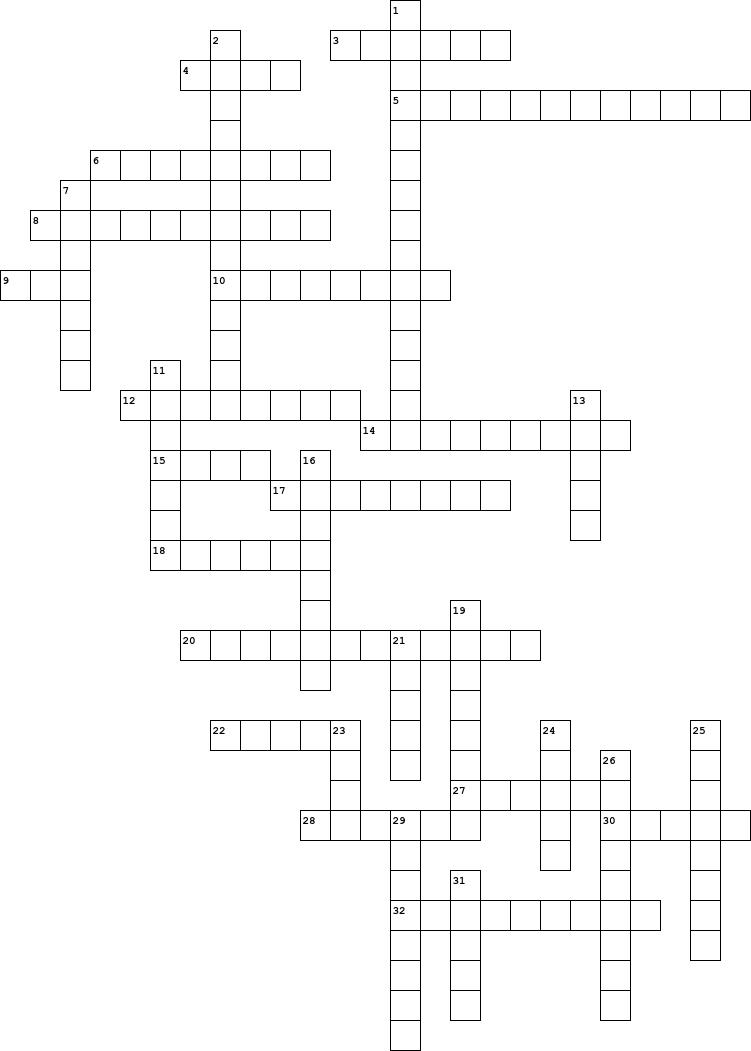
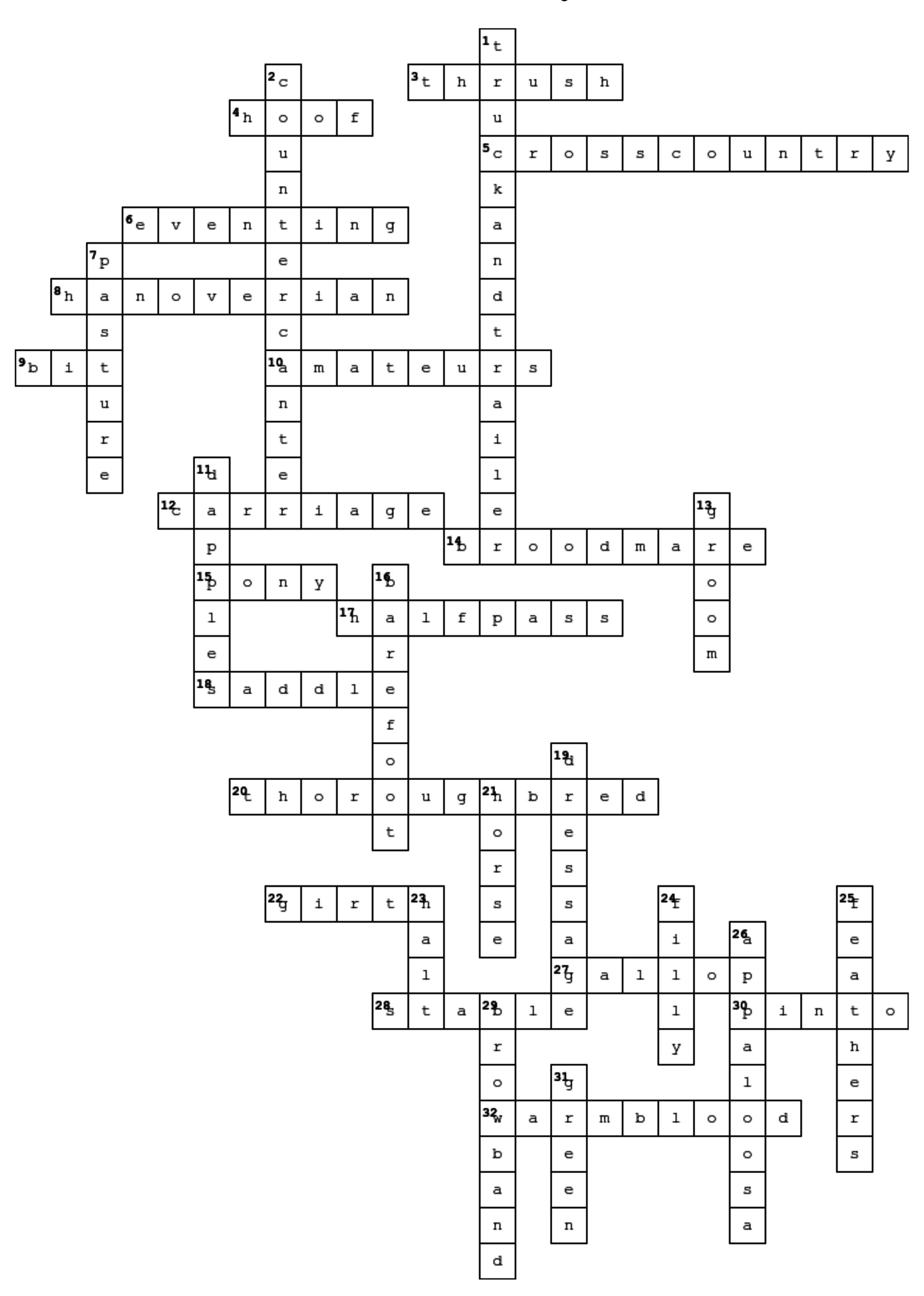
Horse Treats - Crossword Puzzle
You know what to do! Down
3. You don't want your horse to have this
4. No ____ no horse
5. Phase outside the ring
6. Sport with 3 phases
8. German breed of horse
9. It goes in the horse's mouth
10. They don't get paid to ride
12. Self-________
14. A mother
15. Not quite a small horse
17. A dressage dance move
18. Piece of equipment shared with cycling
20. It's first career is often on the track
22. Tighten your _____
27. A fast gait
28. Shelter or steady
30. Also has spots
32. Type of horse
By Meredith Rogers
1. How we get around
2. Wrong lead
7. Horses love this
11. A sign of a healthy equine
13. You do this before tacking up
16. No shoes
19. A part of our name
21. Our favorite animal
23. ____ at X
24. Congratulations! It's a ____
25. Clydesdales have these
26. Has spots
29. Often has bling
31. Uneducated
Answer key on page 12
Horse Treats - Crossword Puzzle
By Meredith Rogers
Amateur Dilemma
By Meredith Rogers
We are stronger than we think. Things are not as bad as we believe. Although it’s hard to not succumb to negative thoughts when our problems start to stack up, remember than no one has it easy all the time. Also, the greatest growth comes from overcoming challenges. I just put my entry in for my first show in a year and half of rehabbing Leo. I’m a little afraid to share this news before the show actually happens, so as not to jinx it, but pressing Submit called up so many emotions that I felt it important to share.
Show entries must be made weeks in advance of the event, which by definition is a leap of faith in actually having a future. I’m filled with joy because we’re back to being a team again and not just me taking care of him. One of the greatest feelings is when I ask him to do something and not only can he do it, but he does it with enthusiasm (the good kind). Of course there is also fear that he’ll break again at any moment and guilt that maybe I shouldn’t ask him to continue training. That will never go away.
I look back at this past year and you wouldn’t think that it was a growth year because I couldn’t ride my horse, but it actually was. I took lessons on a schoolmaster and it advanced my feeling for, not only the movements, but also real connection, more than trying to train Leo at the same time as I was learning. I joined the Equibody program, which I may not have done if I was spending more time (and funds) riding and showing. It was a missing piece that helped me to be able to accept the lessons the schoolmaster was teaching me and prepared me to get back on Leo. I am thankful to have been given these opportunities.
I was devastated when he became injured last year. I was afraid I wouldn’t be able to reach my riding goals. I was worried I wouldn’t be able to meet Leo’s needs. It felt like rock bottom, but I followed doctor’s orders and took one day at a time and here we are. Maybe he will injure himself again, but I made it through this time and the time before, and I’ll figure it out again if I have to.
ESDCTA’s Fix-A-Test Fixed Our Tests
By Paige Zimmerman
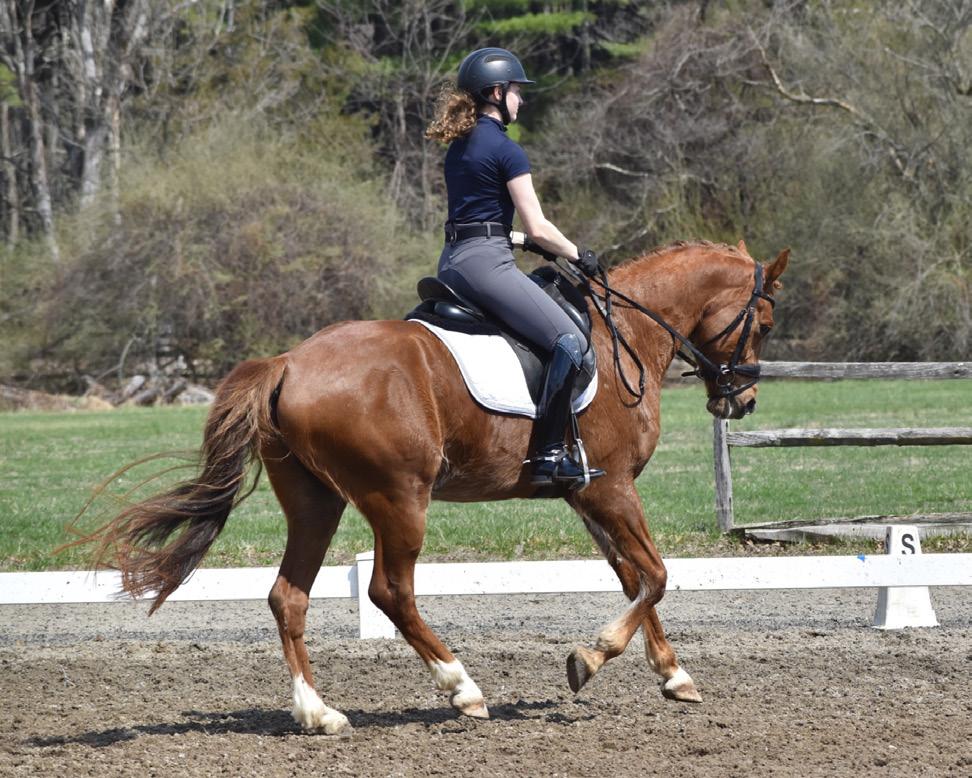
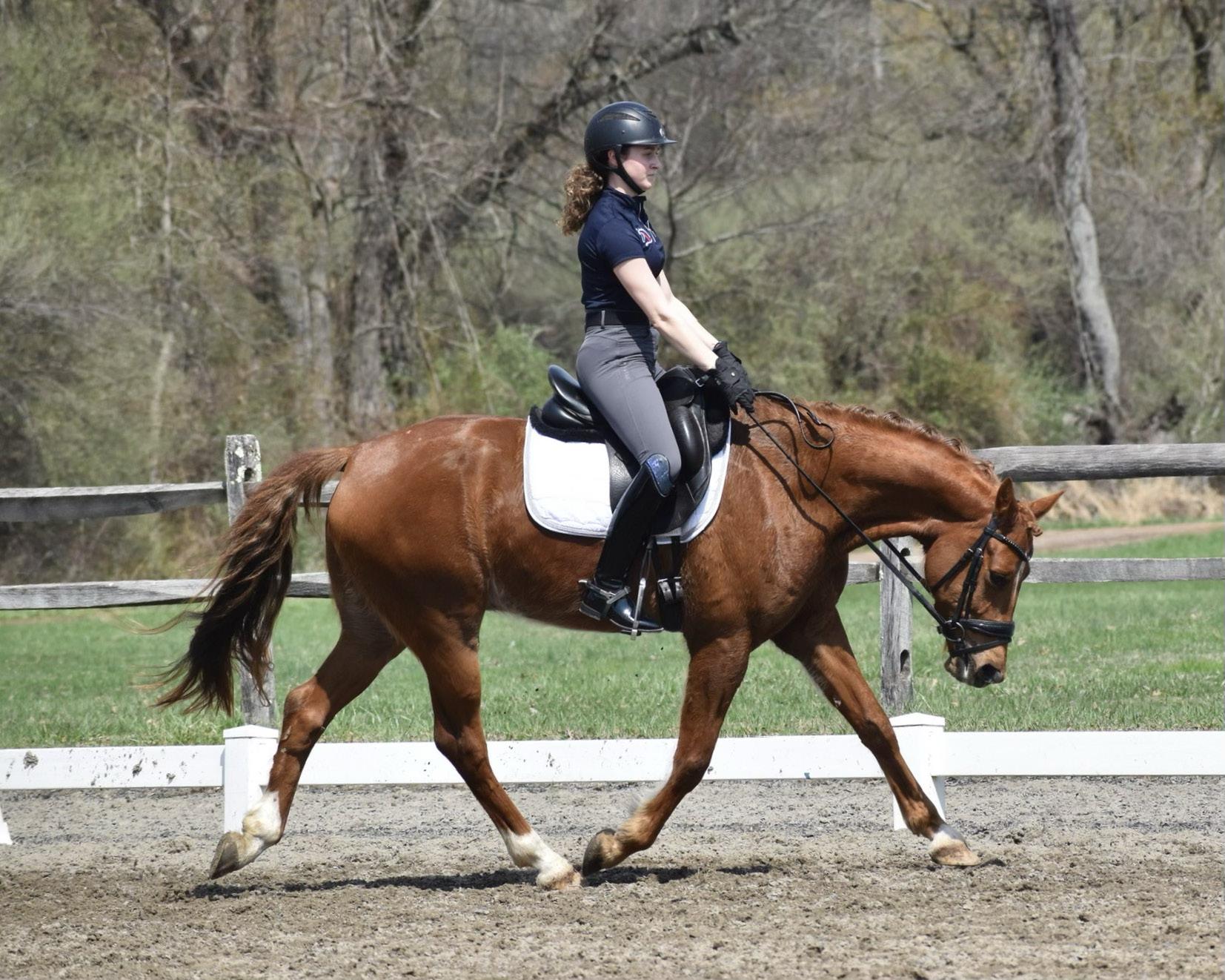
Right before Easter Sunday, ESDCTA held its annual Fix-A-Test to benefit the ESDCTA Youth Program at Sara Schmitt Dressage in Annandale, NJ. This year, the guest judge was Marilyn Payne, who was extremely well received by all competitors and had great advice to share. I was excited to participate in this year’s Fix-A-Test with both Ducati and Marky to prepare for the upcoming show season and get feedback on what to improve. It was a successful day, Marilyn was really helpful, and it was all for a good cause: ESDCTA will be sending youth teams to several youth shows this year, such as the Region 1 Youth Team Competition and Lendon Gray’s Youth Dressage Festival. It’s crucial to keep youth in dressage if we want to promote a future in our sport. I was a youth not too long ago, and I am pleased that ESDCTA is providing opportunities for local youth.
First, I did a PSG test with Ducati to see how we are feeling before the show season begins. We had a smooth test, including a good line of 3-tempis and decent trot work. We had a few small mistakes, but nothing glaring. I was super proud of how much more confident everything has become since last year’s Fix-A-Test, when we were both unsure at the FEI level. There’s still a long way to go, but this year we earned a 62.500%.
Marilyn encouraged us to turn up the power and work on our accuracy in the trot work. My geometry for the 8-meter circles could’ve been better, and I could’ve used them more effectively to prepare for the half-passes that come right after. In the walk, my pirouettes needed to be smaller and more active. She had a great exercise for this: I was to walk onto centerline and half-pass in one direction to about quarterline, then do a half-pirouette so that I was facing back where I came from, and then half-pass directly back to centerline, where I could repeat the half-pirouette, and continue back and forth like that. This was a great exercise for me to feel the bend much better and get a half-halt in the pirouette so he couldn’t brace against me or ignore my aids. Marilyn also told me that when practicing, I can look down and to the inside during my walk pirouettes, as if I were looking directly at his inside hind
leg. This made an immediate difference in the size of our pirouettes! I needed to be a little more precise in my body position so that he had more clarity about how I wanted the turn to feel. It was very interesting. In my canter pirouettes, I always try to turn and look in the direction I’m turning, but I hadn’t tried it to this extent before.
In the canter, one of our struggles is the half-pass zig-zag, in which you half-pass left to centerline, change to the right, and then half-pass back to the rail. Ducati tends to either blow through me during the flying change, or not have enough energy forward to make it smooth. Marilyn suggested that I practice a lot of half-pass to leg-yield in the canter, all going in the same direction, so that I can make him supple off of my leg and switch the bend without him anticipating changes. Managing his straightness and keeping him loose will improve the zig-zags immensely.
Overall, Marilyn highlighted the importance of working on my geometry and also improving his power and suppleness, as well as me getting better at preparing for each movement so that everything flows a bit better and the changes come cleaner and more consistent. This was all advice that resonated with what we’ve been working on each day, and I was very glad to have Marilyn’s advice match that!
With Marky, the Fix-A-Test was our first time doing 1st Level. We did 1st Level Test 3, and we had a clean and relaxed ride. We earned a 68.472%, which I am super proud of, especially since he was so nervous showing Training Level last year. I definitely want to shoot to get that score up over 70% this year, and I think it’s certainly possible based on the advice we got from Marilyn. My scores were mostly 7s, but some 6.5s brought us down where my geometry wasn’t entirely accurate. Marilyn explained that I could easily bump those scores up at least half a point if I were to just pay closer attention to the size of my circles and the accuracy of my figures. For example, in one of my canter loops, which are a strength of Marky’s, I overshot the centerline slightly. What would
have been a 7.5 turned into a 7. These are points I lost for no reason, especially since the loop itself was balanced. It’s an easy fix to grab more points! I was also making my 15-meter canter circles at C too large without realizing it. Marilyn explained that in this particular test, with the 15-meter circles being at C, and the judge also sitting at C, it’s better to make them slightly smaller. Due to the angle at which the judge is sitting, even if the circle is the perfect size, it might appear slightly too large. It’s better to shift the circle down slightly, just shooting to make it a meter or so smaller, instead of risking a score that reflects the circle being too big. I found that to be a very interesting tidbit that I hadn’t thought about before, but it makes total sense.
Overall, I had a great time and received great feedback that I definitely will be keeping in mind this show season! Thank you to Marilyn for coming out and teaching all of us, and thank you to Sara Schmitt Dressage for being a great host barn! Thank you to our friends at ESDCTA and the Youth Committee for organizing this event, and I’m so glad that we were able to raise considerable funding for the ESDCTA youth program. I’ve benefitted from the youth program in the past and am extremely happy to see it flourishing so that other kids have the opportunity to attend team events and continue their riding education. Bring on the show season!
Answer Key
From Our Friends at Lehigh Valley Dressage Association CALL TO ACTION!
2023 On the Levels” - Adding to Your Dressage Knowledge Bank
By Ellen Broadhurst
By Ellen Broadhurst
This month’s Arena Optional is less “optional” and more friendly but persistent: United States Dressage Federation is offering a FANTASTIC program on May 12 at 8 PM (EST) and we’re here to strongly suggest: sign up and attend.
“Common Mistakes in the Show Ring” Presented by Joan Darnell and Jodi Lees
Let’s be honest: most of us are not losing points because our horses are incapable of brilliance. We’re losing them in the small, sneaky, entirely fixable details: a wobbly salute, a slightly creative interpretation of geometry, or that moment when our brain quietly exits our body at C.
This session zeroes in on exactly those moments. From accuracy in your test to avoiding dress code mishaps, from choosing between posting and sitting trot to managing your reader without accidentally firing them mid-test, this hour is packed with practical, immediately usable advice.
If you don’t know Jodi Lees or Joan Darnell, they are quite literally the judges who train the judges. Both are USEF “S” judges and members of the USDF L Program Faculty. Between them, they have spent decades watching riders hand over perfectly good points for reasons that are, in hindsight, deeply preventable.
This is an hour well worth setting aside. Grab a notebook and a pen, settle in with a cup of tea or the adult beverage of your choice and get the most out of your USDF membership!
“Common Mistakes in the Show Ring” is part of the United States Dressage Federation Virtual Education Series. As a member of ESDCTA, you can register through the online form. The session is free, includes live webinar access (you can
use the free Zoom access, but please log in before 7:59 PM to make sure everything is working—learn from others mistakes), and earns you 0.25 USDF University credit with verified attendance.
Can’t make it that night? The good news: it will be available later in the USDF Education Library. The slightly less good news: “later” can mean up to 30 days. Future-you will still benefit—but present-you could be improving your scores next week.
Sign up. Show up. Keep the points you’ve already earned!
USDF Virtual Education Series (https://usdf.org/education/university/virtual-education-series.asp)
If I Can Do It, You Can Do It
By Paige Zimmerman
Cynthia Vanderlely, the Vice President of ESDCTA since last February, has had quite the journey back to riding after double total knee replacements. I conducted an interview with her to hear about her experience. Her story is one of determination and patience, and she is very proud to share it, with the hopes that local equestrians who may be facing the same diagnoses and hurdles will feel empowered to continue working towards their riding goals.
Cynthia’s love of horses began early. She rode throughout her youth, mostly trail riding with family and friends, as well as 4-H activities. Although she never had formal training, horses always held a special place in her life. After marriage and while raising children, riding had to take a back seat, but the hope of returning to horses never left her. Years later, her husband Arthur helped make that dream possible again, and Cynthia found her perfect partner in Soleil, an American Cream Draft cross. Together, they began a new adventure in dressage.
Cynthia had Soleil for five years, beginning when Soleil was 10 and Cynthia was 65. During those early years, Cynthia stayed very active, riding her Peloton daily and riding Soleil five days a week as the pair progressed through the Intro levels. But in 2022, things began to change. What had seemed like ordinary stiffness turned into serious pain, instability, and difficulty walking. She was diagnosed with advanced osteoarthritis in both knees, and she was told that both would need to be replaced.
Cynthia was not ready to hear that news. She did not want to stop riding, and she especially did not want to face two major surgeries and a long recovery. She sought a
second opinion and found a team that truly listened to her goals: Dr. Joshua Steere at Bucks County Orthopedics and physical therapist Bill Murray at Ivy Rehab worked with Cynthia to help her continue riding as long as possible while also preparing her body for surgery. They took the time to understand the physical demands of riding, from mounting to leg position in the saddle, and even considered those needs when selecting the type of implant and designing her rehabilitation exercises.
With the support of her medical team, as well as her trainer Maia Barnes and the staff at Dressage Sport Horses in Frenchtown, New Jersey, Cynthia continued training through 2023 and 2024. She and Soleil moved through Intro A, B, and C and began Training 1, even as the pain progressed. Eventually, Cynthia could no longer stand long enough to groom Soleil or carry a saddle. At shows, she couldn’t prepare or tack up on her own, and was often conserving all her energy just to get on, ride, and dismount. Still, she remained determined to create a plan that would allow her to return to training as soon as possible.
Because doing both knees at once was considered too risky, Cynthia and her surgeon chose an aggressive but manageable path: two surgeries just five weeks apart, on November 7 and December 11, 2025. She wanted to get through the 2025 season and be back in training in 2026 as early as possible. She even made it through our ESDCTA Championships at Gladstone in late October before the surgeries. Go Cynthia!
The recovery process, Cynthia says, surprised her in the best possible way. After the first surgery, she immediately noticed something remarkable: her leg was straight again. No more bowing! She returned home and followed a disciplined routine of icing, elevating, and exercising every hour. Although she had been warned that the first two weeks would be the hardest, she says the pain was not nearly as bad as she expected. The second surgery in December went just as smoothly. Other than an adhesive allergy that caused some irritation, her recovery was steady and successful.
Within days, she was off the walker. Soon she moved from a cane to walking independently. She was driving again, back on the stationary bike, and rebuilding both strength and stamina. By January, she was able to travel to Ocala, Florida, to watch Soleil compete. She returned in March, and during one of those visits, she climbed aboard and walked around the outdoor arena. That moment confirmed what her surgeon and physical therapist were already telling her: she was ready to ride again. Her first ride back was unforgettable. Cynthia recalls simply walking up the mounting block, swinging her leg easily over the saddle, and settling in. She was amazed at how much more freely her body moved, and even more delighted that she could finally lengthen her stirrups to a more comfortable hole. Best of all, she felt that
Soleil noticed the difference too. The pain was gone, and the two of them could enjoy each other again.
Presently, Cynthia has been discharged from both her surgeon and physical therapy. She says she can now run, ride, bike, lift her grandchildren, take walks, stand comfortably, and sleep without pain. She has also begun trotting in lessons, with cantering next on the horizon!
Cynthia hopes her experience encourages other riders facing joint replacement or another major physical setback that it is possible to return to the activities you love. Her advice is: build a team you trust. Make sure your surgeon, therapist, and trainer understand your riding goals and are willing to listen to what you need, not just what is typical for the average patient. And perhaps most importantly, she urges others not to wait too long in pain before seeking help. For her, surgery was not the end of riding. It was the beginning of getting her life back.
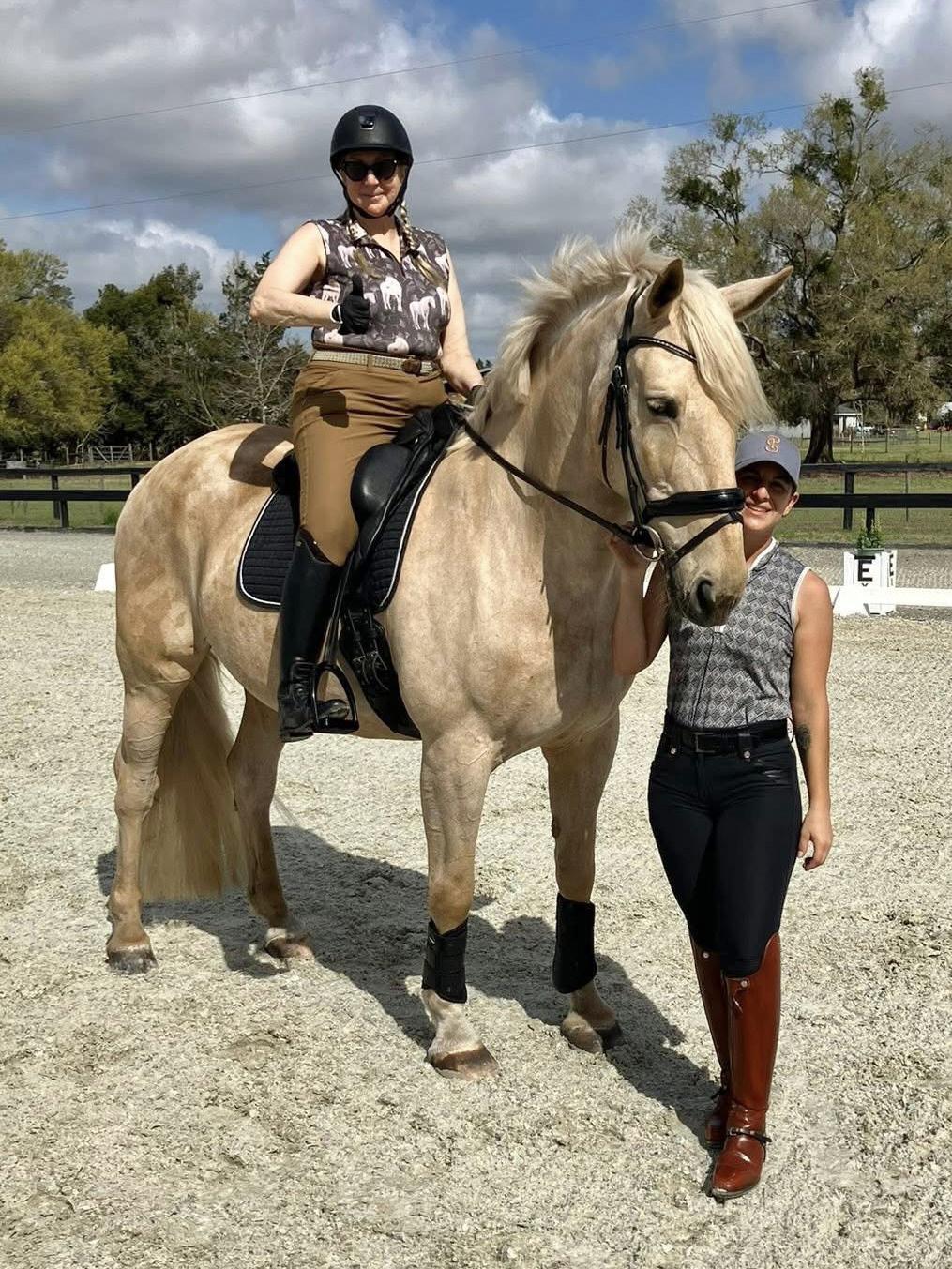
Looking ahead, Cynthia is excited for the season to come. She plans to compete at Training Level 3 with Soleil and is preparing to begin working on a Training Level freestyle. With renewed strength, Cynthia is embracing the future with energy and optimism. As she puts it, she may turn 70 in September, but she feels much younger than that!
News from Outside the Ring
How to Speak Horse
We can all recognize our own horse’s unique “neigh,” but did you know that up until now, no one knew how they made that sound? The combination of both high and low pitched sounds that come out at the same time to make up neighs, whinnies, and nickers are rare in the animal kingdom. How horses make the low-pitched component had long been known to originate from the vibration of air passing over bands of tissue in the voice box, which is similar to how humans speak and sing. However, it has only now been discovered how horses make the high-pitched sounds. Researchers at the University of Copenhagen thread a small camera through horses’ noses and filmed what was going on. They also blew air through the isolated voice boxes of deceased horses. It turns out, horses whistle! The whistling starts in the horse’s voice box, unlike humans who whistle using our mouths. Other animals that do this include mice and rats, but horses are the only animals found to whistle like this at the same time as they make lower pitched sounds. Note, although Przewalski horses and elks can make similar sounds, donkeys and zebras can’t. So the next time your horse calls you from across the field, try to differentiate between these distinct frequencies that may help horses to express more emotions that other animals.
Be Careful Out There
On April 15, the New Jersey Department of Agriculture announced that a horse in Burlington County tested positive for equine herpes myeloencephalopathy (EHM). The 17-year-old warmblood gelding developed acute signs on April 1 and was hospitalized. The remaining 26 horses on the property are currently under quarantine. Another case of EHM was detected in January of this year in Burlington County but the two cases are not thought to be related. The horse in January was an 18-year-old warmblood that was humanly euthanized. Another horse tested positive at a hunter/ jumper show at Commonwealth Park in Culpeper, Virginia, and was euthanized on April 17. This is an ongoing story, so be vigilant.
US Dressage Finals Eligibility NEW PROTOCOL FOR 2026!
The US Dressage Finals is an Invitational competition using the USEF/USDF Regional Championship program to qualify. Qualifyi ng takes place at each of the nine Great American/USDF Regional Dressage Championships, based on either 1) Placing in a Regional Championship Class or 2) Wild Card Eligibility. Either must be achieved at a Regional Championship in a class and eligible division offered at the US Dres sage Finals.
I. Qualification Based on Placing in a Regional Championship Class:
The top four placed horse/rider combinations for each level and eligible division from each of the nine Regional Championships will be automatically invited, provided the following requirements are met: US Citizenship and earning an eligible placing in a Regional Championship class.
1) Placing in a Regional Championship Class: Eligibility to enter US Dressage Finals classes is based on a horse/rider combination's placing in a Regional Championship class. The top four placed horse/rider combinations in eligible classes will be automatically invited as long as they have achieved the prerequisite score of 57% or higher
2) United States Citizenship Requirement: To compete in any US Dressage Finals class, the rider must be a US citizen at the time they compete in the US Dressage Finals.
II. Qualification Based on Wild Card Eligibility:
Horse/rider combinations who are not otherwise qualified to compete in the US Dressage Finals based on their Regional Champio nship placing (see above) will be invited to participate in a Finals class by earning a Wild Card score achieved at one of the nine Regional Championships, provided the following two requirements are met: US Citizenship and earning an eligible Wild Card score in a Regional Champi onship class.
1) Eligible Wild Card Score: Eligibility to enter US Dressage Finals classes is based on a Wild Card score earned in a Regional Championship class. For all levels and divisions from Training through Grand Prix, a horse/rider combination that competes in a Regional Championship class and achieves a score at or above the score listed below for that level and division may compete i n the same level and division at the US Dressage Finals.
2) United States Citizenship Requirement: To compete in any US Dressage Finals class, the rider must be a US citizen.
AA: Jr/YR: Freestyles
III. Invitations:
Invitations will be emailed to eligible/qualified horse/rider combinations immediately after each Regional Championship. Ther e will be two categories of emails:
1) Invitation emails will be sent to the top four placed horse/rider combinations that have achieved the minimum score of 57%
2) Invitation emails will be sent to combinations eligible for a Wild Card.
Note: Competitors do not need to receive an actual invitation to enter the US Dressage Finals. The entry system will have their eligibility status, and they can enter prior to receiving an email invitation.
IV. Entry Requirements
Completed entries for the US Dressage Finals must be received by the closing date, Saturday, October 10th midnight Eastern Time. Each online entry must include the following: full payment, fully signed 2026 US Dressage Finals entry form and signed USEF Waiver, current negative Coggins test and current Flu/Rhino Vaccine Record. All documents must be uploaded when you receive your online entry confirmation from Horseshowoffice.com, that is emailed immediately to you after you enter online.
For evolving event and competitor information, usdressagefinals.com will be your source.
Dressage at the New Jersey Horse Park 4/8/26
Class 154, FEI Test of Choice - Wed, Apr 8, 2026 - East Ring
Bridle #
Class 170, Young Horse Test of Choice (not including 7 year olds) - Wed, Apr 8, 2026 - East
Class 152, FEI Intermediate II - Wed, Apr 8, 2026 - East Ring Bridle #
Class 150, Prix St. Georges - Wed, Apr 8, 2026 - East Ring
Bridle
Bridle
131, Third Level Test 1 - Wed, Apr 8, 2026 - East Ring
-
Bridle
Bridle
Bridle #
Dressage at Jersey Palms
Introductory Level A –Starter Horse
Rider Name Horse Name Test
Sasha Armstrong Sweet Blindness Intro A
Training Level 1
Rider Name Horse Name Test
Christine Eason Midnight Tryst Training 1
Training Level 2
Rider Name Horse Name Test
Beth
Christine
Training Level 3
Rider Name Horse Name Test
Beth Couturier Primordial Fear Training 3
Sharon Caldwell Rumor JP Training 3
First Level 3 jr/YR
Rider Name Horse Name Test
Emily Brummer FS Djambo First 3
Second Level 1 JR/yr
Rider
WDAA Basic Level 3
Rider Name Horse Name
Lorene Wright PSU Lopn toa Goodbar WDAA B-3
WDAA Basic Level 4
Rider Name Horse Name Test
Lorene Wright PSU Lopn toa Goodbar WDAA B-4
Prix Caprilli Walk-Trot
Rider Name Horse Name Test
Emily Brummer Chico
Dressage Trail Walk-Trot
Rider Name Horse Name Test
Sharon Caldwell Don Ramiro
Dressage Trail Walk-Trot-Canter
Rider Name Horse Name Test
Mia Brummer Chico
Emily Brummer Chico
1 Susan Sinelnik (r)
1 Susan Sinelnik (r)
(r)
(r)
1 Susan Sinelnik (r)
2 Susan Sinelnik (r)
1 Susan Sinelnik (r)
(r)
1 Susan Sinelnik (r)
1 Susan Sinelnik (r)
1 Susan Sinelnik (r)
1 Susan Sinelnik (r)
1 Susan Sinelnik (r)
2 Susan Sinelnik (r)
Saddlebrook Ridge Equestrian Center Dressage Schooling Show