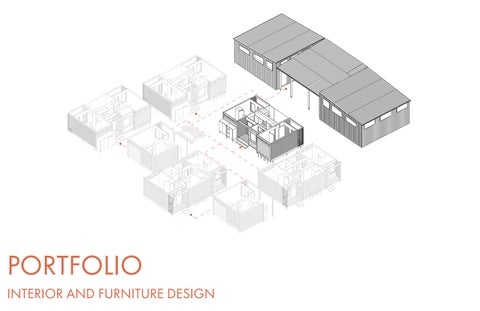
INTERIOR
AND FURNITURE DESIGN

AND FURNITURE DESIGN
In order to create a community, you have to sacrifice privacy; communities must be facilitated through the creation of shared spaces.
Residential communities exist in a range of scales from a unit within an apartment complex to a neighborhood and city-wide scale. These scales require different levels of facilitation to ensure the user group’s community is supported by the built environment, and that there are appropriate scales of interaction for residents.
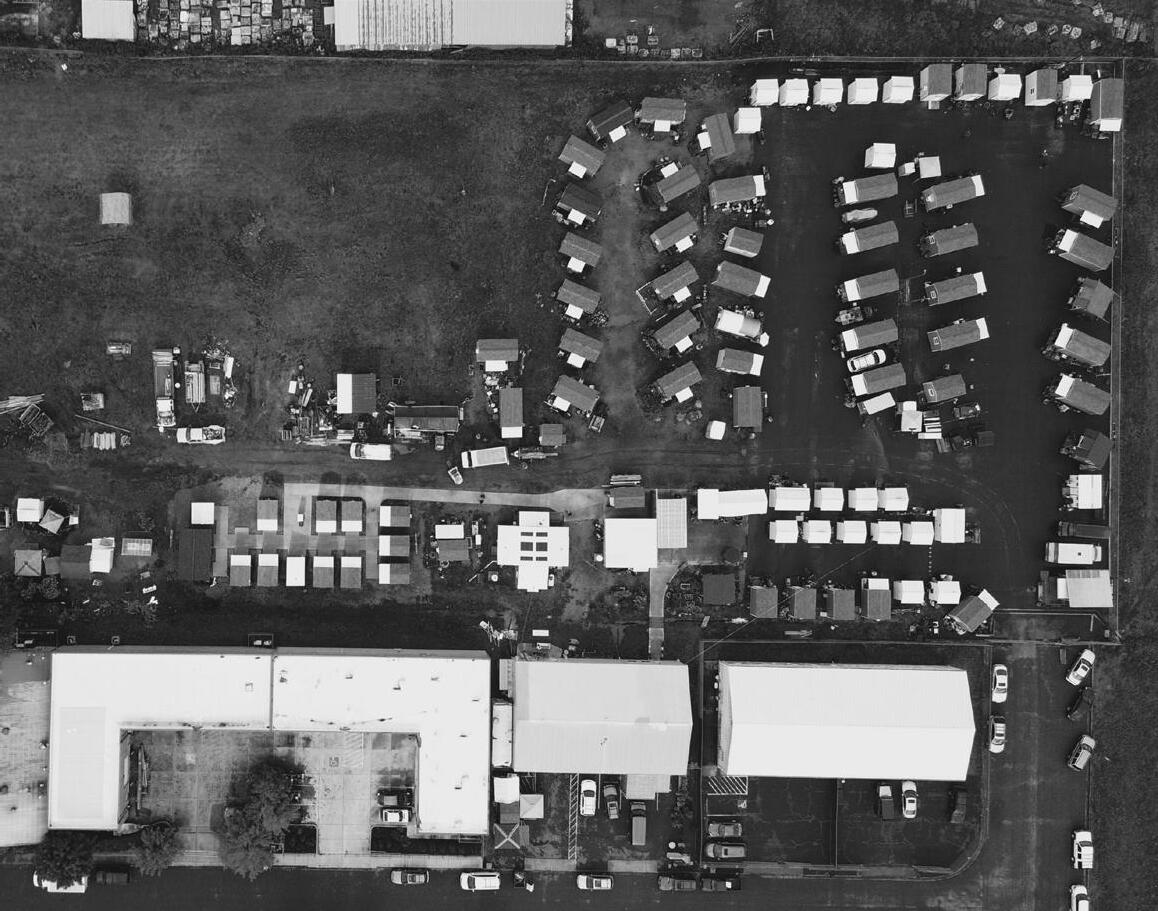
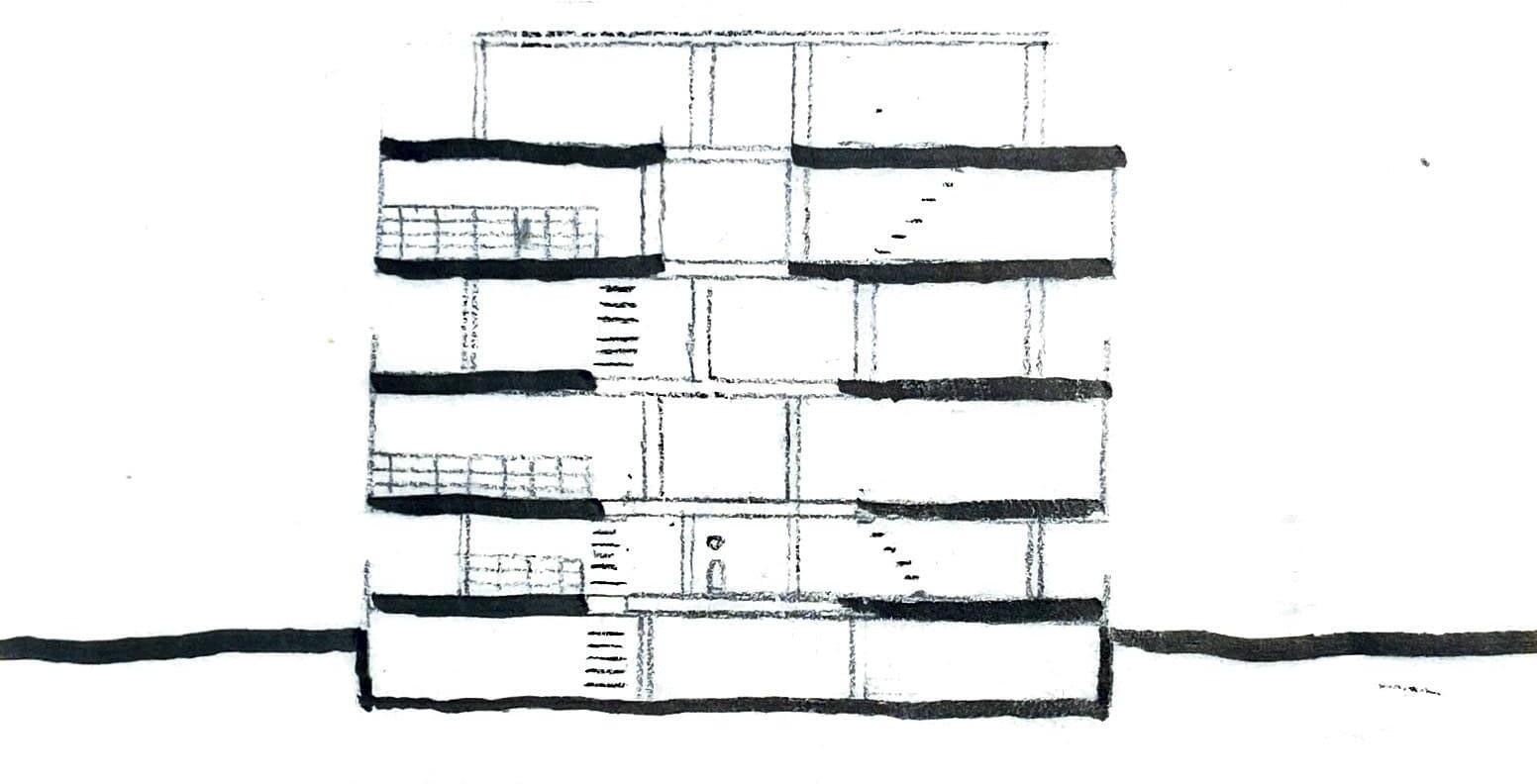
Blended is an atypical solution to how neighbors socialize in an apartment complex. It critiques the current role of circulation in the existing typology and challenges the idea that circulation is purely a liminal space.
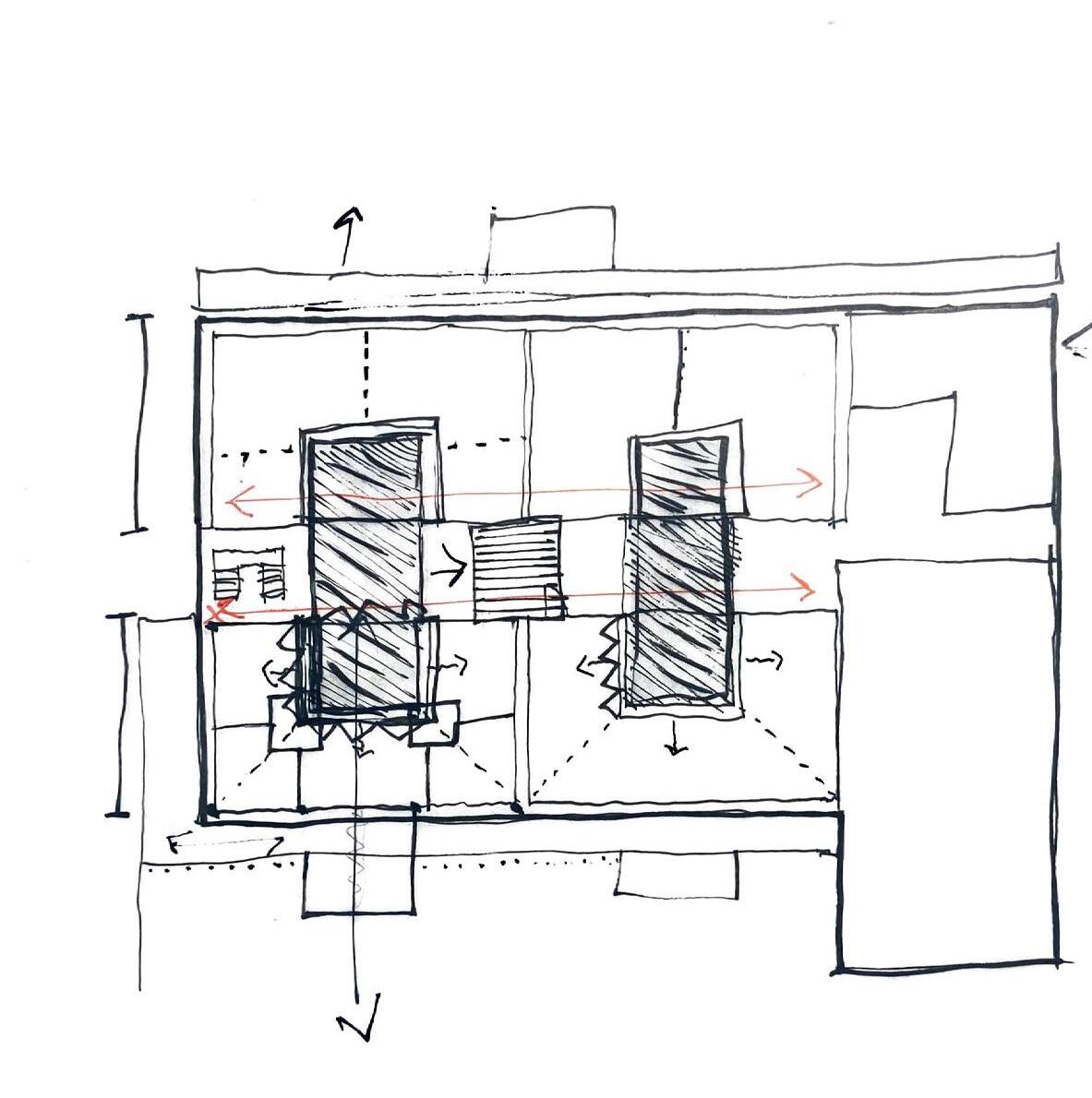
Preliminary design showing the relationship between units and to common circulation paths
Design Principles
01: Circulation, not as Circulation
Consider how the interaction between the circulation and unit can inform sub-zones for interaction.
02: Unifying Components
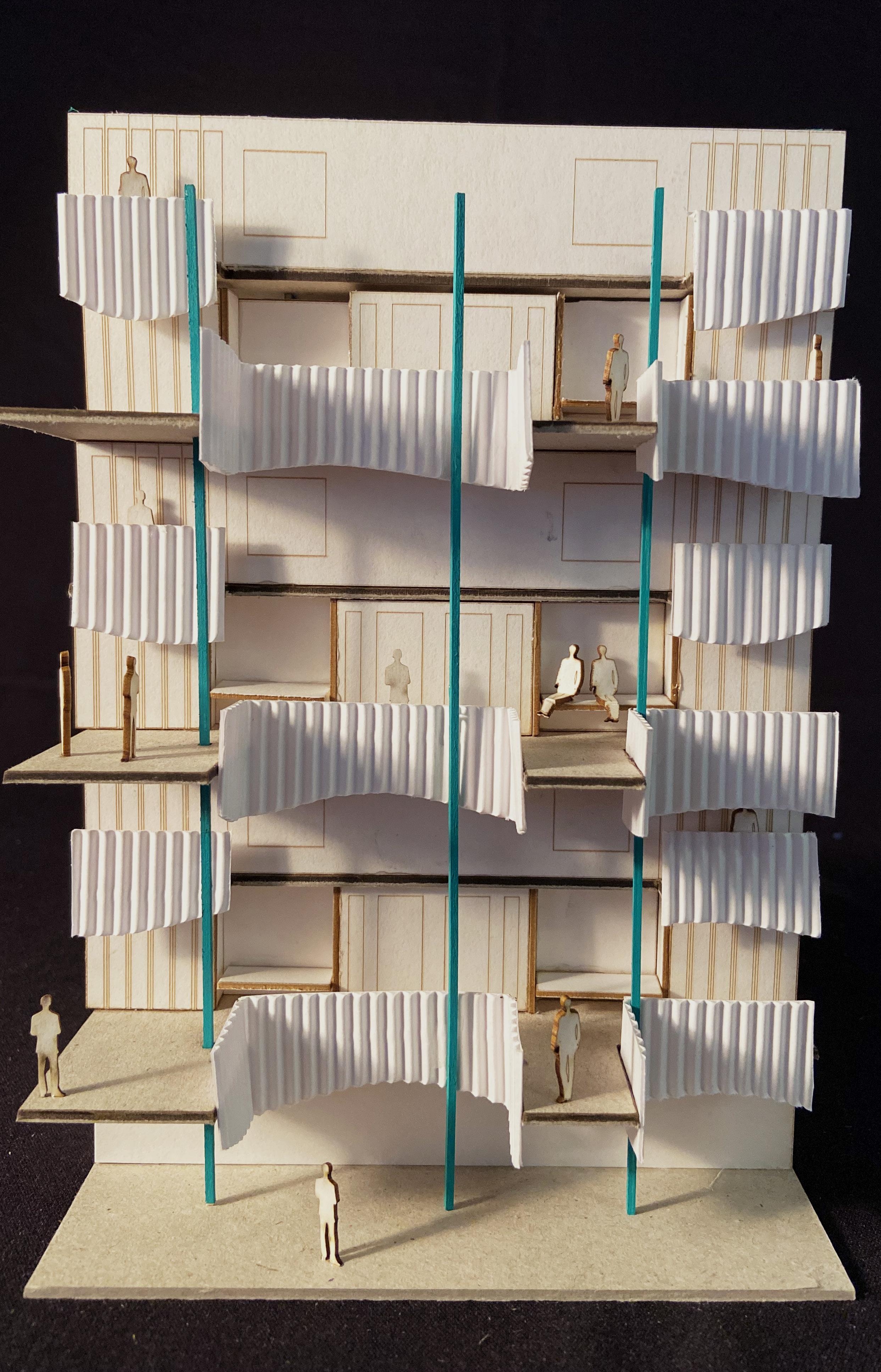
The creation of unifying elements (i.e. platforms, seating, balconies) between the entrance of the units to the circulation space.
03: Layered Zones for Creating Interpersonal Bonds
Clearly defined zones to facilitate interaction amongst residents within the central circulation space.
04: Structure as a Threshold
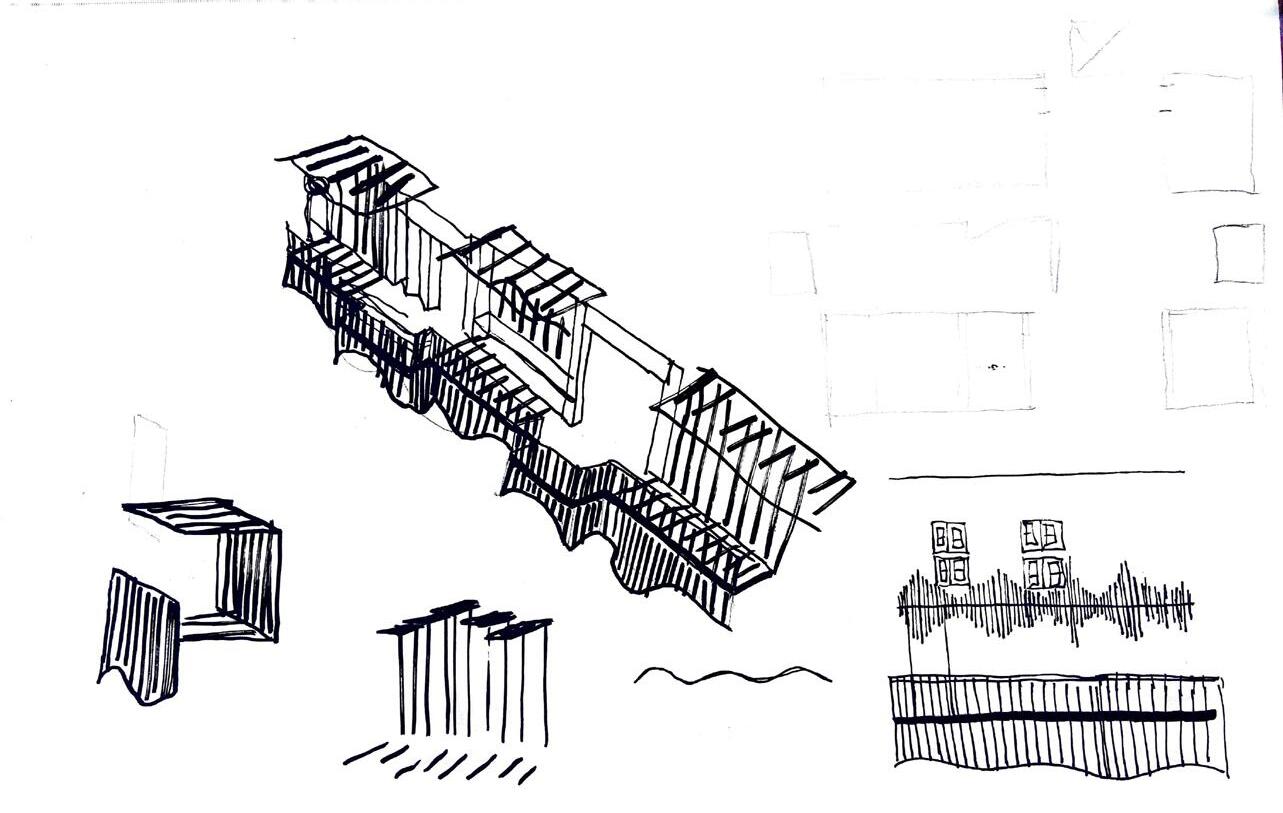
The use of structure to further subdivide the circulation space and inform zones of interaction.
Vertical Connection
Interior balconies connecting the unit to the central circulation
Vertical Circulation
Horizontal and vertical circulation
Interaction Platforms
Breakout spaces from the unit’s ground floor into the central circulation space
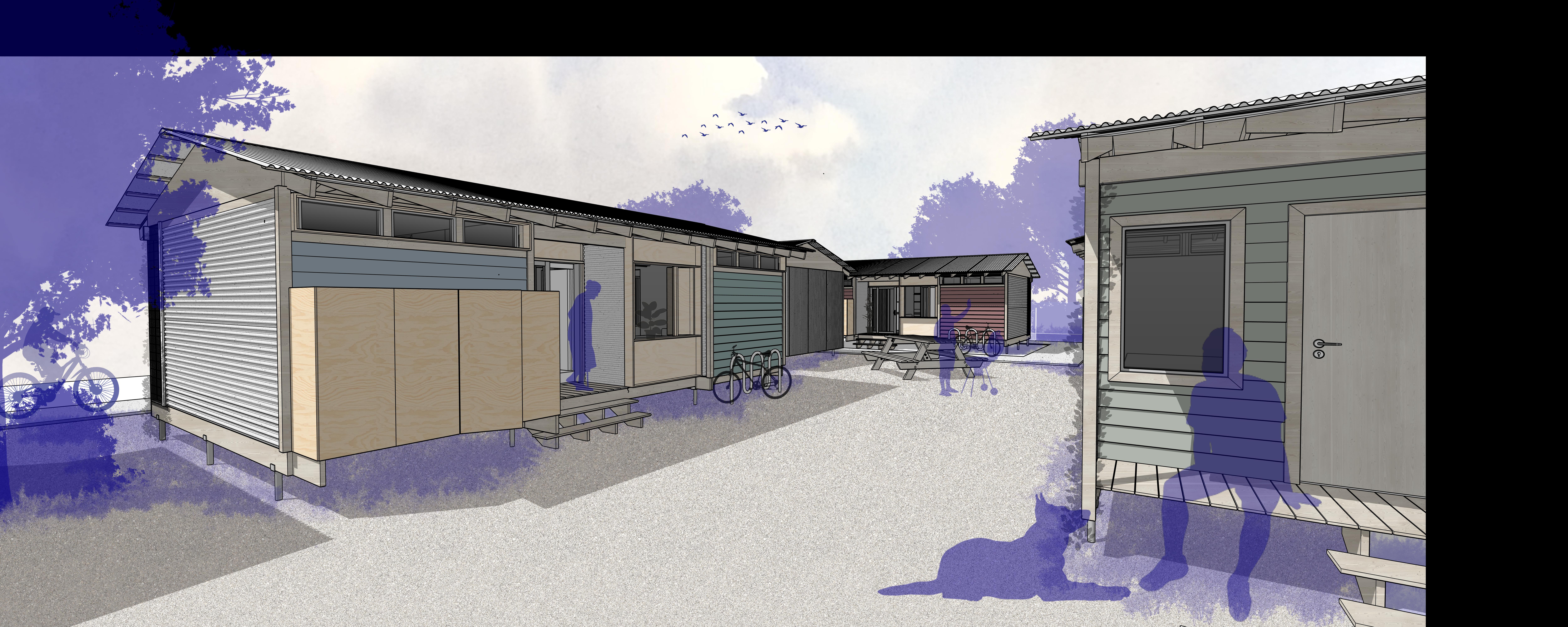
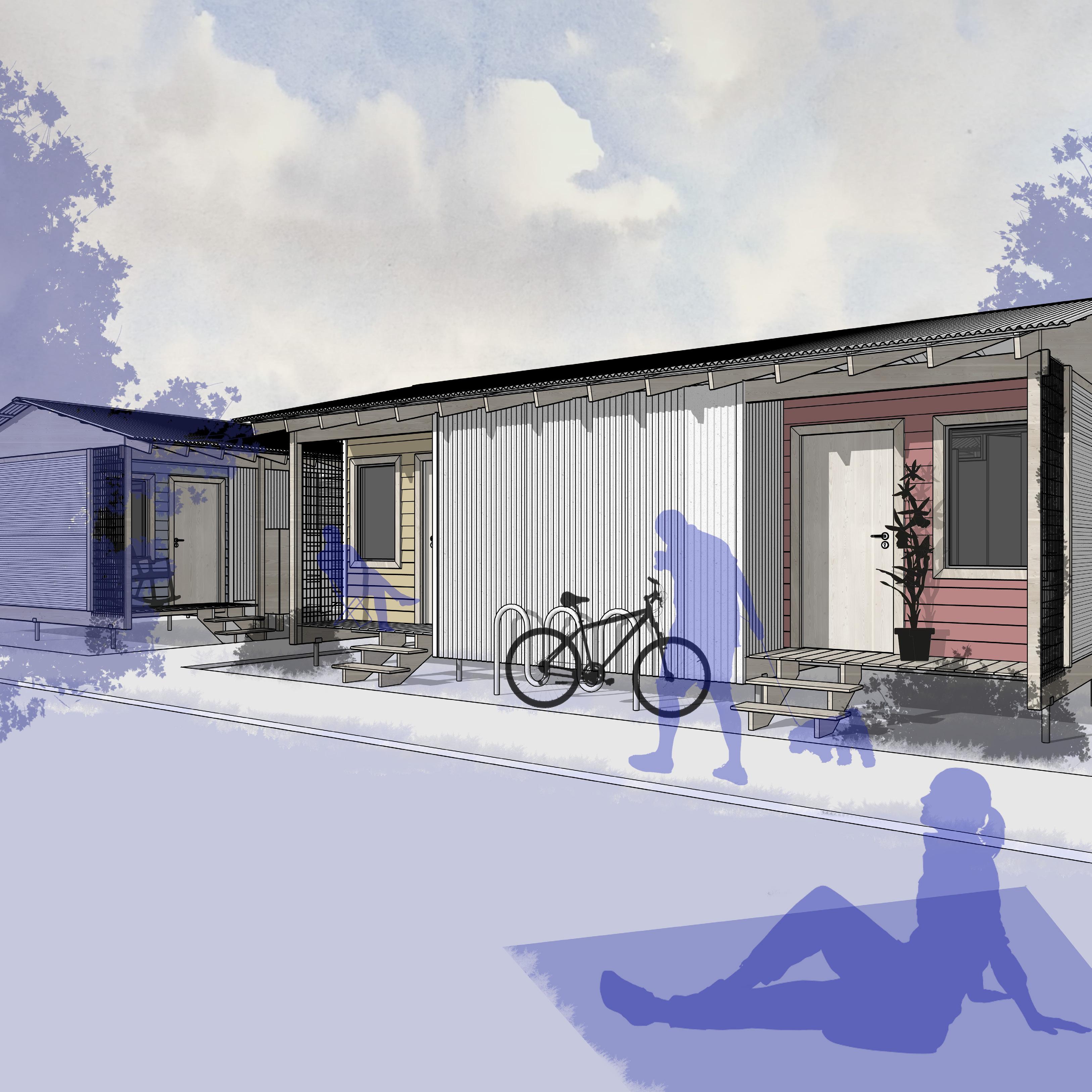
Corrugated Metal Roof
22 Gauge Sheet Metal
Unfinished
Roof Purlins
1 x 2 Construction
Tack-able Surface
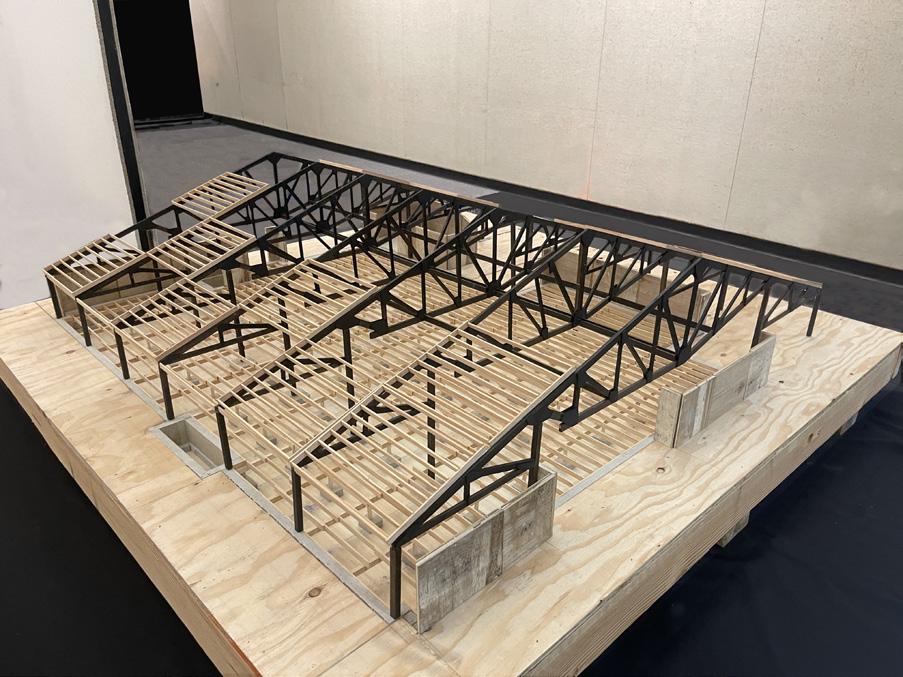
Prefab Truss
1 x 6 Construction
Kitchen / Bath Module
Prefabricated / Delivered
Interior
Kitchenette / Dining Zone
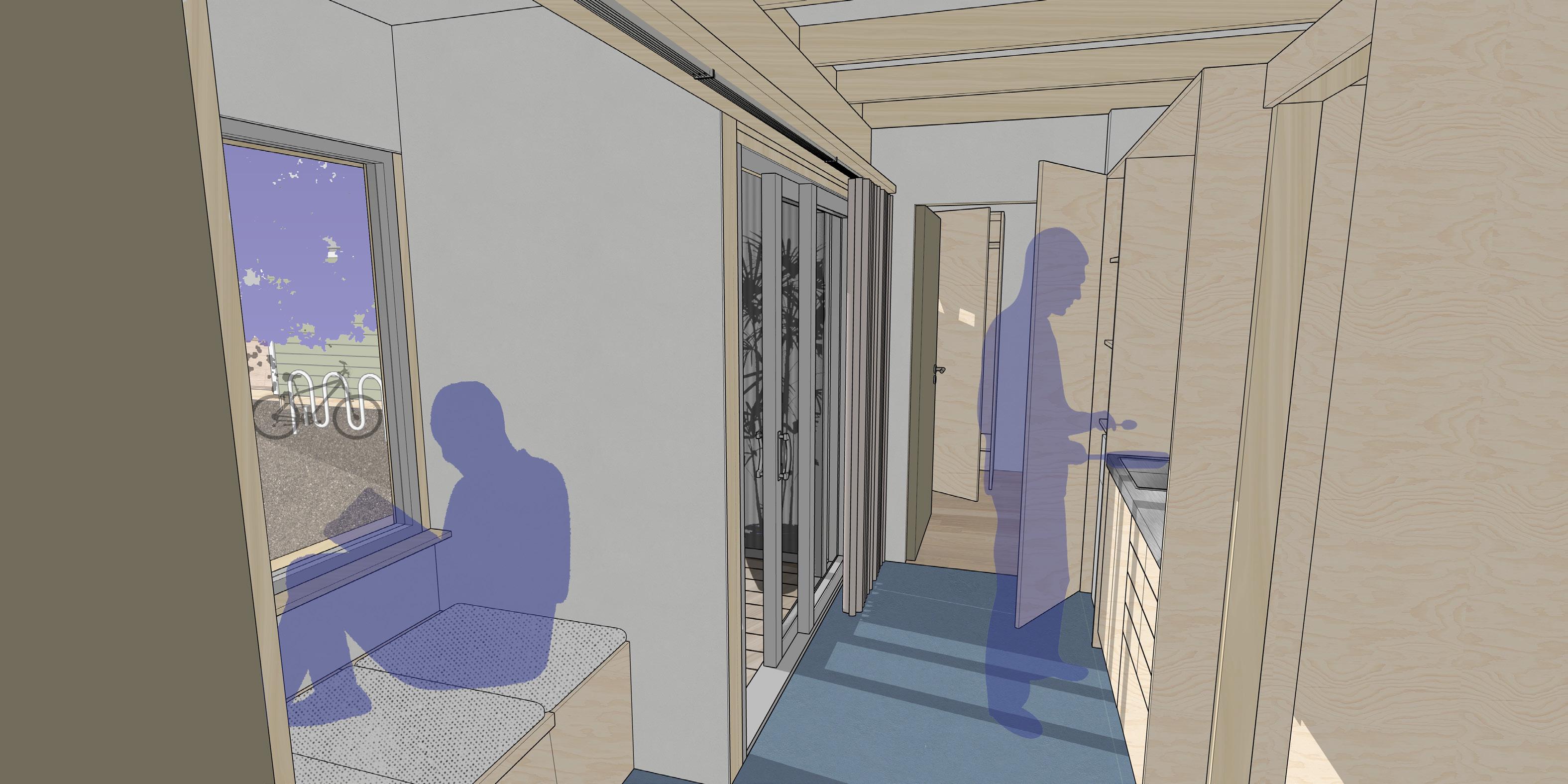
Dining / Porch Module
Prefabricated / Delivered
Dedicated Bike Parking
Bedroom Module
Prefabricated / Delivered
Storage
2’ x 8’ x 6’
Helical Pier
Unstable Soil Solution
(E.) Roof Asphalt Shingles
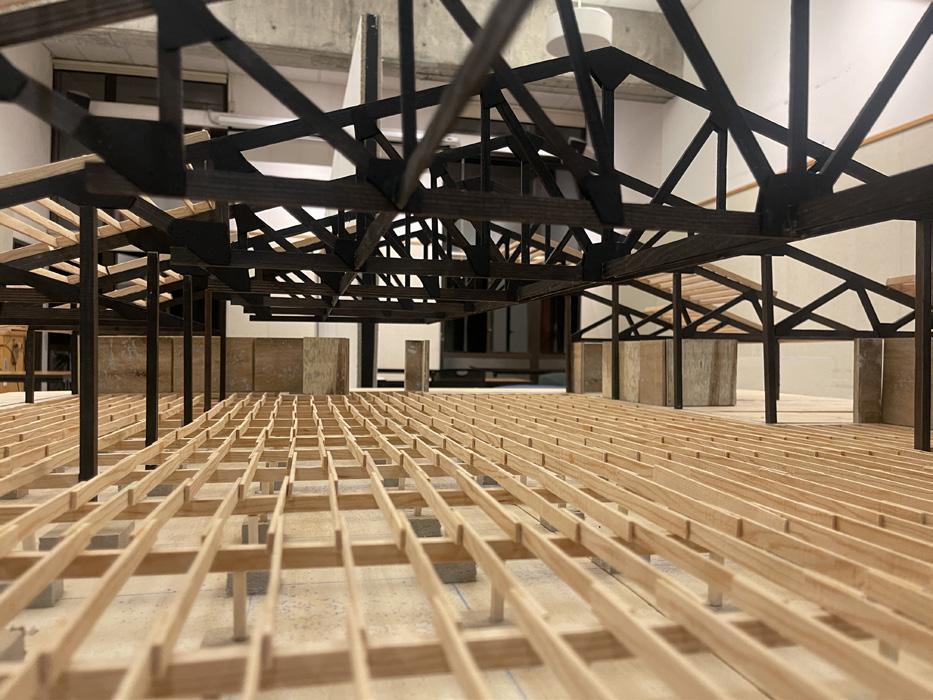
Archival / Exhibition
(E.)Roof Rafter System
2 x 6 Construction
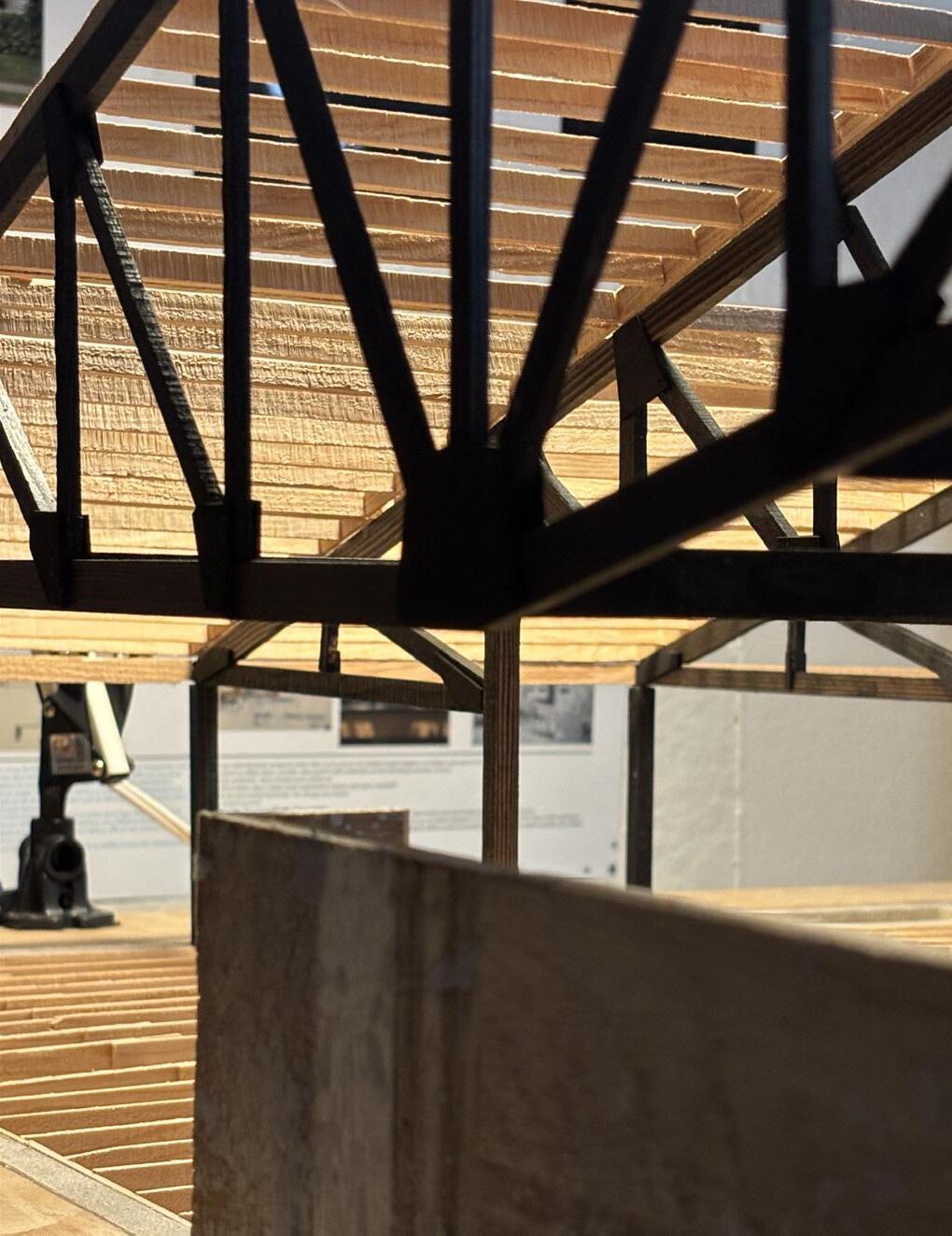
(E.) Truss System
4 x 8 Construction
(E.) Floor Joists
2 x 8 Construction
(E.) Floor System
2 x 10 Construction
Concrete Piers
(E.) Stem Wall
Concrete
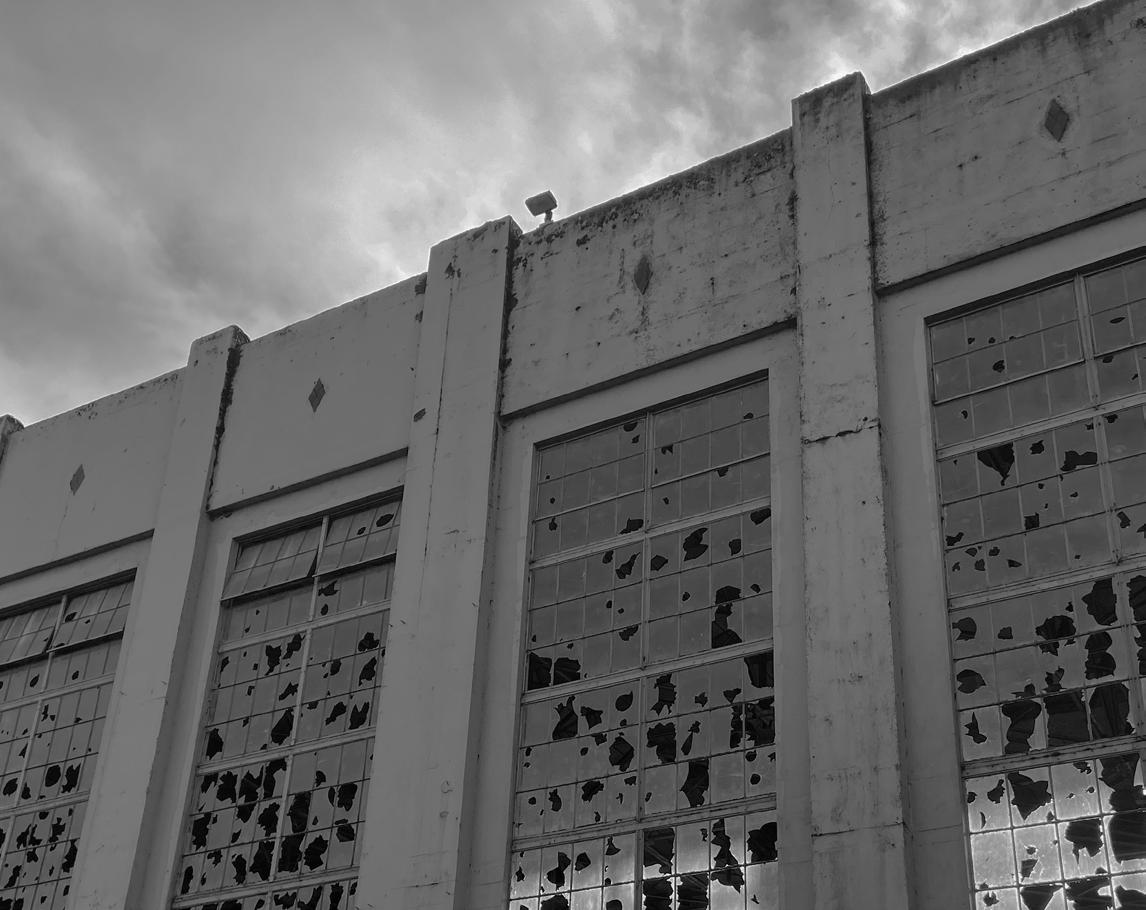
As a Based in Eugene, Oregon, NWC4A seeks to raise public awareness about the artists and architects who sought to create regionally specific approach to design that responded Thoughtfully to the environment, culture and economy of the Northwest.
NWC4A works to archive the memory and context of our existing buildings, we also strive to create a place for contemporary architects and artists to showcase their work and engage with the ongoing regional architecture conversation. The archive of the NWC4A is focused on works that document the process of creating and building architectural ideas in the Pacific Northwest.
Design Principles
01: Public - Private
Levels of transparency for the public to engage with the preservation process, from a walking arrival, to a car arrival, to a bike arrival.
02: Revitalize Existing Elements
Re-purposing existing building components and revitalizing otherwise overlooked elements of the design
03: Third-Place Making
Instilling vitality into the building by space making for the general public
04: Establish Access
Points of access for the general public, local universities, and professionals to engage with material and conduct research.
05: Enrichment to the Existing Structure
Considering the structure as a defining element for service/ served portion of the program.
OUTLET 2-PLUG
REBAR 16" O.C. 2" CONCRETE COUNTER TOP (POUR IN PLACE) 1" LED STRIP LIGHTING
2" X 4" NOMINAL LUMBER
X 3" ANGLE IRON 3/4" BIRCH PLYWOOD SHEATHING
1" X 3" NOMINAL LUMBER 1" LED STRIP LIGHTING
1/2" DOUGLAS-FIR PANEL MATTE FINISH
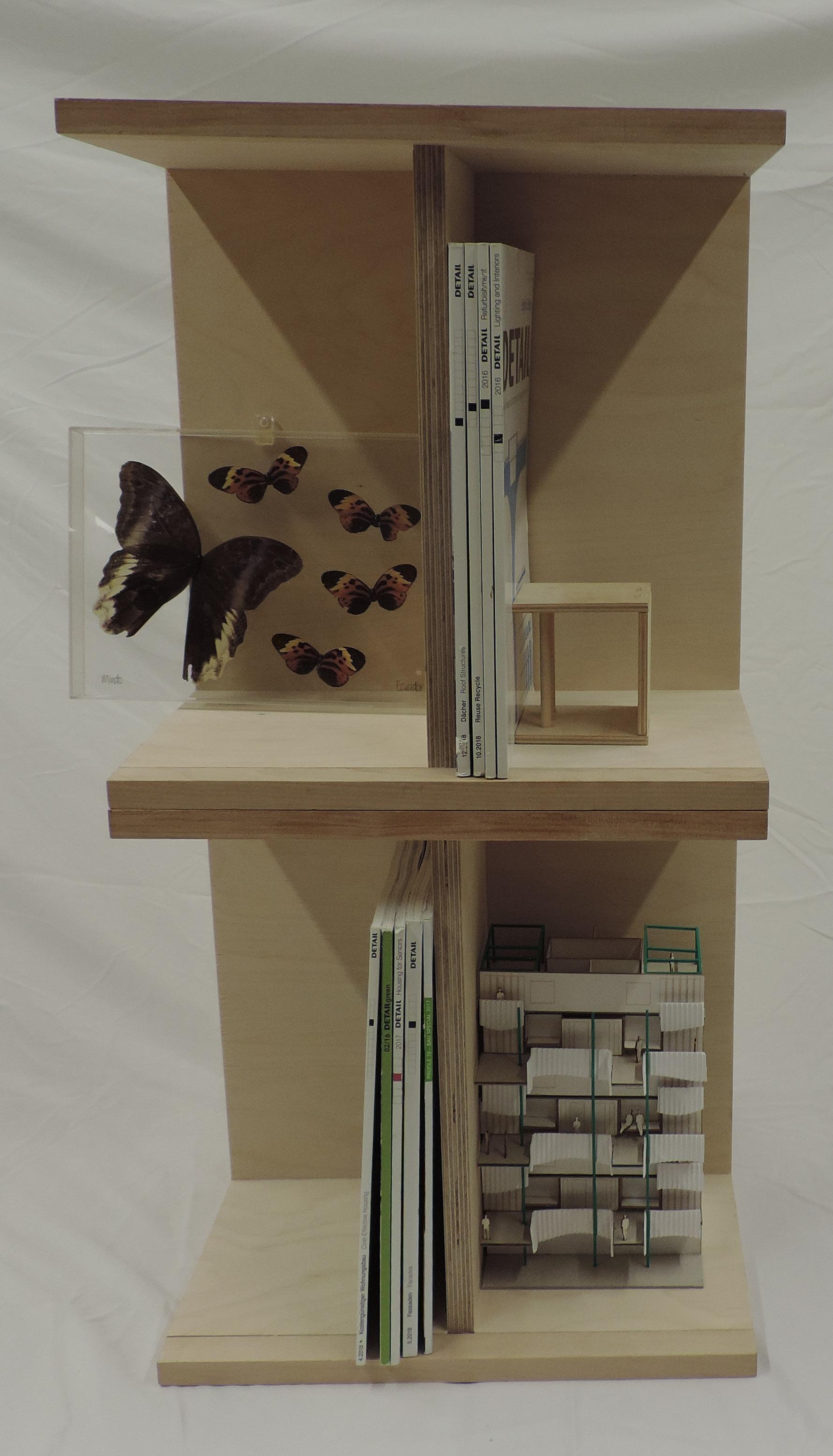
04: Harnessing the Negative Space
Consider how the system engages the negative space from the other modular elements to increase the efficiency of the material.
05: Proportion and Scale
The proportion of the unit must be scaled appropriately to the space it inhabits.
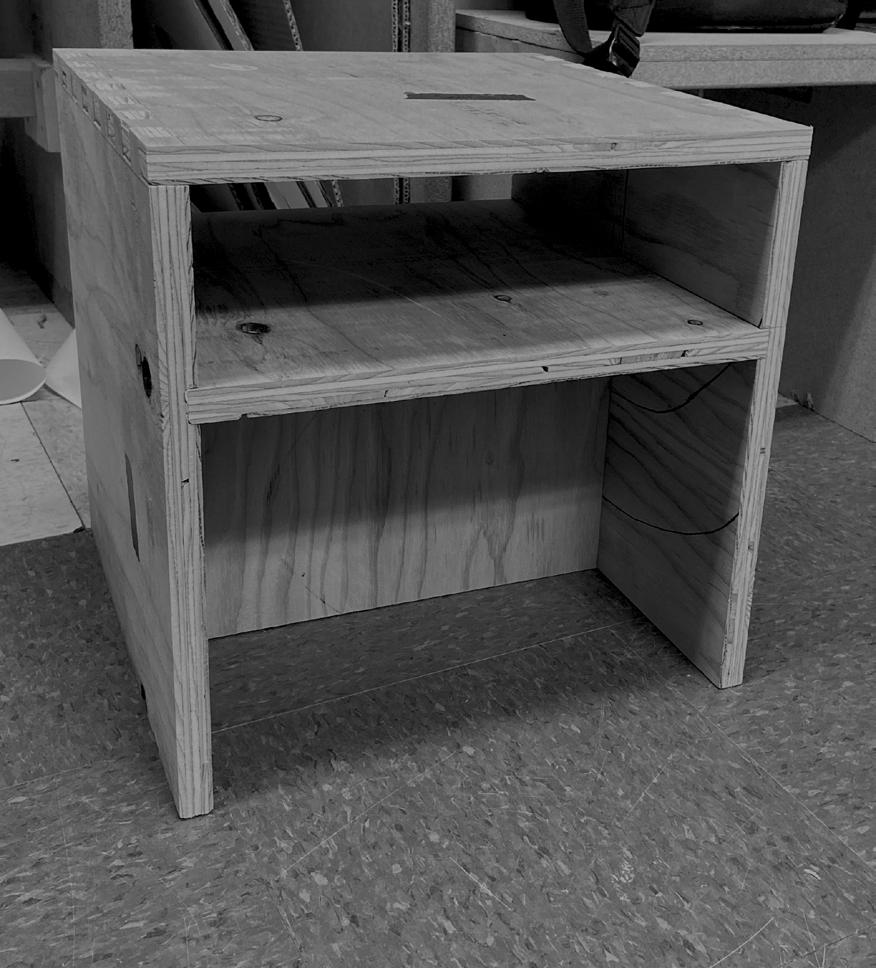
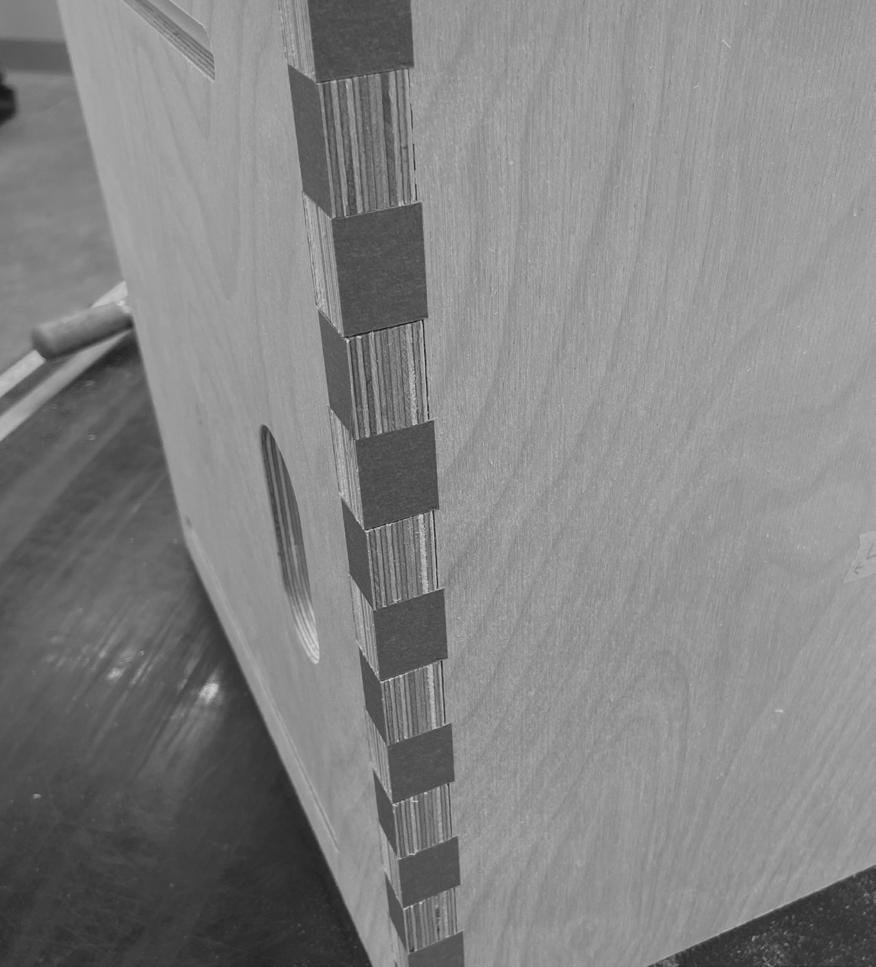
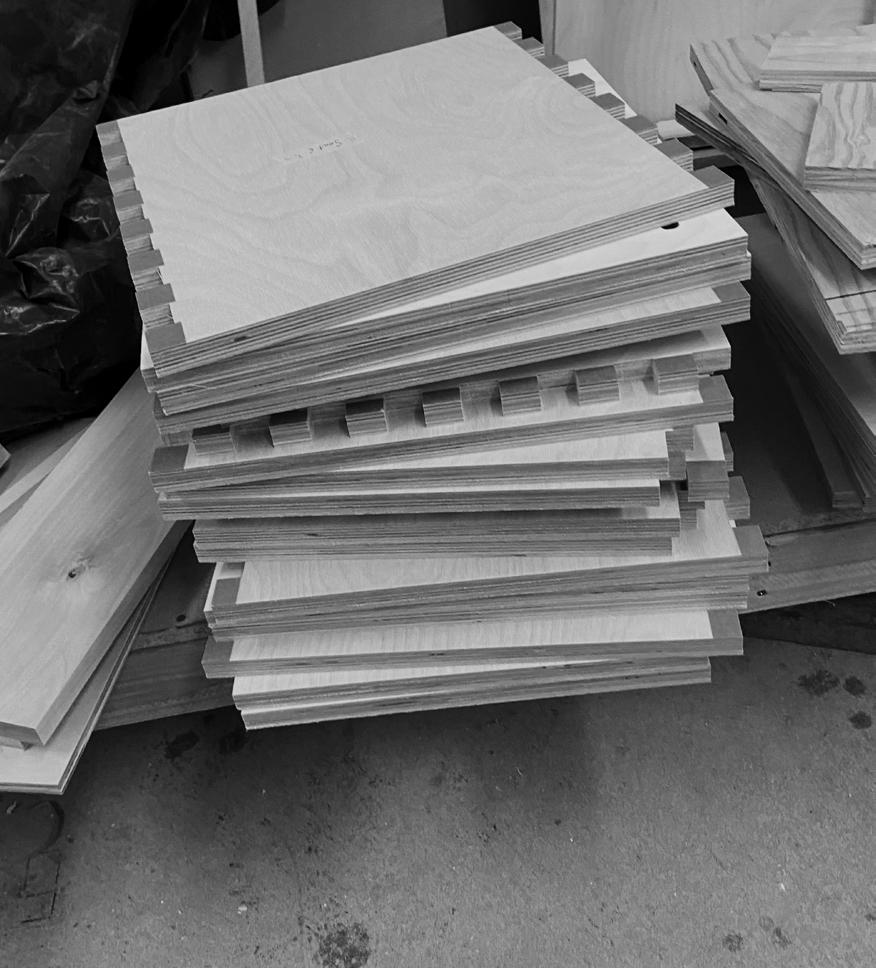
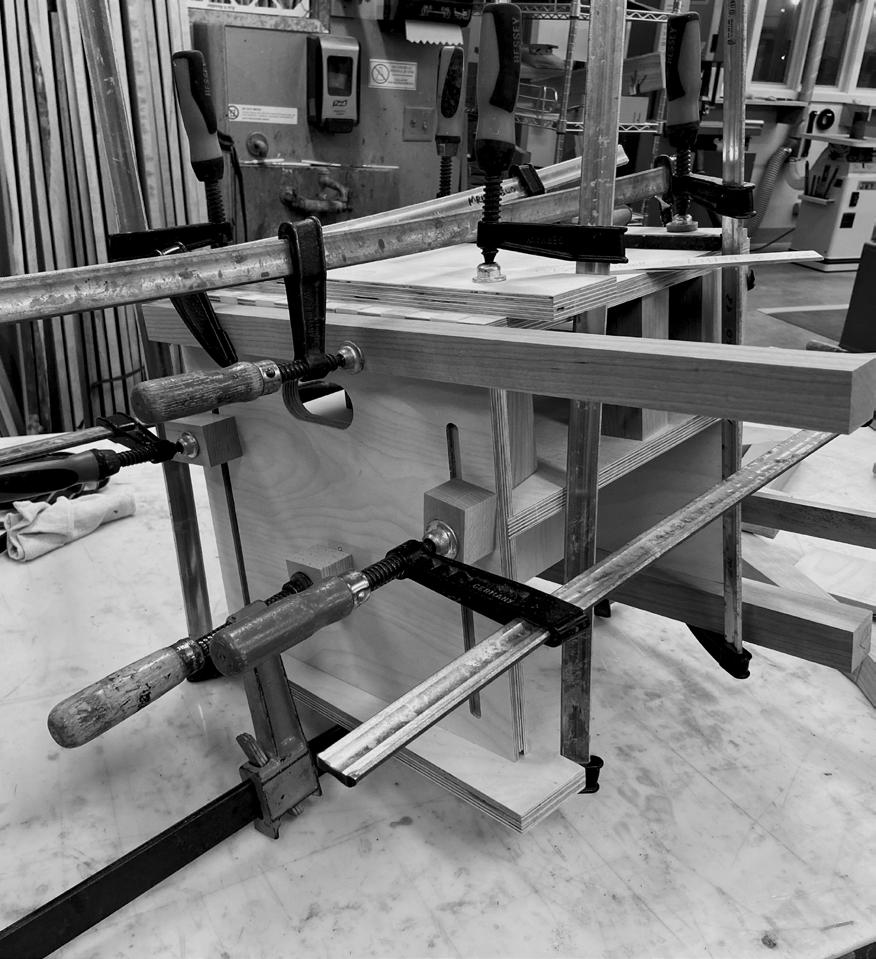
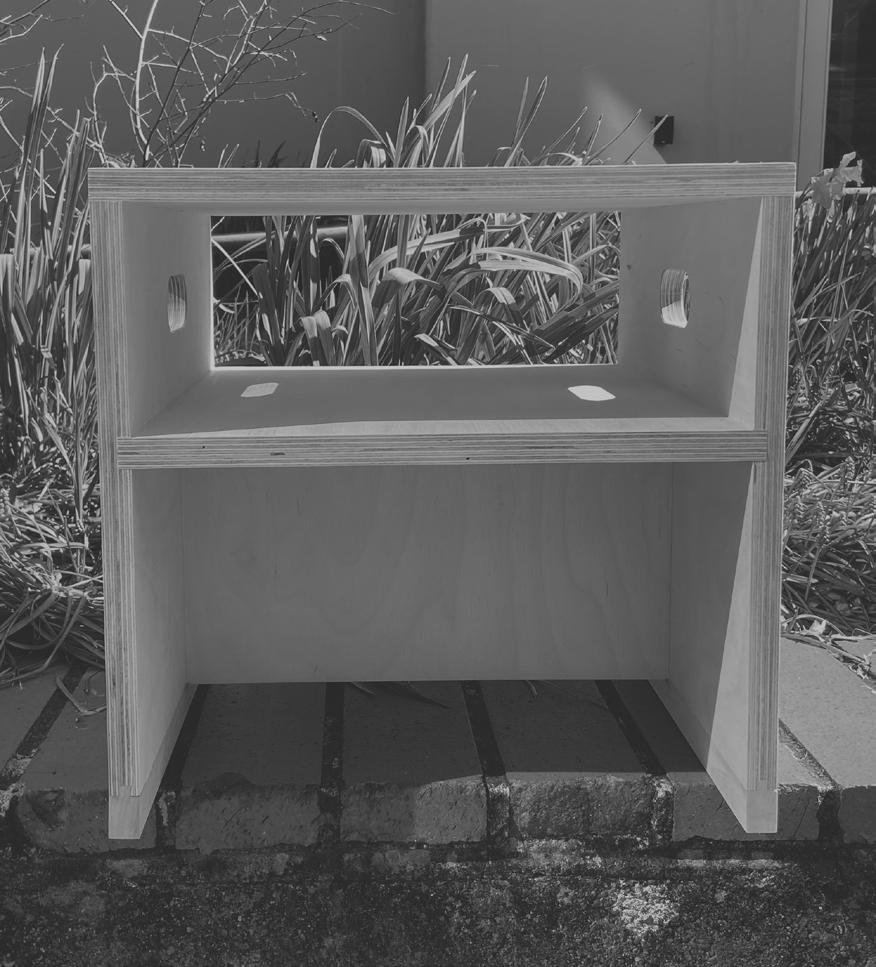
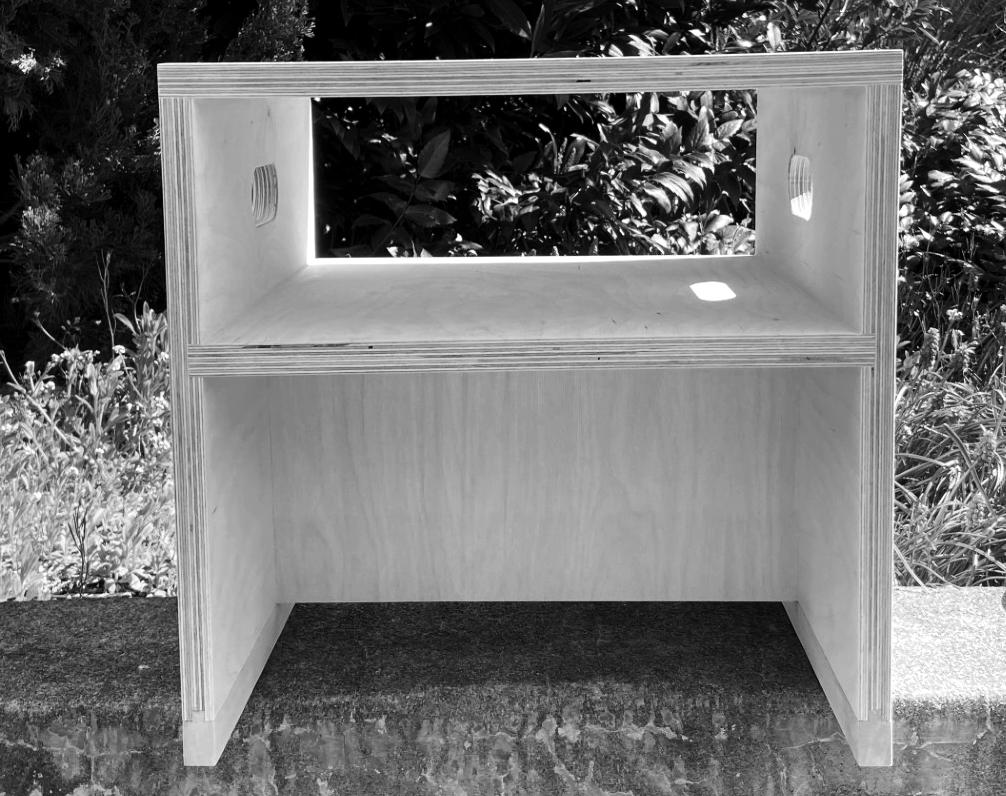
1” Box Joints
15” x 15” x 3/4”
Shelf
15” x 14 1/2” x 3/4”
7 1/2” x 14 1/2” x 3/4”
1” Box Joints
1/4” Dado Cut
1/4” Groove Cut
14” x 15” x 3/4”
Cap
1/4” Tongue Cut
15” 1” x 3/4”