FUELING PERFORMANCE AT EVERY LEVEL

DEDICATED SPACES DESIGNED FOR PERFORMANCE 15 POWERING ATHLETES WHEREVER CAMPUS LIFE HAPPENS
19 PERFORMANCE CIRCLE: CONFIDENCE STARTS WITH WHAT’S ON THE PLATE 13 FUELING THE TIGERS, EVERYDAY AT LSU
FUELING PERFORMANCE AT EVERY LEVEL
DEDICATED SPACES DESIGNED FOR PERFORMANCE 15 POWERING ATHLETES WHEREVER CAMPUS LIFE HAPPENS
19 PERFORMANCE CIRCLE: CONFIDENCE STARTS WITH WHAT’S ON THE PLATE 13 FUELING THE TIGERS, EVERYDAY AT LSU
LABOMBARDA
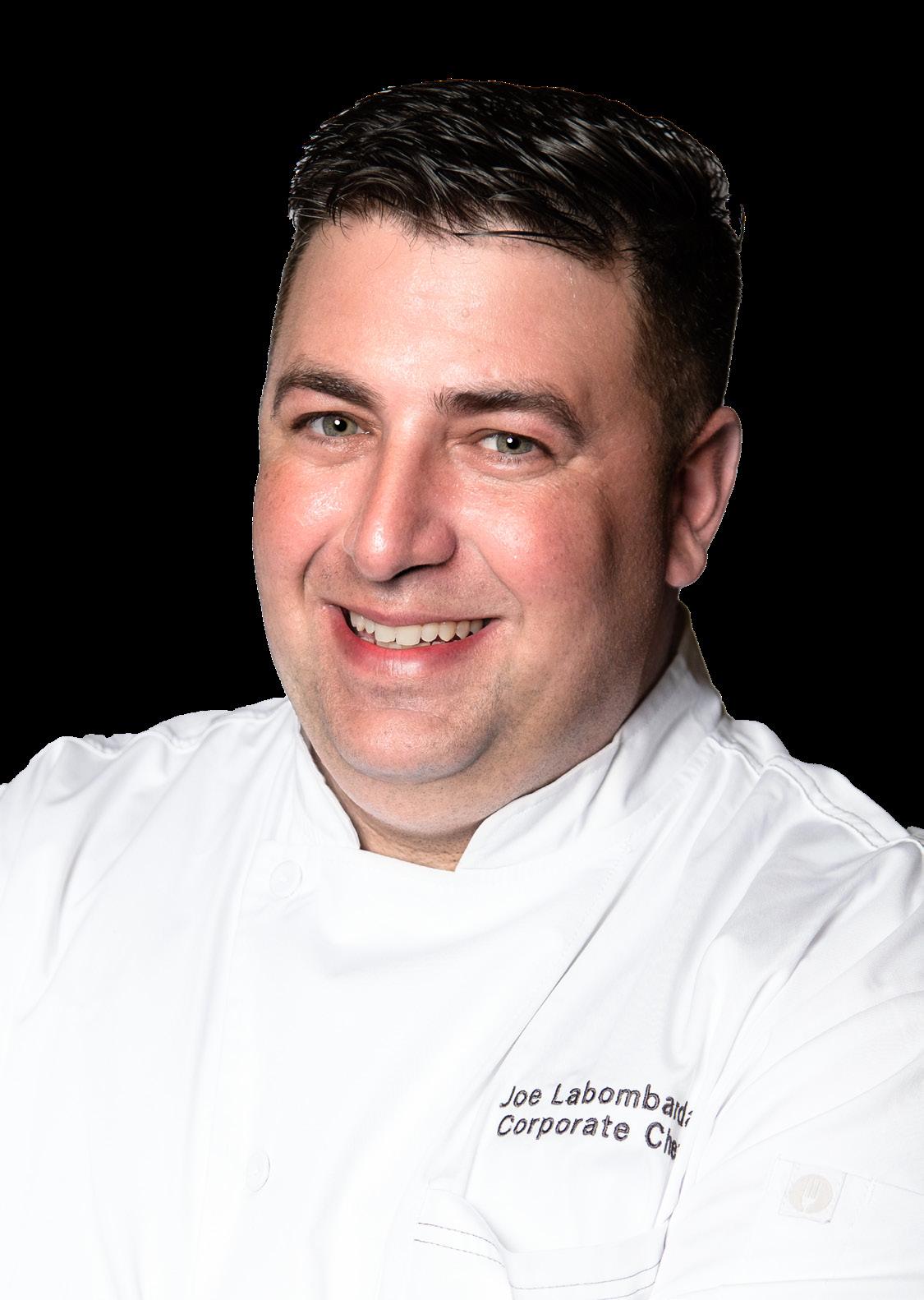
SR. VICE PRESIDENT OF CULINARY CHARTWELLS HIGHER EDUCATION
When we talk about fueling performance, what we really mean is showing up for students in a way they can count on. Student athletes are balancing training, classes, travel, and a lot of pressure. The last thing they need is to wonder if the food is going to be there, if it’s going to meet their needs, or if it’s going to be consistent day after day.
We do this work because food matters. It supports energy, focus, and recovery, but it also brings a sense of comfort and normalcy to a schedule that can be intense and unpredictable. When athletes feel supported in a real way, it changes how they move through their day. They have one less thing to manage, and they can put more of themselves into what they are working toward.
What makes all this possible is our people. Our chefs, culinarians, dietitians, managers, and frontline teams care deeply about getting it right. They pay attention to the details, they build relationships, and they take pride in being part of something bigger than a single meal. They work side by side with coaches and athletics staff, and they stay flexible when schedules change or needs shift.
But that support doesn’t stop at the edge of campus. When teams travel, our people are thinking ahead, coordinating meals, working with partners in unfamiliar kitchens, and making sure athletes have what they need wherever their schedule takes them. It is the same standard, the same care, and the same commitment, whether they are eating at home or on the road. I’m proud of what we do, but I’m most proud of the teams behind it. They are the reason we earn trust, and they are the reason we can support performance at the highest level.



Performance Circle: Confidence Starts with What’s on the Plate 07 15 17 19 11 13
Dedicated Spaces Designed for Performance
• University of Arkansas
• University of Pittsburgh
First-of-its-kind NIL Campus Dining Collaboration at the University of Pittsburgh
Fueling the Tigers, Everyday at Louisiana State University
Powering Athletes Wherever Campus Life Happens
• University of Minnesota
• University of Houston
Behind a Championship Run at the University of Miami
“I am more than pleased with the partnership we have built between athletics and Chartwells. We are supported at the highest level and consistently see a high level of services.”
KARLA HORSFALL, ASSOCIATE ATHLETICS DIRECTOR FOR SPORTS PERFORMANCE NUTRITION, UNIVERSITY OF ARKANSAS
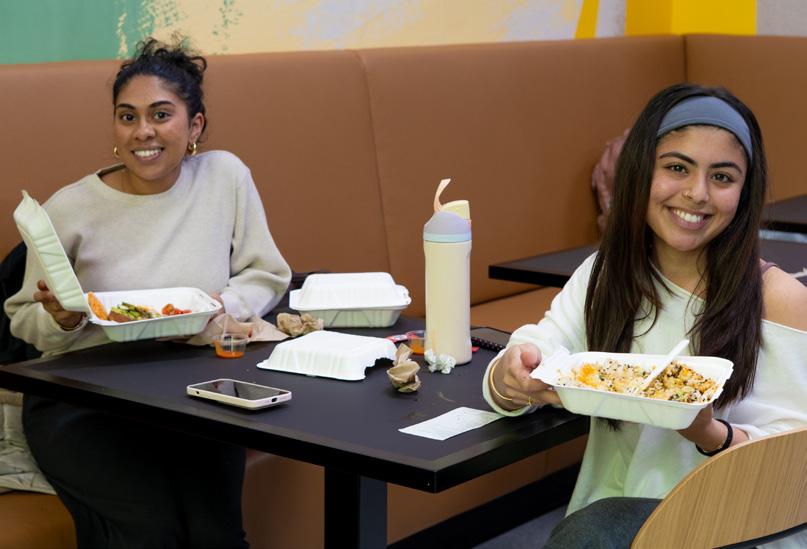
Dedicated training tables give athlete fueling programs a place to take shape. When a space is designed specifically for student-athletes, it creates a dependable rhythm for fueling and recovery, supported by familiar teams and menus built with performance staff.
Day after day, these environments bring structure to the dining experience and help athletes stay aligned with the demands of training and competition. The following examples highlight how campuses are creating training tables that support performance while building a consistent, trusted routine for student-athletes.

At the University of Arkansas, fueling centers around the Razorback Sports Nutrition Center, where the training table is designed to meet athletes at every point in the day. Made-toorder stations allow student-athletes to tailor meals based on training load, recovery goals, and individual performance plans, while a full-service dining program ensures consistent access to balanced proteins, grains, and vegetables.
Beyond the main dining experience, the program also supports athletes with structured fueling opportunities throughout the day, including grab-and-go recovery items and snacks designed to bridge the gap between practice, class, and competition. Working alongside the culinary team, sports dietitians adjust menus and portions as training cycles shift, helping athletes fuel appropriately whether they’re preparing for competition or rebuilding after intense sessions. The result is a structured yet flexible environment that reinforces daily fueling habits while giving athletes the tools to adapt as their needs evolve.
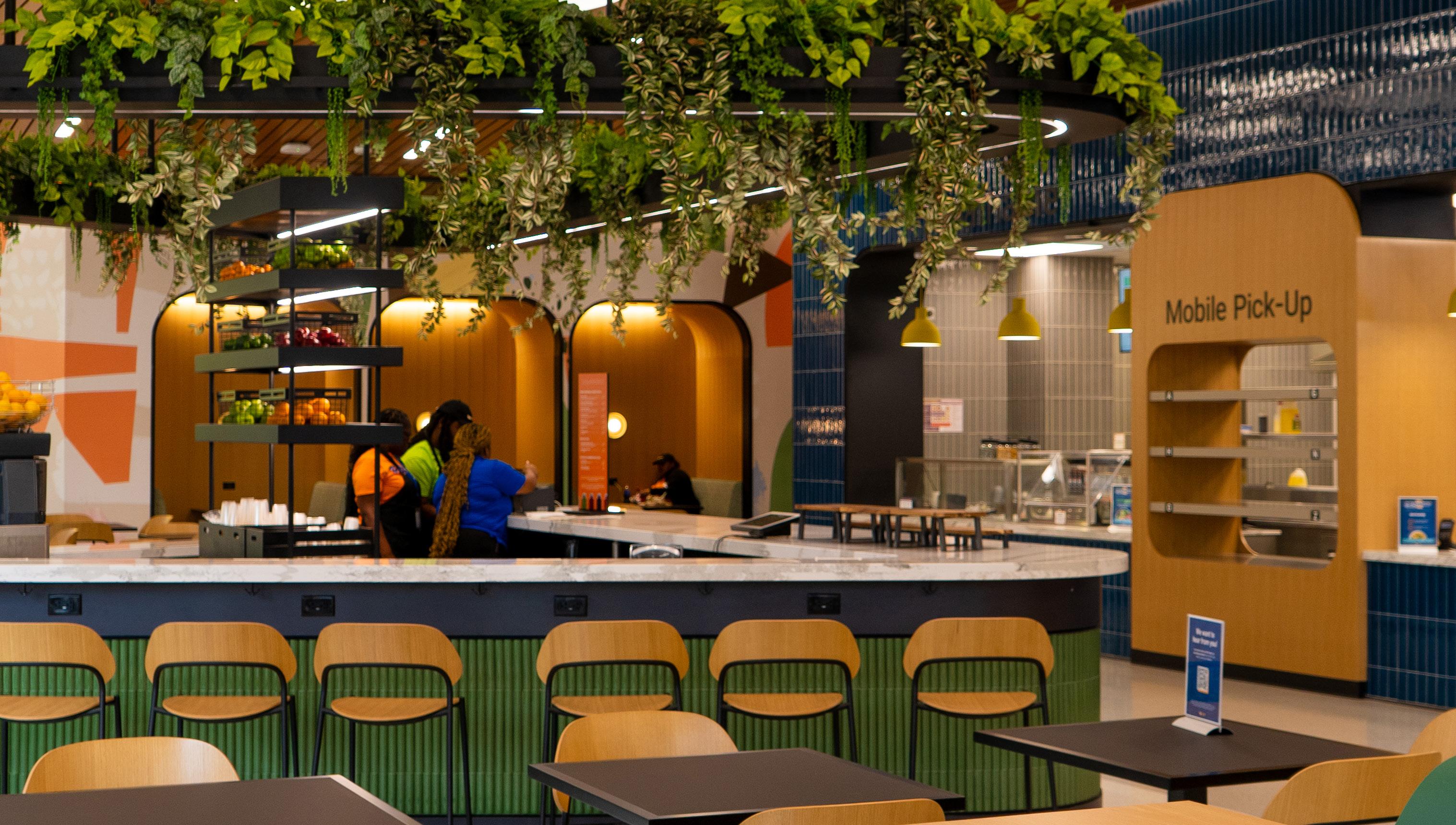
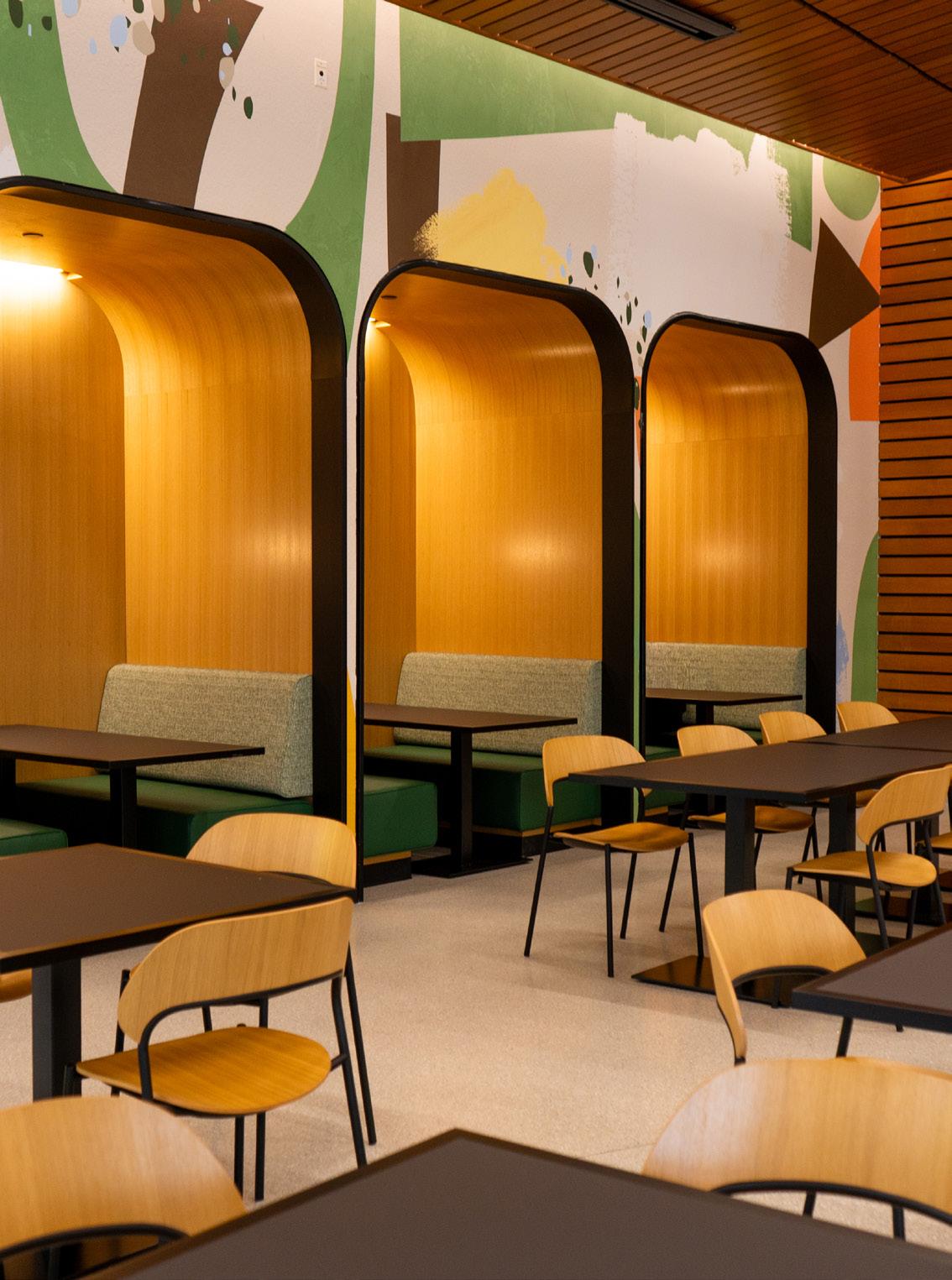
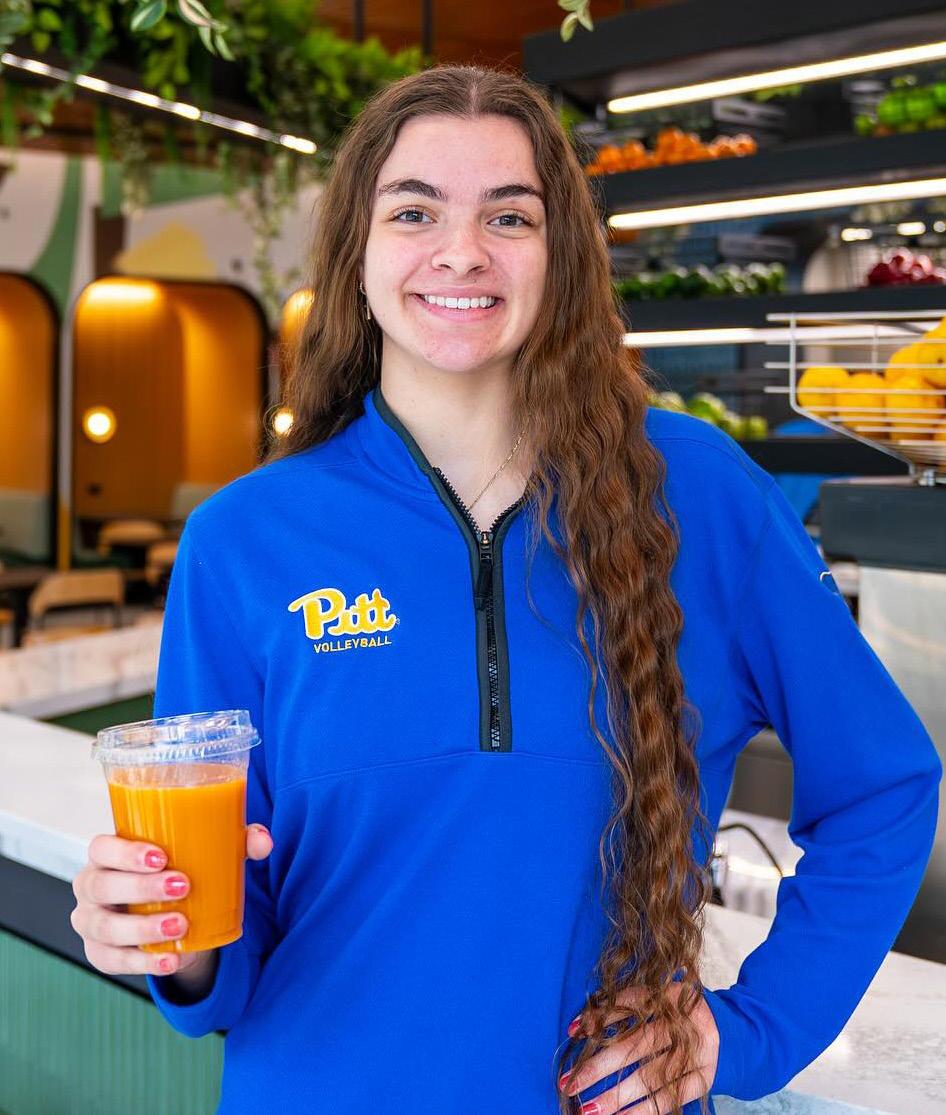
Inside the University of Pittsburgh’s Recreation and Wellness Center, wellness shows up in more than just workouts. Rather than separating nourishment from movement, Pitt Eats integrated dining directly into a space where wellness already happens on campus.
The result is a lineup of concepts designed to support recovery, balance, and sustained energy throughout the day, with three distinct dining experiences that serve different purposes while creating a cohesive system of support for both body and mind.

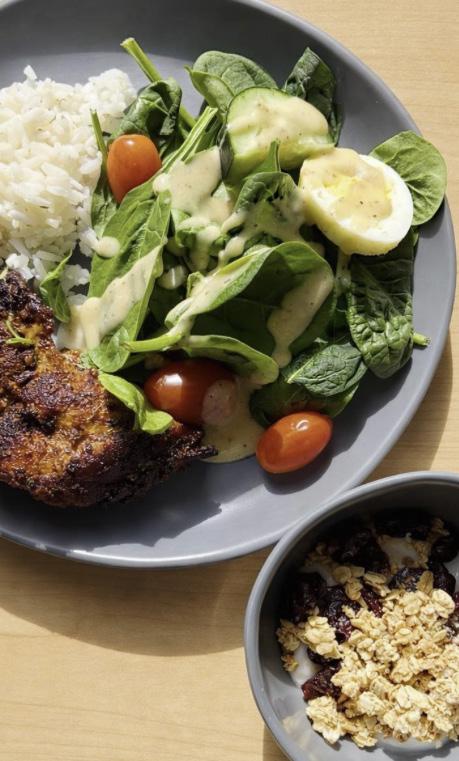
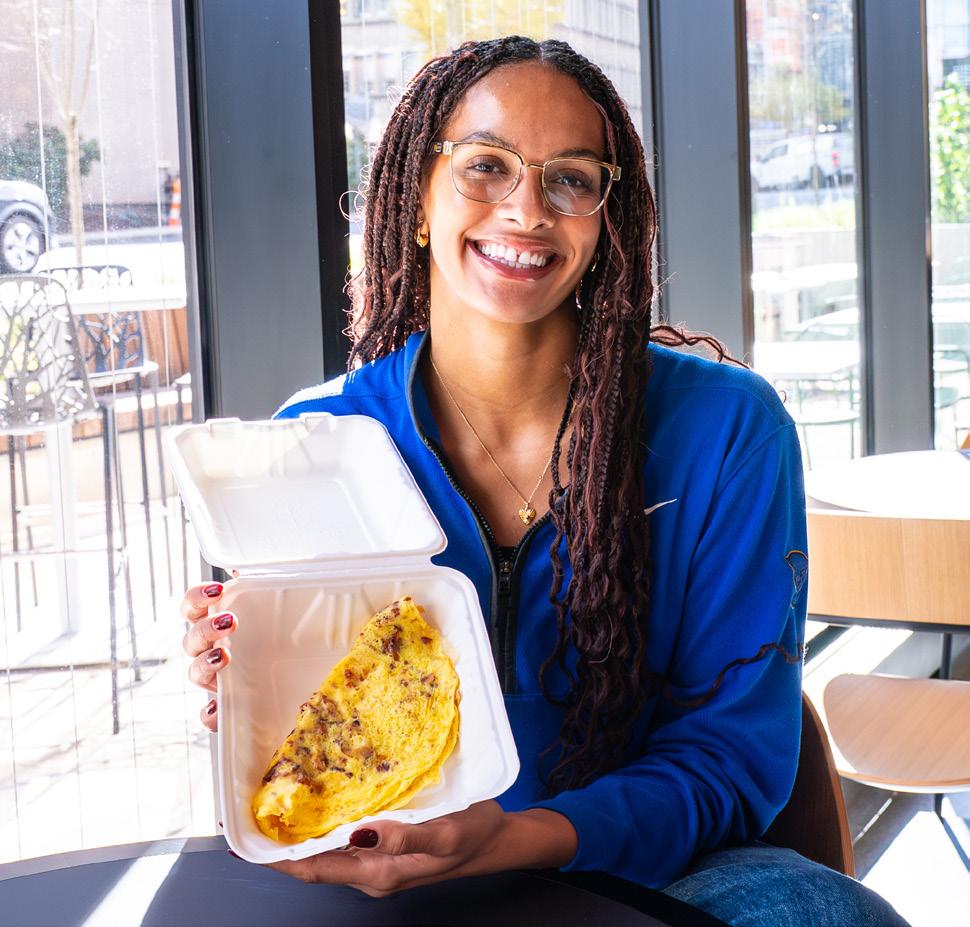
Recharge Café centers on post-exercise fuel, featuring carbohydrate- and protein-rich dishes designed to replenish and restore. From omelets and protein pancakes to power bowls and vibrant salads, the menu balances performancedriven nutrition with approachability and flavor.
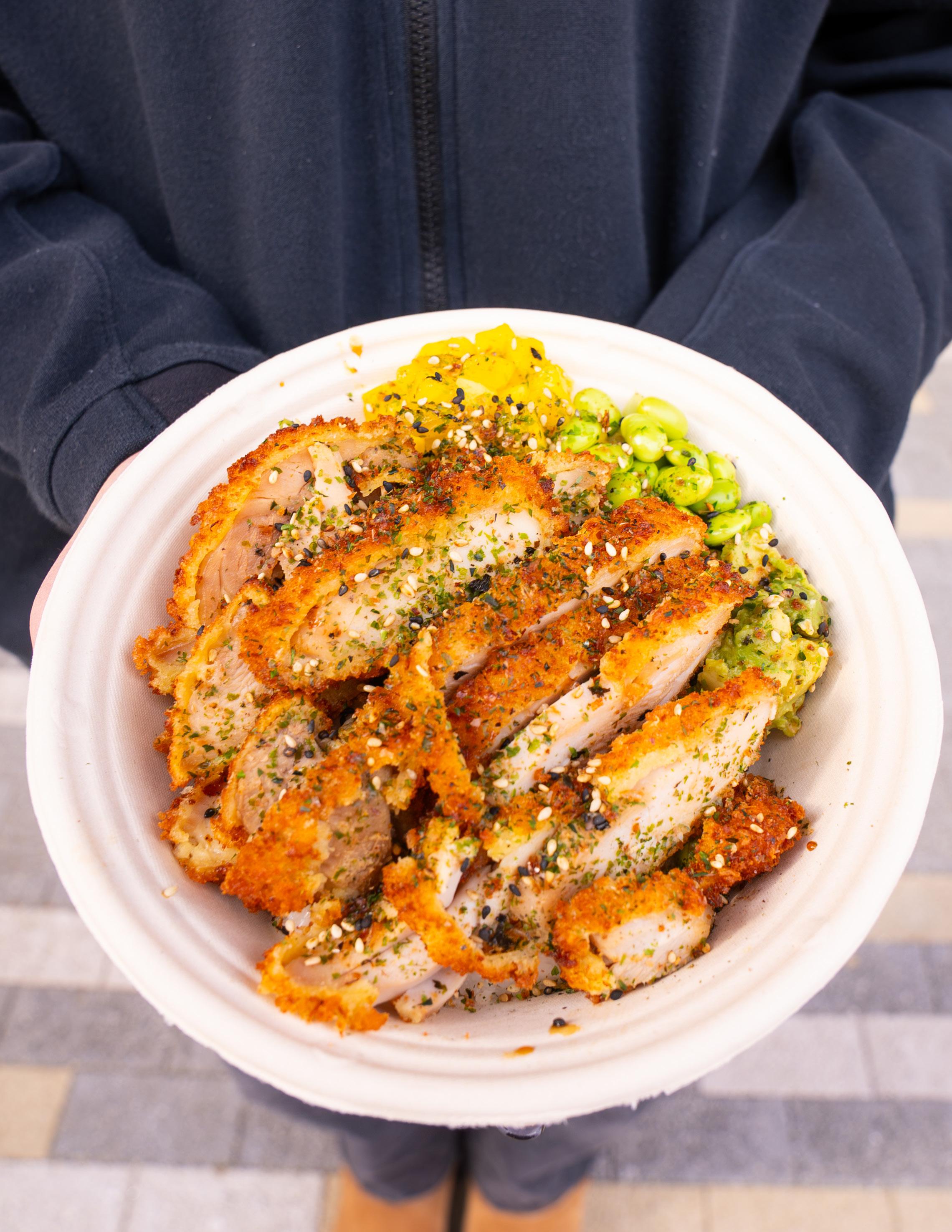
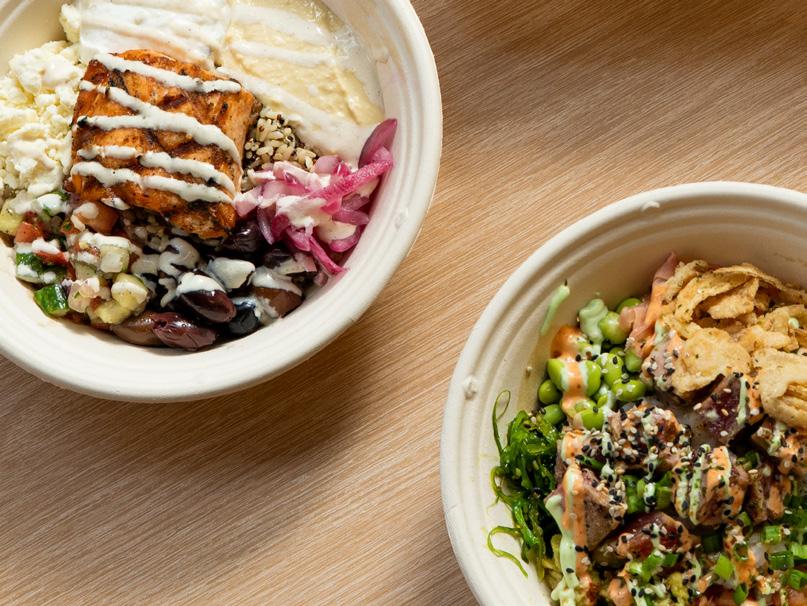
Edamame introduces a fast-casual poke experience built around customization and choice. Plant-forward ingredients and lean proteins like chicken, shrimp, and tuna allow guests to create bowls that align with both taste preferences and nutritional needs.
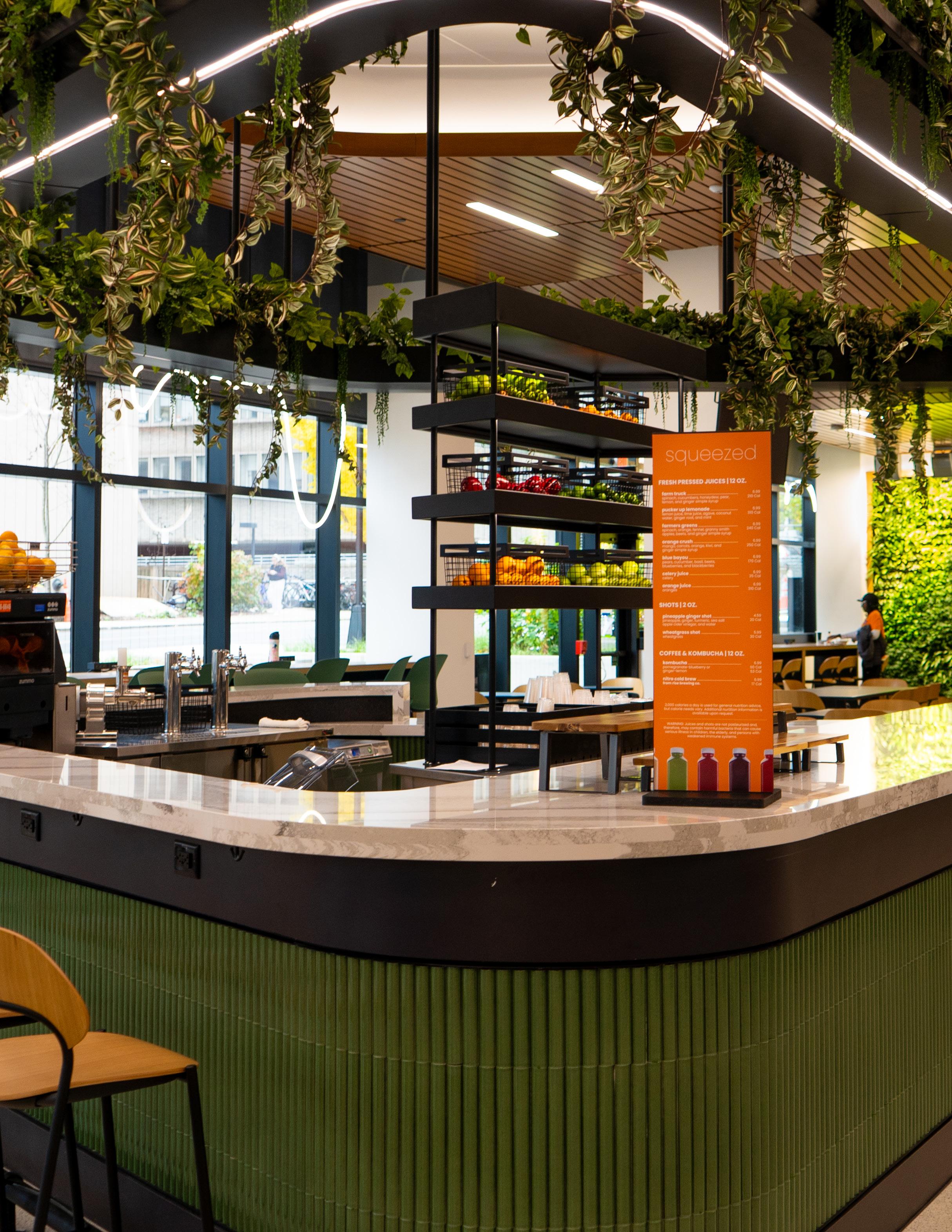
Squeezed rounds out the experience with hydration as a priority. House-made, fresh-pressed juices provide an easy way to support recovery and daily wellness through simple, nutrient-forward ingredients.
Together, these concepts reflect a shared commitment to wellness that extends beyond the gym. By placing dining within the Recreation and Wellness Center, Pitt Eats supports a campus culture where nourishment, movement, and care are thoughtfully connected.
Fuel Beyond the Plate: Smoothies top the list of most wanted campus beverages, with energy drinks, specialty teas, and electrolyte options close behind (source: 2026 Campus Dining Index). It’s all part of a bigger shift toward food and drinks that support energy, recovery, and performance, without sacrificing flavor.
CAMPUS DINING INDEX 2026

Championship seasons are built long before game day, shaped by early lifts, recovery sessions, team meetings, and long hours in practice. More and more, that preparation is showing up across campus dining, where the choices students make each day play a role in how they feel, focus, and perform.
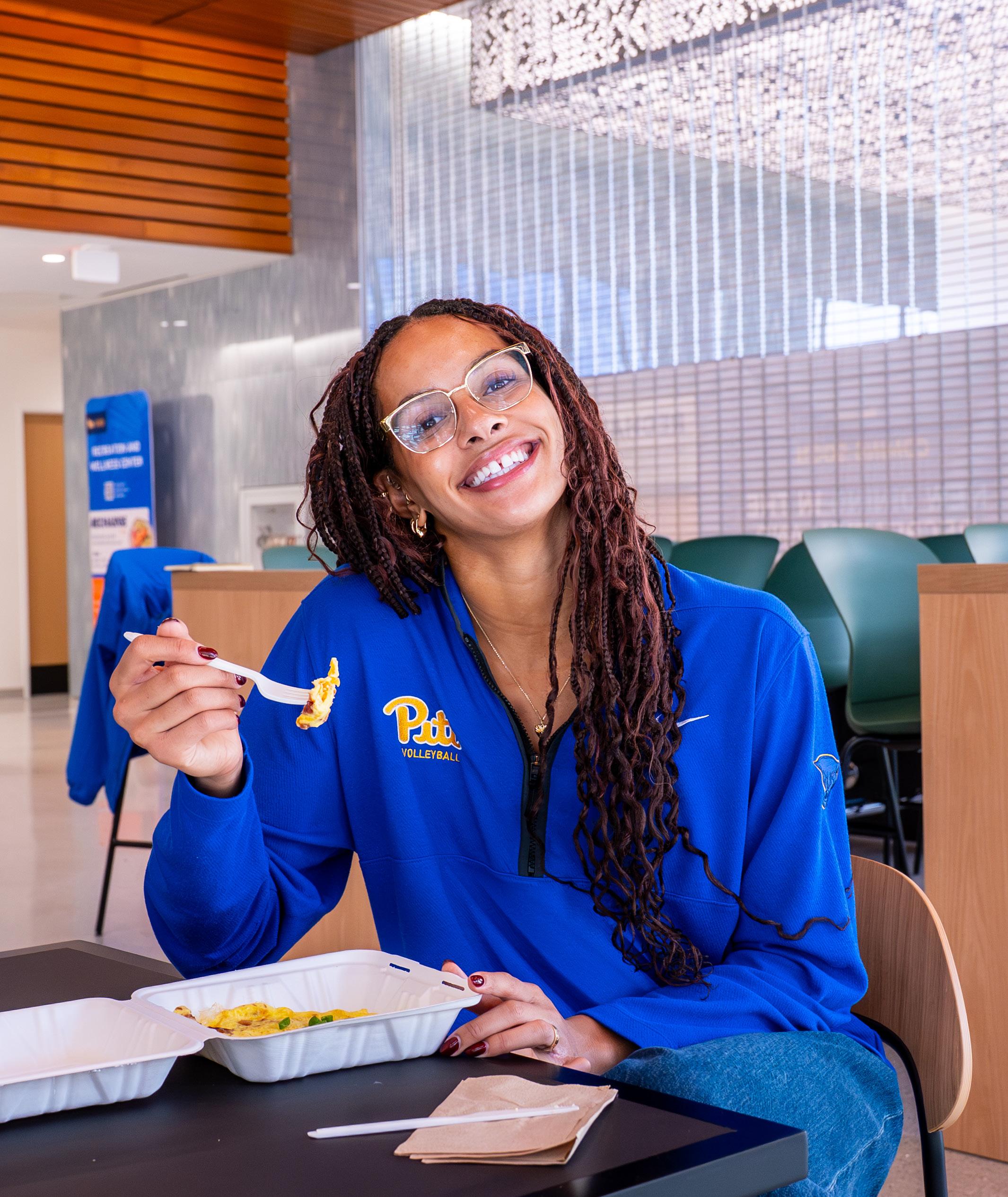
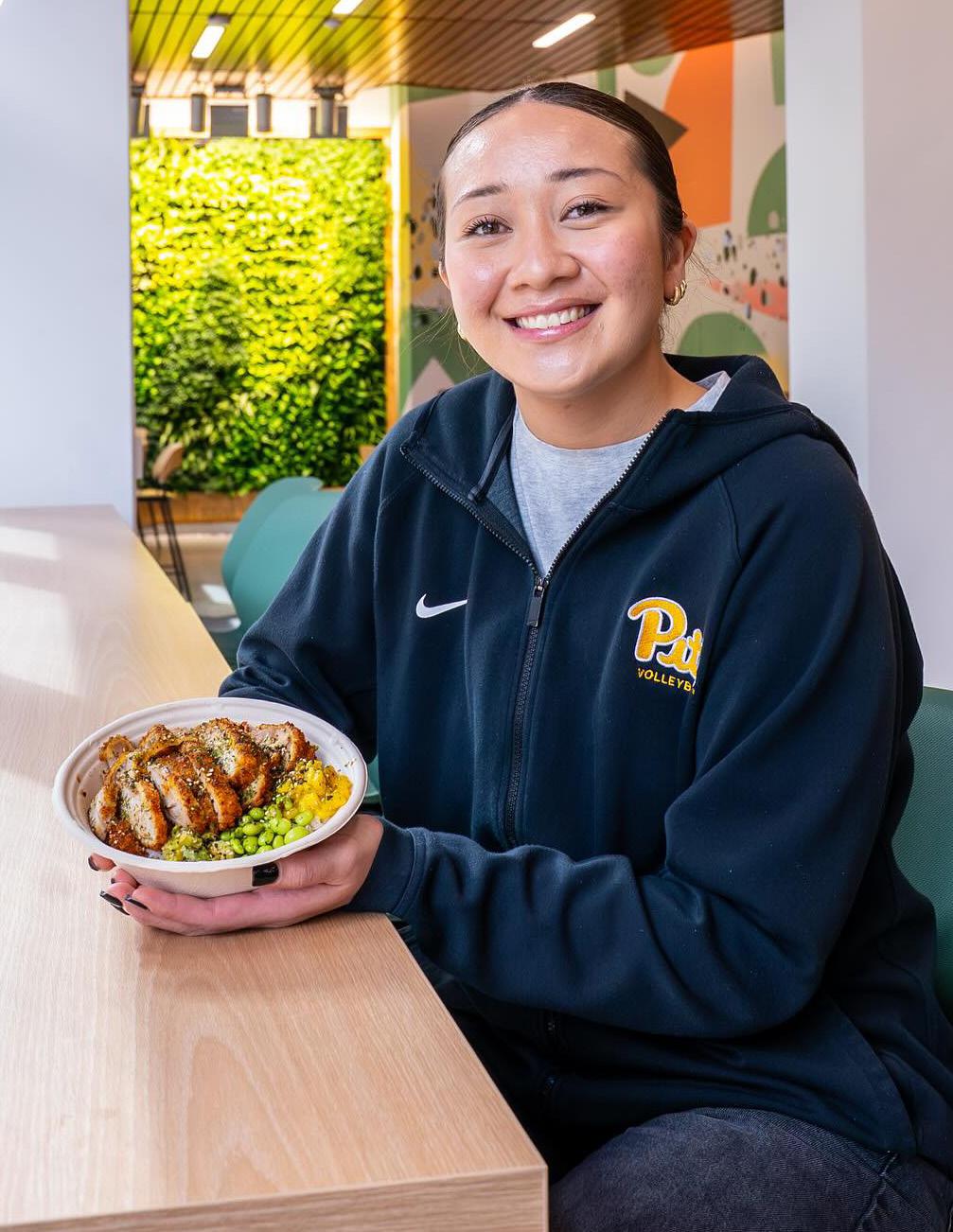
Through a new name, image and likeness (NIL) collaboration at the University of Pittsburgh, studentathletes are sharing how they fuel throughout the week, bringing their everyday meal routines into the spotlight. Favorite meals and go-to dishes now appear in dining locations across campus, offering a simple reminder that what’s on the plate supports steady energy and recovery.
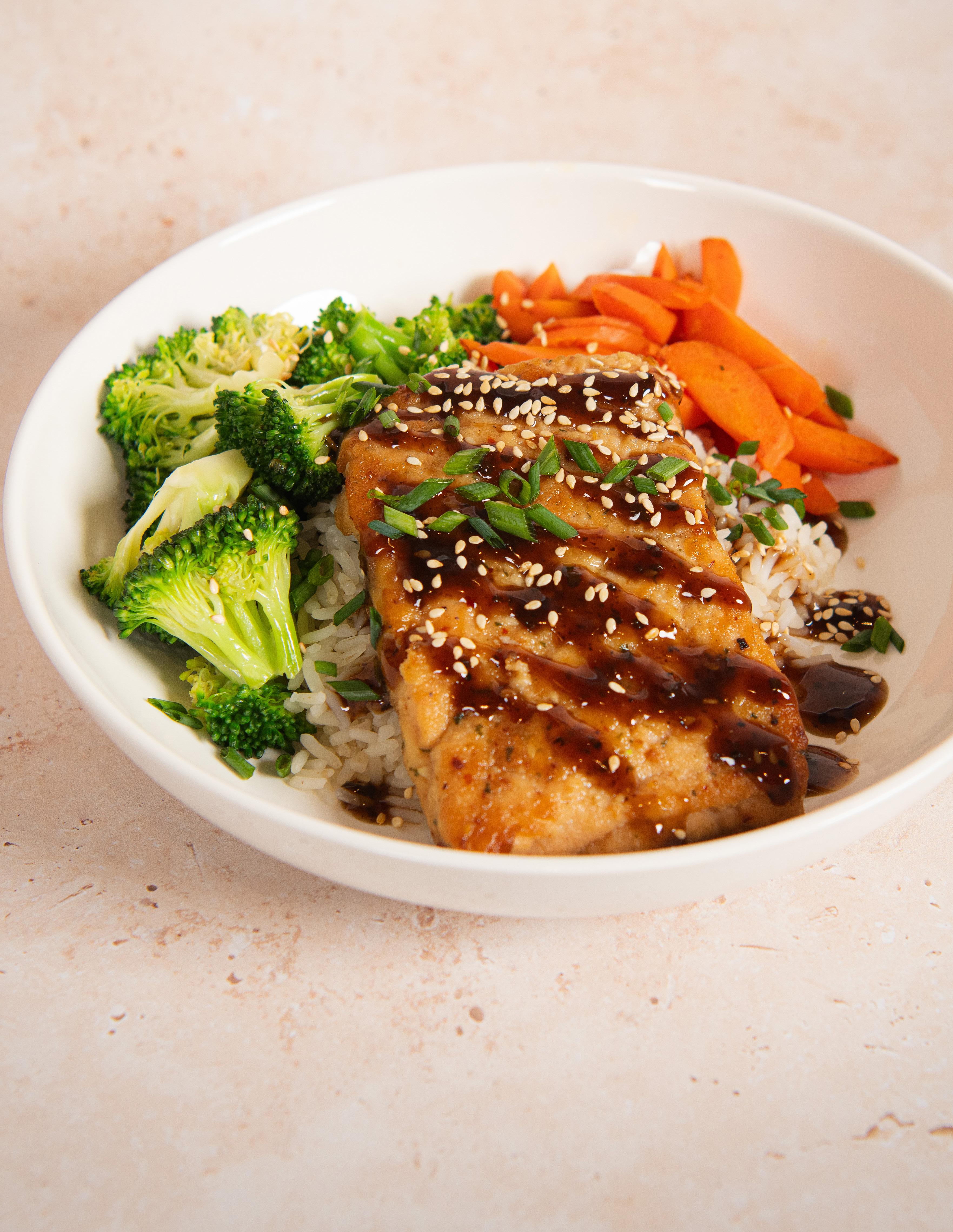
The Women’s Volleyball team is leading the way with one athlete creating her own signature poke bowl, built around the balance she relies on during demanding training weeks. The bowl is now part of the menu, and select items are marked with a “Powered By” icon, making it easy for students to see how food connects to preparation and performance.
What makes the collaboration resonate is its accessibility. The same meals that help athletes prepare for competition are available to anyone navigating early classes, rehearsals, labs, practices, or long nights of studying. The connection between preparation and nourishment becomes something shared across campus rather than limited to the court.
By bringing athletes’ voices into everyday dining, the initiative reinforces the simple idea that performance is built in small, consistent choices, including the ones made around food.

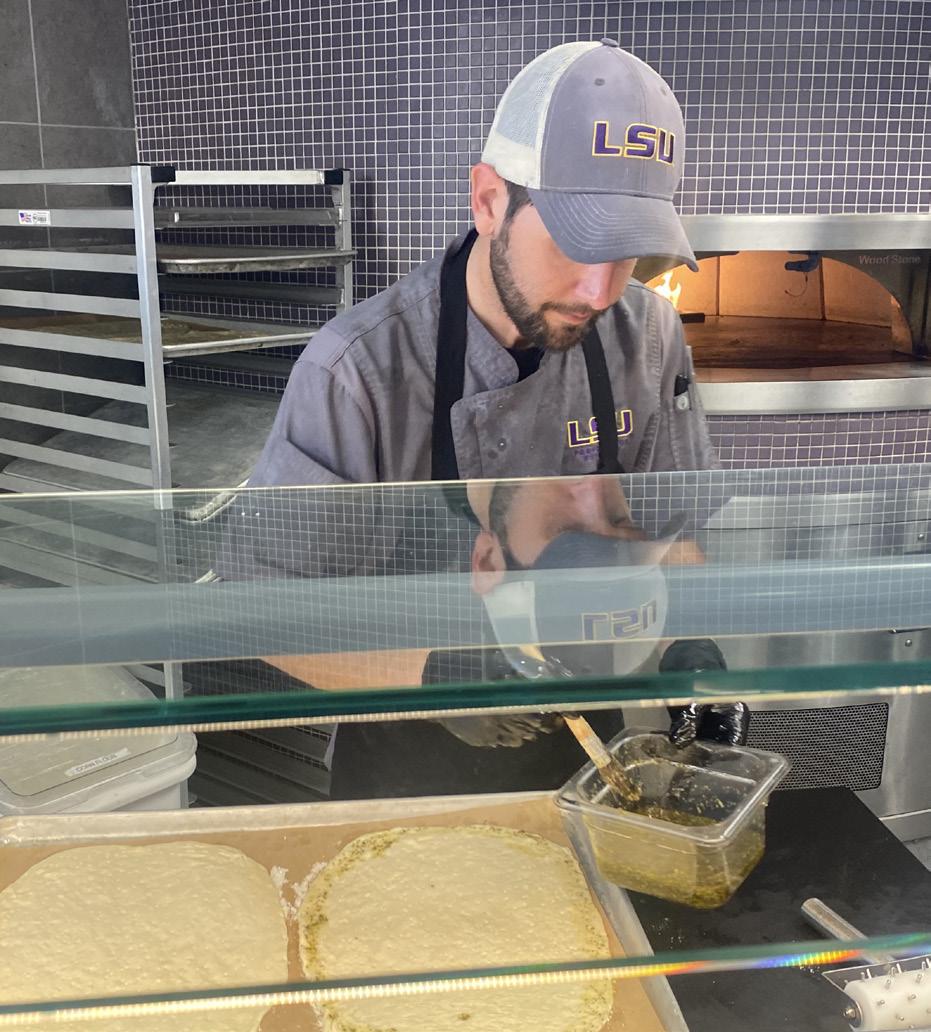
“
I look at the student athletes as an extension of my family.”
CHEF MICHAEL JOHNSON , CHARTWELLS AT LSU
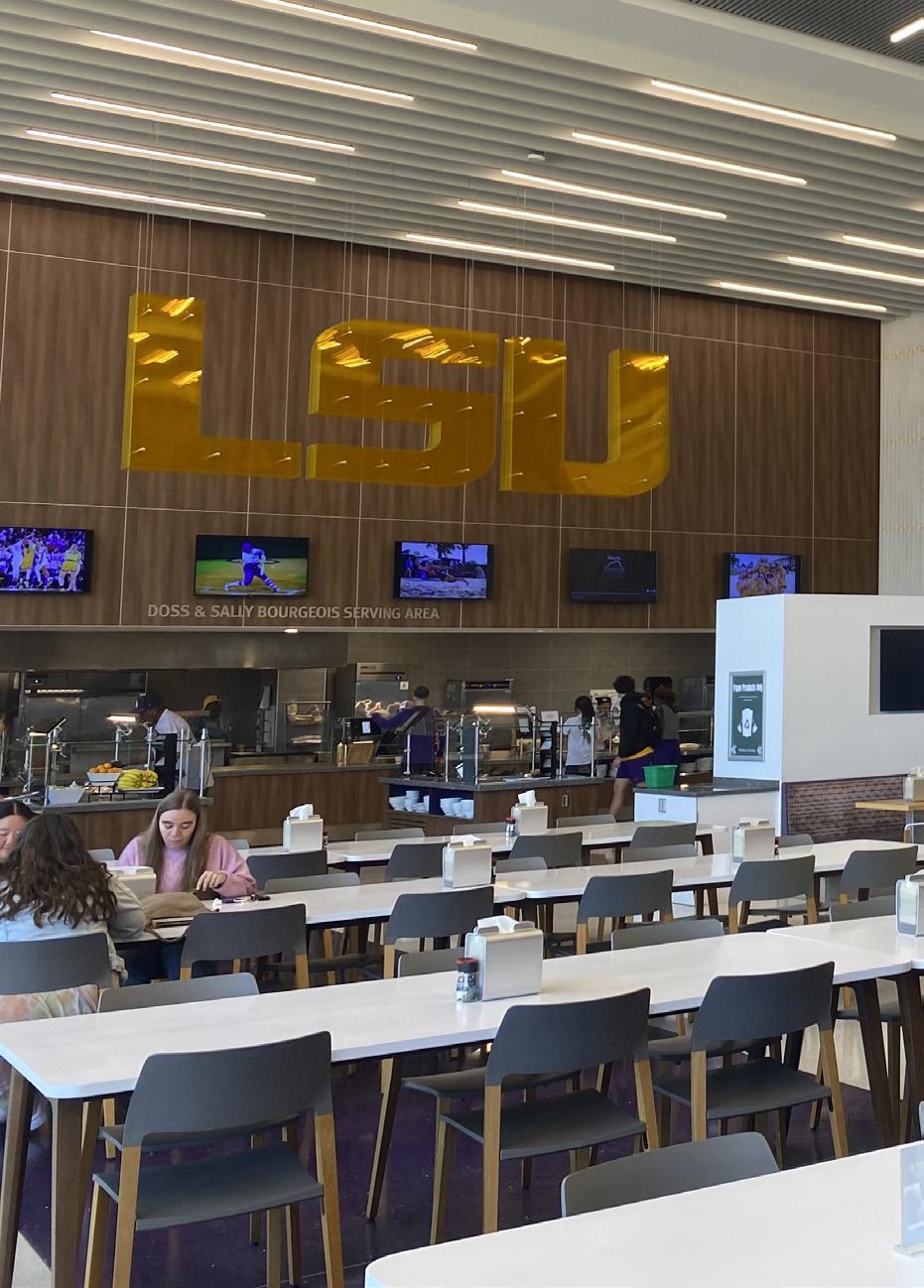
Meals at LSU’s Performance Nutrition Center are prepared fresh each day using high-quality, locally sourced ingredients whenever possible, with training demands and recovery needs always top of mind. Backed by a team that understands how much consistency matters over the course of a season, each meal is thoughtfully crafted to support peak performance. In Louisiana, food and food culture are inseparable, and that expectation shows up in the way athletes are fueled here.
Four chefs lead a team of 30 dedicated culinarians who work tirelessly to fuel all 21 varsity sports, preparing three meals a day, five days a week. In addition to on-campus dining, the Athletics dining team supports several sports on the road as they advance to higher levels of competition, including championships. From early mornings through late evenings, thousands of meals move through the kitchen with the same attention to detail, all designed to support training, recovery, and peak performance across every season. The scale is significant, but the focus remains personal.
Executive Chef Michael Johnson is a constant presence in the space, moving between stations, checking in with the culinary team and athletes, and lending a hand to serve. “I look at the student athletes as an extension of my family,” he says, a perspective that holds even at the largest volume. Fresh food, served daily, is part of that responsibility. “Food is medicine,” Johnson adds. “Your body doesn’t recover at its maximum potential unless you’re putting all the nutrients that it’s craving in there.”
The Performance Nutrition Center supports the full athletic department by creating a routine athletes can rely on, with meals that reflect both performance needs and the culture of the campus they represent.


Not every performance solution lives inside a dedicated nutrition center or training table. On many campuses, the most effective support comes from weaving performance fueling into the places athletes already train, study, and move throughout the day. When fueling is integrated into campus life, it removes friction. Athletes don’t have to step away from their routine to eat well, the support is built into the flow.
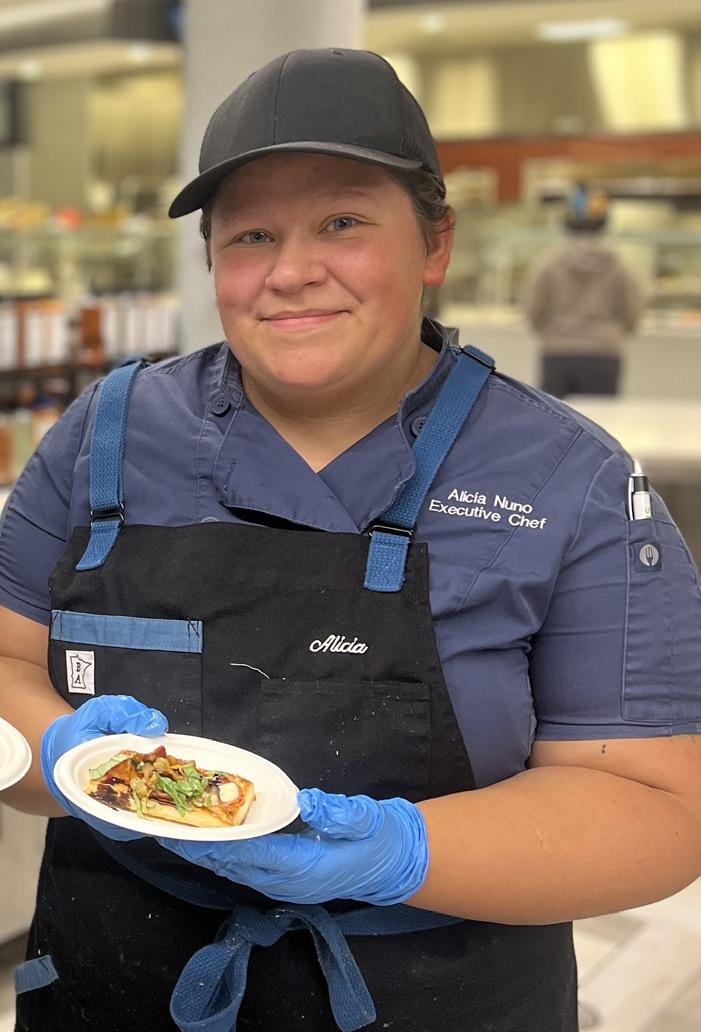

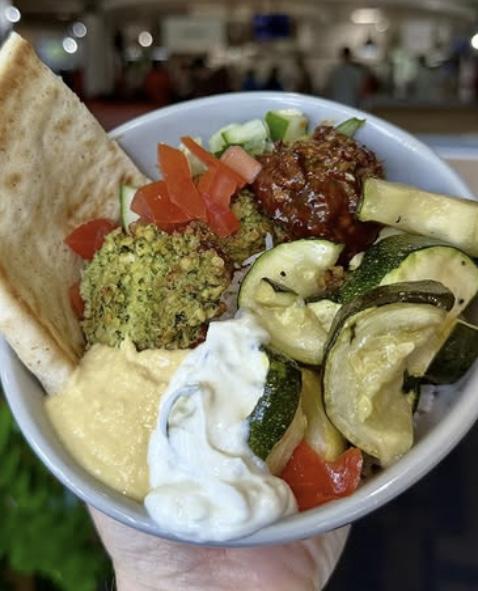

In Minneapolis, fueling reflects the scale and intensity of Big Ten competition. Long seasons and high training demands require consistency at volume. Working closely with university dietitians, the culinary team adapts menus to match training cycles, balancing high-calorie fueling days with athlete-driven requests for familiar meals from home.
Supporting sports from football and hockey to gymnastics and tennis, the program serves an average of 16,000 meals per month. An exhibition station allows chefs to adjust offerings in real time, responding to daily training intensity and athlete feedback. Whether athletes are fueling at a dedicated training table or grabbing what they need between commitments elsewhere on campus, the expectation stays the same: performance-driven nutrition that fits seamlessly into their routines.
At the University of Houston, flexibility defines the model. While the football team fuels in a designated dining facility, other teams prefer different campus locations, and service is set up where it fits their routines best. Week to week, the venues change with the season and the schedule, allowing athletes to eat well without disrupting the rhythm of their day. That same care extends across disciplines, including Olympic sports programs, so teams feel supported wherever training and competition take them.
Across these campuses, performance support does not have to be centralized to be effective. When it is thoughtfully integrated into everyday spaces, it becomes easier to access, easier to repeat, and easier to sustain.
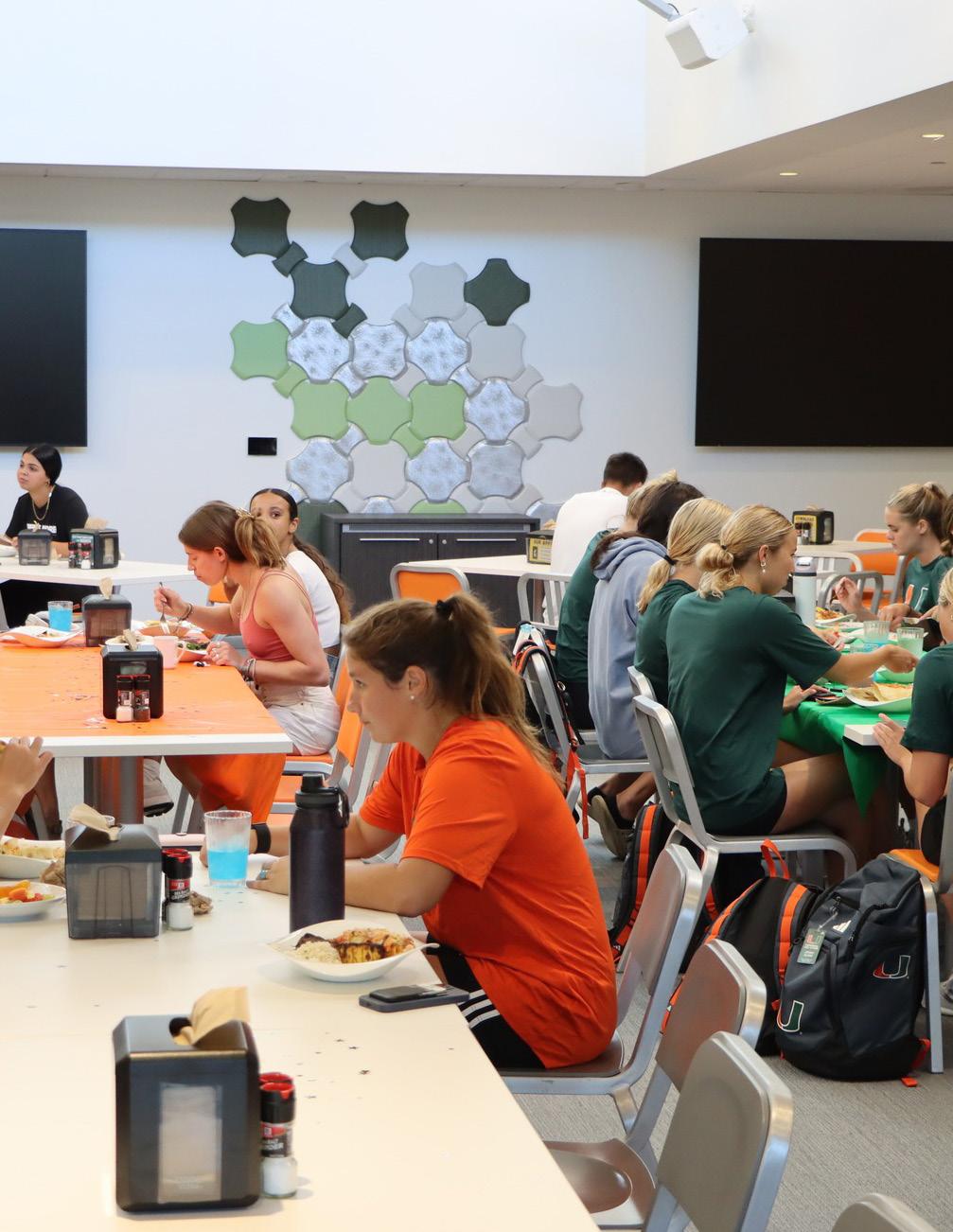
The Cane Zone is more than a dining room, it’s a dedicated performance dining space for University of Miami student athletes. In collaboration with sports nutrition staff, chefs prepare protein-forward meals designed to support recovery and sustained energy from pork chops with jambalaya sauce to grilled corvina with seasonable vegetables and much more.
Long before sunrise on the University of Miami campus, the culinary team is already at work. The day begins early, not out of tradition, but necessity. Supporting one of college football’s most demanding programs requires an understanding that performance is shaped long before game time.
Led by Executive Campus Chef Scot Emerson, whose decades of experience guide a highperformance environment, the team prepares food with the same attention to detail expected on the field. Portions, timing, and menus are carefully coordinated alongside nutrition staff and strength coaches, shifting as schedules, travel, and training demands change.
Food here serves a specific purpose, from fresh fruit cut daily to proteins prepared with intention as athletes move through training, recovery, and competition. Each morning begins with a championship-level breakfast, followed by a steady cadence of meals and snacks designed to support energy, focus, and endurance throughout the day.
Away games add another layer of complexity. The team collaborates with culinary partners across the country, often feeding hundreds of athletes, staff, and families in unfamiliar
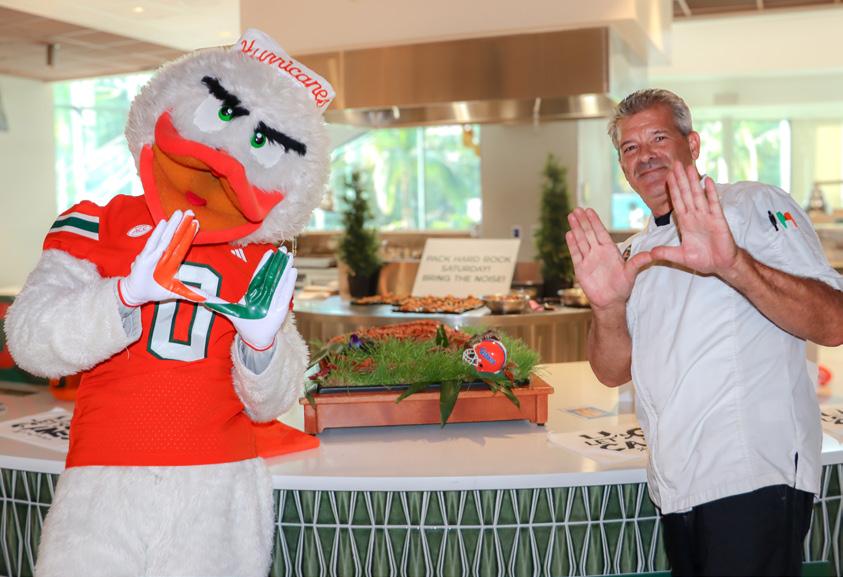
environments. Plans can easily shift, and schedules may tighten, but the work continues, feeding hundreds in kitchens they’ve never used before, guided by preparation and trust.
What makes this partnership distinctive is the balance between hospitality and highperformance rigor. The culinary team cuts its own fish, sources fresh produce, and builds menus that reflect both nutrition science and the flavors athletes enjoy. Caribbean, Latin, and Cuban influences show up intentionally, reinforcing a sense of identity alongside performance.
The result goes beyond fuel, building confidence among athletes who know their needs are understood and met. Coaches trust the systems in place, and the culinary team understands their role extends beyond the plate. They help create the conditions that allow excellence to happen.
Even when the season ends one game short, the work remains the same. The commitment to preparation, care, and consistency does not change. That reliability is what defines championship support, long before trophies are awarded.
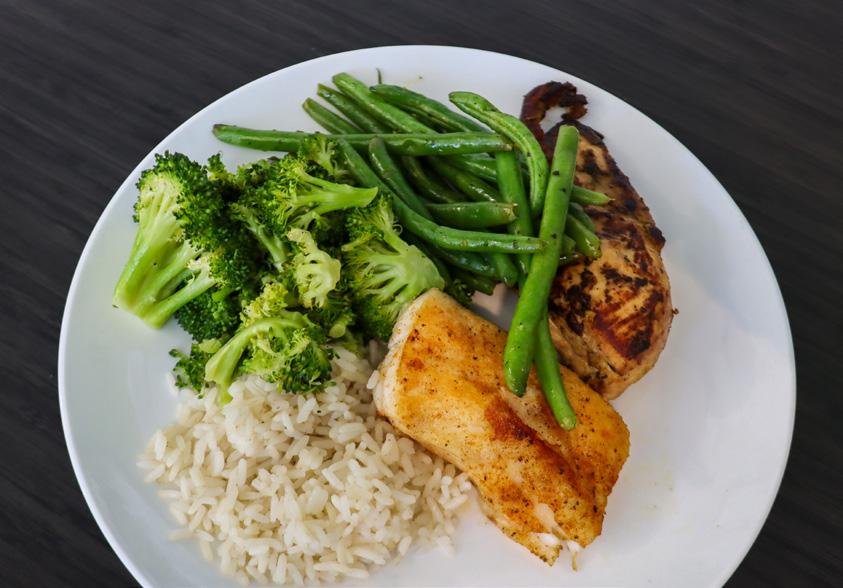
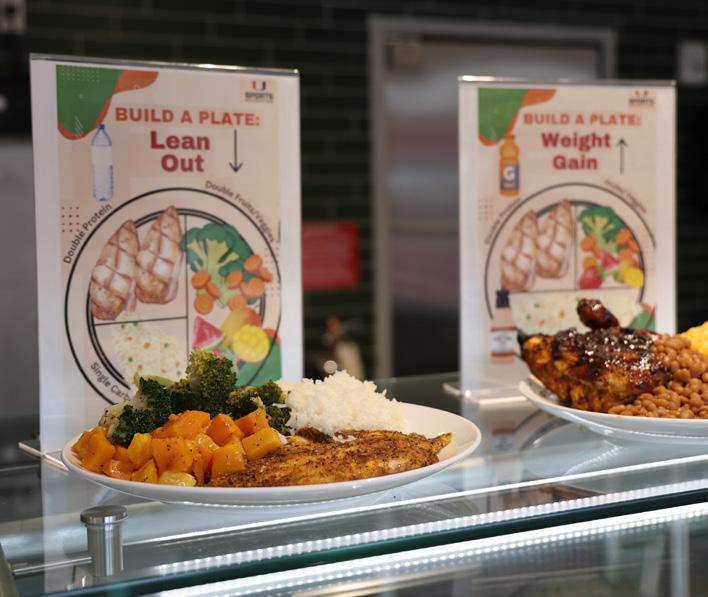
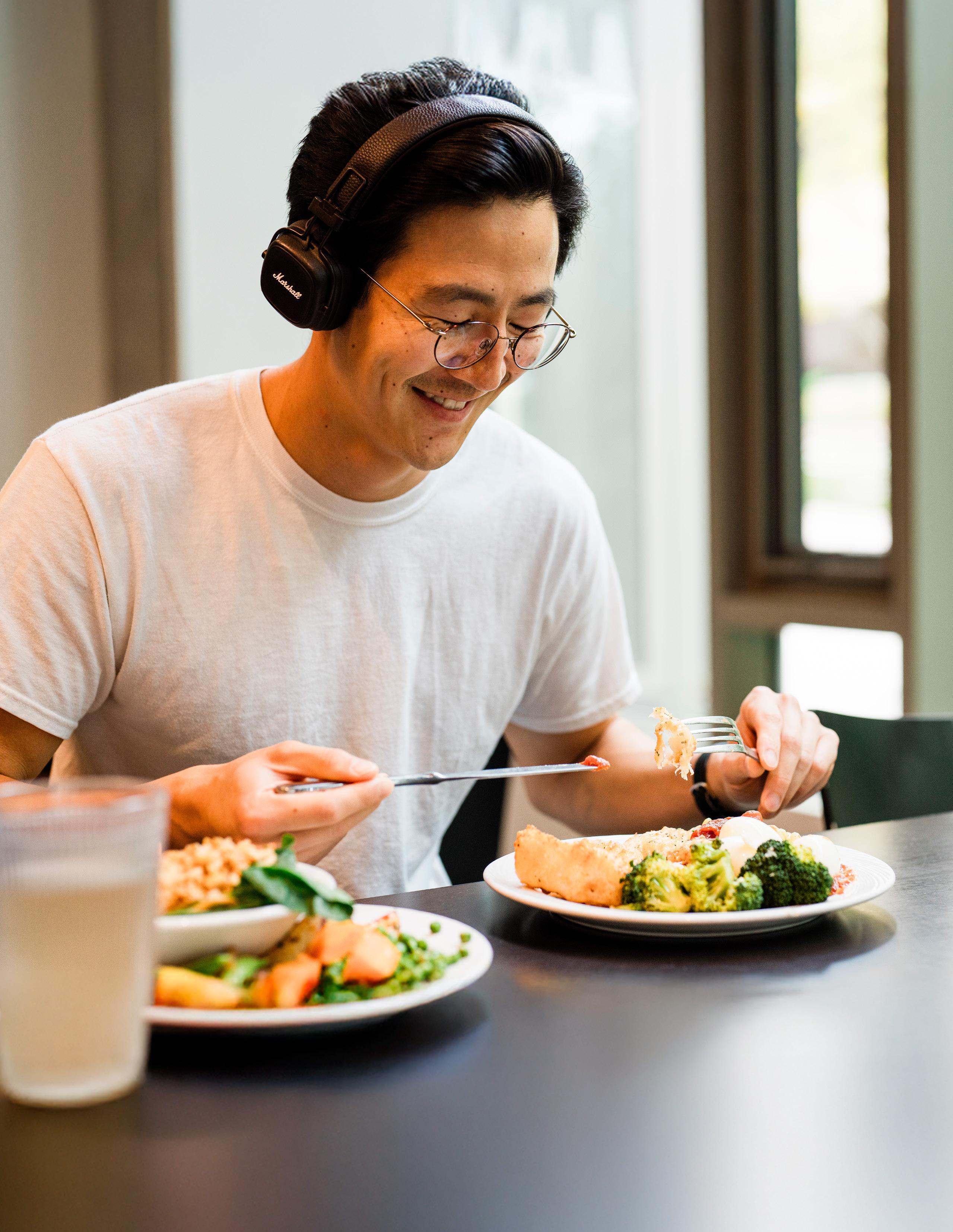
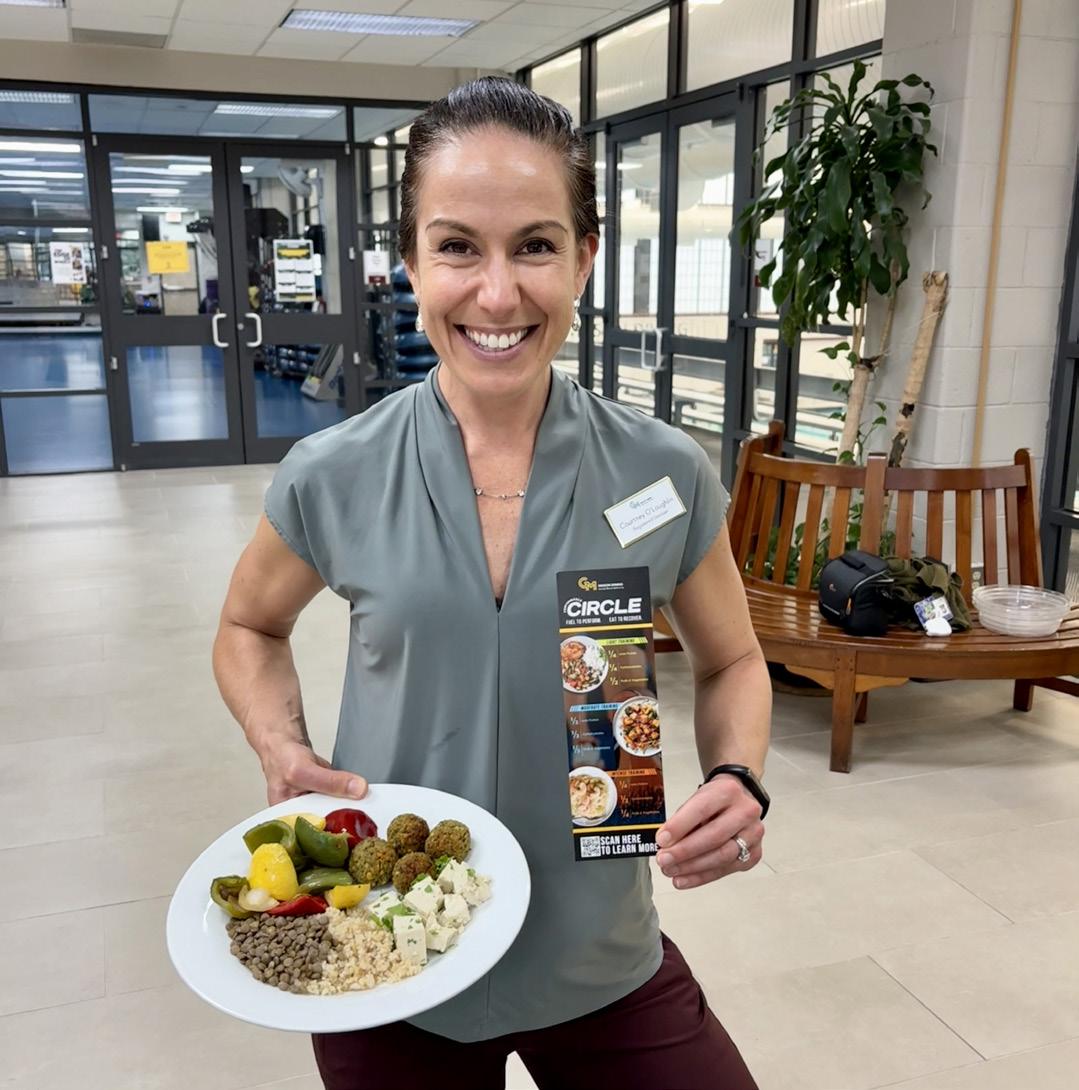
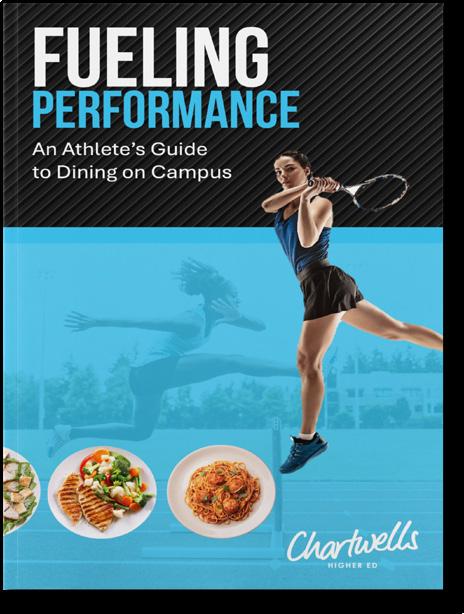

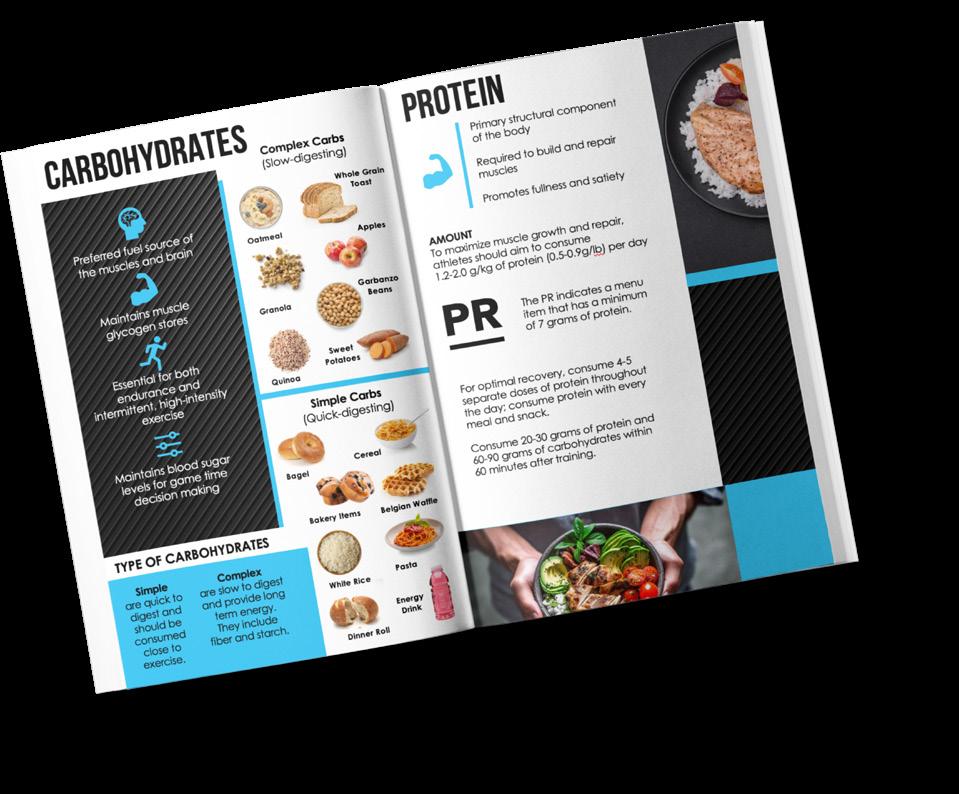
Not every campus has a dedicated training table, but every campus has students who are training hard. That’s where Performance Circle comes in. It brings performance-focused menuing into dining spaces students already use, making it easier for athletes and active students to fuel well without needing a separate destination.
Performance Circle menus are grounded in sports nutrition science and follow a 3:1 carbohydrate-to-protein ratio to support energy and recovery. The station offers a mix of meatbased and vegetarian entrées, fruit-forward sides, and nutrient-dense vegetables, built to fit a range of training days and preferences.
It works because it’s designed for more than one type of diner. Student athletes can rely on it as part of their daily routine, while non-athletes who are focused on wellness, fitness, or simply eating with intention can benefit from the same structure and options. It creates a shared space where performance fueling feels normal and accessible, not exclusive.
Performance Circle also helps connect choices to outcomes. Visual guides make it easy to build a balanced plate based on training intensity, giving students simple tools they can use anywhere. Over time, that repetition builds confidence, not just in what they eat today, but in how they fuel long-term.
High-protein meals are now the top dining priority for college students, with 28% ranking them #1--up 36% year over year. As demand for performance-driven dining grows, Performance Circle helps translate nutrition science into everyday fueling that supports training, recovery, and confidence.