Retail Asia is the industry magazine serving Asia’s dynamic retail landscape. Each issue carries a balanced mix of articles that appeal to the C-level executives of large retail companies in Asia. Now a part of the award-winning Charlton Media Group, the brand attracts a combined print and online audience of more than 199,000.
Do reach out to us if you would like us to tell your story to our readers via print and online advertising or events.
PUBLISHER & EDITOR-IN-CHIEF Tim Charlton
EDITORIAL MANAGER Tessa Distor
PRINT PRODUCTION EDITOR Vienna Verzo LEAD JOURNALIST Jaleen Ramos
PRODUCTION TEAM Vincent Mariel Galang Jilliane Rae Manuel Alec Maquiling-Cruz Ibnu Prabowo Miguel Dumlao
GRAPHIC ARTIST Simon Engracial
EDITORIAL ASSISTANT Dylan Afuang
EDITORIAL RESEARCHER Shiena Viene Sur
COMMERCIAL MEDIA TEAM Jenelle Samantila Dana Cruz Danielle Goh
HONG KONG Room 1006, 10th Floor, 299 QRC, 287-299 Queen’s Road Central, Sheung Wan, Hong Kong +852 3972 7166
MIDDLE EAST
FDRK4467, Compass Building, Al Shohada Road, AL Hamra Industrial Zone-FZ, Ras Al Khaimah, United Arab Emirates www.charltonmedia.com
PRINTED BY Asia One Communications Group 13th Floor, Asia One Tower, 8 Fung Yip Street, Chai Wan, Hong Kong +852 2889 2320
Can we help?
Editorial Enquiries: If you have a story idea or press release, please email our news editor at ra@charltonmedia.com. To send a personal message to the editor, include the word “Tim” in the subject line.
Media Partnerships: Please email ra@charltonmedia.com with “Partnership” in the subject line.
For subscriptions, please email: subscriptions@charltonmedia.com
Retail Asia is published by Charlton Media Group. All editorial is copyright and may not be reproduced without consent. Contributions are invited but copies of all work should be kept as Retail Asia can accept no responsibility for loss. We will however take the gains.
Sold on newsstands in Singapore, Malaysia, Hong Kong, London, and New York. Also out on https://retailasia.com
**If you’re reading the small print you, may be missing the big picture caveat emptor
FROM THE EDITOR
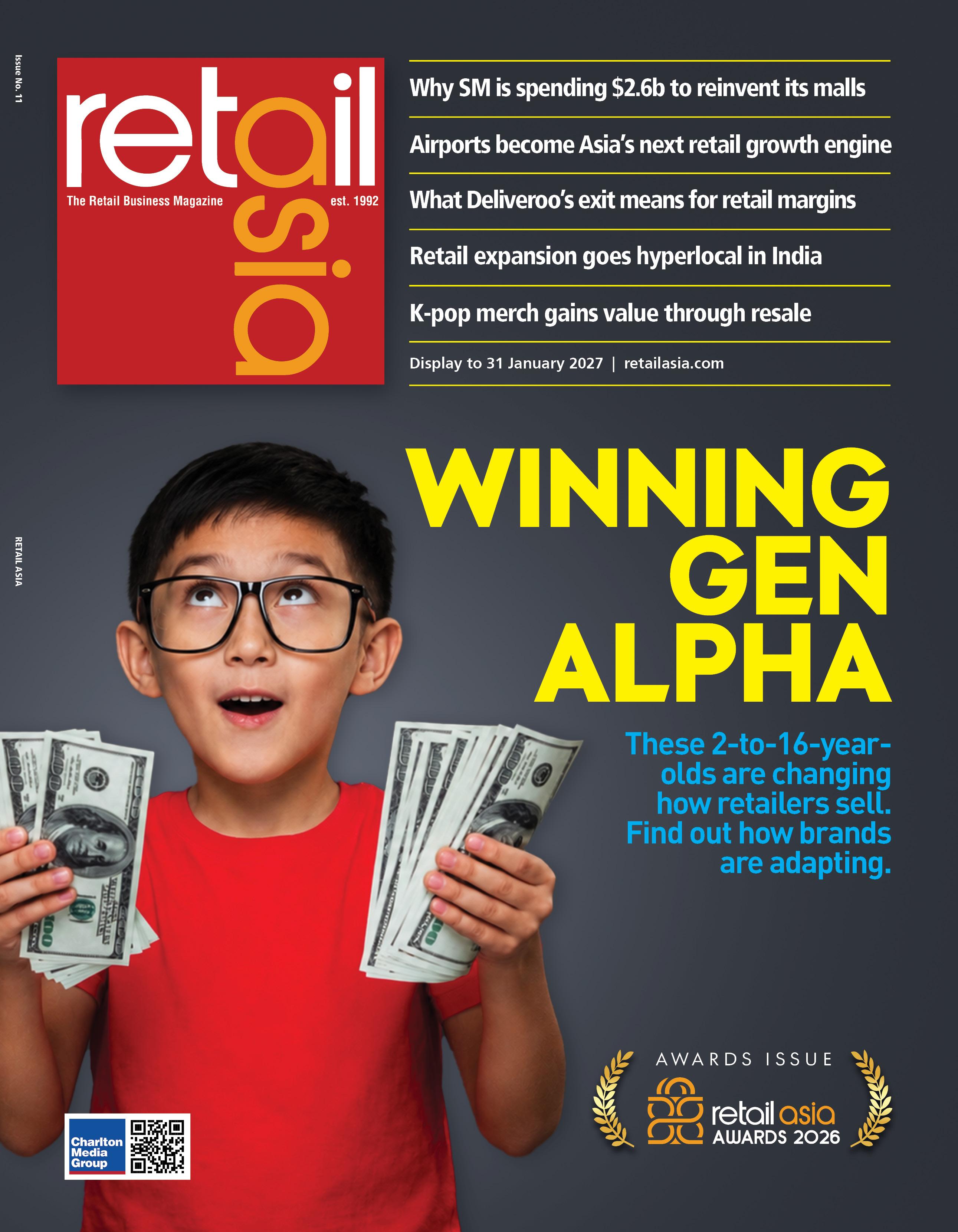
How do retailers win the loyalty of a generation raised on AI but still reliant on its parents to buy? Gen Alpha is expected to reach 965 million consumers across Asia-Pacific by 2040, with spending projected at $3t. But winning their loyalty will take more than AIpowered personalisation. Our report on pages 8 to 9 looks at why parental trust, responsible data use, and real-world experiences will matter just as much as digital convenience.
That growing demand for meaningful experiences is also changing how retailers invest in physical space. In the Philippines, SM Supermalls is committing $2.6b through 2030, not simply to add space but to make each visit more valuable. Food halls, cinemas, and indoor parks are taking a larger role as the group seeks longer stays and repeat visits. President Steven Tan explains the investment on page 20.
Other retailers are finding value in what happens after the first purchase. At MINISO, character collections and limited releases are giving fans reasons to return and complete a set. CEO Jerry Gong discusses the strategy on page 16.
That collecting impulse is also feeding a growing resale trade. Signed K-pop albums and photocards once kept as fan mementoes are now changing hands across borders, with scarcity, condition and authentication shaping their prices. In our cover interview on page 18, Bunjang CEO Jaewha Choi explains how sentimental merchandise is developing into a professionalised collectables market.
Whether the opportunity lies in a passenger’s waiting time, a longer mall visit or the next item in a collection, these businesses are looking beyond footfall alone to deepen the value of an existing customer relationship.
Many of this year’s Retail Asia Awards winners are confronting that same challenge through stronger execution, new formats and better customer experiences. Meet them on pages 40 to 49.
Congratulations to all the awardees!
Tim Charlton
Retail Asia is a proud media partner and host of the following events and expos:
News from retailasia.com
Daily news from Asia
MOST READ
Online shopping boom drives 17.7% growth in Singapore’s e-commerce
Singapore’s e-commerce market is set to grow 17.7% in 2026, reaching $31b (SG$40.5b), driven by strong online shopping demand, advanced digital infrastructure, and a digitally savvy population, according to GlobalData. Livestream shopping on TikTok, Shopee, Lazada, and Facebook is gaining popularity.
Luckin Coffee surpasses 35,000 stores as global expansion accelerates
Luckin Coffee has expanded its global footprint to more than 35,000 stores worldwide, marking a major milestone in the company’s rapid international and domestic growth strategy. Its scale-up in retail footprint comes alongside strong growth in its diversified beverage business, particularly in non-coffee products.
Skechers opens first standalone megastore in Malaysia
Skechers has opened its first standalone megastore in Malaysia at Tarcor Park, Melaka. The Skechers Tarcor Park outlet is the brand’s largest store in Melaka, offering footwear, apparel, and accessories across lifestyle categories. The megastore also introduces a premium outlet concept featuring past-season collections.
South Korean consumers prioritise quality over price
Consumers in South Korea are increasingly prioritising quality and brand reputation over price, driving a continued shift towards premium products across key spending categories as premiumisation expands in the market. About 69% of consumers said they prioritise quality and brand reputation over price.
Ayala Malls expands PH footprint with 56,000-square-metre mall in Cebu
Ayala Malls has unveiled Ayala Malls Gatewalk, a 56,000-square-metre mall and lifestyle destination located in the province of Cebu, Philippines, as part of its expansion plans in the country. It will be anchored by IKEA, marking the retailer’s first store in the Visayas region. The mall is set to open in December 2026.
Zero-waste systems cut retail operating costs
Reducing waste is now increasingly being seen not just as an environmental obligation but as a source of cost savings for retailers. Siriporn Dechsingha, chief corporate sustainability and communications officer at CP Axtra, said that implementing zero-waste programmes can help firms cut costs.
Winning Gen Alpha takes more than AI
Parents remain the gatekeepers of children’s spending and personal data.
Social media drives what Gen Alpha buys, with 61% saying platforms influence their spending
Asia-Pacific retailers are entering a consumer era when Generation Alpha begins influencing household spending, but analysts said brands would need more than artificial intelligence (AI)powered personalisation to win long-term loyalty.
They said trust, responsible data practices, and real-world experiences would become increasingly important as parents continue to shape purchasing decisions.
“As AI-enabled personalisation becomes increasingly expected, trust is emerging as a critical differentiator for brands,” Anson Bailey, head of consumer and retail for the Asia-Pacific region at KPMG in China, told Retail Asia.
“Consumers are more likely to engage when personalisation is accompanied by transparent, secure, and responsible use of data,” he said in an interview.
Bailey said the opportunity is particularly significant in Asia, where lower birth rates and smaller family sizes are concentrating household spending on fewer children.
“Increasingly, parents are willing to
Whilst Gen Alpha is digital and AI native, lasting loyalty will not come from simply maximising screen time
invest in products and services that support their children’s development, well-being, learning, and future opportunities,” he pointed out.
Trust beyond tech
Gen Alpha — people born from around 2010 through the mid-2020s — is projected to hit 965 million consumers across the Asia-Pacific region by 2040, with combined spending expected to reach $3t, according to an April report by Euromonitor International Ltd.
Sales of children's products in the region are forecast to reach $142.7b by 2029, accounting for more than one-third of the global market.
Anson Bailey
As the first generation to grow up with smart devices, Gen Alpha is highly familiar with AI through recommendation engines, voice assistants, and conversational interfaces. Euromonitor said this has increased their expectations for seamless, personalised, and convenient digital experiences.
Kathy Lee, executive director and head of research and retail consultancy at Colliers HK, said brands should not rely solely on digital engagement to connect with
younger consumers.
“Gen Alpha may be digital natives, but winning their loyalty requires more than simply increasing screenbased engagement,” she said. “The most successful brands will combine digital convenience with real-world experiences that foster creativity, learning, social interaction, and family participation.”
She added that physical stores, events, and community-led activities remain important because they create emotional connections that digital platforms can’t easily replicate.
Lee also said parents continue to act as the primary decision-makers in children’s purchases, making trust, transparency, and age-appropriate engagement essential.
“Consumers are becoming increasingly aware of how their data is collected and used, and brands that demonstrate clear privacy standards will be better positioned to build long-term credibility,” Lee said.
Transparent personalisation
Rakesh Mani, Asia-Pacific consumer market leader at PricewaterhouseCoopers (PwC) Asia-Pacific, said companies should establish that trust early by ensuring personalisation is built on first-party data collected with parental consent.
“Personalisation must be transparent and responsible, built on first-party, consented data with clear parental controls because overly intrusive targeting will backfire quickly with both children and Millennial parents,” Mani said.
David Zhang, Asia-Pacific regional market insight manager for service and channels at Euromonitor, said retailers should move beyond strategies focused solely on capturing digital attention.
“Whilst Gen Alpha is digital and AI native, lasting loyalty will not come from simply maximising screen time,” he said.
Often referred to as the “iPad Generation,” Gen Alpha is increasingly influenced by social media, online creators and algorithm-driven content, Euromonitor said. Their early digital
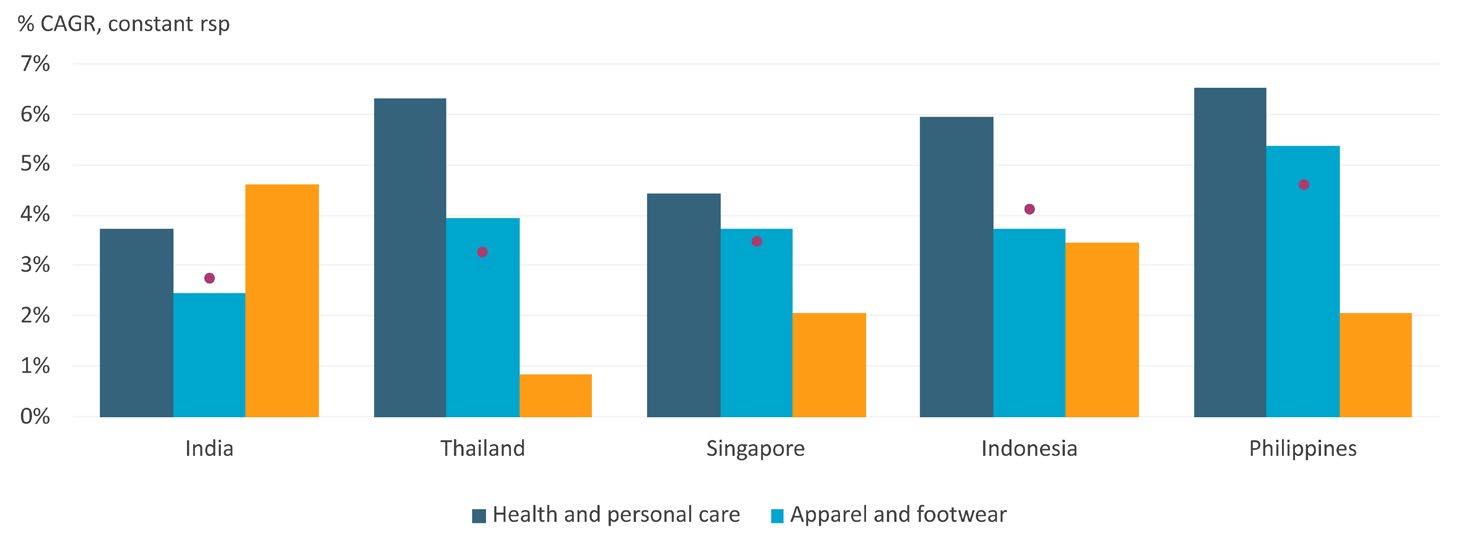
Children's categories retail value sales growth in top five APAC markets 2024-2029
literacy has reduced tolerance for friction in online experiences and raised expectations for instant engagement.
Despite this digital influence, brands should also invest in education, family participation, and “phygital” experiences that combine digital and physical interactions, Zhang told the magazine.
Shin Thant Aung, founder of Sagasia Consulting Ltd., said this approach is particularly important in developing Asian markets such as Indonesia, the Philippines, and India, where parents continue to rely on schools, community programmes, and healthcare professionals when making purchasing decisions for their children.
“Children influence the purchase decision, but parents hold the payment method and give consent for data use,” he pointed out.
Vietnam is also emerging as an attractive market for brands targeting Gen Alpha, according to Valerie Van Tran, a partner at Delta West Group
(Singapore) Pte. Ltd.
“The Gen Alpha Vietnamese market is one of the most lucrative consumer markets in Southeast Asia, estimated to be worth $3 to $4b,” she noted.
She said the country’s falling fertility rate has increased spending per child, creating a “golden child” effect that makes each young consumer more valuable.
Working with Vietnamese footwear brand Biti’s, Van Tran said companies have found that involving children in product development could be more effective than relying solely on behavioural data.
“Win Vietnam’s lucrative Gen Alpha market by choosing compliant parent and child participation over quiet data tracking,” she said.
Emil Fazira, Asia-Pacific insight manager for food at Euromonitor, said companies should also ensure that personalisation remains responsible and age-appropriate.
“This is especially important for markets where digital devices are
embedded into lifestyles, shaping digital nativity amongst children and the rise of children-centric electronics,” she said.
Euromonitor International’s Voice of the Consumer: Health and Nutrition survey, conducted in February 2025, found that 75% of parents considered the diets of children under two years old healthy, but this fell to 71% for children aged over 10.
Healthier routines
The shift is encouraging families to seek products that support healthier routines, including nutrition, supplements, and digital health tools.
Across Asia, 40% of parents give supplements to their children at least once a month, above the global average of 35%. Interest is expanding beyond general wellness to areas such as digestive, eye, and skin health.
Euromonitor said brands should provide age-appropriate wellness education and products that support healthy habits as Gen Alpha grows older.
It identified the Philippines, Indonesia, and India as the strongest growth markets across children's categories, including paediatric healthcare and food. China and Japan are expected to see mixed growth, with stronger demand for children's apparel and footwear but weaker demand for baby food.
Fazira said marketing should avoid manipulative tactics that encourage excessive consumption and instead include safeguards that let parents and guardians manage children’s experiences.
“Companies should adopt strategies that involve parents and guardians as important gatekeepers and lean into a broader group of children segments such as school and learning occasions instead of capitalising on behavioural data,” according to Fazira.
Rather than competing for more screen time, retailers that combine responsible AI, parental trust, and meaningful offline experiences are more likely to build lasting relationships with Gen Alpha as its spending power grows.
Source: Euromonitor International
Note: Health and personal care includes baby and child-specific personal care products; Apparel and footwear includes children's footwear, child designer footwear, childrenswear and designer childrenswear; Food includes baby food and milk formula
David Zhang
Rakesh Mani
Emil Fazira
Four in ten parents give supplements to their children at least once a month
Asia‑Pacific airports redesign terminals to lift retail sales
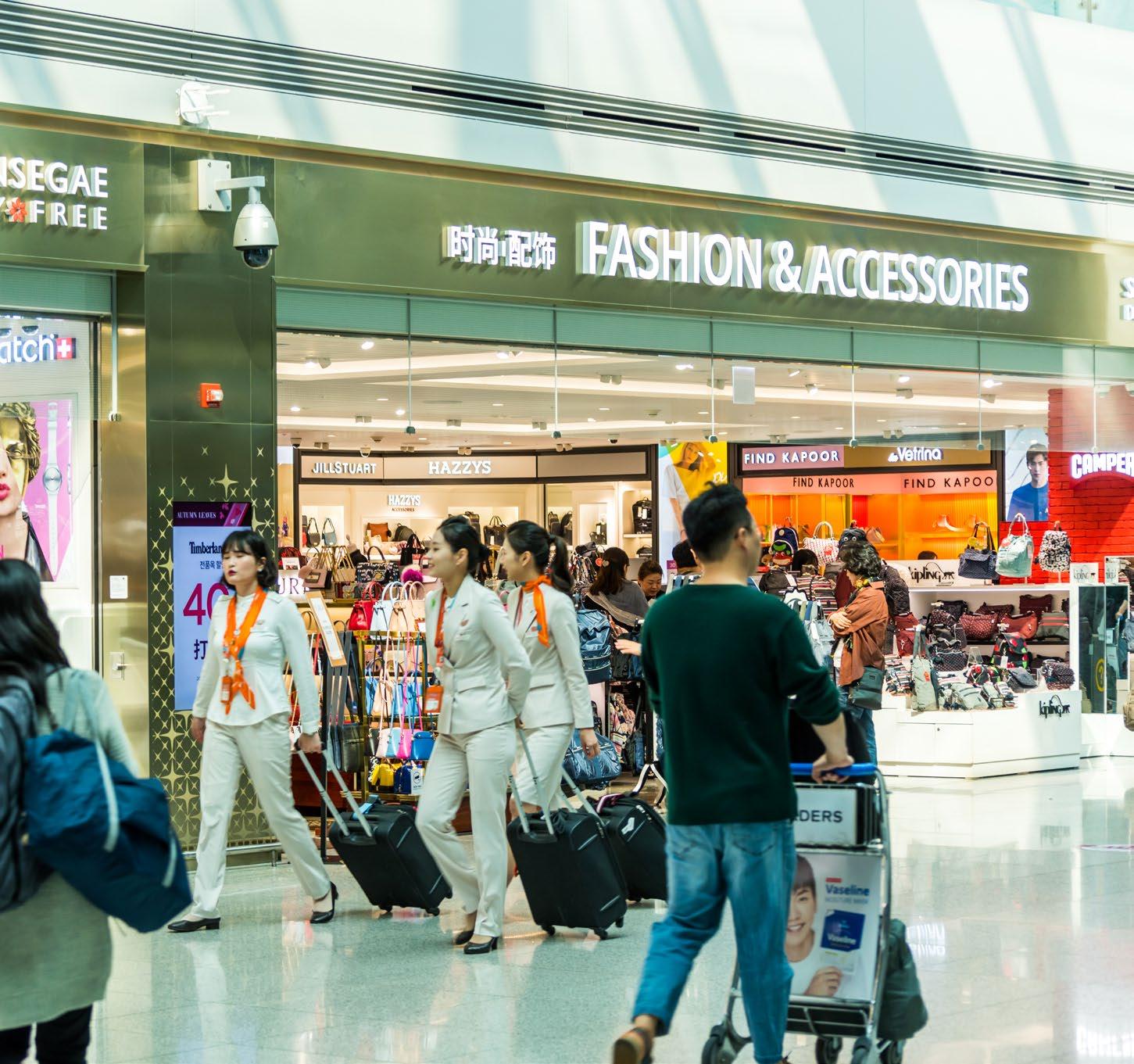
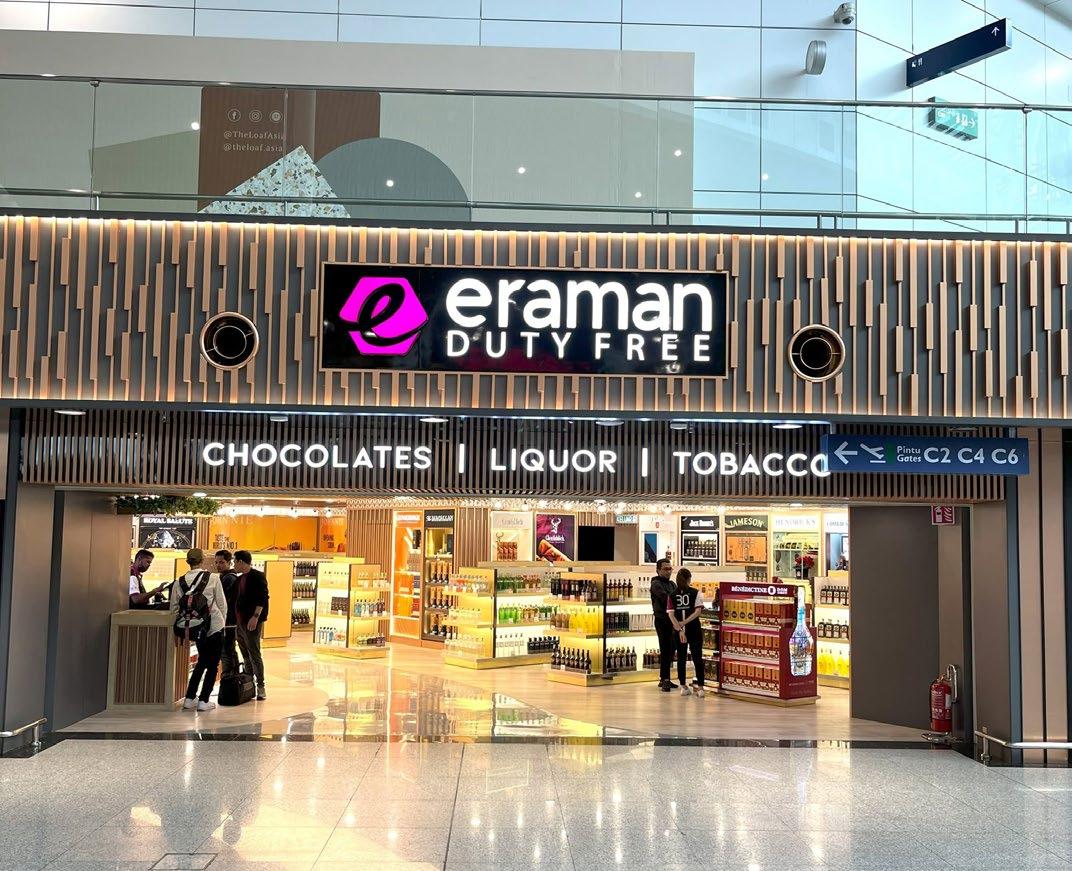
At Incheon International Airport, Guerlain uses curated assortments and on-site consultations to distinguish its flagship from downtown stores.
It is one example of how Asia-Pacific airports are redesigning terminals to lift spending per traveller as traffic growth slows.
Passenger spending at Asia-Pacific airports rose 13% from January to October 2025 compared with the same period in 2019, according to the Airports Council International Asia-Pacific & Middle East, even as domestic traffic increased only 2%.
Experience-led environments
The gap has sharpened airports’ focus on retail sales rather than passenger volume alone.
“Airports are no longer simply places for transactional shopping,” Sarah Branquinho, president of the Tax Free World Association (TFWA), told Retail Asia in an exclusive interview.
“Passengers increasingly look to find something new and unique, and expect engaging, experience-led environments that enhance their journey.”
Luxury sales rose 9%, whilst spending on local products climbed 7%, reflecting demand for higher-value purchases and destination-linked items.
Leading sources of spending include travellers from China, India, the United Arab Emirates and Saudi Arabia.
Beyond duty-free
Retailers have adjusted by moving away from standard duty-free formats.
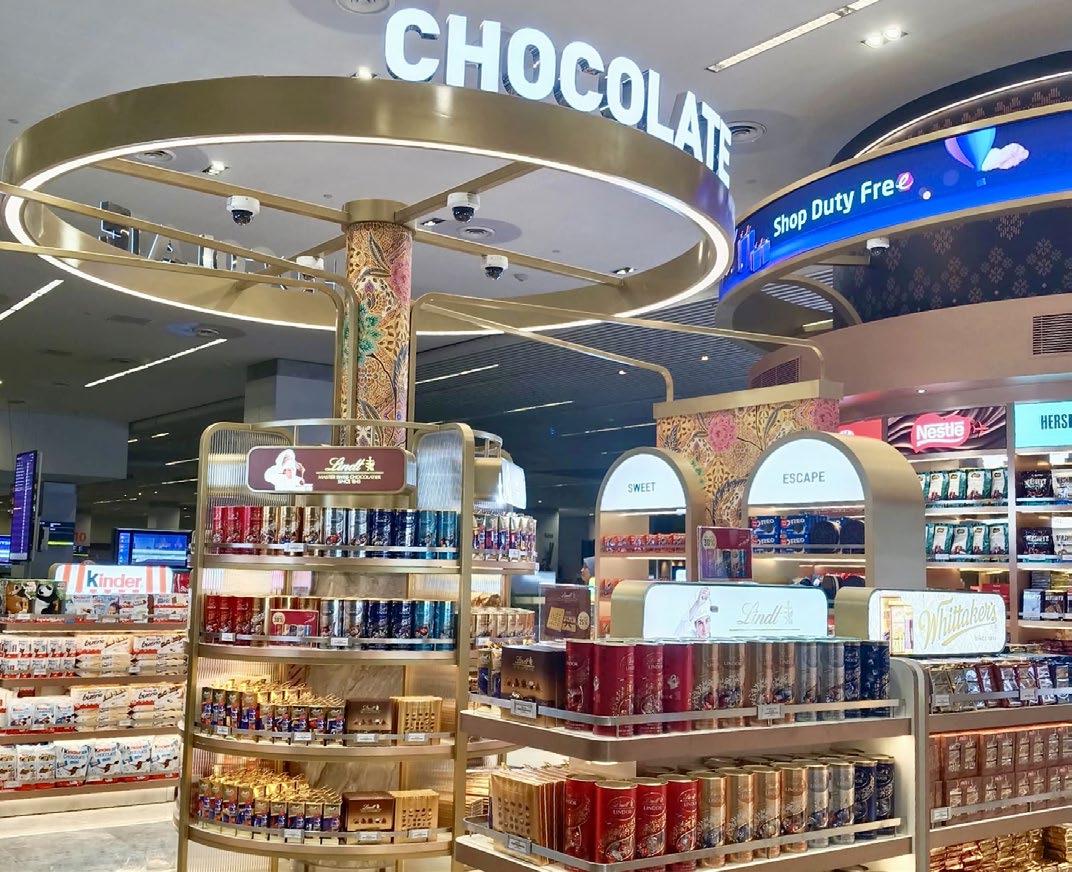
Hybrid layouts combining retail, food and beverage, and seating areas have become more common in larger terminals, alongside shortterm brand installations designed to capture attention during dwell time.
Interactive engagement has practical value beyond its marketing appeal, according to Emily Stella, a principal analyst at GlobalData Plc.
In a separate interview, Stella noted that
trial and discovery zones remain effective, particularly in categories such as fragrance and cosmetics that rely on testing and consultation.
“Live performances, entertainment activities, and pop-up events keep travellers engaged within retail zones, encouraging longer visits and higher spending,” Stella told the magazine.
Beauty and fragrance remain the biggest travel retail categories, accounting for about a third of global sales, according to TFWA.
Branquinho said the post-pandemic recovery has favoured more expensive goods, with travellers showing stronger interest in limited runs, airport-only packaging and products tied to their place of origin.
Asia-Pacific airports are also well placed to test new formats because of their passenger mix.
With Millennials and Gen Z forming a large share of outbound traffic in markets such as China, India and Southeast Asia, the region is “an ideal environment for experimentation that can later be scaled globally,” Branquinho said.
Asia-Pacific accounts for 42% of global duty-free and travel retail sales, she pointed out to the magazine.
Younger travellers typically research purchases in advance, compare prices digitally and expect a consistent experience across channels.
Digital strategies
Retailers are also targeting passengers with limited time in the terminal.
Stella said click-and-collect services and airport apps let travellers complete purchases ahead of arrival, reducing lost sales linked to boarding schedules and congestion.
Digitally delivered promotions have expanded as well. Stella cited mobile vouchers and location-based offers used to steer footfall, though results depend heavily on airport design and the mix of transfer and origin passengers.
Branquinho said pre-trip browsing and reservations have become common, especially amongst frequent flyers.
Whilst Chinese and Korean passengers have historically driven spending in liquor, skincare and luxury goods, dependence on a narrow traveller segment has eased.
“As global travel patterns continue to rebalance and new outbound markets emerge, airports are seeing a broader mix of nationalities contributing to commercial performance,” she added.
Passengers increasingly look to find something new and unique, and expect engaging, experience-led environments that enhance their journey
Passenger spending at APAC airports rose 13% from January to October 2025
Through changing times, INFORMA has been part of Indonesia's homes & business for 22 years. As Indonesia’s largest furnishings destination, INFORMA is honored to be part of your comfort stories, from generation to generation.
How is TikTok reshaping beauty sales?
Abeauty product can go from unknown on TikTok to sold out within weeks, compressing the time brands have to turn attention into sales.
“Digital commerce is shortening product life cycles as discovery and purchase shift to social platforms and algorithm-led recommendations,” NielsenIQ (NIQ) said in its February 2026 State of Global Beauty report.
NIQ said 38% of consumers in the region have bought through TikTok Shop, rising to 73% in China.
Global usage stands at 22%. Douyin, the Chinese version of TikTok, continues to drive livestream-led beauty sales in China.
Data and e-commerce intelligence company Beijing Taomi Technology Co. Ltd. said viral beauty trends now last about three to four weeks, narrowing the window for brands to convert attention into sales.
It said 73% of consumers are willing to pay more for full transparency on sourcing and product lifecycle data.
NIQ said search ranking is now a key driver of digital sales performance in the Asia-Pacific region. The top 10 search results account for 80% of basket additions across retail platforms.
The number one result captures 18% of clicks, whilst the 10th captures 2%. Moving from rank 13 to rank 10 lifts revenue by 66%, NIQ said. Product availability also
EXPERT OPINION
TSHERRI HE Managing Director, KearneyChina
ikTok in China, Douyin, began pushing their e-commerce business in China in late 2020, and has experienced strong growth since then.
By 2025, Douyin’s beauty sector generated $39b (RMB270b), becoming the No. 1 platform amongst the top three, compared to Tmall’s $32b (RMB221b) and JD’s $7.6b (RMB53b).
As a social commerce platform, livestreaming based on KOCs/ KOLs plays a key role, whereas Tmall and JD are still more based on traditional e-commerce.
Douyin enhances the growth of local brands by effectively cooperating with them and leveraging the growing acceptance of Chinese consumers towards local beauty brands (which is a major trend in the overall beauty sector in China), while also benefiting from these local brands’ growth.
[TikTok] has shifted the retail paradigm from traditional product discovery to immediate, frictionless purchasing
affects sales during demand spikes.
NIQ said out-of-stock rates rose from 12% to 21% during a viral surge, whilst restocking lifted sales volume by 43%.
Category performance remains uneven. NIQ said skin care grew 13%, fragrance 12%, hair care 8% and cosmetics 5% in the 12 months ending in the third quarter of 2025. Skin care growth is strongest in China and South Korea, driven by routine-based consumption.
NIQ said 49% of consumers are willing to pay more for better ingredients, whilst 50% prioritise traceability and 49% local origin. It added that 49% of consumers get product recommendations from generative artificial intelligence (AI) tools.
Digital platforms are also cutting choice from more than 50 product variants in stores to just one or two online.
UK-based e-commerce company THG Plc said AIbased diagnostic and recommendation tools are widely used in online beauty retail to support product selection in categories such as foundation and skin care.
It said 71% of consumers expect personalised shopping experiences, whilst 76% are frustrated when they are not delivered. Moojing Global said livestream shopping and creator-led content continue to drive high-conversion beauty transactions in Southeast Asia.
IAHMAD KHAN Senior Analyst, GlobalData
n Q4 2025, we found that consumers in Asia and Australasia were around 5% more likely (43%) than the global average (38%) to purchase products based on AI recommendations.
It becomes a little more complicated when you consider how the same set of consumers feel about AI recommending them beauty and grooming products specifically – whilst 42% of them are likely to make a purchase on its recommendation, more of them show a preference towards marketing affiliates (47%), livestream influencers (49%), and social media influencers (53%). Therefore, AI-based purchasing experiences will probably improve overall conversion rates, but only in terms of convenience and its ability to help consumers navigate oversaturated markets and reduce decision fatigue.
TRAYMOND TSUI Managing Director & Partner, BostonConsulting GroupBeijing
ikTok has become a major social platform—and in many markets, a “closedloop” ecosystem integrating content, community, commerce. For brands seeking to achieve sizeable and profitable gross merchandise volume (GMV) on TikTok, success hinges on building a meaningful base of organic traffic, which helps keep unit marketing costs under control. This is typically driven by high volume of content tailored to the target audience, strong consumer engagement and acquisition, and effective livestream performance supported by data-driven retargeting and operations. Together, these elements create a reinforcing loop that improves platform ranking and recommendation distribution — making it critical for brands to reach the top tier in their category to unlock sustained organic traffic and scalable GMV.
WKATHY LEE Head of Research and Retail Consultancy, ColliersHongKong
hilst TikTok is fundamentally reshaping beauty sales across the broader APAC region, its direct impact on the Hong Kong market remains relatively muted, as the international version of the app is not officially accessible locally.
Instead, Hong Kong’s social commerce and beauty discovery are heavily driven by platforms like Xiaohongshu (Little Red Book) and Douyin, which similarly leverage short-form video and influencerled live commerce.
However, looking at the wider APAC landscape, particularly Southeast Asia, TikTok’s influence is undeniable. It has shifted the retail paradigm from traditional product discovery to immediate, frictionless purchasing via TikTok Shop. The platform forces beauty brands to adopt an “entertainment-first” strategy, relying on authentic creator partnerships and viral trends to drive instant conversions.
Uniqlo lets fabric performance do the selling
The AIRism pop-up uses hands-on tests to build awareness amongst younger shoppers.
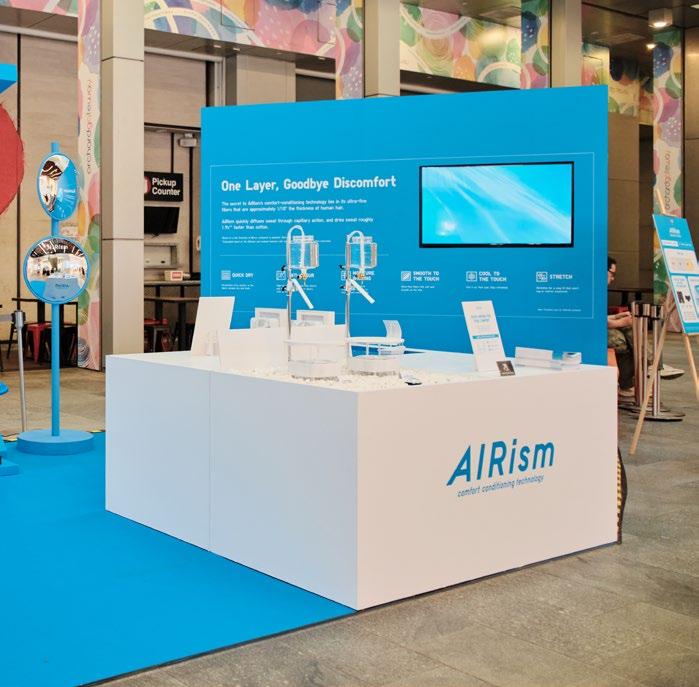
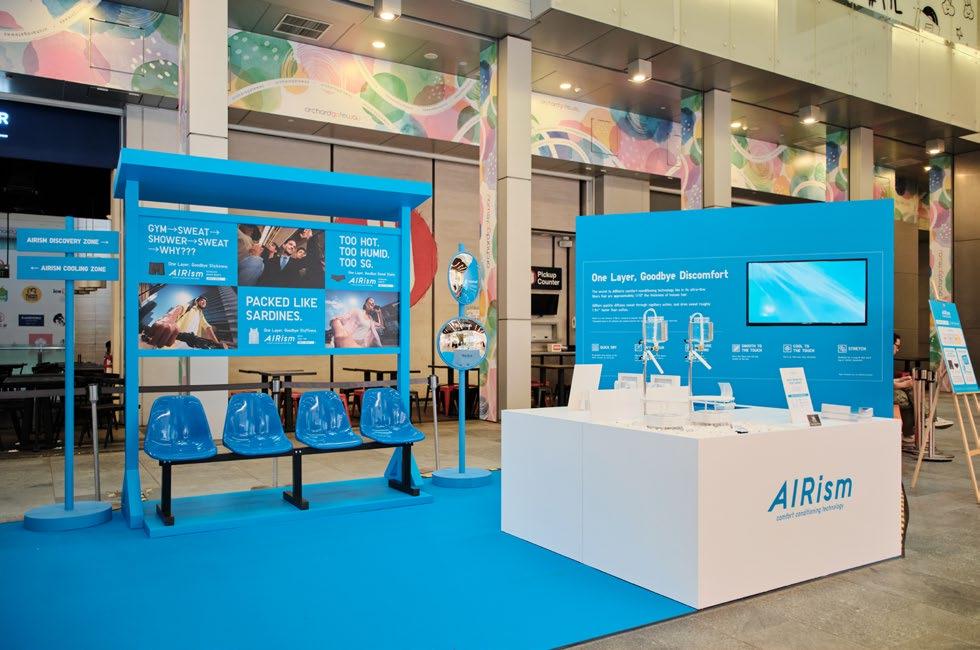
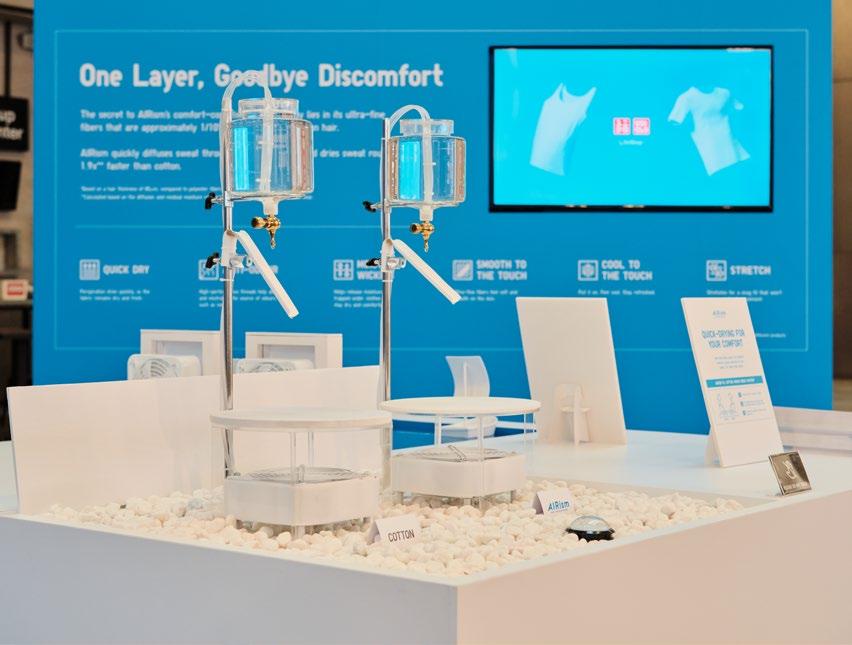
At Uniqlo’s AIRism pop-up, shoppers compare cotton with quick-drying fabric through airflow and water tests. The brand is using hands-on trials to build awareness amongst younger Singaporeans.
“Our greater emphasis on more experiential, educationled events is driven by how we can provide value to our customers,” Paulene Ong, marketing director at Uniqlo Singapore, told Retail Asia.
She said the AIRism Cooling Station pop-up is designed around Singapore’s hot and humid climate, which continues to shape expectations for comfort in everyday clothing.
“Recent news reports have shown how Singapore experienced its highest-ever heat stress reading in 2025, and it is the nation’s priority to help residents adapt to the effects of rising temperatures,” she said.
Uniqlo launched its cooling apparel range in 2012 under its LifeWear concept and later expanded it beyond innerwear into broader clothing categories. Ong said awareness gaps remain despite its long presence in the market.
“Whilst AIRism is a well-established range, we’ve found that Singaporeans may not truly know the full range of items that we have, and tried it on themselves,” she said in an exclusive interview with the magazine.
The pop-up lets visitors experience fabric functions directly through interactive installations rather than
traditional product messaging. A key focus is tertiary students, which Uniqlo sees as an early-stage segment for brand discovery and wardrobe building.
Selected items were given to students who presented valid identification, aimed at encouraging first-time trials.
“This is to encourage first-time try-ons of our items for their everyday wear,” Ong said.
Entry point for discovery
The installation demonstrates breathability, quick-drying performance, and cooling properties through airflow and water-based comparisons across fabrics.
One display compares lightweight mesh fabric with cotton to show differences in ventilation and movement, whilst another highlights drying speed using water droplets.
A separate station lets customers feel the cooling effects through direct contact with materials.
Ong said the format mirrors real-life usage scenarios such as commuting and outdoor activity in Singapore’s climate.
The marketing director added that experiential activations complement rather than replace retail stores, acting as entry points for discovery and trial.
“They act as an entry point, sparking curiosity and encouraging trial, which can then naturally lead customers back into our stores to explore the full range,” she said.
1 3 2 4
1 UNIQLO’s first AIRism Cooling Station at Orchard Central featured interactive experiences, immersive installations and exclusive redemption activities.
2 The AIRism Lab showcased the fabric’s quick-drying performance through interactive demonstrations.
3 An immersive installation recreated the cool, smooth sensation of AIRism fabric whilst serving as an Instagram-worthy photo backdrop.
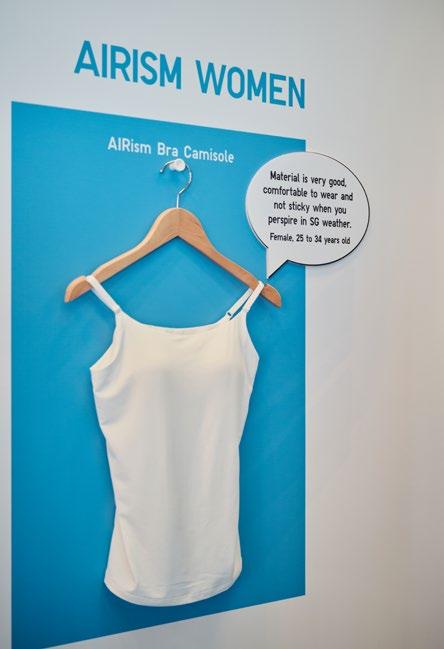
4 Product displays spotlighted the AIRism Innerwear collection and its lightweight comfort for everyday wear.
Paulene Ong
EARN STAR$® SEAMLESSLY
MINISO uses fandom to drive repeat sales
It is counting on character-based items and collector behaviour to drive visits.
Fans who buy one character item often return for the rest of the set. MINISO Malaysia has built its Selangor flagship around that collecting impulse, linking online discovery to repeat store visits.
The 1,700-square-metre store at Sunway Pyramid reflects a shift in how the global lifestyle brand approaches physical retail, moving beyond transactions towards encouraging repeat visits driven by character-based merchandise and collection-led behaviour.
“Consumer demand in Malaysia is shifting from functional purchasing towards interest-driven and emotionally led consumption,” Jerry Gong, CEO at MINISO Malaysia, told Retail Asia. “IP has become a powerful way for consumers to express identity and build emotional connections with brands.”
The outlet carries more than 8,000 items, with over 70% tied to intellectual property (IP). Products are arranged across 15 themed zones built around character universes rather than traditional categories, encouraging browsing, discovery, and repeat engagement.
The strategy is designed to capture increasingly collectiondriven consumer behaviour, as shoppers return to complete sets or purchase limited releases. MINISO said the Selangor store, which opened on 28 February, set a single-day sales record for its Malaysia operations, with its YOYO tilted-head collection emerging as the top seller.
Shareability
Social media plays a key role in driving that behaviour. Online discovery often leads to store visits, whilst in-store experiences generate user content that feeds back into digital platforms, creating a self-reinforcing loop.
“Many customers first discover a character or product online, then come to the store to experience it in person,” Gong said in an exclusive interview.
To support this model, stores are designed with “shareability” in mind, featuring large character installations and photo spots that encourage user-generated content on platforms such as TikTok and Instagram. When certain characters gain traction online, the company adjusts in-store displays and product allocation to match demand.
Malaysia’s mall-driven retail environment has made it a suitable testing ground for the format. High foot traffic and strong immediate conversion make experiential stores particularly effective, especially compared with more highly digitalised markets such as China, Gong said.
The company is also shortening product cycles and introducing exclusive designs and regional first launches to sustain repeat visits. More than 100 licensed and proprietary characters are featured in the Selangor store, including global brands such as Sanrio and Snoopy,
alongside MINISO’s own IPs.
MINISO plans to further localise its character portfolio, including the introduction of a Malaysian character inspired by the Malayan tapir.
The broader aim is to integrate shopping, collecting, and social engagement into a single retail model.
“This model—combining global IP capabilities with local cultural elements—creates a blueprint for scalable growth in mature mall-centric markets,” Gong said.
Similar to Malaysia, MINISO Thailand opened its first MINISO LAND store in October 2025 at Bangkok’s Siam Square. The IP-based store debuted its Disney’s Zootopia collection ahead of the release of Disney’s Zootopia 2.
The store also featured iconic characters from Harry Potter, Sanrio, and Disney’s Stitch. Its layout spans more than 40 zones, showcasing a wide range of IP collections as well as categories such as toys, travel essentials, and fragrances.
IP has become a powerful way for consumers to express identity and build emotional connections with brands
MINISO LAND Bangkok is spread across three floors and features more than 8,300 products, including merchandise from over 80 IP characters. In addition to these IP characters, MINISO debuted vinyl blind boxes such as Hello Kitty POP STAR in Thailand on opening day, alongside Thailandthemed products such as the Muay Thai DUNDUN Chicken plushies and Thai elephant plush toys.
To promote the store’s opening, MINISO Thailand collaborated with the BTS Skytrain system on a Zootopiathemed train wrap that ran from October to November 2025.
Jerry Gong, CEO at MINISO Malaysia
MALAYSIA
CEO INTERVIEW
K‑pop signed merchandise turns fans into investors
Premium items have appreciated like bluechip collectables.
Scarce, authenticated K-pop items are fetching hundreds or thousands of dollars, turning fan collections into a source of funds.
“In its early days, K-pop merchandise was primarily a ‘badge of identity’—a way for fans to show their belonging,” Jaewha Choi, chief executive officer at Bungaejangter, Inc. (Bunjang), told Retail Asia. “But over the last three years, we’ve witnessed a profound transformation.”
She said the market has matured into a sophisticated secondary scene, where premium items have appreciated like “blue-chip collectables.” Fans now assess merchandise strategically, considering scarcity, provenance, and long-term collectability.
Rare items can fetch impressive sums on Bunjang, which acts as a trusted middleman for buying and selling K-pop merchandise. A signed digital single from BIGBANG’s Daesung recently sold for over $2,700 almost 20 years after release, whilst a DAY6 member photocard can command over $600 in Singapore.
“Whilst emotional connection remains the heartbeat of this market, it is now being professionalised through factors like authenticity, timing, and pristine condition,” Choi said in an exclusive interview with the magazine.
Trader’s mindset
Southeast Asia is emerging as a key driver of cross-border K-pop sales. Fans here often approach merchandise with a “trader’s mindset,” she told the magazine.
According to a ShopVidi Inc. report, the K-pop fan demographic spends an average of $120 monthly on merchandise, with 68% prioritising authentic products over unlicensed alternatives.
Female consumers aged 18 to 34 represent 71% of K-pop merchandise purchasers, whilst male collectors aged 25 to 40 appreciate the artistic design of limited edition items. By December 2025, Bunjang had 3.6 million monthly active users globally, with transaction volume more than tripled from a year earlier, and gross merchandise value rising 2.7 times.
Indonesia leads in new users, whilst Singapore ranks fifth in sales volume. Combined with Malaysia, Vietnam, and the Philippines, Southeast Asia represents a significant portion of the global K-pop resale market.
“Southeast Asia isn’t just a participant; it is the very heart of the global cross-border K-pop economy,” Choi said.
Bunjang’s mobile-first platform allows users worldwide to buy directly from Korean sellers, with integration into Japan’s Mercari to connect major markets.
Choi said this unifies fragmented markets without requiring heavy local infrastructure.
“The efficacy of an outbound-led expansion model,
Southeast Asia isn’t just a participant; it is the very heart of the global cross-border K-pop economy
when you combine fandom-driven content with flexible cross-platform integration, a business can successfully unify fragmented markets and scale globally—all without the need for heavy, traditional local infrastructure,” said Choi.
Challenges remain. Barriers such as counterfeit concerns, fragmented supply, and complex logistics complicate cross-border transactions.
“For global fans, the biggest hurdle isn’t just finding the item—it’s having the confidence that what they see on their screen is exactly what will arrive at their doorstep,” Choi pointed out.
Bunjang addresses these risks through pre-shipping inspections and authentication via its BGZT Luxury store. High-value items are verified using Corelytics, which combines expert appraisal with artificial intelligence-driven pattern recognition and X-ray fluorescence technology.
The platform also uses transaction and search data to track demand and trends, helping identify which collectables—early-edition albums, limited releases, and event-exclusive items—will appreciate most.
Over the next few years, resale is expected to complement primary retail, extend product lifecycles, and provide engagement points for fans.
“K-pop products are no longer viewed purely as sentimental keepsakes,” Choi said.
“They are increasingly being treated as sophisticated assets, with their market value dictated by a precise intersection of scarcity, global demand, and historical significance.
Jaewha Choi, CEO at Bunjang
Imagining better futures for all
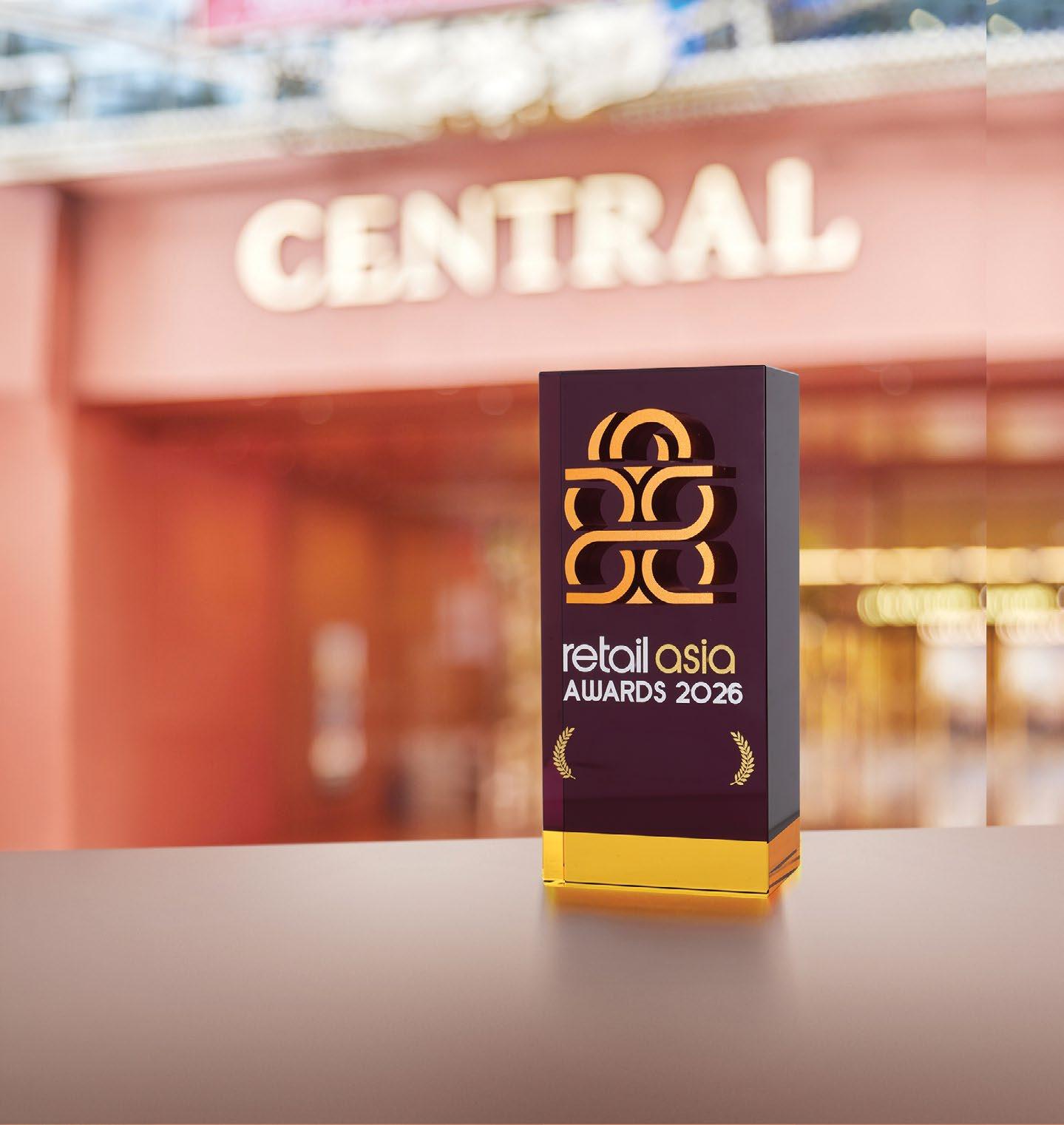
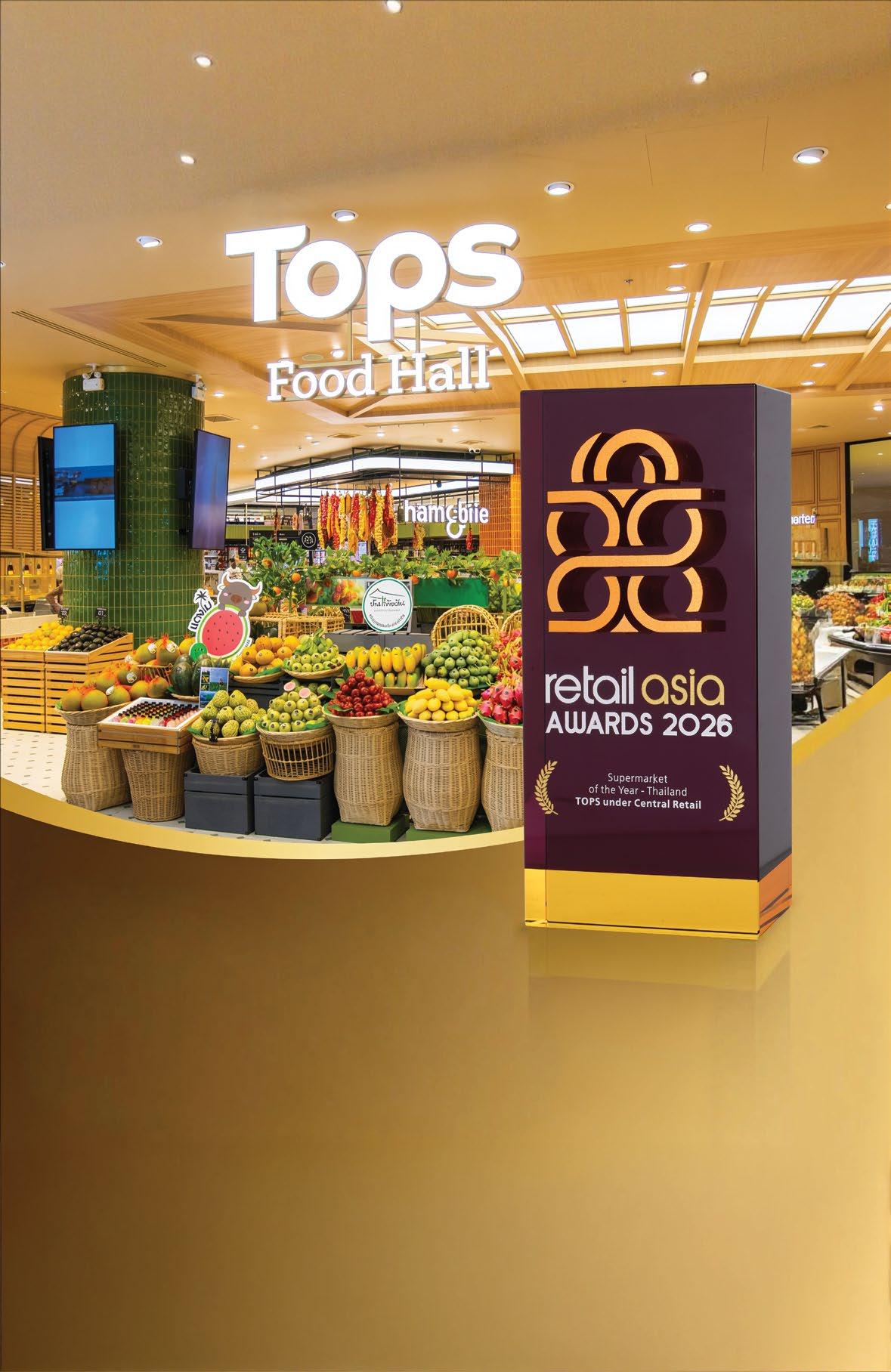
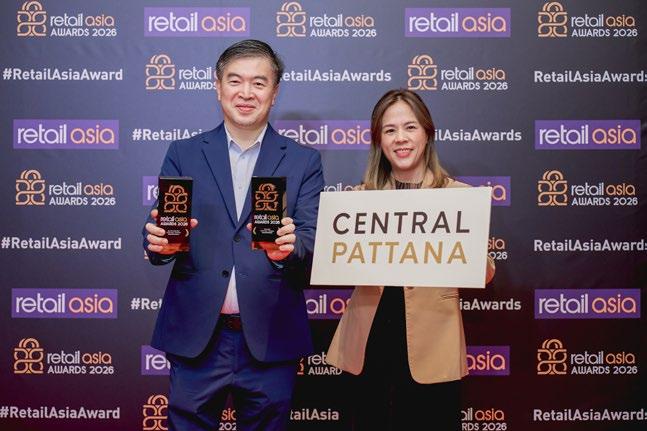
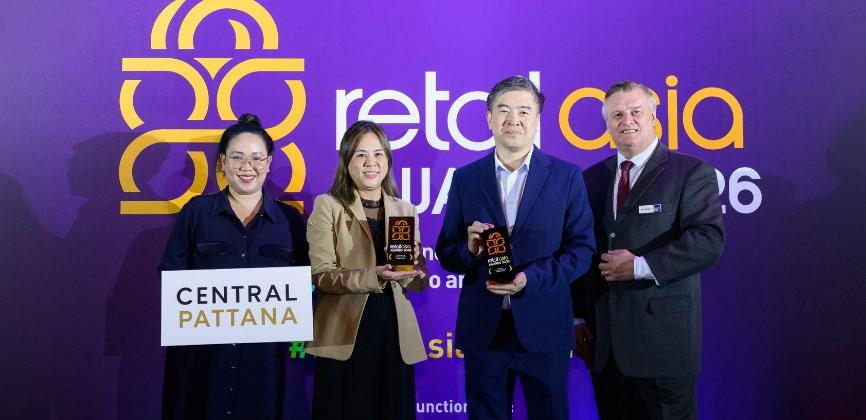
Central Pattana wins major honours for the third consecutive year at Retail Asia Awards 2026, reinforcing its leadership in shaping future cities.
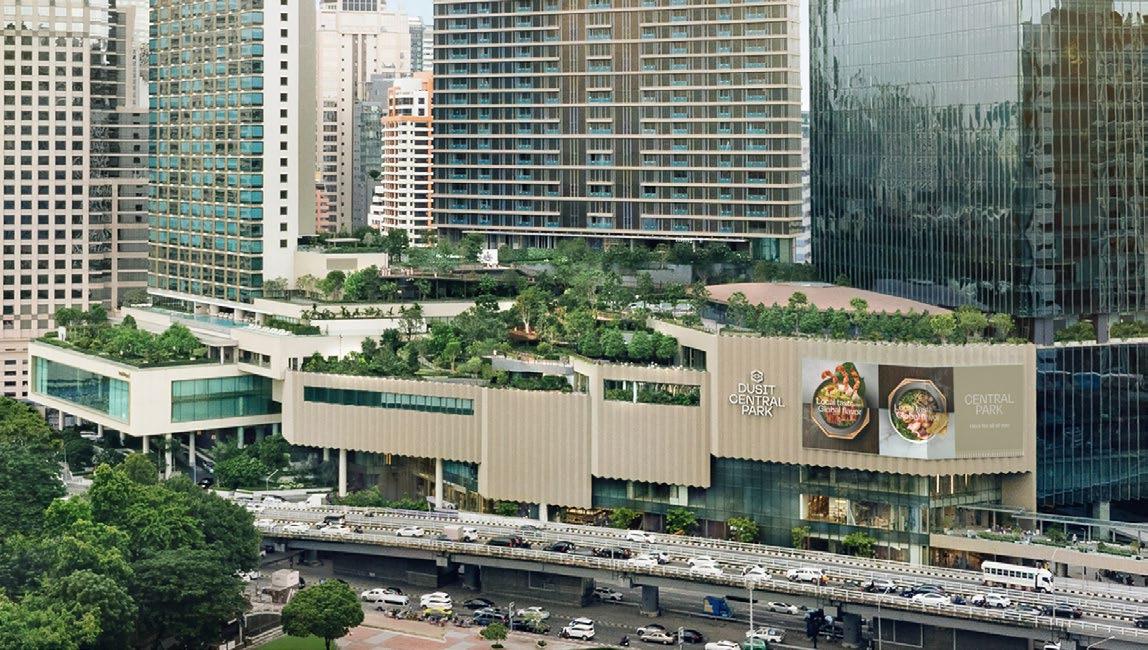
Central Park received the ‘New Mall of the Year – Thailand’ award for its world-class mixed-use development within Dusit Central Park. Positioned as Bangkok’s newest landmark, the project seamlessly integrates urban living and nature through its Park Life & Urban Life Integration concept. Featuring Thailand’s largest rooftop park, spanning over 7 rai and extending the green landscape of Lumpini Park, Central Park enhances quality-of-life infrastructure in the city’s CBD. The shopping centre attracted more than 235,000 visits during its opening period, establishing itself as one of Bangkok’s most talked-about new destinations.
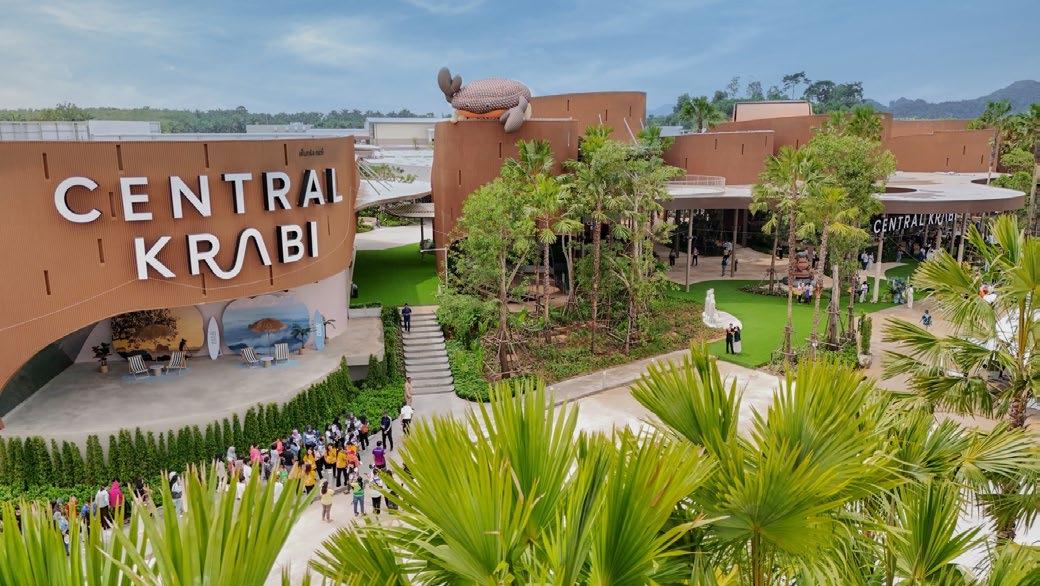
Central Krabi received the ‘Eco-Friendly Mall of the Year – Thailand’ award, marking Central Pattana’s second consecutive win in the category. As Thailand’s first shopping centre pursuing EDGE Zero Certification, the project achieves over 40% energy savings and generates 3.2 MW of renewable energy from its solar installations. Guided by its ‘Made by Krabi’ concept, the development combines sustainable innovation with local identity, empowering communities while promoting long-term environmental stewardship.
Everyday Ritual Reimagined
SM launches biggest mall spend in years
The group plans to open one flagship mall each year, targeting 115 malls by 2030.
SM Supermalls is spending $2.6b to make dining, films, and indoor parks as central to a mall visit as shopping.
“Change is inevitable, and that’s what makes retail exciting,” Steven Tan, president at SM Supermalls, told Retail Asia in an exclusive interview. He recalled that SM’s first mall, SM North EDSA in Quezon City, opened in the 1980s as a purely utilitarian shopping venue.
That same mall is set for a $104.2m (₱6b) upgrade as part of a programme that covers redevelopment of key assets and a steady pipeline of openings.
SM Megamall in Mandaluyong will get about $121.5m (₱7b) for works that include a 20,000-square-metre expansion, a four-level basement car park with more than 1,600 slots, additional cinemas, a revamped Megatrade Hall and a redesigned food court.
New projects include SM Nuvali in Santa Rosa, Laguna province and SM Harrison Plaza in Manila.
The group plans to open one flagship mall each year, alongside regional and provincial centres, targeting 115 malls by 2030, according to Tan.
Four to five other malls are slated to open annually. Site selection is based on catchment size, spending power and land availability, with a growing focus outside Metro Manila, the president told the magazine.
Domestic scale
The capital outlay comes as Singapore and other regional markets compete for listings and capital, but SM is concentrating on domestic scale.
In 2025, parent company SM Prime Holdings, Inc. posted net income of $847m (₱48.8b), up 7% from 2024. The mall segment accounted for 60% of revenue at $1.5b (₱85.1b). Management cited higher commercial property revenue and cost discipline.
Within the portfolio, the tenant mix is shifting. Food now takes up roughly 30% of mall space, reflecting demand for dining and leisure over discretionary retail.
The company is redesigning layouts to widen corridors and introduce more open areas. At SM Nuvali, a one-hectare, airconditioned indoor park is under construction.
Meanwhile, Megamall’s “Crystal Islands” concept will add natural light and organic forms.
Tan said the aim is to raise dwell time and repeat visits rather than chase headline footfall targets. He declined to provide projections for traffic or tenant sales.
Digital spending is part of the plan, though the group frames it as operational rather than experimental. Systems under rollout include smart parking, app-based promotions, artificial intelligence for customer service, and data tools to manage utilities.
Sustainability features in the redevelopment pipeline include a 500-cubic-metre rainwater harvesting system, ETFE (ethylene tetrafluoroethylene) roofing, LED lighting and sensor-activated escalators, with solar panels under study at selected sites.
The investment cycle follows a period of recovery for brick-and-mortar retail after pandemic disruptions accelerated online shopping.
Tan said malls and e-commerce are complementary, with retailers expected to operate across both channels. He argued that physical stores remain central for brands seeking scale in the Philippines, where logistics costs and last-mile delivery constraints can limit pure online models.
Financing details were not disclosed, though SM Prime has historically relied on a mix of operating cash flow and debt.
The group’s balance sheet has allowed it to expand during downturns, including after the Asian financial crisis and the global financial crisis, Tan said.
“We have always believed in the Philippines, and we will continue to invest in the Philippines over the next five years,” the president continued.
Risks remain. Consumer sentiment is sensitive to inflation and interest rates, and provincial expansion can dilute returns if catchment estimates prove optimistic. Construction costs and project timelines also pose execution challenges, particularly for complex redevelopments of operating malls.
Change is inevitable, and that’s what makes retail exciting
Still, SM Supermalls is proceeding with its biggest capital programme in years, positioning its malls as mixed-use anchors in growth corridors. Whether the $2-billion spending translates into faster rental growth and higher margins will depend on tenant demand and the pace of household spending through the next cycle.
Steven Tan, president at SM Supermalls
PHILIPPINES
THE STORE EVERYDAY FOR EVERYONE
Thailand’s Leading & Fastest-Growing Home Improvement and Lifestyle Retailer is celebrating 10 years in Thailand with over 1,200 stores nationwide, we remain committed to offering everyone everything, every day, at Always Low Prices.
MARKET REPORT: HONG KONG
Easing rents lure retailers back to HK
Ground-floor shops offer higher visibility for food and daily-need retail.
HONG KONG
Street-level retail space is regaining appeal in Hong Kong as retailers adjust location strategies amidst softer rents and a sharper focus on foot traffic, prompting a shift away from upstairs units once favoured for lower costs.
“Both local and overseas shoppers are value-driven, culturaland experience-led nowadays in Hong Kong,” Kathy Lee, head of research and retail consultancy at Colliers International Group, Inc., told Retail Asia in an interview.
“This has increased competition for foot traffic, which in turn has led to brands shifting to store locations for higher visibility, particularly for food and beverage and daily-need retail,” she told the magazine.
Consumer spending has tilted further towards experience and engagement, reinforcing the appeal of streetfront stores. Brands see physical locations as spaces to tell stories, showcase products, and attract more customers rather than solely process transactions.
Consolidation
Lawrence Wan, executive director and head of retail leasing at CBRE Hong Kong, said many retailers, especially global luxury labels, are consolidating into fewer but bigger stores in prime districts to deepen customer interaction.
He said this strategy has helped keep vacancy rates relatively low on Tier 1 streets in core areas even as the wider market adjusts.
Lower rents have driven the shift, with street-level prices down sharply from past peaks and closer to upstairs rates, making high-visibility locations more accessible, Lee said.
Street shop rents are about 60% lower than their 2014 peak. “Streetlevel stores offer stronger footfall capture, higher brand recognition, and greater marketing value compared with upstairs locations,” Wan said in a separate interview.
The shift has drawn brands that once favoured upstairs units back to street level. Hing Kee Java Edible Bird’s Nest Co. Ltd. has opened ground-floor shops on Sai Yeung Choi Street South
and at East Ocean Centre, whilst canteen-style restaurant Autumn Feeling has expanded from a Kwun Tong industrial building to streetfront outlets in Quarry Bay and Wan Chai.
“Visibility matters again, and physical stores are now seen as marketing channels as much as sales outlets, which favours businesses to move to street level,” added Lee.
Flexible leasing is also gaining ground. Short-term leases and pop-ups let retailers enter highstreet locations with lower risk, whilst helping landlords keep spaces occupied and active, Lee said.
“Pop-ups and short-term leases have become a risk-management tool,” she said. “They allow retailers and restaurants to navigate the market without long-term rental commitments,” she continued.
Wan said pop-ups are increasingly used to test concepts, create buzz and support seasonal offers, with food and beverage, beauty, wellness and lifestyle brands amongst the most active users.
Market data points to a gradual recovery. Lee noted that highstreet rents in core districts such as Causeway Bay, Central, Tsim Sha Tsui, and Mong Kok rose 2.9%
year on year in 2025, although they remain about 65% below their peak in the second quarter of 2013.
Vacancy rates in those Hong Kong districts stood at about 9% by the end of 2025, roughly half the level recorded in early 2021.
Despite the renewed interest in streetfront locations, cost considerations remain a key concern for operators, the experts noted.
“Even after rental corrections, streetlevel rents remain higher than upstairs spaces,” Lee said, adding that sales performance becomes a key factor, especially for businesses with greater staffing needs and higher fit-out costs.
“Retailers should carefully evaluate their brand development direction alongside cost considerations,” said Wan.
Street-level shops in Hong Kong still cost 10% to 20% more than upstairs units, meaning higher rents only work if they lift sales.
“It ultimately comes down to the role of visibility in driving sales and how rent levels align with the retailer’s margin profile,” Lee said.
“In today’s market, the right location is less about prestige and more about operational fit.”
High-street rents in core districts rose 2.9% year on year in 2025
Kathy Lee
Lawrence Wan
MARKET REPORT: INDIA
Retailers shift from city plans to neighbourhood targeting
Mumbai alone contains more than 200 micro-markets.
In the same Indian city, one retail site can fail because of parking, foot traffic, or even which side of the street it occupies. Expansion planning is moving from citywide strategies to neighbourhood-level analysis.
“Bharat—the non-metro heartland spanning Tier 2-4 cities—is now the growth engine,” Archana Gupta, executive director and head of market strategy and understanding and shopper insights at Ipsos S.A., told Retail Asia. She said smaller cities now account for more than 45% of e-commerce orders as India’s retail market moves towards a projected $2t valuation by 2032.
Consumption patterns are also diverging. Luxury spending is rising by 12% to 14%, whilst value-focused retailers such as Avenue Supermarts Ltd. continue to post strong growth,
Gupta told the magazine.
Retail planning has become far more granular. “Planning has shifted from city strategies to micromarkets—distinct neighbourhood pockets with unique demand and price sensitivity,” she said, adding that Mumbai alone has more than 200 such zones.
Retailers are increasingly analysing catchment areas within 500 metres to 1.5 kilometres, studying commuter flows, population shifts, and nearby competition before approving sites.
“DMart reportedly rejects 70% to 80% of sites on walkability, parking, and rent math,” Gupta said.
Technology and location intelligence are now key to expansion strategies. Gupta said retailers are using geographic information system mapping, telecommunication mobility data, and digital payment
trends to identify demand gaps.
She pointed to neighbourhoods with strong delivery demand from platforms such as Swiggy Ltd. and Zepto Ltd. but limited organised retail presence as examples of untapped opportunities.
Retailers using advanced location analysis are reporting 15% to 20% higher store success rates compared with traditional methods, she added.
Neighbourhood-level data
Rami Kaushal, managing director for consulting and valuation services in India, the Middle East, and Africa at CBRE Group, Inc., said retailers are increasingly relying on neighbourhood-level data instead of citywide assumptions.
“To guide their expansion beyond broad city-tier strategies, Indian retailers are leveraging granular hyperlocal analytics, geospatial intelligence, and digital footprints at the neighbourhood and PIN (postal index number)-code level,” Kaushal said in an interview.
Kaushal said that tools such as footfall mapping, demographic overlays, and competition density mapping are now standard, alongside digital transaction data from unified payments interface (UPI) and quickcommerce platforms.
Retailers are also tailoring product assortments more aggressively to local demand. Gupta said southern markets tend to favour rice and filter coffee, whilst northern markets lean towards wheat, dairy, and tea.
Affluent urban districts buy more imported and organic products, whilst migrant-heavy areas often demand region-specific goods.
Misjudging micro-locations remains a major risk.
Gupta estimated that 20% to 25% of stores miss first-year targets because of issues such as poor visibility, limited parking access, or being positioned on the wrong side of the street.
Kaushal added that closures often stem from “misaligned location strategies and margin pressures,” especially when stores fail to convert footfall into purchases.
“Precision will beat proliferation,” Gupta said, adding that retailers are increasingly treating stores as part of broader omnichannel networks rather than standalone outlets.
The country’s retail market moves towards a projected $2t valuation by 2032
Archana Gupta
Rami Kaushal
RETAIL INSIGHTS: DELIVERY APPS
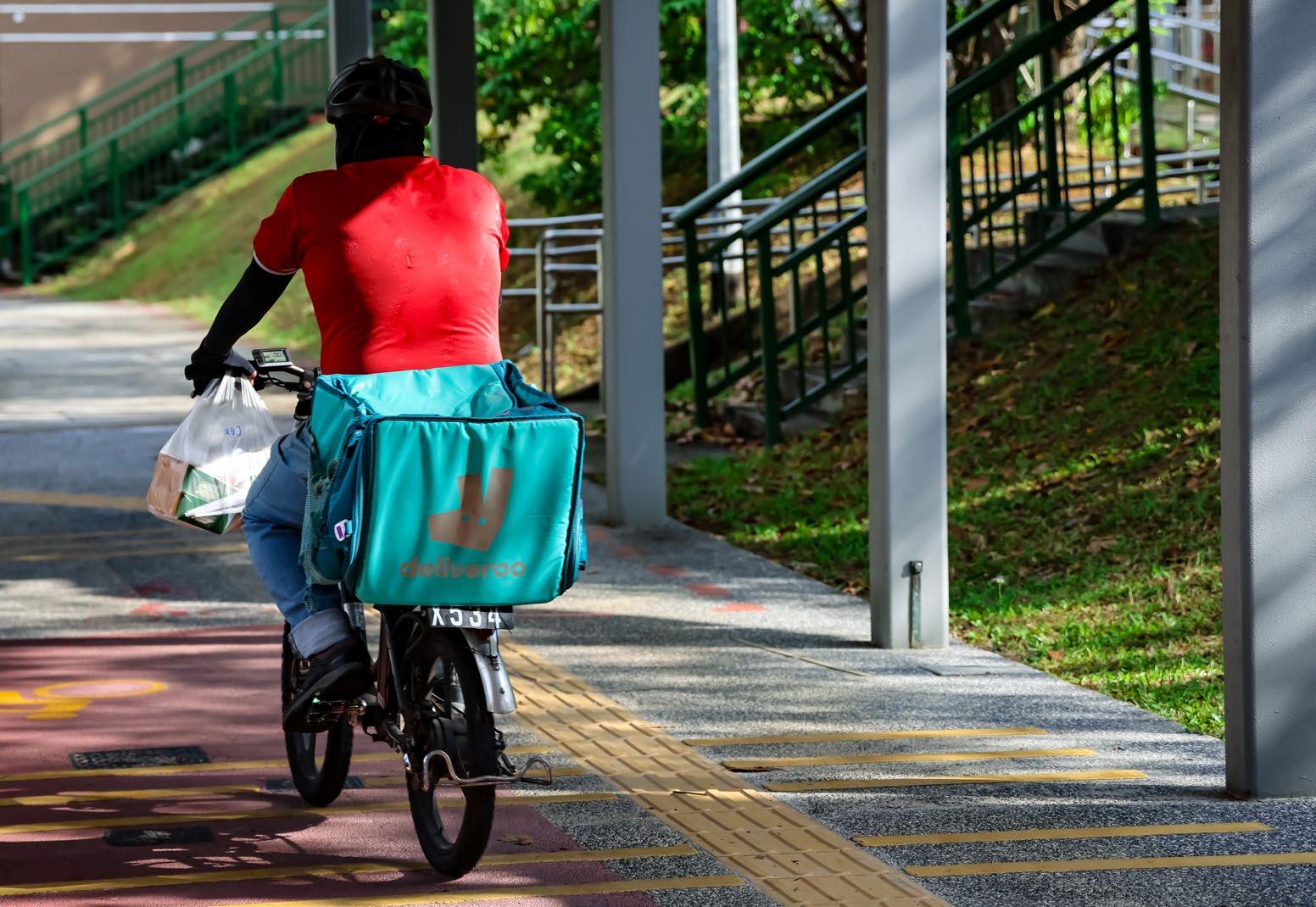
Deliveroo exit triggers duopoly in SG
Consolidation may lift fees and commissions as Grab and foodpanda dominate.
Small Singapore restaurants may face higher commissions or higher menu prices as Deliveroo’s exit strengthens Grab and foodpanda’s bargaining power.
“The exit highlights key industry trends: razor-thin margins, rising preference for super apps, and the struggle to maintain profitability in highly penetrated markets,” Anuran Dhar, practice head for foodservice at GlobalData Plc, told Retail Asia.
“For new entrants especially, it signals the danger of expanding too fast without adapting to local conditions,” he added.
Deliveroo’s withdrawal leaves the city-state’s food delivery sector effectively dominated by Grab Holdings Ltd. and Delivery Hero SE’s foodpanda, creating what analysts describe as a near-duopoly.
The UK-based company ceased Singapore operations in 2026 after years of competing in a highly saturated market.
A February report by Momentum Works Pte Ltd. showed Singapore’s food delivery sector generated gross merchandise value of $2.9b in 2025. Grab commanded 69% of the market, foodpanda held 24%,
and Deliveroo accounted for 7%, underscoring the scale gap facing the departing platform.
In the near term, both Grab and foodpanda are expected to compete aggressively for Deliveroo’s former users and merchants.
Dhar said promotional campaigns are already visible, including deep discounts, waived onboarding and device costs, and membership perks such as delivery thresholds, priority access, and bundled deals designed to lock in repeat usage.
These incentives are unlikely to last. Dhar said consolidation typically allows platforms to unwind subsidies once market share stabilises.
Over time, operators may raise delivery fees, boost merchant commissions, or increase charges for search visibility and promotions as alternatives narrow.
Mid-tier and small restaurants face the greatest pressure from higher costs, Dhar told the magazine, since their margins leave little room to absorb steeper commissions.
Some of those costs are likely to be passed on to consumers through higher menu prices, surcharges, or bundled meals, depending on price
sensitivity and brand strength.
Higher costs
Premium merchants could see a different outcome. Dhar said wellknown brands may use their scale and customer appeal to negotiate terms or secure better placement on the remaining platforms.
He added that restaurants registering on both Grab and foodpanda could gain access to customers in areas where Deliveroo previously had a strong following.
Roshan Raj Behera, a partner at Redseer Strategy Consultants Pvt. Ltd., said Deliveroo’s departure would lead to a “nonmaterial decline in competition” given its single-digit share, but still shifts negotiating leverage towards the platforms.
He said rider migration could support service quality through faster deliveries and shorter wait times.
“Market concentration inevitably shifts the bargaining power in favour of the fewer platforms that remain in the market,” Behera said in a separate interview.
“Accordingly, we can expect restaurants of all sizes to end up paying a higher cost for delivery.”
Behera said smaller restaurants are likely to face higher delivery costs because they have less capacity to absorb steeper commissions.
Large or premium brands may explore alternatives such as in-house delivery fleets or partnerships with other merchants to protect margins.
Consumer loyalty is likely to continue to revolve around service standards rather than platform branding, Behera said.
Dhar said niche opportunities remain for platforms serving specialised segments such as premium, speciality, or healthfocused consumers.
He also said some restaurants might expand direct ordering, pickup, or self-managed delivery to regain control over costs.
“With the exit of Deliveroo, it is highly unlikely that a new player can enter the market and scale quickly without deep funding,” he added.
In 2025, Grab commanded 69% of the market, foodpanda held 24%, and Deliveroo accounted for 7%
Anuran Dhar
Roshan Raj Behera
EVENT NEWS: RETAIL ASIA SUMMIT THAILAND
Thai brands urged to own channels as platform fees rise
Platform fees now reach as high as 20%.
Winning a customer on Shopee, Lazada, or TikTok Shop is only the first step. Platform and advertising costs can absorb up to half of a sale, pushing Thai brands to move repeat buyers to owned channels.
Thanawat Malabuppha, CEO and co-founder of Priceza and honorary president of the Thai E-commerce Association, called on brands to overhaul their commercial approach and adopt what he described as a commerce operating system.
“Their systems should be a coordinated, multi-pillar strategy that treats each sales channel as an integrated component of a wider commercial architecture,” Malabuppha said during the Retail Asia Summit in Thailand.
Whilst e-commerce continues to grow, Malabuppha noted that the market is entering a new phase of maturity — one where profitability is the defining priority.
Their systems should be a coordinated, multi-pillar strategy that treats each sales channel as an integrated component of a wider commercial architecture
Malabuppha’s proposed operating system centres on four commercial pillars: marketplace presence, quick commerce, owned digital channels, and loyalty-driven customer retention.
Marketplaces such as Shopee, Lazada, and TikTok Shop remain essential for demand capture, he acknowledged, given their tens of millions of active users in Thailand.
However, with platform fees now reaching 20% — and advertising costs adding another 10% to 20% on top — brands that rely exclusively on these platforms are surrendering up to half of their revenue before covering other costs.
According to a Digital in Asia report, e-commerce platforms in Southeast Asia take between 2.7% and more than 20% of every transaction in seller fees — and that’s before advertising, logistics, and mandatory promotional programmes.
From 2025 to 2026, effective take
rates for sellers across the region have climbed as high as 20% to 25% of post-discount sales.
Shopee introduced a 5% technical support fee across Singapore, Malaysia, Thailand, and Vietnam in February 2026.
Meanwhile, TikTok Shop raised commission rates in Vietnam to 12.5% for marketplace sellers and 14.5% for mall sellers from March 2026. Lazada remains the cheapest platform by commission, but it is also the smallest of the big three and is losing share.
The report noted that the commission is not flat.
Low-margin categories such as electronics carry lower commission rates — typically 2% to 5% on Lazada, 5% to 10% on Shopee, 3% to 8% on TikTok Shop.
High-margin categories, including beauty and skincare, attract higher commissions — 8% to 15% on Shopee, 4% to 7% on Lazada, and 6% to 12% on TikTok Shop.
Quick commerce
Malabuppha noted that all three major platforms have been raising fees in a near-simultaneous fashion, further squeezing seller margins.
Quick commerce represents the second pillar, catering to Thailand’s high-frequency purchase behaviour.
“Thai people order three times a day,” he said, underscoring the commercial significance of ondemand fulfilment at speed.
The most strategically urgent message for brands was Malabuppha’s case for building owned channels — whether websites, LINE Official Accounts, mobile applications, or loyalty programmes — as a mechanism to convert marketplace customers into direct, fee-free relationships over time.
The solution, he told the summit attendees, is to leverage the first marketplace transaction to acquire a customer, then migrate repeat purchases to owned channels using incentives such as loyalty points, exclusive coupons, or premium after-sales services.
“How can you strategise across each channel and how can you monetise the user from the marketplace to be your own direct customer?” he asked. “Move them over,” he continued.
Shopee introduced a 5% technical support fee across Singapore, Malaysia, Thailand, and Vietnam in February 2026
THAILAND
EVENT NEWS: RETAIL ASIA SUMMIT MALAYSIA
Malaysian retailers told to adopt multi‑layer strategy
Marketplaces remain a critical entry point for consumer discovery.
Malaysian retailers should adopt a multi-layered digital commerce strategy spanning marketplaces, direct-to-consumer (D2C) channels, and retail media networks to effectively monetise audiences whilst sustaining profitability.
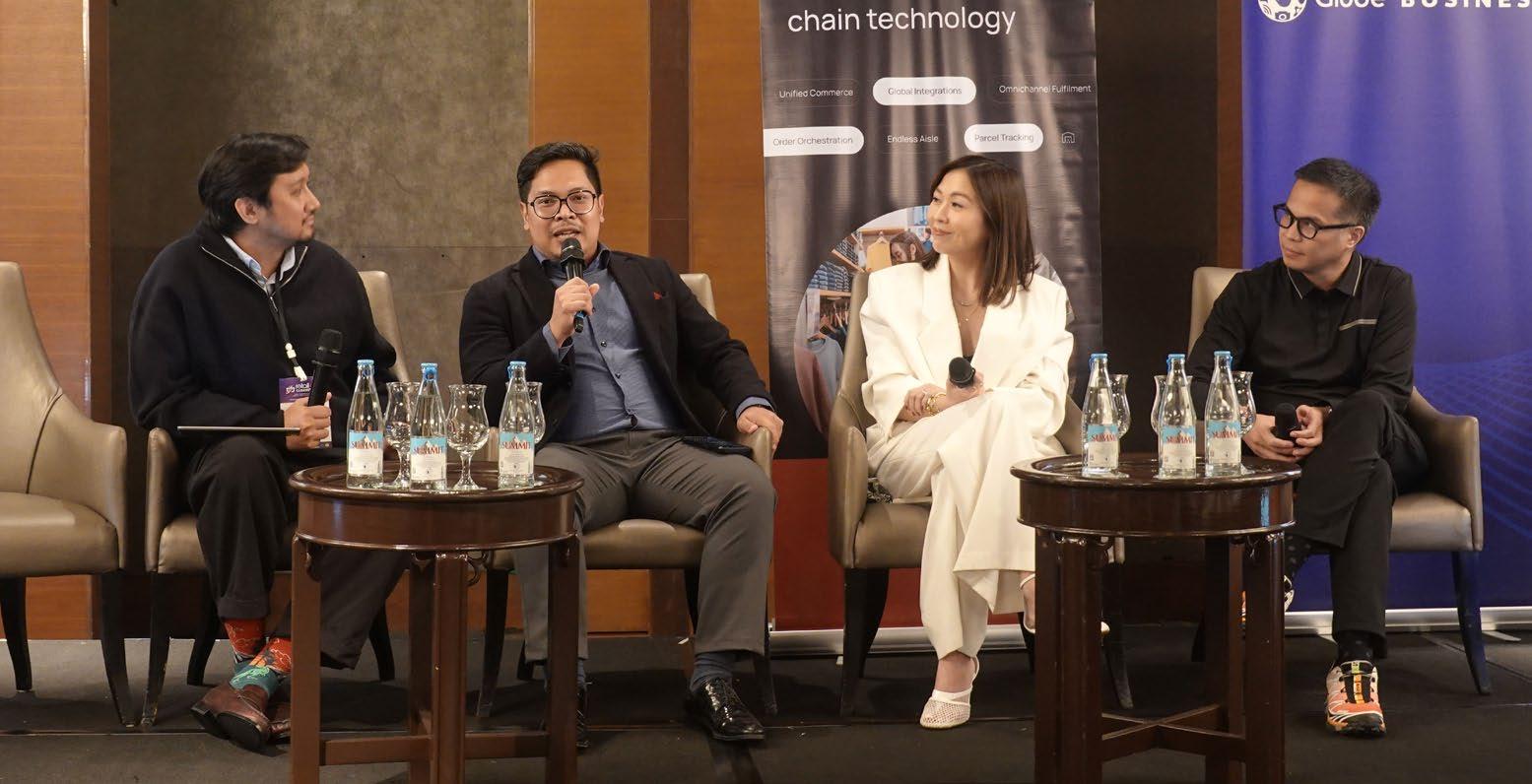
Speaking at the Retail Asia Summit Malaysia 2026, Crystal Yeoh, senior regional manager and apparel category lead at ZALORA Group, said marketplaces remain a critical entry point for consumer discovery and acquisition across Southeast Asia, including Malaysia.
Yeoh noted that many retailers continue to rely heavily on platforms such as Shopee, Lazada, TikTok, and ZALORA as primary revenue drivers due to their large traffic volumes and strong consumer reach.
“However, retailers that do it well focus on building a multilayer approach,” she said. Yeoh highlighted that marketplaces continue to serve as a key customer acquisition channel, as consumers often encounter brands for the first time on these platforms.
She said retailers should recognise that “a lot of the initial first touch base of the customer with your brand might also come from platforms,” making marketplace optimisation essential for visibility and conversion.
D2C importance
Retailers, Yeoh added, can optimise performance on marketplaces through targeted promotions such as bundle deals, voucher campaigns, and acquisition-focused incentives designed to convert first-time shoppers into repeat customers.
Beyond marketplaces, she also emphasised the importance of strengthening direct-to-consumer (D2C) channels as an additional layer focused on retention, loyalty, and brand-building.
Whilst marketplaces are effective for scaling reach, she said D2C
Do not look at data at face value. Instead, understand the why behind the data
platforms allow retailers to develop stronger brand identity and customer relationships, ultimately improving long-term profitability.
Yeoh also highlighted retail media networks, including social media advertising, affiliate marketing, and digital ad ecosystems as a growing opportunity for monetising consumer attention.
The senior regional manager said the focus is shifting beyond direct sales towards “monetising attention,” where brands aim to build topof-mind awareness so consumers naturally associate product categories with specific brands.
On data strategy, Yeoh pointed out to the attendees that first-party data remains underutilised by many retailers, who often use it only for internal optimisation rather than external collaboration.
She said retailers and platforms should translate insights such as customer behaviour, browsing patterns, and purchase history into
actionable strategies that enable more targeted campaigns and improved marketing efficiency.
Trade-offs
Yeoh said stronger collaboration around data can shift commercial discussions away from discountdriven promotions towards more strategic, insight-led partnerships.
She also emphasised the importance of developing a more analytical and inquisitive mindset when working with data.
“Do not look at data at face value. Instead, understand the why behind the data,” she noted.
Addressing marketplace expansion, Yeoh cautioned that whilst marketplaces are powerful growth engines, they come with trade-offs such as cost pressures and pricing considerations.
She stressed the importance of maintaining pricing and assortment consistency across channels to protect brand equity and avoid customer confusion.
Retailers that succeed, she added, are those that intentionally balance marketplace scale, D2C engagement, and brand storytelling whilst maintaining a cohesive customer experience across all touchpoints.
Yeoh also emphasised the importance of D2C channels as an additional layer focused on retention
MALAYSIA
EVENT NEWS: RETAIL ASIA SUMMIT PHILIPPINES
PH shoppers mix premium buys with bargains
Value-driven shoppers mix premium and budget buys, pushing brands to prove value beyond price.
At Happy Skin and BLK Cosmetics stores, CEO and co-founder Jacqe Gutierrez would ask sales staff why some shoppers were leaving without making a purchase. Their answer was often the same: “Ma’am, they swatch our lipsticks, but that’s it.”
Some would later buy the same products online, where discount vouchers offered a better deal, the CEO recalled at a Retail Asia Summit –Philippines 2026 panel, moderated by YCP Director Ken Carsula.
For Gutierrez, the behaviour does not mean Filipino consumers have lost interest in premium products. Instead, shoppers are becoming more selective about what they buy, where they buy it, and how much they are willing to pay.
“To be honest, Filipinos are trading smart,” she said. “They might buy a mid-tier foundation alongside a drugstore lipstick— loyalty isn’t at the forefront.”
This “value-fluid” behaviour is reshaping premium retail in the Philippines, as price-sensitive but aspirational consumers mix premium and value purchases and move between physical and digital channels in search of the best offer.
Delivering consistency
Gutierrez added that premium brands should think beyond a single price point by building a product portfolio that caters to different spending levels whilst maintaining the same brand equity.
She said brands also need to become part of consumers’ everyday routines rather than relying on shortlived trends to drive sales.
“Trends create noise, but routines create revenues,” she said, adding that brands should maintain consistent messaging and brand equity across touchpoints, including social media, e-commerce platforms and creator partnerships.
Lorence Aurelio, vice president and head of Central Leasing & Key Accounts at Megaworld Lifestyle Malls, framed the challenge of premiumisation differently.
If I can buy it online, why would I go to your store? You need to give the entire journey
He said pressure on premium brands is “evolving” rather than declining, driven by modern consumers who prioritise experiences over price.
“Customers invest in comfort, accessibility, and hard-to-replicate experiences,” Aurelio said.
“So you need to deliver consistency, align with the lifestyle of the customers you serve, and create highly engaging experiences.”
John Paul Paglinawan, country general manager of Anta Group, noted that polarisation in the sportswear market underscores the challenge: consumers either gravitate towards premium or value products, leaving little middle ground.
“If your position is in between, then you’re in trouble,” he warned the summit attendees, citing how heritage and authenticity help maintain demand for established brands.
Paglinawan said brands must also ensure they deliver genuine value through products that solve customer needs, arguing that marketing alone cannot sustain demand.
Retailers, he added, need to place the right products in front of the right consumers whilst maintaining a clear value proposition.
The panel also discussed the growing influence of Gen Z and Gen Alpha. Gutierrez highlighted campaigns that pull younger shoppers into physical stores
through lifestyle experiences, such as café activations paired with cosmetic launches.
Aurelio told the summit attendees that brands should look beyond short-term gains and become part of consumers’ daily habits.
“The strong brands can tie in with the daily habits of customers, rather than cyclical trends,” he said.
Reimagining retail spaces
Paglinawan added that authenticity and experiential retail remain key:
“If I can buy it online, why would I go to your store? You need to give the entire journey.”
Aurelio stressed the role of developers in creating adaptable retail environments. He cited Megaworld’s Eastwood City and Lucky Chinatown Mall as examples where spatial innovation, tenant curation, and lifestyle integration have turned malls into habitual destinations rather than one-off visits.
He added that developers should continue reimagining retail spaces and collaborating with retail partners to keep malls relevant.
Maintaining a balanced tenant mix whilst remaining flexible enough to accommodate emerging trends, he said, allows retail environments to evolve alongside changing consumer preferences.
Customers invest in comfort, accessibility, and hard-to-replicate experiences, Aurelio said
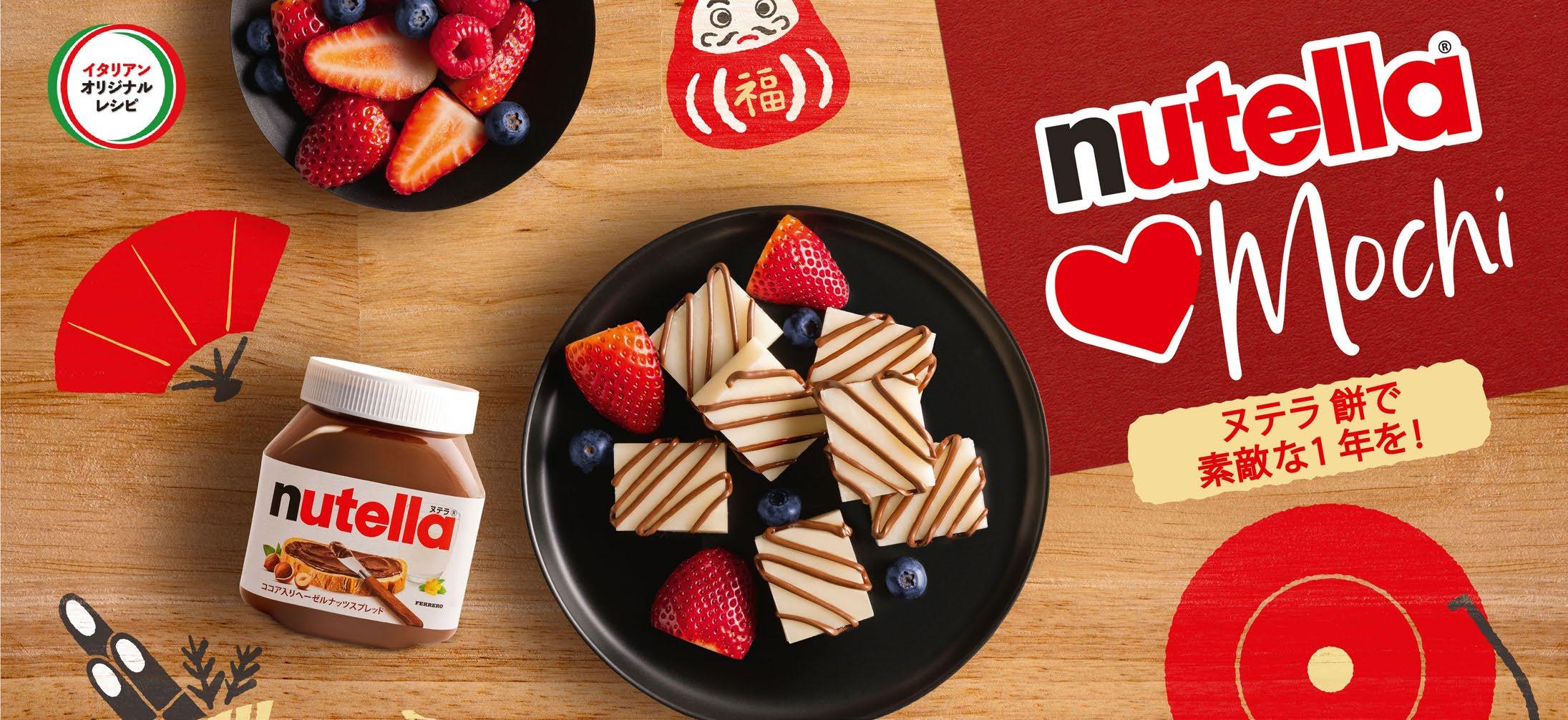
Nutella stepped into Japan's most sacred celebration not as a disruptor, but as a cultural collaborator.
In Japan, Shogatsu (New Year) is the most culturally significant celebration of the year – a time of renewal and family bonding that it is deep-rooted in traditions. At the heart of this season is Mochi, a glutinous rice cake which is symbolic of prosperity and longevity. It’s consumed in nearly every household, making it the most culturally and commercially relevant food item during this period.
Yet, Japan’s culinary landscape is evolving. Younger generations are increasingly drawn to fusion experiences – where tradition meets modernity and heritage meets novelty. From matcha tiramisu, “An” butter bread, Hoji-cha tea latte to wagashi-inspired gelato, traditional Japanese flavours are being reimagined in modern formats. This shift reflects a broader cultural trend: a desire to honour tradition whilst expressing individuality and evolution.
Honouring tradition with Nutella Loves Mochi
This evolution presented a unique opportunity for Nutella – not as a disruptor, but as a cultural collaborator. By pairing Nutella’s creamy hazelnut cocoa spread with the chewy texture of Mochi, the campaign introduced a new way to enjoy a beloved tradition – one that felt both nostalgic and exciting.
Nutella Loves Mochi tapped into a
seasonal opportunity: whilst Mochi remains a beloved staple during Shogatsu, consumers are increasingly seeking new ways to enjoy it beyond its traditional forms. Their appreciation for Mochi is strong, but their tastes reflect a desire for greater variety, personalisation, and creativity. Nutella offered a fresh and indulgent twist, transforming Mochi into a playful, customisable treat that could be grilled, filled, dipped, and shared. This approach didn’t replace tradition but rather expanded it, making the experience more expressive and joyful for modern consumers.
Nutella Loves Mochi also flipped a narrative of pairing Japanese ingredients with western carriers, e.g. Matcha Tiramisu, but instead pairing a non-Japanese brand with a traditional Japanese carrier, celebrating Mochi not as an ingredient, but as a cultural symbol – adding emotional depth & honouring tradition whilst inviting experimentation.
Shibuya immersive activation
At the heart of the campaign was an on-ground activation via a partnership at Shibuya 109, an iconic Tokyo landmark and youth culture hub. In partnership with Imada Kitchen, Nutella created a space where consumers could purchase and experience Nutella x Mochi creations firsthand. This
immersive experience brought the pairing to life in a tangible, delicious way.
As part of this collaboration, Nutella also secured premium out-of-home visibility at the legendary Shibuya Crossing – one of the world’s busiest pedestrian intersections. Valued at €285,000, this media space was secured without additional cost through the partnership, amplifying the campaign’s reach and prestige without additional investment.
The results were outstanding – with nearly 28,000 trials, a 23% jump in sales value, an 11% uptick in unit sales, and an 11% increase in rotations during the campaign period. The campaign had a consolidated earned media exposure of over 27 million with organic coverage on leading TV stations in Japan, OOH billboards at Shibuya Crossing, and social media postings by a leading influencer.
The campaign introduced a new way to enjoy a beloved tradition
A transformative cultural moment
In addition to the results and business impact, Nutella Loves Mochi wasn’t just a seasonal campaign; it was a cultural moment. It honoured tradition whilst embracing change, addressed a real consumer need, and elevated Nutella’s role from breakfast spread to seasonal icon. By embedding itself into Japan’s most sacred celebration with authenticity and creativity, Nutella created a campaign that was timely, timeless, and truly transformative.
Nutella Loves Mochi
Lion Brewery’s innovation and retail excellence recognised with dual honours at FMCG Asia Awards
These latest regional accolades recognise the company’s industry and category leadership, which underpins deep‑rooted national impact.
Lion Brewery (Ceylon) PLC strengthened its regional standing with two honours at the FMCG Asia Awards 2025 for True Born and Carlsberg’s Display Drive & Merchandising initiative. Over the past decade alone, Lion Brewery’s contributions to Sri Lanka’s tax base have surpassed the LKR500b mark, a scale that reflects both
the breadth of its footprint and the consistency with which it supports fiscal stability.
Lion Brewery’s dual wins place a Sri Lankan company amongst leading organisations across the region, highlighting its ability to deliver at international standards. It further validates a strategy that balances 140 years of brewing heritage with a forward-looking approach to growth. The company continues to evolve its portfolio with discipline and clarity, exemplified by the True Born launch, which was an insight-led, precisely executed
introduction aligned with the quality benchmarks that define Lion’s long-term performance. Meanwhile, the Display Drive & Merchandising initiative for Carlsberg emphasises the strength of its field operations, consistency in retail execution, and the robust partnerships built across the trade network.
“These recognitions arrive at a time when Sri Lankan consumers are seeking brands that feel contemporary, confident, and proudly local,” said Rajiv Meewakkala, Chief Executive Officer of Lion Brewery.
Lion continues to build trust whilst inviting discovery, a balance of leadership and adventure
(L-R) Lion Brewery (Ceylon) PLC’s Saminda Hitibandara, Prashan Costa, Ruchira Money, Gayan Lalindra, and Sudarshana Athukoralage with the FMCG Asia 2025 award
WHERE
The Inspired Home Show has been completely reimagined for 2027 with an entirely new layout. For the first time, all three major categories – Dine + Décor, Wired + Well and Clean + Contain – will be positioned within the South Hall to create a vibrant and dynamic experience for attendees. The North Hall will be focused on international sourcing. Additionally, all key exhibits and displays will be placed on the Show floor to facilitate easy access to discovery and learning.
We’re excited to welcome you to Chicago so that you can experience The “new” Inspired Home Show next March!
— DEREK MILLER, President & CEO, International Housewares Association
Exceptional retailers take the spotlight at Retail Asia Awards 2026
As Asia Pacific’s retail sector evolves rapidly, businesses are adapting to consumer expectations, digital disruption, and demand for seamless customer experiences. These factors have redefined industry standards, pushing retailers and brands to innovate in terms of customer engagement, sustainability initiatives, omnichannel strategies, and operational excellence.
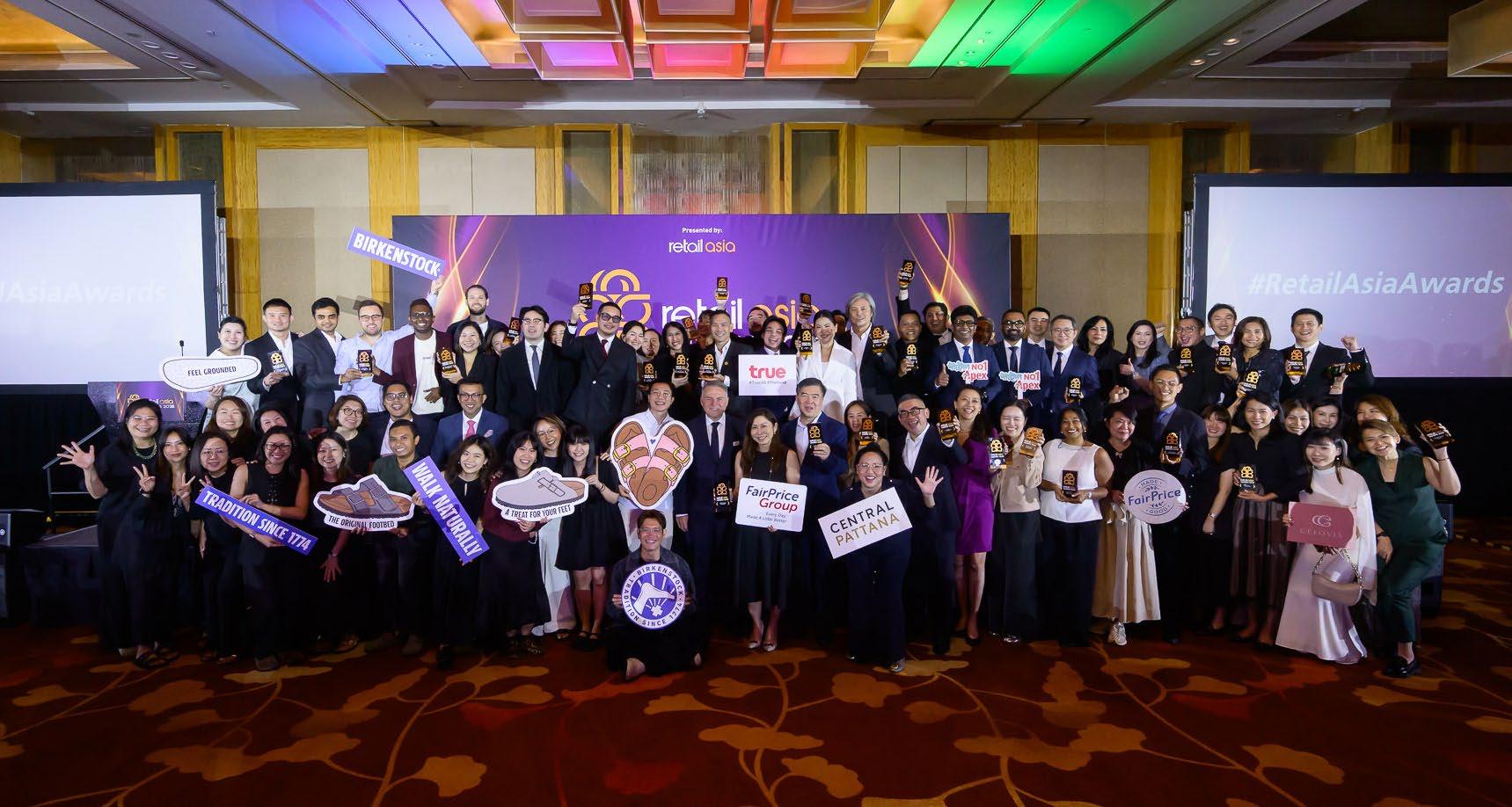
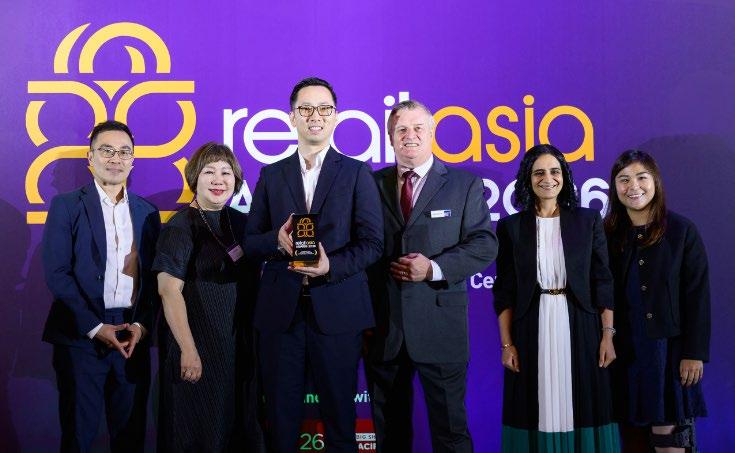
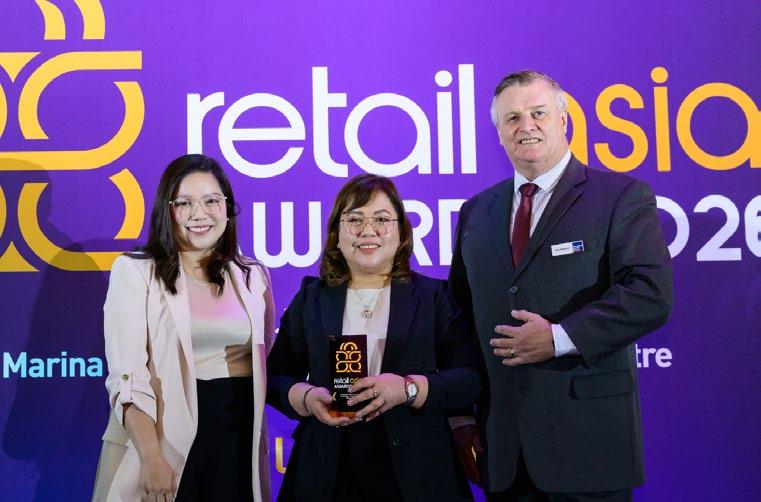
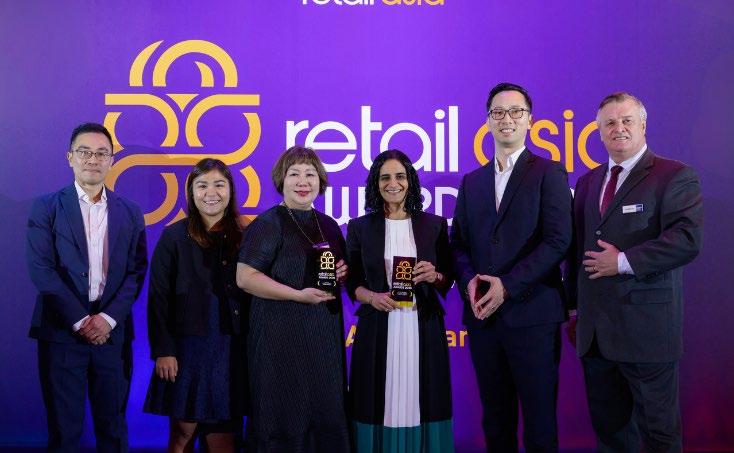
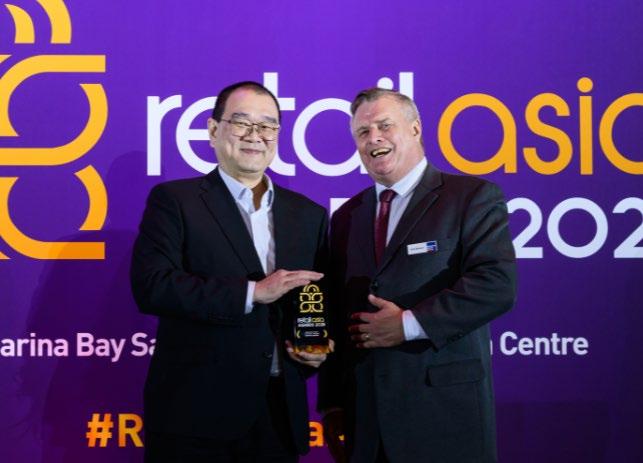
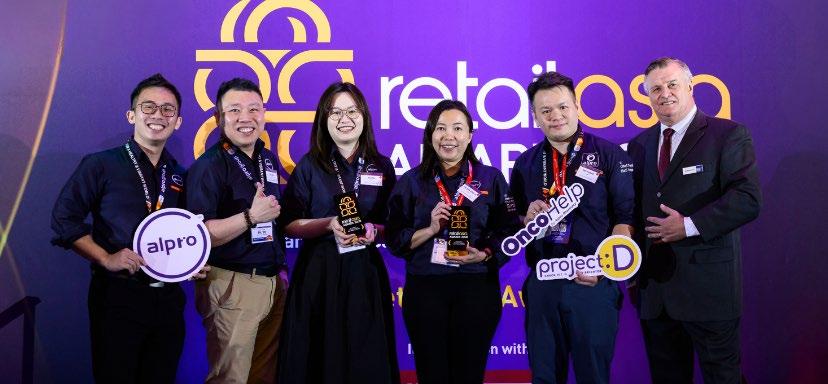
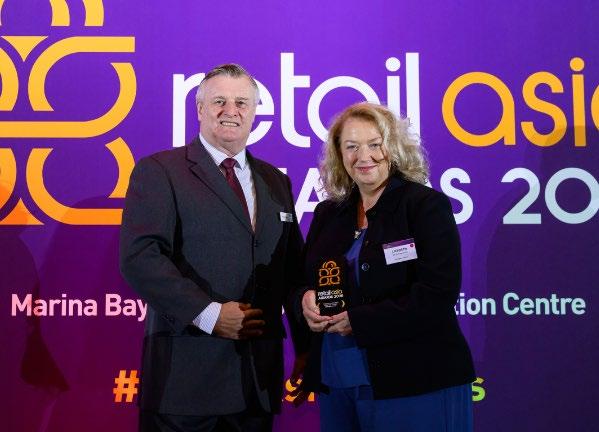
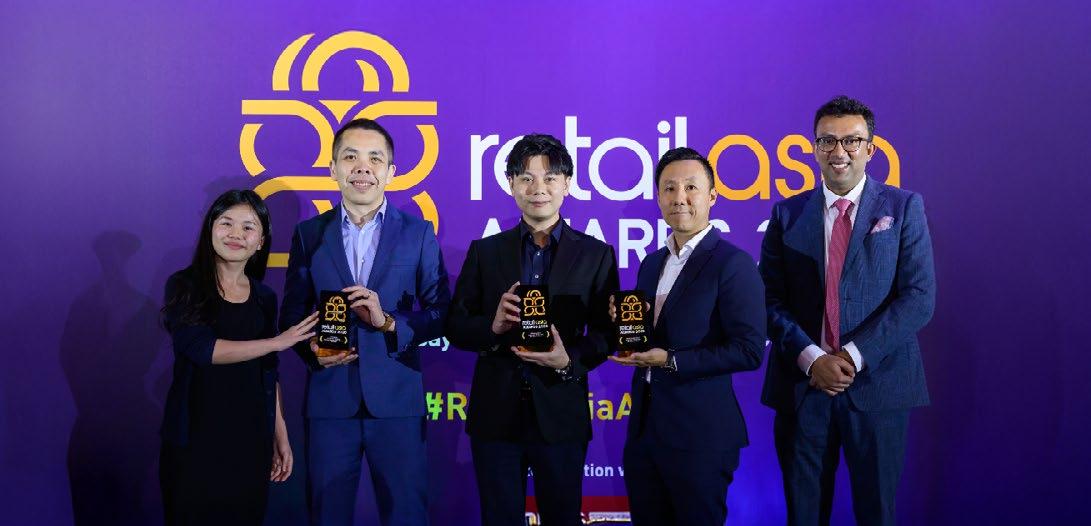
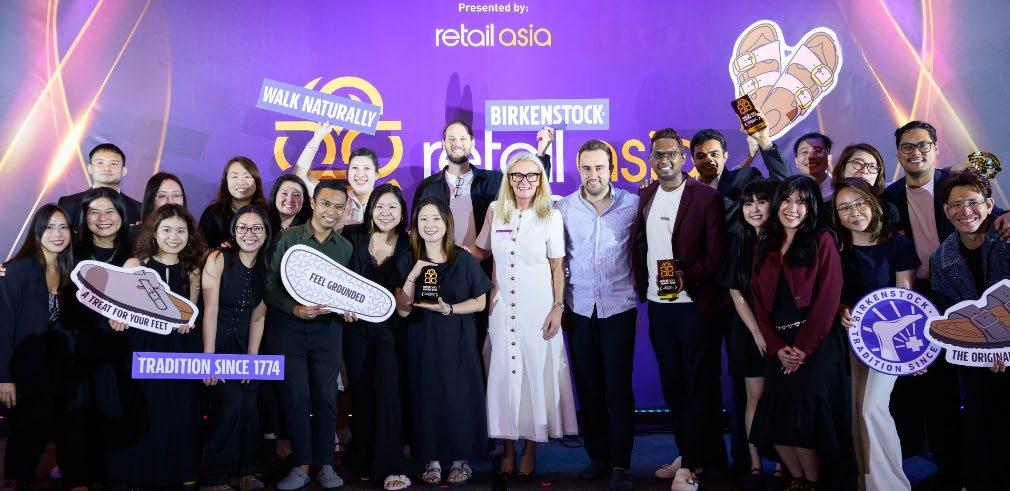
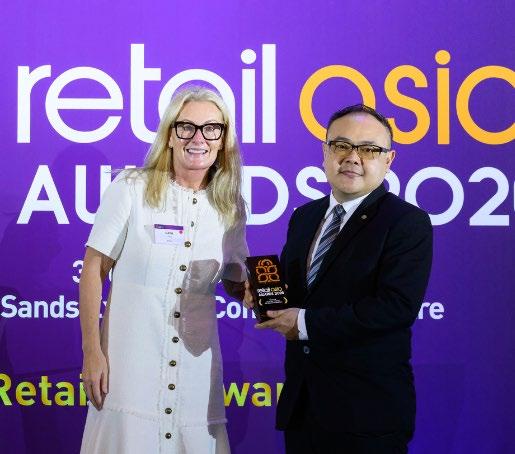
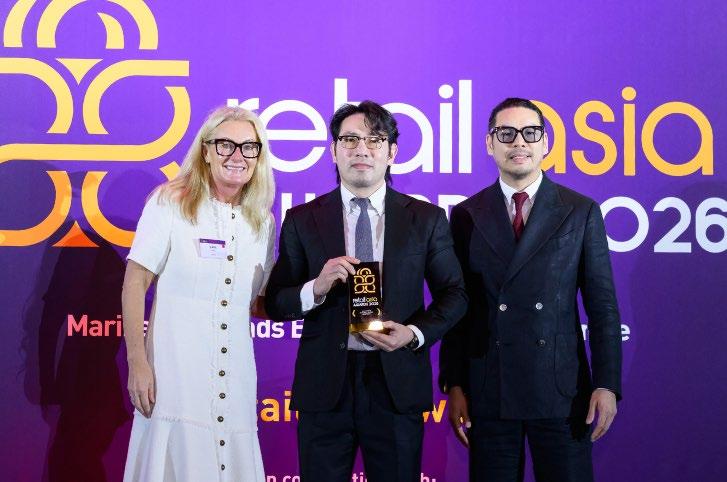
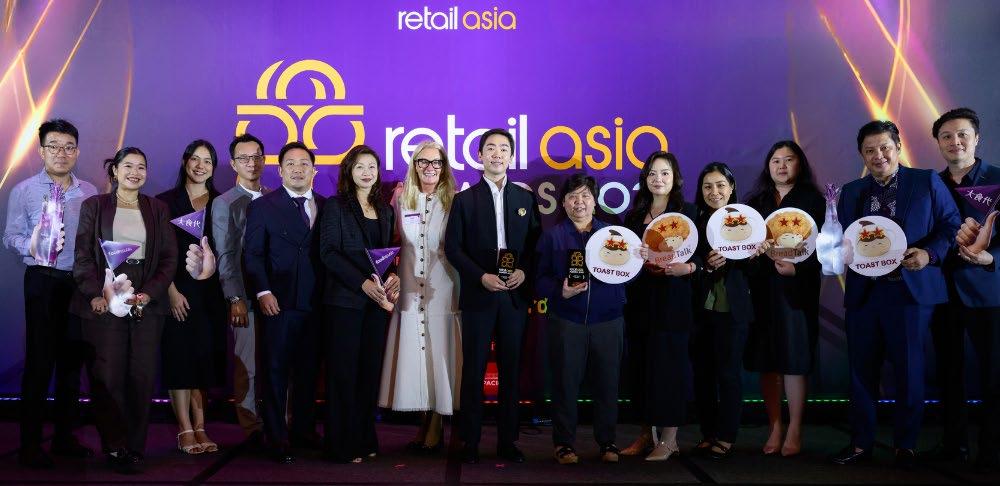
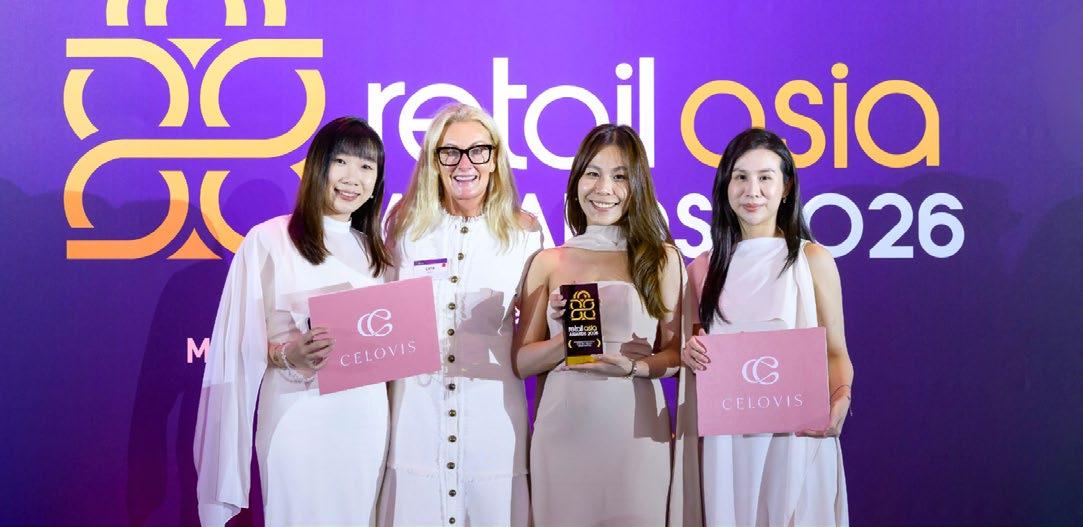
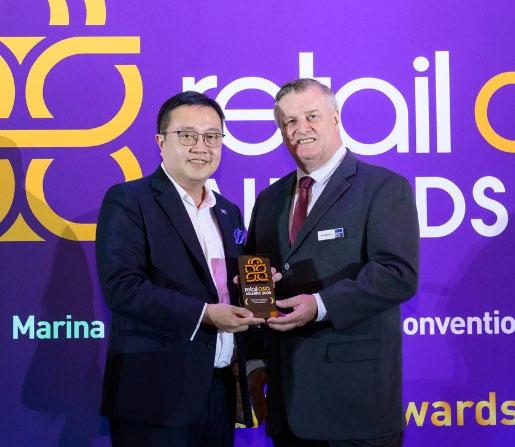
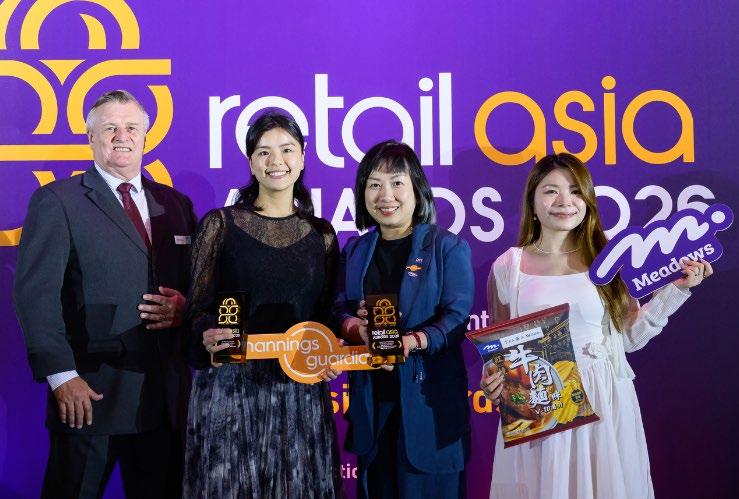
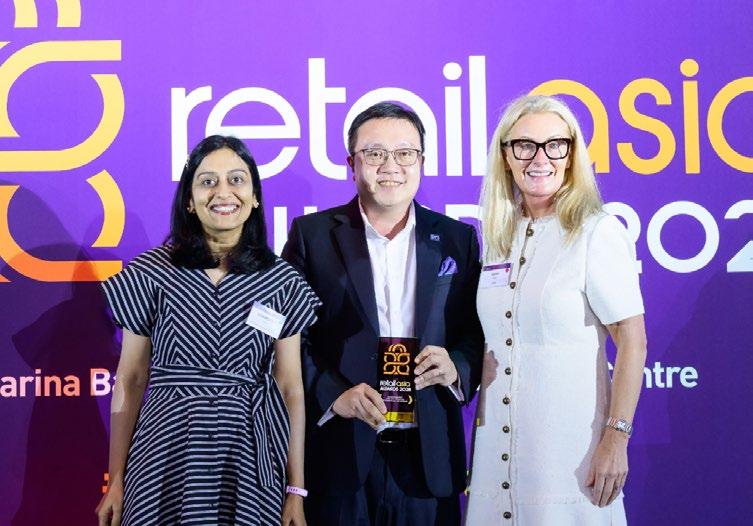
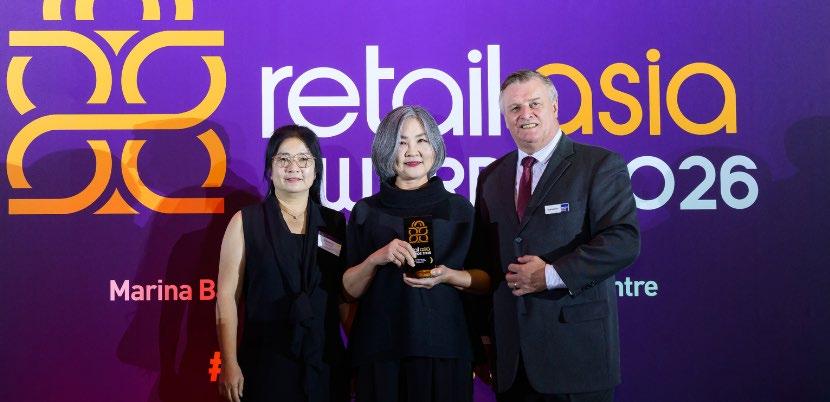
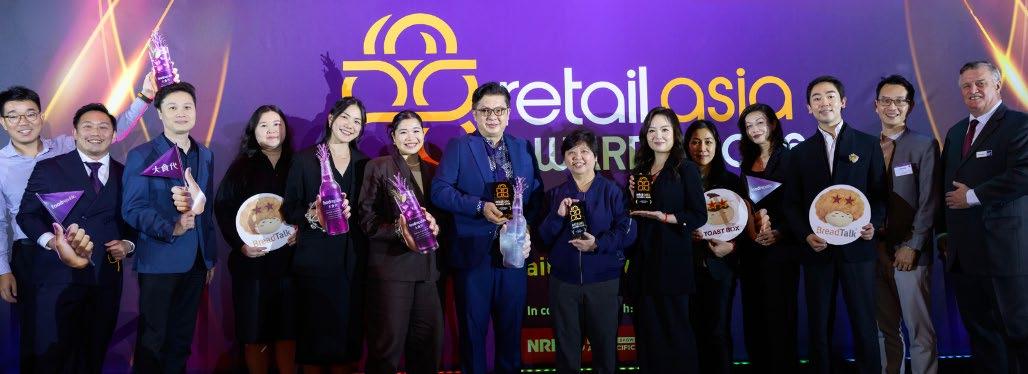
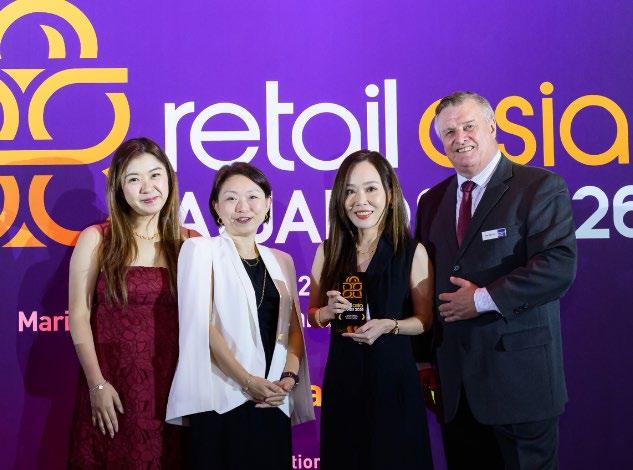
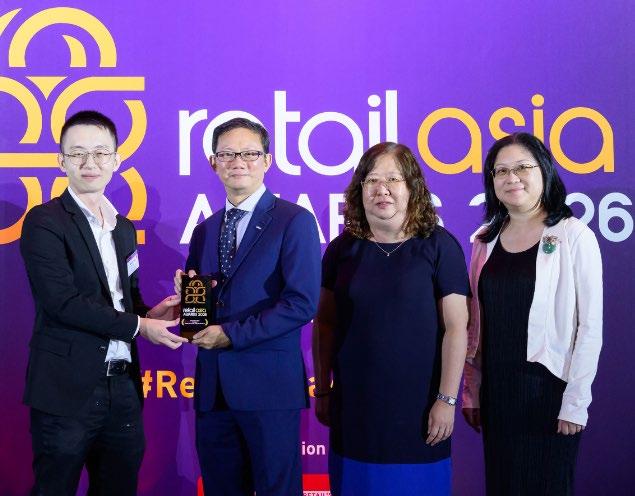
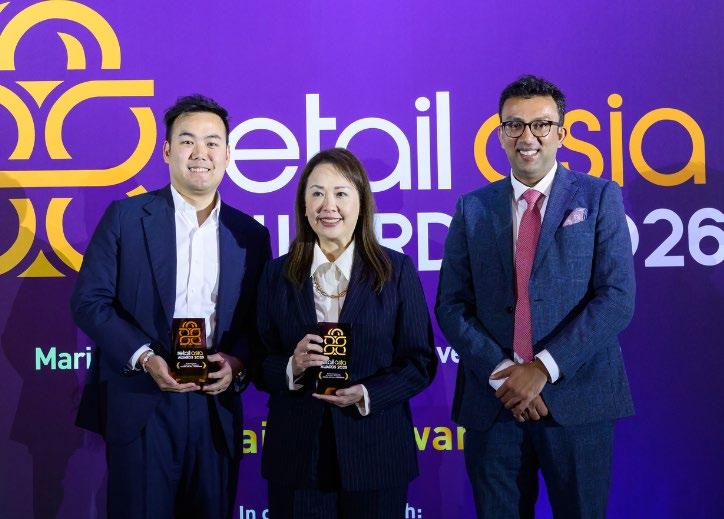
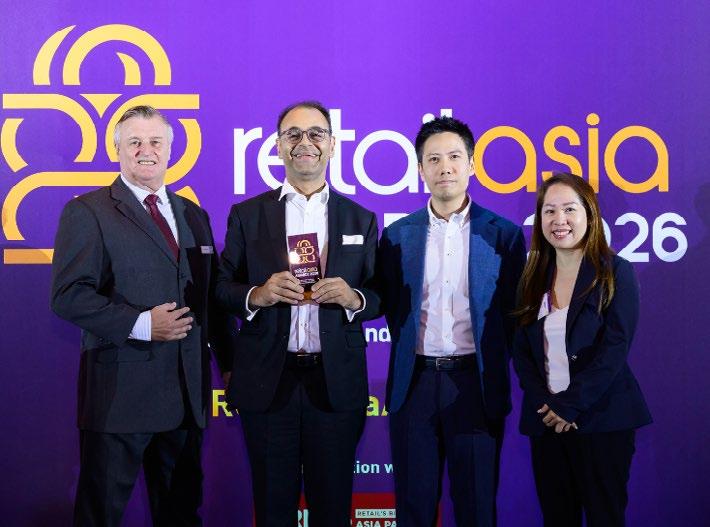
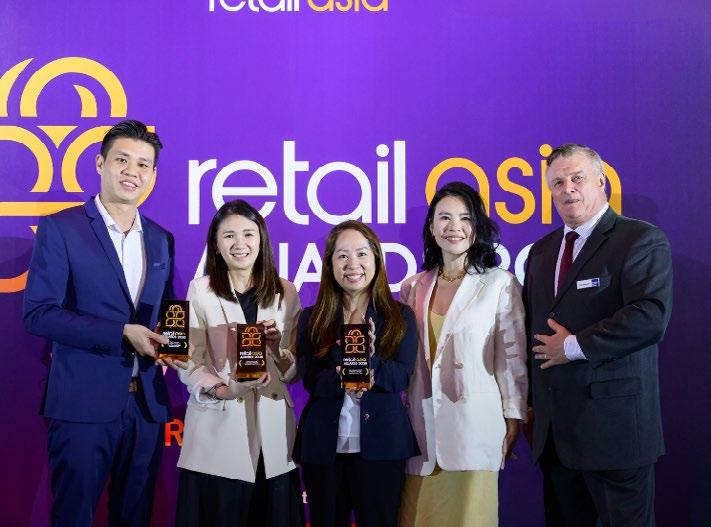
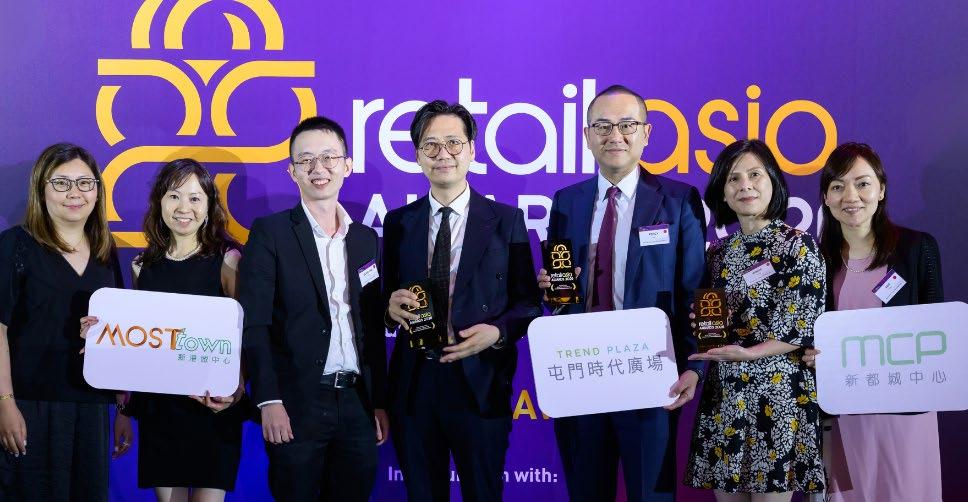
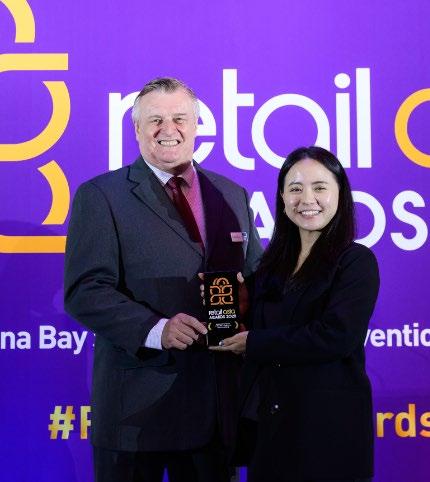
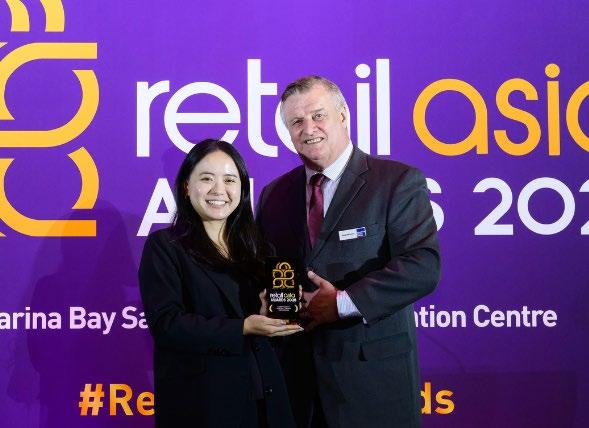
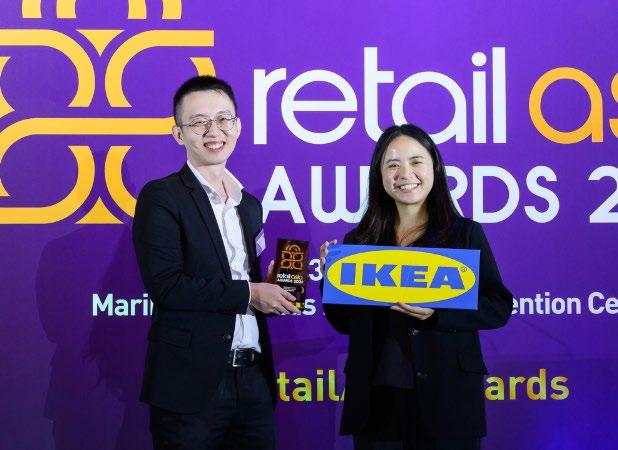
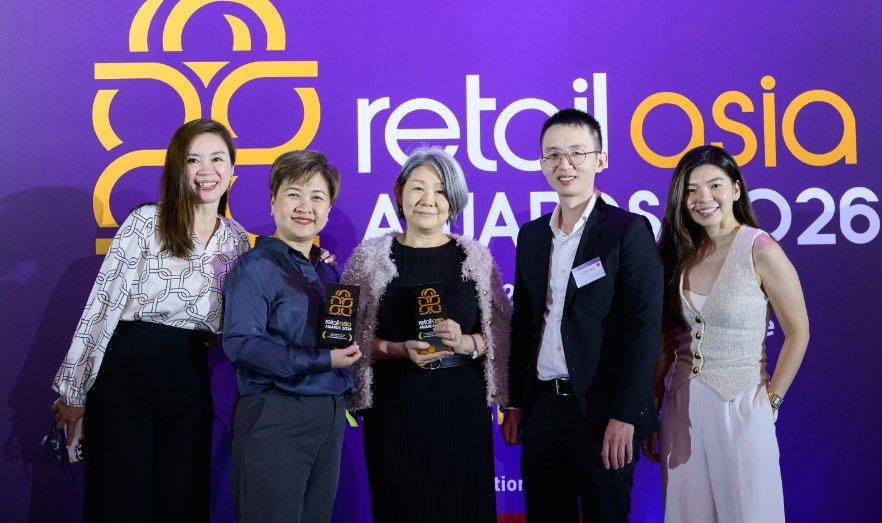
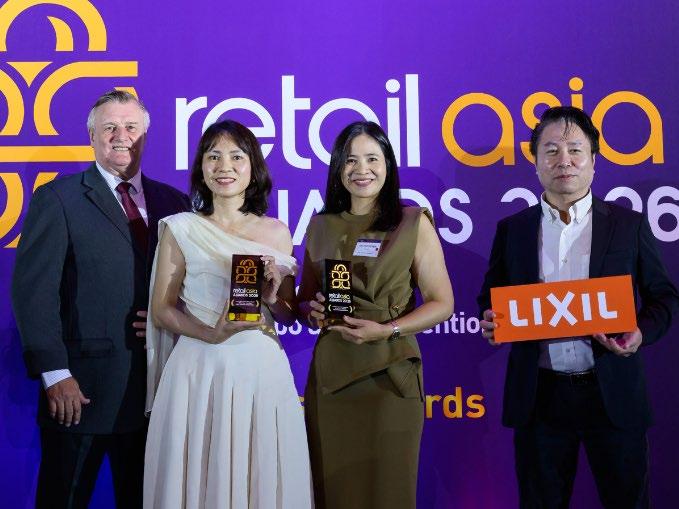
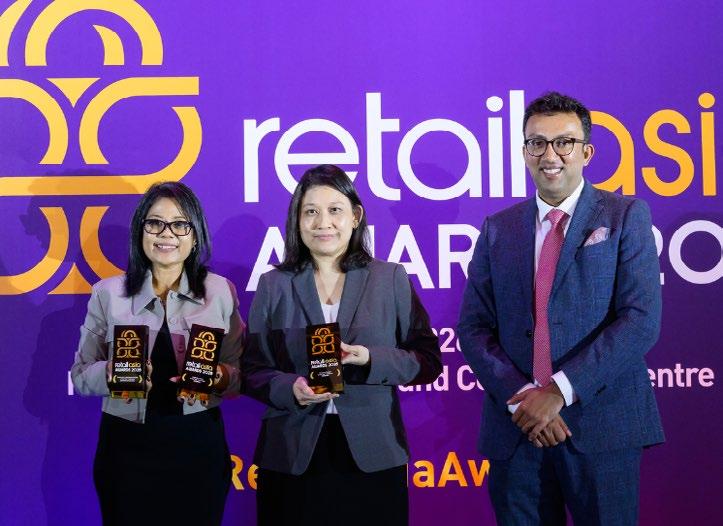
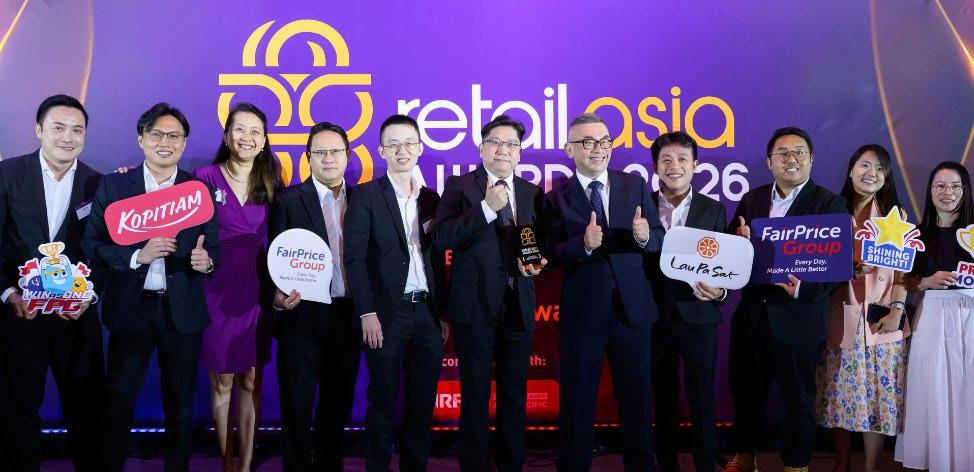
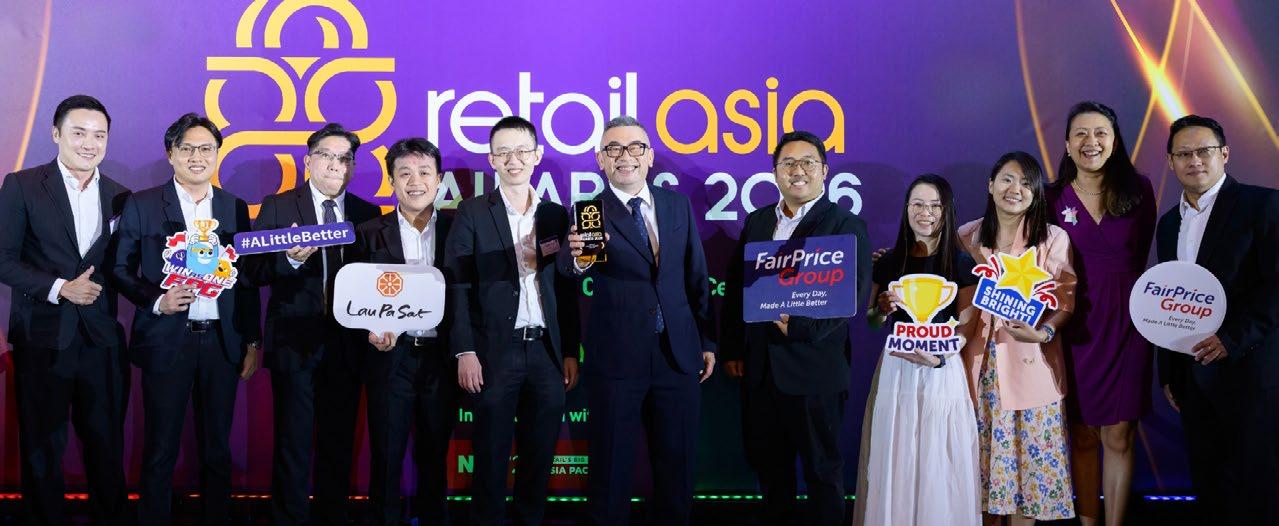
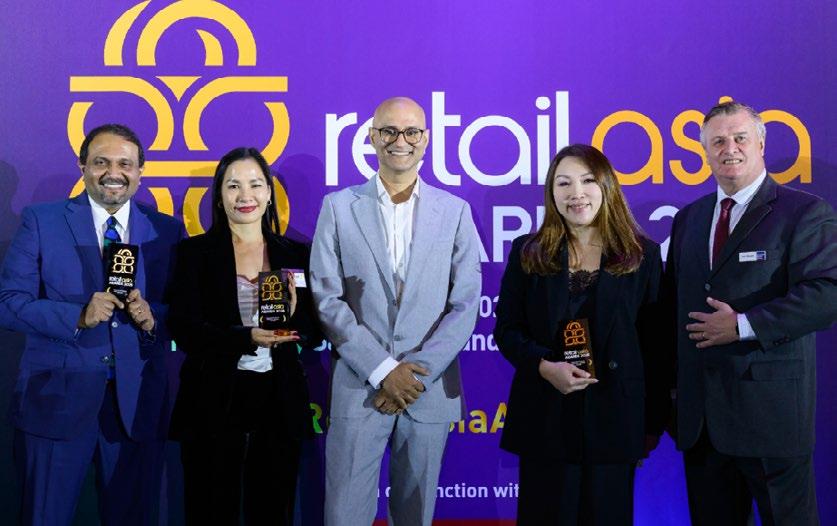
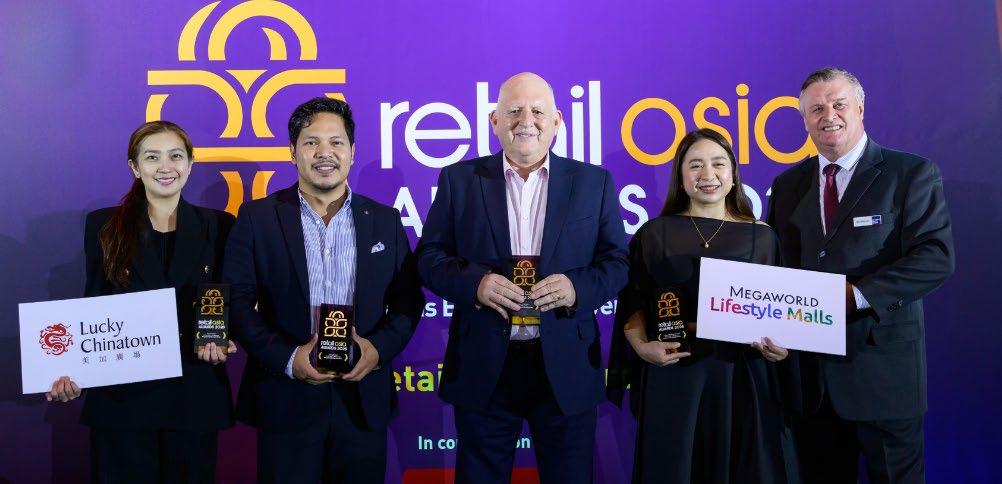
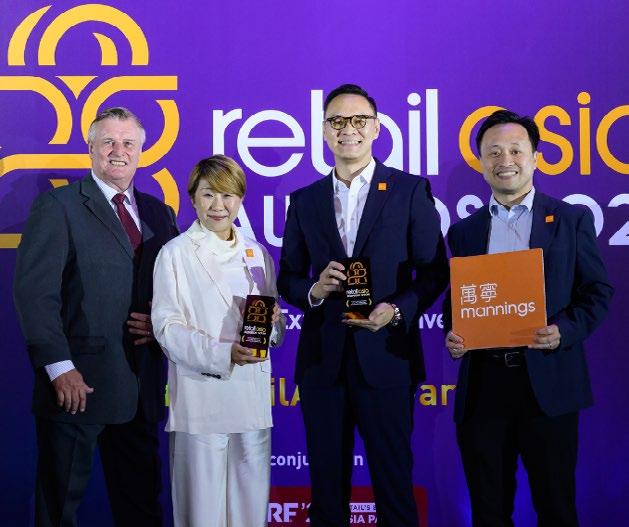
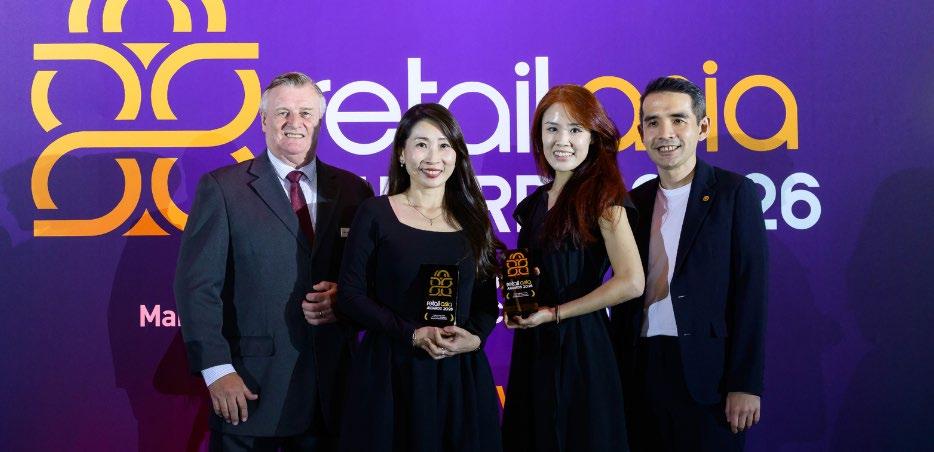
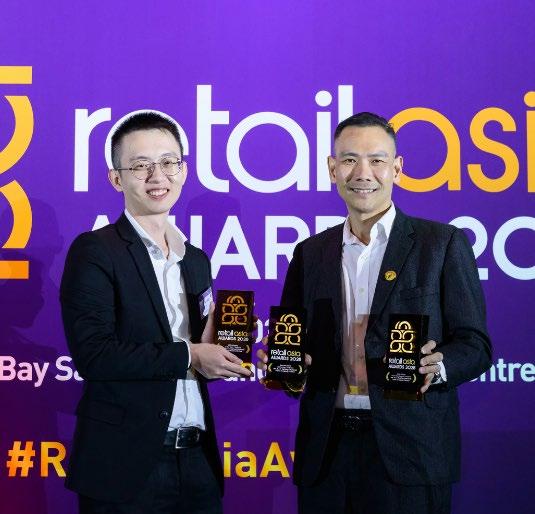
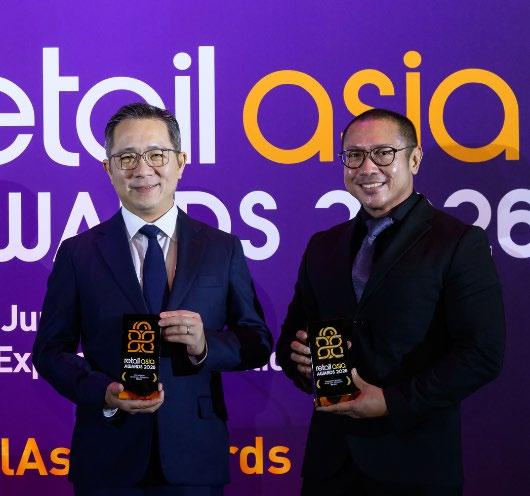
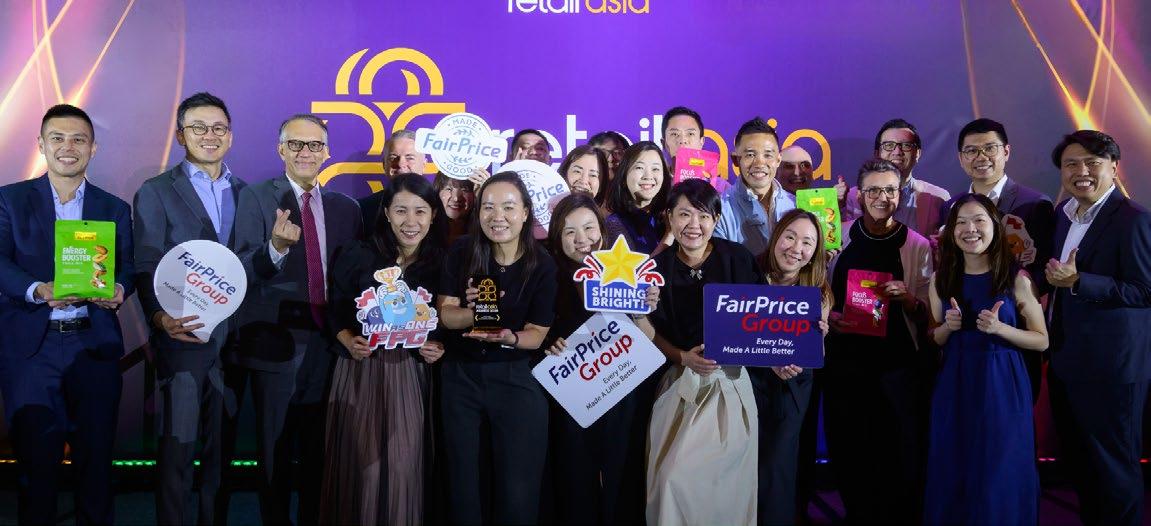
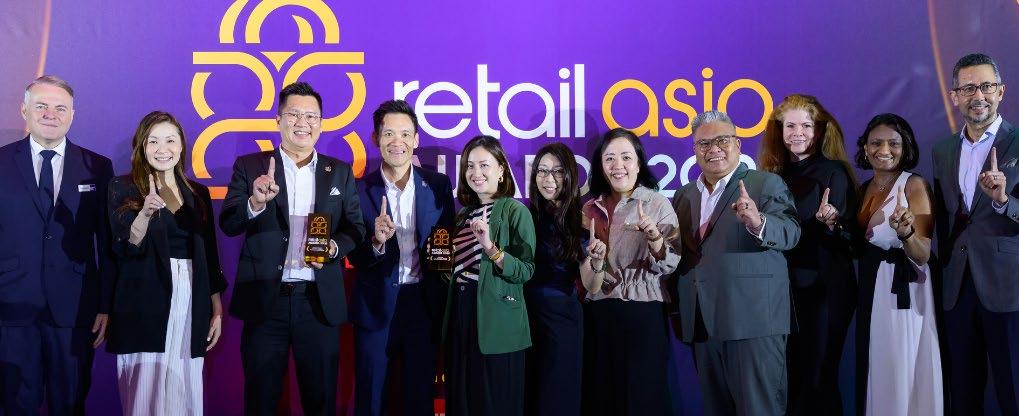
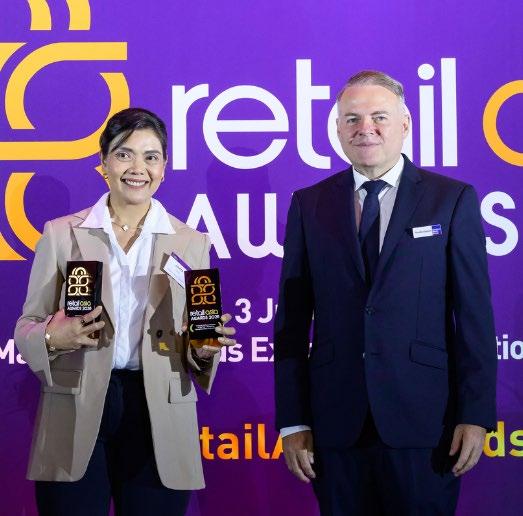
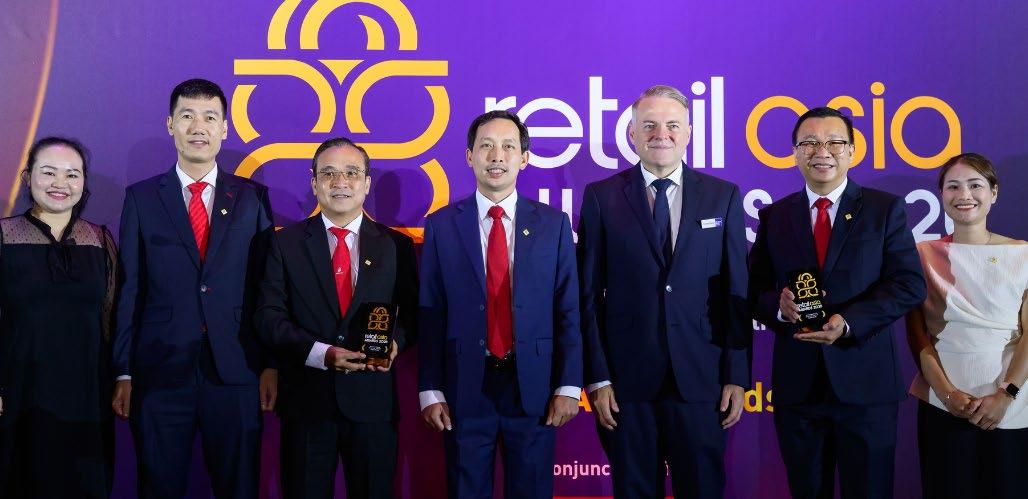
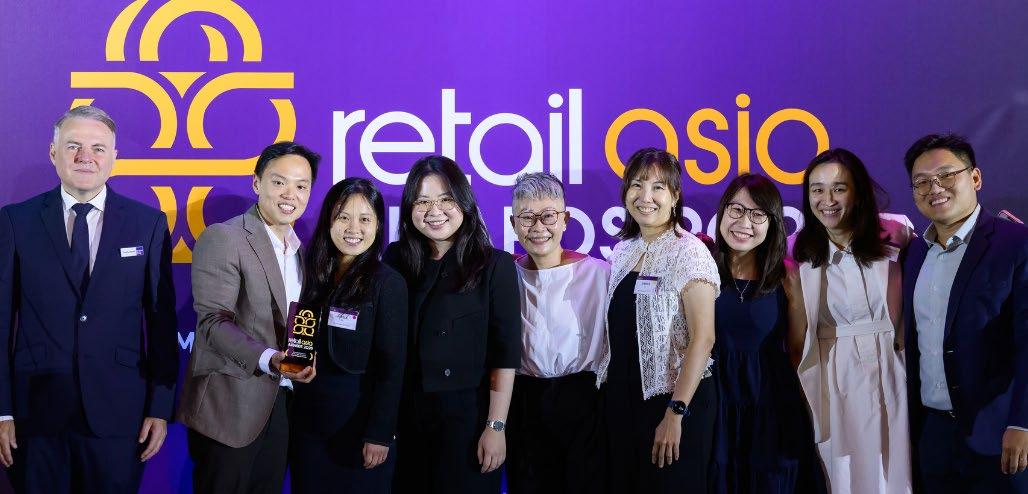
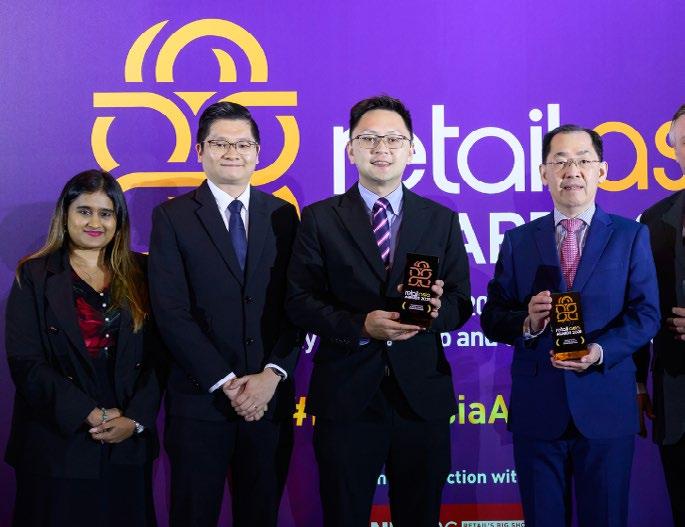
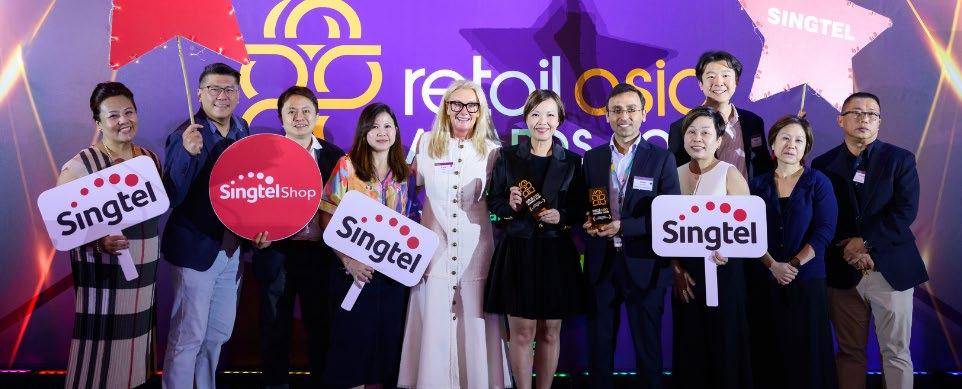
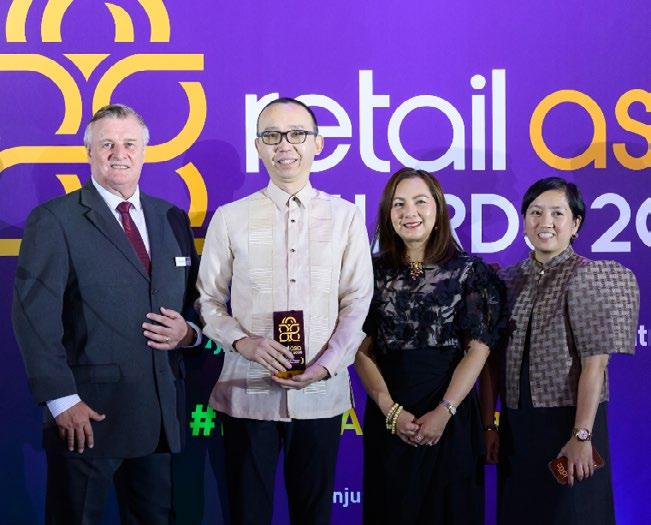
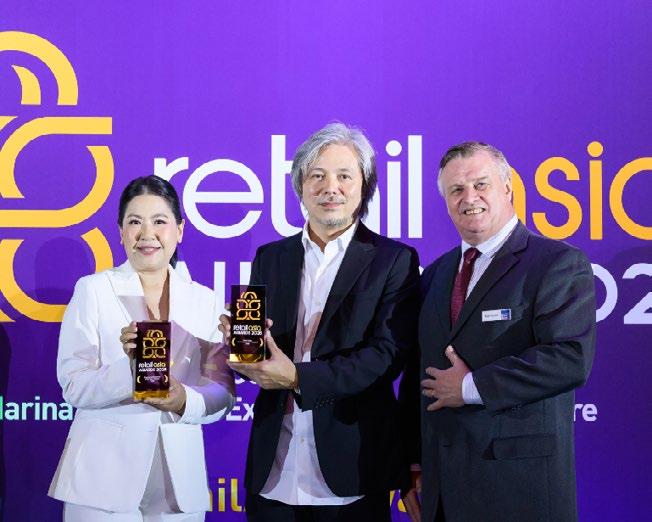
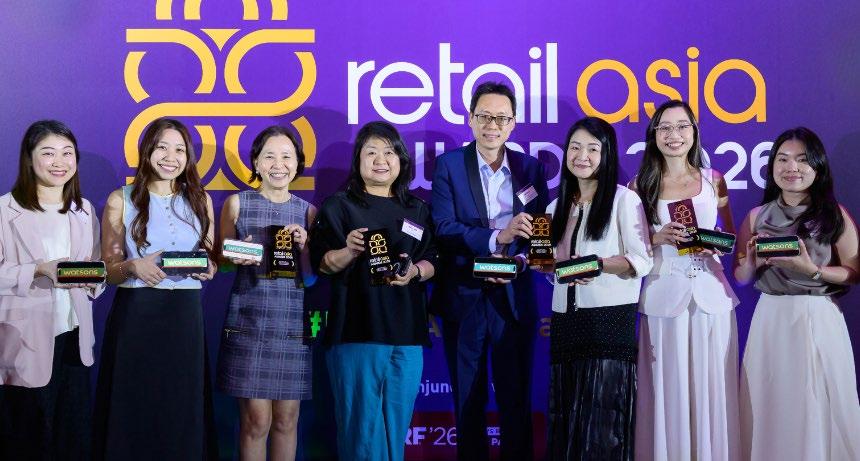
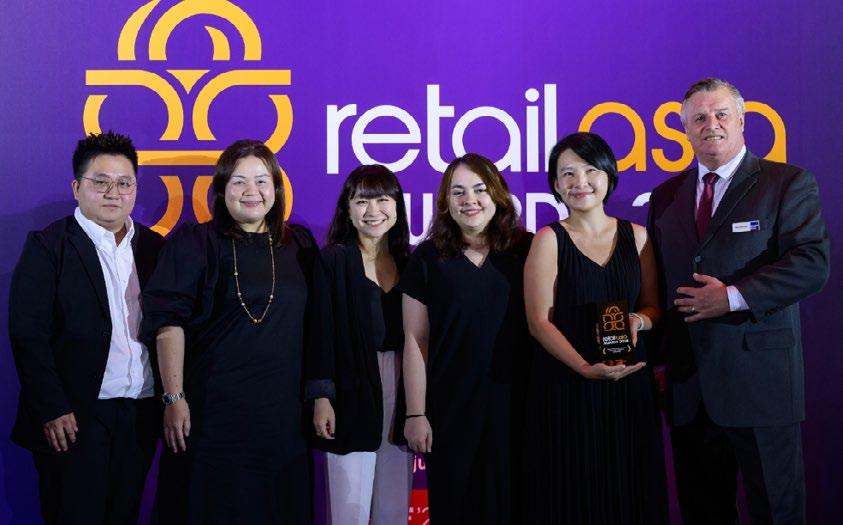
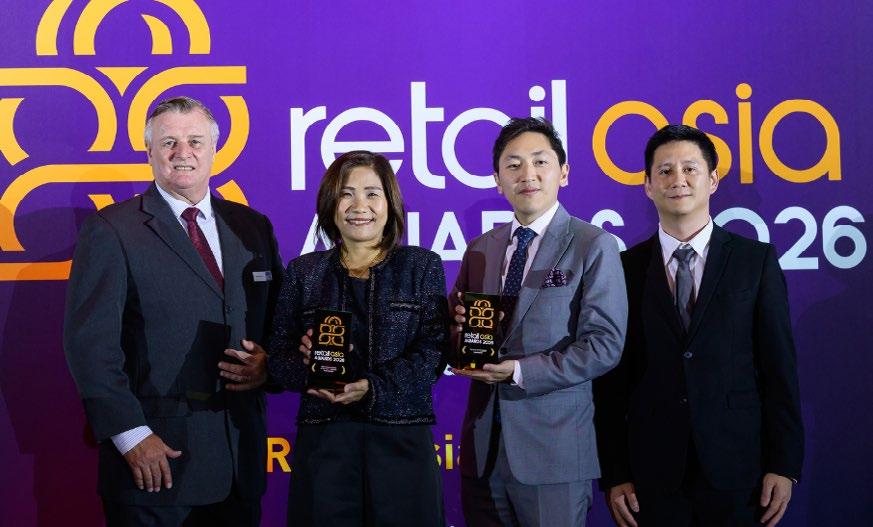
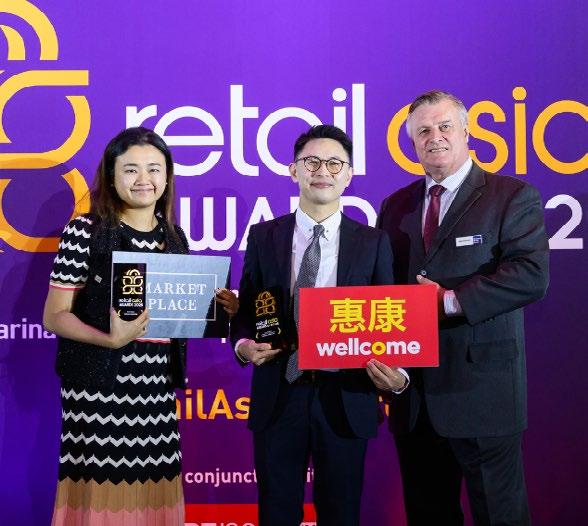
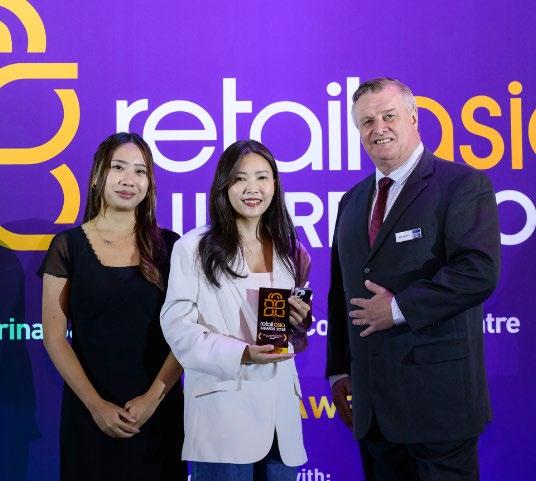
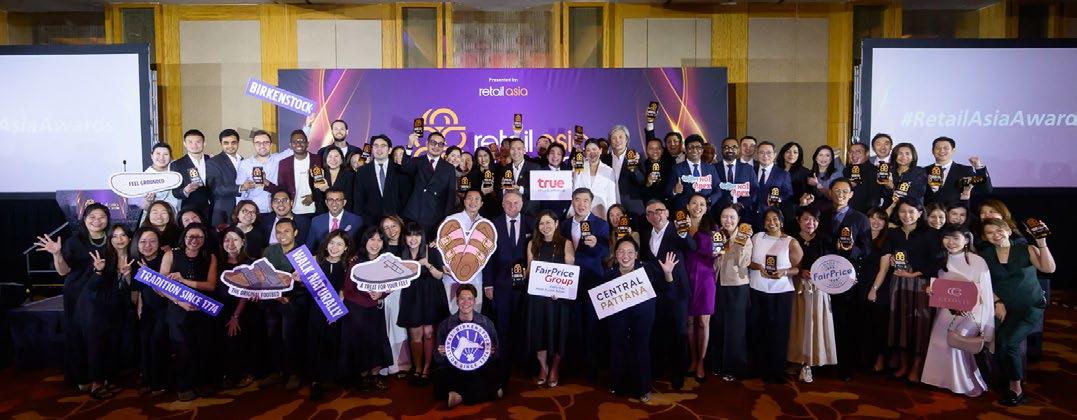
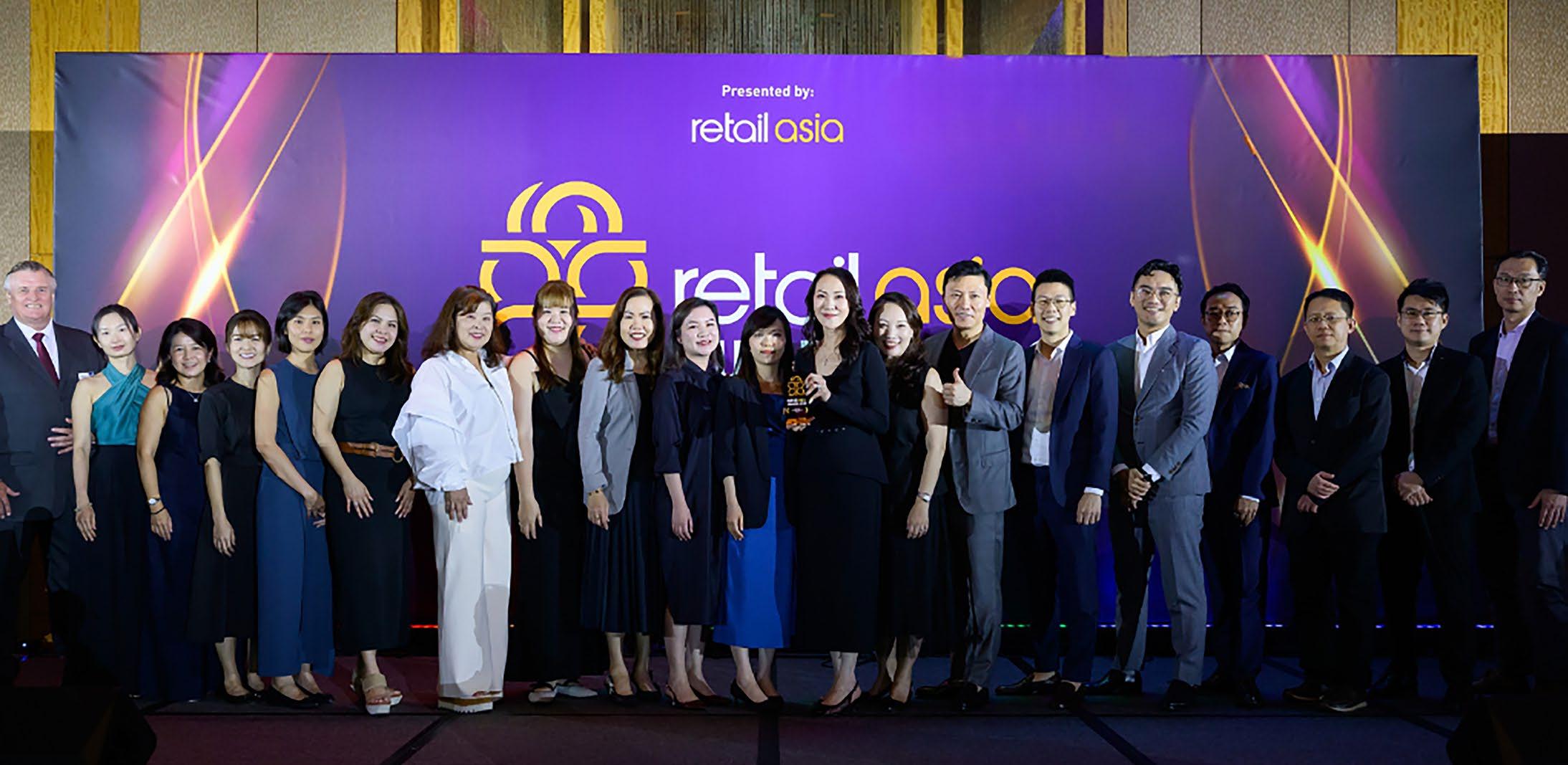
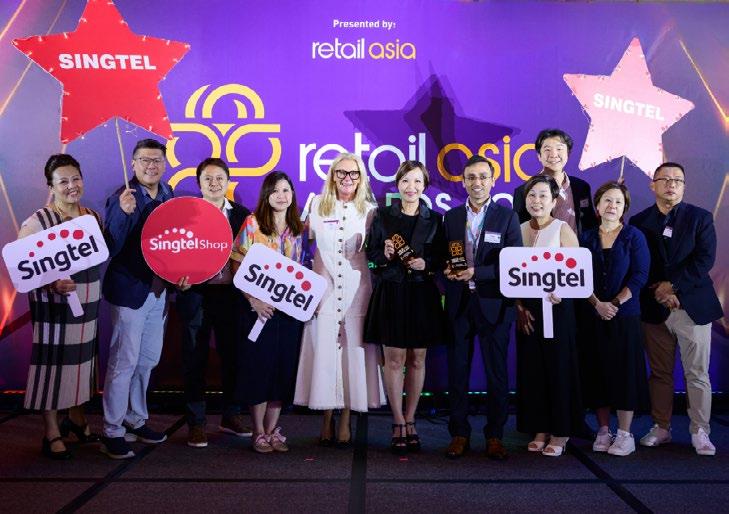
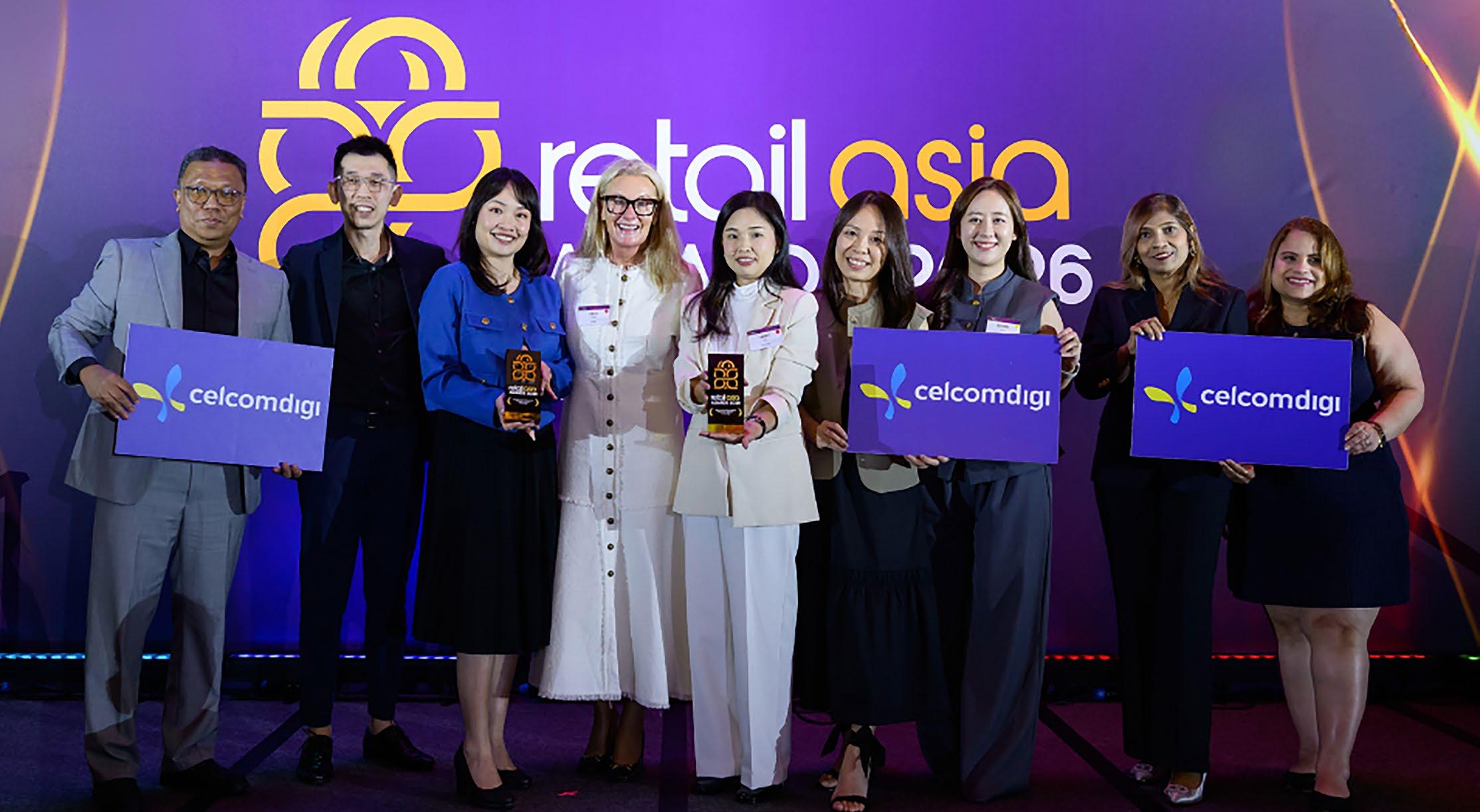
These achievements were celebrated at the Retail Asia Awards 2026, held on 3 June 2026 at the Marina Bay Sands Expo & Convention Centre, honouring companies and organisations whose efforts shape the future of retail in the Asia Pacific region.
The Retail Asia Awards 2026 celebrated transformative business practices whilst also providing a platform for businesses to strengthen their industry presence.
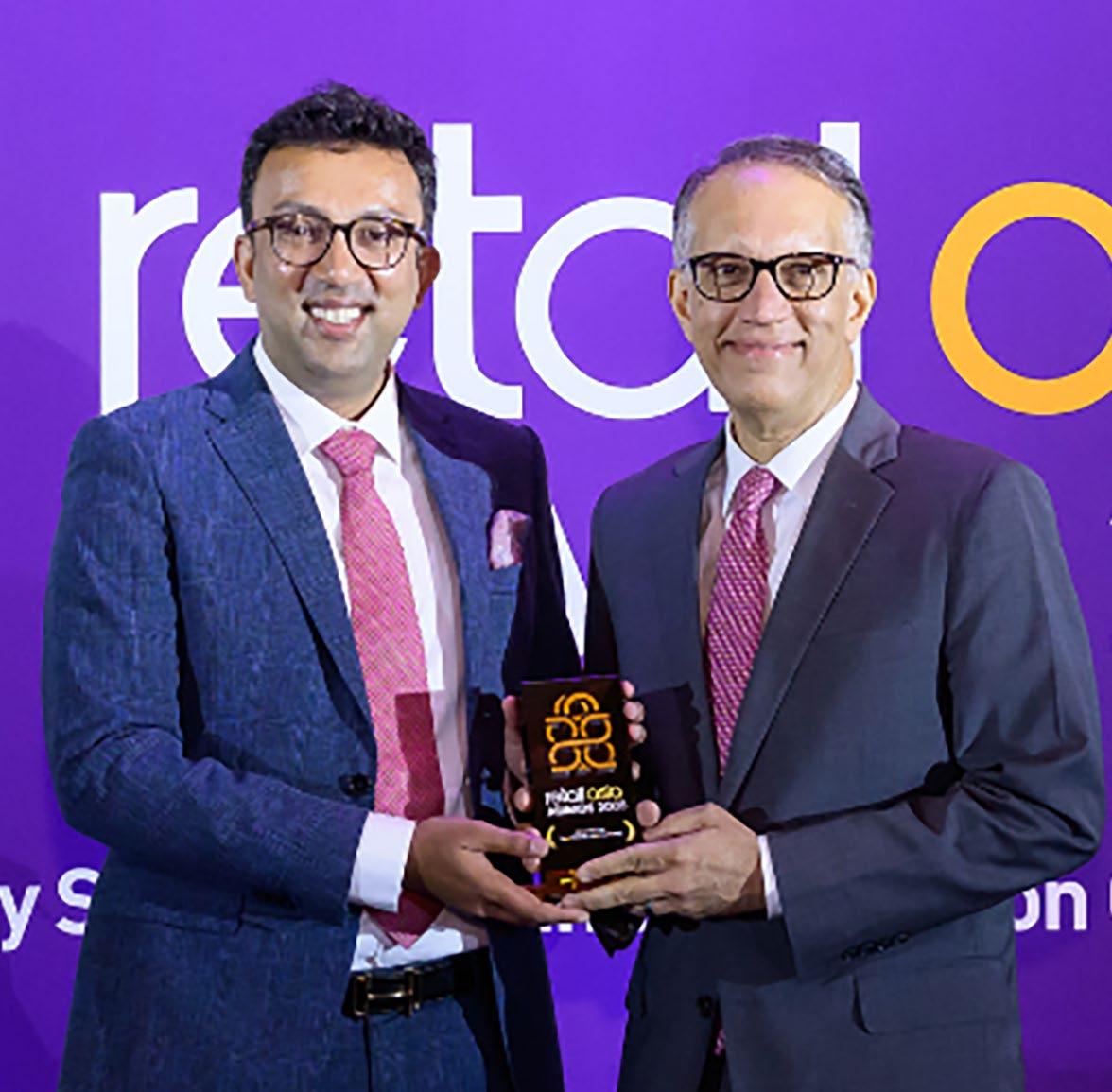
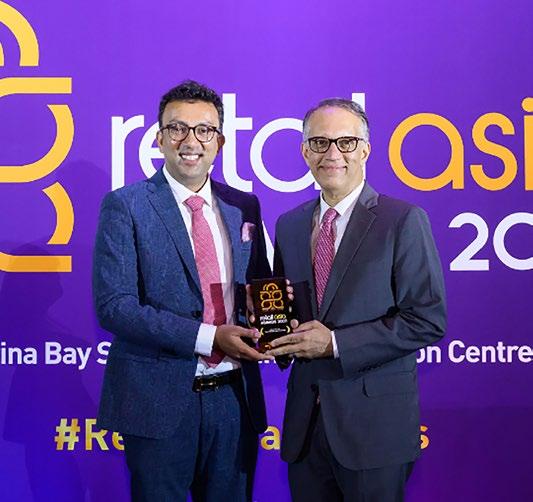
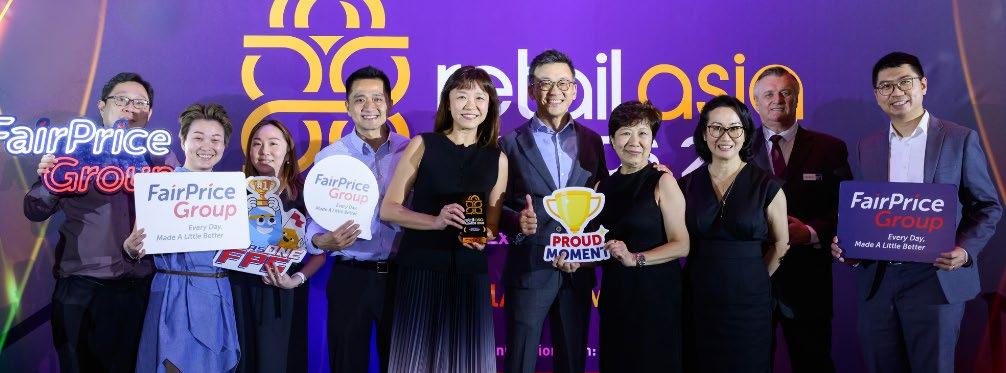
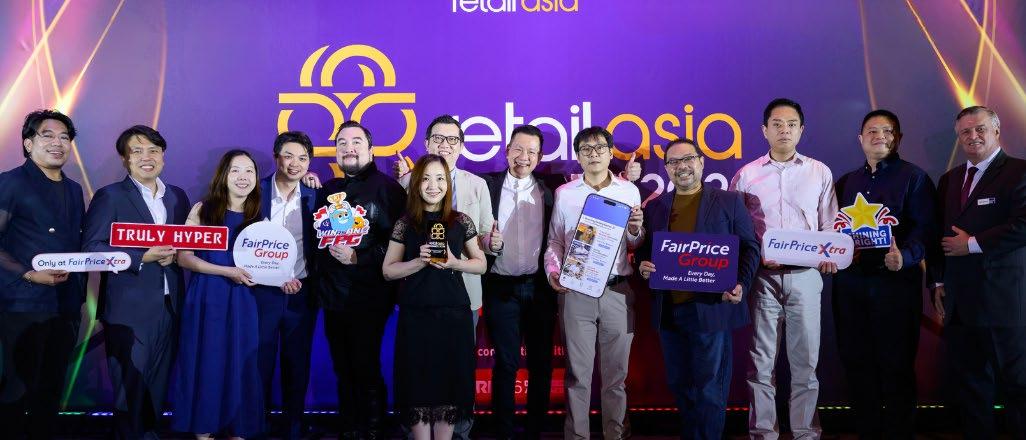
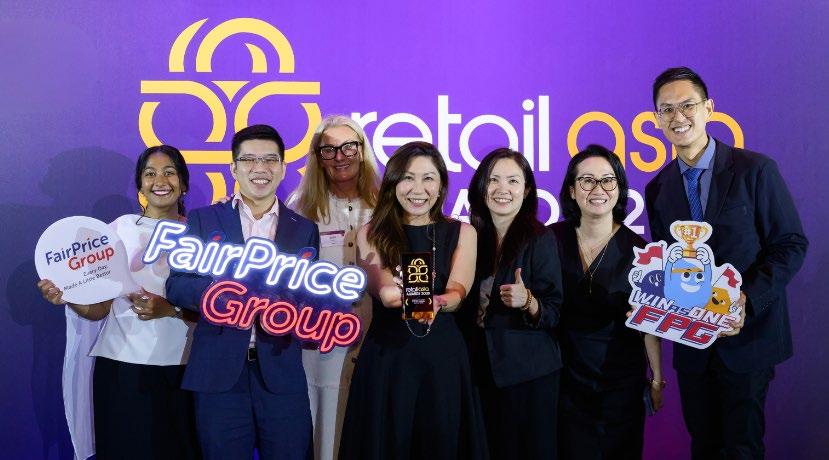
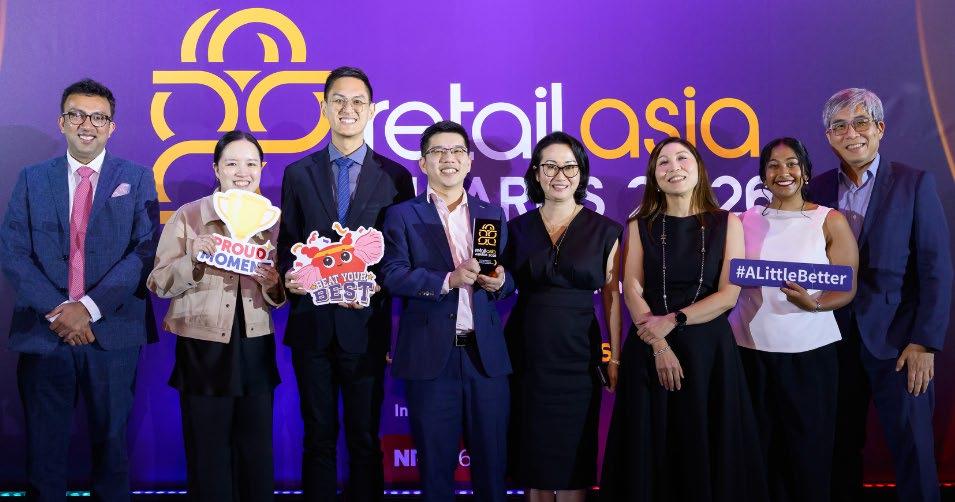
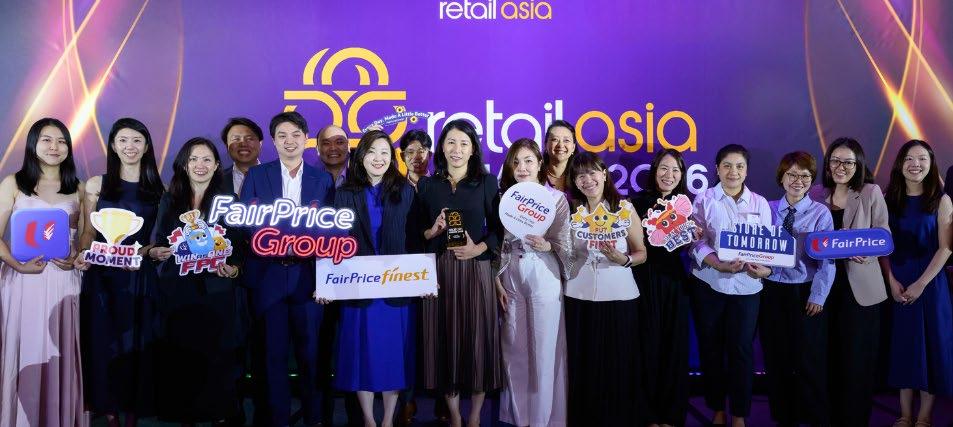
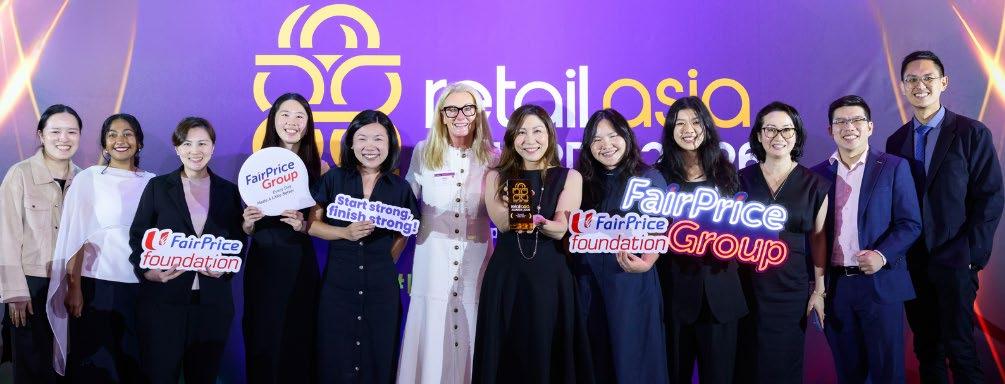
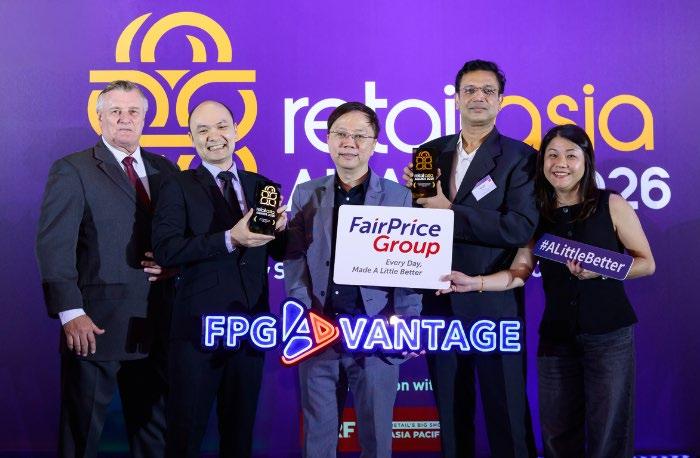
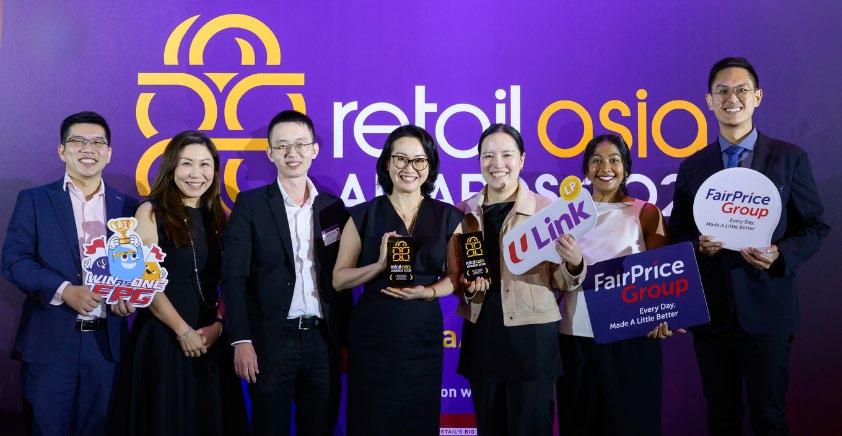
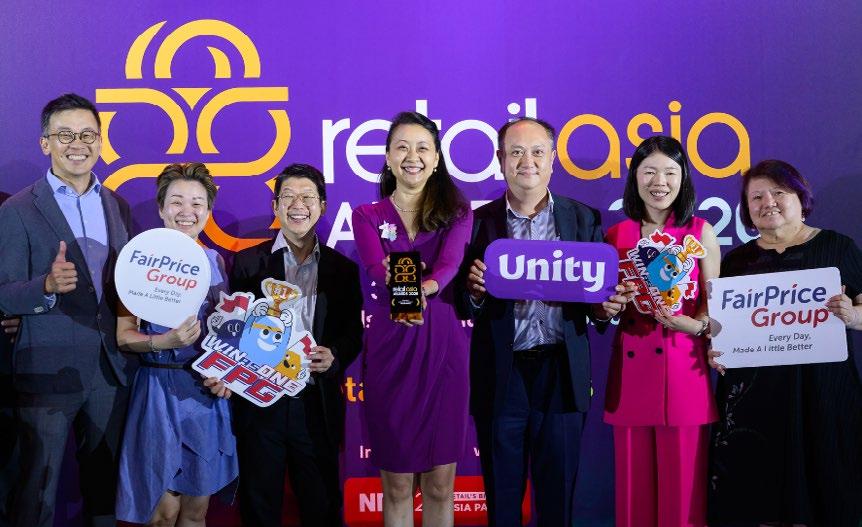
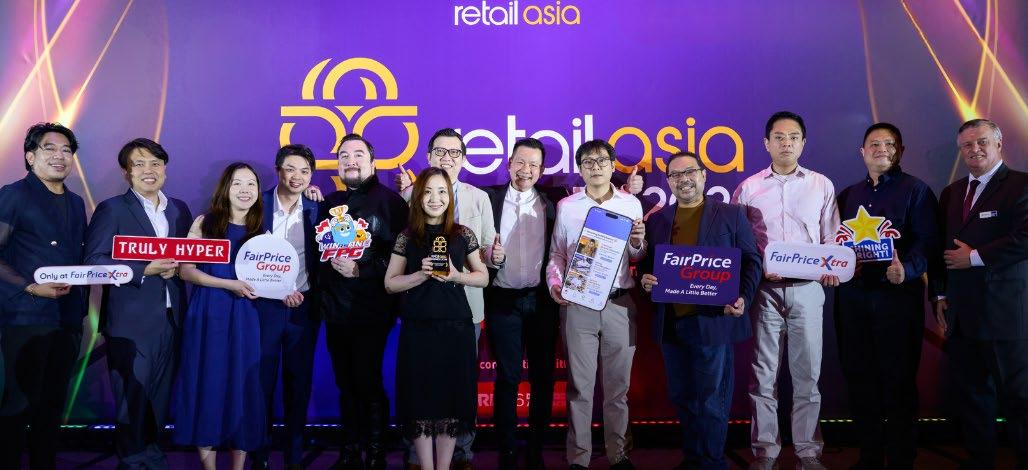
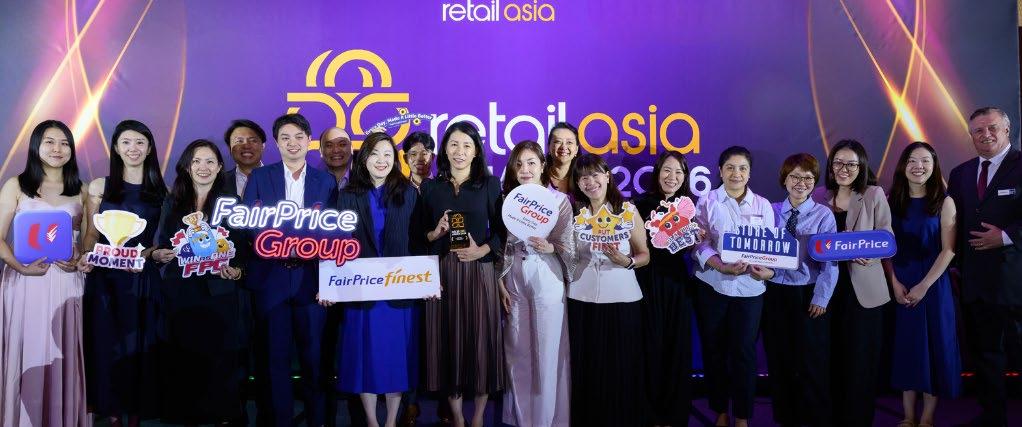
Amongst those recognised was Vipul Chawla, Group Chief Executive Officer of FairPrice Group, who was honoured with the CEO of the Year award. In his acceptance speech, Chawla dedicated the accolade to the people behind FairPrice Group’s success, saying: “Whilst I am honoured to receive this award, this award actually
RETAILASIAAWARDS 2026WINNERS
7‑Eleven Singapore
• Convenience Store of the Year - Singapore
• Retail App of the Year - Singapore
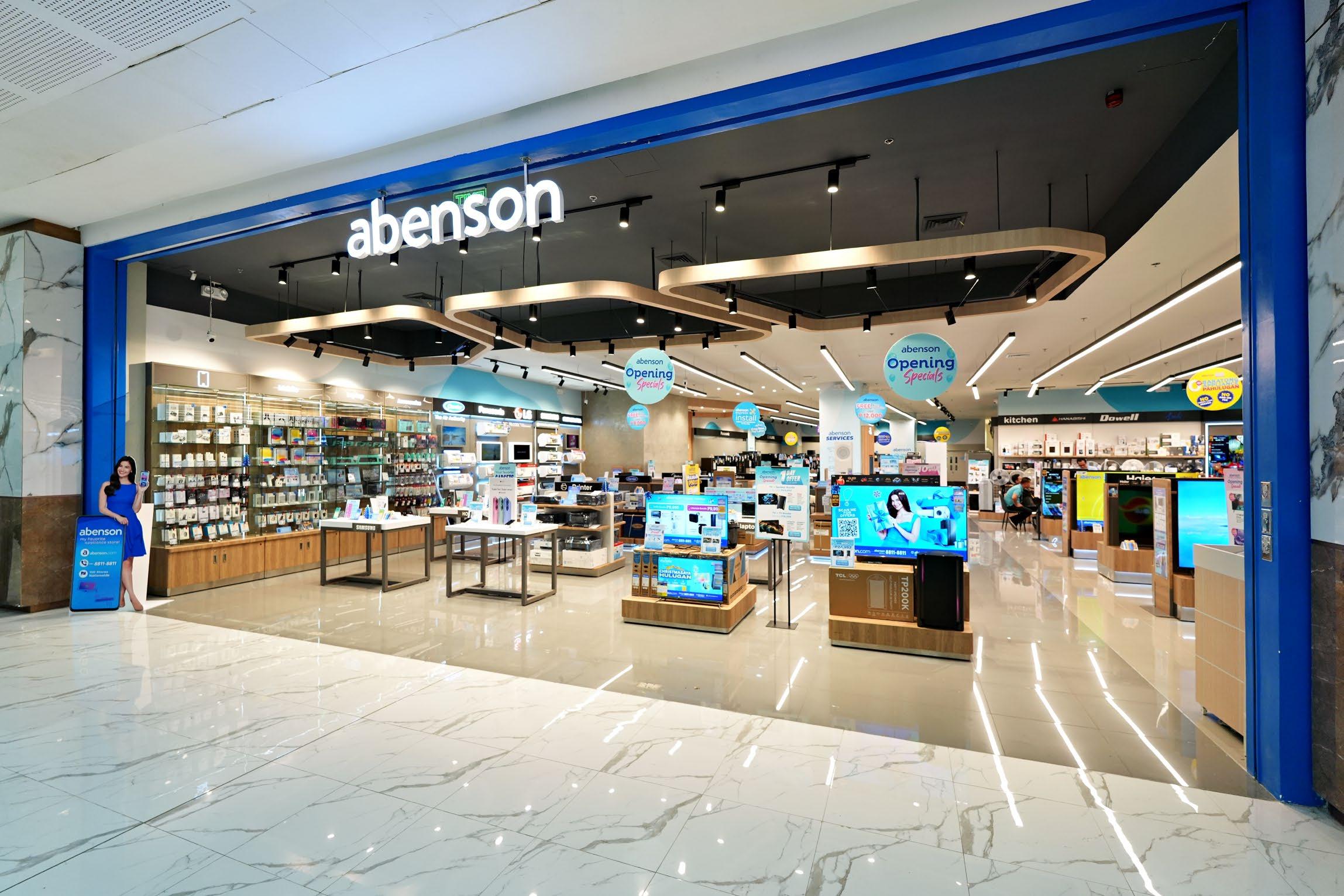
Abenson
• Customer-Centric Brand of the Year - Philippines
AEON CO. (M) BHD.
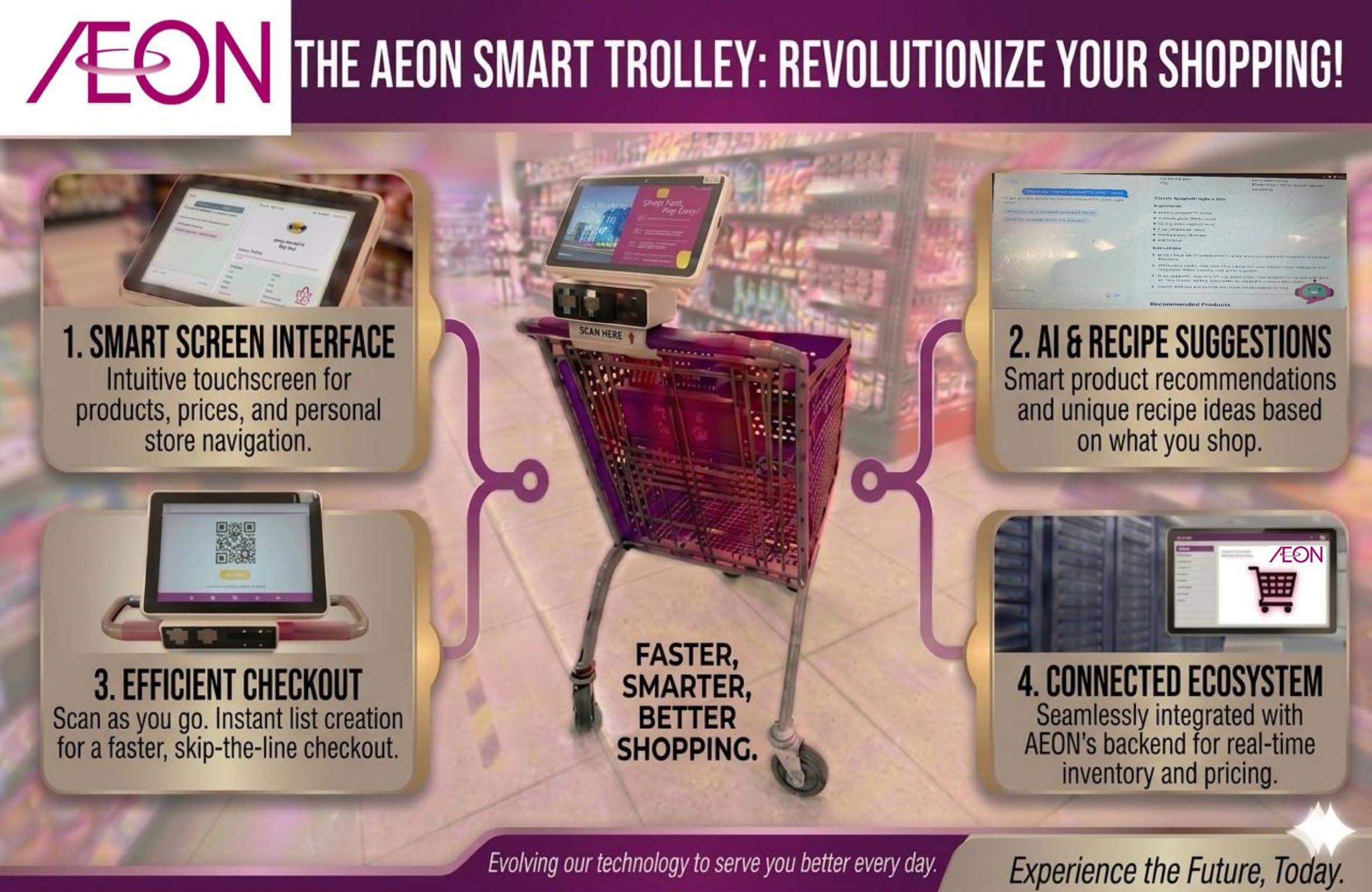
• Smart Store Project of the Year - Malaysia
Alpro Pharmacy Sdn Bhd
• ESG Initiative of the Year - Malaysia
• Retail Product of the Year - Malaysia
Amaze Super App
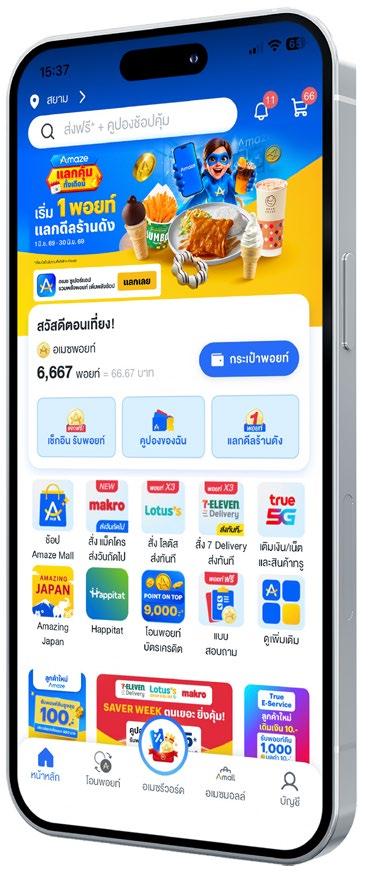
• Loyalty Programme of the Year - Thailand
Apex Footwear Limited
• AI Initiative of the Year - Bangladesh
• Footwear Retailer of the Year - Bangladesh
• Sustainability Initiative of the Year - Bangladesh
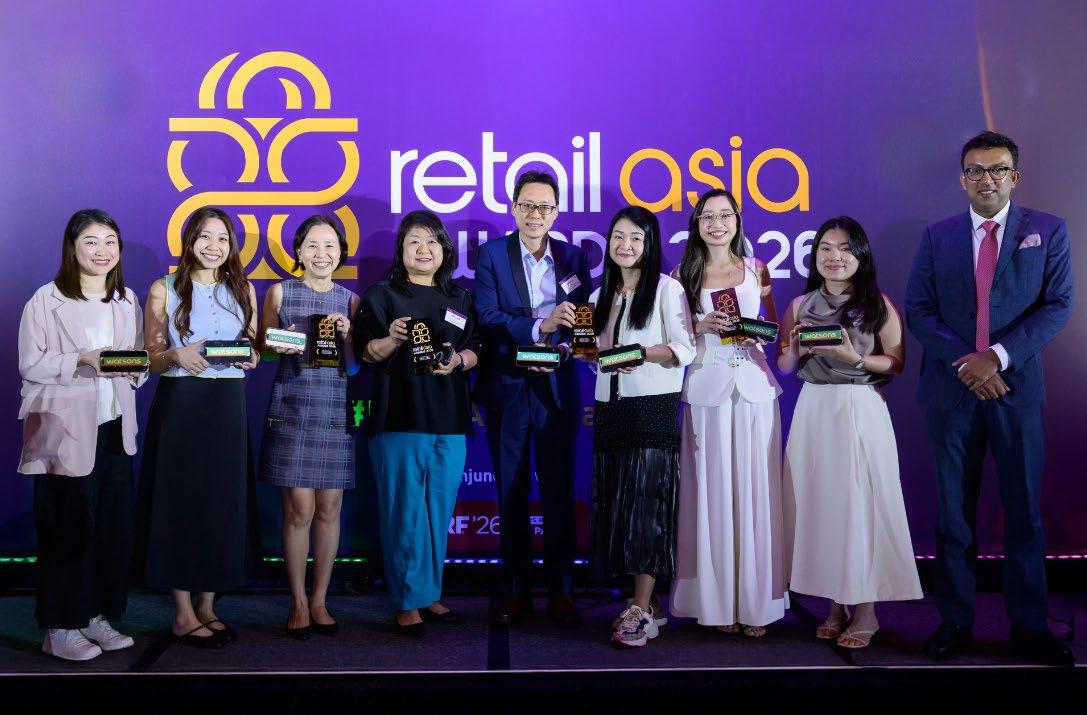
AS Watson Group
• Digital Transformation of the Year - Hong Kong
• Innovation Team of the Year - Hong Kong
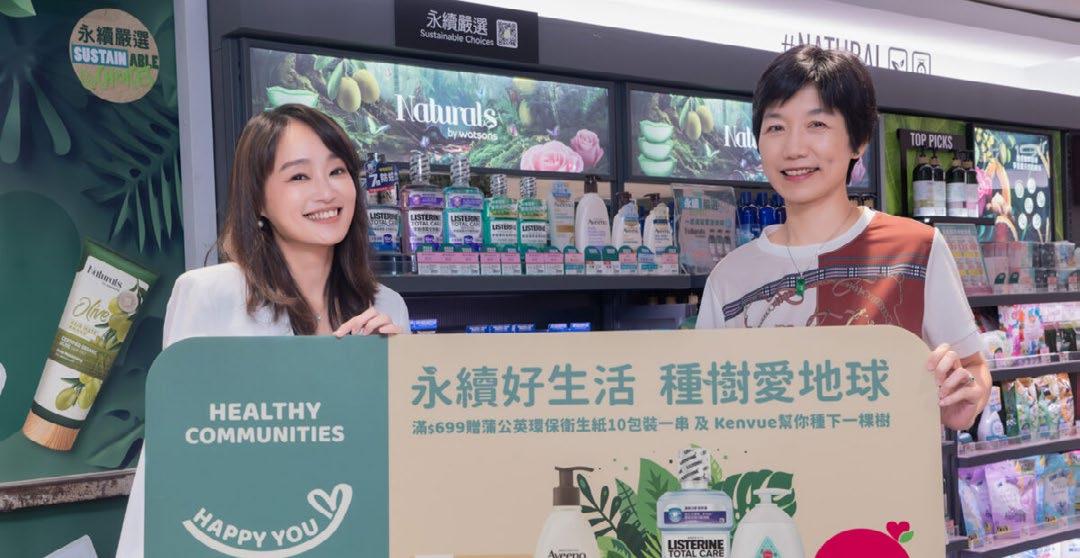
AS WATSON RETAIL (HK) LIMITED
• Marketing Initiative of the Year - Hong Kong
• Sustainability Initiative of the Year - Hong Kong
Asset World Corporation (AWC)
• Brand Transformation of the Year - Thailand
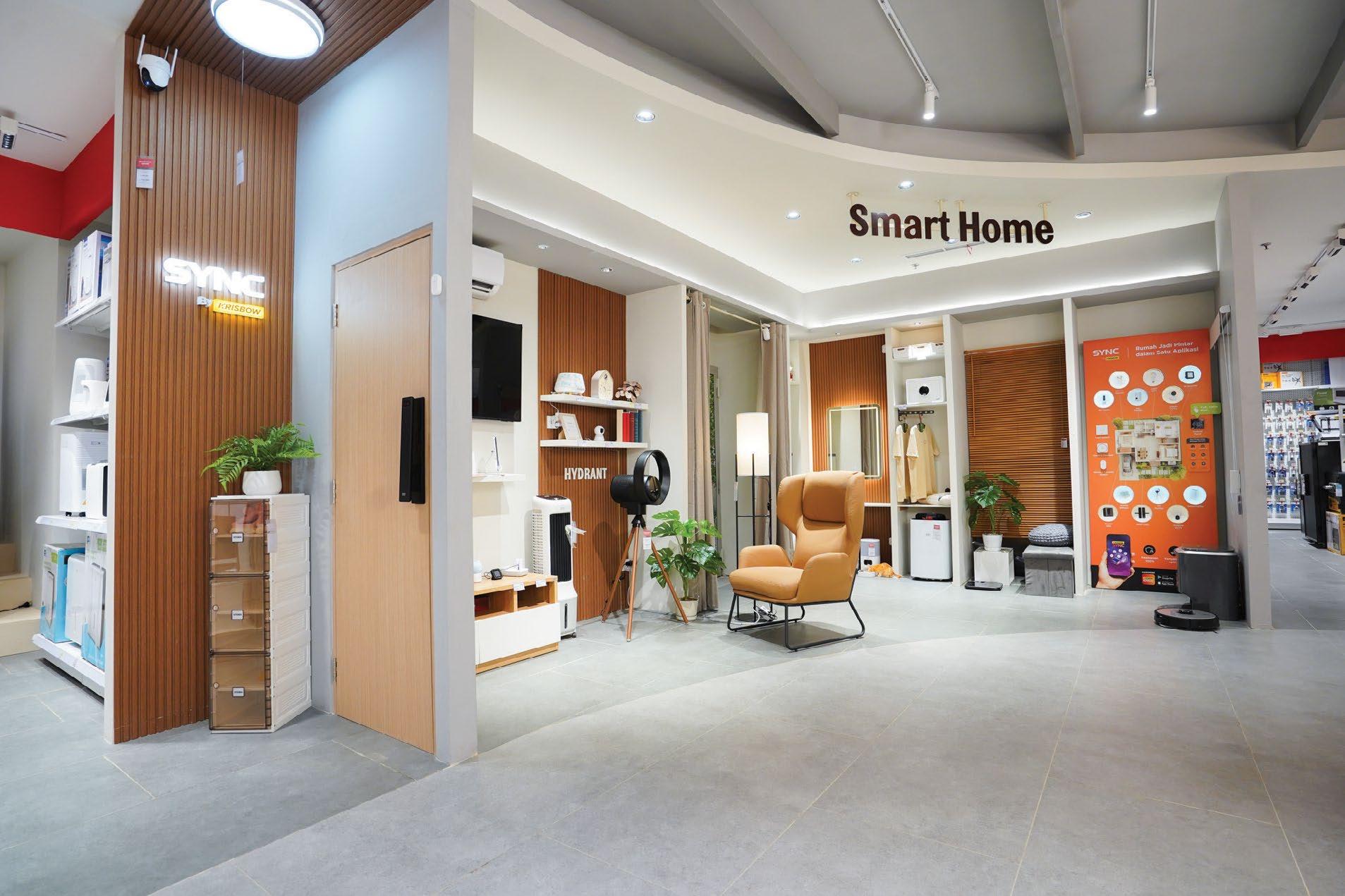
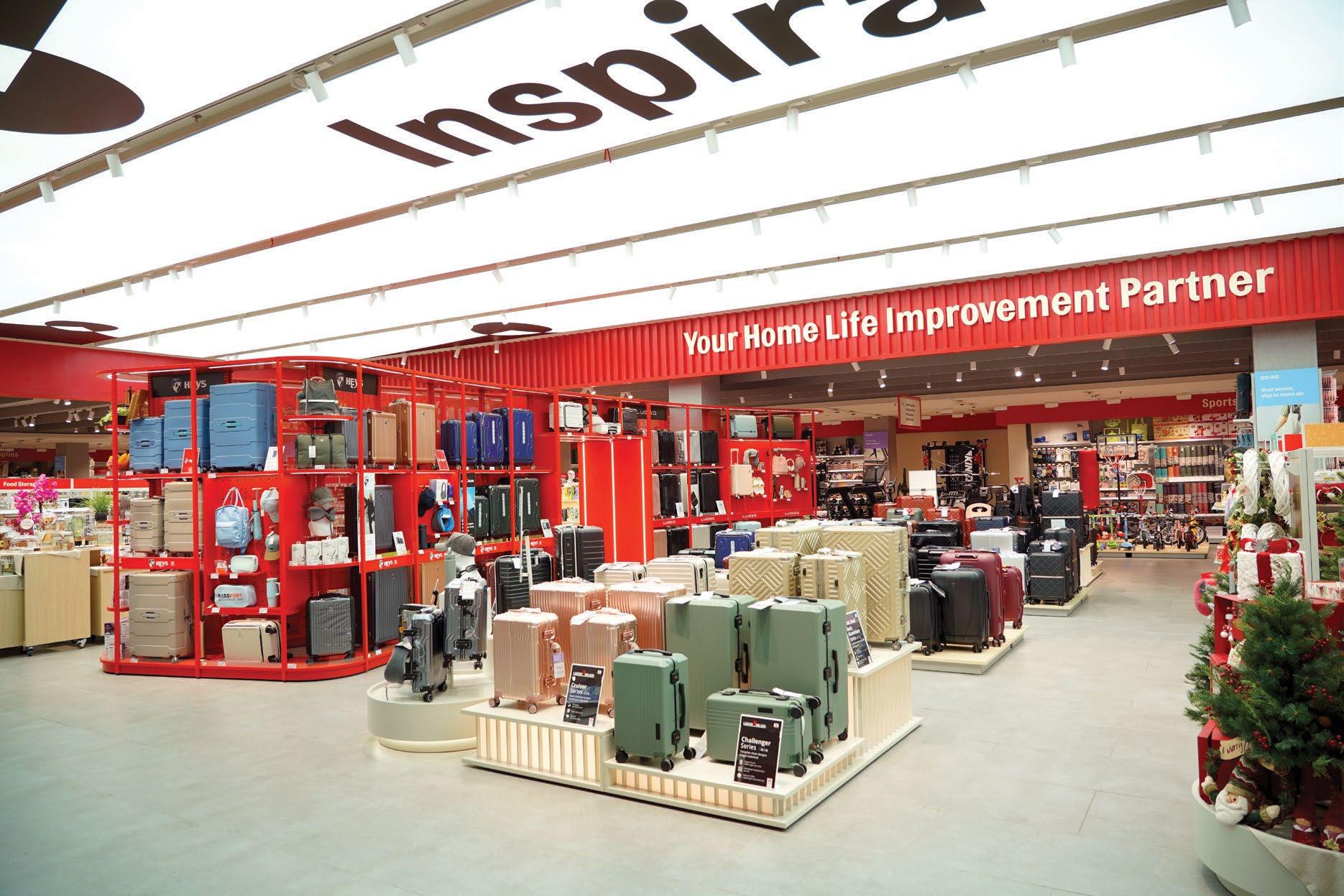
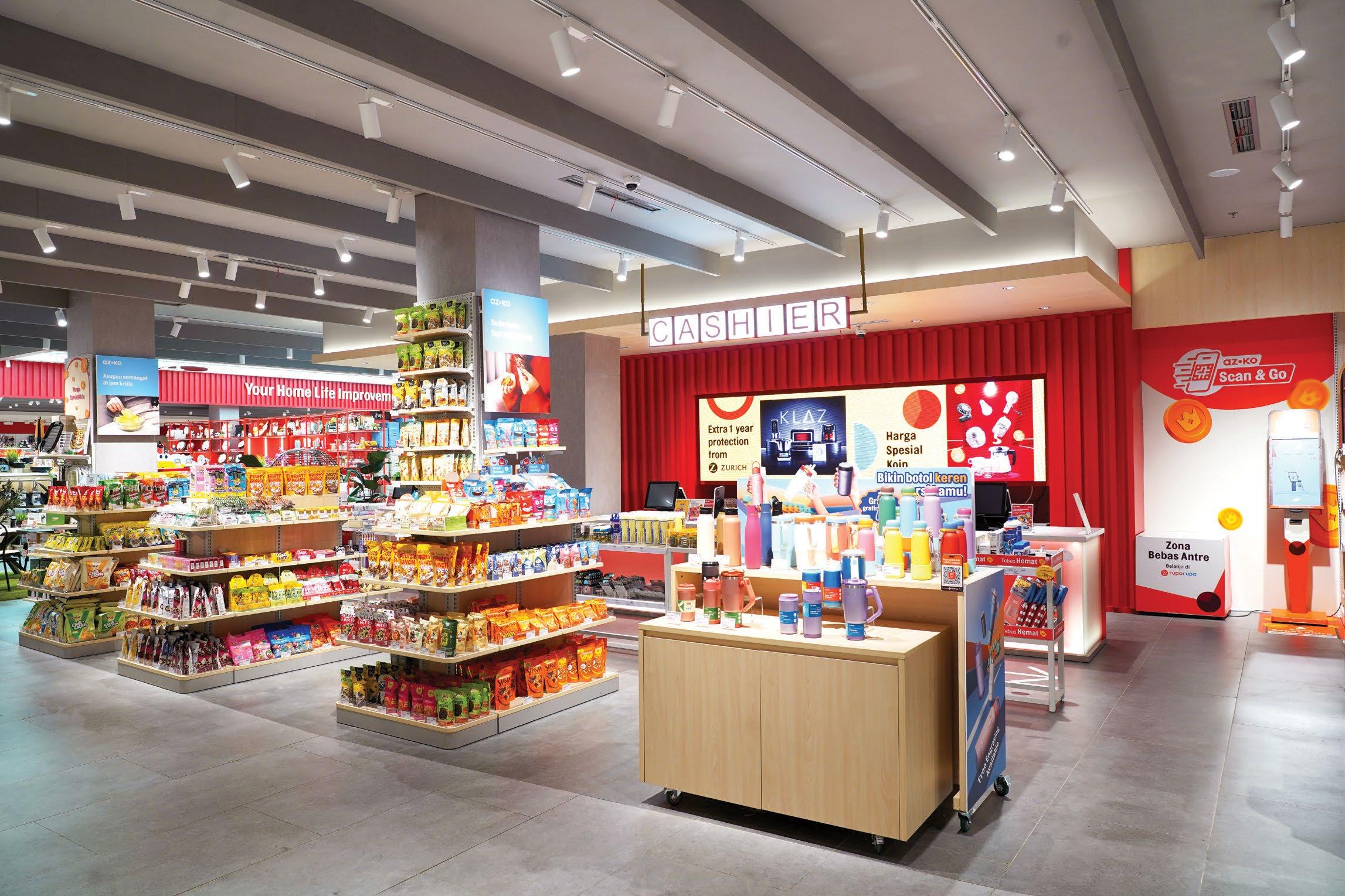
AZKO
• Brand Transformation of the Year - Indonesia
• Marketing Initiative of the Year - Indonesia
Bank of the Philippine Islands
• Integrated Campaign of the Year - Philippines
• Brand Transformation of the Year - Philippines
belongs to my colleagues, my friends, my brothers and sisters who work so hard every day for so many years and who continue to work hard late into the evening, early in the morning, so that you can get your daily essentials every day.”
The award winners were selected by an esteemed panel of judges composed of respected industry experts and consultants. The panel included Olivier Gergele, Asia Pacific EY-Parthenon Consumer Leader at EY; Quan Yao Peh, Research Consultant, Retail and Digital Consumer at Euromonitor International; Cath Jowett, National Sector Lead, Consumer & Retail and Partner, Workforce & HR Advisory at KPMG; David Eu, Partner, F&B, Retail and Consumer Products at RSM Singapore; Siddharth Pathak, Senior Partner and APAC Leader for Consumer and Retail Practice at Kearney; and Brian Man, Partner and Retail and Consumer Industry Leader at PwC Australia.
Congratulations to all the winners for their exceptional contributions to advancing excellence across Asia Pacific.
Barbour
• Experiential Marketing Project of the Year - China
• Marketing Initiative of the Year - China
• Marketing Team of the Year - China
BEAUTRIUM
• Concept Store of the Year - Thailand
Birkenstock South East Asia Pte Ltd
• Direct-to-Consumer (DTC) Brand of the Year - Singapore
• In-store Customer Experience of the Year - Singapore
• Footwear Retailer of the Year - Singapore
BreadTalk & TOAST BOX
• Concept Store of the Year - Singapore
• Brand Store of the Year - Singapore
CapitaLand Investment
• Digital Transformation of the Year - Singapore
CelcomDigi Berhad
• Telecommunications Retailer of the Year - Malaysia
• In-store Customer Experience of the Year - Malaysia
Celovis Jewellery
• E-Commerce Merchandising of the Year - Malaysia
Central Department Store & TOPS under Central Retail
• Department Store of the Year - Thailand
• Supermarket of the Year - Thailand
Central Pattana
• Eco-Friendly Mall of the Year - Thailand
• New Mall of the Year - Thailand
Cheers Holdings
• Digital Initiative of the Year - Singapore
Cohen Group & Colliers
• Lifestyle Mall of the Year - Australia
CONCUNG ‑ Alphagen Launch
• Customer-Centric Brand of the Year - Vietnam
CP AXTRA Public Company Limited – Makro
• Sustainability Initiative of the Year - Thailand
DFI Retail Group
• O2O Customer Experience of the Year - Hong Kong
DFI Retail Group (Own Brand)
• Co-Branding Initiative of the Year - Hong Kong
• Brand Transformation of the Year - Malaysia
DFI Retail Group 7 Eleven HK
• Convenience Store of the Year - Hong Kong
DFI Retail Group yuu Rewards
• Loyalty Programme of the Year - Hong Kong
DKSH Management Pte Ltd
• E-Commerce Initiative of the Year - Malaysia
• E-Commerce Team of the Year - Singapore
Eu Yan Sang
• Integrated Campaign of the Year - Malaysia
• Marketing Initiative of the Year - Malaysia
EVEANDBOY
• Cosmetics Retailer of the Year - Thailand
FairPrice
• Retail Collaboration Project of the Year - Singapore
• Omnichannel Strategy of the Year - Singapore
FairPrice Finest
• Smart Store of the Year – Singapore
FairPrice Group
• ESG Initiative of the Year - Singapore
• Integrated Campaign of the Year - Singapore
FairPrice Group (NTUC Link Pte Ltd)
• Co-Branding Initiative of the Year - Singapore
• Loyalty Programme of the Year - Singapore
FairPrice Group Customer Service
• Customer Service Team of the Year - Singapore
FairPrice Xtra
• Influencer Marketing Campaign of the Year - Singapore
FIVE STAR VIETNAM ‑ C.P. VIETNAM CORPORATION
• F&B Brand of the Year - Vietnam
Florasis
• Flagship Store of the Year - China
• Innovative Beauty Brand of the Year - China
Food Republic
• Sustainable Brand of the Year - Singapore
GOLDEN ABC INC. / PENSHOPPE
• Fashion Retail Brand of the Year - Philippines
• Marketing Team of the Year - Philippines
Goldheart Jewelry
• Jewellery Retailer of the Year - Singapore
Guardian Health & Beauty
• Health & Beauty Retailer of the Year - Singapore
Guardian Health And Beauty Sdn Bhd
• Digital Initiative of the Year - Malaysia
GUARDIAN MALAYSIA
• Health & Beauty Retailer of the Year - Malaysia
• Loyalty Programme of the Year - Malaysia
Hanoi Centre by Keppel Vietnam
• Mall of the Year - Vietnam
Henderson Land Development
• Entertainment Mall of the Year - Hong Kong
• Lifestyle Mall of the Year - Hong Kong
• Mall Initiative of the Year - Hong Kong
IKEA Hong Kong
• Integrated Campaign of the Year - Hong Kong
IKEA Indonesia
• Loyalty Programme of the Year - Indonesia
IKEA TAIWAN
• Marketing Initiative of the Year - Taiwan
INFORMA
• Furniture Retailer of the Year - Indonesia
• Marketing Team of the Year - Indonesia
INFORMA Electronics
• Electronics & Appliances Retailer of the Year - Indonesia
Jaya Grocer
• Supermarket of the Year - Malaysia
• Private Label Brand of the Year - Malaysia
• Retail Distribution Network of the Year - Malaysia
Keells Supermarkets
• Supermarket of the Year - Sri Lanka
• ESG Initiative of the Year - Sri Lanka
Kopitiam Investment Pte Ltd
• Marketing Initiative of the Year - Singapore
L'Occitane Malaysia Sdn Bhd
• Luxury & Premium Retail Brand of the Year - Malaysia
• Sustainability Initiative of the Year - Malaysia
Lau Pa Sat
• F&B Brand of the Year - Singapore
LIXIL Vietnam Corporation
• In-store Customer Experience of the Year - Vietnam
• Luxury & Premium Retail Brand of the Year - Vietnam
Lotus’s by CPAXTRA
• Convenience Store of the Year - Thailand
• Customer-Centric Brand of the Year - Thailand
• Hypermarket of the Year - Thailand
LUXASIA
• Luxury Beauty Retailer of the Year - Indonesia
• Luxury Beauty Retailer of the Year - Malaysia
• Luxury Beauty Retailer of the Year - Vietnam
Malaysia Airports
• Concept Store of the Year - Malaysia
• Travel Retailer of the Year - Malaysia Mannings, DFI Retail Group
• Health & Beauty Retailer of the Year - Hong Kong
• Health & Wellness Initiative of the Year - Hong Kong
EVENT: RETAIL ASIA AWARDS
Megaworld Lifestyle Malls
• Integrated Mixed-Use Mall of the Year - Philippines
• Lifestyle Mall of the Year - Philippines
• Mall of the Year - Philippines
• Themed Mall of the Year - Philippines
Metro (Private) Limited
• Department Store of the Year - Singapore
• Brand Transformation of the Year - Singapore
MR.DIY
• Integrated Campaign of the Year - Philippines
• ESG Initiative of the Year - Philippines
MR. D.I.Y. Holding (Thailand) Public Company Limited
• ESG Initiative of the Year - Thailand
• Specialty Store of the Year - Thailand
• Store Design of the Year (Large) - Thailand
MR. D.I.Y. Indonesia
• Operations Team of the Year - Indonesia
• Household Goods Retailer of the Year - Indonesia
OGAWA WORLD BERHAD
• Health Equipment Brand of the Year - Malaysia
• Wellness & Fitness Brand of the Year - Malaysia
Own Brands Food Solution, FPG
• Retail Product of the Year - Singapore
Paragon
• Luxury Mall of the Year - Singapore
Performance Motors Limited
• Automotive Retailer of the Year - Singapore
• Store Design of the Year (Large) - Singapore
Phu Nhuan Jewelry Joint Stock Company (PNJ)
• Marketing Initiative of the Year - Vietnam
Primer Group of Companies
• Payment Solution of the Year - Singapore
PT HARTADINATA ABADI TBK
• Jewellery Retailer of the Year - Indonesia
POS Malaysia
• Digital Experience of the Year - Malaysia
Ritchies Stores
• Supermarket of the Year - Australia
Robinsons Malls
• Eco-Friendly Mall of the Year - Philippines
• New Mall of the Year - Philippines
• Regional Mall of the Year - Philippines
Saigon Co.op
• Domestic Retailer of the Year - Vietnam
• Private Label Brand of the Year - Vietnam
Shangri La Plaza Corporation
• Mall Initiative of the Year - Philippines
• Health & Wellness Initiative of the Year - Philippines
Shell Singapore Pte Ltd
• Store Retail Initiative of the Year - Singapore
SHIN KONG MITSUKOSHI
• AI Initiative of the Year - Taiwan
• Digital Campaign of the Year - Taiwan
Singapore Telecommunications Ltd
• Collaboration Store of the Year - Singapore
• In-store Campaign of the Year - Singapore
SUNGEI WANG PLAZA
• Community Mall of the Year - Malaysia
• Entertainment Mall of the Year - Malaysia
Suntec City
• Experiential Marketing Project of the Year - Singapore
Supersports
• Marketing Initiative of the Year - Thailand
• Sporting Goods Retailer of the Year - Thailand
Suyen Corporation ‑ BENCH
• Store Design of the Year (Large) - Philippines
True Corporation
• Experiential Retail Store of the Year - Thailand
• Store Design of the Year (Small) - Thailand
Unity Pharmacy
• Drugstore of the Year - Singapore
Vincom Retail Joint Stock Company
• Lifestyle Mall of the Year - Vietnam
• New Mall of the Year - Vietnam
Watson's Personal Care Stores (Taiwan) Co., Limited
• Sustainability Initiative of the Year - Taiwan
Watsons Personal Care Stores Philippines
• Health & Beauty Retailer of the Year - Philippines
Watsons Personal Care Stores Sdn Bhd
• AI Initiative of the Year - Malaysia
Watsons Singapore
• Innovation Team of the Year - Singapore
• Operations Team of the Year - Singapore
• Pop-up Retail Project of the Year - Singapore
• Strategic Partnership of the Year - Singapore
Wellcome Hong Kong
• Store Design of the Year (Small) - Hong Kong
• Supermarket of the Year - Hong Kong
ZALORA
• Influencer Marketing Campaign of the Year - Malaysia
Vipul Chawla, FairPrice Group
• CEO of the Year
Award winners
Vipul Chawla, FairPrice Group 7-Eleven Hong Kong
7-Eleven Singapore
Abenson AEON
Alphagen Launch
Alpro Pharmacy Apex Footwear Limited
EVENT: RETAIL ASIA AWARDS
AS Watson Group AZKO
Birkenstock
Barbour
BEAUTRIUM
Breadtalk and Toastbox
CapitaLand Investment
CelcomDigi
C.P Vietnam
Celovis Jewellery
Central Department Store & TOPS
Central Pattana
Cheers
DFI Retail Group - yuu Rewards
DFI Retail Group
DFI Retail Group (Own Brand)
DKSH
Eu Yan Sang
EVEANDBOY
FairPrice FairPrice
EVENT: RETAIL ASIA AWARDS
FairPrice Customer Service
FairPrice Finest
FairPrice Foundation
FairPrice Group
Food Republic
Golden ABC
Goldheart Jewellery
Guardian Health & Beauty Singapore
GUARDIAN MALAYSIA
Hanoi Centre by Keppel Vietnam Henderson Land Development
IKEA Hong Kong
IKEA Indonesia
IKEA Taiwan
INFORMA
Jaya Grocer Kopitiam
L'Occitane Malaysia Sdn Bhd
Lau Pa Sat
LIXIL Vietnam
LUXASIA
Mannings
Megaworld Lifestyle Malls
Metro Private Limited
EVENT: RETAIL ASIA AWARDS
MR DIY Indonesia
MR DIY Thailand
MR DIY Philippines
NTUC Link Own Brands Food Solution, FPG
Paragon
Primer Group
Performance Motors Limited
PT Hartadinata
Ritchies Stores Robinsons Malls
Shangri-La
Saigon Co.Op Shell
Shin Kong Mitsukoshi
Sungei Wang Plaza
Suntec City
Singtel
Supersports
Suyen Corporation
True Corporation
Unity
Watsons Singapore Wellcome Hong Kong
ZALORA
Every Day, Made a Little Better: How FairPrice Group is reimagining Singapore retail
From AI‑powered smart carts to Asia's first carbon‑focused experiential hub, FairPrice Group is proving that affordability, innovation, and sustainability can grow together.
When Vipul Chawla took the helm of FairPrice Group (FPG) as Group CEO in 2022, he set an ambitious goal: to make FPG Asia's most admired retailer. Three years on, that ambition is no longer an aspiration. It is showing up on shelves, in apps, at checkouts, and across the heartlands of Singapore. Guided by a simple promise, “Every Day, Made a Little Better”, FPG has built a transformation strategy that has delivered on three pillars: easy on the wallet, easy on the experience, and easy on the planet.
Easy on the wallet
FPG continuously enhances savings for its customers through its leading loyalty programme Link Rewards and provides targeted discounts for Singapore’s Pioneer Generation, Merdeka Generation, seniors, and CHAS cardholders. Its Own Brands business now spans over 3,500 products across more than 70 categories that are typically priced 10 to 15 percent cheaper than national brands, and leading in nearly half the categories they play in. New launches like the FairPrice Trail Mix range won Retail Product of the Year - Singapore, proving that affordability and quality need not be a trade-off.
That same accessibility runs through the Link Rewards programme, which leverages Singapore's national digital identity, Myinfo, to deliver instant, verified onboarding and to automatically apply relevant discount schemes when customers checkout. Close to 900,000 Link members have verified their identity on the FPG app using Singpass MyInfo, whilst $0.99 Linkpoint deals turned the FPG app into a daily destination.
Easy
on the experience
FPG's transformation is most vivid in its Store of Tomorrow: FairPrice Finest Punggol Coast Mall. Built by a coalition of internal teams, the programme weaves AI technology
throughout the entire shopping journey.
AI-powered Smart Carts let customers scan, pay, and go, whilst customers enjoy personalised offers on products that are relevant to their daily needs.
The “ShopBeyond” endless aisle turns finite shelves into infinite ones, allowing a seamless integration of online and offline shopping.
Generative-AI assistants like Unity Pharmacy's Wellness Genie offer real-time, expert guidance, redefining the drugstore as a destination for prevention, not just treatment. FPG also knows how to create cultural moments. In 2025, Lau Pa Sat, the 130-yearold national hawker monument managed by Kopitiam, served as the venue for a state visit by French President Macron and PM Lawrence Wong to pop-culture activations.
Kopitiam has reimagined the food court itself, turning everyday dining into "joyful breaks" through a gamified campaign that lifted footfall, dwell time and cross-outlet visits across the network. Meanwhile, at FairPrice Xtra JEM, a K-pop star launch of LOTTE Mart Express featuring artist Dayoung as a cultural ambassador reached audiences across the region and connected shoppers with more than 800 of the most popular Korean products on the market.
‘Every Day, Made a Little Better’
The convenience banner Cheers also reframed digital payment as a growth engine, partnering with Alipay to digitalise travel and retail experience in Singapore, launching the first-of-its-kind Cheers mini-app. The partnership supports the needs of mobilesavvy travellers, who are increasingly travelling more independently and spending more at local supermarkets, convenience stores and local F&B.
Easy on the planet
Sustainability is woven into the same fabric. In 2025, FPG launched The Carbon Gallery, Asia's first carbon-focused experiential hub.
The hub combines storytelling, interactive tech, and gamification to engage the public on how carbon, climate change, and daily lifestyle choices are connected.
FPG also became the first organisation in Singapore approved to operate autonomous vehicles on public roads for cargo transportation, each expected to meaningfully reduce carbon emissions, and its Neighbourhood Food Share initiative now distributes over eight tonnes of rescued produce every month. Through FPG’s philanthropic arm FairPrice Foundation, the group's “A Full Plate” food donation drive raised $1.6m to provide fresh groceries to hundreds of thousands of beneficiaries, alongside a Protein Pledge to provide $1m worth of fresh protein to vulnerable Singaporeans by 2030.
Stronger together
Through Link Rewards, the group joined Caltex and Trust Bank to launch a first-of-itskind cross-border collaboration connecting consumers and businesses in Singapore and Malaysia, letting drivers who refuel at participating Caltex stations in Johor Bahru earn Linkpoints redeemable back home.
FairPrice Group's Retail Media Network, FPG ADvantage, has also shown how retailers and the public sector can collaborate for the public good. Working with the Health Promotion Board, the group embedded lowersodium choices across the grocery journey from app discovery and personalised nudges to shelf guidance and in-store activations. The partnership redesigned the choice architecture itself, lifting trial and re-engaging lapsed customers whilst normalising healthier habits within everyday baskets.
A customer first approach
Behind the technology and the headlines is a service culture that holds up under pressure. During the most recent Chinese New Year peak, FPG's customer service team absorbed a dramatic surge in volume yet improved its first-response rate and lifted customer satisfaction above industry standards. Its festive “Every Celebration Made a Little Better” campaign, built around real frontliners and a Mandarin-first message, drove meaningful year-on-year gains in both sales and transactions.
Retail Asia Awards 2026 winner
FairPrice Xtra transforms modern retail with 'The Ultimate K-Experience at LOTTE Mart Express'
FairPrice Xtra equipped itself with strategic partnerships along with technology and storytelling to produce an initiative that elevates modern retail.
Retailers are continuously exploring ways to turn everyday purchases into memorable moments for their consumers. This is especially true amidst customers’ evolving needs as they seek experiences that go beyond traditional shopping. Grocery shopping, once a purely functional errand, is increasingly becoming an opportunity for brands that can build emotional connection, meaningful experiences and loyalty.
Reimagining the hypermarket launch
Embracing this shift, FairPrice Xtra introduced The Ultimate K-Experience at LOTTE Mart Express with the opening of the second LOTTE Mart Express store-in-store at FairPrice Xtra JEM.
The new outlet, following a successful debut at VivoCity, is the result of a partnership with South Korea’s largest retailer, LOTTE Retail, and was designed to deliver a richer, more authentic Korean culinary journey for young professionals and families.
Rather than relying on conventional discounts and standard promotions, FairPrice Group blended entertainment, technology, food, and culture into a unified customer journey. A cornerstone of the launch was K-pop star Dayoung, who served as a cultural ambassador rather than a traditional celebrity endorser. Her star power bridges the gap between shoppers and the 800+ authentic Korean products available, tapping directly into the booming global demand for K-lifestyle experiences.
This approach was aligned to the company’s broader ambition of repositioning the hypermarket as a lifestyle destination, a place where consumers don't just purchase products but discover and engage with the cultures behind them.
A retail experience beyond the aisles
To bring the concept to life, FairPrice Group created a series of experiences in which visitors immersed themselves physically and digitally in Korean culture.
There were interactive attractions that included the Ramyeon Library and Yorihada snack experiences, with a ramyeon wall organising products by flavour profile and spice level, and self-serve ramyeon cooking stations that recreated the popular Han River dining experience. Exclusive content collaborations that extended the experience beyond the store were also available.
Audiences were also treated to engaging storytelling, where they were introduced and invited to experience firsthand the unique features of LOTTE Mart Express.
Technology also played an important role in enhancing customer engagement. The initiative had an AI-powered photobooth featuring virtual Hanbok styling, which created personalised and shareable experiences amongst customers.
The experience was completed by LOTTE chefs flown in from Korea, Chef Kang Kibum and Chef Kim Siyoung, who conducted live cooking demonstrations and culinary showcases. Through this, shoppers got to enjoy authentic Korean flavours such as the viral 3-Colour Honey Rice Cakes and Squid Kimchi Pancake, whilst also learning more about the products available in-store. A Korean bartender showcase featuring Good Today beverages rounded out the sensory experience. Moreover, what made the initiative distinctive was the way every component, from celebrity influence, content creation, experiential retail to
digital engagement worked together as one cohesive journey rather than a series of disconnected activations.
New benchmark for experiential retail
With consumer expectations continuing to evolve, FairPrice Xtra remains committed to providing shopping experiences that combine convenience with discovery and entertainment. Its success through The Ultimate K-Experience demonstrates how retailers can differentiate themselves in a competitive market by utilising cultural relevance and technology, alongside authentic storytelling.
For its innovative approach to integrating influencer marketing with experiential retail, FairPrice Xtra was recognised with the Influencer Marketing Campaign of the Year - Singapore award at the Retail Asia Awards 2026. By seamlessly bringing together celebrity influence, immersive experiences, and digital innovation, the campaign demonstrated how modern retail can move beyond transactions to create meaningful experiences and connections.
FairPrice Xtra remains committed to providing shopping experiences that combine convenience with discovery and entertainment
FairPrice Xtra at the Retail Asia Awards 2026
Opening of the second LOTTE Mart Express store-in-store at FairPrice Xtra JEM
The Ultimate K-Experience at LOTTE Mart Express
WHERE BIG VALUE MEET
Your ultimate destination for food, fun, and family. Explore wide aisles
filled with fresh essentials, global brands & treats, and engaging spaces where shopping comes alive.
FRESH CHOICES
Freshness you can trust
GLOBAL FLAVOURS
International flavours and treats
EXPERIENTIAL RETAIL
Discover in-store experiences
FairPrice Finest builds future of grocery retail with Store of Tomorrow
The company utilised automation and omnichannel innovation to create a smarter shopping experience for customers whilst also providing a more efficient workplace for its employees.
Retailers today are operating in an environment where shoppers want greater convenience. Stores are faced with evolving customer expectations such as personalised recommendations, seamless online-to-offline experiences, and faster service whilst also contending with manpower constraints and rising operational demands.
FairPrice Group (FPG) addressed these challenges head-on and launched its Store of Tomorrow (SoT) programme. This is an ambitious initiative that reimagines every aspect of a customer’s retail journey. The programme is not just a collection of digital tools but a representation of how stores have transformed to efficiently serve their customers as well as support their employees. The vision comes to life at FairPrice Finest in Punggol Coast Mall, where an ecosystem of interconnected technologies works together to create a more efficient and engaging retail environment.
Innovation at every touchpoint
The Store of Tomorrow programme was developed through the collaboration of more than 20 teams across FairPrice Group, including experts from retail operations, technology, customer experience, and commercial functions. The initiative was guided by a human-centred approach to solve real challenges faced by shoppers and frontline staff.
For customers, one of the most visible innovations is the Smart Cart, which allows shoppers to scan items as they browse, receive personalised promotions, and complete transactions directly from the
trolley itself. This brings smoother shopping because it removes a significant amount of time spent waiting in line, which is one of retail’s most common friction points.
The programme further enhances convenience with its ShopBeyond feature, an endless-aisle solution that connects physical and digital retail.
By scanning QR codes in-store, customers can access and purchase products available online but not on the shelves.
The initiative was guided by a human-centred approach to solve real challenges
Moreover, FairPrice Group has also introduced generative AI-powered assistants that extend help to customers and guide them to make more informed purchasing decisions. Amongst these assistants are the Digital Wine Sommelier, which offers personalised wine recommendations; and the Unity Wellness Genie, which provides guidance on health and wellness products. Through these, expert advice is accessible to shoppers whenever they need it. When it comes to checking out, the company streamlined its operations through automated government scheme discounts. This integrates with Singapore’s MyInfo platform to automatically verify and apply eligible benefits, removing the need for manual verification and creating a faster transaction.
Supporting employees
Beyond the customer journey, the innovation extends to employees because the Store of Tomorrow has a suite of tools that simplify store operations.
There is Grocer Genie, which serves as a GenAI-powered super app that consolidates communications, task management, and
operational workflows into a single platform; and Vision AI, which transforms existing CCTV systems into intelligent monitoring tools capable of identifying stock replenishment needs, monitoring queue lengths, detecting safety incidents, and supporting loss prevention efforts.
Digital Price Cards replace traditional paper signage with dynamic LCD displays, allowing promotions and pricing information to be updated instantly.
These innovations have delivered measurable results. Smart Cart users generate basket sizes up to three times larger than traditional shoppers, whilst ShopBeyond has successfully attracted new digital customers including first-time e-commerce shoppers.
Perhaps most significantly, the integration of Smart Carts and Automated Government Scheme Discounts has reduced average checkout times from six minutes to just 36 seconds. This change marked a 90% improvement in enhancing convenience and customer satisfaction.
As retailers continue to navigate a digital future, FairPrice Group's Store of Tomorrow demonstrates how innovation can be applied with purpose. It did not replace the human element of retail, but instead used technology to enhance it and provide a more intuitive and connected shopping experience.
For its success in redefining the modern grocery store, FairPrice Finest at Punggol Coast Mall was recognised with the Smart Store of the Year – Singapore accolade at the Retail Asia Awards 2026. This latest achievement attests to FairPrice Group’s commitment to delivering a seamless shopping experience to make every day a little better for its customers.
FairPrice Group at the Retail Asia Awards 2026
Digital Wine Sommelier offering personalised wine recommendations
ShopBeyond QR codes enable customers to browse and purchase products that are only available online
Malaysia Airports recognised for airport retail innovation at Retail Asia Awards 2026
The company redefined airport retail through curated concept stores, upgraded duty‑free malls, and digital checkouts.
Malaysia Airports received accolades in the Concept Store of the YearMalaysia and Travel Retailer of the Year - Malaysia categories at the Retail Asia Awards 2026 for two retail initiatives across its international airports: the revamped Eraman Duty Free stores and the Sense of Malaysia retail platform. Both entries addressed common airport retail challenges, including limited dwell time, traveller fatigue, generic product assortments, and the need for clearer store navigation.
Local products at the centre of airport retail Sense of Malaysia was developed as a destination-themed retail concept that brought Malaysian craft, food, wellness
products, and souvenirs into the airport shopping journey.
The platform operated across five international airports: KL International Airport (KLIA), Penang International Airport (PEN), Langkawi International Airport (LGK), Kuching International Airport (KCH), and Kota Kinabalu International Airport (BKI). Its product range included hand-drawn batik, woven songket, Sarawak Laksa paste, Penang egg tarts, and items from local artisans and entrepreneurs.
The concept also gave more than 50 Malaysian brands access to travel retail distribution, including Oriental Kopi, Kapten Batik, Serai, Royal Selangor, and Borneo Pearls. Malaysia Airports used the platform to connect local businesses with international
passengers, whilst placing Malaysian products alongside global names such as LEGO, Laderach, Charlotte Tilbury, WHSmith, and Rituals Cosmetics.
Store features included artisanal demonstrations and a postcard service that allowed travellers to send personalised photo memories. The company reported a 28.8% year-on-year increase in total sales transactions to 44 million in 2025, whilst Gifts & Souvenirs sales rose 42%.
Faster, clearer duty free shopping
Eraman Duty Free refurbished its retail stores across KLIA Terminal 1, KLIA Terminal 2. The upgraded outlets introduced new layouts, strong er visual merchandising, and a curated selection of more than 550 global brands. At KLIA Terminal 2 International Departure / Arrival, the redesigned Duty-Free Mall used open layouts, intuitive zoning, and clear sightlines to help passengers shop more quickly. Self-checkout kiosks were also introduced to reduce queues and speed up transactions during peak periods. The refreshed retail mix covered luxury beauty, fragrances, gourmet chocolates, wines, and spirits, giving travellers a more organised duty-free experience within a high-volume airport setting.
The concept gave more than 50 Malaysian brands access to travel retail distribution
Sense of Malaysia
Eraman Duty Free
Eraman Duty Free
Paragon wins Luxury Mall of the Year - Singapore at Retail Asia Awards 2026
The Singapore shopping destination expanded with first‑in‑market boutiques and brand collaborations, as well as elevated its Paragon Club rewards programme.
For more than 25 years, Paragon Singapore has been a premier luxury retail destination that prides itself on its distinctive portfolio consisting of luxury boutiques, immersive brand activations, and elevated member privileges. Today, strategic tenant curation, experiential customer engagement, and digital innovation such as the enhanced rewards programme have enabled the mall to transform luxury retail.
For this, Paragon received an accolade in the Luxury Mall of the Year - Singapore category at the Retail Asia Awards 2026 for expanding its luxury retail portfolio, introducing new experiential activations, and strengthening member engagement initiatives across its Orchard Road destination.
Located along Orchard Road, Paragon continues to strengthen its position as one of Singapore's leading luxury destinations through a carefully curated portfolio of world-renowned brands and elevated retail experiences. The mall has expanded its luxury offering with the introduction of first-in-Southeast Asia and first-inSingapore standalone boutiques, including Maison Margiela, Zimmermann, and Jil Sander, alongside Marni's second boutique in Singapore. These additions provide
shoppers with access to exclusive collections and a broader selection of sought-after international luxury labels.
Building on this curated brand mix, Paragon has also introduced several duplex flagship boutiques over the past two years, including Bottega Veneta, Tom Ford, and Balenciaga.
Prada has recently unveil its newly expanded two-storey duplex boutique at Paragon, offering elevated, personalised client experiences alongside exclusive collections. The expansion underscores the brand's continued commitment to the mall and further enhances Paragon's luxury retail proposition.
Luxury retail today is increasingly about meaningful connections and memorable experiences
Experiential activations and exhibitions
“Luxury retail today is increasingly about meaningful connections and memorable experiences,” said Jaylyn Ong, Managing Director of Straits Retail Property Management Services Pte Ltd. Ms Ong added
that “high-profile showcases allow shoppers to engage with brands in a deeper and more experiential way.”
Luxury exhibitions and retail activations formed part of the mall’s programming strategy. In collaboration with Bvlgari, Paragon hosted “Beyond Time”, the Maison’s first-ever horological showcase of its kind beyond Switzerland, from 18 July to 10 August 2025. The exhibition highlighted illustrious Serpenti and Octo timepieces, as well as the exclusive global launch of Octo Roma Worldtimer SG60 Edition. Together with Cortina Watch, the mall also staged Rolex’s Time Zone to Time Zone exclusive exhibition in Singapore, marking the 70th anniversary of the Oyster Perpetual GMTMaster. During the 2025 festive season, visitors also experienced Southeast Asia’s first Prada Beauty Holiday Tree installation accompanied by a dedicated pop-up and photo experience.
Together, these curated showcases reinforce Paragon's standing as a destination for craftsmanship where luxury retail is seamlessly extended into immersive experiences that spark discovery and appreciation among shoppers, collectors and visitors from across the region.
Paragon at Retail Asia Awards 2026
Elevated member experiences
Member-focused upgrades were also introduced with the opening of a new Paragon Club Lounge on Level 6 in November 2025.
Spanning more than 5,000 sq ft, the new lounge offers expanded hospitality spaces, private meeting rooms and suite, in addition to integrated shower and washroom facilities for greater comfort and convenience.
Complementing the experience is a curated selection of refreshments for Paragon Club members, including an exclusive signature cookie and custom blend tea as well as curated afternoon tea sets. These luxury amenities were added to create a more personal, seamless, and thoughtfully curated retail journey.
Aside from being a welcoming space for members to relax and recharge, Paragon launched in March 2026 its Personal
Stylist Experience, offering tailored fashion consultations for shoppers and members across the mall’s fashion and beauty brands.
Enhancing the Paragon Club loyalty programme
To provide Paragon Club members and tourists with elevated shopping experiences, the mall also enhanced its Paragon Club rewards programme through the introduction of a new Platinum tier, refined privileges, and a refreshed mobile application. With the enhancements, members gain access to in-store point redemptions for purchases, parking credit redemptions, expanded bonus points multipliers, and birthday privileges.
The Club’s programme privileges also grant members access to wellness-focused experiences such as health and wellbeing talks by the property’s medical-related tenants,
adding another meaningful dimension to the Paragon experience.
Meanwhile, Pinnacle members also enjoy access to a dedicated personal concierge service that offers personalised assistance from lifestyle requests to lounge arrangements and reservations at Paragon. Through its retail tenant mix, activations, and membership initiatives, the property continues to strengthen its position within Singapore’s luxury retail sector.
Together, these initiatives reflect the mall management’s commitment to delivering a more thoughtful, elevated, and personalised experience at Paragon. As luxury retail evolves, Paragon intends to continue refining its tenant mix and elevating the overall experience whilst staying true to Paragon's identity as a premier luxury destination, Ms Ong said.
Maison Margiela boutique at Paragon
Rolex’s “Time Zone to Time Zone” exhibition
Paragon Club Lounge
RETAIL
Jaya Grocer wins top honours at Retail Asia Awards 2026
The supermarket chain expanded its omnichannel ecosystem, distribution network, and private label portfolio.
Jaya Grocer was recognised with three major accolades at the Retail Asia Awards 2026, winning Supermarket of the Year - Malaysia, Private Label Brand of the YearMalaysia, and Retail Distribution Network of the Year - Malaysia. The wins recognised Jaya Grocer with its strategic store expansion, Mega Store model, Grab Signatures private label range, and investments in automated grocery distribution.
Expanding grocery access across Malaysia
Jaya Grocer continued to strengthen its nationwide footprint, growing to more than 60 stores across Malaysia.
Recent expansion milestones included new openings in Rawang, Putrajaya, and Penang, alongside the relaunch of its 40,000-squarefoot flagship store in Ipoh.
The company also introduced the Jaya Grocer Signature concept, an elevated retail format catered to growing demand for premium grocery selections through curated imports, fresh produce, and enhanced shopping environments.
Its Mega Store model also widened online
grocery access through GrabMart. Whilst standard digital grocery platforms typically carry 5,000 to 8,000 SKUs, Jaya Grocer made up to 17,000 SKUs available online through store-based fulfilment and Grab’s delivery network. The initiative led to a 44% increase in online orders.
Turning local flavours into retail products
The retailer developed Grab Signatures as a private label range that brought popular restaurant flavours into ready-to-consume grocery formats. The range used GrabFood consumption data to identify in-demand products and Jaya Grocer’s store network to bring them to shelves.
Village Park Sambal became the top-selling product in Jaya Grocer’s sauce category in 2024. Customer feedback led to the launch of a Lagi Pedas variant and sachet formats for travel use. From one merchant and one SKU in 2023, Grab Signatures grew to seven
merchant partners and 24 SKUs across five categories, with export presence in Singapore, Brunei, and the United Kingdom.
Building the future of grocery distribution
Jaya Grocer’s distribution network currently supports more than 60 stores across Peninsular Malaysia, handling over 28,000 SKUs and dispatching more than 40,000 cartons daily. Its fleet of more than 100 vehicles completes over 150 daily trips across multiple temperature categories.
To further strengthen operational scalability and efficiency, the company is investing over RM100m in Malaysia’s first automated grocery distribution centre.
The 250,000-square-foot facility uses automated storage and retrieval systems, robotic shuttles, conveyors, and sortation systems, with more than 80% of storage operations automated. Its Transportation Management System supports route planning, load consolidation, fleet use, and real-time operational visibility.
The Retail Asia Awards highlights the pinnacle of excellence, innovation, and leadership within the retail industry across the Asia Pacific region. It serves as a benchmark of success, honouring companies and individuals who have made remarkable contributions to shaping the future of retail.
Jaya Grocer continued to strengthen its nationwide footprint, growing to more than 60 stores across Malaysia
Jaya Grocer at Retail Asia Awards 2026
BIRKENSTOCK STEPS INTO 2026 WITH HERITAGE, INNOVATION, AND AWARD-WINNING RETAIL EXCELLENCE.
BIRKENSTOCK STEPS INTO 2026 WITH HERITAGE, INNOVATION, AND AWARD-WINNING RETAIL EXCELLENCE.
As BIRKENSTOCK prepares to celebrate a remarkable milestone in 2026, the brand continues to demonstrate how heritage and innovation can work hand in hand to shape the future of retail. With a legacy spanning more than 250 years, BIRKENSTOCK has evolved from a family-owned German shoemaking business into one of the world’s most recognisable footwear brands, remaining steadfast in its commitment to craftsmanship, functionality, and foot health.
As BIRKENSTOCK prepares to celebrate a remarkable milestone in 2026, the brand continues to demonstrate how heritage and innovation can work hand in hand to shape the future of retail. With a legacy spanning more than 250 years, BIRKENSTOCK has evolved from a family-owned German shoemaking business into one of the world’s most recognisable footwear brands, remaining steadfast in its commitment to craftsmanship, functionality, and foot health.
The year 2026 marks significant anniversaries for three of BIRKENSTOCK’s most beloved closed-toe silhouettes: the Boston, Milano, and London. These iconic styles have transcended generations, becoming enduring symbols of the brand’s philosophy of timeless design and anatomical comfort.
The year 2026 marks significant anniversaries for three of BIRKENSTOCK’s most beloved closed-toe silhouettes: the Boston, Milano, and London. These iconic styles have transcended generations, becoming enduring symbols of the brand’s philosophy of timeless design and anatomical comfort.
Among them, the Boston clog celebrates its 50th anniversary in 2026. Introduced in 1976, the Boston has become one of BIRKENSTOCK’s most influential designs, admired globally for its versatility, effortless wearability, and unmistakable silhouette. Its longevity is a testament to the brand’s ability to create products that remain relevant across decades, cultures, and fashion cycles.
Among them, the Boston clog celebrates its 50th anniversary in 2026. Introduced in 1976, the Boston has become one of BIRKENSTOCK’s most influential designs, admired globally for its versatility, effortless wearability, and unmistakable silhouette. Its longevity is a testament to the brand’s ability to create products that remain relevant across decades, cultures, and fashion cycles.
Alongside the Boston, the Milano and London continue to represent the breadth of BIRKENSTOCK’s design language. The Milano’s secure backstrap construction and the London’s fully enclosed silhouette have expanded the brand’s appeal beyond traditional sandal wearers, offering functional solutions for consumers seeking comfort across different lifestyles and settings. Together, these models exemplify how BIRKENSTOCK has continuously refined its product portfolio whilst remaining true to its original purpose: enabling natural movement and supporting foot health.
Alongside the Boston, the Milano and London continue to represent the breadth of BIRKENSTOCK’s design language. The Milano’s secure backstrap construction and the London’s fully enclosed silhouette have expanded the brand’s appeal beyond traditional sandal wearers, offering functional solutions for consumers seeking comfort across different lifestyles and settings. Together, these models exemplify how BIRKENSTOCK has continuously refined its product portfolio whilst remaining true to its original purpose: enabling natural movement and supporting foot health.
This commitment to authenticity and consumer-centric innovation has also translated into exceptional retail performance. At the Retail Asia Awards 2026, BIRKENSTOCK South East Asia was recognised with three prestigious accolades, including Footwear Retailer of the Year – Singapore and Direct-to-Consumer (DTC) Brand of the Year – Singapore. The company was also honoured with In-store Customer Experience of the Year – Singapore, reflecting its success in delivering immersive and meaningful retail experiences.
This commitment to authenticity and consumer-centric innovation has also translated into exceptional retail performance. At the Retail Asia Awards 2026, BIRKENSTOCK South East Asia was recognised with three prestigious accolades, including Footwear Retailer of the Year – Singapore and Direct-to-Consumer (DTC) Brand of the Year – Singapore. The company was also honoured with In-store Customer Experience of the Year – Singapore, reflecting its success in delivering immersive and meaningful retail experiences.
Meanwhile, the Direct-to-Consumer (DTC) Brand of the Year recognition underscores the company’s successful strategy of building deeper relationships with consumers through its owned retail channels and digital ecosystem. As consumer expectations continue to evolve, BIRKENSTOCK has embraced a DTC approach that prioritises engagement, convenience, and brand storytelling, enabling customers to connect more directly with the brand’s values and products.
Meanwhile, the Direct-to-Consumer (DTC) Brand of the Year recognition underscores the company’s successful strategy of building deeper relationships with consumers through its owned retail channels and digital ecosystem. As consumer expectations continue to evolve, BIRKENSTOCK has embraced a DTC approach that prioritises engagement, convenience, and brand storytelling, enabling customers to connect more directly with the brand’s values and products.
These achievements come amid strong momentum across the Asia-Pacific region, where BIRKENSTOCK continues to expand its retail footprint and invest in experiential flagship concepts designed to bring its heritage and philosophy to life. The awards reflect not only commercial success but also the brand’s ability to create meaningful connections with consumers through authentic experiences rooted in quality, wellness, and craftsmanship.
These achievements come amid strong momentum across the Asia-Pacific region, where BIRKENSTOCK continues to expand its retail footprint and invest in experiential flagship concepts designed to bring its heritage and philosophy to life. The awards reflect not only commercial success but also the brand’s ability to create meaningful connections with consumers through authentic experiences rooted in quality, wellness, and craftsmanship.
As BIRKENSTOCK celebrates the anniversaries of the Boston, Milano, and London in 2026, the brand is proving that enduring design and retail innovation are not mutually exclusive. By honouring its heritage whilst embracing the future of consumer engagement, BIRKENSTOCK continues to set new benchmarks for excellence in both footwear and retail across Asia and beyond.
As BIRKENSTOCK celebrates the anniversaries of the Boston, Milano, and London in 2026, the brand is proving that enduring design and retail innovation are not mutually exclusive. By honouring its heritage whilst embracing the future of consumer engagement, BIRKENSTOCK continues to set new benchmarks for excellence in both footwear and retail across Asia and beyond.
COLLABORATION STORE OF THE YEAR - SINGAPORE IN-STORE CAMPAIGN OF THE YEAR - SINGAPORE
Empowering local businesses and elevating customer experiences
Singtel's double win at the Retail Asia Awards 2026 reflects a sustained effort to reimagine retail – blending physical experience, digital commerce, and community into one seamless journey for customers.
ForSingtel, retail has always been about understanding how customer behaviours are evolving and finding new ways to create meaningful value. As digital and physical experiences increasingly converge, Singtel has been exploring how its retail spaces can become more than places to shop, leading to a transformation into platforms for discovery, engagement, and collaboration.
This approach was recognised at the Retail Asia Awards 2026, where Singtel won in the Collaboration Store of the Year - Singapore and In-Store Campaign of the Year - Singapore categories. The two awards celebrate different initiatives at its 313@somerset flagship store, but both share a common objective: to help customers and businesses thrive in an increasingly digital world.
Creating opportunities for local businesses
The winning Store of the Year - Singapore entry, the Singtel Christmas Livestream Marathon & SME Showcase, was built around a simple observation that whilst live commerce is becoming increasingly important as a sales channel, many small and medium enterprises (SMEs) are still navigating how best to participate and succeed.
For many SMEs, the challenge is not product quality, but rather access to audiences, digital capabilities, as well as the confidence to experiment with new ways of engaging customers.
To address this, Singtel transformed its flagship store into a live commerce platform, bringing together retail, content creation, and digital engagement. Participating SMEs were provided with access to livestream hosts, selling strategies, production support, and a physical venue designed to showcase their products to a wider audience.
The results demonstrated the potential of combining physical retail with digital commerce. Across three TikTok LIVE sessions,
the campaign reached more than 18,000 viewers and generated over 140,000 likes.
More importantly, it gave participating businesses practical experience in live commerce and new opportunities to connect with customers. The initiative reinforced Singtel's broader commitment to supporting local enterprises to build their digital capabilities and grow their businesses.
Reimagining retail for a new generation
The award for In-Store Campaign of the Year - Singapore recognised Singtel’s First 2-Day iPhone 17 Carnival Experience – an activation designed to rethink the traditional product launch and set a new benchmark for in-store retail events.
Today's consumers increasingly seek experiences. That means product launches can no longer be about simply purchasing a device. They are opportunities for customers to explore, interact, share, and engage with brands in more meaningful ways.
For Singtel, retail innovation is about creating meaningful outcomes
With this in mind, Singtel designed an immersive retail experience that combined entertainment, community engagement, and commerce. Modular experiential zones allowed visitors to discover something new at every stage of their journey – from hands-on device demonstrations and accessory showcases to partner activations and livestream interactions – keeping them
engaged throughout.
The experience extended beyond the store through TikTok LIVE sessions featuring limited-time offers, curated bundles, and realtime audience engagement.
This allowed customers who could not be physically present to participate in the excitement of the launch.
The activation also featured collaborations with local brands such as Mdm Ling Bakery, creating a uniquely Singaporean experience that resonated with customers and added a community dimension to the event.
The livestream sessions attracted approximately 8,000 unique viewers and generated over 70,000 likes, contributing to a significant year-on-year increase in iPhonerelated accessory sales.
Building retail experiences that matter Whilst the two award-winning initiatives were different in execution, both reflect a common philosophy. For Singtel, retail innovation is about creating meaningful outcomes – helping customers discover new experiences, enabling partners to grow, and strengthening the connections within the communities it serves.
Central to this is a scalable, repeatable retail innovation model. The formats and frameworks developed through these activations are designed to be adapted across different store sizes, campaign objectives, and markets, so customers can continue to enjoy the same engaging and relevant experience regardless of where they interact with the brand.
“Serving our customers well has been our focus for over 145 years. These awards affirm that the experiences we're creating are resonating – reflecting our commitment to our customers and the community. We'll keep building on this, deepening our partnerships, supporting local businesses and finding new ways to bring more value to everyone we serve,” said Carol Ong, Head of Retail Sales, Singtel Singapore.
Looking ahead, Singtel will continue to deepen personalisation, expand its livestream capabilities and grow its collaborations with local brands and partners. Its retail teams continue to build new skills in content creation, social commerce, and digital engagement to stay ahead of evolving customer expectations and behaviours.
Singtel at the Retail Asia Awards 2026
Singtel’s flagship store turns into a live commerce platform
CelcomDigi takes home two accolades at the Retail Asia Awards 2026
The company transformed telecommunications retail through store renovations and service innovations.
CelcomDigi won accolades in the Telecommunications Retailer of the Year - Malaysia and In-store Customer Experience of the Year - Malaysia categories at the Retail Asia Awards 2026 for its nationwide retail transformation, in-store engagement initiatives, and service improvements across Malaysia.
Nationwide retail network renewal CelcomDigi modernised more than 300 branded stores across Malaysia through an extensive retail transformation programme over a period of 24 months. The work followed the merger of two telecommunications businesses and brought legacy retail sites under one brand. Store operations continued during the rollout through phased renovations, temporary setups, roadshows, and advance customer communications before each renovation.
The refreshed stores adopted a consistent design across the network, with open layouts and interactive zones for product browsing and customer consultations. At The Gardens Mall and Sunway Pyramid, the CelcomDigi Stores
Life included hands-on areas for 5G-enabled devices, AI-powered products, smart home systems, Endless Aisle digital ordering, and family-oriented digital lounges. Renovated outlets recorded 1.4x uplift in productivity improvement and a corresponding 1.6x uplift in revenue.
In store engagement and faster service CelcomDigi also changed how customers used its stores, making it a one-step experience centre for connected living solutions to drive increased adoption of both connectivity and connected solutions. Across more than 300 branded stores nationwide, and two CelcomDigi Stores Life, the company added spaces where customers could test connected devices, view vendor showcases and explore smart living products.
In-store campaigns supported the new format. Blind Box and Mystery Rewards added gamified customer interactions, whilst Purchase-With-Purchase offers
and Fire Sales linked store visits to device and service uptake. Innovation showcases featured AI robotics, connected devices, and demonstrations with technology partners.
For high-traffic locations, CelcomDigi introduced Express Support. The fast-lane model handled billing matters, account updates, and basic troubleshooting, reducing demand on standard service queues. Retail specialists could then spend more time on product consultations. Store teams were also supported by AIenabled frontline customer relationship management tools, point-of-sale systems, and Endless Aisle features, including functions designed to widen product access for rural communities. After renovation, the flagship stores recorded a significant increase in walkins with a total revenue increased by 2.2% YoY in 2025 following the service and retail upgrades.
CelcomDigi changed how customers used its stores, making it a one-step experience centre
How Watsons Singapore turned strategic discipline into category leadership
Strong retail results rarely come from a single move. Watsons Singapore's recent performance is the product of a coordinated push across partnerships, experiential retail, operational infrastructure, and innovation, a strategy built to grow categories rather than simply fill shelves.
That discipline showed up where leadership measures it most: in brand equity, category growth, and new revenue streams.
It was also recognised externally, with four wins at the Retail Asia Awards 2026: Innovation Team of the Year - Singapore, Operations Team of the Year - Singapore, Popup Retail Project of the Year - Singapore, and Strategic Partnership of the Year - Singapore.
A partnership that rebuilt a category, not just a brand
The most instructive case is GNC, which relaunched exclusively through Watsons after a three-year absence from Singapore. The challenge was unusual: during the hiatus, a similar-looking brand had occupied GNC's former retail space, and many shoppers kept buying it assuming it was still GNC. Overcoming this "false familiarity" required actively re-educating the market on where authentic GNC could be found.
The team answered with a three-act campaign. A teaser phase rendered a GNC product as a UFO hovering over the Singapore skyline. The soft launch borrowed
a blockbuster-sequel motif, casting bestsellers as the “returning cast” and carrying one visual identity across paid digital, storefront screens, and eDMs.
The official "Larger Than Life" launch unveiled Asia's first GNC store-within-store at the Ngee Ann City flagship, drawing media across various publications.
The store-within-store concept scaled and became a genuine commercial differentiator. A dedicated loyalty layer (bonus points, quarterly GNC coins, and a Gold Rewards elite tier) drove deep member engagement, and crucially, the host store's overall sales grew against the prior campaign period.
Experiential retail engineered for conversion
The award-winning BeYou-tiful Beauty Fest at NEX was built as a physical anchor for a digital discovery engine.
Across more than 15 K-, J-, and C-beauty brands, a gamified "Beauty Passport" rewarded trials and consultations, extending dwell time, whilst TikTok, Instagram, and livestreams pulled online curiosity onto the floor and QR touchpoints carried shoppers back to purchase
The loop worked: an uplift in store traffic during the campaign, along with millions in media reach and social views.
Operational excellence as the platform for scale
Behind the marketing wins sits the less visible work that makes them repeatable. Watsons prioritised end-to-end supply chain optimisation (stock allocation, replenishment accuracy, availability) and cross-functional planning across commercial, marketing, and operations. The completion of e-commerce distribution centre automation improved fulfilment speed and order accuracy whilst lifting productivity and cost efficiency.
The payoff shows in the brand metrics leadership tracks: Watsons reached its highest Brand Equity Index since 2012 and ranked No.1 across every key consumer measure in the Nielsen Brand Tracker Wave 28, including preference, recommendation, visitation, and frequency.
Active membership grew, Jubilee members spend nine times more than base-tier members, and Elite members contribute 32% of total health-category sales.
Innovation as a new revenue and margin lever
The innovation agenda points beyond traditional retail. Watsons launched Singapore's first retail-pharmacy eConsultation service, extending licensed-pharmacist access beyond stores and improving accessibility, trust, and price transparency.
It also introduced OptimO, a retail media platform that lets brands activate first-party shopper data across digital and in-store channels. This serves as a highmargin revenue stream that monetises the retailer's data advantage.
On assortment, structured in-store concepts like BeautyVerse and Aesthetic Beauty, paired with curated K-, J-, and C-beauty portfolios, produced C-beauty growth whilst sustaining K-beauty growth — proof of an ability to convert trends into scalable, repeatable formats.
Taken together, these moves describe a single capability: turning bold strategic bets into disciplined, measurable execution that compounds across brand equity, category growth, and new revenue.
The innovation agenda points beyond traditional retail
Watsons Singapore at the Retail Asia Awards 2026
Watson's Personal Care Stores(Taiwan) Co., Limited wins at Retail Asia Awards 2026
The company integrated sustainability and social inclusion into its retail operations through three strategic pillars: Go Green, Go Smile, and Go Empower.
Watson's Personal Care Stores(Taiwan) Co., Limited won Sustainability Initiative of the Year - Taiwan in the Retail Asia Awards 2026. The company established a sustainable retail ecosystem through its Go Green, Go Smile, and Go Empower pillars. This framework integrated environmental protection, community wellbeing, and social inclusion into daily store operations and product strategies.
Go Green
The Go Green pillar focused on reducing the environmental footprint of the business. Watson's Personal Care Stores(Taiwan) Co., Limited adopted renewable energy and installed energy-efficient equipment across its locations. The company also launched an Empty Bottle Recycling Program and created dedicated Go Green Areas as a way to promote circular packaging.
These environmental efforts extended beyond the store walls through annual Beach Cleaning Event initiatives. Over 10 years, these events engaged more than 2,300
employees, suppliers, and volunteers. These teams removed 7 tons of marine debris to protect coastal ecosystems. The company also supported sustainable consumption by offering 2,000 eco-friendly products and planting 1,000 trees.
The company established a sustainable retail ecosystem through its Go Green, Go Smile, and Go Empower pillars.
Go Smile
Under the Go Smile pillar, the company addressed public health challenges in Taiwan. Watson's Personal Care Stores(Taiwan) Co., Limited partnered with the Formosa Cancer Foundation for the Love Your Lungs campaign. This initiative raised awareness about lung cancer mortality amongst women. Over 11 years, the programme invested US$350,000 and supported
1,000 screenings.
The company also responded to Taiwan's ageing population by launching the first Long-Term Care Stores in the health and beauty sector. These locations served as community health hubs. Senior education programmes, such as the Golden Wellness Classroom, provided additional support across various cities and counties.
Go Empower
The company hosted the WOW BEAUTY makeup competition with themes focused on social inclusion. Collaboration with brand partners and associations during International Pride Month further advocated for a culture of respect.
The Retail Asia Awards highlights the pinnacle of excellence, innovation, and leadership within the retail industry across the Asia Pacific region. It serves as a benchmark of success, honouring companies and individuals who have made remarkable contributions to shaping the future of retail.
AS Watson Global Volunteer Day
Watsons partners with Kenvue to drive sustainability efforts
Watsons Taiwan’s “Love Your Lungs” project in partnership with the Formosa Cancer Foundation
No. Household Appliance Store
Food Republic wins for preserving Singapore's UNESCO-recognised hawker culture
Creating a sustainable ecosystem for Singapore’s hawker heritage.
Formany visitors, discovering Singapore begins with its food. From fragrant chicken rice and laksa to satay and char kway teow, Singapore's hawker culture is one of the country's most celebrated cultural experiences and a key reason millions of tourists visit the city each year. Recognised by UNESCO as an Intangible Cultural Heritage of Humanity, Singapore's hawker culture represents more than food — it is a reflection of Singapore’s culinary history, multicultural identity, and community spirit.
As one of Singapore's leading food atrium brands, Food Republic pioneered the immersive, experiential dining concept in a food court setting, creating destinations where locals and tourists can experience a feast for their senses, immersed in key elements of Singapore's hawker heritage in a modern and accessible setting. With the mission of uniting people through good food, Food Republic has opened close to 40 outlets worldwide, with 14 outlets in Singapore.
Preserving Singapore's hawker culture
Food Republic believes that preserving culture means keeping it relevant for future generations.
Food Republic believes that preserving culture means keeping it relevant for future generations
1920s and over 20 heritage dishes.
This strategy is replicated through various themes across all of Food Republic outlets, and for international visitors looking for an authentic Singapore food experience, Food Republic offers a convenient gateway to discover many of the dishes that define local culture, from beloved heritage recipes to modern interpretations inspired by Singapore's evolving food scene.
By blending authenticity with contemporary dining expectations, Food Republic continues to make Singapore's hawker culture accessible to new audiences from around the world.
Sustaining the future of Singapore's hawker trade
Whilst preserving traditions is important, Food Republic recognises that the future of hawker culture depends on the people behind it.
and communities, Food Republic has built an ecosystem that supports business growth whilst strengthening appreciation for Singapore's food heritage.
Through experiential marketing campaigns, storytelling initiatives, and cultural programmes, the brand continues to encourage both locals and tourists to better understand the significance of Singapore's UNESCO-recognised hawker culture and why preserving it matters.
A sustainable future for Singapore's food heritage
Winning Sustainable Brand of the Year marks an important milestone in Food Republic's journey, but the mission remains unchanged.
As Singapore continues to attract travellers from around the world seeking authentic local experiences, Food Republic remains committed to ensuring that hawker culture not only survives but flourishes by continually engaging and supporting multi-generation businesses. Working with third and even fourth-generation business owners to expand their family businesses and preserve family recipes.
Through its unique interior designs, a front row seat in the food preparation process, and a carefully curated selection of hawker favourites, diners can experience the sights, flavours, and spirit of Singapore and the region in a single destination.
Walking into Food Republic @ Mandai Wildlife Reserve, for example, diners are transported back to the street scenes from 1970s Singapore, drawing inspiration from the original Mandai Kampong blueprint. The meticulously designed experiential streetscape features three-storey shophouses and a collection of original and recreated signages. Taking 2 years to bring to life, the outlet captures the nostalgia of where Singapore’s street food began. Beyond the interior design, diners get to savour delights from more than 20 carefully curated food vendors, featuring recipes dating back to the
Through its Food Republic Incubator and Talent Entrepreneurship (FRITE) programme, the brand supports aspiring hawkers and food entrepreneurs by providing mentorship, business guidance, and opportunities to develop sustainable food businesses.
The initiative addresses one of the greatest challenges facing Singapore's hawker industry: ensuring a new generation is willing and able to continue the trade.
By nurturing emerging talent and creating pathways into the industry, Food Republic safeguards the future of Singapore's culinary heritage for both local communities and future visitors seeking authentic food experiences.
Creating meaningful impact beyond food Food Republic's commitment to sustainability extends beyond environmental responsibility. The brand views sustainability through a broader lens encompassing culture, community, and livelihoods.
Its refurbishment projects are designed to create vibrant spaces where tenants can thrive whilst continuing to deliver meaningful experiences to customers. At the same time, community initiatives such as Project Nourish reinforce Food Republic's belief that food can bring people together and create positive social impact.
Working closely with tenants, partners,
One such partner is Lixin Teochew Fishball Noodles, which started its business in 1968, and started working with Food Republic in 2009. Through their collaboration, Lixin Teochew Fishball Noodles has expanded its business from one stall operating in a hawker centre to a total of eight outlets with the Food Republic team, leveraging the brand’s knowledge and expertise in the industry to ensure that their food standards have remained high through their expansion, adapting to a modern dining environment, and keeping the business sustainable for the long run.
For visitors wondering where to experience authentic Singapore hawker food and local food culture, Food Republic continues to offer more than just a meal — it offers a taste of Singapore's story.
Food Republic @ Mandai Wildlife Reserve
Lixin Teochew Fishball Noodles
Transaction to transformation: Why experience is the future of Filipino retail
As MR.DIY marks its 1,000th store milestone, MR.DIY Philippines CEO Roselle Andaya shares why the future of retail is about creating better experiences for Filipino families.
MR. DIY Philippines reaching its 1,000th store is more than a business milestone—it reflects the trust Filipino families have placed in MR.DIY and the responsibility that comes with serving them every day.
For years, the company has focused on accessibility, affordability, and everyday value. Today, however, Filipino shoppers expect more. Beyond competitive prices, they seek convenience, ease, and shopping experiences that fit seamlessly into their daily lives.
This shift is redefining the future of retail. Success is no longer measured solely by transactions but by how retailers make everyday life simpler and more meaningful—whether helping parents save time, students prepare for school, or families complete projects at home.
This vision inspired the launch of the first
Elevated Experience Store at Ayala Malls Circuit alongside MR. DIY Philippines’ 1,000th store. More than a new format, it reflects a new way of thinking about retail. Through intuitive layouts, purposeful product groupings, and a guided shopping journey, the company aims to help customers find what they need faster whilst discovering practical solutions for everyday living.
As MR. DIY Philippines grows, its priority is not only to open more stores but also to elevate
The future of retail will be defined by experience, accessibility, and relevance
every store it operates, bringing better retail experiences to more communities.
Retail also plays a vital role in nation-building by improving access to essential goods, creating jobs, and supporting Filipino families. Guided by the brand promise, "Gusto Mong Buhay," MR. DIY Philippines remains committed to helping Filipinos live the life they want.
The future of retail will be defined by experience, accessibility, and relevance. By improving everyday life—even in small ways—MR. DIY Philippines contributes not only to business growth, but to the country's progress.
Why flexible storage is the backbone of the pop-up economy
DANNY WONG CEO
Work+Store
Valued at $12.4b in 2024, the global pop-up retail store market is projected to triple in size by 2033, according to figures from Market Intelo. The Asia-Pacific region, specifically, is forecast to grow quickest during that timeframe, at a robust compound annual growth rate (CAGR) of 14.6% – surpassing the global CAGR of 11.2%.
Early signs of this expansion are already evident across Asia’s retail corridors. In Singapore, pop-up stores, interactive product demonstrations, and themed retail experiences are becoming increasingly prevalent in malls, streetside locations, and mixed-use developments alike.
This makes physical pop-up activations a critical channel for reaching the next generation of shoppers – particularly given that 75% of Gen Z consumers in Singapore still prefer in-person shopping experiences over digital ones, data from NielsenIQ and World Data Lab shows, especially when coupled with cost savings.
The appeal is not hard to understand. Pop-ups offer brands a rare combination: The tactile engagement of physical retail, without the long-term commitment of a permanent lease.
They create urgency, exclusivity, and buzz – qualities that resonate strongly in markets where consumers are increasingly selective about where they spend their time and money. For brands navigating uncertain demand and evolving consumer tastes, this flexibility goes beyond attractiveness and is fast becoming a strategic necessity.
The operational gap behind the Instagram-worthy shopfront
Yet, pop-ups carry a structural challenge that is often overlooked: Inventory management. Where permanent stores typically have access to fixed backrooms, loading docks, and established warehouse relationships, brands running pop-up activations must grapple with a more precarious set of logistics questions: Where do you store your stock before the event? Where does unsold inventory go after the activation wraps up? How do you scale up mid-campaign if the first week goes viral and demand far outpaces initial projections?
These are not hypothetical concerns. Misjudging inventory can have very real consequences for brand campaigns and bottom lines. Too little stock and you lose sales momentum at precisely the moment where consumer interest is highest. Too much, and you are left holding dead stock that weighs on margins long after the pop-up has closed.
This is often why a pop-up that appears wildly successful in terms of advertising metrics and social media impressions can actually lose money in practice.
The gap, then, is not in the pop-up itself – brands are increasingly adept at designing compelling retail experiences. The gap exists in the inventory infrastructure that sits behind the temporary shopfront, enabling it to function efficiently before, during, and after the activation window.
With the accelerated growth of transient retail formats comes a burgeoning demand for versatile storage solutions. Adaptable storage serves as retail agility infrastructure – a retailer can rent additional storage units ahead of a campaign and scale back once it concludes.
With month-to-month rental agreements and no long-term contracts, businesses can dynamically adjust the size of their storage footprint during periods of rapid growth or waning demand.
This ensures they pay only for what they need, avoiding the sunk costs of unused warehouse space that accumulates when brands overcommit to fixed capacity.
Smaller companies stand to benefit disproportionately from this model. Unlike their larger counterparts, independent labels and emerging brands are far more susceptible to cash flow volatility. Locking capital into long-term leases or excess inventory during uncertain demand periods is a risk that can be existential for smaller operations. Flexible storage arrangements give these businesses the ability to act like larger players during peak campaigns, without inheriting the cost structure that traditionally accompanies scale.
Beyond inventory staging, adaptable storage also helps brands declutter their primary operational locations and establish a more structured stock management system. For leaner teams, where people and places often serve multiple purposes, creating a clear delineation between working and storage environments provides operational clarity that benefits productivity, fulfilment accuracy, and team morale. These are efficiencies that compound quietly over time but add up meaningfully across a campaign calendar.
Beyond space, forward-thinking flexible storage providers are now offering value-added facilities that transform storage units into operational hubs: Packing stations, photography studios, and fulfilment support, all under one roof.
For smaller brands, this consolidation is a meaningful cost efficiency. Rather than sourcing separate vendors for logistics and content production, everything lives in one location.
There is also an underappreciated community dimension to shared storage facilities. When multiple independent brands and emerging labels operate out of the same space, organic networking emerges. In a retail culture where branded pop-up collaborations are increasingly the norm, proximity to like-minded business owners can be as valuable as the storage space itself.
Building a retail future where agility wins
Looking ahead, Asia’s retail future is increasingly likely to be a dynamic mix of permanent storefronts and pop-ups, rotating fluidly based on demand signals, seasonal patterns, and market experimentation. The competitive advantage will not necessarily favour the brands with the largest physical footprints, but rather those who know when to scale their presence up, when to pull it back, and how to do so without operational friction.
Flexible storage solutions are the infrastructure that makes this fluidity possible. They function as the operational foundation allowing brands to move inventory in and out of the market efficiently, cost-effectively, and without waste – turning what was once a back-end logistics headache into a genuine source of competitive agility.