Common Money Mistakes and How to Avoid Them
Smart Financial Habits for Long-Term Stability
Are you unknowingly losing money to digital ghosts and hidden charges? It is a common problem in today's world of endless subscriptions and online services. Many people feel frustrated by forgotten monthly payments and sneaky fees silently draining their bank accounts.
If you are tired of hidden charges, overlooked recurring payments, and struggling with hard-to-cancel services, you are not alone. This guide uncovers the most common money mistakes and provides practical strategies to help you spot, stop, and save your hard-earned cash.

Money Mistake #1: Subscription Creep
In today’s digital world, signing up for services takes seconds. Canceling them often gets forgotten. Over time, small subscriptions accumulate into a significant monthly expense, a phenomenon known as subscription creep.
Forgotten Free Trials
Many companies offer free trials to attract users. You sign up, enjoy the service briefly, then forget to cancel. That “free” trial turns into a paid subscription.
A $10 monthly charge may seem minor, but it adds up to $120 per year for something you barely use. These silent financial drains can gradually erode your savings.
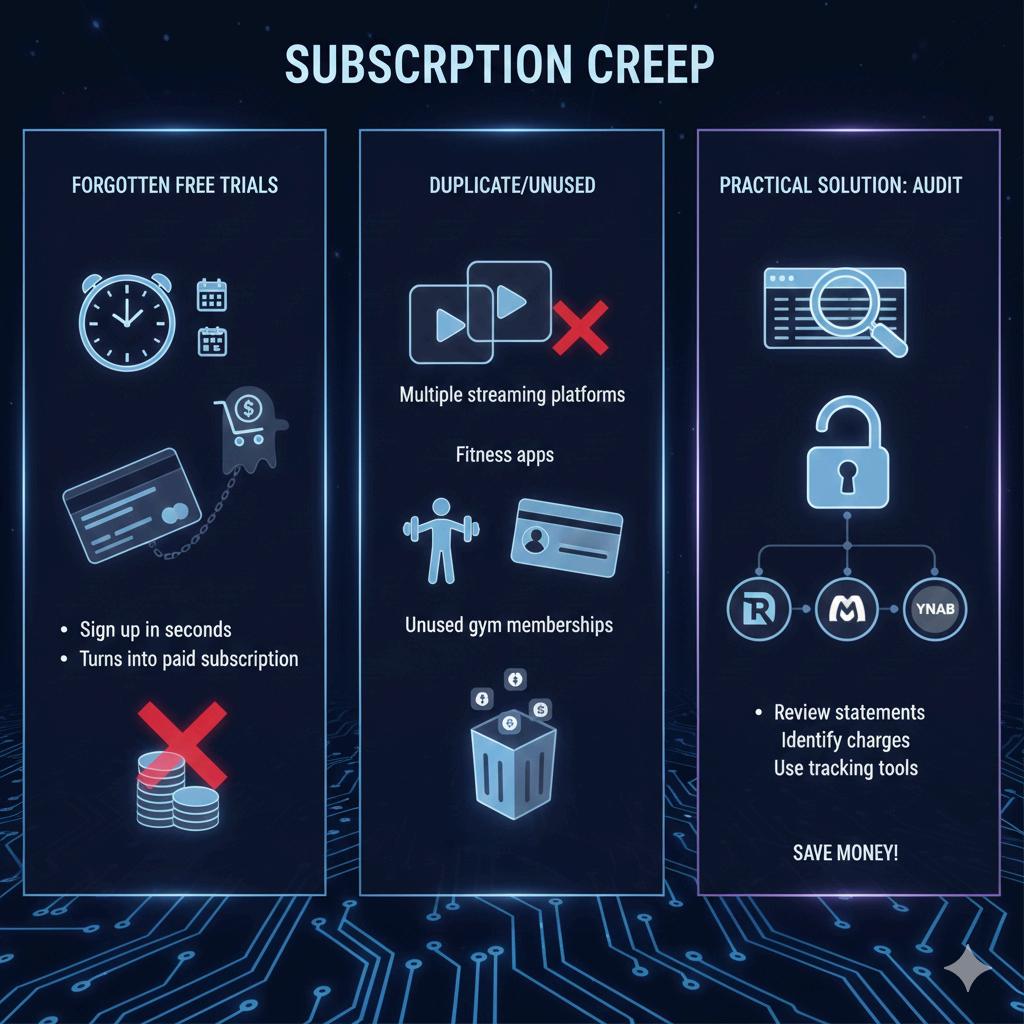
Duplicate or Unused Subscriptions
People often pay for multiple similar services or subscriptions they rarely use:
● Multiple streaming platforms
● Fitness apps alongside unused gym memberships
● Software tools no longer needed
Paying for unused services is like paying for something you never consume.
Practical Solution: Subscription Audit
Conduct a thorough subscription audit:
● Review bank and credit card statements for the past year
● Search emails for keywords like “subscription,” “renewal,” or “membership”
● Identify every recurring charge
Tools such as Chargeback Subscription Manager App, Rocket Money, Mint, and YNAB can help track subscriptions automatically and highlight recurring expenses.

Money Mistake #2: Hidden Fees
Hidden fees are unexpected extra charges that increase the real cost of services. They often appear after purchase and may not be clearly disclosed.
Understanding “Junk Fees”
These fees can include:
● Hotel resort fees
● Ticket processing charges
● Food delivery service fees
They make advertised prices look lower while increasing the actual cost.

Hidden Charges in Subscriptions
Even subscription services may include:
● Data overage fees
● Premium feature add-ons
● Regional surcharges
Individually small, these charges can accumulate into substantial expenses.
How to Fight Hidden Fees
Stay vigilant:
● Check every line item on statements
● Question unfamiliar charges immediately
● Contact customer support politely but firmly
● Request removal if fees seem unfair
If unresolved, U.S. consumers can contact the Federal Trade Commission or Consumer Financial Protection Bureau regarding deceptive billing practices.
Money Mistake #3: Hard-to-Cancel Services
Some companies intentionally complicate cancellations to reduce customer loss.
Cancellation Mazes
Common obstacles include:
● Hidden cancellation options
● Multiple confirmation steps
● Required phone calls during limited hours
These tactics can discourage cancellation attempts.
Auto-Renewal Traps
Many subscriptions renew automatically unless canceled. Lack of clear renewal notifications can result in unexpected charges.
Effective Cancellation Strategies
● Review cancellation terms carefully
● Search directly for cancellation instructions
● Use multiple channels (chat, email, phone)
● Stay firm and avoid unnecessary upsells
Using virtual credit cards for free trials can also prevent unexpected charges.
Broader Financial Habits That Matter
Subscription problems often stem from general money habits.
Not Reviewing Statements Regularly
Regular financial review helps detect:
● Forgotten direct debits
● Hidden charges
● Fraudulent transactions
Checking accounts weekly can prevent long-term financial leakage.
Lack of a Clear Budget
A budget clarifies where money goes. It helps prioritize savings, control expenses, and identify unnecessary spending.
Budgeting is not restriction, it is financial control.
Ignoring Small Charges
Small recurring payments may seem insignificant, but collectively they can cost hundreds annually. Awareness of minor expenses greatly improves financial health.
Smart Financial Habits for Long-Term Stability
Regular Financial Checkups
Schedule monthly or quarterly reviews to:
● Assess spending patterns
● Check savings progress
● Review credit and investments
● Adjust financial goals
Consistent monitoring keeps finances on track.
Build an Emergency Fund
Unexpected events like medical emergencies, job loss, or repairs can strain finances. Aim to save three to six months of essential expenses to avoid debt during emergencies.
Prioritize Savings
Make savings intentional:
● Set clear financial goals
● Automate savings transfers
● Treat savings as a fixed expense
Automation ensures consistent progress toward financial security.
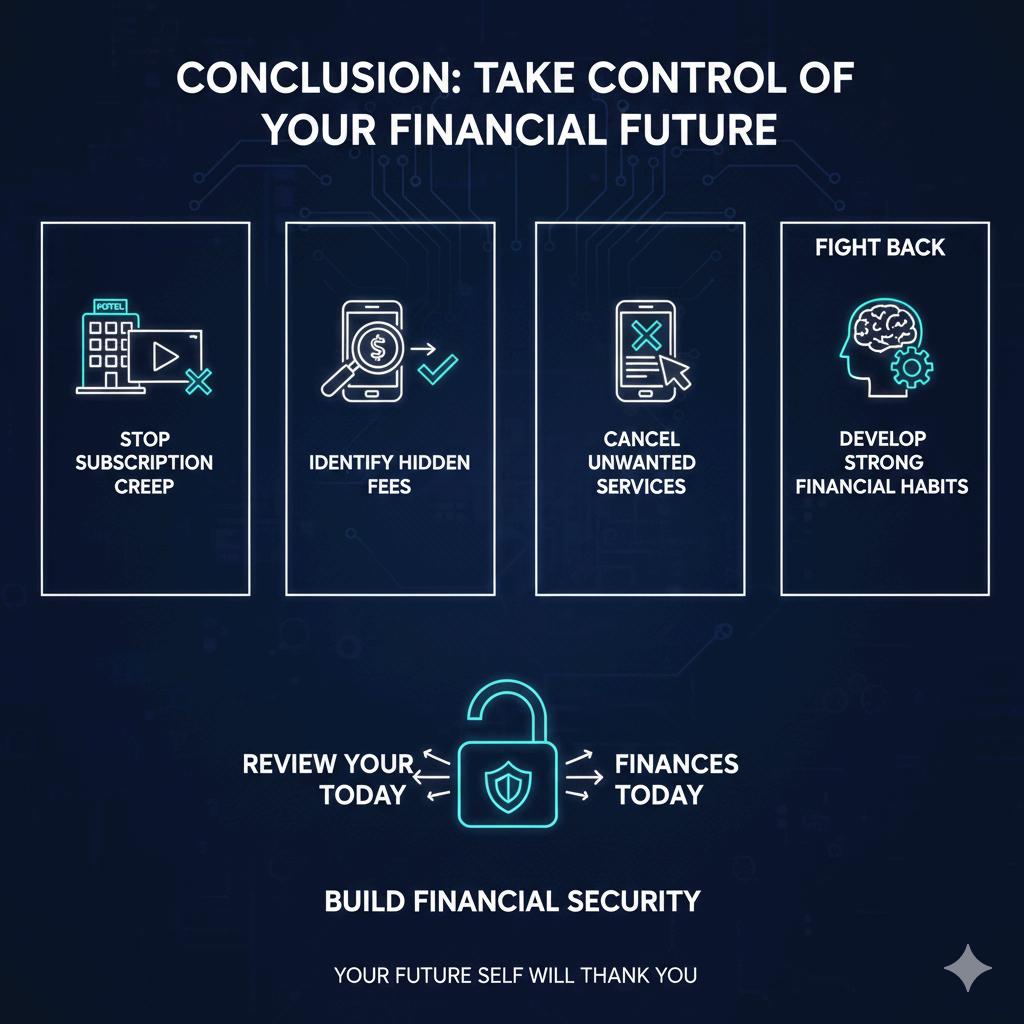
Conclusion: Take Control of Your Financial Future
You now have the knowledge to:
● Stop subscription creep
● Identify hidden fees
● Cancel unwanted services effectively
● Develop strong financial habits
Do not let overlooked recurring charges or auto-renewal traps drain your money any longer. Start reviewing your finances today and build the financial security you deserve. Your future self will thank you.