How have historiographical portrayals of the major events of the Third Crusade (1187-92) changed over time?
By Darcy G
Note- It is important to consider that the historiographical positions I am going to evaluate in this essay are both written from a highly westernised perspective by historians from Christian backgrounds who, whilst not necessarily religious, will have been impacted by a societal position different to Arabic historians, with an assumedly more Islamic influence in their society. This is due to an inavailability of historical writing from an Arabic or Muslim perspective that is translated in English and easily accessible. This difference would have been furthered by the available contemporary sources, those written by the Church would have differed greatly than those written by Arabic scholars. Therefore there are limitations even to examining the change in western historiography and seeking to understand more about the information that can be gained from writings that have been created in an environment in which history is more accessible and takes into account more views and sources, as this does not provide any insight into writings from the other side of the conflicts.
The Crusades: the series of wars between European Christians, known as Franks, and Muslims over control and influence in Syria, Palestine and surrounding territories starting in 1095 and commonly accepted as finishing in 1221, present a rich history of military tactics
and diplomacy, yet also religion and culture. The period of wars known as the Third Crusade began in 1187 after the Frankish defeat by Saladin, the founder of the Ayyubid dynasty and unifier of Egypt, Damascus and all of Muslimheld Syria under a single authority, at the Battle of Hattin. Hattin caused another wave of preaching and calls to arms in Europe and caused the raising of armies by royals including Phillip II of France, the Holy Roman Emperor Frederick Barbarossa and Richard the Lionheart of England. With Frederick Barbarossa dying in transit and Phillip II returning to France almost immediately following the first major success of the crusade, Richard the Lionheart has become the most venerated leader of the Third Crusade and the entire conflict has been boiled down to a head to head between ‘mortal enemies’ Richard the Lionheart and Saladin.
Over time, the recording and presenting of these events, specifically the 1187 Battle of Hattin and the 1189-91 Siege of Acre has changed drastically. Due to the inherently religious nature of the conflicts and subsequent continuation of religious prejudices, alongside the fact that much of early scholarship was carried out by those who were educated in the Church, crusading historiography has been influenced by motivations to present Christians as righteous and fighting for
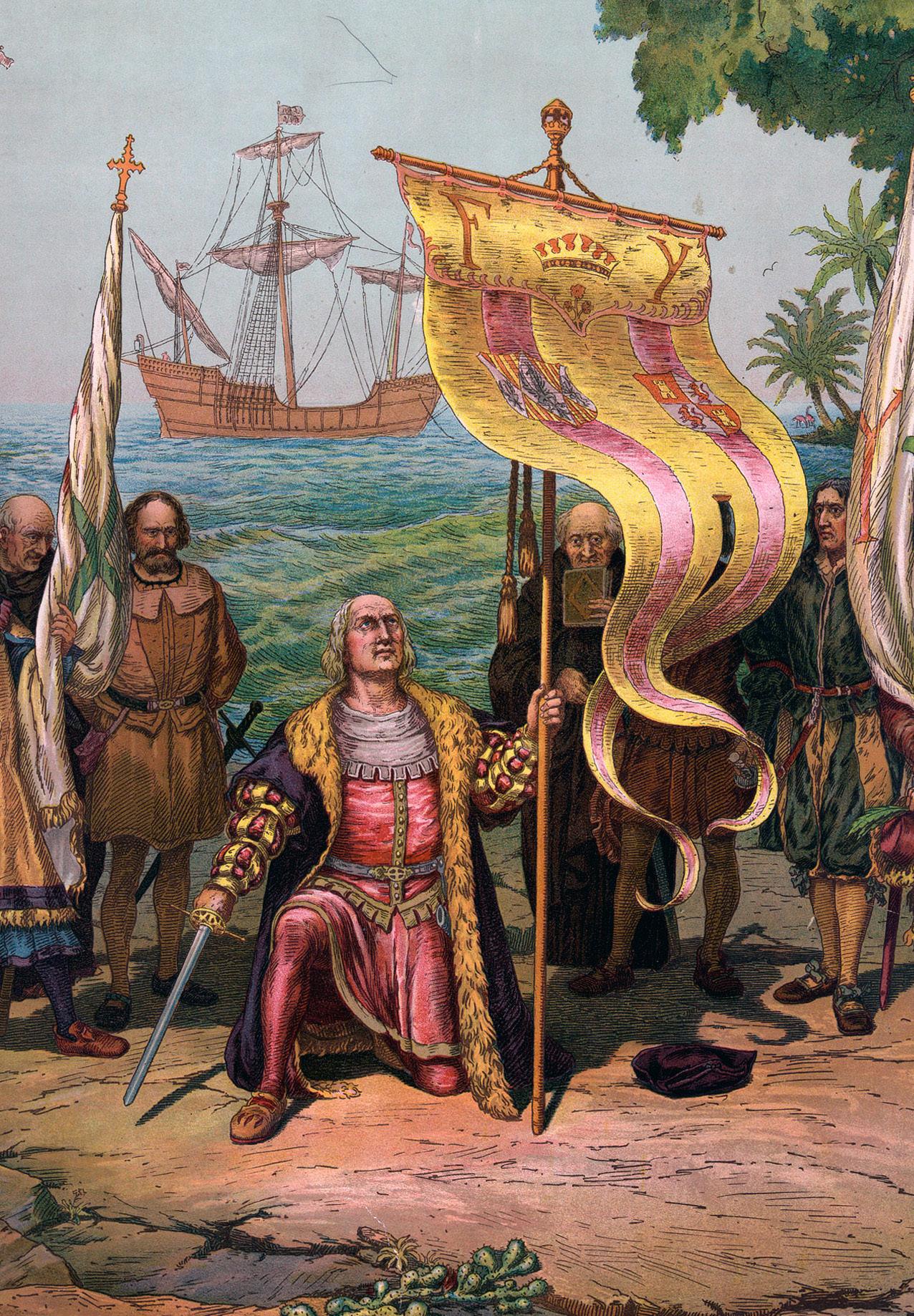
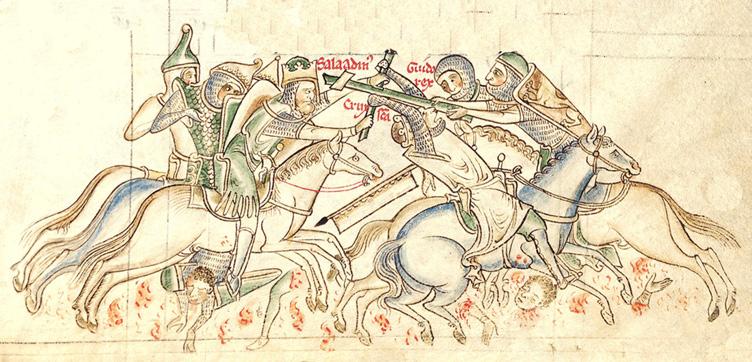
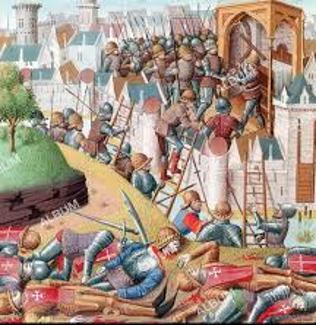
a holy cause, having started from an era of ‘medieval piety’ 1 in Christian historical writings. Additionally, throughout the history of medieval scholarship, ‘It was the mark of a skilled writer and great scholar to include references and motifs from Virgil, Ovid, Homer and Horace in their histories and thus history became blurred with myth’ 2. This has bred an orthodox interpretation of these events that can be argued as one sided and panegyrical. This is primarily exemplified by Joseph Francois Michaud’s ‘Histoire des Croisades’ published in 1840, which will be further examined. Publishing in the 19th century when the development of academic history and focus on fact and empiricism is emerging, Michaud displays a mix of this and narrative historical tradition in recounting the Crusades, therefore it can be evaluated that his work lacks a balanced presentation of the conflicts. Additionally, considering his background as a French royalist, aligning securely with the Catholic church and opposing enlightenment and growing secular ideas, Michaud’s ‘Histoire’ is arguably influenced by both contemporary limiting trends in historical writing and the cultural influence of religion. However, more recent revisionist interpretations of the crusades have managed to escape the same extent of theological influence (and narrative pitfalls of creative licence in chronicling), yet are still undeniably impacted by the inescapable image of the Crusades in the western collective consciousness as legendary tales of medieval knights and bloodshed (Fig 1.) rather than international wars with complex diplomatic negotiations behind the scenes. These newer histories, written by various historians, including Thomas Asbridge but also, most notably, Stephen Runciman, who published an exhaustive 3 volume ‘History of the Crusades’ throughout the 1950s, present more balanced views of the conflicts and therefore can be used as a demonstrative example of revisionist perspectives on the Crusades. These are focused on a more critical examination of the
Frankish Christians and have adopted what has been known as a ‘Byzantist shift’, portraying the Eastern Christians in a more sympathetic way, focusing on them as victims of Frankish invasion. This is perhaps influenced by Runciman’s own studies closer to Outremer and the opposing side of the conflict, holding a job as a professor of Byzantine Art and History at the University of Istanbul during the 1940s; the joint influences of location of study and the emerging revisionist historiographical trend that came about following the disillusionment with the idea of perpetual progress created by the World Wars of the first half of the 20th century invited a new lens on the medieval ‘World War’ that was the Crusades. Additionally they present Muslims and Saladin in a far more humanising way and question the historically perpetuated character of Richard the Lionheart as the ultimate noble warrior king.
The Battle of Hattin in 1187 was the event that acted as the major catalyst for the Third Crusade, as this was when Saladin’s unified Muslim forces began to directly threaten Outremer (the collective name for the four crusader-established states, Jerusalem, Antioch, Edessa and Tripoli). The presentation of this event by Joseph Francois Michaud in ‘Histoire des Croisades’ adheres to the orthodox view of the conflict between Saladin and the Franks, this view is majorly characterised by its top-down perspective and lack of nuanced presentation of either side of the conflict, especially in the portrayal of Saladin almost as a comic villain.
1 J.L. La Monte, 1940, ‘Some problems in Crusading Historiography’
2 K. Pangonis, 2022, ‘Queens of Jerusalem’, P154
Fig 1. - 13th century CE illustration Chronica majora showing a scene from the Battle of Hattin in 1187 CE. On the left is the Muslim leader Saladin who faces and takes from King Guy of Jerusalem the True Cross. (Corpus Christi College, Cambridge, UK)
The way in which Michaud analyses facts such as the previous unification of many MuslimSyrian cities under the Ayyubid dynasty, Saladin’s family and supporters, who had taken over from the previous Fatimid rule in Egypt and a Syria that was severely divided between different denominations of Islam, ignores Saladin’s key strength of diplomacy; something that is seen through the taking power of Damascus without military support and his later truce with Richard the Lionheart following the Siege of Acre. Michaud writes; ‘Mossoul, Aleppo, and all the Mussulman cities of Syria and Mesopotamia, had submitted to the power of Saladin.’ 3. The idea of submission is one that suggests military force, when in reality, Saladin took cities such as the strategic and religious stronghold of Damascus through diplomatic agreements alone. This view of Saladin as a tyrant is one that is likely permeated due to it fitting well with the wider narrative of the Crusades that is pursued by orthodox history, a narrative that emphasises the righteousness of Frankish crusaders in their quest ordained by God. On a wider scale, this can be seen as symptomatic of the progression of French colonial tradition and its impact on othering the East in western thought, supported by Said’s concept of Orientalism 4, reducing the Ayyubid societal and military function to a singular and simple force representative of barbarity and sin. This idea is also perpetuated by the Crusader novels of Sir Walter Scott, a contemporary of Michaud, published in 1825. This is especially true in Scott’s novel ‘Talisman’ 5 that follows the English Sir Kenneth as a knight in the Third Crusade. Furthermore, in ‘Histoire des Croisades’, Michaud dedicates over five pages to describing the glory of Christian soldiers in battle, yet merely one paragraph to conclude the battle was ultimately a loss; continuously spotlighting crusader courage and virtue, for example ‘nothing could equal the heroic valour of Jacques de Maillé, a knight of the Temple.
Mounted on a white horse, he remained alone in the field of battle, and fought on, surrounded by heaps of slain.’6. This reflects adherence to a wider narrative of western tradition to venerate the Frankish Christian crusaders as saintly, describing knights as martyrs and only providing a limited, top down view of the opposing Muslim forces through the villainised persona of Saladin. Overall, Michaud’s ‘Histoire’ reflects a traditional historical approach to presenting the Battle of Hattin, this can primarily be identified through the lack of focus on political agreements or actions of Muslims other than purely military aggression, only presenting brave Crusader knights positively. This is ultimately a limiting view of the Battle since key causes and events leading to the Muslim victory, capturing both the True Cross and Guy of Lusignan, the King of Jerusalem at the time, are boiled down to barbarism rather than explained in detail, reflecting the strategic strengths of Muslim
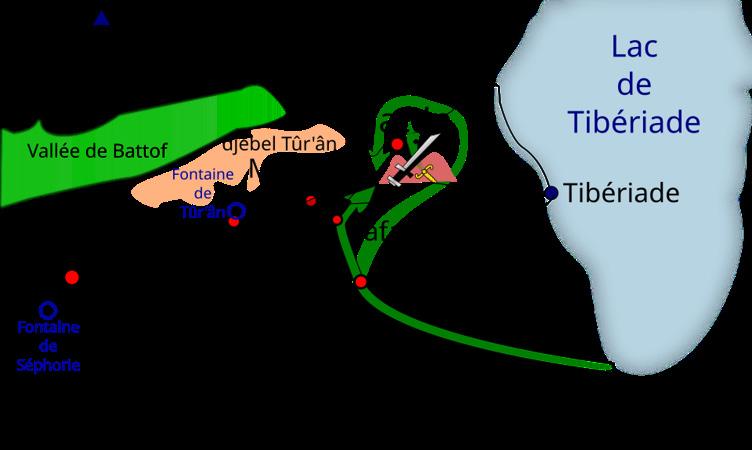
2. - The Battle of Hattin Movement of troops to the battle (Crusader Kingdom of Jerusalem in black and Muslim in green ). Fontaine- ( Spring ). Djebel- ( Mount ). Tiberiade- ( Tiberias ). Lac de Tiberiade( Lake Tiberias ). Cafsarsset- ( Kafr Sabt ).
forces that the Christians lacked.
Contrastingly, more recent historical writing such as that of Asbridge’s ‘The Crusades’ (2010) aims to democratise retelling of the Crusades, since chapters in the book shift perspectives from the Christian side to the Muslim side. Therefore, by placing the Battle of Hattin in ‘Part II; The Response of Islam’, Asbridge directly challenges a traditional
3 Michaud, 1840, ‘Histoire des Croisades’, P415
4 Said, 1978, ‘Orientalism’, Penguin Modern Classics, P3
5 Scott, 1825, Edinburgh University Press ‘Talisman’
6 Michaud, 1840, ‘Histoire des Croisades’, P416
Fig
and Christian centric view, describing it as a ‘stunning victory’ 7 , of course for Saladin’s troops. The positive view of the Muslim victory over the Frankish Christians demonstrates how Asbridge’s interpretation is less one sided and aims to acknowledge the successes and failures of the opposing powers throughout the Crusades, therefore leading us to believe it is more representative of the reality of the events, that took place; the ambush of King Guy’s troops by Saladin’s skirmishers on their way to the nearest source of water, Tiberias, near the Horns of Hattin; when the Crusader troops were unable to set up camp to regroup and Guy was captured by Saladin, corroborated both by William of Tyre and Masalik al-absar fi mamalik’s contemporary accounts 8. Considering it being written within a more recent context wherein more evidence is available for historians and a decrease in religious influence on general thought, allowing us to view holy wars from an arguably more objective perspective.
This reflects Asbridge’s historiographical approach as part of the 21st century movement away from narrative history and rejection of meta-narratives and instead taking on a more balanced view, possibly also accounting for a societal landscape that is working against diminutive views of the East, prompted by postcolonial ideas. A more objective and revisionist interpretation of the Battle of Hattin is further shown by Asbridge’s description of the True Cross (Fig 3.), a relic that was believed to be a part of Christ’s crucifix from the Church of the Holy Sepulchre, that had been a prominent symbol for the Crusades since the capture of Jerusalem in 1099 and was stolen from Guy de Lusignan’s tent during the Ayyubid offensive against the Frankish Christians. Unlike Michaud, who uses the True Cross as a vehicle to praise the military resilience of the Franks; ‘The knights of the Temple and St. John performed prodigies of valour, and fought until the close
of day, rallying round the wood of the true cross.’ 9, Asbridge focuses on the symbolic value of the relic, stating ‘when the true cross was captured the last shreds of Christian resistance crumbled’ 10 , and therefore focusing on the binding belief that led the Frankish Christians, whilst opposing this with the denominationally religiously divided Muslim forces who were able to win the battle through military strategy. Asbridge highlights the importance of the material contributors and victories of the Crusades over the ideological/religious beliefs that bred the conflicts; perhaps this can be attributed to writing in more recent years in which religion has less of a hold on society and academia, as modern history is no longer primarily funded by the Church or majorly religious educational institutions; the reduction of pressure to present certain groups as virtuous over others has allowed a modern interpretation of the Battle of Hattin that recognises both the wrongdoings and successes of both sides. Therefore, it can provide a more objective view, built not upon the idea that Christianity is the ultimate force for good throughout history, but from an aim to examine the mechanics of diplomacy and warfare and the impacts of the conflict on either side.
Overall, the differences in orthodox and modern interpretations of the Battle of Hattin can be summarised by the extent to which the Frankish Christians are venerated and presented as saintly, with modern interpretations giving a more egalitarian perspective of both sides of the conflict as opposed to the arguably limited orthodox interpretation that focuses more on the Christians. This is demonstrated by Michaud’s continued laudatory description of the Christian soldiers and knights despite their military losses and its contrast to Asbridge’s examination of the aspects of Christian tactics that caused the loss, which allows him to present a more accurate account of the battle. Arguably, Asbridge’s interpretation is more
7 T. Asbridge, 2010, ‘The Crusades: The War for the Holy Land’, P363
8 William of Tyre’s ‘Old French Continuation’, Masalik al-absar fi mamalik, 1187
9 Michaud, 1840, ‘Histoire des Croisades’, P423
10 T. Asbridge, 2010, ‘The Crusades: The War for the Holy Land’, P351
useful to historians due to the more balanced view of the Battle of Hattin which therefore provides greater context for the events of the Third Crusade that followed, as it represents the extent of Christian loss that was severe enough to prompt the preaching of a Third Crusade in Europe and attracted figures such as Richard the Lionheart who would play vital roles in the subsequent events in Outremer and become emblematic of the entire Crusading period.
The Siege of Acre in 1191, in particular after the arrival of Richard I of England, better known as Richard the Lionheart, whose military strategy and triumphant success in the siege has made him one of the most famous figures in the Crusades. The sieging of Acre had begun in 1189 under Guy de Lusignan, aiming to retake the key port city back from Saladin, who had invaded following other successes of 1187 including Hattin and the subsequent invasion of Jerusalem, an event that further incensed the preaching of the Third Crusade in Europe. However, the first two years of siege were defined by small skirmishes between Franks camped outside the city, who were suffering from famine and Muslim soldiers garrisoned inside. It was not until the arrival of Richard the
blockade was established, preventing resources being supplied by other Muslim troops up the coast out of Ascalon and Damietta in Egypt and any significant movement towards success was made. Eventually, by the end of 1191, the reinforcements of soldiers and siege towers that had been transported in ships had tipped the siege in favour of the Christians and Richard the Lionheart arranged a deal with Saladin that he would renounce Acre alongside paying a sum of 200,000 dinars and returning the True Cross.
The siege has been written about much more than the Battle of Hattin, likely due to the fact it was an example of Christian victory, wherein the Crusaders, led by Richard the Lionheart successfully retook Acre from Saladin’s occupation for the past 5 years and regained their most prominent port for both strategic and trade means, becoming the capital of the Kingdom of Jerusalem for the rest of the Crusader period. Therefore, it is more likely to have produced surviving accounts accessible to western historiographical tradition through both preservation and ease of language, and the historical motive of the Church to emphasise the Crusades as a mission ordained by God, something that has then disseminated into western collective consciousness and subsequently affected the histories written of the Crusades to this day. The orthodox view of the Siege of Acre is similar to that of the Battle of Hattin, demonstrated further by Michaud. ‘Histoire des Croisades’ continues to be critical of Saladin, stating he ‘shared the disgrace of this barbarity by thus abandoning his bravest and most faithful warriors.’ 11, when describing his personal retreat from Acre when resources ran thin due to the blockade, ignoring the importance played by diplomacy in the end of the siege. Furthermore, this criticism of allowing unnecessary deaths is not extended to Frankish leaders such as Richard the Lionheart, who massacred 3,000 Muslim hostages (who had been promised to be returned to Saladin as part of the agreement letting the Franks retake Acre) outside the city following the Frankish takeover,
Lionheart and Phillip II of France that a naval
11 Michaud, 1840, ‘Histoire des Croisades’, P441
Fig 3. - Loss of the True Cross, 1187
something that is not mentioned in Michaud’s account, but described by Runciman who states ‘His [Richard the Lionheart’s] soldiers gave themselves eagerly to the task of butchery, thanking God’ 12 , reflecting Michaud’s clear agenda to present Richard the Lionheart as far more moral than the facts would corroborate.
Stephen Runciman’s account of the Siege adheres more to a modern revisionist view, and fits with the general theme of ‘Byzantist shift’ that can be identified across all three volumes he wrote covering the entire period of the Crusades from 1095 extending into the 13th century. This perspective is particularly revisionist due to its aim to contextualise and write back against the over-veneration and unconditional praise of the Frankish Christians by focusing on the impacts had on Eastern Christians and aiming to portray the Muslim forces on an equal standing. Runciman’s book ‘The Third Crusade’ gives much more attention to detail into the politics of Muslim division and the instability of the existing situation for the Jerusalem monarchy at the beginning of the Third Crusade. Therefore contextualising the conditions that caused Saladin’s armies to succeed at Hattin, Jerusalem and Acre in 1187-9. Runciman aims to portray Saladin as a master diplomat and focuses on his gain of influence over Damascus being done without military force, he also focuses much more on negotiations throughout his account and in this case, presents military action as a last resort. This portrayal of Saladin is encapsulated in Runciman’s assertion; ‘His officers had made the treaty in his name and as a man of honour he abode by it’ 13 on the surrender of Acre. Ultimately, this presentation of Saladin is opposed to that of Michaud due to its more sympathetic nature and focus on positive qualities such as diplomacy, which, unlike Michaud, place Saladin on the same plane of ability as the Christian Franks, not overvenerating or dehumanising either side of the
conflict. Additionally, Runciman challenges the traditional view of Richard the Lionheart by highlighting the ‘frivolous, leisurely and quarrelsome journey’ 14 that took Richard 2 years to reach Outremer from England, as it included stopping in Cyprus for a number of months to get married and waiting there, relying on Philip II of France who had already arrived to relieve the Frankish troops, suggesting Richard was not as determined and led by pure piety as is perpetuated by the majority of orthodox historical interpretations.
The differences in orthodox historiography and revisionist interpretations of the Siege of Acre mirror those of the differences in presentations of the Battle of Hattin, showing how overall, orthodox historians prioritise a positive portrayal of the frankish Christians opposed with negatively portrayed Muslim soldiers over accuracy and well-roundedness of the information provided, unlike modern historians. Runciman differs from Asbridge in regard to the focus on diplomacy and political context to provide a balanced view instead of close analysis of military tactics to explain causes of losses and victories. However, they both fundamentally differ from the conservative position of Michaud and provide a more balanced and accurate view of events during the Third Crusade, allowing for more valuable analysis that reflects the contemporary tensions between Christians and Muslims and causes of the conflicts. Among Runciman’s final reflections on the Crusades found at the end of his three volume exhaustive history of the crusades is the statement; ‘The historian as he gazes back across the centuries at their gallant story must find his admiration overcast by sorrow at the witness that it bears to the limitations of human nature’ 15. This can be read as a direct criticism of the orthodox viewpoint and emphasises his belief in the importance of interpreting the crusades as a serious conflict that reflects an overall failure of tolerance as
12 S. Runciman, 1954, ‘A History of the Crusades’, P53
13 S. Runciman, 1954, ‘A History of the Crusades’, P50
14 S. Runciman, 1954, ‘A History of the Crusades’, P34
15 S. Runciman, 1954, ‘A History of the Crusades’, P480
well as diplomacy, rather than a story of good vs evil in which the righteous are supported by God.
Ultimately the Battle of Hattin and Siege of Acre, alongside the other battles of the Third Crusade were largely inconsequential, with Saladin’s death due to what is believed to be an illness similar to typhoid in 1193 and Richard the Lionheart returning to England in 1194 to protect his position on the English throne, which was threatened by his brother John. Jerusalem remained in Muslim hands from 1187, Acre was captured in 1187 and then taken back by the Christians in 1192 and the situation in Outremer was not drastically changed. The major change was that of uniting Muslim Syria under Saladin and the Ayyubid dynasty, Saladin being succeeded by his brother Al-Adil, yet this did not change their position of hostility towards the Christians. It was not until 1202 that the Fourth Crusade aimed to retake Jerusalem, but this was led by Venetian merchants and the Doge Enrico Dandolo, called for by Pope Innocent III, therefore having little connection with any party involved in the Third Crusade. Having evaluated both orthodox and more contemporary and revisionist views of the Third Crusade, I can ultimately agree with the idea presented by Chevedden that historians accept views of the Crusades that match best with contemporary and their own political thoughts 16 , and would expand upon this by adding that the views would also match within the religious and geographical contexts influencing the societies they write history from. Therefore, modern and revisionist interpretations are more useful to historians as they lack the same level of religious agenda of older orthodox interpretations. Considering this, orthodox, presented in this study by Michaud and revisionist/modern presented by Runciman and Asbridge does not provide an extensive view of all historiography of the Crusades from these periods/schools of thought, yet the works analysed are reputable histories from each period.
Principally, historiographical analysis and presentations of the Crusades, particularly the Third Crusade, have changed alongside the development of the place of religion in society. The Church in particular, has gone from an institution with major influence on the thought of entire populations and a monopoly over education to losing this to the advance of secularism and rationalism. The developing purpose of history for academic purposes and displaying accurate depictions of events rather than primarily for influencing views of the winners and losers of history has also impacted Crusading historiography and created an area of scholarship that is more concerned with challenging a tradition where historians aim to spin the conflicts in their favour. It is for this reason that more modern histories are arguably more useful, as they are more commonly written with the primary aim of understanding contexts, causes and effects of historical events rather than manipulating them in favour of the context and perspective a historian is writing from.
Bibliography
Asbridge, Thomas. 2010. The Crusades: The War for the Holy Land. N.p.: Simon & Schuster, Limited. (Fig 3.) Artist, U. Loss of the True Cross https://www.album-online.com/detail/en/ MDkyZDI4MA/entitled-loss-true-cross-thirdcrusade-1189-was-attempt-by-alb3804068 (Fig 1.) Artist, U. (2018, October 25). The Battle of Hattin, 1187 CE. World History Encyclopedia https://www.worldhistory.org/image/9383/ the-battle-of-hattin-1187-ce/ (Fig 2.) Bernherzedited. 2007. “The Battle of Hattin.” Wikipedia. https://commons.wikimedia. org/wiki/File:Hattin-map-fr.svg .
Chevedden, Paul E. 2008. “The Islamic View and The Christian View of the Crusades; A New Synthesis.” History 93, no. 2 (April): 181-200. https://www.jstor.org/stable/24428429
La Monte, J. L. 1940. “Some Problems in Crusading Historiography.” Speculum 15, no. 1 (January): 57-75. https://www.jstor.org/stable/2849087
Michaud, Joseph F. 1840. L’Histoire des Croisades Vol. 3. 3 vols. N.p.: Gutenberg.org. https://www. gutenberg.org/files/49104/49104-h/49104-h. htm#Page_382
16 P. Chevedden, 2008, ‘The Islamic View and The Christian View of the Crusades; A New Synthesis.’
Pangonis, Katherine. 2022. Queens of Jerusalem: The Women Who Dared to Rule. N.p.: Orion Publishing Group, Limited.
Peter, DRM 2014. “The Battle of Hattin (1187): Four Accounts” https://deremilitari.org/2014/01/ the-battle-of-hattin-1187-four-accounts/ Runciman, Steven. 1954. A History of the Crusades N.p.: Penguin.
Said, Edward W. 2003. Orientalism. Penguin Modern Classics. London, England: Penguin Classics. Scott, Walter. 1825. The Talisman. Edited by J. B. Ellis, John B. Ellis, and David Hewitt. N.p.: Edinburgh University Press.
Why can the South African Border War and Angolan Civil War be regarded as proxy wars for Cold War ideology?
1966-1988
By Nina F
Abstract
It is commonly understood that the Cold War affected international foreign policy, nuclear regulation and diplomacy to a considerable degree. However, what goes largely unaccounted for are the ways in which this ideological struggle between the two superpowers permeated into Southern African civil unrest, catalysing existing conflicts. The limited availability of historians’ interpretations on this subject further exemplifies the lack of public knowledge regarding these wars and their place in the wider Cold War conflict.
Apartheid (time apart) - Policy of racial segregation under an all-white minority government in South Africa during the years 1948-94.
Détente (relaxation) - A period of improved relations between the United States and the Soviet Union from the late 1960s to the late 1970s, aiming to ease Cold War tensions and lower the risk of nuclear war.
FNLA - Frente Nacional de Libertação de Angola
Guerilla warfare - Engagement or activities involved in a war fought by small groups of irregular soldiers against usually larger, regular forces.
MPLA - Movimento Popular de Libertação de Angola
Proxy war - A war fought between states that are not themselves officially involved.
Rooi gevaar (red peril) - Apartheid’s propaganda rhetoric for the ‘threat’ of communism.
Scramble for Africa - Invasion and colonisation of the majority of the African continent by seven major Western European nations in the 19th and early 20th centuries.
Swart gevaar (black peril) - Apartheid’s propaganda rhetoric for the ‘threat’ of black African nationalism.
UNITA - União Nacional para a Independência Total de Angola
Following the end of WWII in May 1945, tensions between the allied United States and the Soviet Union escalated. The Truman Doctrine of March 1947 instigated the United States’ policy of containment, a strategy employed in an attempt to limit the global spread of communism. In the wake of the Berlin Blockade in 1948, the Soviet Union developed the ‘Iron Curtain’, which led to the installation of Soviet satellite governments in Eastern Europe, East Germany and North Korea. April 1949 saw the creation of NATO, signed by the United States, France, Britain, Canada and eight other Western European countries, which was rivalled by the Soviets’ 1955 Warsaw Pact. The 1950s endured the outbreak and stalemate of the Korean War, as well the emergence of the Space Race with Sputnik’s launch in 1957. The Berlin Wall was built in 1961, and by the beginning of the South African Border War in 1966, the United States had deployed over 385,000 troops in South Vietnam. 1
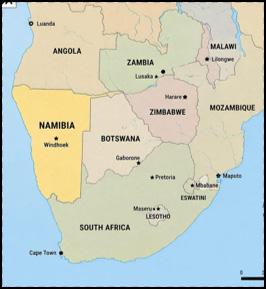
Namibia became a German colony in 1884 during the Scramble for Africa and was given the name German South West Africa. After WWI and the Treaty of Versailles, Germany was forced to renounce its colonial territories; Namibia fell under the trusteeship of South Africa, which retitled the country South West Africa. From the 1920s to the mid-1960s, there were multiple unsuccessful annexation attempts made by Pretoria over Namibia, and despite these failed acquisitions, the alienating policies of apartheid were felt widely across the country. The South African Border War (alternatively known as the Namibian War of Independence) began with the outbreak of guerrilla warfare in northern Namibia in August 1966, conducted by cadres of the People’s Liberation Army of Namibia (PLAN), backed by South West Africa’s People Organisation (SWAPO). In October 1966, as the SADF (South African Defence Force) began to retaliate against the guerrilla insurgencies, the UN General Assembly revoked South Africa’s
mandate over Namibia, further fuelling rising Namibian anti-South African sentiment. 2 By 1970, SWAPO militias had formed across the country and began to instigate a meticulous guerrilla campaign, with a particular focus on mine warfare. On the Namibian-Angolan border, unrest was particularly prevalent, leading to cooperation between the SADF and Portuguese militias; SWAPO was blamed for the violence.
Regarding Angolan borders, Portuguese colonialism arrived in the late 15th century, and between the 17th and 18th centuries, Angola acted as a significant Portuguese trading point for enslaved people. 3 In 1975, Lisbon renounced its colony following the thirteenyear-long Angolan War of Independence, signalling the end of official European imperialism in the African continent. The war for independence had split Angola into three political guerrilla factions: the Popular Movement for the Liberation of Angola (MPLA), the National Front for the Liberation of Angola (FNLA) and the National Union for the Total Independence of Angola (UNITA, an offshoot of the FNLA). Each represented one of the major ethnic groups within the country, and had fought during the war not only against the Portuguese, but also against each other to discern who would lead post-independence. 2 The MPLA, formed in 1956 as an offshoot of the Angolan Communist Party, was supported by Cuba, the Soviet Union and other African countries. The right-wing FNLA, founded in 1962, had backing from the government of Zaire (now the Democratic Republic of the Congo) and briefly from the People’s Republic of China. UNITA was created in 1966 by prominent former leader of the FNLA, Jonas Savimbi; though geographically fragmented, UNITA enjoyed the largest support base across Angola. Both the FNLA and UNITA enjoyed American aid, as the Ford administration feared the scope of Soviet influence through its support of the MPLA. The loss of Portuguese
1 “The Vietnam War,” Digital History
2 Nuclear Museum, “Proxy Wars During the Cold War: Africa,” Atomic Heritage Foundation
3 David Richardson, “The Portuguese Slave Trade From Angola,” Journal of African History , 137.
presence in Angola was a significant blow for Pretoria, 4 who feared that the country would become a point of leverage for SWAPO operations in Namibia. As the MPLA had openly criticised the apartheid regime, Pretoria also resorted to supporting the FNLA and UNITA through the dispatch of arms.
Angola was removed from Portuguese jurisdiction in January 1975 through the Alvor Agreement, which provided the blueprint for a three-way coalition government; regardless, UNITA formally declared war on the MPLA on August 1st. Following skirmishes surrounding the Calueque dam, a major supplier of water and electricity to South Africa, Pretoria gained the mandate to pursue military action in Angola, 4 through the form of Operation Savannah. From October, the operation pushed the MPLA away from their strongholds on the southern border and in the central region, in the end leading to the SADF capture of Luanda, the Angolan capital. Though initially successful, the political fallout of Operation Savannah put immense pressure on the United States due to it being damaging for Washington’s image to be publicly supporting its anti-communist ally. Cuba’s Fidel Castro directed Cuban Special Forces to intercept the South African advancement in the capital, alongside Soviet advisors, which successfully drew attention to the fact that the United States had been assisting the SADF, although Washington downplayed their connection. 5
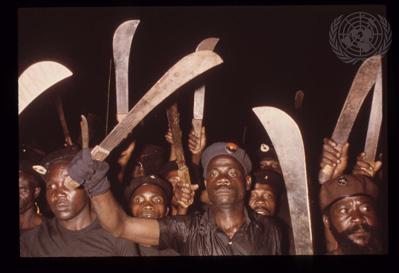
Marchers in Luanda demonstrating their support for the MPLA on the day of independence, 11/11/1975 6
In July 1950, the Suppression of Communism Act came into effect in South Africa; the Communist Party of South Africa (CPSA) was banned, and the government gained the ability to ban publications and individuals who were accused of promoting the objectives of communism. Washington’s alliance with Pretoria had drawn criticism, with the United States’ influence having been directed to be ‘exerted subtly, by indirection over a period of time’. 7 The two countries maintained close economic ties as Western Bloc allies following WWII, with Pretoria selling uranium and dispatching fighter squads to Korea during the Korean War to sustain good relations; the overall nuclear threat of the Cold War pushed a weak apartheid South Africa to stay close to the anti-communist United States.8 The Soviet Union viewed a decolonised Africa as ideal to extend Soviet communist influence, 4 which pushed the United States to support South Africa’s actions in Namibia and Angola, despite seeking to perpetuate an image of distance.
P.W. Botha, who became South Africa’s Minister of Defence in 1966, deemed South African control over Namibia necessary, as Namibia acted as an effective barrier state between communism and South Africa. In accordance with Henry Kissinger’s theory of the ‘Domino Effect’, if Namibia fell to communism, then South Africa would be the next logical target. Furthermore, many black South Africans either sympathised or aligned themselves with MarxistLeninist ideologies; Pretoria’s guarantee of black oppression under apartheid was being put under threat. The propagandist nature of apartheid’s ‘rooi/swart gevaar’ rhetoric was used to justify the SADF’s involvement in Namibia, which escalated thanks to the supply of American artillery; the SADF was generally able to
4 Greg Beyer, “The South African Border War: Considered to Be South Africa’s ‘Vietnam,’” The Collector
5 Christopher Oghenerioborue Usiemure, “The Cold War in Africa: superpowers’ rivalry and proxy conflicts,” Asaba Review 1, no 1, 153.
6 “UN7539885,” UN Photo Digital Management System
7 Paul Rich, “United States Containment Policy, South Africa and the Apartheid Dilemma,” Review of International Studies 14, no 3, 180.
8 N.M. Van der Waag-Cowling, “South Africa and the Korean War, the Politics of Involvement,” Scientia Militaria 44, no 1, 224.
overpower the combined forces of the PLAN,
SWAPO formed close alliances with the Soviet Union throughout the 1970s, with many crediting the eventual success of SWAPO to the Soviets. 10 The PLAN soldiers were provided with military equipment and training from the Soviet Union; in December 1974, SWAPO’s President, Defence Minister and PLAN Commander visited Moscow. The result was for a group of 16 Soviet military experts to set off for Luanda, to establish the Tobias Hainyenko Military Training Centre, established in December 1976. SWAPO units in Angola were subsequently supported by Soviet officers, with their training programmes being based on the Soviet model of guerrilla warfare. Despite Soviet support, the SADF overall inflicted far more losses than they received, with an estimated 11,000 killed over the course of the Border War. Over another decade of intense fighting within Angola concluded with 40,000 Cuban soldiers making their way down to the Namibian border in March 1988, threatening invasion with the rallied local soldiers. The risk of far greater SADF losses hastened Pretoria to sign the Tripartite Accords in December 1988, a UN peace treaty signed by Angola, South Africa and Cuba. Cuban troops were to
withdraw from the African continent, as with the SADF from Namibia; foreign intervention in the Angolan Civil War had subsequently been largely eradicated. Namibia was to hold free elections, with SWAPO becoming the governing party following Namibian independence in 1990.
During the course of the Angolan Civil War, the United States and the Soviet Union were experiencing a period known as détente, with Washington and Moscow signing numerous agreements to ease tensions. From an American perspective, the purpose of détente was to mollify the Soviet Union’s conduct in newly independent countries, and the events in Angola had compromised this. 4 The Ford administration held the belief that Cuba had been acting as a proxy in Angola for the Soviet Union, thus breaking the regulations of détente. Additionally, the American defeat in South Vietnam had weakened the United States’ faith in détente as a successful strategy for foreign policy even further; the administration was forced to sign the Clark Amendment in 1976, criminalising governmental input in the Angolan Civil War. This led to the total collapse of the FNLA, and thus exacerbated the already rising tensions between the United States and the Soviet Union. The collapse of the ‘first’ détente heightened suspicion between the two superpowers, which can be evidenced through the arms race by proxy between South Africa and Angola. 4 The SADF carried out a series of
9 Carol Hardijzer, “Forbidden Images (1960s to 1980s) - Illegal photographs captured by young men conscripted into the South African Military,” The Heritage Portal
10 “The USSR and SWAPO: Secret Mission in Angola (1977-1990),” Union of Angola Veterans , 2.
11 Alon Reininger, “UN7747096,” UN Photo Digital Management System
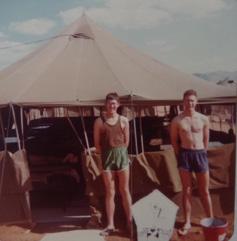
SADF conscripts in the Namibian capital, Windhoek, 1979 9
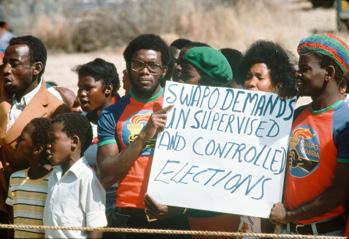
SWAPO supporters at a rally in Windhoek, 1978 11
victories against the MPLA and SWAPO deep within Angolan territory in the early 1980s; the MPLA heavily reinforced its reserves through the supply of Soviet arms. Pretoria and Washington bolstered a failing UNITA while the Soviet Union held up the MPLA and Cuban forces, but there were growing concerns over the inevitability of SADF success, notably from Washington itself. An indisputable turning point in the civil war was the siege of Cuito Cuanavale of 1987/8 in south-east Angola; the MPLA was directly supported by Cuban troops and indirectly by the Soviet Union, UNITA directly by SADF troops and indirectly by American funds. For Angola, the battle was to decide whether the MPLA or UNITA would gain ultimate control. For South Africa, it was to damage SWAPO in the hopes of concluding the Border War. The SADF and UNITA inflicted significant casualties on MPLA and Cuban forces; the MPLA supported itself against the SADF/UNTIA counteroffensive; both sides claimed victory. The battle highlighted the fact that the ageing South African Air Force was being far outclassed by the Soviet jets employed by the Cubans, which further aggravated public opposition within South Africa; this hastened the signing of the Tripartite Accords. The Angolan Civil War continued well after the end of the South African Border War and the end of apartheid, with the MPLA claiming victory in 2002 following the death of UNITA’s Jonas Savimbi. It is estimated that 500,000-800,000 people died in the war, with over a million being internally displaced.
Conclusion
There is merit to the suggestion that both the South African Border War and the Angolan Civil War were primarily political wars, instead of typical proxy wars for Cold War benefit. In the Border War, Pretoria’s primary concern was to stifle threats to the stability of the apartheid regime, encapsulated by SWAPO and the PLAN, alongside trying to defend its illegal occupation of Namibia. In the case of Angola, the political tensions between the three factions had been
present for far longer than the presence of Pretoria, Washington, Moscow or Havana. Regardless, the inevitability of civil unrest in both Namibia and Angola does not negate the question of the necessity for the Cold War-oriented agenda and involvement of the two superpowers. For Washington and the Reagan administration, it is entirely plausible that they viewed Cuba as operating as a Soviet proxy, encouraging a Cold War mentality; perpetuating the Americans’ belief that Castro’s presence in Angola was to spread Moscow’s version of socialism, instead of his own revolutionary ideals. Washington’s main priority, therefore, was to rid Angola of the Cubans, rather than to address the atrocities committed by its ally Pretoria in both Angola and Namibia. For the Soviet Union, its aid to the fellow Marxist-Leninist MPLA was out of the belief that the Soviets were the ultimate source of global revolution. However, like the United States, the Soviet Union also overestimated the MPLA’s appetite for Soviet socialism. It has been made evident that the MPLA sided with Moscow out of opportunity and not out of ideological similarity; the continued presence of Cuba prevented the Soviets from fully withdrawing their aid to the MPLA. For the Angolan Civil War, especially, if it had a complete proxy war, Cold War relations and détente would have been reflected continuously throughout the conflict. In the wake of the ‘second’ détente in the mid 1980s, Castro had no need to be fearful of American retaliation, and thus was able to threaten and wage war against the SADF and drive Pretoria out of Angola; had détente been properly observed, the wars would have been adequately de-escalated during this period of time. Neither the South African Border War nor the Angolan Civil War can therefore be regarded primarily as proxy wars for Cold War ideology, as the civil unrest in both Namibia and Angola was rooted in existing domestic political tensions. However, Washington and Moscow acted as catalysts, extending two largely forgotten wars which could have ended far more swiftly without
their involvement.
Bibliography
Beyer, Greg. 2022. “The South African Border War: Considered to Be South Africa’s ‘Vietnam.’” The Collector https://www.thecollector.com/ south-african-border-war-vietnam/ Hardijzer, Carol. 2019. “Forbidden Images (1960s to 1980s) - Illegal photographs captured by young men conscripted into the South African Military.” The Heritage Portal https://www. theheritageportal.co.za/article/forbidden-images1960s-1980s-illegal-photographs-capturedyoung-men-conscripted-south Oghenerioborue Usiemure, Christopher. 2024. “The Cold War in Africa: superpowers’ rivalry and proxy conflicts.” Asaba Review 1, no. 1 (February): 153
“Proxy Wars During the Cold War: Africa - Nuclear Museum.” 2018. Atomic Heritage Foundation https://ahf.nuclearmuseum.org/ahf/history/ proxy-wars-during-cold-war-africa/ Richardson, David. “The Portuguese Slave Trade from Angola.” Way of Death: Merchant Capitalism and the Angolan Slave Trade, 17301830, by Joseph C. Miller. The Journal of African History 32, no. 1 (1991): 137–39. http://www. jstor.org/stable/182582
Rich, Paul. 1988 “United States Containment Policy, South Africa and the Apartheid Dilemma.” https://www.jstor.org/stable/pdf/20097143.pdf
Union of Angola Veterans. The USSR and SWAPO: Secret Mission in Angola (1977-1990) https:// www.veteranangola.ru/getfile.php?file=/ upload/1578471709_FILE.pdf&name=USSR%20 and%20SWAPO
UN Photo Digital Management System. https://dam. media.un.org/archive/-2AM9LO3JSC60.html
Van der Waag-Cowling, N.M. 2016. “South Africa and the Korean War, the Politics of Involvement.” Scientia Militaria 44 (1): 224-237. https://journals.co.za/doi/pdf/10.5787/44-1-1171
The Vietnam War Digital History https:// www.digitalhistory.uh.edu/disp_textbook. cfm?smtid=2&psid=3469
No AI was used in the making of this article.
Crops, Coins and Catastrophe: How did the Columbian Exchange Shape Global Conflicts During the 17th Century General Crisis?
By Winnie D
“I saw neither sheep nor goats nor any other beast, but I have been here but a short time, half a day; yet if there were any I couldn’t have failed to see them. …There were dogs that never barked. …
All the trees were as different from ours as day from night, and so the fruits, the herbage, the rocks, and all things 1.
- Christopher Columbus, taken from the 12th October 1492 entry from his journals
The quote above is taken from the translated journals of Christopher Columbus, documenting his first impressions of the ‘New World’ on which he landed on the 12th October 1492. As illustrated by the quote, the term ‘New World’ used by the Spanish colonisers to describe the Americas is, while by no means justifiable, somewhat understandable. The foreignness of the new geographical landscape was unlike anything
Europeans had encountered in previous travels and did make it appear like an entirely new part of the world, accounting for the tones of awe, confusion and potentially even fear in the quotation above. This so called ‘discovery’ of the New World 2 and subsequent colonisation of it involved the exploitation of the indigenous population as labour as well as the exportation of a number of raw materials including food items such as sweet potatoes and maize, precious metals such as silver and goods such as tobacco 3, resulting in what historian Alfred W. Crosby first called ‘The Columbian exchange 4 ’. This refers to the exchange of animals, plants and diseases as well as the cultural exchange between the ‘Old World’ of Europe and Asia and the ‘New World’ of the Americas marking a transition into a geoconnected world which both created modern ways of life and destroyed centuries of pre-Columbian culture in the American
1 Columbus, Christopher. 1963. Journals and Other Documents on the Life and Voyages of Christopher Columbus . Translated by Samuel E. Morison. N.p.: Heritage Press.
2 For the sake of clarity, the ‘newly discovered land’ of the Americas will be referred to at the New World in this essay, although I would like to mention that the term is outdated with its association to the language of the colonisers as well as implication of the arrival of the Europeans marks the point at which this part of the world was first ‘born’ so to speak.
3 https://en.wikipedia.org/wiki/Columbian_exchange
4 Crosby, Alfred W. 2003. The Columbian exchange . N.p.: Bloomsbury Academic.
continents therefore “profoundly shap[ing] world history in the ensuing centuries 5 ”. The impact of the Columbian Exchange on the “ensuing centuries” is explored in this essay, most notably the impact of the exchange on global conflicts during a period labelled as the 17th Century General Crisis 6 ; a period in early modern history characterised by intense global conflict, political and economic instability encompassing events such as the climax of the Thirty Years War, the collapse of the Ming Dynasty and the English Civil War among a great number of other global conflicts and tensions. The mid-seventeenth century saw more cases of simultaneous state breakdown around the globe than any previous or subsequent age with the 16th and 17th centuries in Europe being considered “the most warlike in terms of the proportion of years under way (95 percent)”,while the high frequency of war meant that there was one nearly every three years in Europe 7
There is no agreed cause of the so-called 17th century general crisis, with historians having argued for several different factors. Geoffrey Parker, for example, has emphasised the significance of climate change to the social tensions of the crisis, while Eric Hobsbawm has argued that the crisis is fundamentally economic and social, attributing the social tensions to population growth and limited economic structures 8. Hugh Trevor Roper has suggested that the political conflict came from tensions between expanding centralised states and older aristocratic or regional elites 9. Some
historians, including Niels Steensgaard and Deonisio da Silva, have dismissed the notion of a connected global breakdown altogether, adopting a more nuanced perspective which emphasises the potential oversimplification of social breakdowns, presenting the crisis, if it can even be considered a crisis, as a loose connection of regional crises occurring at the same time rather than a connected global breakdown. However, the unusually high presence of global conflicts during this period10 cannot be ignored and, although not necessarily having one united cause, there are a collection of factors that contributed to the majority of global conflicts 11 in this period, most notably civil unrest as a result of food shortages and poor harvests as well as global economic changes resulting in the destabilisation of state finances on a broad, global scale.
But how, one may think, is it possible to connect a series of global conflicts, rebellions and tensions to the Colombian Exchange? In short, the global impacts of the exchange can be roughly divided into two categories, although there are several effects that fall outside of these two. The two categories considered in this essay are the direct, noneconomic impacts 12 that arose as a result of the availability of newly imported crops into Europe and Asia, which, when coupled with the ecological changes, shaped the progression of societies in both Europe and Asia, increasing population pressures and vulnerability to crises such as famine. As well as the economic consequences, particularly as a result of the
5 Rafferty, John P. 2026. “Columbian Exchange | Diseases, Animals, & Plants.” Britannica. https://www.britannica.com/ event/Columbian-exchange
6 The term ‘General Crisis’ is still subject to academic dispute among historians particularly regarding the causes and periodization of the crisis. British historian Hugh-Trevor Roper first explored how the term can be considered as referring to the wider crisis “in the relations between society and the State” while historian Geoffrey Parker expanded on Roper’s work, exploring how the crisis was exacerbated by global climate change rather than having purely socioeconomic causes.
7 Jack S. Levy, quoted in Geoffrey Parker, “Crisis and Catastrophe: The Global Crisis of the Seventeenth Century Reconsidered,” American Historical Review 113, no. 4 (2008):
8 Hobsbawm, Eric. “The General Crisis of the European Economy in the 17th Century.” Past & Presen t 5 (1954): 33–53.
9 Trevor-Roper, Hugh. “The General Crisis of the Seventeenth Century.” Past & Present 16 (1959): 31–64.
10 Jack S. Levy, quoted in Geoffrey Parker, “Crisis and Catastrophe: The Global Crisis of the Seventeenth Century Reconsidered,” American Historical Review 113, no. 4 (2008):
11 These conflicts include: The collapse of the Ming Dynasty, The Thirty Years War, The Irish Rebellion and the Spanish Crisis of 1557 among a number of other conflicts and riots that arose globally.
12 These range from a number of political, geographical and demographic impacts which had direct, social impacts on a global scale.
changes to the global silver trade and the formation of a more global and interconnected economy, contributing to a period of high inflation, sometimes referred to as the ‘Price Revolution 13 ’. Both of these factors together had adverse effects on Early Modern societies on a global scale, the instability in agricultural production in addition to the economic strain on local and national economies, contributed to the social tensions of the Early Modern world, which culminated in several global uprisings, rebellions and full-scale conflicts.
Section 1: Non-economic Impacts
Upon their arrival in the New World, the Spanish colonisers came into contact with a wide range of previously unfamiliar vegetation, perhaps most significantly: potatoes, maize, tomatoes, peppers and cassava. Despite the initial suspicion towards the food of the native population 14 , the Spanish were quick to begin the importation of a number of New World Crops into Europe, particularly to the European aristocracy. While the aristocracy shared the suspicion of the colonials, the poverty-stricken peasant population began to gradually accept the value of more calorifically dense produce and began to incorporate it into their diets. However, it would be inaccurate to frame this change in the diets of the peasantry as particularly rapid or widespread. As Crosby phrases, “ the mass of Europeans looked upon the potato with fear and contempt 15 .” and it only became a staple crop during the late 17th and 18th centuries, although the Irish began to adopt it earlier, becoming known as “mighty lovers of potatoes 16 .” by the 17th century. Although
the potato was adopted gradually, other crops, most notably maize, were adopted at a faster rate. Maize spread in popularity in the Southern half of the European continent, becoming a common peasant food by the 17th century. John Locke, in the south of France in the 1670s, observed “plots of Maiz in several parts, which the country people call bled d’Espagne, and, as they told me, serves the poor people for bred” 17 . In addition, many of the new crops have the benefit of requiring a completely different selection of nutrients to the crops native to the Old World, meaning that they could be cultivated in soil that had previously been deemed unfarmable, complementing the agriculture of Eurasia. Maize could “prosper in areas too dry for rice and too wet for wheat 18 ” while sweet potato has “unusually high yield—three to four times that of rice, for instance—and its resistance to drought and tolerance of poor soils make it a vitally important secondary crop throughout a wide band of the warmer lands.” 19 While the significance of these crops to Eurasian society in the 16th and 17th centuries should not be overstated, there is evidence to suggest that the higher availability of more nutritionally dense crops contributed to a population increase in some parts of the world. The sweet potato, for example, arrived in China as early as the 1560s and was adopted rapidly because it did not compete with rice and other traditional crops, but prospered in previously unutilized soils, such as the rocky Shantung coast, the rice-deficient southeast provinces and the drought-ridden highlands 20 . The area of Jiangnan in China’s Lower Yangzi Valley boasted a population of about 20 million by 1620, with an average of almost
13 This is a concept developed by economic historian Earl J Hamilton, who argued that the global ‘Price Revolution’ was mainly caused by the huge influx of silver and gold from the Americas into Spain and Europe, causing long-term inflation and a rapid rise in prices.
14 The Spanish colonials observed the lack of facial hair among the male indigenous population, blaming their food supply for this deficiency. This in turn made them sceptical towards the crops of the New World, particularly as facial hair was regarded as a symbol of masculinity in Spanish society at the time.
15 (Crosby, 2003, p. 182)
16 (Crosby, 2003, p. 182)
17 (Crosby 2003, p. 179)
18 (Crosby 2003, p. 171)
19 (Crosby 2003, p. 172)
20 (Crosby 2003, p. 200)
1,200 persons per square mile 21 , this figure only becomes fathomable when compared to England, which has a current population density of 1,165 persons per square mile, the population increase partially accounted for by the cultivation of sweet potatoes and therefore higher availability of food.
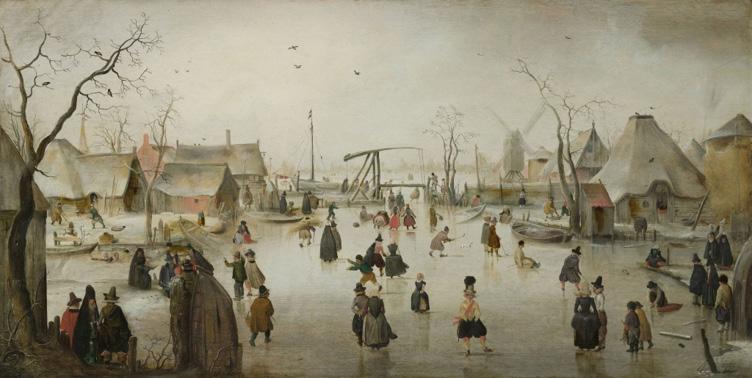
It would be incorrect, however, to suggest that the population increase in some parts of the world was accounted for by the increased availability of food due to the Columbian Exchange. As mentioned previously, the rate at which new crops were adopted was very slow, with the majority of the changes to agricultural production occurring after the period of time considered in this essay. Even in the parts of the world where the cultivation of maize or sweet potatoes began more quickly, potentially partially accounting for increases in the size of the populations, a slight population increase alone does not correlate to the social discontent and conflict of the 17th century general crisis. Nevertheless, increases in population more generally, as were seen during the period 1500-1700 22 generally leave much of the population more vulnerable to famine, particularly as the rate of growth in the years was so high when considering that the population actually decreased in the years 1200-1400 23 . This vulnerability to famine becomes significant when considering the environmental changes that occurred during the period between 1400 and 1700 during a time known as ‘The Little Ice Age’, a term first used by François E. Matthes in 1939 24 to describe the global drop in temperature during this period.
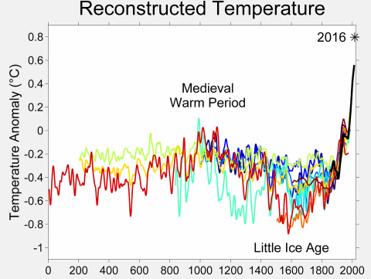
Reconstructed temperature charts for the last 2000 years, several sources combined (most recent in red) with contemporary measurements.
These drops in temperature affected much of the globe, with reports from Andalusia in Spain in 1647 describing how “it began to rain a lot, and the weather turned very cold, even worse than the coldest January day”, the freak frosts killing the ears of grain, producing the worst harvest of the century25. In Japan, a report from Tokyo in 1641 recalls how “ice lay in the fields one foot deep. From that time, I observed seven snowfalls until the spring 26 ”, suggesting that poor weather conditions and poor harvests as a result were prevalent on a global scale. Indeed, there were a considerable number of instances of famine recorded in this period, including: The late Ming famine during the 1630s and 1640s27 , the Japanese Kan’ei famine28 between 1640 and 1643, the famine in Ireland in the early 1640s and the Spanish crisis of the 1640s. While each instance of famine did not, so to speak, cause civil unrest and rebellion, it happens to be that in each of the regions mentioned above, in which there are records of famine, there are also records of conflict and rebellion associated with the 17th Century General Crisis. Parker
21 Parker, Geoffrey. “Crisis and Catastrophe: The Global Crisis of the Seventeenth Century Reconsidered.” American Historical Review 113, no. 4 (2008): 1053–1088.
22 According to worldometers.info the global population changed from 450,000,000 in 1500 to 610,000,000 in 1700
23 This was most likely as a result of the Black Death which is estimated to potentially have killed half of the population of Europe.
24 Matthes, François E. (1939). “Report of Committee on Glaciers, April 1939”. Transactions, American Geophysical Union 20 (4): 518–523. Bibcode:1939TrAGU..20..518M. doi:10.1029/TR020i004p00518
25 Geoffrey Parker, “Crisis and Catastrophe: The Global Crisis of the Seventeenth Century Reconsidered,” American Historical Review 113, no. 4 (2008): 1053–1088.
26 Parker, “Crisis and Catastrophe,” p. 1053–1088.
27 https://courses.lumenlearning.com/atd-herkimer-worldcivilization/chapter/fall-of-the-ming-dynasty/
28 https://en.wikipedia.org/wiki/Kan%27ei_Great_Famine
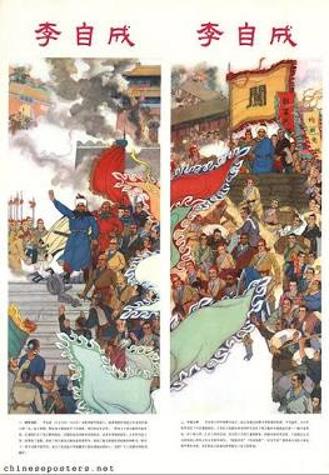
argues that famine and climatic deterioration directly contributed to unrest in late Ming China, noting that “as famine spread, so did rebellion”29, while the major peasant uprisings of the 1630s emerged first in the drought-stricken regions of northern Shaanxi, where harvest failure and starvation had become widespread 30 These rebellions across the country weakened the State of the Ming Dynasty and ultimately made it more vulnerable to the 1644 rebellion by Li Zicheng, which brought the violent collapse of the dynasty31
The Final Flashpoint: Li Zicheng’s Peasant Rebellion (1644). Source: Chinese Posters / Li Zicheng I | Chinese Posters | Chineseposters.net
The Kan’ei famine, too, was connected to the first urban riots of the Tokugawa era in 1643 32 , while a trio of disastrous harvests in
Ireland preceded the Irish rebellion 33 of 1641, which was followed by the Irish Confederate War in 1642, arising from the rebellion. Grain shortages and deteriorating economic conditions contributed significantly to social unrest in Catalonia in 1640, amounting to the 1640 Catalan Revolt. As military provisioning demands increased during the war with France, the burden of feeding troops became “a major source of grievance,” helping transform existing tensions into open rebellion 34. Each of these instances of conflict contributed to the global unrest which characterises the 17th Century General Crisis, and while it cannot be said that poor harvests and famine were the sole cause of the varying instances of conflict, they did contribute quite significantly to its development.
The Ecological Shift: Europe’s Little Ice Age. Source: Sepia Times / Sepia Times/Universal Images Group via Getty Images
But how, one may be wondering, is this linked to the Columbian Exchange, save for the tenuous association between the availability of new crops and potential greater vulnerability to famine? The poor harvests were caused to a large extent by the changes in global weather patterns during the Little Ice Age, which in turn was potentially augmented by the effects of the Columbian exchange on the indigenous population of the Americas. As mentioned at the start of this essay, vegetation and livestock
29 Parker, Geoffrey. Global Crisis: War, Climate Change and Catastrophe in the Seventeenth Century . New Haven: Yale University Press, 2013.
30 Xiao, Lingbo, Xiuqi Fang, Jingyun Zheng, and Wanyi Zhao. “Famine, Migration and War: Comparison of Climate Change Impacts and Social Responses in North China between the Late Ming and Late Qing Dynasties.” The Holocene
25 , no. 6 (2015): 900–910.
31 https://en.wikipedia.org/wiki/Transition_from_Ming_to_Qing
32 Toohey, Matthew, et al. “Climatic, Weather, and Socio-Economic Conditions Corresponding to the Mid-SeventeenthCentury Eruption Cluster.” Climate of the Past 18 (2022): 1083–1108.
33 Lenihan, Pádraig. Confederate Catholics at War, 1641–49 . Cork: Cork University Press, 2001.
34 Elliott, J. H. The Revolt of the Catalans: A Study in the Decline of Spain (1598–1640) . Cambridge: Cambridge University Press, 1963.
were not the only items exchanged between the New and Old worlds. In bringing livestock from the Old World to the Americas, the colonisers also brought a range of zoonotic diseases with them including: Tuberculosis, measles and perhaps most significantly, smallpox 35 . To a group of civilisations which relied on llamas, alpaca and guinea pigs as their source of food, contact with European zoonotic diseases was devastating. Estimations suggest that between 80 and 90% of the indigenous population was killed 36 , resulting in “possibly the greatest demographic disaster in the history of the world.” 37 The scale of demographic collapse was so high that it left approximately 56 million hectares of farmland abandoned, resulting in an unprecedented regrowth of land which had previously been tended to and cultivated 38 . This may appear tragic, though not particularly impactful on a global scale. However, emerging studies utilising the modern technology of ice-core analysis have shown a dip in the global levels of CO 2 during this period 39. While the decline in global levels of CO 2 cannot be attributed wholly to the impacts of the Columbian Exchange, the Black Death in Europe during the mid-14th century also resulted in an abandonment of farmland as a result of the scale of death in Europe. Nevertheless, a joint study carried out at University College London and Leeds University in 2019 concluded that “It appears impossible to balance the global carbon cycle
[in the 1500s] without large terrestrial uptake including substantial land use change in the Americas as a result of the Great Dying 40 .” The most recent study 41 on this topic, carried out by Amy C.F King in 2024, also concludes that “Whether the CO 2 decrease resulted from natural or anthropogenic processes, or a combination of the two, remains an open question.” However, the decline in CO 2 “corroborates modelled scenarios of largescale reorganisation of land use in the Americas following New World-Old World contact,”. While there is still academic debate as to whether the decline in atmospheric levels of CO 2 caused, or at least contributed to the cooling effects associated with the Little Ice Age, or whether the Little Ice Age was the result of a orbital cycles and deceased solar activity, this in turn resulting in a decreased uptake of CO 2 42, it is most likely a combination of factors that resulted in a drop of global temperature during this period. Therefore, although still being presently researched, a legitimate link can be established between the scale of demographic decline during the Columbian Exchange and the drop in global temperatures of the Little Ice Age, which in turn contributed significantly to the social unrest and conflict of the 17th Century General Crisis. This could, potentially, imply that the impacts of the Spanish Colonisation of the Americas were considerably more farreaching than previously believed and did in
35 https://www.bbc.co.uk/sounds/play/m002rrvz
36 Dobyns, Henry F. “Estimating Aboriginal American Population: An Appraisal of Techniques with a New Hemispheric Estimate.” Current Anthropology 7, no. 4 (1966): 395–416.
37 Denevan, William M., ed. The Native Population of the Americas in 1492 . 2nd ed. Madison: University of Wisconsin Press, 1992.
38 Koch, Alexander, Chris Brierley, Mark M. Maslin, and Simon L. Lewis. “Earth System Impacts of the European Arrival and Great Dying in the Americas after 1492.” Quaternary Science Reviews 207 (2019): 13–36. https://doi.org/10.1016/j. quascirev.2018.12.004
39 The study above concluded that an overall decline of 7-10 ppm of CO2 took place in the late 16th and early 17th centuries, contributing to a drop in global temperatures.
40 The name ‘Great Dying’ was attributed to the collapse of the indigenous population by the 2019 study to acknowledge the scale of demographic decline in this period.
41 King, Amy C. F., Thomas K. Bauska, Edward J. Brook, Mike Kalk, Christoph Nehrbass-Ahles, Eric W. Wolff, Ivo Strawson, Rachael H. Rhodes, and Matthew B. Osman. “Reconciling Ice Core CO₂ and Land-Use Change Following New World–Old World Contact.” Nature Communications 15 (2024). https://doi.org/10.1038/s41467-024-45894-9
42 As this is a relatively new area of research, there have been a number of studies reaching different conclusions. The 2019 study concluded that “the decline in global atmospheric CO₂ concentration by 7–10 ppm ... globally lowered surface air temperatures by 0.15°C”, specifically suggesting that the reforestation of the Columbian Exchange contributed to a global decline in temperatures. While a study carried out in 2016 Mauro Rubino suggested that “temperature change, not vegetation re-growth” was the main cause of increased terrestrial carbon storage.
fact have the potential of significantly shaping the global conflicts of the 17th Century General Crisis.
Section 2: The Economic Consequences
The second section of this essay explores the economic consequences of the Columbian Exchange, more specifically, the changes to the global silver trade and its impacts on national economies. These consequences include: the destabilising effects of the rise in the availability of silver on Ming China, the effects of the ‘Price Revolution’ in weakening European state economies and the impacts of the profits of the silver trade on the Spanish Habsburg Empire.
When Columbus landed in the Americas, he landed on the continent which held the greatest amount of natural silver globally 43 and in turn transformed the structure of global trade as it was mined and exported by the Spanish colonials. Between 1550 and 1800, the mines of Spanish America produced over 80 percent of the world’s silver, and interestingly, China emerged as the principal destination for a substantial share of this bullion, possibly absorbing more than one-third of global silver production 44 . The high demand for silver in China resulted in a rapid inflow of the bullion, this sudden high availability making it plummet in value, triggering a period of inflation during the 16th century 45. While this in itself was damaging to the economy of the Ming Dynasty, it was in no means destructive. However, during this period in China, the monetary system was based solely on silver, the value of the coins used being determined by the metal it was made of rather than the
mint, making the impacts of the silver inflation much more significant 46. In turn, the Ming rulers implemented the Single-Whip tax system 47 in 1580, which ordered that all tax payments to the state needed to be made in the form of silver 48 . As the availability of silver began to decrease once again, its desirability rose and, when combined with the discovery of the richest silver mine in human history in Potosí in 1545 49: “The combination of low supply-side production costs in Spanish America and Chinese-led demand-side elevation in silver’s value in Asia generated probably the most spectacular mining boom in human history. This combination of supply-side and demand-side forces implied enormous profits 50 ” - Flynn and Giraldez
43 Peru still holds the greatest natural reserve of silver according to the 2025 World Population Review statistics.
44 Ch’üan, Han-sheng. “Estimate of Silver Imports into China from the Americas in the Ming and Ch’ing Dynasties.” Bulletin of the Institute of History and Philology 66, no. 3 (1995): 679–693.
45 Dennis O. Flynn and Arturo Giráldez, “Cycles of Silver: Global Economic Unity through the Mid-Eighteenth Century,” Journal of World History 13, no. 2 (2002): 403-404.
46 Flynn and Giráldez, “Cycles of Silver,” 399–401.
47 https://www.ebsco.com/research-starters/history/single-whip-reform
48 Dennis O. Flynn and Arturo Giráldez, “Born with a ‘Silver Spoon’: The Origin of World Trade in 1571,” Journal of World History 6, no. 2 (1995): 208–209.
49 Flynn and Giráldez, “Cycles of Silver”, 400
50 Flynn and Giráldez, “Cycles of Silver”, 404
The Silver Nexus: Potosí Mines. Source: Hulton Archive / Getty Images
This, in turn, though not impacting the stability of the Ming Dynasty most significantly, did have far-reaching effects on the conflicts in Western Europe. The profits created by this “mining boom” flowed almost exclusively into the coffers of the Spanish crown, these profits being so vast Flynn and Giraldez propose that the it is “hard to imagine how Castile could have financed simultaneous wars for generations against the Ottomans in the Mediterranean; Protestant England and Holland and the French in Europe” without this funding, illustrating how these profits helped to create the European conflicts of the 17th century such as the Thirty Years War. Economic historian Earl J.Hamiltion in his study of the impacts of these profits on the Spanish Empire claims that “Historians have generally agreed that American gold and silver fanned the flames of Hapsburg imperialism, added to the zeal with which Spanish rulers defended the Catholic faith against Protestant and Mohammedan, furnished sinews of war, and, in short, constituted an important factor in Spain’s aggressive foreign Policy.”51. In an ironic twist of fate, the money that had funded this aggressive foreign policy would also ultimately bring the downfall of the Spanish Habsburg dynasty. In their 2010 article, Drelichman and Voth suggest that “The arrival of New World treasure allowed the Habsburgs to build a unique fiscal system based on massive leverage. Silver acted as the ultimate collateral, enabling the Crown to borrow sums that far exceeded its immediate domestic tax revenues52.” They go on to conclude that “This unprecedented access to short-term credit ( asientos ) transformed Spanish foreign policy. It gave Philip II the liquid capital necessary to wage simultaneous wars against the Dutch, the French, and the Ottomans—effectively fueling an aggressive
strategy of intervention that domestic taxation could never have sustained53.”
Let us briefly focus on the various European conflicts impacted by the inflow of American silver into Spain. As mentioned, the aggressive Habsburg foreign policy led to unrest and conflict in what used to be the Low Countries, consisting of modern-day Belgium and the Netherlands, ultimately culminating in the Eighty Years’ War, from 1568 to 1648. The main causes of this conflict are frequently cited as being Phillip II’s political and religious policies, particularly his high taxation and persecution of Protestantism 54. As mentioned earlier, the Spanish were trying to fund an aggressive foreign policy with borrowed money that greatly exceeded the immediate domestic tax revenues. They also maintained a massive mercenary force called The Army of Flanders 55 , whose funding relied on the inflow of American Silver. When, however, the shipment of silver was delayed, and the Spanish domestic taxes were unable to cover the wages of the mercenary force, the mercenaries mutinied, violently sacking Antwerp during the “Spanish Fury”. This made already strained relations deteriorate even further, invariably uniting the Catholic and Protestant Dutch provinces against Madrid56, which would end up culminating in the Eighty Years War, a conflict of the 17th Century General Crisis.
51 Earl J. Hamilton, “Imports of American Gold and Silver into Spain, 1503–1660,” The Quarterly Journal of Economics 43, no. 3 (1929): 436–472, https://doi.org/10.2307/1885920
52 Mauricio Drelichman and Hans-Joachim Voth, “The Sustainable Debts of Philip II: A Reconstruction of Castile’s Fiscal Position, 1566–1596,” The Journal of Economic History 70, no. 4 (December 2010): 814.
53 Drelichman and Voth, “The Sustainable Debts of Philip II,” 815.
54 Joshua J. Mark, “Eighty Years’ War,” World History Encyclopedia , July 7, 2022, https://www.worldhistory.org/Eighty_ Years’_War/
55 https://en.wikipedia.org/wiki/Army_of_Flanders
56 Encyclopædia Britannica , s.v. “Eighty Years’ War,” last modified May 15, 2024, https://www.britannica.com/event/EightyYears-War
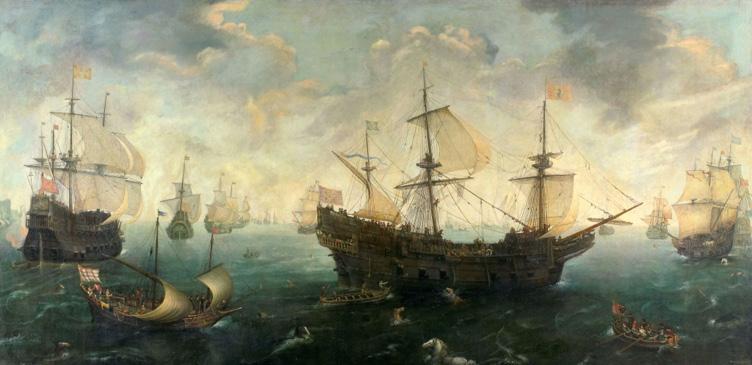
Habsburg Military Might: The Spanish Armada. Source: Heritage Images / Getty Images
In France, silver-fueled Habsburg Spain most probably prolonged the French Wars of Religion (1562-1598) by several decades. Fearing the French Protestants and a potential alliance between them and the Dutch Rebels, Phillip II directly funnelled American silver into the French Catholic League, even sending Spanish troops into France, eventually successfully blocking Protestant Henry Navarre from taking Paris until he converted to Catholicism 57. The Spanish funds were vital to sustaining the efforts of the Catholic League and were ultimately the cause of a longer, bloodier war. Such is suggested by Mack P. Holt when writing “Without the massive financial injections from Philip II, the Catholic League would have collapsed under the weight of its own internal divisions long before 1598. Spanish gold and troops did not bring victory, but they succeeded in prolonging the agony of the civil war for an extra decade by preventing Henry of Navarre from securing his rightful inheritance 58 .”, showing the direct correlation between Spanish funding and French conflict as well as the wider impact of HabsburgAmerican silver on European conflicts of the (early) 17th Century Crisis.
In both instances of European conflict, American Silver can be seen as directly contributing to the European conflicts of the 17th Century General Crisis. When looking at the impact more broadly, it is undeniable that the Spanish silver wealth augmented many preexisting European tensions by financing the aggressive and notably Catholic foreign policy. These religious conflicts and tensions would compound in the European Thirty Years War, a conflict with an estimated death toll of 8 million 59 people, although by no means solely
caused by Spanish aggression, was certainly augmented and prolonged by it.
The stability of the Ming Dynasty was also impacted more broadly by the global silver trade. After already having suffered a period of high inflation before the Single Whip Tax reform, both the local economies and state economies were left completely dependent on access to silver 60. It was now not only the foundation of the monetary system, but also formed the only source of income for the state. However, the uneven circulation of silver meant that access to it became increasingly more restricted, particularly to the peasant population, resulting in an increased demand for the metal 61. Given its low availability and high demand, the value of silver rose at such a high rate that it considerably outpaced the rise of the prices of goods or copper, which essentially meant that the peasant population was forced into a higher rate of production in order to purchase enough silver to pay their taxes to the state 62 . The inability of many peasants to do so, as well as the frequent disruptions to the inflow of silver, meant that the state, too, was underfunded and could consequently not afford its army or administration 63 . In short, the Ming Dynasty was left short of money and therefore significantly more vulnerable to peasant rebellions and uprisings, of which there was a much higher frequency in this period due to both a lack of food and peasant resentment as a result of the high inflation. As mentioned in the first section of this essay, the Ming Dynasty would ultimately collapse at the hands of a rebellion, and, although by no means the sole cause for the collapse, the economic deficiencies of the state did leave it in a position vulnerable to the collapse, a
57 Lumen Learning , s.v. “Philip II and the Spanish Armada,” in Western Civilization , accessed June 12, 2026, https://courses. lumenlearning.com/atd-herkimer-westerncivilization/chapter/philip-ii-and-the-spanish-armada/
58 Mack P. Holt, The French Wars of Religion, 1562–1629 , 2nd ed. (Cambridge: Cambridge University Press, 2005), 142.
59 Joshua J. Mark, “Thirty Years’ War,” World History Encyclopedia , last modified March 14, 2023, https://www. worldhistory.org/Thirty_Years’_War/
60 Flynn and Giráldez, “Born with a ‘Silver Spoon,’” 213–214.
61 Flynn and Giráldez, “Born with a ‘Silver Spoon,’” 208–209, 215–216.
62 Flynn and Giráldez, “Born with a ‘Silver Spoon,’” 213–214.
63 Dennis O. Flynn and Arturo Giráldez, “Cycles of Silver: Global Economic Unity through the Mid-Eighteenth Century,” Journal of World History 13, no. 2 (2002): 405.
major occurrence and conflict during the 17th Century General Crisis. 64
The Fiscal Collapse: The Late Ming Dynasty. Source: Pictures from History / Pictures From History/Universal Images Group via Getty Images
The silver trade also impacted the economic stability and social landscape of other European nations. Before the Columbian Exchange, the stagnant production of precious metals combined with rapidly expanding industry resulted in relatively low prices65. However, the sudden influx of precious metals into Europe from the Americas resulted in what Hamilton has described as “one of the greatest price revolutions occurring on a specie basis in modern times, if not in all history.” 66 This ‘Price Revolution’ had the effect of causing a sudden
rise in prices as the supply of money, which was based on the supply of precious metals, suddenly increased, so too did the demand for goods, triggering an increase in prices in order to achieve the greatest possible profit. This rise in prices, however, did not correlate with a rise in wages, with real wages actually falling in this period 67 . This, in turn, when coupled with the decline in agricultural production mentioned earlier in the essay, exacerbated social tensions in much of Europe as well, Parker commenting on how “Poor harvests, taxation pressures, and warfare combined to produce widespread instability.” 68 These social tensions and instability provided a backdrop for later conflict to take place 69 and, although not acting as a direct cause for conflict, such as the Thirty Years War, indirectly helped to form the internal tensions that exacerbated the conflicts of the 17th Century General Crisis in Europe.
To conclude, the Columbian Exchange had many impacts on a global scale besides the clear impacts on the Americas, ranging from direct impacts associated with the changing availability of food, as well as the changes to the global weather patterns, and the economic consequences resulting from changes to the global silver trade. Neither of these immediately caused the global conflicts which would come to characterise the 17th Century General Crisis, although it can be justly concluded that this even shaped the future conflicts either by acting as an indirect cause for conflict or augmenting the scale and severity of these global conflicts. The 17th Century General Crisis had a range of different causes given its complexity and global scale; however, the impacts of the Columbian Exchange should not be underestimated. While one could argue that, if one goes back in time far enough, the
64 Flynn and Giráldez, “Born with a ‘Silver Spoon,’” 213–214; Flynn and Giráldez, “Cycles of Silver,” 405.
65 Hamilton, Earl J. “Imports of American Gold and Silver Into Spain, 1503-1660.” The Quarterly Journal of Economics 43, no. 3 (1929): 436. https://doi.org/10.2307/1885920
66 Hamilton, “Imports of American Gold and Silver Into Spain, 1503-1660.”, 436
67 In his work The Industrious Revolution , 2008, Jan De Vries remarked on how “Real wages in much of Europe stagnated or declined in the seventeenth century.”
68 Parker, Geoffrey. Global Crisis. New Haven: Yale University Press, 2013.
69 The seventeenth century has been portrayed as a Europe-wide “general crisis… rooted in common economic distress and political unrest.” from “Crisis of the Seventeenth Century,” Encyclopedia.com, referencing Eric Hobsbawm’s “The General Crisis of the European Economy in the Seventeenth Century.”
vast majority of historical events can be linked together by some thread or connection that shapes the course of future history. No event unfolds in a societal vacuum that does not, at least to some extent, impact later history, so an event with the significance of the Columbian Exchange is bound to have a great number of impacts through later history. However, it was not the aim of this essay to determine whether the exchange did or did not cause the 17th Century General Crisis, that in itself is an impossible question to answer. The aim of this paper was merely to explore the historical connection between two events and comment on how one shaped the other, and explore the consequences of a consequential event in history to illustrate how history in itself exists as a string of events, the far-reaching ripple effects of each event having the potential to be felt on a global and transnational scale.
Bibliography
Atwell, William S. “A Seventeenth-Century ‘General Crisis’ in East Asia?” Modern Asian Studies 24, no. 4 (1990): 661–82. http://www.jstor.org/ stable/312728
Ch’üan, Han-sheng. “Estimate of Silver Imports into China from the Americas in the Ming and Ch’ing Dynasties.” Bulletin of the Institute of History and Philology 66, no. 3 (1995): 679–693. Columbus, Christopher. 1963. Journals and Other Documents on the Life and Voyages of Christopher Columbus. Translated by Samuel E. Morison. N.p.: Heritage Press.
Crosby, Alfred W. 2003. The Columbian exchange N.p.: Bloomsbury Academic.
Cuttino, G. P. “Historical Revision: The Causes of the Hundred Years War.” Speculum 31, no. 3 (1956): 463–77. https://doi. org/10.2307/2853350
Denevan, William M., ed. The Native Population of the Americas in 1492. 2nd ed. Madison: University of Wisconsin Press, 1992.
Dennis O. Flynn and Arturo Giráldez, “Born with a ‘Silver Spoon’: The Origin of World Trade in 1571,” Journal of World History 6, no. 2 (1995): 208–209.
Dennis O. Flynn and Arturo Giráldez, “Cycles of Silver: Global Economic Unity through the MidEighteenth Century,” Journal of World History 13, no. 2 (2002): 403-404.
Dewald, Jonathan. “Crisis, Chronology, and the Shape of European Social History.” The American
Historical Review 113, no. 4 (2008): 1031–52. http://www.jstor.org/stable/30223244
Dobyns, Henry F. “Estimating Aboriginal American Population: An Appraisal of Techniques with a New Hemispheric Estimate.” Current Anthropology 7, no. 4 (1966): 395–416.
Drelichman, Mauricio, and Hans-Joachim Voth. “The Sustainable Debts of Philip II: A Reconstruction of Castile’s Fiscal Position, 1566–1596.” The Journal of Economic History 70, no. 4 (2010): 813–42. https://doi.org/10.1017/s0022050710000732
Elliott, J. H. The Revolt of the Catalans: A Study in the Decline of Spain (1598–1640). Cambridge: Cambridge University Press, 1963.
Encyclopædia Britannica. s.v. “Eighty Years’ War.” Last modified May 15, 2024. https://www. britannica.com/event/Eighty-Years-War
Hamilton, Earl J. “American Treasure and the Rise of Capitalism (1500-1700).” Economica, no. 27 (1929): 338–57. https://doi. org/10.2307/2548280
Hamilton, Earl J. “Imports of American Gold and Silver Into Spain, 1503-1660.” The Quarterly Journal of Economics 43, no. 3 (1929): 436–72. https://doi.org/10.2307/1885920
Hamilton, Earl J. “Monetary Disorder and Economic Decadence in Spain, 1651-1700.” Journal of Political Economy 51, no. 6 (1943): 477–93. http:// www.jstor.org/stable/1824848
Hobsbawm, Eric. “The General Crisis of the European Economy in the 17th Century.” Past & Present 5 (1954): 33–53.
Lenihan, Pádraig. Confederate Catholics at War, 1641–49. Cork: Cork University Press, 2001.
Lumen Learning. “Philip II and the Spanish Armada.” In Western Civilization. Accessed June 12, 2026. https://courses.lumenlearning.com/ atd-herkimer-westerncivilization/chapter/ philip-ii-and-the-spanish-armada/
Mark, Joshua J. “Thirty Years’ War.” World History Encyclopedia. Last modified March 14, 2023. https://www.worldhistory.org/ Thirty_Years’_War/
Matthes, François E. 1939. “Report of Committee on Glaciers.” Transactions Volume 20 (Issue 4): p.519-523. 10.1029/TR020i004p00518.
Mears, John A. “The Thirty Years’ War, the ‘General Crisis,’ and the Origins of a Standing Professional Army in the Habsburg Monarchy.” Central European History 21, no. 2 (1988): 122–41. http://www.jstor.org/stable/4546115
Pfister, C. and Brázdil, R.: Social vulnerability to climate in the “Little Ice Age”: an example from Central Europe in the early 1770s, Clim. Past, 2, 115–129, https://doi.org/10.5194/cp-2-115-2006, 2006
Rafferty, John P. 2026. “Columbian Exchange | Diseases, Animals, & Plants.” Britannica. https:// www.britannica.com/event/Columbian-exchange
Rubino, M., Etheridge, D., Trudinger, C. et al. Low
atmospheric CO2 levels during the Little Ice Age due to cooling-induced terrestrial uptake. Nature Geosci 9, 691–694 (2016). https://doi. org/10.1038/ngeo2769
King, A.C.F., Bauska, T.K., Brook, E.J. et al.
Reconciling ice core CO2 and land-use change following New World-Old World contact. Nat Commun 15, 1735 (2024). https://doi. org/10.1038/s41467-024-45894-9
Koch, Alexander, Chris Brierley, Mark M. Maslin, and Simon L. Lewis. “Earth System Impacts of the European Arrival and Great Dying in the Americas after 1492.” Quaternary Science Reviews 207 (2019): 13–36. https://doi.org/10.1016/j. quascirev.2018.12.004
Matthes, François E. (1939). “Report of Committee on Glaciers, April 1939”. Transactions, American Geophysical Union. 20 (4): 518–523. Bibcode:1939TrAGU..20..518M. doi:10.1029/ TR020i004p00518
Parker, Geoffrey. “Crisis and Catastrophe: The Global Crisis of the Seventeenth Century Reconsidered.” American Historical Review 113, no. 4 (2008): 1053–1088.
Parker, Geoffrey. Global Crisis: War, Climate Change and Catastrophe in the Seventeenth Century. New Haven: Yale University Press, 2013.
Steensgaard, Niels. “The Seventeenth-Century Crisis and the Unity of Eurasian History.” Modern Asian Studies 24, no. 4 (1990): 683–97. http://www. jstor.org/stable/312729
Sutherland, N. M. “The Origins of the Thirty Years War and the Structure of European Politics.” The English Historical Review 107, no. 424 (1992): 587–625. http://www.jstor.org/stable/575246
Toohey, Matthew, et al. “Climatic, Weather, and Socio-Economic Conditions Corresponding to the Mid-Seventeenth-Century Eruption Cluster.” Climate of the Past 18 (2022): 1083–1108.
Trevor-Roper, Hugh. “The General Crisis of the Seventeenth Century.” Past & Present 16 (1959): 31–64.
Vries, Jan d. 2012. The Industrious Revolution: Consumer Behaviour and the Household Economy, 1650 to the present. N.p.: Cambridge University Press.
Wilson, Peter H. “The Causes of the Thirty Years War 1618-48.” The English Historical Review 123, no. 502 (2008): 554–86. http://www.jstor.org/ stable/20108541
World History Encyclopedia. s.v. “French Wars of Religion.” Last modified November 14, 2022. https://www.worldhistory.org/ French_Wars_of_Religion/ Xiao, Lingbo, Xiuqi Fang, Jingyun Zheng, and Wanyi Zhao. “Famine, Migration and War: Comparison of Climate Change Impacts and Social Responses in North China between the Late Ming and Late Qing Dynasties.” The Holocene 25, no. 6 (2015): 900–910.
Statement on AI Use: The author utilised Google Gemini to assist in suggesting suitable historical sources and in curating appropriate open-access visual materials to complement the structural sections of this article. The structural text, thesis, and historical analysis were composed entirely by the author.
Channing
The Bank, Highgate London N6 5HF
T: 020 8340 2328
info@channing.co.uk www.channing.co.uk
INDEPENDENT DAY SCHOOL FOR GIRLS AGED 4-18