
Established in 1999, the East Valley Chambers of Commerce Alliance (EVCCA) advocates as a united voice at the State and Federal levels and is represented by Dorn Policy Group, Inc.
The EVCCA unifies more than 5,000 member firms across the region
BOARD OF DIRECTORS
APACHE JUNCTION AREA CHAMBER
Mary Ann Przybylski, President/CEO
Brian Heath, SRP
Warde Nichols, Arizona State University
CAREFREE CAVE CREEK CHAMBER
Steve Feld, President/CEO
Leigh Zydonik, Foothills Food Bank
Jennifer Grubbs, Black Mountain Cooling
CHANDLER CHAMBER
Terri Kimble, President/CEO
Fareed Bailey, SRP
Carly Wakefield, Chandler Chamber
GILBERT CHAMBER
Sarah Watts, President/CEO
Adam Baugh, Withey, Morris, Baugh, PLC
Julie Graham, Dignity Health
MESA CHAMBER
Sally Harrison, President/CEO
Morgan Hernke, Cox Business
Victor Valliere, Mesa Chamber


QUEEN CREEK CHAMBER
Chris Clark, President/CEO
Amara Boesch, Global Roofing Group
Daniel Urbina, US & Co Certified Public Accountants
SCOTTSDALE AREA CHAMBER
Mark Stanton, President/CEO
Eric Luoma, Cactus Flower Florists
Nathan Wymer, Nationwide
TEMPE CHAMBER
Robin Arredondo Savage, President/CEO
Nick Bastain, Realty Executives
Susan Stephensen, Honor Health
DORN POLICY GROUP, INC.
Tom Dorn
Eric Emmert
Phone: 602-606-4667



Arizona’s long-term economic vitality depends on policies that strengthen the state’s competitiveness, invest in a skilled workforce, preserve critical resources, and protect the business climate that allows employers to thrive. The East Valley Chambers of Commerce Alliance (EVCCA) advocates for balanced, forward-looking legislation that supports responsible growth, fosters innovation, and empowers communities to respond to changing economic and environmental conditions.
Arizona’s pro-business environment has fueled growth across sectors from advanced manufacturing and clean technologies to small business development and tourism. Continued progress depends on policies that:
Encourage sustainable economic development tools and incentives that attract and retain employers while ensuring fiscal accountability
Support attainable workforce housing and infrastructure that enable employees to live near their place of work.
Maintain local control in planning, zoning, and land-use decisions to preserve the unique character and competitiveness of communities
Advance public-private partnerships and maintain transparency in how economic development programs are administered and measured
A strong education pipeline from early learning through post-secondary remains essential to Arizona’s prosperity Lifelong learning and upskilling are key to meeting employer demand and preparing residents for emerging industries EVCCA supports policies that:
Provide stable, equitable, and accountable funding for all educational institutions, including public, charter, and career and technical education programs
Strengthen university and community college systems to ensure access to research, credentialing, and workforce training programs aligned with employer needs.
Encourage collaboration between business, education, and government to design career pathways that close skills gaps and build talent pipelines
Reliable, affordable, and sustainable energy resources are essential for business continuity and future growth Arizona’s energy policy should balance innovation with practicality, ensuring that all users contribute fairly to maintaining the power grid Key priorities include:
Investments in diverse, resilient energy infrastructure and storage technologies that maintain reliability and affordability.
Incentives that promote energy efficiency and responsible conservation without imposing unfunded mandates on businesses
Policies that protect Arizona’s long-term water future especially through the protection of Colorado River allocations, responsible groundwater management, and continued investment in conservation and reuse
Support for forest and watershed management to prevent wildfires and protect the state’s natural resources.
Access to quality, affordable healthcare is critical to maintaining a healthy workforce and supporting Arizona’s growing population EVCCA supports policies that: Address provider shortages through graduate medical education and allied health training programs.
Expand the use of telemedicine, plan portability, and innovative solutions to control costs for businesses and individuals.
In tandem, responsible immigration policies should secure borders while ensuring access to lawful, reliable labor through modernized guest worker programs that reflect workforce demand
Arizona’s fiscal strength depends on efficient, predictable systems that encourage business growth and responsible public investment. Legislative priorities include:
Maintaining a fair and consistent tax structure that fosters innovation, entrepreneurship, and competitiveness
Opposing regulatory fee increases that act as revenue generators rather than true cost recovery mechanisms.
Streamlining government processes to improve transparency, reduce administrative burden, and enhance digital service delivery
Investing in multimodal transportation systems and regional corridors that connect people, goods, and industries across the state.
Arizona’s continued success requires close collaboration between policymakers, business leaders, and communities By working together to advance these priorities supporting strong schools, sustainable infrastructure, balanced regulation, and the protection of our shared natural resources lawmakers can ensure a prosperous, resilient, and competitive Arizona for generations to come.
The continuation of the Quality Jobs Tax Credit for job creation.
The extension of the Arizona Competes Fund.
Policies that encourage attainable workforce housing while respecting local control and private property rights
Economic development incentives and continued funding to improve Arizona’s competitive position for business attraction, retention and expansion, and tourism marketing, including TIF, and legislation which supports tourism
The mission of the Arizona Commerce Authority.
Job creation measures and fiscally responsible tax incentives to support workforce training, retraining, and upskilling.
Development of a qualified workforce, including support for certifications, credentials, micro-credentials, and degree opportunities.
Programs and agreements that include fair trade opportunities for US businesses and improve their ability to compete globally, including the EX-IM Bank
Advanced manufacturing opportunities, including electric vehicles, batteries semiconductors medical devices and clean fuels

Alliance Supports:
Expansion of the current Arizona manufacturing infrastructure program so that it does not impact existing projects.
Opportunities to support small business growth and entrepreneurship development
Artificial intelligence and machine learning as a federal issue
State-by-state regulation of artificial intelligence and machine learning
An innovative and competitive K-12 education marketplace that includes traditional district schools, public charter schools, private schools, technical training institutions, and online learning with simplified, stable and equitable funding.
Regular measurement of our state’s education outcomes from early childhood through college and career
An education system with comparable accountability measures for all publicly-funded institutions
Stable, consistent, and appropriate education funding that enhances economic development, CTE programs, graduation rates, and school safety
Developing a revised, comprehensive K-12 funding formula that will address critical issues including, but not limited to the following: teacher shortages; school construction; facility maintenance; incentive pay for teachers; student testing outcomes; graduate rates; dropout rates; reading levels; workforce readiness; modernized student tracking systems of attendance counts; Career and Technical Education (CTED).
New approaches to funding Arizona’s public education system that provides adequate resources by thoroughly evaluating State Trust Lands

An innovative, world-class school system that uses rigorous education standards and assessments emphasizing STEAM, history, civics, and business education so that Arizona graduates can be college and career ready, financially literate, and prepared to compete aggressively in the global economy.
An effective long-term solution to the K-12 and community college aggregate expenditure limit that eliminates the annual need to adjust the cap, allows for local budgeting, and respects the will of the voters
Access to early education services to support Arizona’s workforce and longterm growth
An appropriate funding source for childcare assistance First Things First Arizona programs help families afford quality early childcare and education for children. Childcare is a workforce development issue.
Strengthening public universities and community colleges through a stable funding model which is as close to free as possible, invests in critical capital projects, and provides flexibility to expand access, research capacity, and workforce preparation.
Strategic and competitive investments in Arizona’s public universities, community colleges, and the “New Economy Initiative” to enhance the state’s economy
Equitable funding of Arizona’s public universities and community colleges
Continued emphasis on the importance of job training and workforce development including incentives to support the needs of Arizona employers and small businesses, including the Arizona Board of Regents AZ Healthy Tomorrow plan to grow the healthcare workforce.

Modification of the “Voter Protection Act” (Proposition 105 (1998)) to allow a two-thirds vote of the Legislature rather than the three-fourths vote of the Legislature currently required. This modification will permit legislative changes to address unintended consequences of initiative measures without impact to the original intent that passed at the ballot.
Changes to voter-approved initiatives subject to voter ratification, ensuring the public maintains the final say on major reforms Permitting legislative changes to initiatives with voter ratification
Referral of voter-approved initiatives and referendums back to voters every ten years for reauthorization, ensuring ongoing public support and relevance
A supermajority threshold of more than 60 percent of voters to allow for state voter protection of measures passed at the ballot.
Increased accountability and transparency requirements for ballot initiative campaign financing and management, including stronger regulation of paid signature gatherers and an increased threshold to signature collectors.
A referendum allowing for temporary suspension of automatic spending increases for voter-protected funds during years when state revenues fall short, providing flexibility in managing the state budget
The Alliance Supports:
Arizona’s status as a “right-to-work” and “employment-at-will” state
Preserving a business’s ability to implement and enforce its workplace policies and workforce pay/benefits without unnecessary government intrusion or regulation
Preserving a business owner’s ability to manage its workplace and workforce without expanded federal intrusion.
Appropriate reforms that attempt to decrease workers’ compensation and unemployment insurance costs.
Laws that protect businesses from nuisance or other unnecessary lawsuits that impact the ability of a business to operate without unnecessary legal expenses, including continued business protections from lawsuits specifically related to public health crises
Reforms that ease or relieve the burden on business from Proposition 105 (1998)
Policies that foster, but do not mandate, mentoring and apprenticeship opportunities

Alliance Opposes:
Any change to Arizona’s “right-to-work” and “employment-at-will” laws.
Changes to workers’ compensation benefits that increase costs to employers.
Excessive government intrusion on the workforce, including changes in qualifications for exempt employees, creating a joint employer for purposes of collective bargaining, and easing the way for “Ambush Elections”
Mandating apprenticeship programs in contracts or development agreements
The Protecting the Right to Organize (PRO) Act, subsequent legislation, and its detrimental provisions
Mandates requiring small businesses (less than 50 employees) to provide specific employee benefits, including Paid Family Leave, Paid Sick Leave, or Retirement Plans.
State energy policies that encourage the development and maintenance of statewide energy infrastructure, such as generation, transmission, and distribution facilities, to ensure safe, affordable, and reliable energy supplies.
Policies that recognize the complexity of energy resource planning decisions by Arizona utilities and maintain utilities’ ability to control costs.
A balanced approach to development, recreational use, and preservation of State Trust Lands
Appropriate zoning and land use around military installations and airports that advance the mission of those facilities and encourage Arizona’s defense supply industry
Ongoing negotiations regarding future Colorado River operating rules (Reconsultation) and the pursuit of more significant contributions from other Colorado River Basin States to conserve additional Colorado River water.
Distribution of federally-appropriated funds to projects that provide durable, long-term water savings on the Colorado River.
The Verde River Sediment Mitigation Project to ensure an adequate water supply for our future needs
Water Infrastructure Finance Authority (WIFA) to ensure a transparent process is in place for the investment of state and federal funds in projects aimed at augmentation conservation and reuse of water supplies

Reasonable air, water quality, and energy efficiency policies that provide multiple practical options for businesses which do not exceed federal requirements.
Appropriate legislation, regulation, and policies that recognize the value of the electric power grid as an asset that requires consistent maintenance, improvement, and support through investments by all of those who use and operate the grid
Facilitating the active management and thinning of Arizona’s federal and state forest lands to improve and protect watershed health through support for continued collaboration efforts with state and federal agencies such as the Four Forest Restoration Initiative, public-private partnerships, investment in forest restoration projects, and economic development programs to support the attraction, retention, and expansion of the forest products industry.
Maintaining Arizona’s primacy and role under the Clean Air Act as the state works with the EPA to meet federal regulations.
Policies that distribute system costs equitably by creating mechanisms that recover grid costs from distributed generation customers, enhance cost transparency, and minimize cost shifting between consumer classes to ensure all customers pay a fair and equitable share of costs to maintain the grid and to keep it operating reliably
Protection of Arizona’s critical energy infrastructure, including but not limited to the generation, transmission, and distribution of assets already in operation
Programs and rates that encourage customers to manage their peak power usage to help control overall system costs and maintain affordable power in Arizona.
The 1980 Arizona Groundwater Management Act, including the 100-year assured water supply requirement for development. Arizona’s water needs are vastly different from those of other states and are best left to state management.
The Alliance Supports:
Statewide development of long- term sustainable water supplies, coordination between active management areas, encouraging direct groundwater recharge projects, and promoting water conservation on a state level.
Cost-effective clean energy initiatives and policies that bolster economic growth by advancing and developing new and existing technologies
Appropriate incentives for clean fuels, but not at the expense of current energy supplies and producers
A balanced energy portfolio and battery-energy storage solutions and technologies that support the resiliency and reliability of the power grid
Policies and processes for research and development of alternative water source options (desalinization, wastewater treatment, excess transfers, etc.)
The use of securitization, a financial tool used to refinance utility assets, when appropriate, to save residential and business customers money.
Appropriate reforms in the state trust land process.
The Alliance Opposes:

The development of new nuclear resources to align current power options primarily by streamlining regulation as
Local control of local government decisions unless detrimental to the business climate.
Special district and local government transparency data and metrics to ensure private sector services are properly considered.
Federal agencies operating within their boundaries as directed by Congress All rules and regulations should be thoroughly vetted regarding their economic consequences under the Administrative Procedures Act
Modernization of the Department of Revenue, allowing the agency to provide appropriate data and service delivery to taxpayers and customers
Incremental reduction of state and federal debt obligations
Improved communication between government departments through service delivery modernization to businesses, including cost-effective computer system upgrades.
The abolition of publicly-funded candidates at the legislative and local level.
Legislation that provides information and security designed to shield businesses from cyber threats while protecting their rights to privacy
Privatizing services if they can be comparably and appropriately delivered at equal or less cost
Policies and appropriations accomplished by legislators, not through unnecessary ballot measures, executive orders, or multi-state coalitions
Reforms of over-reaching and burdensome OSHA (Occupational Safety and Hazard Act) and NLRB (National Labor Relations Board) regulations.
A uniform state system of lobbying registration and reporting rather than multiple local systems.
Legislation requiring public disclosure of special interest and funding in initiative and referendum efforts.
Rollovers and sweeps of dedicated funds as a way to balance the budget
Regulatory fee increases that are used as revenue generation and are not reflective of administrative cost recovery.
Efforts to increase localized wage and benefit laws and requirements that are more stringent than state and federal mandates.

An environment that promotes investment in the healthcare industry and addresses provider shortages through the continued expansion of areas including but not limited to graduate medical education, physician workforce development, nursing programs, and allied health programs to ultimately improve patient outcomes.
Access to competitive healthcare programs to address rising healthcare costs, loss of providers, and loss of benefits within plans
Encouraging innovative measures, such as purchasing plans across state lines, plan portable incentives, use of electronic information, and telemedicine technologies to ensure access, coverage and lower health insurance costs for businesses
Patient-centered clarity in the medical billing process that treats all consumers equally.
Appropriate legislation to strengthen our behavioral health system.
Reasonable state and federal payment rates that cover hospital costs and would minimize hidden/shifted healthcare costs to employers.
Stability and certainty for the insurance marketplace and hospital systems
The Alliance Opposes:
Health insurance coverage mandates that negatively impact a business’ ability to operate
Healthcare and prescription drug mandates that increase costs on small businesses, and policies that shift expenses to the state or businesses and impede the private market.
Strong border security that protects the physical border and tracks individuals with expired visas as well as unaccompanied migrant children.
A reliable system for employers to verify the legal work eligibility of employees that is a federally based, user-friendly, low-cost, nondiscriminatory method to ensure they comply in good faith with the law.
Business-friendly worker programs to support a wide range of workforce needs and respond quickly to US businesses' employment demands
Congressional legislation and other actions to properly seal our porous borders, expeditiously respond to the labor needs of the economy, and resolve the issues of illegal immigrants already living in the US
Criteria to establish a guest worker/visa program for illegal immigrants already in the U.S. with no other criminal or arrest record in both the U.S. and their countries of origin, based on strictly enforced criteria, including payment of penalties.
Reimbursements to states for the costs of incarcerating, educating, and providing healthcare for individuals who are in the country illegally.

Expediting consideration of the annual conformity legislation to allow businesses to prepare tax returns.
Clear and concise tax laws that allow businesses to understand their liability without subjective agency interpretation.
Raising the business personal property tax exemption threshold as an economic stimulus mechanism for small businesses
Research and development tax credits to encourage industry innovation and ensure a globally competitive position
The abolishment of tax-supported funds not used for the intended purpose
Responsible, well-balanced tax reforms that promote the long-term fiscal strength of the state and place Arizona in a competitive position, including financing mechanisms to improve Arizona’s competitive position for business attraction, retention, and expansion.
Passage of measures that limit flexibility in funding decisions.
Business tax increases, including the elimination of current business tax credits or business tax exemptions
Changes in the formula to reduce the percentage of state-shared revenues payable to cities and towns or repayment requirements back to the State
Pre-empting local taxation authority by eliminating or reducing sources of revenue that are currently available and relied upon by local government
The Alliance Supports:
Use of innovative transportation solutions such as public-private partnerships that improve the movement of people and goods, foster job creation, and enhance economic development.
Connecting employees and goods to job centers through a private and public multimodal transportation system with international, statewide, and multiregional transportation options with predictable, appropriate funding sources
Continued funding of regional roadways with priority given to the widening of I-10, completion of SR 24, Loop 101, Loop 202, and the Southeast Valley North/South corridor
More state and federal transportation dollars appropriated to the PhoenixMesa-Scottsdale metropolitan statistical area and northeast Pinal County based on revenue generated, vehicle miles traveled, population growth, and economic development opportunities.
The regional airport system and Mesa Gateway Airport as an economic catalyst.
Allowing Maricopa County to determine its own transportation future like all other counties in Arizona


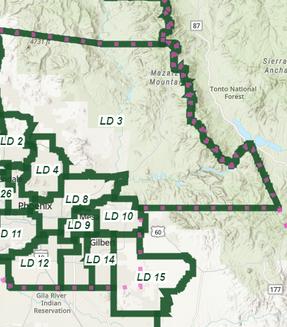
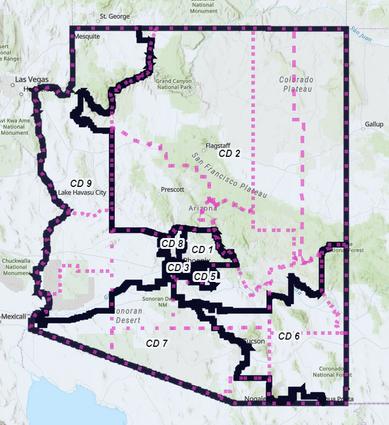
APACHE JUNCTION AREA CHAMBER
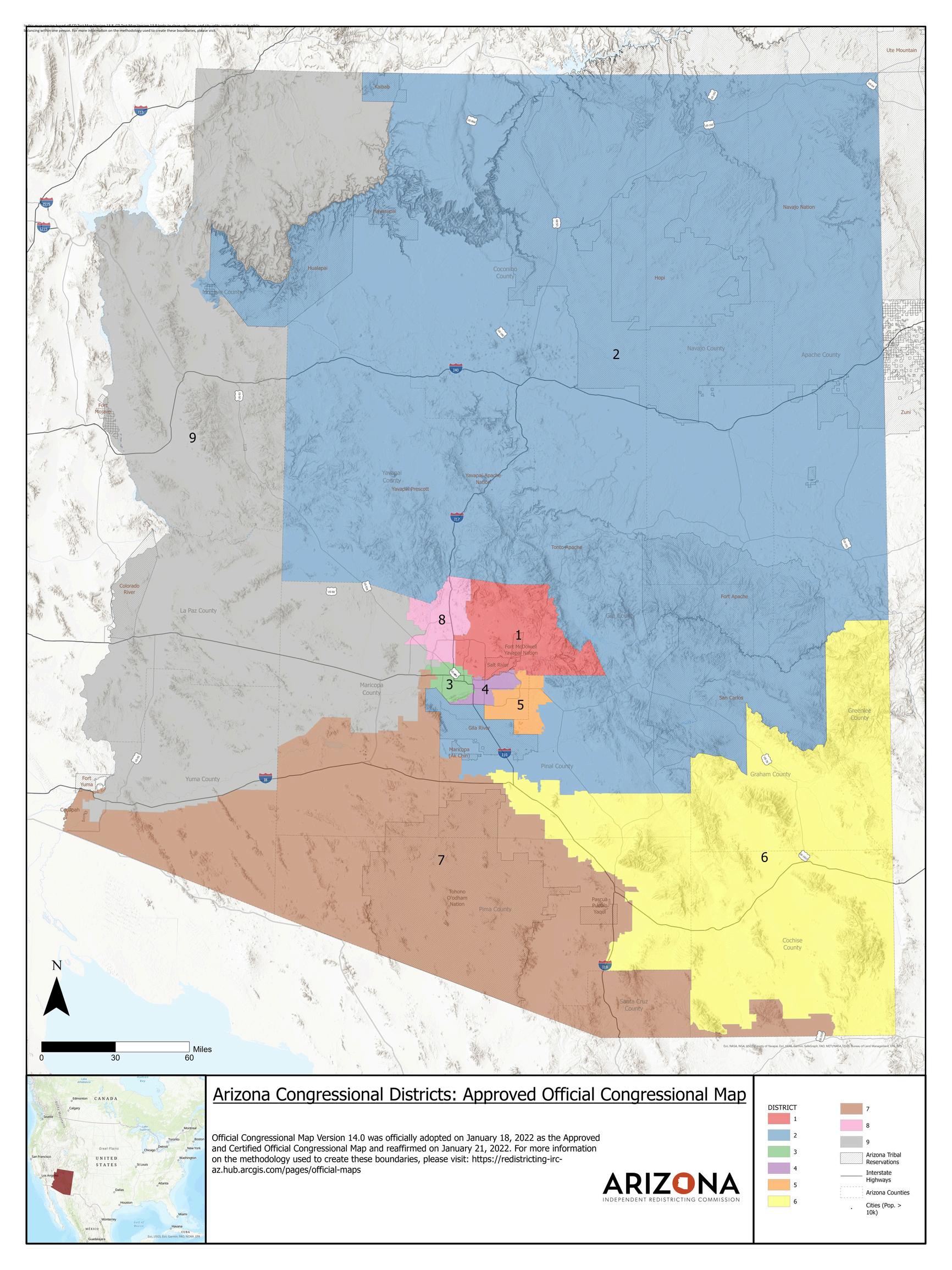
Congressional District 5
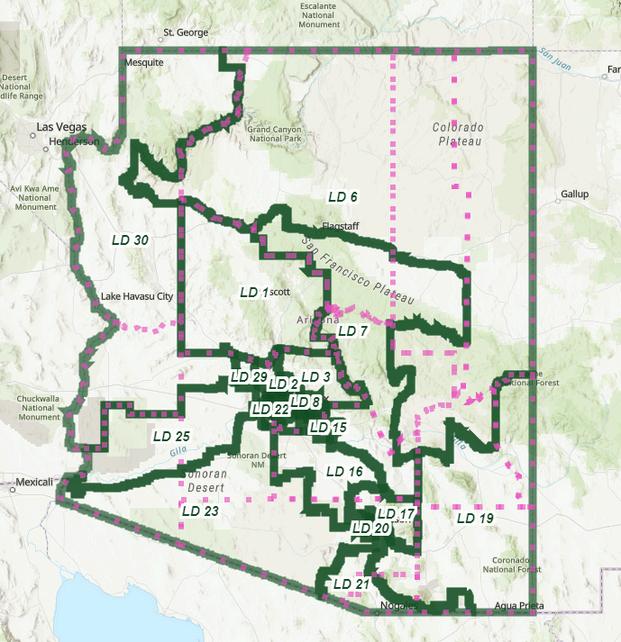
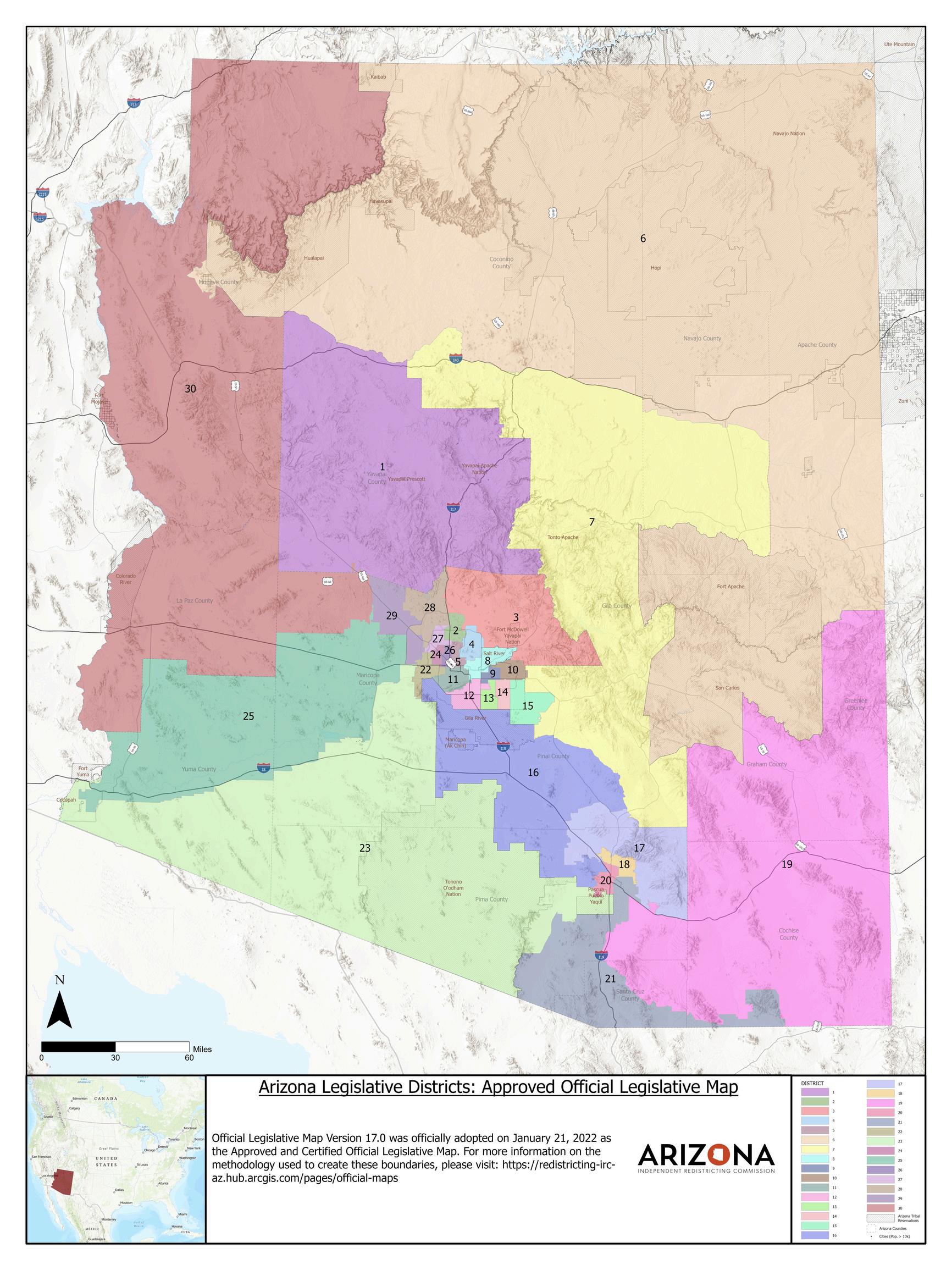
Legislative Districts 7, 10
CAREFREE CAVE CREEK CHAMBER
Congressional District 1
Legislative District 3
CHANDLER CHAMBER
Congressional District 4, 5
Legislative Districts 12, 13, 14
GILBERT CHAMBER
Congressional District 5
Legislative Districts 13, 14
MESA CHAMBER
Congressional Districts 4, 5
Legislative Districts 8, 9, 10, 15
QUEEN CREEK CHAMBER
Congressional District 5
Legislative Districts 14, 15
SCOTTSDALE CHAMBER
Congressional District 1
Legislative Districts 3, 4, 8
TEMPE CHAMBER
Congressional District 4
Legislative Districts 8, 12