SUPPORT | EXPERTISE | COMMUNITY
Together
2026/27 Issue 21
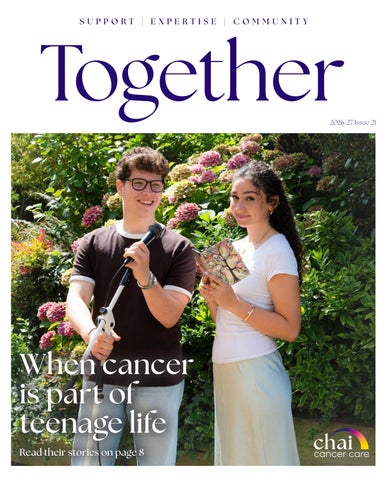
When cancer is part of teenage life Read their stories on page 8
Chai Cancer Care
A welcome message Louise Hager, MBE Chairman As Chai enters its 36th year, it is a daily privilege to carry forward the legacy on which it was built: the belief that nobody should face cancer without support. Born from the personal experiences of my dear mother, Frances Winegarten z’l, and Susan Shipman-Zuckerbrod, that deep commitment remains at the heart of everything we do at Chai. We are fortunate to have the expertise of our Trustees and Medical Advisory Panel, whose vital input helps keep Chai robust, responsive and forward-looking. On p4, both pay tribute to our founders and the innovation they brought to our community. Since Chai began in 1990, cancer care and treatment have been transformed, bringing hope that once felt unimaginable. Yet sadly, more people are being diagnosed. On p8, we hear the poignant testimonies of teenagers thrown off course by cancer, and on p22, clients share how Chai supports them through the challenging side effects of surgery and treatment. On pages 16 and 30, our supervisors, client-facing and Senior Services Management teams reveal the professional frameworks that underpin how Chai works, and on p14 we introduce a new service, What Now?, aimed at helping clients navigate life after cancer treatment. Across more than 70 services, we never stand still. It is so heartening to see recognition for Chai’s services beyond the community. On p20, read about the relationships we are nurturing with medical organisations across the UK to ensure they can signpost Chai. Just as inspiring is the loyalty that passes from one generation to the next – from children selling lemonade, to families fundraising, trusts and foundations giving generously and thousands joining our campaigns. On p26, we spotlight the community’s extraordinary response to our 'For All to C' campaign, which raised £2.8 million, funding just over half of Chai’s annual running costs. As we mark 36 years – along with a new look for Together – I know I speak for everyone at Chai when I say that we remain as committed and true to the ethos upon which this organisation was founded: to be there for every person who needs us.
Photography: Alexandra Taibel
Heartfelt thanks for your unwavering partnership.
2
Together Magazine 2026/27
Contents
FOLLOW US ON FACEBOOK instagram
Chairman Louise Hager MBE
4
Honorary Patrons Dame Maureen Lipman DBE Chief Rabbi Sir Ephraim Mirvis KBE
8
4 4 8
36 years, 70 services,
one vision
Trustees and medical advisors reflect on the spirit of two women who turned adversity into purpose to create Chai
ON THE COVER
“Teenagers aren’t equipped to handle things like this on their own.”
hey’re meant to be the T carefree years. Then cancer intrudes. Five young clients share their experiences
11 12
Founder Presidents Susan ShipmanZuckerbrod Frances Winegarten z’l
14 16 20
A lesson in support
e’re enhancing our provision W for pupils and staff at primary and senior schools
Endometrial cancer: the risks and how to reduce them
The latest treatments and the lifestyle choices that matter. By Prof. Jonathan Ledermann and Dr Gemma Eminowicz
22
22 Service spotlight: What Now?
ife after treatment can L seem daunting. A new support group gives clients valuable confidence tools
Behind the scenes support
Wraparound care ensures staff and volunteers in client-facing roles are looked after, too
Bringing Chai to the front line
Connecting with healthcare professionals is putting our resources front of mind
‘I’ve gone from simply surviving to rebuilding my life’
ancer’s side effects can C leave their marks; our services bring relief
25
BRCA testing secured for the future Why this is life-changing for generations to come
26
A campaign weekend For All to C
28
A new approach for brain metastases
30
How the community raised £2.8 million
Radiotherapy is revolutionising treatment for this secondary cancer. By Dr Nicola Rosenfelder
The Centre of care
How new services are developed and delivered
32
Service spotlight: craniosacral therapy
33
The year at Chai
37 43
You’re amazing!
he gentle but profound T therapy that focuses on healing, repair and recovery vents that made us think, E learn, laugh and cheer
All the feats you took on to raise money for us
Trustees Louise Hager MBE Philip Hertz Alexandra Maurice Rafi Saville Richard Segal Leon Shelley Susan ShipmanZuckerbrod Dr Adrian Tookman Medical Patrons Dr Rachel Craig Dr Niki Davies Prof Michael Douek Prof Andrew Eder Dr Ian Ellis Mr Daren Francis Miss Joanna Franks Prof Daniel Hochhauser Prof Gordon Jayson Mrs Michal Korman Dr Daniel Krell Dr Jonathan Krell Mrs Guida Kurzer Prof Jonathan Ledermann Dr Gillian Marks Dr Jane Neerkin Dr Nicola Rosenfelder Dr Jonathan Sive Dr Adrian Tookman Dr Laura Tookman Dr Sasha Usiskin Dr David Woolf Advisory Board Brian Brick Jo Coleman Alan Fell Jonathan Freedman Michael Glass Diane Kenwood Alexandra Maurice Robert Prevezer Marc Samuels Dr Adrian Tookman
Ways to give
It’s easy, and every donation is precious
emmes
CHAI CANCER CARE
The 2026 Natalie Shipman Memorial Lecture
A TRANSFORMATIVE TIME FOR EARLY PROSTATE CANCER – WHAT'S NEXT? Date: Tuesday 27th October 2026 Lecture begins: 8pm
F O U N D AT I O N
Keynote speaker: Professor Mark Emberton Professor of Interventional Oncology at UCL There will be a Q&A following the lecture. This event is in person and online. To register your interest, please email jamieherz@chaicancercare.org
Our thanks to the Emmes Foundation for their sponsorship Editor: Deborah Wald Design: Creative & Commercial Cover photography: Alexandra Taibel Printing: Kellmatt © Chai Cancer Care 2026
3
1
Chai Cancer Care
36 years, 70 services,
vision
To mark this significant milestone, Chai’s trustees and medical advisors celebrate the vision of two women who pioneered cancer support in the community, and reflect on how it continues to shape Chai
I
n Hebrew numerology, the number 18
word cancer,’ Susan recalls. Their first steps were
corresponds to the word Chai, meaning life.
modest: taking the topic of cancer into synagogue
The word symbolises vitality and the wish for a
halls so people could learn and ask questions, and
good and meaningful life. Jewish culture considers
running a telephone helpline from their homes,
the word especially blessed; 36 – twice Chai – is
offering information and emotional support. For
therefore doubly significant.
Susan, it was a meaningful response to personal
When Frances Winegarten z’l and Susan Shipman-
tragedy: ‘Together with my dear friend Frances,
Zuckerbrod founded Chai intentional, hopeful. At
daughter Natalie.’
a time when cancer was
Over the 36 years, Chai
barely spoken about, they understood that the shroud of secrecy had to be lifted and that education was the key. Their experience showed that even through illness and loss, life could still have value.
provided support Over the 36 years, Chai has has to tens of thousands provided support to tens of of people through 70 services accessed at thousands of people through 11 hubs across the UK, with support available 70 services accessed at 11 worldwide online. locations across the UK.”
Main photography: Alexandra Taibel
Both women faced the raw
4
we established Chai in memory of my beloved
in 1990, the name was
Physiotherapy and
rehabilitation, counselling
impact of cancer. Susan’s daughter Natalie z’l
and couples therapy, complementary therapies,
was diagnosed with cancer aged three and passed
creative workshops, bereavement support, help for
away shortly before her eighth birthday, while
the carriers of the BRCA gene mutation, guidance
Frances experienced an aggressive cancer and
around talking to children about cancer, support
gruelling treatment.
for carers, social groups and coaching for a return
‘There was a great void in the Jewish community
to work – these are just some of the ways Chai
because of fear, a superstition even to utter the
responds to the impact of a diagnosis.
Together Magazine 2026/27
Some members of Chai's Medical Advisory Panel at a recent meeting. Back row l to r: Dr Niki Davies, Dr Rachel Craig, Dr Jonathan Sive, Guida Kurzer RN, Professor Jonathan Ledermann. Front row: Mr Daren Francis, Dr Laura Tookman, Dr Adrian Tookman, Louise Hager MBE, Michal Korman.
5
Chai Cancer Care
WHAT'S NEXT FOR CANCER TREATMENT? If the changes of the past 36 years have been extraordinary, Chai’s Medical Advisory Panel believes another transformation is already under way.
they have an experienced, hands-on team that can make all the difference to their individual journey. Alongside this clinical guidance, Chai’s trustees bring another scope of professional expertise, spanning law, finance, property, governance, strategy, investment and safeguarding. Their roles help ensure that as services and demand rise, the organisation has the resilience and infrastructure to grow with them. The trustees' work may be less visible to clients, but it provides the scrutiny, expertise and long-term planning that is vital for sustainability.
Chai's co-founders, Frances Winegarten z'l (right) and Susan Shipman-Zuckerbrod in the early days.
The strength behind the services Two networks sit behind Chai’s frontline staff and are cornerstones of how the organisation functions. The Medical Advisory Panel, (MAP) which has guided the charity since its earliest days brings together leading oncologists, surgeons, researchers, nursing and palliative-care specialists. The Panel meets regularly at Chai to keep the organisation abreast of medical developments in the cancer field, and helps anticipate how changes in diagnosis and treatment may translate into new needs for their clients. Panel Chair and Palliative Medicine Physician Dr Adrian Tookman explains: ‘Our team is multiprofessional, enabling Chai to deliver the safest practice and
Geneticist Dr Ian Ellis
and advice.’ These exchanges have helped inspire such pioneering
Hospital and the Marie Curie cancer charity. The multidisciplinary service supports people experiencing pain and uncontrolled cancer symptoms, treatment side effects and complex decisions around future care. Dr Rachel Craig who leads it today, says, ‘Palliative care can support more than just end of life. It is being introduced earlier, allowing better symptom management and psychological support.’ Long-serving MAP member, Consultant Colorectal and Laparoscopic Surgeon Daren Francis feels complete confidence referring people to Chai. ‘My proudest moments are being able to recommend people to come to Chai, because I know it will help.’ Consultant Breast and Oncoplastic Surgeon Jo Franks agrees: ‘Once the patient or family has made that call,
needs to be in the years ahead.' That expertise is particularly relevant as the charity considers how its Hendon flagship centre can accommodate increasing demand while expanding provision elsewhere. Rafi Saville saw Chai support his parents through cancer and bereavement: ‘I know, firsthand how valuable it is not only for the person with
describes Chai as ‘a family’, whose core principle is
Professor Andrew Eder
when there is an urgent need for support, direction
today’s priorities, but about where the organisation
Dr Gillian Marks
2011 as a collaboration between Chai, the Royal Free
and the panel provides Chai with a skillset it can access
constructive challenge, and think not just about
cancer but for the whole family. Chai has grown
initiatives as Chai’s Medical Clinic, established in
management of cancer patients can change rapidly,
Trustee Richard Segal says: 'Trustees should provide
‘In prostate cancer we are focused on improving survival, reducing toxicity, reducing the time patients spend in hospital and personalising care with genetic and radioligand targeting drugs as well as hormone treatments.’ ‘Patients and families can take hope from the fact that earlier detection, combined with more effective treatments mean improved outcomes. Something as basic as regular dental examinations can save lives.’
appropriate support for people who come to us. The
6
‘In future, when you hear that someone has cancer, it will be as if they have a serious infection. Thanks to molecular genetic diagnosis and treatment, bespoke drug therapies will see people making a good recovery.’
‘3D printing can be used to create personalised tablets in child-friendly shapes and flavours, making them easier to take and cancer more childfriendly. Innovations like this could be life changing.’ Paediatric Oncology Nurse, Michal Korman
‘Patients will receive less imaging and more targeted, effective treatments with fewer side effects. In the longer term, we will most likely see better integration of imaging, robotic / ablative surgery and other treatments.’ Professor Michael Douek
enormously, but it continues to treat every client as an individual.’ The scale of the Chai organisation may be dramatically different today but the principles and spirit behind it remain recognisable. Trustee Alexandra Maurice ‘walking alongside each individual as they navigate their cancer journey’. Clients, sometimes across four generations, aged three to 101, have found in Chai a place of emotional understanding, physical relief and practical advice to help ease the shock and confusion around a cancer diagnosis. That it does so is possible thanks to the unwavering generosity and commitment of an entire community that funds it.
Seismic change The medical landscape Chai clients encountered in 1990 bears little resemblance to today’s. Doctors understand cancers in forensic detail and treat many far more effectively. MAP member, Consultant Medical Oncologist Dr Laura Tookman points to 'antibody drug conjugates, a new and exciting treatment in ovarian cancer. These work like highly targeted chemotherapy, delivering treatment directly to the cancer cells.' Dr Jonathan Sive highlights the arrival of new drug classes that have ‘led to huge improvements in treatment outcomes for many conditions, allowing patients to live long, meaningful lives even after diagnosis’. For Consultant Dr Jonathan Krell, progress also lies in the changing definition of successful cancer
Together Magazine 2026/27
care. ‘The move away from treating cancer as a single disease toward personalised medicine allows us to select treatments that are far more targeted and effective. We also recognise that quality of life, rehabilitation and emotional wellbeing are just as important, making Chai’s role crucial.’ More patients surviving is the goal, as Consultant in Palliative Medicine Dr Jane Neerkin points out. ‘Treatment has developed exponentially, with many cancers being cured and managed in a totally different way. How we support patients living for longer with consequent side-effects is evolving too.’
Dr Adrian Tookman with Professor Jonathan Ledermann, co-author of our feature on endometrial cancer, on p12
We recognise that quality of life, rehabilitation and emotional wellbeing are just as important, making Chai’s role crucial.” Dr Jonathan Krell
Always breaking new ground Statistics tell the story in data terms. In 2011 Cancer Research predicted 4 million people would be diagnosed with cancer by 2030. Macmillan anticipates it will climb to almost 5.5 million by 2045. In 2006, when Chai was 16 years old, it recorded around 2,100 individual appointments annually for its clients. In 2025, that number was 22, 238. The breadth of services has expanded alongside them: from 37 in 2010 to 70 today. This is more than organisational growth alone and reflects an expanding range of services corresponding to a wide range of needs: people living longer after cancer, undergoing prolonged treatments or managing lasting side-effects; children trying to process a parent’s diagnosis;
partners who may suddenly become carers;
BRCA1 and BRCA2 cohort will require increased
and people discovering that the end of hospital
knowledge and education as this group grows.
treatment does not necessarily mark the end of
Discussing risk management and providing
their cancer experience. MAP member and GP Dr
support is part of what I have been able to bring
Niki Davies identifies life after treatment as ‘one
to Chai.'
of the biggest remaining unmet needs: learning to
‘Chai gives so much more than
move forward despite the emotional and physical
you can ever imagine,’ says
changes left by cancer’.
Daren Francis. ‘It’s a hand to hold
The support group for young adults who have lost
while dealing one of life’s most
a parent brings people together at an age when
difficult challenges.’ How it does
many may be encountering profound loss for
this so successfully, is down to the
the first time. The expertise, professionalism and
guiding vision of founders Frances and Susan. ‘It
empathy required to facilitate such a group cannot
remains a large family rather than an impersonal
be underestimated.
bureaucratic charity,’ says Trustee and General
The clearest example of medical advances shaping
Counsel Leon Shelly.
services must be NHS England’s Jewish BRCA
At the helm today is Chairman Louise Hager MBE,
Testing Programme. Chai’s partnership with
daughter of Frances, whose inspiring leadership
Jnetics and NHS England extended Chai’s role
and drive is the beating heart of those principles.
beyond supporting people after cancer enters
Trustee Philip Hertz sums it up: ‘It is no accident
a family, to helping identify those at increased
that anyone who encounters Chai is immediately
genetic risk before it develops. With BRCA testing
touched with the warmth of its professional staff
now established within the NHS, its impact has
and volunteers. It offers support
the potential to extend across generations.
that’s hard to match and difficult
Guida Kurzer is a Clinical Nurse Specialist who provides support to women with an increased
to describe but a support which is unforgettable.’
risk of gynaecological cancers. 'Support of the
The spirit of Chai ‘The fear of cancer and its unknown outcome still exists and people deserve emotional and practical support to enable them to cope.’
‘Organisations inevitably evolve, but their values should remain constant. Growth should strengthen that founding spirit, not dilute it.’ Trustee, Richard Segal
‘The warmth and kindness within Chai is palpable as one takes one's first steps inside.’ Trustee, Alexandra Maurice
Susan Shipman-Zuckerbrod
7
Chai Cancer Care
‘Teenagers aren't equipped to deal with something like this on their own’ Five young clients share how cancer affected them and how Chai supported them through the toughest of times
I
mmanuel Weisz was diagnosed with lymphoma shortly after turning 13 in 2024.
‘I’d started losing weight when I was 11 – seven kilos – for no clear reason. I’d had shingles and recurrent chest pains. The doctors blamed Covid, hypermobility, reflux, night sweats. The odd thing was, all my blood tests were normal.
Photography: Alexandra Taibel
All to play for
8
‘I was in Year 8 at school. I loved football and played for a Sunday team. I’d just had my Bar Mitzvah, and I was excited for all the upcoming parties with my friends – lots of dancing, food and fun. ‘One night, I had what felt like a minor cramp in my leg. Gradually, the cramps became more frequent and painful. The
doctor said, “If it quacks like a duck, it’s a duck,” meaning it really was just cramp. It took many weeks, battles, scans, x-rays and misdiagnoses until we knew what I had. Even three days before my biopsy, they said it wasn’t cancer because my lymph nodes were fine. But once referred to the right doctor, a PET scan, where they inject radioactive liquid into you, showed Stage 4 Hodgkin lymphoma.
so painful, so much poking and pounding. And I was terrified of the needles. When we got in touch with Chai, I was told hypnotherapy could help with my fear. So, before treatment started, I learned some breathing and visualisation techniques, imagining myself putting my fear of needles into a box, closing the box and then burning it. It still wasn’t pleasant, but I had a way to make it less scary.
Everything changed
‘Chemotherapy made me tired and sick. I had six rounds over six months. The first three were like being hit by a truck. I was taking 20 tablets a day. I could eat breakfast, but it was a struggle for anything else. My parents had to force me to eat. Two weeks in, my hair started falling out. My brother tried to give it a positive spin, telling me being bald was
‘The hardest thing wasn't hearing I had cancer. It was being told I couldn’t go skiing or play football. So, I asked instead, if I could have some new Lego. The doctor explained chemotherapy: how it kills the cancer cells, but it might kill other, good cells, and that it will make my hair fall out. ‘I’d had a biopsy which was
Together Magazine 2026/27
an experience no one else my age will have. But it reminded me every day that I was ill. We shaved my hair off just before Chanukah; I couldn’t speak.
“The hardest thing wasn't hearing I had cancer. It was being told I couldn’t go skiing or play football.” Help to ease the pain ‘Slowly, I realised how low I was. Telling other people about the cancer was hard. Friends didn’t know what to say. But talking with my Chai therapist – about life, my weekend, the holidays – always made me feel better. She lifted the lid on my feelings almost without me noticing. Chai also went into my school and spoke with the teachers and my year group to explain what was happening because it was hard for them too. ‘Incredibly, after just two months, my PET scan showed I was cancer free. The consultant was pleasantly surprised I responded so well to treatment as it was rare with my stage. But because it was Stage 4, I had to continue chemotherapy for another four months. I remember lying under the kitchen table, crying to mum, “You’re asking me to commit suicide every day.”
Immanuel Weisz
Taking medicine that made me feel so bad didn’t make sense. For others, it’s just beginning ‘ When I rang the bell to mark the end of treatment, I saw a girl sitting outside the room waiting to begin hers. I realise now how much cancer changed me. I understand things I didn’t before, I feel more mature than some of my school friends, and I’ve learned how to stay calm in difficult situations. So much of that is because of the help Chai gave me.’
T
o days before 14-year-old Noa w Hammerman was due to leave for summer camp in July 2025, her mother, Ronit, was diagnosed with Non-Hodgkin lymphoma.
‘When Mum told us, I cried and hugged her and apologised for being so annoying that day. I added, "Don't leave me," and she replied, "I'm not planning to." ‘I'd been looking forward to summer camp for months and, honestly, I didn't think staying home would help the situation. Instinctively, I needed the distraction despite not knowing how to cope. The minimal contact with home probably got me through those first few days. I told just one close friend, but later, completely broke down with another.
When it started coming out in my subconscious, I knew I needed to speak to someone. Teenagers aren't equipped to deal with something like this on their own. Recognising emotions ‘As soon as I met my counsellor, I burst into tears. For the first time I felt some relief, that it was okay to let go. Until then, processing wasn't really an option. Everything had happened so quickly, alongside GCSEs, and I didn't know what I was feeling. Chai was the place where I could discover that. ‘I'm still being supported, even though Mum has been in remission since January. Because what you've been through doesn't just disappear. Chai is where I can fall apart and know that I'll be put back together and be able to walk out, recharged. ‘I was a typical teenager: loved shopping, often moody, enjoyed having fun. Now, different things matter to me. Chai helped me understand that when the world expects you to keep going, it's okay to be kind to yourself. As awful as cancer was, it also showed me there is light that can come from an impossible situation. Chai helped us find that light.' Noa Hammerman
'One of mum’s friends said we needed to speak to Chai. It was a place we knew about but didn’t really know what it did. Fear versus reality 'Mum started chemotherapy a week after I got home. She asked if I wanted to visit her while she was having treatment. I expected loads of tubes and a hospital bed... but she was sitting in a chair in her own room with a few wires. You can make things much scarier in your head than they really are. 'The first two rounds of chemotherapy weren't too bad. Mum bounced back each time, and an aunt came to stay and help. The next rounds were tougher and Mum was sicker. By then, my aunt had left and my brothers were at uni. School became the place where we didn’t talk about cancer and I appreciated that my friends didn't keep asking about it. But I’d come home and it was just Mum, Dad and me in a bubble of cancer. I started dreaming about Mum and Dad not being okay. 9
Chai Cancer Care
‘I'm 18 now and about to study broadcast journalism, but cancer is still part of everyday life and Mum has been incredible through it all. People ask whether I still need Chai. The answer is yes.’
A
lfie Davis was 11 when his dad Peter was diagnosed with T-cell prolymphocytic leukaemia (T-PLL)
‘My parents told me about the diagnosis after three months when they took me out for breakfast. They talked about "naughty blood", but I knew it was serious. Dad had been given six months to live, though I didn’t know at that point. They wanted to protect me. He underwent three months of intensive immunotherapy before the stem cell transplant In July 2020. We’d just celebrated his 60th birthday. Looking back, it could have been a goodbye. Covid, cancer and isolation ‘This was at the height of Covid. I had to move in with my grandparents to avoid passing on any infection. I was told it was for a couple of weeks, but it became three months. I couldn't see my parents, much less hug them. There were times Dad couldn't come to the phone because he was too unwell. Being an only child, nobody understood how isolated I felt. ‘My grandparents, Booba and Pa, were my safe place. Sometimes Booba would be straining chicken soup for Friday night when I came downstairs after a bad night. She'd say, "Do you want a Mini Magnum?" and we'd sit in
Alfie Davis
10
the kitchen eating ice cream and talking. We still speak twice a day. ‘Cancer wasn't new to our family – all my grandparents had it – but watching my own dad go through it was completely different. A long journey ‘Coming back home after staying with Booba and Pa was the best feeling. The transplant worked, but sadly, that wasn't the end of it. Dad developed a rare version of GVHD (graft versus host disease), plus further infections, so he was in was in hospital more than he was at home. As an actor, he’d played Thénardier (Master of the House) in Les Misérables in the West End and had rave reviews for his one-man show, Picasso is Coming… Ce Soir. He has extraordinary fight and resilience, and I see his star quality shine through every day. Shaping my life ‘There has been nothing conventional about my teenage years. I missed having a proper Bar Mitzvah and I do most of the cooking at home as my Mum, Michelle, is an incredible carer to my Dad. ‘Music has always been important in my life. I’ve sung solo in four operas at the Royal Opera House and the theme tune to the new Beetlejuice film. Music therapy at Chai was a natural choice for me. I see Phil in the Hendon centre and every session is different. We don't always make music. Sometimes I need to talk; other times talking makes me stressed. Then Phil plays the piano beautifully while I lie there listening or singing. I love Frank Sinatra and Ella Fitzgerald.
D
ays before her 50th birthday in 2024, Daphna Plaschkes was diagnosed with aggressive multiple myeloma. Following chemotherapy and a stem cell transplant, she is on maintenance treatment. Two of her three daughters, Yael, 13 and Eva, 11 are supported by the Chai in Schools programme. Yael: ‘Mum went to the hospital one day and literally didn’t come back. After the first week we visited her and she had an oxygen tube. We didn’t understand what was going on.’ Eva: ‘We’d never seen her like that. We had questions, we asked if she was going to be okay. Two of Mum’s friends who’d come to celebrate her birthday, stayed to look after us while Dad was at the hospital, which made us feel safer.’ Yael: ‘At night Dad would check in with us and see how we were doing and he would tell us a bit of what was going on.’ Chai comes to school Yael: ‘We were open with friends and teachers about what was happening. When people asked, I just said, “My mum has cancer.”’ Eva: ‘Mum contacted Chai almost immediately and they asked us if we would like to have play or art therapy. We both chose art – and the therapist comes to the school.’ Yael: ‘Sometimes I would pretend everything was okay when it wasn’t. But I could tell Chavi, my therapist, the good and the bad.’
‘Friends can't understand what it's like living with cancer in your family. Phil knows. He's a brilliant, genuine guy who listens and has helped me get through some really bad times. Chai is the place I can say the things I can't say anywhere else.
Eva: ‘Art is very abstract – you can’t be wrong, so I could draw and paint how I was feeling and talk about it. My therapist used “emotion cards” which had positive and negative phrases on them like, 'I feel like a grown-up,' or ‘I know this isn’t my fault and my parents love me.’ We used them to help me know what I was feeling.’
‘I'm 18 now and about to study broadcast journalism, but cancer is still part of everyday life and Mum has been amazing through it all. People ask whether I still need Chai. The answer is yes.’
Yael: ‘I used Play-Doh to make “pastries”, but I would turn them into dangerous things using dark colours, which showed I was upset. Over time the things I made became gentler.’
Together Magazine 2026/27
Yael: 'I found it hard to tell Dad how I was feeling. He was worried and under pressure taking care of us and working. I often felt I had to keep my thoughts to myself. Seeing Chavi, meant I didn’t have to keep it inside. I know if something upsets me and I don't tell anyone, I become emotional.'
A lesson in support Just one person gets the diagnosis, but its impact can affect a whole school. The Chai in Schools programme provides practical and emotional support for pupils and teachers alike
Finding independence Eva: ‘I didn’t feel ashamed about seeing a therapist and the school was very understanding. They said they would do everything to support us, which I know reassured Dad. Once, at the end of a maths test, the headteacher came into the room and asked me how I was doing, which was so nice.’ Yael: ‘Therapy helped us as siblings because we can tell each other when something is wrong. I didn’t know if Mum would get better, but I did my best to be a big sister, like suggesting we make cards for her. At my Bat Mitzvah, Eva spoke about the family's experience, acknowledging Mum’s illness and the way I had supported the family.’ Eva: ‘Some of my friends really depend on their parents. I think we are now able to do things on our own. The experience changed how we are together, we’ve really had to lean on each other.’ What others should know Eva: ‘Chai can bring back your confidence. When Mum was sick, I was feeling quite small, but they built me up again.’ Yael: ‘No one is pushing you to feel happy so don’t feel under pressure.’ Yael and Eva Plaschkes-Wise
‘C
hildren still need to be children. They still need to laugh, learn, play and enjoy school.’ Sagi Yechezkel, Head of Brodetsky Primary School and Leeds Jewish Free School, has witnessed the impact of a cancer diagnosis on pupils and knows that school can provide essential stability when life is upended. ‘When we learn about a diagnosis, be it child or parent, the first thing we do is listen. Each family is different and we don’t assume what they need. But while we are experts in education, we are not in cancer.’ Chai does not contact schools directly, but families and teachers can ask their school to approach Chai if they feel the need for wider support. Since 2012, Chai in Schools has supported children affected by cancer through in-school counselling, music, play and art therapy. Its work has expanded to include guidance for staff, helping them manage the emotional impact on the affected pupil, their friends and the school community.
and explore language, privacy, difficult questions, behavioural changes, boundaries, bereavement and grief. ‘There’s an additional emotional aspect in Jewish schools,’ she continues. ‘Teachers may know the family outside the classroom, adding another layer of complexity. The principle is that staff receive support so they themselves, can support their pupils.' Student workshops, led by child therapists, help small groups explore their feelings and navigate this uncharted territory. Jessica OverlanderKaye, Emotional Wellbeing Practitioner at JCoSS, benefited from Chai’s input when a pupil recently passed away from cancer. ‘From the initial diagnosis, it was turbulent, with a continuously changing journey of diagnosis and prognosis. Chai advised us on supporting the pupil’s friends as they had so many questions and fears. As staff, we too needed to be held and guided.’
‘Children still need to be children. They still need to laugh, learn, play and enjoy school.’
As more younger parents are diagnosed, the programme is evolving again. Chavi Sufrin, Deputy Clinical Lead in London, has developed the programme to be informative and emotionally supportive, but also clinically appropriate for children and young people at different ages and stages of development. The new framework gives schools a clearer understanding of the support available and how to access it. Sagi explains why an age-appropriate approach matters to his students: ‘Primary-aged children live in the present. They need simple, honest explanations from a trusted adult. Older children ask more questions and may seek evidence before they feel reassured.’
As part of the programme, Caroline Tunkel, Head of Corporate and Community Engagement in London, speaks in schools to raise awareness of Chai, delivering relatable information, dispelling taboos and introducing an animated film (for primary school children) explaining cancer and Chai’s support for children. For more information about Chai in Schools, call London 020 8202 2211 or Manchester 0161 772 4760.
Watch our animated film specially designed for primary school children
‘The enhanced programme includes supportive sessions for class teachers and key staff working closely with the child,’ explains Chavi. These are facilitated by experienced therapists
11
Chai Cancer Care
Endometrial cancer T he risks and how to reduce them
It’s the most common gynaecological cancer in the UK. Thankfully, it’s the most treatable, too – and weight management is a key factor in avoiding it. This is what women need to know By Professor Jonathan Ledermann and Dr Gemma Eminowicz
C
ancer of the womb, also called endometrial
34% of uterine
cancer, affects around 9,500 women in the
cancers in this
UK annually. It starts in the lining of the uterus
country. Fat tissue
and while most cases occur after the menopause,
produces oestrogen, and
particularly in women in their early 70s, younger
long exposure to oestrogen
women can also be affected. The good news is that many cases are found early, when treatment is most
can stimulate the lining of the womb and
likely to be successful and for many, surgery alone can
therefore, increase the cancer risk. Other factors include
cure the disease.
diabetes, high blood pressure, not having children, a late
According to Cancer Research UK, one of the main
menopause, some inherited conditions such as Lynch
reasons cases are increasing is rising obesity, a preventable cause. Researchers estimate it lies behind
12
without enough progesterone
syndrome, and prolonged use of tamoxifen, a treatment used for breast cancer.
Symptoms and diagnosis The most obvious symptom to be aware of is abnormal vaginal bleeding. Post-menopause, even a small amount of bleeding should be investigated. In younger women, bleeding between periods or unusually heavy periods can also be a warning sign. Tests usually begin with an ultrasound scan to look at the thickness of the womb lining. If needed, a minimally invasive biopsy is taken, which can be done
Together Magazine 2026/27
Meet the Experts Professor Jonathan
Dr Gemma Eminowicz
Ledermann is a
is based at UCLH
Consultant Medical
and specialises in
Oncologist at
the treatment of
University College
gynaecological cancers
London (UCL) and
and the delivery of
UCL Hospitals (UCLH) in
brachytherapy (internal
London. He specializes in the treatment
radiotherapy). She has a keen interest
of gynaecological cancers—particularly
in complex targeted radiotherapy using
ovarian cancer—and colorectal cancer and
image guidance and adaptive techniques
has led many national and international
as well as the use of imaging biomarker
clinical trials.
for treatment.
transforming treatment for women with advanced or
throughout the body. Radiotherapy can be used to
recurrent disease, in some cases greatly improving long-
control symptoms such as bleeding or pain. Treatment
term control.
for advanced or recurrent endometrial cancer has
Catching it early
A healthy weight, regular exercise and good control of diabetes can reduce the risk of endometrial cancer.”
Surgery is the main treatment for early-stage
in an outpatient clinic with a hysteroscope, where a thin
whether lymph nodes are involved, the type and grade of
camera is passed into the womb so doctors can look
the tumour, and the results of molecular testing.
more closely and take a sample.
endometrial cancer. This usually involves removing the womb, cervix, fallopian tubes and ovaries. It is often carried out using keyhole or robotic-assisted surgery, which can help recovery. Some women also have lymph nodes checked or removed to see whether the cancer has spread. Doctors then assess the risk of recurrence by
Where the risk of the cancer coming back is low, surgery may be all that’s needed. Where the risk is higher,
diabetes can reduce the risk of endometrial cancer.
additional treatment may include internal radiotherapy,
For women who have thickening of the womb lining but
external radiotherapy, chemotherapy, or a combination.
not cancer, a hormonal coil may help by balancing the
Internal radiotherapy, also called brachytherapy, delivers
effects of oestrogen. The combined oral contraceptive
radiation directly to the top of the vagina to reduce
pill is also known to lower risk. A small number of cases
the risk of the cancer returning. It is usually quick and
are linked to inherited conditions, most commonly
causes only a small amount of discomfort. Possible side
Lynch syndrome and where this is identified through
effects include vaginal dryness or narrowing. External
genetic testing, women may be offered risk-reducing
radiotherapy is used to reduce the risk of recurrence
surgery after completing their families.
in the pelvis and is usually given Monday to Friday, over
In the past, endometrial cancers were mainly classified by how they looked under the microscope. Today, tumour samples are tested for molecular features. This helps doctors understand how the cancer is likely to behave, the risk of recurrence, and vitally, which treatments may work best. This is one of the most important advances in endometrial cancer care. Some tumours have features linked with an excellent outlook after surgery.
particularly those with a feature called mismatch repair deficiency, where the body is unable to fix errors in its DNA, respond very well to immunotherapy. For these women, combined immunotherapy and chemotherapy may be used and serve as a maintenance treatment. A high proportion of patients respond, and some achieve long-term control of their disease.
looking at the stage of the cancer, how far it has grown,
A healthy weight, regular exercise and good control of
Testing has changed treatment
changed significantly in recent years. Some tumours,
several weeks. The most common side effects here are
Tumour samples tested for molecular features help doctors understand how the cancer is likely to behave, and which treatments may work best.” For tumours that are less sensitive to immunotherapy, chemotherapy remains an important treatment.
tiredness and irritation of the bladder or bowel.
In some cases, immunotherapy may still be added
Cycles of chemotherapy may be recommended for
therapy and newer targeted treatments are also being
women at higher risk of the cancer returning elsewhere in the body. Regular side effects can include hair loss, tiredness, nausea, increased infection risk, bowel changes, muscle aches, and numbness or tingling in the hands and feet. After treatment, women are followed up
or used later with other targeted drugs. Hormone explored, and clinical trials are developing rapidly. Although the rise in endometrial cancer is concerning, most cases are still curable when found early and 70% of women survive 10 years or
according to their individual risk of recurrence.
more. For women with more advanced disease, the
Later stage and recurrent approaches
use of immunotherapy are bringing new hope and
We know, too, that others are particularly sensitive
If the cancer has spread too widely for surgery,
to immunotherapy. These discoveries are already
treatment usually focuses on medicines that work
growing understanding of tumour biology and the better outcomes.
13
Chai Cancer Care
SERVICE SPOTLIGHT
‘I WHAT
NOW? Introducing a new group that provides the stepping stones back into life after treatment, helping clients rebuild confidence, reconnect with their bodies and find their way forward
t's like you've gone 10 rounds in the boxing ring. Then someone pushes you out and says, “You're all right now, off you go,”’ says Life Coach Simon Feldman describing finishing cancer treatment. For many, it doesn't feel like the end of the journey. Rather, it can feel like you’re standing at a crossroads, unsure how to rebuild a life that no longer looks quite the same. That's where ‘What Now?’ begins. Designed for Chai clients of different ages who have completed treatment and are in remission, the course helps participants prepare for stepping away from the security of regular support. Facilitated by counsellor Sara Rey with Simon as contributing lead, the programme combines emotional support with practical workshops, drawing on nutritionists, fitness coaches, complementary therapists and employment specialists. Topics range from rebuilding confidence and managing anxiety to nutrition, exercise and returning to work. So far, there have been two courses. Sara explains: ‘Everyone will have had a different cancer experience, so an important part of the process is creating room for honest reflection. Participants can speak openly, exploring where they are now, and their hopes and fears about the future.’
14
‘Each specialist helped me look at things from a different perspective. The craniosacral exercises help me refocus, release tension and feel more connected to my body. It’s easy to put lots of effort into getting “back to normal”, forgetting I’m still recovering.” Karen Spalter A mindset shift The programme helps participants consider not simply how to return to their previous lives, but how they want to live now. ‘The world can be quite impatient when you’re recovering,’ says Simon, himself a three-time cancer survivor. ‘Chemotherapy may have made you feel sick, or surgery may have changed your body forever. The task is to re-establish your life around the values and vision you have today,’ he says. ‘Sometimes it’s more helpful to begin by asking, “What do I not want?”
Together Magazine 2026/27
PRACTICAL ADVICE Recent groups have explored nutrition and exercise, returning to work and rebuilding confidence. Melanie Pearl from employment charity Work Avenue led a session on navigating the workplace after cancer. ‘Returning to work can bring practical and emotional challenges,’ she says. The discussion covered applying for jobs after a career break, explaining gaps in employment and communicating the need for time off for treatment to prospective or existing employers.
I wanted to find my voice again in the workplace and be around others who understand how hard work-life post-cancer can be. I learned about being kinder to myself and loved how everyone lifted one another.” Sophie Yershon
Craniosacral therapist Shelly Kielar introduces grounding exercises that participants can use when anxiety surfaces, including breathwork, sound meditation and simple movements that bring attention back into the body.
Recovery can bring relief and gratitude, but also uncertainty, grief, anger and fear. Simon explains: ‘The mind can easily default to selflimiting beliefs, particularly at night when worries take over: Will the cancer return? What if I have to tell my family again?’ Participants learn to notice these thoughts rather than be controlled by them. ‘The aim is not to dismiss understandable fears, but to open up the idea of other possibilities and choices.’
‘The idea is to be in the present – to notice how we are in the moment,’ she explains. During sound meditation, the group observes whether they reach out to meet a sound or allow it to come to them. ‘This can help people sit with complex sensations or tensions without immediately labelling them as pain or something to fear.’
The emphasis is on seeing the whole person, not solely as a cancer survivor, mother, wife, husband or partner, but as someone who may be reassessing their priorities and future direction.
Even standing and sitting becomes an exercise in reconnecting with the body by noticing the feet, the support of the chair and how weight was distributed. Adds Shelly, ‘There is no right or wrong answer – it’s simply about being aware.’
A second psychotherapy or life coach session at the end of six weeks encourages participants to identify fulfilling goals and reconnect with what makes them feel positive, strong and purposeful.
Several participants later contacted Work Avenue for individual support, either to remain in work or find a new role. ‘It’s particularly rewarding to see people take that next step and ask for help,’ says Melanie.
The group also experienced co-regulation – the way people naturally help calm and steady each another. ‘Cancer and treatment can leave the nervous system feeling protective, making connection more difficult,’ says Shelly. ‘When you are going back out into the world, you want to be able to connect again.’
T I P S
F O R
Notice the fears that can shape life after cancer, such as: What if the cancer comes back?
Question the beliefs shaping your life: are they true, and are they limiting you?
‘The response is heartening,’ says Simon. ‘Given ten minutes to write down the positive things in their lives, people fill their pages. None of it is materialistic. They identify
M O V I N G Acknowledge the uncertainty without allowing it to dictate every decision.
the relationships, experiences and activities that enrich them and give them hope.’ Journalling and recording good things that happen each day are also encouraged as ways of reconnecting with what remains meaningful and life-enhancing. That sense of connection is what Sara sees as one of the programme’s greatest strengths. Each course is adapted to the ages, experiences and priorities of those taking part, but the group dynamic itself remains essential to its success. ‘The strength lies not only in the professional input,’ she says, ‘but in the compassion, encouragement and understanding that members share with each another.’ For participants, ‘What Now?’ is not about drawing a line under cancer or returning unchanged to their previous life. It’s about recognising what they have been through, discovering what matters now and finding the confidence to step back into the world with greater clarity, connection, resilience and hope.
F O R W A R D
Focus your energy on the choices and actions available to you now.
When you feel stuck, identify one realistic step forward, however small.
15
Chai Cancer Care
Photography: Alexandra Taibel
SUPPORT BEHIND THE SCENES
16
Behind Chai’s client-facing teams is supervision – a crucial framework that helps staff navigate the emotional demands of their work and maintain the highest standards of care
Together Magazine 2026/27 Darija Stojnic
LISTENING
‘I
n my role as a client services manager, I could meet someone for an assessment and it’s their first time at Chai,’ says Samantha
Glazer who is based at the Hendon flagship. ‘I might hear from a client who is doing well, or I’ll learn about a bereavement, or a call comes through from a parent worried about the impact of their own cancer diagnosis on their children.
A wide scope, a shared purpose Across the country, Chai’s client-facing community is extensive. It includes 42 counsellors, 38 complementary therapists, 14 Client Service
again. They may drive them to and from Chai
with clients.
six or seven clients a day,
and empathy.’
supporting patients, family
Behind that ability is a layer of professional support that clients never see, but which plays an important part in maintaining the quality of the care they receive. That support is called supervision.
being at peak performance 100% of the time.’ Volunteers encounter clients in different ways
client, and needs my full attention, consideration
circumstances change is central to Chai’s work.
We need to safeguard everybody and that means
and reception staff who also have regular contact
Chai counsellors may see
appropriately and contain the client safely as
carries its own set of preferences and constraints.
Managers (CSMs), and around 121 volunteers,
Each situation generates a range of feelings for the
That ability to listen carefully, respond
Manchester CSM, Michelle Delew adds, ‘Every case
for appointments, provide befriending companionship, prepare and serve lunches,
members, couples, friends
and work colleagues through We discuss different the emotional impact of ways of helping clients cancer. Complementary therapists can see an equal while maintaining the number of clients, and are focus on the role of focused on improving their wellbeing through treatments that team member.” such as reflexology, massage, physiotherapy and
facilitate classes, organise social events, cut hair, do manicures or make-up lessons. And let’s not overlook reception: the first ‘hello’, the cup of tea and a biscuit for someone feeling vulnerable is a point of contact that matters, too.
dietary advice and the many others available.
The holding pattern
Client Service Managers are the first in-depth
Supervision is a professional framework for all
point of contact for a client. They manage the
these team members, providing discrete time away
initial assessment, discuss which services may
from the day-to-day running of the organisation.
be appropriate and remain at the clients’ side
‘It is not training, nor is it line management. It
as circumstances change. ‘A single assessment
is a confidential space to reflect on work and
can sometimes develop into support for several
interactions with clients, consider different
members of the same family,’ explains CSM Karen
perspectives, discuss complex situations and think
Richman, based in Manchester. ‘You feel very
about how best to respond,’ explains Darija Stojnic,
responsible for supporting each of them.’ Fellow
who supervises complementary therapists and volunteers. ‘In that space, staff and volunteers can
17
Chai Cancer Care
SUPPORTING Ruth Aylward-Davies For counsellors, both are a mandatory requirement to be able to practise in the UK. Other client-facing roles have supervision arrangements appropriate to their work, with frequency varying according to need. ‘We use different terminology for different areas of specialism,’ explains Denise Wilson, a supervisor whose background is in HR, neuro-linguistic programming and counselling. ‘A counsellor may talk in a very different technical language from a client service manager who has a wealth of experience and training but does not have the same clinical background.’
Learning from one another Group supervision brings the important benefit of learning from colleagues. For Mandy Strang, a complementary therapist in Glasgow, who joins the online complementary therapist supervision share their personal experiences, receive feedback
things in our lives, even though our experiences
on situations, listen to others and learn from them.
may differ from the client we are seeing,’ says
In supervision, we discuss different ways of helping
Annie Miller, a Glasgow-based Chai counsellor.
clients while maintaining the focus on the role of
‘A supervisor can help you draw on something
that team member.’
within to bring another level of
Supervisor Ruth Aylward-Davies, who has been in
Confidentiality for one and all
focus on the choices the clients make, whilst at the
‘Part of the skill of being a
same time balancing the vulnerabilities present when making those choices. The space between supervisor and therapist is a collaborative one, keeping the clients needs at the centre. The independence of the supervisor is part
person in front of you to feel confident to be honest with you,’ explains Ruth. ‘It is professional support where we can talk about anything we want,’
A different perspective
complementary therapist whose
pose some diplomatic complexities, she says. ‘It is
confirms Alison Grunwald, a
level. Supervision has been helpful in helping me to
It's like having wise owls on your side. It gives you a way forward and never feels like judgement.” Sarah Fulberg, Play Therapist
how supervision input enhances her work. ‘If I didn’t
an important caveat. ‘Where this
quite get what happened in a session, I’ll take it to
might be for guidance about a
supervision. They’ll ask one question and the whole
particular treatment process,
scene will reveal itself. Suddenly you have another
the names of our patients are never divulged.’
and I relish it.’
Working in a relatively small Jewish community can
my clients on a personal
specialism is healing. She adds
feels like judgement. It’s a worthwhile dialogue
how they have managed their own challenges.’
not uncommon that I know
Children’s play therapist Sarah Fulberg explains
it gives you a way forward,’ she says. ‘And it never
18
supervisor is getting the
of what makes the conversation valuable.’
angle on it. It’s like having wise owls on your side,
listening to other therapists’ experiences and hearing
empathy to the client.’
definition: ‘We offer support and help the therapist
a supervisor role at Chai for 15 years, adds further
group, this is particularly helpful. ‘I gain great insights
‘That confidentiality element is woven deep into the organisation,’ says Nikki Berkley, a supervisor with eight years’ experience at Chai. ‘The bottom line is, without it, we don’t have a counselling unit. We work
deal with these situations professionally without letting my own emotions cloud the situation.’ Linda Lovat, a volunteer with 14 years’ experience in Hendon, assists on reception, making lunches for clients and at social events. ‘Our interactions may appear very light but every single one matters to someone who is here
for care,’ she says. ‘In supervision I can check-in that I’m responding appropriately to clients and understanding situations correctly, managing my own feelings and maintaining Chai’s standards. Group supervision is always brilliantly supportive.’
Supervision can be a reset opportunity, a pause.
very hard at maintaining it.’ Supervision can be
Alison joins the complementary therapy cohort
‘We're all human and we've all been touched by
delivered to an individual or facilitated in a group.
for supervision. ‘I feel an intrinsic part of the Chai
Together Magazine 2026/27
I’ve not worked in many organisations that have been so comprehensively supportive as Chai. There’s immense cohesion in that aspect.” Nikki Berkley
Nikki Berkley
community of care, deeply focused on the welfare of my clients. People come to me in a vulnerable state and supervision helps me keep my own sense of ‘doing my best’ and doing what’s right.’
A chain of support Jodi Lazarus, a London CSM recognises the ecosystem of support that supervision brings. ‘Having a professional ear to turn to helps me do my job for the client better. It makes me stronger. Whenever I’m with the loved one of a patient, explaining the services that are available for them, I say, “We are here to support you, to give you the strength to support your mother, your sister, whoever it is.” And that’s what I feel my supervisor does for me.
CARE
She gives me the strength, through emotional handholding, to be able to give that to my clients.’
The unseen team The majority of supervisors are external but all feel a strong sense of belonging to the organisation. ‘We’re part of that Chai hug, too,’ says Denise. Nikki agrees. ‘I’ve not worked in many organisations that have been so comprehensively supportive as Chai. There’s immense cohesion in that aspect.’ And, experienced as they are, the supervisors must be supervised, too. ‘It doesn’t matter how seasoned you are in the work. You still need it,’ says Ruth.
Focused care where it matters Clients may never see the supervision that
Denise Wilson
sits behind their care, but they experience its value directly: in the quality of the listening, the thought given to suggestions and decisions, and the recognition of when something needs further consideration. And perhaps that is the most important thing about this unseen layer of care. Chai is built around the principle that nobody facing cancer should have to navigate it alone. Supervision quietly extends that principle to the professionals who support them. As Denise puts it: ‘No one is on their own. Everyone should feel supported.’
U N DE R S TA N DING
19
Chai Cancer Care
Bringing Chai to the front line Forging links to medical professionals all along the cancer patient’s journey ensures our vital support is on the radar. We hear from those spearheading the initiative
F
or people facing cancer, the right support at the right moment can make a huge difference to how they experience the physical and emotional impact of their illness. This is the starting point for an initiative designed to ensure that at every patient touchpoint, from diagnosis through treatment to recovery or palliative care, Chai is a recommended route for support. Across the North, Gerry Singer, Head of Community Engagement in Manchester, Leeds and Liverpool, has been building relationships with medical professionals most likely to encounter cancer patients and members of the Jewish community. ‘In the last two years, that’s led to 200 new connections,’ she says. ‘Every meeting leads to more valuable contacts and because it’s often word of mouth, there is an immediate willingness to meet.’ Chai in at the roots The network now spreads across hospitals, GP practices, hospices and community health teams. ‘I have been working my way around district nursing teams, emergency response teams, health visitors and community and school nurses,’ says Gerry. ‘I’ve presented to medical teams in hospitals, run “lunch and learn” sessions at Christie Private Care, joined oncology forums for doctors and nurses, and connected with hospices across the region.’ Initiatives such as the Women’s Cancer Awareness Event at the Broughton Hub in
Chai’s outreach and the holistic approach it provides is vital for patient support.” Emma Dodd, Head of Nursing for Cancer Services, Macmillan
20
Together Magazine 2026/27 Manchester, organised by Salford Council, are immediate ways to meet the public. Attending the Dying Matters Awareness Week at the Leeds Care Fair also opened new conversations with charities, community organisations and support agencies.
Get in touch:
These relationships raise awareness of Chai’s breadth of services among professionals who may be supporting Jewish patients without knowing that culturally sensitive, specialist cancer support is available. They also encourage cooperation with organisations already providing vital care. Collaborative opportunities A case in point is Macmillan, with whom Gerry has developed a relationship already seeing results through the charity’s Secondary Breast Cancer nurses. Head of Nursing for Cancer Services Emma Dodd says, ‘Chai’s outreach and the holistic approach it provides is vital for patient support. Working together with local Macmillan teams opens opportunities for a wider network of knowledge and communication between the hospital and the community. Together, Chai and Macmillan want to do whatever they can to support patients and families.’ Hospices, too, are hubs for a Chai presence. They offer daytime and home support, pain management and end-of-life care. ‘This is an area where we can work closely together,’ says Gerry, ‘offering Jewish cancer patients and their loved ones the best services available.’ GPs are another link in this ‘Connect-4’ chain. With permission, Chai contacts GPs after meeting with a new client, but Gerry says more focus is needed to ensure practices know how and when to signpost patients. To that end, presenting to local GP practices is a key strategy. Recently Gerry has begun working with social prescribers, the healthcare professionals based within GP surgeries and community organisations, who connect people to non-clinical support. Their role is especially relevant because they focus on social, emotional and practical issues affecting health and wellbeing. In Prestwich, for example, the local social prescriber offers walk-and-talk sessions, including programmes specifically aimed at the Jewish community. Much of this work begins with an email: a brief introduction, followed by a request for a meeting.
Chai South Debra Clifton debra@chaicancercare.org
Chai North Gerry Singer gerrysinger@chaicancercare.org
Gerry often invites professionals to visit Chai’s Manchester centre to see it at work. At other times, particularly with district nursing teams who have limited time, she goes out to meet them. Clinical Nurse Specialists may meet her either face to face or remotely.
Barts and Royal Free hospitals, and Age UK. Dr Zareena Cuddis, National Cancer Alliance Lead for Barnet says, 'Addressing these broader needs alongside medical treatment can make a meaningful difference to a patient's outlook and overall experience of living with cancer.'
The response has been very encouraging. ‘I have had nurses getting in touch with me asking if they can come to the centre, which is wonderful,’ says Gerry. ‘I am also in touch with all the Macmillan centre managers, and many of them have visited.’
Another successful communication channel is the leaflet Chai has produced for medical professionals to give to patients, initiated by longterm volunteer Tony Bernstein who is actively involved in raising awareness of this programme. When there is an overload of information during appointments, this is something to read later, in their own time. A TV screen presentation about Chai has also been developed for GP surgery and hospital waiting areas.
Successful strategies Most importantly, the outreach is already having a direct impact on clients. Chai has noticed a clear increase in client numbers since this work with medical professionals began to expand. More people are being referred, and more patients and families are being signposted by nurses who now know that Chai is there. In London and the South, Debra Clifton was recently appointed as Outreach and Engagement Co-ordinator. The demographic is different in that there is already reasonably good awareness of Chai and its services, particularly in North London. ‘However, there are areas where relationships with a whole range of medical professionals can be deepened and extended, so that every Jewish person – and their families – going through cancer, can be encouraged to take up our services.’ A visit to the Hendon flagship centre demonstrates why Chai can be part of a patient’s support plan. The many organisations and hospital cancer departments who have include Macmillan, Healthwatch Barnet, Homerton,
Maintaining these relationships so that people think of Chai when support is needed is essential. Gerry has developed a newsletter which goes out to medical professionals and other relevant organisations, sharing updates on Chai’s work, including new support groups and services, highprofile visitors and recent events. ‘I have had a lot of people getting back in touch with me from this,’ says Gerry. ‘Through this growing network, Chai is strengthening the bridge between clinical care and the emotional, practical and specialist support that can help patients and loved ones feel less alone,’ adds Debra. ‘The reception to Chai’s initiative has been entirely positive and those working in the caring sector very much welcome being made aware of such a valuable resource to recommend.’ 21
Chai Cancer Care
“
I’ve gone from
to
simply surviving
rebuilding
my life”
Side effects from cancer surgery and treatment can be varied, intense and longlasting. Chai’s complementary therapies help clients deal with the distressing symptoms
Hayley Peller, 52.
overwhelmed to reach out for support
Diagnosed with breast cancer in 2025
towards Chai, and I am so grateful she
Treatment: Surgery and radiotherapy
did. It has become my happy place.
Side effects: Neuropathic sensitivity
‘I have been supported with
and pain, lack of confidence Chai support: Healing, reflexology, counselling Although my cancer was caught early and was low grade with a good prognosis, I wasn’t prepared for how difficult the recovery would be. I assumed surgery would be the harder part. ‘The nerve pain began after my biopsies, which is unusual. With surgery and radiotherapy, it worsened and I developed neuropathy in my breast: burning, throbbing, electricshock pain combined with extreme skin sensitivity. Even clothing, movement or being hugged was unbearable. ‘It affected every part of my life and I spent long periods in bed because moving around was exhausting and uncomfortable. I couldn’t exercise properly and lost confidence in my body. I felt alone and too
22
at first, but a friend nudged me
counselling, healing and reflexology, all of which helped in different ways. Healing has been most transformative. The therapist’s support was very special, and I felt completely safe with her. During healing, (which is fully-clothed) I drift into deep relaxation, experiencing 'waves of energy' flowing through my body. I feel a sense of calm, and relief from being constantly focused on pain. It’s helped me cope through some very scary months. Whether it’s spiritual or emotional, I don’t know. I just know it has relaxed my nervous system. ‘As a result, I’m now reducing the drugs and hope to come off pregabalin (for pain) completely. I’m happier, stronger and more confident. I walk regularly and that’s made a huge difference, physically and mentally. I’ve learned how important it is to ask for help.’
Together Magazine 2026/27
Caroline Glass, 62.
Chai’s sideeffect strategy
Diagnosed with stage four breast cancer, with spinal metastases
Through its Medical Clinic, in collaboration with the Royal Free Hospital and Marie Curie cancer charity, Chai’s combination of medical oversight, physical and complementary therapies provide a truly advanced approach to addressing the treatment side effects people experience. Common symptoms include peripheral neuropathy (nerve sensitivity) due to chemotherapy. Surgery affects the physical structure and balance of the body and may lead to swollen limbs when lymph nodes are removed. Drugs can cause nausea and weight loss or gain. Chronic fatigue brought on by the treatment cycles is also common.
in 2025 Treatment: Radiotherapy, monthly injections, ongoing drugs Side effects: Skin, eye and nail issues, hair thinning, low energy, appetite, weight and strength loss, spinal pain, restricted mobility Chai support: Acupuncture, physiotherapy and fitness, nutrition I got through breast cancer in 1996, but this time it’s different. It’s stage four and incurable. I will be on treatment for the rest of my life. ‘I’ve got somewhat used to the side effects. The visible ones are my skin, nails and thinning hair. I’m embarrassed about it, but at the same time I don’t give a damn. I just don’t want questions and people feeling sorry for me. ‘When I started treatment, I had no appetite, not even for a spoonful of chicken soup. Chai’s nutritionist, Sophie, encouraged me to eat whatever I could face, and that really mattered because I had no energy. ‘I have cancer extensively in my spine and at one point, walking was virtually impossible. My daughter-in-law collects me from shopping; I cannot manage travel on my own. While I am still restricted and in constant pain, Chai has got me back on my feet, and, relative to where I was, I am almost fully active, something I never thought possible. ‘The last thing that you should do when you’ve got severe bone metastasis is go to a gym but with Chai’s specialist supervision, I can work on my core, my balance and my strength. It’s been a massive psychological boost to be able to do that. ‘I’m limited on the complementary therapies I can have because of my fragile bones, but acupuncture has been very effective in relieving my achiness, increasing my energy levels and supporting my appetite and sleep. The benefit isn’t just the treatment. It’s the care that goes with it. At Chai, I don’t have to protect everyone else. I can just let go.’
David Korn, 71. Diagnosed with tongue cancer, following cancer of the nose 30 years earlier. Treatment: Chemotherapy, radiotherapy Side effects: Reflux, ulcerated mouth, difficulty eating, weight loss, ear pain and hearing loss, voice changes, hair loss, lack of energy, neck fibrosis and reduced neck movement Chai support: Massage, counselling, wider emotional and social support ‘The first physical sign of my cancer was being unable to swallow. I had terrible reflux, significant weight loss and pain in my ears. After the diagnosis, it was decided that it was too dangerous for me to eat and I had to be fed through a tube. This lasted 13 months.
I also have reduced energy, a sore mouth, sickness and hearing loss. Other side effects include changes to my voice and hair loss. Emotionally, it has been difficult. ‘Chai has helped me cope with these severe problems. At my first massage session, the therapist said it was “like massaging a brick wall” but afterwards, I felt a great deal better and my neck and head were more upright. With time, and by doing daily exercises, I’ve gained more neck movement and am maintaining my speech and swallowing reflex. This isn't going away so the goal is to stop it from getting worse. I can now take limited soft foods, which is so much better, though the longterm effects of radiotherapy, muscle fibrosis in my neck, and some difficulty opening my mouth remain.
Chai has been like one big hug. They have played a key role in my recovery”
‘The treatment was intense: four rounds of chemotherapy and 30 days of radiotherapy. Having had radiotherapy 30 years earlier, I was at first told this was not a treatment option. Eventually, I could go ahead with it and six months after starting treatment, I received the all-clear. ‘The ongoing side effects have been difficulty lifting my head and speaking and socially, it’s very hard.
‘My wife and I have been so impressed by the care and warmth. We sometimes have lunch there, talk to others, and have enjoyed Chanukah parties and social events. Truly, Chai has been like one big hug. They have played a key role in my recovery and helped my wife and I make it to our Golden Anniversary last May.’
Medical Clinic consultant Dr Rachel Craig says, ‘Outcomes are certainly improving. 'Ten-year survival rates have doubled since the 1970s, including 76% of women diagnosed with breast cancer, who are alive today.’ She adds, ‘However, survivorship can translate into severe and ongoing after-effects. The Clinic can adapt quickly to the needs of each patient whether they are prescribed medications or nondrug complementary therapies.’
Sara Jackson, 59. Diagnosed with head and neck cancer in 2024 Treatment: 30 sessions of radiotherapy plus chemotherapy Side effects: Dry mouth, ulcerated tongue, taste changes, throat pain, difficulty swallowing, constipation, feeding tube, lymphoedema Chai support: Nutrition, reflexology, acupuncture, manual lymphatic drainage ‘The impact of radiotherapy and chemotherapy affected me quickly. Within three weeks, swallowing became almost impossible. I had throat pain, an ulcerated tongue, and, in time I couldn’t even drink water. This wasn’t just a physical loss; I felt cut off from ordinary life, unable even go out with friends for a coffee. ‘The weight tumbled off me – seven kilograms just like that, and I had to
23
Chai Cancer Care
David Wacks, 71.
have a feeding tube fitted to maintain my nutritional intake. It
Diagnosed in 2005 with Merkel cell skin cancer and in 2012 with bladder cancer Treatment: Radiotherapy in 2005. From 2012 onwards, repeated laser surgery to cysts plus chemotherapy wash Side effects: Bladder scarring,extreme skin irritation, brain fog, exhaustion, anxiety and psychological distress Chai support: Massage, mindfulness, hypnotherapy
often became infected or leaked and I thought, I can’t do this anymore. Meanwhile, the morphine I was on caused severe constipation. The removal of my lymph nodes triggered swelling in my neck, chin, face, feet and legs, and there was hair loss where the radiotherapy targeted the hairline area. ‘My Client Services Manager
'In 2005, I found a small soft spot under my waist. My GP was almost 100 per cent sure it was a cyst and nothing to worry about. But a month later, after a biopsy, I was told I had Merkel cell cancer, a rare, aggressive form of skin cancer. It was cleared up with radiotherapy and, for ten years, I was cancer-free.
arranged for me to see Dr Rachel Craig at the Chai Medical Clinic. She understood the medical side effects and the emotional fallout. She answered my questions, liaised with my hospital consultant and saw the whole picture. It was pivotal having that person care so holistically for me, and it changed the whole journey. ‘Chai’s nutritionist helped reintroduce eating when I’d become
Elya Steinberg, 61.
‘As a body psychotherapist, whose my hands was devastating. I couldn’t
food was vital.
Diagnosed with grade three, stage two breast cancer in 2025 Treatment: Lumpectomy, chemotherapy and radiotherapy Side effects: Neuropathy, pain, nausea, insomnia, panic attacks Chai support: Acupuncture, reflexology, Pilates
‘I suffered severe lymph damage; my
'I was told my tumour was small and
nervous about swallowing and chewing again. She offered practical suggestions starting with smoothies made with protein powder, ground nuts, yoghurt, bananas and berries. I learned that food difficulties after treatment are not unusual and regaining some control over my
legs were so swollen I couldn’t wear shoes. Manual lymphatic drainage helped reduce the swelling and it was more than just a massage: I felt so nurtured at a time when my body had become unfamiliar. Reflexology allowed me to relax and sleep better, while acupuncture provided relief for my dry mouth. I hate needles but I got through it because of the connection I had with the therapist – she was on my side. ‘Physio and rehabilitation showed
be larger and more invasive. Following a lumpectomy, chemotherapy and
open a bottle or do my shoelaces. Everything became such a task. ‘Exhaustion delayed me calling Chai. When I did, acupuncture was the turning point, really, a miracle. In my first session, needles were placed between the fingers of one hand only, because I couldn’t tolerate treatment to both hands. The difference the next day was unmistakable. The treated hand was so much
radiotherapy, an
less painful. Since
Oncotype test, which
then, each session
looks at the genetics of a tumour, predicted a high risk of recurrence, confirming the need for further
I wrote a poem called 50 Shades of Pain.”
chemotherapy. ‘The first course caused severe
has taken me forward, helping me tolerate my chemotherapy tablets and infusions. I can
also work with my hands again.
side effects, including hair loss and
‘Reflexology has improved my
I managed only three out of four
sleep and anxiety, while breathing
cycles before I had to stop. Then I
techniques learned at Chai help when
started on the chemotherapy tablet,
I feel overwhelmed. Pilates has also
Taxol. After seven cycles I developed
been essential, helping me recover
‘When my hospital treatment ended
severe neuropathy with tingling pain
movement after radiotherapy-
and I was at home, unwell and often
in my fingers and toes, affecting my
related restrictions. The therapist
alone. But Chai never gave up on
fine motor skills. The pain was all-
is so sensitive to what I need. I’ve
me. It truly became somewhere I feel
consuming – in every joint and muscle.
gone from simply surviving pain to
understood and held.’
In some places I lost sensation; in
rebuilding the parts of my life and
others I was hypersensitive. I wrote a
work that matter most.’
me what my body could still do after months of fatigue and weakness. You can go back to a life that you enjoyed before. You just have to adapt.
24
most likely stage one. It turned out to
work involves touch, losing control of
poem called “50 Shades of Pain”.
'Then, in 2012, I was diagnosed with bladder cancer. I have had repeated surgery to laser the cysts that keep occurring, which has left me with significant scarring. The cancer is also treated with a chemotherapy wash, when liquid is delivered directly into the bladder through a catheter. I joke that it’s like having radioactive weed killer put into my system, but after 14 years, the cumulative effect has been immense. I have unbearable itching, to the point I feel as if I could tear my skin off and I have to stand in cold baths to ease the reaction. It has also caused brain fog so that I couldn’t work properly. 'Psychologically, the treatment churned up memories from past events totally unrelated to cancer – which have been tough to deal with. 'Two friends recommended I go to Chai. Amanda, Head of Northern Service suggested massage might help my situation. I saw Gail, who worked on my head and shoulders to ease the tension I was carrying. I also saw Hayley for mindfulness and hypnotherapy to help me relax. One time we did hypnotherapy over the phone. At the end, Hayley counted down from ten to one and when she’d finished, I’d fallen asleep, waking up half an hour later. I felt so refreshed, I asked if she could ring me every night at 11 o’clock to get to sleep! 'Hayley taught me invaluable relaxation techniques I use on my own and I’d say between Hayley and Gail, there’s a 70% to 80% improvement in my side effects. I realise now that, with Chai, I can help myself – and I’m delighted.’
Together Magazine 2026/27
BRCA testing secured for the future Testing for the BRCA gene mutation in the Jewish community is now available from the NHS on a permanent basis – a landmark decision for the community. Chai is here to help anyone who tests positive navigate the complexities that follow
I
n January 2023, when NHS England launched its BRCA testing programme for those with Jewish ancestry, it was a game-changing opportunity. Roughly one in 40 people with Ashkenazi Jewish ancestry and one in 140 people with Sephardi Jewish ancestry carry a BRCA1 or BRCA2 gene mutation, compared with around one in 250 people in the general population. Between 30 and 40 per cent of all ovarian cancers in the Jewish community are caused by a BRCA mutation and 10 per cent of all breast cancers. Either parent can pass on the BRCA mutation to their child. Before this programme, many carriers remained unidentified through traditional testing protocols because of a lack of cancer history in the family. Over the three-year testing period, 45,000 people with at least one Jewish grandparent registered for the simple saliva test and 33,355 took it – a huge response rate. At time of going to press, 740 people have tested positive and now have the chance to make informed decisions for themselves and their families. Beyond the individual impact, the pilot proves the benefits of shifting from reactive treatment to proactive prevention. Identifying BRCA carriers before cancer develops enables them to undergo regular monitoring and, where appropriate, opt for preventative surgery.
‘I tested positive and turned to Chai’ Alina Hackett ‘I was grateful to use the NHS testing programme. My mother and maternal grandmother both had breast cancer, and my mother tested positive for BRCA after her cancer diagnosis. Although I would have preferred a negative result, knowing I was positive meant I could take control of my risk and be proactive about my care. ‘I grew up in a Jewish community but now live outside one. I wanted the comfort of being with Jewish women who understood what I was facing. Through Chai’s group, I feel seen, understood and supported, and can support in return. Hearing different perspectives has given me greater confidence in my decisions and a clearer understanding of the process. I am grateful to every woman in the group, and to Chai for bringing us together. This journey would be far more stressful without them.’
Professor Ranjit Manchanda, Consultant Gynaecological Oncologist at Queen Mary University and a leading researcher in genetic cancer screening, who championed the initiative says, ‘The Jewish BRCA testing programme leads to years gained and lives saved. Identifying a BRCA carrier after a cancer diagnosis is failure of cancer prevention.’ The test also ensures that the next generation can screen out the BRCA gene mutation through Preimplantation Genetic Testing (PGT), a variant of IVF. Chai’s services around BRCA include one-to-one and partner counselling as well as group support: for those with positive tests but no cancer, and for those with the BRCA mutation and a diagnosis. ‘Clients need to discover what they feel about their positive result without pressure,’ says Clinical Lead Zippora Galpert. ‘In a group, they hear how others are grappling with dilemmas such as telling siblings and children; preventative surgery versus monitoring. For those caught in the crosshairs of a positive result, Chai is the safe place where they can navigate this new territory.’
BRCA TESTING THE NEXT PHASE • Community testing for the BRCA gene mutation is scheduled to restart in September 2027. • Register at jewishbrca.programme@nhs.net • You can also call the NHS Jewish BRCA helpline on 020 3437 6001 (Monday to Friday, 9:00am – 5:00pm, 7:00pm on Wednesdays). • The permanent programme will launch 2027/2028. • If you have a testing kit from the pilot period, return it by 30 November 2026 to ensure it is processed.
25
Chai Cancer Care
CAMPAIGN WEEKEND
Friday 5 December
Across the country, in communities, schools and on campus, supporters put Chai centre stage, to raise an
Momentum continues as thousands of primary school children around the UK take part in
incredible £2.8 million
Thursday 4 December
The campaign is up and running with the distribution of
15,000
'Bags for Chai'
– including an ever-so-cute mini version – to kosher supermarkets, restaurants and shops across the UK.
In the evening
A packed-out Chai Spirits Whisky Evening in central London sets a ‘Chai bar’ for the days ahead, with guests enjoying a delectable feast, fine rare whisky tastings and a superb raffle and lively auction with a cask of 40-year-old Macallan 1977 and debenture tickets for Wimbledon up for grabs.
Mad Hair Day to champion Chai's work.
Chai Shabbat 6 December
Cross-communal support from synagogues up and down the land host kiddushim with specially branded L'Chaim cups to spotlight the charity's central role in the community.
THE DIFFERENCE CHAI MAKES
Watch the moving and courageous testimonies of our clients describing the impact of Chai’s support DANIEL AND LAUREN:
“I know my son is in the safest of hands when he’s doing music therapy.”
26
ADAM:
“Everyone needs to be aware of the BRCA gene variant, and the support Chai can give, because these are not easy things to navigate.”
JENNIFER AND IVOR:
“You come here and you are the most important person.”
AMIR AND JENNIFER:
“Chai found Amir a Hebrew-speaking counsellor within 24 hours.”
THE LEVISON FAMILY:
“The young adult bereavement group was amazing for me, because of the shared understanding.”
Sunday 7 December
At 10am our 36-hour matched-funding campaign gets underway… by 1.30pm, it’s raised
£1 million.
Supporters get imaginative. In Leeds, Street Lane Bakery produce Chai purple iced doughnuts… Chai's Young Professionals started
the day with a 5k Run Club and conclude it with a Ministry of Sound Challah Bake. There’s a sell-out 60s event ‘The Years That Shaped a Generation’ hosted by devoted volunteers Lynne Silver and Andee Roback… a spirited poker event in Manchester, more challah bakes in Manchester and Leeds…raffle prizes in Liverpool…sponsored walks and haircuts in London.
Get ready for an unforgettable 36 hours of fundraising, community and impact. To get involved email rachaelmartin@ chaicancercare.org
At 2pm
Young clients and family members arrive at our Hendon flagship for the
Chai Kids Family Fun Day.
There's face painting, cookie decorating, hairbraiding, an entertainer, a football tricks session from the L’Chail womens' team, and Chai's therapy dogs, Danny and Monty provide endless reasons to smile.
SOPHIE:
“From the very first phone call, their arms were open, they guide you through.”
Monday 8 December
Chai Chairman Louise Hager sums up the weekend: ‘Passion, generosity and unity.
It’s been a remarkable campaign, and we are blessed with wonderful team hosts, loyal supporters and matched funders, whose collective efforts ensure Chai can be there for everyone who turns to us.’
AARON AND KAT:
MARK AND MINNIE:
“I’ve been doing art therapy with Tal and she’s helped me so much.”
“We met with the child psychologist to talk about how to give my kids information about my diagnosis in an ageappropriate way.”
TALIA AND SIOBHAN:
“As a community we are so lucky to have an organisation that supports, with no judgement.”
By 10pm
and thanks to 224 dedicated team hosts galvanising the community into action, more than 8,000 donations, starting at just £5, propel the campaign total to
£2.8 million. GERRY:
CLAIRE:
“The scar tissue massages I‘ve had because of surgery, have been fabulous.”
“There’s nothing to be ashamed of in opening up your heart. The bereavement support group gives me so much.”
27
Chai Cancer Care
A new approach for brain metastases A diagnosis of brain metastasis is not the same as it once was. Leaps in radiotherapy treatment mean greater precision, fewer side effects and more individualised care. Dr Nicola Rosenfelder explains
B
rain metastases are secondary cancer sites that occur when cancer cells travel to the brain from a primary site elsewhere in the body. The Brainstrust estimates the annual number of people diagnosed with brain metastases in the UK, is around 16,000 and rising. On the surface this sounds like bad news, but the rise is, in part, due to high-quality MRI scans picking up brain metastases earlier and more often. It reflects major improvements in cancer drug treatments and longer survival times, paradoxically, giving brain metastases more time to develop.
Clues and complexities The cancers most likely to make the journey to a secondary site are lung and breast cancers, and melanoma (up to 40% of these patients will develop brain metastases), though they can occur with other cancers. However, these are not (usually) a new cancer. Lung cancer that has spread to the brain is still lung cancer; breast cancer in the brain is still breast cancer. In fact, doctors can often tell from brain scans or tissue tests where the primary cancer is, even if the brain is the first area to be investigated. One of the issues affecting treatment of brain metastases is that many drugs used to treat the primary cancer, including some immunotherapy and targeted treatments, have limited impact in 28
the brain because of the blood-brain barrier. This is the mechanism whereby molecules circulating in the blood cannot cross into the brain and spinal cord fluid. It means the brain can become a ‘sanctuary’ site for cancer cells, even when the rest of the body is responding well to treatment. Although limited, drugs that can penetrate the brain are becoming increasingly available. Occasionally the features of the original cancer can change. For example, some breast cancers that were previously HER2 negative may become HER2 positive when they spread. And this can be a good development, opening up more treatment options for the patient. When I started in oncology around 20 years ago, a diagnosis of brain metastases was usually a very late-stage event and average survival was measured in weeks. Unless the disease in the brain was confined to a surgically accessible area, the main treatment was whole brain radiotherapy. This delivered a moderate daily dose of radiation to the entire brain over several sessions. Its effectiveness was limited and there was a considerable risk of side effects, including cognitive decline, memory loss, profound tiredness and hair loss. Sometimes, we would advise people to avoid the treatment.
Together Magazine 2026/27
"Today, radiation can be prescribed with submillimetre accuracy to treat brain metastases.”
Dr Nicola Rosenfelder: stereotactic radiosurgery is game-changing for brain metastatic patients.
Today, radiation can be prescribed with submillimetre accuracy to treat brain metastases.” An SRS approach is not suitable for everyone, for example, for very large tumours, typically above 3.5cm, or for patients who are very frail. If a tumour is too large for SRS, surgery may be suitable or whole brain radiotherapy, or palliative care.
Precision transformation The major advance in radiation treatment for brain metastases is stereotactic radiosurgery, known as SRS. This is a highly targeted form of radiotherapy used to treat small areas of cancer in the brain. It delivers a highly focused, ultra-high dose of radiation to the tumour. Today, radiation can be prescribed with sub-millimetre accuracy to treat brain metastases in just one session, or a few sessions, causing minimal collateral damage to healthy surrounding tissue. Before treatment, patients usually need both an MRI scan and a CT scan. The MRI helps doctors see and outline the exact areas that need treatment. At that point they may find additional small areas that were not obvious on an earlier scan. This is one reason why highquality imaging is so important before treatment begins. The CT scan helps calculate how the radiation dose will pass through the body to reach the target safely. For maximum effectiveness, the patient’s position and the target are checked repeatedly during treatment, and multiple beams are used to shape the high-dose region precisely around the tumour. After treatment, patients need ongoing MRI surveillance and if new metastases appear, further treatment may be possible. This depends on the timing, the patient’s fitness, symptoms, the amount of cancer elsewhere in the body, and whether there are effective drug treatments available. On the NHS, SRS is generally considered when the patient’s expected prognosis is at least six months.
Brain metastases may be found because a patient develops symptoms, such as a seizure, weakness, headaches or other neurological changes. Others are found before symptoms appear, though scans and brain imaging are increasingly used in lung cancer staging when patients are being assessed for treatment. In melanoma, brain screening is becoming more common, while in breast cancer doctors may scan if there is a low threshold for concern. Some patients also have brain metastases picked up during eligibility screening for a clinical trial. These scans can reveal brain metastases that had not caused symptoms, but which then allow doctors to plan treatment that much earlier. Hearing that cancer has spread can feel particularly daunting when the brain is involved. People fear losing their memory, movement or cognitive function. But these consequences are becoming less and less likely. The diagnosis of brain metastases no longer has the extreme implications it once had, and today, many people can continue to lead active lives with minimal or no neurological symptoms.
Meet the Expert Dr Nicola Rosenfelder is a Consultant Clinical Oncologist, specialising in the treatment of metastatic and primary benign brain and skullbase tumours using advanced radiation techniques. She is based at The Royal Marsden Hospital and is an honorary faculty member of the Institute of Cancer Research. Currently she is running the SAFER study, evaluating the incidence of seizures in patients before and after radiosurgery for brain metastases.
29
Chai Cancer Care
CA RE
Our Senior Services Team gathers clinical insight, client experience and local knowledge to develop tailored support around changing needs. We explain how it happens
Charlotte
Centre OF
Amanda
AT THE
A
30
Part of her role is to provide clinical oversight across Chai’s services. She works directly with clients, facilitates groups and manages its team of counsellors. Meeting monthly with Chai’s supervisors (the team supporting client-facing staff – see P16) to assess whether a particular service is appropriate. She is one of Chai’s three-strong Senior Services Management Team, together with Charlotte Hildebrand, Head of Client Services, and Amanda Newdall, North West Head of Clinical
Zippora
Main photography: Alexandra Taibel
mong Chai’s extensive roster of 70 services are manual lymphatic drainage and counselling, mindfulness and pet therapy, podiatry, and scar tissue massage. Why so many you might ask? ‘Each service is there for a reason,’ says Clinical Lead and Counsellor Zippora Galpert.
Together Magazine 2026/27 Services. They bring 30-plus years of extensive experience as Client Service Managers (CSMs), counsellors or psychotherapists to the design and delivery of services. Tracking the evidence ‘Management meetings, practitioner feedback and, increasingly, digital client feedback help to identify gaps and where support could be developed,’ explains Charlotte. The team reviews client data, including cancer type, age and demographic background, to make sure services keep pace with their evolving needs. ‘We regularly look at who is coming through our doors, what they are experiencing and where there are needs we have not met,’ says Zippora. Chai is seeing more young adults diagnosed with cancer, more people living with the effects of long-term treatment, and more children affected by cancer in their family. Loved ones now make up almost half of those seeking support. Service development brings together clinical judgement, safeguarding, practitioner expertise and service management. Zippora and Charlotte identify needs, consider the appropriate clinical response and facilitators, then shape these into workable services. Amanda performs the equivalent role in the North. Support groups are a key area for development. ‘The mutual recognition, empathy and encouragement between participants achieves something very special,’ says Charlotte. ‘Clients tell us that groups reduce isolation and offer practical advice, reassurance and coping strategies.’ At weekly CSM meetings, potential supportgroup needs are identified. When sufficient demand emerges, a group can be developed. For example, bereavement generates very different needs according to age and life stage: child, young adult, under-60, 60-plus. The increasing numbers of people living with bowel cancer has prompted the introduction of a monthly stoma support group, beginning in October. Adding another dimension ‘Sometimes development means adding another layer to an existing service,’ says Charlotte. ‘Our eight-week songwriting course for carers in London, for example, takes music beyond a drop-in activity towards a shared creative goal.’
Small interventions can be powerful too. At an Image Resource workshop, one client tried red lipstick for the first time. She later contacted Chai to say how profoundly that tiny change had altered how she saw herself. ‘Something like that reminds us why we keep asking, “What else can we do?”’ says Charlotte. ‘Feedback forms yield enormous insights, but those unprompted messages somehow carry extra significance.’
MANCHESTER SERVICE SPOTLIGHT
MUSIC THER APY Chai Music Therapist Morven Phillips is a former teacher whose hospice work inspired her interest in cancer care. She recently joined the Chai team in the North. ‘The important thing to know is that no musical experience is required. The aim is not to produce a polished performance but about creating connection and a way to communicate,’ she points out. Working individually and in groups, Morven uses instruments, singing, improvisation, favourite songs and playlists to help clients express feelings, build confidence and find emotional relief. ‘For children and teenagers, shared music-making can provide an outlet for feelings that are difficult to put into words, while playing side-by-side at the piano removes the pressure of direct eye contact. Adults may explore memories through lyrics, create chemotherapy playlists or in the terminal stages, develop a ‘musical portrait’ to tell their life story to loved ones. Music therapy gives the client an area in which they can make choices and that’s important at any time.’
‘We never stand still at Chai,’ states Amanda. ‘We listen, learn and adapt. Our services remain rooted in the experiences of our clients.’ The result is not expansion for its own sake, but support shaped around the people using it – wherever they live. New to the North Amanda’s remit stretches from Birmingham to Glasgow, taking in Leeds, Liverpool, Gateshead, Newcastle, Sunderland, Hull, and Sheffield, with Manchester serving as Chai’s principal Northern hub. ‘Clients can access services online or through our Home Service,
The increasing numbers of people living with bowel cancer has prompted the introduction of a monthly stoma support group.” while others travel to our main Manchester centre for counselling and therapeutic support, then stay on for groups and social activities,’ says Amanda. With more clients turning to Chai in the regions, the Northern team has expanded with an additional CSM and more counsellors and therapists in Manchester and Leeds. Two newer volunteer-led groups show how support can take different forms. A social group offers speakers, quizzes, parties and the unexpectedly popular Rummikub afternoons. ‘This is nothing to do with treatment, it’s purely about having some fun,’ says volunteer organiser Michael Herewald. Jacquie Shapiro’s weekly knitting group brings beginners and experienced knitters together over wool, tea and conversation. Jacquie also belongs to the separate Stenecourt Knitters, who make therapeutic dolls for Chai’s play therapists and soft breast prostheses for clients following mastectomy. Both groups underline that support does not always have to be clinical. Thinking outside the box Under a pilot partnership, Chai is bringing a group support to Maggie’s Centres at hospitals in Leeds and South Manchester, making it easier for cancer patients who may find travelling to a separate support group difficult. Following cultural and safetyawareness training for Maggie’s managers at Chai’s London centre, the sessions are co-facilitated by Chai and Maggie’s staff. ‘The Chai imprint is there – and of course, the refreshments are kosher!’ Amanda adds. Breadth over the borders In Glasgow, CSM and Complementary Therapist Mandy Strang provides a range of treatments including Reiki, reflexology, breathing exercises and relaxation. Her physiotherapy background means clients with exercise, rehabilitation, mobility and physical wellbeing issues can also be supported. She is adding mindfulness to the list soon. ‘Many other group-based services can be accessed online, which is a huge bonus,’ says Mandy. 31
Chai Cancer Care
SERVICE SPOTLIGHT
Craniosacral therapy It sounds as if it focuses on the head, but this light-touch treatment can benefit the whole body, easing pain, physical restriction and emotional tension
C
raniosacral therapy is a gentle, hands-on treatment that works
For people affected by cancer, that cannot be overstated. ‘Many people live
with the body’s nervous system, fascia – the connective tissue
with the gas pedal down, their nervous systems constantly braced,’ she says,
around muscles, bones and organs – and its natural capacity
‘how much more so with cancer.’ Alongside the shock of diagnosis, there
for repair. ‘Its subtlety belies its profound effect,’ according to Chai
may be surgical trauma, treatment after-effects and pain, all of which leave
Complementary Therapist Shelly Kielar.
their mark on the nervous system. ‘My role is to focus the client’s resources
Shelly came to craniosacral work from a background in chemical
not on any threat but on healing, repair and recovery. Clients may sleep, talk
engineering, so this is no fad treatment to her. After sustaining a neck injury, and with limited success from physiotherapy, she practised yoga with a
or simply rest during treatment but they leave with a lasting sense of calm, space and release.
structural integrationist – a bodywork practitioner who helped improve her balance, alignment and ease of movement. Shelly learned how trauma can imprint itself within the body and was able, through craniosacral therapy, to address several long-standing physical and emotional issues she had assumed were due to ageing. It led her to train at the College of Craniosacral Therapy in London, where she is now a senior tutor. In simple terms, Shelly describes the therapy as ‘a deep listening’ to the
S ‘
ara*, 59, experiences pain and lack of movement due to cancer that has metastasised to her bones
With bone metastasis, you don’t want something touching your body too much. What’s so reassuring about craniosacral therapy
is that the touch is very, very light and non-intrusive. I feel there is
body, combined with the gentlest of movements. It sits within the wider field
no danger for someone with my condition.
of biofield therapies and has parallels with Traditional Chinese Medicine, in
‘I have had a few treatments, and the effect has been truly
that both pay attention to subtle rhythms and changes in the body. A recent study at the MD Anderson Cancer Center in Houston, Texas has endorsed this approach, highlighting how biofield therapies can help people affected by cancer feel calmer and less tense. The treatment is not confined
significant. Shelly begins at my feet and then goes where she feels the work is most needed. During a session, I feel incredible relaxation and a letting go of whatever is stuck, physically and emotionally. It is quite magical and I am amazed by how it has
to the head or sacrum. Shelly often starts at the feet before moving to
released the tension in my spine.
the pelvis, solar plexus, heart centre, head, spine, or even working from a
‘My husband hated seeing me wobble around as I got up and
distance, depending on where she senses restriction.
tried to start walking. Already, the treatment has decompressed
Clients usually lie on their back, or their side if that is more comfortable. The touch is very light, and the client remains fully clothed, except where direct scar tissue work is taking place. ‘The fundamental thing,’ Shelly says, ‘is that it is rooted in the patient feeling safe.’
32
It worked for me
my spine and recalibrated my back, giving me more freedom of movement. It has helped my confidence hugely. Essentially, it’s given me back a great degree of physical and emotional normality.’ *Name has been changed
Together Magazine 2026/27
The
year
Chai
at
A round-up of uplifting celebrations, moving tributes and insightful talks across the regions
Brodetsky Breakfast As part of World Mental Health Day, Chai’s Amanda Newdall, Head of the Northern Service, was invited to Brodetsky Primary School in Leeds, to celebrate Sukkot with pupils, staff and parents. A delicious breakfast was prepared by Year 6 students in the school’s Succah and Amanda was on hand to speak with parents and raise awareness of the support Chai offers.
Beauty and Blooms Make-up artist and Young Professionals committee member Dani Levi, led an illuminating beauty masterclass, packing her demonstration with professional tips for achieving a flawless face. Alongside, Radlett florists Lilac & Willow showcased their stunning tablescaping ideas for the chagim. Live music added even more sparkle to the event.
Nourishing Body and Soul A sweet start to the New Year Chai’s flagship centre in Hendon welcomed more than 900 eager supporters ready to support our services by shopping at the Rosh Hashanah Gift Sale. An astonishing £53,124 was raised as visitors snapped up items from 40 gifting specialists. Gourmet bites and refreshments from Ben Tenenblat and Oh Brown Bear provided sustenance throughout the joyful day. The event brings the community together ahead of the Jewish New Year and all thanks go to Chai’s Caroline Tunkel, together with our dynamic organisers Debra Zender and Julia Abrams, and generous sponsors Roundtree Real Estate, Grosvenor Rentals and Tony Page whose 300 donated honey cakes sold like the proverbial ‘hot cakes’!
More than 60 guests attended a wellbeing evening at Radlett United Synagogue. Chai Nutritional Therapist and author of recipe book How Can I Help You? Susan Fruhman joined JC Food Editor Victoria Prever for a lively discussion on Nutrition and its role in supporting long-term health. Alongside invaluable practical advice, there were delicious, healthy nibbles to enjoy.
Heavy metal Chai Air guitars at the ready? The Everyman Cinema in Belsize Park generously donated a prized Thursday evening slot to Chai for a special showing of the classic Jack Black movie, School of Rock. More than 80 young Chai clients, friends and family, noshed on hot dogs, popcorn and fizzy pop and a let-your-hair-down time was had by all. 33
Chai Cancer Care
Time out for the team Looking after the Chai team means we can look after our clients better. So, a couple of hours of light-hearted, preChanukah playfulness was the ideal way to decompress and reset. Naturally, there was a delicious lunch, plenty of doughnuts, and games including musical bingo and ‘Who’s the baby?’ with staff anonymously sharing their baby photos for others to guess who they grew into.
Chai was delighted to welcome 150 loyal friends and supporters to its Patrons’ L’Chaim, at the magnificent Grade I listed Spencer House in St James’s Place. Guests enjoyed champagne and sushi while exploring the stunning rooms. They heard about Chai’s latest developments and Professor Ranjit Manchanda, who led NHS England’s BRCA testing initiative, updated everyone on its ground-breaking impact. It was a grand setting in which to thank patrons for their ongoing generosity, enabling Chai to continue to be there for the community.
Remembering Stuart Jackson z’l Stephanie and Harvey Grant hosted a special lunch to mark the dedication of the Stuart Jackson Creative Arts Room at our Northern hub. Stephanie made a moving tribute to 70 family and friends about her brother, in celebration of his life and his legendary generosity to many causes.
Bowel Cancer: Nature or Nurture? More than 250 people attended the 34th Annual Natalie Shipman Memorial Lecture, in-person and online. In his presentation, ‘Predicting, preventing and treating gastrointestinal cancers’, Dr Kai-Keen Shiu, Consultant Medical Oncologist at University College London Hospital, explored trends in bowel cancer, including the concerning rise in diagnoses among younger people. Dr Shiu underlined the importance of recognising early symptoms and lifestyle factors that may help reduce risk. The lecture series is in memory of Natalie z’l, daughter of Founder President, Susan Shipman-Zuckerbrod, who passed away from brain cancer just before her eighth birthday.
34
To life! To Chai!
Hendon tour for MP Tom An invitation from local constituent and Chai supervisor Ruth AylwardDavies, brought Tom Tugendhat, MP for Tonbridge, to the Hendon flagship to see it in action. He toured the facilities and dropped into the lively Art Workshop. He then met with the Client Services Team to learn about the breadth of services and how these are delivered. ‘I didn’t know about Chai,’ he said. ‘It’s an amazing place and a privilege to see.’ Clearly moved, Tom described Chai as ‘one of those places that brings life in the darkest days and light on the darkest nights.’
Girl power Caroline Tunkel, Head of Corporate and Community Engagement and Chairman Louise Hager gave an empowering talk to Year 13 Hasmonean Girls about cancer, the BRCA gene, ovarian cancer, breast awareness, advances in treatment and the role of Chai in the community. Feedback showed a group eager for knowledge and Chai has been invited back to talk in November.
Breast health in the spotlight London Global Cancer Week and Chai hosted a Breast Care Check-Up talk at Westminster Synagogue with Oncoplastic Breast Surgeon Professor Michael Douek and Breast Radiologist Dr Sasha Usiskin. They highlighted the importance of regular checks and recognising warning signs. Chairman Louise Hager introduced and described the breadth of Chai’s services, available to the community.
Together Magazine 2026/27
Time to spiel, to give, to laugh Purim is always a busy, boisterous time. This year Chai staff and young volunteers prepared mishloach manot parcels in London and Manchester for children supported by us. Many clients and staff were also treated to a beautiful and moving delivery of the megillah by Rabbi Yossi Rotenstreich visiting from New York, at the Hendon flagship. And yes, of course, there were plenty of hamantaschen!
Cheese slice
Together we cook At Chai’s Hendon flagship centre, cookery writer Denise Phillips won brownie points for a family workshop making no-bake chocolate cheesecakes. Up in Manchester, healthy, vibrant salads was the theme of a client workshop led by Nutritionist Susan Fruhman. Also in Manchester, an eager group of preand primary school children helped Chai celebrate Shavuot with an afternoon of cake-making. These fun foodie sessions offer clients a chance to switch off from everyday pressures and enjoy creative, quality time in special company.
Chai attended a delicious cheesecake tasting competition at JW3, alongside editor/ publisher Michael Leventhal to celebrate the publication of The Ultimate Cheesecake Cookbook, sold in aid of Chai. On hand with their taste buds to test the cakes were JC Food editor Victoria Prever and Instagram chef Ben Rebuck, while comedian Rachel Creeger was the witty host. Safe to say, every slice was a hit. To purchase a copy of the book, please contact Chai on 020 8202 2211.
Understanding trauma Chai was pleased to host Elliot Davis of The Grove Practice at our flagship Hendon Centre for a powerful training session on different forms of trauma, a topic that lies at the heart of Chai’s client-focused ethos. Teams from across the organisation gained profound insights and essential tools to put to immediate use.
Red carpet support Actress, playwright Tracy-Ann Oberman MBE was the star guest at an uplifting afternoon saluting our incredible volunteers during National Volunteers Week. Tracy-Ann shared stories from her life and career, speaking passionately, too, about her role fighting antisemitism. She cheered on the volunteers who are so devoted to Chai and its work at the heart of the community. The admiration was mutual! 35
Chai Cancer Care
Happy Chai days North & South
Here for the good times
Special moments are a leitmotif of our client days out, a time to slow down and unwind in a beautiful setting. In June, 70 clients enjoyed the wonderful Milly Day at the beautiful Thames-side home of one of Chai's loyal supporters. The day was bathed in sunshine with delicious food, live music from Jonny Mosesson, and tranquil boat rides along the river.
A new bi-weekly social group, run by volunteers, for Chai clients in Manchester has quickly become a cornerstone of life at the centre. A recent highlight was an ‘in conversation’ session with fitness guru Irene Estry who has worked with a host of stars, from legendary Coronation Street actress Pat Phoenix to Top Gear presenter Richard Hammond.
Further north, clients from Leeds, North and South Manchester enjoyed a wellbeing experience at The Farm Club, a serene, holistic hideaway in the glorious Cheshire countryside. A lakeside lunch served in the cool shelter of a teepee was followed by a calming ‘sound bath’ to ground and energise the body, an idyllic way for clients to close the day.
Champions of compassion The annual Jewish Volunteering Awards (JVN) in January, saw Chai’s devoted volunteers recognised for their dedication and commitment to supporting people affected by cancer. Our well-deserving nominees were Susan Malins for the Lifetime Achievement Award, Belinda Shipton, Rachelle Harrison and Heather Sher for the Volunteer Group Award for their work with the Jewellery Group, Jane Jacobs for Volunteer of the Year, and Natasha Seitler for the Young Adult of the Year Award.
Head space Chai visited Year 12 Hasmonean Girls to present a workshop giving valuable insights into careers in psychology and therapy. Students had the opportunity to observe a one-to-one counselling session to better understand the process and value of this therapeutic support. A further workshop at Chai in Hendon, for students from Mill Hill, JCOSS, Yavneh and JFS among others, also included introductions to various specialisations through sessions with our music, play and child therapists. 36
Never a dull moment! Our Wednesday Afternoon Social Summer Party at the Hendon flagship centre was an upbeat event, full of music, dancing, laughter and a 'can’t-say-no-to-it' afternoon tea. A huge thank you to our wonderful volunteers, Lynne Silver and Andee Roback, for creating such a joyful afternoon for everyone who attended.
Together Magazine 2026/27
YOU’RE AMAZING
This year’s challenges and fundraisers come in all shapes and sizes – from lemonade stands and bake sales to ultra-marathons and dance competitions. Now’s your time to shine!
Go pro-Noah! Those seeking health looked no further than Noah Budwig and his Dad, Asher, whose delicious homemade protein balls were a hit with visitors at the
U3A Hampstead Garden Suburb Summer Fair raising a phenomenal £1,500 for Chai. Noah said: ‘I
was keen to do something for Chai after they visited my school, and I learned about the great work it does.’
PEDALLING WITH PURPOSE For her third overseas fundraising challenge, supporter Vanessa spent five days cycling a staggering 385 km across Sri Lanka last September. Starting on the island’s west coast, passing through towns, villages, plantations and the spectacular mountainous interior, she raised over £1,759 for Chai. Vanessa's family was greatly helped by Chai, and she wanted to express her gratitude.
Very more-asha Who doesn’t love a bun or a muffin or a slice of something sweet? Budding bakers in Year 5 at Sacks Morasha school raised £641 with a totally delectable sale of their beautifully made goodies.
Back in the game In July 2025 Benjy Lovat was all set to compete in the London T100 Olympic distance triathlon but injury forced him to abandon the challenge. No stopping him this year though – smashing the 2 km swim, an 80 km bike, and 18 km run challenge in London. ‘I did it in memory of my grandmother who was supported by Chai, and to honour my mum who volunteers there,’ said Benji. The countless hours of training paid off with a final tally of £4,044.
A WINNING LEGACY FOR CHAI After 15 years organising the Annual Chai Bridge Lunch, Carol Ellman and Angela White announced their retirement from
the much-loved event. Combining a shared love of bridge with wonderful company (and delicious lunches, of course!), the annual gathering became a highlight in the calendar, raising an outstanding £66,000 for Chai over the years. Carol expressed her sincere thanks to everyone who loyally supported the lunches, and her and Angela's immense pride in the lasting impact the event has made in helping Chai continue its vital work.
Tyre this for size Michael Silverberg
took to two-wheels for the iconic 54-mile Clapham Common to Brighton beachfront cycle ride last September, raising £599 for Chai. 'It was a fantastic day out to raise money for Chai. My wife’s grandma couldn’t speak highly enough of their support.’
37
Chai Cancer Care
The Chai Bar Mitzvah programme
A WINNING HAND FOR CHAI Organised by the Outlook Committee, 64 participants gathered for their annual Bridge Lunch, raising an impressive £3,990 for Chai. The event was another wonderful success for the Committee, which, since its foundation, has raised an incredible £400,000 for Chai.
ON THE CARDS
The U3A Hampstead Garden Suburb's fourth annual Bridge Festival, saw competitors enjoy a friendly competition and raise £100.
Gemma and James Dunitz were keen to mark their son Saul's Bar Mitzvah year with more than a party and wanted to see how he could contribute to Chai. And so, our Bar Mitzvah programme was born. A group of Bar Mitzvah boys undertook different activities at Chai including going behind the scenes at the Hendon flagship to experience music therapy, creating Simchat Torah goodie bags for younger clients, and making soup and challah for our other clients. They were also hands-on at the Campaign Kids Fun Day and towards the end of the year, made Chanukah cards and wrapped gifts for clients. Their achievements were celebrated with their parents at a special Chanukah candle lighting when the boys received gifts and everyone enjoyed the doughnuts. Taking part in the programme were: Shai Berkley, Zac Carr, Josh Chetrit, Gavi Cohen, Saul Dunitz, Raffi Kleiman, Max Schaffer, Nate Simmons and Jack Tunkel.
Proving her love Suzanne Freedman raised £1,500
THE LONG AND THE SHORT OF IT
from a Challah bake in memory of her mother. ‘She was a such a wonderful force, someone who got things done. I wanted to remember the amazing person that she was, and, along with her close friends and family, do something meaningful. It really helped me to honour her. Life is never the same but putting the love into something so positive really helped.'
Inspired by learning about Chai at school, young Layla Brodie raised an impressive £1,001 for this service with a long-awaited haircut. Her lovely locks were donated to Ami Wigs to help create a wig for a child who has lost their hair during cancer treatment.
Ewe’ve got to hand it to him
Walking Together
BAKING A DIFFERENCE Staff headed in to the kitchen at Sinai Jewish Primary School and rolled up their sleeves for a Challah Bake to fundraise for the Chai in Schools service, raising £1,381. Chai means a lot to many staff members and families within the school community, who have been supported by the service.
38
In 1855, Philip Ellis’ ancestor, Sir David Salomons, became the first Jewish Lord Mayor of London. As his descendant and a Freeman of the City, Philip fulfilled a long-held ambition by driving sheep across London Bridge to raise funds for Chai. Grateful for the support Chai gave his wife, Sara, after her 2006 breast cancer diagnosis, Philip raised £3,143.
More than 100 members of the Edgware
and Hendon Reform Synagogue
community – and a few four-legged friends – walked a collective 500 miles, raising over £4,999 for Chai and EHRS Community Care. Organised by Donna Bryk after her bowel cancer diagnosis, the challenge also highlighted the importance of early screening. Donna said: 'Chai supported me in a way that felt so human, so safe.'
Together Magazine 2026/27
Keep on
Running
Strictly Chai kicks Taking part in the Maccabi Strictly Come Dancing events is clearly on trend. In Manchester, Client Services Manager Lara Kaye raised £2,073, and loved the experience despite, she said, 'my professional dance partner, throwing me in at the deep end!' She took part in memory of her mother, Corinne z'l, who was supported by Chai until she passed away. Down in London, Joanna Leviton, who received counselling, massage and lymphatic drainage from Chai after her 2011 breast cancer diagnosis, raised £2,636. 'It’s not just a dance, it’s a celebration of resilience and hope,' said Joanna.
FIZZI NG WITH FUNDRAISING SPIRIT Keen to keep us hydrated through a boiling summer were Eden Ingram and
Hannah Goldstein who put their entrepreneurial instincts to good use making refreshing homemade lemonade and selling it to neighbours, raising £50. Eden’s family was supported by Chai following her father's cancer diagnosis. Jack and Harry Beresford and friend Phoebe
Astaire raised a further £38 with their pop-up lemonade stall, proving a little bit of sparkle can make a difference.
£39,000
TH E TCS LON DON MARATHON Five dedicated runners, 10 sore feet and 131 miles ticked off. It was a stupendous result for Team Chai at the TCS London Marathon. Jamie Davila brought it home in 4 hours 22 minutes, raising a fantastic £10,047. Said Jamie: "It was a brilliant experience and a privilege to represent a charity doing such important work." Noah Bezalel completed the course in 4 hours 44 minutes and raised a wonderful £4,765, returning the gift of support Chai gave his family. Noah was 15 when his father was diagnosed with an incurable cancer. Chai provided compassionate support to the whole family. ‘The care was unbelievable, with no charge or questions asked,’ he said.
MACCABI FUN RUN
£12,141
Summer’s soaring temperatures did little to slow Team Chai at this year's Community Fun Run. An incredible 81 runners stepped up in support of Chai. Among our runners was Marilyn Myers, who lives with the long-term effects of cancer treatment, having faced breast cancer three times. She raised £338 for the place she calls her "saviour".
Lucie, Carl and Jake Gilbert raised a spectacular £2,066 in
gratitude for the support Chai has provided to their family. The Gilberts said: "We have personally made use of Chai and we're running this 10K to show our appreciation."
Father and son Phil and Benjy Singer completed the 5K walk in
memory of their beloved parents and grandparents, raising £1,177.
Yoni Bartal delivered a standout performance, finishing 61st overall in an exceptional 2 hours 24 minutes while raising an amazing £7,636. Yoni ranked as seventh highest finisher not affiliated with a running club, and the top Israeli. Miranda Shemen crossed the finish line in 4 hours 4 minutes, raising a phenomenal £15,772, making her Team Chai's highest fundraiser. Miranda said: "I feel so grateful to have run for this beautiful charity, which supports those in exceptional circumstances.” Alex Diamond completed the marathon for JLGB and generously donated £696 –25% of the total he raised – to Chai in memory of his aunt, who sadly died of cancer in late 2024.
SADDLE SOAR! It’s a short step (or in this case bike ride) from volunteering to raising money for Chai. Vicky Manson, who runs Manchester’s expressive art class, and husband Jonny went all in with a 1500 km cycle through beautiful Brittany in July, and raised £4,014. Said Vicky: ‘It is a privilege to work for such a wonderful organisation that supports both patients and family members through a very difficult time in their lives.’ 39
Chai Cancer Care
Celebrating our B'nei Mitzvah Applause please, for the incredible achievements of our ‘coming of age’ supporters In July five intrepid B'nei Mitzvah children and their parents reached new heights for Chai on the B'nei Mitzvah Charity Challenge in the Lake District conquering the iconic peaks of Blencathra and Helvellyn. Our all-conquering team, Harry Masser, Reuben Morris, Sophia Nyman, Ava Posniak Seb Rose, raised an outstanding £14,697. For parent Elli Morris, Brochure Chair of the Chai Campaign, whose son Reuben completed the challenge, the experience reflected Chai's ethos of supporting not only patients but everyone close to them. He said: "This was about bonding as a group, motivating each other, and celebrating only once the whole group made it.’
When cancer left his grandfather Paul z’l, frail and dependent on others, Shane Buchalter understood how the disease affects the people around the patient, too. Chai’s support for the family was essential and so, for his Bar Mitzvah, Shane completed several bike-rides totalling 90-miles alongside his father, David, raising a fantastic £1,715.
During lockdown
Orlando Paterson’s mother Odette was
seriously ill and Orlando spent time at Chai playing musical instruments and receiving invaluable therapeutic support. Mum and son walked 11 miles (in the rain!) from Barnet to the central London Macmillan Cancer Centre, raising £1,918 for Chai. The walk celebrated Orlando’s Bar Mitzvah and Odette’s five years in remission. Odette said, ‘this was a meaningful way of saying thank you.’
Jessica Winthrop chose to raise
money for Chai for her Bat Mitzvah challenge, having been inspired by a visit to the Hendon centre: ‘They support people of all ages with amazing facilities, from a gym to arts and crafts and a cool music room.’ Her challenge was no mean feat: running 25 km over 5 runs, reflecting her Bat Mitzvah sedrah, Tsav, the 25th Torah portion. Jessica raised an incredible £1,776.
Chai was a lifeline for Lucie Wolfenden’s family when her mum was was diagnosed with cancer Chai a lifeline for Lucie in 2025. “You don't realise Wolfenden ’s family when her mum Chai’s incredible workinuntil was diagnosed with cancer 2025. youdon't need it, from 'You realise Chai’sspecialised incredible work appointments for were mum to until you need it. There specialised therapies that supported each appointments for mum and therapies of us individually. Lucie gladly that supported each of us individually.' tookgladly on the Manchester Marathon as Lucie took on the Manchester Marathon her giving back. as herway way of of giving back. Lucie£3,043 raised £3,043.
£9,532 When Eddie Hammerman’s wife, Ronit, was diagnosed with blood cancer, Chai helped the family through an unimaginably difficult time. By his own admission, Eddie hates running so completing a half marathon route in London was quite some achievement. He crossed the finish line overwhelmed by the kindness and generosity of those who donated.
Football fan Amy Myerson visited all seven Premier League and three London Championship football stadiums in a single fundraising journey, travelling by tube, train, bus and on foot. ‘I loved doing the challenge for Chai which has supported both family and friends.’ Amy raised £2,073.
Sigal Marshall ran the Manchester Half Marathon to say ‘thank you’ after Chai was
As she prepared for her Bat Mitzvah, Amelia Benjamin also prepped for her first ever 10K running challenge alongside her aunt Ali. Her efforts paid off, and she raised £1,425 for Chai. ‘I was so proud to wear the Chai T-shirt, it got me through the run.’
made her marathon debut at the Nice
Emilie Cowan never knew her Grandma
Carolyn z’l as cancer took her before she was born. But stories about her meant Emilie grew up feeling that close bond. How fitting she should honour Carolyn by linking her 10K Bat Mitzvah challenge to raising money for Chai. Three months of training quite literally paid off as she raised £4,642.
by the family’s side when Sigal’s mother was diagnosed with breast cancer five years ago. It came shortly after the loss of her grandfather. Sigal says: ‘It was a dark time. Mum had counselling during her treatment, and they helped her through her grief as well.’ She raised £1,528 . After months of training, Stacey Pleaner
Marathon last November. Stacey drew inspiration from a very special child: a friend’s daughter, ‘who showed me what it means to go through something hard and be resilient and brave.’ She raised £1,016 . Gentle as it sounds, the Thames Meander Marathon was still a marathon. Ayelet Raymond chose this route to raising money for Chai. ‘Having witnessed first-hand the impact of their care and support, the entire experience was elevated, and I’m filled with gratitude towards this incredible organisation.’ She raised £2,045.
Eli Green and mum, Vivienne, took on the Tel Aviv Half Marathon in memory of Ian z’l, Eli’s grandfather and Vivienne’s father, who sadly died from lung cancer in 2024. As Eli said, ‘Chai does an amazing job supporting people across our community.’ She raised £3,635.
40
Together Magazine 2026/27
After completing the Kew Gardens Half Marathon in 2025, Tom Sadan ’s dad, Yoram z’l, declared it ‘the most athletic feat in Sadan family history’. Sadly, Yoram passed away after living with cancer for 16 years. But, inspired by his father’s pride, Tom signed up for Kew again: ‘Dad benefitted from Chai’s mammoth range of services, from art therapy and counselling to ref lexology. Without that, his quality of life would have been significantly
£20,181
worse.’ He raised £2,356
When Adam Benjamin’s childhood friend Daniel
Silverman z’l was diagnosed
The Purim playmakers In Manchester, a quartet of remarkable young fundraisers – Livi Kaye, Aliza Moore, Devora Rich and Aurelia Stern– who dubbed themselves "The Troublemakers " wrote and performed their own Purim spiel to support Chai. They spent ten hours visiting homes, raising £704 and many laughs.
Not just any walk in the park Anna Albright and Nicole Haig put in their steps and raised an extraordinary £22,042 for Chai with a sponsored walk through London’s glorious parks.
One of Chai’s favourite and loyal Purim spielers, Bertie Green, was back once again, bringing joy to many as he journeyed round Northwest London, raising an inspirational £4,591 to support our services.
with cancer, he offered this simple piece of advice: If anything ever feels suspicious, get it checked. 'This is something we should all heed,’ says Adam.
FZY UK ready, willing and able
'Even as he was beginning his own treatment, he was thinking about others.' Dan and his family were supported by Chai and Adam undertook an extraordinary challenge in his merit: running 900km, culminating in the Tel Aviv
Marathon, to raise funds for Chai. Dor Zakai's mammoth Isle of Wight Ultra Challenge was a gruelling 106km running route along the island’s stunning coastal path. At only his second ultra marathon, Dor admitted it was “tough, painful and unforgettable. But going the distance for Chai is what gave every step of
CARE, CAKE AND A CUPPA Marissa Wright invited friends to pop by for afternoon tea – and doesn’t it look delish? She said, 'This is to raise money for Chai, which has taken me in and looked after me.’ The tea raised £2,398.
this challenge a deeper meaning." He raised £1,000. Best friends Jakey Allen , Zach Down and
Dexter Cohen decided it was time to swap the sofa for running shoes and signed up for the
Great Birmingham Half Marathon . With “zero cardio history”, what began as a lighthearted test became much more meaningful. “If we were putting ourselves through 13.1 miles of sweat and cramps, we needed to do it for a cause that matters. Chai is a safety net, so the obvious choice. They raised £2,108 .
Hand-drawn from the heart Ahead of her Bat Mitzvah, Betsy Rose chose to support Chai after it helped her Zaidie, Michael, and grandmother following Michael's diagnosis in 2024. After visiting and learning about Chai, Betsy designed three Chanukah cards featuring a dreidel, doughnut and Chanukiah. The cards were sent to children supported by Chai and sold in packs of three. With generous support and matched funding, Betsy raised an incredible £5,380.
A three-year partnership between Chai and FZY UK is flourishing with volunteering and fundraising opportunities and Chai ‘ambassador’ training. Among many events undertaken by the cohort of school-touniversity-age members and FZY staff, was volunteer training equipping them with the knowledge and skills to confidently represent Chai. They made oodles of ‘thank you’ goody bags for our volunteers, all accompanied by a handwritten note. Finally, taking on distances of between 5K up to a half marathon, participants ran to raise money for our vital services so far raising £2,295.
In another league The Sportsman's Dinner saw 300
guests gather at the Hilton Suite in Prestwich for an evening of great food, laughter and entertainment organised by Eddie Lewis, Mike Rashman, David Nivern and Les Blackston. The event for ex-footballers from the Manchester Jewish Soccer League, welcomed guest of honour, Yoni Finlay, who survived the Heaton Park synagogue attack last year. Proceeds were shared between Chai, Bury Hospice and Maccabi with £1,500 going to Chai. 41
Chai Cancer Care
Twenty-one tee-day! A fantastic day on the fairways saw 68 golfers turn out for the 21st annual Club 18 Golf Day at Dyrham Park Country Club, Hertfordshire. Hosted by the Club 18 Golf Committee, John Blair, Michael Davis, Sandra Joseph, Gill Julius, Michael Lerner and Michael Lubliner with a moving talk from client Joseph Messulam, who shared his experience of support through Chai’s Men’s Group after his own cancer diagnosis. Dedicated to the memory of former Co-Chair of the committee, Ronnie Gotlieb OBE z'l, the event raised an incredible £55,635 in support of Chai's counselling service. It was another outstanding success, proving that when it comes to supporting Chai, Club 18 is always on par.
High praise for Janice To mark his 70th birthday and honour the memory of his wife, Janice z’l, Mark Cohen completed one of the world’s toughest treks: the 16-day, 145-mile Annapurna Circuit in Nepal. Battling blizzards, temperatures of -16°C and altitudes above 5,500 metres, Mark was determined to help others receive the same dedicated support Chai gave Janice and their family. A poignant highlight was a Shabbat service in Manang, with a Torah scroll carried there on horseback. Mark said: “This trek was not just a physical challenge, but a profound adventure connected to cherished memories.” He raised £5,290. Granddaughter to Mark and Janice, Phoebe Cohen, and her cousin Amelia Fox paid their own tribute to Janice by making and selling bracelets to family, friends, neighbours and the Jewish community, raising a further £523 for Chai. ‘They've been there when it mattered most, for my grandma when she was alive and to all our family afterwards. I don't know where my family would have been without their support," said Phoebe.
42
Eyes down for a great cause
Bun-dle of love For her Bat Mitzvah Lucy Simons wanted to raise money to support Chai. ‘We know several people who have benefited from their wonderful services.’ Lucy raised £1,232 with her wonderful stall of plants and homemade bakes.
SWEET ON CHAI Brother and sister Ilan and Yanina Miller combined their love of baking with their desire to give back to Chai. ‘We wanted to help the charity that has helped our family so much,’ they said. Their sale of delicious, homemade treats to friends and family raised £600.
Up Chai Chloe Moore took
on the mammoth challenge of climbing Africa’s highest mountain, Kilimanjaro to show her thanks for Chai’s support. As well as scaling all 5,895 metres (19,341 feet), she scaled the heights of donations, too, raising a phenomenal £17,693.
Sponsored by Langside Hebrew Congregation, Glasgow, Chai’s Bingo Bonanza brought together 72 guests aged
20 to 90 for an afternoon of fun, friendship and fundraising totalling £4,000. Guests were welcomed with fizz, enjoyed several jolly rounds of bingo, and tucked into a delicious afternoon tea supplied by L'Chaim's restaurant in Glasgow.
Write on! In a beautifully thoughtful gesture, pupils at King
Solomon High School in Ilford helped bring smiles and warmth to the New Year with beautiful Rosh Hashanah cards designed especially for our clients.
Reading Tehillim, raising hope When Jane Tobin Green was diagnosed with myeloma, she gave her son David a book of Tehillim for comfort and strength. To celebrate Jane’s remission and David’s Bar Mitzvah, mother and son read all 150 psalms together in a five-hour challenge, raising funds for Myeloma UK and Chai. Together, they raised an outstanding £6,607.
Together Magazine 2026/27
Ways to give
Finding the words
Visit chaicancercare.org and follow our quick links to make donating easy
A warm-hearted
MARK A SPECIAL OCCASION Nominate Chai to receive a donation in lieu of gifts. Contact Jacki Stanton: jackistanton@chaicancercare.org or call on 020 8457 3231
Sunday afternoon at Chai’s f lagship centre celebrated the publication of Ralph
Barnett ’s memoir, The Early Life of a Welsh Dyslexic Jew. In conversation with Chai’s Caroline Tunkel , Ralph ref lected on growing up in post-war Britain, living with dyslexia and being part of a minority community. Fifty family and friends joined the event. Our enormous thanks go to Ralph for generously donating 100% of book sale profits to Chai, so far £1,090. Ralph said, 'If this book motivates people to take the BRCA test and the results save one life, it will be of true value.'
Great minds Caroline Tunkel, Head of Corporate and Community Engagement, spoke at Edgware and Hendon Reform Synagogue's annual Supper Quiz, which raised £2,829 for Chai. She explained how one cancer diagnosis can impact so many people, and that Chai is there to ensure no one affected need feel alone.
Walk on Chai Katie Cohen and her best friend, Stacey Gross, completed an epic 50 km walk through Windsor and the Chiltern Hills, raising £1,778 for Chai in memory of Katie’s
friend, Dan Silverman z’l. Having witnessed the support Chai gave to Dan, his family and friends, Katie wanted to give something back. She described the challenge as a way to “turn loss into action”.
Pitch perfect Maccabi Moulsecoomb beat B’nei Bloomsbury 2–1 in the UJS Men’s InterJSoc Cup, marking a third consecutive fundraising match for Chai. The charity has supported families connected to the club, including co-founder Adam’s mother and former captain Sam Freedland’s aunt. Moulsecoomb sealed victory with a stunning strike from midfield and £222 was raised.
Straight to the heart 14-year-olds Talia Woolfson with friends Mia Adler, Emily Kesel and Ellie Jacob donned their walking shoes for a 10.5-mile challenge – walking from Chai's Hendon Centre to London Bridge. The friends showed real determination and teamwork, raising an impressive £1,157 in support of Chai.
Skyla makes the cut
Nine-year-old Skyla Roback has seen firsthand the support Chai provides because grandmother Andee is a star volunteer. Making her own fundraising contribution this year, Skyla raised money by cutting her hair and donating it to the charity Zichron Menachem, which makes wigs for children going through cancer treatment. Skyla raised an incredible £8,946.
FUNDR AISE FOR US We can support and advise you on how to make an event or challenge a roaring success. Contact Lucy Hayim at lucy.hayim@chaicancercare.org or call 020 8457 3394. DONATE SECURELY ONLINE Scan this QR code or click on the Make a Donation tab on our website and follow the instructions. chaicancercare.org/donate BY PHONE Call Jacki Stanton on 020 8457 3231 or Dana Levene on 020 8457 3232 BY POST Send cheques or charity vouchers to: Chai Cancer Care, 142 – 146 Great North Way London NW4 1EH LEAVE A LEGACY Visit Jewish Legacy Giving ( jewishlegacy. org.uk) to find out more. We would also be honoured to recognise your generosity during your lifetime. Contact lucy.hayim@ chaicancercare.org or call 020 8457 3394. GIFT AID YOUR DONATION If you are a UK taxpayer, Gift Aid increases your donations by 25%. Download a Gift Aid Declaration form from our website. FUNDR AISE FOR FREE The Charity Extra fundraising platform lets you raise money with no commission charges. See charityextra.com/cause/chai or scan the QR code. GIFT ONLINE Hosting a Shabbat dinner? Invite guests to skip the gift… and donate direct to Chai. Visit giveitapp.org ECARDS Send a digital greeting with our new range of e-cards. Minimum donation, £1 per card. chaicancercare.org/ecards MAKING A BANK TR ANSFER? Chai-Lifeline Cancer Care Sort Code: 20-65-89 Acc: 70181153 Ref: together 43