2011 Issue 6
In his issue: Maureen Lipman CBE a Chai ‘20 Years of Ligh ’ Cancer Survivorship A Day in he Life of Chai Play Therapy Cancer Drug Trials & New Trea men s The ‘Shining Ligh s’ Dinner The Future of Cancer Care
Message from the Chairman: Louise Hager I am delighted to welcome you to our latest edition of ‘ hope you enjoy reading about the many facets of Chai.
’ and I
This year has yet again been a very varied and full one for us. One of the highlights was the ‘Shining Lights’ Dinner, our first major event in Manchester. In London – as we go to press – we are completing the refurbishment of the third building on our NW London site. This new facility will provide fit for purpose accommodation for our new Medical Outpatient Rehabilitation and Palliative Care service, and provide additional space for our growing Child Therapy service. You can read more about both of these much valued and vital services in this edition. As always our Medical Patrons play a valuable role and have contributed a further three articles on the latest developments in the cancer world. At Chai we see women who have to make decisions on reconstructive surgery and we are grateful to Mr Michael Douek for providing us with a guide. In response to requests, Professor Justin Stebbings has written an article on the issue of Clinical Trials. We are also delighted that Professor Stebbings will be presenting our prestigious annual Natalie Shipman Memorial Lecture in December, see below. Please book early for what will be a capacity filled event. Finally Dr Adrian Tookman, the architect of our innovative new Medical Outpatient service talks about the benefits patients are already receiving from this exciting three-way partnership. After five highly productive years at Chai, Elaine Kerr our Chief Executive is moving on to new challenges. It has been a pleasure and privilege to work with Elaine, on behalf of the trustees, staff and volunteers we wish her every success in the future. She will always hold a special place in Chai’s heart. I cannot miss this opportunity to thank all our many and committed supporters whose unfailing generosity enables us to help all those who turn to us. All of us at Chai hope you enjoy reading ‘
’.
Chai Cancer Care
requests the pleasure of your company at
The 2011 Natalie Shipman Memorial Lecture on
Current Research & Clinical Trials The future for cancer cures? Keynote Speaker – Professor Justin Stebbings Monday 5th December 2011 at 7.30pm Admission free by ticket only Please call 020 8202 2211 to reserve a place The Chai Cancer Care Centre 142 – 146 Great North Way, London NW4 1EH
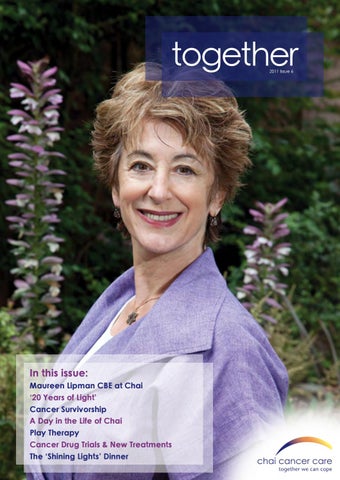
Cover image: Maureen Lipman CBE in the Garden at Chai’s North West London Centre, photographed by Chiko.
Contents Cancer Survivorship: Dr Adrian Tookman
4–5
Watching Chai in Action over the Years: Maureen Lipman CBE
6–7
A Day in the Life of Chai’s NW London Centre
8–9
How Does Chai Care?
10 – 11
Breast Reconstruction: Mr Michael Douek
12 – 13
‘20 Years of Light’ Dinner
14 – 15
How I Became Involved with Chai: Jo Fogel
16 – 17
Children & Family Service: Play Therapy
19
Cancer Drug Trials and New Treatments: Professor Justin Stebbing
20 – 21
The ‘Shining Lights’ Dinner
22 – 23
Weight Management for Cancer Patients
24 – 26
Expansion of Our Services
27
A Year in the Life of Chai
28 – 29
Chai Online: Our New Website &
30
31
Fundraising 2010/11
President
Trustees
Medical Patrons
Dr Jeremy Nathan
The Rt. Hon. Lord Young
Louise Hager
Prof Michael Baum
Dr Jane Neerkin
of Graffham
Lady Kalms MBE
Prof Michael Brada
Prof Gordon Rustin
Simon Kanter
Mr Michael Douek
Prof Karol Sikora
Founder Presidents
Susan Shipman
Prof Andrew Eder
Prof Albert Singer
Susan Shipman
Philip Weinstein
Prof Rosalind Eeles
Prof Stephen Spiro
Frances Winegarten z”l
Lord Young
Mr Daren Francis
Prof Irving Taylor
Mr Jerry Gilmore
Dr Adrian Tookman
Chairman
Honorary Patrons
Prof Anthony Goldstone CBE
Louise Hager
Lord Janner of Braunstone QC
Prof Daniel Hochhauser
Maureen Lipman CBE
Prof Ian Jacobs
Chief Rabbi Lord Sacks
Prof Gordon Jayson
Chief Executive Elaine Kerr
Mr Amir Kaisary Prof Jonathan Ledermann Prof Gordon McVie
This edition of ‘ ogether’ is generously sponsored by The Dorset Foundation
Cancer Survivorship: Dr Adrian Tookman
Dr Adrian Tookman Medical Director, Marie Curie Hospice, Hampstead The Marie Curie Hospice, Hampstead is a large specialist palliative care service with 32 inpatient beds, a large outpatient service and a day therapy unit. One of the main focuses in the unit is rehabilitation in Palliative Care and survivorship, where we have both national and international recognition for our approach. Divisional Medical Director Specialist Services, The Royal Free Foundation NHS Trust. Divisional Director for specialist services which includes management of Oncology, Haematology, Infection and Inflammation services of the trust. Cancer lead for the Royal Free Trust. Trust lead for Public Health, health promotion and health inequalities. Consultant in Palliative Medicine, Royal Free Hospital Trust (Honorary Senior Lecturer, University College London). The Royal Free Palliative Care Team is a specialist palliative care service. It serves the Royal Free inpatients, seeing both cancer and non cancer patients. It outreaches into the community (North Camden). Clinical Lead Marie Curie Palliative Care Clinical Research Unit The Marie Curie Palliative Care Research Unit is based in the Academic Department of Psychiatry of University College London (Royal Free Campus). It has a broad research portfolio in palliative and supportive care in both the cancer and non cancer population.
People living with cancer or ‘beyond their cancer’ are known as cancer survivors. They could be someone who has completed their treatment or is having ongoing treatment for their cancer.
are more people living with cancer and fewer people dying of cancer. There are now 1.6 million people in England who are living with cancer and this figure is estimated to rise to almost 4 million by 2030!
We have a population that is ageing and cancer (in general) is a disease associated with older persons. In addition there is little doubt that cancer patients receive much more effective treatment. As a consequence there
People who have finished treatment report many difficulties. The short term and long term side effects of their cancer and/or its treatment, may be difficult to cope with, indeed many persons have a degree of disability following cancer treatment. They can also struggle emotionally to adjust to changes that treatment has made to their body. It may be difficult for a person to have to live with the knowledge that their cancer cannot be cured even though they feel healthy. These added feelings of uncertainty can be extremely difficult to manage.
“People and their families need extra support to help to address and overcome the broader consequences of cancer and its treatment.” 4
The Future of Cancer Care
In addition to the physical and emotional consequences of cancer and its treatment, individuals and their families can struggle financially as household income decreases.
“There are now 1.6 million people in England who are living with cancer and this figure is estimated to rise to almost 4 million by 2030!” Returning to work can be challenging; employers may have prejudices about one of their employees who has had time off and anxieties that they will not contribute fully in the future. Oncologists (surgeons, medical oncologists and radiotherapists) are understandably focussed on delivering the best quality cancer treatment to cure cancer and enable patients to live as long as possible. The follow up of patients is hospital based and focuses on the disease or its recurrence.However, people and their families need to overcome the broader consequences of cancer and its treatment. Care directed at survivorship, symptom control and wellbeing is currently difficult to obtain. Studies/research has suggested that 30% of patients with common cancers who were treated at 66 UK centres reported more than 5 moderate or severe ‘unmet needs’ at the end of treatment. The most common were psychological and fear of recurrence. It is also clear that cancer survivors report poorer health and wellbeing than the general population. In fact, the poor health is similar to patients with other long term illnesses such as diabetes or arthritis. (Health and wellbeing survey by Macmillan Cancer Support in 2008) Therefore, for many people cancer is a chronic, long term illness and cancer survivorship is a significant problem. Patients can suffer with a significant burden of illness and disability and support is difficult to obtain. In addition patients have difficulty accessing information about their condition or any effects they may experience. There is, therefore, a huge and growing unmet health need. The National Cancer Survivorship Initiative (NCSI) was launched as a joint venture between The Department of Health, NHS Improvement and Macmillan Cancer Relief. It aimed to look at innovative ways of supporting cancer survivors. It demonstrated that there needed to be a shift of attitude towards and a greater focus on recovery, health and wellbeing after cancer treatment. To facilitate this shift a range of initiatives have been launched nationally. The Marie Curie Hospice in Hampstead has an international reputation for delivering a multi professional service for cancer survivors. It runs a large outpatient service, and a greater focus on, patients who are surviving cancer. Patients are assessed by a specialist team and then offered support and treatment by a team of clinicians and therapists. The Unit was regarded as an exemplar unit and as recognition of this it was chosen by the National Cancer Survivorship Initiative (NCSI) team to be one of its original 18 test sites. The NCSI team wanted to research its success and assess if the service could be duplicated in other areas across the UK. The Unit at the Marie Curie has, at its heart, a large outpatient department where patients
are seen and assessed. Patients have their symptoms treated and they are offered a programme of therapies to improve their physical, emotional health and wellbeing. One key component of the Unit is the gym, where patients are offered a programme of activities to improve functioning that is supervised by specialist physiotherapists. Even very unwell patients can benefit from exercise. One year ago we decided to extend the expertise, developed at Marie Curie, to Chai. There were many reasons to take this innovative approach; we wanted to see patients in a setting where they felt comfortable, we wanted to add another ‘layer’ of expertise to the extensive range of supportive services offered at Chai and we wanted to deliver care closer to patients homes. We have, therefore, started an outpatient medical clinic within Chai.
“We wanted to see patients in a setting where they felt comfortable, we wanted to add another ‘layer’ of expertise to the extensive range of supportive services offered at Chai.” We now run weekly clinics for cancer survivors at Chai who have complex needs. This service works in close collaboration with Marie Curie in Hampstead; we share expertise and discuss all patients with our multi professional team to ensure patients receive optimum treatment. We have analysed our pilot scheme during which we had seen 24 new patients. These patients are seen at Chai and referred to the clinic to be seen by a Consultant Physician from the Royal Free NHS Foundation Trust. We always seek permission from the patients’ GP before offering an appointment. The patients have been referred for many reasons however the commonest reasons are for advice on symptom control and for rehabilitation. Patients are fully assessed and many patients have benefited from advice on medication to improve their symptom control. They are referred for supportive therapies within Chai, the commonest being physiotherapy and complementary therapies. Of course communication about their illness and how to manage this in the future forms an important component of the service. We have been closely monitoring our patients and have convincing evidence that the outpatient clinic has been an extremely useful addition to the services offered at Chai. We believe that we have made significant improvements to people’s wellbeing. This is a unique and exciting initiative. We are delivering a specialist rehabilitation service for cancer survivors in a ‘faith based setting’. We believe we have enhanced the care of many patients and plan to continue and expand this service.
The Future of Cancer Care
5
Watching Chai in action over the years: Maureen Lipman CBE
Maureen Lipman CBE Maureen Lipman was born in Hull and later trained at the London Academy of Music and Dramatic Art. Following her debut in a stage production of The Knack she worked extensively in theatre and was a member of Laurence Olivier’s Royal National Theatre Company at the Old Vic. She first gained prominence on television in the situation comedy Agony and played the lead role in the television series All at No 20 and took on a range of diverse characters when starring in the series About Face. She is well-known for playing Joyce Grenfell in the biographical show Re: Joyce!, which she co-wrote, and Beattie a series of award-winning television commercials for British Telecom. In 2002, she played the titular character’s mother in Roman Polanski’s award-winning film The Pianist. She performed as a villain in the 2006 series of Doctor Who in the episode entitled ‘The Idiot’s Lantern’ as The Wire and played Florence Foster Jenkins in the Olivier Award nominated show Glorious! . She starred in the National Theatre’s production of Oklahoma! with Hugh Jackman. She has also appeared on Just a Minute, The News Quiz, That Reminds Me, This Week and Have I Got News For You. Maureen Lipman starred in the TV series Ladies of Letters with Anne Reid, and as Madame Armfeldt in Trevor Nunn’s theatre production of A Little Night Music. A second series of Ladies of Letters came out in 2010. Maureen has presented two television series on the subject of design, one for UKTV about Art Deco and one about 20th century design for ITV. She wrote a monthly column for Good Housekeeping magazine for over ten years and several biographical books all of which were national bestsellers. Maureen Lipman also wrote a weekly column in The Guardian. In 2009 BBC Four screened an entire evening’s programming to her - ‘Maureen Lipman Night’. Having finished filming Metamorphosis by Kafka - playing the mother of a beetle, she starred in Priestley’s ‘When We Are Married’ and her book ‘I Must Collect Myself’ was published in November 2010. She is a frequent guest on chat shows and political and literary forums. She was married to the late screen writer Jack Rosenthal for 31 years. Her children, Amy and Adam are both writers.
When did I first encounter Chai Cancer Care? It seems like I have always known it but I guess the truth is that I went there almost seventeen years ago, with my Jewish Celebrity hat on. I came out, to mix metaphors, with my cup of kindness running over. A girl with whom I had grown up in Hull, was a client there, sitting, sweet faced and accepting in a wheelchair. Her prognosis was not good but her face was shining with enthusiasm for Chai and the amazing support that happened there. She was meeting friends, having holistic treatments, pouring out her heart to counsellors and living her life to the full. I was given a tour of the building after
6
The Future of Cancer Care
which I began to realise that Chai was something very rare in the treatment of cancer. It recognised that in the medical world the disease is treated thoughtfully, but not necessarily the person who is living with the disease. Some years later, after several visits and fundraiser appearances; “I’m here to make you laugh so much that your handbags fall open,” Louise Hager came round to my house in Muswell Hill where we then lived, to ask whether my late husband Jack Rosenthal, who was then in remission from the Myeloma blood cancer which would eventually take his life, would consider writing a ten minute play for Chai. The
‘Tea with Maureen’ in the Garden Room at Chai
subject she wanted to cover was the difficulties inherent in someone telling their family that they had cancer. As there seemed to be so many young people developing the disease, even in our circle of friends, and because Chai was a Jewish Charity, it was decided that the play would take place at a Friday night Shabbat dinner, and that the protagonist would be a young man telling his parents that he’d been diagnosed with testicular cancer. In his inimitable way, Jack cooked up a soufflé of humour, humanity, pathos and chopped herring. We cast it over the phone and rehearsed it around our kitchen table over successive Sunday mornings with a young and enthusiastic Jewish cast and assorted bagels. On the night we manoeuvred lights and tables, costumes were thrown over evening dresses and the resulting play moved a hardened charity audience to laughter and tears, and with G-d’s help loosened those handbag clips a whole heap more. For Jack and I, it was a chance to work together as author and director, which we had never done before and which we vowed we would do again. It wasn’t to be, but the empathy I’d always felt for Chai’s mixture of the holistic support and care, proved invaluable to me as a marker for the way to deal with Jack’s cancer and the way I can suggest to others to deal with theirs. On my penultimate visit to Chai in Hendon, I was honoured to open the glamorous new wing, which endows Chai with four more counselling rooms, a sunny, welcoming garden room to relax and refresh clients between sessions or just to
“The empathy I’d always felt for Chai’s mixture of the holistic support and care, proved invaluable to me as a marker for the way to deal with Jack’s cancer and the way I can suggest to others to deal with theirs.”
“Laughter as therapy is acknowledged by this forwardthinking organisation and, because of their independent thinking and patronage, they are incredibly fast to pick up on the needs of their clients.” drop in for tea, and a gym for rehabilitation. As always, the anecdotes I heard from the people using the centre were inspirational, and the volunteers and staff seemed to have an inner glow which comes from a good job well done. Recently I spent an hour entertaining some of Chai’s 1550 clients and it was as much of a healing session for me as it was for them. Laughter as therapy is acknowledged by this forward–thinking organisation and, because of their independent thinking and patronage, they are incredibly fast to pick up on the needs of their clients. After my talk, some of the people who’d been cheered and diverted by it, asked if they couldn’t just meet one another on a weekly basis – not as the usual support group, which is already catered for, but just to chat, to moan and whinge, to laugh and…sounds like any group of Jews meeting doesn’t it? I know, but this group has one thing in common, which thank the Lord, you and I may not, and they wanted, perhaps, to meet and talk about anything else! The following day, their proposal was being put into action. So if you, like me, find yourself surrounded by bewildering cancer diagnoses in family or friends, then look no further than Chai. It is wholly concerned with giving peace of mind, answers to anxiety and real quality of life to people going through disharmony in their daily lives. Chai may not have all the answers but, by gum, they’ve sorted out the right questions and know more every day about how to deal with them, lovingly, spiritually and in the way you would most want to hear them. Here’s power to Chai’s elbow and all their other little pointy bits.
The Future of Cancer Care
7
A day in the life of Chai’s NW London Centre
8
The Future of Cancer Care
8.00am
The building is open and we are stocking up the tea and biscuits for the day, putting out fresh leaflets, plumping up cushions and watering the plants.
8.10am
The first call on the helpline is taken. It is the husband of a lady who has been newly diagnosed with breast cancer. They want to come in tomorrow to find out about our services and then go straight through to see a counsellor regarding genetic issues. The appointments are made.
8.30am
A client services manager ensures that all therapists and counsellors doing home support visits today have all the information they need.
9.00am
Clients arrive for the first appointments of the day – one couple and three individuals for counselling, one client for manual lymphatic drainage, one for physiotherapy, one for aromatherapy and one for reflexology. Throughout the day clients will arrive for individual appointments on the hour, often having a counselling session followed by a therapy.
10.30am
Our volunteer manicurist arrives and sets up in our Garden Room. She is fully booked throughout her 4 hour session. Her clients relax, enjoy refreshments and chat in the Garden Room while waiting for their appointments or their nails to dry. Two clients also see our Foot Therapist.
11.00am
Twelve people arrive for the Bereavement Group. It’s wonderful to see how mutual support and friendship has developed within
this group. Five people stay on for a cup of coffee and conversation after the group has finished.
12.00pm
A mother who has cancer arrives with her 5 year old son to see our Child Therapist. Six children will be seeing the therapist today – ranging from age 3 to 12 years old.
1.40pm
A distressed gentleman walks into reception with his daughter – they have come straight from the hospital where he was given some bad news about his prognosis. They are immediately seen and stay an hour and a half. When they leave he has a further appointment booked with the counsellor he saw, followed by a session with an advisor for financial benefits and he will attend the meditation group later in the week with his daughter. His daughter will have an aromatherapy session at the same time that he next sees his counsellor.
2.00pm
The hall is filled with laughter and the tinkling of tea cups. The Art Workshop is in full swing as the group work on a collage which they have designed. A couple of people have chosen to do something else and are working on individual paintings.
2.30pm
Five clients are using the gym for their individually prescribed exercise programmes under the supervision of a physiotherapist. After the session they rest by relaxing in the gym garden after the session.
4.15pm
The locked secure box containing patient information is received from the Royal Free relating to clients who will be seeing the Consultant in Chai’s Medical Outpatient service the following morning. The box is secured overnight, ready for the Consultant to unlock it in the morning.
5.55pm The last call on the helpline is taken and a home visit arranged for the next day. The Future of Cancer Care
9
How does Chai care? Chai’s range of services is available nationally. To find out more and for details of your nearest centre, please call our freephone helpline on 0808 808 4567 or visit www.chaicancercare.org
Julia and Ian The stress of Julia’s cancer treatment put enormous pressure on her marriage to Ian. Chai’s counsellor has helped them to regain their strong and loving relationship.
Helen and Michelle
Stephen
David
At Chai, while Helen has Manual Lymphatic Drainage, her daughter Michelle benefits from an hour of aromatherapy. Then they make up a four at bridge.
Since his surgery, Stephen sees Chai’s physiotherapist weekly in Chai’s gym in order to restore his mobility, strength and independence.
Chai helps David get the best care from the local NHS and social services for his mother and the financial benefits she is entitled to.
10
The Future of Cancer Care
Mark
Annie
Susan & her family
Mark had a nagging doubt that his sister’s cancer might have a genetic cause. He discussed his concerns with one of Chai’s specially trained counsellors.
For months Annie had counselling, acupuncture and massage every week at Chai. When she became unwell during treatment, the same counsellor and therapist carried on seeing Annie in her own home.
Susan, her husband and two teenage children come to Chai for family counselling to help them live with her cancer.
Darren
Marsha
Michael & Lucie
Darren’s taste buds and digestive system were turned upside down by his cancer treatment. Chai’s nutritionist worked with him to find a healthy, beneficial and easy diet.
After a rountine scan Marsha was diagnosed with breast cancer. Chai answered her immediate questions - and then supported her throughout her treatment and recovery.
Michael brings his 4 year old daughter Lucie to see Chai’s Play Therapist who is helping her come to terms with losing her mother.
The Future of Cancer Care
11
Breast Reconstruction: Mr Michael Douek
Mr Michael Douek MD, FRCS(Eng) FRCS(Gen) Current position: Reader in Surgery & Consultant Surgeon, Breast Unit, Guy’s Hospital He is a Reader in Surgery (King’s College London) and Consultant Surgeon at Guy’s & St Thomas’ NHS Trust. He is a breast cancer surgeon and surgical oncologist. He has a special interest in breast reconstruction and recently launched the POBRAD trial of breast implant reconstruction using a novel device (acellular dermal matrix), at Guy’s Hospital. Michael graduated from the University of Dundee (Scotland) and trained in surgery in London, Oxford and Cambridge. He obtained his MD from the University of London in 2000. In 2003, he was awarded a prestigious Health Foundation Clinician Scientist grant by the UK Academy of Medical Sciences, fully funding his joint Senior Lecturer and Consultant post in breast and general surgery at University College London. He was a Consultant Surgeon & Senior Lecturer at University College Hospital (UCH) for over 5 years. His translational research program evaluates novel imaging modalities (including breast MRI) and devices to improve breast surgery for cancer. He is the chief investigator of the SentiMAG trial of sentinel node biopsy and principal investigator for the international randomised controlled trial of intra-operative radiotherapy (TARGIT trial), at Guys Hospital. He is a regular speaker at national and international conferences, has published several papers on breast cancer and made contributions in the health media.
Breast reconstruction is undertaken following mastectomy for breast cancer, whenever possible. The emotional benefits of breast reconstruction are well recognized but some women opt not to have a reconstruction. The National Institute for Health & Clinical Excellence (NICE) and Association of Breast Surgery guidelines (2009), both recommend that breast reconstruction should be discussed with all women who have been offered mastectomy, with the exception of those women who have
“In the UK, about 45,500 women are diagnosed with invasive breast cancer and 5,500 women with non-invasive (or micro-invasive) breast cancer, each year.” 12
The Future of Cancer Care
other health problems (eg: smoking, diabetes, heart disease) or who may require additional treatment (eg: radiotherapy) that may preclude reconstruction. Breast reconstruction can be undertaken during the same operation as the mastectomy (immediate) or at some point in the future (delayed). The choice of the type of operation depends on the surgical options available, the likely additional treatment required (radiotherapy / chemotherapy) and on patient choice. Making the correct choice relies on awareness of the available options. The breast surgeon usually discusses the available options in detail. The presence of the husband or partner during the consultation, as well as further discussions with a specialized breast care nurse, helps women come to a decision. When making a choice of the optimal breast reconstruction, women usually also consider the required time off in relation to their family (eg: taking time off for surgery with young children) and to work. Ultimately this is a long-term decision and sufficient time is required to make the correct choice.
In the UK, about 45,500 women are diagnosed with invasive breast cancer and 5,500 women with non-invasive (or micro-invasive) breast cancer, each year. Of these women, about 43% are found not to be suitable for a breast conserving procedure and are offered mastectomy. The mastectomy itself can be carried out with nipple preservation (subcutaneous mastectomy), skin preservation but with nipple excision (skin-sparing mastectomy) or with removal of skin and nipple together with the entire breast. If skin is removed, then skin and fat from another area of the body (autologous reconstruction) can be used to replace the breast volume and the removed skin. When the skin and nipple can be preserved, the cosmetic results are better. If the nipple has to be removed, nipple reconstruction can be undertaken at a later stage with very good cosmetic results. Some women with a family history of breast cancer or with a known genetic susceptibility to breast cancer, are offered bilateral mastectomy as a risk-reducing measure and breast reconstruction is usually undertaken at the same time (immediate reconstruction). The available surgical options for breast reconstruction include a silicon implant reconstruction and autologous reconstruction. The latter includes taking fat and skin (and sometimes some muscle) from the lower tummy (DIEP flap), buttock area (S-GAP) or inner thigh (TMG flap). Autologous flaps tend to add about 5 or 6 hours to the operation time and are usually undertaken by specialized plastic surgeons trained in suturing very small vessels (microvascular anastamosis). During surgery, the tissue is completely removed from the donor site, transferred and attached to small vessels on the chest wall. Another commonly performed operation is the lattissimus dorsi flap and involves moving tissue from the back to the front, without dividing the blood vessels. This operation is undertaken by
breast or plastic surgeons and usually leaves patients with an additional scar on the back. Silicon implant reconstruction is usually undertaken by a breast surgeon (or oncoplastic surgeon) and sometimes by a plastic surgeon. Recently, processed skin (accelular dermal matrix) derived from pork or beef skin and devoid of cells, has been used during surgery as a hammock to cover the lower pole of silicon implants under the skin. This operation can provide very good cosmetic results in the short to medium term but there is no data as yet about long-term outcomes.
“Today 8 out of 10 women survive breast cancer and survivorship focuses on improving the care and support to patients in the longer term.� The objective presentation of the available options by the surgeon is important so that women fully understand what the surgery involves, what complications can occur and what the likely cosmetic outcome is. The latter can sometimes be better understood by looking at photographs of previous patients or by meeting previous patients. Today 8 out of 10 women survive breast cancer and survivorship, focuses on improving the care and support to patients in the longer term. This also includes support for women undergoing breast reconstruction. Organisations such as Chai provide the essential backup patients need in order to return to a normal and active life. With an increasing population of survivors, the focus should be shifted to enable patients and their family to return to a normal status quo and quality of life, as quickly as possible. The Future of Cancer Care
13
‘20 Years of Ligh ’ Dinner 2010 20 years of light was the theme at our celebratory Dinner on the 6th night of Chanukah. Dinner hosts Angela and Stephen Rubin OBE welcomed guests to this milestone event at the Grosvenor. The Chanukiah was lit by the Chief Rabbi, Lord Sacks. Guests thoroughly enjoyed musical and illusionist entertainment during the evening, adding to the party atmosphere. The Dinner raised £750,000 towards accommodation for Chai’s groundbreaking Medical Outpatient Rehabilitation and Palliative Care Service. Angela & Stephen Rubin OBE
14
Aly Mosheim, Deborah Katz, Andrew & Danielle Rubin
Susan & Issy Zuckerbrod
Sir Maurice & Lady Hatter
Malcolm & Joy Lyons, Melvyn Carter
Sarah & Jacob Levy, Brian Moss OBE & Jill Moss
Rob Cowan & Tracy Ann-Oberman
The Future of Cancer Care
Gerald & Dame Gail Ronson
Lord & Lady Young, Carole Raven, Emmanuel Carter
Stephen Rubin OBE, Chief Rabbi Lord Sacks
Carolyn Mishon, Paul Phillips
Michelle Shemtob, Diane Zitcer, Robert Shemtob, Cary Zitcer
Gillian & Irving Carter, Susie & Jason Segal
Lord Parry Mitchell, Susan James
Elaine Kerr, Lord Kalms
Stella Weinstein, Louise Hager
The Future of Cancer Care
15
Photo acknowledgements: Jeremy Coleman
Morven & Michael Heller
How to become involved with Chai: Jo Fogel
“Chai is a small charity and you get to see where the money is spent. You are vividly aware of the benefits of the work they do – it is very tangible.” Chai recognize how important it is to support not just the person with cancer but their whole family. This is why Chai is so special. Q. What was your inspiration for the Golf Fore Chai Golf Day?
Q. How did you become involved with Chai? I used to see the Chai advertisements in the Jewish Chronicle but didn’t know much about the charity’s work. My father-inlaw, Gerald Fogel had become involved with Chai 8 years ago. He started a patronage campaign and chaired it. He invited me to a patronage brunch at Chai on a Sunday morning 3 years. The fact that this took place in the building rather than in a function room off site, gave me a chance to see Chai’s work and the services it provided. I got a sense of the calming “feel” to the building, I hadn’t seen anything like it before. It was Louise, who, right from the very beginning of my involvement with Chai, has been, and continues to be a big inspiration. She captures the very essence of Chai and when she speaks, she speaks with passion and from the heart. All the people working at Chai have that special something. Q. So what is that special something that Chai has? It feels like a family but at the same time you are aware of the professionalism. It doesn’t take long to discover that this runs through every aspect of the organisation. Chai is a small charity and you get to see where the money is spent. You are vividly aware of the benefits of the work they do – it is very tangible. Unfortunately, everyone has been touched by cancer in some way or another. You don’t know if or when you might need Chai in the future. Chai gives specialised support to people and their families at a time in their lives when they are most vulnerable. I have seen how the staff give personalized care. They really do go the extra mile. What impresses me is how
16
The Future of Cancer Care
I love golf and I’m passionate about Chai, so I thought: why not combine the two? Here was an opportunity both to raise some money and raise communal awareness of the great work done by the charity. The greater the awareness, the greater the potential reached. To put together a committee I asked some friends who I thought would gel together in working towards putting on a successful event. After our first meeting I took them all to Chai. This was a good instinctive move because it helped them experience that feeling of calm and warmth that I had felt the first time I walked through the door all those years ago. Simply to step into the building and see the gorgeous setting is enough to inspire anyone. Raising awareness of Chai’s services is so important, and this was particularly evident when one committee member was approached by her cleaner whose employer had told her about Chai. She asked if she could give some of Chai’s literature to an elderly Jewish man she knew. This man had no family and had just been diagnosed with cancer. Chai now helps him in a number of ways, taking him for his hospital visits, doing his shopping and seeing that he has the benefits he’s entitled to, and gives him various treatments and counselling at Chai. The Chai family “feel” has definitely inspired the committee. New friendships have been formed and we have never had a disagreement! We tried to make our golf days a lot of fun, and the first golf day in 2009 was a complete sell out. As well as the
“The Chai family ‘feel’ has definitely inspired the committee.”
Carolyn Joels, Melanie Rom, Meryl Rosenberg, Jo Fogel (Chair), Caroline Shapiro, Suzanne Richmond & Sharon Braham.
committee all working so hard to make it a success, my whole family turned out to help. My husband David was the auctioneer, my mother did all the baking and my two children Carly and Ollie, were general schleppers for the day, while my Dad and brother played in the tournament, and not forgetting my wonderful sister-in-law who herself is one of the valued committee members. Q. How do you juggle your successful business and your voluntary activities?
the case both with Stitch London and working with Chai. People sometimes tell me that I am a natural sales woman and a good organiser, and if I can successfully apply these skills in my business and voluntary activities, then it makes me very happy. Family is very important to me. I have a small family who mean the world to me and am surrounded by amazing friends who are such a good support – and I am thrilled that I now have an extended family at Chai.
With difficulty!!! You just run around and with a bit of planning you try to do as much as you can. I started Stitch London just over four years ago. Having sold a business and taken 6 months off, an opportunity arose with a previous supplier in India to manufacture a range of small luxury leather goods and accessories. We like our range to look good and to be available at reasonable prices. We sell online or at Stitch London offices in Bushey. The business has developed into supplying large corporations with bespoke merchandise. I love this side of the work and am so appreciative that it allows me to fulfill my creative side by designing leather products. It’s a pleasure to be doing a job into which you want to put a lot of effort and which seems to play to your strengths. That’s
“We tried to make our golf days a lot of fun, and the first golf day in 2009 was a complete sell out.”
Simon Holmes, Matt Le Tissier, Edward Rom & Mark Gershinson
The Future of Cancer Care
17
Can the Rosenbergs celebrate your simcha too? Are you planning a special anniversary celebration? Or are you approaching a significant birthday? If you are arranging a simcha of any kind, you can help the Rosenbergs and others to cope with the effects of cancer by asking your guests to donate to Chai. Add a worthwhile and meaningful touch to your celebration with the gift of care and support. To find out more about making your occasion a Chai occasion, please contact Chai on 020 8202 2211.
Identities have been changed to protect confidentiality
18
The Future of Cancer Care
Children & Family Service – Play Therapy
Each cancer diagnosis impacts not only on the cancer patient but also on their families. When a person is diagnosed it can affect up to four generations, each one with their own specific needs and concerns. Indeed many children are living with cancer in their families. Chai’s Children and Family service is for children and their parents who have been affected by a cancer diagnosis. This may be someone who has been diagnosed within the immediate family, a relative or a friend. Chai’s play therapists help children to understand and cope with explicit and implicit changes within their daily lives that have raised their anxieties, and in some cases changed their normal behaviour. Through the use of various age appropriate play materials such as puppets, art and craft materials and small figures, children learn to express themselves without the need for words.
“Although play therapy is in essence non-directive, in certain instances it may be effective to offer activities which can assist the child to process different circumstances.” Although play therapy is in essence non-directive, in certain instances it may be effective to offer activities which can assist the child to process different circumstances. For example it may be that
the child is not sleeping well so an activity to make a dreamcatcher or worry dolls may offer the space for the child to confront and explore their anxieties. If appropriate, the child may benefit from making a memory box of a loved one who has died. The use of stories and metaphors can be another way to comfort a child.
“Chai’s play therapists help children to understand and cope with explicit and implicit changes within their daily lives that have raised their anxieties.” Play therapy is used by children from the age of 2 through to their teenage years. Teenagers are supported by our specialist counsellors who have been trained to work with young people. Chai’s play therapists are experienced at advising parents about how to effectively answer their children’s questions in an appropriate and honest manner. The therapists will also assist in improving communication between the family members. As with all of Chai’s psychological services, the client may be seen at any stage of the cancer journey so each programme is individually tailored. It may include seeing the parents and children together, children on their own or in sibling groups. Chai professionals also work with schools, providing support to staff and pupils dealing with the impact of cancer in the lives of students.
The Future of Cancer Care
19
Cancer drug trials and new treatments – What it may mean for you: Professor Justin Stebbing
Justin Stebbing MA FRCP FRCPath PhD Current position: Professor of Cancer Medicine and Oncology, Consultant Oncologist, Imperial College and Imperial College Healthcare NHS Trust. Justin Stebbing’s focus is on new targets and trials in cancer, and reducing the death rate. He originally trained in Oxford prior to undertaking junior doctor posts in the USA, then the Royal Marsden and St Bart’s. Now he is Professor of Cancer Medicine at Imperial, with a research focus on new kinases, microRNAs and biomarkers in solid tumours. He has published over 400 peer-reviewed papers, and this year his team described a new cancer-causing gene in Nature Medicine. He aims to link the clinic to the laboratory, and vice versa, to create a collaborative environment for patients, doctors and scientists to work together.
The increasingly frequent international meetings of cancer doctors, such as the American Society of Clinical Oncology (ASCO) in June or the European Medical Society of Oncology (ESMO) never fail to be stimulating. In a typical meeting over 10,000 scientific papers or summaries of those papers (abstracts) are presented, discussing the latest results of clinical trials of new anticancer protocols from around the world. On leaving one of these meetings, one is often motivated to immediately implement the latest treatment concluded to be ‘the new standard of care’. In the case of metastatic disease or secondary spread, these newer treatments are often reported to prolong overall survival or at least progression free survival (the time it takes for the disease to become worse) with what doctors call ‘manageable’ toxicity, meaning that side effects are ‘not too bad’. As always, enthusiasm about new treatments must be tempered by the fact that many of these new protocols were evaluated in an ideal patient population and delivered in centres of excellence with appropriately trained staff. Not all people living with cancer should be enrolled in trials, but many should and they often have better outcomes which is a very interesting finding in itself. This is probably because people in a clinical trial are under close supervision and usually have access to very highquality supportive care. They are therefore able to receive higher doses of anticancer therapy, often for longer periods and, indeed, in these settings, any emerging toxicity is usually ‘manageable’. Consequently, this raises
20
The Future of Cancer Care
the question of whether the results from such trials are fully generalisable to the community oncology setting, where patients often have more complex disease, tend to have poorer performance status than those included in clinical trials, and where facilities are not geared up to provide similar levels of supportive care. An ‘old-fashioned’ example from a study of patients with colorectal cancer highlights this important question. In the year 2000, an group headed by the leading team from Memorial Sloan-Kettering in New York published the results of a large randomised trial in people with metastatic colorectal cancer in the very prestigious New England Journal of Medicine. Patients received one of three interventions and one of these was called IFL. The investigators reported that the IFL was associated with a much longer progression-free survival and also an overall survival benefit, which was very exciting. The frequency of grade III/IV toxicity for adverse effects such as sickness and low blood counts was reported to be lower with the IFL regimen than with bolus 5-FU/leucovorin. IFL was shown to be safe with an overall incidence of treatment related death of less than 1%. In light of these data, IFL was seen as an important advance in the treatment of metastatic colorectal cancer. Within a very short time of the trial publication, reports began to emerge that IFL was more toxic than originally reported when used in the general population in particular. Furthermore in the Spring 2001, 2 cancer studies which involved IFL in early cancer were interrupted due to
a higher than expected early death rate. The severe toxicity associated with IFL quickly led to its abandonment and replacement with the safer (and probably more efficacious) regimens. So what went wrong with our assessment of IFL? Why did well intentioned clinicians end up exposing people to this unnecessarily toxic regimen? There are many potential explanations for the IFL experience including chance, but here we focus on three possible causes. First, the external validity of the first trial was somewhat limited. The trial was appropriately conceived, well designed and balanced for important patient characteristics. However, the issue here meant that it primarily enrolled people with a good performance status: over 60% of participants were younger than 65 and had only one site of metastatic disease. There is a suggestion that the risk of toxic death may be underestimated by clinical trials whose subjects are on average younger than the patients in the general population. Secondly, many of the participating hospitals in the trial were centres of excellence with staff experienced in the management of toxicity related complications. In a community setting, the level of expertise is likely to be, on average, less than in more experienced and dedicated cancer facilities especially those with experience in conducting trials with novel agents. Thirdly, the comparator regimen in the first trial may have been toxic so it masked the true toxic effects of IFL. Therefore, a combination of younger, healthier patients under closer supervision, with drug delivery in high volume cancer centres experienced in the delivery of novel treatments, especially if the comparator regimen is quite toxic, may in general lead to an underestimate of the true toxicity risks of novel regimens, especially when applied in the community setting. Since the IFL toxicity signal emerged from a large, randomised trial, it cannot simply be concluded that large trials are generally misleading. However, the case of IFL is an unusual one but important questions can be raised for the future and we are now learning from this to make sure patients have the best possible outcomes. It also suggests that patients should receive care in centres of excellence. Safety data reported in meetings like ASCO are once again predominantly derived from clinical trials of preselected patients. This is especially relevant in the light of
new oral targeted therapies for cancer. As a ‘gut’ reaction, practicing clinicians would expect these new agents to be safer than intravenous therapy. However, they may not necessarily be safer and are certainly associated with their own unique toxicity profiles. Therefore, doctors and patients should be aware that new does not necessarily mean better! We are now at a stage, however, where we have learnt so much that they are unlikely to be worse. One reason for this is that we are now focusing on delivering the right medicines to the right patient with the right disease at the right time, to maximize the chances of the drug working, and minmise side effects. Towards a better outcome How can the latest new therapies from international meetings be adopted without exposing patients in the general oncology setting to unnecessary toxicity? In my opinion, the way forward consists of a two pronged approach. Large trials need to modify their inclusion criteria to allow enrollment of more patients that are representative of people seen in the community oncology setting. Even though this may compromise what is called the internal validity of the study (e.g. a more mixed population may include patients with more extensive co-morbidity leading to treatment compliance problems/ study drop outs), the trade off would be enhanced external validity and a better understanding of how the drug would perform outside of the artificial situation created by a randomised trial. Secondly, it would be valuable to work on ways to predict toxicity and there are now many ways we can work to do this, with them. Our patients put their trust in us. Therefore, it is our responsibility to protect them. Overall, we have learnt a great deal, including a considerable amount from our mistakes of the past. We now know that more is not always better and higher doses does not mean a better outcome for patients. Trials are a great way to learn what works, and gives people with cancer new hope. Having a trial does not rule out having standard treatment later and vice versa, and when there are few conventional options, a trial is usually the best way forward. We live in exciting times in cancer care and trials are the best way to see if that excitement is justified.
REFERENCES Saltz LB, Cox JV, Blanke C, Rosen LS, et al. Irinotecan plus fluorouracil and leucovorin for metastatic colorectal cancer. N. Engl. J. Med. 2000;343:905-14. Mayer RJ. Moving beyond fluorouracil for colorectal cancer. N. Engl. J. Med. 2000 Sep 28;343(13):963-4. Ledermann JA, Leonard P, Seymour M. Recommendation for caution with irinotecan, fluorouracil, and leucovorin for colorectal cancer. N. Engl. J. Med. 2001;345:145-6. Rothenberg ML, Meropol NJ, Poplin EA, et al. Mortality associated with irinotecan plus bolus fluorouracil/leucovorin: summary findings of an independent panel. J Clin Oncol. 2001;19:3801-3807. Douillard JY, Cunningham D, Roth AD, et al. Irinotecan combined with fluorouracil compared with fluorouracil alone as first-line treatment for metastatic colorectal cancer: a multicentre randomized trial. Lancet 2000;355:1041-7. Fuchs D, Marshall J, Mitchell E, et al. A randomised trial of first lineirinotecan/fluoropyrimidine combinations with or without celecoxib in metastatic colorectal cancer (BICC-C). J Clin Oncol 2006. ASCO Anual Meeting Proceedings Part 1. Vol24, No 18S (June 20 Supplement) 2006:3506.
The Future of Cancer Care
21
22
Andrew & Karen Chaytow
Susan Shipman (Founder President), Louise Hager (Chairman)
Elaine Kerr (Chai CEO), Frankie Feingold
Sergio & Laura Weingarten
Kat & Lee Davies
Freddy Hager z’l, Philip Weinstein, (Trustee)
Roy & Gail Gabbie
Jack Deam, Paul Harris, Emma Leon, Ian Puleston-Davies, Joyce Fletcher, Michelle Drew, Will Ash
Amanda & Richard Harris
Jack Livingstone, Liz Taylor
The Future of Cancer Care
The ‘Shining Ligh s’ Dinner Our ‘Shining Lights’ Dinner at The Point, Old Trafford Cricket Ground, on Sunday 13th March 2011 was a first in so many ways. It was our first dinner in Manchester. Mark Kuhillow, Vanessa Marchington, Leila Berens, Marcelle & Geoff Kuhillow
It was where the first Leora Kuhillow Courage Awards – selected from entries throughout the UK, were presented. It was also the first kosher event at the venue – The Point – the superb new banqueting suite at Lancashire County Cricket Club. It was the first time that Israeli illusionist Ron First appeared outside London. £150,000 was raised to further develop the Chai Home Support Service in the Greater Manchester area.
Brian & Pamela Samuels
Charles Rosen, Andrew Terry, Sharon Rosen, Angela Cantor, Susan Terry, Geoffrey Cantor
Rebecca Feddy, Sula Leon, Emma Leon
Debbie & Ian Lachs
Sid & Marilyn Cline
Louise Hager, Jackie Eddleson
The Future of Cancer Care
23
Photo acknowledgements: Jeremy Coleman
Richard & Cara Basso, Julie & Arron Gabbie
Weight management for cancer patients: Lana Pinshaw BscDiet (sRD)
Lana Pinshaw BscDiet (sRD) Lana Pinshaw is a South African qualified dietician. She graduated in 1998 from the University of Pretoria and soon left South Africa to further her career in London. She worked for the private hospital group HCA for 6 years after which she had her first child and became a freelance dietician working in both the NHS and private fields, starting her own practice. For the past 9 years, she has worked for Chai and has gone back to work for the HCA group.
Maintaining a healthy body weight and making good food choices that give your body the right nutrients can sometimes be a challenge. But if you are preparing for cancer treatment now, more than ever, is the time to focus on your body’s nutritional needs. The fact is that maintaining a healthy body weight may contribute to your recovery and the success of your treatment plan. There is evidence that being overweight may increase the chances of cancer reoccurrence, especially with hormone related cancers. In breast cancer patients who are overweight, weight loss can aid the healing process. A good weight reducing plan should be individualised and well balanced. The eating plan should help reduce inflammation by being low in animal foods and fat and rich in oily fish. It must be able to reduce oxygen damage (oxidation) by being rich in fruits, vegetables and whole grains. It also must be easy to follow and contain enough food so you’re not hungry. Cancer and cancer treatments can deplete your body of nutrients stores and cause weight loss by decreasing your appetite and your body’s ability to digest and absorb nutrients. A 5% weight loss from your normal weight is considered significant. Losing 10% of your normal weight should be considered a red flag. A 15% weight loss may lead to loss of appetite, fatigue, depression and reduced
“A good weight reducing plan should be individualised and well balanced.” 24
The Future of Cancer Care
ability to heal. A balanced, supplemented diet with adequate calories and protein can provide these extra nutrients and help fend off weakness, repair tissue damage, boost your immune system and generally aid the healing process. It is always advisable for one to increase fats and lipids to aid weight gain as they are a concentrated source of energy. Fats are easily stored in the body providing a slow release of energy especially in times when one is unable to eat. These fats should however be high in monounsaturated fatty acids or in omega 3 fatty acids i.e olive oil, nuts, seeds and oily fish.
Basic principles for effective weight management Be realistic in setting goals. A moderate reduction of 10 - 15% of body weight slowly has shown less likelihood of regaining the lost weight and is less stressful on the body and mind. Do not skip meals Ensure meal plan is well structured and portion sizes are controlled Ensure adequate fluid intake Increase your fibre intake Control carbohydrate intake
Decrease intake of saturated fat Increase intake of mono and polyunsaturated fats Consume alcohol in moderation Men maximum of 2-3 units per day Women maximum 1-2 units per day Increase your activity level Regular exercise speeds up weight loss, tones muscles and improves well-being. Walking, using stairs, gardening, swimming, tennis or formal gym classes help to relieve anxiety, work pressure and generally helps you to cope. Eat Less salt <6g per day
Evenly distribute low Glycaemic carbohydrates
Eat more fish - 2 portions oily fish a week
Mushroom Mousse Ingredients: 150g mushrooms 1 small onion 1 garlic clove splash olive oil 1 egg 1 thin slice wholemeal bread salt and pepper Makes 2 small portions 1. Preheat the oven to 180°C/350°F/gas mark 4. 2. Wipe the mushrooms clean and chop them. Peel and chop the onion and garlic. 3. H eat a splash of olive oil in a big frying pan, add the onion and fry for 3 minutes on a medium heat. Add the garlic and mushrooms and fry for a further 5 minutes. 4. Separate the egg. 5. W hizz the bread in a blender or food-processor to make breadcrumbs. Add the mushroom mixture and the egg yolk and whizz to a smooth cream. Add salt and pepper to taste. 6. B eat the egg white with a pinch of salt until stiff. Fold into the mushroom mixture. 7. D ivide the mixture between two small greased oven dishes, such as egg cups or ramekins, and bake in the oven for 15 minutes until just set. 8. Serve hot. For a family of four: Double the ingredients and serve as a starter. Tip: This recipe can be made with any type of edible mushroom or mushroom mixture. Shiitake mushrooms are particularly good. Book credit “Healthy eating during Chemotherapy” by José van Mil with Christine Archer - Mackenzie. The Future of Cancer Care
25
Tips to deal with a small appetite Eat little amounts as often as possible if you cannot face big meals. Try to have a small portion of food every two hours during the day. Tempt your taste buds by making your food look as attractive as possible. Put small portions on your plate and garnish the food with lemon, tomato or parsley. A small glass of sherry or brandy half an hour before a meal is a good way of stimulating your appetite. Some people find a glass of wine with their meals helps their digestion. Keep snacks handy to nibble whenever you can. Bags of nuts, seeds, dried fruit or a bowl of grated cheese are quite light and tasty. If these are hard for you to swallow, a yoghurt or fromage frais may slip down more easily. Sweet or savoury nourishing drinks can be used to replace small meals and can be sipped slowly over the course of a day.
Eat your meals slowly, chew the food well and relax for a little while after each meal. Sometimes the smell of food cooking can be appetizing, but occasionally it can put you off eating. If cooking smells spoil your appetite, keep away from the kitchen and ask your family or friends to prepare cold foods attractively presented. Everyone’s appetite changes and you may have good and bad days. Make the most of the good days by eating well and treating yourself to your favourite foods. Have your meals in a room where you feel relaxed and without distractions.
Warm Pear Cream Ingredients: 2 pear halves, freshly poached (see tip) or tinned (containing as little added sugar as possible) 4 tablespoons crème fraîche or soya cream 1/2 tablespoon custard powder 1/2 teaspoon ground cinnamon Makes 2 small portions 1. W hizz the pears in a blender or food-processor to a fine cream. 2. Pass through a sieve. 3.Pour into a small saucepan and add the crème fraîche or cream. 4. Bring to the boil. 5. M ix the custard powder with a spoonful of liquid from the tinned or poached pears. 6. S tir into the pear mixture and let it thicken over a low heat for a few minutes, stirring every now and then. 7. Pour into two cups, sprinkle with cinnamon and serve immediately. For a family of four: Multiply the ingredients by four and serve as a dessert. Tip: To poach the pears, add 1 teaspoon of honey and a dash of lemon juice to every 100ml of water. Peel and core the pears, and simmer in the poaching liquid for 10-20 minutes until soft. Book credit “Healthy eating during Chemotherapy” by José van Mil with Christine Archer - Mackenzie.
26
The Future of Cancer Care
Expansion of our services – Refurbishment of 142 Great North Way
The ground floor will house the new Medical Outpatient Rehabilitation and Palliative Care service. Once in use it will enable service expansion so more patients can use this innovative service alongside Chai’s therapeutic and advisory services. The 1st floor of the building will provide additional space for Chai’s many and varied group activities e.g. educational events, continued professional training for our counsellors and therapists, one and two day support workshops for cancer patients and families. The 2nd floor will house a large new, functional art room where our hugely popular art workshop can expand in response to many requests. Instead of just once a week, our clients can enjoy their creative sides whenever they wish. Chai’s Play Therapist will also use this facility.
Client numbers continue to grow • Chai currently supports over 1560 clients at any one time. • Chai now operates out of 8 sites across the UK. • 25% of clients are seen in their own homes.
The Chai Cancer Care Flagship Centre in North West London
The rest of the floor will be used for music therapy, for group and individual sessions. The last part of the refurbishment will be the car park – which on most days is overflowing. Additional spaces will be available to accommodate the ever growing number of clients using the site every day. Our four gardens, some small and intimate, others more spacious with varied plant life, will provide our clients with areas to relax on their own or in groups. We anticipate the building will be open and in use by November 2011.
A National First A three way collaboration with the Royal Free NHS Foundation Trust, Marie Curie Cancer Care and Chai Cancer Care. This pioneering service is the first of its kind in the UK. It delivers on the 2007 Government Cancer Reform Strategy which aims to develop and improve the ongoing services and support for those living with, and beyond, cancer. This Medical Outpatient Rehabilitation and Palliative Service crosses traditional NHS geographical boundaries. The service works with other professionals including GPs, District Nurses, Hospital Consultants, Palliative Care Teams and Health Care Specialists. A further benefit is that whilst visiting Chai for a consultant appointment, patients and their family members are able to access Chai’s existing range of support services.
The Future of Cancer Care
27
A year in the life of Chai – 2010/11
October 2010 Natalie Shipman Memorial Lecture In its 20th Anniversary year, Chai Cancer Care held the prestigious annual Natalie Shipman Memorial Lecture at its flagship Centre in NW London on Monday 11th October 2010. ‘Living With and Beyond Cancer’ was presented by Dr Adrian Tookman FRCP, Medical Director of Marie Curie Hospice, Hampstead, Consultant in Palliative Medicine at the Royal Free Hospital, Divisional Director Specialist service at the Royal Free Hospital, Clinical Lead of Marie Curie Clinical Research Unit, Marie Curie Cancer Care. In the Chair for the 18th year was Professor Albert Singer.
November 2010
Bridge Lunch 90 people attended, £4,000 raised.
January 2011
Work commences on the refurbishment of the 3rd building at the Chai centre in North West London.
Dr Jane Neerkin, Consultant in Palliative Medicine, lecture to health professionals.
March 2011
‘Chai Promise’ Gift Sale 150 people attended, £3,500 raised.
28
The Future of Cancer Care
‘All Out for Chai’ Art Exhibition Over 200 people attended, £13,000 raised.
April 2011
May 2011
Virgin London Marathon Jason Marantz, Hanan Taylor & Mark Sadlik raised a total of £10,000.
Professor Justin Stebbings Expert Lecture ‘Everything you ever wanted to know about cancer, but were afraid to ask. ’
The hall was packed with visitors keen to hear this prestigious speaker. He delivered an informal lecture peppered with humour and interesting facts. He spoke of his past and present work in the fields of cancer medicine, research, and his own findings in oncology. Community Fun Run 99 runners, £13,000 raised with money still coming in.
Strawberry Tea Valerie Lester made a Strawberry Tea for 42 of her friends at her home in Southend- on – Sea. She raised £1,355.
June 2011
Continuing Professional Development Annual Event Chais counsellors and therapists at our annual Continuing Professional Development event.
Professor Neri Laufer Expert Lecture Chai was honoured to present Professor Neri Laufer from Hadassah hospital in Jerusalem, who gave two expert lectures on ‘New Methods of Fertility for Cancer Patients’.
Pottery Sale Club 18 Golf Day 96 players, £25,000 raised.
Bridge Lunch 45 people attended, £2500 raised.
At Chai organised by Dganit Medina and raised £2,000.
The Future of Cancer Care
29
Chai online – Our new website & Whether you are always on the go, at home or at the office, you can now look to the internet for fast, accessible information globally about Chai Cancer Care as we now have a fully functional new website.
Sara Flasher’s hair cut raised an amazing £1,500
and how close they are to achieving their goals. Pictures can be added and messages of support can be left. Often with the permission of the fundraiser, we will put their story in the ‘news’ section of the homepage of our main website to show what wonderful and generous support Chai receives from the community.
Chai website
All you need to know about Chai Cancer Care is now online. We have listed in detail all of our services and how to access them, our nationwide locations, our history, future plans, all our literature and past issues of our together’ magazines. Users are now able to make donations and book events online, as well as keeping up to date with our latest news, events, and fundraising activities. The new site is also very interactive and user friendly. Clients are able to request an appointment online or cancel an existing one. There is also a contact form that allows us to receive all enquiries and respond very quickly. All forms submitted online are treated with the strictest of confidence and are sent to the relevant member of staff only. To make our site truly interactive, we have our own bespoke fundraising website ‘forchai’ dedicated solely to you, the community. Often supporters of Chai get in touch with us to say they are raising money for Chai in their own inspired ways. Through forchai our supporters have a platform that allows them to create their own fundraising pages detailing their chosen activity to raise money for chai and enabling their supporters to sponsor them easily and quickly through the page. It shows their fundrasing target
30
The Future of Cancer Care
forChai website
With forchai, because we own the site, there are no additional fees and every penny raised goes straight towards helping cancer patients and their families, unlike other fundraising websites. To visit our main site, please go to www.chaicancercare.org Please also visit forchai at www.forchai.org to start your own page or to see the wonderful ways people are choosing to raise money for Chai.
“To make our site truly interactive, we have our own bespoke website ‘forchai’ dedicated solely to you, the community.“
Fundraising 2010/11 dancing efforts have been truly inspirational. By setting up a fundraising page on forchai (our own bespoke fundraising website www.forchai.org your future activities in aid of Chai can be of even more benefit to us. Your events for 2011 have been exciting and varied. They have included two fundraising dinners, including our first in the Manchester, a pub quiz, art exhibition, gift sale, golf day, bridge lunches, bring and buy sales and afternoon teas. Your efforts have helped us not only to raise vital funds for Chai but have raised awareness of our services to wider segments of our community.
Outlook Walk
It’s been another really busy year in fundraising and we would like to express our heartfelt gratitude to all those who have generously supported Chai throughout our 2011 campaign. Our Benefactors, Patrons and Friends have played, as ever, a significant part in ensuring that we are able to continue to deliver our specialised support services in response to our community’s increasing and evolving needs.
We continue to be deeply indebted to all those who have nominated Chai to receive donations in honour of milestone birthdays and anniversaries. 2011 has seen the launch of Chai Tokens – a meaningful way to say ‘thank you’ or to mark the special occasions of loved ones.
We would like to pay tribute to those generous individuals who have passed away in 2011 remembering Chai in their Will. Legacies are such an important source of income for Chai and we continue to be humbled by people’s generosity.
Your continued support of Chai is needed now more than ever. Please get in touch with us for all your fundraising & events enquiries and ideas. Thank you all so much To be kept up to date on our fundraising /events activities visit our website www.chaicancercare.org
To all those who have undertaken courageous, challenging and innovative sponsored activities in aid of Chai – thank you, your climbing, running, walking, hair cutting and
Thank you so much, The Fundraising Team
Name: Address:
Postcode:
Tel:
Email: Learn more about leaving a Legacy
Become a friend of Chai Payment details I/We will pay by Standing Order £
per month (Chai will contact you with the relevant information)
ogether I/we enclose a cheque/charity voucher made payable to ‘Chai Cancer Care’ Payment by Credit/Debit Card: Amex
CAF Card
Visa
MasterCard
Maestro
Card number: Issue number:
Expiry date: Security code:
(last 3 digits on reverse of card, 4 digits for Amex)
Please send me: A receipt by post/email
Details on leaving a legacy
Details about sponsoring one of our many services
Gift Aid declaration Please treat this (future donations and all donations made in the six years prior to the date of declaration) as Gift Aid Donations. (You must pay an amount of income tax and/or Capital Gains Tax for this tax year at least equal to the tax that we will claim from HMRC.) Please notify Chai if you change your name or home address. Signature:
Date:
Chai Cancer Care will not pass on any of your details to a third party (in accordance with the Data Protection Act 1998).
Registered Charity No.1078956
© Chai Cancer Care 2011
The Future of Cancer Care
31
How How does does Chai Chai care? care? Thanks to the generosity of the Thanks to the generosity of the community, Chai Cancer Care is community, Chai Cancer Care is able to help thousands of people able to help thousands of people across the UK who have been across the UK who have been affected by a cancer diagnosis. affected by a cancer diagnosis. To find out more please call our To find out more please call our Freephone Helpline on Freephone Helpline on 0808 808 4567 or 020 8202 2211 0808 808 4567 or 020 8202 2211 or visit www.chaicancercare.org or visit www.chaicancercare.org
Advisory Services Advocacy and Information Advice Bureau Financial and Legal Guidance Jewish Perspectives on Cancer Medical Connections Nutritional and Dietary Advice Resources and Information Counselling Counselling for Individuals, Couples and Families Counselling for Genetic Issues Relationship Counselling Telephone Counselling Children and Family Service Therapies Manual Lymphatic Drainage Physiotherapy Medical Outpatient Rehabilitation and Palliative Care Service Complementary Therapies Acupuncture Aromatherapy Foot Care Service Healing Hot Stones Indian Head Massage Reflexology Reiki Therapeutic Massage Home Support Service Group Activities Art Workshop Book Club Bridge Laughter Yoga Meditation Pilates Yoga Support Groups BRCA Gene Carriers’ Group Bereavement Groups Breast Buddies Groups for Cancer Patients
Services are available at: North Westare London Services available at: Redbridge South London North West London Southend Redbridge North Manchester South London South Manchester Southend Glasgow North Manchester Hackney South Manchester Clients’ Homes Glasgow Hackney Clients’ Homes Chai Lifeline Cancer Care Registered Charity No. 1078956 Chai Lifeline Cancer Care Registered Charity No.1078956.
Volunteer Services