SOCIAL CAPABILITY AND THE LESSONS OF HELMAND PROVINCE
BETWEEN 2001 and 2012 the United Kingdom developed a ‘comprehensive’ strategy of stabilisation in its overseas interventions.1 It created a civilian and paired military unit to support the concept, drafting stabilisation doctrine for the military and characterising not only Afghanistan, but Iraq, Libya and many other places as stabilisation operations.2 It also lobbied for stabilisation approaches in international fora – particularly the UN and NATO.
That is in stark contrast to today. UK economic woes, the chastening effect of Afghan withdrawal, the return of European war in Ukraine and a very different US foreign policy
context have led to a stabilisation ‘recession’. The architecture that sustained stabilisation operations has been largely dismantled. There has been no public disavowal of stabilisation, but actions speak louder than words.
There will be many who say good riddance and indeed this InDepth Briefing is not a bugle call to return to stabilisation as it was attempted in Helmand. It is an examination of the organisational factors that led the UK into Helmand and constrained it from adapting fully to a mission that very quickly and obviously began to go wrong.
What is missing from current narratives of organisational failure in Helmand is a sociological analysis – an
approach deserving of a brief explanation. A sociological analysis concentrates on social structures and interactions. It focuses on how people as social animals meet the social need to find meaning and belong in a group rather than simply accumulate power or deliver a policy. We all need social interaction. Without unpacking the theory too far, there are four important concepts.
First, our individual needs can
1Blair, S., Fitz-Gerald, A., Blair, S., & Fitz-Gerald, A. (2009). DRAFT Stabilisation Operations Literature Review Stabilisation and Stability Operations: A Literature Review.
2Ministry of Defence Joint Doctrine and Concepts Centre. (2009). JDP 3-40, Military Aid to Stabilisation and Development. www.dcdc.dii.r.mil.uk
Picture: Crown Copyright
only be met collectively. If asking why large organisations do what they do it is important to look at how the organisation’s social structures deliver those needs and not just how individual incentives or policy goals lead action.
Secondly, these social structures are built on paradigms and communities of practice. Paradigms provide a frame of reference for approaching a problem and are based on deep rooted and often unspoken models that constitute a way of approaching a problem before you even know what the problem is. For instance, the differences between the military and Department for International Development were not just technical, but based on world view. A community of practice is a grouping organised around delivery of a joint enterprise. In contrast to paradigms it is the world of the practical – an infantry company concerned with delivering the best armoured infantry capability for instance.
Thirdly, it is possible to buy equipment and train technical skills quite quickly, but it is not possible to adapt or train social structures so quickly or easily. Change in social structures changes the very nature and ethos of a job, quite possibly to the point where current incumbents no longer want to do it. One might try insisting Foreign, Commonwealth and Development Office diplomats be ready to conduct air assaults in order to deliver governance, but they would all resign. Even more than new formal structure, doctrine or equipment then, attempts at sociological adaptation often provoke huge inertia.
Finally, an organisation can be hugely well resourced and enjoy efficient formal bureaucratic structure, but if its social structures are completely at odds with the task it is pursuing it will fail. The idea of ‘social capability’
“NUMBER 10 WAS SEEKING TO IMPOSE A NEW BRITISH PARADIGM OF TOUGH, BUT MULTILATERAL LIBERAL INTERVENTIONIST RATHER THAN RETREATING COLONIAL POWER.”
is therefore highly pertinent to ‘military capability’ and yet it is not something that figures significantly either in accounts of Helmand or more generally in Defence Lessons Learning and Defence Lines of Development.
The conflict in Helmand is by now very well documented and many reasons have been offered for failure. That stabilisation is impossible anyway, was done only to impress the US, that the taskforce was under-resourced, lacked unified command or pursued the wrong tactics (to name just a few). As second order rather than fundamental causes there is truth in all of these. But they prompt an obvious organisational question. If such misjudgements were made, what were the fundamental organisational drivers of those initial mistakes and subsequent failure to adapt? The key lies in understanding the flawed paradigms and inappropriate communities of practice within which the UK government was working on Helmand.
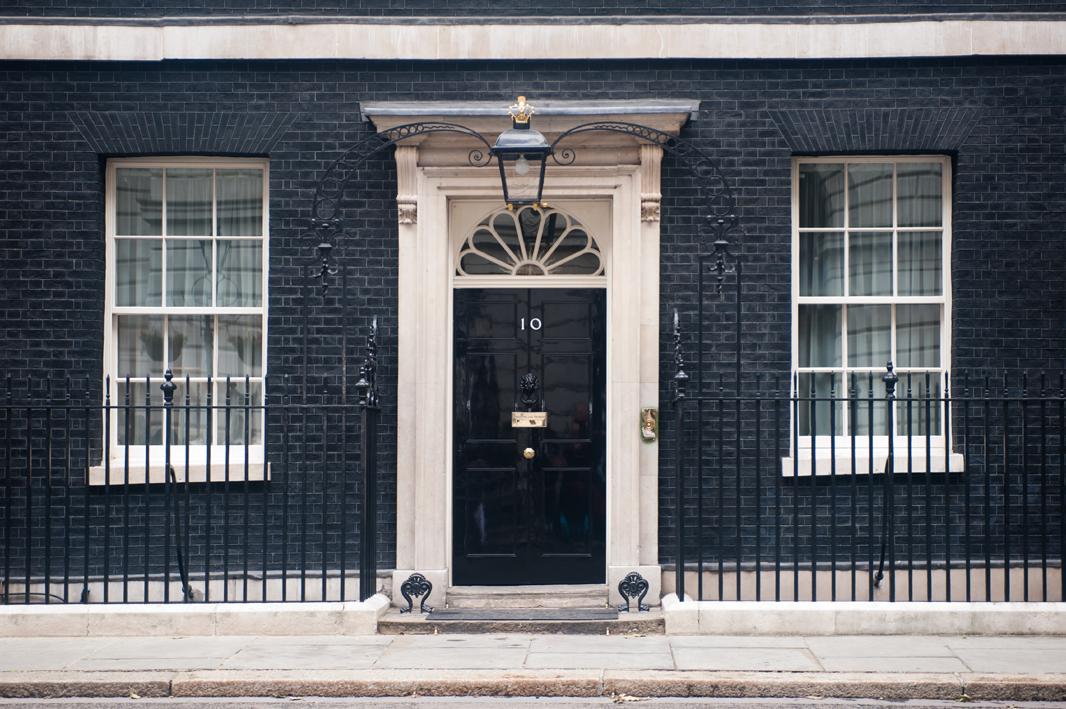
To begin with paradigms and begin at the top, Number 10 was seeking to impose a new British paradigm of tough, but multilateral liberal interventionist rather than retreating colonial
More subtly, after eight years of liberal interventionism the UK armed forces had ‘normalised deviance’.5 They had become used to doing operational estimates and then making do with half, whilst breaking concurrency, covered by euphemisms such as the ‘can-do attitude’ and ‘punching above our weight’. The ‘best little army in the world’ was always short of troops and kit but always won.
power. The development of this paradigm extends back far beyond the ego of Tony Blair to the UK’s national interest in remaining relevant, influential and leveraging its colonial history positively. It also reflected a 50-year trend in international relations up to that point that accepted wars still need to be fought, but that increasingly the defeated party should be ‘state-built’ at the same time. As far as any surviving evidence shows, this is the level Blair thought at. He never insisted on any specific deployment of any specific formation to any specific place, but a general effect of international leadership via liberal intervention.
The UK military paradigm was (and is) rooted in the management and application of force rather than state-building.3 This in turn was informed by the revolution in military affairs which held that small technologically superior forces could carry the day in all forms of military operations.4 The revolution in military affairs, combined with a perception of excellence in counter-insurgency and success in Sierra Leone and the Balkans, suggested that the British Army was almost optimally adapted to deliver on Number 10’s intent.
Whilst the military did not recognise that Helmand lay outside their paradigm the other departments did. It was of little interest to the Department for International Development’s poverty alleviation paradigm or the Foreign, Commonwealth and Development Office’s focus on maintaining UK influence in global capitals. The notion they would deploy in numbers to deliver hands on governance and development at village level was simply so far outside their frame of reference they did not consider being seriously asked to do it. But the paradigm of Cabinet government is not to break consensus unless something threatens your paradigm. Departments do not police other departments.
Finally, the Cabinet Office itself is not a chairman of the board or an auditor. It can be a mediator if departments allow it (it was not in Helmand – it was comprehensively flanked by the Reid Group), but its core paradigm is that of process. In the grand scheme it does not stop bad ideas or propel good ones past factional obstruction.
This arrangement of
3King, A. (2019). Command : the twentyfirst-century general. 484.
4Salt, A. (2018). Transformation and the War in Afghanistan. Strategic Studies Quarterly, 98–126.
5Vaughan, D. (2016). The Challenger launch decision : risky technology, culture, and deviance at NASA.
departmental paradigms did not make war in Helmand inevitable. What they did is cause any of the scant evidence on conditions in Helmand to be very heavily weighted in one direction. Some have argued that we could not have known there would be heavy fighting in Helmand in 2006.6 That is only partially true. The picture was actually very mixed. The head of the Afghan National Directorate of Security,7 for instance, was clear that Helmandis would not ignore thousands of foreign troops arriving.8 The US Provincial Reconstruction Team commander, with a less than company-sized force, was clear he survived by staying inside tramlines determined by the local tribes and the Taliban.9 The President and the incoming Governor were clear that that would have to change which seemed to position the taskforce either to disappoint the Afghan Government or start a fight. On the other hand many Afghan ministers reassured that all would be fine, but then they had a strong need for the UK force to deploy.
At the same time the Foreign and Commonwealth Office and Department for International Development had allowed
“SOME HAVE ARGUED THAT WE COULD NOT HAVE KNOWN THERE WOULD BE HEAVY FIGHTING IN HELMAND IN 2006. THAT IS ONLY PARTIALLY TRUE. THE HEAD OF THE AFGHAN NATIONAL DIRECTORATE OF SECURITY, FOR INSTANCE, WAS CLEAR THAT HELMANDIS WOULD NOT IGNORE THOUSANDS OF FOREIGN TROOPS ARRIVING.”
the Helmand decision, not supported it. Many in the latter – and to a lesser extent the former – felt stabilisation was a contradiction in its own terms. This deserves brief unpacking. UK stabilisation holds it is possible as an external actor to; 1., fight a war against an enemy whilst; 2., state-building and; 3., offering a selective peace that includes those who will cooperate and excludes those you have identified as the enemy. The Department for International Development approach to building peace rather than fighting wars struggled fundamentally with the idea of state-building, non-inclusive peace settlements and with building sustainable political settlements when the power of at least one party was greatly reinforced by international troops.
The result of these profound if subtle differences was twofold. First the creation of an irresistible momentum for deploying but coupled with a failure ever to
generate a unified Government vision of root problem causes, objectives or solutions in either Helmand or Afghanistan. What did success look like and what were the practical steps to get to it? Fundamental tradeoffs between use of force and negotiation, development and security, local and national government, counter terrorism and Afghan leadership remained contested and by and large rooted in conceptual bureaucratic debate rather than practical evidence throughout.10
Without any clear vision, the Government’s pre-existing ‘sociological capability’ dominated. A capability highly adapted to some tasks, but not the stabilisation of Helmand. This played out in a number of unhelpful ways. Firstly, departmental boundaries, with their pre-existing paradigms continued to dominate. The comprehensive plan for Helmand with its four themes was, in paradigm terms, a smokescreen. Rather than a problem based and
comprehensive approach, each theme was handed individually to a department. Whilst there was unity of command in a constitutional sense at Cabinet level, there was no unity of effort.
Secondly, no coherent and sustainable stabilisation communities of practice formed. A community of practice is not just a discussion group. It is a group formed around a practical joint enterprise (such as delivering economic development to a Helmand district) that works closely and regularly together and shares a repertoire of skills, models and approaches to delivering the enterprise. At the smaller end of the scale an infantry multiple is an excellent if highly specific example. It is an intensely tight-knit group concerned with the application of force, professionally, and delivering specific effects with a rich and often obscure repertoire of skills and language impenetrable to anyone not part of it. Whilst there were many such communities attuned to
6Miller, S. (2024). Pride and Fall: The British Army in Afghanistan, 2001-2004. Osprey, p99.
7Equivalent of MI5.
8He shared this view at a meeting I attended in Kabul as political adviser to the Deputy Commanding General of Coalition Forces Command-Afghanistan. Unlike many Afghan Ministers he was not reticent in talking up the threat because he thought (wrongly) that the UK wanted a fight.
9Shared by him in a meeting at the Provincial Reconstruction Team in spring 2005. He was clear that if he left pre-agreed areas all hell would break loose.
10It is fair to point out that the UK was not the sole arbiter of what stabilisation should mean in Afghanistan, but that does not alter the fact it did not really have its own practical vision with which to lobby.
take, hold and dominate ground in Helmand, there were no comparable civilian or joint communities with a clear practice of ‘stabilising local politics’.
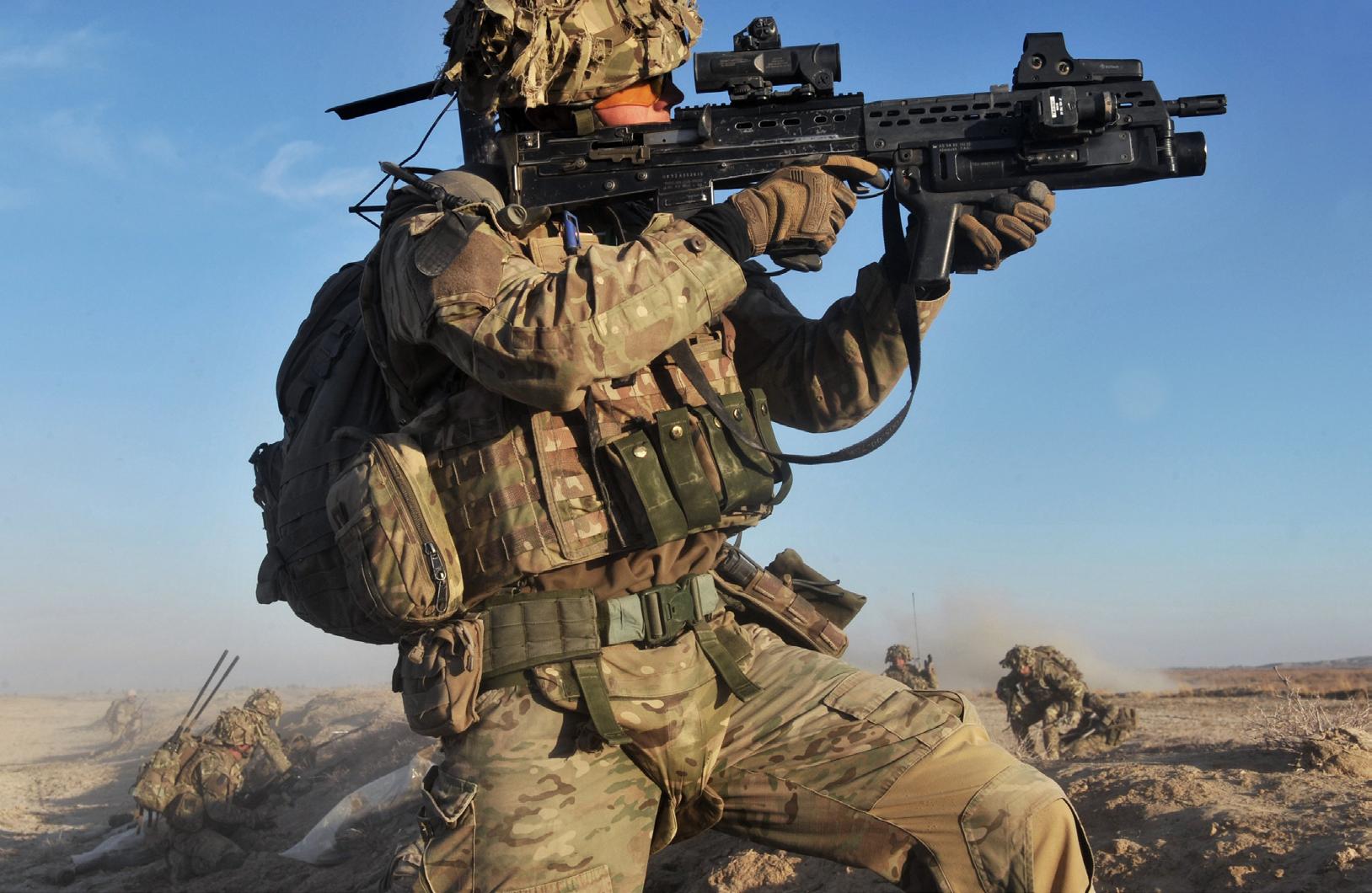
This connects to the third problem. Absent of a stabilisation paradigm the organisations involved did adapt, but only within their own paradigms. The military urgent operational requirement system moved at pace to almost entirely re-equip the force. Tactics shifted monthly and in the end strategy also shifted from combat operations to security force assistance. All of these adaptations, however, are from within the military paradigm on the application and management of force. They are not a fundamental recasting of military operations to political stabilisation.
The Foreign and Commonwealth Office continued to concentrate on political influence of top level Afghan leaders. The Department for International Development continued to focus on central government budget support and delivery through local contractors. The only true ‘stabilisation’ communities –the Stabilisation Unit and the Military Support to Stabilisation Group – were limited to the role of body shop and banned from leading planning or policy. The idea that civilians might be trained to a level of language and cultural proficiency or put at a level of risk where they could begin to understand the human terrain and local politics of Helmand was an idea too absurd to be debated. The failure to do this alone makes debates on whether the stabilisation of Helmand was possible moot. We can’t possibly know.
“THERE WERE THOUSANDS OF SOLDIERS ON THE GROUND IN HELMAND DISTRIBUTED ACROSS PATROL BASES AND OFTEN INTERFACING REGULARLY WITH THE
LOCAL POPULATION.
INTERVIEWS
WITH THEM REVEAL A WEALTH OF UNDERSTANDING AND INFORMATION ON HELMANDI ECONOMICS, PATTERNS OF LIFE, LOCAL POLITICS AND EVEN GOSSIP. NOT EVERY SOLDIER ABSORBED SUCH INFORMATION, BUT MANY DID.”
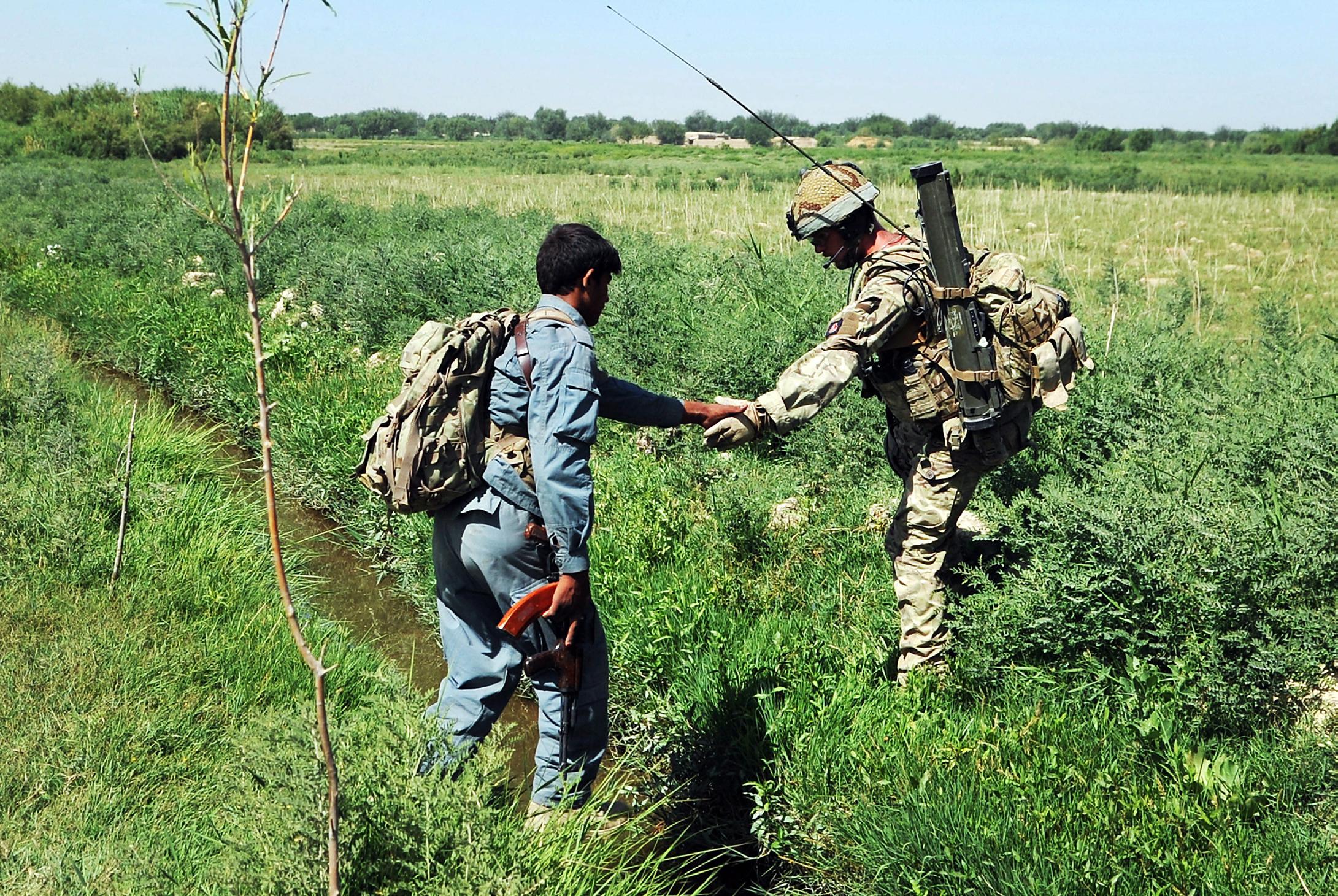
This absence of truly joint communities was particularly damaging in the intelligence sphere. There were thousands of soldiers on the ground in Helmand distributed across patrol bases and often interfacing regularly with the local population. Interviews with them reveal a wealth of understanding and information on Helmandi economics, patterns of life, local politics and even gossip. Not every soldier absorbed such information, but many did. Military information gathering was, however, largely concerned with force protection rather than governance and the civilian departments, despite their inability to get out on the ground, took military intelligence at face value as an exercise in finding threats. A huge amount of political and governance information for which the UK had paid dearly in lives and money never made it out of the patrol bases.
This is closely associated with a fourth problem. The UK took with it the paradigm of teacher not student. Again – within
the military paradigm this was sound. The British Army does know more than the Afghan National Army did about combined arms warfare. It was not sound when considering how Afghanistan should be governed or the utility of force in delivering that governance. The famous TE Lawrence quote comes to mind: “Do not try to do too much with your own hands. Better the Arabs do it tolerably than you do it perfectly.”11 Lawrence was the insurgent, not the state-builder so it is not fair to judge his words in the context of Helmand, but in Helmand almost all of the cultural, social and political knowledge necessary to run the province even ‘tolerably’ resided with Afghans. NATO could not run it perfectly, or even at all. Despite the absence of a practical stabilisation paradigm there was a huge confidence in policy and doctrine that paid almost no attention to what Helmandis thought and knew and concentrated rather on making them more like us.
Finally, much has been said,
much of it unkind,12 about the dreaded ‘six month ism’ of taskforce operational planning. The idea the taskforce completely changed direction every six months is a caricature, as is the notion every brigade had its set piece medal acquisition operation. Rapidly changing personnel on both the civilian and military command side was a problem, but may not have been if all concerned had shared a stabilisation paradigm. Taking a sociological capability view there are three more profound issues. First, military planning crushed civilian planning with mass. The sheer volume of planning products, speed of iteration and obscurity of terminology was overwhelming to the point that many civilians sought to insulate themselves from it rather than work with it. The Army’s own Herrick Campaign Review admits that during “Operation MOSHTARAK the headquarters of the theatre reserve battalion had to be deployed to the PRT [provincial reconstruction team] to ‘relieve the PRT staff of the distraction of turning out staff work’’’. The concerning thing here is less the misuse of a battalion headquarters and more the fact the provincial reconstruction team were so overwhelmed they exited the conversation and left the Army to talk to itself.
Secondly, the paradigm of military planning is optimised to ensure a fragmented organisation delivers all the right force elements to the right place at the right time in order to have a coherent effect on the control of land or resources. Politics on the other hand is non-linear, nongeographic, opportunistic and, by comparison, chaotic. Stabilisation works in an environment which blends tactical violence and local politics to contest the prize of human security rather than the control of land or resources. Heroic efforts were made to adapt the military planning process to local Helmandi politics, but
11Lawrence, T. E. (1917, October 20). The Twenty Seven Articles. The Arab Bulletin.
12Akam, S. (2021). The changing of the guard : the British Army since 9/11 (1st ed.). Scribe UK.
Picture: Crown Copyright
ultimately could not break out of the linearity, stagism and need to make questionable forecasts of future events that is required by a complex military with multiple moving parts.
Understanding these failings does not mean we automatically understand what should have been done but they give clues. Given that a working plan would have required a paradigm shift, the lessons venture into the realm of the ‘unthinkable’.
The deployment would likely have had to achieve a political acceptance in the UK that it would spend years learning how to operate effectively before beginning to have a real impact and would have had to accept real rather than tokenistic Afghan leadership. It would have required hundreds, if not thousands, of civilians, almost certainly from outside the civil service with language and cultural skills or the willingness to devote a large part of a career to the Helmand problem. These individuals would not have been deployed to lead or control but advise and understand at the district level. The government departments would have had to be reduced to the status of capability generators; providing force elements at readiness to the operation, but subordinated to a
politically-led command chain and quite possibly a dedicated government department responsible for raising Helmand specific capability and directing the effort.
This reorganisation would have required coercion of the departments at first, presumably by Number 10. Over time it would have created the communities of practice, experience and data necessary to develop a stabilisation paradigm. None of it would have required more troops or more money. Just doing the unthinkable and damaging the departments’ capacity to do other things. And none of this guarantees that many in the Department for International Development aren’t right; that stabilisation is impossible because external force undermines the possibility of political settlement.
Stabilisation is a real phenomena, but it is not delivered in a box.
It is political because it is about the accumulation and use of power. Power is accumulated opportunistically via influence, persuasion and coercion. It is built in the village as much as the capital and does not respond to deadlines or project management techniques. Importantly, those who share the fate of the state have far more
legitimacy than externals, which puts the intervener at a massive disadvantage regardless of their military superiority.
If the Army is asked to do anything like Operation Herrick in the future it should demand the following things:
n Civilian capability appropriate to the scale of ambition.
n Local partners whose lead we are willing to accept.
n Sufficient time and resource to understand the local and national political context before seeking to ‘teach’.
n A presumption against direct combat and in favour of security force assistance.
n A plausible paradigm for stabilisation of the specific context and a machinery of government that can unify effort behind that paradigm.
Such demands should preclude operations on the scale of Herrick because we are unlikely to be willing to adapt in such ways, but they should not rule out a more modest and opportunistic stabilisation led by political process and rooted in diplomacy, development and security force assistance. Ultimately the West will want to compete globally with Chinese debt diplomacy and Russian Wagner Group intimidation. We
should neither stay home nor attempt Herrick 2.0.
There is also a wider lesson that goes beyond stabilisation. Many of the core characteristics that made Helmand possible still exist in the UK Government today. Chiefly, an unwillingness to identify and challenge paradigms, a Cabinet system that can build momentum to accept grand ideas no-one knows how to deliver and inertia to adaptation of social capability. The next demand to make a paradigm shift and recast our communities will not come dressed as an old mistake. With the return of large scale state-on-state European conflict we may need to shift paradigms for a far more existential purpose, for instance to embrace ‘total defence’ and a ‘citizen army’ rather than reliance on a very small professional, high technology force.
The problem will not be money or technology. It will be sociological capability; the capacity to understand one’s own paradigms, change them if the evidence shows they do not work and build the communities of practice to deliver. And that in turn will require the capacity to pro-actively address social capability as a line of capability development; the as yet unlearnt lesson of Helmand.
Picture: Crown Copyright